Mushroom Truffle Gnocchi
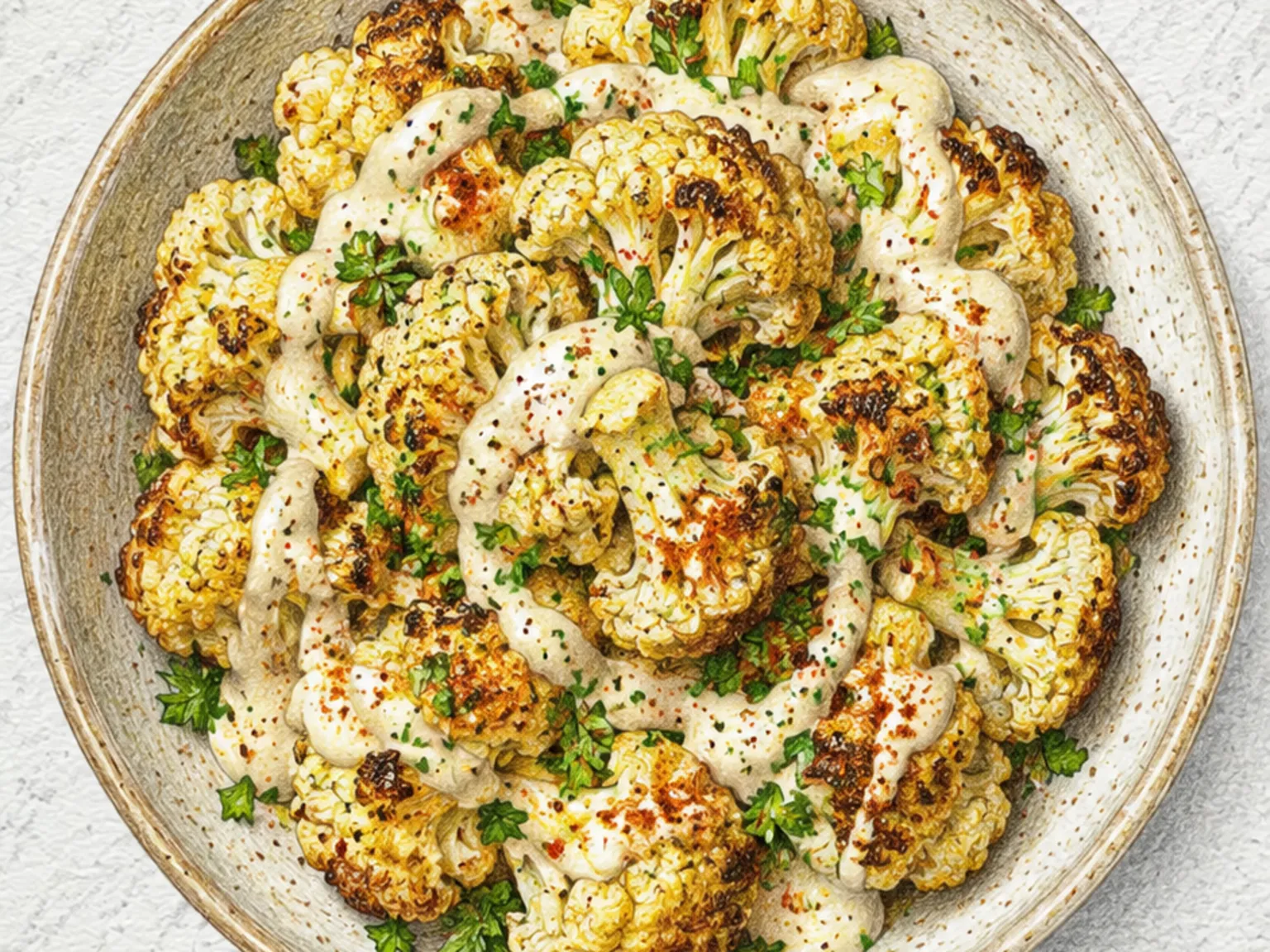
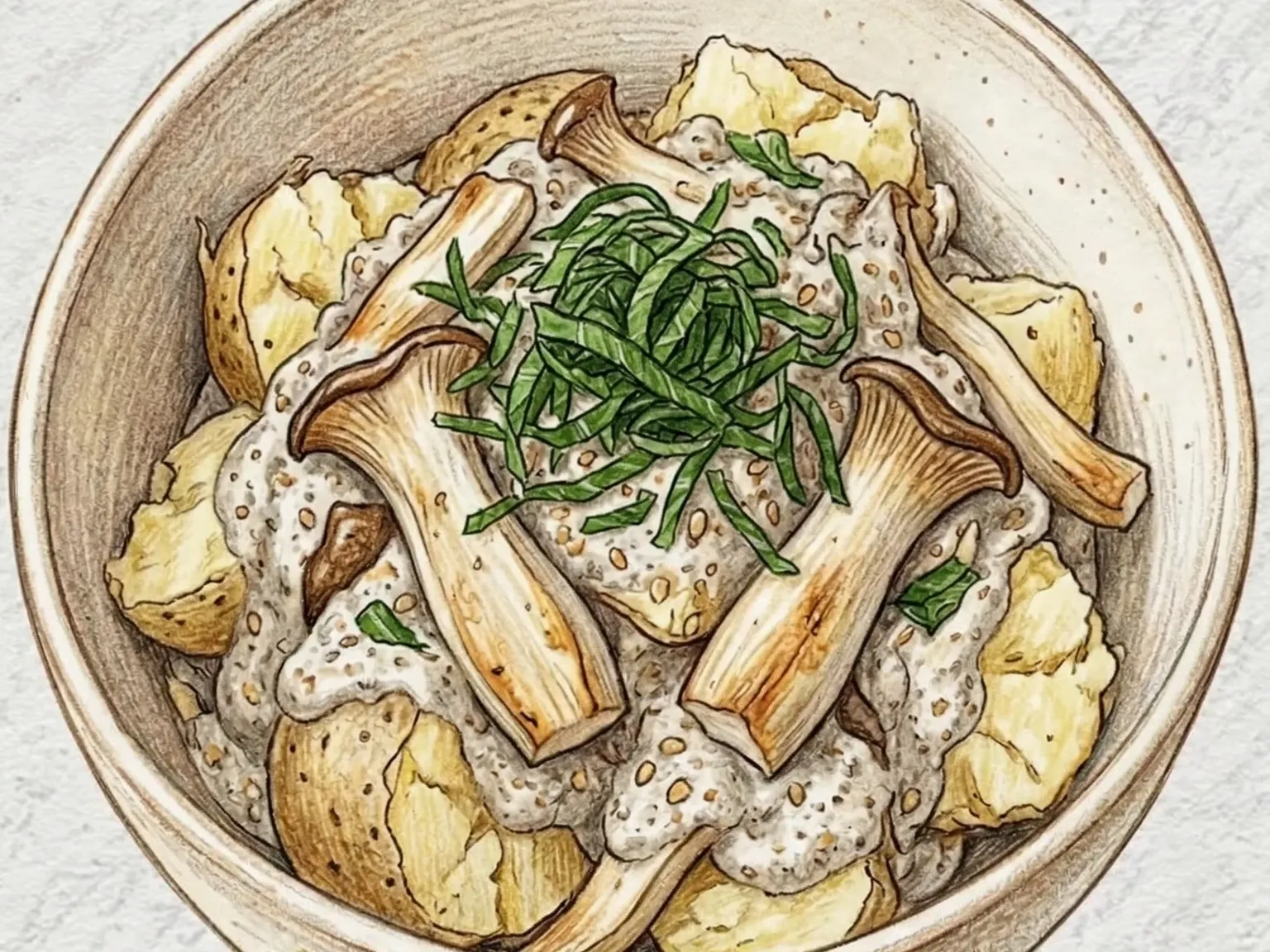
Mushroom truffle gnocchi boils potato gnocchi until they float, then tosses them in a sauce of butter-browned mushrooms finished with heavy cream and grated Parmesan. The mushrooms must be cooked in a single layer over high heat so their moisture evaporates and they develop a deep sear rather than steaming in their own liquid. The cream simmers on low heat for just two to three minutes - enough to thicken into a coating consistency without reducing too far. Truffle oil is drizzled on only after the heat is turned off, because cooking destroys the volatile aromatic compounds that give truffle its distinctive earthy, nutty fragrance. The combination of chewy gnocchi, savory mushrooms, rich cream sauce, and the lingering truffle aroma creates a dish that tastes far more luxurious than its short ingredient list suggests.

Goan Fish Curry (Tangy Coconut Fish Stew)
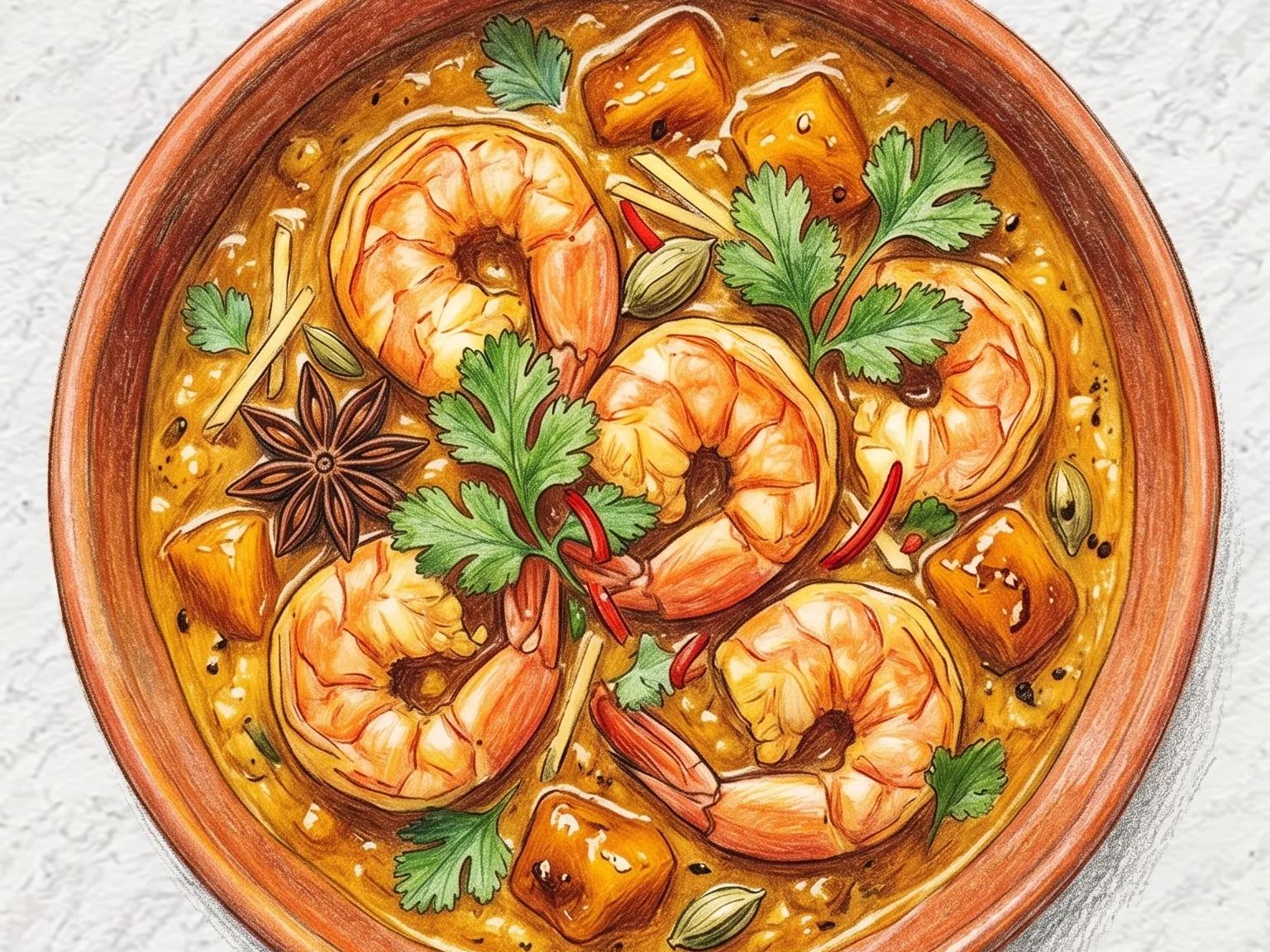
Goan fish curry - known locally as xitt-kodi - is the daily centerpiece of fishing households along India's Goa coast, shaped over five centuries by the meeting of Konkani culinary tradition and Portuguese colonial influence. Freshly pressed coconut milk forms the foundation, into which a masala paste of tamarind, Kashmiri red chilies, coriander seeds, and cumin is stirred and brought to a simmer. Local fish - kingfish, pomfret, or mackerel - are added bone-in and cooked over gentle heat for no more than five minutes. That restraint is the defining technique: the flesh absorbs the sauce fully while still breaking apart in clean, moist flakes at the press of a spoon rather than turning dense and dry. Tamarind's sharp acidity slices through the coconut cream's weight, producing a broth that reads as fresh and light despite its deep orange color and creamy texture. The Kashmiri chili contributes vivid color with only moderate heat, so the sauce is bold-looking but not aggressively spicy. Goan fishermen have long followed the practice of cooking their morning catch into curry by midday and serving it over boiled parboiled rice called ukde tandull, a pairing so bound to local identity that it crosses every line of religion, caste, and neighborhood across the state.

Korean Blanched Young Napa with Doenjang
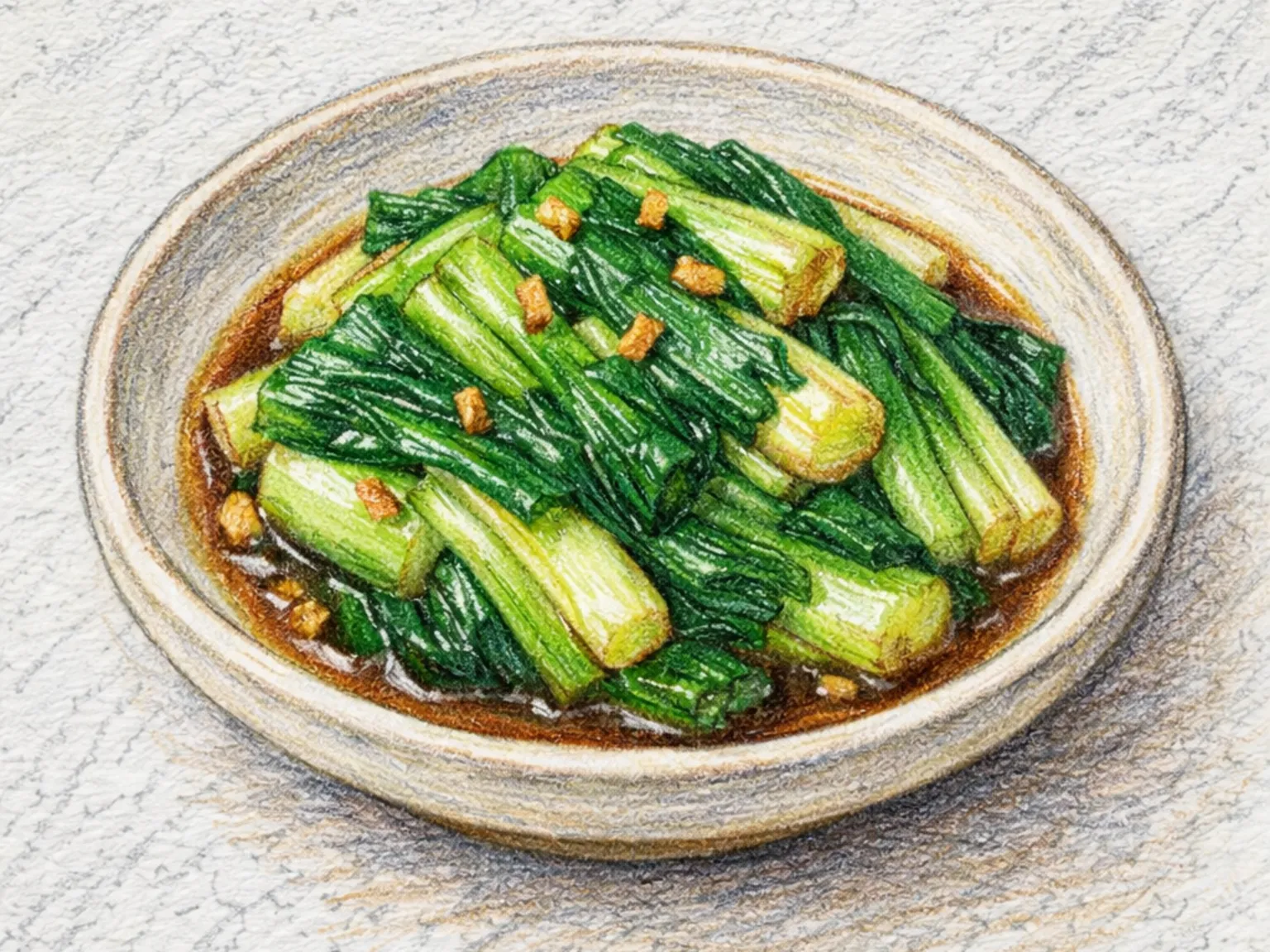
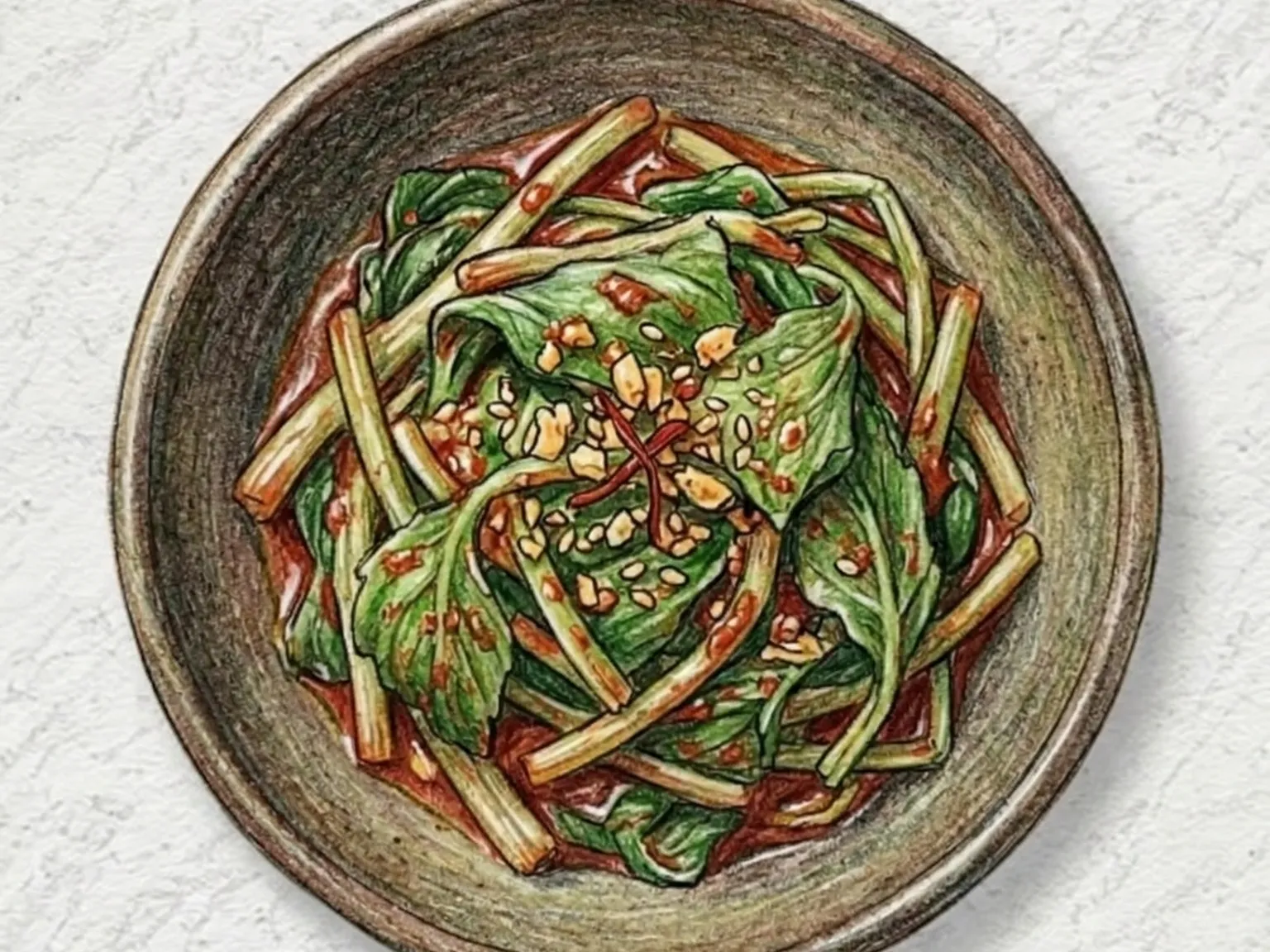
Eolgari is young napa cabbage cut before the head has formed a tight ball, leaving it with thinner leaves and more tender ribs than fully mature baechu. A quick blanch of about one minute wilts the leaf while the pale ribs retain a gentle crunch that holds even after seasoning. After blanching, the cabbage is squeezed firmly to remove water, then dressed with doenjang, soup soy sauce, minced garlic, and sesame oil. The fermented paste penetrates the tender leaves quickly, spreading a salty, earthy coating evenly through each piece. The flavor profile is mild and round with no sharp edges, making it one of the most approachable doenjang-based namul dishes for people who are new to Korean fermented seasonings. The dish comes from the Korean countryside tradition of turning whatever young greens were growing between major kimchi-making seasons into simple dressed vegetables. Eolgari is a seasonal green, available at Korean markets from late spring through early autumn.

Ssambap (Korean Lettuce Leaf Wraps with Rice and Ssamjang)
Fresh lettuce, perilla leaves, and other leafy greens are spread flat and topped with a small mound of warm rice, a dab of ssamjang, and a slice of raw garlic or chili pepper, then folded into a single bite-sized wrap. The cool crunch of the leaves meets the warm, sticky rice and the salty-sweet depth of fermented soybean paste in every bite. Adding grilled pork belly or bulgogi inside the wrap turns it into a balanced, protein-rich meal. The hands-on ritual of building each wrap at the table is part of what makes ssambap a communal favorite.

Korean Gaji Dwaejigogi Bokkeum (Eggplant Pork Stir-fry)
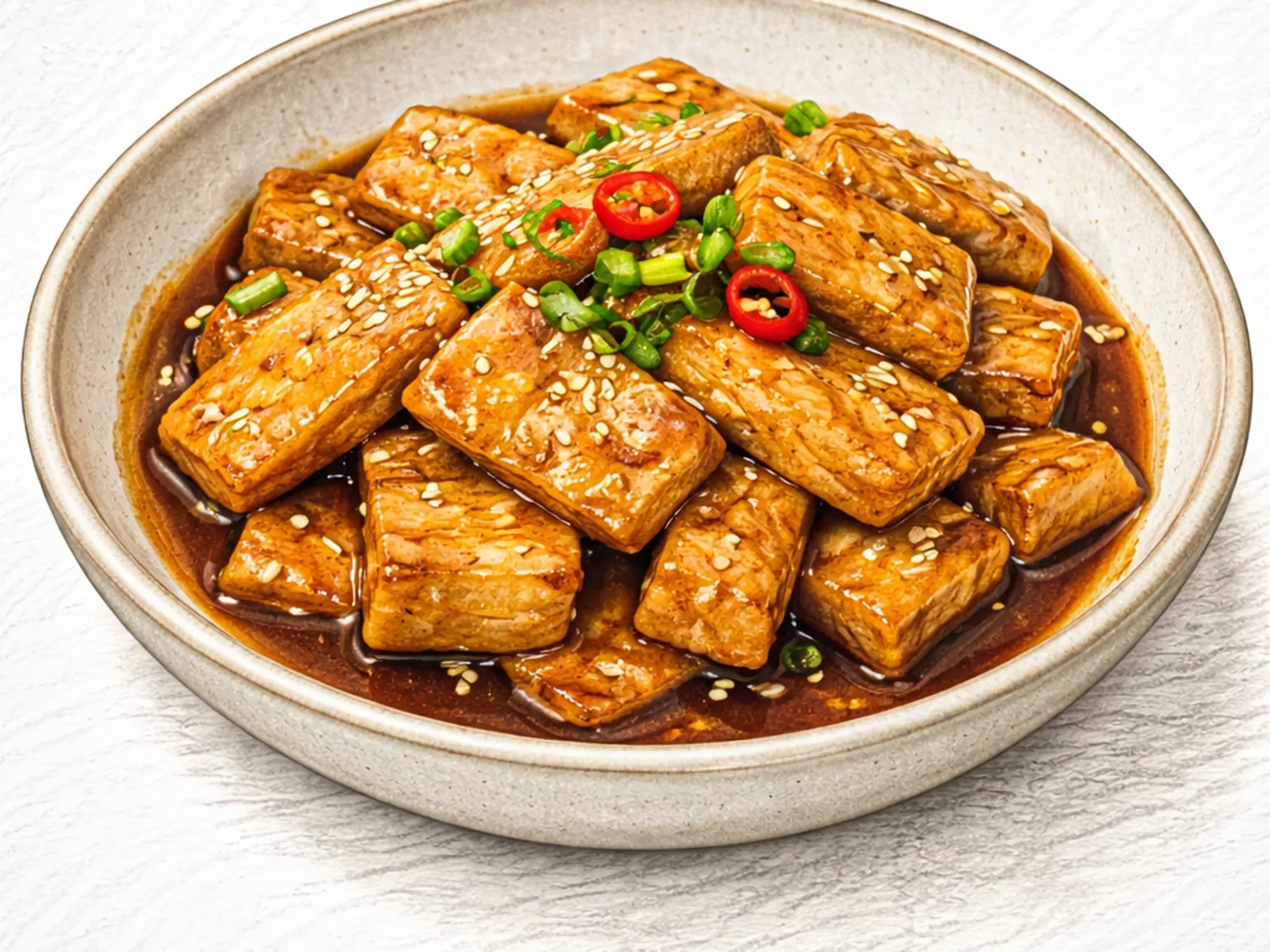
Gaji-dwaejigogi-bokkeum is a Korean stir-fry of eggplant and thinly sliced pork seasoned with garlic and fresh chili. The eggplant absorbs oil and sauce as it cooks, turning silky and melding seamlessly with the pork. Garlic infuses the dish with an intense aroma while the chili adds a clean, sharp heat throughout. Heat management is the key technique: cooking over medium or low heat draws too much moisture from the eggplant and turns the stir-fry into a braise, so keeping the flame high from the start is what gives the eggplant a lightly seared exterior. A combination of soy sauce and gochujang balances salt and spice, and a final drizzle of sesame oil rounds out the flavor with a nutty finish. It is especially flavorful in summer when eggplant is at its seasonal peak, and it is substantial enough to serve over rice as a complete meal.

Korean Grilled Dried Pollack
Dried pollack strips are briefly moistened, coated in a paste of gochujang, soy sauce, and oligosaccharide syrup, then grilled low and slow. The slow heat lets the glaze seep into the chewy dried fish without charring, building layers of spicy-sweet flavor. A touch of sesame oil applied at the finish adds a toasted aroma that rounds out the dish. The sweet-spicy glaze filling the kitchen with fragrance as the fish grills is part of what makes this a beloved home-cooked snack.

Korean Gangwon-Style Loach Soup
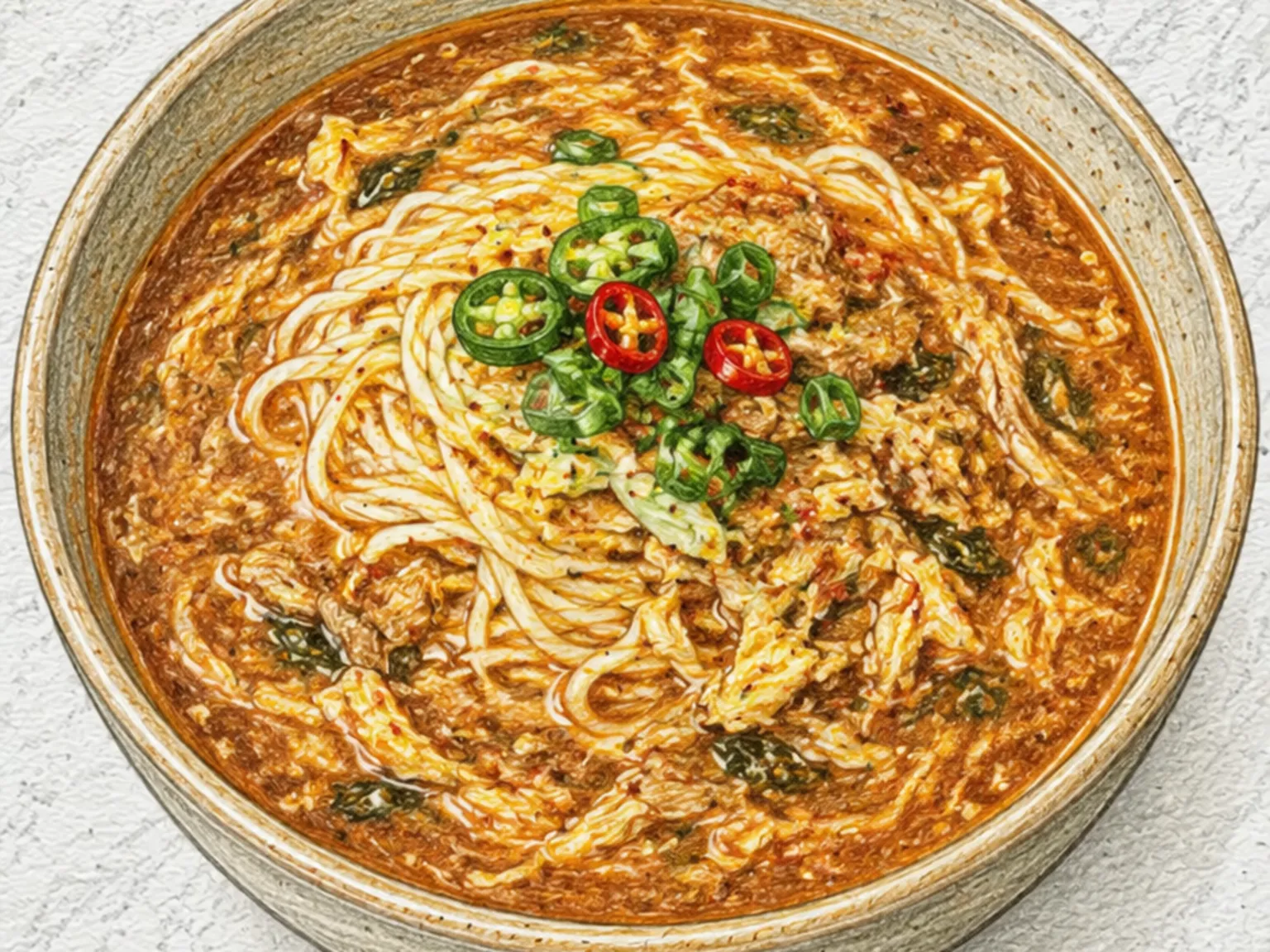
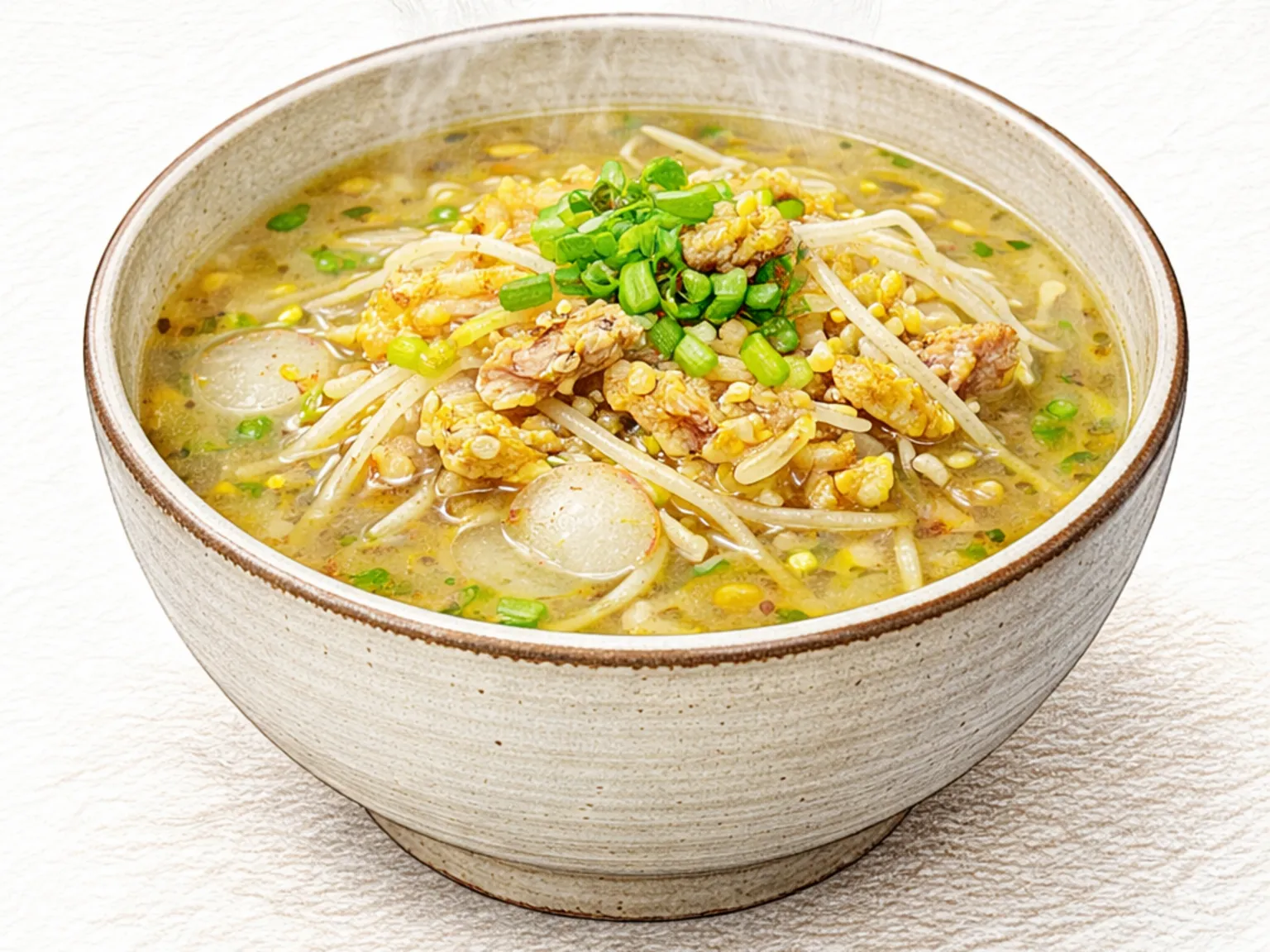
Gangwon-style chueotang is a thick, hearty loach soup in which the entire fish is boiled, blended smooth, and returned to the pot with ground perilla seeds and dried radish greens. Pulverizing the loach whole dissolves its small bones into the broth, creating a calcium-rich liquid with a distinctive earthy depth. Perilla seed powder transforms the soup into something creamy and nutty, far removed from a typical clear broth. Dried radish greens, rehydrated and chopped, provide a pleasantly chewy counterpoint to the thick liquid. Doenjang and gochugaru add fermented savoriness and gentle heat that deepen the overall flavor. Before blending, the loach should be soaked in salted water to purge any muddy taste, and the perilla powder is best stirred in after the soup reaches a boil so the nutty aroma does not cook off too quickly. The finished soup is dense and substantial, closer to a stew than a broth, and is traditionally eaten in autumn and winter as a stamina food. In the mountainous Gangwon province, chueotang holds a near-legendary status as a warming, restorative meal on the coldest days.

Korean Young Napa Soybean Paste Stew
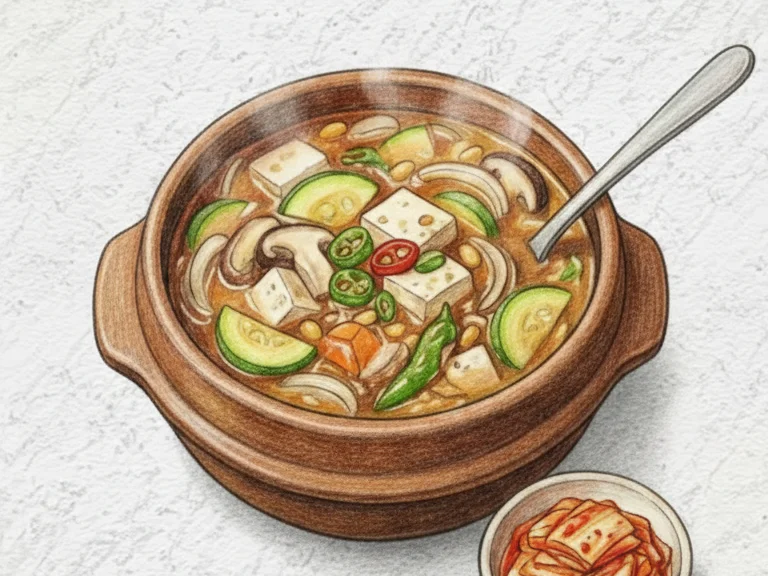
Young napa cabbage (eolgari) takes center stage in this doenjang jjigae, wilting into the broth and releasing a mild sweetness. The stock is built from dried anchovies and kelp, then seasoned with fermented soybean paste for a full-bodied base. Firm tofu and onion add substance, while a green chili provides a sharp finish. Eolgari is a tender spring-harvested young cabbage with soft fibers and a pronounced natural sweetness, so when combined with the savory doenjang broth it contributes a mellow, round flavor without any bitterness. Adding a generous amount of tofu helps the cubes absorb the saltiness of the paste and brings the entire soup into a well-balanced, smooth finish that pairs naturally with steamed rice.

Korean Braised Mackerel (Fatty Mackerel with Radish in Spicy Soy Sauce)
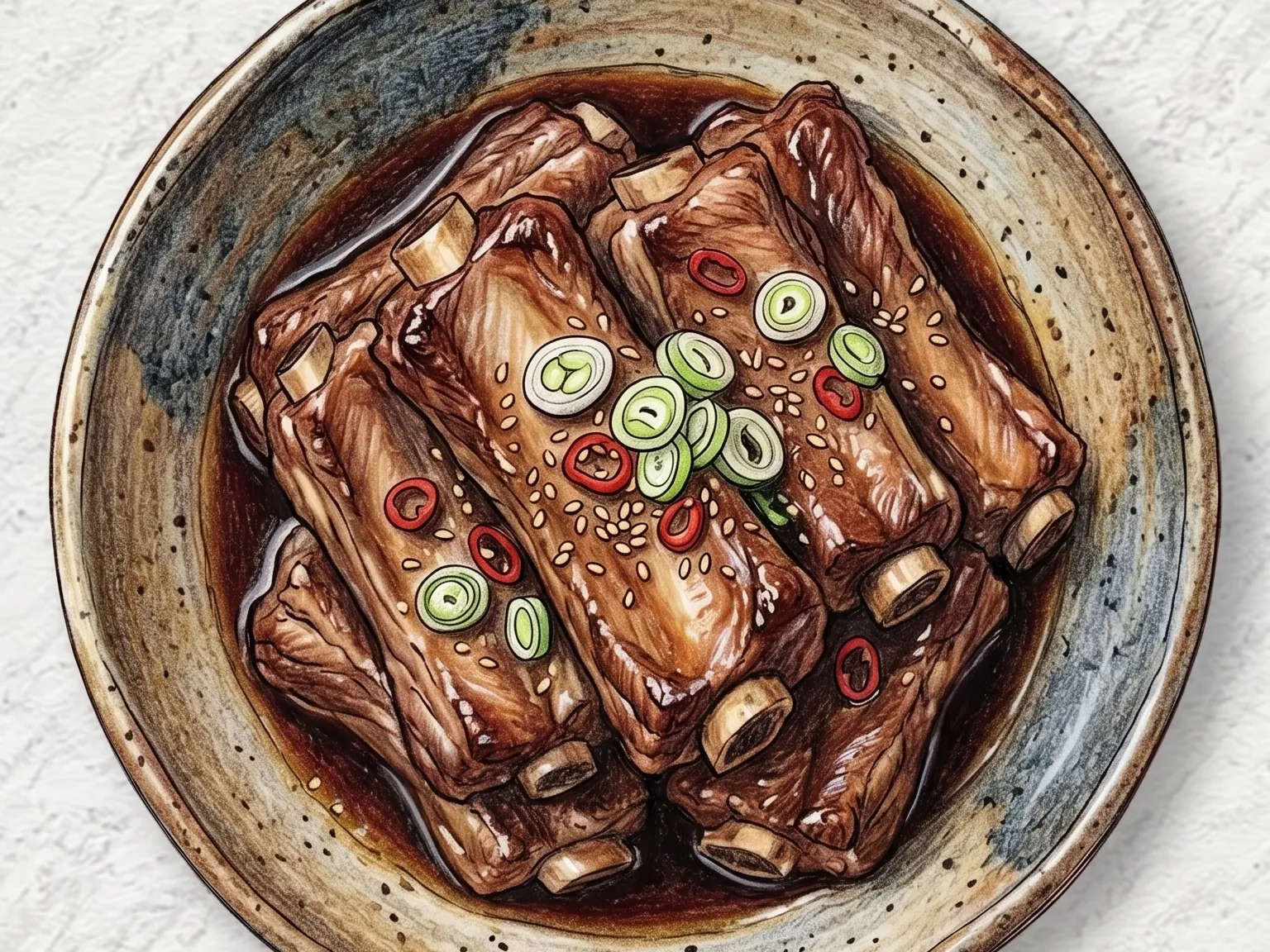
Godeungeo-jjim is a Korean braised mackerel dish cooked low and slow with Korean radish, sliced onion, gochugaru, soy sauce, and fresh ginger. Mackerel belongs to the blue-backed fish category with a high natural fat content, and that fat absorbs the bold, spiced seasoning during braising in a way that leaner fish cannot. The flavor that results is deeply savory with a rounded heat that does not taste sharp or one-dimensional. Radish placed at the bottom of the pan serves a dual purpose: it draws out the fishy aroma during cooking and simultaneously soaks up the braising liquid, making it almost as desirable to eat as the fish itself. Ginger neutralizes the remaining raw fish notes and keeps the overall taste from feeling heavy, providing a subtle warmth that lifts the richness. As the braising liquid reduces, it thickens into a glossy, intensely flavored sauce that is commonly spooned over steamed rice to the last drop. Mackerel is widely available and inexpensive in Korea, which has made this preparation a household staple across generations.

Korean Bracken Fern Pickles
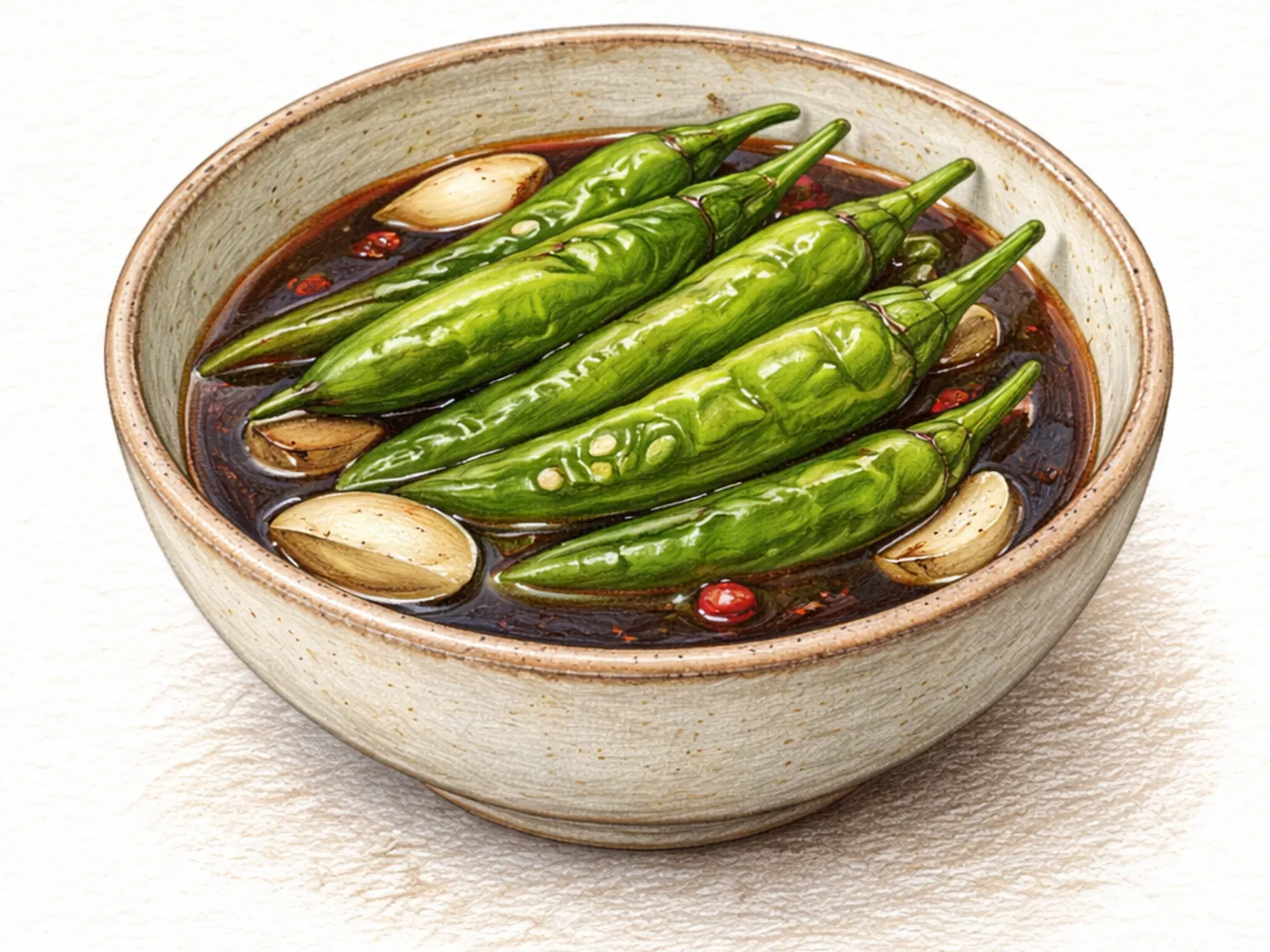
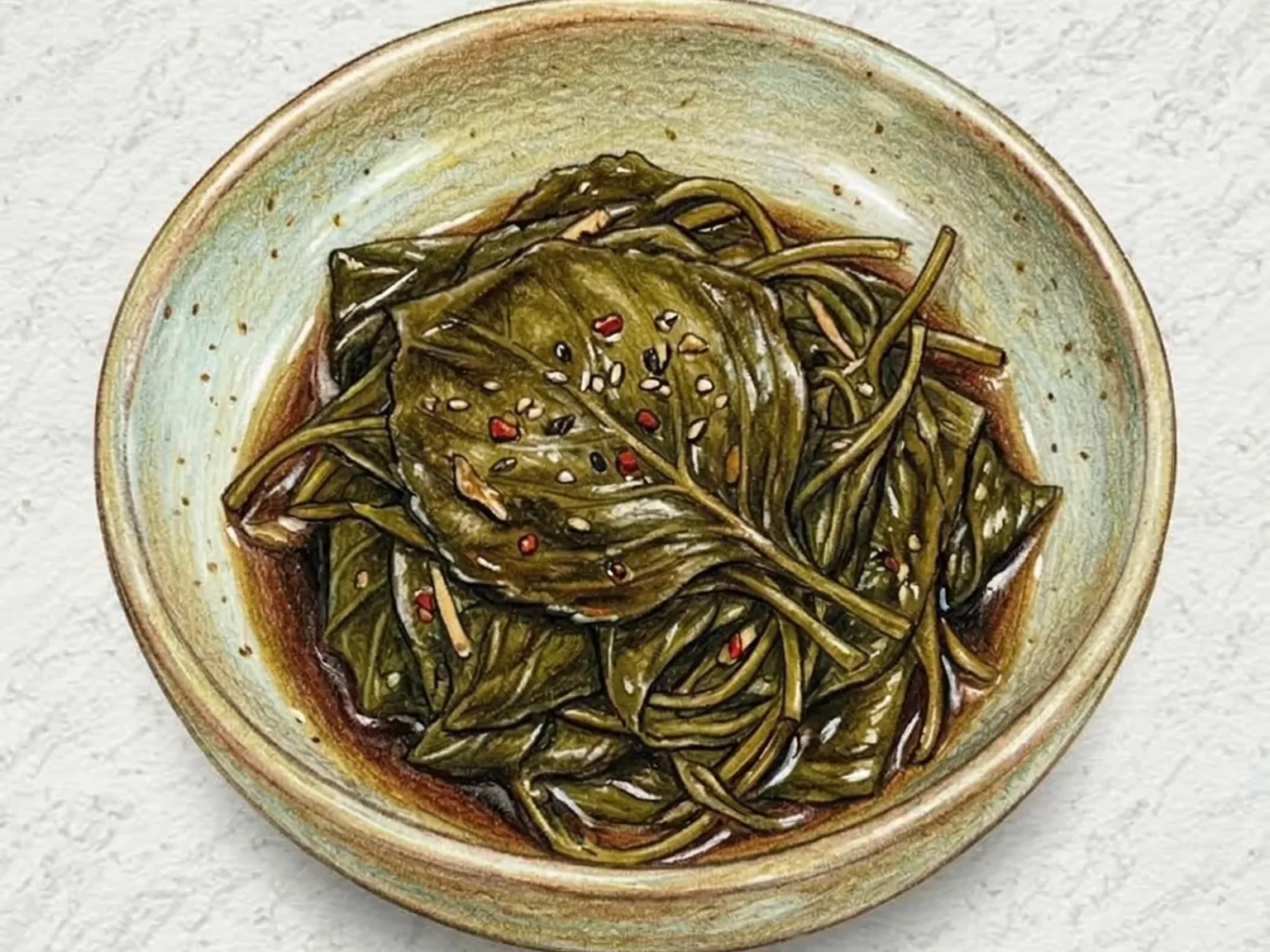
Gosari jangajji is a Korean pickled bracken fern made by submerging boiled bracken stems in a brine of dark soy sauce, vinegar, sugar, and rice wine. The fern's earthy, nutty aroma weaves together with the soy umami in layers, deepening with each bite as the flavors come into focus. Though the stems are boiled until soft, the plant's natural fiber retains enough structure to give a satisfying chew, and dried chili and garlic added to the brine contribute a quiet warmth that builds gradually. Vinegar's acidity cuts through the heavier, loamy earthiness that raw bracken can carry, leaving the aftertaste clean and bright. Refrigerated, the jangajji keeps comfortably for over a week, making it a practical, ready-to-serve banchan. For anyone familiar only with gosari namul, this pickled version is a worthwhile discovery.

Mentaiko Cream Pasta
Mentaiko cream pasta is a Japanese-style cream pasta in which salted pollock roe is stirred into a warm butter, heavy cream, and milk base until the sauce turns silky and coats the spaghetti in a fine layer studded with tiny bursts of roe. Minced garlic is sauteed gently in butter over low heat until just fragrant and sweet, then the cream and milk are poured in and brought only to the point before a full boil, as a rolling boil causes the sauce to break and separate. Once the temperature is controlled, two-thirds of the roe goes into the sauce along with the drained spaghetti, everything tossed quickly so the roe cooks only through the residual heat of the pasta and sauce rather than direct flame, which would make it taste fishy. Reserved pasta water, added a spoonful at a time, adjusts the consistency without diluting the richness. Finely grated Parmesan adds another tier of umami and salt, while a few drops of fresh lemon juice cut through the cream and leave a clean, bright finish that keeps the dish from feeling too heavy. The remaining raw roe and crumbled roasted seaweed are arranged on top before serving, creating a contrast of red and black that signals the flavors inside, and folding them in at the table releases a fresh, briny aroma.

Soy-Garlic Chicken Parmesan Spaghetti
Soy garlic chicken Parmesan spaghetti represents a fusion of culinary traditions, integrating a marinade rooted in Korean flavors with the structural framework of a classic Italian pasta dish. For the protein component, chicken thigh pieces undergo a marination process involving a mixture of soy sauce, finely minced garlic, and honey. During the subsequent cooking phase, these ingredients are pan seared at a high temperature. This heat causes the natural sugars found in both the honey and the soy sauce to undergo caramelization, resulting in the formation of a dark and sticky glaze that coats the exterior of the meat. Garlic serves as a recurring element in the preparation, being used first within the initial marinade and then again when it is sauteed directly into the tomato sauce base. This repetition ensures that a consistent aromatic quality is maintained throughout the various layers of the meal from the start of cooking to the final assembly. The acidity inherent in the tomato sauce introduces a bright fruit character to the profile. This sharpness functions to balance the density of the sweet and salty glaze on the chicken, preventing the richness of the marinade from becoming overwhelming. A generous amount of grated Parmesan cheese is applied over the dish to introduce a nutty and salty depth. This cheese layer acts as a bridge between the Korean seasoning applied to the chicken and the Italian pasta that serves as the foundation of the plate. The choice of chicken thigh is intentional because this specific cut retains its internal moisture even during a hard sear. It remains succulent in a way that chicken breast meat often does not when subjected to similar levels of heat. The final preparation is completed with a garnish of thinly sliced scallions, which provides a clean green finish to the presentation.

Osso Buco (Milanese Braised Veal Shank with Gremolata)
Osso buco dredges thick-cut veal shanks in flour and sears them in olive oil on all sides, then braises them with sauteed onion, carrot, and celery in a mixture of white wine, whole tomatoes, and chicken stock at 160 degrees Celsius for one and a half to two hours. The long, slow cooking converts the tough connective tissue around the bone into gelatin, making the meat fork-tender, while the marrow inside the bone melts into the sauce and enriches it with a deep, silky body. A gremolata of finely chopped parsley, lemon zest, and garlic is scattered over the finished dish - the lemon's bright acidity and the raw garlic's sharpness cut through the heavy braising liquid and lift the entire plate. Careful handling of the shanks throughout cooking is important to keep the prized marrow intact inside the bone.

Vietnamese Chicken Salad
Goi ga is a Vietnamese chicken salad served throughout the country as a beer snack and appetizer, one of the most practical dishes the cuisine has for hot weather when something cool, sharp, and light is what the body wants. A whole chicken is poached in water until just cooked through, then cooled completely before being shredded by hand along the grain. Hand-shredding rather than knife-cutting matters here: the torn fibers create irregular surfaces with greater surface area, so the dressing clings to the meat rather than pooling at the bottom of the bowl, and the textured chew is noticeably different from cleanly sliced chicken. Shredded cabbage, onion, and carrot form the vegetable base, combined with Vietnamese coriander known as rau ram, cilantro, and fresh mint. The dressing is fish sauce, fresh lime juice, sugar, sliced fresh chili, and minced garlic, whisked together until the sugar dissolves. The dressing acidity pulls the chicken out of its mildness, and the fish sauce depth meets the watery crunch of the vegetables to produce a balance that reads as light but not bland. Fried shallots and crushed roasted peanuts scattered over the top add a crunchy layer that makes the salad feel complete rather than spare. At bia hoi, the informal fresh-beer street bars found across Vietnam, goi ga is among the first dishes ordered and typically arrives at the table before the first cold glass is poured.

Korean Soy-Braised Fish Cake
Eomuk-jorim is a braised Korean fish cake banchan in which triangles or rectangles of eomuk are simmered in a mixture of soy sauce, rice syrup, garlic, and water. Korean eomuk is a processed fish product made by grinding white fish flesh with starch and shaping the paste into flat sheets or molded forms -- denser and chewier than Japanese kamaboko, with a texture that holds its structure through the long braise without turning soft. As the liquid reduces by roughly half over ten minutes of steady simmering, the sauce concentrates into a thick, sticky glaze that adheres to each piece. Adding a sliced cheongyang chili near the end of cooking introduces a subtle heat that cuts through the sweetness of the rice syrup and gives the banchan a sharper edge that pairs well with plain rice. One of the most practical side dishes in the Korean repertoire, eomuk-jorim keeps in the refrigerator for up to a week and, like many braised preparations, deepens in flavor as the soy seasoning continues to penetrate the fish cake over subsequent days. Its low cost and the ease of making large batches in a single pan explain its decades-long presence in school cafeterias, packed lunchboxes, and the everyday home kitchen.

Steak Rice Bowl (Seared Beef with Soy-Garlic Glaze over Rice)
A thick-cut beef steak is seared at high heat until a deep brown crust forms, then sliced and fanned over a bowl of hot rice. A glaze of soy sauce, garlic, and mirin is spooned over the slices, coating them in a glossy, caramelized finish. As the warm rice absorbs the pan juices, each spoonful carries the full weight of the beef's seared flavor. A runny fried egg or a small dab of wasabi on the side balances the richness with creaminess or heat.

Korean Braised Beltfish with Potatoes
Galchi-gamja-jorim is a Korean braise of ribbonfish and potatoes cooked together in a soy-based sauce seasoned with gochugaru, garlic, and onion. Ribbonfish has naturally oily, tender flesh that holds together well during braising, and as the fat renders into the liquid it builds a deep seafood umami that defines the dish. The potatoes absorb this concentrated broth as they cook, becoming floury and well-seasoned all the way through rather than just on the surface. Onion breaks down and dissolves into the sauce as it reduces, contributing sweetness that balances the salt and spice. The heat level is adjustable: standard gochugaru gives color and mild warmth, while adding cheongyang chili peppers sharpens the spice. The dish is best served when the sauce has reduced to a thick, glossy consistency that clings to each piece. A spoonful of that sauce over plain rice rounds out the meal. Sliced Korean radish added to the pot introduces a clean, slightly peppery sweetness to the broth.

Korean Sweet Soy Glazed Eel Grill
Eel fillets are seared skin-side down first in a hot pan so the skin renders and releases some of its fat, then flipped and finished on the flesh side before the sauce goes in. The glaze is a mixture of soy sauce, rice syrup, cooking wine, and ground ginger, brushed or spooned over the eel repeatedly over low heat. Each application builds another layer of the glossy coating, with the sweetness of the rice syrup and the saltiness of the soy sauce penetrating the fatty flesh together. Wiping excess rendered fat from the pan before glazing is a key step: removing it keeps the finished dish balanced rather than greasy and lets the umami of the glaze come through clearly. Sesame seeds and diagonally sliced scallion finish the plating, adding fragrance and a little texture to the lacquered surface. Served over rice, the sauce soaks into the grains and turns the bowl into something closer to a meal than a side dish.

Korean Dried Shrimp Radish Soup
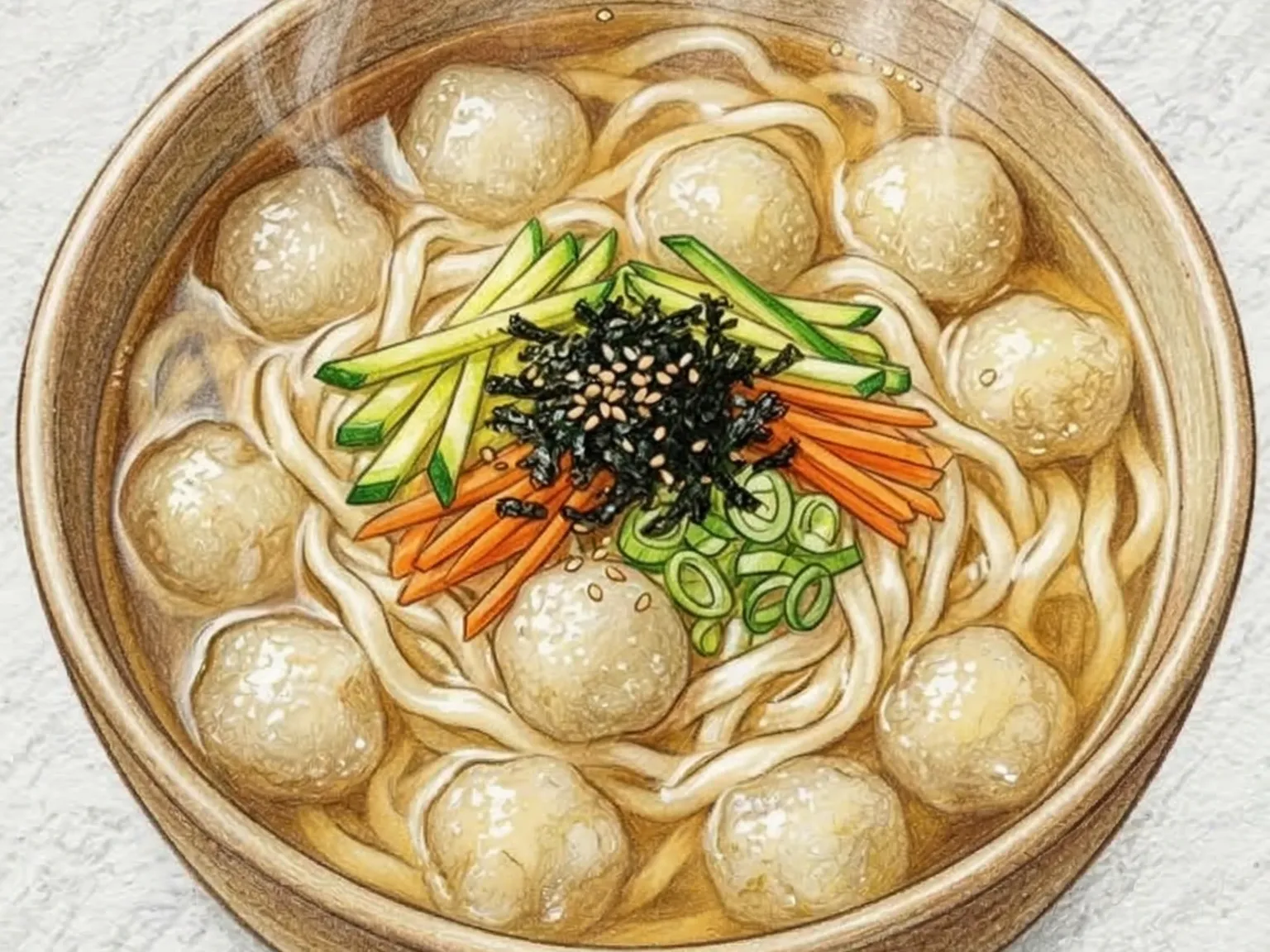
Geon-saeu-muguk is a clear Korean soup that pulls deep flavor from two inexpensive ingredients: dried shrimp and Korean radish. The dried shrimp are toasted in sesame oil before any water is added. This step is not cosmetic. As the shrimp heat up, their moisture evaporates and the concentrated briny sweetness intensifies and bonds with the oil, releasing a fragrant, almost caramelized seafood aroma that becomes the backbone of the entire broth. Without this toasting step, the soup tastes thin and flat. Radish slices go in after the shrimp, simmering in the water until translucent and releasing a gentle natural sweetness that rounds out the saltiness of the shrimp. Minced garlic and soup soy sauce are added for seasoning, and that is essentially all that is needed. No separate anchovy or kelp stock is required; the dried shrimp generate enough umami on their own to make the broth taste full and layered. Once the water comes to a boil, the soup is ready in under fifteen minutes, which makes it genuinely practical for weeknight cooking when time is short. Sliced green onion stirred in just before serving lifts the aroma and gives the bowl a fresh note to balance the deep, savory broth. Salt can substitute for the soup soy sauce if a cleaner-tasting liquid is preferred.

Korean Young Napa Cabbage & Salted Shrimp Stew
Eolgari saeujeot jjigae is a jjigae seasoned with salted fermented shrimp rather than the more common doenjang or gochujang. Young napa cabbage, potato, and zucchini simmer together in rice-rinse water, absorbing the fermented shrimp's concentrated brininess as they cook. Gochugaru adds color and a measured heat, while cheongyang chili and green onion bring additional sharpness to the broth. The timing of the salted shrimp matters: adding it too early causes the salt to concentrate and the delicate umami to dissipate, so it should go in just before the heat is reduced. The result is a broth that is intensely savory and clean-tasting without feeling heavy -- an everyday jjigae that pairs naturally with plain steamed rice.

Korean Steamed Thistle Greens with Perilla
Gondre deulkkae jjim is a steamed side dish of blanched thistle greens cooked down with ground perilla seeds, perilla oil, and soup soy sauce. The greens are seasoned with garlic and oil first, then covered and left to steam over low heat so the liquid is slowly absorbed into the fibrous leaves rather than evaporating away. Adding the perilla powder toward the end of cooking, rather than at the beginning, prevents the nutty flavor from turning bitter or chalky from prolonged heat exposure. The soft, absorbent fibers of the thistle greens hold the seasoning exceptionally well, meaning each bite carries a concentrated burst of savory, nutty flavor throughout. Pulling the pan off the heat while a little texture remains in the greens keeps the dish from turning mushy. Green onion cut into rough pieces is added on top at the end, and a final drizzle of perilla oil revives the aroma. The ingredient list is short, but the result is a deeply satisfying dish often piled over hot rice or served as a companion to gondre bibimbap.

Korean Salted Oyster Jeotgal
Gul jeotgal is a traditional Korean fermented condiment made by curing fresh winter oysters in coarse solar salt with gochugaru, minced garlic, ginger, and plum extract, then aging the mixture at low temperature. As the salt draws moisture from the oyster tissue, the flesh contracts and its marine umami intensifies into something denser and more complex than a fresh oyster delivers. Gochugaru gives the condiment its characteristic red color and adds heat that balances the brininess. Plum extract plays a specific role during fermentation: it suppresses the fishy odor that naturally develops while contributing a mild acidity that keeps the overall flavor from turning flat or heavy. The longer gul jeotgal ages, the more layered and deep its character becomes. Eaten on its own over warm rice, it functions as a complete banchan, briny and bold against plain starch. Its more significant culinary role, however, is as a filling ingredient in baechu kimchi: folded into the seasoning paste, it introduces a richer source of umami than fish sauce alone provides, and the amino acids it releases during fermentation elevate the entire kimchi as it continues to ripen.

Pollock Roe Butter Udon
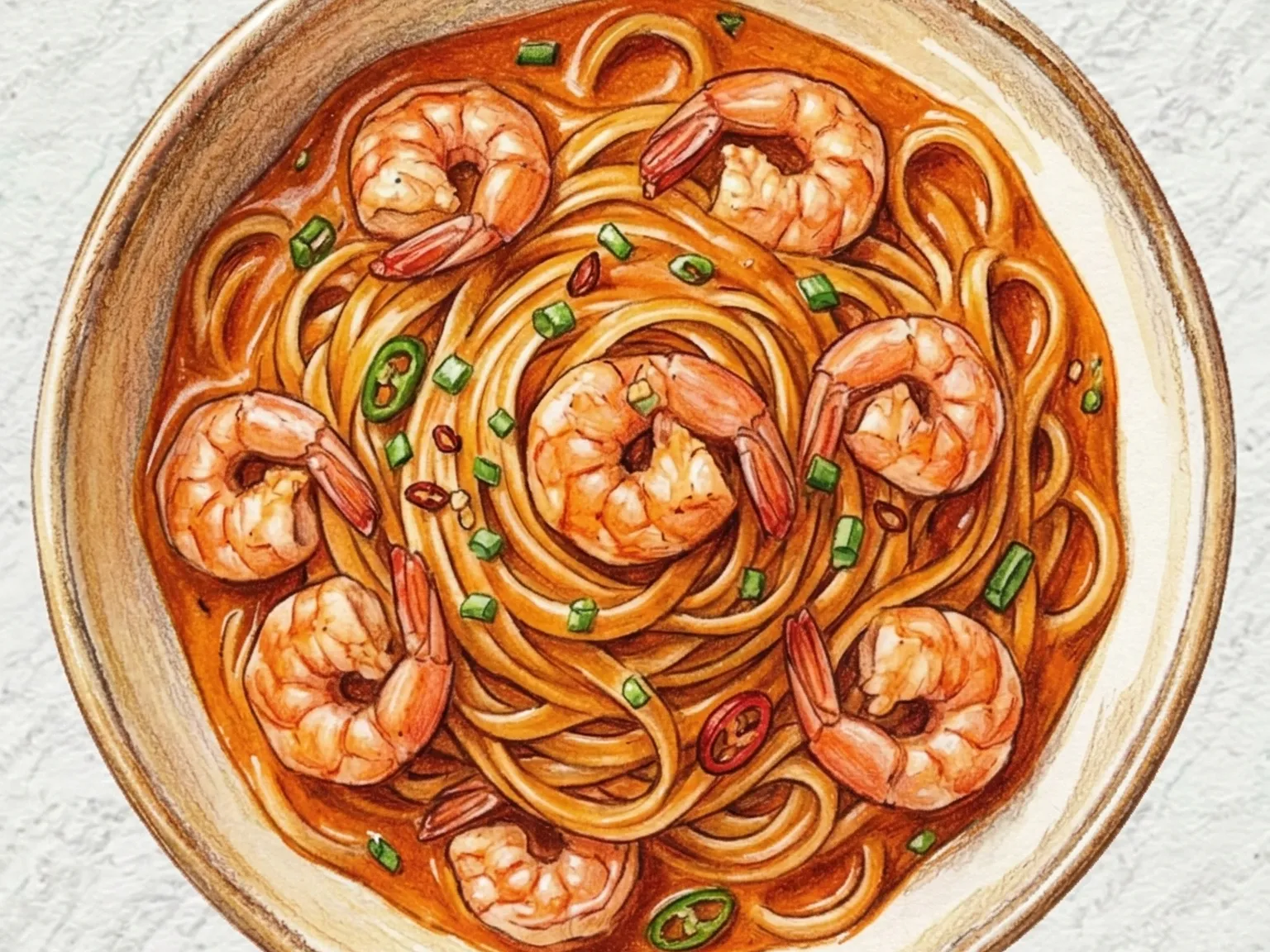
Myeongran butter udon is a Japanese-inspired cream udon in which salted pollock roe is folded into a butter and heavy cream sauce over chewy udon noodles. Garlic is gently cooked in melted butter first to build an aromatic base, then cream and soy sauce are added to create a sauce that is rich without being one-dimensional. The roe membrane is removed so only the loose, individual eggs enter the sauce, and they are stirred in after the heat is lowered to prevent the roe from turning dry, grainy, or unevenly cooked. As each tiny egg bursts against the palate, it releases a briny, oceanic intensity that cuts through the silky cream coating and creates a recurring contrast in every mouthful. The soy sauce performs double duty: it adjusts the salt level and introduces a layer of fermented umami depth that would otherwise be absent. If the sauce tightens too much as it reduces, a few tablespoons of noodle cooking water loosen it while adding a hint of starch that helps the sauce cling more evenly to each strand. Finishing with roasted seaweed flakes and chopped chives brings oceanic aroma and a clean, green freshness that lifts the overall heaviness of the dish.

Spicy Octopus Rose Penne (Octopus Penne in Rose Sauce)
Spicy octopus rose penne starts with pre-cooked octopus that is seared in a very hot, dry pan to burn off surface moisture and trigger a Maillard crust on the skin. This step does more than remove water - it eliminates any residual fishiness and builds a firm outer layer that contrasts with the tender interior when you bite through. The rose sauce is built from tomato passata and heavy cream spiked with Korean gochugaru. The chili flakes are bloomed in oil for no more than 20 seconds, enough to coax out heat and color but not long enough to develop bitterness. Butter is added to the finished sauce to encourage emulsification, keeping the cream and tomato components cohesive and allowing the mixture to coat each piece of pasta evenly rather than pooling at the bottom of the pan. Penne holds this sauce particularly well because its tubular shape captures the thick liquid inside each piece, delivering cream and spice simultaneously with every bite. Fresh basil is stirred in off the heat at the very end, its volatile aromatics intact, providing an herbal lift that cuts the heaviness of the cream base. The natural salinity and sweetness of octopus from the sea add a briny depth that cream-only sauces cannot replicate on their own.