Korean Gochujang Honey Dakgangjeong
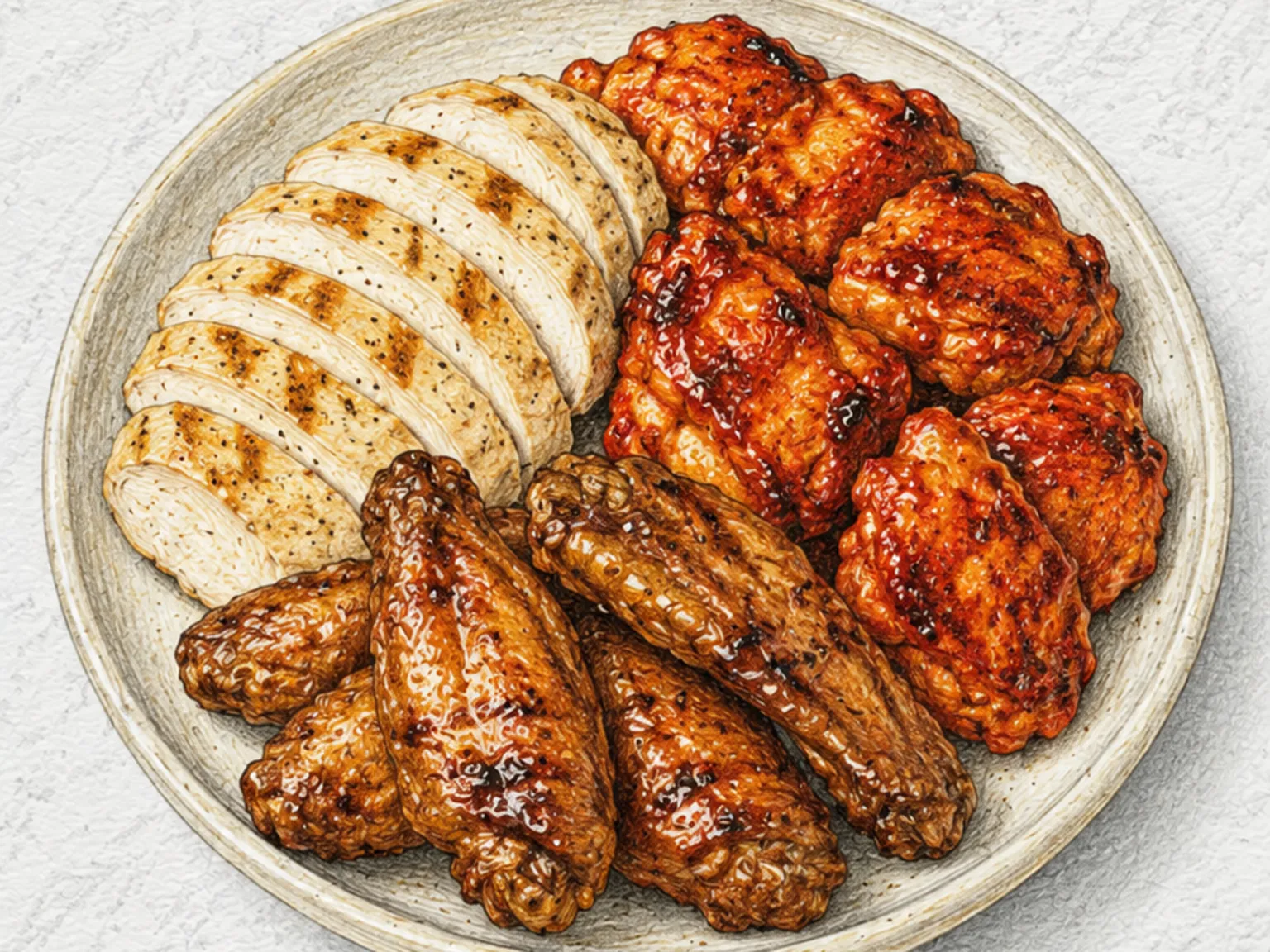
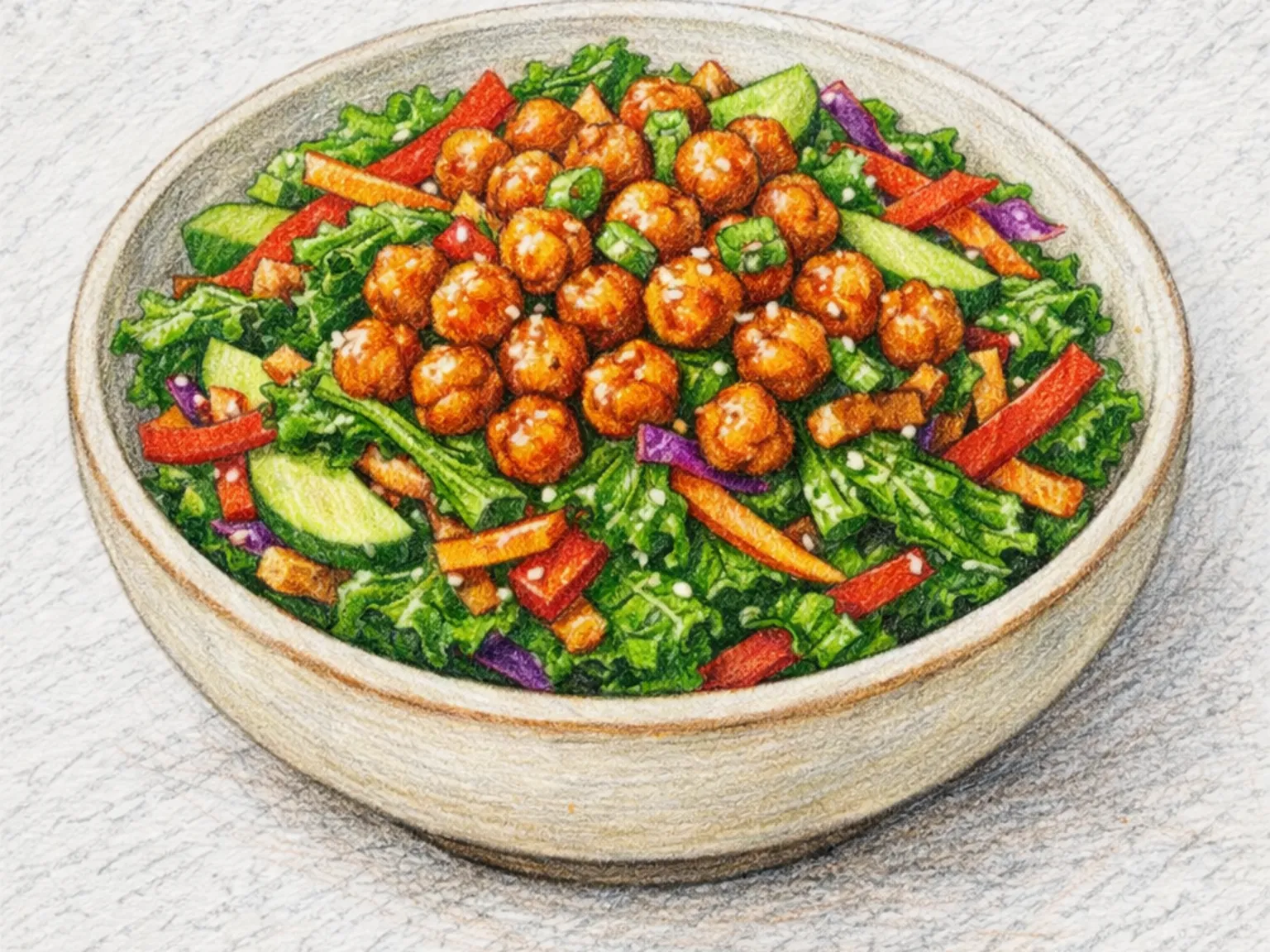
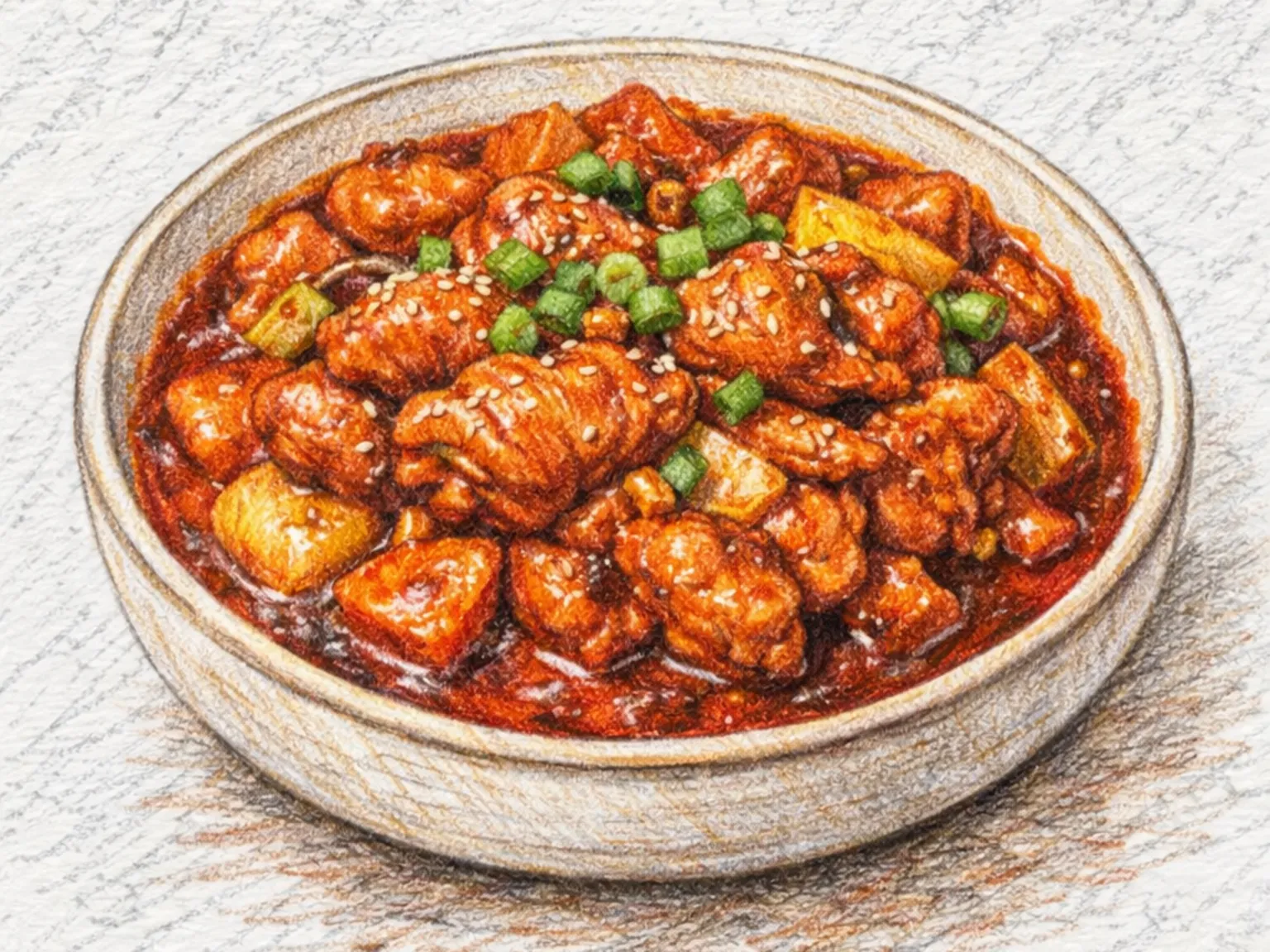
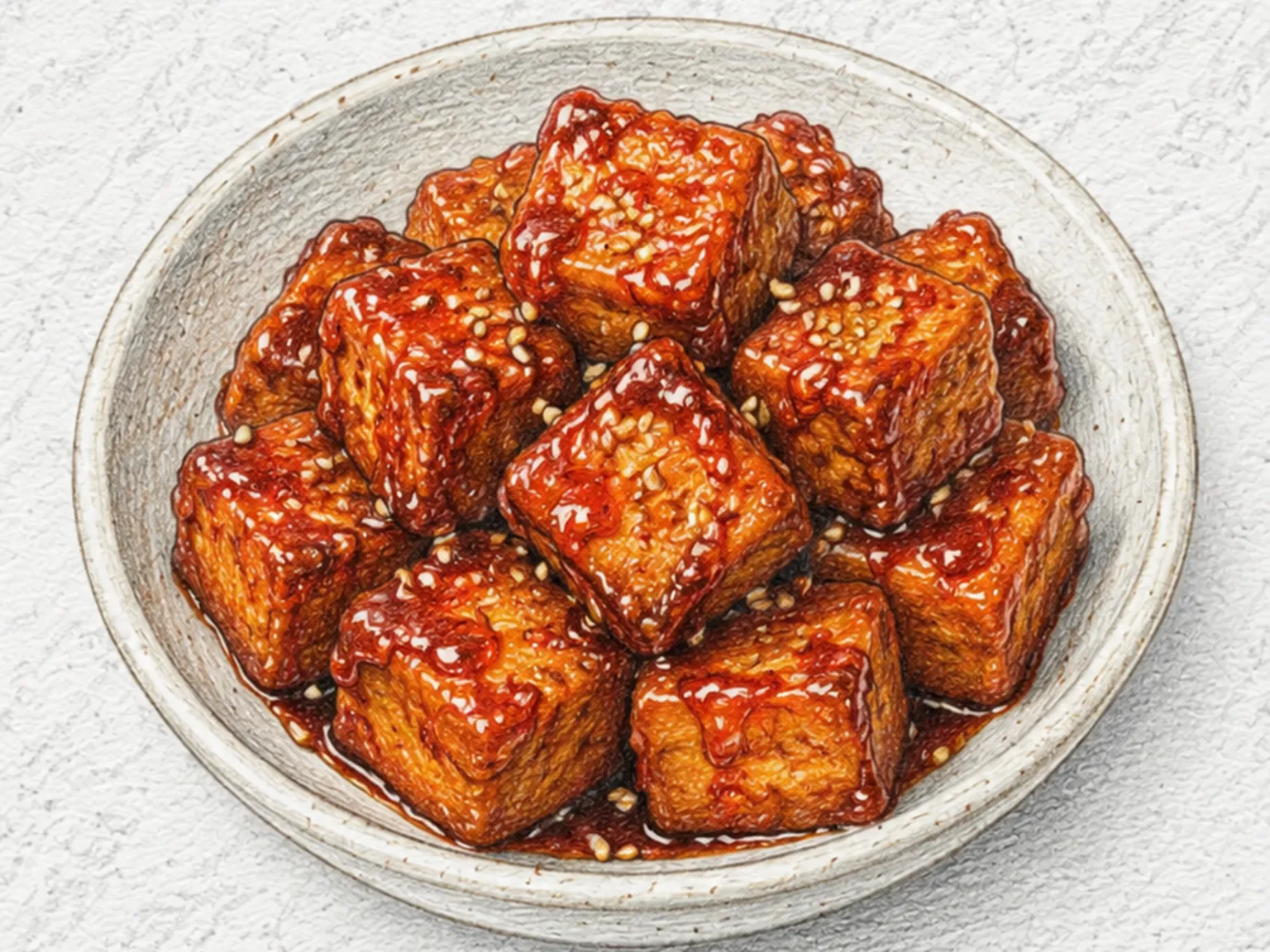
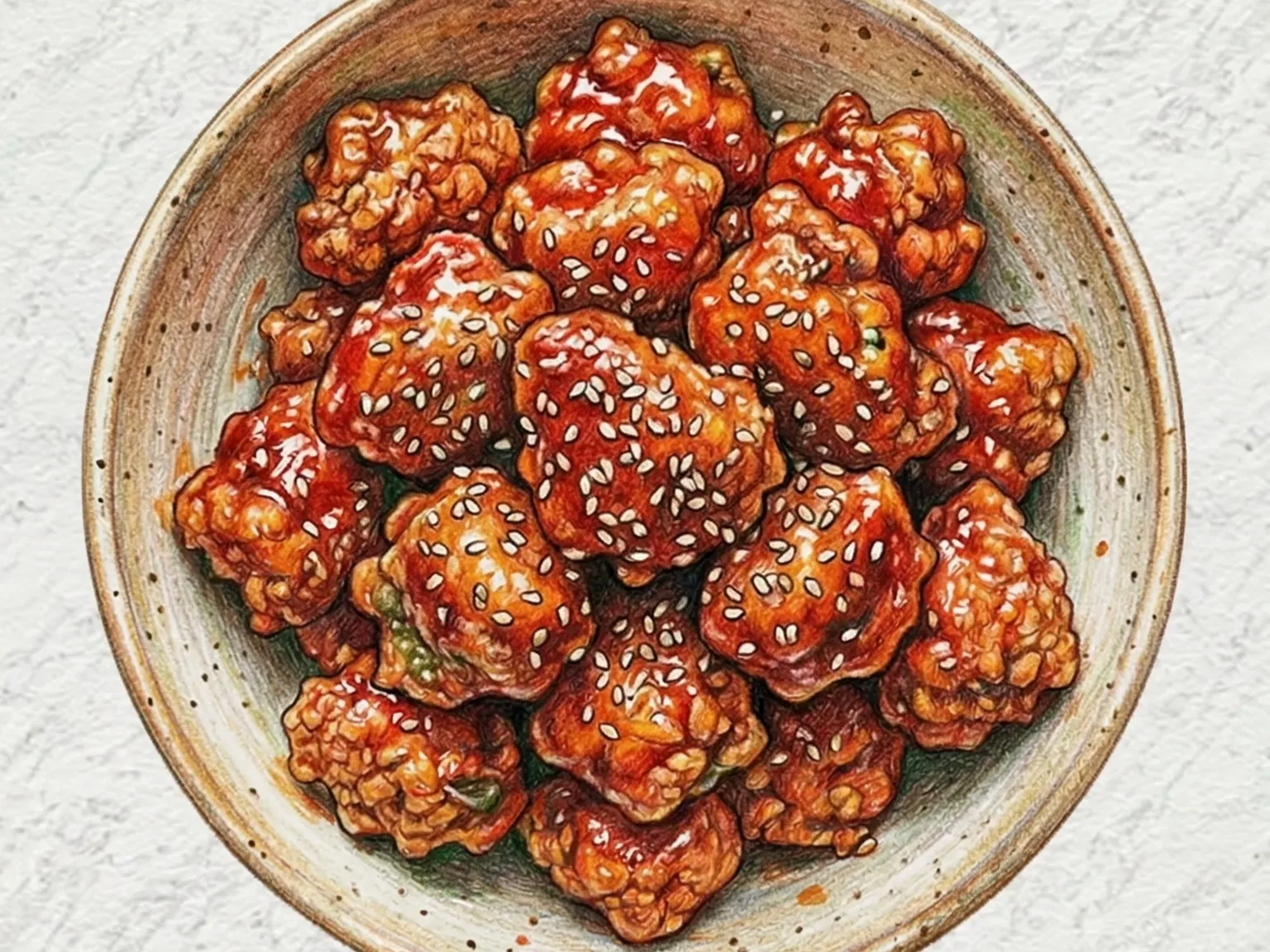
Gochujang honey dakgangjeong starts with bite-sized boneless chicken thigh pieces coated in potato starch and double-fried, first at 170 degrees Celsius and then at 180 degrees, before being tossed in a glaze of gochujang, honey, soy sauce, and garlic. The two-stage frying builds a rigid starch shell that stays crunchy even after the sauce is applied, while the natural fat in thigh meat keeps the interior juicy throughout the process. Gochujang's fermented heat contrasts directly with honey's thick sweetness, and soy sauce anchors the salt level so neither sweetness nor spice dominates. Garlic sharpens the aroma of the sauce, and sesame seeds scattered at the end add a finishing layer of nuttiness. The sauce must be reduced quickly on high heat, under one minute, to achieve a glossy coat without burning. The chicken should be sauced and eaten immediately after frying for the maximum contrast between the crackling crust and the tender, glazed interior.

Korean Aralia Shoot Pork Belly Skewers
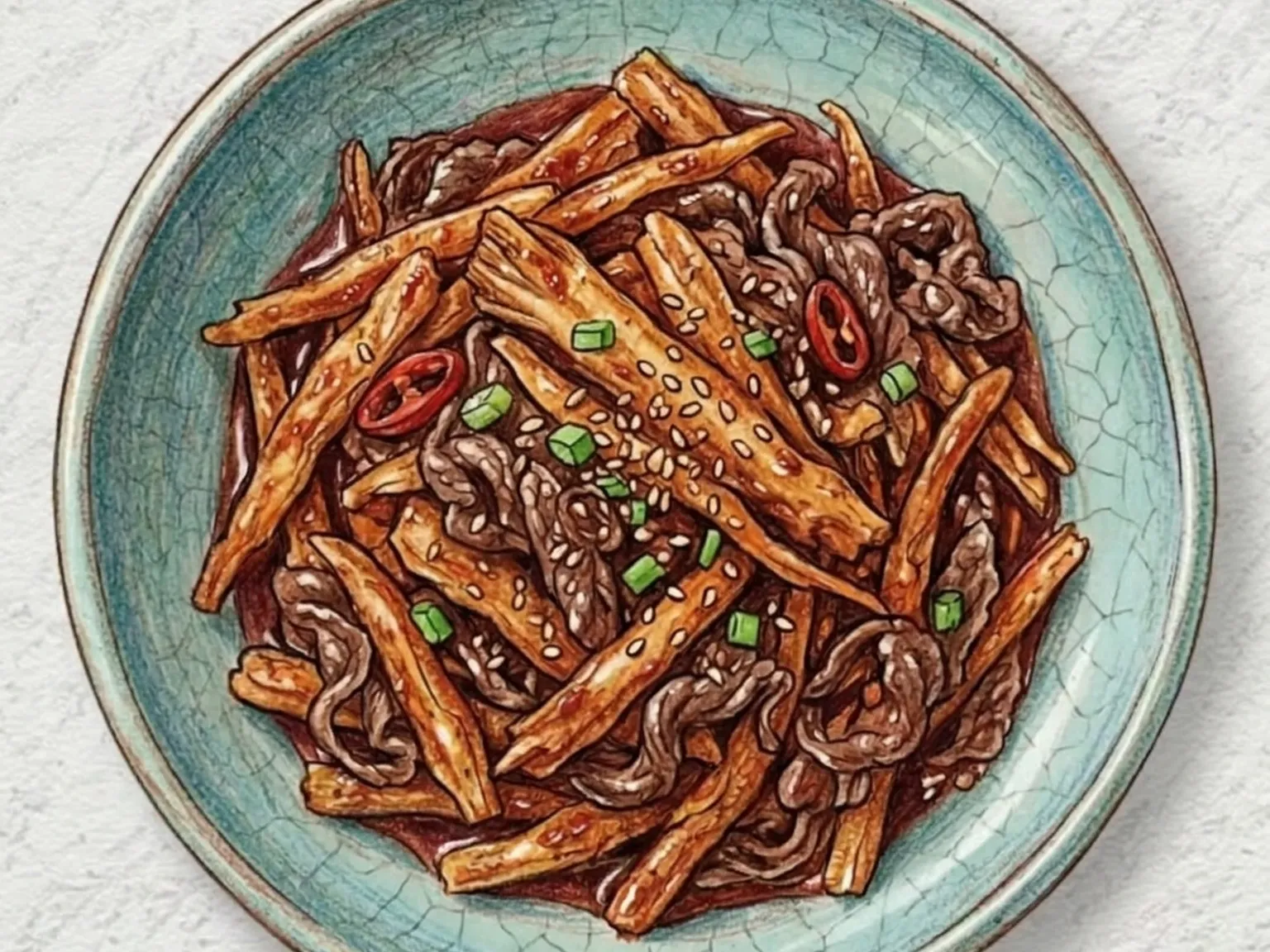
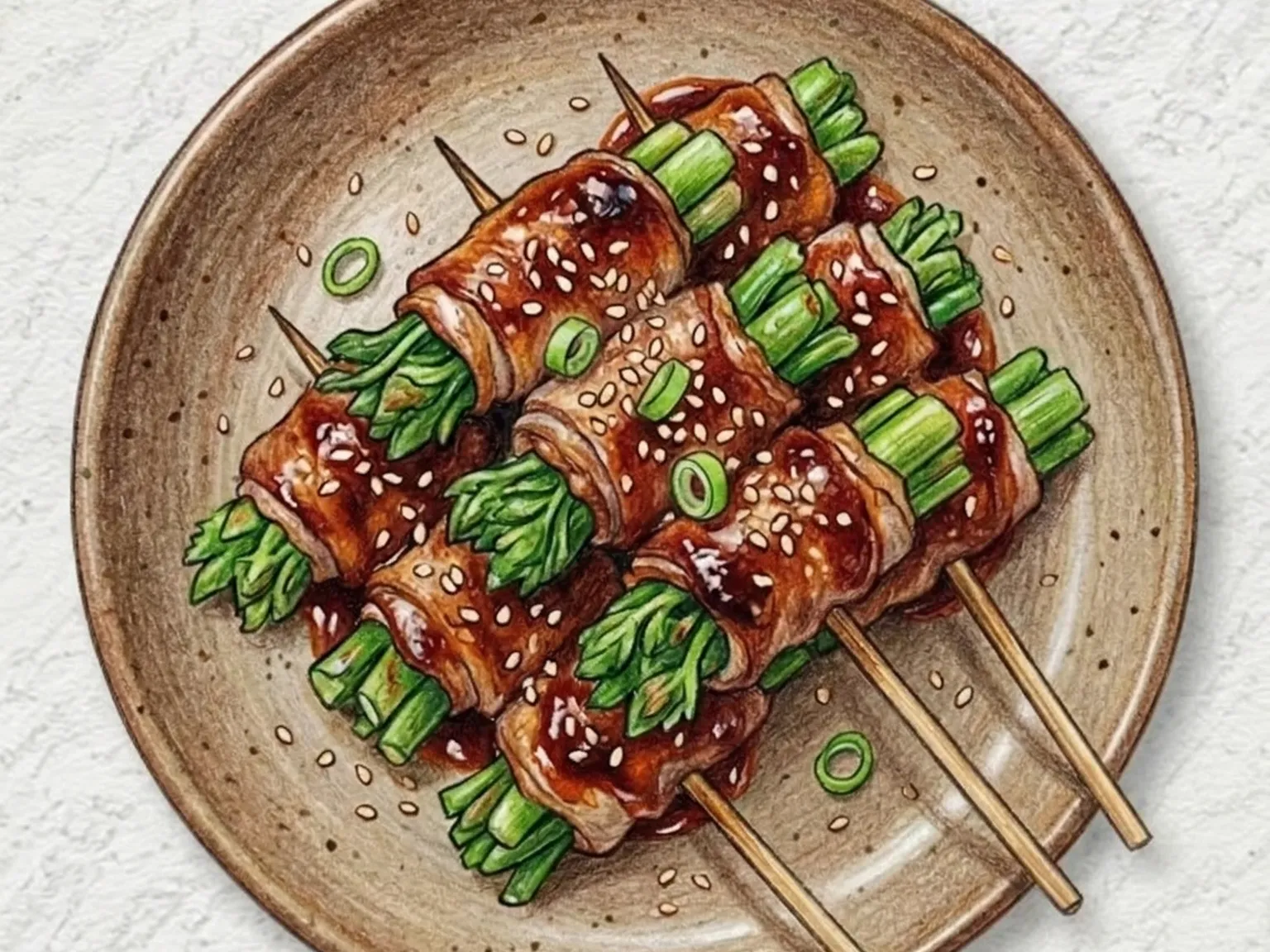
Dureup-samgyeop-kkochi-gui is a Korean spring skewer in which blanched aralia shoots (dureup) are wrapped in thin slices of pork belly, threaded onto skewers, glazed with a gochujang-based sauce, and grilled. The aralia shoots must be blanched in lightly salted boiling water for no more than thirty seconds. Longer blanching destroys the firm, slightly snappy bite and drives off the volatile aromatic compounds responsible for dureup's characteristic bitter-herbal fragrance -- the defining quality that makes this a spring seasonal dish. After blanching, the shoots should be thoroughly blotted dry so the pork belly adheres cleanly without slipping. The glaze is made from gochujang, soy sauce, maesil-cheong (plum extract syrup), minced garlic, and sesame oil, and it should be applied in two stages -- once before grilling and once partway through -- to build up a layered, intensely flavored coating. Over the grill, the fat in the pork belly renders and bastes the dureup inside the wrap, while the shoot's clean, slightly astringent bitterness cuts through the pork's richness in a pairing that is complementary rather than competing. The plum extract in the glaze caramelizes under direct heat into a sticky, sweet-tart lacquer, and a finishing scatter of whole sesame seeds adds both visual contrast and a toasted, nutty close. The dish works equally well as a drinking snack or as a main banchan.

Korean Spicy Braised Chicken
Dakdoritang is a Korean braised chicken dish where bone-in pieces are simmered with potato, carrot, and onion in a sauce built from gochujang, gochugaru, soy sauce, garlic, and sugar. As the chicken cooks, it releases juices into the sauce that blend with the gochujang to create a thick, glossy braising liquid that coats every surface it touches. The potato breaks down gradually over the cooking time, adding starch that thickens the sauce further without any additional effort. Carrot and onion absorb the braising liquid and take on its full flavor, making them as central to the meal as the chicken itself. Sugar moderates the sharp heat of the chilies into a warm, rounded spice that lingers rather than burns. A finishing touch of sesame oil and sliced green onion added just before serving adds a nutty fragrance and fresh brightness that lifts the richness of the braise.

Korean Steamed Fermented Skate
Hongeo-jjim is a specialized culinary preparation originating from the Jeolla Province of South Korea that features steamed fermented skate as its central element. The flavor of the dish is developed using a seasoning mixture composed of gochugaru, gochujang, finely minced garlic, and soy sauce. The skate, known as hongeo, is processed through a traditional curing method that results in the formation of ammonia-based compounds. This specific fermentation process produces the sharp and pungent aroma that characterizes the dish, which often results in a polarizing experience for individuals who encounter the preparation for the first time. This aggressive fermentation quality tends to soften once the fish is exposed to heat and combined with the depth of the chili-based seasoning. Over time, repeated consumption often reveals complex layers of flavor that establish this dish as one of the most uniquely prepared items within Korean regional cuisine. During the cooking process, onions are included to release their natural sweetness, which functions to balance the sharper edges of the concentrated spice paste. Minari is introduced during the concluding stages of steaming to provide a clean and herbaceous quality that offers a contrast to the intensity of the fermented fish. Prior to steaming, rice wine is applied to the skate to moderate the fermentation scent without completely removing the fundamental characteristics of the fish. Removing the lid of the cooking vessel at the end of the process allows excess moisture to evaporate, ensuring that the seasoning adheres properly to the surface of the skate. In the cultural context of Jeolla Province, hongeo-jjim is a staple at ceremonial events and various celebratory meals. The dish is traditionally served in the company of makgeolli or hongtak, forming a combination that local residents typically refer to as hongeo samhap.

Korean Beef Brisket Jjolmyeon
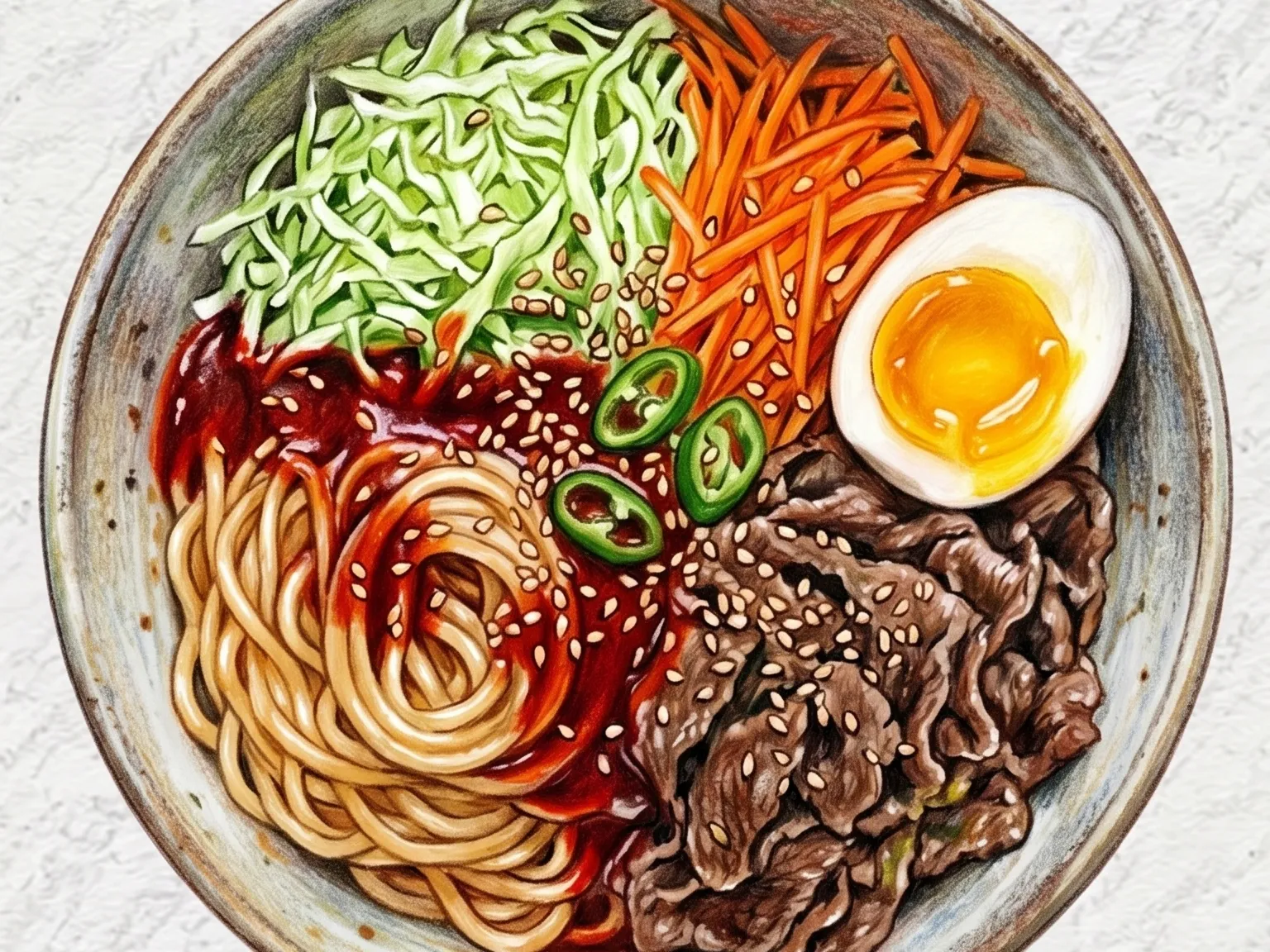
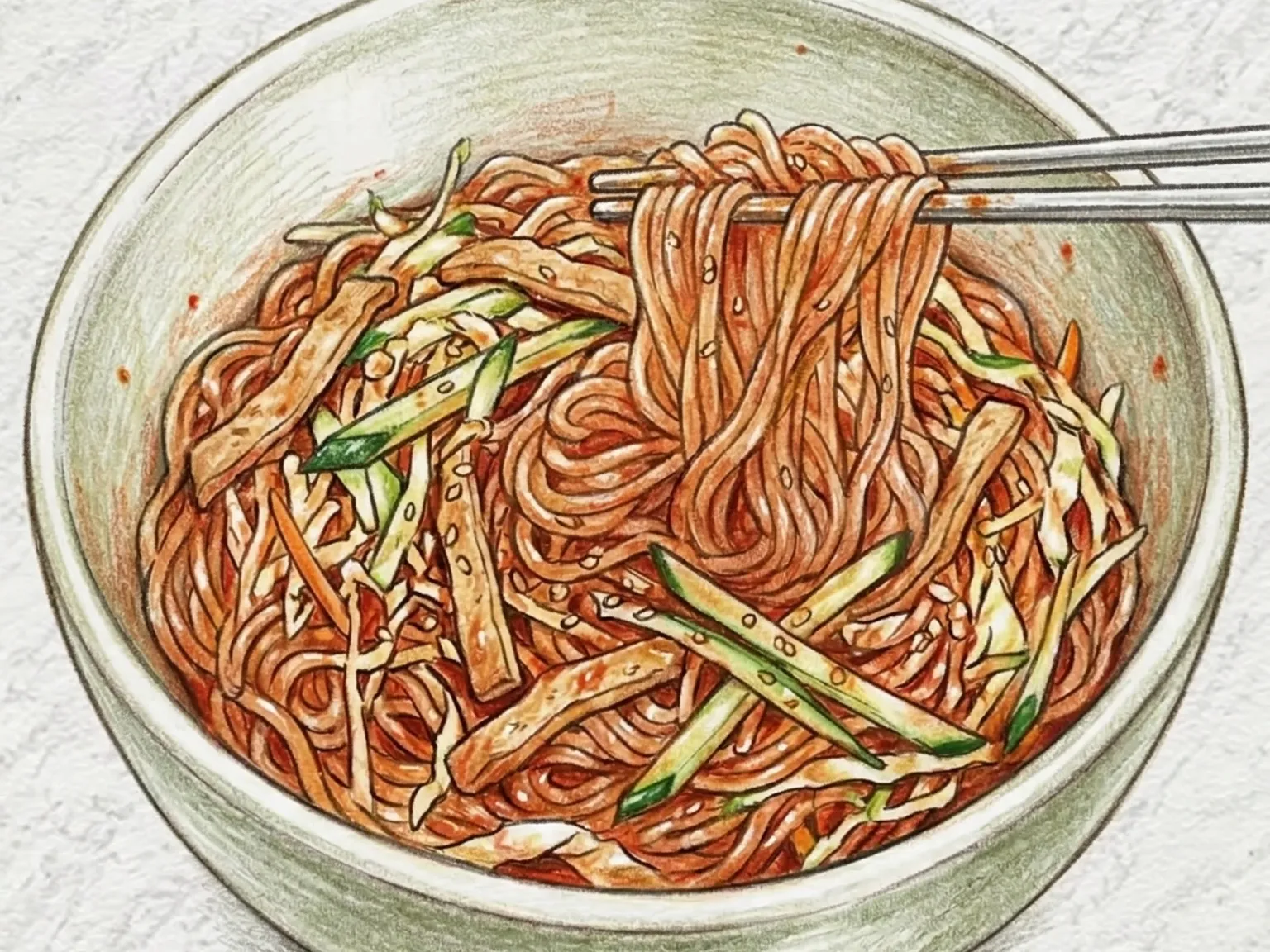
Cha-dol jjolmyeon puts seared thin-sliced beef brisket on top of chewy jjolmyeon noodles dressed in gochujang sauce. The brisket is spread flat on a hot dry pan and cooked on high heat for no more than a minute per side so the exterior browns while the intramuscular fat stays in place. Cooking too long renders the fat out entirely, leaving the slices dry and tough, which defeats the purpose of using brisket over leaner cuts. Jjolmyeon noodles are made with a higher proportion of starch than ordinary wheat noodles, giving them a rubber-band elasticity that lets sauce cling to the surface from the first bite to the last. The standard accompaniments are julienned cucumber and a halved boiled egg, both of which temper the spiciness with their mild, cool flavors. Bean sprouts add a crunchy contrast in texture, while perilla leaves sharpen the overall aroma. The dish is eaten cold in summer and is also a common late-night order, often finished with a splash of vinegar stirred into the remaining sauce at the bottom of the bowl.

Gochujang Shrimp Cream Pasta
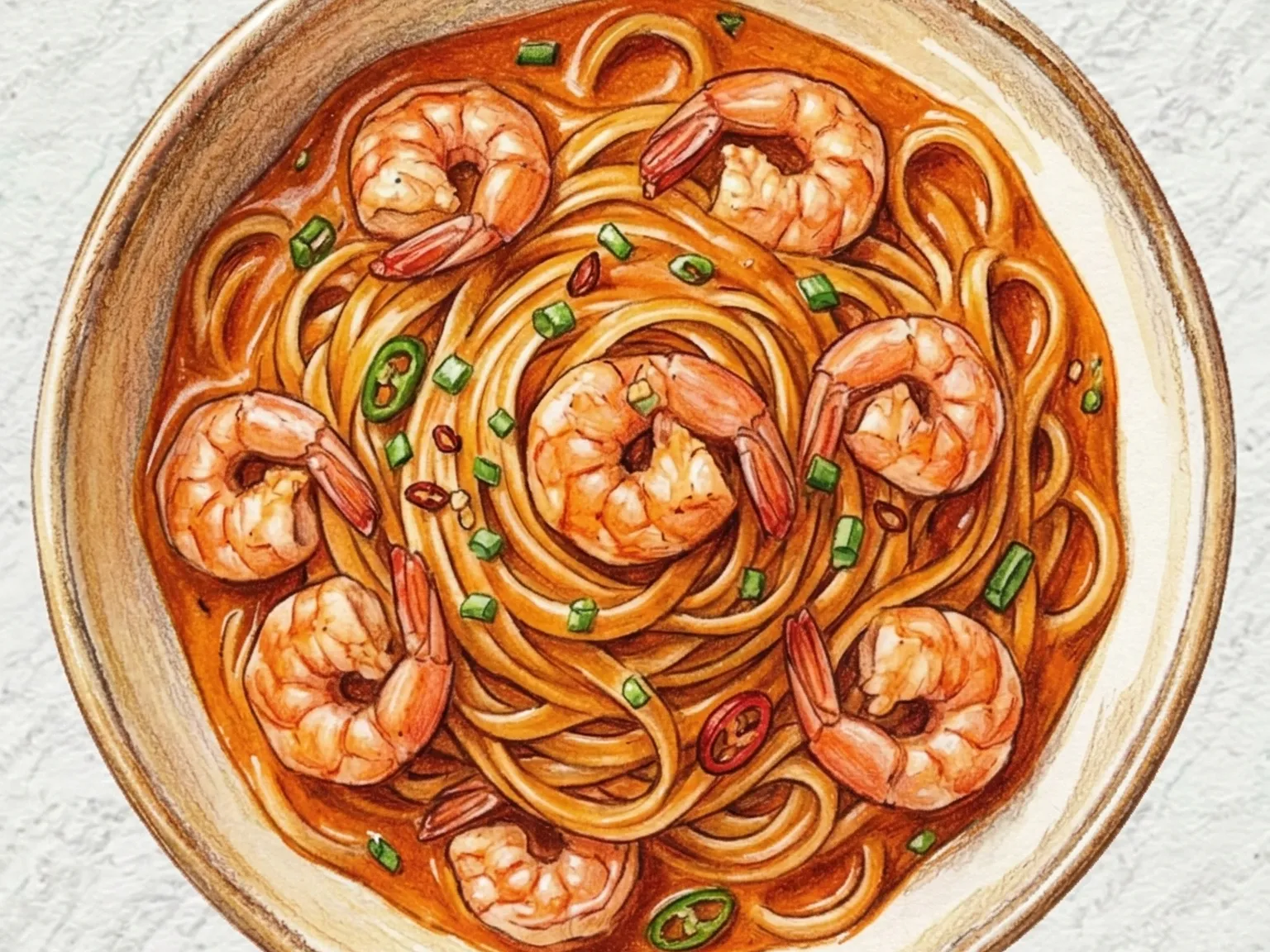
Gochujang shrimp cream pasta merges fermented Korean chili paste with heavy cream into a single cohesive sauce. Shrimp are seared at high heat first to develop a caramelized crust, then folded into the gochujang-cream mixture along with milk and garlic. The fermented depth of gochujang operates differently from straightforward chili heat: it carries malty sweetness and umami that reinforce the dairy richness rather than cutting against it, building a layered flavor the sauce would not achieve with fresh chili alone. Parmesan grated into the pan adds salt and nuttiness that round out the finish, while reserved pasta water lets the cook dial in the consistency. The result coats each strand of pasta in a glossy, spiced cream. The entire dish comes together in around 20 minutes, keeping the shrimp firm and the sauce smooth.

Squid Naengi Chojang Salad
Preparing squid for a seasonal salad involves a quick blanching process in boiling water for less than thirty seconds. This precise timing keeps the seafood tender and prevents it from turning rubbery or tough. Shepherd's purse, or naengi, contributes an earthy aroma characteristic of early spring that complements the oceanic profile of the squid. Crisp lettuce and fresh cucumber provide a crunchy texture that contrasts with the soft seafood pieces. The dressing relies on a combination of gochujang, rice vinegar, and oligosaccharide syrup to create a spicy, tangy, and mildly sweet foundation for the ingredients. To finish the sauce, sesame oil contributes a nutty scent while minced garlic adds a sharp, aromatic quality that integrates the different components. Careful cleaning of the naengi to remove soil and fine roots is necessary before briefly blanching it in salted water to eliminate bitterness and preserve its fragrance. Serving this dish cold during the early spring months highlights the specific seasonal qualities of the ingredients. For variations, scallops or shrimp can replace the squid, as they both pair well with the spicy dressing. Similarly, spring cabbage or wild chives can substitute for the shepherd's purse to maintain the seasonal character of the salad.

Korean Seasoned Eoseuri Herb Namul
Eoseuri, Korean cow parsnip with the botanical name Heracleum moellendorffii, is a wild mountain herb foraged from Korea's central and northern highlands during early spring. Its thick stems and broad leaves carry a layered fragrance that combines celery, flat-leaf parsley, and a faintly medicinal undertone, a complexity that no cultivated green can replicate. Blanched for under a minute to soften the texture while preserving a slight resistance in the stems, the greens are dressed with gochujang, vinegar, minced garlic, and sesame oil. The bitterness is sharper than common namul varieties like spinach or bean sprouts, which makes eoseuri polarizing for first-time tasters, but those who grow accustomed to it find that milder greens no longer satisfy in the same way. In Korean mountain villages, eoseuri has traditionally been gathered alongside chwinamul and chamnamul each spring to compose the seasonal namul spread on the table, and because the plant disappears quickly after spring peaks, it is a genuinely fleeting ingredient that marks the brief window between late winter and early summer.

Korean Spicy Dakgalbi Rice Bowl
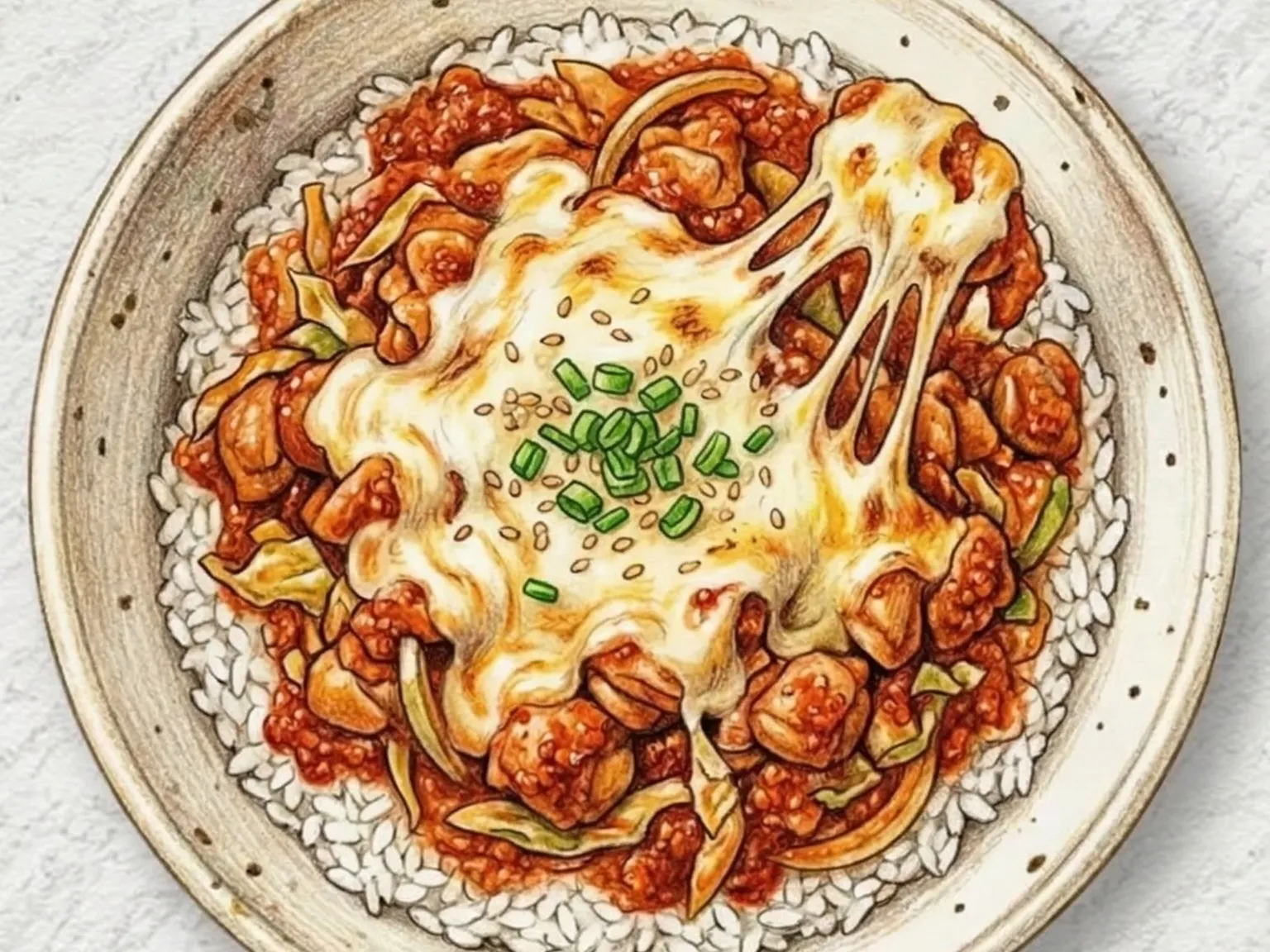
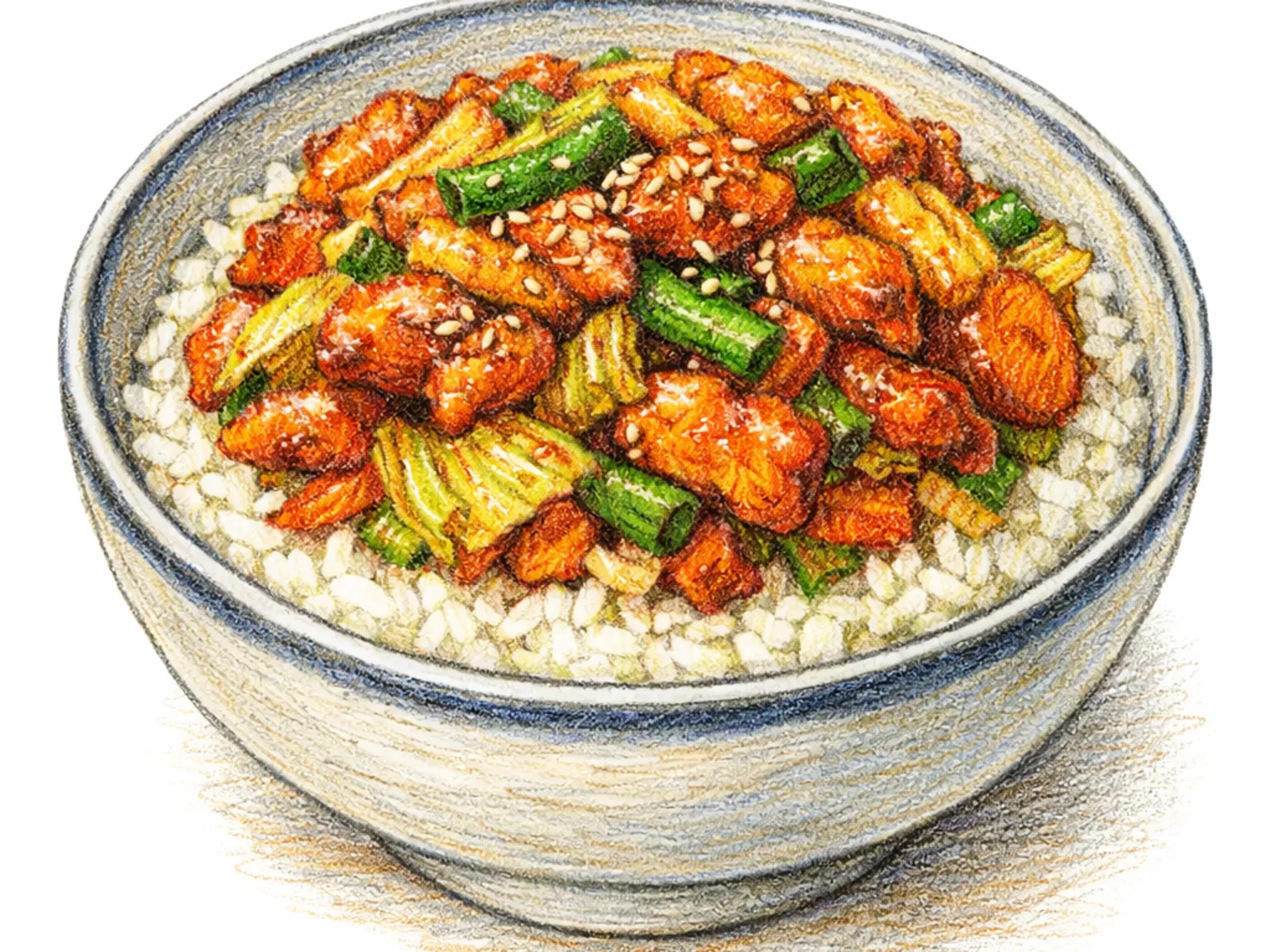
Dakgalbi deopbap serves the core flavors of Chuncheon's famous spicy chicken in a single rice bowl. Boneless chicken thigh is stir-fried alongside cabbage, onion, and green onion in a gochujang-based marinade balanced with sugar and a splash of soy sauce. The chicken is cooked over high heat throughout -- this creates a caramelized crust on the meat's surface and keeps the vegetables at a slight crunch rather than softening them completely. Sesame oil is added off the heat as a final step, contributing a toasty fragrance that rounds out the bold seasoning without overpowering it. At traditional dakgalbi restaurants in Chuncheon, the meal ends with fried rice made by mixing cooked rice directly into the residual sauce left on the hot iron plate -- this bowl captures that same moment in a format that can be made at home without a cast-iron griddle. The dish requires no banchan; the seasoned protein and vegetables together with the rice form a self-contained meal.

Korean Spicy Gochujang Potatoes
Gamja gochujang bokkeum is a simple Korean banchan of cubed potatoes stir-fried and simmered in a gochujang-based sauce until each piece is coated in a glossy, spicy-sweet glaze. Soaking the potatoes in cold water before cooking draws out excess starch, which prevents sticking and allows the sauce to adhere evenly across the surface rather than pooling at the bottom of the pan. The balance of gochujang heat and sugar sweetness is the flavor backbone, and the sauce is considered ready when it has reduced enough to form a shiny film on the potatoes - a visual cue that means the sugars have caramelized slightly and the flavors have concentrated. Because the sauce contains no additional liquid, it clings deeply to each cube rather than sitting separately, delivering full seasoning in every bite. This is a reliable everyday banchan that takes around twenty-five minutes with pantry staples and appeals to a wide range of palates, including children who find the sweetness more prominent than the heat.

Korean Soupy Tteokbokki (Rice Cakes in Spicy Gochujang Broth)
Gukmul-tteokbokki is a soup-forward version of tteokbokki in which cylindrical rice cakes and fish cakes are simmered in a kelp-anchovy broth seasoned with gochujang, gochugaru, soy sauce, and sugar. Unlike dry or stir-fried versions, the generous broth saturates each rice cake from the outside in, while the fish cakes release their own savory juices into the liquid as they cook, building the stock to a richer baseline. Eight to ten minutes of medium-heat simmering leaves the exterior of each rice cake soft and yielding while the core stays chewy. Scallions go in at the end to cut through the heat with a bright, grassy note. The broth left over after the rice cakes and fish cakes are gone is widely regarded as the most prized part of the dish: regulars stir in a bowl of rice or drop in ramyeon noodles to make sure none of it goes to waste.

Korean Dwaeji Kkeopdegi Gui (Grilled Pork Skin)
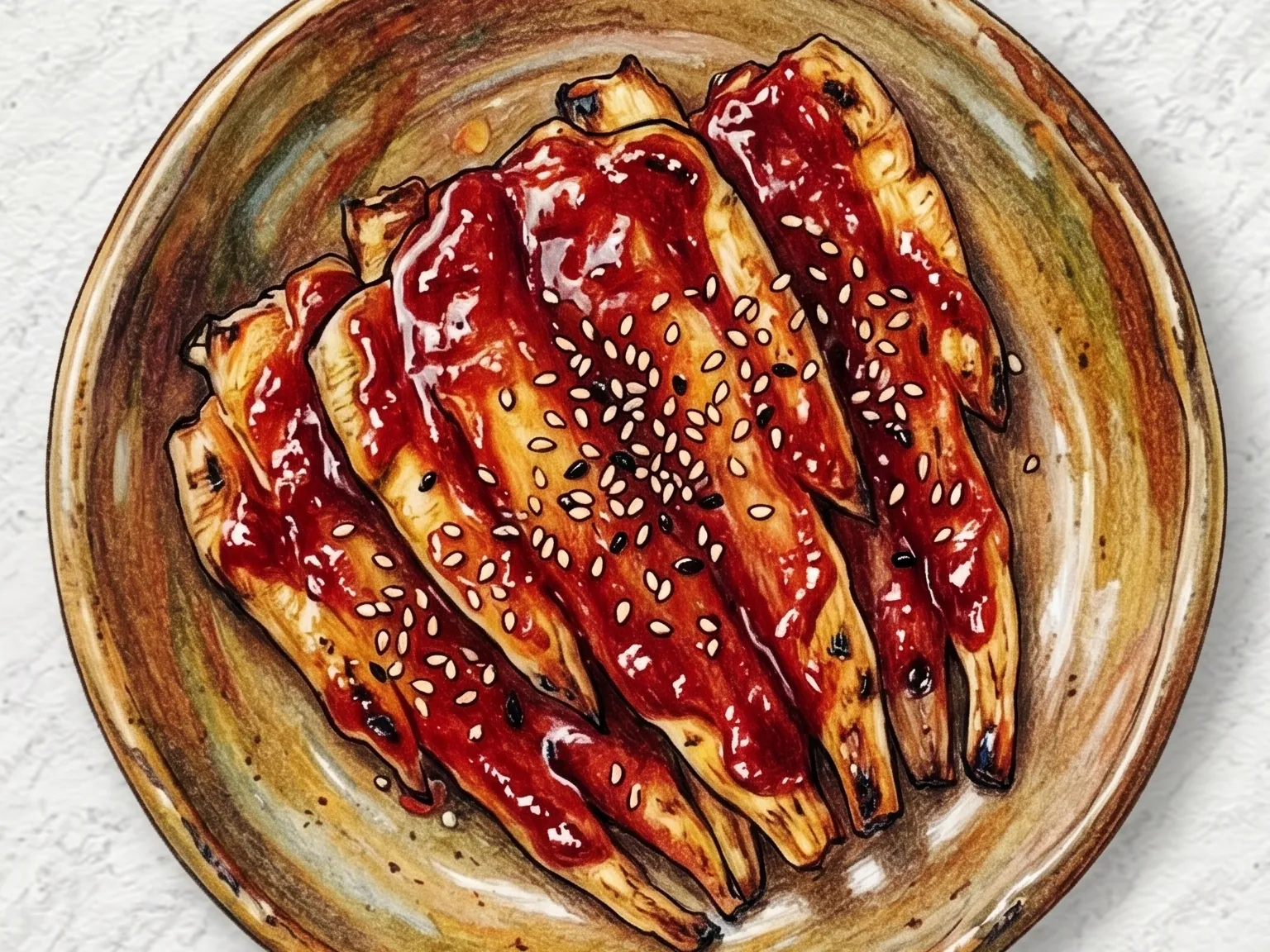
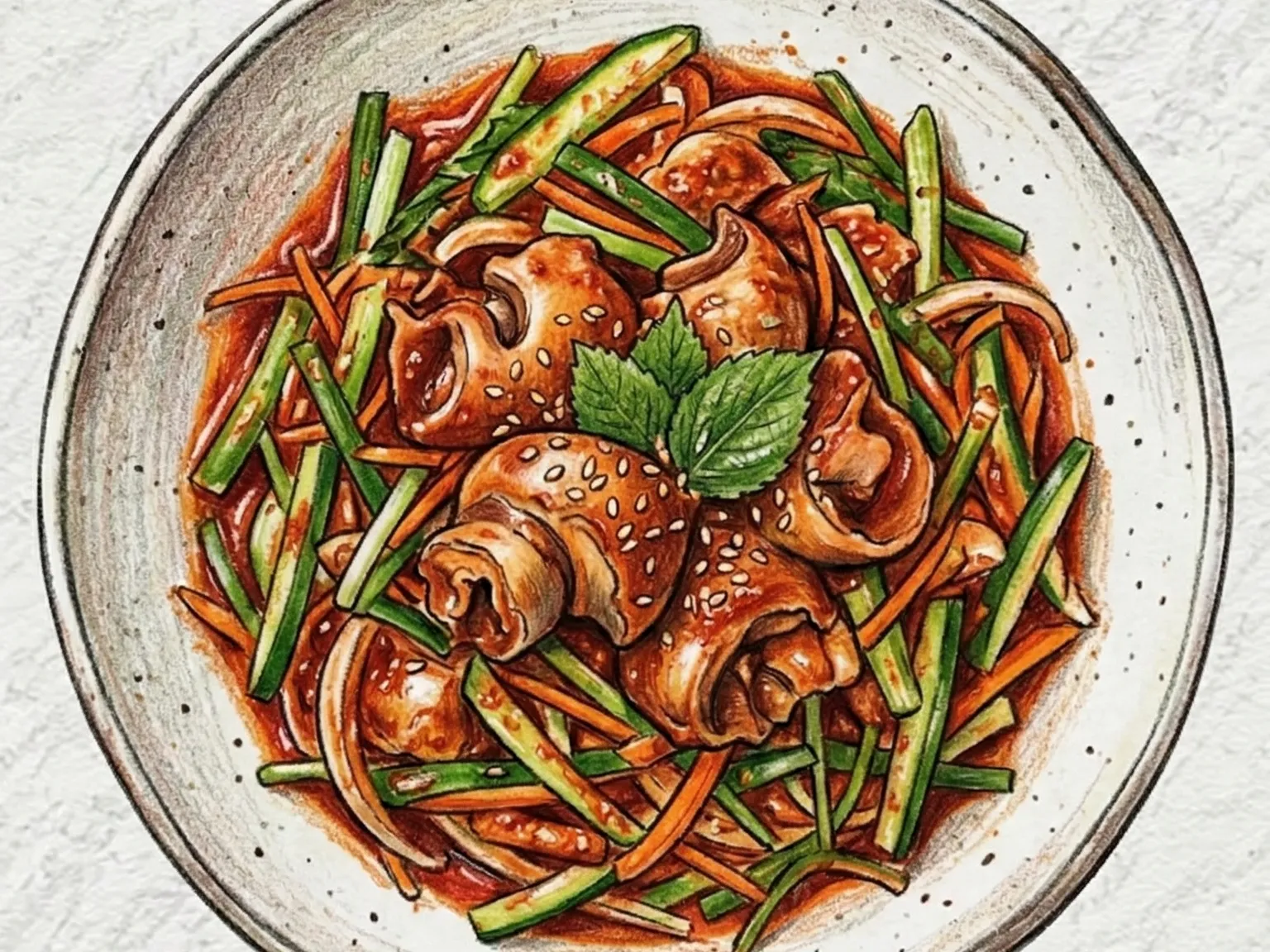
Dwaeji-kkeopdegi-gui is grilled pork skin that has been parboiled to draw out excess fat and eliminate the raw, gamey odor of the skin before it meets the fire. After blanching, the skin is coated in a spicy marinade built on gochujang and gochugaru, reinforced with soy sauce, minced garlic, and sugar to balance heat with savory depth. The skin is almost pure collagen, which makes blanching time critical: too brief and it stays rubbery with an unpleasant resistance, too long and it goes limp, forfeiting the springy chew that defines the dish. As the marinated pieces hit a hot grill or cast iron, the skin contracts and buckles, forming ridges and shallow pockets that trap the glaze. Every bite delivers a concentrated hit of spicy-sweet flavor where the caramelized marinade has pooled in those grooves. The texture offers a satisfying, slightly elastic chew that is unlike any other grilled meat. It is most commonly eaten wrapped in a perilla leaf with ssamjang, or served straightforwardly alongside soju as a classic drinking snack.

Korean Wild Chive Clam Chili Stew
Dalrae bajirak gochujang-jjigae is a spring stew that brings together wild chives and short-neck clams in a gochujang-spiked anchovy broth. When the clams are added to the simmering stock and begin to open, they release a concentrated brine that deepens the base flavor considerably. Gochujang folds in a fermented heat that runs through the whole bowl. Dalrae, a wild allium that grows in Korean fields from late February through April, goes in near the very end of cooking; its sharp, garlic-like scent stays intact that way and cuts through any marine fishiness. Potato pieces absorb the spicy broth as they cook and give the stew weight, while tofu provides a soft counterpoint to the heat. Before cooking, soaking the clams in salted water for thirty minutes purges any sand so the broth stays clean. The combination of early-spring dalrae with clams makes this a recipe with a narrow seasonal window.

Korean Braised Squid with Shishito Peppers
Kkwari-ojingeo-jorim is a Korean braise of squid and shishito peppers simmered in a gochujang and soy sauce seasoning. The squid retains its chewy bounce while soaking in the bold sauce, and the peppers absorb enough flavor to stand on their own while keeping a slight crunch. Gochujang brings a warm spiciness that combines with soy sauce's depth into a multilayered seasoning, and garlic with ginger neutralizes any seafood odor. As the liquid reduces, it coats each piece in a concentrated glaze that makes this banchan work especially well spooned over a bowl of steamed rice.

Korean Stir-Fried Udon with Spicy Chicken
Dakgalbi udon bokkeum is a Korean stir-fried noodle dish where gochujang-marinated chicken, cabbage, sweet potato, and rice cakes cook together in a wide pan before thick udon noodles are added and tossed through the spicy-sweet sauce. The dakgalbi seasoning is assertive and clingy, coating every broad surface of the udon so that each bite carries the full weight of the marinade. Cabbage and scallion wilt fast under high heat, releasing sugars that moderate the chili paste and prevent the sauce from tasting sharp or one-dimensional. Sweet potato contributes starch that slightly thickens the sauce while cushioning its spice. Udon, being considerably thicker than ramen or somyeon, holds up under the heavy coating without turning mushy, and delivers a satisfying, bouncy chew throughout the meal. Managing the heat is important: keeping the pan at high temperature drives off excess moisture and produces the lightly charred, smoky edge that separates a good stir-fry from a steamed mess. Melting cheese over the top just before serving adds a creamy, fatty layer that offsets the heat. Sesame seeds and shredded seaweed finish the dish. It is well suited to group cooking on a large griddle or electric pan.

Tteokgalbi Ragu Ziti Bake (Korean BBQ Ziti Gratin)
Tteokgalbi ragu ziti bake starts with ground beef seasoned and browned in soy sauce and sugar, a step that reproduces the sweet-salty profile of Korean grilled tteokgalbi rather than a standard Italian soffritto base. Tomato puree and gochujang are then added and reduced together for 12 minutes. The gochujang contribution goes beyond simple heat; its fermented complexity adds a savory depth that distinguishes this ragu from a conventional bolognese. Undercooking the ziti by two minutes before it goes into the oven is important: pasta that enters the oven already fully cooked will turn soft and mushy by the time the bake is done. Even coverage of mozzarella followed by 12 to 15 minutes at 200 degrees Celsius produces a surface that caramelizes to a golden crust while the interior remains moist. The recipe yields four portions and is designed to be served directly from the oven dish, making it practical for a family dinner or a small gathering.

Korean Spicy Gochujang Dried Squid Stir-Fry
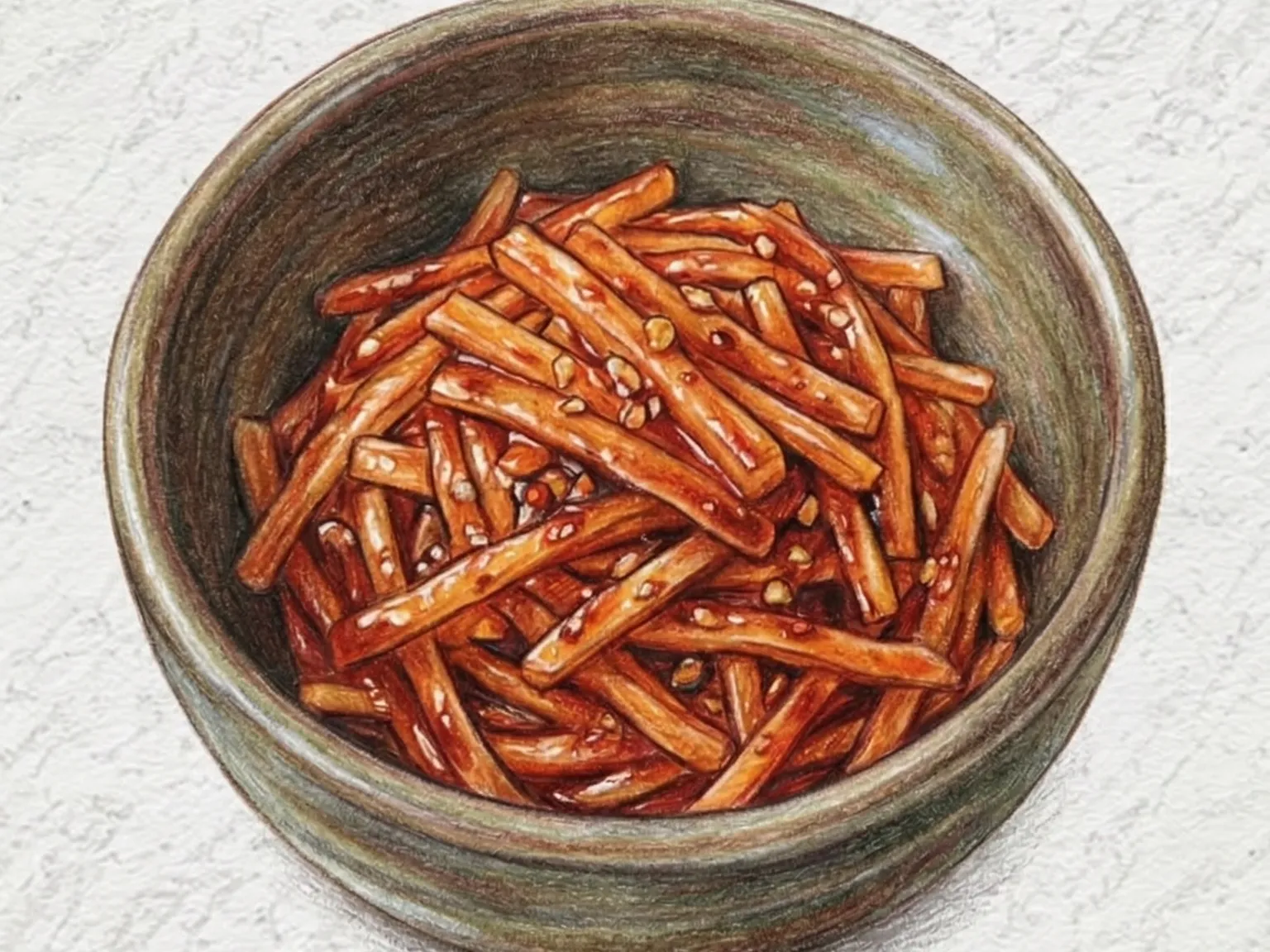
Jinmichae, shredded dried squid, is a Korean pantry staple valued for its chewy texture and the umami that builds and intensifies the longer you chew. This preparation coats the strands in a gochujang glaze, making it one of the most reliably present banchan in Korean households. Briefly soaking the dried squid in water before squeezing it dry softens the tough fibers and opens them to absorb the sauce more evenly. The sauce of gochujang, gochugaru, rice syrup, soy sauce, and garlic is stir-fried first over low heat to mellow the raw chili sharpness, then the squid is tossed through quickly over the same heat. Sesame oil and toasted sesame seeds are added off the heat, coating the strands in a sweet, spicy glaze that keeps well at room temperature for several days.

Korean Dolsot Bulgogi Bibimbap
Dolsot bulgogi bibimbap arrives in a superheated stone bowl that continues cooking the rice against its surface throughout the meal, building a layer of crispy nurungji that grows thicker and crunchier the longer you wait to mix. Thinly sliced beef marinated in soy sauce, sugar, and sesame oil is seared quickly over high heat to keep it juicy, then arranged alongside separately sauteed zucchini, shiitake mushroom, and carrot over a base of hot rice. A raw egg yolk sits at the center, ready to be broken and stirred through with a generous spoonful of gochujang. As the bibimbap is mixed, the yolk turns into a silky binder that coats every grain of rice and every vegetable strand, while the gochujang distributes its warmth evenly through the bowl. The sizzling sound of the stone pot and the aroma of charring rice rising from the bottom are part of the experience from the first moment the bowl lands on the table. Scraping up the caramelized nurungji at the very end delivers a final crunch that contrasts the tender toppings throughout.

Korean Spicy Gochujang Bulgogi
Spicy gochujang pork bulgogi builds its bold flavor from a marinade of gochujang, Korean chili flakes, soy sauce, corn syrup, and garlic applied to thick-cut pork neck, then stir-fried over high heat. The gochujang delivers a deep, fermented heat while the corn syrup adds a glossy sweetness that helps the sauce caramelize on the surface of the meat. Adding chili flakes separately from the gochujang introduces a different texture and heat quality, creating a more complex spice profile than either ingredient alone would produce. Allowing the moisture to evaporate before adding the onion is important, as onion releases liquid when it hits the pan and will thin the sauce if added too early. The natural sugars in the onion contribute a mild sweetness that tempers the chili heat once the moisture has cooked off. Scoring thicker pieces of pork two or three times with a knife allows the marinade to penetrate more evenly and ensures consistent seasoning throughout. Finishing with green onion over high heat for thirty seconds adds a smoky char note while leaving a fresh aromatic lift. The recipe yields a generous four servings, making it a practical main dish for family meals or a filling for ssam wraps.

Korean Spicy Pork Rice Cup
Jeyuk cupbap is a Korean street-style rice cup topped with pork shoulder stir-fried in gochujang, soy sauce, sugar, and garlic, layered over steamed rice with onion and cabbage. The gochujang-sugar combination forms a spicy-sweet glaze on the pork that caramelizes quickly under high heat, sealing in the meat's juices and creating a lacquered surface. Cabbage goes in last to keep its snap, and the slow-cooked onion contributes a gentle sweetness that tempers the chili heat. Slightly cooled rice keeps the cup from turning soggy, and the tight, portable format makes this a defining item of Korean street-food culture, equally at home in a pojangmacha stall and a school cafeteria. A soft-boiled egg or a slice of processed cheese on top adds a rich, creamy note.

Korean Grilled Fish Cake Skewers
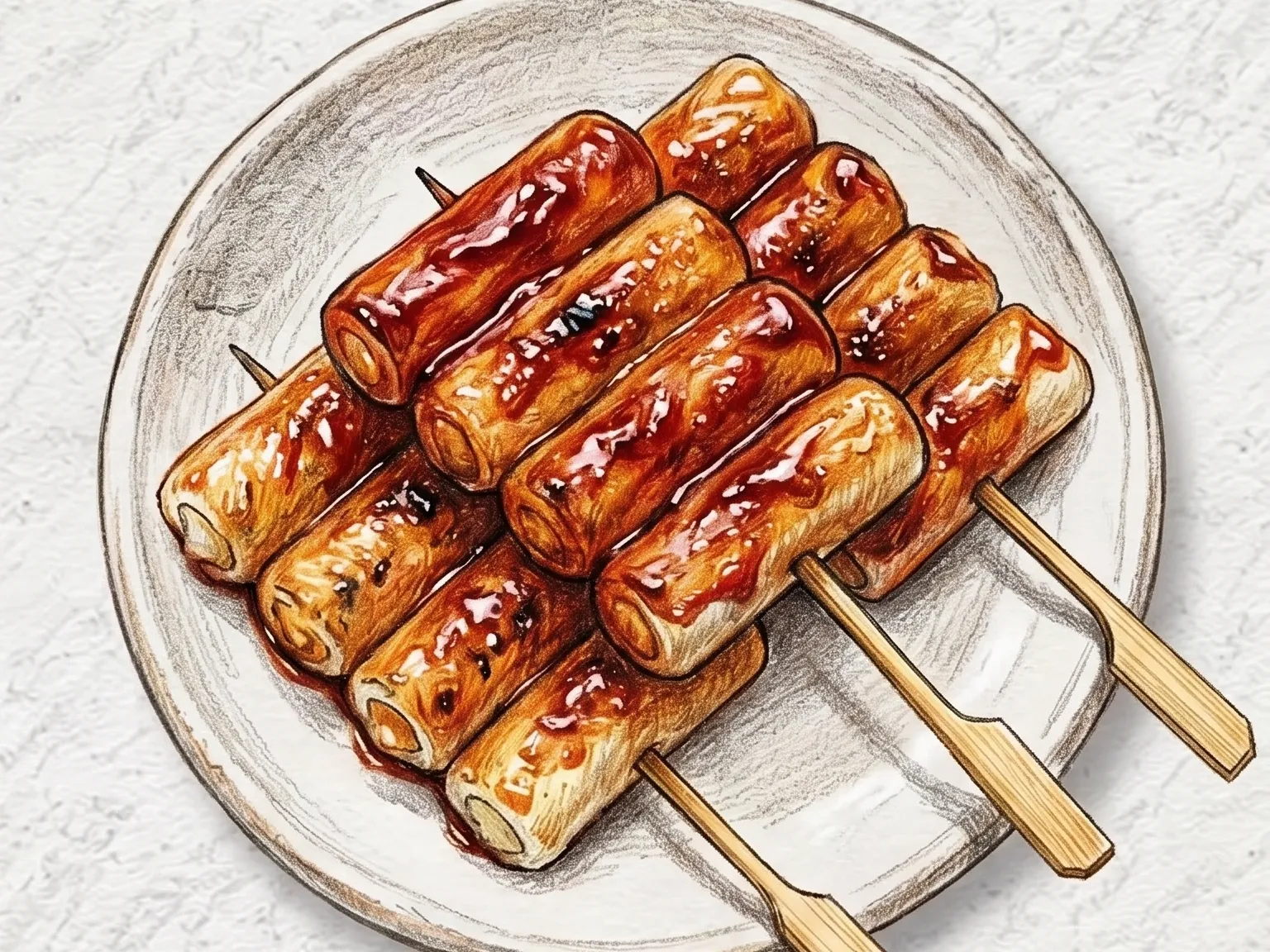
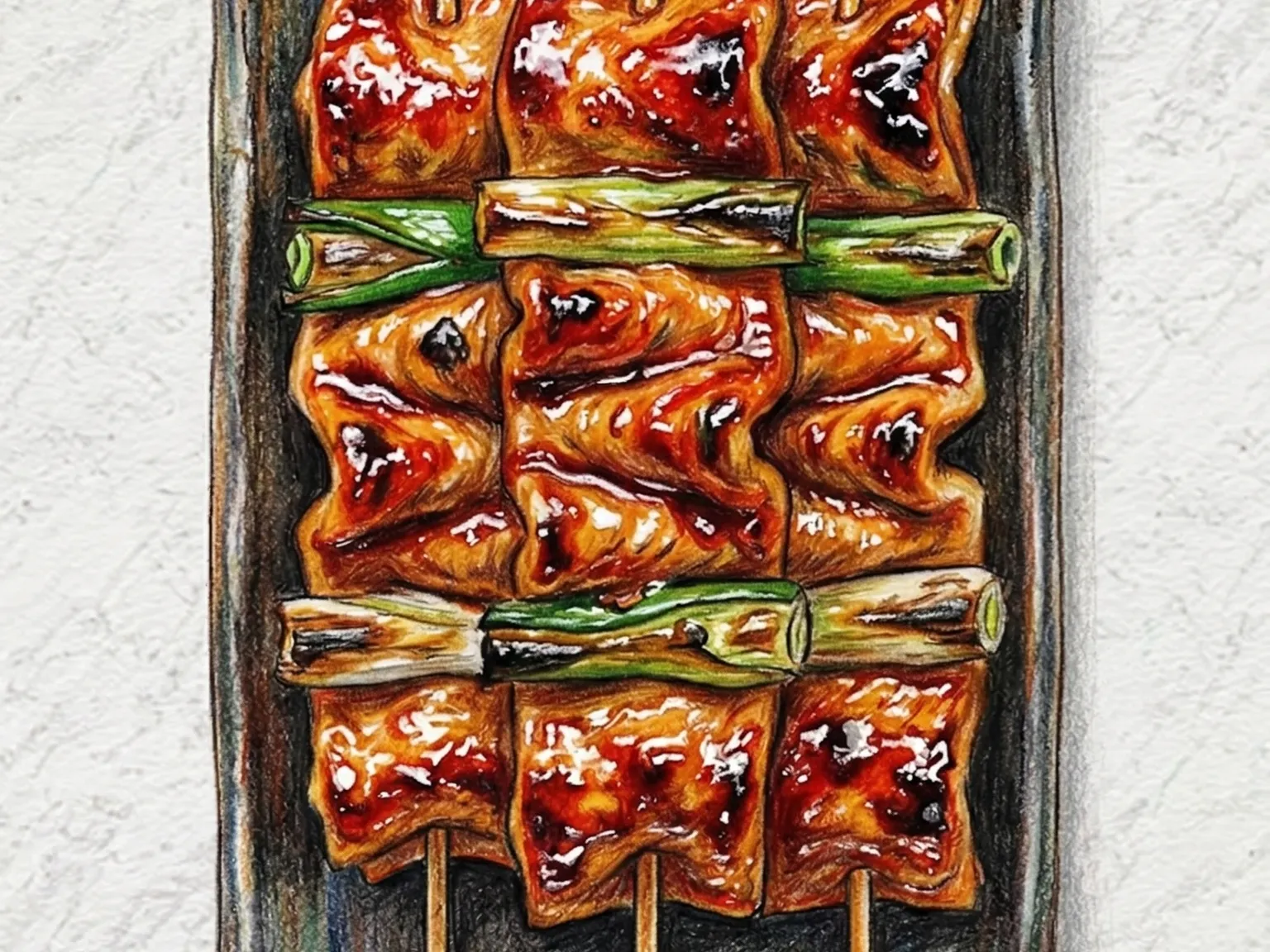
Eomuk kkochi gui are Korean grilled fish cake skewers, a staple of street food stalls that pair naturally with tteokbokki. Square fish cake sheets are folded in zigzag layers onto wooden skewers, grilled until the surface takes on color, then brushed with a glossy sauce of soy sauce, gochujang, sugar, and minced garlic. Folding the sheets before skewering multiplies the surface area that the sauce can grip and creates layered thickness that turns each bite into a dense, bouncy chew. Dry-grilling without oil first is important: it drives off moisture from the surface so that when the sauce is applied it clings and does not slide off. A second brief pass over heat after glazing caramelizes the sugars into a lacquered sheen and intensifies the savory aroma. Tucking pieces of green onion between the folds adds another layer of flavor -- the onion's moisture steams away as it grills, releasing a sweet, mellow fragrance that gradually infuses the fish cake.

Korean Bellflower Root Tofu Stew
Deodeok dubu jjigae is a Korean stew that simmers bellflower root and soft tofu in a broth made from rice-rinse water. Gochujang and doenjang are dissolved together to build a base that is simultaneously spicy and deeply savory. Bellflower root contributes a signature bitter-herbal fragrance and firm bite that sets the soup apart from standard tofu jjigae. Rice-rinse water acts as a natural thickener and rounds off any residual bitterness from the root. The contrast between the chewy deodeok and the yielding tofu gives each spoonful an interesting texture. Before cooking, the bellflower root is traditionally pounded to open its fibrous grain, which allows the seasoning to penetrate more evenly.

Korean Spicy Braised Semi-Dried Pollock
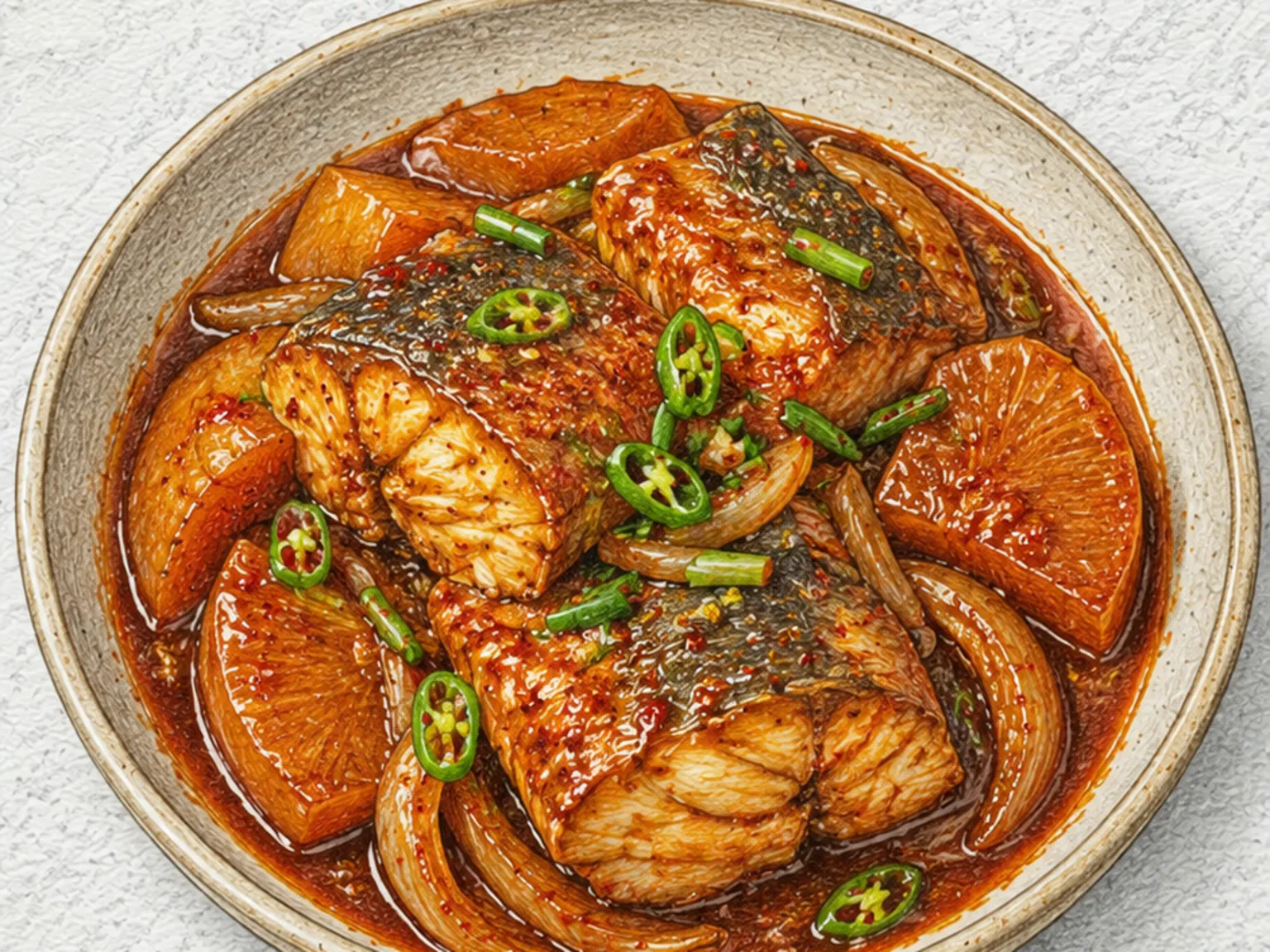
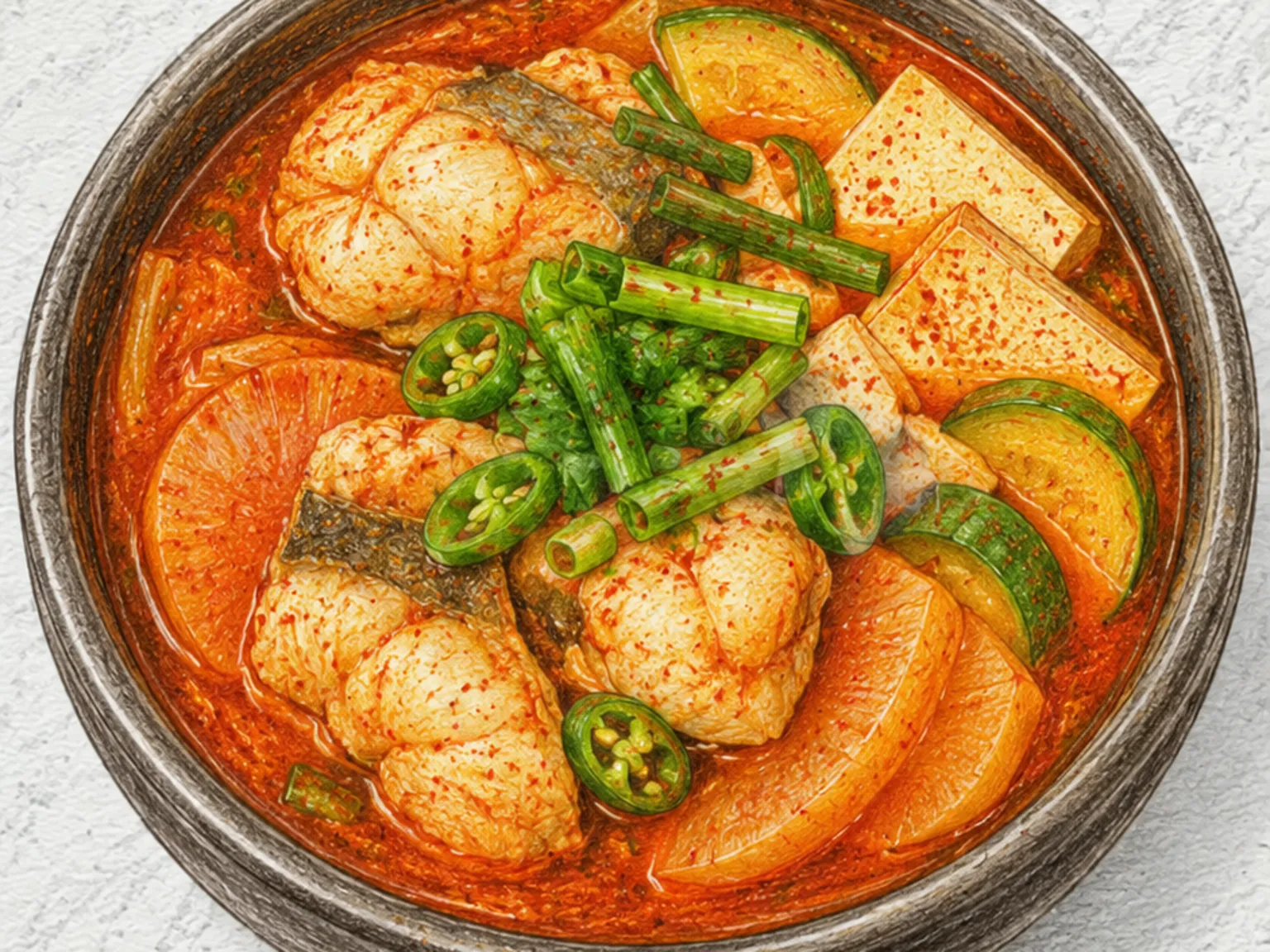
Kodari-jjim is a Korean braised dish of semi-dried pollock slow-cooked with radish and onion in a gochugaru and soy sauce seasoning. The drying stage removes moisture from the pollock, firming the flesh so it absorbs the seasoning deeply while holding its shape throughout cooking. Radish tempers the chili heat and contributes a natural sweetness, and a small addition of doenjang adds a savory depth that rounds out the sauce. As the liquid reduces to a thick, clinging glaze, the pollock takes on an intensely spiced quality that makes it a natural companion to steamed rice. Mixing the reduced sauce into hot rice is a well-known Korean habit, since every drop carries concentrated spice and brine.

Gochujang Vongole Linguine
Gochujang vongole linguine brings together the briny liquor of Manila clams and the fermented heat of Korean red chili paste in a single pan. White wine steams the clams open and releases their cooking juices, which form the base of the sauce; dissolving gochujang into that liquid adds a layer of thick, complex spice that standard vongole never carries. Stirring in a knob of butter just before the heat goes off gives the sauce a glossy finish and a smooth coating texture, while parsley and black pepper anchor the flavors at the end. The most important step in the process is slicing garlic as thin as possible and frying it slowly in olive oil until the raw sharpness converts entirely into a sweet, penetrating fragrance that defines the aromatic foundation of the sauce.