Charim

2686 Korean & World Recipes

2686+ Korean recipes, clean and organized. Ingredients to instructions, all at a glance.

Recipes with korean chili flakes

24 recipes

Buy korean chili flakes
Korean Acorn Jelly Salad with Sesame Soy Sauce
Side dishesEasy

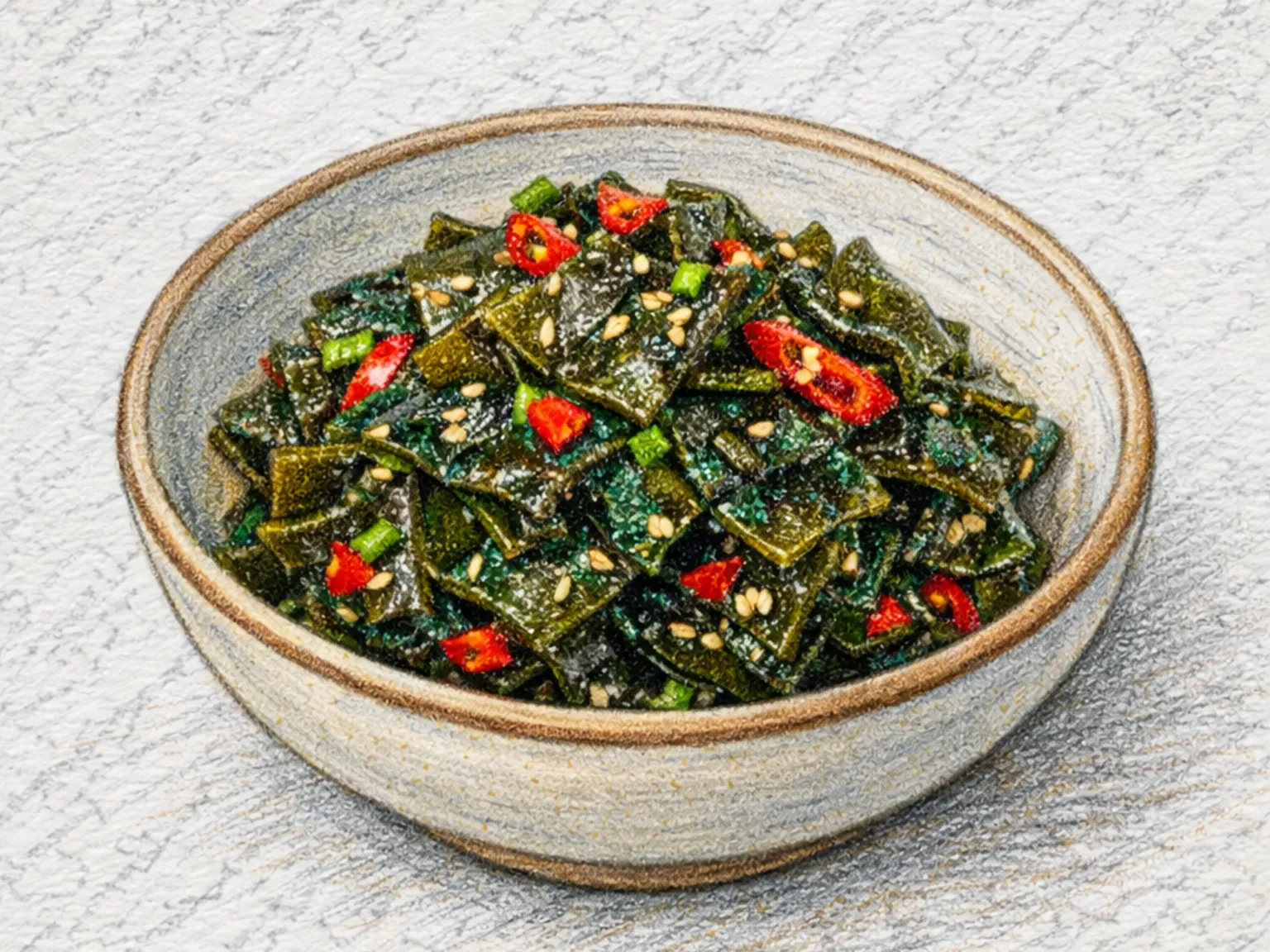
Korean Acorn Jelly Salad with Sesame Soy Sauce

Sesame-dotorimuk-muchim is an acorn jelly salad that begins by slicing 400 grams of dotorimuk into 1-centimeter-thick pieces and blanching them for 20 seconds to firm up the surface and make the jelly more resilient to tossing. Julienned cucumber and thinly sliced onion - soaked briefly in cold water to remove sharpness - join the jelly in a bowl. The dressing of soy sauce, vinegar, red pepper flakes, and sesame oil brings a sharp, tangy bite that contrasts with the neutral mildness of the acorn jelly. Generous sesame seeds are scattered on top, and the dish rests for five minutes before serving so the dressing can seep into the jelly's porous surface. The result is a light, refreshing banchan with a range of textures from springy to crisp.

🥗 Light & Healthy🏠 Everyday
Prep 12minCook 3min4 servings
Korean Spring Blue Crab Stew
StewsMedium

Korean Spring Blue Crab Stew

Kkotgetang is a classic Korean spicy crab stew made with 600g of whole blue crab simmered until the shells release their full flavor into the broth. Gochugaru and a touch of doenjang season the liquid with heat and fermented depth, while radish and zucchini turn sweet as they absorb the crab-infused stock. Two Cheongyang chilies push the spice level higher, and green onion adds a fresh finish. Picking the crab meat from the shell while sipping the hot, briny broth is half the enjoyment. Spring blue crabs are prized for their fuller flesh, making that the ideal season to prepare this dish.

🏠 Everyday🎉 Special Occasion
Prep 20minCook 25min2 servings
Korean Shepherd's Purse Kimchi
KimchiMedium

Korean Shepherd's Purse Kimchi

Naengi kimchi is a seasonal Korean side dish where shepherd's purse, an early-spring wild herb with a distinctive earthy fragrance, is blanched for just twenty seconds in boiling salted water. This brief blanching is the defining technique - long enough to strip away the raw bitterness and any soil odor, yet short enough to preserve the herb's own clean, spring-like aroma. The cooled and thoroughly squeezed greens are then dressed in a paste of gochugaru, anchovy fish sauce, minced garlic, and sweet rice paste, which provides enough body and viscosity to coat each slender stem evenly. The fish sauce's fermented depth meets the herb's green, earthy character, producing a layered flavor that neither ingredient achieves on its own. Sesame seeds scattered on top add a quiet toasted crunch. At least two hours of refrigeration allows the seasoning to settle and deepen before the kimchi is at its best.

🍱 Lunchbox
Prep 25minCook 1min2 servings
Korean Young Radish Kimchi
Side dishesMedium

Korean Young Radish Kimchi

Young radish greens and their slender stems are salted briefly, dressed in a gochugaru-based paste, and fermented into a kimchi that defines Korean summer eating. The greens are more delicate than mature radish, absorbing the seasoning quickly while retaining a refreshing crunch that lasts well into fermentation. Gochugaru and anchovy fish sauce form the backbone of the paste, delivering heat and deep umami in equal measure, while garlic lends a pungent undercurrent that mellows as the fermentation progresses. Once dressed, the radish greens release their own moisture, creating a naturally occurring brine that becomes the hallmark of yeolmu kimchi: a tangy, chili-flecked liquid that can be spooned over cold noodles or rice. Even half a day at room temperature kicks off the fermentation, introducing a sharp, fizzy acidity that signals the kimchi is alive. Transferring it to the refrigerator slows the process and stabilizes the flavor at a bright, appetizing sourness. Draped over bibim-guksu or naengmyeon, it brings a cooling, spicy bite that defines the Korean summer table.

🏠 Everyday
Prep 30min4 servings
Korean Semi-Dried Pollock Radish Stew
StewsEasy

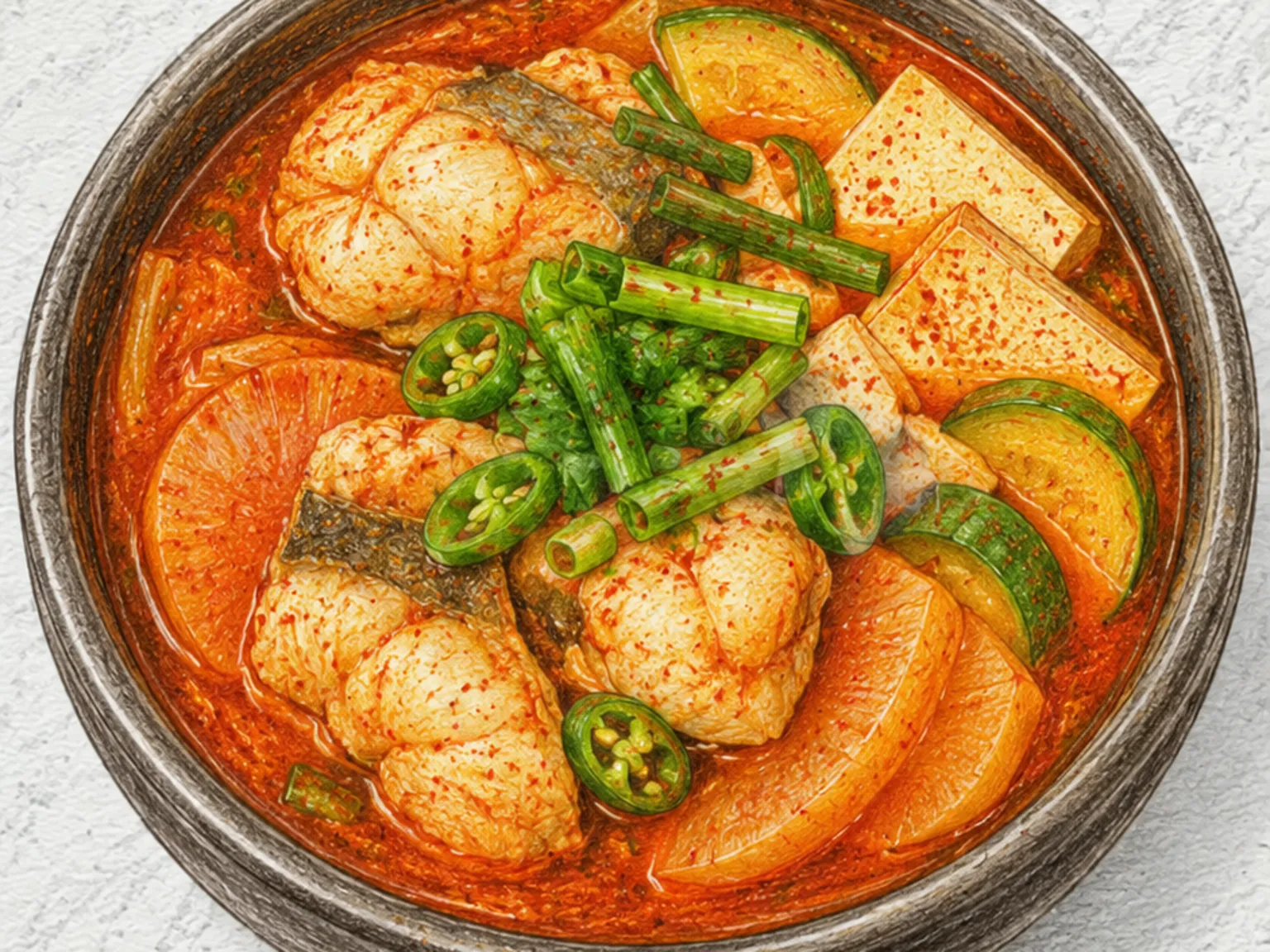
Korean Semi-Dried Pollock Radish Stew

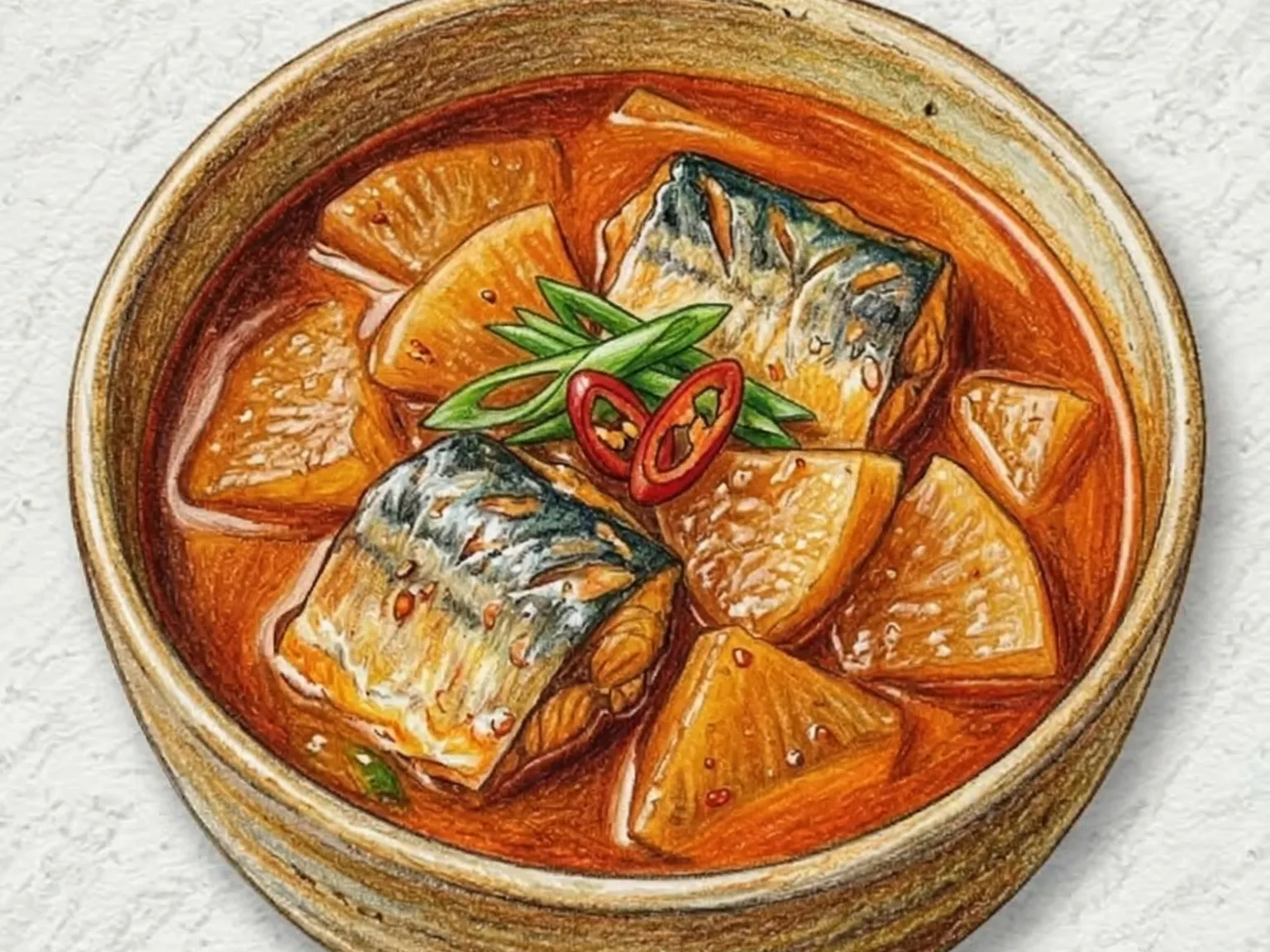
Kodari mu jjigae stews 700g of semi-dried pollock with Korean radish in rice-rinse water, a traditional technique that adds a subtle starchy richness to the broth. The pollock's firm, chewy flesh holds up well during simmering and absorbs the gochujang and gochugaru seasoning deeply. Radish balances the heat with its natural sweetness as it softens in the spicy liquid. Cheongyang chilies add a final kick, making this a warming stew that pairs exceptionally with a bowl of hot rice. The semi-drying process gives kodari a distinctly denser, chewier bite that separates it noticeably from fresh pollock.

🏠 Everyday
Prep 15minCook 30min4 servings
Korean Spicy Salted Octopus Jeotgal
KimchiMedium

Korean Spicy Salted Octopus Jeotgal

Nakji jeotgal is a Korean fermented octopus side dish made by packing cleaned octopus in coarse salt for at least forty minutes to draw out moisture and firm the flesh, then coating it thoroughly in a paste of gochugaru, minced garlic, minced ginger, anchovy fish sauce, and plum syrup before cold-aging in the refrigerator. The initial salt cure tightens the octopus's already springy muscle fibers, intensifying the chew, and the gochugaru paste forms a dense crimson coating that forces spicy, salty heat into every layer of flesh as the dish sits. Anchovy fish sauce builds the umami foundation while plum syrup counteracts any lingering marine smell and introduces a subtle fruit sweetness that rounds out the salt and chili. Ginger leaves a sharp, clean note at the back of the palate that keeps the overall flavor from becoming heavy. After two to three days of refrigeration, a slow fermentation sets in and the separate components fuse into a cohesive, deeply savory whole. Served over warm rice, each piece of octopus delivers a firm, elastic chew followed by a concentrated rush of ocean flavor, and a drop of sesame oil stirred in at serving adds a toasted, nutty finish.

🍱 Lunchbox
Prep 45min4 servings
Korean Spicy Blue Crab Hot Pot
StewsMedium

Korean Spicy Blue Crab Hot Pot

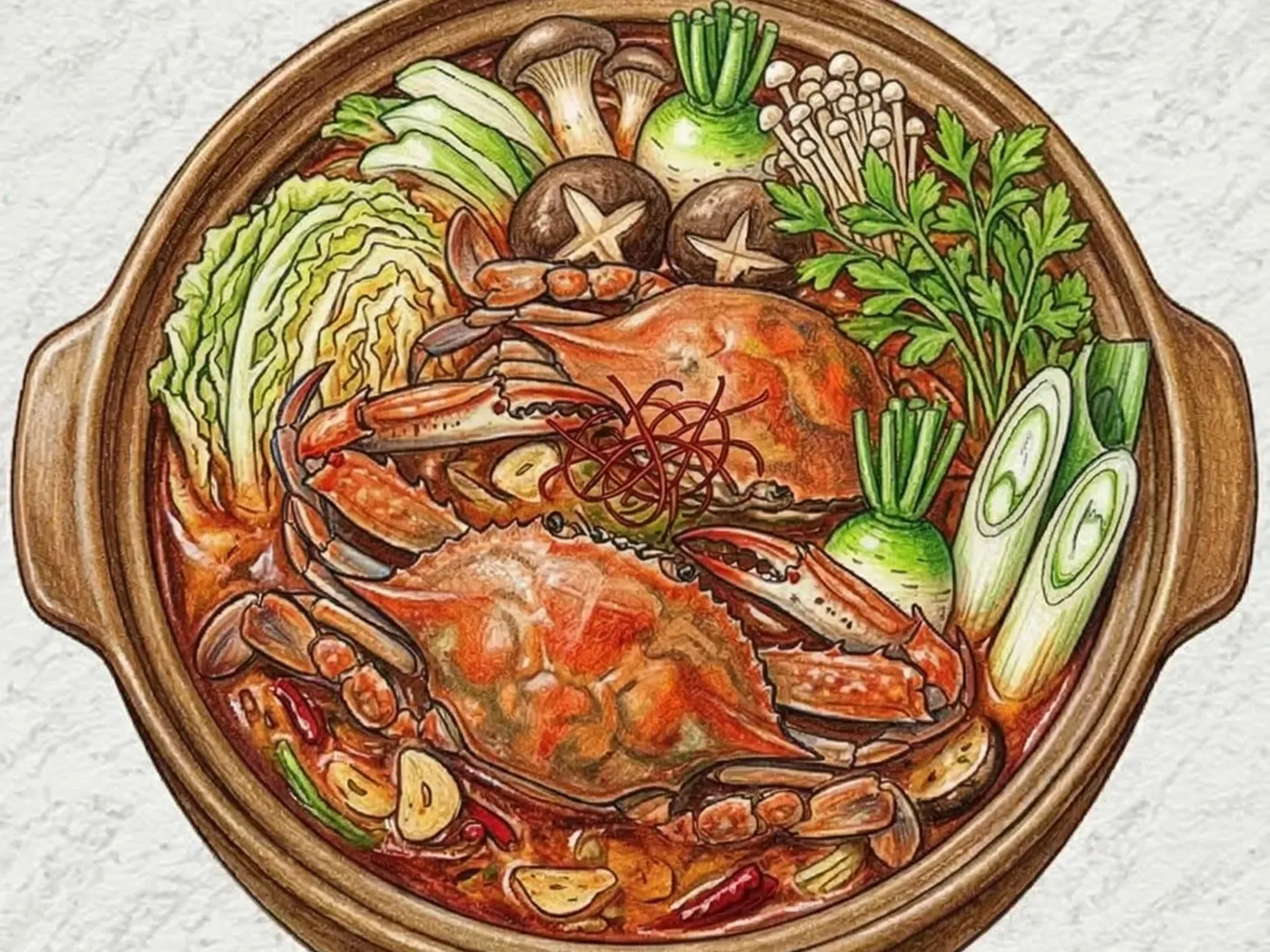
Maeun kkotge jeongol is a fiery blue crab hot pot made with two whole crabs broken down and simmered in a gochujang and gochugaru-laced broth. The crab shells and innards gradually release a deep, concentrated shellfish essence into the pot, which layers with the fermented chili paste to produce a broth that is bold and complex rather than simply hot. Daikon radish and tofu absorb the spicy liquid as they cook, becoming flavorful in their own right, while thick green onion stalks add fragrance near the end. This is a communal dish meant to be placed in the center of the table over a portable burner and shared as it simmers, with a little water added as the broth reduces to keep it going through the meal. Stirring the crab innards directly into the broth deepens the umami considerably.

🍺 Bar Snacks🎉 Special Occasion
Prep 20minCook 20min2 servings
Korean Stuffed Cucumber Kimchi
KimchiMedium

Korean Stuffed Cucumber Kimchi

Oi sobagi is a Korean stuffed cucumber kimchi made by salting whole cucumbers, cutting them crosswise to within a centimeter of the base to create four attached wedges, and packing the cavity with a filling of garlic chives, onion, gochugaru, anchovy fish sauce, and plum syrup. When bitten, the cucumber's cool moisture meets the spicy, fragrant stuffing inside, releasing a burst of layered juice, and the firm crunch of the flesh contrasts cleanly with the softer chive filling. Salting for exactly thirty minutes is the critical window -- less time leaves the cucumber too firm to absorb the seasoning properly, while longer breaks down the cell structure and causes the flesh to go limp, which makes the stuffed pieces fall apart when cut. The filling ingredients should be mixed quickly without over-handling, because overworking the chives releases water and dilutes the seasoning. After stuffing, the cucumbers sit at room temperature for four hours to begin fermentation, then move to the refrigerator, where lactic acid development continues slowly overnight. By the second day the flavor is brighter and more complex with a distinct tangy edge. Cutting the portions just before serving, rather than in advance, keeps the flavorful interior juices from running out. Cucumbers of uniform thickness salt most evenly, and if substituting sugar for plum syrup, use a smaller quantity to keep the sweetness in check.

🍱 Lunchbox
Prep 35min4 servings
Korean Sea Squirt Stew (Pop-and-Burst Seafood Broth)
StewsMedium

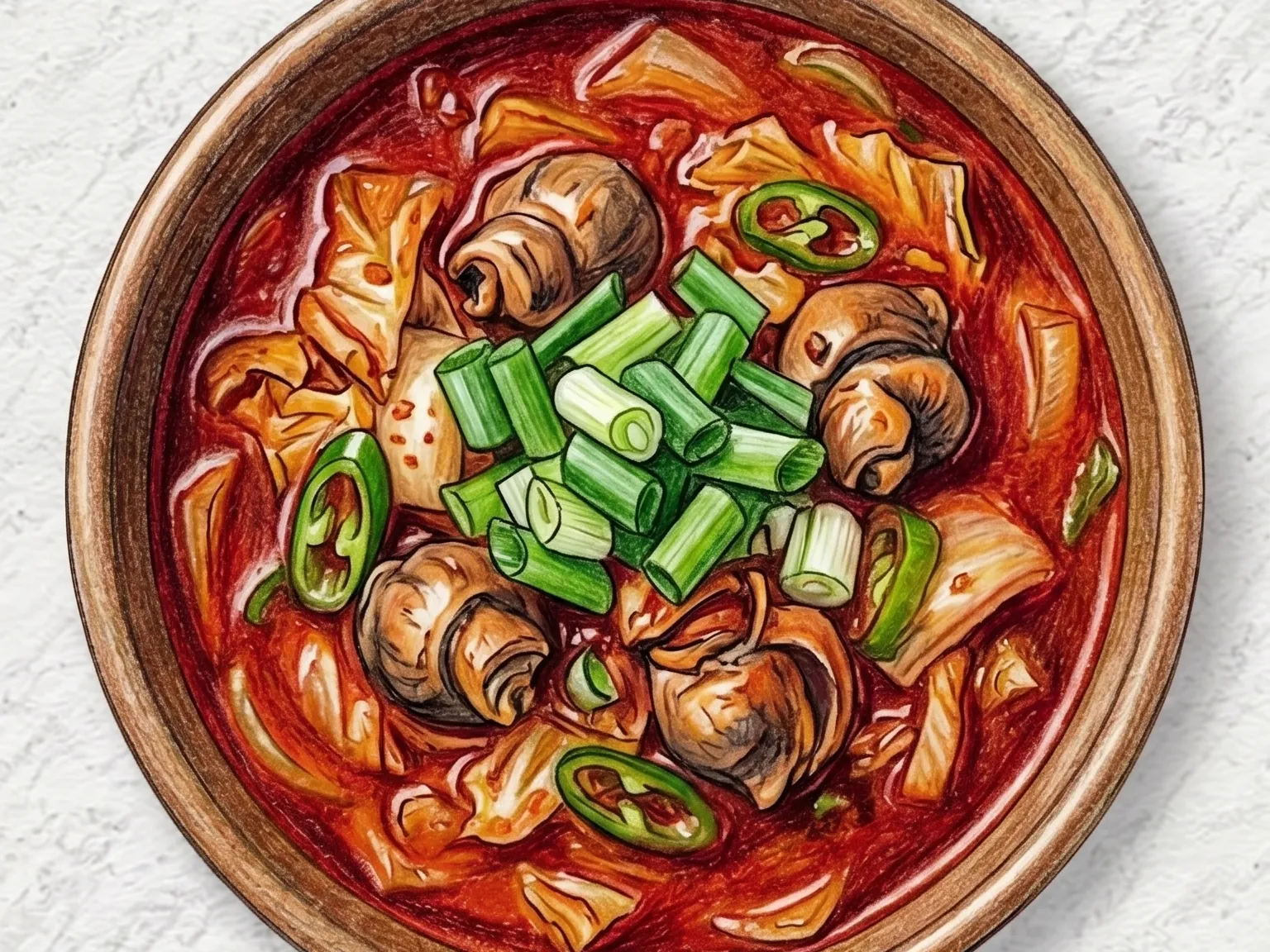
Korean Sea Squirt Stew (Pop-and-Burst Seafood Broth)

Mideodeok-jjigae is a traditional Korean seafood stew characterized by its spicy broth and its central ingredient, the sea squirt. This coastal dish is widely recognized for the specific way the sea squirts pop when they are bitten, a sensation that is paired with an intense aroma reminiscent of the ocean. When an individual bites into a sea squirt, the outer skin breaks to release a concentrated internal liquid that carries a saline and savory marine flavor that is distinct from any other type of seafood. The cooking process starts with the creation of an anchovy stock which serves as the fundamental liquid base for the dish. Slices of Korean radish, zucchini, and white onion are placed into this stock and cooked until they become tender and translucent. It is important to wait until the very end of the cooking process to add the sea squirts to the pot. If the sea squirts are boiled for too long, their internal sacs will eventually collapse and lose their structure, which leads to a loss of the desired texture. The seasoning of the stew involves the use of gochugaru and soup soy sauce, which together create a heat that is both spicy and clean. Minced garlic and sliced green onions are also incorporated to add further complexity and a rounded depth to the final broth. After the sea squirts are added and the liquid returns to a boil, the cooking should be completed within a five-minute window to ensure the ingredients remain firm and elastic. Mideodeok that is harvested during the peak season of April and May will produce a broth that is notably more fragrant and flavorful than at other times of the year. People who enjoy the strong and bold flavors associated with the sea often find that this stew leaves a lasting impression.

🏠 Everyday
Prep 15minCook 20min2 servings
Korean Spicy Fermented Squid Jeotgal
KimchiMedium

Korean Spicy Fermented Squid Jeotgal

Ojingeo jeotgal is a Korean fermented squid preserve made by salting cleaned, finely chopped squid for one hour to firm the flesh and extract moisture, then dressing it in a paste of gochugaru, minced garlic, ginger, fish sauce, and corn syrup. The salt cure intensifies the squid's natural chewiness, and cutting the pieces small accelerates seasoning absorption during the two-to-three-day cold fermentation. Chili flakes coat every surface in a deep red layer that delivers steady heat, while corn syrup adds gloss and a mild sweetness that prevents the salt from dominating. Spooned over steamed rice, each piece offers a firm, springy chew followed by a wave of fermented umami. Mixing in a touch of sesame oil before serving softens the saltiness and adds a nutty fragrance that rounds out each mouthful.

🍱 Lunchbox
Prep 30min4 servings
Korean Minari Doenjang Stew
StewsEasy

Korean Minari Doenjang Stew

This variation of doenjang jjigae adds a generous amount of water parsley (minari) to the classic soybean paste stew. Firm tofu, potato, and onion simmer in anchovy-kelp stock with doenjang, building an earthy, deeply fermented base. The minari goes in near the end to preserve its crisp texture and peppery herbaceous aroma. A half tablespoon of chili flakes rounds out the flavor with mild warmth. Minari's grassy, herb-like character layers naturally against doenjang's fermented depth, turning a familiar stew into a seasonal variation worth returning to throughout the year.

🏠 Everyday
Prep 12minCook 18min2 servings
Korean Salt-Fermented Tiny Shrimp
KimchiMedium

Korean Salt-Fermented Tiny Shrimp

Saeujeot is a Korean salt-fermented tiny shrimp condiment made by mixing small shrimp evenly with sea salt, packing the mixture tightly into a sterilized jar, and fermenting under refrigeration for a minimum of two weeks. Salt draws moisture from the shrimp and initiates enzymatic breakdown of the proteins, gradually transforming the raw fishiness into concentrated amino acids and the deep, savory umami that forms the backbone of kimchi seasoning and Korean stew bases. Rice wine and ginger juice are added to suppress the off-flavors that develop during the early, volatile stages of fermentation before the lactic acid bacteria have established dominance. A small amount of chili flakes contributes a faint background warmth. The most critical step before salting is removing as much surface moisture as possible after rinsing the shrimp, since excess water dilutes the brine concentration and creates conditions for spoilage bacteria. The salt ratio should fall between 20 and 25 percent of the shrimp's weight: too high and the result is harsh and one-dimensional, too low and safety becomes a concern during the long cure. Only clean, dry utensils should ever touch the jar to prevent contamination that would undermine months of careful fermentation. Saeujeot fermented for six months or longer develops a rounded complexity absent in younger batches. In Korea, the harvest season determines the name and character of the product: ojot from May, yukjeot from June, and chujeot from autumn each carry a distinct flavor profile suited to different culinary uses.

🍱 Lunchbox Quick
Prep 20min4 servings
Korean Aged Kimchi Stew (Deep-Fermented Pork Belly Broth)
StewsEasy

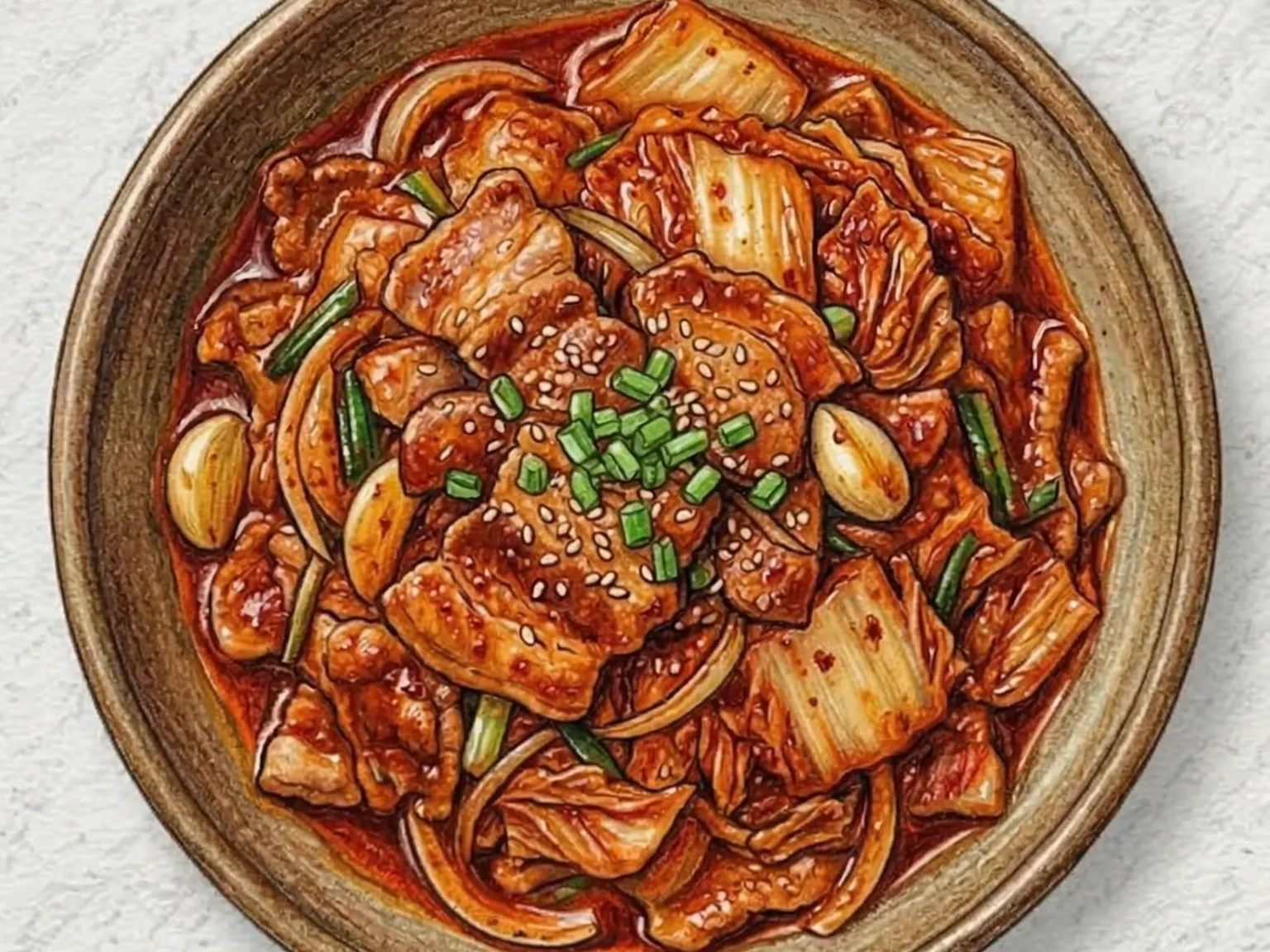
Korean Aged Kimchi Stew (Deep-Fermented Pork Belly Broth)

Mugeunji jjigae uses deeply fermented, aged kimchi that delivers an intense sour tang and concentrated umami far beyond fresh kimchi. Pork belly renders its fat into the stew, mellowing the sharp acidity while enriching the broth. Tofu cubes absorb the bold flavors and provide a soft contrast. The longer the kimchi has aged, the more complex and punchy this stew becomes.

🍺 Bar Snacks🏠 Everyday
Prep 10minCook 30min2 servings
Korean Lettuce Kimchi (Quick Leaf Gochugaru Dressed)
KimchiEasy

Korean Lettuce Kimchi (Quick Leaf Gochugaru Dressed)

Sangchu kimchi is a quick Korean lettuce kimchi that starts with leaf lettuce torn into bite-sized pieces, salted lightly for ten minutes to relax the leaves without fully collapsing them, then tossed in a seasoning of gochugaru, sand lance fish sauce, minced garlic, vinegar, and sugar. As the lettuce absorbs the dressing it softens, but eating it before it fully wilts keeps a faint crispness at the leaf edges along with the lettuce's characteristic mild bitterness. The fermented depth of the fish sauce adds weight to the lettuce's grassy, clean flavor, while vinegar contributes a bright, tangy finish that cuts through the richness. Sesame seeds scattered through the mix give a faintly toasted crunch with each bite. Drying the leaves thoroughly after salting is the step that most directly controls flavor: any residual water dilutes the seasoning rapidly and turns the kimchi watery and dull within an hour or two. This kimchi is best made moments before serving and eaten immediately while the textures are still distinct. A small amount of ssamjang folded in adds a deeper, earthy fermented note for variation.

🍱 Lunchbox Quick
Prep 20min2 servings
Korean Radish and Salted Shrimp Stew
StewsEasy

Korean Radish and Salted Shrimp Stew

Musaengchae-jjigae simmers julienned radish in a broth built on salted shrimp (saeujeot) and gochugaru, drawing a surprising depth of flavor from minimal ingredients. Saeujeot is fermented shrimp paste that concentrates months of salt-curing and enzymatic breakdown into a potent seasoning -- it supplies umami on the level of fish sauce but with a more rounded, fermented character that forms the backbone of this broth without requiring any stock. Cutting the radish into thin julienne strips, rather than chunks, is deliberate: thin pieces cook through quickly and release just enough starch into the broth to give it a faint natural body. Gochugaru provides color and heat, and its fruity spice complements the sweet, mild flavor that radish develops as it softens. Tofu adds body and protein, and the green onion and garlic round out the aromatics. What makes this jjigae worth repeating despite its simplicity is the fermented complexity from the saeujeot -- a single tablespoon transforms plain water into something that tastes long-cooked. Lighter in texture than doenjang or kimchi jjigae, it works well as an everyday soup that pairs with rice without overwhelming the meal.

🏠 Everyday
Prep 10minCook 20min3 servings
Korean Seokbakji Radish Kimchi
KimchiEasy

Korean Seokbakji Radish Kimchi

Seokbakji is a traditional Korean radish kimchi in which large-cut radish cubes are salted for one hour, drained, and tossed with a seasoning of gochugaru, salted shrimp, minced garlic, ginger, and scallion pieces before being set aside to ferment. The size of the radish pieces is the most important factor in this kimchi - smaller cuts turn mushy during fermentation as salt and acid break down the cell structure, while large cubes maintain their firm, satisfying crunch throughout the entire maturation period. Salted shrimp here does far more than add salt: its fermented depth provides an umami backbone that gochugaru alone cannot deliver. After one day of fermentation at room temperature, two more days in the refrigerator allow lactic acid bacteria to develop a clean, refreshing sourness. The liquid that the radish releases during this process becomes a flavorful brine - this brine is one of seokbakji's most prized characteristics. Placed alongside a bowl of seolleongtang or gukbap, the cold, crunchy kimchi and its tangy liquid cut directly through the richness of the bone broth, refreshing the palate between spoonfuls. Compared to kkakdugi, seokbakji pieces are larger and more liquid-forward.

🍱 Lunchbox
Prep 35minCook 10min4 servings
Korean Pollack Roe Tofu Stew
StewsEasy

Korean Pollack Roe Tofu Stew

Myeongnan-dubu-jjigae is a Korean stew built around whole pollack roe simmered in anchovy and kelp stock. As the broth comes to a boil, the roe gradually loosens and disperses into the liquid, releasing a briny, concentrated umami that permeates every ingredient in the pot. Using anchovy-kelp stock rather than plain water lets the oceanic character of the roe come through without competition. Firm tofu cut into one-centimeter slices absorbs the savory broth while holding its shape throughout cooking, unlike soft tofu which breaks apart. Red pepper flakes, minced garlic, and sliced green onion finish the stew with a clean, spicy edge. The grainy, textured bite of the intact roe kernels is what sets this stew apart from other Korean jjigae. Cooking time should be kept short: once the broth reaches a full boil, the heat is reduced immediately, because prolonged boiling dissolves the roe completely and erases the textural contrast. Spooning the broth and roe together over steamed rice and mixing it in is the most satisfying way to eat it.

🏠 Everyday
Prep 10minCook 15min2 servings
Korean Sigeumchi Kimchi (Spinach Kimchi)
KimchiEasy

Korean Sigeumchi Kimchi (Spinach Kimchi)

Sigeumchi kimchi is a Korean spinach kimchi made by salting the greens for exactly twelve minutes to wilt the leaves while keeping the stems crisp, rinsing in cold water, squeezing dry, then tossing with gochugaru, sand lance fish sauce, minced garlic, plum extract, and scallion pieces. Strict timing on the salt is what creates the dual texture - tender leaves and crunchy stems - that defines this kimchi; over-salting collapses everything into softness. The fish sauce's fermented depth layers onto the spinach's mild, grassy base, and plum extract rounds out the seasoning's sharp edges with a gentle sweetness. Six hours of refrigeration settles the flavors into a cohesive whole. The vivid green color makes this a visually appealing banchan on any Korean table.

🏠 Everyday🍱 Lunchbox
Prep 20minCook 5min4 servings
Korean Beef Tripe Hot Pot
StewsHard

Korean Beef Tripe Hot Pot

Naejang jeongol is a Korean offal hot pot that combines mixed beef innards with rich bone broth, onion, bean sprouts, and green onion in a single pot. The typical cut selection includes small intestine, tripe, and abomasum, each bringing a distinct texture and flavor to the bowl. Thorough preparation is what separates a clean-tasting naejang jeongol from one with an unpleasant odor: the innards are kneaded repeatedly with flour and salt to remove impurities, soaked in cold water to draw out residual blood, then rinsed fully before any heat is applied. A half spoonful of doenjang added to the broth neutralizes remaining gaminess through the fermented paste's enzymes, while gochugaru and generous garlic build a spicy, warming character that defines the dish. The chewy, elastic texture of the offal plays against the milky, collagen-saturated bone broth, and that contrast of texture against rich liquid is the core pleasure of the bowl. Bean sprouts are added at the end to preserve their crunch, and green onion goes in last for its fresh aroma. Naejang jeongol has served for generations as a classic soju pairing and a trusted hangover soup.

🍺 Bar Snacks🎉 Special Occasion
Prep 35minCook 30min4 servings
Korean Bitter Herb Kimchi
KimchiHard

Korean Bitter Herb Kimchi

Sseumbagwi kimchi is a traditional spring fermented side dish made from sseumbagwi, a wild bitter herb that grows in Korea during early spring. The herb is soaked in cold water for at least twenty minutes to pull back its pronounced bitterness before being salted to soften the stalks. It is then dressed in a seasoning paste built from gochugaru, sand lance fish sauce, minced garlic, ginger, sweet rice paste, and plum syrup, mixed together with cut scallions. The rice paste adds body to the seasoning so it clings to the herb's thin stems and narrow leaves rather than sliding off. Plum syrup works on both the bitterness and the salt's edge at once, smoothing the overall profile without masking the herb's character. Sand lance fish sauce is preferred over anchovy sauce here because its gentler aroma does not compete with the plant's natural flavor. Five hours of room-temperature fermentation followed by refrigeration sets off lactic acid development, layering tangy depth over the bitter-green base. The flavor peaks around day three when bitterness, acidity, and umami reach the best balance. If the raw herb tastes too sharp, one additional soak in fresh cold water brings it within range before seasoning.

🎉 Special Occasion🍱 Lunchbox
Prep 45minCook 5min4 servings
Korean Shepherd's Purse and Oyster Stew
StewsMedium

Korean Shepherd's Purse and Oyster Stew

Naengi-gul-jjigae is a doenjang-based stew that pairs two winter-season ingredients, shepherd's purse and fresh oysters, in a broth built on kelp stock. Shepherd's purse grown through cold months concentrates its aromatic compounds in the root, delivering a grassy, faintly bitter fragrance that sets it apart from other greens. Oysters harvested in cold water are at their firmest and most intensely flavored, making them a natural match for the fermented depth of doenjang. Radish and soft tofu provide body to the broth, while the oysters and shepherd's purse go in last so their freshness survives the heat. The oceanic sweetness of the oysters, the herbal bite of naengi, and the fermented richness of doenjang fit together without any single flavor dominating. A small amount of gochugaru adds a low, steady heat underneath the stew, and adding a few slices of cheongyang chili brings a sharper edge if desired. Washing the roots of the shepherd's purse thoroughly to remove grit is important, and leaving the stems long enough to retain their aroma makes a noticeable difference in the finished bowl.

🏠 Everyday🎉 Special Occasion
Prep 15minCook 16min2 servings
Korean Crown Daisy Kimchi
KimchiEasy

Korean Crown Daisy Kimchi

Ssukgat kimchi is a fragrant seasonal kimchi that highlights crown daisy's herbal bitterness alongside chili flakes and sand lance fish sauce. The greens are salted for only seven minutes to preserve their delicate, tender texture, then dressed with a paste enriched by sweet rice flour for better adhesion. Plum extract balances the bitterness with gentle sweetness and acidity during fermentation. After two hours at room temperature followed by overnight refrigeration, the kimchi reaches its aromatic peak within a single day. Because the leaves bruise easily, gentle tossing during seasoning is essential to maintain their shape.

🍱 Lunchbox
Prep 20minCook 5min2 servings
Korean Octopus Hot Pot (Spicy Gochujang Broth with Herbs)
StewsMedium

Korean Octopus Hot Pot (Spicy Gochujang Broth with Herbs)

Nakji jeongol is a spicy Korean hot pot built around small octopus simmered in anchovy stock seasoned with gochujang and gochugaru, together with napa cabbage, water parsley, onion, and tofu. Anchovy stock works particularly well here because it has a clean, salty depth that amplifies rather than competes with the oceanic flavor of the octopus. The gochujang contributes a fermented sweetness to the broth while the gochugaru layer on top provides the sharp, direct heat, producing a multi-dimensional spicy broth that is more complex than either ingredient alone. Octopus is highly sensitive to overcooking. Cooked within two minutes, it stays springy and pleasantly chewy. Beyond that, the protein fibers contract and the texture becomes tough and rubbery. Water parsley loses its fresh herbal fragrance quickly under heat, so it is best added about one minute before serving to keep that clean, slightly grassy brightness intact. Cooking the hot pot at the table allows diners to add octopus in small batches at their own pace, which is the most reliable way to keep every piece at the ideal doneness.

🍺 Bar Snacks🎉 Special Occasion
Prep 25minCook 18min2 servings
Korean Turnip Kimchi (Diced Gochugaru Water Fermented)
KimchiEasy

Korean Turnip Kimchi (Diced Gochugaru Water Fermented)

Sunmu kimchi is a brined kimchi made with diced turnips seasoned in chili flakes, fish sauce, garlic, and ginger juice, then submerged in water to ferment with its own liquid. Turnips have a naturally higher sweetness and denser flesh than Korean radish, so they stay firm and crunchy even after fermentation. Scallions woven through the batch add an aromatic layer that rounds out the spice. One day at room temperature followed by two days of refrigeration produces a cool, tangy brine that is refreshing to drink on its own. Adding turnip greens, if available, deepens both the color and the fragrance.

🏠 Everyday🍱 Lunchbox
Prep 30minCook 10min4 servings