Charim

2686 Korean & World Recipes

2686+ Korean recipes, clean and organized. Ingredients to instructions, all at a glance.

Recipes with sesame oil

24 recipes

Buy sesame oil
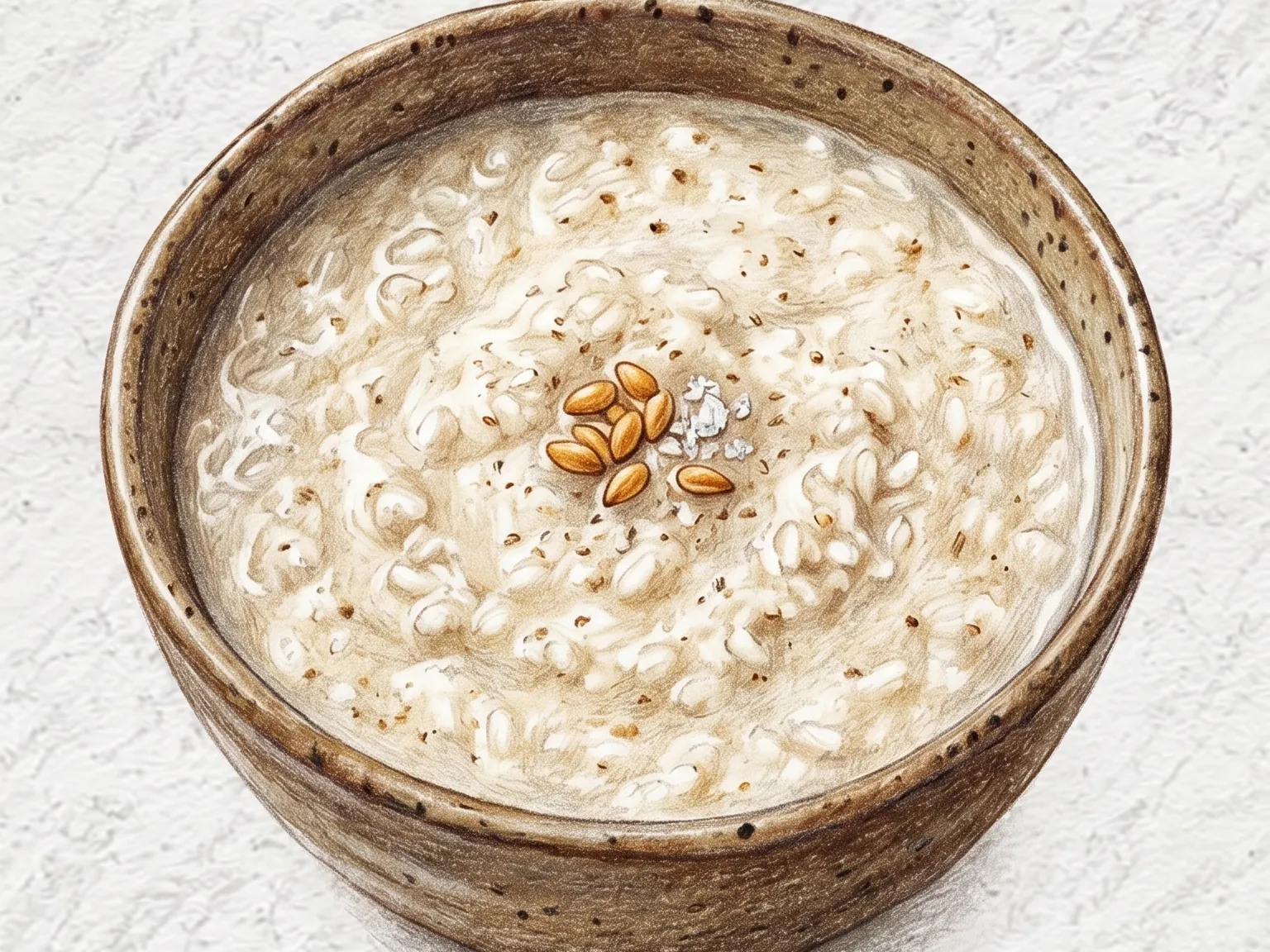
Korean Pine Nut Porridge (Creamy Nutty Nourishing Rice Porridge)
RiceMedium

Korean Pine Nut Porridge (Creamy Nutty Nourishing Rice Porridge)

Pine nuts are blended with water into a smooth milk, then stirred into soaked rice that has been sauteed in sesame oil to bring out its starch aroma. The pine nut milk is added after the rice has already simmered for ten minutes, because prolonged boiling diminishes the nuts' volatile fragrance. The finished porridge has a pale cream hue and leaves a lingering resinous pine-nut note on the palate. Thinly sliced jujube garnish adds a pop of red color and gentle natural sweetness that complements the nuttiness.

🎉 Special Occasion
Prep 15minCook 20min2 servings
Korean Kollabi Saeu Bokkeum (Kohlrabi Shrimp Stir-fry)
Stir-fryEasy

Korean Kollabi Saeu Bokkeum (Kohlrabi Shrimp Stir-fry)

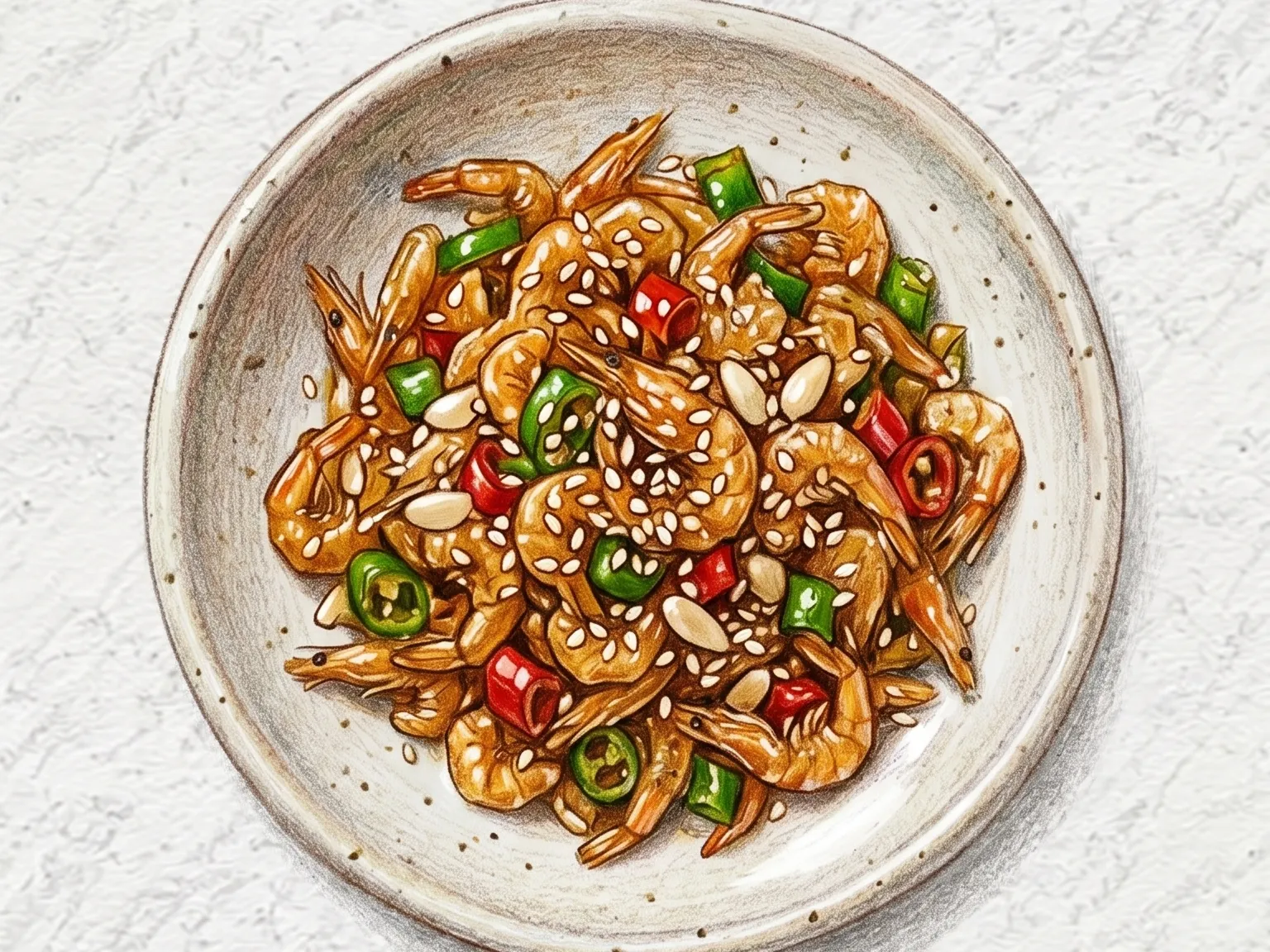
Kolrabi saeu bokkeum is a quick stir-fry of shrimp marinated in cooking wine and julienned kohlrabi, cooked over high heat in garlic-infused oil and seasoned with soy sauce and oyster sauce. Spreading the shrimp in a single layer and letting one side sear properly before flipping is the key to a firm, bouncy texture rather than a steamed one. Kohlrabi, a cross between turnip and cabbage, brings a natural sweetness and firm crunch that pairs well with the shrimp, and keeping the cooking time short preserves that crisp bite. Red bell pepper adds a contrasting color to the dish, and the deep savory quality of oyster sauce amplifies the shrimp's natural sweetness. Preheating the pan thoroughly before adding ingredients prevents excess moisture from releasing, which keeps the stir-fry dry and the textures distinct. Scallion and a finish of sesame oil round out the dish. The calorie count is low relative to the protein content, making it a practical side dish for everyday meals.

🥗 Light & Healthy🏠 Everyday
Prep 12minCook 10min2 servings
Korean Sweet Soy Glazed Eel Grill
GrilledMedium

Korean Sweet Soy Glazed Eel Grill

Eel fillets are seared skin-side down first in a hot pan so the skin renders and releases some of its fat, then flipped and finished on the flesh side before the sauce goes in. The glaze is a mixture of soy sauce, rice syrup, cooking wine, and ground ginger, brushed or spooned over the eel repeatedly over low heat. Each application builds another layer of the glossy coating, with the sweetness of the rice syrup and the saltiness of the soy sauce penetrating the fatty flesh together. Wiping excess rendered fat from the pan before glazing is a key step: removing it keeps the finished dish balanced rather than greasy and lets the umami of the glaze come through clearly. Sesame seeds and diagonally sliced scallion finish the plating, adding fragrance and a little texture to the lacquered surface. Served over rice, the sauce soaks into the grains and turns the bowl into something closer to a meal than a side dish.

🍺 Bar Snacks
Prep 18minCook 14min2 servings
Korean Braised Lotus Root with Pork
SteamedMedium

Korean Braised Lotus Root with Pork

Yeongeun dwaejigogi jorim is a Korean braise of lotus root and pork shoulder in a gochujang and soy sauce seasoning. The lotus root absorbs the spiced braising liquid while maintaining its signature crisp bite, and the pork shoulder softens as its fat renders into the sauce, building depth. Gochujang provides a steady warmth while soy sauce anchors the umami, and oligosaccharide syrup glazes everything in a glossy coat. The textures hold up well even after cooling, making this a practical banchan for lunchboxes and meal prep.

🏠 Everyday🎉 Special Occasion
Prep 20minCook 35min4 servings
Korean Steamed Eggplant Vinegar Salad
Side dishesEasy

Korean Steamed Eggplant Vinegar Salad

Gaji-chorim-muchim takes eggplant in the opposite direction from bokkeum preparations, which rely on high heat and oil. Here, the eggplant is gently steamed and chilled before being dressed cold with a vinegar-forward sauce. The eggplant is halved lengthwise, scored on the flesh side, and steamed for eight minutes until the interior turns translucent and completely soft. After cooling fully, it is torn by hand along the grain into long strips, exposing a rough, irregular surface that grips the dressing. Soy sauce, rice vinegar, sugar, minced garlic, and gochugaru combine into a bright, tangy-spicy dressing that lifts the eggplant's subtle natural sweetness rather than masking it. Steamed eggplant torn into strips has a silky, almost slippery quality that is entirely distinct from stir-fried or grilled eggplant. The dressing can be made more generous to serve the dish as a refreshing cold salad style. A few drops of sesame oil and a scatter of sesame seeds finish it off with a nutty note. This banchan is especially well suited to Korea's hot and humid summer months.

🏠 Everyday🍱 Lunchbox
Prep 10minCook 8min4 servings
Korean Abalone Mung Bean Porridge
RiceMedium

Korean Abalone Mung Bean Porridge

Jeonbok nokdu juk is a Korean restorative porridge that soaks and simmers mung beans alongside rice to build a thickened base, then incorporates abalone for a combination of nutty creaminess and ocean flavor. Mung beans break down considerably during cooking, giving the finished porridge a noticeably denser and more velvety consistency than standard abalone porridge made with rice alone. Abalone innards are sauteed with garlic in sesame oil before joining the porridge, a step that draws out a deep, toasty aroma and forms the flavor backbone of the dish. Replacing plain water with kelp stock adds a layer of clean umami to the liquid base and enriches the overall taste. The abalone flesh is added during the final five minutes only to prevent overcooking, which would tighten the muscle and make it tough rather than springy. Throughout the long cooking, the porridge must be stirred regularly over low heat so the mung beans and rice dissolve completely into a smooth, uniform texture without catching on the bottom of the pot. Chopped scallion scattered over the finished bowl introduces a pop of green color and a fresh, bright fragrance that lightens the rich porridge.

🎉 Special Occasion
Prep 20minCook 35min2 servings
Korean Beef Brisket and Bean Sprout Stir-fry
Stir-fryEasy

Korean Beef Brisket and Bean Sprout Stir-fry

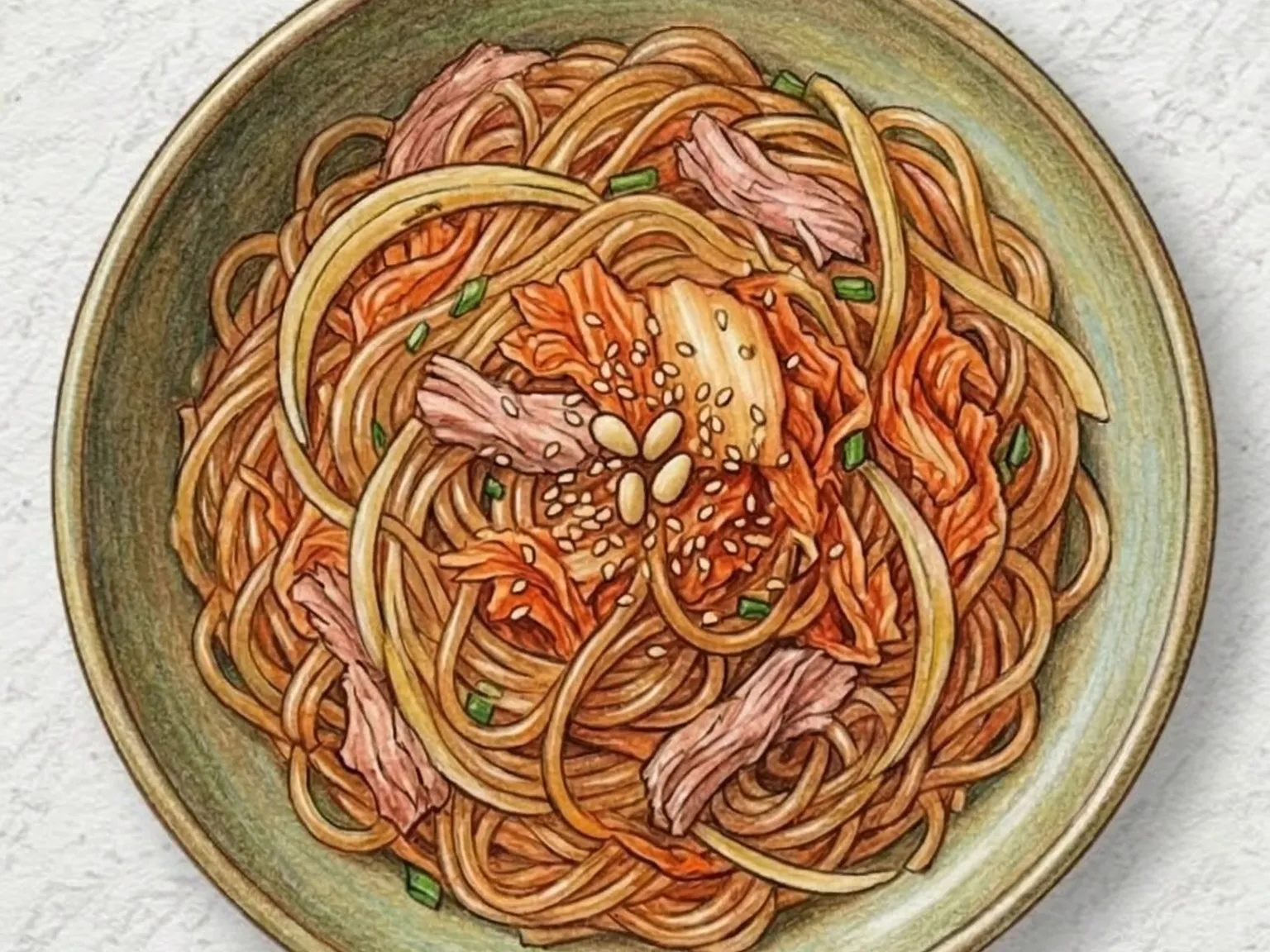
Kongnamul chadol bokkeum starts by rendering thin beef brisket slices over high heat to release their fat, then uses that fat as the cooking medium for bean sprouts and a gochujang-gochugaru sauce. The brisket's chewy bite contrasts with the sprouts' crispness, and the rendered beef fat merges with the chili paste to create a rich base without added oil. Moisture released from the bean sprouts thins the sauce just enough to coat everything evenly. Sesame oil finishes the dish, which is a common choice for a drinking snack or late-night meal.

🍺 Bar Snacks🏠 Everyday
Prep 12minCook 9min2 servings
Korean Butter-Grilled Abalone
GrilledMedium

Korean Butter-Grilled Abalone

Scored abalone is seared quickly in garlic butter, with the cooking time kept to two or three minutes so the flesh stays springy and firm rather than contracting into a tough, rubbery state. Minced garlic is added to the melted butter first, allowing its fragrance to bloom before the abalone goes in, so the shellfish absorbs the full depth of the butter. A small addition of soy sauce to the pan deepens the umami without masking the delicate sweetness of the abalone itself. For an extra layer of oceanic richness, the abalone liver can be minced and stirred directly into the butter sauce as it finishes; the liver melts in, contributing a briny, mineral depth that amplifies the sea flavor of the dish. The finished abalone is best served in the cleaned shells, which both keep the butter sauce pooled around the meat and make for an appealing natural presentation. A light squeeze of lemon juice just before serving cuts through the richness of the butter and brings out the natural sweetness of the shellfish.

🍺 Bar Snacks
Prep 20minCook 10min2 servings
Korean Yeongeun Ganjang Jorim (Soy-Braised Lotus Root)
SteamedEasy

Korean Yeongeun Ganjang Jorim (Soy-Braised Lotus Root)

Yeongeun ganjang jorim is a Korean soy-braised lotus root side dish simmered in soy sauce, oligosaccharide syrup, vinegar, and cooking wine. The starchy surface of the lotus root develops a glossy glaze from the reduced sauce while the interior stays distinctly crunchy. Vinegar brightens the soy's salinity, and the syrup contributes a gentle sweetness and visible sheen. This banchan improves overnight in the refrigerator as the seasoning continues to penetrate, making it one of the most practical make-ahead side dishes in Korean home cooking.

🏠 Everyday🎉 Special Occasion
Prep 15minCook 25min4 servings
Korean Steamed Eggplant Namul
Side dishesEasy

Korean Steamed Eggplant Namul

Gaji namul strips eggplant down to its most restrained form, a banchan dressed with nothing more than soy sauce, garlic, and sesame oil. The eggplant is halved and steamed for around seven minutes until the flesh is uniformly tender throughout, then pulled into long shreds by hand along the grain. Tearing rather than cutting creates a rougher, more uneven surface that grips the minimal seasoning more effectively than clean knife edges would. There is no chili powder, no vinegar, no fermented paste. The soy sauce and sesame oil soak into the porous, spongy flesh, staining it a deep, glossy color and pulling the flavors in without competing with the eggplant itself. The texture is softer than almost any other Korean namul, collapsing gently when pressed and practically dissolving when stirred into warm rice. Gaji namul is a traditional dish in Korean Buddhist temple food, a cuisine where the absence of strong flavors is a deliberate choice rather than an oversight, and where simplicity is the point.

🏠 Everyday🍱 Lunchbox
Prep 10minCook 8min4 servings
Korean Sesame Oil Abalone Porridge
RiceMedium

Korean Sesame Oil Abalone Porridge

Both abalone flesh and innards are used together with a generous two tablespoons of sesame oil to maximize nuttiness in this porridge. The innards carry a concentrated brininess unique to abalone, and sauteing them with minced garlic in sesame oil infuses the fat with both marine and roasted flavors simultaneously, forming the aromatic foundation for the entire pot. Soaked rice is stirred into that same seasoned oil and cooked until each grain turns translucent, a step that coats the starch in fat and gives the porridge a fuller, rounder flavor. Water is then added and the mixture simmers for 25 minutes while the grains slowly dissolve their starch into a naturally thick consistency. Stirring regularly throughout this stage prevents the rice from settling and scorching on the pot floor. Soup soy sauce and salt are added at the finish, their saltiness anchoring the nuttiness of the sesame oil rather than competing with it. Chopped chives provide both color and a light onion fragrance. An extra drizzle of sesame oil just before serving deepens the aroma and gives the surface a subtle sheen.

🎉 Special Occasion
Prep 20minCook 35min2 servings
Korean Spicy Octopus Stir-fry
Stir-fryMedium

Korean Spicy Octopus Stir-fry

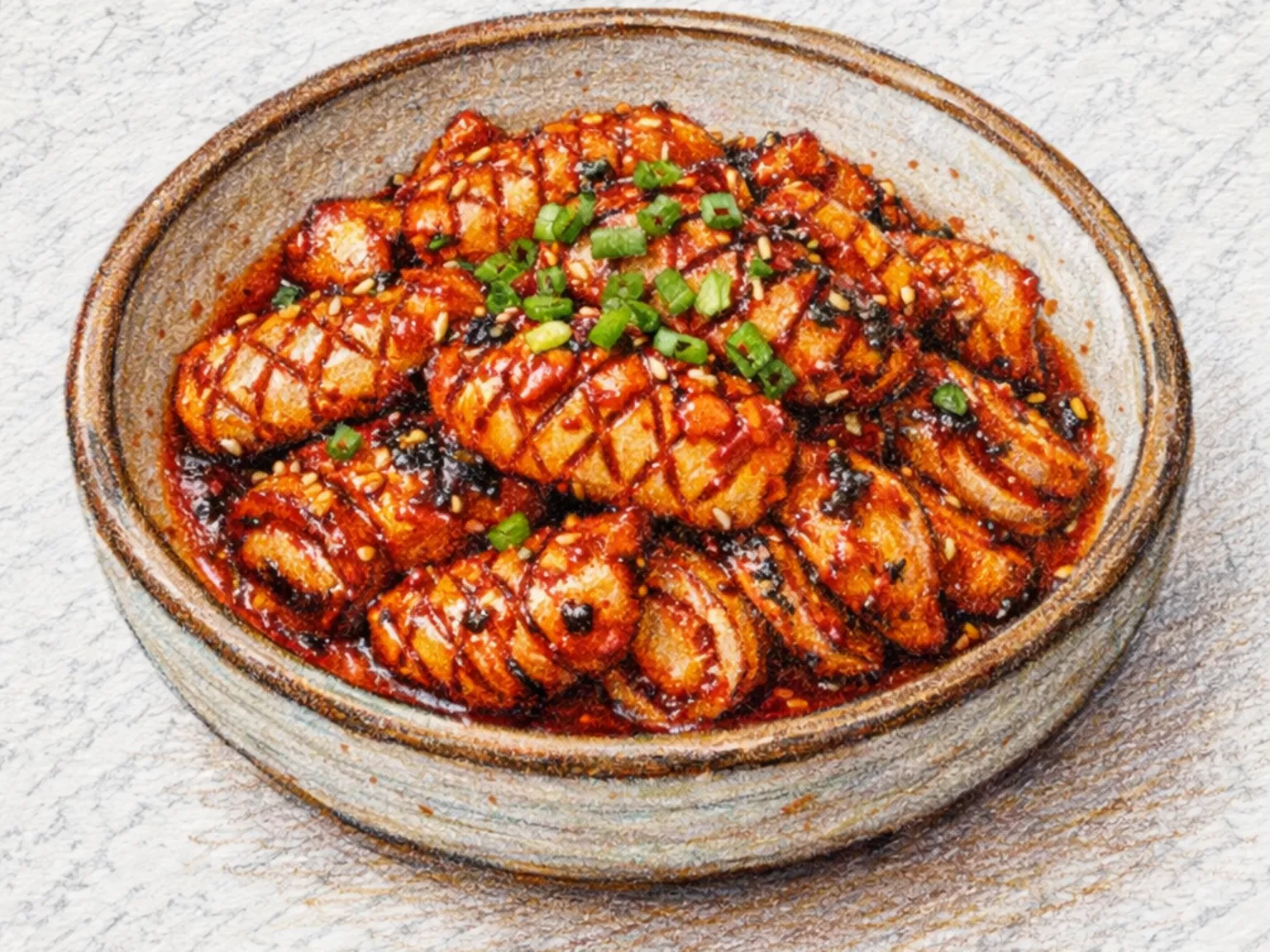
Muneo-bokkeum is a Korean stir-fry of pre-boiled octopus pieces cooked on high heat with onion, carrot, and scallion in a sauce built from gochujang and soy sauce. Because the octopus arrives already cooked, two to three minutes of high-heat stir-frying is the target window - enough time to heat the pieces through and coat them in the seasoning without pushing the texture past springy into tough. The sauce brings spice from the gochujang and saltiness from the soy sauce, and that combination lifts the naturally clean, mild flavor of the octopus without masking it. Vegetables are pulled from the pan while they still carry some bite, which sets up a textural contrast against the dense, elastic chew of the octopus. Sesame oil goes in at the very end as a finishing drizzle, adding a nutty, aromatic layer that ties the dish together. It works as a rice side dish or as an anju pairing alongside drinks.

🏠 Everyday🍱 Lunchbox
Prep 20minCook 10min2 servings
Korean Horse Mackerel with Yuzu Soy Glaze
GrilledEasy

Korean Horse Mackerel with Yuzu Soy Glaze

Horse mackerel is marinated in a sauce of yuzu marmalade, soy sauce, cooking wine, and garlic, then grilled on a grill pan until the skin crisps and chars lightly. The citrus notes from the yuzu naturally suppress fishiness while harmonizing with the soy sauce saltiness. Brushing the remaining glaze in the final minute gives the skin a lacquered sheen. Sesame oil and sliced scallion complete the dish with a toasted, aromatic finish. The brevity of the ingredient list belies how decisively the yuzu transforms a grilled fish into something bright and fragrant.

🍺 Bar Snacks🏠 Everyday
Prep 15minCook 12min2 servings
Korean Steamed Lotus Root
SteamedEasy

Korean Steamed Lotus Root

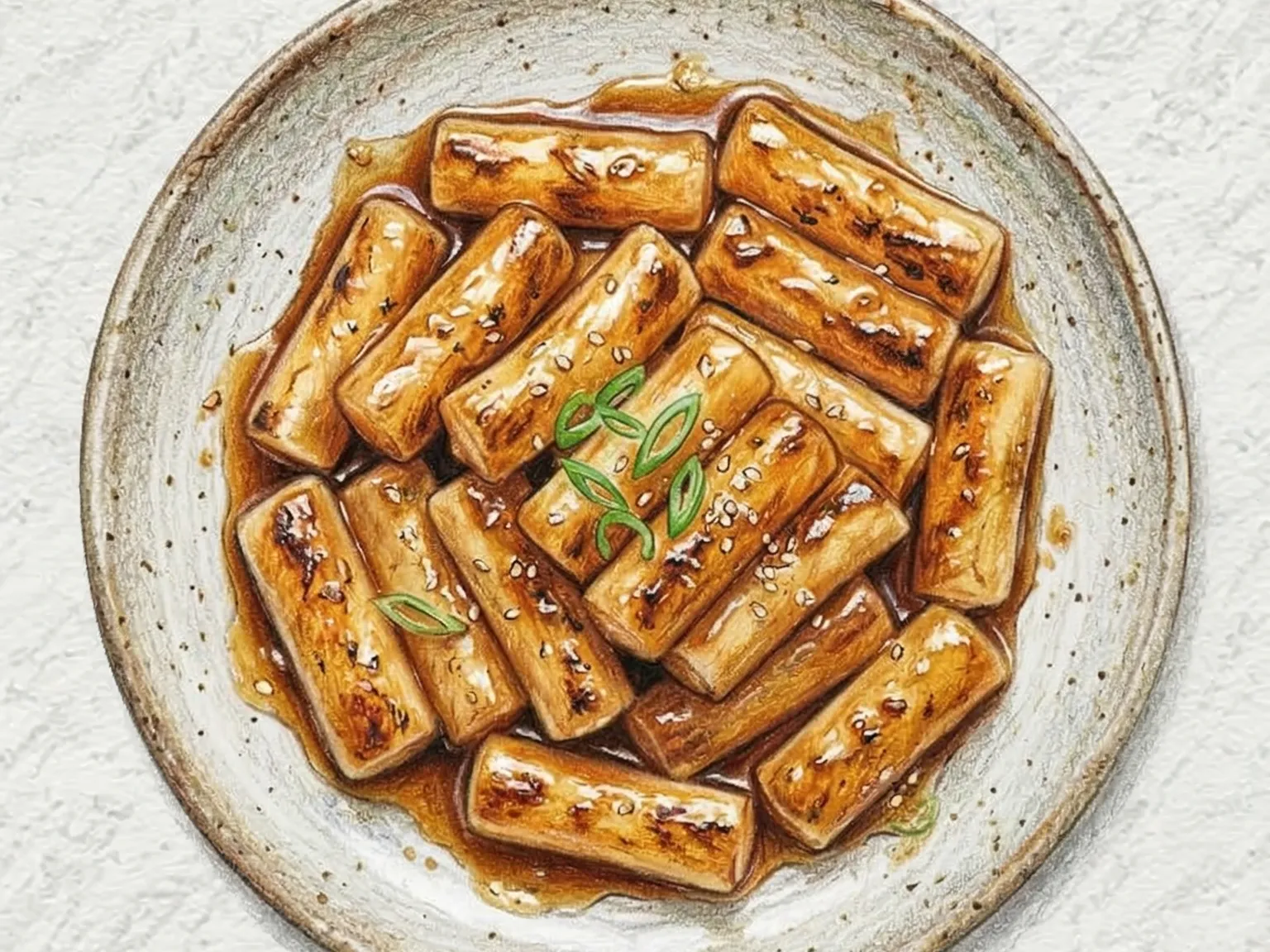
Yeongeun-jjim is Korean steamed lotus root where thick-cut slices are braised gently in a soy sauce, sugar, and cooking wine seasoning under a covered lid. The thick cross-sections absorb the sauce slowly, developing a sweet-salty coating on the outside while maintaining a crisp-chewy dual texture inside. Sesame oil added at the end lifts a toasted fragrance, and scattered sesame seeds provide visual contrast. With only a handful of ingredients, this side dish showcases the lotus root's natural starchy character in a clean, understated preparation.

🍱 Lunchbox
Prep 15minCook 22min2 servings
Korean Stuffed Eggplant Seon
Side dishesMedium

Korean Stuffed Eggplant Seon

Gaji-seon is a Joseon-era royal court banchan belonging to the seon category, a class of preparations in which vegetables are stuffed with a seasoned filling and steamed. The eggplant is scored at regular intervals with deep cuts that stop short of the bottom, creating accordion-like pockets along the length of the vegetable. A filling of minced pork or beef combined with crumbled tofu, scallion, and sesame oil is pressed firmly into each slit, then the stuffed eggplant is steamed for fifteen minutes. During steaming, the juices from the filling soak into the softening eggplant flesh, and the two components merge into a single flavor. The labor of stuffing each eggplant individually made this a dish historically reserved for guests and formal occasions rather than everyday meals. After steaming, a light soy-based sauce is spooned over the top. The sharp textural contrast between the near-dissolving eggplant skin and the firm, savory filling produces a refinement that clearly separates seon from ordinary stir-fried or braised eggplant preparations.

🏠 Everyday🎉 Special Occasion
Prep 25minCook 20min4 servings
Korean Abalone Pot Rice (Ocean-Scented Sesame Base Grain Pot)
RiceMedium

Korean Abalone Pot Rice (Ocean-Scented Sesame Base Grain Pot)

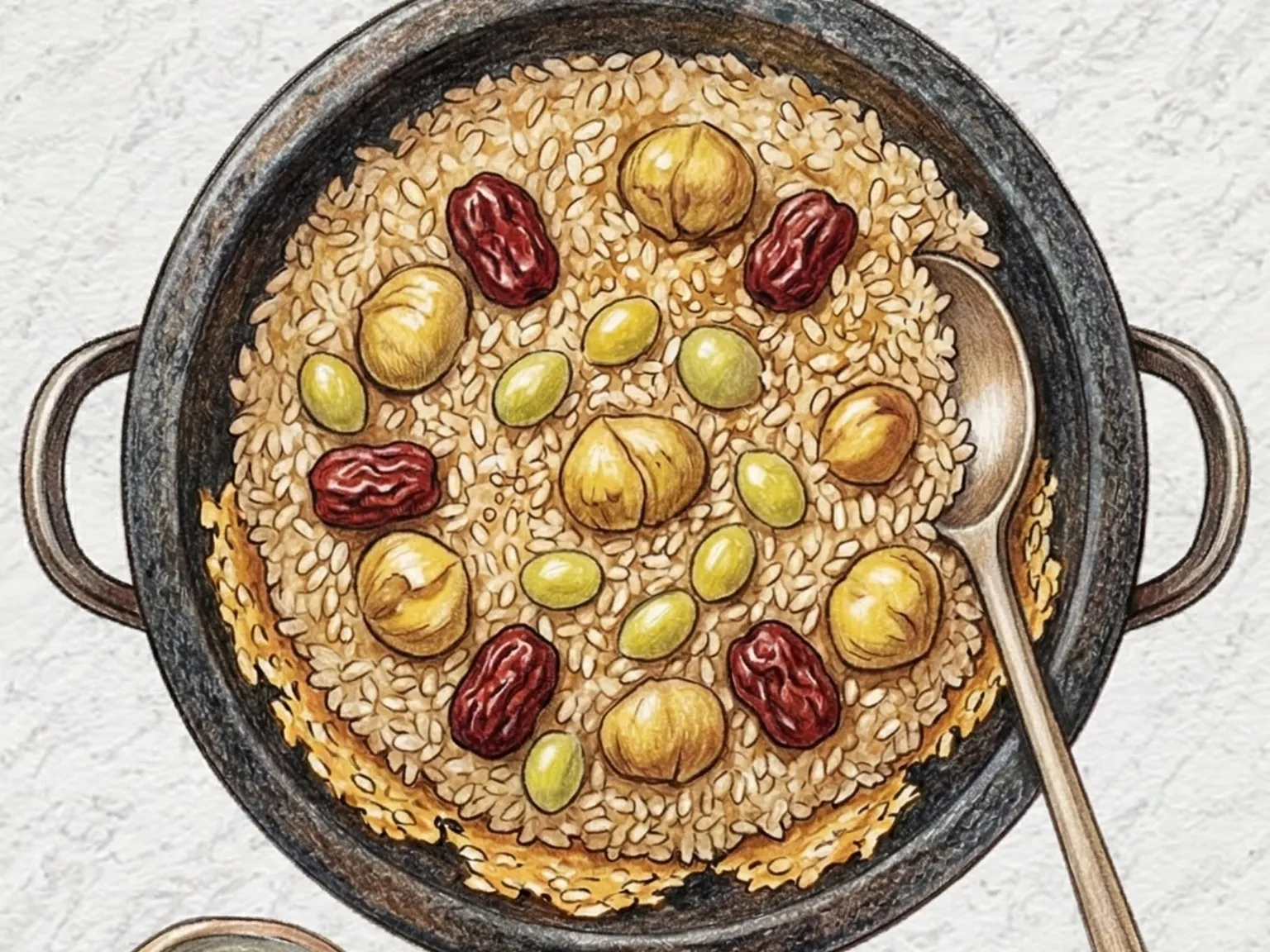
Jeonbok sotbap is an abalone and rice dish cooked in a heavy-bottomed pot, where the process of building flavor begins before the rice itself goes in. Abalone innards are sauteed directly in the cooking vessel with sesame oil, and their distinctive green pigment dissolves into the fat and spreads a deep, marine-tinged aroma throughout the pot. Soaked rice and water are added to this scented base and the rice is cooked in the usual way, absorbing the briny fragrance into each grain. Sliced abalone meat is placed on top of the rice only when it is nearly done, then the lid is replaced for a five-minute steam that gently cooks the abalone without toughening it. Extending this resting time by two or three minutes generates a layer of nurungji, scorched rice at the bottom of the pot, that adds a crisp textural counterpoint. A sauce of soy sauce, sliced chives, minced garlic, and sesame seeds is mixed into each bowl at the table, bringing a savory, nutty accent that complements the abalone's subtle flavor.

🎉 Special Occasion
Prep 20minCook 25min2 servings
Korean Mushroom and Vegetable Stir-Fry
Stir-fryEasy

Korean Mushroom and Vegetable Stir-Fry

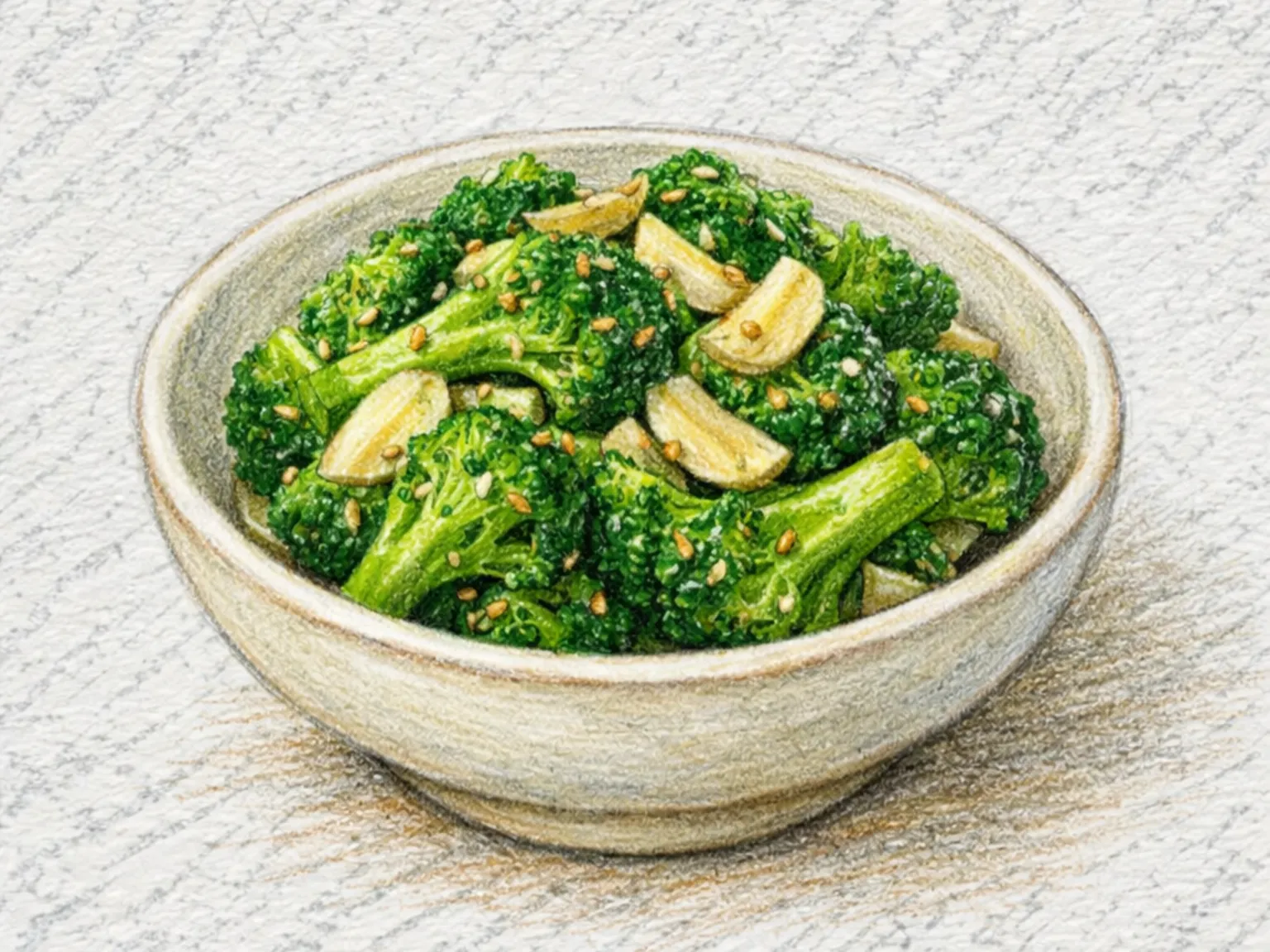
Mushroom-yachae-bokkeum stir-fries king oyster and oyster mushrooms with broccoli and carrot in a light soy-oyster sauce seasoning. Harder vegetables go into the hot pan first to get a head start, then the mushrooms join and pick up the sauce. High heat is essential because mushrooms release water quickly - fast cooking evaporates that moisture and concentrates the umami rather than steaming the ingredients. A finish of sesame oil ties the flavors together in a low-calorie dish that draws its depth entirely from the mushrooms' natural savoriness.

🏠 Everyday🌙 Late Night
Prep 10minCook 10min2 servings
Korean Spicy Pork Bulgogi Grill
GrilledMedium

Korean Spicy Pork Bulgogi Grill

Pork shoulder is marinated for at least thirty minutes in a mixture of gochujang, soy sauce, sugar, and ginger juice, then grilled over high flame. The sugars in the marinade caramelize at high heat, forming a dark, flavorful crust on the surface. Wrapping the grilled meat in fresh lettuce leaves combines the charred smokiness with the crunch and freshness of raw greens.

🍺 Bar Snacks
Prep 30minCook 15min2 servings
Korean Lotus Root & Peanut Braise
SteamedMedium

Korean Lotus Root & Peanut Braise

Yeongeun ttangkong jorim is a Korean soy-braised side dish of lotus root and roasted peanuts glazed in soy sauce, oligosaccharide syrup, and cooking wine. The crunchy lotus root contrasts with the toasted, nutty peanuts, and the combination releases layers of savory, roasted flavor as you chew. Soy sauce provides the salty foundation while the syrup rounds it out with a soft sweetness and glossy finish. This banchan keeps well refrigerated for several days, making it a reliable addition to lunchboxes and everyday meals.

🏠 Everyday🎉 Special Occasion
Prep 20minCook 30min4 servings
Korean Stir-fried Julienne Potatoes
Side dishesEasy

Korean Stir-fried Julienne Potatoes

Gamja-chae-bokkeum is a stir-fried julienned potato banchan where the cutting technique determines the outcome more than any seasoning. Potatoes are julienned into matchstick-thin strips, then soaked in cold water for at least ten minutes to rinse away surface starch - a step that is not optional. Skipping it means the strips clump together in the pan, glueing themselves into a starchy mass that cannot be salvaged. After draining and drying thoroughly, the strips hit a hot, lightly oiled pan and cook for just three to four minutes, stirred and tossed frequently to prevent browning. The target is a strip that is fully cooked through but retains an audible crunch when bitten, a narrow window between underdone rawness and mushy softness that takes practice to hit consistently. The seasoning is deliberately minimal - salt and a small splash of vinegar, occasionally a little sesame oil - to let the potato's clean, starchy sweetness remain the central flavor. Sliced cheongyang chili stirred in at the end adds a sharp heat without muddying the clean taste profile. This banchan has been a fixture of Korean school lunches and company cafeterias for decades precisely because it is vegetarian, inexpensive, and universally acceptable to even the most selective eaters.

🏠 Everyday🍱 Lunchbox
Prep 12minCook 8min4 servings
Korean Spicy Pork Rice Bowl
RiceEasy

Korean Spicy Pork Rice Bowl

Pork shoulder is sliced into strips, marinated in gochujang, chili flakes, soy sauce, garlic, and sugar for ten minutes, then stir-fried over high heat until the edges caramelize. Onion goes in first to build sweetness, and green onion added at the end brings a sharp, fresh bite that cuts through the spicy-sweet glaze. A final drizzle of sesame oil rounds out the aroma. Served over steamed rice, the bold sauce coats every grain, making this a satisfying single-bowl meal that comes together in under thirty minutes.

🏠 Everyday
Prep 20minCook 15min2 servings
Korean Stir-fried Anchovies
Stir-fryEasy

Korean Stir-fried Anchovies

Myeolchi-bokkeum is a foundational Korean banchan of small dried anchovies glazed in a sweet-salty coating of soy sauce and oligosaccharide syrup. The anchovies are first dry-roasted in a clean pan on low heat for three minutes to remove fishiness and build crunch. A sauce of garlic, soy sauce, and syrup is bubbled separately, and the anchovies are tossed back in for a quick, even coating. Sesame oil and toasted sesame seeds finish the dish; once fully cooled, the glaze sets firm, giving the anchovies a snappy texture that keeps well in an airtight container for over a week.

🏠 Everyday🍱 Lunchbox
Prep 5minCook 10min4 servings
Korean Grilled Webfoot Octopus
GrilledMedium

Korean Grilled Webfoot Octopus

Cleaned webfoot octopus is tossed in a marinade of gochujang, chili flakes, soy sauce, and sugar for ten minutes, then seared on high heat for just three to four minutes. Webfoot octopus has thicker tentacles than nakji and a more resilient chew, which makes it particularly well suited to this type of spicy, high-heat preparation. The short cooking time is not a shortcut -- it is the point. Overcooking webfoot octopus makes it rubbery and dry, and the difference between three minutes and five minutes is the difference between tender-chewy and tough. High heat is equally important: the goal is to sear, not steam, so the pan must be very hot and the pieces should not be crowded. Where the glaze catches on the pan surface and scorches slightly, it leaves behind charred bits that coat the octopus with a smoky depth the marinade alone cannot provide. Green onion added in the final seconds cuts through the heat with a sharp, fresh note. Just before the main harvest season in spring, webfoot octopus carries roe that adds a rich, creamy nuttiness to each bite, and this is when Korean cooks consider the ingredient at its peak. The cooked pieces wrap well in perilla leaves and are also popular as a fried rice finisher.

🍺 Bar Snacks
Prep 20minCook 8min2 servings
Korean Braised Potatoes (Soy-Glazed Braised Potato Banchan)
Side dishesEasy

Korean Braised Potatoes (Soy-Glazed Braised Potato Banchan)

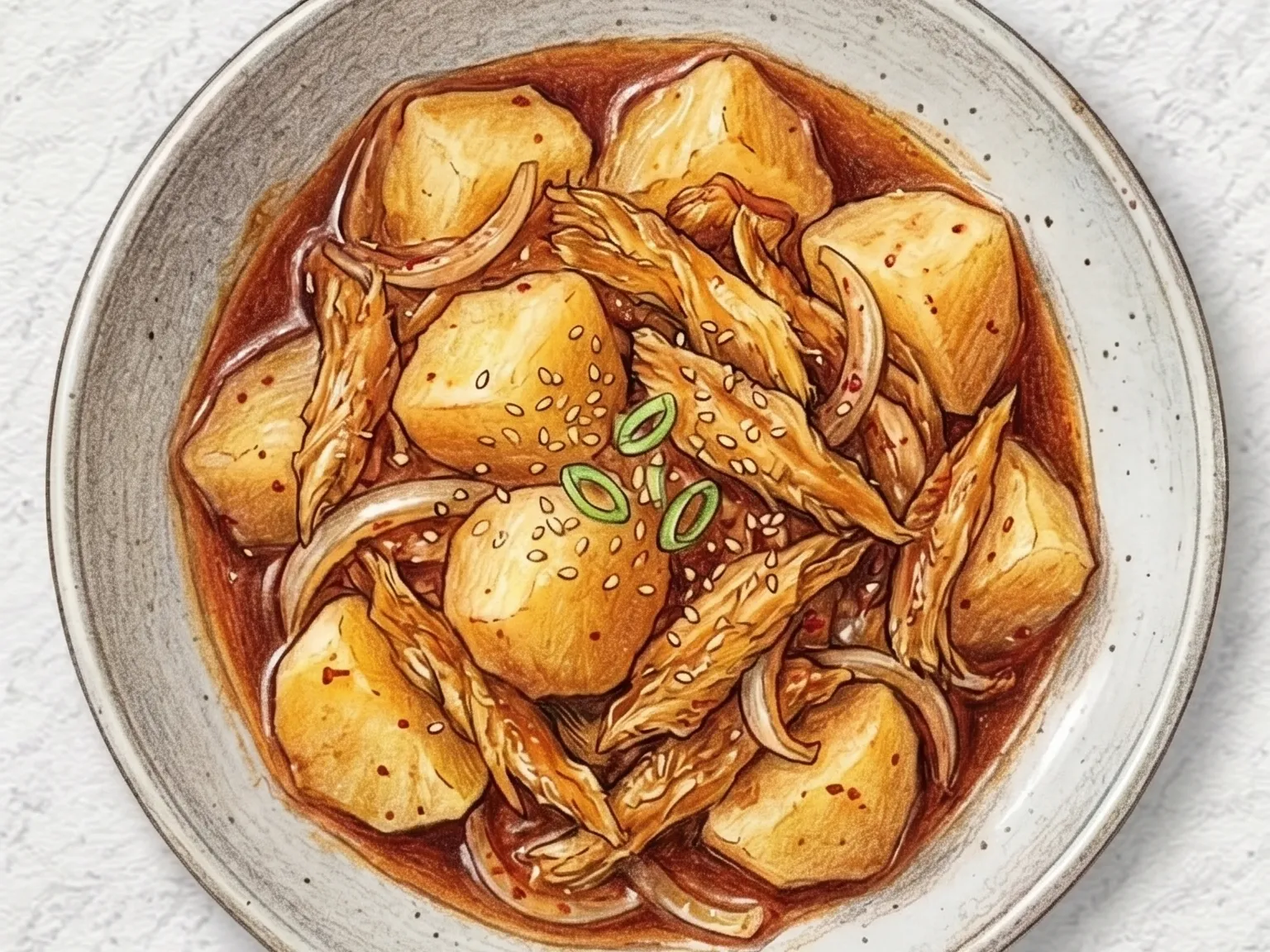
Gamja-jorim - soy-braised potatoes - is among the top five most frequently made banchan in Korean households, alongside kimchi, kongnamul, and gyeran-mari. Small potatoes are parboiled whole until just fork-tender, then transferred to a mixture of soy sauce, sugar, rice syrup, garlic, and water. The braising happens over medium-low heat for fifteen minutes with the lid off, allowing the sauce to reduce gradually into a thick, syrupy glaze. Constant gentle stirring prevents the soft potatoes from sticking or breaking apart. As the liquid evaporates, each potato develops a dark amber, lacquered surface while the interior remains starchy and yielding. The taste is straightforwardly sweet-salty with a garlic undertone - comfort food in its most elemental form. Korean mothers often make a large batch on weekends, refrigerating it to serve cold throughout the week. The dish improves overnight as the glaze continues to penetrate the potato's interior.

🏠 Everyday🍱 Lunchbox
Prep 10minCook 20min4 servings