Korean Seasoned Young Radish Greens
Preparing these young radish greens requires precision during the brief blanching stage to maintain their structural integrity. A quick ten to fifteen second dip in boiling water softens the leaves while keeping the stems firm. An immediate transition to a cold water bath locks in the pale green color and stops the cooking process. After squeezing out the excess moisture, the greens are tossed with soup soy sauce, minced garlic, sesame oil, and toasted sesame seeds. The soup soy sauce provides a subtle saltiness that highlights the natural grassy essence of the vegetable. Minced garlic contributes a sharp element to the mild base, and a light coating of sesame oil ensures a smooth mouthfeel. Each bite releases the toasted scent of sesame seeds. This side dish functions effectively as a palate cleanser when served alongside spicy stews or fatty grilled meats. Its appeal lies in a clean profile that avoids heavy seasonings, allowing the fresh character of the greens to remain central.

Korean Lotus Root Perilla Seed Stew
Lotus root and oyster mushrooms are simmered in a thick perilla seed broth made with vegetable stock. The lotus root maintains its signature crisp, starchy bite, contrasting with the soft tofu and springy mushrooms. Four tablespoons of perilla seed powder create a naturally creamy, nutty broth, finished with a touch of sesame oil. Built entirely on vegetable stock without any meat or fish, this is a plant-based stew with substantial body and flavor.

Korean Shepherd's Purse Pollack Soup
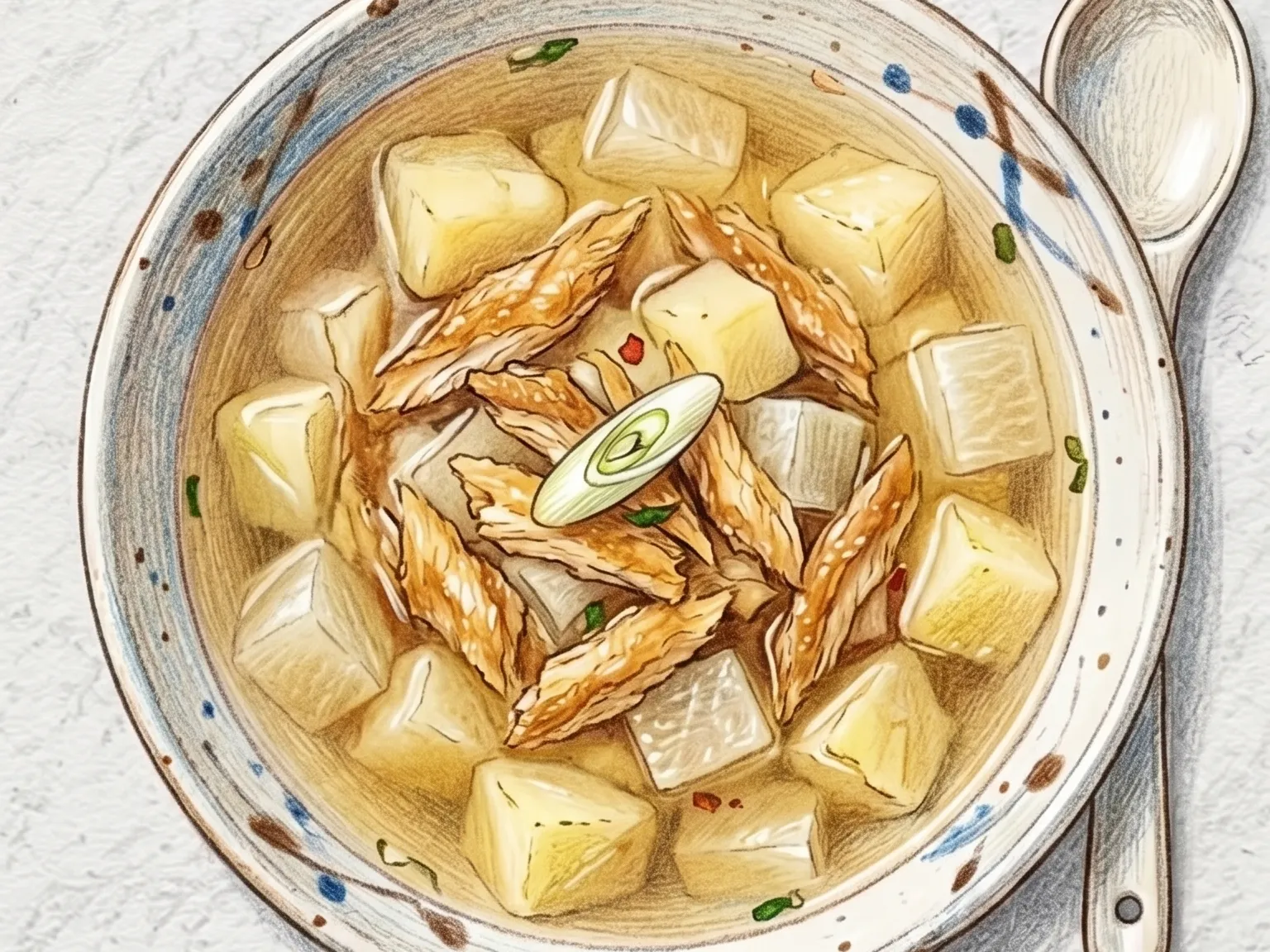
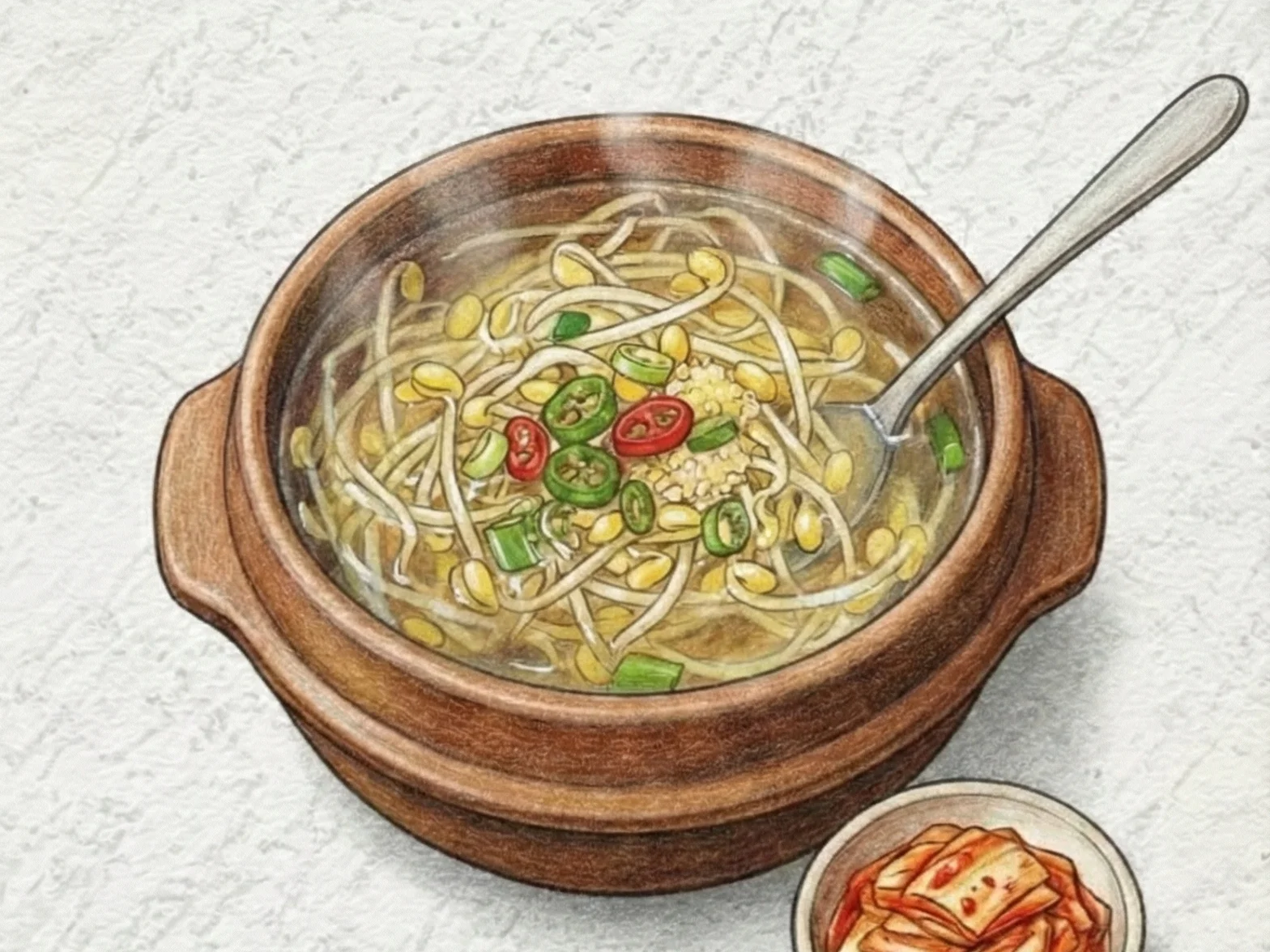
Naengi-bugeo-guk is a clear Korean soup that brings together dried pollack strips and fresh shepherd's purse, pairing the hearty depth of a winter pantry staple with the clean, herbaceous fragrance of early spring. Sautéing the pollack strips in sesame oil before adding water is the foundational step, as the dry heat coaxes a toasty, nutty aroma out of the surface proteins and primes the broth to carry deep flavor from the first minute of simmering. As the soup cooks, the concentrated umami locked inside the dried fish slowly dissolves into the liquid, building a broth that feels rich without being heavy. Cubed tofu goes in mid-cook, softening into a silky texture while keeping the overall flavor clean and mild. The shepherd's purse is added at the very end, just long enough to wilt, so that its faintly bitter, earthy spring perfume remains in the finished bowl rather than cooking off. Soup soy sauce and minced garlic season without clouding the broth. This soup is a fixture of Korean spring cooking, prized for being gentle on the stomach while delivering genuine depth.

Korean Dried Radish Greens Soup
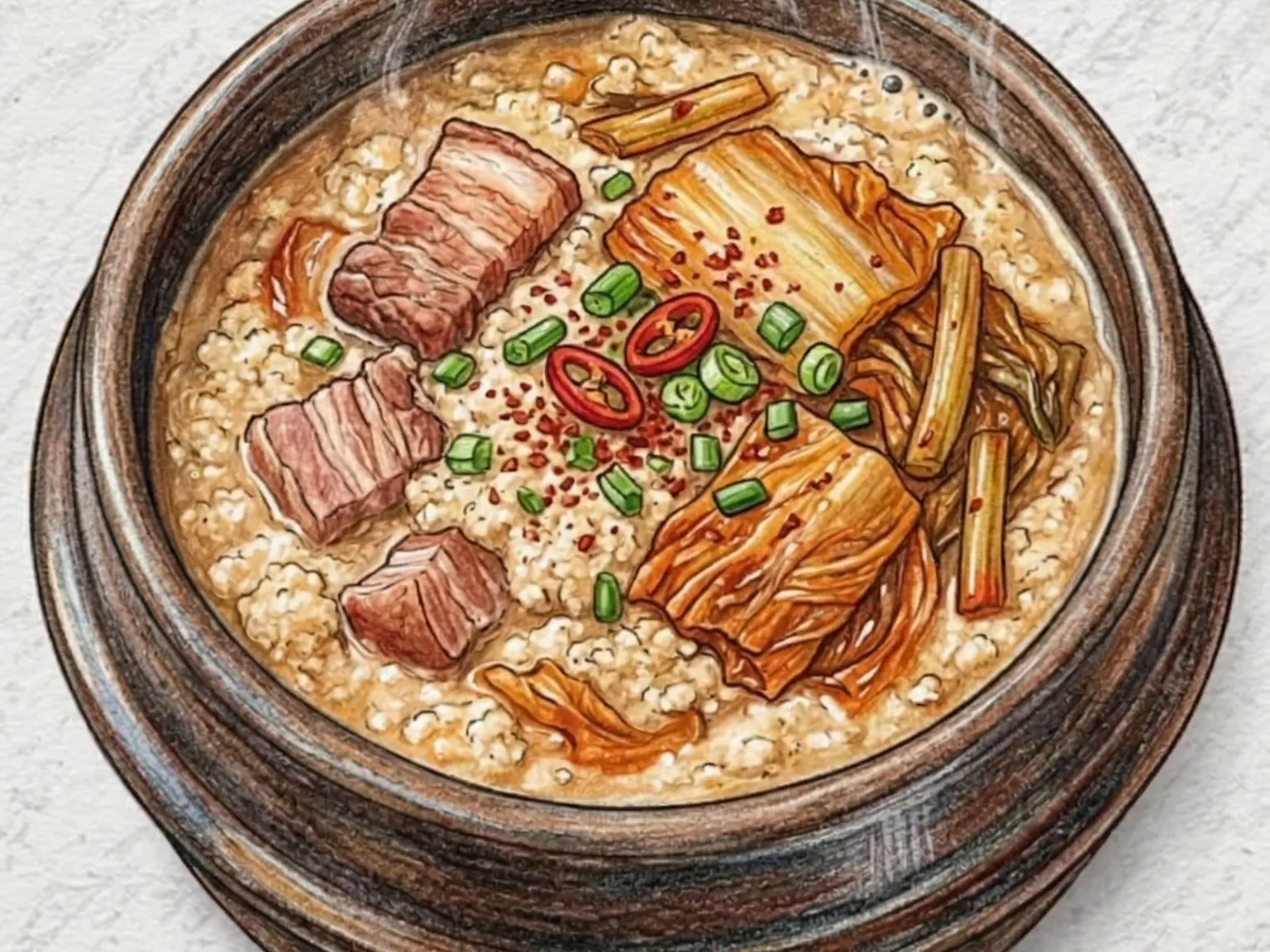
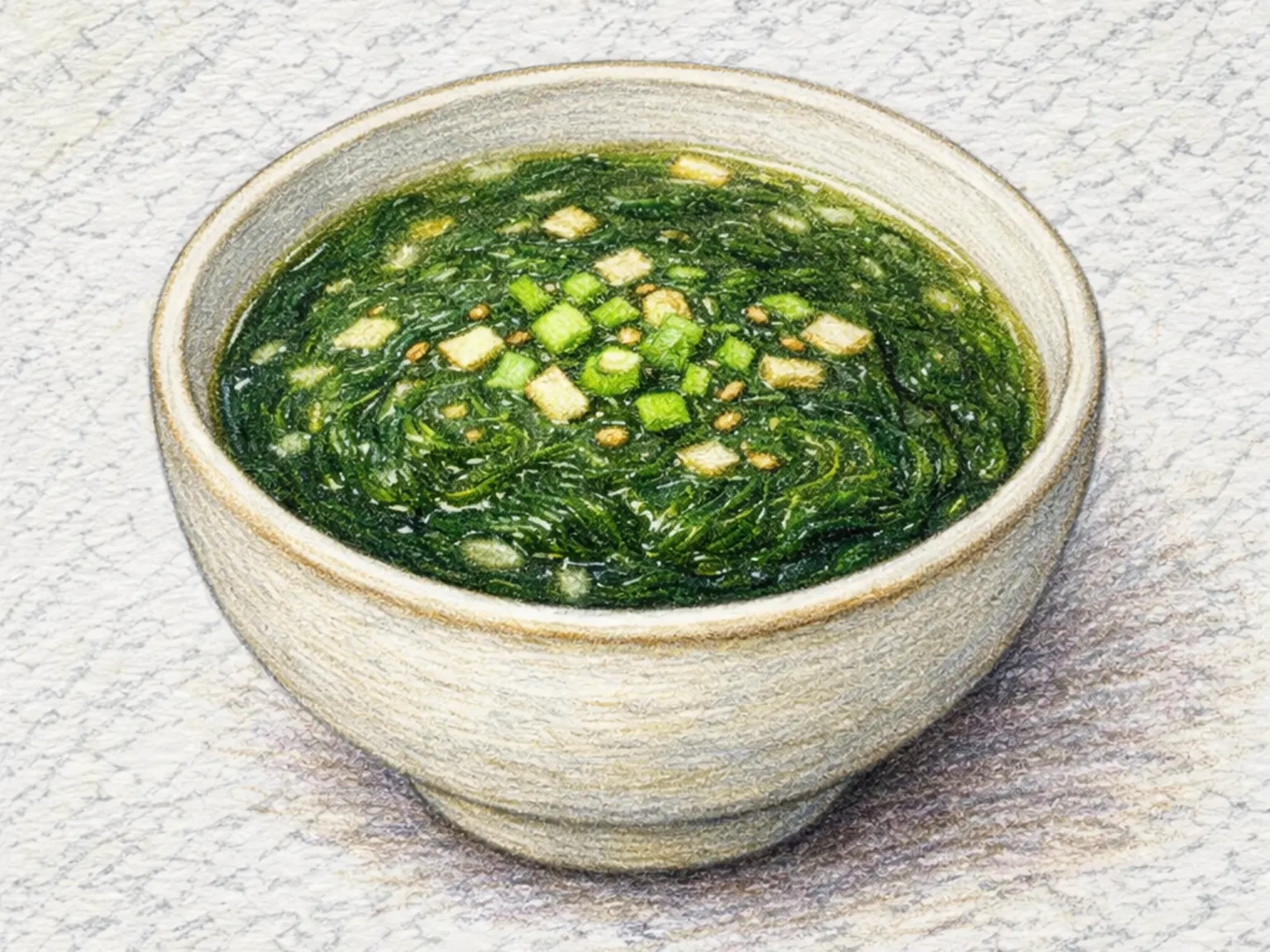
Siraegi-guk is a Korean dried radish greens soup that transforms a humble preserved vegetable into something deeply flavorful through the medium of doenjang. The greens are dried in autumn, then reconstituted by boiling until soft - a process that concentrates their earthy, slightly bitter character. When simmered in stock with dissolved soybean paste, that concentrated flavor meets fermented umami and the result is a broth richer than the ingredient list would suggest. Adding ground perilla seeds pushes the soup further, turning the liquid creamy and nutty. Garlic and green onion form the aromatic backbone. The soup works well without meat, but many cooks stir-fry a small amount of beef in perilla oil before adding the liquid, which introduces a beefy depth that rounds out the overall profile. The critical step is managing the initial boiling of the dried greens: not enough, and the bitterness overwhelms; too much, and the greens become bland. Experienced Korean cooks leave just enough edge to give the soup its distinctive character - a pleasant astringency that makes doenjang taste more interesting rather than less. Siraegi-guk is pantry cooking at its finest, relying on dried goods and fermented paste to produce a bowl that tastes like slow, patient effort.

Maeuntang (Spicy White Fish Radish Stew)
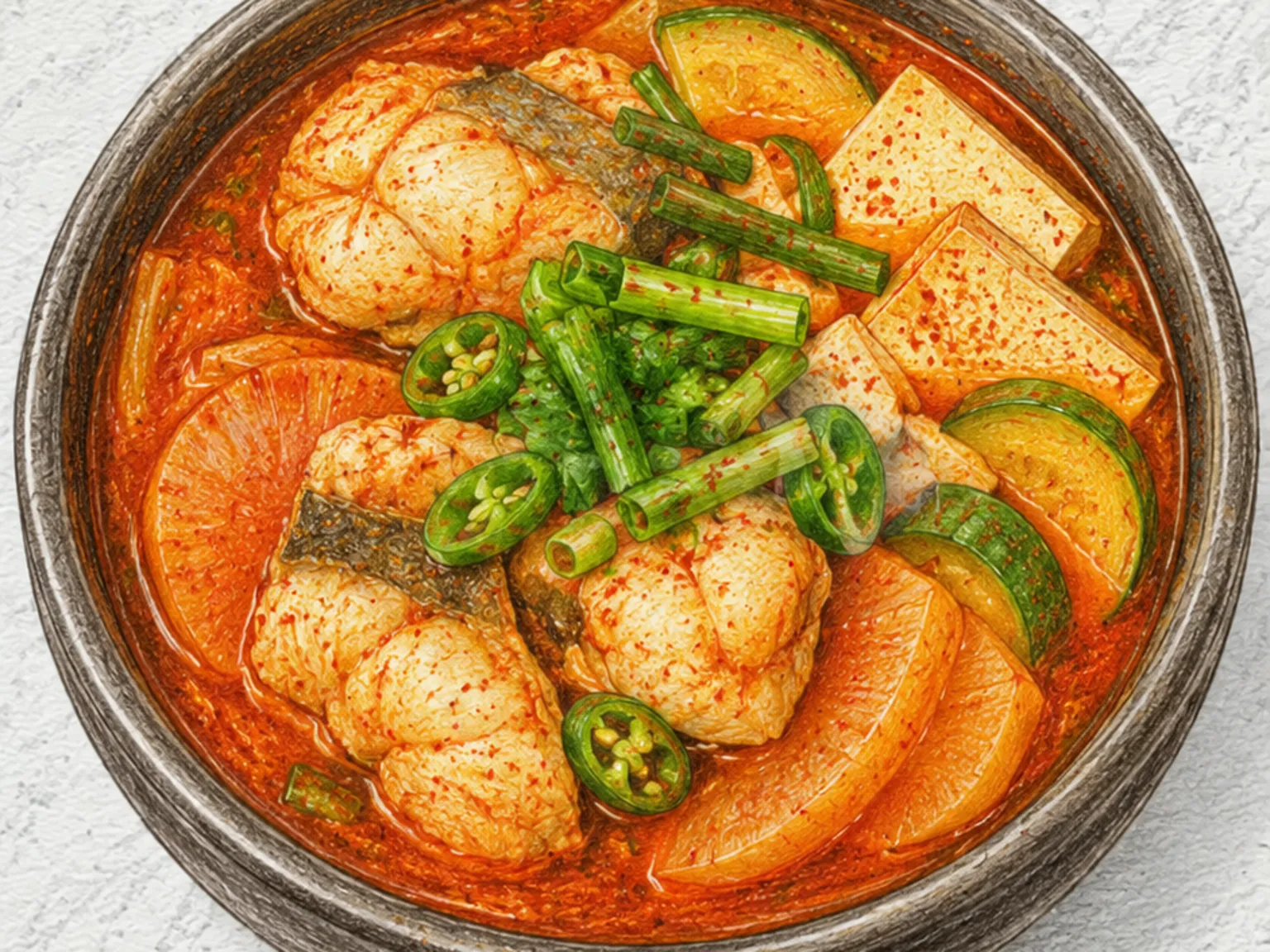
Maeuntang is a traditional Korean spicy fish stew centered on white-fleshed fish such as cod or frozen pollock. The fish is salted for ten minutes before cooking, which draws out excess moisture and the compounds responsible for fishiness, resulting in a cleaner-tasting broth. Radish goes into the pot first and simmers until its clean, mild sweetness dissolves into the water, forming the base. Gochujang, gochugaru, soup soy sauce, and minced garlic are then stirred in to build the spiced, savory broth. The fish and tofu are added together and cooked for ten minutes without being turned over. Instead, hot broth is repeatedly ladled over the top surface so the fish cooks evenly without the flesh breaking apart. Zucchini, green onion, and cheongyang chili are added in the final three minutes to preserve their color and slight crunch. A half tablespoon of doenjang stirred in at the end adds a secondary layer of umami that deepens and rounds out the broth considerably.

Korean Vegetable Porridge (Yachae Juk)
Finely diced carrots, zucchini, potato, and onion are simmered with soaked rice over low heat until the porridge turns creamy and the vegetables soften completely. The long, gentle cooking draws out the natural sweetness of each vegetable, so the porridge tastes mild and comforting without heavy seasoning. A thin drizzle of sesame oil stirred in at the end adds a quiet nuttiness that deepens the otherwise plain flavor. Easy to digest and gentle on the stomach, it works well as a morning meal or a restorative bowl when energy is low.

Korean Kimchi Tofu Nabe Udon
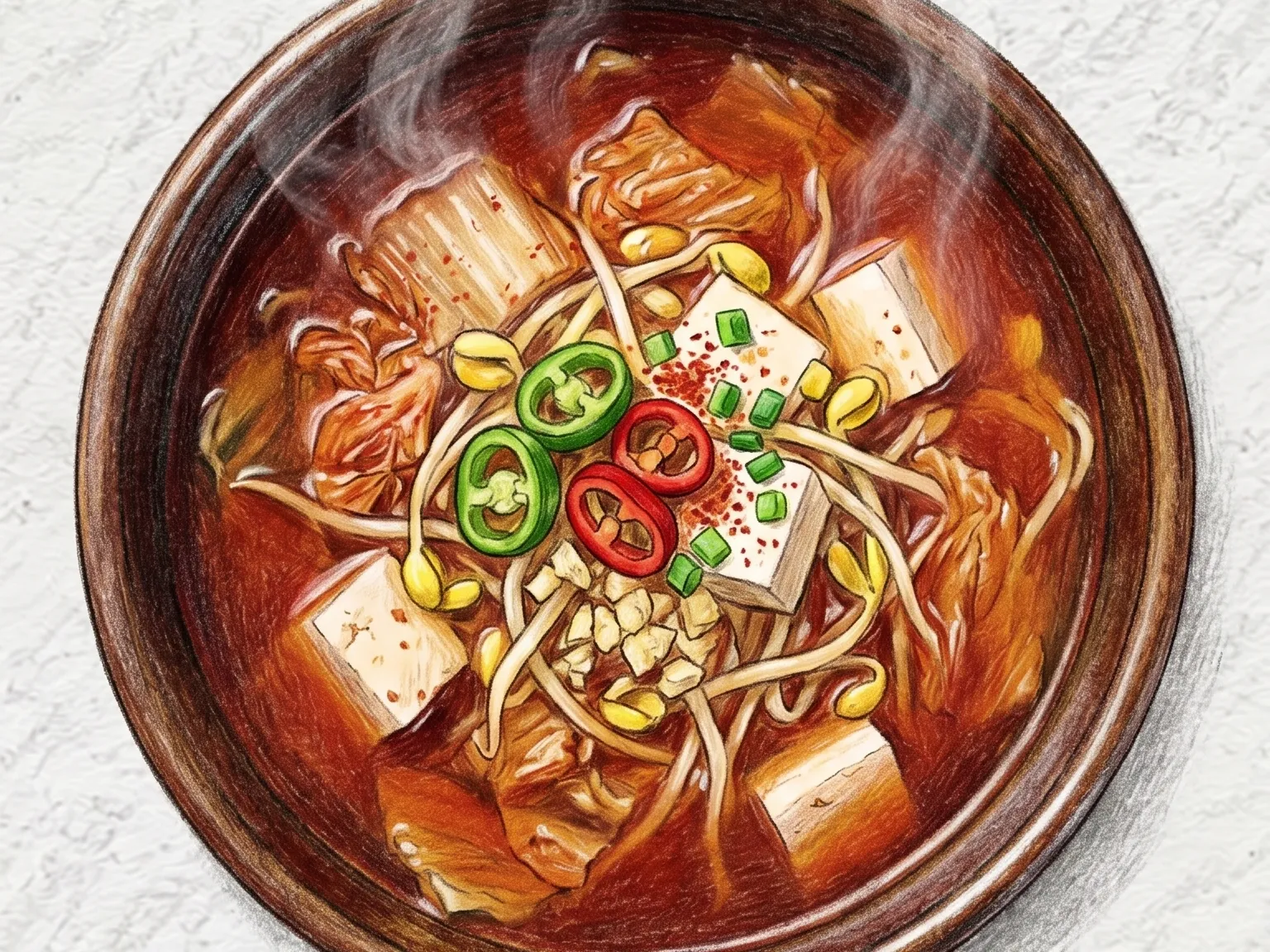
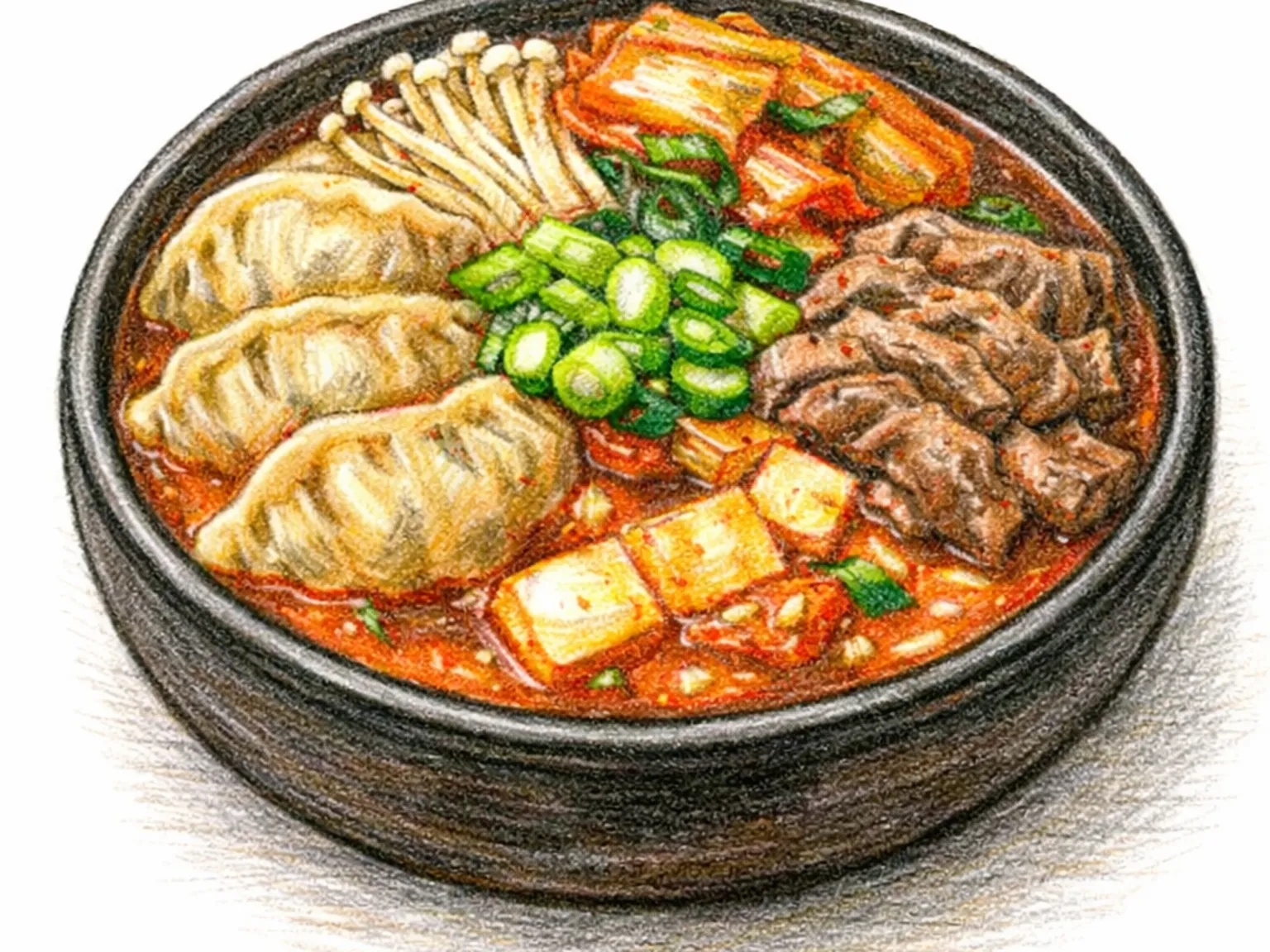
Kimchi tofu nabe udon is a Japanese-Korean hybrid hot pot noodle dish built on an anchovy-kelp stock base. Well-fermented kimchi is sauteed in sesame oil for at least two minutes to tame its sharp raw acidity, then the stock goes in along with Korean red chili flakes and soup soy sauce to form the broth. Thick slabs of firm tofu and sliced shiitake mushrooms simmer for four minutes, absorbing the spicy, savory liquid throughout, before thick udon noodles are added for a final two to three minutes. The udon's substantial mass soaks up the surrounding broth, so every bite carries the full flavor of the pot. Because kimchi saltiness varies by brand and age, soy sauce should be added in small amounts at the end rather than all at once. Pressing the tofu dry with a paper towel before it goes in keeps the broth from turning murky. Shredded green onion on top adds fragrance, and leftover broth with added rice makes a satisfying congee-style finish.

Korean Perilla Leaf Beef Stew
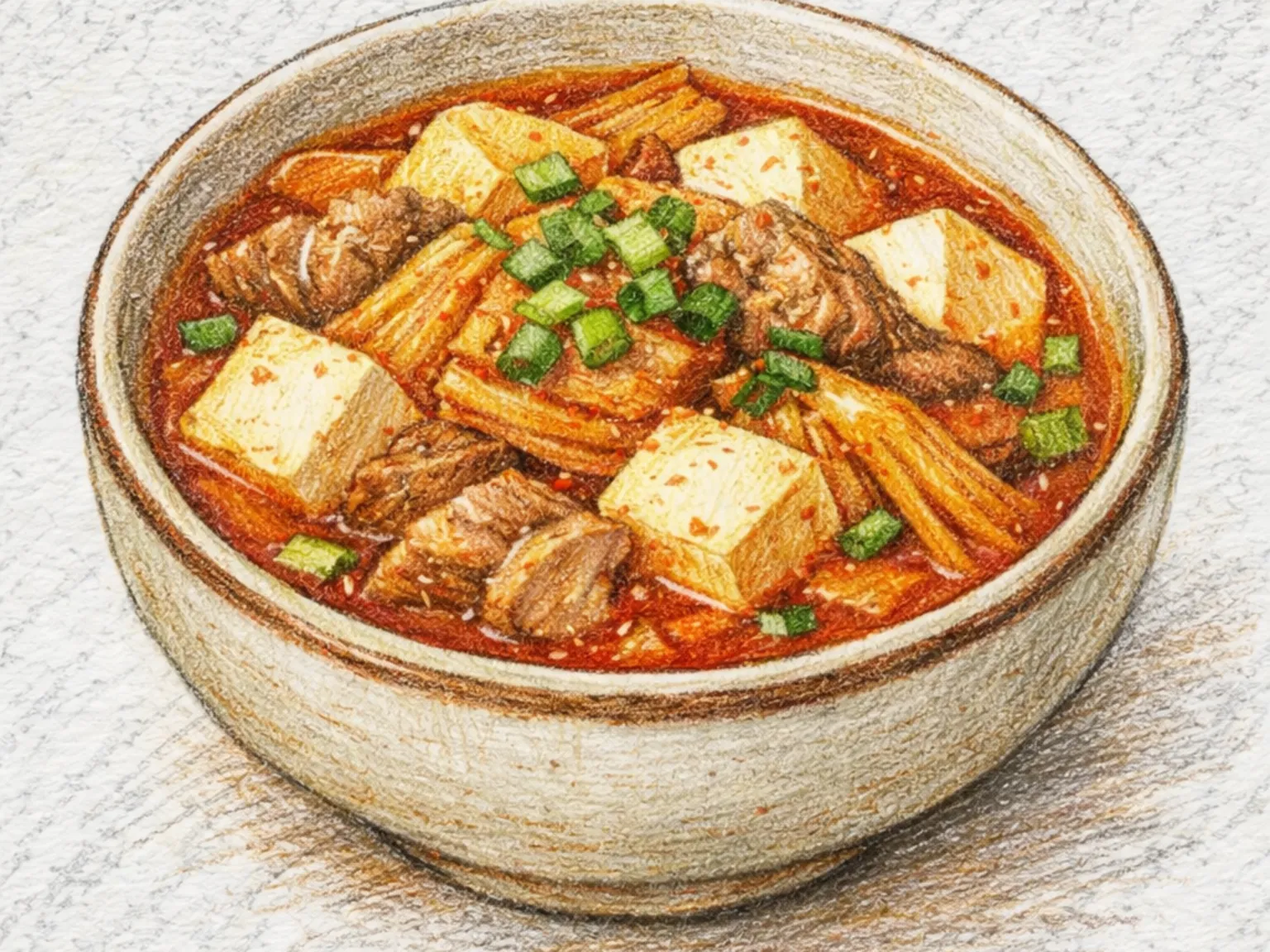
This stew features thinly sliced beef and a generous handful of perilla leaves simmered in anchovy stock. Twelve perilla leaves infuse the entire broth with their distinctive herbaceous, slightly minty aroma, while the beef releases its umami into the liquid. Firm tofu cubes absorb the gochugaru-seasoned broth, and onion adds a sweet undertone. Seasoned primarily with soup soy sauce, the stew lets the perilla and beef flavors stay in the foreground.

Korean Abalone Radish Soup
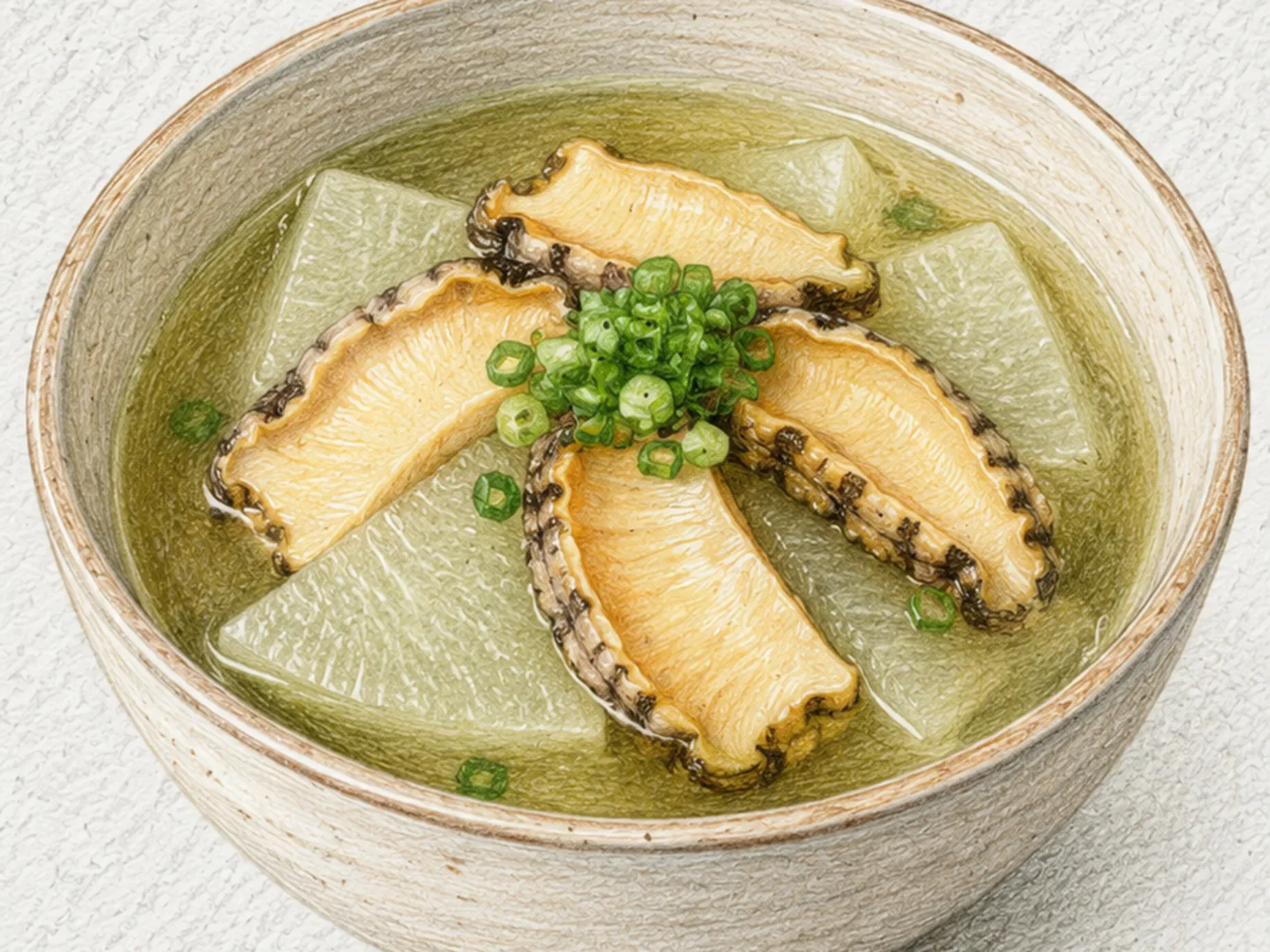
Jeonbok-muguk is a refined Korean clear soup that simmers sliced abalone and radish in kelp broth, delivering a depth of flavor far beyond the simplicity of its preparation. The cooking begins by sauteing the abalone together with its viscera in sesame oil before any liquid is added. The innards, dark green and intensely flavored, dissolve into the oil and tint the eventual broth with a faint jade color while releasing a concentrated marine umami that kelp broth alone cannot provide. Radish sliced into thin rounds cooks alongside, softening steadily until translucent and releasing a natural sweetness that counterbalances the abalone's inherent salinity. Soup soy sauce and garlic are the only additional seasonings, deliberately minimal so the abalone's character defines the soup rather than the condiments. Adding the abalone too early toughens the meat; the right moment is when the radish has turned translucent, leaving the abalone just enough time to cook through while retaining its firm, chewy bite. In Korea, abalone carries cultural weight as a gift for new mothers, the ill, and guests at formal celebrations, making this soup a gesture of care as much as a recipe. The broth that results from this combination tastes far more expensive than the effort involved.

Korean Dak Hanmari (Whole Boiled Chicken with Potato Broth)
Dak-hanmari simmers a whole chicken with potato, green onion, garlic, and ginger in plain water for an extended time. Collagen released from the bones turns the broth milky and slightly thick, while the potatoes cook until their edges begin to break down, adding body to the liquid. Seasoning stays minimal - soup soy sauce and salt only - so the natural depth of the chicken stock remains unobscured. The dish traces back to the street stall alleys of Seoul's Dongdaemun district, and the traditional way to finish the meal is to add knife-cut noodles directly into the remaining broth at the table.

Korean Water Parsley Clam Porridge
Minari bajirak juk is a mild seafood porridge made by sauteing onion and garlic in sesame oil until soft and fragrant, then simmering soaked rice and fresh clam meat into a smooth, comforting bowl. The clams release a clean, briny sweetness that diffuses through every spoonful, and water parsley added off the heat at the very end contributes a bright, herbaceous freshness that lifts the overall flavor. Soaked rice is first stirred in the sesame oil until each grain turns translucent, which keeps the porridge from becoming starchy and gluey as it cooks. Water is added and the pot simmers on medium-low heat, stirred steadily so the starch releases gradually and creates a silky, even consistency. Clams are added in the later stages of cooking because prolonged heat makes them rubbery; adding them late keeps them tender. Salt goes in just before the heat is turned off to calibrate the final seasoning, followed by a drizzle of sesame oil for a nutty, rounded finish. The light, easy texture of the finished porridge makes it well suited to early mornings, days when the stomach feels unsettled, or as a restorative after a night of drinking. Water parsley must be added after the heat is off, since its volatile fragrance disappears quickly when exposed to direct heat.

Korean Dried Pollock & Water Parsley Soup
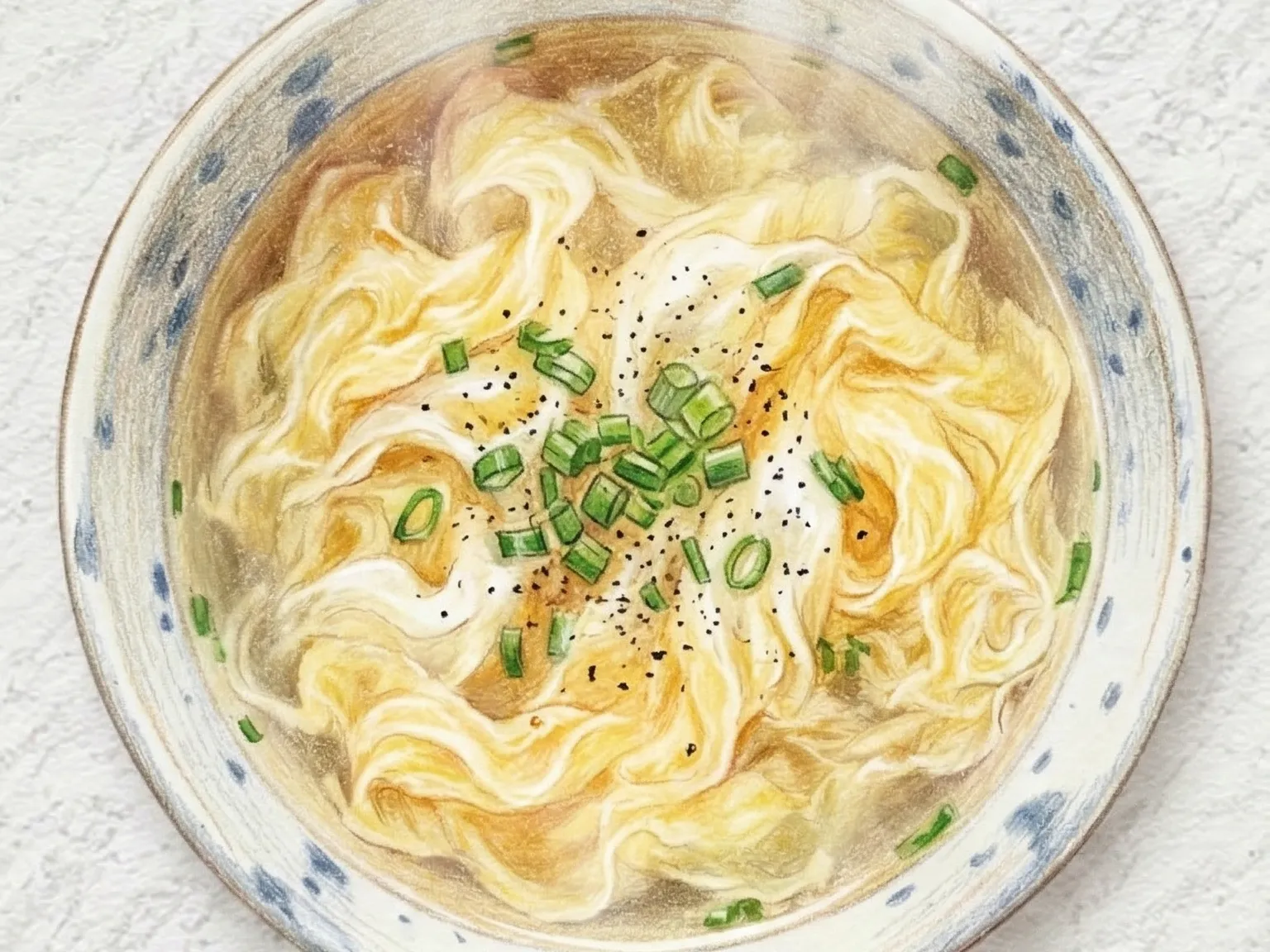
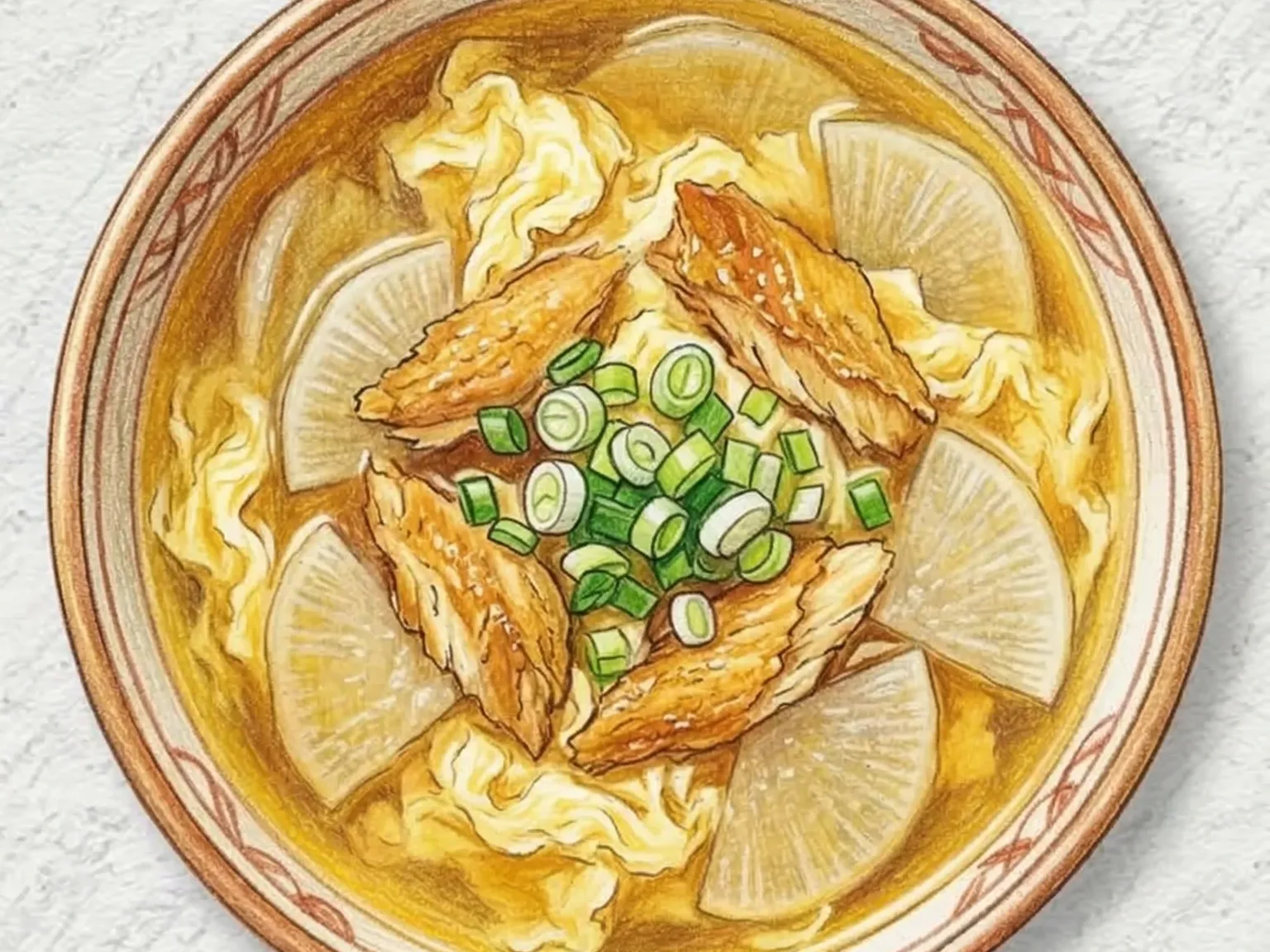
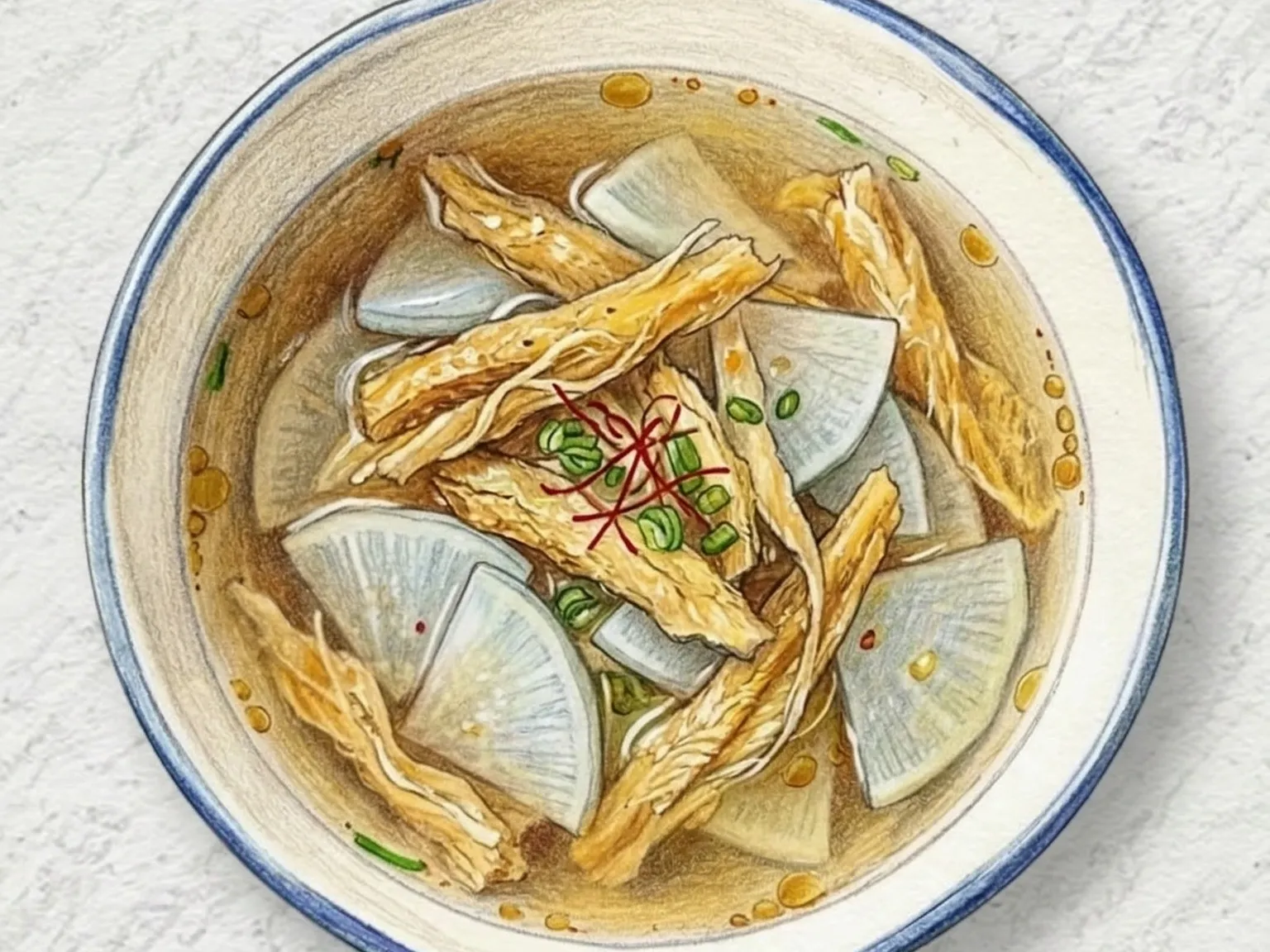
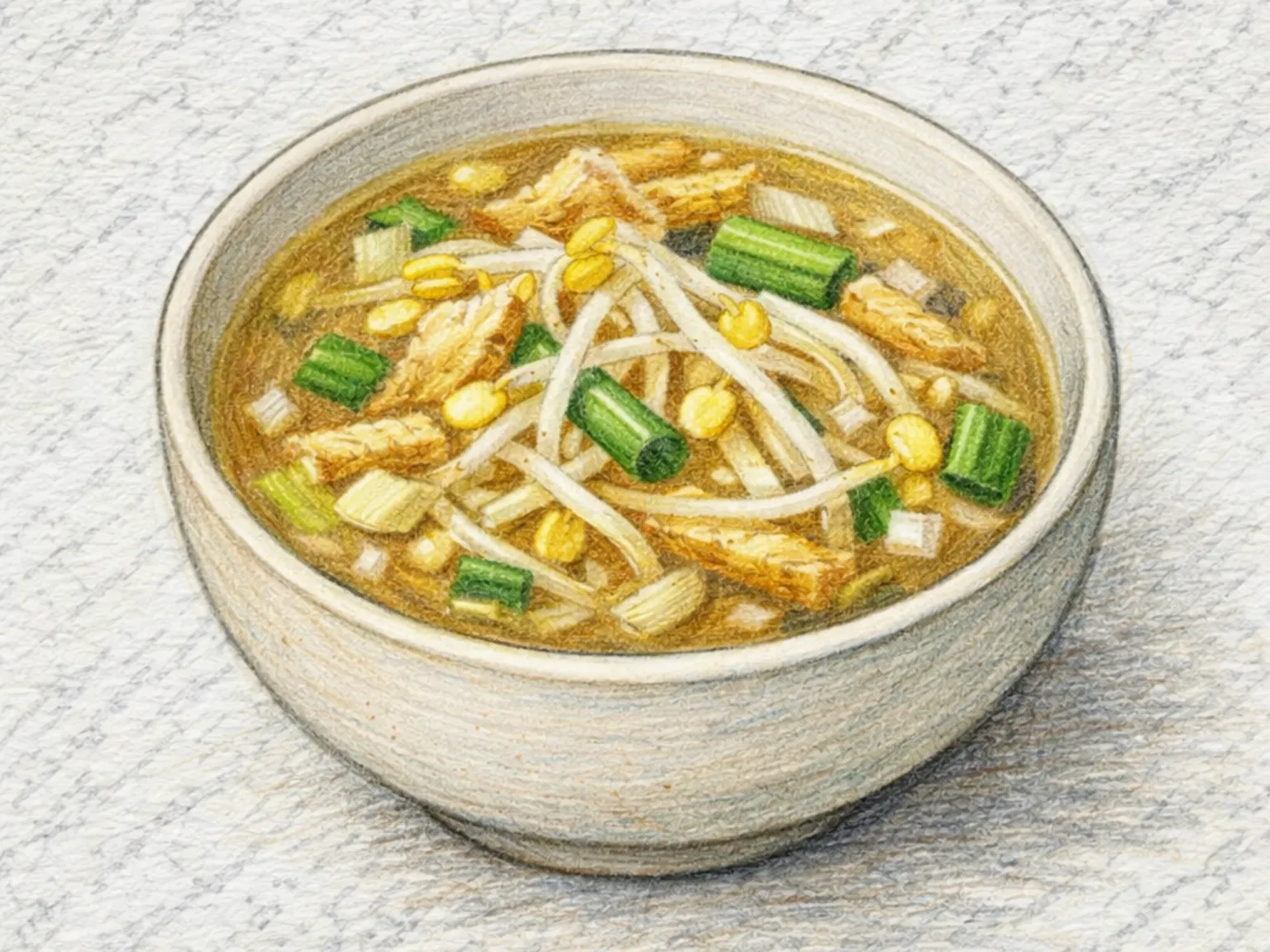
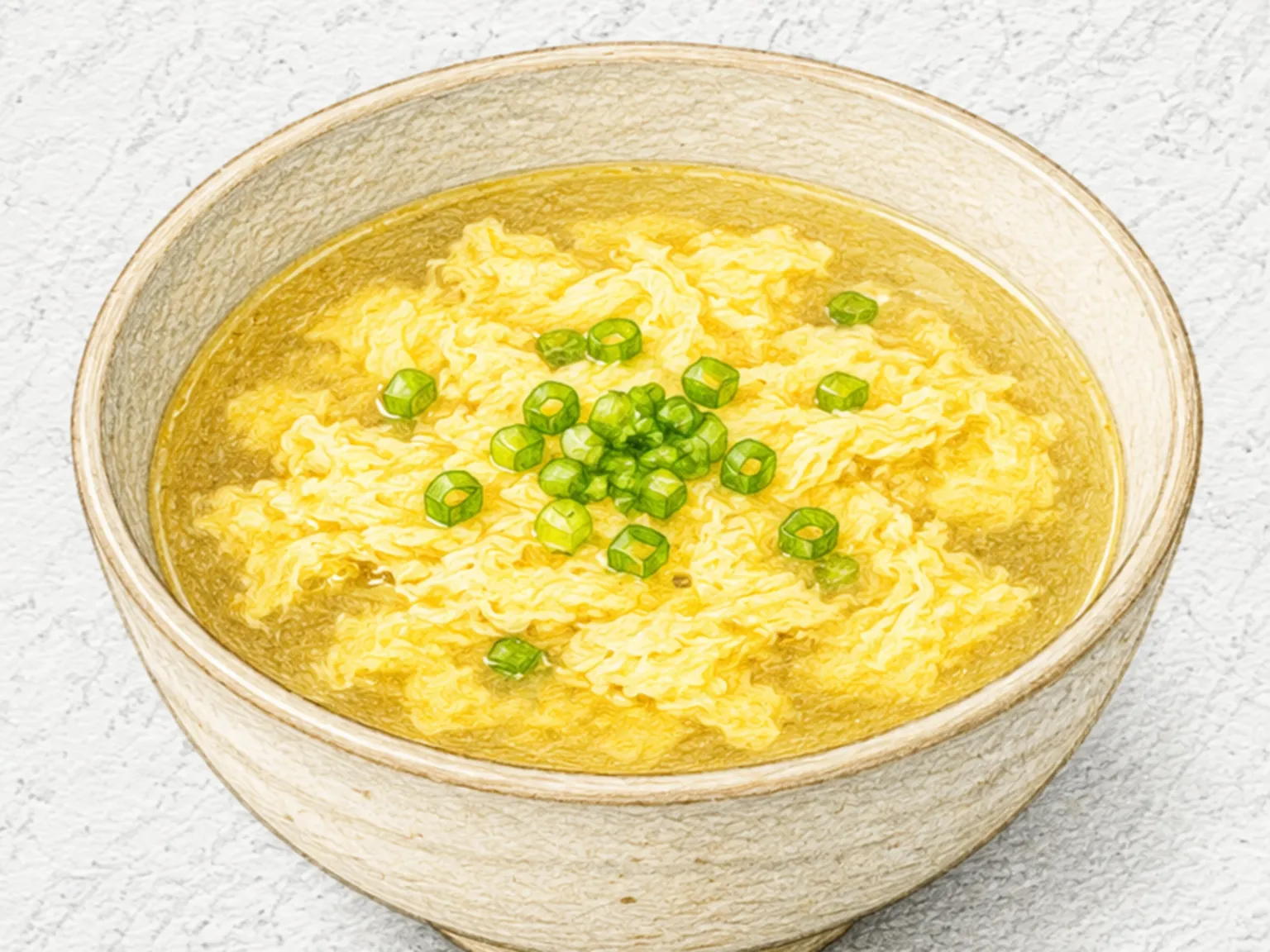
This soup begins with dried pollock strips - stir-fried in sesame oil until golden and deeply fragrant - then simmered in water to draw out a clear, nutty broth that carries the unmistakable aroma of toasted sesame and cured fish. Water dropwort goes in at the very end, contributing a fresh green lift that counterbalances the richness of the pollock. A beaten egg is swirled into the simmering liquid, forming delicate ribbons that soften the broth's texture. Radish slices, added early, sweeten the stock gently in the background. The seasoning stays simple: soup soy sauce, garlic, and salt if needed, keeping the flavor profile clean and digestible. In Korea, this style of pollock soup is regarded as one of the best remedies for a hangover because the amino acids in dried pollock and the hydrating broth are believed to support liver recovery. Morning vendors near traditional markets sell bowls of it to customers who arrive before the sun is fully up. The addition of minari elevates what is already a restorative soup into something that smells and tastes distinctly of spring.

Korean Deulkkae Aehobak Beoseot Bokkeum (Perilla Zucchini Mushroom Stir-fry)
Deulkkae-aehobak-beoseot-bokkeum is a Korean stir-fry of zucchini and oyster mushrooms finished with ground perilla seeds. The perilla powder is added toward the end of cooking, where it combines with the moisture released from the vegetables to form a thick, nutty coating that clings to each piece. Oyster mushroom brings natural umami and a slightly fibrous chew, while the zucchini contributes its gentle sweetness and keeps the dish from drying out. No strong spices or fermented pastes are needed - the toasted, herbal fragrance of the perilla seeds carries the flavor from start to finish. The result is a moist, mild side dish that demonstrates how a single aromatic ingredient can add significant depth to a simple vegetable stir-fry.

Korean Butterbur Stem Stir-fry with Perilla
Meowi-dae-deulkkae-bokkeum is a seasonal Korean stir-fry of boiled butterbur stems coated in perilla seed powder and perilla oil. The stems are peeled of their tough outer fibers and cut into 5 cm lengths before a brief boil removes their natural bitterness, leaving a soft, slightly slippery texture. Soup soy sauce seasons the base, and perilla powder is folded in at the end to preserve its nutty, toasty fragrance. This dish appears most often in spring, when fresh butterbur is in season across Korean markets.

Korean Young Napa Beef Soup
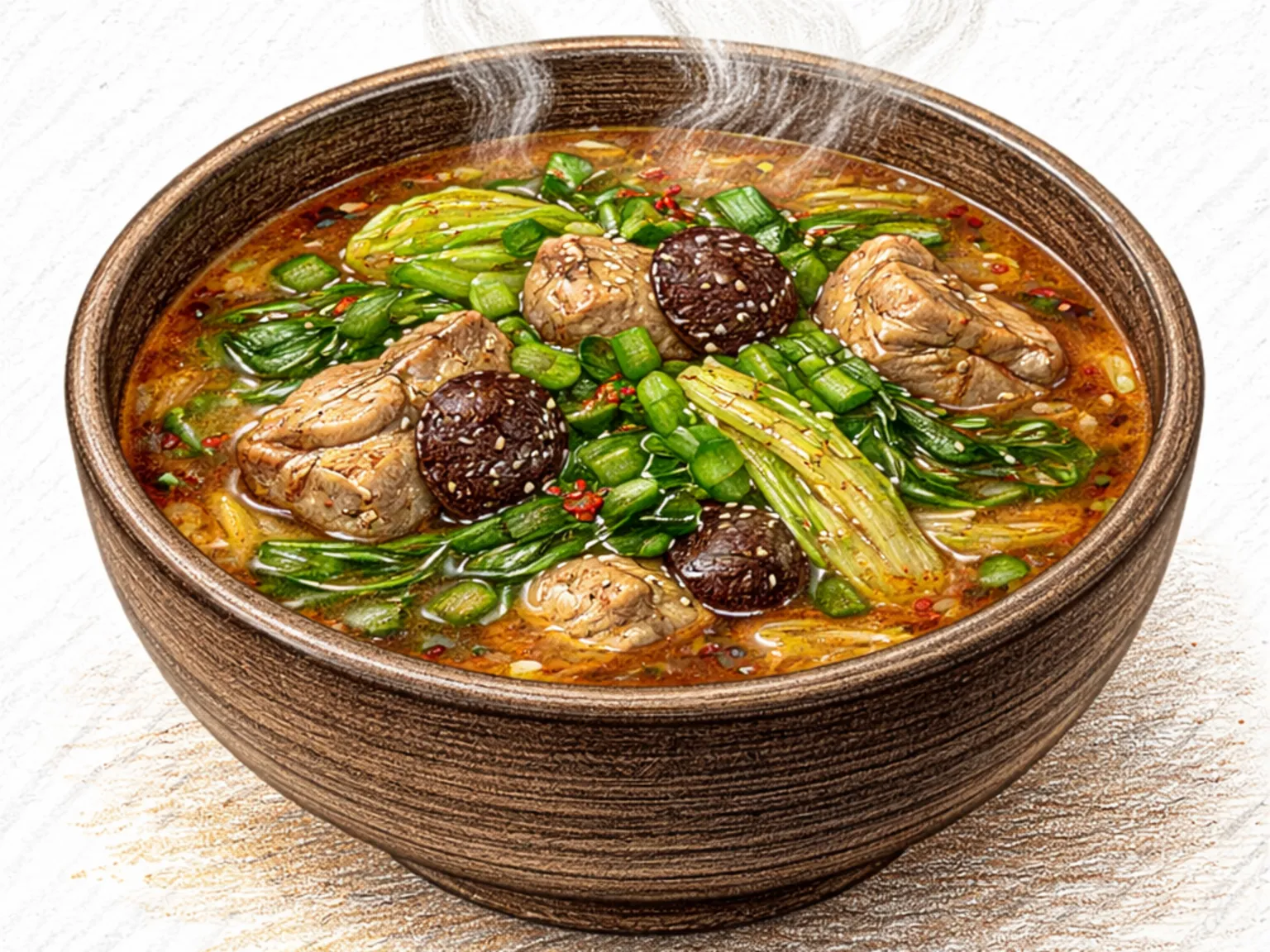
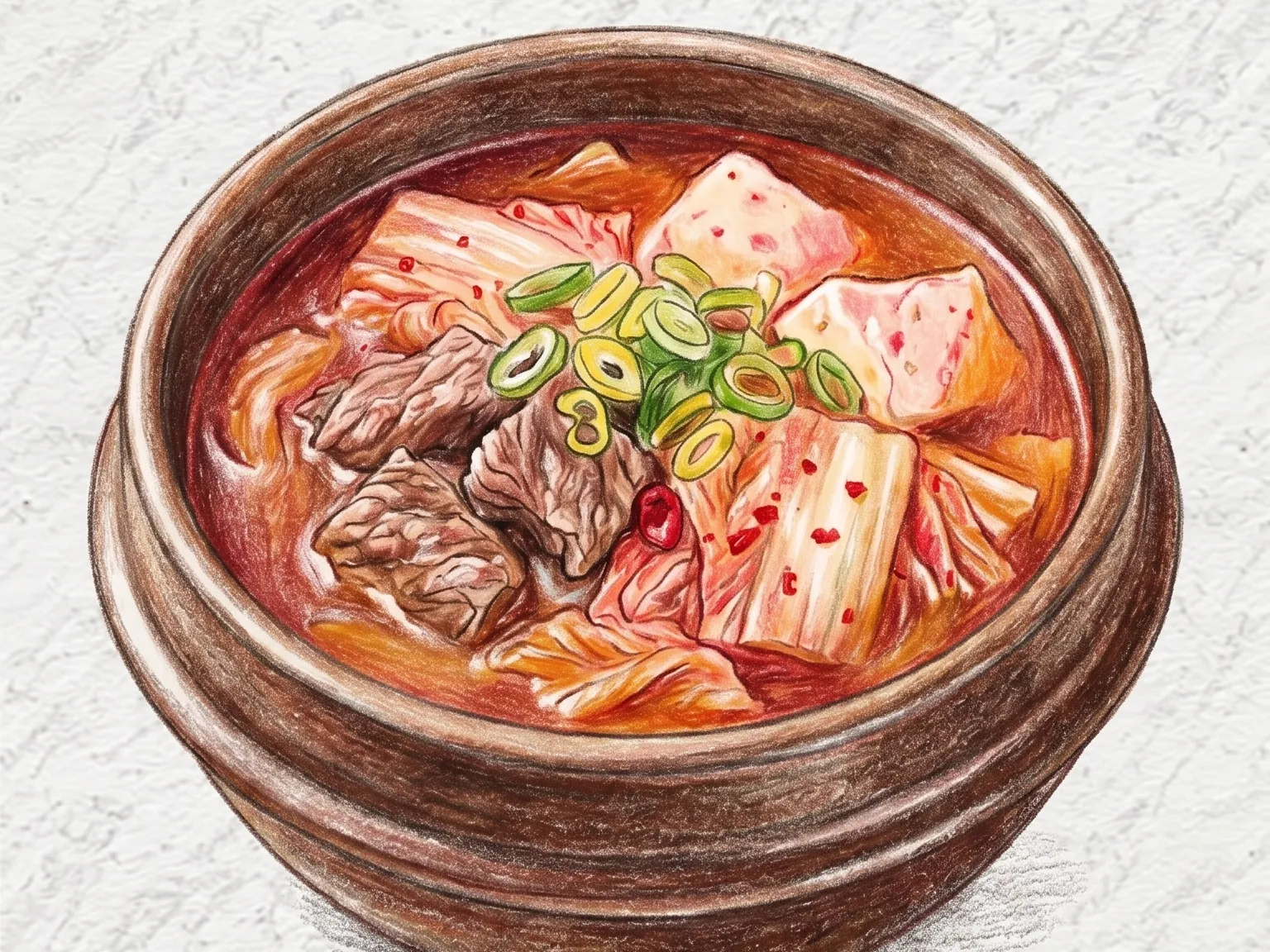
This Korean soup begins by blanching young napa cabbage leaves, then thoroughly tossing them with doenjang, gochujang, dried chili flakes, and minced garlic before any liquid is added. Pre-seasoning the greens is the foundational technique: the paste coats every surface of the cabbage and later dissolves into the broth, giving the soup a fermented, layered depth that simply adding the condiments to the pot cannot replicate. The beef component is handled separately - simmered in water from cold, skimmed clean of foam, and left to cook for fifteen minutes until a clear, savory stock develops. Once the stock is ready, the pre-seasoned greens are added and the pot returns to a gentle boil for twelve minutes, long enough for the beef umami to saturate the cabbage fibers. Soup soy sauce provides the final salt adjustment, and sliced green onion goes in last, contributing a sharp, fresh lift that cuts through the dense, earthy base of the broth.

Korean Sea Squirt Soybean Paste Soup
Mideodeok-doenjang-guk is a Korean soybean paste soup made with sea squirt, one of the more unusual and intensely flavored combinations in everyday Korean cooking. Sea squirt, called mideodeok in Korean, belongs to the same class of sea creatures as the better-known meongge. What sets it apart is the small pocket of brine inside its leathery outer skin. When bitten, the skin pops and releases a burst of concentrated ocean liquid that spreads through the surrounding broth. Combined with the fermented earthiness of doenjang, this creates a double layer of umami that lingers well past the last spoonful. The soup is built on anchovy-kelp stock, which reinforces the seafood character and keeps the base clean. Doenjang is stirred in once the stock is fully boiling so it dissolves evenly without losing its fermented depth. Radish and zucchini are added to balance the intensity: both vegetables absorb the strong flavors of the broth while contributing a quiet sweetness. One or two Cheongyang chili peppers provide a clean, building heat that cuts through any richness. Generous sliced green onion added just before serving keeps the finish bright and aromatic. Sea squirt should not be scored or cut before the soup is finished, as breaking the skin early causes the inner liquid to drain away into the pot rather than releasing inside the mouth. Along the southern coast of South Korea, particularly in Tongyeong and Geoje where mideodeok is harvested in large quantities, this soup is ordinary home cooking. Elsewhere it is a deliberate seasonal choice, best in late spring and early summer.

Korean Rice Cake Dumpling Soup
Tteok-mandu-guk combines two of Korea's most beloved New Year foods - sliced rice cakes and handmade dumplings - in a single bowl of clear beef broth. The broth, typically drawn from simmered brisket or bone stock, serves as a clean canvas for the two main ingredients. Rice cake ovals absorb the hot liquid and swell into a pleasantly chewy mass, while the dumplings, stuffed with a mixture of ground pork, tofu, scallion, and garlic, release their savory filling into the soup as they cook. Starch from the dumpling wrappers lends the broth a slight silkiness that binds everything together. Julienned egg garnish and a pinch of crushed dried seaweed are scattered over the top, adding color and a whisper of ocean fragrance. The soup is seasoned simply with soup soy sauce, letting the stock and fillings carry the flavor. While practically it extends a pot of tteokguk to feed more people, the real appeal lies in the textural variety - sticky rice cakes and soft, yielding dumplings in the same spoonful create a satisfaction that neither achieves alone.

Korean Clear Mushroom Tofu Soup
This clear Korean soup draws its umami from oyster and shiitake mushrooms simmered in plain water for four minutes, seasoned with only soup soy sauce and salt to keep the broth light and direct. Two varieties of mushrooms working together - oyster for soft texture, shiitake for depth - produce a broth that holds its own without meat. Cubed tofu goes in near the end so the pieces stay intact, and chopped green onion finishes the bowl with a clean, mild sharpness. At 155 calories per serving, the dish is genuinely low-calorie without sacrificing the layered, savory quality that makes it worth returning to.

Korean Beef and Taro Stem Soup
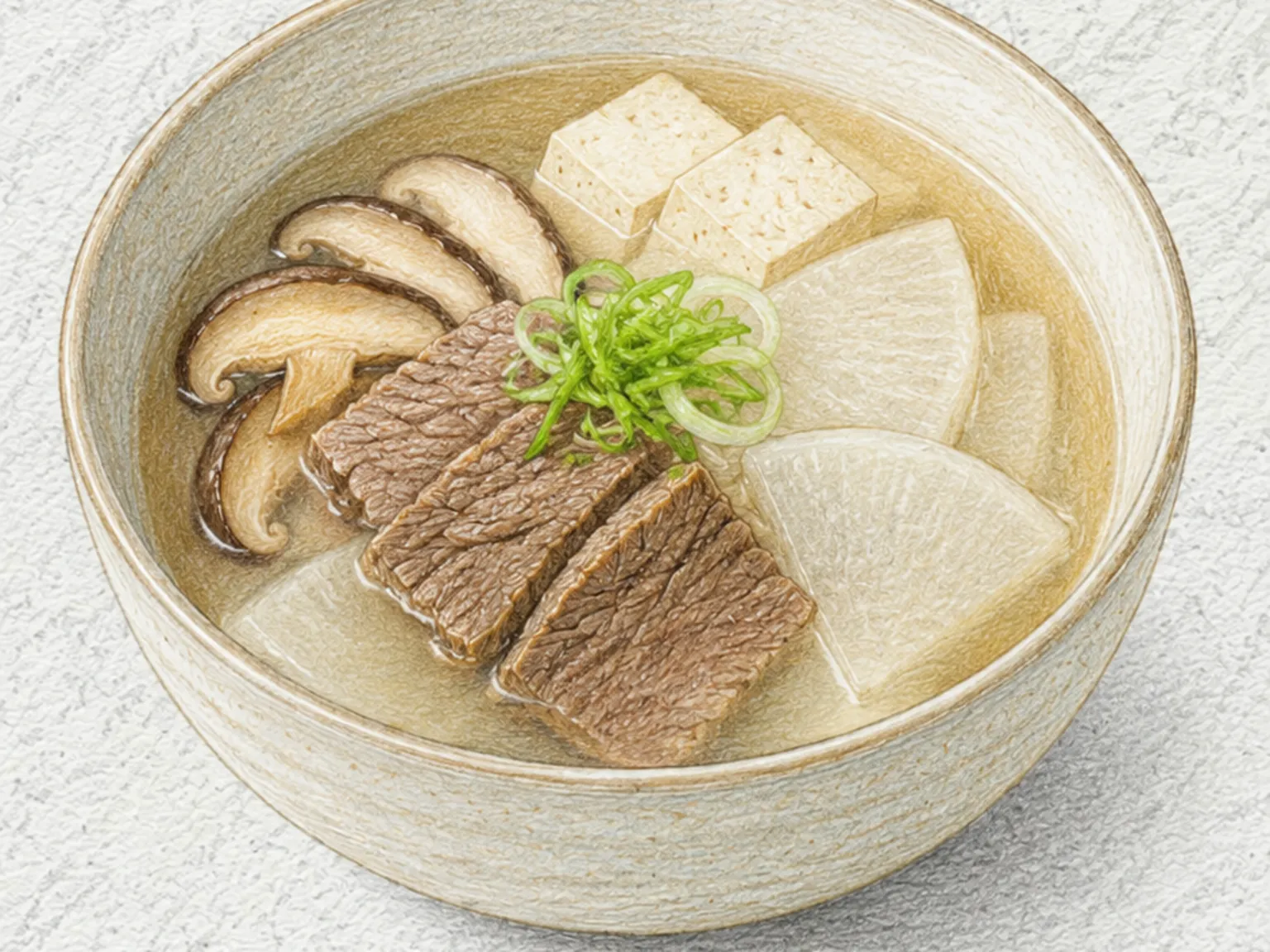
Torandae soegogi-guk pairs rehydrated taro stems with beef brisket in a clear, soy-seasoned broth. The brisket is simmered until it yields a clean yet deeply flavored stock, with surface fat skimmed periodically to keep the liquid transparent. Taro stems, soaked until pliable, are added to the broth and cooked until they drink in the beefy liquid - each bite releases a rush of savory juice, while the stems' stubborn fibers maintain a chewy resistance that contrasts with the fork-tender meat. Soup soy sauce tints the broth a light amber and adds umami without heaviness, and minced garlic provides a quiet warmth in the background. Sliced scallion goes in at the end for freshness. The shredded brisket is typically arranged on top as a garnish, so each bowl delivers a balanced combination of tender meat, textured stems, and aromatic broth. It is a homestyle soup that benefits from simplicity, letting the interplay between the two main ingredients speak for itself.

Korean Spicy Blue Crab Soup
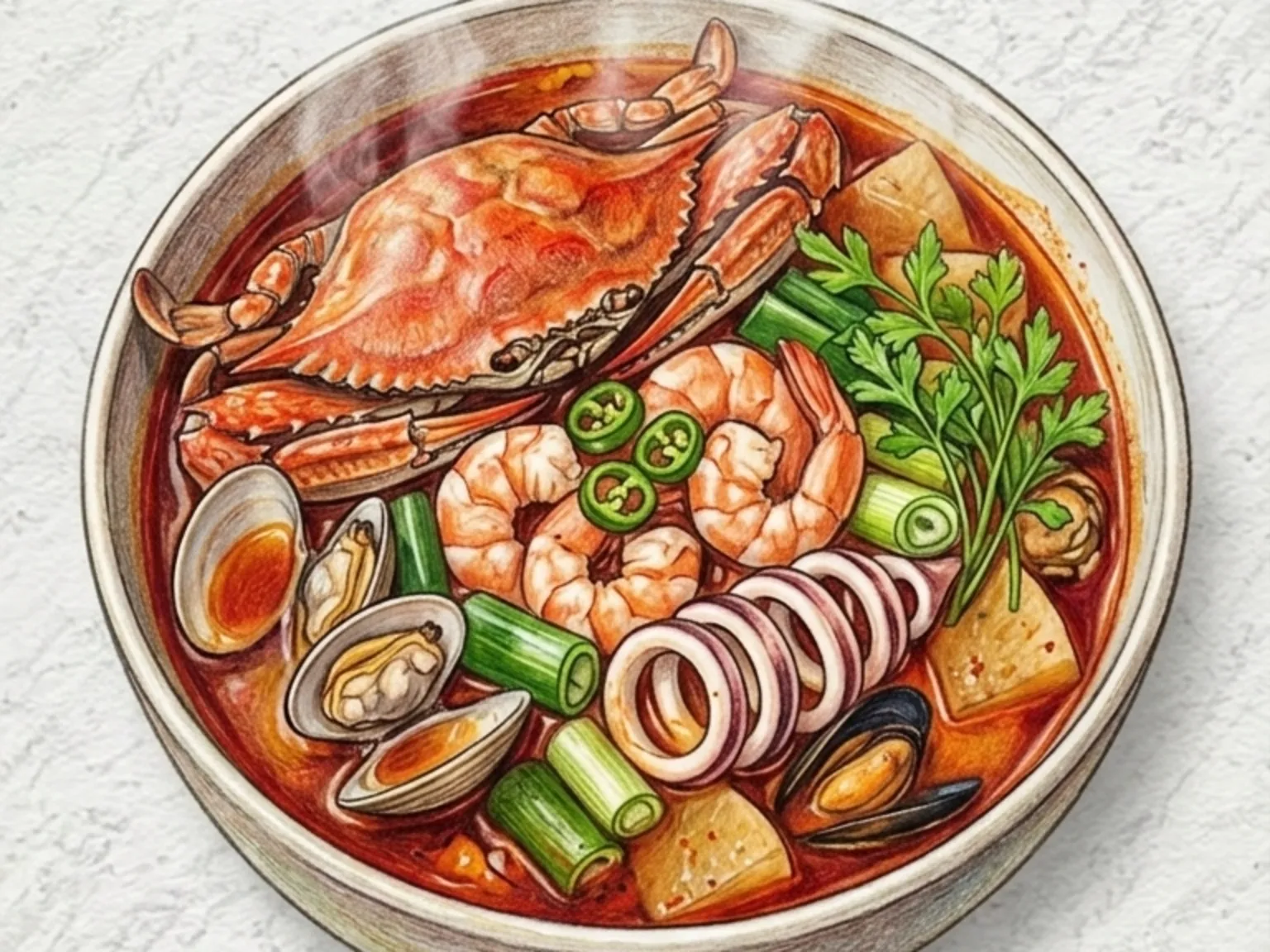
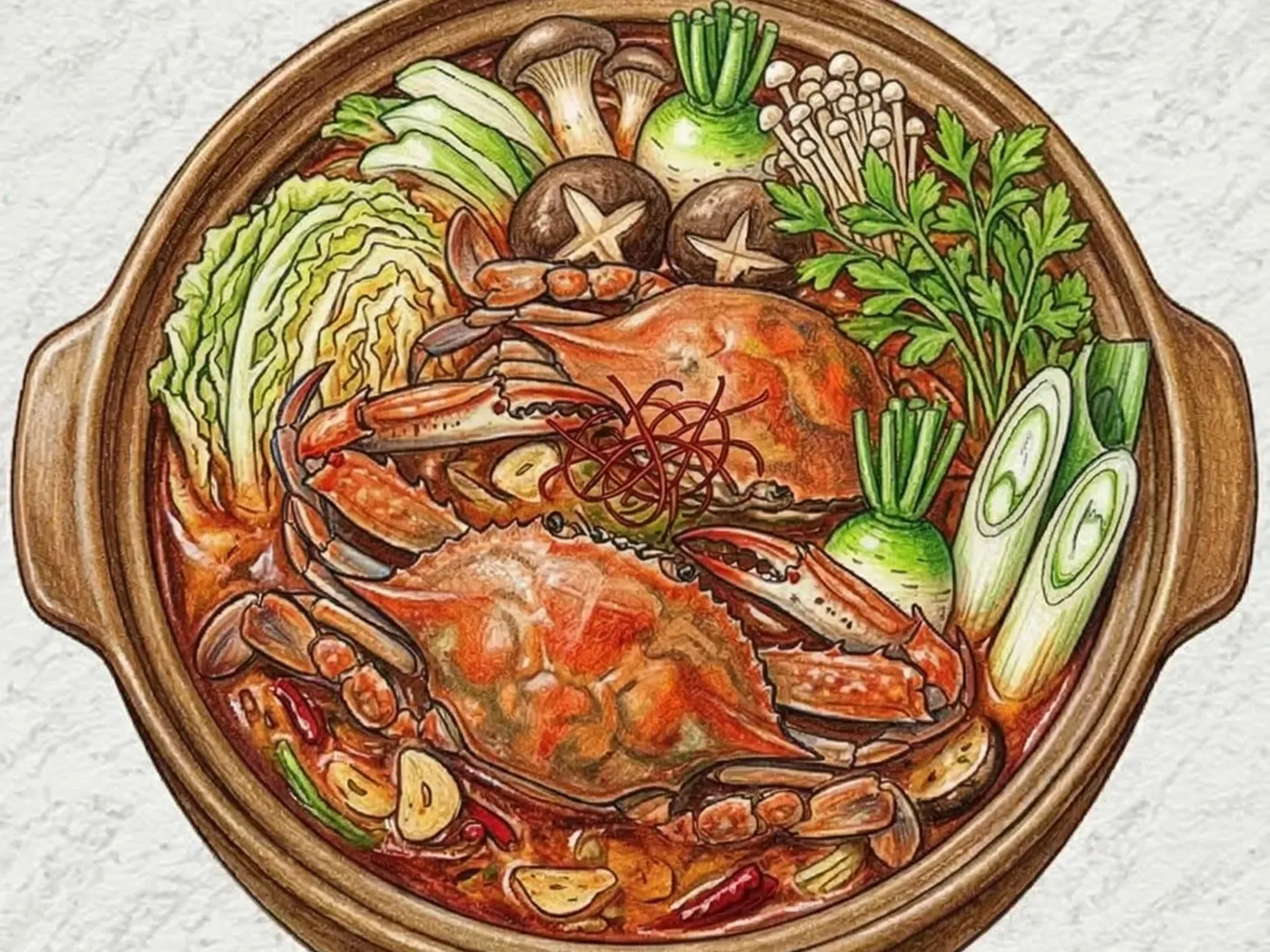
Ggotge-tang is a spicy Korean crab soup built around whole blue crabs that infuse the broth with a concentrated, briny seafood depth. The shells release their marine richness as they crack apart during simmering, forming the structural foundation of the pot. Doenjang dissolved into the broth adds fermented complexity, while gochugaru delivers a persistent heat that compounds with each spoonful. Radish chunks sweeten and clarify the liquid, and zucchini with green onion fill the bowl with color and contrasting texture. Before cooking, the crabs should be scrubbed clean under cold water and cleaned of their sand pouches and gills, which eliminates any off-flavors. Scoring the claws lightly with the back of a knife before the pot goes on the heat makes extracting the claw meat easier at the table. Female crabs in season carry bright orange roe inside the top shell that dissolves into the broth and intensifies its richness. The real reward at the end of the meal is mixing leftover rice directly into the crab's top shell with the residual roe and braising juices, a practice Korean diners regard as the true finish of the meal. Blue crab season peaks in spring and autumn.

Korean Water Parsley Clam Stew
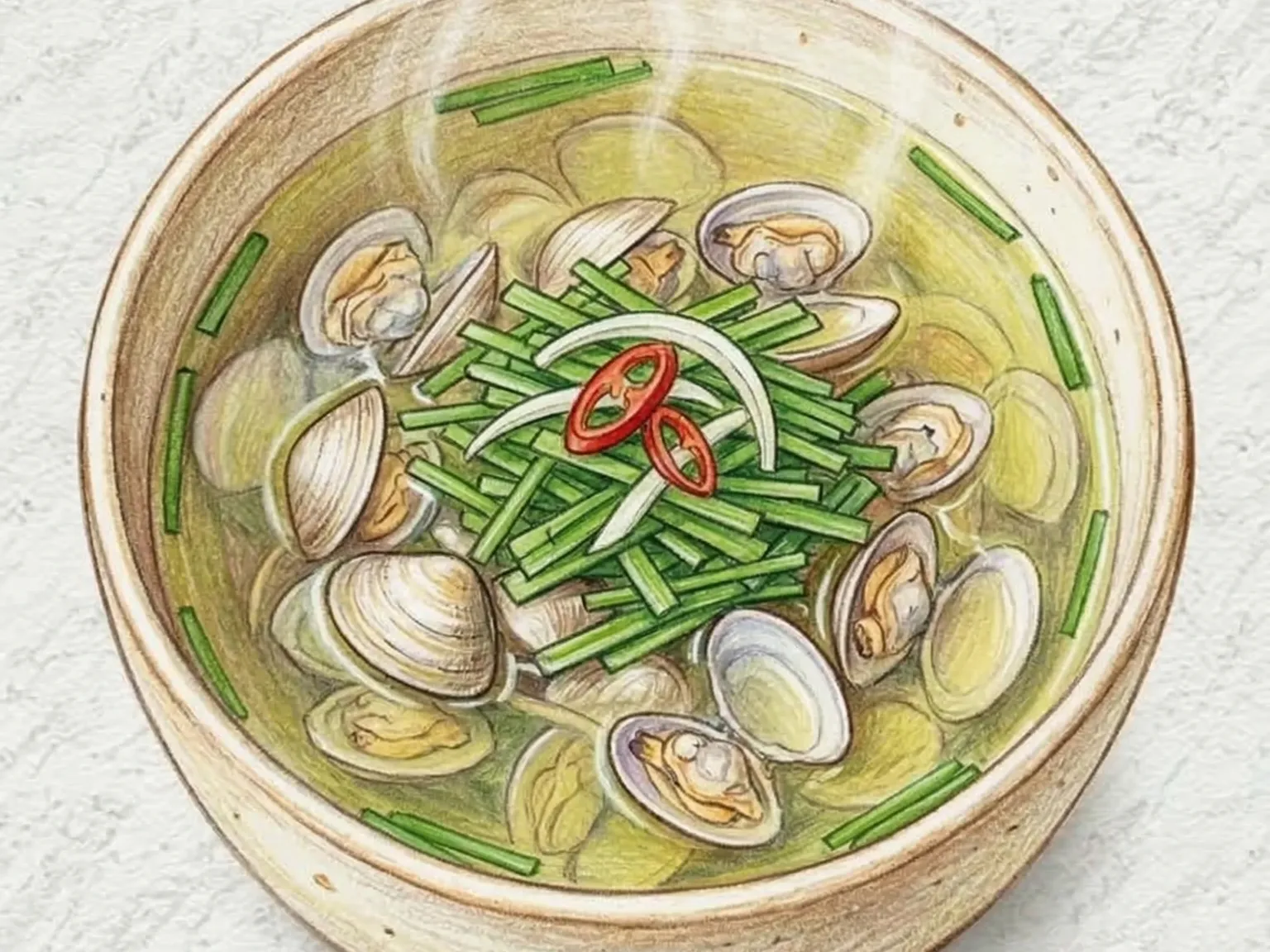
Minari-bajirak-jjigae pairs the clean, briny broth of littleneck clams with the sharp, herbal fragrance of Korean water parsley. Korean radish and zucchini simmer in the base and contribute a gentle natural sweetness, while a whole cheongyang chili and a small measure of gochugaru add a crisp heat that does not overpower the delicate shellfish. The restrained use of chili powder keeps the broth clear and allows the clams' distinct umami to come through without interference. Clams must be thoroughly purged of sand before cooking - any residual grit will ruin the broth. Once the shells open, the clams should be eaten promptly as continued heat toughens the meat. Minari goes in only at the very end, just before the heat is turned off, to preserve its bright green color and volatile fragrance. With prep time dominated by clam purging, the active cooking takes under ten minutes.

Korean Webfoot Octopus Tofu Stew
Jjukkumi dubu jjigae is a Korean stew of webfoot octopus and soft tofu cooked in a gochugaru-seasoned anchovy broth. A full 450 grams of jjukkumi goes into the pot, providing a bouncy, chewy texture in every spoonful. The tofu absorbs the spicy broth as it cooks, creating a soft counterpoint to the firm octopus, and the contrast between the two textures is a central part of the dish. Rice wine added early in the cooking process neutralizes any fishiness from the seafood, keeping the broth clean-tasting rather than pungent. Soup soy sauce deepens the umami base without darkening the broth too heavily, and gochugaru provides the heat. Zucchini and onion contribute natural sweetness that rounds out the broth and prevents the salt from the seafood from feeling sharp or one-dimensional. Jjukkumi becomes rubbery if overcooked, so removing the pot from heat three to four minutes after it comes back to a boil is the key step for keeping the octopus tender and springy rather than tough.

Gul-guk (Clear Oyster Radish Soup)
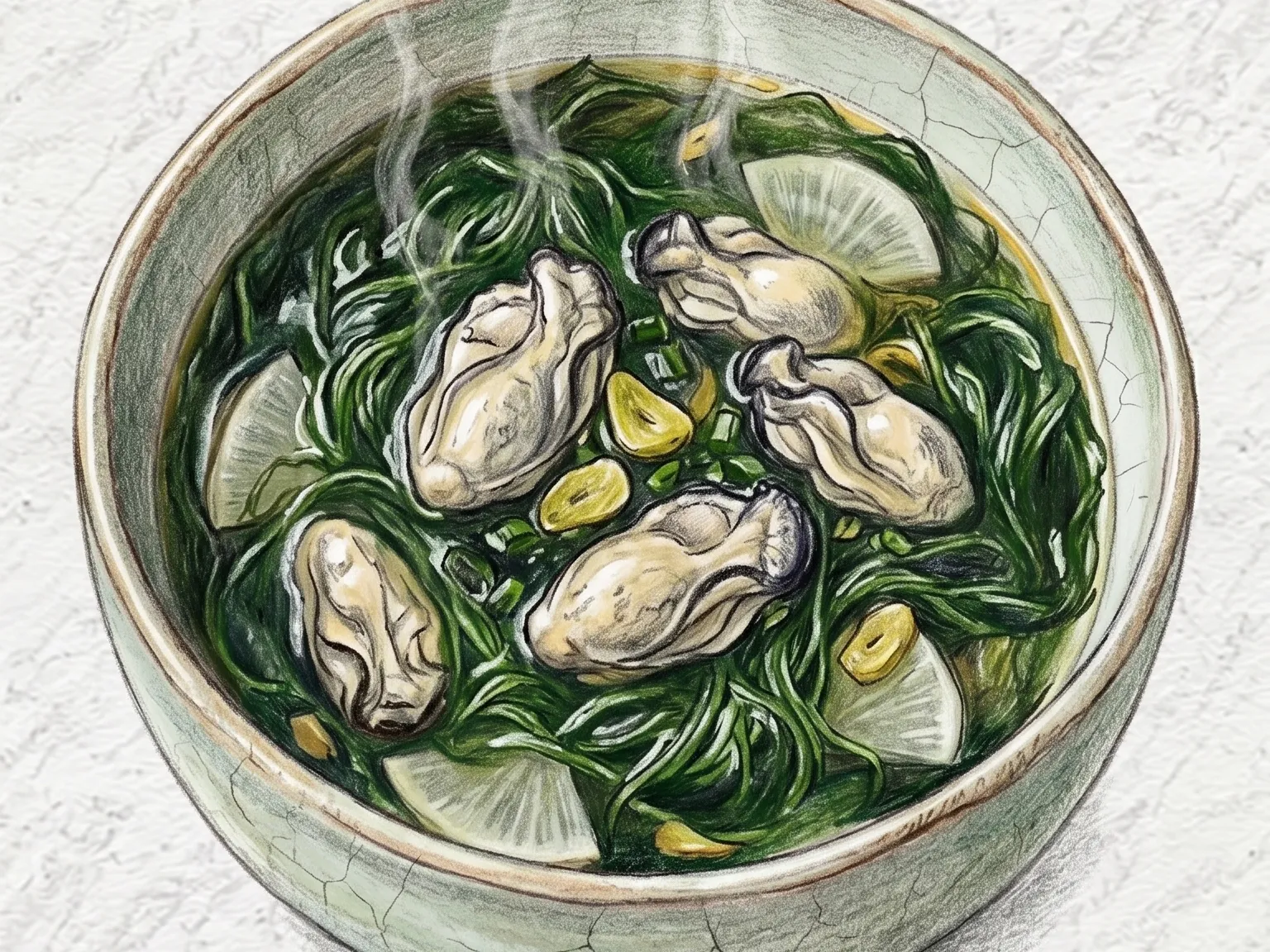
Gul-guk is a clear Korean oyster soup built on the simplest possible base: water, radish, and fresh winter oysters. Radish goes in first and simmers long enough to give the broth a clean, cool sweetness before the oysters are added near the end to keep them plump and springy. Seasoning is deliberately restrained; soup soy sauce and minced garlic are sufficient because the oysters themselves deliver an intense, briny depth that needs no reinforcement. The marine aroma of the oysters and the refreshing quality of the radish combine to produce a broth that is light in appearance but full in flavor. A bowl spooned over hot rice makes a restorative breakfast or hangover remedy, and along Korea's southern coast this soup is one of the most common preparations during the winter oyster harvest.

Hobeop-guk (Korean Zucchini Shrimp Soup)
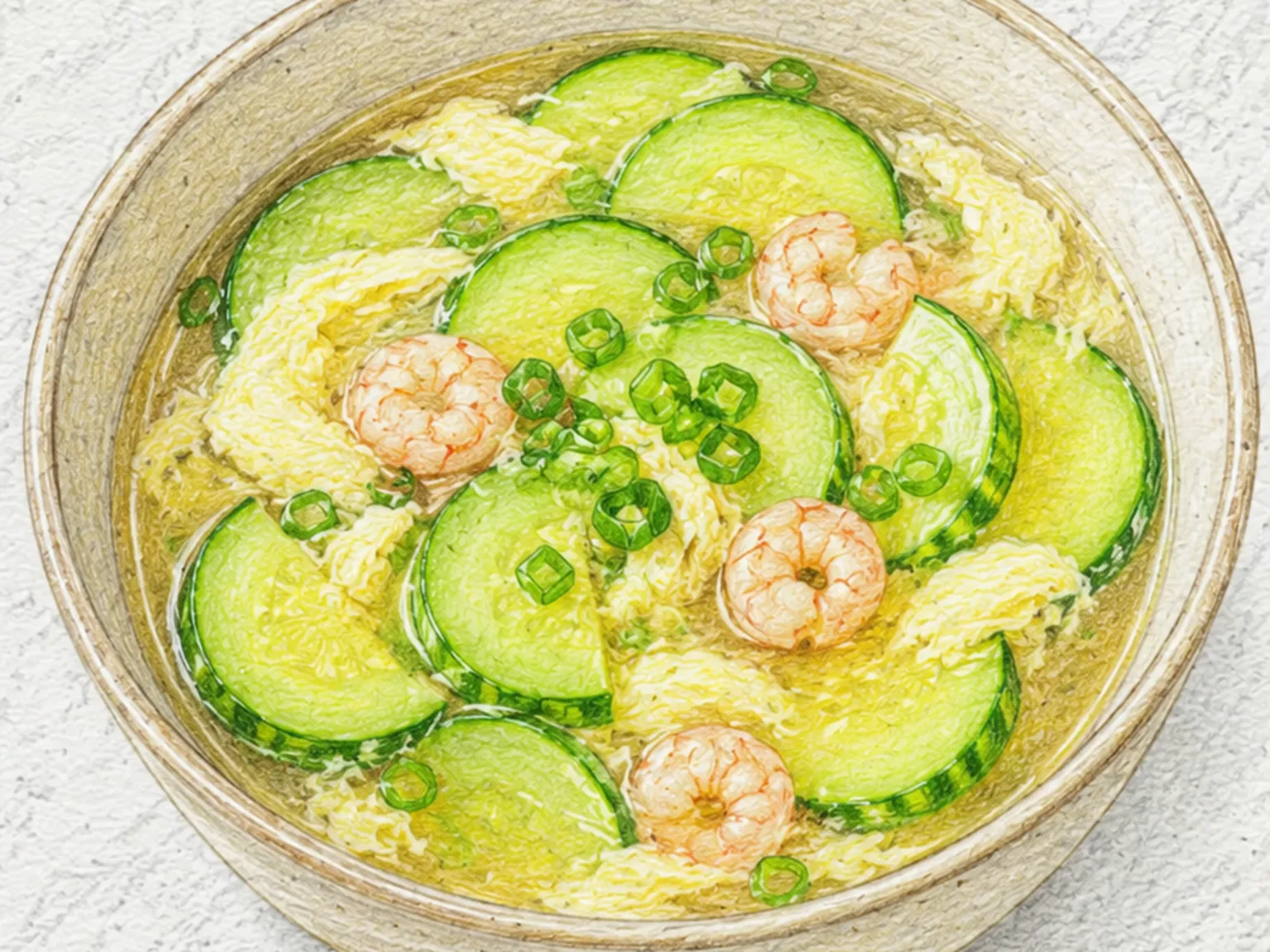
Hobak-guk is a mild, clear Korean soup built around thinly sliced half-moon zucchini. Small shrimp go in with the zucchini, infusing the broth with a gentle seafood sweetness that supports rather than overpowers the vegetable's own delicate flavor. The seasoning is deliberately restrained - soup soy sauce and minced garlic only - so the zucchini's natural softness and subtle sweetness define the bowl. As the slices simmer, they turn translucent and tender while still holding their shape on a spoon. The entire soup comes together in about fifteen minutes, making it one of the fastest and most low-effort side soups in the Korean home kitchen. A handful of sliced green onion stirred in at the end brings a bright herbal finish to an otherwise quiet, comforting bowl.