Charim

2686 Korean & World Recipes

2686+ Korean recipes, clean and organized. Ingredients to instructions, all at a glance.

Recipes with toasted sesame seeds

24 recipes

Buy toasted sesame seeds
Cold Ramen Salad
NoodlesMedium

Cold Ramen Salad

Hiyashi chuka is a Japanese chilled noodle dish where ramen noodles cooked and thoroughly cooled in ice water are topped with colorful shredded garnishes and drizzled with a tangy soy-vinegar dressing. The dressing of soy sauce, rice vinegar, sugar, and sesame oil combines salt, sharpness, and sweetness; because it is poured over rather than used as a broth, the individual character of each topping stays distinct. The noodles must be chilled in ice water after boiling to achieve the firm, springy texture that holds up against the dressing without going limp, and tossing them lightly with sesame oil prevents clumping before plating. Thin strips of egg crepe, ham, cucumber, and tomato arranged by color create a visually striking presentation, and each chopstickful delivers several contrasting textures at once. In Japan this dish is a summer fixture, and at home it is a practical way to use leftover ingredients. A variation whisks mayonnaise into the dressing, which softens the acidity and adds a creamy body to the sauce.

🎉 Special Occasion🌙 Late Night
Prep 20minCook 10min2 servings
Korean Stir-fried Potato Strips
Stir-fryEasy

Korean Stir-fried Potato Strips

Gamja-bokkeum is a fundamental Korean side dish made by stir-frying julienned potatoes until they are just tender with a remaining crunch, and it belongs on almost any Korean table regardless of what else is being served. Soaking the julienned potatoes in cold water for five to ten minutes removes the surface starch that would otherwise cause the pieces to stick together in the pan and clump into a mass. The drained potatoes go into an oiled pan over medium heat with garlic, which provides a gentle aromatic backdrop without competing with the potato's mild natural flavor, and salt is the only seasoning needed to let that flavor come through. The key to the right texture is restraint: the potatoes are ready when they have turned translucent and the edges have picked up a faint golden color, and cooking past that point makes them soft rather than crisp. A finishing drizzle of sesame oil and a scattering of sesame seeds add a warm nuttiness that elevates the simple seasoning into a complete flavor. Thinly sliced cheongyang chili added during cooking produces a spicier variation, and a small amount of bell pepper or carrot adds color without changing the character of the dish. It is the kind of banchan that disappears from the table quickly despite its simplicity.

🏠 Everyday🍱 Lunchbox
Prep 12minCook 10min2 servings
Korean Sashimi Rice Bowl (Flounder Sashimi with Cho-Gochujang)
RiceMedium

Korean Sashimi Rice Bowl (Flounder Sashimi with Cho-Gochujang)

Sliced flounder sashimi sits atop julienned cucumber, lettuce, and perilla leaves over slightly cooled rice, dressed with cho-gochujang just before eating. The rice must not be piping hot because residual heat softens the sashimi and dulls its clean texture, so resting it until just warm is essential. The vinegar tang and chili warmth in cho-gochujang lift the mild fish flavor, while sesame oil and seeds leave a nutty finish on the palate. Keeping the vegetables well chilled before assembly creates a temperature contrast against the warm rice that sharpens every bite. Adding the cho-gochujang right before eating rather than in advance prevents the vegetables from weeping moisture and going limp.

🎉 Special Occasion
Prep 20minCook 5min2 servings
Korean Soy Braised Konjac
Side dishesEasy

Korean Soy Braised Konjac

Gonnyak-jorim is a braised konjac banchan seasoned with soy sauce, rice syrup, gochugaru, and garlic, valued mainly for its satisfying chew and near-zero calorie count. Konjac carries a faint lime-water odor from its processing, and blanching it in boiling water for two minutes removes that smell before any seasoning is applied. Draining thoroughly and then dry-toasting the pieces in a pan without oil evaporates residual moisture from the surface, creating a drier exterior that the sauce can actually grip. Scoring the konjac in a crosshatch pattern before cooking solves its fundamental flavor problem: the dense, non-porous texture resists absorption, but the scored grooves pool the sauce and hold it in place so the coating sticks. Rice syrup in the sauce builds a glossy, slightly sticky finish as the liquid reduces. The finished pieces are sweet, salty, and faintly spicy with a firm, springy bite that makes them one of the more filling low-calorie side dishes in Korean cuisine.

🥗 Light & Healthy🏠 Everyday
Prep 10minCook 20min4 servings
Korean Sea Squirt Mixed Rice
RiceMedium

Korean Sea Squirt Mixed Rice

Fresh sea squirt is tossed with vinegared gochujang and sesame oil over warm rice for a bold seafood bibimbap. The sea squirt carries an intense, distinctive ocean flavor that fills the palate, tempered by the tangy sweetness of the sauce. Julienned cucumber and torn lettuce provide crisp contrast, while roasted seaweed flakes and sesame seeds add a nutty undertone. Mixing should happen right before eating to preserve the sea squirt's volatile aroma.

🎉 Special Occasion
Prep 20minCook 8min2 servings
Korean Grilled Shishito with Doenjang
GrilledEasy

Korean Grilled Shishito with Doenjang

Kkwarigochu-doenjang-gui is a Korean grilled shishito pepper dish where the peppers are first dry-blistered in a hot pan until their skins wrinkle and char, then quickly tossed with a sauce of doenjang, gochujang, oligosaccharide syrup, and minced garlic. Blistering the peppers without oil first drives off moisture, removes the raw grassy taste, and concentrates their natural sweetness before any sauce is introduced. Pricking each pepper with a fork before cooking lets the seasoning penetrate the interior and prevents them from ballooning and bursting from steam. The sauce goes in only for the final two minutes so the fermented soybean paste keeps its full aroma, and a drizzle of sesame oil with toasted seeds at the end adds a roasted nuttiness.

🍺 Bar Snacks🏠 Everyday
Prep 10minCook 8min2 servings
Korean Beef and Pimpinella Stir-fry
Stir-fryEasy

Korean Beef and Pimpinella Stir-fry

Beef sliced thin for bulgogi is marinated in soy sauce, cooking wine, minced garlic, and black pepper for ten minutes, then spread in a single layer across a hot pan so every piece browns without steaming. Crowding the pan drops the temperature and causes the meat to stew in its own liquid rather than sear, so a wide, flat arrangement is essential. Sliced onion goes in next for two minutes to draw out its sweetness, followed by chamnamul, a Korean wild green whose aroma sits somewhere between celery leaf and parsley but sharper and more distinctly herbal. The chamnamul needs only forty seconds of tossing; any longer and the stems lose their crunch while the leaves wilt and the aroma fades. Sesame oil stirred in off the heat coats every piece in a nutty richness, and whole toasted sesame seeds burst with oil when bitten. Chamnamul is a spring green harvested from late March through April, so this stir-fry has a short seasonal window. At 365 calories and 30 grams of protein, it is a nutrient-dense plate that makes the most of that brief peak.

🏠 Everyday🍱 Lunchbox
Prep 15minCook 10min2 servings
Korean Garlic Scape Salad
Side dishesEasy

Korean Garlic Scape Salad

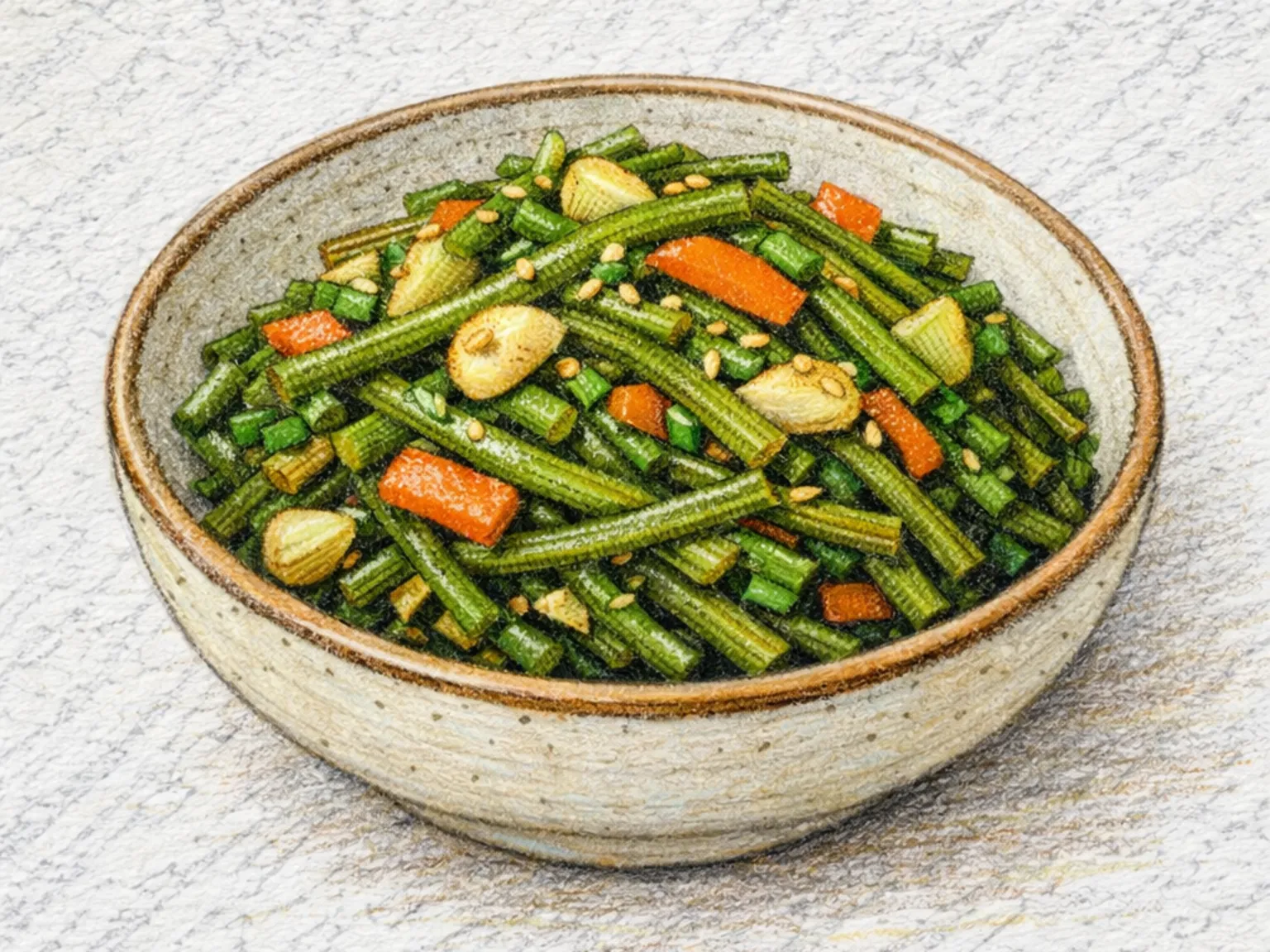
Maneuljong-muchim dresses briefly blanched garlic scapes in a cold gochujang and vinegar dressing, setting it apart from maneuljjong-bokkeum, which uses a soy-based sauce and relies on direct heat in a pan. The names maneuljong and maneuljjong describe the same part of the garlic plant, the slender flowering stalk that emerges in spring, but the two terms divide along regional dialect lines: speakers in Seoul and Gyeonggi province tend to say maneuljong while those in other parts of the country often use maneuljjong. Blanching must be kept well under thirty seconds to lock in the bright green color and crisp snap; beyond one minute the scapes soften and the color dulls noticeably. The gochujang dressing hits sweet, sour, and spicy in equal measure, and the vinegar component plays off the scapes' grassy, pungent aroma in a way that reads as distinctly springlike on the palate. Peak availability runs from April through May, when garlic plants push up their stalks before the heads are harvested, and vendors at traditional markets sell them bundled by the handful. Because no oil is involved and the sauce is relatively light, this preparation is considerably lower in calories than the stir-fried version, which is part of why it appears frequently in everyday Korean meal sets as a reliable, refreshing side.

🏠 Everyday🍱 Lunchbox
Prep 10minCook 3min4 servings
Korean Seasoned Wild Chive
Side dishesEasy

Korean Seasoned Wild Chive

Dallae-muchim is a raw spring side dish made from Korean wild chives dressed in soy sauce, gochugaru, vinegar, sugar, and sesame oil -- one of the clearest markers that spring has arrived. Dallae emerges from hillsides in March, finer in stem than cultivated chives and carrying an intensely sharp, garlic-like aroma that vanishes almost immediately when cooked, which is why the herb is always used raw. The small bulbs and slender leaves are washed root-and-all, cut to three or four centimeters, and tossed in the seasoning just before serving. The result is a pungent, nose-clearing mouthful that contrasts directly with the deep, fermented warmth of doenjang-jjigae when the two are eaten together. The season for dallae is brief -- a few weeks in early spring -- making this banchan one of the more fleeting pleasures of the Korean table.

🏠 Everyday🍱 Lunchbox
Prep 10min4 servings
Korean Spicy Radish Salad
Side dishesEasy

Korean Spicy Radish Salad

Mu-saengchae is a raw Korean radish salad dressed in gochugaru, vinegar, fish sauce, and sugar that sets itself apart from kimchi by skipping fermentation entirely and going straight to the table. The radish is julienned into fine, five-centimeter-long strips because a thinner cut allows the dressing to coat every surface evenly; cutting too thick leaves the raw radish's sharp pungency exposed and untempered. A ten-minute salting with coarse salt is the pivotal step that collapses the cell walls partially, drawing out excess moisture and priming the strips to absorb the dressing rather than dilute it. The finished sauce combines gochugaru, anchovy fish sauce, vinegar, sugar, minced garlic, and sesame oil into a dressing where the fish sauce lays down a concentrated umami backbone over the radish's clean, neutral flavor while the vinegar slows further moisture release to preserve crunchiness across the full serving period. Eaten fresh, the texture is at its maximum snap; left in the refrigerator overnight, the strips soften into a lightly pickled state that is equally good in its own way. Served beside fatty dishes such as samgyeopsal or braised short ribs, mu-saengchae clears and resets the palate between bites of rich meat, and it pairs without friction alongside virtually any protein-centered side.

🏠 Everyday🍱 Lunchbox
Prep 15min4 servings
Korean Tofu Yuja Salad (Pan-Fried Tofu Citrus Dressing)
Side dishesEasy

Korean Tofu Yuja Salad (Pan-Fried Tofu Citrus Dressing)

Dubu yuja muchim brings an uncommon citrus dimension to Korean tofu banchan by using yuja-cheong - a preserve of yuzu-like Korean citrus rind in honey or sugar. Soft tofu is blanched briefly to warm through and firm up slightly, then cut into bite-sized pieces and dressed while still warm so the pores open to absorb the vinaigrette. The dressing blends yuja-cheong with soy sauce, vinegar, and sesame oil - the citrus peel's fragrant bitterness cutting through the tofu's blandness in a way that soy sauce alone cannot achieve. Yuja has been cultivated on Korea's southern coast - especially Goheung and Namhae - since the Joseon era. The dish sits in a category between Korean and Western salad sensibilities, light enough to serve as a starter. Best eaten cold or at room temperature within a few hours of assembly, as the tofu's texture begins to soften with prolonged marination. The transparent sweetness of the yuja-cheong combined with the sharp edge of vinegar transforms tofu into something with an entirely different flavor register.

🏠 Everyday🍱 Lunchbox
Prep 12minCook 5min2 servings
Charred Cabbage Gamtae Salad
SaladsEasy

Charred Cabbage Gamtae Salad

Charred cabbage gamtae salad quarters baby napa cabbage lengthwise, brushes the cut sides with perilla oil, and sears them on a hot pan for 3-4 minutes per side until deeply browned. The intense heat replaces raw cabbage's grassy bite with caramelized sweetness and smoky char, and gamtae seaweed crumbled by hand at the very end adds a crisp texture and concentrated ocean depth. A dressing of dark soy sauce, maesil syrup, brown rice vinegar, and perilla oil provides a salty-tangy base, while halved cherry tomatoes contribute juicy acidity. Serving the salad warm preserves both the cabbage's char aroma and the seaweed's crispness.

🥗 Light & Healthy🍱 Lunchbox
Prep 15minCook 10min4 servings
Korean Garlic Scape Anchovy Braise
SteamedEasy

Korean Garlic Scape Anchovy Braise

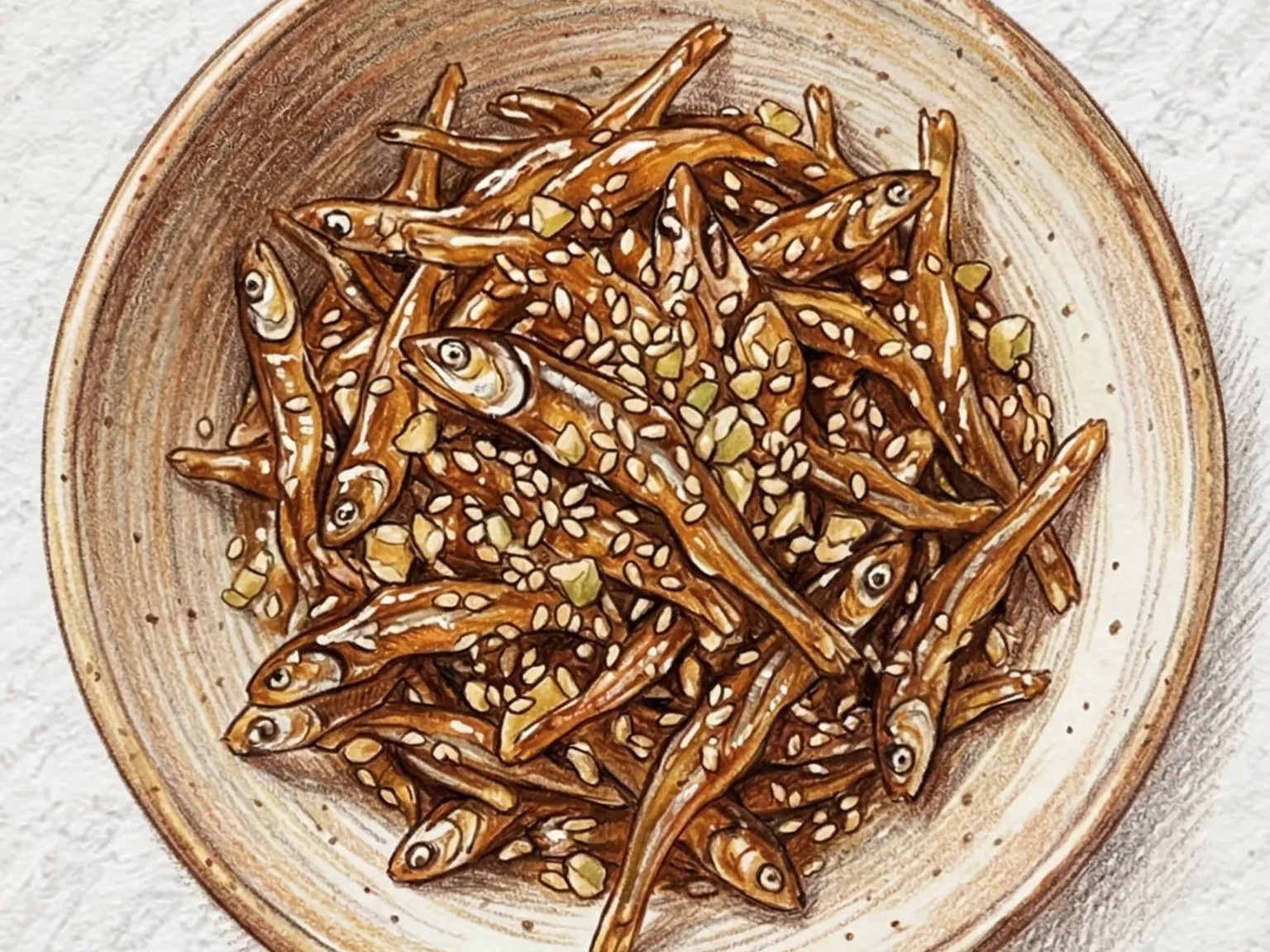
Maneuljjong-myeolchi-jorim is a Korean pantry side dish of garlic scapes and small dried anchovies glazed in soy sauce, oligosaccharide syrup, and sesame oil. The anchovies are coated evenly as the seasoning heats around them, building a sweet-salty shell that deepens into nuttiness with each bite. Garlic scapes are cut into short pieces and stir-fried directly in the sauce without blanching, which keeps them snappy rather than soft. Oligosaccharide syrup holds its shine and moisture longer than plain sugar, and sesame oil is added only at the very end to preserve its aroma. The finished dish keeps for well over a week under refrigeration, making it a reliable weekly batch cook. It travels well in lunchboxes, and spooned over hot white rice the glaze soaks into the grains and brings the whole bowl together.

🏠 Everyday🎉 Special Occasion
Prep 15minCook 18min4 servings
Korean Kkaennip Deulgireum Gyeran Bap (Perilla Egg Rice)
RiceEasy

Korean Kkaennip Deulgireum Gyeran Bap (Perilla Egg Rice)

Kkaennip-deulgireum-gyeran-bap is a simple one-bowl rice dish built on three main flavors: the deep roasted-nut aroma of perilla oil, the herb-like fragrance of fresh perilla leaves, and the richness of soft scrambled eggs. The eggs are cooked low and slow in butter, set aside, and then rice is stir-fried briefly in perilla oil over moderate heat. Perilla oil has a low smoke point, so high heat rapidly destroys its distinctive aroma. Soy sauce drizzled along the hot rim of the pan picks up a faint caramel char as it hits the surface, adding depth beyond straightforward saltiness. The scrambled eggs and the rice are folded together with thinly sliced perilla leaves off the heat, because the leaves lose their volatile oils quickly when exposed to sustained warmth. Finishing with a generous amount of whole sesame seeds adds a repeated crunch and further layers of nuttiness through every bite. With ingredients this minimal, the quality of the perilla oil and the freshness of the leaves determine the final result.

🏠 Everyday
Prep 10minCook 12min2 servings
Korean Seasoned Dried Squid Strips
Side dishesEasy

Korean Seasoned Dried Squid Strips

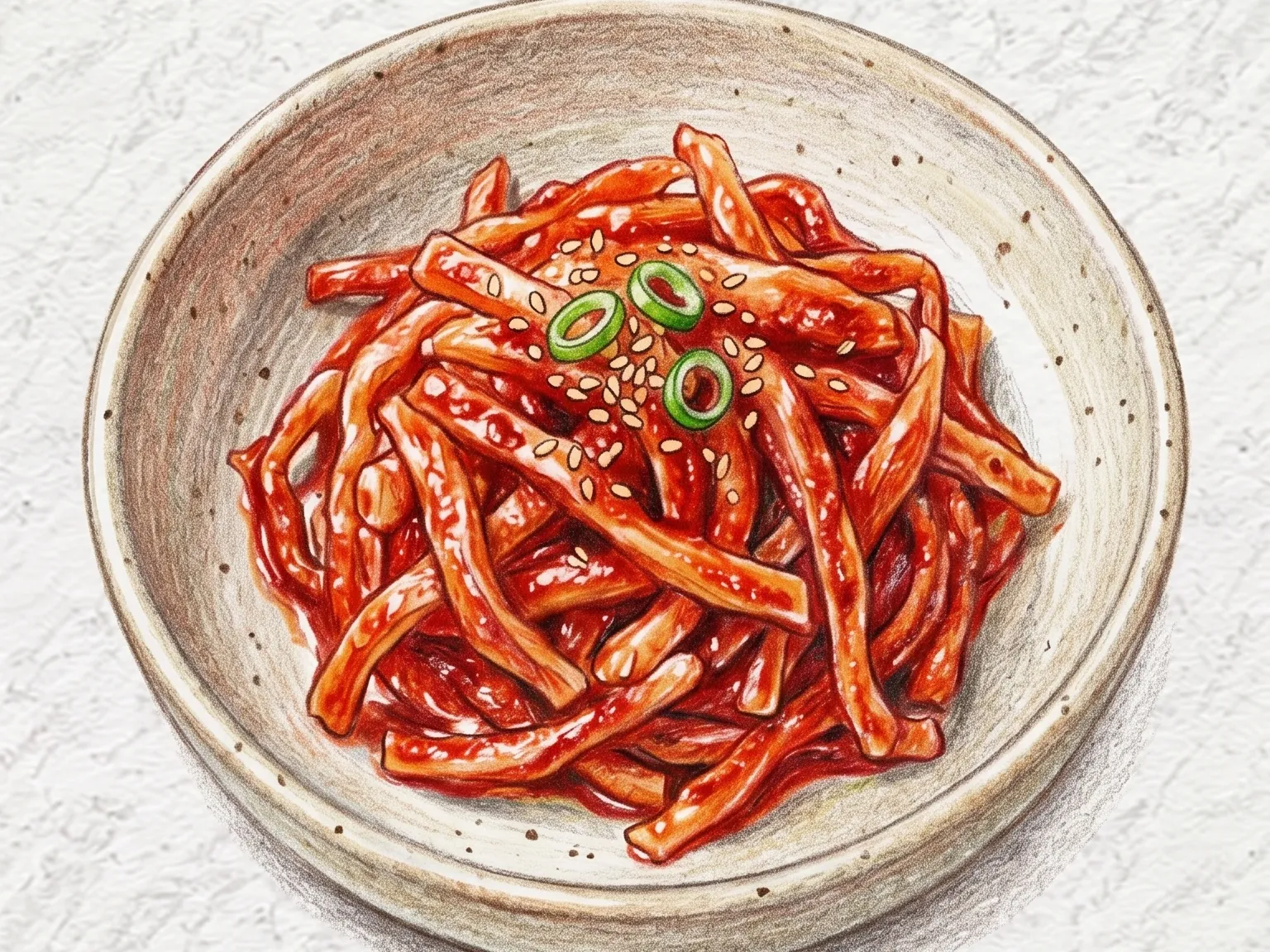
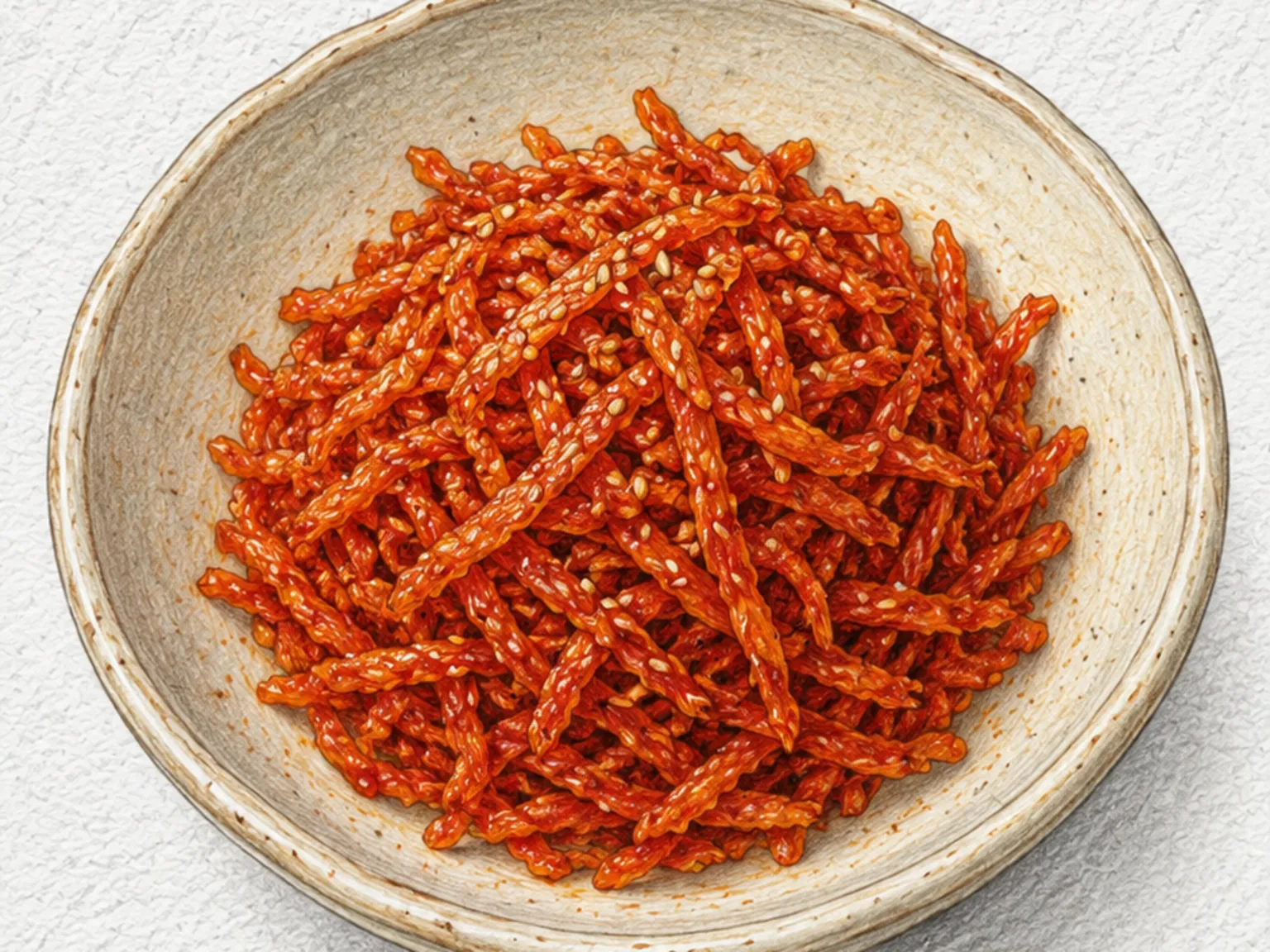
Jinmichae-muchim tosses dried shredded squid directly in a spicy-sweet sauce with no cooking involved. The no-heat approach is what separates it from stir-fried jinmichae: without heat, the strands retain their characteristic jerky-like chew instead of softening. The sauce combines gochujang, gochugaru, and oligosaccharide syrup for the sweet-and-spicy base, with one tablespoon of mayonnaise added as the defining detail. The emulsified fat in the mayo coats each strand, preventing the rough, slightly scratchy texture that plain-dressed dry squid can have on the palate. After mixing, a ten-minute rest is necessary for the squid to absorb the seasoning evenly, so the flavor reaches all the way through each piece rather than sitting only on the surface. Because the finished dish contains virtually no liquid, it holds up well in lunchboxes without bleeding into neighboring banchan, and it keeps for several days refrigerated. Heat level adjusts simply by scaling gochugaru up or down, and the whole process from prep to finished dish takes about fifteen minutes.

🏠 Everyday🍱 Lunchbox
Prep 10minCook 2min4 servings
Korean Cockle & Water Parsley Mixed Rice
RiceMedium

Korean Cockle & Water Parsley Mixed Rice

Kkomak-minari bibimbap is a seasonal rice bowl that comes together when cockles are at their peak in early spring, pairing the ocean sweetness of briefly blanched cockle meat with the clean, grassy sharpness of raw water parsley (minari). The cockle meat is rinsed in light salt water to remove any residual sand, then blanched for no more than thirty seconds in boiling water so the flesh stays springy rather than contracting into a rubbery texture. Julienned carrot and zucchini are each stir-fried separately, controlling moisture and flavor independently, then set aside to cool before assembly. A bowl of well-steamed rice is layered with the blanched cockles, the sauteed vegetables, and the raw minari placed on top last to protect its volatile fragrance from the heat below. A bibimbap sauce made from gochujang, sesame oil, minced garlic, and a touch of vinegar ties everything together when mixed, balancing the briny umami of the cockles against the brightness of the parsley. Sesame oil and toasted sesame seeds added at the end round the flavors and give the bowl a warm, nutty finish.

🎉 Special Occasion🍱 Lunchbox
Prep 20minCook 15min2 servings
Korean Spicy Grilled Gizzard Shad
GrilledMedium

Korean Spicy Grilled Gizzard Shad

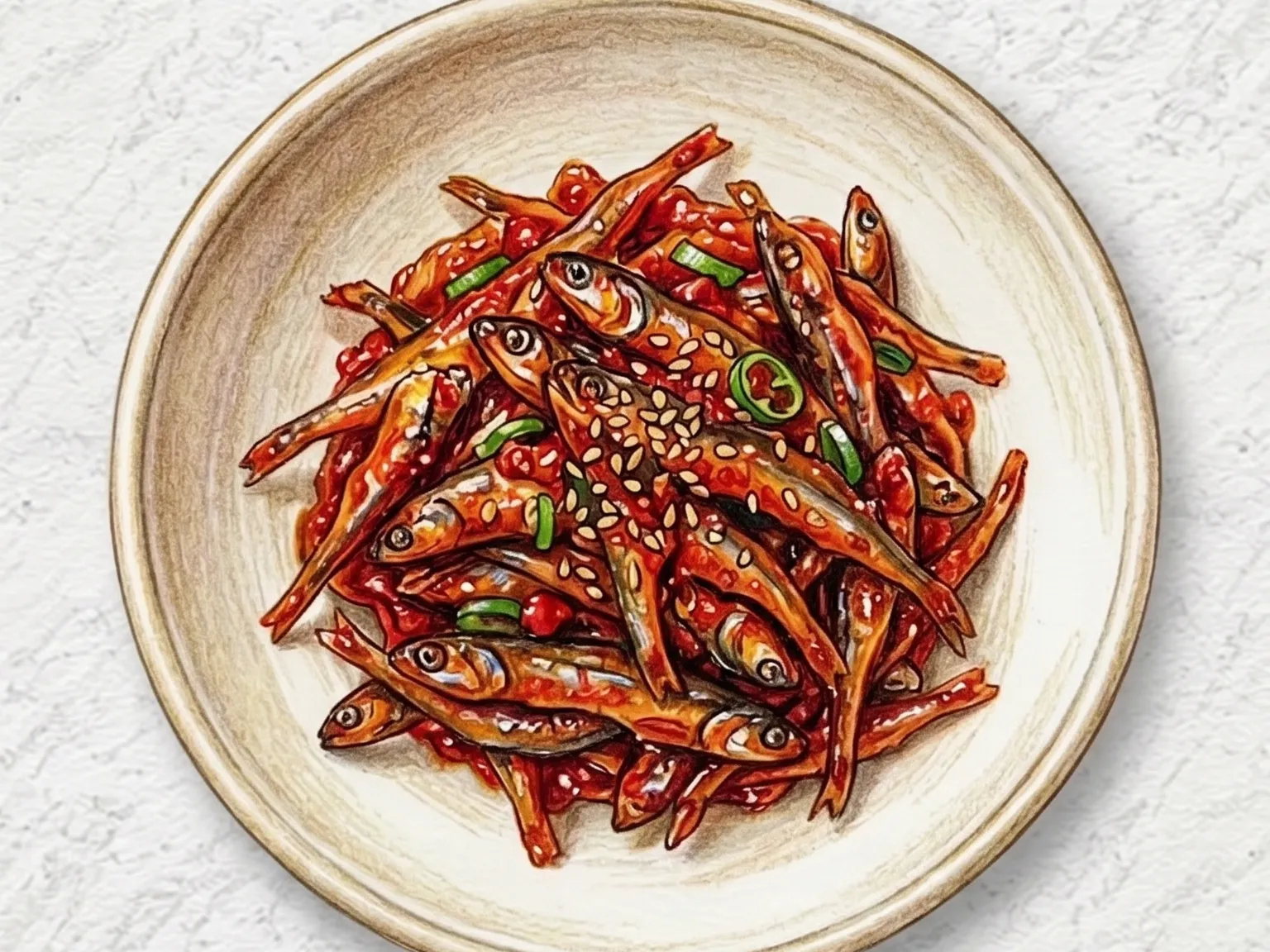
Baendaengi yangnyeom gui is a Korean grilled fish dish in which scored gizzard shad are coated in a gochujang-based glaze and cooked over medium heat until caramelized. Scoring the fish achieves two things simultaneously: it lets the seasoning penetrate into the flesh rather than sitting only on the surface, and it severs the fine pin bones that run through the small fish so they become less noticeable when eating. The marinade combines gochujang, soy sauce, oligosaccharide syrup, gochugaru, and ginger juice. The ginger juice specifically targets the fishiness of the shad, neutralizing it while adding a warm, sharp note to the overall flavor. Sugar content in the glaze is high enough that high heat will char the coating before the fish cooks through, so medium heat is maintained throughout, with three to four minutes per side giving an even result. As the oligosaccharide heats, it caramelizes into a glossy amber coating that makes the finished fish look as good as it tastes. A scattering of toasted sesame seeds adds a nutty fragrance in the final step. Gizzard shad are small enough to be eaten whole, bones included, and the bold spicy-sweet glaze makes them as suitable alongside a bowl of rice as they are paired with soju at the table.

🍺 Bar Snacks🏠 Everyday
Prep 20minCook 12min2 servings
Korean Butter Soy Grilled King Oyster Mushrooms
Side dishesEasy

Korean Butter Soy Grilled King Oyster Mushrooms

Three king oyster mushrooms are quartered lengthwise, scored on the surface, and seared in butter until golden on one side. After flipping, the remaining butter joins a sauce of soy sauce, oligosaccharide syrup, minced garlic, and black pepper, which reduces into a glossy glaze that coats every groove cut into the mushroom flesh. The scoring allows the sweet-salty sauce to penetrate deeper, so each bite releases a concentrated burst of buttery umami. King oyster mushrooms hold their dense, meaty chew even after cooking, making this dish satisfying without any actual meat. A final scattering of scallion and sesame seeds adds freshness and textural contrast.

🏠 Everyday🍱 Lunchbox
Prep 10minCook 12min2 servings
Korean Seasoned Bitter Lettuce
Side dishesMedium

Korean Seasoned Bitter Lettuce

Wild sseumbagui, a bitter green foraged in Korean spring fields, is dressed in a gochujang vinaigrette that transforms its sharp bitterness into a layered, complex side dish. The intrinsic bitterness of the leaves works as a palate cleanser, and the gochujang's heat and vinegar's acidity wrap around it to build depth rather than mask it. Sugar smooths the rough edges of the combined flavors, while a drizzle of sesame oil closes each bite with a warm, nutty finish. Soaking the greens in salt water draws out enough bitterness to make them approachable without erasing the vegetal character that defines this namul. Over-soaking strips the personality entirely, leaving a flat, unremarkable green. Garlic folded into the dressing adds a pungent undercurrent, and a gentle tossing motion keeps the fragile leaves intact. The flavor progresses from bitter opening to spicy-sour middle to a sesame-scented close, a sequence that captures the taste of Korean spring.

🏠 Everyday
Prep 30min4 servings
Korean Soy Garlic Dakgangjeong
Street foodMedium

Korean Soy Garlic Dakgangjeong

Soy-garlic dakgangjeong is Korean fried chicken made from boneless thigh pieces coated in potato starch and fried twice before being tossed in a soy-garlic glaze. The first fry runs at 170 degrees Celsius for five minutes to cook the meat through to the center. The second fry raises the temperature to 190 degrees and runs for two minutes to push residual moisture out of the crust and harden the surface. Both fries are necessary to achieve a crust firm enough to stay crisp under the wet glaze. Using only potato starch rather than a wheat-starch blend produces a thinner, more transparent coating that crisps harder and absorbs less oil. The sauce is reduced for no more than thirty seconds to one minute so the saltiness does not concentrate excessively. Vinegar is a key component: it cuts through the grease and leaves the palate clean after each bite. The fried chicken must go into the sauce while it is still loose, then be tossed over high heat quickly so the coating never has time to steam and soften. Sesame seeds scattered on top add a nutty fragrance and a textural contrast against the lacquered surface.

🌙 Late Night
Prep 20minCook 25min4 servings
Korean Cold Soy Milk Noodles
NoodlesMedium

Korean Cold Soy Milk Noodles

Kongguksu is a Korean cold noodle dish in which thin somyeon noodles are served in a chilled broth made entirely from blended soybeans. Cooked white soybeans are peeled as thoroughly as possible to reduce any bitterness, then blended with cold water, sesame seeds, and salt until the mixture is smooth and creamy. The resulting soy broth is refrigerated until genuinely cold before use -- adding ice directly to the bowl would thin it out, so proper chilling in advance is the standard approach. Somyeon noodles are boiled until just cooked through, then rinsed vigorously under cold running water and briefly submerged in ice water to firm up their texture before being placed in the serving bowl. The cold soy broth is poured generously over the noodles, and julienned cucumber is arranged on top for color and crunch. Seasoning is personal: some eat it with salt only, others stir in a small amount of sugar. Straining the broth once through a fine mesh sieve eliminates any remaining gritty bits and gives the finished soup a noticeably silkier mouthfeel. High in plant protein and relatively light on the stomach despite its richness, it is exactly the kind of cold dish that makes summer heat more bearable. Black soybeans blended in alongside white ones deepen both the color and the toasty, nutty flavor.

🥗 Light & Healthy🏠 Everyday
Prep 25minCook 12min2 servings
Korean Soy-Glazed Chicken Stir-Fry
Stir-fryEasy

Korean Soy-Glazed Chicken Stir-Fry

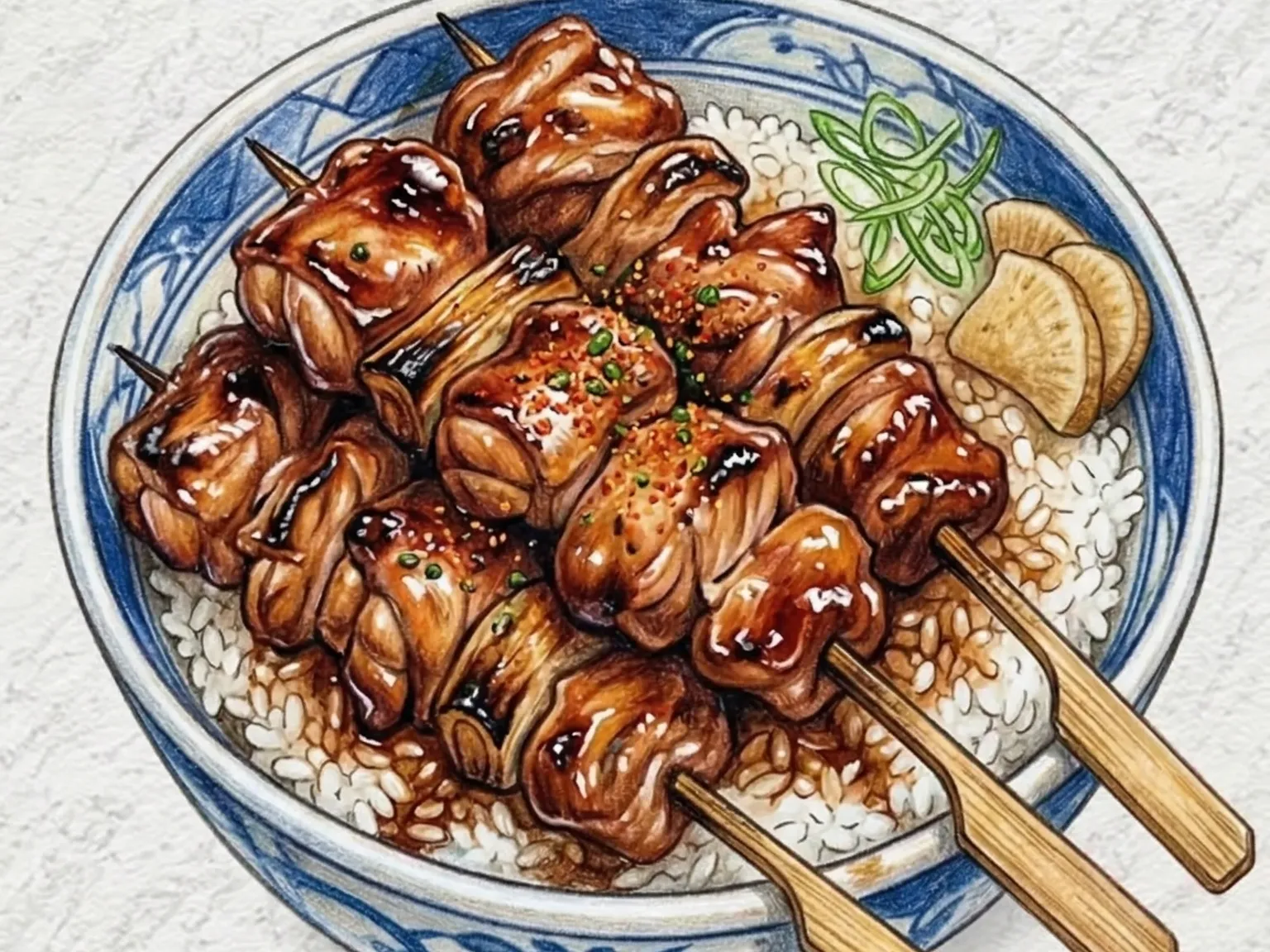
Chicken thigh meat stir-fries in soy sauce, sugar, and oligosaccharide syrup for a sweet-salty glaze. Garlic and ginger go into the oil first to infuse the fat with fragrance before the chicken is added, letting the aromatics penetrate deep into the meat as it cooks. The oligosaccharide heats into a tacky gloss that coats each piece evenly as the liquid reduces. Sesame oil and whole sesame seeds scattered over the top at the end bring a nutty, aromatic finish. The flavor profile runs close to Japanese teriyaki, but the heavier use of garlic and ginger pushes it toward the more direct, punchy spice character typical of Korean cooking. Boneless thighs cut into bite-sized pieces cook more evenly than larger pieces, and keeping the heat high through most of the cook ensures the surface caramelizes without turning rubbery.

🏠 Everyday🌙 Late Night
Prep 15minCook 15min2 servings
Korean Crisp Chili Pepper Salad
Side dishesEasy

Korean Crisp Chili Pepper Salad

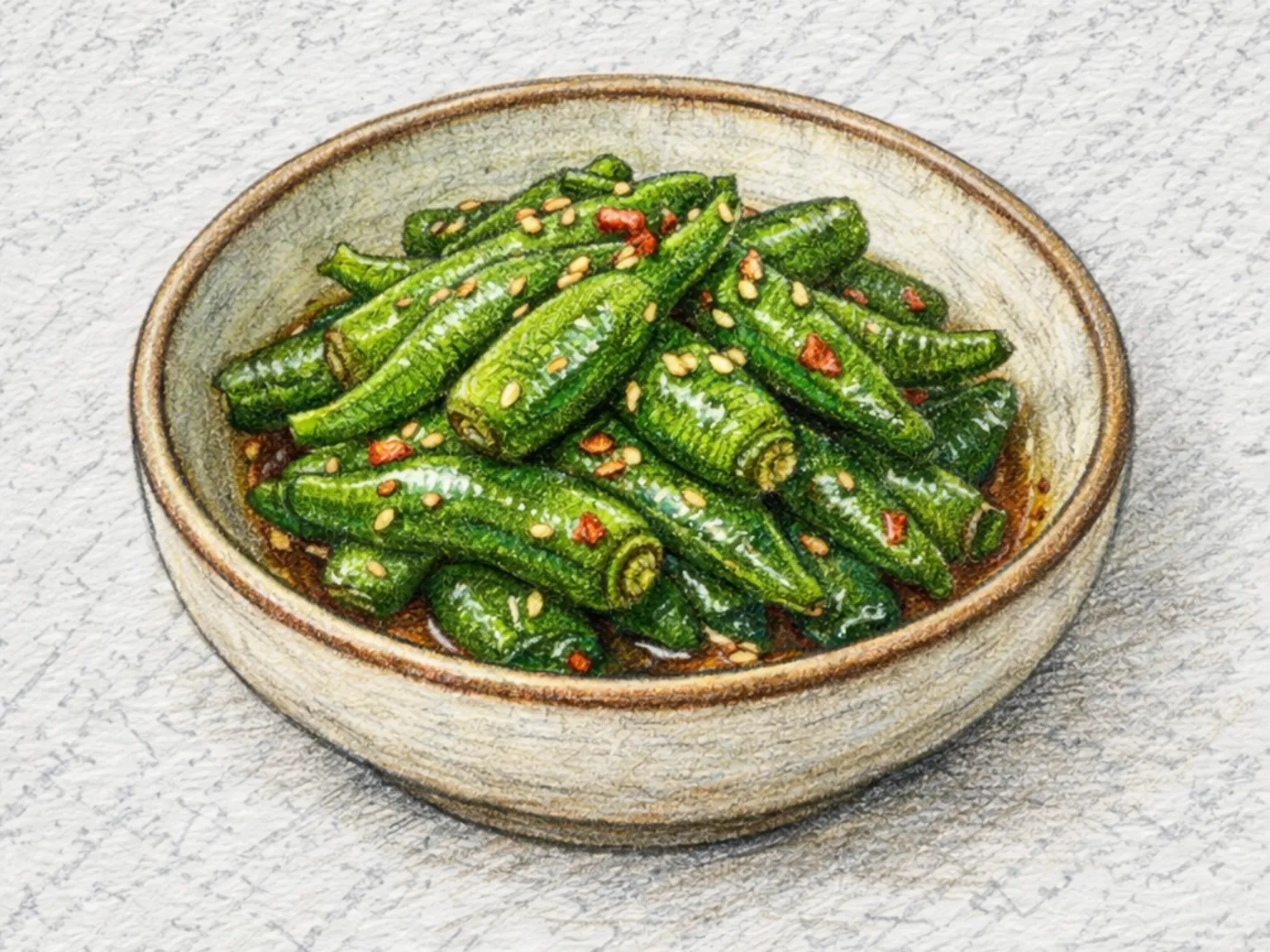
Asakigochu is a specific variety of Korean pepper characterized by its thick walls and a distinct snap when bitten. This pepper was developed to prioritize texture over spiciness, resulting in a vegetable that offers a significant crunch without the heat of other varieties. The preparation of this dish involves a brief blanching process where the peppers are submerged in boiling water for a duration of exactly twenty seconds. This short exposure to heat is sufficient to eliminate the raw, grassy aroma often found in uncooked peppers, yet it is not long enough to soften the cellular structure. Consequently, the characteristic crispness remains unchanged. The seasoning sauce is a mixture of two traditional fermented pastes. Doenjang provides a salty and fermented depth, while gochujang adds complexity. To balance these heavy flavors, vinegar is added for sharpness and oligosaccharide syrup is used to adjust the consistency and add a subtle sweetness. This combination creates a contrast between the deep, funky notes of the fermented beans and a bright acidity that highlights the clean taste of the pepper. Timing is important for the final result. It is best to allow the seasoned peppers to rest for five minutes before serving. This pause allows the flavors from the thick sauce to soak into the pepper walls instead of simply sitting on the exterior. This side dish functions well as a standard accompaniment to a bowl of rice or as a more robustly flavored snack to be consumed while drinking soju.

🥗 Light & Healthy🏠 Everyday
Prep 10minCook 2min2 servings
Korean Lotus Root Yuzu Salad
Side dishesEasy

Korean Lotus Root Yuzu Salad

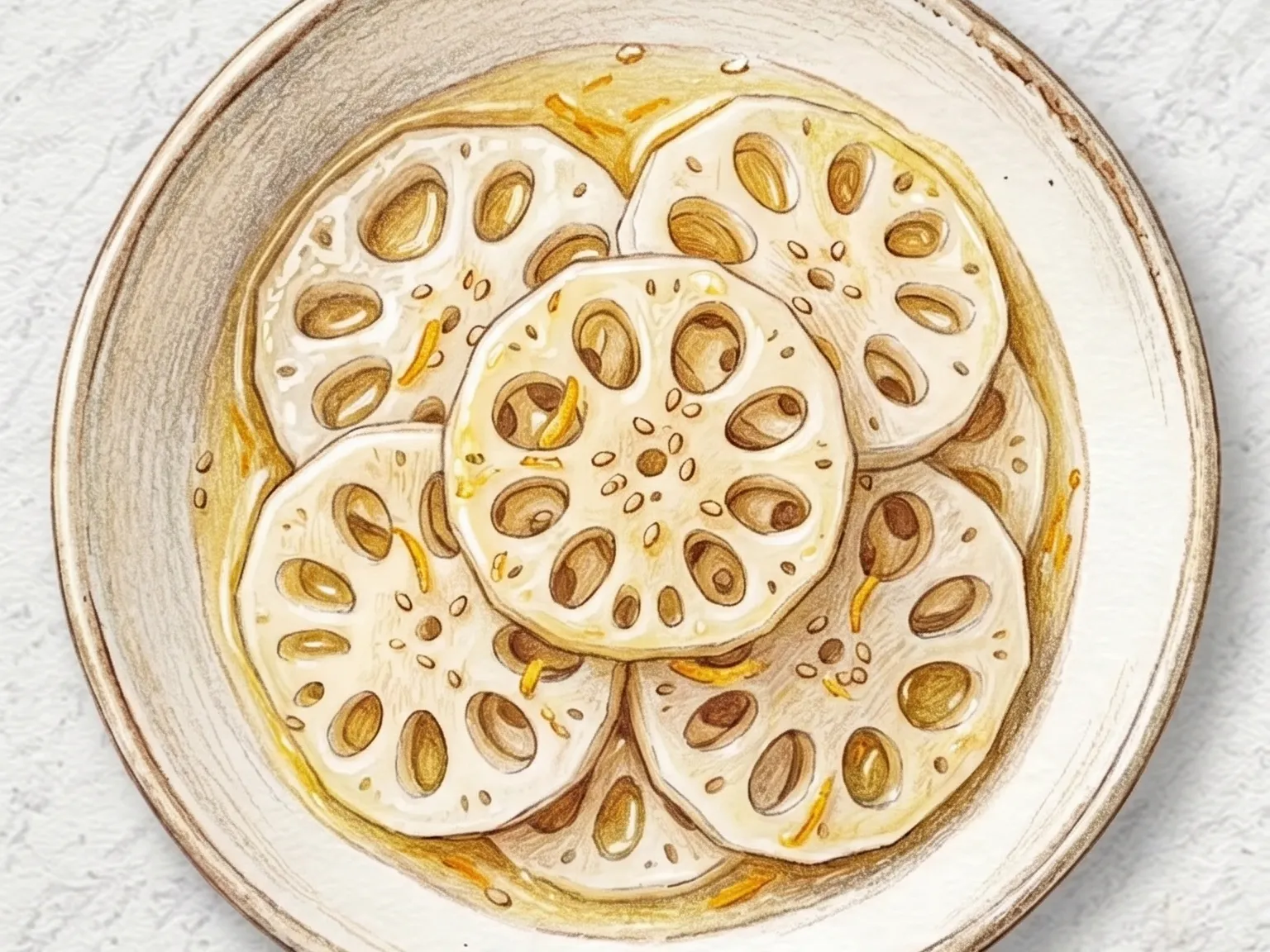
Blanched lotus root slices are dressed in a bright mixture of yuzu marmalade, rice vinegar, sesame oil, and a pinch of sugar. The citrusy yuzu lifts the otherwise neutral lotus root with floral tartness, while the 3 mm thick rounds keep a satisfying crunch even after boiling. Sesame seeds and oil round out the finish with a warm, nutty note. This banchan works especially well alongside richer main dishes, cutting through heaviness with its clean acidity.

🏠 Everyday🍱 Lunchbox
Prep 14minCook 6min4 servings