Korean Lotus Root Jangajji
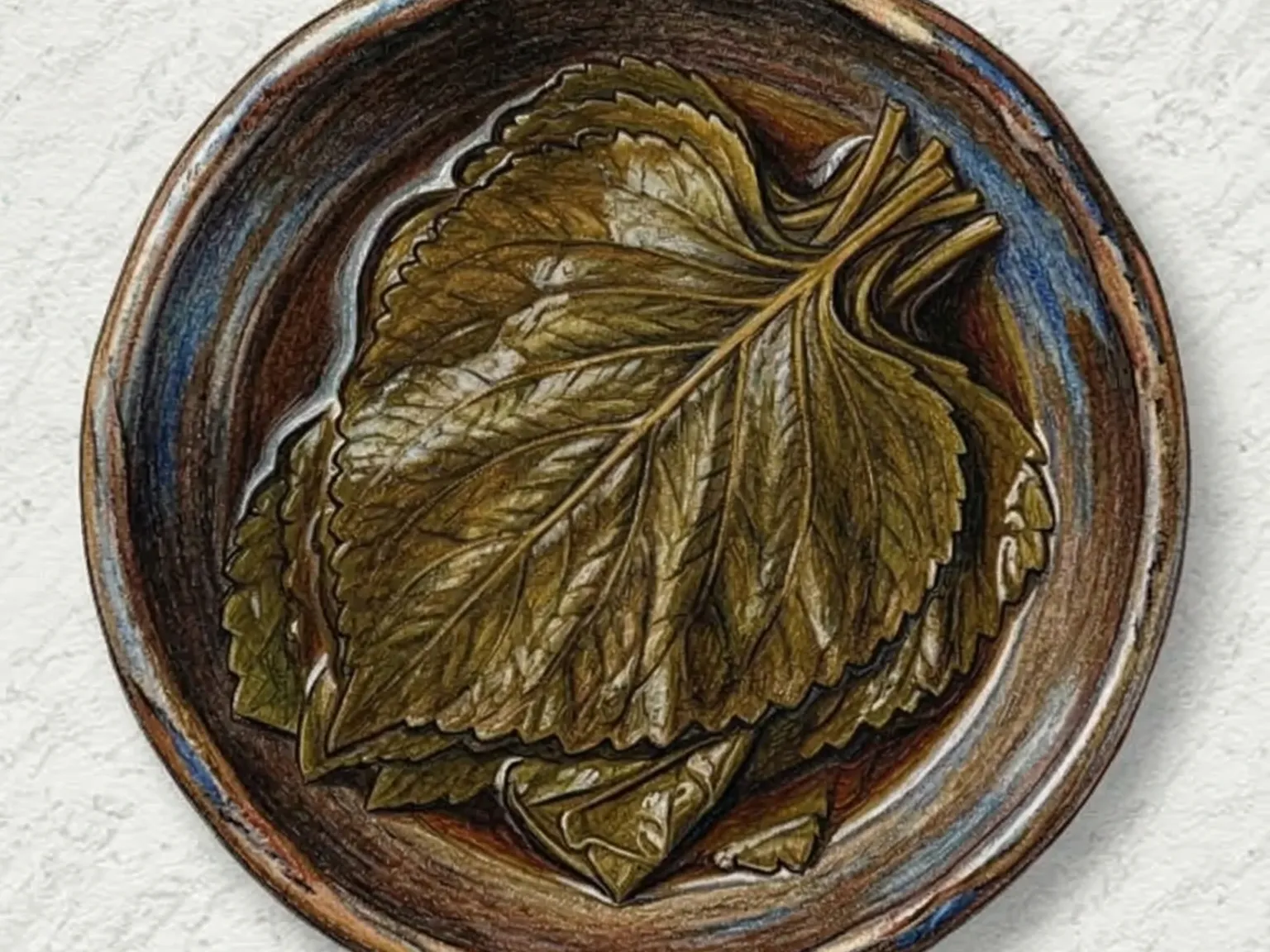
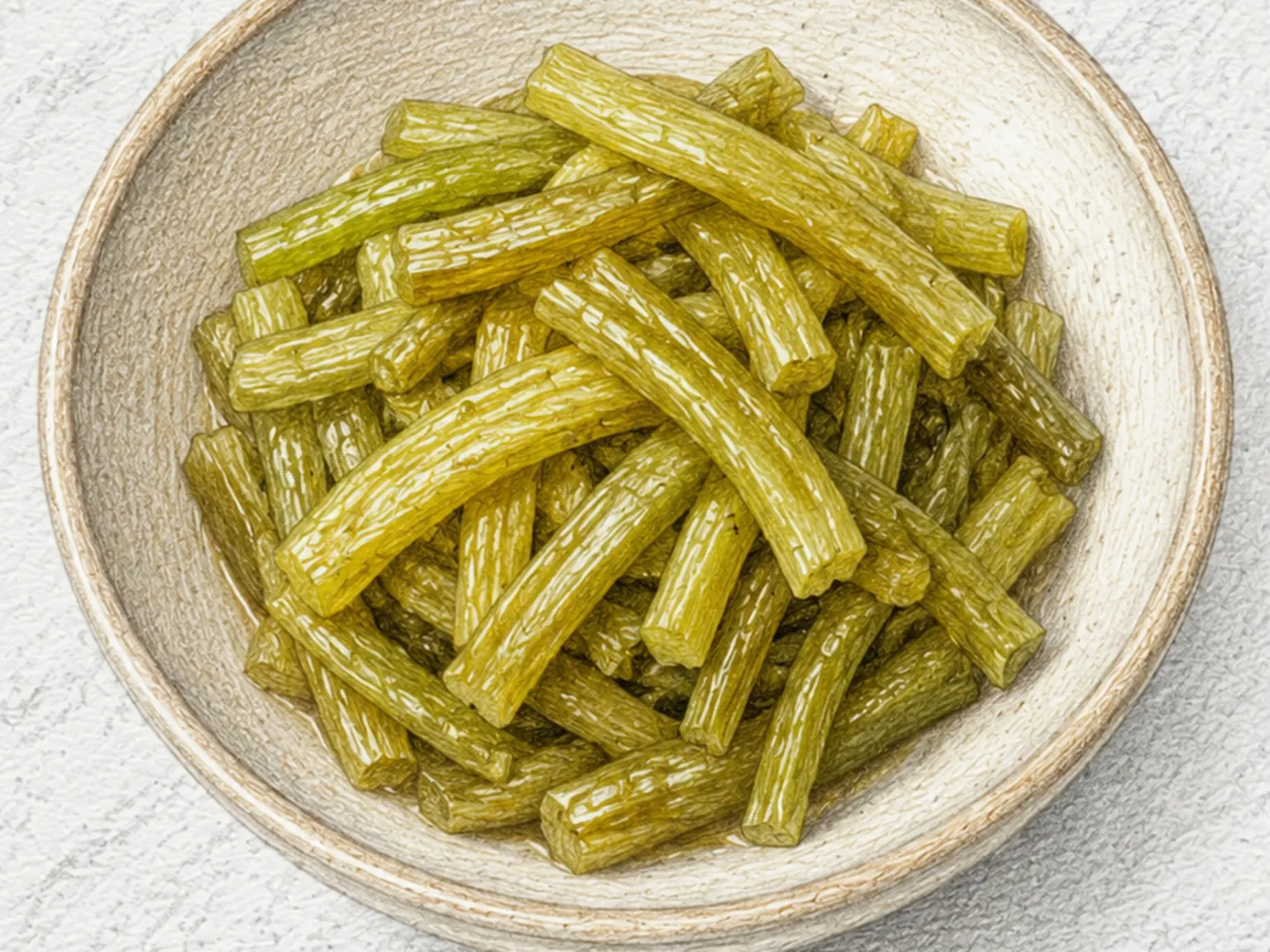
Yeongeun jangajji is a soy-pickled lotus root made by blanching sliced root in vinegar water to prevent discoloration, then soaking it in a hot brine of soy sauce, sugar, peppercorns, and bay leaf. The brine seeps through the root's characteristic holes, distributing a balanced salty-sweet flavor evenly in every bite. Bay leaf tempers the heaviness of the soy base while whole peppercorns add a mild spice undertone. The result is a pickle with a dual texture - simultaneously chewy and crisp - that keeps well for days and works as a lunchbox side or everyday banchan.

Korean Lotus Root Kimchi (Crunchy Spiced Root Kimchi)
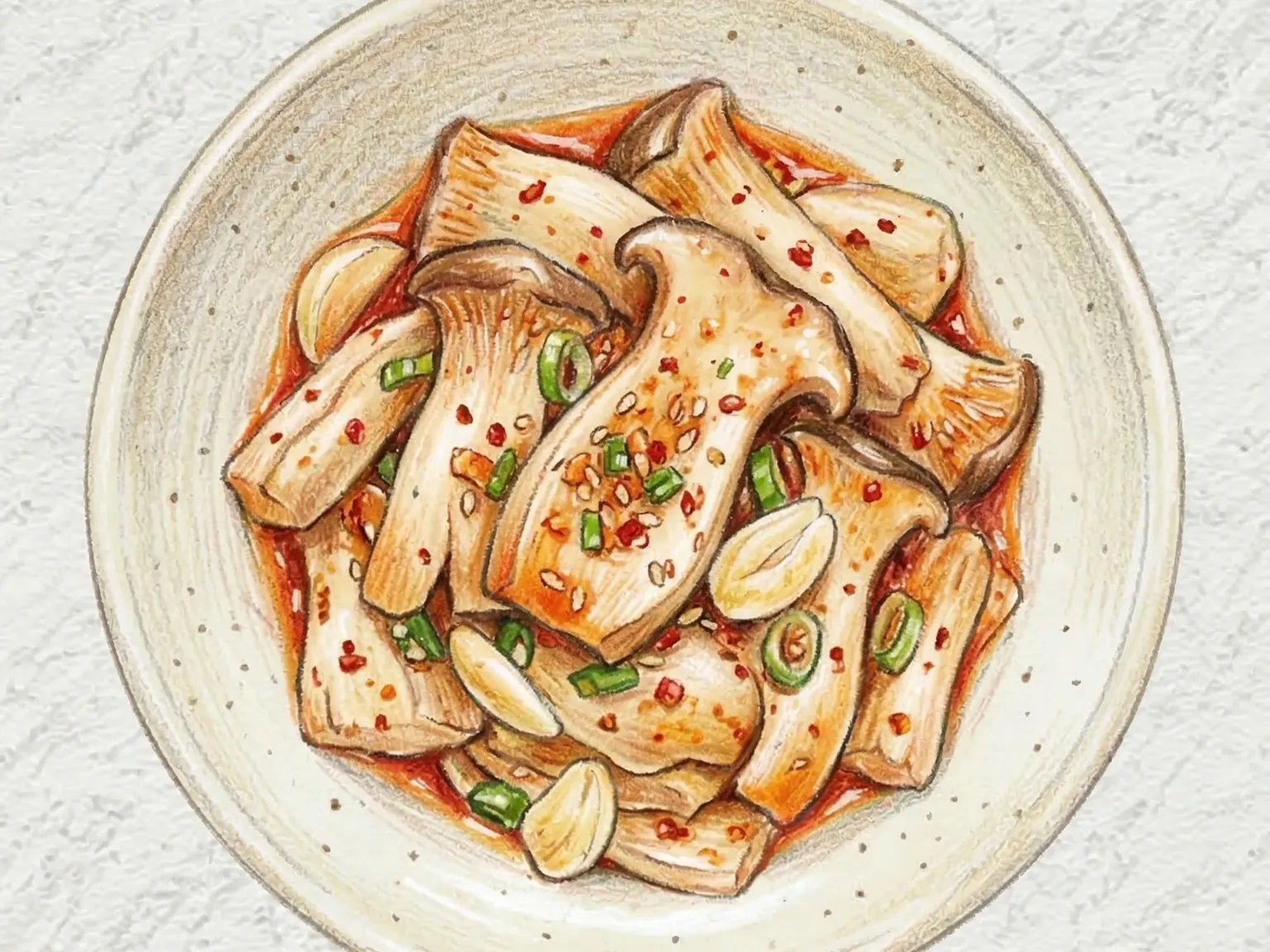
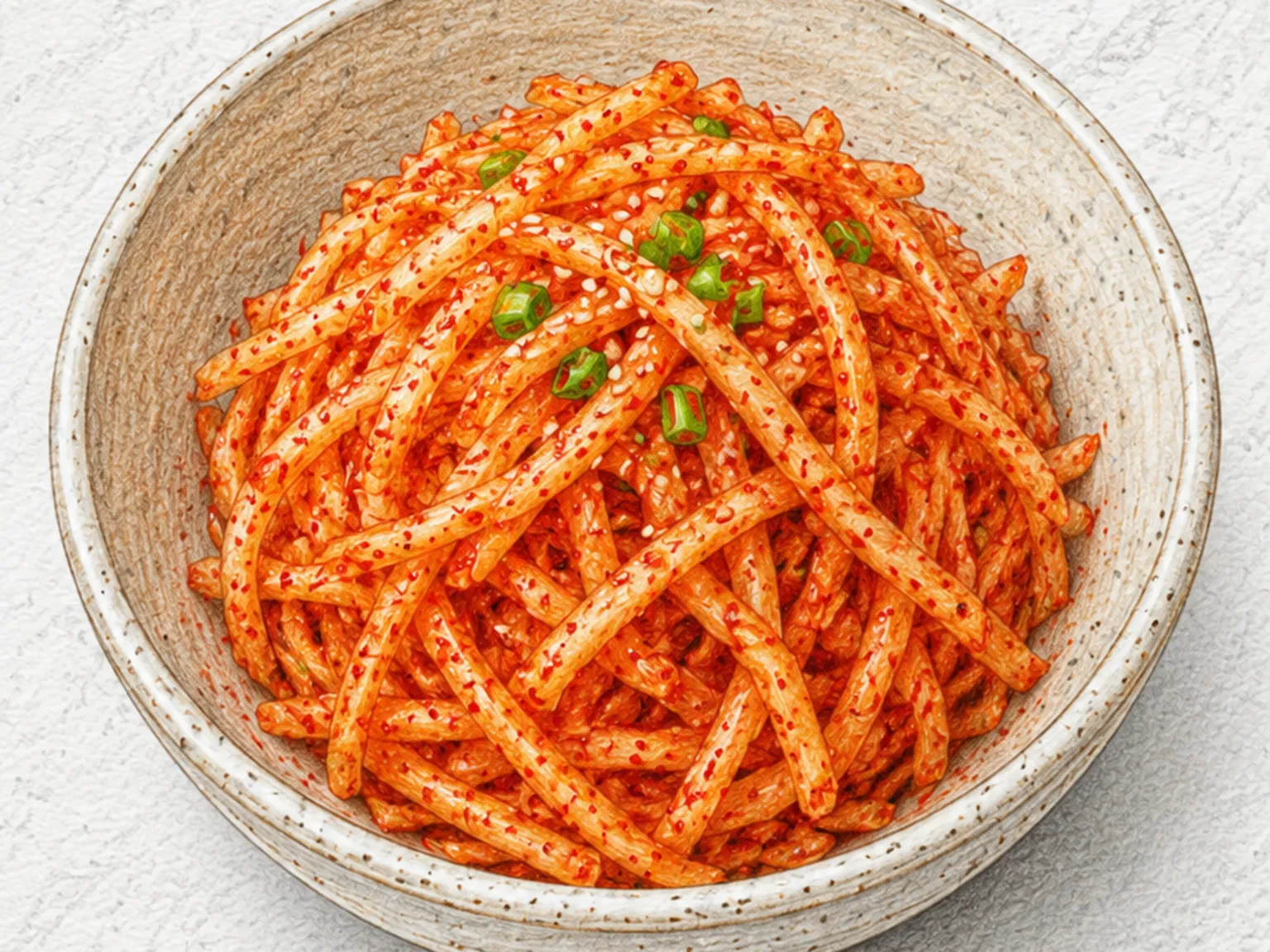
Starting with sliced lotus root boiled in vinegar water helps remove bitterness while keeping the vegetable pale and crisp. The seasoning combines gochugaru, minced garlic, and anchovy fish sauce with the addition of fresh pear juice. This pear juice provides natural sugars and necessary moisture so the chili paste coats each slice evenly without becoming dry or clumping. Even after the fermentation process begins, the lotus root maintains its signature firm and crunchy texture. Sliced scallions are tossed in to add a fresh aromatic quality that balances the spicy garlic paste. One full day of refrigeration allows the flavors to settle into the flesh before serving. Because the seasoning gets trapped inside the characteristic holes of the root, the paste should remain thick rather than watery to ensure consistent flavor. When left to ferment for a few more days, the developing acidity helps cut through the richness of grilled meats or fried dishes. A light addition of sesame oil and toasted sesame seeds at the end brings a toasted scent to every bite.

Korean Soy Sauce Stir-Fried Lotus Root and Bean Sprouts
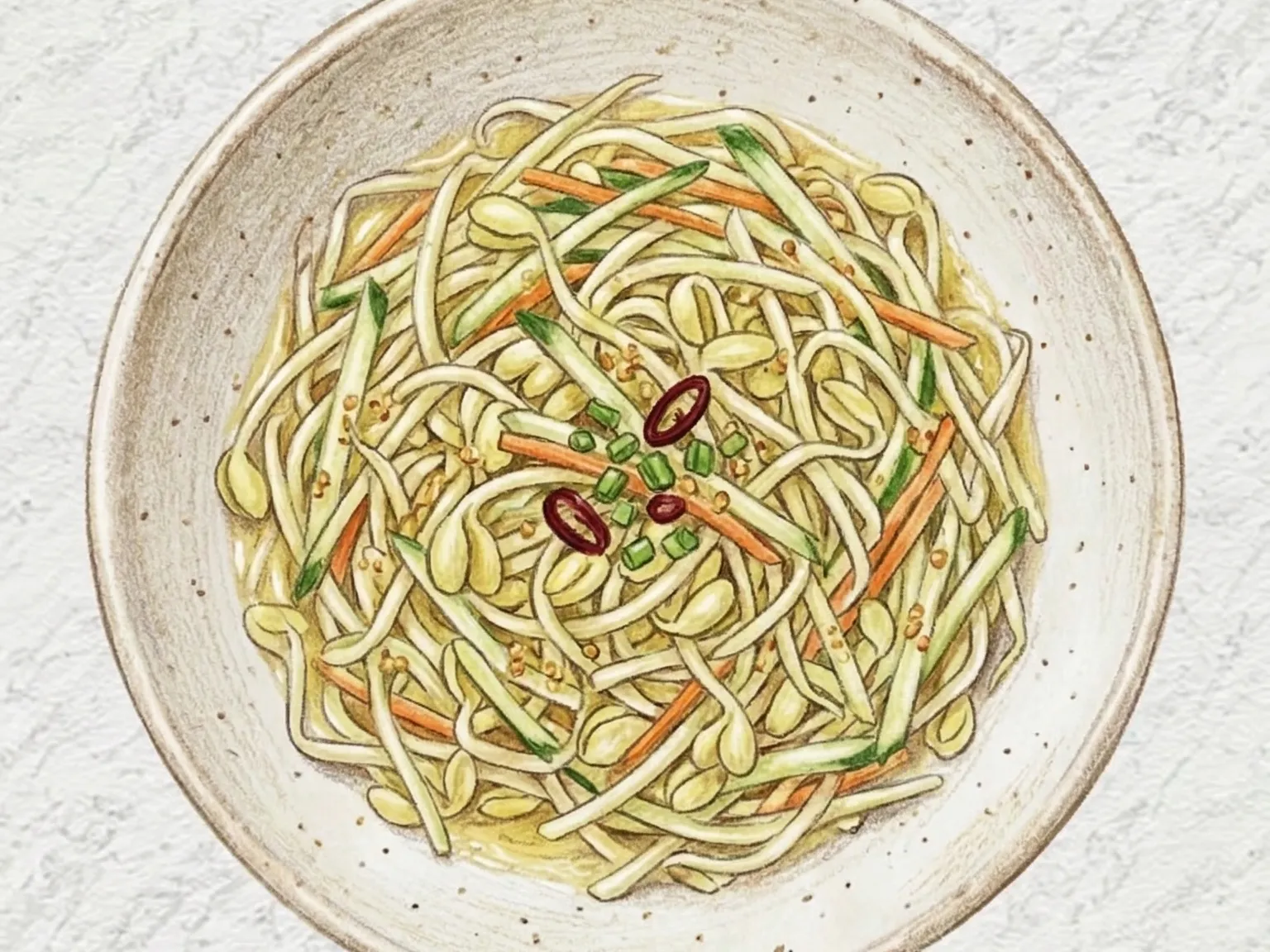
Yeongeun-kongnamul-ganjang-bokkeum stir-fries sliced lotus root and bean sprouts in a soy sauce and oligosaccharide glaze. The lotus root goes in first over medium heat for three minutes until slightly translucent, then carrot and garlic are added before the soy seasoning. Bean sprouts join last and cook on high heat for just two minutes to drive off moisture while staying crunchy. The starchy snap of the lotus root contrasts with the watery crispness of the bean sprouts, tied together by a light sweet-salty soy coating.

Korean Soy-Glazed Grilled Lotus Root
Lotus root slices are soaked in vinegar water to reduce astringency, blanched briefly, then pan-grilled with a soy sauce, oligosaccharide syrup, and garlic glaze. The coating turns glossy as it reduces, giving each slice a balanced salty-sweet finish while the interior stays crisp and clean-tasting. Topped with sesame seeds, this vegetable side holds up well in packed lunches and as an everyday banchan.

Korean Seasoned Bitter Lettuce
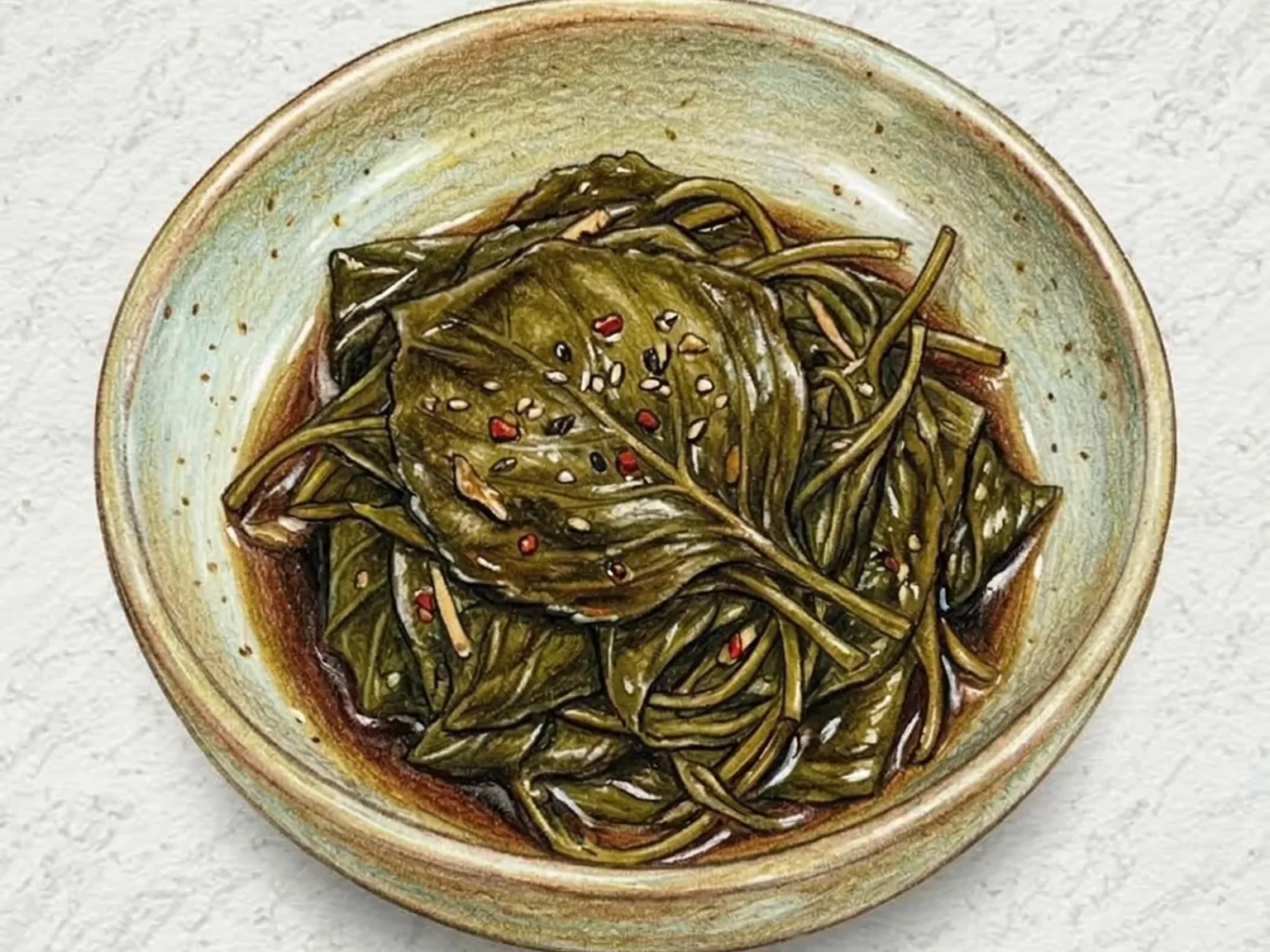
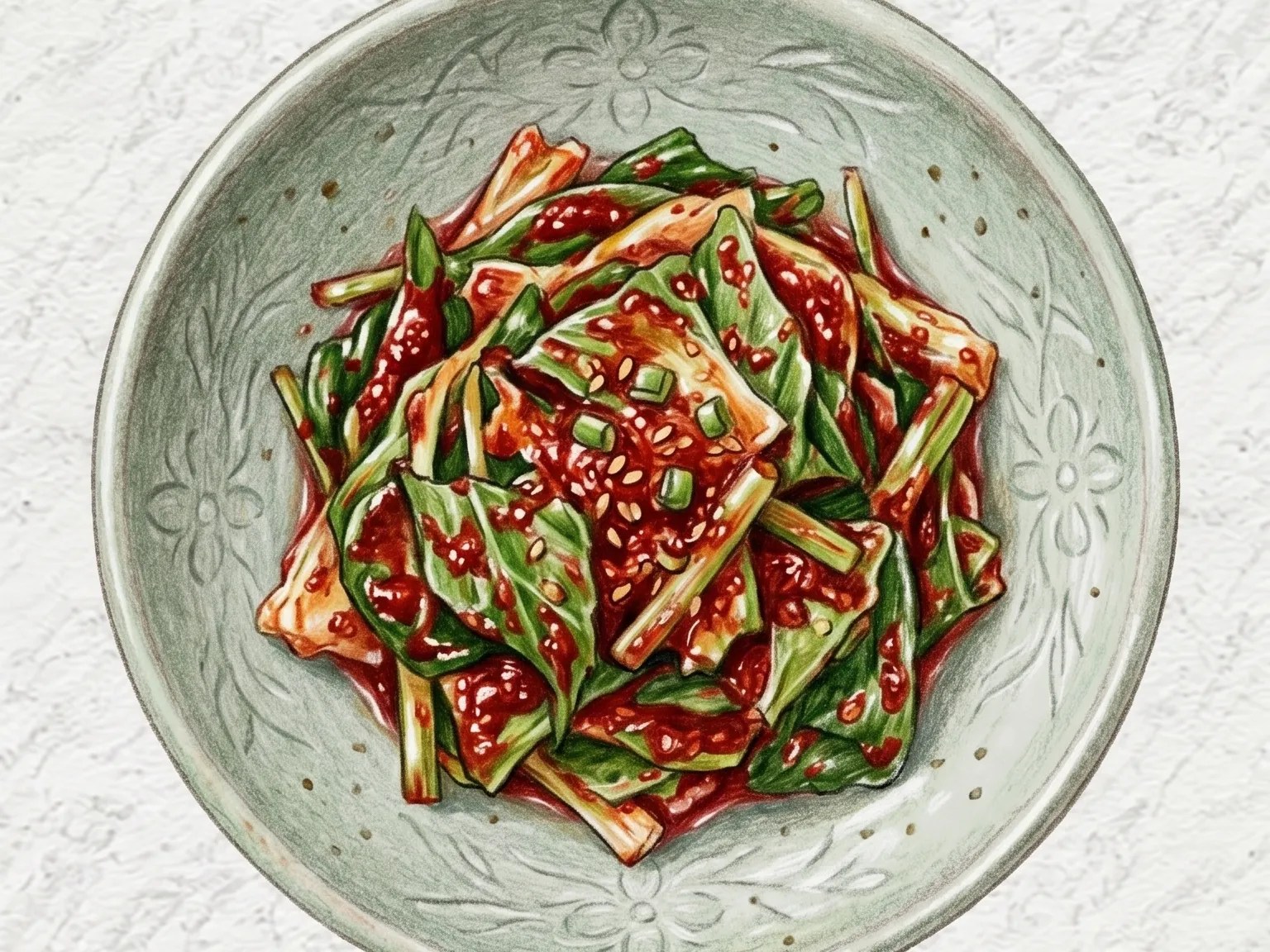
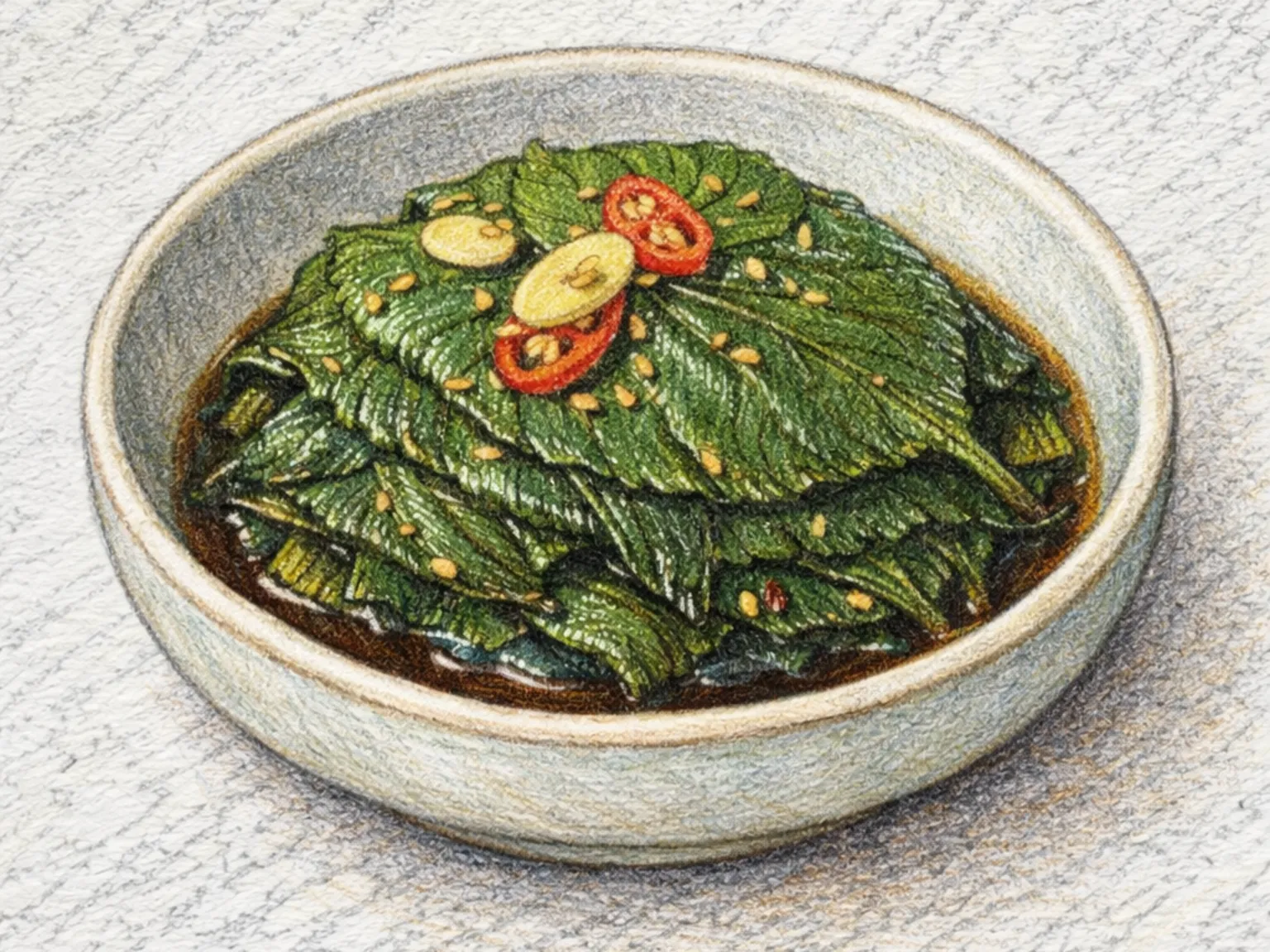
Wild sseumbagui, a bitter green foraged in Korean spring fields, is dressed in a gochujang vinaigrette that transforms its sharp bitterness into a layered, complex side dish. The intrinsic bitterness of the leaves works as a palate cleanser, and the gochujang's heat and vinegar's acidity wrap around it to build depth rather than mask it. Sugar smooths the rough edges of the combined flavors, while a drizzle of sesame oil closes each bite with a warm, nutty finish. Soaking the greens in salt water draws out enough bitterness to make them approachable without erasing the vegetal character that defines this namul. Over-soaking strips the personality entirely, leaving a flat, unremarkable green. Garlic folded into the dressing adds a pungent undercurrent, and a gentle tossing motion keeps the fragile leaves intact. The flavor progresses from bitter opening to spicy-sour middle to a sesame-scented close, a sequence that captures the taste of Korean spring.

Korean Seasoned Cucumber Pickle Salad
Oiji-muchim takes oiji - cucumber that has been salt-brined for a month or longer - rinses out the excess salinity, and dresses it in a sweet-sour-spicy sauce. Oiji is a traditional Korean preserved food: summer cucumbers are submerged in a concentrated salt brine and aged until their moisture migrates out, transforming the texture from fresh and crisp into something firm, almost crunchy-chewy - a chew fundamentally different from raw cucumber. If the pickle is too salty, soaking in cold water for thirty minutes to an hour draws the brine down to a palatable level. After thorough squeezing, the cucumber pieces are tossed with gochugaru, vinegar, sugar, sesame oil, minced garlic, and scallion. Vinegar and sugar layer a bright sweet-sour dimension over the pickle's inherent saltiness, balancing it for pairing with rice. Julienned oiji absorbs more dressing and delivers a different eating experience than diagonal-cut slices - each approach has its advocates. Made during the summer cucumber glut, oiji keeps refrigerated for over a month.

Korean Yeolmu Bibim Guksu
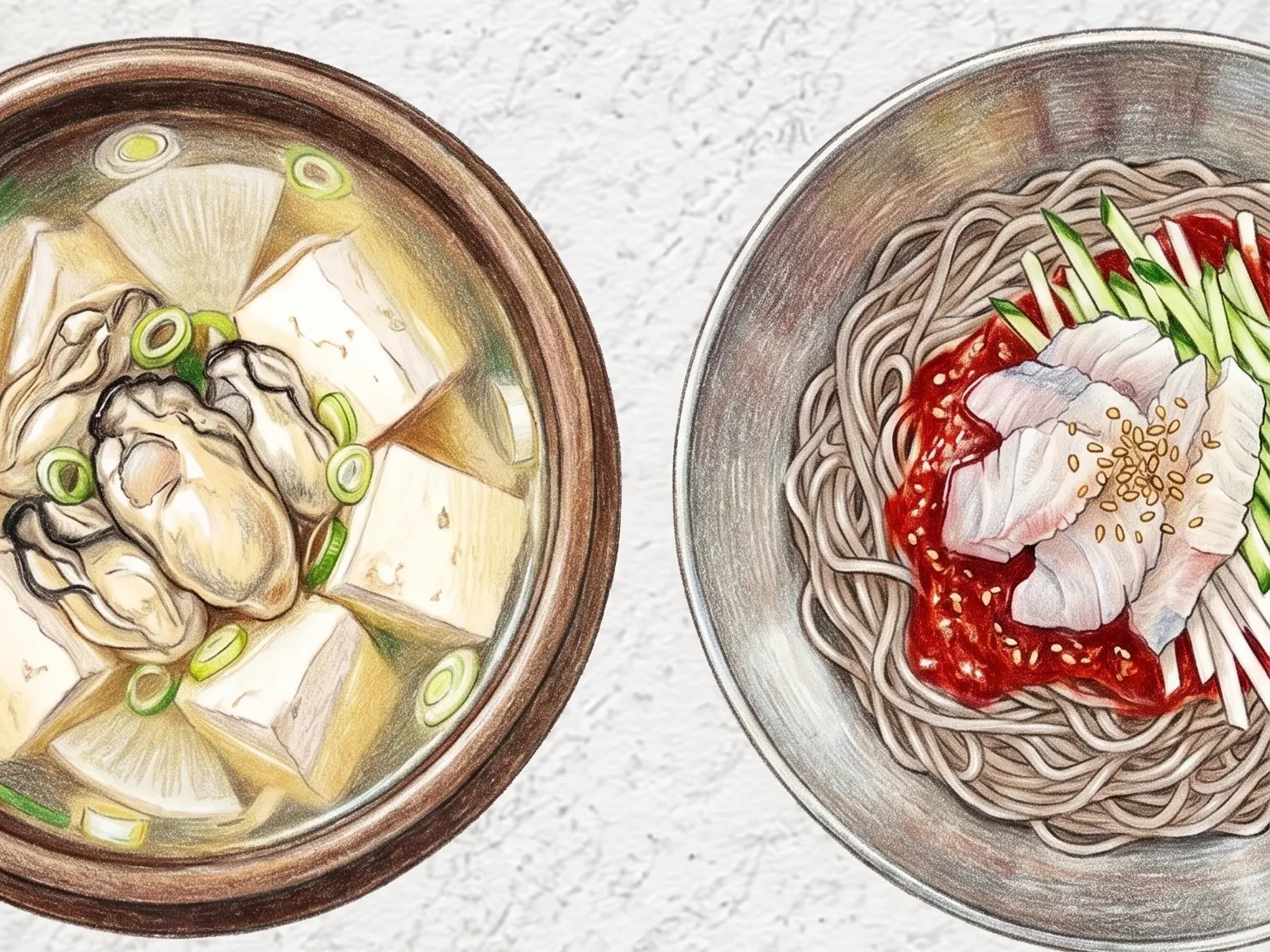
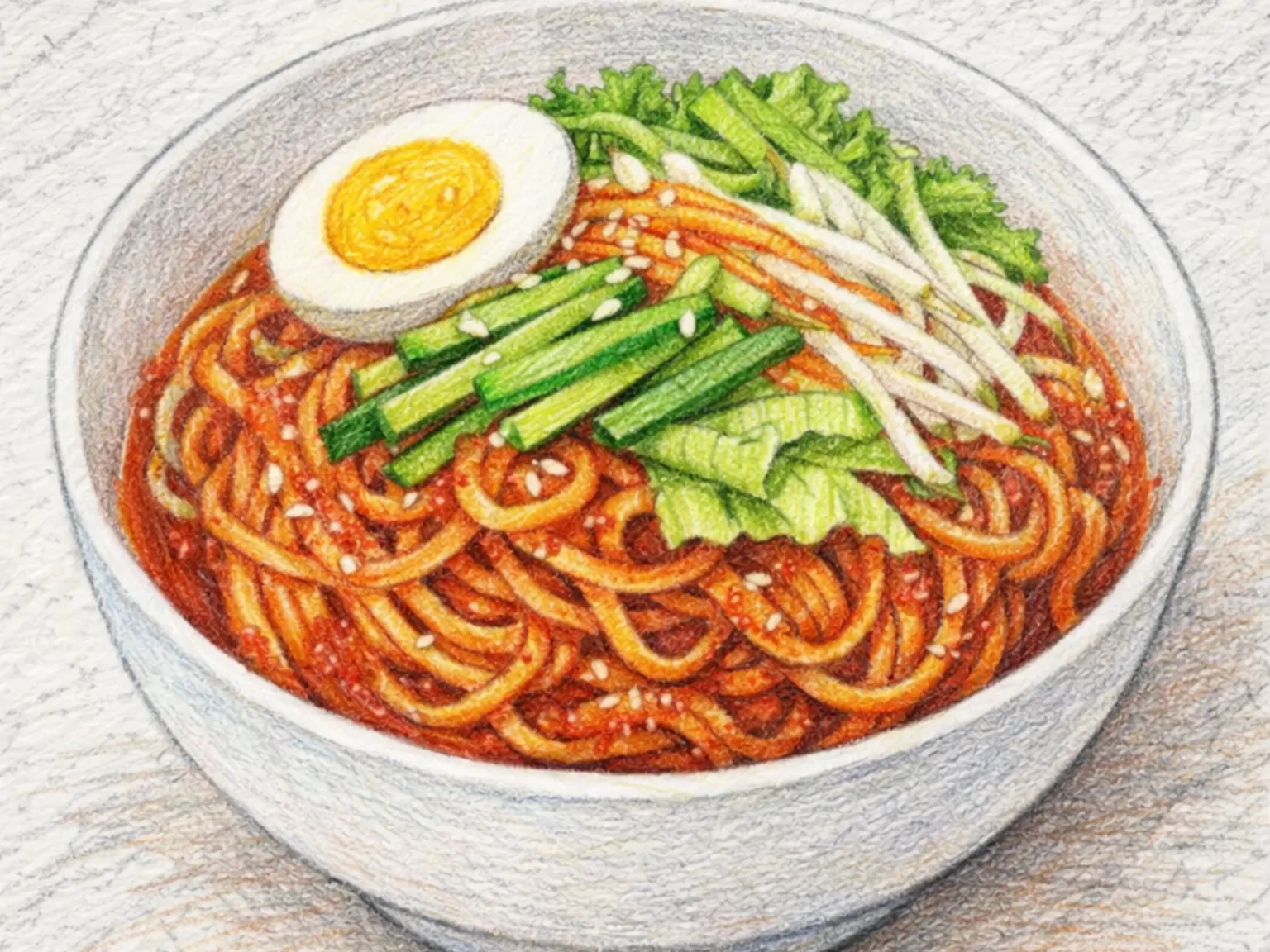
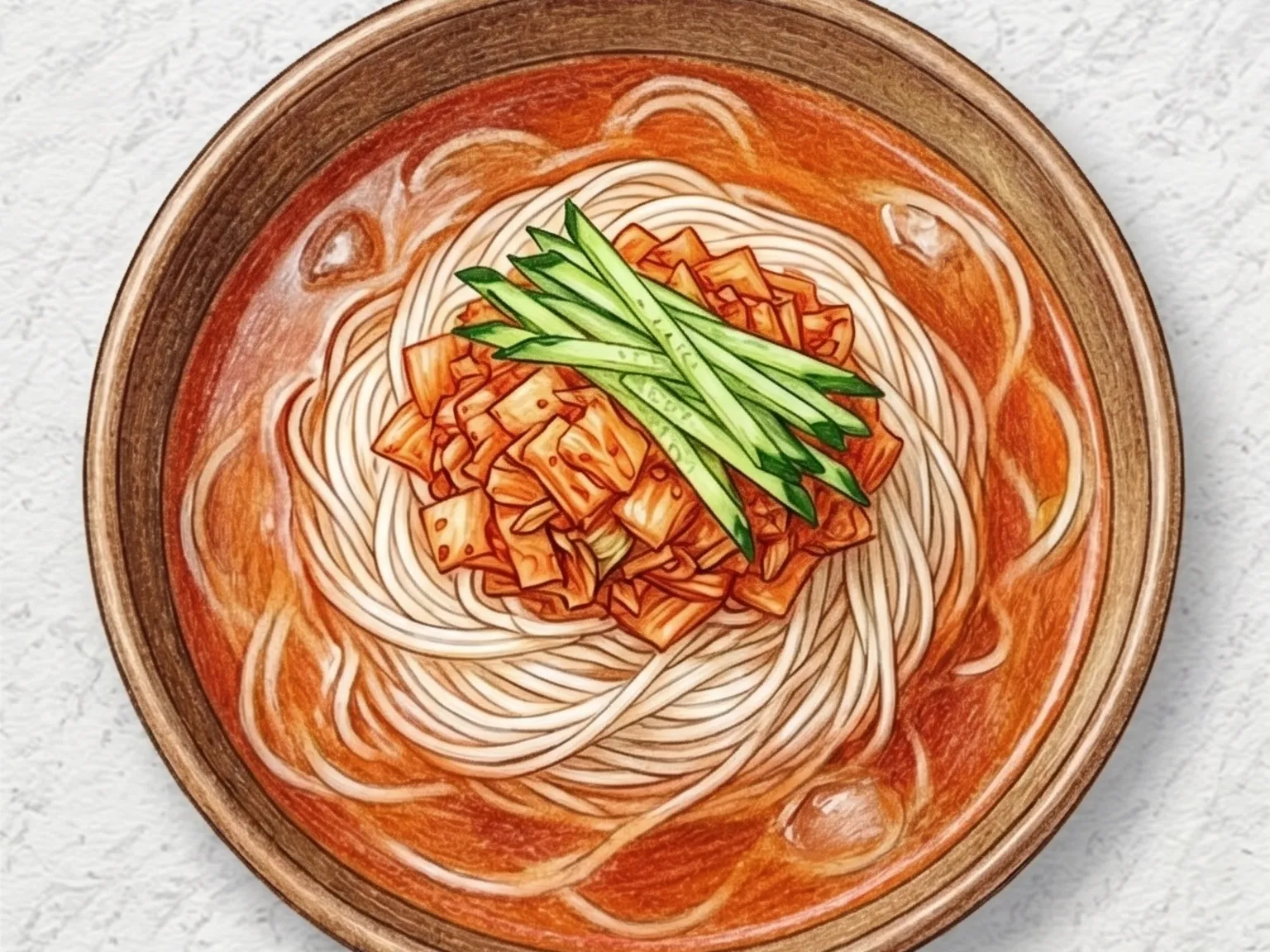
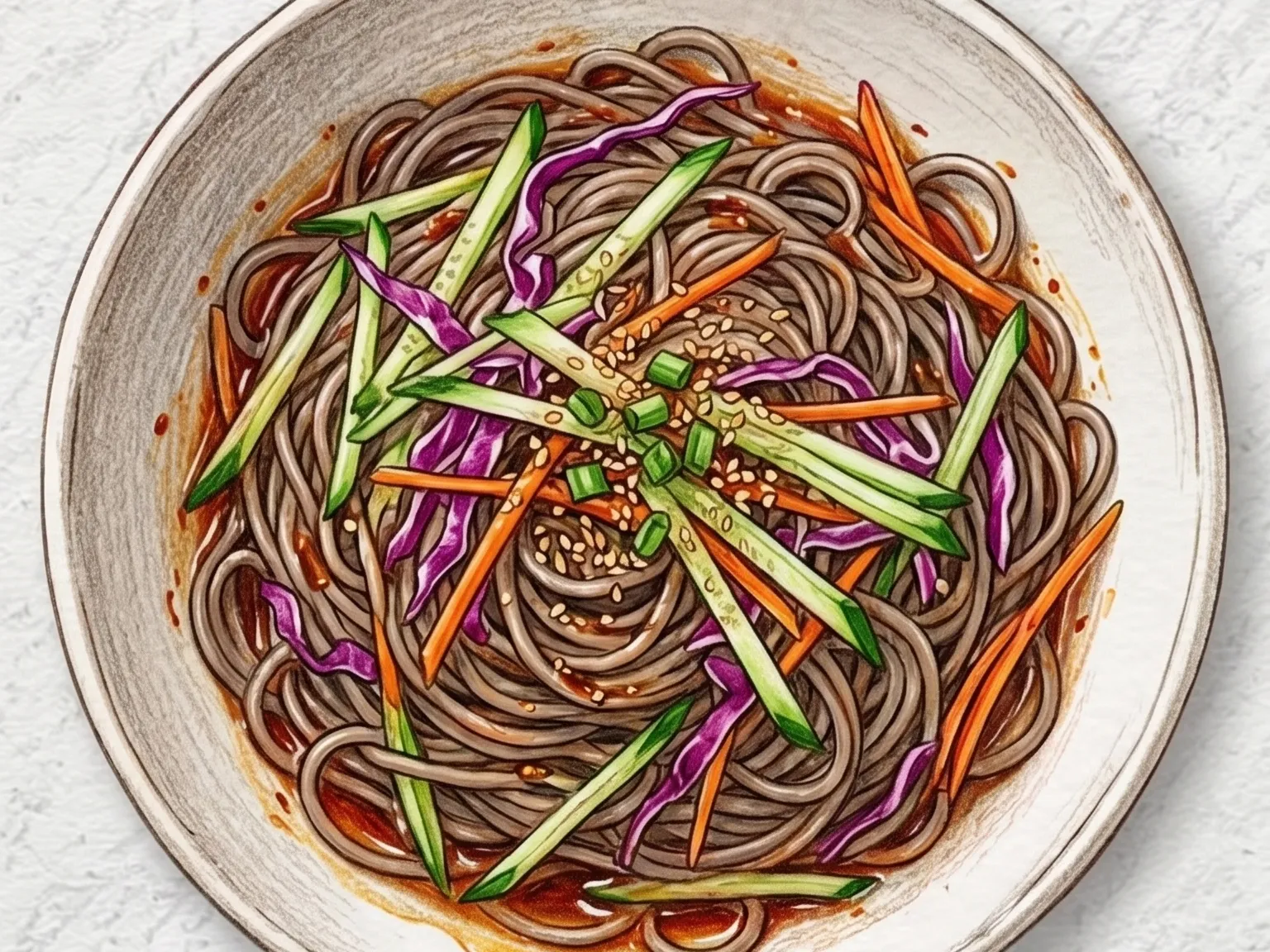
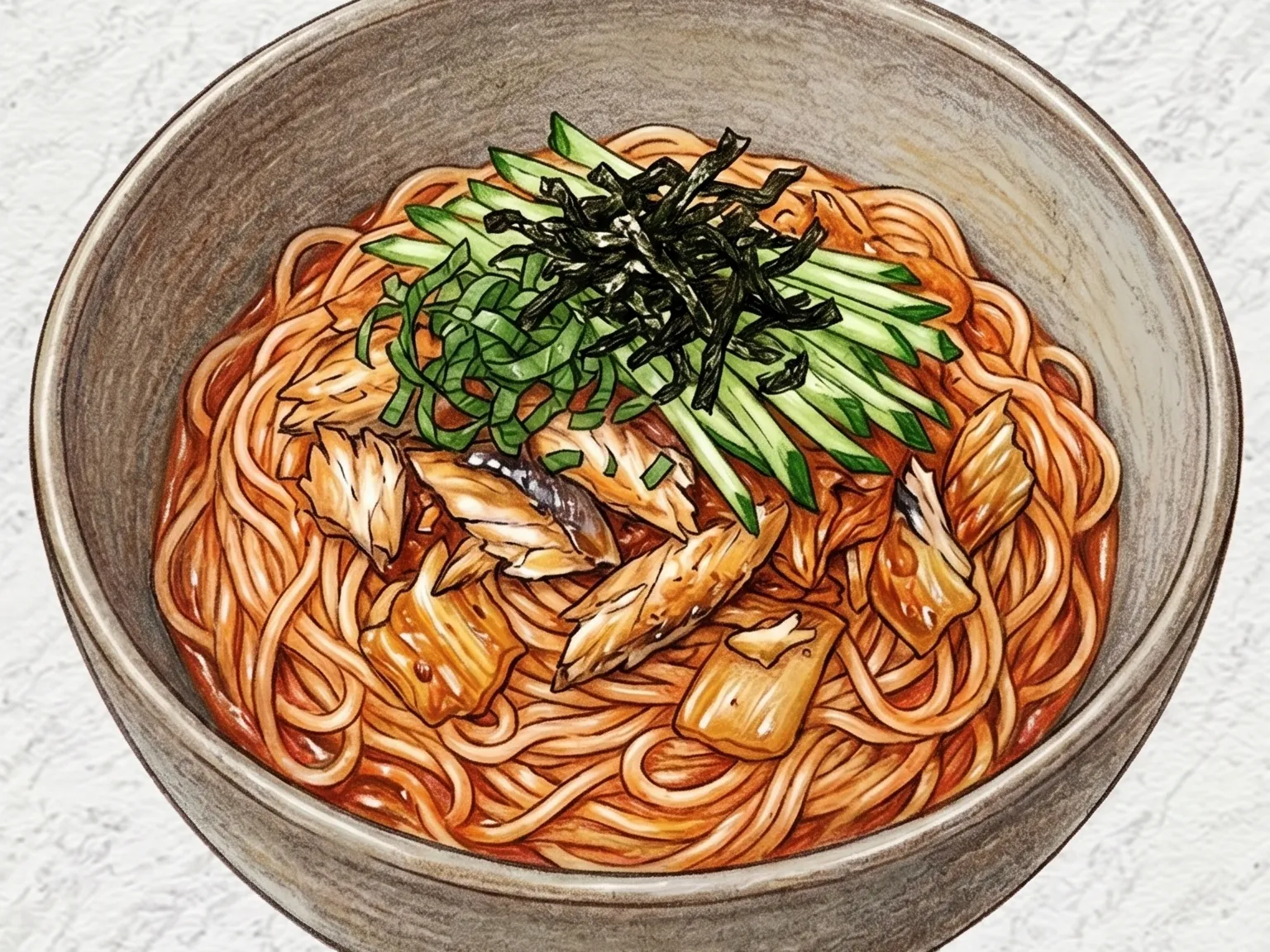
Yeolmu bibim guksu is a Korean mixed noodle dish built around young radish kimchi (yeolmu kimchi). The kimchi provides a crunchy texture and a fermented tanginess that anchors the bowl. Thin somyeon noodles are rinsed in cold water, then tossed with gochugaru or gochujang dressing, sesame oil, and sesame seeds. The heat level stays moderate, letting the kimchi's sourness come through. Total preparation is about 23 minutes, and the recipe requires no cooking beyond boiling the noodles.

Korean Pickled Celtuce Stems
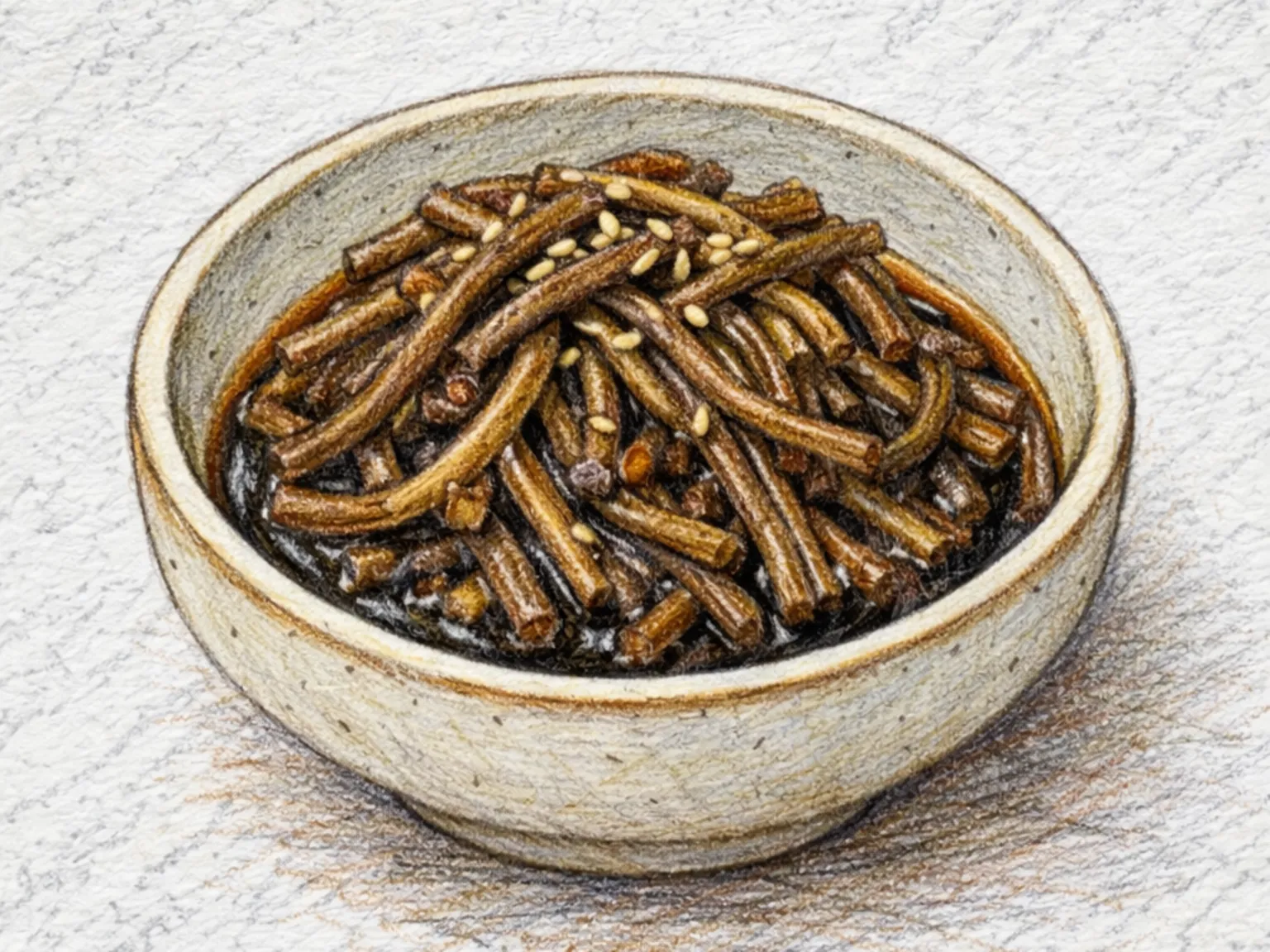
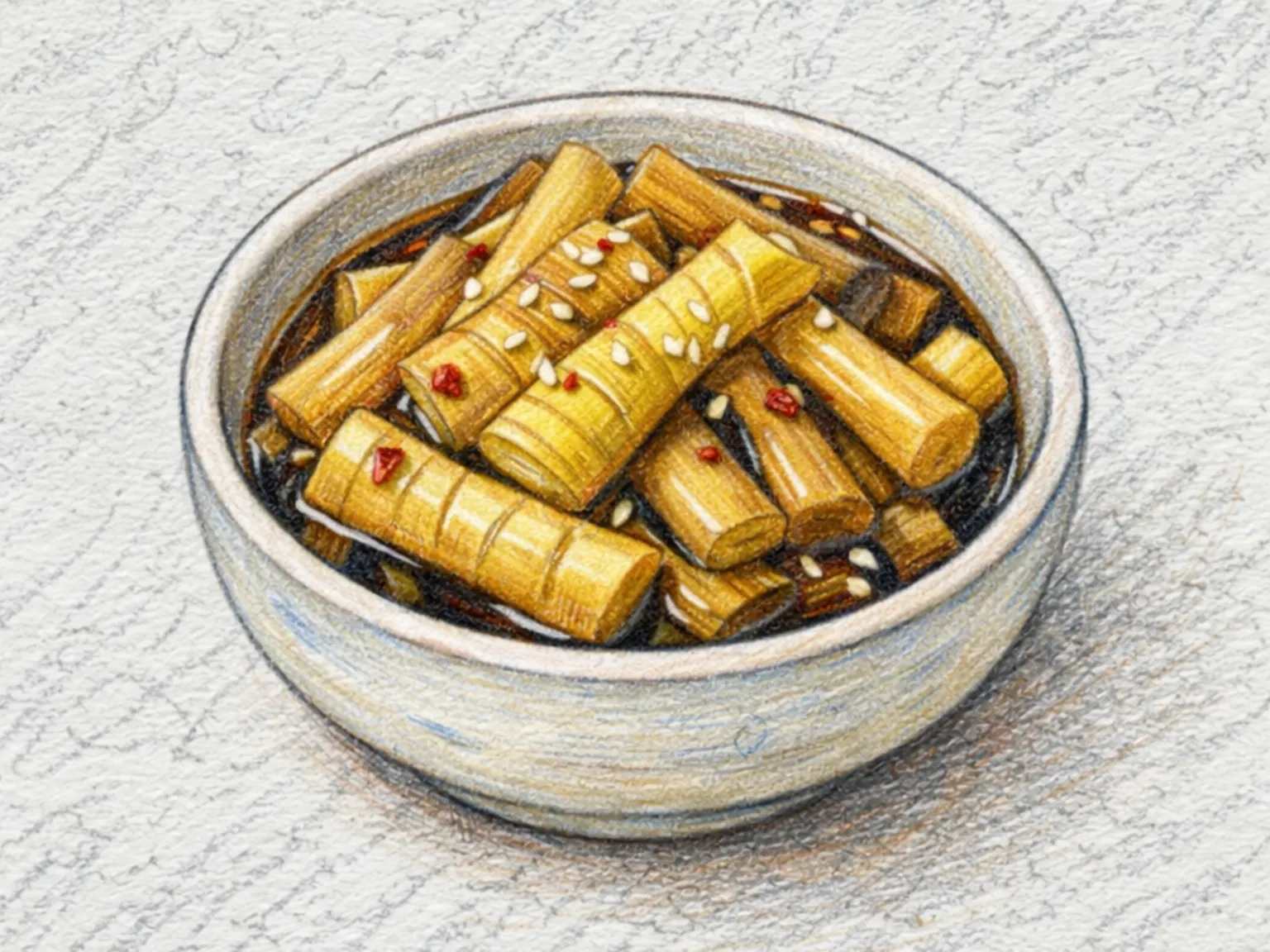
Gungchae is the dried stem of celtuce (Lactuca sativa var. asparagina), known in Chinese as wosun, and in Korea it carries the name meaning palace vegetable, reflecting its historical association with royal court cuisine. When rehydrated from its dried state, the stems regain a firm, almost cartilaginous crunch that is the defining quality of the ingredient and the entire reason to use it. Packed into sterilized glass jars, the stems are covered with a boiling brine of soy sauce, vinegar, sugar, and water poured in while still hot, which drives the seasoning into the outer layers while preserving the interior snap. The pickle is edible after a single day, but three days is when the balance of tangy, salty, and sweet flavors reaches its peak. Served alongside grilled meats or rich main dishes, the crisp texture and bright acidity cut through heaviness and refresh the palate between bites, making it a natural companion to oily or heavily seasoned Korean mains.

Deodeok Apple Perilla Salad (Bellflower Root Salad)
Deodeok -- codonopsis root -- is pounded with a mallet to split along its fibers, releasing its distinctive herbal fragrance and producing a chewy, shredded texture. The root is best in season from autumn through early spring and suits raw preparations just as well as it does grilling or seasoned side dishes. Thin apple slices add crisp sweetness that tempers the root's mild bitterness. The dressing combines gochujang and vinegar for a tangy-spicy profile, while ground perilla seeds contribute a nutty, aromatic finish. When pounding, light taps work better than heavy blows -- the goal is to open the fibers without crushing the flesh. Tear the root by hand along the grain after pounding for the best texture. Toss with the dressing just before serving to keep the apple and deodeok crisp.

Korean Garlic Scape Salad
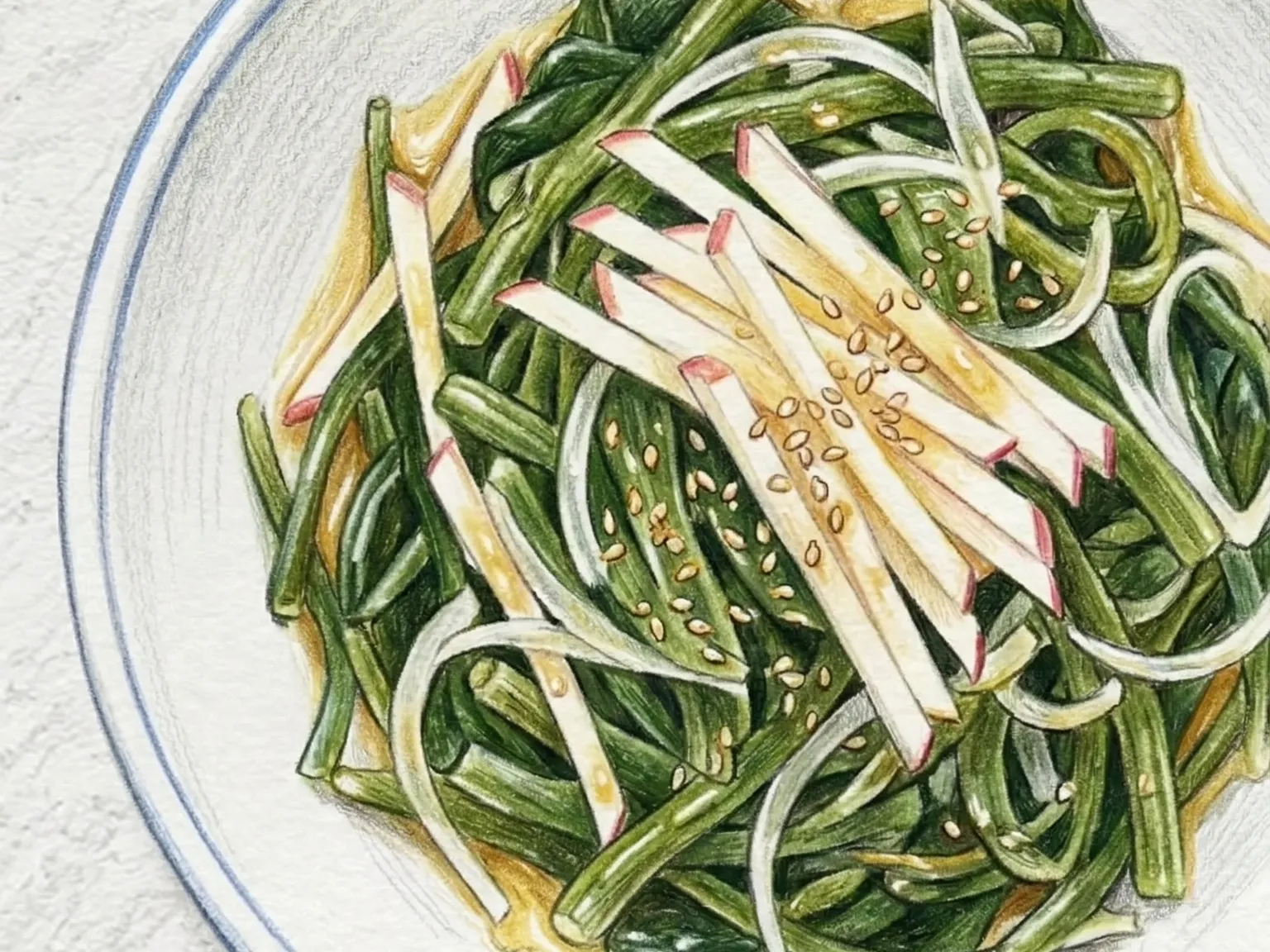
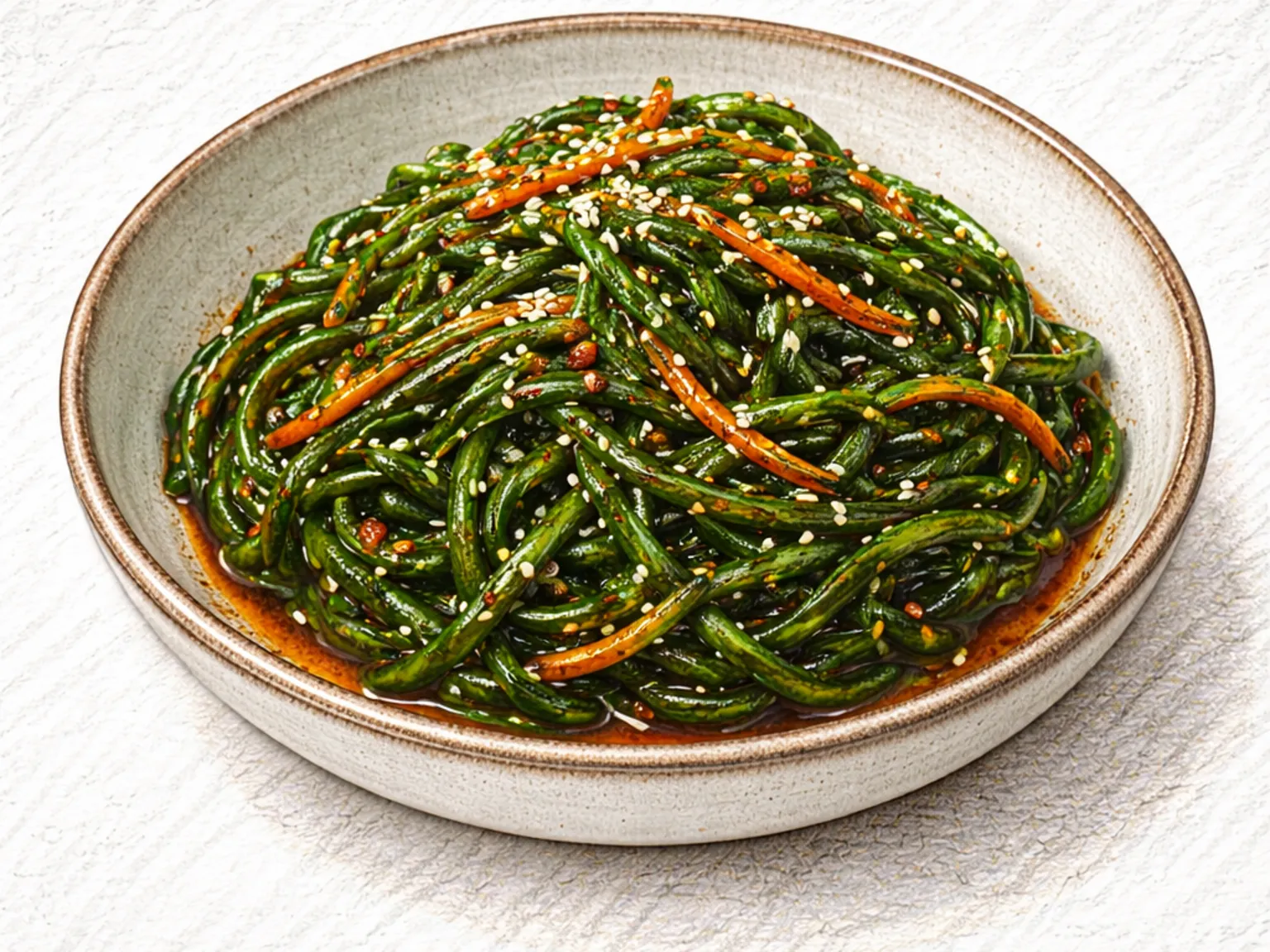
Maneuljong-muchim dresses briefly blanched garlic scapes in a cold gochujang and vinegar dressing, setting it apart from maneuljjong-bokkeum, which uses a soy-based sauce and relies on direct heat in a pan. The names maneuljong and maneuljjong describe the same part of the garlic plant, the slender flowering stalk that emerges in spring, but the two terms divide along regional dialect lines: speakers in Seoul and Gyeonggi province tend to say maneuljong while those in other parts of the country often use maneuljjong. Blanching must be kept well under thirty seconds to lock in the bright green color and crisp snap; beyond one minute the scapes soften and the color dulls noticeably. The gochujang dressing hits sweet, sour, and spicy in equal measure, and the vinegar component plays off the scapes' grassy, pungent aroma in a way that reads as distinctly springlike on the palate. Peak availability runs from April through May, when garlic plants push up their stalks before the heads are harvested, and vendors at traditional markets sell them bundled by the handful. Because no oil is involved and the sauce is relatively light, this preparation is considerably lower in calories than the stir-fried version, which is part of why it appears frequently in everyday Korean meal sets as a reliable, refreshing side.

Korean Lotus Root Salad (Sweet and Sour Vinegar Soy Dressing)
Thinly sliced lotus root is blanched in vinegar water to keep its bright white color, then tossed in a sweet-and-sour dressing of soy sauce, vinegar, and sugar. The honeycomb cross-section of each slice traps seasoning in its holes, distributing flavor evenly with every bite. A finishing sprinkle of sesame seeds adds a toasted aroma that complements the crisp, snappy texture. Because the dish stays dry rather than releasing liquid, it holds up well in packed lunches without turning soggy.

Korean Seasoned Sea Grapes Salad
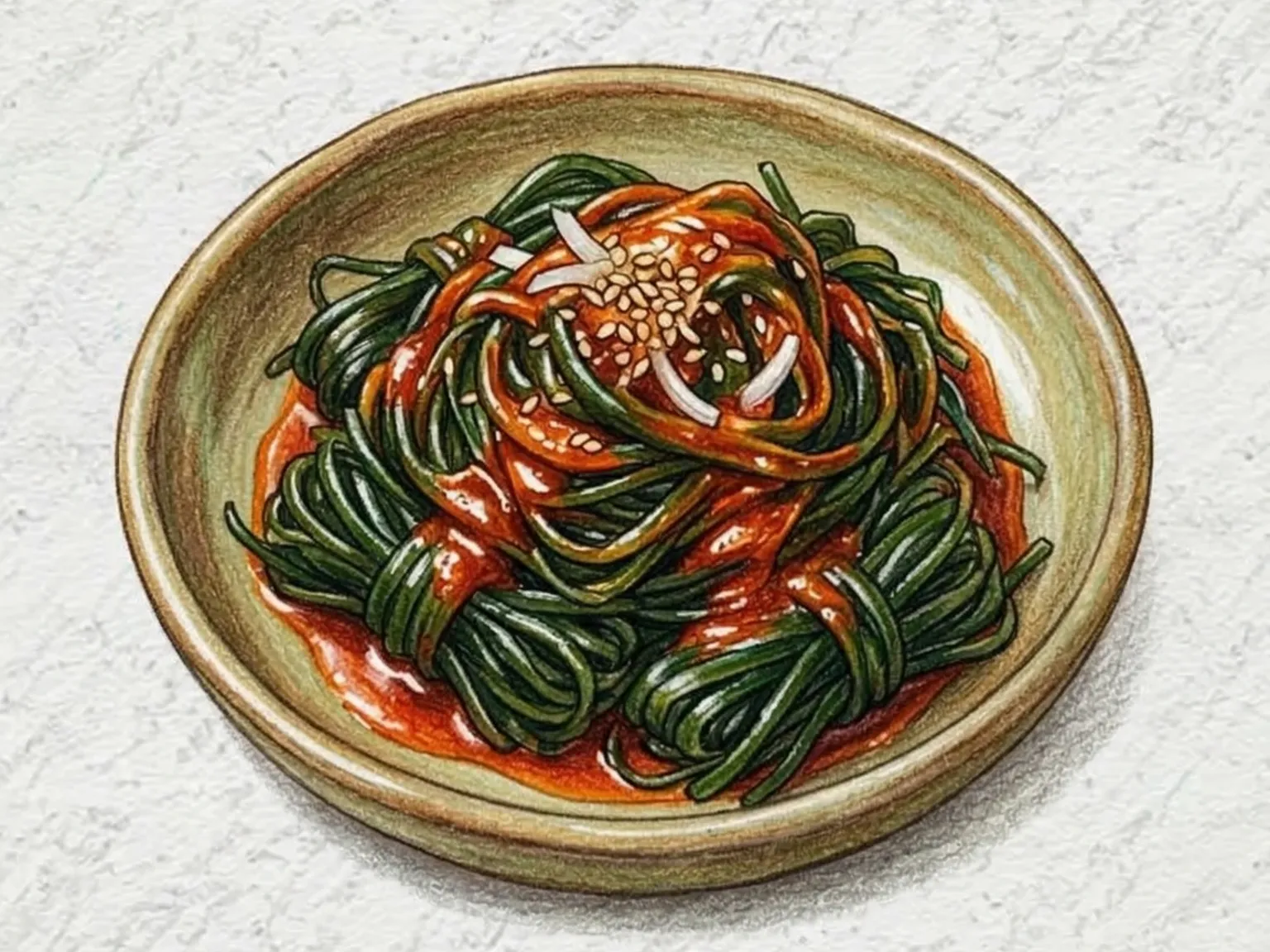
Kkosiraegi-muchim is a tangy, low-calorie banchan made from kkosiraegi, a red algae seaweed whose thin, noodle-like strands snap with a distinctive crunch that no other seaweed can replicate. Blanching must not exceed twenty seconds, as anything longer collapses the characteristic texture, so a timer is essential. The seaweed goes straight from the boiling water into cold water to stop the heat and lock in elasticity. The dressing brings together gochugaru, soup soy sauce, vinegar, maesil-cheong, garlic, and sesame oil; the green plum extract layering in a fruity acidity that lifts the dish beyond simple sour-spicy flavoring. Julienned cucumber threaded through the seaweed strands provides a crisp, garden counterpoint to the oceanic depth. At roughly 72 kilocalories per serving with high dietary fiber content, this banchan appears frequently in Korean diet meal plans because it satisfies without adding much to the calorie count. Eating it promptly after seasoning prevents the cucumber from releasing water and diluting the dressing. Served cold in summer, it doubles as a refreshing side that pairs well with grilled meat or plain rice.

Cold Ramen Salad
Hiyashi chuka is a Japanese chilled noodle dish where ramen noodles cooked and thoroughly cooled in ice water are topped with colorful shredded garnishes and drizzled with a tangy soy-vinegar dressing. The dressing of soy sauce, rice vinegar, sugar, and sesame oil combines salt, sharpness, and sweetness; because it is poured over rather than used as a broth, the individual character of each topping stays distinct. The noodles must be chilled in ice water after boiling to achieve the firm, springy texture that holds up against the dressing without going limp, and tossing them lightly with sesame oil prevents clumping before plating. Thin strips of egg crepe, ham, cucumber, and tomato arranged by color create a visually striking presentation, and each chopstickful delivers several contrasting textures at once. In Japan this dish is a summer fixture, and at home it is a practical way to use leftover ingredients. A variation whisks mayonnaise into the dressing, which softens the acidity and adds a creamy body to the sauce.

Korean Steamed Beef Mille-Feuille Cabbage
Usamgyeop millefeuille jjim is a Korean steamed dish where thin-sliced beef belly and napa cabbage leaves are stacked in alternating layers, then braised in a soy sauce, cooking wine, and garlic seasoning. Moisture from the cabbage mingles with the rendered beef fat to create a clean yet rich broth, and each layer delivers an alternating hit of meat and vegetable flavor. Soy sauce adds subtle salinity, and black pepper sharpens the finish. The layered cross-section revealed when the lid comes off makes this an visually striking main course suited for entertaining.

Korean Spicy Bellflower Root Chewy Noodles
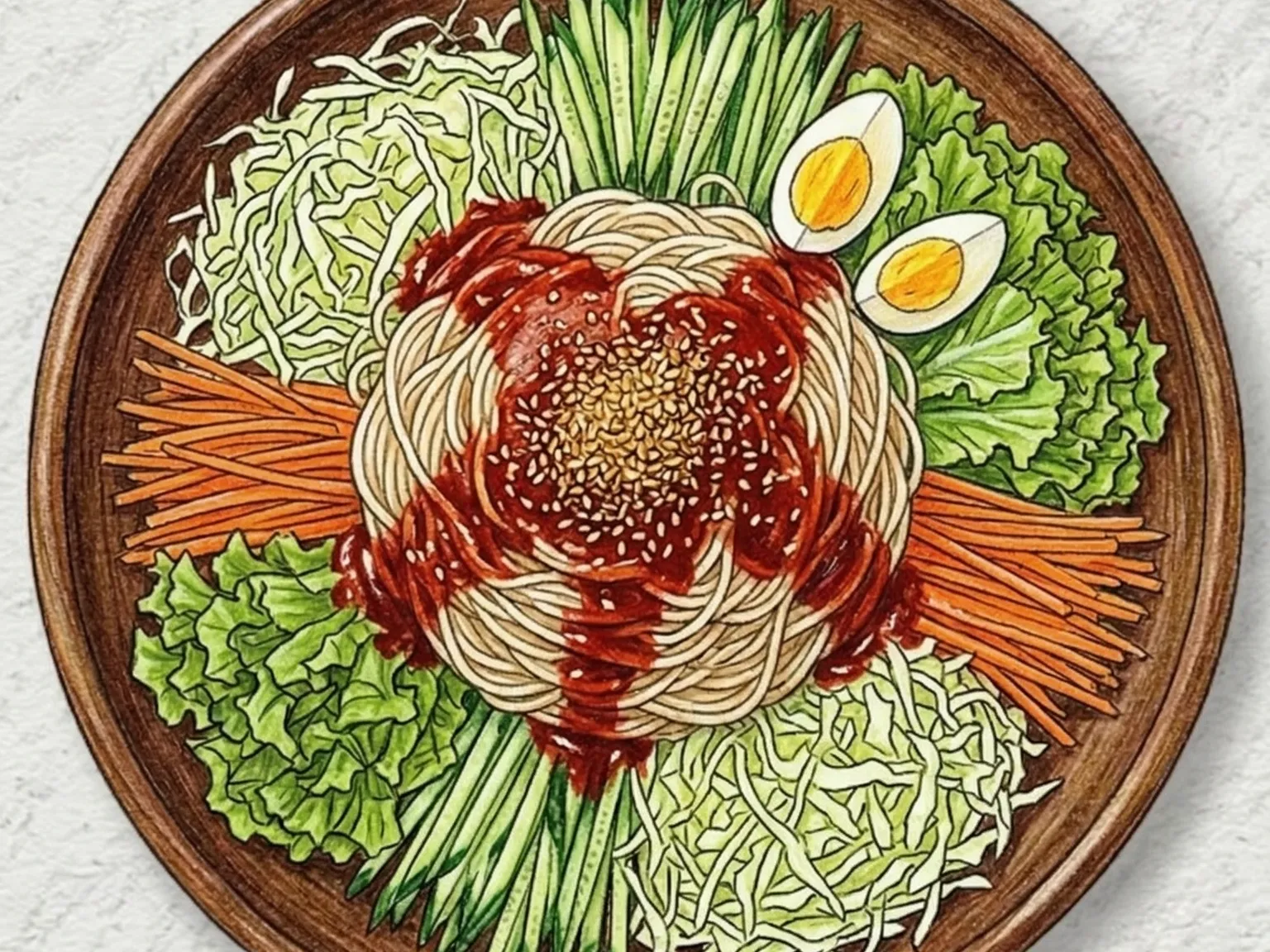
Deodeok gochujang jjolmyeon is a spicy noodle dish that pairs the aromatic bitterness of bellflower root with gochujang-dressed chewy jjolmyeon noodles. Lightly pounding the peeled deodeok against a cutting board loosens its fibrous texture, releasing its distinctive herbal scent and making each piece more receptive to seasoning. A brief salt cure draws out moisture and dials down the bitterness, allowing the sauce to penetrate more effectively into the root. The sauce blends gochujang with vinegar and oligosaccharide syrup, balancing heat with a clean tangy edge and gentle sweetness that complements the root's inherent character without masking it. Julienned cabbage, carrot, and cucumber supply a crisp, refreshing layer between the dense noodles and the fibrous deodeok. All ingredients should be combined just before eating to preserve the crunch of the vegetables.

Grilled Squid & Bellflower Root Salad
Grilled squid and bellflower root citrus salad combines seared squid with soaked bellflower root, romaine, and orange segments in a yuzu-gochugaru dressing, drawing on classic Korean flavors to build a salad with genuine textural and flavor complexity. The squid tubes are scored in a crosshatch pattern before cooking, which ensures that heat penetrates evenly so the flesh cooks uniformly without curling into a tight coil; limiting each side to one to two minutes over high heat is equally important, as even a minute more will produce a rubbery result. Bellflower root is a traditional Korean ingredient with a pleasantly bitter edge that requires brief preparation: shredded into thin strips and soaked in lightly salted water for five minutes, it releases enough bitterness to become mild and yielding while retaining a satisfying crunch. The dressing is the component that unifies the dish: yuzu marmalade contributes a floral, layered acidity quite different from straightforward lemon or lime juice, while rice vinegar sharpens the finish, olive oil emulsifies and rounds the texture, and gochugaru adds a slow-building warmth that lingers after the citrus flavors fade. This combination bridges the savory, slightly smoky character of the squid and the subtle bitterness of the bellflower root. Fresh orange segments provide the final note, bursting with bright juice on each bite to lift the entire salad. The visual contrast between the ivory bellflower root, the charred squid, and the vivid orange makes the finished plate as attractive to look at as it is to eat.

Crown Daisy & Mung Bean Noodle Salad
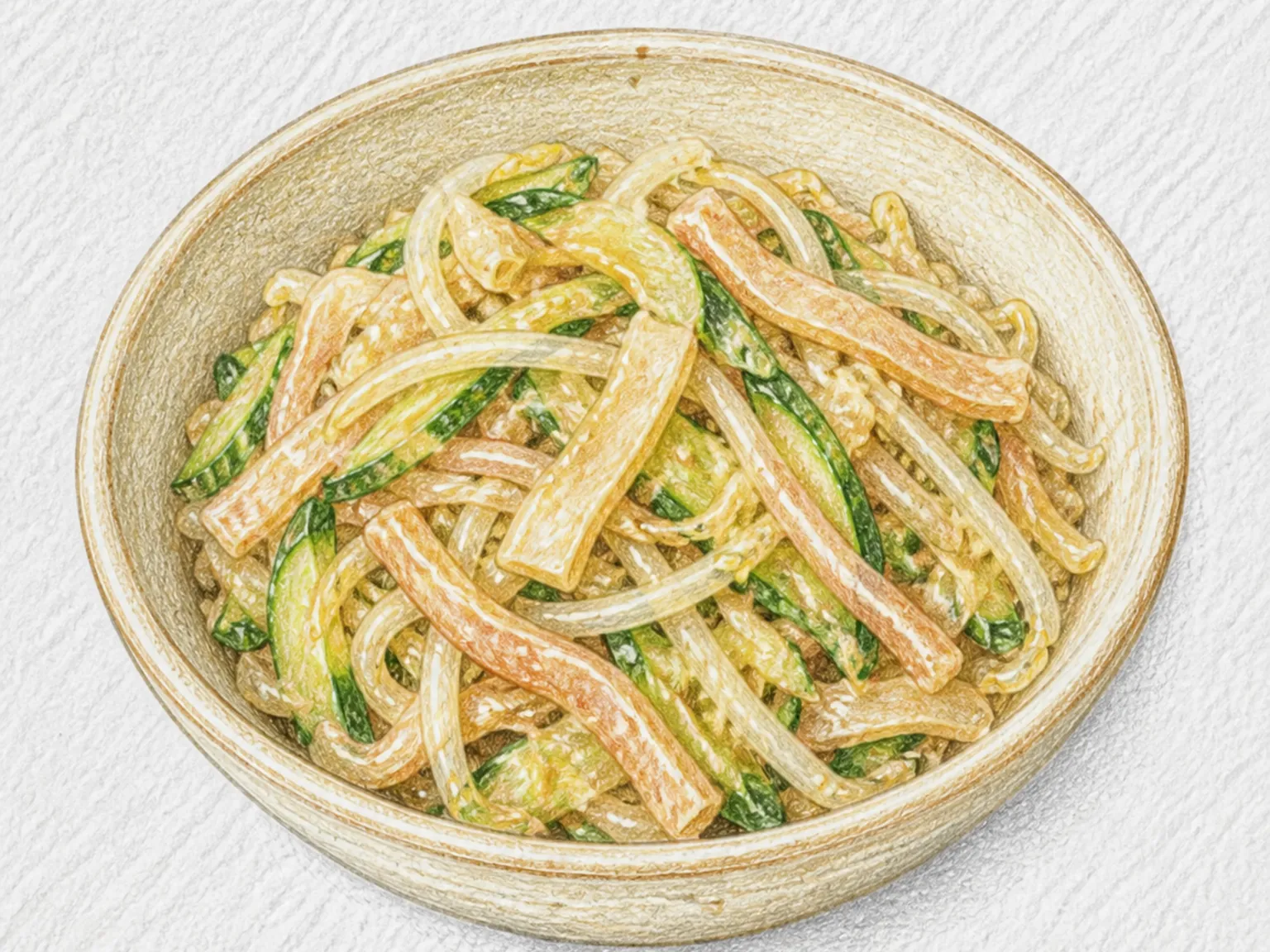
Ssukgat mungbean noodle salad soaks glass noodles in cold water for ten minutes, boils them for five until springy, then tosses them with fragrant crown daisy leaves, julienned cucumber, and thinly sliced red onion in a dressing of soy sauce, vinegar, plum syrup, and sesame oil. Mung bean starch noodles are more translucent and less starchy than wheat-based vermicelli, making them a cleaner canvas for the surrounding vegetables. Crown daisy's assertive, almost medicinal herbal aroma cuts through the neutral noodles and gives the salad a distinctive edge that milder greens cannot replicate. Plum syrup's gentle fruit sweetness layers over the vinegar's acidity to produce a light, clean finish on the palate rather than a sharp one-note sourness. Cucumber adds a cool crunch and red onion contributes a sharp bite between the slippery noodle strands, while toasted sesame seeds bring a roasted, nutty note at the end of each mouthful. Overcooking the noodles makes them sticky and prone to clumping, so pulling them out while still slightly firm is essential, and the salad is best served immediately after tossing so the crown daisy retains its fresh fragrance.

Korean Tofu Kimchi Bibim Myeon
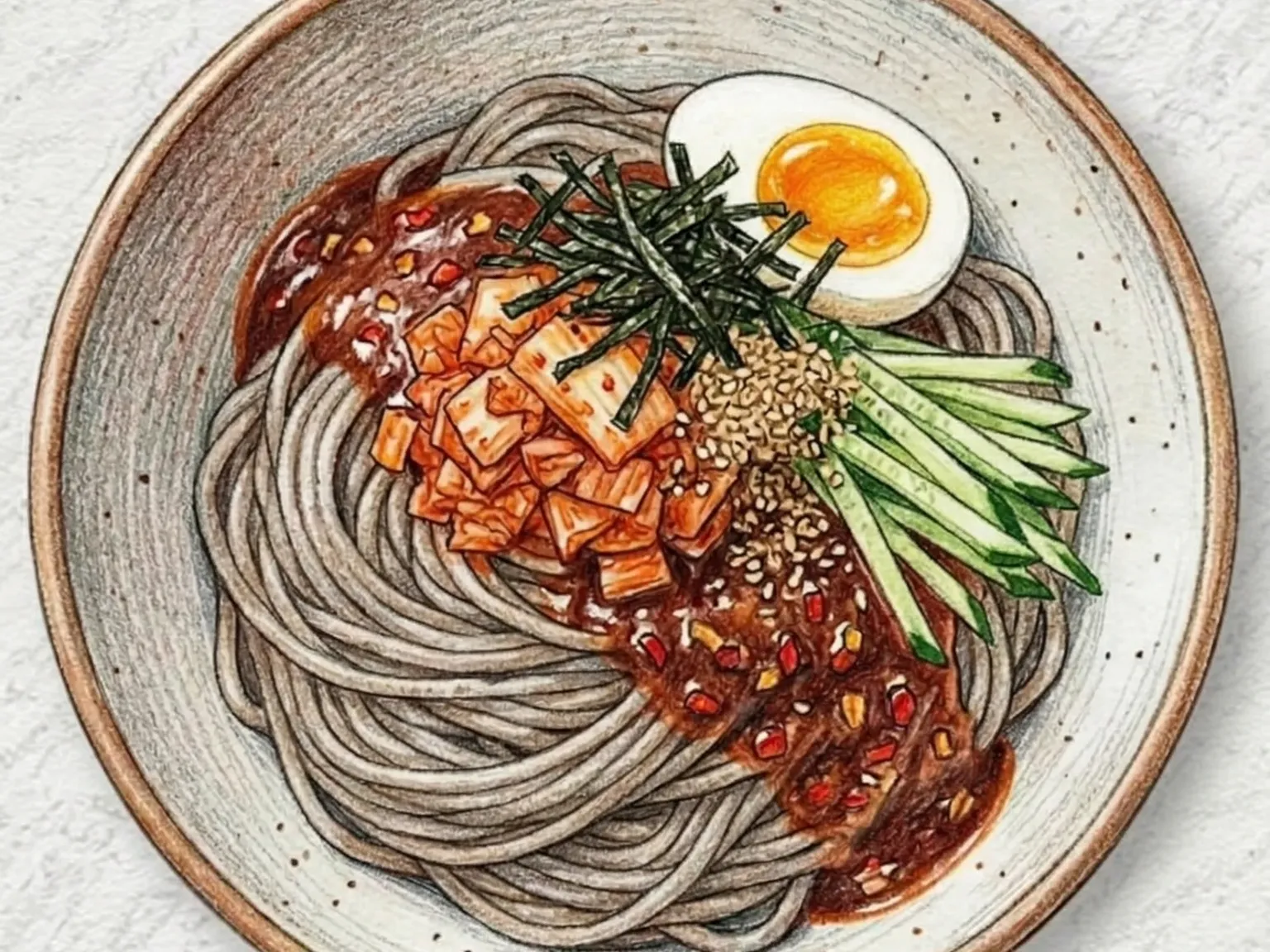
Dubu kimchi bibim myeon is a Korean mixed noodle dish built on two separate preparations that come together in the bowl. Ripe, deeply fermented kimchi is stir-fried in perilla oil over high heat until the sharp acidity rounds out and the umami moves to the foreground, then combined with gochugaru and gochujang to form the spicy dressing that coats every strand of boiled noodles. The tofu requires its own treatment: all surface moisture must be pressed out before the block goes into a dry, screaming-hot pan, which creates a golden, crisp crust outside while the center remains silky, giving the dish a clean textural counterweight against the bold noodles. A halved soft-boiled egg placed on top rounds out the heat when the yolk slowly folds into the dressing, adding a creamy richness that binds the kimchi tang, the chili punch, and the nutty oil into one cohesive sauce.

Korean Ssamjang Hwe Deopbap
This variation on hoe-deopbap replaces the standard cho-gochujang with a dressing of ssamjang mixed with vinegar and sesame oil, shifting the dominant flavor away from sweet heat and toward fermented bean depth. The doenjang component in ssamjang works against the rawness of the fish rather than masking it with chili, producing a rounded, earthy complexity that deepens with each bite. Vinegar cuts through ssamjang's thick, pungent weight and introduces a clean acidity that keeps the overall flavor from feeling heavy. Flounder sashimi is cut into bite-sized pieces and kept refrigerated, while the rice is served at room temperature so the two elements neither clash nor blend into an indistinct warmth. Julienned carrot and perilla leaves provide a crisp, juicy resistance that contrasts directly with the chewy elasticity of the fish. Dressing the vegetables in advance draws out moisture that would soften the rice, so all the components are placed in the bowl separately and tossed together only at the moment of eating to preserve every texture.

Korean Spicy Whelk Stir-fry
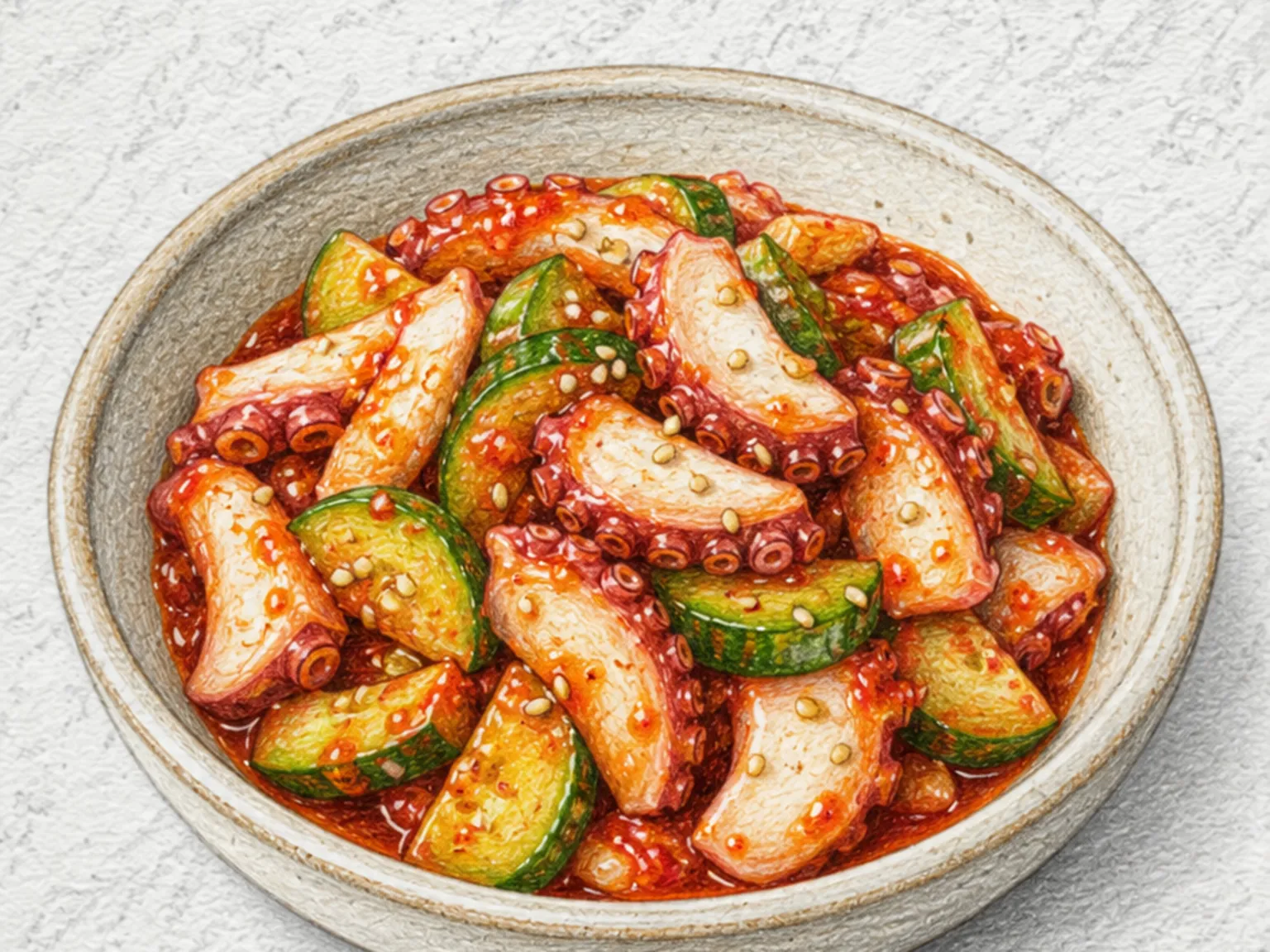
Golbaengi bokkeum is a spicy Korean whelk stir-fry that uses canned whelk with a sauce built from gochujang, gochugaru, vinegar, sugar, and sesame oil. The firm, chewy texture of the whelk is the defining quality of the dish, which means cooking time must stay within two to three minutes to prevent the meat from toughening further. Vinegar adds a tangy brightness that lifts and balances the heat from the chili components. A splash of the canning liquid stirred in during cooking enhances the whelk's natural brininess and keeps the sauce from drying out. Julienned cucumber, sliced onion, and scallion are added off the heat so they stay crisp and retain their raw freshness rather than wilting into the sauce. As a banchan, it pairs directly with rice, but served alongside thin wheat noodles or glass noodles it transforms into one of Korea's most beloved drinking snacks, a staple of old-school pojangmacha stalls where the combination of cold beer and spicy, chewy whelk has been a fixture for decades.

Korean Ojingeo Ssamjang Bibim Myeon (Squid Ssamjang Mixed Noodles)
Ojingeo ssamjang bibim myeon is a Korean mixed noodle dish combining blanched squid rings with medium wheat noodles in a ssamjang-based sauce spiked with chili flakes, vinegar, and syrup. The squid is blanched for only forty seconds to keep it springy rather than chewy, and the noodles are rinsed under cold water while gently rubbing to remove surface starch. The dressing merges the fermented depth of ssamjang with the heat of gochugaru and the brightness of vinegar, creating a layered flavor that is salty, spicy, and tangy at once. Resting the sauce for about ten minutes before tossing softens the heavy note of ssamjang. Julienned perilla leaves on top add an herbal fragrance, and sesame seeds finish the dish with nuttiness. The recipe yields four generous servings.

Korean Crisp Chili Pepper Salad
Asakigochu is a specific variety of Korean pepper characterized by its thick walls and a distinct snap when bitten. This pepper was developed to prioritize texture over spiciness, resulting in a vegetable that offers a significant crunch without the heat of other varieties. The preparation of this dish involves a brief blanching process where the peppers are submerged in boiling water for a duration of exactly twenty seconds. This short exposure to heat is sufficient to eliminate the raw, grassy aroma often found in uncooked peppers, yet it is not long enough to soften the cellular structure. Consequently, the characteristic crispness remains unchanged. The seasoning sauce is a mixture of two traditional fermented pastes. Doenjang provides a salty and fermented depth, while gochujang adds complexity. To balance these heavy flavors, vinegar is added for sharpness and oligosaccharide syrup is used to adjust the consistency and add a subtle sweetness. This combination creates a contrast between the deep, funky notes of the fermented beans and a bright acidity that highlights the clean taste of the pepper. Timing is important for the final result. It is best to allow the seasoned peppers to rest for five minutes before serving. This pause allows the flavors from the thick sauce to soak into the pepper walls instead of simply sitting on the exterior. This side dish functions well as a standard accompaniment to a bowl of rice or as a more robustly flavored snack to be consumed while drinking soju.

Korean Seasoned Bellflower Root
Doraji -- balloon flower root -- has been used in Korean cooking since the Goryeo dynasty, valued as both a medicinal herb and a staple namul ingredient. Unlike doraji-bokkeum, which stir-fries the root with gochujang and heat, this cold muchim preserves the characteristic firm, snappy crunch that makes doraji distinctive. The roots are shredded along the grain into thin strips, then vigorously rubbed with salt to draw out the saponins responsible for their sharp bitterness, and rinsed multiple times until the water runs clear. A seasoning of gochujang, vinegar, sugar, and sesame oil works into each fibrous strand, layering sweet, sour, and spicy notes over the residual earthiness of the root. This banchan appears on both Chuseok and Seollal holiday tables as one of the five-color namul, where the white of the doraji root represents the metal element in the five-phase system. Because the root holds its crunch well, this dish can be prepared ahead of time without losing texture, making it a practical choice for large gatherings.

Smoked Salmon Eggs Benedict
Smoked salmon eggs Benedict stacks toasted English muffin halves with slices of cold-smoked salmon, a poached egg, and a generous pour of homemade hollandaise sauce. The hollandaise is built by whisking egg yolks and lemon juice over a gentle bain-marie, then drizzling in melted butter slowly enough for the mixture to emulsify into a thick, pourable sauce. Too much heat scrambles the yolks and breaks the emulsion, so the water bath must stay well below a simmer. Poaching requires barely trembling water with a splash of vinegar, which helps the whites coagulate quickly around the yolk - three and a half minutes produces set whites with a still-runny center. The smoked salmon's salty, cured depth plays against the hollandaise's rich butteriness, and the yolk breaking over everything acts as a second sauce.