🏠 Everyday Recipes
Simple home-cooked meals for any day
1705 recipes. Page 13 of 72
These are the meals you can cook day after day without getting tired of them. Doenjang jjigae, rolled omelet, spicy pork stir-fry - the kind of home-cooked dishes that fill an ordinary day with comfort.
The beauty of everyday cooking is that it relies on common ingredients already in your fridge. No exotic items, no complicated techniques - just straightforward recipes for satisfying home meals.
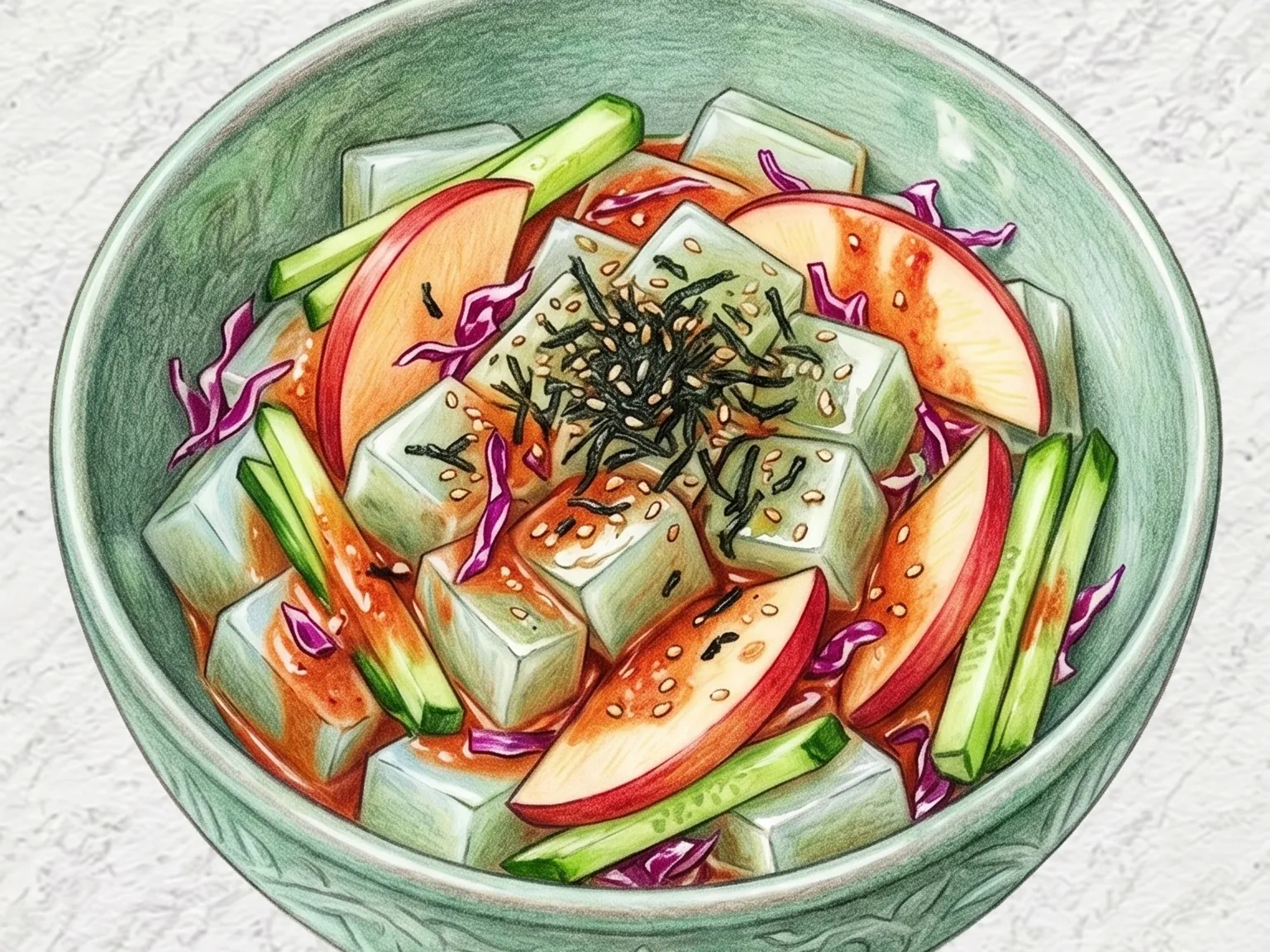
Mung Bean Jelly Apple Chojang Salad
Cheongpomuk apple chojang salad combines blanched mung bean jelly sticks with crisp apple and cucumber, dressed in a chojang sauce of gochujang, vinegar, and green plum syrup. Blanching the jelly for only twenty seconds in boiling water removes the surface sliminess that fresh mung bean jelly develops while preserving the soft, slippery texture that defines it. Rinsing immediately in cold water and draining well prevents the chojang from becoming watery and losing its spicy-sour punch. The chojang layers spicy gochujang heat with the sweet-tart acidity of vinegar and plum syrup, lifting the otherwise neutral flavor of the jelly into something brighter. Shredded red cabbage adds a vivid color contrast and a slight bitterness that balances the sweetness. Roasted seaweed flakes contribute a briny crunch. Sesame oil and ground sesame seeds finish the bowl with a nutty note, keeping the dish light and oil-free. Any unused blanched cheongpomuk should be stored submerged in cold water to prevent the surface from drying out and becoming tough before serving.
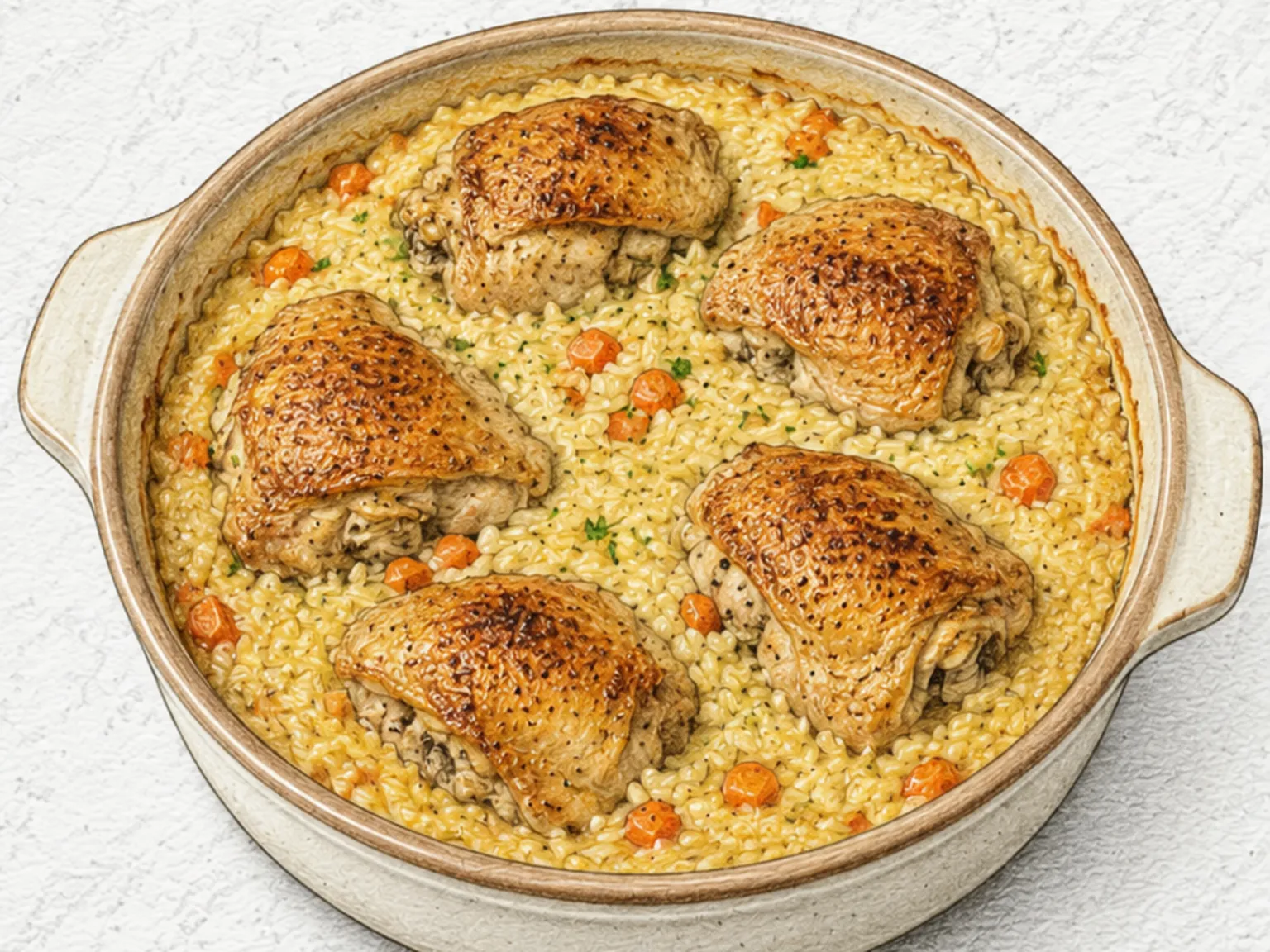
Chicken and Rice Casserole
Chicken and rice casserole is an American one-dish bake in which seasoned chicken thighs, rinsed rice, sauteed onion and carrot, chicken stock, and heavy cream are layered into a single baking dish and cooked together. Soaking the rice for ten minutes before assembly is a small step that makes a measurable difference: the pre-hydrated grains absorb the cooking liquid more evenly and finish at the same time as the chicken rather than lagging behind. Heavy cream blended into the stock creates a lightly thickened liquid that coats each grain as it swells, producing a rice that stays moist rather than clumping or drying at the edges. Sealing the dish with foil for the first thirty-five minutes traps steam inside, allowing the chicken and rice to cook through together without drying out. The foil comes off for the final ten minutes to let the chicken skin render and crisp. Throughout the bake, fat from the thighs slowly renders and drips down into the rice below, building a savory, roasted depth across the entire dish without any additional sauce. The structure of the recipe accommodates whatever vegetables or herbs are on hand, making it a practical weeknight formula that changes character with each variation.
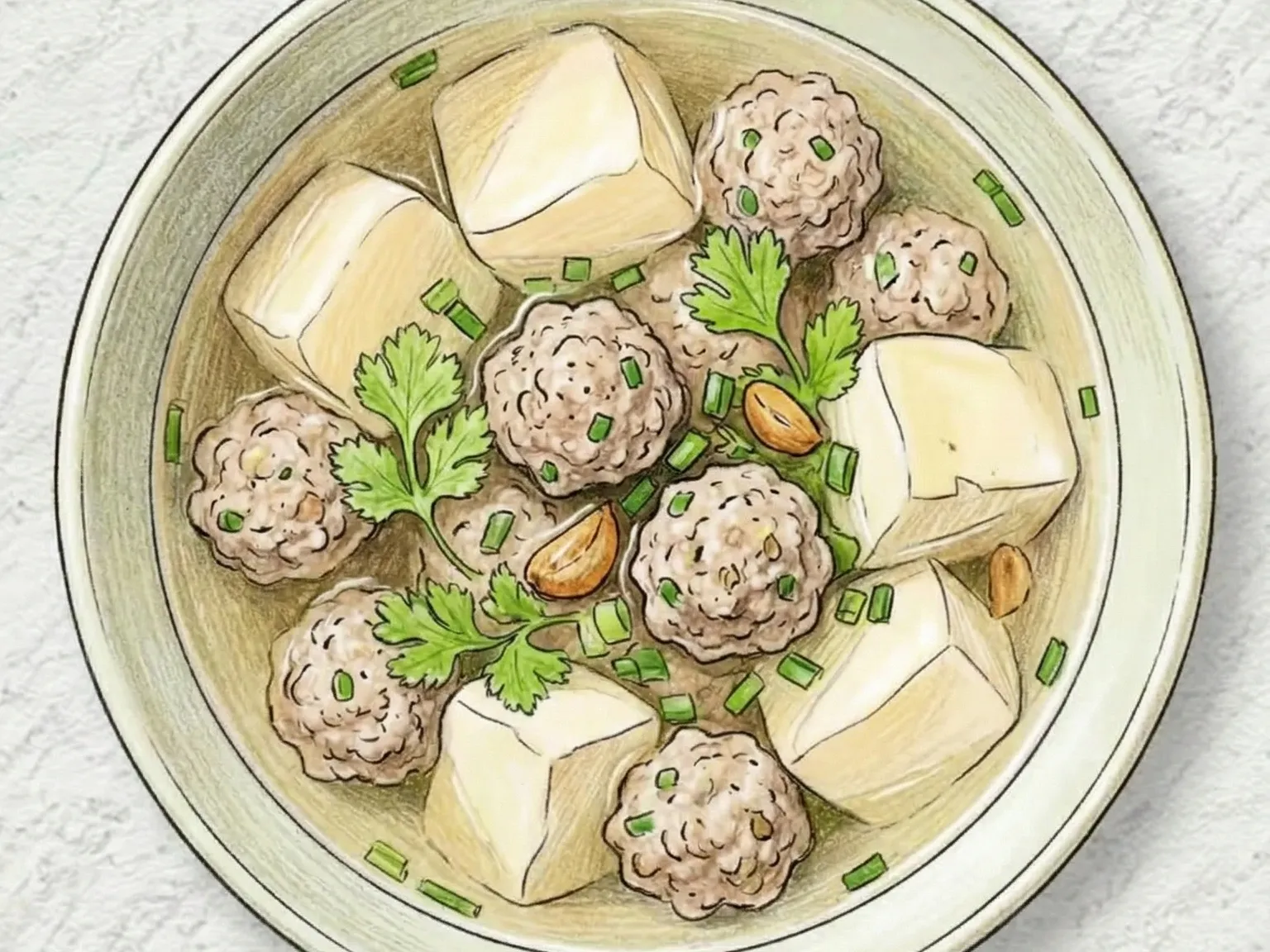
Gaeng Jued Tofu Soup (Thai Clear Tofu Soup)
Gaeng jued - literally 'bland soup' in Thai - is not tasteless despite its name; it is the one Thai dish that deliberately seeks gentleness in a cuisine famous for intensity. A clear broth simmered from pork bones or chicken holds soft tofu, small pork meatballs, glass noodles or squash. The meatballs are seasoned with garlic, white pepper, and coriander root - the aromatic trinity of Thai cooking - which infuse the clear broth with a subtle depth that belies the soup's transparent appearance. Fresh cilantro leaves and fried garlic are scattered on top for aroma and crunch, but the overall tone stays soothing and stomach-settling. On a Thai family table, gaeng jued sits alongside fiery dishes like som tam and tom yum, serving as a palate cleanser between bites of heat. It is the soup Thai parents make for children and for anyone feeling unwell - comfort food in its most literal sense.
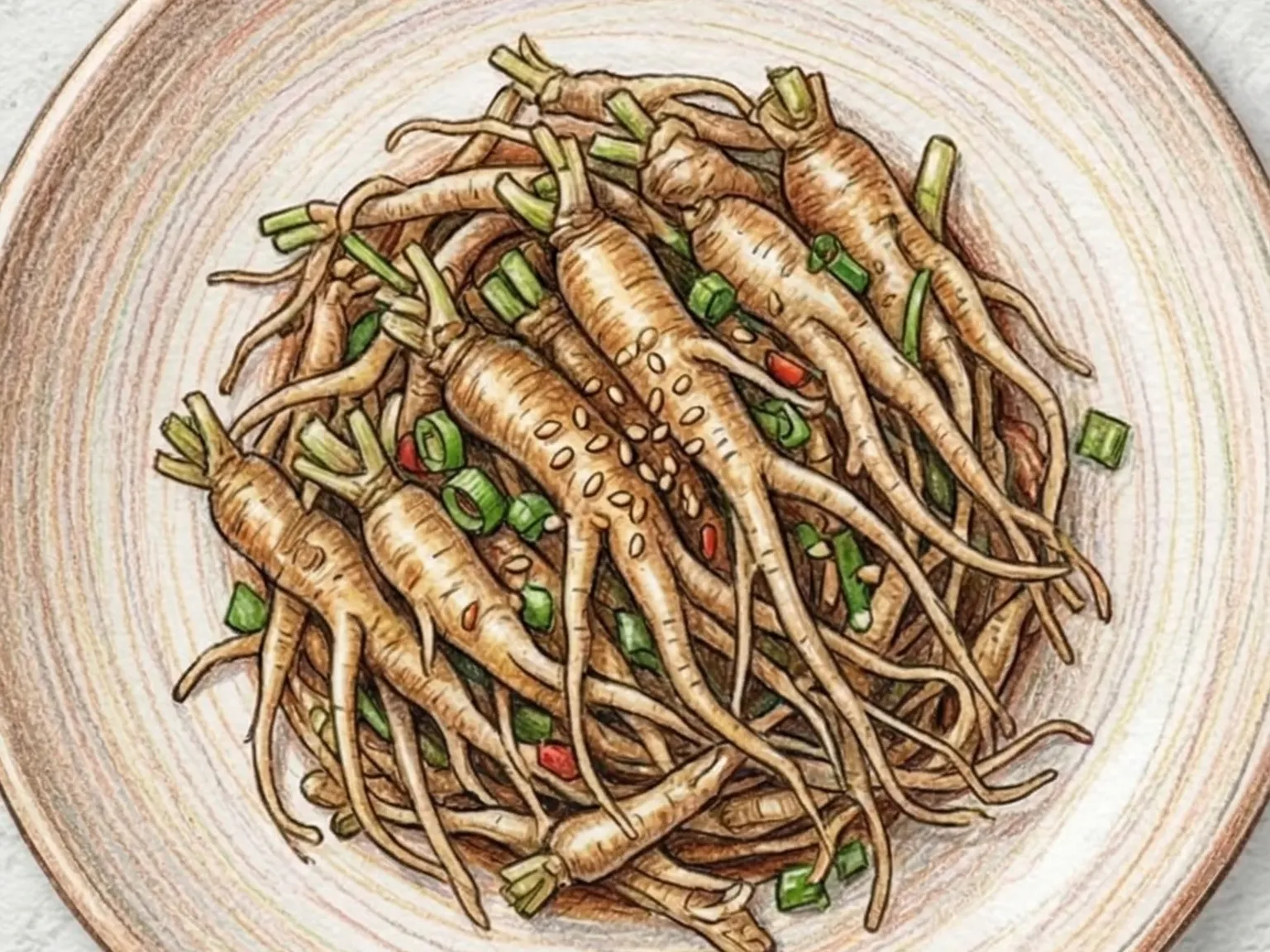
Korean Seasoned Cedrela Shoots
Cedrela shoots appear for barely two weeks each April, making chamjuk one of Korea's most fleeting spring ingredients. The young tips carry a resinous, walnut-like scent found in no other cultivated or foraged green. A 40-second blanch in well-salted boiling water softens the fibrous stems while locking in that distinctive fragrance - go longer and the aroma disperses. Dressed with only soy sauce, garlic, and sesame oil, the dish keeps the shoots' natural perfume at the front. Traditionally gathered from mountainside groves and brought to spring holiday tables, chamjuk disappears from markets once the brief window closes, making it a seasonal green genuinely worth seeking out.
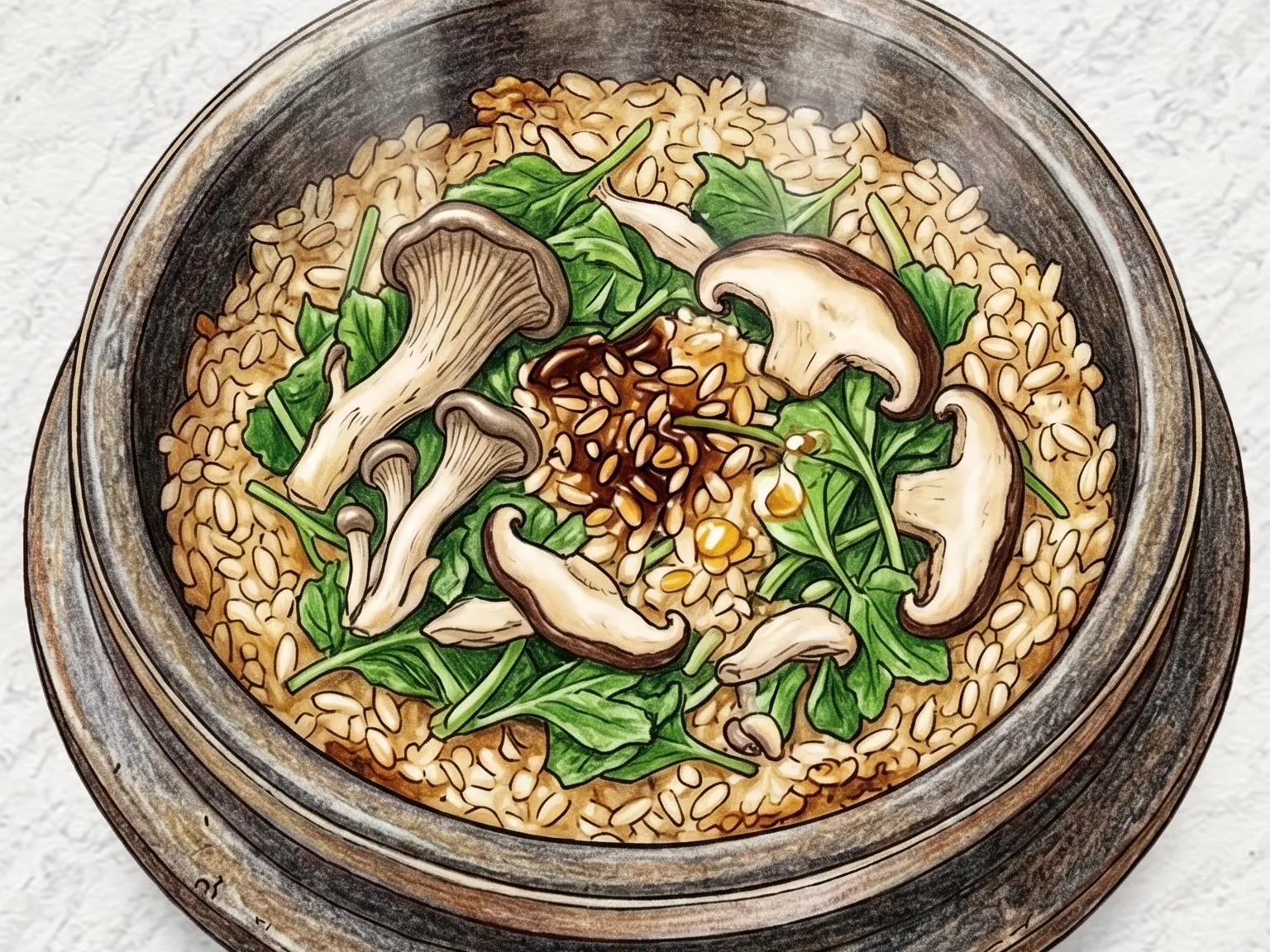
Korean Herb Mushroom Pot Rice
Chamnamul beoseot sotbap is a Korean pot rice cooked with fragrant chamnamul herbs, oyster mushrooms, and shiitake mushrooms in kelp stock. The chamnamul infuses the rice with a fresh, slightly herbaceous scent, while the two types of mushroom contribute contrasting textures and layers of umami. Oyster mushrooms are soft and springy, while shiitake mushrooms are firmer with a deeper, woodsy character. Served with a soy-sesame dipping sauce drizzled over the top and mixed in, every spoonful carries a balanced salty, nutty finish. Even without any meat, the mushroom depth and herbal brightness make each bowl feel substantial. The nurungji crust that forms at the bottom of the pot adds a toasty crunch that is one of the small rewards of cooking rice this way, and scraping it into hot water makes a simple, satisfying nurungji tea to close the meal.
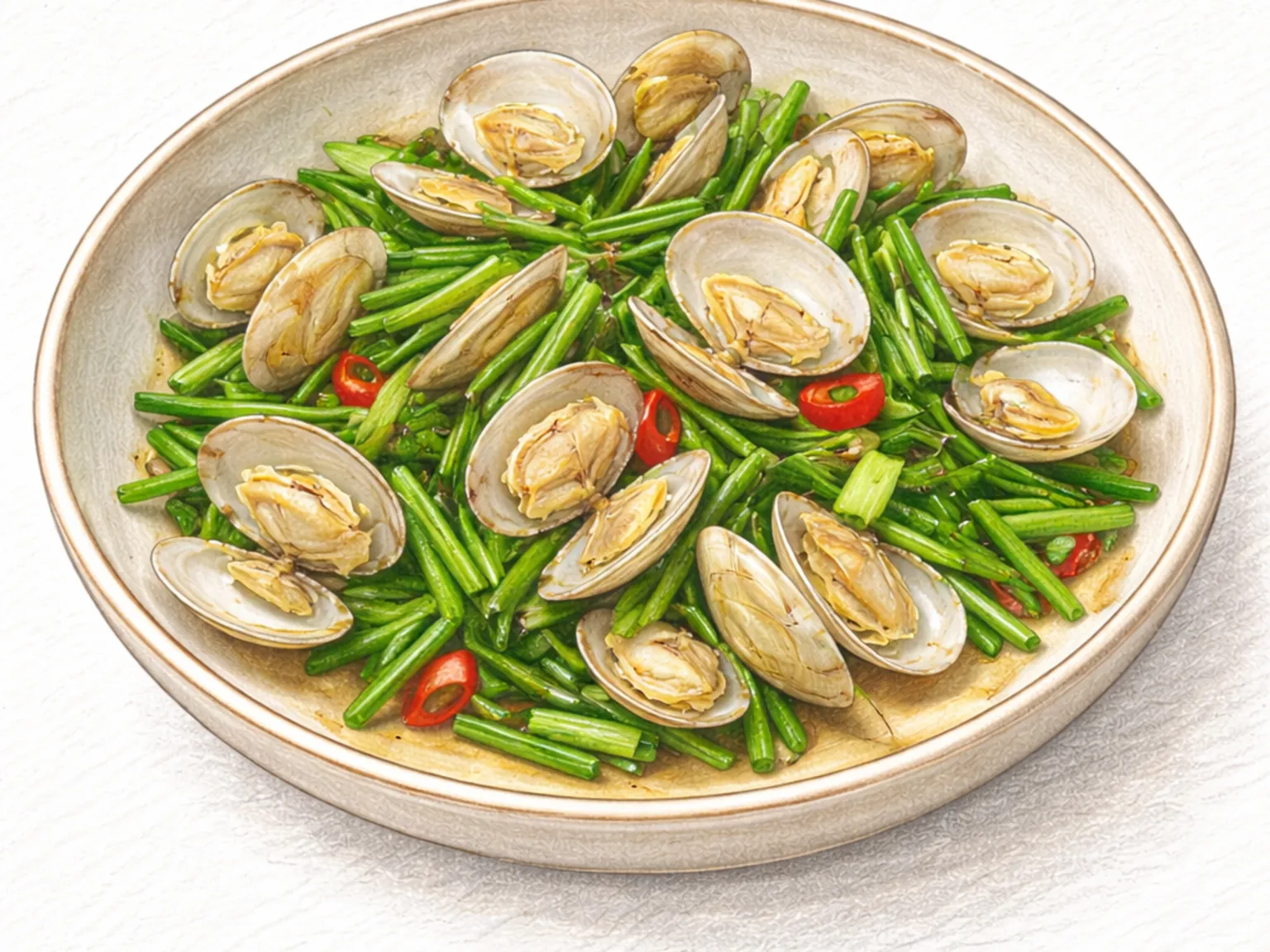
Korean Garlic Chive & Clam Stir-fry
Clams purged in salt water are steamed with rice wine until their shells open, then stir-fried with garlic chives, soy sauce, and oyster sauce. Rice wine strips away briny off-notes while amplifying the clean oceanic umami, and the liquid the clams release as they open provides a built-in sauce that needs no extra seasoning. Garlic chives go in during the last 40 seconds only; longer exposure to heat wilts them into a stringy mass and disperses their aroma. Sliced red chili contributes more visual contrast than actual heat, and a final drizzle of sesame oil rounds out the overall character. Any clam that fails to open after steaming should be discarded. The dish suits both a drinking table alongside soju and a dinner spread as a protein-rich rice side.
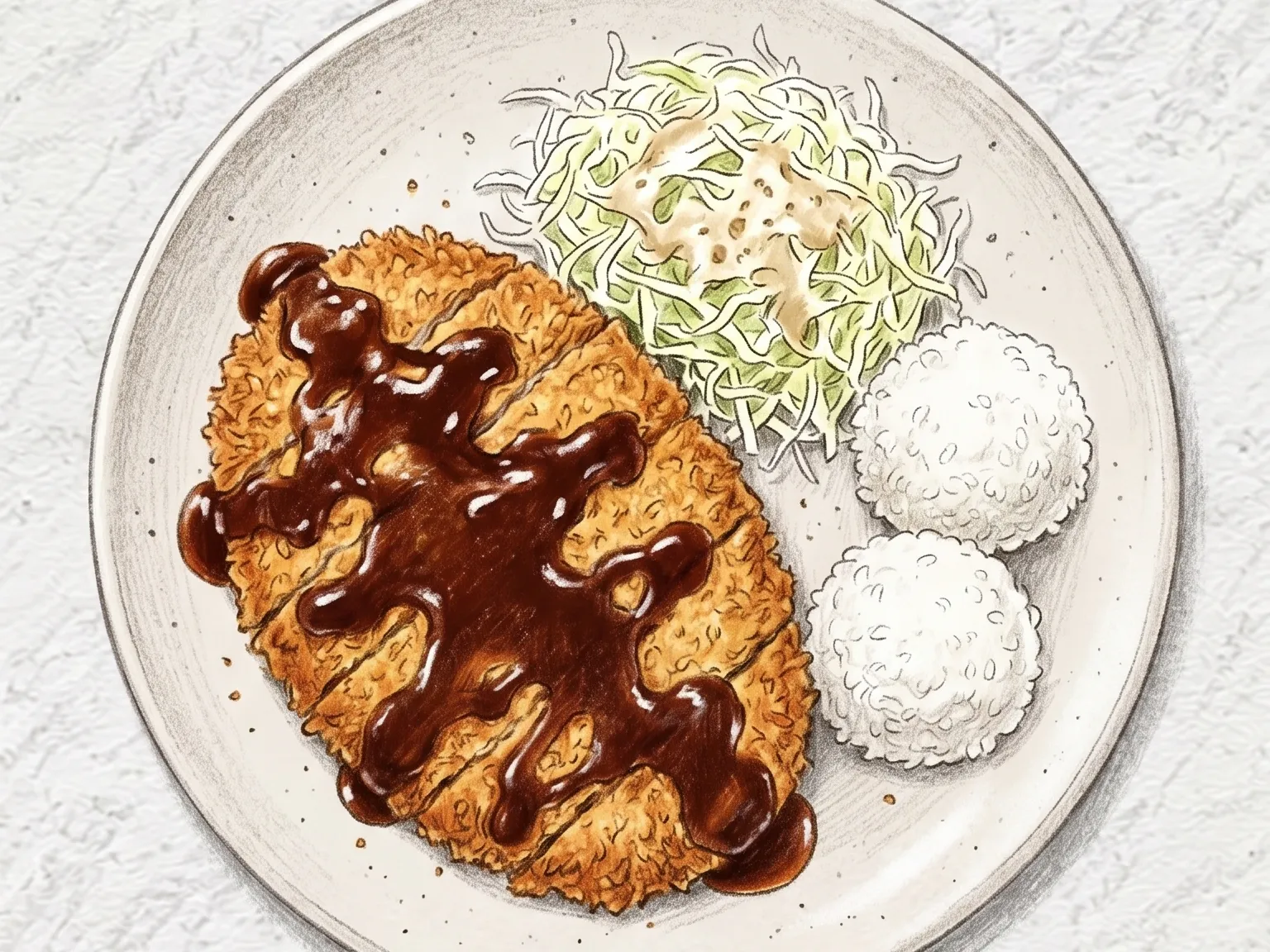
Tonkatsu Korean Style (Panko-Breaded Pork Cutlet with Sweet Sauce)
Donkatsu is Korean-style breaded pork cutlet, made by dredging pork loin through flour, egg, and panko breadcrumbs in sequence before deep-frying in hot oil. Pounding the loin with a meat mallet to an even thickness ensures uniform heat transfer so the interior cooks through while staying moist, and the panko shell turns golden and audibly crunchy. Korean donkatsu sauce blends ketchup, Worcestershire sauce, and sugar into a sweet-salty condiment that is noticeably sweeter than Japanese tonkatsu's demi-glace-based sauce. Shredded raw cabbage served alongside provides a crisp, refreshing contrast to the fried cutlet and cuts through the richness. In Korean bunsik restaurants, donkatsu typically arrives as a set with rice and soup.
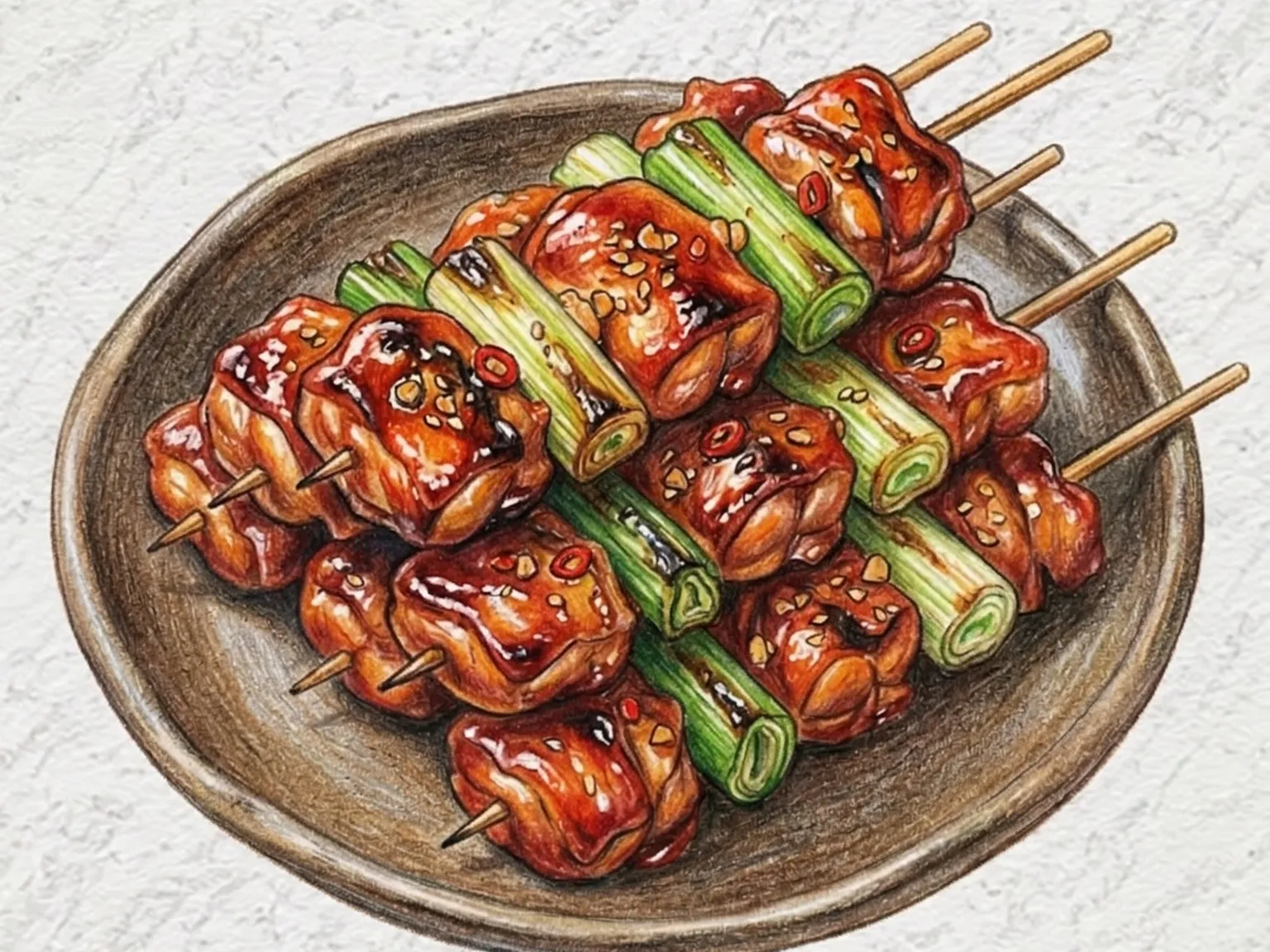
Korean Grilled Chicken Skewers
Dak-kkochi-gui is a Korean grilled chicken skewer built on the flavors of street-stall cooking, made by threading bite-sized chicken breast or thigh onto bamboo sticks and painting them with a sauce of gochujang, soy sauce, honey, and minced garlic. Thigh meat is the better choice because its higher fat content keeps each piece juicy over direct heat, while breast will dry out quickly. Applying the glaze in two or three separate coats rather than all at once builds a thick, sticky, caramelized surface. Cutting the chicken into uniform cubes ensures even cooking, and alternating pieces with slices of green onion or bell pepper adds moisture and prevents the meat from tightening up. Turning the skewers frequently over medium heat keeps the sugars in the sauce from scorching while the surface develops an even, deep char. The same result comes out well in an air fryer at 200 degrees Celsius for twelve to fourteen minutes. Gochujang's fermented heat against the sweetness of honey and the smell of searing meat is the unmistakable signature of Korean pojangmacha.
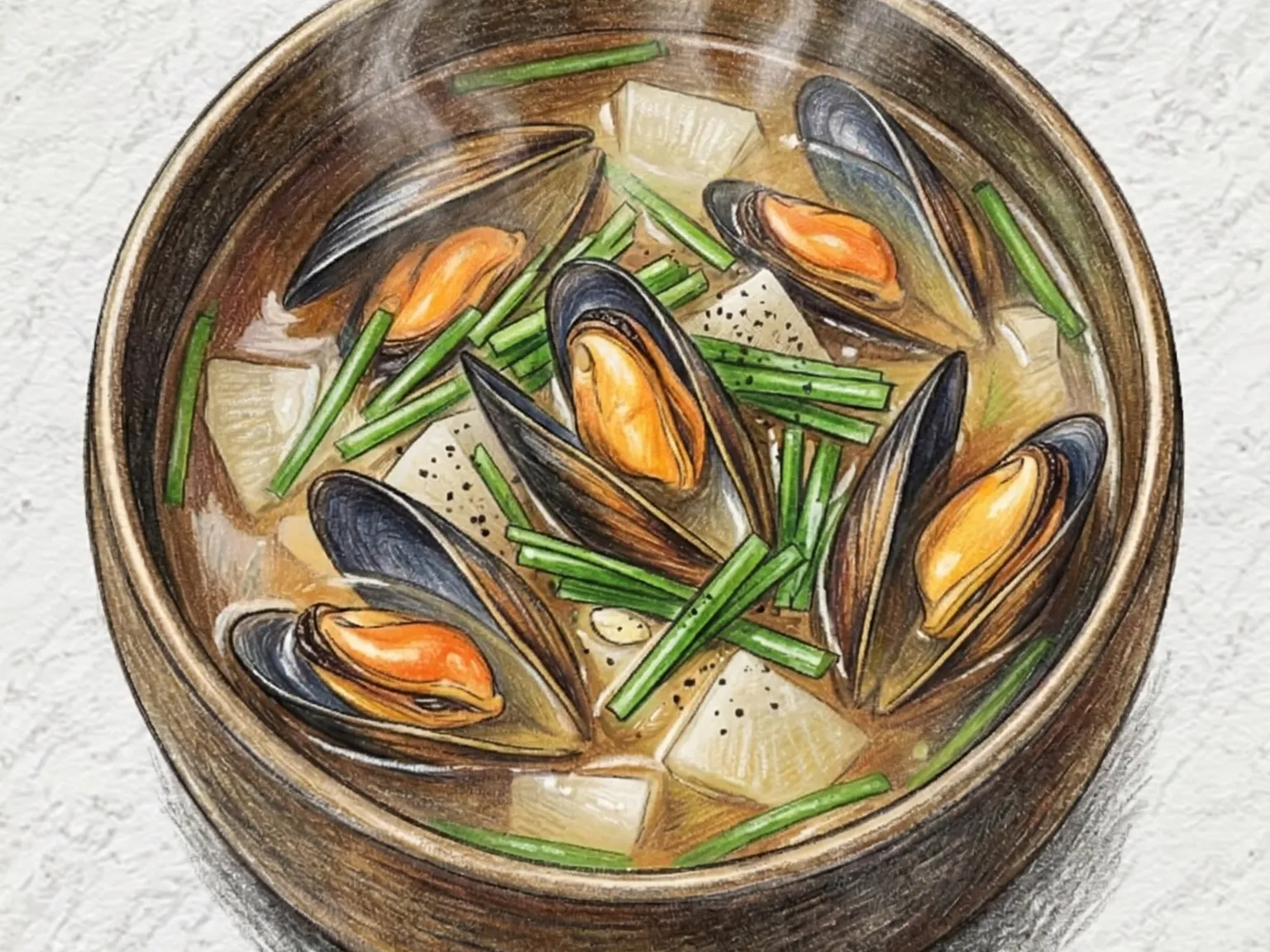
Korean Buchu Honghap Guk (Chive Mussel Soup)
Debearded mussels are simmered with radish in water to draw out a briny, full-bodied stock, with rice wine added early to neutralize any fishy off-notes while keeping the oceanic depth intact. Soup soy sauce and garlic season the broth through the middle of cooking, and Korean chives plus black pepper go in at the very end so their fresh fragrance carries through to the bowl. Cooking uncovered lets off-flavors escape with the steam. Any mussel that stays closed after five minutes of simmering must be removed. Starting the radish alongside the mussels from the beginning allows its natural sweetness to dissolve into the stock and support the briny umami from below.
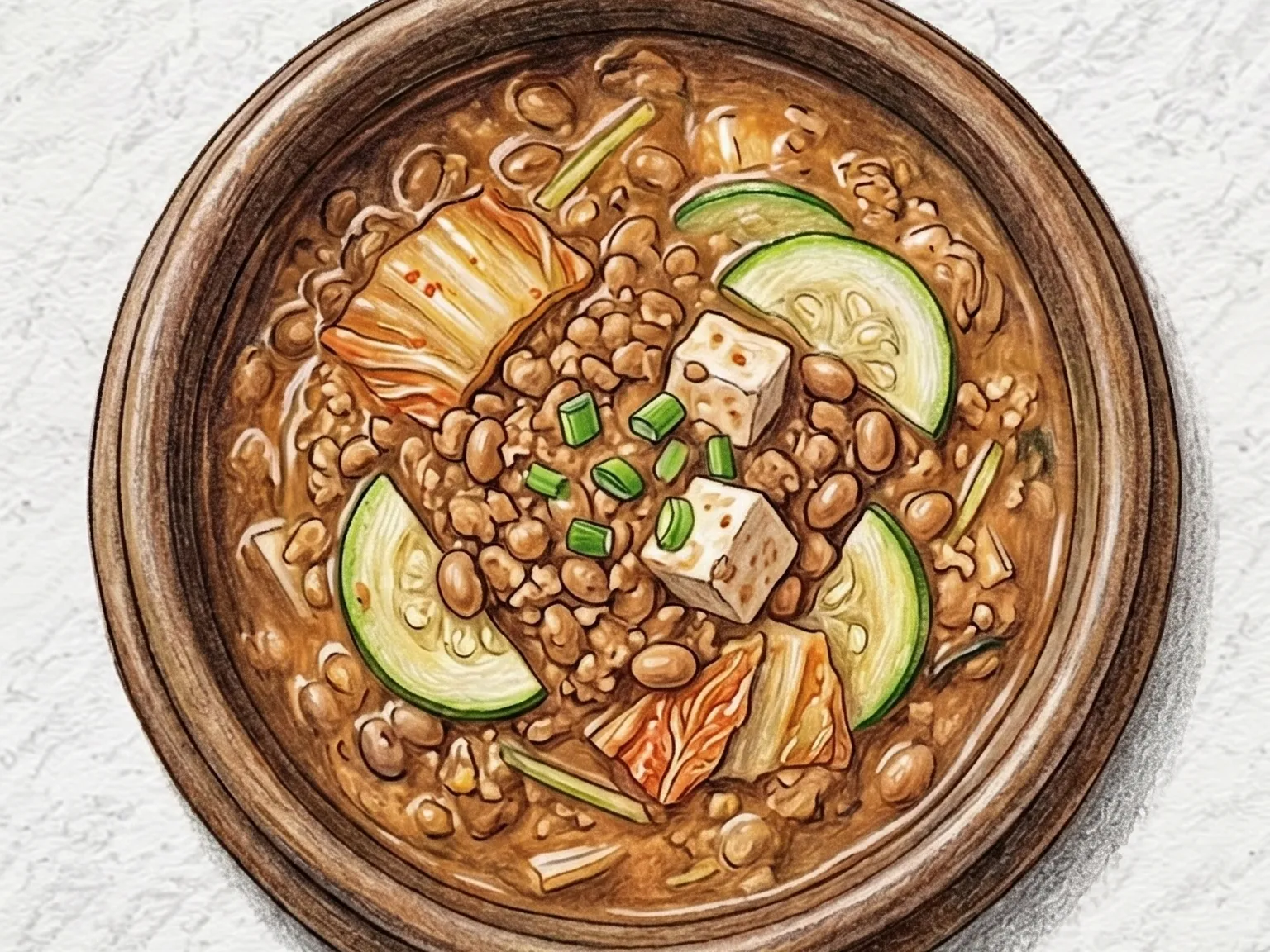
Cheonggukjang Jjigae (Korean Fermented Soybean Stew)
Cheonggukjang is a traditional Korean stew prepared with fast-fermented soybean paste, tofu, zucchini, and kimchi. The short fermentation process gives the paste a strong, pungent aroma that mellows into a deep, nutty flavor when cooked. Preparation starts by boiling water with chopped kimchi and onions to build a red, savory base. The fermented paste is then dissolved into the boiling broth, followed by the addition of tofu cubes, zucchini half-moons, chili flakes, and minced garlic. Simmering is limited to a brief five to seven minutes, as overcooking can cause the characteristic aroma of the paste to evaporate. Sliced green onions are added for the final minute of cooking. Typically served hot in a stone pot, the thick stew is poured over freshly steamed rice, showcasing the unique sticky texture created by the fermented soybeans.
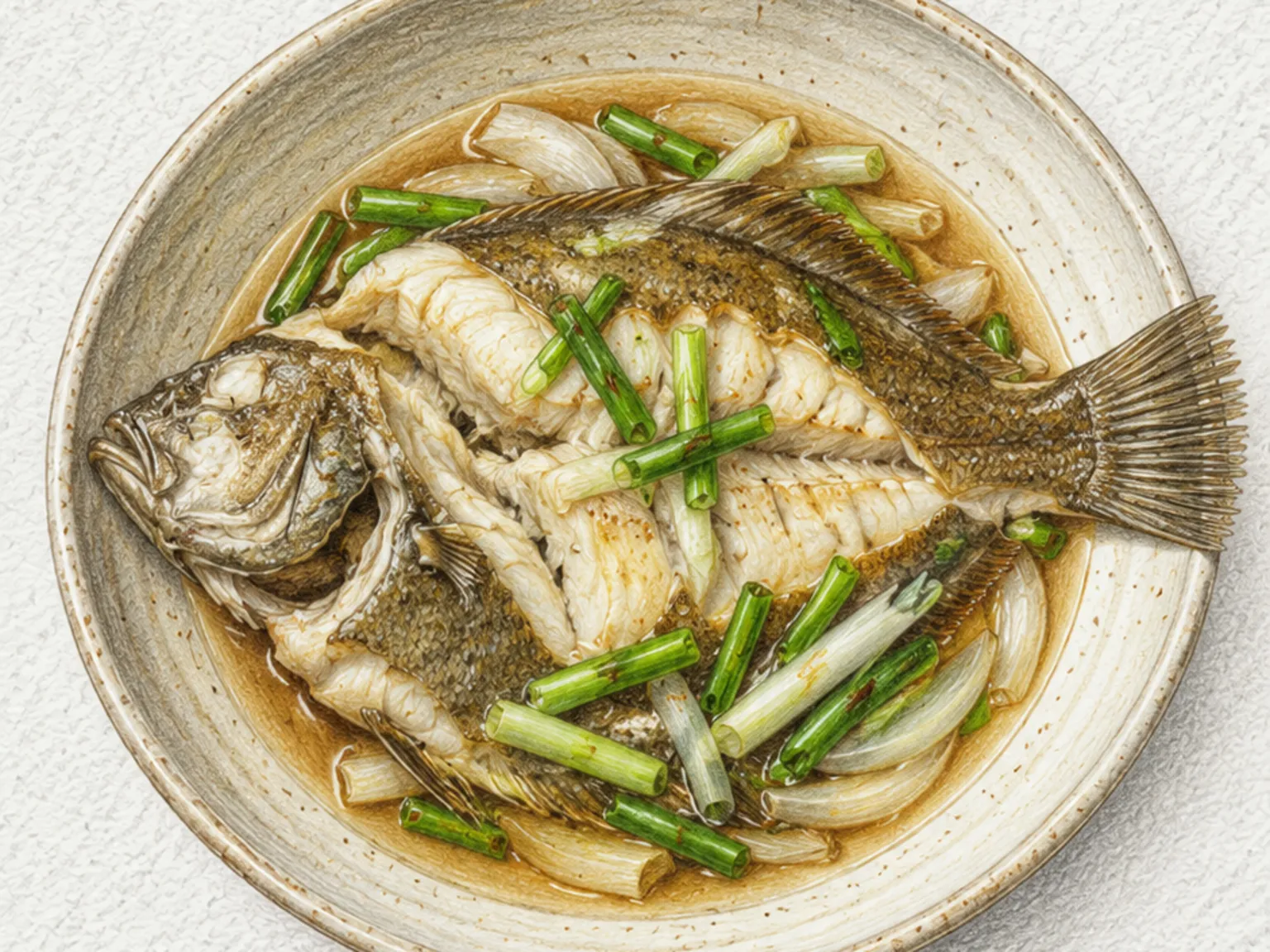
Korean Steamed Flounder (Whole Flatfish with Soy Garlic Sauce)
Korean steamed flounder, called gajami-jjim, is a fish dish prepared by cooking whole flatfish over a bed of vegetables with a light soy garlic sauce. The process starts by layering sliced onions at the bottom of the steamer to prevent the delicate white flesh from sticking or breaking apart during cooking. A seasoning mixture of soy sauce, minced garlic, and rice wine is spooned over the cleaned fish. The rice wine and garlic neutralize fishy notes while keeping the flounder moist. Steaming takes about twelve minutes over medium-high heat, followed by an additional two minutes after scattering sliced green onions on top. The cooking time must be monitored closely to prevent the tender fish from drying out. The resulting dish features a clean, savory taste highlighting the natural flavor of the flounder. The light sauce left in the dish can be mixed with cooked rice.
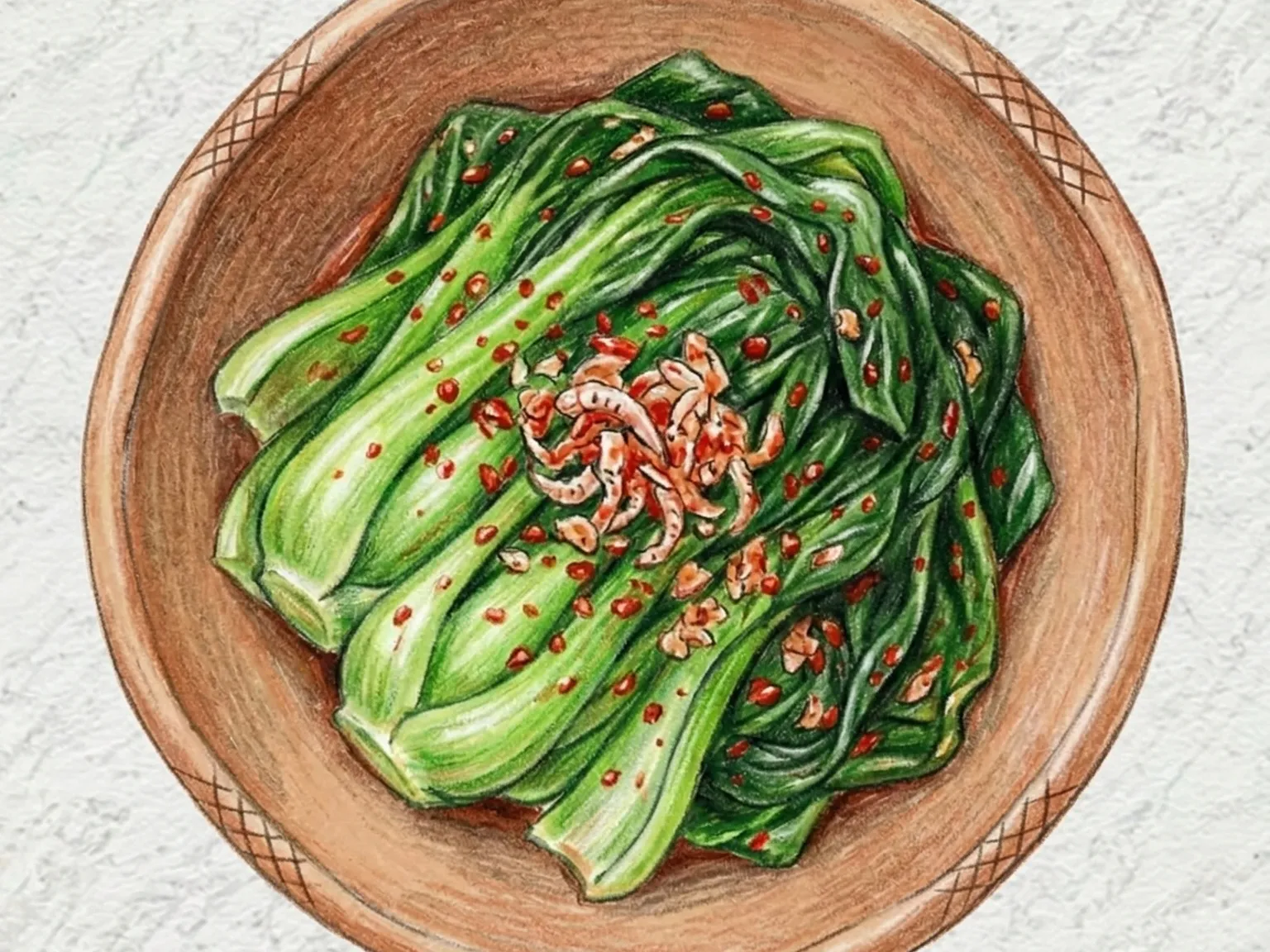
Korean Bok Choy Kimchi (Gochugaru Fermented Quick)
Cheonggyeongchae kimchi is a bok choy kimchi prepared by halving the heads lengthwise, salting them for twenty minutes, and coating each leaf layer with a paste of gochugaru, salted shrimp, anchovy fish sauce, and sweet rice paste. Keeping the salting time short preserves the crisp snap of the stems, while the leaves soften just enough to hold the seasoning. Julienned scallions and carrot add color and textural variety, and adjusting the fish sauce quantity based on the salted shrimp salinity keeps the overall salt level balanced. After four hours of room-temperature fermentation followed by refrigeration, this kimchi is ready within a day and offers a lighter, crunchier character than traditional napa cabbage kimchi.
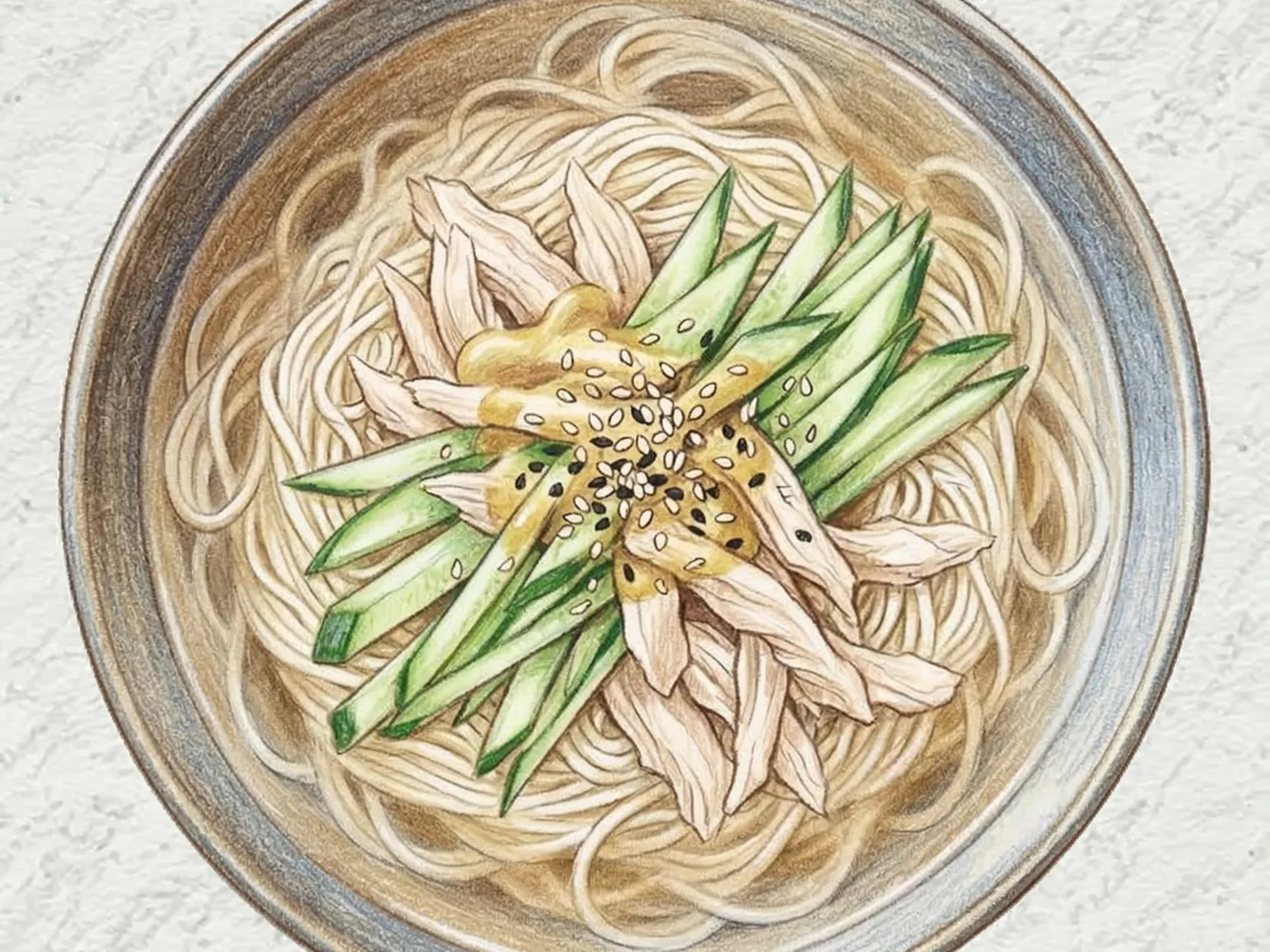
Chogye Guksu (Korean Cold Chicken Noodles)
Shredded poached chicken and julienned cucumber top thin wheat noodles served in an icy mustard-vinegar chicken broth. The broth starts as a clear, clean chicken stock, then gains its defining sharpness from dissolved mustard powder and rice vinegar, delivering a nasal tingle and bright acidity that revive the appetite on sweltering days. The chicken, torn along the grain into thin strips, adds lean protein without weight, while sliced Korean pear contributes a crisp, mildly sweet counterpoint that keeps the bowl from feeling heavy. Mustard heat flares briefly on the palate and fades quickly, leaving behind the savory clarity of well-made stock. Keeping the broth thoroughly chilled through service is essential: it prevents the noodles from softening and preserves the contrast that defines this dish. Floating a few ice cubes in the bowl ensures the temperature holds from the first chopstickful to the last.
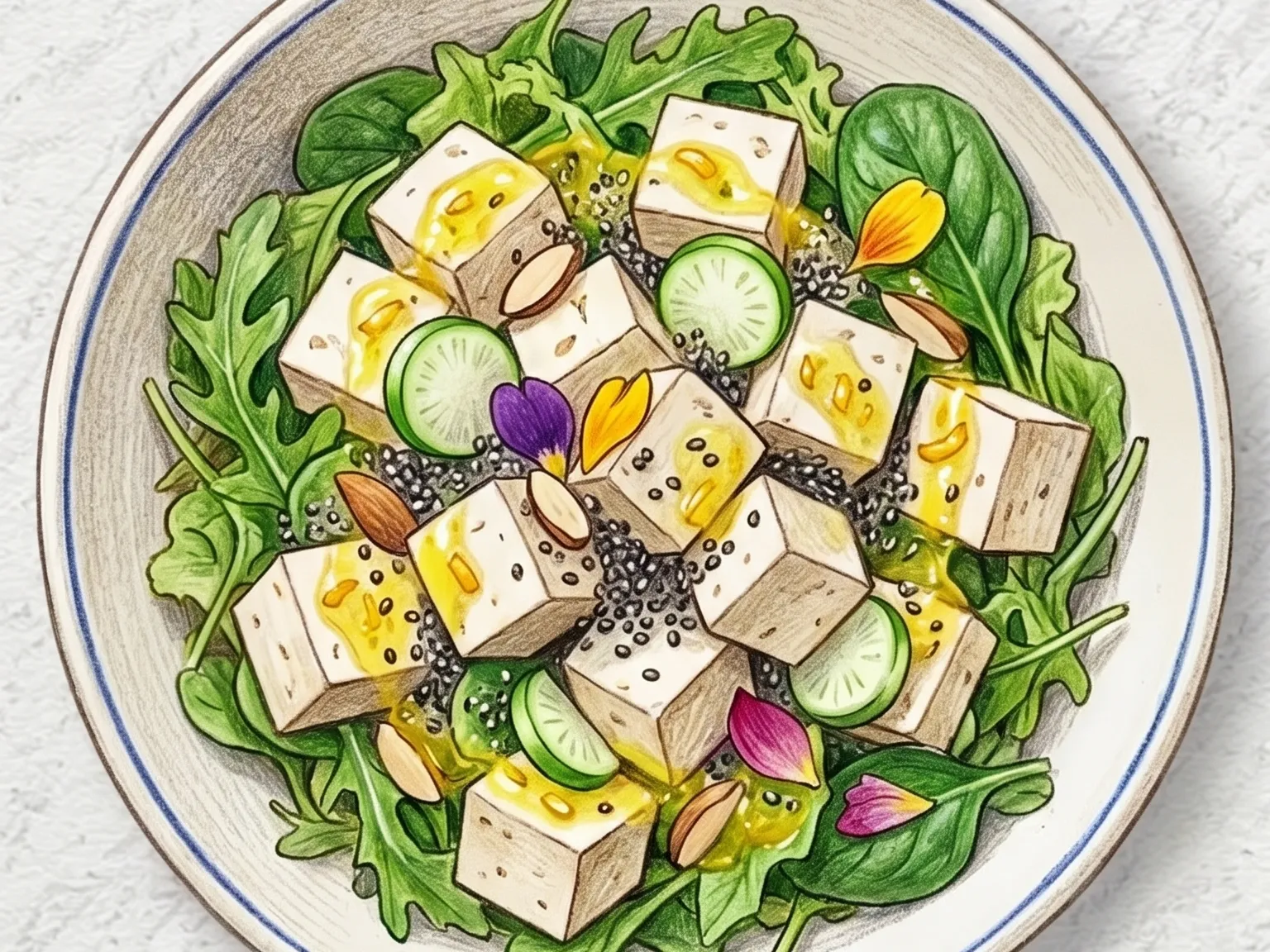
Chia Seed Yuja Dressing Tofu Salad
Chia Seed Yuja Dressing Tofu Salad is a light salad featuring soft silken tofu and baby greens. The dressing is made by soaking chia seeds in lemon juice and water for ten minutes until they swell into gel beads, which are then combined with yuja marmalade, vinegar, olive oil, and soy sauce. The soft tofu is cut into pieces and drained on paper towels to ensure it absorbs the citrus flavors of the dressing. Halved cherry tomatoes and baby greens provide a crisp texture that balances the softness of the tofu. To prevent the greens from softening, the dressing is poured over the salad just before serving. Refrigerating the mixed dressing for thirty minutes enhances the chewiness of the seeds. You can also substitute soft tofu with grilled tofu or chicken breast to modify the protein source.
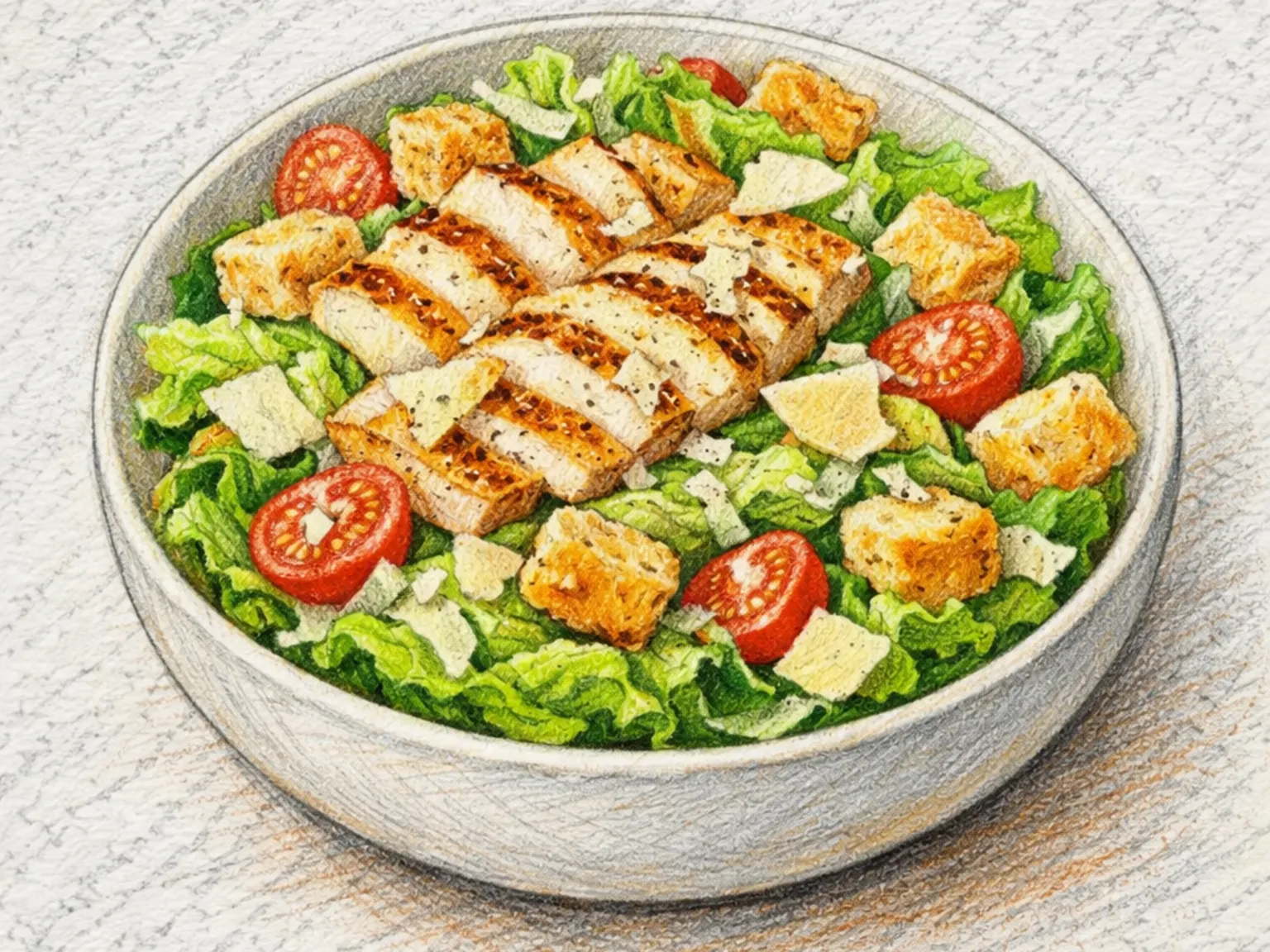
Grilled Chicken Caesar Salad
Grilled chicken Caesar salad is a classic constructed salad built on pan-seared chicken breast, crisp romaine lettuce, house-made Caesar dressing, croutons, and shaved Parmesan. The chicken breast is seasoned simply with salt and pepper and cooked over medium-high heat until golden on both sides, then left to rest for five minutes before slicing. Resting allows the muscle fibers to relax and the internal juices to redistribute, so each slice stays moist at the center rather than releasing liquid when cut. Slicing too thinly also causes rapid heat loss and results in a dry, mealy texture, so cutting into thicker pieces is preferable. The dressing is made by whisking together mayonnaise, fresh lemon juice, minced garlic, and a small amount of Worcestershire sauce. That combination produces a coating that is creamy and rich but balanced by the sharpness of citrus and the depth of the fermented condiment. Romaine is torn into bite-sized pieces and tossed lightly with dressing before the chicken and croutons are added on top, which prevents the weight of the toppings from bruising the leaves and accelerating wilting. Croutons go on last and should not be tossed through the greens, as contact with dressing causes them to absorb moisture and lose crunch quickly. Parmesan provides the concentrated salty umami of aged hard cheese that ties the neutral lettuce, mild chicken, and tangy dressing into a unified plate. The salad must be assembled immediately before serving to preserve the distinct textures that make it satisfying.
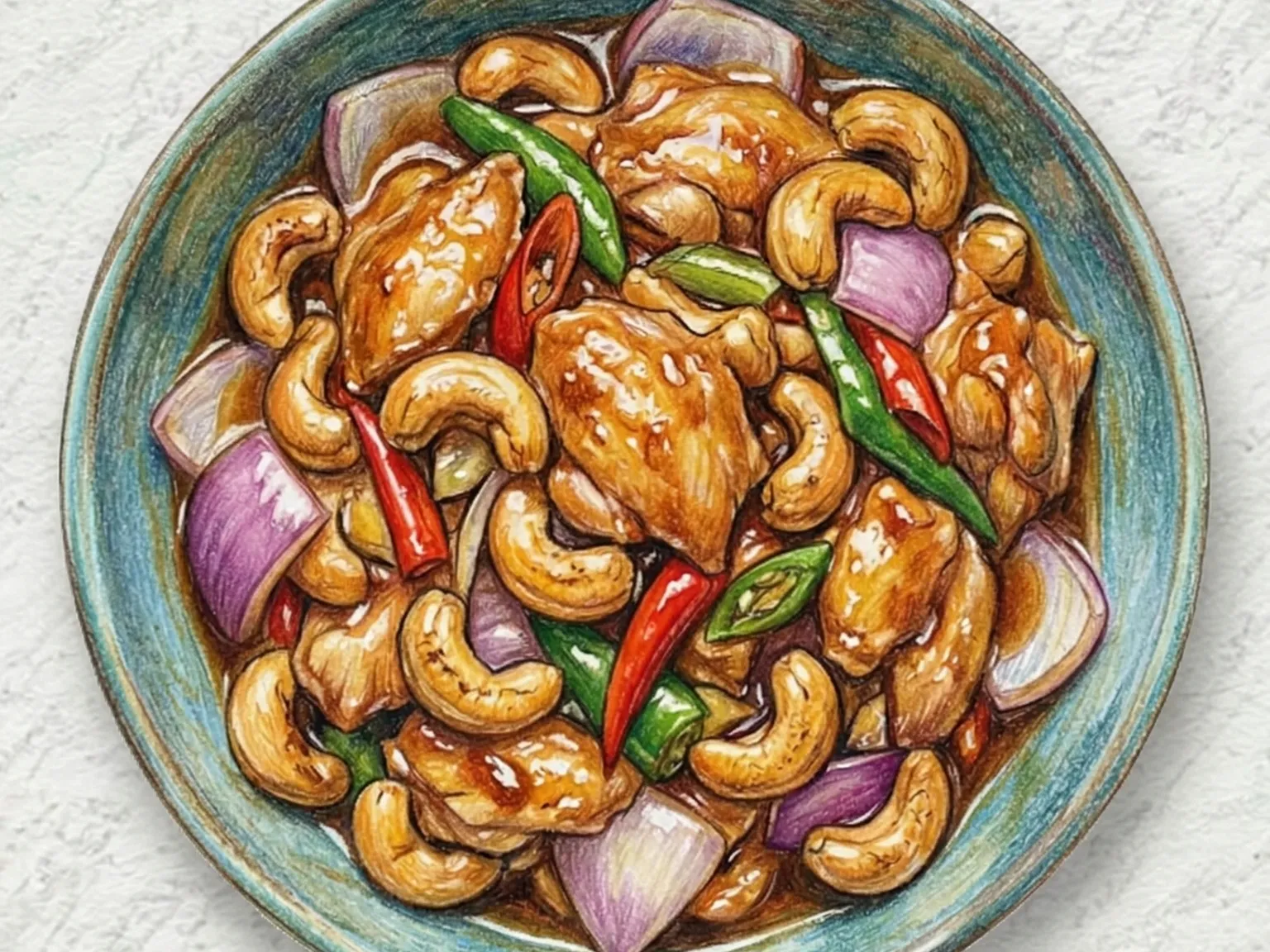
Gai Pad Med Mamuang (Thai Cashew Chicken)
Gai pad med mamuang is a Thai-Chinese stir-fry that traces its lineage to Chinese cashew chicken but has absorbed Thai seasoning logic - fish sauce replacing salt, oyster sauce adding body, and dried chilies providing a gentle background warmth. Bite-sized chicken and roasted cashews are tossed in a blazing wok with dried chilies, onion, and bell pepper; the cashews are pre-fried at low temperature to golden throughout, ensuring they stay crunchy even after joining the wet sauce. The sauce blends oyster sauce, soy sauce, fish sauce, and sugar, and the ratio among these four determines whether the dish leans sweet, salty, or somewhere in between. As the sauce coats the chicken, it takes on a lacquered sheen, and the cashews' oily richness melts into the glaze, adding a buttery undertone. In Thailand, it is typically served over steamed jasmine rice as a one-plate meal (khao rat kaeng), and its mild heat profile makes it one of the first Thai stir-fries that international visitors order with confidence.
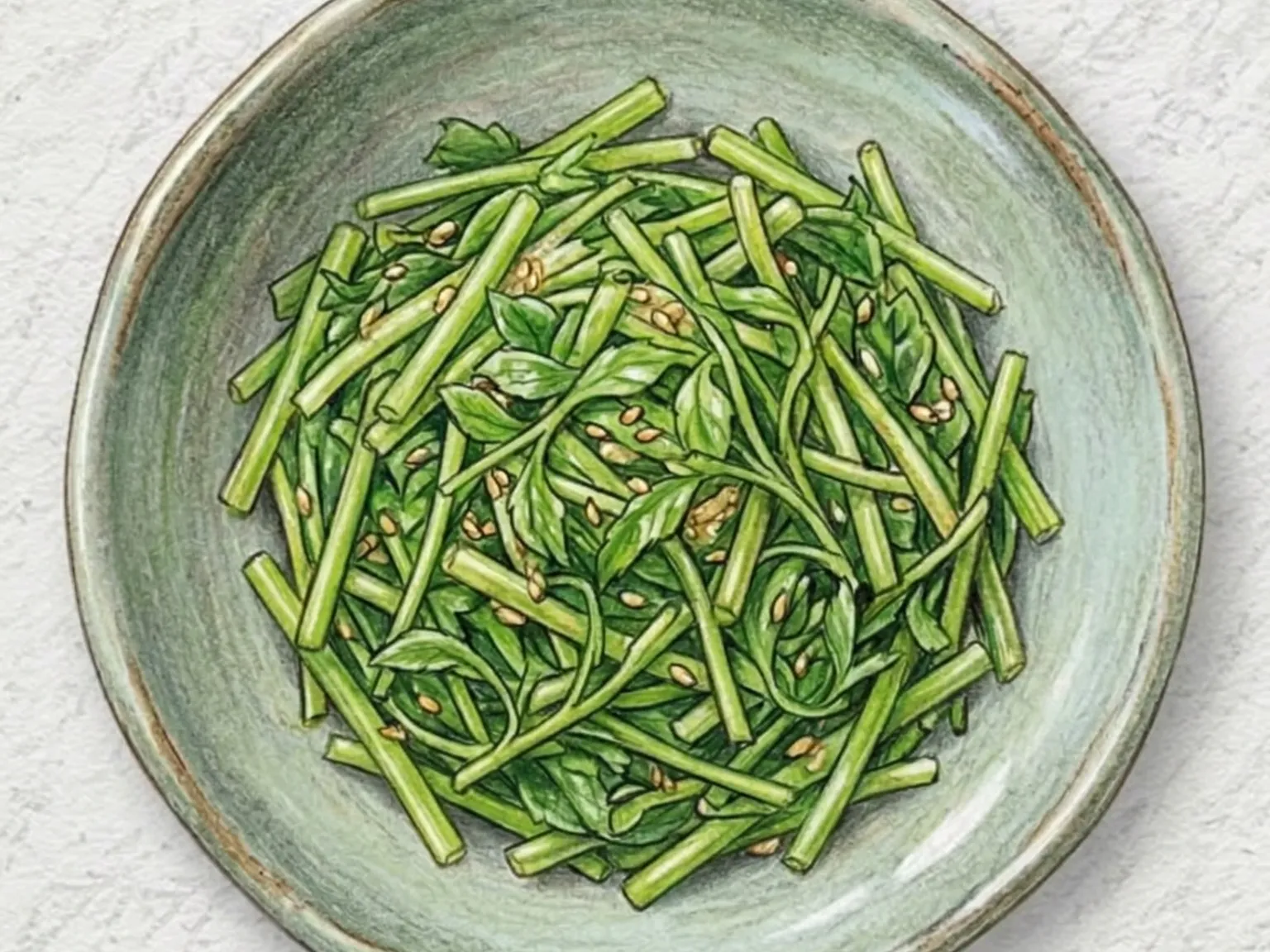
Korean Seasoned Chamnamul Greens
Chamnamul - Korean pimpinella - grows wild in mountain valleys across central Korea and has been foraged since the Goryeo period. The leaves carry a celery-like fragrance layered with a faint, peppery finish that is unlike any other spring green. Blanched for under a minute to keep the stems crisp, the greens are cut to 5 cm lengths and tossed with soy sauce, sesame oil, and garlic. The thicker stems hold a slight crunch while thinner leaves soften just enough to take on the seasoning. Very young leaves are sometimes served raw without blanching. A spring-only banchan that is unavailable the rest of the year.
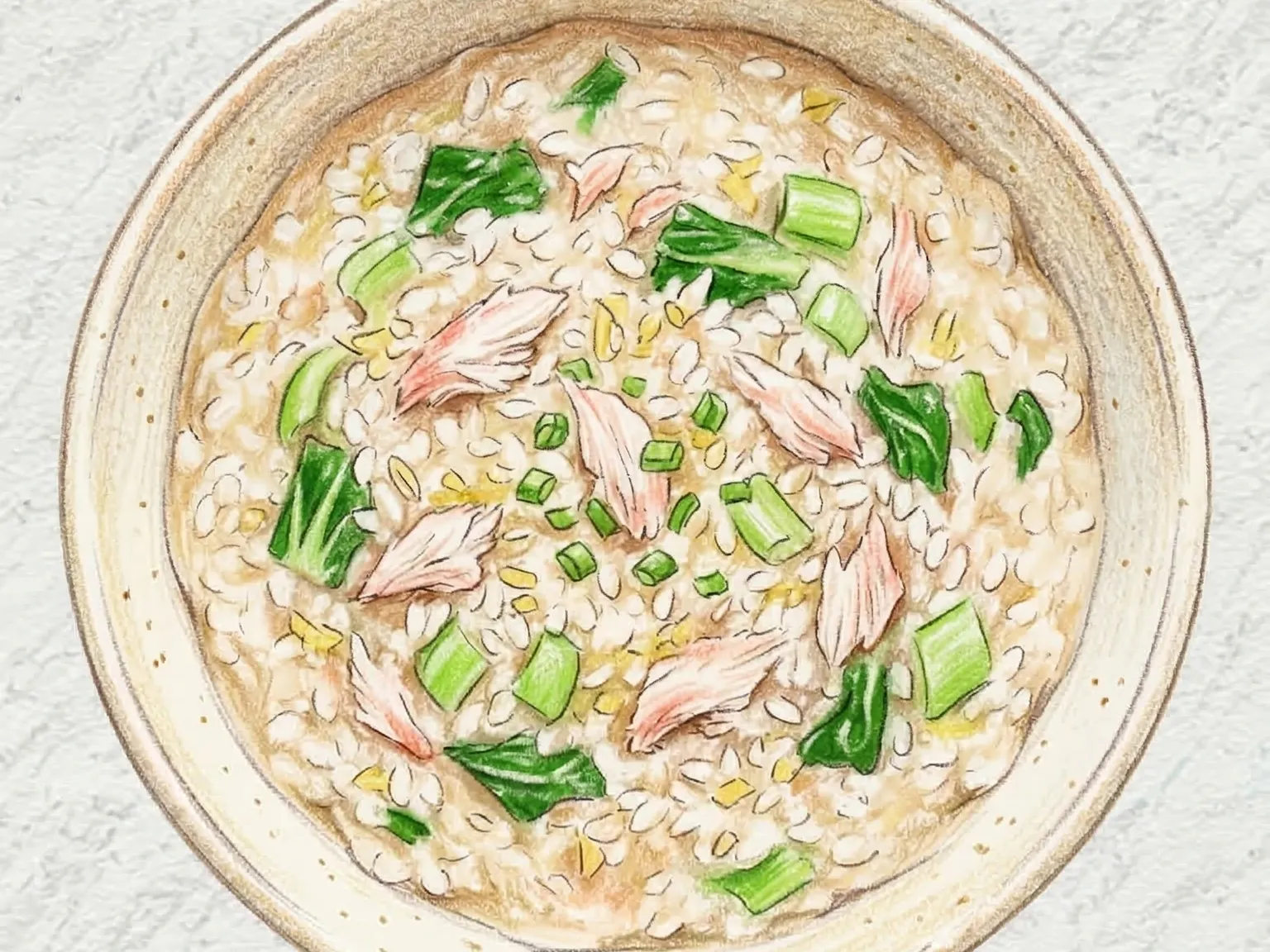
Korean Bok Choy Crab Porridge
Cheonggyeongchae gesal juk is a Korean porridge that begins by sauteing onion and ginger in sesame oil to build an aromatic base, then simmering soaked rice with crab meat until the grains soften into a smooth, flowing consistency. Bok choy goes in near the end to preserve its bright green color and gentle crunch. The crab brings a mild sweetness that spreads evenly through the porridge and adds a refined savoriness, while ginger keeps the flavor clean and free of any fishiness; sesame oil's fragrance lingers subtly throughout. Soaking the rice beforehand allows the grains to break down evenly within a shorter cook time, and stirring regularly prevents sticking at the bottom. Light on the stomach and gently warming, this porridge suits a morning meal, a day when the body needs something easy, or the shift between seasons.
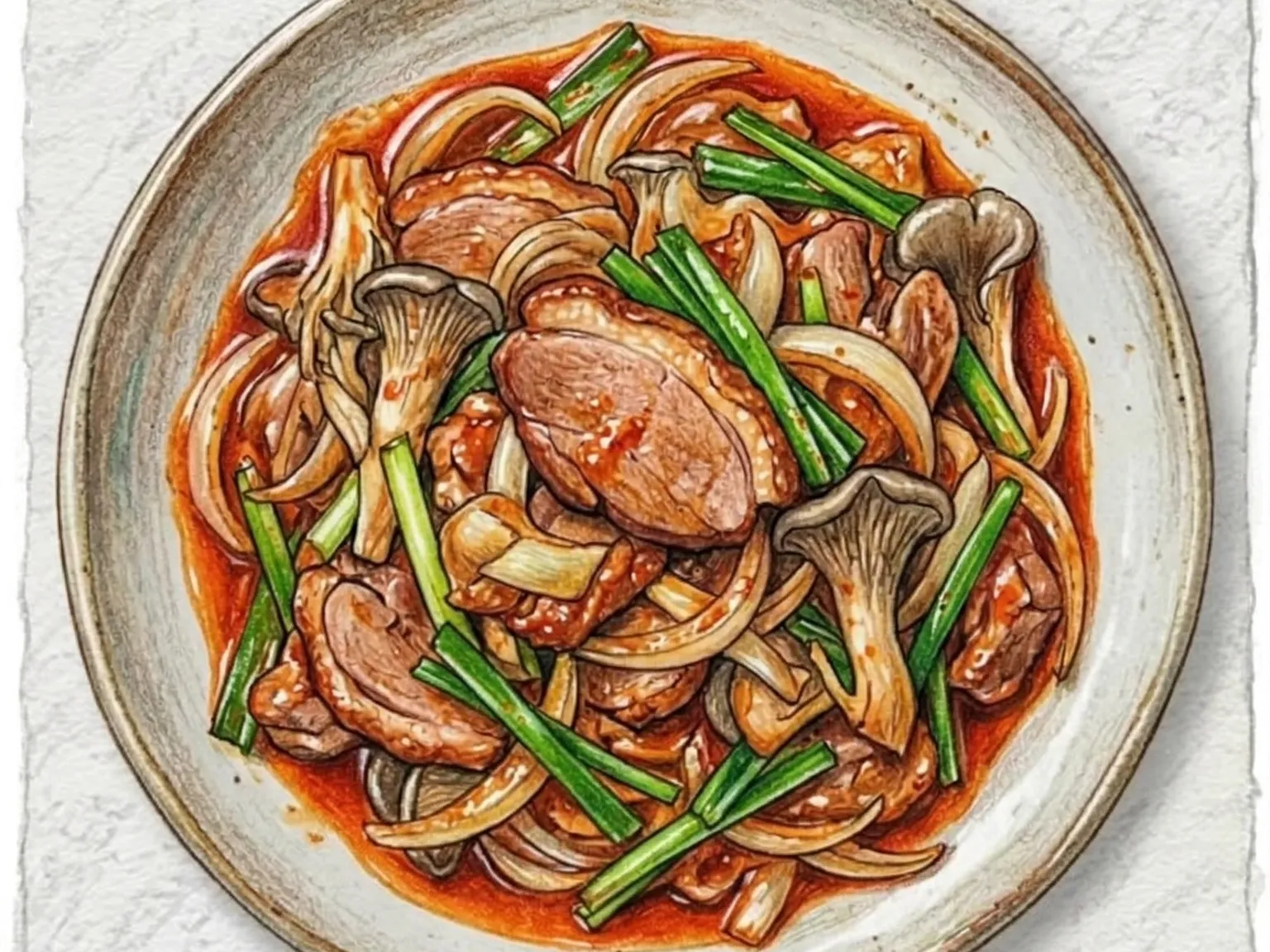
Korean Garlic Chive Duck Stir-fry
Sliced smoked duck is cooked first to render its fat, and that rendered fat becomes the cooking medium for onion, oyster mushrooms, and a gochujang-based sauce. Because the duck releases enough oil on its own, additional cooking fat is barely needed, and the smoky flavor carried in the rendered fat transfers directly into the vegetables. The gochujang and oligosaccharide syrup create a sweet-spicy glaze that counterbalances the richness of the duck, while garlic chives are tossed in only during the final minute over high heat so they keep their vivid green color and bright herbal finish. Perilla oil drizzled after the flame is off adds a final aromatic layer that elevates the entire plate. If the duck releases more fat than desired, pouring off all but one tablespoon keeps the dish cleaner without sacrificing flavor. This dish pairs naturally with soju or makgeolli, and any leftovers fold well into fried rice the next day.
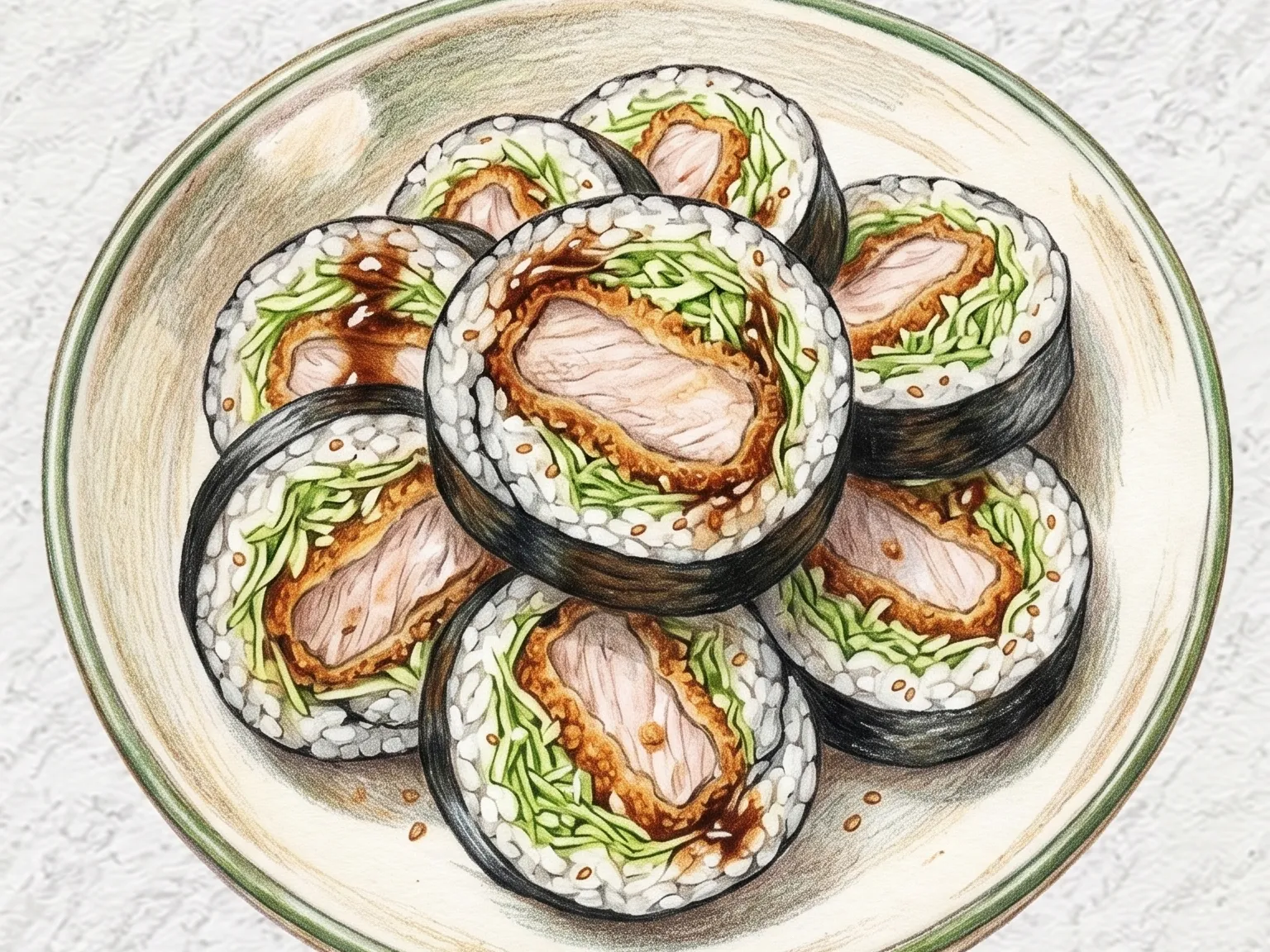
Korean Donkatsu Gimbap (Pork Cutlet Roll)
Donkatsu gimbap rolls an entire crispy pork cutlet inside a seaweed rice roll. Sesame oil and salt-seasoned rice is spread thinly over a sheet of dried seaweed, tonkatsu sauce is drizzled generously over the rice, and the full cutlet along with shredded cabbage is placed at the near edge before rolling tightly. The structural goal of the roll is to keep the breadcrumb coating on the cutlet crispy between the layers of rice and seaweed rather than letting it soften against the moisture in the rice. To achieve this, the cutlet must be well-drained of oil and cooled to room temperature before rolling, and the roll should be cut and eaten promptly rather than held for long. When sliced, the cross-section reveals the full width of the pork cutlet occupying most of the interior, which is a visual cue for the substantial filling inside. The sweet, savory tonkatsu sauce melds with the sesame-scented rice and the salt of the dried seaweed wrapper, making each section of the roll satisfying enough to serve as a complete meal.
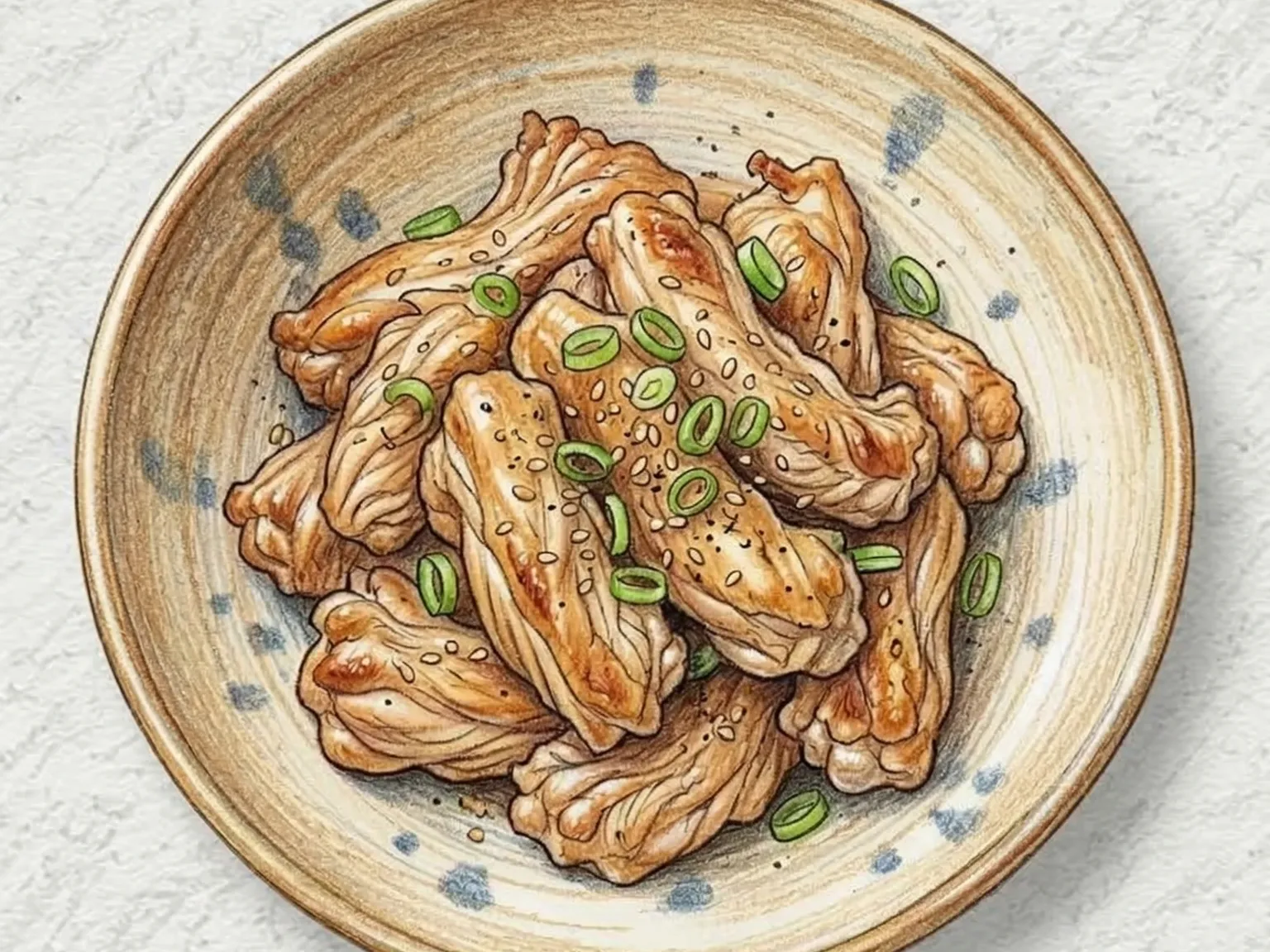
Korean Grilled Chicken Neck Meat
Dak-moksal-gui is a grilled Korean chicken neck dish seasoned with soy sauce, cooking wine, minced garlic, and sesame oil, then seared quickly over high heat. Chicken neck contains streaks of intramuscular fat that give it a chewy, savory richness unlike the lean dryness of breast meat -- a quality prized among those who know the cut. Spreading the pieces flat on the pan surface creates maximum contact and promotes rapid browning through the Maillard reaction, and flipping within two minutes per side preserves the juices that would otherwise be lost with extended heat. Sliced green onion scattered at the finish adds a fresh, pungent layer on top of the sweet-salty soy base, and coarsely cracked black pepper sharpens the aftertaste. The dish works equally well as a rice side or a beer accompaniment.
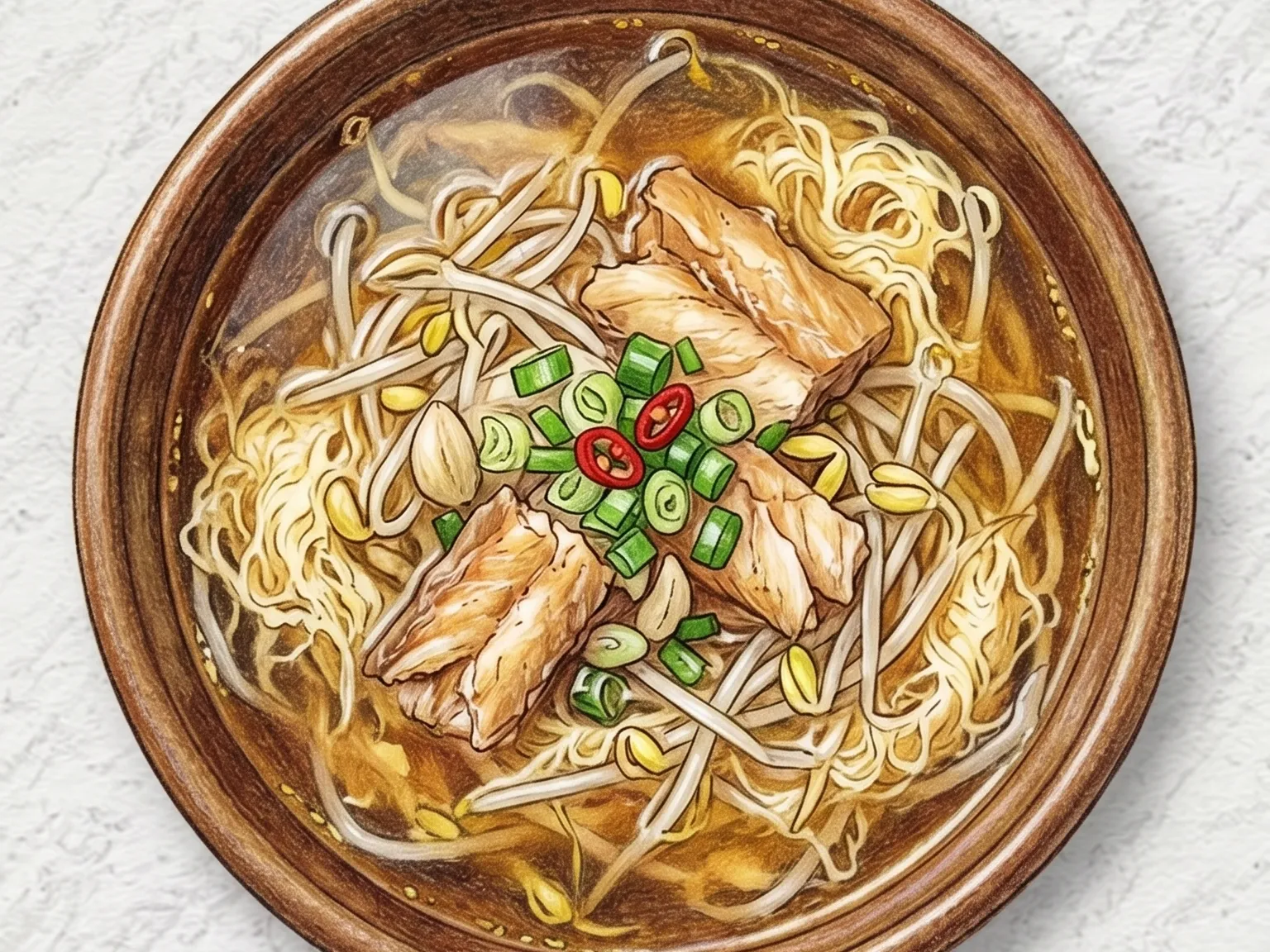
Korean Dried Pollock Hangover Soup
Buk-eo Haejang-guk is a traditional Korean soup frequently consumed in the morning to soothe the digestive system. It relies on dried pollock strips as the primary ingredient. Before beginning the cooking process, the dried pollock requires a brief soaking period in cold water lasting approximately five minutes. This step is necessary to soften the texture while ensuring that the inherent flavors of the fish are not washed away. Keeping the soaking time to a strict minimum prevents the fish from becoming overly soft or weakening the resulting broth. The prepared fish is first stir-fried in sesame oil. This initial sautéing step functions to neutralize any lingering fishy aromas and establishes a toasted, nutty foundation for the liquid. Once the fish is fragrant, soybean sprouts and minced garlic are added to the pot to simmer for fifteen minutes. The addition of soybean sprouts introduces a clean and refreshing quality to the soup. For seasoning, soup soy sauce is used to achieve a clear and balanced flavor profile. Just before the pot is removed from the heat, a thin stream of whisked egg is poured into the simmering liquid along with sliced green onions. People preferring a more intense savory profile can mix a small spoonful of fermented soybean paste, known as doenjang, into the base to deepen the flavor. The final result is a mild soup that has long been used as a restorative morning-after remedy in Korea.
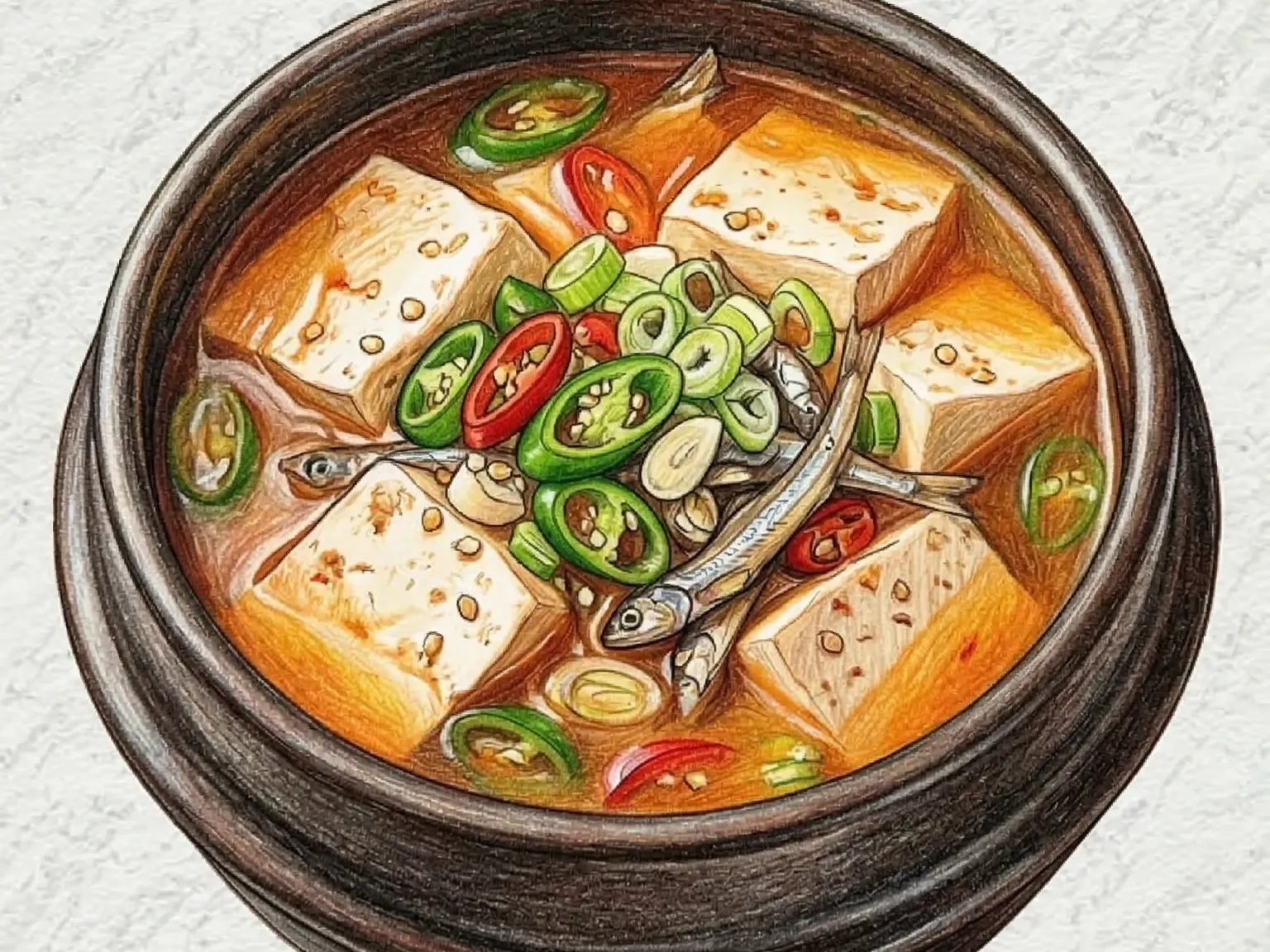
Korean Hot Chili Anchovy Tofu Stew
Dried anchovies and cheongyang chilies go into the pot together from the start so the broth itself absorbs the deep, pungent heat rather than the chilies simply floating on top. The anchovies are dry-roasted first to drive off any fishiness before water is added. Two whole cheongyang chilies, left uncut, release a sharp, penetrating spice that builds gradually through the simmer. Gochugaru adds color and layers the heat further, soup soy sauce keeps the seasoning clean, and tofu goes in only after the broth reaches a full boil so the cubes stay firm. The combination of anchovy-based richness and the chilies distinctive biting heat produces a broth that clears the palate without becoming salty.
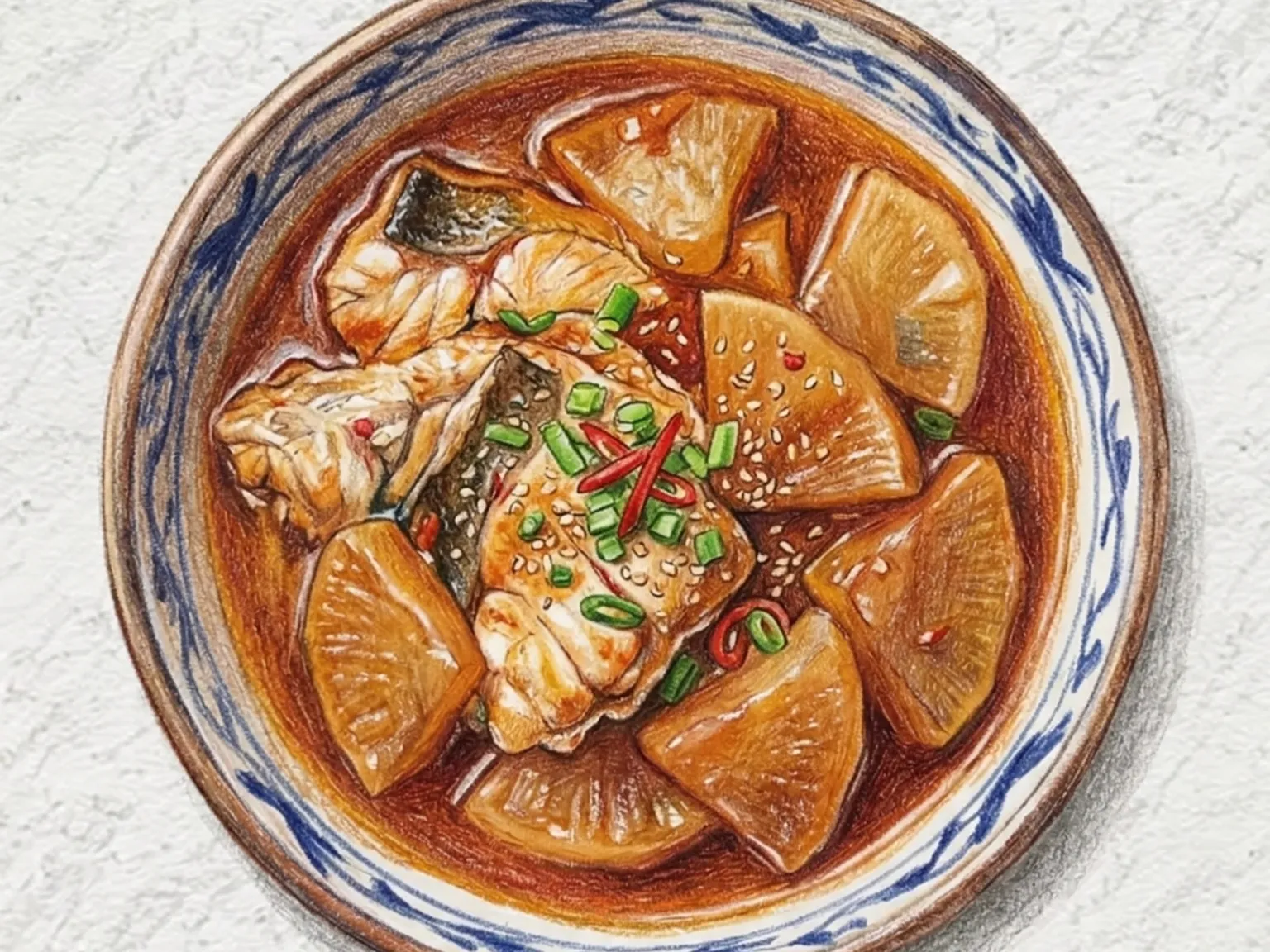
Korean Braised Flounder with Radish
Gajami mu jorim is a Korean braised flounder dish in which flounder pieces and thick slices of Korean radish are cooked down together in a soy sauce and gochugaru broth until the liquid reduces to a concentrated, savory glaze. The radish absorbs the fat and juices released from the fish as it braises, soaking up the spicy seasoning until each slice becomes as flavorful and satisfying as the fish itself. Gochugaru and fresh Cheongyang chili provide a clean, penetrating heat, while soy sauce contributes deep umami and minced garlic adds a sharp aromatic backbone to the broth. Allowing the liquid to reduce until only a small amount remains thickens the sauce significantly, and spooning that concentrated braising liquid over plain steamed rice is one of the most common ways to finish the meal, with the sauce soaking into the grains and making it nearly impossible to stop eating. Flounder's naturally lean, delicate flesh, which pulls apart easily along the grain, pairs well with the extended braising method, which keeps the fish moist while infusing it with the bold seasonings. This combination of practical cooking technique and deep, satisfying flavor has made gajami mu jorim one of the most enduring everyday fish side dishes in Korean home cooking.