🏠 Everyday Recipes
Simple home-cooked meals for any day
1705 recipes. Page 14 of 72
These are the meals you can cook day after day without getting tired of them. Doenjang jjigae, rolled omelet, spicy pork stir-fry - the kind of home-cooked dishes that fill an ordinary day with comfort.
The beauty of everyday cooking is that it relies on common ingredients already in your fridge. No exotic items, no complicated techniques - just straightforward recipes for satisfying home meals.

Korean Cheongyang Gochu Doenjang Jangajji (Doenjang Pickled Cheongyang Peppers)
Cheongyang chili peppers are pricked all over with a fork so the brine can reach the interior of each pod rather than sitting on the surface. Kelp is simmered with soy sauce to establish a concentrated umami base, then the heat is cut and doenjang is dissolved into the hot liquid, which layers the nutty, fermented depth of fermented soybean paste over the saltiness of the soy. Rice syrup softens the sharp, raw heat of the chilies so it does not dominate the other flavors, and vinegar sharpens and clarifies the overall profile. The chilies are pressed fully under the brine and left in the refrigerator to mature. After one day the seasoning begins to penetrate toward the core, and by day three the doenjang flavor has fully saturated each pepper. At that point, a single pepper placed on a mouthful of hot rice delivers a compact burst of salty, funky depth and the lingering heat that makes this pickle a classic Korean table condiment.
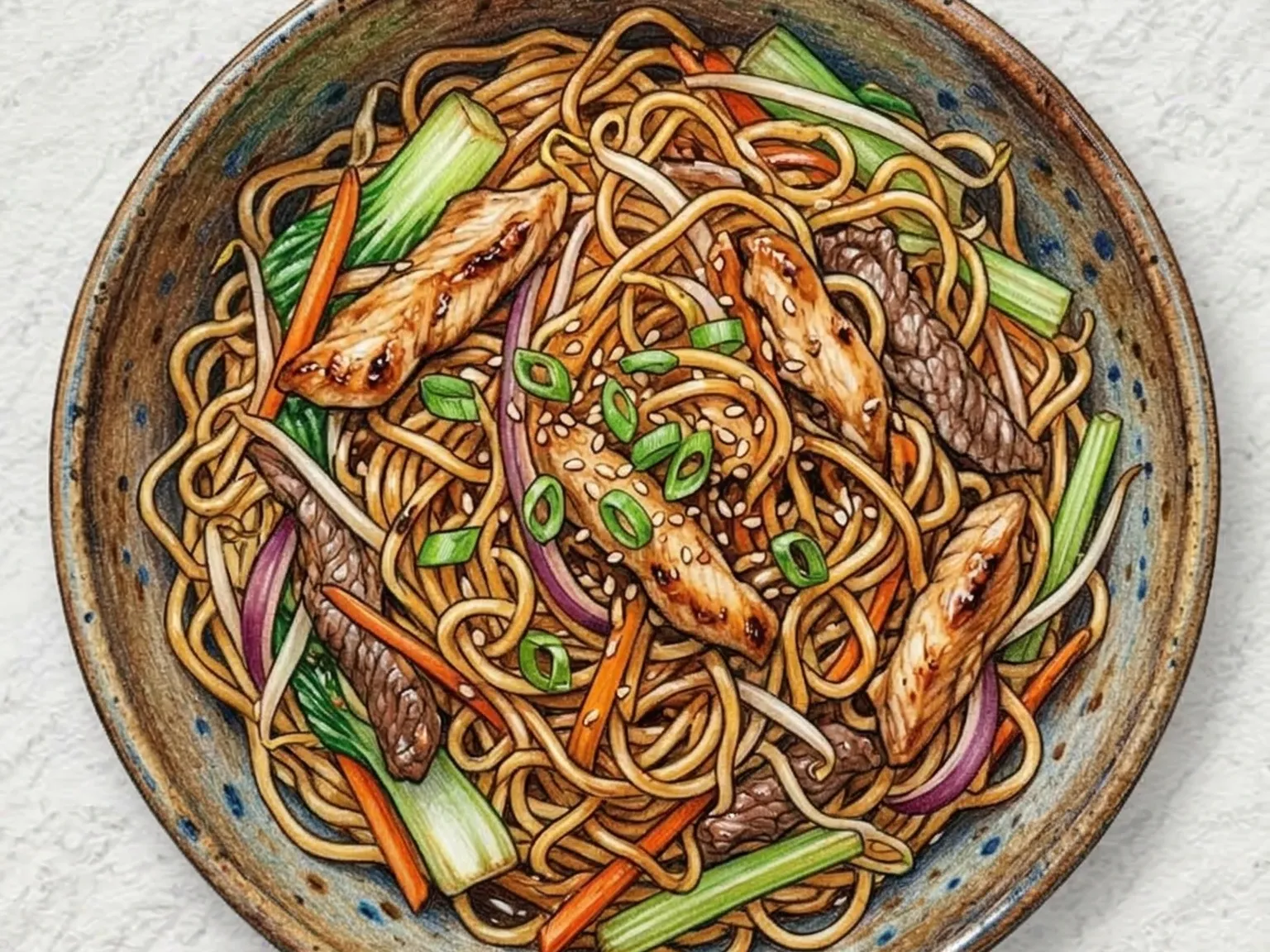
Chinese Chow Mein
Chinese chow mein stir-fries boiled noodles with vegetables and protein over fierce wok heat. The noodles are parboiled, lightly oiled, then tossed in a screaming-hot wok until the exterior crisps while the interior stays chewy. A sauce of soy, oyster sauce, and sesame oil lacquers each strand with salty depth and umami, while bean sprouts, cabbage, and carrot contribute crunch. The hallmark smoky flavor known as wok hei comes only from sustained high heat, so home cooks achieve the closest result by working in small batches and letting the pan fully recover between additions. Chicken, shrimp, or beef can replace one another as the main protein, making chow mein endlessly adaptable. A squeeze of lime at the table brightens the overall flavor.
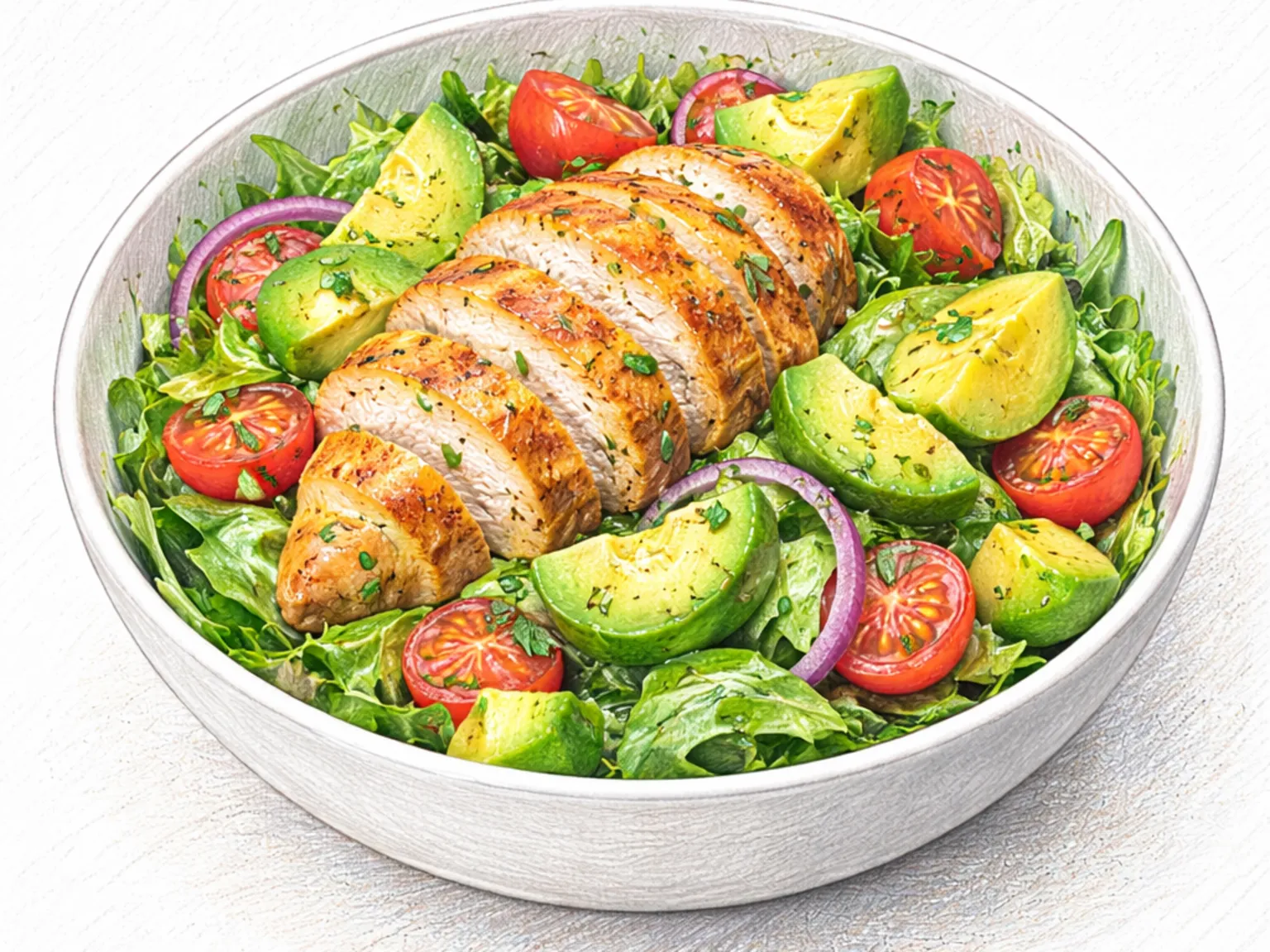
Chicken Avocado Salad
Chicken avocado salad is a high-protein main dish salad that pairs pan-cooked chicken breast with ripe avocado over romaine lettuce, dressed in a simple lime and olive oil vinaigrette. The chicken must rest and cool completely before slicing so the juices redistribute inward rather than running out onto the cutting board, keeping the meat moist rather than dry. Avocado is sliced just before serving to maintain its creamy texture and prevent the surface from browning. Romaine provides a crunchy base that contrasts with the soft avocado, cucumber adds clean hydration, and cherry tomatoes contribute sharp acidity that prevents the bowl from feeling heavy or greasy. The dressing is deliberately minimal - just lime juice and olive oil - but the citrus acidity cuts through the avocado fat cleanly, creating a bright finish that keeps the overall plate feeling light despite the substantial protein content. The result is a salad that satisfies as a full meal without the denseness of cooked grains or hot dishes.
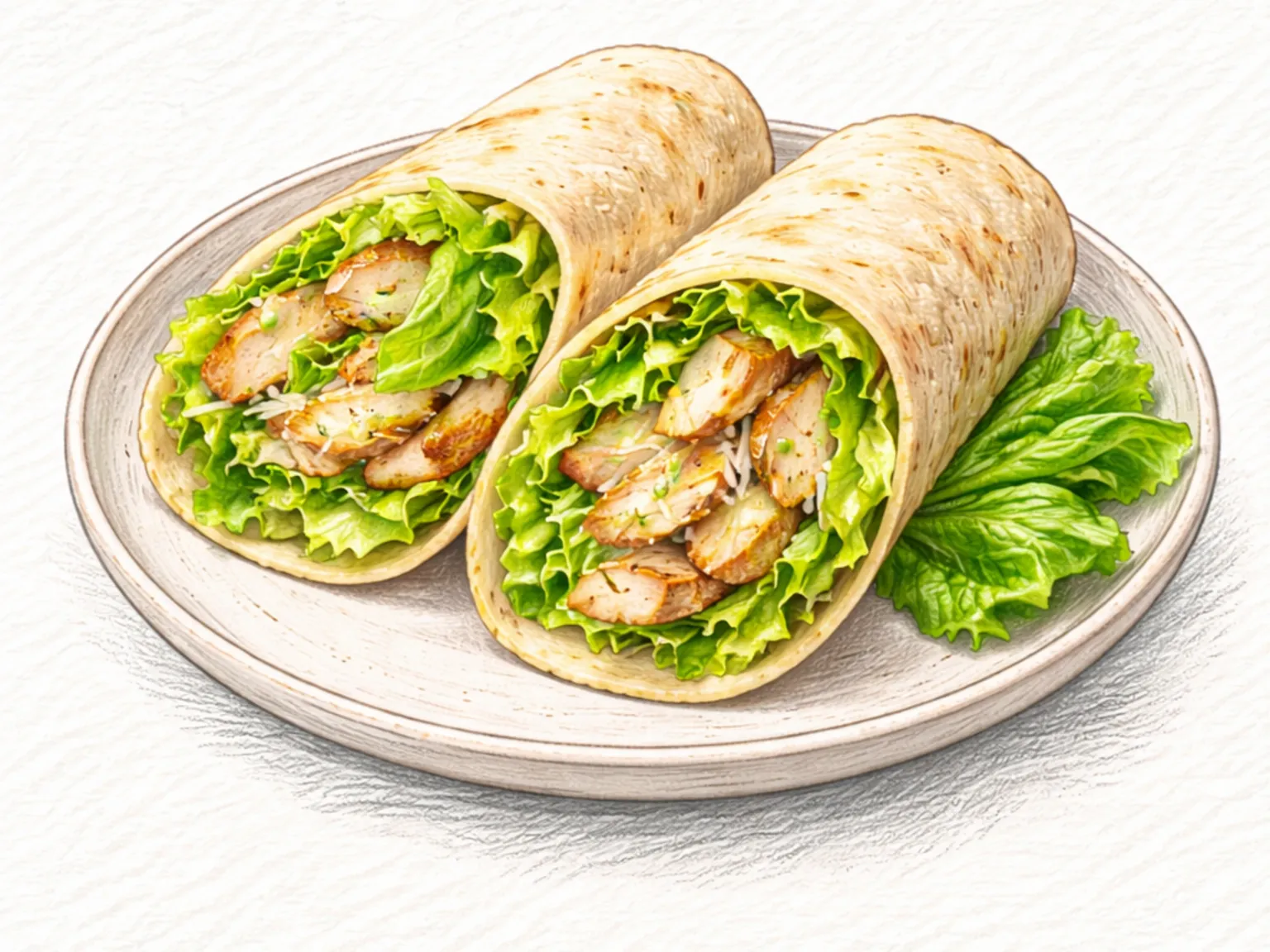
Chicken Caesar Wrap
Chicken Caesar wrap rolls pan-grilled chicken breast, romaine tossed in Caesar dressing, and grated Parmesan cheese inside a flour tortilla. Warming each tortilla in a dry pan for about twenty seconds on each side restores moisture to the surface and makes it flexible enough to roll without cracking or splitting. The chicken must be fully cooled before slicing so it distributes evenly inside the wrap; adding it while still warm immediately wilts the romaine. The romaine should be dressed at the very last moment before assembly: dressed too early, the leaves release moisture, turning the whole wrap soggy and limp. Parmesan contributes the sharp, salty umami of aged protein, acting as a flavor bridge between the lean chicken and the creamy dressing. Cutting the finished wrap on the diagonal and presenting it cut-side up exposes the layered cross-section and makes the contents immediately visible.
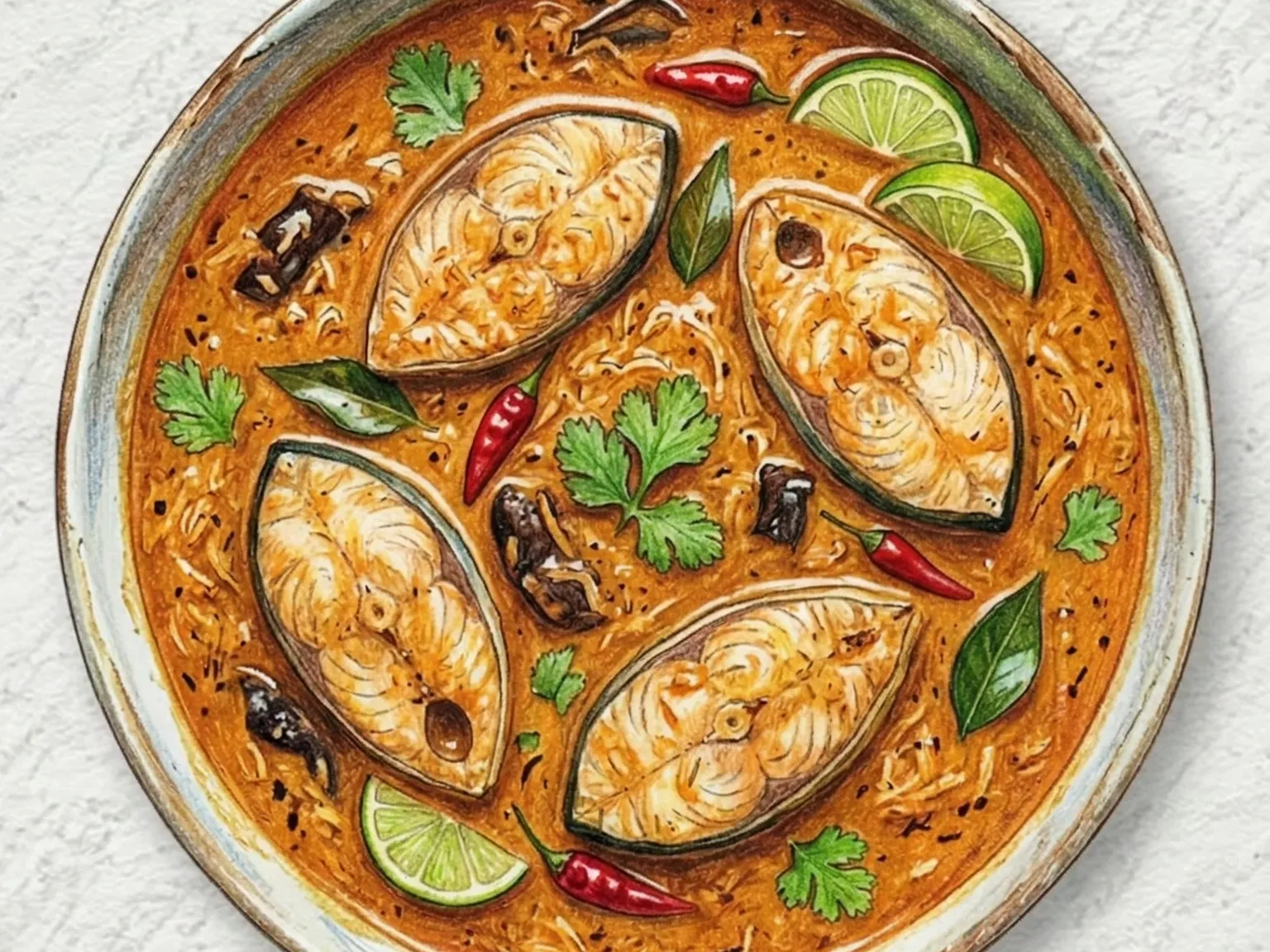
Goan Fish Curry (Tangy Coconut Fish Stew)
Goan fish curry - known locally as xitt-kodi - is the daily centerpiece of fishing households along India's Goa coast, shaped over five centuries by the meeting of Konkani culinary tradition and Portuguese colonial influence. Freshly pressed coconut milk forms the foundation, into which a masala paste of tamarind, Kashmiri red chilies, coriander seeds, and cumin is stirred and brought to a simmer. Local fish - kingfish, pomfret, or mackerel - are added bone-in and cooked over gentle heat for no more than five minutes. That restraint is the defining technique: the flesh absorbs the sauce fully while still breaking apart in clean, moist flakes at the press of a spoon rather than turning dense and dry. Tamarind's sharp acidity slices through the coconut cream's weight, producing a broth that reads as fresh and light despite its deep orange color and creamy texture. The Kashmiri chili contributes vivid color with only moderate heat, so the sauce is bold-looking but not aggressively spicy. Goan fishermen have long followed the practice of cooking their morning catch into curry by midday and serving it over boiled parboiled rice called ukde tandull, a pairing so bound to local identity that it crosses every line of religion, caste, and neighborhood across the state.
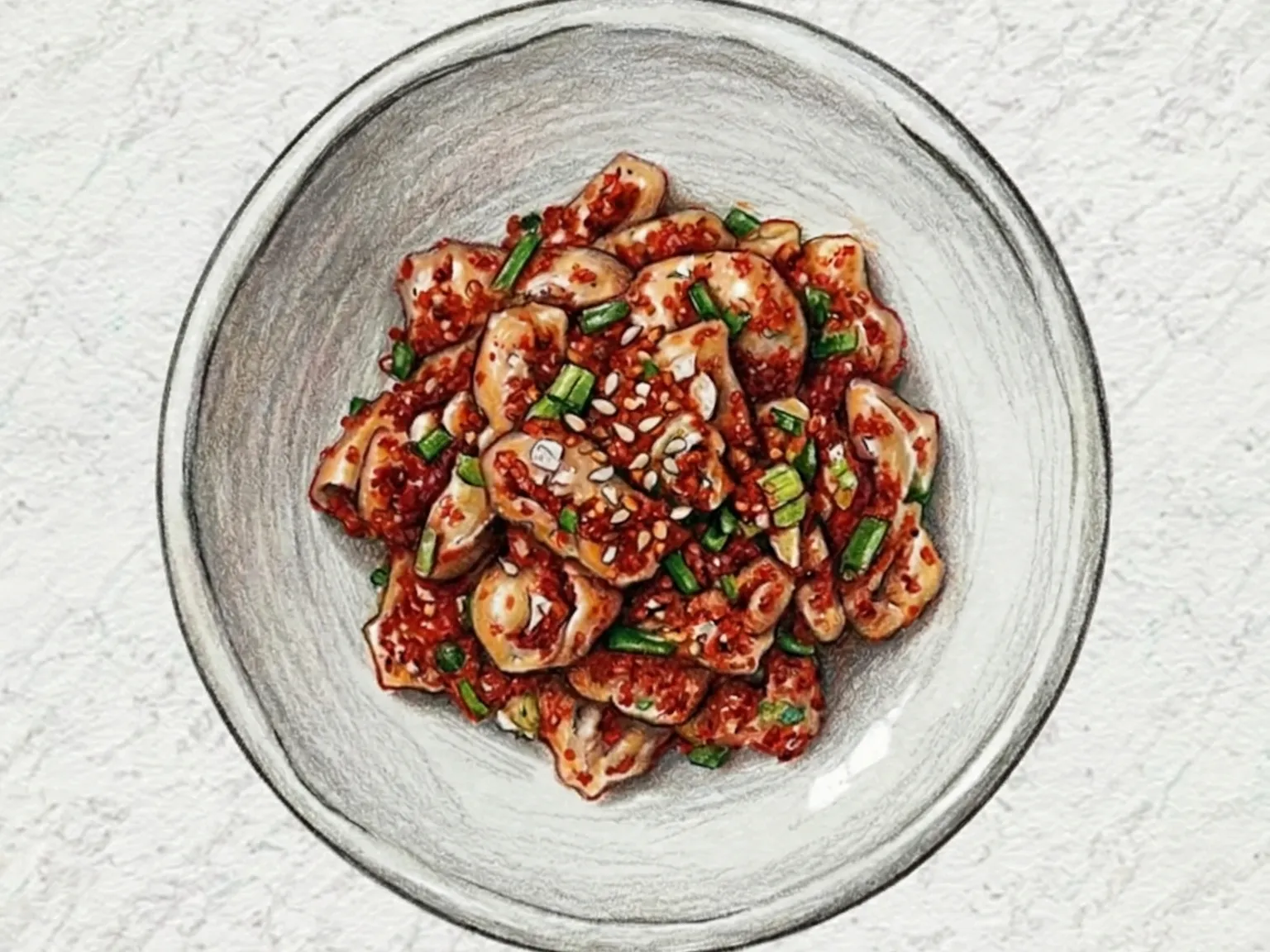
Korean Seasoned Salted Pollock Stomach
Changnanjeot, salt-fermented pollock stomach, belongs to Korea's jeotgal tradition, where seafood organs are packed in coarse salt and left to ferment for months until deep umami develops throughout. The stomach lining has a firm, slightly rubbery chew that sets it apart from softer jeotgal like salted shrimp; the longer it is chewed, the more the fermented savoriness emerges from beneath the saltiness. Drained of excess brine and dressed with gochugaru, garlic, scallion, and sugar, it becomes a high-concentration condiment banchan. A thumbnail-sized piece placed on plain rice delivers a burst of fermented marine salt and chili heat that carries an entire spoonful. Stored in the refrigerator, it keeps its character for more than two weeks, making it a practical staple side dish to prepare in advance.
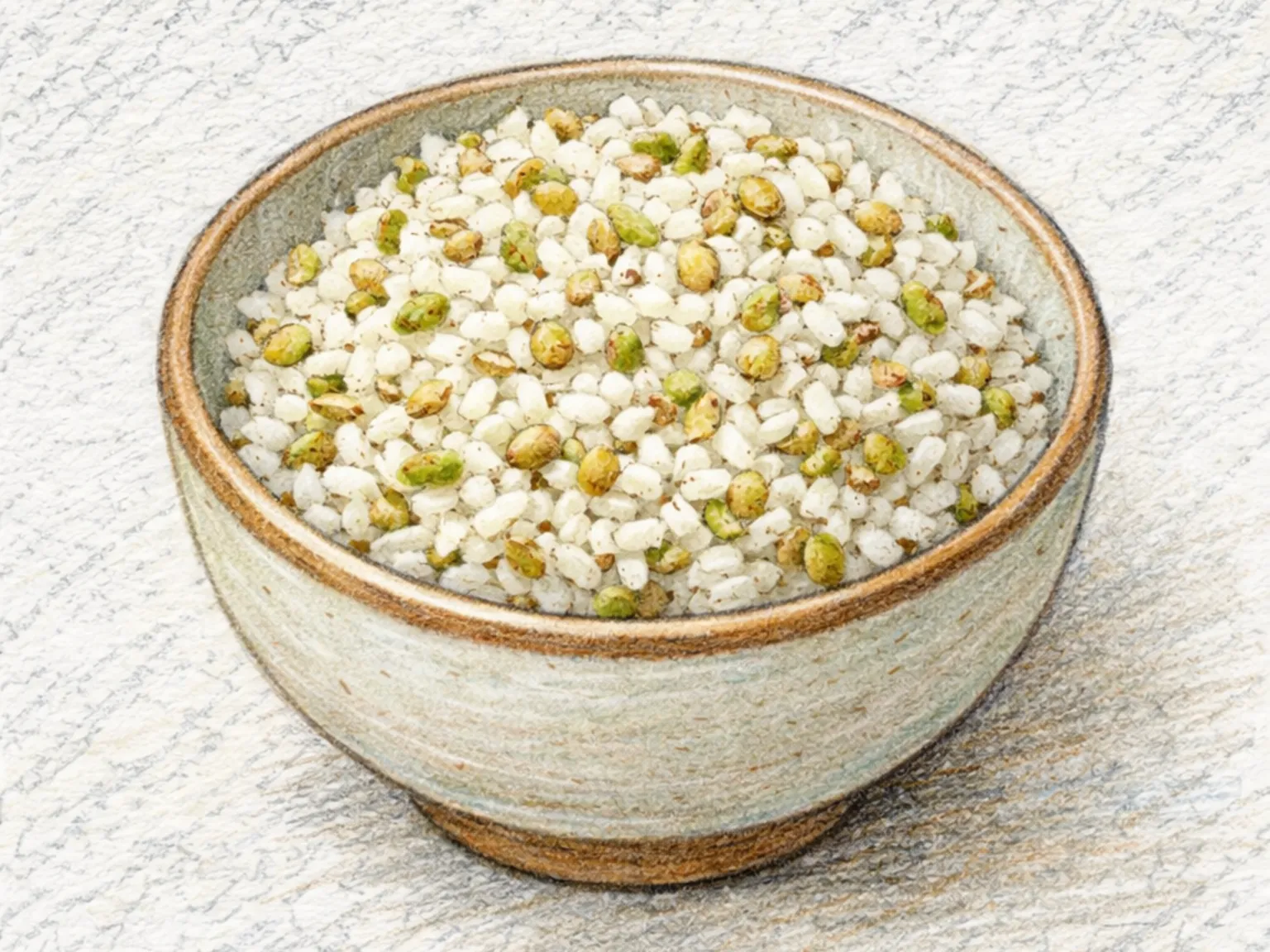
Korean Hemp Seed Rice (Nutty Protein-Rich Grain Rice)
Cheongsam bap is a Korean nutritional rice cooked with toasted hemp seeds. The hemp seeds contribute a nutty, subtly grassy aroma and a gentle popping texture that transforms plain short-grain rice into something more layered. Hemp seeds are nutritionally notable for their high plant protein content and a well-balanced ratio of omega-3 to omega-6 fatty acids, which is why they have attracted attention as a functional food in Korea. The preparation requires no extra technique beyond standard rice cooking - the seeds and a small amount of salt go in with the rice before the cooker starts. Lightly toasting the seeds in a dry pan for about five minutes before adding them deepens their fragrance noticeably compared to untoasted seeds. The finished rice pairs well with virtually any Korean side dish, and the mild, toasty flavor holds up equally well when the rice is eaten on its own as a simple, wholesome bowl.
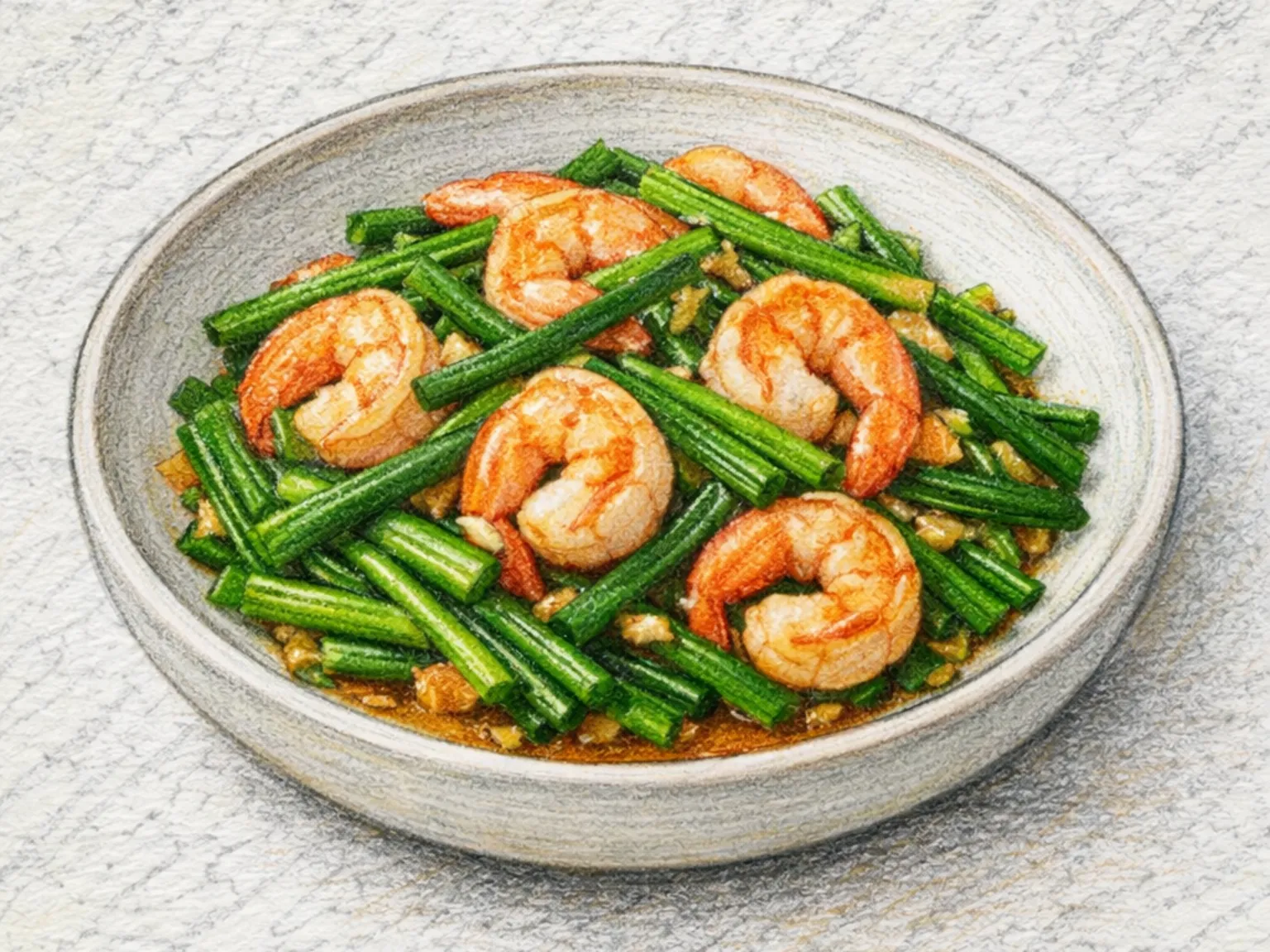
Korean Stir-fried Chives and Shrimp
Deveined shrimp are dried thoroughly and seared over high heat until their shells turn pink, then tossed briefly with garlic chives for a stir-fry that takes under ten minutes from cutting board to plate. Removing every trace of surface moisture before the shrimp hit the pan is the single most important step; residual water generates steam and turns the sear into a braise, leaving the shrimp pale and soft instead of lightly caramelized. Sliced garlic goes into the oil first to build an aromatic base that clings to every ingredient. One tablespoon of soy sauce paired with a teaspoon of oyster sauce amplifies the natural seafood umami without tipping the dish into excessive saltiness, and black pepper sharpens the finish. The chives must go in last and cook for no more than sixty seconds; any longer and they lose their vivid color and turn stringy. At 220 calories with 26 grams of protein per serving, this dish fills the role of a satisfying yet light side that pairs well with steamed rice or slides neatly into a packed lunch.
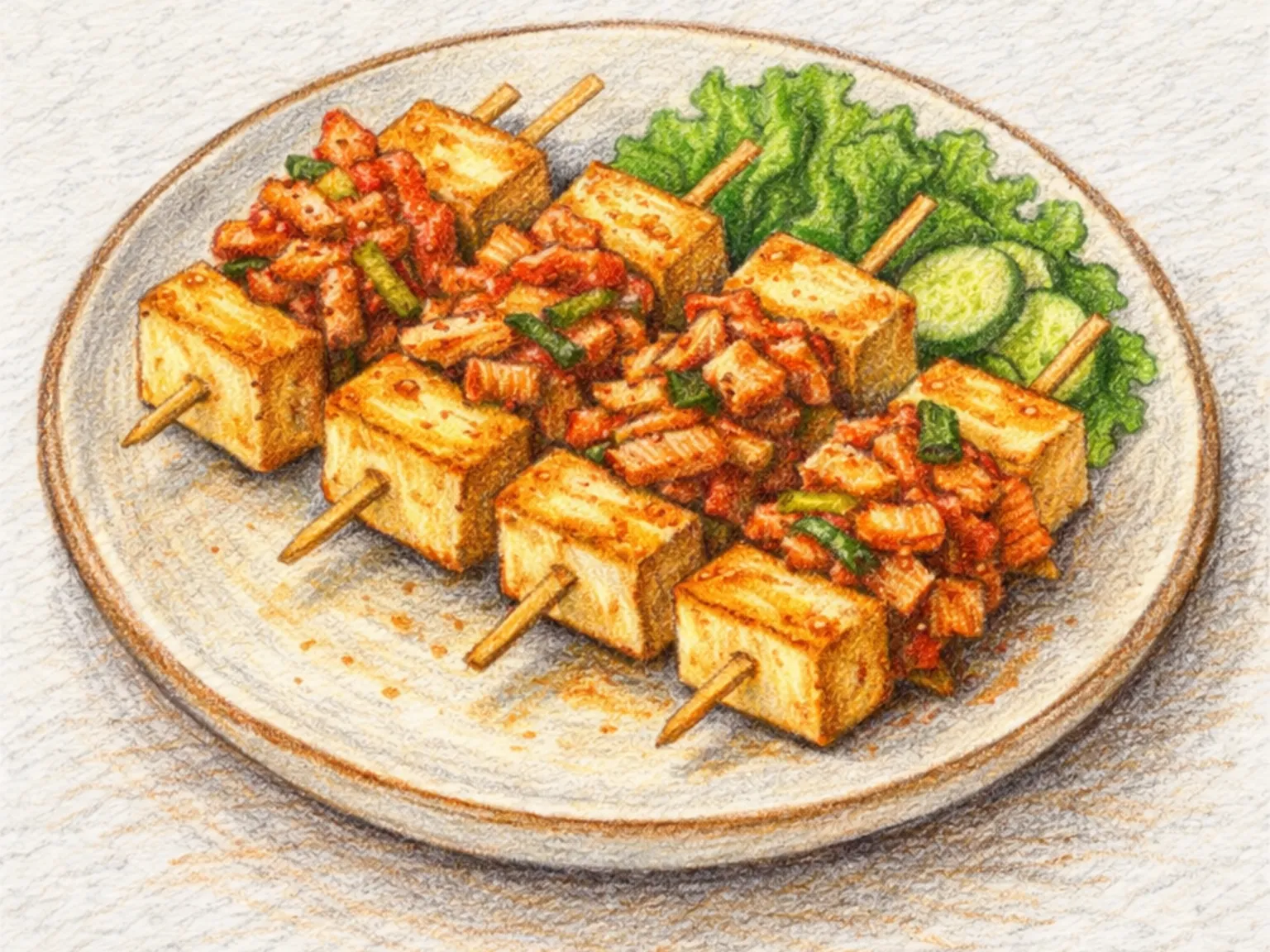
Korean Dubu Kimchi Kkochi (Tofu Kimchi Skewers)
Dubu-kimchi-kkochi pan-sears firm tofu until the surface turns crisp and golden, then skewers it alongside stir-fried sour kimchi and ground pork. Before searing, pressing the tofu dry with paper towels is essential for an even crust that does not tear or stick to the pan. The kimchi and pork are cooked together so fermented tang and rendered pork fat merge, the fat tempering the kimchi's sharp edge while the kimchi's acidity brightens the pork. Threaded onto a skewer, each bite delivers the tofu's nutty seared exterior, the kimchi's tartness, and the pork's salt-rich savoriness at once. The soft interior of the tofu contrasts with its crisp shell, and juices from the stir-fried kimchi seep into the tofu to add another flavor layer. Despite straightforward ingredients, the skewer presentation makes it a naturally appealing side for drinks or a packed lunch.
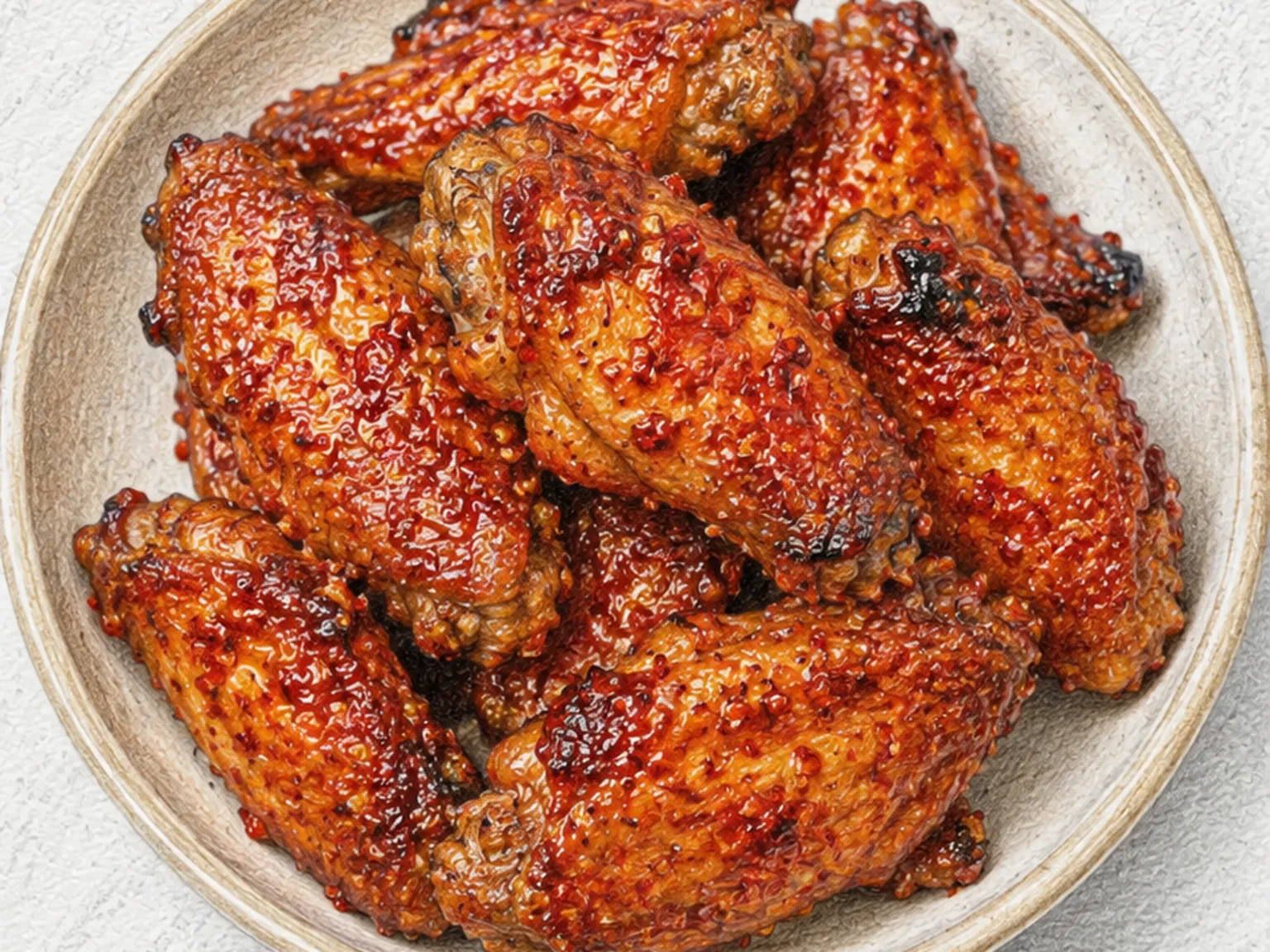
Korean Chili Grilled Wings
Daknalgae-gochugaru-gui is a Korean chili-crusted chicken wing dish tossed in a coarse mixture of gochugaru, soy sauce, cooking wine, oligosaccharide syrup, minced garlic, and ginger powder, then grilled or pan-fried until the surface crisps. Unlike smooth gochujang, the coarse gochugaru particles cling to the chicken skin and crisp up during cooking, forming a textured, spicy crust on the surface, while the oligosaccharide syrup melts and binds those flakes firmly to the skin. The cooking wine neutralizes any gamey odor from the chicken and, as the alcohol evaporates, carries the garlic and ginger aromatics across the surface. A final blast of high heat lightly singes the chili flakes, adding a smoky dimension to the heat. Black pepper scattered over the top introduces another layer of sharpness that makes the overall heat more complex. Marinating the wings for at least thirty minutes before cooking allows the seasoning to penetrate the meat, yielding a deeper flavor once grilled. An air fryer at 200 degrees Celsius for 18 to 20 minutes produces an even crispier result than pan grilling.
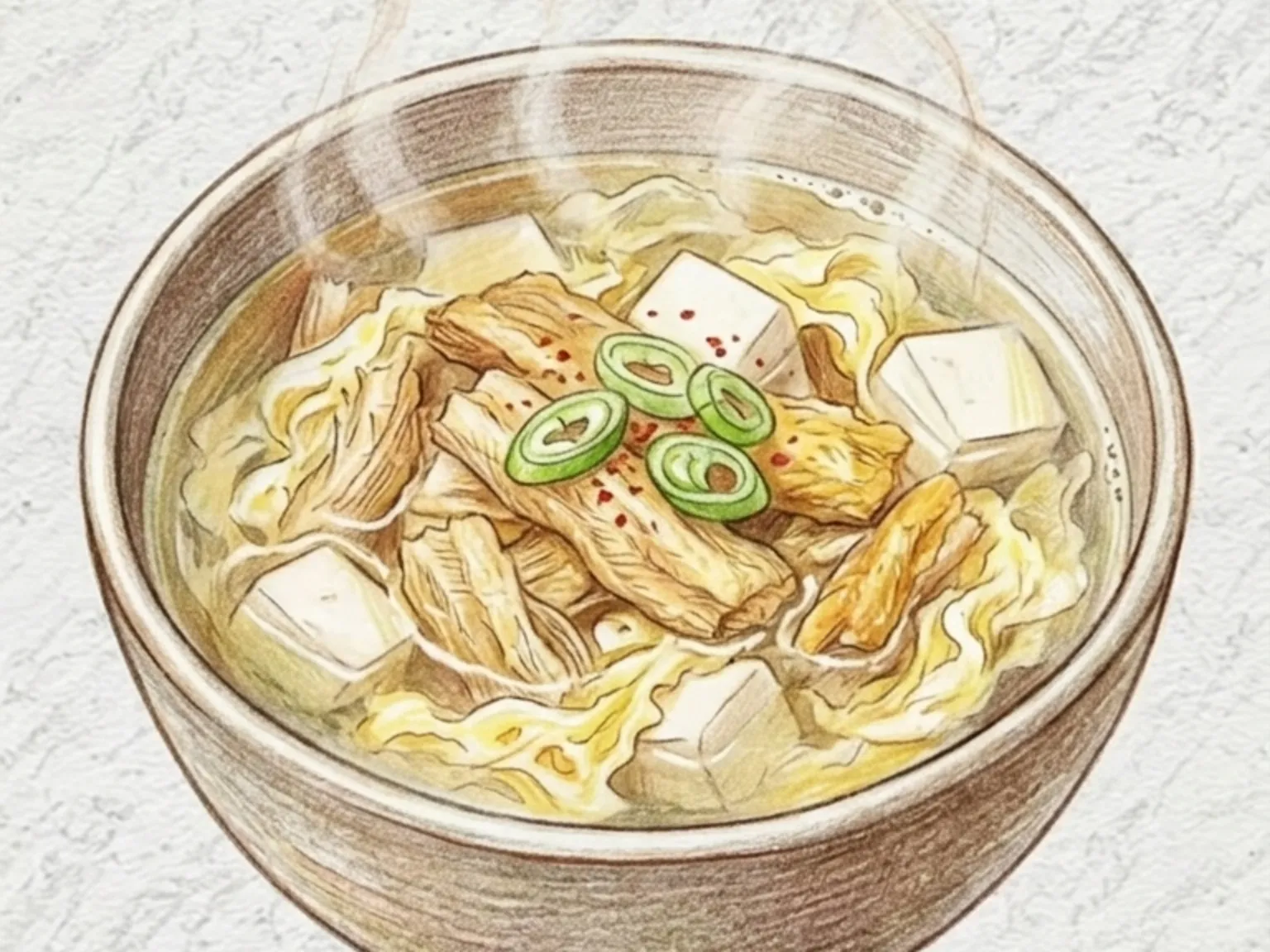
Bugeoguk (Korean Dried Pollack Hangover Soup)
Bugeoguk is a traditional Korean dried pollack soup, widely consumed as a restorative hangover cure. The preparation starts by soaking dried pollack strips in water, removing any bones, and stir-frying them in sesame oil. This stir-frying step is essential to release a rich, nutty flavor that forms the foundation of the broth. Water is then added and brought to a boil, and the rising foam is skimmed off to ensure a clear broth. The soup is simmered with tofu, soup soy sauce, and minced garlic to build depth. Near the end of cooking, beaten eggs are poured into the pot in a circular motion to create soft ribbon-like strands, finished with sliced green onions and a pinch of salt. Substituting the freeze-dried variety, hwangtae, offers a softer texture and deeper umami. It is a light and comforting soup that is gentle on the stomach.
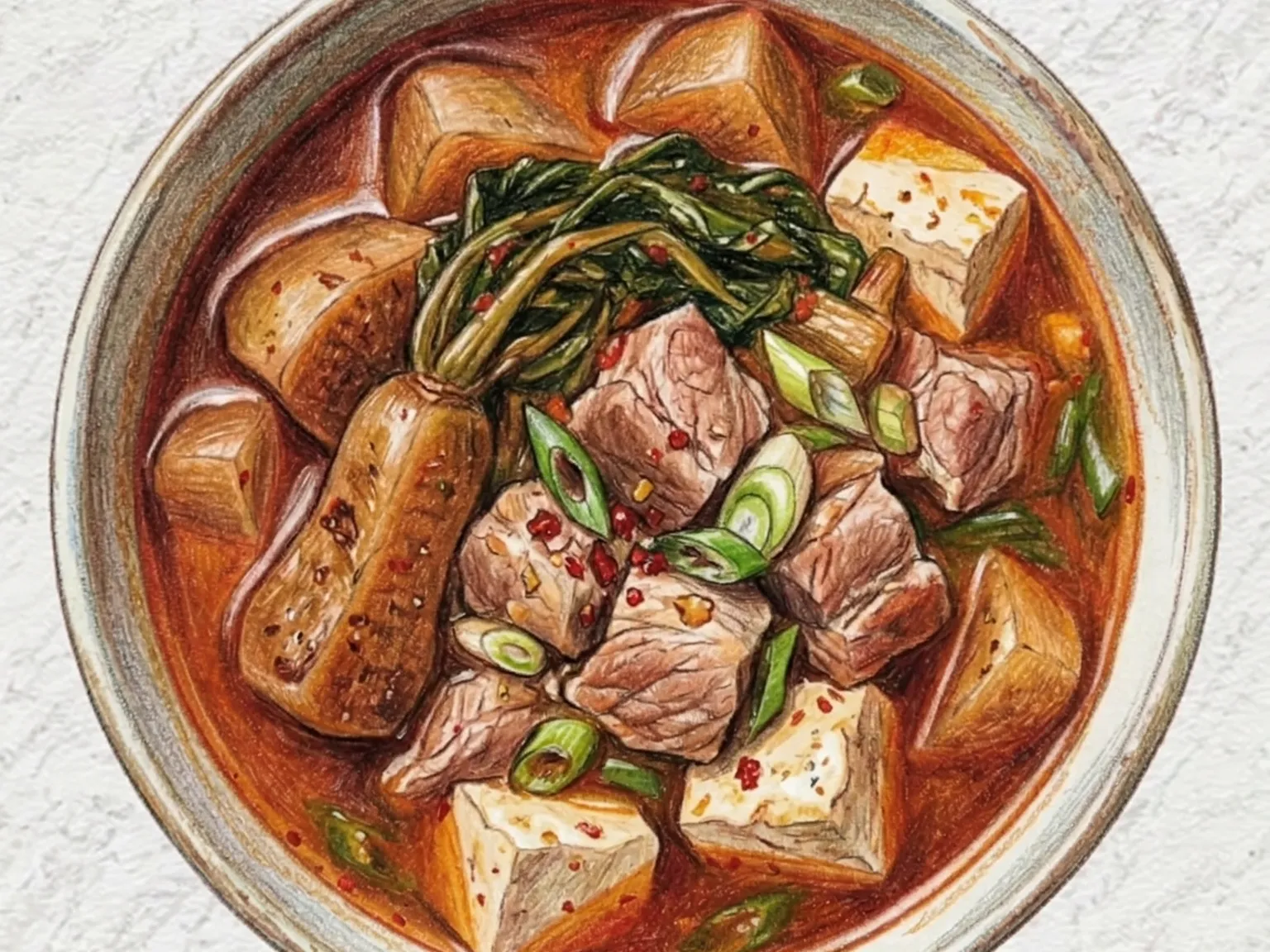
Korean Young Radish Kimchi Stew
This recipe introduces a Korean kimchi stew made with young radish kimchi, called chonggak kimchi, instead of the traditional cabbage version. Ponytail radish pieces are unique because they retain their firm, crunchy bite even after long simmering. The preparation starts by sauteing pork shoulder with a portion of the kimchi brine for three minutes to eliminate gamey odors and keep the broth clear. Next, the sliced chonggak kimchi, water, and the remaining brine are added to simmer for fifteen minutes until the radish turns translucent. Onion, gochugaru, and minced garlic are then stirred in to deepen the red color and tanginess. Thick tofu slices and green onions are placed on top in the final three minutes of cooking. This stew combines the sourness of fermented radish and the savory richness of pork for a hearty meal.
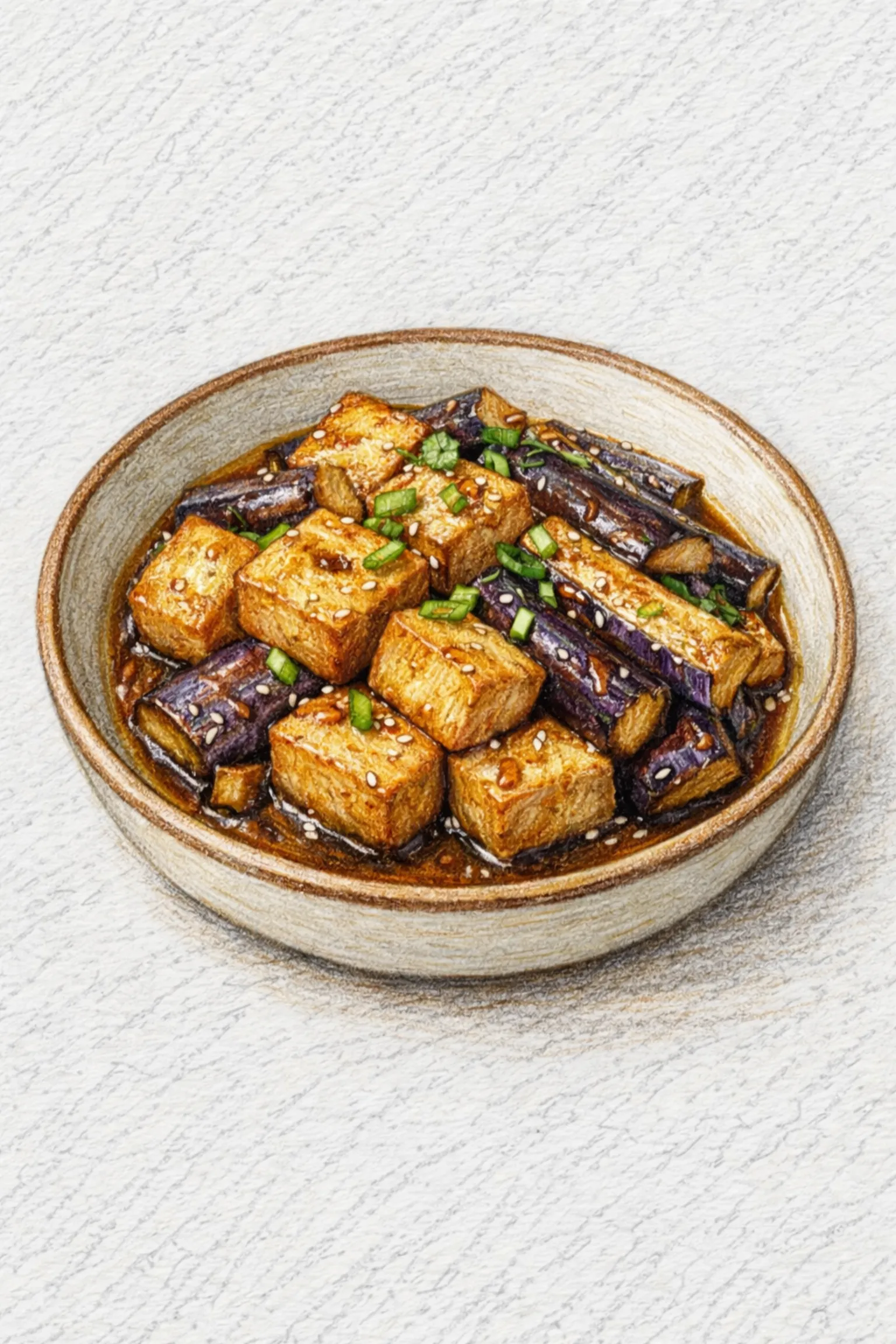
Korean Braised Eggplant and Tofu
Gaji dubu jorim combines eggplant and firm tofu braised together in a soy sauce and gochugaru seasoning. The eggplant soaks up the sauce and turns silky soft, while the pan-seared tofu holds its shape with a slight firmness on the outside. Garlic and green onion round out the flavor, creating a lightly spicy, umami-rich side dish. Salting the eggplant briefly before cooking draws out excess moisture so the pieces absorb the seasoning more deeply without falling apart during braising. Draining the tofu and pan-frying it on both sides before adding it to the sauce keeps the blocks intact and gives the surface a slightly chewy resistance against the tender eggplant. A practical vegetarian-friendly banchan that delivers both protein and vegetables without any meat.
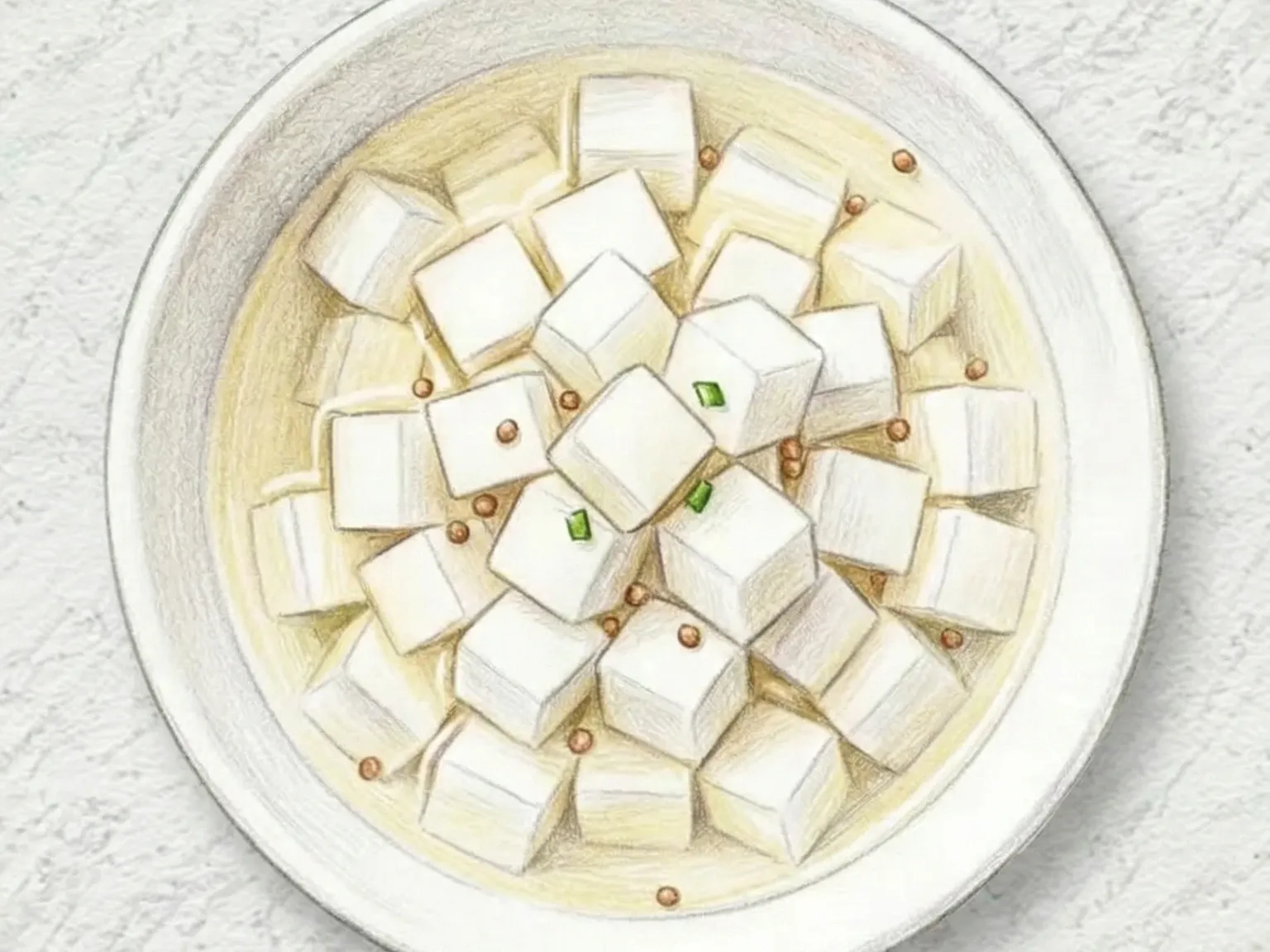
Chicken Mu (Korean Fried Chicken Radish Pickle)
The crunchy, sweet-sour radish pickle served with every order of Korean fried chicken - now easy to make at home in under 15 minutes. Cubed radish is submerged in a cooled brine of vinegar, sugar, salt, and whole black peppercorns. Using fully cooled brine rather than hot is critical for maintaining the radish's firm, snapping crunch. Ready to eat after one day of refrigeration, its bright acidity cleanses the palate between bites of crispy chicken. Stored in a glass jar, this pickle keeps for over a week.
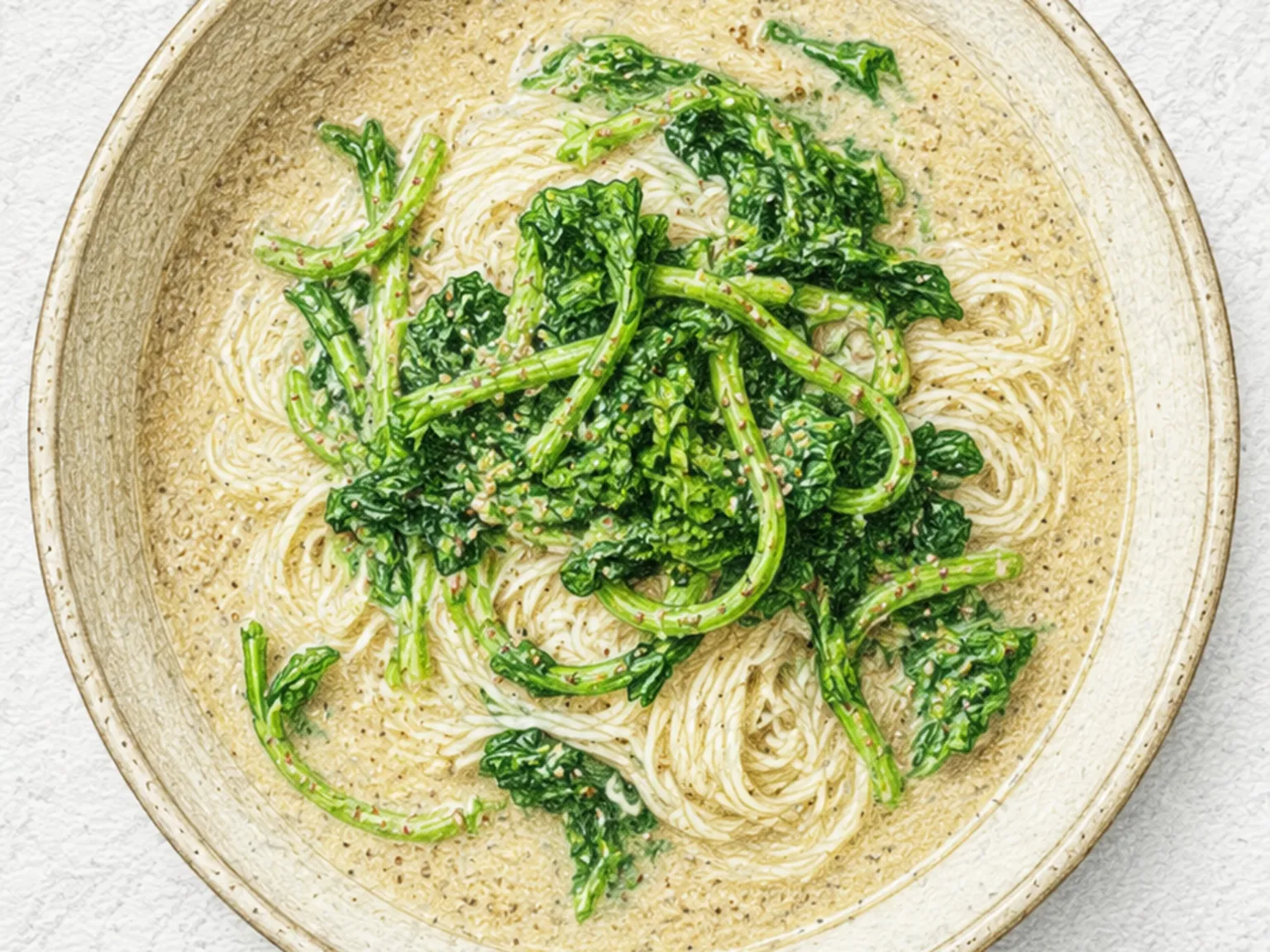
Korean Perilla Noodles with Aster Leaves
Chwi namul, a wild aster green gathered in spring, is blanched and rinsed in cold water to temper its bitterness before being seasoned lightly with soup soy sauce. Ground perilla seeds are stirred into the broth, turning the liquid a milky white and giving it a toasted, nutty weight that holds against the herbaceous bite of the greens. The perilla richness subdues the sharpest edge of the bitterness while leaving the wild mountain aroma intact so each mouthful reads clearly as foraged rather than cultivated. Soup soy sauce adds only enough seasoning to tie the elements without masking any of the natural fragrance. Somyeon wheat noodles, soft and fine-stranded, bridge the greens and the broth without competing with either. Spring-harvested chwi namul carries the most pronounced aroma, and a thorough rinse after blanching controls the bitterness to a palatable level. The resulting bowl is understated and seasonal, built on the flavor of a single wild ingredient.
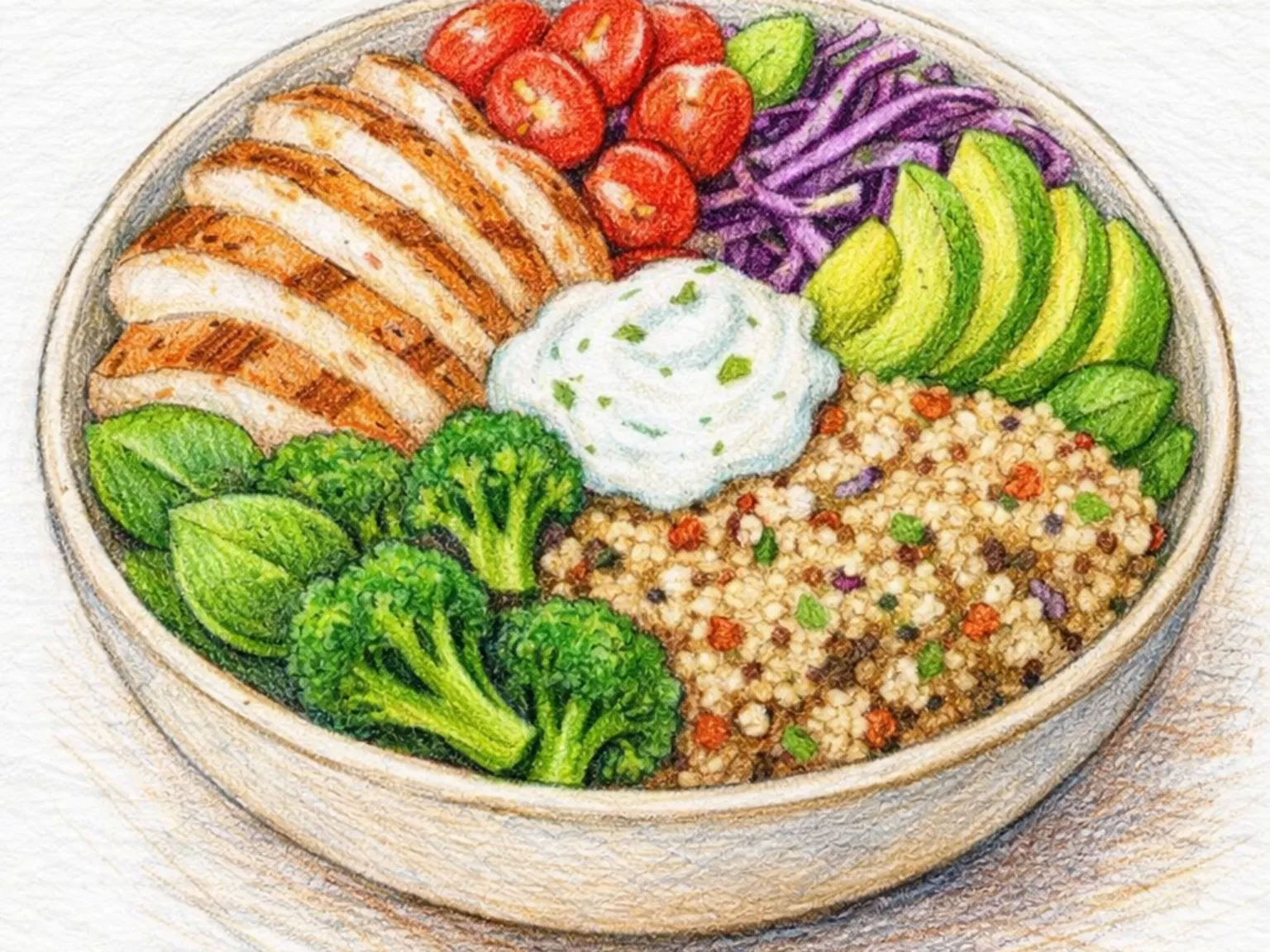
Chicken Quinoa Power Salad
Chicken quinoa power salad brings together pan-seared chicken breast, quinoa simmered for 12 minutes then cooled, romaine lettuce, cucumber, and bell pepper in a single bowl built for a complete, balanced meal. Resting the chicken for three minutes after searing gives the juices time to redistribute inward so every slice stays moist rather than losing liquid at the cut surface. Rinsing the quinoa before cooking removes saponins that leave a bitter residue even after boiling. A dressing of Greek yogurt, lemon juice, and olive oil provides creamy tartness at a low calorie count, and the fermented tang of the yogurt complements the raw vegetables without overpowering them. Bell pepper's natural sweetness adds color and brightness alongside the lean chicken, and the combination of textures - crisp lettuce, tender grain, firm seared meat - makes each forkful more satisfying than its ingredients suggest individually.
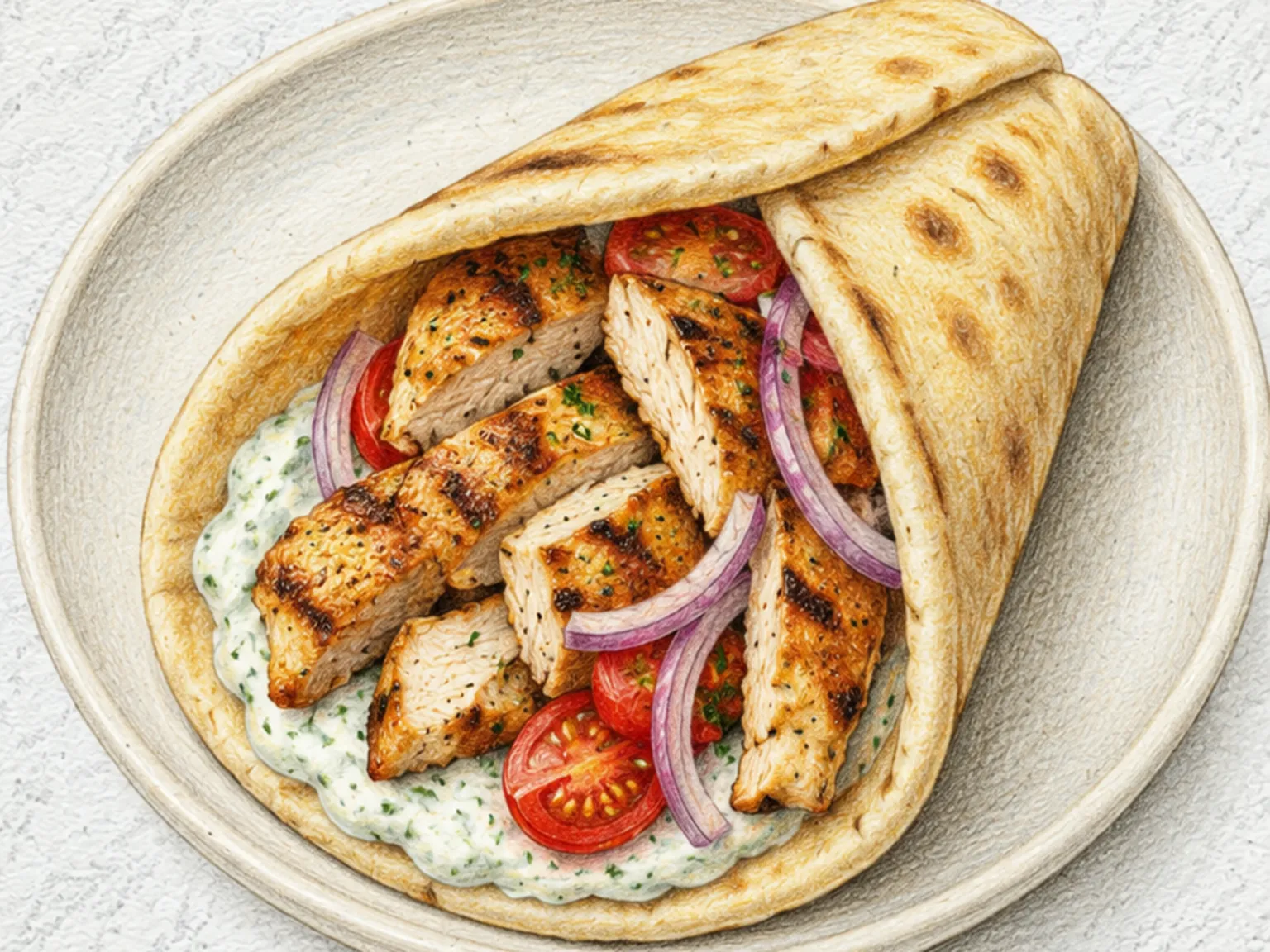
Chicken Gyro
Chicken gyro is a Greek pita wrap in which chicken thigh is marinated in olive oil, lemon juice, salt, pepper, and dried oregano before being grilled or pan-seared until the skin side develops a golden, crisp char. Chicken thigh withstands high-heat cooking far better than breast because its higher fat content keeps the meat moist and tender even when the exterior is well caramelized. Tzatziki is made by squeezing excess water out of grated cucumber and mixing it into plain Greek yogurt with minced garlic, fresh dill, a small pour of olive oil, and a pinch of salt. Its cold, sharp acidity is the necessary counterweight to the richness of the grilled meat, cooling every bite. Thinly sliced red onion adds a pungent crunch while halved cherry tomatoes or diced tomato bring bright juiciness inside the wrap. The pita should be warmed on a dry pan or grill for about thirty seconds per side immediately before assembling so it stays soft and pliable enough to wrap without cracking under the filling. Assembled and eaten immediately, the contrast between the hot, charred chicken and the cold sauce defines the dish.
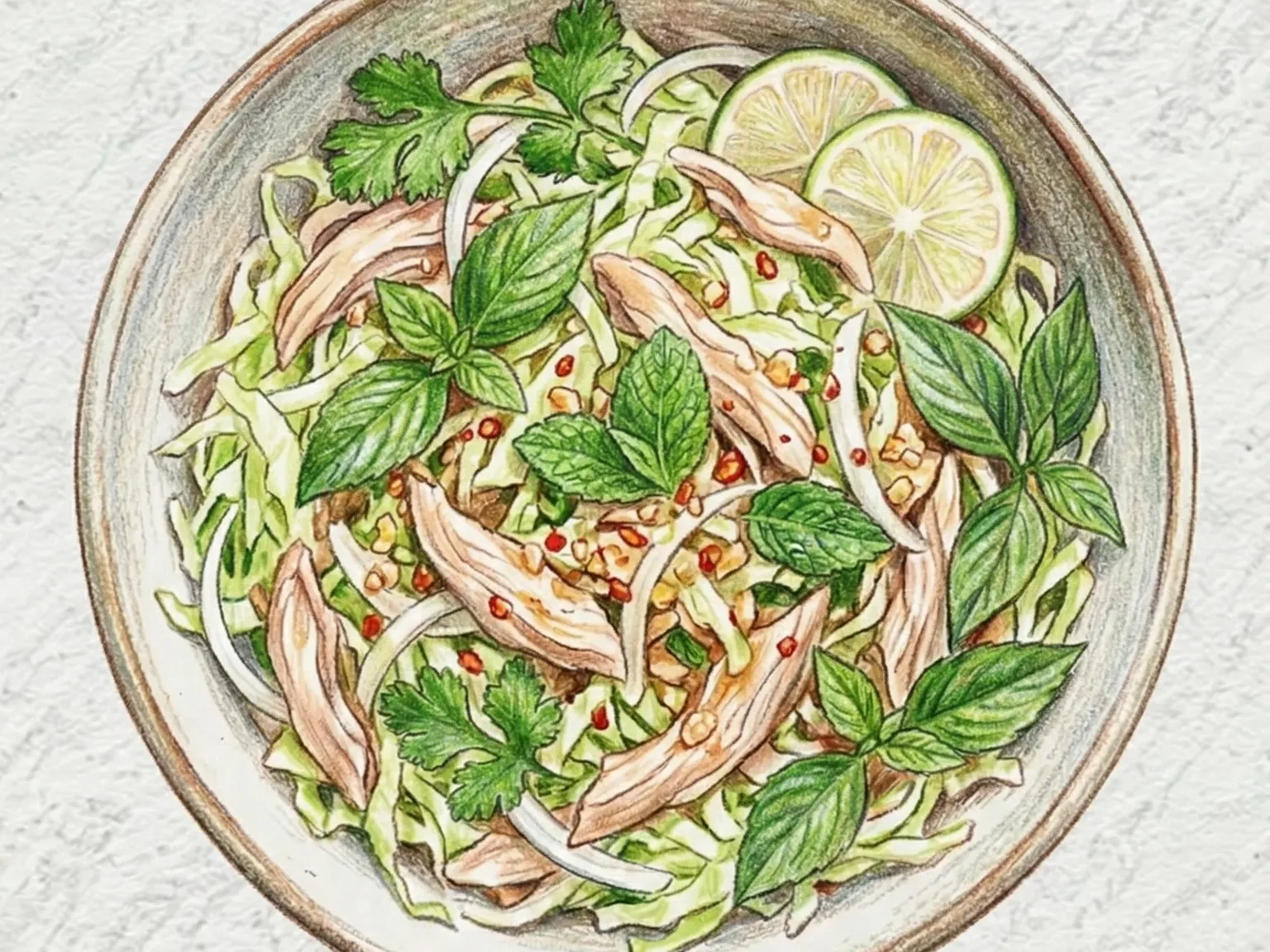
Vietnamese Chicken Salad
Goi ga is a Vietnamese chicken salad served throughout the country as a beer snack and appetizer, one of the most practical dishes the cuisine has for hot weather when something cool, sharp, and light is what the body wants. A whole chicken is poached in water until just cooked through, then cooled completely before being shredded by hand along the grain. Hand-shredding rather than knife-cutting matters here: the torn fibers create irregular surfaces with greater surface area, so the dressing clings to the meat rather than pooling at the bottom of the bowl, and the textured chew is noticeably different from cleanly sliced chicken. Shredded cabbage, onion, and carrot form the vegetable base, combined with Vietnamese coriander known as rau ram, cilantro, and fresh mint. The dressing is fish sauce, fresh lime juice, sugar, sliced fresh chili, and minced garlic, whisked together until the sugar dissolves. The dressing acidity pulls the chicken out of its mildness, and the fish sauce depth meets the watery crunch of the vegetables to produce a balance that reads as light but not bland. Fried shallots and crushed roasted peanuts scattered over the top add a crunchy layer that makes the salad feel complete rather than spare. At bia hoi, the informal fresh-beer street bars found across Vietnam, goi ga is among the first dishes ordered and typically arrives at the table before the first cold glass is poured.
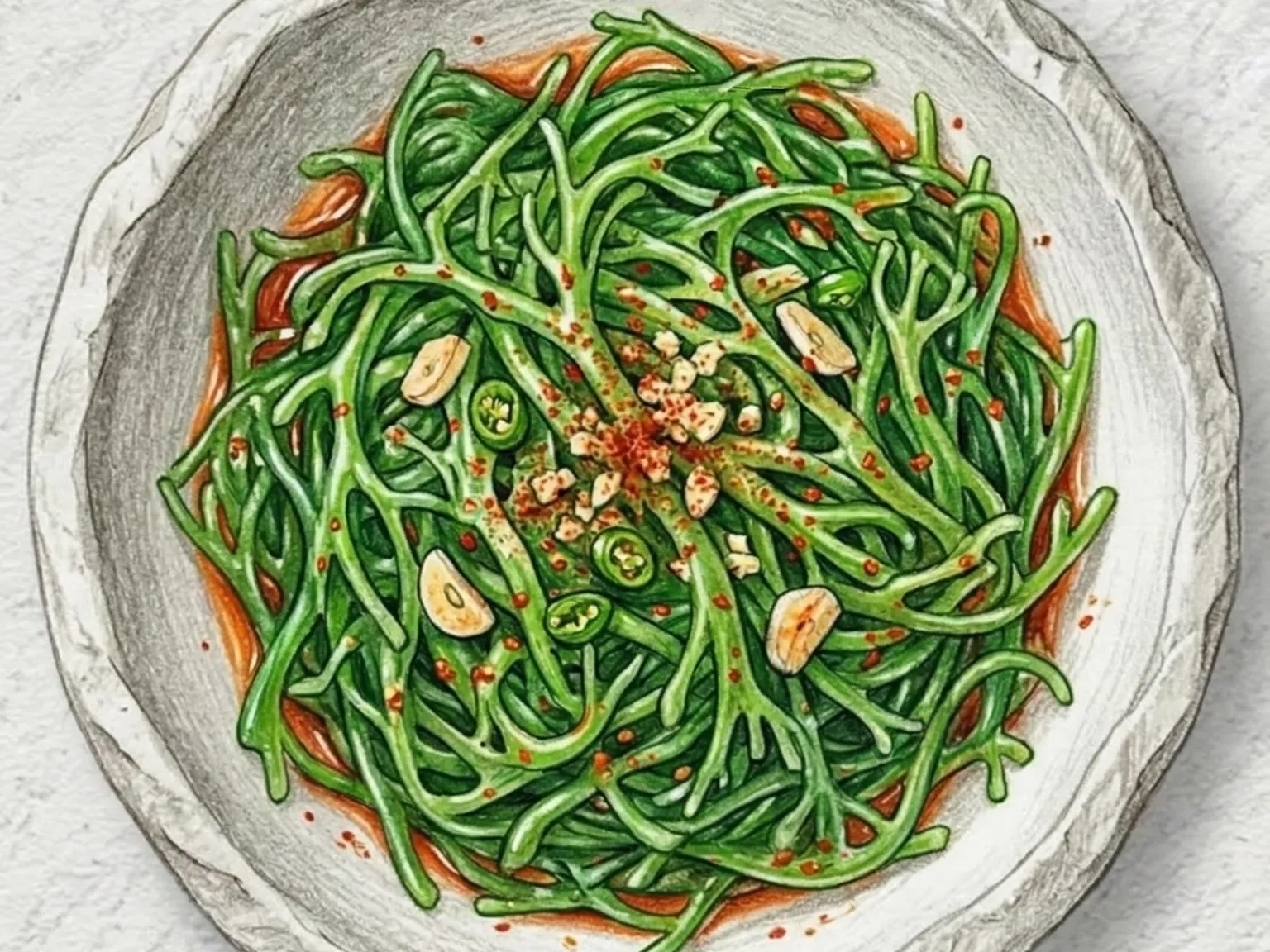
Korean Seasoned Green Seaweed
Cheonggak is a branching green seaweed harvested from the tidal flats of Korea's southern coast, recognizable by its dense, tree-like fronds and a sharp, concentrated oceanic smell. Blanching it in boiling water for exactly ten seconds brightens the color to a vivid green and preserves the cartilage-like crunch that defines the texture. Even a few seconds beyond that and the seaweed begins to collapse, so a timer is worth setting. After blanching, it is rinsed in cold water, squeezed firmly to remove moisture, and cut to finger lengths. The dressing uses vinegar as its leading ingredient alongside soy sauce, gochugaru, minced garlic, and sugar - the acidity of the vinegar dispels the sharp brininess of the seaweed and gives the finished dish a clean, refreshing quality. The seasoned cheonggak must be served immediately; within a few hours the seaweed releases liquid and the texture deteriorates beyond recovery. It appears in coastal markets across Jeollanam-do from midwinter through early spring and is absent from shelves the rest of the year.
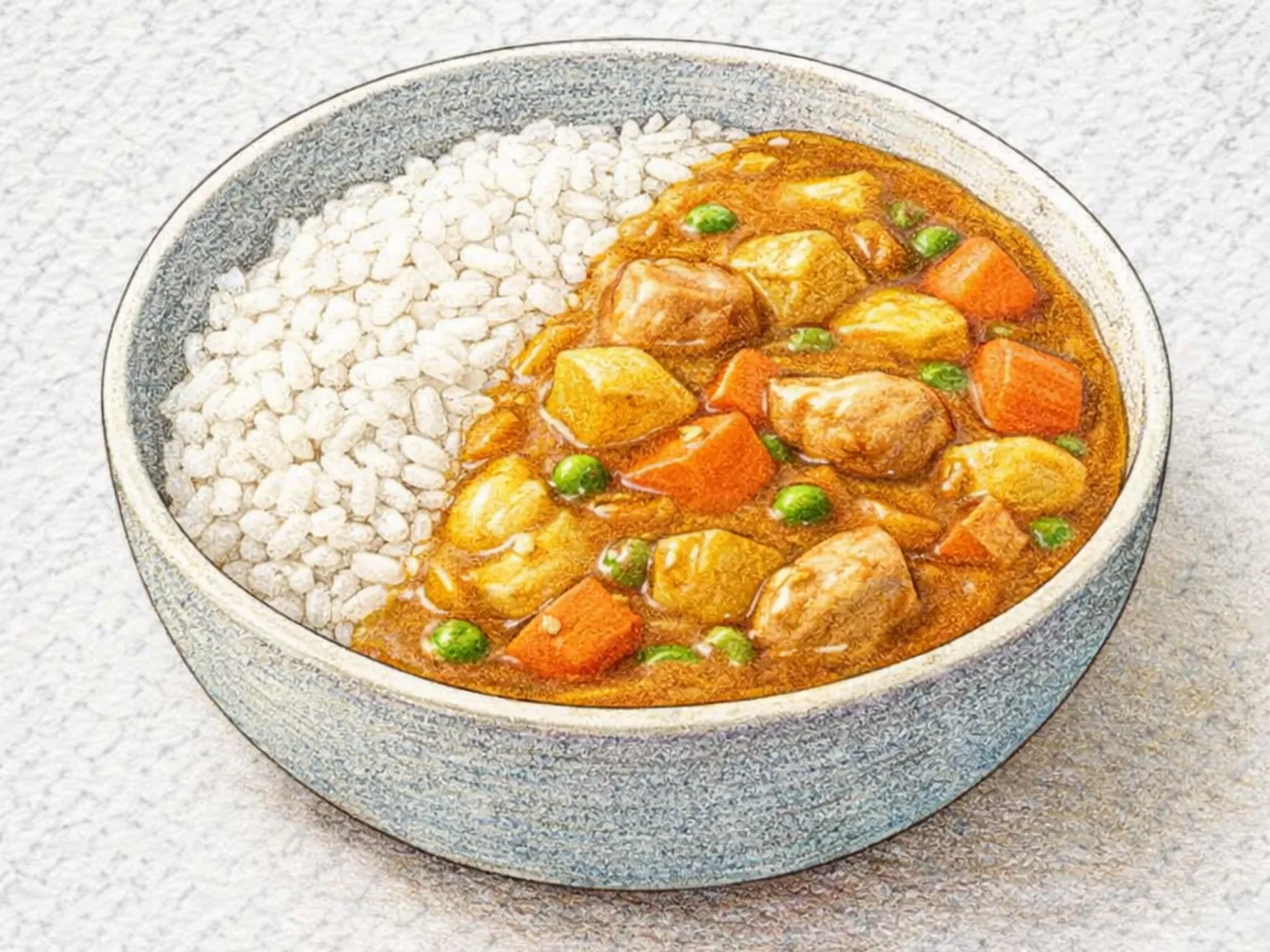
Chicken Curry Rice
Chicken curry rice is a Japanese-style curry where bite-sized chicken thigh, potato, carrot, and onion simmer together until the curry roux melts into a thick, glossy sauce. The spice blend is gentle rather than fiery, with a mellow sweetness drawn from the slowly cooked vegetables. Chicken thigh meat stays moist and succulent even after prolonged simmering, absorbing the curry flavor throughout. The potato pieces break down slightly at the edges, thickening the sauce further and giving it a starchy body that clings to each spoonful of rice. A one-pot format makes it easy to scale -- prepare a large batch and the flavor deepens further overnight as everything continues to meld, making it well-suited for family dinners or weekly meal prep.
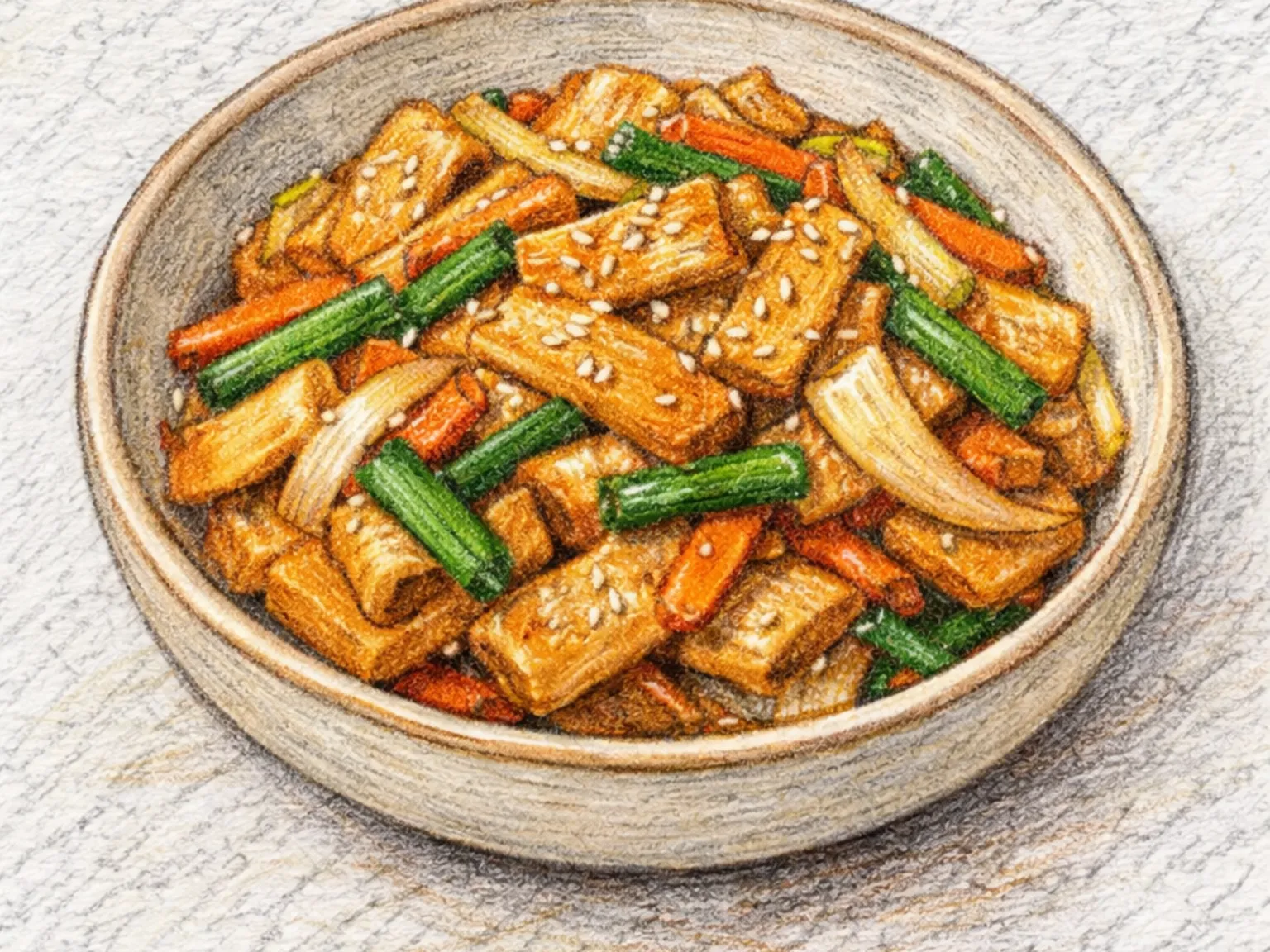
Korean Busan-Style Stir-fried Fish Cake
Busan-style stir-fried fish cake begins with a step that separates it from rushed versions: square fish cake sheets are blanched for twenty seconds in boiling water to remove the residual processing oil from manufacturing. Skipping this produces a flat, industrial greasiness in the finished dish that no amount of seasoning corrects. Oil goes into a hot pan, minced garlic is fried briefly until fragrant, and julienned onion and carrot are added next and cooked for two minutes until their natural sugars begin to release. The blanched fish cake strips go in, followed by soy sauce and oligosaccharide syrup. As the soy sauce hits the hot pan surface, it reduces almost instantly into a thin, glossy glaze that coats every surface; the oligosaccharide syrup caramelizes in the residual heat, building a sweet-salty layer underneath. High heat and a total cook time of three minutes or less is essential - fish cake left on the stove beyond that loses its moisture and turns rubbery. Diagonally sliced green onion goes in at the very end, added off the heat to preserve its fresh bite. A scatter of sesame seeds finishes the dish. Because the flavors are stable at room temperature and do not deteriorate as the dish cools, it is a reliable and practical side dish for packed lunches.

Korean Egg Mayo Toast
Egg mayo toast mashes three hard-boiled eggs with a fork, mixes them with mayonnaise, salt, and pepper, and piles the mixture onto freshly toasted bread. Crushing the eggs to uneven sizes -- some finely mashed, some left in larger pieces -- creates a textural variation between smooth sections and chunks in each bite, which is more interesting than a uniformly smooth paste. The mayonnaise binds the crumbly eggs into a cohesive, creamy spread, and placing the cool egg salad onto hot toast produces a temperature contrast that carries through the entire piece. Adding a small amount of mustard or finely chopped pickles introduces acidity that cuts through the richness of the mayonnaise and prevents the filling from tasting heavy. The eggs should be fully cooled before mashing -- adding mayonnaise to warm eggs causes it to thin out and can make the texture loose and uneven. With these adjustments, a simple combination of three ingredients becomes considerably more satisfying.
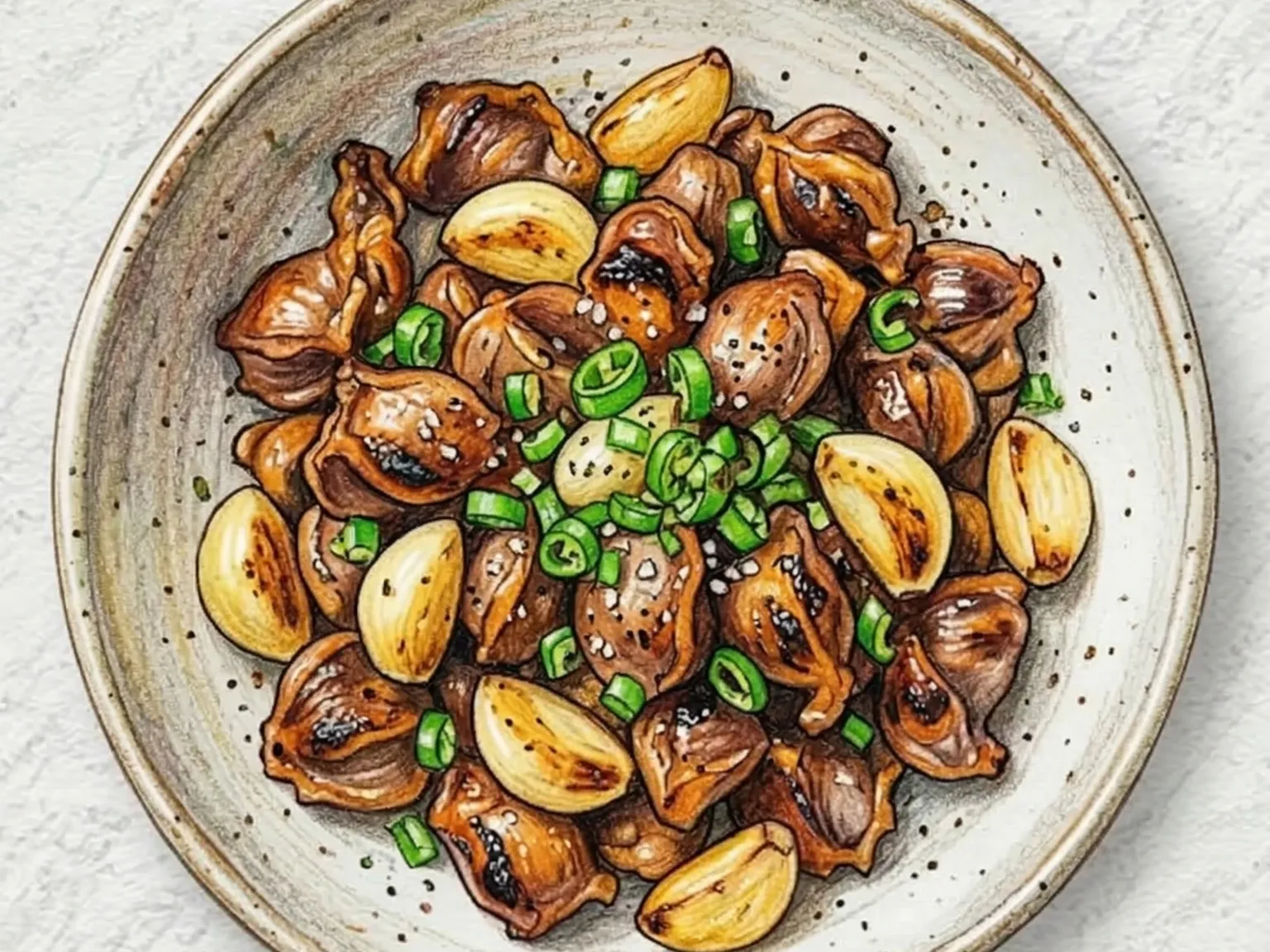
Korean Garlic-Grilled Chicken Gizzards
Dakttongjip-maneul-gui is a Korean dish of chicken gizzards grilled and stir-fried over high heat with whole garlic cloves and cheongyang chili peppers. Gizzards are dense, pure-muscle organs with a firm, satisfying chew that sets them apart from other chicken cuts. Scoring them deeply before cooking opens the compact tissue so heat penetrates evenly and seasoning reaches the interior; a ten-minute soak in cooking wine beforehand removes any off-odor and lets the flavors absorb. Whole garlic cloves cooked alongside the gizzards undergo a visible transformation - the exterior caramelizes to a golden brown while the inside softens and turns almost creamy, converting raw sharpness into a rounded, sweet depth. The seasoning stays deliberately minimal - only salt and black pepper - so the natural flavor of the gizzards remains the focus, with cheongyang chilies providing a brief, clean heat that punctuates each bite without overwhelming the palate. The dish works equally well as an anju with drinks or as a savory side with steamed rice.
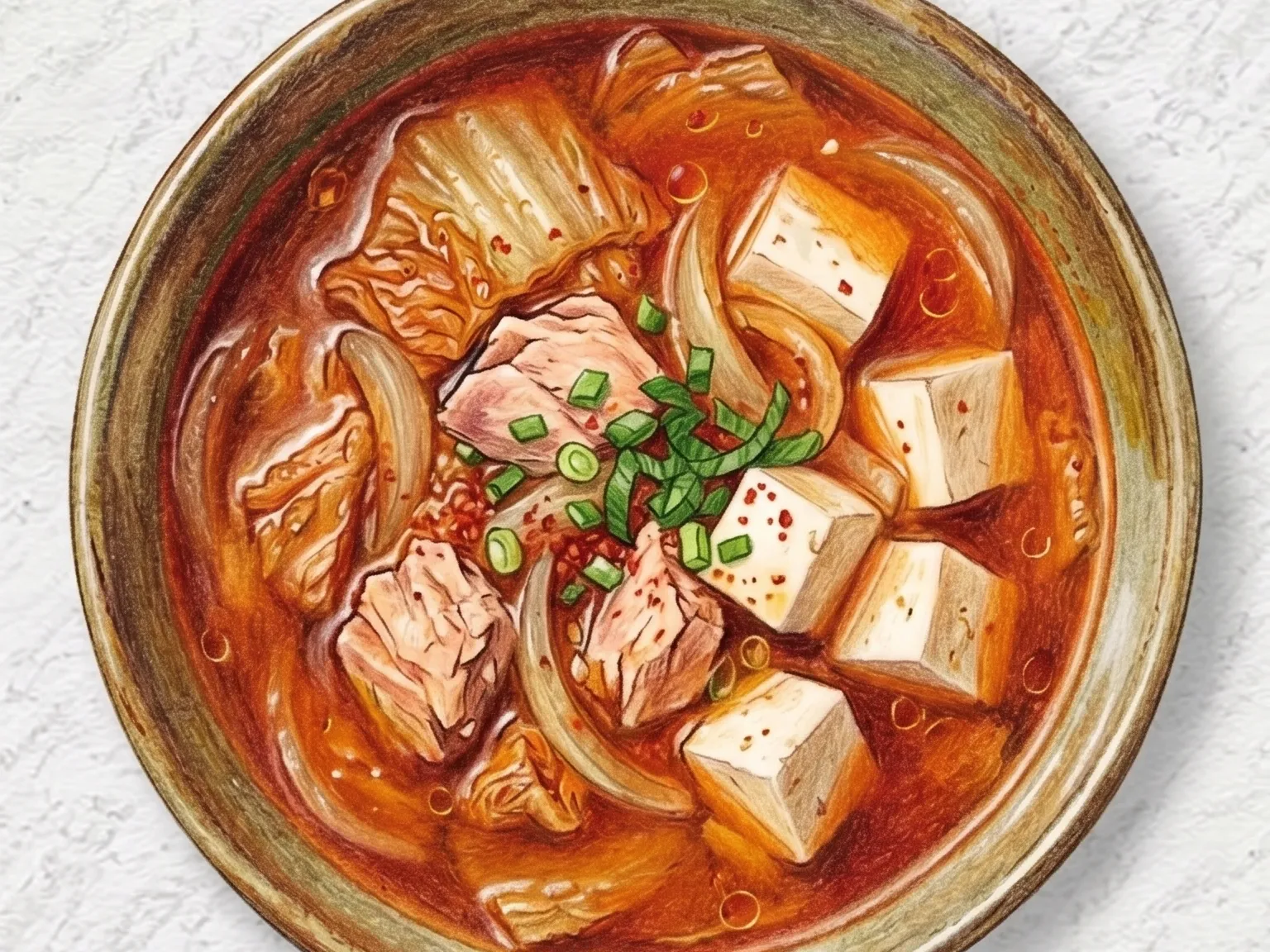
Korean Tuna Kimchi Soup (Spicy Fermented Kimchi and Canned Tuna Soup)
Kimchi goes into the pot first to be stir-fried until its sharp acidity mellows and its aroma deepens, then canned tuna, tofu, onion, and gochugaru are added with water and brought to a simmer. The oil from the tuna disperses through the broth, adding savory depth without any heaviness. Soup soy sauce provides the base seasoning, keeping the stock clean rather than muddy. Tofu is added only after the liquid reaches a full boil so the cubes hold their shape, and a pour of reserved kimchi brine at the end brings both salinity and a second hit of fermented tang that defines the finished broth.