🏠 Everyday Recipes
Simple home-cooked meals for any day
1705 recipes. Page 20 of 72
These are the meals you can cook day after day without getting tired of them. Doenjang jjigae, rolled omelet, spicy pork stir-fry - the kind of home-cooked dishes that fill an ordinary day with comfort.
The beauty of everyday cooking is that it relies on common ingredients already in your fridge. No exotic items, no complicated techniques - just straightforward recipes for satisfying home meals.
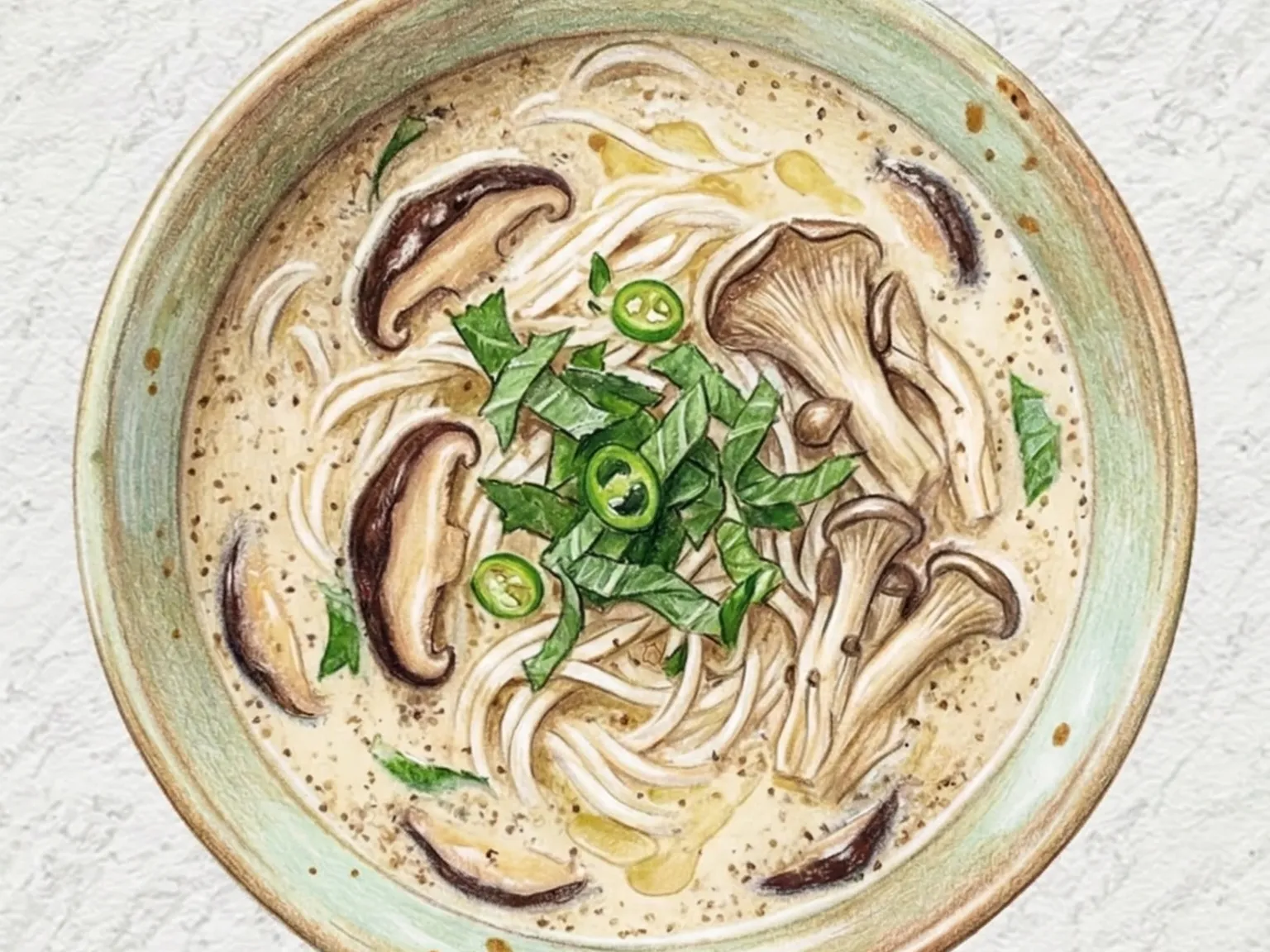
Korean Warm Perilla Mushroom Rice Noodles
Deulkkae beoseot on ssalguksu is a warm Korean noodle soup built on kelp stock simmered with oyster and shiitake mushrooms, then enriched with ground perilla seeds into a creamy, opaque broth. Rice noodles are smoother and more slippery than wheat varieties, sliding through the rich liquid with ease, while the mushrooms provide a firm, chewy counterpoint. Adding the perilla powder at the very end preserves its roasted, nutty fragrance on the surface of each spoonful rather than cooking it off. Soup soy sauce seasons the broth cleanly without the heaviness of fermented soybean paste. Using dried shiitake mushrooms instead of fresh ones and soaking them in cold water first draws out a concentrated mushroom stock that deepens the base significantly. Substituting king oyster mushrooms cut into thick rounds for oyster mushrooms adds more substantial chew. The dish contains no wheat and suits gluten-free diets. It is particularly fitting on cold days as a light but warming meal.
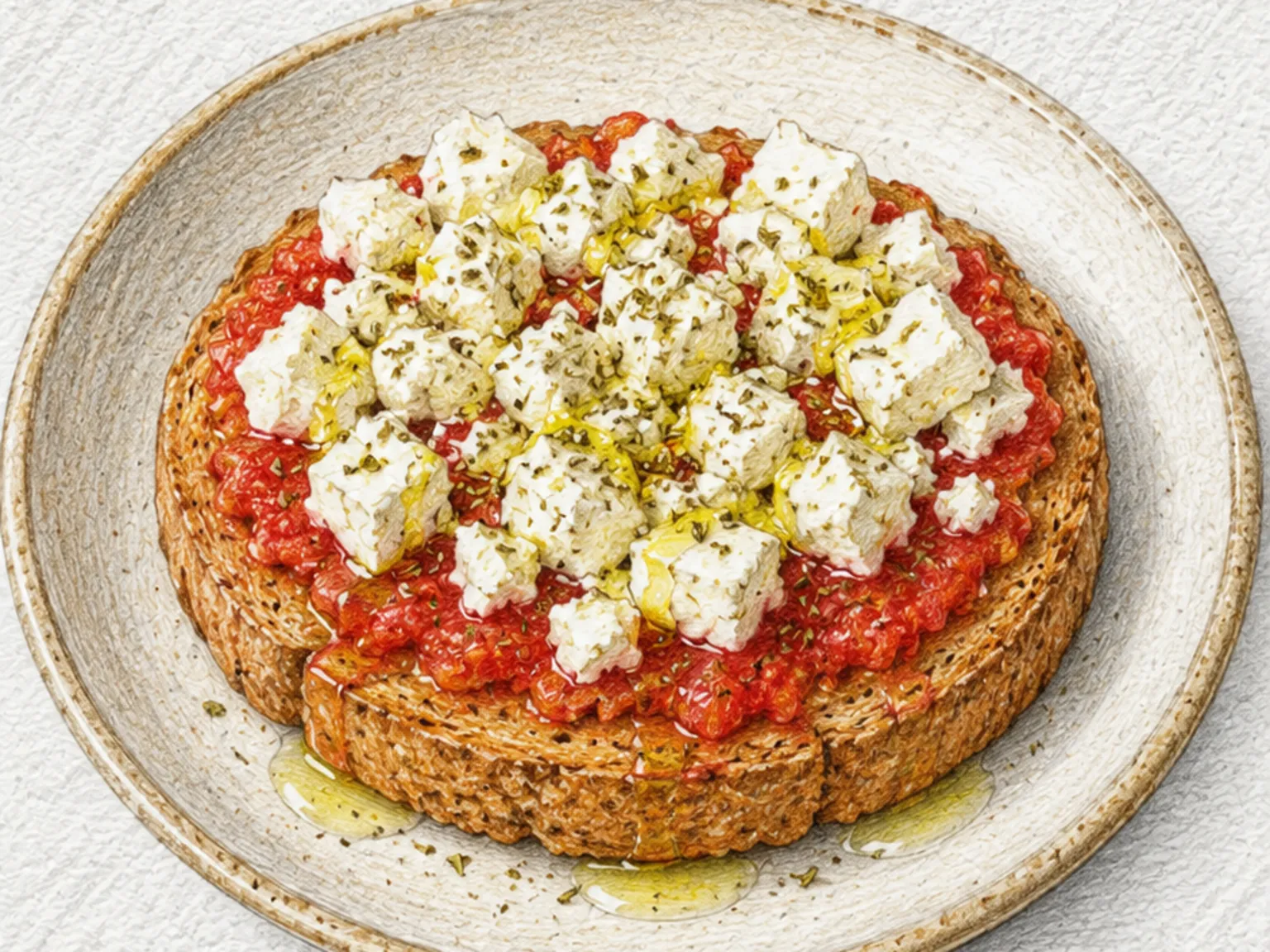
Cretan Dakos Salad (Barley Rusk with Tomato & Feta)
Dakos is a traditional salad from the Greek island of Crete, built on a base of dried barley rusks - thick, twice-baked rounds of bread that have been air-dried to a deep crunch. Ripe tomatoes are grated directly onto the rusk surface rather than sliced, so their juice immediately begins to soften the bread from the inside while the outer rim retains its crunch, creating a textural contrast of crisp edges and a moistened, dense center. Crumbled feta cheese piled on top adds a salty, tangy richness that balances the tomato's acidity, and a generous pour of good olive oil ties the components together. Dried oregano and whole or halved olives complete the dish. Dakos functions simultaneously as a bread course and a salad, and has been part of Cretan summer eating for centuries - a light, satisfying meal that requires no cooking and uses ingredients that thrive in the Mediterranean climate.
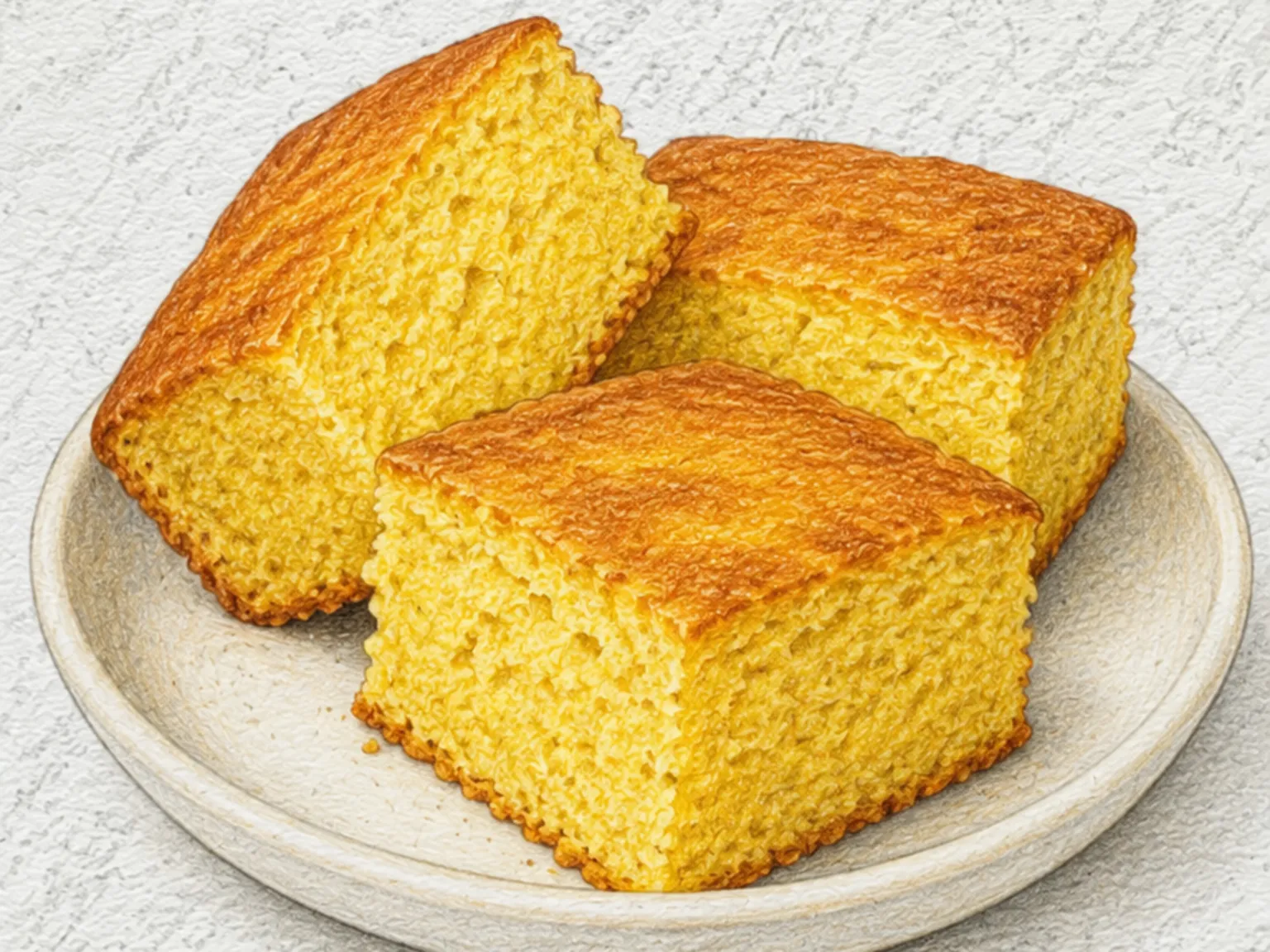
Cornbread
Cornbread is a Southern American quick bread made from cornmeal, flour, sugar, baking powder, milk, egg, and melted butter, baked until golden. Mixing the wet and dry ingredients separately and combining them with minimal stirring prevents overdeveloping gluten, which keeps the crumb tender and moist rather than tough. Baking at 200 degrees Celsius for twenty-two to twenty-five minutes produces a crisp exterior with a lightly sweet, nutty interior characteristic of cornmeal. The bread pairs well with stews, chili, and soups; its coarse grain absorbs broth and sauce effectively, making every bite more flavorful the longer it sits in the bowl.
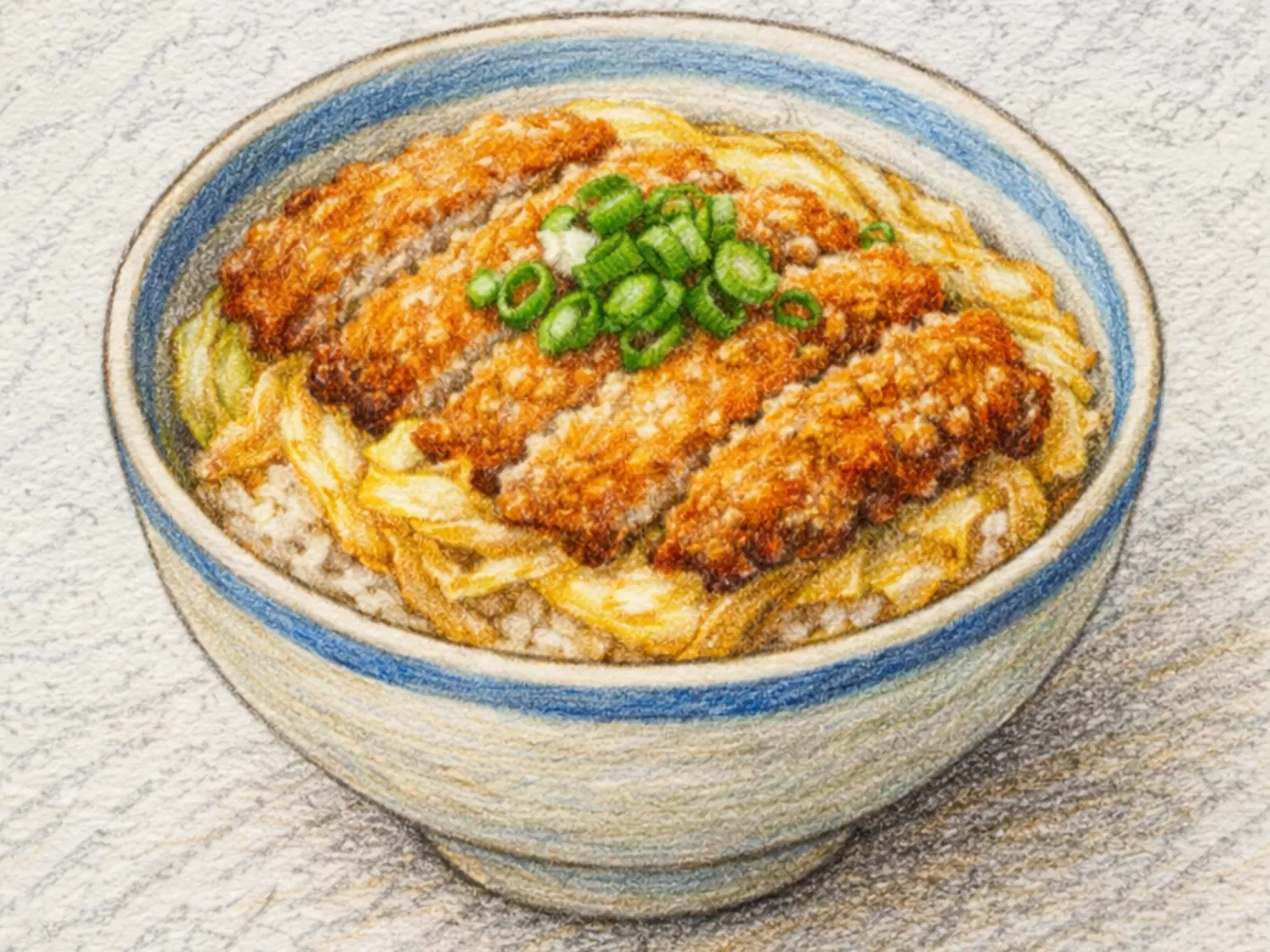
Classic Katsudon (Pork Cutlet Egg Rice Bowl)
Classic katsudon is a Japanese rice bowl that transforms a crispy pork cutlet into something altogether different by simmering it briefly with onion, egg, and seasoned dashi broth. Thinly sliced onion cooks first in a shallow pan of tsuyu -- a combination of soy sauce, mirin, and dashi -- until soft and sweet. The fried cutlet, sliced into strips, is laid into the onion broth, then lightly beaten egg is poured over the top and cooked just until it sets into a custard-like layer. This half-set egg clings to the panko crust, creating a contrast between the still-crunchy edges and the silky coating. The entire mixture is slid onto a bowl of steaming rice, where the savory broth soaks into the grains. In Japan, katsudon is traditionally eaten before exams or competitions as a good-luck ritual. Pulling the pan off the heat within thirty seconds of covering it keeps the egg in that soft, barely-set state -- overcooking turns the layer rubbery and loses the signature texture entirely.
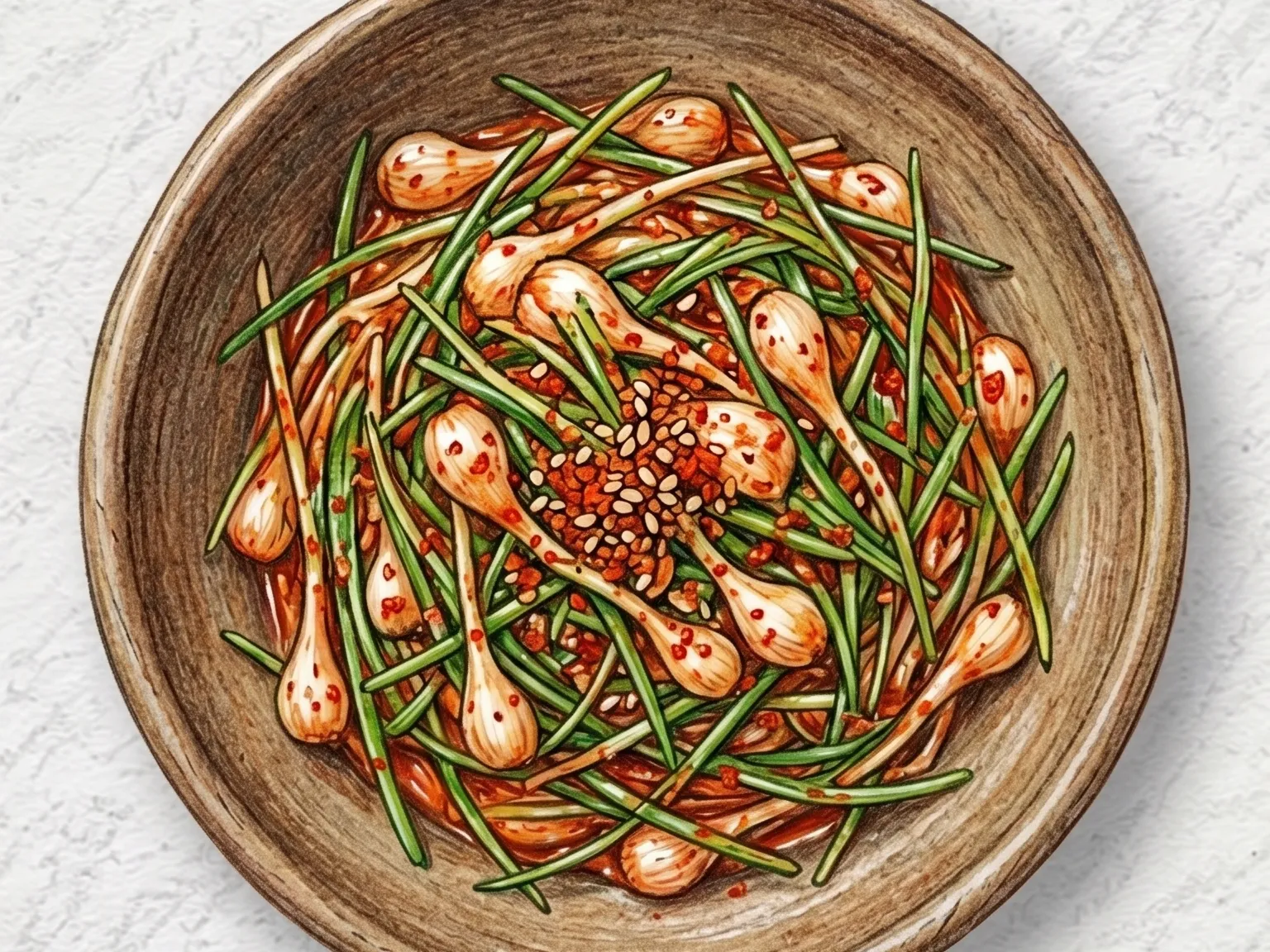
Korean Seasoned Wild Chive
Dallae-muchim is a raw spring side dish made from Korean wild chives dressed in soy sauce, gochugaru, vinegar, sugar, and sesame oil -- one of the clearest markers that spring has arrived. Dallae emerges from hillsides in March, finer in stem than cultivated chives and carrying an intensely sharp, garlic-like aroma that vanishes almost immediately when cooked, which is why the herb is always used raw. The small bulbs and slender leaves are washed root-and-all, cut to three or four centimeters, and tossed in the seasoning just before serving. The result is a pungent, nose-clearing mouthful that contrasts directly with the deep, fermented warmth of doenjang-jjigae when the two are eaten together. The season for dallae is brief -- a few weeks in early spring -- making this banchan one of the more fleeting pleasures of the Korean table.
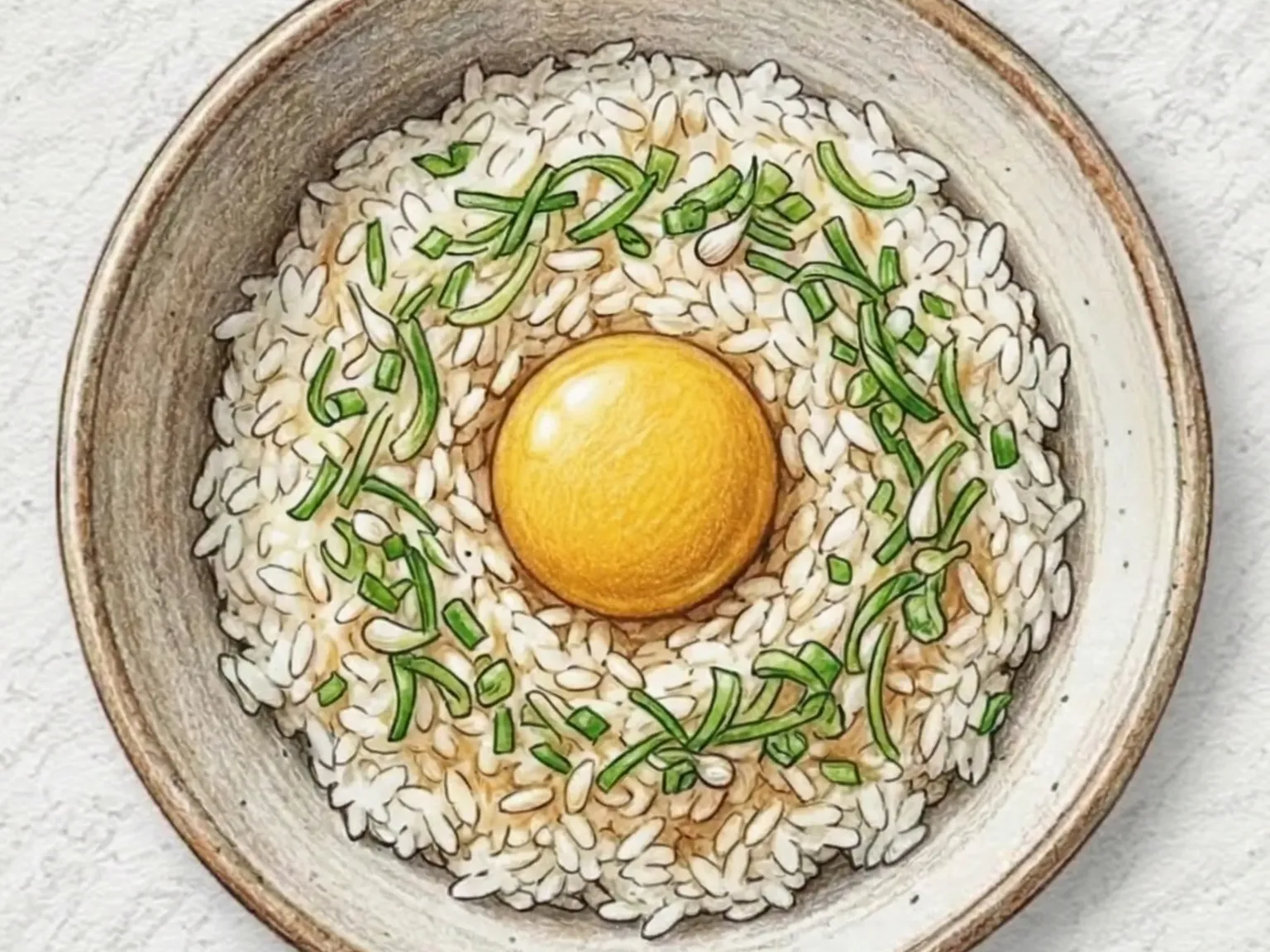
Korean Wild Chive Soy Butter Rice
Dallae ganjang butter bap is a Korean one-bowl meal that comes together in under ten minutes by folding melted butter, soy sauce, and wild chives into warm rice. The butter coats each grain with richness, soy sauce provides a salty backbone, and the wild chives, called dallae, deliver a sharp, garlicky bite that lifts the bowl out of plainness. A raw egg yolk placed on top breaks into a golden sauce when stirred in, binding the ingredients into a velvety mixture. The chives are best in spring when their pungency is at its peak, and they need only twenty seconds in the buttered pan to release their aroma before the heat drives it off. With just a handful of pantry staples, this dish fills the gap on evenings when the refrigerator offers little else. Green onion or garlic chives can substitute for dallae, but the particular sharpness of wild chives is unique and worth seeking out when spring is in season.
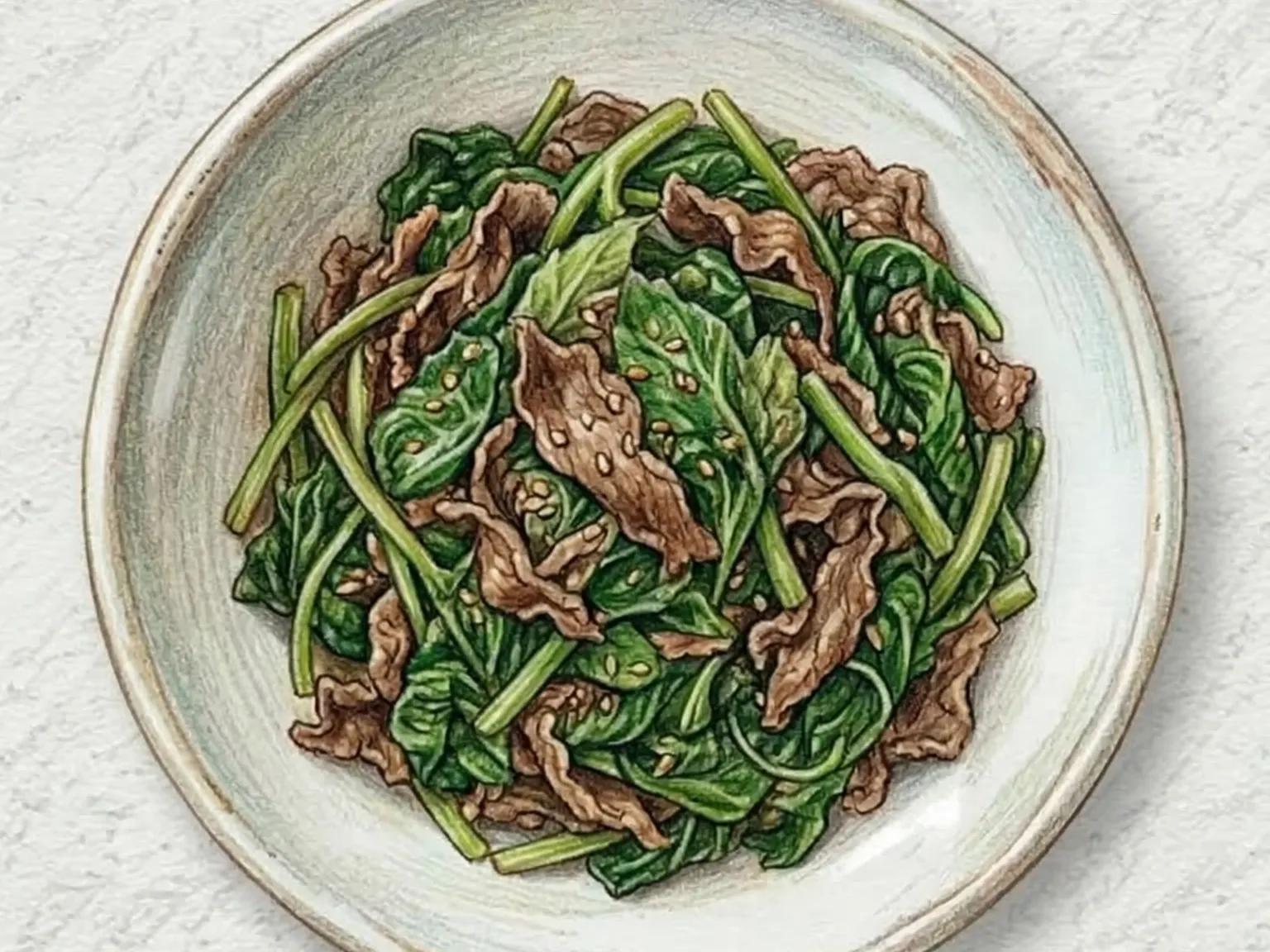
Korean Aster Greens Beef Stir-fry
This stir-fry brings together fragrant chwi-namul wild greens and thinly sliced bulgogi-cut beef on a single plate, where the greens' herbal bitterness meets the meat's savory depth. Pre-seasoning the beef with soy sauce and cooking wine means that as the meat cooks, the seasoning transfers into the greens without the need for additional salt at the end. Onion softens during cooking, releasing sweetness that takes the edge off the overall saltiness and rounds the flavor. A finishing drizzle of perilla oil adds a distinctly Korean nuttiness, and whole sesame seeds scattered on top provide small pops of texture throughout each mouthful. This banchan works as a hearty, protein-rich complement to an otherwise vegetable-heavy table, substantial enough to serve as a main side dish alongside steamed rice.
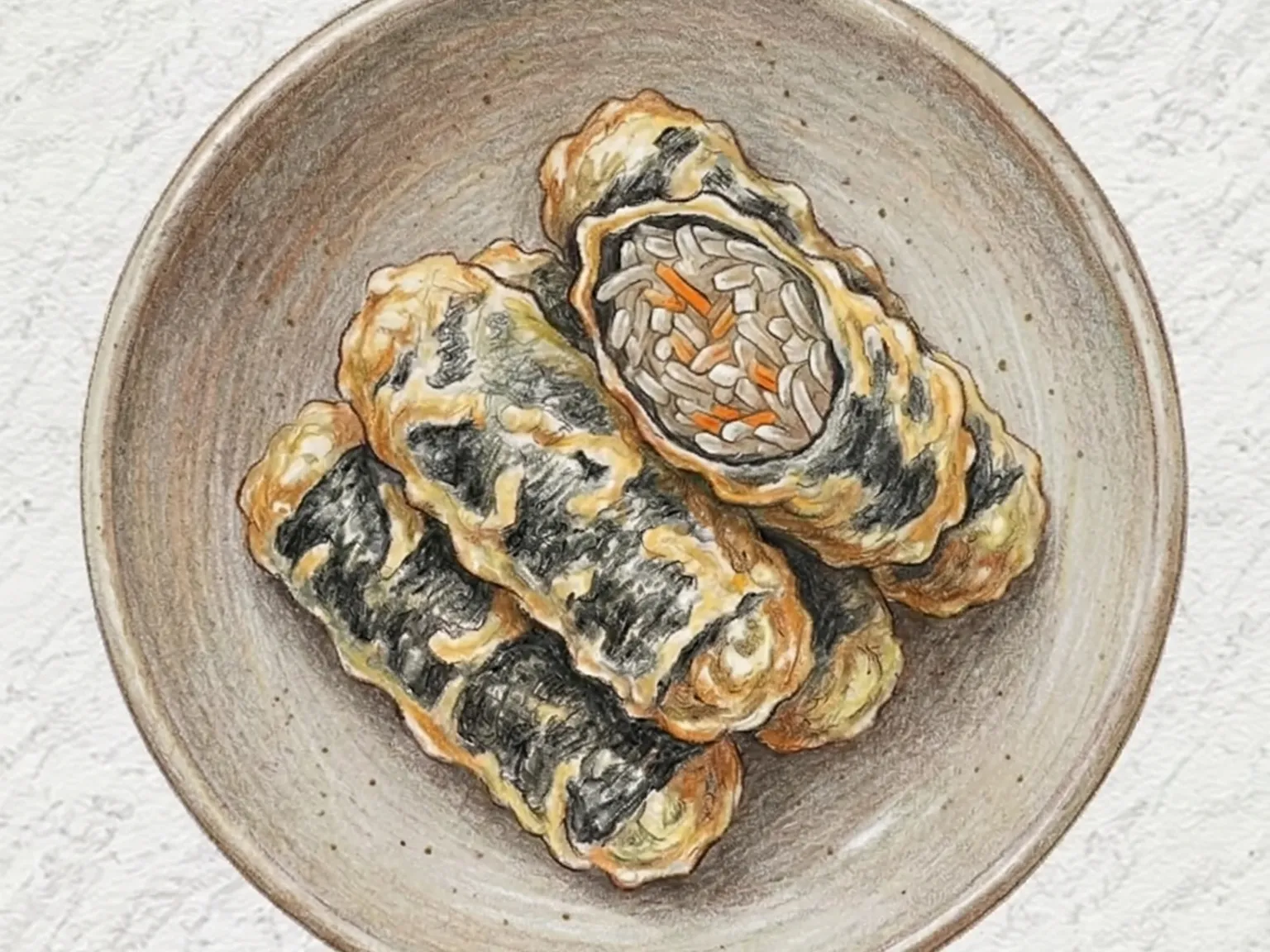
Korean Deep-Fried Seaweed Rice Roll
Gimmari is a Korean street snack of glass noodles seasoned with soy sauce and sesame oil, rolled tightly inside sheets of dried seaweed with julienned carrot and onion, then coated in a light batter and deep-fried until golden. At around 160 degrees Celsius, the seaweed barely absorbs oil during frying, crisping into a thin, taut shell while the glass noodles inside retain their characteristic springy, chewy pull. The first bite delivers the simultaneous crunch of the fried coating and the intensified savory depth of the toasted seaweed, followed by the elastic bounce of the glass noodles and the underlying soy-sesame seasoning that runs through the filling. One of gimmari's more notable qualities is the way high-heat frying concentrates the seaweed's natural umami, making the wrapper more flavorful than it would be raw. The classic accompaniment is tteokbokki sauce: the tangy, gochujang-based spice of the sauce against the crisp exterior creates one of the most iconic pairings in Korean street food. Eomuk broth on the side rounds out the combination, and the trio of gimmari, tteokbokki, and eomuk is essentially the standard order at any Korean bunsik stall.
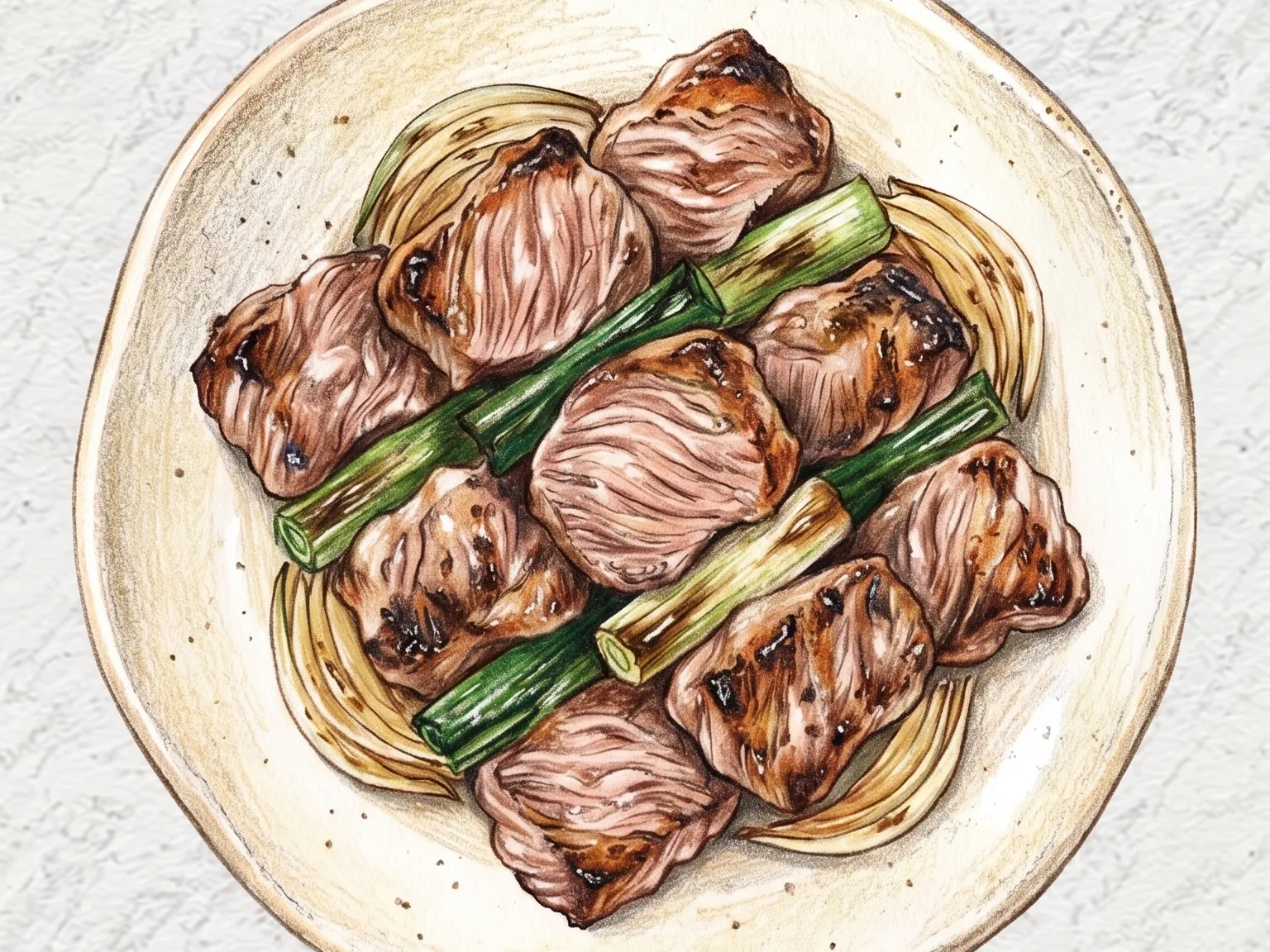
Korean Grilled Pork Cheek
Dwaeji bolsal gui is a Korean grilled pork cheek dish in which the cheek meat is marinated in soy sauce, minced garlic, and ginger for at least 30 minutes before being seared quickly over high heat. The cheek is the muscle used constantly for chewing, which produces an exceptionally fine-grained texture with dense collagen throughout. Slicing through a piece reveals alternating layers of fat and lean, so the richness shifts with each bite. High heat is non-negotiable for this cut. A hot surface triggers the Maillard reaction, building a well-browned crust while the interior stays juicy. Cooking the same cheek over low heat for an extended time breaks down the collagen completely, leaving the meat soft and flabby rather than springy. Grilling sliced onion and green onion in the same pan and layering them with the cooked pork sharpens the overall flavor, the pungent vegetables cutting through the cheek's deep meatiness.
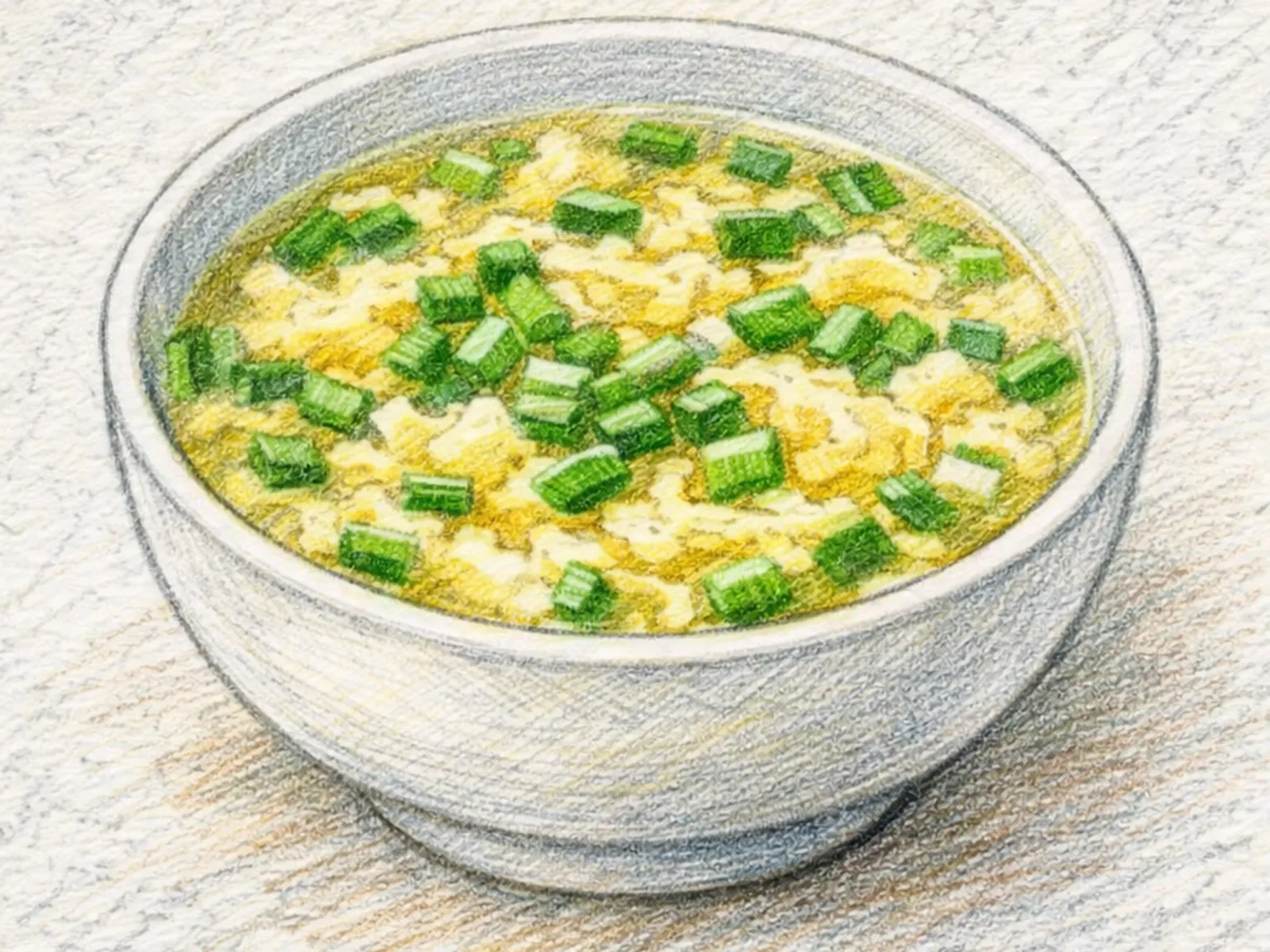
Korean Scallion Egg Soup (Quick Two-Ingredient Clear Broth)
Daepa gyeran-guk is a Korean scallion and egg soup that comes together in under ten minutes with just two main ingredients. Adding the green onion in two separate stages is what gives the broth complexity: the first portion simmers for three minutes, sweetening and deepening the stock, while the second goes in raw at the very end for a sharp, grassy bite. The egg must be drizzled in a thin, steady stream over reduced heat and left completely undisturbed for thirty seconds - this produces silky, delicate ribbons rather than broken scrambled pieces. Adding the egg over high heat or stirring immediately causes the broth to turn cloudy and the egg to clump. Soup soy sauce seasons the broth cleanly without darkening it, and a single drop of sesame oil finishes the bowl with a subtle, nutty fragrance that underscores the sweetness of the green onion.
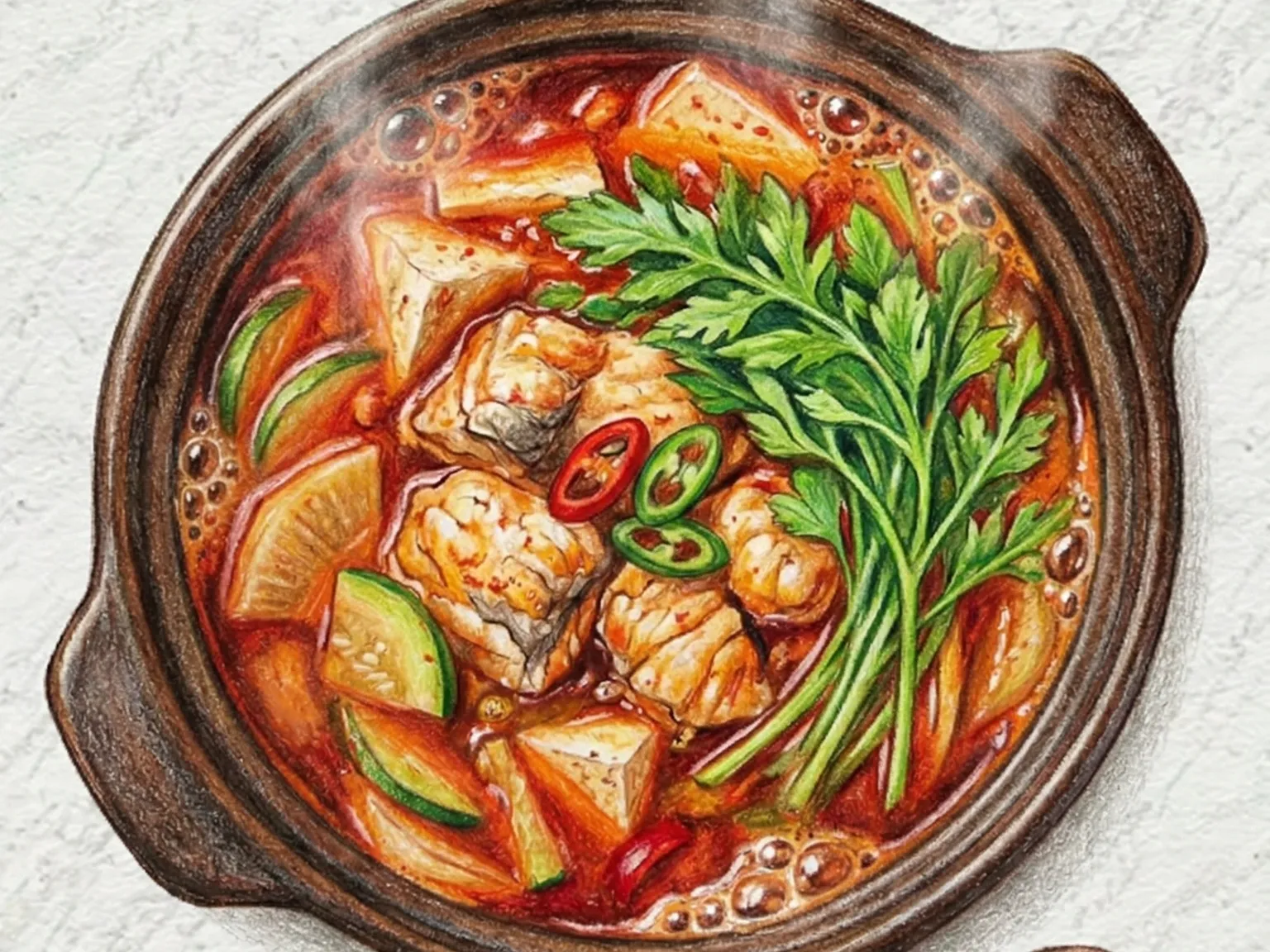
Korean Frozen Pollack Stew
Dongtae jjigae is a spicy Korean stew made with frozen pollack, radish, and tofu. To prepare the dish, half-thawed pollack is sliced to keep the flesh intact, the inner black lining is removed to avoid bitterness, and the pieces are salted for firmness. Sliced radish is boiled first to build a sweet, clean broth base. Seasonings like gochugaru, doenjang, soup soy sauce, and minced garlic are then dissolved into the pot. Adding doenjang is essential, as it neutralizes fishy odors and deepens the umami. Next, the pollack and tofu are added and simmered for ten minutes. The delicate fish should not be turned; instead, spoon the hot broth over the pieces. Finally, zucchini, green onions, and chilies are added, simmering for five more minutes to yield a warming, spicy stew.
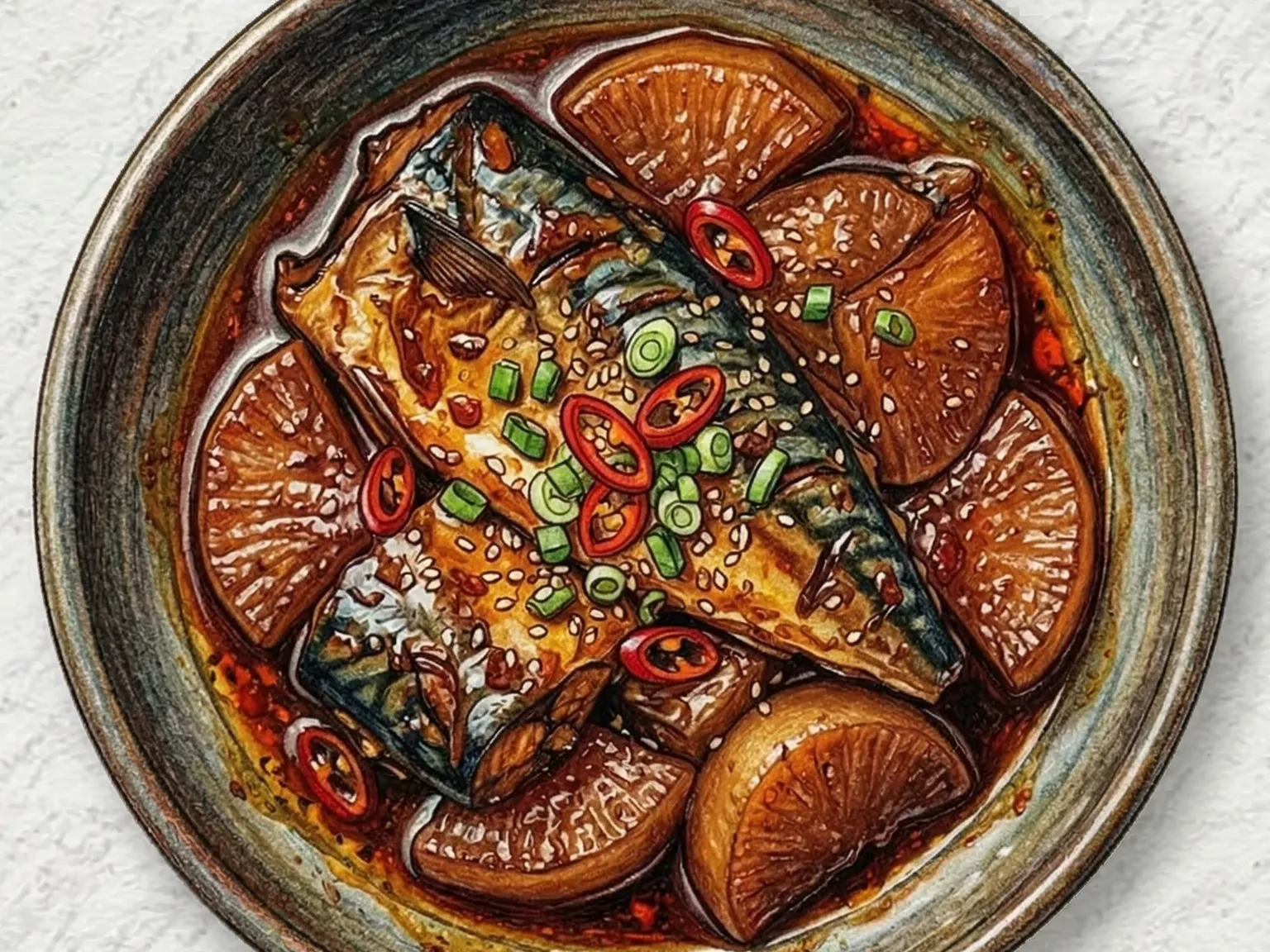
Korean Braised Mackerel (Fatty Mackerel with Radish in Spicy Soy Sauce)
Godeungeo-jjim is a Korean braised mackerel dish cooked low and slow with Korean radish, sliced onion, gochugaru, soy sauce, and fresh ginger. Mackerel belongs to the blue-backed fish category with a high natural fat content, and that fat absorbs the bold, spiced seasoning during braising in a way that leaner fish cannot. The flavor that results is deeply savory with a rounded heat that does not taste sharp or one-dimensional. Radish placed at the bottom of the pan serves a dual purpose: it draws out the fishy aroma during cooking and simultaneously soaks up the braising liquid, making it almost as desirable to eat as the fish itself. Ginger neutralizes the remaining raw fish notes and keeps the overall taste from feeling heavy, providing a subtle warmth that lifts the richness. As the braising liquid reduces, it thickens into a glossy, intensely flavored sauce that is commonly spooned over steamed rice to the last drop. Mackerel is widely available and inexpensive in Korea, which has made this preparation a household staple across generations.
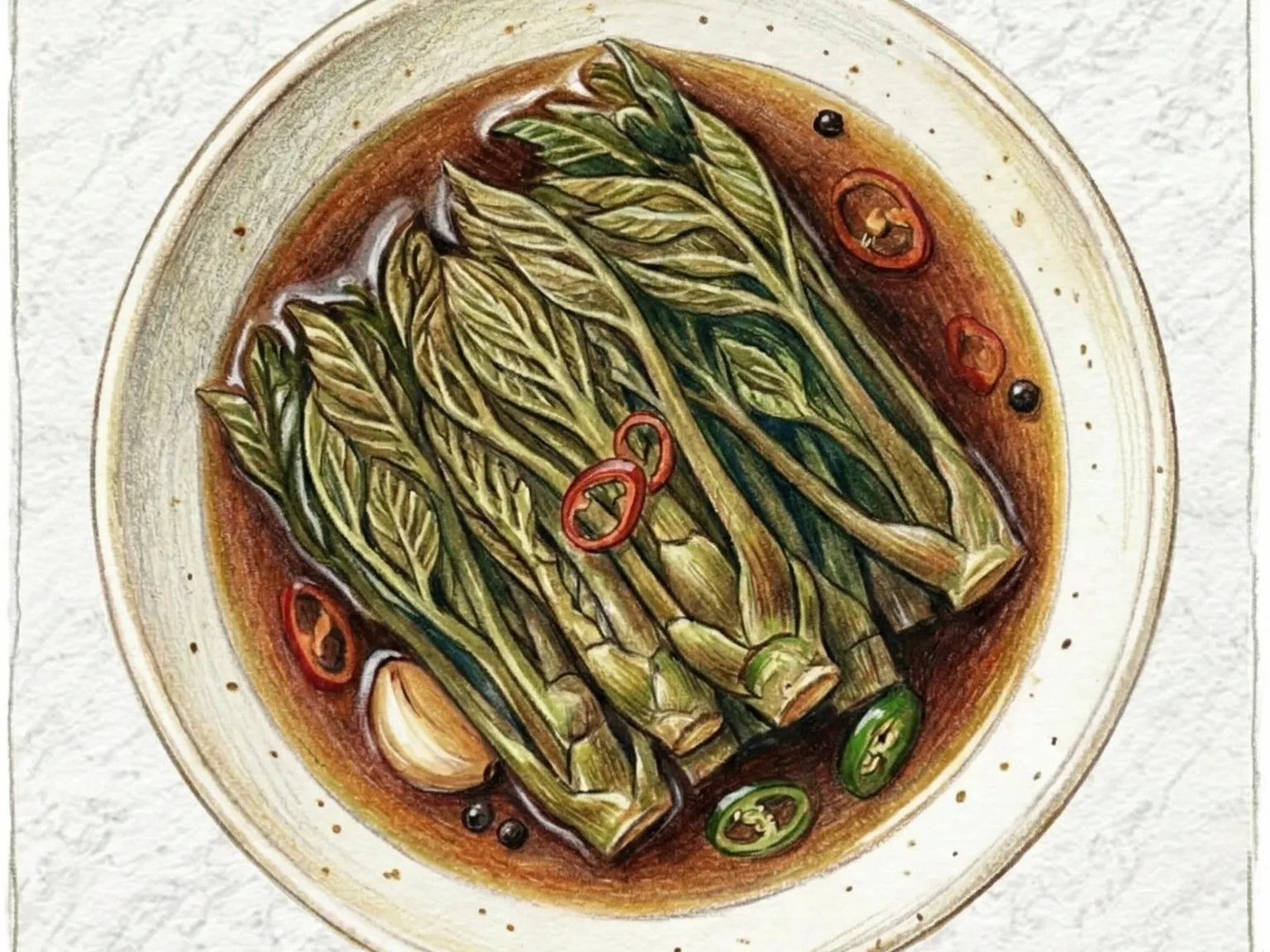
Korean Aralia Shoot Soy Pickle
Durup jangajji is a soy-pickled preparation that extends the brief spring season of aralia shoots into a long-lasting banchan. Fresh shoots go into the brine raw - without blanching - so the woody, bittersweet fragrance and the crisp snap of the stems survive the curing process intact. The brine is brought to a boil with soy sauce, vinegar, and sugar, then cooled completely before being poured over the shoots; hot liquid would soften them immediately. Brine ratios matter: too much vinegar buries the aralia's distinctive aroma under acid. Garlic and cheongyang chili go in with the shoots and slowly mellow into the liquid over the first few days, leaving a trailing heat at the finish. Refrigerated, the jangajji keeps well over two weeks, which means a single batch prepared at peak spring season carries through until early summer. Beyond rice pairings, a few strips work well tucked inside grilled-meat wraps, where the pickled bitterness cuts through fat.
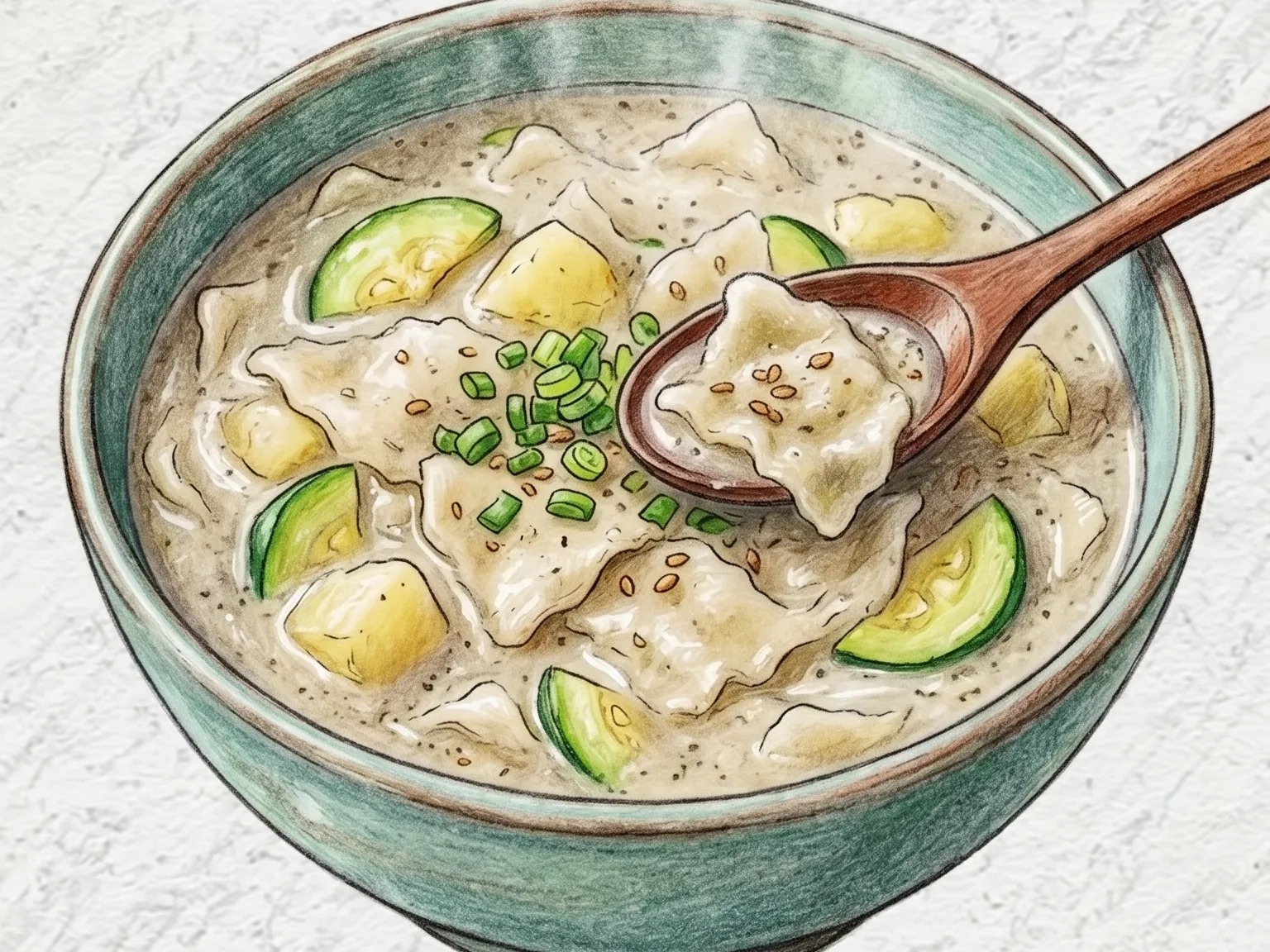
Korean Perilla Seed Hand-torn Noodle Soup
Deulkkae sujebi is a Korean hand-torn noodle soup made by pulling rested wheat dough into thin, rough-edged pieces and simmering them in an anchovy-kelp broth enriched with ground perilla seeds. Resting the dough for at least thirty minutes relaxes the gluten and is what allows it to be stretched thin by hand without snapping back; the thinner each piece, the more quickly it cooks through in the hot broth while still retaining a satisfying, elastic chew. Potato simmers alongside the dough and slowly breaks down, releasing starch that gives the broth a natural body without any thickener added. Zucchini contributes a mild sweetness and a soft texture that contrasts with the chewy dough pieces. When the ground perilla powder is stirred into the broth, it dissolves to form a milky, opaque liquid with a roasted, nutty depth that coats the tongue in every spoonful. The dish is a staple of Korean home cooking on rainy days and cold winter evenings, prized for the warmth it delivers and for the hands-on simplicity of tearing the dough directly into the pot.
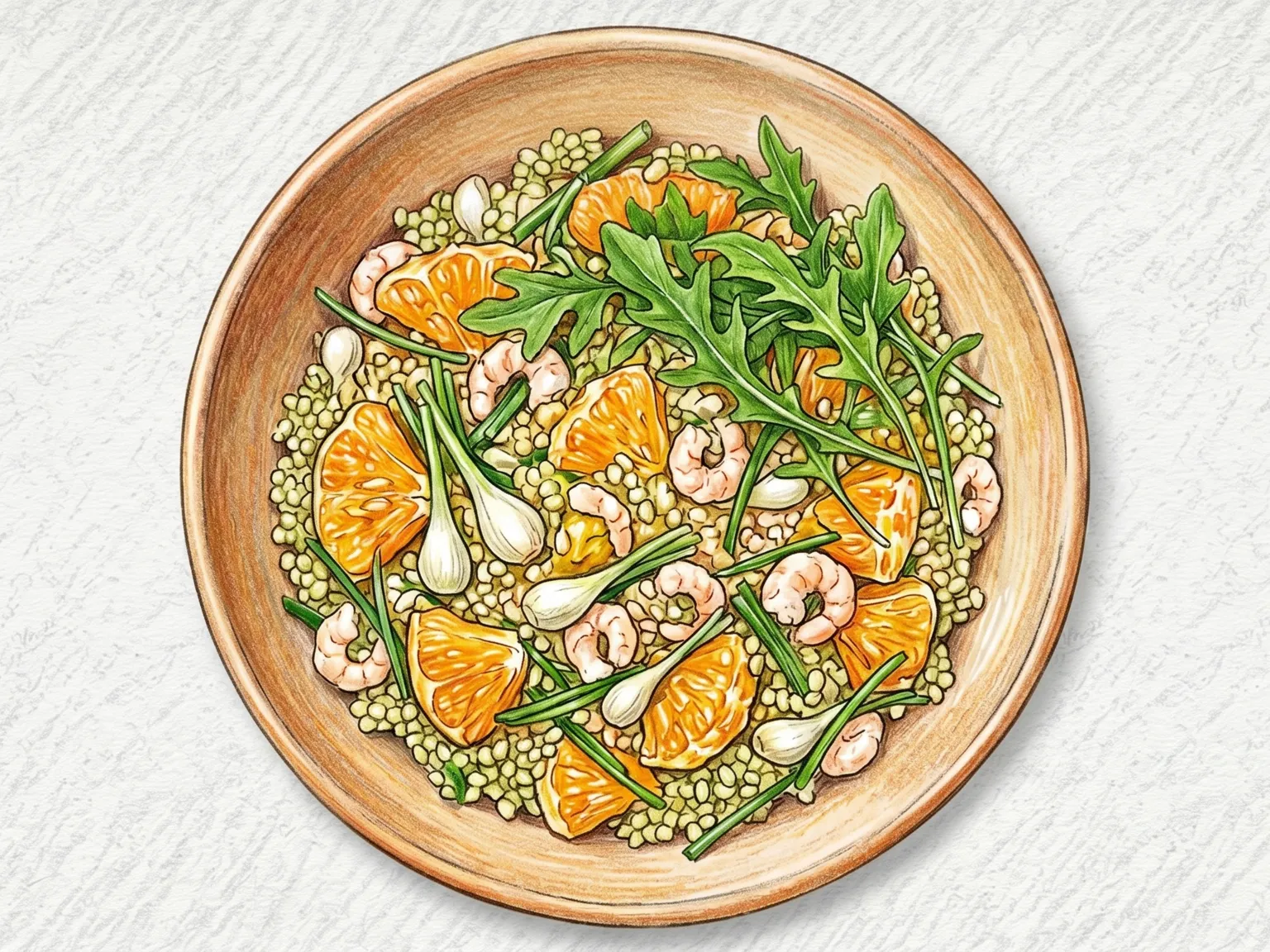
Dallae Shrimp Citrus Millet Salad
Dallae shrimp citrus millet salad builds a Korean-style grain bowl around the sharp, garlic-like bite of wild chive (dallae), tangerine segments, and blanched shrimp, set on a base of cooked millet. Millet grains are smaller than rice and cook quickly; prepared until just fluffy rather than sticky, each grain stays separate, which makes it ideal as a salad base that absorbs dressing without clumping. Dallae should be rinsed and used immediately - prolonged soaking in water dulls its volatile pungency. The dressing combines yuzu syrup and white wine vinegar: the acid from both counteracts any brininess from the shrimp while the citrus notes amplify the wild chive. Arugula added at the end introduces a peppery bitterness that anchors the lighter flavors. Dallae peaks in March through early April, when its aroma is most concentrated. Hallabong or cheonhyehyang can substitute for standard tangerines; torn by hand rather than sliced, the fruit releases juice directly into the dressing.
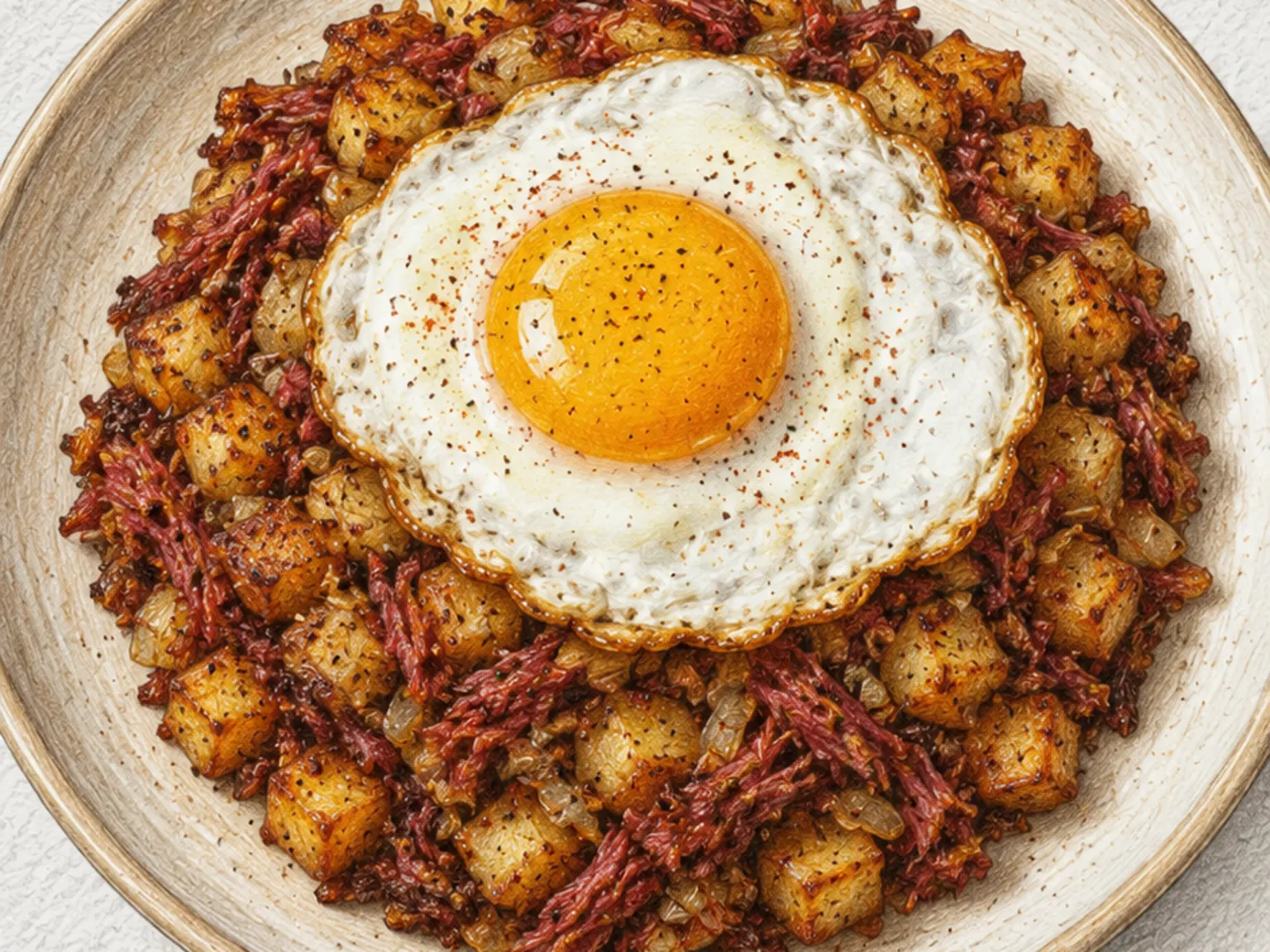
Corned Beef Hash
Corned beef hash is an American brunch dish that pan-fries diced potatoes and shredded corned beef until crispy, then tops them with a fried egg. Parboiling the potatoes for five minutes softens the inside while setting up a starchier surface that crisps better in the pan. Cooking the potatoes in butter and oil until golden before adding onion and then the corned beef builds layers of texture. Minimizing how often the hash is flipped allows a crust to form on the bottom, which is the signature of a well-made hash. The salty depth of corned beef combines with the starchy richness of potato, and breaking the egg yolk over the top ties everything together.

Kaya Toast (Singaporean Coconut Jam Butter Toast)
Kaya toast is the defining breakfast of Singaporean coffee shops, built from two slices of crisped white bread filled with kaya and a thick slab of cold butter. Kaya is a jam made by cooking coconut milk, eggs, sugar, and fresh pandan leaf over low heat with constant stirring until the mixture thickens into a pale green spread that smells of vanilla, coconut, and floral sweetness simultaneously. The bread is toasted directly over charcoal or in a grilling rack until it shatters at the edges. Cold butter placed inside the hot toast begins to soften immediately at the center while retaining its chill at the edges, so each bite delivers a different ratio of fat and sweetness. The traditional pairing is two soft-boiled eggs cracked into a shallow bowl, seasoned with dark soy sauce and a grind of white pepper, then loosely mixed into a thin custard for dipping or dunking. Alongside these, a glass of kopi - coffee brewed through a cloth sock filter and sweetened with condensed milk - completes the set. This breakfast combination has changed very little in decades and remains the first meal of the day for many Singaporeans, served at everything from old neighborhood kopitiams to national chains like Ya Kun Kaya Toast.
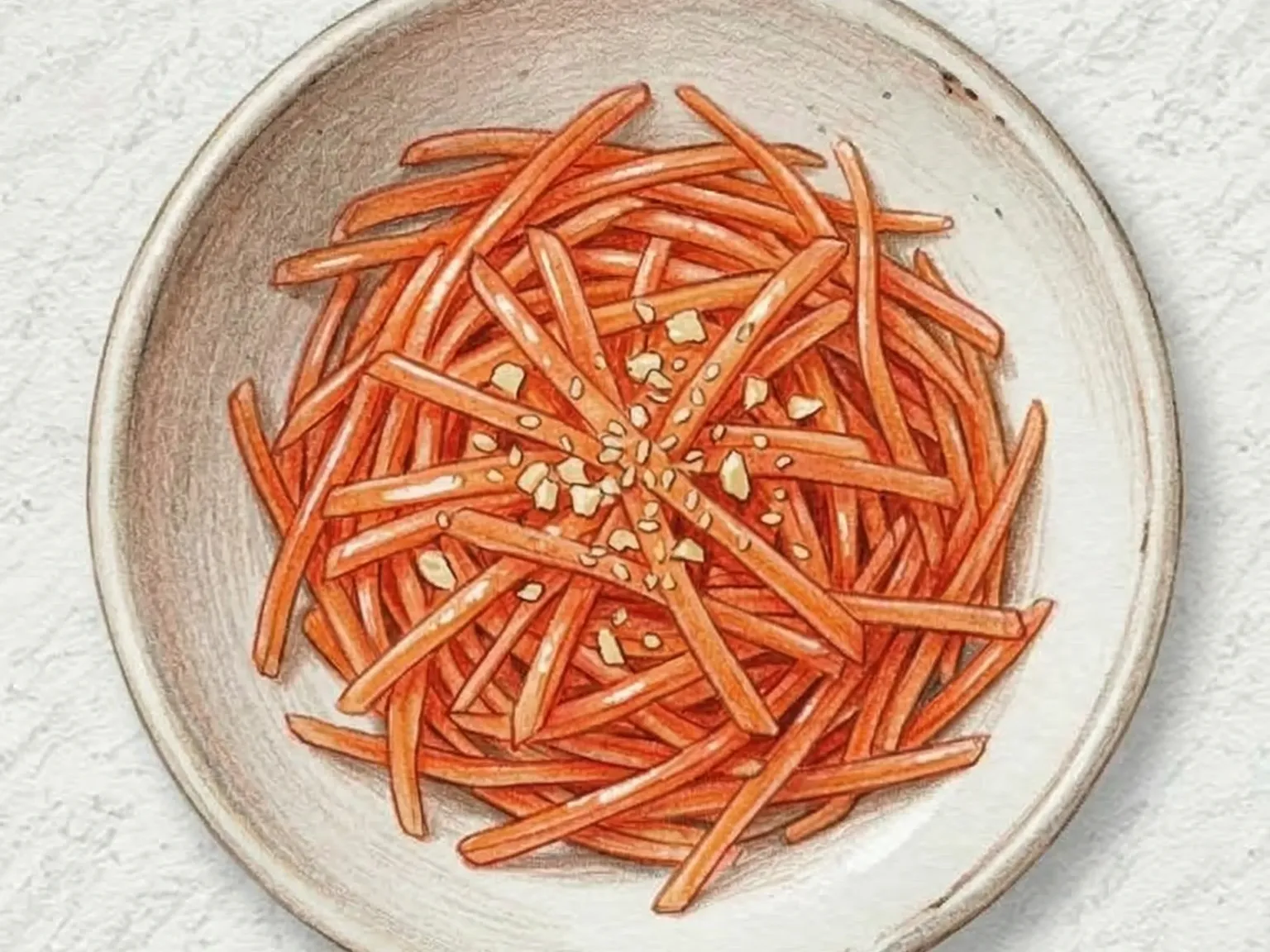
Korean Seasoned Carrot Namul
Carrot namul is one of the five-color banchan Koreans prepare for ancestral rites, where the orange of carrot represents fire in the traditional symbolic scheme. Julienned thin, the carrots are salted briefly to pull out excess moisture, then stir-fried with minced garlic over medium heat for two to three minutes - just enough to cook off the raw edge while preserving an audible crunch in every strand. No soy sauce or chili powder enters the pan; seasoning is kept to salt alone so that the carrot's natural sweetness remains the central flavor rather than being buried under stronger condiments. A final drizzle of sesame oil and a scatter of sesame seeds round out this clean, single-ingredient side dish that earns its place on both ceremonial tables and everyday meals.
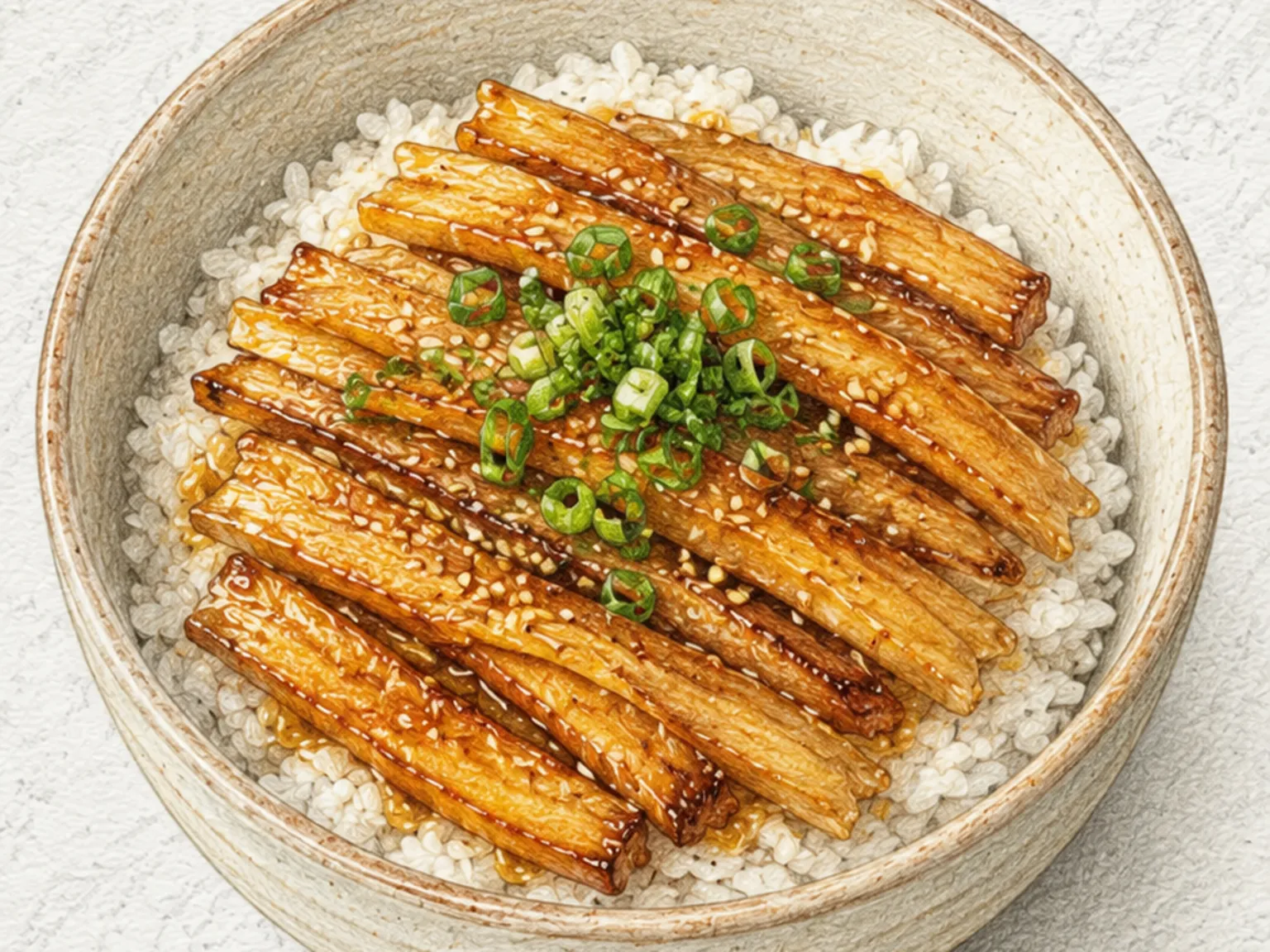
Deodeok Butter Rice Bowl (Korean Mountain Root)
Deodeok butter bap is a rice bowl of peeled, pounded deodeok pan-fried in butter until golden, then reduced in soy sauce and oligosaccharide syrup until each strip is coated in a thin, glossy glaze. The root's natural bittersweet aroma, assertive when raw, softens in the butter without disappearing - it stays present and clean throughout the bowl. Soy sauce and the mild sweetness of the syrup build a savory-sweet glaze that clings to the root's rough-pounded surface. A second knob of butter stirred into the sauce just before plating melts into the reduction and adds a final layer of richness. The glazed deodeok is spooned over warm rice with the pan sauce, then scattered with sliced scallion and sesame seeds. The dish is best in spring when fresh deodeok is in season and its fragrance is at its most pronounced. It works as a standalone donburi or as a strong side dish alongside plain rice.
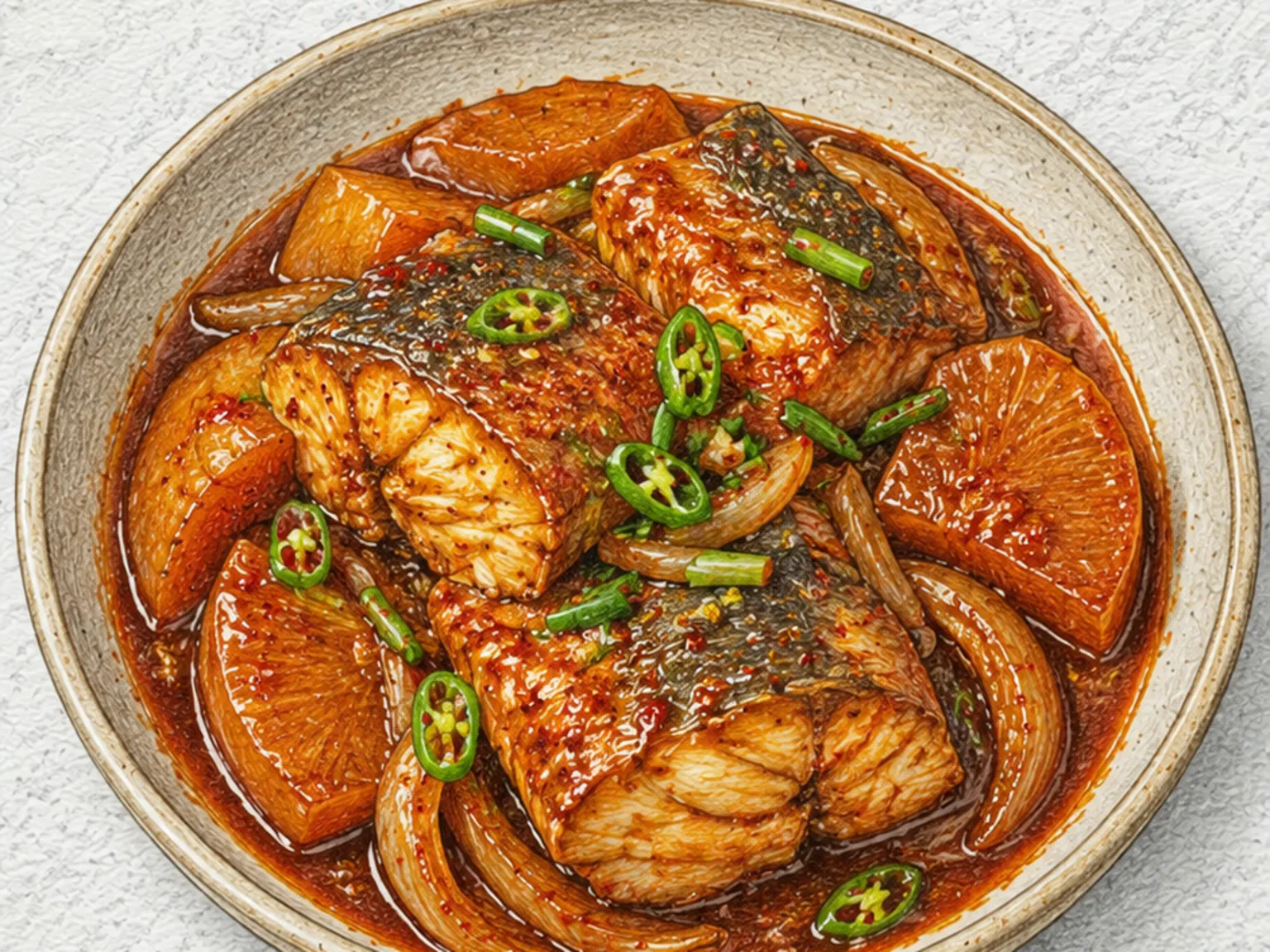
Korean Spicy Braised Cod with Radish
Cod fillets are braised in a seasoning sauce of soy sauce, gochujang, and gochugaru until the liquid reduces and the flavors soak into the flesh. Cod is a lean fish with a clean, neutral character, and the bold seasoning penetrates the meat to add depth without overwhelming it. Daikon radish placed alongside the fish absorbs the braising liquid as it cooks, becoming as flavorful as the fish itself. Onion slowly softens and releases natural sweetness into the sauce during the simmer. The flesh flakes easily and separates cleanly from the bone, making this dish accessible for all ages. Keeping the lid on over medium heat during braising prevents the sauce from reducing too fast and ensures the fish cooks through evenly.
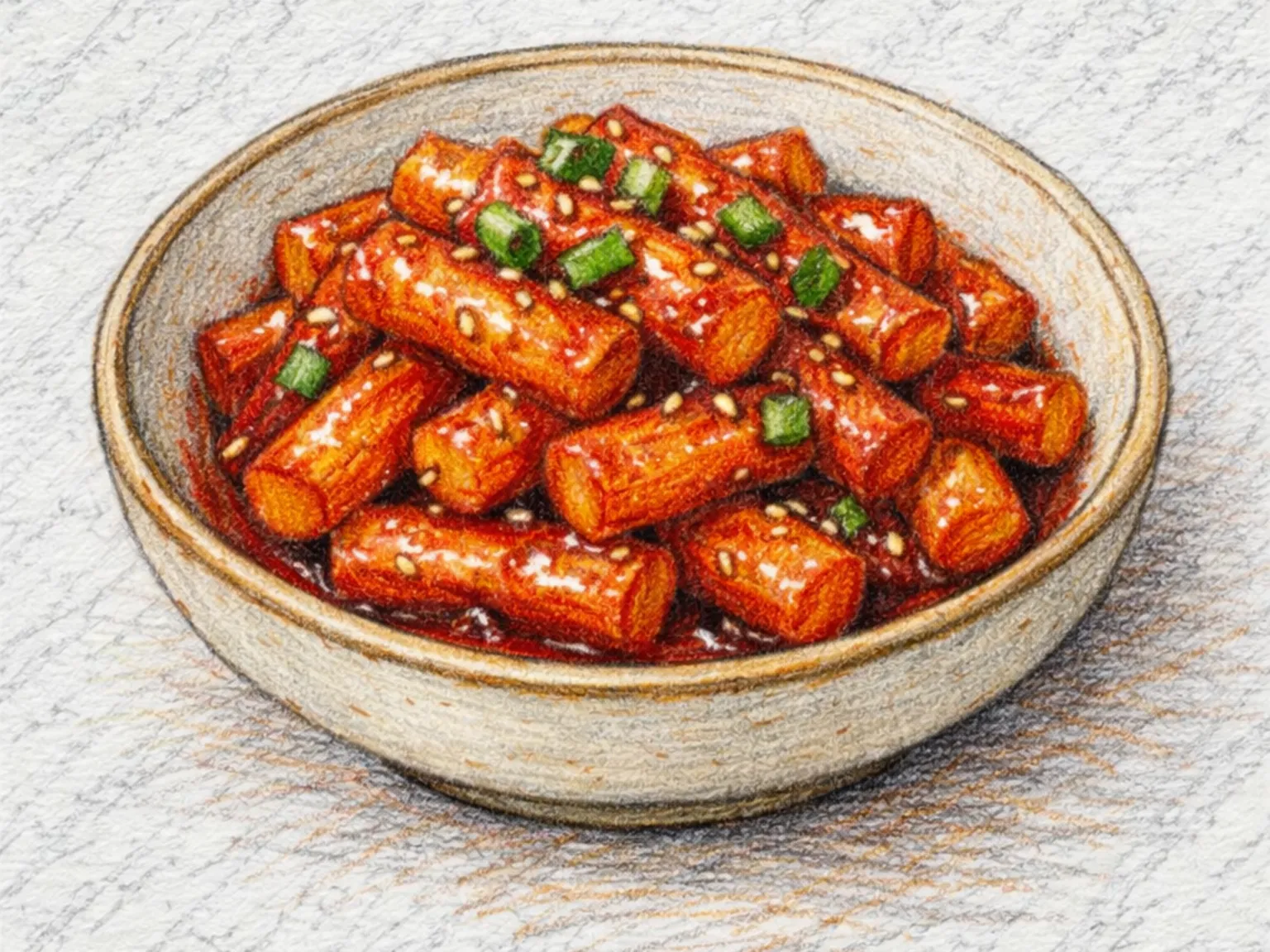
Korean Oil Tteokbokki (Dry-Stir-Fried Rice Cakes in Chili Soy Glaze)
Gireum-tteokbokki is a dry-style tteokbokki where rice cakes are stir-fried in oil and coated with a concentrated paste of gochugaru, soy sauce, sugar, and garlic - no broth involved. Blooming the chili flakes briefly in oil draws out their nutty, toasted aroma rather than raw heat, and the soy sauce and sugar build layered sweetness and umami on top of that base. Without liquid, the seasoning clings tightly to each rice cake's surface. The key technique is restraint with stirring: letting each rice cake sit undisturbed long enough to develop a lightly crisped exterior while the inside stays chewy creates a dual texture that broth-based versions cannot replicate. Green onion and sesame seeds added at the end provide fresh fragrance and textural contrast against the rich coating. The seasoning should be applied generously so the flavors penetrate past the surface rather than sitting only on the outside. Believed to have originated in school-front snack shops in 1970s and 1980s Seoul, gireum-tteokbokki is milder than gochujang versions and accessible to those who find the spicier style too intense.
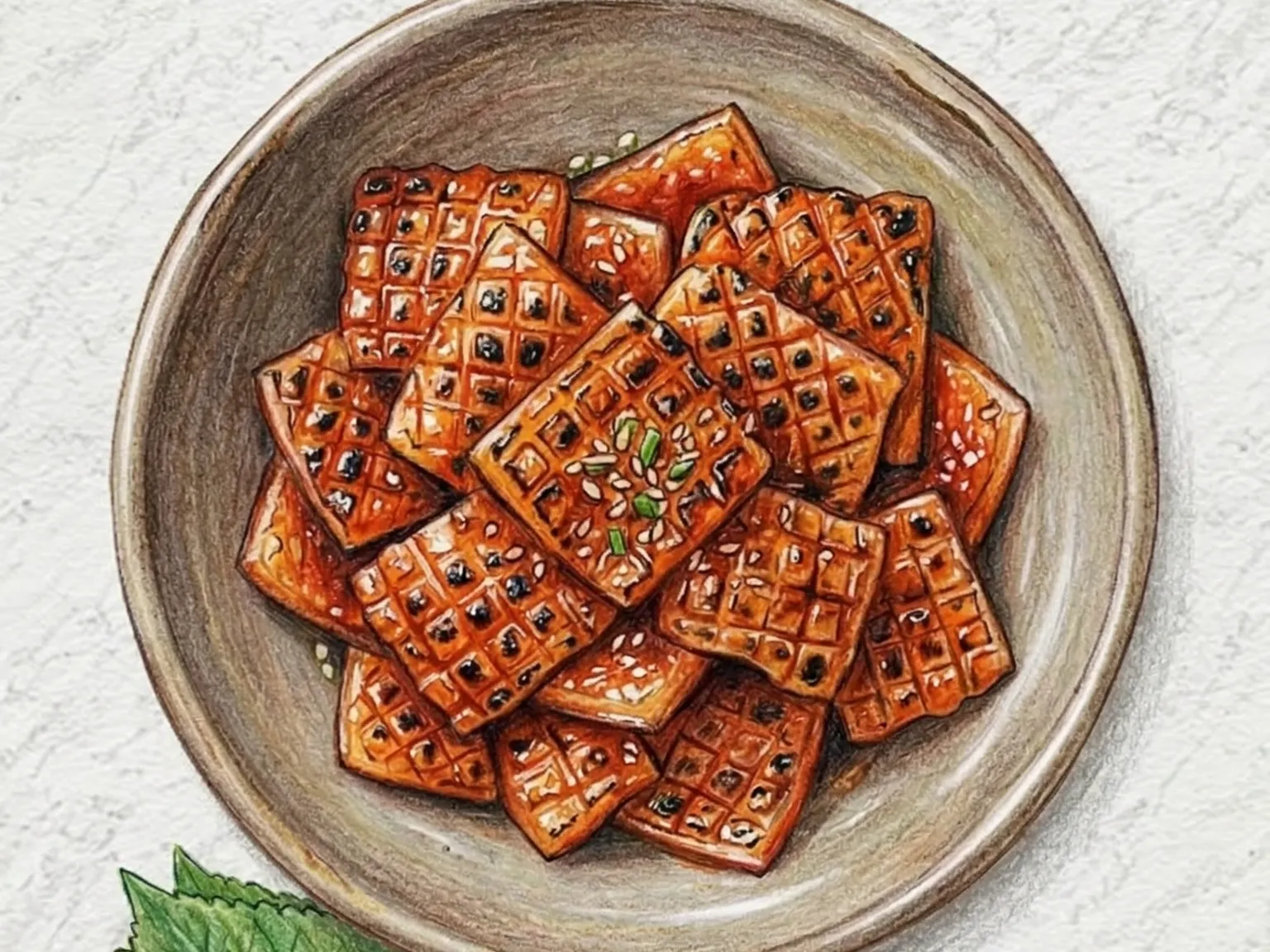
Korean Dwaeji Kkeopdegi Gui (Grilled Pork Skin)
Dwaeji-kkeopdegi-gui is grilled pork skin that has been parboiled to draw out excess fat and eliminate the raw, gamey odor of the skin before it meets the fire. After blanching, the skin is coated in a spicy marinade built on gochujang and gochugaru, reinforced with soy sauce, minced garlic, and sugar to balance heat with savory depth. The skin is almost pure collagen, which makes blanching time critical: too brief and it stays rubbery with an unpleasant resistance, too long and it goes limp, forfeiting the springy chew that defines the dish. As the marinated pieces hit a hot grill or cast iron, the skin contracts and buckles, forming ridges and shallow pockets that trap the glaze. Every bite delivers a concentrated hit of spicy-sweet flavor where the caramelized marinade has pooled in those grooves. The texture offers a satisfying, slightly elastic chew that is unlike any other grilled meat. It is most commonly eaten wrapped in a perilla leaf with ssamjang, or served straightforwardly alongside soju as a classic drinking snack.
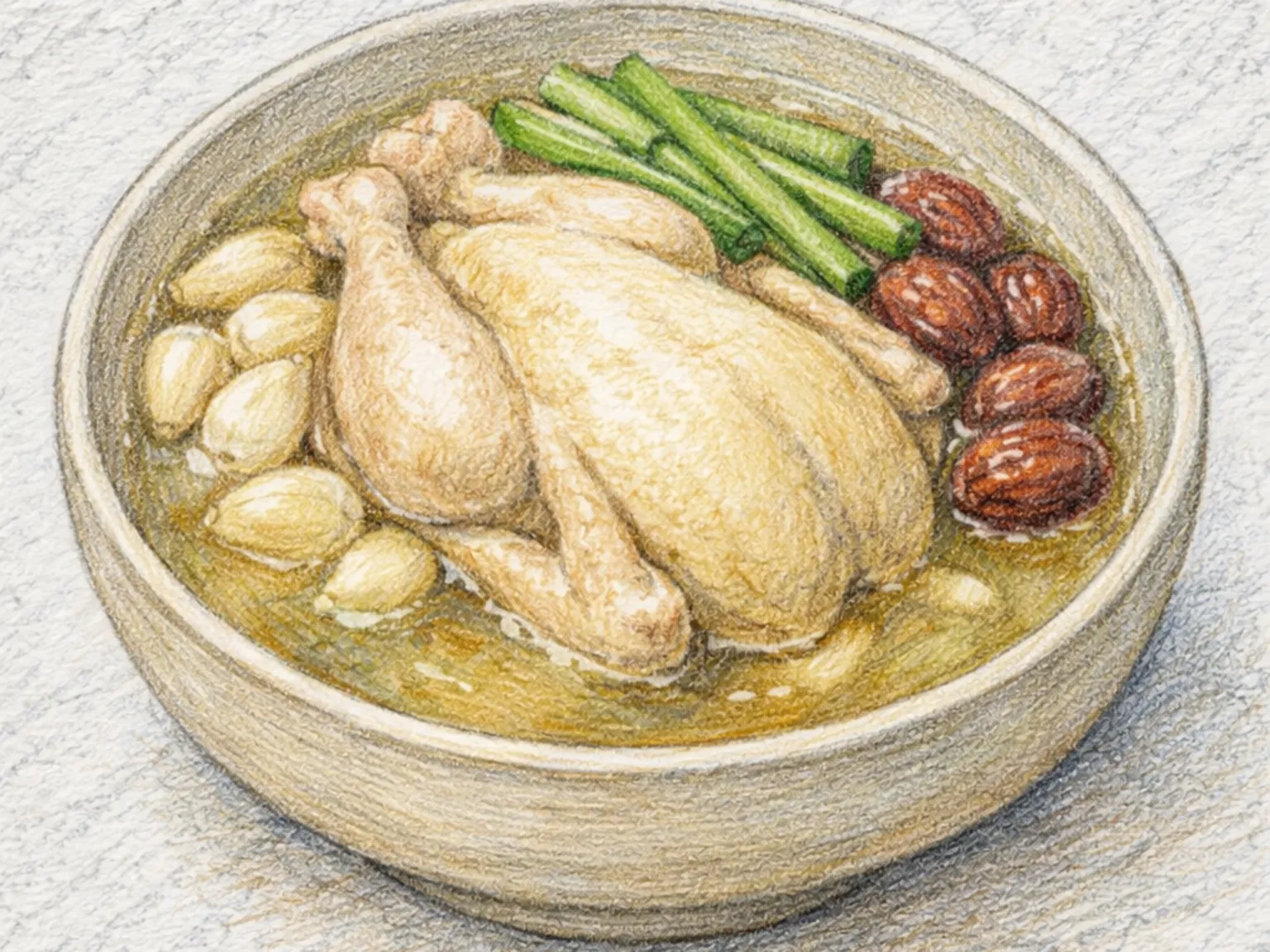
Korean Boiled Chicken Soup
Dak-baeksuk is a Korean whole-chicken soup simmered for over fifty minutes with whole garlic cloves, jujubes, green onion, and ginger in a large pot of water until the broth runs clear and deeply flavored. Skimming fat and foam throughout the cooking process is essential for the signature clarity of the broth. Neglecting this step leaves the soup greasy and cloudy when reheated the next day. The jujubes contribute a subtle sweetness and the garlic, softened to near-paste after the long simmer, dissolves into the liquid to create a mellow depth that needs nothing more than salt and pepper to taste complete. The chicken is shredded against the grain for the softest possible texture, then returned to the hot broth so every bite of meat is saturated with the clean, aromatic stock. Unlike samgyetang, dak-baeksuk skips ginseng, making it simpler to prepare while remaining a staple restorative meal eaten during Korea's hottest summer days.
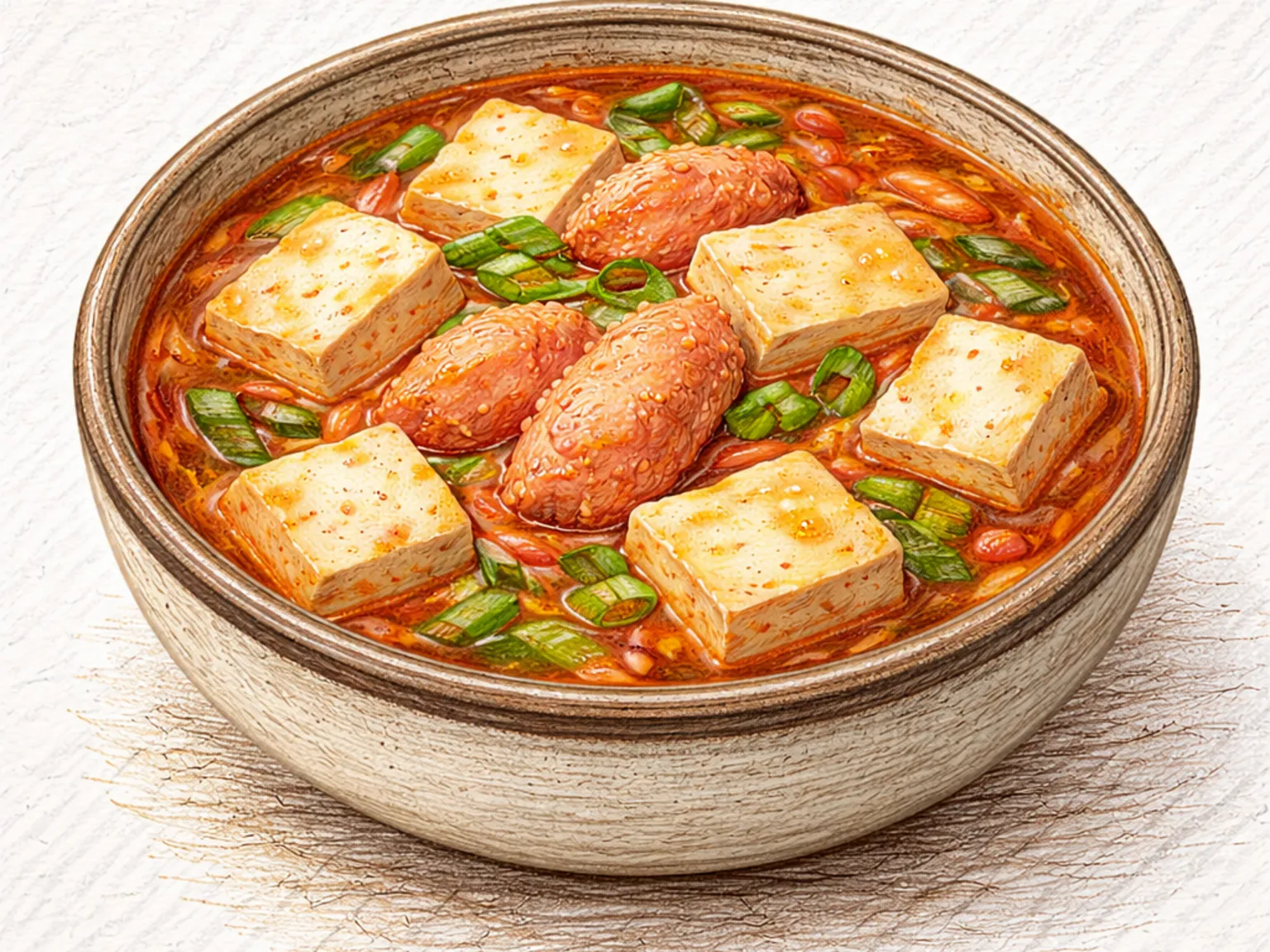
Korean Tofu Stew (Spicy Kimchi & Firm Tofu Pot)
Dubu jjigae is a spicy Korean stew built on firm tofu and fermented kimchi simmered together in anchovy stock. Gochugaru goes into the broth first to establish a vivid red, peppery base; from that point, the kimchi releases its fermented tang with each additional minute over heat, steadily deepening the broth. Green onion adds fragrance, and the tofu absorbs the surrounding liquid the longer it cooks. With only five or so main ingredients, this is an efficient dish - the fermented kimchi handles the complexity, producing layered acidity and depth that reads far richer than the short ingredient list would suggest.