🏠 Everyday Recipes
Simple home-cooked meals for any day
1705 recipes. Page 21 of 72
These are the meals you can cook day after day without getting tired of them. Doenjang jjigae, rolled omelet, spicy pork stir-fry - the kind of home-cooked dishes that fill an ordinary day with comfort.
The beauty of everyday cooking is that it relies on common ingredients already in your fridge. No exotic items, no complicated techniques - just straightforward recipes for satisfying home meals.
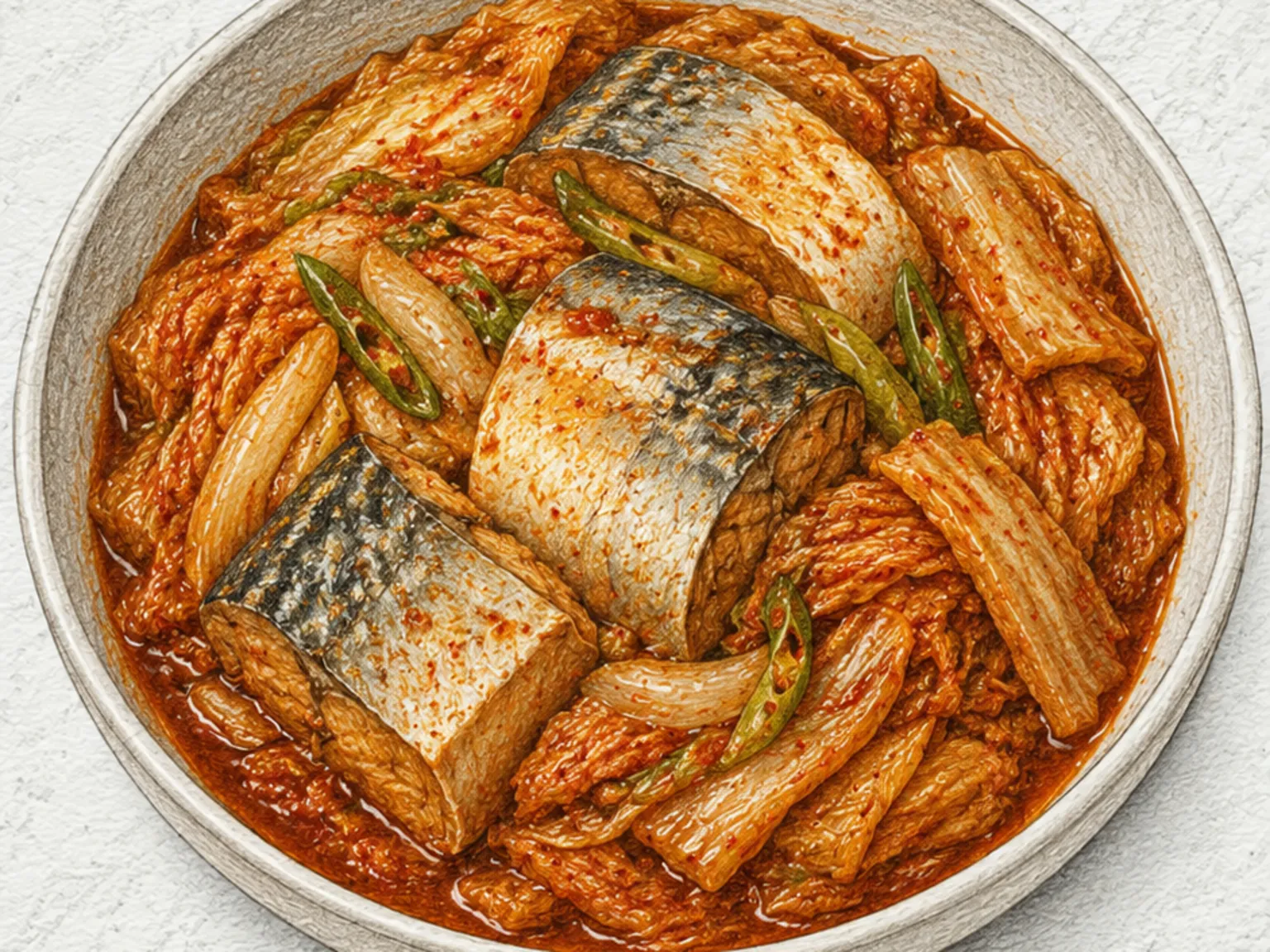
Korean Braised Mackerel with Aged Kimchi
Godeungeo kimchi jjim is mackerel braised together with well-fermented aged kimchi in a soy sauce and gochugaru broth. The deep, sharp acidity of the aged kimchi cuts through the fatty mackerel flesh without leaving any heaviness, drawing out a concentrated savory taste instead. The key step is removing the lid partway through cooking and letting the braising liquid reduce and absorb into the fish, which also drives off any residual fishiness. Onion softens into a gentle sweetness that rounds out the broth, while a pinch of sugar tempers the sourness of the kimchi so the seasoning stays in clear balance. The sauce reduces to a small pool of intensely flavored liquid that is meant to be mixed directly into a bowl of steamed rice.
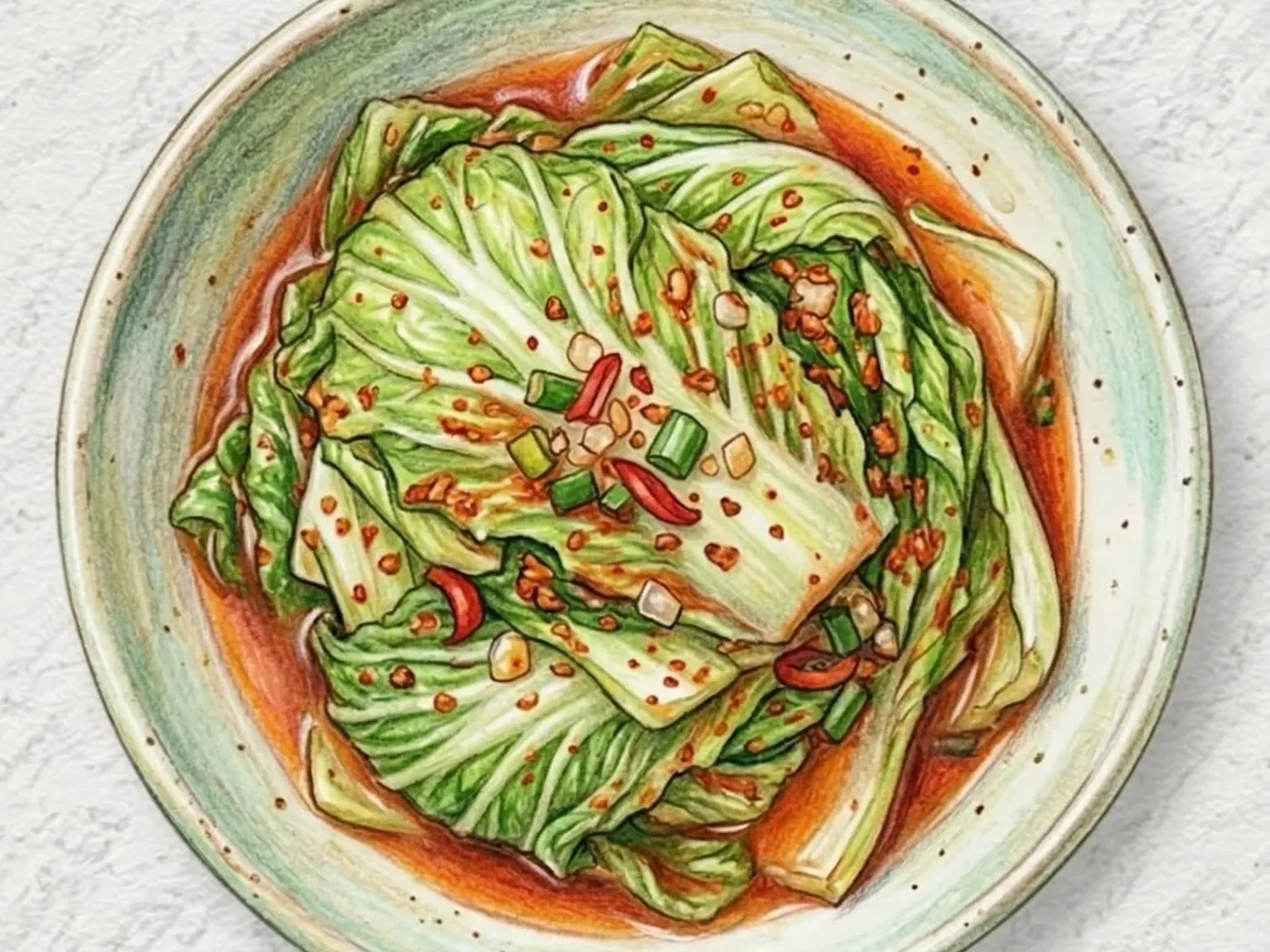
Korean Young Napa Kimchi (Spring Cabbage Quick Ferment)
Eolgari kimchi is a spring kimchi made with young napa cabbage, briefly salted for twenty to thirty minutes, then dressed in gochugaru, fish sauce, garlic, and glutinous rice paste before fermenting at room temperature for about a day. Limiting the salting time to no more than thirty minutes is important: the young cabbage's thin leaves and tender stems absorb salt quickly, and over-salting destroys the crisp texture before fermentation even begins. Because the leaves are thinner and more porous than those of mature napa, the seasoning penetrates quickly and fermentation produces a pleasant acidity within twenty-four hours. Salted shrimp compensates for the short fermentation period by adding immediate depth, and the young cabbage itself contributes a clean sweetness that balances the chili heat without any added sugar. Using a generous amount of glutinous rice paste helps the seasoning cling evenly to each leaf, which supports uniform fermentation throughout the batch. This is a seasonal kimchi meant as a lighter, fresher alternative to aged kimchi as temperatures begin to rise in spring.
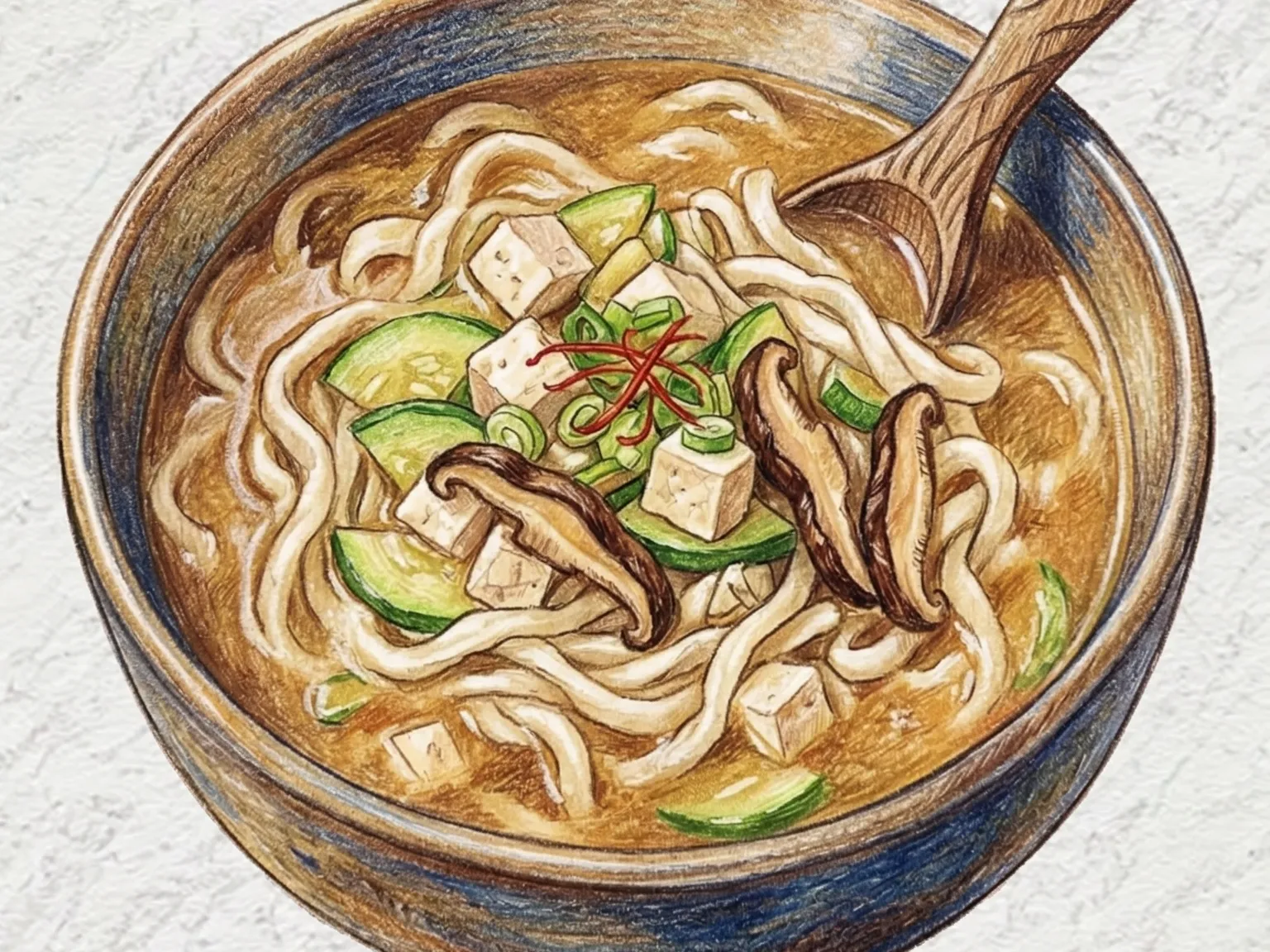
Korean Fermented Soybean Paste Noodle Soup
Doenjang kalguksu is a Korean noodle soup of knife-cut wheat noodles in an anchovy broth enriched with fermented soybean paste. Straining the doenjang through a fine-mesh sieve before adding it to the broth serves a specific purpose: it prevents uneven lumps and ensures the paste dissolves uniformly, which keeps any bitter notes from concentrating in spots. The fermentation depth of the doenjang and the glutamate-rich anchovy stock reinforce each other without needing added seasoning. Zucchini cut into half-moons and sliced shiitake mushrooms contribute sweetness and aroma as the broth simmers; cubed tofu adds a soft, yielding contrast to the chewy noodles. Timing dictates quality here: the final salt adjustment goes in right before the noodles, because doenjang pushed through extended boiling develops a pronounced bitterness that is difficult to correct. Once the noodles go in, the soup should be finished within two minutes to preserve their elasticity.
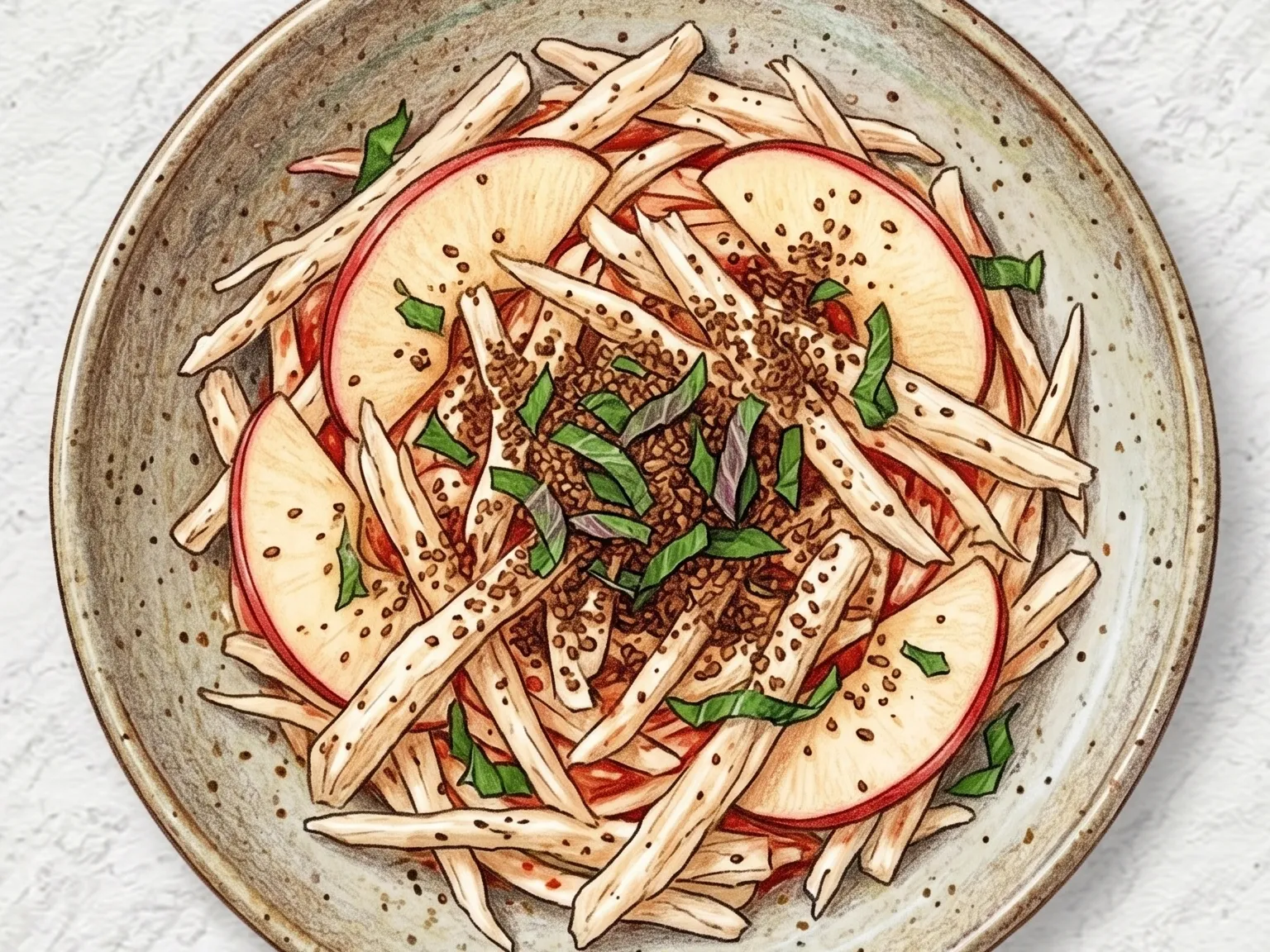
Deodeok Apple Perilla Salad (Bellflower Root Salad)
Deodeok -- codonopsis root -- is pounded with a mallet to split along its fibers, releasing its distinctive herbal fragrance and producing a chewy, shredded texture. The root is best in season from autumn through early spring and suits raw preparations just as well as it does grilling or seasoned side dishes. Thin apple slices add crisp sweetness that tempers the root's mild bitterness. The dressing combines gochujang and vinegar for a tangy-spicy profile, while ground perilla seeds contribute a nutty, aromatic finish. When pounding, light taps work better than heavy blows -- the goal is to open the fibers without crushing the flesh. Tear the root by hand along the grain after pounding for the best texture. Toss with the dressing just before serving to keep the apple and deodeok crisp.
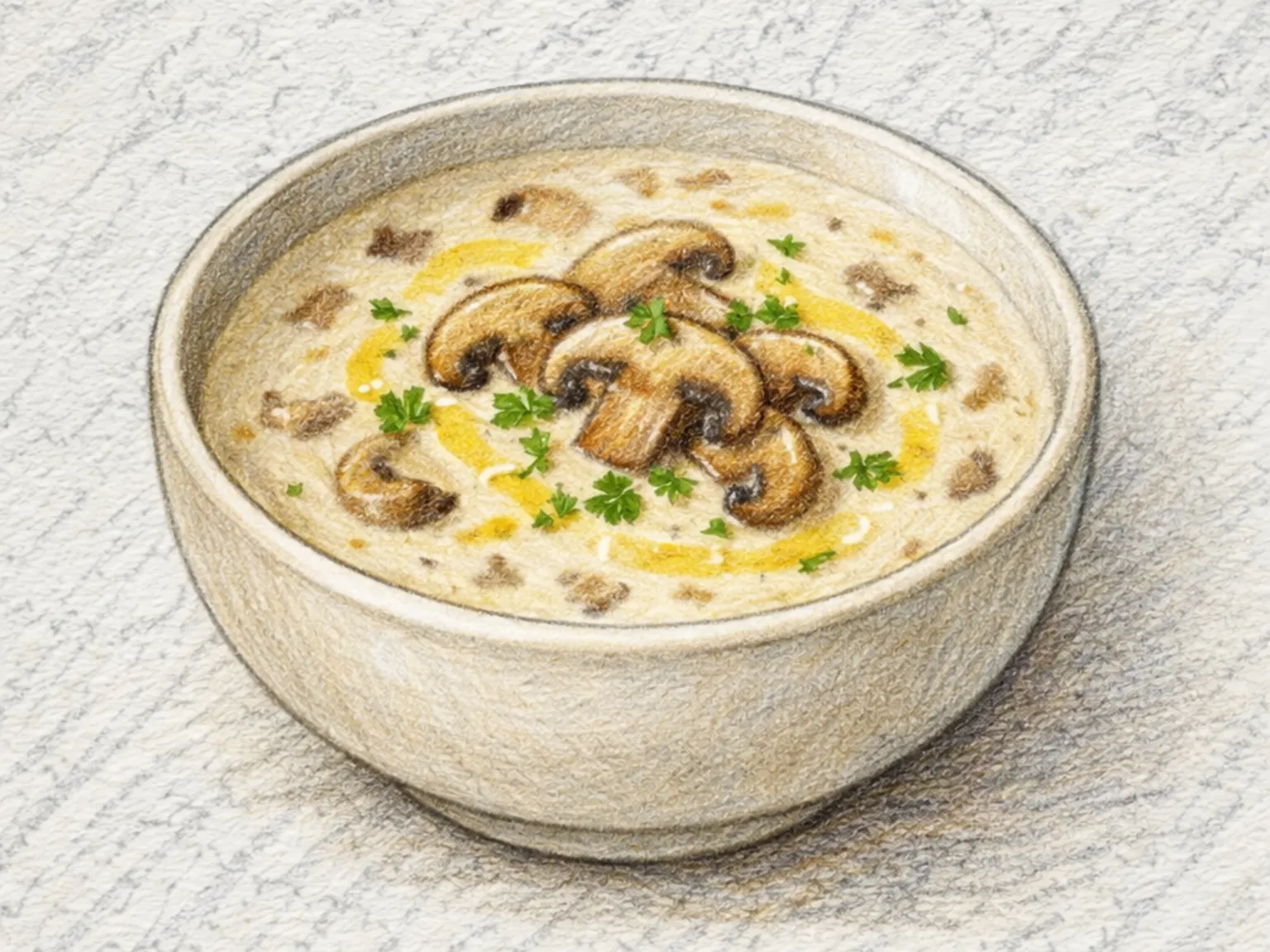
Cream of Mushroom Soup
The preparation of cream of mushroom soup begins by sautéing chopped onion and minced garlic to establish a fragrant aromatic foundation for the dish. Once these aromatics have softened, sliced button mushrooms are added to a mixture of butter and olive oil. These mushrooms are cooked for a duration of eight to ten minutes, a process that continues until their internal moisture has fully evaporated and the slices have taken on a deep brown color. Dried thyme is incorporated during the cooking process to provide an earthy herb quality that works in conjunction with the savory profile of the mushrooms. To build the body of the soup, flour is stirred into the fat and cooked for approximately one minute. This step is essential for creating a roux that will thicken the liquid effectively while ensuring the base remains smooth. Chicken stock is then introduced by whisking it in gradually, which prevents the formation of lumps. Heavy cream is added at the final stage of cooking, followed by a brief period of simmering to allow the flavors to combine and the texture to gain its characteristic richness. To achieve the final consistency, only half of the soup is processed in a blender. This technique produces a result that is simultaneously velvety and full of chunky mushroom pieces.
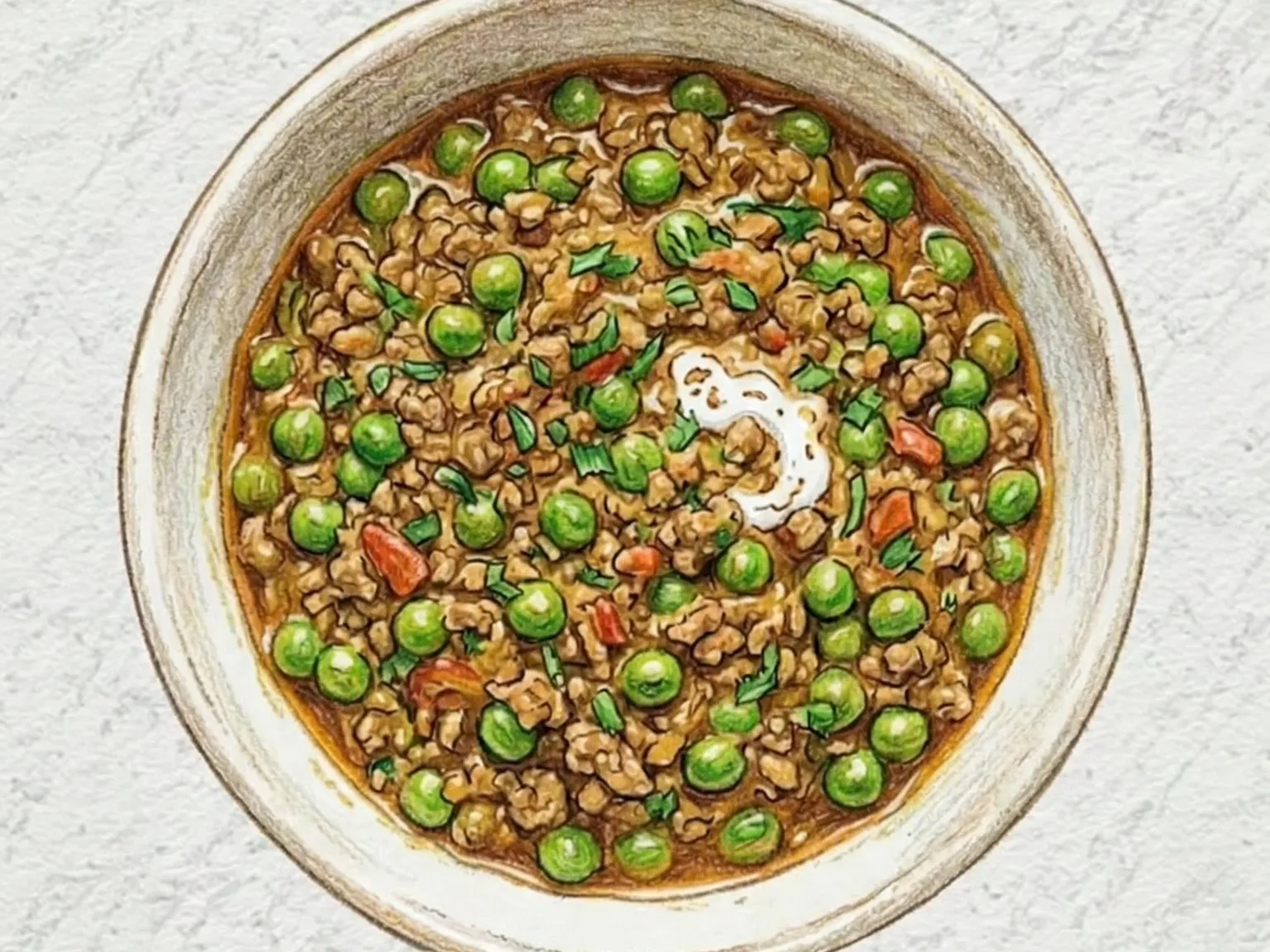
Keema Matar (Indian Spiced Minced Meat and Pea Curry)
Keema matar is a North Indian curry of seasoned minced meat and green peas cooked down into a thick, almost dry gravy. Onions are fried until deep golden to form a sweet, caramelized base, followed by garlic and ginger that release their sharpness into the fat. Ground lamb or beef is added and stirred continuously to break up clumps before the spices go in. Turmeric, cumin, garam masala, and chili powder build the spice profile, while diced tomatoes provide acidity and moisture that allow the spices to cook through without scorching. Green peas are added near the end of cooking so they retain a pop of texture and natural sweetness. Because the finished dish is relatively dry with little sauce, it clings well to flatbreads such as naan or chapati and also works as a topping over plain steamed rice. The whole preparation takes under forty-five minutes with minimal knife work, making it one of the more practical Indian curries for weeknight cooking. Blooming the cumin in hot oil at the start, using the tadka technique, deepens the aroma significantly and lifts the overall flavor of the dish.
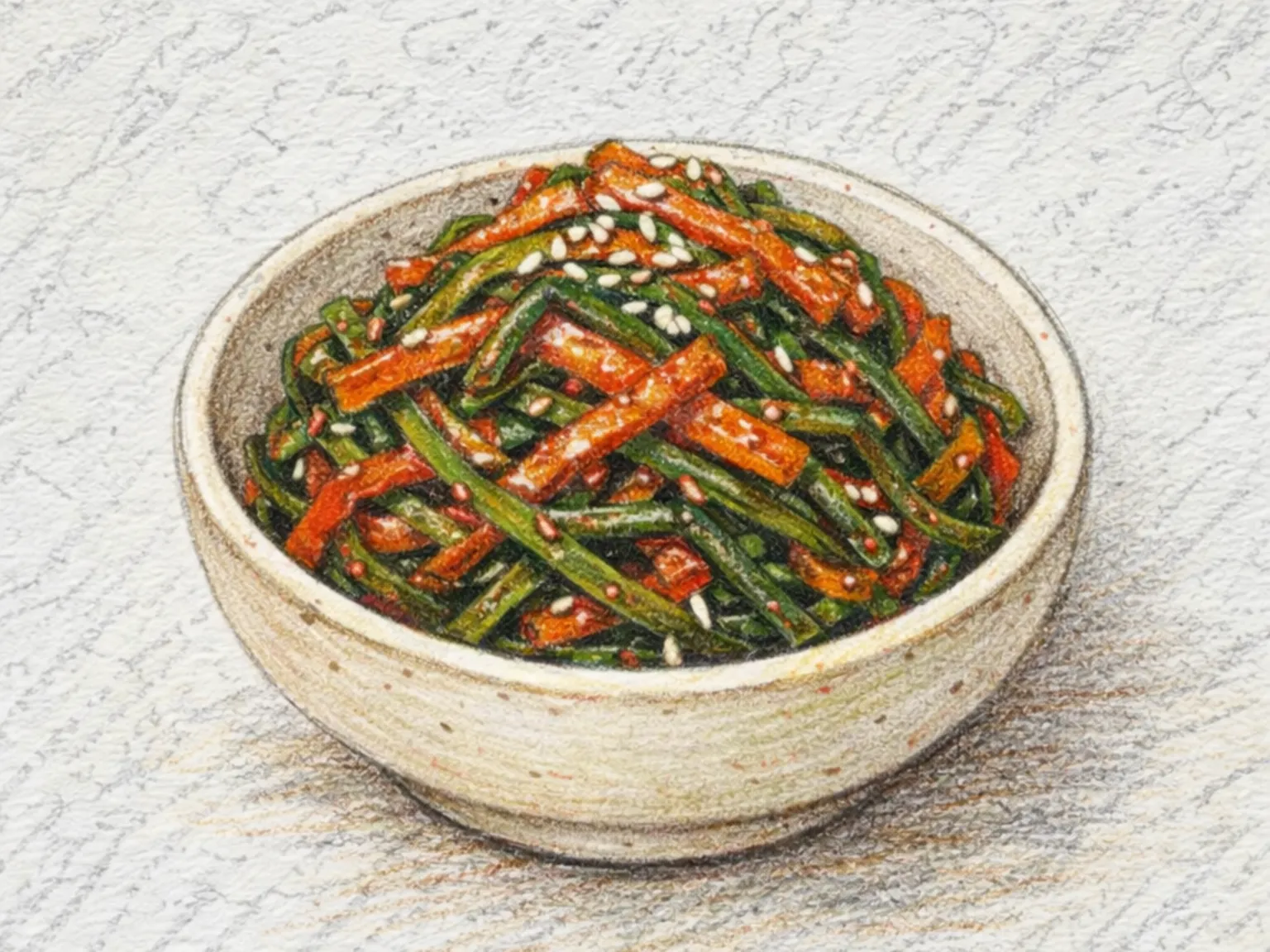
Korean Seasoned Kelp Strips
Kelp strips are soaked in cold water for ten minutes to draw out excess salt, then blanched for twenty seconds, just long enough to turn them pliable without losing their snap. The strips are dressed with gochugaru, vinegar, soy sauce, sugar, and garlic while julienned cucumber adds a cool, refreshing contrast. The seasoning sits over the mineral-dense ocean flavor of the kelp, layering a bright, acidic kick onto each bite. Sesame oil and whole sesame seeds finish the dish. The strips keep a satisfying resistance between the teeth that sets them apart from softer Korean seaweed preparations. Best served cold; the texture and flavor hold up well in packed lunches. Blanching beyond twenty seconds causes the kelp to soften and lose the chew that defines this banchan.
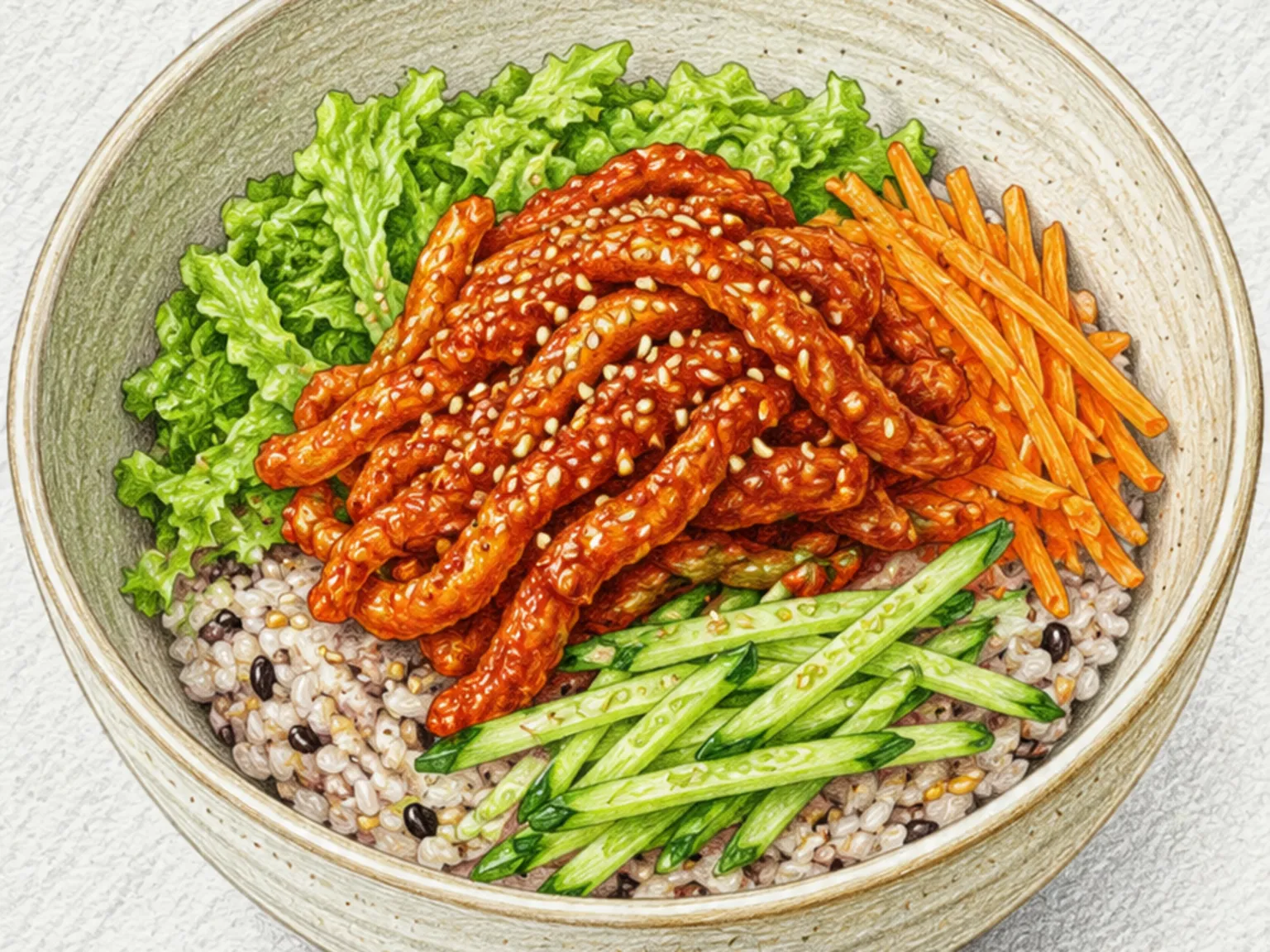
Korean Deodeok Gochujang Bibimbap
Deodeok gochujang bibimbap is a Korean mixed rice bowl that centers on wild mountain root dressed in a spicy-sweet gochujang sauce. The deodeok is peeled, lightly pounded, and torn into strips along the grain, then briefly stir-fried to mellow its bitter, herbal edge while preserving the fibrous crunch that defines its texture. Julienned cucumber, carrot, and torn lettuce are arranged over rice alongside the glazed root, providing crisp, fresh counterpoints to the savory filling. Plum syrup and vinegar built into the sauce add a tangy brightness that prevents the gochujang from sitting heavily, and the sharp vegetables cut through any richness with each bite. A generous pour of sesame oil before mixing coats every grain of rice and every strand of vegetable evenly. The dish showcases deodeok's distinctive herbal character against the backdrop of Korea's most iconic condiment, and it reaches its peak in spring when the roots carry the most fragrance and remain at their most tender.
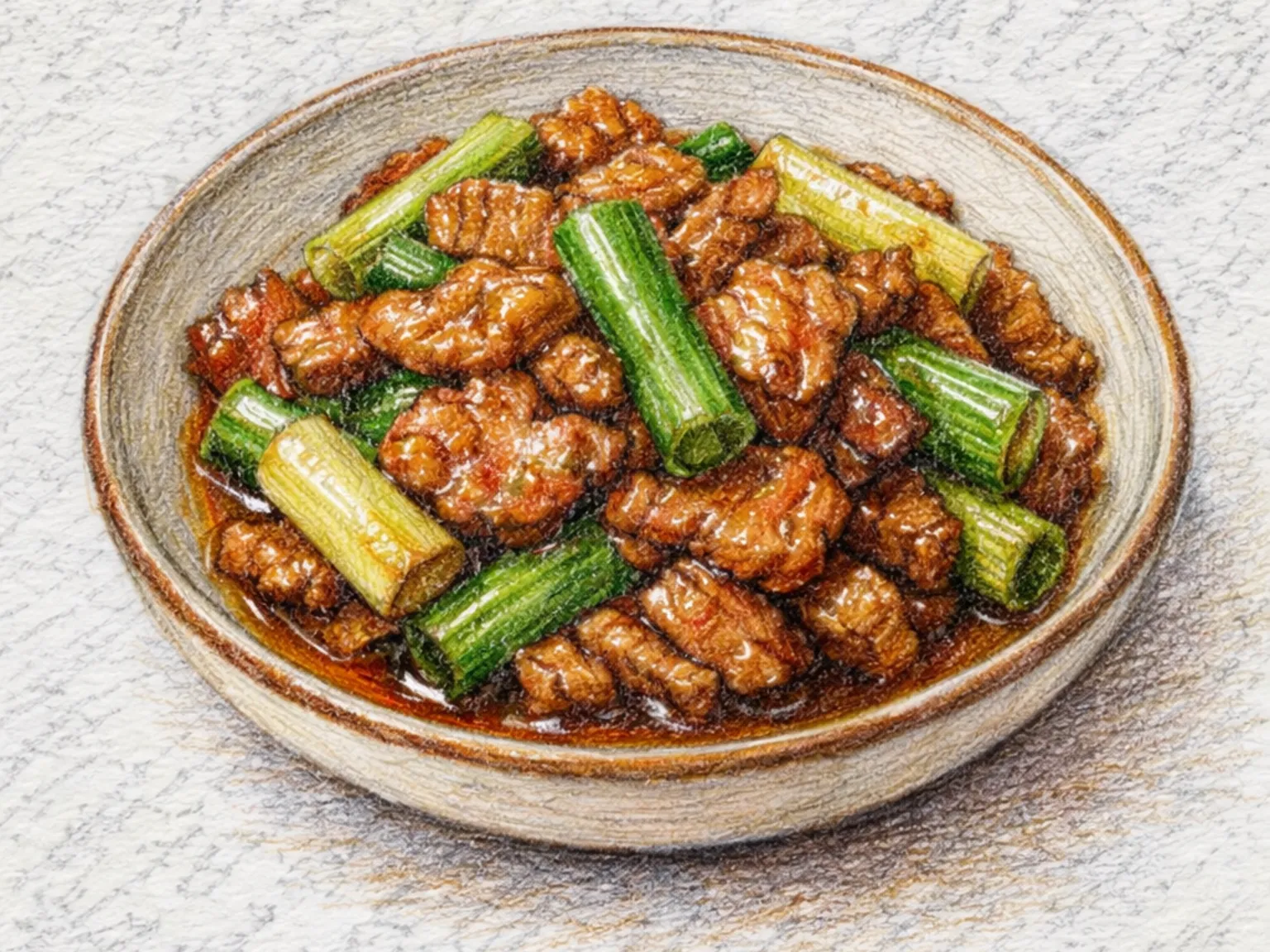
Korean Soy Glazed Pork Neck Stir-fry
Daepa moksal ganjang bokkeum is a quick stir-fry of thinly sliced pork neck with Korean large green onion, soy sauce, and oyster sauce. Pork neck has enough fat marbled through it to stay moist under high heat without drying out the way leaner cuts do, and the thin slicing ensures it cooks through in under two minutes. Soy sauce and oyster sauce hit the hot pan and caramelize quickly, forming a glossy coating on the meat's surface that is simultaneously salty, sweet, and slightly sticky. Onion releases its moisture as it cooks, naturally loosening the sauce and preventing it from thickening into a paste. The large green onion is cut on a diagonal into generous sections and added near the end - put in too early, it goes limp and loses its character, but added at the right moment, the edges char lightly while the inside turns translucent and releases a sweet, sharp fragrance that is distinct from the smaller variety. The combination of the caramelized meat and the barely-cooked green onion makes this an equally effective banchan over rice or an accompaniment to drinks.
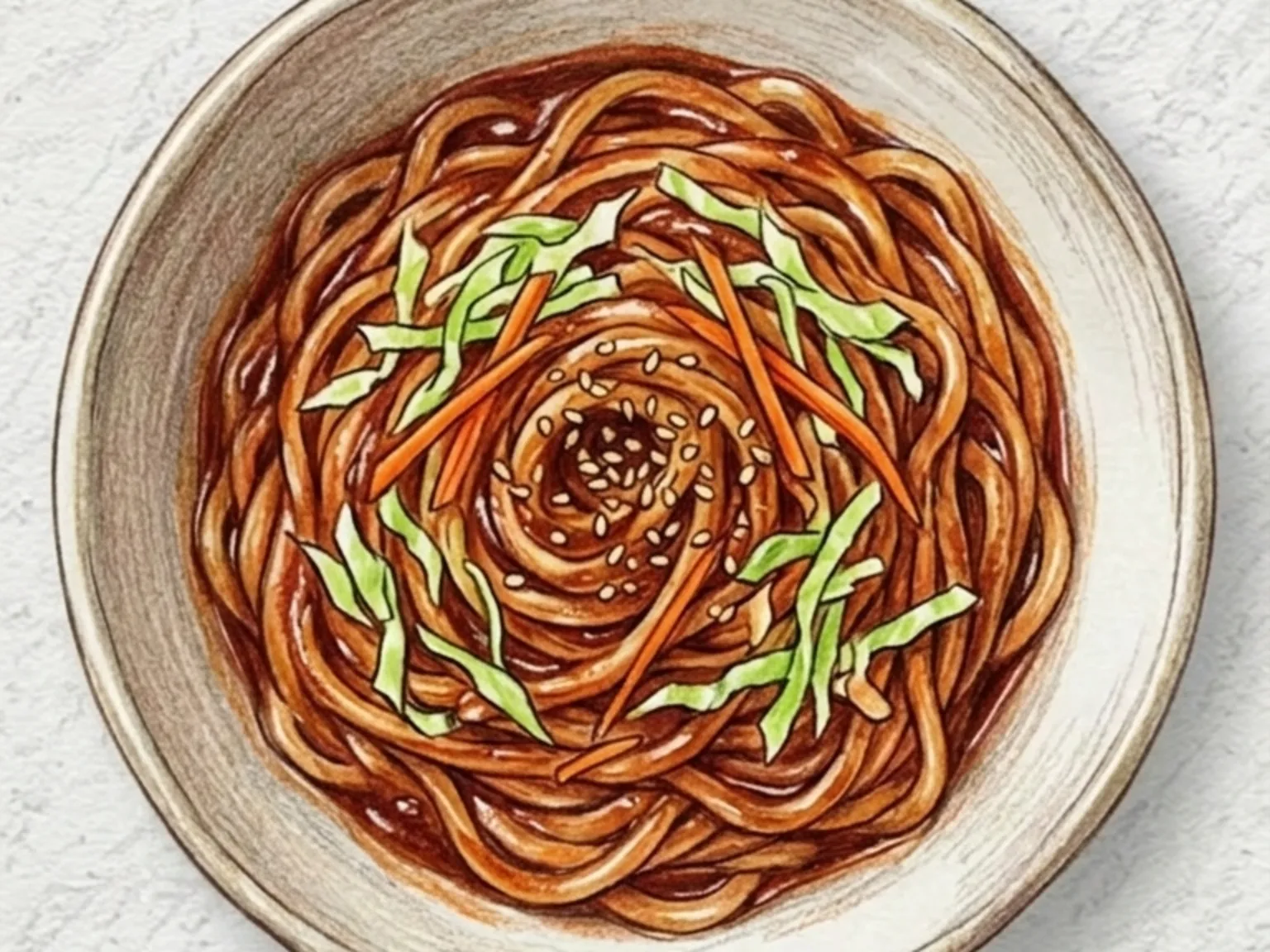
Korean Gochujang Bibim Udon Cup (Spicy Mixed Udon Cup)
Gochujang bibim udon cup is a cold-tossed udon noodle dish served in a cup, dressed with a sauce built from gochujang, soy sauce, oligosaccharide syrup, vinegar, and sesame oil. The fermented heat of gochujang meets the acidity of vinegar to create a bright, tangy-spicy flavor profile that avoids sharpness, and the viscous syrup gives the sauce enough body to cling evenly to the thick udon strands. Raw julienned cabbage and carrot are folded in without cooking, adding a snappy crunch that contrasts the soft noodles. Cooling the noodles completely before tossing is a key step that prevents the sauce from clumping and ensures even distribution throughout the cup. The handheld cup format suits street food settings, and additional toppings such as a soft-boiled egg or seasoned seaweed can elevate it into a fuller meal.
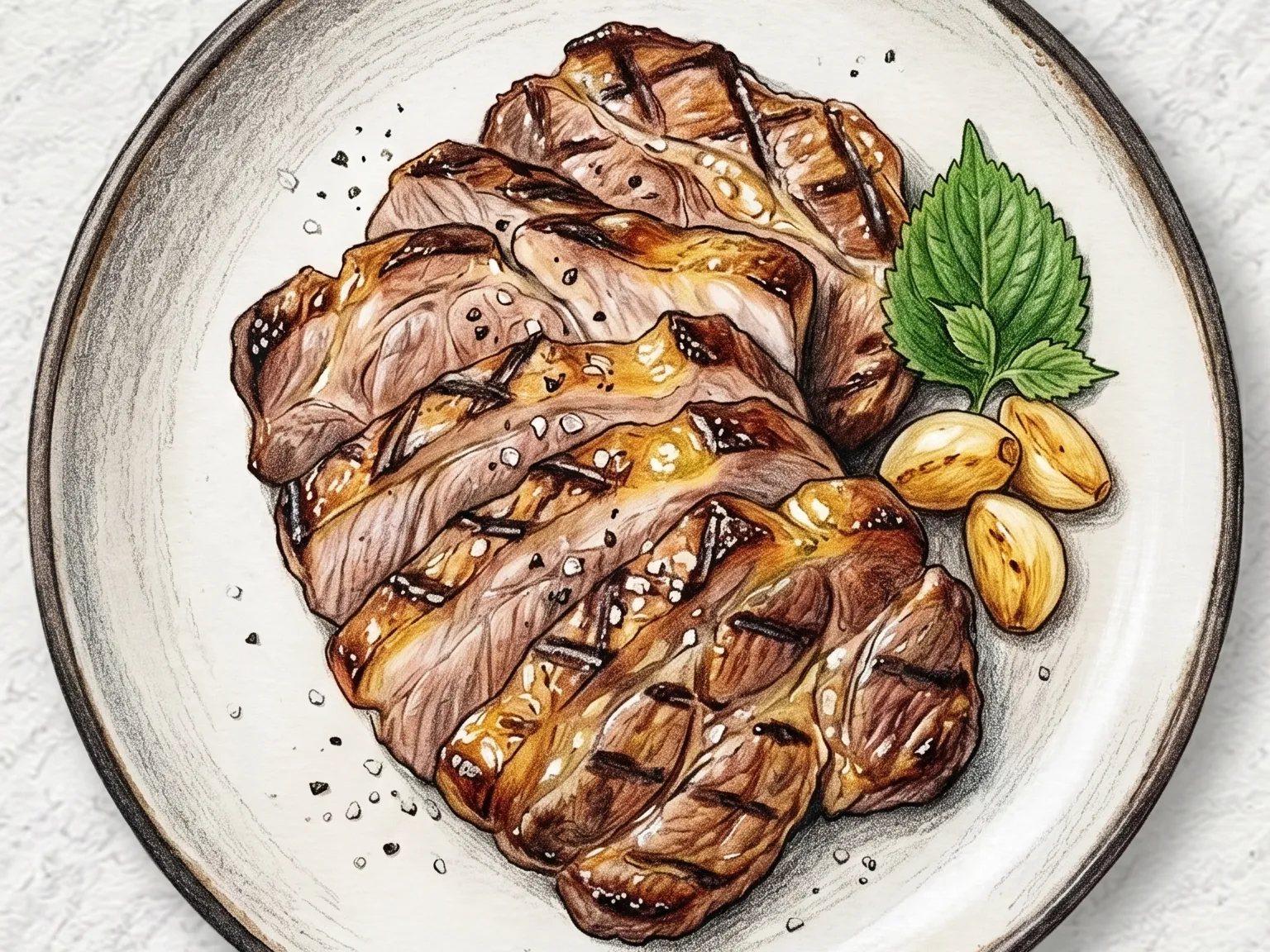
Korean Grilled Pork Neck (Salt-Seasoned Fatty Neck Cut BBQ)
Dwaeji-moksal-gui is Korean salt-grilled pork neck sliced one centimeter thick and seasoned with nothing more than coarse salt and black pepper before being laid on a blazing grill. The neck cut is laced with fine intramuscular fat that renders quickly over high heat, basting the meat from within and producing a rich, clean pork flavor that needs no marinade to taste complete. Cuts with roughly a seven-to-three fat-to-lean ratio give the best results, where fat and juice remain in balance through the cooking. Each side must sear for under two minutes over maximum heat to build a dark, caramelized crust while the center stays moist. Flipping repeatedly drops the surface temperature and produces a gray, steamed result rather than the charred exterior that defines the dish. The standard way to eat moksal-gui is in a ssam: a leaf of lettuce loaded with a roasted garlic clove, a smear of ssamjang, and a slice of the grilled meat, folded and eaten in a single bite.
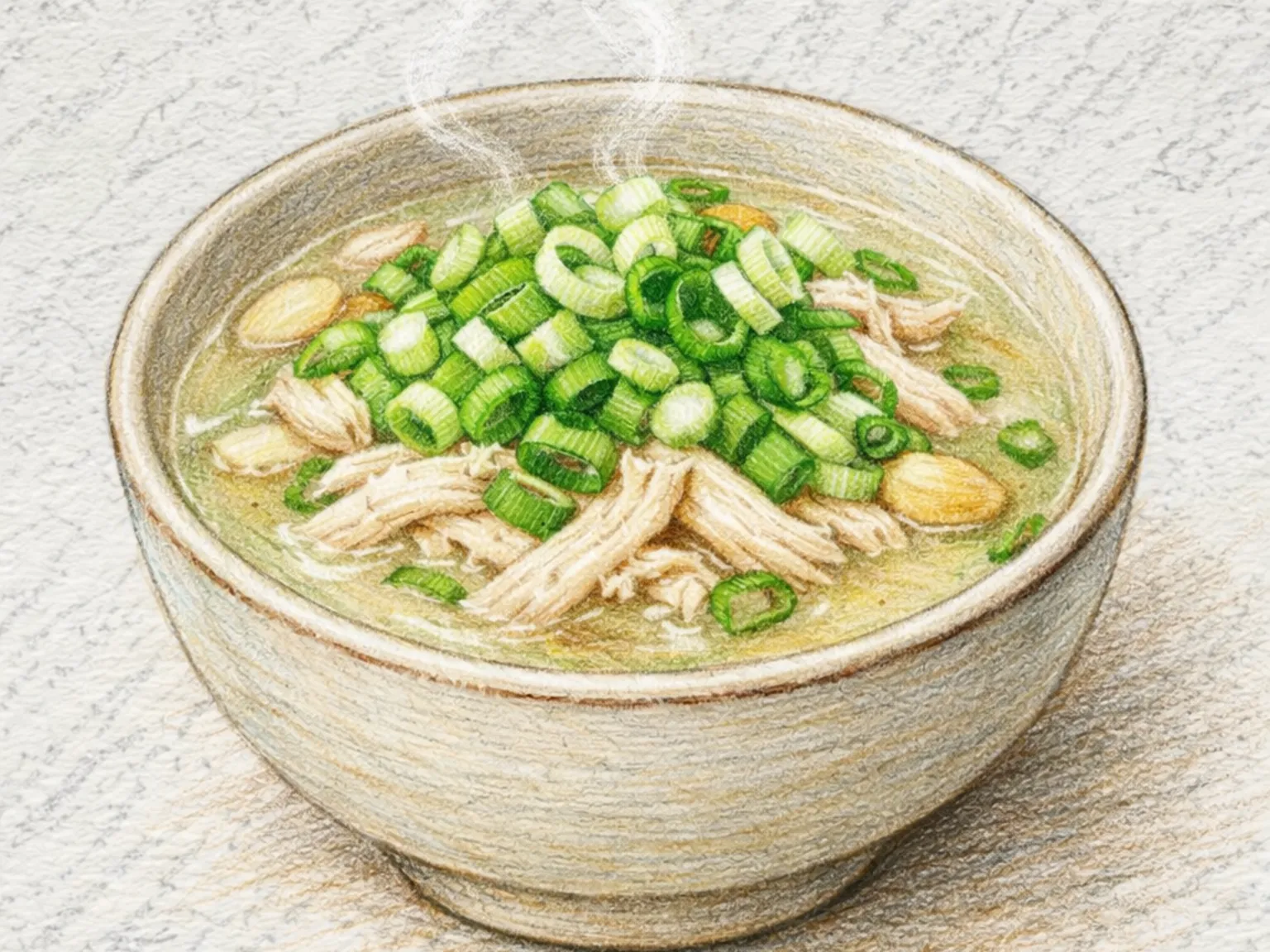
Korean Chicken Bone Broth Soup
Dak-gomtang is a Korean clear chicken bone broth soup made by simmering a whole chicken with onion, garlic, and ginger over medium-low heat for at least fifty minutes. After the meat is removed and hand-shredded, the bones return to the pot for another fifteen minutes, releasing gelatin that gives the broth a silky body. When refrigerated, the liquid sets into a soft gel, a sign of its collagen richness. Skimming the fat layer after refrigeration produces a noticeably cleaner, clearer taste on reheating. The broth is seasoned simply with soup soy sauce and salt, and sliced green onion added at the end brings a fresh, sharp contrast to the mellow chicken flavor. Unlike samgyetang, which is stuffed with ginseng and glutinous rice, dak-gomtang relies entirely on the chicken itself for depth, representing a more restrained approach to Korean restorative cooking. The soup dates back to the Joseon era and is traditionally eaten during convalescence or hot summer days. Adding cooked rice or thin noodles turns it into a complete one-bowl meal.
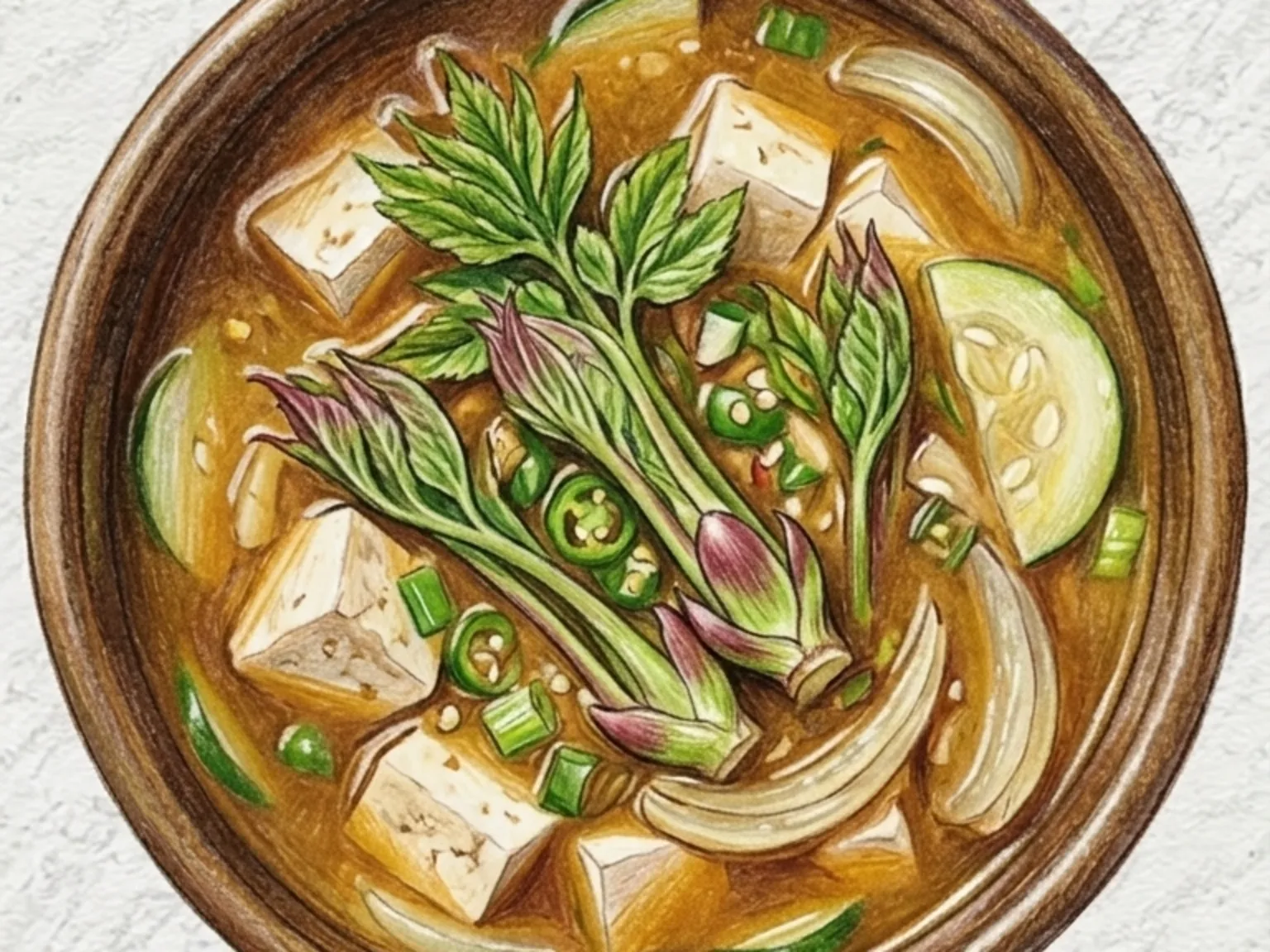
Korean Aralia Shoot Soybean Paste Stew
Dureup, the young shoots of the aralia tree, appear for only a few weeks in spring. Their pleasant bitterness and firm bite translate well into the savoury heat of doenjang broth. Anchovy stock forms the base, and both doenjang and gochujang are stirred in together to give the soup an earthy depth with a steady background heat. Zucchini and onion round out the bitterness with sweetness. Tofu fills the bowl with a soft contrast. The shoots go in late in the cooking so their crunch survives the heat of the broth.
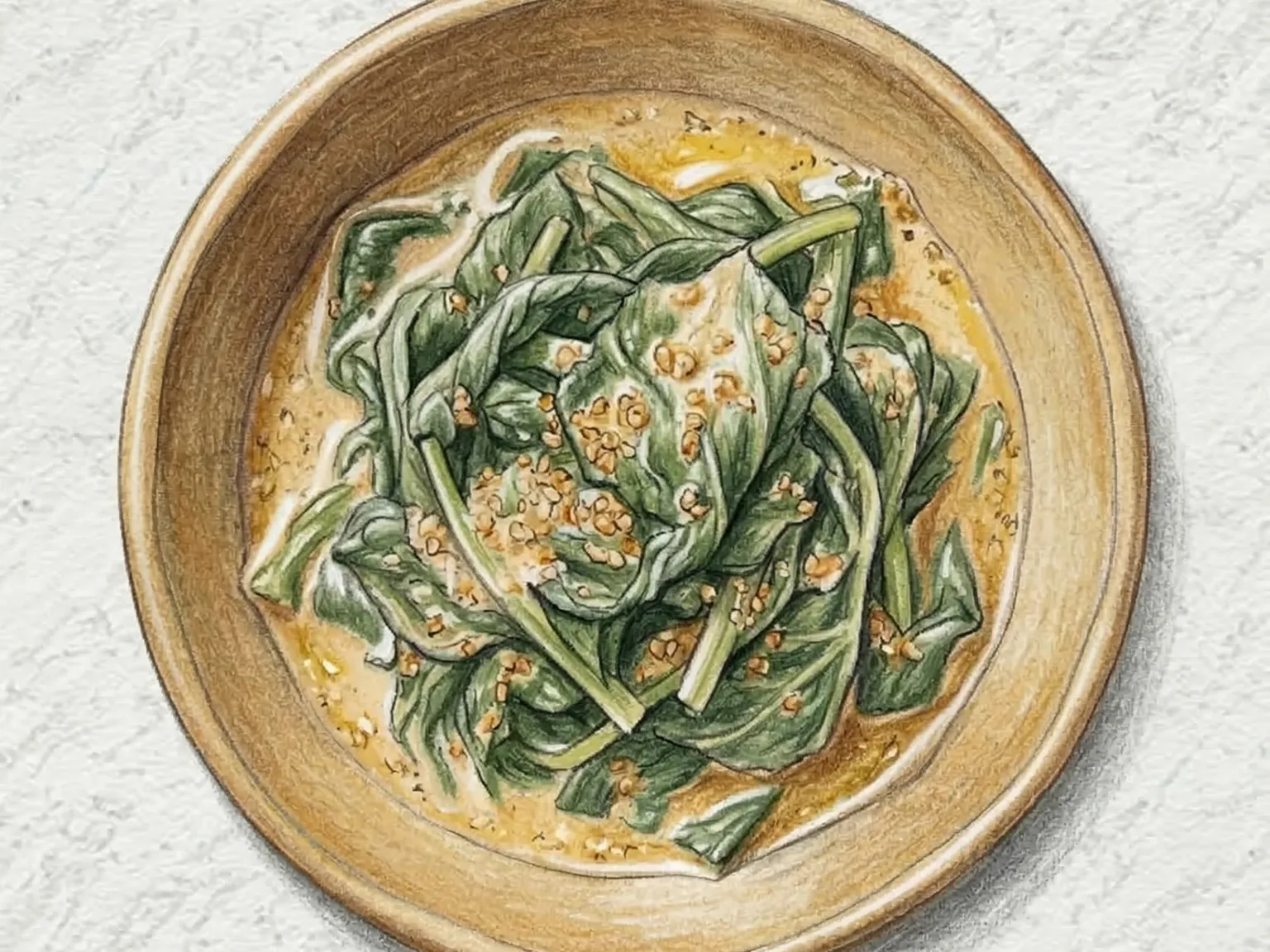
Korean Steamed Thistle Greens with Perilla
Gondre deulkkae jjim is a steamed side dish of blanched thistle greens cooked down with ground perilla seeds, perilla oil, and soup soy sauce. The greens are seasoned with garlic and oil first, then covered and left to steam over low heat so the liquid is slowly absorbed into the fibrous leaves rather than evaporating away. Adding the perilla powder toward the end of cooking, rather than at the beginning, prevents the nutty flavor from turning bitter or chalky from prolonged heat exposure. The soft, absorbent fibers of the thistle greens hold the seasoning exceptionally well, meaning each bite carries a concentrated burst of savory, nutty flavor throughout. Pulling the pan off the heat while a little texture remains in the greens keeps the dish from turning mushy. Green onion cut into rough pieces is added on top at the end, and a final drizzle of perilla oil revives the aroma. The ingredient list is short, but the result is a deeply satisfying dish often piled over hot rice or served as a companion to gondre bibimbap.
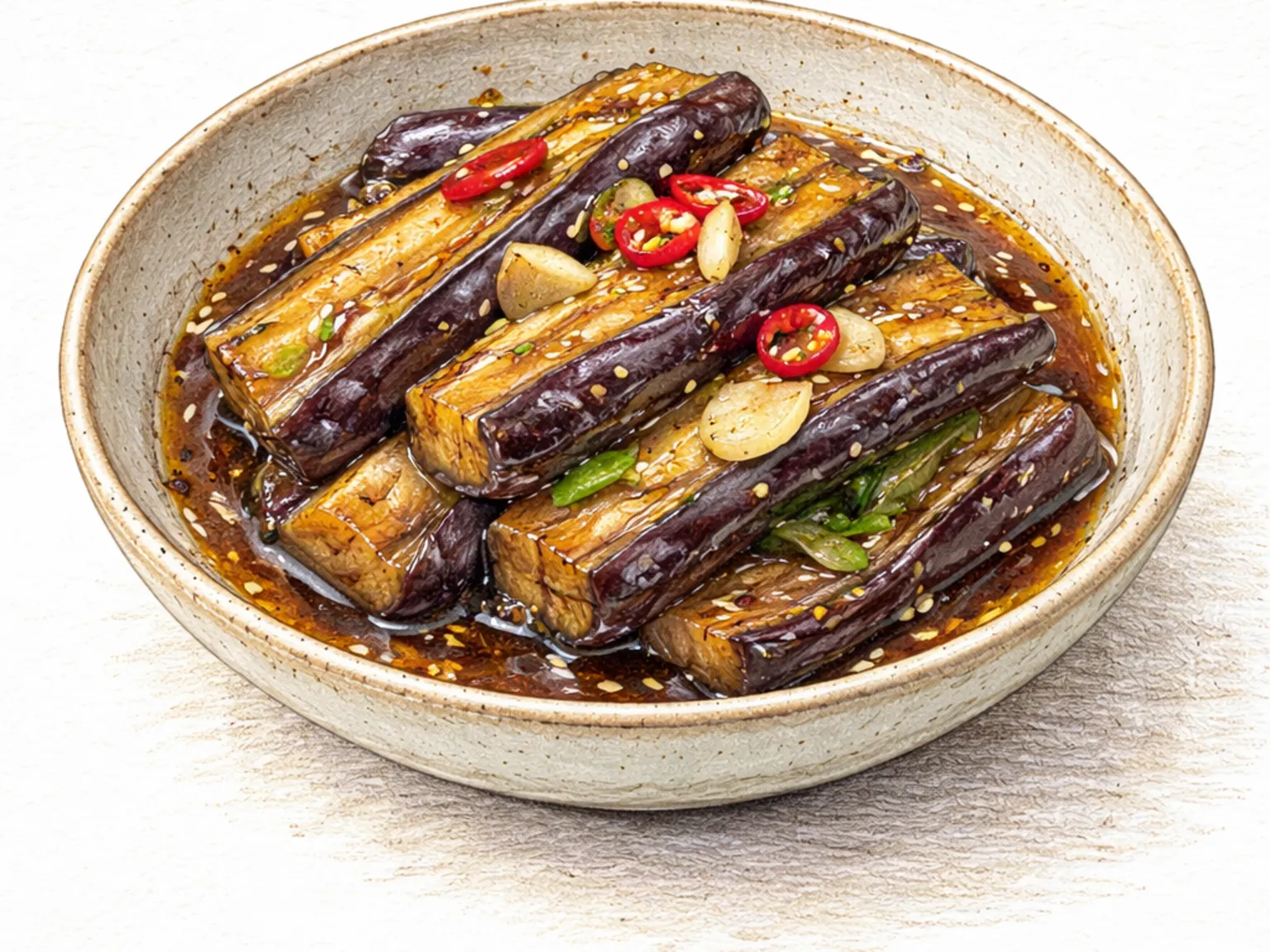
Korean Soy-Pickled Eggplant
Gaji jangajji is a Korean-style pickled eggplant that starts by blanching the eggplant in boiling water for just over a minute to soften only the outer surface, leaving the inside intact. The briefly cooked eggplant is submerged in a pickling brine of soy sauce, vinegar, and sugar that has been brought to a boil and then cooled. The eggplant absorbs the brine rapidly and deeply, like a sponge, while holding a soft, yielding texture at its core. Vinegar sharpens the eggplant's otherwise flat flavor, and garlic together with cheongyang chili pressed into the brine build a low heat and quiet complexity that goes beyond basic preservation. Ready to eat after a single day in the refrigerator, this jangajji holds its texture for more than ten days when kept cold, which makes it a practical banchan to prepare in advance and pull out over multiple meals.
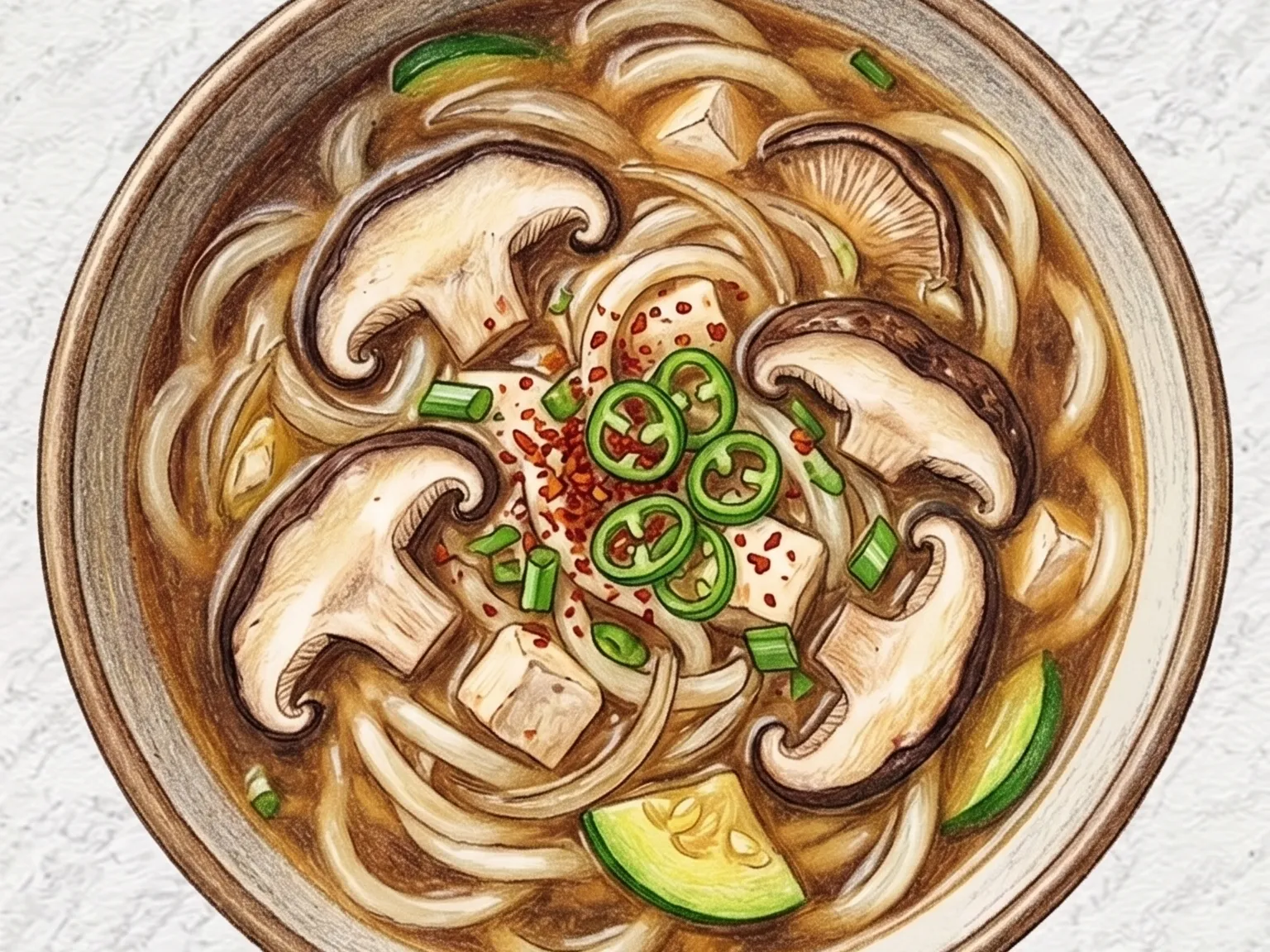
Korean Doenjang Mushroom Udon
Doenjang mushroom udon is a Korean noodle soup where thick-cut shiitake mushrooms simmer in an anchovy-kelp broth with dissolved soybean paste, building layered depth from two distinct fermented and dried umami sources. The shiitake's aromatic depth stacks on top of the doenjang's fermented, mellow character, while onion adds a quiet sweetness that prevents the broth from tasting one-dimensionally salty. Passing the doenjang through a fine sieve before stirring it into the broth ensures no lumps remain and the paste disperses evenly. Parboiling the udon noodles separately in plain water and rinsing briefly strips away surface starch, keeping the broth clear and clean to the last spoonful. A pinch of gochugaru added during the seasoning stage introduces a faint warmth at the finish that sharpens the overall flavor, and a few thin slices of cheongyang chili on top add color and a sharper bite. Adding silken tofu or sliced zucchini makes the bowl substantial enough to serve as a full meal.
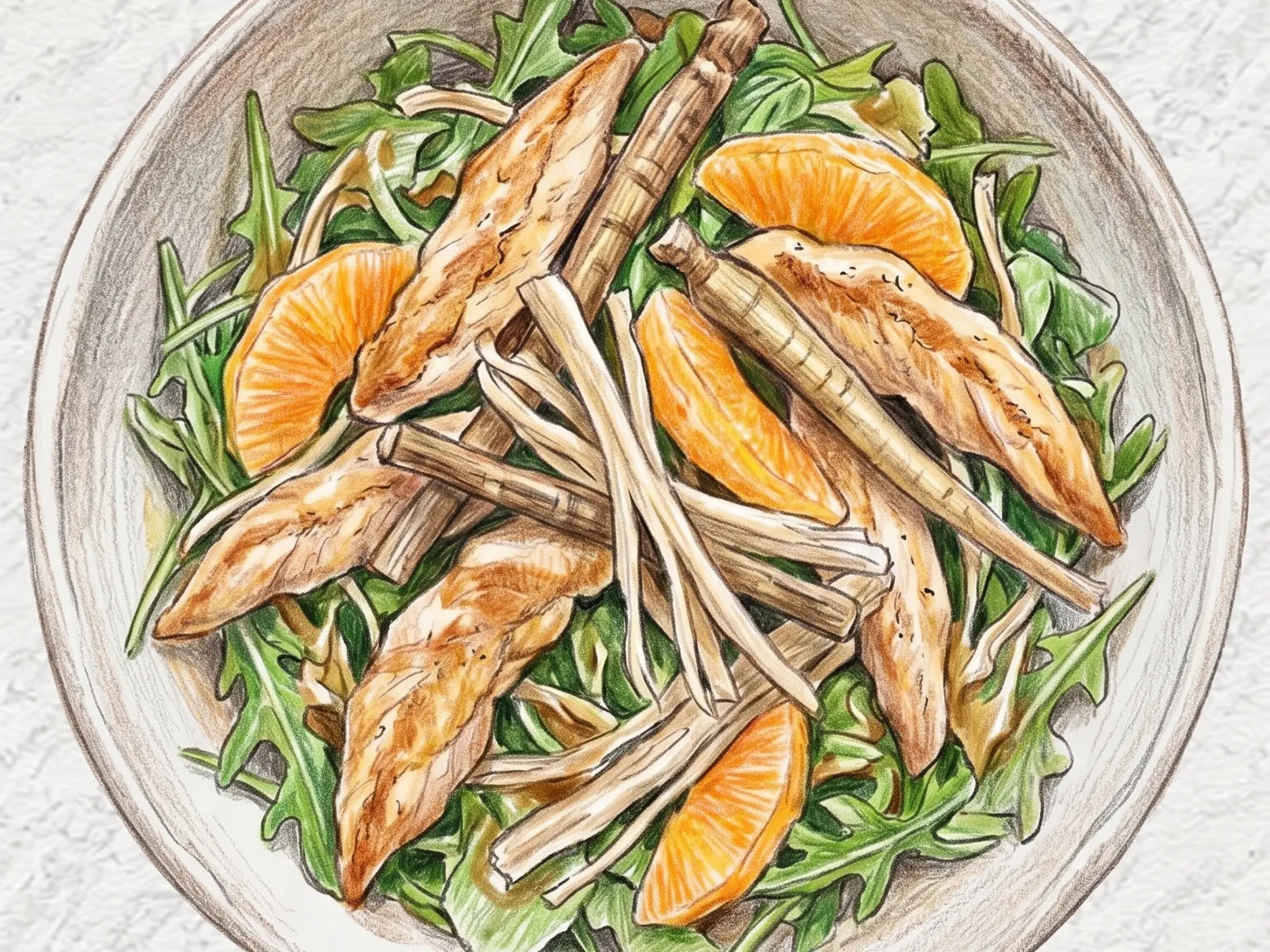
Deodeok Citrus Chicken Salad
Deodeok citrus chicken salad is a Korean-style dish that focuses on the interplay between various textures and flavors. The preparation involves pan-searing chicken tenderloin in a hot skillet until it develops a golden crust on the outside while the meat remains tender on the inside. This protein is paired with deodeok root, which is beaten or pounded before use to loosen its tough fibers and soften its structure. Deodeok provides a unique earthy quality and a subtle bitterness that is difficult to find in other root vegetables. Fresh orange segments are included to provide a bright acidity that balances the savory notes of the seared chicken and the natural earthiness of the deodeok. Arugula is used as the base of the greens, contributing a sharp, peppery layer to the overall composition. A simple dressing made from soy sauce and olive oil is used to integrate the Korean-inspired components with more Western salad elements. Because the dish contains a high amount of protein from the chicken and a significant volume of vegetables, it functions as a light meal that remains nutritionally complete.
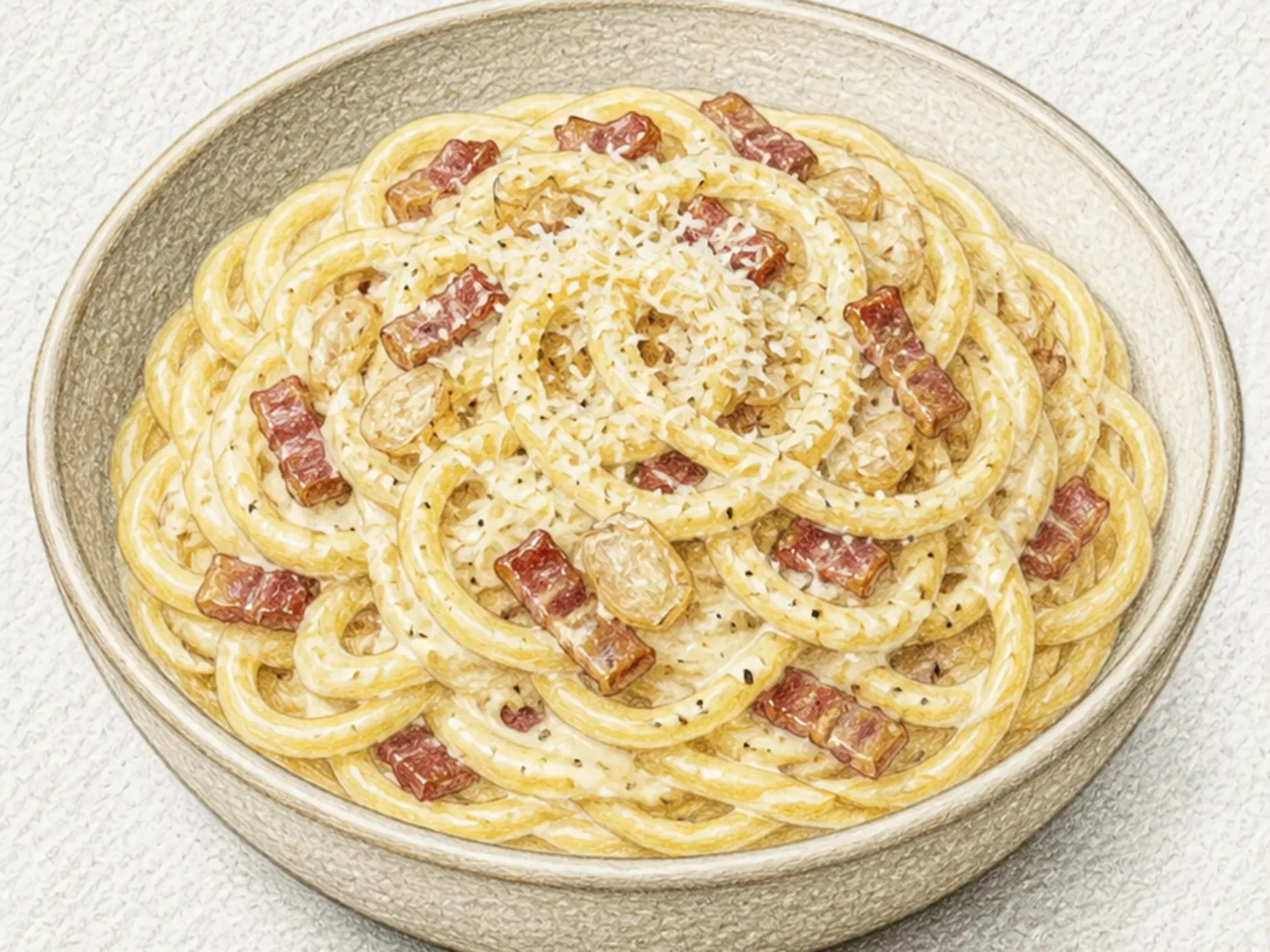
Cream Pasta
Cream pasta begins with bacon rendered crisp in butter, building a fat base that carries the flavor of everything that follows. Diced onion and minced garlic cook in the rendered fat until soft and fragrant before the heavy cream and milk go in, which is the combination that gives the sauce body without making it too dense. Heavy cream alone would weigh the pasta down, so the milk lightens the mixture to a consistency that clings to each strand without pooling at the bottom of the bowl. The cooked pasta is transferred directly into the sauce pan while still hot, and two to three tablespoons of starchy pasta water are stirred in to help the sauce emulsify and adhere evenly to the noodles. Freshly grated Parmesan is added off the heat so it melts smoothly rather than clumping, contributing a salty edge and a fermented depth that rounds out the simple cream base. The finished dish layers the smoky, cured saltiness of bacon against the mild richness of cream and the aged sharpness of Parmesan for a well-balanced, satisfying bowl.
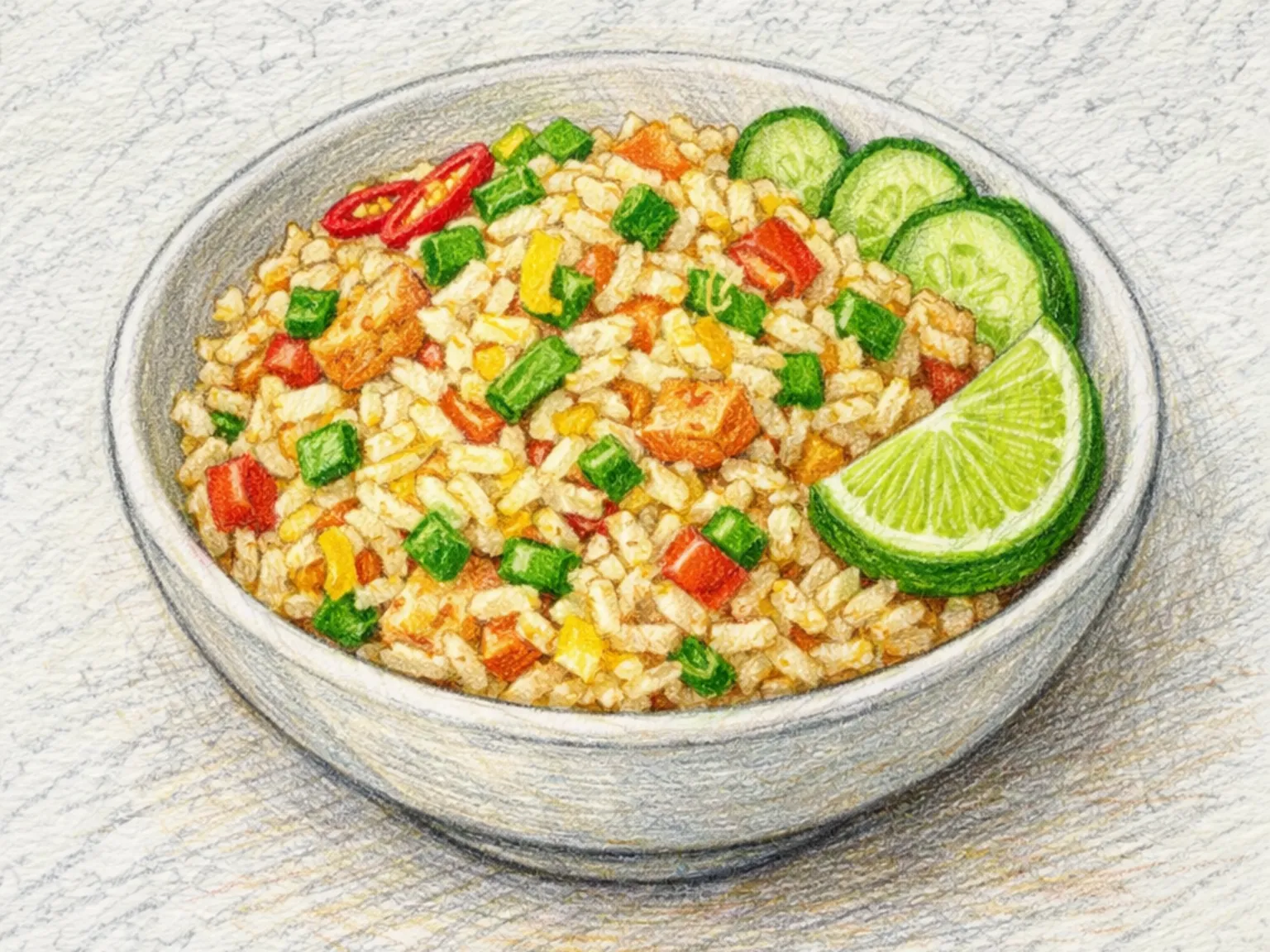
Thai Fried Rice
Khao pad is Thailand's definitive fried rice, and the entire dish depends on one preparatory decision made the day before: using cold, day-old rice rather than freshly cooked grains. Freshly steamed rice retains too much moisture and clumps together in the wok, steaming rather than frying and resulting in a heavy, gummy texture. Cold rice separates easily under the heat, allowing the individual grains to coat in oil and achieve the distinct, lightly chewy texture that defines good khao pad. The wok is heated until it smokes before garlic goes in, building a fragrant base in seconds. Eggs are scrambled into large, soft curds alongside the garlic before the rice is added and tossed vigorously with fish sauce, soy sauce, and a small pinch of sugar, which rounds the saltiness into something rounder and more complex. The most important quality that separates a superior khao pad from a mediocre version is wok hei: the faint, smoky breath that comes from sustained contact between the ingredients and a very hot wok surface. A plate of khao pad is always accompanied by a lime wedge, sliced cucumber, and chopped scallion. In its simplest form it needs no protein, but shrimp, chicken, or crab are common and equally traditional additions.
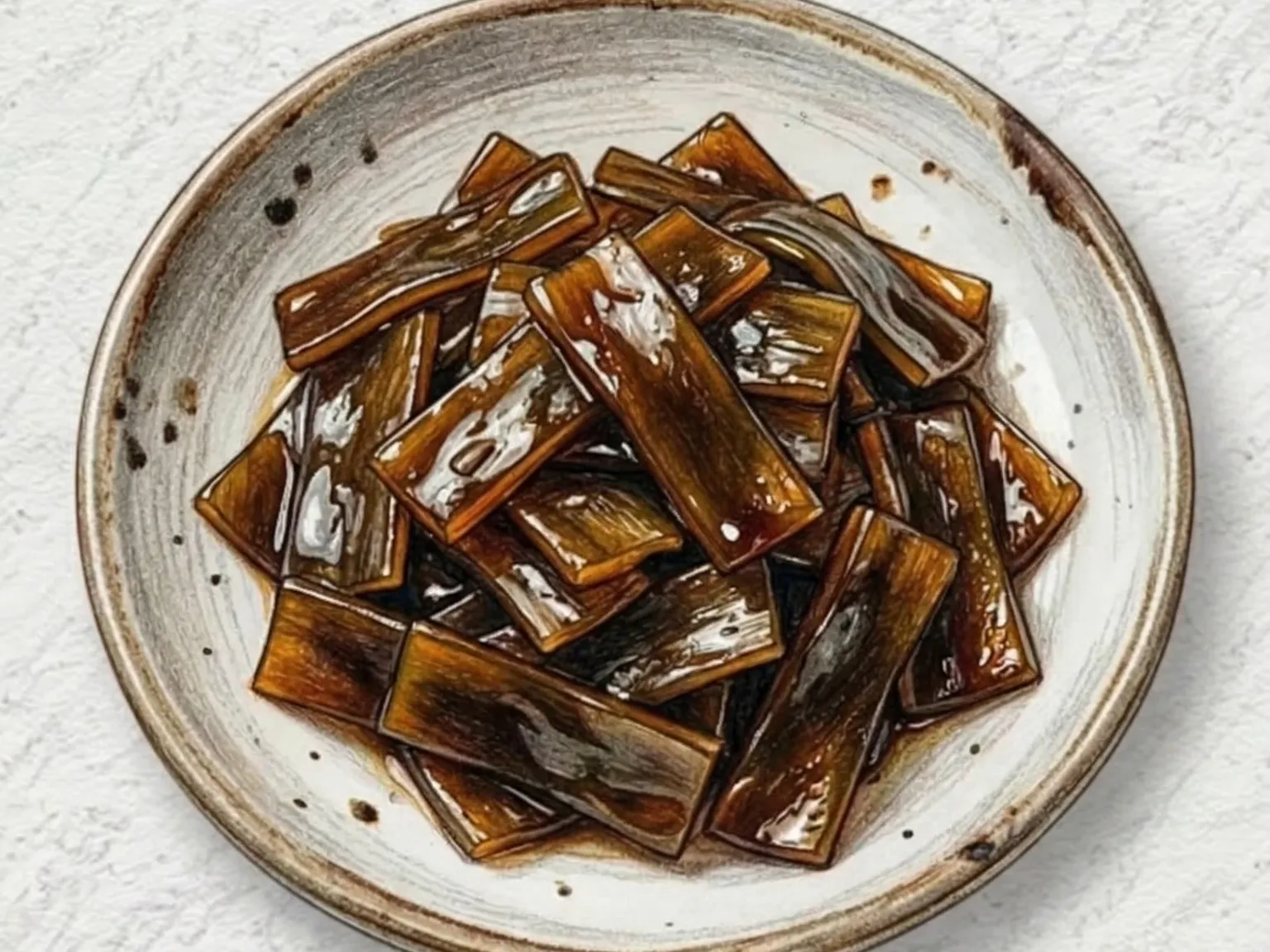
Korean Braised Kelp Strips
Dasima jorim is a banchan that repurposes dried kelp - typically discarded after making stock - into a glossy, chewy side dish through slow braising. The kelp is soaked in cold water for at least twenty minutes until it softens and becomes pliable, then cut into strips roughly one centimeter wide. Simmered in soy sauce, rice syrup, cooking wine, and garlic over medium-low heat for fifteen minutes or more, the braising liquid gradually reduces and thickens into a lacquer-like glaze that coats each strip on all sides. The rice syrup contributes both sweetness and the shine that gives the dish its visual appeal. The resulting texture is difficult to compare - somewhere between the springiness of gummy candy and the firm bite of pasta al dente, resilient but with a clean snap when bitten through. Refrigerated overnight, the seasoning penetrates the dense seaweed fibers more deeply, and the flavor continues to intensify over several days, making it a banchan that improves the longer it sits.
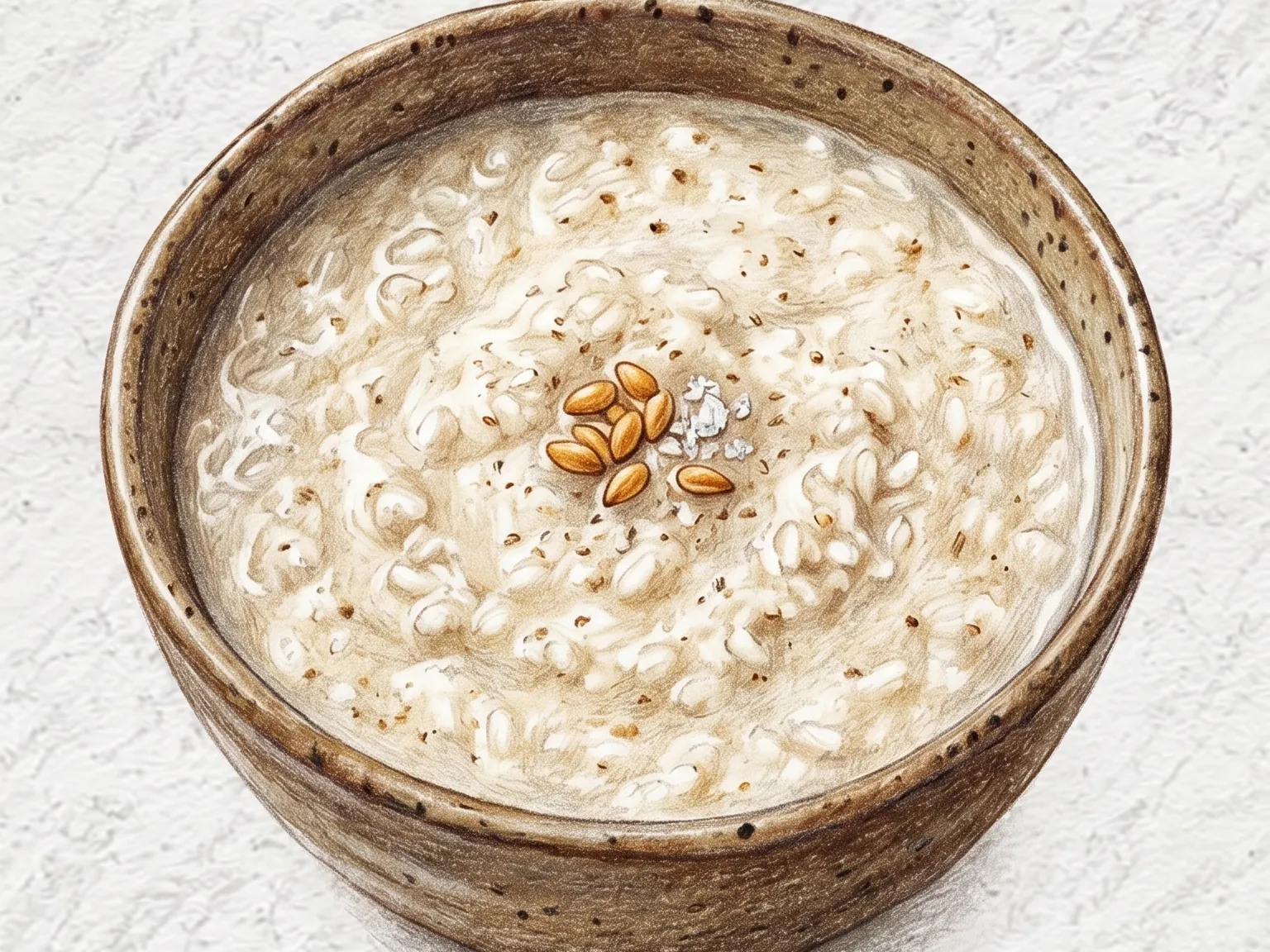
Korean Perilla Seed Porridge
Deulkkae juk is a traditional Korean porridge made by blending toasted perilla seeds into a smooth liquid and simmering it with soaked rice. Toasting the seeds beforehand unlocks a deep, earthy nuttiness that defines every spoonful of the finished porridge. The rice is first stir-fried briefly in sesame oil, then the perilla liquid is poured in and the mixture is stirred over low heat until the starch from the rice and the natural oils from the seeds combine into a thick, creamy consistency. Salt is the only seasoning needed - the perilla carries enough flavor on its own to make the bowl complete. The porridge is easy to digest and coats the stomach gently, making it suitable as a morning meal or a restorative dish during illness. In Korean tradition, deulkkae juk has long served as a warming winter food, valued for its ability to nourish without burdening the body.
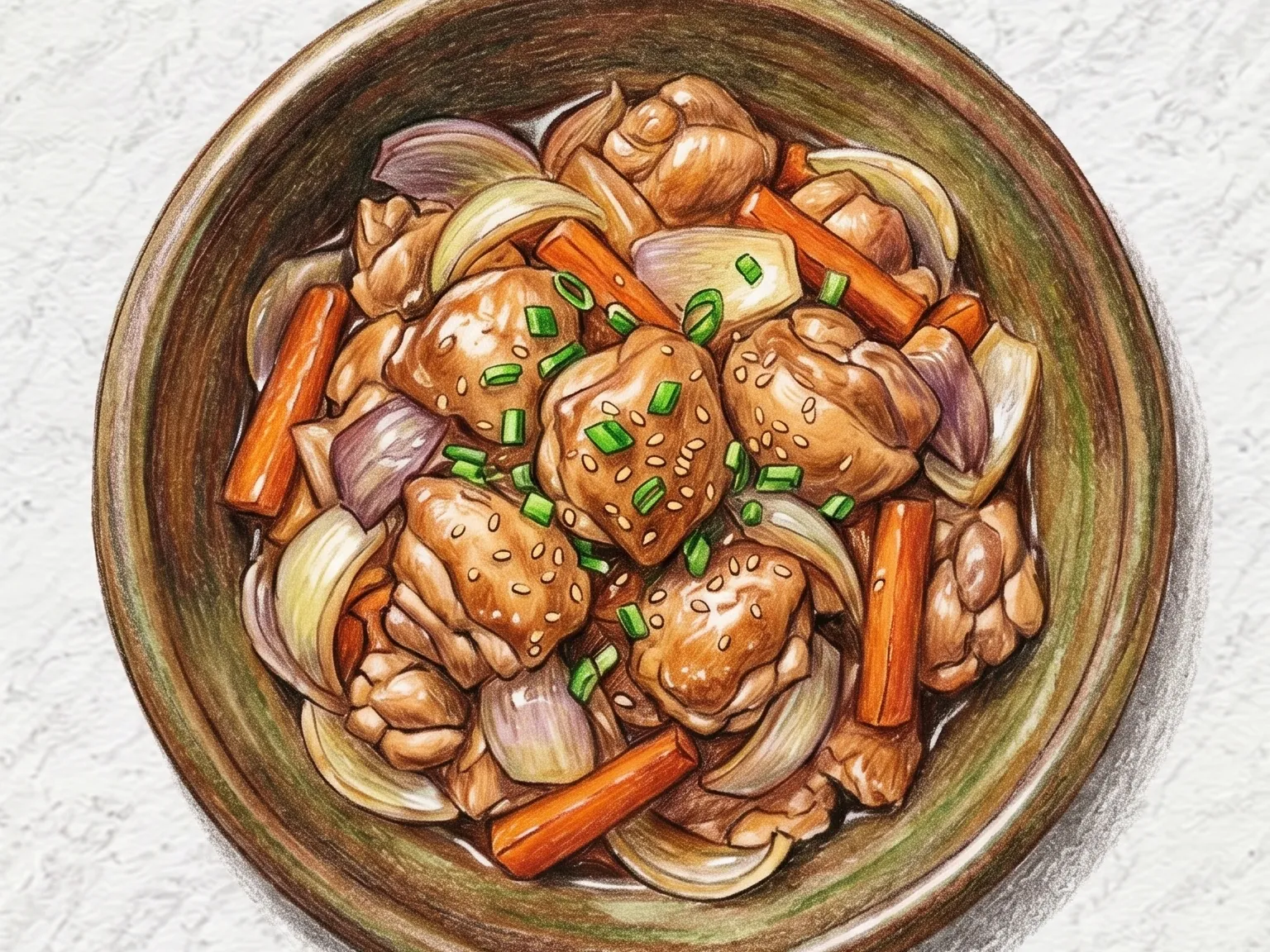
Korean Stir-Fried Chicken
Dak-bokkeum is a Korean stir-fried chicken dish seasoned with a soy sauce-based marinade. Soy sauce, sugar, and minced garlic coat the chicken evenly before it hits the pan, producing a salty, umami-forward crust as it sears. Onion and carrot are added partway through, and the moisture they release as they soften blends into the seasoning to form a natural pan sauce without any added liquid. Sesame oil goes in at the end, its nutty aroma lifting through the dish as it finishes. Breast meat produces a leaner, cleaner-tasting result, while thigh meat stays more moist and springy throughout cooking. The dish pairs well with steamed rice and comes together quickly enough for weeknight cooking.
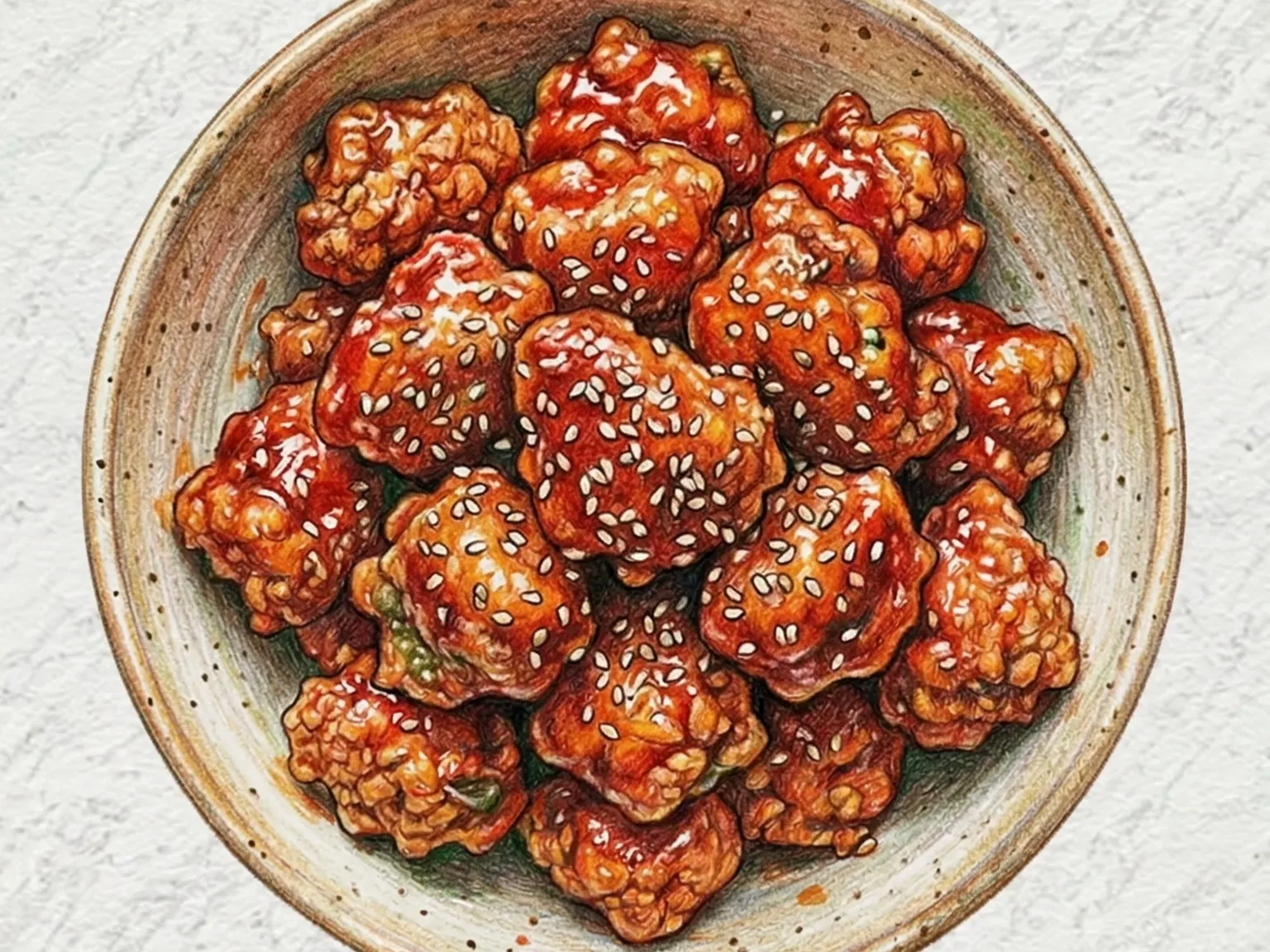
Korean Gochujang Honey Dakgangjeong
Gochujang honey dakgangjeong starts with bite-sized boneless chicken thigh pieces coated in potato starch and double-fried, first at 170 degrees Celsius and then at 180 degrees, before being tossed in a glaze of gochujang, honey, soy sauce, and garlic. The two-stage frying builds a rigid starch shell that stays crunchy even after the sauce is applied, while the natural fat in thigh meat keeps the interior juicy throughout the process. Gochujang's fermented heat contrasts directly with honey's thick sweetness, and soy sauce anchors the salt level so neither sweetness nor spice dominates. Garlic sharpens the aroma of the sauce, and sesame seeds scattered at the end add a finishing layer of nuttiness. The sauce must be reduced quickly on high heat, under one minute, to achieve a glossy coat without burning. The chicken should be sauced and eaten immediately after frying for the maximum contrast between the crackling crust and the tender, glazed interior.
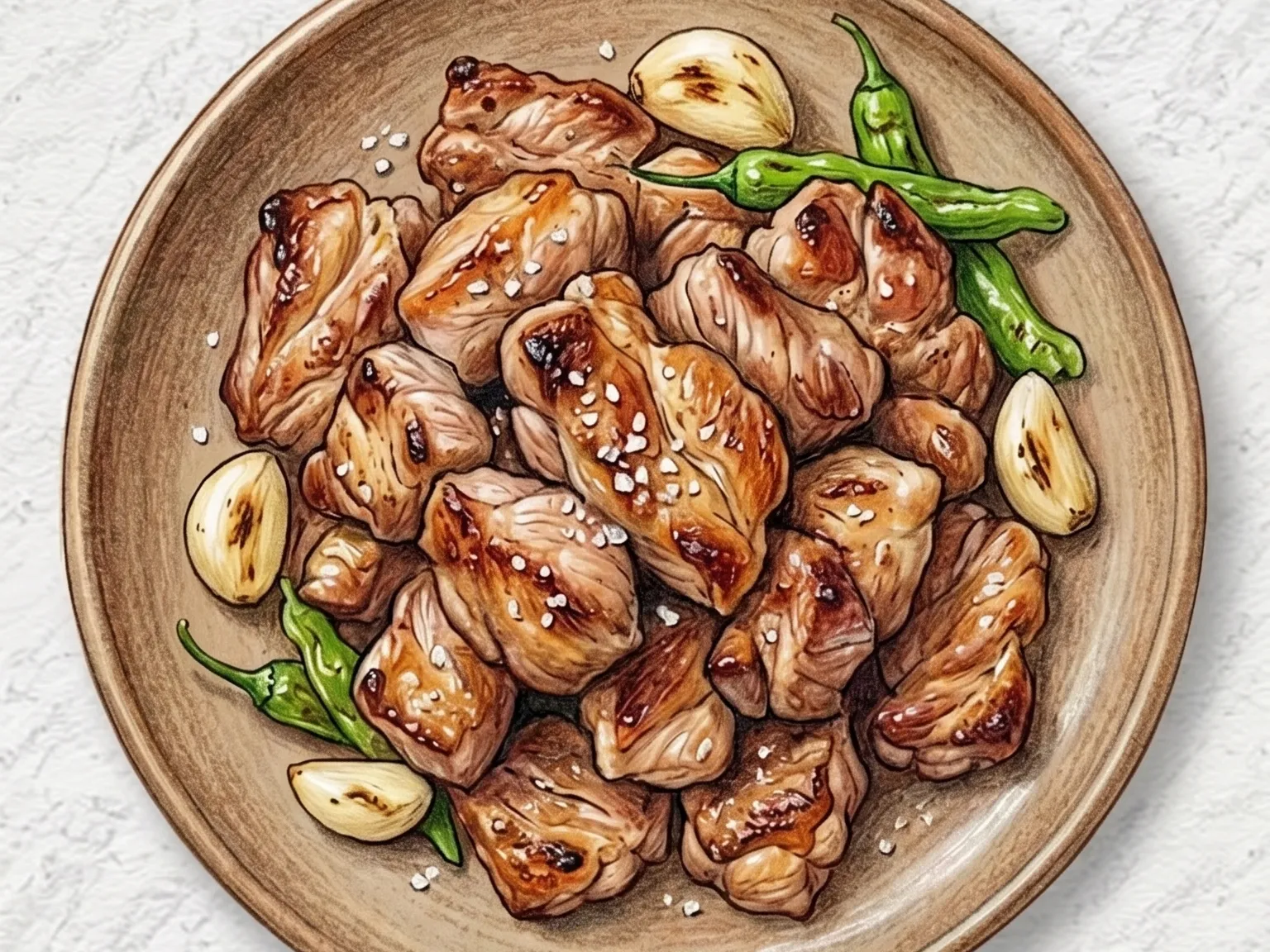
Salt-Grilled Pork Dwitgogi
This dish features pork dwitgogi, a selection of assorted pork cuts valued for a springy and chewy texture compared to standard pork belly. The meat is prepared by applying soju to eliminate gamey odors and patting it dry to ensure a clean sear. The cooking process starts by searing the pork in a preheated heavy pan on high heat to seal in the juices. Once the meat is partially cooked, sea salt and crushed black pepper are added to distribute the seasoning evenly. Garlic cloves and green onions are then cooked directly in the rendered pork fat, infusing the meat with their aromas. Grilling continues until the pork is golden brown and springy. The completed dish is traditionally served hot alongside boiled meljeot, a salted anchovy sauce that provides a deep, savory element to the roasted pork.