🏠 Everyday Recipes
Simple home-cooked meals for any day
1705 recipes. Page 19 of 72
These are the meals you can cook day after day without getting tired of them. Doenjang jjigae, rolled omelet, spicy pork stir-fry - the kind of home-cooked dishes that fill an ordinary day with comfort.
The beauty of everyday cooking is that it relies on common ingredients already in your fridge. No exotic items, no complicated techniques - just straightforward recipes for satisfying home meals.
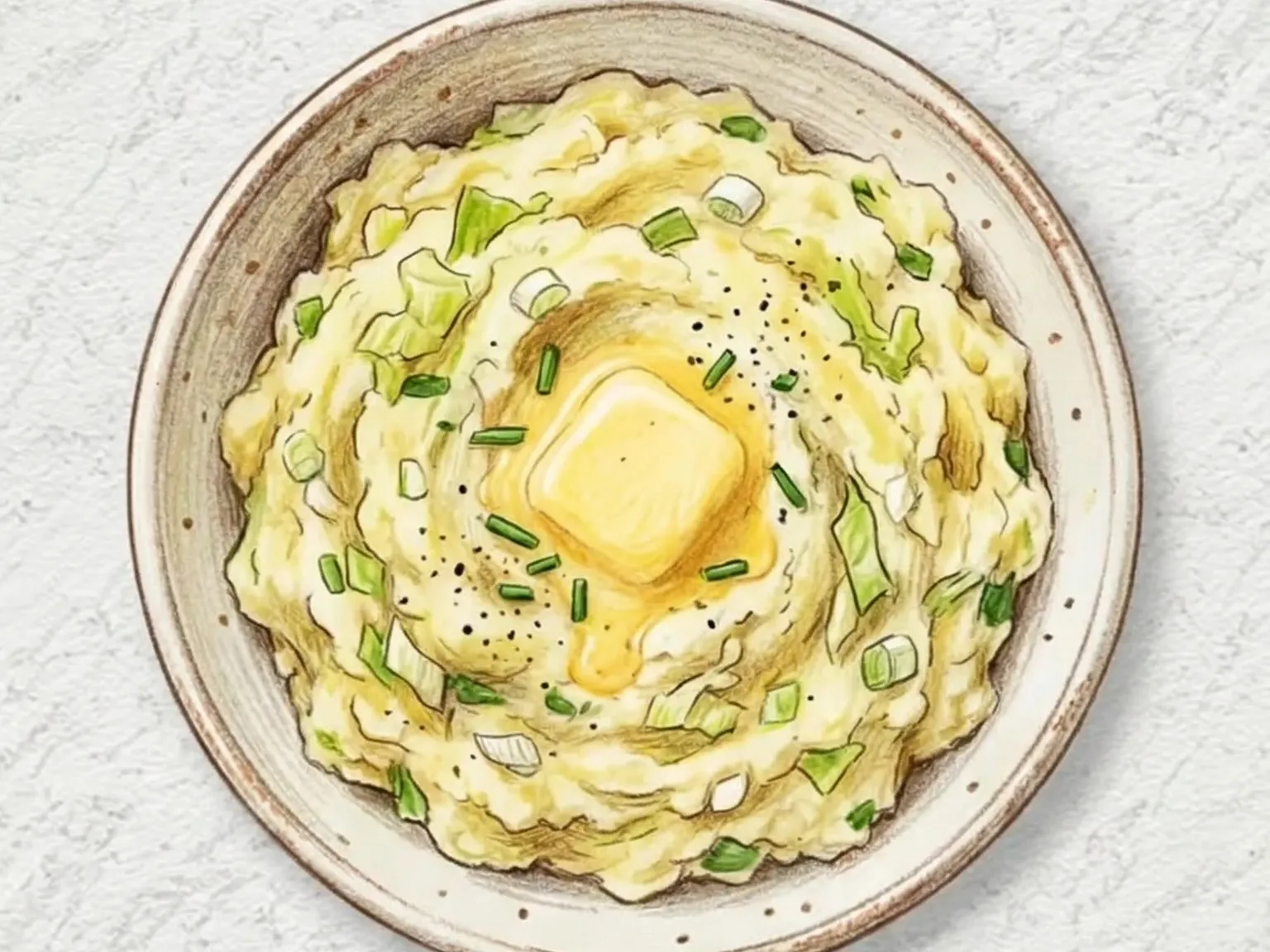
Colcannon (Irish Mashed Potatoes with Cabbage and Butter)
Colcannon is a traditional Irish dish of hot mashed potatoes folded together with blanched shredded cabbage and chopped green onion, then brought to a creamy, pillowy consistency with warmed milk and butter. Mashing the potatoes while they are still steaming hot is essential, because the starch granules release cleanly and evenly only at high temperature. Both the milk and butter must be heated before they go in, because cold dairy causes the starch to seize and turn the mash dense and gluey instead of light and smooth. Blanching the cabbage for three minutes in salted water leaves just enough resistance in each shred to contrast with the yielding potato. Green onion disperses a mild, fresh allium fragrance throughout the dish without overpowering it. A knob of butter placed on top just before serving melts into a shallow pool that deepens the richness of every spoonful. In Ireland, colcannon was traditionally eaten on Halloween, sometimes with a coin hidden inside the mash to bring good luck. Kale or spring onion can stand in for cabbage, and using a floury variety of potato produces the dish's characteristic light yet dense texture.
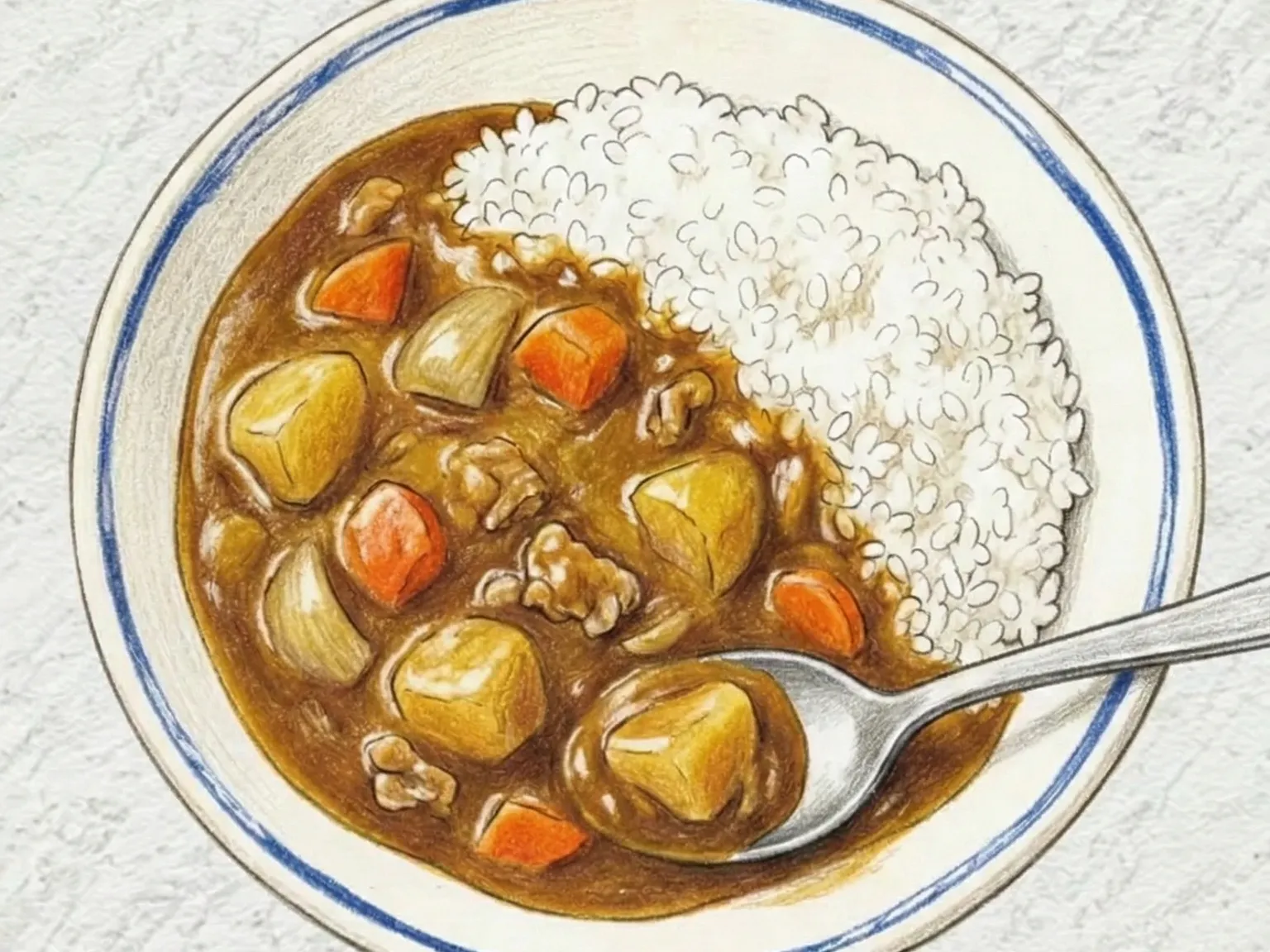
Japanese Curry Rice
Kare raisu is one of the most frequently cooked meals in Japanese households, using commercially prepared curry roux blocks that produce a milder, thicker, and sweeter result than Indian curry. Beef or chicken is cut into bite-sized pieces and stir-fried with onion, potato, and carrot before water is added and the pot simmers until the potatoes turn tender. The heat is lowered and the curry roux blocks are broken in and stirred until fully dissolved; the roux contains flour and fat that thicken the liquid into a glossy, coating sauce. Keeping the heat low after adding the roux is critical because high heat causes the thick sauce to scorch on the bottom. The finished curry deepens in flavor if rested overnight, as the vegetables continue to release their sweetness into the sauce. Unlike Indian curry with its layered spice blends, Japanese curry draws its appeal from the consistent, approachable flavor that a single roux block delivers every time.
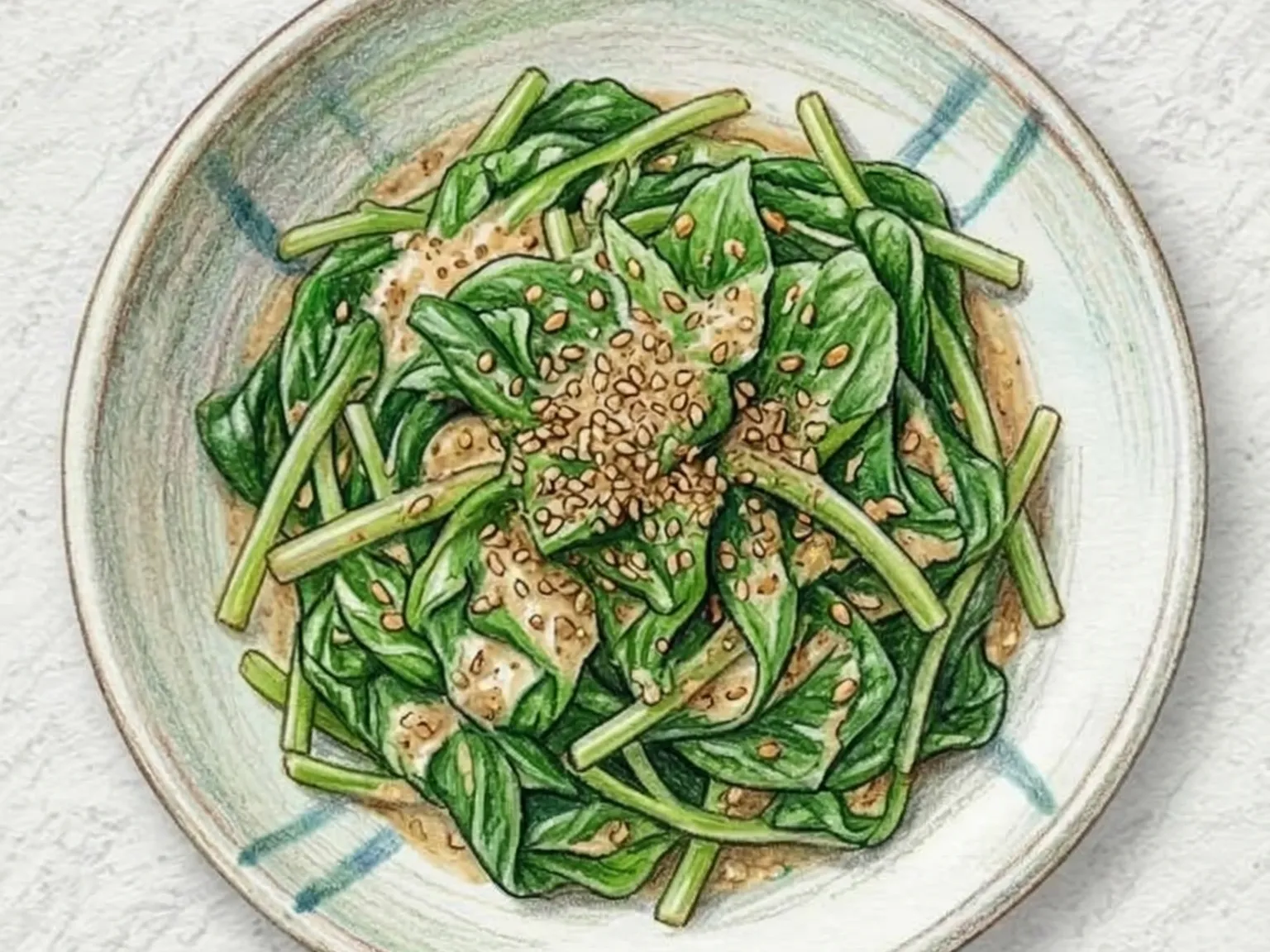
Korean Chwinamul with Perilla Powder
Where the doenjang version of chwinamul leans on fermented soybean depth, this preparation wraps the greens in a perilla seed coating that is mild, nutty, and warm rather than assertive. After blanching, the chwinamul is seasoned with a base of soup soy sauce, garlic, and green onion, then sauteed briefly in perilla oil to amplify the seed character before any liquid is added. Water is stirred in for a light braise that softens the stems fully. The critical step comes off the heat: reducing the flame before adding perilla powder is essential, because adding the powder while the pan is still hot causes the seed oils to separate, leaving a gritty, uneven coating rather than the smooth, pale paste that should coat every strand. When done correctly, the finished dish has a silky, enrobing texture that clings to the greens and releases the full fragrance of the perilla seed in each mouthful. The chwinamul aromatics remain distinct throughout, but the perilla shifts their overall character from sharp and herbal toward something rounder and more comforting.
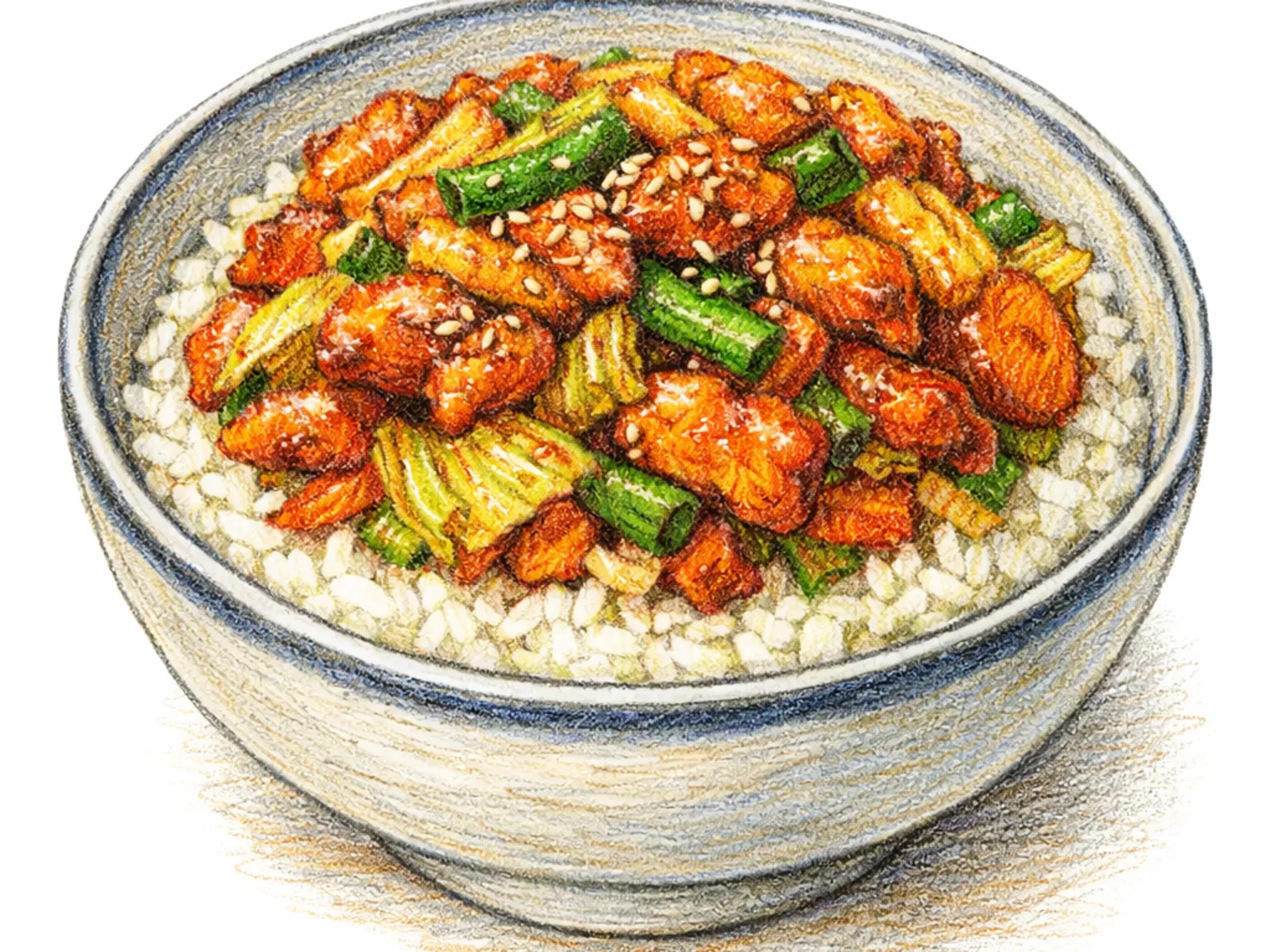
Korean Spicy Dakgalbi Rice Bowl
Dakgalbi deopbap serves the core flavors of Chuncheon's famous spicy chicken in a single rice bowl. Boneless chicken thigh is stir-fried alongside cabbage, onion, and green onion in a gochujang-based marinade balanced with sugar and a splash of soy sauce. The chicken is cooked over high heat throughout -- this creates a caramelized crust on the meat's surface and keeps the vegetables at a slight crunch rather than softening them completely. Sesame oil is added off the heat as a final step, contributing a toasty fragrance that rounds out the bold seasoning without overpowering it. At traditional dakgalbi restaurants in Chuncheon, the meal ends with fried rice made by mixing cooked rice directly into the residual sauce left on the hot iron plate -- this bowl captures that same moment in a format that can be made at home without a cast-iron griddle. The dish requires no banchan; the seasoned protein and vegetables together with the rice form a self-contained meal.
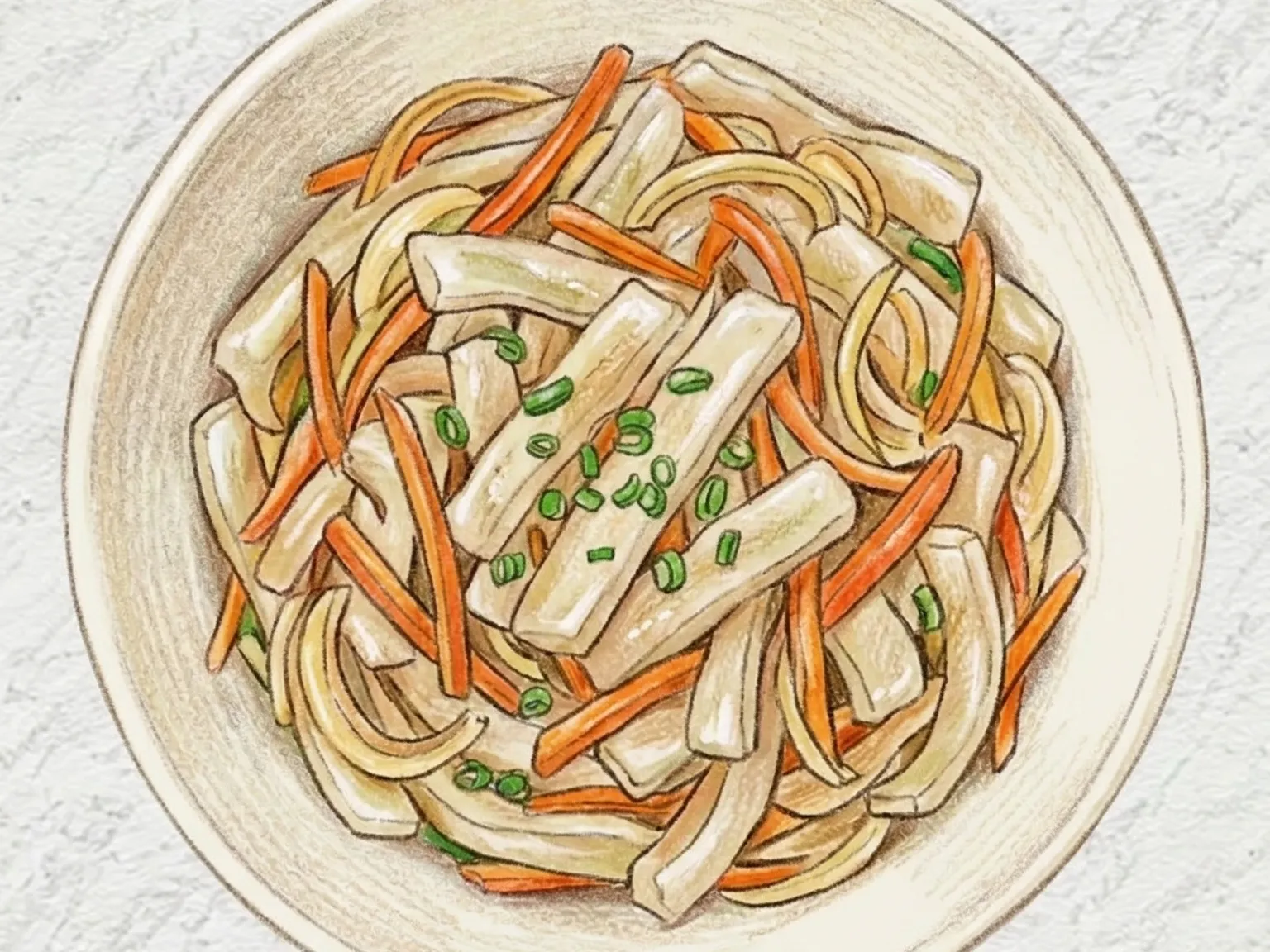
Korean Stir-fried Mung Bean Jelly
Mung bean jelly is cut into thick strips, blanched for thirty seconds to remove surface starch, then stir-fried gently with julienned carrot and onion in a soy sauce seasoning. The brief blanch firms up the jelly's exterior just enough to survive the tossing in the pan without crumbling, and washing away the starch allows the jelly to absorb the flavors of its companion vegetables more readily. Low heat and a careful hand are non-negotiable; aggressive stirring breaks the strips into shapeless lumps. The carrot contributes a faint natural sweetness, and the onion releases a light caramel note as it softens, both of which fill in the jelly's inherently neutral taste with understated warmth. Chopped green onion added at the very end lifts the dish with a sharp, fresh bite. One tablespoon of sesame oil swirled in after the flame is off coats everything in a glossy sheen and a final wave of nuttiness. At 180 calories and 9 grams of fat, this is a low-calorie side with enough fiber to sit gently in the stomach. The pale yellow color of mung bean jelly - a signature of the ingredient - comes through clearly on the finished plate, giving the dish a clean, orderly appearance that matches its delicate flavor.

Korean Street Waffle (Crispy Folded Waffle with Jam and Cream)
Gilgeori waffle is a Korean street stall dessert made from a thin batter of cake flour, egg, milk, and melted butter, cooked in a waffle iron and folded around a filling of strawberry jam and whipped cream. Using cake flour and mixing the batter only until just combined keeps gluten development minimal, which is what produces the characteristic contrast between a crisply patterned exterior and a soft, airy interior. Overmixing develops gluten strands that result in a tough, chewy texture after baking. The waffle iron must be fully preheated before the batter is poured to ensure sharp grid definition and even browning, and a generous coating of oil or butter on the plates prevents sticking. Immediately after cooking, the waffle holds trapped steam inside its pockets, so a brief rest on a cooling rack is important -- skipping this step causes condensation to collect underneath, making the bottom layer soggy before the filling even goes in. Because the batter itself carries only a light butter fragrance rather than heavy richness, the gentle dairy sweetness of the cream and the tangy brightness of the strawberry jam come through with clarity. Folded in half and held in one hand, the waffle is designed for eating while walking -- a functional form that is central to its identity as street food.
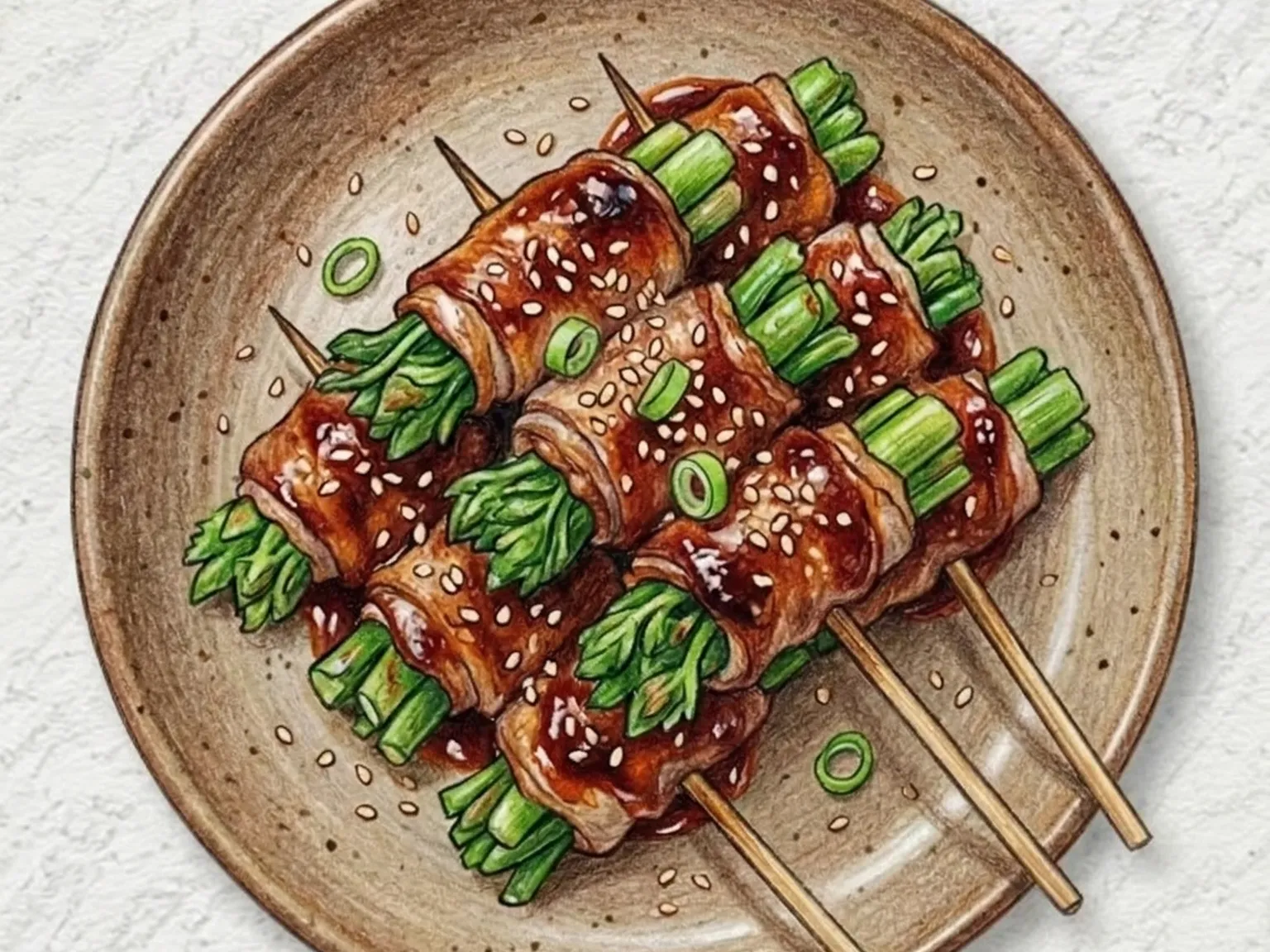
Korean Aralia Shoot Pork Belly Skewers
Dureup-samgyeop-kkochi-gui is a Korean spring skewer in which blanched aralia shoots (dureup) are wrapped in thin slices of pork belly, threaded onto skewers, glazed with a gochujang-based sauce, and grilled. The aralia shoots must be blanched in lightly salted boiling water for no more than thirty seconds. Longer blanching destroys the firm, slightly snappy bite and drives off the volatile aromatic compounds responsible for dureup's characteristic bitter-herbal fragrance -- the defining quality that makes this a spring seasonal dish. After blanching, the shoots should be thoroughly blotted dry so the pork belly adheres cleanly without slipping. The glaze is made from gochujang, soy sauce, maesil-cheong (plum extract syrup), minced garlic, and sesame oil, and it should be applied in two stages -- once before grilling and once partway through -- to build up a layered, intensely flavored coating. Over the grill, the fat in the pork belly renders and bastes the dureup inside the wrap, while the shoot's clean, slightly astringent bitterness cuts through the pork's richness in a pairing that is complementary rather than competing. The plum extract in the glaze caramelizes under direct heat into a sticky, sweet-tart lacquer, and a finishing scatter of whole sesame seeds adds both visual contrast and a toasted, nutty close. The dish works equally well as a drinking snack or as a main banchan.
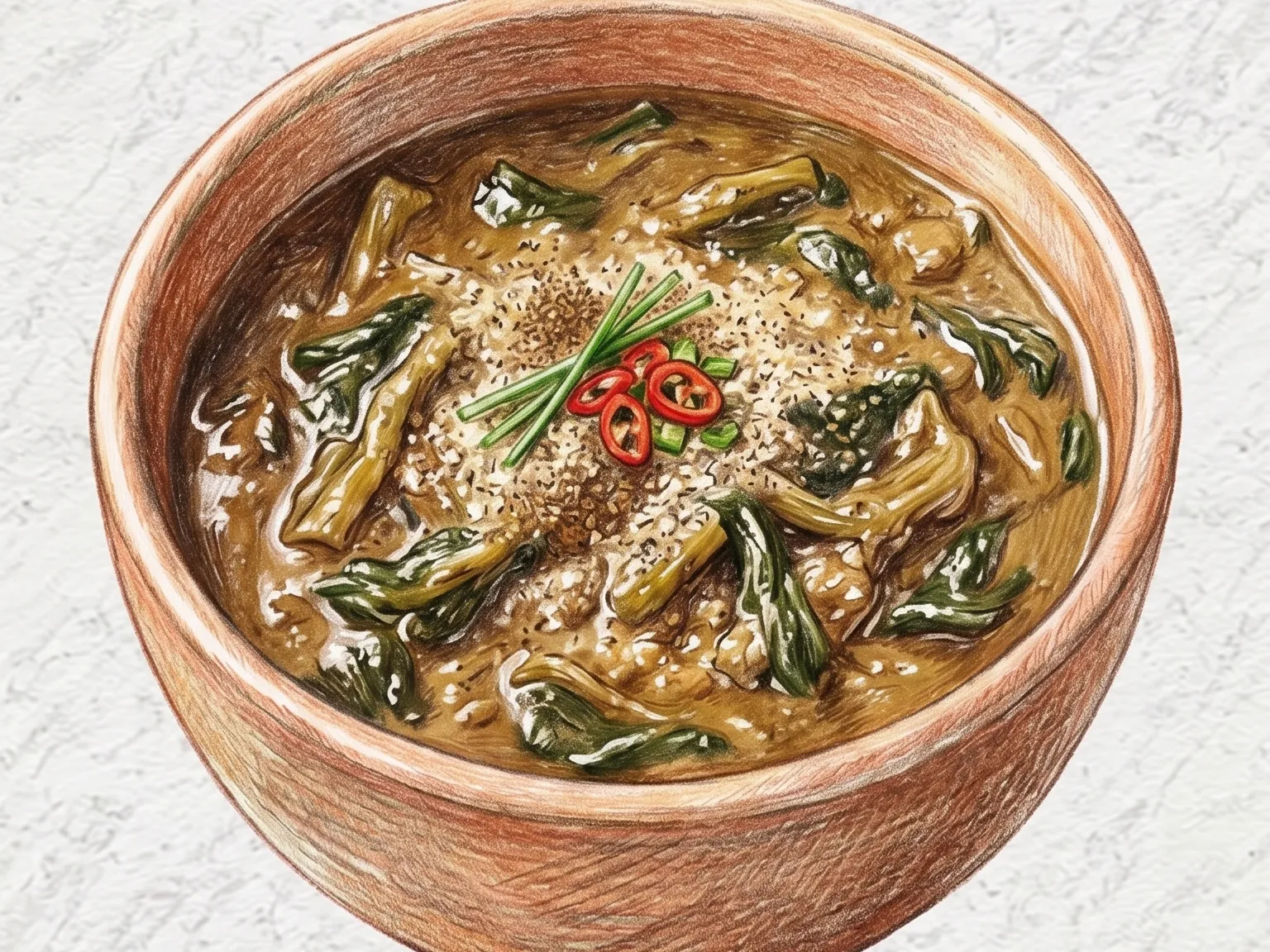
Korean Loach Soup (Blended Loach and Dried Radish Greens Tonic)
Chueo-tang is a southern Korean tonic soup made by blending blanched loach into a smooth puree, straining out bones and skin, then simmering the liquid with doenjang and gochujang for depth. The straining step is what separates a clean, richly flavored broth from a gritty one; every bit of bone and skin must be removed before the long simmer begins. Dried radish greens, siraegi, are added midway and cooked for twenty-five minutes, contributing a fibrous chew that contrasts the velvety broth. Perilla seed powder stirred in near the end thickens the soup to a creamy, pale consistency and layers in a pronounced nutty fragrance that carries through each spoonful. A final pinch of ground sansho pepper leaves a tingling numbness on the tongue that clears any lingering earthiness from the freshwater fish. Loach is high in protein and calcium, and the soup has long been eaten as a summer restorative; a broth that is thick and deeply concentrated is the standard by which a well-made chueo-tang is judged.
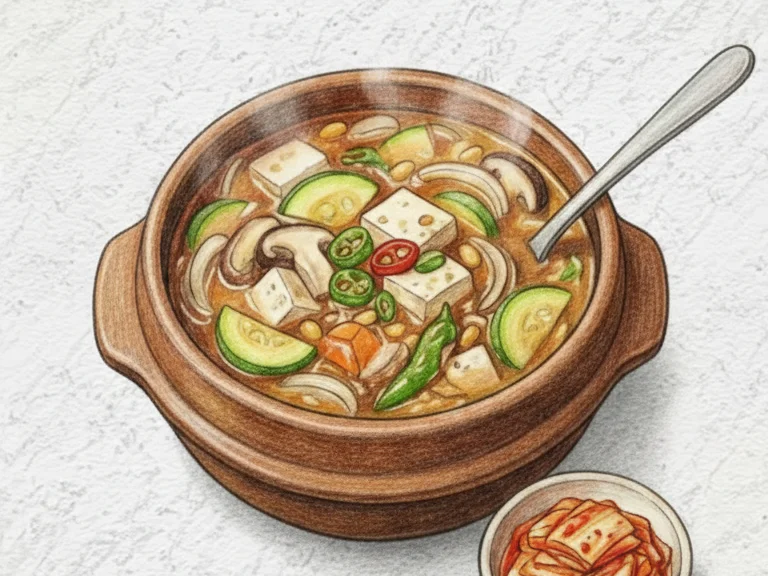
Korean Soybean Paste Stew
Doenjang-jjigae is a standard Korean stew made by dissolving fermented soybean paste in water and simmering it with vegetables and tofu. To ensure a smooth broth without grits, the paste is strained through a fine sieve into the water. Harder vegetables like potatoes and onions are added first to soften and release their natural sweetness into the broth. Zucchini and minced garlic follow, balancing the soup's richness. In the final stage, tofu and chopped green chili are added, providing a clean kick that cuts through the deep, earthy taste of the fermented soybean paste. Simmering green onions at the very end adds a fresh aroma. The savory stew pairs naturally with steamed rice and various side dishes.
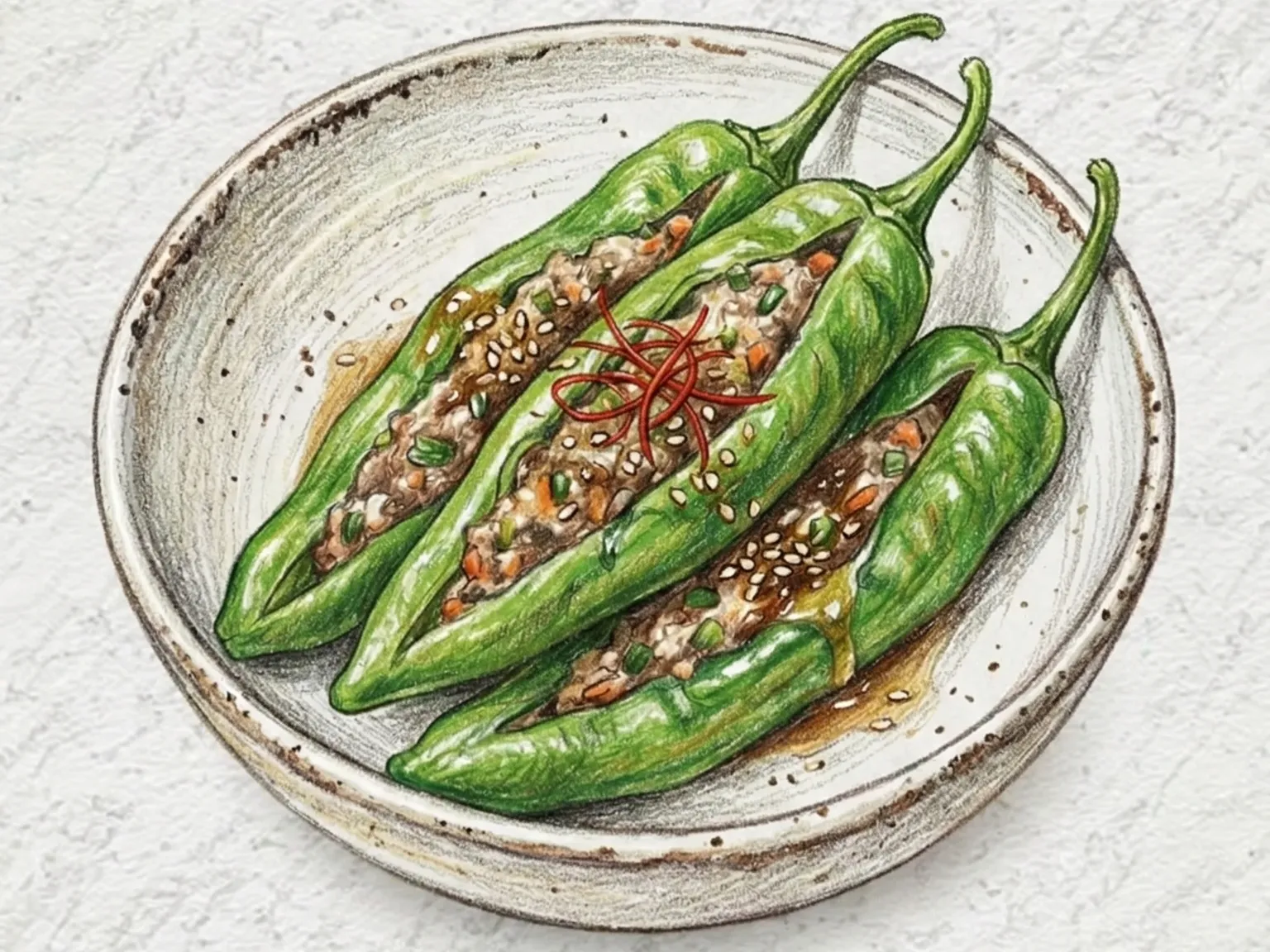
Korean Steamed Stuffed Chili Peppers
Gochu-jjim is a traditional Korean banchan in which mild green chili peppers are hollowed out, dusted inside with a light coating of flour, then packed with a filling of ground pork, crumbled firm tofu, garlic, and scallion before being steamed until cooked through. The flour coating is not decoration; it creates a thin binding layer that keeps the filling anchored inside the pepper during the entire steaming process, so each piece arrives at the table intact and firmly stuffed. Soy sauce and sesame oil work through the filling as it cooks, producing a savory, slightly nutty flavor that contrasts with the clean bitterness of the pepper skin. The steamed pepper itself stays slightly firm at the bite while the stuffing is soft and moist, and the interplay of those two textures is what makes a simple list of ingredients into a dish worth returning to. Gochu-jjim appears as a regular everyday banchan alongside rice and also earns a place on Korean holiday tables for its restrained elegance.
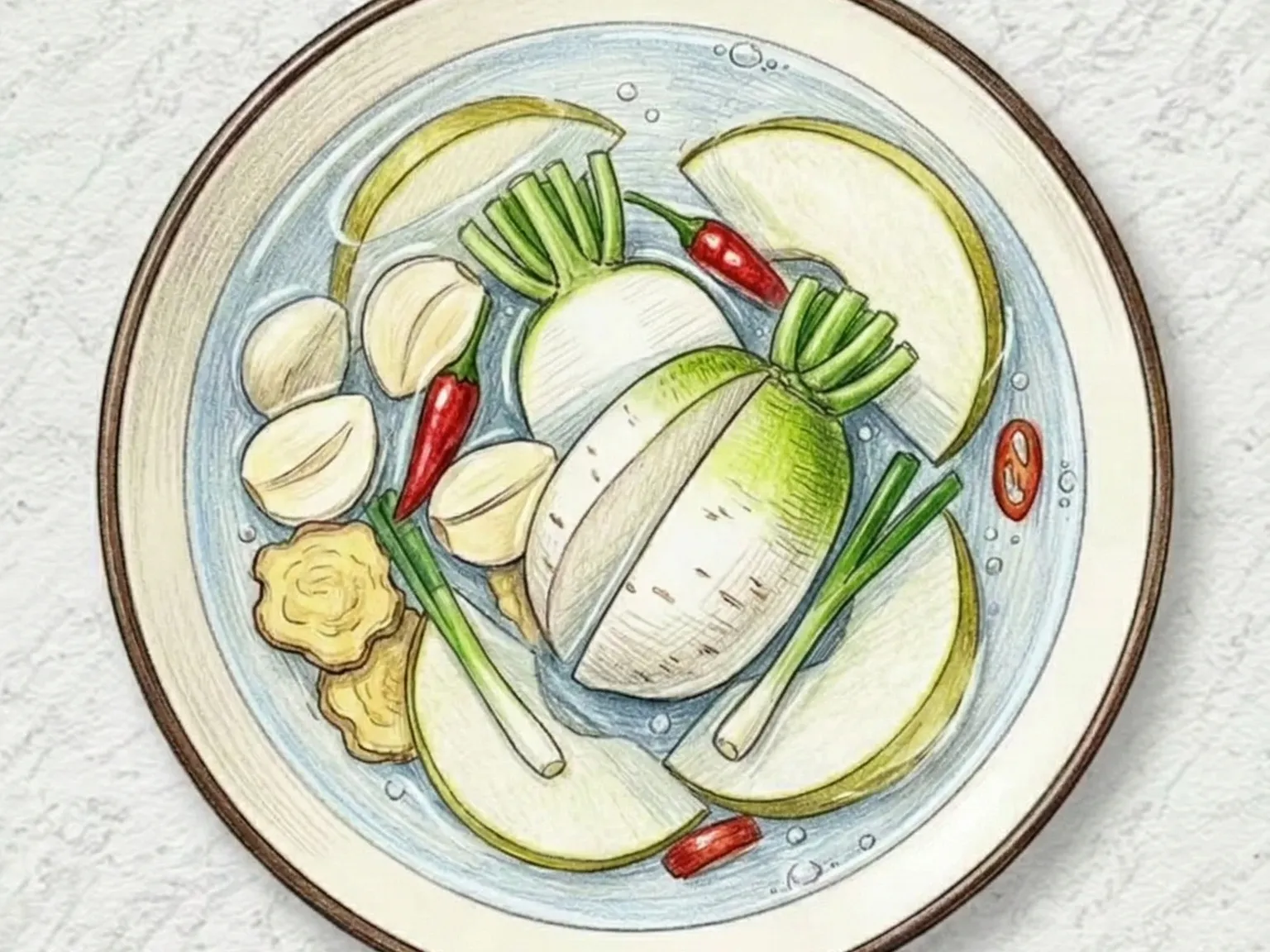
Korean Dongchimi Radish Water Kimchi
Dongchimi is a Korean radish water kimchi made by salting whole Korean radishes, then submerging them with Asian pear, garlic, ginger, scallions, and green chili in a clean saltwater brine for several days of cold fermentation. As the radish starch breaks down through lactic fermentation, the brine develops a natural effervescence and bright, refreshing acidity. Pear lends a gentle fruit sweetness, and ginger sharpens the finish. The clear, chilled broth can be drunk on its own as a palate cleanser or used as a base for cold noodle dishes in winter, cutting through the richness of grilled meats and heavy stews. Dongchimi is traditionally prepared alongside napa kimchi during the late-autumn kimjang season. It requires at least three to five days of cool fermentation before the carbonation develops properly. Choosing medium-sized, firm radishes over small ones preserves a crisp texture for longer. Once fully fermented, the brine keeps well under refrigeration for two to three weeks.
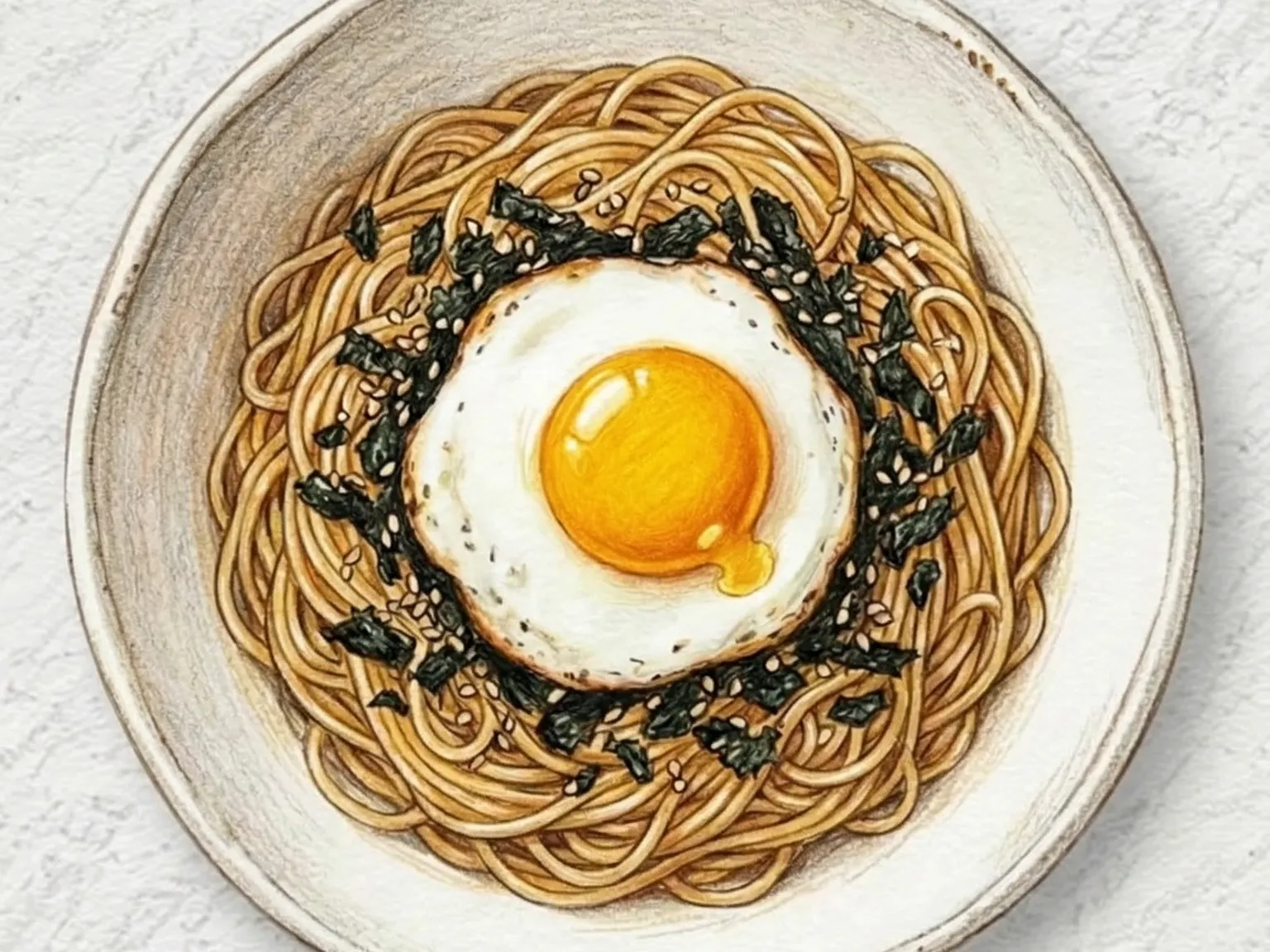
Korean Perilla Oil Noodles
Deulgireum guksu is a Korean cold mixed noodle dish where boiled somyeon are rinsed thoroughly in cold water to strip surface starch, tossed in soy sauce seasoning to coat each strand with salt and umami, then finished with a generous pour of perilla oil. The order matters: soy sauce first to season the noodles through, perilla oil last so its volatile fragrance is not cooked off. The oil has a distinctive earthiness - more roasted and grassy than sesame - and it clings to every strand in a way that makes the whole bowl smell powerfully aromatic. Crumbled roasted seaweed contributes a briny crunch, and toasted sesame seeds provide a quiet textural counterpoint. The whole preparation takes under ten minutes from pot to bowl, which makes it a practical choice for late-night meals or solo eating. A fried egg placed on top is a frequent addition; the runny yolk breaks into the dressed noodles, adding richness and rounding out the sharp, saline seasoning.
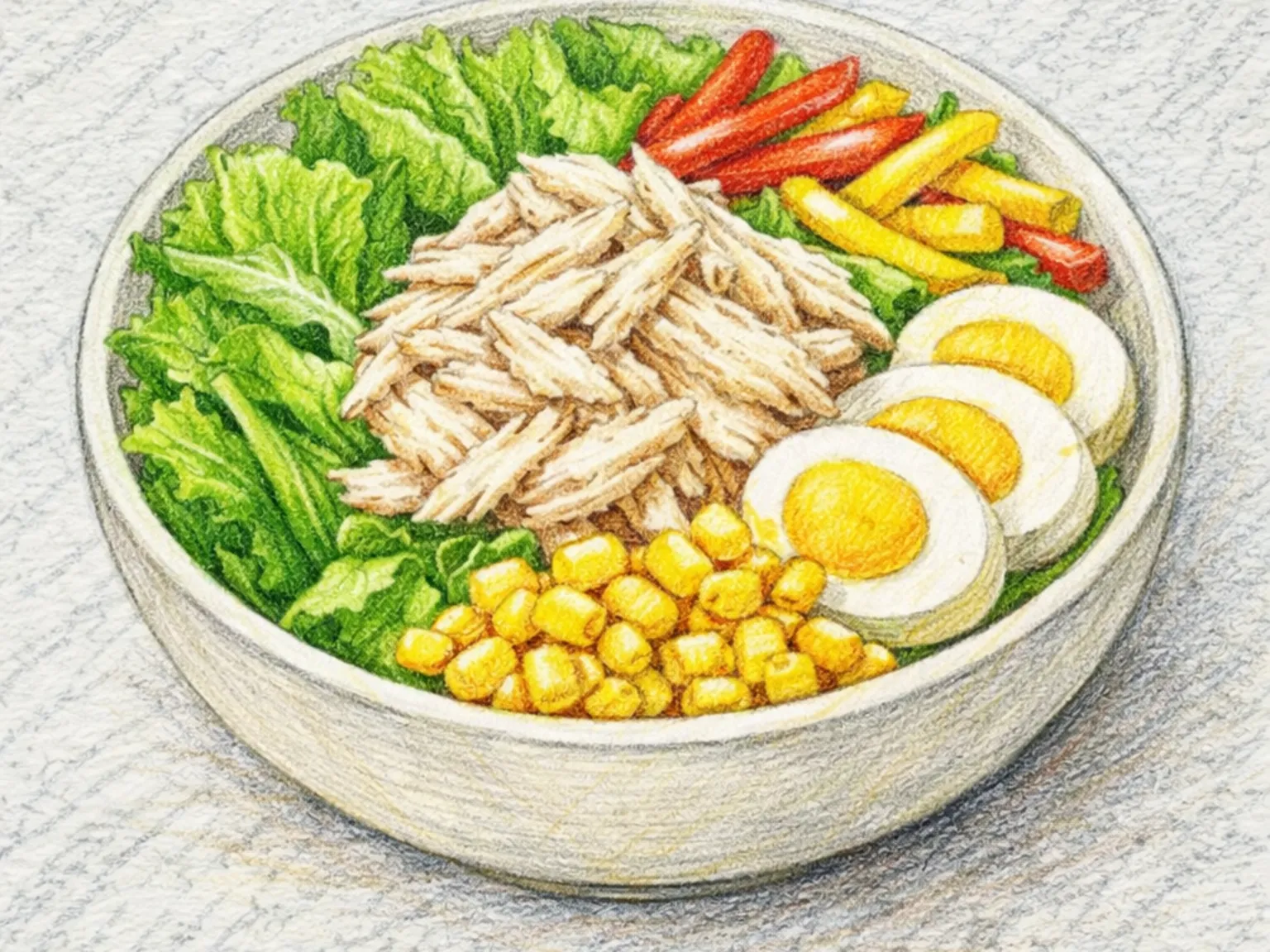
Chicken Breast Salad (Poached Chicken & Yogurt Dressing)
Chicken breast is poached slowly at low temperature until fully tender through the center, then pulled apart along the grain and layered over crisp romaine. Bell pepper brings mild sweetness and hard-boiled egg adds substantial richness to the bowl. The dressing combines plain yogurt, mustard, and honey into a coating that sits lightly on the lean chicken while contributing a steady tartness. Corn kernels scatter throughout, releasing a gentle sweetness with each bite and keeping the overall balance from tipping too sharp or too rich. A high-protein, clean-tasting salad that satisfies without heaviness.
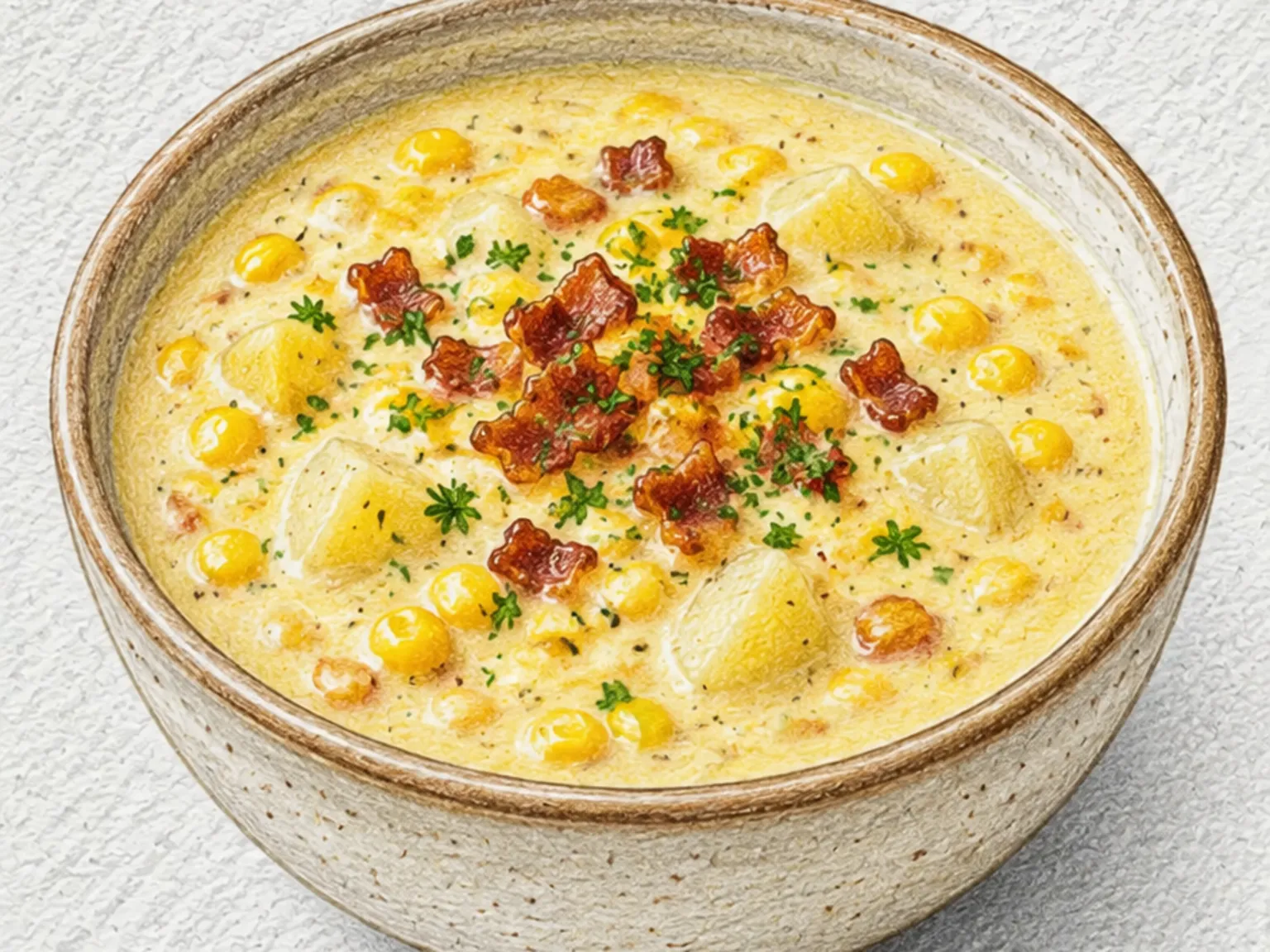
Corn Chowder
Corn chowder is a classic American cream soup that layers smoky bacon fat, sweet corn, and tender potato into a rich, warming bowl. Bacon is rendered until crispy and set aside, and the fat left in the pot is used to sweat onion and garlic, building a smoky, savory foundation. A small amount of flour stirred in before the stock thickens the base slightly, preventing the finished soup from being too thin. Diced potato simmers for fifteen minutes until tender, then corn kernels go in for five more minutes of gentle cooking. Blending only half the soup with an immersion blender and stirring it back in creates the ideal chowder texture: part creamy, part chunky, with intact corn kernels and potato pieces throughout. Heavy cream is added at the very end and brought just to a simmer - boiling it vigorously risks curdling. The corn's natural sweetness meets the cream's richness for a comforting, rounded flavor, finished with crispy bacon bits and chopped parsley. Fresh corn cut from the cob in season delivers noticeably better sweetness and texture than frozen or canned.
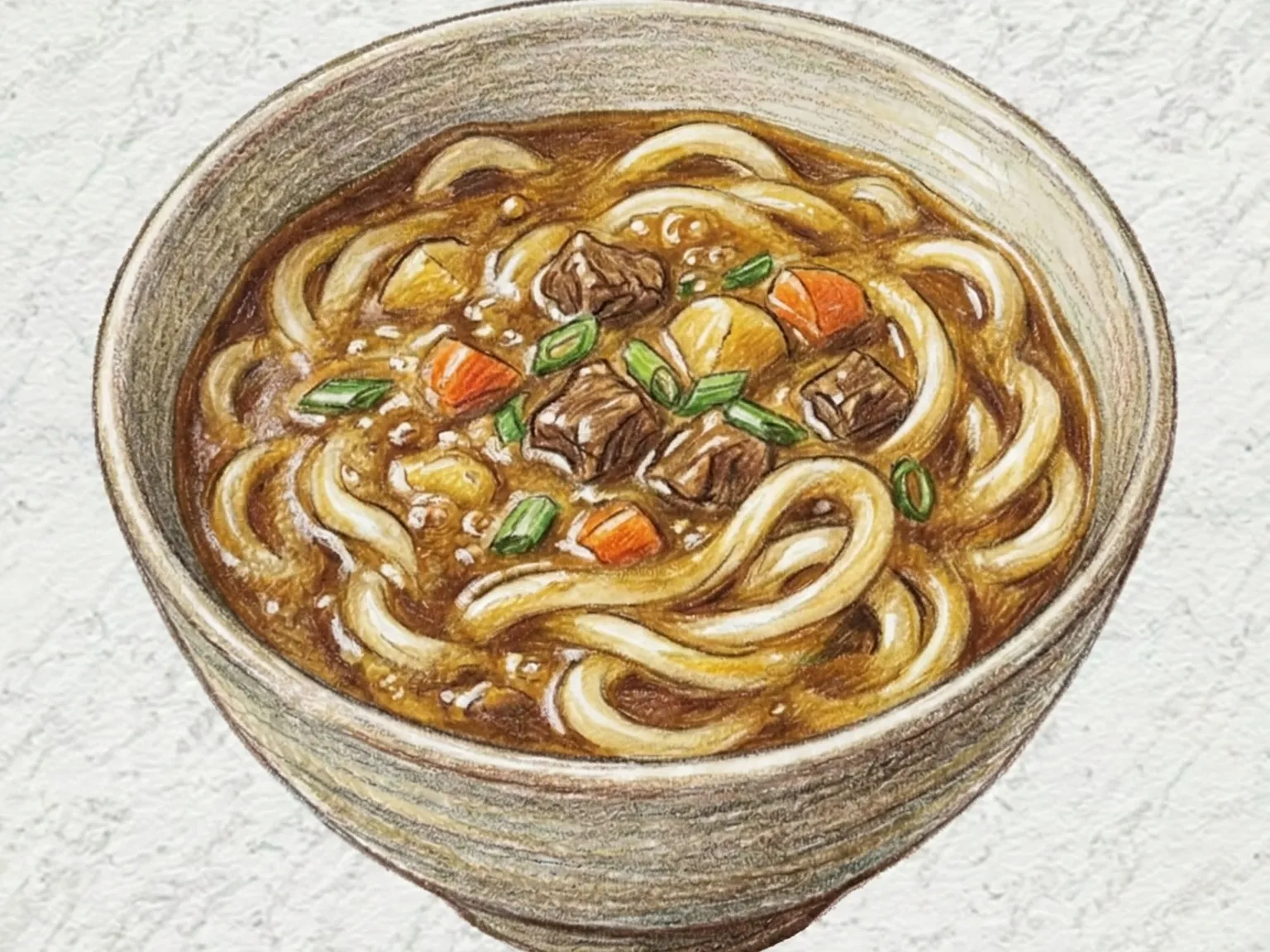
Curry Udon
Kare udon is a Japanese curry noodle dish built on dashi stock, which separates it from curry rice despite sharing the same roux. Thinly sliced pork and onion are stir-fried in oil first, then dashi made from katsuobushi and kombu is added and brought to a boil. Curry roux blocks are stirred in next, transforming the stock into a thick, clinging sauce that coats the pot and every strand of noodle. The heat must drop to low the moment the roux goes in, with constant stirring to prevent the starchy sauce from scorching. Katsuobushi and kombu contribute an umami depth that the curry spices intensify rather than mask, producing a broth more layered than either element alone. The fat, chewy udon strands absorb the sauce and carry it from pot to mouth with each lift of the chopsticks. Finishing with sliced scallions or shichimi adds fragrance and a mild bite. Though the same roux block appears in kare raisu, the presence of dashi and noodles makes this a distinctly different dish in taste, texture, and character.
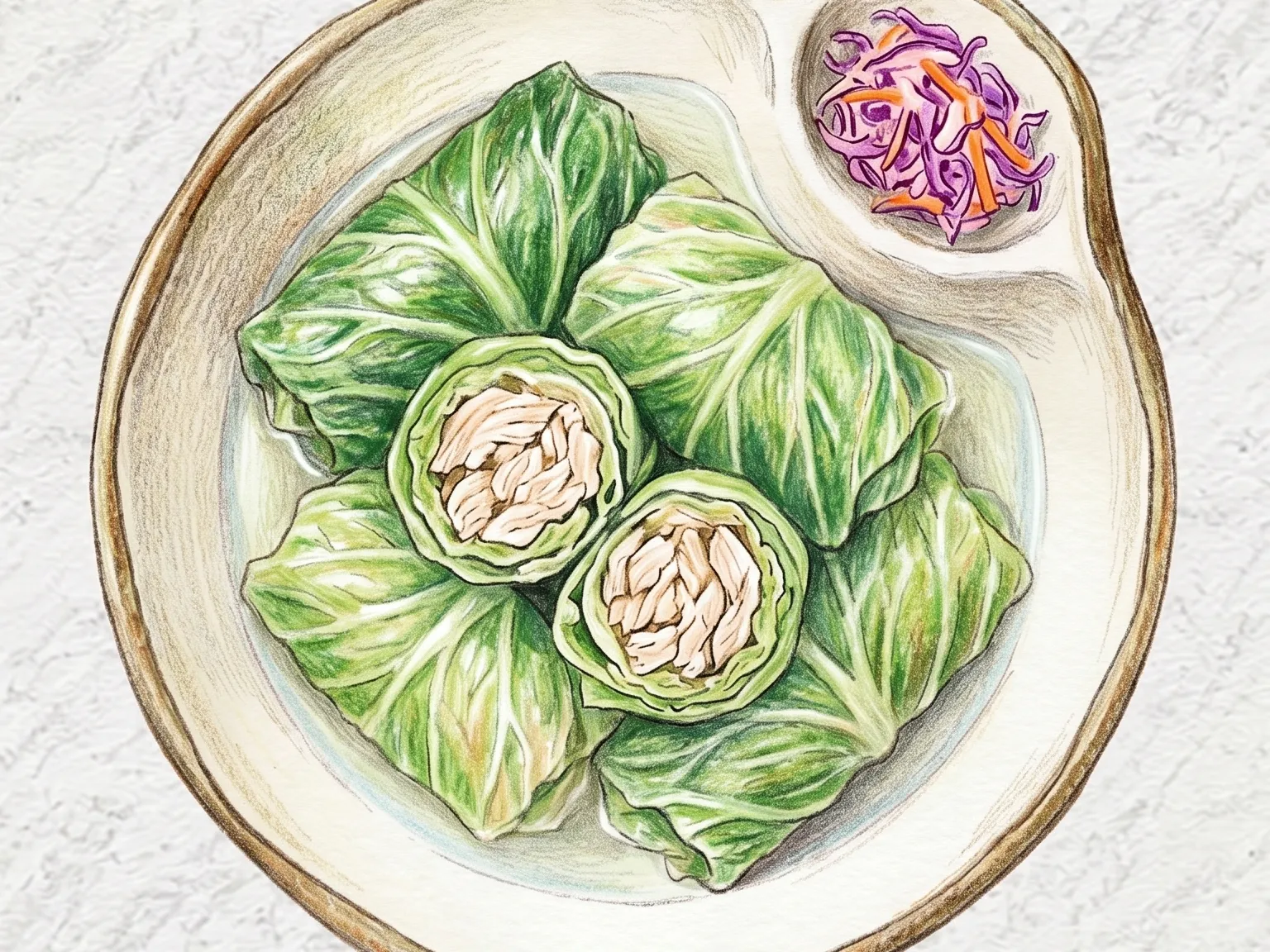
Chicken Cabbage Wraps
Chicken Cabbage Wraps represent a simple side dish combining tender chicken tenderloin with steamed cabbage leaves. The cabbage leaves are steamed for seven to eight minutes until slightly translucent, then cooled in cold water to preserve their color and flexibility. The chicken tenderloins are prepared by removing the tough tendons and marinating with mirin, salt, and pepper to reduce dryness and enhance tenderness. Once grilled on a medium-heated pan until cooked through, the chicken is rolled tightly inside the prepared cabbage leaves. Brushing the rolls with sesame oil before slicing them into bite-sized pieces adds a nutty finish. Serving these wraps with ssamjang creates a balanced dish with minimal ingredients, offering a clean taste and a pleasant contrast of textures.
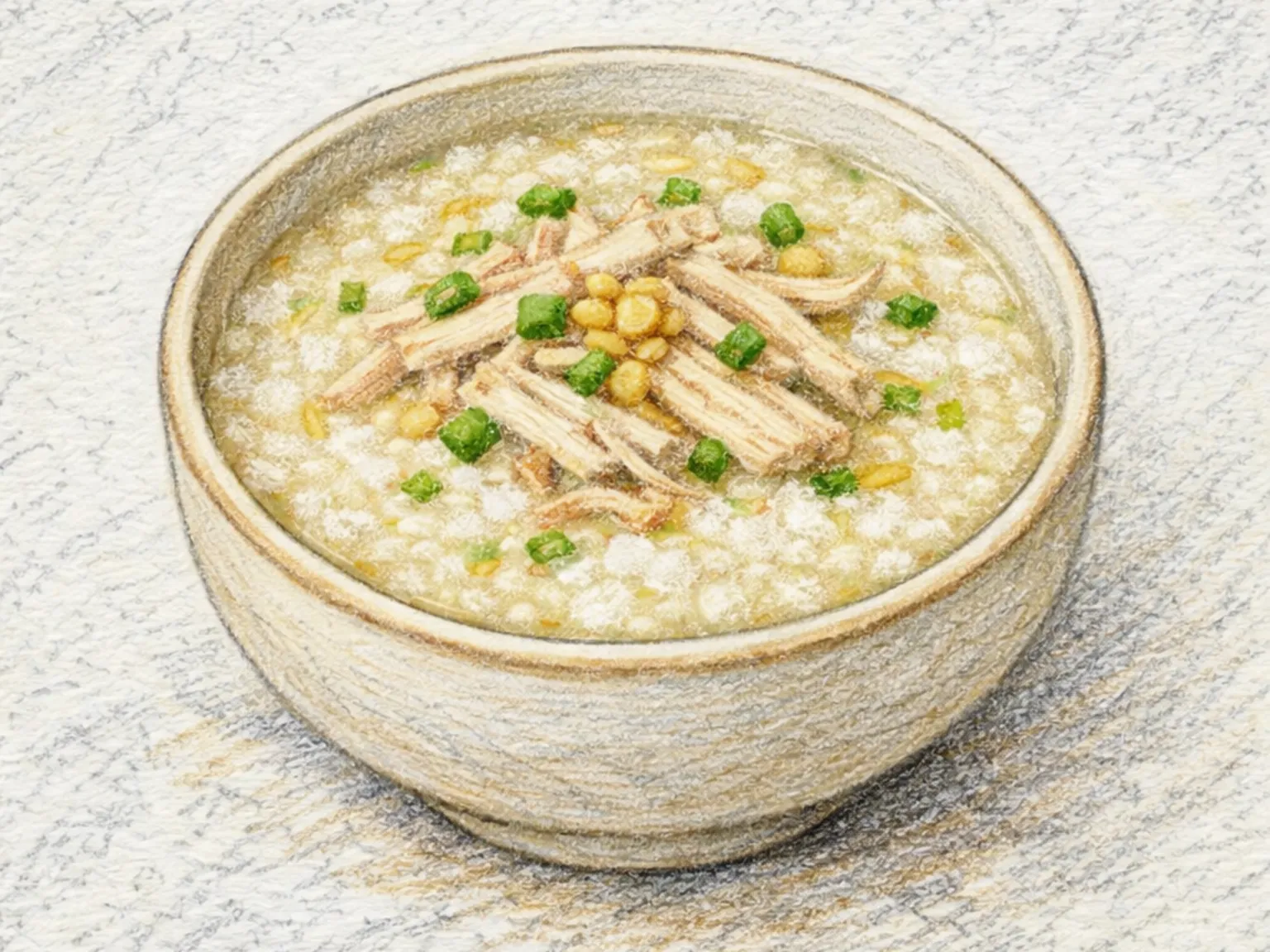
Korean Chicken Rice Porridge
Dakjuk is a Korean chicken rice porridge built from a straightforward foundation: a whole chicken breast poached in water until tender, then shredded along the grain and returned to the broth with soaked short-grain rice. The rice and minced garlic are first sauteed briefly in sesame oil so each grain takes on a faint nuttiness before the stock is added, which carries through into the finished porridge. As the rice simmers and slowly breaks down over twenty-five or more minutes of regular stirring, it releases starch that thickens the liquid into a smooth, flowing consistency without turning gluey. The chicken adds lean protein without weighing the dish down, and the garlic mellows from sharp to a quiet warmth. Sliced green onion scattered on top provides a fresh, grassy contrast to the mild, savory base. Dakjuk has been a household staple in Korea for generations, reached for when the body needs recovery, when the stomach asks for something gentle, or when a warm and undemanding breakfast is simply the right start to the morning.
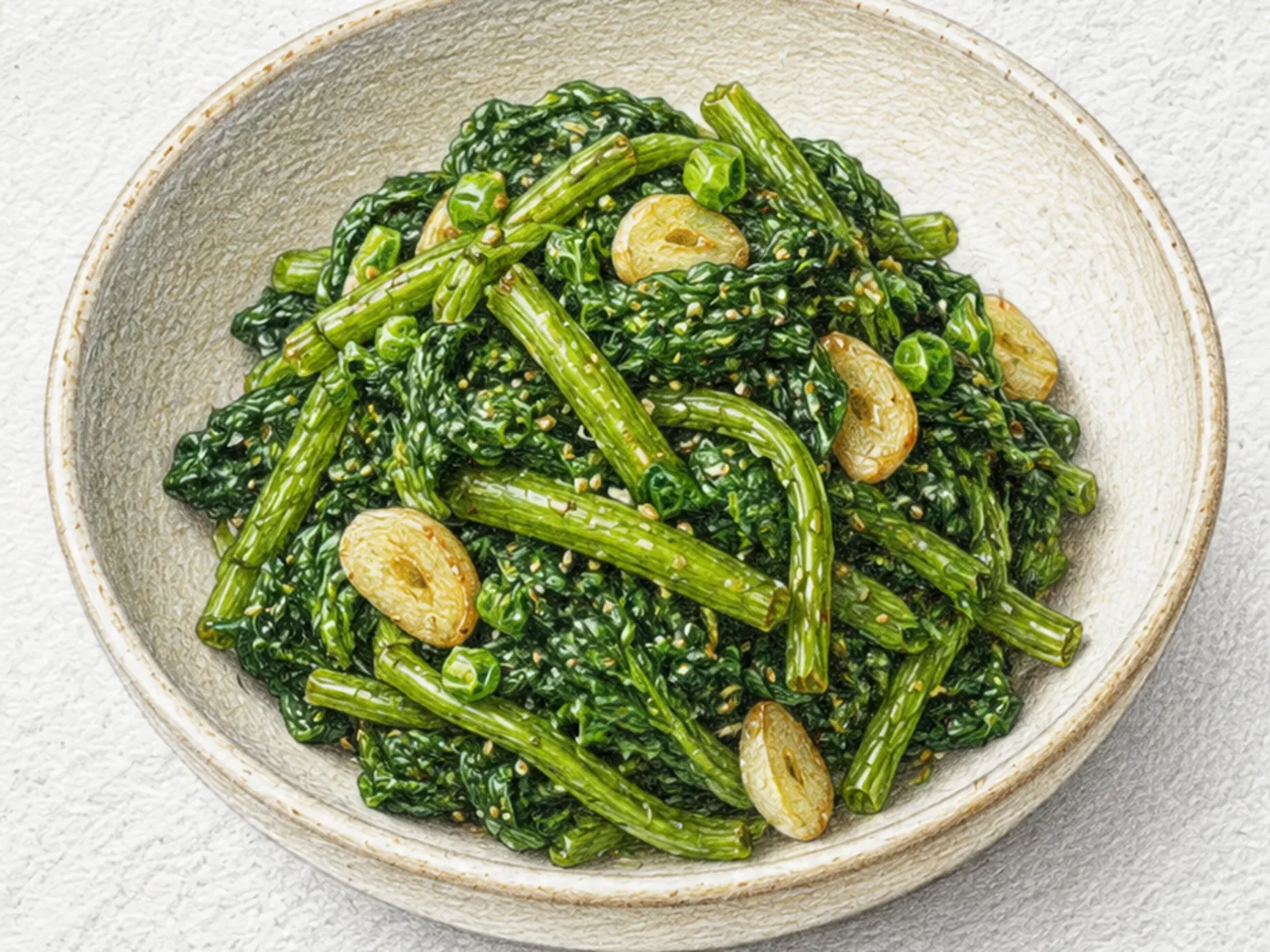
Korean Stir-fried Aster Scaber with Garlic
Chwinamul-maneul-bokkeum stir-fries rehydrated aster scaber greens with garlic, soup soy sauce, and perilla oil, keeping the distinctive bitter-herbal aroma of the wild greens intact. Chwi-namul, also called cham-chwi, is one of Korea's most recognized spring mountain greens; dried after the spring harvest, it can be stored and cooked year-round. Perilla oil is the preferred fat here -- it carries a heavier, more earthy character than sesame oil and matches the pronounced flavor of dried mountain greens without getting lost. Ground perilla seeds added during cooking deepen the nuttiness further. Green onion contributes a mild sweetness that balances the greens' inherent bitterness, and as the rehydrated greens lose their soaked moisture in the hot pan, they firm up into a chewy, satisfying texture rather than going limp. The strong herbal flavor is concentrated enough that a small portion alongside steamed rice carries a full bowl.
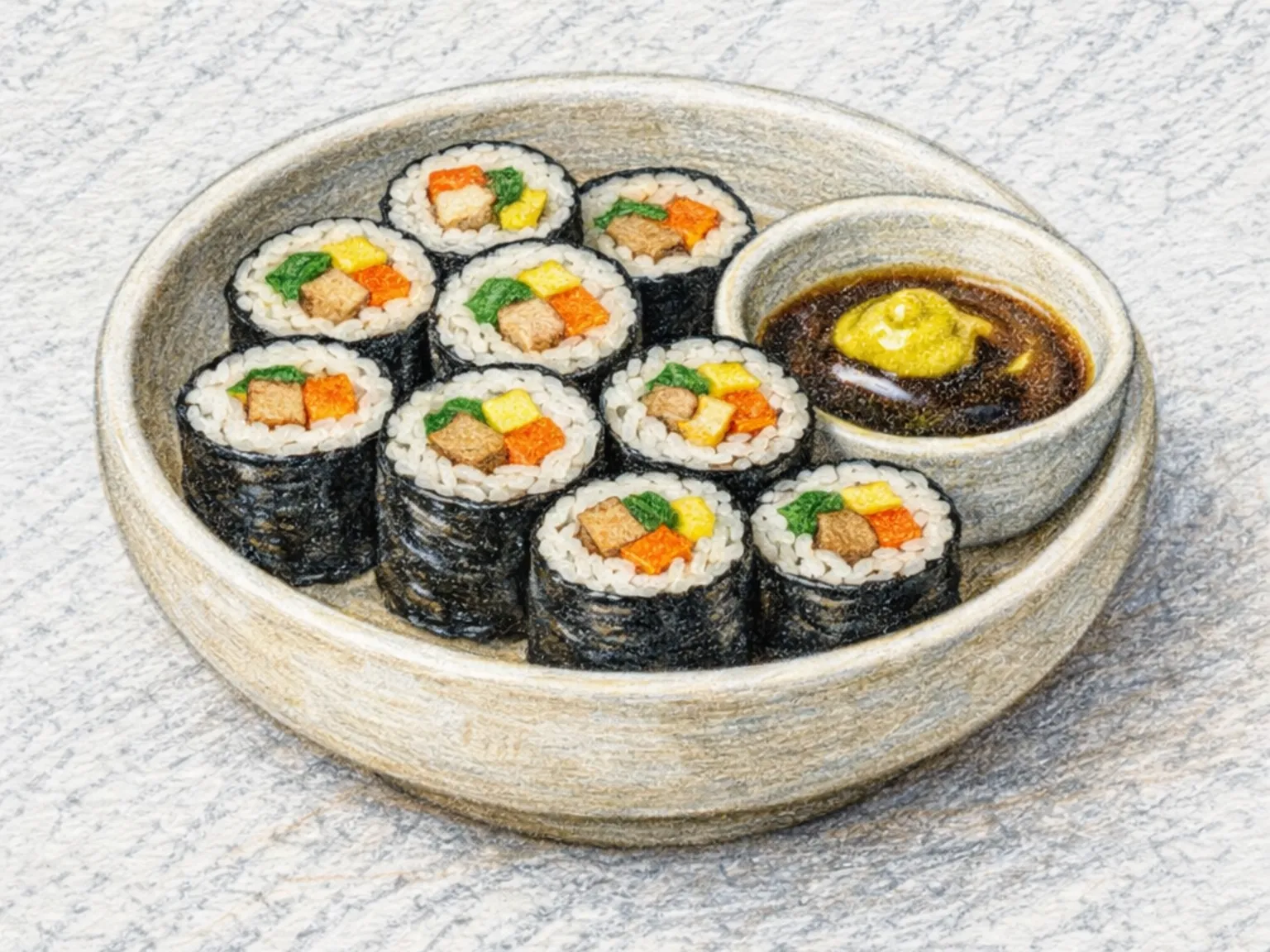
Korean Seaweed Rice Roll
Gimbap is a Korean seaweed rice roll made by spreading sesame-oil-and-salt-seasoned rice over a sheet of gim, then lining up individually prepared fillings such as spinach namul, sauteed carrot, egg strip, ham, pickled radish, and braised burdock before rolling tightly. Each filling is cooked separately so distinct flavors and textures meet in every bite. The rice must cool before spreading, because hot rice releases steam that softens the seaweed and breaks the roll's structure. When sliced, the cross-section reveals concentric rings of color, and a final brush of sesame oil over the finished roll deepens the nuttiness of the seaweed while giving the surface a slight sheen. The combination of fillings can shift with the season or personal preference, which is part of why gimbap remains a staple from picnic lunches to neighborhood snack bars.
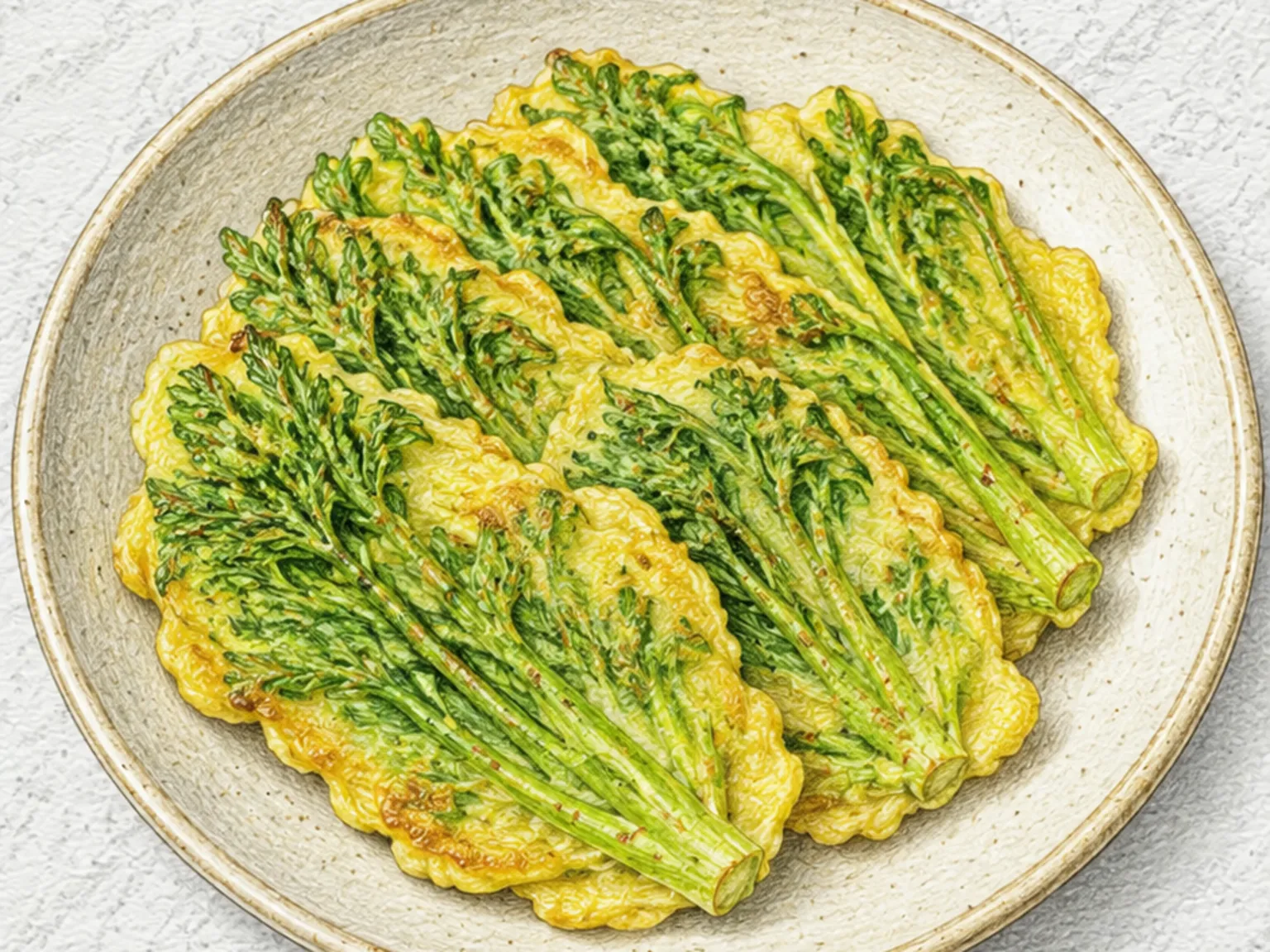
Korean Aralia Shoot Jeon (Spring Herb Shoot Pancake)
Durup-jeon is a seasonal Korean pancake made during the brief spring window when aralia shoots are available, wrapped in a thin coating of flour and egg wash to let the vegetable's bitter-herbal fragrance come through without interruption. The shoots are blanched for thirty seconds in vinegared boiling water to tone down their harshness while preserving the crunch of the stems, then patted thoroughly dry before a light dusting of flour ensures the egg coating clings evenly. Cooking over medium-low heat matters here because the egg browns steadily without scorching, giving time for the heat to reach the interior of each stem and soften it fully. Higher heat browns the outside quickly but leaves the inner stem tough and stringy. Dipping the finished pancakes in cho-ganjang, a mixture of soy sauce and vinegar, sharpens the distinctive wild mountain herb character that defines aralia. Because the shoots appear only in early spring, this pancake marks the season at the table in a way no other dish does.
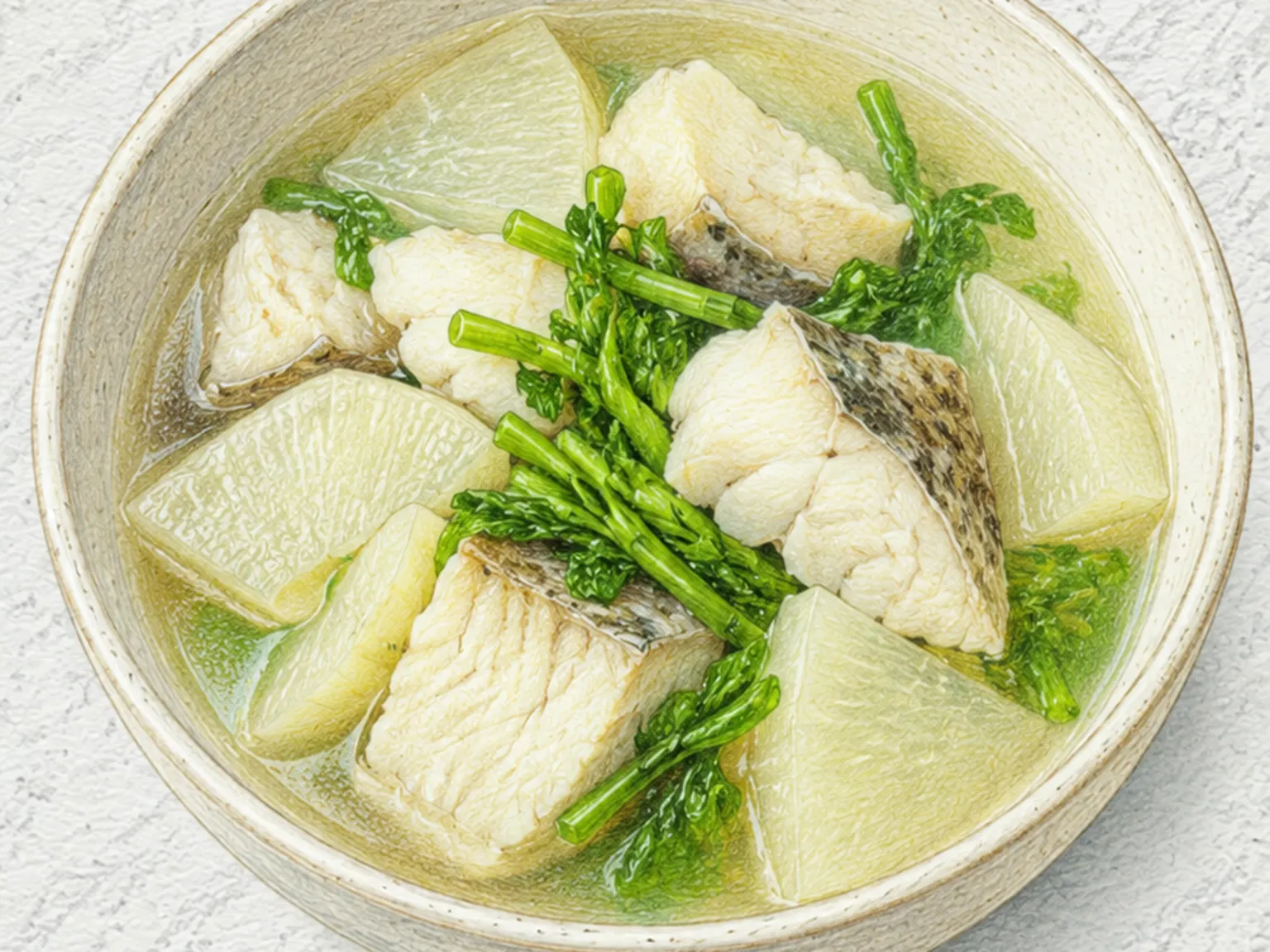
Korean Cod and Radish Soup
Daegu mu-tang is a Korean cod and radish soup in which the radish simmers first in anchovy broth for eight minutes to release its natural sweetness before the fish goes in. Cod fillets are briefly marinated in rice wine to neutralize any fishiness, then cooked gently - stirring must be kept to a minimum to keep the flesh in large, intact pieces. The finished broth is remarkably clear and light because cod carries very little fat, and the sweetness of the radish merges with the fish's mild umami to create a clean, layered depth. Crown daisy added in the final thirty seconds of cooking releases a sharp herbal fragrance that lifts the entire bowl. Many Koreans reach for this soup as a hangover remedy, prizing the cool, clean aftertaste it leaves.
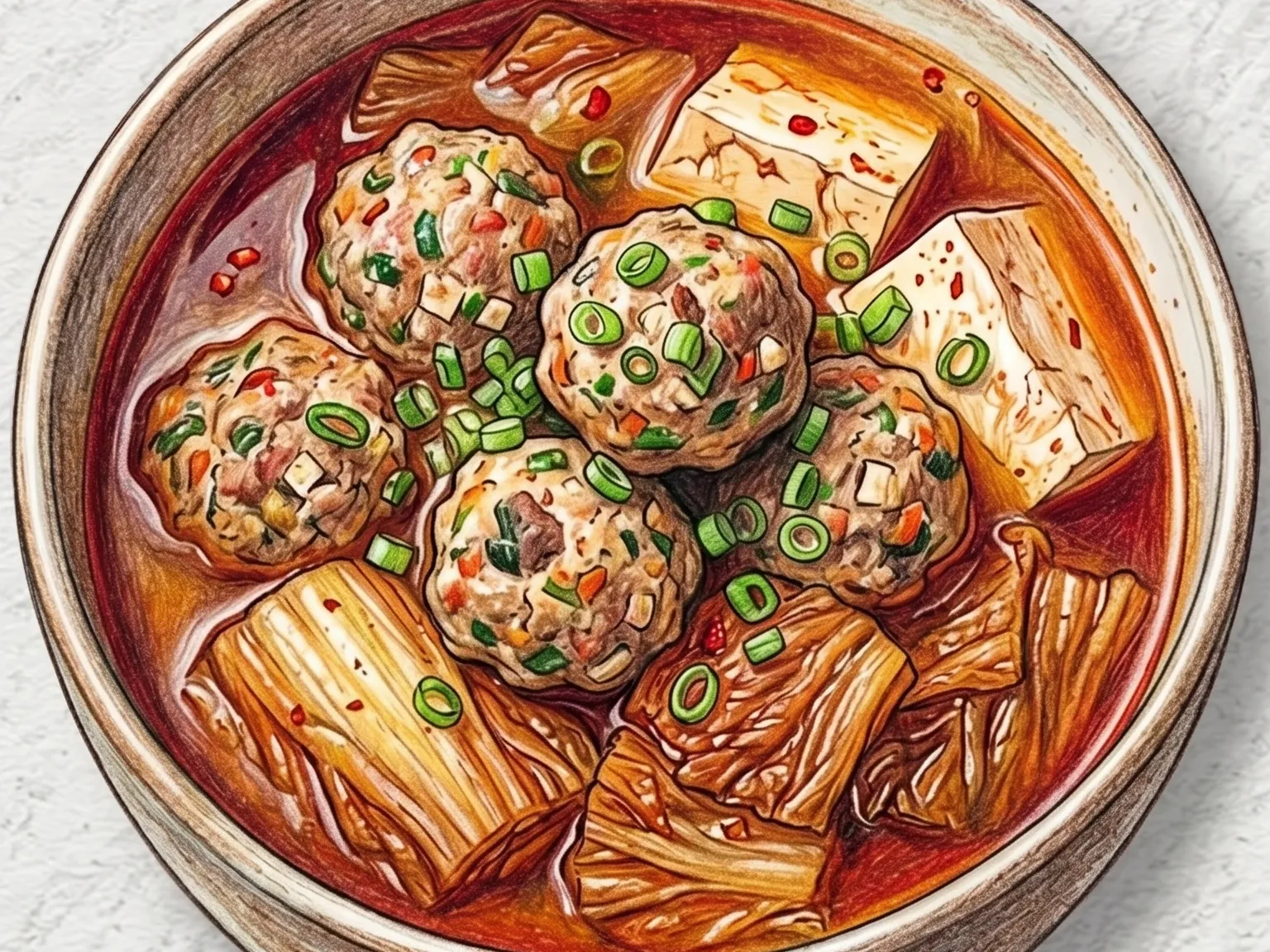
Korean Meatball Jeon Stew
Donggeurang-ttaeng-jjigae is a quick Korean stew that turns pan-fried meat-and-tofu patties and aged kimchi into a deeply flavored broth without requiring a separate stock. The patties are made from ground meat, tofu, and finely chopped vegetables, and as they simmer they steadily release their savory juices into the broth, building flavor from the inside out. Fully fermented kimchi contributes a tangy, sharp acidity that gives the broth a satisfying weight and complexity. Tofu added to the pot absorbs the spiced liquid while softening the overall heat level, and a tablespoon of gochugaru lets you dial the spiciness to preference. The stew is a practical, no-waste solution for leftover patties and comes together in under twenty minutes with minimal effort.
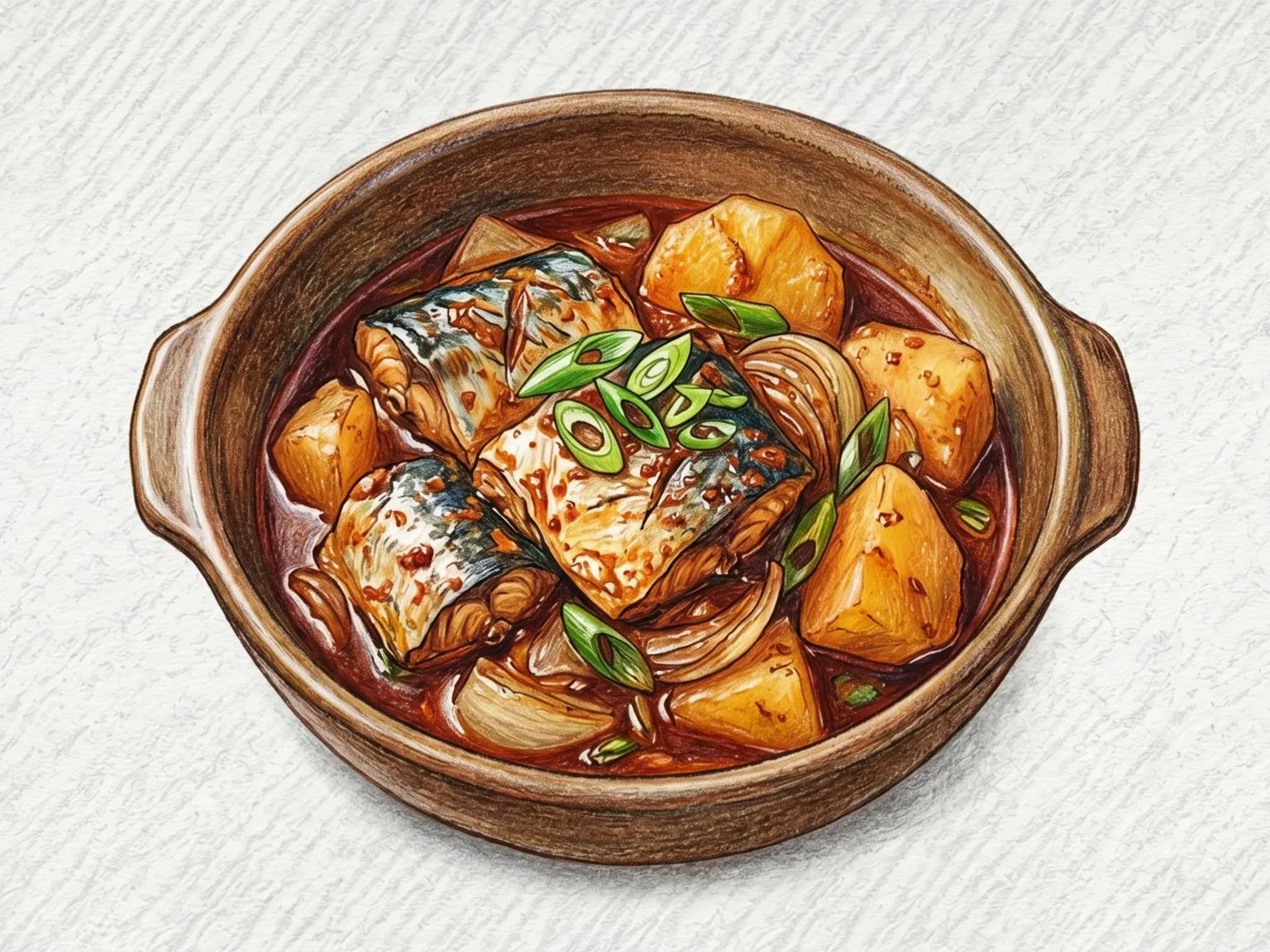
Korean Braised Mackerel with Potatoes
Godeungeo gamja jorim is a Korean home-cooked side dish where mackerel and potato chunks are braised together in a soy sauce and gochugaru seasoning. The oily mackerel releases its fat into the braising liquid, building a rich, savory depth that plain soy sauce alone cannot achieve. Potato absorbs the spiced liquid as it simmers, cooking down to a fluffy, yielding texture that contrasts with the firmer fish. Onion and green onion contribute natural sweetness and aroma throughout the cooking process, and sugar rounds off the saltiness of the soy base to keep the seasoning balanced rather than sharp. Spooning the dark, glossy braising sauce generously over rice turns this side dish into a satisfying meal on its own. Using fresh mackerel rather than salted gives a softer, more delicate flesh that further enriches the cooking liquid.
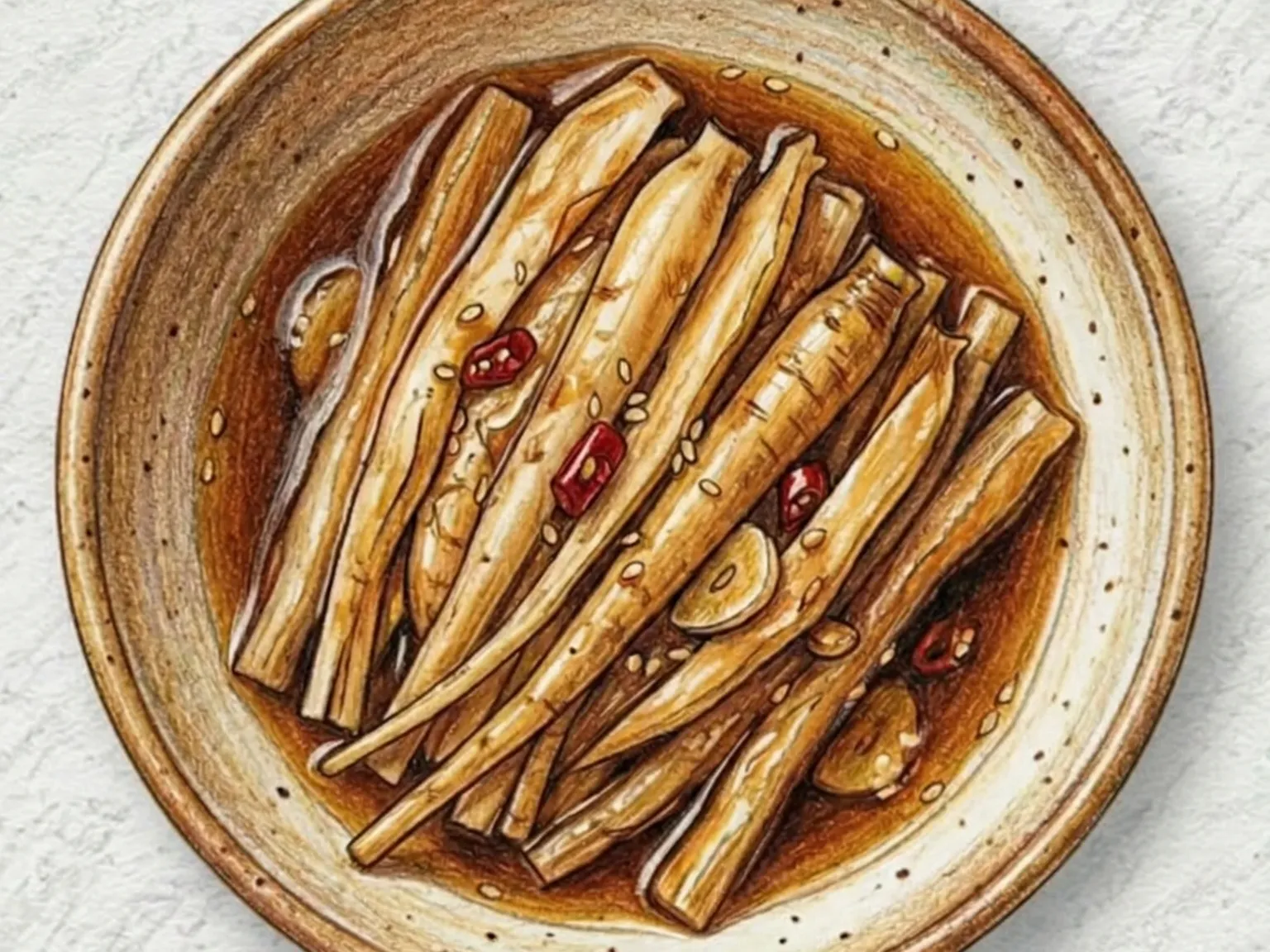
Korean Bellflower Root Pickles
Doraji jangajji is a traditional Korean pickle made from bellflower root - the roots are peeled, salted and massaged by hand to draw out bitterness, then submerged in a boiled brine of soy sauce, rice vinegar, and sugar. Bellflower root has a pronounced bitter-herbal character that is both its defining quality and its challenge; salt-kneading before pickling pulls out the harsh edge while leaving the fragrant, almost floral undertone intact. As the brine meets the acidity of vinegar, the remaining bitterness softens further, and a chewiness that builds with each bite reveals a clean, aromatic depth. Ginger included in the brine counteracts the earthy, soil-forward quality that root vegetables often carry, and as the hot liquid cools it draws seasoning slowly and evenly through the root's fibrous tissue. Two days of curing is the minimum to achieve a balanced sweet-sour-salty profile; longer curing deepens the flavor further. Kept refrigerated, the pickle holds well for weeks and makes a reliable side dish to pull from the refrigerator at any meal.