🏠 Everyday Recipes
Simple home-cooked meals for any day
1705 recipes. Page 39 of 72
These are the meals you can cook day after day without getting tired of them. Doenjang jjigae, rolled omelet, spicy pork stir-fry - the kind of home-cooked dishes that fill an ordinary day with comfort.
The beauty of everyday cooking is that it relies on common ingredients already in your fridge. No exotic items, no complicated techniques - just straightforward recipes for satisfying home meals.

Kimchi Tofu Caesar Salad
Sautéing the kimchi drives off moisture and concentrates its umami into an intense, savory punch that replaces anchovies in a traditional Caesar. Pan-browned tofu cubes develop a crisp shell around their soft interior, standing in for crouton-like protein. The dressing mixes mayonnaise with plain yogurt for a lighter body than classic Caesar, sharpened with lemon juice and garlic. Grated parmesan adds the expected salty depth, and crisp romaine provides the essential crunch that holds the heavy flavors in check. Homemade bread croutons round out the textural contrast.

Reuben Sandwich
Reuben sandwich layers sliced corned beef, well-squeezed sauerkraut, and Swiss cheese between rye bread spread with mayonnaise, then griddled with butter on the outside until golden and crisp. Removing excess moisture from the sauerkraut is the most important step - residual water makes the bread soggy and prevents the cheese from melting properly. Cooking over medium-low heat for three to four minutes per side gives the bread time to turn deeply golden while the interior cheese melts fully, binding all the fillings together. Each bite combines the salty depth of corned beef, the fermented tang of sauerkraut, and the rich milkfat of Swiss cheese in a layered contrast of flavors.
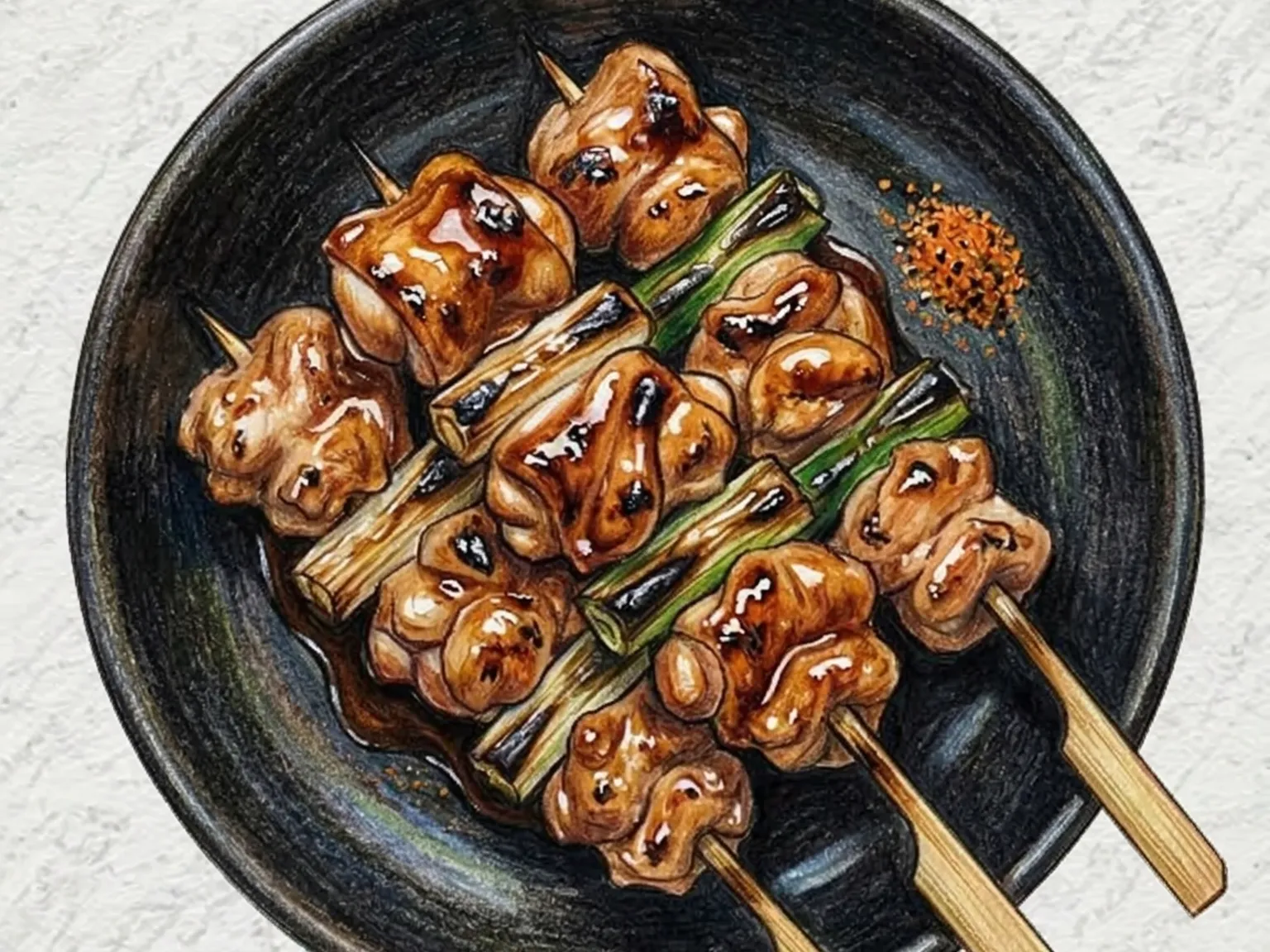
Yakitori (Japanese Charcoal-Grilled Chicken Skewers)
Yakitori is a traditional Japanese chicken skewer dish where bite-sized pieces of chicken thigh and leek are threaded onto bamboo sticks and grilled. The cooking process involves repeatedly brushing the skewers with a sweet soy-based glaze made of soy sauce, mirin, sugar, and sake. This builds a glossy, caramelized coating that pairs with the smokiness from the grill. Threading the ingredients with small gaps allows heat to circulate, ensuring the meat cooks through evenly. As they grill, the leek segments soften and sweeten, balancing the savory glaze. While the glazed version is common, yakitori can also be seasoned simply with salt, a style known as shio, which highlights the natural juiciness of the chicken thigh. The skewers are served hot as a casual dining item.
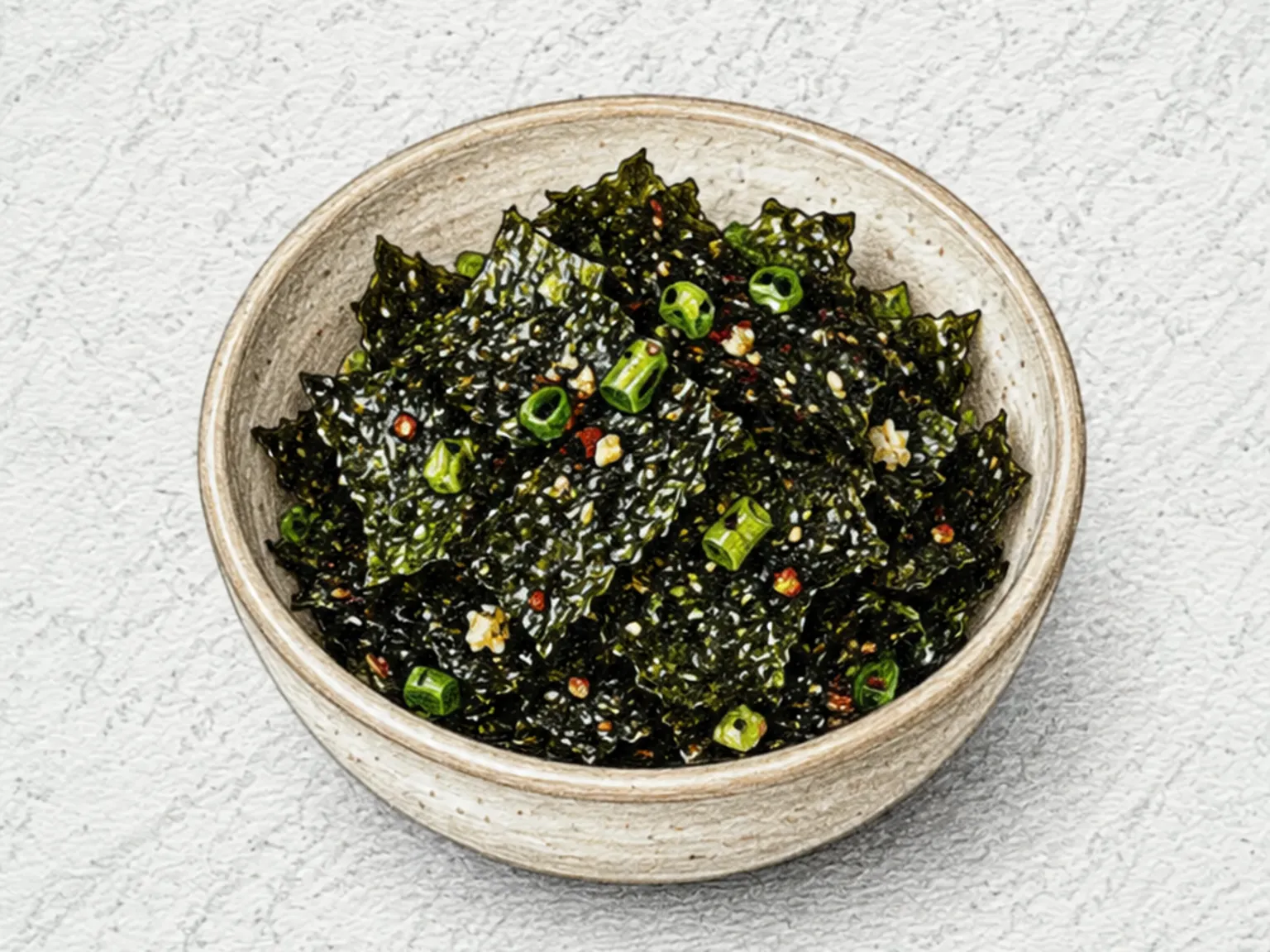
Korean Seasoned Seaweed Flakes
Gim-muchim uses the same ingredients as stir-fried gim but takes a different direction. Lightly toasted seaweed is torn by hand into larger pieces, then tossed with green onion, garlic, soy sauce, sesame oil, and gochugaru into a seasoned side dish. Toasting the seaweed over a flame first draws out its fragrance, and tearing it into large pieces ensures some areas stay crisp even after the sauce is added. The sharp bite of green onion and the gentle heat of gochugaru meet the seaweed's marine character for a fresher, lighter result than the stir-fried version. The dish must be eaten immediately after tossing - seaweed absorbs moisture from the sauce quickly and loses its texture - so only as much as will be consumed at once should be prepared. As a side with rice, it is simple but satisfying, carrying enough umami to complete a bowl even when other banchan are few. Using fish sauce in place of soy sauce shifts the umami profile, and extra sesame seeds deepen the nutty fragrance.
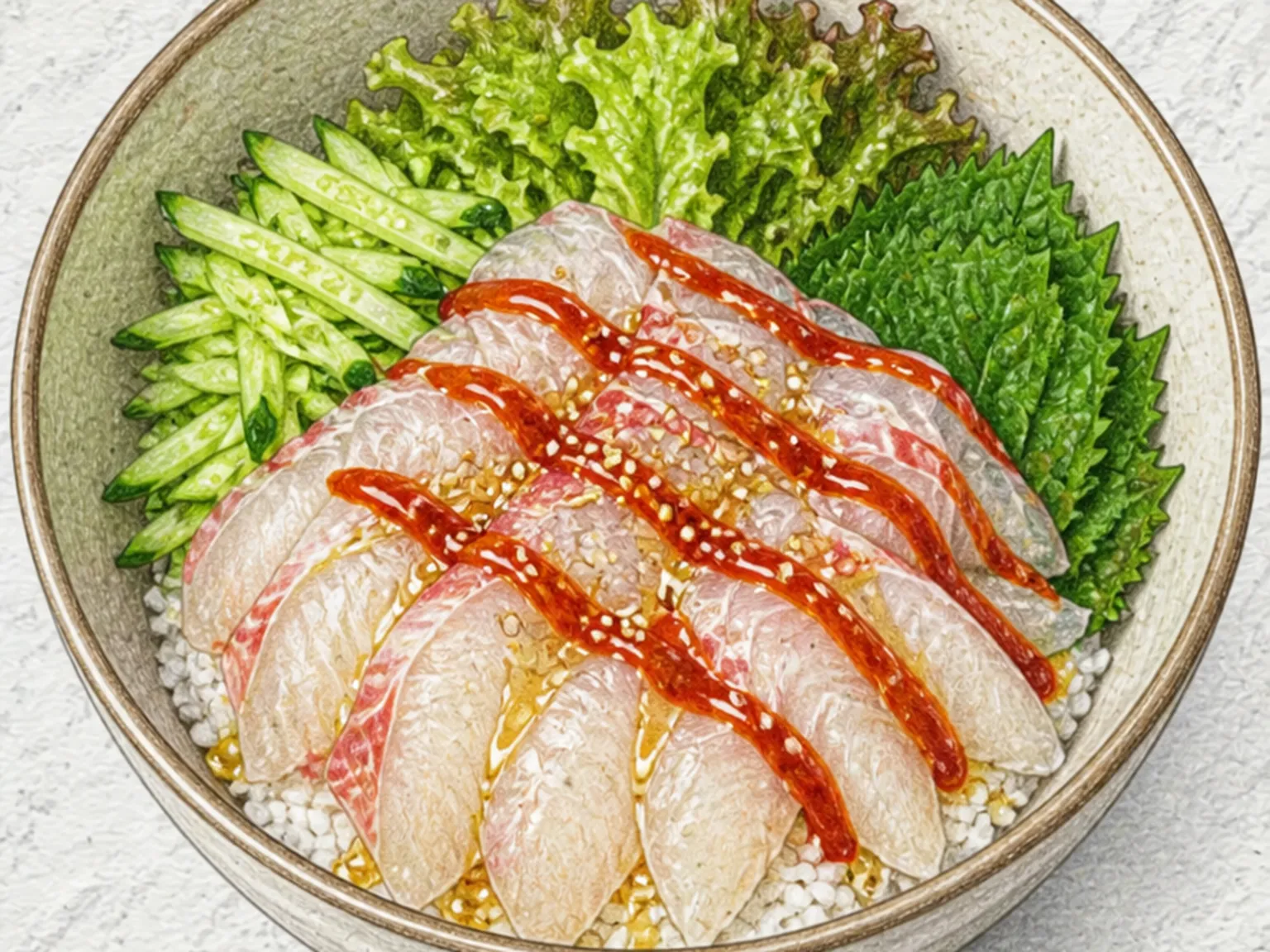
Korean Sashimi Rice Bowl (Flounder Sashimi with Cho-Gochujang)
Sliced flounder sashimi sits atop julienned cucumber, lettuce, and perilla leaves over slightly cooled rice, dressed with cho-gochujang just before eating. The rice must not be piping hot because residual heat softens the sashimi and dulls its clean texture, so resting it until just warm is essential. The vinegar tang and chili warmth in cho-gochujang lift the mild fish flavor, while sesame oil and seeds leave a nutty finish on the palate. Keeping the vegetables well chilled before assembly creates a temperature contrast against the warm rice that sharpens every bite. Adding the cho-gochujang right before eating rather than in advance prevents the vegetables from weeping moisture and going limp.
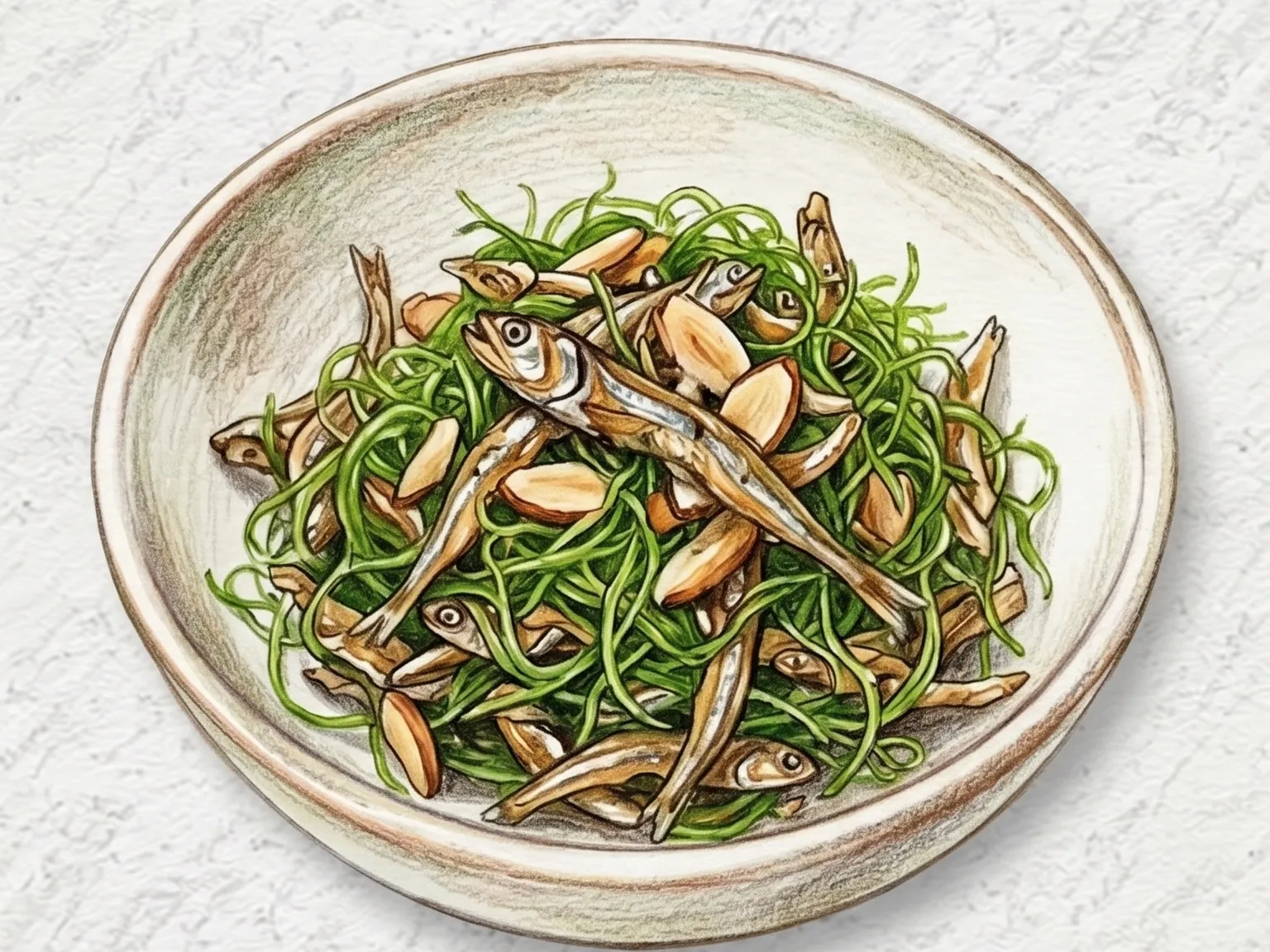
Korean Stir-fried Seaweed and Anchovies
Gamtae myeolchi bokkeum is a crispy Korean banchan that combines small dried anchovies with gamtae seaweed and sliced almonds in a soy-syrup glaze. Gamtae is a green seaweed harvested along parts of Korea's southern coast, milder and less bitter than common sea lettuce, with a gentle oceanic fragrance that complements rather than overpowers the anchovies. The first step is toasting the anchovies in a dry pan without oil until they turn slightly golden and fragrant; this drives off moisture and mellows their fishy edge. The soy and oligosaccharide syrup glaze is added next, coating each anchovy in a glossy, lightly sweet-savory layer. Oligosaccharide syrup is preferred over honey or corn syrup because it is less viscous, which keeps the anchovies separated rather than clumped. Almond slices are stirred in to provide a larger, firmer crunch that contrasts with the tiny anchovies and adds a mild nutty sweetness. Gamtae is added only in the final seconds - ten seconds over heat is enough to warm it and release its aroma, and longer exposure will turn it yellow and dull. Once everything is cooled completely before sealing in an airtight container, the banchan holds its crunch for one to two weeks, making it an ideal make-ahead dish for weekly meal prep. The anchovies provide calcium and the gamtae contributes marine minerals, giving the dish a nutritional balance that matches its flavor.
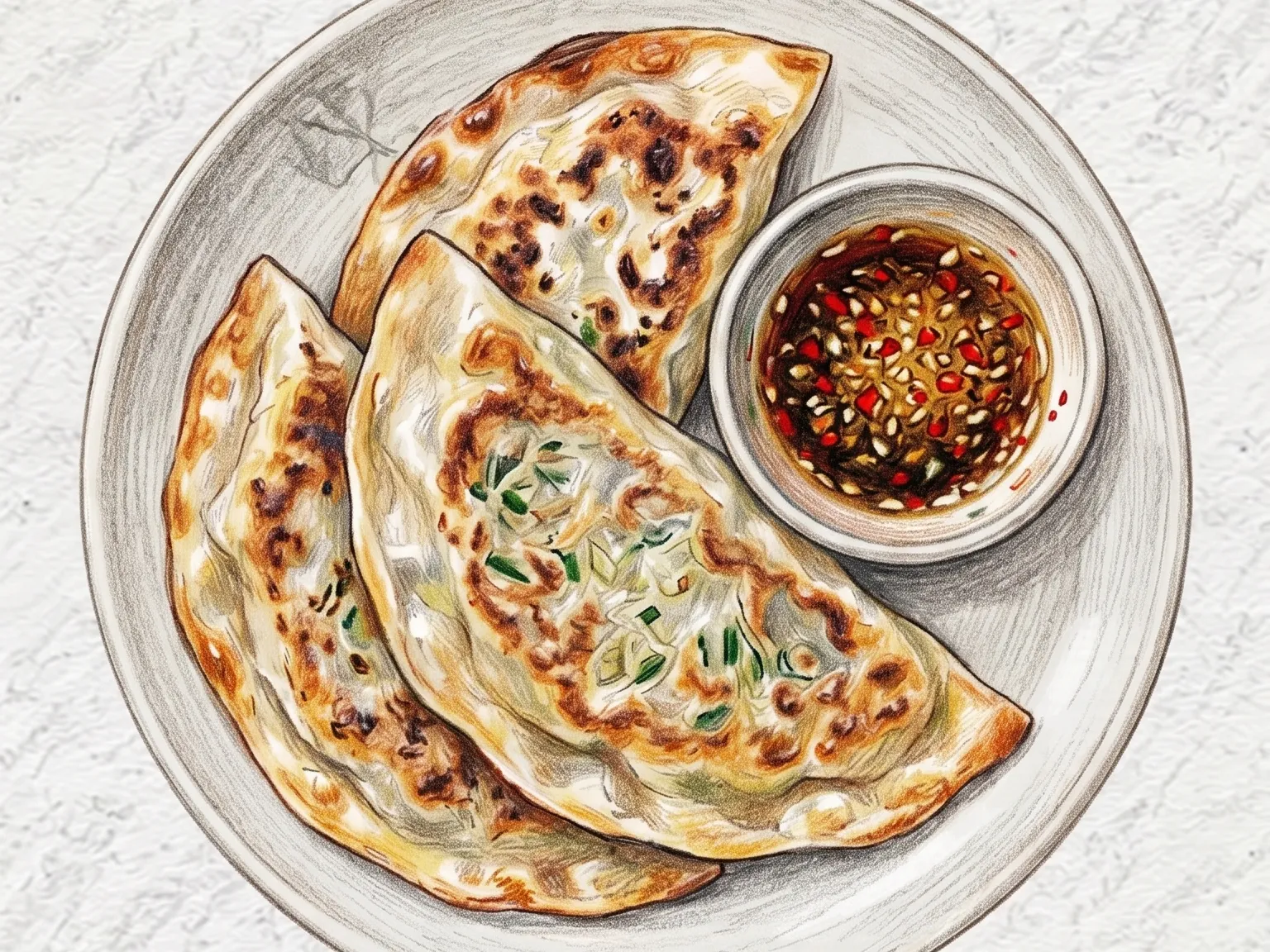
Korean Crispy Flat Mandu (Daegu-Style Thin Pan-Fried Dumplings)
Boiled sweet potato noodles, minced chives, and chopped cabbage are spread thinly inside dumpling wrappers, folded in half, and pan-fried flat until both sides are evenly crisp, in the style of Daegu street food. Using minimal filling is key to achieving the characteristic thin, flat shape that defines this dumpling, and a properly preheated pan ensures uniform crispness on both sides. The standard accompaniment is a tangy-spicy dipping sauce of soy sauce, vinegar, red pepper flakes, and sesame oil. Simple in construction but sharp in flavor balance, this is the dumpling that put Daegu's street food culture on the map.
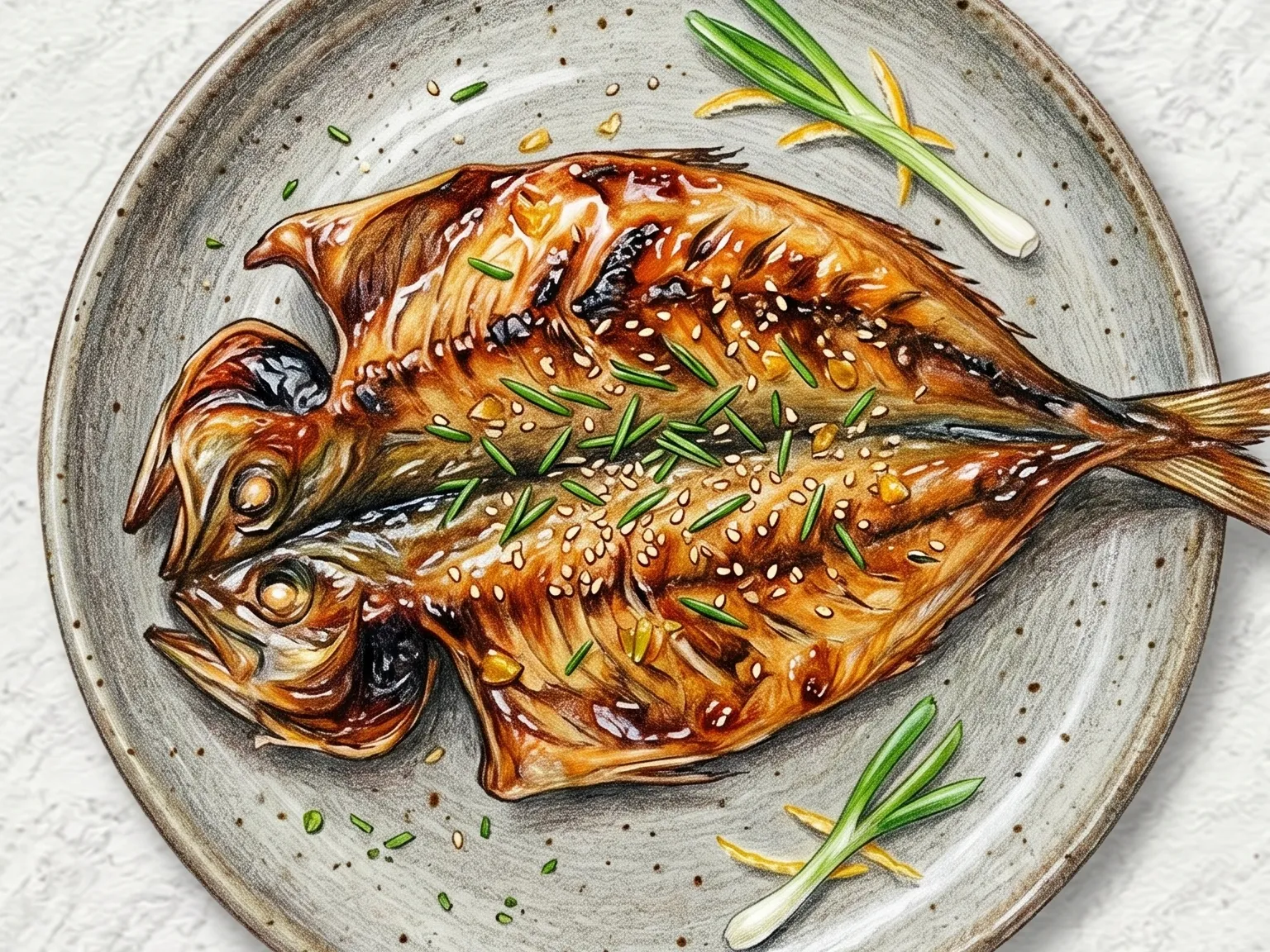
Korean Horse Mackerel with Yuzu Soy Glaze
Horse mackerel is marinated in a sauce of yuzu marmalade, soy sauce, cooking wine, and garlic, then grilled on a grill pan until the skin crisps and chars lightly. The citrus notes from the yuzu naturally suppress fishiness while harmonizing with the soy sauce saltiness. Brushing the remaining glaze in the final minute gives the skin a lacquered sheen. Sesame oil and sliced scallion complete the dish with a toasted, aromatic finish. The brevity of the ingredient list belies how decisively the yuzu transforms a grilled fish into something bright and fragrant.
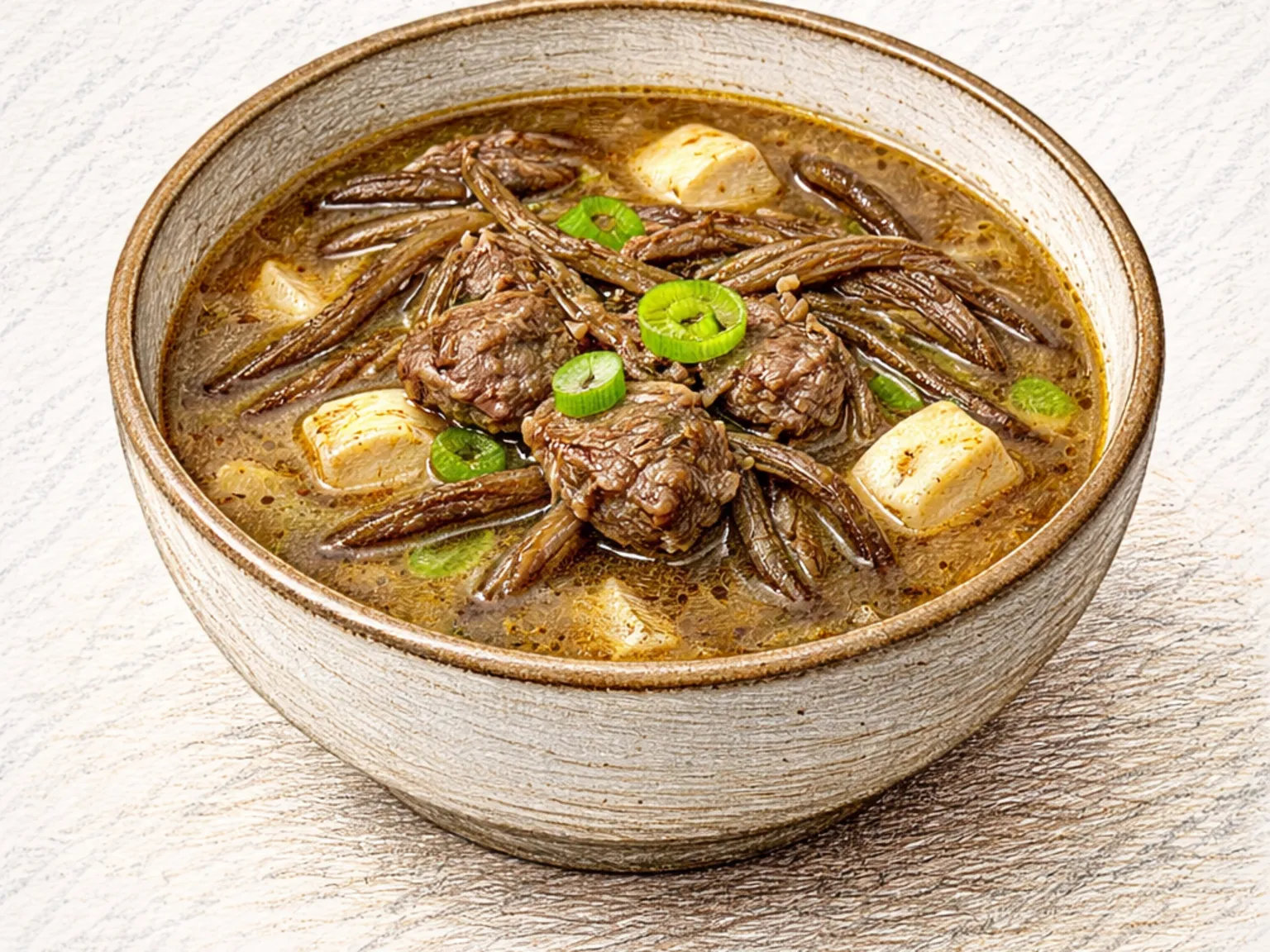
Korean Bracken and Beef Soup
Gosari sogogi-guk is a hearty Korean soup made by first stir-frying rehydrated bracken fern with beef in sesame oil, then adding water and dissolving doenjang into the broth to simmer. The bracken - dried mountain fern that must be soaked overnight until fully pliable - keeps a distinctive chewy resilience even after long soaking and simmering, setting it apart from the softer vegetables found in most doenjang soups. This chewiness is a defining quality of the ingredient and one of the main reasons the soup is valued over simpler alternatives. The stir-frying step before liquid is added is what builds the soup's character: as the bracken and beef cook together in sesame oil, their flavors dissolve into the fat and create a layered, savory base that plain boiling in water cannot achieve. Doenjang is introduced midway through rather than at the start to prevent the salt level from becoming too concentrated during the long simmer - its fermented depth and rounded umami wrap around everything in the pot. Garlic and green onion refine the aroma and cut any residual earthiness from the bracken. This soup has deep ties to Korean holidays: bracken is one of the three classic namul vegetables prepared for ancestral rites at Chuseok and Lunar New Year, and it is customary to use leftover soaked bracken from holiday namul preparation in a pot of soup the following day. Cooked bracken also freezes well, so many households keep it on hand year-round. The combination of earthy bracken, soft beef, and fermented broth produces a warmth and depth that feels distinctively rooted in Korean culinary tradition.
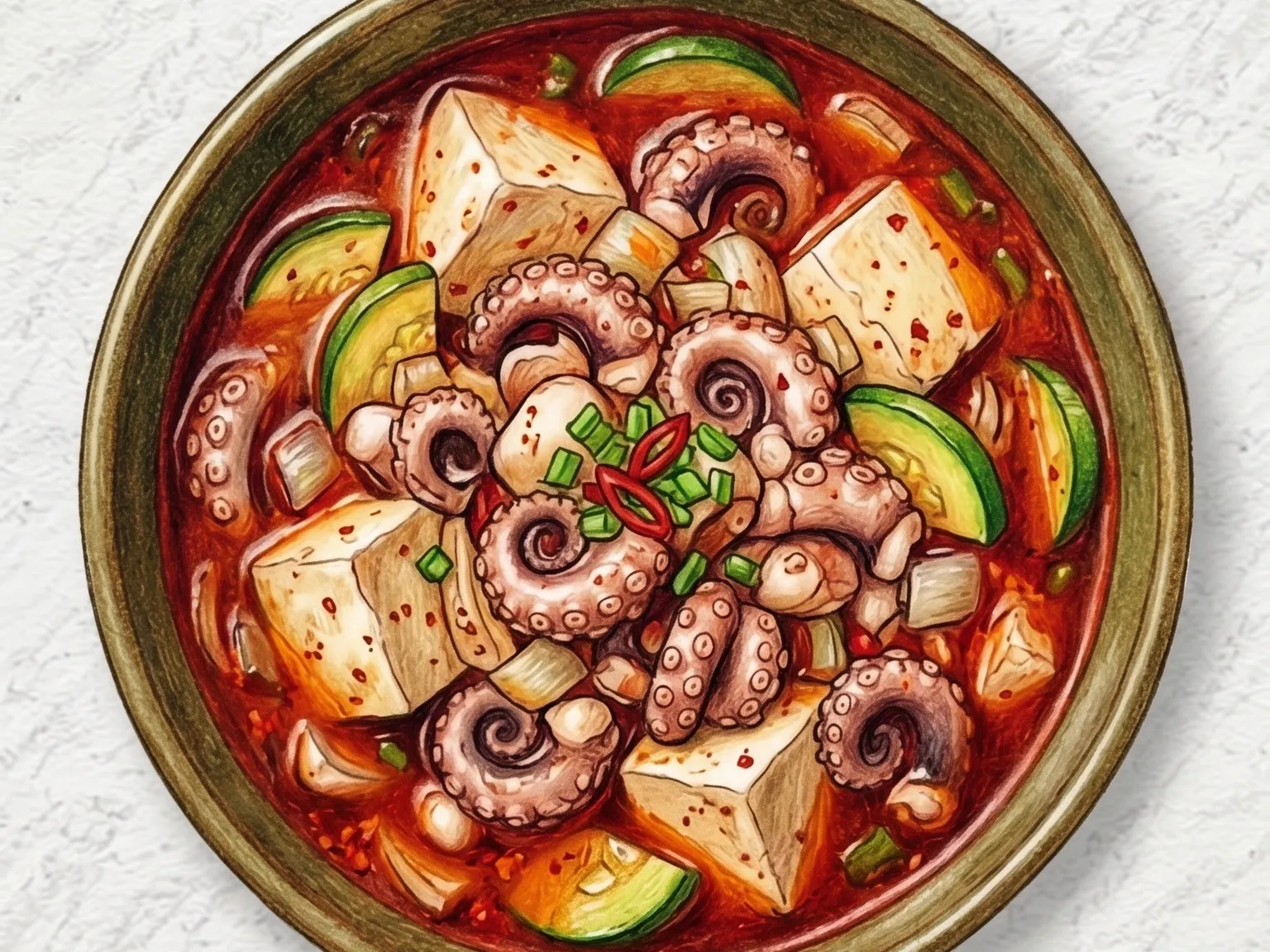
Korean Webfoot Octopus Tofu Stew
Jjukkumi dubu jjigae is a Korean stew of webfoot octopus and soft tofu cooked in a gochugaru-seasoned anchovy broth. A full 450 grams of jjukkumi goes into the pot, providing a bouncy, chewy texture in every spoonful. The tofu absorbs the spicy broth as it cooks, creating a soft counterpoint to the firm octopus, and the contrast between the two textures is a central part of the dish. Rice wine added early in the cooking process neutralizes any fishiness from the seafood, keeping the broth clean-tasting rather than pungent. Soup soy sauce deepens the umami base without darkening the broth too heavily, and gochugaru provides the heat. Zucchini and onion contribute natural sweetness that rounds out the broth and prevents the salt from the seafood from feeling sharp or one-dimensional. Jjukkumi becomes rubbery if overcooked, so removing the pot from heat three to four minutes after it comes back to a boil is the key step for keeping the octopus tender and springy rather than tough.
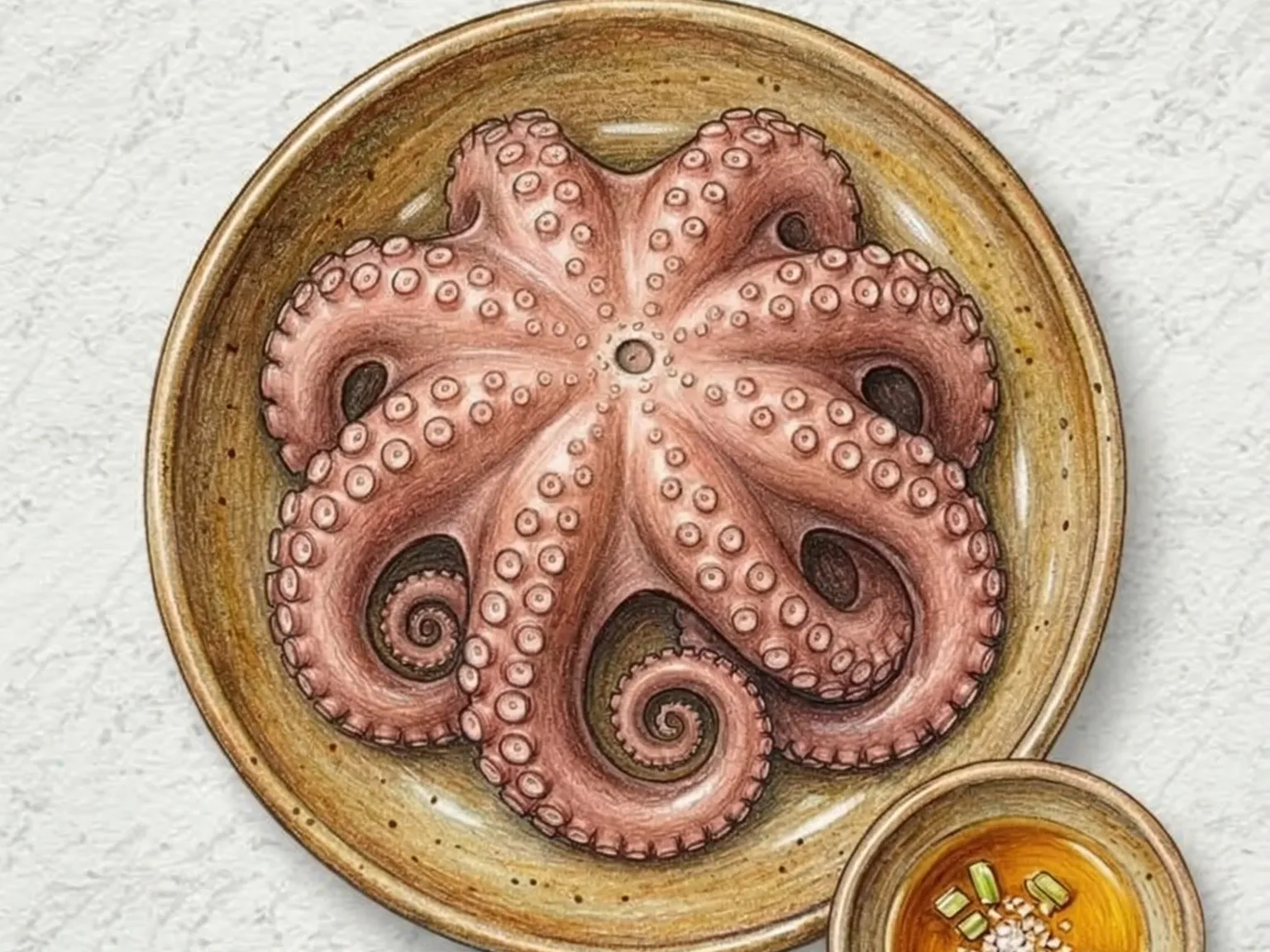
Korean Steamed Octopus (Whole Salted Radish Broth)
Muneo-jjim is a Korean steamed whole octopus dish prepared by scrubbing the octopus vigorously with coarse salt to remove slime and any off-odor, then cooking it in a pot layered with radish and green onion. Submerging the head end first and lifting it in and out of the boiling water two or three times causes the tentacles to curl inward naturally, resulting in an attractive presentation before the full cook begins. Simmering for about fifteen minutes and then resting off the heat with the lid on produces a texture that is springy and chewy without turning tough. The radish adds mild sweetness to the water while green onion draws out any fishiness, so the resulting broth carries a clean, subtle depth of its own. Once cooked, the octopus is sliced on the diagonal into manageable pieces and served with a simple dipping sauce of sesame oil mixed with salt. That combination lets the octopus's natural ocean flavor and nuttiness come through without interference. The dish works equally well as a drinking accompaniment or an everyday banchan, and the technique scales from a small arm to a full-sized octopus without adjustment.
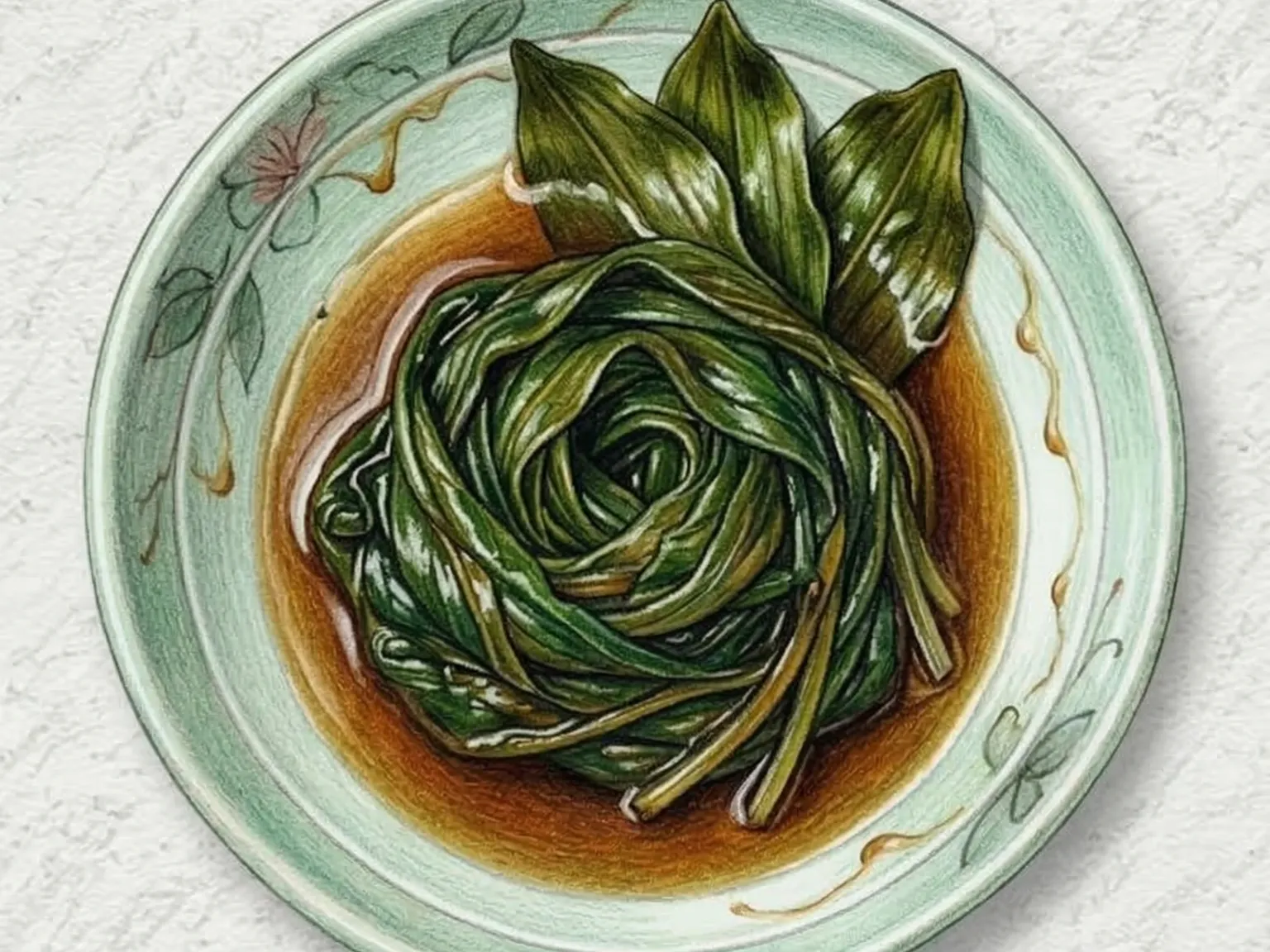
Korean Pickled Alpine Leek Leaves
Myeongi jangajji is a Korean soy-pickled preserve made from alpine leek leaves, a wild mountain herb harvested in early spring. The leaves are rolled into a sterilized jar with sliced green chili, then covered with a boiling brine of soy sauce, vinegar, water, and sugar. Pouring the hot liquid partially blanches the leaf surface, locking in a vivid green color while the interior stays raw and pungent. After two to three days of refrigeration the brine penetrates fully, tempering the raw garlic intensity into a mellow, fragrant heat balanced by soy saltiness and vinegar tang. These pickled leaves are traditionally wrapped around grilled pork belly or bulgogi, where their aromatic acidity cuts through the rendered fat.
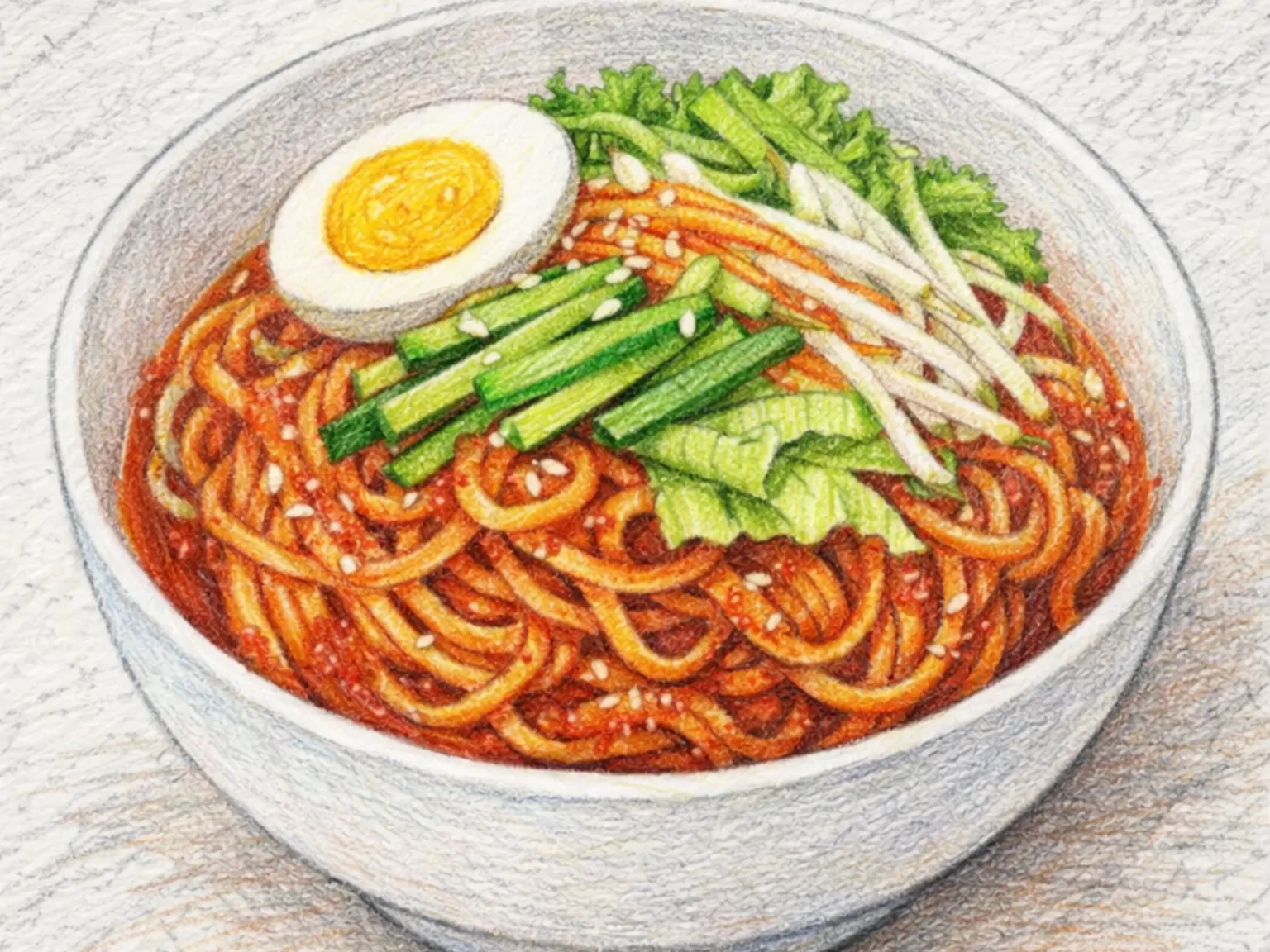
Korean Spicy Chewy Noodles
Jjolmyeon is a Korean cold noodle dish built around unusually thick, springy wheat noodles that were accidentally invented at an Incheon noodle factory in the 1970s. The noodles are boiled, rinsed in ice water to firm up their chewy texture, then dressed in a sweet-sour-spicy sauce made from gochujang, vinegar, sugar, soy sauce, and sesame oil. Shredded cabbage and julienned cucumber are chilled separately and piled on top, giving each bite a crisp contrast to the bold sauce. A halved boiled egg adds a creamy counterpoint to the heat. The dish is served cold and eaten after thorough mixing, making it a go-to summer meal and late-night snack across Korea.
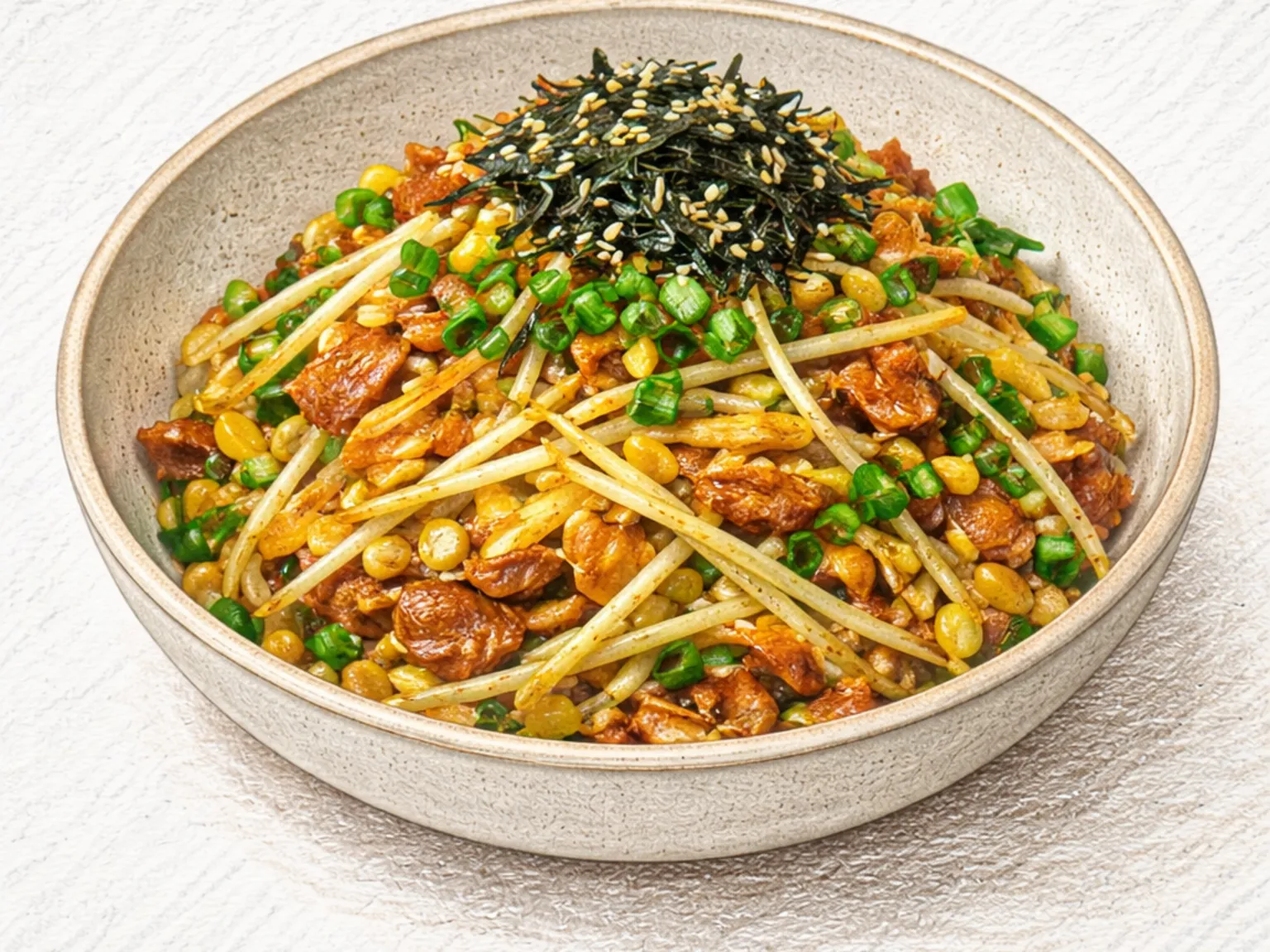
Bean Sprout Bulgur Seaweed Salad
Bulgur wheat brings a plump, nutty chew that pairs naturally with briefly blanched bean sprouts, building a hearty Korean grain salad with satisfying texture and substance. The dressing - soy sauce, apple cider vinegar, sesame oil, and minced garlic - mirrors the classic Korean namul seasoning profile exactly, tying grain and vegetable together without anything feeling out of place. Julienned carrot contributes sweetness and color, while thinly sliced scallion sharpens the finish with a mild, lingering onion bite. Roasted seaweed flakes are folded in just before serving to preserve their crunch and the oceanic salinity plays off the earthy grain in a pairing that reads as distinctly Korean. Bean sprouts should be rinsed in cold water immediately after blanching to keep their snap intact.
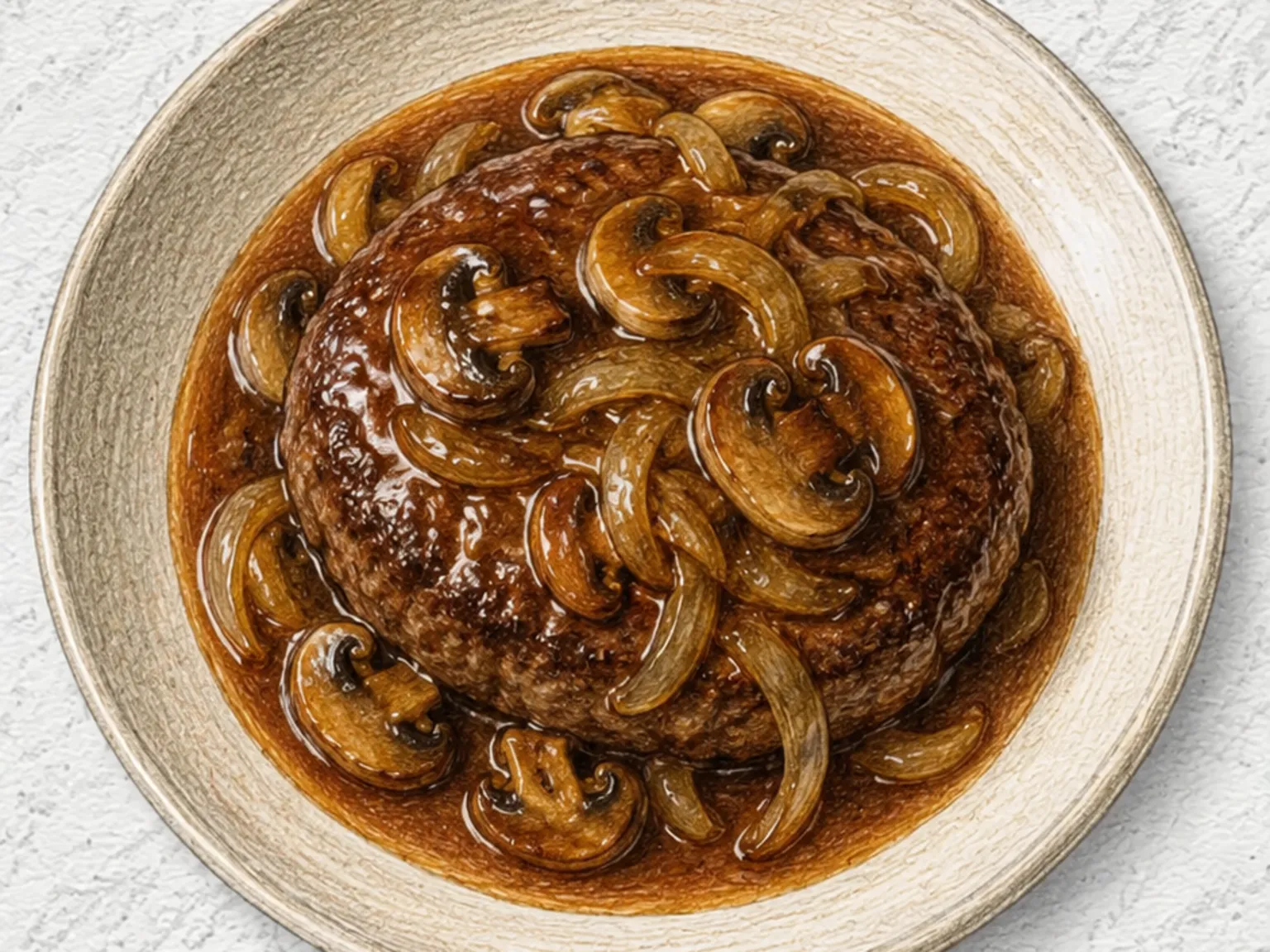
Salisbury Steak
Salisbury steak is an American comfort dish made by shaping ground beef mixed with milk-soaked breadcrumbs and egg into oval patties, pan-searing them, and then simmering in a mushroom-onion gravy. The breadcrumbs absorb milk and form moisture pockets within the meat, keeping the patties juicy even after cooking through. Pressing a shallow indent into the center of each patty prevents it from puffing up during searing, ensuring even thickness. Building the gravy in the same pan - sauteing onion and mushrooms, stirring in flour, then deglazing with beef stock and Worcestershire sauce - dissolves the browned fond into the sauce for deeper flavor. Returning the patties to simmer in the gravy for eight minutes finishes the interior and coats them in a rich, savory glaze.
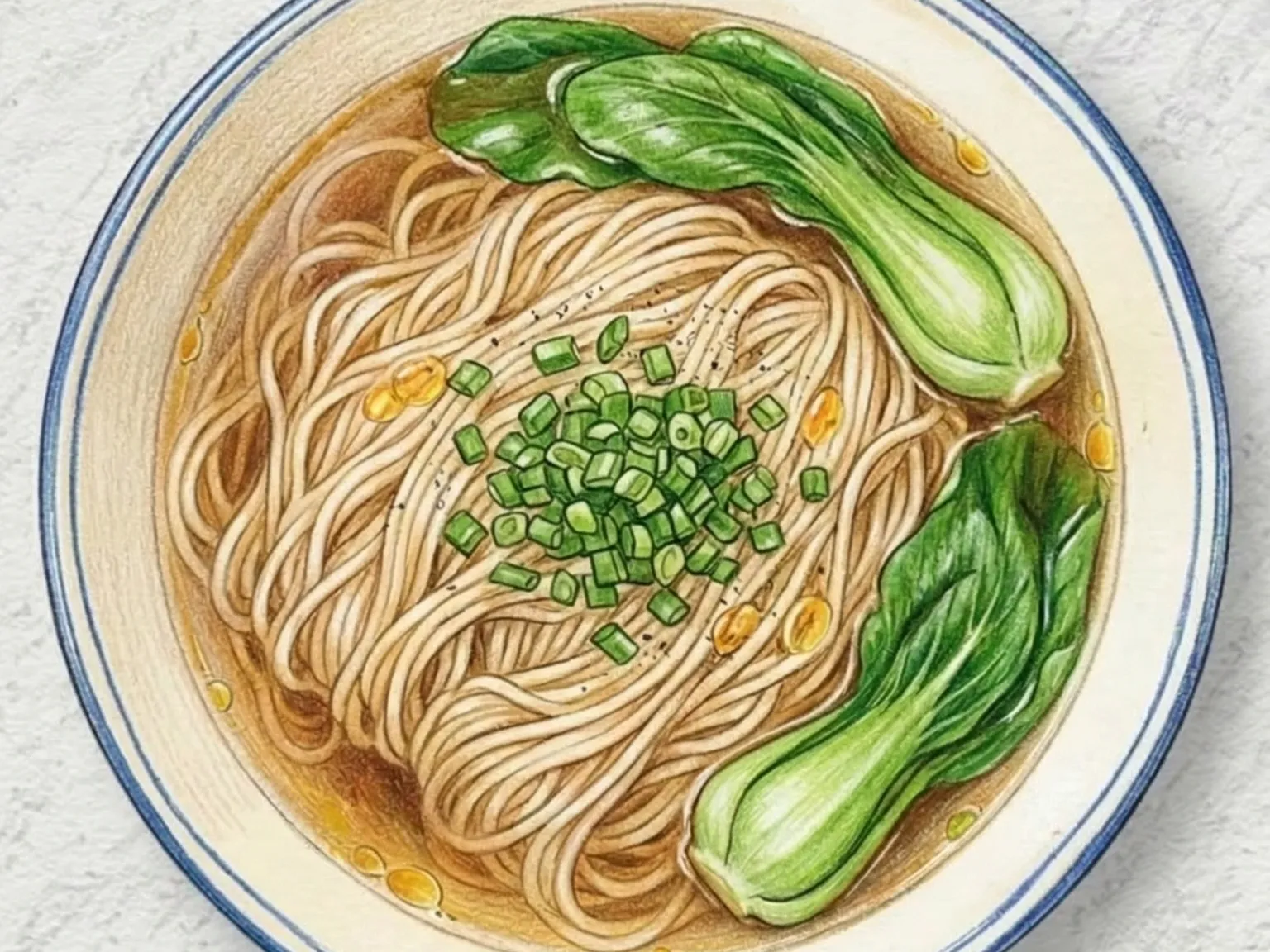
Yangchunmian (Shanghai Clear Soy Broth Noodle Soup)
Yangchunmian is a Shanghai noodle soup that focuses on a clear, soy-seasoned broth and fresh wheat noodles. The broth uses a chicken stock base seasoned with light soy sauce and sugar, heated gently to remain clear. Fresh wheat noodles are boiled until tender yet springy, while bok choy is blanched briefly in the same water to keep its green color and crisp texture. The noodles are placed in bowls, seasoned with white pepper for a clean aroma, and submerged in the hot broth. Thinly sliced scallions and the blanched bok choy are added as simple garnishes, finished with a drizzle of sesame oil to provide a layer of nutty warmth. Without heavy toppings, the dish relies on the clean flavor of the seasoned broth. It is served immediately while hot to prevent the noodles from softening.
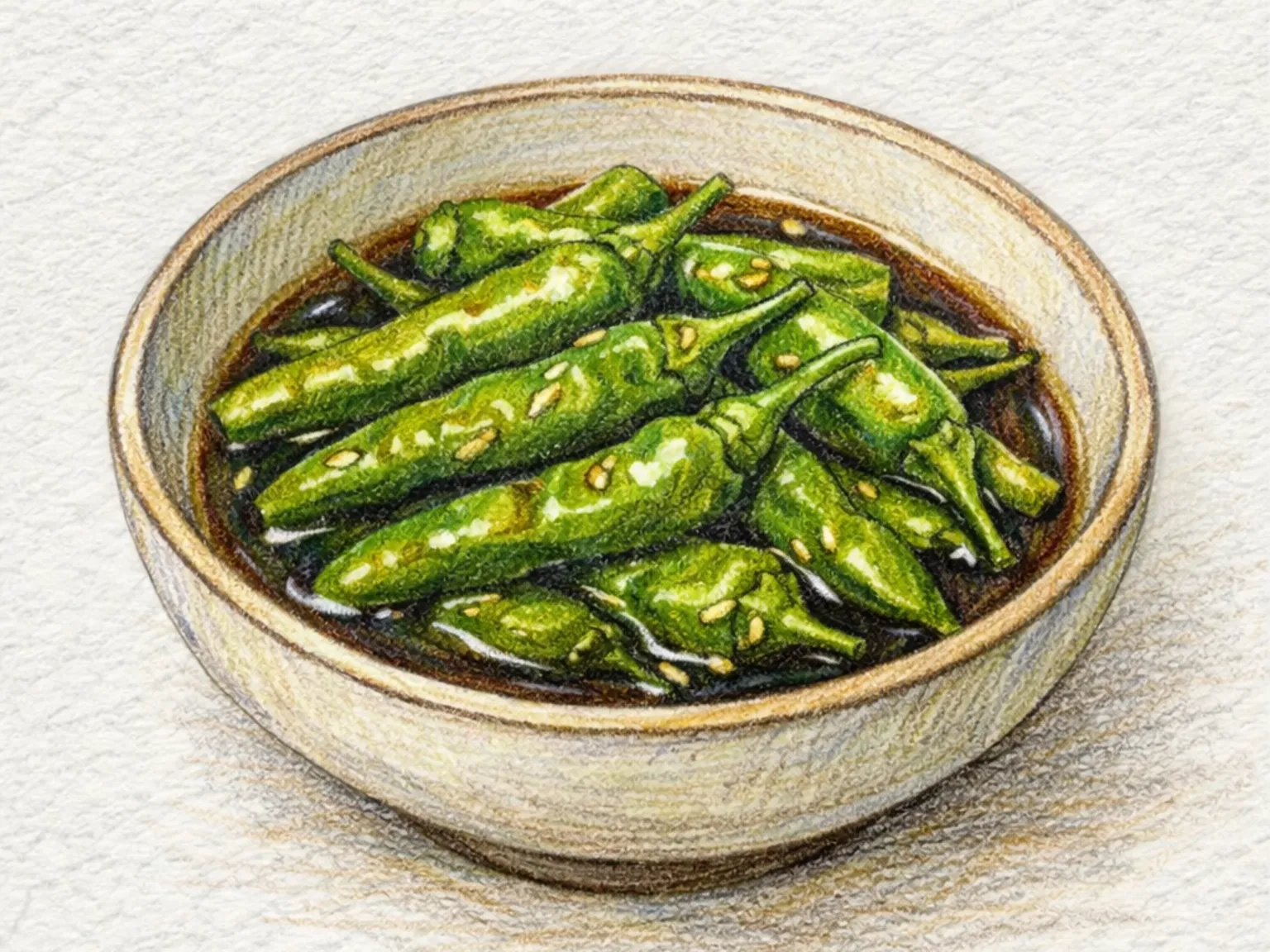
Korean Pickled Green Peppers
Gochu jangajji - soy-pickled green peppers - is a traditional Korean preservation method that traces back to the era before refrigeration, when summer's abundance of green peppers had to be kept edible through leaner months. Each pepper is stemmed and pierced several times with a toothpick so the brine can penetrate through the thick walls of the flesh and reach the seeds inside. A brine of soy sauce, vinegar, sugar, and water is brought to a full boil and poured directly over the peppers while still scalding hot; this flash of heat slightly blanches the exterior, brightening the green color, while the interior stays raw and crisp. Repeating this step the following day - draining the cooled brine, returning it to the pot, reboiling it, and pouring again - is what separates a well-made batch from a mediocre one. The second pour deepens the penetration of the seasoning, reinforces preservation, and allows the pickles to keep under refrigeration for over a month without losing crunch. Once fully pickled, the flavor is a layered combination of salty depth from the soy, gentle acidity from the vinegar, and the pepper's own lingering capsaicin heat, which mellows in brine but never entirely disappears. Placed on a bowl of plain rice, two or three pickled peppers are enough to make a full meal. Using cheongyang chili peppers instead of regular green peppers produces a sharper, hotter version, while kkwari peppers yield a milder and more tender result.
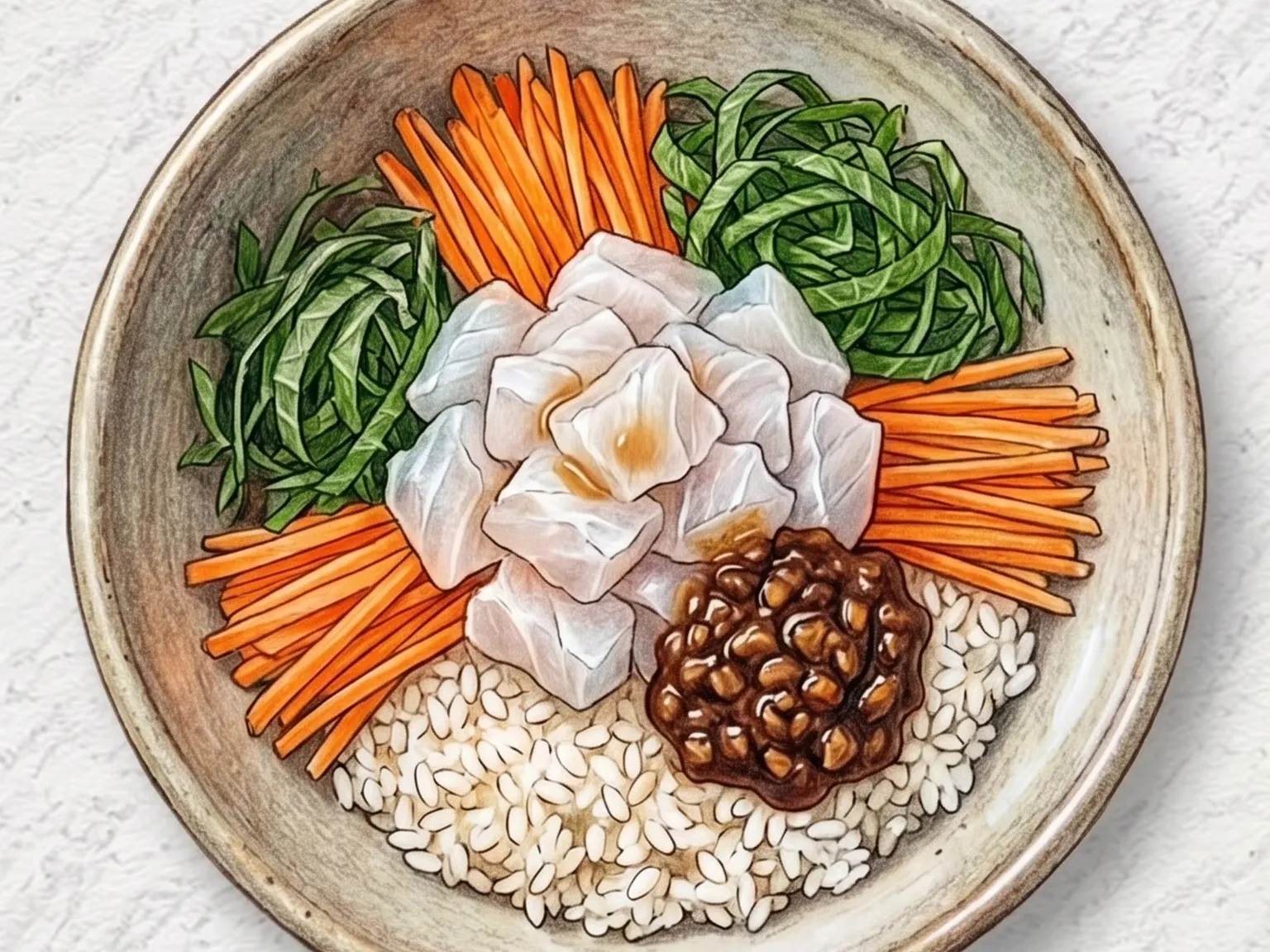
Korean Ssamjang Hwe Deopbap
This variation on hoe-deopbap replaces the standard cho-gochujang with a dressing of ssamjang mixed with vinegar and sesame oil, shifting the dominant flavor away from sweet heat and toward fermented bean depth. The doenjang component in ssamjang works against the rawness of the fish rather than masking it with chili, producing a rounded, earthy complexity that deepens with each bite. Vinegar cuts through ssamjang's thick, pungent weight and introduces a clean acidity that keeps the overall flavor from feeling heavy. Flounder sashimi is cut into bite-sized pieces and kept refrigerated, while the rice is served at room temperature so the two elements neither clash nor blend into an indistinct warmth. Julienned carrot and perilla leaves provide a crisp, juicy resistance that contrasts directly with the chewy elasticity of the fish. Dressing the vegetables in advance draws out moisture that would soften the rice, so all the components are placed in the bowl separately and tossed together only at the moment of eating to preserve every texture.
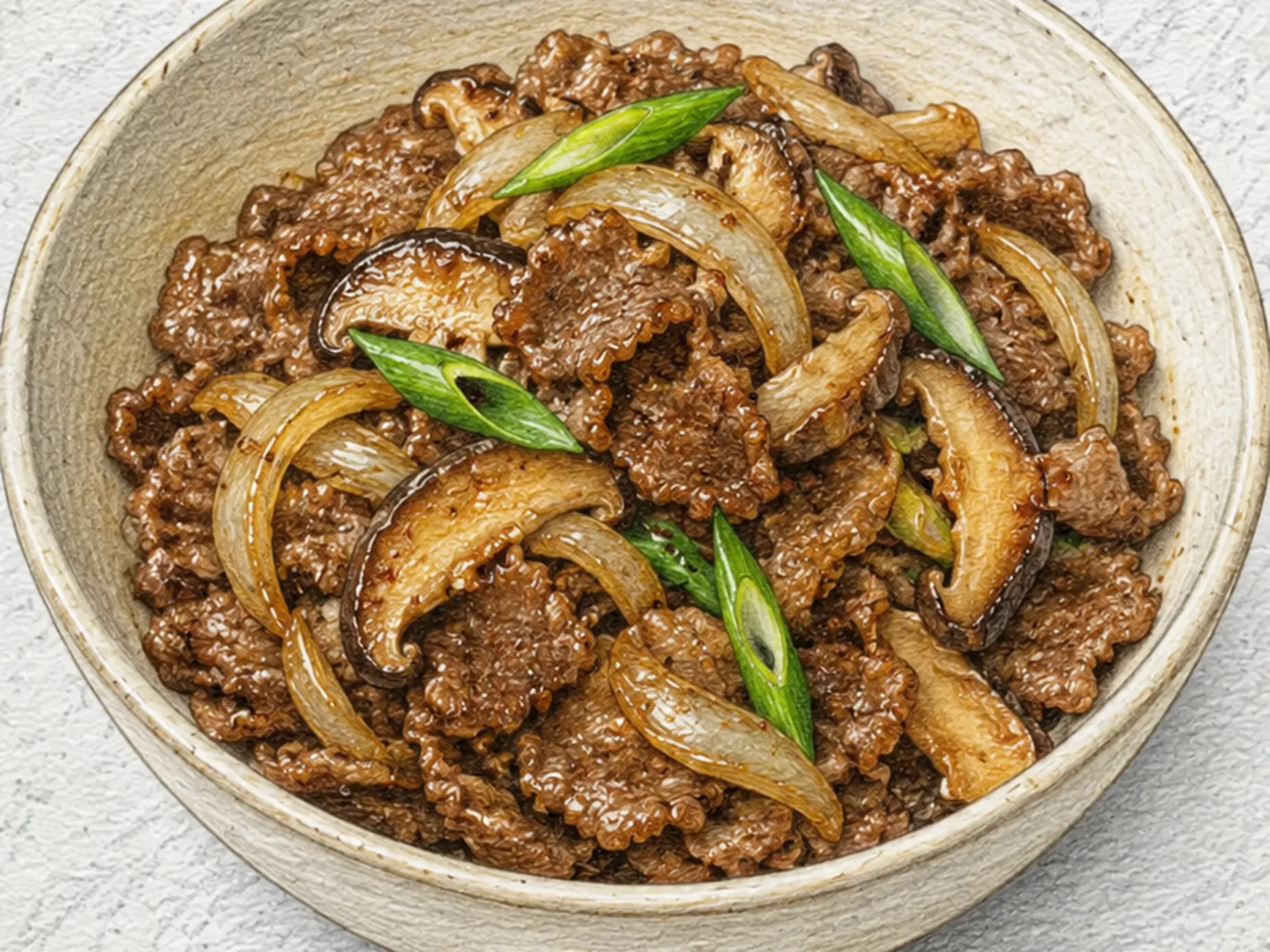
Korean Gangwon-Style Soy Bulgogi
Gangwon-style soy bulgogi represents a regional variation of the traditional Korean grilled beef dish specifically associated with the Gangwon Province. Unlike the bulgogi styles commonly found in the Seoul metropolitan area, which often lean heavily into sweet and fruit-driven marinades, this version prioritizes the clean and savory profile of soy sauce. The preparation begins by marinating thinly sliced beef in a mixture composed of soy sauce, sugar, minced garlic, and toasted sesame oil, along with the addition of fresh pear juice. The inclusion of pear juice serves a dual purpose in the recipe. The natural enzymes within the juice work to tenderize the muscle fibers of the beef, while its sugars provide a subtle and restrained sweetness that complements the salty foundation of the soy sauce without becoming the dominant flavor. When the meat is ready, it is cooked in a preheated pan over high heat. Sliced shiitake mushrooms and onions are added to the pan during this stage, allowing them to absorb the liquid marinade as they soften. This process integrates the flavors of the vegetables with the primary taste of the beef. Maintaining a high temperature is a critical step in the cooking process to ensure that moisture evaporates rapidly. This prevents the dish from taking on the texture of a braised stew and instead produces a slight char and a smoky quality on the edges of the meat. Just before the heat is turned off, diagonally sliced green onions are tossed into the pan. They are cooked only until they begin to wilt, preserving a bright and sharp contrast that balances the finished dish. The result is a soy-focused flavor profile that is clear and direct. Because it avoids being overly aggressive or excessively sweet, this bulgogi serves as a consistent accompaniment for steamed rice that remains palatable through frequent consumption.

Korean Stir-Fried Fish Cake Strips
This side dish features flat fish cake sheets sliced into thin strips and stir-fried in a savory seasoning mixture. The preparation starts with blanching the fish cake slices in boiling water to remove excess surface oil, which helps the glaze adhere evenly. The strips are first stir-fried in an oiled pan over medium heat to evaporate surface moisture and curl the edges. Minced garlic and red pepper flakes are then added and cooked quickly to prevent the spices from burning. After seasoning with soy sauce and sugar, the ingredients are tossed until they become glossy and the sauce is fully absorbed. The heat is turned off before mixing in sesame oil and toasted sesame seeds to provide a nutty finish. This dish offers a clear balance of sweet and spicy flavors that pairs well with steamed rice.
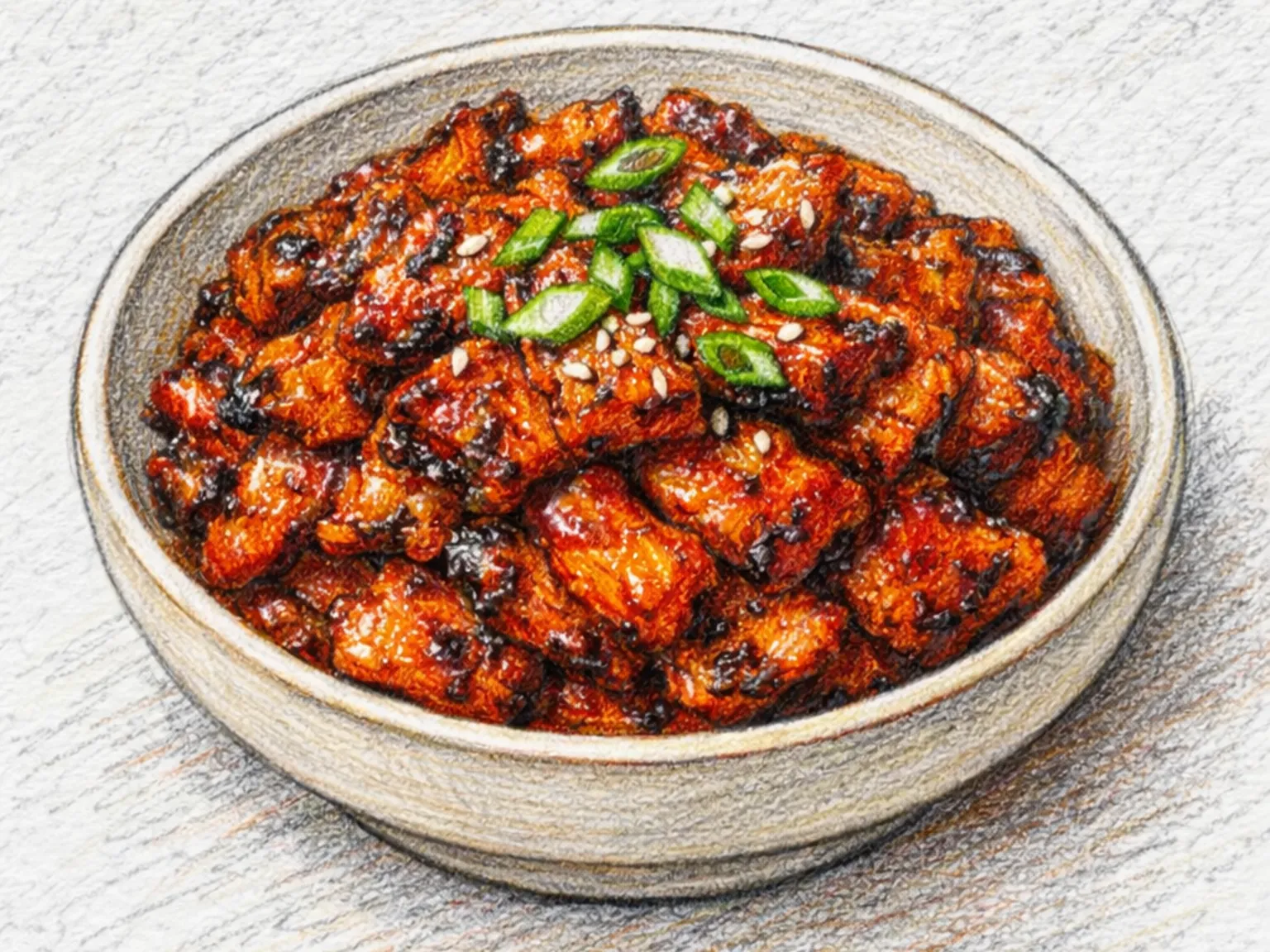
Korean Spicy Pork Bulgogi Grill
This Korean grilled pork dish is made by marinating pork shoulder in a spicy and sweet mixture. The marinade blends gochujang, soy sauce, sugar, minced garlic, ginger juice, and sesame oil. Coating each piece individually and pressing the meat flat ensures the seasoning penetrates deeply during a thirty-minute resting period. Cooking requires a preheated grill or a heavy pan set over high heat to sear the meat quickly. Spreading the slices in a single layer prevents them from steaming. The sugars from the gochujang and sugar caramelize under high heat, creating a deep brown, flavorful crust on the pork surface. Because this coating can scorch easily, adjusting the stove to medium-high prevents burning. Serving the hot grilled pork wrapped in fresh lettuce sheets balances the smoky, seasoned meat with a crisp and hydrating vegetable texture.
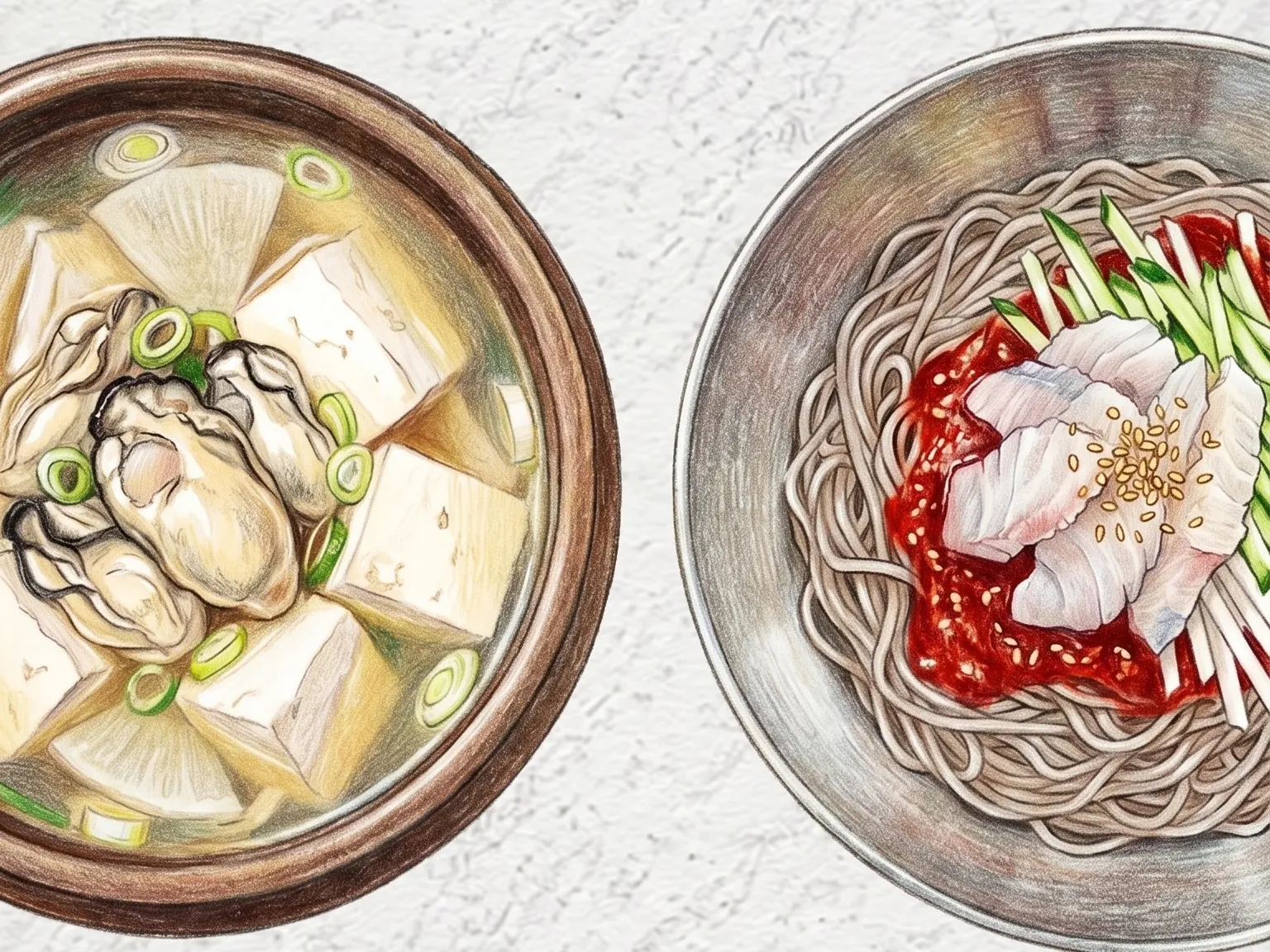
Gul Dubu Guk (Korean Oyster Tofu Soup)
Gul-dubu-guk is a Korean oyster tofu soup, a winter dubu guk that pairs plump seasonal oysters with soft tofu in a clear kelp broth. Unlike plain dubu-jangguk, this version is seafood-forward, with briny oyster aroma leading the bowl. Timing the oysters precisely is the central technique: they go in just before the broth reaches a full boil, and even a minute too long on the heat turns them tough and grainy. Large-cut tofu blocks absorb the shellfish-infused liquid as they simmer, carrying the oyster depth into each spoonful. Thinly sliced radish adds natural sweetness, while soup soy sauce and garlic keep the seasoning clean.
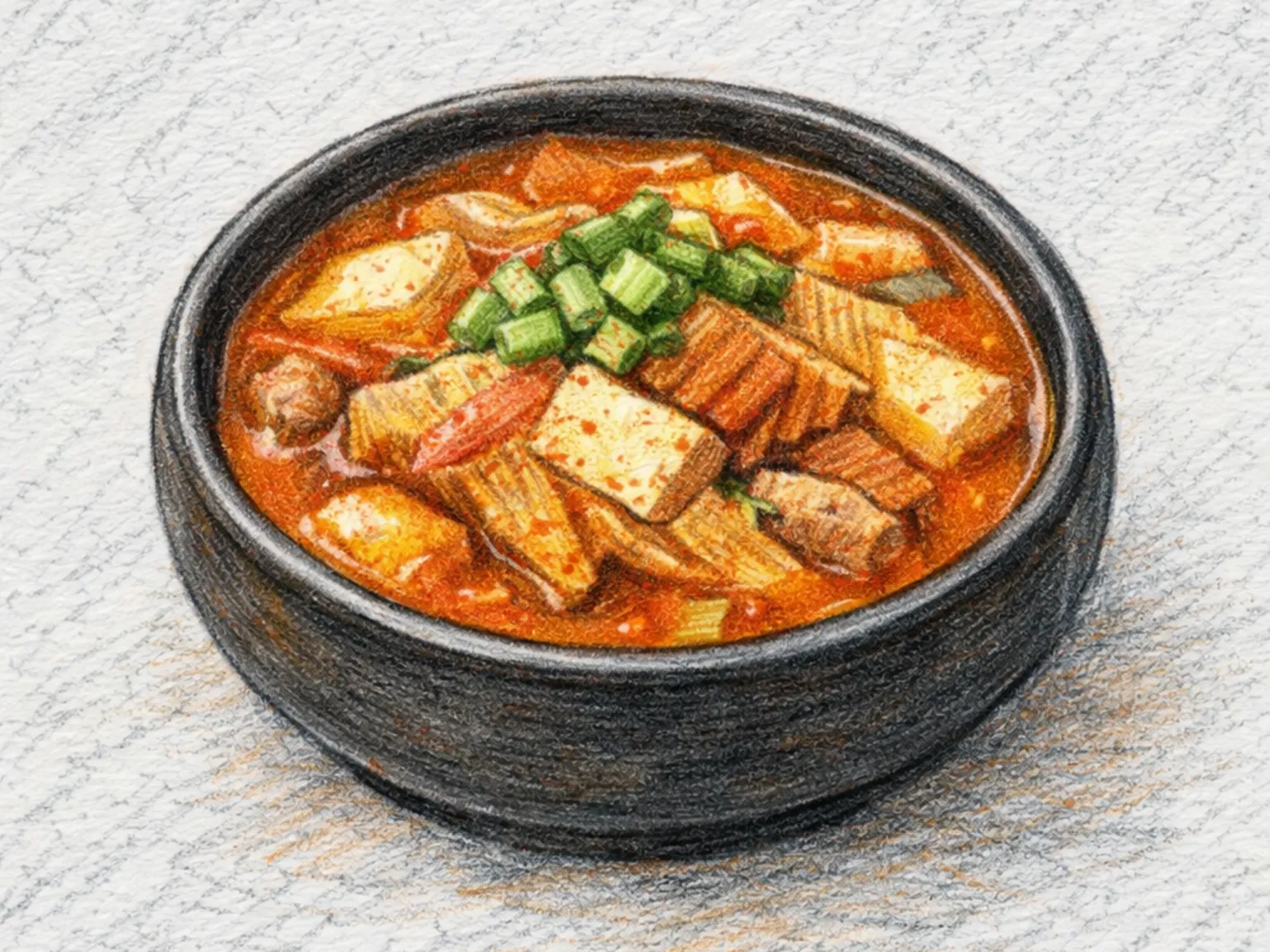
Korean Kimchi Jjigae (Kimchi Stew)
Kimchi jjigae is a staple Korean stew made by simmering well-fermented kimchi with pork belly and tofu. The preparation starts by stir-frying pork belly in a pot with sesame oil to render the fat, then adding the kimchi and cooking it until translucent to mellow the sharp acidity. A spoonful of doenjang and gochugaru are stirred into the mixture to enhance the umami base before pouring in water and kimchi brine. Simmering the stew on medium heat allows the rich pork fat and fermented kimchi to combine, creating a deeply savory and spicy broth. Slices of tofu are added to absorb the flavored broth, providing a soft texture that contrasts with the other ingredients. The dish is finished with green onions for a fresh crunch and is served warm with steamed rice.
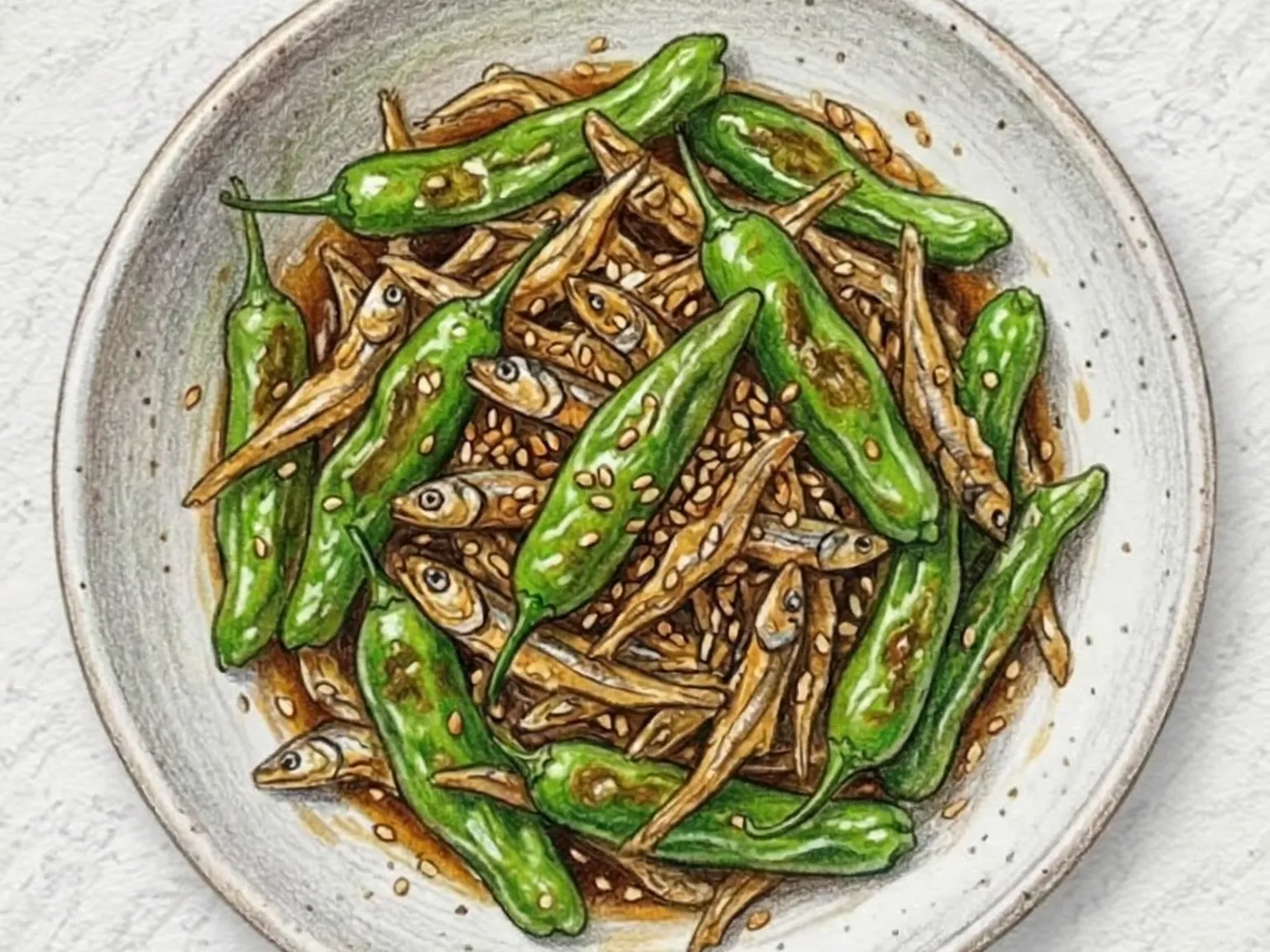
Korean Anchovy & Shishito Braise
Myeolchi kkwari jorim is a Korean side dish of dry-toasted small anchovies and shishito peppers glazed in a sweet soy sauce with corn syrup and cooking wine. Toasting the anchovies first drives off any fishy smell and brings out their nuttiness, while the peppers are stir-fried in oil to release a mild, lingering heat. The glaze coats everything in a shiny, sweet-salty finish, and sesame oil with sesame seeds add a final toasted aroma. This banchan tastes even better the next day after the sauce has fully settled in, making it one of the most reliable lunchbox staples in Korean home cooking.