🌙 Late Night Recipes
Quick and satisfying late-night bites
651 recipes. Page 16 of 28
Late-night cravings call for quick, easy recipes that satisfy without too much effort. Ramyeon, egg fried rice, tuna-mayo rice bowls, and simple toasts - these are dishes you can throw together when hunger strikes after dark. Cooking at home beats delivery in both cost and healthiness.
The ideal late-night snack is fast to make, easy to clean up, and just filling enough. These recipes hit that sweet spot - comforting without being heavy.
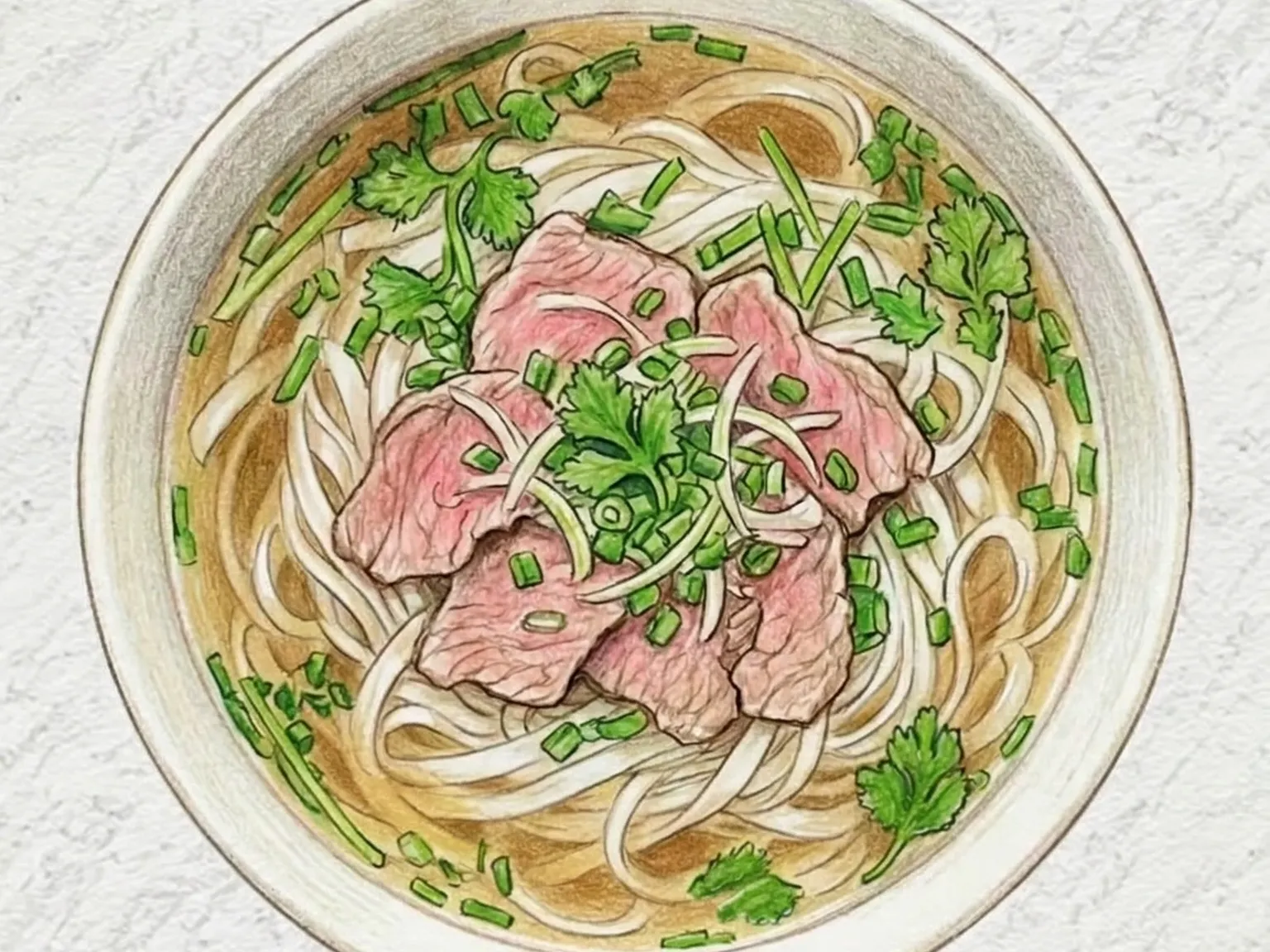
Hanoi-Style Pho Bo (Vietnamese Northern Clear Beef Noodle Soup)
Hanoi-style pho bo is the original northern Vietnamese beef noodle soup, distinguished from its southern counterpart by a leaner, clearer broth and restrained garnishing. Beef bones and brisket simmer for hours with a modest hand of spices - star anise, cinnamon bark, and a few cloves - so the beef flavor leads rather than the aromatics. The broth is repeatedly skimmed until it runs nearly transparent, with no trace of grease on the surface. Paper-thin slices of raw beef placed in the bowl cook to a pale pink the moment the scalding broth is ladled over them. In Hanoi, the bowl arrives with only chopped scallion and cilantro; bean sprouts, hoisin sauce, and sriracha - common in southern and overseas versions - are absent by tradition.
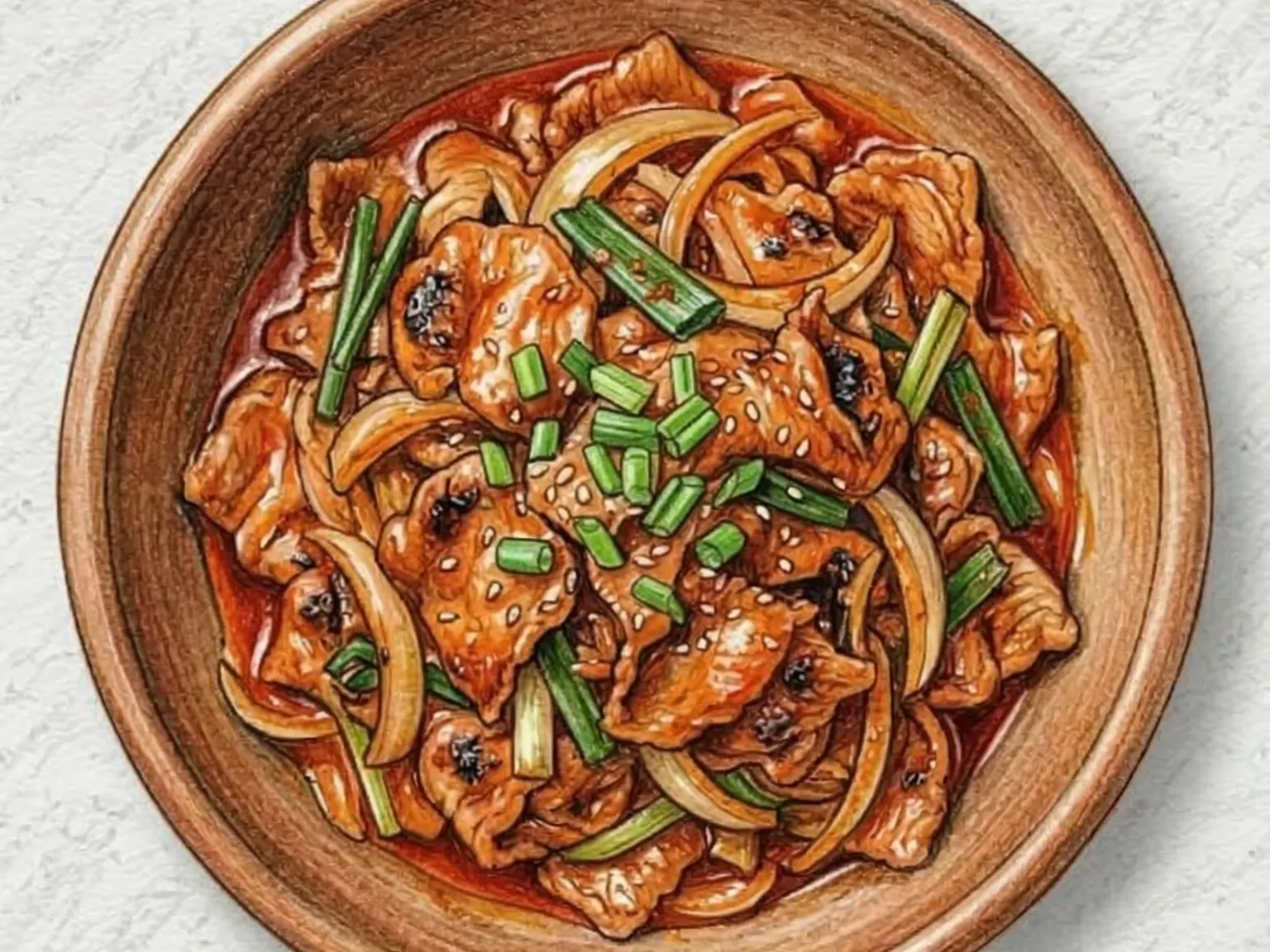
Korean Spicy Pork Duruchigi
Duruchigi is a Korean spicy pork stir-fry made by flash-cooking sliced pork shoulder with onions and scallions in a gochujang-based sauce over high heat. Pork shoulder has a balanced ratio of fat to lean meat, which prevents it from drying out even at the high temperatures required for a proper stir-fry. The intense heat chars the edges of the meat slightly and introduces a smoky wok flavor that deepens the dish beyond what the seasoning alone provides. Gochujang contributes fermented chili heat and a savory, slightly sweet undertone, while added sugar reinforces that sweetness, and scallions provide a sharp, clean finish in the back of the palate. Cooking the onion first to soften before adding the meat controls the amount of liquid released and keeps the sauce from becoming watery. Duruchigi works as a straightforward rice side dish, wrapped in lettuce leaves, or as the protein base for fried rice with the leftovers. It ranks among the most dependable everyday pork dishes in Korean restaurants and home kitchens, and also sees regular use as a late-night snack or drinking table side.
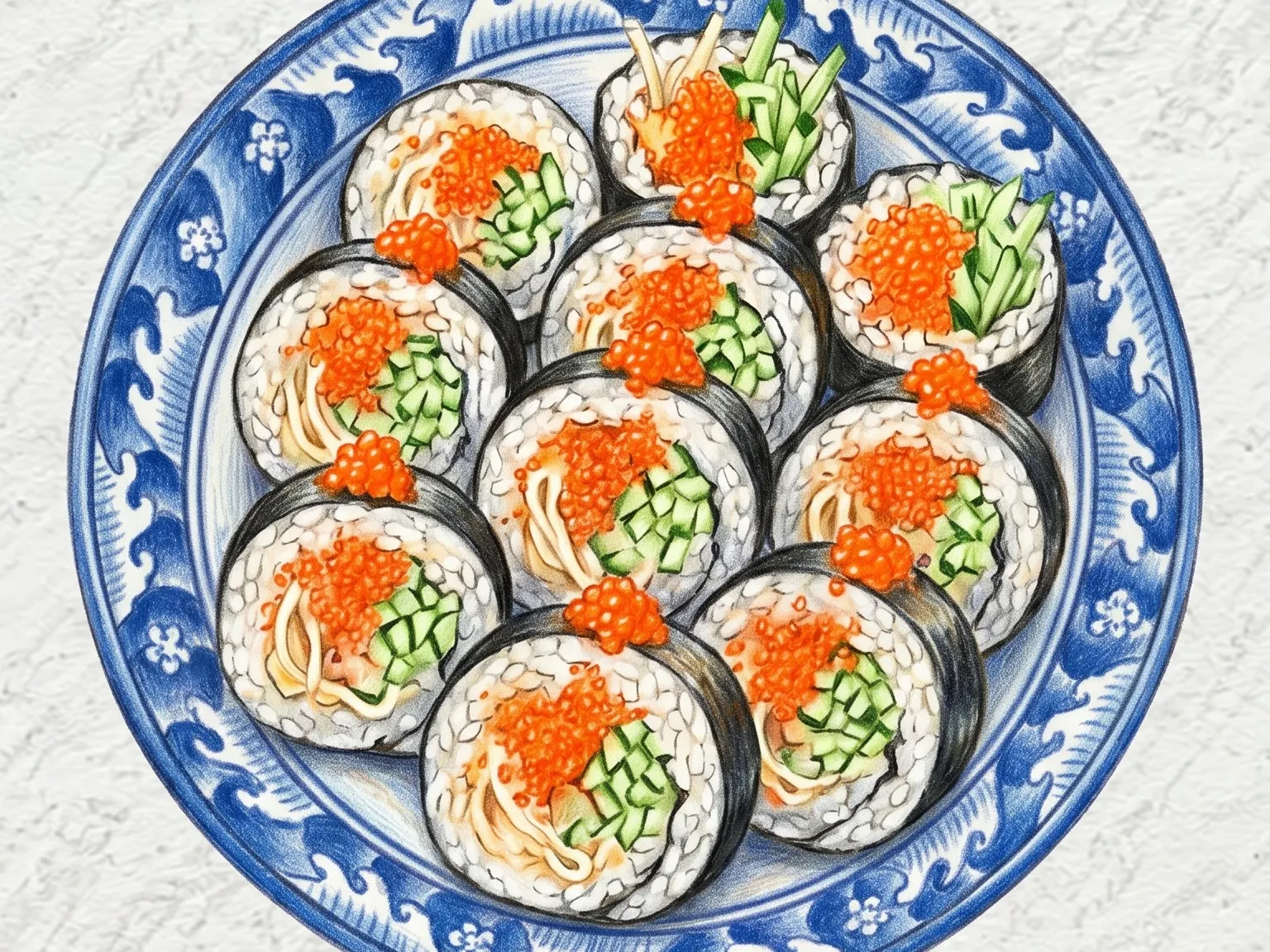
Korean Flying Fish Roe Gimbap
Nalchial gimbap is made by spreading sesame-oil-and-salt-seasoned rice across a sheet of nori, piping a thin line of mayonnaise down the center, then laying refrigerated flying fish roe and julienned cucumber in parallel before rolling everything tightly. The roe must come straight from the refrigerator at the moment of assembly - as the tiny eggs warm up, their skins soften and lose the signature pop that defines this roll. Biting through releases a simultaneous burst of briny, savory roe juice and creamy mayonnaise, while crisp cucumber strips cut through the richness with their cool crunch. Once sliced, a small spoonful of extra roe placed on each cut piece makes the rolls visually striking and amplifies the popping sensation per bite. Salmon roe or spicy pollack roe can substitute for flying fish roe using the exact same method.
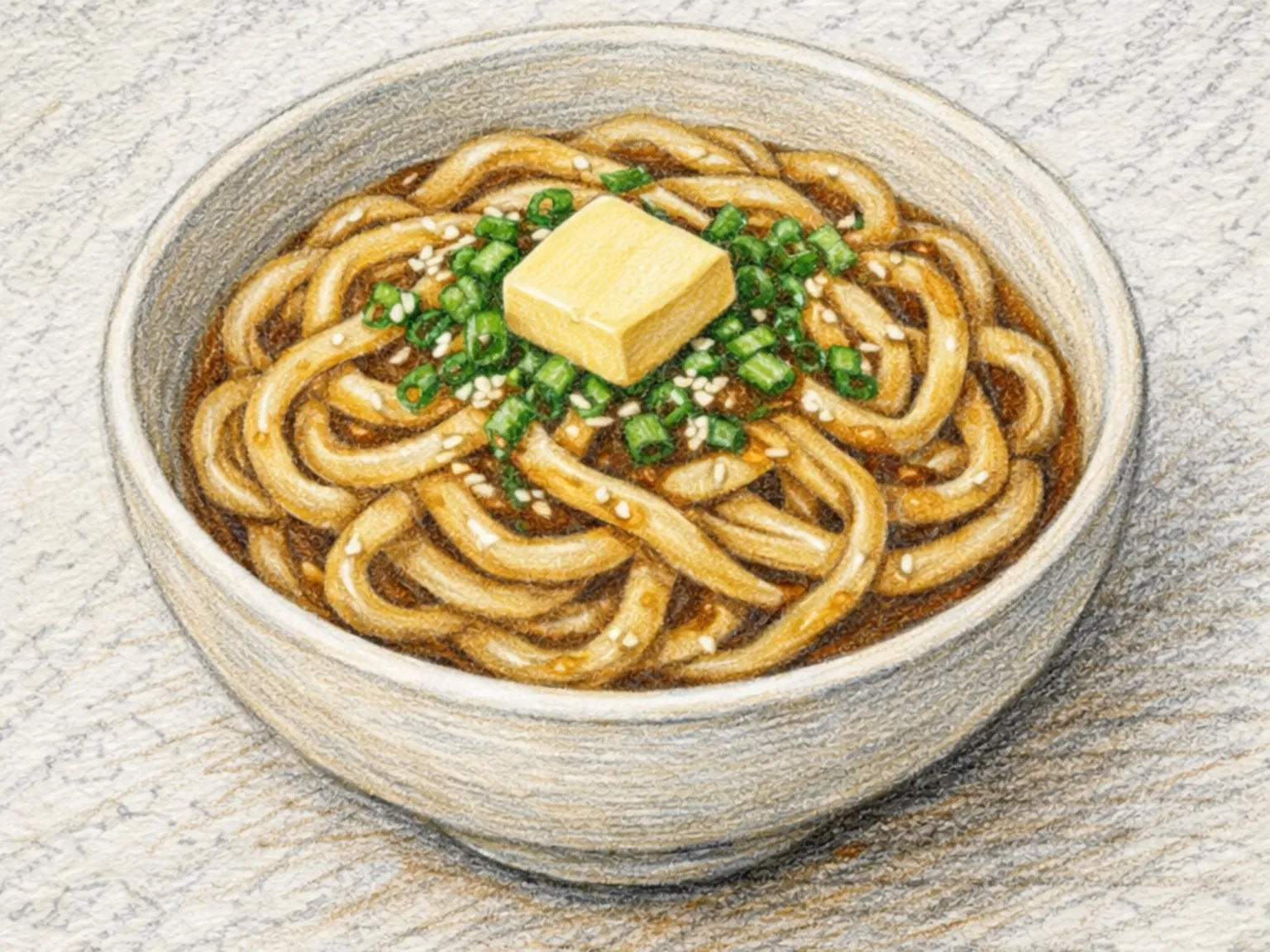
Soy Butter Udon (Pan-Tossed Udon in Caramelized Soy Butter)
Ganjang butter udon is a quick pan-fried noodle dish that delivers deep, satisfying flavor in roughly ten minutes. Boiled udon noodles go into a pan with melted butter, and as soon as they hit the hot surface the butter releases a toasted, nutty fragrance. Soy sauce added to the pan caramelizes almost immediately against the heat, forming a savory-sweet glaze that coats every strand of the thick, springy noodles. The fat from the butter helps the glaze adhere evenly and rounds out the soy's saltiness with richness. Katsuobushi piled on top at the finish adds a layer of smoky umami that deepens the overall flavor, and an egg yolk placed in the center and stirred through transforms the dish with a creamy, silky texture. It is an ideal solution for a late-night craving or a satisfying solo meal when time is short.
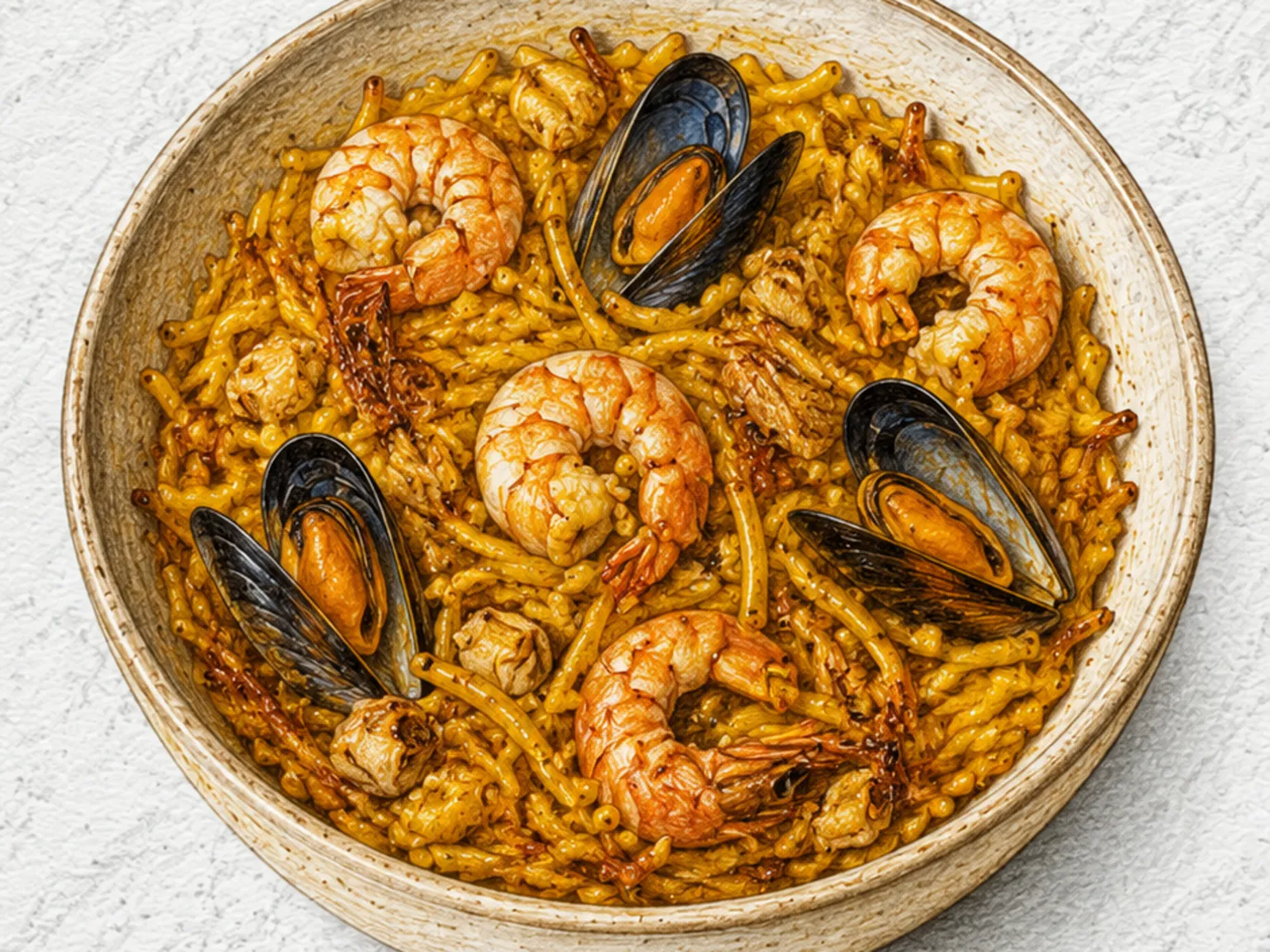
Fideua (Toasted Noodle Seafood Paella)
Fideua is a Valencian dish that mirrors paella in technique but replaces rice with short, thin pasta called fideos. The noodles are toasted in olive oil until golden before being cooked in a seafood broth made from shrimp shells, mussels, and fish stock. As the pasta absorbs the broth, it concentrates the flavor of the sea into each strand. The bottom layer develops a crispy crust called socarrat, prized for its caramelized, toasty crunch. Saffron colors the broth golden and contributes a subtle floral note. The dish is traditionally cooked in a wide, shallow pan to maximize surface area and crust formation. Served with alioli on the side, the garlic-infused mayonnaise adds richness and a pungent kick that amplifies the seafood character.
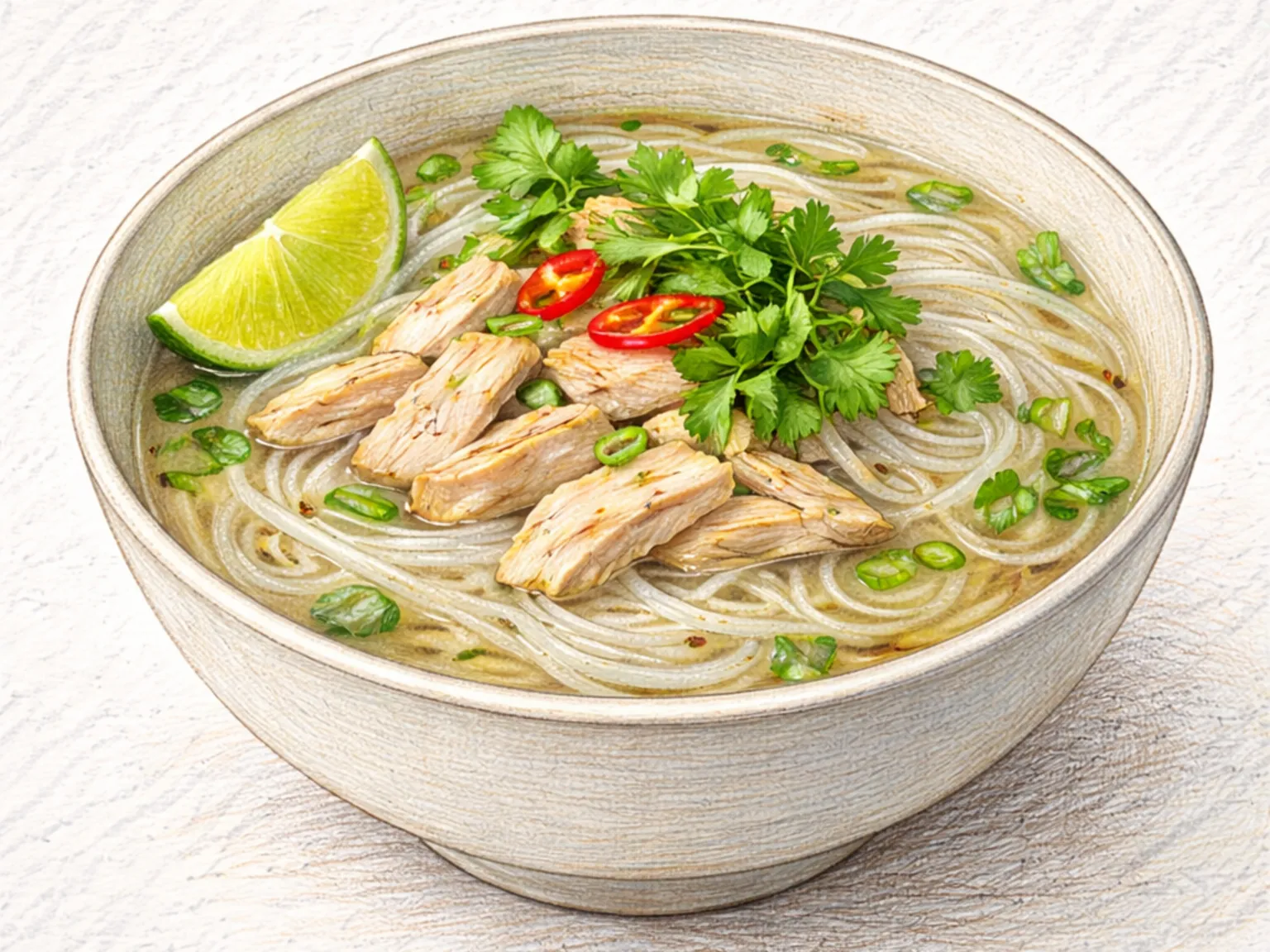
Hanoi-Style Chicken Pho (Pho Ga)
Hanoi-style pho ga is a chicken noodle soup that trades the beefy richness of pho bo for a lighter, cleaner bowl. Chicken bones and thighs simmer together until the broth turns golden and fragrant, then the meat is pulled into long shreds and piled over flat rice noodles. The spice profile is gentle - a knob of charred ginger and a single star anise - keeping the chicken flavor at the forefront. The broth has a silky quality from the natural gelatin in the bones, giving each spoonful a body that belies its clarity. Scallion, cilantro, and a squeeze of lime are the standard accompaniments. Some vendors add a torn fried dough stick for crunch. Pho ga is widely considered the everyday breakfast pho in Hanoi, less ceremonial than its beef counterpart but no less satisfying.
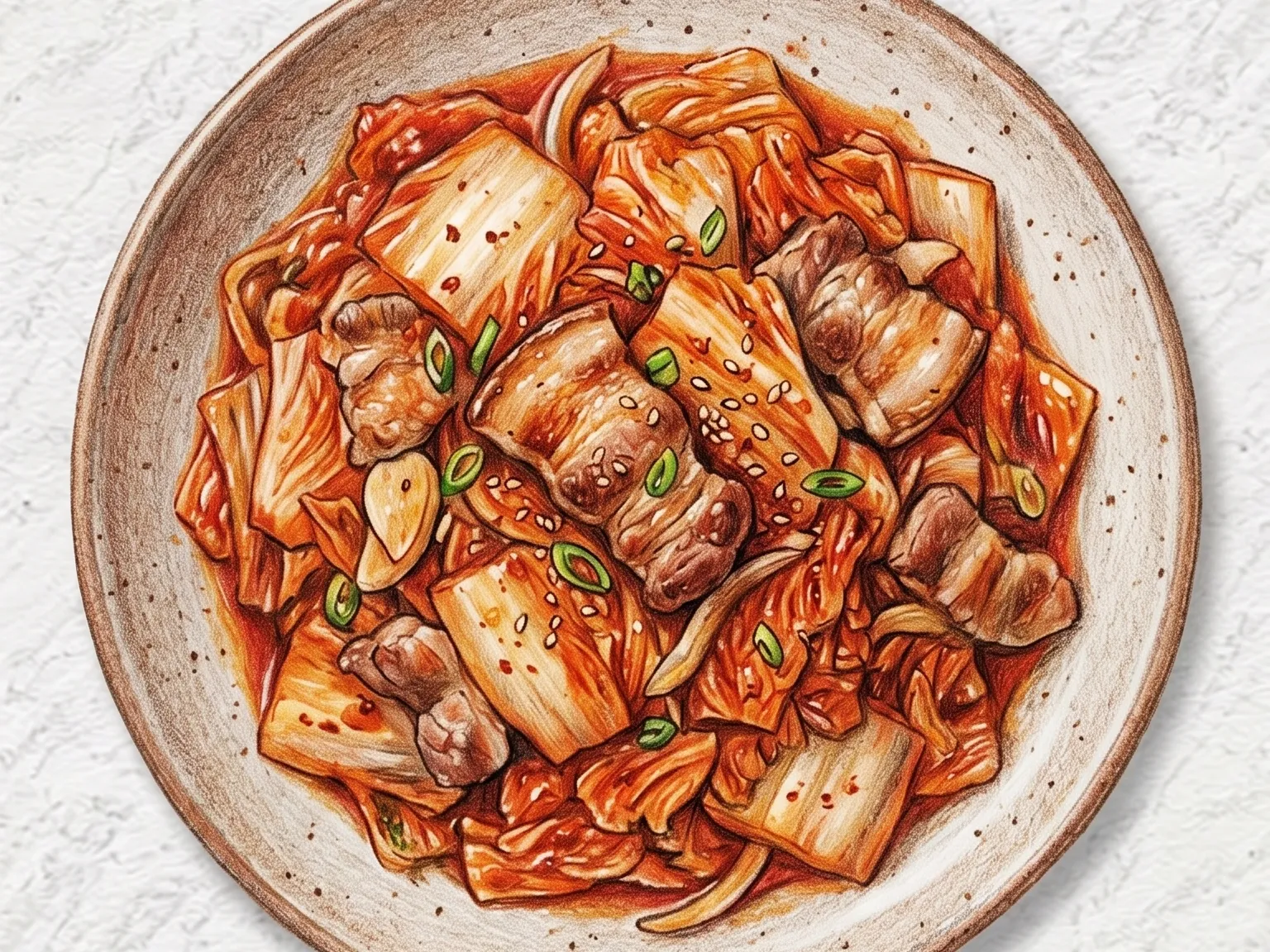
Korean Pork and Kimchi Stir-Fry
Dwaejigogi kimchi bokkeum is a stir-fry of pork and well-aged napa cabbage kimchi and one of the most common home-cooked dishes in Korean households. The sharp, deep acidity of the fermented kimchi meets the fat in the pork, and the longer the two cook together, the more they absorb each other and change in character. A handful of Korean chili flakes is added to intensify the color and build a second layer of heat on top of the kimchi. The dish asks for no special technique and appears on the set-meal menu of nearly every Korean restaurant as a result. The quality of the kimchi makes a noticeable difference: kimchi that has been aging in the refrigerator for several weeks produces a far richer stir-fry than freshly made kimchi.
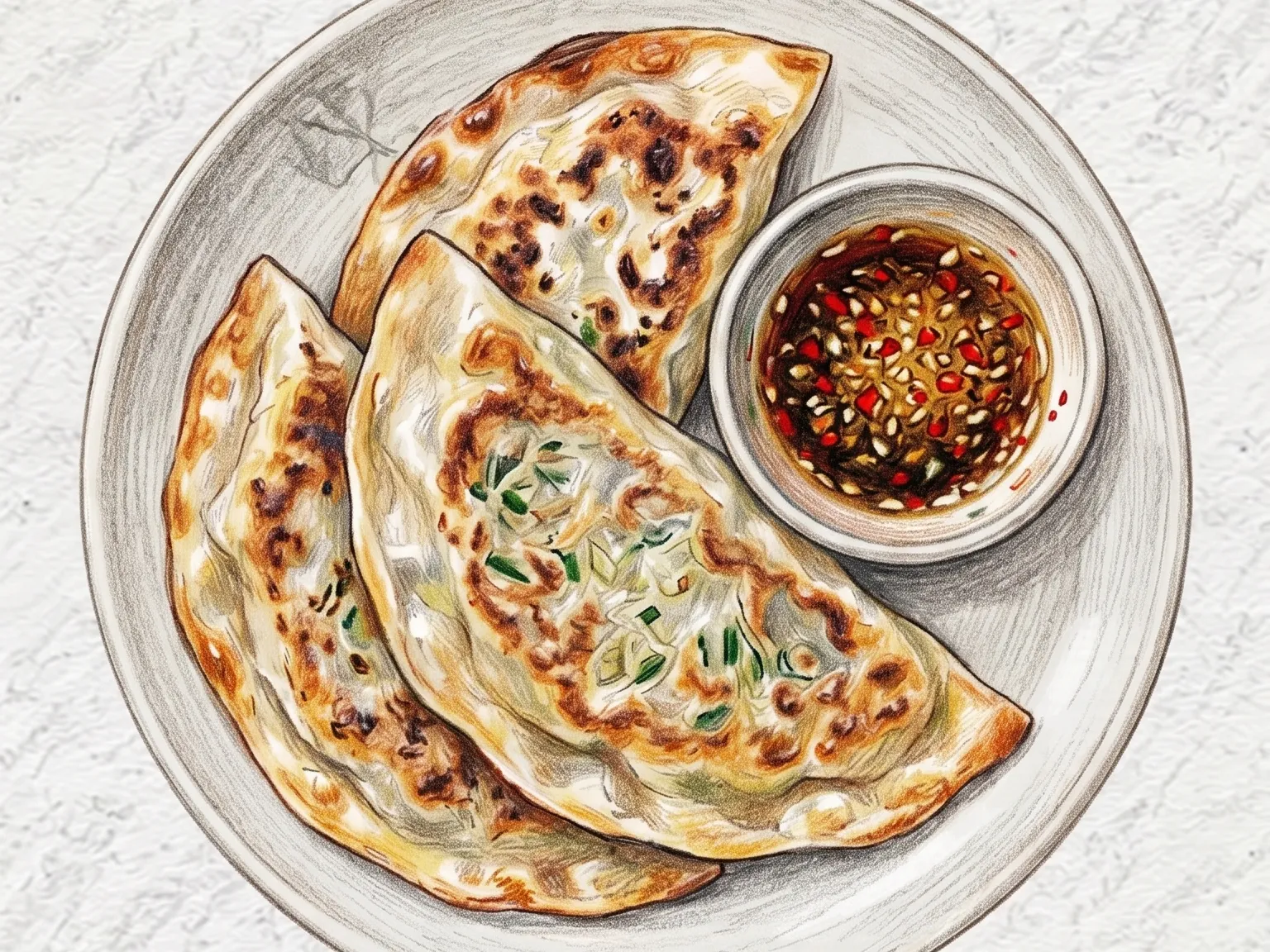
Korean Crispy Flat Mandu (Daegu-Style Thin Pan-Fried Dumplings)
Boiled sweet potato noodles, minced chives, and chopped cabbage are spread thinly inside dumpling wrappers, folded in half, and pan-fried flat until both sides are evenly crisp, in the style of Daegu street food. Using minimal filling is key to achieving the characteristic thin, flat shape that defines this dumpling, and a properly preheated pan ensures uniform crispness on both sides. The standard accompaniment is a tangy-spicy dipping sauce of soy sauce, vinegar, red pepper flakes, and sesame oil. Simple in construction but sharp in flavor balance, this is the dumpling that put Daegu's street food culture on the map.
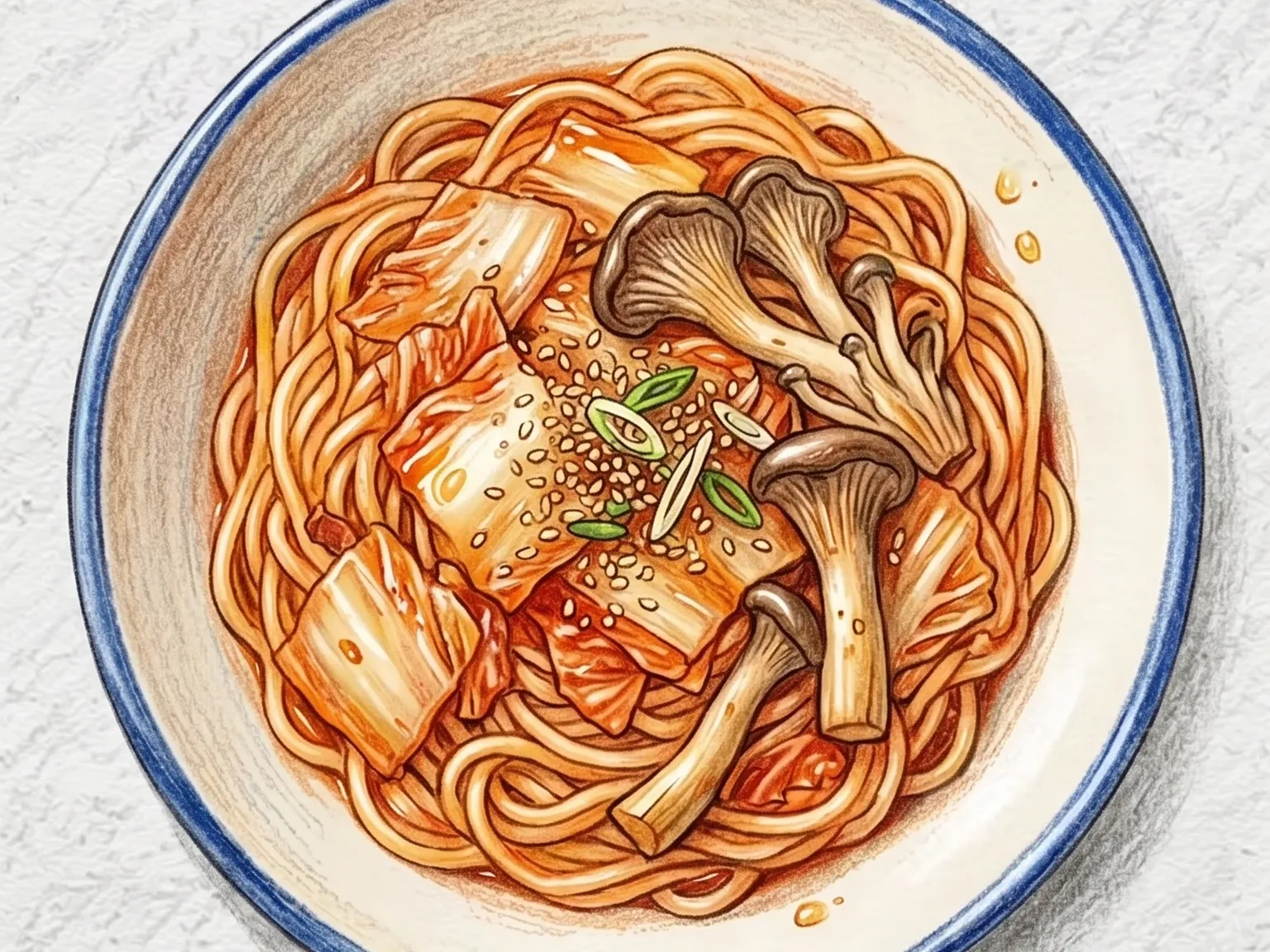
Korean Steamed Kimchi Mushroom Noodles
Gimchi beoseot tteumyeon is a steamed noodle dish built on a simple idea: ripe kimchi and oyster mushrooms are spread across the bottom of a pot, raw noodles are laid on top, and the whole thing is sealed with a lid and cooked entirely by steam. No additional water is poured in. The moisture locked inside the fermented kimchi converts to vapor as the pot heats, rising up through the noodles and infusing them from below. The fermented tang and chili seasoning of the kimchi penetrate the noodles in a way that boiling cannot replicate - the flavor is absorbed directly rather than diluted into cooking water. The noodles themselves take on a denser, more elastic chew than their boiled counterparts, because the gentler steam heat allows the starch to set gradually. Oyster mushrooms contribute their own moisture to the enclosed steam environment, extending the cooking vapor, while their fibers soften into a meaty texture with a clean umami note. A drizzle of sesame oil added just before serving releases a nutty aroma that rises above the spicy steam and rounds off the dish. Because everything cooks in one pot and the ingredient list stays short, this recipe shows up frequently as a weeknight dinner with a rewarding depth that belies its simplicity.
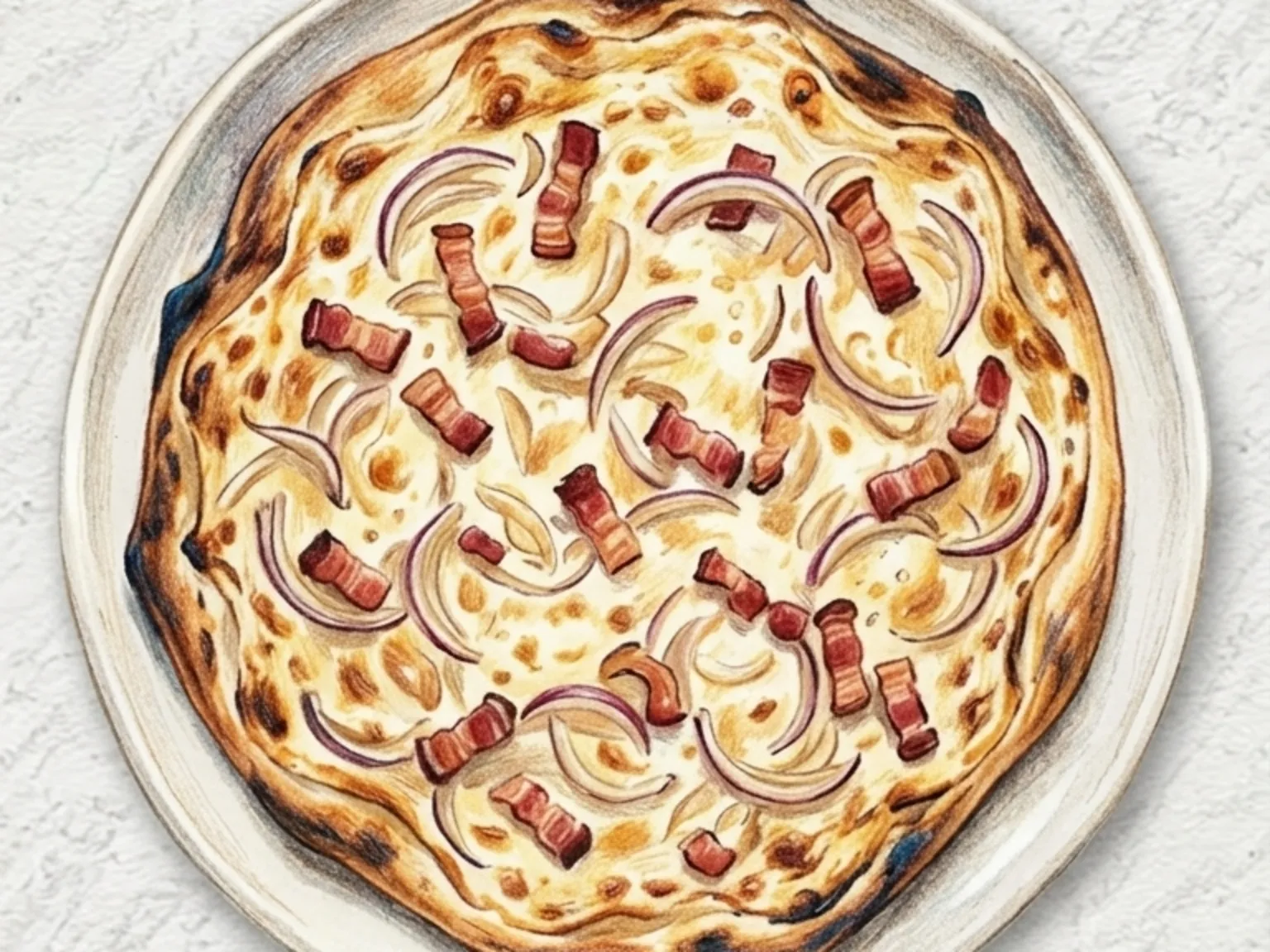
Flammkuchen (Alsatian Crème Fraîche Flatbread)
Flammkuchen is a traditional flatbread from Alsace, the border region between France and Germany. The dough is rolled paper-thin and spread with a layer of creme fraiche, then topped with thinly sliced onions and lardons before going into a blazing hot oven. The extreme heat crisps the dough edges to a char while the center stays just pliable enough to fold. Creme fraiche reduces under the heat into a concentrated, tangy cream that replaces the cheese found on pizza - indeed, traditional Flammkuchen uses no cheese at all. The onions soften and caramelize in the oven, releasing sweetness that balances the salt and smoke of the bacon. In Alsace, it is traditionally eaten during the autumn grape harvest with glasses of new wine, torn apart by hand at communal tables rather than sliced with a knife.
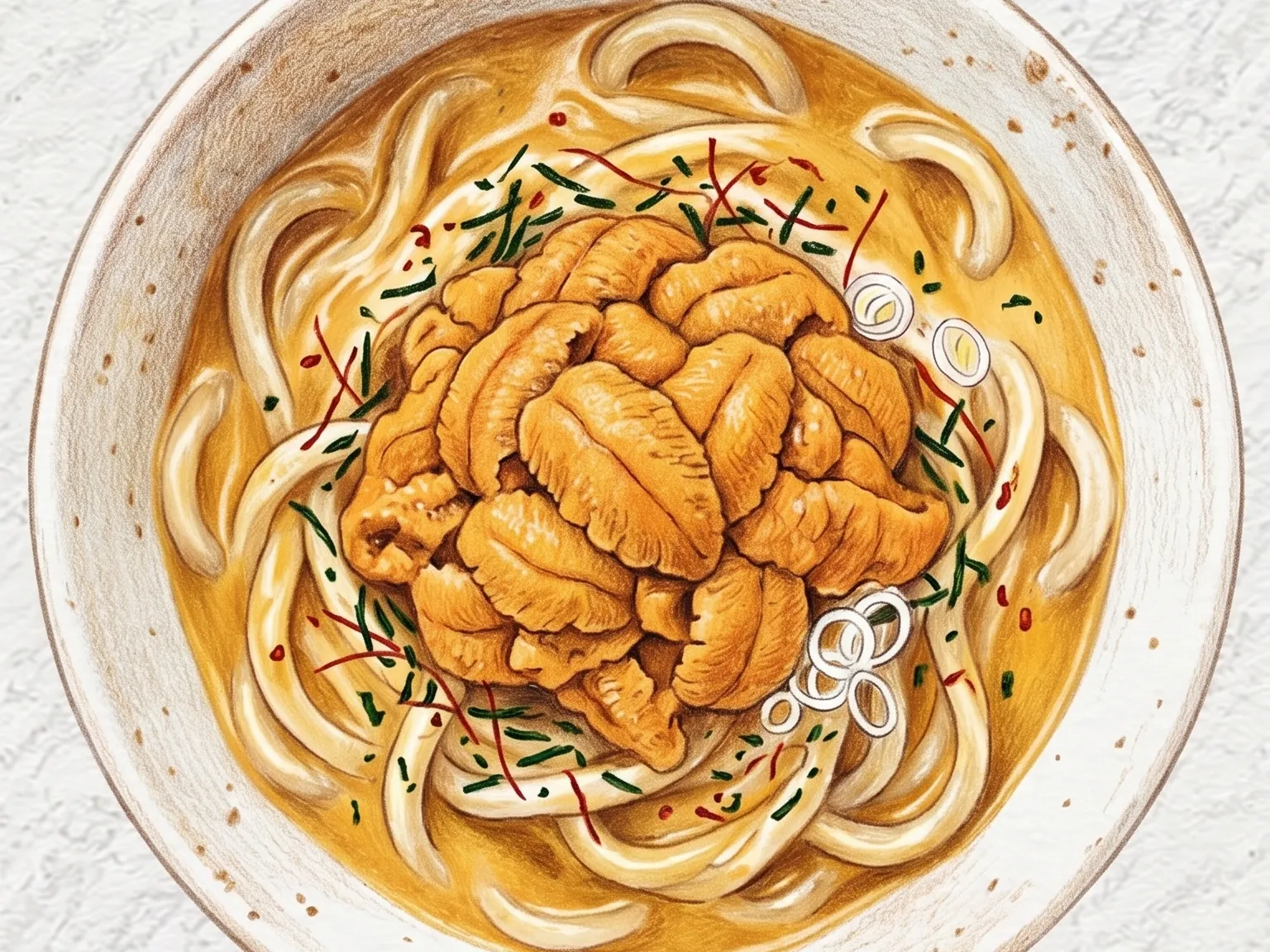
Rich Sea Urchin (Uni) Cream Udon
This noodle dish combines the rich flavor of fresh sea urchin with a smooth, savory cream sauce. Minced garlic and pollock roe are sautéed in oil, then heavy cream and tsuyu are added to create a savory base. Half of the sea urchin is dissolved directly into the warm cream to infuse it with a briny aroma, while the pollock roe replaces salt to provide depth and umami. Boiled udon noodles are tossed in the sauce over low heat, adding reserved noodle water if the mixture gets too thick. The dish is topped with the remaining raw sea urchin, chives, and seaweed strips. Because sea urchin is highly sensitive to heat, the garnish portion is kept raw and served immediately before the residual warmth of the noodles cooks it, preserving its delicate sweet flavor and soft texture.
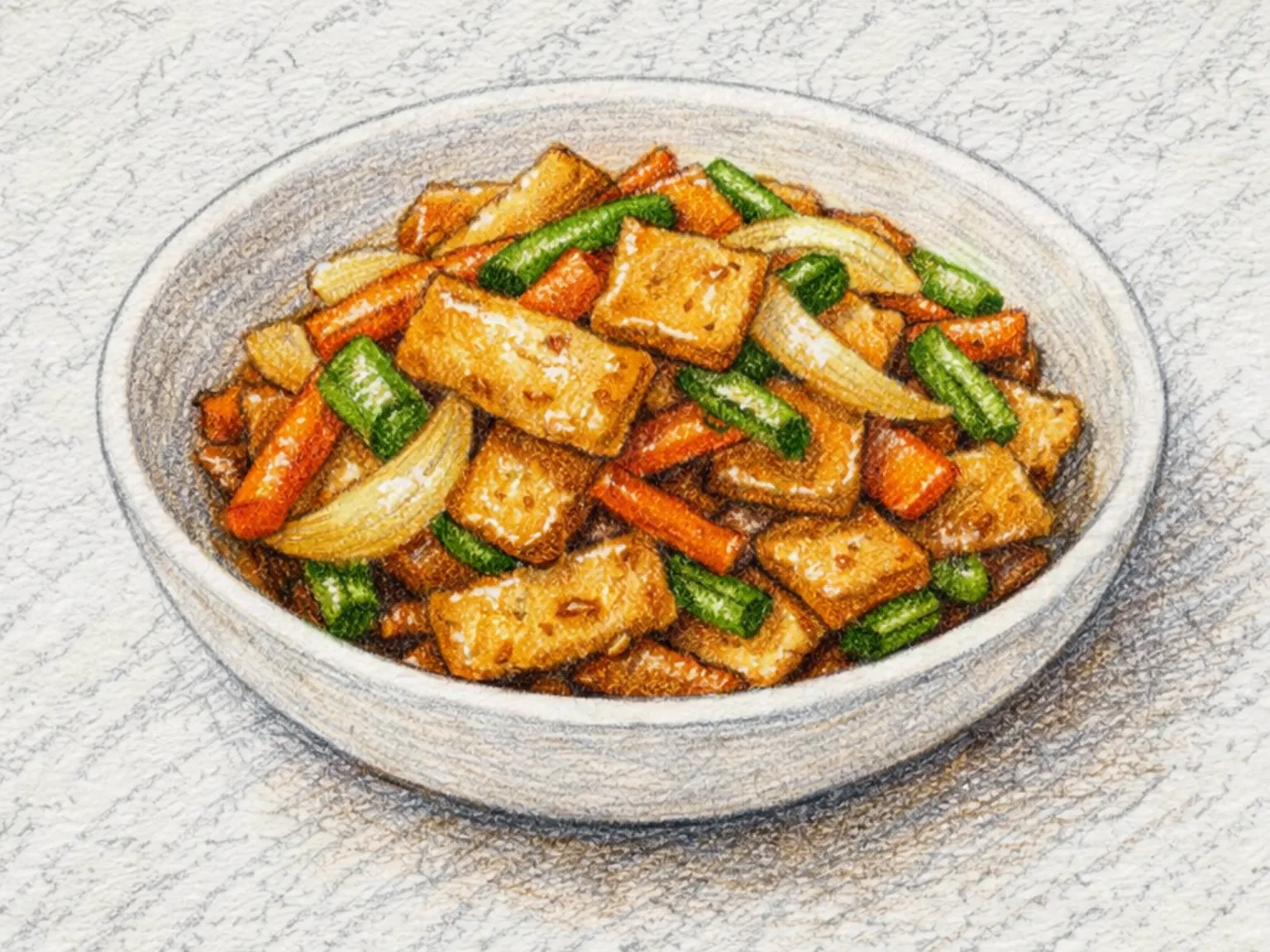
Korean Stir-fried Fish Cake with Vegetables
Eomuk-yachae-bokkeum is a Korean stir-fry that brings together fish cake sheets with onion, carrot, and green bell pepper in a soy-based glaze. Square eomuk is cut into bite-sized rectangles without any further preparation, and the vegetables are sliced to roughly matching dimensions so everything cooks through at the same rate. The textural contrast between the chewy fish cake and the crisp-tender vegetables is the defining quality of this dish - both elements are present in each chopstickful, preventing either from becoming monotonous. Soy sauce and oligosaccharide syrup form the base glaze, producing a glossy, lightly sweet and salty coating that clings evenly to each piece. Sesame oil and toasted sesame seeds stirred in at the end add a nutty finish. Adding a sliced cheongyang chili during the stir-fry introduces a sharp heat that prevents the overall flavor from reading as too sweet. The entire dish comes together in under ten minutes from prep to plate, making it a reliable candidate for packed lunches and weeknight tables that need a quick, universally liked side dish.
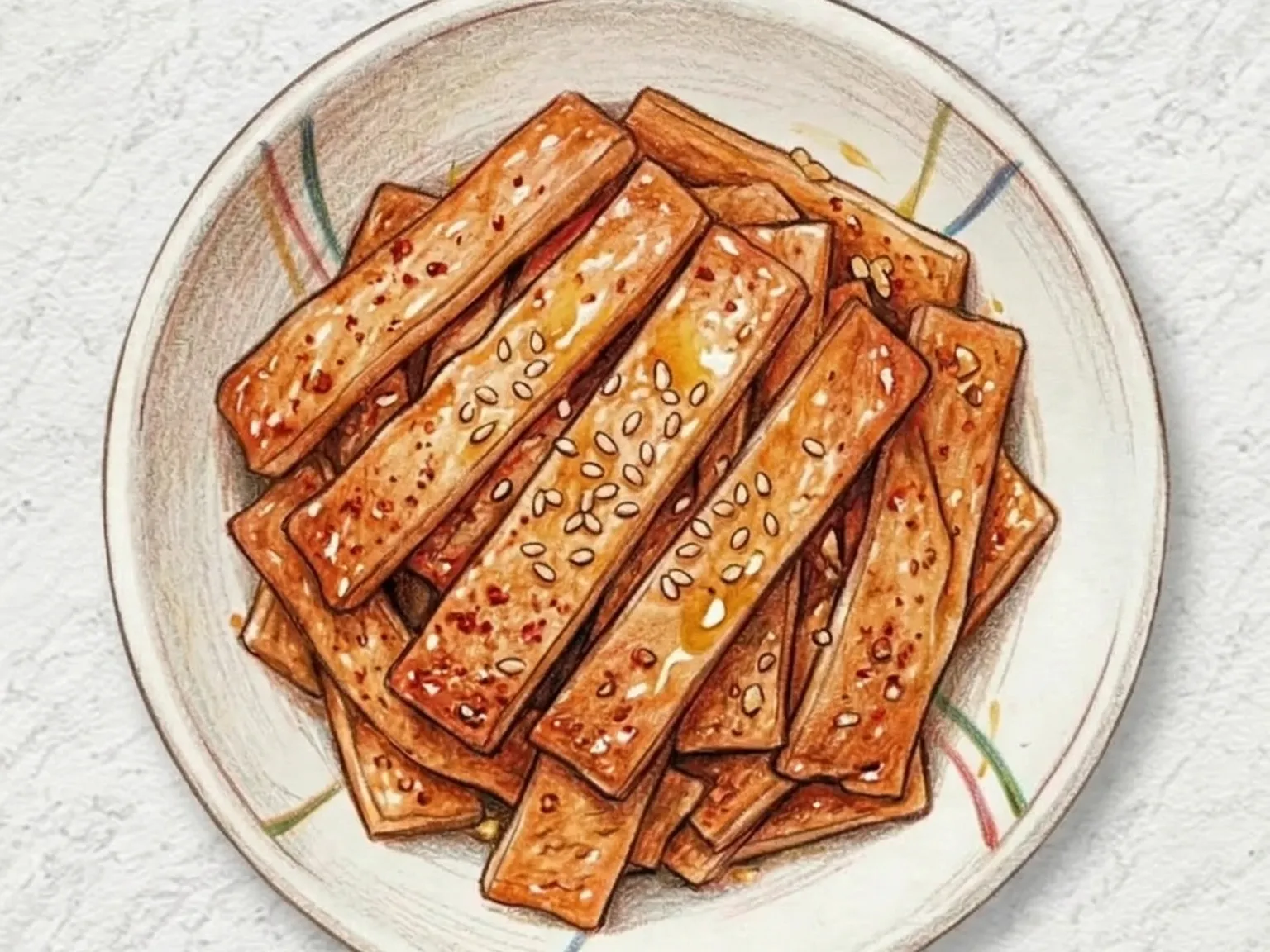
Korean Stir-Fried Fish Cake Strips
This side dish features flat fish cake sheets sliced into thin strips and stir-fried in a savory seasoning mixture. The preparation starts with blanching the fish cake slices in boiling water to remove excess surface oil, which helps the glaze adhere evenly. The strips are first stir-fried in an oiled pan over medium heat to evaporate surface moisture and curl the edges. Minced garlic and red pepper flakes are then added and cooked quickly to prevent the spices from burning. After seasoning with soy sauce and sugar, the ingredients are tossed until they become glossy and the sauce is fully absorbed. The heat is turned off before mixing in sesame oil and toasted sesame seeds to provide a nutty finish. This dish offers a clear balance of sweet and spicy flavors that pairs well with steamed rice.
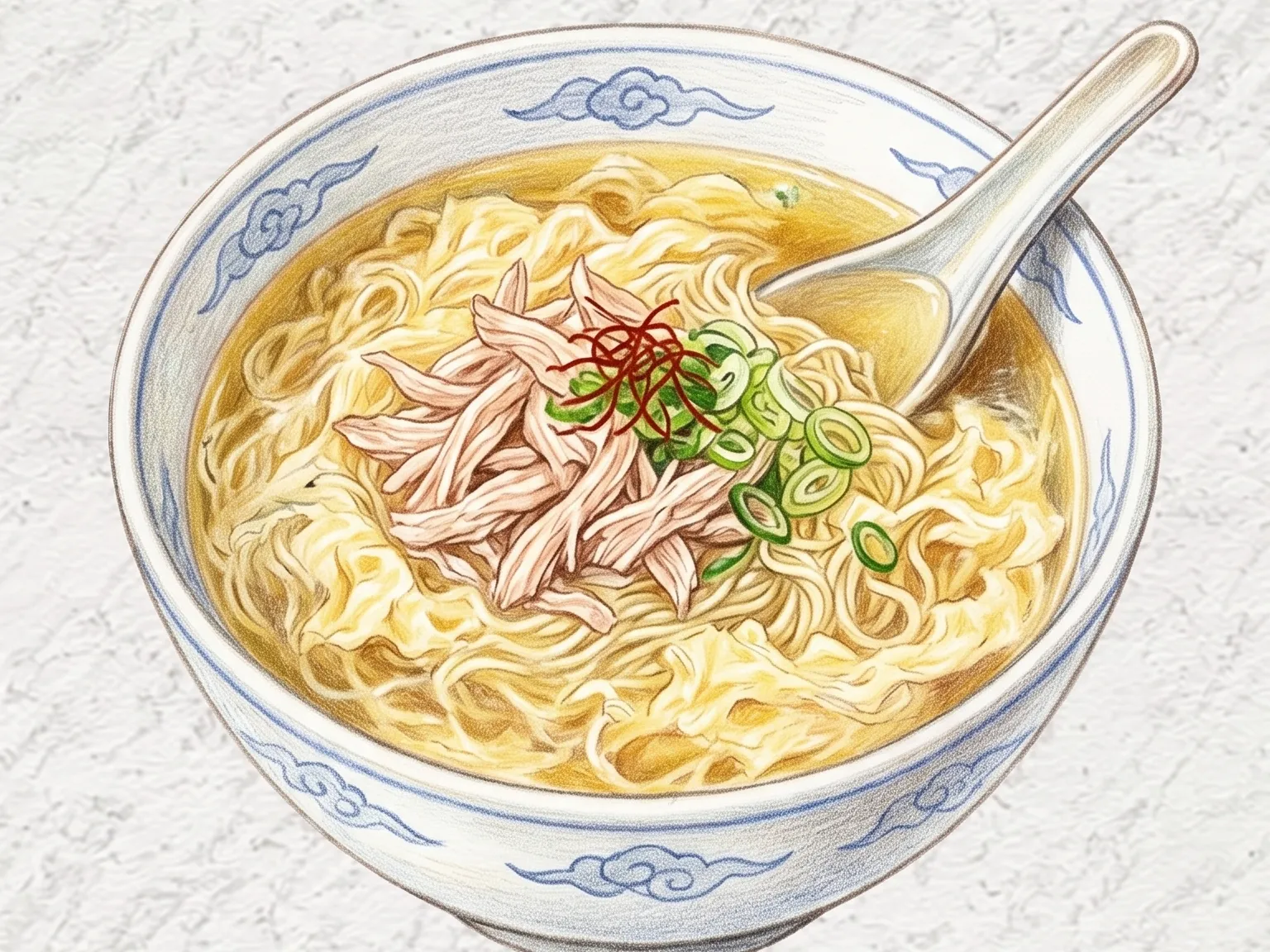
Korean-Chinese Chicken Broth Noodles
Gis-myeon is a Korean-Chinese noodle soup in which thin wheat noodles are served in a clear, pale chicken broth topped with delicate ribbons of egg that have been poured in a fine stream and cooked into floating wisps. The broth begins with chicken breast simmered in water with aromatics; once the stock is strained and clarified, the cooked chicken is shredded into fine threads and reserved as the main garnish. Beaten egg is drizzled very slowly into the gently boiling stock while stirring in one direction, which produces the characteristic silk-like strands rather than broken scrambled curds. The seasoning is deliberately minimal: only soup soy sauce and salt are used, keeping the broth light, clean, and transparent enough to see the noodles beneath. A small measure of starch slurry stirred in just before serving gives the liquid a subtle viscosity that allows it to cling to each strand of noodle, ensuring flavor in every bite rather than leaving a watery pool at the bottom of the bowl.

French Dip Sandwich
The French Dip sandwich originated in Los Angeles during the early twentieth century and, despite what its name implies, does not have any actual roots in France. This sandwich is constructed with multiple layers of roast beef that have been sliced very thin and piled onto a sturdy French roll. It is served with a small bowl of au jus on the side, which consists of the natural juices that are collected and strained from the roasting pan after the meat has finished cooking. To prepare the beef for this dish, the roast is cooked slowly at a low temperature in the oven. This slow roasting process continues until the meat reaches a state where it can be sliced against the natural grain into thin and supple pieces. This specific technique ensures that the meat remains moist even when it is placed against the firm and dry texture of the bread. Including whole onions and garlic in the roasting pan along with the meat adds layers of sweetness and depth to the resulting juices. This practice makes the au jus significantly more complex than what would be produced by using the simple meat drippings alone. Just before the sandwich is assembled, either Provolone or Swiss cheese is melted over the sliced beef. This addition provides a mild and creamy layer that serves to soften the contrast between the lean beef and the crusty exterior of the roll. The choice of bread is a specific requirement, as the French roll requires a firm and crackly crust. This structural integrity is necessary because the roll must be able to maintain its shape even when it is dipped repeatedly into the warm liquid. If a soft roll is used instead, the bread tends to collapse and makes the sandwich difficult to manage during the meal. Dipping the sandwich into the au jus is the primary way this dish is consumed rather than being an incidental or optional step. Each time the bread is submerged, it becomes saturated with a concentrated beef flavor. The resulting texture creates a specific contrast where the edges of the bread become wet and softened while the center of the roll remains firm. The au jus is always presented in a separate vessel alongside the sandwich to facilitate this process. Because the act of dipping is central to the format of the meal, the liquid and the solid components are treated as equal parts of the overall presentation.
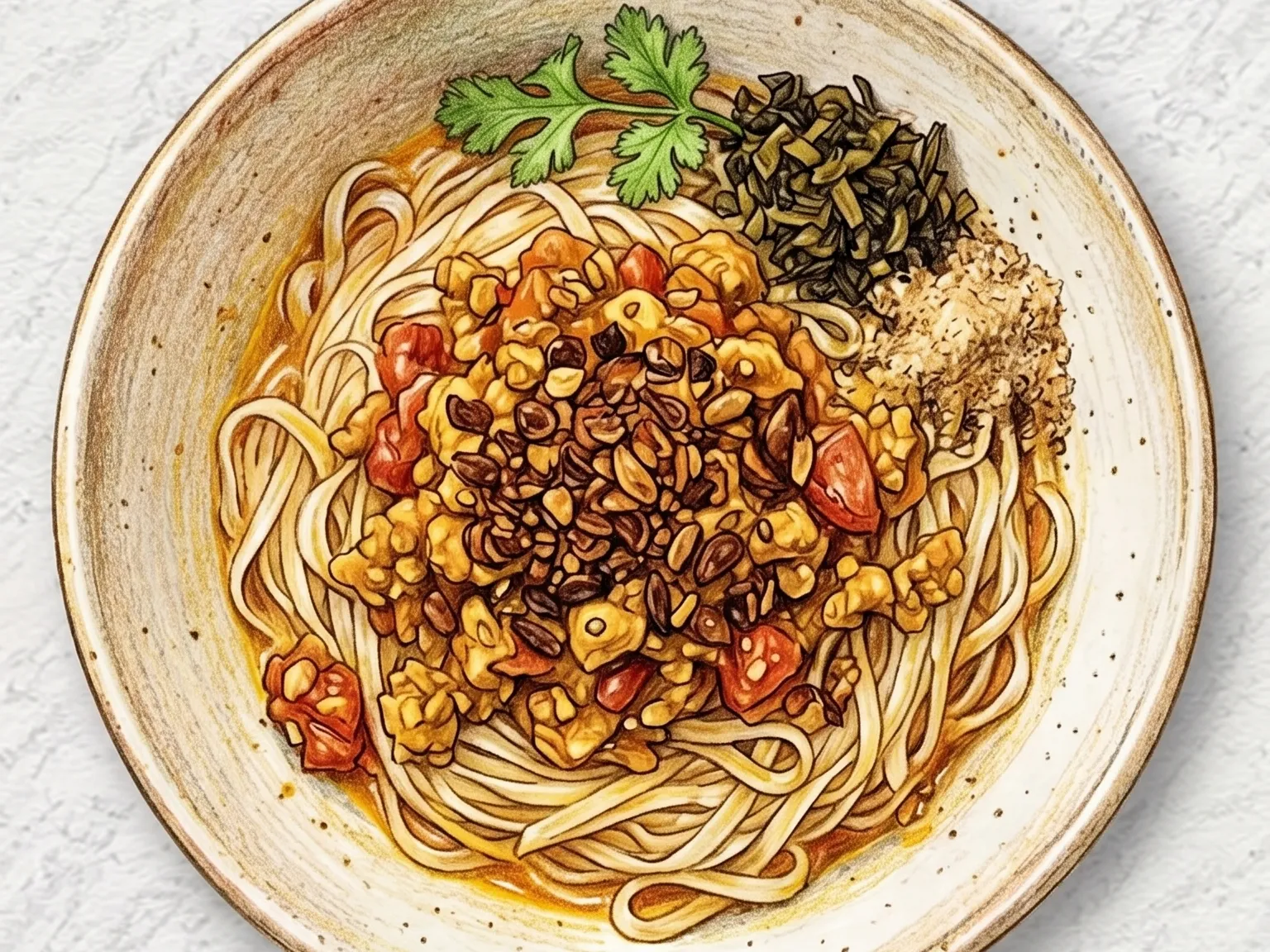
Shan Noodles (Burmese Flat Rice Noodles with Turmeric Meat Sauce)
Shan noodles are the everyday noodle of Myanmar's Shan State, found at nearly every market stall and tea shop in the region. Thin, flat rice noodles are topped with a sauce of minced chicken or pork cooked with turmeric, tomato, and a touch of chili. The dish is finished with a generous pour of fried garlic oil - golden-brown garlic chips sizzling in their own rendered fat - which gives the bowl its signature aroma. Pickled mustard greens add a sour crunch on the side, and toasted chickpea flour is sprinkled over for a nutty, grainy texture. The noodles come in two styles: a dry version tossed with the sauce, and a soup version swimming in a light broth. Both are eaten with a spoon and fork rather than chopsticks, in keeping with Burmese custom.
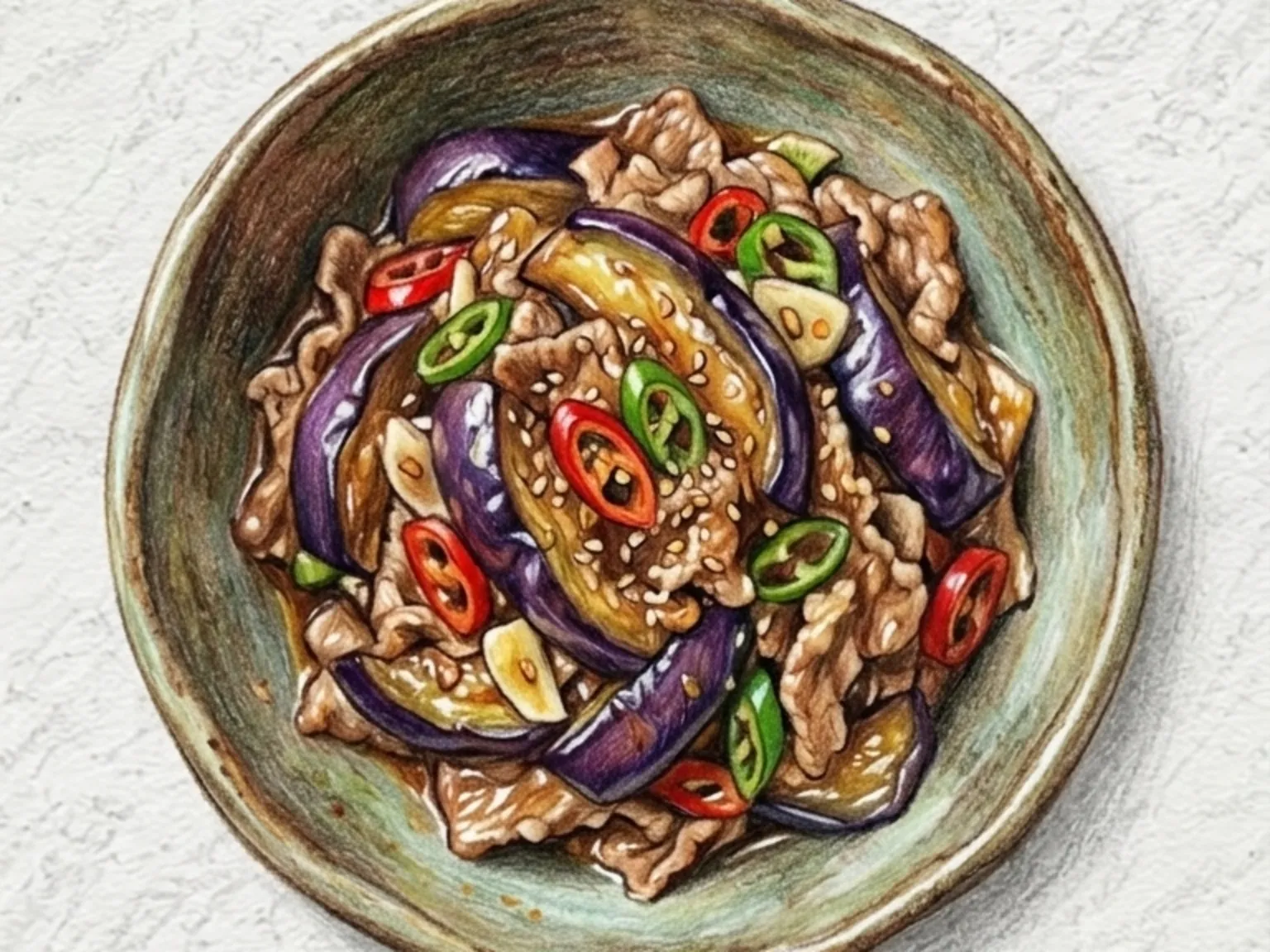
Korean Gaji Dwaejigogi Bokkeum (Eggplant Pork Stir-fry)
Gaji-dwaejigogi-bokkeum is a Korean stir-fry of eggplant and thinly sliced pork seasoned with garlic and fresh chili. The eggplant absorbs oil and sauce as it cooks, turning silky and melding seamlessly with the pork. Garlic infuses the dish with an intense aroma while the chili adds a clean, sharp heat throughout. Heat management is the key technique: cooking over medium or low heat draws too much moisture from the eggplant and turns the stir-fry into a braise, so keeping the flame high from the start is what gives the eggplant a lightly seared exterior. A combination of soy sauce and gochujang balances salt and spice, and a final drizzle of sesame oil rounds out the flavor with a nutty finish. It is especially flavorful in summer when eggplant is at its seasonal peak, and it is substantial enough to serve over rice as a complete meal.
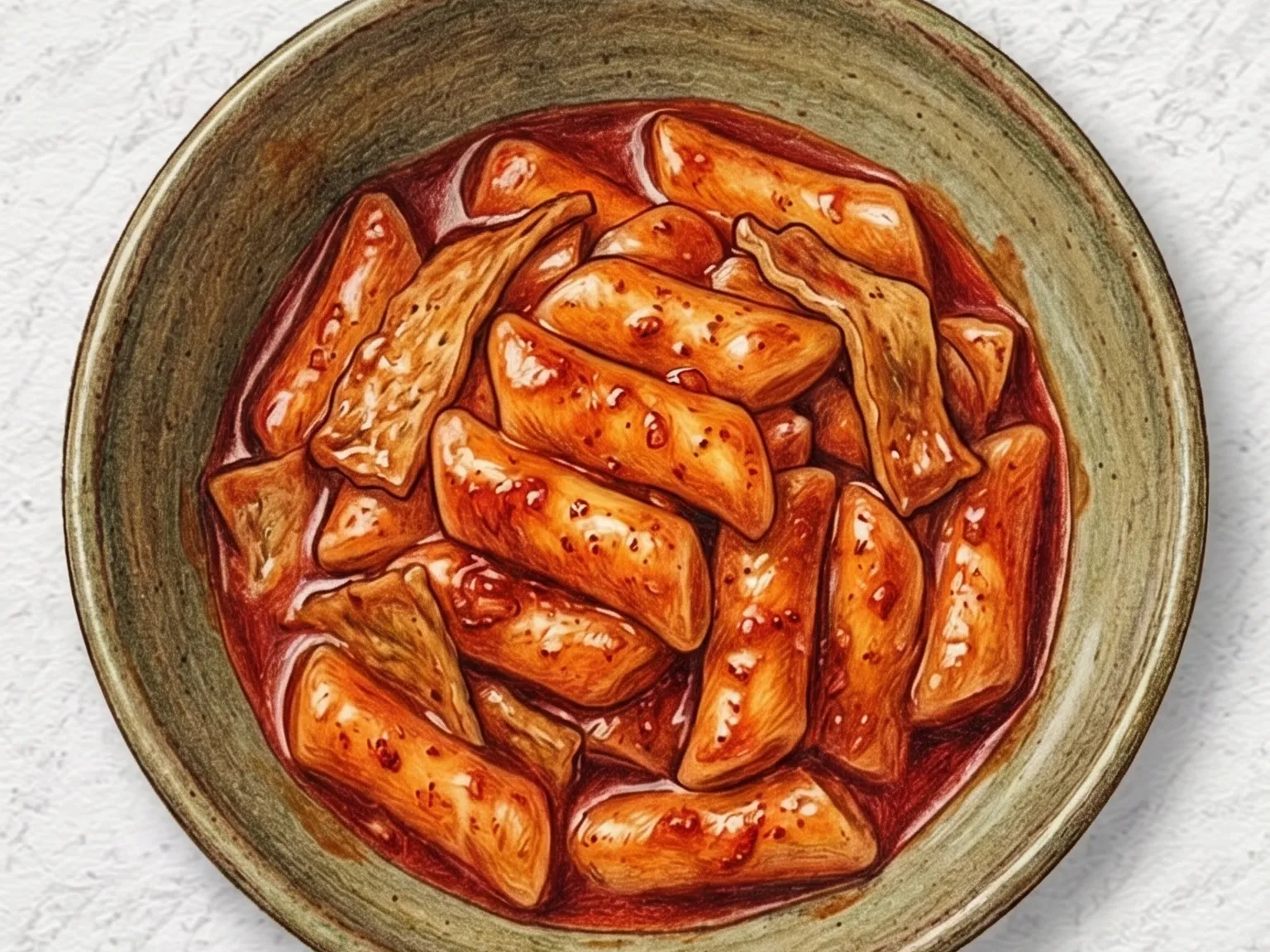
Old-school Wheat Tteokbokki
This recipe details how to make old-school wheat tteokbokki with a sweet and spicy sauce. Wheat rice cakes are used because they absorb the flavors of the gochujang sauce deeper than rice cakes. The wheat cakes are first soaked in cold water for ten minutes to remove surface starch and control how much they swell during cooking. A base sauce is prepared by mixing water with gochujang, red chili powder, sugar, soy sauce, and minced garlic in a pan. Once the sauce boils, the wheat cakes and the white parts of the sliced green onion are added and simmered. When the cakes become soft, bite-size square fish cakes are added to simmer together. The starch and flavor from the fish cakes help thicken the sauce. The green parts of the green onion are added at the end for color, creating a glossy sauce that clings to the ingredients.
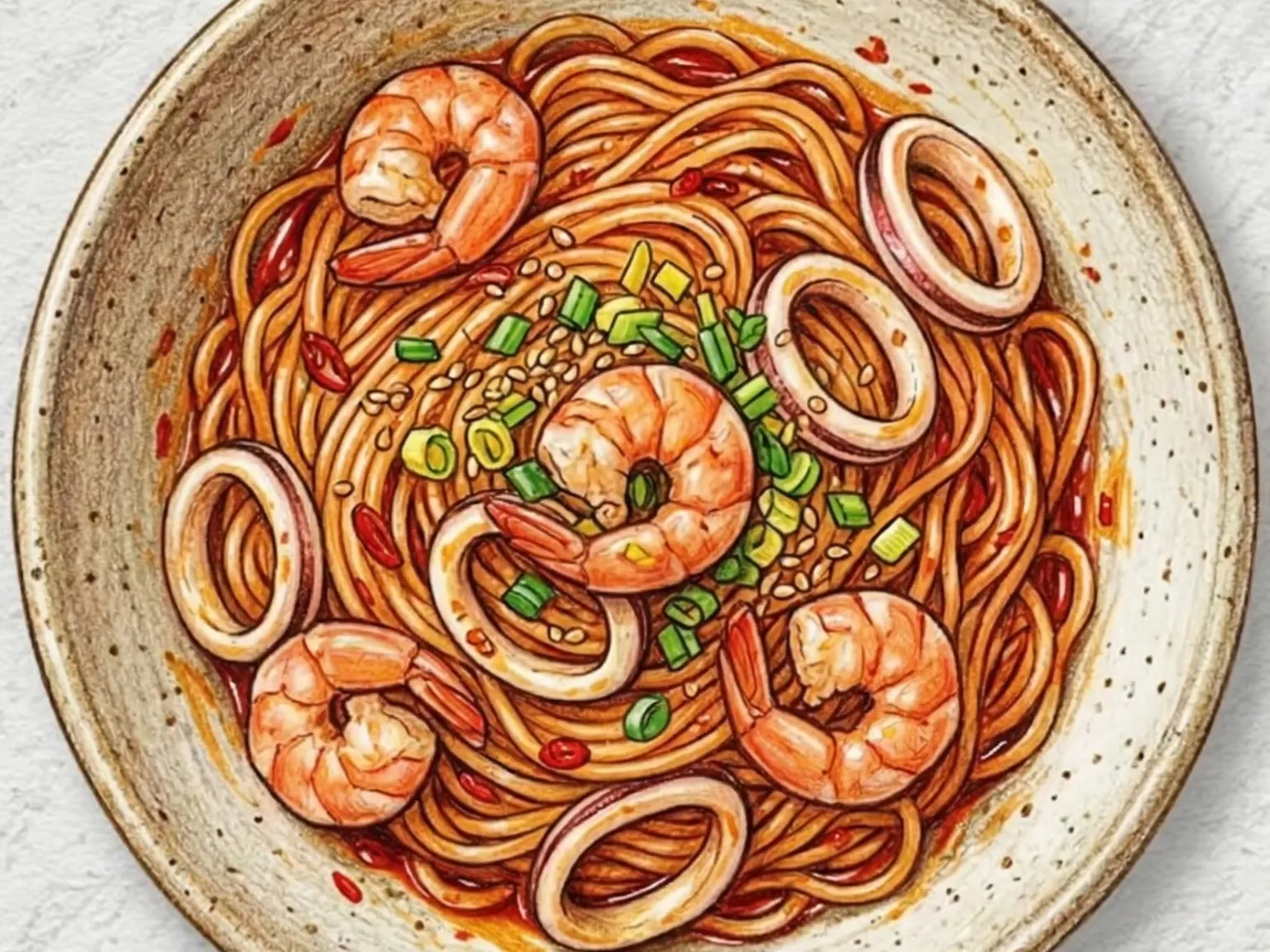
Korean Chili Oil Seafood Soy Bibim Noodles
Gochu gireum haemul ganjang bibim myeon is a Korean mixed noodle dish where boiled noodles are tossed with shrimp, squid, and a sauce of homemade chili oil, soy sauce, and oyster sauce. Making the chili oil from scratch by pouring hot oil over dried chilies draws out a fragrant, rounded heat with a freshness that store-bought oil lacks. The seafood must be stir-fried quickly over high heat to keep the shrimp bouncy and the squid tender rather than rubbery - any hesitation on the heat results in tough, overcooked shellfish. Oyster sauce bridges the marine flavor of the seafood with the soy base, pushing the dish toward umami depth rather than straight saltiness. Sesame seeds and scallions finish everything with a nutty aroma and a clean green note. The noodles, seafood, and sauce must all be tossed together in one confident motion so that the chili oil coats every ingredient evenly. Avoid overcooking the noodles; they should be slightly firm since they will soften further during tossing.
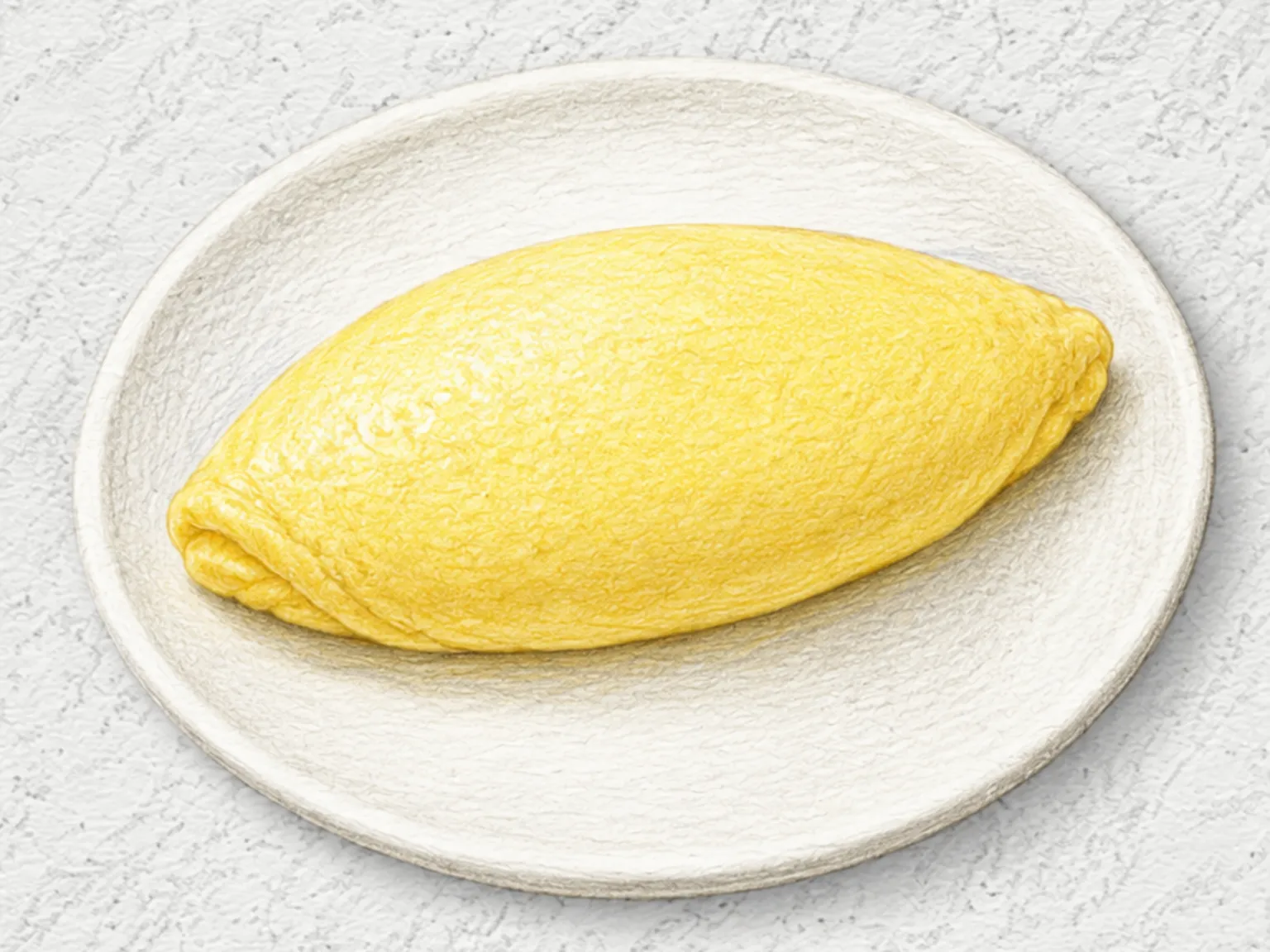
French Omelette
A French omelette is defined entirely by technique, which is precisely why it appears in professional kitchens as a benchmark for a cook's fundamental skill. The eggs are beaten just enough to combine the yolks and whites into a uniform liquid without introducing air, then poured into a butter-coated pan over moderate heat. From that point on, constant stirring with a fork or chopsticks, combined with rhythmic shaking of the pan, coaxes the eggs into the tiniest possible curds that bind together into a seamless, pale yellow sheet. No browning of any kind should appear on the exterior surface. The interior, described in French as baveuse, remains slightly underset with a custard-like center that carries the richness of the egg in its purest form. Folding or rolling the omelette into a neat oval shape should happen within ninety seconds from the moment the egg touches the pan; anything beyond that overcooks the inside. Fillings are minimal by design: fine herbs, a small amount of grated Gruyere, or nothing at all, so the egg remains the sole subject. The simplicity of the ingredients removes every excuse and makes even small errors in heat management immediately visible in the finished result. Practice tightens the margins, but each attempt teaches something precise about timing and temperature.
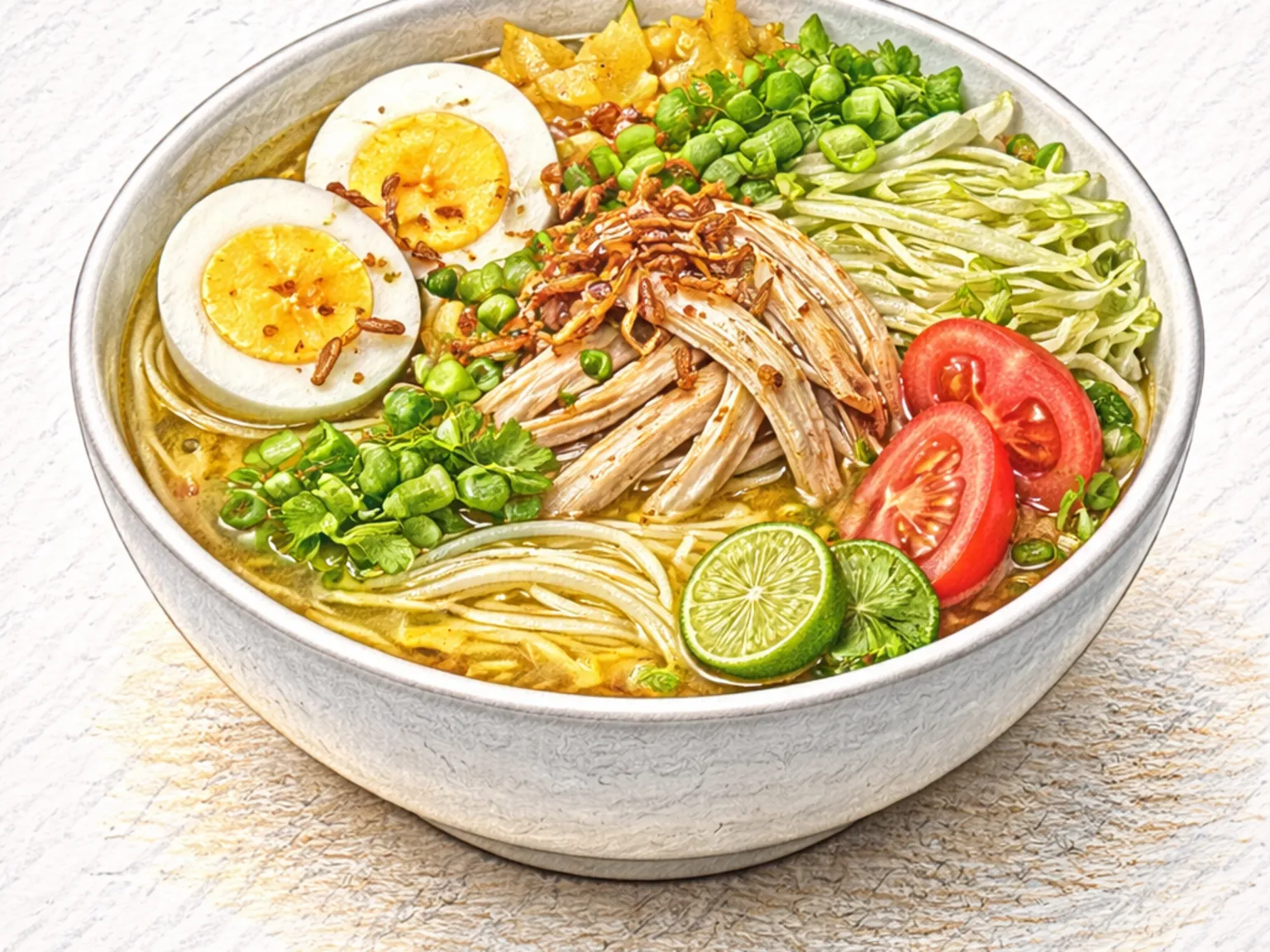
Soto Ayam (Indonesian Golden Turmeric Chicken Noodle Soup)
Soto ayam is Indonesia's beloved chicken soup, recognizable by its vivid golden broth colored with turmeric. The flavor base is a paste of garlic, turmeric, and galangal, fried until fragrant and then simmered with chicken pieces and lemongrass stalks for at least thirty minutes to build a deeply aromatic stock. The chicken is removed, shredded by hand, and returned to the bowl along with rice noodles, halved boiled eggs, and a handful of fresh bean sprouts. Each component adds its own texture-the silky noodles, the springy sprouts, the tender chicken-while the broth ties everything together with its warm, earthy spice profile. A squeeze of lime at the table brightens the bowl and lifts the heavier notes of galangal and turmeric. Soto ayam appears at breakfast stalls, family dinners, and celebrations across the Indonesian archipelago.
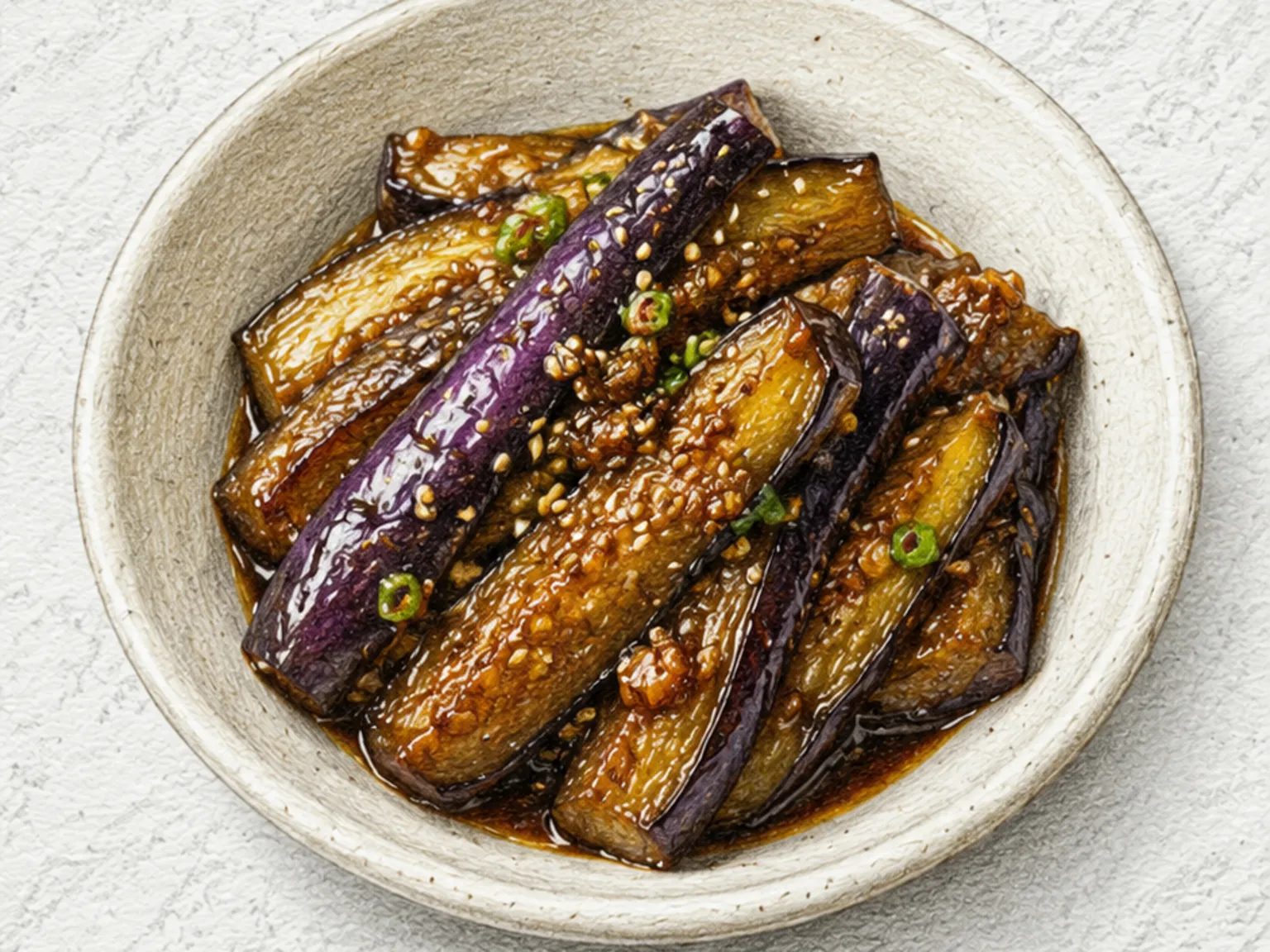
Korean Soy Braised Eggplant
Gaji-jorim is a Korean braised eggplant dish where the eggplant is simmered in a soy sauce-based seasoning until the flesh becomes thoroughly tender and saturated with flavor throughout. Eggplant has a sponge-like cellular structure that draws in liquid as it cooks, and the longer it simmers in the seasoning, the deeper the sweet-salty flavor penetrates into each piece. The sauce reduces as the eggplant cooks, concentrating around the flesh rather than pooling at the bottom of the pan, which means every bite carries the full seasoning. A finishing drizzle of sesame oil and a scattering of sesame seeds add a nutty aroma that rounds out the savory base. Despite using only eggplant as the main ingredient, the slow braising process concentrates the flavors into a compelling side dish that makes plain rice easy to eat in quantity. The seasoning adheres to the eggplant even after cooling, making it a practical addition to a packed lunch as well as a fresh rice accompaniment.

Korean Snack Bar Omelet Rice
Finely diced onion, carrot, and ham are stir-fried first to drive off moisture and draw out their natural sweetness, then cold leftover rice is added and tossed over high heat until every grain separates cleanly. Ketchup and Worcestershire sauce season the fried rice with a sweet-tangy balance that defines the bunsik-style flavor. The egg, mixed with a pinch of salt, is poured into a lightly oiled pan over low heat and spread into a thin sheet, then the fried rice is placed at the center and the egg is folded around it while still soft and barely set. Low heat is the key to keeping the omelet smooth and unbroken. The roll is shaped into an oval on the plate and finished with a neat zigzag of ketchup across the top. The warm egg shell traps the heat of the rice inside, keeping the filling moist until the first cut.
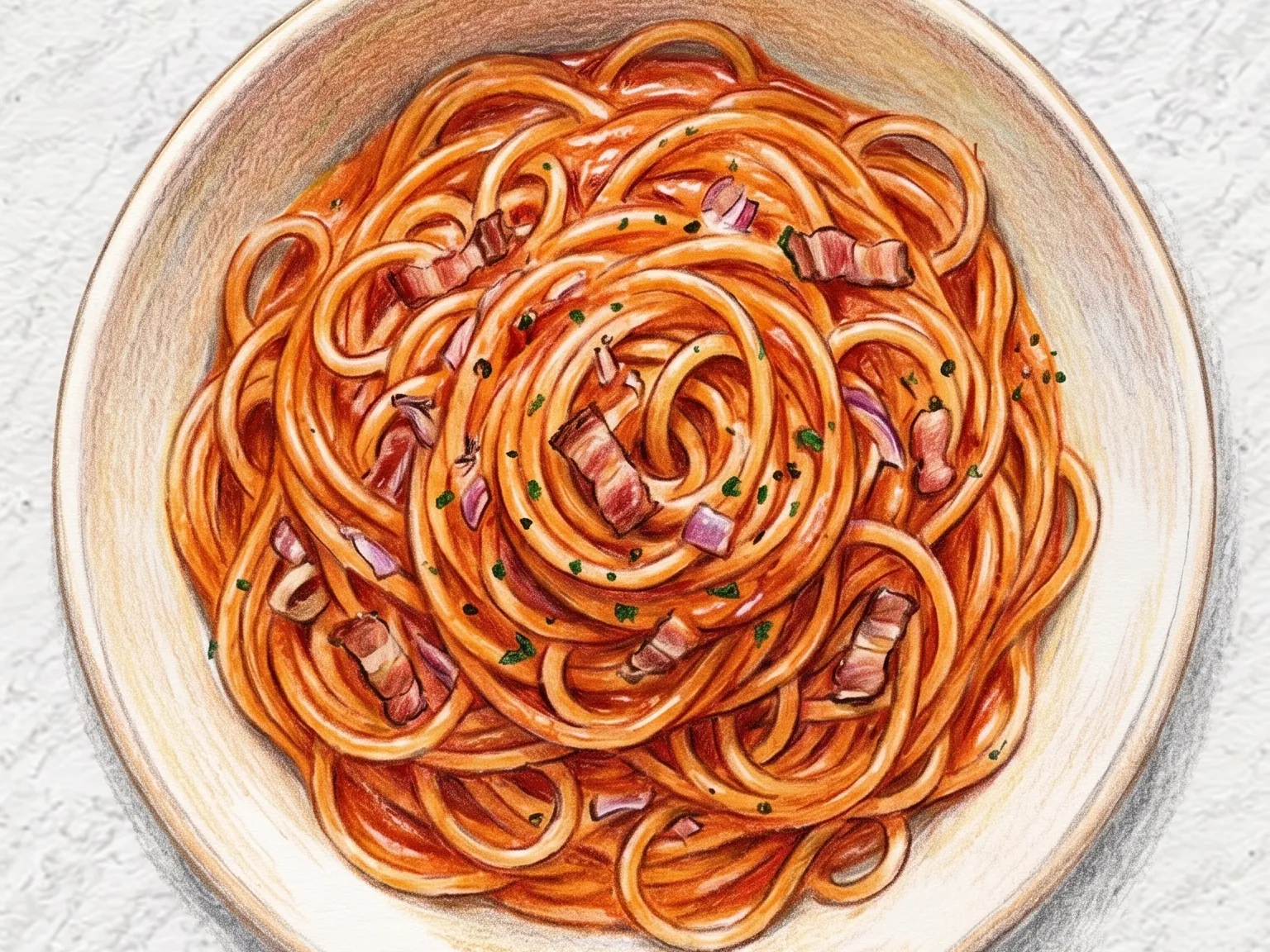
Gochujang Cream Pasta (Spicy Fermented Chili Cream Sauce)
Gochujang cream pasta is a fusion dish that incorporates the fermented heat of Korean red chili paste into an Italian-style cream sauce. Heavy cream forms the base and parmesan provides the sharp, aged umami, while gochujang contributes a slow-building spice and the complex fermented sweetness that sets it apart from using raw chili pepper. Bacon is rendered first to extract enough fat for sauteing the onion and garlic, and that combination of cured pork fat, aromatic vegetables, and fermented paste forms the flavor core of the sauce before any liquid is added. Gochujang should be added at a reduced heat and stirred in gradually rather than dropped in all at once, since the paste can scorch quickly when exposed to a high-temperature pan. A ladleful of starchy pasta water adjusts the consistency and acts as an emulsifier, helping the fat from the cream and bacon stay bound with the aqueous components rather than separating. The result is a glossy, clinging sauce that coats each strand of pasta evenly. The balance between the richness of the cream and the acidity and heat of the fermented paste is what has made this combination popular in Korean home kitchens and casual restaurants alike.