Baking

Baking Recipes

250 recipes. Page 3 of 11

Baking transforms flour, butter, sugar, and eggs into breads, cookies, cakes, muffins, and more. The aroma of something freshly baked is one of the great pleasures of cooking at home.

Baking
Flaky Oven Biscuits
Baking Easy

Flaky Oven Biscuits

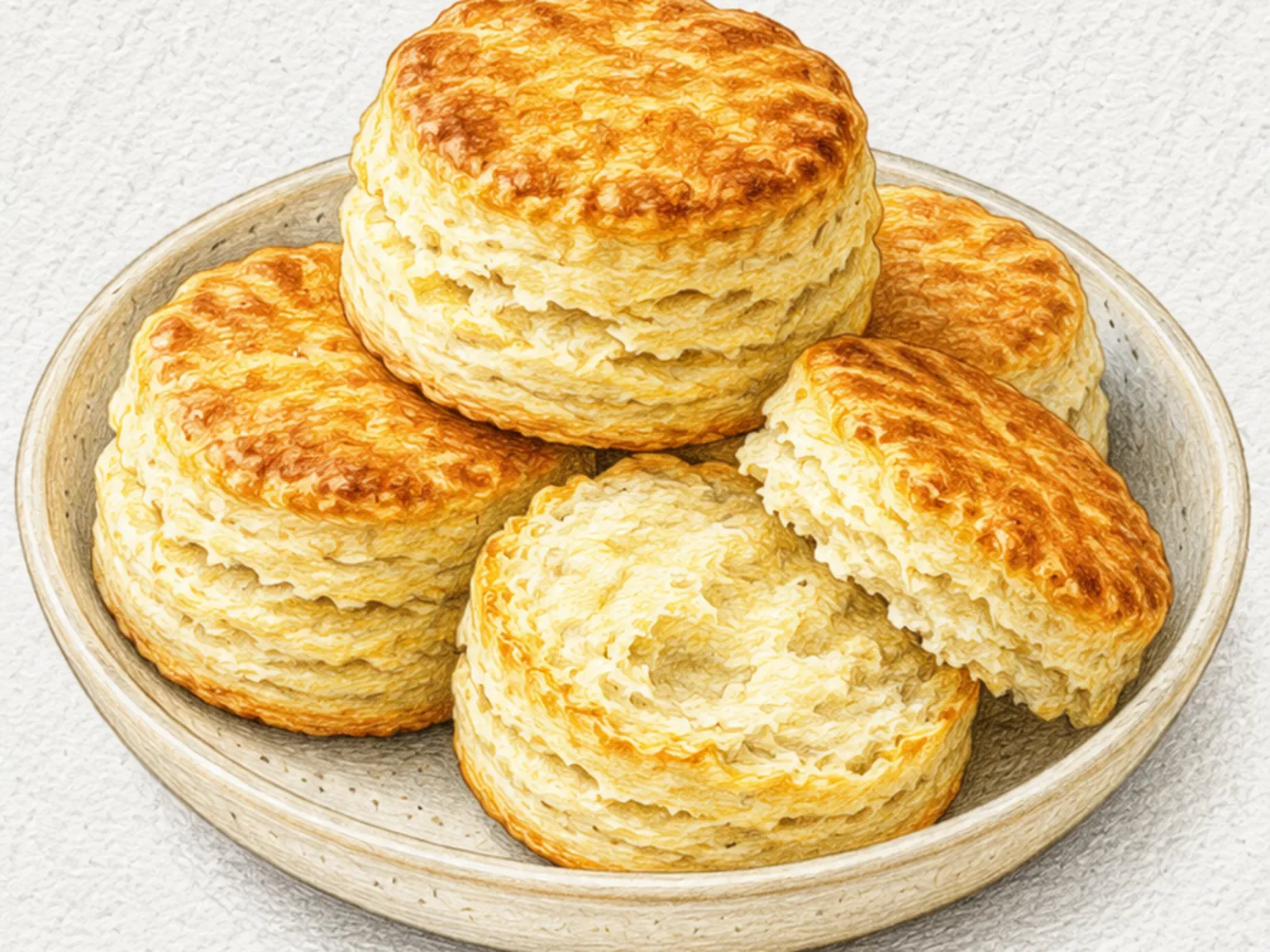
Buttermilk biscuits are built on the tension between cold butter and high oven heat. Cubes of chilled butter are cut into flour until pea-sized pieces remain, and the dough is brought together quickly with buttermilk - just enough mixing to bind, no more. In the oven, the butter melts and releases steam, forcing the dough apart into flaky, irregular layers. The exterior bakes to a golden, slightly crisp shell while the interior stays soft and crumbly. Buttermilk provides a faint tanginess that sharpens the overall flavor and reacts with baking soda to give the biscuits additional lift. Overworking the dough is the most common mistake, as it develops gluten and produces a tough, bread-like result instead of the tender, pull-apart texture that defines a good biscuit. Split while still warm and spread with butter and jam, they are a cornerstone of American Southern breakfast. Lower-protein flour produces a more tender crumb, and keeping the butter frozen until just before use helps maintain the distinct layers throughout baking.

🧒 Kid-Friendly
Prep 20min Cook 15min 4 servings
Canelé (Bordeaux Caramelized Rum Vanilla Custard Cake)
Baking Hard

Canelé (Bordeaux Caramelized Rum Vanilla Custard Cake)

Canele is a small French pastry from Bordeaux with a caramelized, deeply browned exterior and a soft, custardy interior perfumed with vanilla and rum. The batter combines milk, eggs, flour, sugar, vanilla bean, and dark rum into a simple mixture, but the technique demands patience. The batter must rest overnight in the refrigerator to relax the gluten and allow the flavors to integrate fully. Traditional copper molds are coated with beeswax before each bake, and this coating is what produces the distinctive lacquered, almost brittle crust during high-temperature baking. When you bite through the shell, it splinters and crackles to reveal the yielding, moist custard beneath, and this dramatic contrast in texture is what makes the pastry remarkable. The vanilla and rum deepen as the surface caramelizes over the long bake, producing a complexity of flavor that far exceeds the simplicity of the ingredient list. Caneles are best eaten within one to two hours of leaving the oven, after which moisture migrating outward from the center gradually softens the crust.

🎉 Special Occasion 🧒 Kid-Friendly
Prep 20min Cook 60min 10 servings
Cannoli
Baking Hard

Cannoli

Cannoli are Sicilian pastries built around a crisp, tube-shaped shell and a sweetened ricotta filling. The shell dough is enriched with lard, rolled very thin, and wrapped tightly around narrow metal tubes before being lowered into hot oil, where the fat in the dough creates multiple flaky layers that shatter with a clear snap on first bite. The ricotta filling is sweetened but left slightly grainy rather than smooth, a deliberate texture that gives the pastry a lighter, less dense quality than a conventional cream filling. Chopped pistachios, candied orange peel, or chocolate chips are pressed into the exposed ends to provide color and a contrasting flavor note. Filling the shells more than a few minutes before serving is a mistake, because moisture migrates from the ricotta into the fried dough and turns the crisp shell soft. In Sicily, cannoli were historically associated with Carnival celebrations, though today they appear year-round in pasticcerie across the island and throughout the Sicilian diaspora.

🎉 Special Occasion 🧒 Kid-Friendly
Prep 30min Cook 20min 4 servings
Caramel Flan
Baking Medium

Caramel Flan

Caramel flan is a Spanish and Latin American custard dessert built entirely on the contrast between two preparations of sugar. The first is a dry caramel cooked in a pan until it reaches a deep amber color, at which point it is poured into the bottom of a mold and left to harden into a glossy layer. The second is a liquid custard of eggs, milk, sugar, and vanilla that is poured on top of the caramel and baked in a water bath. The water bath is critical: it moderates the oven temperature around the mold and prevents the proteins in the egg from contracting too quickly, which would produce a grainy or bubbly texture rather than the smooth, even set that characterizes a well-made flan. Once the custard is baked and fully chilled, the mold is inverted onto a serving plate -- the hardened caramel layer, having been in contact with the custard throughout the baking and cooling time, has liquefied back into a flowing sauce that spills over the pale custard in amber streaks. The flavor follows the visual contrast: the custard is mild, milky, and gently sweet, while the caramel adds a roasted, slightly bitter depth that prevents the dessert from being simply sweet. It is always served cold, and the smooth trembling surface of a properly set flan is considered a mark of careful technique.

🎉 Special Occasion 🧒 Kid-Friendly
Prep 15min Cook 45min 4 servings
Carrot Cake with Cream Cheese Frosting
Baking Medium

Carrot Cake with Cream Cheese Frosting

Carrot cake relies on finely grated carrots that are folded directly into the batter to achieve its characteristic texture. As the cake undergoes the baking process, these vegetable pieces release their natural water content into the surrounding crumb. This internal hydration ensures the cake remains soft for an extended period after it has been removed from the oven, effectively avoiding the localized dryness that often occurs in traditional sponge cakes when they are left at room temperature. The aromatic profile of the dessert is built on a foundation of ground cinnamon and nutmeg, which provide a consistent spiced background. By utilizing vegetable oil as the primary fat source instead of solid butter, the cake maintains a tender consistency across various temperatures. This choice of fat prevents the crumb from becoming firm or waxy when the cake is stored in a refrigerator or as it cools down from the heat of the oven. The texture of the cake is further enhanced by the addition of chopped walnuts, which are evenly distributed to provide a regular crunch and a distinct toasted flavor that balances the overall sugar levels. The interior structure of the cake is relatively dense, yet it avoids being overly heavy, providing the necessary strength to support multiple thick layers of cream cheese frosting positioned between each tier. This frosting serves as both a functional and flavor-based counterpoint to the cake layers. Its inherent acidity and moderated sugar content contrast with the deeper, spiced notes of the sponge. When the cake is served at room temperature, the cream cheese layers soften to a point where they integrate with the cake during consumption, rather than remaining as a stiff or isolated coating. The final product is a dessert that is both substantial and balanced. It is a type of cake that often benefits from being prepared a day in advance, as the spices have more time to mellow and the crumb can begin to absorb the moisture and flavor from the frosting layers.

🎉 Special Occasion 🧒 Kid-Friendly
Prep 25min Cook 40min 10 servings
Cassata Siciliana (Sicilian Ricotta Marzipan Layer Cake)
Baking Hard

Cassata Siciliana (Sicilian Ricotta Marzipan Layer Cake)

Cassata Siciliana is a Sicilian celebration cake that layers liqueur-soaked sponge with sweetened ricotta cream, candied fruits, and a marzipan shell. The ricotta filling is mixed with sugar, chopped pistachios, and chocolate chips, giving it a texture that is smooth in the mouth yet varied, punctuated by the distinct pop of each embedded piece. Candied cherries and orange peel contribute concentrated sweetness and a chewy resistance that contrasts with the soft sponge. The outside is wrapped in a thin sheet of marzipan, which contributes a persistent almond fragrance that permeates the entire cake, and then glazed with white sugar icing that sets to a porcelain-smooth finish. Refrigerating the assembled cake overnight is not optional - it is the step that transforms individually good components into a unified dessert, as the sponge absorbs surrounding moisture and the flavors across each layer begin to merge. When sliced, the cross-section reveals alternating bands of white ricotta cream, green marzipan, and bright candied fruit scattered throughout, a visual composition that sets expectations before the first bite. Serving thin slices is the right call: the architecture of this cake rewards those who take it slowly.

🎉 Special Occasion 🧒 Kid-Friendly
Prep 40min Cook 25min 8 servings
Castella Cake (Japanese Honey Egg Sponge Cake)
Baking Medium

Castella Cake (Japanese Honey Egg Sponge Cake)

Castella is a Japanese sponge cake descended from the pao de Castela brought by Portuguese missionaries to Nagasaki in the sixteenth century, then reimagined over generations into something distinctly Japanese. The batter works without baking powder, relying entirely on extended, vigorous whisking of whole eggs to build a stable foam that lifts the cake during baking. Honey and millet jelly are added together, and this combination keeps the crumb moist for several days after baking. The flour ratio is kept unusually low, producing a fine, even grain that springs back slowly when pressed. Baked in a rectangular wooden frame lined with paper, the cake develops a thin caramelized layer along the bottom where sugar settles and browns under heat, creating a slightly chewy base that contrasts with the airy body above. The cake improves noticeably from the day after baking, once moisture has distributed evenly through the crumb and the honey flavor has deepened. Green tea is the traditional accompaniment, its bitterness countering the cake's mellow sweetness. Castella shops in Nagasaki still compete on their precise methods, some guarding recipes that have remained unchanged for centuries.

🧒 Kid-Friendly 🎉 Special Occasion
Prep 20min Cook 45min 4 servings
Challah Bread (Jewish Braided Egg Enriched Bread)
Baking Medium

Challah Bread (Jewish Braided Egg Enriched Bread)

Challah is a traditional Jewish enriched bread made with eggs and oil, which give it a golden crumb, a tender, slightly chewy texture, and a faint sweetness that stops well short of being dessert-like. The dough is built from bread flour, yeast, sugar, eggs, and oil, divided into long strands, braided together, and then proofed before going into the oven. Brushing the loaf with egg wash before baking produces a deeply bronzed, glossy crust that contrasts visually and texturally with the pillowy interior. The braiding is not purely decorative; the interlocked strands provide structural support during proofing and help heat distribute evenly through the loaf while baking. Despite the eggs and sugar in the dough, challah eats like bread rather than cake and works equally well as a sandwich loaf, a dinner table bread, or sliced and toasted with butter and jam. It is traditionally prepared for Shabbat and Jewish holidays, but there is no practical reason to limit it to those occasions. Day-old challah absorbs custard deeply and evenly because of its tight, even crumb, making it one of the best breads for French toast.

🧒 Kid-Friendly 🎉 Special Occasion
Prep 120min Cook 35min 8 servings
Charlotte Russe (Ladyfinger Bavarian Cream Chilled Dessert)
Baking Medium

Charlotte Russe (Ladyfinger Bavarian Cream Chilled Dessert)

Charlotte Russe is a chilled French dessert built around a mold lined with ladyfinger biscuits and filled with Bavarian cream. The cream base is a creme anglaise, a cooked custard of egg yolks, milk, and sugar, into which bloomed gelatin is stirred while warm. The mixture is cooled until it begins to thicken at the edges, then folded together with softly whipped cream before it can fully set. This timing matters: too early and the cream deflates the custard, too late and the gelatin seizes before the mousse can be poured. Ladyfingers are arranged vertically around the interior of the mold, their sugar-dusted side facing outward. As the mousse sets over several hours in the refrigerator, the biscuits absorb moisture from the inside and soften while their exterior stays dry. Unmolding reveals a neat cylinder of pale biscuit encasing smooth, ivory mousse. The dessert stands on its own, but a raspberry or strawberry coulis poured alongside adds bright acidity that cuts through the fat and brings the sweetness into balance.

🎉 Special Occasion 🧒 Kid-Friendly
Prep 40min Cook 10min 6 servings
Chess Pie
Baking Easy

Chess Pie

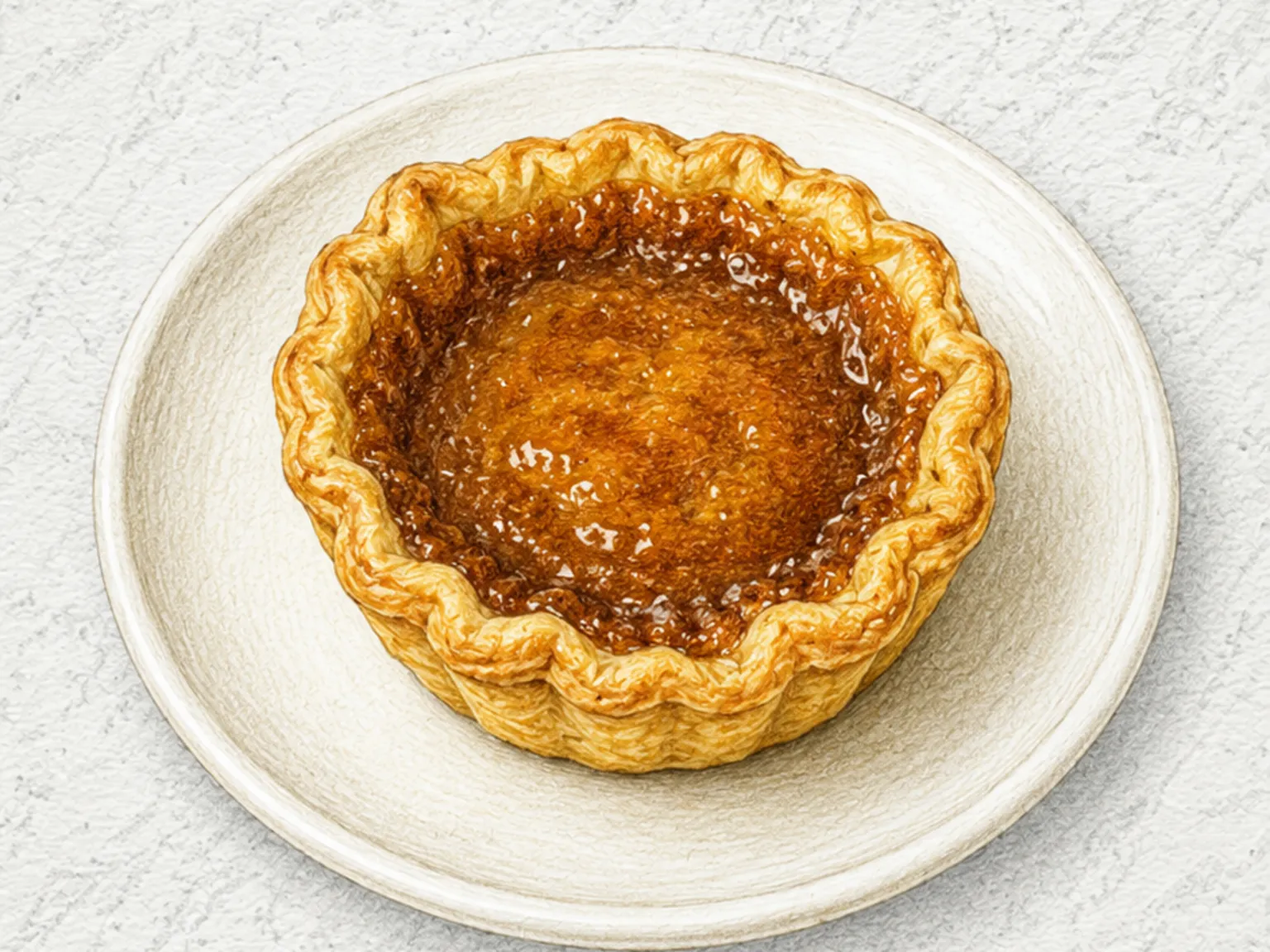
Chess pie is a custard pie from the American South made from the shortest possible list of pantry ingredients: butter, sugar, eggs, a small amount of flour, and cornmeal. The simplicity of the ingredients does not predict the complexity of what happens in the oven. As the pie bakes, the top surface splits and forms a thin, crackled crust that shatters underfoot of a fork, while beneath it sits a dense, moisture-heavy custard carrying a deep caramel note. Cornmeal introduces a subtle grittiness and the faint sweetness specific to corn, while a splash of vinegar or buttermilk adds just enough acidity to prevent the sugar from going flat. The filling should be pulled from the oven when the edges have set but the center still trembles slightly; it continues to firm as it cools, eventually reaching a texture close to fudge. Served at room temperature, the custard softens into a smooth, yielding consistency. A spoonful of unsweetened whipped cream alongside cuts the richness without dulling the flavor.

🧒 Kid-Friendly 🎉 Special Occasion
Prep 20min Cook 45min 8 servings
Chestnut Espresso Tiramisu
Baking Easy

Chestnut Espresso Tiramisu

Chestnut espresso tiramisu layers a mascarpone cream enriched with chestnut puree over espresso-soaked savoiardi biscuits, bringing an autumnal depth to the Italian classic. Strong espresso spiked with rum or marsala wine saturates the ladyfingers without making them soggy, providing a bitter, caffeinated base for the cream above. The mascarpone is first beaten smooth, then folded together with chestnut puree and a pate a bombe made from egg yolks whipped with hot sugar syrup, giving the cream a stable, mousse-like body that slices cleanly after setting. Chestnut puree contributes a dense, mellow sweetness entirely unlike refined sugar - it rounds the espresso's bitterness rather than masking it, and its earthy, nutty undertones push the cream toward something more complex than the vanilla-forward original. The finished layers are dusted with unsweetened cocoa powder, adding one more note of controlled bitterness, and refrigerated for at least six hours. Overnight chilling is the better choice: the espresso migrates up through the cream layers during that time, the flavors blend into a cohesive whole, and the texture firms from loose cream into the silkable, sliceable consistency that defines a properly rested tiramisu. Served cold, the chestnut and coffee notes become sharp and distinct.

🧒 Kid-Friendly 🎉 Special Occasion
Prep 25min 4 servings
Chestnut Madeleine (French Shell Cake with Chestnut Butter Batter)
Baking Easy

Chestnut Madeleine (French Shell Cake with Chestnut Butter Batter)

Chestnut madeleine is a small French cake baked in shell-shaped molds with chestnut paste folded directly into the batter. The chestnut brings a warm, starchy sweetness that layers with butter and honey, producing a flavor that is understated but noticeably complex. The signature dome, known as the hump, rises properly only when the batter is rested in the refrigerator for at least an hour before baking, then transferred directly into a hot oven. This temperature shock is what drives the rapid rise in the center. The crumb is light and moist, and the chestnut flavor comes through clearly rather than being absorbed by the butter. Warm milk or a latte amplifies the roasted chestnut notes, and the compact size makes these ideal for packaging as gifts.

🧒 Kid-Friendly 🎉 Special Occasion
Prep 15min Cook 12min 4 servings
Chestnut Mont Blanc Cupcakes
Baking Hard

Chestnut Mont Blanc Cupcakes

Chestnut Mont Blanc cupcakes stack three distinct layers into a single handheld dessert: a moist sponge base, a dome of whipped cream, and a tangle of piped chestnut cream on top. The sponge is whisked to a fine, airy crumb that stays soft without being fragile. Whipped cream is mounded over each cupcake, then chestnut paste made from boiled chestnuts blended with butter and sugar is piped through a Mont Blanc nozzle into thin vermicelli-like strands that pile up into a peak. The chestnut cream has a powdery, almost sandy texture on the tongue that dissolves into the cream underneath, creating a flavor shift from dense, nutty richness to light dairy. Each bite moves through all three layers in sequence. A single marron glace placed at the summit serves as both garnish and concentrated flavor accent. These cupcakes are a bakery staple in Japan, where the Mont Blanc has been embraced as a seasonal autumn specialty. The individual cupcake format makes them practical for home bakers and cafes alike, since each portion is self-contained and does not require slicing or plating beyond the initial decoration.

🎉 Special Occasion 🧒 Kid-Friendly
Prep 35min Cook 22min 4 servings
Chestnut Sweet Potato Muffins
Baking Easy

Chestnut Sweet Potato Muffins

Chestnut sweet potato muffins draw on two staple Korean autumn ingredients, combining them in a baked format that highlights the natural sweetness of both. Steamed and mashed sweet potato is worked directly into the batter, contributing moisture and a gentle, earthy sweetness that keeps the crumb soft for days after baking. The sweet potato also acts as a built-in humectant, preventing the common muffin problem of drying out once cooled. Diced roasted chestnuts are folded throughout the batter to provide a starchy, crumbly counterpoint to the tender surrounding crumb. Their slightly grainy texture creates contrast with every bite. A small amount of cinnamon sharpens the perception of the sweet potato's warmth without masking it. The streusel topping baked onto each muffin provides a layer of buttery crunch that gives way to the soft interior when pressed. When made with freshly harvested autumn ingredients, the natural sugars in both the sweet potato and chestnuts are concentrated enough that the amount of added sweetener in the batter can be reduced. The muffins work well as a snack or a breakfast substitute.

🧒 Kid-Friendly
Prep 15min Cook 25min 4 servings
Chewy Honey Wheat Bagel
Baking Medium

Chewy Honey Wheat Bagel

Authentic homemade bagels with extra chewiness from honey and nuttiness from wheat.

🔥 Trending Now 🎉 Special Occasion
Prep 90min Cook 20min 4 servings
Chewy Potato Bread
Baking Medium

Chewy Potato Bread

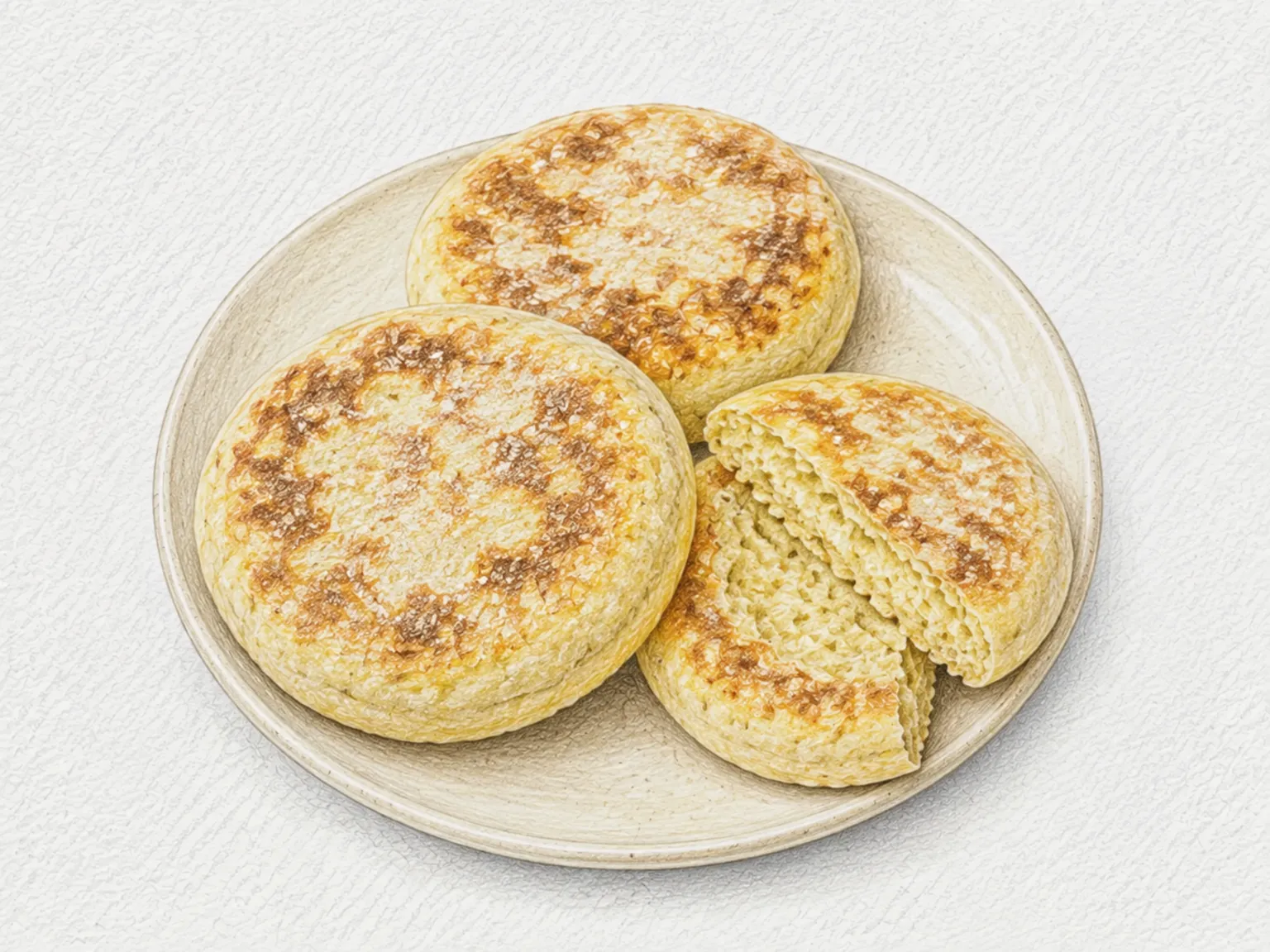
Chewy dough filled with fluffy mashed potatoes, shaped to look like real potatoes.

🔥 Trending Now 🎉 Special Occasion
Prep 40min Cook 20min 4 servings
Chiffon Cake (Oil Meringue Airy American Tube Cake)
Baking Medium

Chiffon Cake (Oil Meringue Airy American Tube Cake)

Chiffon cake sits between the density of a butter cake and the airy fragility of an angel food cake, and the difference comes down to one substitution: vegetable oil instead of butter. Oil stays liquid at room temperature, which means the crumb never firms up as it cools. The result is a cake that remains just as tender straight from the refrigerator as it is warm from the oven. The batter is built in two stages. A smooth base of egg yolks, oil, flour, and liquid comes together first, then a stiff meringue of whipped egg whites is folded in carefully to preserve as much trapped air as possible. That air is what makes the finished cake so light. After baking, the pan is immediately inverted and left to cool upside down; if the cake rests right-side up while still hot, its own weight will compress the tender crumb before it sets. Once fully cooled, the cake springs back cleanly when pressed, with a texture that is simultaneously light and moist. The neutral flavor of the base makes chiffon a versatile foundation: vanilla, matcha, yuzu, lemon, and black sesame are all common variations. It is typically served with whipped cream and fresh fruit, though a simple dusting of powdered sugar is enough when the cake itself is made well.

🥗 Light & Healthy 🎉 Special Occasion
Prep 25min Cook 50min 8 servings
Chocolate Chip Cookies
Baking Easy

Chocolate Chip Cookies

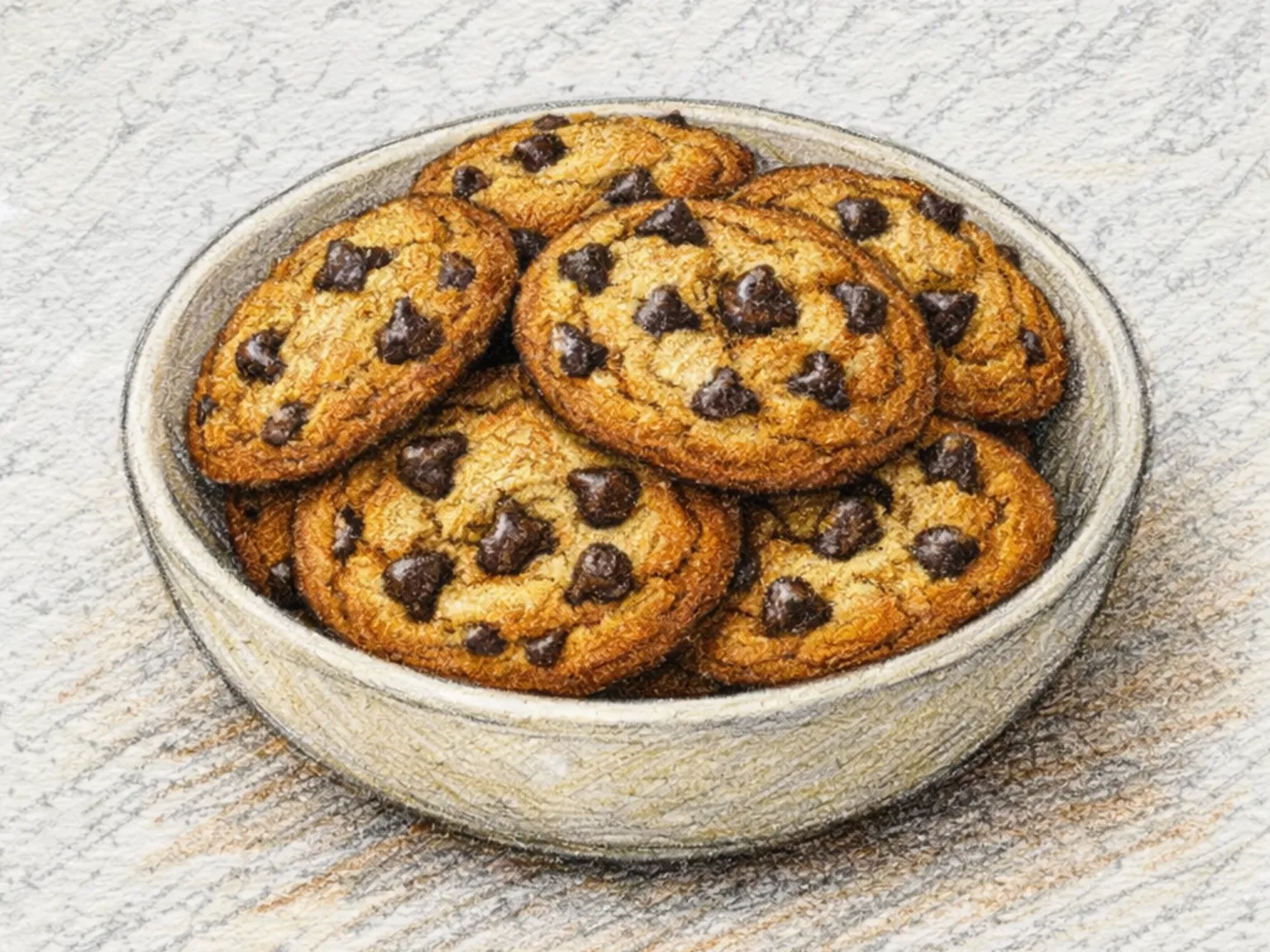
Chocolate chip cookies are the most commonly baked cookie in American home kitchens, and despite a seemingly simple ingredient list the recipe conceals a precise set of variables that separate a good cookie from a great one. The ratio of brown sugar to granulated white sugar is the single most important decision: more brown sugar introduces molasses, which is hygroscopic and holds moisture in the finished cookie, producing a chewy, dense texture; more white sugar encourages the dough to spread in the oven and crisps the edges. Creaming softened butter with the sugars until the mixture turns pale and fluffy incorporates air into the dough, which gives the baked cookie lift and a slightly cakey interior. Chocolate chips, whether semi-sweet, dark, or a mixture, melt during baking and spread into the surrounding dough before re-solidifying as the cookie cools, forming pockets of concentrated chocolate distributed unevenly through each cookie. The moment to pull the tray from the oven is when the edges have set and turned golden while the center still appears underdone and almost raw-looking, because the residual heat of the pan continues to cook the interior as the cookies rest and cool. Pressing flaky sea salt into the surface of each cookie just before baking sharpens all the flavors, making the chocolate taste more chocolatey and the butter taste more buttery. Eaten warm, within minutes of coming out of the oven, a good chocolate chip cookie barely holds together and melts at the edges with the slightest pressure. That fragile, yielding moment is the whole point.

🧒 Kid-Friendly
Prep 15min Cook 12min 24 servings
Chocolate Mousse
Baking Medium

Chocolate Mousse

Chocolate mousse achieves a fundamental paradox: it tastes intensely of chocolate yet feels almost weightless on the tongue. Dark chocolate is melted gently over a bain-marie and cooled until warm but no longer hot enough to deflate the cream. Whipped cream is then folded in three separate additions: the first loosens the chocolate mass, the second begins to lighten its density, and the third introduces the full airy volume that defines mousse. Some recipes add egg yolks for richness and a custard-like body, while beaten egg whites lift the texture even further. Chilling for at least two hours allows the mousse to set to a consistency that holds its shape on a spoon yet dissolves on contact with the palate. The cacao percentage governs both the bitterness and the intensity of the finished dessert, and chocolate above seventy percent produces a mousse that reads as unmistakably adult in its depth. A small measure of vanilla extract rounds the sharper edges of the cocoa without competing for attention. Mousse can be served directly in individual cups, spread into a tart shell to firm overnight, or piped into layers with cream for a more composed plated dessert. A dusting of unsweetened cocoa through a fine sieve over the top surface is the minimal finishing touch.

🎉 Special Occasion 🧒 Kid-Friendly
Prep 20min Cook 5min 4 servings
Chocolate Souffle
Baking Hard

Chocolate Souffle

Chocolate souffle folds stiffly beaten egg white meringue into a base of melted dark chocolate and egg yolks, then bakes it in a buttered ramekin at high heat until it rises dramatically above the rim. The intense oven heat expands the air trapped within the meringue, pushing the souffle upward while the exterior sets into a thin, delicate crust and the interior remains a molten, near-liquid chocolate cream. Breaking through the top with a spoon releases a rush of hot, intensely flavored chocolate from inside, and that moment of opening is the point of the entire dessert. The souffle begins to deflate within a minute or two of leaving the oven, so it must go directly to the table without delay. Coating the inside of the ramekin with butter followed by sugar is not optional: this surface preparation gives the batter traction to climb straight upward rather than sticking to the sides and collapsing unevenly. Using chocolate with a high cocoa content produces a deeper, more defined contrast between bitterness and sweetness. The most critical technical step is folding the meringue into the chocolate base using broad, circular motions with a spatula and a minimum number of strokes, because overmixing deflates the air bubbles that are responsible for the rise. Serve dusted with powdered sugar or alongside a scoop of vanilla ice cream.

🎉 Special Occasion 🧒 Kid-Friendly
Prep 25min Cook 15min 4 servings
Choux Cream Puffs (French Hollow Pastry with Vanilla Custard)
Baking Hard

Choux Cream Puffs (French Hollow Pastry with Vanilla Custard)

Choux cream puffs are built around pate a choux, a paste cooked directly on the stovetop by combining water, butter, and flour over heat, then beating in eggs one at a time until the dough is smooth, glossy, and just thick enough to hold a piped shape. Once mounds are piped onto a baking sheet and slid into a hot oven, the water content in the dough converts rapidly to steam, inflating each piece into a hollow shell while the exterior sets into a crisp, deep-golden crust. The key to a reliably hollow interior is patience with the eggs: adding them too quickly or all at once produces uneven expansion, while a gradual approach allows the structure to develop properly. Once completely cooled - cooling fully is not optional, as residual heat will melt the filling - a small hole is pierced in the bottom of each shell and pastry cream is piped inside. The contrast upon biting is what makes the pastry compelling: the thin, shattering shell breaks to release cool, silky custard against the palate. The pastry cream itself is made by simmering milk with a split vanilla bean, then whisking the infused milk into egg yolks, sugar, and cornstarch, cooking until thick, and chilling until cold and set. Filled puffs should be consumed within two to three hours, as moisture from the cream migrates into the pastry over time, softening the crust and eliminating the textural contrast that defines the experience.

🎉 Special Occasion 🧒 Kid-Friendly
Prep 30min Cook 40min 12 servings
Churros
Baking Medium

Churros

Churros are fried dough sticks made from a simple paste of water, flour, salt, and sometimes a touch of sugar. The dough is piped through a star-shaped tip, which creates ridges along the length. These ridges increase the surface area exposed to hot oil, producing maximum crunch across every inch while the interior stays soft and pillowy. Straight from the fryer, they are rolled in cinnamon sugar, which clings to the warm, oily surface and creates a sweet, spiced crust. The traditional pairing is thick Spanish hot chocolate -- closer to a warm ganache than a drink -- into which the churros are dipped. The bitterness of the chocolate and the sweetness of the cinnamon sugar play off each other, and the contrast between the crisp dough and the dense liquid makes each dip satisfying. Churros wait for no one: they are at their best within ten minutes of frying, after which the crispness fades as residual oil migrates inward.

🧒 Kid-Friendly
Prep 15min Cook 20min 4 servings
Ciabatta Bread
Baking Medium

Ciabatta Bread

Ciabatta is a flat Italian bread developed in Veneto in 1982 by baker Arnaldo Cavallari, whose name translates to slipper in Italian - a nod to the bread's wide, flat shape. Its defining characteristic is an exceptionally high hydration level, with water making up 70 to 80 percent of the flour's weight. The dough is too slack and sticky to knead by hand in the traditional sense and instead requires a folding technique or stand mixer to develop structure, but this excess moisture is precisely what creates the bread's signature open crumb: large, irregular holes distributed throughout the interior that give the crumb a lacey, almost Swiss-cheese quality. The crust is thin and crackly, shattering lightly when pressed, while the interior crumb is chewy and moist with a mild wheaty sweetness that develops as you chew. A long cold bulk fermentation in the refrigerator builds mild acidity and a more complex flavor than a quick room-temperature proof can produce. Because of its high moisture content, ciabatta stales faster than denser breads and is best eaten the same day it is baked. The contrast between its crackly exterior and open, absorbent interior makes it ideal for panini sandwiches, where the crust crisps further under heat, and for dipping in good olive oil, which pools in the holes of the crumb. It is also an excellent companion to soups, where the open crumb soaks up broth without falling apart.

🧒 Kid-Friendly
Prep 20min Cook 25min 2 servings
Cinnamon Babka (Jewish Twisted Enriched Bread with Cinnamon Swirl)
Baking Hard

Cinnamon Babka (Jewish Twisted Enriched Bread with Cinnamon Swirl)

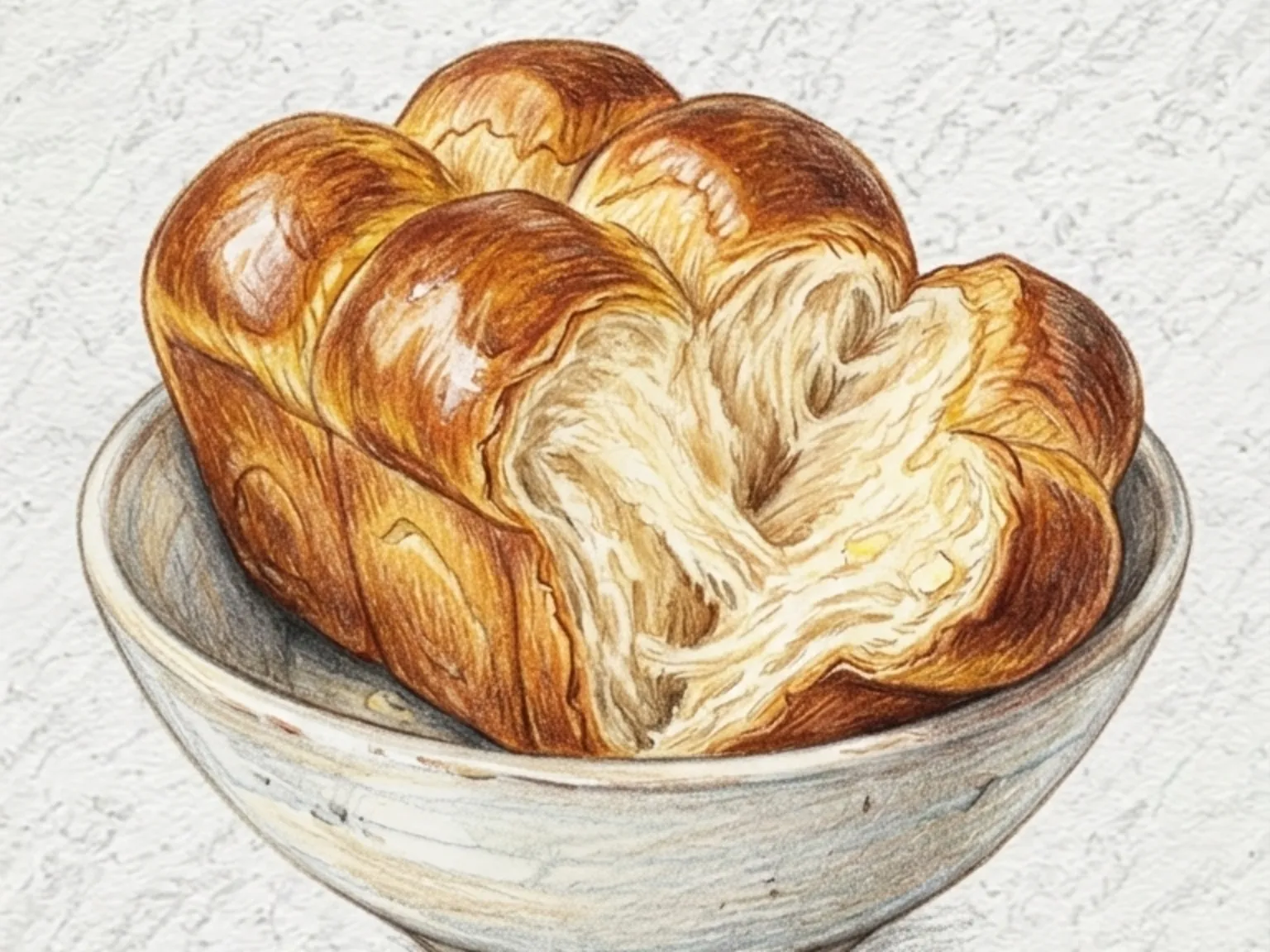
Cinnamon babka is a twisted, enriched yeast bread from the Eastern European Jewish baking tradition, built from a dough loaded with butter and eggs that gives it a crumb closer to brioche than ordinary bread. The dough is rolled into a wide rectangle, spread edge to edge with a thick mixture of cinnamon and brown sugar, then rolled tightly into a log. The log is split lengthwise down the center, exposing the spiral filling on both cut surfaces, and the two halves are twisted around each other before being lowered into the loaf pan. This shaping step is what creates the characteristic layered swirl visible in every slice. During baking, the cinnamon sugar melts into sticky, caramelized threads that run through the crumb and saturate the bread with a warm spice aroma. The soft, pull-apart texture of the enriched dough carries the richness of the butter and eggs in every bite, and the contrast between the pale dough and dark cinnamon filling becomes more defined after the loaf cools. Brushing the surface with simple syrup immediately out of the oven seals in moisture and gives the top a glossy, bakery-counter sheen that holds into the next day. The loaf is sweet enough to serve as dessert yet substantial enough to anchor a breakfast table.

🎉 Special Occasion 🧒 Kid-Friendly
Prep 40min Cook 35min 4 servings

About Baking

Precise measurements are the key to successful baking. Each recipe here includes detailed ingredient ratios and oven temperatures, so even beginners can achieve consistent results. From simple scones to layered cakes, this collection covers a wide range of baking projects.