Side dishes Recipes
624 recipes. Page 12 of 26
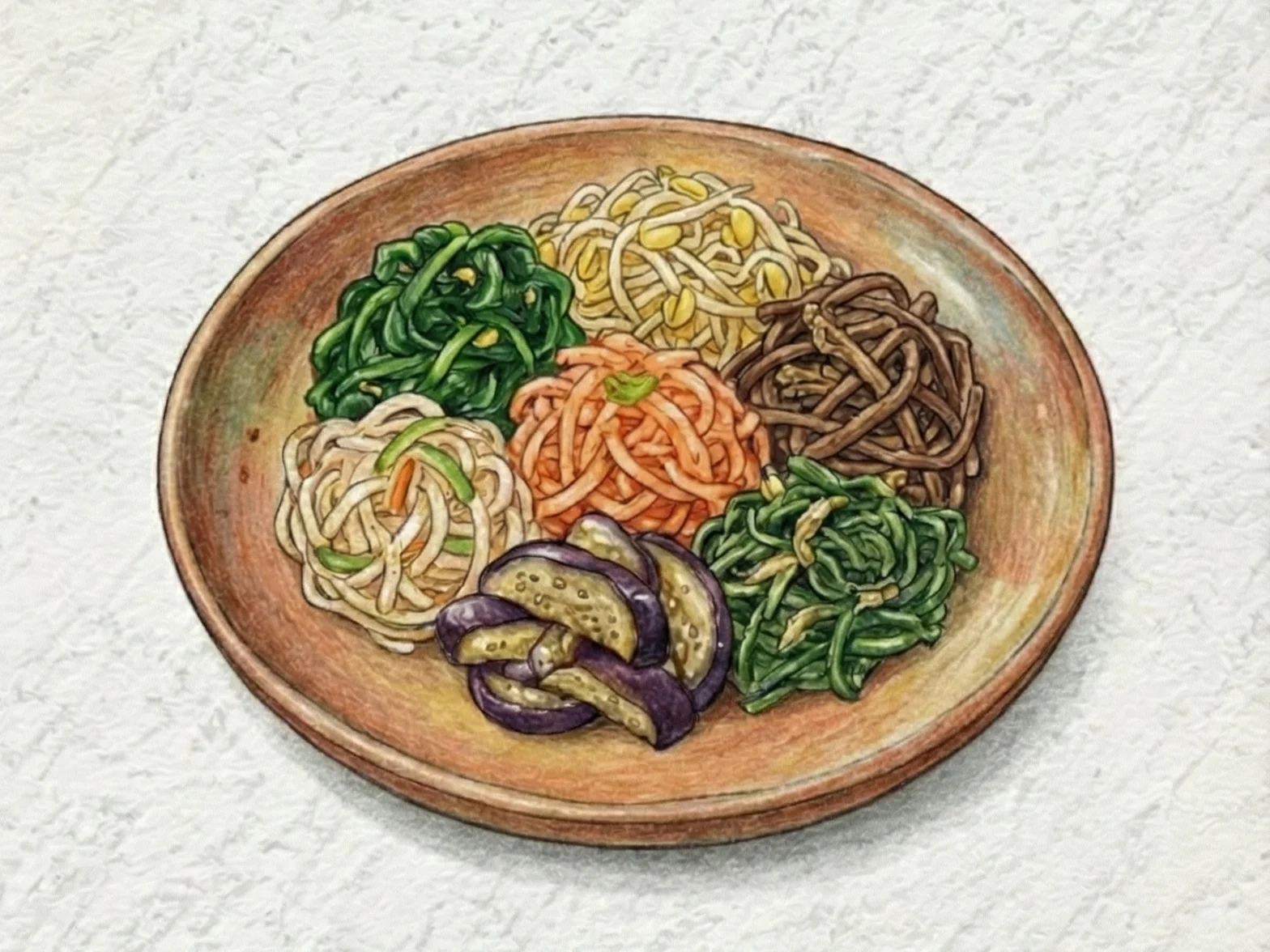
Side dishes (banchan) are the heart of Korean dining culture. A typical meal features multiple small plates - seasoned vegetables (namul), braised dishes (jorim), pickled items, and salted seafood. Classics like spinach namul, bean sprout salad, and stir-fried anchovies can be prepared in advance and enjoyed over several days.
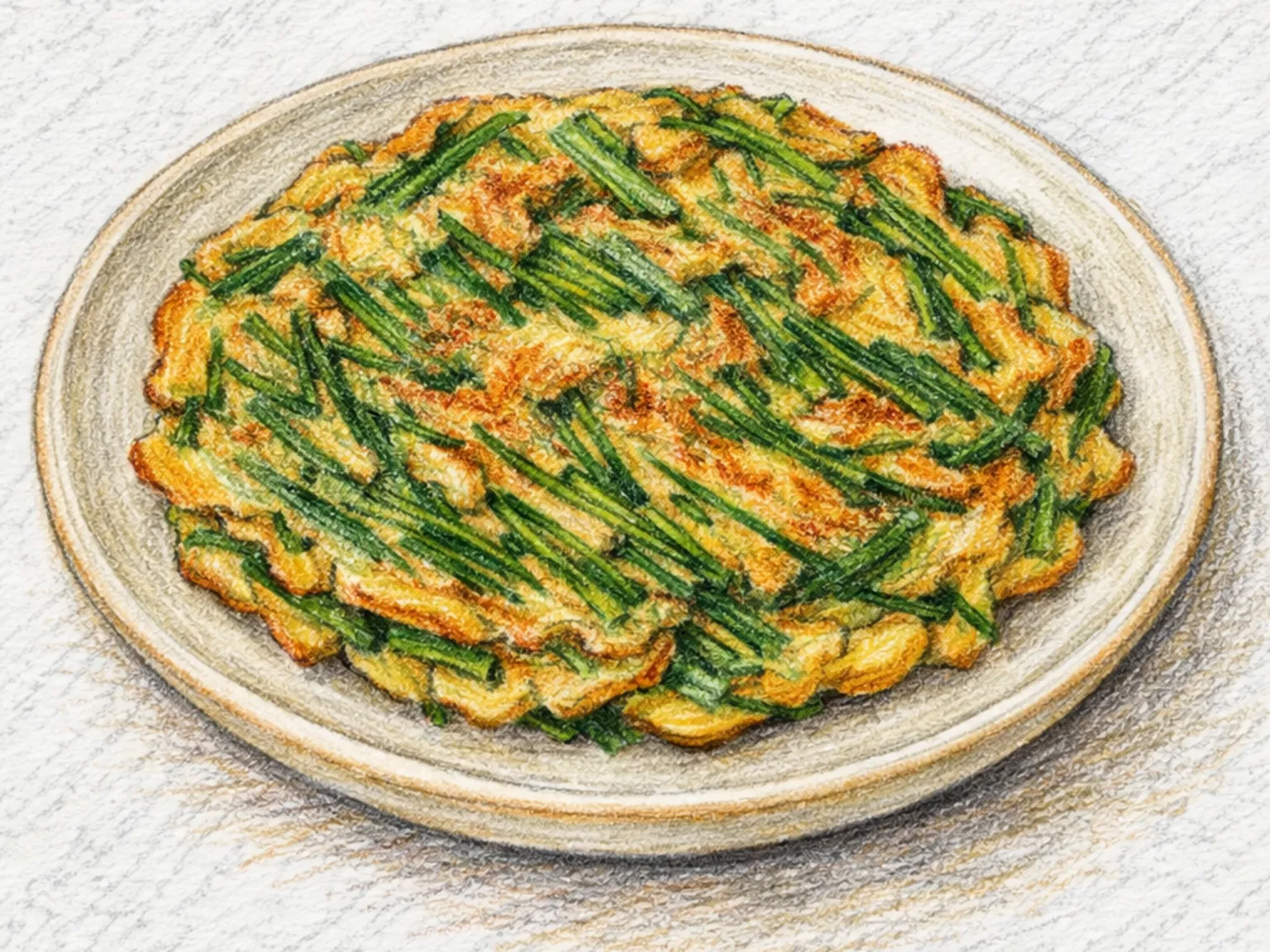
Korean Scallion Pancake
Pa-jeon is a Korean scallion pancake made by cutting scallions into six-to-seven-centimeter lengths, laying them across an oiled pan, and pouring a batter of Korean pancake mix, water, egg, and salt directly over them before frying on medium heat. The method of placing the scallions first and covering them with batter means one side of each scallion presses against the hot pan surface, which caramelizes them and coaxes out a sweet, aromatic fragrance that would not develop if the scallions were simply mixed into the batter. Batter consistency is a meaningful variable: the mixture should flow off a spoon in a continuous stream rather than plopping, because anything thicker makes the pancake bready and reduces the proportion of scallion in each bite, while anything too thin prevents the distinctive crispy rim from forming around the edges. Adding an extra drizzle of oil around the perimeter before flipping fries the outer edge like a fritter, creating a sharp contrast between the crunchy border and the soft, scallion-loaded interior when dipped into a soy-based dipping sauce. Pa-jeon is also known in Korean culture as a dish that people instinctively crave on rainy days, a reputation closely tied to the sound of batter hitting a hot oiled pan.
Korean Stuffed Eggplant Seon
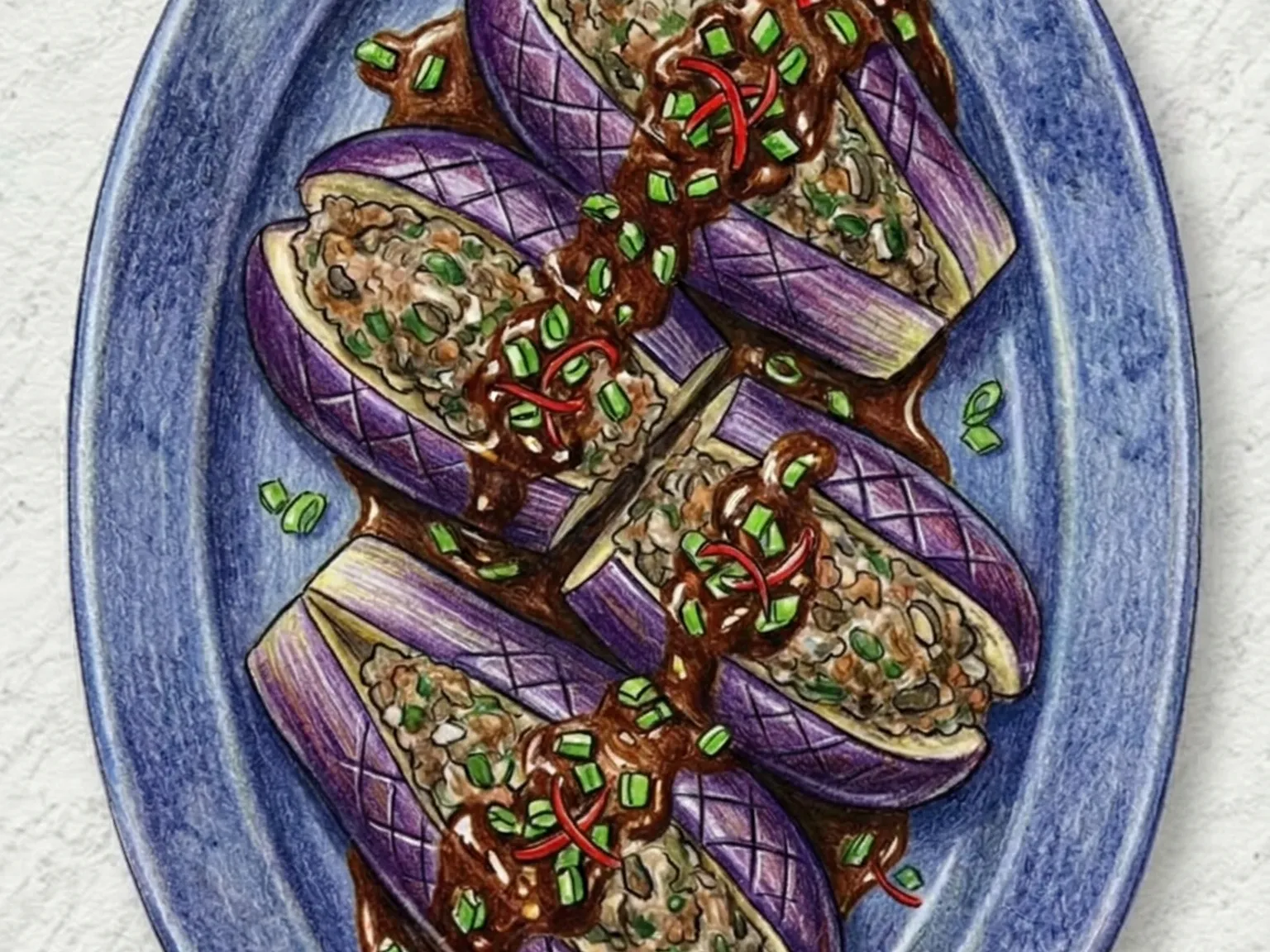
Gaji-seon is a Joseon-era royal court banchan belonging to the seon category, a class of preparations in which vegetables are stuffed with a seasoned filling and steamed. The eggplant is scored at regular intervals with deep cuts that stop short of the bottom, creating accordion-like pockets along the length of the vegetable. A filling of minced pork or beef combined with crumbled tofu, scallion, and sesame oil is pressed firmly into each slit, then the stuffed eggplant is steamed for fifteen minutes. During steaming, the juices from the filling soak into the softening eggplant flesh, and the two components merge into a single flavor. The labor of stuffing each eggplant individually made this a dish historically reserved for guests and formal occasions rather than everyday meals. After steaming, a light soy-based sauce is spooned over the top. The sharp textural contrast between the near-dissolving eggplant skin and the firm, savory filling produces a refinement that clearly separates seon from ordinary stir-fried or braised eggplant preparations.
Korean Dongchimi Radish Water Kimchi
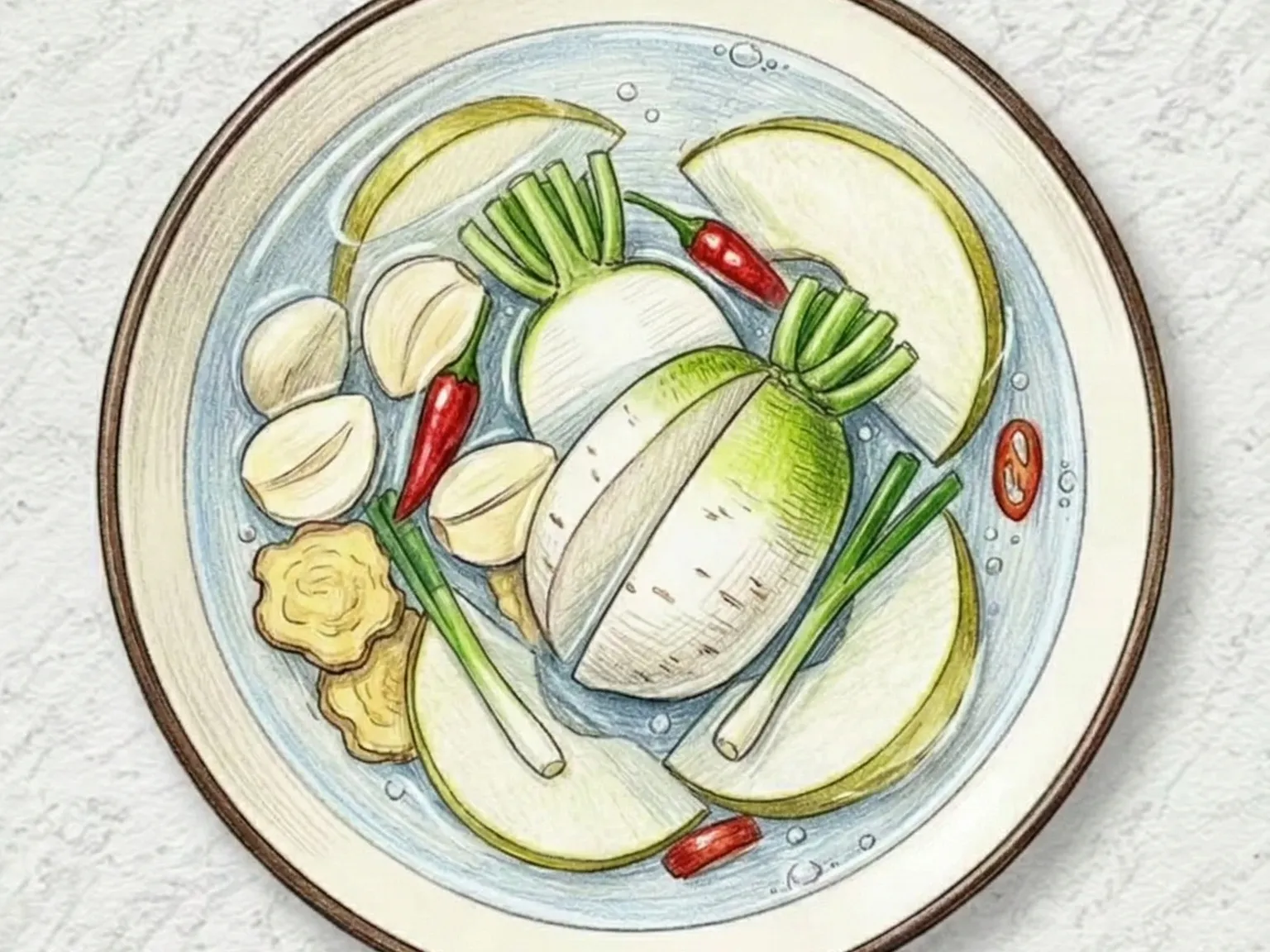
Dongchimi is a Korean radish water kimchi made by salting whole Korean radishes, then submerging them with Asian pear, garlic, ginger, scallions, and green chili in a clean saltwater brine for several days of cold fermentation. As the radish starch breaks down through lactic fermentation, the brine develops a natural effervescence and bright, refreshing acidity. Pear lends a gentle fruit sweetness, and ginger sharpens the finish. The clear, chilled broth can be drunk on its own as a palate cleanser or used as a base for cold noodle dishes in winter, cutting through the richness of grilled meats and heavy stews. Dongchimi is traditionally prepared alongside napa kimchi during the late-autumn kimjang season. It requires at least three to five days of cool fermentation before the carbonation develops properly. Choosing medium-sized, firm radishes over small ones preserves a crisp texture for longer. Once fully fermented, the brine keeps well under refrigeration for two to three weeks.
Korean Soy-Braised Fish Cake
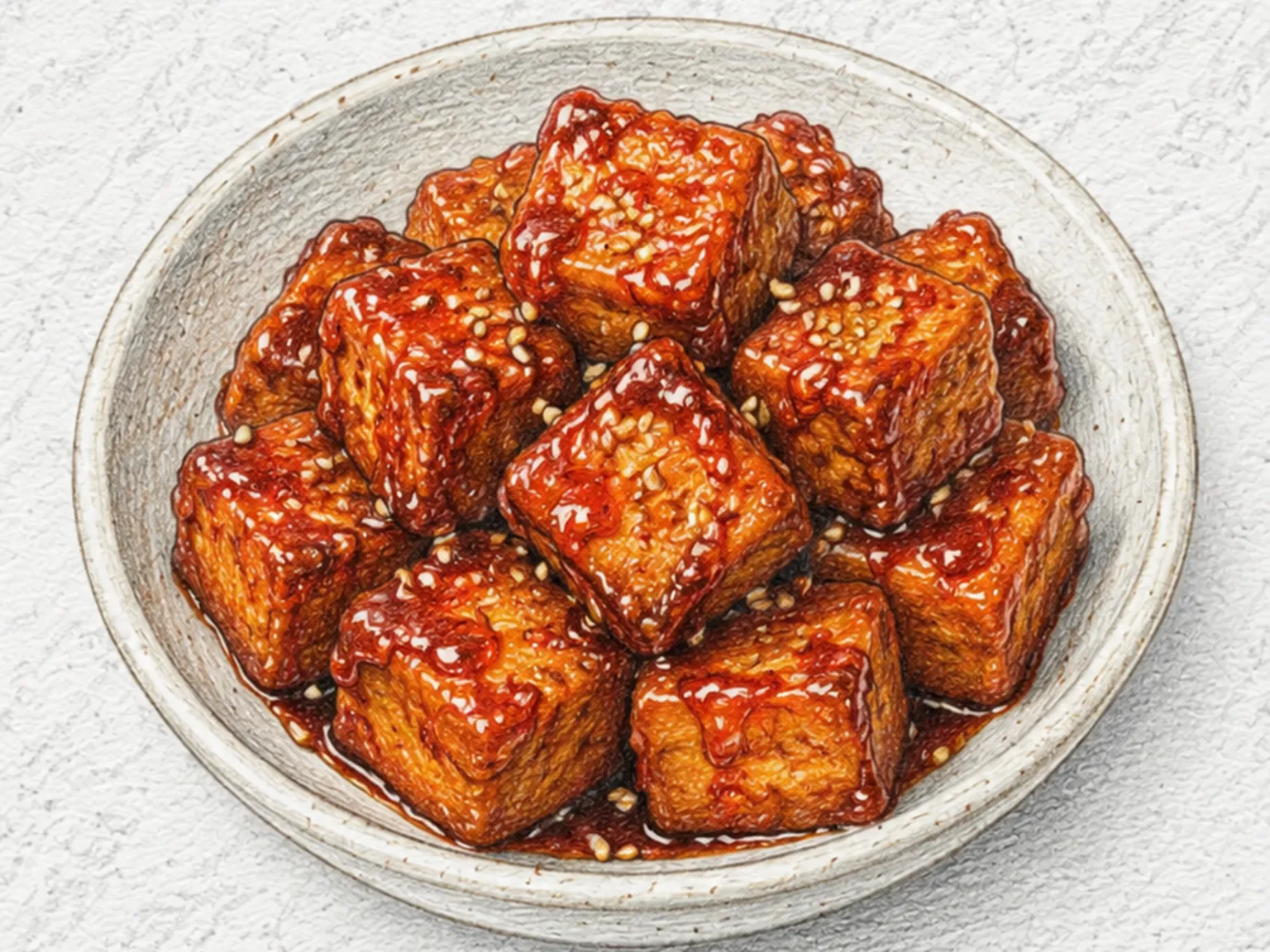
Eomuk-jorim is a braised Korean fish cake banchan in which triangles or rectangles of eomuk are simmered in a mixture of soy sauce, rice syrup, garlic, and water. Korean eomuk is a processed fish product made by grinding white fish flesh with starch and shaping the paste into flat sheets or molded forms -- denser and chewier than Japanese kamaboko, with a texture that holds its structure through the long braise without turning soft. As the liquid reduces by roughly half over ten minutes of steady simmering, the sauce concentrates into a thick, sticky glaze that adheres to each piece. Adding a sliced cheongyang chili near the end of cooking introduces a subtle heat that cuts through the sweetness of the rice syrup and gives the banchan a sharper edge that pairs well with plain rice. One of the most practical side dishes in the Korean repertoire, eomuk-jorim keeps in the refrigerator for up to a week and, like many braised preparations, deepens in flavor as the soy seasoning continues to penetrate the fish cake over subsequent days. Its low cost and the ease of making large batches in a single pan explain its decades-long presence in school cafeterias, packed lunchboxes, and the everyday home kitchen.
Korean Deulkkae Aehobak Beoseot Bokkeum (Perilla Zucchini Mushroom Stir-fry)
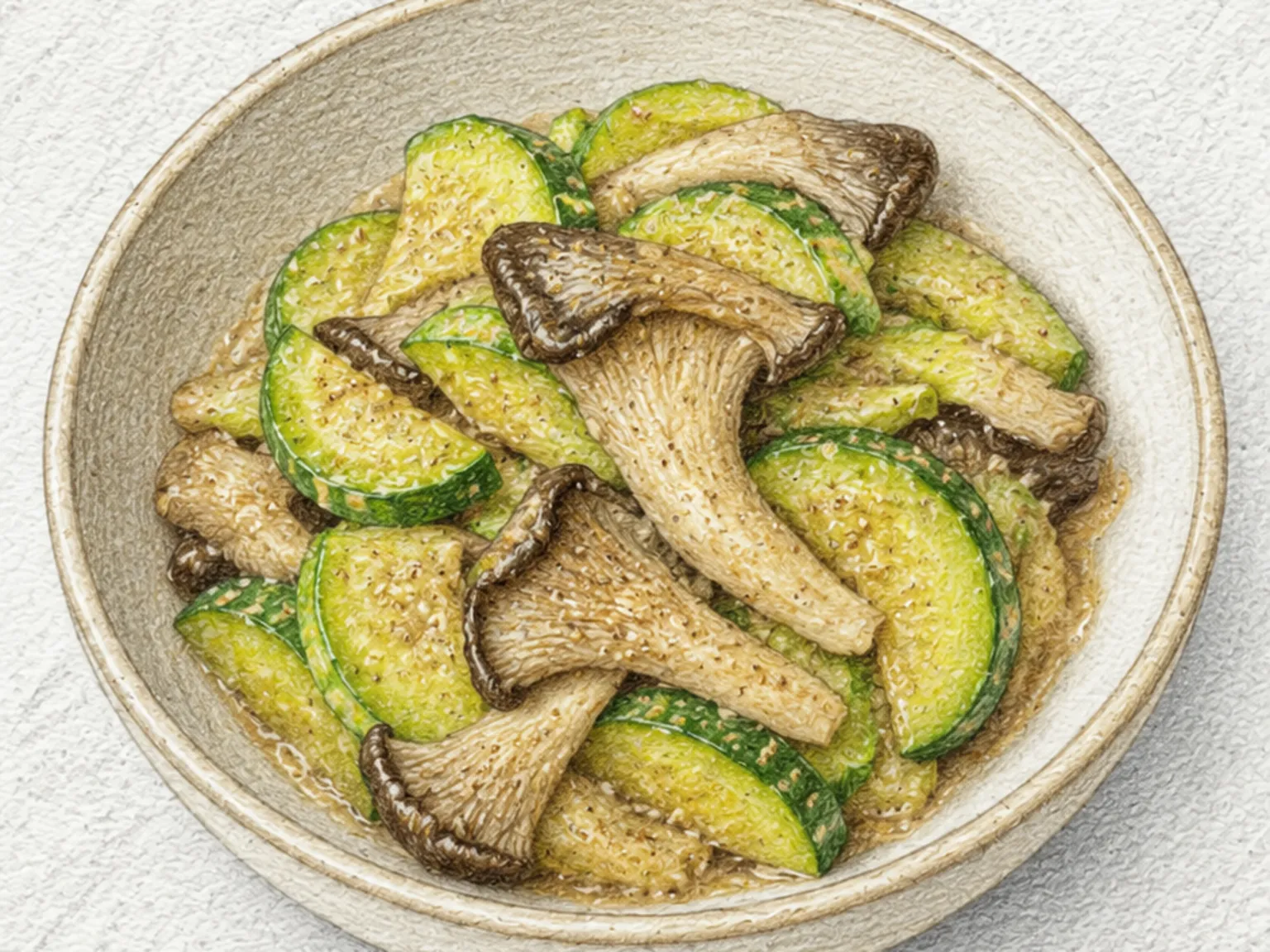
Deulkkae-aehobak-beoseot-bokkeum is a Korean stir-fry of zucchini and oyster mushrooms finished with ground perilla seeds. The perilla powder is added toward the end of cooking, where it combines with the moisture released from the vegetables to form a thick, nutty coating that clings to each piece. Oyster mushroom brings natural umami and a slightly fibrous chew, while the zucchini contributes its gentle sweetness and keeps the dish from drying out. No strong spices or fermented pastes are needed - the toasted, herbal fragrance of the perilla seeds carries the flavor from start to finish. The result is a moist, mild side dish that demonstrates how a single aromatic ingredient can add significant depth to a simple vegetable stir-fry.
Korean Ureok Doenjang Gui (Doenjang Grilled Rockfish)
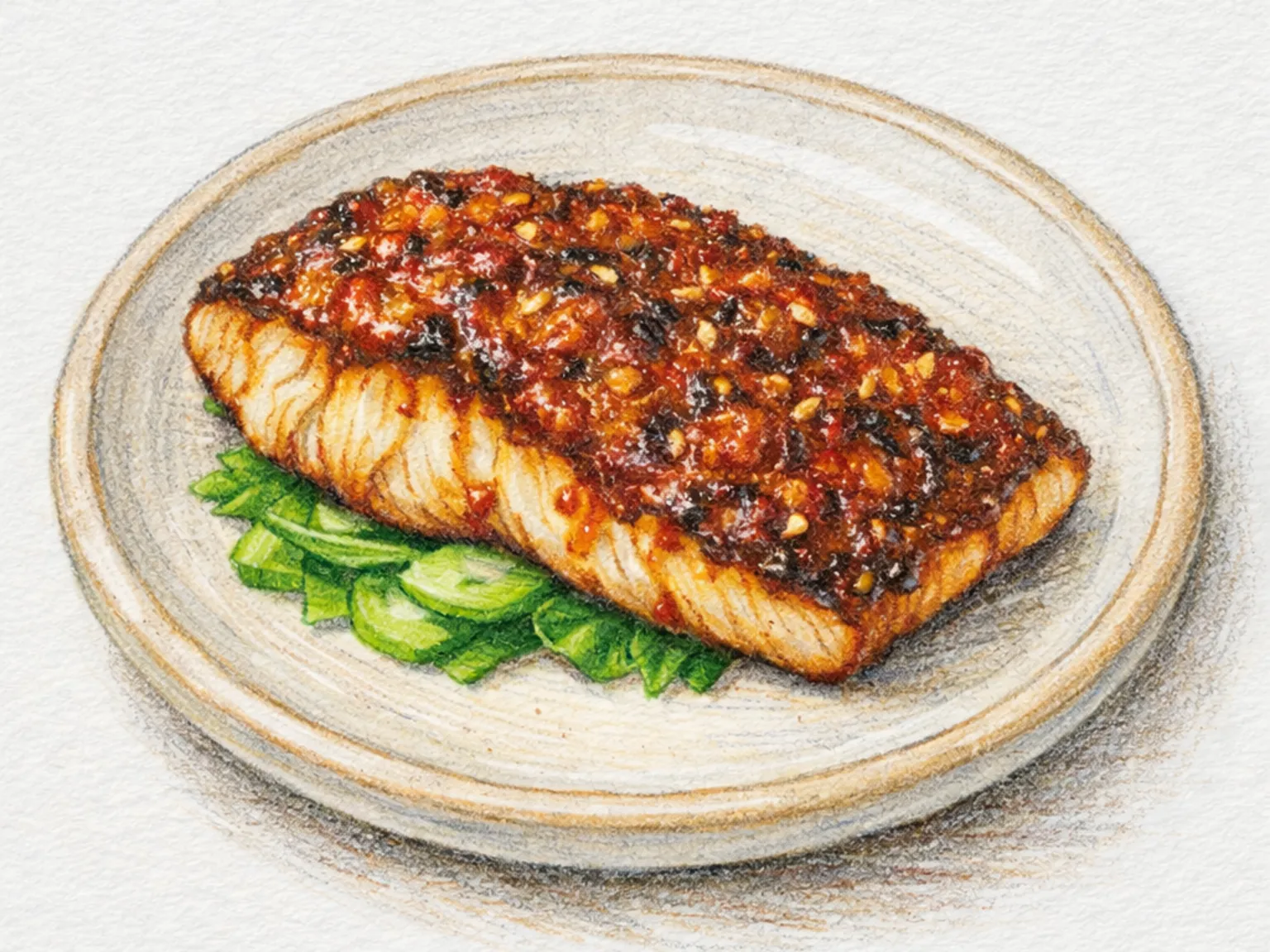
Rockfish fillets are patted dry, pin-boned, and brushed thinly with a paste of doenjang, gochujang, minced garlic, cooking wine, honey, and sesame oil before resting in the refrigerator for fifteen minutes. Cooking begins skin-side down for four minutes, then the fillet is flipped for three minutes, and a second thin coat of paste is applied for two final minutes. The key is thin, repeated applications - a thick layer burns before the fish is done. Rockfish's mild white flesh absorbs the complex, fermented savoriness of the doenjang-gochujang blend, producing a depth of flavor that plain grilled fish cannot match.
Korean Paengi Beoseot Jeon (Enoki Pancake)
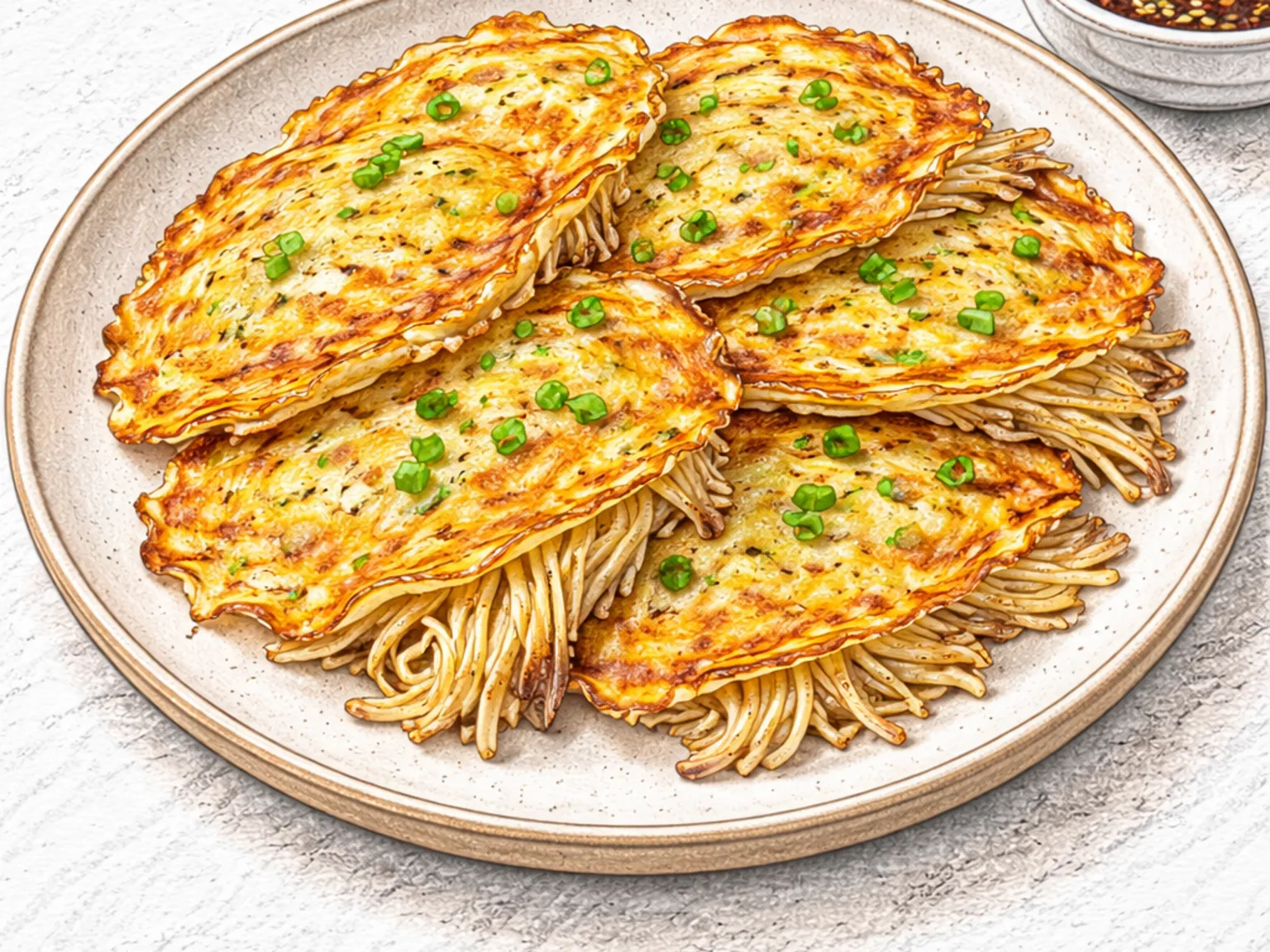
Paengibeoseot-jeon is a thin Korean pancake built around 200 grams of enoki mushrooms separated into loose strands and coated in a light batter of pancake mix, egg, and water. Cooked over medium-low heat, the batter spreads thin enough that the edges turn golden and crisp while the mushroom clusters in the center stay moist and chewy. Chopped scallions add color and a mild onion fragrance throughout. The pancake is served with a dipping sauce of soy sauce, vinegar, and a pinch of chili flakes, whose acidity and salt lift the subtle earthiness of the mushrooms. Keeping the heat moderate is essential - too high and the outside burns before the interior sets.
Korean Braised Eggplant in Seasoned Soy Sauce
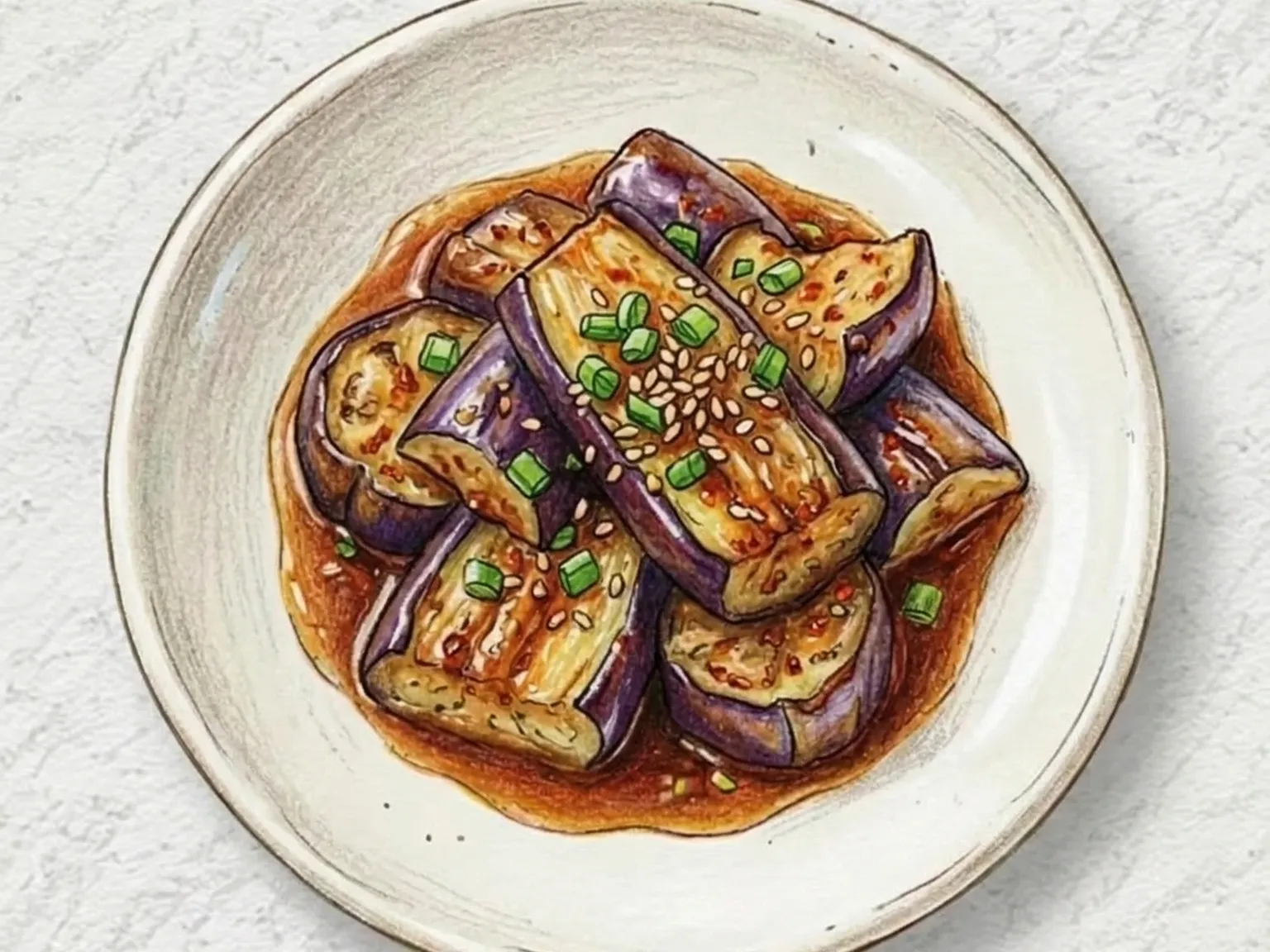
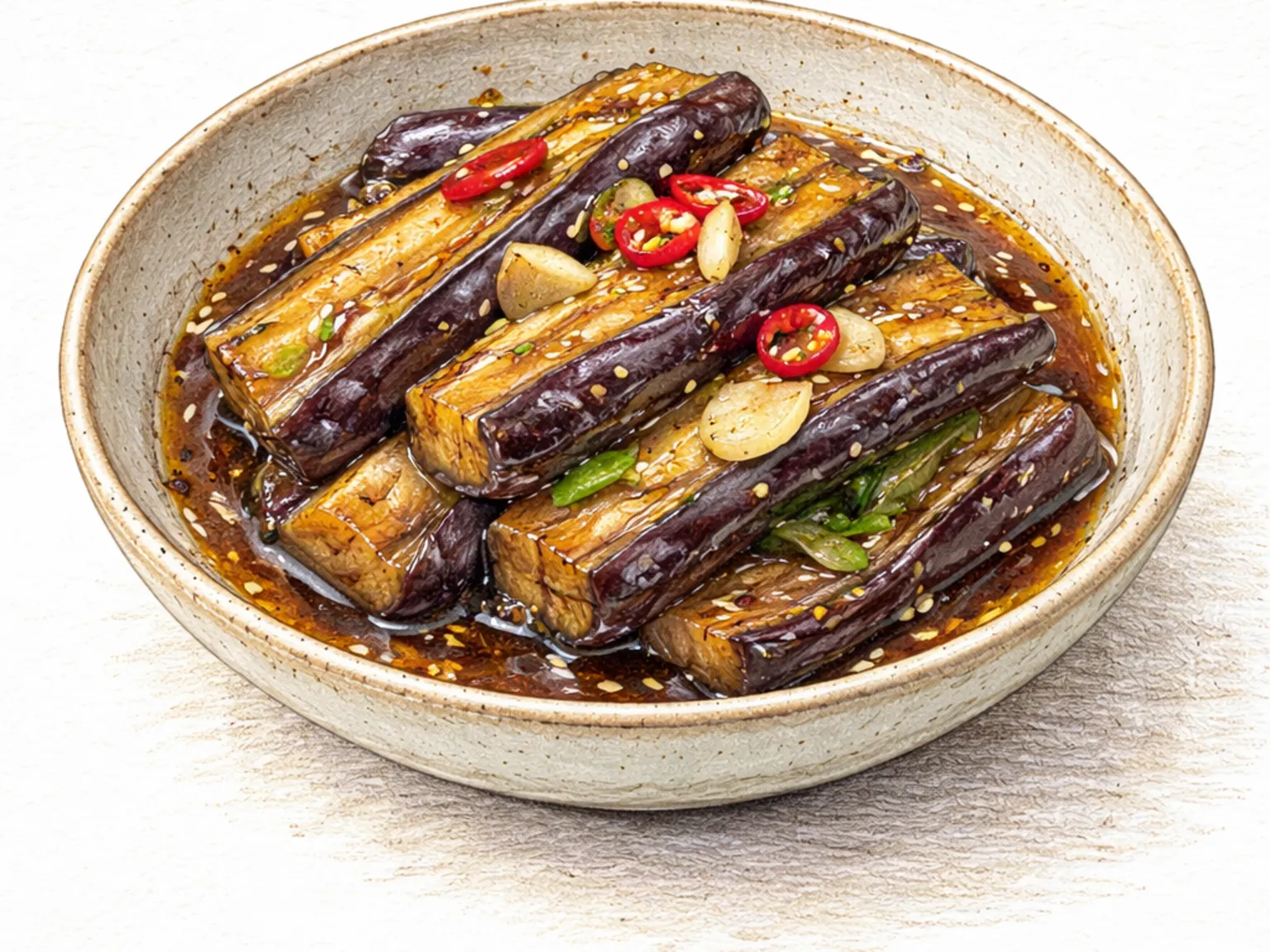
Gaji yangnyeom jorim is a Korean braised eggplant side dish made with soy sauce, gochugaru, garlic, and sesame oil. Briefly sauteing the eggplant in oil before adding the braising liquid is important: pre-cooking the surface prevents the eggplant from releasing too much water into the sauce, which keeps the seasoning concentrated and helps it penetrate evenly. A small amount of sugar or plum extract is added to the sauce, giving the finished dish its characteristic glossy sheen. Scallions are stirred in only after the heat is off to preserve their color and texture. The result is a compact, salty-spicy banchan with a deep lacquered surface on each piece. Keeping a batch in the refrigerator means it is available as a side dish for three or more days, and the leftover braising liquid works well as seasoning in bibimbap.
Korean Bellflower Root Pickles
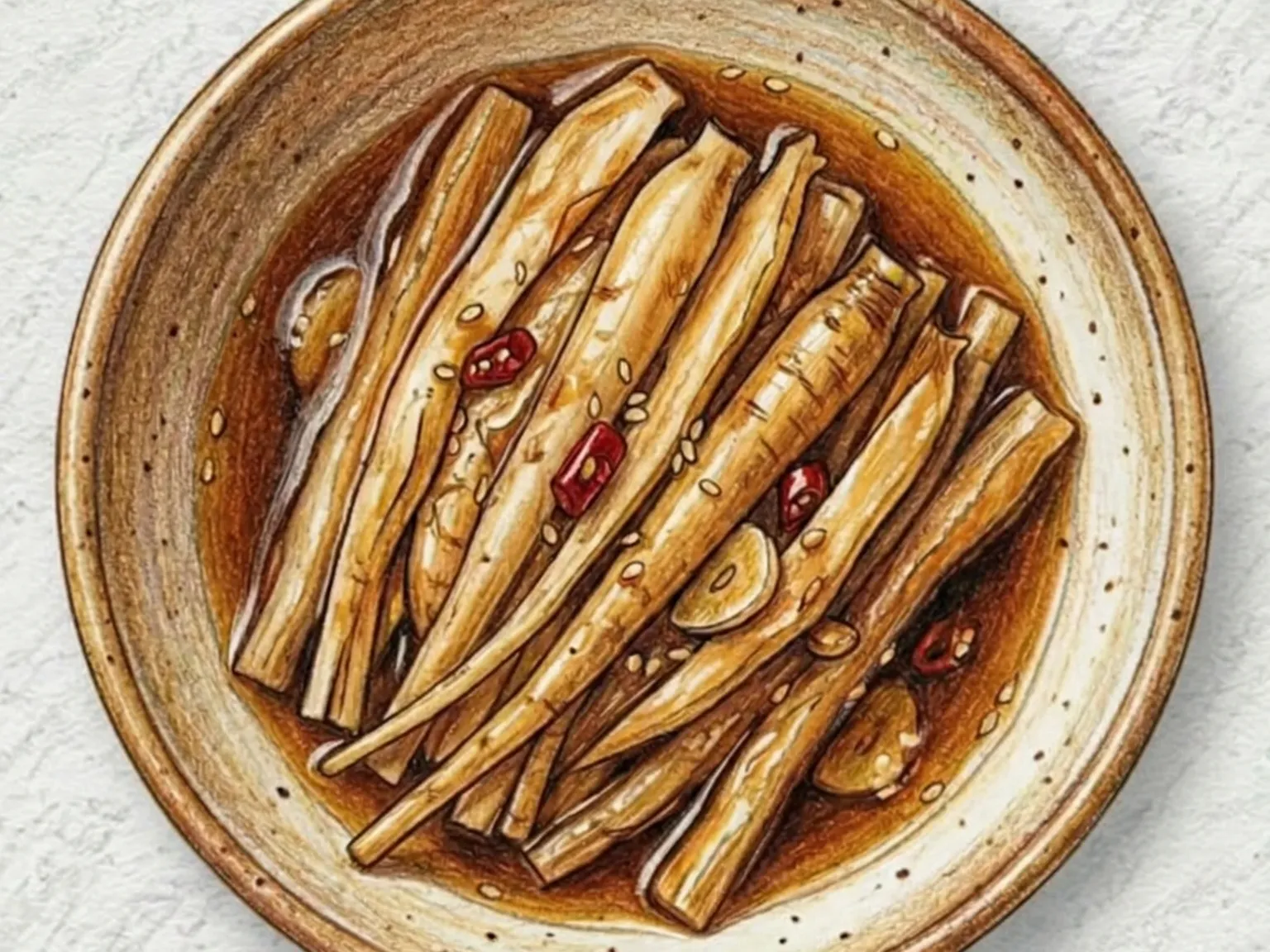
Doraji jangajji is a traditional Korean pickle made from bellflower root - the roots are peeled, salted and massaged by hand to draw out bitterness, then submerged in a boiled brine of soy sauce, rice vinegar, and sugar. Bellflower root has a pronounced bitter-herbal character that is both its defining quality and its challenge; salt-kneading before pickling pulls out the harsh edge while leaving the fragrant, almost floral undertone intact. As the brine meets the acidity of vinegar, the remaining bitterness softens further, and a chewiness that builds with each bite reveals a clean, aromatic depth. Ginger included in the brine counteracts the earthy, soil-forward quality that root vegetables often carry, and as the hot liquid cools it draws seasoning slowly and evenly through the root's fibrous tissue. Two days of curing is the minimum to achieve a balanced sweet-sour-salty profile; longer curing deepens the flavor further. Kept refrigerated, the pickle holds well for weeks and makes a reliable side dish to pull from the refrigerator at any meal.
Korean Seasoned Eoseuri Herb Namul
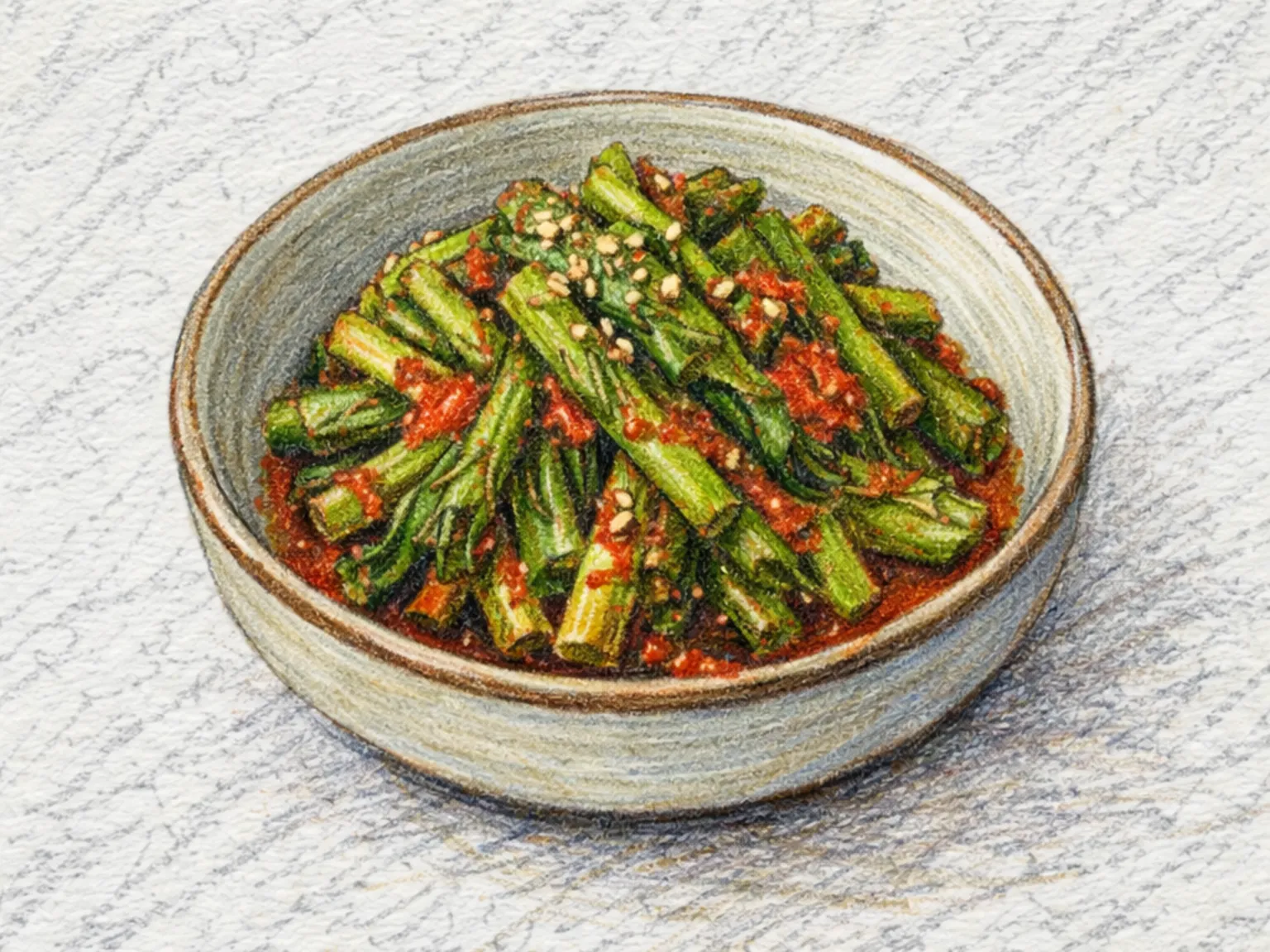
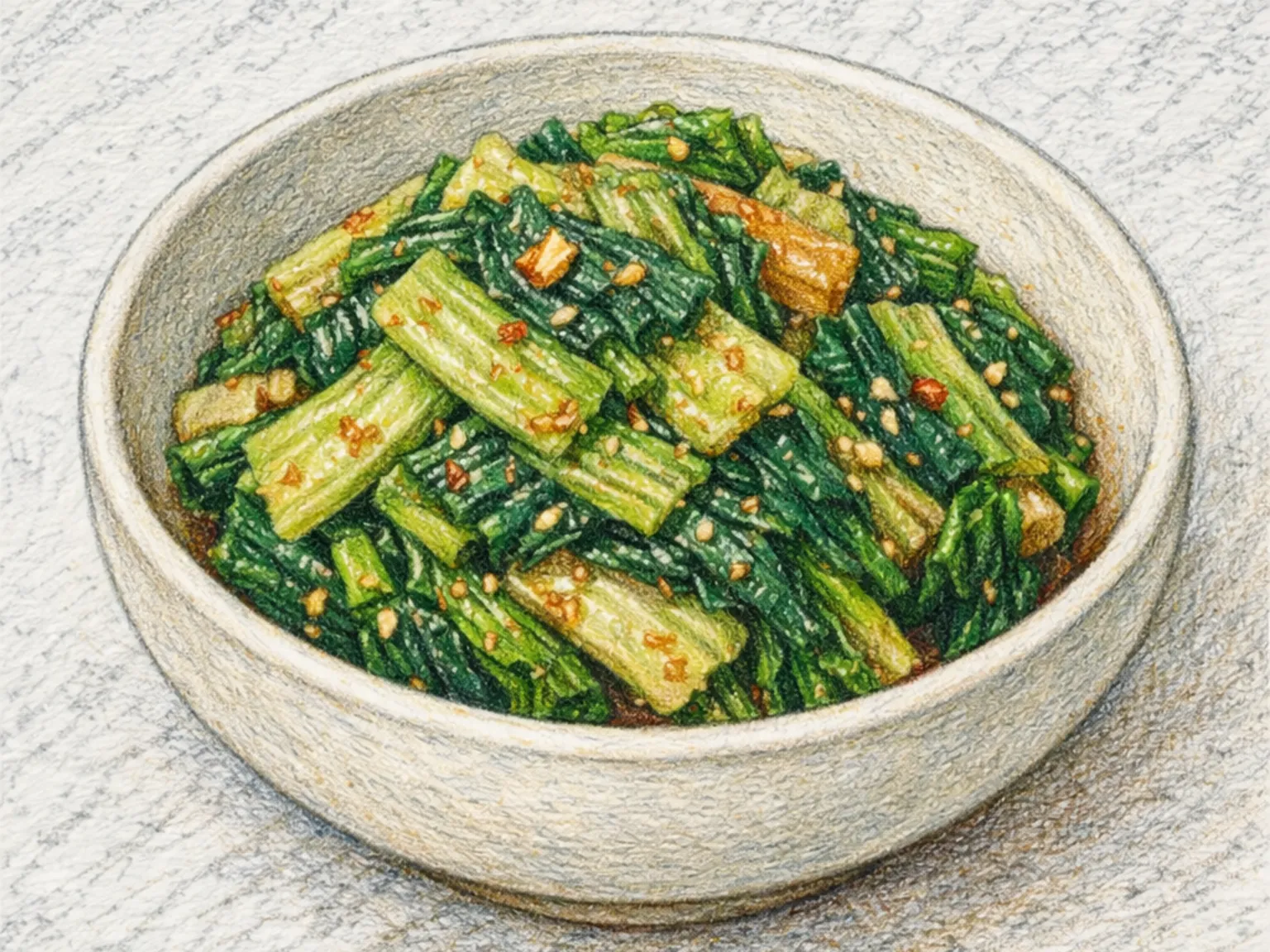
Eoseuri, Korean cow parsnip with the botanical name Heracleum moellendorffii, is a wild mountain herb foraged from Korea's central and northern highlands during early spring. Its thick stems and broad leaves carry a layered fragrance that combines celery, flat-leaf parsley, and a faintly medicinal undertone, a complexity that no cultivated green can replicate. Blanched for under a minute to soften the texture while preserving a slight resistance in the stems, the greens are dressed with gochujang, vinegar, minced garlic, and sesame oil. The bitterness is sharper than common namul varieties like spinach or bean sprouts, which makes eoseuri polarizing for first-time tasters, but those who grow accustomed to it find that milder greens no longer satisfy in the same way. In Korean mountain villages, eoseuri has traditionally been gathered alongside chwinamul and chamnamul each spring to compose the seasonal namul spread on the table, and because the plant disappears quickly after spring peaks, it is a genuinely fleeting ingredient that marks the brief window between late winter and early summer.
Korean Stir-fried Balloon Flower Root
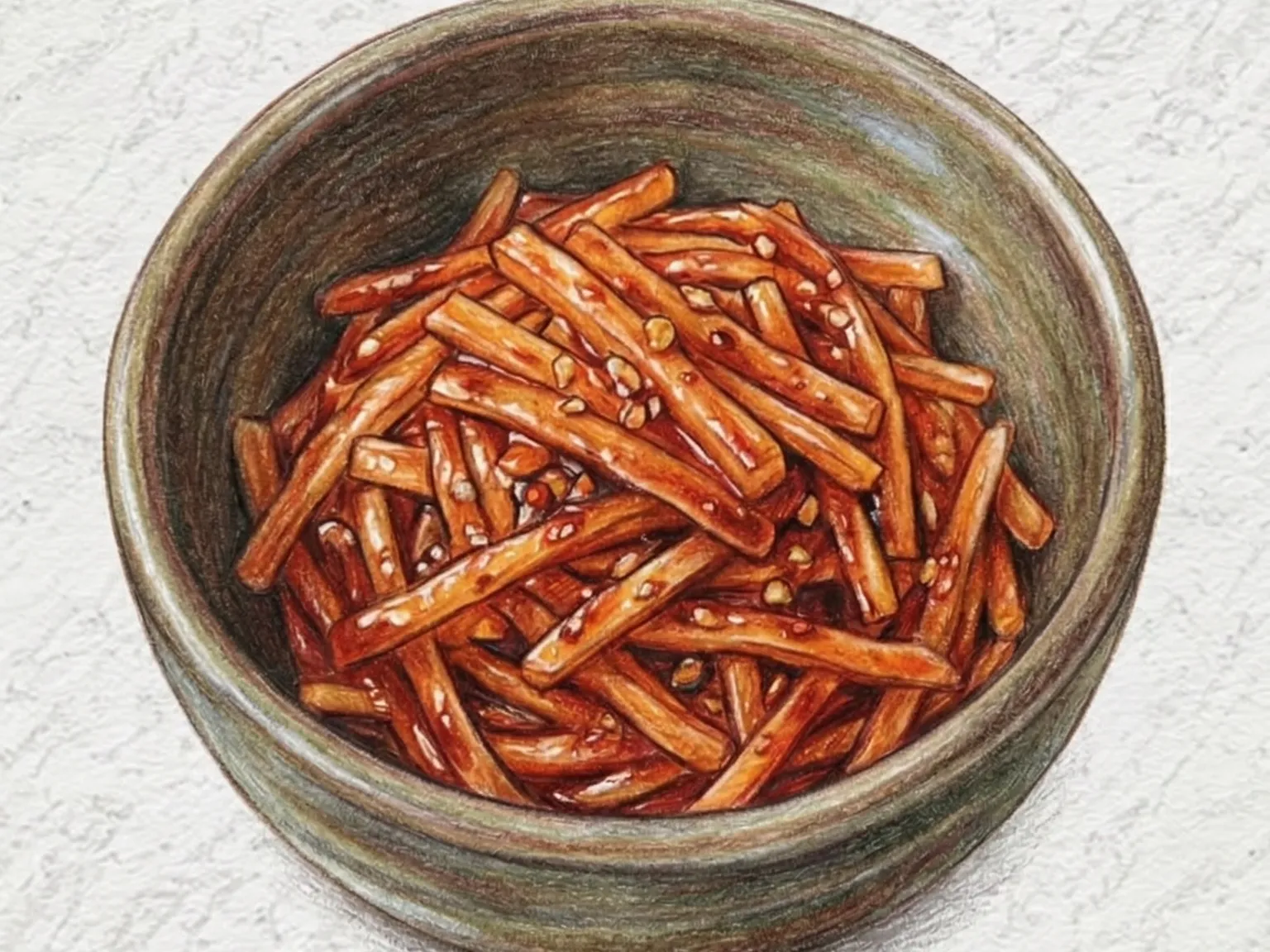
Doraji bokkeum begins by reducing the bitterness of 220 g balloon flower root before applying the gochujang sauce. Tear the root into thin strips about 5 cm long, sprinkle with 1 teaspoon salt, and rub firmly for 1 minute. Leave it for 10 minutes until the strands soften slightly, rinse twice under cold water, then squeeze with both hands until no water drips. Mix 1 tablespoon gochujang, 1 teaspoon gochugaru, 1 teaspoon soy sauce, 1 tablespoon oligosaccharide syrup, and 0.5 teaspoon minced garlic until smooth. Warm 1 tablespoon cooking oil over medium heat and stir 15 g green onion for about 30 seconds. Add the prepared doraji and cook for 2 minutes, watching for the edges of the strips to turn slightly translucent. Pour in all of the sauce and keep the strands moving for 3 minutes so the seasoning spreads without scorching. Raise the heat for the final 30 seconds to evaporate the liquid left on the pan bottom. Stop when the sauce no longer pools and instead forms a thin glossy coating on each strip, while the root still has a firm bite. If the rinsed doraji remains strongly bitter, extend the cold-water soak before it reaches the pan rather than trying to cover the bitterness with more sauce.
Korean Grilled Doenjang Onions
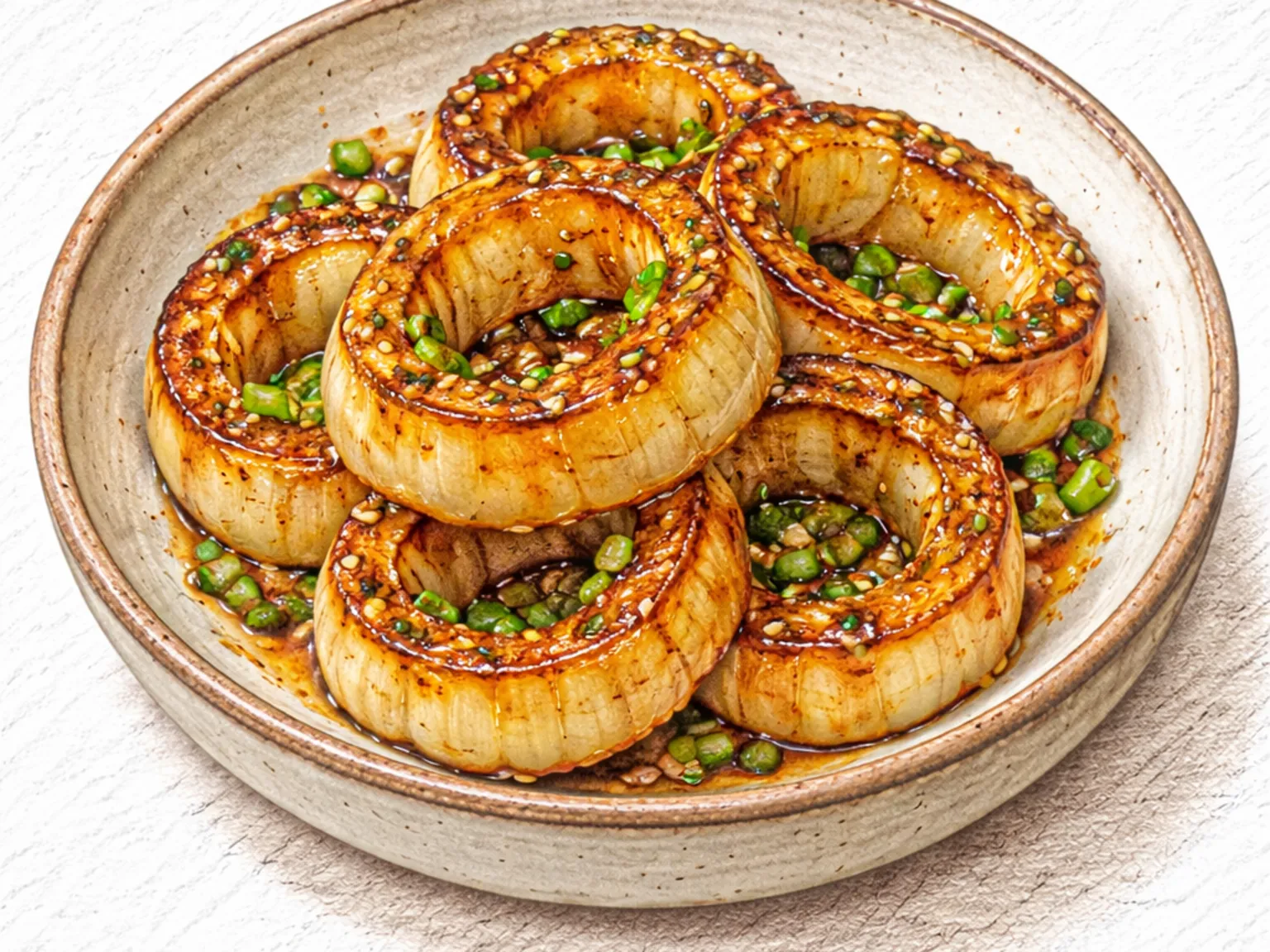
Onions are sliced into 2 cm rings, secured with skewers, and grilled over medium heat while being brushed with a sauce of doenjang, gochujang, minced garlic, perilla oil, and water. Over eight to ten minutes of flipping and re-brushing, the onion's moisture evaporates and its natural sugars concentrate into pronounced sweetness, while the doenjang chars lightly at the edges to add a toasted, earthy note. Perilla oil softens the salt intensity of the doenjang, and a finish of sliced green chili and ground sesame layers in mild heat and nuttiness. At 146 calories per serving, this is a low-calorie side dish that also works as a light accompaniment to drinks.
Korean Green Laver Pancake
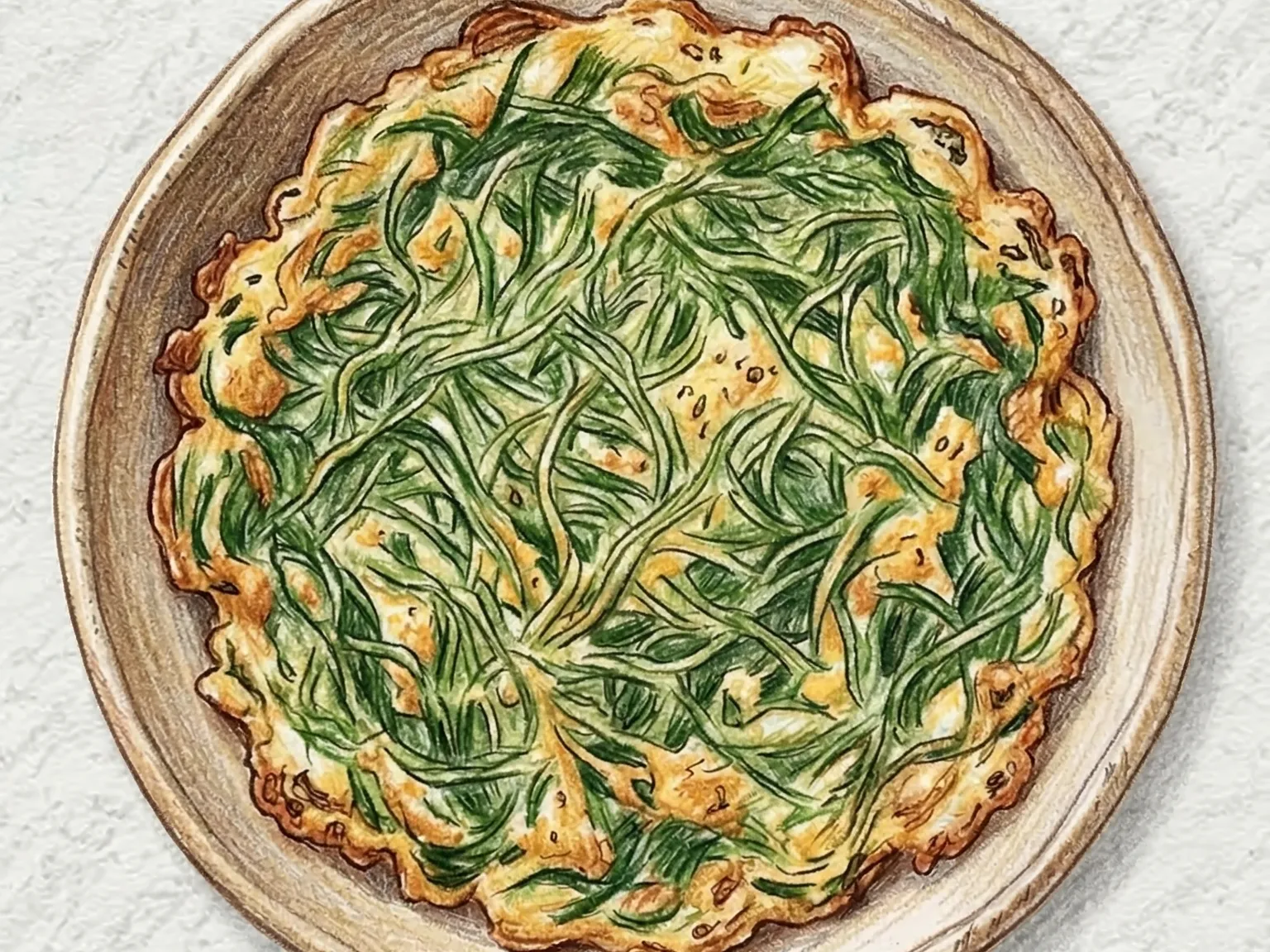
Parae-jeon is a Korean pancake that features 80 grams of fresh green laver folded into a pancake-mix batter alongside sliced onion and chopped green chili. Rinsing the laver two to three times removes sand and grit without stripping its briny ocean aroma. Keeping the batter on the thick side concentrates the seaweed flavor, preventing it from washing out during cooking. Pan-fried over medium heat for two to three minutes per side, the pancake develops crisp, golden edges while the interior stays tender and fragrant. Cutting it into bite-size pieces immediately after cooking preserves the crunch before steam softens the crust.
Korean Braised Beltfish with Potatoes
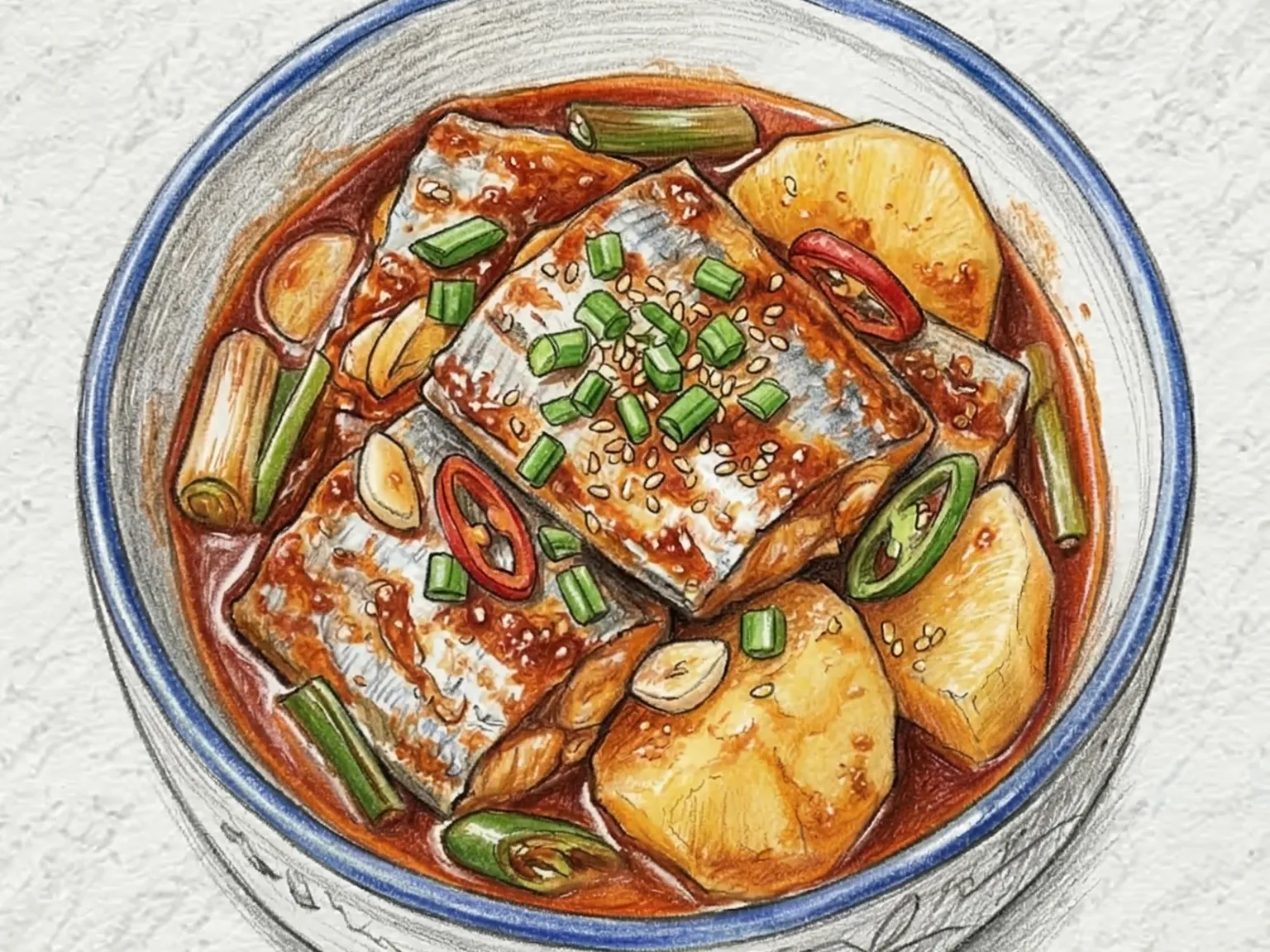
Galchi-gamja-jorim is a Korean braise of ribbonfish and potatoes cooked together in a soy-based sauce seasoned with gochugaru, garlic, and onion. Ribbonfish has naturally oily, tender flesh that holds together well during braising, and as the fat renders into the liquid it builds a deep seafood umami that defines the dish. The potatoes absorb this concentrated broth as they cook, becoming floury and well-seasoned all the way through rather than just on the surface. Onion breaks down and dissolves into the sauce as it reduces, contributing sweetness that balances the salt and spice. The heat level is adjustable: standard gochugaru gives color and mild warmth, while adding cheongyang chili peppers sharpens the spice. The dish is best served when the sauce has reduced to a thick, glossy consistency that clings to each piece. A spoonful of that sauce over plain rice rounds out the meal. Sliced Korean radish added to the pot introduces a clean, slightly peppery sweetness to the broth.
Korean Aralia Shoot Soy Pickle
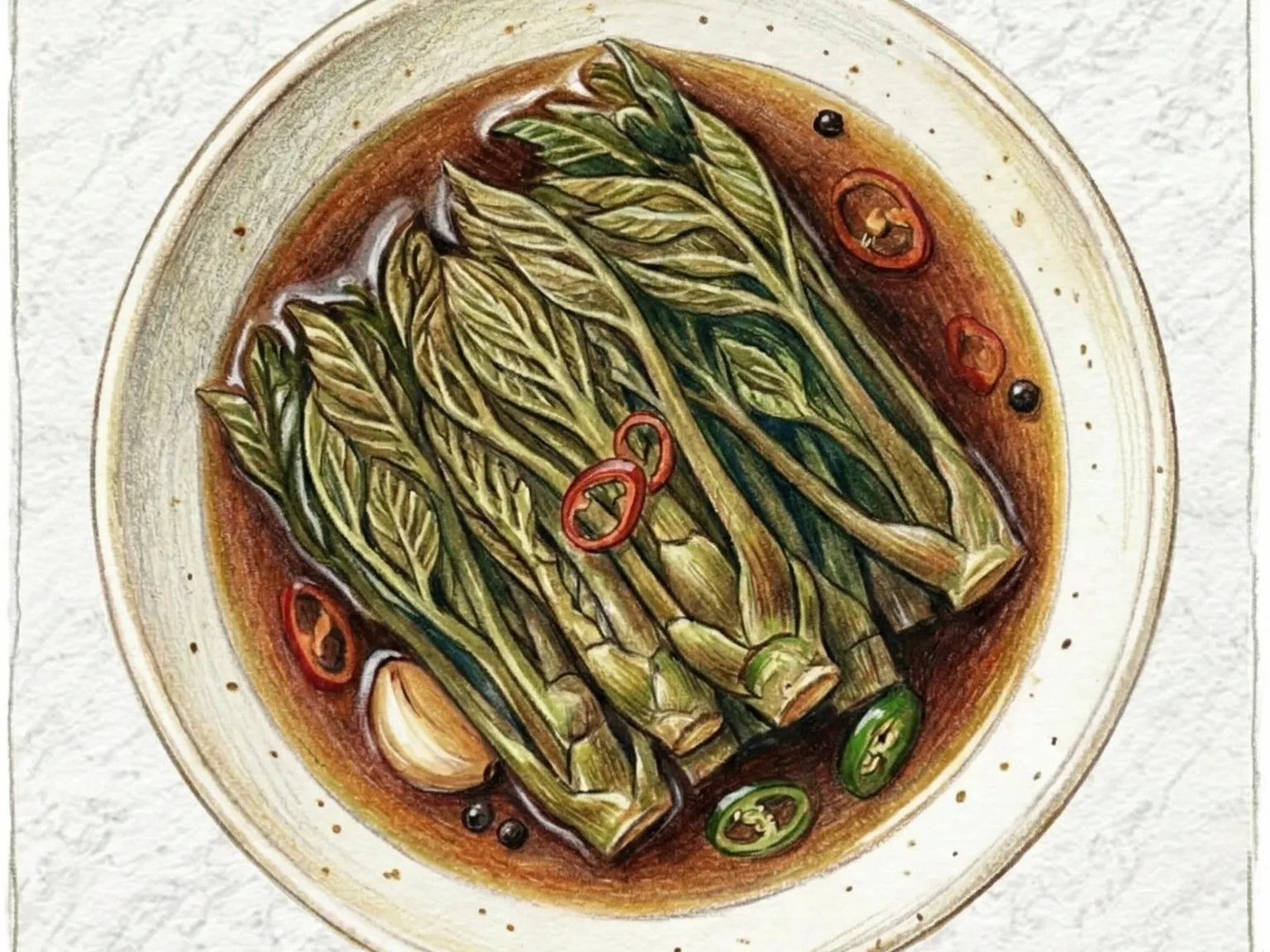
Durup jangajji is a soy-pickled preparation that extends the brief spring season of aralia shoots into a long-lasting banchan. Fresh shoots go into the brine raw - without blanching - so the woody, bittersweet fragrance and the crisp snap of the stems survive the curing process intact. The brine is brought to a boil with soy sauce, vinegar, and sugar, then cooled completely before being poured over the shoots; hot liquid would soften them immediately. Brine ratios matter: too much vinegar buries the aralia's distinctive aroma under acid. Garlic and cheongyang chili go in with the shoots and slowly mellow into the liquid over the first few days, leaving a trailing heat at the finish. Refrigerated, the jangajji keeps well over two weeks, which means a single batch prepared at peak spring season carries through until early summer. Beyond rice pairings, a few strips work well tucked inside grilled-meat wraps, where the pickled bitterness cuts through fat.
Gajami Sikhae
Gajami sikhae combines 600 grams of sashimi-grade flounder with salted radish, cooked sweet rice, Korean chili flakes, anchovy fish sauce, garlic, ginger, and scallions for refrigerated maturation. Pat the fish dry, coat both sides with 35 grams coarse salt, and refrigerate for 2 hours before wiping away released moisture and visible salt. Julienne 350 grams Korean radish, salt it lightly for 20 minutes, and squeeze without crushing the strands. Mix 180 grams cooled cooked sweet rice with 7 tablespoons Korean chili flakes, 50 milliliters anchovy fish sauce, 25 grams minced garlic, and 8 grams minced ginger until the grains are evenly loosened and coated. Fold in the drained radish and 80 grams scallions cut into 4-centimeter lengths, then add the cured fish last and mix without breaking it. Pack everything tightly into a glass or food-grade plastic airtight container, level the surface, and keep it between 0 and 4 degrees Celsius in the refrigerator for 5 to 7 days. Maintain the cold temperature throughout and remove each portion with a clean utensil.
Korean Tofu and Kimchi Stir-Fry
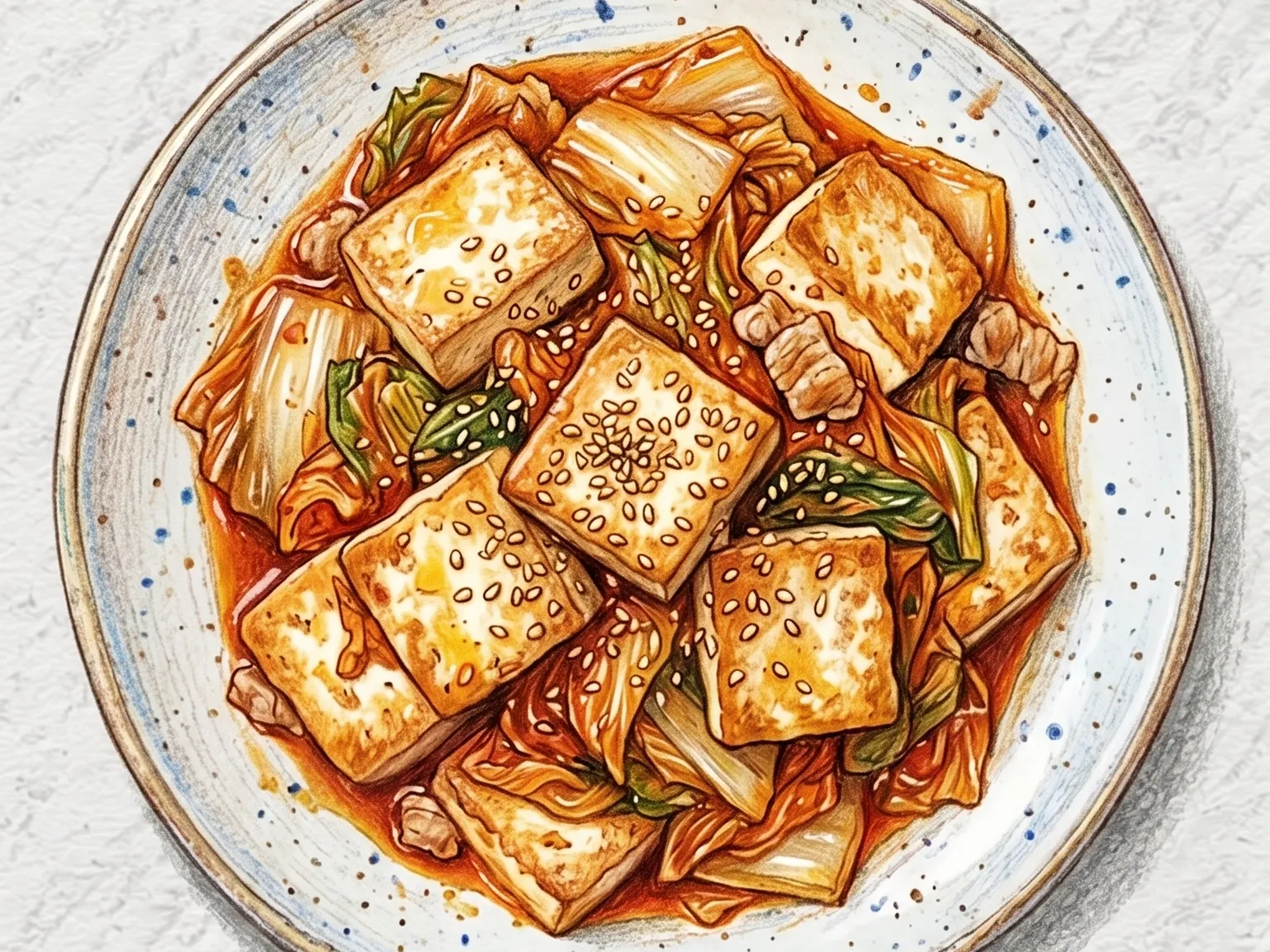
Dubu-kimchi-bokkeum is a Korean home-cooking classic that pairs pan-fried tofu with well-fermented napa cabbage kimchi in a quick stir-fry. The tofu is browned first on both sides until a thin crust forms, which keeps the pieces intact during the subsequent frying and gives each bite a firm exterior against the softer interior. A small amount of pork belly, rendered first, contributes fat that mellows the sharp acidity of the kimchi and acts as a flavor bridge between the two main components. The contrast between the mild, slightly nutty tofu and the tangy, spicy kimchi is the defining dynamic of the dish: neither dominates, and each makes the other taste more distinct. Deeply fermented kimchi, aged past the fresh stage, works best here because the stir-fry heat drives off the raw sourness and amplifies the underlying umami. Sesame oil and toasted sesame seeds are scattered over the finished dish, adding a nutty fragrance that rounds out the heat. Served as a snack with drinks or as a side over steamed rice, it occupies a reliable place on the Korean home table.
Korean Soy-Glazed Grilled Lotus Root
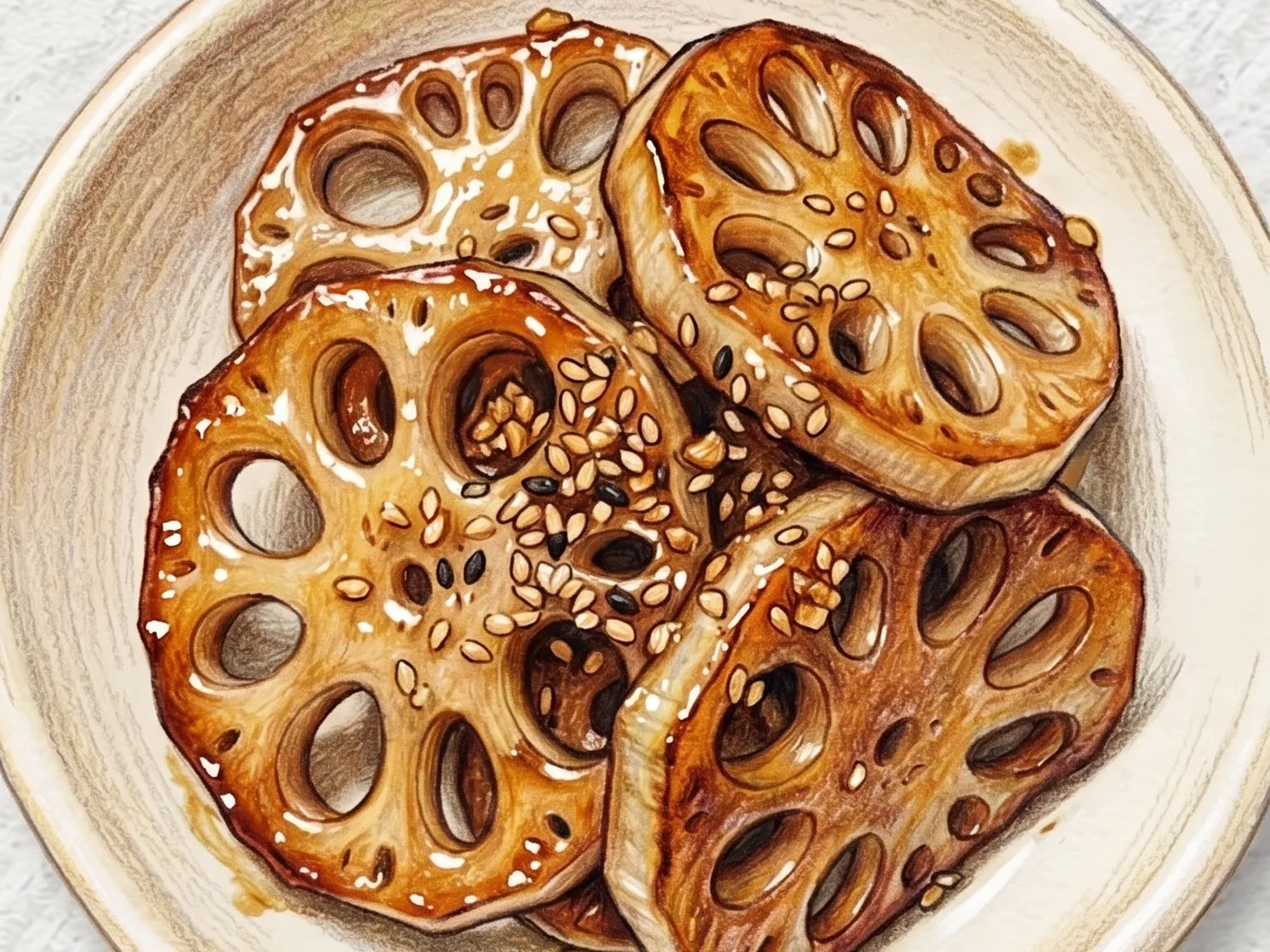
This side dish features lotus root sliced into rounds and pan-grilled with a sweet and salty soy glaze. The peeled root is sliced and soaked in vinegar water for ten minutes, then blanched in boiling water for two minutes to eliminate astringency while locking in its signature crunch. After draining, the slices are seared in a pan with cooking oil for two minutes on each side until lightly browned. The glaze, composed of soy sauce, oligosaccharide syrup, minced garlic, and sesame oil, is poured in over medium-low heat. It is critical to turn the slices quickly and remove the pan from the heat as soon as they become glossy, before the syrup hardens. The holes of the lotus root capture the glaze, distributing the savory-sweet flavor evenly in every bite. Sprinkled with sesame seeds, it is left to cool briefly to let the coating settle, making it a clean, non-sticky addition to daily meals.
Korean Perilla Leaf Chicken Jeon
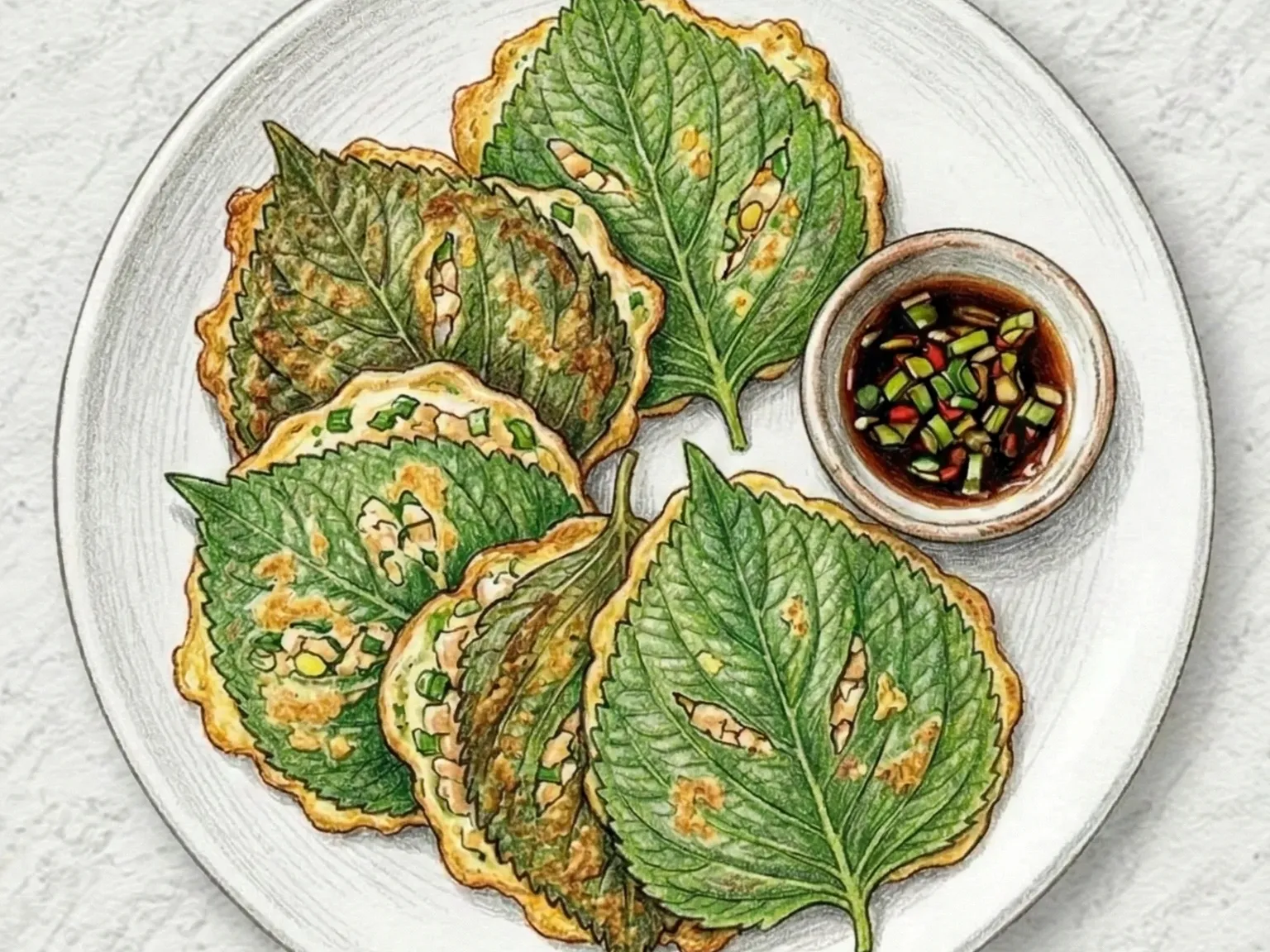
Perilla Leaf Chicken Jeon is a savory Korean pan-fried pancake stuffed with ground chicken and tofu. The filling is made by combining lean ground chicken with pressed, crumbled tofu, green onions, garlic, salt, and pepper, kneaded together until cohesive. This mixture is spread in a thin layer onto the floured side of perilla leaves, which are then folded in half and pressed to seal. To cook, the folded leaves are dusted with flour, dipped in beaten egg, and pan-fried over medium-low heat to ensure the egg coating does not burn while the interior cooks through. The mild flavor and soft texture of the chicken and tofu filling offer a balanced contrast to the herbal, aromatic qualities of the perilla leaves. To preserve the juices, the finished jeon should rest briefly and be cut into bite-sized pieces just before serving.
Korean Jeju-style Braised Hairtail
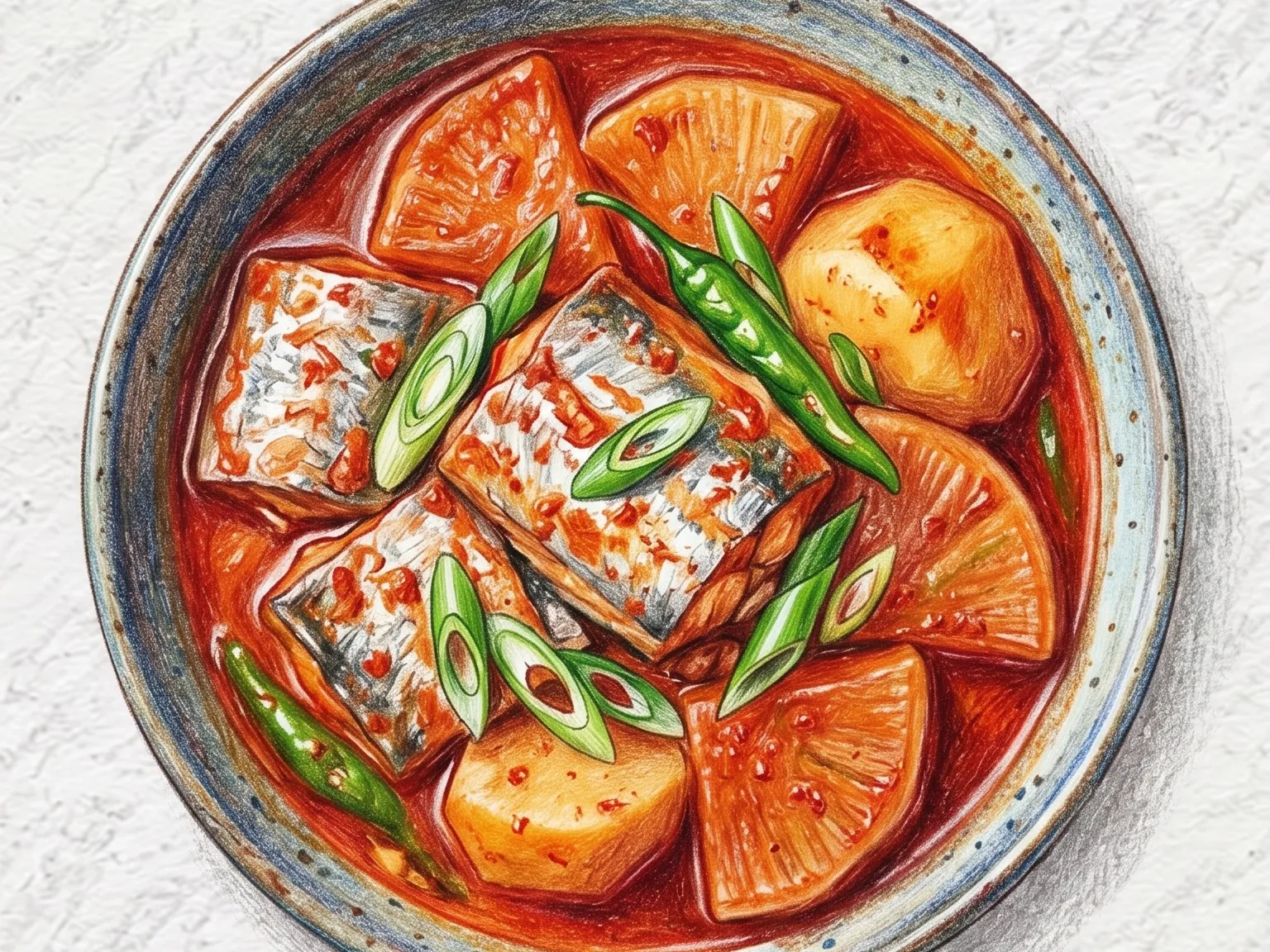
Galchi-jorim-jeju is a regional specialty of Jeju Island in which thick-cut hairtail is braised with radish and potato in a bold, deeply seasoned chili sauce. Unlike mainland versions, the Jeju style uses considerably more sauce and cooking liquid, producing a result that sits closer to a jjigae than to a dry braise, and it is common to eat the leftover sauce mixed into plain rice. Radish provides a cooling, clean sweetness that tempers the intensity of the chili and brings balance to the overall flavor, while potato absorbs the sauce and thickens the liquid naturally as it cooks. Jeju silver hairtail is prized for its thick, fatty flesh, which holds together without falling apart during the long braise and absorbs the pungent, layered sauce deeply into each piece. The result is a dish that is simultaneously fiery, savory, and faintly sweet.
Korean Soy-Pickled Eggplant
Gaji jangajji is a Korean-style pickled eggplant that starts by blanching the eggplant in boiling water for just over a minute to soften only the outer surface, leaving the inside intact. The briefly cooked eggplant is submerged in a pickling brine of soy sauce, vinegar, and sugar that has been brought to a boil and then cooled. The eggplant absorbs the brine rapidly and deeply, like a sponge, while holding a soft, yielding texture at its core. Vinegar sharpens the eggplant's otherwise flat flavor, and garlic together with cheongyang chili pressed into the brine build a low heat and quiet complexity that goes beyond basic preservation. Ready to eat after a single day in the refrigerator, this jangajji holds its texture for more than ten days when kept cold, which makes it a practical banchan to prepare in advance and pull out over multiple meals.
Korean Steamed Eggplant Vinegar Salad
Gaji-chorim-muchim takes eggplant in the opposite direction from bokkeum preparations, which rely on high heat and oil. Here, the eggplant is gently steamed and chilled before being dressed cold with a vinegar-forward sauce. The eggplant is halved lengthwise, scored on the flesh side, and steamed for eight minutes until the interior turns translucent and completely soft. After cooling fully, it is torn by hand along the grain into long strips, exposing a rough, irregular surface that grips the dressing. Soy sauce, rice vinegar, sugar, minced garlic, and gochugaru combine into a bright, tangy-spicy dressing that lifts the eggplant's subtle natural sweetness rather than masking it. Steamed eggplant torn into strips has a silky, almost slippery quality that is entirely distinct from stir-fried or grilled eggplant. The dressing can be made more generous to serve the dish as a refreshing cold salad style. A few drops of sesame oil and a scatter of sesame seeds finish it off with a nutty note. This banchan is especially well suited to Korea's hot and humid summer months.
Korean Crumbled Tofu Stir-fry
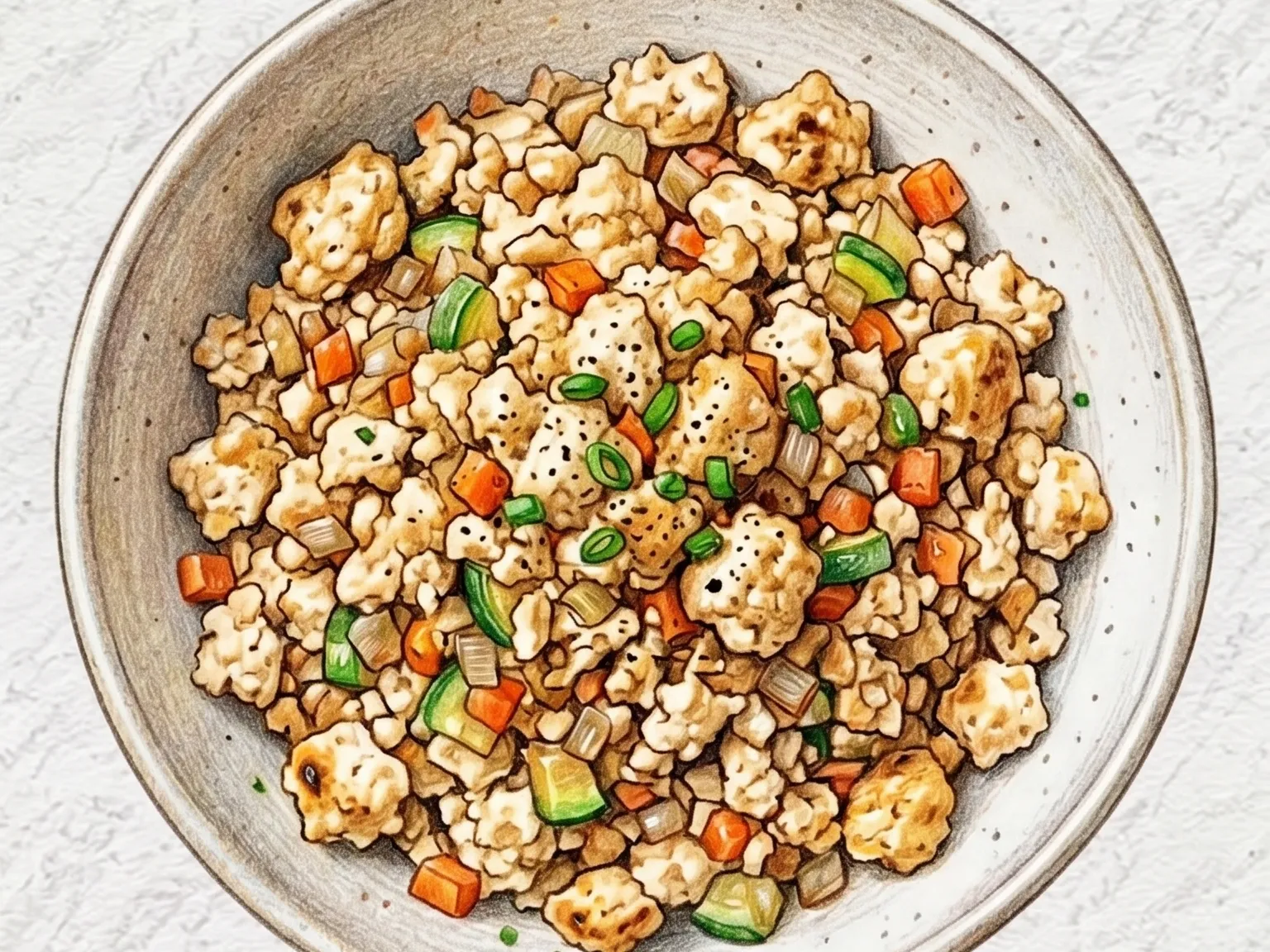
Dubu seoboro - crumbled tofu stir-fry - is a Korean banchan that transforms a block of tofu into something resembling a dry, granular scramble. The tofu is crumbled by hand into rough, irregular pieces rather than diced, creating a range of textures from large curds to fine crumbs that hold seasoning differently. Squeezed thoroughly in a cloth to remove as much moisture as possible, it then goes into a hot pan with diced carrot, onion, and zucchini. The key technique is cooking on high heat without stirring too often, allowing the tofu crumbles to develop lightly golden edges before soy sauce and sesame oil go in at the end. The result is a fluffy, granulated side dish that soaks into rice like a savory topping - satisfying without being rich. Popular in Korean daycare and school lunches because it delivers plant protein in a form that children eat willingly, and it travels cleanly in lunchboxes without leaking. The ingredient cost is low and the cooking time short, which makes it one of the first recipes to reach for when the refrigerator is running low on banchan.
Korean Stuffed Shiitake Jeon
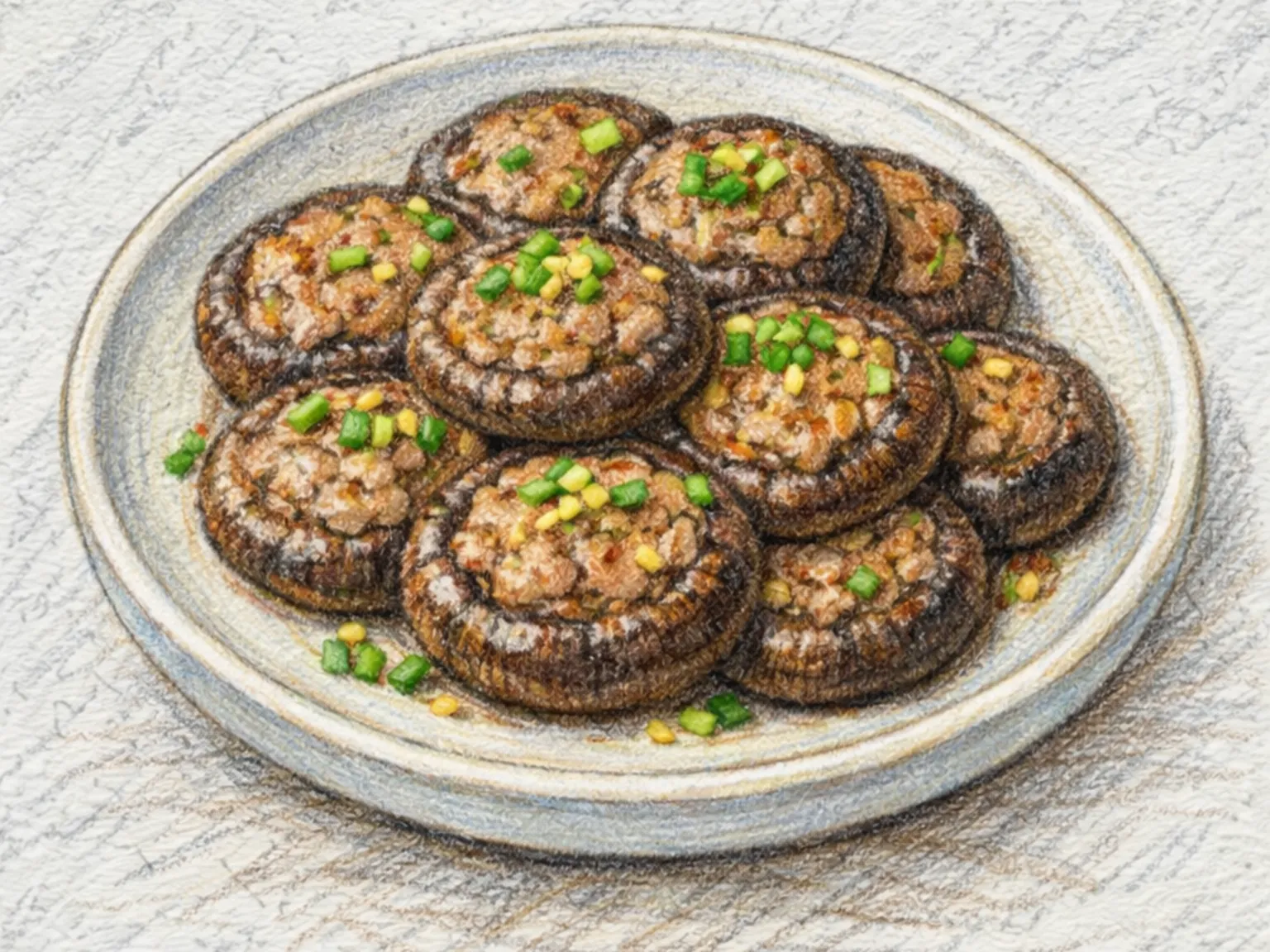
Pyogo-jeon is a Korean holiday dish of fresh shiitake mushroom caps stuffed with seasoned ground pork, coated in flour and egg batter, and pan-fried until golden. After removing the stems, the inner surface of each cap is dusted with flour-this thin starch layer acts as glue that prevents the meat filling from separating during cooking. Placing the meat side down first allows the filling to set from the heat before flipping, so the stuffed mushroom holds its shape throughout. Three to four minutes per side over medium heat is enough to turn the egg coating golden-brown while cooking the pork through completely. The shiitake's deep, earthy umami merges with the pork juices inside the sealed egg shell, delivering a concentrated savory bite.
About Side dishes
Great banchan balances seasoning with the natural flavor of each ingredient. Sesame oil, perilla oil, soy sauce, and fermented pastes work together to pack deep flavor into every small serving.