Stir-fry

Stir-fry Recipes

310 recipes. Page 10 of 13

Stir-frying is one of the most common cooking methods in Korean home kitchens. Classics like spicy pork stir-fry (jeyuk-bokkeum), squid stir-fry, and japchae showcase the range of flavors - from fiery gochujang-based sauces to sweet soy glazes.

Stir-fry
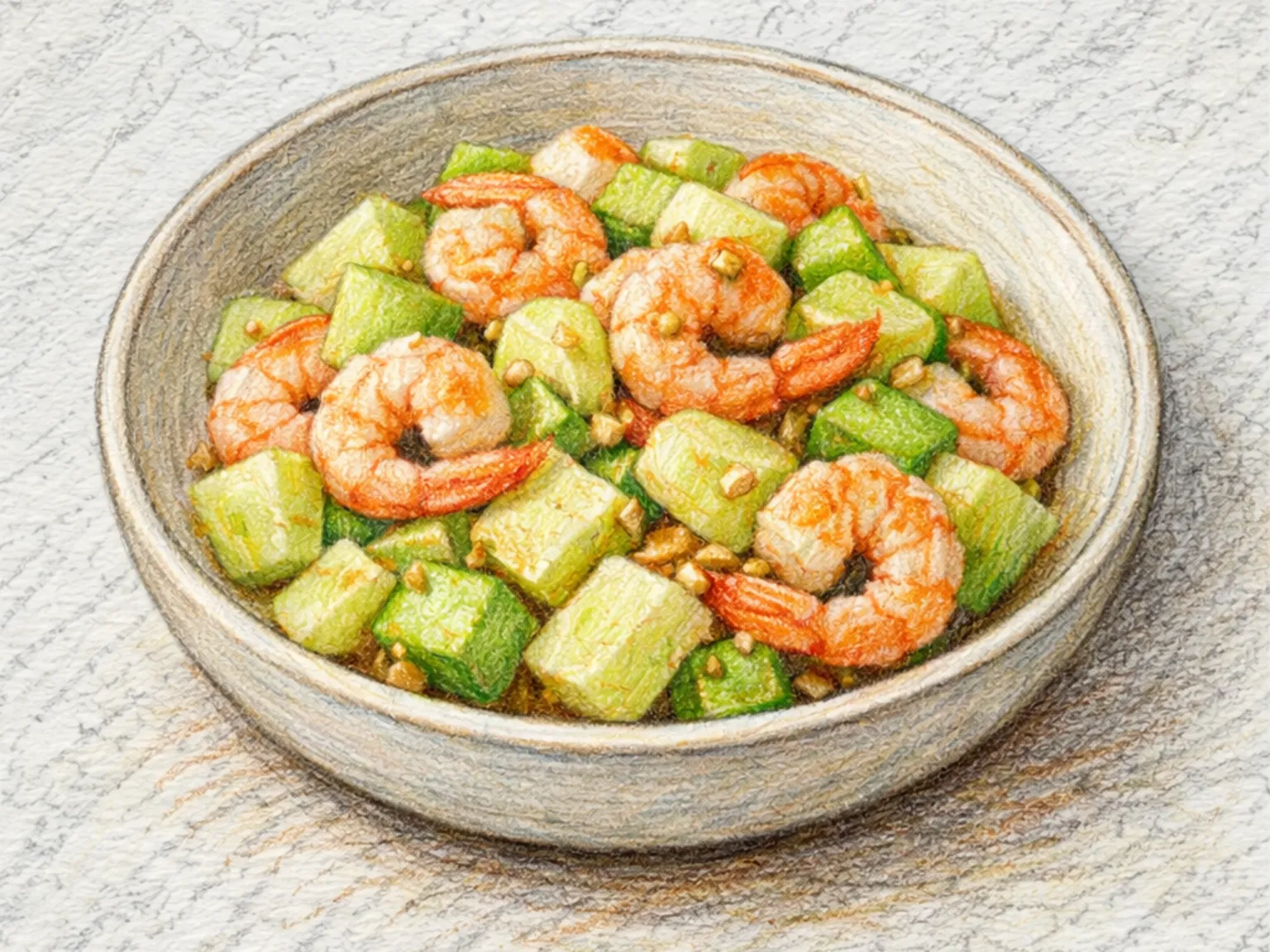
Korean Kollabi Saeu Bokkeum (Kohlrabi Shrimp Stir-fry)
Stir-fry Easy

Korean Kollabi Saeu Bokkeum (Kohlrabi Shrimp Stir-fry)

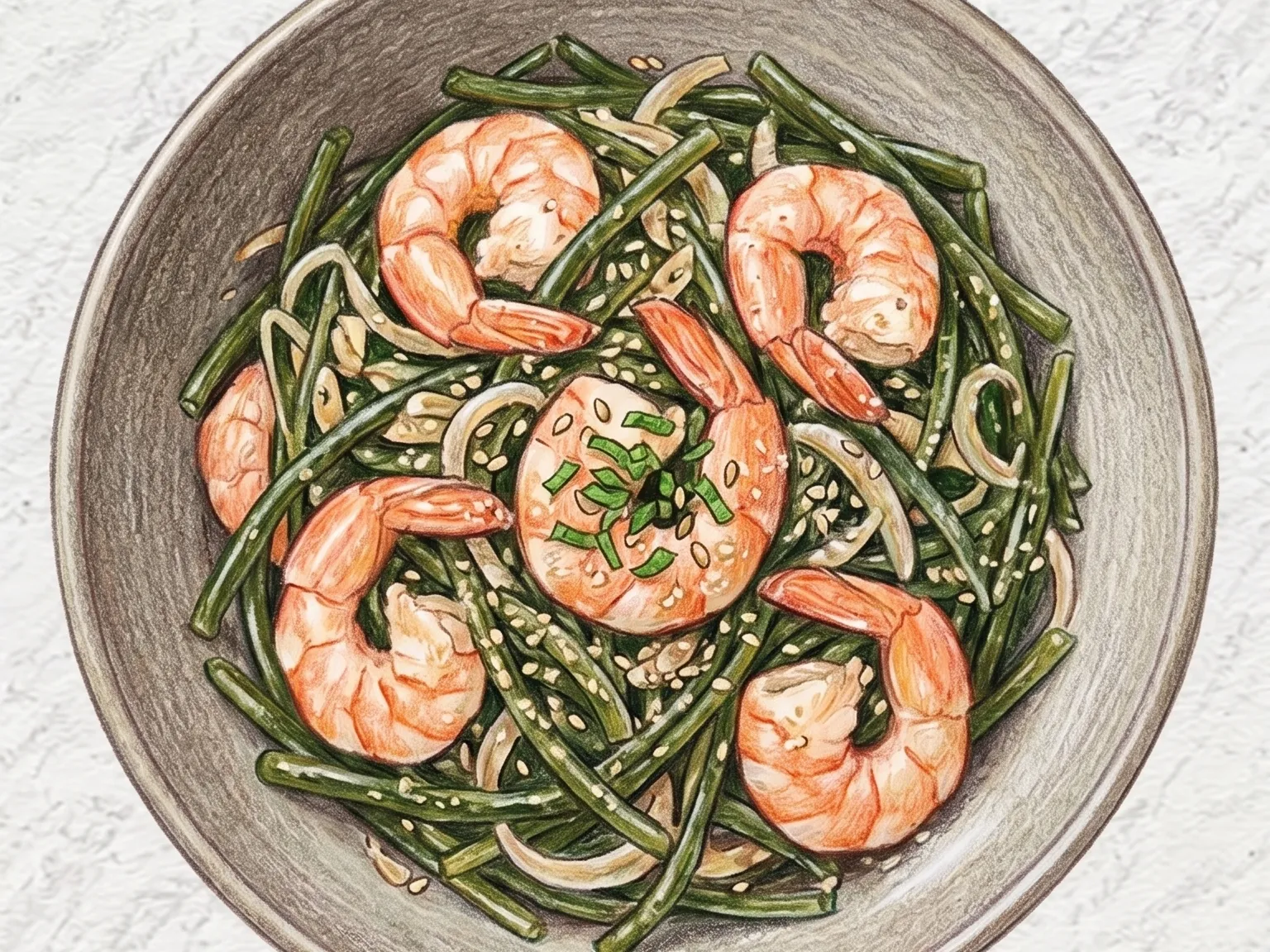
Kolrabi saeu bokkeum is a quick stir-fry of shrimp marinated in cooking wine and julienned kohlrabi, cooked over high heat in garlic-infused oil and seasoned with soy sauce and oyster sauce. Spreading the shrimp in a single layer and letting one side sear properly before flipping is the key to a firm, bouncy texture rather than a steamed one. Kohlrabi, a cross between turnip and cabbage, brings a natural sweetness and firm crunch that pairs well with the shrimp, and keeping the cooking time short preserves that crisp bite. Red bell pepper adds a contrasting color to the dish, and the deep savory quality of oyster sauce amplifies the shrimp's natural sweetness. Preheating the pan thoroughly before adding ingredients prevents excess moisture from releasing, which keeps the stir-fry dry and the textures distinct. Scallion and a finish of sesame oil round out the dish. The calorie count is low relative to the protein content, making it a practical side dish for everyday meals.

🥗 Light & Healthy 🏠 Everyday
Prep 12min Cook 10min 2 servings
Koneri (Thickened Eggplant and Pepper Stir-Fry)
Stir-fry Easy

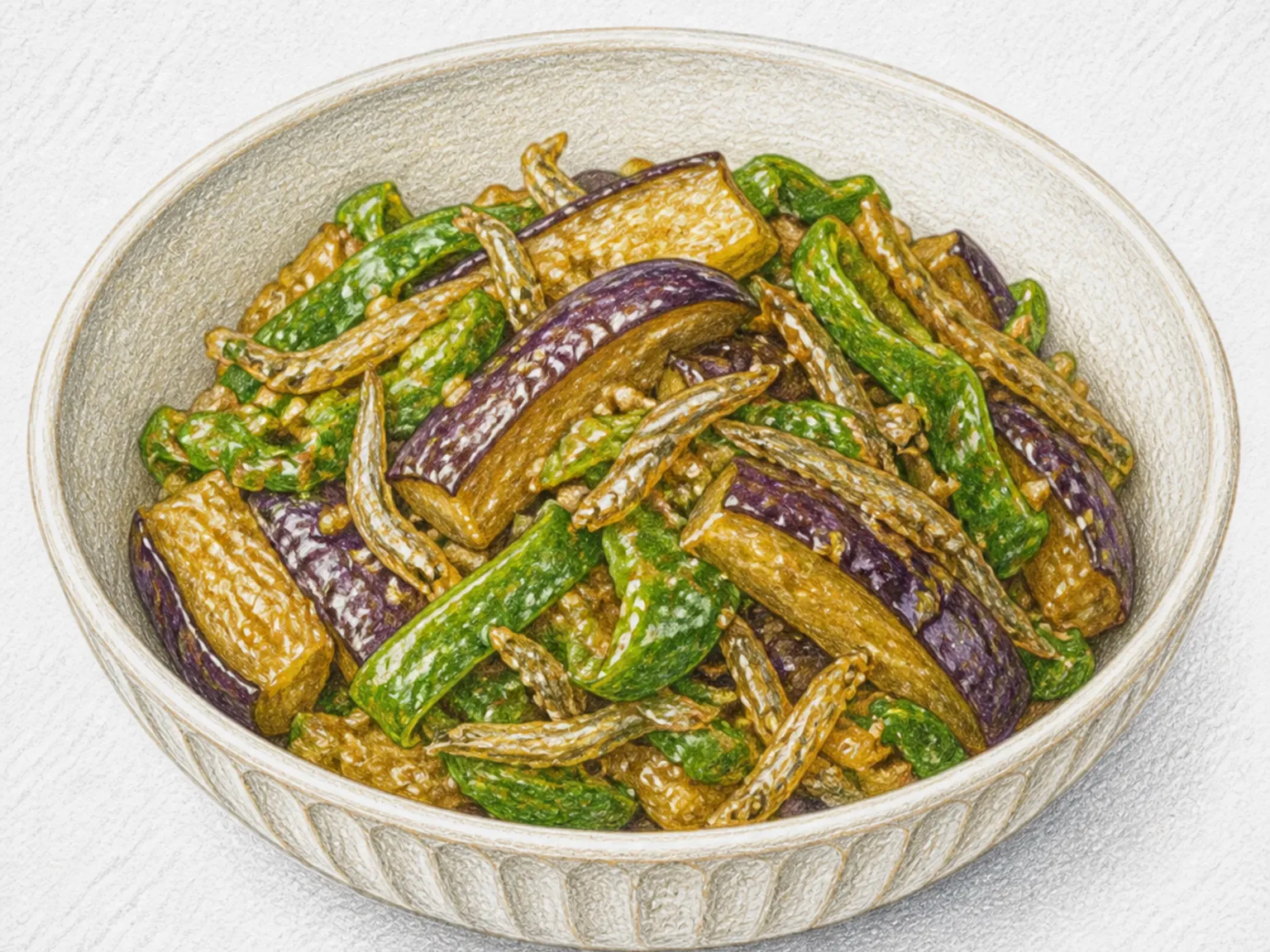
Koneri (Thickened Eggplant and Pepper Stir-Fry)

Koneri binds eggplant and green pepper with a thick miso and flour coating that must cook slowly after it enters the pan. Cut 3 eggplants into 7 mm half-moons or thick 5 cm strips. Cover them with cold water, leave them for 5 minutes, then drain and dry every surface thoroughly. Remaining water can make the oil spit and loosen the final coating. Remove the stems and seeds from 3 green peppers and cut them to a similar length. Pick out only the large innards and loose fragments from 10 g small dried sardines. In a bowl, combine 50 g wheat flour, 1.75 tablespoons miso, and 0.25 teaspoon sugar. Whisk in 50 ml water gradually until no lumps remain. Warm 2 tablespoons cooking oil in a wide pan over medium heat and add the sardines with the eggplant. Stir-fry for 5 minutes, extending the cooking by 1 minute only if the eggplant has not wilted. Add the peppers and keep them moving for another 2 minutes. Lower the heat before pouring the slurry across the pan. Scrape and stir continuously for 3 minutes. If a raw flour smell remains, continue for no more than 1 minute, stopping when the thick sauce clings evenly to the vegetables without loose water below. Higher heat at this stage can burn the bottom before the flour cooks through.

🏠 Everyday
Prep 15min Cook 15min 4 servings
Korean Spicy Pork Bean Sprout Stir-fry (Kongbul)
Stir-fry Easy

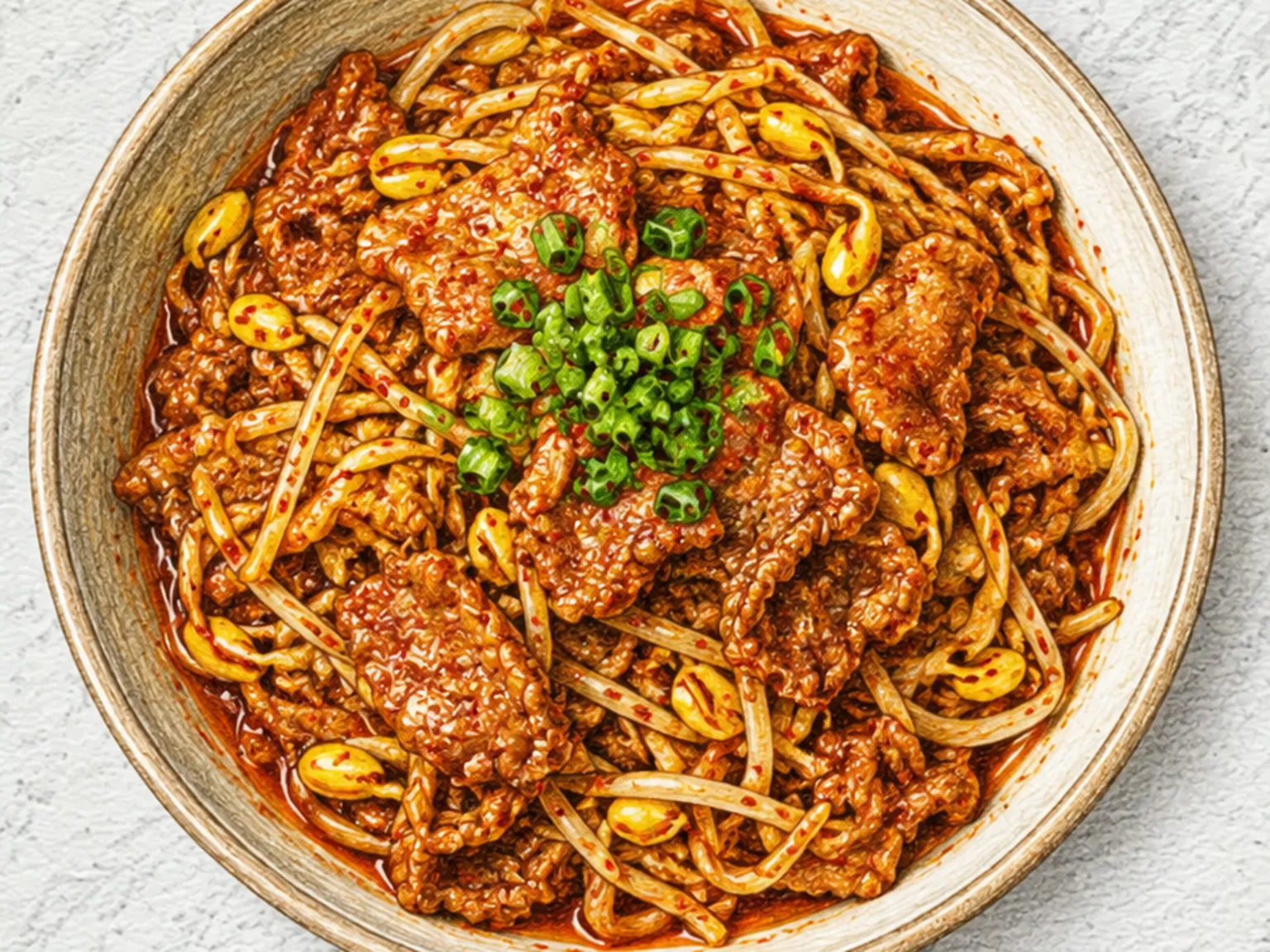
Korean Spicy Pork Bean Sprout Stir-fry (Kongbul)

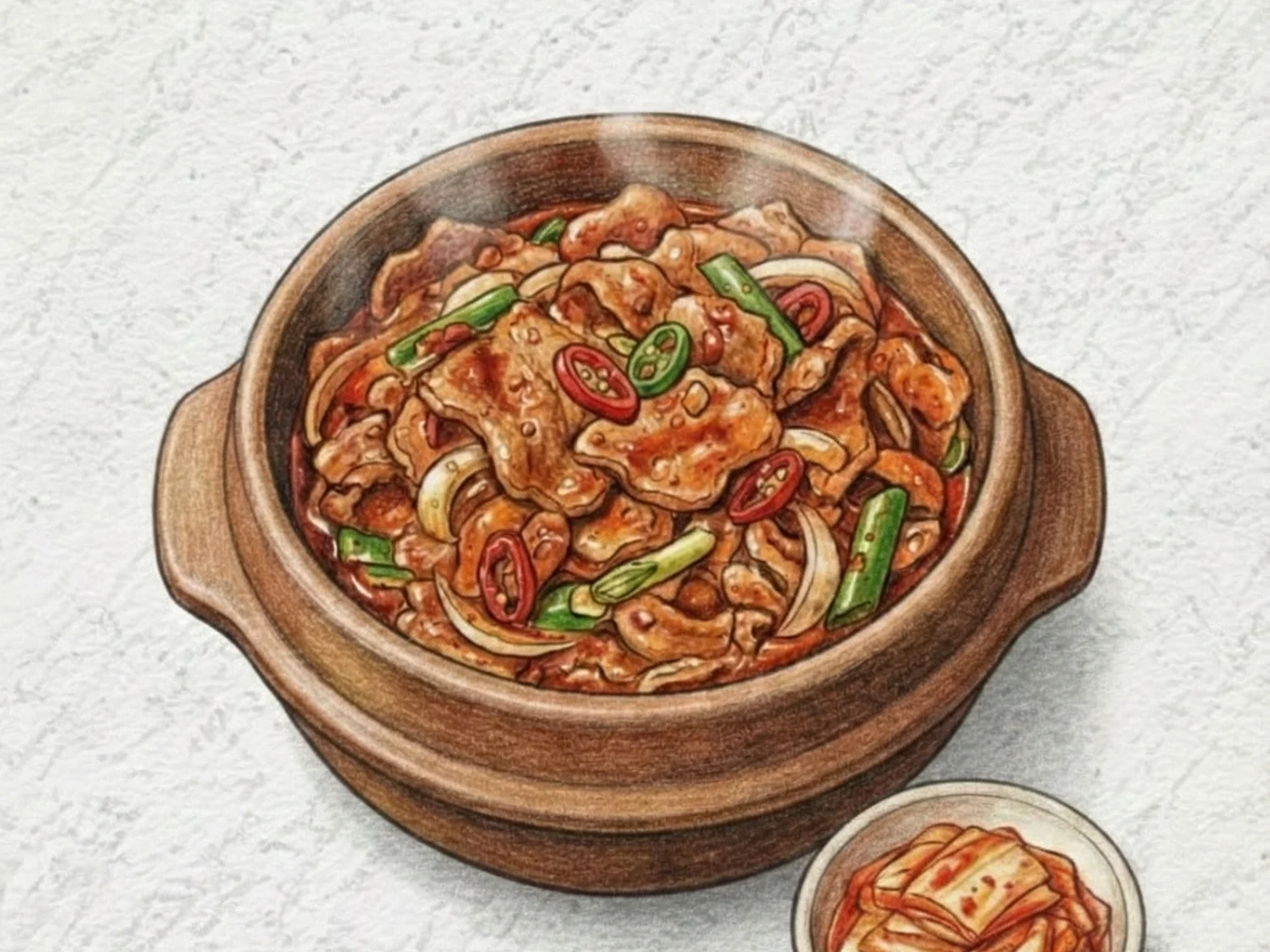
Kongbul reduces a gochujang sauce around pork shoulder before adding bean sprouts for only about 1 minute over high heat. Three hundred grams pork is cut into bite-size pieces, 120 g onion is sliced thinly, and 1 green onion is chopped and held for the final toss. The sauce combines 2 tablespoons gochujang, 1 tablespoon gochugaru, 1.5 tablespoons soy sauce, and 1 tablespoon sugar. It is mixed in advance until no sugar grains remain. The pork is spread as broadly as possible in a pan heated thoroughly over high and stir-fried for about 2 minutes. Once its outer color changes and fat begins to appear in the pan, the onion and sauce are added and the heat is reduced to medium. Scraping and turning for about 2 minutes coats the meat before the thick paste can stick firmly to the bottom. If the pork releases a large amount of liquid, the heat is raised again for a short reduction. Two hundred fifty grams bean sprouts go in only after the sauce looks thicker and glossy on the pork. They are tossed over high for about 1 minute, just until they begin to lose volume. The thickest pork piece is checked for doneness, and the green onion follows for 30 seconds. Delaying the sprouts gives the meat and sauce time to reduce first while limiting how long the sprouts remain over heat.

🏠 Everyday 🍱 Lunchbox
Prep 15min Cook 12min 2 servings
Korean Stir-Fried Soybean Sprouts
Stir-fry Easy

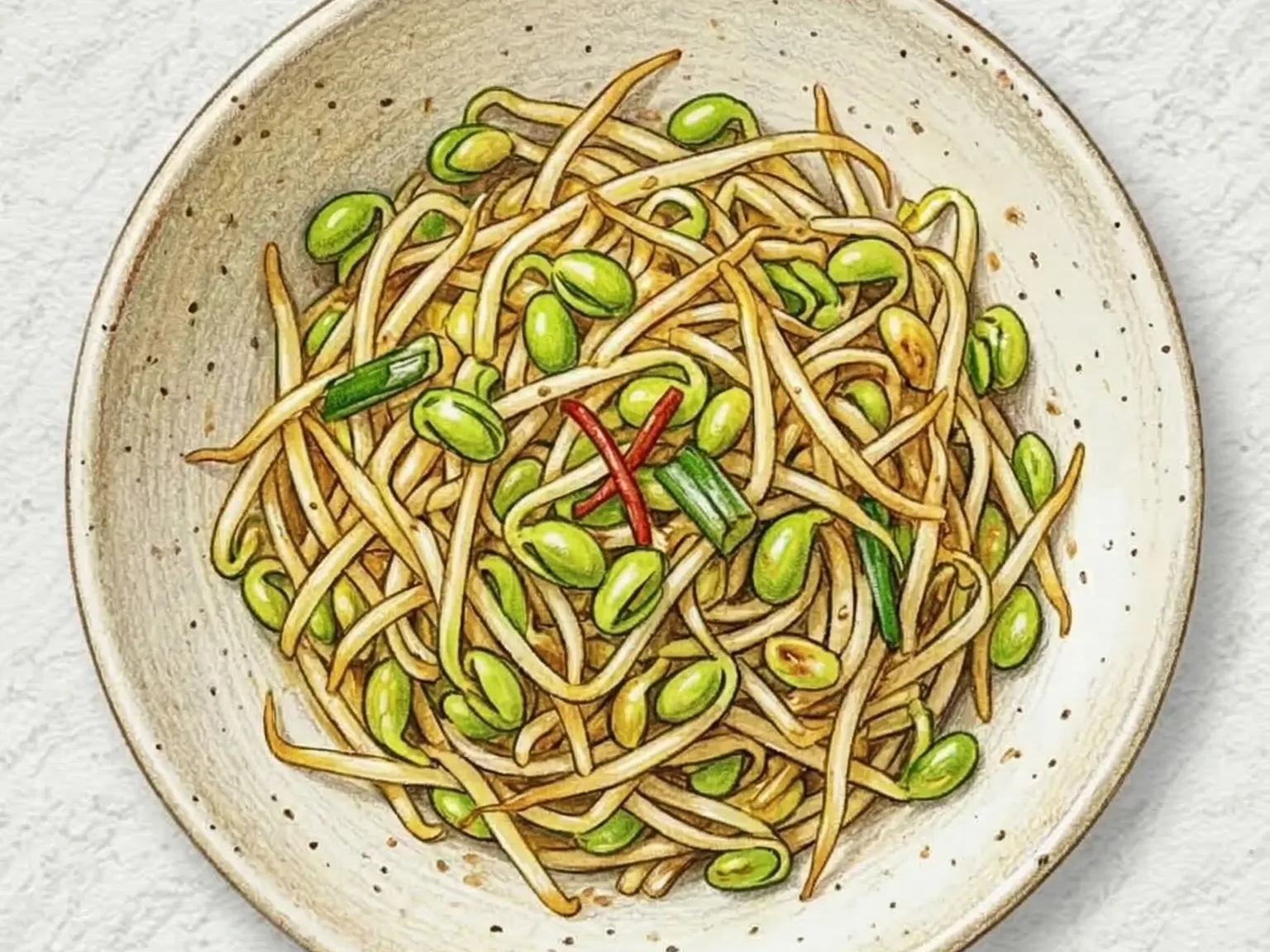
Korean Stir-Fried Soybean Sprouts

Kongnamul-bokkeum is stir-fried soybean sprouts cooked over high heat, and while the ingredients are identical to kongnamul-muchim, the cooking method produces a fundamentally different result. Muchim blanches the sprouts gently and seasons them cold, whereas bokkeum exposes them directly to a hot oiled pan surface, creating a faint caramelized char on the outside of each sprout that a steamed preparation never achieves. The single non-negotiable rule is to never put a lid on the pan. A covered pan traps the steam released by the cooking sprouts, effectively turning the stir-fry into a steamed dish. That trapped moisture not only destroys the crunch but also locks in the raw bean smell that correct technique is supposed to eliminate entirely. Garlic goes into the oil first for twenty seconds to lay an aromatic foundation before any sprouts touch the pan. Once the sprouts are added, two minutes of constant tossing over maximum heat is the upper limit before the stems begin to soften and lose their snap. Any longer and the texture slides toward mushy. Gukganjang, the lighter Korean soup soy sauce, seasons the dish with a cleaner, less assertive saltiness than standard soy sauce and leaves the color pale enough that the finished dish looks fresh rather than dark and heavy. Sliced scallions added in the final seconds contribute green color and a mild allium note. When a bag of bean sprouts is the only vegetable left in the refrigerator, this five-minute banchan is the most practical solution, and the technique, once learned, applies to almost any tender leafy vegetable.

🏠 Everyday 🍱 Lunchbox
Prep 8min Cook 7min 2 servings
Korean Beef Brisket and Bean Sprout Stir-fry
Stir-fry Easy

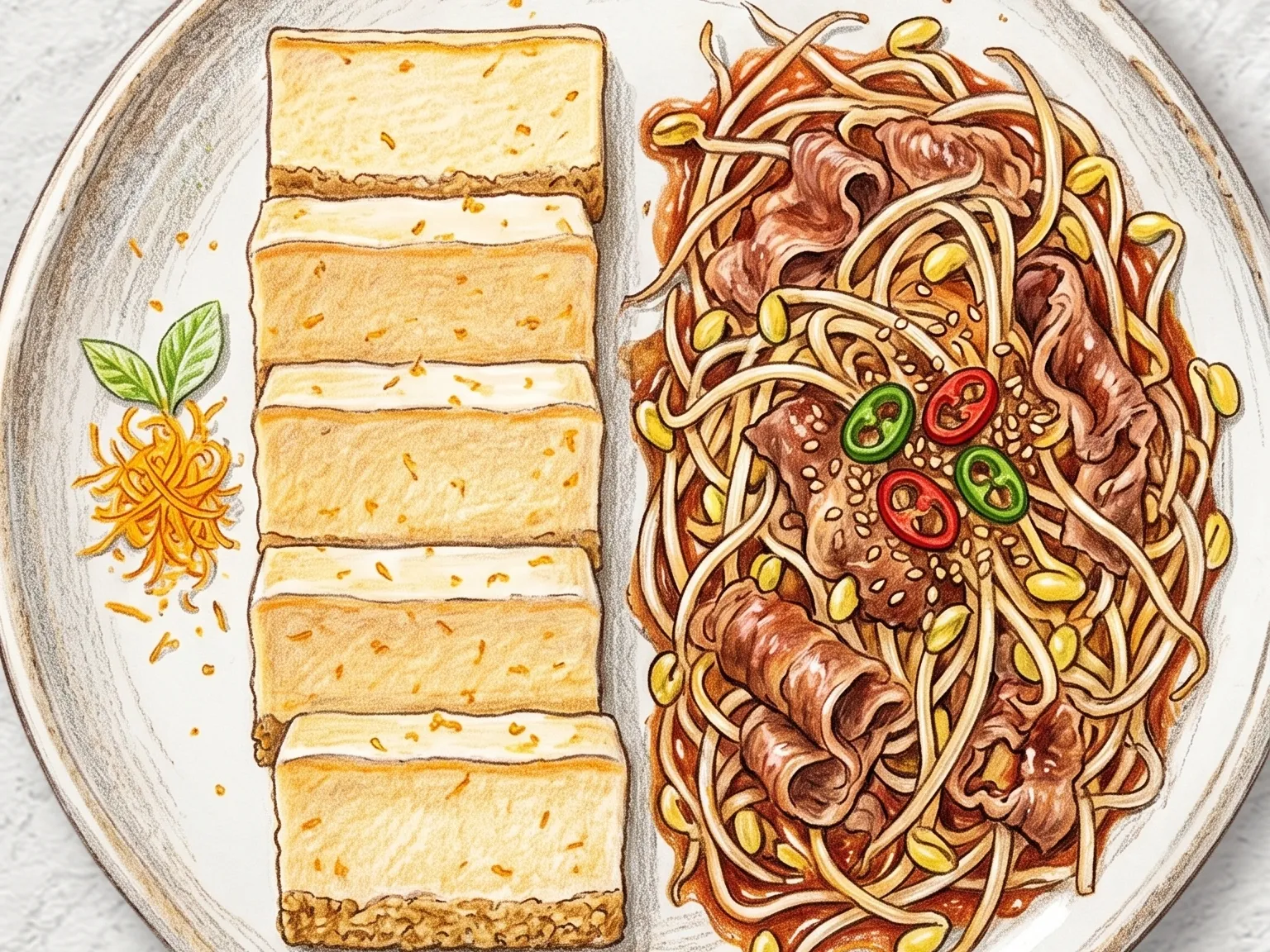
Korean Beef Brisket and Bean Sprout Stir-fry

Bean sprout and brisket stir-fry retains a controlled amount of rendered beef fat to loosen the chili sauce and cook the sprouts without separate oil. Two hundred fifty grams bean sprouts are rinsed, cleared of loose skins, and drained in a sieve for about 5 minutes. Forty grams green onion is cut diagonally. One tablespoon each gochujang, gochugaru, and soy sauce is mixed with 1 teaspoon minced garlic until the paste has no lumps. A pan is heated thoroughly over high, and 200 g beef brisket slices are spread across it for 1 to 2 minutes. Brown edges and a thin layer of fat on the pan bottom indicate that the sauce can follow. If a deep pool forms, the heat is lowered briefly and only part of the fat is blotted with a paper towel. Enough remains to fry and distribute the seasoning. The bean sprouts and prepared sauce are added together and turned quickly over high for about 3 minutes. Moisture released by the sprouts loosens the paste as it coats both the beef and the stems. The green onion then cooks for 1 more minute. The burner is switched off while the bean sprout stems still retain a crisp bite, and 1 teaspoon sesame oil is folded through off the heat. Keeping only a thin layer of beef fat provides the cooking medium without leaving the pan excessively oily.

🍺 Bar Snacks 🏠 Everyday
Prep 12min Cook 9min 2 servings
Kottu Roti (Sri Lankan Shredded Flatbread Stir-Fry with Egg)
Stir-fry Medium

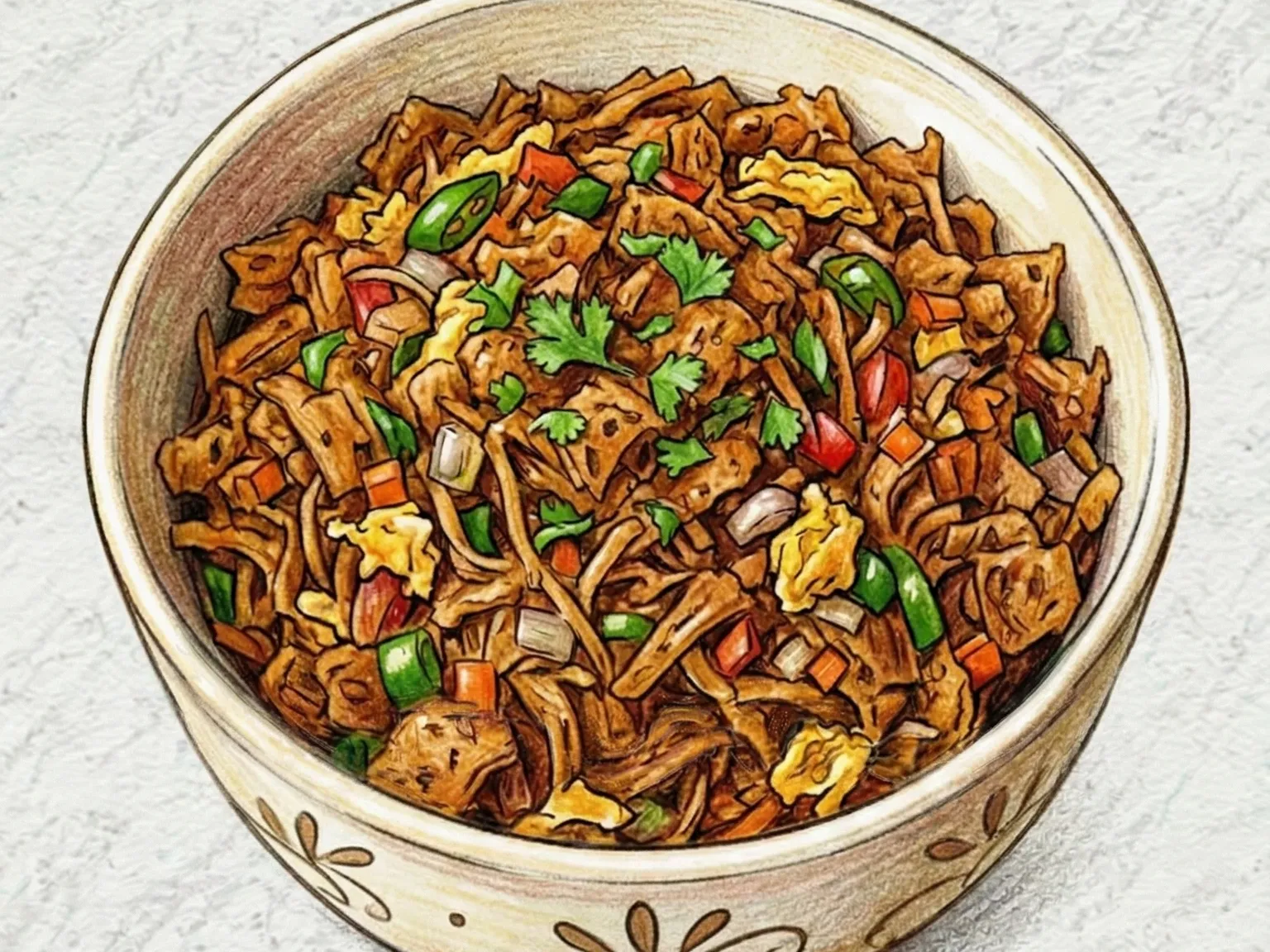
Kottu Roti (Sri Lankan Shredded Flatbread Stir-Fry with Egg)

Kottu roti turns 3 roti or paratha into a high-heat stir-fry with onion, cabbage, carrot, and egg. Stack the flatbreads, cut them into 1 cm strips, then cut across the strips to make small squares. Separate stuck pieces and loosen dry edges by hand before cooking so the seasoning can reach each piece. Preheat a wide pan over high heat for 1 minute, swirl in 1.5 tablespoons oil, and cook 100 g onion for 2 minutes. The onion edges should be translucent before the other vegetables enter. Add 120 g cabbage and 70 g carrot and keep them moving over high heat for 3 minutes. Spread the vegetables across the pan as they soften so their moisture evaporates rather than soaking the bread later. Push the vegetables aside, crack 2 eggs into the open space, and scramble only until half set before folding them through the vegetables. Add the chopped roti with 1.5 teaspoons curry powder, 0.5 teaspoon chili flakes, and 1 tablespoon soy sauce. Press, chop, and turn everything with a spatula for 2 minutes, extending the stir-fry by no more than 1 minute if pale pieces remain. Stop as soon as the bread has absorbed the seasoning and its edges are lightly crisp. Transfer it out of the hot pan immediately because residual heat can make the roti tough.

🏠 Everyday 🌙 Late Night
Prep 20min Cook 15min 2 servings
Kung Pao Chicken
Stir-fry Medium

Kung Pao Chicken

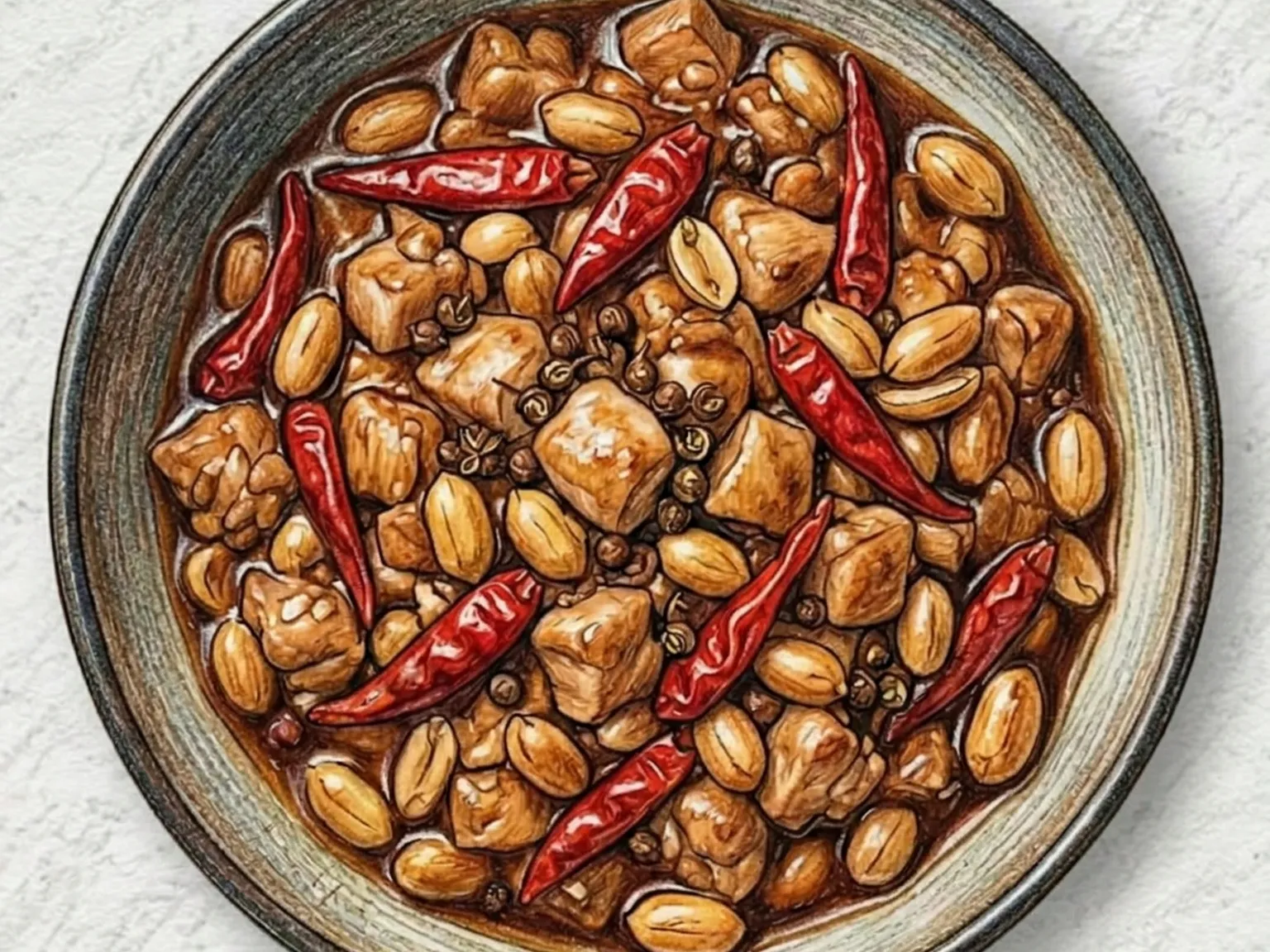
Kung pao chicken is one of the defining dishes of Sichuan cuisine, built around diced chicken, roasted peanuts, and dried chilies in a sauce that hits spicy, sweet, sour, and numbing at the same time. The chicken is cut into small cubes and given a brief marinade of soy sauce and cornstarch, which seals moisture in and creates a light coating that takes on color quickly in a screaming-hot wok. Dried red chilies and Sichuan peppercorns are fried in oil as the very first step, pulling their heat and the distinctive mala tingling sensation into the fat before anything else goes in. This flavored oil becomes the foundation the entire dish is built on. Soy sauce, black vinegar, and sugar are added at the end and reduced into a glossy glaze that coats every surface. Roasted peanuts go in last so they stay crunchy, and chopped scallion brings a clean, fresh finish. The interplay of sharp chili heat, tongue-numbing peppercorn, tangy vinegar, and toasty peanut in a single bite is what carries this dish beyond Sichuan into kitchens worldwide.

🍺 Bar Snacks 🎉 Special Occasion
Prep 20min Cook 10min 2 servings
Dry Mala Stir-fry (Sichuan Numbing Spice Dry Wok)
Stir-fry Medium

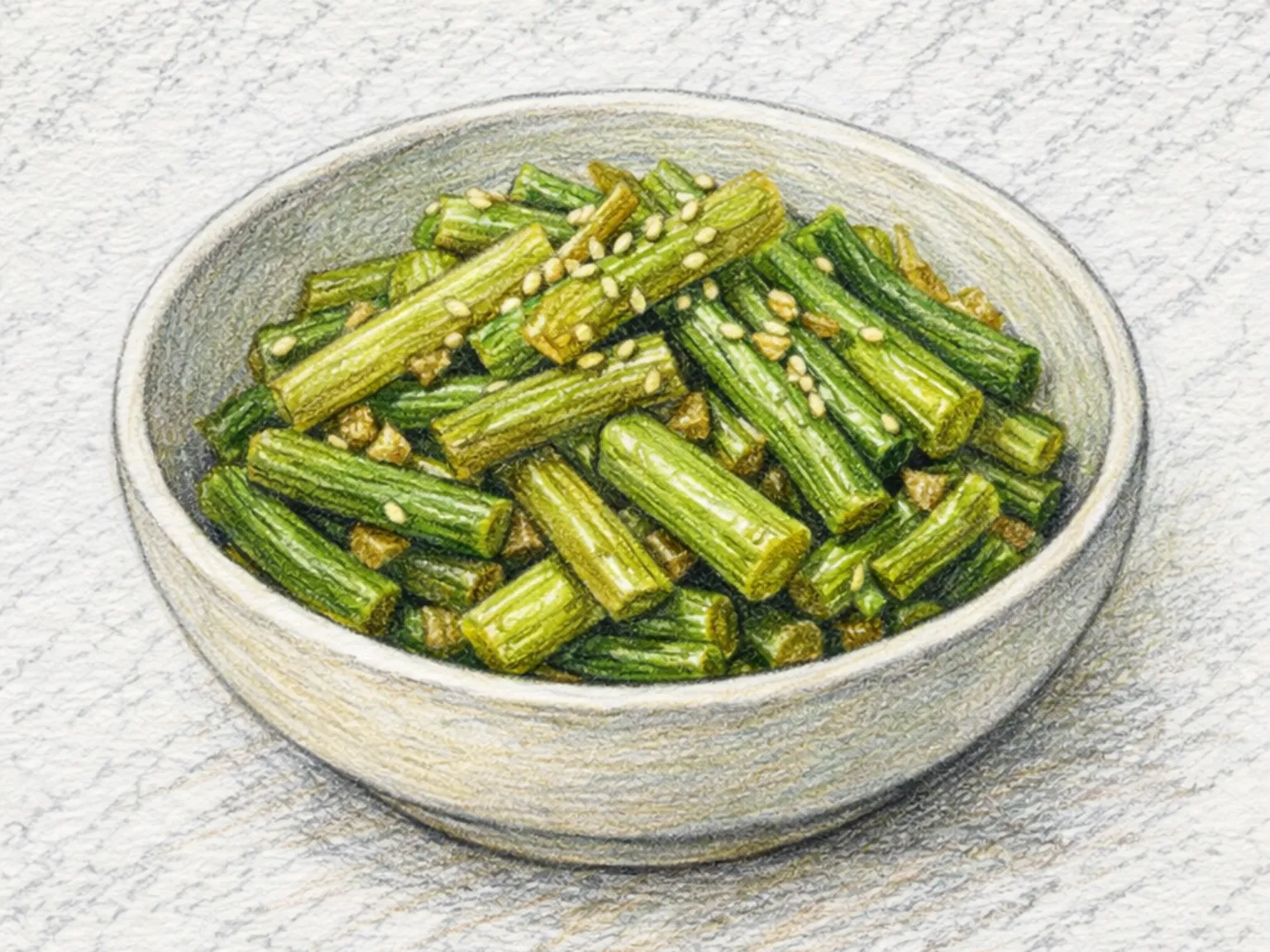
Dry Mala Stir-fry (Sichuan Numbing Spice Dry Wok)

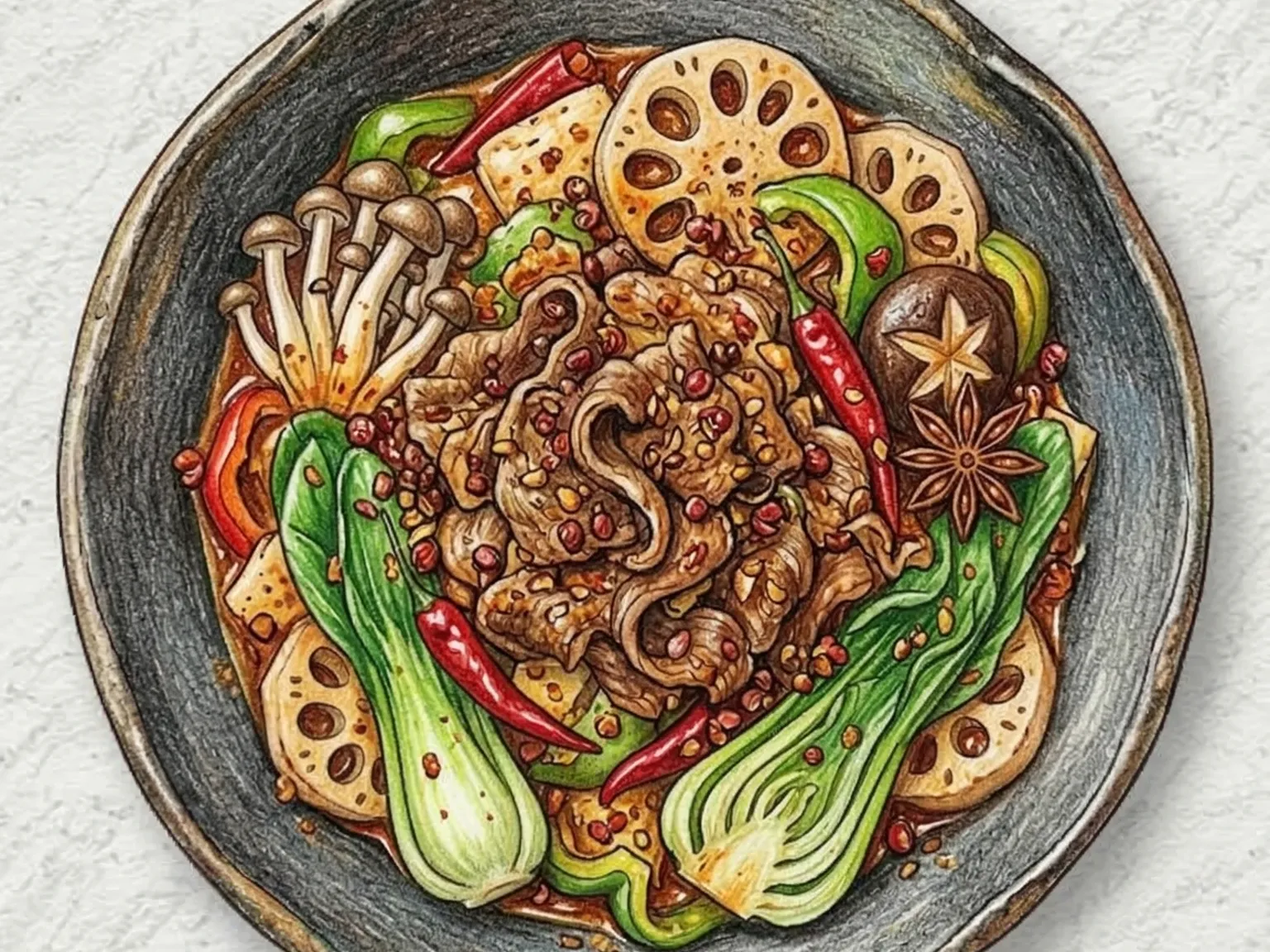
Mala xiangguo starts with dry beef and firm vegetables, separates the bok choy stems from the leaves, and adds the mala sauce in portions so it coats rather than pools. One hundred eighty grams beef is pressed dry with paper towels. One hundred twenty grams lotus root and 100 g shiitake are sliced thinly, while 120 g bok choy is divided into stems and leaves and shaken free of wash water. One and a half tablespoons cooking oil and 1 tablespoon minced garlic are warmed over medium in a wide pan. After about 30 seconds, when the garlic edges are lightly golden, the beef is spread without overlap and the heat is raised to high. It cooks for about 1 minute, only until the outside turns brown, and is then pushed to the side. The lotus root and shiitake are stir-fried for about 2 minutes while visible moisture evaporates. Bok choy stems enter first, followed by the leaves 30 seconds later. If the ingredients crowd the pan and trap steam, they are cooked in separate rounds. Two tablespoons mala sauce is added gradually rather than poured into one spot, with each addition tossed across the surfaces. The burner is switched off when the thickest beef piece is cooked through and almost no loose sauce remains on the bottom. One teaspoon sesame seeds finishes the pan. Drying the ingredients and ordering them by firmness keeps the stir-fry from collecting excess liquid.

🏠 Everyday 🌙 Late Night
Prep 20min Cook 12min 2 servings
Korean Stir-fried Garlic Scapes
Stir-fry Easy

Korean Stir-fried Garlic Scapes

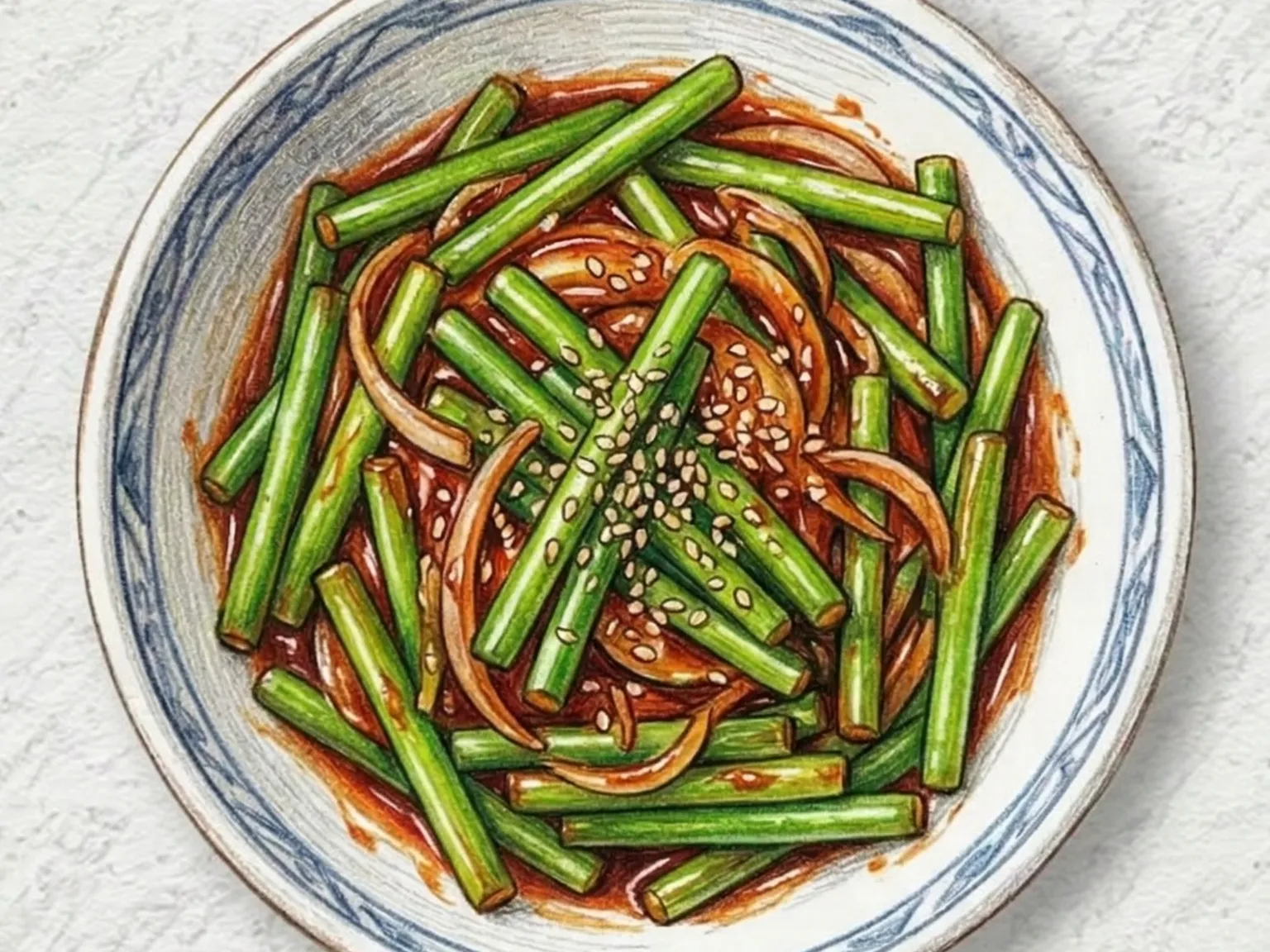
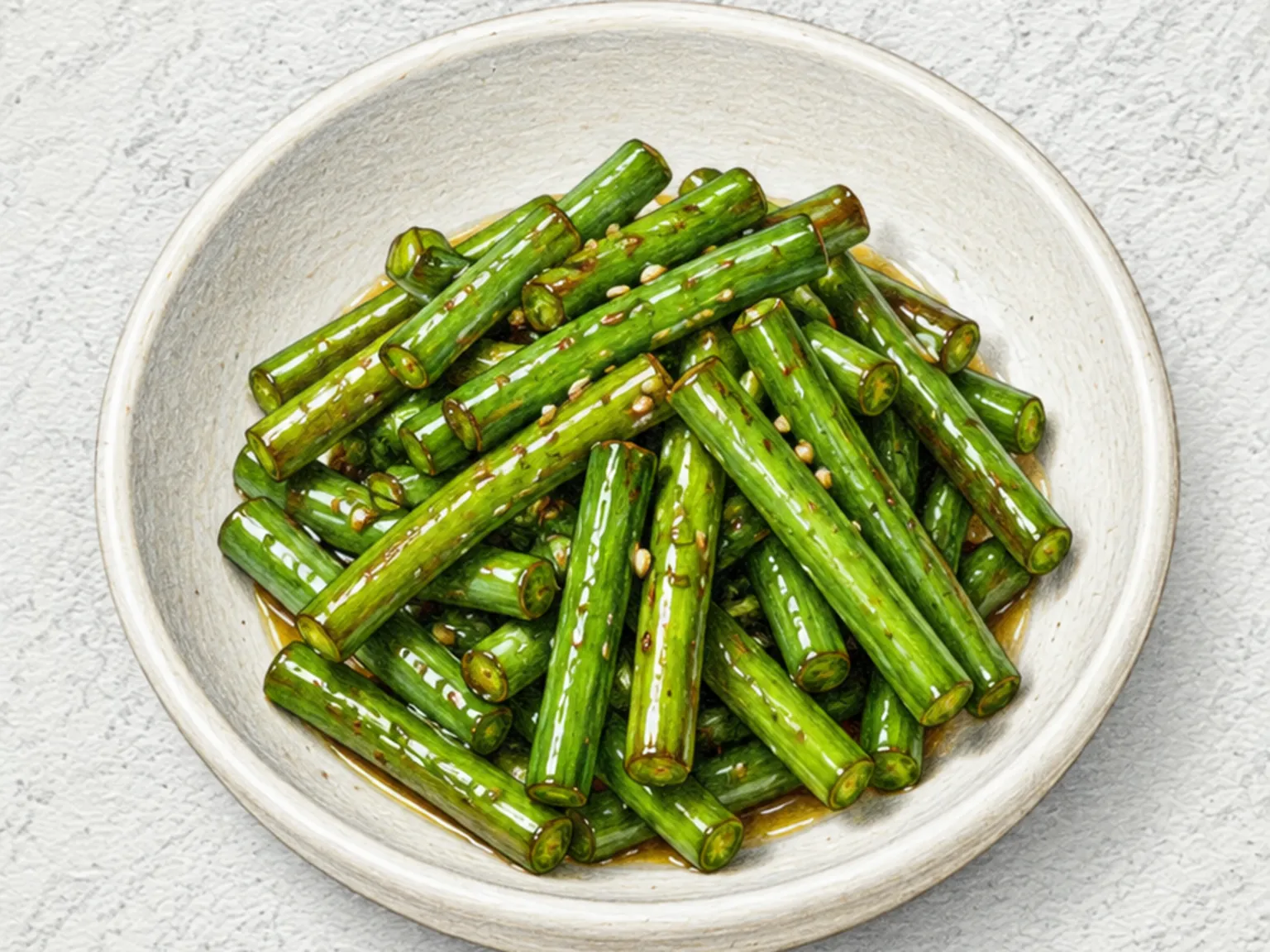
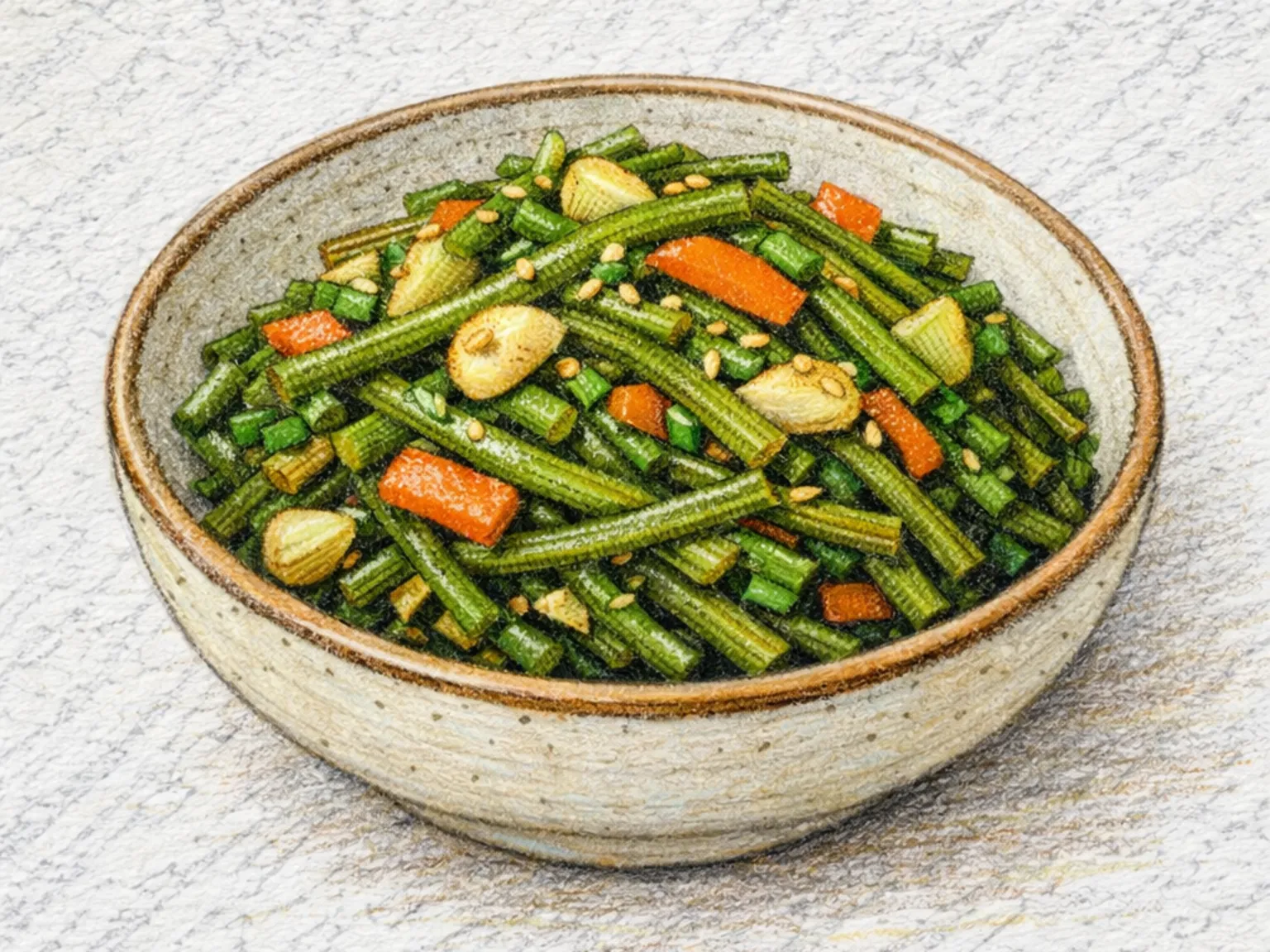
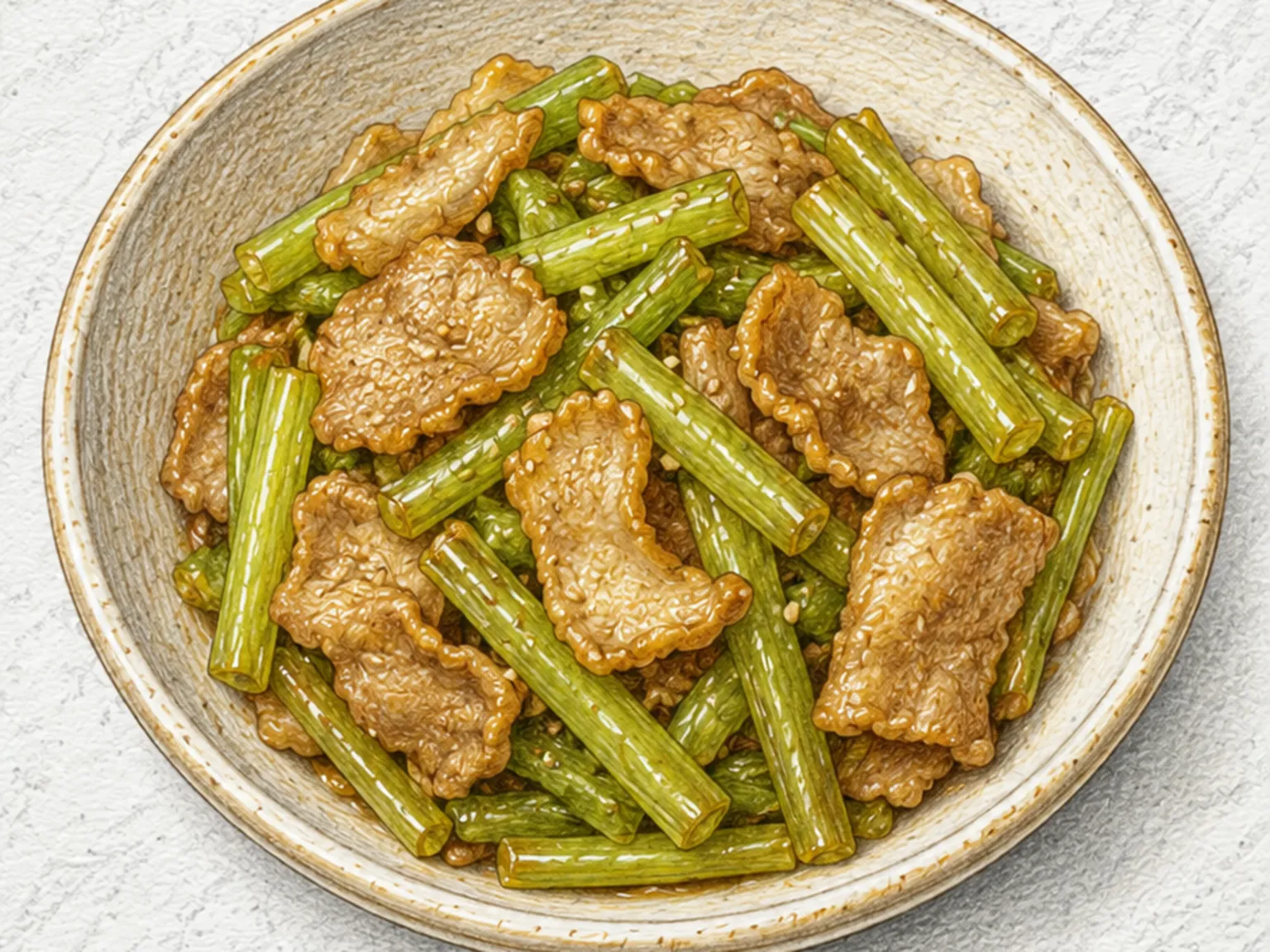
Maneul jong bokkeum is a Korean banchan of garlic scapes cut into 4 cm lengths and stir-fried with onion, then coated in a sauce of gochujang, soy sauce, and oligosaccharide syrup. The pungent, sharp character of garlic scapes meets gochujang's spicy heat and the syrup's glossy sweetness, producing a balanced three-way flavor of salty, sweet, and spicy that is immediately addictive. Timing is the most important variable in making this dish properly. Garlic scapes become tough and fibrous if overcooked, so pulling them from the heat while the color is still a vivid, saturated green is essential. When cooked to the right point, the exterior of each scape is lacquered with the glossy sauce while the interior stays crisp and slightly snappy. The onion caramelizes gently as it cooks, adding a background sweetness that rounds out the sauce without competing with the garlic. Sesame seeds scattered over the finished dish add a layer of toasted nuttiness. The banchan holds well in the refrigerator for three to four days, making it a practical dish to prepare ahead of time. It works equally well as a rice accompaniment or as a drinking snack.

🏠 Everyday 🍱 Lunchbox
Prep 10min Cook 8min 2 servings
Korean Garlic Scape Bacon Stir-fry
Stir-fry Easy

Korean Garlic Scape Bacon Stir-fry

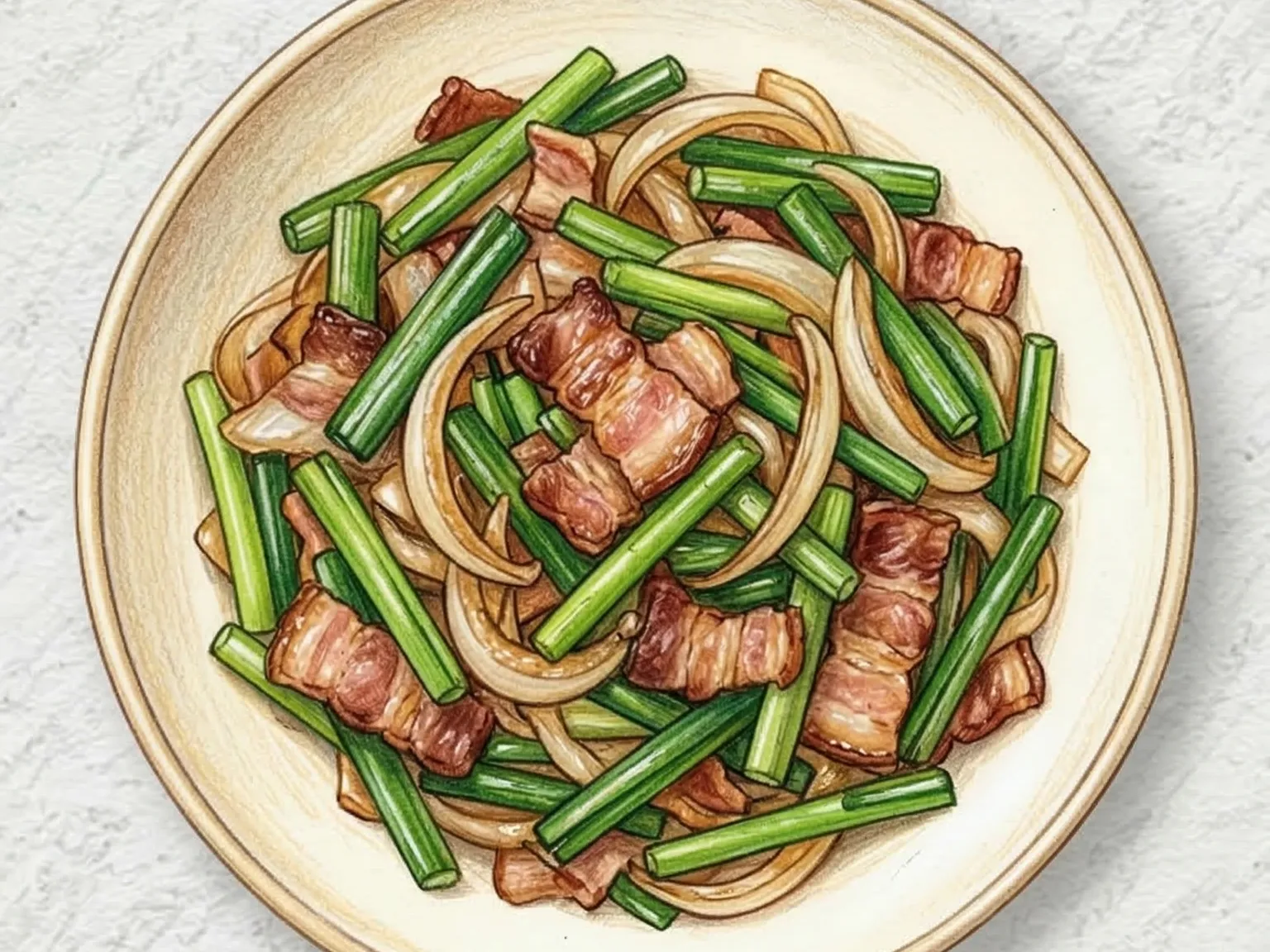
Maneuljjong bacon bokkeum is a side dish built around rendered bacon fat. Bacon goes into the pan first over low heat until the white fat turns translucent and releases its fragrant, smoky oil, and that rendered fat then becomes the cooking medium for the garlic scapes and onion that follow. No additional cooking oil is needed, and the depth of flavor that results from this single step makes the dish taste far more complex than its short ingredient list suggests. Garlic scapes bring a sharp, grassy bite and a satisfying crunch that disappears quickly if they sit on the heat too long, so the pan temperature is turned up at the end for a fast, high-heat finish. Soy sauce sets the salty foundation, and a drizzle of oligosaccharide syrup coats every piece in a thin, glossy lacquer that softens the salt with restrained sweetness. Because bacon is already heavily seasoned, the soy sauce should be added gradually and tasted as you go rather than measured out in advance. A scatter of toasted sesame seeds over the finished dish adds one more layer of nutty fragrance.

🏠 Everyday 🍱 Lunchbox
Prep 8min Cook 9min 2 servings
Korean Stir-Fried Garlic Scapes
Stir-fry Easy

Korean Stir-Fried Garlic Scapes

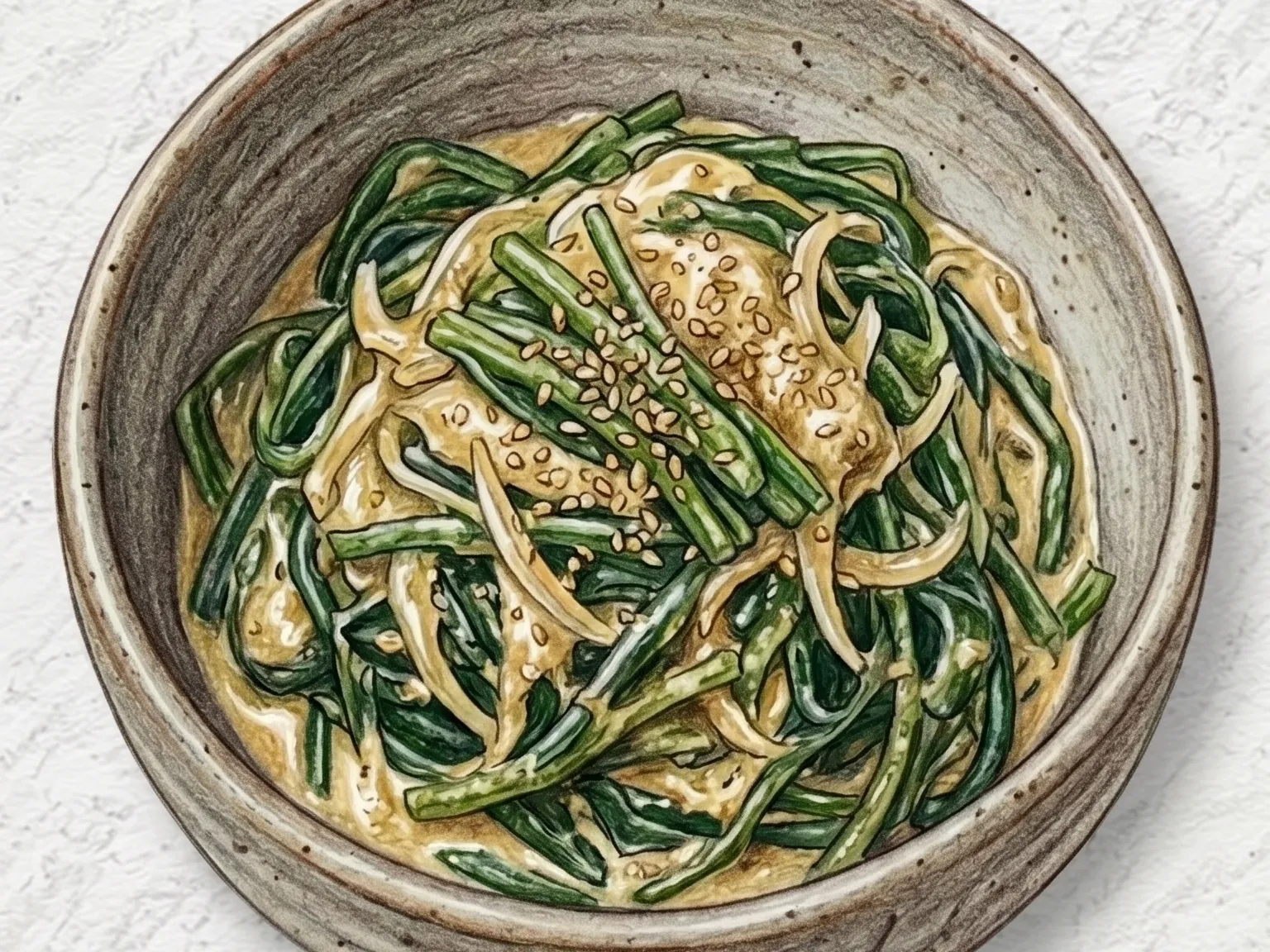
Maneuljjong-bokkeum is stir-fried garlic scapes, the curling flower stalks cut from garlic plants before they bloom, seasoned with soy sauce and oligosaccharide syrup. Where garlic bulbs deliver a sharp, nose-clearing bite, scapes carry a gentler, almost sweet garlic flavor that works even for people who find raw garlic too aggressive. Cutting the scapes into 4 to 5 cm lengths and blanching them for thirty seconds loosens the fibrous outer skin while preserving the snap inside. Skipping the blanch and going directly to the pan produces an uneven result: the outside turns tough and leathery before the inside has cooked through. Blanched scapes go into a lightly oiled pan over high heat for one minute, then soy sauce, oligosaccharide, minced garlic, and a pinch of gochugaru are added and the whole thing stir-fries for another two minutes. The syrup and soy sauce build a sweet-salty glaze that clings to every piece, and sesame oil is stirred in only after the heat is off to protect its fragrance from burning off. Made once, this banchan keeps refrigerated for five days or more, making it one of the most practical side dishes to prepare on a weekend and draw from throughout the week. Spring through early summer is peak garlic scape season, when the stalks are at their most tender.

🏠 Everyday 🍱 Lunchbox
Prep 10min Cook 6min 4 servings
Korean Garlic Scape Chicken Breast Stir-fry
Stir-fry Medium

Korean Garlic Scape Chicken Breast Stir-fry

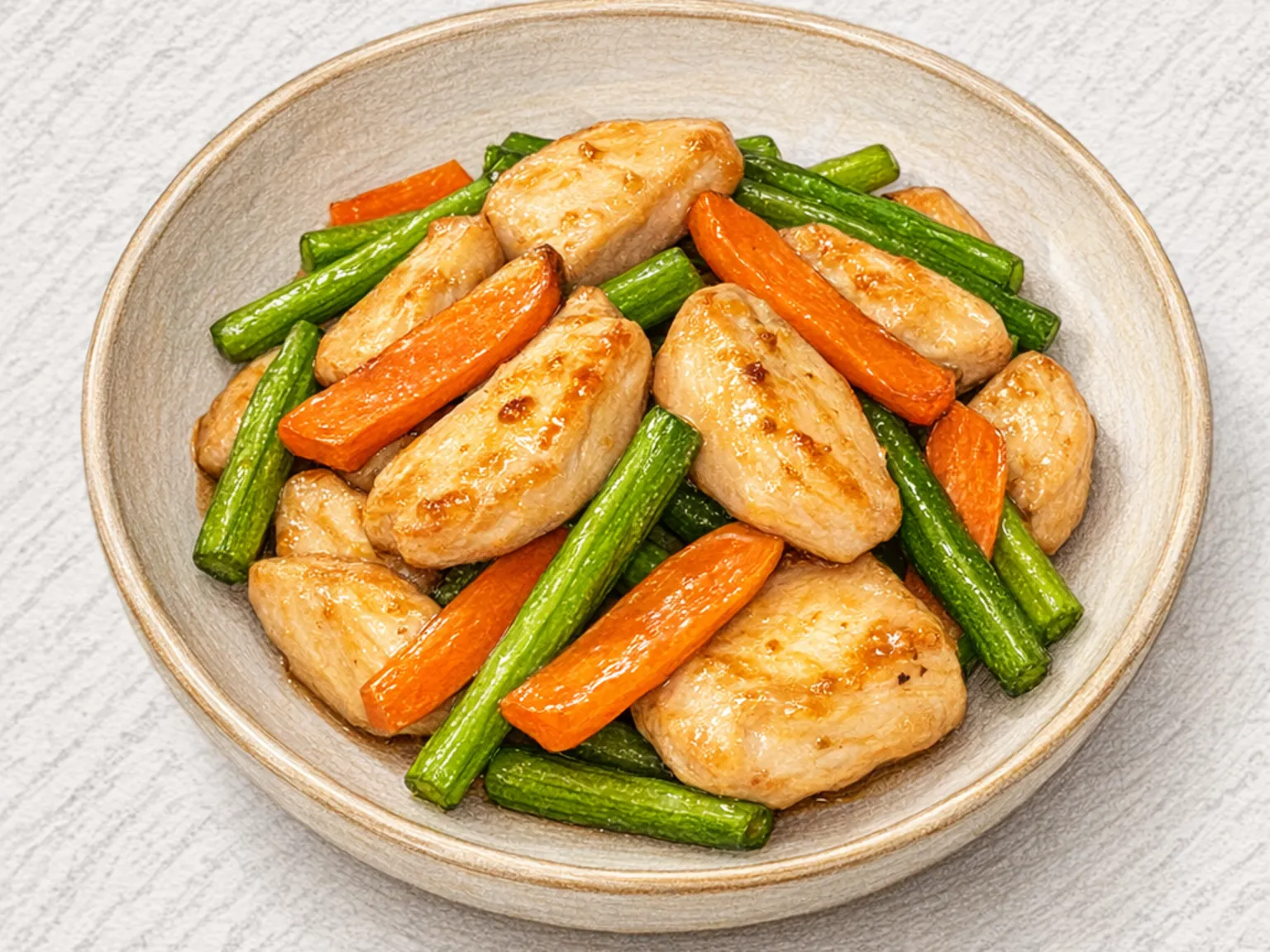
Maneuljjong dakgaseumsal bokkeum is a stir-fry where soy-marinated chicken breast is cooked through with ginger and garlic first, then joined by garlic scapes cut to five-centimeter lengths and julienned carrot for a quick blast over high heat before the whole pan is finished in an oyster sauce and soy sauce glaze. Chicken breast is naturally lean and can easily read as flat on its own, but the oyster sauce compensates by delivering concentrated umami and coating the surface of each piece with a lacquered sheen. The garlic scapes provide a dual texture that is both crisp and slightly chewy, setting up a direct contrast with the smooth, tight grain of the chicken breast. Julienned carrot adds a gentle sweetness that softens the saltiness of the soy and oyster sauce base. Ginger pulls double duty, eliminating any poultry odor while contributing the aromatic lift characteristic of well-executed stir-fry. The high-protein, low-fat profile makes this a practical everyday banchan for anyone managing calories, and it also works well spooned over rice in a deopbap format. Keeping the garlic scapes in the pan for as short a time as possible is essential to preserving their signature crunch.

🥗 Light & Healthy 🏠 Everyday
Prep 15min Cook 11min 2 servings
Korean Garlic Scape Clam Stir-fry
Stir-fry Medium

Korean Garlic Scape Clam Stir-fry

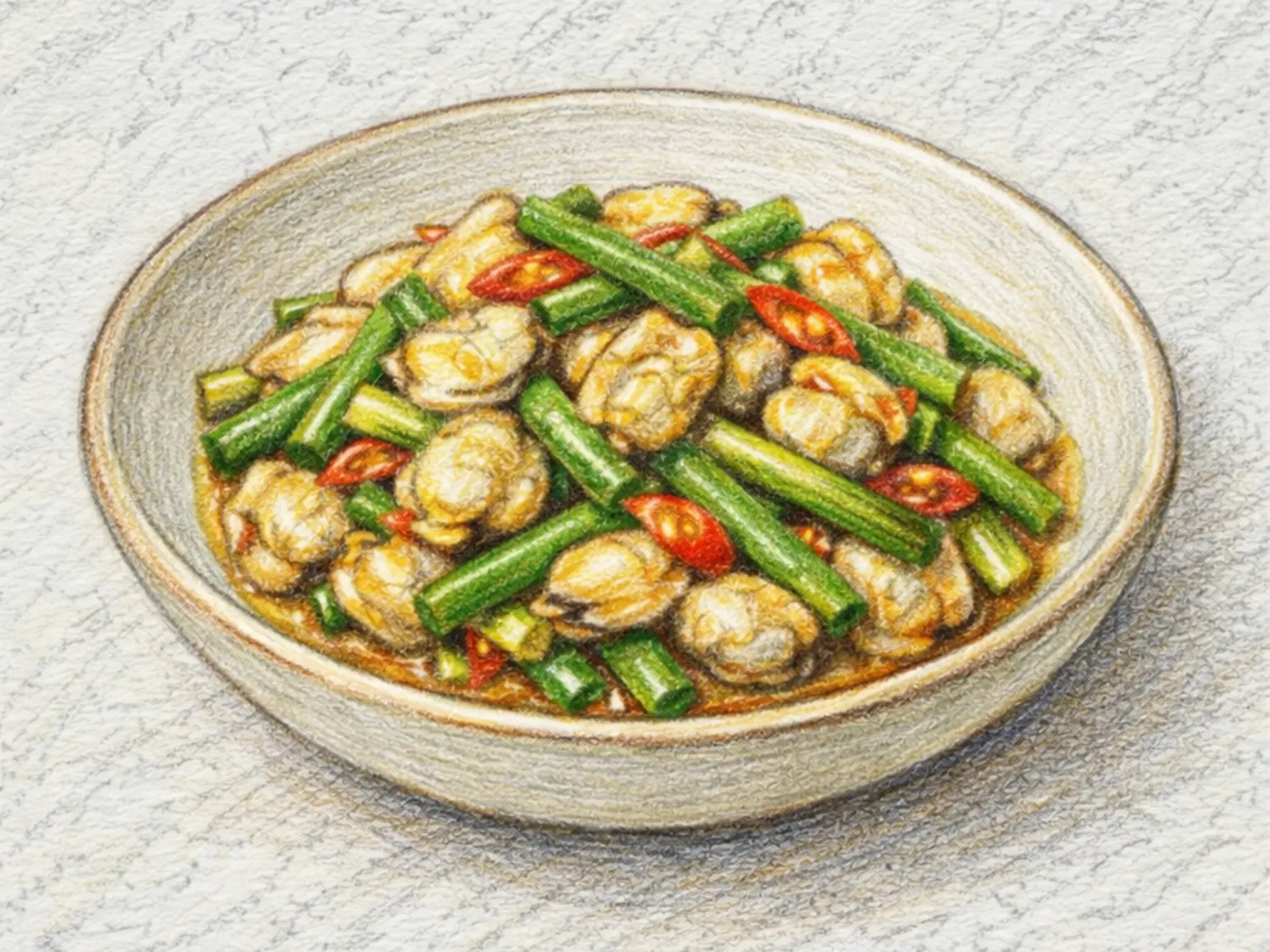
Garlic scape and clam stir-fry coats the scapes with soy and oyster sauce before adding well-drained clam meat for only the final 30 to 60 seconds. One hundred sixty grams garlic scapes are trimmed of tough ends and cut into 4 cm pieces. Ten grams red chili is sliced diagonally after excess seeds are shaken out if necessary. One hundred eighty grams clam meat is rinsed briefly in salted water to remove grit and drained thoroughly in a sieve. One tablespoon cooking oil is heated over medium-high, and 1 teaspoon minced garlic is stirred for about 20 seconds. Before the garlic browns, the scapes are added for 2 1/2 to 3 minutes. They should look brighter and glossy while still feeling firm under a spatula. One tablespoon soy sauce and 1 tablespoon oyster sauce are poured around the pan edge and allowed to bubble briefly. The red chili is tossed through for 20 seconds so the scapes receive the seasoning before the clams enter. The drained clam meat and 0.25 teaspoon black pepper are then added as the heat is raised to high. Cooking stops within 30 to 60 seconds, as soon as the clams are hot and the sauce clings with a gloss. Separating the scape and clam stages gives the firm stems their longer cooking time without holding the clam meat over heat for the same duration.

🏠 Everyday 🍱 Lunchbox
Prep 14min Cook 9min 2 servings
Korean Butterbur Stem Stir-fry with Perilla
Stir-fry Medium

Korean Butterbur Stem Stir-fry with Perilla

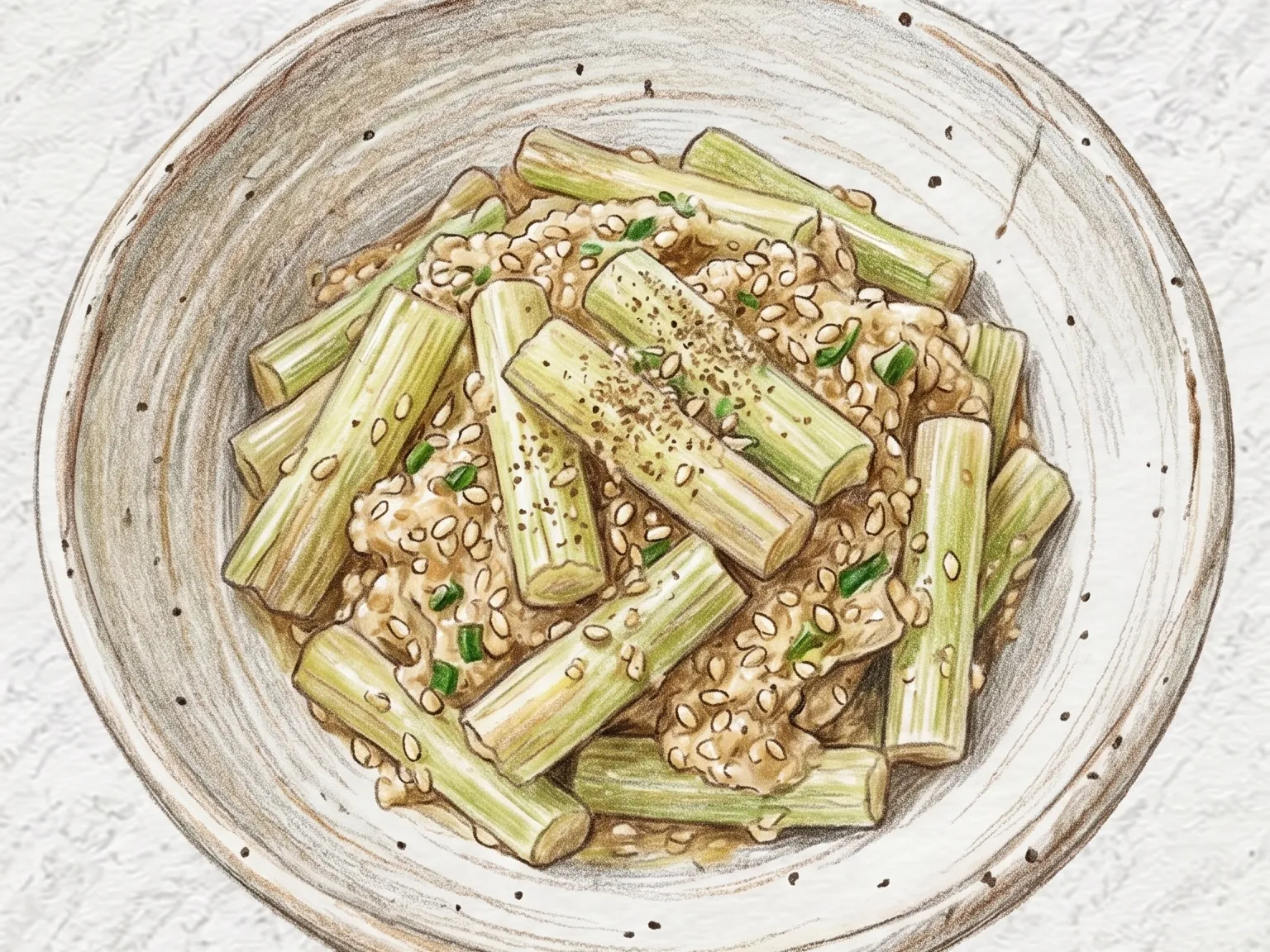
Butterbur stem and perilla stir-fry coats prepared boiled stems with perilla oil, simmers them in seasoned water, and adds the perilla powder while a small amount of liquid remains. Three hundred twenty grams boiled butterbur stems are bent and checked for tough outer fibers, which are peeled away before the stems are cut into 5 cm lengths and lightly drained. Half a green onion is sliced, and 1 teaspoon minced garlic is kept ready. One tablespoon perilla oil is warmed over low before the garlic and green onion are stirred for about 30 seconds. The butterbur is added before the garlic browns, and the heat is raised to medium for a 3-minute stir-fry. Once the stems are evenly coated with oil and moisture on the pan bottom has decreased, 1 tablespoon soup soy sauce and 100 ml water are poured in. The heat is reduced to medium-low after bubbling begins, and the stems simmer for about 4 minutes. Two and a half tablespoons perilla powder is added only while a shallow amount of liquid still remains. It is mixed over low until the powder absorbs that moisture and forms a thick coating around the stems, then the burner is switched off immediately. Keeping liquid in the pan before adding the powder prevents dry clumps from forming in one place.

🏠 Everyday 🍱 Lunchbox
Prep 25min Cook 10min 4 servings
Korean Stir-fried Butterbur Stems
Stir-fry Medium

Korean Stir-fried Butterbur Stems

Meowi-namul-bokkeum stir-fries boiled butterbur stems in perilla oil, adding a cooking step that distinguishes it from the cold-dressed muchim version. While the muchim blanches and seasons immediately without further heat, the bokkeum takes the boiled stems into a pan with soup soy sauce and water for five minutes or more, driving the seasoning deep into the plant fibers. This additional cooking time also volatilizes more of the butterbur's bitter compounds, producing a milder flavor compared to the cold preparation. Perilla oil, though more prone to oxidation than sesame oil, is the traditional choice because its earthy, grassy aroma harmonizes with the herb's character in a way sesame oil cannot. Adding perilla seed powder in the last minute causes its starch to partially gelatinize, giving the sauce a thicker consistency, but leaving it on the heat too long makes the dish chalky and heavy. Timing this final step precisely is what separates a well-made version from an overcooked one. This banchan appears on spring mountain-village tables alongside gondeure-namul and chwinamul as part of the seasonal wild greens spread that marks the transition out of winter.

🏠 Everyday 🍱 Lunchbox
Prep 18min Cook 12min 4 servings
Korean Water Parsley, Clam & Garlic Stir-fry
Stir-fry Medium

Korean Water Parsley, Clam & Garlic Stir-fry

Minari-bajirak-maneul-bokkeum starts by slowly toasting garlic slices in oil over low heat until they turn golden and mellow, coaxing out a sweet, nutty fragrance that becomes the aromatic backbone of the entire dish. As the garlic cooks gently, its sharp pungency fades and the infused oil absorbs its full flavor. Clam meat goes in next with a splash of rice wine and cooks for just about 90 seconds at higher heat, long enough to eliminate any fishiness while keeping the flesh plump and springy. Water parsley stems are added with a measure of soup soy sauce and, if desired, sliced red chili, and their crunch is preserved by not overcooking. The delicate parsley leaves join only in the final 20 seconds before the heat is turned off so they barely wilt, contributing their distinctive grassy aroma without losing it entirely to the heat. A few drops of sesame oil finish the dish. The result brings together three distinct textures and flavors in a single pan: the sweet depth of the toasted garlic oil, the clean ocean salinity of the clams, and the fresh herbal brightness of the minari.

🏠 Everyday 🍱 Lunchbox
Prep 20min Cook 9min 2 servings
Korean Water Parsley Beef Stir-Fry
Stir-fry Easy

Korean Water Parsley Beef Stir-Fry

Minari and beef stir-fry cooks briefly soy-seasoned beef first, then gives the water parsley only 20 to 30 seconds over high heat. One hundred fifty grams minari is rinsed, shaken dry, and cut into 4 cm lengths. The leaves are handled without pressing or bruising and kept loose so they can enter the pan at once. One hundred fifty grams thinly sliced beef is cut into narrow strips, coated with 1 tablespoon soy sauce, and left for about 5 minutes. Clumped slices are pulled apart so they can cook evenly. One garlic clove is minced finely. The pan is preheated over medium before the garlic and seasoned beef are added and stir-fried over medium-high for about 2 minutes. Once most red color has disappeared and the edges look cooked, the minari is added and the heat is raised to high. A 20 to 30 second toss lets the leaves lose a little volume while the stems remain firm and bright. The thickest beef piece is checked for doneness before the burner is switched off. One teaspoon sesame oil is mixed through with residual heat, and the stir-fry is moved out of the pan immediately. Separating the beef and minari stages makes it possible to finish the meat without keeping the leaves and stems over heat for the same length of time.

🏠 Everyday 🌙 Late Night
Prep 10min Cook 10min 2 servings
Miso Kanpura (Sweet Miso Baby Potatoes)
Stir-fry Easy

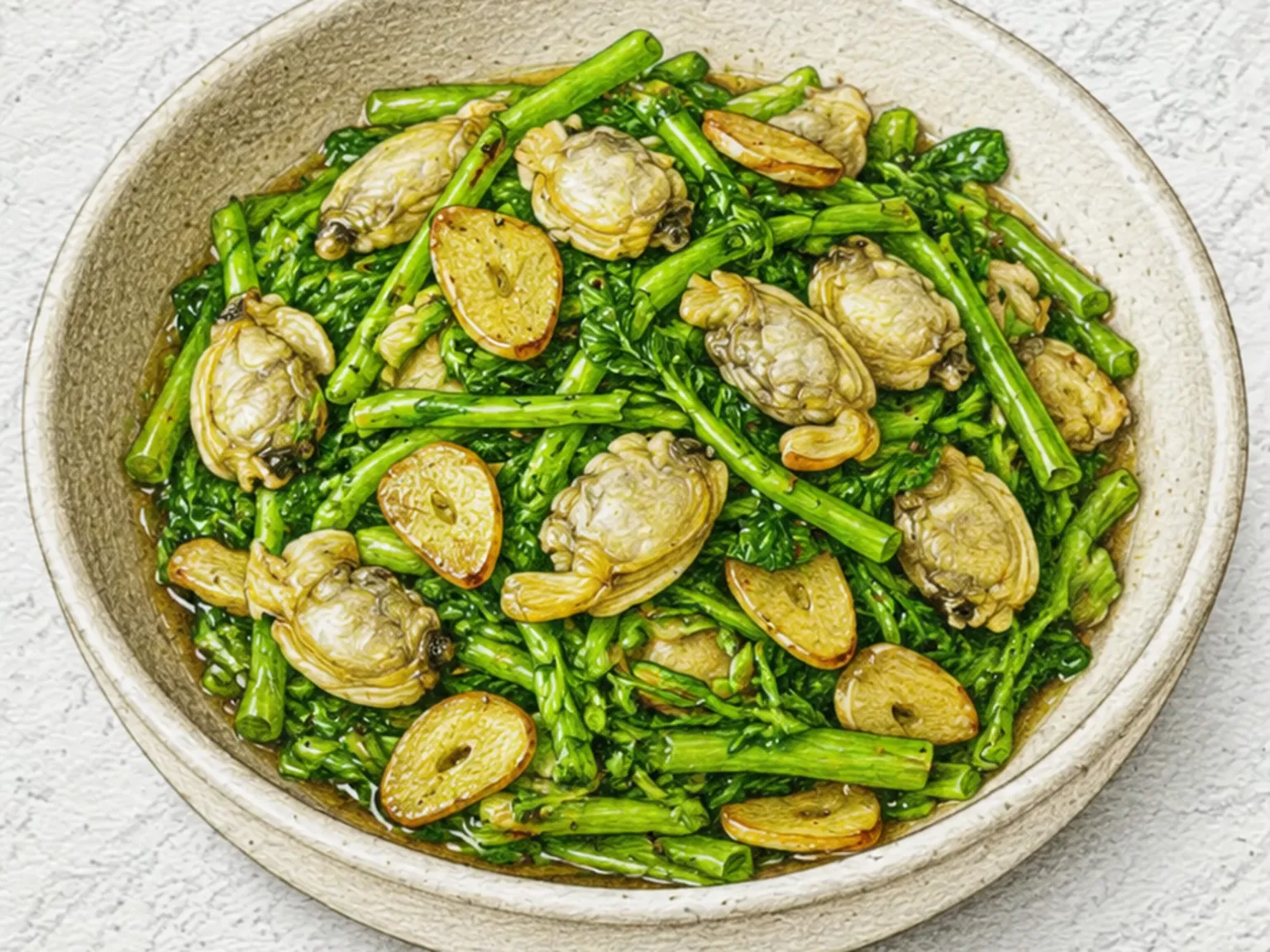
Miso Kanpura (Sweet Miso Baby Potatoes)

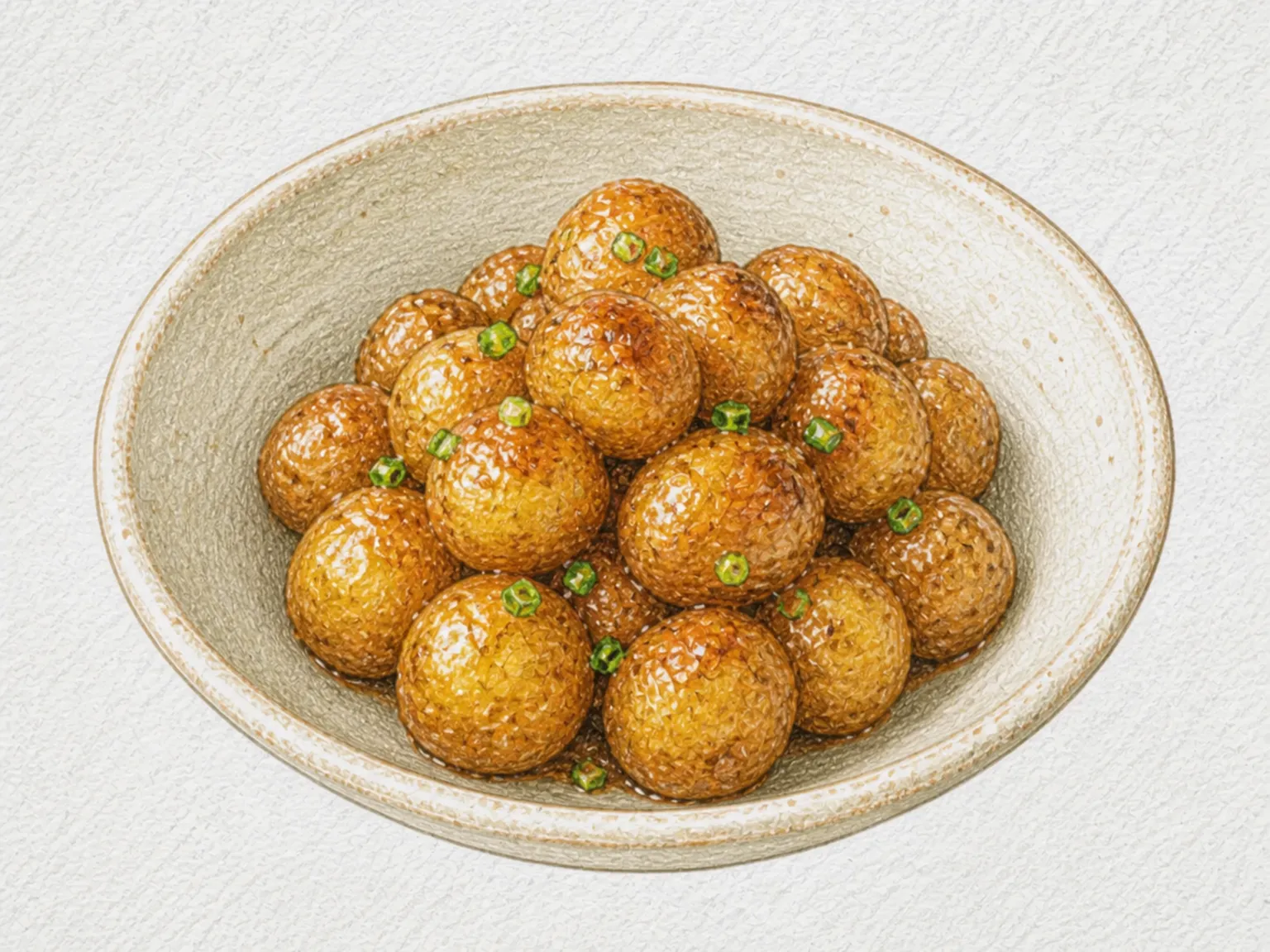
Miso kanpura cooks 12 similarly sized small potatoes whole, first rolling them in oil and then simmering them through before the miso coating is reduced. Leave the skins on and scrub away all soil. Set aside noticeably larger potatoes; mixed diameters can leave the large ones firm by the time the smallest begin to split. Warm 3 tablespoons cooking oil in a heavy pot over medium heat and roll the potatoes continuously for 5 minutes. Extend this stage by 1 minute only if the skins are not evenly coated and slightly wrinkled. Pour in 300 ml water, enough to barely cover them, and cover the pot. Simmer for 15 minutes over medium heat, rolling the potatoes once or twice, then test the centers with a skewer. If they remain firm, continue for no more than 5 minutes. Remove the lid once the skewer slides in easily, then reduce the liquid until only about 2 tablespoons remain. Add 2 tablespoons sugar and 2 tablespoons mirin and roll the potatoes again. Dissolve 3 tablespoons miso into the remaining liquid, lower the heat, and shake the pot for 2 minutes. Allow 1 additional minute only if thin liquid remains. Stop once a glossy coating adheres to every skin. Miso and sugar can scorch quickly, so shake the pot instead of stirring hard enough to break the softened potatoes.

🏠 Everyday 🧒 Kid-Friendly
Prep 10min Cook 30min 4 servings
Korean Stir-fried Seaweed Stems
Stir-fry Easy

Korean Stir-fried Seaweed Stems

Miyeok-julgi-bokkeum is stir-fried seaweed stems - specifically the thick midrib portions of salted miyeok (wakame) - offering a textural experience entirely different from miyeok-muchim (seaweed salad) or miyeok-guk (seaweed soup). While seaweed leaves are soft and slippery, the stems are thick and resilient, producing a distinctive crunchy pop with each bite. Salt levels vary by brand, so soaking in cold water for ten minutes is the baseline desalting step, but tasting before cooking and rinsing again if needed is essential. Julienned onion and carrot stir-fried alongside break the monotony of seaweed alone, adding sweetness and color. Garlic sauteed in oil first establishes an aromatic foundation. A finishing drizzle of sesame oil and sesame seeds bridges the oceanic seaweed flavor with a toasty nuttiness. The extremely low calorie count makes this banchan a staple in diet-conscious Korean meal plans.

🥗 Light & Healthy 🏠 Everyday
Prep 15min Cook 8min 4 servings
Korean Stir-Fried Seaweed Stems with Perilla
Stir-fry Easy

Korean Stir-Fried Seaweed Stems with Perilla

Deulkkae miyeokjulgi-bokkeum stir-fries salted seaweed stems with perilla oil and ground perilla seeds, diverging from the standard sesame-and-soy version by foregrounding the earthy nuttiness of perilla. Desalting the stems in cold water for at least fifteen minutes is the essential first step - too brief and the dish is unpalatably salty, too long and the oceanic character washes away entirely. Garlic is sauteed in perilla oil to build an aromatic foundation, then the drained stems join with soup soy sauce and a splash of water for three minutes of stir-frying. Ground perilla seeds go in at the end, where they bind with the residual moisture and coat each strand in a pale, creamy film. Julienned onion added alongside contributes sweetness that balances the seaweed's brininess. The perilla powder's starch partially gelatinizes on contact with heat, thickening the sauce - but overcooking past this point turns the coating chalky, so timing the final addition is critical. Sesame seeds scattered off heat complete the dish.

🥗 Light & Healthy 🏠 Everyday
Prep 15min Cook 8min 2 servings
Korean Seaweed Stem & Shrimp Stir-fry
Stir-fry Easy

Korean Seaweed Stem & Shrimp Stir-fry

Miyeokjulgi-deulkkae-saeu-bokkeum combines desalted seaweed stems and medium shrimp, stir-fried in perilla oil and finished with a generous coating of perilla seed powder. The seaweed stems are soaked in cold water for ten minutes to draw out excess salt, then cut into five-centimeter pieces that retain a distinctive chewy-crunchy bite throughout cooking - a textural contrast that keeps each forkful interesting against the springy shrimp. Onion and garlic are sauteed first to establish a sweet aromatic base, the shrimp are added until they turn pink, and then the seaweed stems join the pan for a quick toss over high heat. Soup soy sauce provides the only seasoning, keeping the flavor profile clean and allowing the two main ingredients to come forward. Perilla powder goes in immediately after the heat is off so its nutty, slightly grassy aroma stays fully intact through serving. The combination of perilla's earthy nuttiness and the seaweed's oceanic minerality gives this simple banchan a layered depth that reads distinctly Korean.

🥗 Light & Healthy 🏠 Everyday
Prep 18min Cook 10min 4 servings
Korean Stir-fried Pork with Seaweed Stems
Stir-fry Easy

Korean Stir-fried Pork with Seaweed Stems

Seaweed stem and pork stir-fry begins by reducing the salt in the stems and tasting them before the remaining soy sauce is committed to the pan. Two hundred twenty grams salted seaweed stems receive a 10-minute soak in cold water. One strand is tasted, and the batch is rinsed again if it remains too salty, then drained and cut into 5 cm lengths. One hundred eighty grams thinly sliced pork shoulder is coated with 0.5 tablespoon soy sauce and 0.5 tablespoon cooking wine for 5 minutes. The slices are spread without overlap in a pan heated thoroughly over medium-high and left undisturbed until some fat renders and the underside develops brown spots. The pork is turned before 1 tablespoon minced garlic and 80 g onion are added over high heat. Once the outer pink color disappears and the onion edges become translucent, the seaweed stems, remaining 1 tablespoon soy sauce, and remaining 0.5 tablespoon cooking wine go in. Two to 3 minutes of brisk tossing retains a firm bite in the stems while finishing the thickest pork piece. After the burner is switched off, the seasoning is checked before any extra soy sauce is considered. One teaspoon sesame oil and 1 teaspoon toasted sesame seeds are folded through at the end. Tasting the soaked stems first makes their remaining salinity part of the seasoning decision instead of assuming every batch needs the same adjustment.

🥗 Light & Healthy 🏠 Everyday
Prep 18min Cook 10min 2 servings
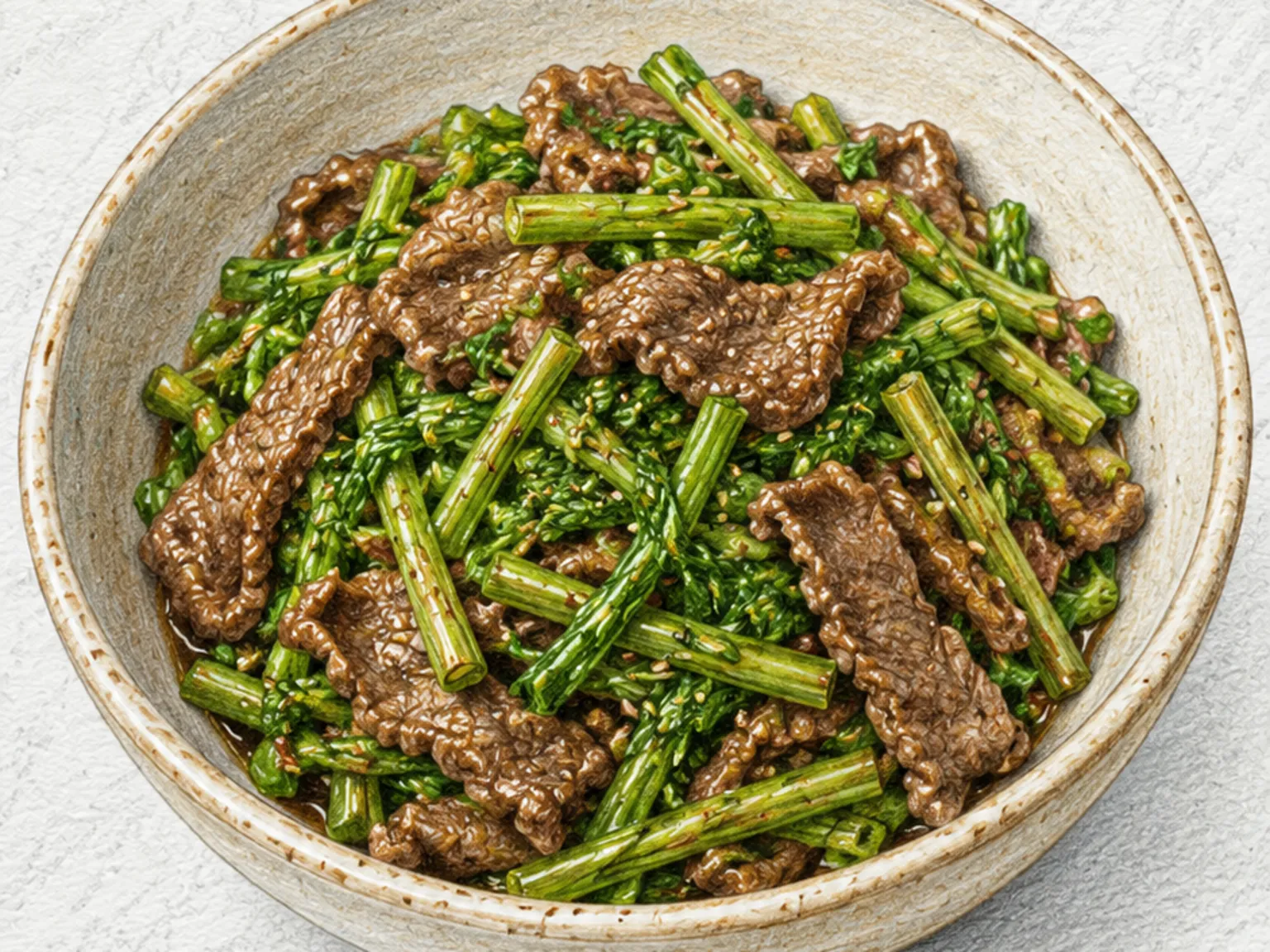
Korean Stir-fried Radish with Perilla Powder
Stir-fry Easy

Korean Stir-fried Radish with Perilla Powder

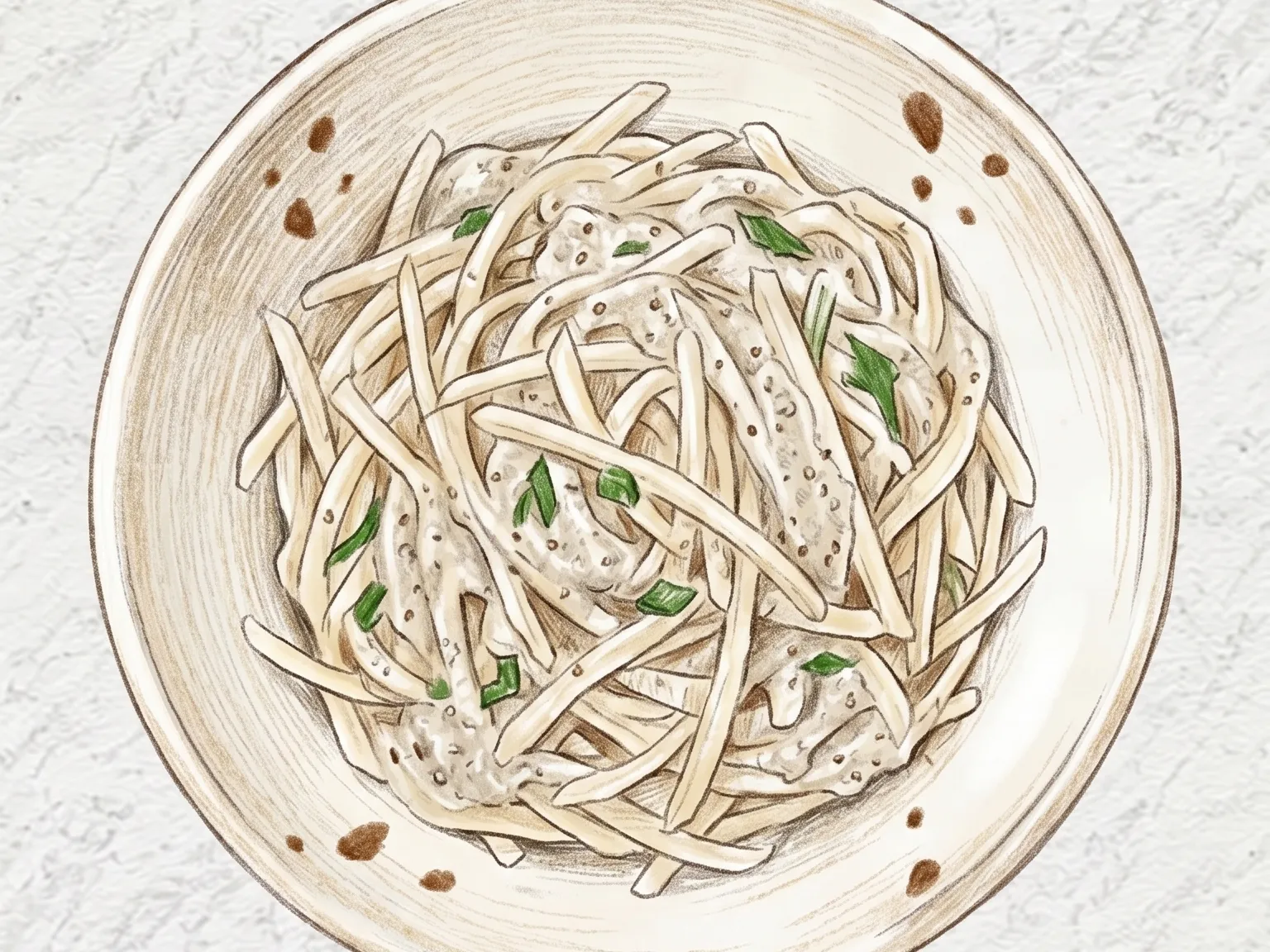
Radish and perilla stir-fry softens evenly cut radish under a lid before using perilla powder to thicken the moisture left in the pan. Three hundred grams radish is dried on the surface and cut into fine julienne of similar thickness. One tablespoon cooking oil is warmed over medium-low before 1 teaspoon minced garlic and 30 g scallion are stirred for about 40 seconds. The radish is added before the garlic browns, and the heat is raised to medium. Frequent turning for about 3 minutes makes the edges slightly translucent and reduces the volume of the pile. Eighty milliliters water and 1 teaspoon soup soy sauce are poured around the pan and mixed through. The pan is covered and held over medium-low for 4 minutes. If a large amount of liquid remains after uncovering, it is reduced for about 1 more minute. The radish is ready for the final stage when the strands look translucent and bend easily with chopsticks. The heat is lowered before 2 tablespoons perilla powder is stirred in. Once the powder combines with the radish moisture and clings thickly to the strands, the mixture cooks for only 1 more minute. Even cutting brings the pieces to tenderness together, while adding the powder after covered cooking keeps it away from the pan bottom during the longer moist stage.

🏠 Everyday 🍱 Lunchbox
Prep 10min Cook 12min 2 servings
Stir-fried Korean Radish Namul
Stir-fry Easy

Stir-fried Korean Radish Namul

Mu-namul-bokkeum is a foundational Korean side dish made by stir-frying julienned daikon radish in perilla oil to draw out its natural sweetness. Cutting the radish into matchstick-thick strips and salting them for around five minutes beforehand is a critical step. Without it, the radish releases its moisture into the pan during cooking, turning what should be a stir-fry into an unintended steam, leaving the namul limp and dull. Garlic goes into the perilla oil first to build an aromatic base, then the radish strips are tossed over medium heat for three to four minutes. During this time, heat converts the radish's starch into sugars, and the raw, sharp bite disappears, replaced by a mellow and gentle sweetness. Soup soy sauce rather than regular soy sauce keeps the seasoning clean without muddying the pale color of the radish. Placing the lid on for two minutes at the end steams the interior through without over-softening the vegetable. This namul serves as one of the five-color toppings in bibimbap and is a required dish on ancestral rite tables. Sesame seeds scattered over the finished dish add a toasted nuttiness that carries the flavor through to the last bite.

🏠 Everyday 🍱 Lunchbox
Prep 10min Cook 12min 4 servings

About Stir-fry

Cooking over high heat for a short time keeps ingredients crisp and vivid. With a few staple sauces like gochujang, soy sauce, and oyster sauce, the possibilities are endless - and dinner is on the table in minutes.