Stir-fry Recipes
310 recipes. Page 9 of 13
Stir-frying is one of the most common cooking methods in Korean home kitchens. Classics like spicy pork stir-fry (jeyuk-bokkeum), squid stir-fry, and japchae showcase the range of flavors - from fiery gochujang-based sauces to sweet soy glazes.
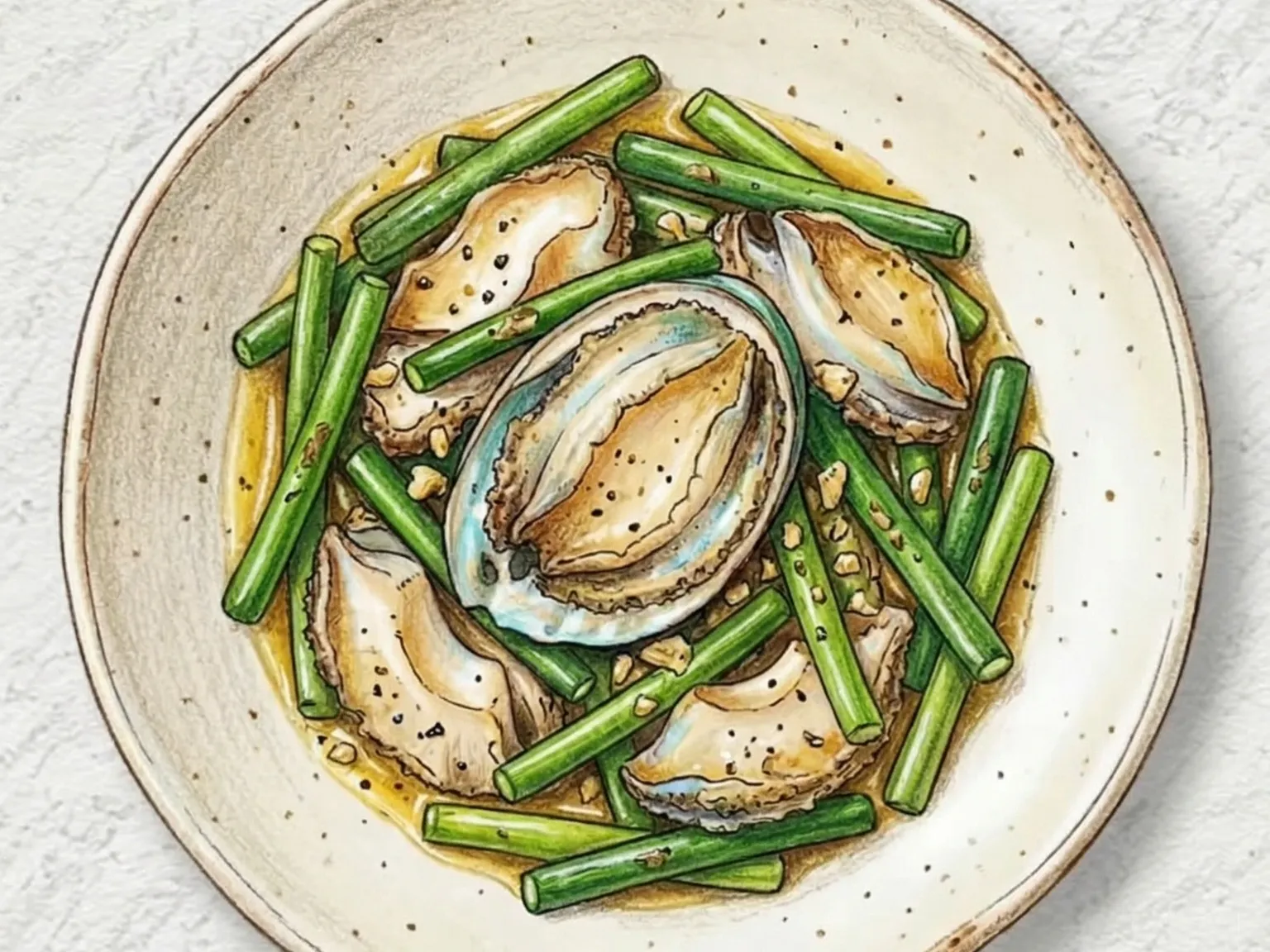
Korean Abalone & Garlic Stem Stir-fry
The preparation of Jeonbok-maneuljong-butter-bokkeum involves a high heat stir-fry technique using thinly sliced abalone and garlic scapes cooked in butter. The primary goal of using high heat is to release the aromatic properties of the butter and seafood while maintaining a specific texture. Before cooking, the abalone must be cleaned and the internal organs removed so that only the flesh is used. Slicing the abalone thinly is a requirement because the high temperature of the pan cooks the pieces almost instantly. This rapid cooking ensures the flesh remains springy rather than contracting into a tough or rubbery texture. Because the protein in the abalone begins to seize if cooked for longer than one minute, the speed of the stir-fry is the most critical variable in the process. Garlic scapes are used to provide a firm and snappy bite to the dish. These are cut into uniform lengths and placed in the pan before the abalone. This specific order gives the scapes a brief head start in the cooking process so that both the vegetables and the seafood finish at the same time. The ingredients should be added to the pan only after the butter has melted and started to foam. This foaming indicates the start of the Maillard reaction, which is responsible for browning the surface of the pieces and increasing the overall scent of the dish. A spoonful of soy sauce is then poured specifically along the heated edges of the pan. This technique allows the sauce to caramelize on contact with the hot surface, which adds a layer of savory and slightly sweet flavors to the mixture. The process concludes with the addition of ground black pepper, which provides a mild spice that supports the scent of the butter. Provided that the ingredients are prepped in advance, the entire stir-fry takes less than ten minutes to complete.
Korean Spicy Pork Stir-fry
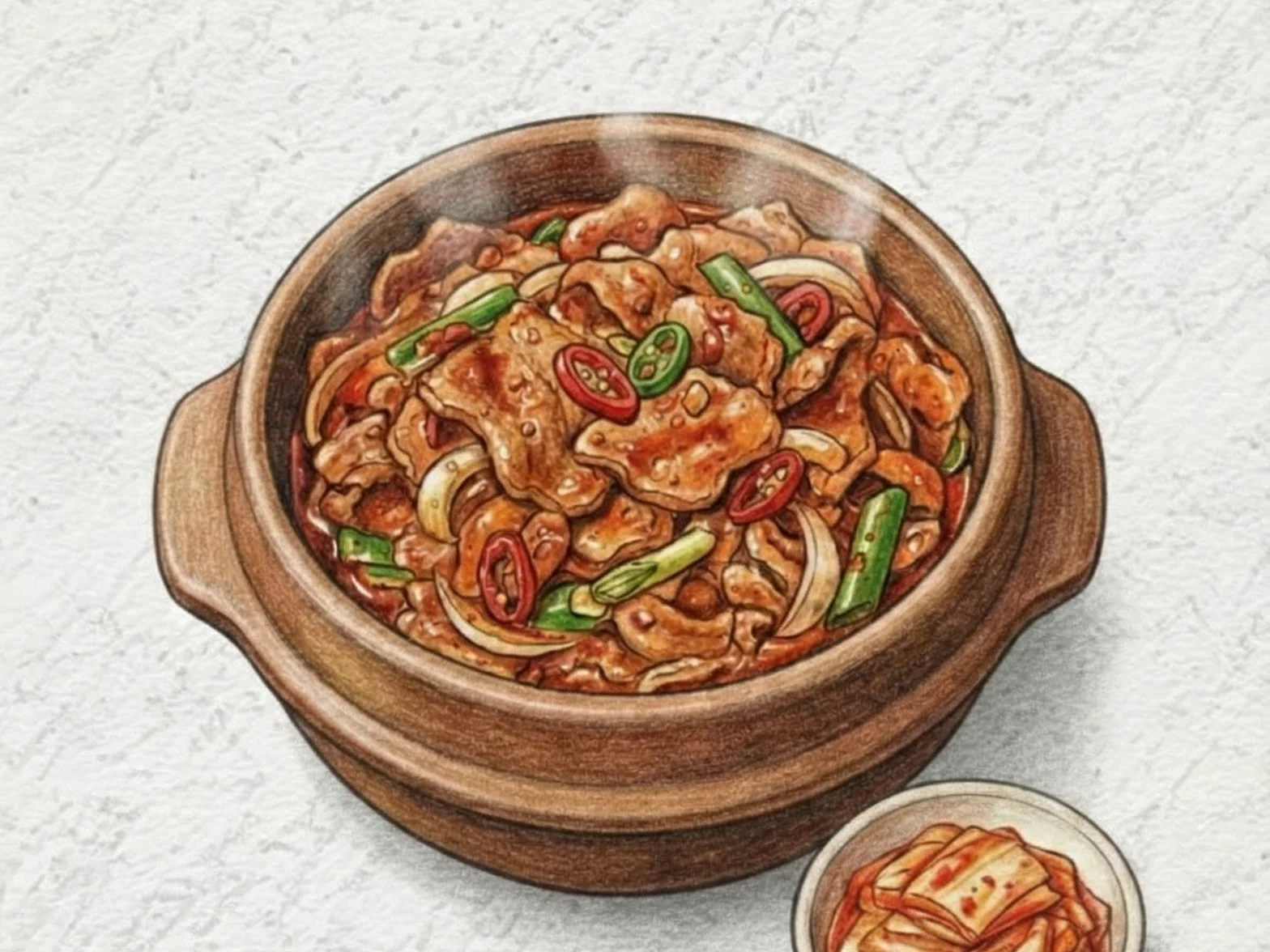
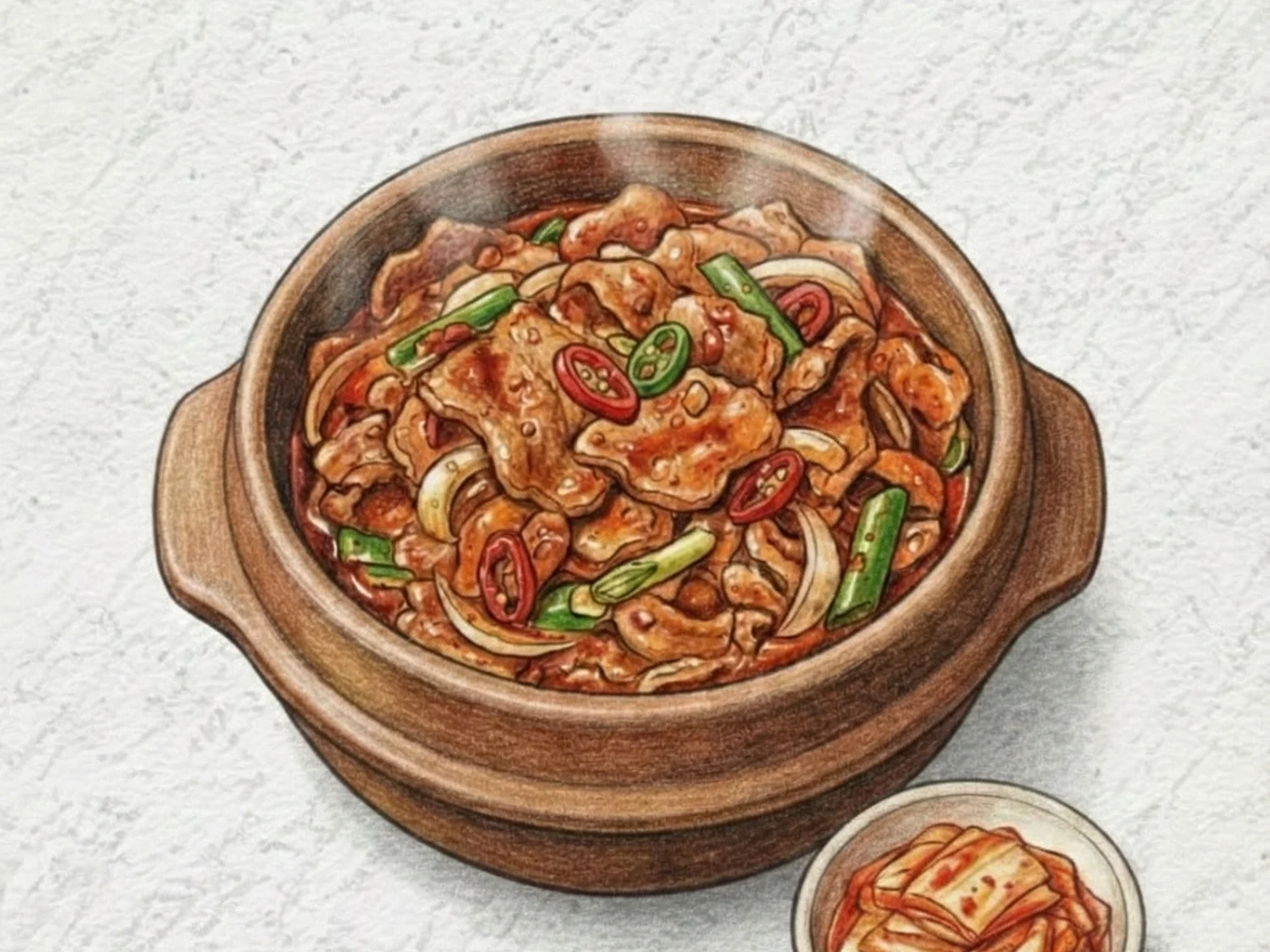
Jeyuk-bokkeum coats bite-size pork with a gochujang marinade, leaves the meat undisturbed against a hot pan first, and adds onion and green onion for the final quick stir-fry. Three hundred grams pork is cut evenly and patted dry with paper towels. The marinade combines 2 tablespoons gochujang, 1 tablespoon soy sauce, 1 tablespoon sugar, 3 minced garlic cloves, and 0.5 teaspoon ginger. It is worked against the bowl until the sugar grains disappear, then spread over the pork in a thin, even layer for a 15-minute rest. One onion is cut into thick strips, and 2 green onions are sliced diagonally before the pan is heated. The pork is spread rather than piled in a pan heated thoroughly over high. It stays in place for about 2 minutes so the underside can set and the edges can darken before the pieces are turned. The onion and green onion then go in for 2 to 3 minutes of fast tossing, which removes visible moisture without giving the vegetables the entire cooking time. Once the thickest pork piece is cooked through and the sauce clings with a glossy surface, the burner is switched off and 1 teaspoon sesame oil is mixed in. Drying and spacing the pork protects the pan temperature, while preparing the vegetables in advance prevents a pause during the high-heat stage.
Korean Butter Soy Stir-fried Dried Squid
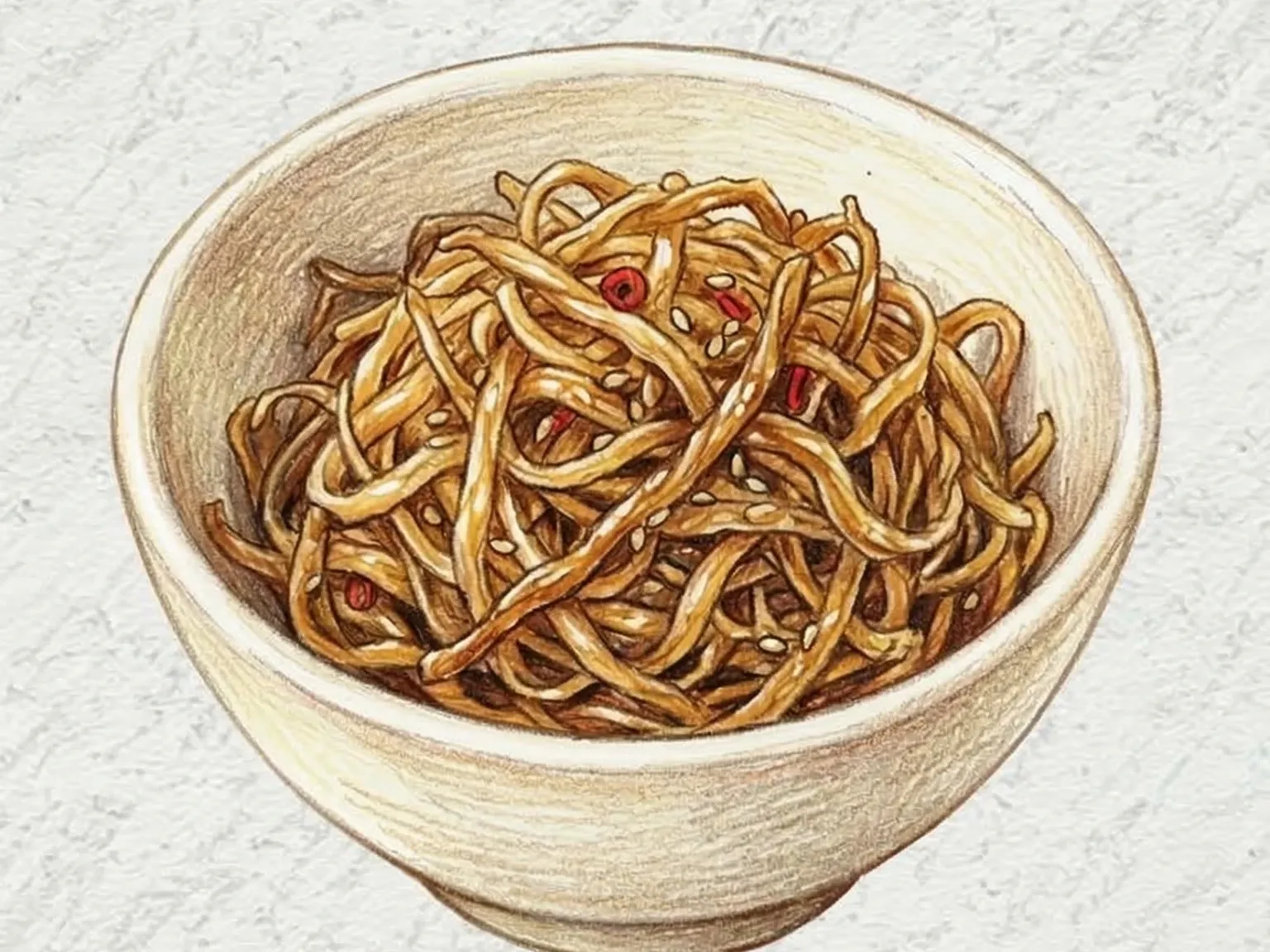
Butter-soy jinmichae-bokkeum stir-fries dried shredded squid (jinmichae) in melted butter with soy sauce and oligosaccharide syrup, making a banchan that is rich, salty-sweet, and distinctly different from the standard gochujang-dressed version. The butter's milk fat coats each strand of squid and creates a noticeably smoother mouthfeel than oil-based preparations. The sequence matters: garlic goes into the melted butter first and cooks for just twenty seconds to bloom its aroma without burning, then the soy sauce and syrup go in to form the glaze base, and only then does the jinmichae enter the pan. The entire stir-fry window is no more than two to three minutes - squid proteins contract and toughen quickly at high heat, so extended cooking ruins the texture. Half a tablespoon of gochugaru is enough to add gentle warmth and a reddish tint without overriding the butter's character. This banchan works in children's lunchboxes and holds up equally well as a beer snack.
Korean Sweet Spicy Stir-fried Filefish Jerky
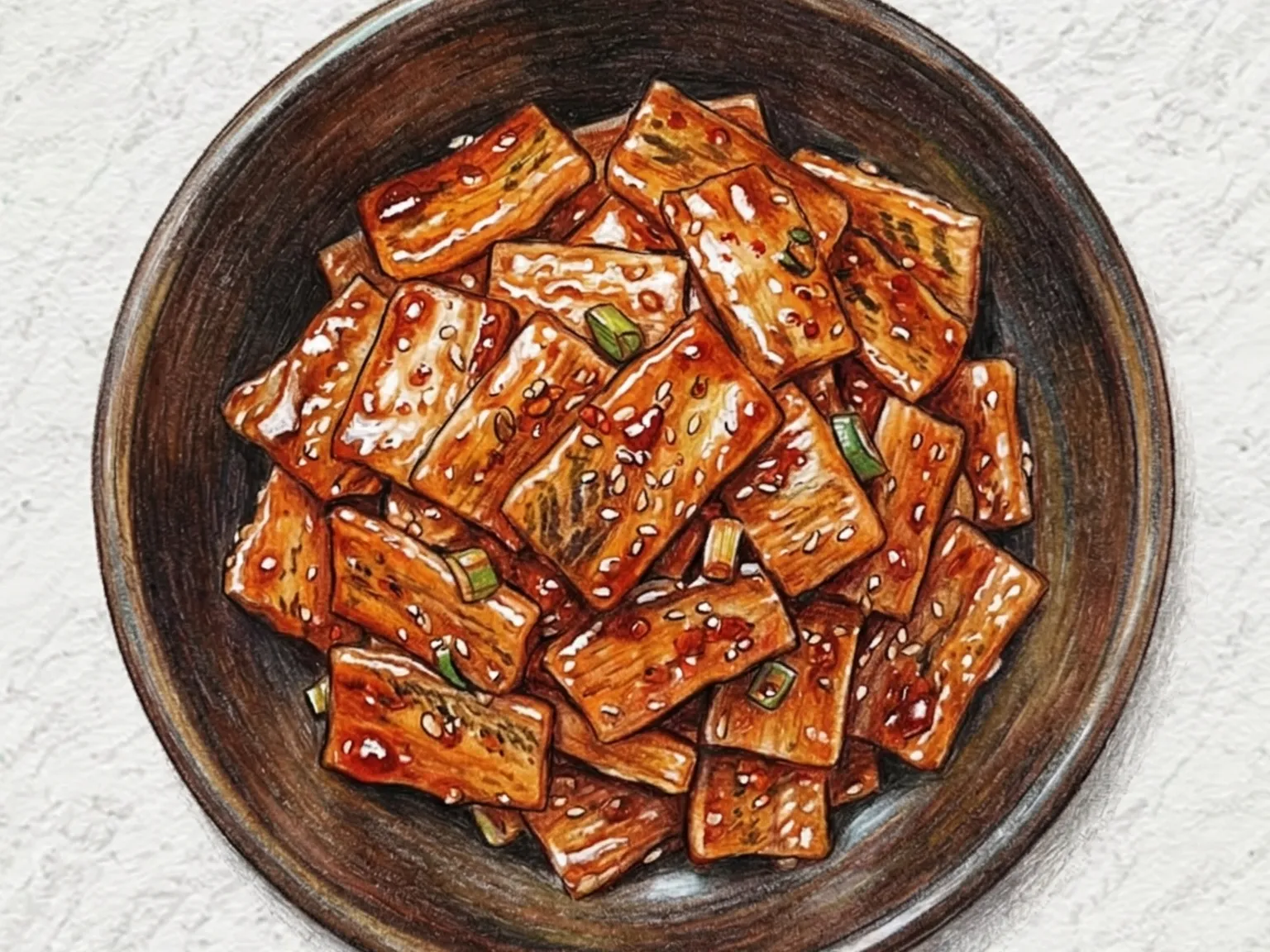
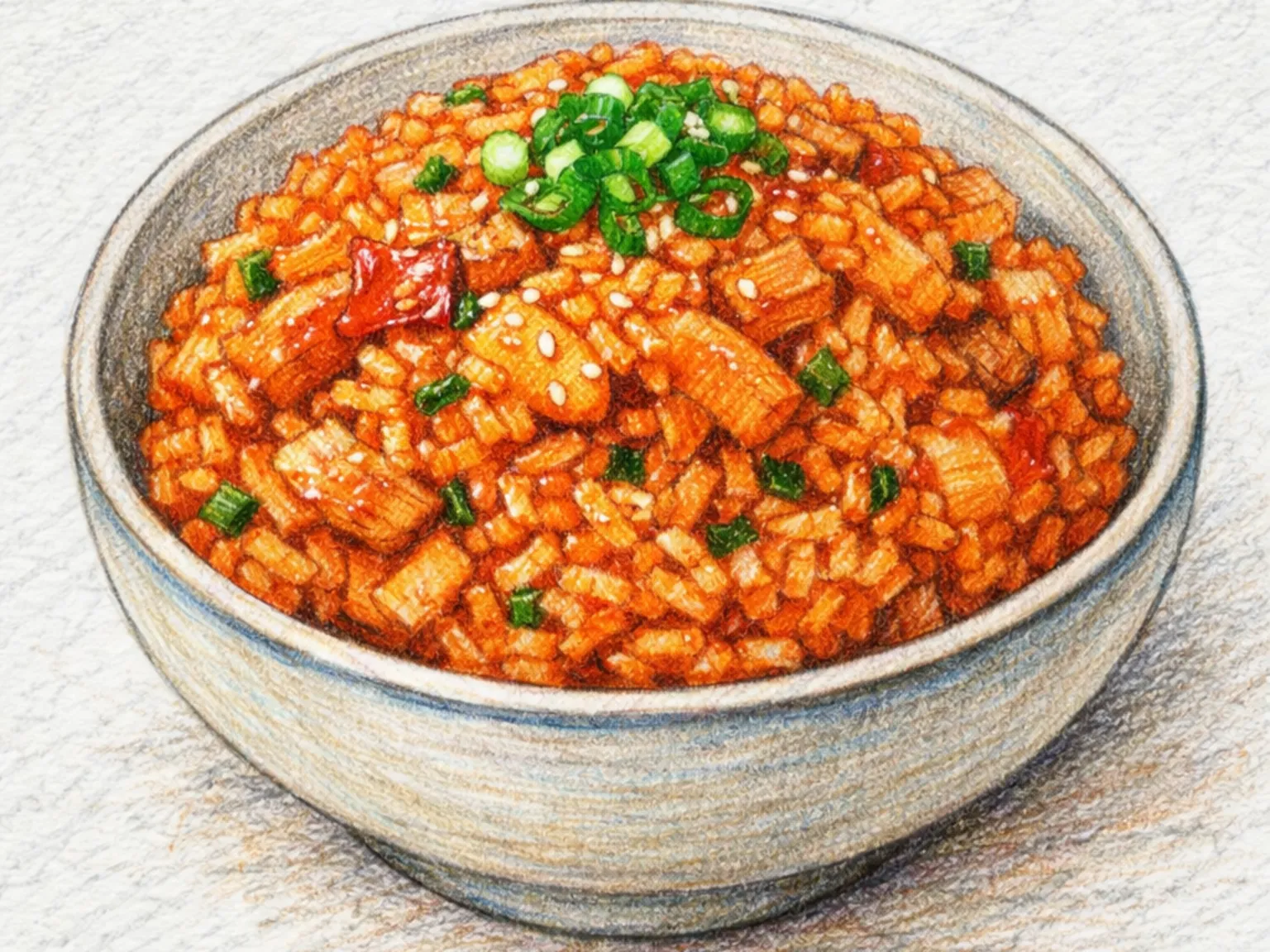
Jjipo-bokkeum is a Korean side dish made from flat dried filefish jerky tossed in a sweet and spicy glaze of gochujang, oligosaccharide syrup, soy sauce, garlic, and sesame oil. The jerky pieces are lightly pan-fried in a small amount of oil first to develop a toasty, nutty surface before the sauce goes in, which builds an initial layer of flavor and texture before the glaze coats the outside. The seasoning sauce is added over low heat and the pan is kept moving to prevent the sugar in the oligosaccharide syrup from burning, coating each piece evenly in a glossy, sticky layer. The syrup softens the otherwise tough chew of the dried fish so that each piece bends slightly rather than snapping, and every bite releases the filefish's concentrated, deeply savory umami that builds with each chew. Made ahead and stored refrigerated, jjipo-bokkeum keeps its flavor well for five to seven days, making it one of the more practical banchan to prepare in advance. It works equally well as a rice side, an afternoon snack eaten on its own, or served alongside drinks as an anju.
Korean Spicy Webfoot Octopus Stir-Fry
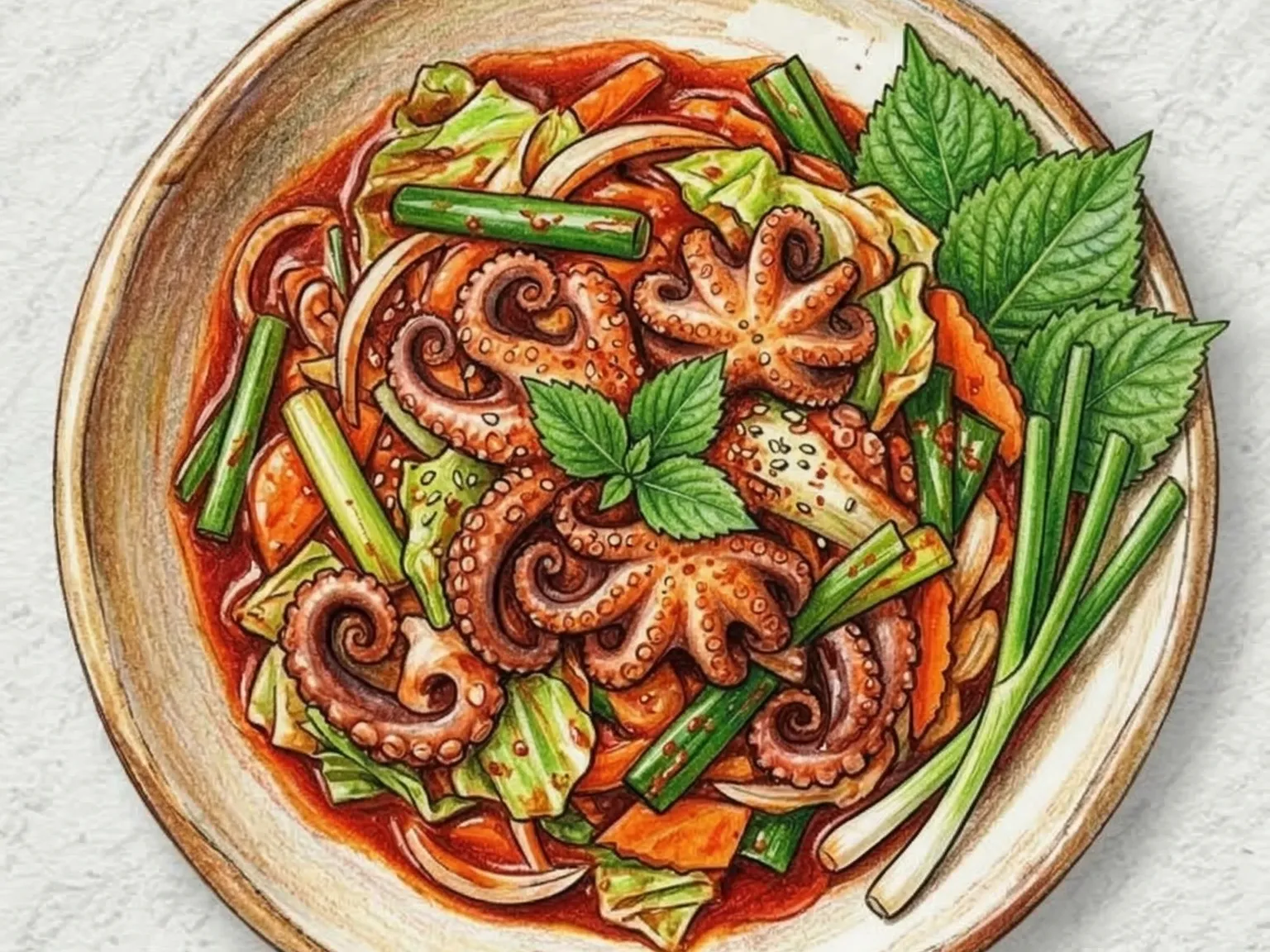
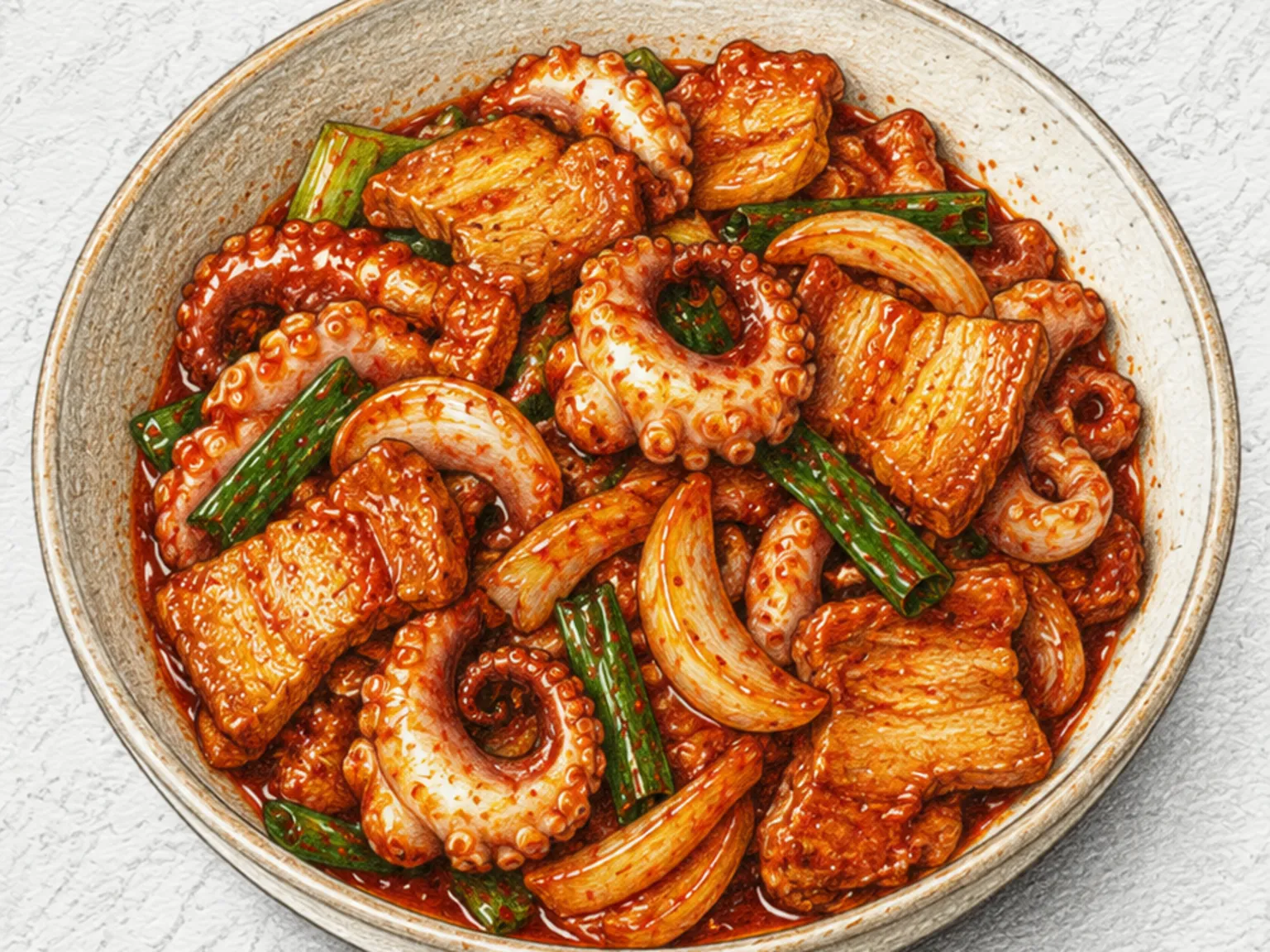
Jjukkumi-bokkeum is a Korean seafood stir-fry made by tossing cleaned small webfoot octopus with vegetables in a bold gochujang and gochugaru sauce over very high heat. Cleaning the octopus properly is essential: the innards inside the head must be removed and the body scrubbed with coarse salt to strip the slippery surface coating. The octopus is marinated ahead in a sauce of gochujang, red pepper flakes, soy sauce, sugar, minced garlic, and sesame oil, allowing the seasoning to penetrate before the heat hits. Onion and scallion go into the hot oiled pan first to develop their sweetness, then the marinated octopus is added and stir-fried on maximum heat for no more than two minutes. Keeping the cooking time short is non-negotiable: jjukkumi turns rubbery and tough if it stays over heat too long, and a chewy, springy texture is what separates a well-made version from an overcooked one. The intense heat of gochujang and coarsely ground red pepper defines the character of the dish, while the natural sweetness of onion and scallion rounds the sharp edges of the spice. Spring jjukkumi caught when the roe sacs are full adds a burst of texture when bitten into, which is why the spring season version is considered especially worth seeking out. The dish pairs naturally with steamed rice or as a drinking snack alongside soju.
Korean Spicy Webfoot Octopus & Pork Belly Stir-fry
Jjukkumi-samgyeop-bokkeum cooks pork belly first, then gives drained webfoot octopus and a thick chili paste only a short turn over high heat. Three hundred grams octopus is cleaned of its innards, rubbed lightly with salt, rinsed, and left in a sieve. Removing loose water at this stage keeps it from diluting the sauce as soon as it reaches the pan. One hundred eighty grams pork belly is cut into bite-size pieces, 100 g onion into thick pieces, and 1 green onion on the diagonal. The green onion is held for the final stage. The sauce combines 1.5 tablespoons each gochujang and gochugaru, 1 tablespoon each soy sauce and minced garlic, and 1 teaspoon sugar. It remains thick because the octopus supplies moisture during cooking. The pork belly spends 4 to 5 minutes over medium-high. By then, its edges should be golden and fat should have collected in the pan. Only excess pooled fat is lifted away. After the onion cooks for 1 minute, the octopus and sauce are added together and tossed over high for 1 to 2 minutes. The green onion follows for 30 seconds. The burner is switched off before 1 teaspoon sesame oil is mixed through. Giving the pork the longer first stage and delaying the octopus prevents the two ingredients from being forced through the same cooking time.
Korean Stir-Fried Bamboo Shoots
Juksun-bokkeum is a soy-seasoned stir-fry of bamboo shoots, a banchan closely tied to spring, when fresh juksun appears briefly in Korean markets from April through May, primarily from Damyang in Jeollanam-do. Fresh shoots carry oxalic acid, which must be neutralized by boiling them in rice-rinsing water for at least thirty minutes; skipping this step leaves a harsh, bitter aftertaste. Canned or vacuum-packed shoots, available year-round, need a thorough rinse under running water to remove the metallic tinned flavor before cooking. Julienned bamboo shoots are stir-fried with carrot and onion over high heat for a short, controlled burst. Prolonged cooking draws out moisture and turns the shoots rubbery, so timing is crucial. The seasoning is deliberately understated: soy sauce, a pinch of sugar, minced garlic, and a finishing drizzle of sesame oil produce a subtly sweet, nutty dish that lets the natural crunch of the shoots come through. Bamboo shoots are rich in dietary fiber and notably low in calories, making this banchan a filling choice for those watching their intake.
Korean Bamboo Shoot Beef Stir-fry
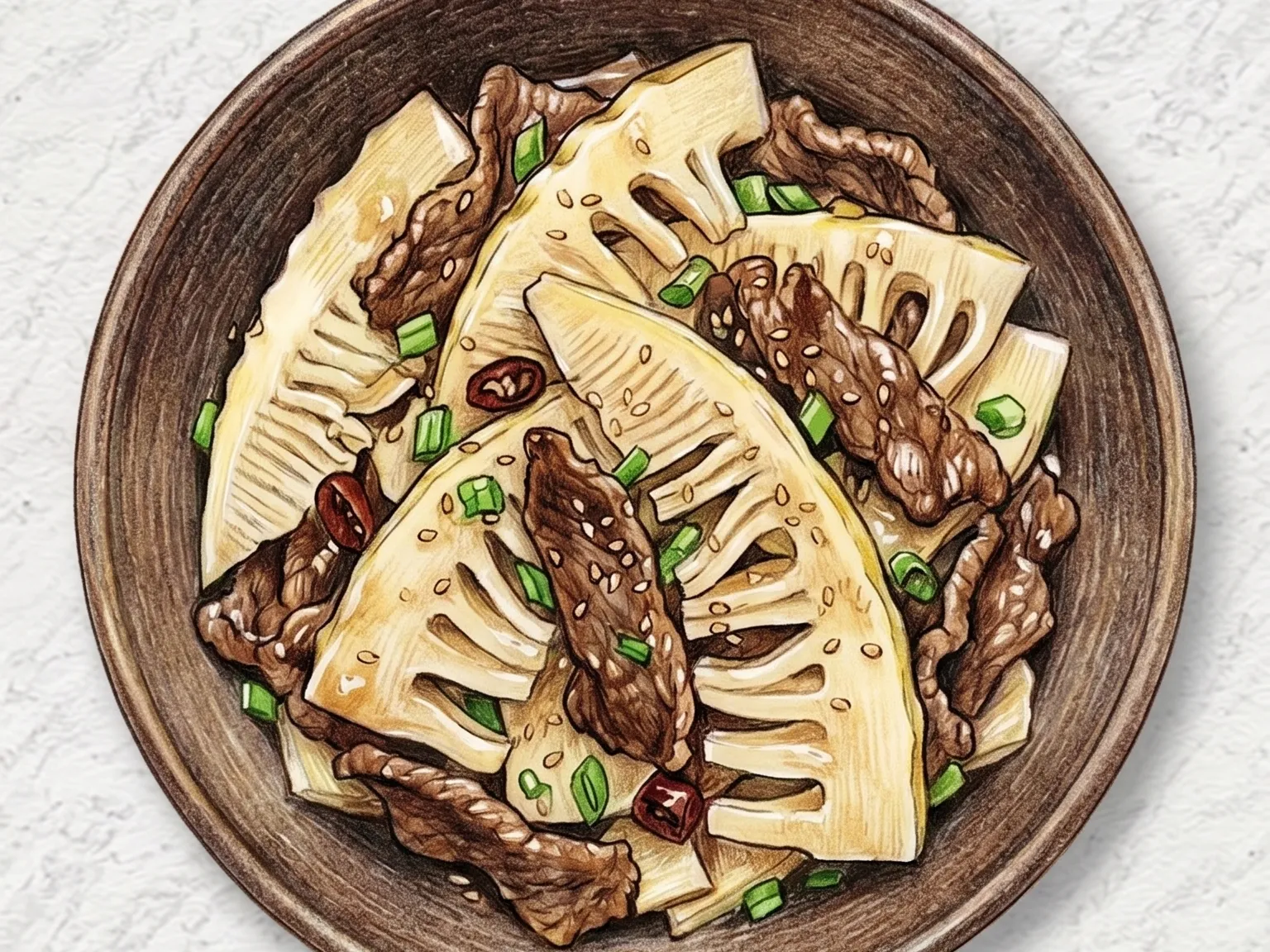
Juksun-sogogi-bokkeum cooks marinated beef and boiled bamboo shoots in separate stages before returning them to the same pan. Two hundred eighty grams boiled bamboo shoots are dried and sliced thinly across the grain. If their aroma is strong, the slices receive a 1-minute blanch and are drained again. Two hundred twenty grams lean beef round is cut into strips similar in length to the bamboo. It rests for 10 minutes with 1 tablespoon soy sauce, 1 tablespoon cooking wine, half of the minced garlic, and 0.25 teaspoon black pepper. Half of 1 tablespoon sesame oil is added to a pan heated over medium-high. The beef is spread into a thin layer and stir-fried for 2 minutes, then removed as soon as its outer surface changes color. The remaining sesame oil goes into the same pan with 120 g onion, 40 g green onion, and the rest of the garlic for 1 minute over medium. The bamboo and the remaining 1/2 tablespoon soy sauce are then cooked over medium-high for about 3 minutes. Reduced moisture on the pan bottom and glossy bamboo edges mark the point for returning the beef. Two more minutes combine the seasoning and finish the thickest beef strip. Removing the meat between stages prevents it from continuing to cook throughout the full bamboo and vegetable stage.
Keichan (Miso Chicken and Cabbage Stir-Fry)
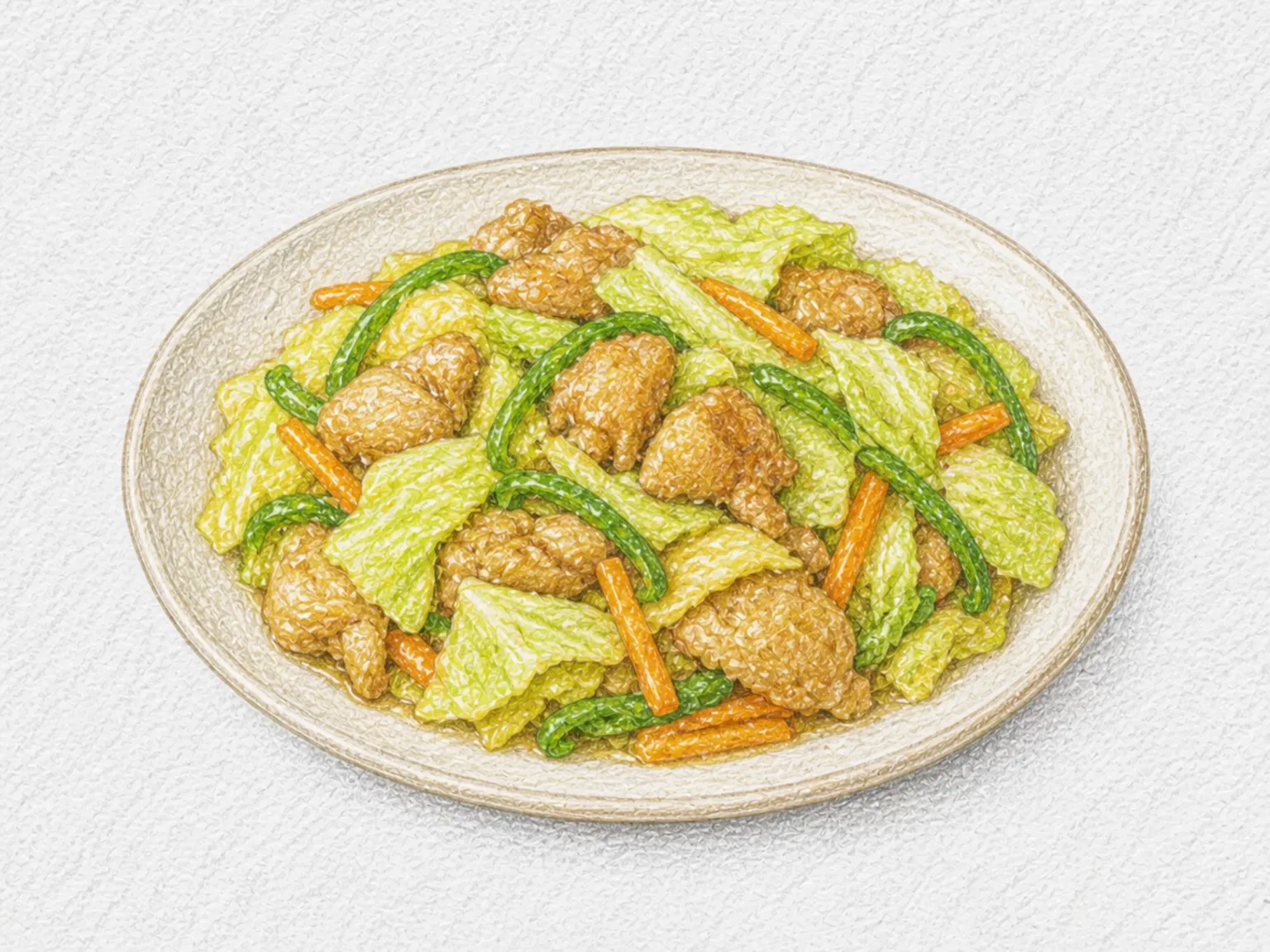
Keichan marinates 200 g chicken breast with mixed miso and garlic under refrigeration, then adds carrot, cabbage, and green pepper according to their cooking time. Cut the chicken across the grain into 2 cm pieces. Combine 6 g finely grated garlic with 32 g mixed miso, 6 ml sake, and 8 ml light soy sauce. Massage this into the chicken for 1 minute and refrigerate for 15 minutes. Meanwhile, cut 200 g cabbage into 4 cm pieces, 40 g carrot into pieces 2 mm thick and 4 cm long, and 20 g green pepper into 5 mm strips. Preheat a large pan over medium-high heat for 2 minutes and add 6 ml oil. Spread the chicken with its marinade in a single layer and leave it untouched for the first 2 minutes. Turn the pieces and cook for another 3 minutes. If the miso seasoning begins to catch on the bottom, lower the heat before it scorches. Add the carrot first and stir-fry for 2 minutes. Add the cabbage and pepper, raise the heat to high, and toss broadly for 4 minutes. Stop when the cabbage edges look translucent and the chicken center measures at least 74°C. Staging the vegetables keeps the carrot from remaining hard without exposing the cabbage and pepper to the entire chicken cooking time.
Korean Stir-Fried Kale and Pork with Gochugaru
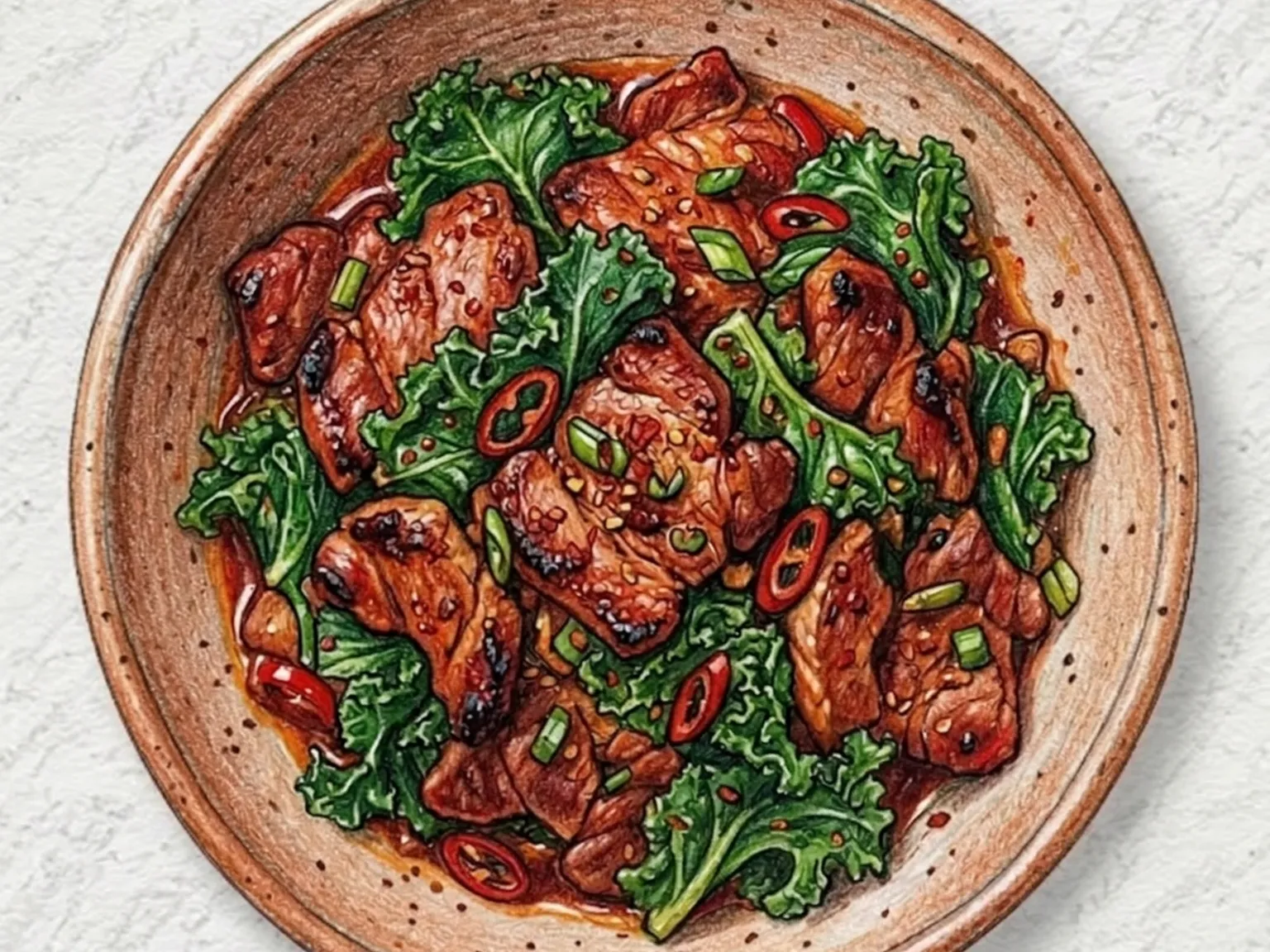
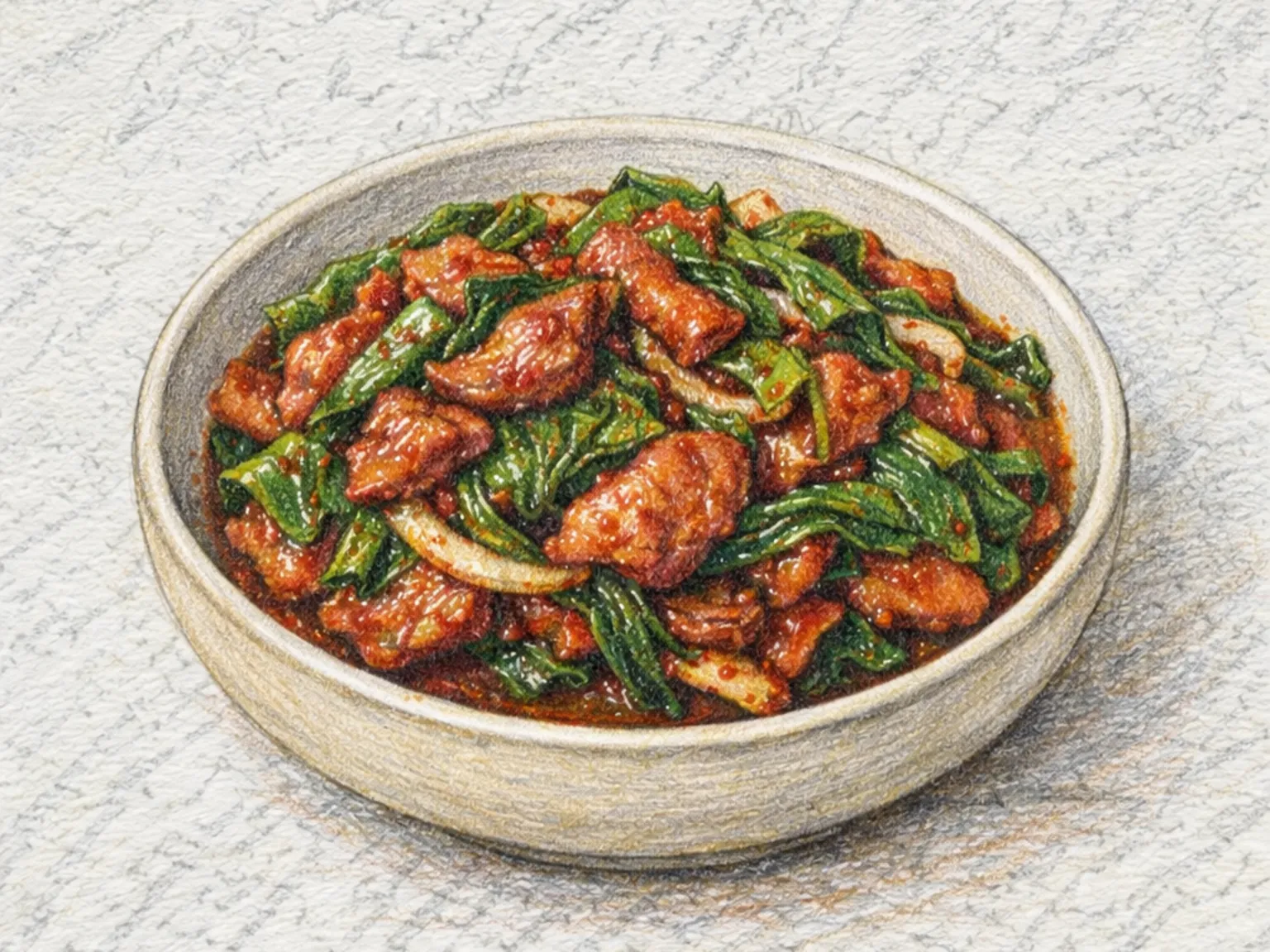
Kale and pork gochugaru stir-fry cooks the seasoned pork shoulder first and adds trimmed kale only for the final high-heat stage. Four hundred twenty grams pork is cut into bite-size pieces and coated with 1.5 tablespoons gochugaru, 1 tablespoon gochujang, 1.5 tablespoons soy sauce, 1 tablespoon minced garlic, and 1 teaspoon sugar. The meat rests for 10 minutes while 180 g kale is stripped of its thick stems and cut into 4 cm pieces. One hundred twenty grams onion is sliced thinly, and 60 g green onion is cut diagonally. One tablespoon cooking oil is heated over medium-high before the pork is spread in a single layer. The pieces stay in place for about 2 minutes so the side against the pan and the edges can develop color. Once the pork is nearly cooked through, the onion and green onion are added for 2 minutes. The pan bottom is scraped as the ingredients move, keeping the chili paste from remaining over one hot spot. The kale goes in last for 2 to 3 minutes over high heat. Cooking stops when the leaves have lost volume but still show a clear green color. Separating the longer pork stage from the brief kale stage makes it possible to check the meat before exposing the leaves to sustained heat.
Khua Kling (Southern Thai Dry-Fried Spiced Minced Pork Curry)
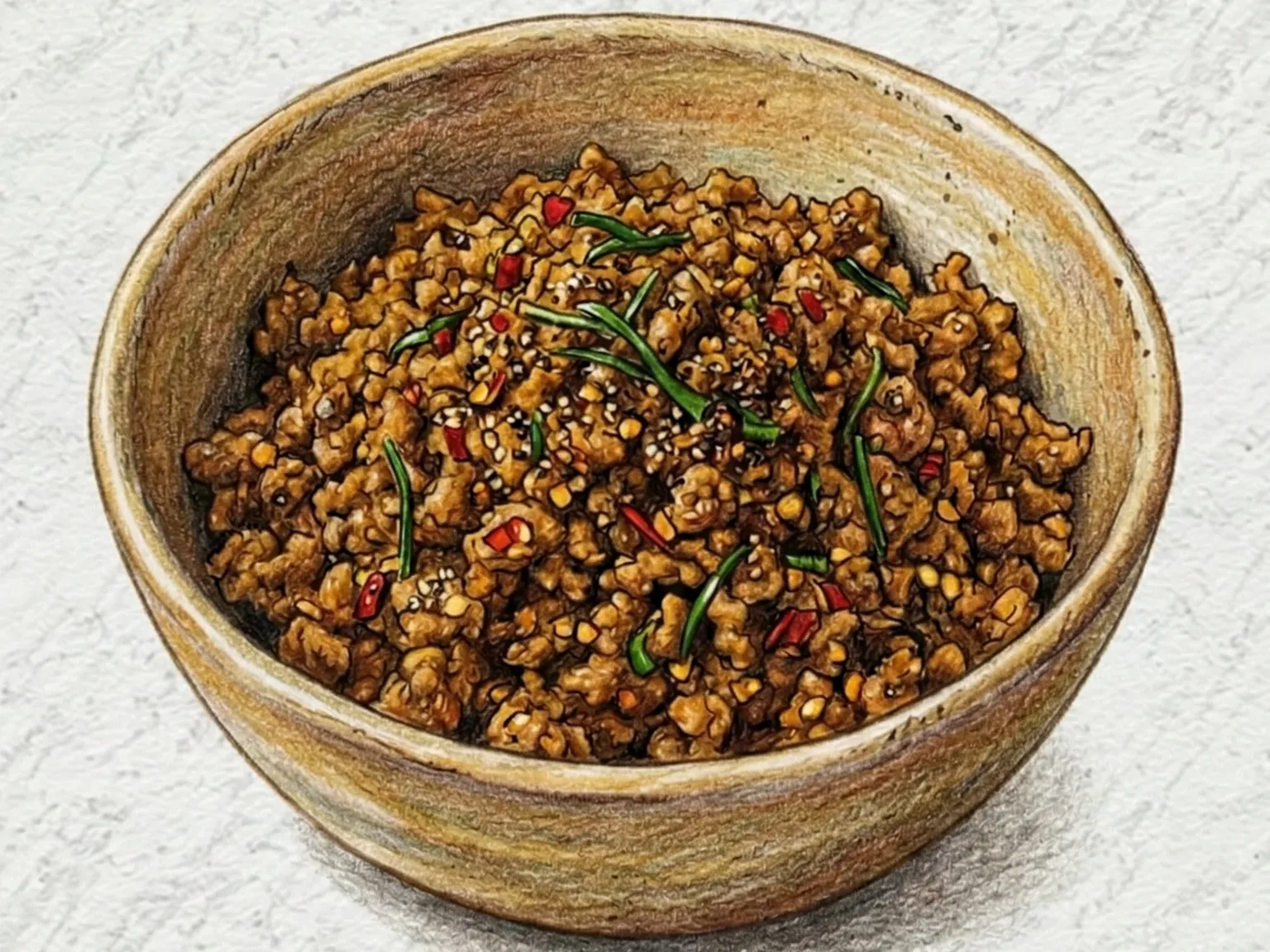
Khua kling is the dry-fried curry that defines the cooking of southern Thailand, built around minced meat stir-fried with an intense red curry paste until every trace of liquid has been cooked away. The paste goes into a dry, preheated pan first, and it fries in its own aromatic oils until the raw edge is gone and the kitchen fills with its fragrance. Ground pork is then added and the cook stirs without pause, working the meat against the hot surface and driving off all moisture until each grain of meat is separate, dry, and coated in a concentrated layer of spice. Fish sauce brings salt, a small measure of sugar tempers the raw heat, and finely shredded kaffir lime leaves push a bright citrus fragrance through the heavy chili and shrimp paste base. Extra sliced red chilies are standard in the southern version, and the heat level here far exceeds what most central Thai dishes offer. There is no sauce at all in the finished dish: the texture is crumbly and almost granular, which is precisely the point. A single spoonful carries enough concentrated flavor to carry several bites of plain steamed rice. The dish is best served immediately off the heat, while the aromatics are still vivid and the meat still steaming.
Korean Stir-Fried Kimchi (Caramelized Aged Kimchi Banchan)
Kimchi-bokkeum is the default way Korean households use kimchi that has fermented past its fresh prime and developed a sharp lactic acidity that makes it too sour to eat on its own. Stir-frying over heat fundamentally transforms that sourness, cooking it down into something mellower, sweeter, and more rounded. Onion goes in first and cooks until translucent, building a sweet foundation before the kimchi and garlic join the pan. Maintaining medium heat is the key to driving off moisture gradually and building the thick, concentrated sauce that distinguishes well-made kimchi-bokkeum from a watery stir-fry. A small addition of gochugaru deepens the color and reinforces the chili heat, while a pinch of sugar balances the fermented sourness without making the dish sweet. A tablespoon of kimchi brine stirred in near the end amplifies the umami contributed by the lactobacillus cultures in the kimchi itself. Adding sliced pork belly or canned tuna to the pan along with the kimchi increases the protein and gives the dish more substance. The finished banchan is versatile enough to serve straight alongside rice, fold into fried rice, or pile on top of ramyeon.
Korean Kimchi Bulgogi (Kimchi Stir-Fried Marinated Beef)
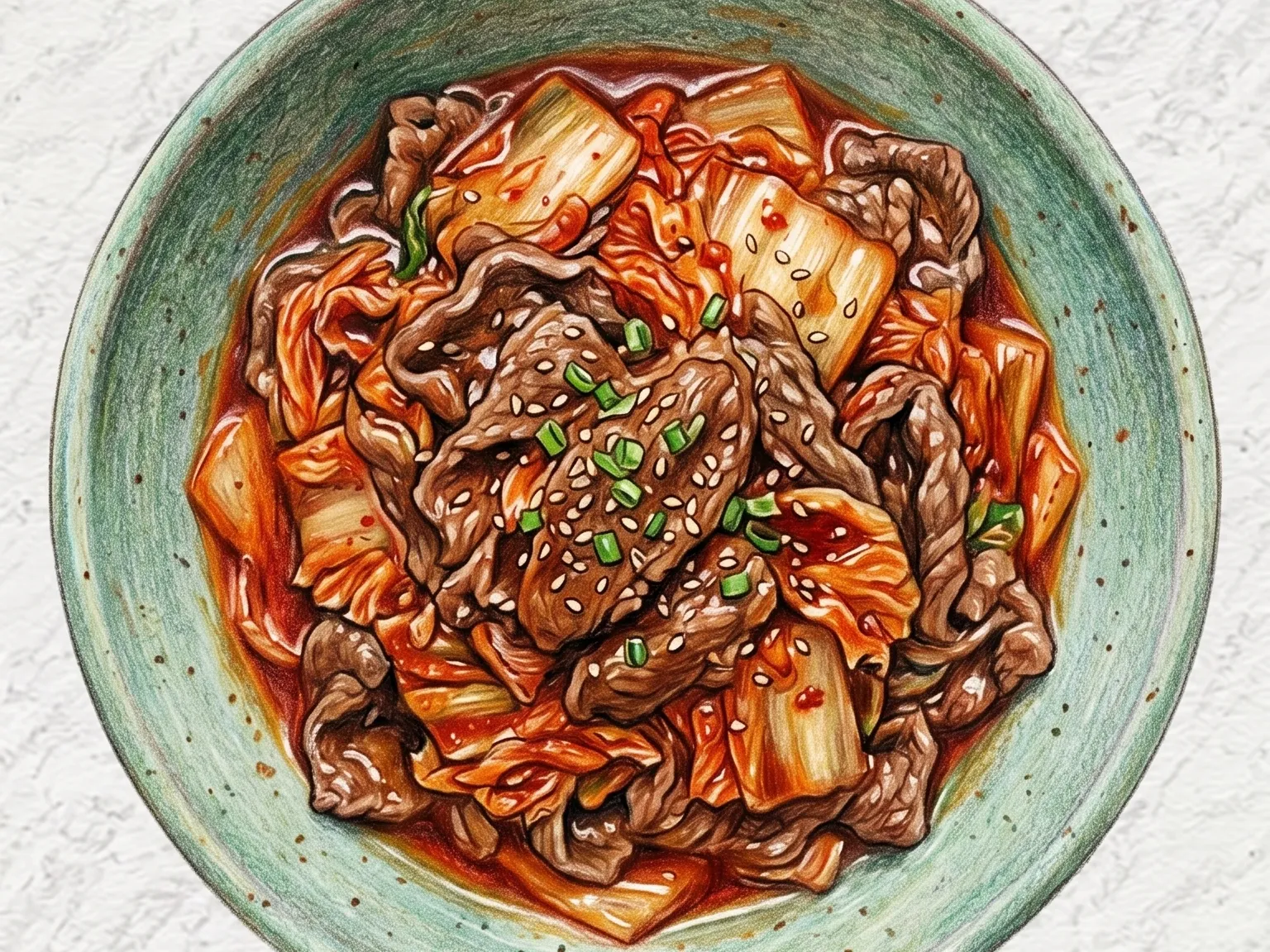
Kimchi bulgogi combines soy-marinated sliced beef with aged napa kimchi, cooked together over high heat in a single pan. The beef is marinated with soy sauce, pear juice, and sugar before it ever touches the pan. Pear juice breaks down the muscle fibers to tenderize the meat while adding a subtle fruity sweetness, which the kimchi's sharp acidity and concentrated salt counter-balance to produce a layered, complex seasoning. As the two cook together at high heat, kimchi liquid seeps into the beef and builds a deeper, more rounded umami than standard bulgogi achieves on its own. The tangy lactic sourness from the fermented cabbage layers into the meaty savoriness and gives the dish a character that no amount of seasoning adjustments can replicate in an unfermented substitute. Heating the pan fully before adding the ingredients is important, because a properly hot surface sears rather than steams, preserving the wok-adjacent char that makes this dish more than a simple stir-fry. A final drizzle of sesame oil rounds out the dish with a warm, nutty note. Served over steamed white rice, the pan juices soak into each grain and the combination disappears from the bowl quickly. Well-aged kimchi, ideally stored for several weeks to months, produces the most pronounced result, though ripe freshly made kimchi works as a substitute when no aged version is available.
Korean Kimchi Pork Stir-fry
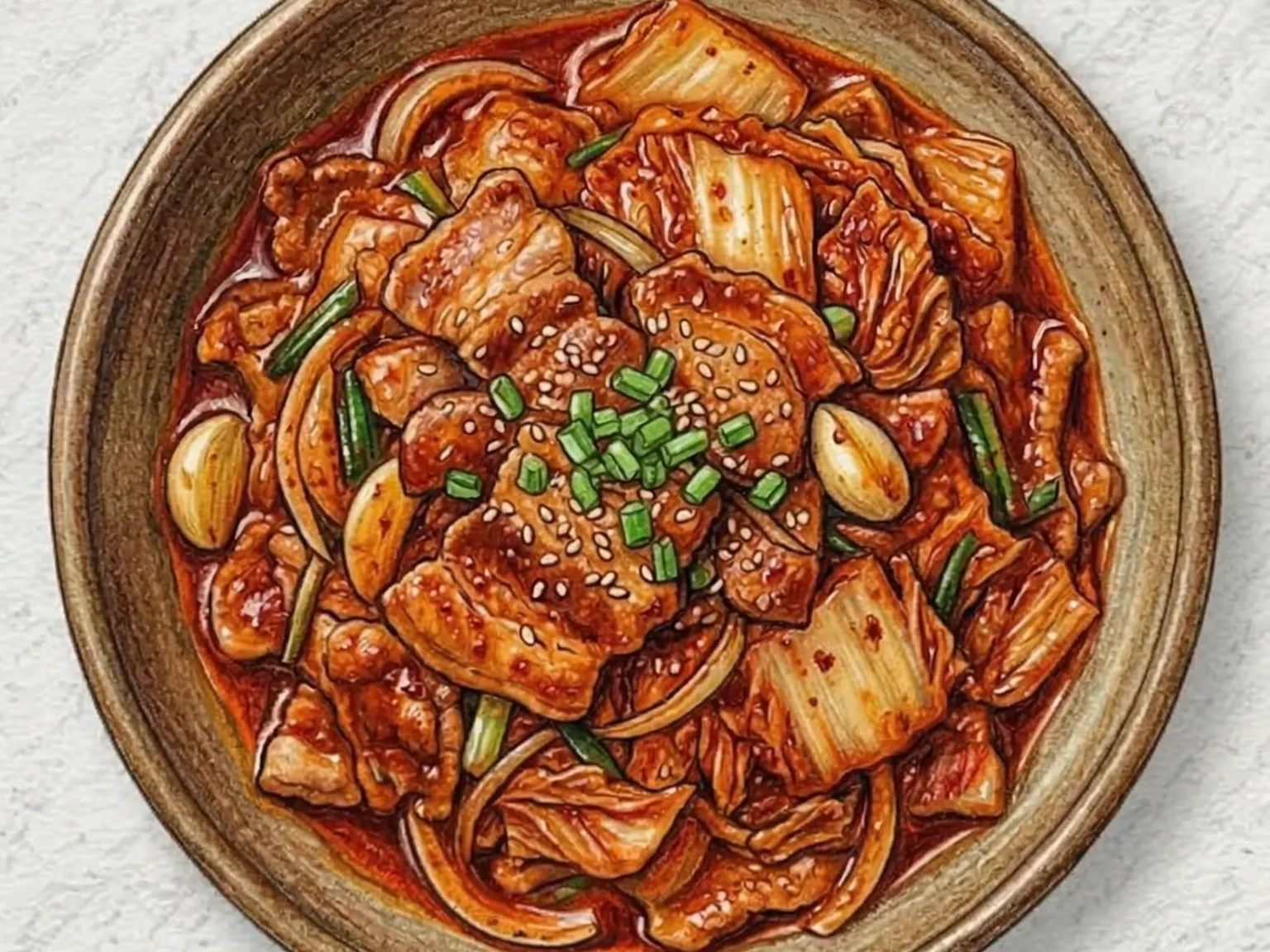
Kimchi jeyuk bokkeum is a Korean stir-fry of pork shoulder seasoned with gochujang, gochugaru, and soy sauce, then cooked over high heat together with well-fermented aged kimchi. The kimchi's deep sourness from lactic acid fermentation cuts through the pork fat and tempers its richness while simultaneously amplifying the chili heat of the paste, making the overall flavor more intense than either ingredient achieves alone. Searing the pork first against a dry hot pan builds caramelized edges that add depth to the final dish, and adding the kimchi and onion afterward lets the combined liquid reduce into a concentrated glaze that coats everything in the pan. The more aged the kimchi, the more it functions as both seasoning and acid, which means less soy sauce is needed without losing complexity. Scallion and sesame oil finish the dish cleanly, and wrapping portions in fresh lettuce leaves gives the heat somewhere to go, softening each bite considerably.
Kinpira Gobo
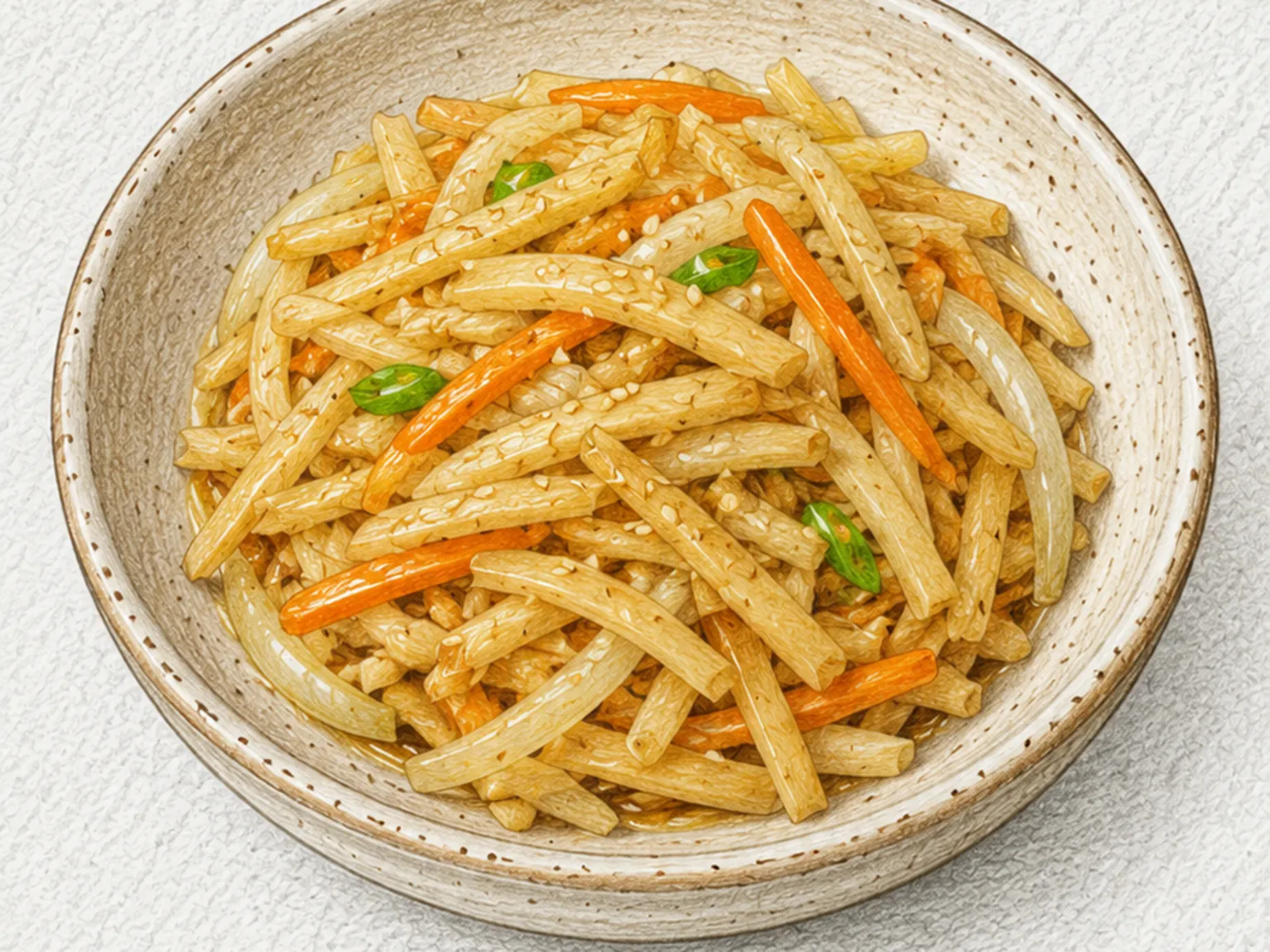
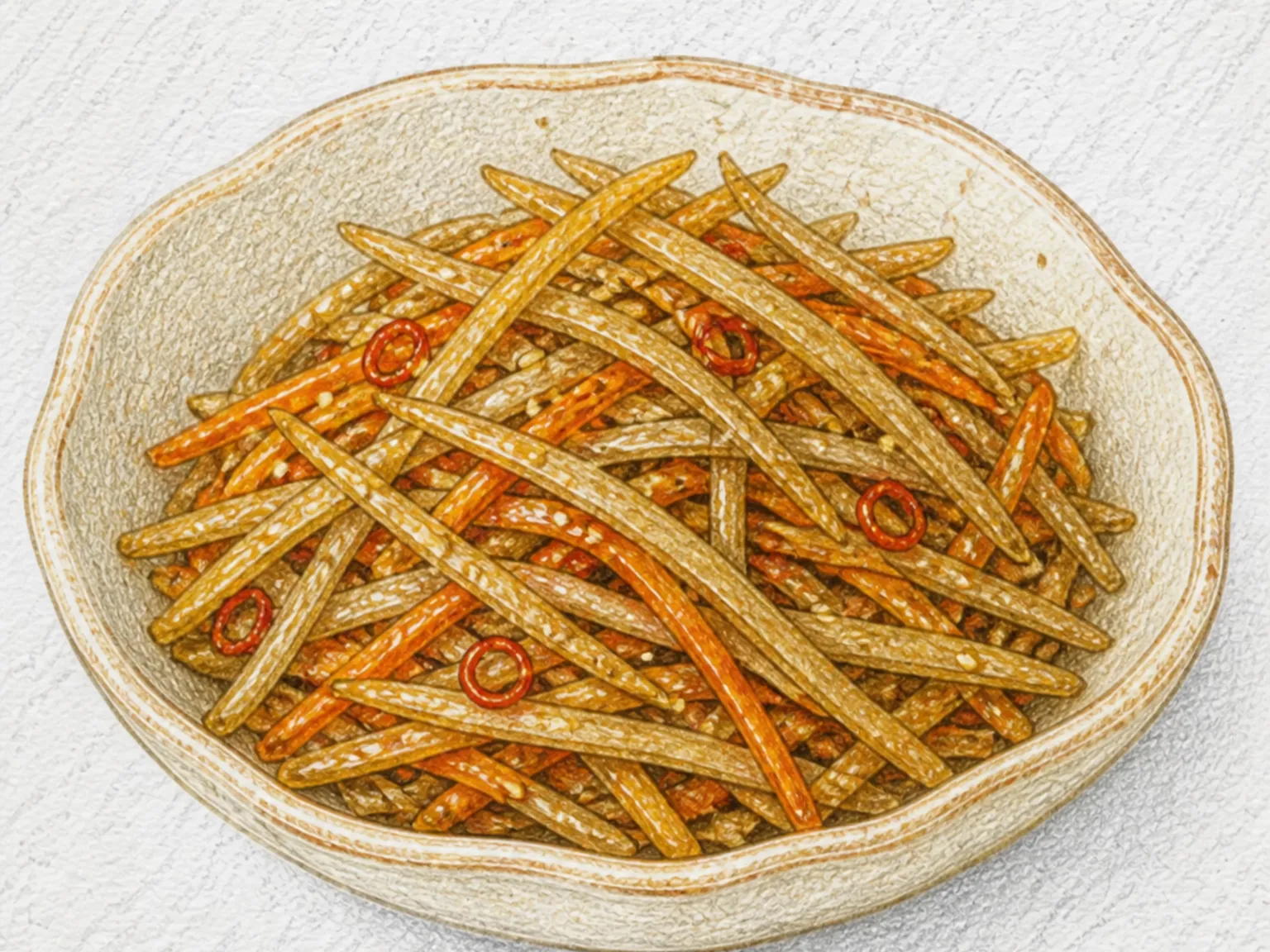
Kinpira gobo matches 70 g burdock with 30 g carrot in thin 5 cm strips, then reduces a measured soy seasoning until almost no liquid remains. Scrub soil from the burdock rather than cutting away a thick layer of skin. Cut it to size, soak it in 500 ml water for 5 minutes, and drain. Cut the carrot to the same length and remove the seeds from half a dried red chili. In a separate bowl, stir 50 ml water with 1.5 teaspoons soy sauce, 2 teaspoons sugar, and 1 teaspoon sake for 30 seconds, until almost no sugar grains remain. Heat 1 tablespoon sesame oil with the chili over high heat for 30 seconds. Add the burdock first and stir-fry for 2 minutes, then add the carrot for 1 more minute so both vegetables receive a coating of oil. Pour in the mixed seasoning, lower the heat to medium, and cook for 6 to 8 minutes while stirring. Turn off the heat when the pan bottom is nearly dry but the burdock still gives firm resistance when bitten. Let the vegetables stand for 5 minutes, then rub 1 teaspoon toasted white sesame seeds between the fingers as they are scattered over the surface.
Korean Perilla Leaf Tofu Stir-fry
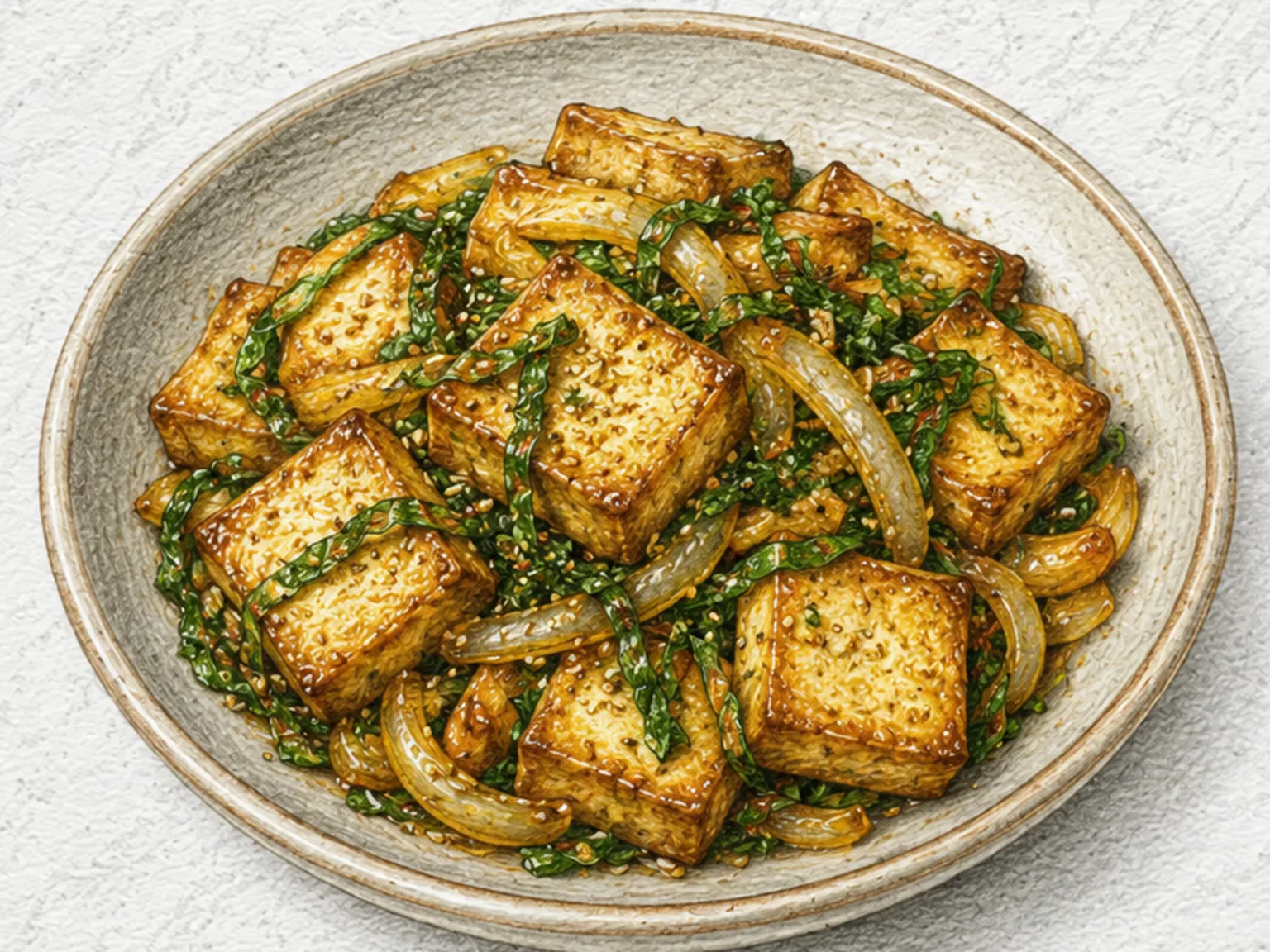
Kkaennip dubu bokkeum firms the tofu in the pan before adding soy sauce, then brings in the perilla leaves and ground perilla seed only over low heat at the end. Three hundred grams firm tofu is pressed with paper towels and cut into bite-size cubes. If the surface still feels wet, it stands for about 5 more minutes before cooking. Twenty grams perilla leaves are shaken dry, stacked, rolled, and cut into thin ribbons, while 80 g onion is sliced thinly. One tablespoon cooking oil is heated over medium, and the tofu is spread in one layer. Gentle turning for about 4 minutes gives several sides light brown color and firmer edges without breaking the cubes. The onion and 1 teaspoon minced garlic are then stir-fried with the tofu for 2 minutes, until the onion edges become translucent. One and a half tablespoons soy sauce is poured around the pan edge and tossed through immediately. If the bottom dries before the seasoning spreads, the heat is lowered slightly rather than letting the tofu stick. The perilla leaves and 1 tablespoon ground perilla seed are added after reducing the heat to low. One minute of gentle folding distributes the powder while limiting the time the leaves spend over heat. The burner is switched off before 1 tablespoon sesame oil is mixed in. Searing the tofu first and delaying the leaves gives each ingredient a separate cooking stage suited to its structure.
Korean Kkaennip Gamja Bokkeum (Perilla Potato Stir-fry)
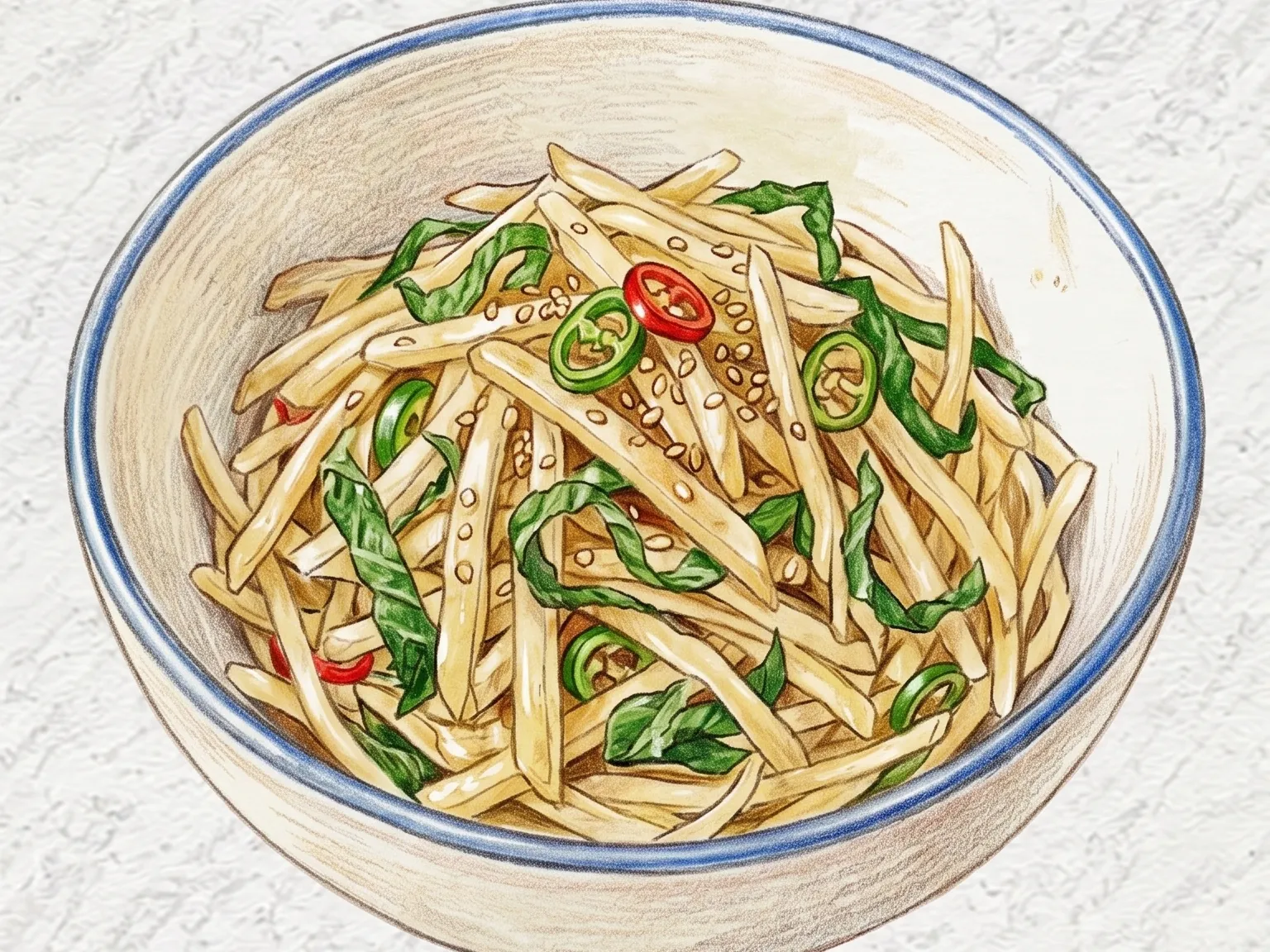
High heat and a well-preheated pan are the keys to achieving the distinct texture of these stir-fried potato matchsticks. Before cooking, soaking the cut potatoes in cold water is a critical step to remove surface starch, ensuring the pieces stay separate and do not stick to the pan. Once thoroughly dried to prevent oil splattering, the potatoes are tossed quickly until the edges become translucent while the centers retain a subtle firmness. Overcooking results in a mushy consistency that lacks the intended character of the dish. Pouring the soy sauce around the perimeter of the pan allows it to caramelize against the hot surface before it is incorporated into the vegetables, adding a layer of savory complexity. Fresh perilla leaves should be tossed in just before the heat is turned off to preserve their bright green color and herbal fragrance. A final drizzle of perilla oil complements the leaves with its toasted scent, and a sprinkle of sesame seeds provides a light crunch. Sliced Cheongyang chilies can be included during the initial sautéing for a gentle heat. This combination pairs the carbohydrates of potatoes with the vitamin K and calcium found in perilla leaves, creating a nutritionally rounded side dish that tastes even better the next day after the flavors have settled.
Korean Duck and Perilla Leaf Stir-fry
Kkaennip ori bokkeum is a stir-fry of smoked duck slices cooked with onion and Cheongyang chili in a sauce made from gochujang, soy sauce, and plum syrup, finished with shredded perilla leaves and perilla oil in the final seconds before serving. When the smoked duck hits the hot pan, its own fat renders out and forms the cooking base, infusing the sauce with a meaty, smoky depth that distinguishes this dish from stir-fries made with leaner proteins. Gochujang contributes heat and a fermented richness, soy sauce provides salty umami, and plum syrup adds a bright, fruity sweetness that keeps the sauce from feeling too heavy. The combination of all three wraps around the smokiness of the duck in a way that amplifies rather than obscures it. Perilla leaves must go in at the very last moment, just before the heat is cut, because prolonged cooking darkens their color and drives off the distinctive herbal fragrance that defines the dish. Perilla oil is added at the same stage, after the burner is off, so its nutty aroma remains intact in the finished plate. The sharp heat of Cheongyang chili interlocks with the smoked duck flavor to produce a more intense, stimulating character, and a pinch of black pepper at the end leaves a clean, lingering finish. The dish works equally well as a rice side and as drinking food alongside soju.
Korean Perilla Leaf Beef Stir-Fry
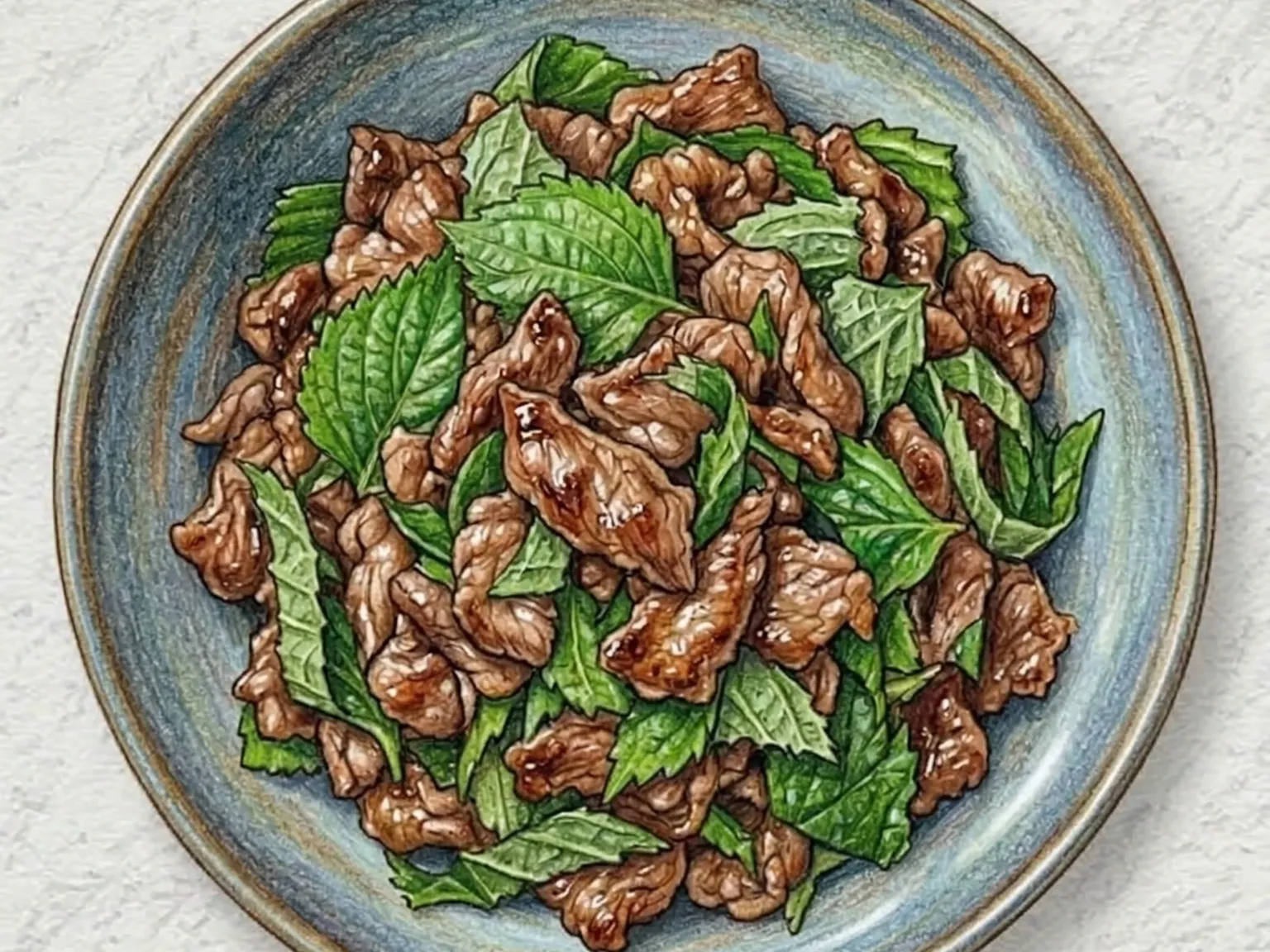
Kkaennip sogogi bokkeum cooks soy-seasoned beef over high heat and waits until the burner is off before wilting the perilla leaves with residual heat. Two hundred grams thinly sliced beef is separated into bite-size pieces and coated with 2 tablespoons soy sauce for about 5 minutes. Any slices stuck together are pulled apart so they can contact the pan instead of cooking as a clump. Twenty perilla leaves are shaken thoroughly dry, trimmed of their tough stem ends, and cut into large pieces. The pan is heated over high for about 1 minute before 2 garlic cloves are stirred only until fragrant, without allowing them to brown. The seasoned beef is spread widely and turned for about 2 minutes, until most visible red color has disappeared. As the soy sauce reduces against the pan bottom, it leaves a glossy coating on the meat. The thickest slice is checked for doneness at this point, and then the burner is switched off. The perilla leaves are added only after the heat is off and tossed for 20 seconds. One teaspoon sesame oil is drizzled over the mixture before a final turn and immediate transfer from the pan. Drying the leaves prevents added water from loosening the reduced soy coating, while using residual heat keeps their cooking time separate from that of the beef.
Korean Perilla Sprout & Tofu Soybean Paste Stir-fry
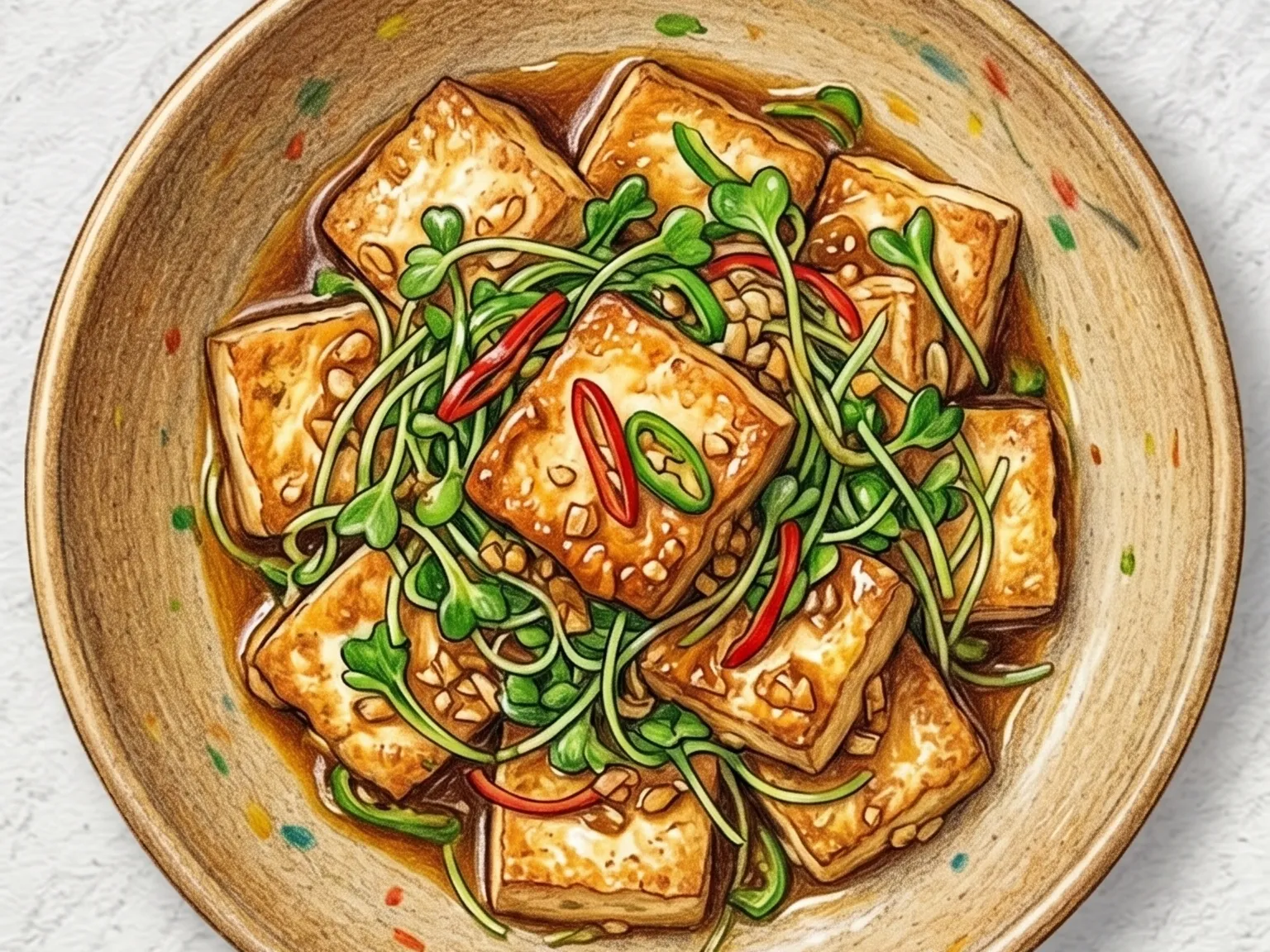
Kkaetsun dubu doenjang bokkeum pairs pan-seared firm tofu with perilla sprouts in a doenjang sauce. The tofu must be pressed dry with paper towels before it goes into the pan; residual moisture causes the oil to spit and prevents the surface from crisping. Dissolving the doenjang in water before adding it to the pan distributes the saltiness evenly and stops the paste from scorching against the hot surface. The doenjang coats the golden tofu pieces with a salty, earthy glaze, while perilla sprouts, far softer than mature perilla leaves, release a delicate perilla-sesame fragrance as they wilt into the sauce. The contrast between the crisp tofu edges and the just-wilted greens gives the dish its defining texture. Cheongyang chili cuts through the fermented weight of the doenjang with a clean, sharp heat that brightens the aftertaste. A final drizzle of perilla oil added off the heat brings the fragrance back to the surface before serving. When perilla sprouts are not available, mature perilla leaves cut into thick strips work as a direct substitute.
Korean Blue Crab Soy Stir-Fry
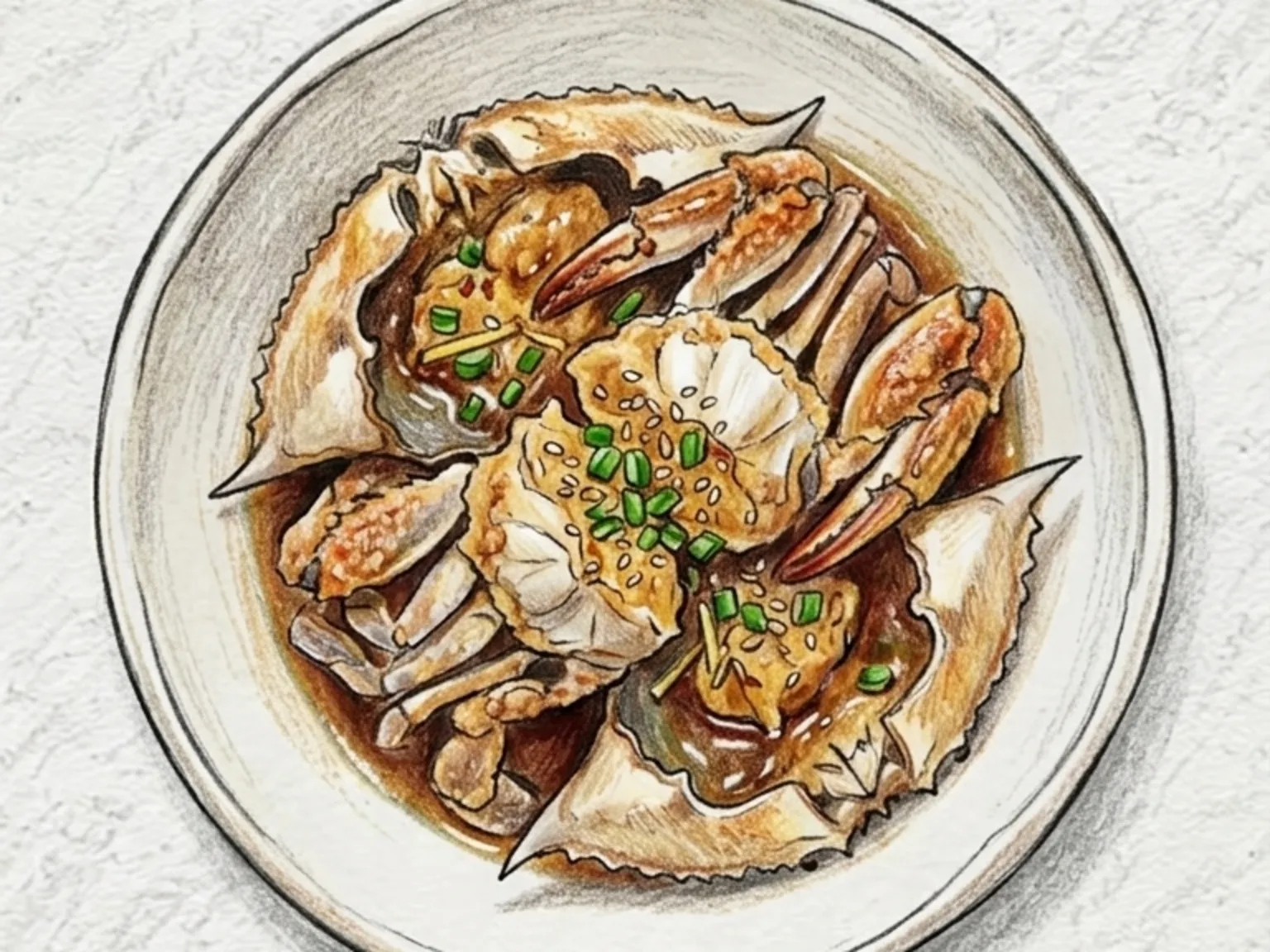
Kkotge ganjang bokkeum is a Korean blue crab stir-fry where halved crabs are lightly dusted with flour, pan-seared until the shells turn deep red, then braised briefly under a lid in a sauce of soy sauce, sugar, garlic, ginger, and gochugaru. The flour coating seals in moisture and helps the sweet-salty sauce cling to the shell surface, leaving a sticky, aromatic glaze that is meant to be licked off the fingers. Ginger neutralizes the briny smell that crabs can carry, while scallion and sesame oil are stirred in at the end to build the final aromatic layer. Using live crabs and cooking them immediately after cleaning ensures the meat stays firm and sweet; frozen crabs lose moisture during thawing and produce a noticeably softer result. Scoring the claws before cooking allows the sauce to penetrate the thicker sections of shell.
Korean Stir-Fried Shishito Peppers and Chicken Tenderloin
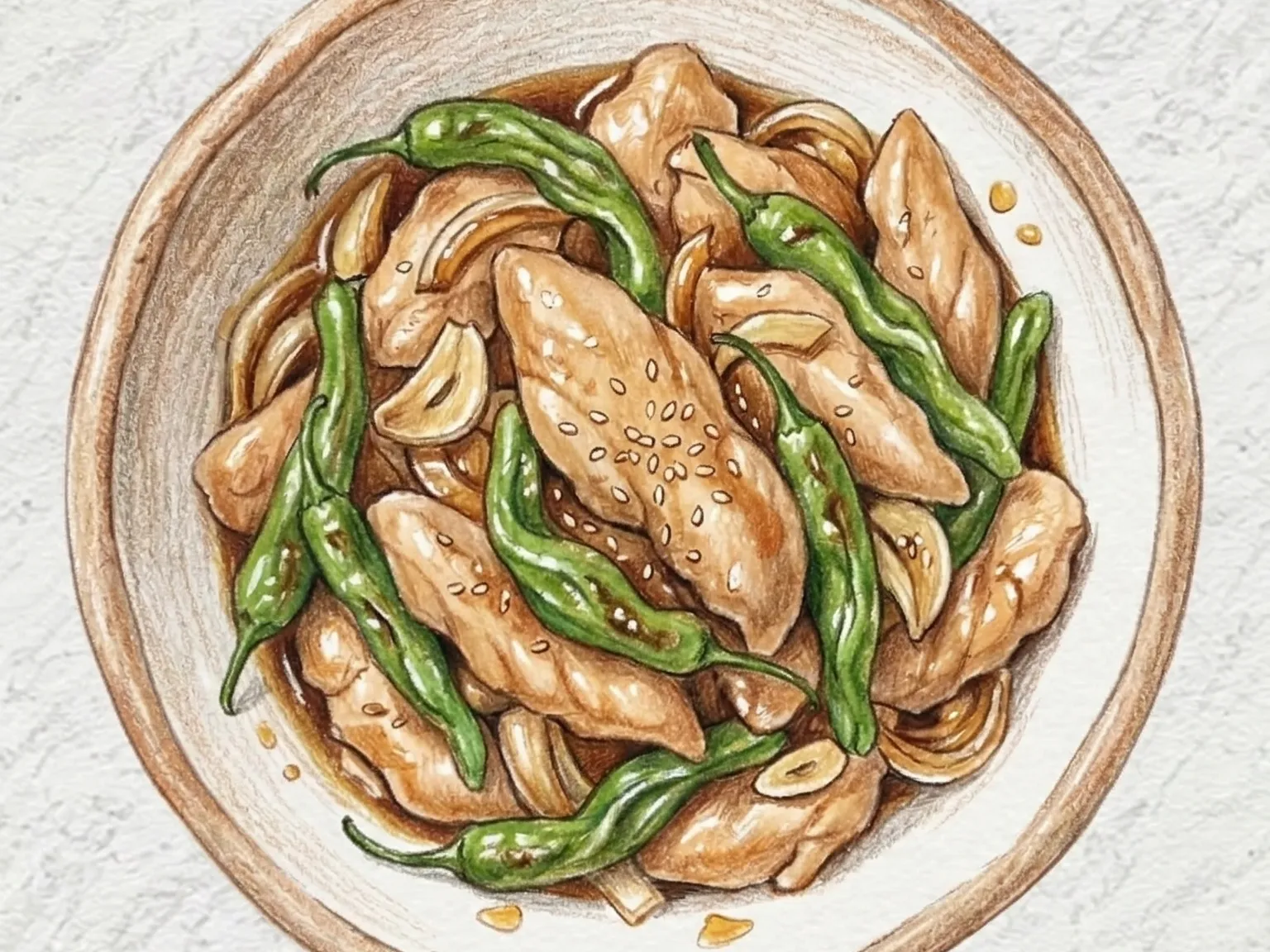
Kkwarigochu dak ansim bokkeum is a stir-fry of chicken tenderloin that has been marinated in soy sauce and cooking wine, cooked through first, then combined with shishito peppers and onion in a finishing sauce of soy sauce and oyster sauce. The tenderloin is prized for its low fat content and mild taste, and oyster sauce compensates by introducing fermented bivalve umami that keeps the seasoning from feeling thin. Scoring the shishito peppers lightly before they go into the pan lets the sauce penetrate the flesh while the skin stays intact, so each pepper holds its shape rather than splitting open. Chicken tenderloin firms up quickly when overcooked, so moving on to the next step the moment the exterior whitens and the center loses its translucency is the key to keeping the meat tender rather than dry. Finished with sesame oil and sesame seeds, the high protein density makes this a practical and satisfying lunchbox side dish.
Korean Stir-fried Anchovies with Shishito Peppers
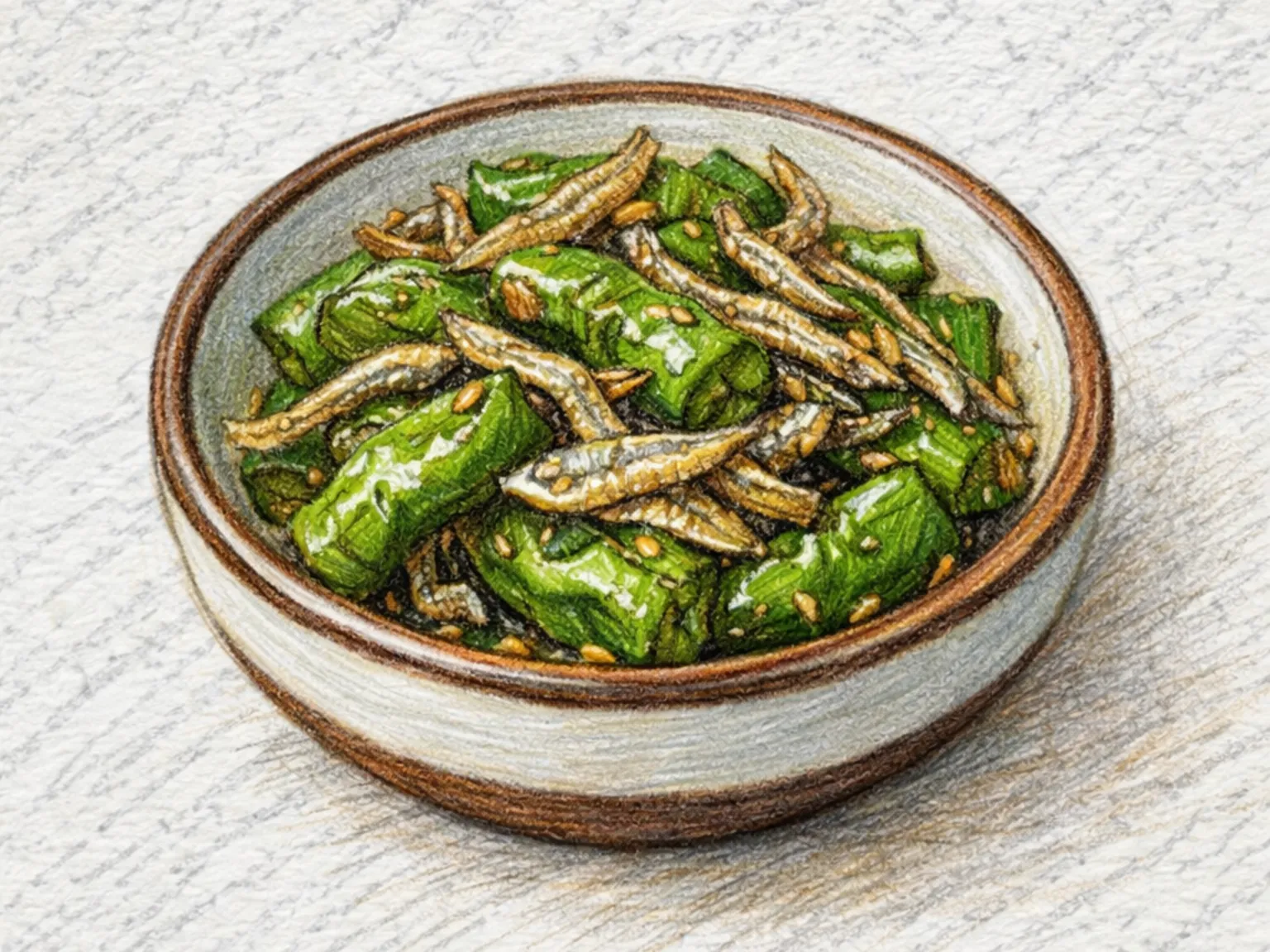
Kkwarigochu myeolchi bokkeum is a Korean banchan of dried anchovies and shishito-style peppers cooked together and glazed with soy sauce and oligosaccharide syrup. The anchovies are dry-toasted first in an unoiled pan over medium heat until their moisture evaporates and the fishiness reduces, then set aside. Oil goes into the pan next and the kkwarigochu peppers are fried over medium-high heat until blistered and darkened in spots, which develops a slightly bitter, charred edge that adds character to the finished dish. The anchovies return to the pan along with the peppers, soy sauce is added for the base seasoning, and then the heat is reduced before the oligosaccharide syrup goes in. Adding the syrup over reduced heat is the step that most often goes wrong: high heat scorches the syrup almost immediately, preventing the glaze from forming and leaving a bitter residue instead. Over low heat, the syrup coats the anchovies and peppers in a thin, shiny layer as it slowly reduces. Sesame oil and whole sesame seeds are stirred in at the end for fragrance and texture. The finished dish layers the crunchy, salty anchovies against the syrup's gentle sweetness, with the peppers providing mild heat that prevents the flavor from becoming cloying. Stored in a sealed container in the refrigerator, the banchan keeps well for several days.
Korean Cauliflower Soybean Paste Pork Stir-fry
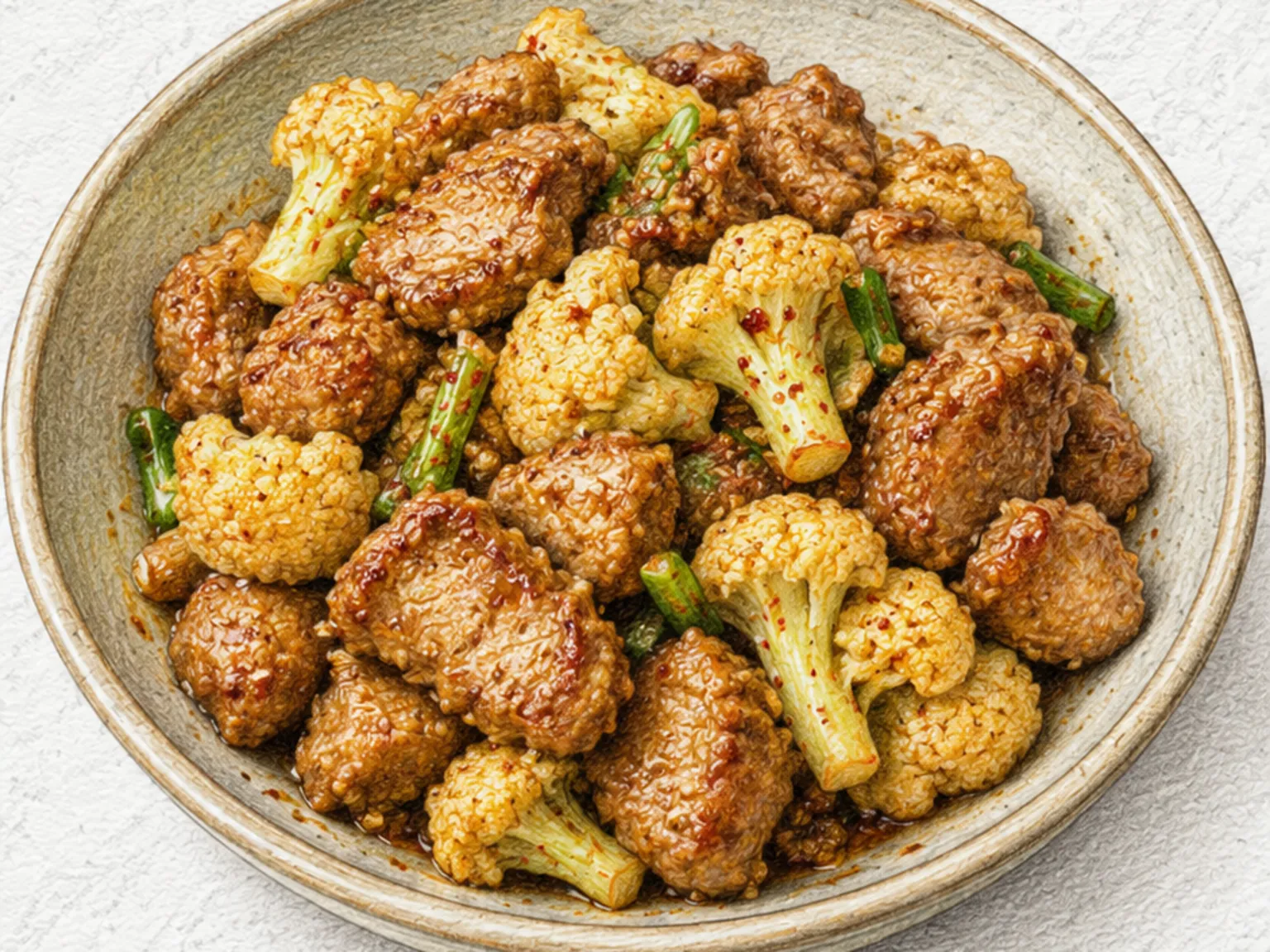
Cauliflower doenjang pork stir-fry sears marinated pork shoulder first, fries the doenjang briefly against the pan, and adds blanched, well-drained cauliflower for the final toss. Two hundred twenty grams pork is seasoned for 10 minutes with 1 tablespoon cooking wine, 1/2 tablespoon soy sauce, and 1/2 tablespoon minced garlic. Two hundred twenty grams cauliflower is divided into small florets, blanched in boiling water for 40 seconds, and left in a sieve until both steam and surface water have escaped. One tablespoon neutral oil is added to a pan heated over high, and the pork is spread broadly and left in place for about 2 minutes. Once brown patches form on the side touching the pan, 80 g onion, 40 g green onion, and the remaining garlic cook over medium-high for 1 to 2 minutes. The pork is pushed aside so 1.2 tablespoons doenjang can fry on the exposed pan edge for 20 to 30 seconds. Next, 0.7 tablespoon gochugaru is stirred through the oil without being left to scorch. The drained cauliflower and remaining 1/2 tablespoon soy sauce are added for a 2 to 3 minute high-heat toss. Cooking stops after the thickest pork piece is done and the cauliflower stems still retain a slight bite. Thorough draining prevents the sauce from being loosened by blanching water, while frying the paste separately spreads it through the pan before the cauliflower enters.
About Stir-fry
Cooking over high heat for a short time keeps ingredients crisp and vivid. With a few staple sauces like gochujang, soy sauce, and oyster sauce, the possibilities are endless - and dinner is on the table in minutes.