Western

Western Recipes

662 recipes. Page 26 of 28

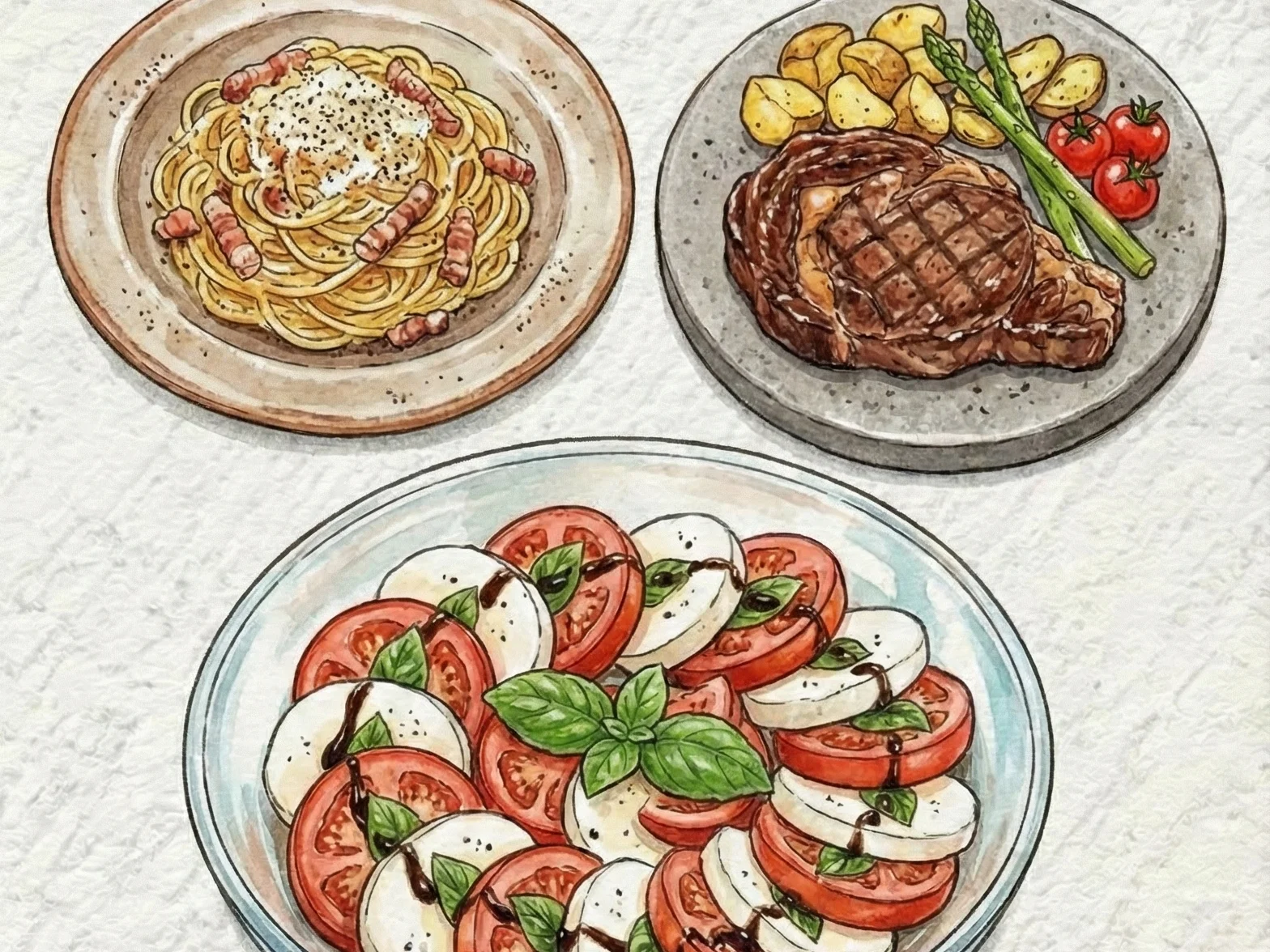
This category brings Western-style dishes - pasta, steak, risotto, gratin, and more - into the home kitchen. In Korea, "Western food" (yangsik) includes not only authentic European recipes but also Korean-adapted classics like donkatsu (pork cutlet) and hambak steak (Hamburg steak).

Western
Veal Saltimbocca (Italian Veal Cutlets Dish)
Western Medium

Veal Saltimbocca (Italian Veal Cutlets Dish)

To prepare veal saltimbocca, the process begins by pounding the veal cutlets until they reach a very thin consistency. Achieving this specific thickness is necessary because veal has a tendency to become tough quite rapidly when it is exposed to heat for an extended duration. To maintain a tender texture, the total cooking time for each individual piece should be kept strictly under two or three minutes. Each prepared cutlet is topped with one fresh sage leaf and a single slice of prosciutto, which are then pressed down firmly by hand. This manual pressure allows the layers to bond so that the prosciutto adheres to the veal without the requirement for toothpicks or other mechanical fasteners. The assembled cutlets receive a light dusting of flour before being placed into a preheated pan for searing. It is effective to begin the cooking process with the prosciutto side facing down in the pan, as the direct heat fuses the cured meat directly to the veal cutlet. After the meat has been quickly seared and removed from the pan, white wine is poured onto the hot surface. This liquid serves to lift the caramelized bits of fond from the bottom of the pan to create a flavor base. Incorporating butter into this wine reduction allows the liquid to emulsify into a sauce that has a glossy and light consistency. During the cooking, the sage leaf remains trapped between the meat and the prosciutto, infusing the veal with a distinct herbal fragrance that balances the saltiness of the cured ham.

🎉 Special Occasion 🍺 Bar Snacks
Prep 15min Cook 15min 2 servings
Perilla Honey Muffins
Baking Easy

Perilla Honey Muffins

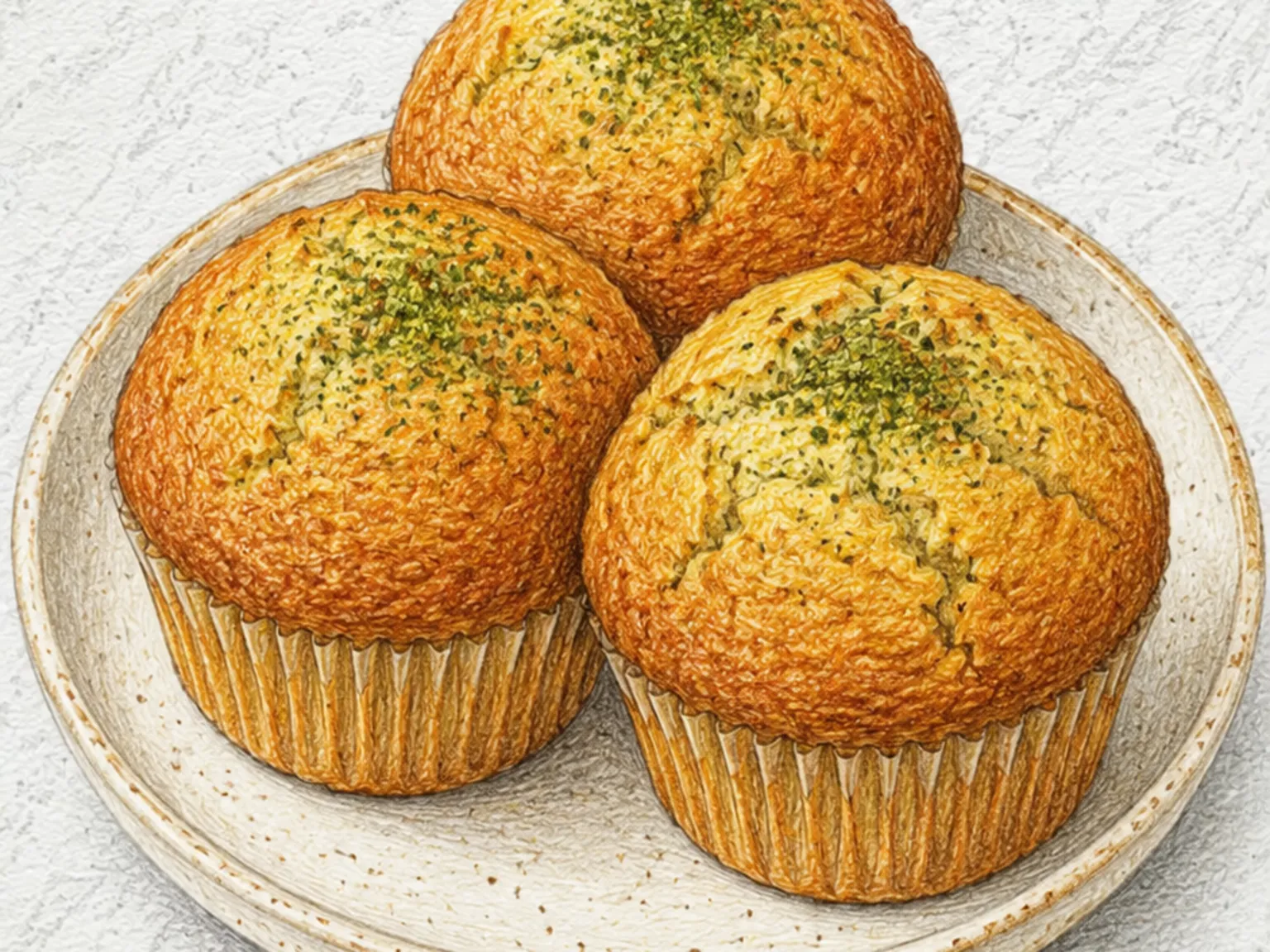
Perilla honey muffins combine ground perilla seeds with honey, brown sugar, milk, and neutral oil in a quick batter. The dry bowl contains 170 g of all-purpose flour, 30 g of ground perilla, 6 g of baking powder, and 2 g of salt. These ingredients are mixed until their color looks even and any visible flour or perilla clumps have been broken apart. In a separate bowl, one egg is loosened before 110 ml of milk, 55 g of honey, 45 ml of neutral oil, and 35 g of brown sugar are added. Whisking continues until the honey is dispersed through the liquid and the sugar grains have become less prominent. The wet mixture is poured into the dry ingredients all at once. A spatula lifts the batter from the bottom, and mixing stops within 10-12 strokes while a few pale traces remain. This deliberate limit prevents the batter from being repeatedly worked after the ingredients have nearly combined. The mixture is divided among six lined muffin cups, filling each to about 80 percent so there is room above the batter as it rises. A small amount of ground perilla is sprinkled across the tops before the tray goes into a 180°C oven for 20-22 minutes. A skewer inserted into the center should come out without wet batter. The muffins remain in the tray for 5 minutes before they are moved to a rack to finish cooling outside the hot pan.

🧒 Kid-Friendly
Prep 15min Cook 22min 4 servings
Vitello Tonnato (Classic Italian dish)
Western Medium

Vitello Tonnato (Classic Italian dish)

Vitello tonnato pairs fully chilled, thinly sliced veal with a cold sauce blended from tuna, capers, anchovy, mayonnaise, and lemon. For 4 servings, use 600 g veal loin, 120 g canned tuna, 4 tablespoons mayonnaise, 1 tablespoon capers, 2 anchovy fillets, 1 tablespoon lemon juice, 80 g onion, and 100 ml white wine. Pat the veal dry and season it very lightly with salt. Thinly slice the onion and spread it across the bottom of a pot, creating a bed that keeps the meat away from direct contact with the hot surface. Place the veal on the onion, pour in the white wine, and cover. Cook over low heat for 25 to 35 minutes and turn the meat once halfway through. When the outside feels firm and the juices run lightly clear, let the veal cool briefly inside the pot before lifting it out. Strain and reserve the cooking liquid, then chill the meat completely so it can be sliced thinly without tearing. Blend the tuna, mayonnaise, capers, anchovies, and lemon juice until no pieces remain. If the sauce is too thick, add the cooled cooking liquid a little at a time. Stop when the sauce flows slowly from a spoon while still coating it. Slice the chilled veal thinly across the grain and spread the slices over a plate. Cover them generously with the tuna sauce, add a few extra capers, and serve well chilled.

🍺 Bar Snacks 🎉 Special Occasion
Prep 20min Cook 60min 4 servings
Perilla Potato Focaccia
Baking Medium

Perilla Potato Focaccia

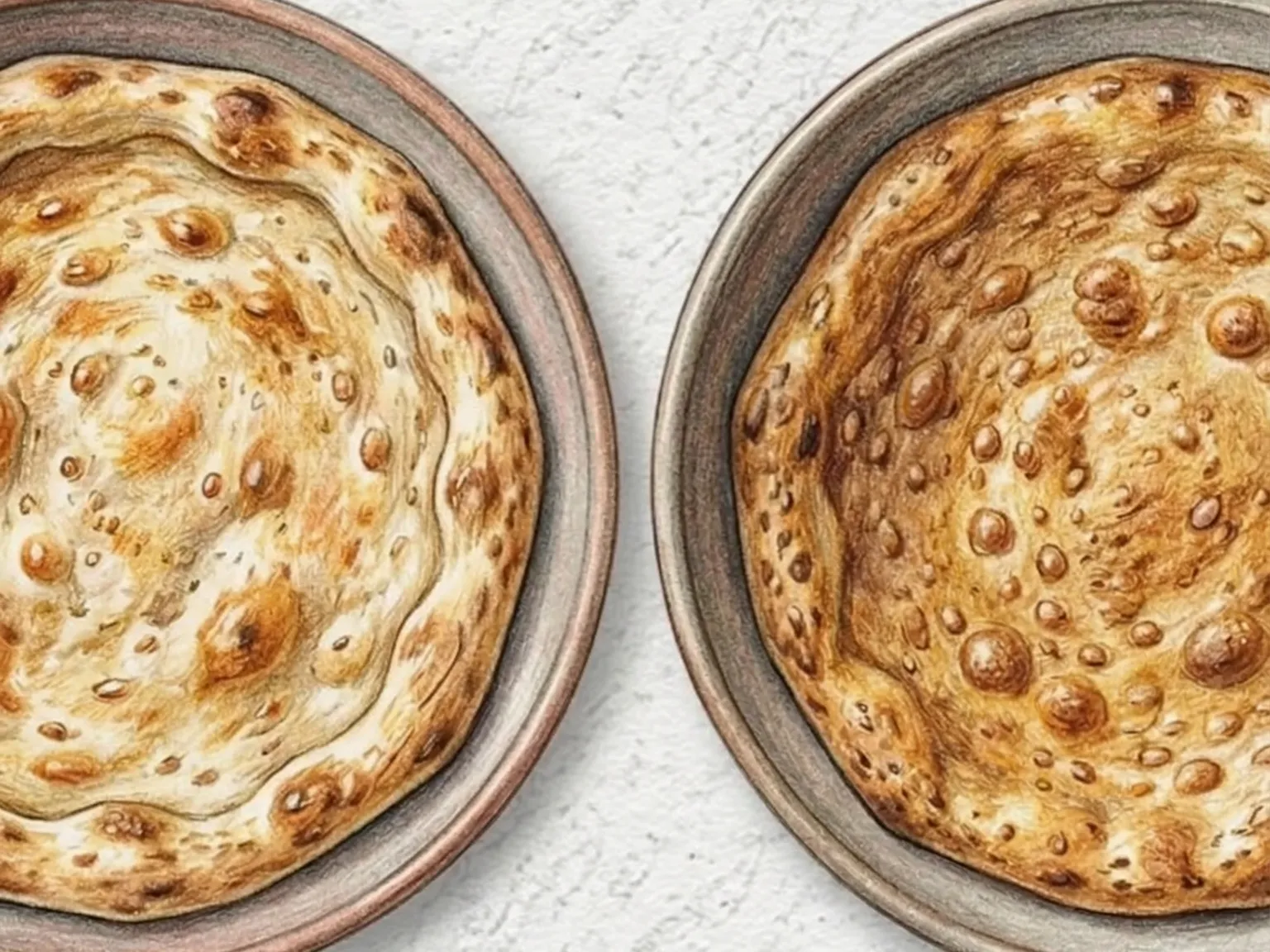
Perilla potato focaccia incorporates mashed boiled potato and ground perilla seed into a bread-flour dough, then finishes the surface with garlic and rosemary. The yeast and sugar first rest in 240 ml of water for 5 minutes. During that interval, 120 g of boiled potato is mashed while hot so firm pieces do not remain when it enters the dough. The potato and yeast water are combined with 320 g of bread flour, 6 g of salt, and 18 g of ground perilla. Once the mixture gathers into one mass, half of the olive oil is kneaded in until the surface becomes smooth. The covered dough proofs in a warm place for 60 minutes. Nearly doubled volume and a finger indentation that returns slowly are the readiness cues rather than elapsed time alone. The remaining oil coats the pan before the dough is stretched toward its edges. If the dough resists or begins to tear, a 5-minute rest allows it to relax before stretching resumes. Deep dimples are pressed with oiled fingers, and thin slices from two garlic cloves are placed between them with one tablespoon of rosemary. After a further 20-minute proof, the focaccia bakes at 220°C for 25-30 minutes. A deep golden top and crisp-feeling edges indicate that it is ready to leave the oven. It rests on a rack for 10 minutes before being cut into four pieces.

🧒 Kid-Friendly 🎉 Special Occasion
Prep 30min Cook 30min 4 servings
Welsh Rarebit (British toast dish)
Western Easy

Welsh Rarebit (British toast dish)

Welsh rarebit is not simply cheddar melted directly on bread. It begins with a smooth flour-and-milk cheese sauce, followed by a short broil that bubbles and browns the surface. Grate 180 g cheddar in advance so it melts quickly and evenly. Lightly toast 4 bread slices until their edges feel dry and firm, but stop before they become deeply colored. Removing surface moisture first keeps the thick sauce from immediately soaking the bread. Melt 1 tablespoon butter in a small pot over low heat, stir in 1 tablespoon flour, and cook for about 1 minute. Stop while the roux smells nutty but remains pale. Add 150 ml milk in 3 or 4 portions, whisking each addition completely smooth before pouring in more. Stir over low heat for about 2 minutes, until the sauce lightly coats a spoon. Reduce the heat to its lowest setting and add the grated cheddar by handfuls, waiting for each portion to melt before the next. Do not let the sauce boil hard, which can separate the fat instead of leaving a glossy, flowing mixture. Stir in 1 teaspoon Dijon mustard, 1 teaspoon Worcestershire sauce, and 1/4 teaspoon black pepper. Spread the finished sauce thickly over each toast, reaching close to the edges for full coverage. Broil for 2 to 3 minutes while watching continuously. Remove the rarebit as soon as the top bubbles and develops browned spots, then serve while the cheese sauce remains hot and smooth.

🍺 Bar Snacks 🏠 Everyday
Prep 10min Cook 10min 2 servings
Persimmon Spice Pound Cake
Baking Medium

Persimmon Spice Pound Cake

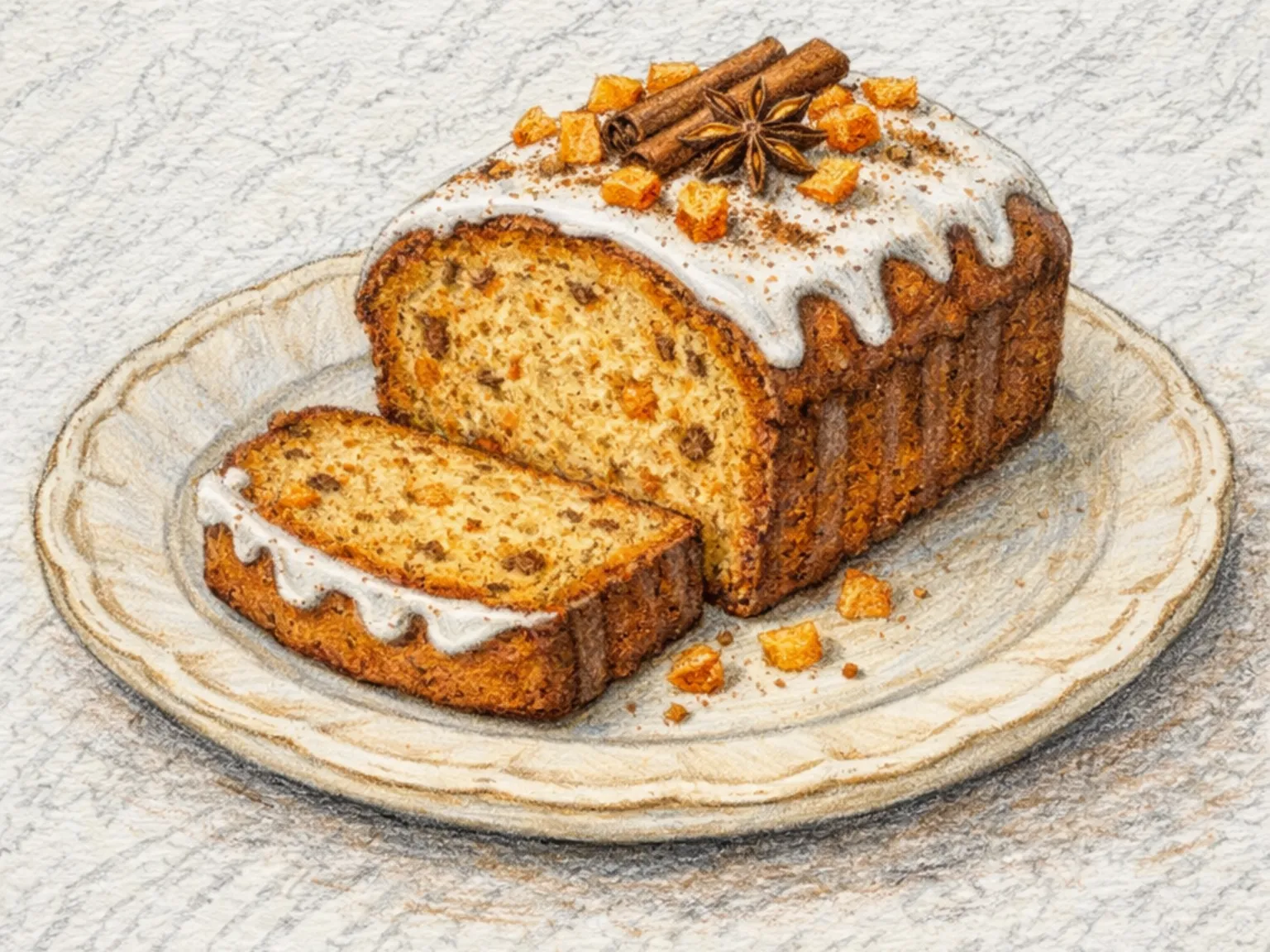
Persimmon spice pound cake is a dense, buttery loaf made with finely chopped dried persimmon folded into the batter, scented with cinnamon and nutmeg. The natural sweetness of dried persimmon keeps the sugar level modest while contributing a concentrated, jammy richness to every slice. Chewy morsels of persimmon distributed through the crumb provide bursts of intense dried-fruit flavor amid the buttery cake. Cinnamon and nutmeg give the loaf its warm, autumnal character, making it a natural fit for the cooler months when dried persimmon is most abundant. The batter should be mixed only until the ingredients just come together; overmixing develops excess gluten and produces a tough, dense result rather than the moist, tender crumb the cake depends on. Resting the cake at room temperature for two days allows the spices to fully penetrate the crumb and the dried persimmon to meld with the surrounding butter base, deepening the flavor considerably. The cake pairs naturally with warm tea or black coffee. Slicing and toasting briefly before serving crisps the outer surface and revives the butter fragrance.

🧒 Kid-Friendly 🎉 Special Occasion
Prep 20min Cook 50min 4 servings
Wiener Schnitzel
Western Medium

Wiener Schnitzel

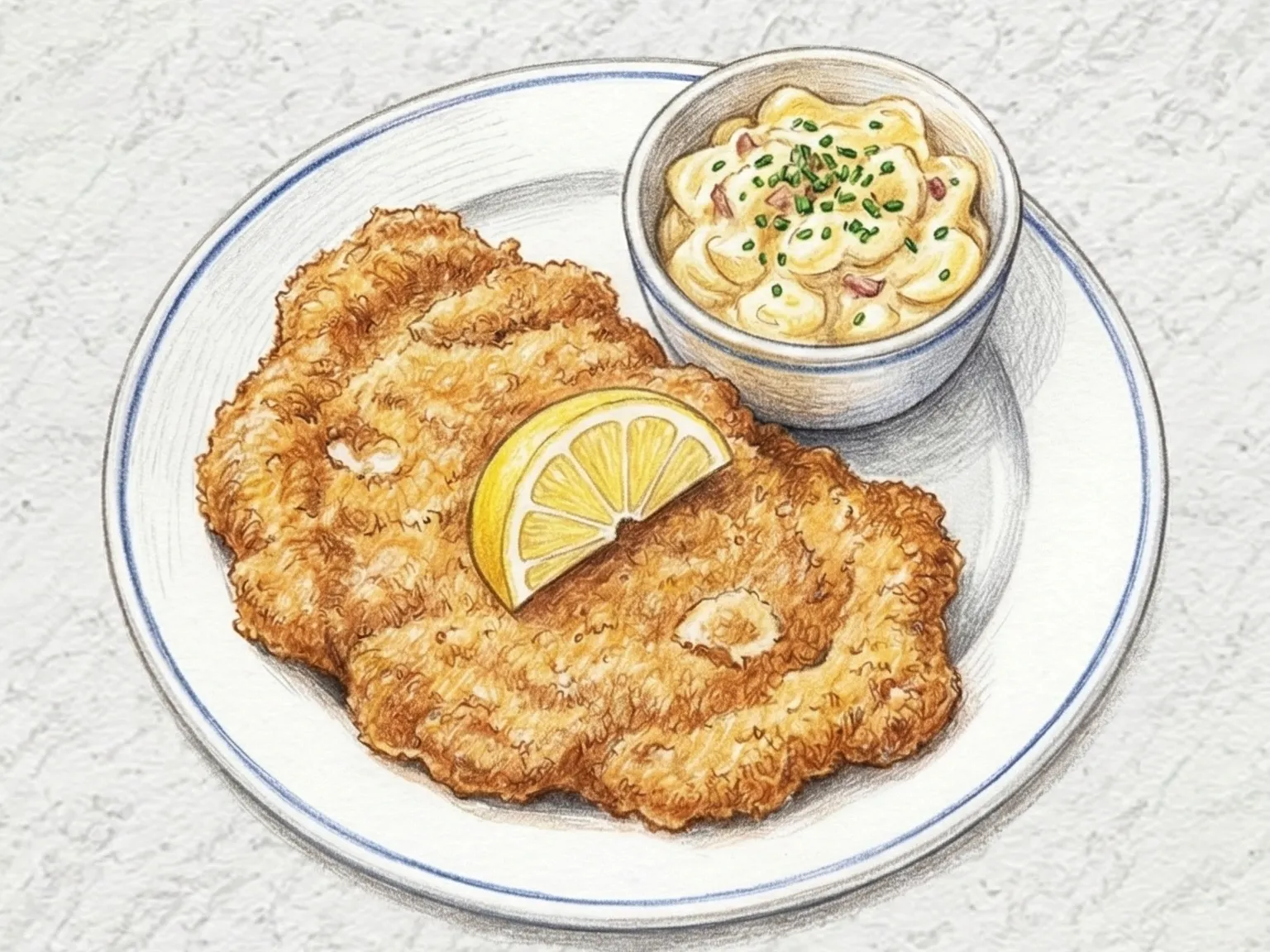
Wiener Schnitzel uses veal pounded to an even 3 mm thickness and a loose breadcrumb coating that puffs and turns golden while shallow-frying in butter. For 2 servings, prepare 300 g veal loin, 60 g flour, 2 eggs, 100 g breadcrumbs, 60 g butter, 1 lemon, and 1 teaspoon salt. Divide the veal into 2 even pieces and place each between sheets of plastic wrap. Pound from the center outward until the entire cutlet is about 3 mm thick without torn edges. Pat the surfaces dry and distribute the salt and pepper over both sides. Set out the flour, beaten eggs, and breadcrumbs in separate dishes. Coat the veal lightly with flour and shake off the excess, then pass it through the egg until no dry patches remain. Lay it in the breadcrumbs and cover with a light motion rather than pressing firmly, preserving a loose crumb texture. Rest the breaded cutlets for 10 minutes so the coating adheres. Melt the butter in a wide pan over medium heat. Add the veal once the foam settles, before the butter becomes deeply brown. Shallow-fry for about 2 minutes per side and spoon hot butter over the upper surface if needed. Remove the cutlets when the entire crust is evenly golden. Drain briefly and serve immediately with lemon wedges while the coating is crisp.

🎉 Special Occasion 🌙 Late Night
Prep 20min Cook 10min 2 servings
Pineapple Upside-Down Cake
Baking Medium

Pineapple Upside-Down Cake

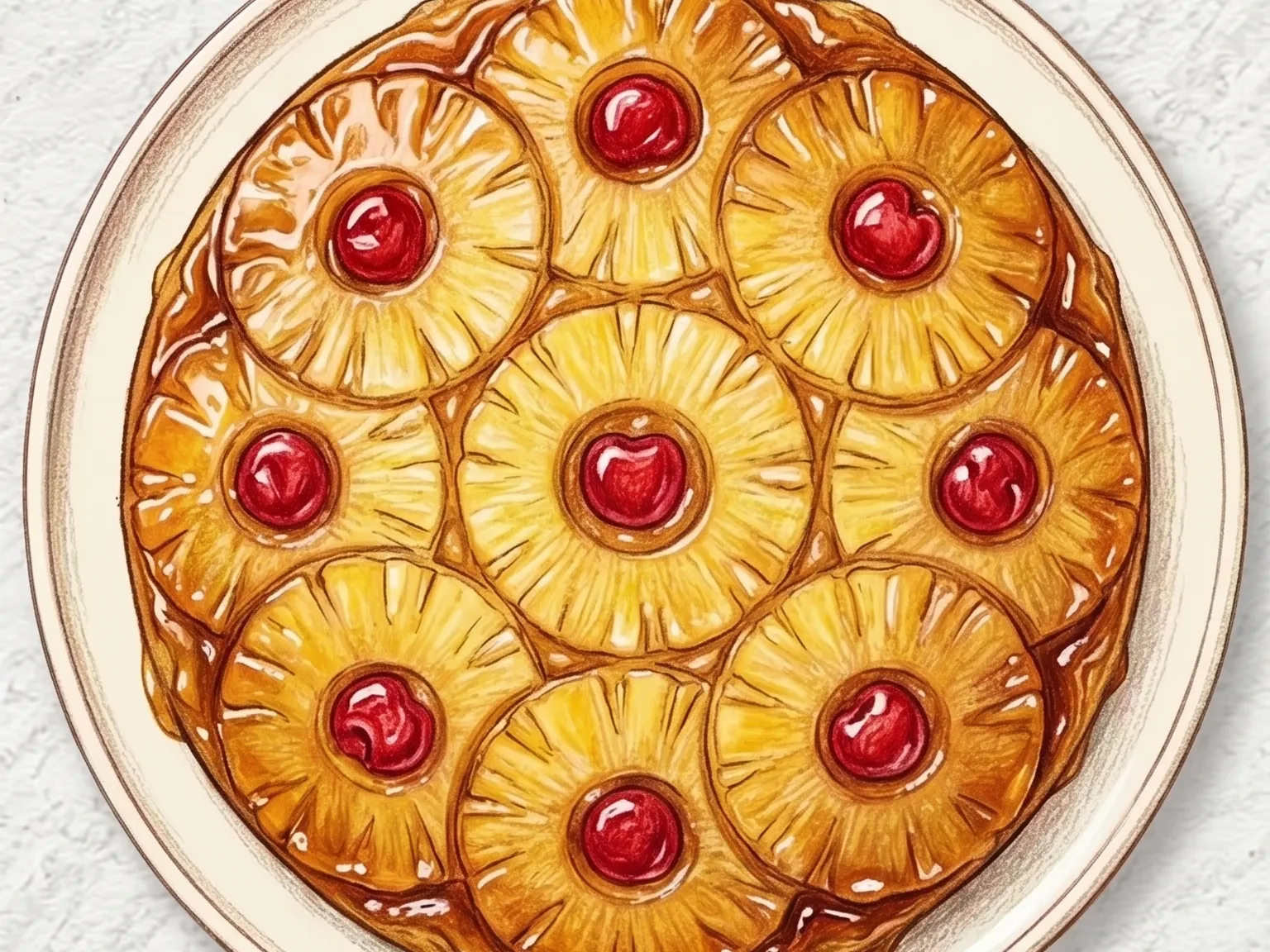
Pineapple upside-down cake is baked with brown sugar and pineapple rings at the bottom of the pan, then inverted so that arranged fruit becomes the top. The six pineapple rings are patted thoroughly dry before they enter the pan. Some of the 140 g of unsalted butter coats the bottom and sides in a thin layer, and 90 g of brown sugar is spread evenly across the base. The rings are placed close together so that large uncovered gaps do not collect the melting sugar and butter in one area. The remaining butter is beaten with 110 g of sugar until the mixture looks lighter and creamy. Two eggs are incorporated one at a time, with each mixed in before the next is added. The 150 g of cake flour and 90 ml of milk are then folded in as alternating additions. Mixing stops as soon as no dry flour remains, avoiding additional work after the batter has come together. The batter is spread gently from the center toward the edges so the pineapple pattern beneath it does not shift. The cake bakes at 175°C for 35-40 minutes. A skewer with no wet batter attached and a set surface indicate that the cake is ready to leave the oven. It cools in the pan for 10 minutes before a knife is run around the perimeter. Placing the serving plate over the pan and turning both together reveals the pineapple and melted brown-sugar layer while the cake is still warm enough to release.

🎉 Special Occasion 🧒 Kid-Friendly
Prep 20min Cook 40min 4 servings
Pissaladiere (Provencal Caramelized Onion Anchovy Tart)
Baking Medium

Pissaladiere (Provencal Caramelized Onion Anchovy Tart)

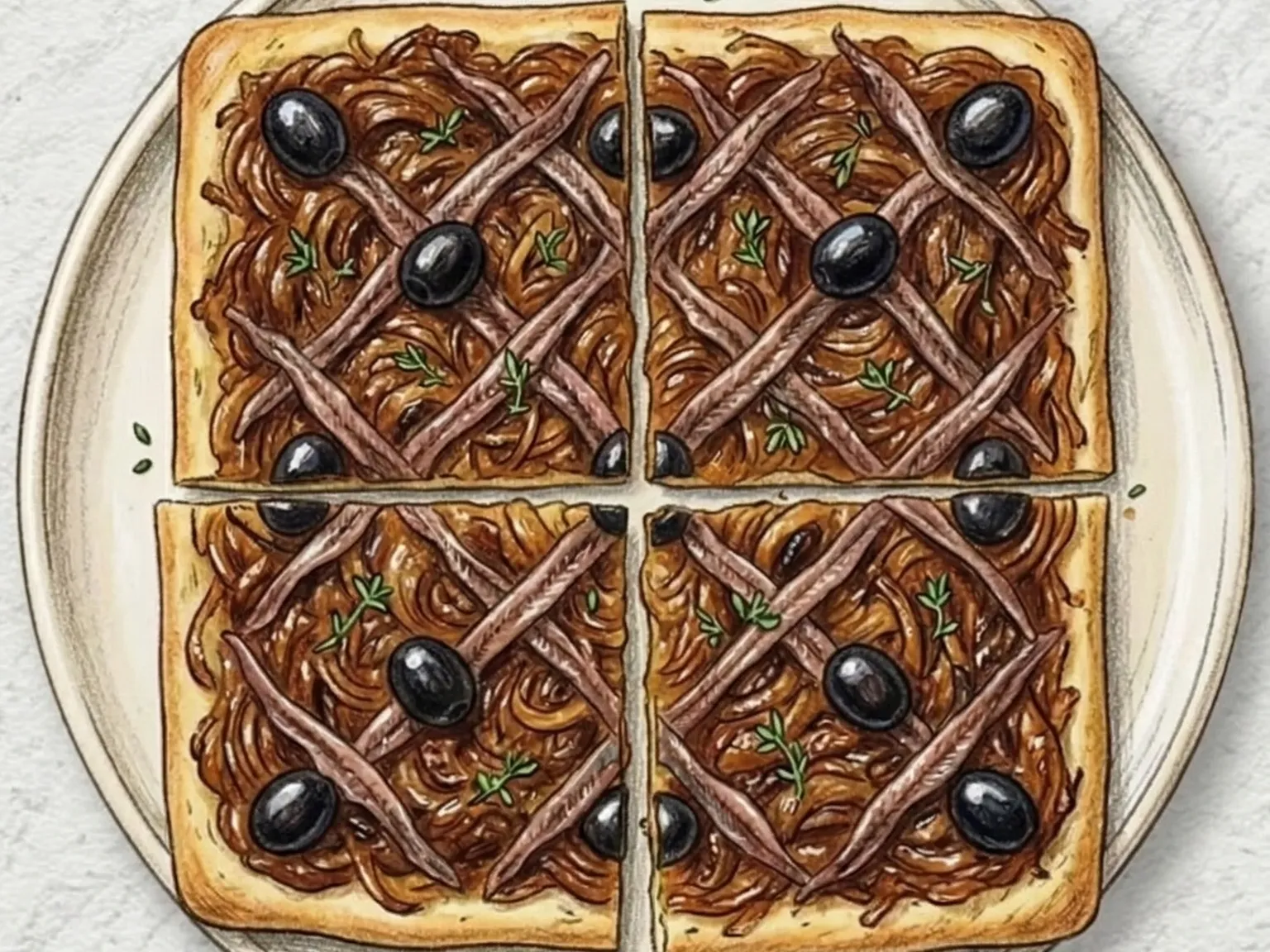
Pissaladiere needs the full weight of 500 g onions cooked down to a dark, jam-like layer; if the onions remain wet, the thin dough underneath stays soft. Slice the onions very finely, pat 8 anchovy fillets and 12 black olives dry, and preheat the oven to 220C. Warm 2 tablespoons olive oil in a pan, add the onions with 1 teaspoon sugar and part of the thyme, and cook over low heat for the first 10 minutes. Once the onions collapse and release their moisture, continue on low for at least 30 minutes more. Stir frequently, lowering the heat if the bottom begins to catch, until the onions are deep brown, thick, and able to hold together like a spread. Roll 300 g pizza dough thinly, paying particular attention to the center because a thick middle will remain soft beneath the onion topping. Set the dough on a tray and raise the rim slightly. Spread the onion mixture in a generous but even layer. Arrange the anchovies and olives in a lattice so their concentrated saltiness is distributed across each portion, then scatter over the remaining thyme. Extra salt is generally unnecessary. Bake for 12 to 15 minutes, until the rim is crisp and the underside is lightly browned rather than merely dry on top. Let the tart settle briefly after it leaves the oven, then slice with a firm downward cut so the onion layer and anchovy pattern remain on the crust.

🍺 Bar Snacks 🎉 Special Occasion
Prep 25min Cook 35min 4 servings
Pizza Dough
Baking Easy

Pizza Dough

Pizza dough starts with 300 g of bread flour, instant yeast, salt, sugar, water, and olive oil. The flour, sugar, salt, and yeast are mixed evenly before 195 ml of water and 15 ml of olive oil are added. The mixture is gathered until no dry flour remains, then moved to the work surface for 5-8 minutes of kneading. A smooth surface and an indentation that returns slowly after a finger press are the stated cues for stopping. If the dough is excessively sticky, only a small dusting of bread flour is used so the original balance is not changed more than necessary. The rounded dough goes into a bowl and is covered to keep the surface from drying during an approximately 1-hour room-temperature proof. It is ready to divide when the volume is nearly doubled and a pressed mark relaxes slowly. The instructions also provide a cold-fermentation option: at this stage, the covered dough can be refrigerated until the following day instead of being shaped immediately. Before baking, the oven is fully preheated to 250°C or its highest available setting. The dough is divided into two pieces and each is stretched to roughly 30 cm without flattening the rim heavily. After toppings are added, the pizzas bake for 10-12 minutes. A firm base and a puffed, browned edge are the removal cues, followed by a brief rest before slicing.

🧒 Kid-Friendly 🌙 Late Night
Prep 15min Cook 12min 2 servings
Portuguese Egg Tart
Baking Medium

Portuguese Egg Tart

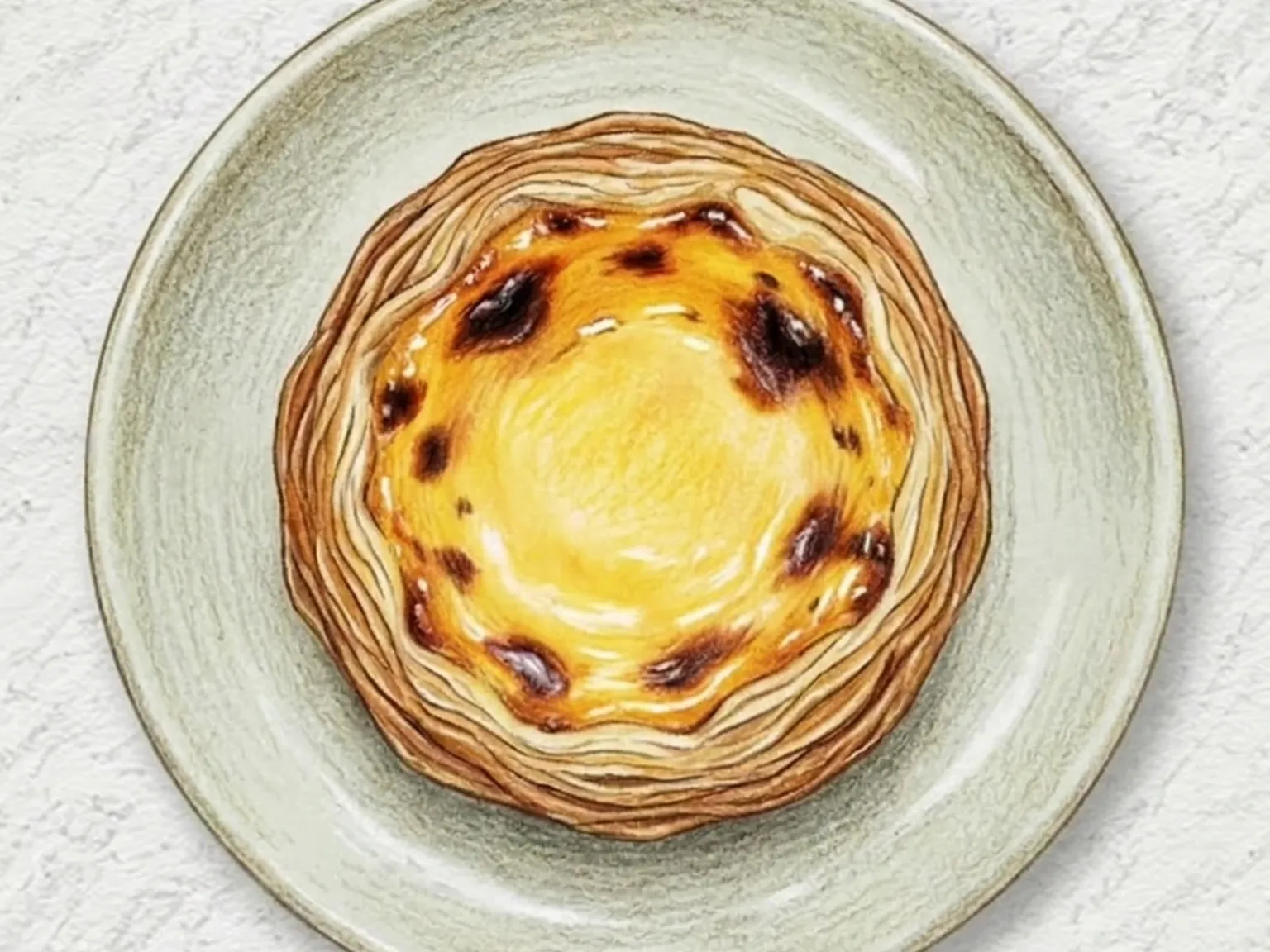
Portuguese egg tarts pair chilled puff-pastry cups with a custard made from milk, cream, egg yolks, sugar, cornstarch, and vanilla. The 250 g of puff pastry is rolled thin, cut into circles large enough for the muffin cups, and pressed firmly against each bottom and side. The lined tin is chilled while the filling is prepared so the pastry remains cold before baking. For the custard, 200 ml of milk, 100 ml of heavy cream, and 90 g of sugar are heated over medium-low heat. Once steam appears around the edge, the mixture is kept below a hard boil. The 12 g of cornstarch is first dissolved in a small portion of the warm liquid, then whisked back into the pan to avoid dry starch clumps. After 1-2 minutes of constant stirring, the mixture should coat a spoon only lightly rather than becoming a thick paste. The pan is removed from the heat before four egg yolks and one teaspoon of vanilla are whisked in quickly. Passing the custard through a fine sieve removes egg strands and any small lumps before it reaches the pastry. The cold cups are filled with room left at the top so the custard does not overflow as it bakes. In an oven fully preheated to at least 230°C, the tarts bake for 15-18 minutes. Brown spots on the surface and centers that still move slightly are the stated removal cues. The custard finishes setting as the tarts cool.

🧒 Kid-Friendly 🎉 Special Occasion
Prep 25min Cook 20min 4 servings
Pumpkin Pie
Baking Medium

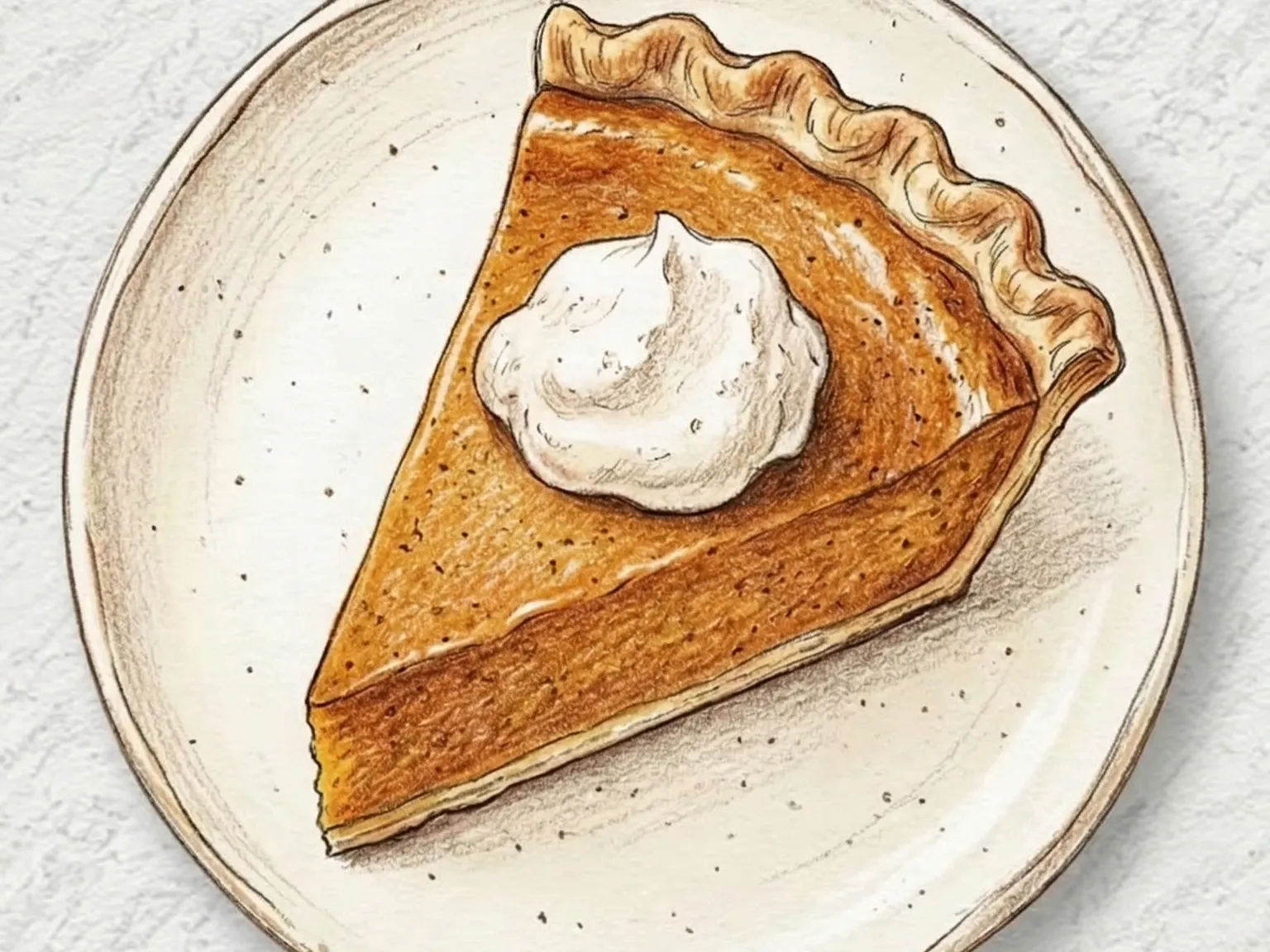
Pumpkin Pie

Pumpkin pie is made by pouring a filling of pumpkin puree, cream, eggs, brown sugar, cinnamon, and nutmeg into a prepared pie crust. The crust is pressed firmly into the dish and its base is pricked closely with a fork before the filling is mixed. The process begins by loosening 420 g of pumpkin puree with 110 g of brown sugar until visible sugar lumps have disappeared. Two eggs are added one at a time and stirred gently so the mixture does not accumulate excessive foam. Next come 180 ml of heavy cream, two teaspoons of ground cinnamon, and one teaspoon of ground nutmeg. Mixing continues only until the filling looks smooth and the spices are evenly dispersed. It is poured slowly into the crust to limit large pockets of air at the bottom, and the surface is leveled with a spatula. Any filling on the rim is wiped away before baking. The pie spends its first 15 minutes at 190°C, then about 35 minutes at 170°C. It is removed when the outer area is set and the center still moves slightly. Cooling completely at room temperature allows residual heat to continue setting that center. The recipe then chills the pie overnight before slicing it cold. This sequence gives the soft filling time to firm before a knife passes through it, rather than asking the warm center to hold a cut immediately after baking.

🎉 Special Occasion 🧒 Kid-Friendly
Prep 25min Cook 50min 8 servings
Queen of Puddings
Baking Medium

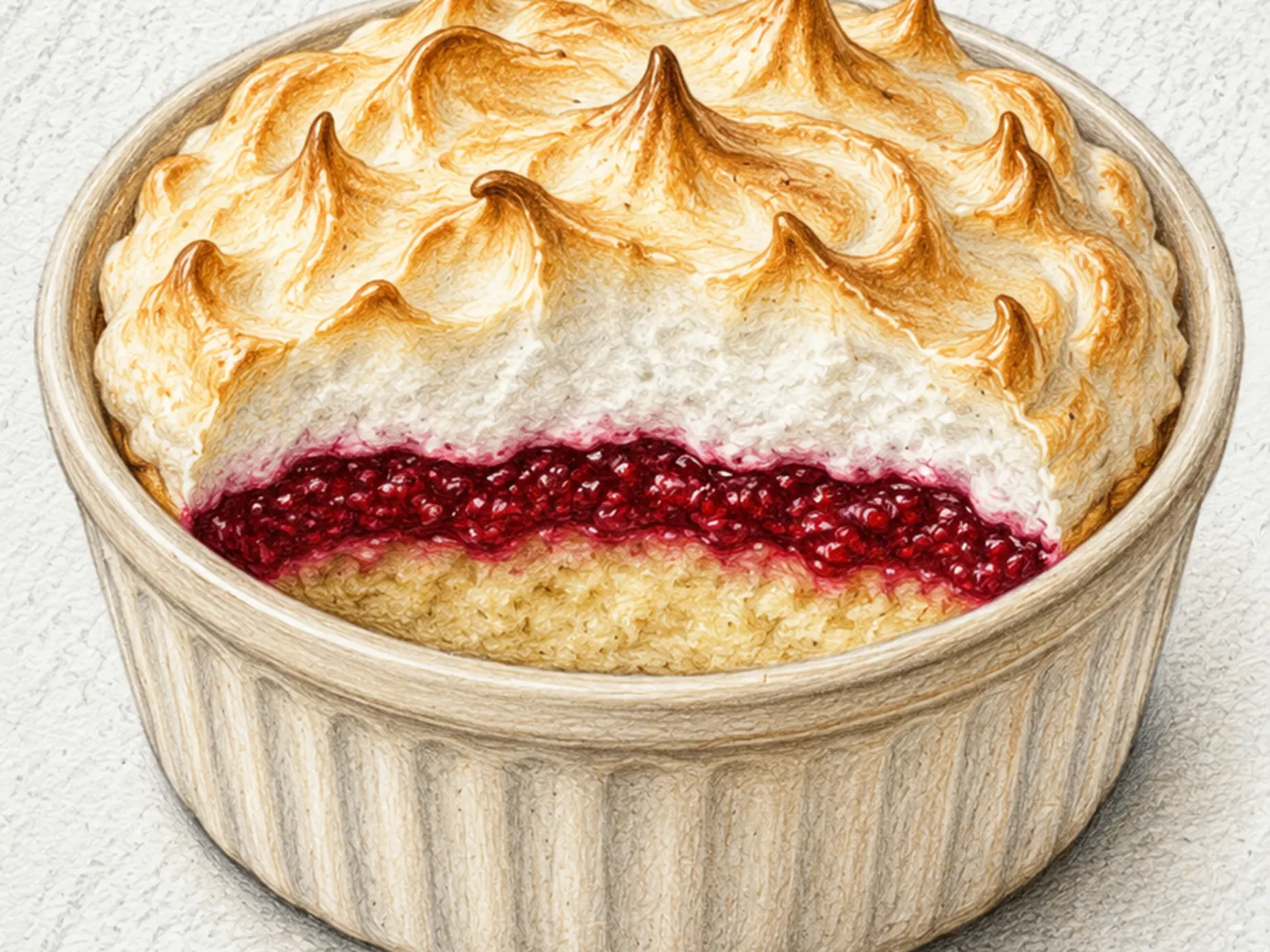
Queen of Puddings

Queen of Puddings is assembled in three stages: a baked breadcrumb and egg-yolk base, a layer of raspberry jam, and a topping of meringue. The three eggs are separated at the beginning, with the whites reserved in a completely clean, dry bowl. The 450 ml of milk is warmed over medium-low heat until steaming but not boiling. Off the heat, 25 g of butter and part of the 110 g of sugar are dissolved into the milk. The 80 g of breadcrumbs then soak in that liquid for 5 minutes. Allowing the mixture to lose some heat before the yolks are added prevents the eggs from immediately forming cooked pieces. The base is poured into a baking dish and baked for about 20 minutes, until its edges are set while the center still moves slightly. Four tablespoons of raspberry jam are stirred until spreadable and smoothed into a thin layer over the baked surface. The reserved whites are whipped while the remaining sugar is added gradually, stopping at glossy, stiff peaks. This meringue is spread all the way to the edges so the jam is covered, and a spoon lifts peaks across the top. A second bake of 12-15 minutes gives those peaks and the surrounding surface a golden color. The pudding rests briefly after leaving the oven, and portions are spooned deeply enough to pass through the meringue, jam, and breadcrumb base together.

🎉 Special Occasion 🧒 Kid-Friendly
Prep 25min Cook 35min 4 servings
Quiche Lorraine
Baking Medium

Quiche Lorraine

Quiche Lorraine avoids a soggy base through two preparations completed before the custard is poured: blind-baking the crust and thoroughly draining the rendered bacon fat. Preheat the oven to 190C and press 1 pie crust firmly into the corners of a tart pan. Prick the base evenly with a fork so it does not puff away from the tin. Blind-bake it for 10 minutes, removing it when the edges look dry and lightly colored, then let it cool briefly. Cook 140 g bacon slowly in a skillet over medium heat until its fat renders and the pieces turn crisp. Drain the bacon well; carrying excess fat into the tart would make the custard heavy and greasy. In a bowl, gently combine 3 eggs, 200 ml heavy cream, 80 ml milk, and 1/2 teaspoon salt. Mix only until smooth, avoiding a cap of bubbles that would bake into an uneven surface. Spread the drained bacon and 90 g Gruyere evenly over the cooled crust. Pour in the custard slowly so it fills the spaces around the cheese and bacon instead of displacing them, then bake for about 30 minutes. Do not wait for the center to become rigid. Remove the quiche when the edges are set but the middle still gives a slight jiggle. Rest it in the pan for 10 minutes; residual heat completes the set without drying the filling. Slice with a clean knife after that pause to preserve both the crisp pre-baked bottom and the soft, even custard.

🎉 Special Occasion 🍱 Lunchbox
Prep 20min Cook 40min 4 servings
Red Bean Baked Doughnuts
Baking Easy

Red Bean Baked Doughnuts

Red bean baked doughnuts are made by enclosing chilled sweet red bean paste inside a cake-flour batter and baking the filled rings in a doughnut pan. The 140 g of paste stays refrigerated while the rest of the recipe is prepared. For the dry mixture, 180 g of cake flour, 6 g of baking powder, and 70 g of sugar are sifted together, then whisked briefly so the leavening is not concentrated in one area. A separate bowl holds one egg, 150 ml of milk, 45 g of melted unsalted butter, and 2 ml of vanilla. The melted butter is allowed to become lukewarm before it reaches the egg, avoiding direct contact between a hot liquid and the raw egg. The wet mixture is poured into the dry ingredients and folded from the bottom with a spatula. Mixing stops as soon as no dry flour remains rather than continuing to beat a batter that has already combined. Each cavity in the doughnut pan is filled about halfway before a portion of cold red bean paste is placed in the center. Keeping that paste away from the edges gives the remaining batter room to cover it on every side. More batter is spooned over until the filling is no longer visible. The doughnuts bake at 180°C for 12-15 minutes. Lightly golden tops that return after a gentle press are the readiness cues. They remain in the pan for 5 minutes, which gives the baked rings time to settle before they are unmolded and transferred to a rack to cool completely.

🧒 Kid-Friendly
Prep 20min Cook 15min 4 servings
Red Bean Butter Macarons (Almond Shells with Red Bean Cream)
Baking Hard

Red Bean Butter Macarons (Almond Shells with Red Bean Cream)

This recipe offers a Korean twist on French macarons, combining almond meringue shells with a filling of sweet red bean paste and softened butter. The process starts by sifting almond flour and powdered sugar twice to ensure smooth tops. Egg whites are whipped with sugar to form firm, glossy peaks. During macaronage, the dry ingredients are folded into the meringue until the batter falls in smooth ribbons, which is essential for developing the characteristic ruffled foot. The filling blends unsalted butter, red bean paste, and milk into a smooth cream. Once assembled, the macarons require a full day of resting in the refrigerator. This maturation period allows the shells to absorb moisture from the cream, developing a chewy interior. On humid days, extending the shell drying time by ten minutes helps prevent cracking during baking.

🎉 Special Occasion 🧒 Kid-Friendly
Prep 40min Cook 16min 4 servings
Red Velvet Cake
Baking Medium

Red Velvet Cake

Red velvet cake is an American layer cake defined by its bright crimson interior and its covering of tangy cream cheese frosting. The frosting serves to balance the sweetness of the cake layers. The batter is prepared with a small amount of cocoa powder, which provides depth to the flavor without making the cake taste like a typical chocolate dessert. Buttermilk is included in the recipe to provide a mild lactic acidity that adds complexity to the overall taste. Instead of using butter as the primary fat source, vegetable oil is used to create a moist sponge that remains soft for several days after it has been baked. The fine, velvety texture of the crumb is produced by a specific chemical reaction between baking soda and white vinegar. This reaction generates small air bubbles throughout the batter during the baking process. The frosting is made by beating cold cream cheese with butter and powdered sugar until it reaches a consistency thick enough to stay in place between the layers without sliding. The visual appeal of the cake comes from the sharp contrast between the deep red crumb and the white frosting, which is revealed when the cake is sliced. This appearance has made the cake a common choice for various celebrations. If a more natural appearance is preferred, beet powder can be used as a substitute for food coloring to create a more subdued shade of red.

🎉 Special Occasion 🧒 Kid-Friendly
Prep 25min Cook 30min 12 servings
Rosemary Focaccia
Baking Medium

Rosemary Focaccia

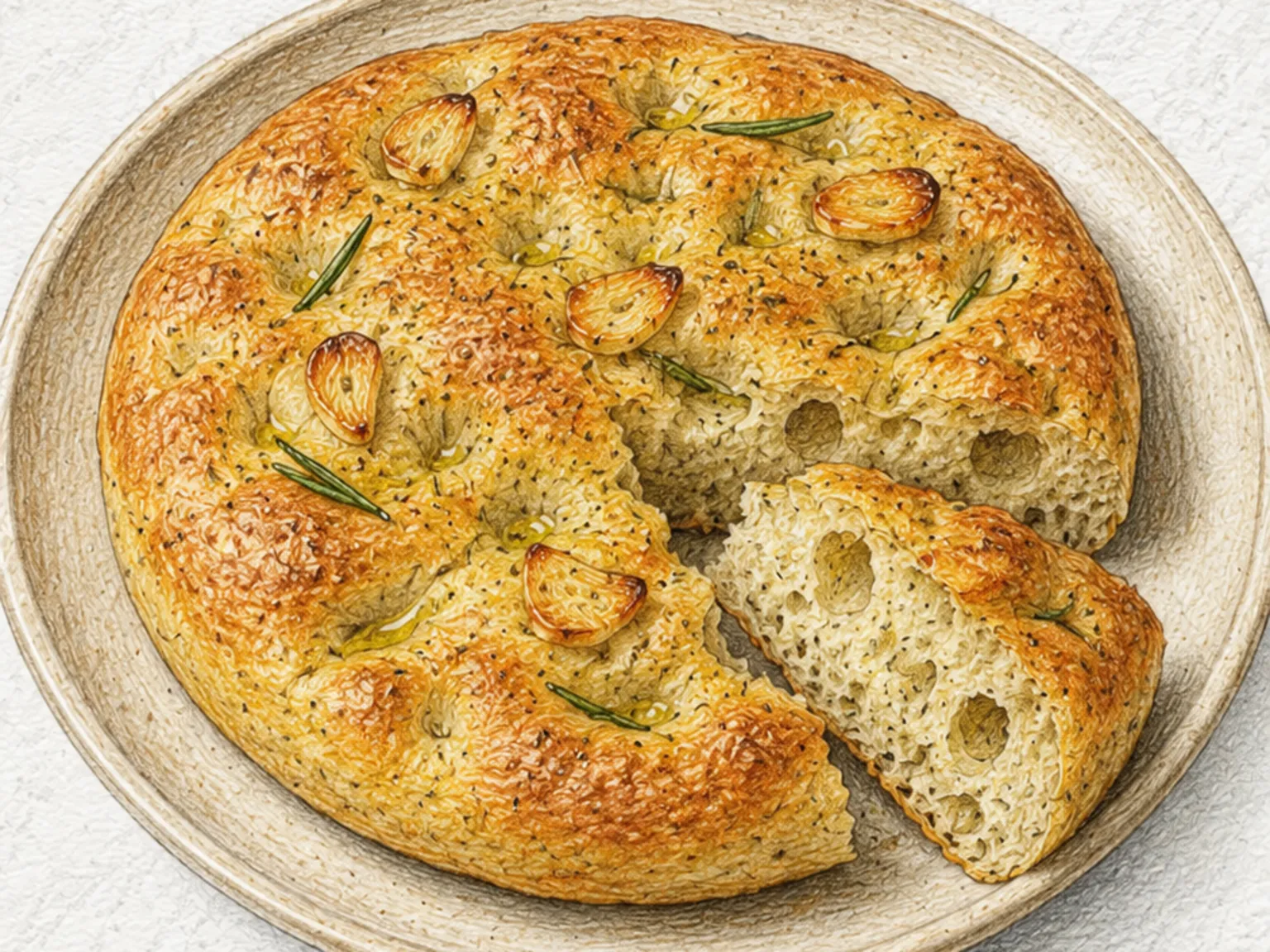
Rosemary focaccia is an Italian olive-oil bread made from a high-hydration dough that is proofed twice, dimpled with fingertips, topped with rosemary, minced garlic, and flaky salt, and baked at 220 degrees Celsius. The wetter the dough, the better the signature open crumb and chewy interior develop, so resisting the urge to add extra flour during handling is important. A sixty-minute first proof followed by a thirty-minute second proof gives the yeast enough time to produce the gas that creates a light, airy structure. Generous olive oil pooled in the dimples essentially fries the surface during baking, creating crisp pockets across the top. Cooling for ten minutes after baking lets steam escape and sharpens the contrast between the crunchy crust and the moist, pillowy crumb inside.

🍺 Bar Snacks 🎉 Special Occasion
Prep 20min Cook 25min 4 servings
Rosemary Garlic Grissini
Baking Medium

Rosemary Garlic Grissini

Rosemary garlic grissini are thin breadsticks made by kneading minced garlic and chopped rosemary into a yeasted bread-flour dough. The dry mixture contains 220 g of bread flour, 4 g of instant yeast, and 4 g of salt. Before the 25 ml of olive oil is added, a small portion is reserved for brushing the shaped sticks; the remainder enters the dough with 130 ml of water. After about 8 minutes of kneading, the dough should have gathered into a smoother mass. Eight grams of minced garlic and 3 g of chopped rosemary are then worked through it for one additional minute so they do not remain in one section. The covered dough proofs in a warm place for 40 minutes. Slightly increased volume and a fingertip mark that returns slowly are the readiness cues. The dough is rolled flat and cut into strips 1 cm wide. Pieces that are noticeably thinner or thicker are separated on the tray so the narrow ones can be checked without assuming every stick will finish at the same moment. Each strip is held at both ends and twisted gently before being set on the tray. The reserved olive oil is brushed thinly over the surfaces, and 20 g of Parmesan is distributed across them. Baking takes 15-18 minutes at 200°C. Deep golden edges and a firm feel when lifted indicate that the grissini are ready. They cool completely before being placed in a container, preventing residual steam from being trapped around the freshly baked sticks.

🍺 Bar Snacks
Prep 30min Cook 18min 4 servings
Rugelach (Jewish Cream Cheese Crescent Pastry)
Baking Medium

Rugelach (Jewish Cream Cheese Crescent Pastry)

Rugelach are crescent-shaped pastries from the Jewish baking tradition, made with a cream cheese dough that is rolled into a circle, spread with apricot jam, and scattered with chopped walnuts, sugar, and cinnamon before being cut into wedges and rolled from the wide end to the tip. The cream cheese gives the dough a slight tang and an unusually tender crumb, while the butter in the mix creates flaky layers as moisture escapes during baking. Each small pastry delivers a concentrated burst of flavor - the fruit acidity of the jam, the oily richness of walnuts, and the warm spice of cinnamon all arriving together. The dough must be kept cold throughout the shaping process; if it warms and softens, the pastries lose their defined spiral and become difficult to handle. A thin layer of jam is essential - too much causes it to bubble out of the seams and burn on the pan. Once baked and cooled, the exterior is crisp and golden while the interior remains slightly chewy where the filling has caramelized against the dough.

🧒 Kid-Friendly
Prep 30min Cook 22min 4 servings
Sacher Torte (Viennese Dark Chocolate Apricot Cake)
Baking Hard

Sacher Torte (Viennese Dark Chocolate Apricot Cake)

Sacher torte is Vienna's most celebrated cake - a dense, intensely chocolatey sponge split horizontally and filled with a thin layer of apricot jam, then enrobed in a glossy dark chocolate glaze. The batter contains a higher ratio of melted chocolate and butter than a typical chocolate cake, which makes the crumb rich and moist rather than light and airy. Whipped egg whites folded into the chocolate base introduce just enough lift to keep the texture from becoming leaden, while the apricot jam provides a tart, fruity counterpoint that prevents the chocolate from overwhelming the palate. The glaze is made by heating heavy cream and pouring it over chopped dark chocolate, stirring until smooth, then pouring it over the cake in a single motion for a mirror-like finish. Warming the jam slightly before spreading ensures an even, thin coat that does not tear the delicate sponge. Once the glaze has set completely, slicing with a knife dipped in hot water produces the cleanest cross-section, revealing the dark cake, the amber jam line, and the shiny chocolate shell.

🎉 Special Occasion 🧒 Kid-Friendly
Prep 35min Cook 35min 4 servings
Salmon in Puff Pastry
Baking Hard

Salmon in Puff Pastry

Salmon en croute wraps a salmon fillet spread with a mixture of cream cheese, wilted spinach, dill, and lemon zest inside puff pastry and bakes it until golden. Patting the salmon completely dry with paper towels is crucial - any surface moisture will make the pastry soggy. The spinach must also be squeezed thoroughly to prevent a wet filling. Cream cheese and Dijon mustard form a barrier between the fish and the dough, blocking the salmon's moisture from softening the pastry. Baking at 200 degrees Celsius for twenty-five to thirty minutes puffs the pastry into flaky, crisp layers while the salmon inside stays tender and moist, delivering both textures in every slice. Chilling the assembled package for ten minutes before baking re-firms the butter in the pastry, producing sharper layers after baking.

🎉 Special Occasion
Prep 25min Cook 30min 4 servings
Salted Doenjang Caramel Cookies
Baking Hard

Salted Doenjang Caramel Cookies

These unique cookies combine the rich umami of Korean fermented soybean paste, doenjang, with the sweetness of a brown sugar caramel dough. To prepare them, white sugar and heavy cream are heated to create a smooth caramel glaze. This mixture is cooled and combined with creamed butter, brown sugar, egg, and a small portion of strained doenjang, keeping the paste to about one or two percent of the total dough weight to ensure a subtle flavor. The dry ingredients are gently folded in before the dough is portioned into small balls and chilled for twenty minutes to control spreading during baking. Baking at 180 degrees Celsius results in cookies with crisp, toffee-like rims and soft, chewy centers. Pressing the centers slightly after baking enhances the texture. These treats offer a complex balance of sweet, salty, and savory notes that pair exceptionally well with espresso.

🎉 Special Occasion 🧒 Kid-Friendly
Prep 25min Cook 14min 4 servings
Sausage Roll
Baking Easy

Sausage Roll

Sausage roll is a British bakery snack made by wrapping seasoned sausage meat in puff pastry, brushing with egg wash, and baking until golden. Mixing the meat with finely minced onion, breadcrumbs, and Dijon mustard adds moisture and flavor that keep the filling juicy after baking. Rolling the pastry around a log of filling and placing the seam side down prevents the roll from opening in the oven. Scoring the top allows steam to escape, which helps the pastry puff into crisp, distinct layers. Baking at 200 degrees Celsius for twenty to twenty-five minutes produces a deep golden shell with flaky, butter-rich layers encasing the savory meat inside. It works equally well as a snack, light meal, or picnic food.

🧒 Kid-Friendly
Prep 20min Cook 25min 4 servings

About Western

Olive oil, butter, cream, and cheese create the rich flavors these dishes are known for. From special-occasion dinners to quick weeknight meals, these recipes make Western cooking approachable.