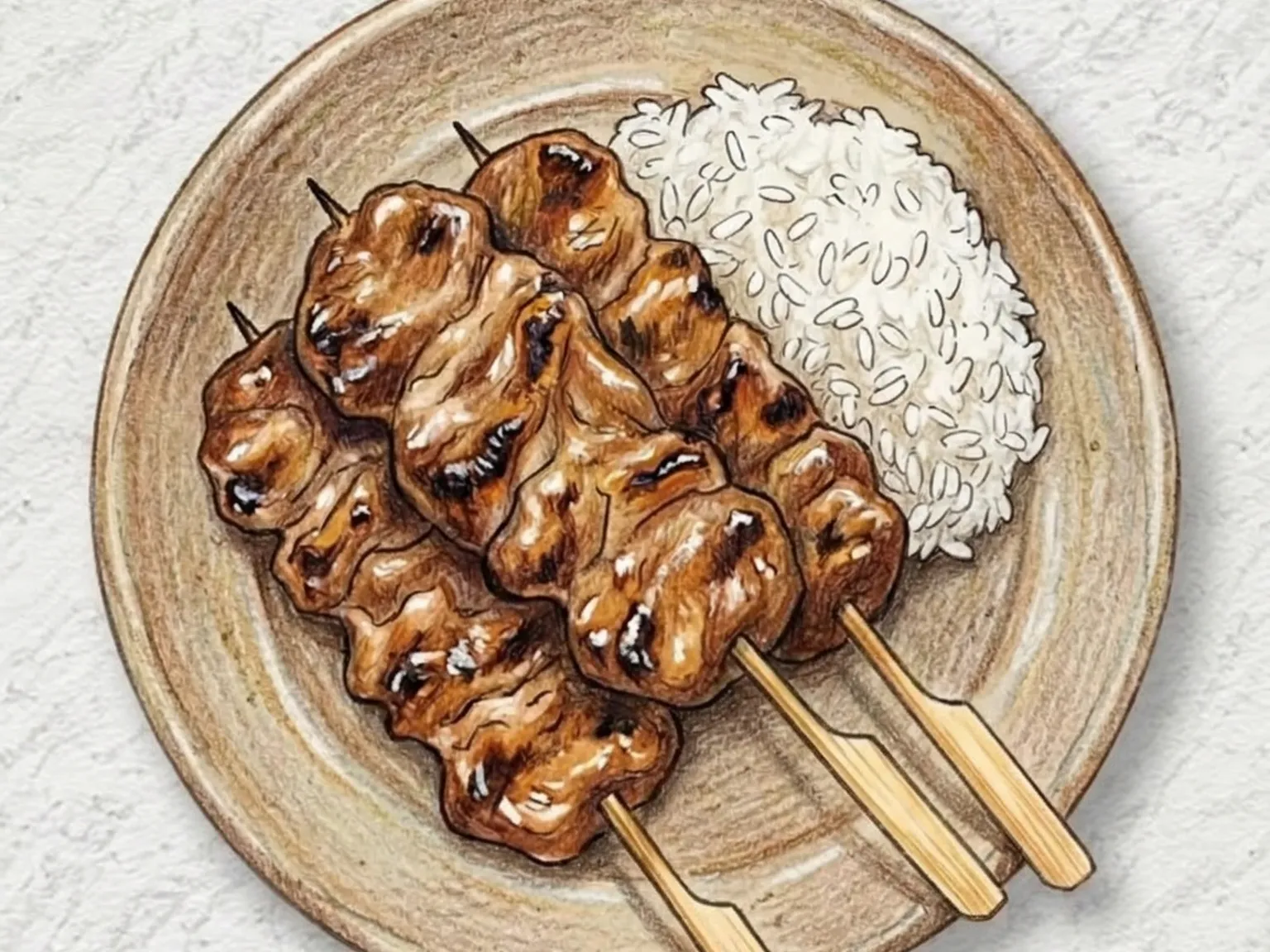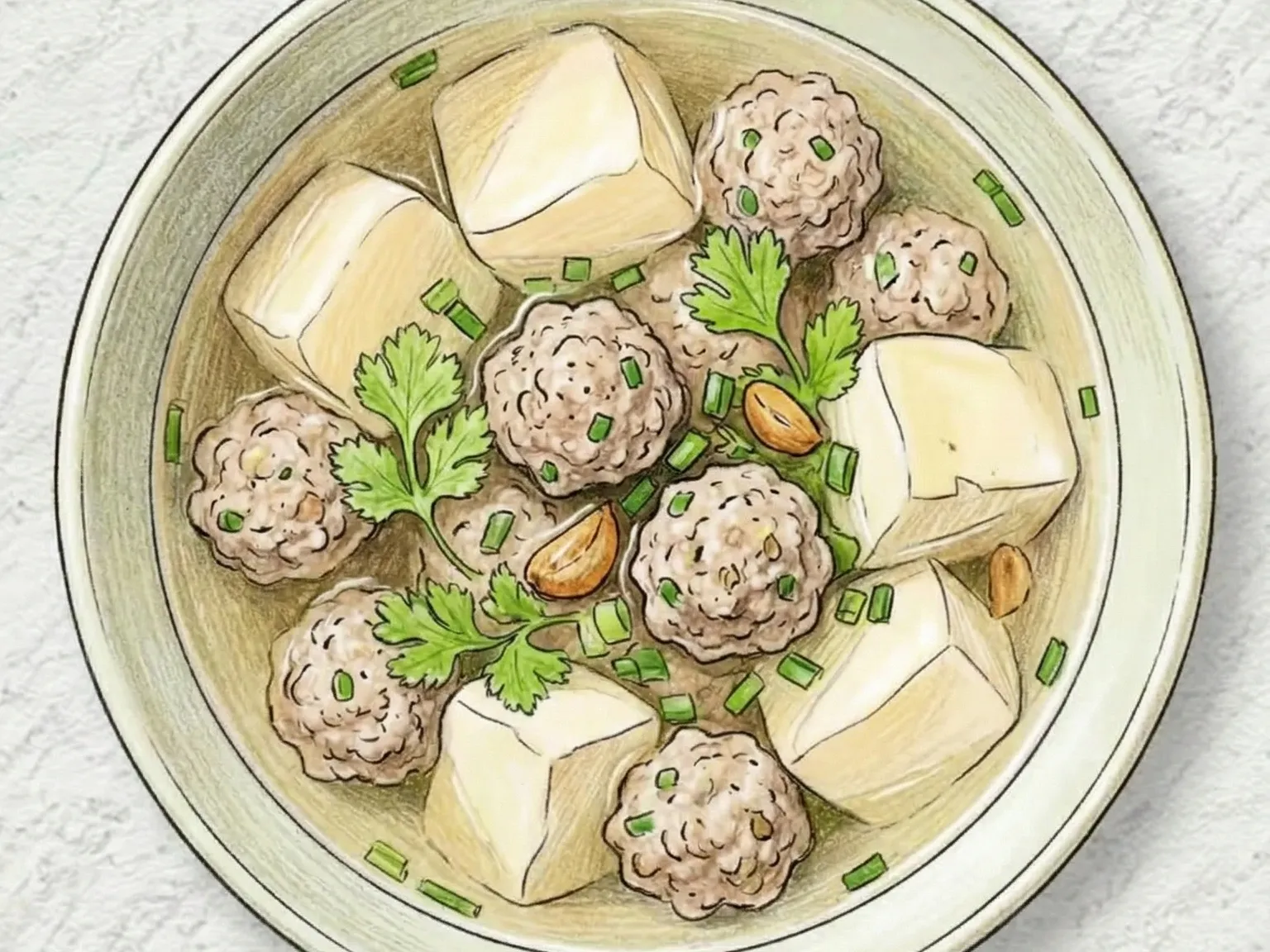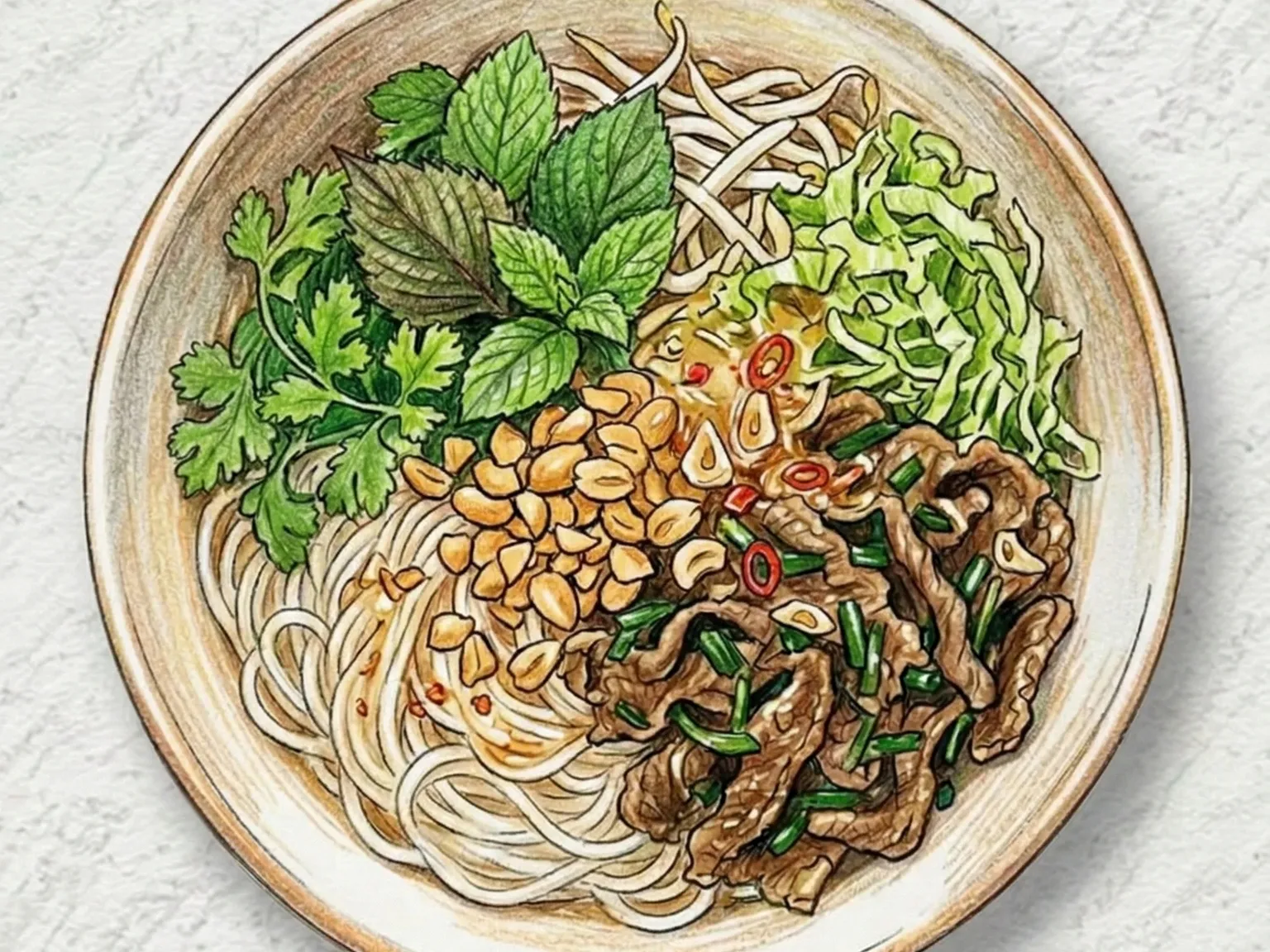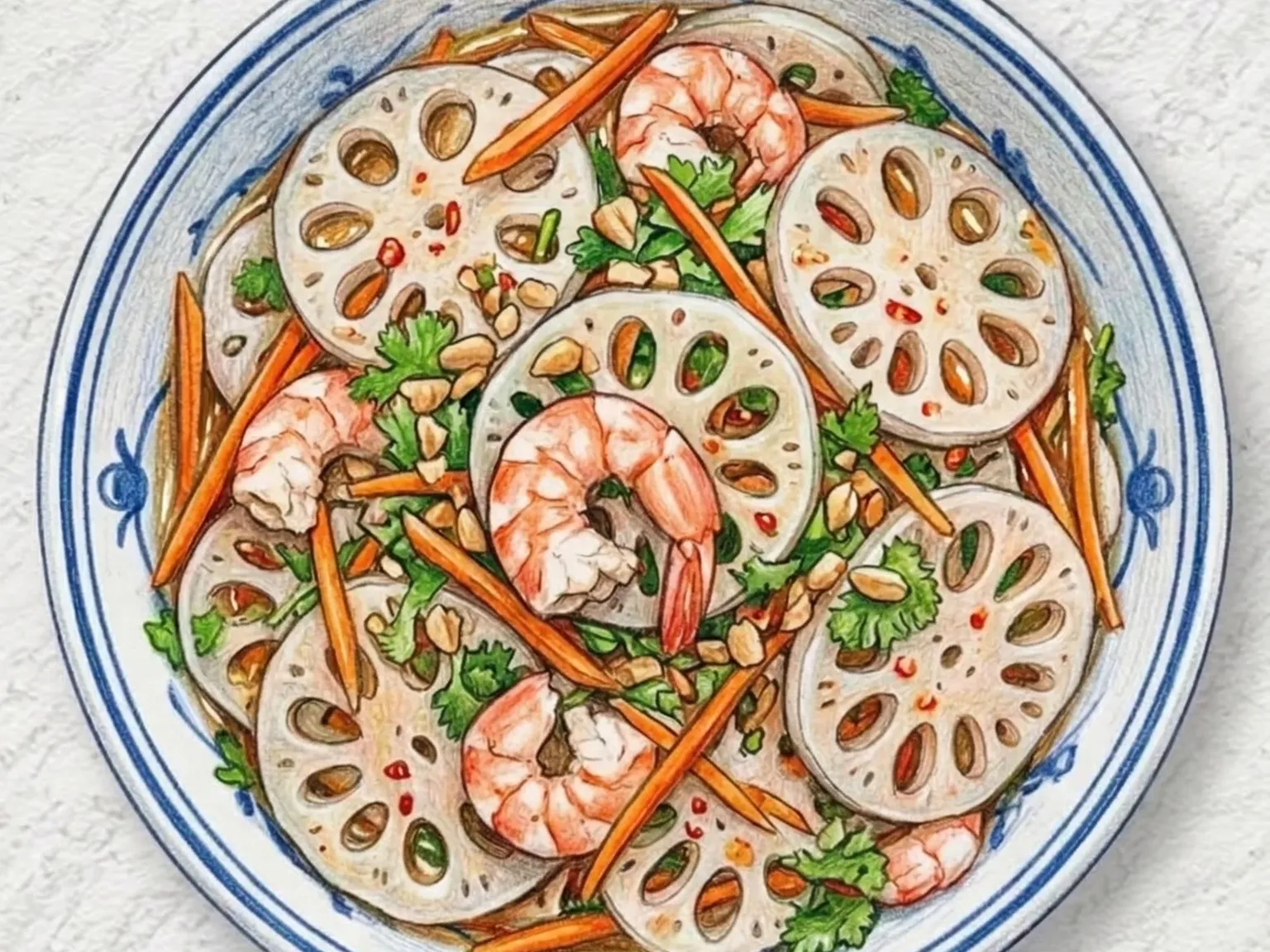
Charim

2686 Korean & World Recipes

2686+ Korean recipes, clean and organized. Ingredients to instructions, all at a glance.

Recipes with fish sauce

24 recipes

Buy fish sauce
Banh Cuon (Hanoi Steamed Rice Rolls with Pork and Mushroom)
AsianHard

Banh Cuon (Hanoi Steamed Rice Rolls with Pork and Mushroom)

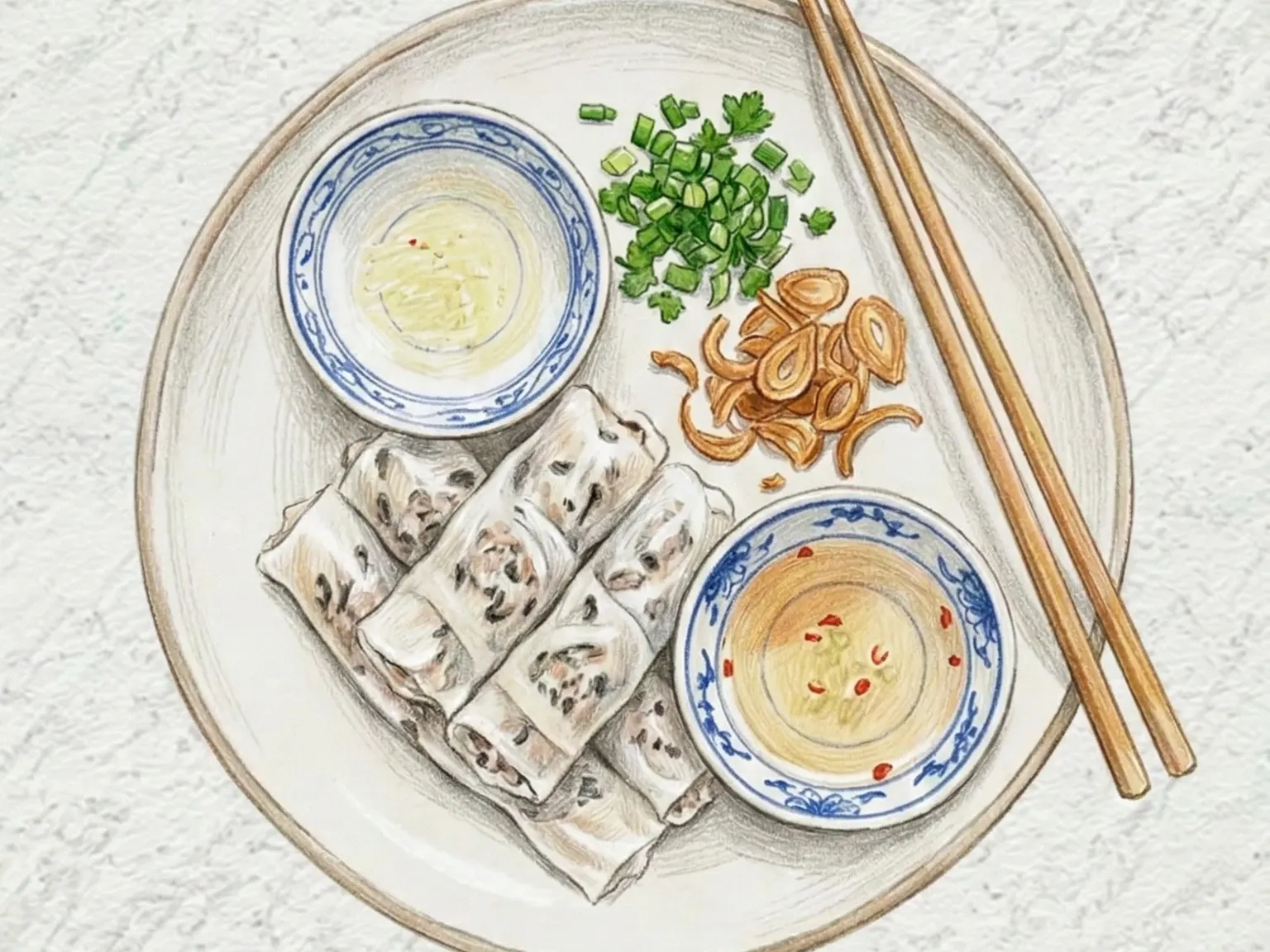
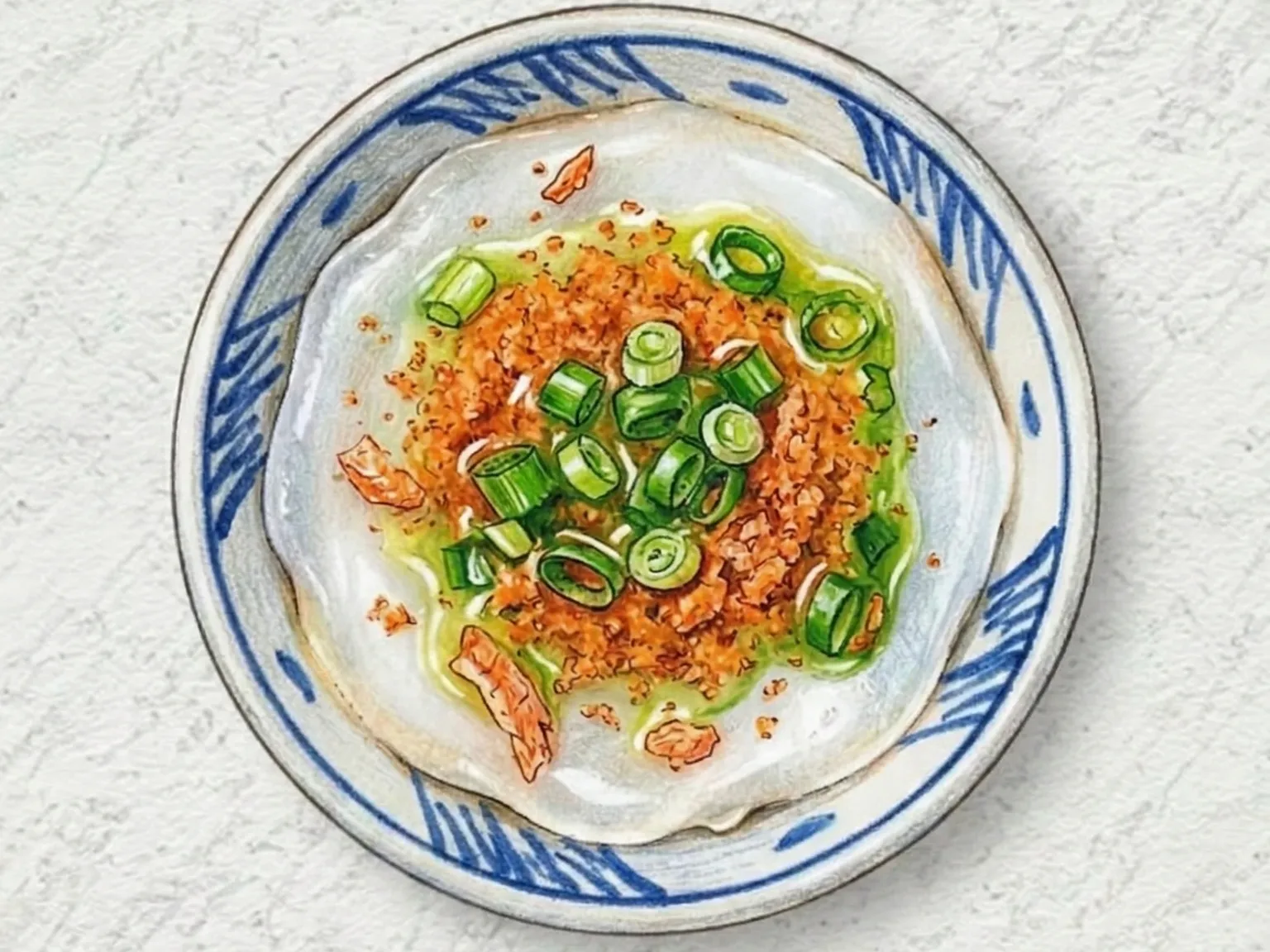
Banh cuon is a Hanoi breakfast specialty - translucent rice sheets steamed on fabric stretched over boiling water, then filled and rolled within seconds by practiced hands. The batter contains nothing but rice flour and water, spread tissue-thin to produce a wrapper so delicate it tears under rough handling. Inside sits a filling of minced pork and finely chopped wood ear mushrooms, delivering a savory, slightly crunchy core against the soft sheet. The rolls come to the table at room temperature alongside fried shallots and sliced Vietnamese sausage, with a bowl of nuoc cham for dipping. What separates banh cuon from other rice-based wraps is texture: silky and almost slippery on the tongue, with none of the resistance or chew found elsewhere.

🎉 Special Occasion
Prep 30minCook 25min3 servings
Cá Kho Tộ (Vietnamese Caramelized Braised Fish in Clay Pot)
SteamedMedium

Cá Kho Tộ (Vietnamese Caramelized Braised Fish in Clay Pot)

Ca kho to is a southern Vietnamese home-style braised fish dish made with catfish or white fish simmered in a sauce of caramelized sugar, fish sauce, and coconut water. The process begins by cooking sugar until it reaches a deep amber caramel, which coats the fish in a rich, dark glaze and forms the flavor backbone of the whole dish. Fish sauce adds a sharp, concentrated saltiness and umami that defines the sauce's character. Shallots and garlic build the aromatic base, while black pepper leaves a warm, spicy finish that cuts through the richness of the caramel. Coconut water lightens and perfumes the braising liquid with a mild tropical sweetness distinct from plain sugar. Covering the pot and simmering over low heat allows the fish to absorb the seasoning deeply and the sauce to reduce to a glossy, lacquer-like coating. Unlike Korean braised fish, which often centers on chili heat, this dish balances caramel and black pepper as its primary flavors and is traditionally served over plain steamed rice.

🎉 Special Occasion🍱 Lunchbox
Prep 15minCook 35min4 servings
Vietnamese Grilled Pork Vermicelli
NoodlesMedium

Vietnamese Grilled Pork Vermicelli

Charcoal-grilled pork is placed over cold rice vermicelli and eaten mixed with nuoc cham in this southern Vietnamese noodle bowl. The pork marinates in fish sauce, sugar, and garlic before grilling, so direct heat caramelizes the surface sugars into a deep brown crust while the interior holds its moisture. Fresh mint, cilantro, and coarsely crushed roasted peanuts are scattered on top, layering herbal fragrance with crunch. Nuoc cham, built from lime juice, sugar, fish sauce, and chili, is the sweet-sour-salty binding agent that pulls together the warm meat, cool noodles, and raw herbs into a single coherent bowl. The temperature contrast between hot pork and chilled vermicelli is central to the eating experience. Pickled daikon and carrot add a final note of acidity that keeps each bite clean. No broth is needed; the bowl is filling and bright.

🎉 Special Occasion
Prep 20minCook 15min2 servings
Vietnamese Lotus Stem Shrimp Salad
SaladsMedium

Vietnamese Lotus Stem Shrimp Salad

Goi ngo sen is a traditional Vietnamese salad of thinly sliced lotus stem, blanched shrimp halved lengthwise, julienned carrot, and cilantro dressed in a fish sauce and lime vinaigrette. Soaking the lotus stem in diluted vinegar water for ten minutes is not optional: it removes the astringent edge while keeping the crisp, snapping texture that defines the dish, and skipping this step leaves a rough, bitter aftertaste no amount of good dressing can fix. Blanching the shrimp for two to three minutes and splitting them open lengthwise exposes more cut surface for the dressing to penetrate. The dressing combines fish sauce, lime juice, and sugar in a ratio that hits salty, sour, and sweet simultaneously, making the natural umami of the seafood stand out rather than recede. Letting the salad rest for at least five minutes after tossing gives the dressing time to soak into each ingredient and allows the flavors to settle into one another.

🥗 Light & Healthy
Prep 20minCook 5min2 servings
Banh Khot Recipe  -  Crispy Vietnamese Mini Shrimp Pancakes
AsianMedium

Banh Khot Recipe - Crispy Vietnamese Mini Shrimp Pancakes

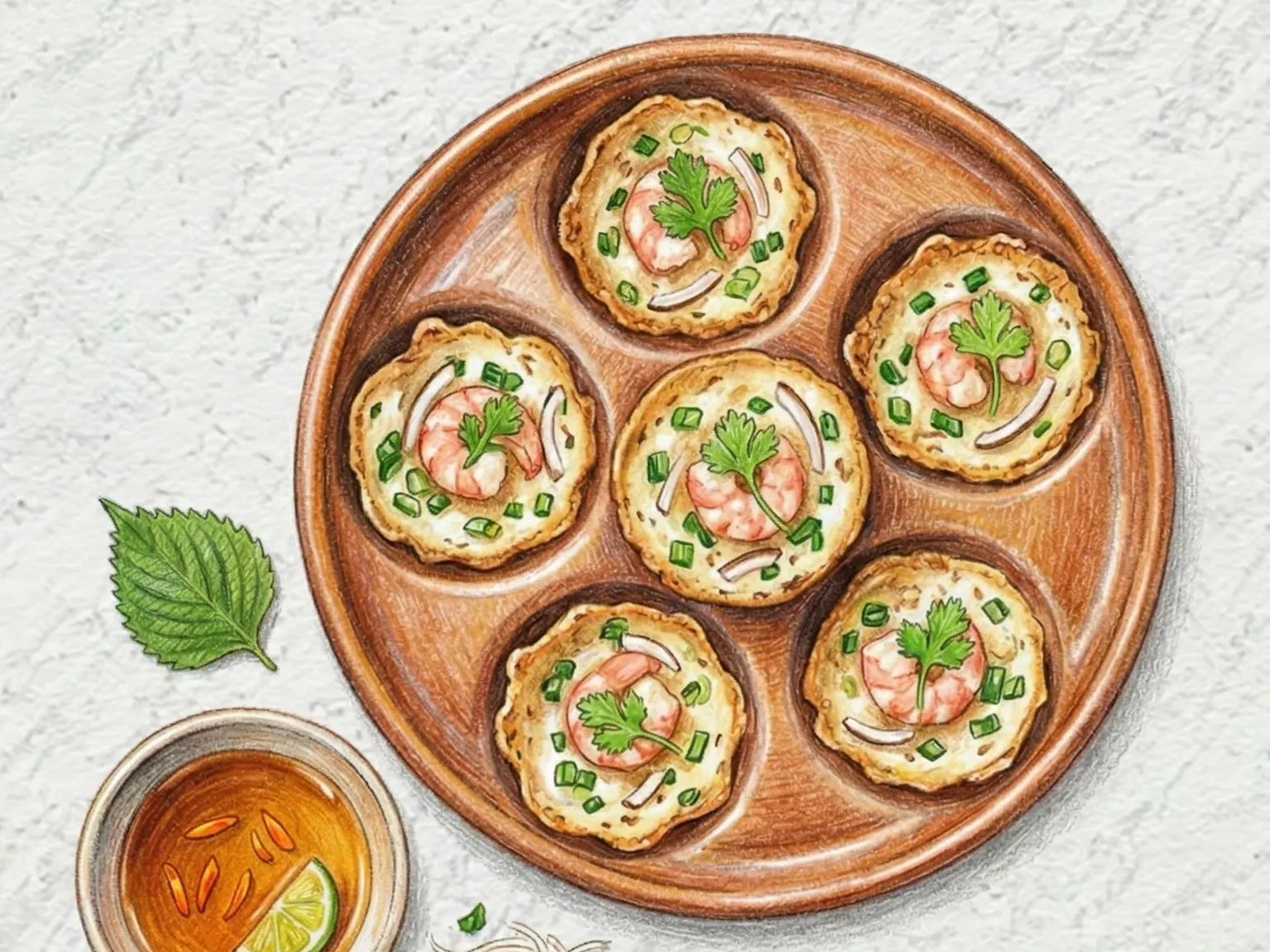
Banh khot is a Vietnamese miniature shrimp pancake that originated in the coastal city of Vung Tau in southern Vietnam. Rice flour and coconut milk are combined into a thin batter, which is poured into the circular hollows of a specialty cast-iron griddle and covered to steam-bake until the edges crisp up and the centers set into a soft, custardy texture. One whole shrimp is pressed into each pancake while the batter is still liquid so it cooks embedded in the top. Coconut milk gives the rice batter a gentle sweetness and richness that plain rice flour lacks, and the fat in the milk contributes to the characteristic crisp edges. The pancakes are served hot, wrapped in lettuce or perilla leaves with fresh mint and Thai basil, then dipped in nuoc cham. The contrast between the hot, crispy shell and the cool, fresh herbs is central to how the dish is eaten. At home, a small egg pan or takoyaki mold can substitute for the traditional griddle.

🎉 Special Occasion
Prep 25minCook 20min2 servings
Thai Steamed Lime Fish (Whole Fish Chili Fish Sauce)
SteamedMedium

Thai Steamed Lime Fish (Whole Fish Chili Fish Sauce)

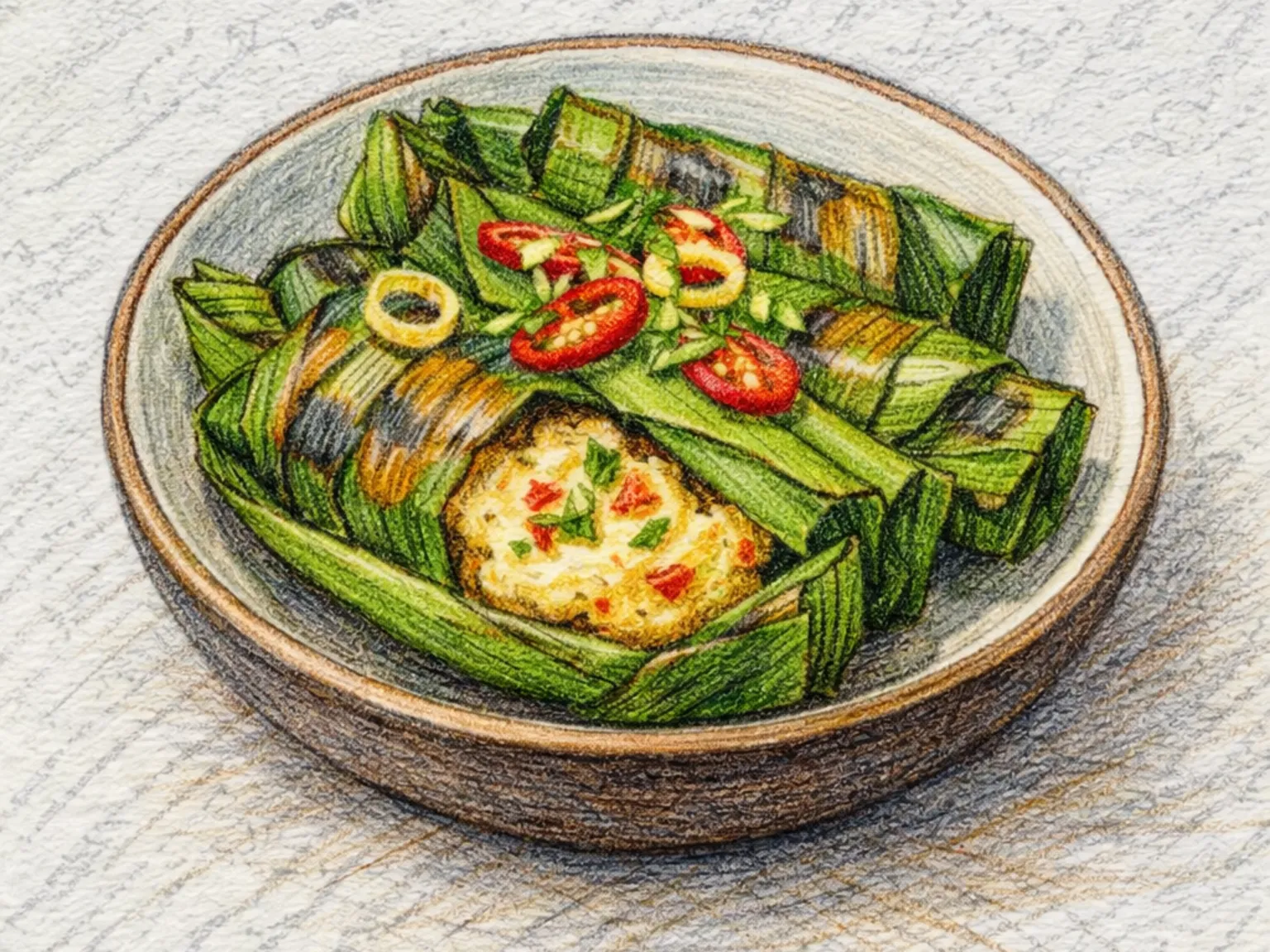
Pla neung manao is a Thai steamed fish dish where a whole white fish is steamed until just cooked through, then drenched in a raw sauce of fresh lime juice, fish sauce, crushed garlic, and minced Thai chili. The sharp acidity of the lime and the salty depth of fish sauce meet directly, producing a dressing that is simultaneously bright and savory without either element overwhelming the other. The minced chili brings a direct, stinging heat that cuts through the mild fish flesh. Because the sauce is poured over raw rather than cooked, the lime and garlic aromas remain fully intact and undiminished by heat. Steaming the fish for a couple of minutes after the sauce is added allows the flavors to penetrate through the scored skin and into the flesh. A generous heap of fresh cilantro on top delivers the final aromatic layer that defines the dish. Served alongside jasmine rice or glutinous rice, the sauce soaks into the grains and ties everything together into a cohesive plate.

🎉 Special Occasion
Prep 20minCook 18min2 servings
Vietnamese Mi Quang (Turmeric Noodles with Pork and Shrimp)
NoodlesMedium

Vietnamese Mi Quang (Turmeric Noodles with Pork and Shrimp)

Mi quang is a noodle dish from the Quang Nam province in central Vietnam, built on wide, turmeric-tinted rice noodles dressed with pork, shrimp, and a deliberately small amount of intensely concentrated broth. The defining characteristic of the dish is that ratio. Where most noodle soups are meant to be submerged, mi quang uses just enough broth to moisten the noodles, making it closer to a dressed noodle than a soup bowl. Pork is marinated in fish sauce and turmeric before cooking, which simultaneously tints the meat yellow and saturates it with fermented savory depth. Simmering it briefly with chicken stock draws out a small volume of broth with a concentrated, meaty intensity that would taste overwhelmingly strong on its own but calibrates perfectly when distributed across a full serving of noodles. Shrimp are kept separate and cooked quickly by sautéing or grilling rather than simmering, which keeps them springy rather than soft. The noodles are cooked, rinsed under cold water so they do not stick, and placed in a bowl before the meat, shrimp, and broth go on top. Bean sprouts add a raw crunch that contrasts directly with the soft noodles, while crushed roasted peanuts contribute a dry, nutty texture that absorbs some of the broth. A squeeze of lime at the end sharpens the entire flavor profile and balances the richness.

🎉 Special Occasion
Prep 20minCook 20min2 servings
Thai Larb Gai
SaladsMedium

Thai Larb Gai

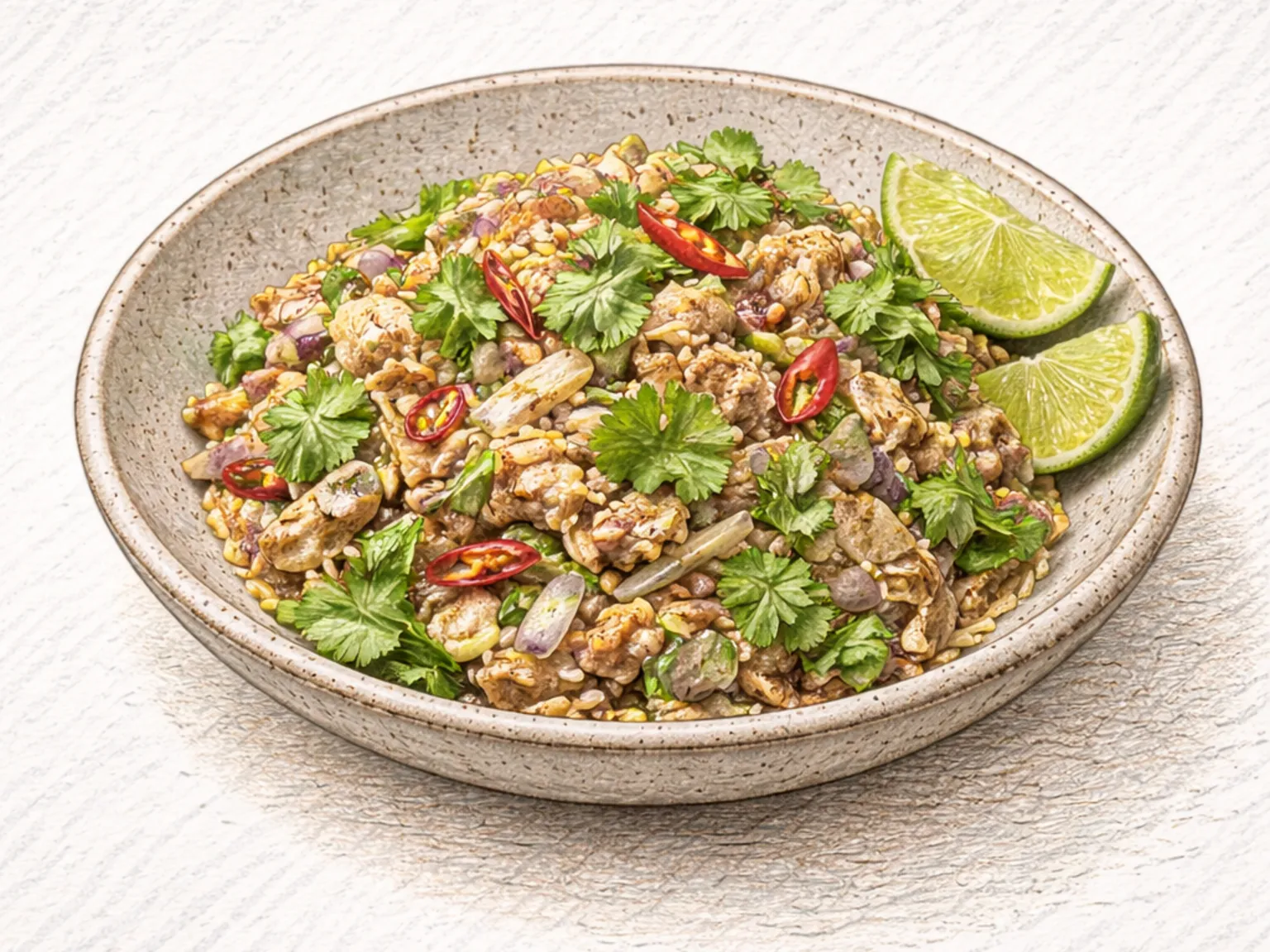
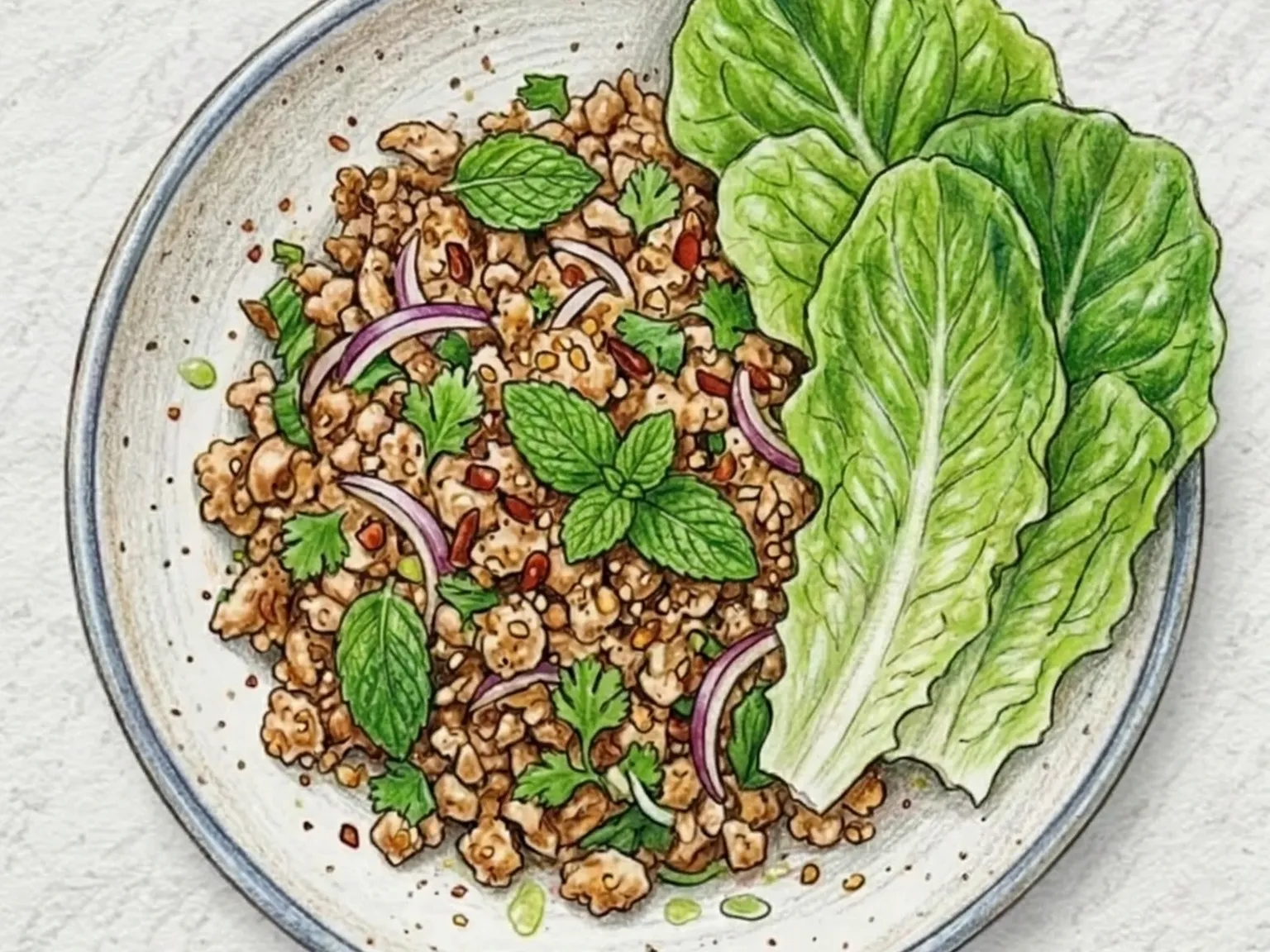
Larb gai is a traditional salad preparation originating from the Isan region of Thailand that uses ground chicken as its primary protein component. During the cooking process, the minced meat is simmered with a small volume of water to ensure that it remains soft and retains its natural moisture throughout the preparation. The chicken is then seasoned using a combination of fish sauce and the juice squeezed from fresh limes. A specific ingredient that gives this dish its unique character is khao khua, which is rice that has been dry-toasted and subsequently processed into a coarse powder. To create this, plain white rice is heated in a dry pan without the addition of any oil until the grains develop a golden brown color and release a toasted aroma. When this ground rice is added to the salad, it introduces a nutty and slightly smoky flavor profile that distinguishes larb from other types of minced meat preparations found in the region. The dish also incorporates thin slices of raw red onion, which provide a sharp flavor and a crisp texture. Additionally, fresh mint leaves are mixed in to provide a cooling herbal quality that balances the savory notes of the seasoned chicken. After the salad has been placed on a plate, the amount of lime juice can be adjusted according to individual preferences for acidity. The standard method for consuming larb gai involves placing a portion of the mixture into a fresh, crisp lettuce leaf, which provides an extra layer of crunch while helping to moderate the intensity of the spices.

🥗 Light & Healthy
Prep 15minCook 10min2 servings
Bicol Express (Filipino Pork Belly in Spicy Coconut Cream Stew)
AsianMedium

Bicol Express (Filipino Pork Belly in Spicy Coconut Cream Stew)

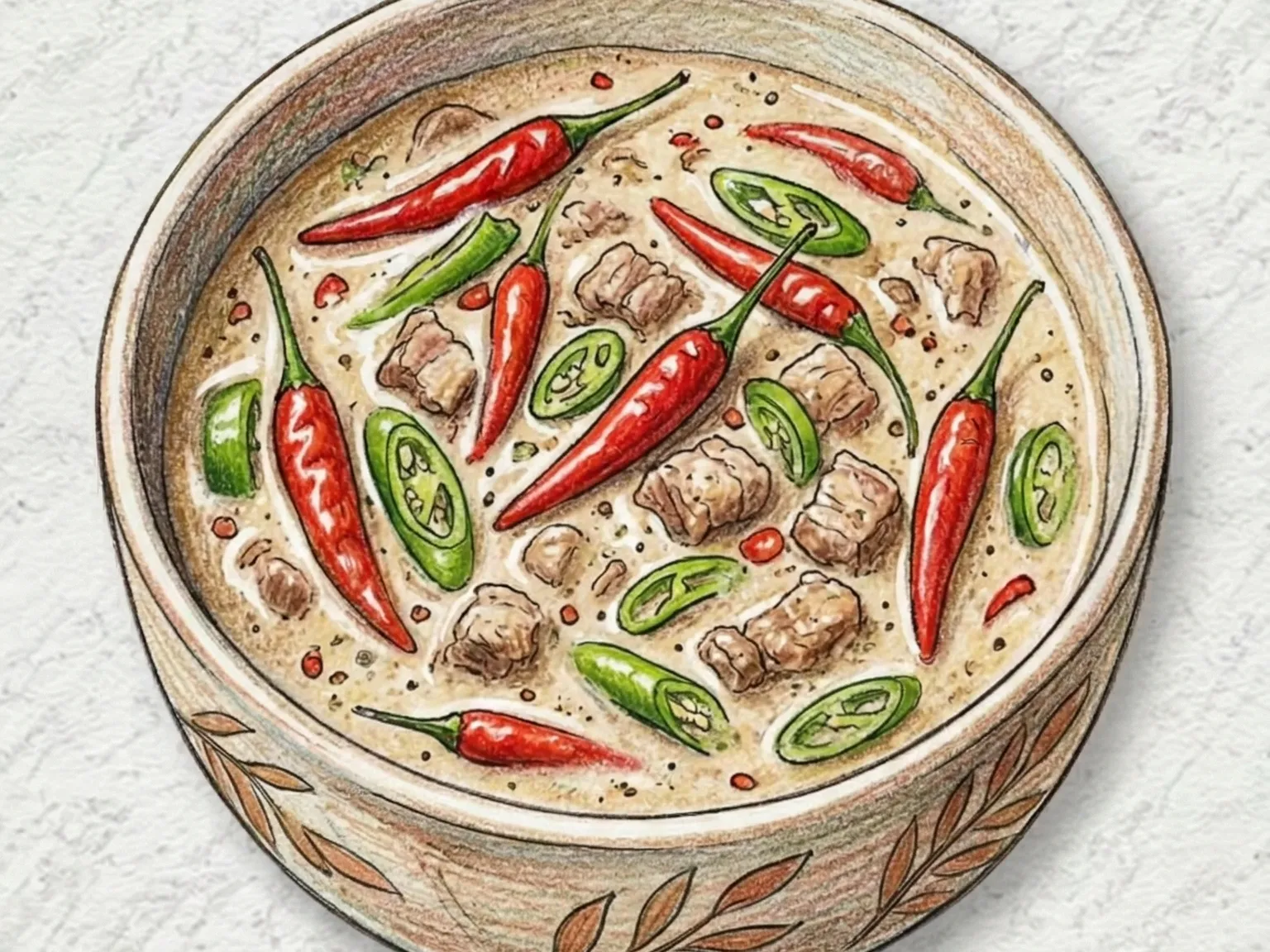
Bicol Express takes its name from the train line that once ran between Manila and the Bicol region in southeastern Luzon, an area where coconut and chili peppers appear in quantities that would be considered excessive almost anywhere else in the Philippines. Thinly sliced pork belly simmers in a mixture of coconut milk and coconut cream together with fermented shrimp paste (bagoong), garlic, onion, and a generous measure of both long finger chilies and bird's eye chilies. The liquid reduces slowly over medium heat until the coconut milk splits, releasing its fat into the pan - at that point the pork begins to fry in the rendered coconut oil rather than braise in liquid, and its texture changes noticeably. The finished dish has almost no remaining sauce; a thick, creamy, oily coating clings to every piece of pork and chili. The shrimp paste operates below the surface of the sweetness provided by the coconut, laying down a deep, briny, funky foundation that defines the flavor without announcing itself. The heat from the chilies does not arrive immediately - it accumulates over successive spoonfuls. The combination of coconut, chili, and fermented shrimp reflects an ancient Bicolano flavor structure that predates the dish's catchy modern name by generations. Serving it over steamed white rice, which absorbs the rich coating as it sits on the plate, is the only way to eat it properly.

🎉 Special Occasion
Prep 15minCook 35min4 servings
Vietnamese Braised Pork and Eggs
SteamedMedium

Vietnamese Braised Pork and Eggs

Thit kho trung is a Vietnamese home-style braise of pork and hard-boiled eggs simmered low and slow in coconut water, fish sauce, and a caramel base for nearly an hour. Sugar is cooked in the pot until it reaches a deep amber caramel before the pork is added, coating the meat in a dark, slightly bitter glaze that underpins the entire flavor of the dish. Coconut water contributes a gentle tropical sweetness and keeps the meat from drying out through the long simmer in a way that plain water cannot. The eggs, peeled and added from the start, absorb the braising liquid through the full cooking time and turn brown all the way to the yolk, taking on the complete range of salty-sweet seasoning. Spoon the sauce over steamed rice and the combination delivers the characteristic Vietnamese balance of fermented fish depth, caramel bitterness, and coconut softness all at once. Pork shoulder or pork belly with skin attached works best for this recipe because the collagen in the connective tissue melts into the braising liquid during the long cook, giving the sauce a glossy, slightly viscous body that clings to the rice.

🎉 Special Occasion🍱 Lunchbox
Prep 20minCook 60min4 servings
Som Tam Thai (Thai Green Papaya Salad)
SaladsMedium

Som Tam Thai (Thai Green Papaya Salad)

Som tam Thai shreds green papaya into thin strips and pounds them in a mortar with Thai chilies, palm sugar, lime juice, and fish sauce, bruising the fibers just enough to let the dressing seep in while keeping the crunch intact. The pounding technique drives flavor deeper than simple tossing, creating a salad where each strand carries the full range of sweet, salty, sour, and spicy in a single bite. Palm sugar's dark caramel sweetness, fish sauce's fermented brine, the sharp brightness of lime, and the direct burn of chili hold each other in a balance that defines the dish. Roasted peanuts scattered on top add a nutty crunch to finish. Without a mortar, a large bowl and a rolling pin work as a substitute by applying light pressure to bruise the papaya without crushing it. Halved cherry tomatoes pounded in alongside the papaya release their juice into the dressing and contribute a natural sweetness and extra moisture.

🥗 Light & Healthy Quick
Prep 18min2 servings
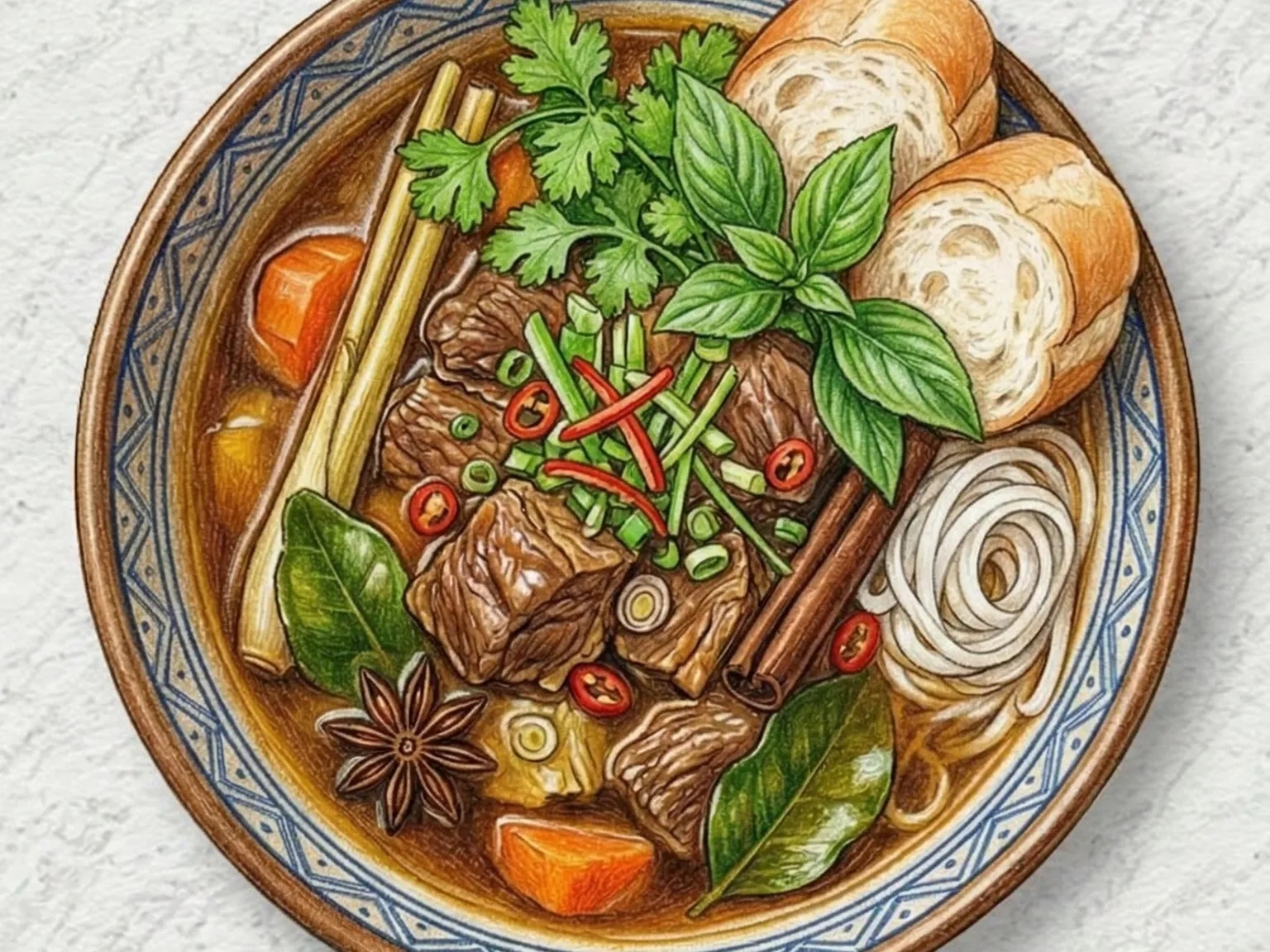
Bo Kho (Vietnamese Lemongrass Beef Shank Stew)
AsianMedium

Bo Kho (Vietnamese Lemongrass Beef Shank Stew)

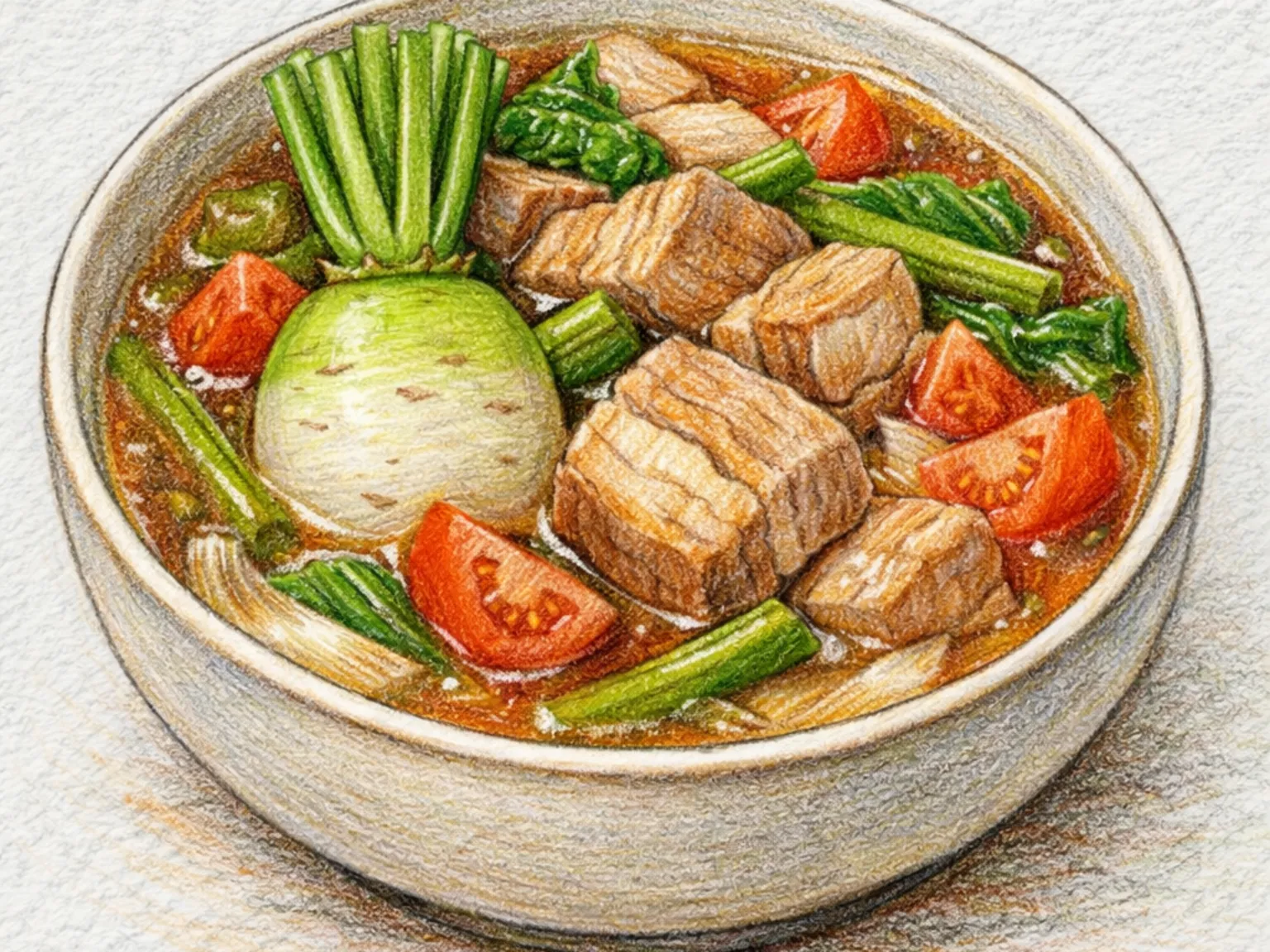
Bo kho is Vietnam's beef stew, born in the southern kitchens of Saigon where French colonial influence introduced slow-braised preparations and Vietnamese cooks adapted them with local aromatics. Beef shank and tendon are cut into large chunks and braised with lemongrass, star anise, cinnamon, and annatto oil - the annatto tinting the broth a vivid orange-red that sets bo kho apart from the darker tones of Western stews. Tomato paste and a spoonful of curry powder go in early, building a base that is simultaneously sweet, earthy, and warm. The stew simmers for two hours or more until the beef is fork-tender and the tendon has turned gelatinous, releasing its collagen into the broth and giving it a lip-coating richness. Carrots and daikon radish soften in the liquid during the final thirty minutes, absorbing the concentrated aromatics as they cook. Bo kho is eaten two ways - ladled over steamed rice, or alongside a crusty baguette torn for dipping into the broth. Street vendors in Ho Chi Minh City serve it from dawn, when the morning air carries the scent of star anise from their simmering pots across the alleyways.

🎉 Special Occasion
Prep 20minCook 80min4 servings
Thai Beef Salad (Charred Sirloin Tossed in Lime-Fish Sauce)
SaladsMedium

Thai Beef Salad (Charred Sirloin Tossed in Lime-Fish Sauce)

Yam neua is a Thai beef salad where sirloin is seared on high heat until the surface is deeply charred but the interior remains medium, then sliced thin and tossed with cucumber, tomato, red onion, and torn mint in a lime-fish sauce dressing. Cooking each side for only two to three minutes keeps the center pink and tender, and resting the meat for five minutes before slicing prevents the juices from running out onto the cutting board. The dressing layers fish sauce umami under sharp lime acidity and chili flake heat, cutting through the rich beef fat with precision. Torn mint leaves scattered throughout provide a cool, aromatic pause between the spicy, sour bites. If the red onion's raw bite is too strong, soaking it in cold water for five minutes mellows it without losing its crunch.

🥗 Light & Healthy
Prep 20minCook 10min2 servings
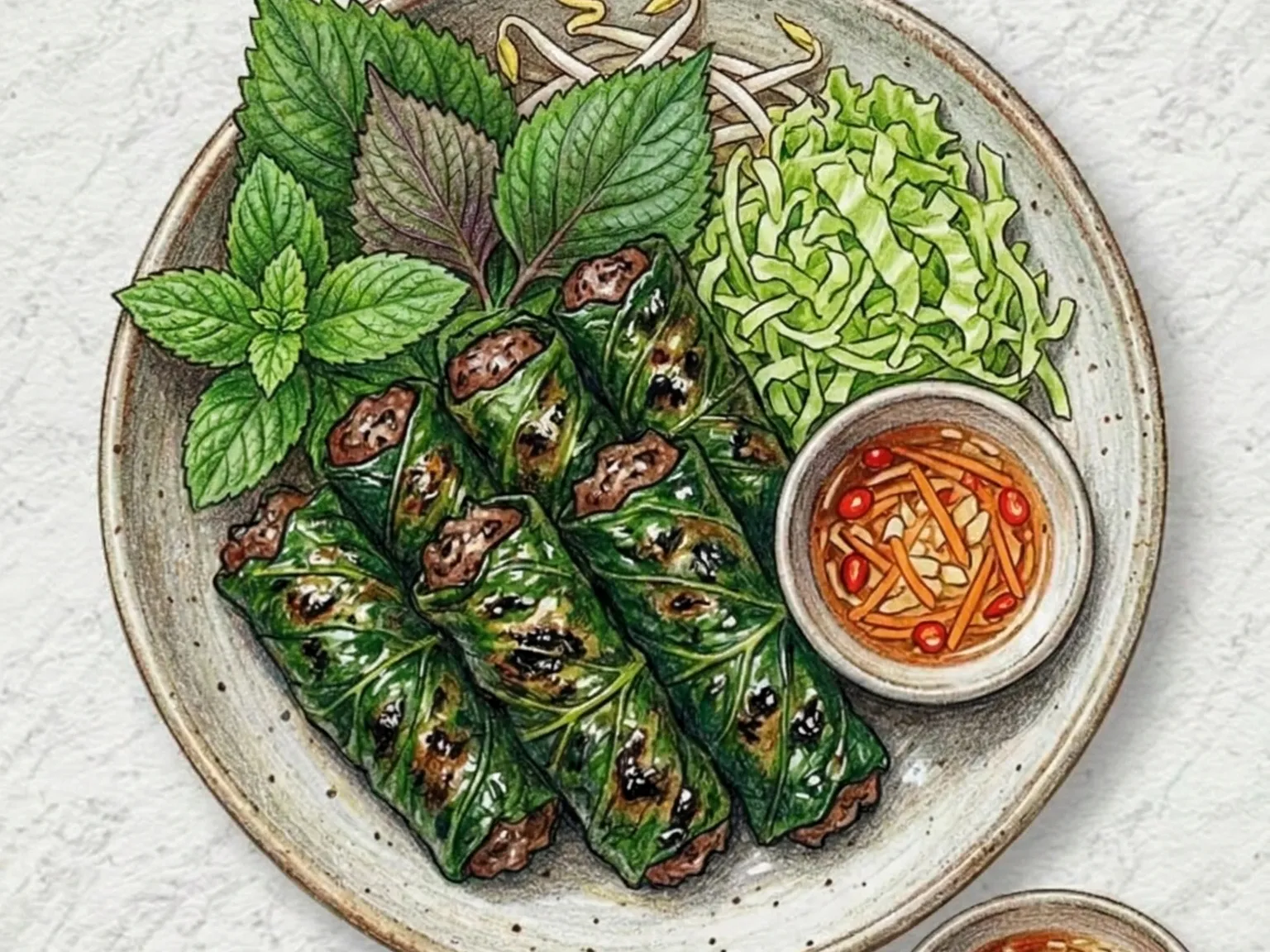
Bo La Lot (Vietnamese Grilled Beef Wrapped in Betel Leaves)
AsianMedium

Bo La Lot (Vietnamese Grilled Beef Wrapped in Betel Leaves)

Bo la lot is a southern Vietnamese dish that transforms seasoned ground beef into something aromatic and layered through the medium of la lot, the wild betel leaf (Piper lolot) - a broad, heart-shaped leaf with a peppery, faintly medicinal fragrance found nowhere else in the Vietnamese herb repertoire. The beef is combined with lemongrass, garlic, fish sauce, sugar, and five-spice powder, then wrapped tightly in individual leaves and threaded onto skewers. Over a charcoal grill, the leaf edges char and turn crisp while the rendered fat from the beef migrates into the leaf's porous surface, bonding the meat's juices with the leaf's volatile aromatic oils. The resulting bite carries multiple simultaneous impressions: char smoke from the grill, pepper heat from the leaf, savory sweetness from the spiced beef, and a faint numbing tingle from the la lot's natural compounds. The standard way to eat it is wrapped in lettuce and rice paper with fresh herbs and a bowl of nuoc cham for dipping, and it functions as a staple snack at the casual outdoor beer halls known as bia hoi across Vietnam.

🍺 Bar Snacks🎉 Special Occasion
Prep 25minCook 12min2 servings
Bun Bo Nam Bo (Vietnamese Dry Beef Noodle Bowl with Herbs)
AsianMedium

Bun Bo Nam Bo (Vietnamese Dry Beef Noodle Bowl with Herbs)

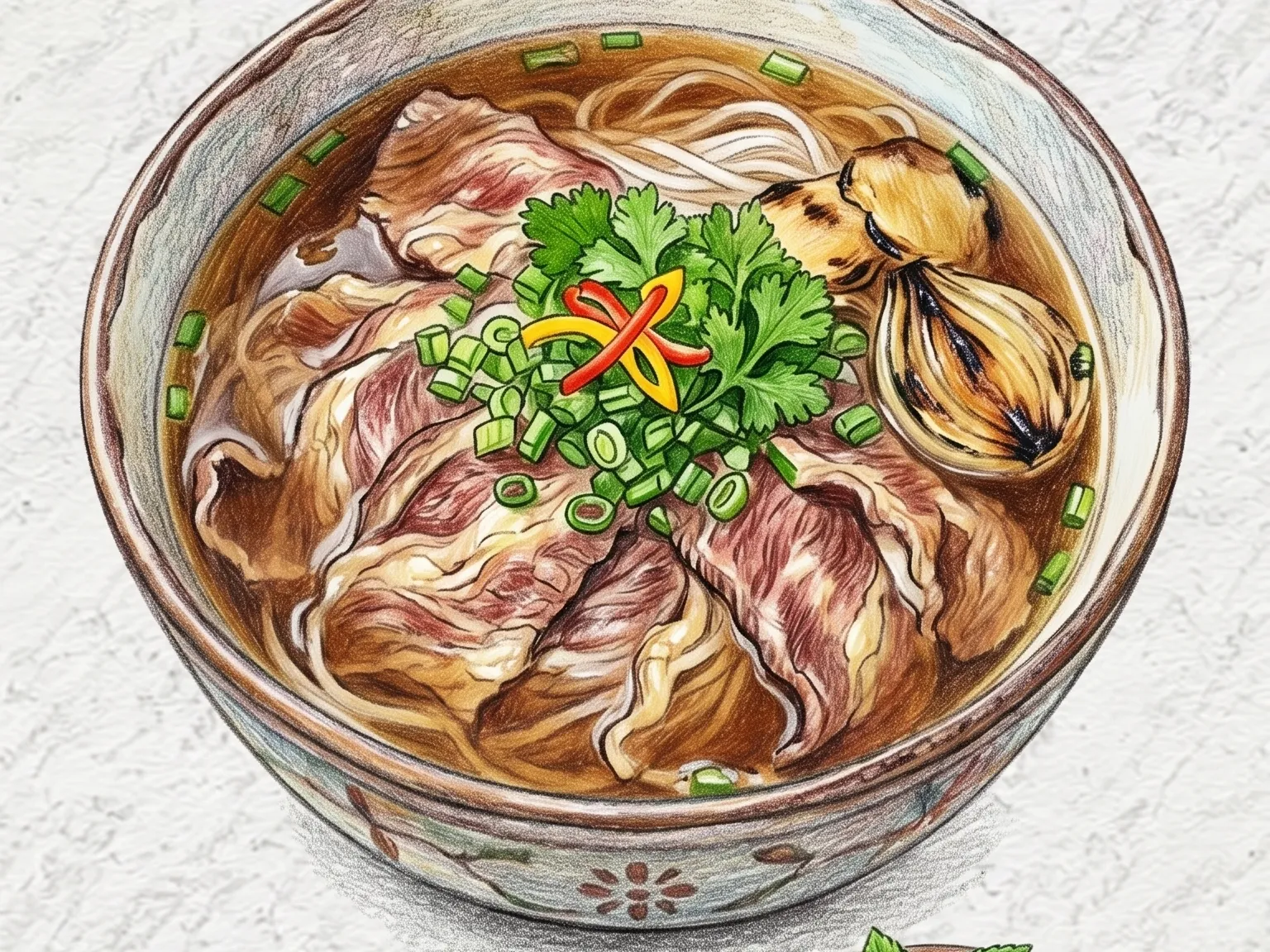
Bun bo nam bo - literally 'southern beef noodles' - is a Hanoi take on southern Vietnamese flavors, assembled as a dry noodle bowl rather than a soup. The dish layers cold rice vermicelli with stir-fried beef marinated in lemongrass and garlic, then tops it with a generous pile of fresh herbs: cilantro, Thai basil, mint, and perilla. Crushed roasted peanuts and fried shallots scatter on top, contributing crunch and a background sweetness. The binding element is nuoc cham - the sweet-sour-salty-spicy sauce built from fish sauce, lime, sugar, garlic, and chili - poured over and tossed through at the table. The beef is seared on maximum heat for under a minute so it stays medium-rare inside while the lemongrass marinade caramelizes along the edges. The pleasure of the bowl is in its temperature contrasts: cold noodles, cold herbs, warm beef, and room-temperature sauce all meeting in each chopstick-lifted tangle. Found on nearly every street in Hanoi's Old Quarter, it is the reliable lunch for office workers who return to their preferred stall day after day.

🎉 Special Occasion
Prep 25minCook 12min2 servings
Hanoi Bun Cha (Charcoal Grilled Pork Patties with Rice Noodles)
AsianMedium

Hanoi Bun Cha (Charcoal Grilled Pork Patties with Rice Noodles)

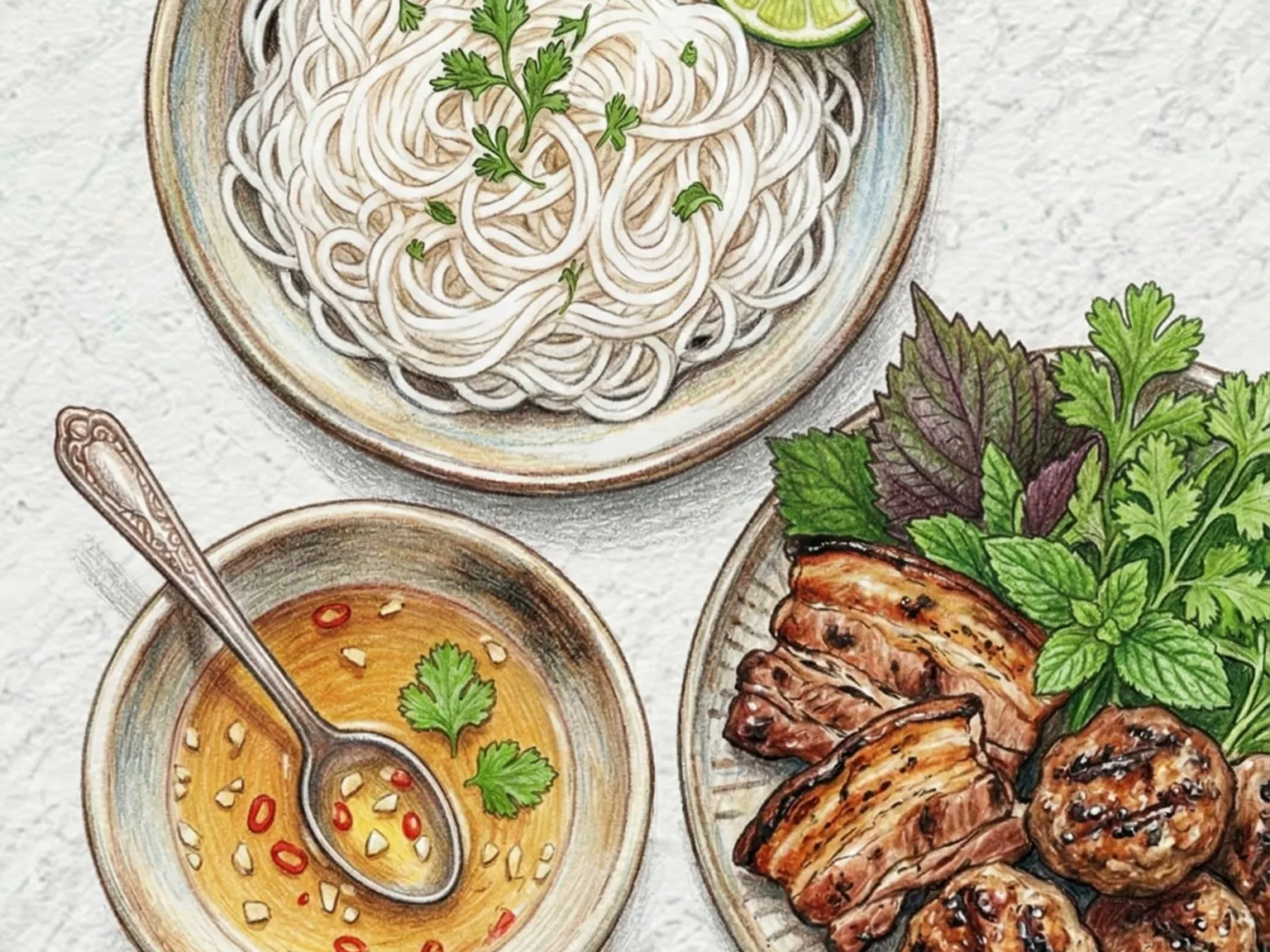
Bun cha defines the lunchtime rhythm of Hanoi. Every alley in the Old Quarter fills at midday with the smoke of charcoal grills, the sound of fat hitting hot coals, and the caramel-edged smell of pork charring at the edges. Two forms of pork are grilled simultaneously: fatty sliced pork belly and small, hand-shaped patties of seasoned ground pork. Both cook over coconut-shell charcoal until the edges blacken and the fat renders into drippings, carrying the smoke of the fire into every bite. The grilled meat drops directly into individual bowls of warm dipping broth - a sweetened fish sauce sharpened with vinegar, garlic, and chili. This broth sits between a condiment and a light soup, and diners naturally drink a little of it between bites of meat and noodles. Rice vermicelli arrives on a separate plate alongside a full mound of fresh herbs: perilla, mint, lettuce, and dill. The ritual of eating matters as much as the ingredients - noodles are dipped into the broth, a piece of pork is retrieved, wrapped in fresh herbs, and eaten in one bite. In 2016, Barack Obama and Anthony Bourdain ate bun cha at a simple Hanoi street stall. The restaurant preserved the table they occupied behind a glass case, a response that says everything about how deeply this dish is bound to the city.

🎉 Special Occasion
Prep 30minCook 20min4 servings
Bun Rieu (Vietnamese Crab and Pork Tomato Noodle Soup)
AsianHard

Bun Rieu (Vietnamese Crab and Pork Tomato Noodle Soup)

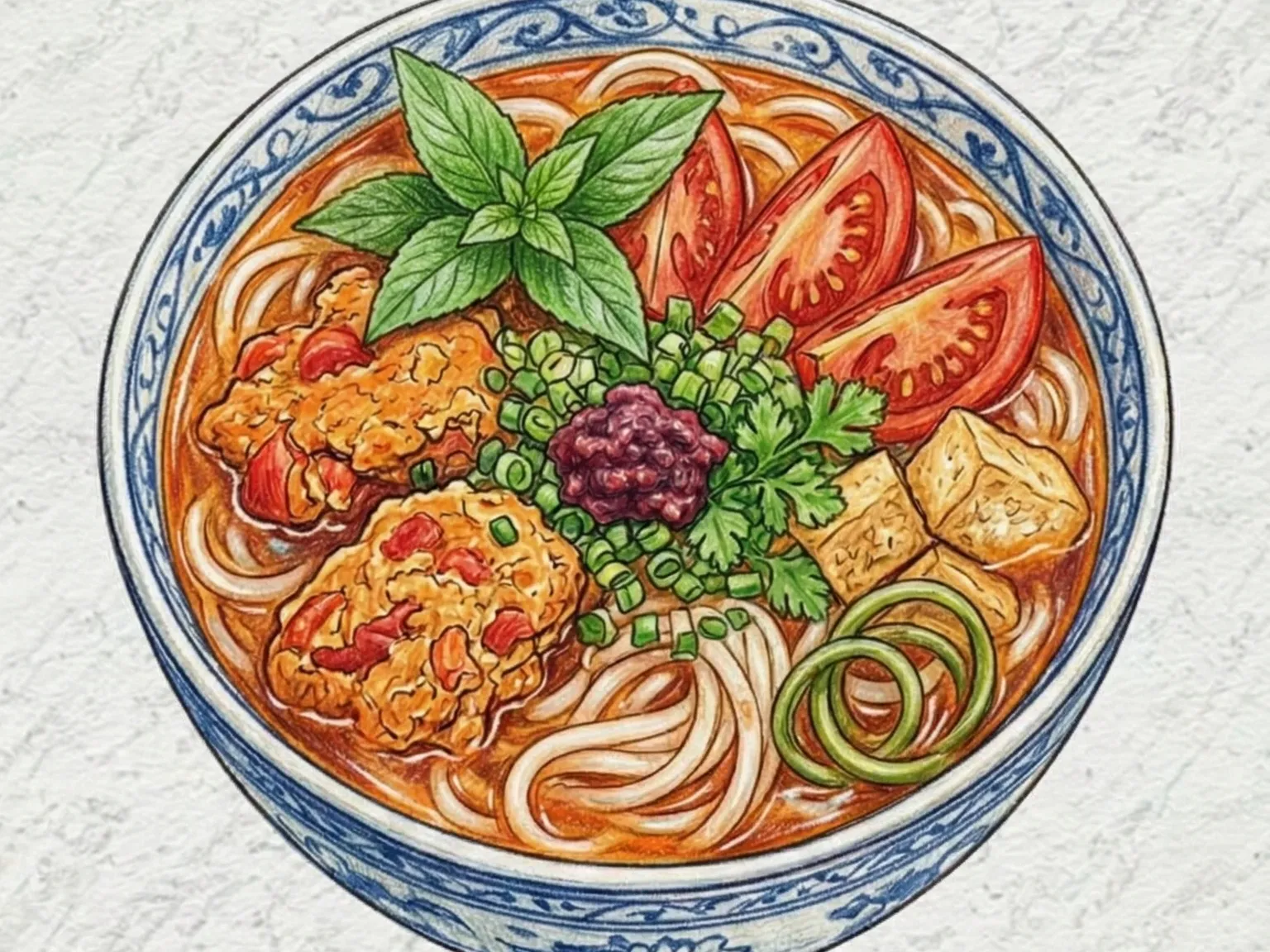
Bun rieu is a Vietnamese noodle soup from the north built on two unconventional foundations: freshwater paddy crabs and fermented shrimp paste. Together they produce a broth of unusual complexity that is simultaneously sweet, savory, and funky in ways that fish-sauce-based soups are not. Small river crabs are pounded whole, shell and all, in a mortar, then mixed with water and strained through a sieve to extract a turbid, intensely crab-scented liquid. This liquid is heated gently over low flame until the crab proteins coagulate into a soft, custard-like mass that floats to the surface, forming the crab cake that defines the dish. Tomatoes are added to the simmering broth and break down over time, tinting it red and contributing a fruity acidity that balances the crab richness. Mam tom, the fermented shrimp paste, is kept tableside and stirred in individually according to each diner's tolerance for pungency. A single spoonful transforms the broth into something considerably more intense and complex. Rice vermicelli provides a neutral base, while fried tofu puffs absorb broth during cooking and release it in each bite. Morning glory greens add a vegetable counterpoint. In Hanoi, bun rieu vendors typically specialize in this one soup, ladling hundreds of bowls from a single pot each morning before selling out by noon.

🎉 Special Occasion
Prep 25minCook 40min4 servings
Cha Ca La Vong (Hanoi Turmeric Fish with Dill on Tabletop Grill)
AsianMedium

Cha Ca La Vong (Hanoi Turmeric Fish with Dill on Tabletop Grill)

Cha ca La Vong is the defining dish of a single street in Hanoi's Old Quarter - Cha Ca Street takes its name from the restaurant that has been serving this one recipe and nothing else since the late nineteenth century. The dish is almost exclusively Hanoian; it barely appears in southern Vietnamese cooking, and the original La Vong restaurant remains open at the same address today. Firm white fish fillets, traditionally snakehead or catfish, are marinated in a paste of turmeric, galangal, fermented shrimp paste, and rice flour, then pan-fried in oil until the turmeric stains the surface a vivid, saturated yellow and a thin crust forms along the outside. The sizzling pan arrives at the table set over a small tabletop burner and the fish continues to cook as diners add large handfuls of fresh dill and scallion directly into the pan. The herbs wilt almost instantly on contact with the hot oil, and dill's intense anise-forward fragrance fills the table as they do. The visual impact of yellow-stained fish against the bright green dill collapsing into the pan is one of the dish's most recognizable qualities. The fish is eaten spooned over thin rice vermicelli and accompanied by roasted peanuts and additional fresh herbs. The critical element is the dipping sauce: mam tom, a pungent fermented shrimp paste thinned with fresh lime juice and a little sugar, whose funk and acidity cut through the oil and turmeric and transform the flavor of every bite. Few dishes anywhere can claim a single-item restaurant with over a century of unbroken operation, and Cha ca La Vong is one of them.

🎉 Special Occasion
Prep 20minCook 12min2 servings
Cha Gio (Southern Vietnamese Crispy Rice Paper Spring Rolls)
AsianMedium

Cha Gio (Southern Vietnamese Crispy Rice Paper Spring Rolls)

Cha gio are fried spring rolls from southern Vietnam, distinct from the north's nem ran in both wrapper and filling. Southern cooks use rice paper instead of wheat-based wrappers, which produces an exceptionally thin, blistered shell on frying - one that shatters with a louder, sharper crack than a Chinese egg roll. The filling is ground pork, shrimp, glass noodle threads, wood ear mushroom, and grated carrot, seasoned with fish sauce and black pepper. Rolling technique directly affects the result: too loose, and the roll bursts in the oil; too tight, and the filling compresses into a hard, dense core. Oil temperature is managed in two stages - the rolls go in at 160°C to cook the filling through without scorching the wrapper, then the heat rises to 180°C for a final crisping that leaves the shell nearly translucent. The traditional presentation is wrapped in mustard greens or lettuce with fresh mint, Thai basil, and perilla, then dipped in nuoc cham. In southern Vietnamese households, the Tet (Lunar New Year) preparation of cha gio is itself a ritual: the entire family gathers to roll hundreds at once, an act that marks the holiday as much as eating them does. Frozen unbaked rolls fry from frozen with almost no loss in texture.

🍺 Bar Snacks🎉 Special Occasion
Prep 30minCook 20min4 servings
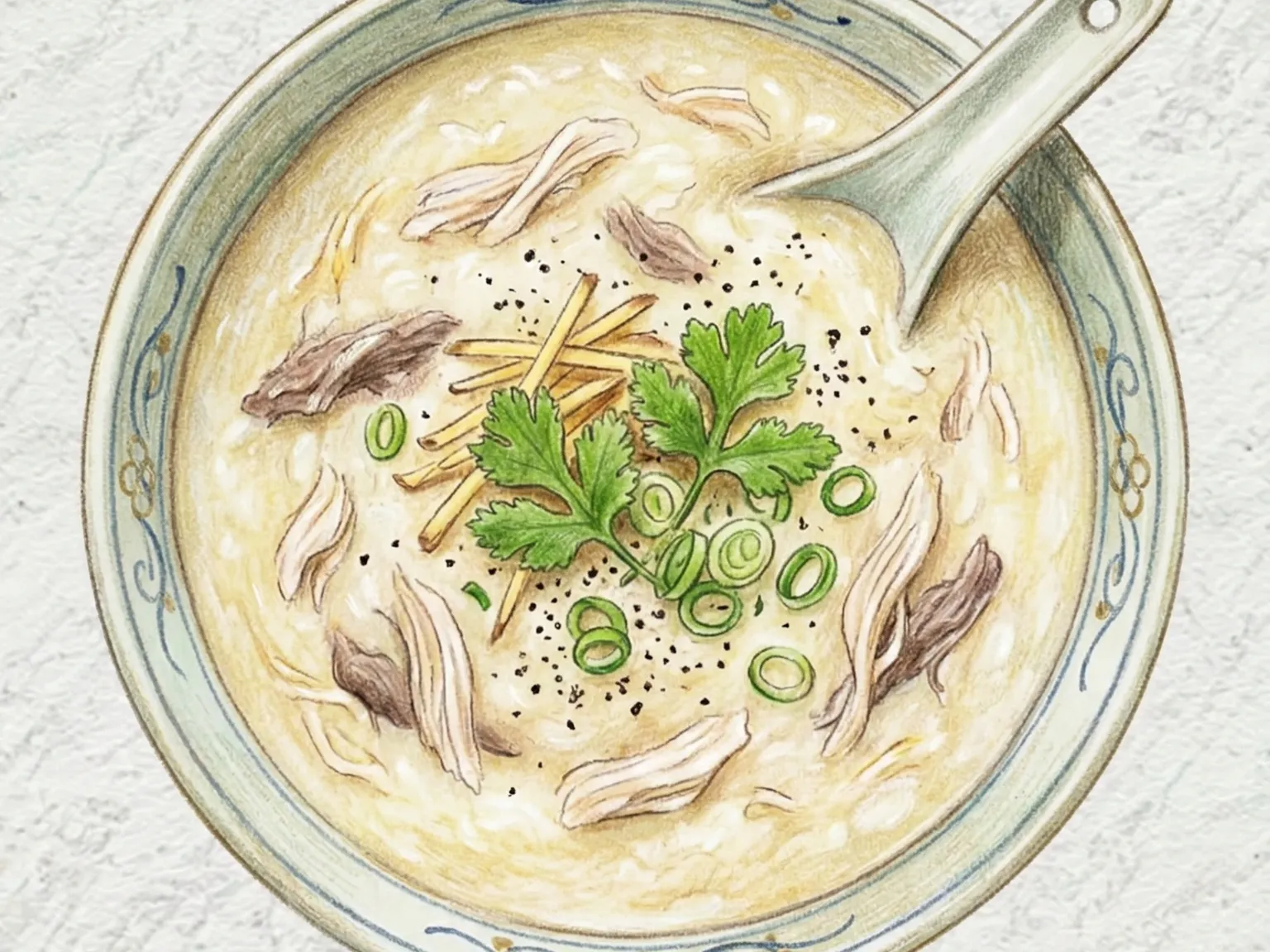
Chao Ga (Vietnamese Chicken Rice Porridge with Ginger)
AsianEasy

Chao Ga (Vietnamese Chicken Rice Porridge with Ginger)

Chao ga is Vietnam's most widely eaten breakfast porridge, served whenever someone is ill or needs gentle nourishment, occupying the same restorative role that dakjuk holds in Korean cooking. A whole chicken simmers in water until the broth turns opaque and deeply flavored, then rice cooks directly in that liquid until the grains dissolve into a thick, almost creamy consistency. Generous slices of ginger added early in cooking suppress any gaminess and warm the stomach, while fish sauce brings an underlying umami depth that plain salt cannot replicate. The finished porridge is ladled into bowls and finished with hand-shredded chicken meat, fresh cilantro, cracked black pepper, crispy fried shallots, and strips of you tiao -- Chinese fried dough sticks -- whose crunch against the soft porridge creates a textural contrast considered essential to the dish. In Hanoi's early-morning alleys, chao ga vendors work from a single clay pot, serving hundreds of bowls to workers and commuters before noon, and the sight of rising steam from those stalls remains one of the defining images of the Vietnamese morning.

🏠 Everyday
Prep 15minCook 55min4 servings
Com Tam Suon Nuong (Broken Rice with Grilled Pork)
AsianMedium

Com Tam Suon Nuong (Broken Rice with Grilled Pork)

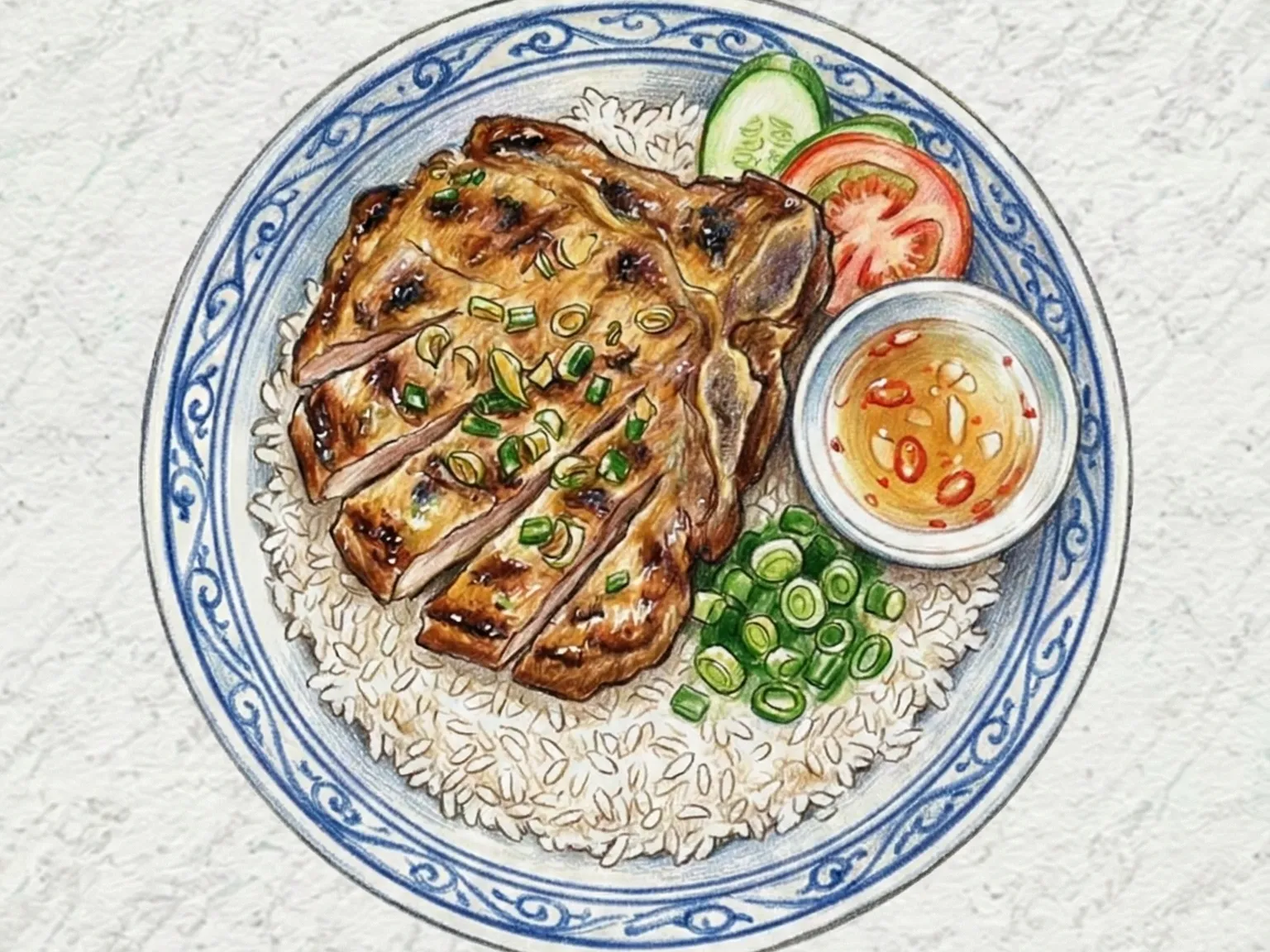
Com tam translates literally as broken rice, named after the fractured grains left over from milling that were once too damaged to sell and eaten only by those who could afford nothing better. In Ho Chi Minh City, what began as subsistence food became a morning institution. The smaller, porous grains cook drier than whole rice and absorb sauces and meat juices more efficiently, turning an unwanted byproduct into a texture worth seeking out. Suon nuong, the charcoal-grilled pork chop, is the centerpiece. The meat soaks for at least an hour in a marinade of lemongrass, garlic, fish sauce, and sugar before hitting the coals. Under direct heat, the marinade caramelizes against the bone, building a sticky, slightly charred crust that carries both sweetness and smoke. The assembled plate puts the grilled chop over broken rice, topped with shredded egg crepe, pickled daikon and carrot, and a generous pour of nuoc mam pha, the sweet-salty-sour dipping sauce made from fish sauce, lime, sugar, and fresh chili. Across the city, com tam stalls open before dawn and the morning ritual of pulling a motorbike over to eat a quick plate at a sidewalk table is part of the daily rhythm of the place.

🎉 Special Occasion
Prep 25minCook 20min2 servings
Drunken Noodles
AsianEasy

Drunken Noodles

Pad kee mao, known outside Thailand as drunken noodles, is a stir-fried rice noodle dish from central Thailand whose name has two competing origin stories: one holds that it was street food eaten late at night to accompany drinking, the other that the ferocious chili heat leaves the eater feeling intoxicated. Wide rice noodles called sen yai are tossed in a screaming-hot wok with fresh chilies, crushed garlic, and protein, and the defining technique is leaving the noodles undisturbed long enough to char slightly where they press against the metal surface, generating a smoky, wok-seared flavor that no other cooking method replicates. Thai holy basil, known as krapao, is a fundamentally different ingredient from Italian basil: it carries a peppery, clove-adjacent sharpness and a faint natural heat, and when it hits a hot wok the volatile oils bloom instantly into the air around the pan. A dark sauce of oyster sauce, soy sauce, fish sauce, and sugar stains the noodles a deep mahogany-brown while building a flavor profile that stacks salt, sweetness, and fermented umami in every strand. In Thailand the dish is made with seafood, pork, or chicken, and a crispy fried egg cooked in a generous pool of oil until the edges lacquer and crunch is placed on top. The yolk is broken and stirred through the noodles at the table, coating everything in a rich, golden layer that softens the heat and ties the dish together. No rice is needed when the noodles already carry this much.

🏠 Everyday🌙 Late Night
Prep 15minCook 10min2 servings
Gaeng Jued Tofu Soup (Thai Clear Tofu Soup)
AsianEasy

Gaeng Jued Tofu Soup (Thai Clear Tofu Soup)

Gaeng jued - literally 'bland soup' in Thai - is not tasteless despite its name; it is the one Thai dish that deliberately seeks gentleness in a cuisine famous for intensity. A clear broth simmered from pork bones or chicken holds soft tofu, small pork meatballs, glass noodles or squash. The meatballs are seasoned with garlic, white pepper, and coriander root - the aromatic trinity of Thai cooking - which infuse the clear broth with a subtle depth that belies the soup's transparent appearance. Fresh cilantro leaves and fried garlic are scattered on top for aroma and crunch, but the overall tone stays soothing and stomach-settling. On a Thai family table, gaeng jued sits alongside fiery dishes like som tam and tom yum, serving as a palate cleanser between bites of heat. It is the soup Thai parents make for children and for anyone feeling unwell - comfort food in its most literal sense.

🥗 Light & Healthy
Prep 15minCook 20min4 servings
Vietnamese Chicken Salad
AsianEasy

Vietnamese Chicken Salad

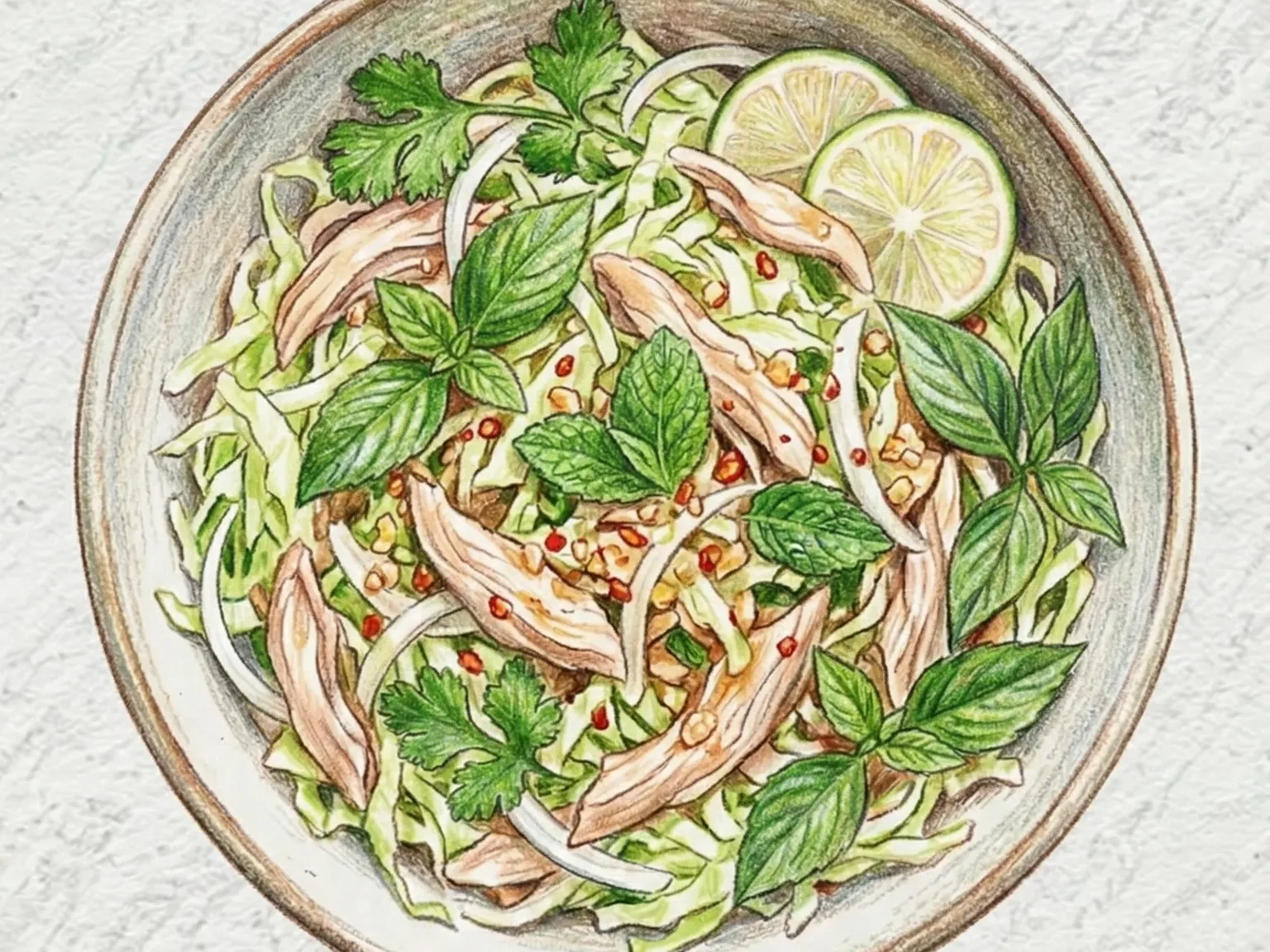
Goi ga is a Vietnamese chicken salad served throughout the country as a beer snack and appetizer, one of the most practical dishes the cuisine has for hot weather when something cool, sharp, and light is what the body wants. A whole chicken is poached in water until just cooked through, then cooled completely before being shredded by hand along the grain. Hand-shredding rather than knife-cutting matters here: the torn fibers create irregular surfaces with greater surface area, so the dressing clings to the meat rather than pooling at the bottom of the bowl, and the textured chew is noticeably different from cleanly sliced chicken. Shredded cabbage, onion, and carrot form the vegetable base, combined with Vietnamese coriander known as rau ram, cilantro, and fresh mint. The dressing is fish sauce, fresh lime juice, sugar, sliced fresh chili, and minced garlic, whisked together until the sugar dissolves. The dressing acidity pulls the chicken out of its mildness, and the fish sauce depth meets the watery crunch of the vegetables to produce a balance that reads as light but not bland. Fried shallots and crushed roasted peanuts scattered over the top add a crunchy layer that makes the salad feel complete rather than spare. At bia hoi, the informal fresh-beer street bars found across Vietnam, goi ga is among the first dishes ordered and typically arrives at the table before the first cold glass is poured.

🥗 Light & Healthy🎉 Special Occasion
Prep 20minCook 15min2 servings