Charim

2686 Korean & World Recipes

2686+ Korean recipes, clean and organized. Ingredients to instructions, all at a glance.

Recipes with ginger

24 recipes

Buy ginger
Korean Goji Berry Tea (Herbal Jujube Ginger Brew)
DrinksEasy

Korean Goji Berry Tea (Herbal Jujube Ginger Brew)

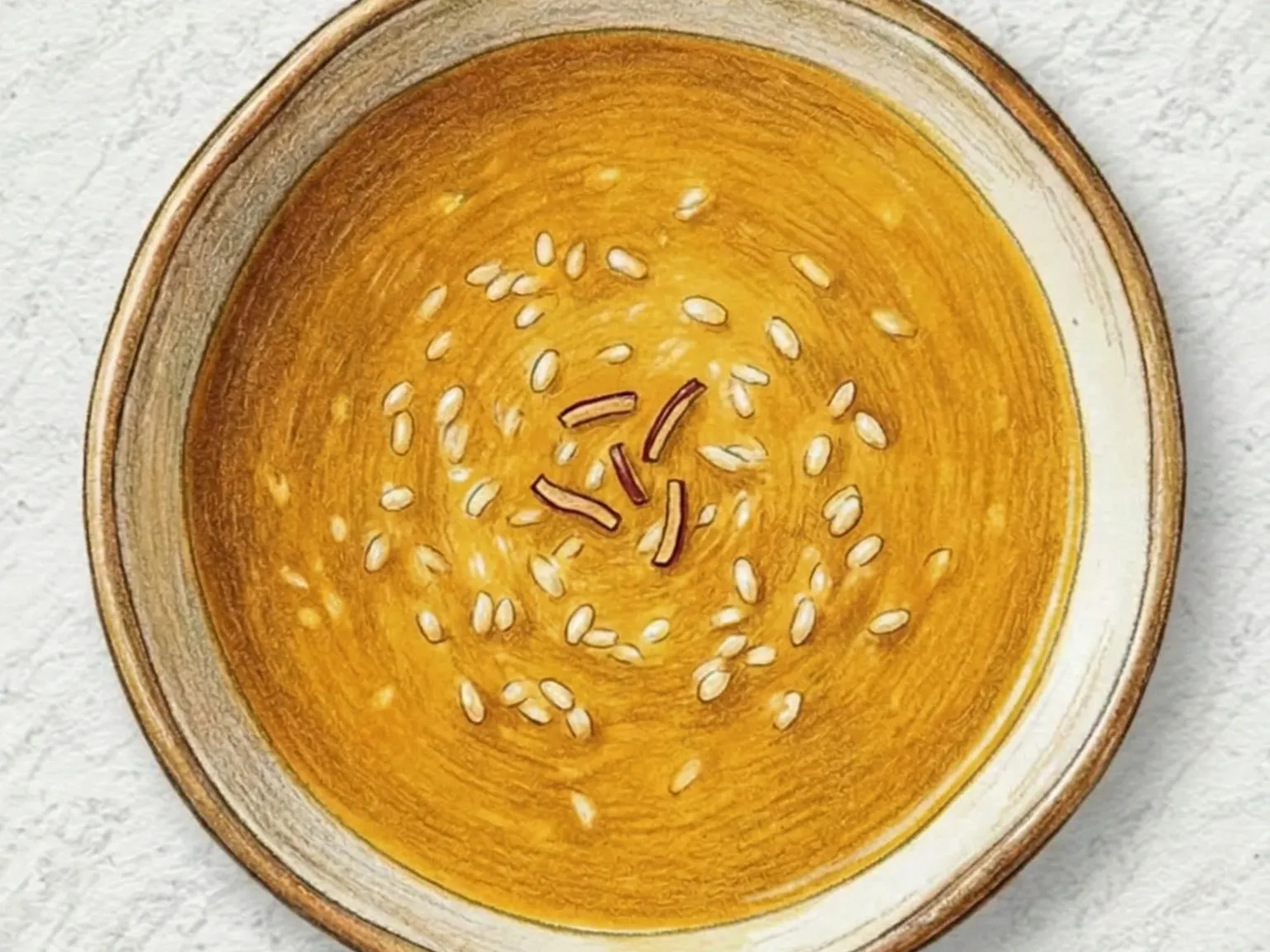
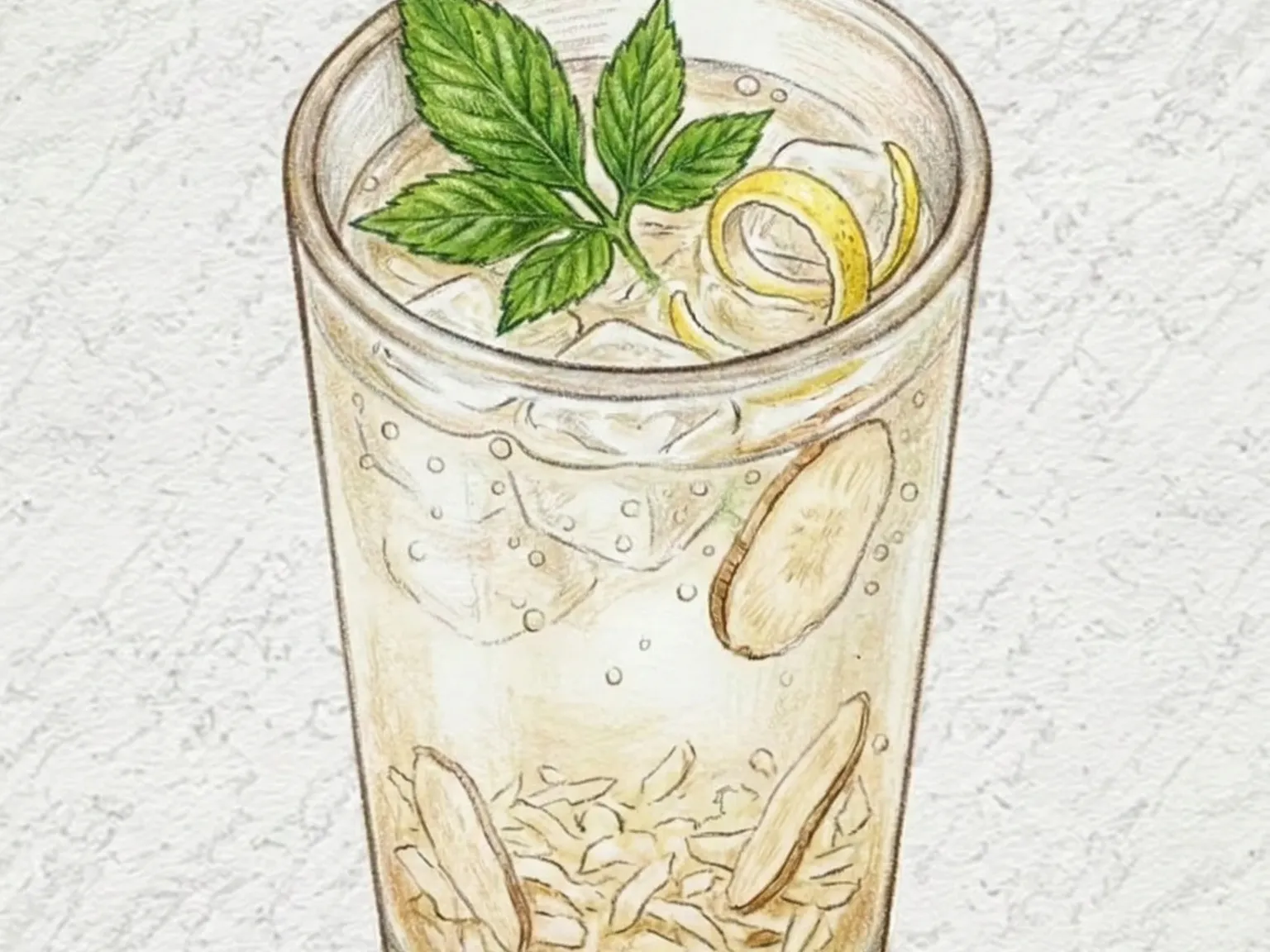
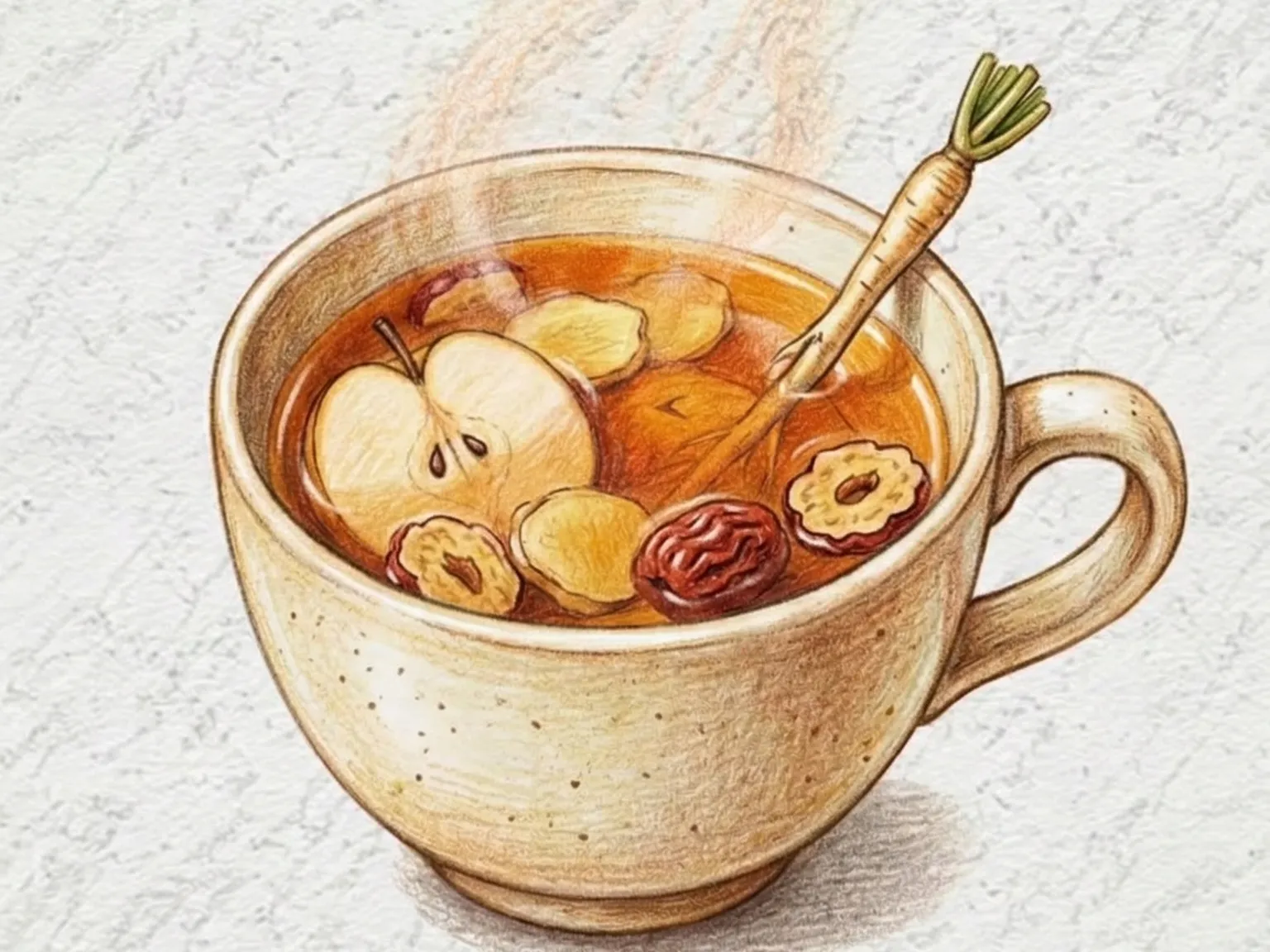
Gugija-cha is a Korean herbal tea made by gently simmering dried goji berries, jujubes, and fresh ginger in water. The jujubes and ginger go in first and cook for fifteen minutes, slowly giving the liquid the jujube's quiet sweetness and the ginger's warming sharpness. The goji berries are then added for just five minutes over low heat so their red pigment and mild berry aroma steep into the tea without releasing the bitterness that comes from overcooking. Getting the timing right matters, because boiling the berries too long draws out an astringency that overpowers the rest of the flavors. Honey is stirred in after the heat is off to preserve its delicate fragrance, and a scattering of pine nuts floats on top to layer a soft, oily richness over the clean finish of the tea. The deep red color and gentle sweetness make this a tea that fits any season.

🍺 Bar Snacks
Prep 5minCook 20min2 servings
Chinese Red-Braised Fish (Hong Shao Yu)
SteamedMedium

Chinese Red-Braised Fish (Hong Shao Yu)

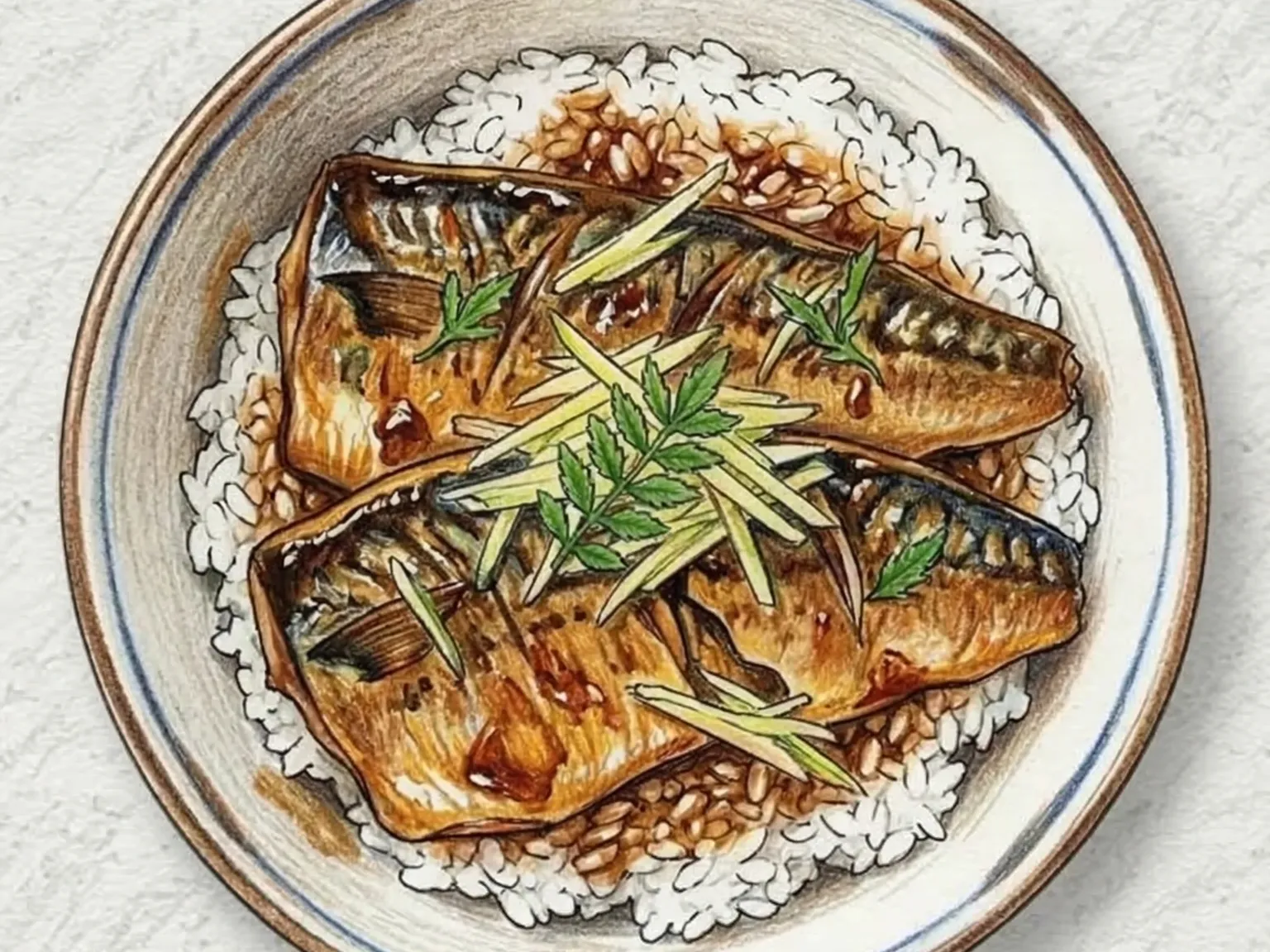
Hong shao yu is a Chinese braised fish dish made by pan-searing white fish until golden, then pouring over a sauce of soy sauce, sugar, ginger, green onion, and Shaoxing wine and simmering over medium heat until the liquid reduces to a glaze. Searing the fish first firms up the surface so the flesh holds together during braising, and the browning from the sear adds a savory depth to the final sauce that straight braising cannot achieve on its own. Sugar softens the saltiness of the soy sauce into a sweet-savory balance, while ginger neutralizes any fishiness and contributes a sharp, clean aroma throughout the braise. As the sauce reduces it coats each piece of fish in a glossy, dark glaze well suited to spooning over steamed rice. The dish comes together in under thirty minutes, and thicker white fish holds moisture better through the braise than thin fillets. Patting the fish thoroughly dry before placing it in the pan prevents oil splatter and ensures the surface browns evenly rather than steaming.

🎉 Special Occasion
Prep 20minCook 25min4 servings
Korean Wild Chive Kimchi (Spring Quick Gochugaru)
KimchiEasy

Korean Wild Chive Kimchi (Spring Quick Gochugaru)

Dallae kimchi is a quick spring kimchi made by salting wild chives for just eight minutes to barely soften them, then dressing them in gochugaru, sand lance fish sauce, plum extract, and Korean pear juice. The bulb-end roots carry the most concentrated aroma, so they should not be trimmed too short, and the seasoning should be applied starting from the roots so the flavor penetrates evenly along the entire stalk. Pear juice adds natural sweetness and a little moisture that softens the heat from the chili, while sand lance fish sauce provides a lighter, more delicate umami than standard anchovy sauce. This kimchi smells fresh and bright immediately after preparation, but one day in the refrigerator allows a mild fermented depth to develop that rounds out the flavors considerably. Wild chives are best purchased between early March and mid-April, when the roots are fat and the aroma is fully developed. Salting beyond eight minutes causes the grassy fragrance to dissipate rapidly, so timing matters. The finished kimchi pairs naturally with namul side dishes and fresh vegetable salads at a spring table.

🏠 Everyday🍱 Lunchbox
Prep 20minCook 5min4 servings
Chao Ga (Vietnamese Chicken Rice Porridge with Ginger)
AsianEasy

Chao Ga (Vietnamese Chicken Rice Porridge with Ginger)

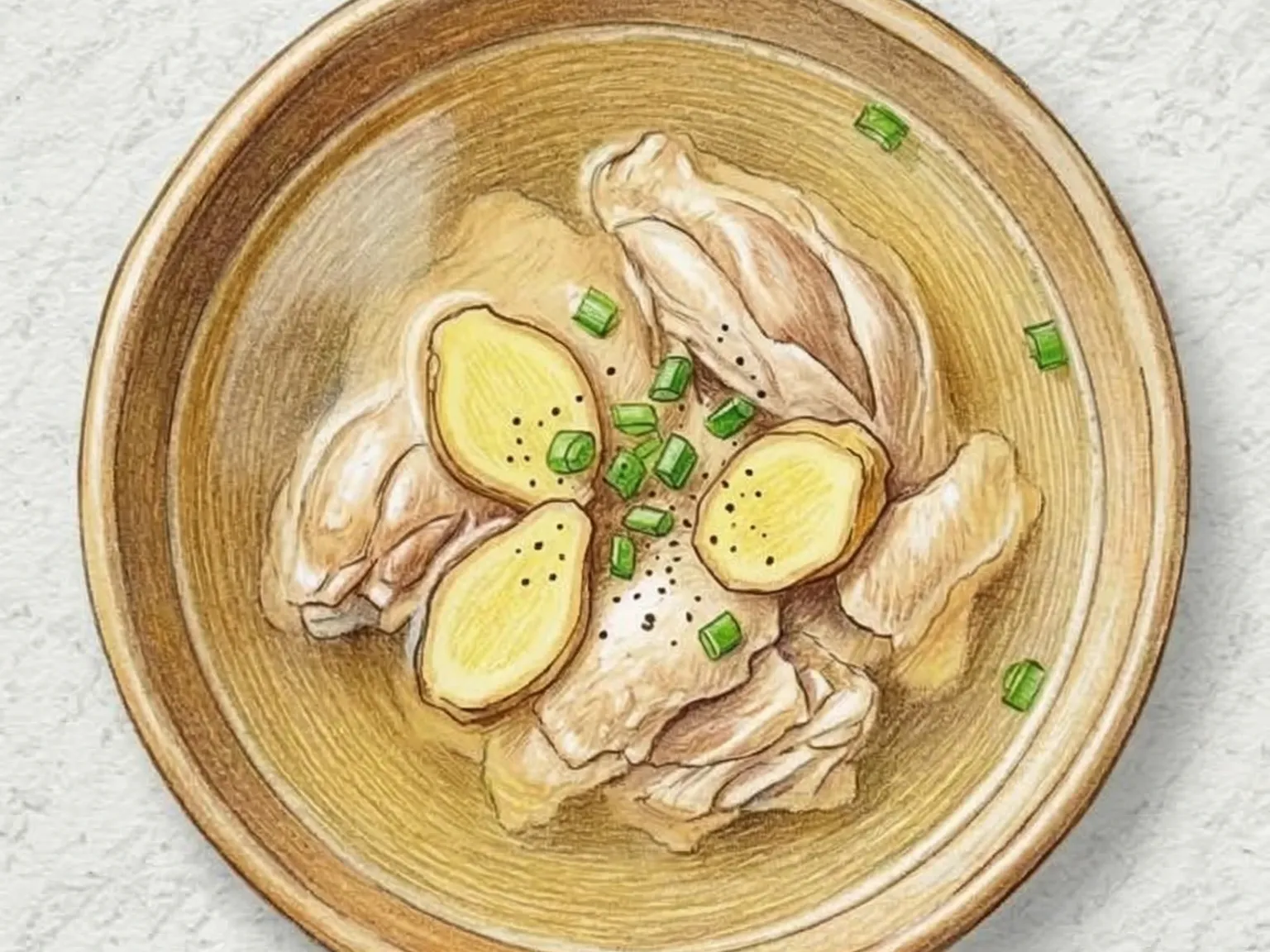
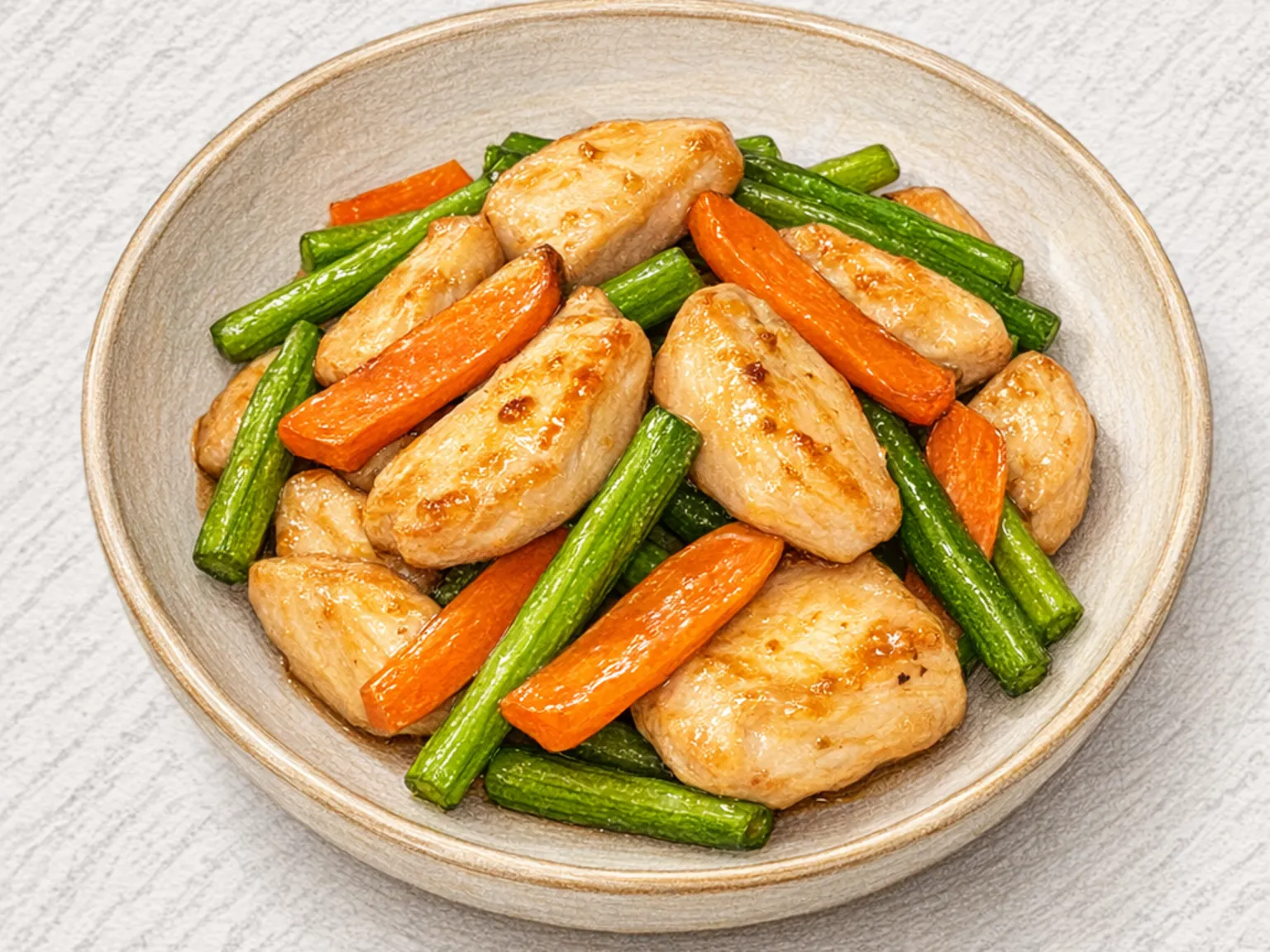
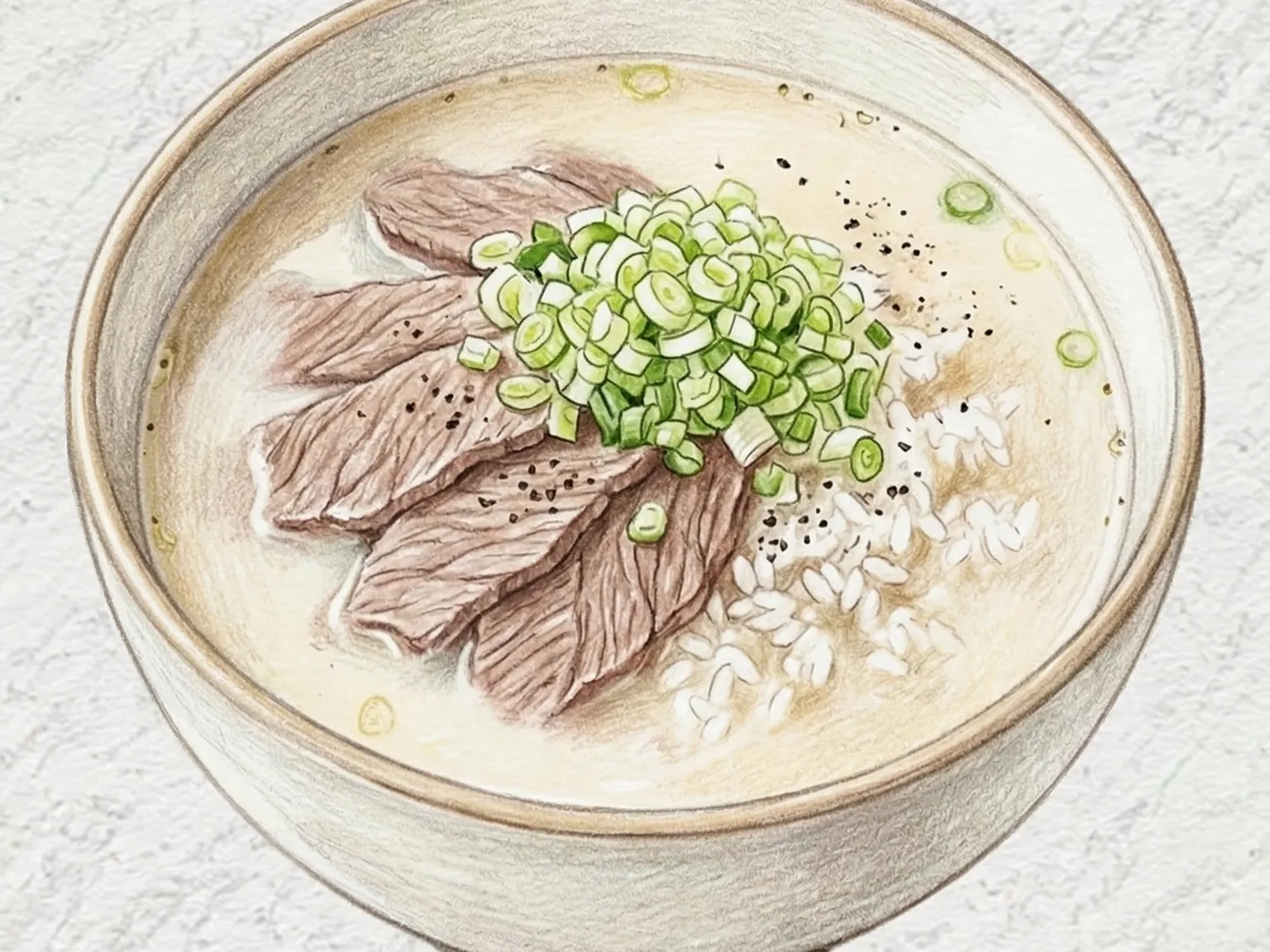
Chao ga is Vietnam's most widely eaten breakfast porridge, served whenever someone is ill or needs gentle nourishment, occupying the same restorative role that dakjuk holds in Korean cooking. A whole chicken simmers in water until the broth turns opaque and deeply flavored, then rice cooks directly in that liquid until the grains dissolve into a thick, almost creamy consistency. Generous slices of ginger added early in cooking suppress any gaminess and warm the stomach, while fish sauce brings an underlying umami depth that plain salt cannot replicate. The finished porridge is ladled into bowls and finished with hand-shredded chicken meat, fresh cilantro, cracked black pepper, crispy fried shallots, and strips of you tiao -- Chinese fried dough sticks -- whose crunch against the soft porridge creates a textural contrast considered essential to the dish. In Hanoi's early-morning alleys, chao ga vendors work from a single clay pot, serving hundreds of bowls to workers and commuters before noon, and the sight of rising steam from those stalls remains one of the defining images of the Vietnamese morning.

🏠 Everyday
Prep 15minCook 55min4 servings
Korean Roasted Cassia Seed Tea
DrinksEasy

Korean Roasted Cassia Seed Tea

Gyeolmyeongja-cha is a Korean herbal tea brewed from cassia seeds that are first dry-roasted in a pan over medium-low heat until their surfaces turn a deep amber and release a toasty, distinctly nutty fragrance. The degree of roasting matters considerably: lighter roasting keeps the flavor mild and grassy, while a deeper roast brings forward a bold, grain-like quality similar to barley tea. Once roasted, the seeds are simmered in water for about twenty minutes, extracting a rich brown liquor with layers of earthy warmth. Sliced fresh ginger is often added during simmering, lending a peppery heat that adds body to the brew. Dried jujubes contribute their gentle fruit sweetness, rounding and mellowing the overall profile. Honey adjusts the final sweetness level, and thin lemon slices floated on top before serving add a clean citrus brightness that lifts the deep, roasted base.

🍺 Bar Snacks
Prep 8minCook 20min2 servings
Chinese Soy-Braised Beef Shank
SteamedHard

Chinese Soy-Braised Beef Shank

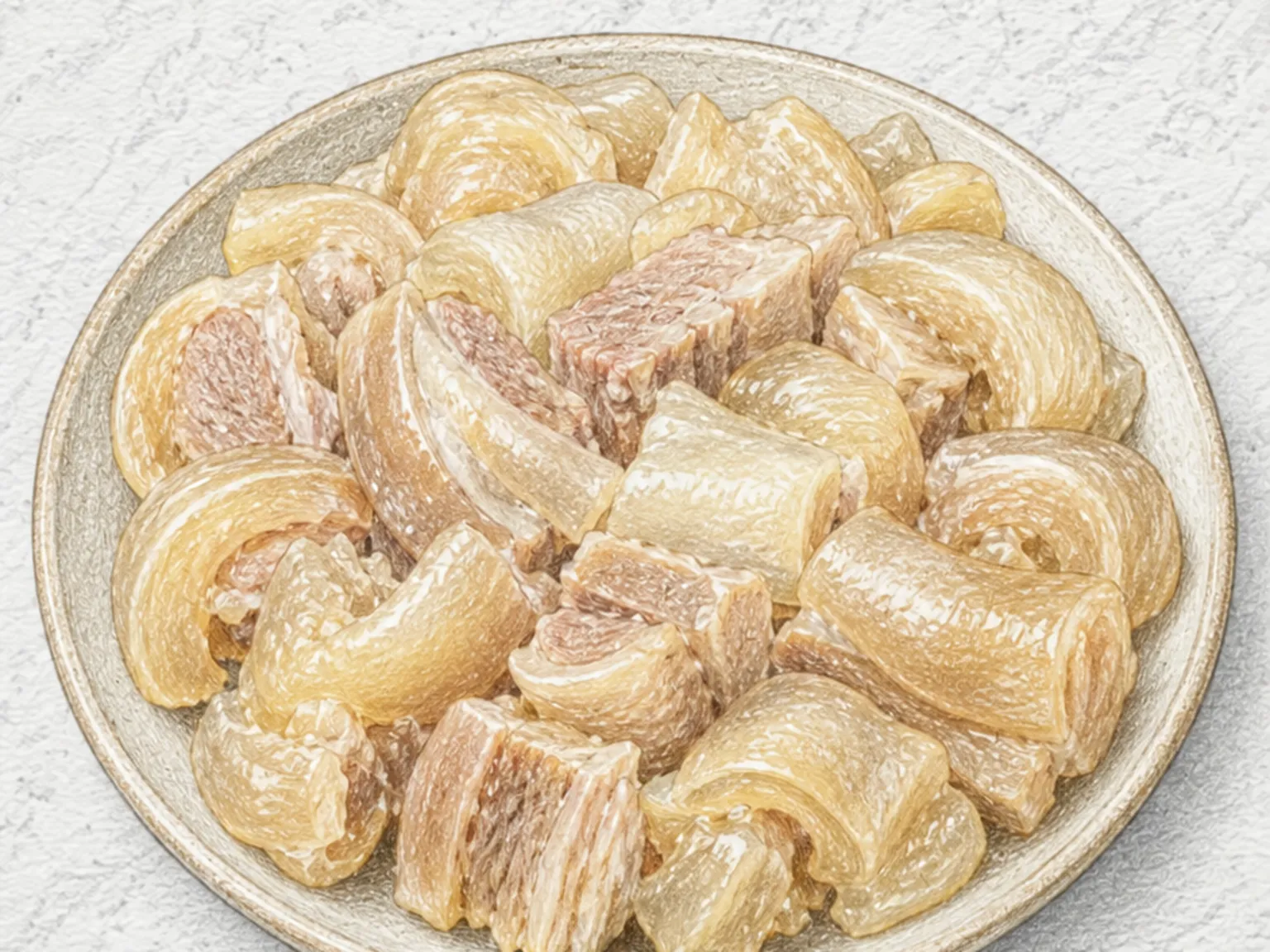
Jiang niu rou is a Chinese soy-braised beef shank simmered for at least ninety minutes with soy sauce, dark soy sauce, star anise, ginger, green onion, and sugar. The long, unhurried braise gradually breaks down the dense connective tissue in the shank while keeping the meat structurally intact, so it can be sliced cleanly across the grain once it has cooled completely. Star anise infuses the fatty cut with its distinctive warm, licorice-edged fragrance, and dark soy sauce deepens the color to a lacquered mahogany while adding a subtle sweetness that rounds out the saltiness. The sweet-savory balance of soy and sugar penetrates all the way through the meat rather than staying on the surface, which means the flavor holds up even when the shank is served cold straight from the refrigerator. The leftover braising liquid retains its full concentration of aromatics and is traditionally repurposed for cooking soy-braised eggs, making it a practical two-for-one preparation.

🎉 Special Occasion
Prep 25minCook 110min4 servings
Korean Pickled Deodeok Root
KimchiMedium

Korean Pickled Deodeok Root

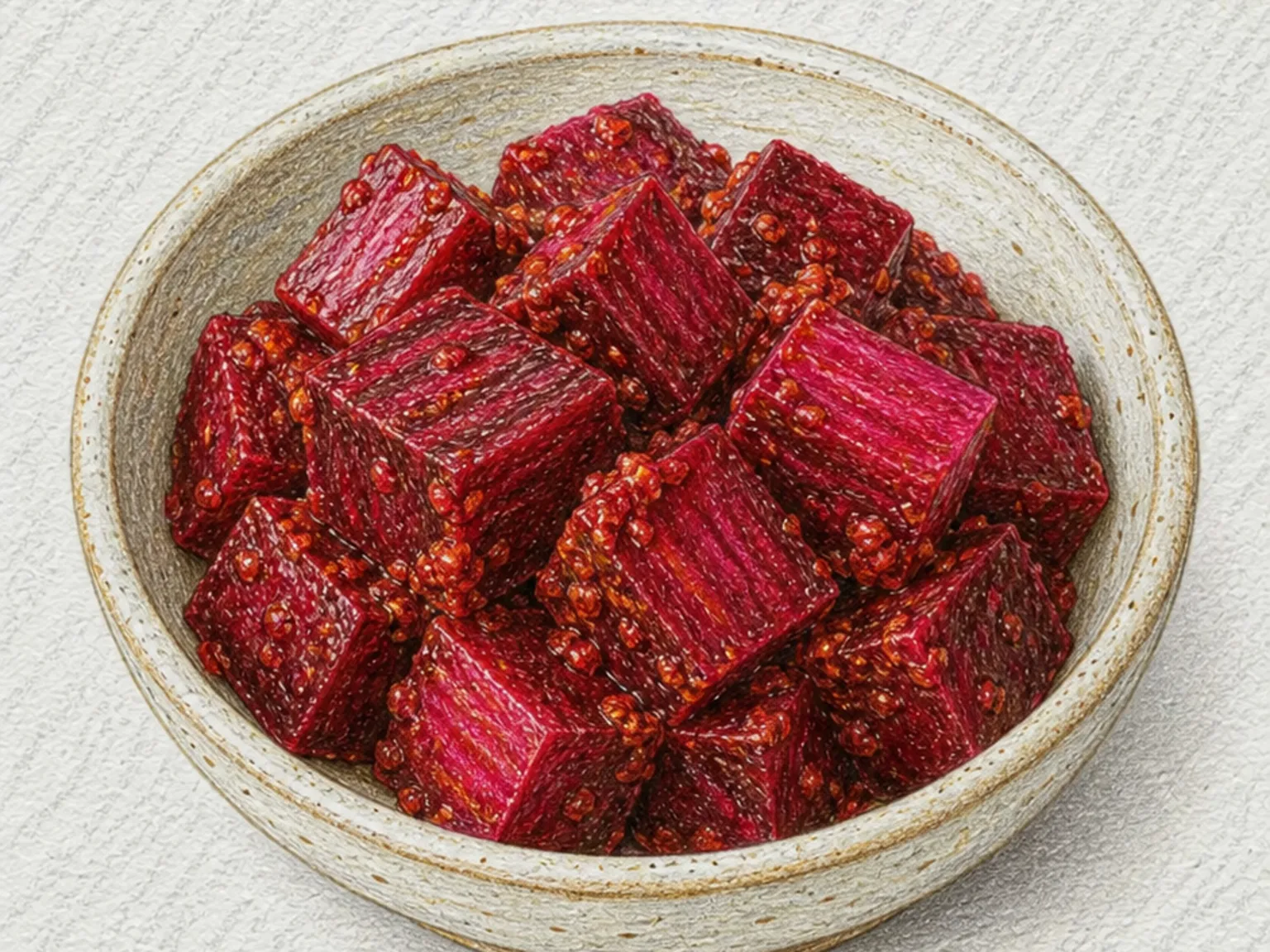
Deodeok jangajji is a traditional Korean pickle made by peeling fresh bellflower root, briefly soaking it in salted water to draw out the sharpness, splitting it lengthwise, and submerging the pieces in a hot brine of soy sauce, vinegar, water, sugar, garlic, and ginger. Pouring the brine while still at full heat quickly firms the outer surface of the root while leaving the interior tender and slightly chewy - a contrast that defines the texture of a well-made deodeok pickle. Garlic and ginger contribute layered aromatic warmth that gradually merges with the root's distinctive earthy fragrance over the course of the pickling period. Soy sauce anchors the umami and deepens the natural mountain-herb flavor of the deodeok. After a minimum of three days in the refrigerator, the brine penetrates all the way through, producing a preserve with a bold, concentrated flavor that is substantial enough to stand on its own alongside plain steamed rice.

🍱 Lunchbox
Prep 35minCook 12min4 servings
Chicken 65 (South Indian Deep-Fried Spiced Yogurt Chicken)
AsianMedium

Chicken 65 (South Indian Deep-Fried Spiced Yogurt Chicken)

Chicken 65 is a South Indian deep-fried chicken dish that traces its origin to the Buhari Hotel in Chennai, where it first appeared on the menu in 1965. The name has generated a minor mythology: one theory says it was the 65th item on the original menu, another claims the recipe calls for exactly 65 ingredients, and a third insists the chicken required 65 days of marination - none of which has been conclusively verified. The marinade is built around whole-milk yogurt, red chili powder, turmeric, and a coarse ginger-garlic paste, which work together to tenderize the chicken while depositing both heat and tang deep into the fibers. After marinating for several hours, the pieces are dusted in cornstarch and fried until the exterior forms a thin, crackling shell while the interior stays moist from the dairy in the marinade. The dish is not finished after frying. The fried chicken goes back into a hot pan where it is tossed briskly with curry leaves, whole dried red chilies, and mustard seeds in a small amount of oil. When curry leaves hit hot fat, they release a distinctive aroma - something between roasted nuts and citrus peel - that clings to the surface of each piece and layers over the chili-yogurt flavors already present. This double-cooking method is what separates chicken 65 from generic fried chicken. Originally a bar snack in South India's pub culture, it spread across the subcontinent and now appears on menus everywhere from Bangalore to Delhi. The heat level varies significantly by restaurant, ranging from gently warming to genuinely tongue-numbing.

🎉 Special Occasion
Prep 25minCook 20min2 servings
Korean Cinnamon Tea (Spiced Jujube Ginger Honey Brew)
DrinksEasy

Korean Cinnamon Tea (Spiced Jujube Ginger Honey Brew)

Gyepi-cha is a traditional Korean cinnamon tea made by simmering whole cinnamon sticks and fresh ginger in water over low heat for at least twenty-five minutes. The long, gentle simmer is what separates gyepi-cha from an infusion: the bold, sweet-spicy aroma of the cinnamon builds gradually, saturating the liquid rather than merely scenting it. Ginger contributes a sharp, deeply warming bite that stays present long after each sip, creating a slow, spreading heat in the chest. Six jujubes are cooked alongside the spices; their flesh softens and eventually breaks down, lending the broth a faint fruitiness and a slight natural body. Dark brown sugar and honey are both used to construct a sweetness that is layered rather than flat, with the molasses depth of the sugar underpinning the floral brightness of the honey. Before serving, a few pine nuts are floated on the surface, where their oily richness drifts down to complement the spice. This is a drink associated with cold weather and recovering health, often prepared during winter or whenever warmth is needed from the inside out.

🍺 Bar Snacks
Prep 5minCook 25min4 servings
Korean Steamed Yellow Croaker
SteamedMedium

Korean Steamed Yellow Croaker

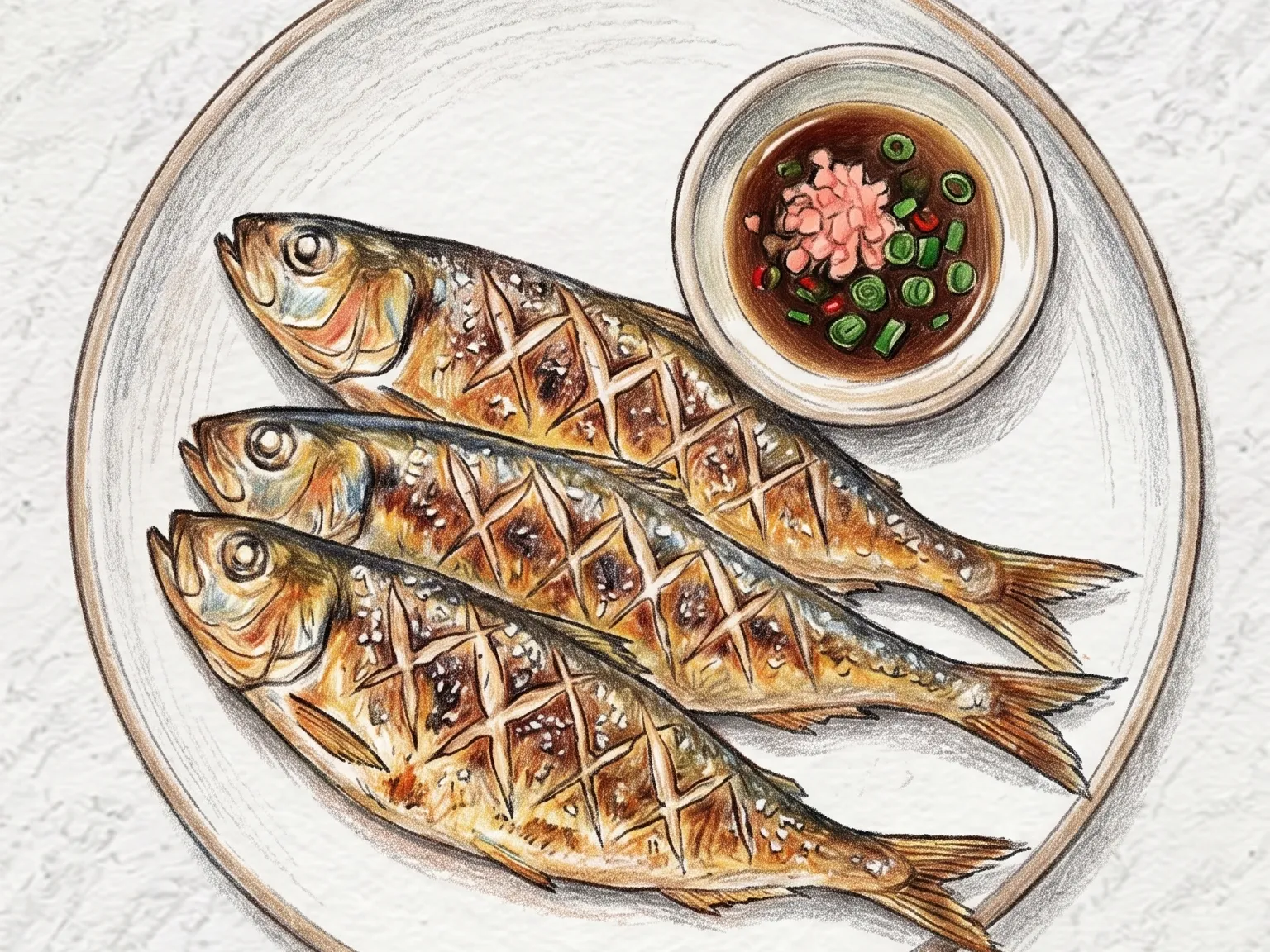
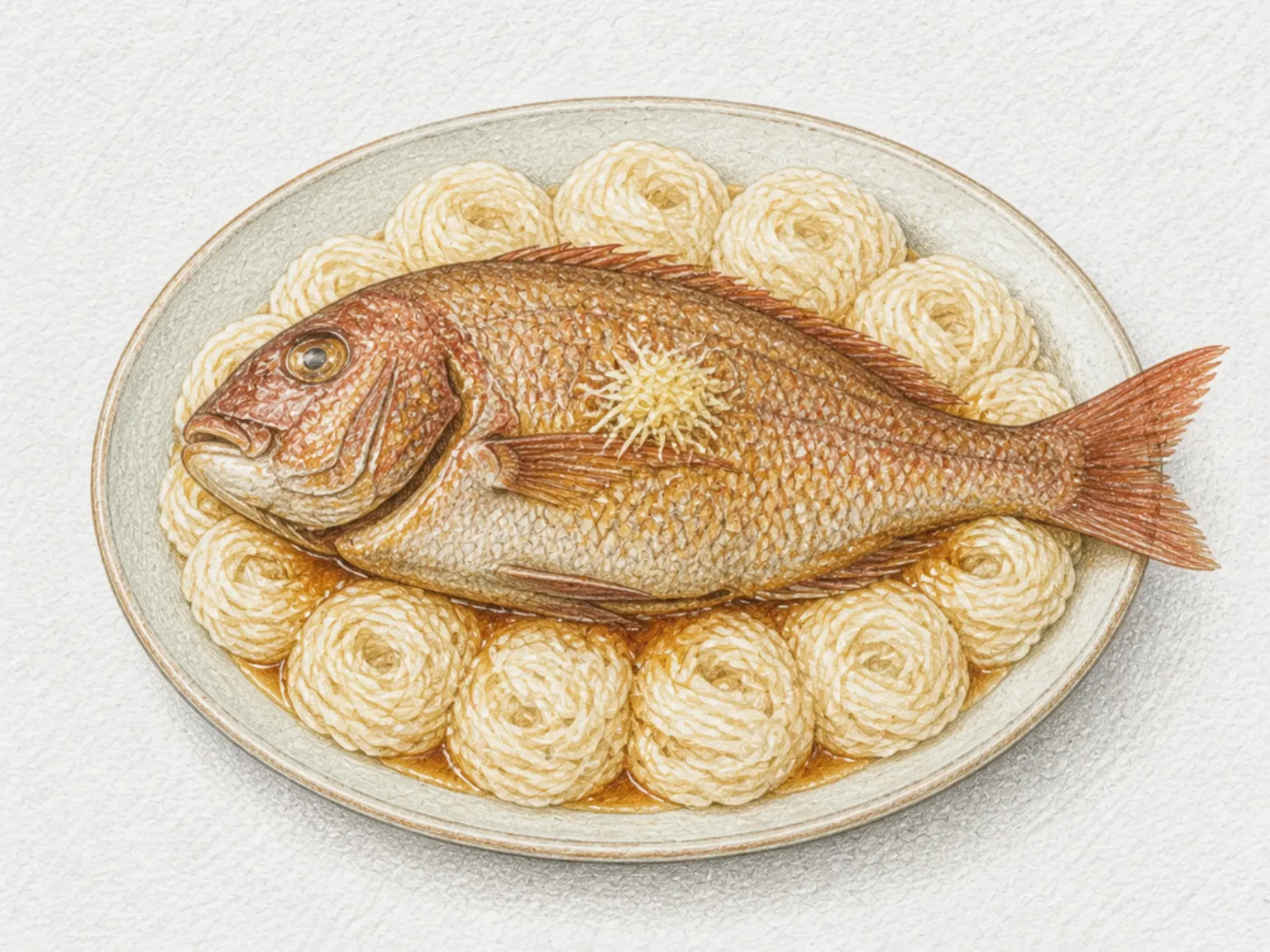
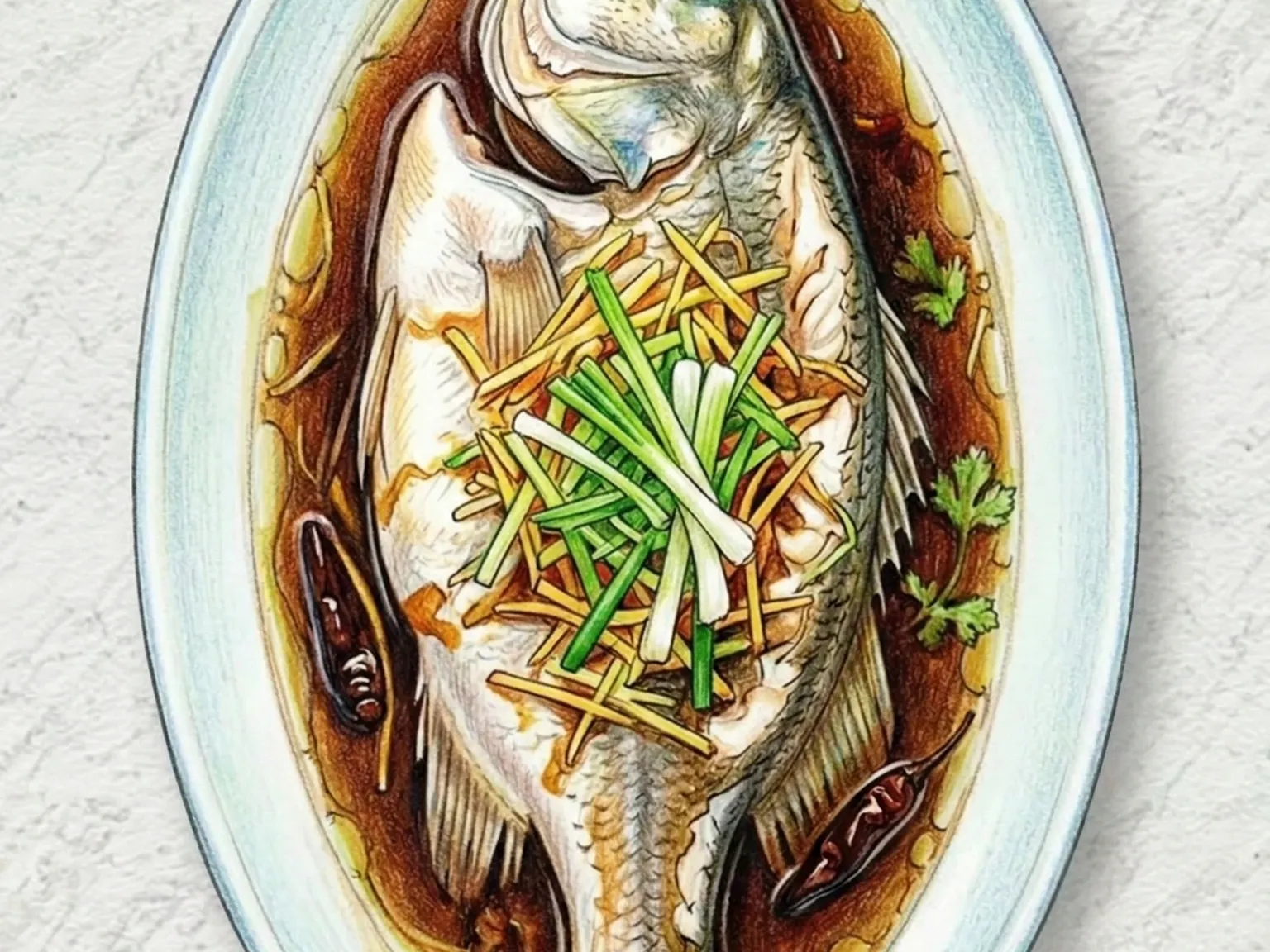
Jogi-jjim is a steamed Korean yellow croaker banchan built around a two-stage cooking method that drives soy sauce, cooking wine, garlic, and ginger deep into the flesh. Scoring the fish on both sides before cooking is essential: the cuts open channels so the marinade reaches the interior rather than sitting on the surface. Half the sauce goes in first, and the fish steams until nearly done; then the remaining sauce and sliced green onion are added for a second round. Cooking wine and ginger together strip away fishiness, leaving the croaker clean and mild on the palate. The flesh is fine-grained and firm enough to pull apart in neat flakes with chopsticks without falling apart. Any sauce that collects in the pan spooned over rice makes the dish a complete meal without needing a separate soup.

🏠 Everyday🎉 Special Occasion
Prep 15minCook 25min2 servings
Korean Sedum Water Kimchi
KimchiEasy

Korean Sedum Water Kimchi

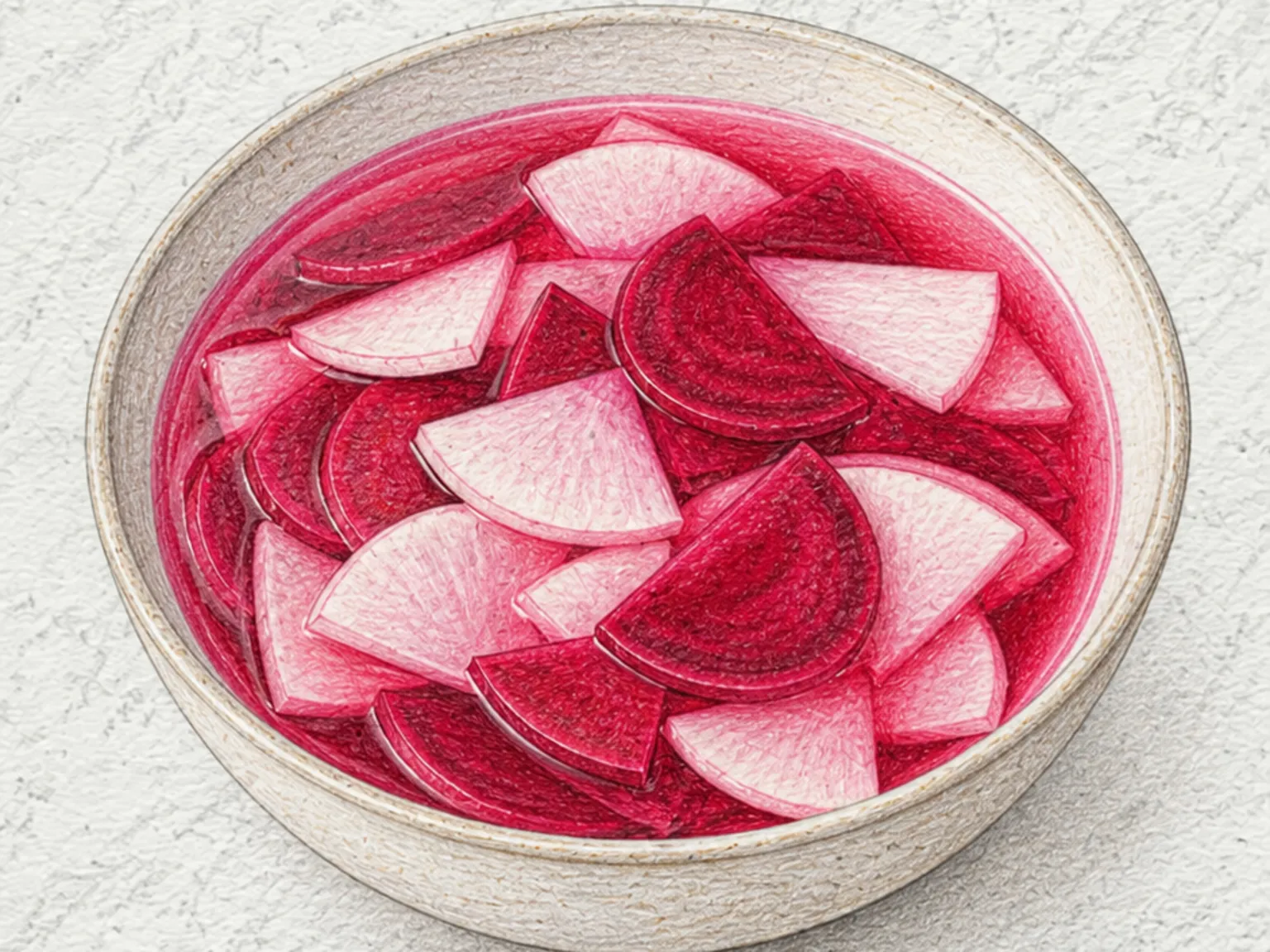
Dolnamul mul kimchi is a spring water kimchi fermented in a clear brine with sedum greens, Korean radish, Asian pear, and scallions. Thinly sliced radish is salted first to extract excess moisture before going into the liquid. Julienned pear dissolves slowly into the brine as the kimchi ferments, contributing a natural background sweetness without clouding the soup. Gochugaru is tied inside a cheesecloth pouch and steeped directly in the brine - a technique that delivers a faint chili fragrance and a bare hint of color while keeping the liquid clear. Sedum is folded in last to protect its crisp, succulent texture from softening. A single day at room temperature generates lactic acid and mild carbonation, after which the kimchi is stored cold and served straight from the container. Ladled over a bowl of warm rice, the cold, lightly fizzy broth makes a distinctly seasonal combination that belongs to early spring.

🥗 Light & Healthy🍱 Lunchbox
Prep 25minCook 10min4 servings
Chicken Biryani (Mughal Spiced Saffron Layered Rice with Chicken)
AsianHard

Chicken Biryani (Mughal Spiced Saffron Layered Rice with Chicken)

Biryani emerged from the encounter between Persian pilaf technique and Indian spice culture during the Mughal Empire, and it remains a ceremonial dish served at weddings, festivals, and Friday prayer gatherings across the Indian subcontinent. Chicken is marinated in yogurt, saffron, garam masala, and ginger-garlic paste, then layered in a heavy-bottomed pot with par-cooked basmati rice, saffron milk, fried onions, and fresh mint placed between each layer. The pot is sealed with a flour-and-water dough in a technique called dum. Inside the sealed vessel, steam circulates and the rice and meat cook in each other's aromatic vapors, exchanging flavor in a way that open-pot cooking cannot replicate. When the dough seal is broken at the table, the released cloud of saffron, cardamom, and rosewater is the dish's most dramatic moment and the signal that it is properly done. In a well-executed biryani, each grain of basmati should stand apart and carry the seasoning evenly, and the bottom layer of rice should have formed a crisp, golden crust similar to Persian tahdig. The Hyderabadi and Lucknowi styles represent two distinct traditions: the former layers raw chicken directly with par-cooked rice and cooks everything together, while the latter par-cooks both components separately before assembling, producing a cleaner, more delicate result.

🎉 Special Occasion
Prep 30minCook 45min4 servings
Korean Tangerine Peel Ginger Tea
DrinksEasy

Korean Tangerine Peel Ginger Tea

Gyulpi-saenggang-cha is a traditional Korean tea made by simmering dried tangerine peel and thin-sliced fresh ginger together for about eighteen minutes. Properly dried peel concentrates its aromatic essential oils while shedding much of the bitterness that fresh peel carries, and the extended simmering draws those oils fully into the water. The result is a cup where the citrus's bright, faintly bitter edge meets the warming heat of ginger in each sip. Jujubes round off the sharper notes with their gentle background sweetness, and using both honey and rice syrup adds two distinct registers of sweetness -- one clean and floral, the other thick and malty. A very small pinch of salt at the end sharpens the overall flavor and leaves a clean finish. It is a natural choice on cold days when the body needs warming from the inside.

🍺 Bar Snacks
Prep 10minCook 18min2 servings
Korean Braised Oxtail (Soy Collagen Radish Braise)
SteamedHard

Korean Braised Oxtail (Soy Collagen Radish Braise)

Kkori-jjim is a Korean braised oxtail dish that begins with an extended soak in cold water to purge blood, followed by a preliminary boil to clean the joints before the main braise. The oxtail pieces go into a pot with soy sauce, sugar, minced garlic, ginger, and rice wine and cook low and slow for two hours or longer. The collagen concentrated in the tail joints breaks down gradually over that time, turning the braising liquid thick, glossy, and deeply gelatinous while the meat loosens away from bone without resistance. Korean radish and carrot cook alongside the meat, contributing natural sweetness and becoming saturated with the savory-sweet sauce. Jujubes and ginkgo nuts lend an herbal nuance and a subtle sweetness that distinguishes this dish from simpler braises. When chilled, the sauce sets into a firm jelly that liquefies again on reheating. The dish appears regularly on Korean holiday tables and is considered restorative food, valued for its concentrated beef flavor and the characteristic springy pull of slow-cooked collagen.

🎉 Special Occasion
Prep 30minCook 150min4 servings
Korean Dongchimi Radish Water Kimchi
KimchiEasy

Korean Dongchimi Radish Water Kimchi

Dongchimi is a Korean radish water kimchi made by salting whole Korean radishes, then submerging them with Asian pear, garlic, ginger, scallions, and green chili in a clean saltwater brine for several days of cold fermentation. As the radish starch breaks down through lactic fermentation, the brine develops a natural effervescence and bright, refreshing acidity. Pear lends a gentle fruit sweetness, and ginger sharpens the finish. The clear, chilled broth can be drunk on its own as a palate cleanser or used as a base for cold noodle dishes in winter, cutting through the richness of grilled meats and heavy stews. Dongchimi is traditionally prepared alongside napa kimchi during the late-autumn kimjang season. It requires at least three to five days of cool fermentation before the carbonation develops properly. Choosing medium-sized, firm radishes over small ones preserves a crisp texture for longer. Once fully fermented, the brine keeps well under refrigeration for two to three weeks.

🏠 Everyday🍱 Lunchbox
Prep 30minCook 5min4 servings
Chicken Korma (Creamy Cashew Curry)
AsianMedium

Chicken Korma (Creamy Cashew Curry)

Chicken korma developed in the kitchens of the Mughal courts, where cooks built dishes around layered subtlety rather than raw heat. The sauce begins with cashews or almonds soaked overnight and ground into a fine paste, which gives the gravy a velvety body and toasted-nut richness without any cream. Chicken is marinated in yogurt with whole spices - cardamom pods, cloves, cinnamon sticks, and mace blades - then brought to a low simmer where the warm aromatics slowly infuse the liquid and meet the tang of the yogurt, producing a flavor that is complex yet entirely without aggression. Saffron dissolved in warm milk and stirred in near the end stains the sauce a deep gold and adds a faint floral quality, two elements that mark a properly made korma. The dish is frequently recommended to diners encountering Indian food for the first time because of its mildness, but the dense nut-paste base, the careful balancing of a dozen aromatics, and the slow integration of yogurt make korma one of the most technically demanding preparations in the North Indian canon - far more than a simple mild curry.

🎉 Special Occasion
Prep 20minCook 35min4 servings
Korean Heotgae Tea (Oriental Raisin Tree Hangover Herbal Brew)
DrinksEasy

Korean Heotgae Tea (Oriental Raisin Tree Hangover Herbal Brew)

Heotgae-cha is a traditional Korean herbal tea made by simmering dried oriental raisin tree fruit with jujubes, ginger, and cinnamon over low heat for thirty-five minutes. The dried heotgae fruit, small and knobby in appearance, is astringent and muted in raw form, but prolonged simmering draws out a deep, earthy sweetness that gradually fills the water. Jujubes add natural sweetness and a faint fruity note, ginger contributes a sharp warmth that lingers at the tip of the tongue, and cinnamon layers in a gentle, aromatic sweetness, building a multi-layered flavor that develops slowly over the long cooking time. Honey is stirred in at the end to adjust sweetness to taste. In Korean traditional medicine, the oriental raisin tree has long been associated with supporting liver function and alleviating hangover symptoms, which is why the tea has been consumed as a morning-after drink for generations. Among Korean office workers accustomed to frequent after-work drinking gatherings, heotgae-cha remains one of the most commonly reached-for hangover remedies.

🍺 Bar Snacks
Prep 5minCook 35min4 servings
Korean Steamed Blue Crab (Whole Shell Aromatics)
SteamedMedium

Korean Steamed Blue Crab (Whole Shell Aromatics)

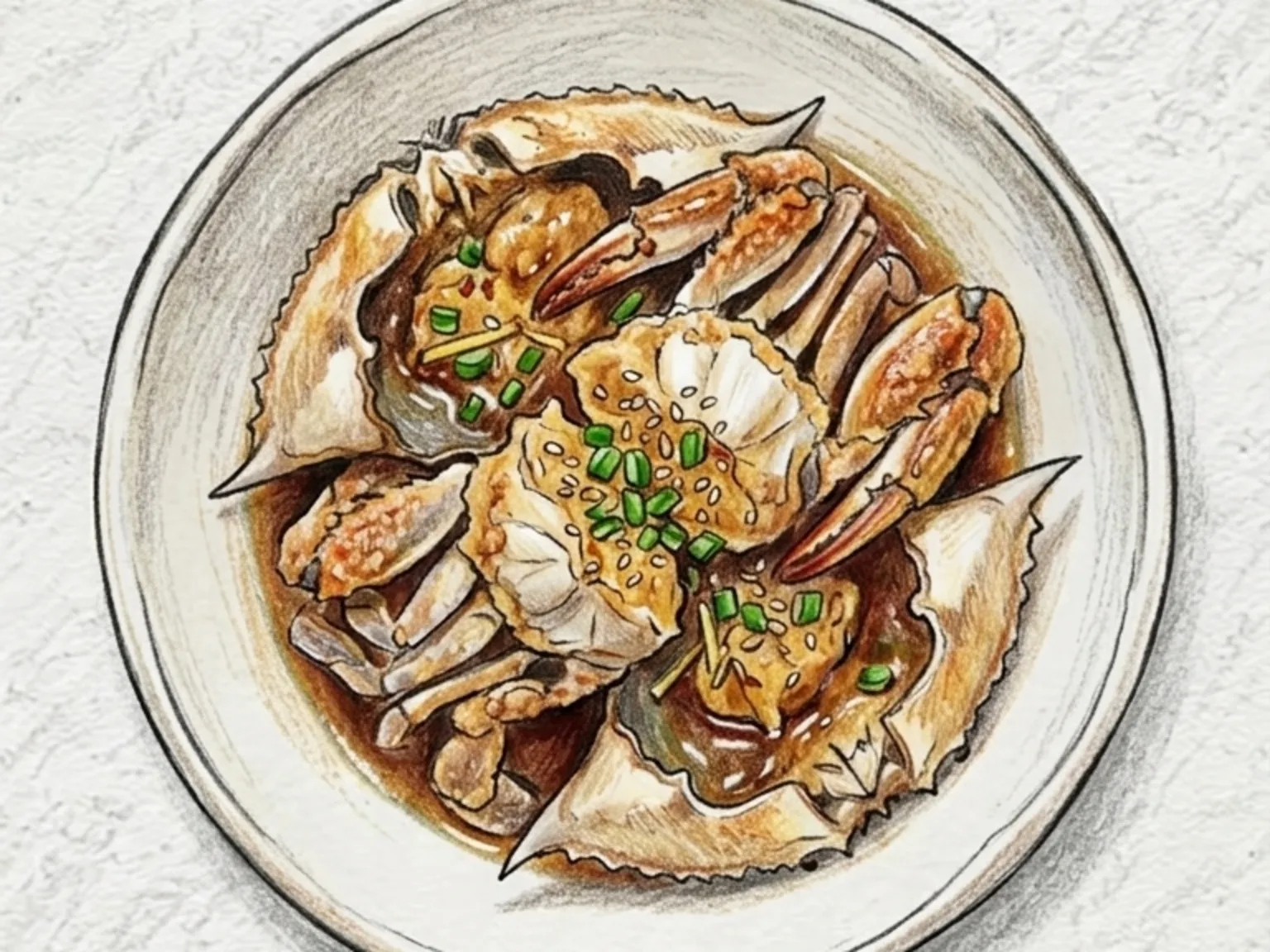
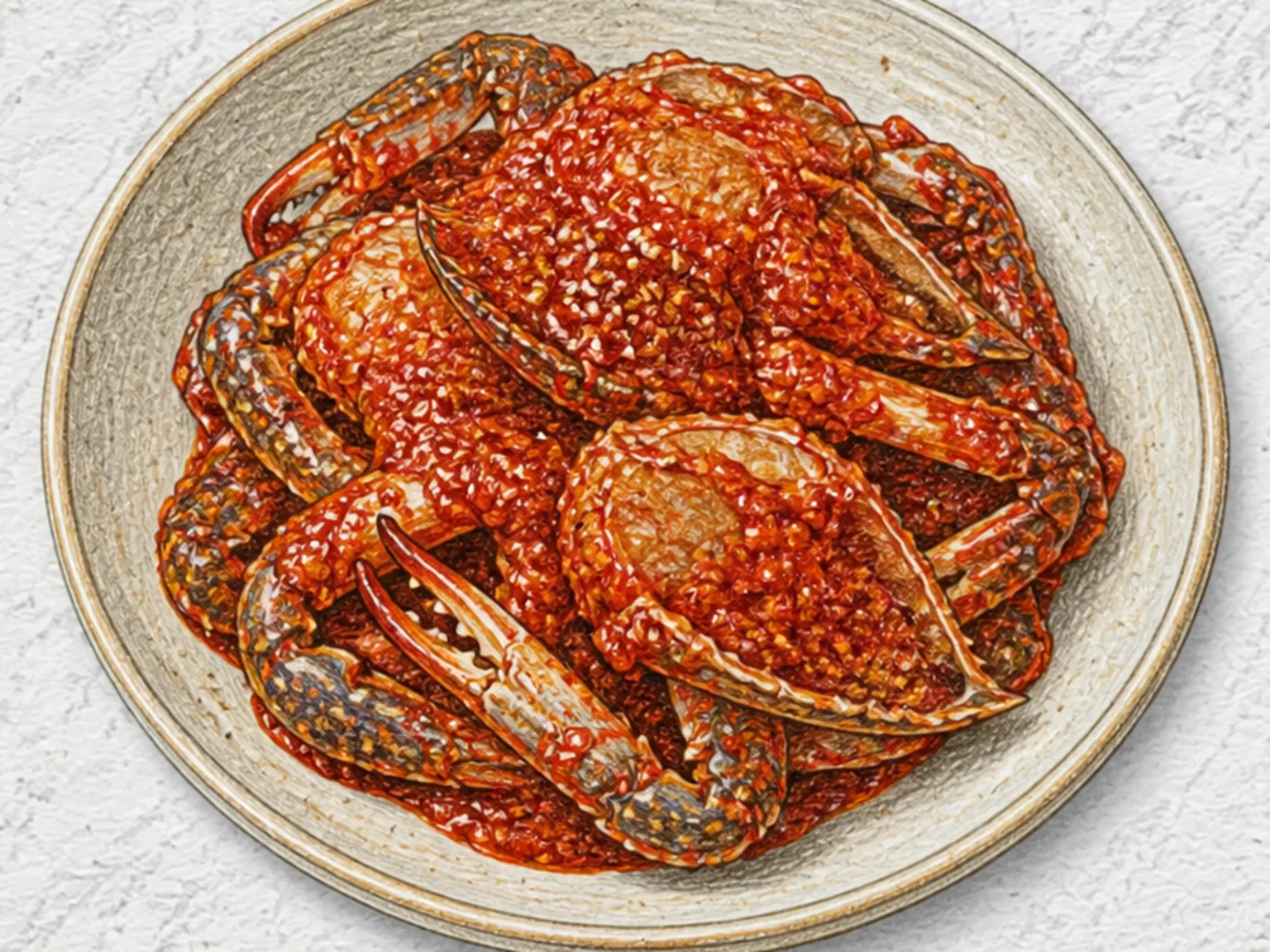
Kkotge-jjim is a Korean steamed blue crab dish cooked whole in a steamer with lightly salted water and aromatic vegetables. Steaming retains the natural juices and sweetness locked inside the shell more effectively than boiling or grilling, so the extracted meat delivers a concentrated, briny flavor with each bite. Dipping the pieces in vinegar soy sauce adds acidity that draws out and sharpens the crab's inherent sweetness, creating a clear contrast against the richness of the flesh. Blue crabs caught during their spring and fall peak seasons arrive heavy with roe and thick with tomalley, which means there is far more to eat beyond the white claw and body meat, and the flavor reaches its fullest depth. Cracking the shells by hand, working through each leg joint, and pulling out the meat is an integral part of how this dish is meant to be eaten. For those without a steamer, a shallow layer of water in a pot with a wire rack set above it works as a straightforward substitute.

🍺 Bar Snacks🎉 Special Occasion
Prep 15minCook 18min2 servings
Korean Bellflower Root Pickles
KimchiMedium

Korean Bellflower Root Pickles

Doraji jangajji is a traditional Korean pickle made from bellflower root - the roots are peeled, salted and massaged by hand to draw out bitterness, then submerged in a boiled brine of soy sauce, rice vinegar, and sugar. Bellflower root has a pronounced bitter-herbal character that is both its defining quality and its challenge; salt-kneading before pickling pulls out the harsh edge while leaving the fragrant, almost floral undertone intact. As the brine meets the acidity of vinegar, the remaining bitterness softens further, and a chewiness that builds with each bite reveals a clean, aromatic depth. Ginger included in the brine counteracts the earthy, soil-forward quality that root vegetables often carry, and as the hot liquid cools it draws seasoning slowly and evenly through the root's fibrous tissue. Two days of curing is the minimum to achieve a balanced sweet-sour-salty profile; longer curing deepens the flavor further. Kept refrigerated, the pickle holds well for weeks and makes a reliable side dish to pull from the refrigerator at any meal.

🏠 Everyday🍱 Lunchbox
Prep 25minCook 10min4 servings
Dal Makhani (Creamy Buttered Lentils)
AsianMedium

Dal Makhani (Creamy Buttered Lentils)

Dal makhani is Punjab's most celebrated lentil dish and now a fixture on restaurant menus across India and internationally. The name makhani, meaning buttery, signals its defining characteristic: a richness built from butter and cream that elevates humble lentils into something deeply satisfying. Whole black lentils (urad dal) and kidney beans (rajma) soak overnight, then pressure-cook before simmering for several hours in a base of tomato, garlic, ginger, and Kashmiri chili. During this slow cooking, the lentils gradually break down and release their starch into the liquid, creating a naturally creamy consistency even before a knob of butter and a pour of fresh cream are stirred in at the end to produce the dish's signature silky texture. Traditionally, dal makhani was left to simmer overnight beside the dying embers of a tandoor oven, absorbing smoky heat through the long hours before being served the next day. Served with naan or basmati rice, it is an indispensable dish at Indian wedding banquets and a comfort food that transcends class, equally at home in a roadside dhaba and a fine-dining restaurant.

🎉 Special Occasion
Prep 8minCook 180min4 servings
Korean Roasted Brown Rice Tea
DrinksEasy

Korean Roasted Brown Rice Tea

Hyeonmi-cha is made by dry-roasting brown rice over medium heat until the grains turn golden and undergo the Maillard reaction, which intensifies their toasty, nutty aroma. The roasted rice is then steeped in water for about twenty minutes, yielding a clear amber liquid with a clean grain flavor. A slice of ginger and a few jujubes added during steeping contribute warm spice and gentle sweetness that layer over the base roasted note. Honey and a pinch of salt sharpen the overall flavor, and the tea is naturally caffeine-free, making it suitable for drinking at any hour. The degree of roasting can be adjusted to taste: a shorter roast produces a lighter, mellower infusion, while a longer roast amplifies the nuttiness but risks introducing bitterness, so stopping at a pale golden color is the safer approach. The brewed tea keeps well refrigerated for a couple of days and tastes equally good served cold over ice.

🍺 Bar Snacks
Prep 5minCook 20min4 servings
Braised Pork Belly with Preserved Mustard Greens
SteamedHard

Braised Pork Belly with Preserved Mustard Greens

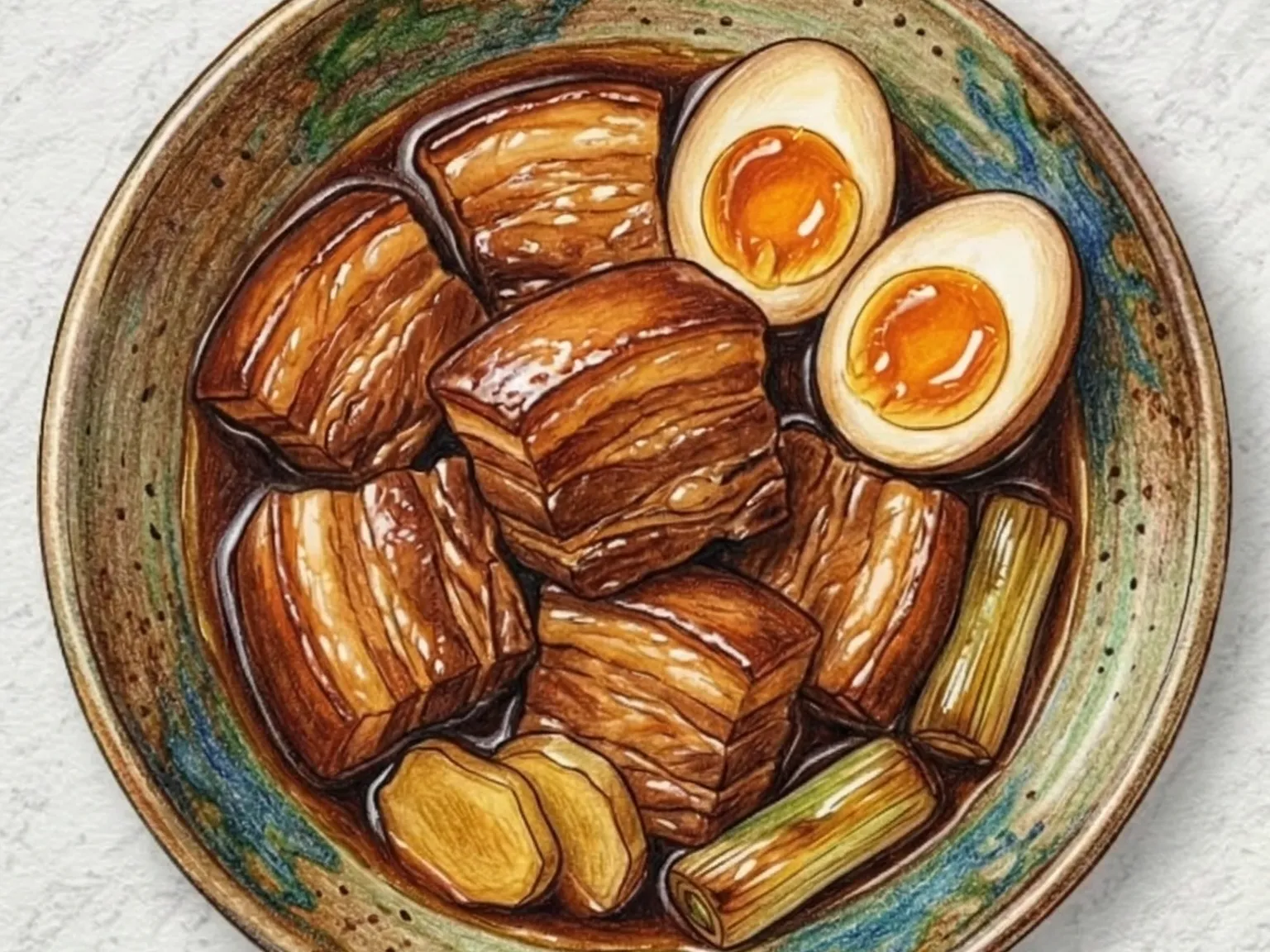
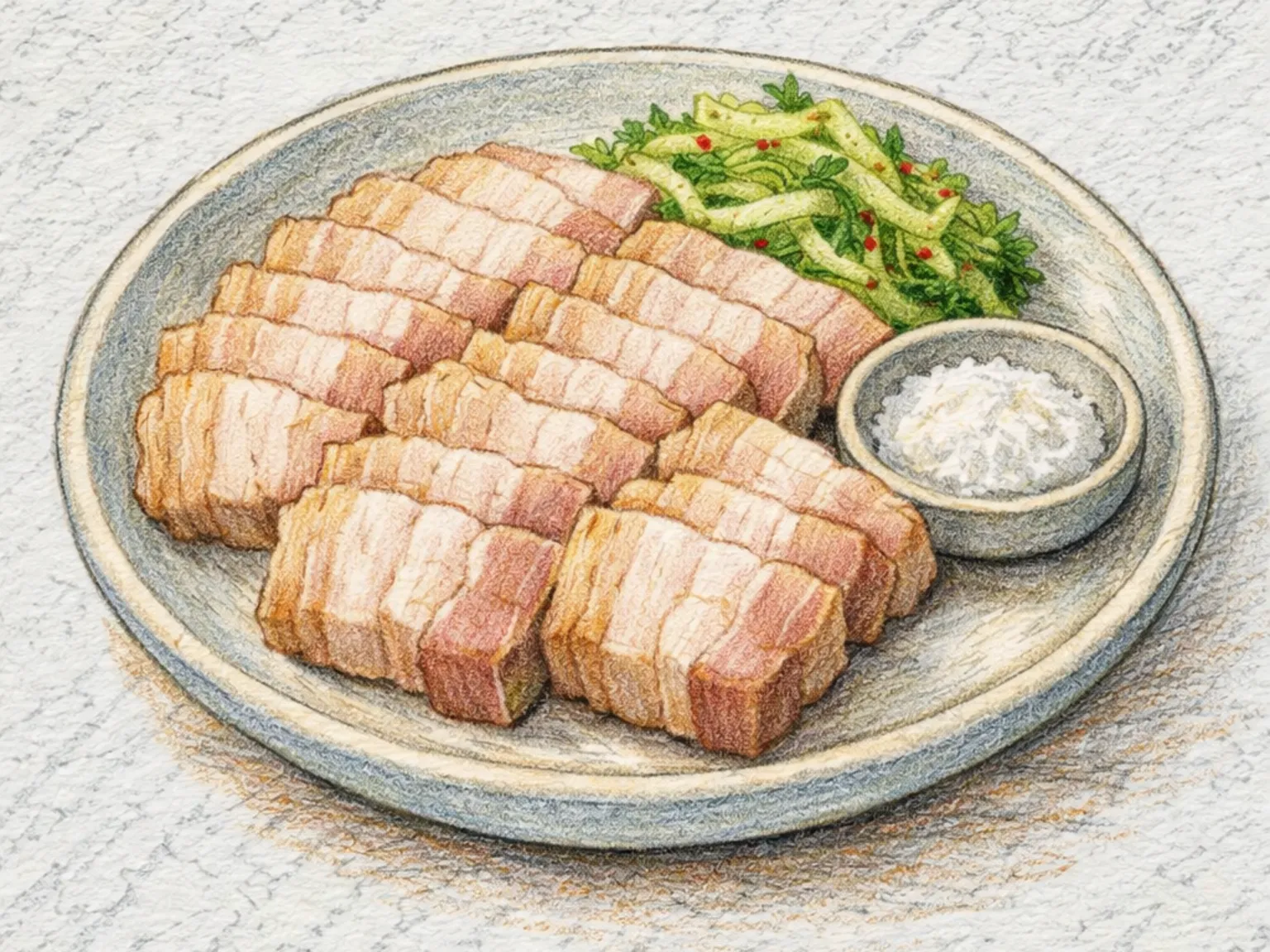
Meicai kourou is a Hakka Chinese dish of parboiled pork belly that is seared with soy sauce for color, then layered with preserved mustard greens and steamed for over an hour. The prolonged steaming renders the fat translucent and meltingly soft, while the fermented, salty greens infuse the meat with their concentrated flavor. When inverted onto a plate, the neatly stacked slices glisten under the braising sauce. It is a centerpiece dish meant for sharing, with the sauce spooned over steamed rice to capture every layer of richness.

🎉 Special Occasion
Prep 35minCook 90min4 servings
Korean Young Napa Kimchi (Spring Cabbage Quick Ferment)
KimchiMedium

Korean Young Napa Kimchi (Spring Cabbage Quick Ferment)

Eolgari kimchi is a spring kimchi made with young napa cabbage, briefly salted for twenty to thirty minutes, then dressed in gochugaru, fish sauce, garlic, and glutinous rice paste before fermenting at room temperature for about a day. Limiting the salting time to no more than thirty minutes is important: the young cabbage's thin leaves and tender stems absorb salt quickly, and over-salting destroys the crisp texture before fermentation even begins. Because the leaves are thinner and more porous than those of mature napa, the seasoning penetrates quickly and fermentation produces a pleasant acidity within twenty-four hours. Salted shrimp compensates for the short fermentation period by adding immediate depth, and the young cabbage itself contributes a clean sweetness that balances the chili heat without any added sugar. Using a generous amount of glutinous rice paste helps the seasoning cling evenly to each leaf, which supports uniform fermentation throughout the batch. This is a seasonal kimchi meant as a lighter, fresher alternative to aged kimchi as temperatures begin to rise in spring.

🏠 Everyday🍱 Lunchbox
Prep 40minCook 10min4 servings
Douhua (Silky Tofu Pudding Dessert)
AsianMedium

Douhua (Silky Tofu Pudding Dessert)

Douhua, known in English as tofu pudding, has anchored the street dessert culture of China, Taiwan, and overseas Chinese communities throughout Southeast Asia for centuries. Freshly pressed soy milk is mixed with a coagulant, typically gypsum or glucono delta-lactone, and left undisturbed at a precise temperature until it solidifies into a curd that sits somewhere between custard and liquid: barely set, trembling on the spoon, yielding to the slightest pressure. The texture is the point. Toppings and serving temperature vary dramatically by region. In Taiwan, the standard version arrives cold, scattered with brown sugar syrup, tapioca pearls, sweet red beans, or boiled peanuts. In Hong Kong, the same curd is ladled into bowls and doused with hot ginger sugar syrup. In Malaysia and Singapore, pandan syrup and longan often appear alongside. The tofu itself contributes almost nothing beyond a faint nuttiness from the soybean; every bowl's personality comes from what surrounds it. Sold for pocket change at night markets across Taiwan, douhua appears effortless but demands close attention during coagulation. Too much heat and the curd turns grainy. Too little and it never firms. The margin between perfect and failed is narrow, and experienced vendors develop an eye for reading the surface of the milk to judge the moment.

🧒 Kid-Friendly
Prep 10minCook 15min2 servings