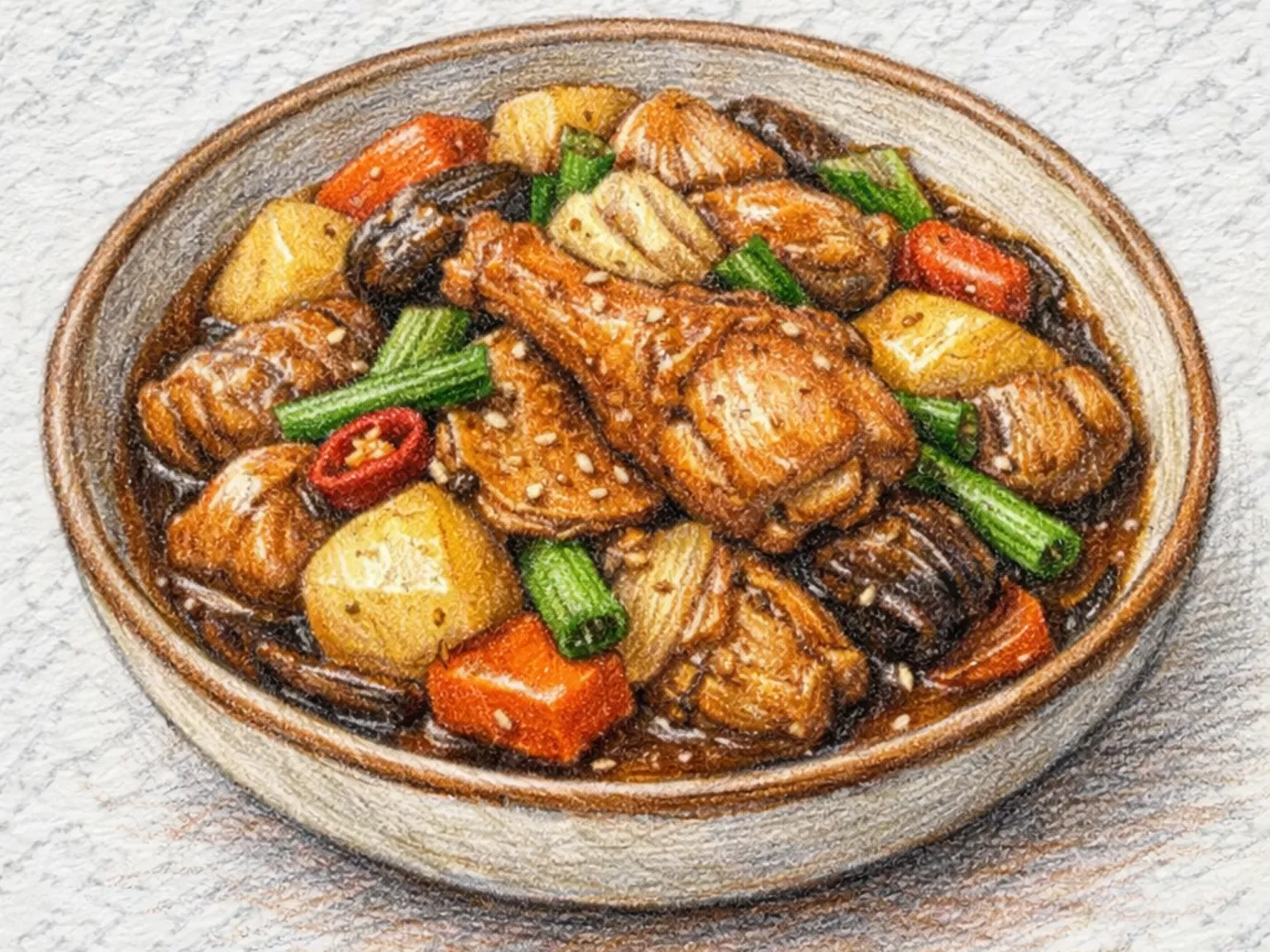
Korean Soy Braised Chicken Chunks
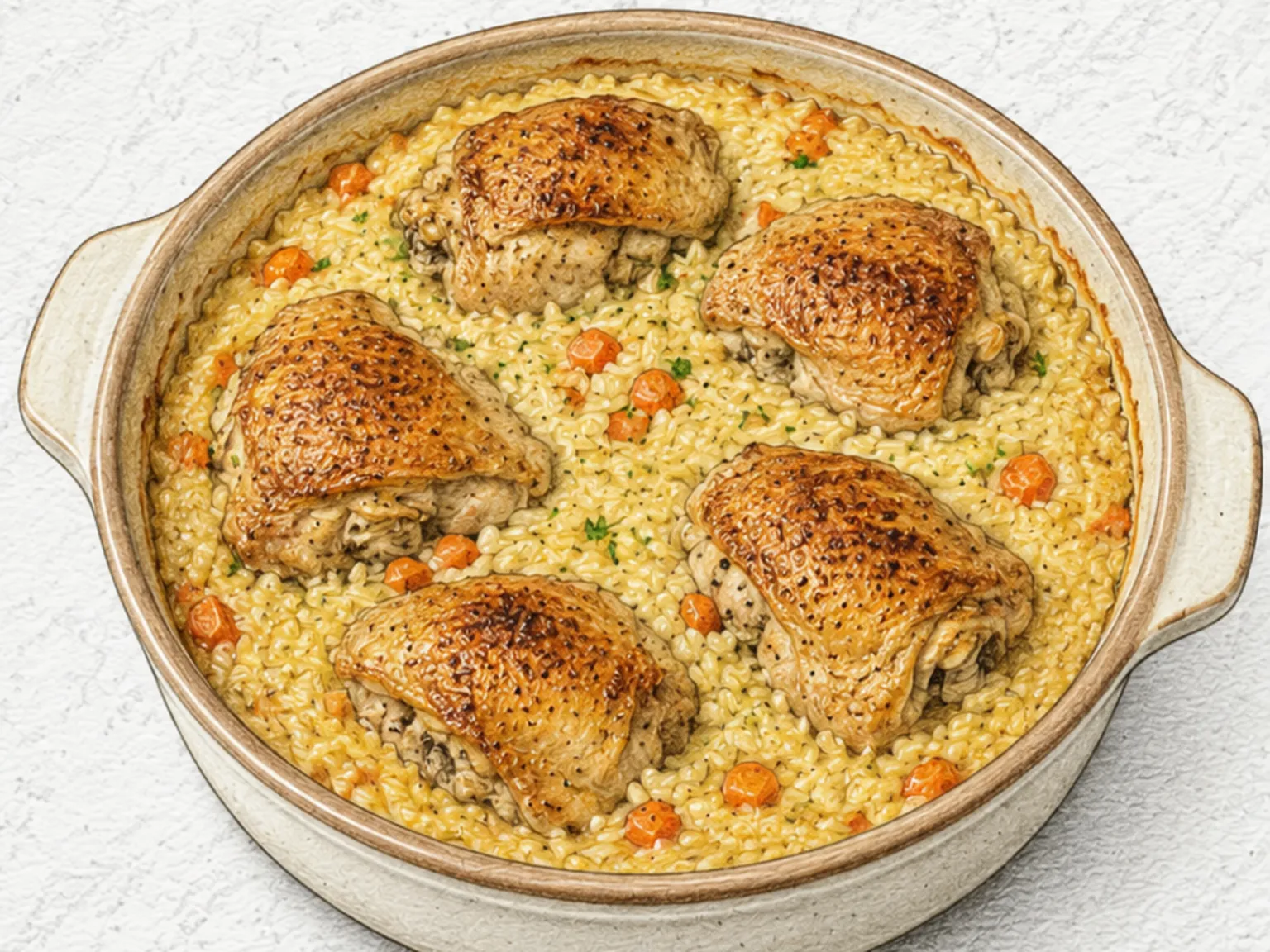
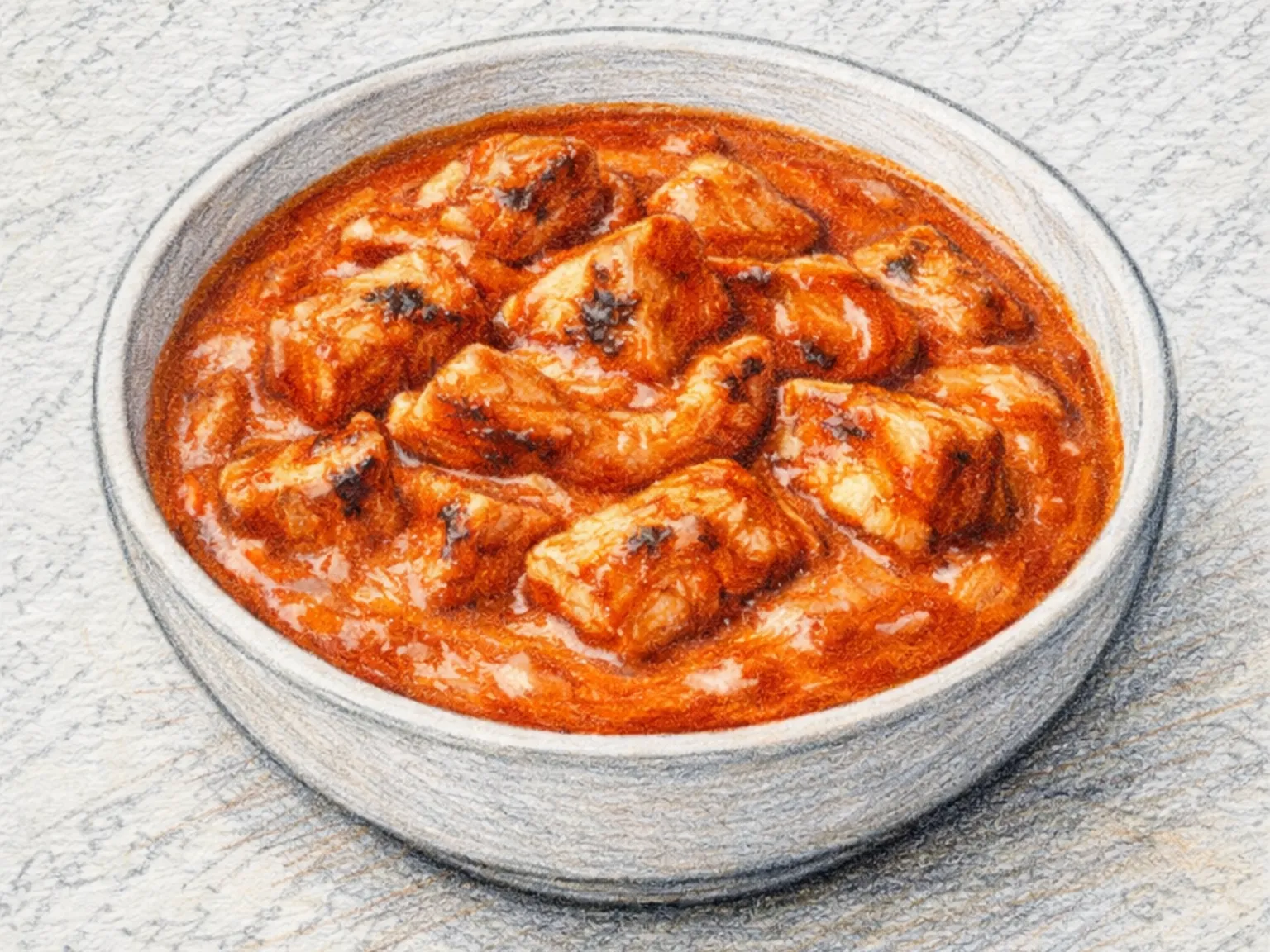
Dakganjang-jjim is a Korean soy-braised chicken dish where bone-in thigh pieces are combined with potatoes, carrots, and onion in a seasoned soy sauce base and simmered over low heat until the liquid reduces and the flavors concentrate. As the braising liquid cooks down, the salinity and umami of the soy sauce penetrate through the chicken skin and into the meat, seasoning it throughout rather than just coating the surface. The thigh cut is intentional - the fat and collagen in bone-in thighs keep the meat moist through the extended cooking time, preventing it from drying out the way leaner cuts would. The vegetables absorb the rendered chicken fat and soy-based cooking liquid as they soften, taking on a deep savory-sweet flavor that requires no additional seasoning. Because the dish contains no chili paste or gochugaru, it is mild in heat and broadly accessible, working equally well as a weeknight dinner main, a side dish over rice, or packed into a lunch box where the flavors continue to develop. The ratio of soy sauce to sugar in the braising liquid can be adjusted to suit individual taste - leaning toward saltier or sweeter without fundamentally changing the character of the dish.

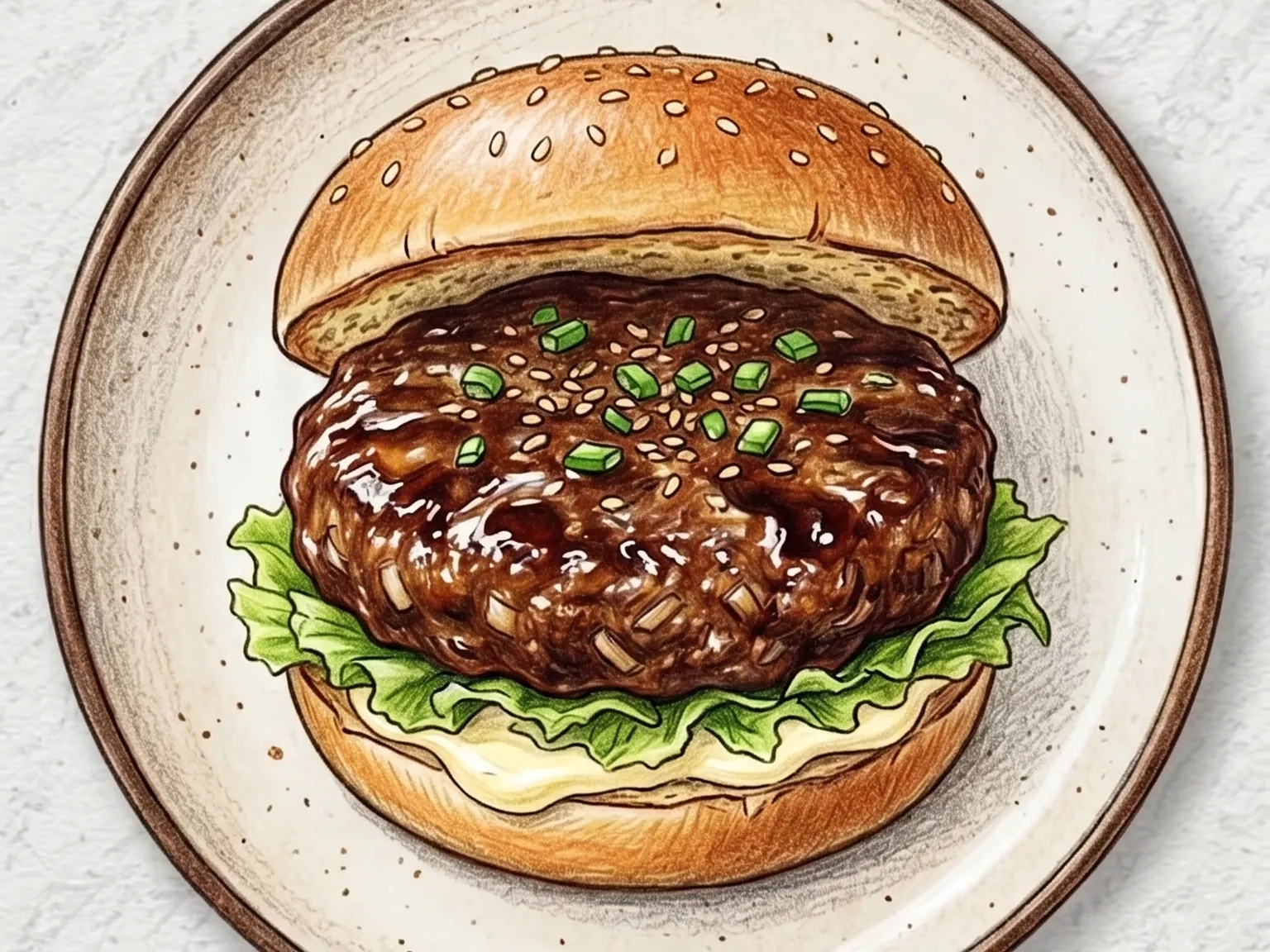
Korean Grilled Patty Skewers
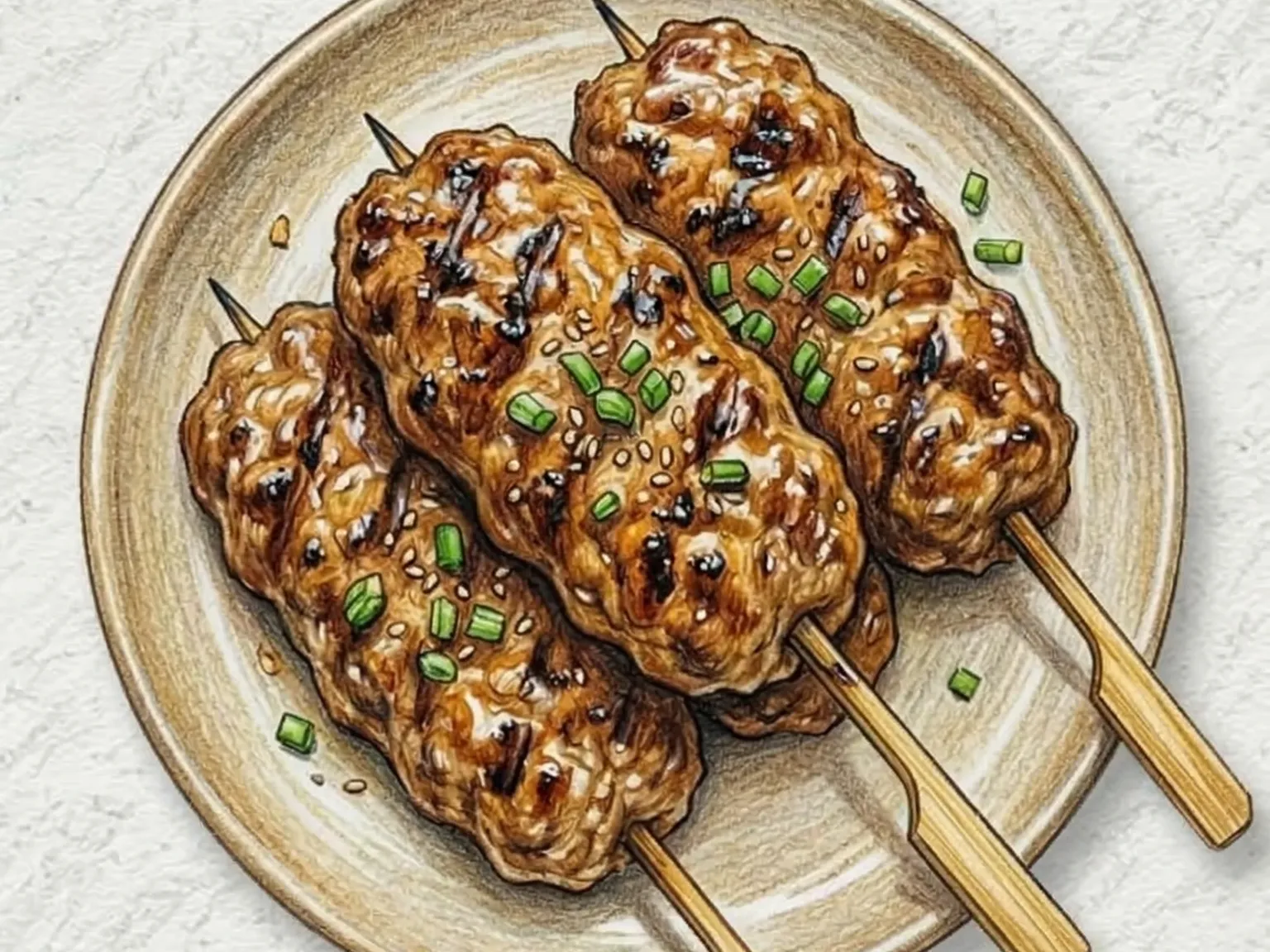
Tteokgalbi-kkochi are skewered patties made from a thoroughly kneaded mixture of ground beef, ground pork, soy sauce, sugar, garlic, and sesame oil, shaped into ovals and threaded onto wooden skewers before grilling. A small amount of starch mixed into the meat and at least three full minutes of kneading are what give the mixture enough tackiness to stay firmly anchored to the skewer throughout cooking; skip either step and the patties slide or crack apart on the grill. Moistening your hands with water while shaping prevents the mixture from sticking and helps produce smooth, even ovals. Grilling over medium heat first develops a golden Maillard crust on both sides, then lowering the heat and continuing to cook allows the interior to reach the center without the outside drying out, concentrating the meaty flavor at the core. A thin brushing of soy-and-corn-syrup glaze applied just before flipping and again right before removing from the heat builds a glossy, sweet-salty lacquer on the exterior. Served alongside tteokbokki sauce or ketchup, the skewers carry the unmistakable energy of Korean street food stalls.

Korean Oxtail Soup
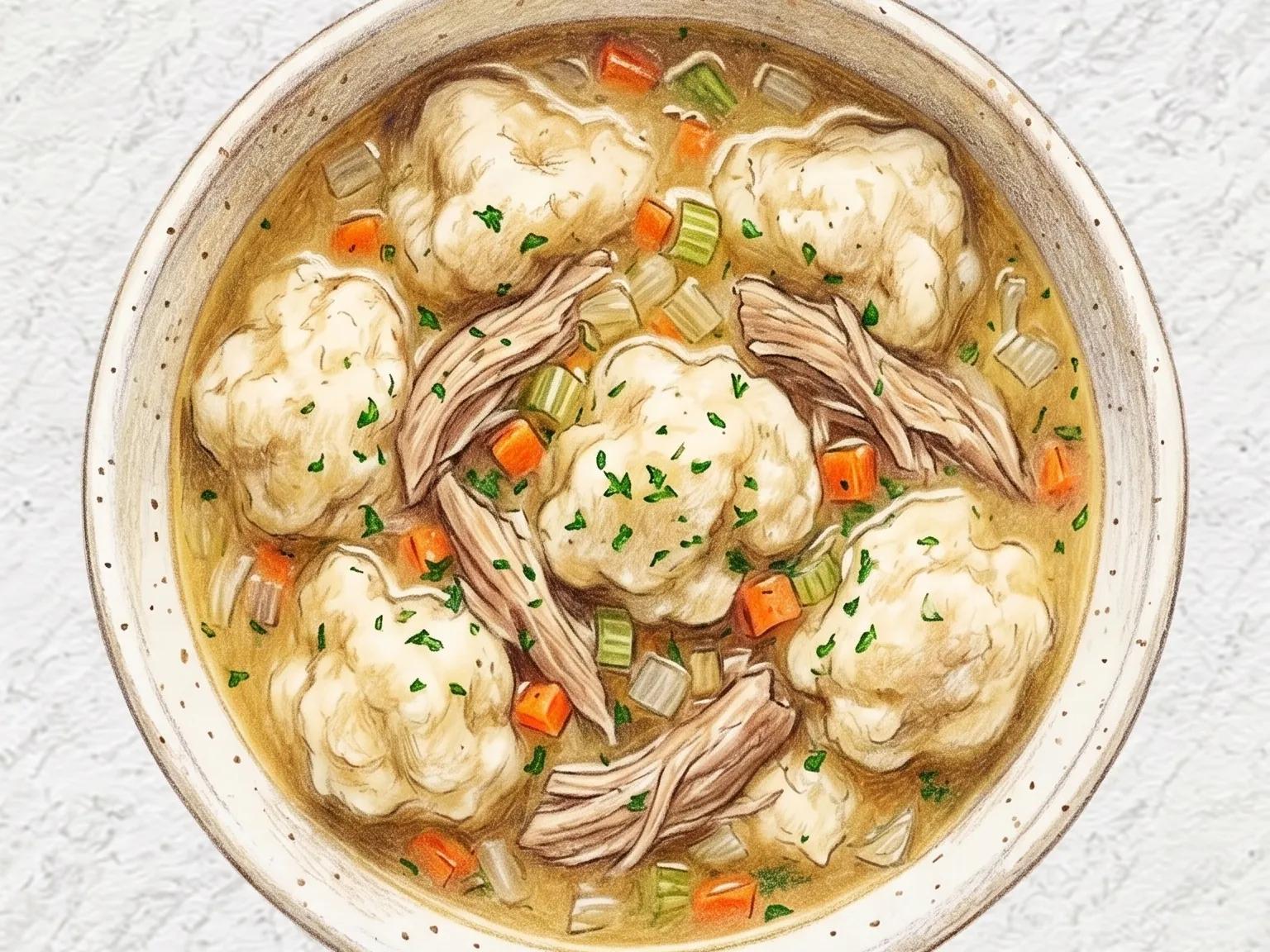
Sokori-guk demands patience - oxtail pieces are soaked in cold water to draw out blood, then placed in a heavy pot with enough water to cover and simmered for at least three to four hours. During that long, slow cook, collagen buried in the joints and connective tissue dissolves into the liquid, producing a broth so rich in gelatin that it sets into a solid block when refrigerated. Skimming fat and foam at regular intervals keeps the final broth a clean, milky white with no greasy residue. The meat, once it slides easily off the bone, is torn along the grain into shreds that are impossibly soft, while the tendon segments offer a pleasantly bouncy chew. Seasoning is deliberately minimal - coarse salt, black pepper, and sliced scallion - because the bones themselves have already contributed all the depth the soup needs. Served with a bowl of steamed rice and a side of kkakdugi, the cubed radish kimchi's sharp tang provides the only counterpoint this quietly powerful broth requires.

Korean Spicy Braised Chicken
Dakdoritang is a Korean braised chicken dish where bone-in pieces are simmered with potato, carrot, and onion in a sauce built from gochujang, gochugaru, soy sauce, garlic, and sugar. As the chicken cooks, it releases juices into the sauce that blend with the gochujang to create a thick, glossy braising liquid that coats every surface it touches. The potato breaks down gradually over the cooking time, adding starch that thickens the sauce further without any additional effort. Carrot and onion absorb the braising liquid and take on its full flavor, making them as central to the meal as the chicken itself. Sugar moderates the sharp heat of the chilies into a warm, rounded spice that lingers rather than burns. A finishing touch of sesame oil and sliced green onion added just before serving adds a nutty fragrance and fresh brightness that lifts the richness of the braise.

Korean Braised Eggplant with Pork
Gaji dwaejigogi jorim is a Korean braised dish of eggplant and pork shoulder simmered in a soy sauce and gochugaru seasoning base. The pork slowly renders its fat into the eggplant as they cook together, giving the vegetable a rich, meaty depth. Cooking wine mellows the pork and removes any gamey notes, while the soy and garlic combination builds deep, layered flavor throughout the braise. Briefly stir-frying the eggplant in oil before braising coats the surface and helps it hold its shape while drawing the seasoning inward more effectively. A final drizzle of sesame oil finishes the dish with a nutty fragrance, and this recipe is at its best in summer when eggplants are in peak season with thin, tender skins.

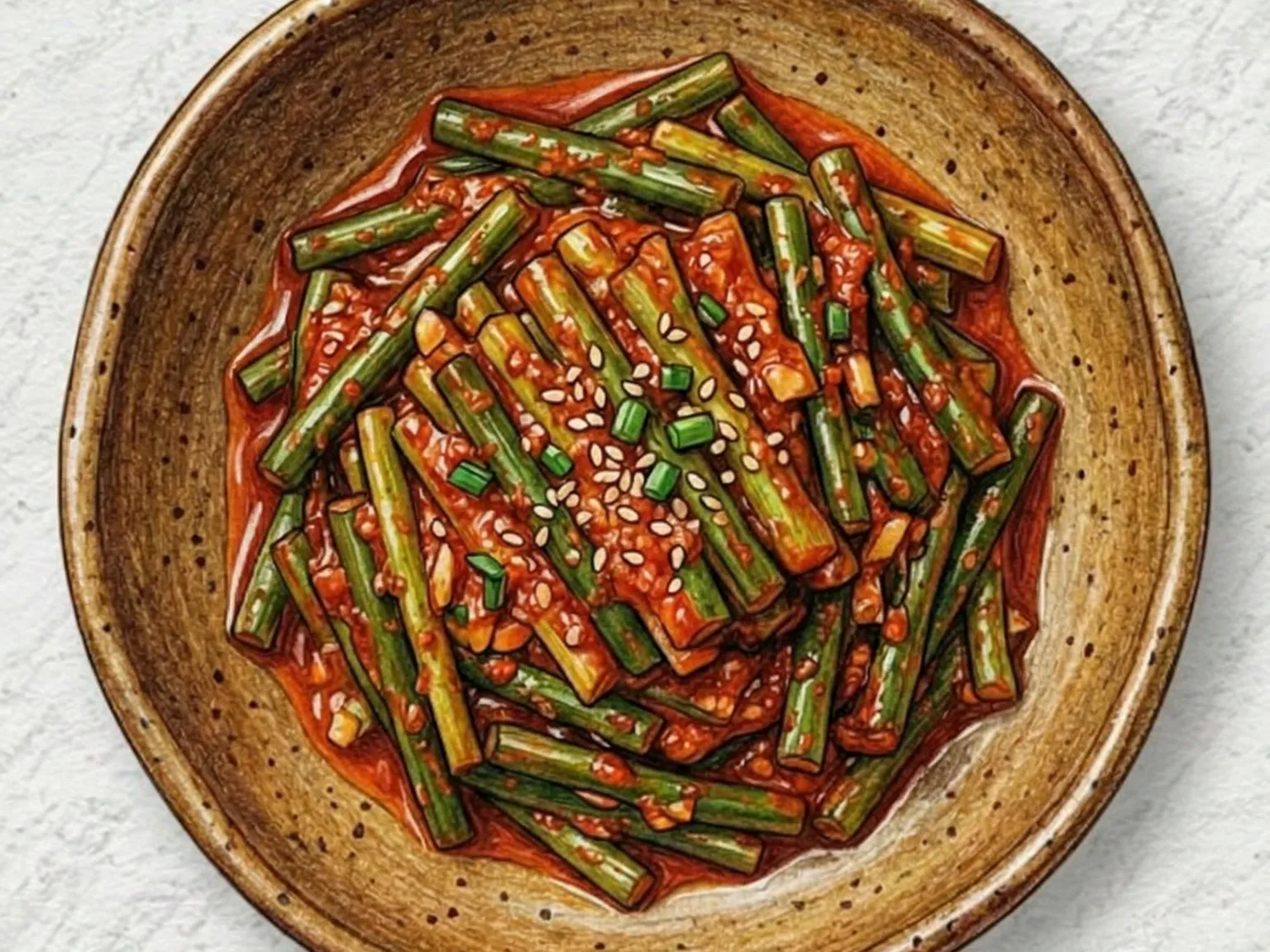
Korean Miyeok Julgi Jangajji (Seaweed Stem Pickles)
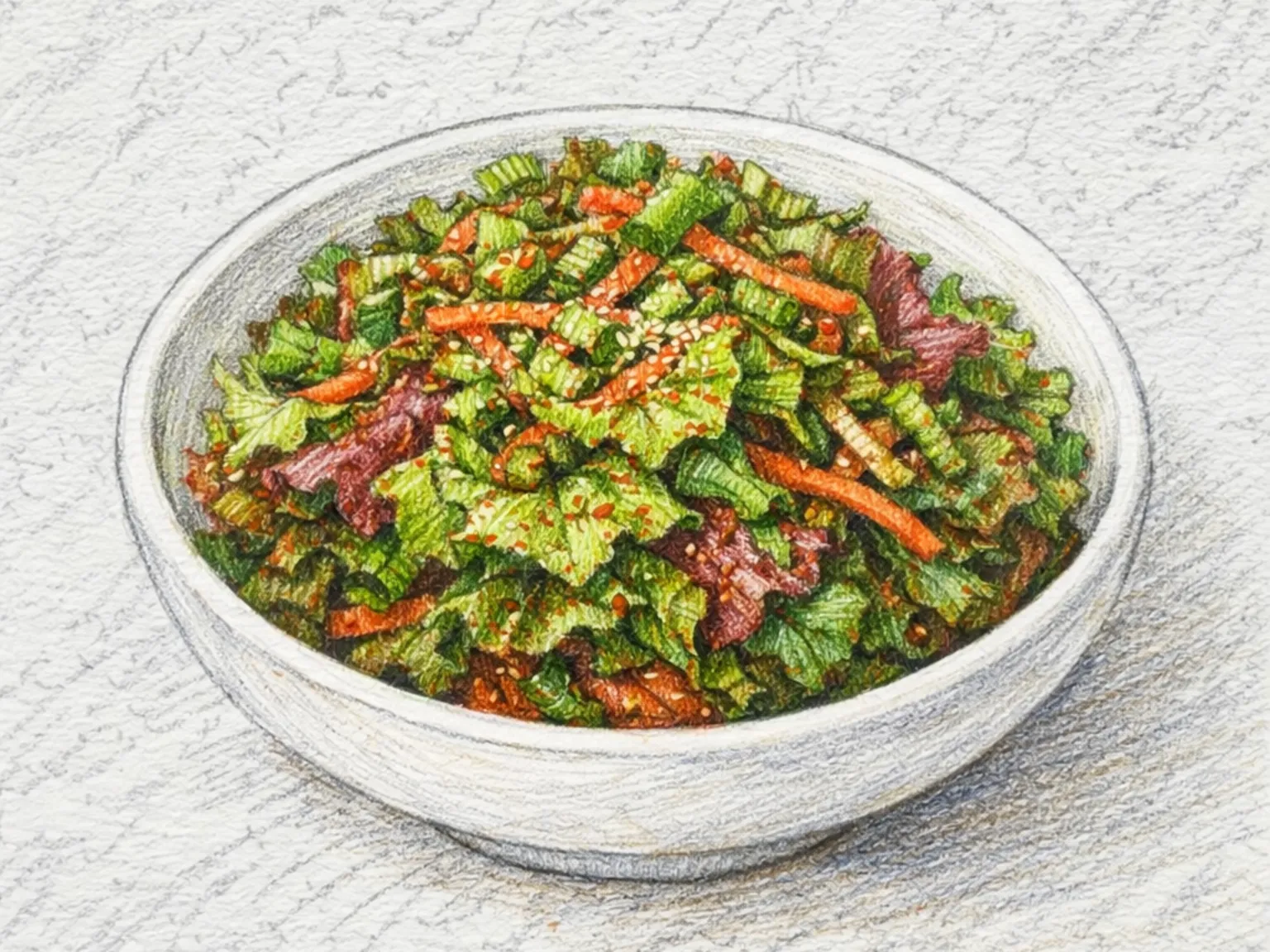
Miyeok julgi jangajji is a Korean seaweed stem pickle made by soaking salted seaweed stems long enough to remove the excess salt, blanching them briefly, and submerging them with sliced onion and cheongyang chili in a brine of dark soy sauce, vinegar, and sugar brought to a boil. The stems' characteristic crunchy-chewy bite holds up even as they absorb the brine, and a faint oceanic quality lingers beneath the soy sauce's savory depth and the sharp brightness of the vinegar. Onion adds natural sweetness to the pickling liquid, and the chili delivers a clean, piercing heat at the finish. Reboiling the brine, cooling it fully, and pouring it over a second time significantly extends shelf life, keeping the banchan in good condition in the refrigerator for three to four weeks or longer. After the first pour, allowing twenty-four hours before eating gives the stems enough time to fully absorb the brine and develop their proper flavor.

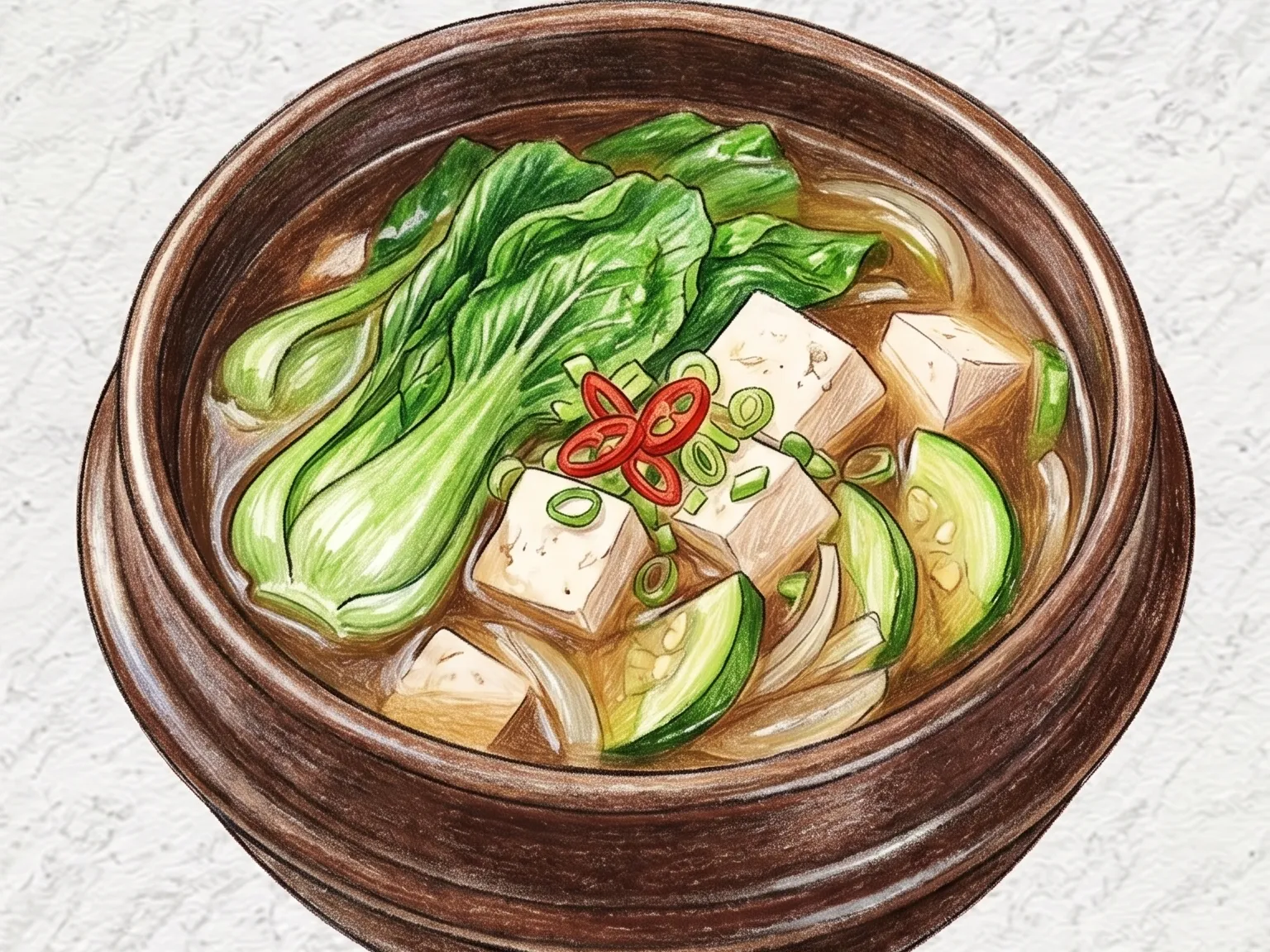
Korean Knife-cut Noodle Soup
Kalguksu is a Korean noodle soup made with hand-cut wheat noodles simmered in anchovy-kelp broth. The noodles are rolled flat and sliced with a knife, giving them a rough surface that absorbs broth and a satisfying chew distinct from machine-made pasta. Sliced potato, half-moon zucchini, and onion go into the pot, with the potato releasing starch that naturally thickens the broth as it cooks. Seasoning stays minimal - soup soy sauce, salt, minced garlic, and green onion added at the end - so the clean, savory depth of the stock comes through clearly. The dish is traditionally associated with rainy days in Korea, and adding clams turns it into a popular seafood variation.

Perilla Oil Potato Gnocchi with Pancetta
Perilla oil potato gnocchi with pancetta dresses soft potato gnocchi in rendered pancetta fat, chicken stock, and butter, finishing with unheated perilla oil to preserve its raw, distinctly nutty fragrance. The pancetta crisps first, and its rendered fat becomes the cooking medium for onion and garlic to build an aromatic base. Boiled gnocchi are tossed in this base with Parmigiano to create a light, glossy emulsified sauce rather than a heavy cream one. Perilla oil goes on at the very end - heating it would destroy the sesame-like aroma that separates this preparation from standard Italian gnocchi. Shredded perilla leaves on top reinforce the Korean element with color and a grassy, herbal note. Total cook time runs about twenty minutes.

Chicago Deep Dish Pizza
Chicago deep dish pizza is a pie-style pizza where dough is pressed into a deep cast iron or dark metal pan to cover the bottom and climb the walls, then layered with mozzarella cheese and Italian sausage before crushed tomatoes and oregano are spread across the top. Positioning the sauce on the uppermost layer shields the cheese from direct oven heat, preventing it from scorching while the tomato reduces and concentrates over the long bake. The sausage must be pre-cooked with onion to drive off excess moisture, keeping the thick base from turning soggy under the weight of the filling. Stretching the dough wide enough to reach the rim keeps the molten contents contained during baking. After 30 to 35 minutes at 220 degrees Celsius, the pizza requires at least ten minutes of resting before slicing so the interior sets and the layers hold their shape when cut. The dish traces its origins to Pizzeria Uno in Chicago in 1943 and has since become one of the city's defining foods.

Chicken Curry
Chicken curry is one of the world's most universal dishes, adapted as it traveled from the Indian subcontinent through Japan and into Korea, each culture reshaping it to local taste. The Japanese-style version uses a flour-and-butter roux for a thick, mild sauce, while Indian preparations build complexity by browning onions deeply and layering whole and ground spices with tomato. Chicken, potato, carrot, and onion simmer together until the vegetables release their starch and sweetness into the sauce, creating a velvety body. The essential pleasure is spooning the curry over steamed rice and watching it seep between the grains. Leftover curry reheated the next day tastes notably deeper - the Japanese call this nikkame no curry (second-day curry) and many prefer it to the fresh pot, as the spice compounds have had time to meld and the starches further thicken the sauce. Despite the simplicity of its core ingredients, the virtually limitless variation in spice blending is what makes this dish endlessly compelling across cultures.

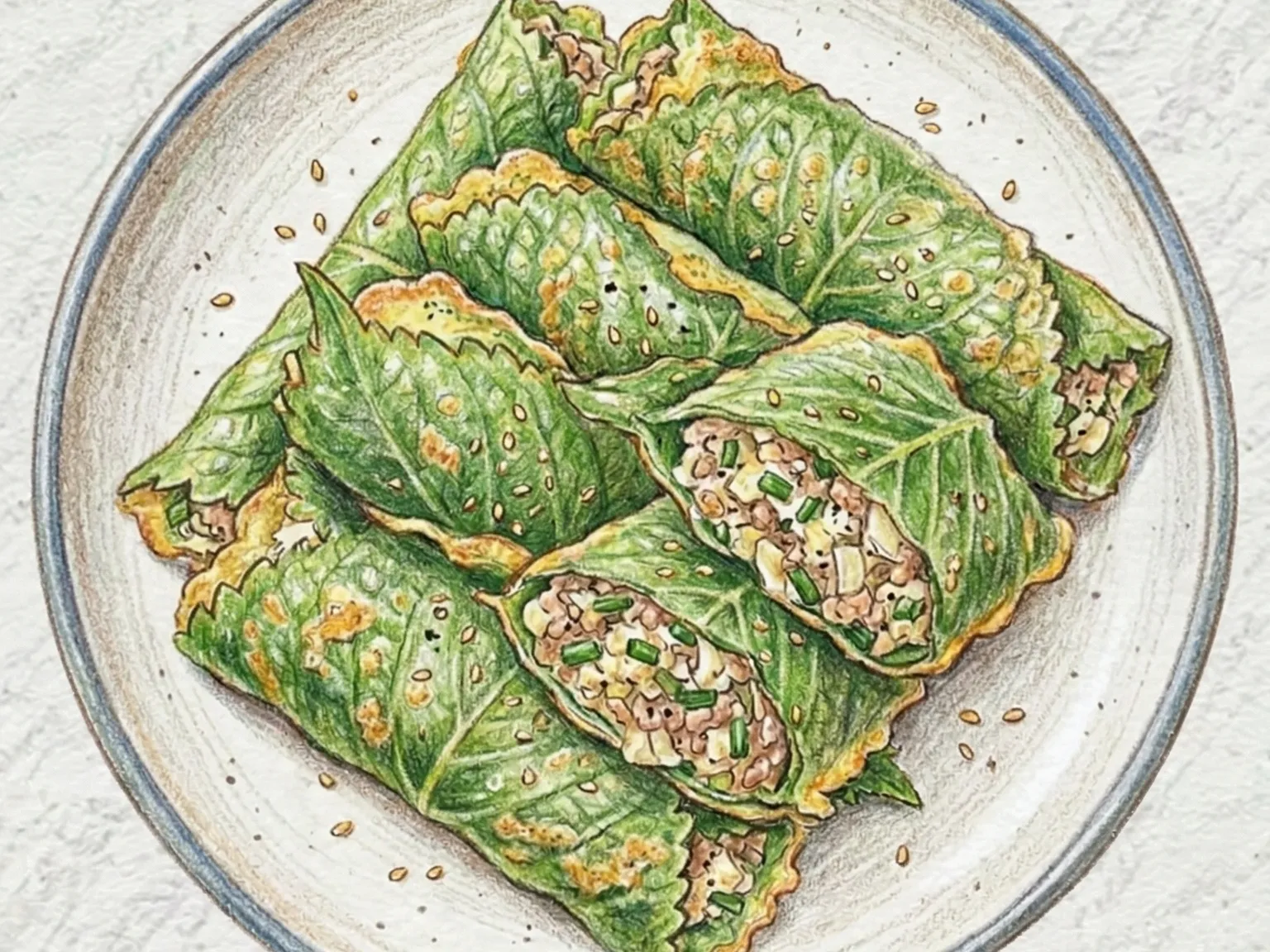
Korean Green Laver Pancake
Parae-jeon is a Korean pancake that features 80 grams of fresh green laver folded into a pancake-mix batter alongside sliced onion and chopped green chili. Rinsing the laver two to three times removes sand and grit without stripping its briny ocean aroma. Keeping the batter on the thick side concentrates the seaweed flavor, preventing it from washing out during cooking. Pan-fried over medium heat for two to three minutes per side, the pancake develops crisp, golden edges while the interior stays tender and fragrant. Cutting it into bite-size pieces immediately after cooking preserves the crunch before steam softens the crust.

Korean Bulgogi Deopbap (Pork Rice Bowl)
Dwaeji-bulgogi-ssukgat-deopbap is a Korean rice bowl of gochujang-marinated pork stir-fried with onion over high heat, mounded over steamed rice and finished at the last moment with crown daisy greens. The marinade builds from gochujang, chili flakes, soy sauce, sugar, and minced garlic into a sauce that is simultaneously spicy, sweet, and deeply savory. A small amount of pear or kiwi juice added to the marinade tenderizes the pork shoulder before cooking. High heat over a short cooking time is essential for developing a browned crust on the meat, which produces a roasted, smoky depth that low-and-slow cooking cannot replicate. Pork shoulder carries enough intramuscular fat that once it renders under heat, it mingles with the sauce and soaks down into the rice below, creating a rich, glossy base at the bottom of the bowl. The crown daisy -- ssukgat -- goes in during the last thirty seconds before the heat is cut. The timing window is narrow: add it too early and the aromatic oils cook off, leaving only bitterness; add it with the heat already off and the fragrance stays locked inside the leaves. At the right moment, heat releases ssukgat's distinctive chrysanthemum-family herbaceousness, a green, almost medicinal brightness that cuts cleanly through the heaviness of the pork and sauce. The finished bowl is complete without side dishes.

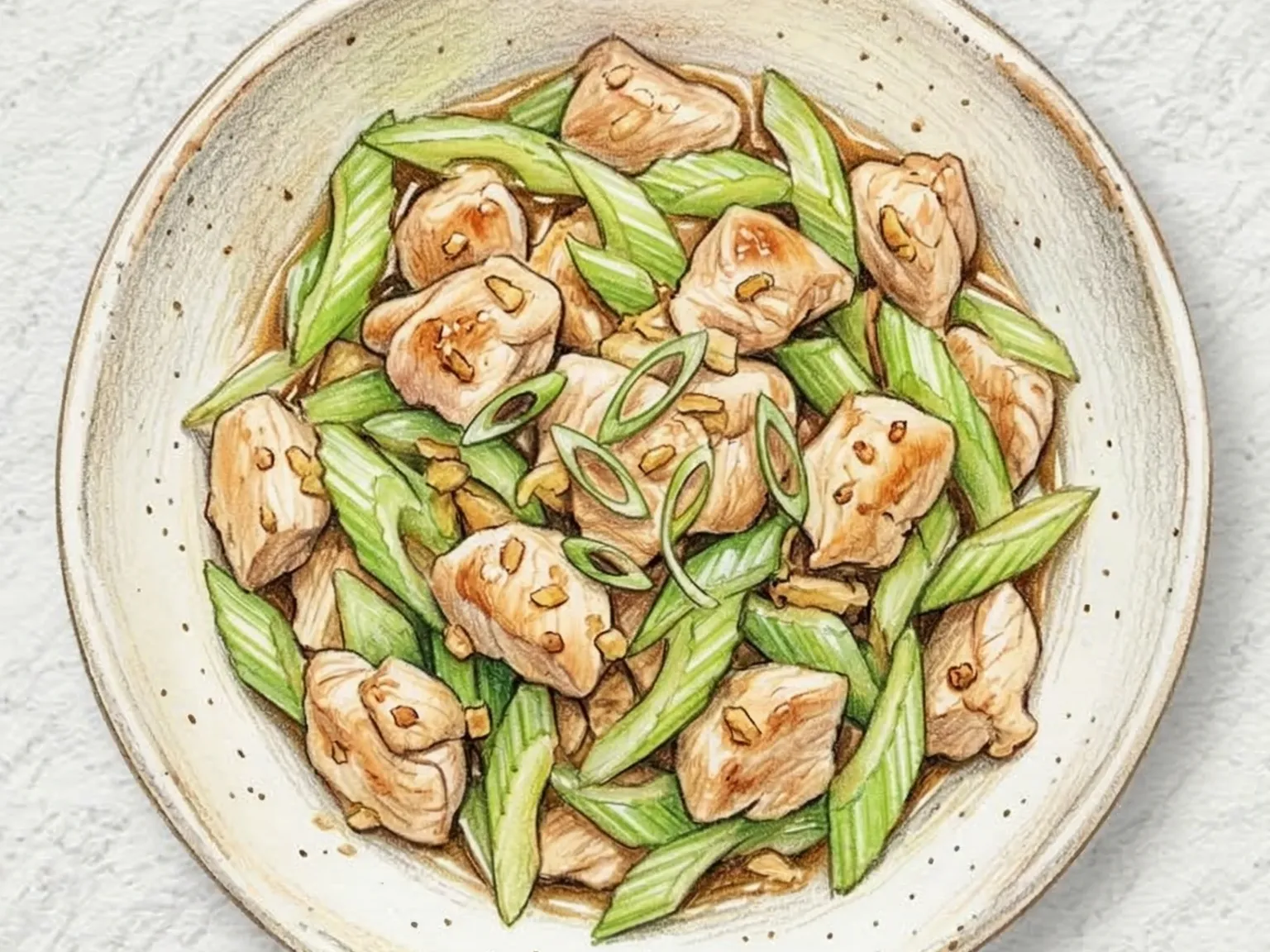
Korean Chicken Breast & Mugwort Stir-fry
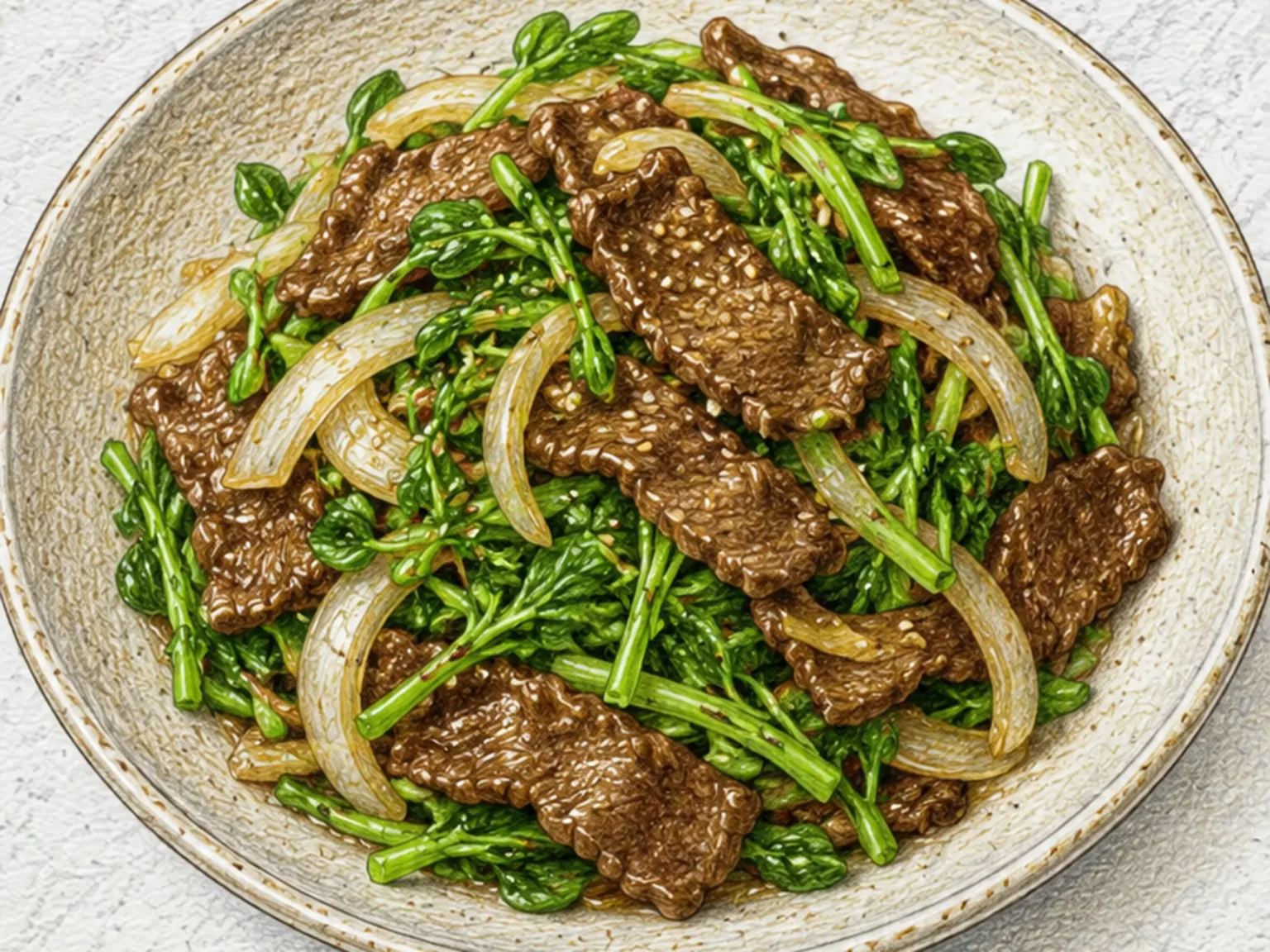
Spring mugwort offers its most tender texture and mildest bitterness immediately after harvest, making it a perfect companion for lean proteins. This stir-fry utilizes thinly sliced chicken breast to create a clean base where the herb's fragrance takes center stage. Minced garlic and soy sauce provide a light seasoning that emphasizes the natural characteristics of the ingredients without creating a heavy coating. Because chicken breast dries out quickly, the preparation requires a preheated pan and high heat to cook the meat just until it turns opaque. Adding the mugwort at the very end allows it to soften slightly through residual heat, preserving the fresh aroma that would otherwise turn harsh or overly bitter with prolonged cooking. A light application of sesame oil at the finish rounds out the profile with a subtle nuttiness. The combination of vitamin-rich mugwort and high-quality protein makes this a nutritionally balanced side dish. This preparation relies on minimal oil and the inherent quality of the seasonal ingredients, making it a suitable choice for a light meal served with rice or inside fresh lettuce wraps.

Yakisoba Pan (Noodle Bread)
A staple of Japanese street food culture, Yakisoba-pan combines a toasted, buttered hot dog bun with a filling of stir-fried egg noodles seasoned with yakisoba and soy sauce. Shredded cabbage, onions, and carrots start in the pan over high heat for exactly two minutes before the noodles are added. This timing ensures the vegetables remain crisp and provide a textural contrast to the soft noodles rather than becoming limp during the cooking process. As the yakisoba sauce hits the hot metal, it caramelizes quickly to wrap every noodle strand in a glossy, sweet-savory glaze. The act of spreading butter on the interior of the bun and giving it a quick toast serves a functional purpose beyond flavor. This butter layer acts as a moisture barrier, preventing the sauce from soaking into the bread and keeping the bun from turning soggy as it sits. The subtle richness of the butter bridges the gap between the savory noodle filling and the soft crumb of the bun. Sprinkling dried parsley over the top introduces a mild herbal scent that balances the heavy, concentrated sauce. For a burst of acidity, a small amount of beni shoga pickled ginger is tucked into the noodles to cleanse the palate. Spreading a layer of Japanese mayonnaise inside the bun alongside the butter creates an additional creamy texture. Softening the noodles in hot water before they hit the pan prevents clumping and allows for easier separation during the stir-frying stage.

Korean Beef Trotter Soup (Silky Collagen-Rich Slow-Cooked Broth)
Ujok-tang is a slow-cooked Korean soup made from beef trotters, prized for the extraordinary amount of collagen packed into the bones, tendons, and skin of the cut. The trotters are first soaked for hours in cold water to purge blood and any off-flavors, then placed in a deep pot and simmered at a gentle roll for four to six hours. During that time, the collagen gradually dissolves into the cooking liquid, transforming it from plain water into a milky, opaque broth with a viscous body that coats the spoon and sets firm when chilled. Regular skimming of fat and foam throughout the process ensures the final broth tastes clean rather than greasy. The trotter meat itself falls into two distinct textures: the skin and tendons turn gelatinous and springy, offering a bouncy chew, while the small pockets of muscle between the bones are meltingly soft. Traditional seasoning is limited to coarse salt and freshly ground pepper, allowing the broth's natural richness to speak. A dab of hot mustard or a spoonful of salted shrimp paste on the side provides a sharp contrast that keeps each mouthful interesting. Ujok-tang has long been regarded as a restorative food, particularly valued for its supposed benefits to joints and skin.

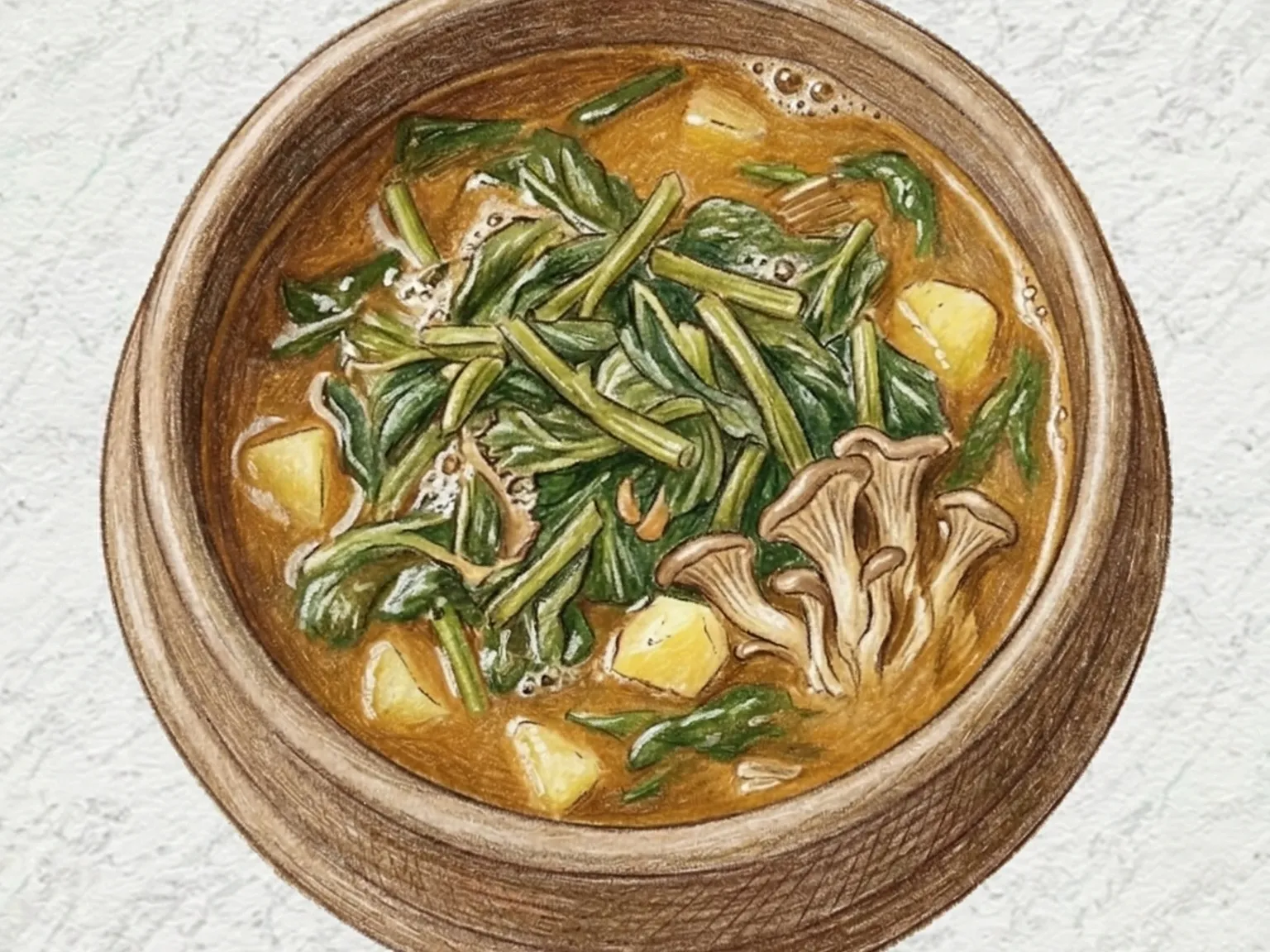
Korean Wild Chive Clam Chili Stew
Dalrae bajirak gochujang-jjigae is a spring stew that brings together wild chives and short-neck clams in a gochujang-spiked anchovy broth. When the clams are added to the simmering stock and begin to open, they release a concentrated brine that deepens the base flavor considerably. Gochujang folds in a fermented heat that runs through the whole bowl. Dalrae, a wild allium that grows in Korean fields from late February through April, goes in near the very end of cooking; its sharp, garlic-like scent stays intact that way and cuts through any marine fishiness. Potato pieces absorb the spicy broth as they cook and give the stew weight, while tofu provides a soft counterpoint to the heat. Before cooking, soaking the clams in salted water for thirty minutes purges any sand so the broth stays clean. The combination of early-spring dalrae with clams makes this a recipe with a narrow seasonal window.

Korean Braised Eggplant with Shrimp
Gaji saeu jorim is a Korean braised side dish pairing eggplant with shrimp in a sauce of soy sauce and oyster sauce. Lightly stir-frying the eggplant in oil before braising coats the surface and prevents the slices from turning mushy, helping them hold their shape and develop a slight gloss as the sauce reduces. The natural umami from the shrimp combines with the dense savory character of the oyster sauce to deepen the overall flavor, and the eggplant draws all of that into its flesh as it braises slowly. Gochugaru adds a gentle warmth without masking the seafood, onion contributes background sweetness, and green onion lifts the aroma. The soft, juicy texture of the eggplant against the firm bounce of the shrimp gives the dish an appealing contrast, and the glossy dark sauce spooned over rice makes for a satisfying, complete meal with minimal effort.

Korean Radish Greens Kimchi
Mucheong kimchi is made from the leafy greens and stems of Korean radish, cut into 5 cm lengths, salted in coarse brine, then coated in a paste of sweet rice flour, gochugaru, anchovy fish sauce, minced garlic, ginger, and onion. The thick, fibrous stems grip the seasoning and hold up through fermentation without turning mushy, keeping a firm chew even after weeks in the refrigerator. Sweet rice flour acts as a glue that prevents the coating from sliding off the stems as the kimchi ages. Anchovy fish sauce lays down a deep seafood umami as the base layer, while onion moderates the chili heat with natural sweetness. The greens are a practical use of the entire radish rather than just the root, and the finished kimchi works beyond the banchan role: torn into pieces and added to siraegi soup, it enriches the broth; stirred into doenjang jjigae, it deepens the fermented soybean flavor with another layer of fermented complexity.

Korean Kimchi Bulgogi Udon
Kimchi bulgogi udon is a Korean stir-fried noodle dish that brings together the sharp acidity of well-fermented kimchi and the sweet, savory depth of thinly sliced bulgogi beef, all coating thick, round udon strands. The beef is seared quickly over high heat to develop browning on the surface before onion and kimchi join the pan and cook until nearly all their moisture evaporates, concentrating both flavor and color. A sauce of soy sauce, gochujang, and sugar goes in next, followed by briefly blanched udon noodles that get tossed on maximum heat for about one minute so every strand absorbs the sauce while retaining a firm bite. The thick cross-section of udon holds bold, clingy sauces better than thinner noodles and creates a satisfying, filling meal without any broth. When kimchi is especially sour, a small addition of sugar or a quick rinse of the kimchi before cooking brings the acidity back into proportion. Finishing with sliced scallion and toasted sesame seeds adds color and a nutty lift that completes the dish.

Roasted Pumpkin Alfredo Fettuccine
This pasta dish incorporates a smooth purée of kabocha squash roasted until the edges reach a caramelized state at 200 degrees Celsius. The roasting process concentrates the natural starches, providing a thick body to the sauce without additional thickening agents. Onions and garlic sautéed in butter form the aromatic base, which is then blended with the squash and heavy cream for a uniform texture. Grated Parmigiano-Reggiano introduces a salty, nutty profile, while a small measure of ground nutmeg provides a warm complexity that balances the sweetness of the squash. The wide ribbons of fettuccine are chosen specifically to hold the heavy sauce effectively. For improved efficiency, the squash can be prepared a day in advance and stored in the refrigerator. Using a ladle of starchy pasta water during the blending stage allows for precise control over the final consistency. To finish the plate, sage leaves fried in brown butter offer a bitter herbal contrast to the squash. White pepper adds a subtle heat while preserving the bright orange color of the sauce. Butternut squash serves as a functional substitute if kabocha is unavailable.

Chicken a la King
Chicken a la king is an American home-style cream sauce dish built on a butter roux that forms the backbone of the sauce and holds every other element in place. The roux begins with flour cooked briefly in melted butter until it smells faintly nutty and raw flour taste has cooked off, at which point cold milk and chicken stock are added incrementally while whisking constantly to prevent lumps. The gradual addition of liquid to the roux, rather than all at once, is what produces a sauce that is smooth and velvety rather than gluey or broken. Chicken breast is cooked separately and removed as soon as the color changes through, because even a few extra minutes in heat will make it tough and dry. The mushrooms and onion are sauteed in butter before the liquid goes in, building flavor in the fat first: the onion softens and sweetens, and the mushrooms release their moisture and then concentrate into a savory, earthy depth. Bell pepper is added later in the process so it retains some snap, providing a textural contrast to the surrounding creaminess and contributing a mild sweetness that brightens the overall flavor. Once the chicken is returned to the sauce, it absorbs some of the cream and the seasoning rounds out. Ladled over toast, rice, or split biscuits, the sauce soaks into the starch beneath and turns the plate into a complete, satisfying meal.

Chicken Korma (Creamy Cashew Curry)
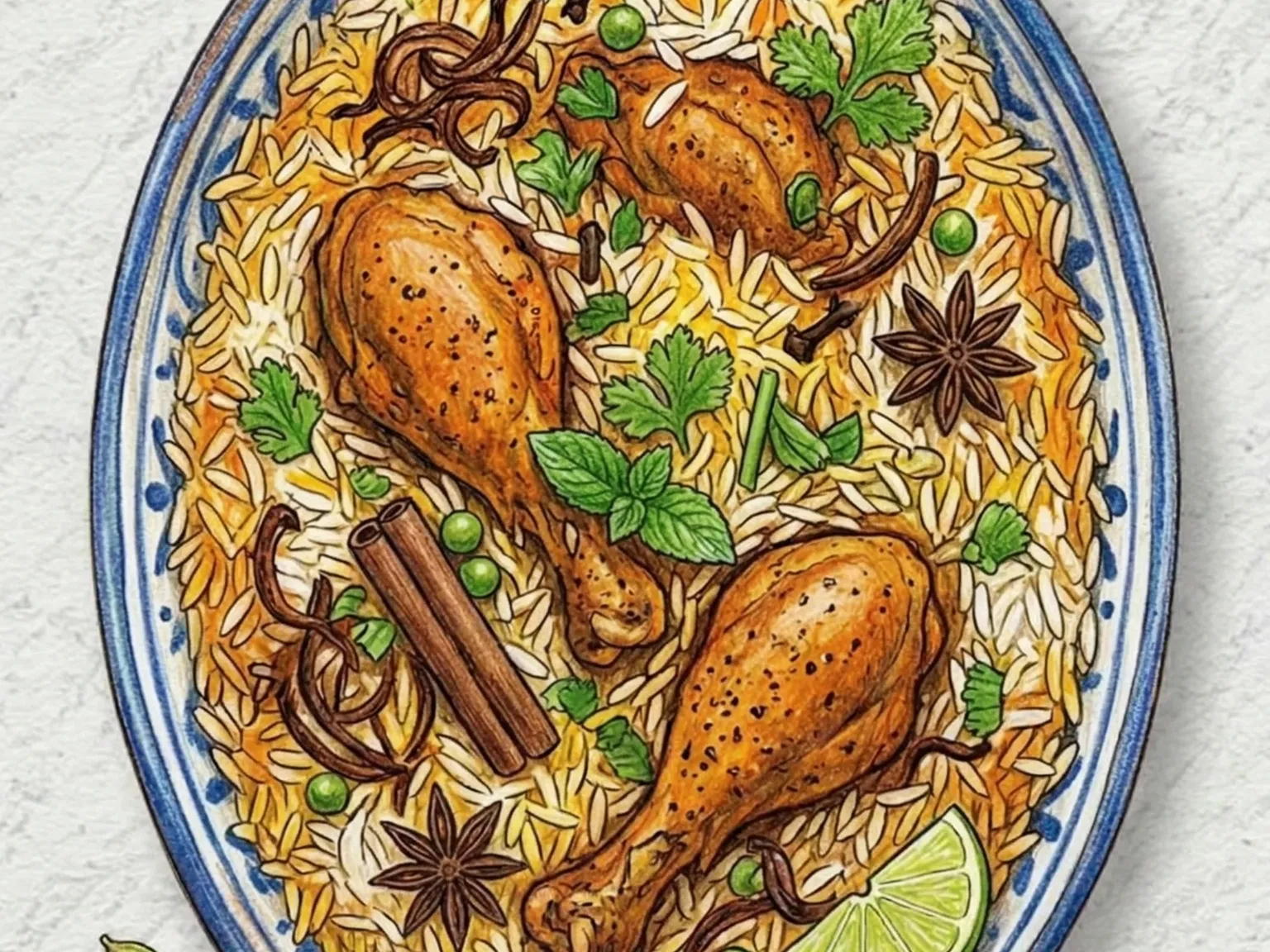
Chicken korma developed in the kitchens of the Mughal courts, where cooks built dishes around layered subtlety rather than raw heat. The sauce begins with cashews or almonds soaked overnight and ground into a fine paste, which gives the gravy a velvety body and toasted-nut richness without any cream. Chicken is marinated in yogurt with whole spices - cardamom pods, cloves, cinnamon sticks, and mace blades - then brought to a low simmer where the warm aromatics slowly infuse the liquid and meet the tang of the yogurt, producing a flavor that is complex yet entirely without aggression. Saffron dissolved in warm milk and stirred in near the end stains the sauce a deep gold and adds a faint floral quality, two elements that mark a properly made korma. The dish is frequently recommended to diners encountering Indian food for the first time because of its mildness, but the dense nut-paste base, the careful balancing of a dozen aromatics, and the slow integration of yogurt make korma one of the most technically demanding preparations in the North Indian canon - far more than a simple mild curry.

Korean King Oyster Mushroom Stir-fry with Perilla
This stir-fry combines 250 grams of julienned king oyster mushrooms with onion, cooked rapidly over high heat in perilla oil and cooking oil to prevent the mushrooms from releasing too much water. Garlic is sauteed for 20 seconds first to infuse the oil, followed by onion for one minute to draw out its natural sweetness. The mushrooms then go in for a quick two-minute toss before soup soy sauce and a splash of water are added to create a light braising liquid. One and a half tablespoons of ground perilla seeds are stirred in during the final minute, thickening the sauce into a creamy coating without becoming pasty. Scallion is added off heat for a finishing touch of color and freshness.

Korean Braised Short Rib Rice Bowl
Galbi deopbap is a Korean rice bowl topped with beef short ribs slow-braised in a soy, sugar, and grated Asian pear marinade until the connective tissue dissolves and the meat separates from the bone at the lightest touch. Grated pear serves a dual purpose in the braise: the enzymes break down tough muscle fibers while the juice introduces a gentle fruit sweetness that sets the dish apart from heavier, wine-based braises. Grated onion dissolves completely into the braising liquid over the long simmer, deepening the savory foundation without leaving visible pieces. As the liquid reduces over one hour or more, it transforms into a dark, glossy sauce that coats the ribs and drips down onto the rice below. Spooning the sauce generously over the steamed rice allows each grain to absorb the soy-sweet glaze from the bottom up, making the rice itself as flavorful as the meat. Despite the long cooking time, the dish demands minimal active attention because the braise works inside the pot without stirring. Scattered sliced green onion on top provides a crisp, fresh contrast against the richness of the braised ribs.