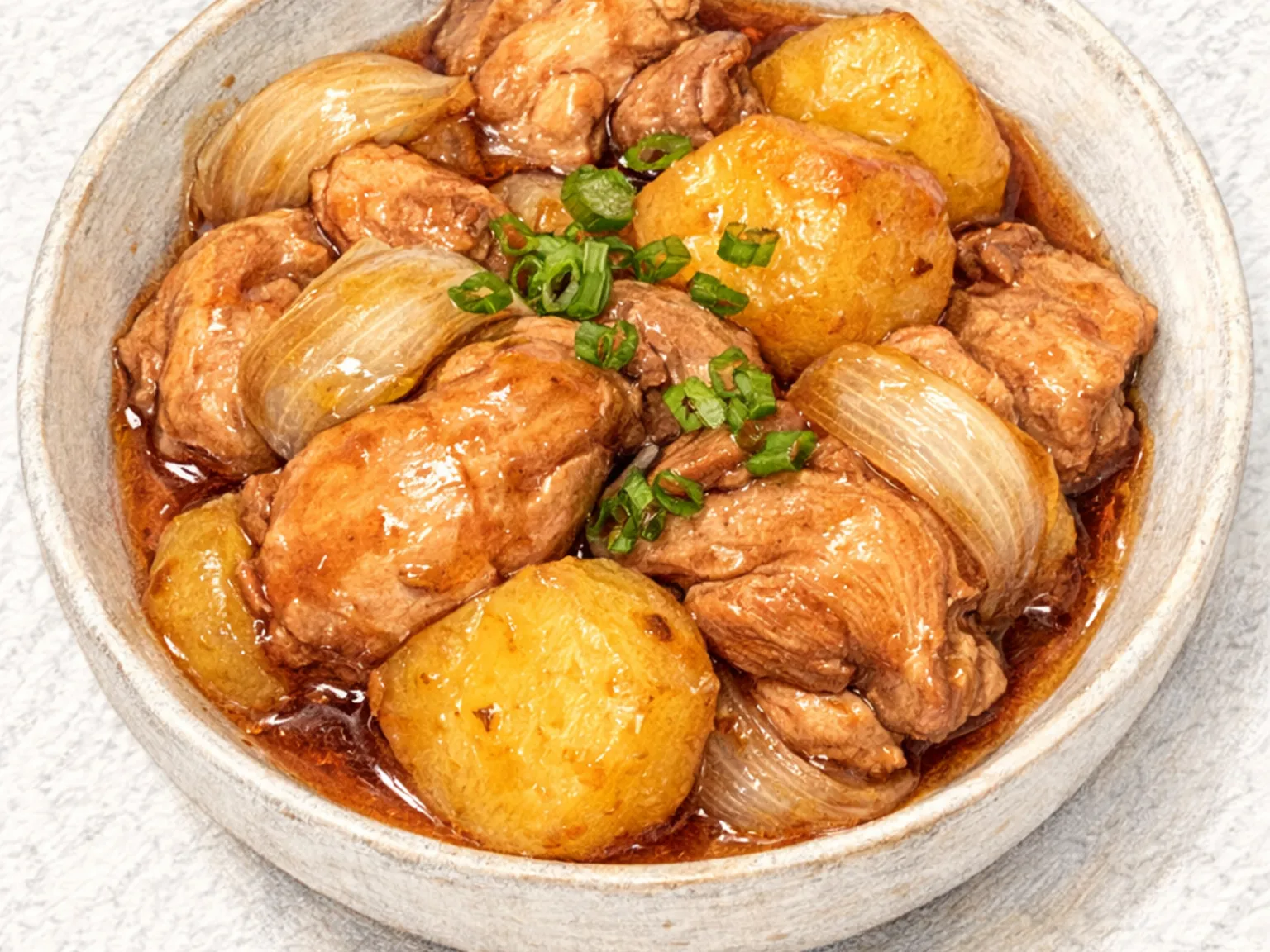
Korean Spicy Braised Chicken
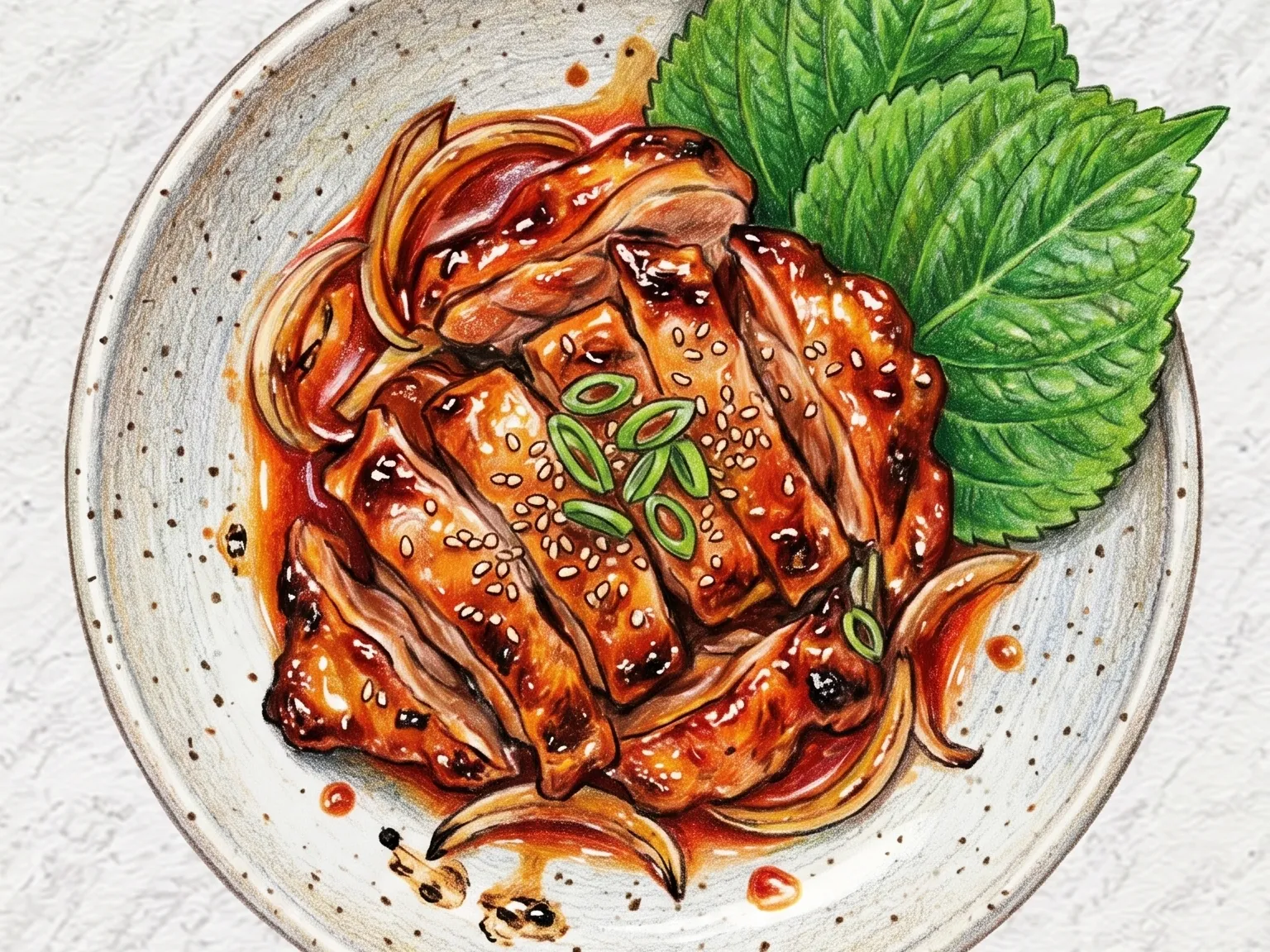
Dak-bokkeum-tang starts with chicken pieces stir-fried in a gochujang and soy sauce mixture, then water is added and the whole pot simmers down until the liquid reduces to a thick, clinging sauce. Potato chunks absorb the braising liquid as it concentrates, becoming fully flavored throughout rather than just on the surface, while onion softens and dissolves over the long cooking time, lending the broth a natural sweetness. Gochujang supplies the heat backbone and soy sauce contributes the umami depth, producing a flavor profile that layers rather than reads as a single note. The longer the simmer, the deeper the seasoning drives into the meat and bones, and the sauce itself thickens to a glossy consistency. Spooning the reduced sauce over a bowl of rice turns the meal into a quick, satisfying seasoned rice dish.

Korean Stir-fried Sundae (Sundae Bokkeum)
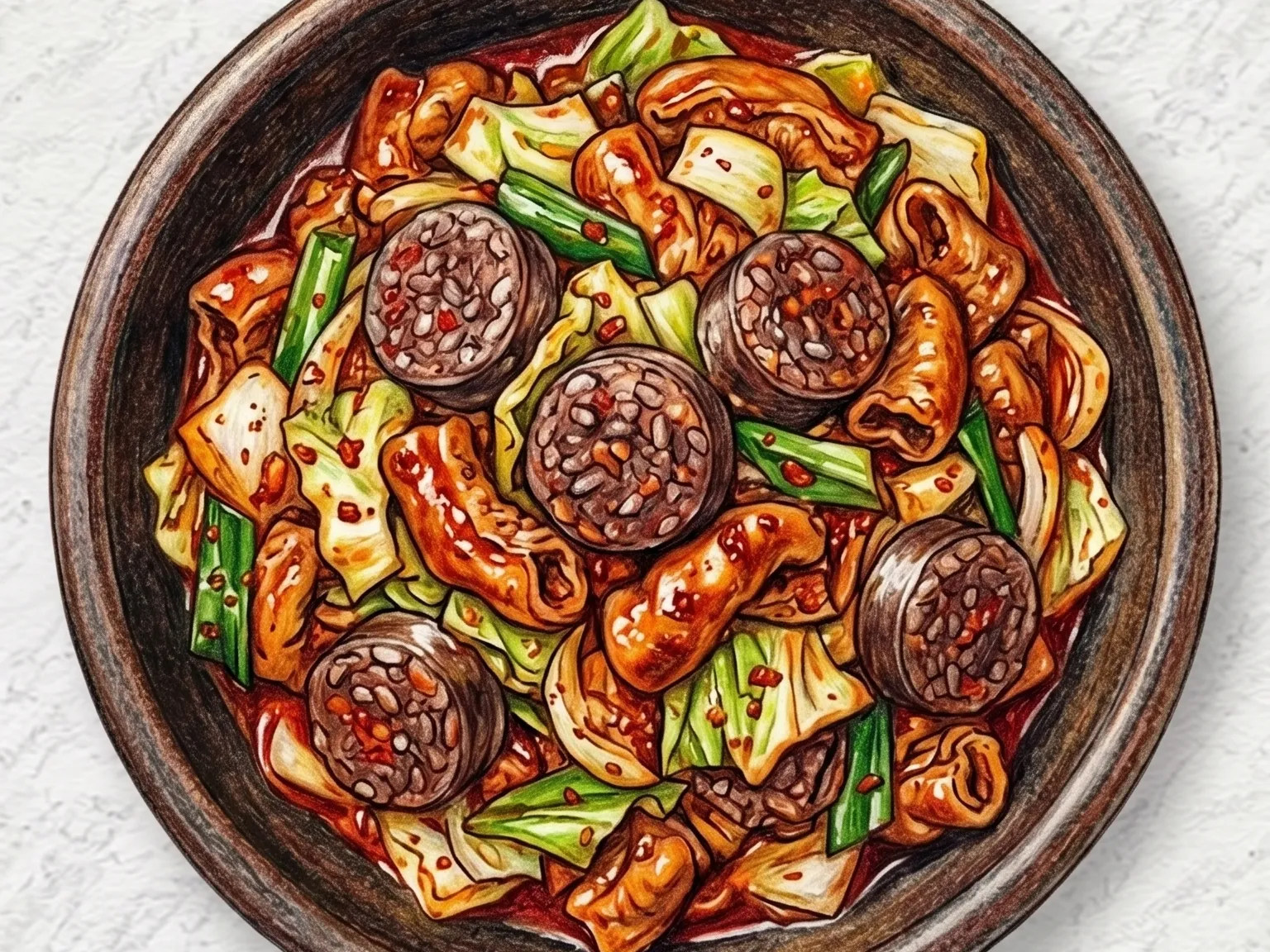
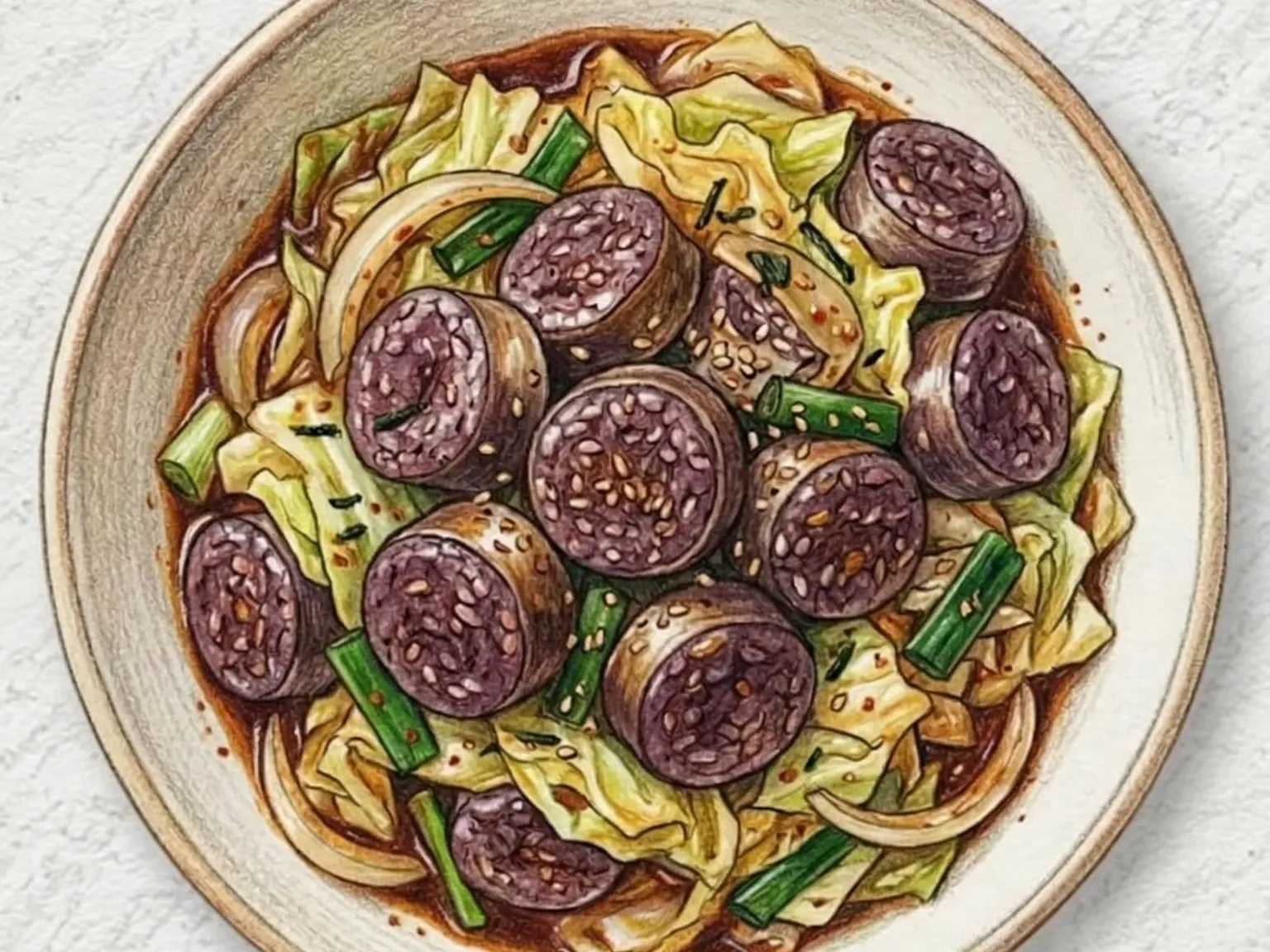
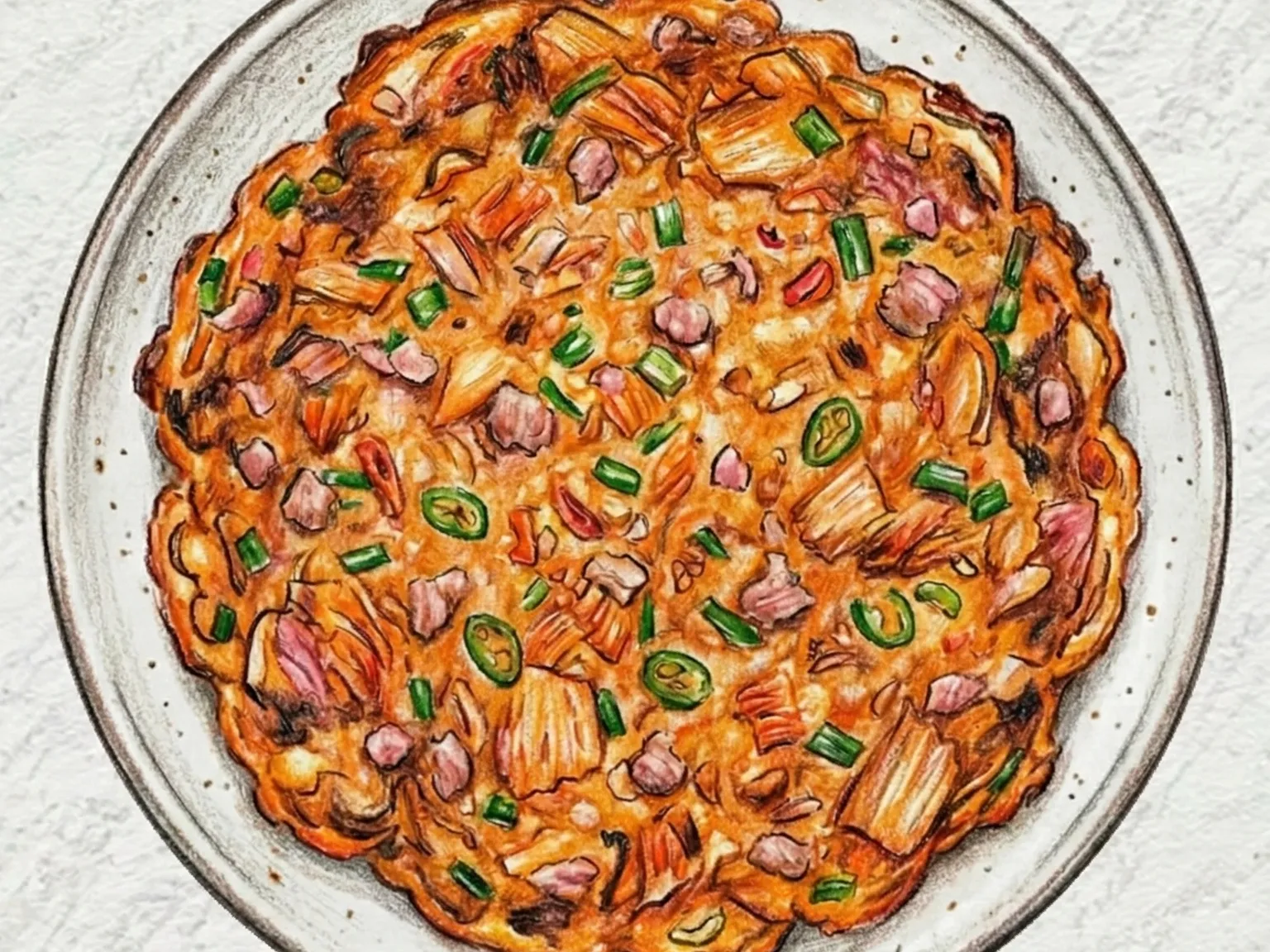
Sundae-bokkeum is a spicy Korean stir-fry of blood sausage with cabbage, onion, and green onion in a sauce made from gochujang, gochugaru, soy sauce, sugar, and garlic. High heat and a short cooking time are essential because prolonged stir-frying causes the sundae casing to burst and the filling to toughen, while the cabbage and onion release just enough moisture as they wilt to help the sauce coat every piece evenly. The seasoning stacks direct heat from gochujang, a gentler radiant warmth from gochugaru flakes, and sweetness from sugar into a multidimensional spicy-sweet profile. Green onion is held until the very last moment so its fragrance survives the heat; added earlier, the aroma disappears before the dish reaches the table. Adding tteokbokki rice cakes transforms the dish into the popular combo known as tteoksuni, and a layer of melted cheese on top rounds out the spice.

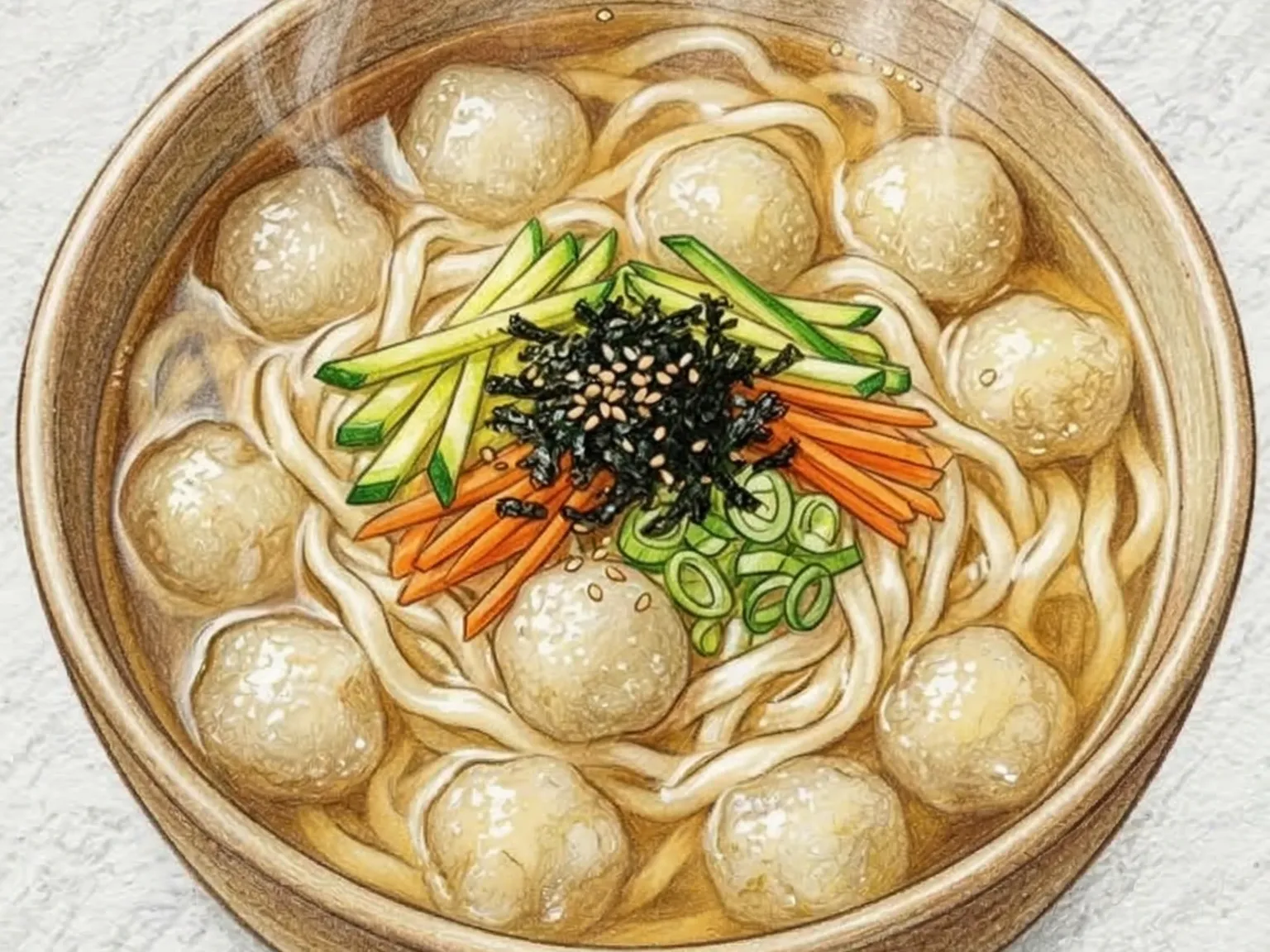
Korean Chicken and Neungi Mushroom Soup
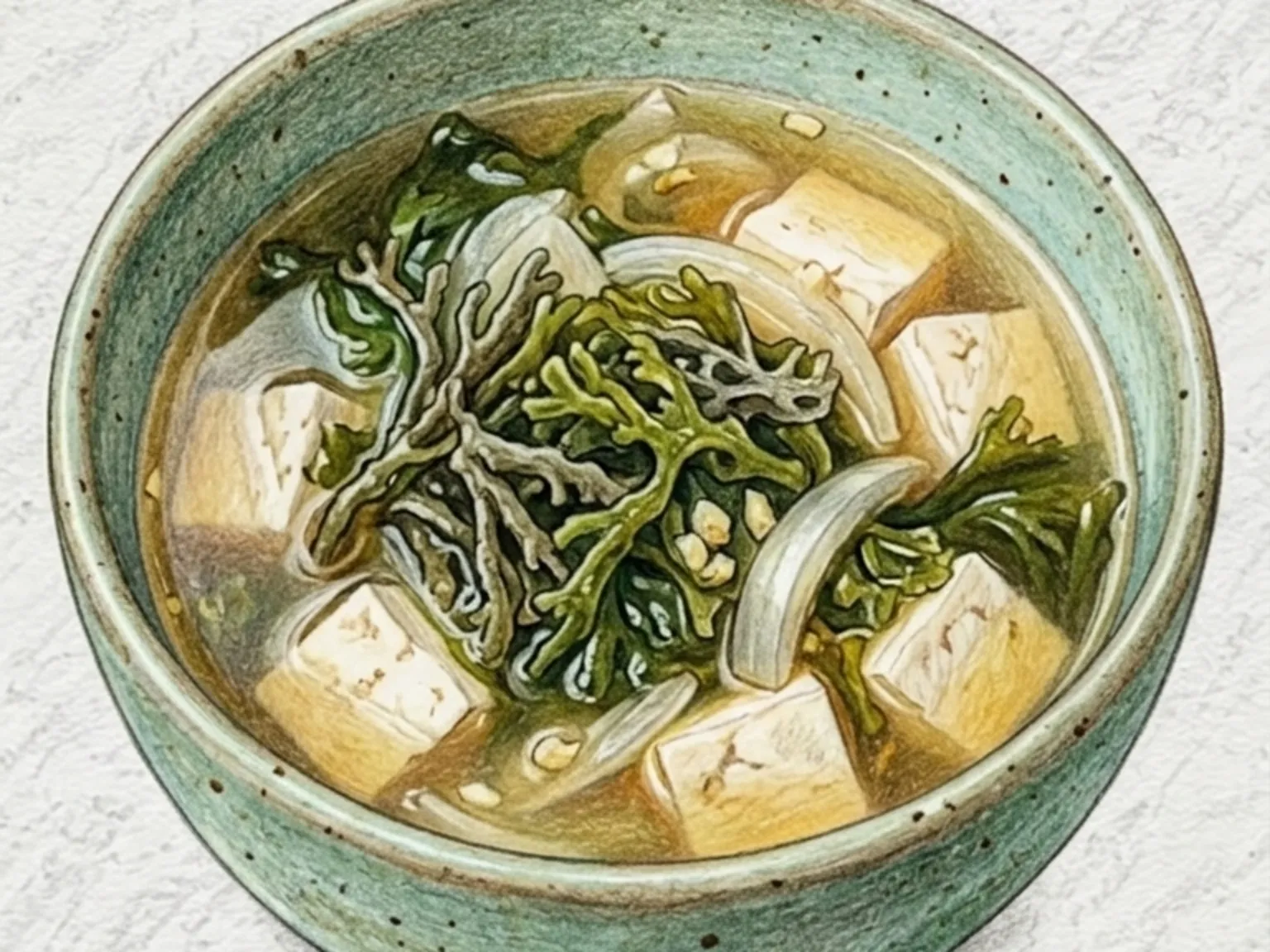
Neungi-dak-gomtang is a Korean chicken soup elevated by neungi mushrooms, a wild variety prized for their intense, almost truffle-like fragrance. The chicken is blanched first to remove impurities, then simmered for fifty minutes with onion, garlic, and ginger to build a clear, rich stock. After straining, the torn chicken meat is returned to the pot along with the neungi mushrooms, which steep in the hot broth for fifteen minutes - long enough to release their deep, earthy perfume without losing its complexity. The mushroom's aroma permeates the entire liquid, transforming an already satisfying chicken soup into something far more layered and aromatic. Seasoning is kept to soup soy sauce and salt, ensuring nothing competes with the interplay between poultry richness and mushroom fragrance. In Korea, this soup is considered both nourishing and luxurious, often served during autumn when neungi mushrooms are freshly foraged.

Korean Young Radish Kimchi Stew
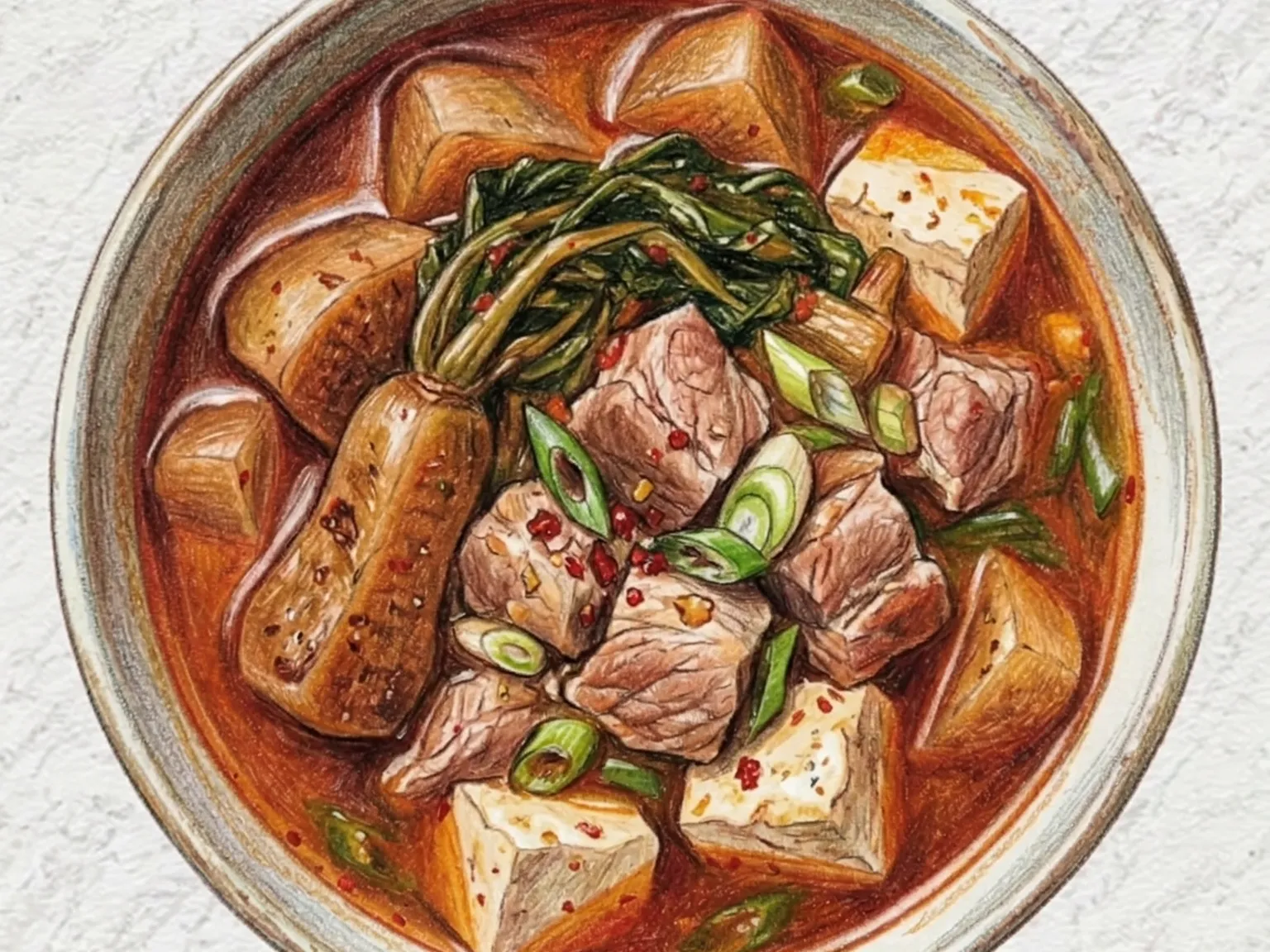
Chonggak kimchi jjigae uses fermented whole ponytail radishes in place of the usual napa cabbage kimchi. The radish pieces retain a firm, crunchy bite even after simmering, setting this version apart from the standard stew in both texture and flavor. Pork shoulder and a generous pour of kimchi brine build a full-bodied, sharply tangy broth, and tofu added near the end rounds out the bold, spicy flavors with a soft counterweight.

Korean Braised Pork Ribs
Dwaeji galbi-jjim is a Korean braised pork rib dish simmered in a soy sauce base with Korean radish, carrots, and onion. The ribs cook low and slow until the meat practically falls off the bone, absorbing the ginger- and garlic-infused braising liquid along the way. Soy sauce, sugar, and fermented depth from the ganjang build a savory-sweet profile without tipping into sweetness. The radish chunks turn translucent and soak up the seasoning, becoming as flavorful as the meat itself. Served with steamed rice, this is a hearty main course suited to cooler weather.

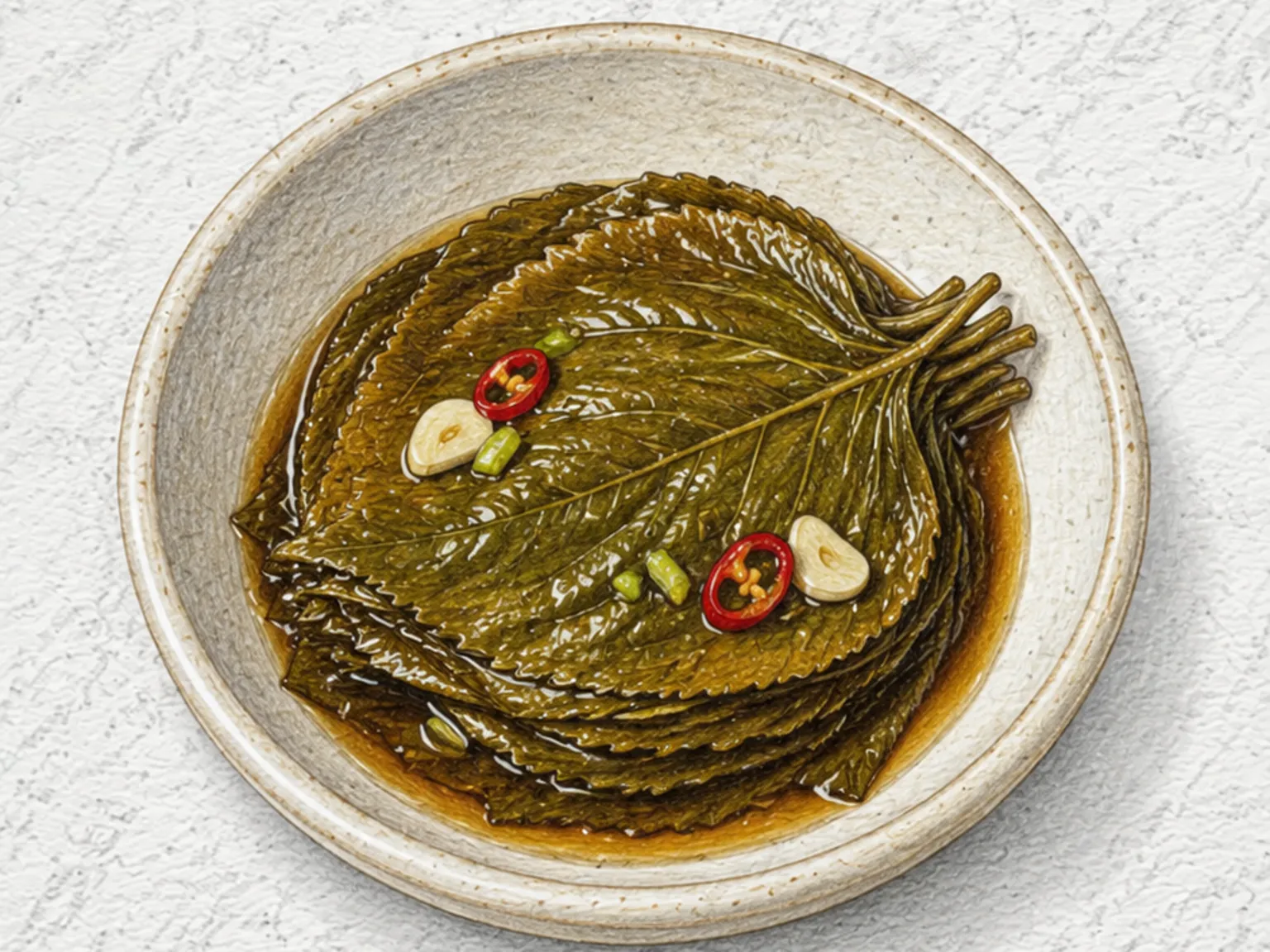
Korean Garlic Scape Kimchi
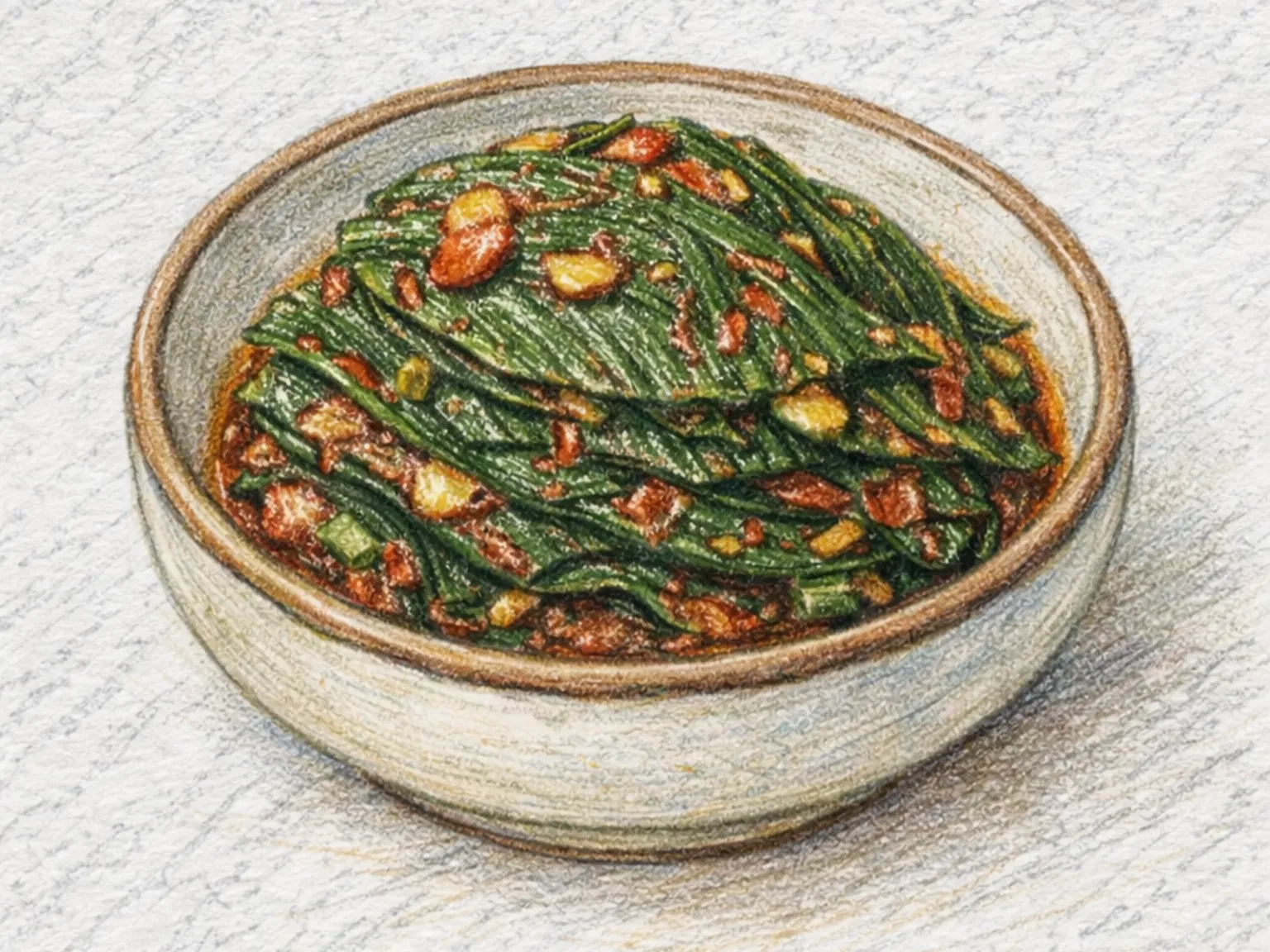
Maneul jong kimchi is a garlic scape kimchi made by lightly brining freshly harvested scapes, then dressing them in a seasoning paste of gochugaru, fish sauce, and plum syrup blended with pureed onion and pear. The scapes' sharp, piercing garlic aroma does not diminish through fermentation - it persists alongside the stems' crisp bite, delivering alternating pulses of heat and umami that build with each chew. Pear works into the base to introduce a fruit sweetness that blunts the chili intensity, while fish sauce provides the fermented backbone that grounds the entire kimchi. Trimming the fibrous bottoms before seasoning produces a more uniform snap throughout. Leaving the jar at room temperature for roughly two days allows the flavors to integrate and mellow into balance before refrigerating. This is a seasonal kimchi made only in spring when garlic scapes appear in the market, and its combination of raw green pungency and assertive garlic heat sets it apart from any other variety in the Korean kimchi repertoire.

Korean Spicy Pork Mixed Noodles
Jeyuk bibim-guksu tops cold mixed noodles with stir-fried spicy pork, combining two popular Korean preparations into one bowl. Pork shoulder is marinated in gochujang and gochugaru, then seared quickly so the edges caramelize while the inside stays moist and tender. Shredded cabbage and onion provide a crisp contrast to the sauced pork, and soy sauce with sugar balances the heat with savory sweetness. The temperature contrast between chilled somyeon noodles and hot, sizzling pork creates a distinctive eating experience that is one of the dish's defining pleasures. Keeping the noodles and the pork separate until the moment of serving prevents the somyeon from absorbing moisture and going soft. A final drizzle of sesame oil adds a nutty send-off.

Kkaennip Mushroom Cream Farfalle
Kkaennip mushroom cream farfalle combines sliced button mushrooms and fresh perilla leaves in a cream sauce over bow-tie pasta. The mushrooms are sauteed in olive oil until their moisture cooks off and their flavor concentrates, with onion and garlic building the aromatic base. Heavy cream is then added to form the sauce, and shredded perilla goes in at the end so the leaves wilt just enough to release their fragrance without losing it to the heat. Parmesan contributes salt and a nutty underpinning, while farfalle's ridged and folded surface holds the sauce across every piece. The defining quality of the dish is the perilla itself, whose scent belongs to the sesame family and sits in entirely different territory from basil or mint - grassy, faintly resinous, and unmistakably Korean. Few other herbs could give a cream pasta this specific character.

Butter Chicken
Butter chicken - murgh makhani - starts by marinating chicken thighs in yogurt, garam masala, and cumin, then roasting or grilling them at high heat to develop a slightly charred, smoky exterior. That surface char is a defining element; plain poaching cannot replicate it. The tomato sauce base requires long, patient reduction - the raw acidity must cook off and round into sweetness before any dairy is added. Butter and heavy cream then go in, wrapping the spice blend sharp heat in a velvety richness that carries through to the last bite. Cumin and garam masala provide the earthy, layered warmth that anchors this curry's identity, and together they produce the mild, creamy character that sets murgh makhani apart from hotter Indian preparations.

Chao Ga (Vietnamese Chicken Rice Porridge with Ginger)
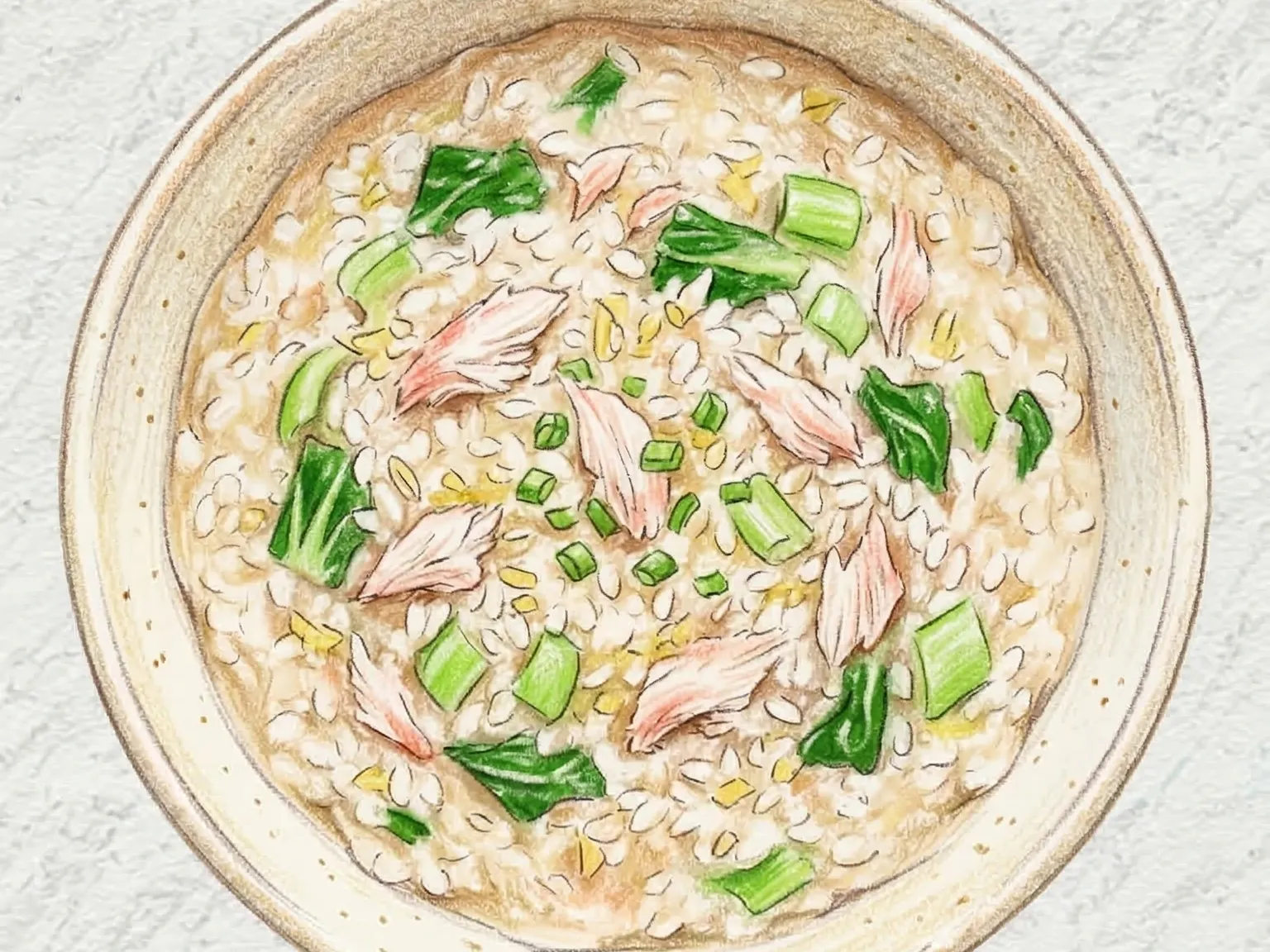
Chao ga is Vietnam's most widely eaten breakfast porridge, served whenever someone is ill or needs gentle nourishment, occupying the same restorative role that dakjuk holds in Korean cooking. A whole chicken simmers in water until the broth turns opaque and deeply flavored, then rice cooks directly in that liquid until the grains dissolve into a thick, almost creamy consistency. Generous slices of ginger added early in cooking suppress any gaminess and warm the stomach, while fish sauce brings an underlying umami depth that plain salt cannot replicate. The finished porridge is ladled into bowls and finished with hand-shredded chicken meat, fresh cilantro, cracked black pepper, crispy fried shallots, and strips of you tiao -- Chinese fried dough sticks -- whose crunch against the soft porridge creates a textural contrast considered essential to the dish. In Hanoi's early-morning alleys, chao ga vendors work from a single clay pot, serving hundreds of bowls to workers and commuters before noon, and the sight of rising steam from those stalls remains one of the defining images of the Vietnamese morning.

Korean Stir-Fried Seaweed Stems with Perilla
Deulkkae miyeokjulgi-bokkeum stir-fries salted seaweed stems with perilla oil and ground perilla seeds, diverging from the standard sesame-and-soy version by foregrounding the earthy nuttiness of perilla. Desalting the stems in cold water for at least fifteen minutes is the essential first step - too brief and the dish is unpalatably salty, too long and the oceanic character washes away entirely. Garlic is sauteed in perilla oil to build an aromatic foundation, then the drained stems join with soup soy sauce and a splash of water for three minutes of stir-frying. Ground perilla seeds go in at the end, where they bind with the residual moisture and coat each strand in a pale, creamy film. Julienned onion added alongside contributes sweetness that balances the seaweed's brininess. The perilla powder's starch partially gelatinizes on contact with heat, thickening the sauce - but overcooking past this point turns the coating chalky, so timing the final addition is critical. Sesame seeds scattered off heat complete the dish.

Korean Danhobak Haemul Juk (Kabocha Seafood Porridge)
Danhobak haemul juk is a traditional Korean rice porridge that uses kabocha squash, shrimp, and squid as its primary ingredients. The foundation of the dish begins with short grain rice that has been soaked in water until it becomes opaque. This rice is then lightly toasted in a pot with a small amount of toasted sesame oil. This initial sauteing process is functional, as the oil forms a thin layer around each grain. This fat coating prevents the rice from disintegrating too quickly during the boiling process and provides a subtle, toasted depth of flavor to the entire dish. Once the rice is prepared, it is simmered in a stock made from either dried anchovies or dried kelp. Diced pieces of kabocha squash are added to the liquid early in the cooking process. As the rice and squash cook together, the squash eventually becomes tender enough to yield under light pressure. At this point, a spoon is used to press several pieces of the squash against the interior wall of the cooking pot, mashing them into a fine pulp. This pulp dissolves into the liquid, providing a natural thickening agent for the porridge and introducing a mild sweetness that intensifies during the simmering period. The seafood components, consisting of cleaned shrimp and sliced squid, are introduced to the pot only during the final minutes of cooking. They are heated just until their proteins set and their flesh becomes firm. This specific timing is necessary to ensure the seafood retains a snappy and tender texture, avoiding the rubbery consistency that results from excessive heat exposure. The inherent salinity of the shrimp and squid provides a direct contrast to the sweetness of the kabocha squash, creating a complex flavor profile. The only seasoning used for this porridge is salt, which is added to taste. This minimalist approach allows the natural flavors of the squash and seafood to remain prominent. From a nutritional perspective, the dish is balanced through the combination of protein from the aquatic ingredients and the high beta-carotene content found in the squash.

Korean Chicken Japchae (Glass Noodles with Chicken Breast and Vegetables)
Dak-japchae is a lighter variation of Korean glass noodle stir-fry made with chicken breast instead of the traditional beef. Using chicken keeps the dish lean and clean in flavor, allowing the noodles and vegetables to come through more clearly. Spinach, carrot, shiitake mushroom, and onion each contribute a distinct texture and color, building multiple layers of taste within a single plate. Soy sauce and sugar establish the sweet-salty backbone of the seasoning, and sesame oil coats the chewy glass noodles with a nutty richness that ties the dish together. Cooking the vegetables and chicken separately prevents excess moisture from pooling in the pan, and boiling the glass noodles ahead of time and draining them well ensures the seasoning distributes evenly. Lower in calories than pork or beef japchae, this version provides satisfying fullness without heaviness.

Korean Street Burger (Soy-Garlic Beef Pork Patty in a Bun)
Tteokgalbi burger takes the flavors of traditional Korean grilled short-rib patties and fits them into a handheld bun format. Ground beef and pork are seasoned with soy sauce, sugar, minced garlic, and sesame oil, then shaped into flat patties and pan-seared over medium heat. Finely diced onion worked into the meat traps moisture during cooking, keeping the interior juicy even as the surface builds a caramelized crust from the soy-sugar marinade. That thin, browned exterior replicates the glossy lacquer that distinguishes proper tteokgalbi from a plain beef patty, delivering a sweet-savory depth without additional condiments. A toasted bun spread with mayonnaise and lined with crisp lettuce gives the rich patty a cool, crunchy counterpart. A small drizzle of soy glaze over the top just before serving intensifies the lacquered finish and ties the whole sandwich back to its Korean origins.

Korean Beef Bean Sprout Soup
Sogogi sukju-guk is a quick Korean soup where seared beef and crisp mung bean sprouts come together in a clear, invigorating broth. The beef brisket is first stir-fried in sesame oil to render its fat and deepen its flavor, then water is added and brought to a rolling boil. Bean sprouts enter the pot only in the final minutes so they retain their signature crunch - the plump heads snap between the teeth while the slender tails wilt just enough to release moisture that lightens and clarifies the broth. The contrast between the beefy richness and the sprouts' clean, almost grassy freshness keeps the soup feeling bright rather than heavy. Soup soy sauce and a spoonful of minced garlic round out the seasoning without masking the main ingredients. Because bean sprouts lose their texture quickly once overcooked, the soup is best ladled into bowls the moment it is done. Koreans often spoon it over steamed rice for a fast, satisfying meal that feels both nourishing and easy on the stomach.

Korean Chwinamul Doenjang Stew
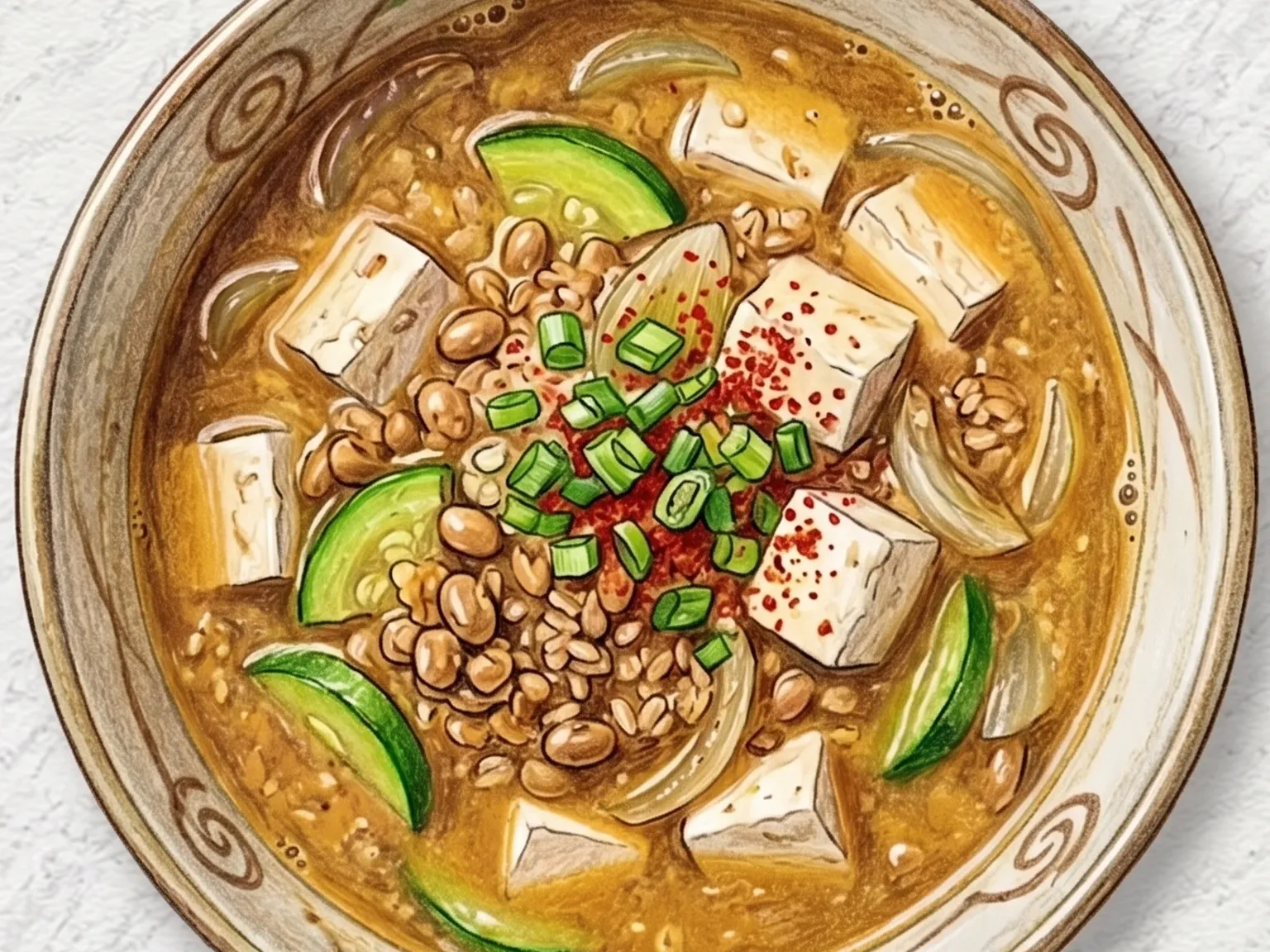
Chwinamul-doenjang-jjigae is a Korean stew that pairs wild aster greens with fermented soybean paste, letting the mountain herb's sharp, slightly bitter fragrance run through a deeply savory broth. Rice-rinsing water replaces stock as the base, giving the broth a gentle body, while potato pieces break down gradually during cooking and thicken the liquid without any additional steps. Shimeji mushrooms add chew at irregular intervals throughout the bowl. The stew benefits most from fresh spring chwinamul, when the greens carry the strongest mountain-herb aroma. A small drizzle of perilla oil stirred in at the end adds a nutty finish that rounds out the fermented soybean base.

Korean Braised Eggplant and Tofu
Gaji dubu jorim combines eggplant and firm tofu braised together in a soy sauce and gochugaru seasoning. The eggplant soaks up the sauce and turns silky soft, while the pan-seared tofu holds its shape with a slight firmness on the outside. Garlic and green onion round out the flavor, creating a lightly spicy, umami-rich side dish. Salting the eggplant briefly before cooking draws out excess moisture so the pieces absorb the seasoning more deeply without falling apart during braising. Draining the tofu and pan-frying it on both sides before adding it to the sauce keeps the blocks intact and gives the surface a slightly chewy resistance against the tender eggplant. A practical vegetarian-friendly banchan that delivers both protein and vegetables without any meat.

Korean Water Parsley Kimchi
Minari kimchi is a quick, no-fermentation Korean water parsley kimchi that is ready to eat the moment it is made. The stems are salted for just ten minutes to barely wilt them, preserving their characteristic crunch and cool, clean herbal fragrance. Blended onion is worked into the seasoning paste alongside gochugaru, anchovy fish sauce, and plum syrup, giving the dressing body and a gentle sweetness. Anchovy fish sauce lays a seafood umami foundation under the light vegetable, while plum syrup's fruit acidity softens the chili heat rather than letting it dominate, so the finish is bright and refreshing rather than sharp. Paired with samgyeopsal or boiled pork, the water parsley's aromatics cut directly through the fat, cleansing the palate between bites in a way that heavier banchan cannot. The kimchi is best eaten on the day it is made while the stems still have their full snap.

Korean Spicy Seafood Noodle Soup
Jjamppong is a Korean-Chinese noodle soup where seafood and vegetables are stir-fried in chili oil at very high heat before broth is added, a sequence that fundamentally shapes the soup. Blooming gochugaru in hot oil instead of adding it directly to liquid extracts fat-soluble compounds that carry a smoky, toasted depth the raw powder cannot contribute. Squid, mussels, and shrimp release their own juices during the fry stage, and those juices dissolve into the chicken stock when the liquid hits the pan. Cabbage and onion caramelize in the residual oil and give off natural sugars that temper the chili heat. Soy sauce binds the seasoning and gives the broth its reddish-brown depth. Springy fresh wheat noodles absorb the concentrated broth, and by the time they reach the table the noodles are already carrying the full flavor of the soup in every strand.

Mala Chicken Alfredo Fusilli
Mala chicken Alfredo fusilli is a fusion pasta that brings Sichuan mala sauce -- built on the numbing tingle of Sichuan peppercorn and the heat of dried chili -- into a cream-and-Parmesan Alfredo base. Chicken thigh is cut into bite-sized pieces and pan-seared to build a browned crust, then garlic and onion are sautéed in the residual fat to form the aromatic foundation. The Alfredo sauce is assembled from heavy cream, milk, and Parmigiano-Reggiano, with mala sauce stirred in to layer the peppercorn numbness against the dairy's richness. The amount of mala sauce added can be adjusted freely, making it straightforward to dial the level of tingling heat to preference. Fusilli's spiral ridges trap the thick sauce deep into their grooves so each piece delivers an even coating of flavor, and butter acts as a bridge between the cream base and the assertive spice, pulling both into a cohesive, glossy whole.

Caldo Verde (Portuguese Potato Soup with Kale and Sausage)
Caldo verde is Portugal's most emblematic soup, originating in the Minho region of the north and eaten across the country at festivals, family tables, and everyday meals. A base of potatoes and onion is simmered in water until the potatoes fall completely apart, then blended smooth so the natural starch thickens the soup without any added cream, flour, or roux. The result is a velvety texture built entirely from vegetables and water. Sliced smoked chourico or linguica is added next, and as the sausage heats through its rendered fat and smoky salt diffuse through the broth, adding depth and richness that a plain potato soup cannot offer. Collard greens or kale are cut into the thinnest possible ribbons and cooked for only the final eight minutes, which keeps the color vivid green and the texture slightly resistant to the bite. Overcooking dulls the color to olive and turns the leaves soft and stringy. A drizzle of olive oil over each bowl and thick slices of broa, a dense Portuguese cornbread, alongside the soup allow the broth to soak into the crumb and complete what is otherwise a simple but deeply satisfying meal.

Chicken Biryani (Mughal Spiced Saffron Layered Rice with Chicken)
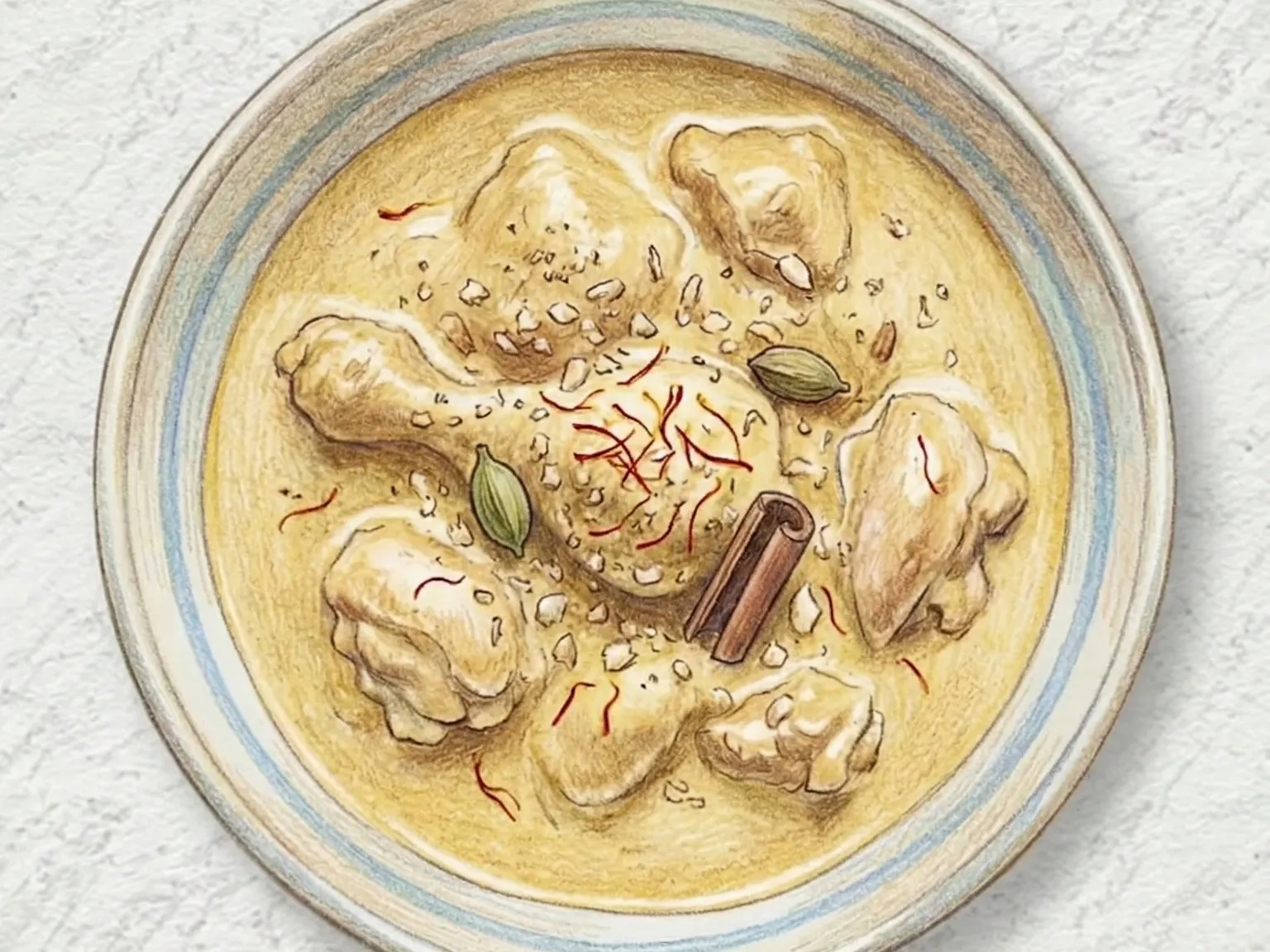
Biryani emerged from the encounter between Persian pilaf technique and Indian spice culture during the Mughal Empire, and it remains a ceremonial dish served at weddings, festivals, and Friday prayer gatherings across the Indian subcontinent. Chicken is marinated in yogurt, saffron, garam masala, and ginger-garlic paste, then layered in a heavy-bottomed pot with par-cooked basmati rice, saffron milk, fried onions, and fresh mint placed between each layer. The pot is sealed with a flour-and-water dough in a technique called dum. Inside the sealed vessel, steam circulates and the rice and meat cook in each other's aromatic vapors, exchanging flavor in a way that open-pot cooking cannot replicate. When the dough seal is broken at the table, the released cloud of saffron, cardamom, and rosewater is the dish's most dramatic moment and the signal that it is properly done. In a well-executed biryani, each grain of basmati should stand apart and carry the seasoning evenly, and the bottom layer of rice should have formed a crisp, golden crust similar to Persian tahdig. The Hyderabadi and Lucknowi styles represent two distinct traditions: the former layers raw chicken directly with par-cooked rice and cooks everything together, while the latter par-cooks both components separately before assembling, producing a cleaner, more delicate result.

Korean Tofu and Bell Pepper Salad
Paprika-dubu-muchim combines 300 grams of blanched firm tofu, crumbled coarsely by hand, with julienned red and yellow bell peppers, cucumber, and onion in a soy-vinegar dressing. Blanching the tofu for just one minute removes any raw bean flavor while preserving a soft, creamy texture that contrasts with the crisp, sweet snap of the peppers. The onion is soaked in cold water for three minutes to tame its bite before joining the bowl. Sesame oil and minced garlic round out the dressing, adding depth without heaviness. Chilling the finished dish for 10 minutes before serving sharpens the vegetable flavors and makes the tofu firmer to the bite.

Korean Braised Tofu Rice Bowl
Dubu jorim deopbap places soy-braised tofu over a bowl of hot steamed rice, using the reduced braising glaze as the primary seasoning for the entire dish. Firm tofu is sliced into rectangles, patted dry to remove surface moisture, and pan-fried over high heat until a dense golden crust forms on both sides. This crust is essential - without it, the tofu absorbs the braising sauce too quickly and falls apart. With it, the exterior holds its structure while the interior slowly soaks up the seasoning from the inside out. The braising sauce is built from soy sauce, sugar, minced garlic, and a small amount of water. Sliced onion cooks alongside the tofu in the sauce, softening and dissolving into the liquid to contribute sweetness as the sauce reduces to a sticky, mahogany-colored glaze. Cheongyang chili, sliced on the bias, introduces a sharp clean heat that cuts through the sweetness of the sauce. Green onion goes in last, just before plating, to keep its fragrance intact. The finished sauce is spooned over the rice along with the tofu, where it seeps into each grain and ensures that flavor remains consistent from the first bite to the last. The dish stands on its own without additional side dishes and provides a practical source of plant protein for vegetarian meals.