Charim

2686 Korean & World Recipes

2686+ Korean recipes, clean and organized. Ingredients to instructions, all at a glance.

Recipes with vinegar

24 recipes

Buy vinegar
Bellflower Root and Pear Salad
SaladsMedium

Bellflower Root and Pear Salad

Bellflower root, called doraji in Korean, is rubbed with salt to draw out its natural bitterness, then briefly blanched until its texture softens just enough at the surface while retaining a firm, pleasantly chewy bite. Julienned Korean pear is mixed in to bring cool sweetness and plenty of juice that offsets the root's dryness. The seasoning follows a traditional Korean muchim pattern: gochugaru for heat, vinegar for a sour lift, and fish sauce for a deep savory base. Sesame oil is drizzled in last, adding a toasted, nutty aroma that ties the whole dish together. The combination of bitter root, sweet pear, and sharp dressing makes each bite shift slightly as the flavors blend on the palate.

🥗 Light & Healthy🍱 Lunchbox
Prep 20minCook 3min2 servings
Japanese-Style Chili Shrimp (Ebi Chili)
AsianMedium

Japanese-Style Chili Shrimp (Ebi Chili)

Ebi chili was created in the 1970s when Chen Kenmin, a Sichuan-born chef working in Tokyo, adapted the fiery Sichuan prawn stir-fry with doubanjiang to suit Japanese palates. The original Sichuan preparation leads with doubanjiang's raw, aggressive heat, but Chen softened that edge by adding ketchup, beaten egg, and chicken stock, transforming a sharp regional dish into the glossy, gently spiced sauce that became a Japanese staple. Shrimp are lightly coated in cornstarch and flash-passed through hot oil to form a thin shell on the outside. That shell absorbs the sauce during the final toss while protecting the shrimp's firm, springy interior. Minced garlic, ginger, and scallion are fried in oil first to build a deep aromatic base, then doubanjiang is toasted in the same oil until its raw pungency mellows and the oil takes on a deep red color. Ketchup and sugar go in next, followed by chicken stock, and the sauce is reduced until it coats a spoon. The beaten egg stirred in last gives the finished sauce a slightly creamy, silky body. Ebi chili is one of the most recognized items on Japanese teishoku restaurant menus, typically served as a set meal with steamed rice, miso soup, and a small side salad. It is equally common in home kitchens and bento boxes, occupying the kind of everyday familiarity that few other Chinese-inspired dishes have achieved in Japan.

🎉 Special Occasion
Prep 20minCook 12min2 servings
Korean Seasoned Kelp Strips
Side dishesEasy

Korean Seasoned Kelp Strips

Kelp strips are soaked in cold water for ten minutes to draw out excess salt, then blanched for twenty seconds, just long enough to turn them pliable without losing their snap. The strips are dressed with gochugaru, vinegar, soy sauce, sugar, and garlic while julienned cucumber adds a cool, refreshing contrast. The seasoning sits over the mineral-dense ocean flavor of the kelp, layering a bright, acidic kick onto each bite. Sesame oil and whole sesame seeds finish the dish. The strips keep a satisfying resistance between the teeth that sets them apart from softer Korean seaweed preparations. Best served cold; the texture and flavor hold up well in packed lunches. Blanching beyond twenty seconds causes the kelp to soften and lose the chew that defines this banchan.

🥗 Light & Healthy🏠 Everyday
Prep 12minCook 3min2 servings
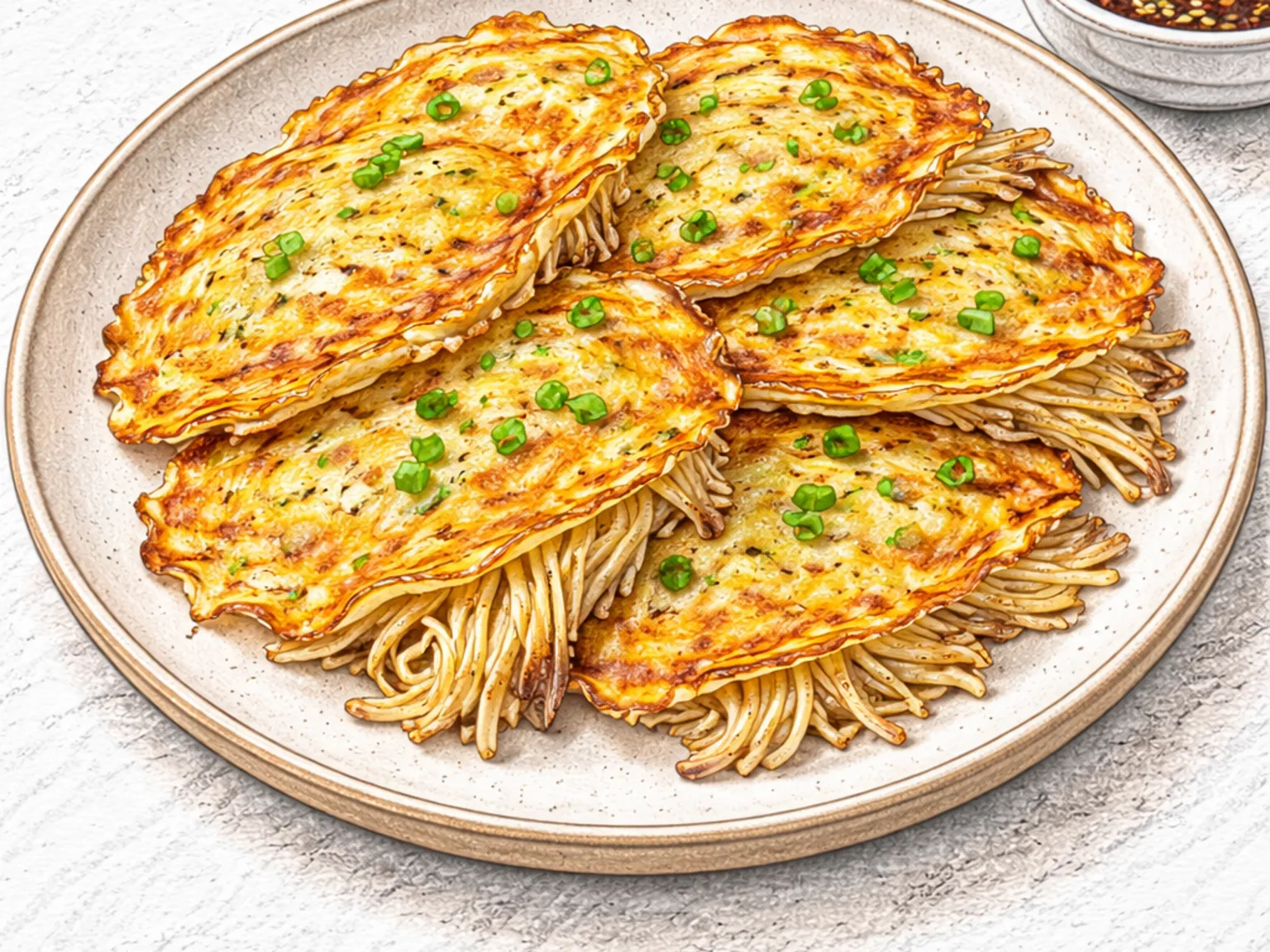
Korean Vegetable Bibim Mandu
Street foodEasy

Korean Vegetable Bibim Mandu

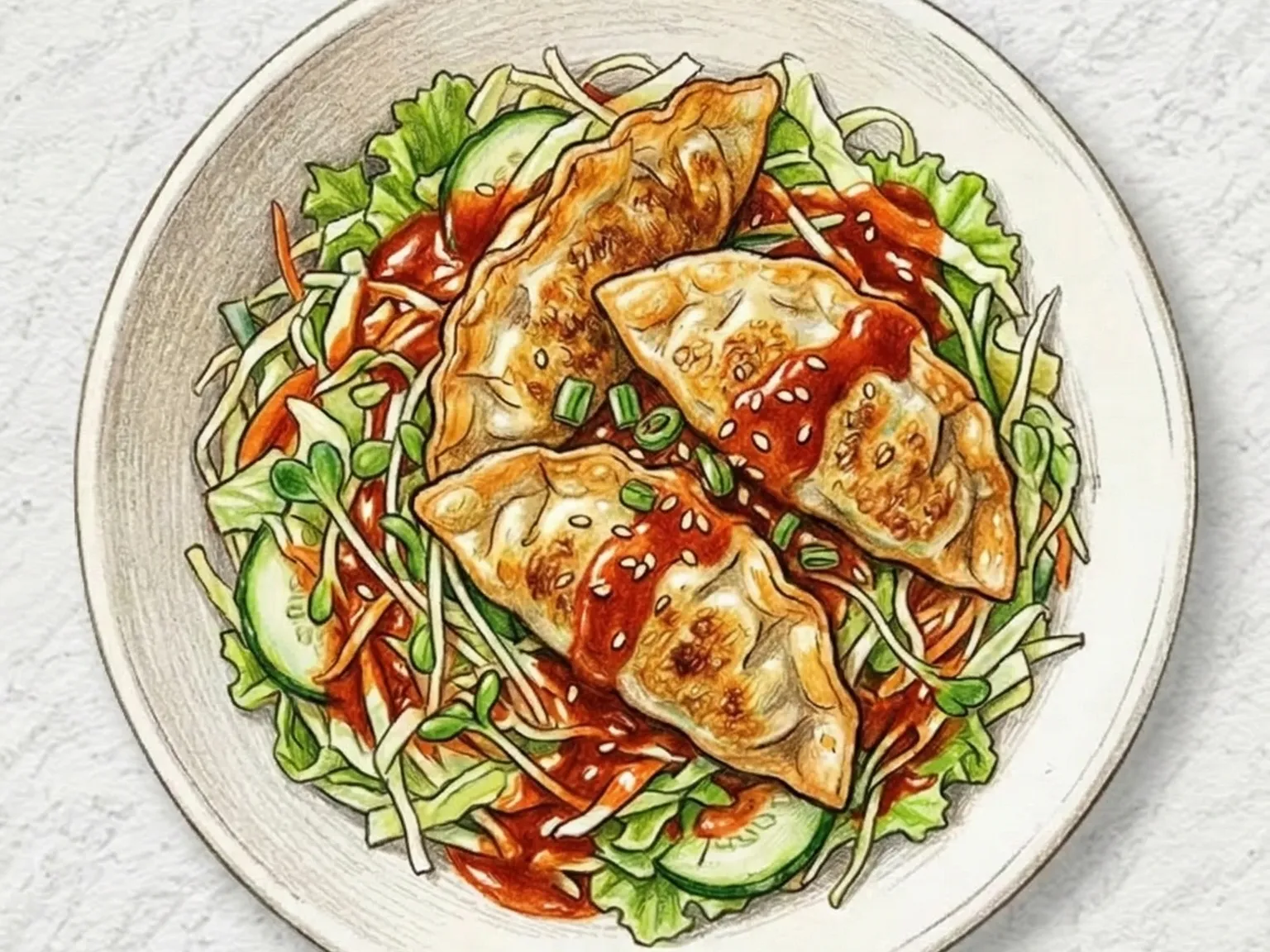
Yachae-bibim-mandu combines pan-fried or air-fried dumplings with raw shredded cabbage, lettuce, and cucumber, all tossed in a tangy-spicy dressing of gochujang, vinegar, sugar, and sesame oil. Soaking the vegetables briefly in cold water and draining them well ensures maximum crispness, and tossing half the sauce with the greens first lets the seasoning penetrate evenly. The hot dumplings are placed on top just before serving so their fried shells stay intact against the moisture underneath. Drizzling the remaining sauce over everything ties the dish together with layers of crunch from the wrapper, snap from the vegetables, and a bright, vinegar-lifted heat from the dressing.

🧒 Kid-Friendly🌙 Late Night
Prep 18minCook 10min2 servings
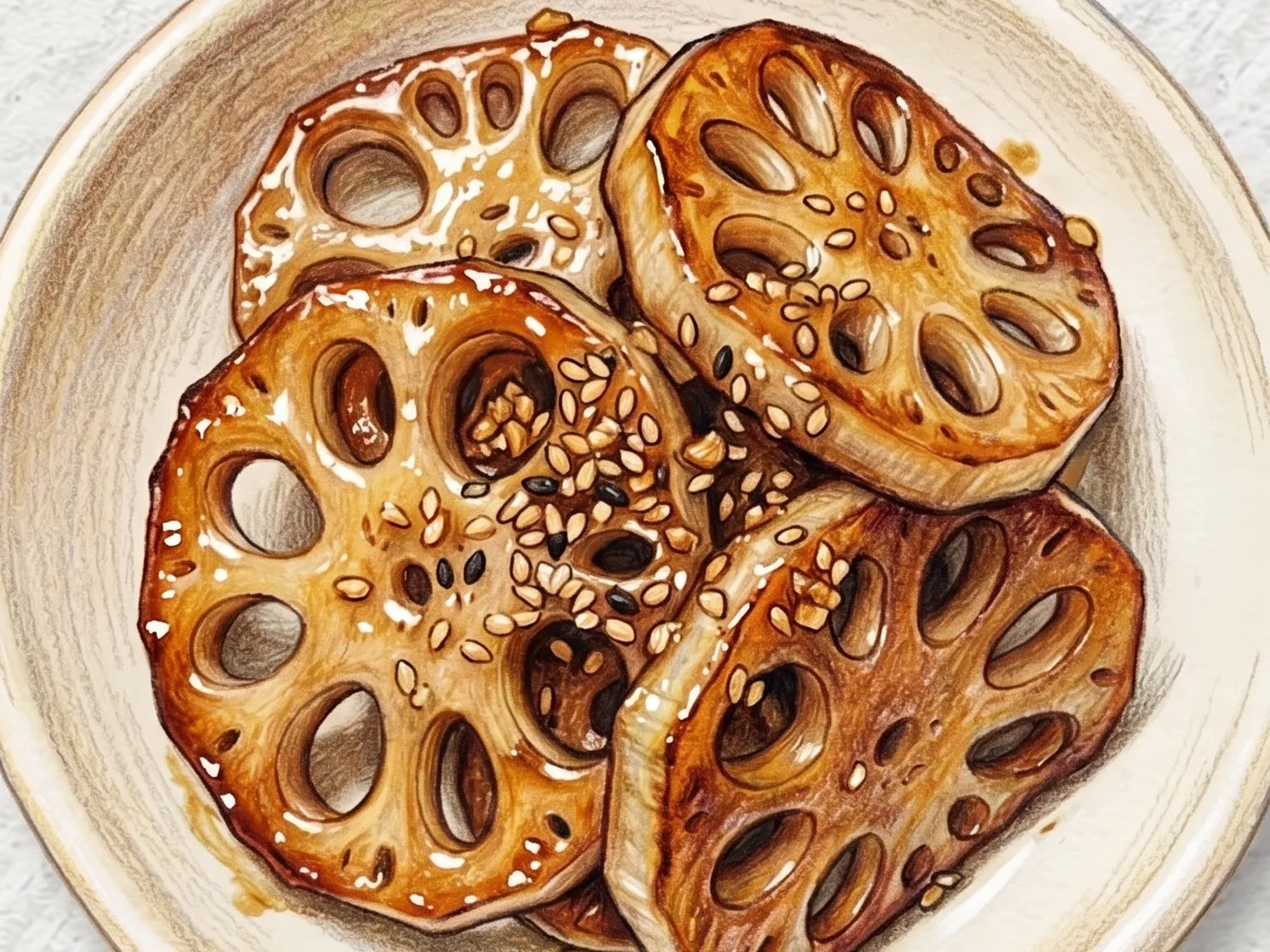
Korean Lotus Root & Peanut Braise
SteamedMedium

Korean Lotus Root & Peanut Braise

Yeongeun ttangkong jorim is a Korean soy-braised side dish of lotus root and roasted peanuts glazed in soy sauce, oligosaccharide syrup, and cooking wine. The crunchy lotus root contrasts with the toasted, nutty peanuts, and the combination releases layers of savory, roasted flavor as you chew. Soy sauce provides the salty foundation while the syrup rounds it out with a soft sweetness and glossy finish. This banchan keeps well refrigerated for several days, making it a reliable addition to lunchboxes and everyday meals.

🏠 Everyday🎉 Special Occasion
Prep 20minCook 30min4 servings
Korean Amaranth Greens Pickles
KimchiMedium

Korean Amaranth Greens Pickles

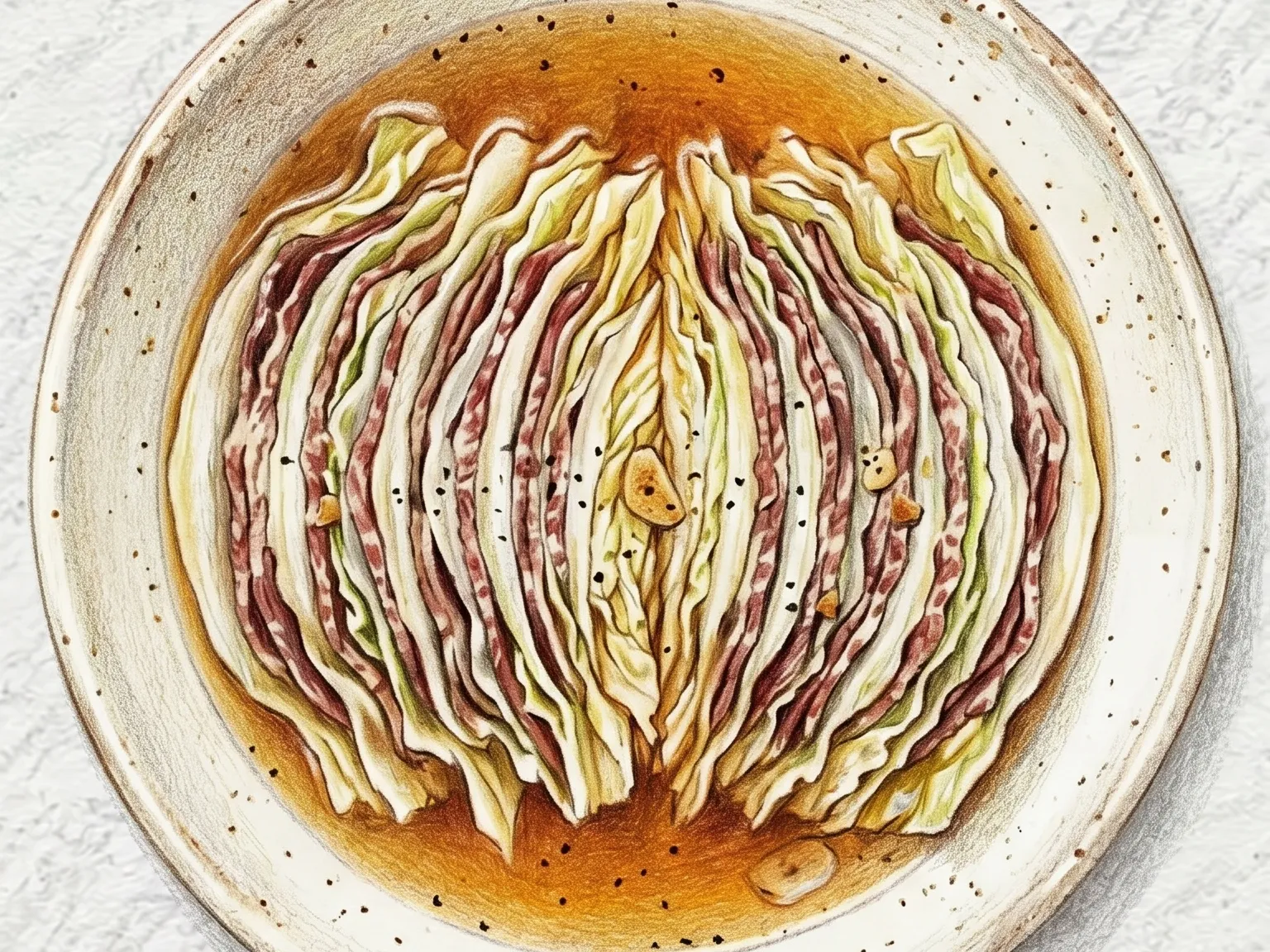
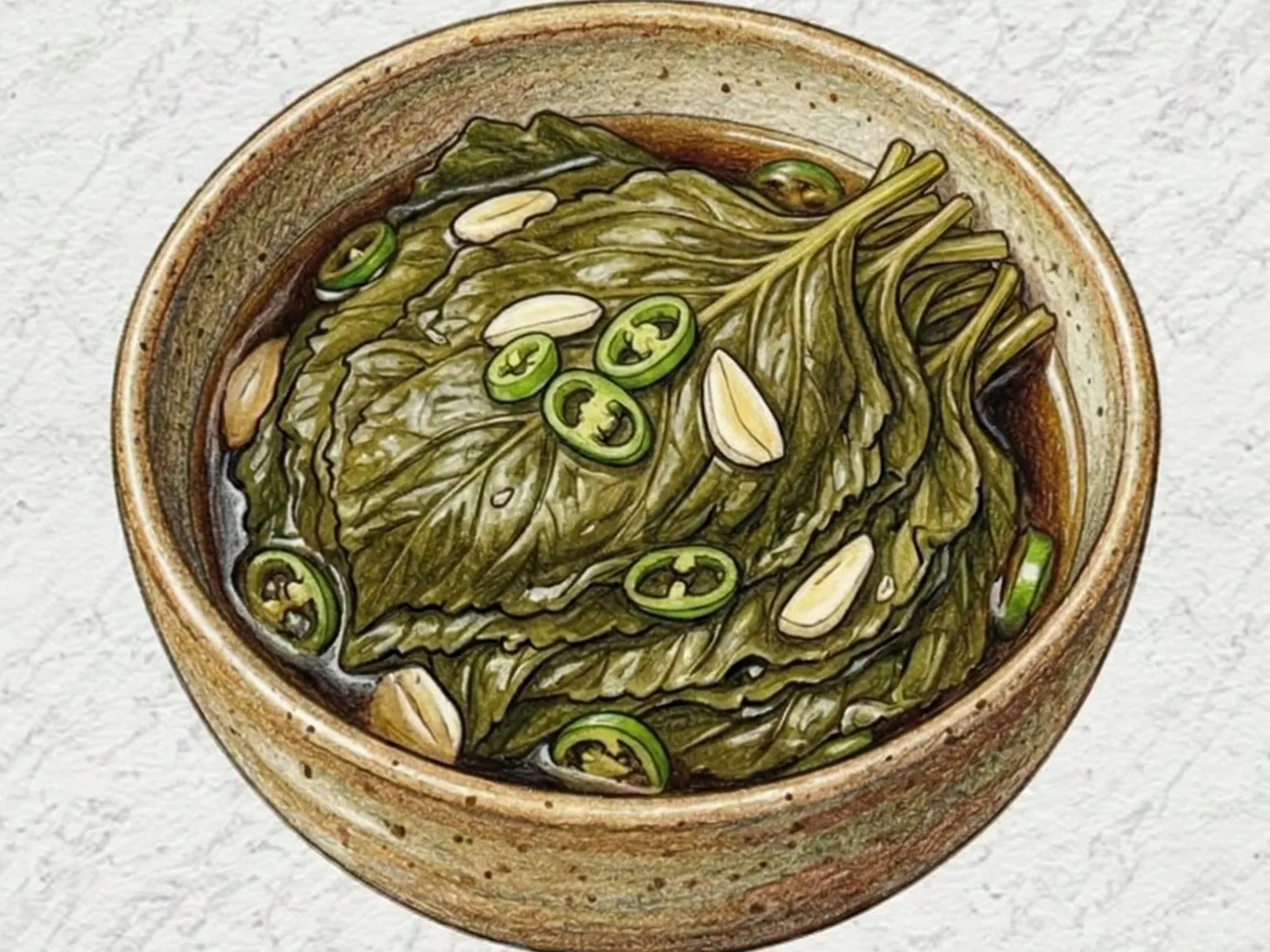
Bireumnamul jangajji is a soy-vinegar pickle of amaranth greens made by submerging the tender leaves in a boiled brine of soy sauce, vinegar, and sugar with cheongyang chili and garlic. The soft leaves absorb the pickling liquid within a day, taking on a balanced sweet-salty flavor that makes them ready to eat as banchan. Vinegar neutralizes the grassy raw taste of the greens, and the chili and garlic deliver a sharp, spicy finish that builds at the back of the palate. The flavor deepens noticeably from the second day onward, so chilling the jar longer intensifies the pickle. Refrigerated, this keeps well for two to three weeks, making it a practical way to preserve in-season amaranth greens through the summer.

🏠 Everyday🍱 Lunchbox
Prep 30minCook 15min4 servings
Korean Beef Brisket Jjolmyeon
NoodlesEasy

Korean Beef Brisket Jjolmyeon

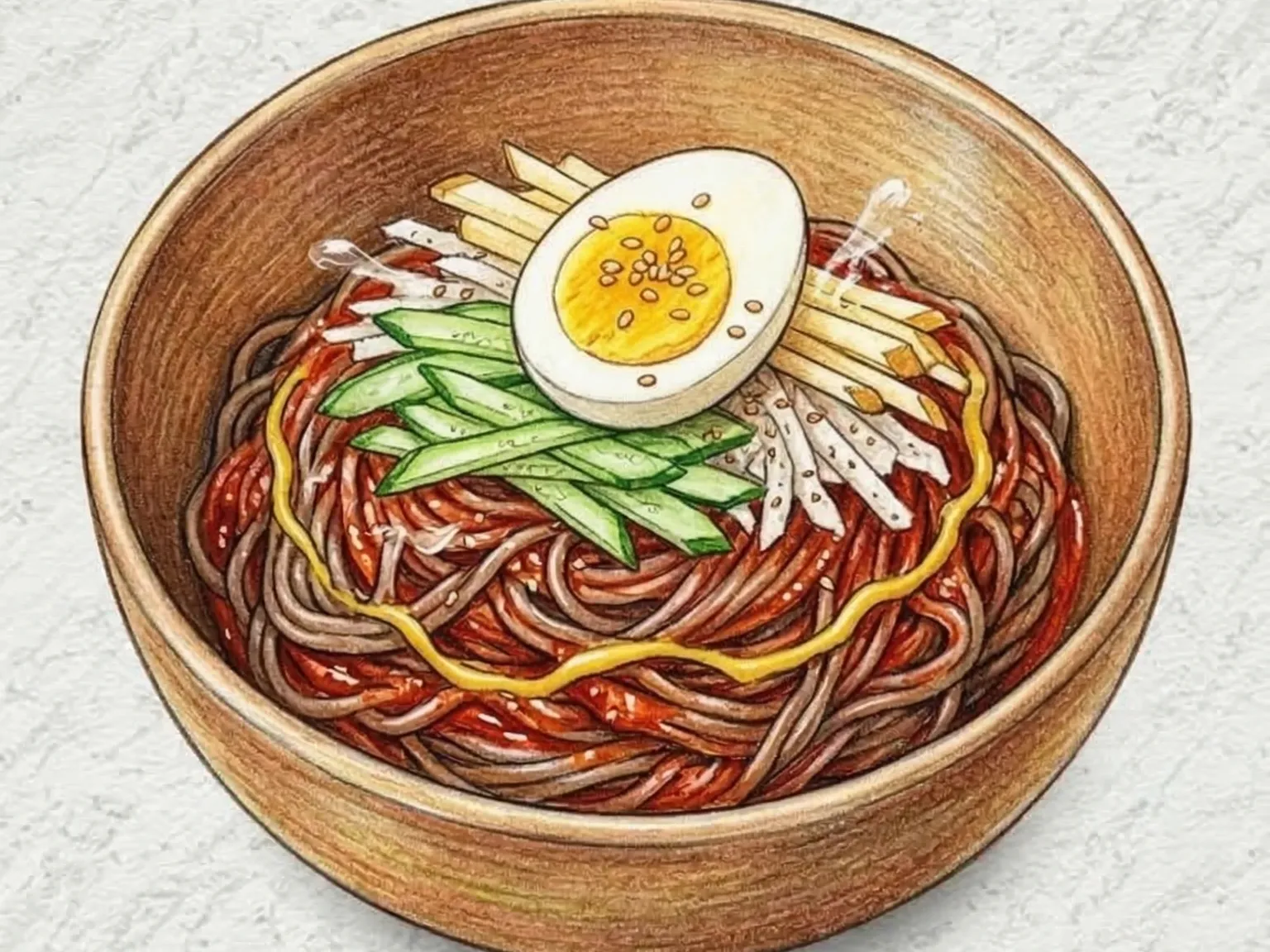
Cha-dol jjolmyeon puts seared thin-sliced beef brisket on top of chewy jjolmyeon noodles dressed in gochujang sauce. The brisket is spread flat on a hot dry pan and cooked on high heat for no more than a minute per side so the exterior browns while the intramuscular fat stays in place. Cooking too long renders the fat out entirely, leaving the slices dry and tough, which defeats the purpose of using brisket over leaner cuts. Jjolmyeon noodles are made with a higher proportion of starch than ordinary wheat noodles, giving them a rubber-band elasticity that lets sauce cling to the surface from the first bite to the last. The standard accompaniments are julienned cucumber and a halved boiled egg, both of which temper the spiciness with their mild, cool flavors. Bean sprouts add a crunchy contrast in texture, while perilla leaves sharpen the overall aroma. The dish is eaten cold in summer and is also a common late-night order, often finished with a splash of vinegar stirred into the remaining sauce at the bottom of the bowl.

🌙 Late Night
Prep 15minCook 12min2 servings
Dotori-Muk Vegetable Salad (Acorn Jelly Salad)
SaladsEasy

Dotori-Muk Vegetable Salad (Acorn Jelly Salad)

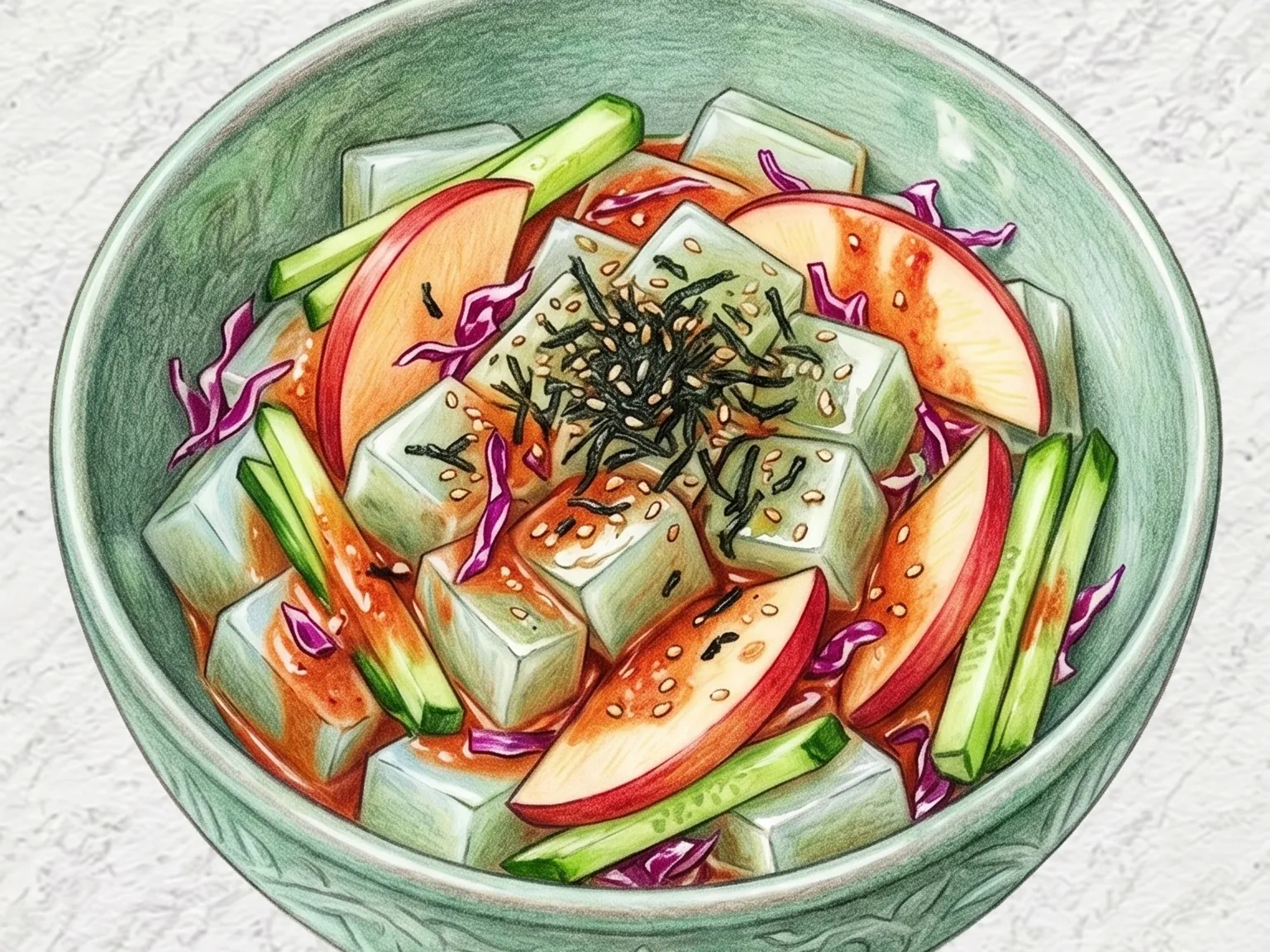
Dotori-muk (acorn jelly) is cut into bite-sized blocks and served with fresh lettuce, cucumber, and perilla leaves in this Korean salad. The jelly's smooth, firm texture creates a distinct contrast against the crunchy vegetables, while scallion lifts the overall aroma. A seasoning sauce of soy sauce, vinegar, gochugaru, and sesame oil gives the mild-flavored jelly a salty-tangy kick. Acorn jelly is notably low in calories and high in dietary fiber, and the tannins from acorn starch are traditionally believed to support digestion. The sesame oil and gochugaru in the dressing add a glossy richness and depth that transforms the otherwise neutral jelly into a cohesive, satisfying dish. Served chilled during summer, it works equally well as a light banchan when appetite runs low or as a refreshing standalone bowl.

🥗 Light & Healthy Quick
Prep 15min4 servings
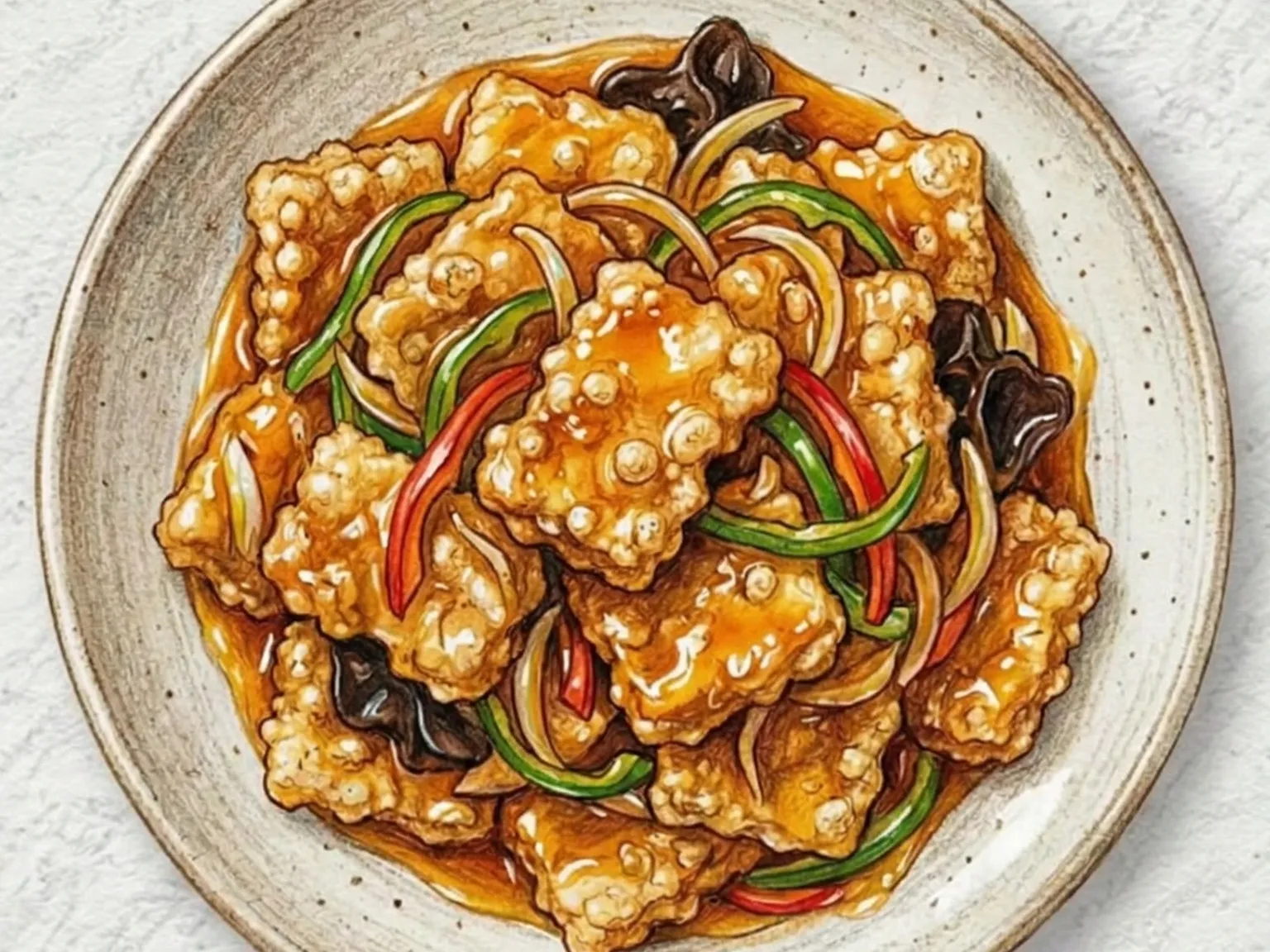
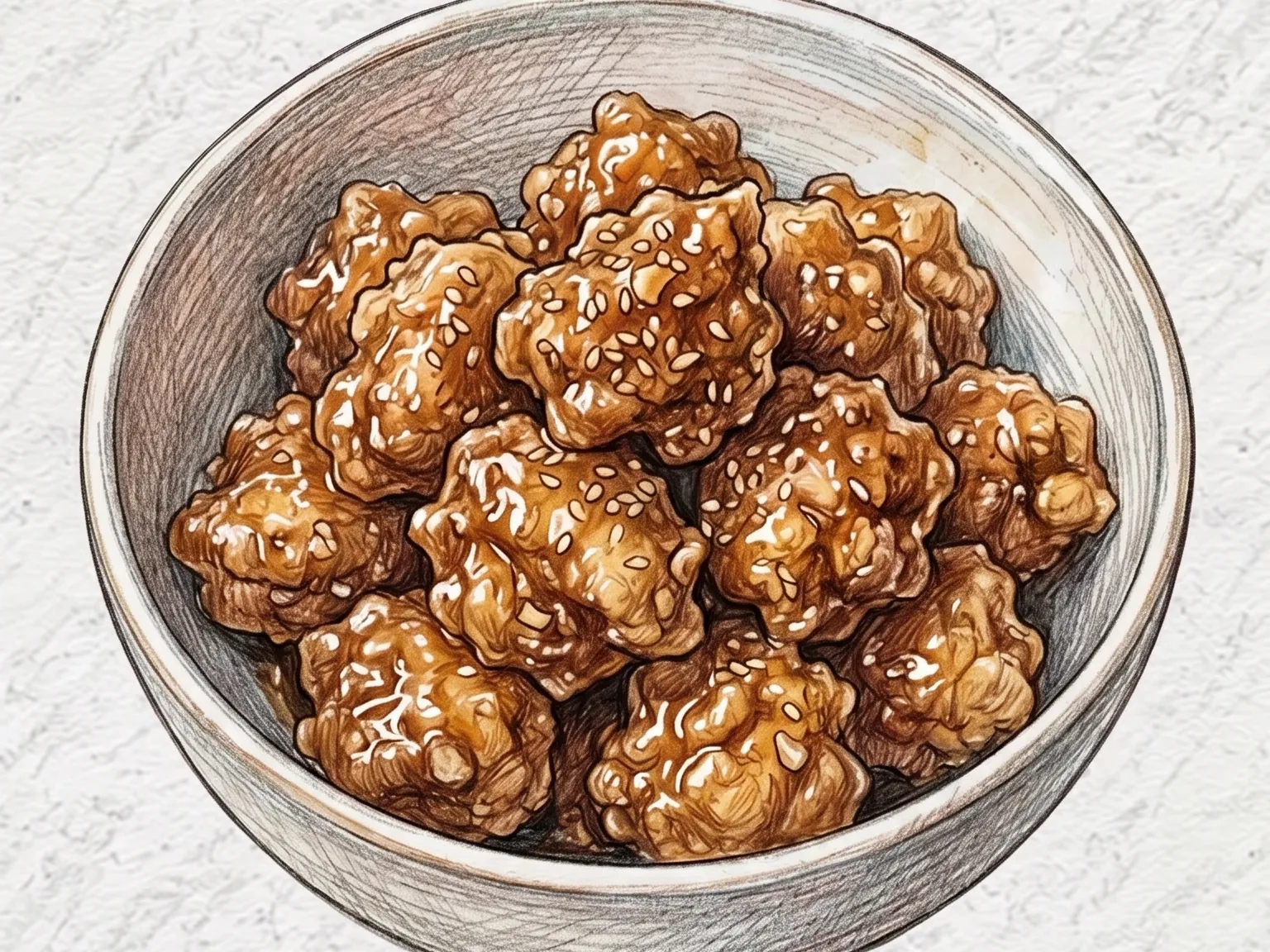
Guo Bao Rou (Sweet and Sour Crispy Pork)
AsianMedium

Guo Bao Rou (Sweet and Sour Crispy Pork)

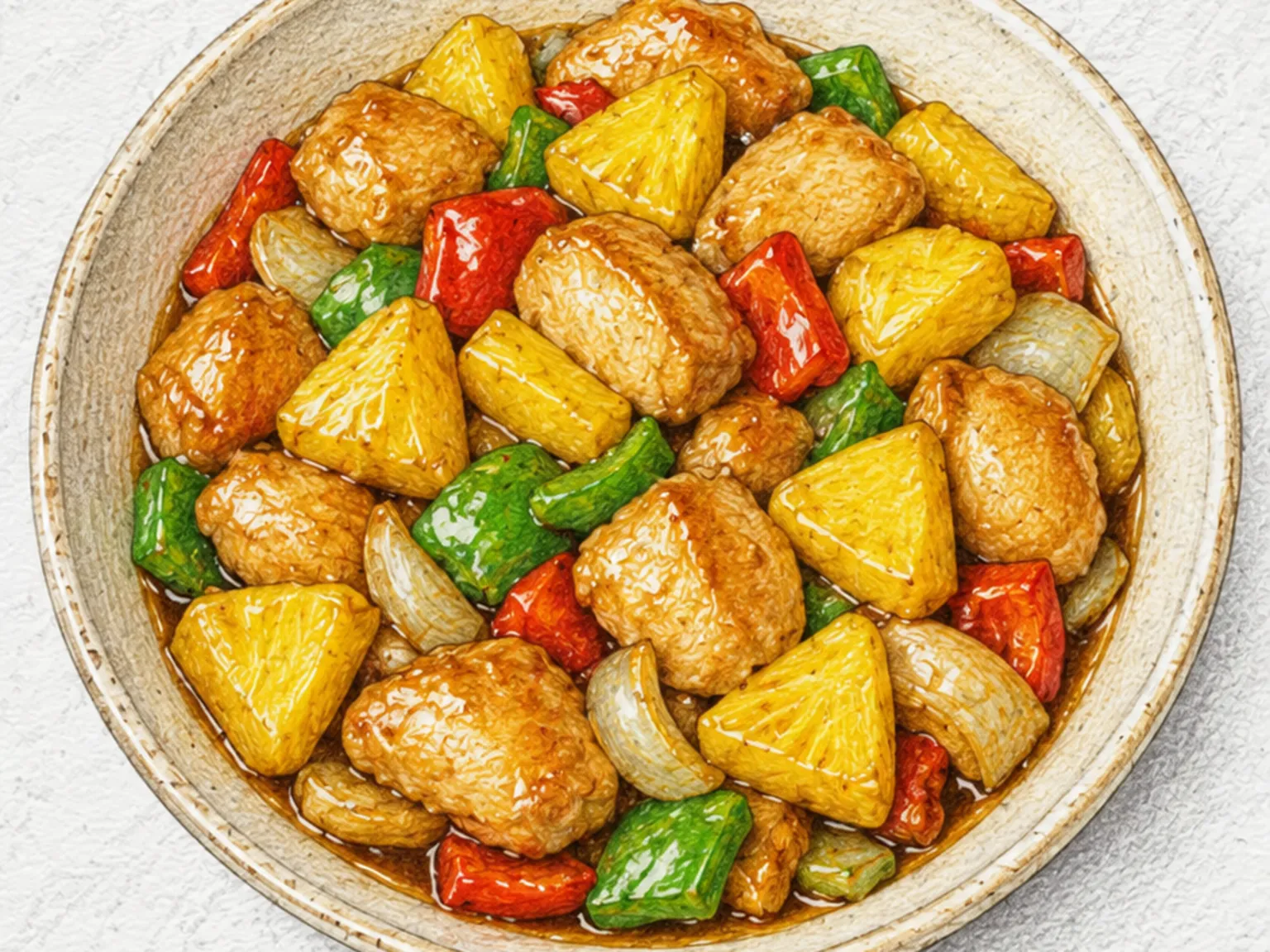
Guo bao rou, literally pot-wrapped meat, is the flagship dish of Northeastern Chinese cuisine, developed in Harbin during the late Qing Dynasty to accommodate Russian diplomats who found traditional Chinese flavors unfamiliar. To suit their palate, the dish was built around a sharp vinegar-sugar balance, and that foundation has persisted to the present day. The technique centers on double-frying: pork tenderloin or loin is sliced thin, coated heavily in potato starch, fried once to set the exterior, then fried a second time at higher temperature to puff the starch into a glassy, shattering crust. The sauce of vinegar, sugar, and soy sauce is reduced in a screaming-hot wok until it caramelizes, and the fried pork must be tossed through in thirty seconds flat. Exceed that window and the starch drinks the sauce, collapsing the crunch entirely. The original Harbin version is pale in color with a pronounced acidic edge. As the dish traveled south through China and into Korean-Chinese restaurants, cooks began substituting ketchup, producing the sweeter and more vividly red version familiar today in Korean establishments. The finished piece delivers three distinct layers of texture simultaneously: a translucent caramelized sauce coating on the surface, a brittle expanded starch shell beneath it, and soft yielding meat at the center.

🎉 Special Occasion
Prep 20minCook 20min3 servings
Korean Spicy Seasoned Deodeok
Side dishesMedium

Korean Spicy Seasoned Deodeok

Deodeok - Codonopsis lanceolata - is a mountain root that has been used in Korean cooking and folk medicine for centuries. Its flesh is fibrous, sticky, and carries a ginseng-like bitterness that becomes pronounced when the root is raw. Peeling and pounding with a mallet splits the fibers into rough, ribbon-like shreds with a textured surface that holds seasoning well. A soak in cold water draws out the sharpest of the bitterness before the root is drained and tossed. The dressing - gochujang, vinegar, minced garlic, sugar, and gochugaru - is sweet, sour, and spicy in roughly equal measure, tempering the root's wild, resinous character while leaving the chewy texture intact.

🏠 Everyday🍱 Lunchbox
Prep 20min4 servings
Korean Pickled Broccoli (Blanched Soy Vinegar Brine)
KimchiEasy

Korean Pickled Broccoli (Blanched Soy Vinegar Brine)

Broccoli jangajji is a Korean soy-pickled broccoli dish prepared by briefly blanching florets and stems, then submerging them in a cooled brine of soy sauce, vinegar, and sugar. Minimizing the blanch time deliberately preserves two distinct textures: crisp, substantial stems and softer, more tender floret heads. The vinegar's acidity and the soy sauce's savory depth together lift broccoli's naturally mild, clean flavor into something more complex. Bell pepper and onion are added to the same pickling jar to contribute natural sweetness and create a vivid visual contrast of green and red. Pouring the brine only after it has cooled completely protects the broccoli's color and prevents the texture from going soft. The seasoning fully penetrates the vegetables after three to four days of refrigeration, and the jangajji keeps well for up to two weeks, making it a practical and versatile everyday banchan.

🏠 Everyday🍱 Lunchbox
Prep 18minCook 7min2 servings
Chogye Guksu (Korean Cold Chicken Noodles)
NoodlesMedium

Chogye Guksu (Korean Cold Chicken Noodles)

Shredded poached chicken and julienned cucumber top thin wheat noodles served in an icy mustard-vinegar chicken broth. The broth starts as a clear, clean chicken stock, then gains its defining sharpness from dissolved mustard powder and rice vinegar, delivering a nasal tingle and bright acidity that revive the appetite on sweltering days. The chicken, torn along the grain into thin strips, adds lean protein without weight, while sliced Korean pear contributes a crisp, mildly sweet counterpoint that keeps the bowl from feeling heavy. Mustard heat flares briefly on the palate and fades quickly, leaving behind the savory clarity of well-made stock. Keeping the broth thoroughly chilled through service is essential: it prevents the noodles from softening and preserves the contrast that defines this dish. Floating a few ice cubes in the bowl ensures the temperature holds from the first chopstickful to the last.

🎉 Special Occasion
Prep 20minCook 25min2 servings
Gosari Smoked Duck Salad (Smoked Duck & Bracken Fern Salad)
SaladsMedium

Gosari Smoked Duck Salad (Smoked Duck & Bracken Fern Salad)

Gosari smoked duck salad is a Korean-style salad that pairs briefly seared smoked duck, blanched bracken fern, shredded cabbage, and thinly sliced Korean pear in a spicy soy-vinegar dressing. The smoked duck is placed skin-side down in a dry pan and cooked over medium heat for about three minutes, just enough time for the surface fat to render and the smoky aroma to intensify without drying out the interior. Going past that point causes the lean meat underneath to tighten and lose its moisture, which flattens the flavor. Bracken fern is blanched in boiling water for one minute and immediately rinsed under cold water to eliminate the slightly bitter, astringent quality it has when raw while preserving the chewy, springy resistance that makes it worth using instead of a softer green. Korean pear slices are added for both texture and function, since the clean, high-water-content fruit releases juice on each bite that washes through the fat left by the duck and refreshes the palate. The dressing combines soy sauce, vinegar, chili oil, and minced garlic into a sharply acidic and mildly spicy mixture that pushes against the deep, sweet smokiness of the duck rather than simply complementing it. Scattered toasted sesame seeds at the end add a final layer of warm, nutty fragrance.

🥗 Light & Healthy
Prep 15minCook 8min2 servings
Hakka Noodles (Indo-Chinese Stir-Fried Noodles)
AsianEasy

Hakka Noodles (Indo-Chinese Stir-Fried Noodles)

Hakka noodles represent the Indo-Chinese culinary tradition, a fusion cuisine that originated in the Chinese immigrant community of Kolkata and has since spread to cities across India. Egg noodles are boiled just short of fully cooked, rinsed under cold water to stop cooking, and tossed with a small amount of oil so the strands stay separate and pick up seasoning evenly during stir-frying. The vegetables, cabbage, carrot, and bell pepper, are julienned into matchstick-width strips that match the diameter of the noodles, ensuring a balanced forkful in every bite, and are cooked for no more than two minutes over intense heat to preserve their snap. The seasoning mix is deliberately spare: soy sauce for salinity, a splash of rice vinegar for a faint sour note, and black pepper for warmth. What matters more than the ingredient list is the speed and heat of the cooking. The intense wok temperature creates a light char and smoky depth on the noodles and vegetables, a quality called wok hei that cannot be achieved at lower temperatures regardless of the seasoning. Spring onions are added only after the heat is off to keep their fresh aroma and bite intact. Slightly undercooking the noodles before the wok is key; overcooked noodles turn mushy under the heat of stir-frying.

🏠 Everyday🌙 Late Night
Prep 15minCook 10min2 servings
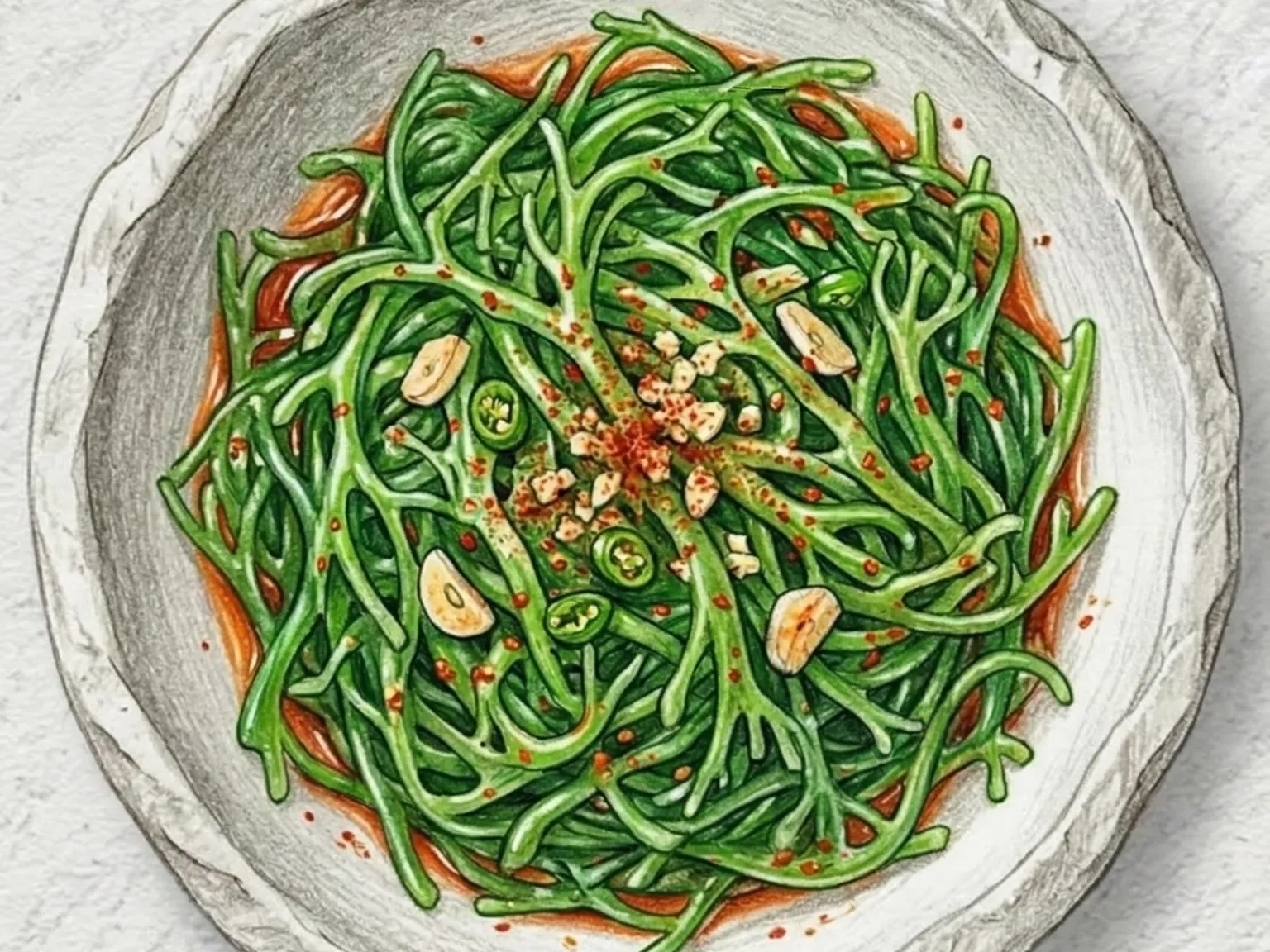
Korean Seasoned Stonecrop Salad
Side dishesEasy

Korean Seasoned Stonecrop Salad

Dollnamul muchim is a spring banchan of raw stonecrop (Sedum sarmentosum) dressed in a seasoning mix of gochugaru, vinegar, fish sauce, garlic, and sugar. The plant grows on rocky stream banks and low walls across Korea; its plump, jade-green leaves carry a faintly sour, grassy juice that releases when bitten. Heat collapses the texture entirely - a few seconds of blanching is enough to destroy the crunch - so dollnamul is always dressed raw. The process is minimal: a quick rinse in cold water, a firm shake to remove excess moisture, and an immediate toss with the seasoning. The structural logic of the dressing has fish sauce providing fermented depth beneath the vinegar's sharp acidity; if either element dominates, the herb's clean, fresh aroma disappears. The dish must be eaten within minutes of dressing. Osmotic pressure begins pulling juice from the leaves almost immediately, and the texture softens to a limp mass within half an hour. Dollnamul muchim is a common addition to spring picnic lunches and is best served cold.

🏠 Everyday🍱 Lunchbox
Prep 12min4 servings
Korean Celery Jangajji (Blanched Soy Lemon Pickle)
KimchiEasy

Korean Celery Jangajji (Blanched Soy Lemon Pickle)

Celery jangajji is a Korean soy pickle made by briefly blanching celery stalks to tame their fibrous exterior, then submerging them in a boiled brine of soy sauce, vinegar, and sugar. Peeling away the tough outer strings and cutting into five-centimeter lengths before a thirty-second blanch removes the raw grassy edge while leaving the celery's distinctive cool, herbal scent intact. Lemon slices and whole garlic cloves added to the jar contribute a gentle citrus brightness and mild pungency that build quietly as the pickle rests. After two days in the refrigerator the brine penetrates evenly, producing a crisp, tangy side dish that pairs particularly well with grilled or braised pork. By the fourth or fifth day the flavors deepen further, and even those put off by raw celery's sharpness tend to find the pickled version approachable.

🍱 Lunchbox
Prep 15minCook 8min4 servings
Cold Sesame Noodles
NoodlesEasy

Cold Sesame Noodles

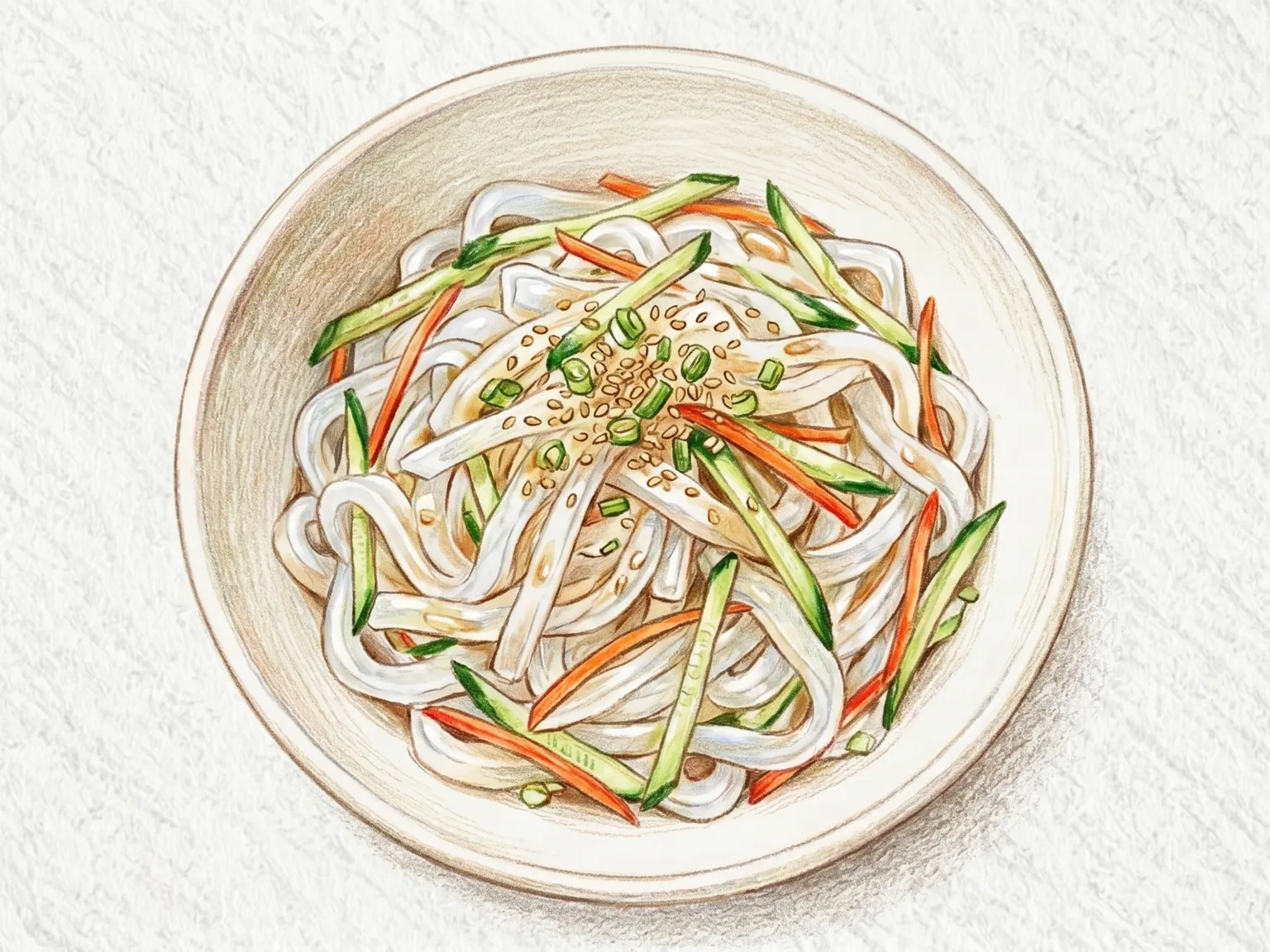
Cold sesame noodles are a fixture of Chinese-American cooking: chilled wheat noodles coated in a thick, nutty sauce that layers sweet, salty, sour, and savory flavors in a single bowl. The sauce is built from Chinese sesame paste or tahini blended with peanut butter, soy sauce, rice vinegar, and sesame oil until the mixture becomes a smooth, glossy emulsion. After boiling, the noodles are rinsed under cold running water to stop cooking and firm the texture, then tossed with a small amount of sesame oil to prevent clumping and add sheen. Julienned cucumber and sliced scallion provide freshness and crunch that cut through the dense sauce. Chili flakes or a spoonful of chili oil can be added for heat. Preparing the sauce in advance and refrigerating it means the entire dish can come together in the time it takes to boil a pot of noodles, making it a practical choice on hot summer days. Any leftover sauce works well as a salad dressing.

🌙 Late Night
Prep 15minCook 10min2 servings
Grilled Octopus & Water Parsley Salad
SaladsMedium

Grilled Octopus & Water Parsley Salad

Grilled octopus and minari salad is a Korean seafood salad made by searing pre-cooked octopus over high heat for two to three minutes to pick up char and smoke, then tossing it with water parsley cut into 4 to 5 cm lengths, shredded red bell pepper, and sliced onion in a gochugaru-vinegar dressing. Patting the octopus completely dry before searing is essential to get a proper char rather than steaming, and keeping the cooking time short over high heat leaves the interior chewy while the exterior picks up color; prolonged heat makes the flesh rubbery. The dressing of vinegar, olive oil, gochugaru, and minced garlic leads with bright acidity and builds into a gentle, lingering heat that gives the octopus's mild savoriness a clearer direction. Minari should be added at the end so its clean, grassy fragrance does not dissipate, and letting the dressed salad rest for three minutes allows the dressing to absorb evenly into each component. The contrast between the red bell pepper and the bright green minari makes this salad a visually striking addition to a spread, and the whole dish comes together in about ten minutes, making it practical when adding a quick side.

🍺 Bar Snacks🥗 Light & Healthy
Prep 20minCook 10min2 servings
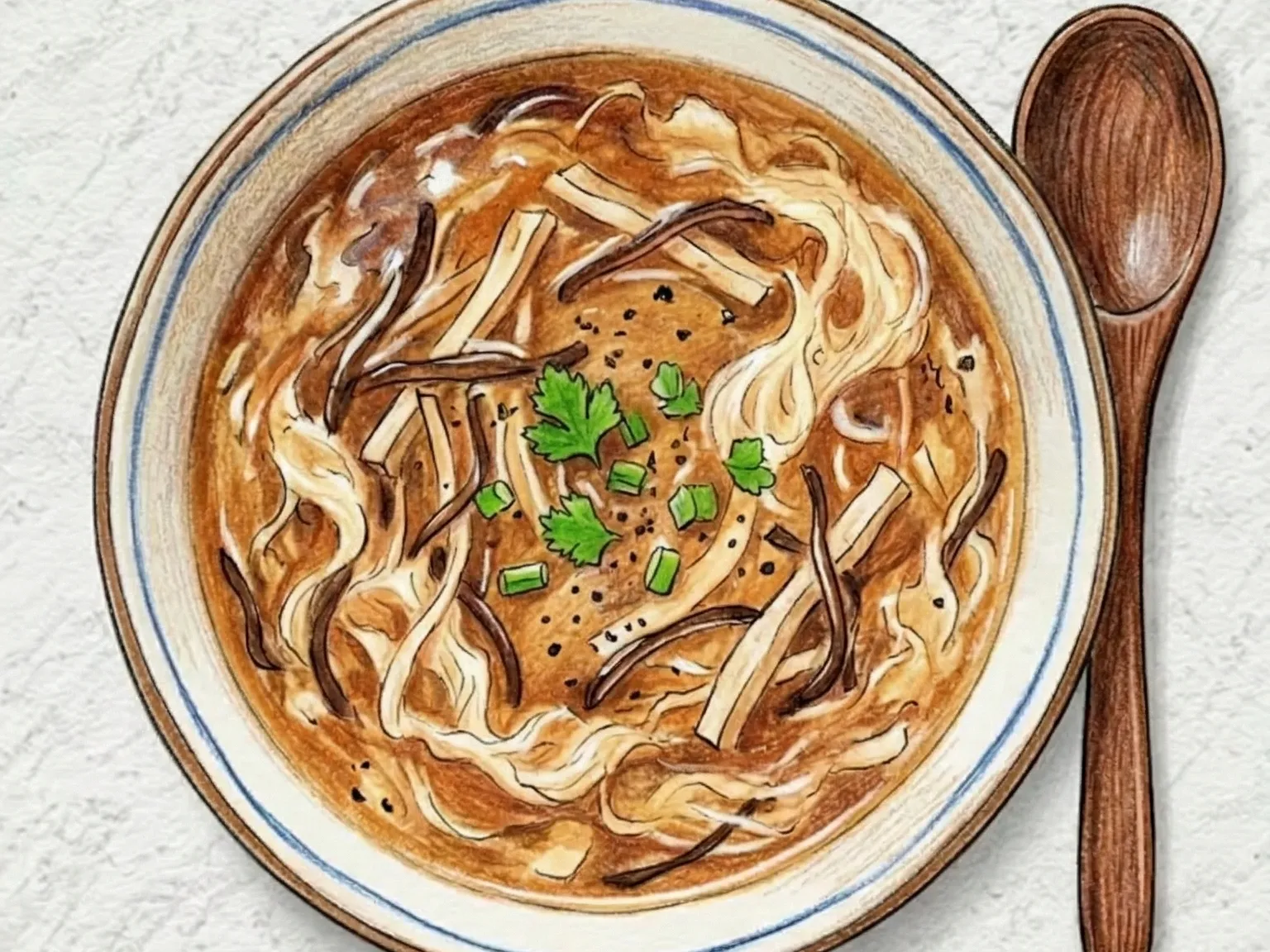
Hot and Sour Soup
AsianEasy

Hot and Sour Soup

Hot and sour soup is among the most widely recognized Chinese soups, and its defining character comes not from chili but from two specific sources: black vinegar's sharp acidity and white pepper's slow, creeping heat. Chicken broth forms the base, simmered with cubed tofu, reconstituted wood ear mushrooms, and sliced shiitake. A cornstarch slurry is worked in gradually, small additions at a time, to build a lightly viscous consistency without tipping the broth into something gluey and heavy. Beaten egg is poured in a thin, steady stream while the soup is stirred, forming delicate ribbons that float throughout. Two timing rules matter: the slurry goes in slowly, and the vinegar goes in last, after the heat is reduced, because its volatile aroma dissipates quickly if boiled. Wood ear mushrooms provide a springy, almost cartilaginous chew that contrasts with the softness of the tofu and the wispy egg threads. The white pepper heat lingers and builds after each spoonful, arriving late rather than hitting immediately, which gives the soup its characteristic slow warmth.

🏠 Everyday
Prep 15minCook 20min4 servings
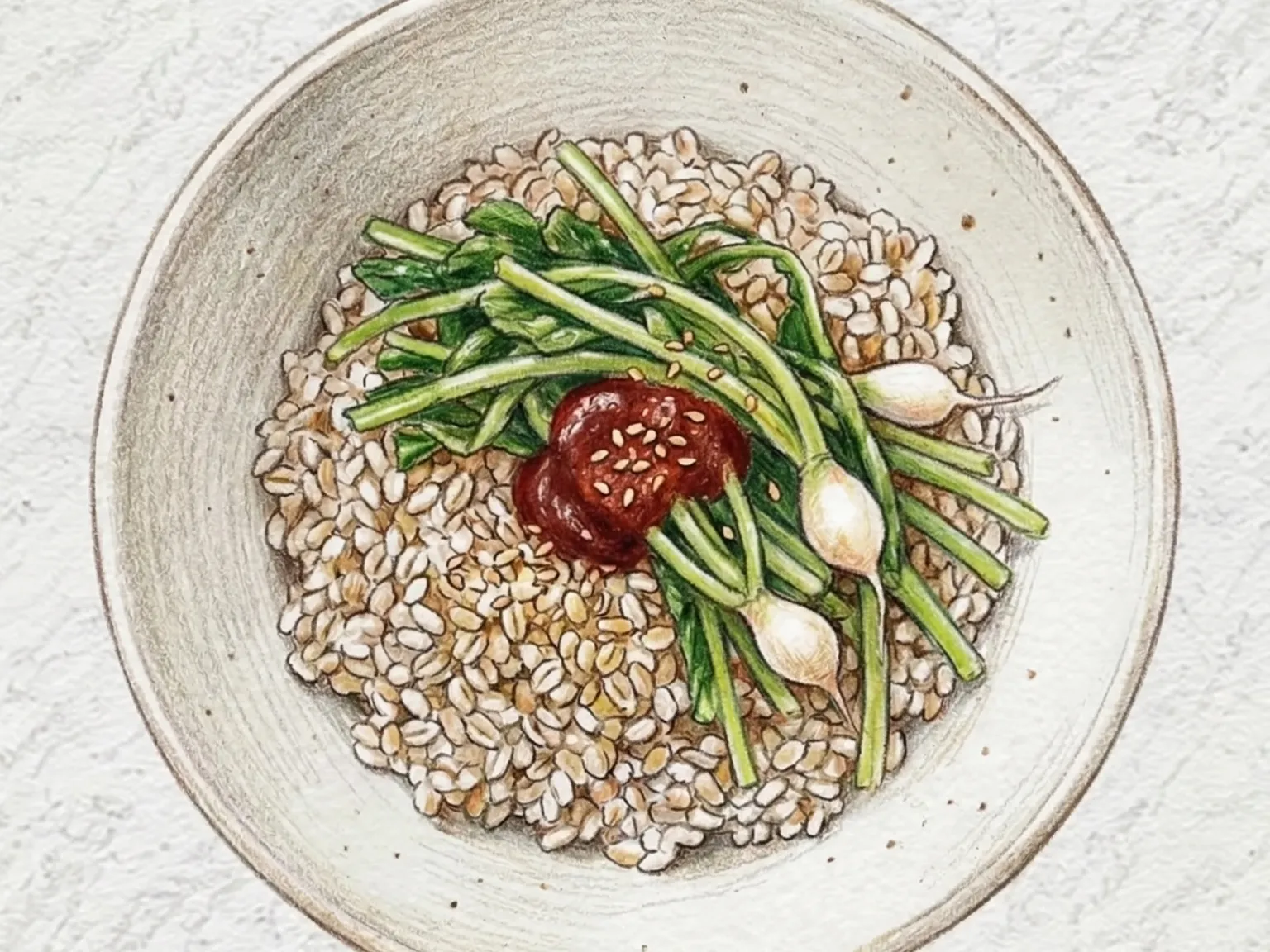
Korean Seasoned Fatsia Shoots
Side dishesEasy

Korean Seasoned Fatsia Shoots

Dureup, the young shoots of aralia elata, emerge for barely three weeks each April from thorny stalks, ranking among the most prized of Korea's spring mountain vegetables. Each shoot carries a distinctive piney, slightly resinous fragrance that cannot be found in any other Korean namul. Blanching the shoots in salted water for exactly 40 seconds softens the fibrous base of the stalk while preserving the volatile aromatic oils concentrated at the leaf tips. The traditional dressing is cho-gochujang, a vinegared chili paste whose acidity and sweetness provide a flavor framework without overwhelming the shoots' natural bitterness. In Korean folk medicine, dureup has long been associated with blood sugar regulation, which contributes to the premium it commands at spring markets. The fragrance fades rapidly after harvest, so the shoots are best eaten the same day they are picked, and even refrigerated storage should not extend beyond one day.

🏠 Everyday🍱 Lunchbox
Prep 10minCook 3min4 servings
Korean Melon Pickle (Korean Melon Soy Vinegar Brine)
KimchiEasy

Korean Melon Pickle (Korean Melon Soy Vinegar Brine)

Chamoe jangajji is a Korean summer pickle made by seeding firm Korean melon and slicing it into thin half-moons, then submerging the pieces in a cure of soy sauce, rice vinegar, and sugar. Salting the slices and letting them sit for fifteen minutes before pickling draws out excess moisture, preventing the brine from becoming diluted and keeping the melon's characteristic crunch intact over time. Sliced fresh ginger added to the jar contributes a warm, faintly spicy undertone beneath the melon's cool sweetness. After two or more days in the refrigerator, the sweet, sour, and salty notes permeate the melon evenly throughout, making this a versatile seasonal banchan that can be served alongside rice or used as a sharp, tangy topping for cold noodles and summer salads. The leftover brine can be repurposed as a seasoning base for cold noodle sauce or seasoned vegetable dishes.

🍱 Lunchbox
Prep 20minCook 12min4 servings
Dan Dan Mian (Sichuan Spicy Noodles)
NoodlesMedium

Dan Dan Mian (Sichuan Spicy Noodles)

Dan dan mian is a Sichuan noodle dish built on a thick sauce of sesame paste, soy sauce, chili oil, and vinegar, topped with wheat noodles and browned ground pork. Ground Sichuan peppercorn brings a lip-numbing, almost electric sensation that sits underneath the chili oil's direct heat and the sesame paste's deep richness, creating multiple distinct layers in a single mouthful. Browning the pork thoroughly before adding any liquid is essential -- the caramelized crust develops a roasted meatiness that permeates the entire sauce and prevents the dish from tasting flat. Blanched bok choy provides a fresh counterpoint to the oily intensity and keeps the bowl from feeling too heavy. Sichuan peppercorn's numbing effect accumulates quickly, so starting with a small quantity and tasting as you go gives precise control. Draining the cooked noodles completely is equally important; any residual water will thin the sauce and break the coating on the noodles.

🍺 Bar Snacks🎉 Special Occasion
Prep 15minCook 20min2 servings
Seaweed Stem and Apple Mustard Salad
SaladsEasy

Seaweed Stem and Apple Mustard Salad

Salted seaweed stems are soaked to remove excess brine, then blanched briefly to achieve a firm, slightly chewy bite that defines this Korean salad's texture. Julienned apple adds crisp sweetness that contrasts with the seaweed's oceanic mineral flavor. Thinly sliced onion, soaked to mellow its sting, contributes a subtle sharpness. The dressing mixes Korean mustard paste with vinegar and oligosaccharide syrup - the mustard delivers a sharp nasal heat, while the syrup smooths the vinegar's acidity into something rounder. Tossing the apple with lemon juice first prevents browning, and a three-minute rest after dressing lets the flavors meld without overdressing the delicate stems.

🥗 Light & Healthy🍱 Lunchbox
Prep 14minCook 2min2 servings
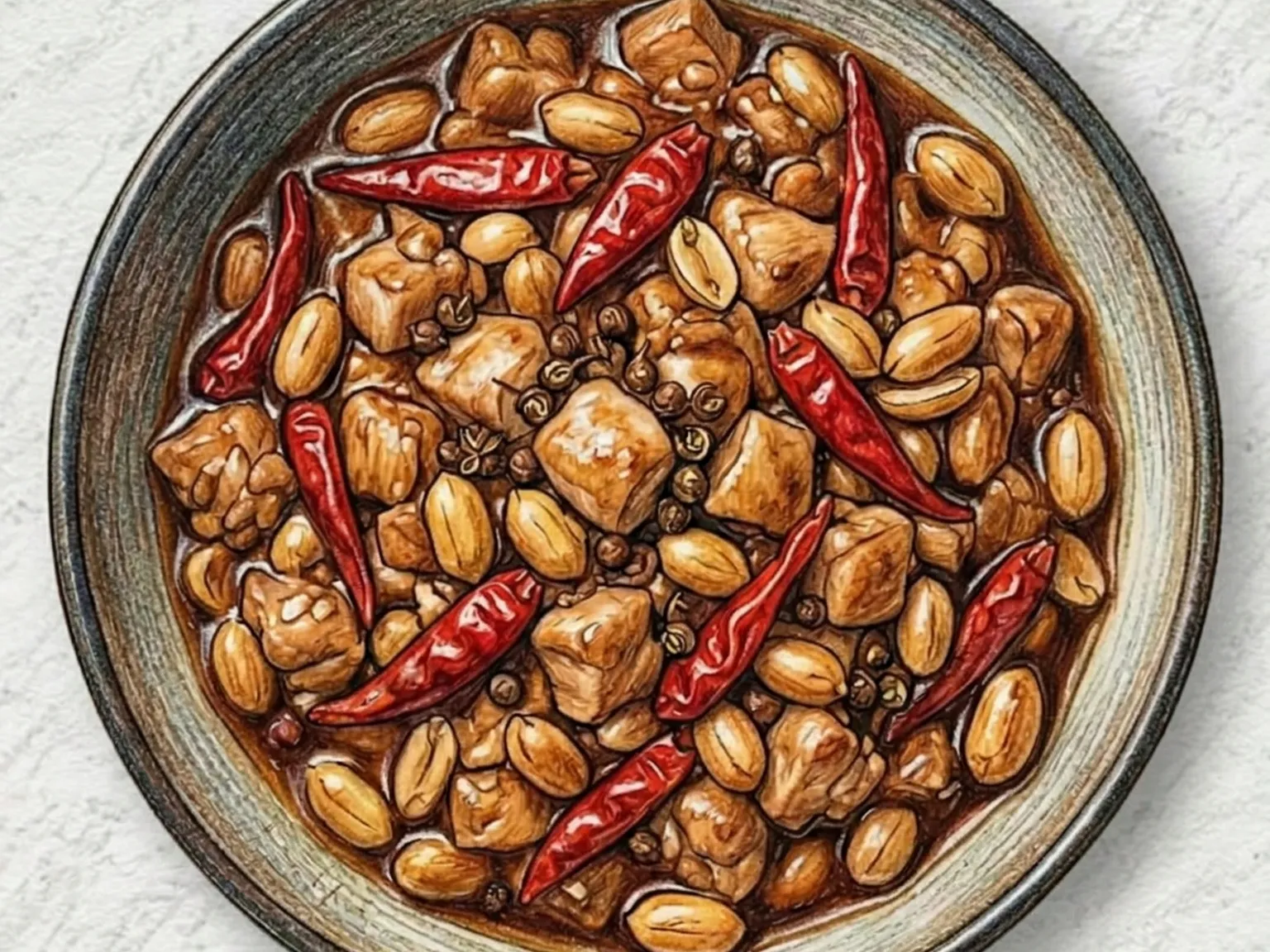
Kung Pao Chicken
AsianMedium

Kung Pao Chicken

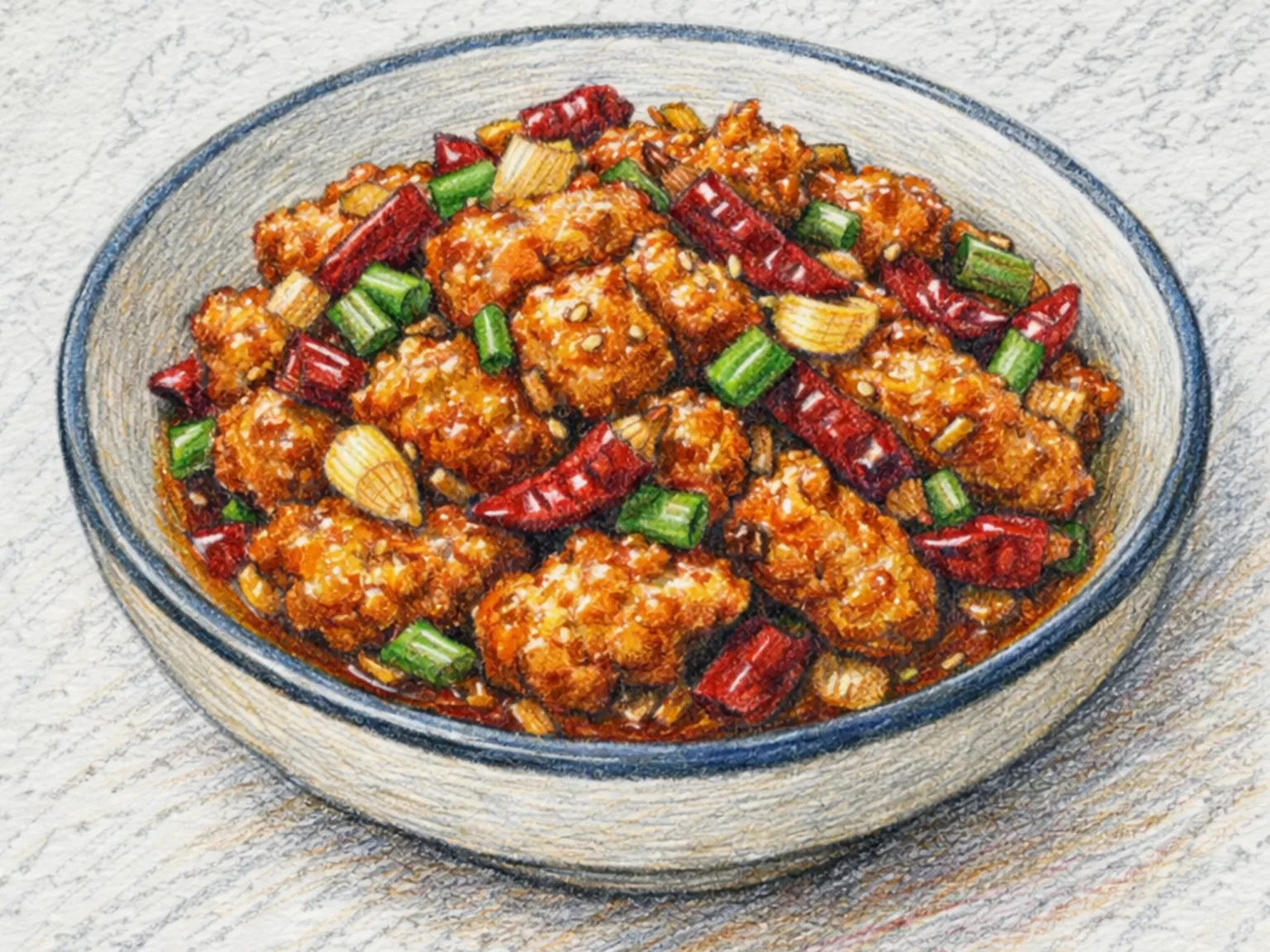
Kung pao chicken is one of the defining dishes of Sichuan cuisine, built around diced chicken, roasted peanuts, and dried chilies in a sauce that hits spicy, sweet, sour, and numbing at the same time. The chicken is cut into small cubes and given a brief marinade of soy sauce and cornstarch, which seals moisture in and creates a light coating that takes on color quickly in a screaming-hot wok. Dried red chilies and Sichuan peppercorns are fried in oil as the very first step, pulling their heat and the distinctive mala tingling sensation into the fat before anything else goes in. This flavored oil becomes the foundation the entire dish is built on. Soy sauce, black vinegar, and sugar are added at the end and reduced into a glossy glaze that coats every surface. Roasted peanuts go in last so they stay crunchy, and chopped scallion brings a clean, fresh finish. The interplay of sharp chili heat, tongue-numbing peppercorn, tangy vinegar, and toasty peanut in a single bite is what carries this dish beyond Sichuan into kitchens worldwide.

🍺 Bar Snacks🎉 Special Occasion
Prep 20minCook 10min2 servings