🥗 Light & Healthy Recipes
Light, healthy, low-calorie dishes
712 recipes. Page 5 of 30
These low-calorie recipes prove that healthy eating does not have to be boring. High-protein meals, vegetable-forward dishes, and low-carb options - all designed to support weight management and better eating habits.
Diet-friendly does not mean small portions or bland flavors. Chicken breast, tofu, konjac, and eggs provide lasting satiety, while smart seasoning and cooking methods keep the taste appealing. Build a sustainable, healthy routine with these recipes.
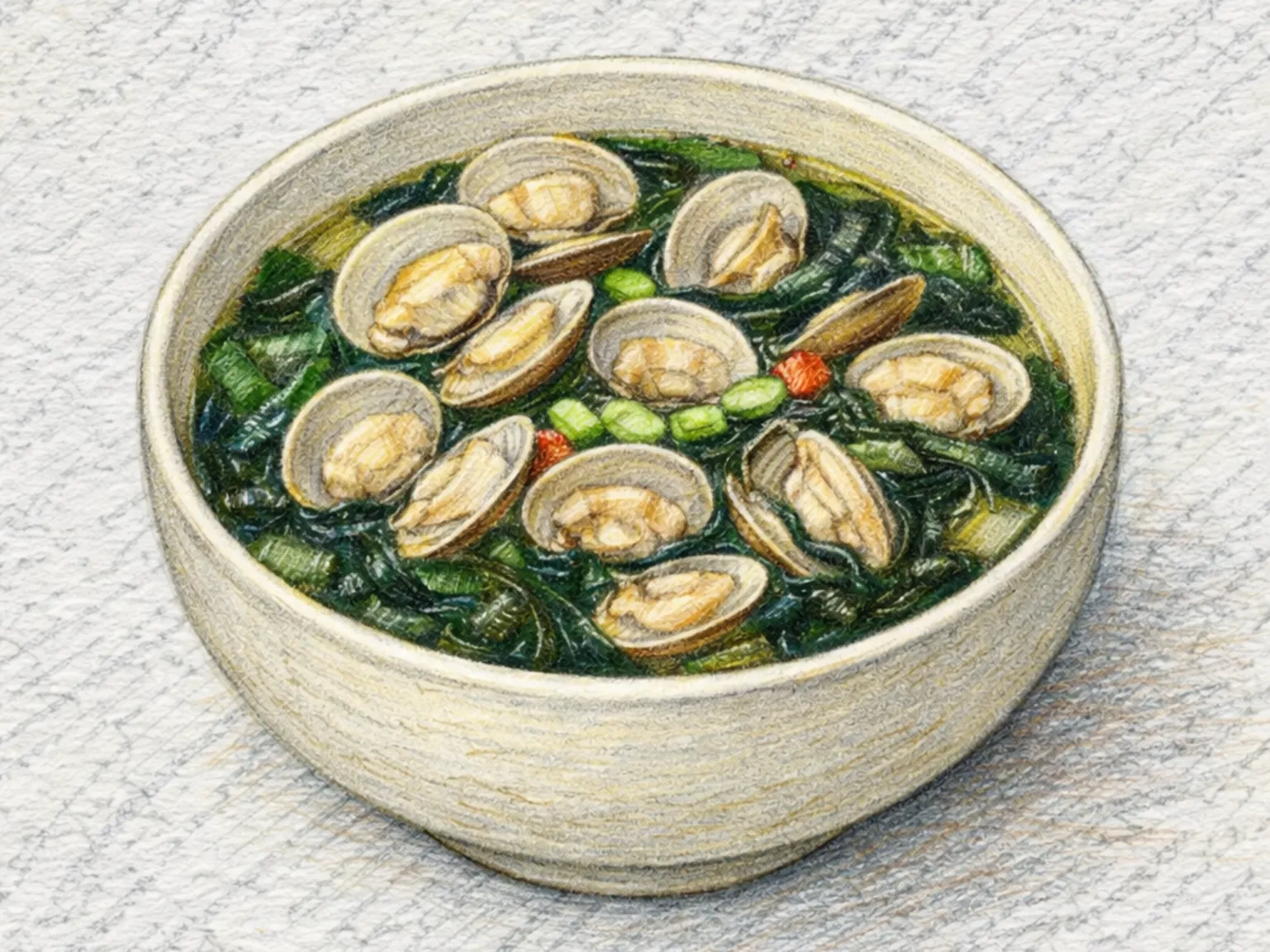
Korean Bajirak Miyeok Jjigae (Clam Seaweed Stew)
Bajirak miyeok jjigae is a Korean stew combining manila clams and soaked seaweed, layering shellfish umami with the mineral depth of sea vegetables. Clams start in cold water with radish, which adds a cool sweetness to the broth that balances the clams' natural saltiness as the temperature climbs. Once the shells open, rice wine removes any briny off-notes, and the stew is seasoned with soup soy sauce and minced garlic. The seaweed, soaked and cut into bite-sized pieces, must enter the pot only in the last five minutes; longer cooking turns it tough and unpleasantly slippery. Diagonally sliced scallion added at the end releases a fresh aroma across the surface of the stew. The iodine-rich character of the seaweed and the briny depth of the clams belong to the same marine category yet occupy different flavor registers, producing a broth with compound depth. Any clams that remain closed after cooking must be removed to prevent grit from contaminating the finished stew.
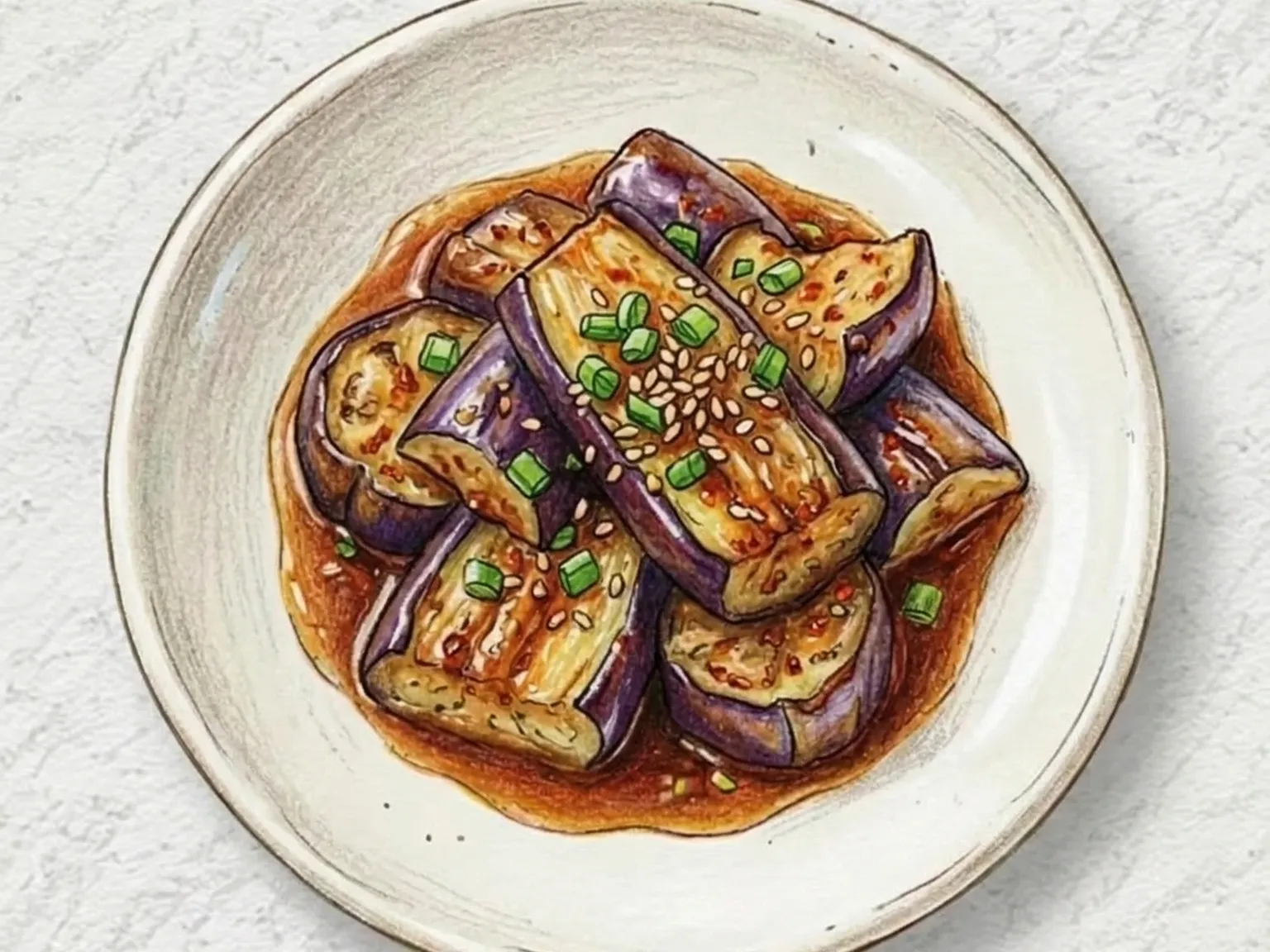
Korean Braised Eggplant in Seasoned Soy Sauce
Gaji yangnyeom jorim is a Korean braised eggplant side dish made with soy sauce, gochugaru, garlic, and sesame oil. Briefly sauteing the eggplant in oil before adding the braising liquid is important: pre-cooking the surface prevents the eggplant from releasing too much water into the sauce, which keeps the seasoning concentrated and helps it penetrate evenly. A small amount of sugar or plum extract is added to the sauce, giving the finished dish its characteristic glossy sheen. Scallions are stirred in only after the heat is off to preserve their color and texture. The result is a compact, salty-spicy banchan with a deep lacquered surface on each piece. Keeping a batch in the refrigerator means it is available as a side dish for three or more days, and the leftover braising liquid works well as seasoning in bibimbap.
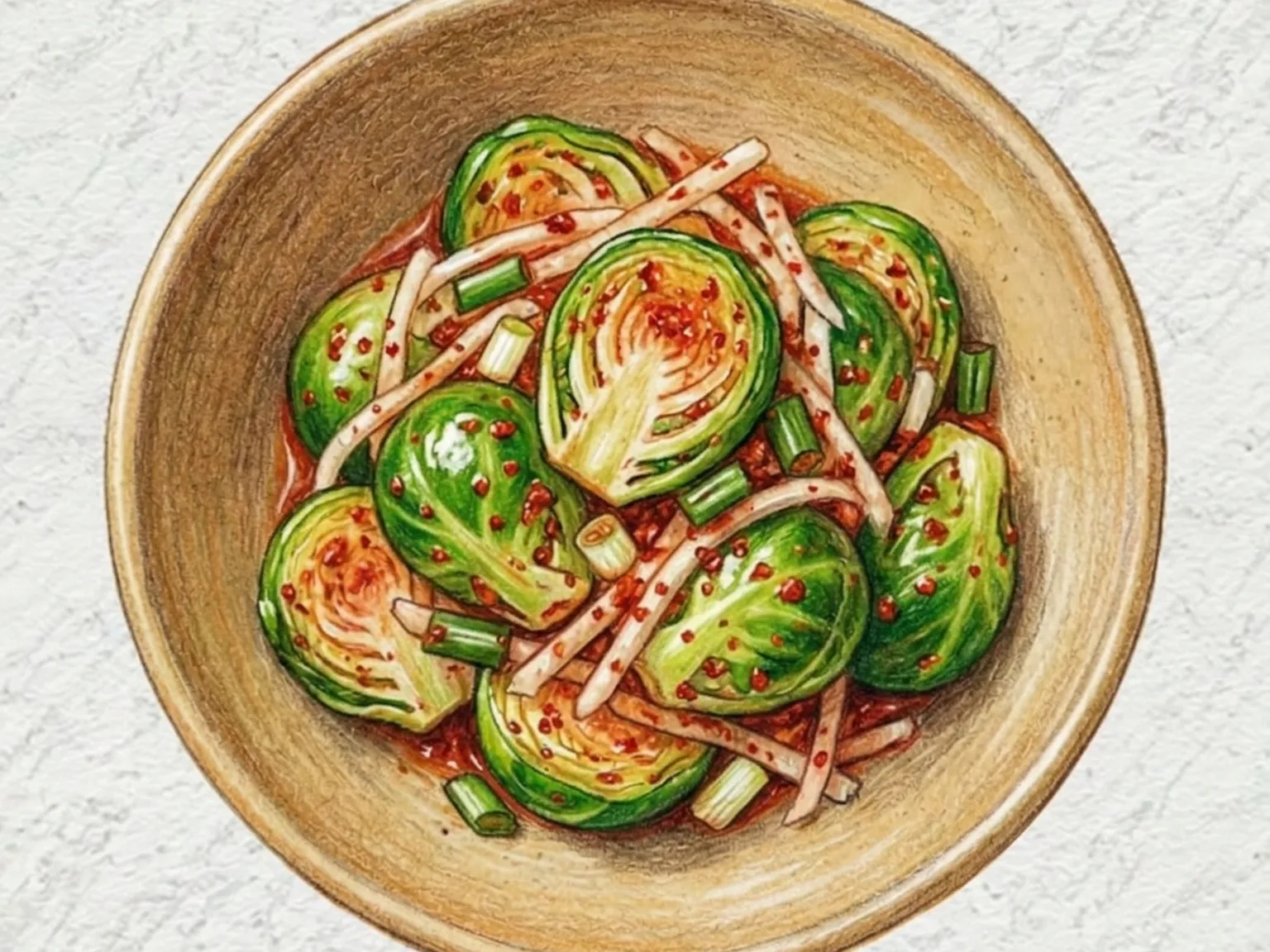
Korean Bangwool Yangbaechu Kimchi (Brussels Sprout Kimchi)
Bangwool yangbaechu kimchi is a creative Korean kimchi made from halved Brussels sprouts, brined in salt and dressed with gochugaru, fish sauce, garlic, and apple. Brussels sprouts are denser than napa cabbage and hold their structure after salting, giving each bite a firm crunch that releases a natural sweetness as you chew. The combination of fish sauce and gochugaru builds a spicy-salty depth, while grated apple introduces a fruit sweetness that softens the chili heat without masking it. Scallions contribute a fresh note throughout. Because the sprouts are compact and less watery than cabbage, the kimchi ferments more slowly and stays crisp longer. It can be eaten right away as a fresh kimchi, or left to ferment for several days as the flavors deepen. In season from autumn through early spring, this kimchi suits both traditional Korean meals and modern brunch spreads.
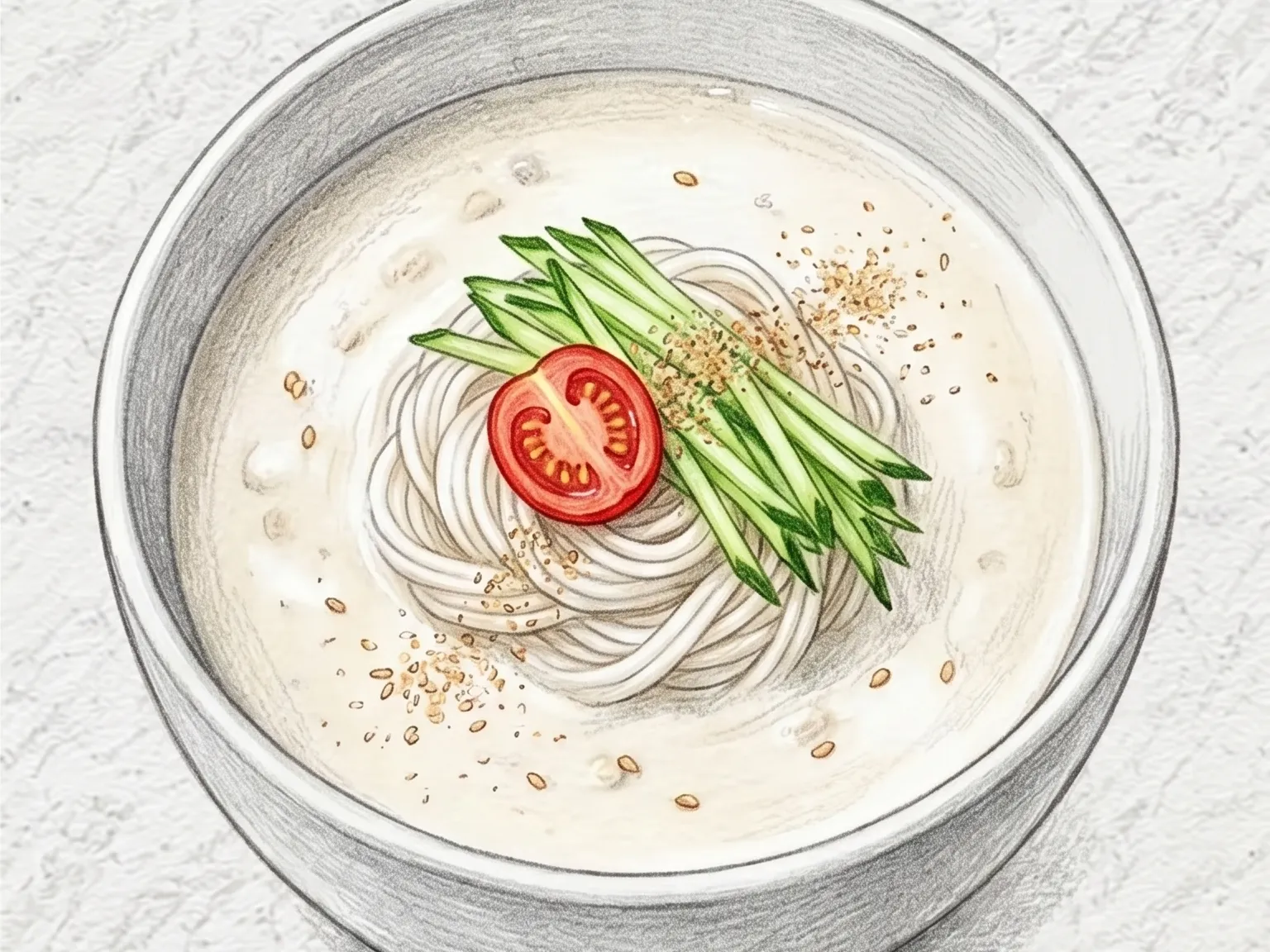
Kongguksu (Korean Cold Soy Milk Noodles)
Kongguksu is a Korean cold noodle dish in which thin somyeon noodles are served in a chilled broth made entirely from blended soybeans. Cooked white soybeans are peeled as thoroughly as possible to reduce any bitterness, then blended with cold water, sesame seeds, and salt until the mixture is smooth and creamy. The resulting soy broth is refrigerated until genuinely cold before use -- adding ice directly to the bowl would thin it out, so proper chilling in advance is the standard approach. Somyeon noodles are boiled until just cooked through, then rinsed vigorously under cold running water and briefly submerged in ice water to firm up their texture before being placed in the serving bowl. The cold soy broth is poured generously over the noodles, and julienned cucumber is arranged on top for color and crunch. Seasoning is personal: some eat it with salt only, others stir in a small amount of sugar. Straining the broth once through a fine mesh sieve eliminates any remaining gritty bits and gives the finished soup a noticeably silkier mouthfeel. High in plant protein and relatively light on the stomach despite its richness, it is exactly the kind of cold dish that makes summer heat more bearable. Black soybeans blended in alongside white ones deepen both the color and the toasty, nutty flavor.
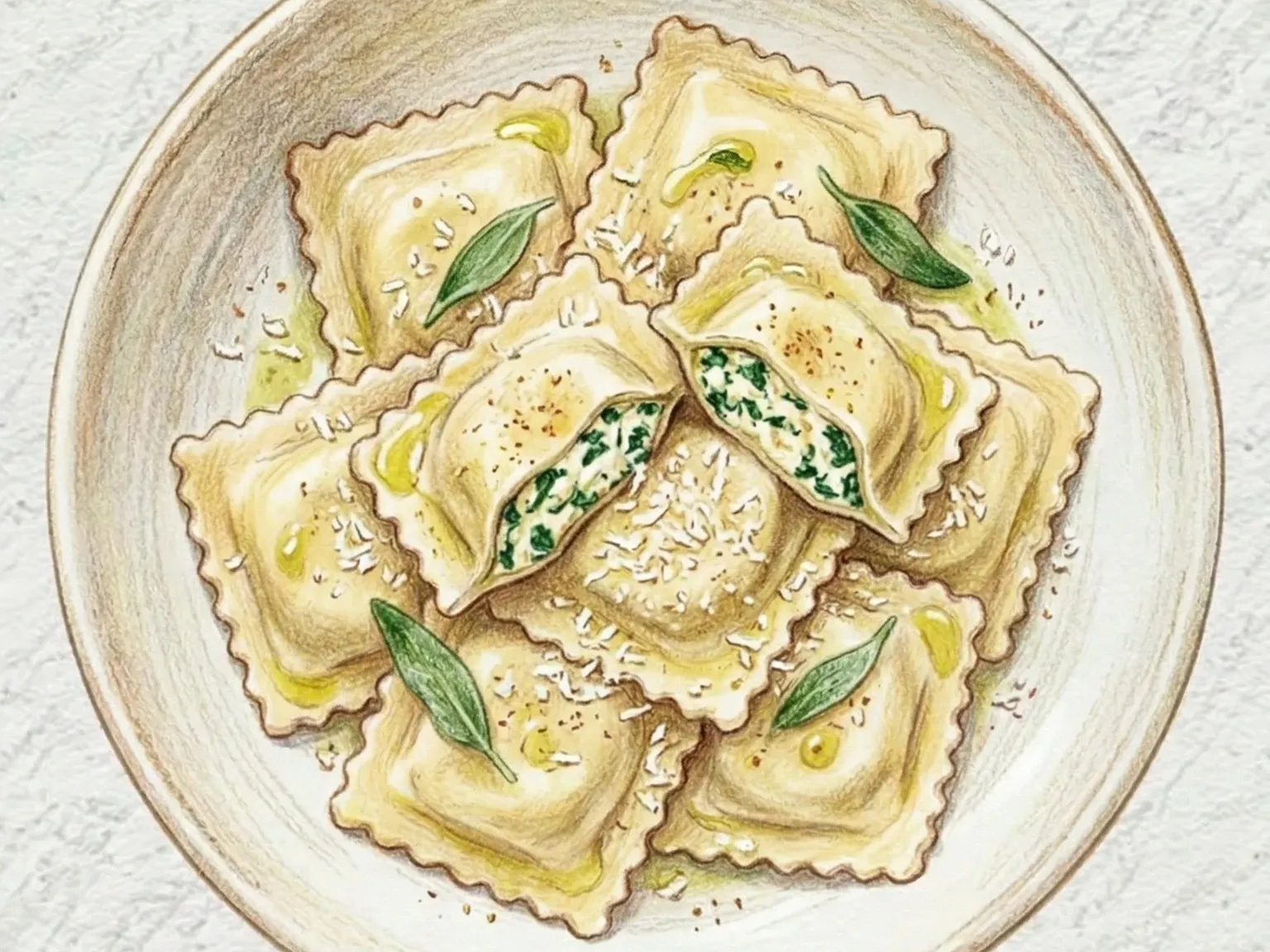
Tofu Ricotta Spinach Ravioli
Tofu ricotta spinach ravioli is a pasta dish featuring a filling made from firm tofu that has been thoroughly pressed, combined with ricotta cheese, blanched spinach, Parmigiano Reggiano, and a measured amount of nutmeg, all of which are enclosed within sheets of fresh pasta. The inclusion of tofu serves to diminish the heavy richness often associated with ricotta, although it ensures that the internal mixture maintains a consistency that is both smooth and creamy. The nutmeg provides a warm spice element that functions to bridge the flavor gap between the earthy qualities of the spinach and the various dairy ingredients. It is essential to press the tofu until the vast majority of its liquid content has been removed. Failure to eliminate this excess water will result in a filling that is too thin, which subsequently makes it difficult to achieve a clean and effective seal on the pasta sheets. To prevent the ravioli from opening or splitting during the boiling process, the edges of the pasta must be crimped firmly using a fork. This technique establishes a tight seal capable of withstanding the three to four minutes of cooking time required for the dish. Once the ravioli has been drained, it should be immediately transferred into brown butter infused with sage and tossed for approximately thirty seconds. This specific step prevents the exterior surface of the pasta from becoming dry and ensures that every piece is evenly coated in a layer of herb-scented fat. Since the boiling period is quite short, the subtle and delicate flavors contained within the filling are successfully preserved. This recipe is designed to yield four servings, which makes the dish a suitable option for a dinner event where the visual presentation of the food is a priority.
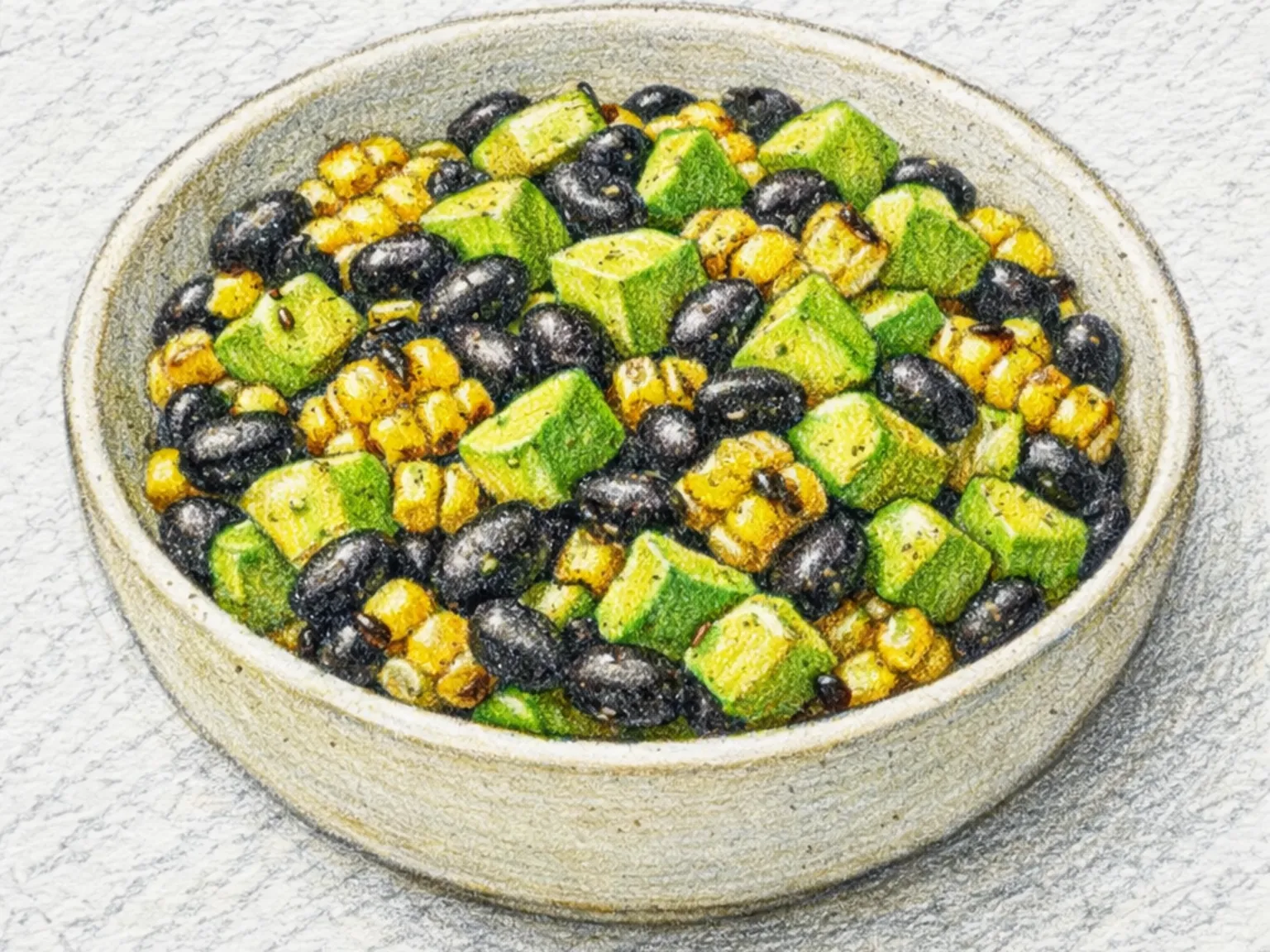
Black Bean Corn Avocado Salad
Black bean corn avocado salad is a Mexican-style bowl that combines cooked black beans, charred sweet corn, and ripe avocado in a lime dressing. Black beans form the starchy, mildly nutty base, while corn charred in a dry pan brings a caramelized sweetness and a burst of texture against the softer ingredients. Ripe avocado contributes a dense creaminess that absorbs the lime's sharp acidity and rounds the dressing's edges. Fresh cilantro scatters a bright herbal note, and ground cumin or chili powder can deepen the spice dimension. The combination delivers plant protein, dietary fiber, and healthy fats in a single bowl substantial enough to serve as a light meal. Tortilla chips on the side turn it into a dip. Because none of the components require hot cooking, the salad can be assembled in minutes from pre-prepared ingredients and keeps well in the refrigerator for a day or two without the avocado browning significantly if dressed just before serving.
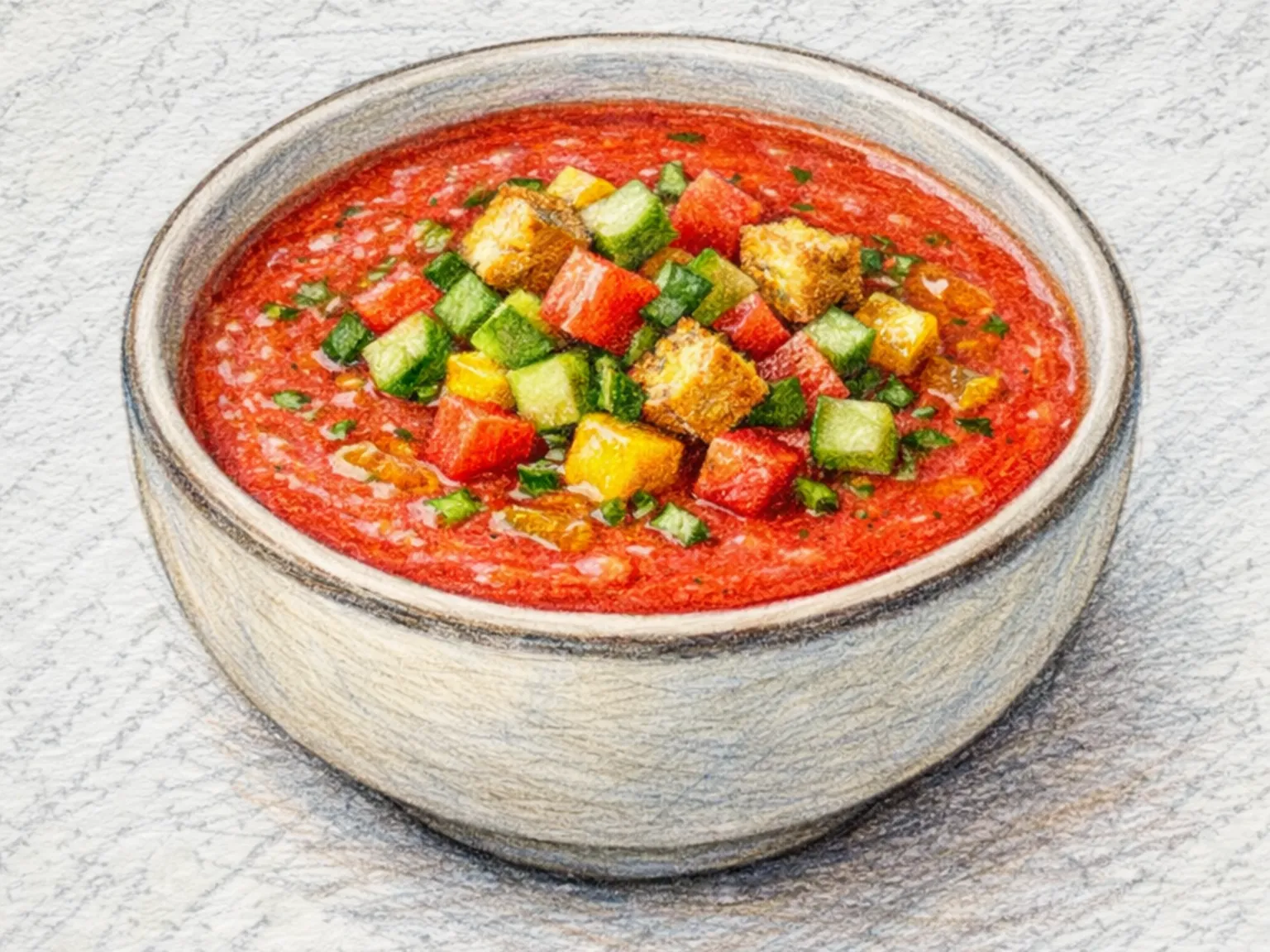
Gazpacho
The secret to an authentic gazpacho lies in the interaction between stale bread and fresh garden vegetables. While tomatoes, cucumbers, and red bell peppers form the base, the addition of water-soaked bread creates a thick, velvety consistency that distinguishes this Andalusian specialty from a simple puree. Blending these ingredients with red onion, garlic, extra virgin olive oil, and red wine vinegar produces a smooth texture where the oil emulsifies the vegetable juices and the vinegar sharpens the natural sugars of the tomatoes. Patience is required after the blending is complete; the soup must rest in the refrigerator for at least two hours to allow the flavors to settle and integrate, a process that does not occur effectively at room temperature. Serving requires a final touch of drizzled olive oil and a handful of finely diced vegetables to create a crisp contrast against the liquid base. For the most refined results, passing the mixture through a fine-mesh sieve ensures a silky finish. Using fully ripened summer tomatoes provides the ideal acidity levels, and storing the leftovers in the fridge for a day or two often leads to a more developed profile.
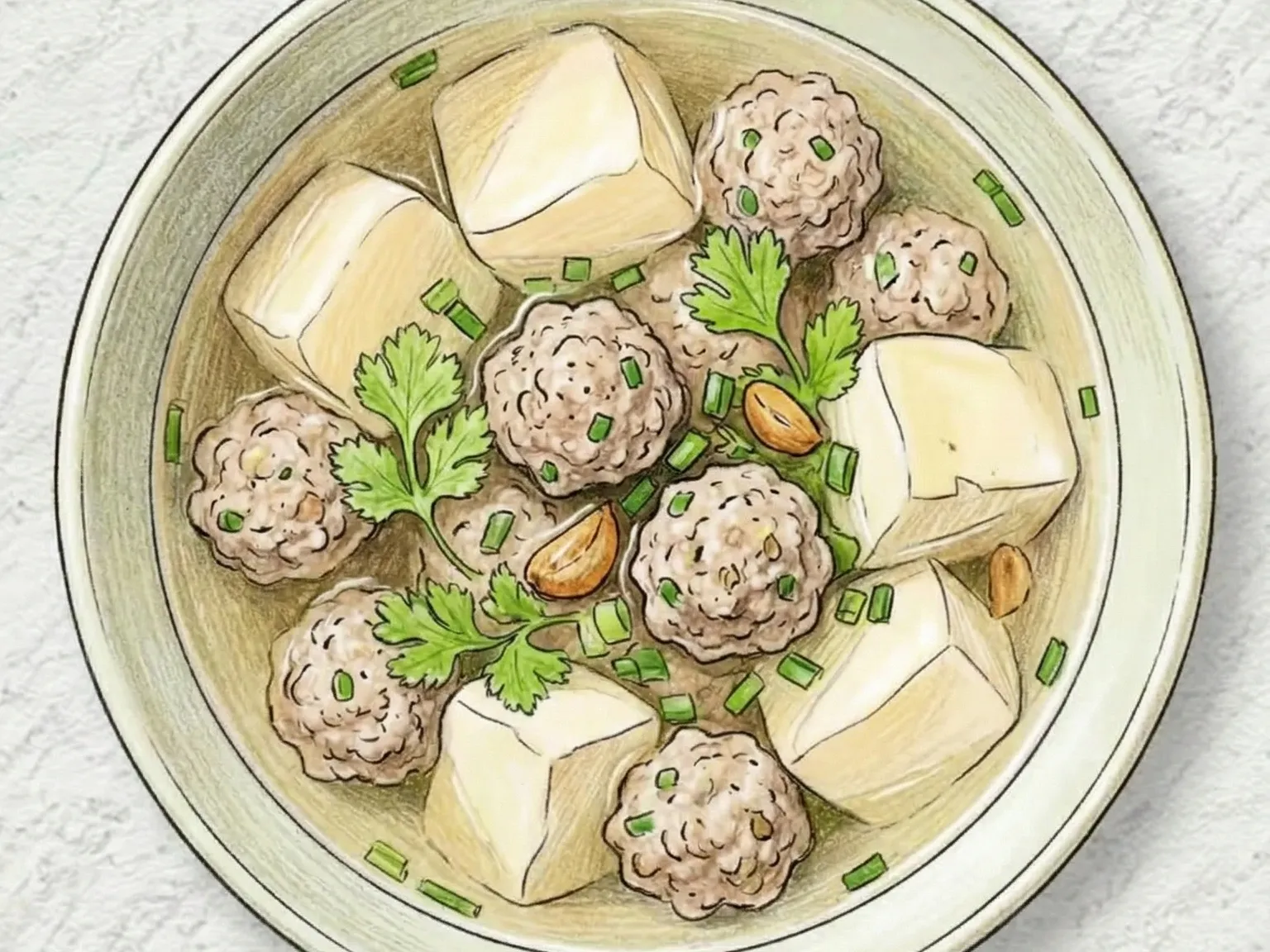
Gaeng Jued Tofu Soup (Thai Clear Tofu Soup)
Gaeng jued - literally 'bland soup' in Thai - is not tasteless despite its name; it is the one Thai dish that deliberately seeks gentleness in a cuisine famous for intensity. A clear broth simmered from pork bones or chicken holds soft tofu, small pork meatballs, glass noodles or squash. The meatballs are seasoned with garlic, white pepper, and coriander root - the aromatic trinity of Thai cooking - which infuse the clear broth with a subtle depth that belies the soup's transparent appearance. Fresh cilantro leaves and fried garlic are scattered on top for aroma and crunch, but the overall tone stays soothing and stomach-settling. On a Thai family table, gaeng jued sits alongside fiery dishes like som tam and tom yum, serving as a palate cleanser between bites of heat. It is the soup Thai parents make for children and for anyone feeling unwell - comfort food in its most literal sense.
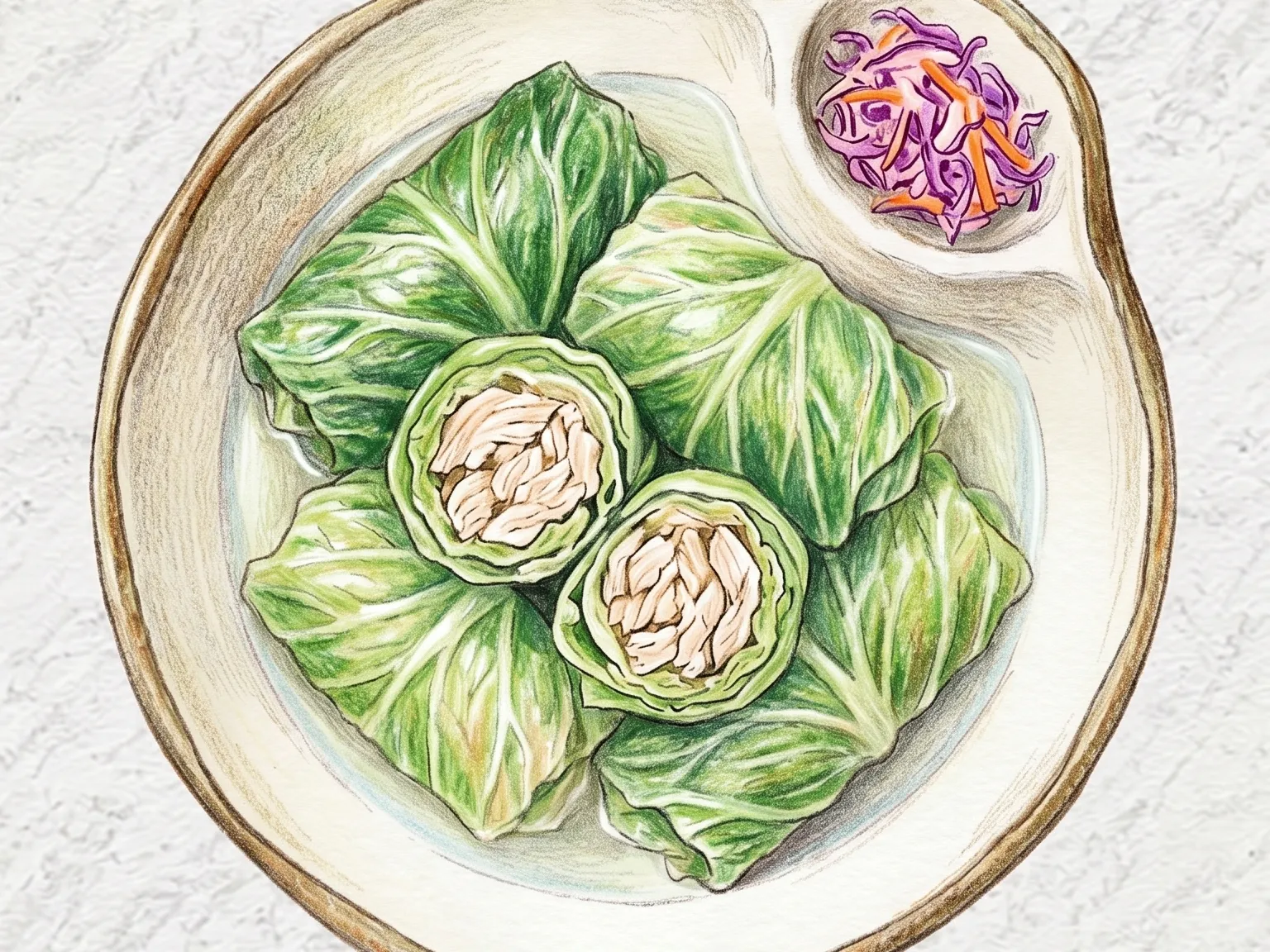
Chicken Cabbage Wraps
Chicken Cabbage Wraps represent a simple side dish combining tender chicken tenderloin with steamed cabbage leaves. The cabbage leaves are steamed for seven to eight minutes until slightly translucent, then cooled in cold water to preserve their color and flexibility. The chicken tenderloins are prepared by removing the tough tendons and marinating with mirin, salt, and pepper to reduce dryness and enhance tenderness. Once grilled on a medium-heated pan until cooked through, the chicken is rolled tightly inside the prepared cabbage leaves. Brushing the rolls with sesame oil before slicing them into bite-sized pieces adds a nutty finish. Serving these wraps with ssamjang creates a balanced dish with minimal ingredients, offering a clean taste and a pleasant contrast of textures.
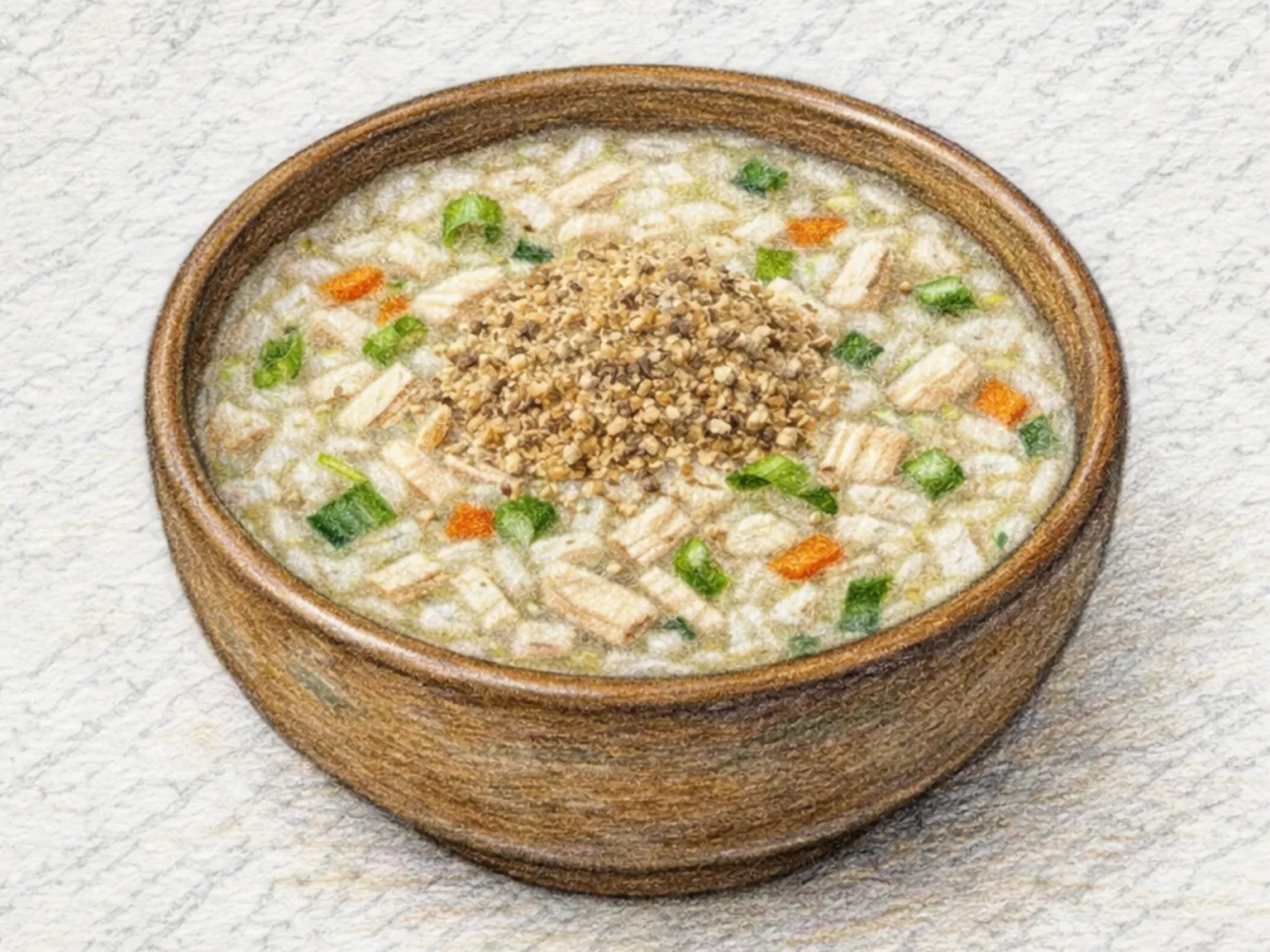
Korean Chicken Breast Perilla Porridge
Dakgaesal deulkkae juk is a traditional style of Korean porridge that utilizes shredded chicken breast alongside finely chopped onions and carrots as its primary components. The preparation begins by stir-frying these ingredients together, after which they are simmered slowly with a combination of soaked rice and chicken stock. As the cooking process nears its conclusion, perilla seed powder is incorporated into the pot. This specific ingredient dissolves thoroughly into the liquid to produce a final texture that is notably thick and creamy. The aroma produced by the perilla seeds is deeply nutty and serves as the most prominent characteristic of the dish. While sesame seeds are known for a sharp and roasted quality, perilla seeds offer a flavor that is more round and carries an herbaceous nuttiness. This gives the porridge a unique profile that is common in Korean cuisine. The inclusion of shredded chicken breast provides a source of lean protein that does not feel heavy, ensuring the meal remains nourishing and simple for the body to digest. Because of these qualities, this porridge is often used as a recovery meal for individuals after they have finished exercising or for anyone whose energy levels feel low. It also serves as a functional choice when a gentle meal is required for a sensitive stomach. Adjusting the final result is possible by increasing the quantity of perilla powder, which results in a more intense fragrance and an even thicker consistency for people seeking a richer bowl.
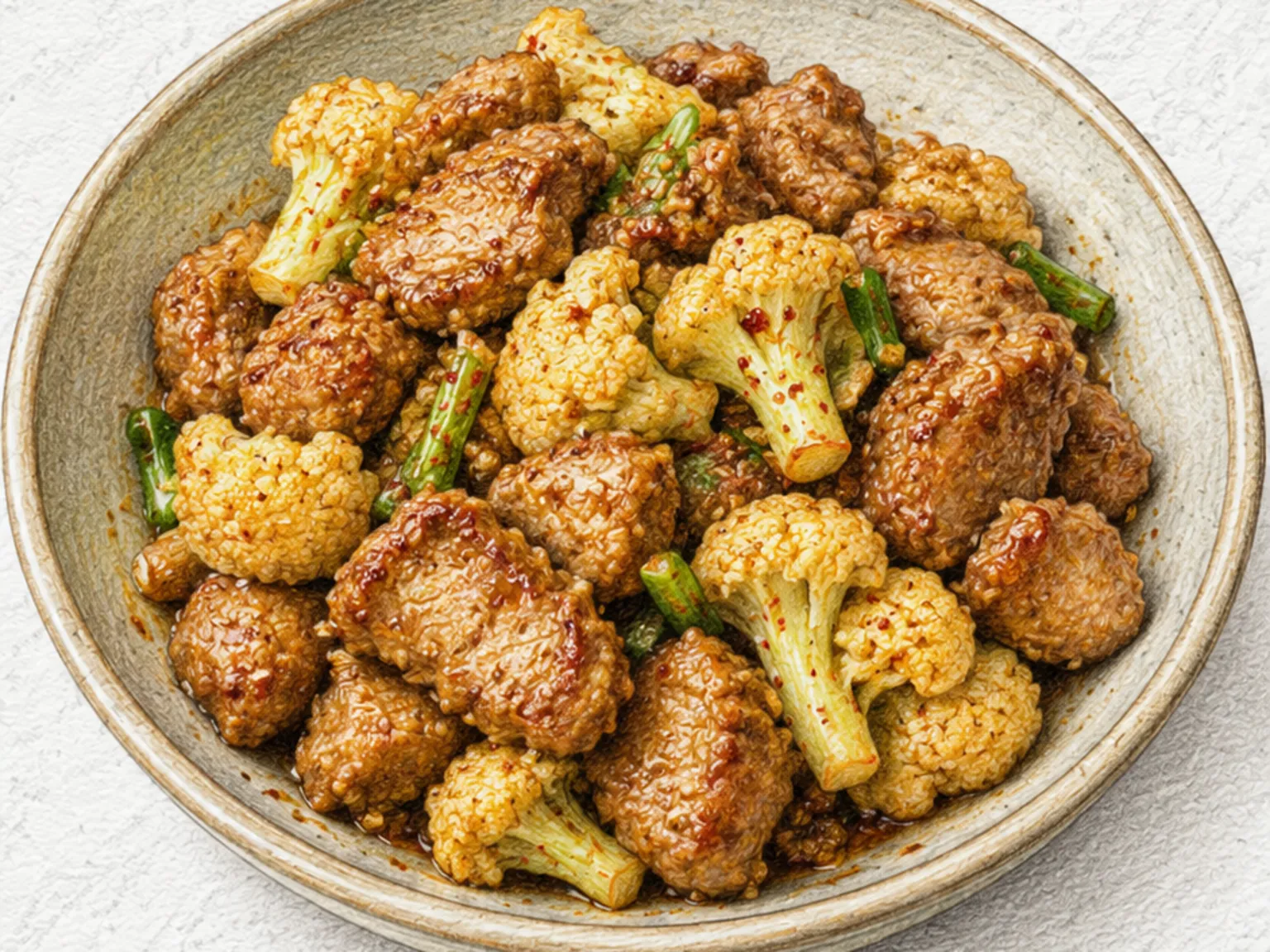
Korean Cauliflower Soybean Paste Pork Stir-fry
Kollipeullawo doenjang dwaeji bokkeum begins with pork shoulder seared hard over high heat until the exterior turns deep brown, building a crust that holds flavor through the rest of the cook. Doenjang and gochugaru go in next and fry briefly in the rendered pork fat, releasing their fermented, spiced aroma into the oil. Cauliflower blanched for forty seconds and thoroughly drained is folded in last. Draining the cauliflower matters: excess moisture would dilute the sauce and prevent it from concentrating on the meat and vegetables. The fermented saltiness of doenjang merging with the pork fat creates an earthy depth that straight doenjang jjigae does not have, and the cauliflower's mild, slightly sweet character offsets the heavier notes of the paste, making the dish feel lighter than the ingredient list suggests. With low carbohydrate content, it slots naturally into reduced-carb meal plans without compromise.
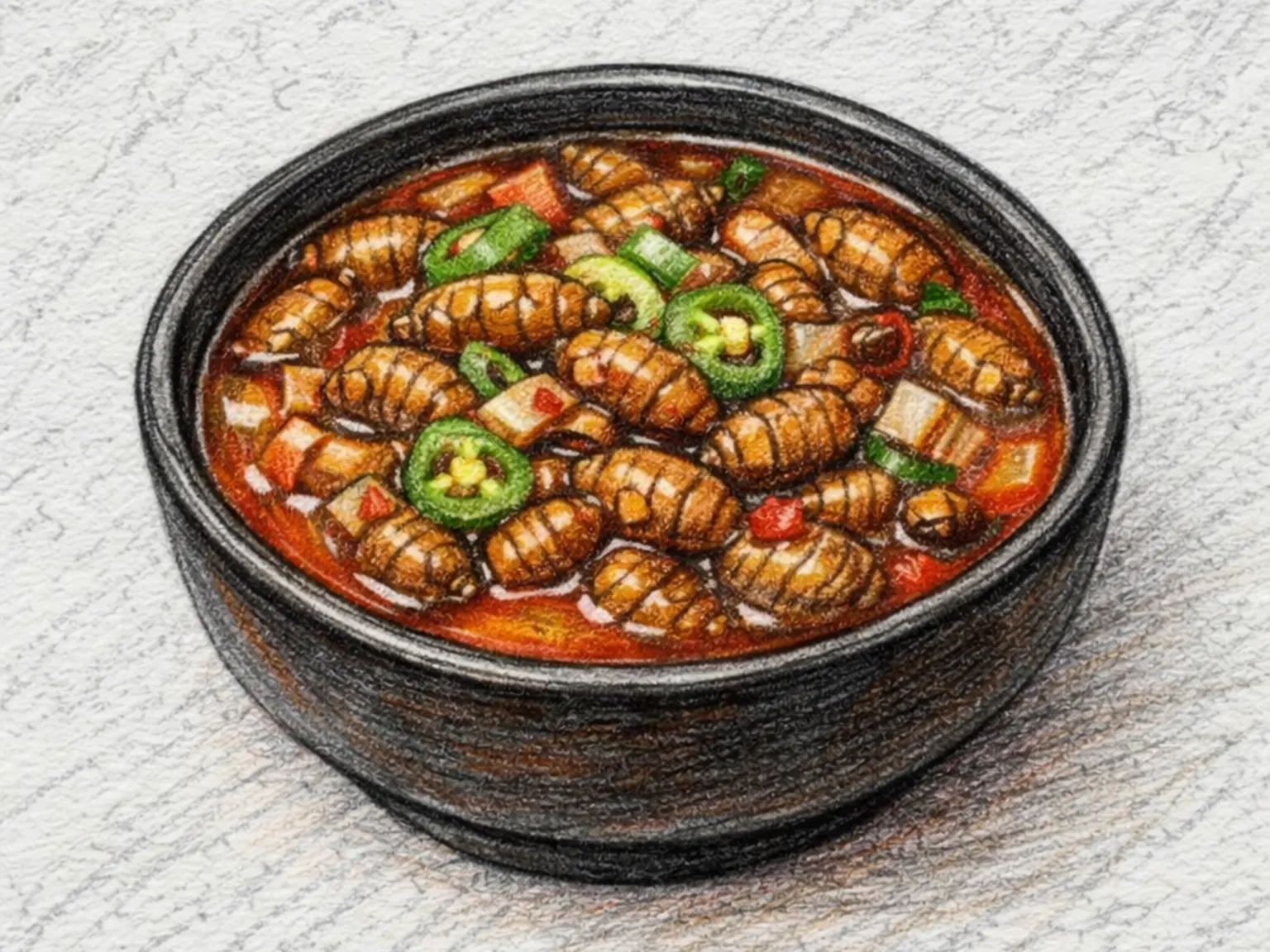
Korean Silkworm Pupae Broth
Beondegi-tang simmers canned silkworm pupae in a broth seasoned with soup soy sauce, gochugaru, and minced garlic, a staple street food soup served at Korean pojangmacha stalls. Sliced green onion and hot green chili cook alongside for eight minutes, letting the chili heat infuse the liquid while the pupae release a deep, earthy umami into every spoonful. Adding a splash of the canning liquid intensifies the savory depth, and the soup must be served piping hot to keep the aromatics lively. It is a classic pairing with soju or makgeolli, and while the chili level can be adjusted to taste, the soy sauce quantity should stay fixed to temper the pupae's distinctive aroma.
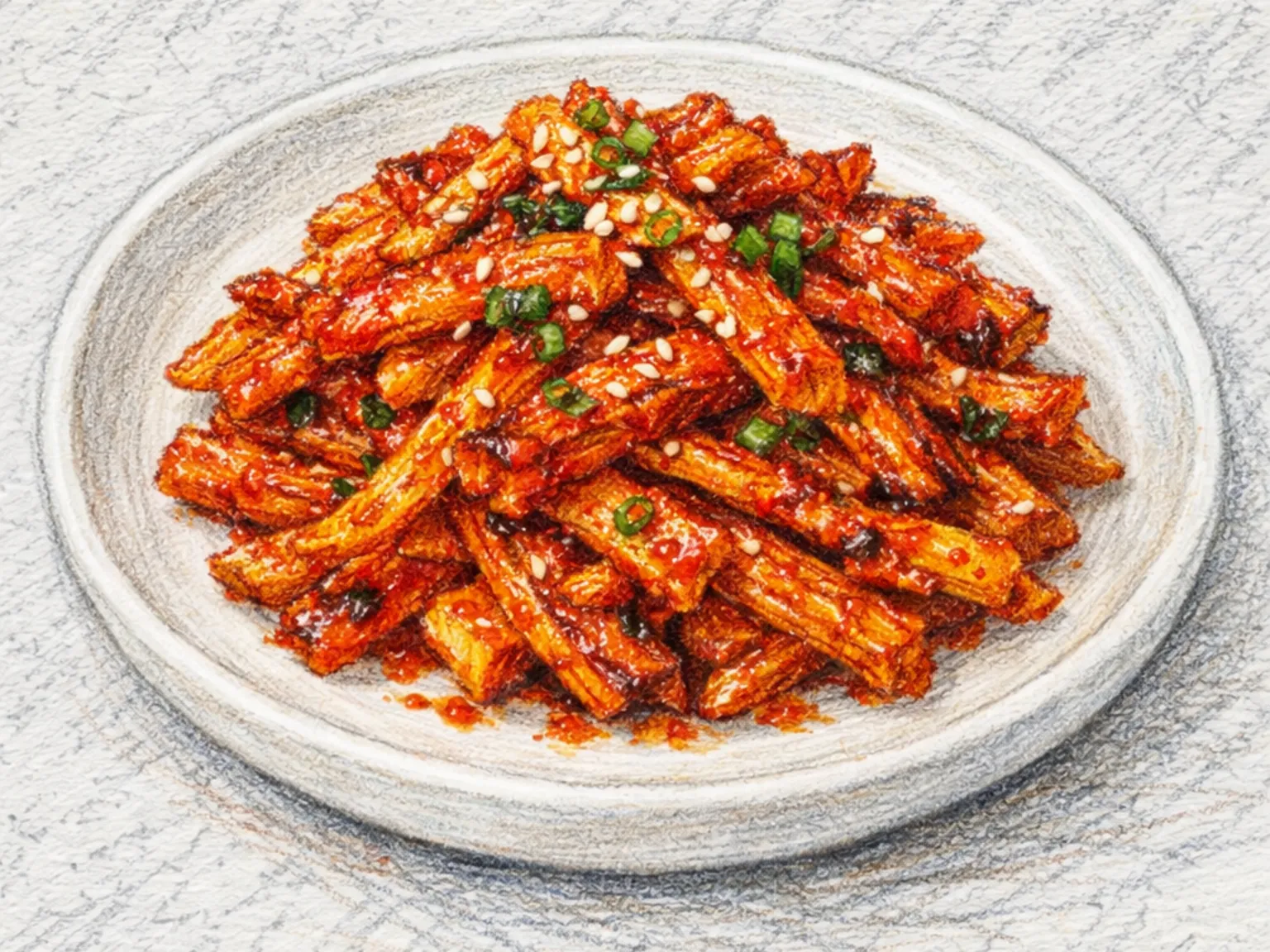
Korean Grilled Dried Pollack
Dried pollack strips are briefly moistened, coated in a paste of gochujang, soy sauce, and oligosaccharide syrup, then grilled low and slow. The slow heat lets the glaze seep into the chewy dried fish without charring, building layers of spicy-sweet flavor. A touch of sesame oil applied at the finish adds a toasted aroma that rounds out the dish. The sweet-spicy glaze filling the kitchen with fragrance as the fish grills is part of what makes this a beloved home-cooked snack. Controlling surface browning and internal doneness helps the ingredients cook evenly while keeping the final seasoning balanced.
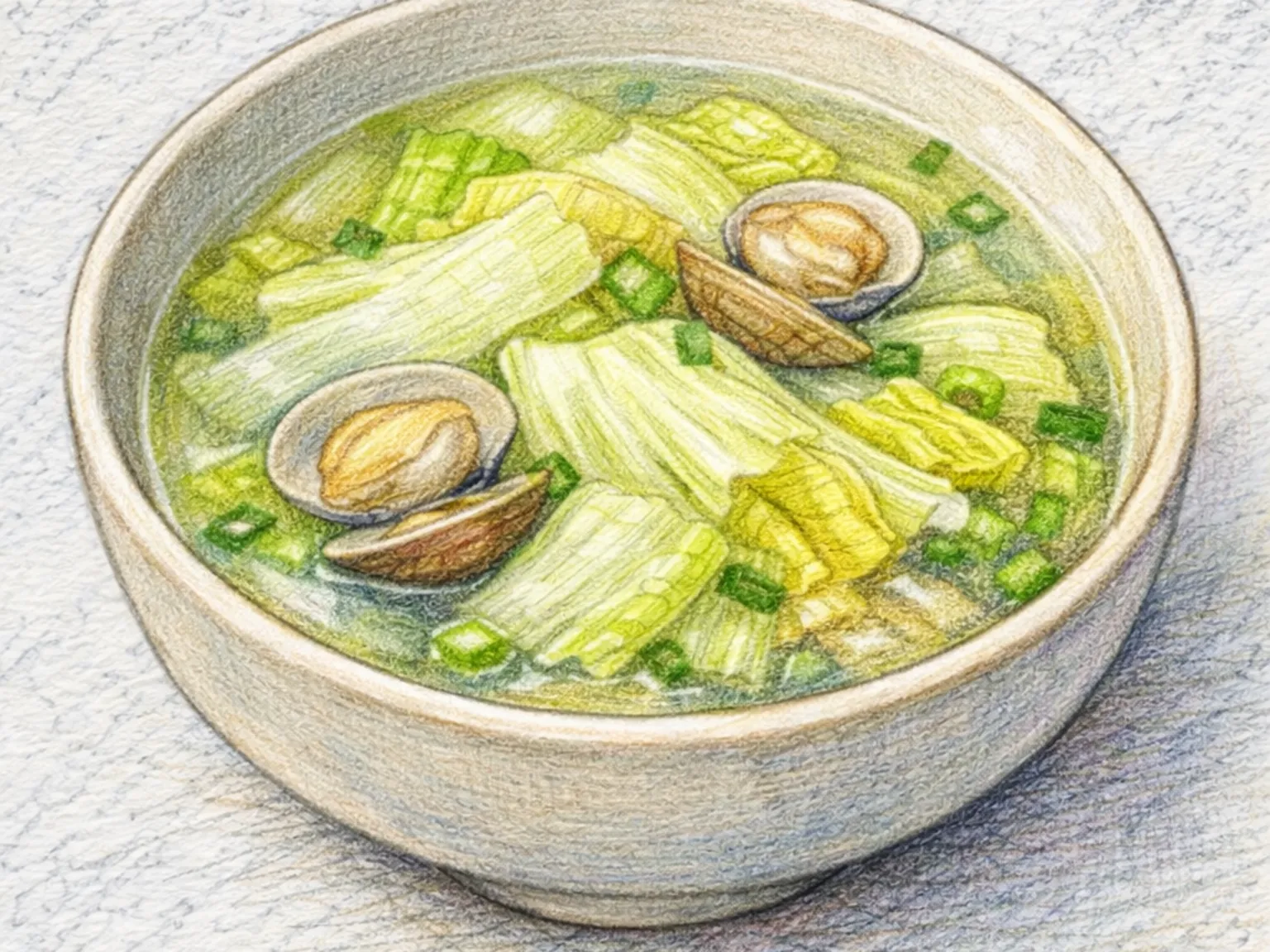
Korean Napa Cabbage Clam Soup
Baechu jogae guk is a clear Korean soup that draws its flavor entirely from clams and napa cabbage without any additional stock ingredients. The clams must be purged in salted water for at least two hours to expel all sand; skipping this step contaminates the broth and ruins the finished dish. Starting from cold water with both the cabbage and clams allows the temperature to rise gradually, coaxing sweetness from the cabbage as it heats alongside the shellfish. Once the clam shells open, the heat is reduced and the broth is seasoned lightly with minced garlic and guk-ganjang. Sliced scallion is added near the end to preserve its fresh, grassy note in the liquid. Since the clam liquor itself carries significant salinity, any additional salt should be added only after tasting, and kept minimal. No anchovy stock or kelp is needed because the marine depth of the clams and the vegetal sweetness of the cabbage together build a clean, layered broth on their own. The soup is mild enough to serve as a restorative meal when appetite is low or digestion is off.
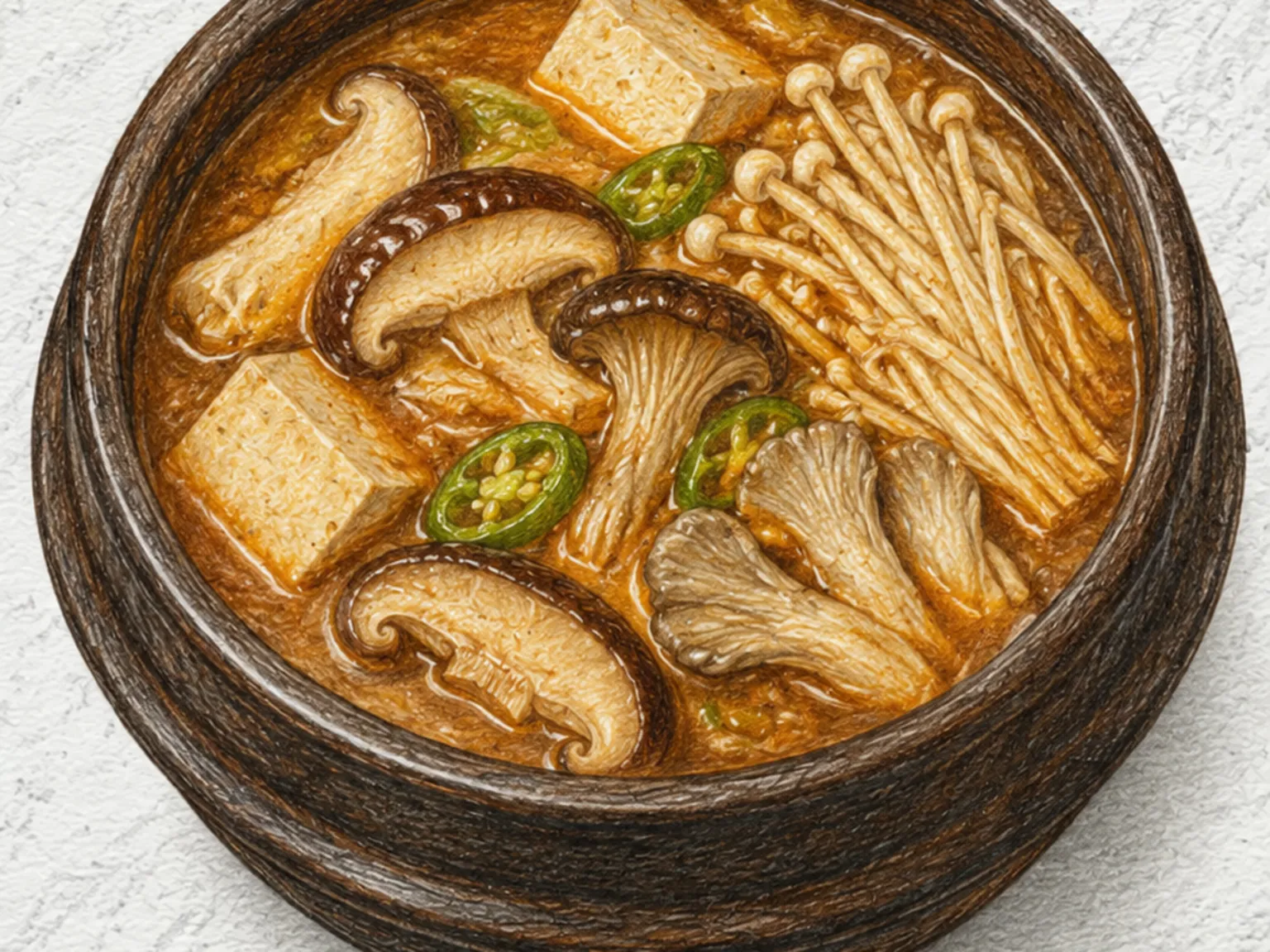
Korean Mushroom Doenjang Stew
Shiitake, oyster, and enoki mushrooms are simmered together in doenjang-seasoned anchovy broth. The anchovy stock lays the foundational depth of umami, and each mushroom type adds its own compounds to the broth as they cook, building flavor in distinct layers. Shiitake holds its meaty chew, oyster mushroom separates into silky strands along its grain, and enoki stays crisp, so the bowl delivers varied textures from a single pot. Soft tofu absorbs the broth all the way through, carrying the fermented soybean flavor to the center of each cube. The stew is satisfying as a full meal without any meat. A sliced cheongyang chili sharpens the finish if extra heat is wanted.
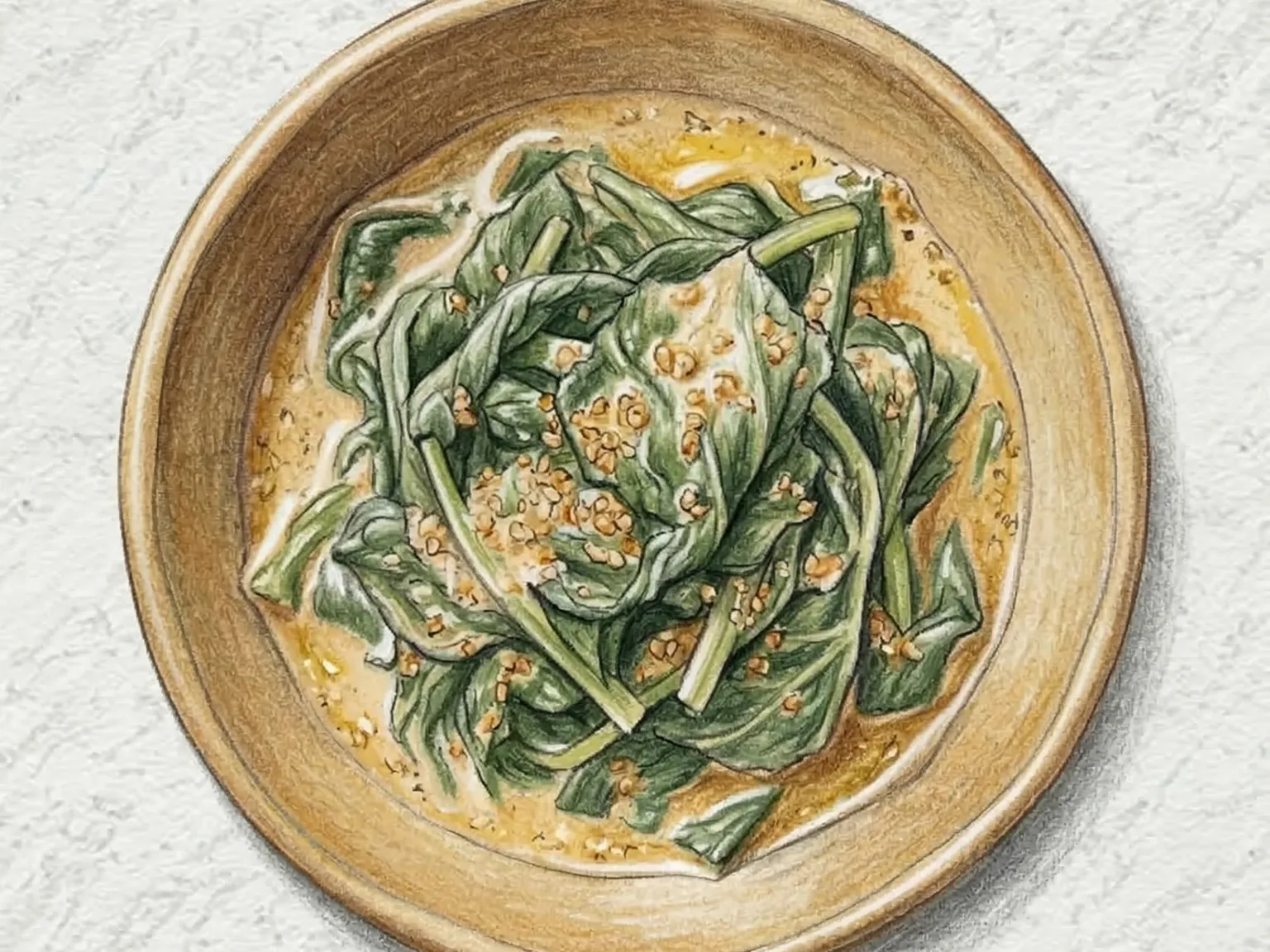
Korean Steamed Thistle Greens with Perilla
Gondre deulkkae jjim is a steamed side dish of blanched thistle greens cooked down with ground perilla seeds, perilla oil, and soup soy sauce. The greens are seasoned with garlic and oil first, then covered and left to steam over low heat so the liquid is slowly absorbed into the fibrous leaves rather than evaporating away. Adding the perilla powder toward the end of cooking, rather than at the beginning, prevents the nutty flavor from turning bitter or chalky from prolonged heat exposure. The soft, absorbent fibers of the thistle greens hold the seasoning exceptionally well, meaning each bite carries a concentrated burst of savory, nutty flavor throughout. Pulling the pan off the heat while a little texture remains in the greens keeps the dish from turning mushy. Green onion cut into rough pieces is added on top at the end, and a final drizzle of perilla oil revives the aroma. The ingredient list is short, but the result is a deeply satisfying dish often piled over hot rice or served as a companion to gondre bibimbap.
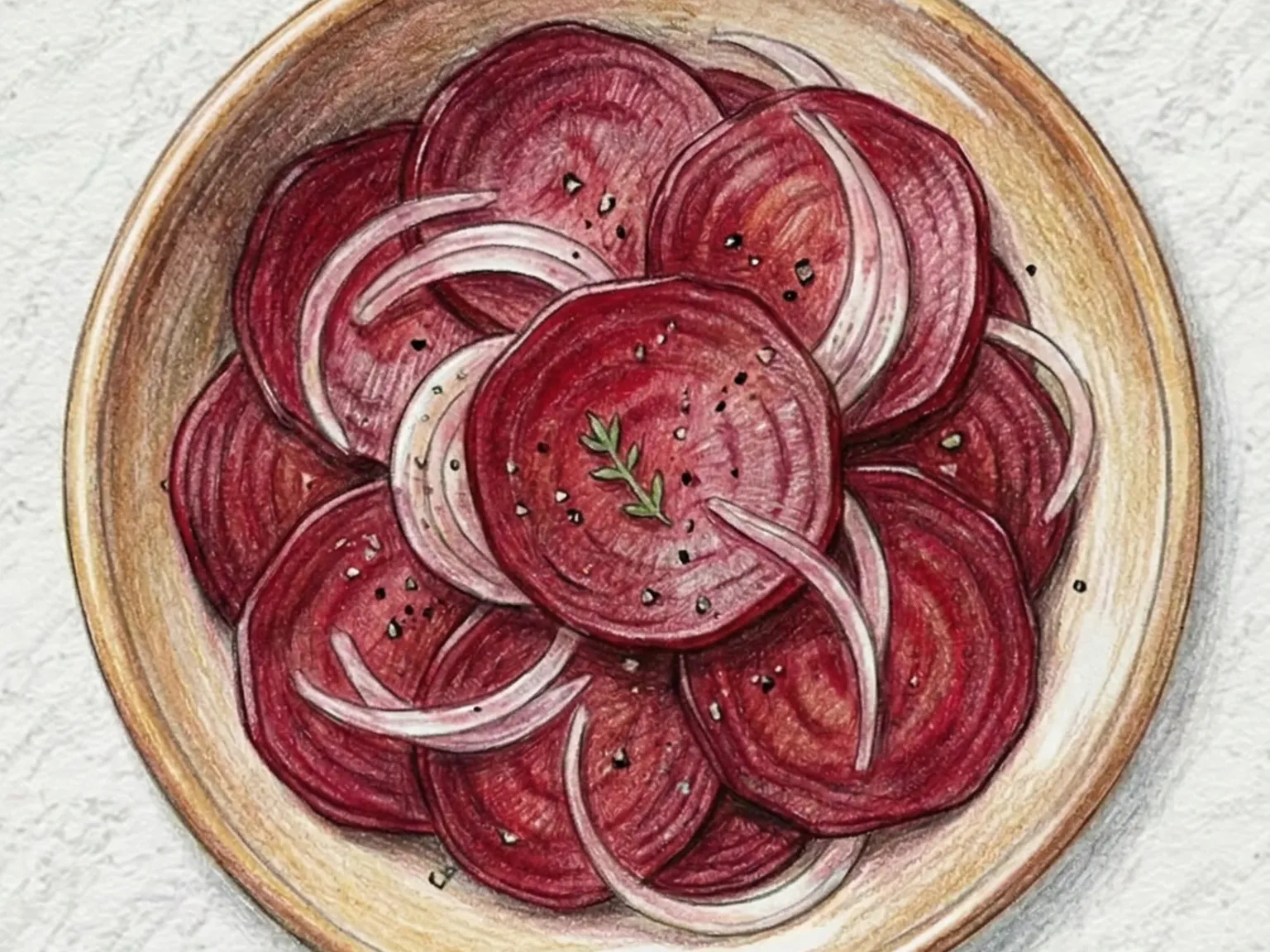
Korean Soy Pickled Beet (Vinegar Soy Brine Jangajji)
Beet jangajji is a Korean soy-pickled beet prepared by slicing beets thin and submerging them in a cooled brine of soy sauce, vinegar, and sugar. The vinegar cuts through the beet's earthy undertone, leaving a clean sweetness sharpened by acidity, and onion adds a mellow depth to the pickling liquid. As the brine cools, the beet's vivid red pigment bleeds into the liquid, creating a visually striking jar that stands out on the table. After at least a day of pickling, the flavor penetrates fully, producing a crisp, refreshing side dish suited to rice or grilled meats. Julienned beets pickle faster and are ready within a day, while thicker slices need two days or more for the brine to reach the center. Stored in the refrigerator, the pickles keep well for over two weeks, making a large batch practical.
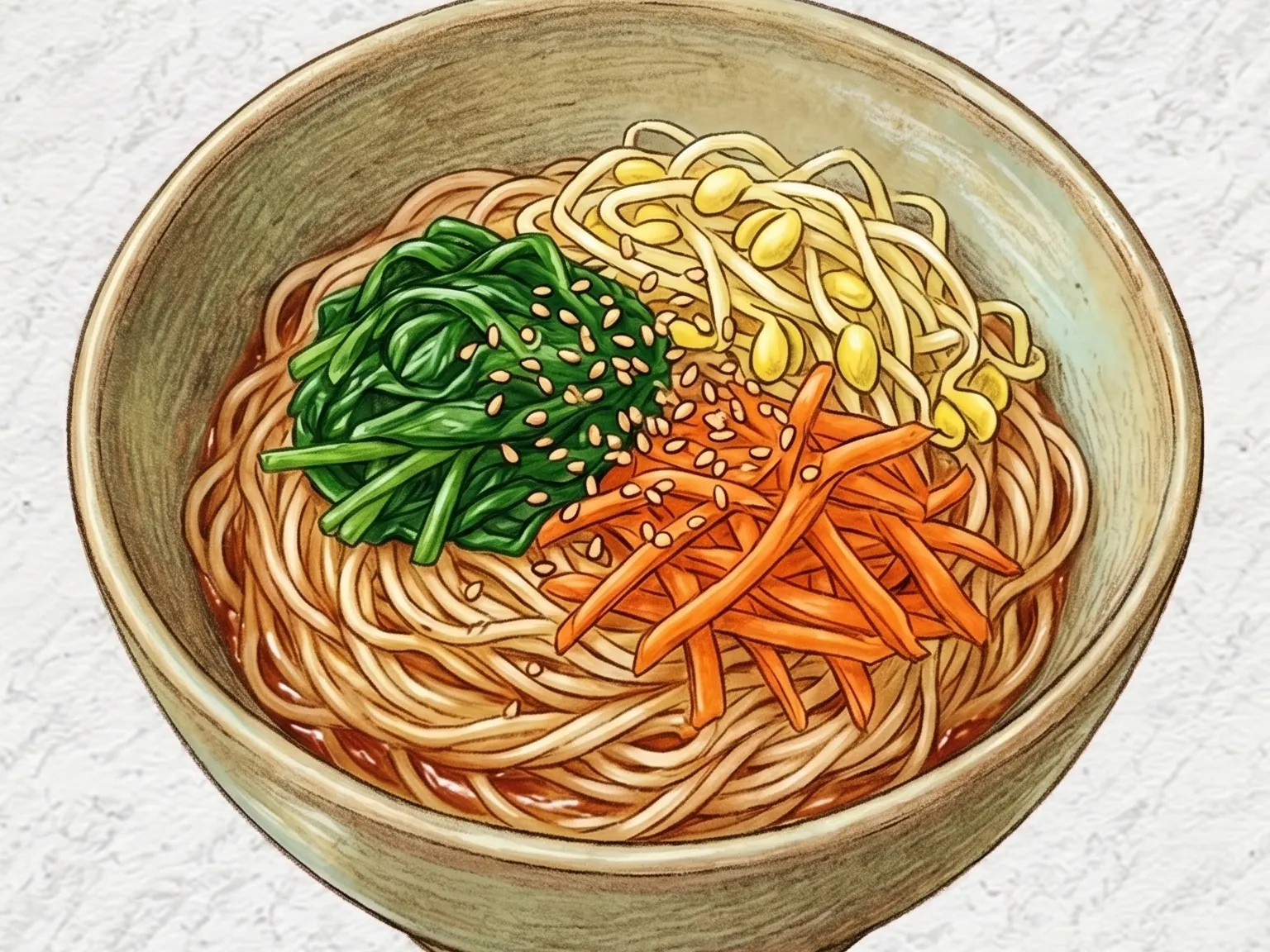
Korean Seasoned Veggie Mixed Noodles
Namul bibim somyeon is a Korean mixed noodle dish where thin wheat noodles are tossed with blanched spinach, soybean sprouts, and julienned carrot in a soy-based dressing. Each vegetable is blanched separately and squeezed firmly dry before mixing; residual moisture dilutes the sauce and causes the noodles to clump as they sit. Dry-sauteing the carrot for one minute without any oil pulls out a sweetness that raw carrot cannot deliver. The dressing combines soy sauce, rice vinegar, plum syrup, minced garlic, and sesame oil into a sauce that is salty, tart, and faintly sweet all at once, strong enough to season the mild vegetables and noodles evenly. Coating the noodles with the dressing first and folding in the vegetables afterward ensures every strand is seasoned rather than leaving the sauce concentrated on the vegetable surfaces. A generous scatter of toasted sesame seeds on top brings a nutty warmth that ties together the clean vegetable flavors and the aromatic sesame oil in the dressing.

Bomdong Strawberry Doenjang Salad
Bomdong strawberry doenjang salad combines the crisp leaves of early spring bomdong cabbage with the fruity sweetness of strawberries and the fermented depth of Korean soybean paste. The dressing, built by whisking doenjang with olive oil and vinegar, adds savory richness to the mild bomdong leaves, while the natural acidity of the strawberries neutralizes the saltiness of the paste and brings brightness to every bite. Walnuts introduce crunch and nuttiness, creating textural contrast among the softer components, and cucumber adds moisture that keeps the salad refreshing throughout. Dressing the salad too early draws water from the strawberries, so adding the dressing immediately before serving is essential for maintaining the right texture. Tearing the bomdong by hand rather than cutting it preserves its natural shape without bruising the leaves. The saltiness of doenjang varies between brands, so adding the dressing gradually and tasting as you go prevents overseasoning. Swapping strawberries for blueberries or mandarin segments adapts the salad to other seasons while keeping the doenjang dressing intact. Toasted almond slices or sunflower seeds make a good substitute for walnuts when a lighter crunch is preferred.
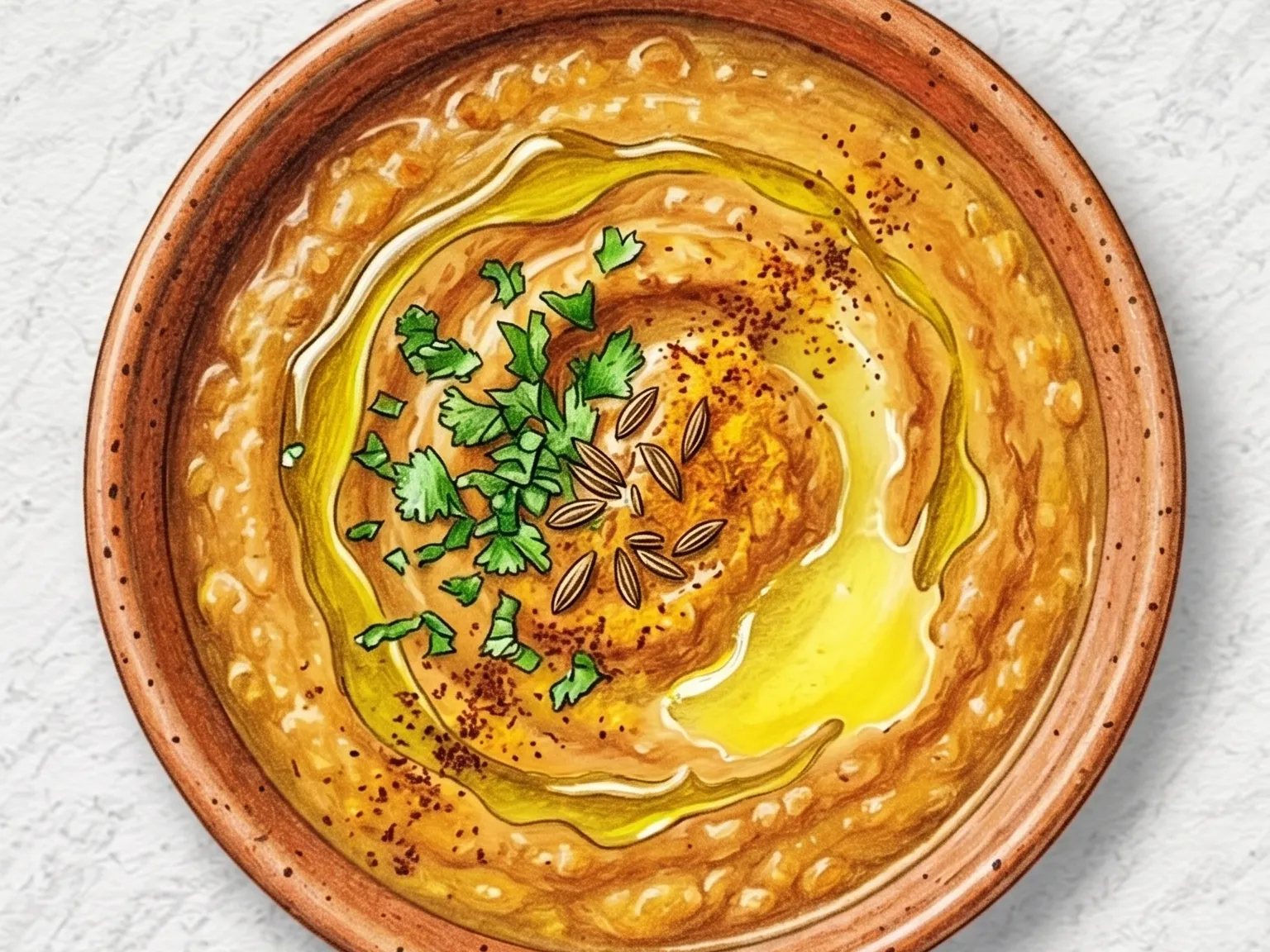
Red Lentil Soup
Red lentil soup is a Middle Eastern and Mediterranean staple made by simmering red lentils with cumin, turmeric, and vegetable stock until the lentils dissolve into a silky, golden broth. Onion and garlic are sauteed in olive oil, then the ground spices are toasted briefly to bloom their earthy, warm aromatics into the fat, which flavors the entire pot. Red lentils require no soaking - they go straight into the stock and break down within twenty to twenty-five minutes, their skins splitting apart to create a naturally creamy texture without the need for blending. A generous squeeze of lemon juice at the end is essential, cutting through the heaviness of the spices with a bright, clean acidity. A final drizzle of olive oil over each bowl adds a layer of richness that deepens every spoonful.
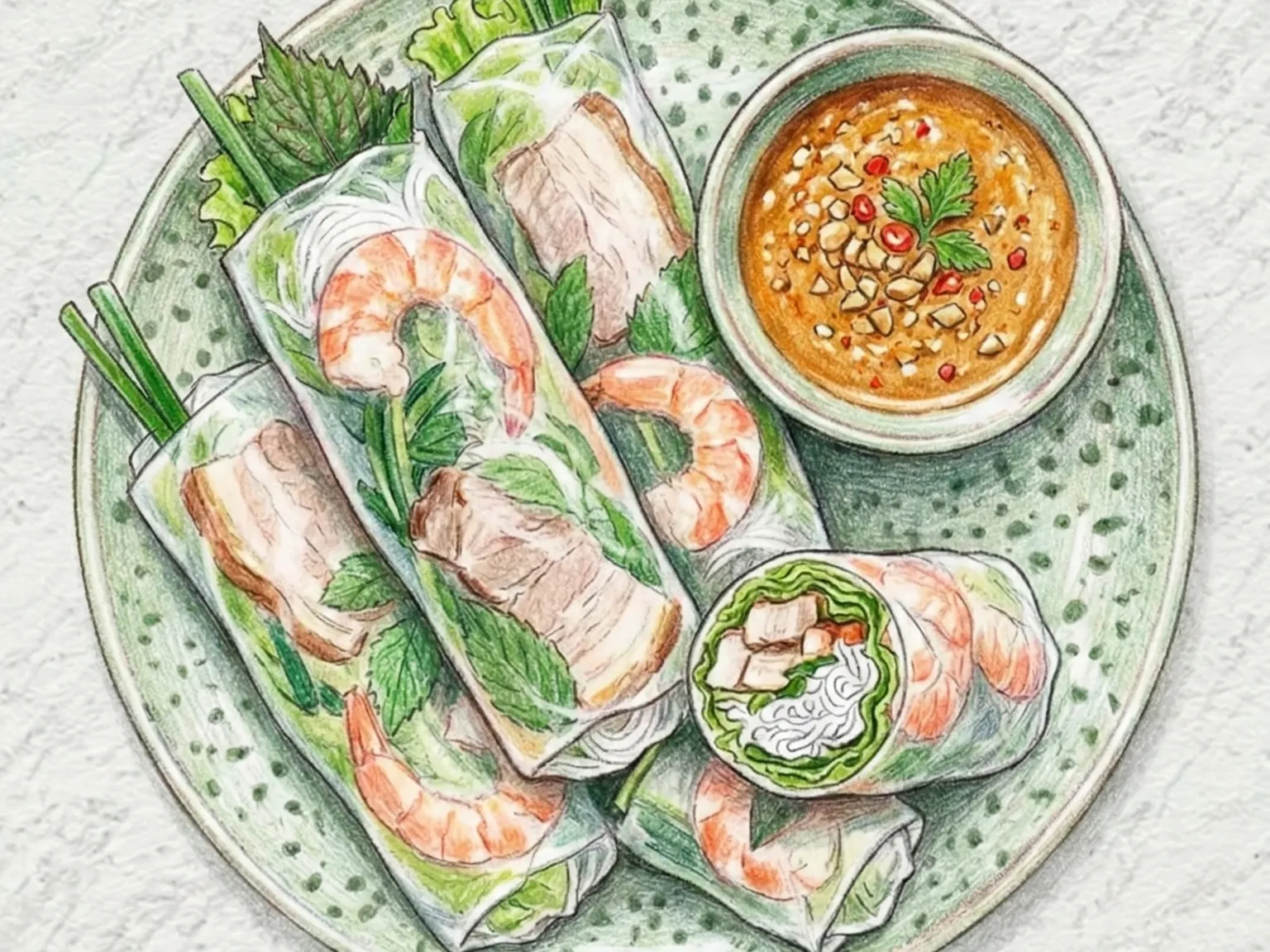
Vietnamese Fresh Spring Rolls
Goi cuon, Vietnamese fresh spring rolls, are an uncooked hand-assembled dish from southern Vietnam. A sheet of rice paper softened in water serves as the wrapper for poached shrimp, sliced pork, rice vermicelli, lettuce, mint, cilantro, and garlic chives, all rolled tightly into a compact cylinder. Because the wrapper is translucent, the pink shrimp and bright herbs are visible through the exterior before the first bite, and that visual layer is part of the appeal. Two dipping sauces are standard: a thick peanut-hoisin blend whose richness suits the fatty pork, and nuoc cham, a light bright mixture of fish sauce, lime juice, sugar, and chili that works against the springy shrimp. Inside each roll, four distinct textures come together - the chewy rice paper, slippery vermicelli, firm shrimp, and leafy herbs - and none of them would work the same way if cooked. The dish requires no heat source to prepare, yet the balance of protein, starch, and fresh aromatics makes it nutritionally complete as a light meal. In Ho Chi Minh City, fresh spring rolls are sold from street carts alongside more elaborate restaurant preparations, and serving them at home means assembling at the table together, a format that brings a communal rhythm to the meal that plated dishes do not.
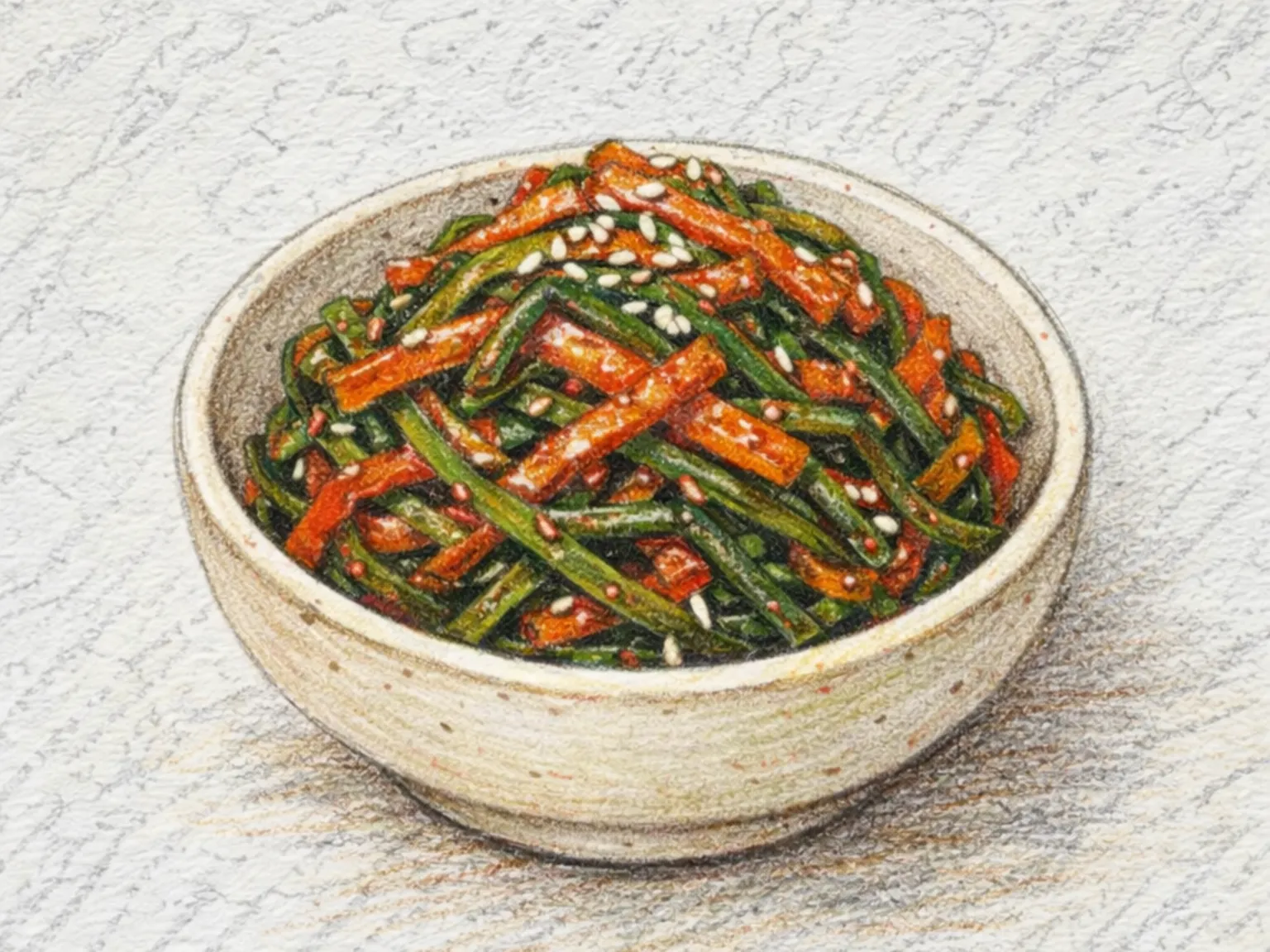
Korean Seasoned Kelp Strips
Kelp strips are soaked in cold water for ten minutes to draw out excess salt, then blanched for twenty seconds, just long enough to turn them pliable without losing their snap. The strips are dressed with gochugaru, vinegar, soy sauce, sugar, and garlic while julienned cucumber adds a cool, refreshing contrast. The seasoning sits over the mineral-dense ocean flavor of the kelp, layering a bright, acidic kick onto each bite. Sesame oil and whole sesame seeds finish the dish. The strips keep a satisfying resistance between the teeth that sets them apart from softer Korean seaweed preparations. Best served cold; the texture and flavor hold up well in packed lunches. Blanching beyond twenty seconds causes the kelp to soften and lose the chew that defines this banchan.
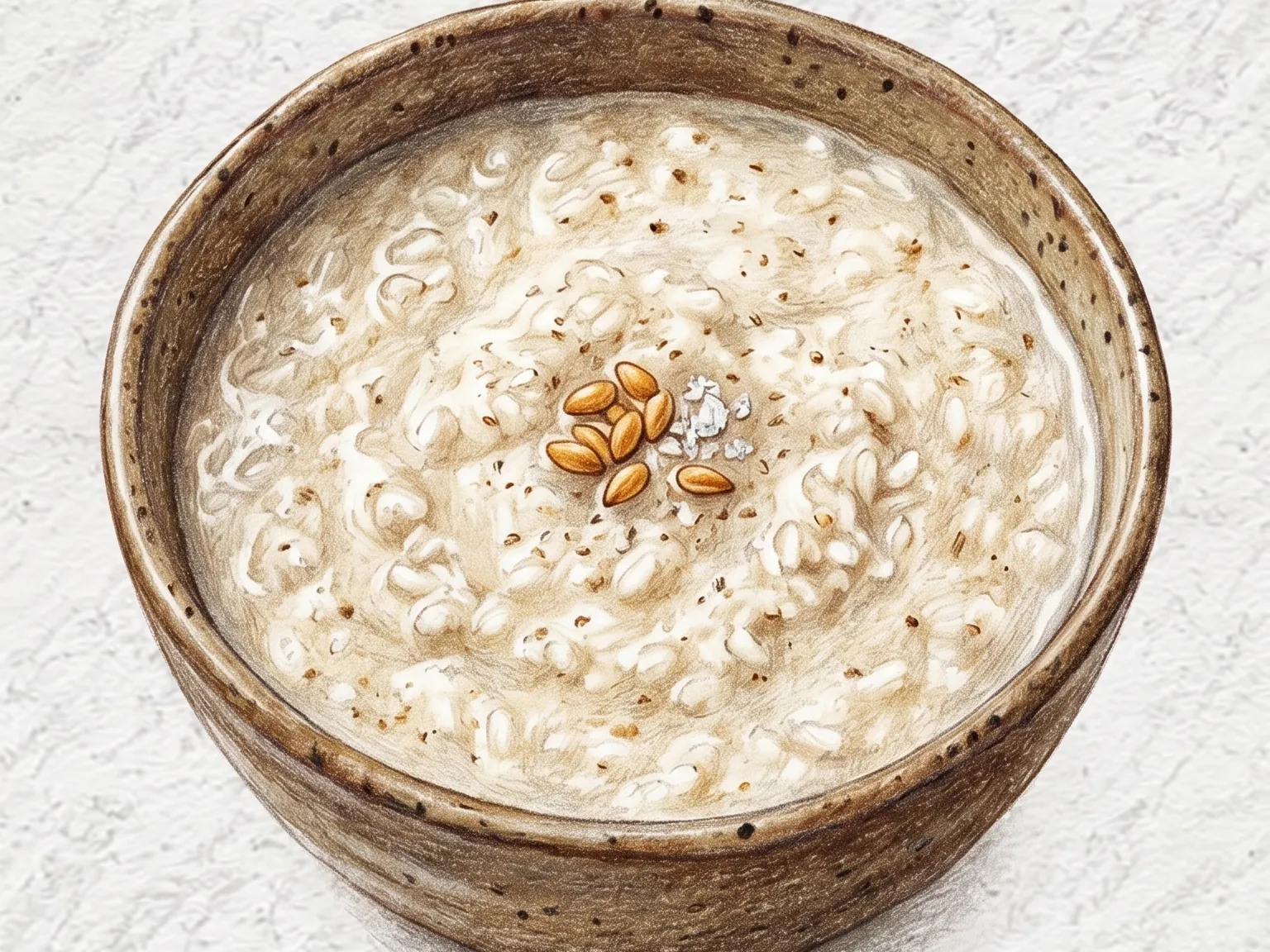
Korean Perilla Seed Porridge
Deulkkae juk is a traditional Korean porridge made by blending toasted perilla seeds into a smooth liquid and simmering it with soaked rice. Toasting the seeds beforehand unlocks a deep, earthy nuttiness that defines every spoonful of the finished porridge. The rice is first stir-fried briefly in sesame oil, then the perilla liquid is poured in and the mixture is stirred over low heat until the starch from the rice and the natural oils from the seeds combine into a thick, creamy consistency. Salt is the only seasoning needed - the perilla carries enough flavor on its own to make the bowl complete. The porridge is easy to digest and coats the stomach gently, making it suitable as a morning meal or a restorative dish during illness. In Korean tradition, deulkkae juk has long served as a warming winter food, valued for its ability to nourish without burdening the body.
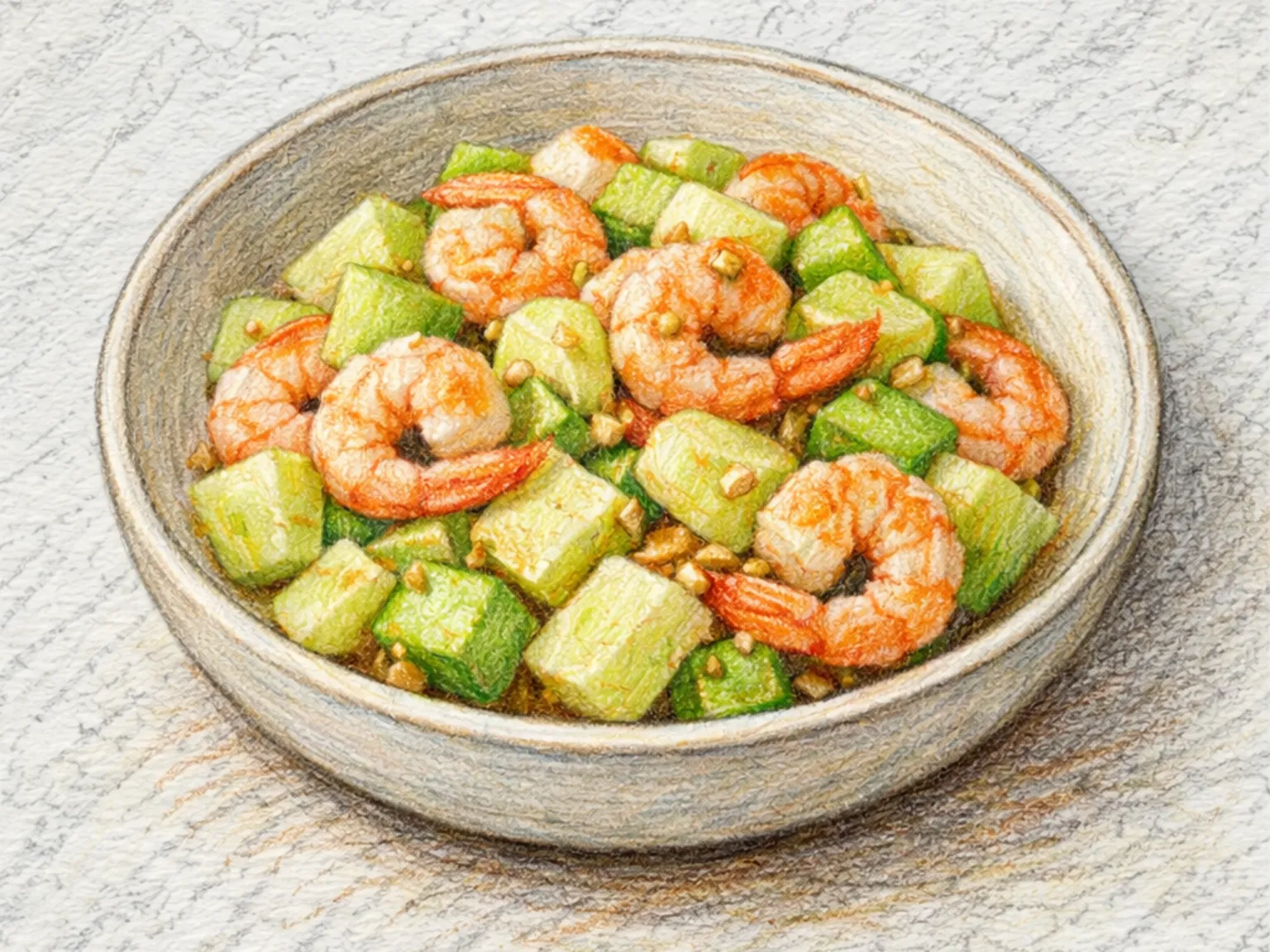
Korean Kollabi Saeu Bokkeum (Kohlrabi Shrimp Stir-fry)
Kolrabi saeu bokkeum is a quick stir-fry of shrimp marinated in cooking wine and julienned kohlrabi, cooked over high heat in garlic-infused oil and seasoned with soy sauce and oyster sauce. Spreading the shrimp in a single layer and letting one side sear properly before flipping is the key to a firm, bouncy texture rather than a steamed one. Kohlrabi, a cross between turnip and cabbage, brings a natural sweetness and firm crunch that pairs well with the shrimp, and keeping the cooking time short preserves that crisp bite. Red bell pepper adds a contrasting color to the dish, and the deep savory quality of oyster sauce amplifies the shrimp's natural sweetness. Preheating the pan thoroughly before adding ingredients prevents excess moisture from releasing, which keeps the stir-fry dry and the textures distinct. Scallion and a finish of sesame oil round out the dish. The calorie count is low relative to the protein content, making it a practical side dish for everyday meals.