🥗 Light & Healthy Recipes
Light, healthy, low-calorie dishes
712 recipes. Page 6 of 30
These low-calorie recipes prove that healthy eating does not have to be boring. High-protein meals, vegetable-forward dishes, and low-carb options - all designed to support weight management and better eating habits.
Diet-friendly does not mean small portions or bland flavors. Chicken breast, tofu, konjac, and eggs provide lasting satiety, while smart seasoning and cooking methods keep the taste appealing. Build a sustainable, healthy routine with these recipes.

Korean Cherry Blossom Milk Tea
Beotkkot milk tea is a seasonal drink built around salt-pickled cherry blossoms, which are soaked in cold water for five minutes to pull out most of their brine before use. Black tea leaves steep for three minutes, then milk and sugar go in over low heat. Heavy cream and vanilla bean paste are stirred in off the heat, rounding out the tea's tannins and adding a dense, smooth body to the drink. The small amount of salt remaining in the blossoms after desalting introduces a subtle savory thread beneath the sweetness - not enough to read as salty, but enough to keep the flavor from being one-dimensional. A few desalted blossoms floated on top release a faint floral scent with each sip. For the iced version, the tea should be brewed roughly ten percent stronger than usual, since dilution from melting ice would otherwise flatten the flavor.

Korean Grilled Yellow Croaker
Yellow croaker is scaled and gutted, then salted for ten minutes to draw surface moisture out of the flesh, which simultaneously reduces any fishy odor and firms the exterior slightly before cooking. A light dusting of flour creates a thin barrier between the skin and the hot oil, preventing the delicate skin from sticking to the pan and forming a fine crisp layer that holds the juices inside. The mild, clean white flesh of yellow croaker is one of its most valued qualities, and the flour coating allows that flavor to express itself without interruption from heavy seasoning. Knowing when to flip is the central technique: the fish should not be touched until the underside has turned fully golden-brown and released naturally from the pan surface, at which point two wide spatulas used simultaneously keep the body intact through the turn. Yellow croaker has been a fixture on ancestral memorial tables (jesa-sang) and ceremonial spreads throughout Korean history, and remains a steady everyday banchan alongside rice and soup.
Korean White Clam Clear Soup
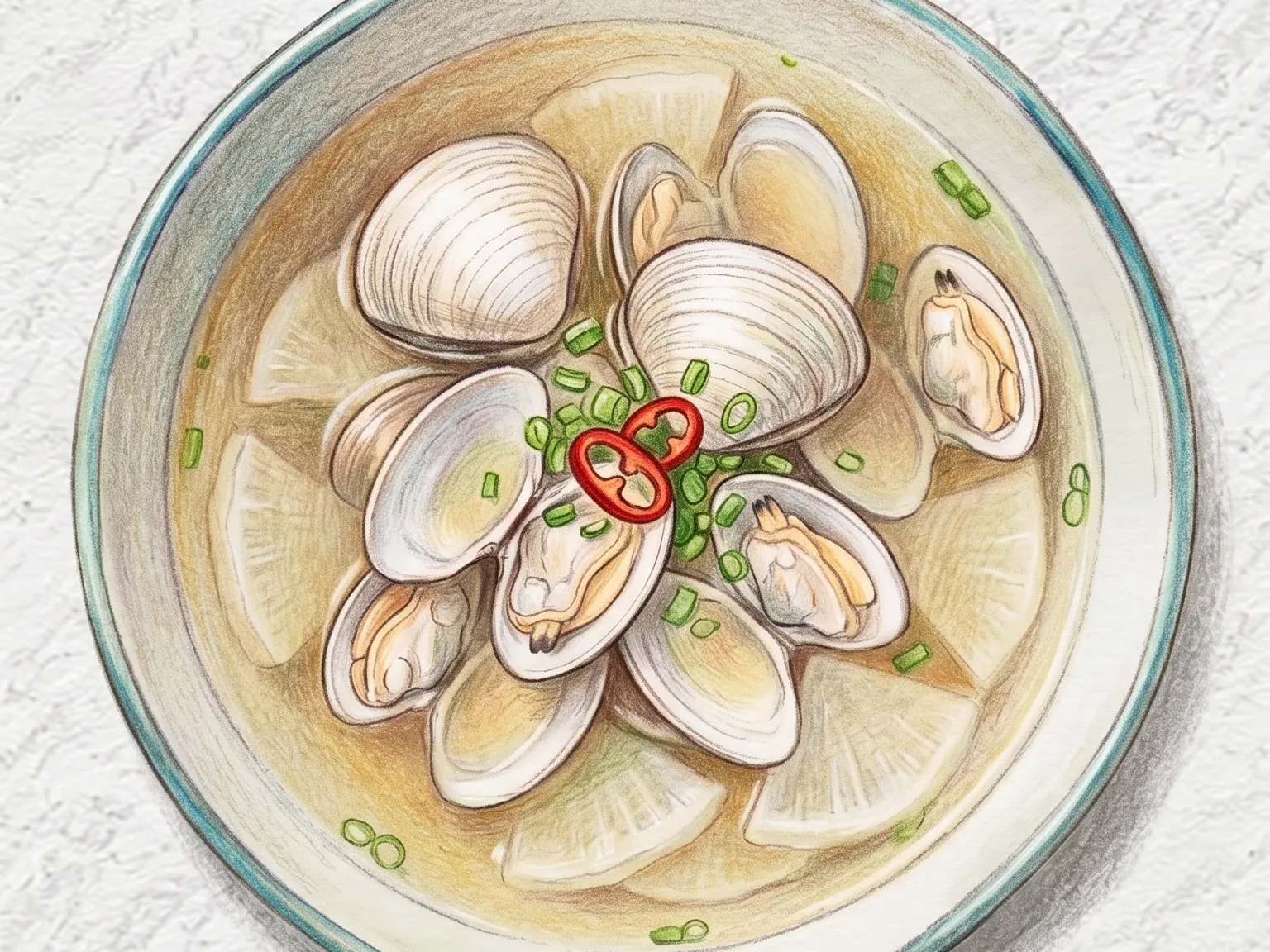
Baekhap jogae tang is a clear Korean clam soup built entirely on the flavor of hard clams, with no additional stock of any kind. The clams are soaked in salted water until fully purged of sand, then transferred to cold water in the pot and heated gradually. This slow climb from cold allows the clams to release their maximum flavor into the surrounding liquid before they even open, producing a more richly flavored broth than rapid boiling ever could. Daikon radish simmers in the same water, lending a cool, clean sweetness that tempers the clams inherent saltiness while absorbing broth flavor itself, softening into bite-sized pieces that are worth eating alongside the shellfish. A tablespoon of cheongju, Korean clear rice wine, is added early to neutralize any briny off-notes that might otherwise linger, leaving a cleaner, lighter finish. Garlic appears in small amounts only, deliberately restrained so it does not compete with the delicate shellfish flavor that is the whole point of the dish. Scallion and red chili are placed on top at the very end, contributing color and fragrance rather than direct seasoning. Salt is kept to an absolute minimum since the clam liquor itself provides all the salinity required. The soup is a lesson in simplicity: no anchovy, no kelp, no premade stock. The clams do all the work, and the result is a broth that is simultaneously light and deeply satisfying.
Korean Perilla Mushroom Hot Pot
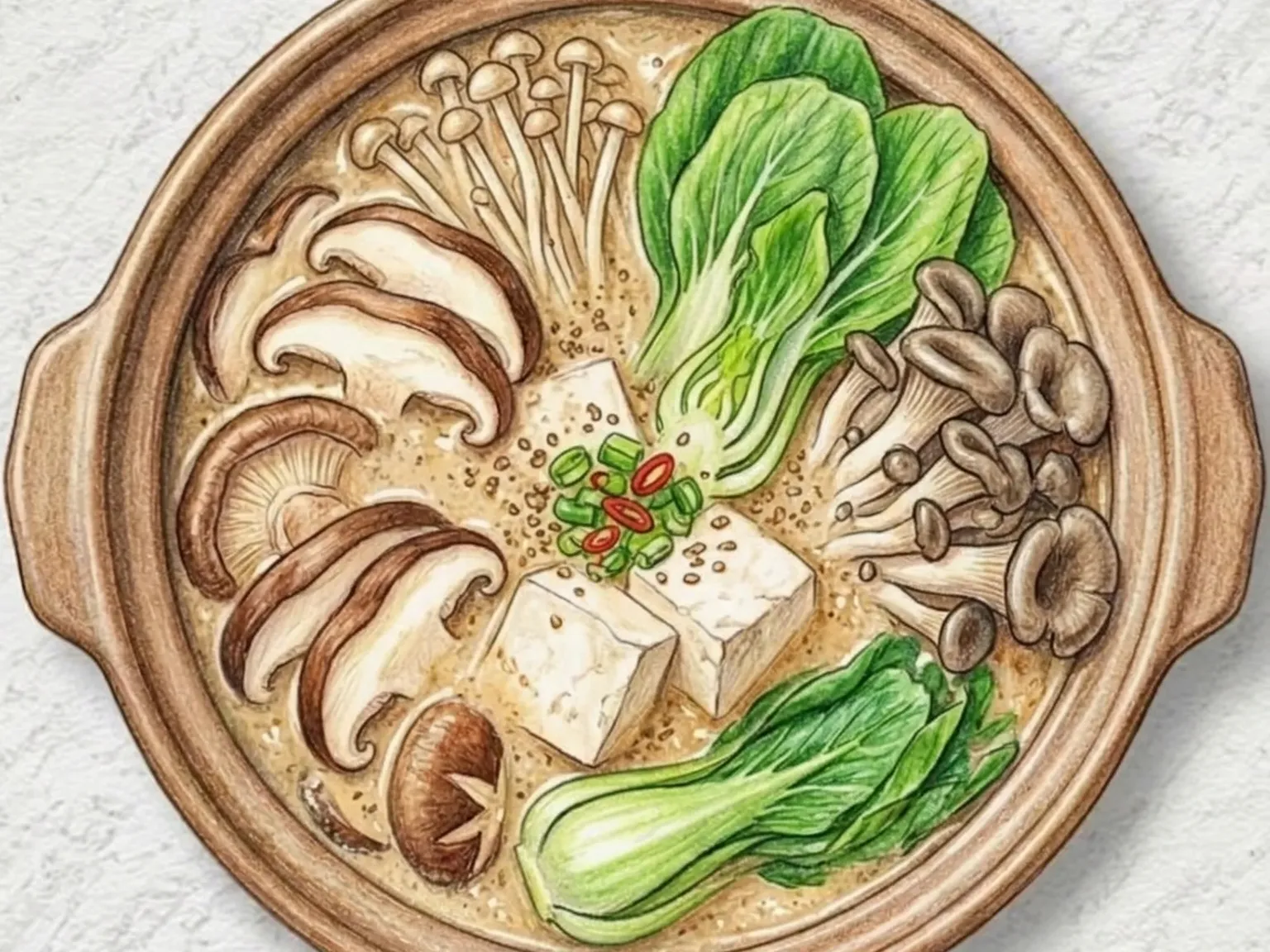
Korean perilla mushroom hot pot is a hearty vegetarian dish made with shiitake, oyster, and enoki mushrooms, tofu, and bok choy simmered in a light vegetable stock. The cooking process starts by boiling the vegetable stock seasoned with soup soy sauce and minced garlic. Shiitake and oyster mushrooms are added first to build a deep umami base. Tofu, enoki mushrooms, and bok choy are then arranged on top and simmered until the vegetables are tender. To finish, ground perilla seed powder is gently stirred into the broth at the very end, which prevents the soup from becoming gritty while releasing a rich, nutty aroma and creating a naturally thick texture. This hot pot delivers a satisfying combination of earthy mushrooms, soft tofu, and crisp bok choy, offering a comforting meatless meal.
Korean Braised Tofu with Shishito Peppers
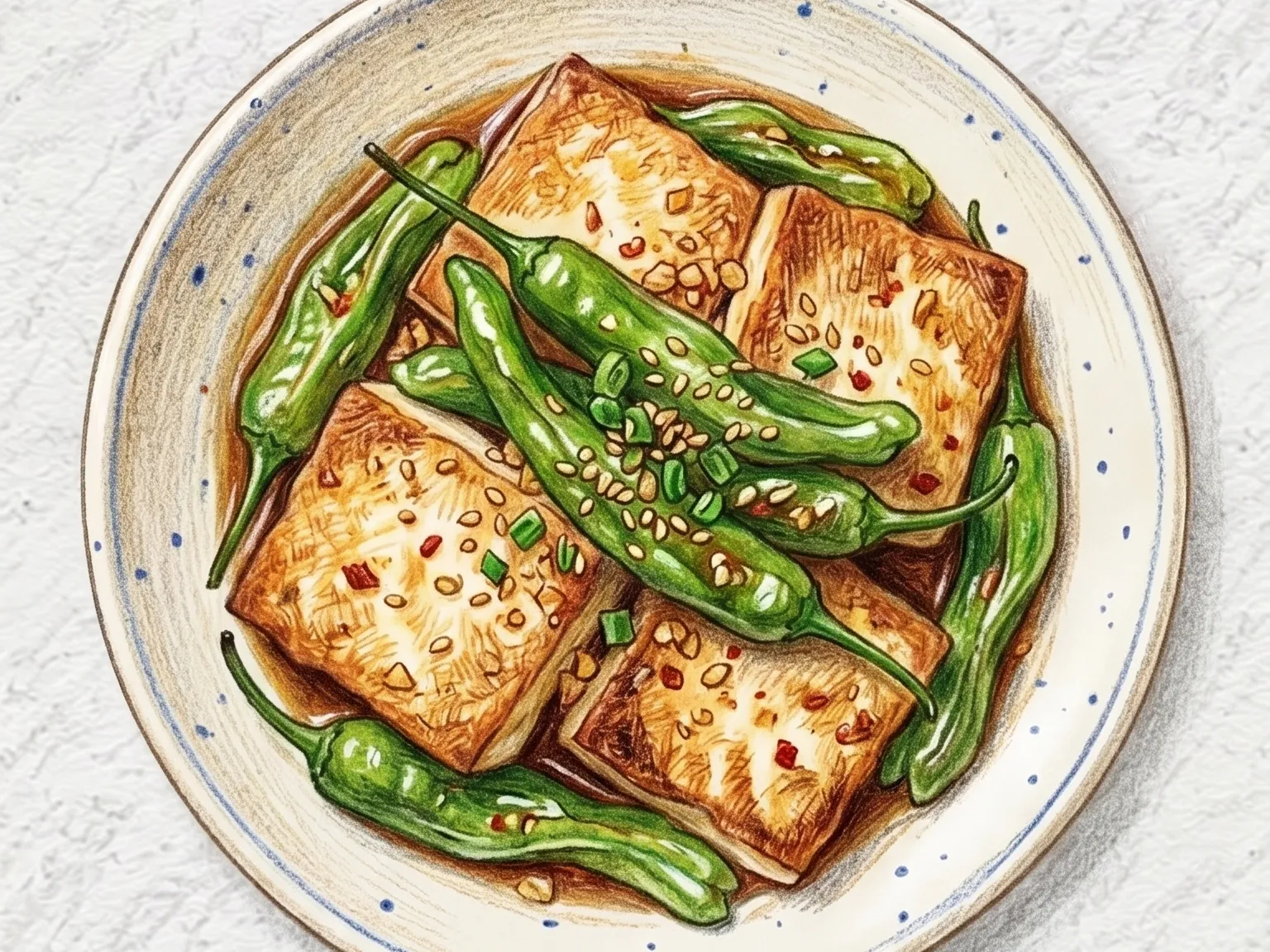
Kkwarigochu-dubu-jorim is a Korean braised dish of pan-fried tofu and shishito peppers in a soy sauce, gochugaru, and garlic seasoning. The tofu is seared first to create a firm, golden crust that contrasts with its soft interior once it finishes braising in the sauce. Shishito peppers absorb just enough liquid to carry the seasoning while adding their own fresh, vegetal note. Soy sauce and sesame oil pull the flavors together into a cohesive, savory whole, making this a satisfying plant-based banchan that holds its own on any table. Mixing the braising sauce into a bowl of rice alongside makes for a simple but rewarding meal.
Korean Beet Radish Pickle
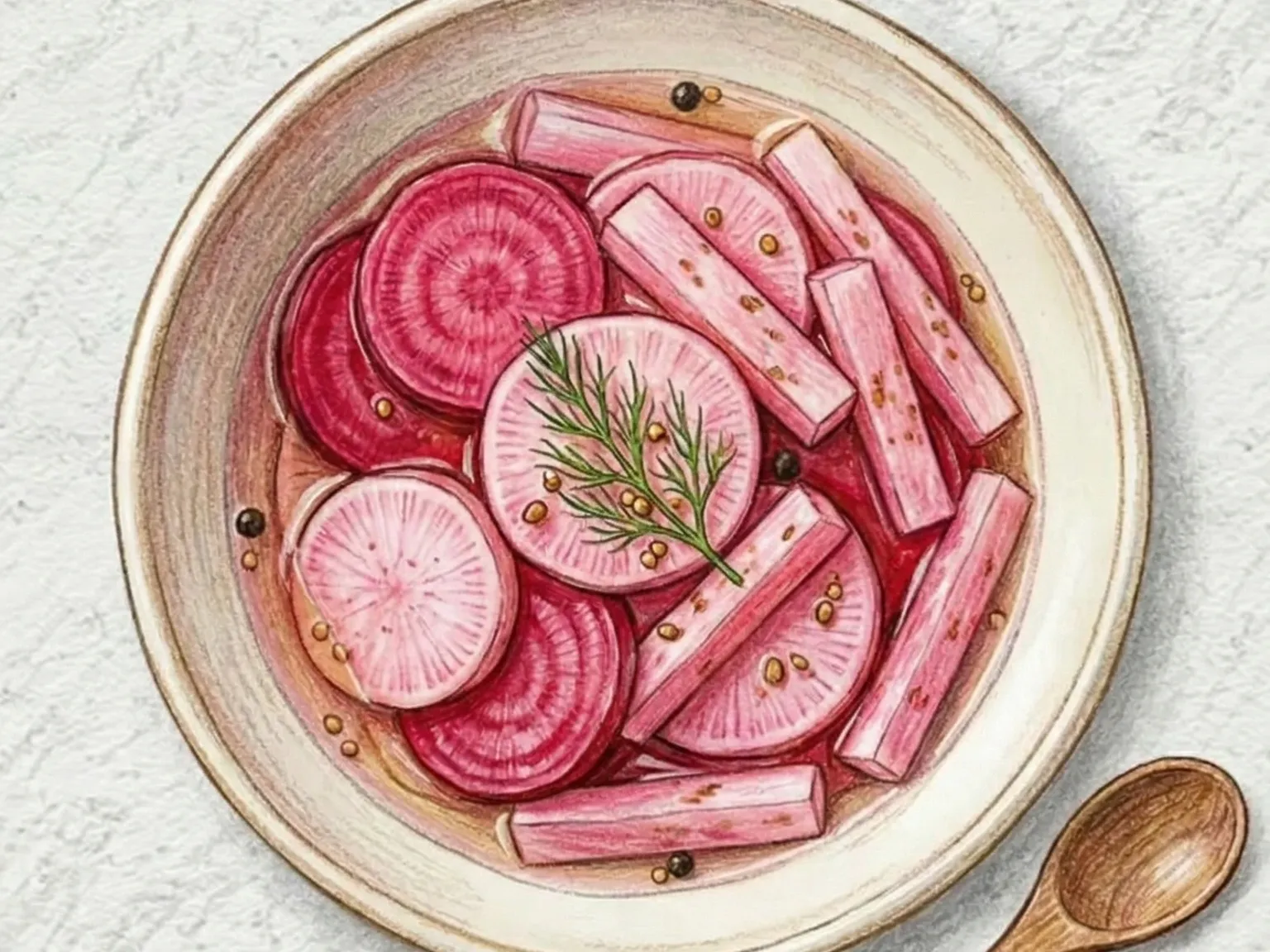
Beet mu pickle is a Korean pickle of beet and Korean radish cured together in a vinegar, sugar, and salt brine. The beet's intense red pigment dyes the radish pieces a vivid pink, while the radish contributes its crisp, snapping texture alongside the beet's mellow sweetness. Vinegar keeps the overall flavor bright and refreshing, and sugar smooths out the sharp edge of the acidity. Cutting the beet and radish to the same thickness ensures even curing, and the color distributes fully after at least six hours in the refrigerator. This colorful pickle works as a palate cleanser alongside rich meats or as a crunchy side with Korean street food.
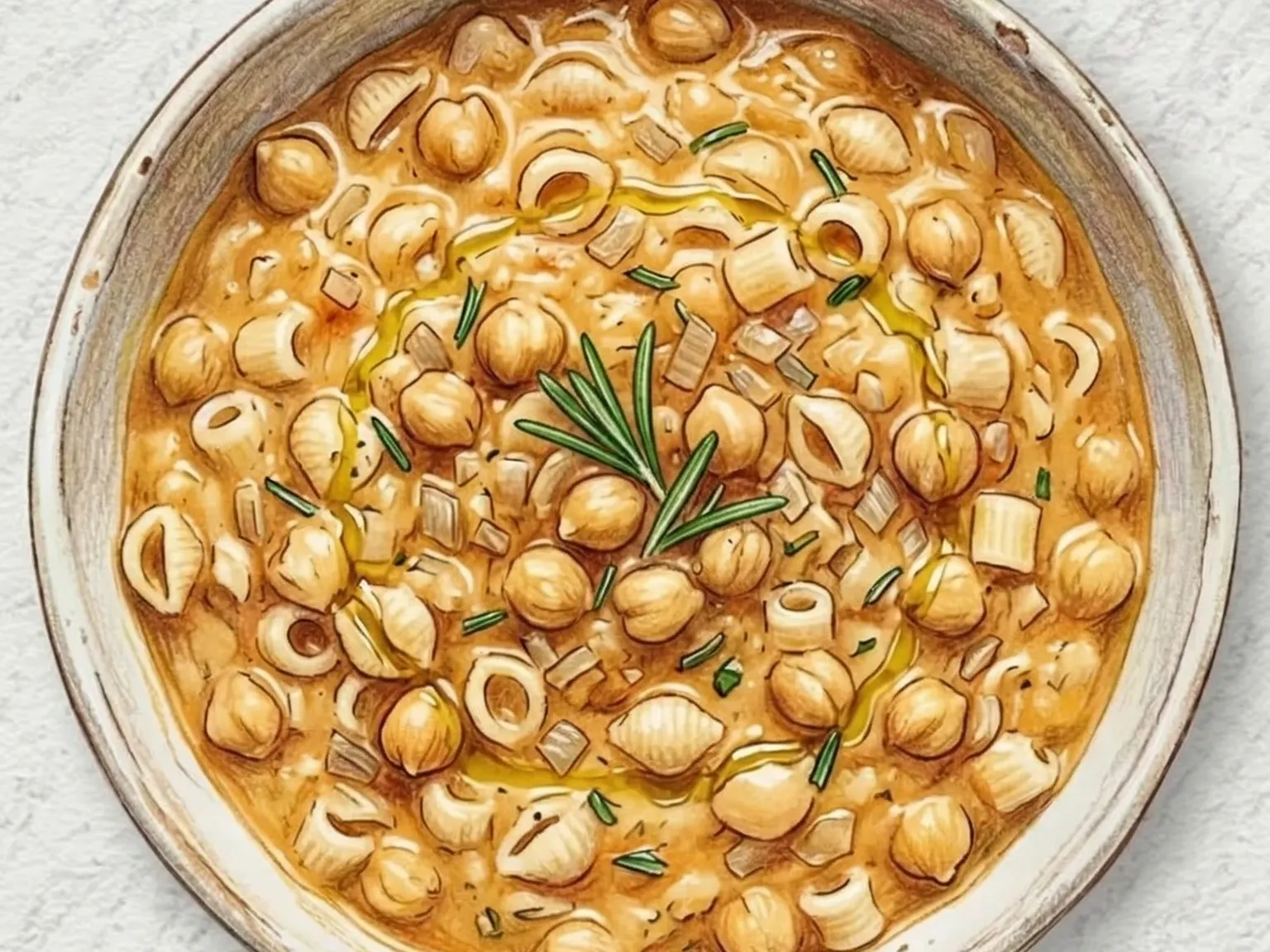
Pasta e Ceci (Italian Chickpea Stew Pasta)
Pasta e ceci is an Italian pantry staple that cooks small pasta directly in a chickpea-enriched broth. Half the chickpeas are mashed before simmering, releasing starch that naturally thickens the liquid into a stew-like consistency. A base of olive oil, garlic, rosemary, and tomato paste provides aromatic depth without overwhelming the mild chickpea flavor. The dish cooks in a single pot and is substantial enough to serve as a complete vegetarian meal. Controlling noodle texture and sauce coating helps the ingredients cook evenly while keeping the final seasoning balanced.
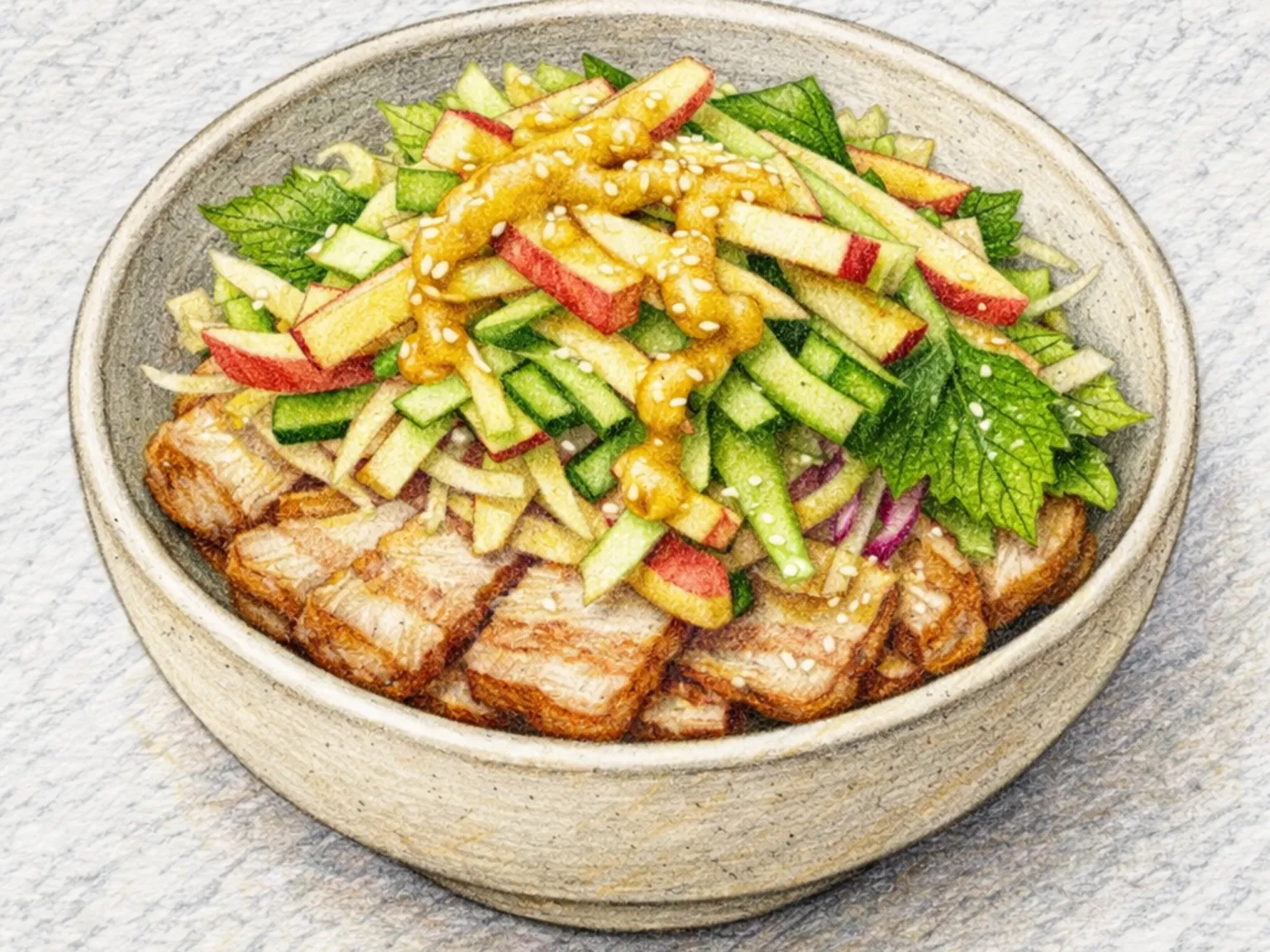
Pork Bossam Apple Mustard Salad
Bossam apple mustard salad uses thinly sliced cold boiled pork belly as its main component, arranged over shredded cabbage, cucumber, and crisp apple slices, then finished with a sharp mustard-soy vinaigrette. Chilling the boiled pork completely before slicing is not optional: warm pork crumbles under the knife, while cold pork yields clean, even cuts that hold their shape on the plate. Cabbage and cucumber provide a firm, crunchy base whose texture directly contrasts with the soft, fatty pork, and the apple slices introduce a cool sweetness along with a welcome burst of moisture. Korean hot mustard, dissolved generously into a soy-vinegar dressing, releases a nasal, sinus-clearing heat with each bite that cuts through the richness of the pork fat without the acidity becoming the dominant note. Perilla leaves placed underneath the pork act as both a flavoring layer and a suppressor of any residual pork odor, their herbal intensity complementing the mustard without competing with it. The salad works equally well as a standalone meal and as a second-day use for leftover bossam from the previous night, which is one reason it appears in Korean home kitchens as often as it does.

Pissaladiere (Provencal Caramelized Onion Anchovy Tart)
Pissaladiere is a traditional tart from Provence in southern France, built on a thin bread dough blanketed with slowly cooked onions and adorned with anchovy fillets and black olives arranged in a lattice pattern. The onions must cook in olive oil over low heat for at least forty minutes until their moisture evaporates completely and their natural sugars caramelize into a dark, jam-like sweetness. This thick layer of onion jam makes the tart resemble a pizza visually, but the absence of tomato sauce and the primacy of onion sweetness make it an entirely different dish. The anchovies contribute sea-salt brininess and umami, while the olives add a bitter, savory counterpoint that balances the onion's sweetness. Fresh thyme leaves scattered on top before baking introduce an herbal brightness that lifts the dense, concentrated flavors.
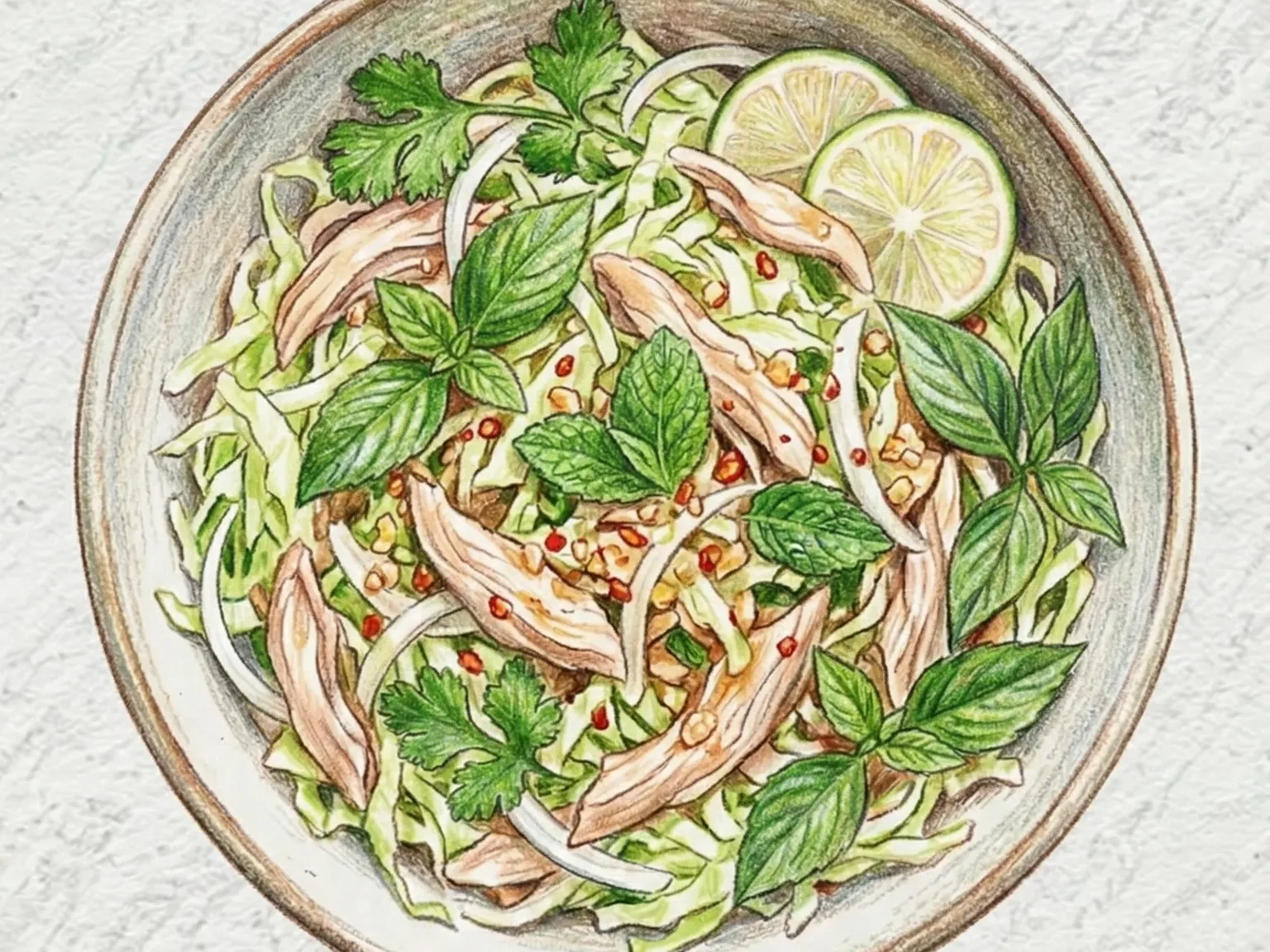
Vietnamese Chicken Salad
Goi ga is a Vietnamese chicken salad served throughout the country as a beer snack and appetizer, one of the most practical dishes the cuisine has for hot weather when something cool, sharp, and light is what the body wants. A whole chicken is poached in water until just cooked through, then cooled completely before being shredded by hand along the grain. Hand-shredding rather than knife-cutting matters here: the torn fibers create irregular surfaces with greater surface area, so the dressing clings to the meat rather than pooling at the bottom of the bowl, and the textured chew is noticeably different from cleanly sliced chicken. Shredded cabbage, onion, and carrot form the vegetable base, combined with Vietnamese coriander known as rau ram, cilantro, and fresh mint. The dressing is fish sauce, fresh lime juice, sugar, sliced fresh chili, and minced garlic, whisked together until the sugar dissolves. The dressing acidity pulls the chicken out of its mildness, and the fish sauce depth meets the watery crunch of the vegetables to produce a balance that reads as light but not bland. Fried shallots and crushed roasted peanuts scattered over the top add a crunchy layer that makes the salad feel complete rather than spare. At bia hoi, the informal fresh-beer street bars found across Vietnam, goi ga is among the first dishes ordered and typically arrives at the table before the first cold glass is poured.
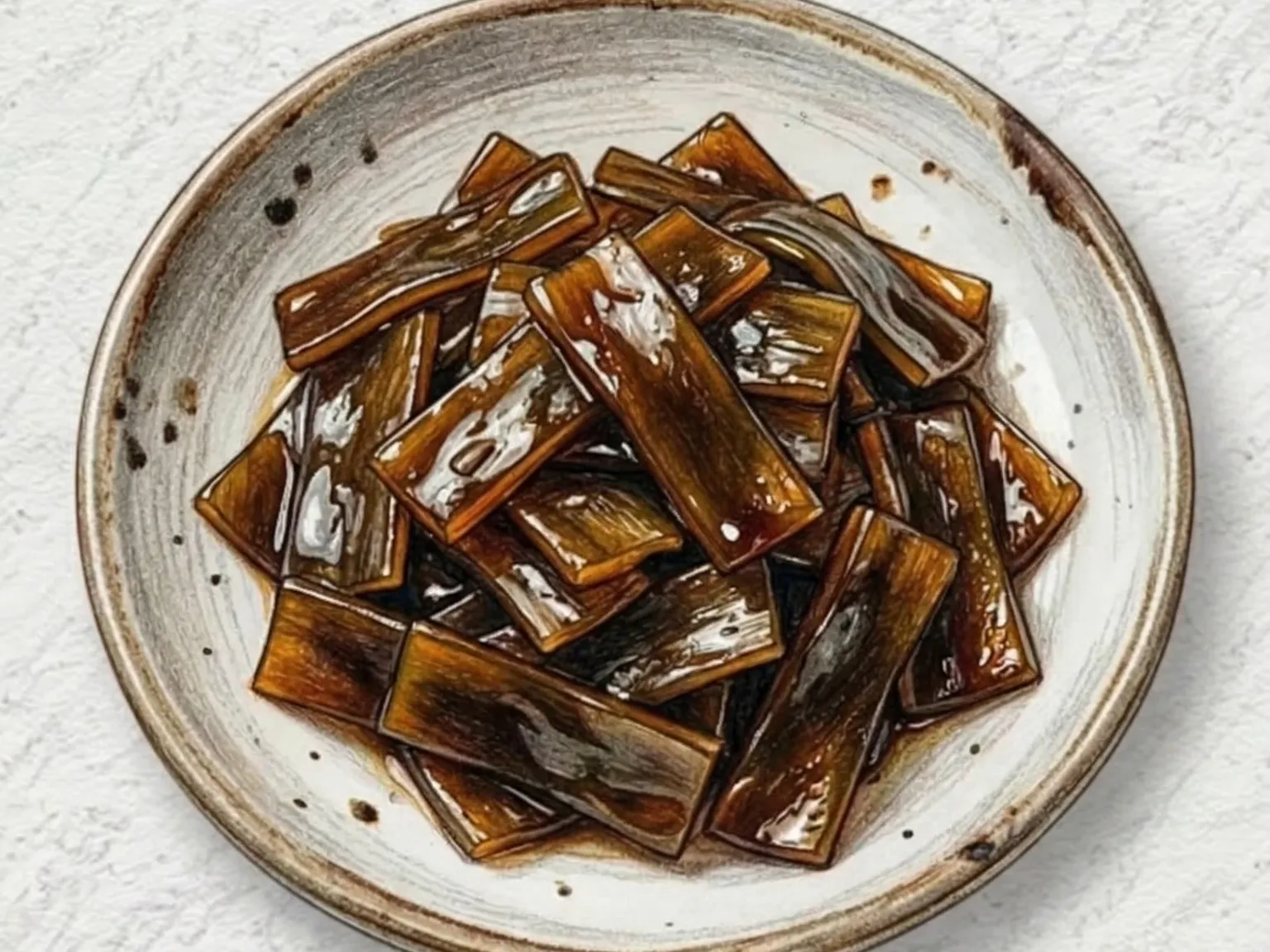
Korean Braised Kelp Strips
Dasima jorim is a banchan that repurposes dried kelp - typically discarded after making stock - into a glossy, chewy side dish through slow braising. The kelp is soaked in cold water for at least twenty minutes until it softens and becomes pliable, then cut into strips roughly one centimeter wide. Simmered in soy sauce, rice syrup, cooking wine, and garlic over medium-low heat for fifteen minutes or more, the braising liquid gradually reduces and thickens into a lacquer-like glaze that coats each strip on all sides. The rice syrup contributes both sweetness and the shine that gives the dish its visual appeal. The resulting texture is difficult to compare - somewhere between the springiness of gummy candy and the firm bite of pasta al dente, resilient but with a clean snap when bitten through. Refrigerated overnight, the seasoning penetrates the dense seaweed fibers more deeply, and the flavor continues to intensify over several days, making it a banchan that improves the longer it sits.
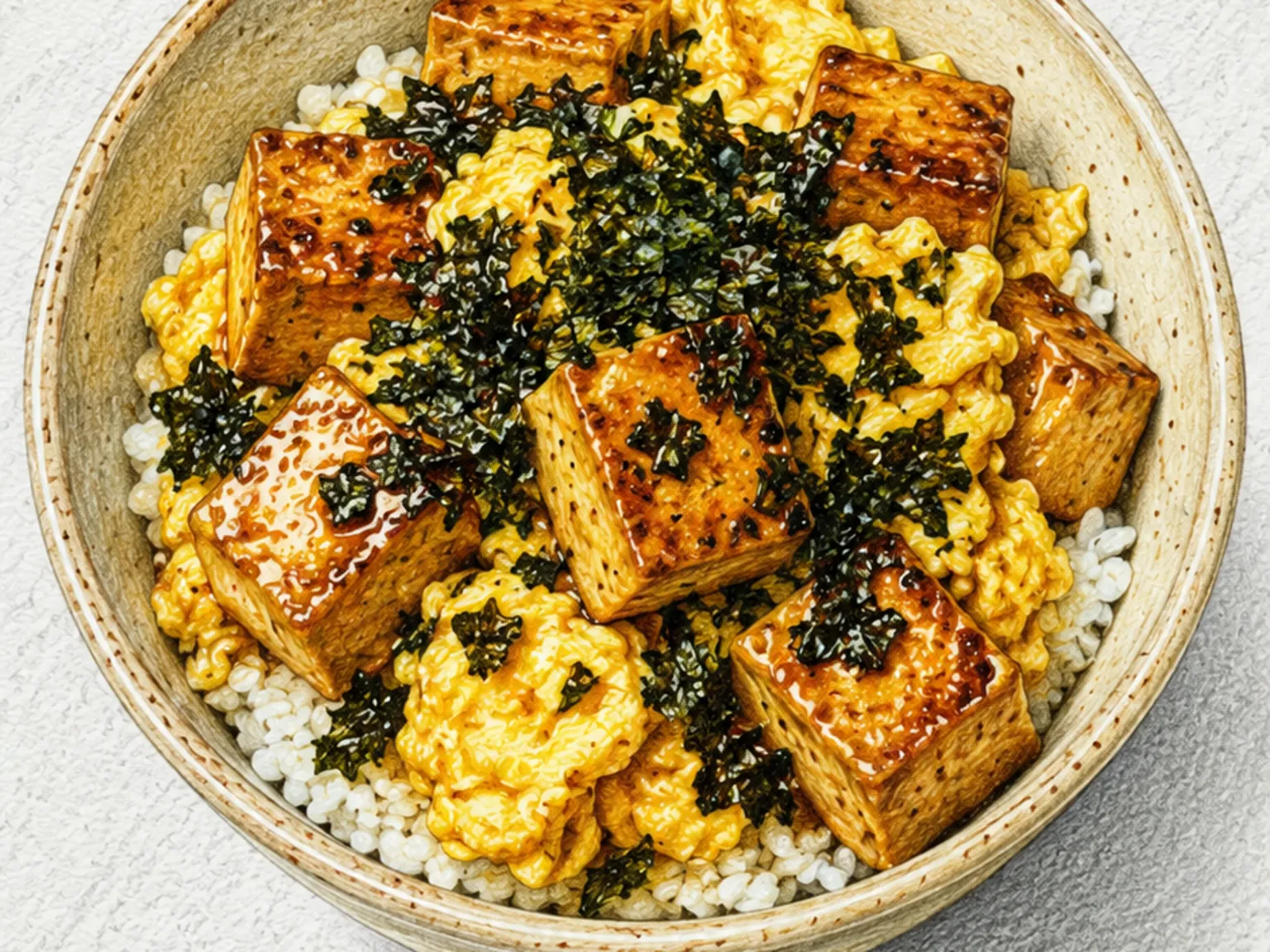
Korean Tofu Seaweed Egg Rice Bowl
Dubu gim gyeran deopbap is a Korean rice bowl built from three pantry staples: pan-fried tofu, soft scrambled egg, and roasted seaweed flakes, all layered over a bowl of steamed rice. The tofu is pressed dry, cut into cubes, and seared until the edges turn golden before being tossed with soy sauce and syrup to form a salty-sweet glaze that coats each piece. Eggs are scrambled to a barely-set, custard-like consistency rather than cooked through, creating a deliberate contrast with the firm, glazed tofu beneath them. Crumbled seaweed scattered over the top introduces a brittle crunch and a faintly briny, toasty aroma that lingers with each bite. A final drizzle of sesame oil draws all three components together into a coherent flavor. Because tofu, eggs, and dried seaweed are refrigerator and pantry staples in most Korean households, the dish can be assembled in roughly ten minutes without a special shopping trip, making it one of the most dependable meals for busy mornings or quick lunches.
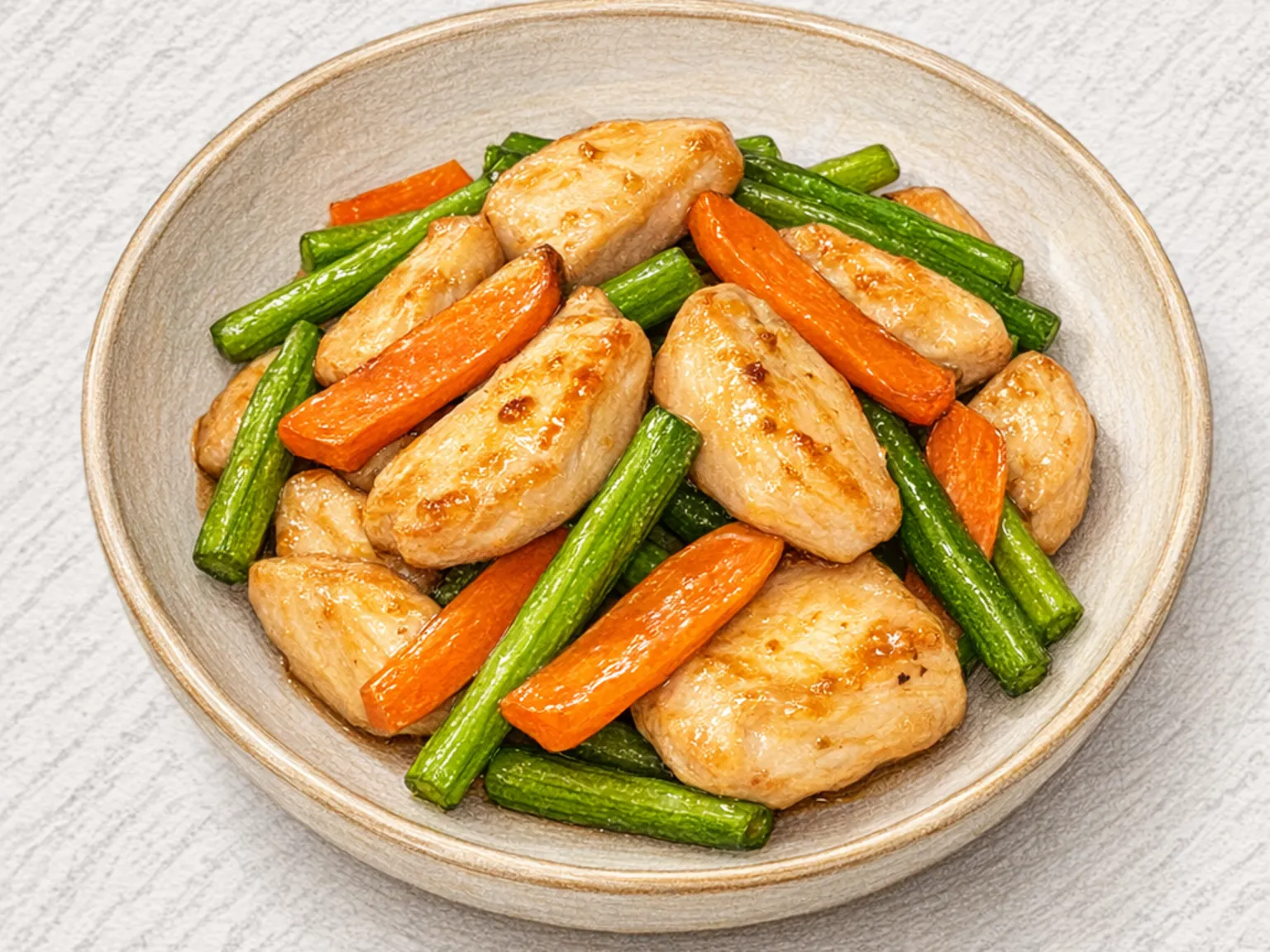
Korean Garlic Scape Chicken Breast Stir-fry
Maneuljjong dakgaseumsal bokkeum is a stir-fry where soy-marinated chicken breast is cooked through with ginger and garlic first, then joined by garlic scapes cut to five-centimeter lengths and julienned carrot for a quick blast over high heat before the whole pan is finished in an oyster sauce and soy sauce glaze. Chicken breast is naturally lean and can easily read as flat on its own, but the oyster sauce compensates by delivering concentrated umami and coating the surface of each piece with a lacquered sheen. The garlic scapes provide a dual texture that is both crisp and slightly chewy, setting up a direct contrast with the smooth, tight grain of the chicken breast. Julienned carrot adds a gentle sweetness that softens the saltiness of the soy and oyster sauce base. Ginger pulls double duty, eliminating any poultry odor while contributing the aromatic lift characteristic of well-executed stir-fry. The high-protein, low-fat profile makes this a practical everyday banchan for anyone managing calories, and it also works well spooned over rice in a deopbap format. Keeping the garlic scapes in the pan for as short a time as possible is essential to preserving their signature crunch.

Korean Black Raspberry Ade
Bokbunja ade starts by combining black raspberry concentrate with lime juice and honey to build a tart-sweet base before anything else is assembled. That base is poured over a cup packed with ice and frozen berries, then topped with sparkling water. The deep purple concentrate sinking through the clear carbonation creates a vivid color gradient in the glass that holds until stirred. Lime juice amplifies the berry aroma rather than masking it, and if the concentrate runs particularly strong, extra sparkling water brings it back into balance. Frozen berries function as both cooling agent and slow flavor release - as they thaw, the fruit intensity in the drink gradually deepens.
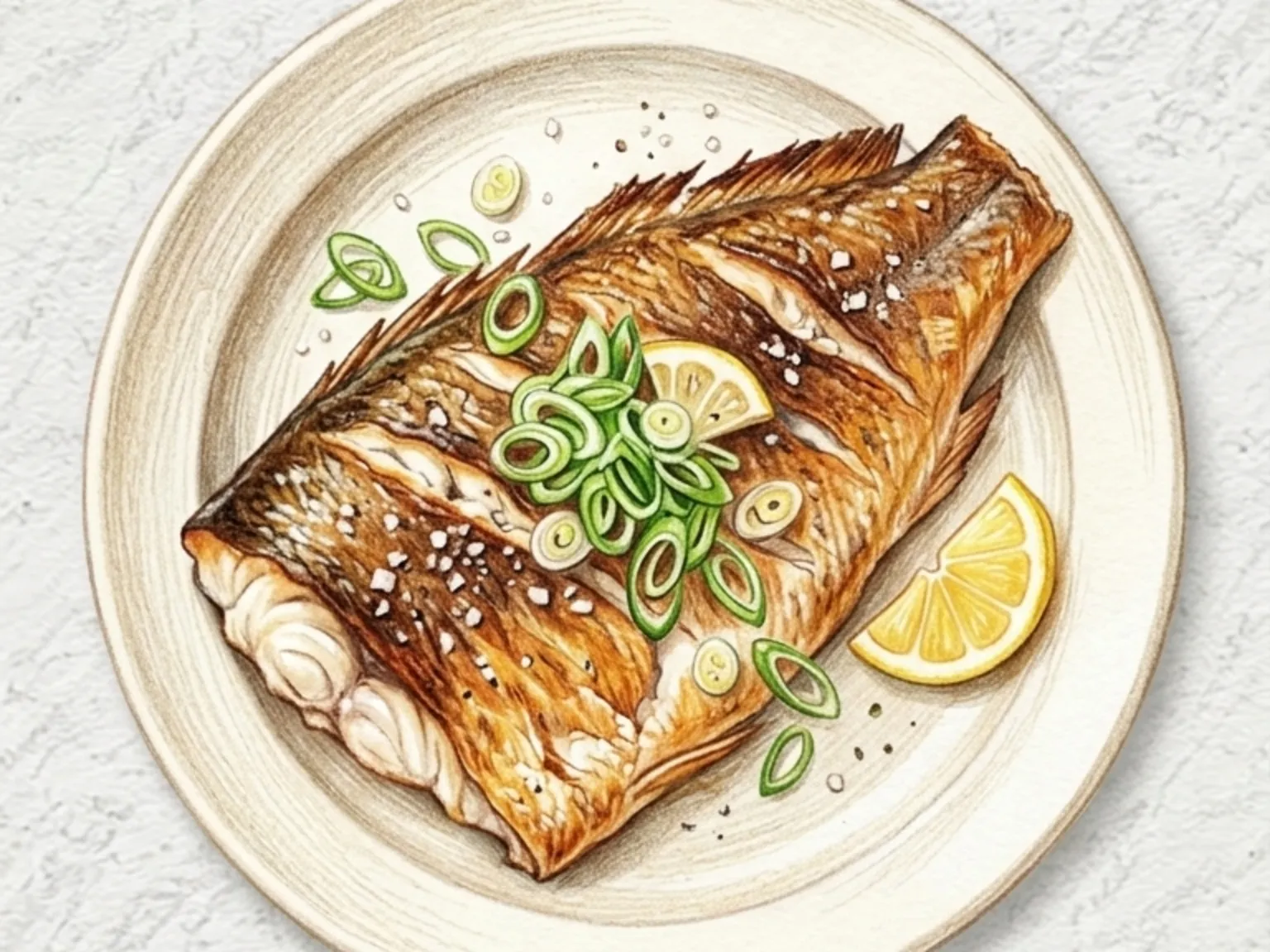
Korean Salt-Grilled Croaker
Mineo-sogeum-gui is a Korean salt-grilled croaker where fillets are seasoned with only coarse sea salt and white pepper, then pan-fried skin-side down in olive oil. Croaker is a lean white-fleshed fish with a subtle but genuine depth of flavor, and restraint with seasoning allows that natural character to come through clearly. Patting the surface completely dry before cooking is critical, since any moisture on the skin prevents it from crisping and causes it to stick to the pan. A whisper-thin coat of flour on the fillet creates a light barrier that forms a delicate crust on contact with the hot oil. Placing the fillet skin-side down and cooking it that way for roughly seventy to eighty percent of the total time allows the flesh to finish gently from residual heat after flipping, which prevents it from drying out. Minced garlic is introduced only in the final minute so it perfumes the oil without burning. A squeeze of lemon juice and a scatter of sliced chives at the table add brightness that frames the clean flavor of the fish rather than competing with it. Fresh croaker is best from July through August, but frozen fillets can be prepared with the same method.
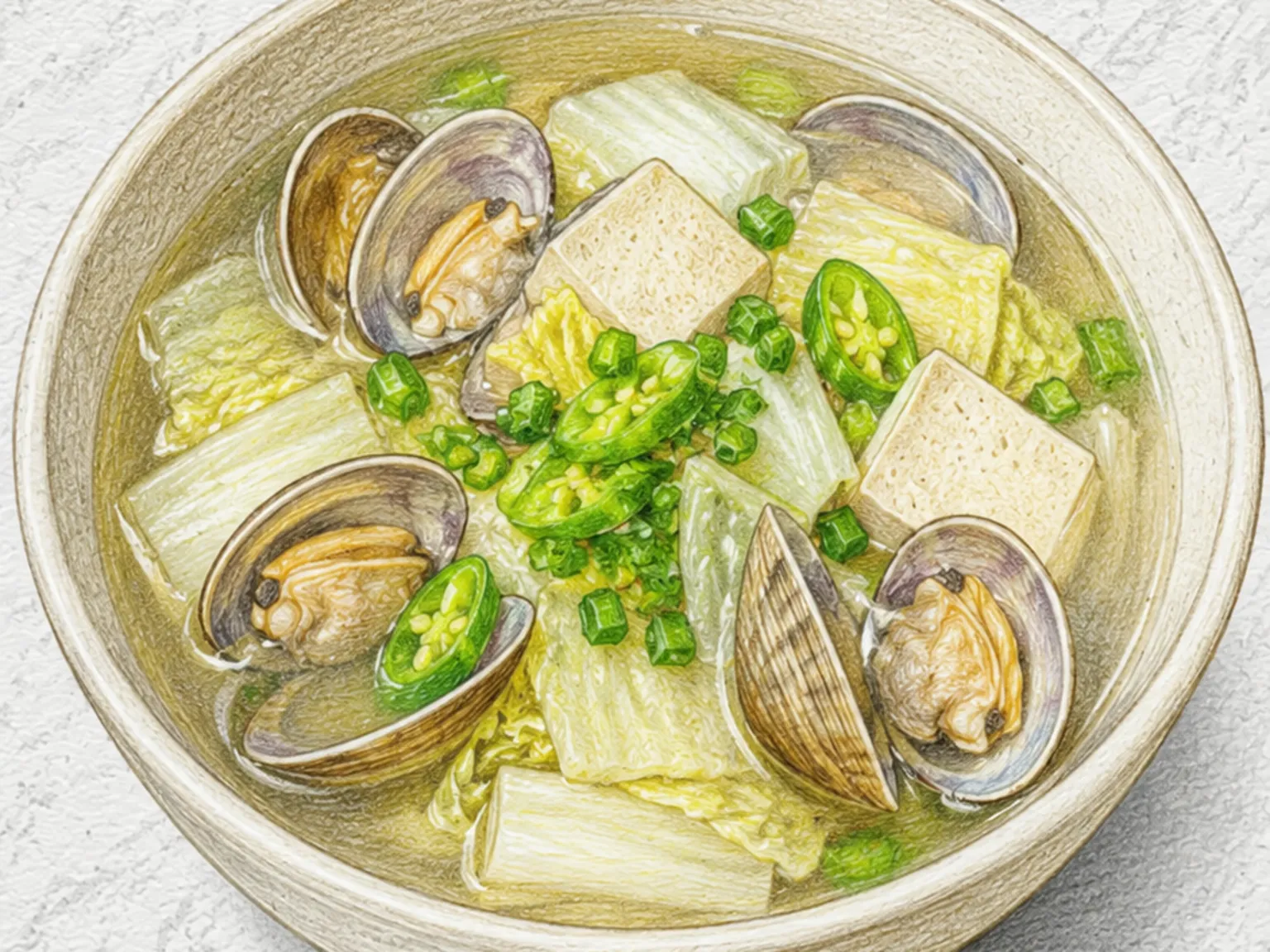
Korean White Kimchi Clam Soup
Baekkimchi bajirak guk is a clear Korean soup that brings together the gentle fermented acidity of white kimchi and the briny oceanic depth of manila clams in a single, unmuddied broth. Purged clams begin in cold water and are brought slowly to a boil so the rising temperature coaxes flavor from the shells gradually, building stock as they cook. Once the clams open they are lifted out, and the broth is strained through a fine sieve to eliminate any sand that clung to the shells. Chopped white kimchi is stirred into this clean clam stock, where its lactic sourness dissolves into the liquid and creates a flavor profile that reads simultaneously refreshing and layered. Adding the white kimchi brine as well deepens the acidity further, but its existing salt content demands a taste check before any additional seasoning goes in. Thick-cut tofu squares absorb the surrounding broth as they warm through, contributing a soft, substantial bite alongside their protein. A single cheongyang chili, sliced on the diagonal, introduces a measured sharpness that lifts the otherwise mild base without tilting the soup into heat-forward territory. Scallion should go in during the final thirty seconds of cooking rather than earlier; overcooked scallion loses the fresh, grassy aroma that punctuates the finish. Because this soup contains no gochugaru, the broth stays perfectly clear and pale, and the white kimchi sourness sharpens the clam umami from underneath rather than competing with it, producing a bowl that tastes more complex than its short ingredient list suggests.
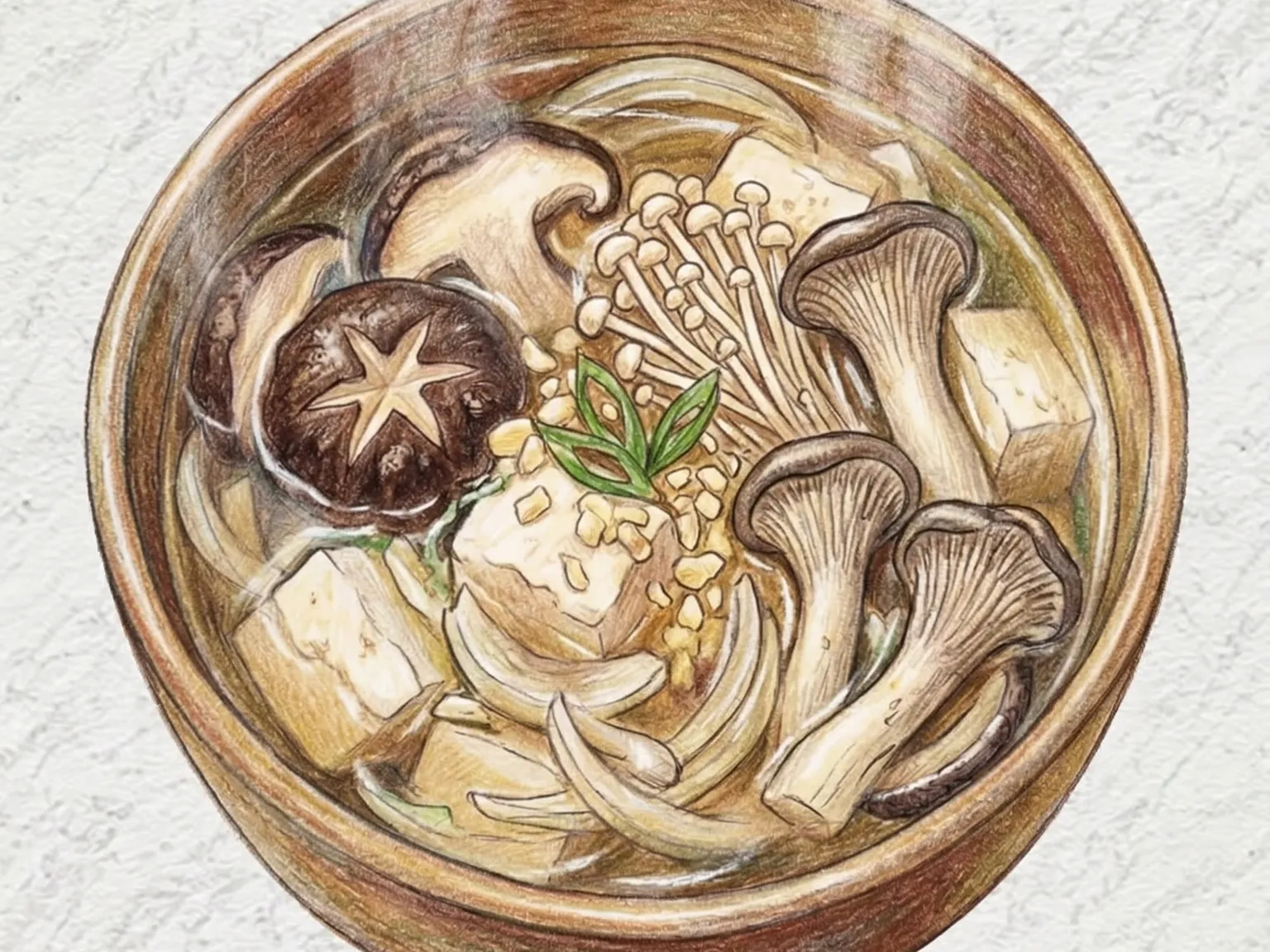
Korean Beoseot Jjigae (Mushroom Stew)
Korean mushroom stew, or beoseot jjigae, is a clean and oil-free soup made by simmering three varieties of mushrooms with tofu and onions in a kelp-infused broth. The recipe uses oyster, shiitake, and enoki mushrooms to create layers of distinct textures and umami. Seasoned simply with soup soy sauce and minced garlic, the clear broth highlights the natural characteristics of the ingredients. The cooking process involves boiling sliced onions and garlic in kelp water first to build a sweet base, followed by adding the mushrooms. Oyster mushrooms are torn along the grain for a tender texture, shiitake mushrooms are sliced to provide bite, and enoki mushrooms are added during the final minute of cooking to maintain their crispness. Skimming the foam while boiling ensures the broth stays clear. It is a light, warming dish that serves as a gentle and easily digestible meal.
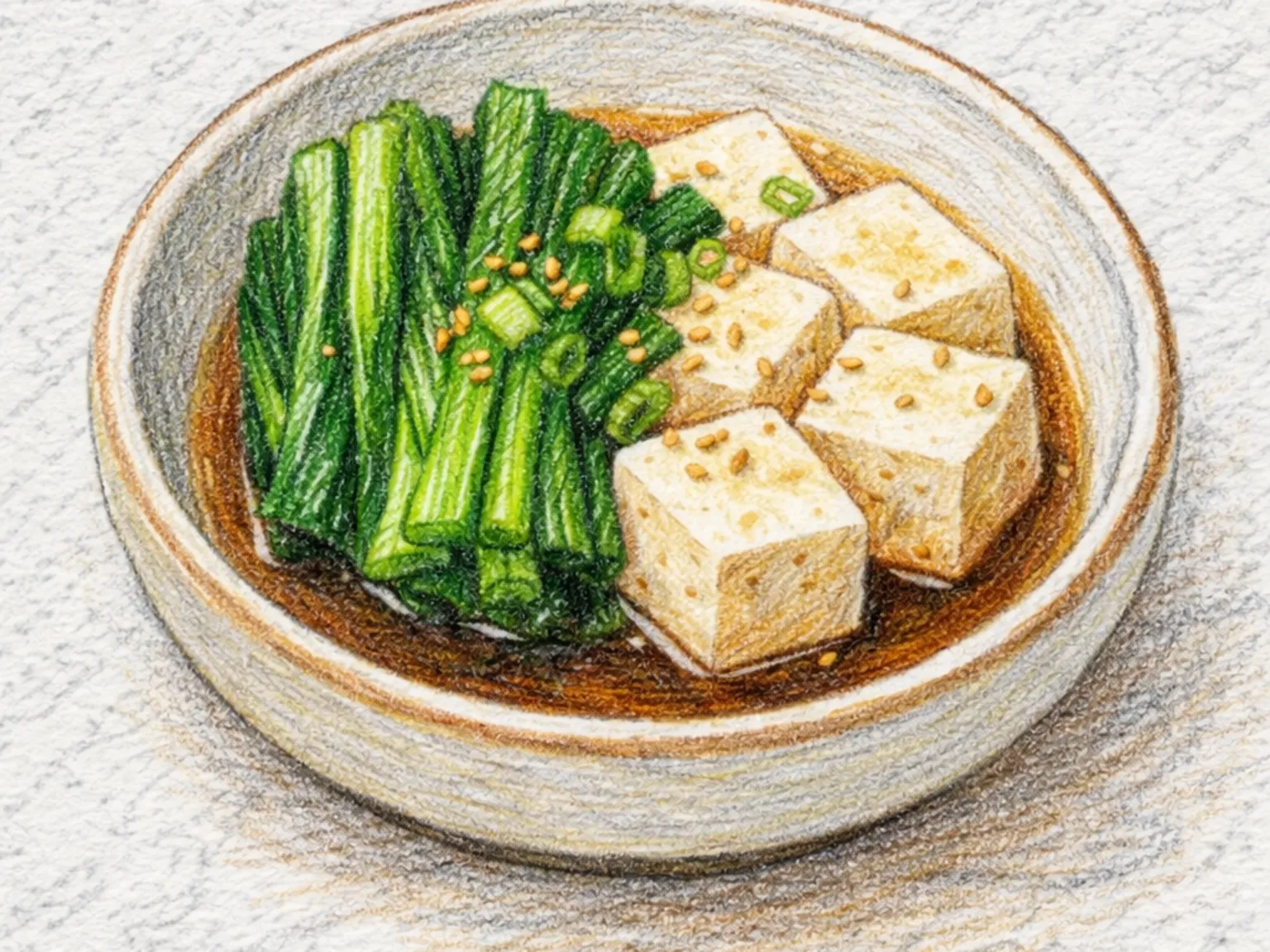
Steamed Komatsuna and Tofu
Komatsuna mushi is a Japanese steamed dish of mustard spinach and tofu, finished with a poured dashi-soy sauce. Komatsuna has less bitterness than regular spinach and keeps a firm bite after steaming, which stands in textural contrast to the soft tofu beneath it. The sauce is made from kombu and katsuobushi dashi seasoned with soy sauce and salt alone, so there is nothing artificial in the flavor and each ingredient comes through cleanly. No oil is used anywhere in the preparation, making this one of the lighter dishes in a multi-course Japanese home meal, where it commonly appears alongside several other small plates. A small amount of bonito flakes laid over the tofu at the end adds fragrance and gives the dish a tidy, composed appearance.
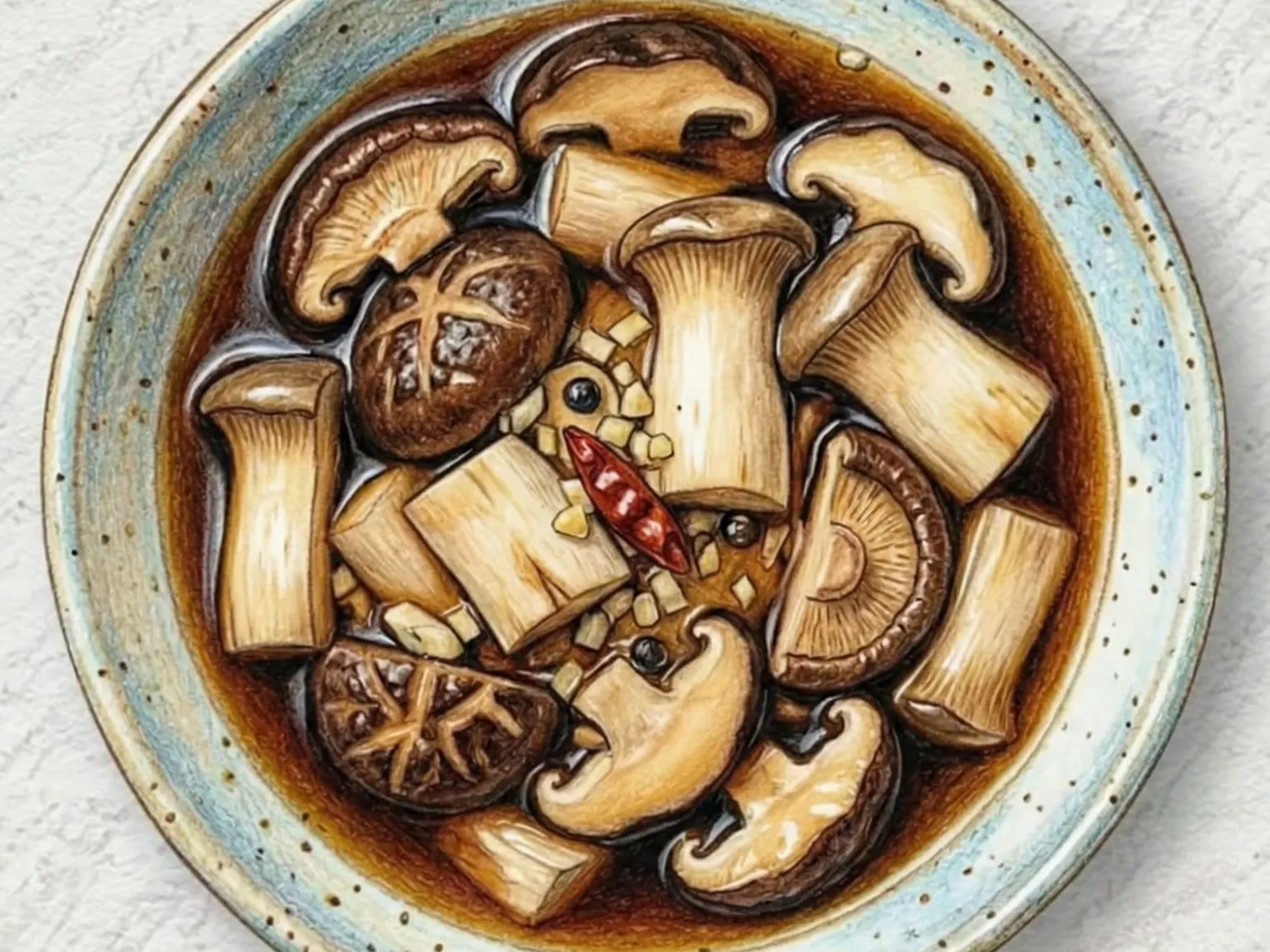
Korean Mushroom Jangajji (Shiitake Oyster Soy Pickle)
Beoseot jangajji is a Korean fermented mushroom side dish produced by briefly blanching shiitake and king oyster mushrooms, then submerging them in a soy sauce, vinegar, and sugar brine that has been brought to a boil and cooled. The shiitake brings a thick, meaty chew that firms further as it absorbs the pickling liquid, while the king oyster stays springy and dense, so a single batch of this jangajji provides two distinct textures from one marinade. Soy sauce supplies a deep umami foundation and vinegar cuts through with its sharp acidity, creating a balance that tastes substantial and complete without any meat or added stock. The ratio of vinegar to soy sauce can be adjusted to preference: more vinegar produces a brighter, more assertive pickle, while reducing it brings out the soy sauce's savory depth. Stored in the refrigerator, beoseot jangajji keeps well for over a week, making it one of the more practical banchan to prepare in advance and draw from throughout the week.
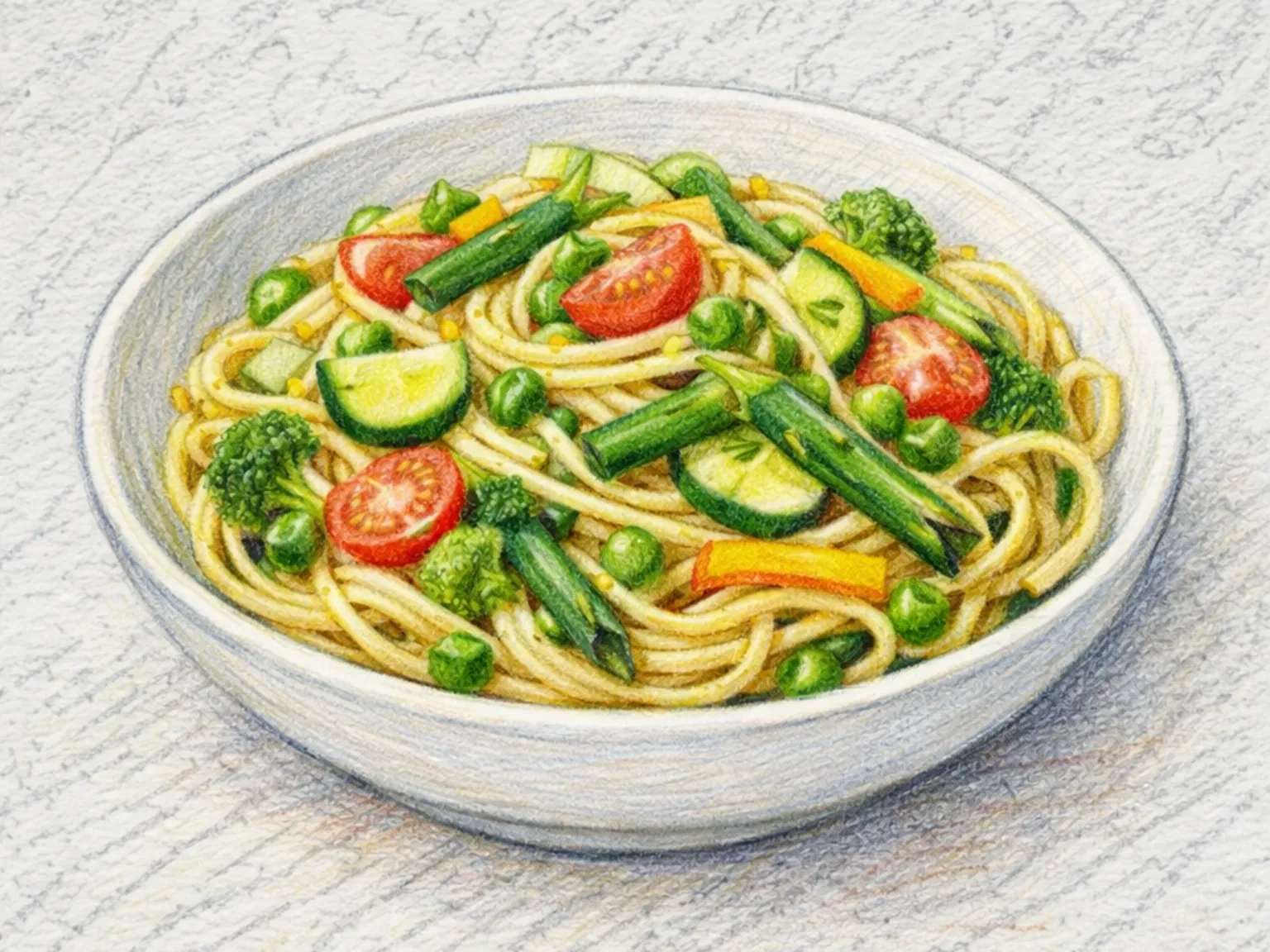
Pasta Primavera
Pasta primavera is a vegetable-forward Italian pasta that stir-fries broccoli, zucchini, bell pepper, and green peas in olive oil with garlic before tossing with spaghetti. Cutting each vegetable to a similar size and adding them in stages preserves distinct textures, while a splash of pasta water emulsifies the oil into a light, glossy coating that clings to every strand without the need for cream or a heavy sauce. Parmesan is folded in off the heat to prevent clumping, melting smoothly into the dish. The result is a bright, clean pasta that lets the natural sweetness and fragrance of the vegetables take center stage. Swapping in whatever vegetables are at peak freshness is part of how this dish works, making it as adaptable as it is straightforward to prepare.
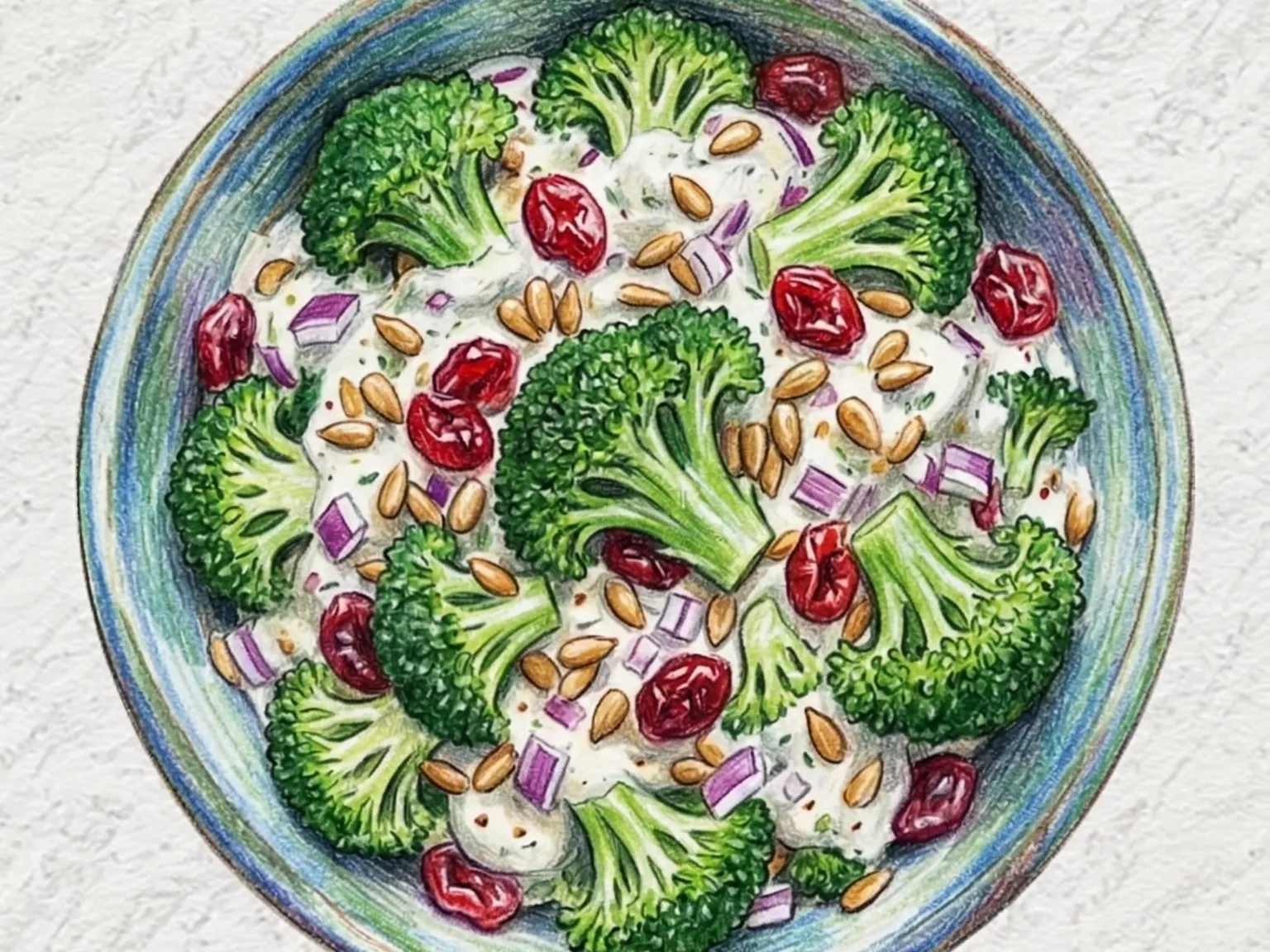
Broccoli Cranberry Salad
Broccoli cranberry salad blanches broccoli for just thirty seconds in boiling water to set its vivid green color and lock in a satisfying crunch, then combines it with dried cranberries for a tart, jammy sweetness and sunflower seeds that add a dry, toasted texture throughout the bowl. A dressing built on Greek yogurt rather than mayonnaise alone delivers genuine creaminess while keeping the overall dish considerably lighter, and a splash of apple cider vinegar gives the finish a clean acidity that cuts through the richness. A small amount of finely diced red onion is enough to add a mild pungency and give the salad direction without making it assertively sharp. This salad rewards preparation in advance because the dressing gradually penetrates the broccoli florets as they sit in the refrigerator, deepening the flavor in a way that freshly dressed salads cannot achieve. After a few hours the textures settle and the flavors meld into something more cohesive than the sum of its parts, making it an unusually practical choice for packed lunches prepared the night before or party spreads assembled hours ahead of time.
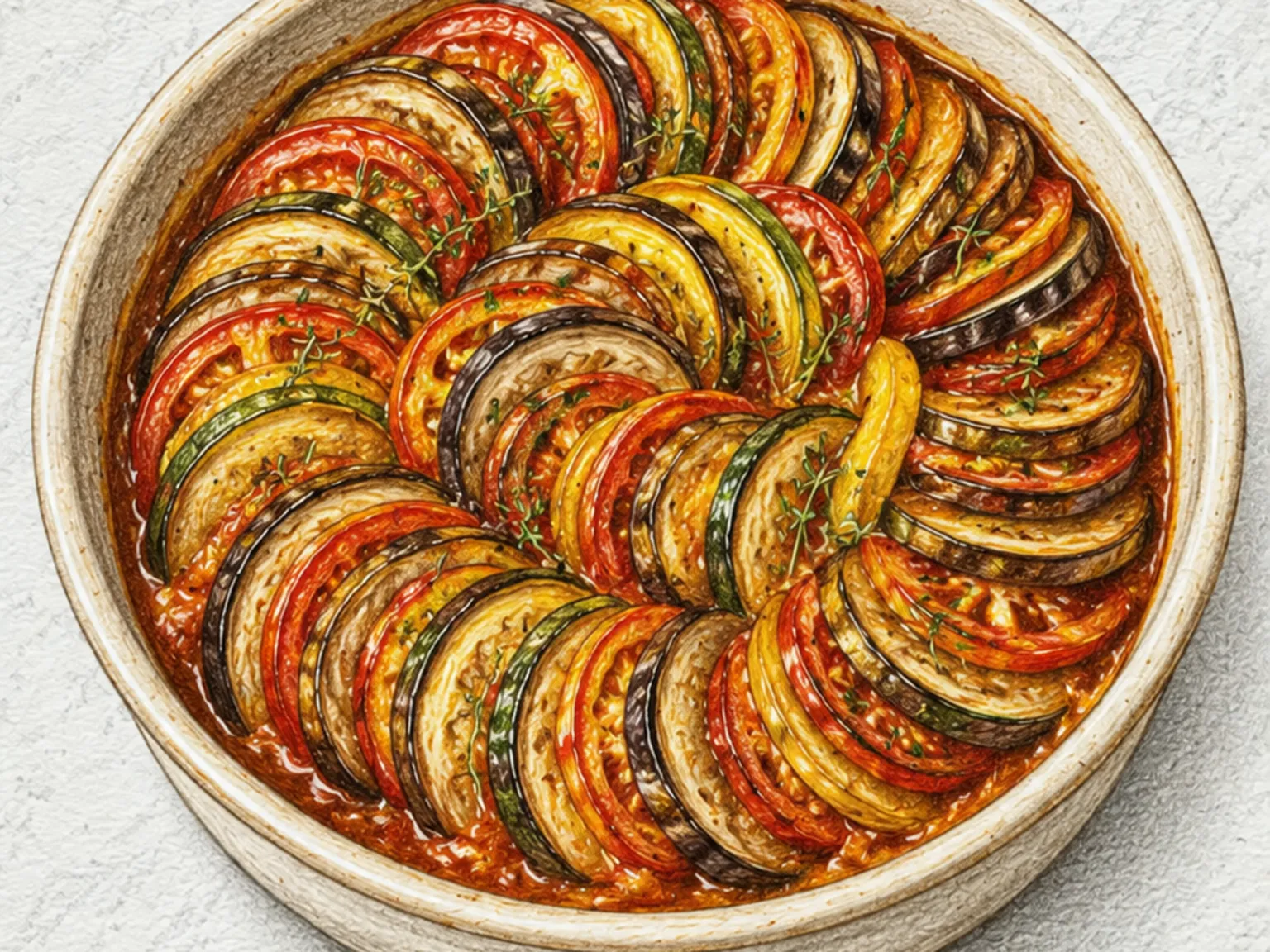
Ratatouille
Ratatouille is a vegetable dish originating from the Provence region of France. It consists of eggplant, zucchini, tomato, and bell pepper, all of which are sliced into thin rounds. These vegetables are layered in overlapping circular patterns on top of a prepared sauce base before being placed in an oven for slow baking. The foundational sauce for this preparation begins by sauteing a combination of onion, garlic, and finely diced bell pepper in olive oil. As the dish cooks in the oven, the moisture that is naturally released from the layered vegetables combines with this sauteed base. This process results in the formation of a sauce that thickens naturally without the need for additional agents. Ensuring that every vegetable is cut to a precise and uniform thickness is a critical part of the preparation process. When the slices are inconsistent in size, the cooking results will be uneven, causing some thinner pieces to become overly soft or mushy while thicker pieces remain insufficiently cooked. The addition of thyme provides a subtle herbal quality that serves to enhance the inherent sweetness found in the various vegetables. While the dish can be eaten immediately, placing it in the refrigerator overnight and reheating it the following day allows the vegetable juices to integrate more thoroughly with the sauce. This resting period leads to a significant deepening of the overall flavor profile as the components merge together.
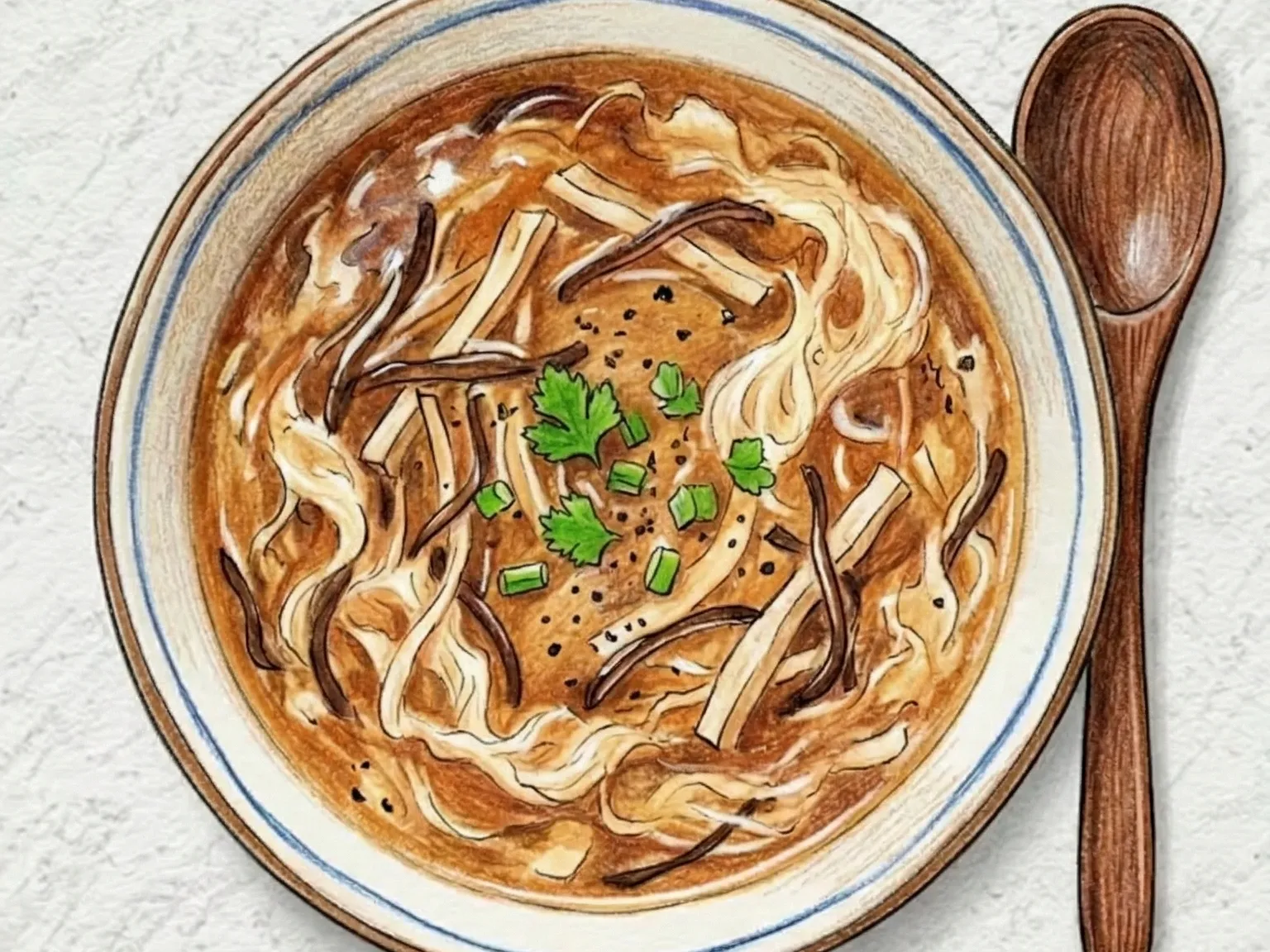
Hot and Sour Soup
Hot and sour soup is among the most widely recognized Chinese soups, and its defining character comes not from chili but from two specific sources: black vinegar's sharp acidity and white pepper's slow, creeping heat. Chicken broth forms the base, simmered with cubed tofu, reconstituted wood ear mushrooms, and sliced shiitake. A cornstarch slurry is worked in gradually, small additions at a time, to build a lightly viscous consistency without tipping the broth into something gluey and heavy. Beaten egg is poured in a thin, steady stream while the soup is stirred, forming delicate ribbons that float throughout. Two timing rules matter: the slurry goes in slowly, and the vinegar goes in last, after the heat is reduced, because its volatile aroma dissipates quickly if boiled. Wood ear mushrooms provide a springy, almost cartilaginous chew that contrasts with the softness of the tofu and the wispy egg threads. The white pepper heat lingers and builds after each spoonful, arriving late rather than hitting immediately, which gives the soup its characteristic slow warmth.
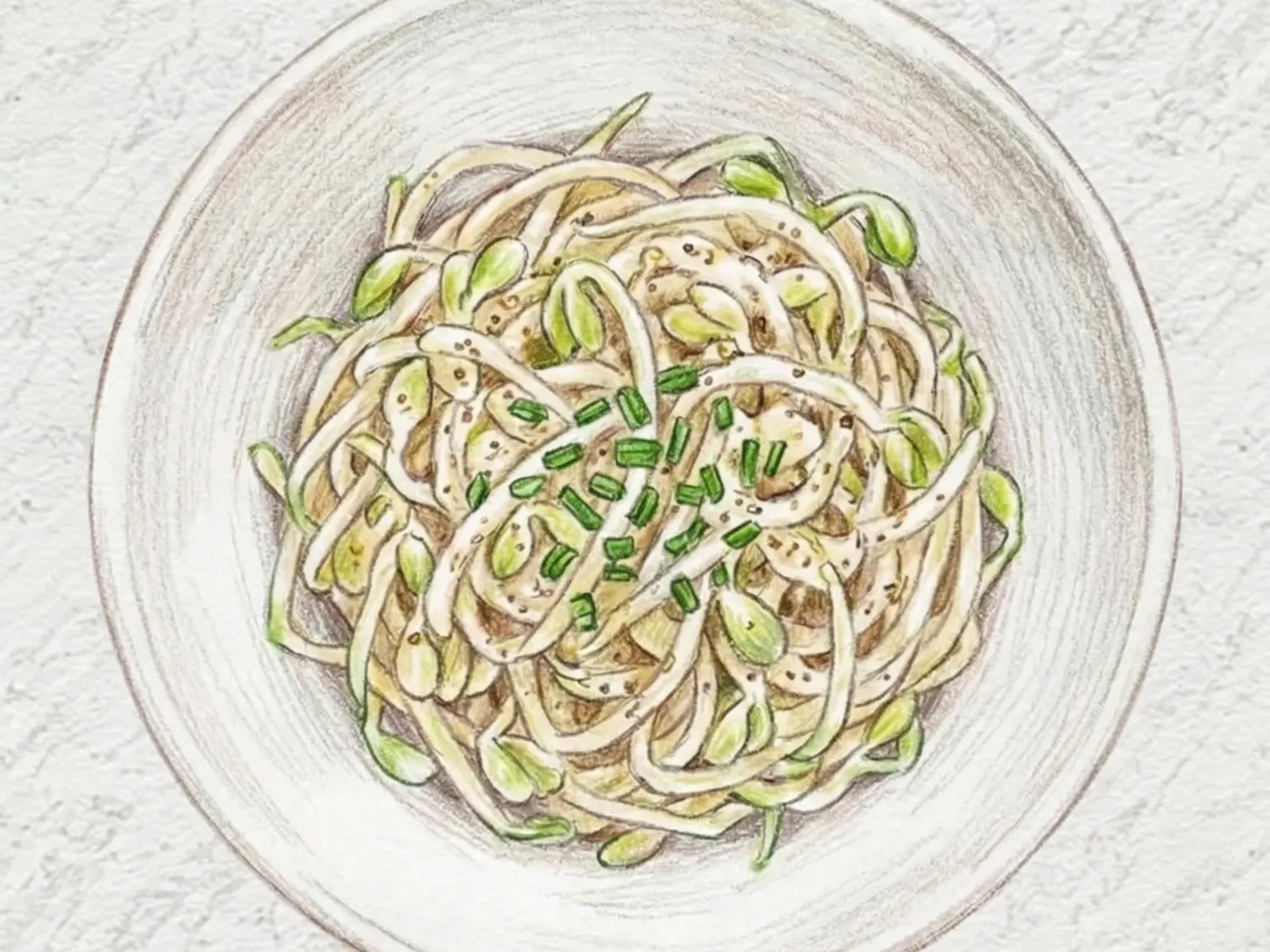
Korean Perilla Soybean Sprout Namul
Kongnamul, soybean sprouts, are among the most consumed vegetables in Korea, and this perilla-dressed version adds a nutty, full-bodied depth that the plain sesame oil variety lacks. The sprouts are steamed with the lid sealed for five minutes, which drives off the raw bean smell while keeping the heads firm and crunchy. Tossed with perilla powder, soup soy sauce, garlic, and sesame oil while still warm, the powder absorbs the moisture and dissolves into a pale coating that makes each sprout feel creamy on the tongue. Chopped scallion contributes a sharp, grassy contrast that balances the richness, and resting the finished dish for five minutes before serving lets the seasoning penetrate evenly so the flavor comes together more completely.