🎉 Special Occasion Recipes
Impressive dishes for guests and special occasions
929 recipes. Page 26 of 39
When guests are coming, the menu needs a little extra care. This tag features impressive dishes suited for entertaining - galbi-jjim, japchae, and bulgogi for a Korean spread, or pasta and steak for a Western-style course.
The key to stress-free hosting is choosing recipes that allow advance preparation. Do the heavy lifting the day before, then finish plating when guests arrive. That way, you can relax and enjoy the meal together.
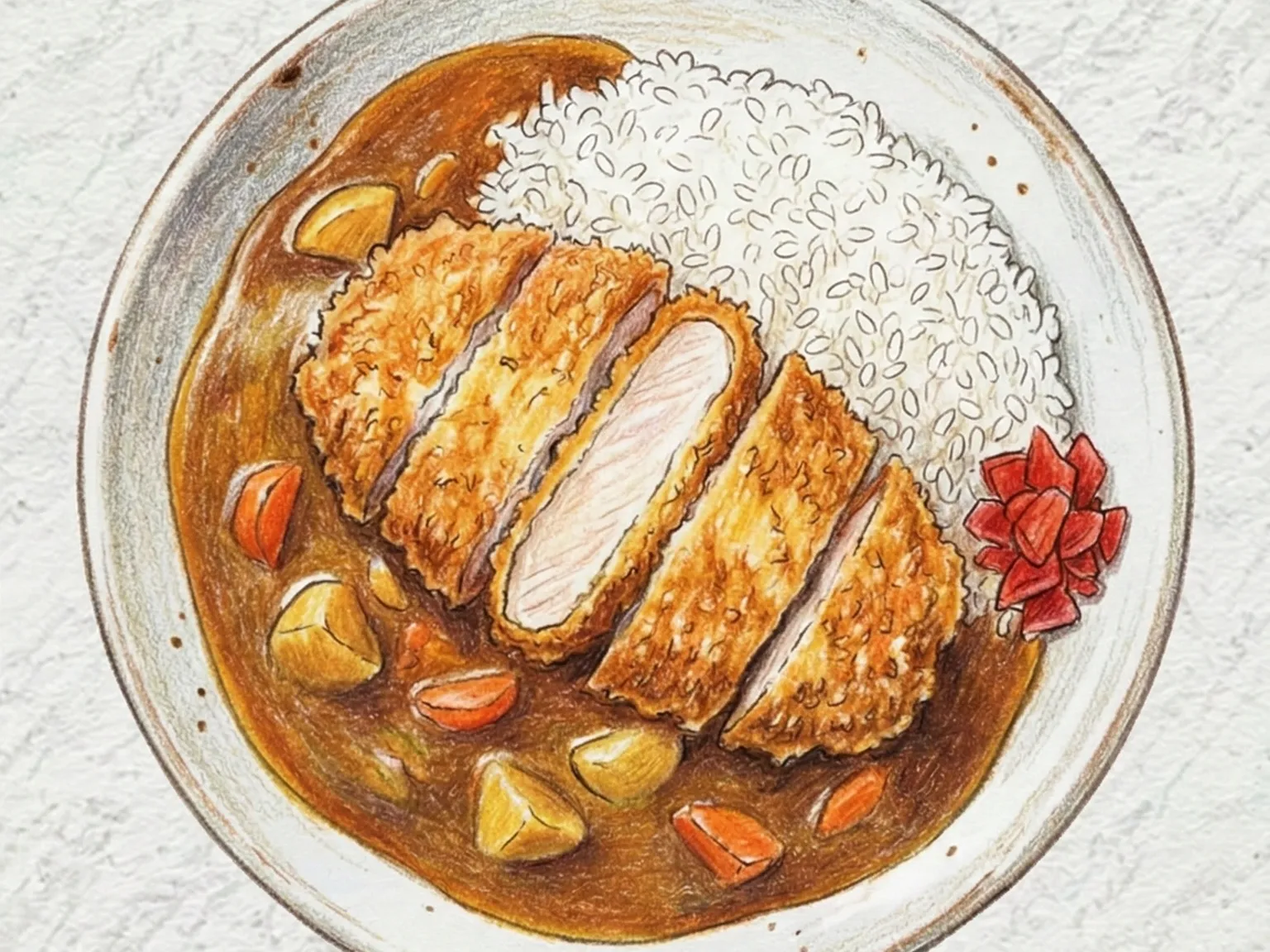
Katsu Curry
Katsu curry is a Japanese single-plate meal of crisp deep-fried pork cutlet served beside a thick, glossy curry sauce over steamed rice. The pork loin is pounded to an even thickness, seasoned with salt and pepper, then coated in three layers: flour, beaten egg, and panko. Panko breadcrumbs have a coarser, more jagged texture than standard breadcrumbs, which creates more air pockets in the crust and produces a crunch that stays crisp longer after frying. The breaded cutlet is lowered into oil heated to 170 degrees Celsius and fried for four to five minutes until deep golden brown, then lifted onto a wire rack to rest for two minutes. The resting period allows the residual heat to finish cooking the center while the juices redistribute and the crust firms up. The curry sauce is built separately: onion and carrot are sauteed until their natural sweetness develops fully, then water is added and everything simmers until the vegetables are tender. The curry roux blocks are added and dissolved over low heat until the sauce reaches a thick, velvety consistency. Resting the curry overnight deepens its flavor as the vegetables continue to release sugars and the spices meld together. At the table, the curry fills one side of the plate and the sliced katsu occupies the other so the crust stays dry until deliberately pushed into the sauce, preserving the contrast between the two textures.

English Trifle (Layered Cake, Custard & Cream Dessert)
English trifle is a layered dessert assembled in a glass bowl, where each stratum contributes a different texture and flavor. Slices of sponge cake are soaked in sherry or fruit juice until they soften into a pudding-like consistency, then covered with a thick vanilla custard that sets gently as it chills. Fresh strawberries and blueberries are scattered between layers, introducing bright acidity and color. Whipped cream crowns the top, providing a light, airy finish. The glass bowl displays the distinct bands of cake, custard, fruit, and cream from the side. Each serving should dig deep enough to capture all layers in a single spoonful, ensuring that the wine-soaked sponge, the smooth custard, and the cream's lightness arrive together.
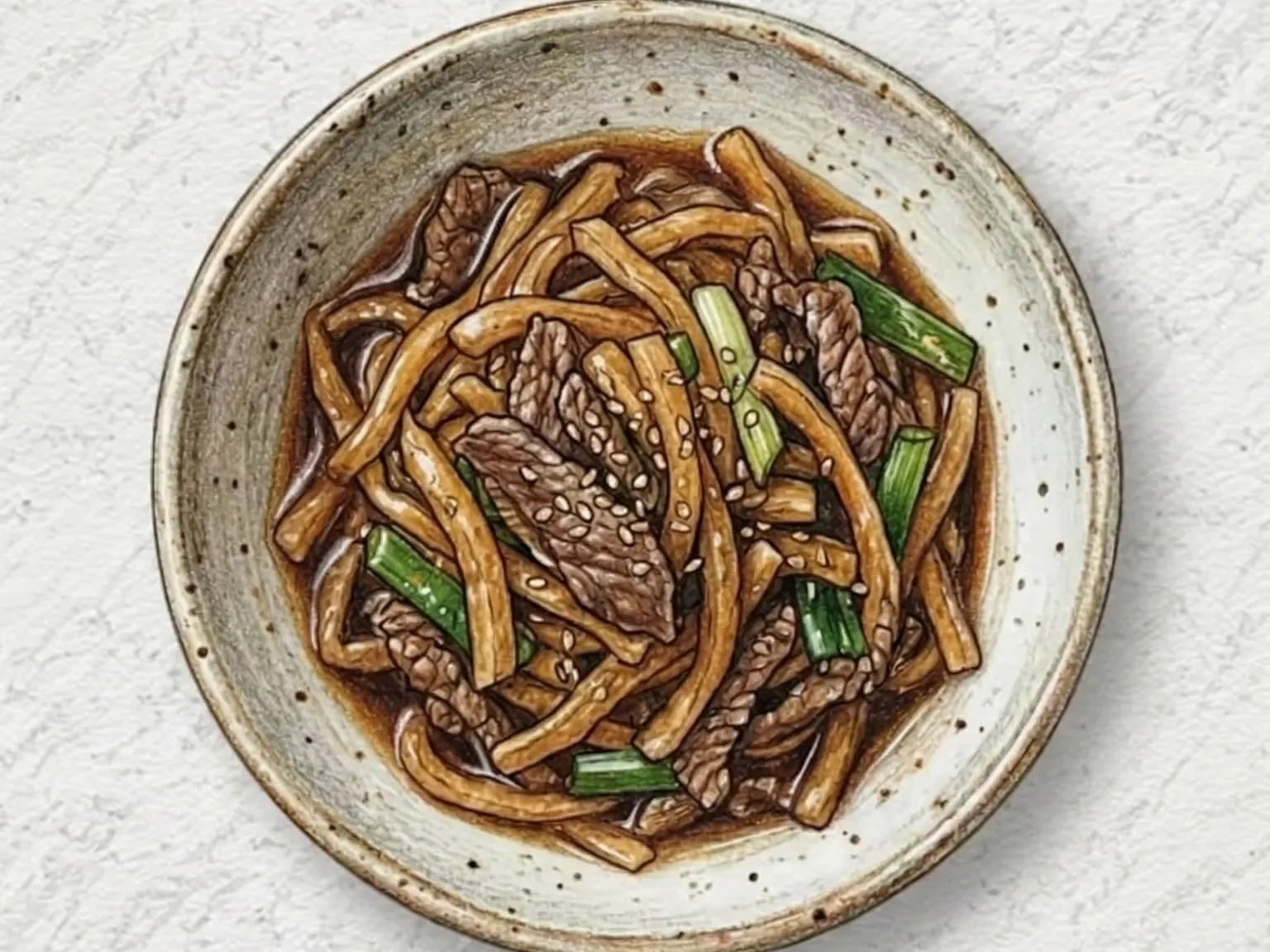
Korean Braised Beef with Dried Radish
Mumallaengi sogogi jorim is a Korean soy-braised side dish of rehydrated dried radish strips and lean beef round, cooked down until the sauce just barely covers the ingredients. Drying concentrates the radish's natural sugars and umami, and once soaked and braised the strips become chewy and deeply flavored in a way fresh radish cannot replicate. Before soaking, a quick rinse removes any dust or impurities from the drying process, and twenty minutes or more in cold water restores just enough elasticity for a satisfying texture after cooking. Thin-sliced beef is pre-seasoned with cooking wine to neutralize any off-smell, then added to the pan so it cooks cleanly and without a heavy aroma. Oligosaccharide syrup adds a gentle sheen and sweetness to the soy base without making the dish cloying. Toasted sesame seeds scattered over the top finish the dish with a nutty fragrance. Like most Korean braised side dishes, this one improves after a night in the refrigerator as the seasoning continues to penetrate, making it a practical and reliable choice for lunchboxes and weekday meal preparation that can be made ahead and eaten across several days.
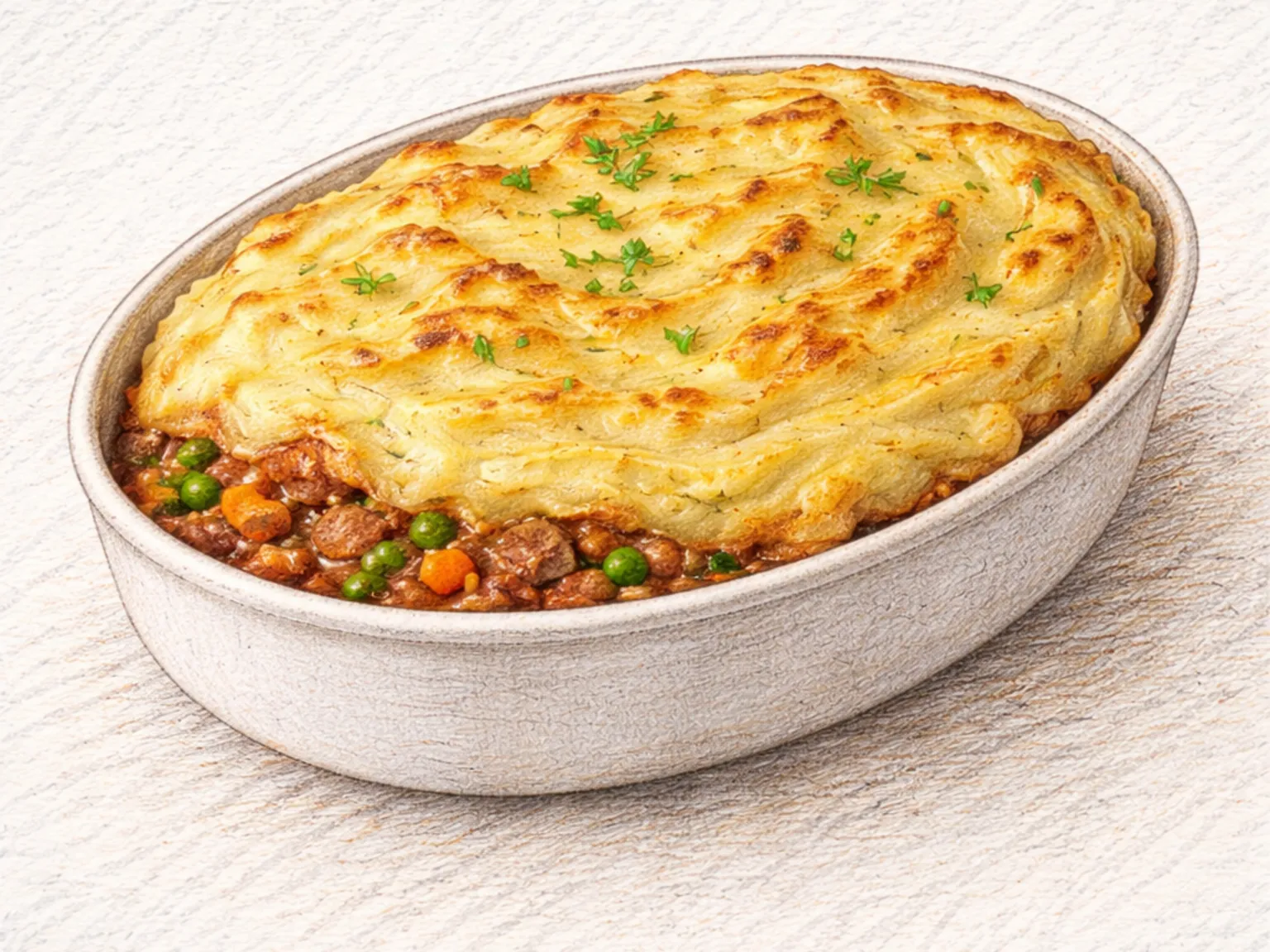
Cottage Pie
Cottage pie is a British comfort dish that layers a rich ground-beef filling under buttery mashed potatoes and bakes the whole thing until the top is golden and the interior is bubbling. The filling starts with beef browned alongside diced onion and carrot, then simmers with tomato paste, Worcestershire sauce, beef stock, and green peas until the liquid reduces to a thick, concentrated sauce that holds its shape in the dish. Adding beef stock to the simmer deepens the flavor considerably compared to water alone. The potatoes must be mashed immediately after draining while still steaming hot: mashing cool potatoes produces a gluey texture instead of a smooth, creamy layer. Scoring the surface with a fork before the dish goes into the oven creates ridges that catch the heat and brown in the oven at 200 degrees Celsius over twenty minutes, adding a lightly crisp layer over the soft interior. During baking, the heat from the filling rises through the potato crust, allowing the two layers to exchange aromas. The defining characteristic of the dish is the contrast between the deeply savory, umami-packed meat layer below and the soft, golden, buttery potato crust above.
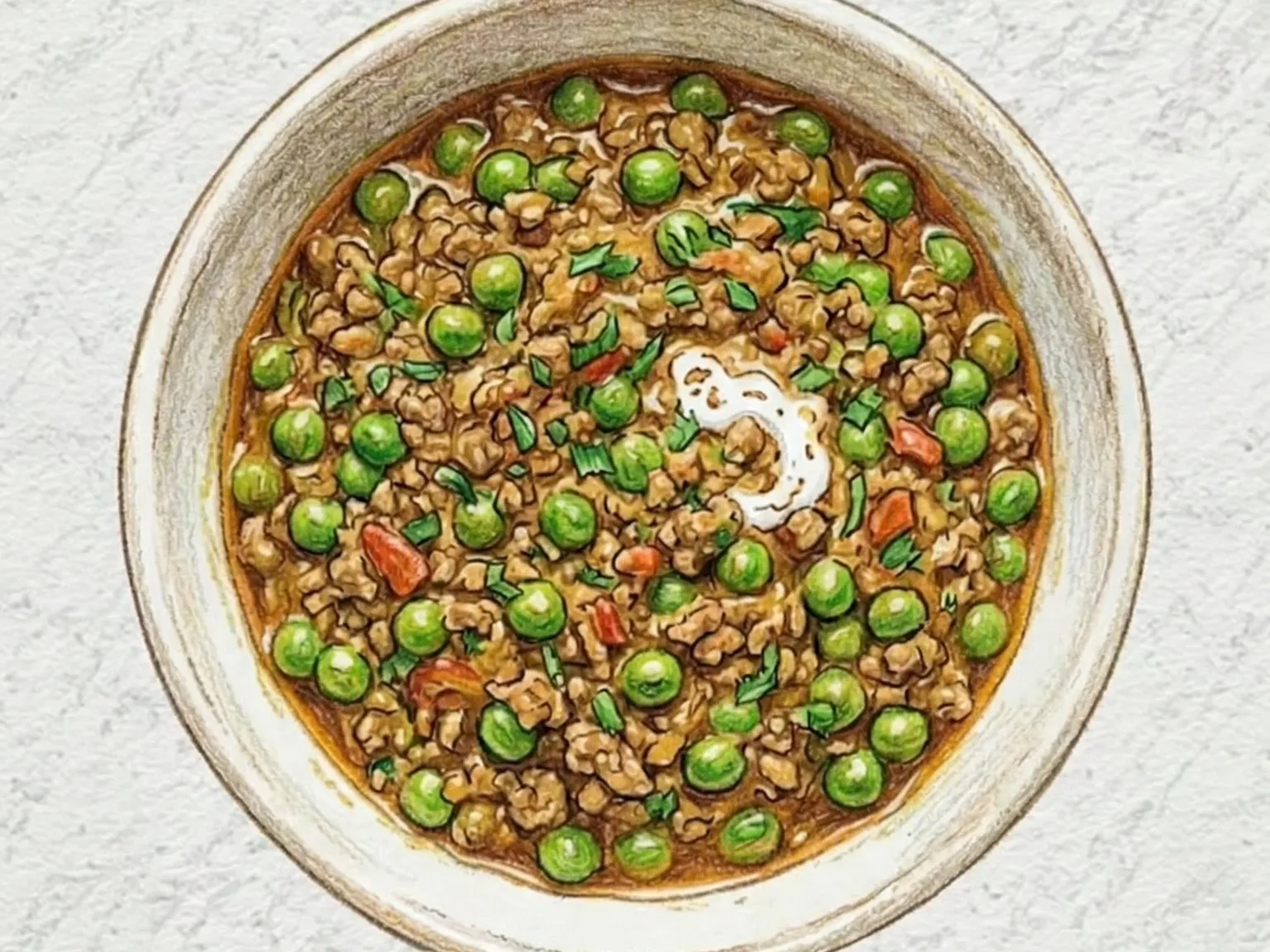
Keema Matar (Indian Spiced Minced Meat and Pea Curry)
Keema matar is a North Indian curry of seasoned minced meat and green peas cooked down into a thick, almost dry gravy. Onions are fried until deep golden to form a sweet, caramelized base, followed by garlic and ginger that release their sharpness into the fat. Ground lamb or beef is added and stirred continuously to break up clumps before the spices go in. Turmeric, cumin, garam masala, and chili powder build the spice profile, while diced tomatoes provide acidity and moisture that allow the spices to cook through without scorching. Green peas are added near the end of cooking so they retain a pop of texture and natural sweetness. Because the finished dish is relatively dry with little sauce, it clings well to flatbreads such as naan or chapati and also works as a topping over plain steamed rice. The whole preparation takes under forty-five minutes with minimal knife work, making it one of the more practical Indian curries for weeknight cooking. Blooming the cumin in hot oil at the start, using the tadka technique, deepens the aroma significantly and lifts the overall flavor of the dish.
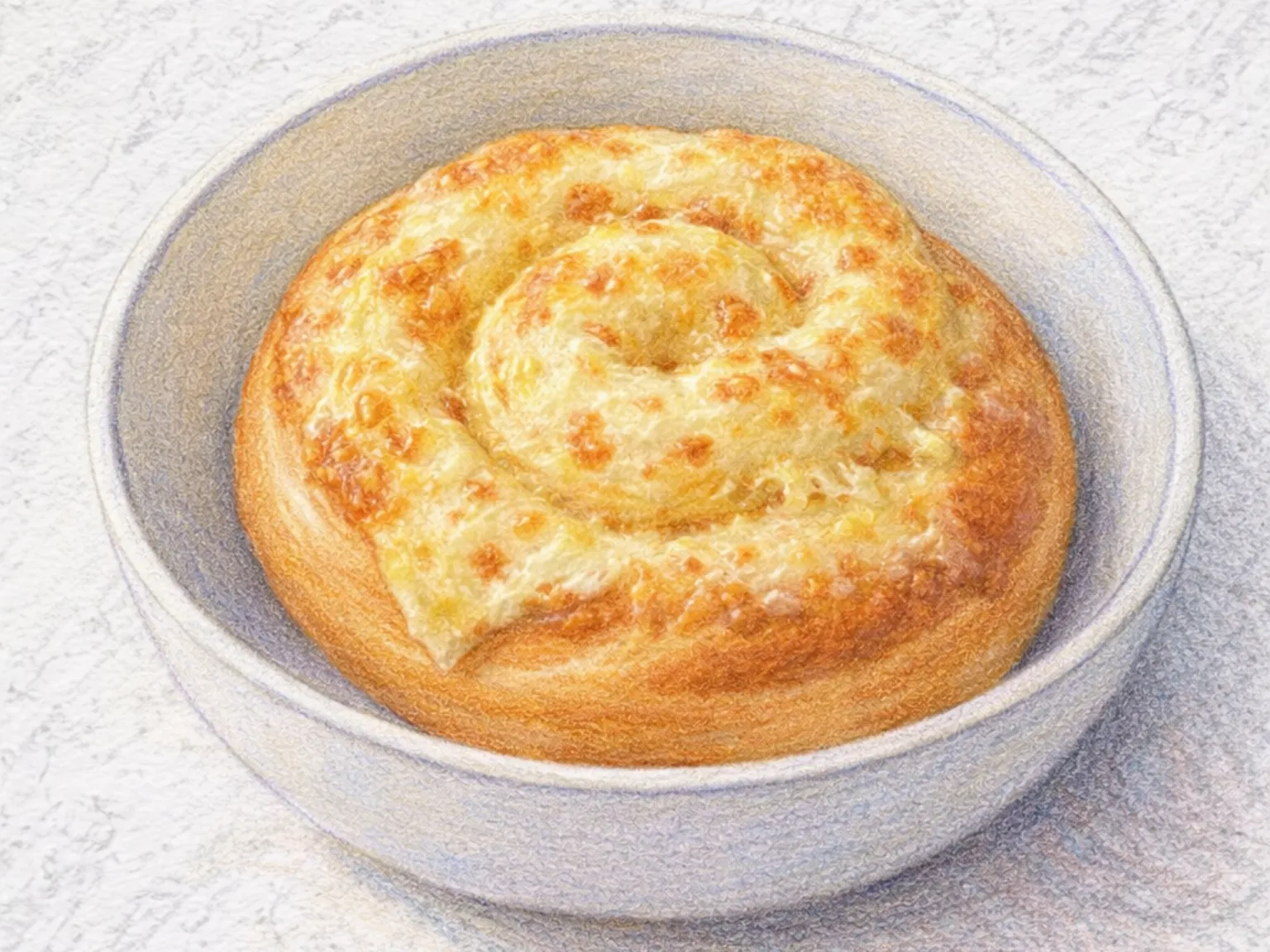
Ensaymada Cheese Bread (Filipino Sweet Cheese Brioche)
Ensaymada is a Filipino sweet brioche descended from the Spanish ensaimada of Mallorca, transformed over centuries into something entirely its own. The dough is enriched with a generous amount of eggs and butter, kneaded until it pulls away from the bowl in smooth, elastic sheets, then given a long rise that results in a pillowy interior with a cotton-like, pull-apart crumb. After baking, the buns are brushed with softened butter while still warm, rolled in granulated sugar, and blanketed in a thick layer of grated cheddar or Edam cheese. The contrast between the sweet, buttery bread and the salty aged cheese is not incidental but central to the character of ensaymada, reflecting a Filipino fondness for pairing sweet and savory within a single bite. Bakeries across the Philippines produce them in enormous quantities during the Christmas season, when they are given as gifts and served at holiday gatherings, though they appear on breakfast tables year-round alongside thick hot chocolate or coffee.
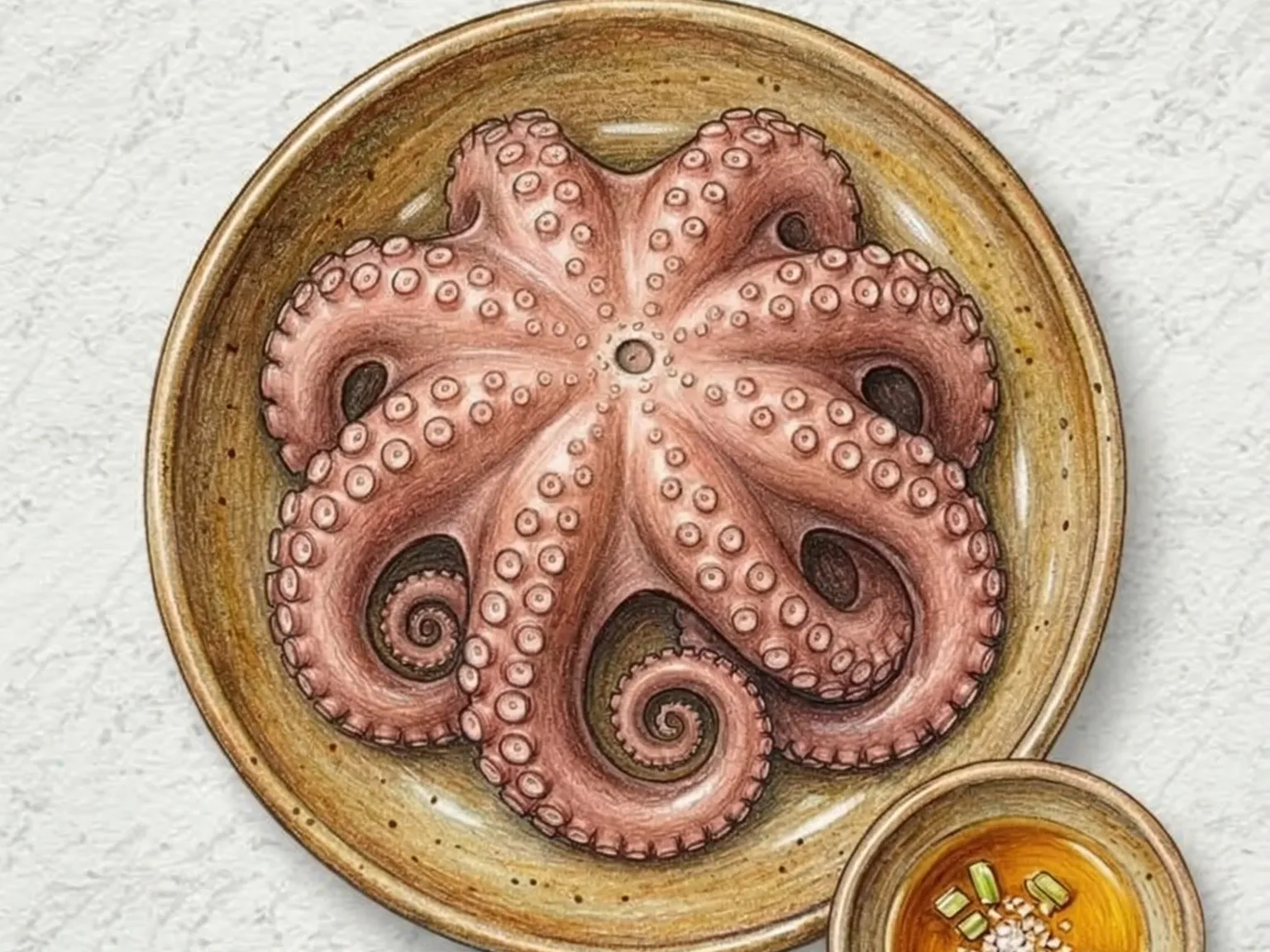
Korean Steamed Octopus (Whole Salted Radish Broth)
Muneo-jjim is a Korean steamed whole octopus dish prepared by scrubbing the octopus vigorously with coarse salt to remove slime and any off-odor, then cooking it in a pot layered with radish and green onion. Submerging the head end first and lifting it in and out of the boiling water two or three times causes the tentacles to curl inward naturally, resulting in an attractive presentation before the full cook begins. Simmering for about fifteen minutes and then resting off the heat with the lid on produces a texture that is springy and chewy without turning tough. The radish adds mild sweetness to the water while green onion draws out any fishiness, so the resulting broth carries a clean, subtle depth of its own. Once cooked, the octopus is sliced on the diagonal into manageable pieces and served with a simple dipping sauce of sesame oil mixed with salt. That combination lets the octopus's natural ocean flavor and nuttiness come through without interference. The dish works equally well as a drinking accompaniment or an everyday banchan, and the technique scales from a small arm to a full-sized octopus without adjustment.
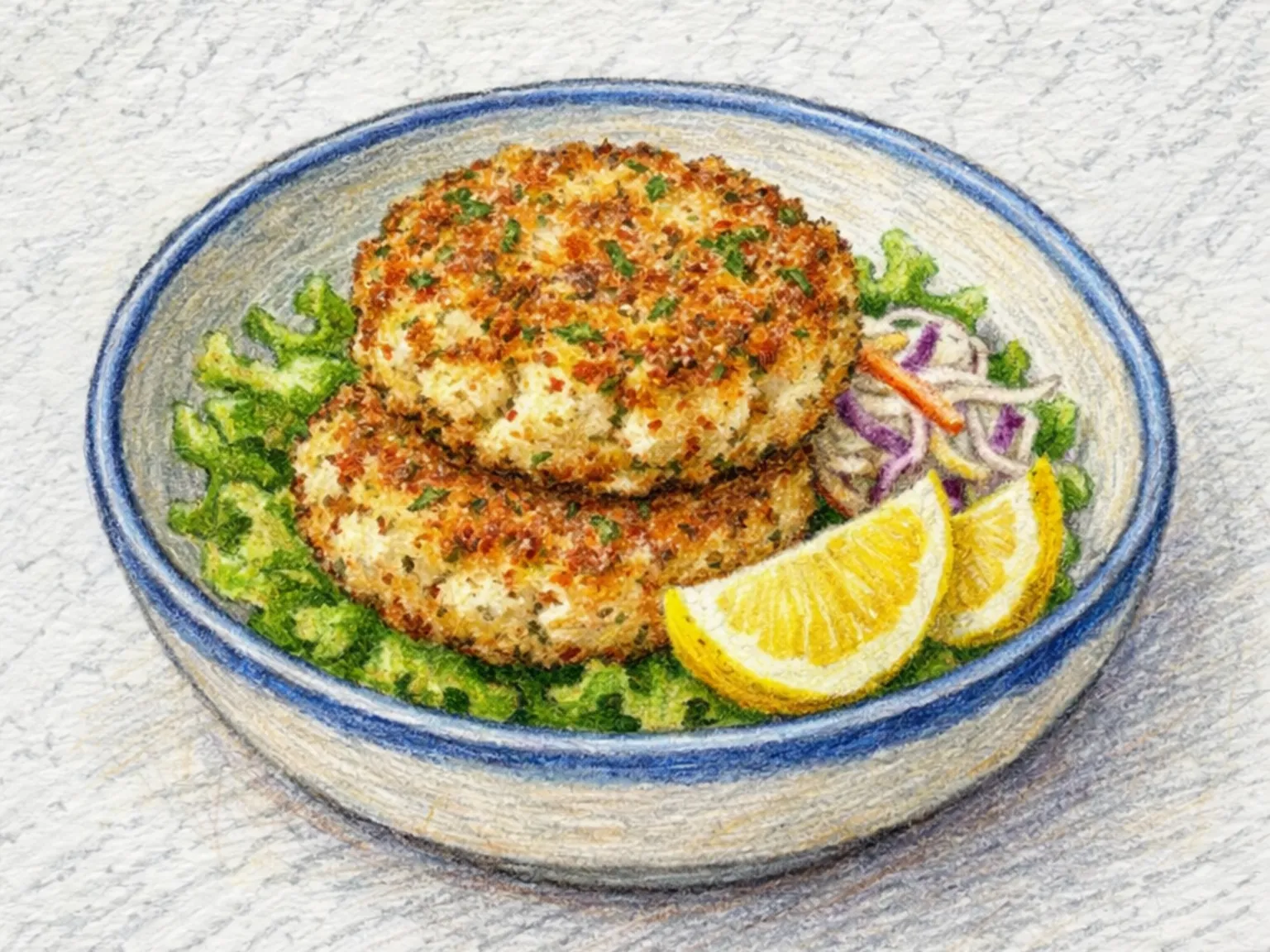
Crab Cake
Crab cakes are a signature seafood dish of the American East Coast, made by gently folding crab meat with mayonnaise, Dijon mustard, egg, breadcrumbs, parsley, and lemon juice, then shaping the mixture into patties and pan-frying in butter until golden on each side. Mixing the crab meat with a light touch preserves the large flakes that give each bite its distinctive texture. Lemon juice brightens the flavor and tempers any fishiness. Chilling the formed patties for thirty minutes firms them enough to flip in the pan without breaking apart. The finished crab cake has a crisp, buttery exterior enclosing moist, sweet crab.
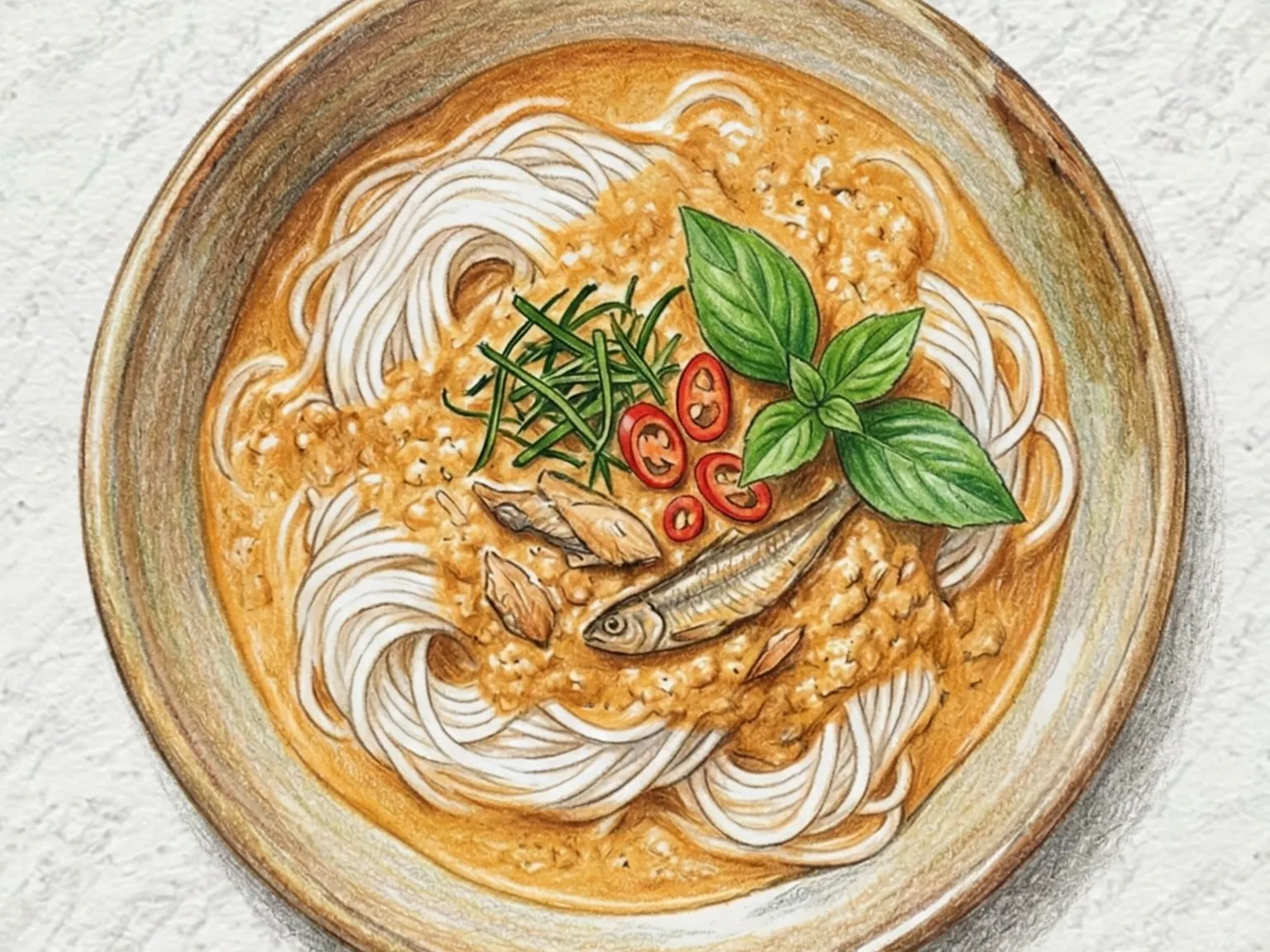
Khanom Jeen Nam Ya (Thai Fermented Rice Noodles in Fish Curry)
Khanom jeen nam ya is a traditional Thai dish of fermented rice noodles bathed in a thick, fragrant curry sauce built from fish and coconut milk. White fish fillets are poached with lemongrass and kaffir lime leaves, then flaked and folded into a simmering pot of red curry paste and coconut milk. The fish dissolves into the sauce, lending body and a subtle marine sweetness that balances the heat of the curry. Fish sauce sharpens the salt, and palm sugar rounds off the edges. The finished sauce is ladled generously over coiled bundles of the thin, slightly sour fermented noodles. A spread of raw garnishes - bean sprouts, morning glory, green beans, shredded cabbage, and fresh chili - accompanies each serving, letting diners customize texture and freshness with every bite. The dish traces its origins to royal Thai cuisine but is now a common sight at market stalls across the country.

Eton Mess (Crushed Meringue, Cream & Strawberry Mix)
Eton mess is a British dessert originating from Eton College, made by roughly folding together broken meringue, whipped cream, and strawberries into a deliberate, unstudied jumble. The name comes from the method itself: there is no careful layering or presentation, just a generous combination of three components mixed loosely in a glass or wide bowl. The meringue is baked low and slow until the outside develops a firm, crisp shell while the inside stays soft and marshmallow-like, then cooled completely before being broken by hand into irregular shards of varying sizes. Strawberries are treated in two ways: some are crushed roughly with a fork so the juice bleeds in red streaks through the white cream, while others remain whole to provide fresh, firm bites of fruit. The heavy cream is whipped only to soft, billowy peaks so it folds around the meringue and fruit loosely rather than sitting in stiff mounds. Every spoonful delivers a different ratio of crunch, softness, tartness, and sweetness depending on which pieces land together, which is the pleasure of the dessert. Because the cream and fruit juices begin softening the meringue the moment they are combined, Eton mess must be assembled and eaten immediately to preserve the textural contrast between crisp and soft.
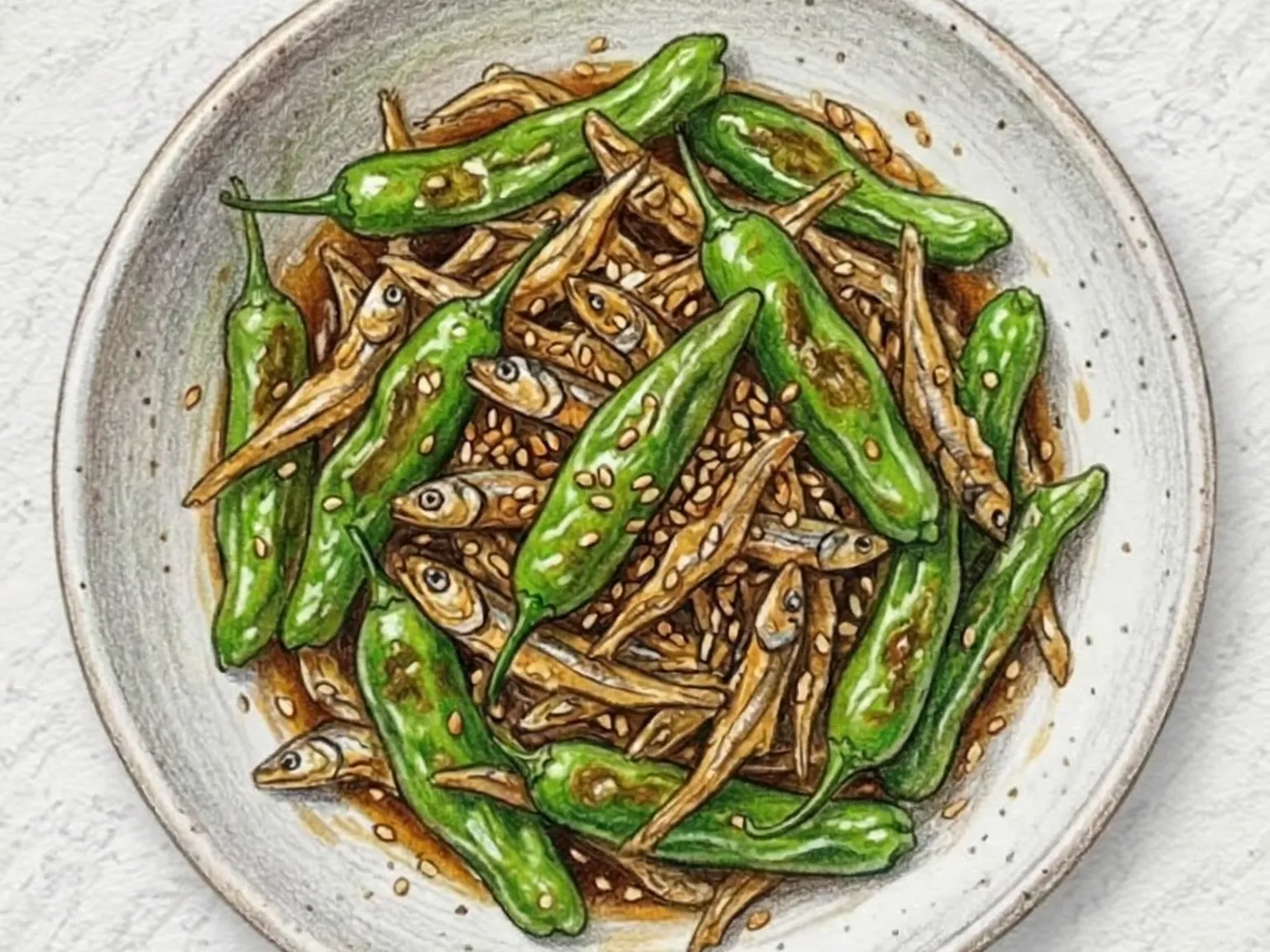
Korean Anchovy & Shishito Braise
Myeolchi kkwari jorim is a Korean side dish of dry-toasted small anchovies and shishito peppers glazed in a sweet soy sauce with corn syrup and cooking wine. Toasting the anchovies first drives off any fishy smell and brings out their nuttiness, while the peppers are stir-fried in oil to release a mild, lingering heat. The glaze coats everything in a shiny, sweet-salty finish, and sesame oil with sesame seeds add a final toasted aroma. This banchan tastes even better the next day after the sauce has fully settled in, making it one of the most reliable lunchbox staples in Korean home cooking.
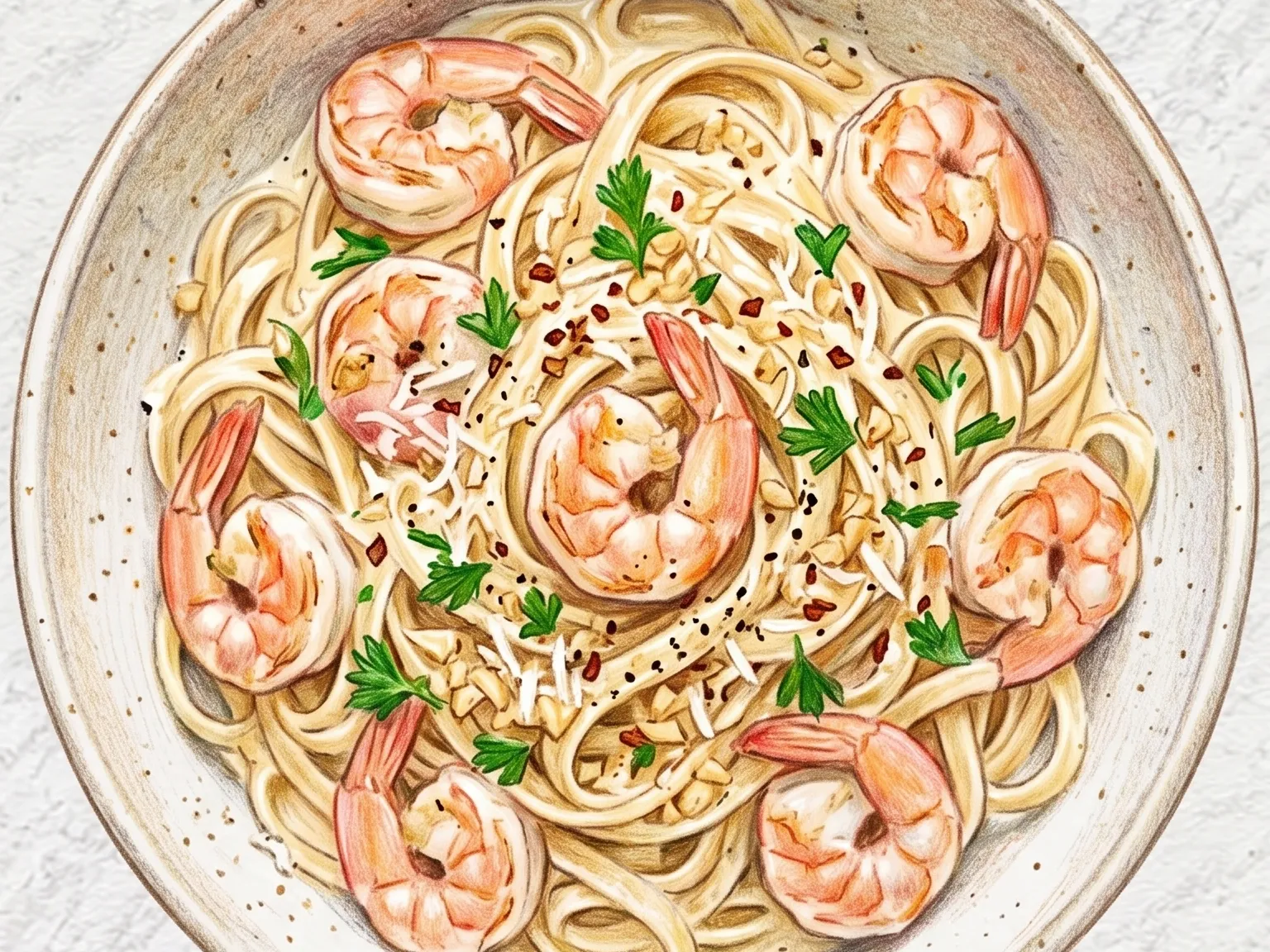
Creamy Garlic Shrimp Pasta
Creamy garlic shrimp pasta begins with a slow, low-heat saute of minced garlic in olive oil and butter. The garlic should be pulled when it turns pale gold rather than brown, which preserves its sweet, mellow depth without any bitterness. Shrimp go in next and cook for roughly two minutes in total, just long enough for both sides to turn pink. At that point the flesh is at its sweetest and the texture is still springy. The shrimp come out of the pan and rest while heavy cream goes in, simmering over medium-low heat for two to three minutes. During that simmer the garlic-infused fat and the shrimp juices left in the pan dissolve into the cream, building the sauce's depth without any additional flavoring. Spaghetti is boiled one minute short of the package time so it finishes cooking in the sauce rather than on its own. Grated Parmesan and a small ladle of pasta water go in together, and the mixture is tossed until the cheese melts into a smooth, silky coating that clings evenly to the noodles. The reserved shrimp return for a final thirty seconds of warming, just enough to heat through without firming up, so every bite carries both the tender sweetness of the seafood and the rich, savory garlic cream.
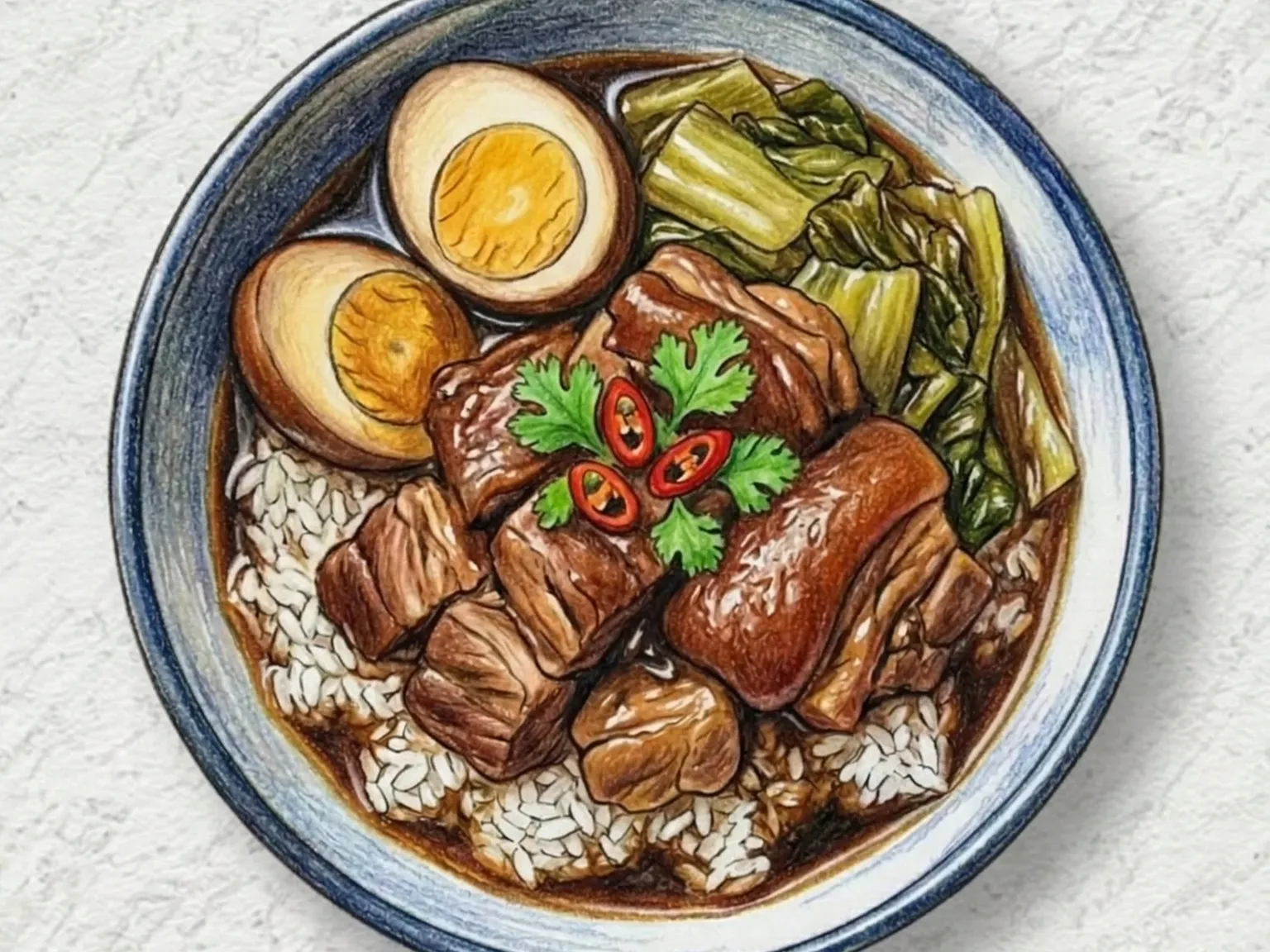
Khao Kha Moo (Thai Braised Pork Leg Rice Bowl)
Khao kha moo is a Thai braised pork leg rice bowl built on a simple premise: the longer the pork simmers, the better it becomes. A whole pork hock or front leg is submerged in a soy-based braising liquid seasoned with palm sugar, dark soy sauce, star anise, cinnamon sticks, and whole garlic cloves, then cooked at a low, steady simmer for two hours or more. Sustained heat breaks down connective tissue and collagen until the meat yields at the slightest touch, pulling away from the bone in glossy, quivering strips. As the liquid reduces, palm sugar and soy caramelize into a thick, mahogany-tinted sauce that balances deeply savory and gently sweet notes in equal measure. Thick slices of the pork are arranged over fragrant jasmine rice, and several spoonfuls of the braising sauce are ladled over so the grains soak up the flavor. Traditional accompaniments include a hard-boiled egg steeped overnight in the braising liquid until it turns brown throughout, pickled mustard greens to cut through the richness with sharp brine, and a small cup of chili-vinegar sauce for those who want heat. The dish is among the most beloved items at night markets across Thailand and demonstrates how patience and a handful of pantry aromatics transform inexpensive pork into something extraordinary.

Financier (Brown Butter Almond Mini Cake)
Financiers are small French cakes built on two key ingredients: browned butter and almond flour. The butter is cooked in a saucepan over medium heat, slowly at first, until the water evaporates and the milk solids settle and caramelize to a hazelnut-brown color, a stage called beurre noisette. This transformation produces a deep, toasty aroma layered with nutty complexity that plain melted butter cannot replicate. The browned butter is then combined with almond flour, powdered sugar, a small measure of cake flour, and egg whites to form a batter that is poured into rectangular molds and baked at around 190 degrees Celsius for 12 minutes. As the financiers bake, their edges deepen to a dark amber and the surface forms a thin, brittle crust, while the interior stays dense and moist because the almond oils and butter fat resist drying out. Their name derives from the gold-bar shape of the traditional mold, which connects them to the financial district of Paris, where they were reputedly created as a practical, suit-friendly snack that bankers could eat at a counter without making a mess. A smear of berry jam or lemon curd on the side sharpens the contrast against the nut-brown richness of the cake.
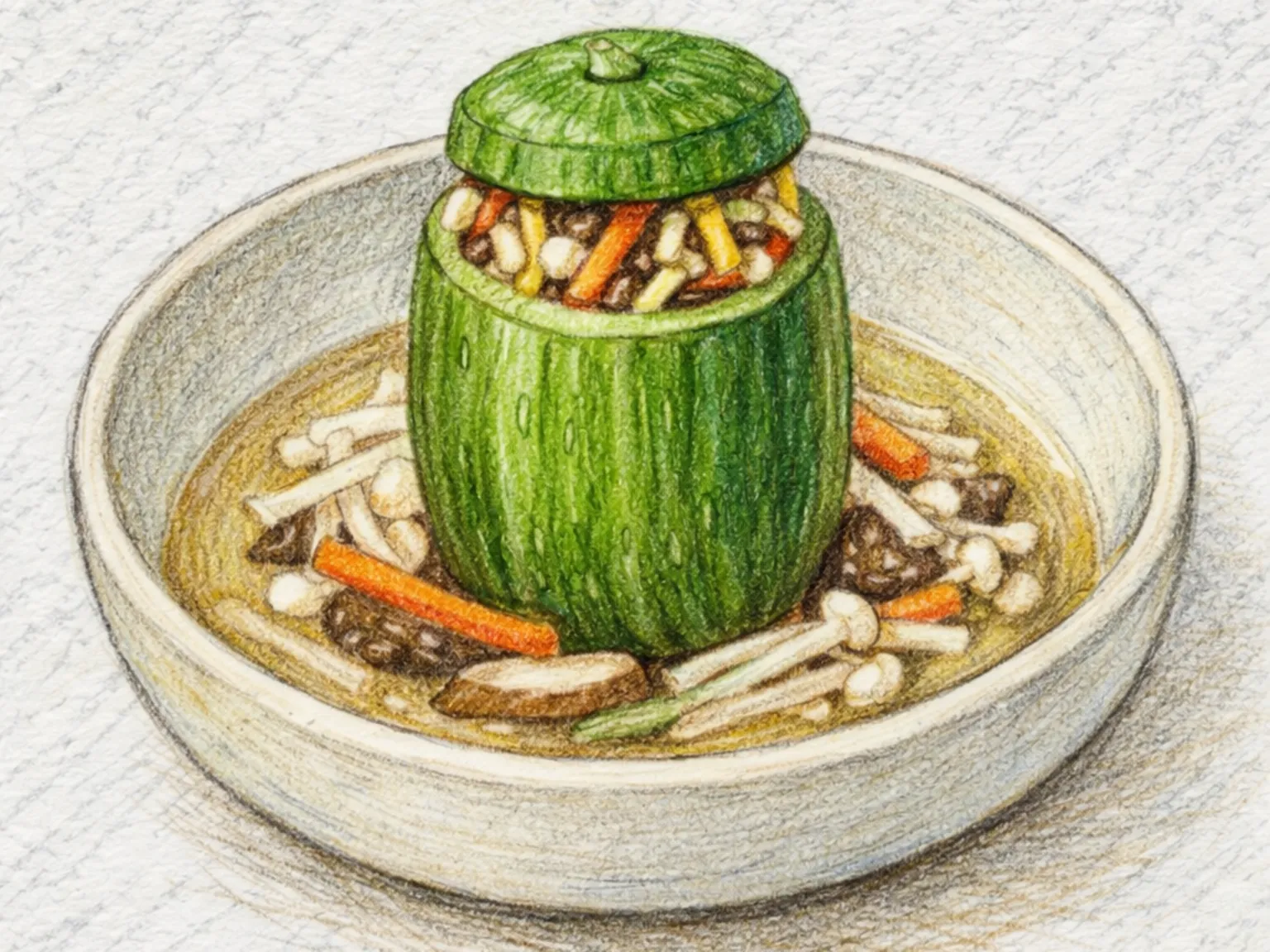
Korean Stuffed Steamed Cucumber
Oiseon is a traditional Korean court-style dish in which cucumber sections are hollowed out, stuffed with a filling of ground chicken, crumbled tofu, and finely julienned carrot, then steamed until the filling is just cooked through. The filling is seasoned only with soy sauce, garlic, and sesame oil, keeping it savory and lightly fragrant without competing with the clean flavor of the cucumber itself. Each piece delivers two distinct textures at once: the crisp, cool resistance of the cucumber shell against the soft, moist filling packed inside. Steaming rather than frying or sauteing preserves the cucumber's fresh green aroma and keeps the dish entirely oil-free, letting the natural character of each ingredient come forward without interference. The dish can be served warm directly from the steamer or chilled, at which point the flavors settle into a precise, refreshing clarity that works well in warmer seasons. A small dipping sauce of mustard sauce or light vinegar soy sauce sharpens the profile further. The careful preparation and restrained seasoning make oiseon appropriate for formal Korean table settings and guest entertaining, representing the kind of cooking where technique and balance speak louder than bold flavors.
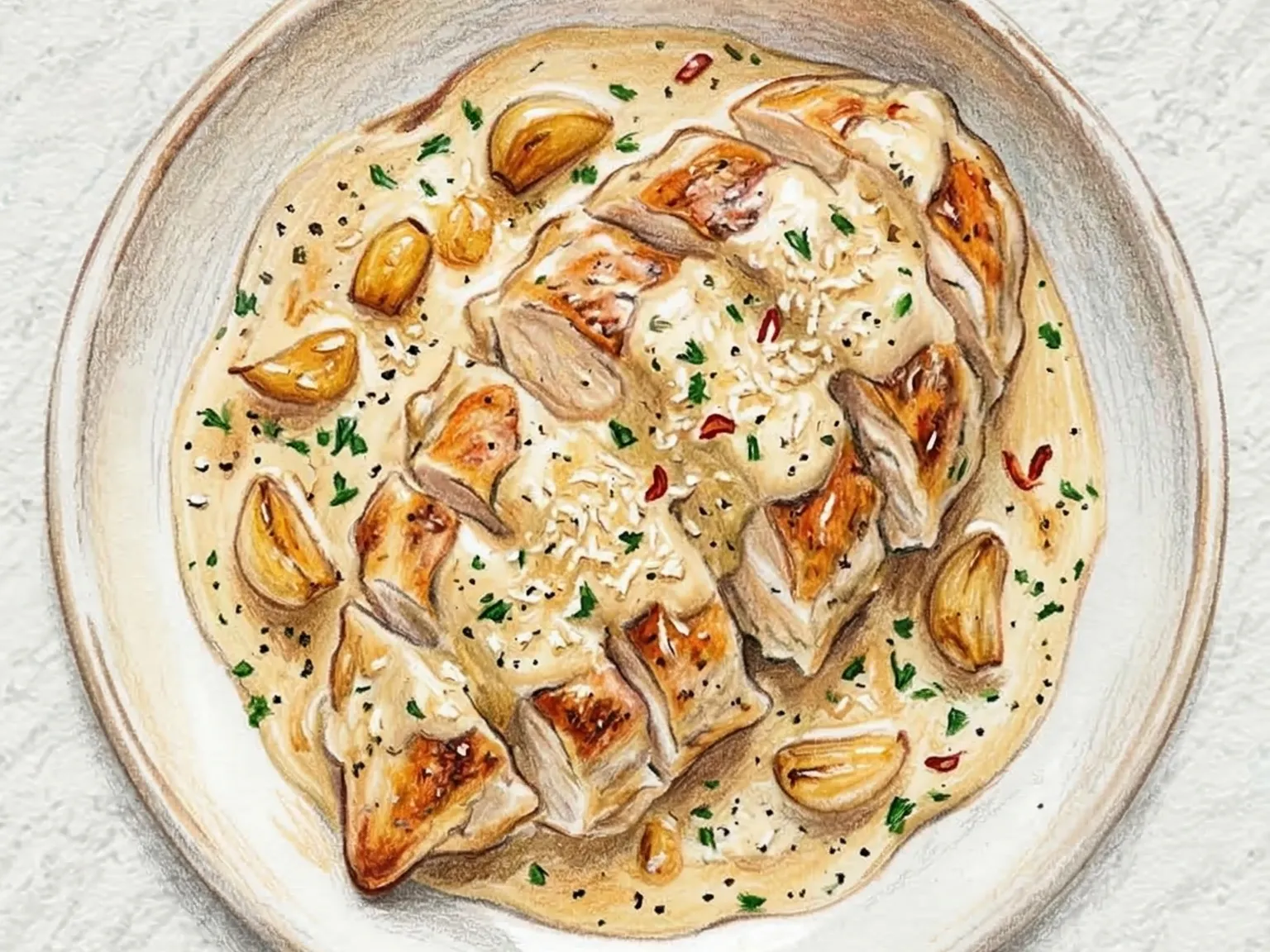
Creamy Tuscan Chicken
Creamy Tuscan chicken begins by searing seasoned chicken breasts in olive oil until a deep golden crust forms on both sides, locking in juices. Minced garlic is sauteed briefly in the same pan drippings, then chicken stock deglazes the fond for extra savory depth. Heavy cream and grated Parmesan simmer on low heat for three minutes, thickening into a velvety sauce. Sun-dried tomatoes bring concentrated sweetness while fresh spinach wilts into the sauce, adding color and a mild vegetal note. Returning the chicken for a final four-minute simmer ensures the breast cooks through to a safe internal temperature while absorbing the sauce's rich flavor. Adding more Parmesan thickens the sauce further, and a few drops of lemon juice stirred in at the end lifts the cream's weight and brings it into balance with the acidity of the sun-dried tomatoes.
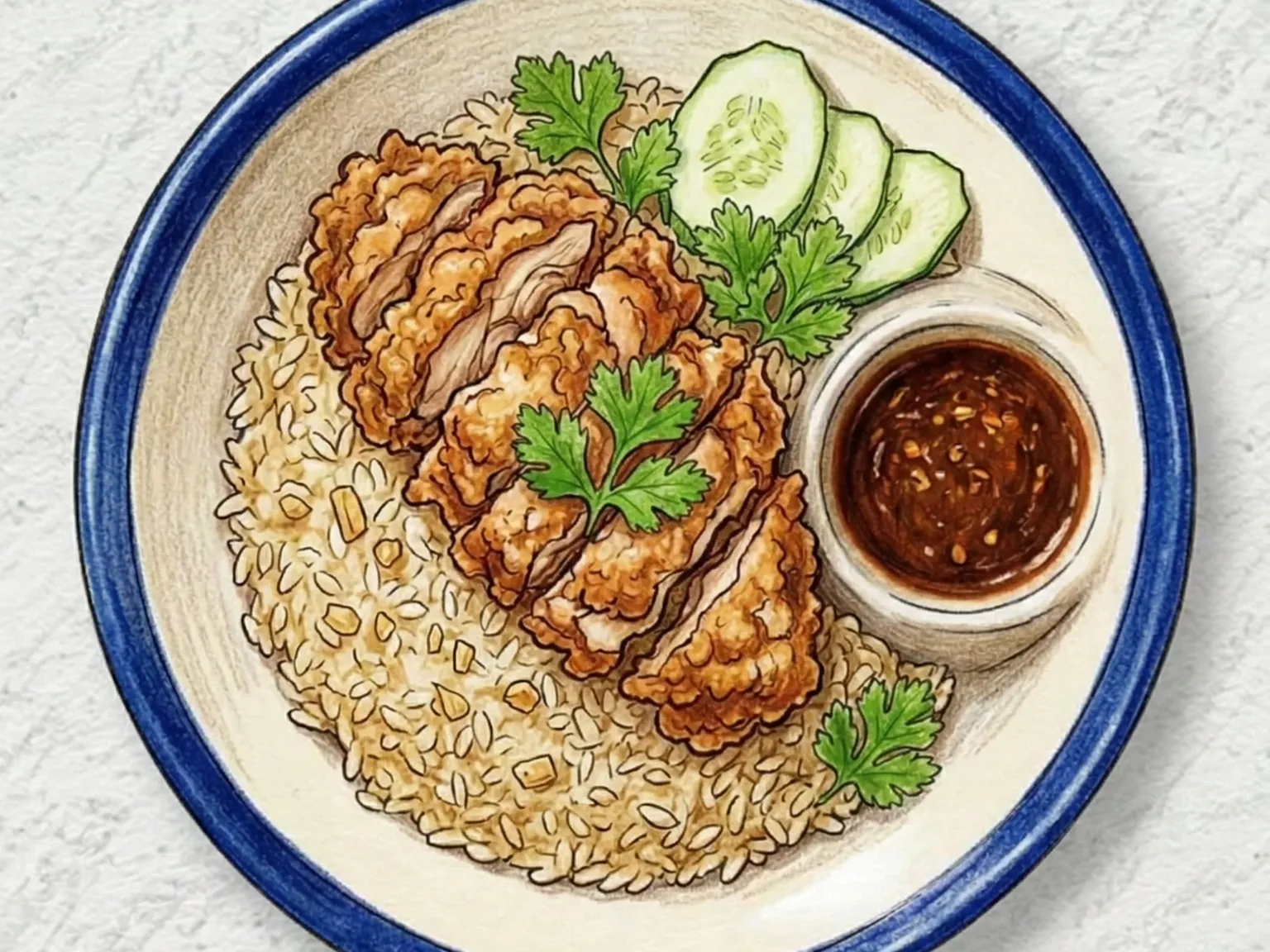
Khao Man Gai Tod (Thai Fried Chicken Rice Bowl)
Khao man gai tod is the fried variation of Thailand's beloved chicken rice, replacing the poached bird with a crispy deep-fried version that adds texture and caramelized flavor to an already satisfying dish. Chicken pieces are marinated in garlic, white pepper, and fish sauce, then dusted in seasoned flour and fried until the crust turns deep golden and audibly crunchy. The rice is cooked in chicken broth with garlic and ginger, absorbing the fat and aroma of the stock into each grain so that it tastes rich on its own before any sauce is added. What ties the plate together is the sweet chili dipping sauce, a mix of fermented soybean, vinegar, chili, and sugar that delivers a sharp, funky counterpoint to the rich fried chicken and oily rice. Sliced cucumber and a small bowl of clear broth with winter melon round out the standard serving and provide relief between bites. Street vendors across Bangkok keep vats of oil at the ready for this dish throughout the day, and the crackling sound of chicken hitting hot oil is a reliable signal to stop and eat.

Flan Parisien (Parisian Vanilla Custard Tart)
Flan Parisien is a Parisian bakery staple found in nearly every boulangerie in the city. A buttery shortcrust pastry shell holds a thick, firm vanilla custard that bakes slowly until the top develops caramelized brown spots. The custard is made from milk, eggs, sugar, and cornstarch, which gives it a denser, sliceable consistency that distinguishes it from softer baked custards like creme brulee. When properly cooled, the filling holds its shape when cut yet melts smoothly on the tongue with a clean vanilla flavor. Vanilla bean seeds speckled throughout the custard signal that the real ingredient was used rather than extract. The pastry shell must be blind-baked first to prevent sogginess, then filled and baked again until set. It is served cold, and the contrast between the crisp, buttery shell and the cool, trembling custard makes each bite satisfying. Allowing the flan to cool fully at room temperature before refrigerating prevents the custard from cracking or collapsing when sliced, which is the most common mistake when cutting too soon after baking.
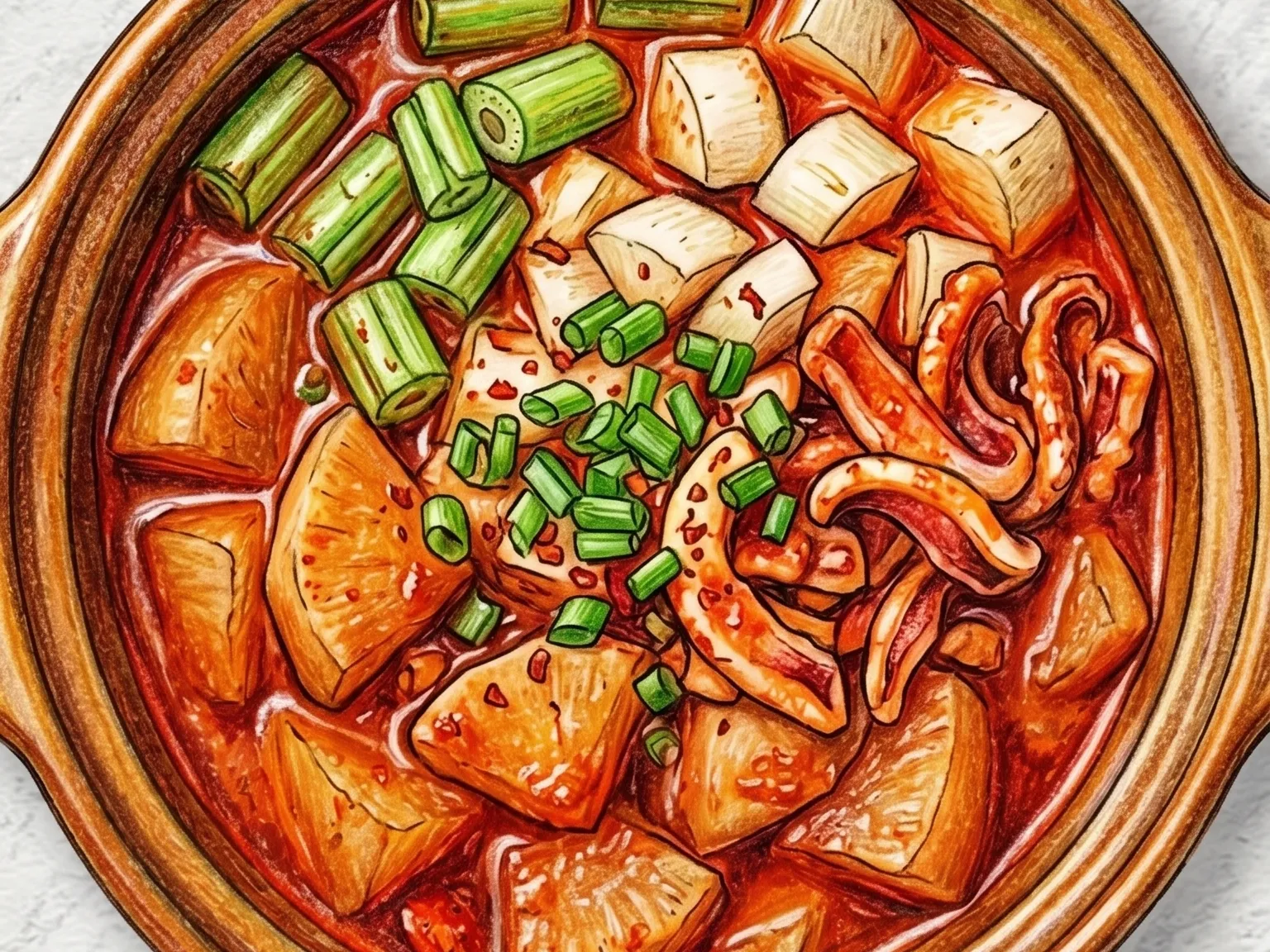
Korean Braised Squid with Radish
Ojingeo mu jorim is a Korean braised dish where radish is cooked first in a soy-based liquid until fully softened, then squid is added and the whole pot is reduced in a spiced sauce of gochugaru and gochujang. Giving the radish time to cook alone is the structural key to this dish: as it slowly absorbs the liquid and breaks down, it releases its natural sweetness into the broth, which merges with the salt and gentle umami of soy sauce to build the braising liquid into something more complex than its ingredients suggest. When the spice paste goes in, the resulting flavor sits at the intersection of heat and coolness - the particular sensation of Korean chili that stings without overwhelming. The single most important technique in this recipe is the timing of the squid. Squid turns rubbery when overcooked, and the window between tender and tough is narrow, so it is added only in the last five minutes of cooking. That brief time is enough for the squid to absorb the surrounding flavors while holding the springy, snapping bite that makes the dish texturally rewarding. Green onion stirred in at the finish adds a sharp herbal lift. The reduced sauce left in the pan is deliberately left shallow rather than thick, concentrated with the flavors of both the squid and the radish, and it is best used by spooning it over rice and eating everything together.
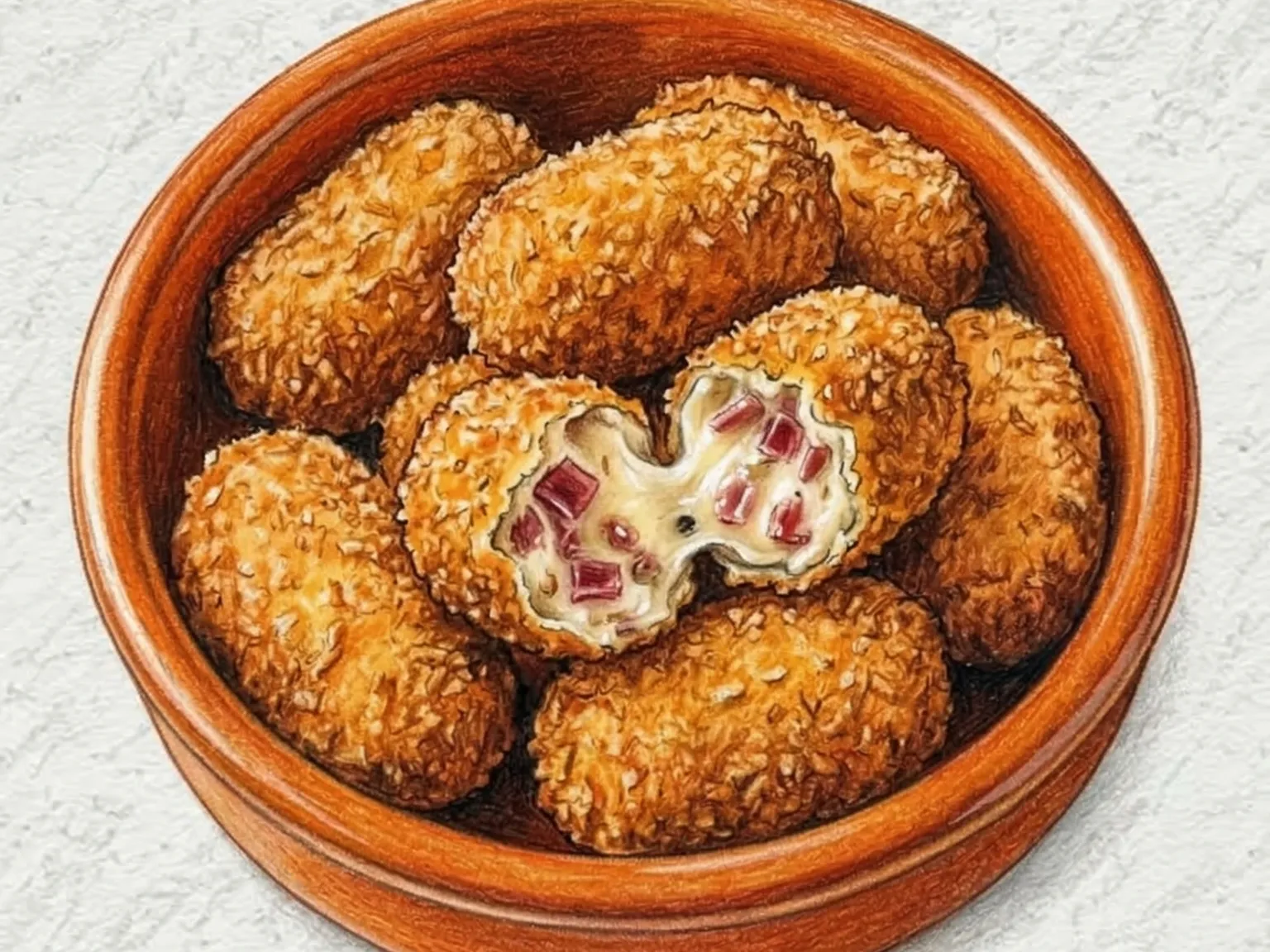
Croquetas de Jamon (Crispy Ham Béchamel Bites)
Croquetas de jamon begin with a roux of butter and flour cooked together for two minutes, followed by milk added in stages while whisking continuously to build a thick, smooth bechamel. Finely chopped jamon serrano is folded into the sauce along with seasoning, and the mixture is spread into a shallow dish and refrigerated until firm enough to shape without collapsing. Thorough chilling is the most critical step because soft filling cannot hold its oval form during breading and frying. Each croqueta is coated in beaten egg and rolled in fine breadcrumbs, then coated a second time to reduce the risk of splitting in hot oil. Fried at medium heat until deeply golden on all sides, the exterior shatters crisply while the interior releases a stream of hot, creamy, ham-laced bechamel. The salt and smoke of the jamon permeate the filling completely, making every bite rich and savory. These croquetas are one of the most beloved items in Spanish tapas culture, typically served two or three to a plate alongside a cold drink.
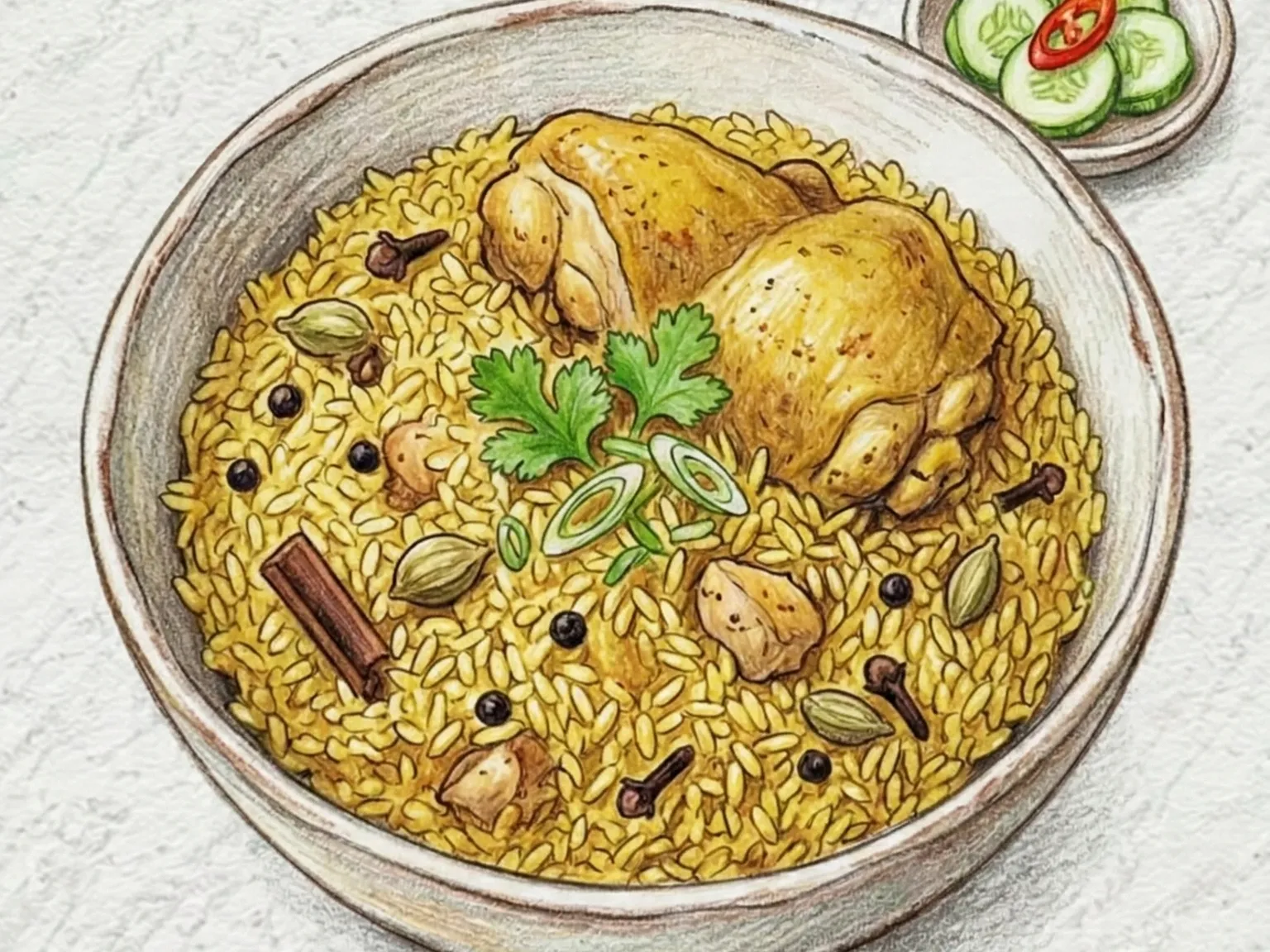
Khao Mok Gai (Thai-Muslim Spiced Chicken Biryani)
Khao mok gai is a Thai-Muslim take on biryani, in which spice-marinated chicken is cooked together with turmeric-tinted rice until the grains absorb the meat's juices. The chicken is rubbed with yogurt, cumin, coriander, and cinnamon, then briefly seared before being buried in parboiled rice seasoned with cardamom, cloves, and bay leaves. The pot is sealed and left on low heat so steam circulates through the layers, infusing every grain with aromatic depth. Turmeric gives the rice its signature golden hue. The dish originated in the Muslim communities of southern Thailand and reflects the culinary crossroads of Indian, Middle Eastern, and Southeast Asian cooking traditions. It is served with a sweet chili sauce for dipping, a bowl of clear chicken broth on the side, and a scattering of crispy fried shallots on top.
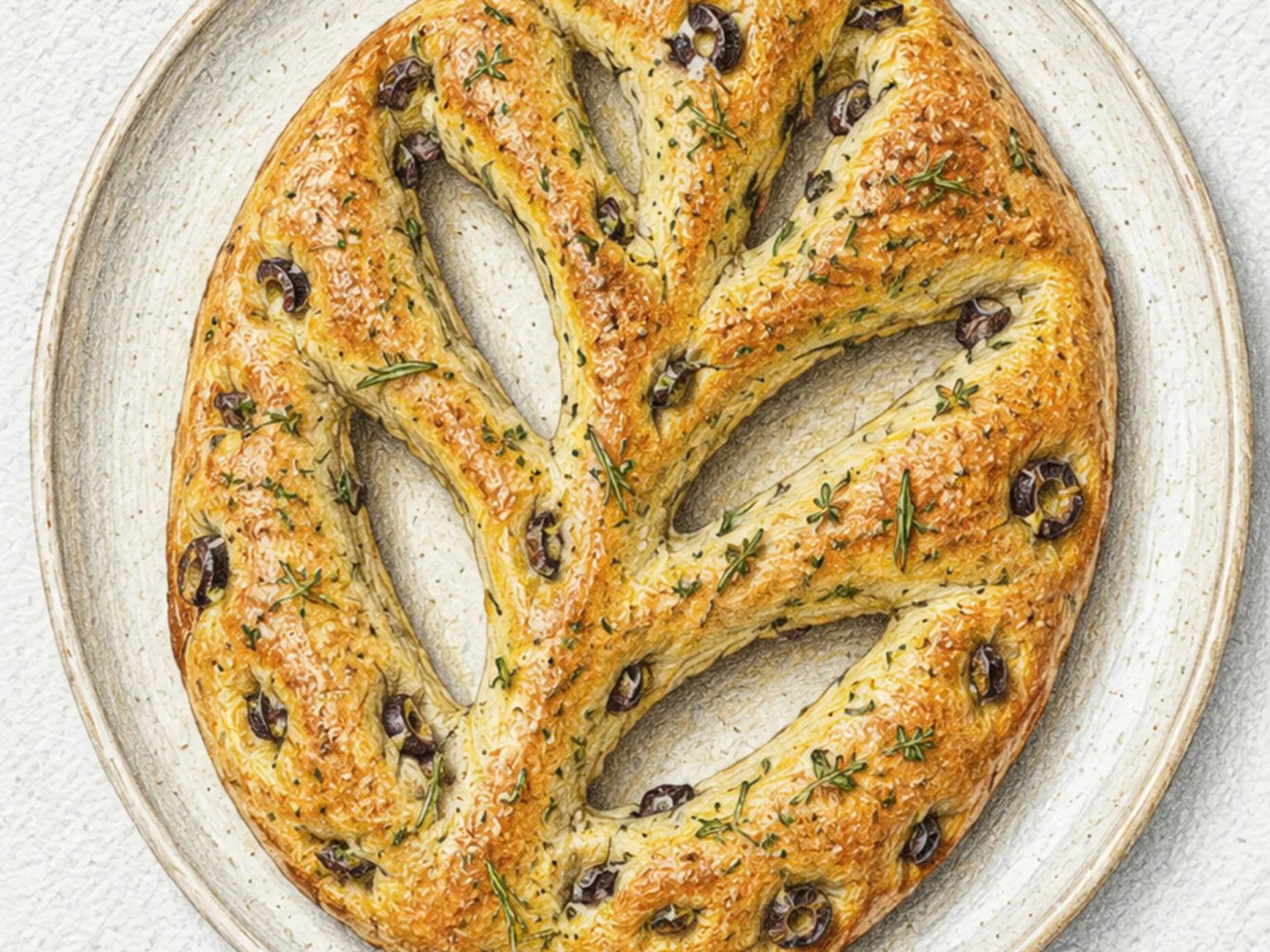
Olive Herb Flat Bread (Leaf-Shaped Provencal Bread)
Fougasse is a flatbread from Provence in southern France, shaped with decorative slashes that resemble a leaf or wheat sheaf. The dough is enriched with olive oil and studded with Kalamata olives, rosemary, and thyme, distributing pockets of briny, herbal flavor throughout the bread. The distinctive cuts serve more than an aesthetic purpose - they increase the crust-to-crumb ratio dramatically, so thinner sections bake to a crackling crispness while thicker areas remain soft and chewy. This variation in texture within a single piece is what makes fougasse more interesting than a uniform loaf. The surface is brushed with olive oil before baking, which produces a golden, glossy finish. Best eaten warm, when the aromatic oils from the herbs and olives are most volatile. It pairs naturally with southern French dishes, charcuterie boards, or a simple bowl of good olive oil for dipping.
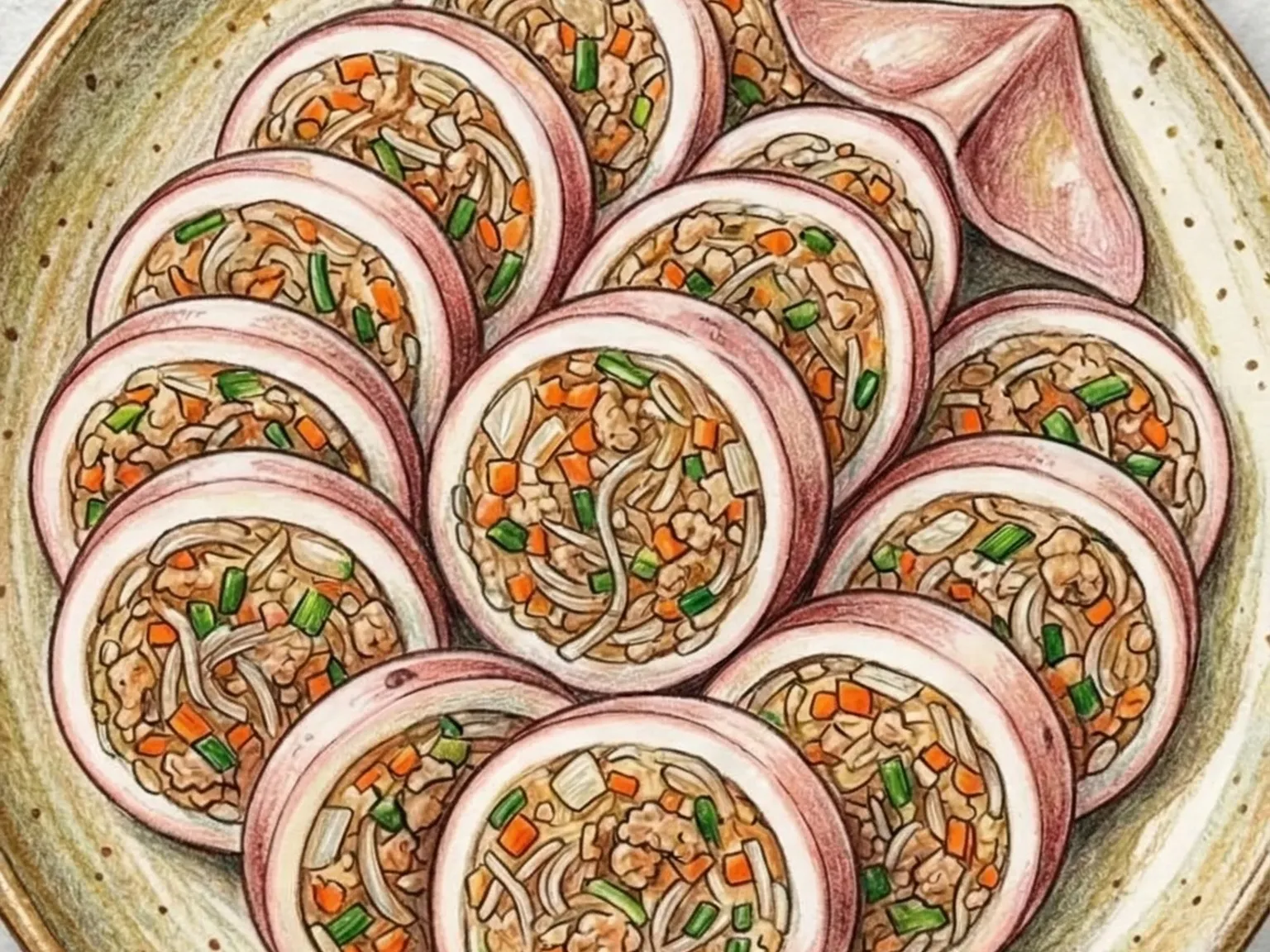
Korean Steamed Stuffed Squid
Ojingeo sundae jjim is a Korean stuffed squid dish from the Gangwon-do region, where whole squid bodies are filled with a mixture of glass noodles, ground pork, onion, carrot, and garlic chives, then steamed. The chewy squid exterior encases a moist, savory stuffing that melds together during cooking. Soy sauce and sesame oil in the filling season it from within, and the squid's own moisture keeps everything from drying out. Slicing the squid after a brief rest reveals clean, attractive cross-sections with the noodles and vegetables visible inside. This dish is a common choice for home gatherings where a visually striking centerpiece is wanted.
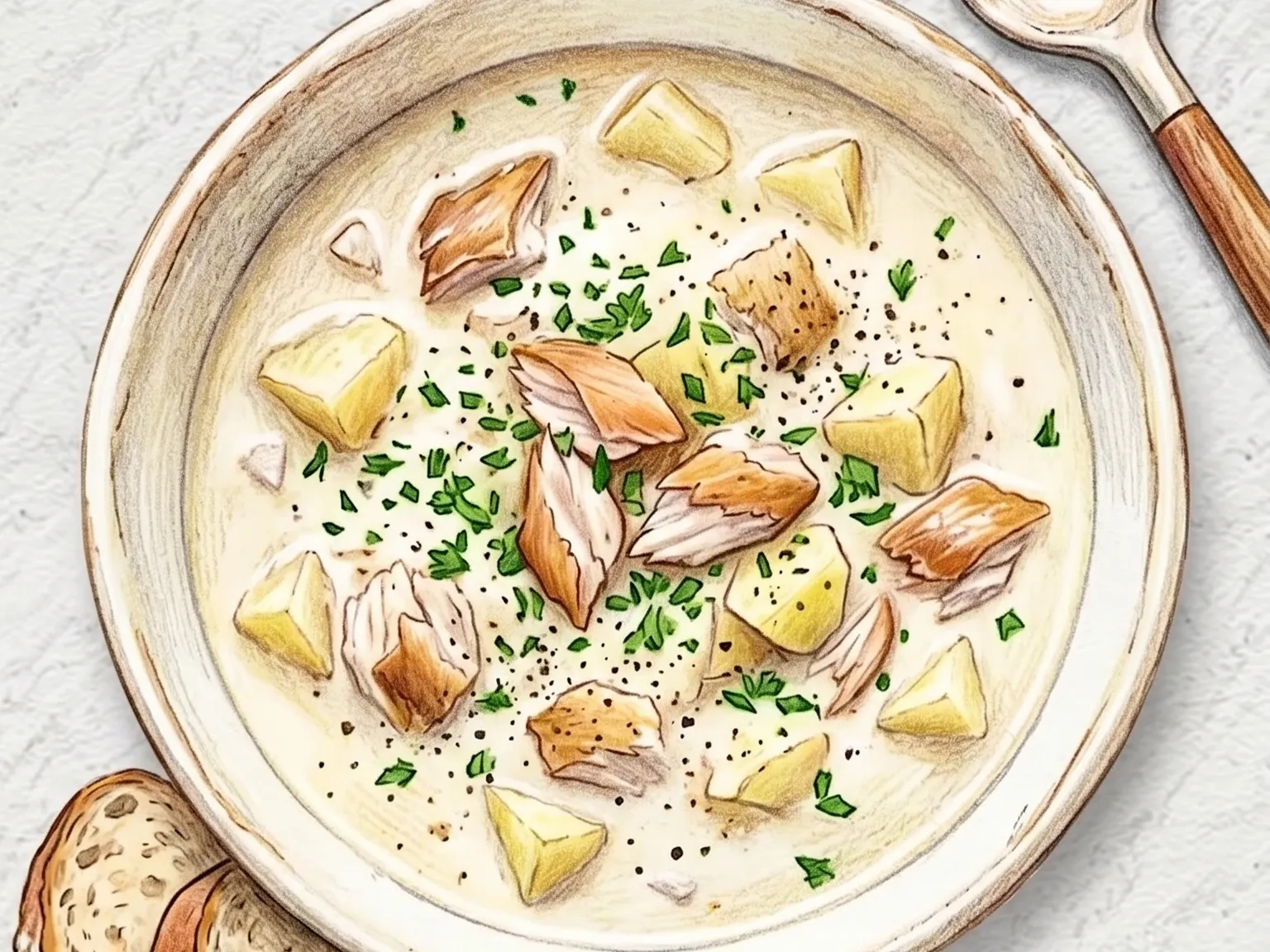
Cullen Skink Recipe (Scottish Smoked Haddock Chowder)
Cullen skink is a creamy smoked fish soup from the northeastern Scottish fishing village of Cullen, traditionally made with smoked haddock, potato, and milk rather than cream or thickening flour. The fish is gently poached in milk with a bay leaf over low heat for eight minutes until the liquid is deeply infused with smoke, then removed and flaked. The starch-laden milk is strained and reserved. Butter-softened onions go into the pot first to draw out their sweetness, followed by diced potato and the infused milk. As the potato cooks through, its natural starch thickens the soup into a silky, spoonable chowder without any added cream. The reserved fish goes back in along with cracked black pepper and chopped parsley for a final three-minute simmer that brings smoke, potato, and herb into one cohesive flavor. Because salt levels in smoked fish vary considerably between producers, seasoning should always be adjusted at the very end after tasting. Served with dark rye bread or soda bread, one bowl makes a satisfying main course on its own.