🎉 Special Occasion Recipes
Impressive dishes for guests and special occasions
929 recipes. Page 3 of 39
When guests are coming, the menu needs a little extra care. This tag features impressive dishes suited for entertaining - galbi-jjim, japchae, and bulgogi for a Korean spread, or pasta and steak for a Western-style course.
The key to stress-free hosting is choosing recipes that allow advance preparation. Do the heavy lifting the day before, then finish plating when guests arrive. That way, you can relax and enjoy the meal together.
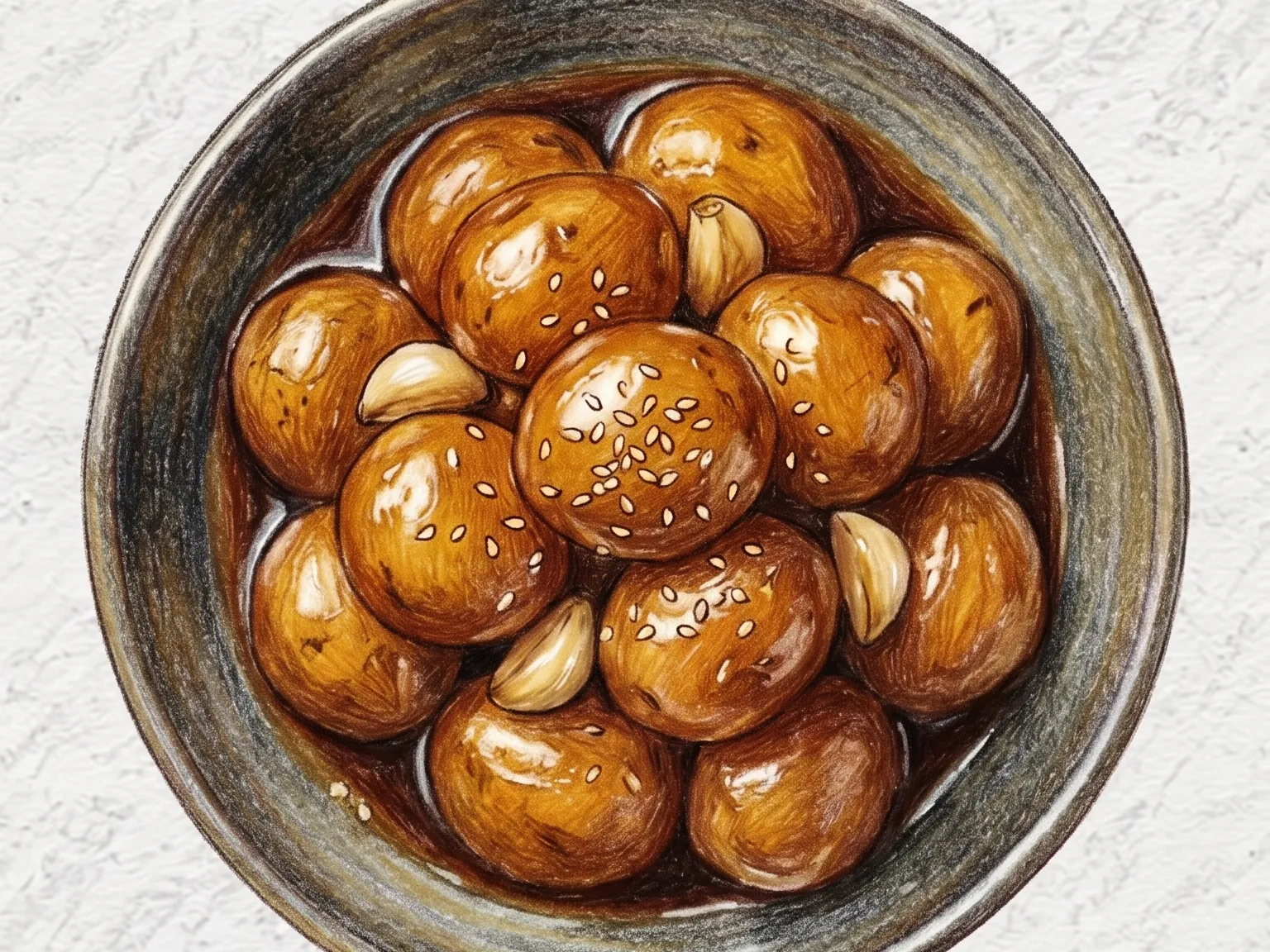
Korean Soy-Braised Baby Potatoes
Algamja ganjang-jorim is a Korean banchan of baby potatoes braised in a soy-sugar glaze, a dish so simple in its ingredients - soy sauce, sugar, corn syrup, garlic, and a handful of small potatoes - that it has persisted in home cooking across generations. The potatoes are parboiled whole first to partially cook the starchy exterior, then transferred into the seasoning liquid and simmered over low heat as the sauce reduces. As the liquid evaporates, a dark amber lacquer forms around each potato while the interior stays dense and floury. Keeping the lid off and gently shaking the pan rather than stirring with a utensil allows the coating to build evenly without breaking the potatoes apart. Sesame oil and sesame seeds go in at the end when the sauce has thickened to a glaze, adding a roasted fragrance to the finish. Refrigerating overnight deepens the penetration of the soy seasoning into the center, and the dish keeps for close to a week - practical enough to make in a single batch for the whole week.
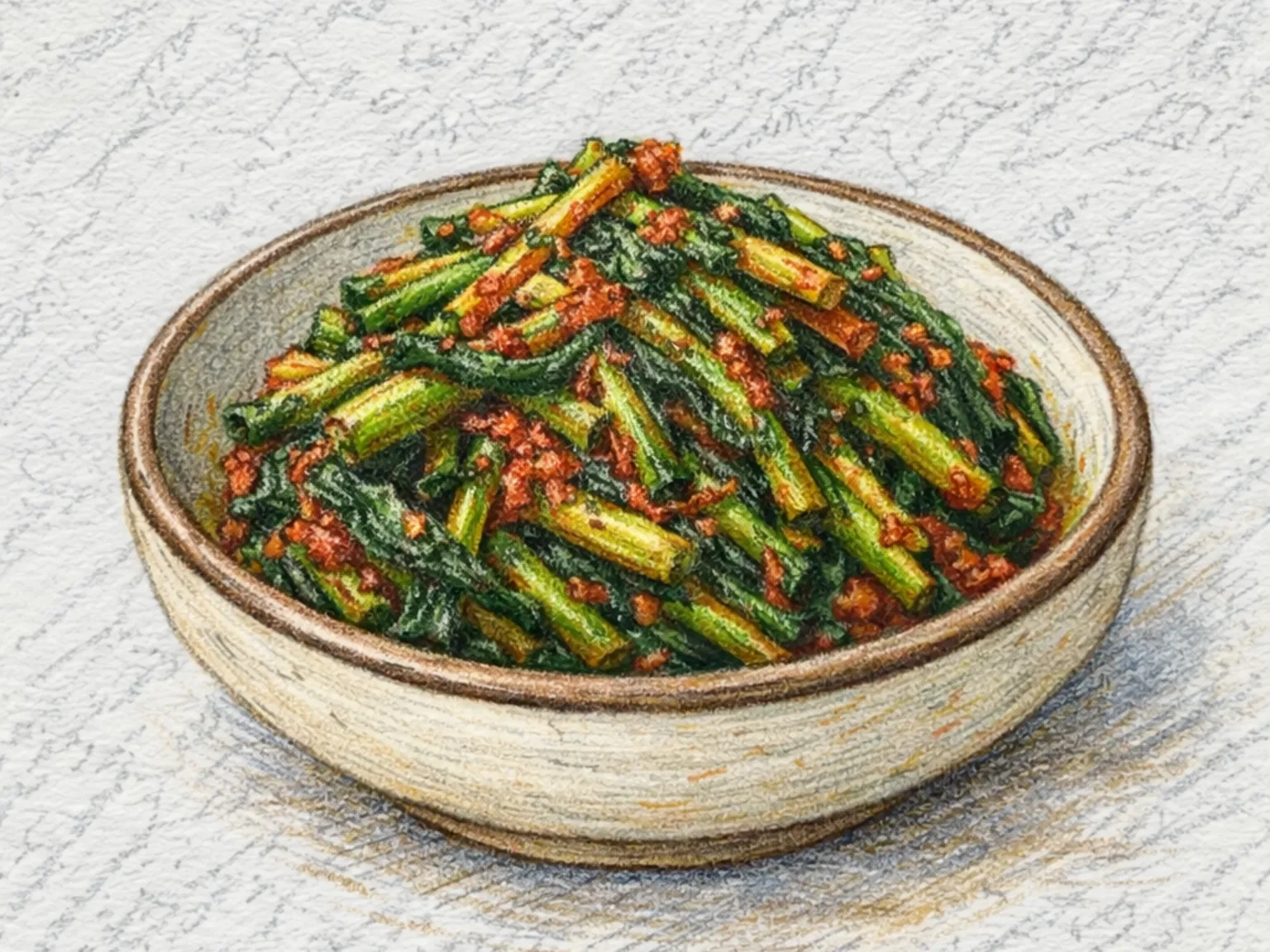
Korean Lettuce Root Kimchi
Godeulppaegi kimchi is a seasonal Korean kimchi made from the bitter wild herb godeulppaegi (Korean lettuce root), which is soaked in salted water for about a week to extract most of its sharp bitterness before being dressed in gochugaru, anchovy fish sauce, and glutinous rice paste for fermentation. The extended soak rounds off the bitter edge so that only a pleasant, lingering bitterness remains after fermentation, creating a complex interplay with the lactic acidity. The roots have a chewy, fibrous bite while the leaves turn soft, giving each stalk a dual texture in a single bite. This is a regional autumn kimchi from the Jeolla and parts of Gyeongsang provinces, traditionally prepared in fall to last through winter. The preparation is labor-intensive, requiring patient soaking and careful seasoning, but the resulting depth of flavor is what has kept this variety treasured across generations of Korean home cooking.
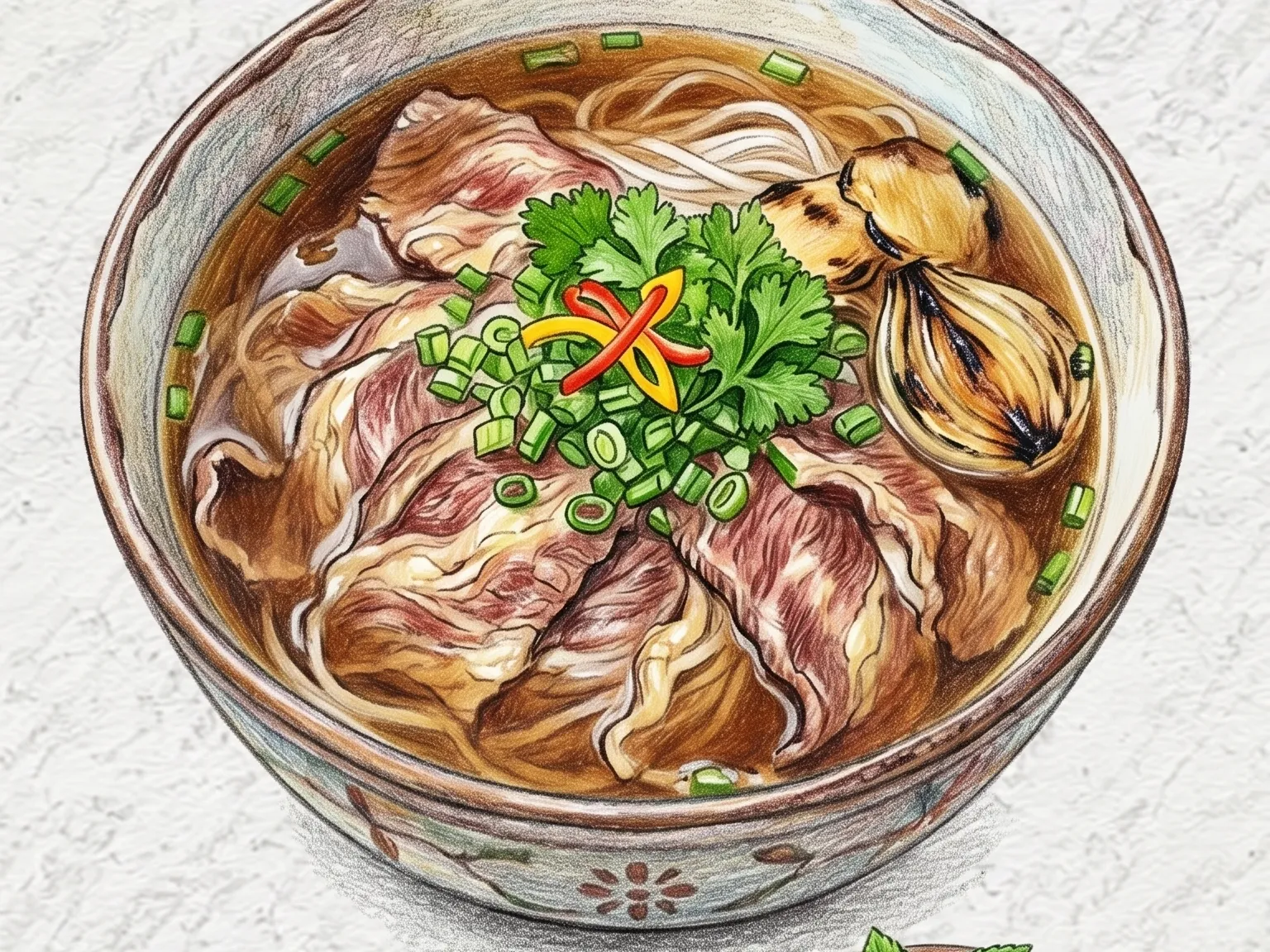
Beef Brisket Pho Guksu (Charred Ginger Beef Rice Noodle Soup)
Beef pho guksu is a Vietnamese-style rice noodle soup that pairs the clean, sweet depth of charred-onion-and-ginger broth with thin slices of Korean chadolbaegi brisket. The broth starts with dry-charring whole onion and ginger directly in a pan until the surfaces blacken. This step burns off the raw pungency and draws out a caramelized sweetness that defines the soup's aroma. Fish sauce and a measured amount of sugar season the strained broth, producing a full-flavored liquid that finishes clean. To cook the brisket, the boiling broth is poured directly over the thinly sliced meat in the bowl, allowing gentle heat to set the beef while leaving it tender and slightly pink. Bean sprouts, cilantro, and lime wedges arrive on the side so each person adjusts freshness and acidity to taste, following Vietnamese table tradition. The marbled fat in Korean brisket adds a richer body to the broth than standard pho, making this a distinct take that sits between Korean gomtang and Vietnamese pho.
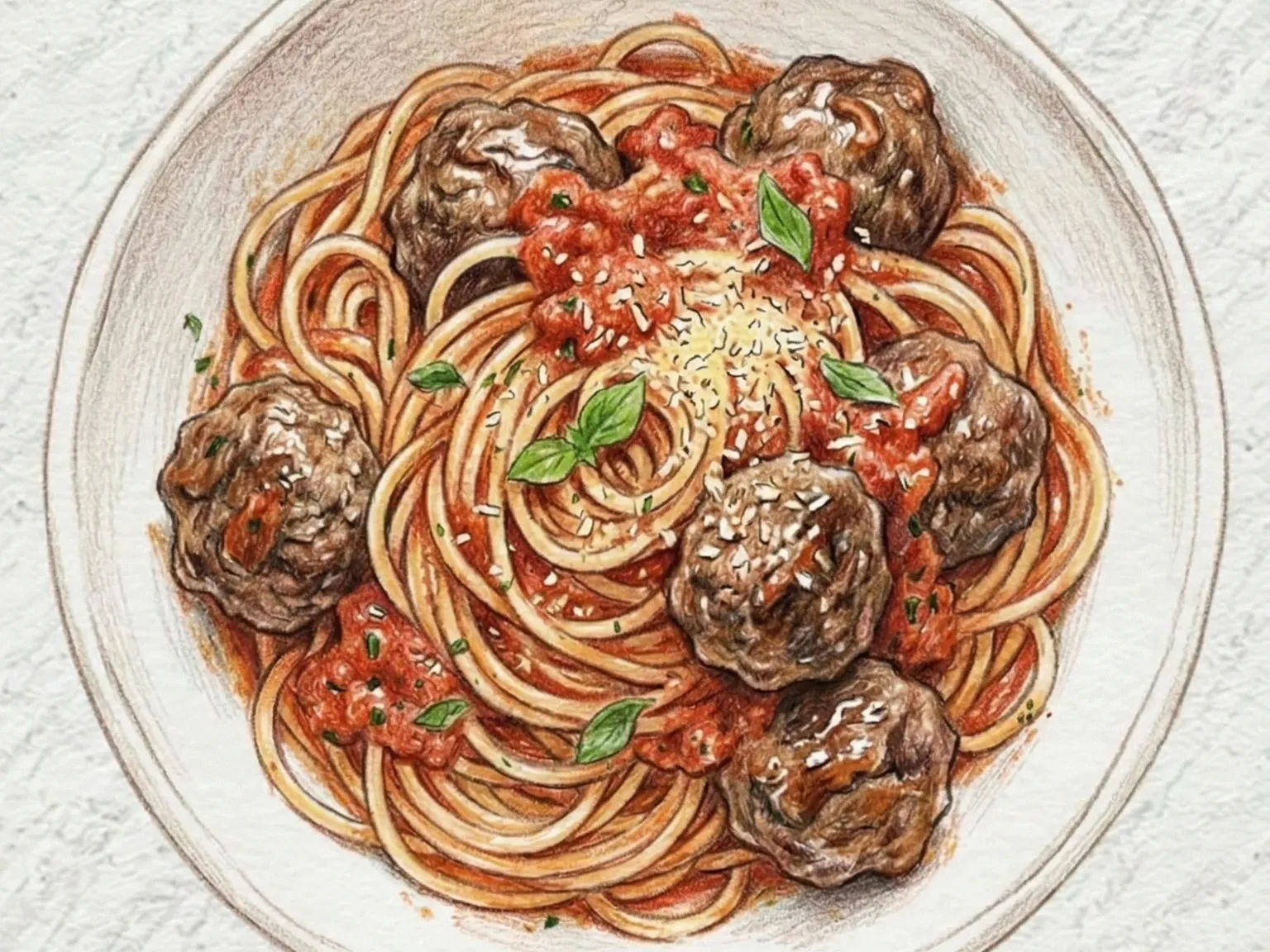
Bulgogi Meatball Tomato Spaghetti
Bulgogi meatball tomato spaghetti grounds the concept of Korean bulgogi - soy sauce, sugar, garlic, sesame - into a meatball format and cooks it inside an Italian tomato sauce. The ground beef is seasoned with the bulgogi mix, then breadcrumbs and egg are added to trap moisture so the meatballs hold together and stay tender through the twenty-minute simmer in passata. Searing the exterior first in a hot pan builds a Maillard crust that dissolves into the sauce as the meatballs cook through, thickening and deepening it in a way that uncooked meatballs dropped straight into the sauce cannot achieve. The soy-sugar seasoning intersects with the tomato's natural acidity to produce a sweet-salty depth that neither Korean nor Italian cooking arrives at independently. As the meatballs finish cooking inside the sauce, the boundary between meat and liquid blurs - each absorbs character from the other. Basil or parsley added at the end provides an herbal brightness that offsets the richness of the meat and tomato.
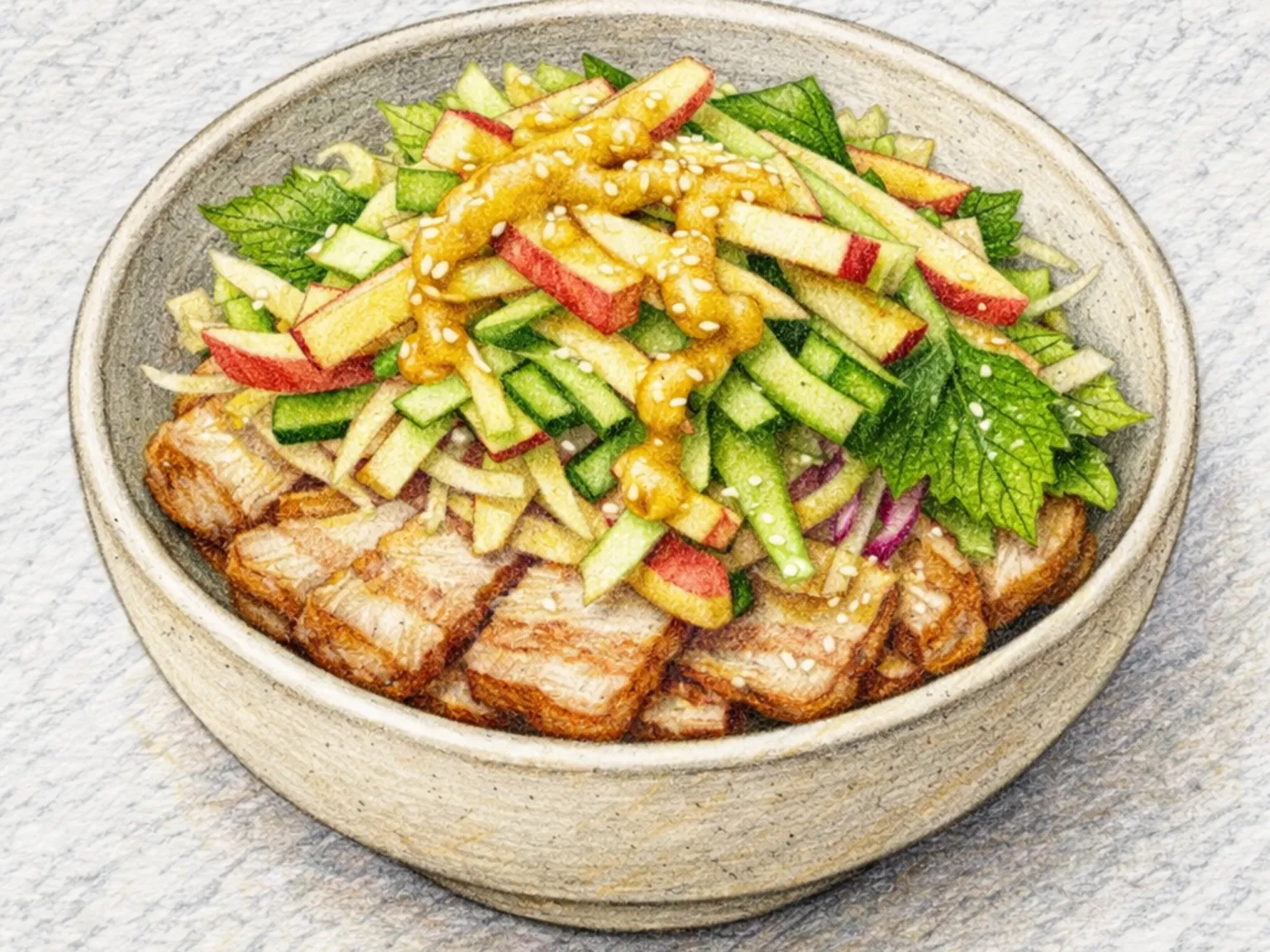
Pork Bossam Apple Mustard Salad
Bossam apple mustard salad uses thinly sliced cold boiled pork belly as its main component, arranged over shredded cabbage, cucumber, and crisp apple slices, then finished with a sharp mustard-soy vinaigrette. Chilling the boiled pork completely before slicing is not optional: warm pork crumbles under the knife, while cold pork yields clean, even cuts that hold their shape on the plate. Cabbage and cucumber provide a firm, crunchy base whose texture directly contrasts with the soft, fatty pork, and the apple slices introduce a cool sweetness along with a welcome burst of moisture. Korean hot mustard, dissolved generously into a soy-vinegar dressing, releases a nasal, sinus-clearing heat with each bite that cuts through the richness of the pork fat without the acidity becoming the dominant note. Perilla leaves placed underneath the pork act as both a flavoring layer and a suppressor of any residual pork odor, their herbal intensity complementing the mustard without competing with it. The salad works equally well as a standalone meal and as a second-day use for leftover bossam from the previous night, which is one reason it appears in Korean home kitchens as often as it does.
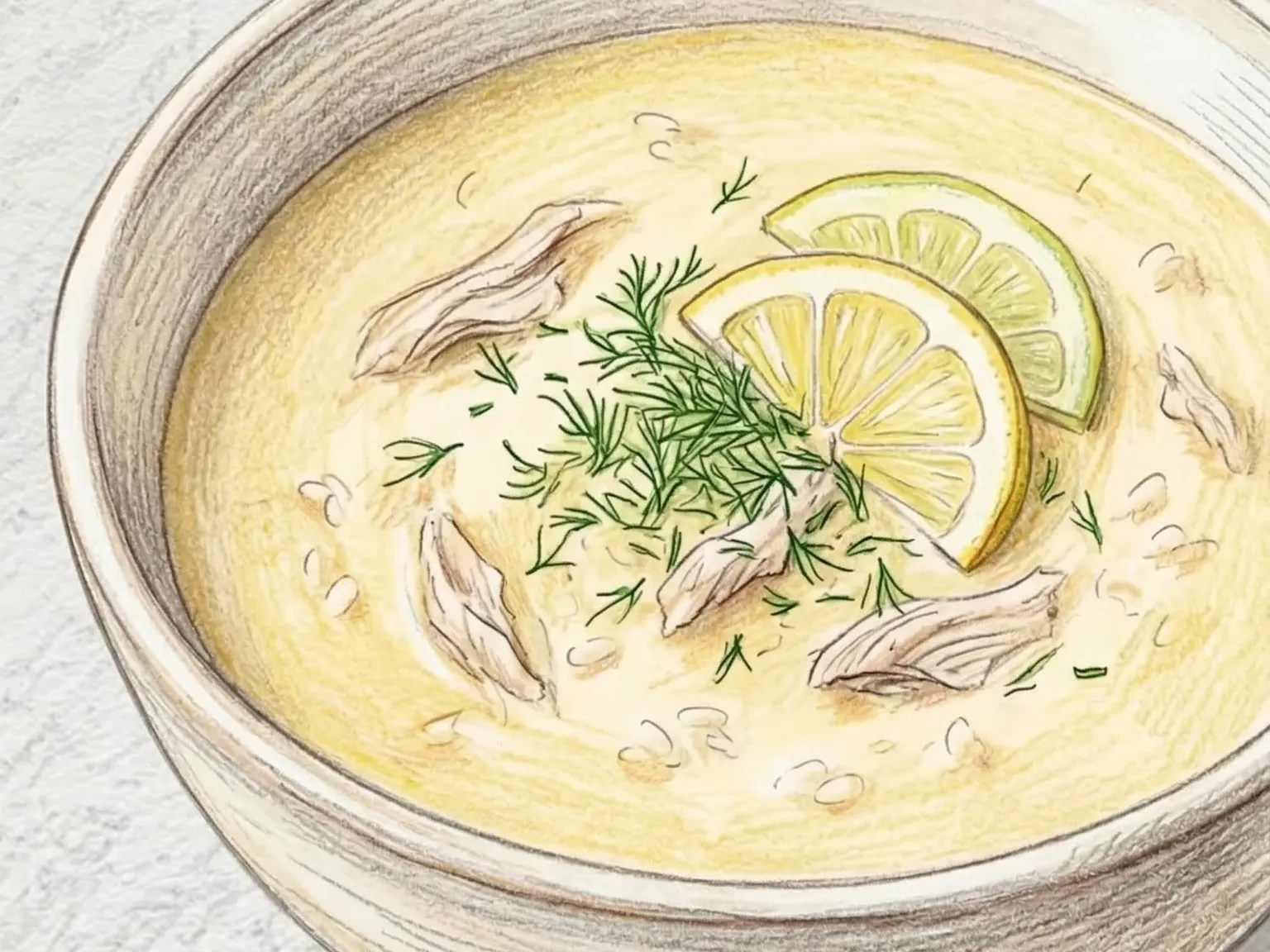
Avgolemono Soup (Greek Egg-Lemon Chicken Rice Soup)
Avgolemono - from the Greek avgo (egg) and lemoni (lemon) - is a soup with roots reaching back to Sephardic Jewish communities of the Byzantine Empire who brought egg-lemon sauces to the eastern Mediterranean, where they were absorbed into Greek cooking and eventually became one of the country's most enduring culinary signatures. Chicken broth is simmered with short-grain rice until the grains swell and release enough starch to give the liquid a faint body before the egg mixture even goes in. The defining technique is tempering: beaten eggs and freshly squeezed lemon juice are whisked together until frothy and unified, then ladles of hot broth are drizzled in one by one while whisking constantly, gradually raising the temperature of the egg mixture without allowing it to set. This tempered liquid is then stirred back into the pot with the heat off, transforming the broth into a pale-yellow, velvet-smooth cream. Lemon acidity registers first on the palate, clean and forward, followed by the warmth and body of the chicken stock settling in behind it. The soup must never return to a boil after the eggs are incorporated - even a brief simmer will cause the proteins to seize and turn the broth grainy and opaque. Shredded poached chicken stirred in at the end makes it a complete, sustaining meal, and a final grating of lemon zest over each bowl sharpens the citrus note for those who want more brightness. In Greece, avgolemono is considered the default remedy for cold days and illness, made more often in home kitchens than ordered in restaurants.
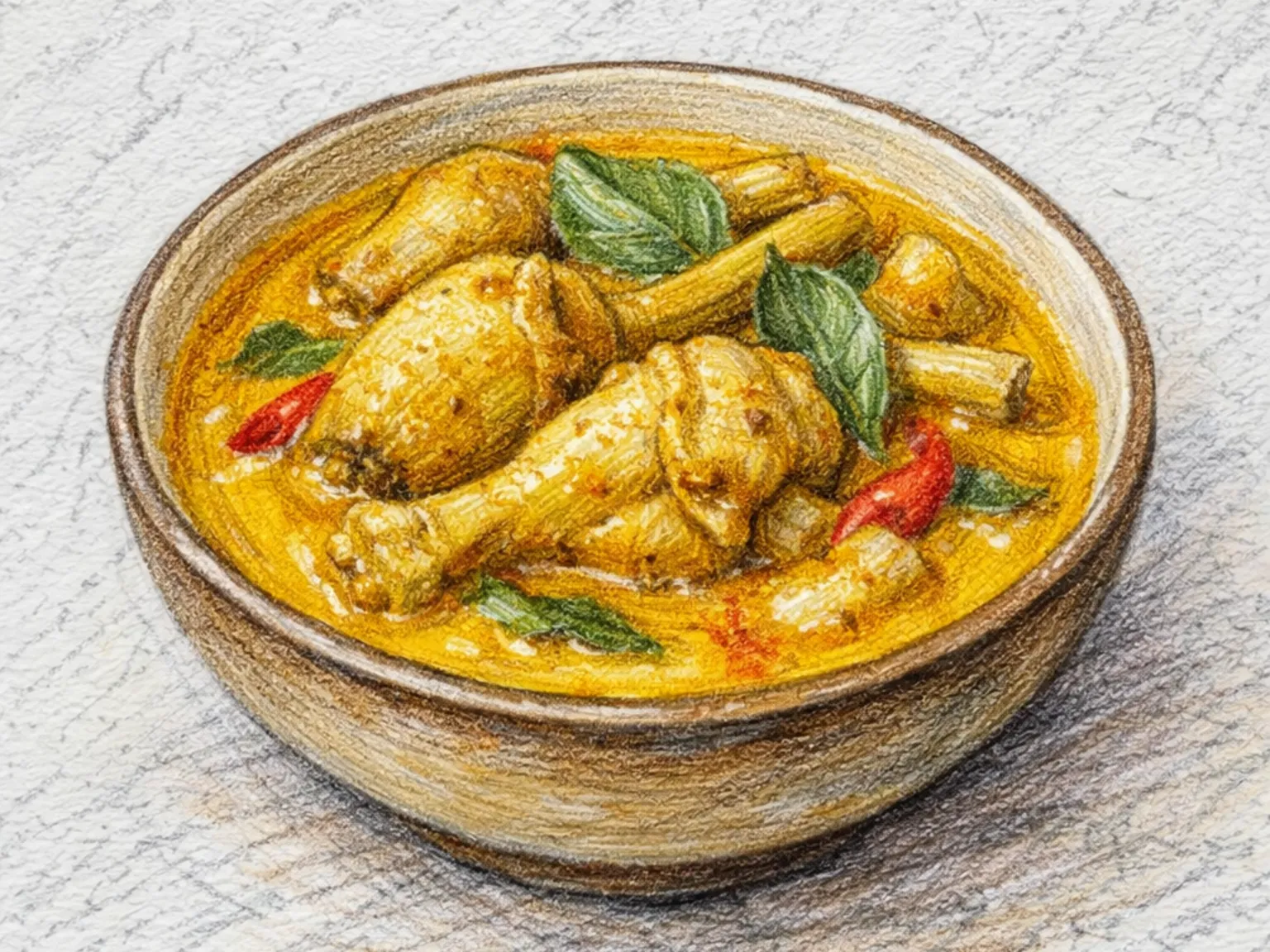
Ayam Gulai (Indonesian Spiced Coconut Chicken Curry)
Traditional Indonesian cuisine from West Sumatra relies heavily on the complex application of spices and coconut milk. Ayam gulai serves as a primary example of this Minangkabau tradition. The process starts by grinding shallots, garlic, ginger, galangal, turmeric, and candlenuts into a wet paste called rempah. This mixture requires continuous stirring over low heat until the oil visibly separates from the solids. This separation indicates that the moisture has completely evaporated, allowing the aromatic compounds to develop fully. Skipping this step results in a sauce with an unpleasant raw texture. Once the base is ready, chicken pieces are braised in the spiced coconut liquid for at least thirty minutes. This duration ensures the meat becomes tender enough to fall off the bone while the sauce reduces to a bright yellow consistency that clings to the poultry. Turmeric and galangal establish an earthy base, while kaffir lime leaves contribute a sharp citrus scent to offset the heavy coconut milk. The natural fats in the coconut serve to carry these different aromatics across the palate, creating a long-lasting aftertaste. In a traditional Padang establishment, servers place numerous small plates on the table before any specific order is made. This service style reflects the local hospitality of the region. Diners are charged only for the dishes they touch, a practice that remains a defining element of the dining experience alongside the technical preparation of the curry itself.
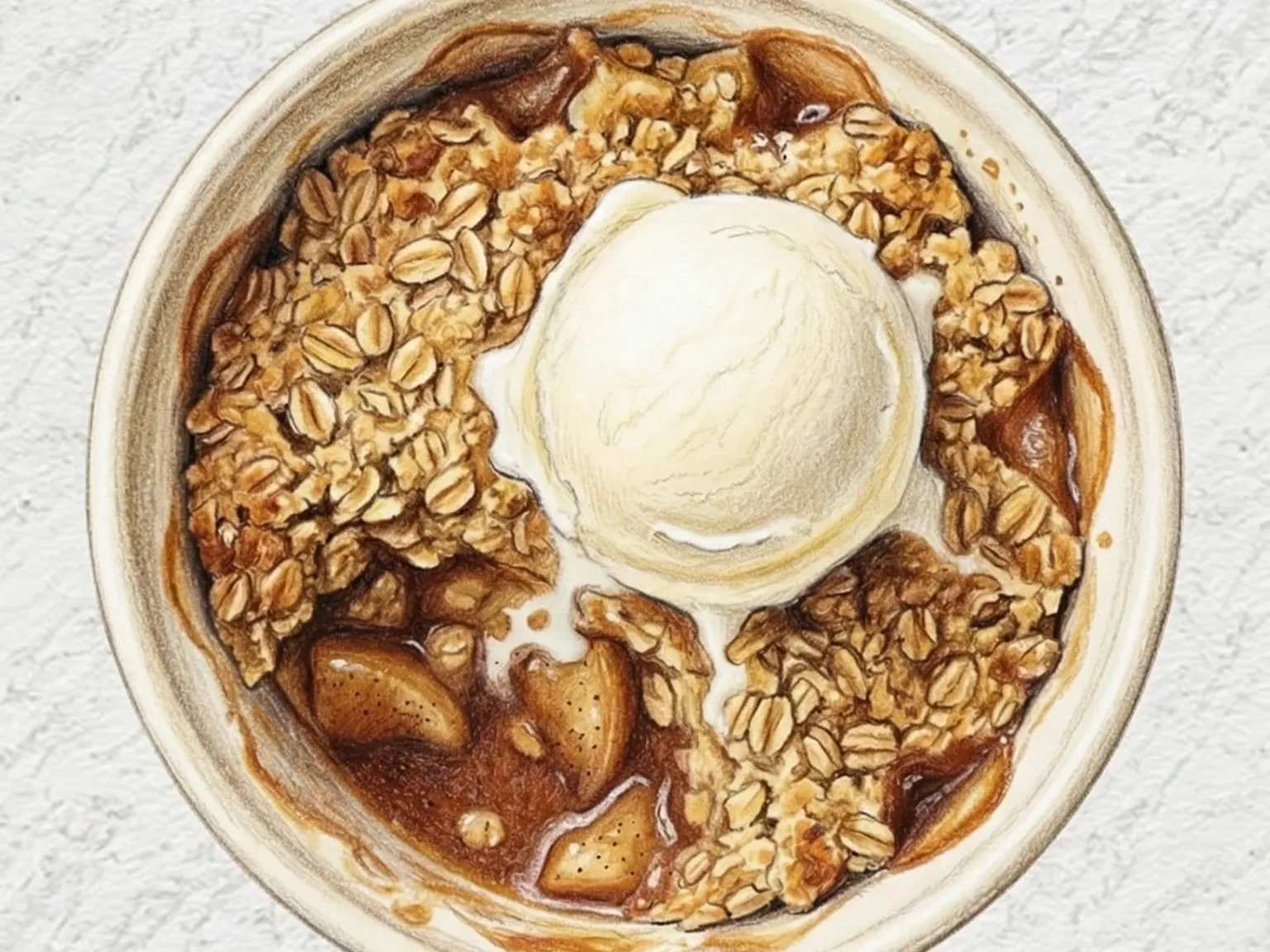
Apple Crumble
Apple crumble was born from wartime constraint: during World War II, butter and sugar rationing in Britain made traditional double-crust pastry impractical, and bakers found that rubbing a far smaller amount of fat into flour and oats produced a topping that required none of the skill or rolling that pastry demanded. Sliced apples are tossed with sugar, lemon juice, and cinnamon, then spread into a baking dish and covered with the rough, breadcrumb-like mixture. In the oven, the fruit collapses into a thick, bubbling sauce while the topping bakes unevenly: the peaks turn deeply crisp and golden, while the underside where the topping meets the fruit juices becomes slightly sticky and chewy. Tart apple varieties such as Granny Smith hold up better under oven heat than sweet ones, turning into a fragrant sauce that contrasts with the sandy crumble overhead. The tension between the hot, yielding apple beneath and the crunchy, butter-scented rubble on top is the structural logic of the dish. Served with cold vanilla ice cream or warm pouring custard, the contrast multiplies further as cold cream melts into the steaming fruit. It remains the default British home dessert precisely because it needs nothing beyond what a reasonably stocked cupboard can supply and comes together in under an hour.
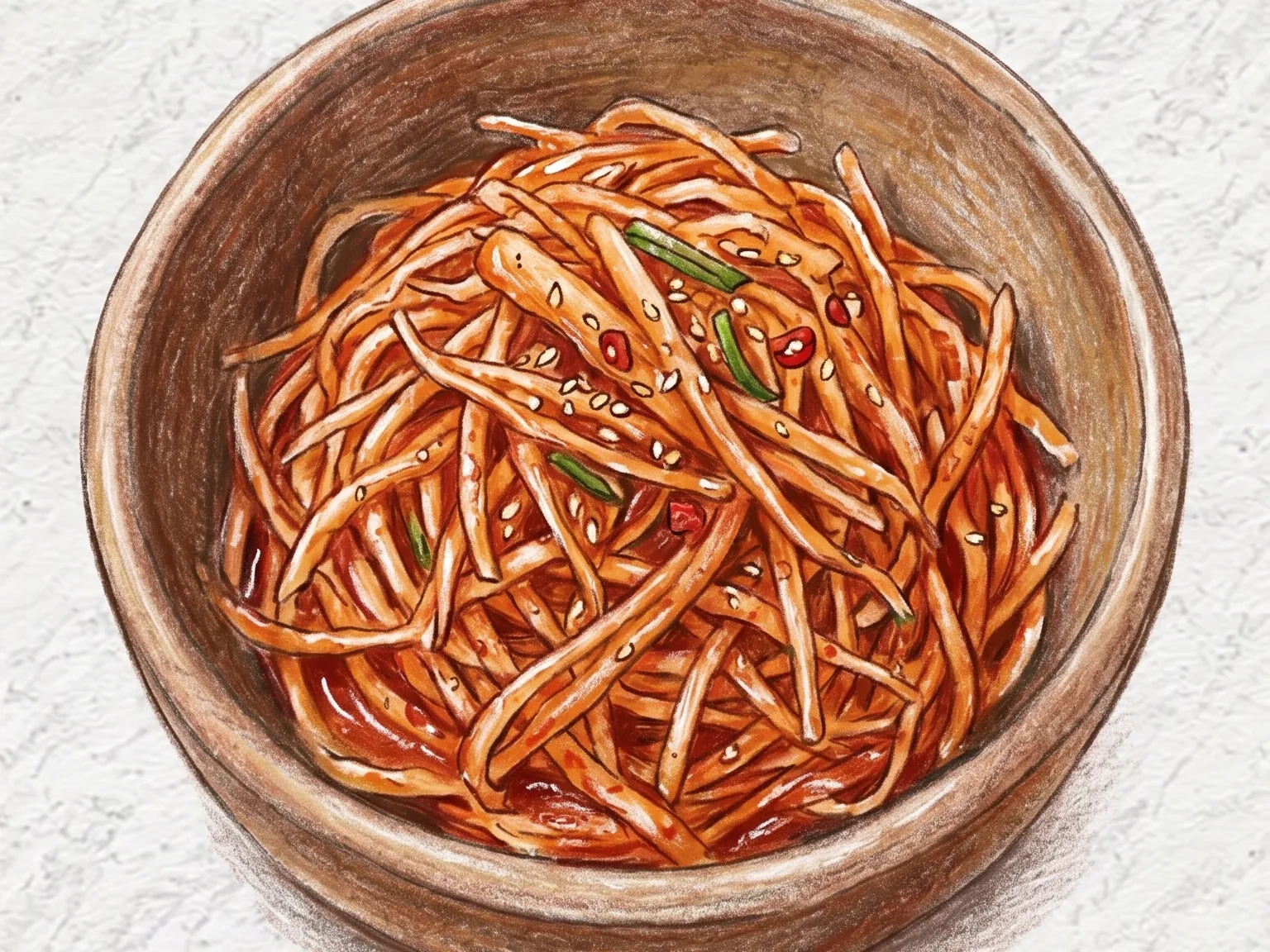
Korean Seasoned Bellflower Root
Doraji -- balloon flower root -- has been used in Korean cooking since the Goryeo dynasty, valued as both a medicinal herb and a staple namul ingredient. Unlike doraji-bokkeum, which stir-fries the root with gochujang and heat, this cold muchim preserves the characteristic firm, snappy crunch that makes doraji distinctive. The roots are shredded along the grain into thin strips, then vigorously rubbed with salt to draw out the saponins responsible for their sharp bitterness, and rinsed multiple times until the water runs clear. A seasoning of gochujang, vinegar, sugar, and sesame oil works into each fibrous strand, layering sweet, sour, and spicy notes over the residual earthiness of the root. This banchan appears on both Chuseok and Seollal holiday tables as one of the five-color namul, where the white of the doraji root represents the metal element in the five-phase system. Because the root holds its crunch well, this dish can be prepared ahead of time without losing texture, making it a practical choice for large gatherings.
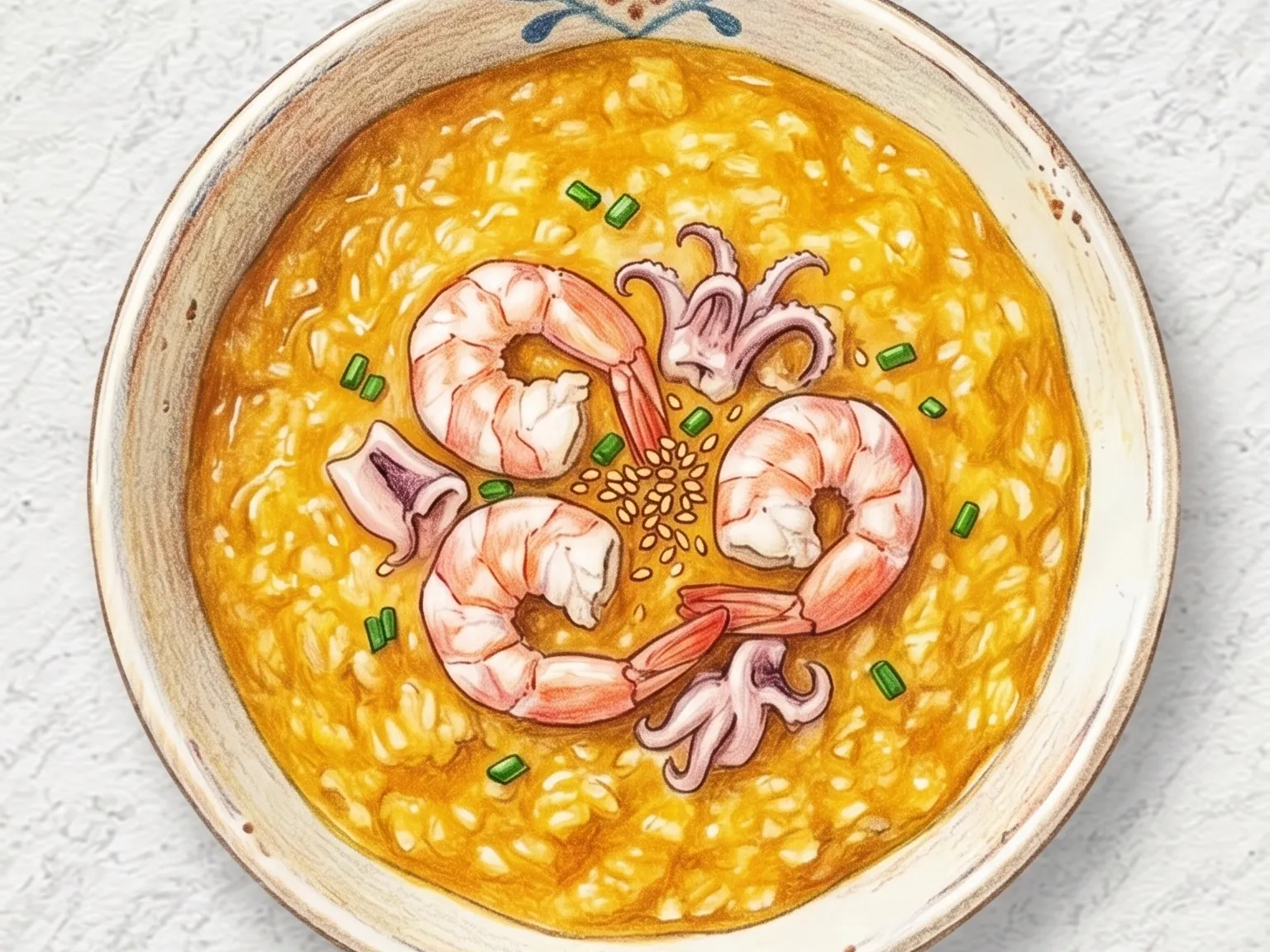
Korean Danhobak Haemul Juk (Kabocha Seafood Porridge)
Danhobak haemul juk is a traditional Korean rice porridge that uses kabocha squash, shrimp, and squid as its primary ingredients. The foundation of the dish begins with short grain rice that has been soaked in water until it becomes opaque. This rice is then lightly toasted in a pot with a small amount of toasted sesame oil. This initial sauteing process is functional, as the oil forms a thin layer around each grain. This fat coating prevents the rice from disintegrating too quickly during the boiling process and provides a subtle, toasted depth of flavor to the entire dish. Once the rice is prepared, it is simmered in a stock made from either dried anchovies or dried kelp. Diced pieces of kabocha squash are added to the liquid early in the cooking process. As the rice and squash cook together, the squash eventually becomes tender enough to yield under light pressure. At this point, a spoon is used to press several pieces of the squash against the interior wall of the cooking pot, mashing them into a fine pulp. This pulp dissolves into the liquid, providing a natural thickening agent for the porridge and introducing a mild sweetness that intensifies during the simmering period. The seafood components, consisting of cleaned shrimp and sliced squid, are introduced to the pot only during the final minutes of cooking. They are heated just until their proteins set and their flesh becomes firm. This specific timing is necessary to ensure the seafood retains a snappy and tender texture, avoiding the rubbery consistency that results from excessive heat exposure. The inherent salinity of the shrimp and squid provides a direct contrast to the sweetness of the kabocha squash, creating a complex flavor profile. The only seasoning used for this porridge is salt, which is added to taste. This minimalist approach allows the natural flavors of the squash and seafood to remain prominent. From a nutritional perspective, the dish is balanced through the combination of protein from the aquatic ingredients and the high beta-carotene content found in the squash.
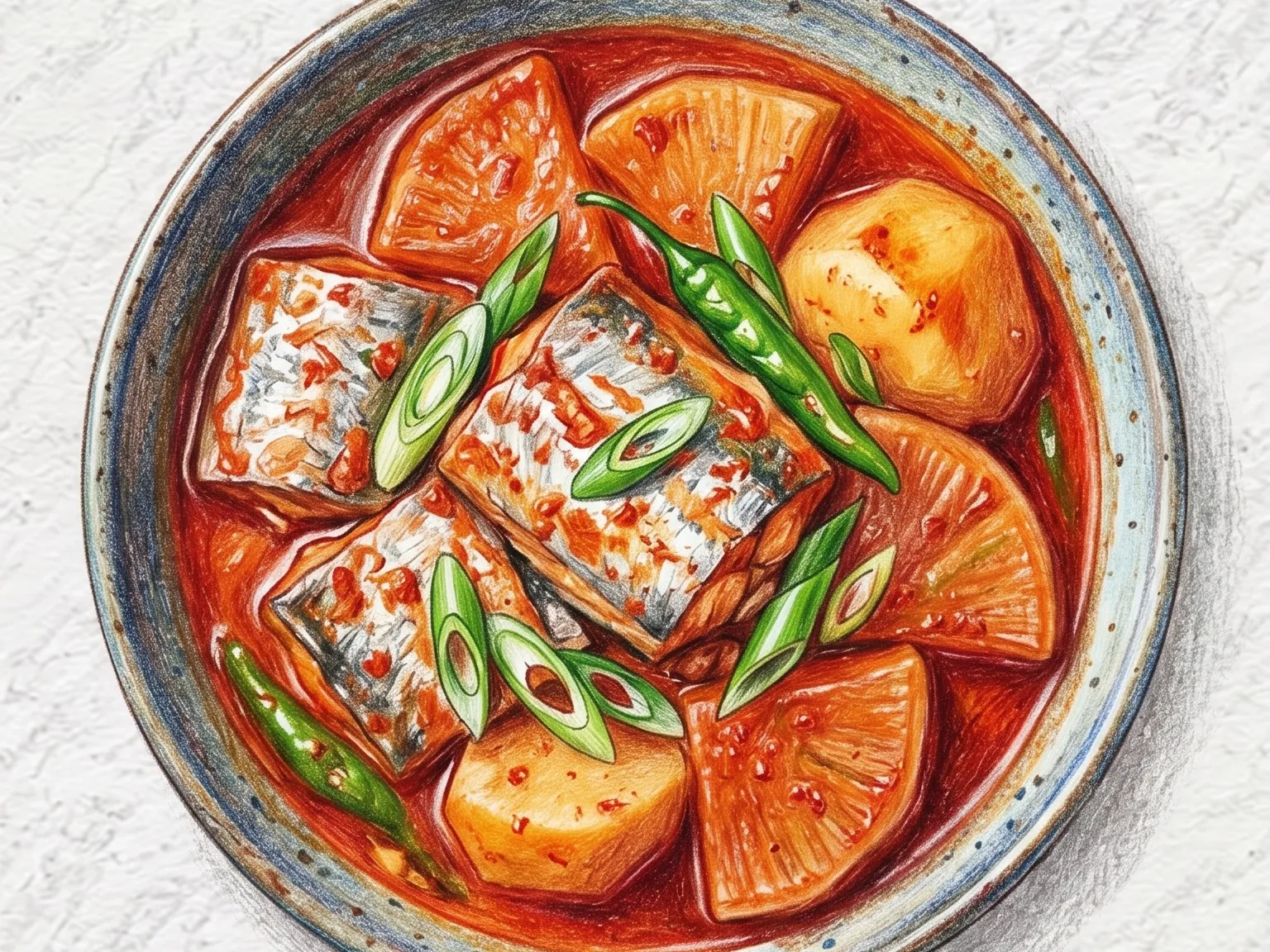
Korean Jeju-style Braised Hairtail
Galchi-jorim-jeju is a regional specialty of Jeju Island in which thick-cut hairtail is braised with radish and potato in a bold, deeply seasoned chili sauce. Unlike mainland versions, the Jeju style uses considerably more sauce and cooking liquid, producing a result that sits closer to a jjigae than to a dry braise, and it is common to eat the leftover sauce mixed into plain rice. Radish provides a cooling, clean sweetness that tempers the intensity of the chili and brings balance to the overall flavor, while potato absorbs the sauce and thickens the liquid naturally as it cooks. Jeju silver hairtail is prized for its thick, fatty flesh, which holds together without falling apart during the long braise and absorbs the pungent, layered sauce deeply into each piece. The result is a dish that is simultaneously fiery, savory, and faintly sweet.
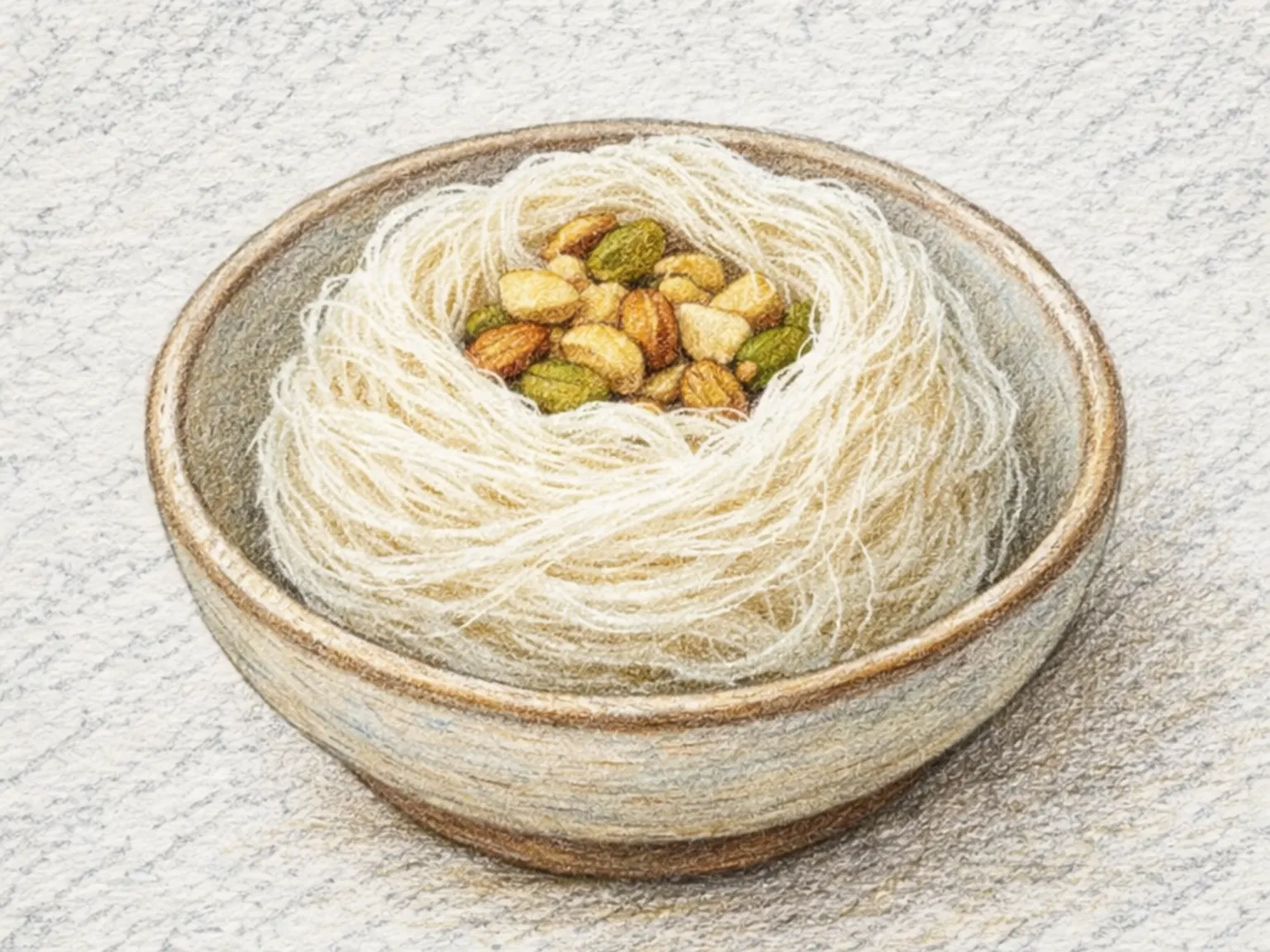
Korean Kkul Tarae Honey Threads
Kkul tarae is a traditional Korean confection made by boiling rice syrup, corn syrup, and sugar to between 115 and 125 degrees Celsius, cooling the candy ring, then repeatedly stretching and folding it with dustings of glutinous rice flour until thousands of hair-thin strands form. The finished thread bundle is filled with roasted peanut, almond, and black sesame powders mixed together, rolled up, and cut into bite-sized pieces. Temperature control during candy cooking is critical: below 115 degrees the syrup stays too pliable to hold shape, above 125 it hardens before you can work it. Each stretch-and-fold cycle doubles the strand count and makes the bundle progressively lighter and more cloud-like, so the final texture in the mouth is a slow, silky dissolve rather than a chew. High humidity causes the delicate strands to stick to one another, making rapid work in a dry environment essential. Near Gyeongbokgung Palace and other tourist areas in Seoul, vendors often demonstrate the stretching process live as part of the sale.
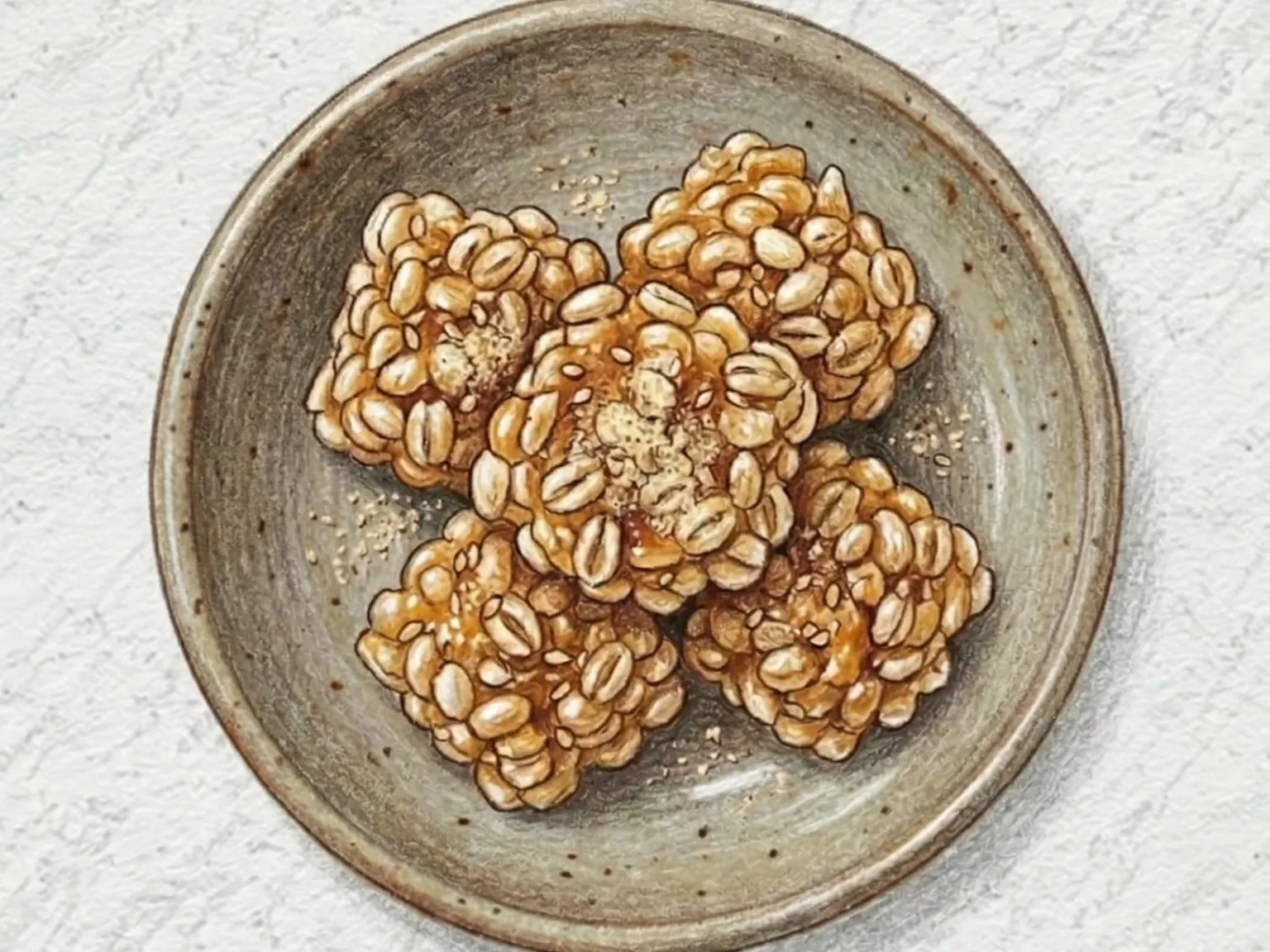
Barley Puff Brittle (Korean Puffed Barley Walnut Sesame Candy)
Bori-gangjeong is a Korean barley puff brittle made by tossing puffed barley and roughly chopped walnuts with toasted sesame seeds in a syrup of rice malt, sugar, and honey cooked precisely to 118 degrees Celsius. Temperature is the deciding variable: below that threshold the brittle never fully sets and stays soft and sticky even when cool, while above it the result hardens into something that resists the teeth uncomfortably. Once the correct temperature is reached, the mixture must be worked quickly - the syrup sets fast. Sesame oil stirred in at the very end coats the barley in a layer of nutty fragrance that ties the toasty grain, the honey sweetness, and the dense crunch of walnut together. Scoring the slab while it is still pliable is essential: cuts made after the brittle fully sets tend to crack rather than slice cleanly, and the pieces lose their uniform shape. The deep sweetness of the rice malt syrup and the nuttiness of the barley combine into a straightforward but lingering flavor that keeps the hand returning to the plate.
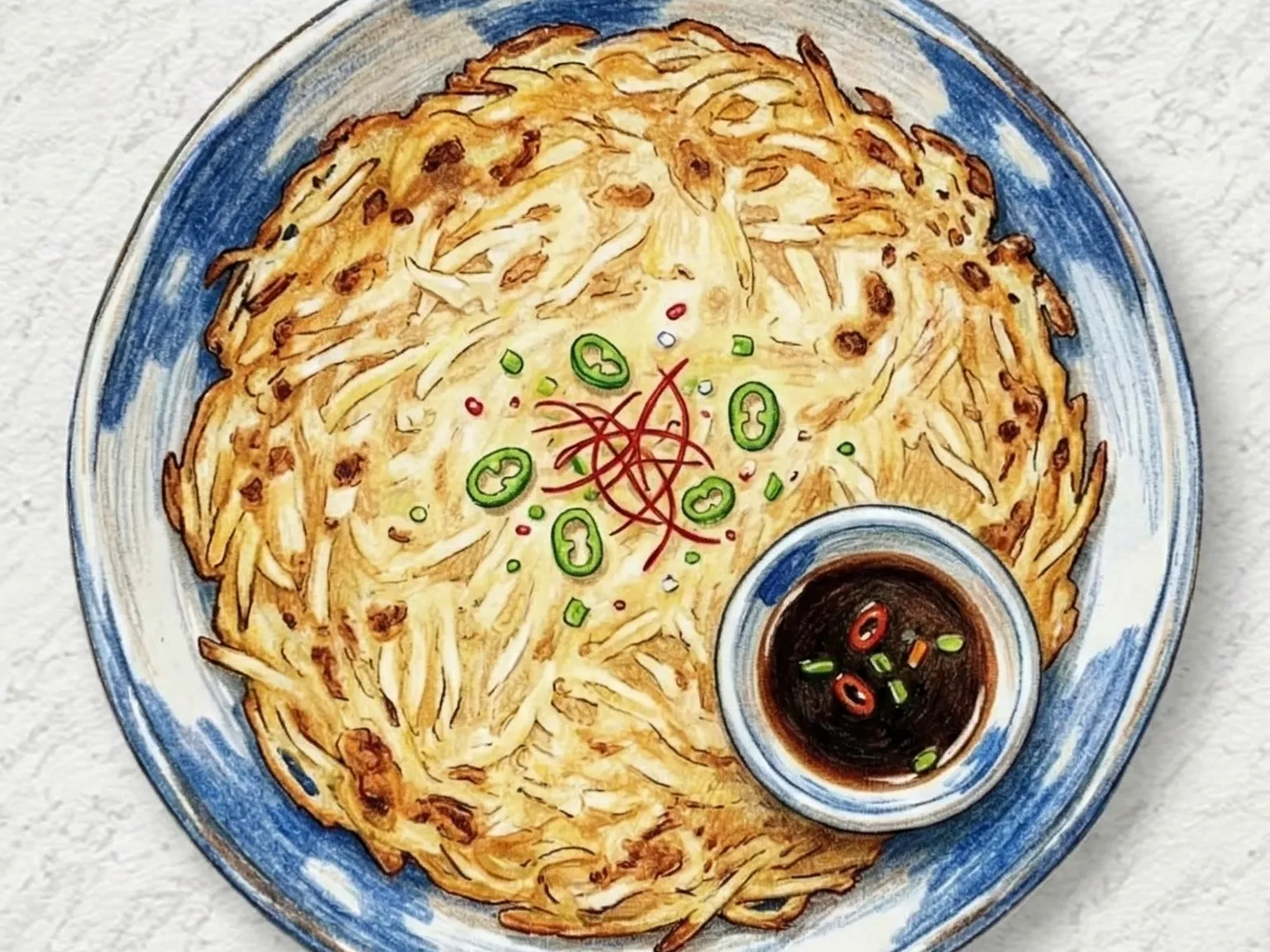
Korean Crispy Potato Pancake
Gamja-jeon is a Korean potato pancake made by finely grating raw potatoes, letting the starch settle out of the liquid for at least ten minutes, discarding the water, and folding the settled starch back into the pulp to improve binding. Waiting long enough for full starch separation is what gives the batter enough cohesion to hold together when the pancake hits the hot pan. Spreading the batter as thinly as possible produces glass-crisp edges while the center retains a chewy, starchy bite characteristic of potato starch. The first side must cook all the way through and the underside must firm up completely before any attempt to flip, and using two spatulas simultaneously makes the turn fast enough to keep the pancake intact. Frying both sides over medium heat until evenly golden delivers a crust that is crisp on the outside while the center stays moist. A dipping sauce of soy sauce, vinegar, and minced cheongyang green chili cuts through the oily richness with sharpness and heat.
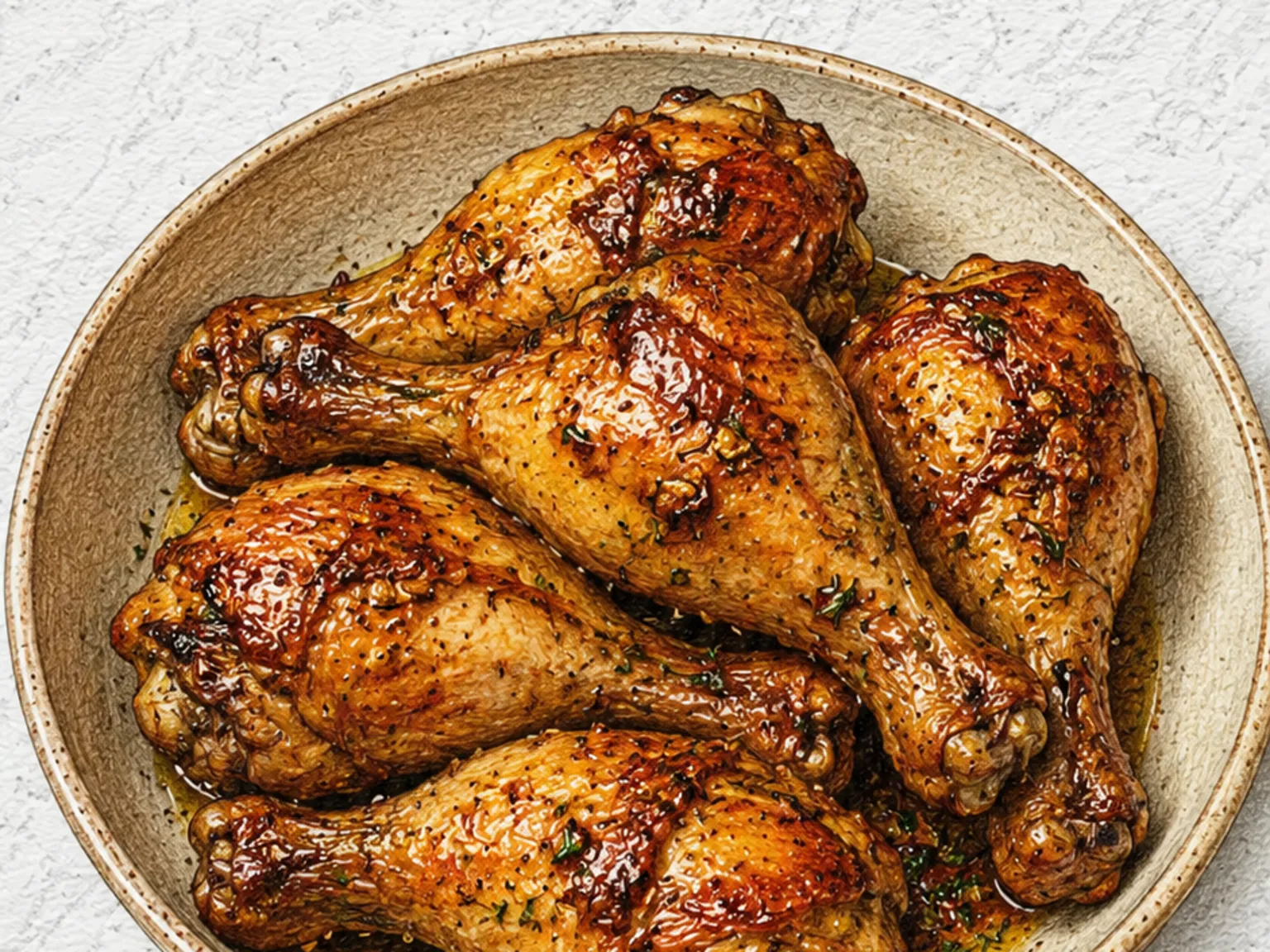
Oven-Roasted Chicken Drumsticks
Dak-dari oven-gui is a Korean oven-roasted chicken drumstick dish where the legs marinate for at least thirty minutes in a mixture of soy sauce, minced garlic, olive oil, and a dried herb blend before going into a 200-degree-Celsius oven. Bringing the drumsticks to room temperature before roasting closes the temperature gap between the surface and the bone, ensuring the meat cooks through evenly rather than having a cooked exterior with an underdone center. Flipping the pieces once at the halfway point promotes uniform browning on both sides and prevents the exposed skin from drying out. Raising the oven temperature to 220 degrees for the final ten minutes drives caramelization in the sugar-containing soy marinade, which produces a thin, lacquered crust on the skin. The salty depth of soy sauce, the mild fat of olive oil, and the fragrance of the herb blend combine with the rendered chicken fat to form a coating that is both deeply savory and aromatic. Marinating overnight in the refrigerator allows the soy and garlic to penetrate further into the meat, resulting in more pronounced flavor all the way to the bone.
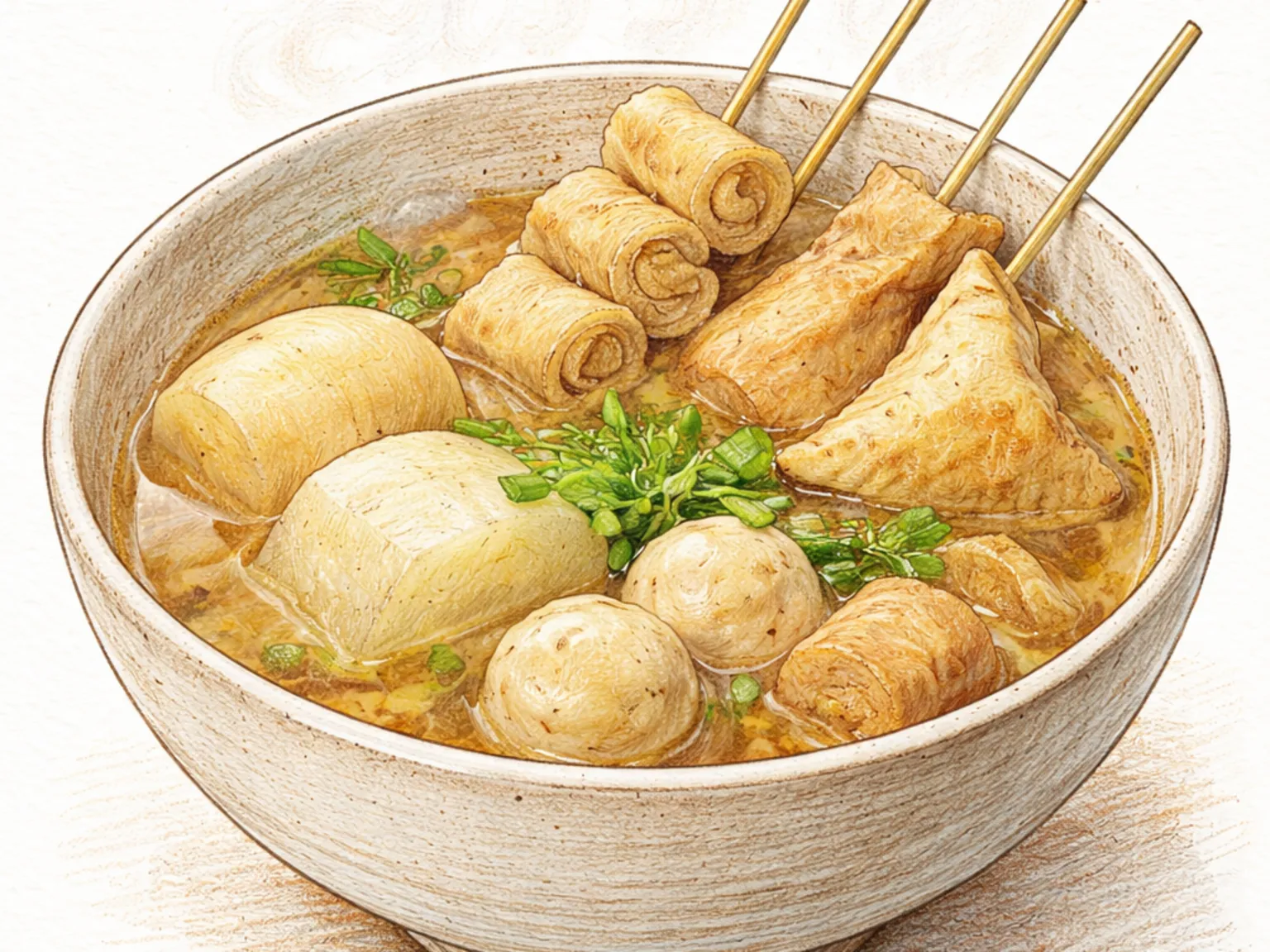
Eomuk-guk (Fish Cake Radish Clear Soup)
Eomuk-guk is a straightforward Korean soup centered around fish cakes and a base liquid prepared by simmering sliced radish. The initial step involves boiling the radish in water for a sufficient duration so that it releases a mild, natural sweetness into the broth while the liquid itself takes on a slightly translucent appearance. Depending on individual preference, the radish can be taken out of the pot or left in as part of the final dish. Once the base is ready, pieces of fish cake are added to the boiling liquid along with soup soy sauce and minced garlic. The mixture then simmers for approximately six minutes, a period during which the fish cakes soften and absorb the saltiness of the soy sauce while simultaneously contributing their own flavor back into the soup base. To finish the preparation, thinly sliced green onions and a sprinkle of black pepper are stirred in. These final additions provide a sharp fragrance and a gentle heat that helps recreate the specific taste found at traditional Korean snack bars and street food carts. The entire cooking procedure is completed in about twenty minutes. Because the required ingredients are minimal and often staples, this recipe serves as a practical option for times when there are few groceries available in the kitchen. This makes the dish accessible even when the refrigerator is nearly empty and only basic pantry items remain.
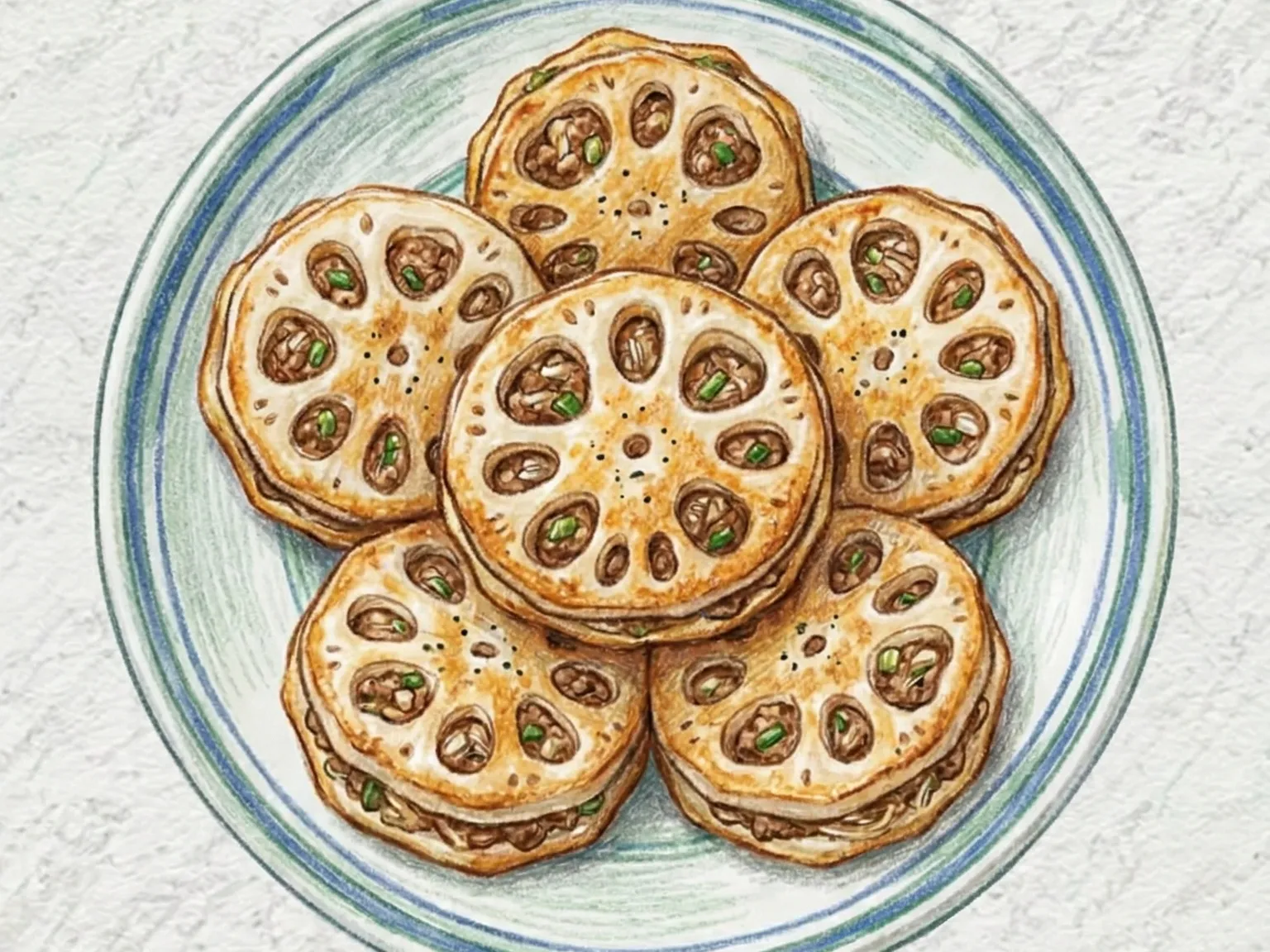
Korean Lotus Root Beef Pancake
Sliced lotus root is sandwiched with seasoned ground beef, coated in pancake batter and egg, then pan-fried until golden. The lotus root keeps its crunch even after cooking, so the texture contrast with the soft beef filling is distinct in every bite. Soy sauce and minced garlic season the filling so the jeon is fully flavored on its own without a dipping sauce. Chopped green onion is worked into the beef for a fresh aromatic note. The lotus root hole pattern fills with meat during assembly, making each cross-section visually clean and precise. The egg coating browns smoothly around the outside, giving a tender rather than crisp exterior.
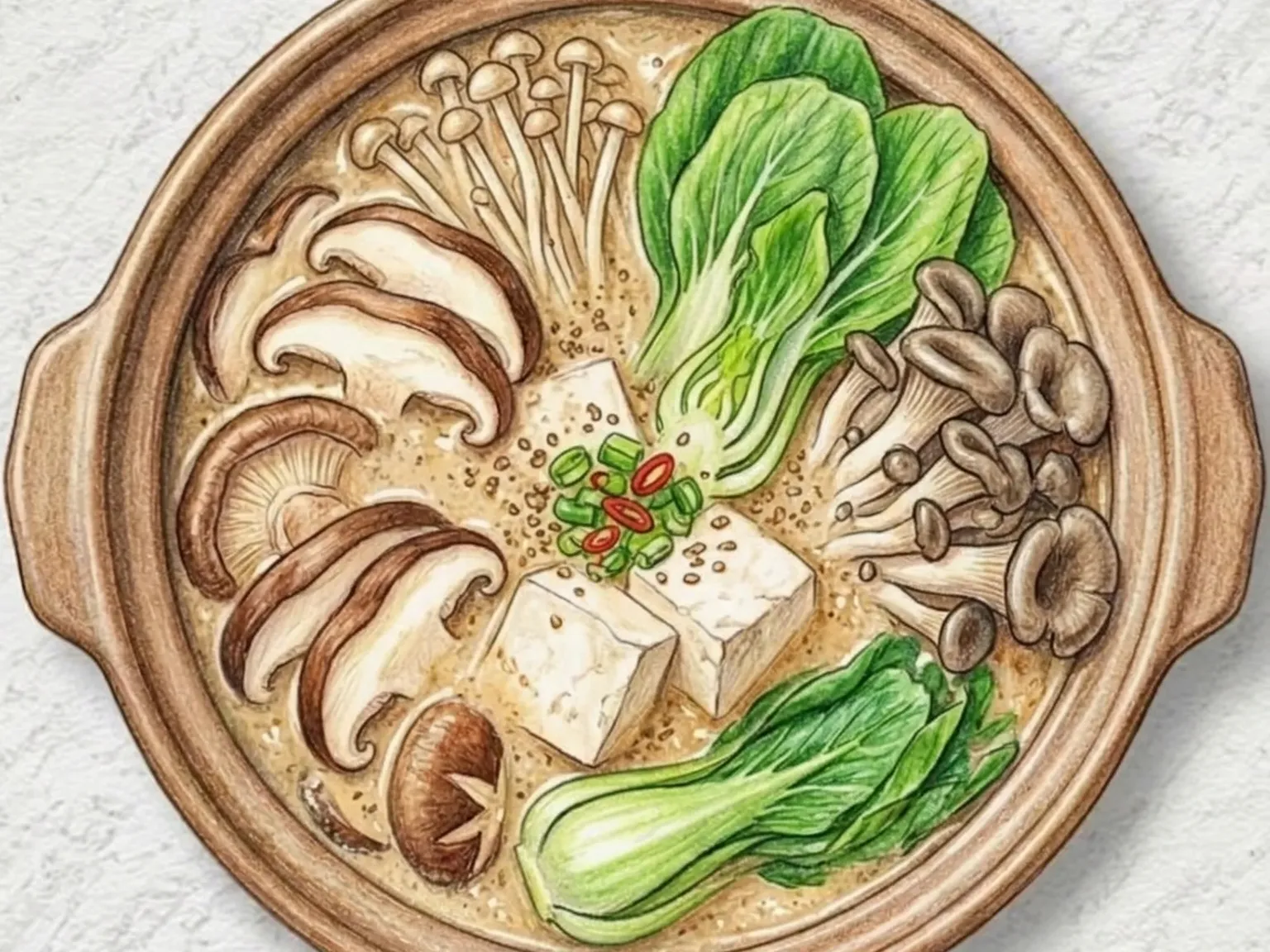
Korean Perilla Mushroom Hot Pot
Korean perilla mushroom hot pot is a hearty vegetarian dish made with shiitake, oyster, and enoki mushrooms, tofu, and bok choy simmered in a light vegetable stock. The cooking process starts by boiling the vegetable stock seasoned with soup soy sauce and minced garlic. Shiitake and oyster mushrooms are added first to build a deep umami base. Tofu, enoki mushrooms, and bok choy are then arranged on top and simmered until the vegetables are tender. To finish, ground perilla seed powder is gently stirred into the broth at the very end, which prevents the soup from becoming gritty while releasing a rich, nutty aroma and creating a naturally thick texture. This hot pot delivers a satisfying combination of earthy mushrooms, soft tofu, and crisp bok choy, offering a comforting meatless meal.
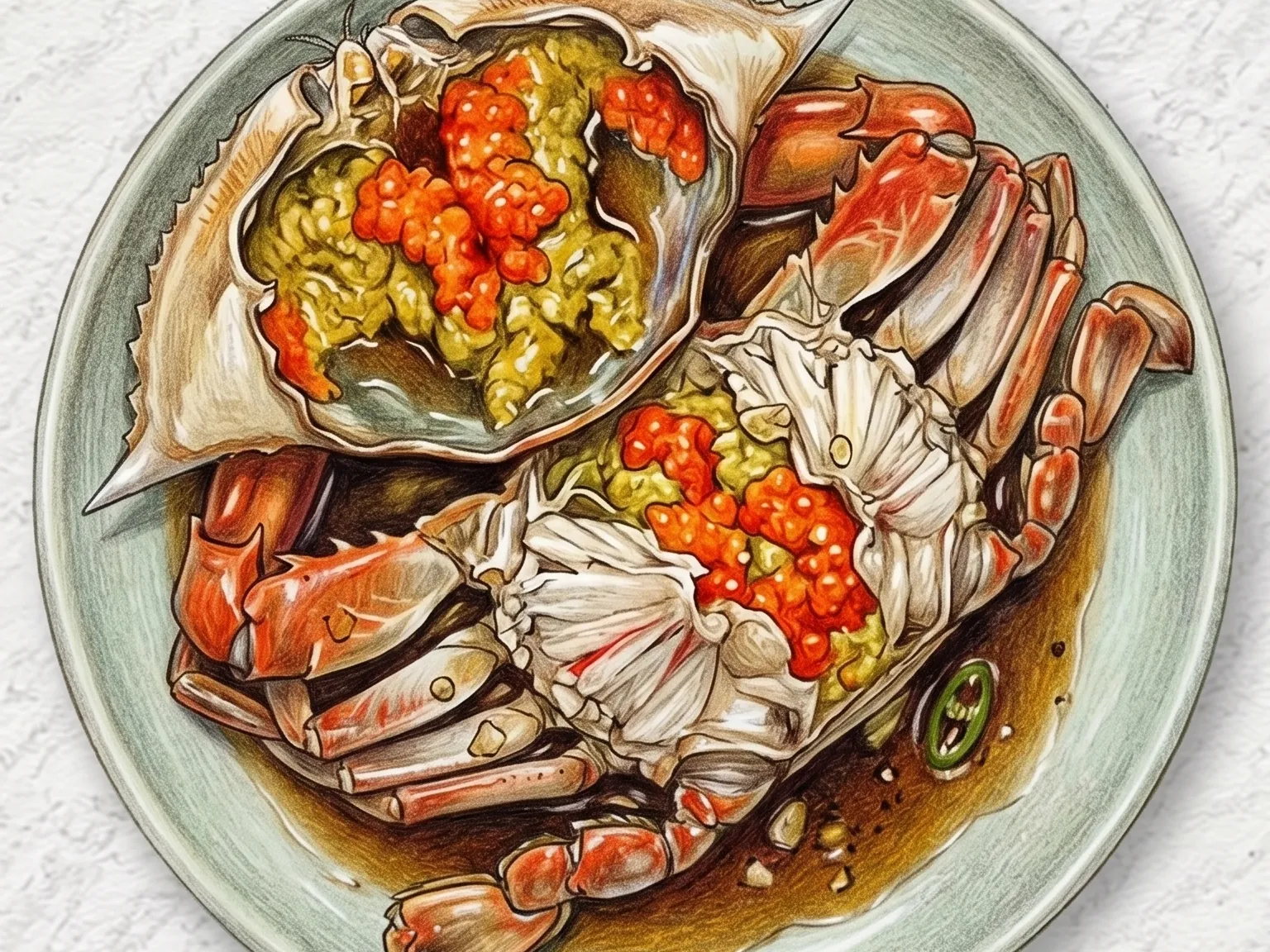
Steamed Female Blue Crab with Soy Sauce
This dish features female blue crabs filled with roe steamed in a seasoned soy sauce mixture along with onions and ginger. Cleaning the crabs requires folding back the belly flap to scrub out the gills while keeping the top shell intact. The crabs must be placed belly-up in the pot to prevent the rich roe and tomalley from leaking out during cooking. Sliced onion and ginger are layered at the bottom of the pot to prevent the crabs from scorching and to emit a fragrant steam that eliminates fishy odors. After pouring a mixture of soy sauce, oligosaccharide, rice wine, and water over the crabs, they are steamed for fifteen to twenty minutes on medium heat. Adhering to this precise timing prevents the tender crab meat from dissolving or turning mushy. Spooning the remaining cooking liquid over the crabs yields a glossy finish, topped with thread chili before serving.
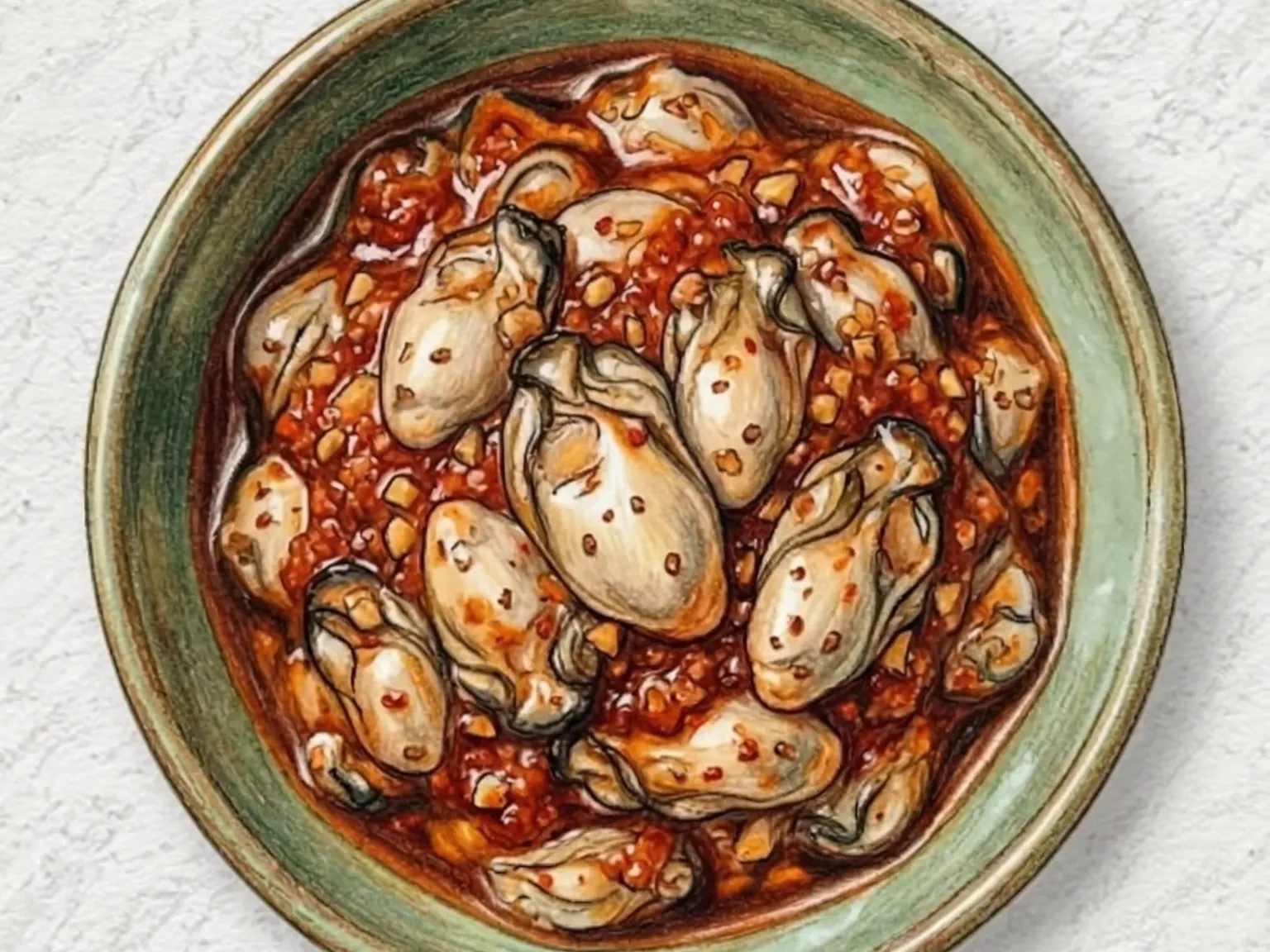
Korean Salted Oyster Jeotgal
Gul jeotgal is a traditional Korean fermented condiment made by curing fresh winter oysters in coarse solar salt with gochugaru, minced garlic, ginger, and plum extract, then aging the mixture at low temperature. As the salt draws moisture from the oyster tissue, the flesh contracts and its marine umami intensifies into something denser and more complex than a fresh oyster delivers. Gochugaru gives the condiment its characteristic red color and adds heat that balances the brininess. Plum extract plays a specific role during fermentation: it suppresses the fishy odor that naturally develops while contributing a mild acidity that keeps the overall flavor from turning flat or heavy. The longer gul jeotgal ages, the more layered and deep its character becomes. Eaten on its own over warm rice, it functions as a complete banchan, briny and bold against plain starch. Its more significant culinary role, however, is as a filling ingredient in baechu kimchi: folded into the seasoning paste, it introduces a richer source of umami than fish sauce alone provides, and the amino acids it releases during fermentation elevate the entire kimchi as it continues to ripen.
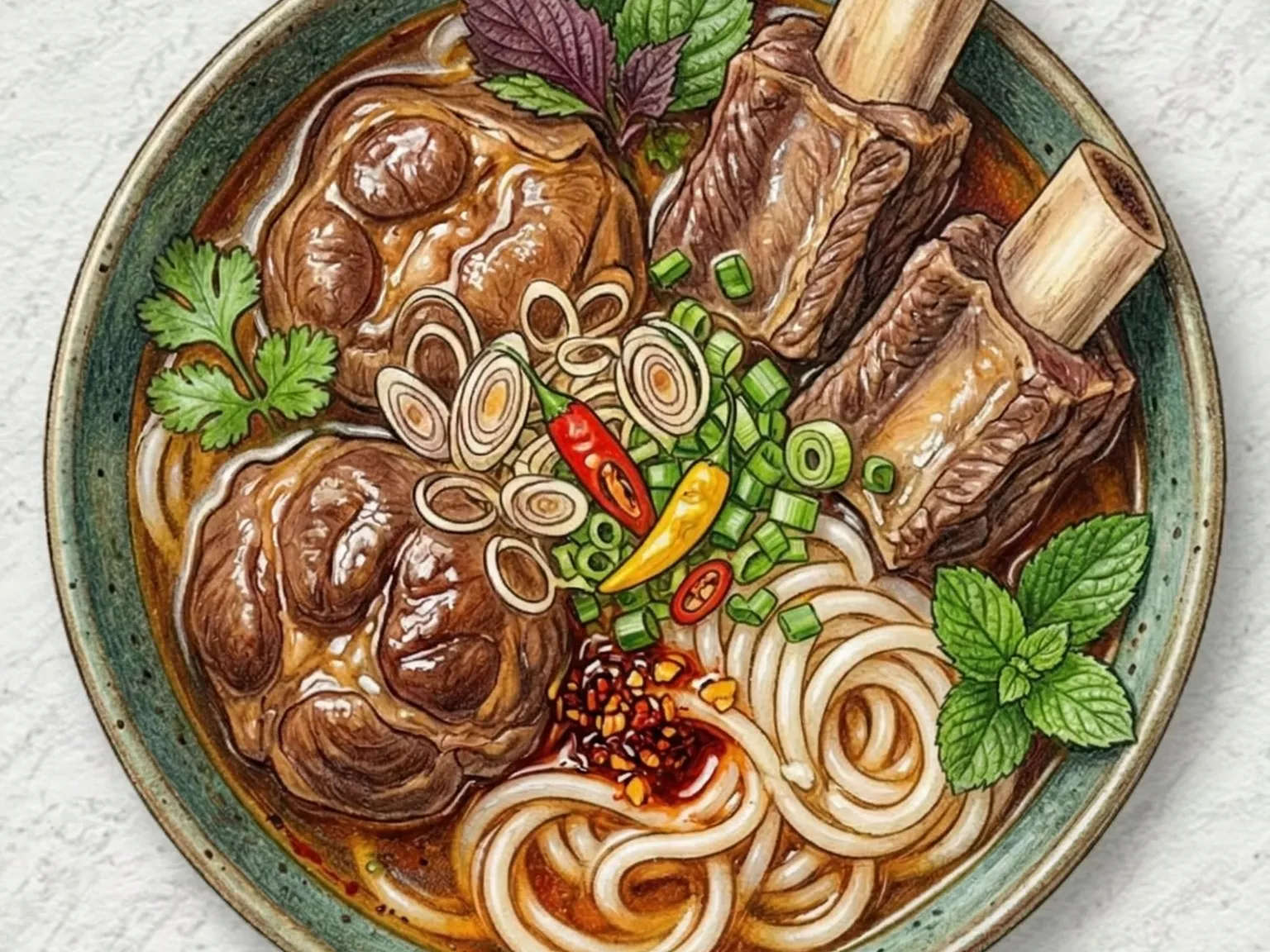
Vietnamese Spicy Beef Noodle Soup
Bun bo Hue is a spicy beef rice noodle soup from the central Vietnamese city of Hue, distinguished from northern-style pho by the defining combination of lemongrass and fermented shrimp paste that gives the broth its assertive, layered character. Beef shank simmers for hours at low heat to yield a rich, collagen-heavy stock, and it is into this base that dried chilies, lemongrass stalks, and a measured quantity of mam ruoc, the fermented shrimp paste specific to central Vietnam, are introduced, building a spiciness that is complex rather than simply hot. A bright-red slick of chili oil floating on the surface signals the heat level before the first sip, and that first spoonful delivers the deep umami of the shrimp paste layered beneath the citrusy, grassy brightness of lemongrass, a combination unlike anything in other Vietnamese noodle soups. The noodles, called bun, are thick, round rice noodles chewier and more substantial than the flat strands in pho, with enough body to stand up to the heavy, assertive broth without becoming waterlogged. Bean sprouts, shredded raw banana flower, and a squeeze of lime are served alongside and added at the table, where their crisp textures and sharp acidity cut directly through the richness and temper the heat. Sliced pork blood sausage and braised pig's knuckle are the traditional additions that bring the bowl into full alignment with what is served in the street stalls of Hue itself.
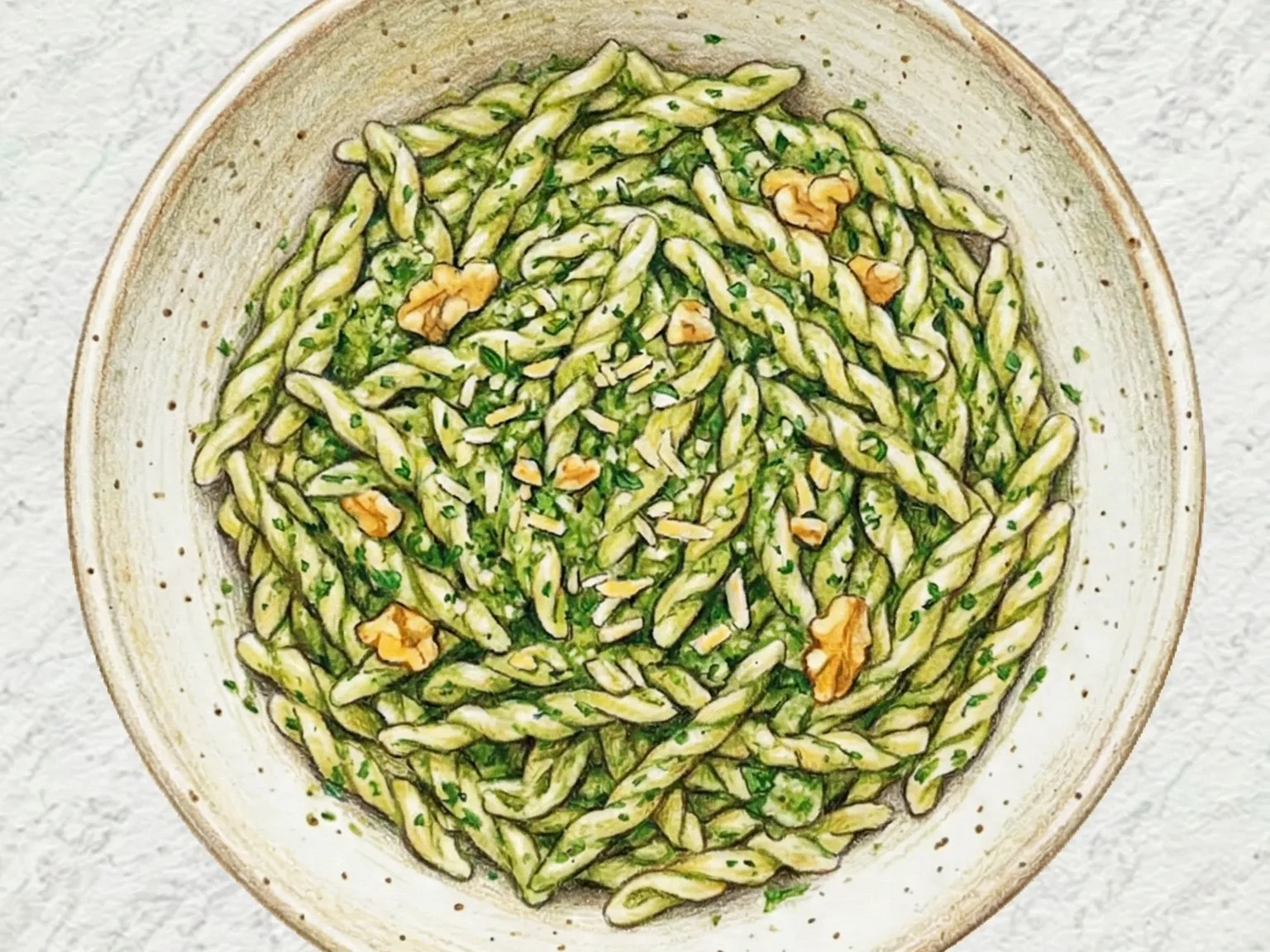
Chamnamul Walnut Pesto Trofie
Chamnamul walnut pesto trofie is a fusion pasta that coats twisted trofie in a pesto made from Korean chamnamul (wild parsley), walnuts, Parmigiano, and olive oil. Chamnamul has a lighter, more herbaceous quality than basil, with a faintly bitter finish that gives the pesto a distinctly Korean aromatic character. Walnuts contribute a heavier, more assertive nuttiness than pine nuts, thickening the sauce and anchoring the savory depth together with the aged cheese. The spiral grooves of trofie hold the pesto in every ridge, releasing an even concentration of flavor with each bite. Adding sufficient olive oil during blending slows oxidation and prevents the chamnamul's green color from darkening too quickly. The pasta is best eaten immediately after tossing, when both the color and fragrance are at their peak.
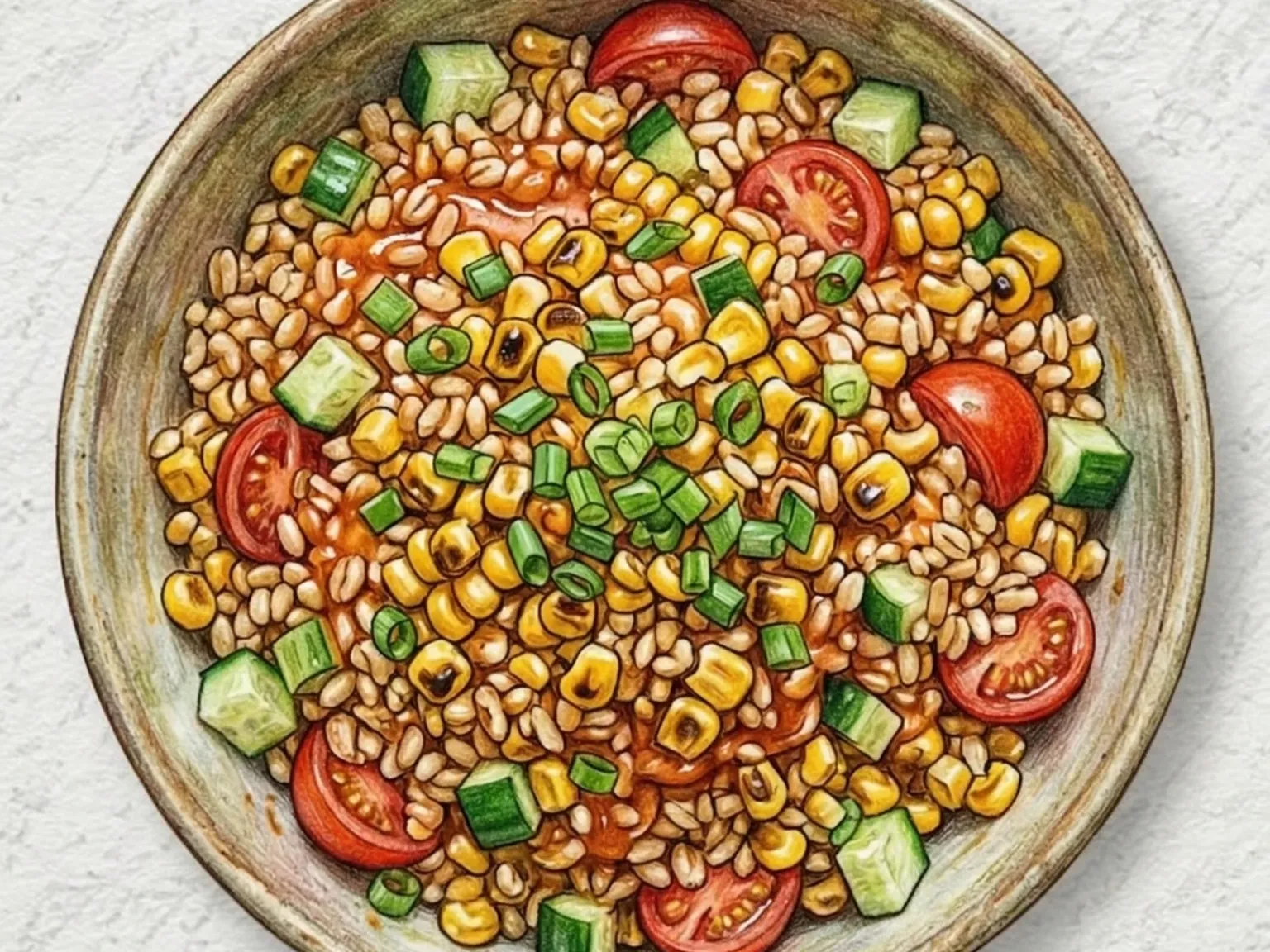
Charred Corn Bulgur Gochujang Salad
Charred corn bulgur gochujang salad dry-chars corn kernels in a hot pan for three minutes to caramelize their natural sugars, then combines them with bulgur wheat cooked for eight minutes to a chewy, al dente finish. A smooth dressing of gochujang, olive oil, apple cider vinegar, and maple syrup coats the grains in spicy-sweet Korean flavor, and diced cucumber with halved cherry tomatoes provides moisture and bright acidity. Pulling the bulgur while still slightly firm prevents it from turning mushy, and resting the assembled salad for 10 minutes at room temperature allows the grains to absorb the dressing fully, deepening the flavor. Thinly sliced scallions add a mild onion note at the end. The whole salad comes together in about 30 minutes, making it practical as a weekday lunch or a light standalone meal.

Avocado Eggs Benedict
Avocado eggs Benedict reimagines the classic brunch dish by replacing the traditional Canadian bacon with ripe avocado, trading cured-pork saltiness for a creamy, grassy richness. A split English muffin is toasted until the cut face is golden and craggy, creating a sturdy base that holds up under the toppings without soaking through. Thick slices of avocado fan across each half before the poached egg is placed on top, its white set firm and the yolk still entirely liquid. Piercing the yolk releases a slow golden flow that runs over the avocado and settles into the muffin's porous surface. Hollandaise - made by emulsifying clarified butter with egg yolks and lemon juice - adds a tangy, buttery richness over the top. Many versions simplify by skipping the hollandaise in favor of a squeeze of lemon and flaky salt, relying on the egg yolk alone as a sauce. The dish spread from the brunch culture of Melbourne and Los Angeles during the 2010s avocado boom and has since become a fixture on cafe menus worldwide, particularly as a plant-leaning alternative to the original.