Asian
Asian

Asian Recipes

216 recipes. Page 2 of 9

The Asian category gathers popular dishes from Japan, China, Thailand, Vietnam, India, and beyond. Curry, stir-fried noodles, mapo tofu, pad Thai, and pho are among the Asian favorites commonly enjoyed in Korean households.

Each country brings its own signature spices and sauces, so even the same ingredients can produce completely different flavors. With a few key pantry items - coconut milk, fish sauce, curry powder, doubanjiang - you can recreate the tastes of Asia at home.

Bihun Goreng (Indonesian Stir-Fried Rice Vermicelli with Sweet Soy)
Asian Easy

Bihun Goreng (Indonesian Stir-Fried Rice Vermicelli with Sweet Soy)

Bihun goreng is fried rice vermicelli sold at street stalls and warung throughout Indonesia and Malaysia from early morning through midnight. Thin rice noodles soaked just until pliable go into a wok heated until it smokes, alongside garlic, shallots, and a generous spoonful of sambal that sizzles the moment it hits the surface. Kecap manis, the thick Indonesian sweet soy sauce, caramelizes rapidly against the hot metal and wraps each strand in a dark, sticky glaze that is the defining characteristic of the dish. Cabbage, bean sprouts, and sliced carrot are added quickly so they retain their crunch against the softness of the noodles. The technique requires constant lifting and turning to prevent the noodles from breaking or clumping while they absorb the sauce. A fried egg laid on top, its edges lacy from being cooked in very hot oil, is the standard finish. The flavor of bihun goreng rests on four layers stacked one over another: the sweetness of kecap manis, the smokiness from the wok, the heat of the sambal, and the salt of a dash of fish sauce added at the end. The ratio shifts from vendor to vendor but the underlying structure holds across regions.

🏠 Everyday 🌙 Late Night
Prep 20min Cook 12min 2 servings
Bistek Tagalog (Filipino Beef Steak with Calamansi Soy Sauce)
Asian Easy

Bistek Tagalog (Filipino Beef Steak with Calamansi Soy Sauce)

Bistek Tagalog adapts the Spanish bistec with a distinctly Philippine ingredient: calamansi citrus replaces wine or vinegar as the marinade acid, producing a brighter, more tropical tang than either. Thinly sliced beef sirloin soaks in soy sauce, calamansi juice, garlic, and black pepper for at least thirty minutes; the acid tenderizes the muscle fibers while the soy penetrates deeply. The beef is seared quickly in a very hot pan and set aside, leaving flavorful drippings in the pan. Thick onion rings cook in those drippings until softened and lightly caramelized, picking up the beef fond as they collapse. The marinade is poured back into the pan and reduced into a dark, glossy braising liquid. When the beef returns to the pan, it finishes cooking in this sauce and each piece gets coated. The soy provides a savory, umami-forward depth, and the calamansi keeps cutting through the heaviness of the reduced sauce and the fat from the beef. Served over steamed white rice with the caramelized onion rings piled on top, bistek tagalog is one of the most common weeknight meals across the Philippines.

🎉 Special Occasion 🍺 Bar Snacks
Prep 20min Cook 12min 2 servings
Bo Kho (Vietnamese Lemongrass Beef Shank Stew)
Asian Medium

Bo Kho (Vietnamese Lemongrass Beef Shank Stew)

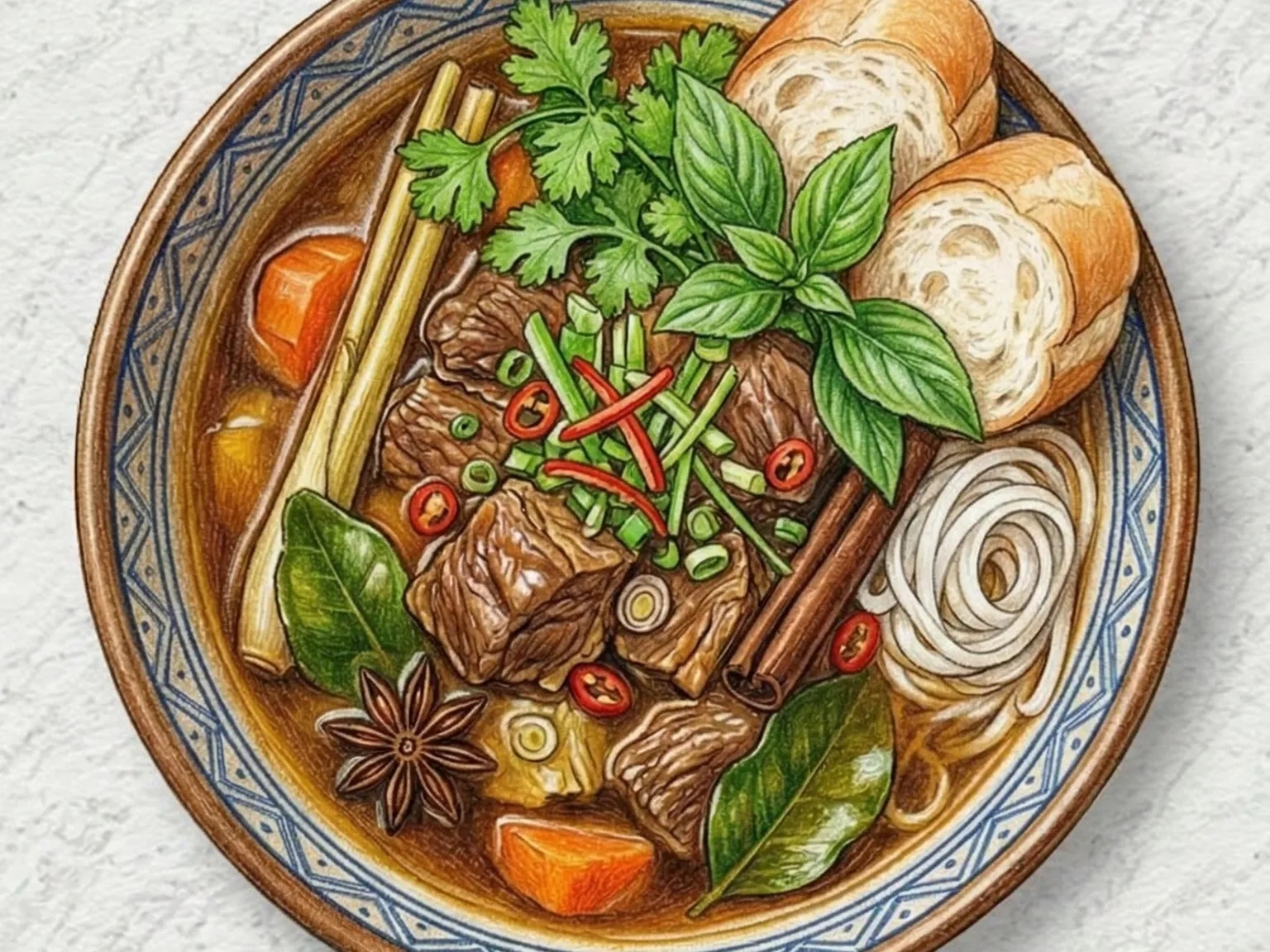
Bo kho is Vietnam's beef stew, born in the southern kitchens of Saigon where French colonial influence introduced slow-braised preparations and Vietnamese cooks adapted them with local aromatics. Beef shank and tendon are cut into large chunks and braised with lemongrass, star anise, cinnamon, and annatto oil - the annatto tinting the broth a vivid orange-red that sets bo kho apart from the darker tones of Western stews. Tomato paste and a spoonful of curry powder go in early, building a base that is simultaneously sweet, earthy, and warm. The stew simmers for two hours or more until the beef is fork-tender and the tendon has turned gelatinous, releasing its collagen into the broth and giving it a lip-coating richness. Carrots and daikon radish soften in the liquid during the final thirty minutes, absorbing the concentrated aromatics as they cook. Bo kho is eaten two ways - ladled over steamed rice, or alongside a crusty baguette torn for dipping into the broth. Street vendors in Ho Chi Minh City serve it from dawn, when the morning air carries the scent of star anise from their simmering pots across the alleyways.

🎉 Special Occasion
Prep 20min Cook 80min 4 servings
Bo La Lot (Vietnamese Grilled Beef Wrapped in Betel Leaves)
Asian Medium

Bo La Lot (Vietnamese Grilled Beef Wrapped in Betel Leaves)

Bo la lot is a southern Vietnamese dish that transforms seasoned ground beef into something aromatic and layered through the medium of la lot, the wild betel leaf (Piper lolot) - a broad, heart-shaped leaf with a peppery, faintly medicinal fragrance found nowhere else in the Vietnamese herb repertoire. The beef is combined with lemongrass, garlic, fish sauce, sugar, and five-spice powder, then wrapped tightly in individual leaves and threaded onto skewers. Over a charcoal grill, the leaf edges char and turn crisp while the rendered fat from the beef migrates into the leaf's porous surface, bonding the meat's juices with the leaf's volatile aromatic oils. The resulting bite carries multiple simultaneous impressions: char smoke from the grill, pepper heat from the leaf, savory sweetness from the spiced beef, and a faint numbing tingle from the la lot's natural compounds. The standard way to eat it is wrapped in lettuce and rice paper with fresh herbs and a bowl of nuoc cham for dipping, and it functions as a staple snack at the casual outdoor beer halls known as bia hoi across Vietnam.

🍺 Bar Snacks 🎉 Special Occasion
Prep 25min Cook 12min 2 servings
Bo Luc Lac (Vietnamese Shaking Beef Sirloin Wok Stir-Fry)
Asian Medium

Bo Luc Lac (Vietnamese Shaking Beef Sirloin Wok Stir-Fry)

Bo luc lac takes its name from the shaking motion that defines how the dish is cooked. Cubed beef tenderloin or sirloin, marinated in soy sauce, oyster sauce, garlic, and sugar, goes into a wok heated to the point of smoking. The cook shakes the wok vigorously to toss the cubes through the oil, searing each face in seconds while the tossing motion keeps steam from building up and stewing the meat. The result is a dark, caramelized crust on the outside while the center stays pink and rare. The dish emerged from Vietnamese-French fusion cooking in colonial Saigon, when Western beef cuts became available and Vietnamese cooks applied their own techniques to them. The beef is plated over watercress dressed with lime juice and cracked black pepper; the sharpness of the watercress and the acidity of the lime cut through the rich, soy-glazed exterior. A dipping sauce of salt, pepper, and lime juice accompanies the plate. The contrast between the charred, deeply savory meat and the cool raw greens beneath has kept this one of Saigon's most recognizable dishes for decades.

🎉 Special Occasion
Prep 25min Cook 10min 2 servings
Bun Bo Nam Bo (Vietnamese Dry Beef Noodle Bowl with Herbs)
Asian Medium

Bun Bo Nam Bo (Vietnamese Dry Beef Noodle Bowl with Herbs)

Bun bo nam bo - literally 'southern beef noodles' - is a Hanoi take on southern Vietnamese flavors, assembled as a dry noodle bowl rather than a soup. The dish layers cold rice vermicelli with stir-fried beef marinated in lemongrass and garlic, then tops it with a generous pile of fresh herbs: cilantro, Thai basil, mint, and perilla. Crushed roasted peanuts and fried shallots scatter on top, contributing crunch and a background sweetness. The binding element is nuoc cham - the sweet-sour-salty-spicy sauce built from fish sauce, lime, sugar, garlic, and chili - poured over and tossed through at the table. The beef is seared on maximum heat for under a minute so it stays medium-rare inside while the lemongrass marinade caramelizes along the edges. The pleasure of the bowl is in its temperature contrasts: cold noodles, cold herbs, warm beef, and room-temperature sauce all meeting in each chopstick-lifted tangle. Found on nearly every street in Hanoi's Old Quarter, it is the reliable lunch for office workers who return to their preferred stall day after day.

🎉 Special Occasion 🍱 Lunchbox
Prep 25min Cook 12min 2 servings
Hanoi Bun Cha (Charcoal Grilled Pork Patties with Rice Noodles)
Asian Medium

Hanoi Bun Cha (Charcoal Grilled Pork Patties with Rice Noodles)

Bun cha defines the lunchtime rhythm of Hanoi. Every alley in the Old Quarter fills at midday with the smoke of charcoal grills, the sound of fat hitting hot coals, and the caramel-edged smell of pork charring at the edges. Two forms of pork are grilled simultaneously: fatty sliced pork belly and small, hand-shaped patties of seasoned ground pork. Both cook over coconut-shell charcoal until the edges blacken and the fat renders into drippings, carrying the smoke of the fire into every bite. The grilled meat drops directly into individual bowls of warm dipping broth - a sweetened fish sauce sharpened with vinegar, garlic, and chili. This broth sits between a condiment and a light soup, and diners naturally drink a little of it between bites of meat and noodles. Rice vermicelli arrives on a separate plate alongside a full mound of fresh herbs: perilla, mint, lettuce, and dill. The ritual of eating matters as much as the ingredients - noodles are dipped into the broth, a piece of pork is retrieved, wrapped in fresh herbs, and eaten in one bite. In 2016, Barack Obama and Anthony Bourdain ate bun cha at a simple Hanoi street stall. The restaurant preserved the table they occupied behind a glass case, a response that says everything about how deeply this dish is bound to the city.

🎉 Special Occasion 🍺 Bar Snacks
Prep 30min Cook 20min 4 servings
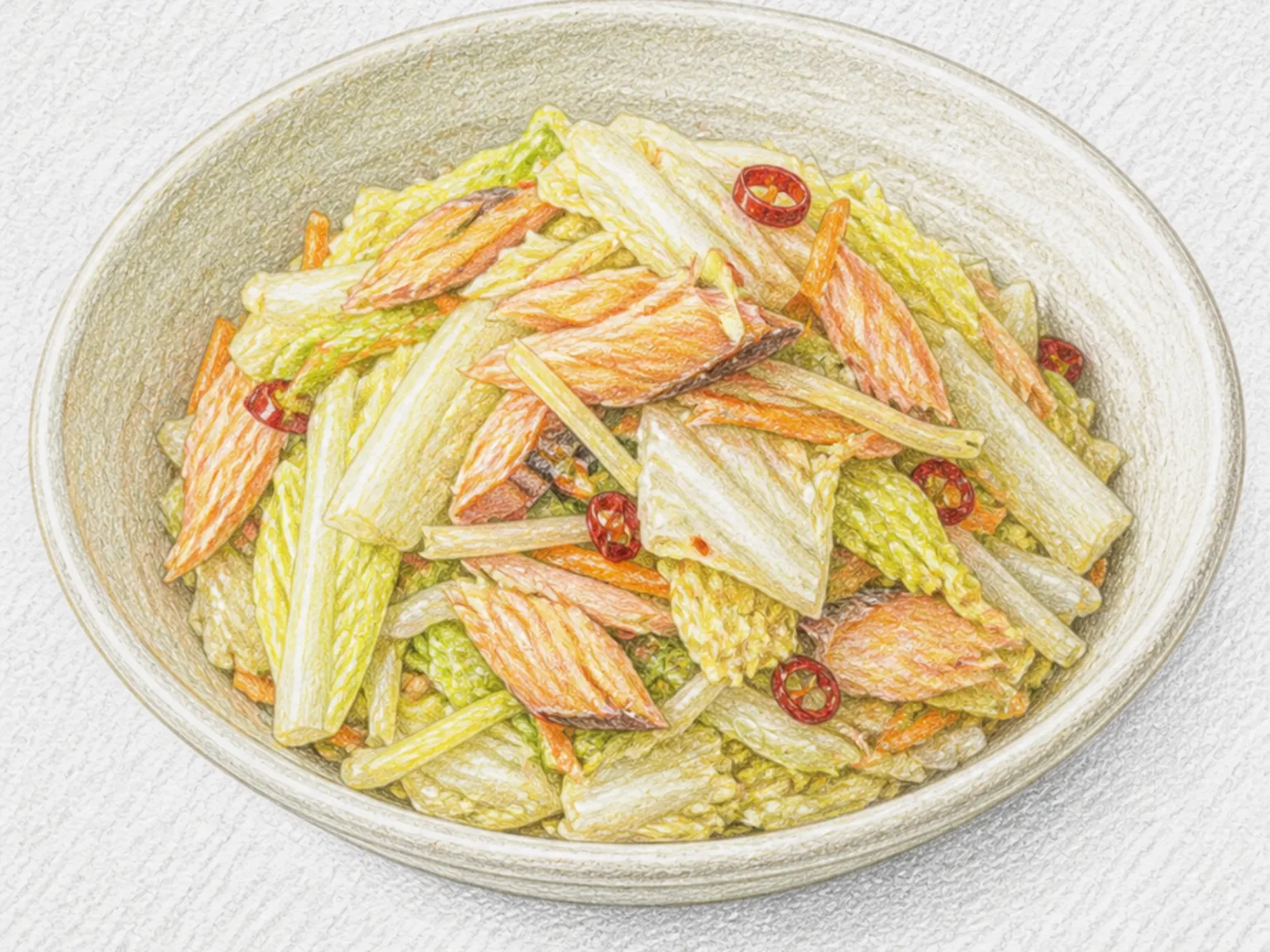
Bun Rieu (Vietnamese Crab and Pork Tomato Noodle Soup)
Asian Hard

Bun Rieu (Vietnamese Crab and Pork Tomato Noodle Soup)

Bun rieu is a Vietnamese noodle soup from the north built on two unconventional foundations: freshwater paddy crabs and fermented shrimp paste. Together they produce a broth of unusual complexity that is simultaneously sweet, savory, and funky in ways that fish-sauce-based soups are not. Small river crabs are pounded whole, shell and all, in a mortar, then mixed with water and strained through a sieve to extract a turbid, intensely crab-scented liquid. This liquid is heated gently over low flame until the crab proteins coagulate into a soft, custard-like mass that floats to the surface, forming the crab cake that defines the dish. Tomatoes are added to the simmering broth and break down over time, tinting it red and contributing a fruity acidity that balances the crab richness. Mam tom, the fermented shrimp paste, is kept tableside and stirred in individually according to each diner's tolerance for pungency. A single spoonful transforms the broth into something considerably more intense and complex. Rice vermicelli provides a neutral base, while fried tofu puffs absorb broth during cooking and release it in each bite. Morning glory greens add a vegetable counterpoint. In Hanoi, bun rieu vendors typically specialize in this one soup, ladling hundreds of bowls from a single pot each morning before selling out by noon.

🎉 Special Occasion 🌙 Late Night
Prep 25min Cook 40min 4 servings
Buta Shogayaki (Japanese Ginger Pork Stir-Fry with Soy Mirin Glaze)
Asian Easy

Buta Shogayaki (Japanese Ginger Pork Stir-Fry with Soy Mirin Glaze)

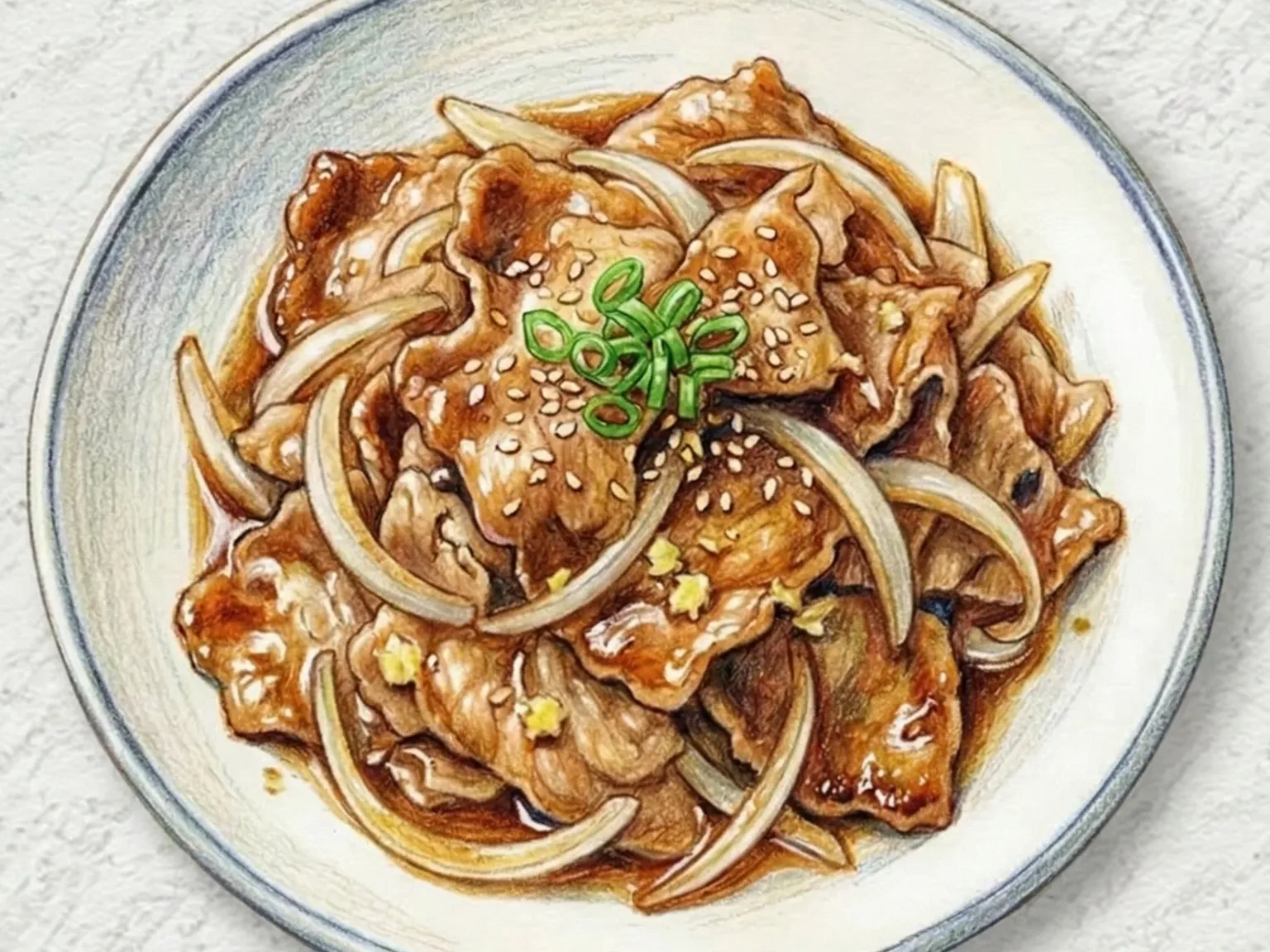
Buta shogayaki is one of the most frequently cooked dishes in Japanese home kitchens, appearing in bento boxes, teishoku set meals, and university cafeterias with equal regularity. The name translates directly as pork ginger stir-fry, and the technique is as precise as it is simple: thinly sliced pork loin or shoulder is marinated briefly in a mixture of soy sauce, mirin, sake, and freshly grated ginger, then seared quickly in a hot pan and finished with a reduction of the marinade. The ginger does more than add flavor -- it contains proteolytic enzymes that break down muscle fibers, measurably tenderizing the meat even in a marinade as short as ten minutes. The slices must not overlap in the pan; piling them causes steam to accumulate and the pork poaches rather than sears, losing the caramelized, slightly charred edges that define the dish. The marinade is added only in the final thirty seconds so it reduces rapidly into a sticky, glossy glaze that adheres to every surface rather than pooling at the bottom of the pan. Placing the finished pork over a mound of shredded raw cabbage is not optional in traditional presentation -- the cold, crunchy vegetable contrasts sharply with the hot, lacquered meat and cuts through the sweetness of the mirin glaze. Shogayaki has been a menu fixture since the mid-20th century, when rising pork production in Japan made it affordable enough for everyday cooking. From pantry to plate in fifteen minutes, it demands nothing more than a hot pan, fresh ginger, and attention to heat control.

🍱 Lunchbox ⚡ Quick
Prep 10min Cook 12min 2 servings
California Roll
Asian Medium

California Roll

The California roll was developed in the early 1970s, most likely by Japanese chefs working in Vancouver or Los Angeles who needed to make sushi approachable for North American diners unfamiliar with raw fish. The inside-out construction - rice on the outside, nori hidden within - was a deliberate inversion designed to conceal the dark seaweed that Western eaters initially found off-putting. Imitation crab (surimi), ripe avocado, and cucumber form the filling, delivering a mild, creamy, and crunchy combination that requires no acquired taste to appreciate. The rice is seasoned with vinegar, sugar, and salt, then rolled so the grains hold together without being compacted into a dense cylinder. Tobiko or sesame seeds pressed into the outer rice layer add visual appeal and a subtle pop of texture with each bite. Though dismissed by sushi traditionalists, the California roll served as a gateway that brought millions of Westerners into Japanese cuisine and laid the foundation for the global sushi market. Today it remains the single most ordered sushi roll in North America.

🎉 Special Occasion 🍱 Lunchbox
Prep 30min 2 servings
Cantonese Steamed Fish
Asian Easy

Cantonese Steamed Fish

Cantonese steamed fish - ching jing yu - is the clearest expression of the Cantonese philosophy of letting premium ingredients speak for themselves with minimal interference. The technique requires the freshest possible whole fish - sea bass, grouper, or pomfret are the standard choices - because steaming conceals nothing. Any fish that is even slightly past its peak will betray itself the moment it comes off the heat. The fish is scored on both sides to allow even heat penetration, placed on a plate with thin ginger slices tucked underneath and inside the cavity to neutralize any fishiness, then steamed over vigorously boiling water for exactly eight to ten minutes depending on thickness. Even one minute of overcooking transforms the silky, translucent flesh into something dry and dull - timing is the entire technique. The moment the fish leaves the steamer, all accumulated liquid on the plate must be poured off immediately, because that liquid carries concentrated fishiness that would spoil the clean finish. A generous pile of julienned scallion and fresh ginger is arranged on top, then a ladle of oil heated until just beginning to smoke is poured directly over the aromatics. The sizzling releases their fragrance in a single burst that infuses the fish. Seasoned soy sauce and a few drops of sesame oil complete the dish. In Cantonese banquet culture, the steamed fish course is typically the most expensive item on the table, with guests selecting a live fish directly from the restaurant tank.

🥗 Light & Healthy ⚡ Quick
Prep 15min Cook 12min 2 servings
Cao Lau (Hoi An Chewy Rice Noodles with Braised Pork)
Asian Medium

Cao Lau (Hoi An Chewy Rice Noodles with Braised Pork)

Cao lau is a dish with a single origin: Hoi An, a UNESCO-designated port town on Vietnam's central coast. Its defining characteristic is the noodle, which was traditionally prepared using water drawn from a specific ancient Cham well and lye derived from the ash of trees grown on the nearby Cham Islands. The combination of that mineral-rich water and alkaline lye gives the noodles a firm, dense chew and a distinctive amber color that no other Vietnamese noodle shares. Sliced pork braised in soy sauce, five-spice, and sugar until the exterior deepens and caramelizes is the main protein, placed on top of the noodles along with a handful of fresh herbs, crunchy bean sprouts, and torn pieces of fried wonton skin that have been crisped separately. Only a small amount of the pork braising liquid is spooned over the bowl - cao lau is a dry noodle dish, not a soup, and the absence of broth is essential to how the textures work together, each component staying distinct rather than softening in liquid. The flavors encoded in the dish are a record of the trading cultures that moved through Hoi An over several centuries: the soy-based braising sauce reflects Japanese culinary influence, the five-spice points to Chinese cooking traditions, and the abundant fresh herb garnish is unmistakably Vietnamese. The result is a dish whose full identity cannot be separated from its place of origin, making it one of the most geographically specific preparations in Southeast Asian cuisine.

🎉 Special Occasion 🍱 Lunchbox
Prep 20min Cook 30min 2 servings
Century Egg and Pork Congee
Asian Medium

Century Egg and Pork Congee

Century egg and pork congee - pi dan shou rou zhou - is the defining Cantonese breakfast, served from dawn at congee shops across Hong Kong, Guangzhou, and the broader Pearl River Delta. The congee base demands a full hour of slow simmering over low heat, during which the rice grains break down entirely into a silky, fluid suspension. In Cantonese this texture is called sang shui - meaning the rice and water have become indistinguishable from each other - and anything short of that is considered undercooked. Lean pork is sliced thin and added during the final minutes, cooking through immediately in the residual heat of the porridge without toughening. Century egg - duck egg preserved in an alkaline mixture of clay, ash, and salt for several weeks - transforms dramatically in the process: the white sets into translucent, trembling amber jelly and the yolk becomes a creamy, dark-green semi-solid with a dense, sulfurous depth. Cubed and stirred through the porridge, the egg's alkaline richness cuts through the clean blandness of the rice base, while the pork provides a grounding savory note. White pepper, a few drops of sesame oil, and sliced scallion finish the bowl. The congee thickens rapidly once it leaves the heat, narrowing the window of ideal texture, so it must be eaten as soon as it is served.

🏠 Everyday 🎉 Special Occasion
Prep 15min Cook 50min 2 servings
Cha Ca La Vong (Hanoi Turmeric Fish with Dill on Tabletop Grill)
Asian Medium

Cha Ca La Vong (Hanoi Turmeric Fish with Dill on Tabletop Grill)

Cha ca La Vong is the defining dish of a single street in Hanoi's Old Quarter - Cha Ca Street takes its name from the restaurant that has been serving this one recipe and nothing else since the late nineteenth century. The dish is almost exclusively Hanoian; it barely appears in southern Vietnamese cooking, and the original La Vong restaurant remains open at the same address today. Firm white fish fillets, traditionally snakehead or catfish, are marinated in a paste of turmeric, galangal, fermented shrimp paste, and rice flour, then pan-fried in oil until the turmeric stains the surface a vivid, saturated yellow and a thin crust forms along the outside. The sizzling pan arrives at the table set over a small tabletop burner and the fish continues to cook as diners add large handfuls of fresh dill and scallion directly into the pan. The herbs wilt almost instantly on contact with the hot oil, and dill's intense anise-forward fragrance fills the table as they do. The visual impact of yellow-stained fish against the bright green dill collapsing into the pan is one of the dish's most recognizable qualities. The fish is eaten spooned over thin rice vermicelli and accompanied by roasted peanuts and additional fresh herbs. The critical element is the dipping sauce: mam tom, a pungent fermented shrimp paste thinned with fresh lime juice and a little sugar, whose funk and acidity cut through the oil and turmeric and transform the flavor of every bite. Few dishes anywhere can claim a single-item restaurant with over a century of unbroken operation, and Cha ca La Vong is one of them.

🎉 Special Occasion 🍺 Bar Snacks
Prep 20min Cook 12min 2 servings
Cha Gio (Southern Vietnamese Crispy Rice Paper Spring Rolls)
Asian Medium

Cha Gio (Southern Vietnamese Crispy Rice Paper Spring Rolls)

Cha gio are fried spring rolls from southern Vietnam, distinct from the north's nem ran in both wrapper and filling. Southern cooks use rice paper instead of wheat-based wrappers, which produces an exceptionally thin, blistered shell on frying - one that shatters with a louder, sharper crack than a Chinese egg roll. The filling is ground pork, shrimp, glass noodle threads, wood ear mushroom, and grated carrot, seasoned with fish sauce and black pepper. Rolling technique directly affects the result: too loose, and the roll bursts in the oil; too tight, and the filling compresses into a hard, dense core. Oil temperature is managed in two stages - the rolls go in at 160°C to cook the filling through without scorching the wrapper, then the heat rises to 180°C for a final crisping that leaves the shell nearly translucent. The traditional presentation is wrapped in mustard greens or lettuce with fresh mint, Thai basil, and perilla, then dipped in nuoc cham. In southern Vietnamese households, the Tet (Lunar New Year) preparation of cha gio is itself a ritual: the entire family gathers to roll hundreds at once, an act that marks the holiday as much as eating them does. Frozen unbaked rolls fry from frozen with almost no loss in texture.

🍺 Bar Snacks 🎉 Special Occasion
Prep 30min Cook 20min 4 servings
Chana Masala (Punjabi Spiced Chickpea Tomato Curry)
Asian Easy

Chana Masala (Punjabi Spiced Chickpea Tomato Curry)

Chana masala is a staple of Punjabi home cooking and one of the most widely eaten vegetarian dishes across North India, found on the menus of dhabas, railway canteens, and five-star hotel restaurants alike. Dried chickpeas are soaked overnight and pressure-cooked until they hold their shape but yield when pressed -- the texture of the chickpea matters as much as the sauce around it. The sauce builds from finely diced onions fried until deeply browned, which provides natural sweetness and body without any cream. Tomatoes cook down with coriander, cumin, turmeric, garam masala, and amchur -- dried mango powder -- which contributes a tart, fruity acidity that sets this preparation apart from other chickpea curries and gives it a distinctive brightness no other spice replicates. The sauce should be thick and clingy, not soupy; each chickpea gets coated in a dark, spiced layer rather than sitting in loose liquid. Topped with sliced raw onion, green chili, and a squeeze of lemon, the dish pairs with bhatura -- fried bread -- as the iconic Punjabi street-food duo known as chole bhature. Scooped up with roti, the same preparation becomes an everyday weeknight meal that costs almost nothing to make.

🏠 Everyday 🎉 Special Occasion
Prep 15min Cook 30min 4 servings
Chao Ga (Vietnamese Chicken Rice Porridge with Ginger)
Asian Easy

Chao Ga (Vietnamese Chicken Rice Porridge with Ginger)

Chao ga is Vietnam's most widely eaten breakfast porridge, served whenever someone is ill or needs gentle nourishment, occupying the same restorative role that dakjuk holds in Korean cooking. A whole chicken simmers in water until the broth turns opaque and deeply flavored, then rice cooks directly in that liquid until the grains dissolve into a thick, almost creamy consistency. Generous slices of ginger added early in cooking suppress any gaminess and warm the stomach, while fish sauce brings an underlying umami depth that plain salt cannot replicate. The finished porridge is ladled into bowls and finished with hand-shredded chicken meat, fresh cilantro, cracked black pepper, crispy fried shallots, and strips of you tiao -- Chinese fried dough sticks -- whose crunch against the soft porridge creates a textural contrast considered essential to the dish. In Hanoi's early-morning alleys, chao ga vendors work from a single clay pot, serving hundreds of bowls to workers and commuters before noon, and the sight of rising steam from those stalls remains one of the defining images of the Vietnamese morning.

🏠 Everyday 🎉 Special Occasion
Prep 15min Cook 55min 4 servings
Char Kway Teow (Penang Wok-Fried Flat Rice Noodles with Prawns)
Asian Medium

Char Kway Teow (Penang Wok-Fried Flat Rice Noodles with Prawns)

Char kway teow originated in Penang as a meal for Chinese laborers who needed something filling and cheap, cooked fast over high heat with whatever was affordable. Wide flat rice noodles go into a scorching wok with prawns, cockles, egg, bean sprouts, Chinese chives, and sliced lap cheong sausage. Dark soy sauce and oyster sauce stain the noodles a deep, smoky brown as they caramelize against the iron of the wok. The defining quality of the dish is wok hei, the charred, slightly acrid breath of the wok that comes only from cooking at extreme temperatures with the noodles thrown directly through open flame. Achieving wok hei requires both a wok that has reached its full temperature and enough physical space inside it for the noodles to make sustained contact with the hot surface rather than steaming in their own moisture. Traditionally cooked in pork lard, the rendered fat coats every noodle strand with a richness no vegetable oil can match. Penang hawker stalls cook one plate at a time because crowding the wok traps moisture and kills the sear. The result carries a charred, faintly bitter edge beneath the sweet-salty sauce that has made it one of the most recognized street foods in Southeast Asia.

🏠 Everyday 🌙 Late Night
Prep 15min Cook 12min 2 servings
Cantonese Honey Char Siu (Glazed BBQ Pork with Five-Spice Honey)
Asian Medium

Cantonese Honey Char Siu (Glazed BBQ Pork with Five-Spice Honey)

Char siu is the defining roasted meat of Cantonese cooking, recognizable by the lacquered sheen and reddish-amber color of the cuts hanging in the windows of siu laap shops across Hong Kong and Guangzhou. Pork neck or shoulder is the preferred cut because the fat distribution throughout the muscle fibers keeps the meat moist during the high-temperature roast. The marinade combines soy sauce, hoisin sauce, five-spice powder, Shaoxing rice wine, and honey. Five-spice - star anise, cassia cinnamon, cloves, Sichuan pepper, and fennel seeds ground together - contributes an aromatic complexity that bridges the saltiness of soy and hoisin with the sweetness of honey. After an overnight marinade, the meat roasts at high heat while being basted repeatedly with a honey glaze that lacquers the surface with successive layers of caramel. The traditional method suspends the pork on hooks inside a lychee charcoal oven, exposing every surface to radiant heat and allowing fat to drip away freely. This technique produces a crust that is sweet and concentrated on the outside while the interior stays fatty and juicy. The edges of the cut, where the honey carbonizes against the direct heat, develop a thin, slightly bitter char that is the most prized part of any char siu. Char siu is eaten sliced over rice as a complete one-plate meal, piled over wonton noodles, or served cold with hot English mustard as a simple appetizer.

🎉 Special Occasion 🍱 Lunchbox
Prep 20min Cook 45min 4 servings
Chashu Pork (Japanese Rolled Braised Pork Belly for Ramen)
Asian Medium

Chashu Pork (Japanese Rolled Braised Pork Belly for Ramen)

Chashu pork takes its name from Cantonese char siu but is an entirely distinct preparation that evolved within Japanese ramen culture. A thick slab of pork belly is rolled into a tight log, tied at intervals with kitchen twine to hold its shape, then braised low and slow in a mixture of soy sauce, mirin, sake, and sugar. Over one and a half to two hours the connective tissue dissolves into gelatin, transforming the meat from firm to yielding - a texture that barely resists the chopstick and melts against the palate. The braising liquid reduces during cooking and lacquers the exterior in a deep amber glaze that clings without being syrupy. Sliced thin, each piece reveals a cross-section of spiraling fat and lean that is as much a visual signature as a textural one. The fat layers have softened to the point of near-transparency while the lean holds just enough structure to stay in one piece. Although chashu is most associated with ramen, where a few slices crown the bowl, it is equally at home over steamed rice as chashu-don, or sliced cold and eaten alongside beer. The leftover braising liquid is never wasted - soft-boiled eggs soaked overnight in it become ajitamago, the marinated soy eggs that are chashu's natural companion.

🎉 Special Occasion 🍺 Bar Snacks
Prep 10min Cook 90min 4 servings
Cheung Fun (Cantonese Steamed Rice Noodle Rolls with Shrimp)
Asian Hard

Cheung Fun (Cantonese Steamed Rice Noodle Rolls with Shrimp)

Cheung fun -- rice noodle rolls -- are a cornerstone of Cantonese dim sum, present on every yum cha table from Hong Kong's tea houses to Guangzhou's morning restaurants. A thin batter of rice flour and tapioca starch is poured onto an oiled steel plate, steamed for under a minute, then peeled off as a translucent, trembling sheet. The sheet is rolled around fillings such as shrimp, char siu, or beef, or served plain, its own silky texture being the point. The ratio of rice flour to starch determines everything: too much rice flour and the sheet is stiff; too much starch and it becomes gummy. A lightly sweetened soy sauce is poured over the rolls at the table, pooling in the plate and coating each piece as it is lifted with chopsticks. Street vendors in Hong Kong steam cheung fun on pushcarts, peeling each sheet from a metal drawer with a flat scraper in a motion that draws onlookers. For many dim sum regulars, it is the first dish ordered and the benchmark by which a restaurant is judged.

🎉 Special Occasion 🌙 Late Night
Prep 25min Cook 15min 2 servings
Chicken 65 (South Indian Deep-Fried Spiced Yogurt Chicken)
Asian Medium

Chicken 65 (South Indian Deep-Fried Spiced Yogurt Chicken)

Chicken 65 is a South Indian deep-fried chicken dish that traces its origin to the Buhari Hotel in Chennai, where it first appeared on the menu in 1965. The name has generated a minor mythology: one theory says it was the 65th item on the original menu, another claims the recipe calls for exactly 65 ingredients, and a third insists the chicken required 65 days of marination - none of which has been conclusively verified. The marinade is built around whole-milk yogurt, red chili powder, turmeric, and a coarse ginger-garlic paste, which work together to tenderize the chicken while depositing both heat and tang deep into the fibers. After marinating for several hours, the pieces are dusted in cornstarch and fried until the exterior forms a thin, crackling shell while the interior stays moist from the dairy in the marinade. The dish is not finished after frying. The fried chicken goes back into a hot pan where it is tossed briskly with curry leaves, whole dried red chilies, and mustard seeds in a small amount of oil. When curry leaves hit hot fat, they release a distinctive aroma - something between roasted nuts and citrus peel - that clings to the surface of each piece and layers over the chili-yogurt flavors already present. This double-cooking method is what separates chicken 65 from generic fried chicken. Originally a bar snack in South India's pub culture, it spread across the subcontinent and now appears on menus everywhere from Bangalore to Delhi. The heat level varies significantly by restaurant, ranging from gently warming to genuinely tongue-numbing.

🎉 Special Occasion 🍺 Bar Snacks
Prep 25min Cook 20min 2 servings
Chicken Adobo (Filipino Vinegar Soy Braised Chicken)
Asian Easy

Chicken Adobo (Filipino Vinegar Soy Braised Chicken)

Chicken adobo is the unofficial national dish of the Philippines, rooted in a pre-colonial preservation technique of braising meat in vinegar to extend its shelf life in tropical heat long before refrigeration. Chicken simmers uncovered in soy sauce, cane vinegar, crushed whole garlic cloves, bay leaves, and whole black peppercorns until the sharp acidity of the vinegar mellows into a layered, salty-sour sauce with a caramelized depth that no amount of shortcutting can replicate. Once braised, the chicken pieces are removed from the sauce and pan-fried until the skin turns deep golden and audibly crisp, then returned to the reduced liquid for a final coat. The moment the crackling skin absorbs the thick, glossy sauce is the defining pleasure of a well-made adobo. Every Filipino household holds its own ratio of soy sauce to vinegar as a point of pride, and the unresolvable debate over whose mother makes the best version is practically a national institution. This tolerance for variation is part of why the dish has endured for centuries across a country of more than seven thousand islands. It is always served over steamed white rice with extra sauce ladled over generously, and adobo famously tastes better the next day, after the proteins have had time to reabsorb the deepened, overnight flavors from the refrigerator.

🍱 Lunchbox 🍺 Bar Snacks
Prep 15min Cook 35min 4 servings
Chicken Biryani (Mughal Spiced Saffron Layered Rice with Chicken)
Asian Hard

Chicken Biryani (Mughal Spiced Saffron Layered Rice with Chicken)

Biryani emerged from the encounter between Persian pilaf technique and Indian spice culture during the Mughal Empire, and it remains a ceremonial dish served at weddings, festivals, and Friday prayer gatherings across the Indian subcontinent. Chicken is marinated in yogurt, saffron, garam masala, and ginger-garlic paste, then layered in a heavy-bottomed pot with par-cooked basmati rice, saffron milk, fried onions, and fresh mint placed between each layer. The pot is sealed with a flour-and-water dough in a technique called dum. Inside the sealed vessel, steam circulates and the rice and meat cook in each other's aromatic vapors, exchanging flavor in a way that open-pot cooking cannot replicate. When the dough seal is broken at the table, the released cloud of saffron, cardamom, and rosewater is the dish's most dramatic moment and the signal that it is properly done. In a well-executed biryani, each grain of basmati should stand apart and carry the seasoning evenly, and the bottom layer of rice should have formed a crisp, golden crust similar to Persian tahdig. The Hyderabadi and Lucknowi styles represent two distinct traditions: the former layers raw chicken directly with par-cooked rice and cooks everything together, while the latter par-cooks both components separately before assembling, producing a cleaner, more delicate result.

🎉 Special Occasion 🍺 Bar Snacks
Prep 30min Cook 45min 4 servings