Asian Recipes
216 recipes. Page 3 of 9
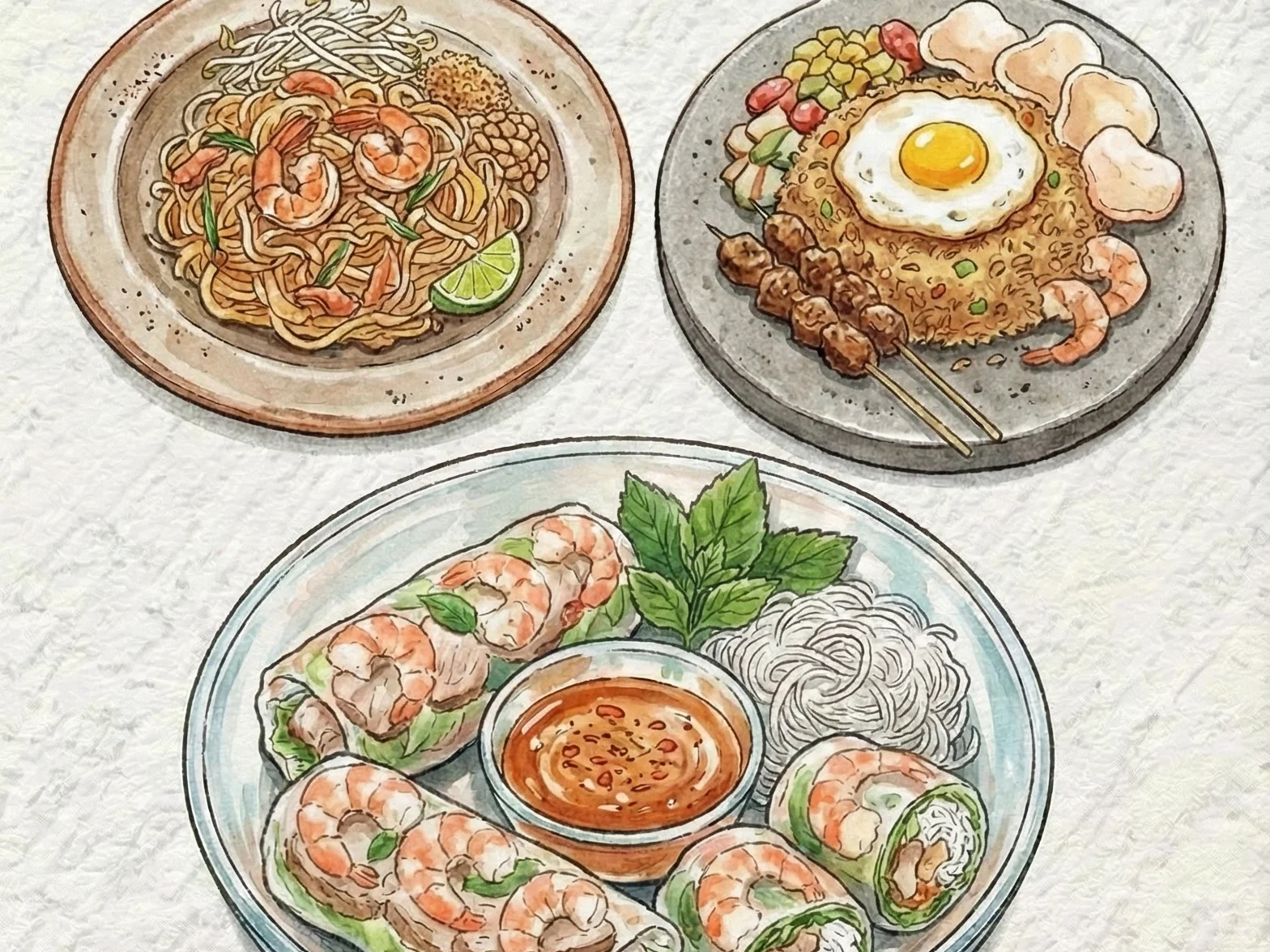
The Asian category gathers popular dishes from Japan, China, Thailand, Vietnam, India, and beyond. Curry, stir-fried noodles, mapo tofu, pad Thai, and pho are among the Asian favorites commonly enjoyed in Korean households.
Each country brings its own signature spices and sauces, so even the same ingredients can produce completely different flavors. With a few key pantry items - coconut milk, fish sauce, curry powder, doubanjiang - you can recreate the tastes of Asia at home.
Chicken Curry
Chicken curry is one of the world's most universal dishes, adapted as it traveled from the Indian subcontinent through Japan and into Korea, each culture reshaping it to local taste. The Japanese-style version uses a flour-and-butter roux for a thick, mild sauce, while Indian preparations build complexity by browning onions deeply and layering whole and ground spices with tomato. Chicken, potato, carrot, and onion simmer together until the vegetables release their starch and sweetness into the sauce, creating a velvety body. The essential pleasure is spooning the curry over steamed rice and watching it seep between the grains. Leftover curry reheated the next day tastes notably deeper - the Japanese call this nikkame no curry (second-day curry) and many prefer it to the fresh pot, as the spice compounds have had time to meld and the starches further thicken the sauce. Despite the simplicity of its core ingredients, the virtually limitless variation in spice blending is what makes this dish endlessly compelling across cultures.
Chicken Inasal (Bacolod Citrus Lemongrass Grilled Chicken)
Chicken inasal is the defining grilled chicken of Bacolod City in the Western Visayas region of the Philippines, so inseparable from its origin that it is commonly called Bacolod chicken. An overnight marinade of calamansi juice, cane vinegar, lemongrass, and garlic allows the acid to work deep into the muscle fibers, tenderizing the meat while coating it in layered citrus and herb fragrance. During grilling over coconut-shell charcoal, the chicken is basted repeatedly with annatto oil, which stains the skin a vivid orange and keeps the exterior perpetually moist so it never dries over the coals. The charcoal smoke combines with the calamansi and lemongrass aromatics to build a smoky-citrus flavor profile that distinguishes inasal from other grilled chicken preparations. The chicken is served alongside garlic rice with a small dish of chicken oil mixed with calamansi juice for dipping. In Bacolod, an entire street called Manokan Country is lined with dozens of inasal stalls that operate simultaneously every evening, filling the neighborhood with charcoal haze.
Chicken Korma (Creamy Cashew Curry)
Chicken korma developed in the kitchens of the Mughal courts, where cooks built dishes around layered subtlety rather than raw heat. The sauce begins with cashews or almonds soaked overnight and ground into a fine paste, which gives the gravy a velvety body and toasted-nut richness without any cream. Chicken is marinated in yogurt with whole spices - cardamom pods, cloves, cinnamon sticks, and mace blades - then brought to a low simmer where the warm aromatics slowly infuse the liquid and meet the tang of the yogurt, producing a flavor that is complex yet entirely without aggression. Saffron dissolved in warm milk and stirred in near the end stains the sauce a deep gold and adds a faint floral quality, two elements that mark a properly made korma. The dish is frequently recommended to diners encountering Indian food for the first time because of its mildness, but the dense nut-paste base, the careful balancing of a dozen aromatics, and the slow integration of yogurt make korma one of the most technically demanding preparations in the North Indian canon - far more than a simple mild curry.
Chicken Satay
Chicken satay is a Southeast Asian grilled skewer dish that originated in Java, Indonesia, where it is thought to have developed from the influence of Arab and Indian traders who brought kebab and spiced meat traditions to the archipelago. Chicken pieces are marinated in a wet spice paste of turmeric, coriander, cumin, lemongrass, and coconut milk, which tints the meat yellow and begins to tenderize it before it reaches the fire. The skewered pieces are then cooked over charcoal, and as the heat intensifies, the coconut milk in the marinade caramelizes against the direct flame, forming a sweet, charred crust at the edges while the interior stays moist. The dish is inseparable from the peanut sauce served alongside it: roasted peanuts are ground and blended with coconut milk, tamarind, palm sugar, and chili into a thick dipping sauce that holds nuttiness, sweetness, sourness, and heat in simultaneous balance. From Java, satay spread across Malaysia, Thailand, and Singapore, with each country developing its own regional variations in spice combination, skewer size, and sauce recipe. At night markets throughout Southeast Asia, rows of satay sticks lined up over glowing charcoal produce a fragrant smoke that draws customers from considerable distances, and the smell of charring spiced meat remains one of the most vivid sensory memories for travelers who pass through the region.
Chili Paneer (Spicy Fried Cheese Stir-Fry)
Chili paneer belongs to Indo-Chinese cuisine, a fusion genre that emerged in the late nineteenth century when Hakka Chinese immigrants settled in Kolkata and began cooking with Indian ingredients and techniques. Cubes of paneer, India's firm fresh cheese that holds its shape under high heat without melting, are coated in cornstarch and deep-fried until a crisp shell forms, then tossed in a blazing-hot wok with diced garlic, green chilies, bell peppers, and onions, all brought together in a sauce built from soy sauce, chili sauce, tomato ketchup, and vinegar. The starchy crust absorbs the punchy sauce while shielding the soft, milky interior of the paneer, and the contrast between the crunchy shell and the yielding cheese inside is the defining pleasure of the dish. Two distinct styles exist: dry, where the sauce barely coats each cube and the dish is eaten as a starter or with drinks, and gravy, where a thicker, glossier sauce pools generously around the paneer for scooping with naan or ladling over fried rice. The flavor profile, salty soy meeting sour vinegar, sweet ketchup cutting through hot chili, is neither Chinese nor Indian but something entirely its own, a product of a specific immigrant community adapting to a new place while keeping familiar techniques alive.
Chirashi Zushi (Scattered Sashimi Rice Bowl)
Chirashi-zushi, scattered sushi, is the celebratory home-cooking sushi of Japan, traditionally prepared for Hinamatsuri on March 3rd and other occasions where the meal itself carries visual significance. A bowl of sushi rice seasoned with vinegar, sugar, and salt forms the base, and over it are arranged sashimi cuts, julienned egg crepe, simmered lotus root, shiitake mushroom, salmon roe, and cherry shrimp. Unlike nigiri, there is no shaping technique involved, which makes chirashi accessible to any home cook, but the creative challenge shifts to composition: how the colors and textures are placed determines whether the bowl reads as festive or ordinary. Seasonal variation is embedded in the tradition - spring bowls feature bright green peas and pink-pickled cherry blossoms, summer compositions lean toward abalone and cucumber, autumn brings ginkgo nuts and matsutake. At high-end sushi counters, Edomae-style chirashi uses only top-grade cuts, chu-toro, uni, kohada, anago, arranged with the same deliberation a painter brings to a canvas. The vinegared rice beneath every version does more than hold the toppings in place: its acidity cuts the fat in the raw fish, refreshing the palate between bites and tying disparate ingredients into a unified dish.
Chole Bhature (Chickpea Curry with Puffed Bread)
Chole bhature is the definitive breakfast combination of North India's Punjab and Delhi regions, bringing together a dark, intensely spiced chickpea curry and deep-fried puffed bread. The chole begins with dried chickpeas soaked overnight and pressure-cooked until tender, then folded into a base of slow-cooked onion and tomato seasoned with amchur, anardana, and garam masala, simmered until the gravy thickens to a deep, clinging brown. Whole spices - black cardamom, cinnamon, bay leaf - are often tied in muslin and simmered alongside the chickpeas, infusing the pot with fragrance without leaving stray solids in the finished dish. Bhature dough is made with refined flour enriched by yogurt and coarse semolina, rested at room temperature until slightly fermented, then rolled and lowered into hot oil where it balloons into a puffy, golden pillow within seconds. The ritual of tearing a piece of bhature and scooping up chole delivers salty, sour, and spiced-bread richness in a single motion. Raw onion rings and pickled green chilies cut through the heaviness with crunch and heat. In Old Delhi, the most storied shops have maintained their curry by never fully emptying the pot, topping it up over decades so the base carries years of accumulated flavor.
Chwee Kueh (Steamed Rice Cake with Chai Poh)
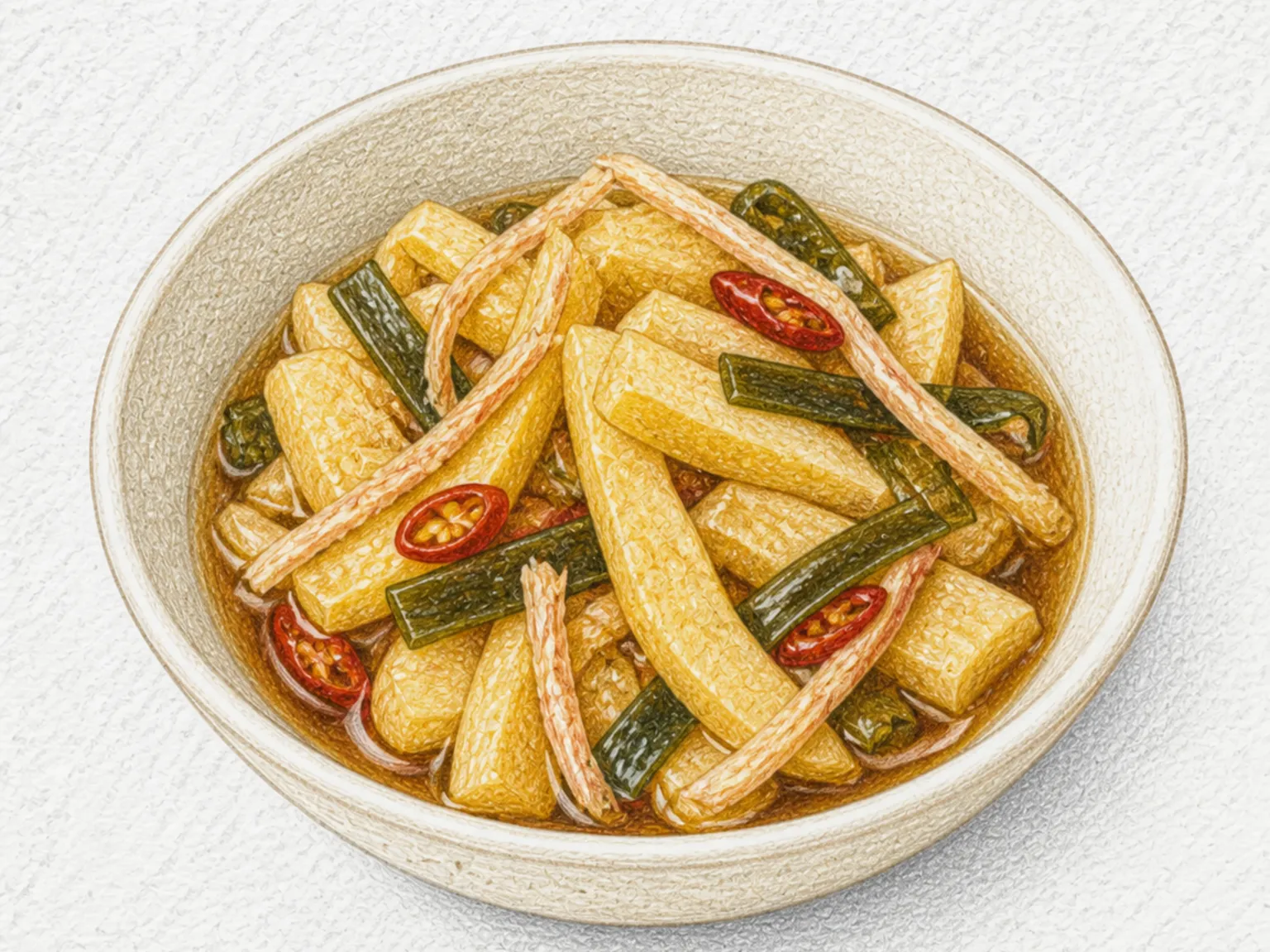
Chwee kueh is a traditional steamed rice cake that is commonly eaten during breakfast in Singapore and Malaysia. The dish originated within the Teochew Chinese community and has been passed down through multiple generations of hawker vendors. These snacks are typically available during the earliest hours of the morning at specialized stalls that often do not sell any other types of food. The preparation involves pouring a batter made of rice flour into small, round ceramic molds. These molds are placed into a steamer until the batter solidifies into a soft and slightly concave cake. The natural indentation found in the center of the rice cake is designed to accommodate a spoonful of chai poh, which is a topping made from preserved radish. The radish is finely chopped and stir-fried with soy sauce and a small amount of sugar. This process creates a mixture that balances savory and sweet flavors while allowing some of the radish pieces to develop caramelized edges. The rice cake base is intentionally kept plain and carries only a very faint sweetness from the rice itself. As a result, the overall flavor of the dish is determined by the seasoned radish and the sambal chili that is provided on the side. The addition of sambal introduces a significant amount of heat and a savory element that sharpens the flavor profile of the entire combination. A typical order of chwee kueh consists of five or six individual cakes served at a very modest price. This affordability and consistent quality have helped the dish become a prominent symbol of daily breakfast culture in Singapore. Some hawker stalls have continued to operate and serve chwee kueh from the exact same location for over fifty years. The longevity of these establishments reflects how deeply this particular rice cake dish is integrated into the regional food history and the everyday lives of the local population.
Clove-Scented Lu Shui Braised Pork Ribs
A Taiwanese-style braised pork rib recipe infused with the deep aroma of cloves.
Com Tam Suon Nuong (Broken Rice with Grilled Pork)
Com tam translates literally as broken rice, named after the fractured grains left over from milling that were once too damaged to sell and eaten only by those who could afford nothing better. In Ho Chi Minh City, what began as subsistence food became a morning institution. The smaller, porous grains cook drier than whole rice and absorb sauces and meat juices more efficiently, turning an unwanted byproduct into a texture worth seeking out. Suon nuong, the charcoal-grilled pork chop, is the centerpiece. The meat soaks for at least an hour in a marinade of lemongrass, garlic, fish sauce, and sugar before hitting the coals. Under direct heat, the marinade caramelizes against the bone, building a sticky, slightly charred crust that carries both sweetness and smoke. The assembled plate puts the grilled chop over broken rice, topped with shredded egg crepe, pickled daikon and carrot, and a generous pour of nuoc mam pha, the sweet-salty-sour dipping sauce made from fish sauce, lime, sugar, and fresh chili. Across the city, com tam stalls open before dawn and the morning ritual of pulling a motorbike over to eat a quick plate at a sidewalk table is part of the daily rhythm of the place.
Cong You Ban Mian (Scallion Oil Noodles)
Cong you ban mian - Shanghai scallion oil noodles - is a dish that builds deep flavor from almost nothing: noodles, scallions, soy sauce, and oil. The entire outcome depends on the scallion oil itself. Scallions are fried in neutral oil over the lowest possible heat for nearly thirty minutes until every trace of moisture has evaporated and they darken to a deep, mottled brown, at which point the raw bite of the allium has transformed entirely into a sweet, caramelized fragrance. The margin for error is narrow: too much heat and the scallions scorch into bitterness; too little and the oil stays flat from start to finish, never developing the complexity the dish needs. Freshly boiled noodles are tossed with soy sauce and a generous ladle of the amber oil, then topped with the crisped, shriveled scallion pieces that provide crunch against the yielding noodles. In Shanghai lane-house noodle shops, a bowl costs three yuan and is eaten at the counter most often in the morning - a dish that makes the gap between simple ingredients and technical discipline as visible as possible.
Cong You Bing (Flaky Scallion Pancake)
Cong you bing - the scallion pancake of northern China - is built around a lamination technique that folds oil and scallion into wheat dough, creating the flaky, pull-apart layers that define its texture. The dough is rolled flat, brushed generously with oil, scattered with chopped scallions and salt, then rolled up into a tight cylinder and pressed flat again - a sequence repeated two or three times to multiply the internal layers. Each folding cycle traps air and fat between the dough sheets, so when the pancake hits an oiled pan over medium heat, steam expands those layers from inside while the exterior crisps to a golden, shattering crust. The scallions sandwiched between layers soften completely as they cook, losing their raw bite and releasing a gentle, almost sweet fragrance into the surrounding dough. In Taiwan's night markets, a popular variation cracks a whole egg directly onto the pancake during the final fry, pressing it flat and letting it cook together with the dough into a unified, extra-rich layer. The finished pancake is torn rather than cut, eaten any time from breakfast through midnight, and almost always served alongside a dipping sauce of soy sauce, vinegar, and sesame oil. Scallion pancakes rank among the most widely eaten flour-based street foods across the Chinese-speaking world, valued for the contrast between a shatteringly crisp exterior and a chewy, layered interior that no other preparation achieves.
Dal Makhani (Creamy Buttered Lentils)
Dal makhani is Punjab's most celebrated lentil dish and now a fixture on restaurant menus across India and internationally. The name makhani, meaning buttery, signals its defining characteristic: a richness built from butter and cream that elevates humble lentils into something deeply satisfying. Whole black lentils (urad dal) and kidney beans (rajma) soak overnight, then pressure-cook before simmering for several hours in a base of tomato, garlic, ginger, and Kashmiri chili. During this slow cooking, the lentils gradually break down and release their starch into the liquid, creating a naturally creamy consistency even before a knob of butter and a pour of fresh cream are stirred in at the end to produce the dish's signature silky texture. Traditionally, dal makhani was left to simmer overnight beside the dying embers of a tandoor oven, absorbing smoky heat through the long hours before being served the next day. Served with naan or basmati rice, it is an indispensable dish at Indian wedding banquets and a comfort food that transcends class, equally at home in a roadside dhaba and a fine-dining restaurant.
Dan Bing (Taiwanese Egg Crepe Roll)
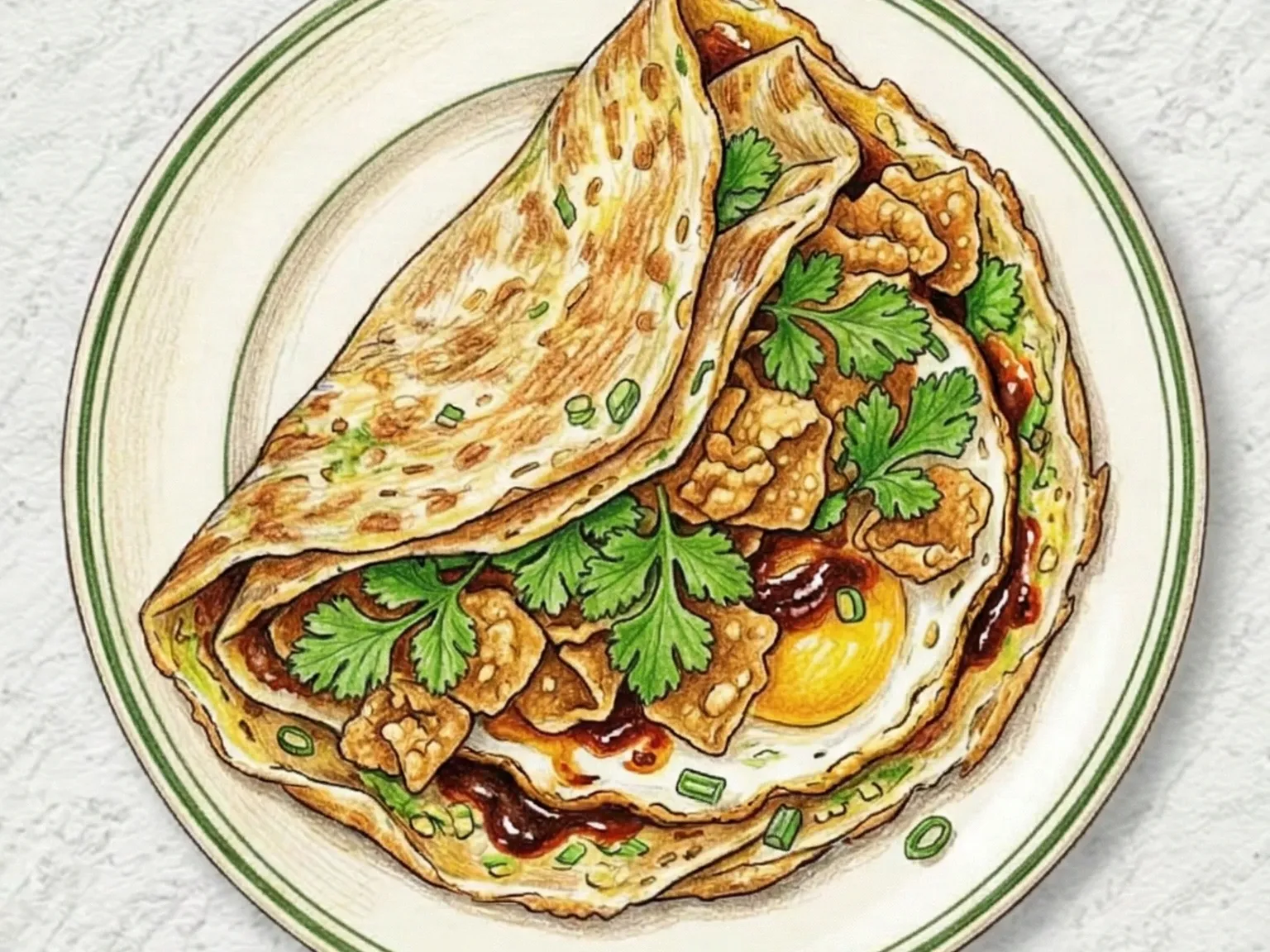
Dan bing is the cornerstone of Taiwan's breakfast culture, sold at nearly every zaocan dian (morning eatery) across the island. For many Taiwanese, no morning is complete without one. A thin wheat-flour batter is spread on a flat griddle, then an egg is cracked directly on top and spread across the crepe. As the egg sets, it bonds with the dough to create a dual texture: slightly chewy pastry on the outside and a soft, custardy egg layer within. Beyond the classic plain version, fillings range from corn and tuna to cheese and bacon, with each stall guarding its own batter recipe that keeps regulars loyal. A brush of soy paste adds salty depth, while a drizzle of chili oil sharpens the overall flavor. At 30-50 TWD (roughly one U.S. dollar), dan bing is assembled in under a minute, making it the grab-and-go fuel of Taiwan's scooter-riding commuters. The minor differences between stalls, the precise thickness of the batter, the exact moment the egg is spread, the ratio of soy paste to chili oil, are what turn a simple street food into a deeply personal daily ritual that regulars return to morning after morning.
Soybean Paste Stew with Clams
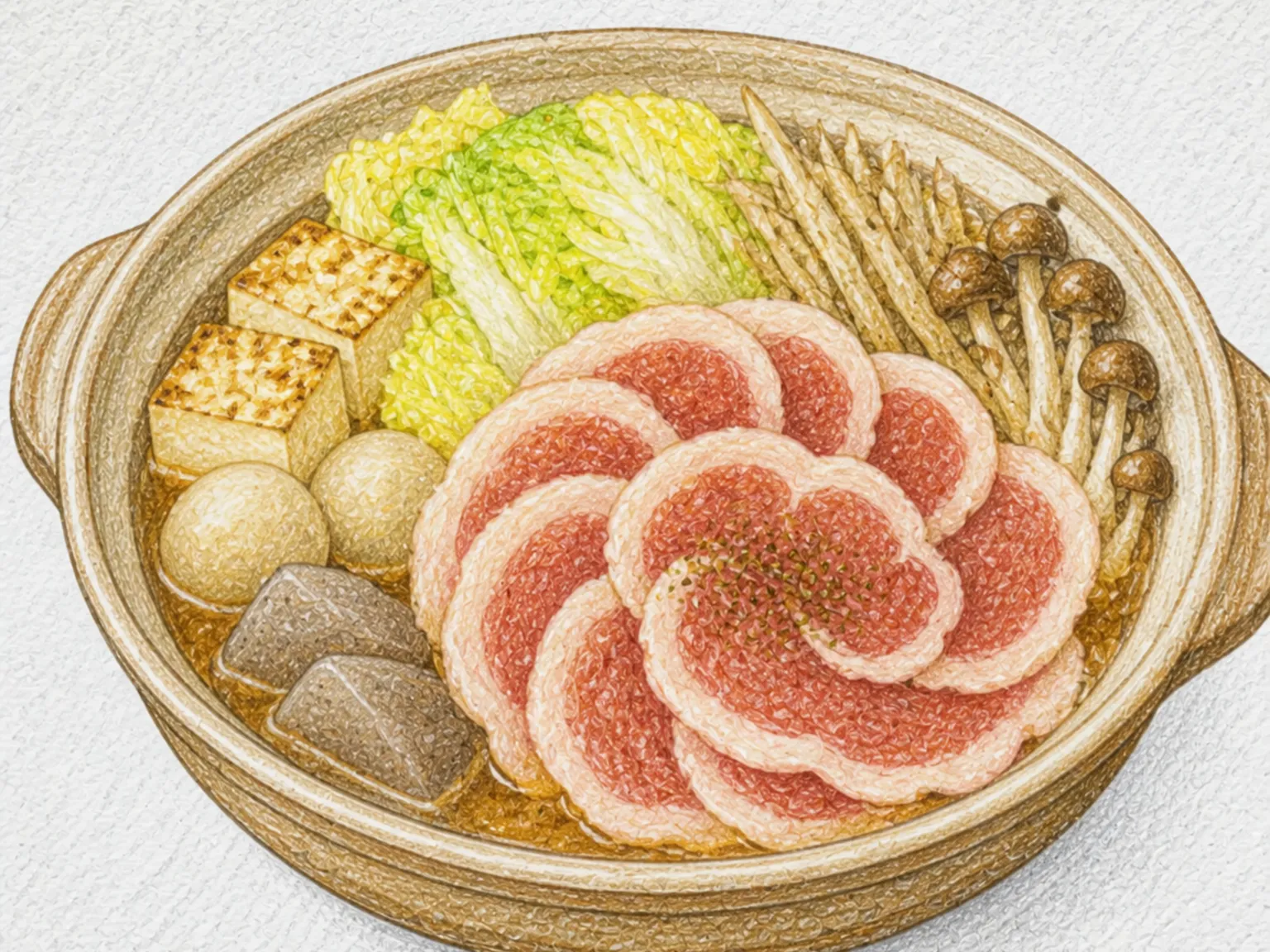
Doenjang jjigae with clams is one of the most frequently made stews in Korean households, built on the combination of fermented soybean paste's deep, earthy flavor and the clean briny umami of manila clams. The clams are purged of sand before being added to a pot of doenjang-laced broth, where they open and release their salty, seawater-flavored liquor directly into the soup. The result transforms the base from something merely savory into something distinctly oceanic and complex. Zucchini softens in the bubbling broth and contributes a natural sweetness as it breaks down, while blocks of soft tofu act as sponges, soaking up the seasoned liquid and releasing it in a burst of hot, flavorful broth when bitten into. Sliced cheongyang chili peppers are added to interrupt the heaviness of the fermented paste and sharpen the overall flavor. The stew is typically served in an earthenware pot while still bubbling, alongside rice. Many Koreans ladle the broth directly over their bowl of rice. The recipe adapts to any season: assembled with leftover summer vegetables from the refrigerator for a lighter version, or cooked piping hot in a stone pot through winter.
Douhua (Silky Tofu Pudding Dessert)
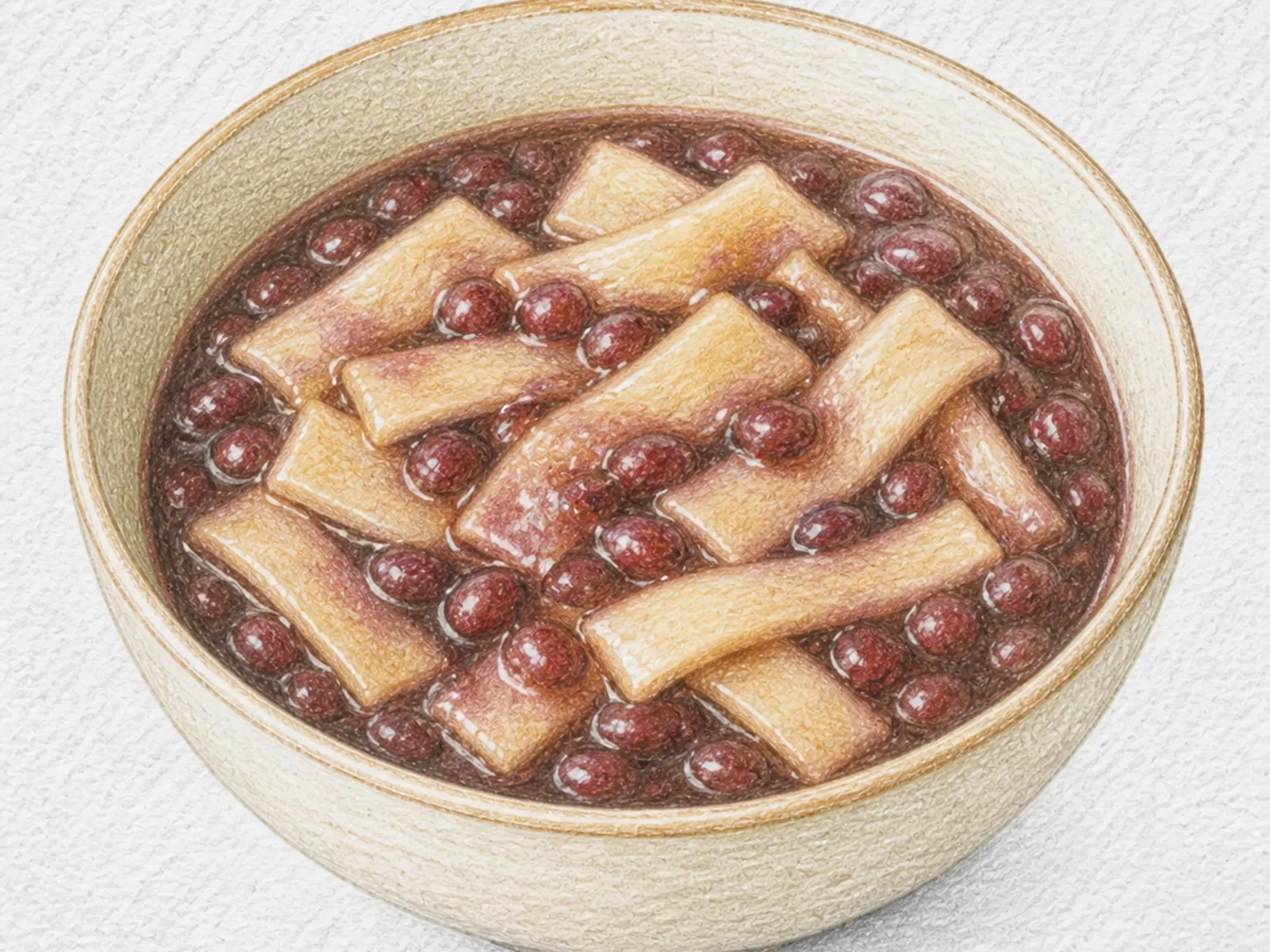
Douhua, known in English as tofu pudding, has anchored the street dessert culture of China, Taiwan, and overseas Chinese communities throughout Southeast Asia for centuries. Freshly pressed soy milk is mixed with a coagulant, typically gypsum or glucono delta-lactone, and left undisturbed at a precise temperature until it solidifies into a curd that sits somewhere between custard and liquid: barely set, trembling on the spoon, yielding to the slightest pressure. The texture is the point. Toppings and serving temperature vary dramatically by region. In Taiwan, the standard version arrives cold, scattered with brown sugar syrup, tapioca pearls, sweet red beans, or boiled peanuts. In Hong Kong, the same curd is ladled into bowls and doused with hot ginger sugar syrup. In Malaysia and Singapore, pandan syrup and longan often appear alongside. The tofu itself contributes almost nothing beyond a faint nuttiness from the soybean; every bowl's personality comes from what surrounds it. Sold for pocket change at night markets across Taiwan, douhua appears effortless but demands close attention during coagulation. Too much heat and the curd turns grainy. Too little and it never firms. The margin between perfect and failed is narrow, and experienced vendors develop an eye for reading the surface of the milk to judge the moment.
Drunken Noodles
Pad kee mao, known outside Thailand as drunken noodles, is a stir-fried rice noodle dish from central Thailand whose name has two competing origin stories: one holds that it was street food eaten late at night to accompany drinking, the other that the ferocious chili heat leaves the eater feeling intoxicated. Wide rice noodles called sen yai are tossed in a screaming-hot wok with fresh chilies, crushed garlic, and protein, and the defining technique is leaving the noodles undisturbed long enough to char slightly where they press against the metal surface, generating a smoky, wok-seared flavor that no other cooking method replicates. Thai holy basil, known as krapao, is a fundamentally different ingredient from Italian basil: it carries a peppery, clove-adjacent sharpness and a faint natural heat, and when it hits a hot wok the volatile oils bloom instantly into the air around the pan. A dark sauce of oyster sauce, soy sauce, fish sauce, and sugar stains the noodles a deep mahogany-brown while building a flavor profile that stacks salt, sweetness, and fermented umami in every strand. In Thailand the dish is made with seafood, pork, or chicken, and a crispy fried egg cooked in a generous pool of oil until the edges lacquer and crunch is placed on top. The yolk is broken and stirred through the noodles at the table, coating everything in a rich, golden layer that softens the heat and ties the dish together. No rice is needed when the noodles already carry this much.
Sichuan Dry-Fried Green Beans
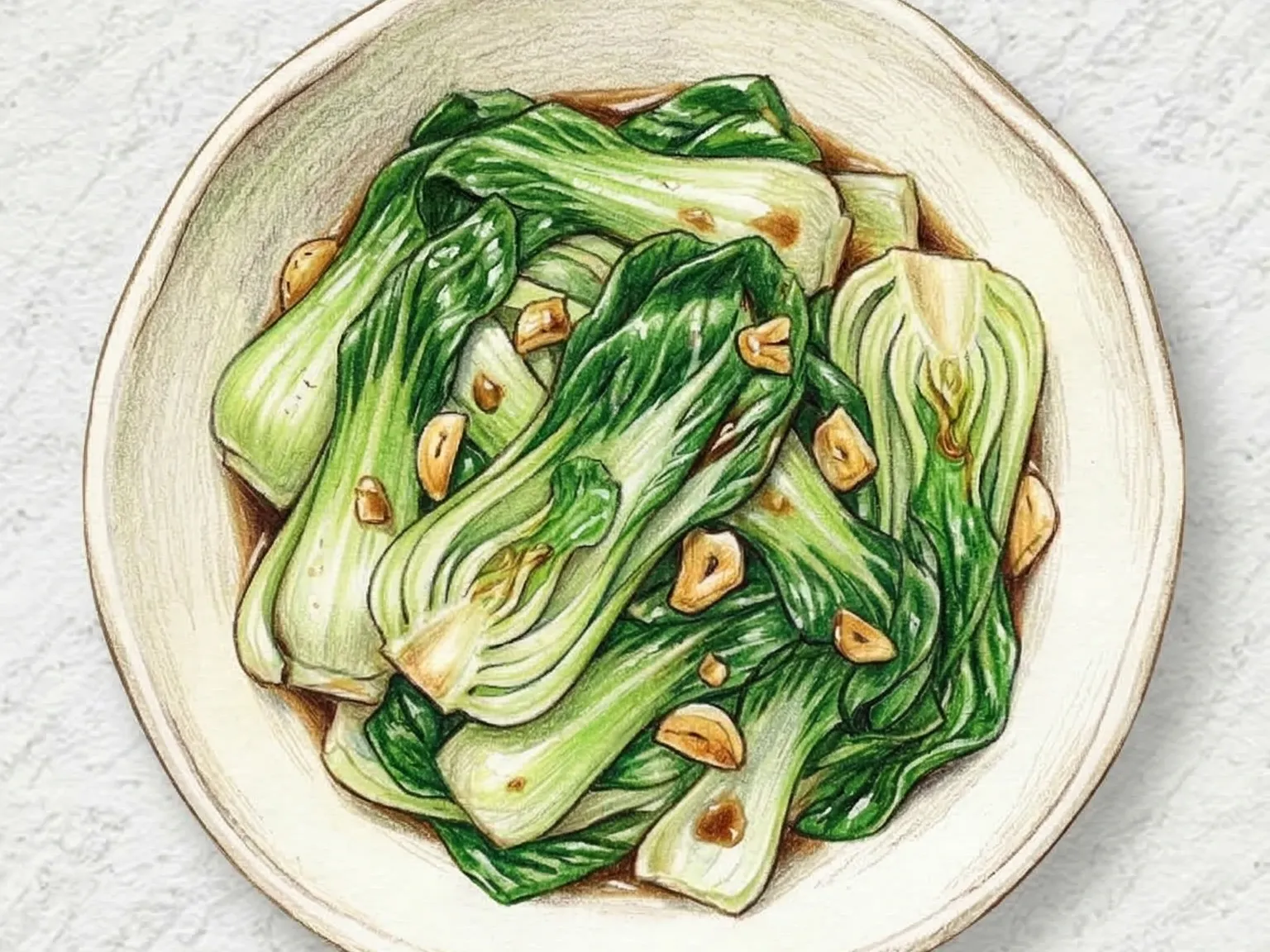
Sichuan dry-fried green beans, gan bian si ji dou, showcase the dry-frying technique at the center of Sichuan home cooking. Beans are blistered in a scorching wok with little or no oil until their skins wrinkle and develop brown spots, a process that drives off moisture and concentrates the natural sweetness locked inside each pod. The exterior collapses from snappy and raw into something chewy and almost leathery, while the interior retains a slight give. Minced pork, ya cai (Sichuan preserved mustard greens), dried red chilies, and Sichuan peppercorns go in during the final minute. The pork adds meaty depth, the ya cai contributes a funky, saline punch, the chilies supply sustained heat, and the peppercorns deliver the characteristic numbing tingle known as ma la that coats every bean surface. If ya cai is unavailable, a spoonful of doubanjiang or finely chopped fermented cabbage provides a comparable layer of fermented salt. The finished dish holds a textural duality that belongs entirely to the gan bian method: tough skin outside, yielding core within. It appears on Chinese restaurant menus as a palate-cleansing vegetable course between heavier meat dishes, and it works just as well as a rice accompaniment or a cold-beer snack.
Japanese-Style Chili Shrimp (Ebi Chili)
Ebi chili was created in the 1970s when Chen Kenmin, a Sichuan-born chef working in Tokyo, adapted the fiery Sichuan prawn stir-fry with doubanjiang to suit Japanese palates. The original Sichuan preparation leads with doubanjiang's raw, aggressive heat, but Chen softened that edge by adding ketchup, beaten egg, and chicken stock, transforming a sharp regional dish into the glossy, gently spiced sauce that became a Japanese staple. Shrimp are lightly coated in cornstarch and flash-passed through hot oil to form a thin shell on the outside. That shell absorbs the sauce during the final toss while protecting the shrimp's firm, springy interior. Minced garlic, ginger, and scallion are fried in oil first to build a deep aromatic base, then doubanjiang is toasted in the same oil until its raw pungency mellows and the oil takes on a deep red color. Ketchup and sugar go in next, followed by chicken stock, and the sauce is reduced until it coats a spoon. The beaten egg stirred in last gives the finished sauce a slightly creamy, silky body. Ebi chili is one of the most recognized items on Japanese teishoku restaurant menus, typically served as a set meal with steamed rice, miso soup, and a small side salad. It is equally common in home kitchens and bento boxes, occupying the kind of everyday familiarity that few other Chinese-inspired dishes have achieved in Japan.
Ebi Fry (Japanese Panko-Crusted Shrimp)
Ebi fry developed during Japan's Meiji era as Western cooking techniques arrived and were reinterpreted through a Japanese lens, becoming one of the defining dishes of yoshoku - the country's own adaptation of European cuisine. Preparation starts by cutting the tendons along the shrimp's belly at several points and pressing each piece flat against a cutting board so it holds a straight, elongated shape when lowered into hot oil rather than curling back on itself. The three-stage coating of flour, egg wash, and coarse panko breadcrumbs is central to the dish's character: panko's jagged, irregular flakes puff and expand in hot oil, producing a crust that is unmistakably lighter and more open-textured than anything made with fine Western breadcrumbs. Because the shrimp fries quickly at high temperature, the flesh stays fully moist and snaps with a satisfying springiness when bitten. Tartar sauce, with its creamy acidity and flecks of pickled vegetables, offsets the richness of the crust, while tonkatsu sauce takes the flavor in a sweeter, fruitier direction. The dish migrates easily across formats: tucked into bento boxes as a daily side, placed on top of curry rice for an ebi fry curry, or layered into soft milk bread as an ebi katsu sando. Its staying power in Japanese home cooking and restaurant menus alike reflects how thoroughly yoshoku dishes have become part of everyday Japanese food culture.
Japanese Shrimp with Mayo
Ebi mayo was invented by Hong Kong-born chef Chou Yuanji while working in Japan, fusing Cantonese prawn cookery with the rich creaminess of Japanese mayonnaise. Shrimp are coated in cornstarch and deep-fried until the shell crackles, then tossed in a sauce of mayonnaise, condensed milk, and lemon juice. The condensed milk tempers the mayo's tang and adds a gentle sweetness. Japanese Kewpie mayonnaise, made with egg yolks only rather than whole eggs, is denser and more umami-rich than Western varieties, and this difference is what gives ebi mayo sauce its distinctive body. The crispy starch coating absorbs the thick sauce on the surface while the shrimp beneath stays springy, creating a two-layered texture -- creamy on first contact, then bouncy when the teeth reach the center. Ebi mayo is a staple of izakaya menus and Chinese restaurants in Japan, and has crossed into convenience-store bento boxes and onigiri fillings as one of the country's most ubiquitous fusion flavors.
Bibingka (Filipino Coconut Rice Cake)
Bibingka is a Filipino baked rice cake that belongs almost entirely to the Christmas season, sold warm from clay-pot stalls outside churches after Simbang Gabi, the nine-day series of dawn masses leading up to Christmas Day. For Filipinos, the smell of bibingka cooking over charcoal at four in the morning is inseparable from the feeling of the holiday itself. The batter is made from ground rice flour mixed with coconut milk, eggs, and sugar, then poured into a clay pot lined with fresh banana leaves. The pot sits between two layers of live charcoal - one below and one held above on a metal lid - so both surfaces cook simultaneously. This top-and-bottom heat is what gives bibingka its characteristic crust: lightly charred and fragrant on the outside from the banana leaves, moist and tender within. As the batter cooks, the banana leaves release a vegetal green fragrance that infuses into the rice cake and leaves faint dark marks on the underside. Midway through cooking, slices of salted duck egg are pressed into the surface alongside fresh coconut shavings, then a brush of butter is applied and the cake returns to the heat. During this final pass the sugars in the butter and batter caramelize at the edges, producing a triple wave of banana leaf, coconut, and butter aromas. The finished texture sits somewhere between a glutinous rice cake and a sponge cake - slightly sticky and chewy yet airy and soft. The salted egg cuts through the sweetness and gives each bite a complexity that plain sweetness alone cannot provide. Bibingka vendors outside Philippine churches in December, tending glowing braziers in the pre-dawn darkness, are one of the country's most enduring Christmas images.
Amritsari Fish Fry (Spiced Chickpea-Batter Fish)
Amritsari fish fry originated in Amritsar, the Punjabi city of the Golden Temple, where the narrow lanes surrounding Harmandir Sahib are still packed with fish fry stalls whose frying kadhai fill the air with spice-scented smoke. The dish moved from street corner to pub counter and became one of the most-ordered bar snacks across North India. Freshwater fish varieties such as singara, sole, or pangasius are typical; the fish is marinated in ajwain (carom seeds), chili powder, amchur (dried mango powder), and ginger-garlic paste before being dipped in a besan (gram flour) batter and fried in hot oil. Ajwain suppresses the muddy, fishy notes characteristic of freshwater varieties while depositing a herbal, thyme-adjacent aroma that is unlike any other spice in the marinade. Amchur introduces a dry tartness that cuts through the richness of the fried batter and keeps the overall flavor from becoming heavy. Besan batter adheres in a thinner, more delicate layer than wheat flour and retains its crunch for longer, allowing the fish inside to steam gently and stay moist. Squeezing lemon over the fish and dipping it into mint-coriander chutney before each bite stacks heat, sourness, and herb freshness in a single mouthful. Visiting Amritsar and stopping at one of these stalls after the Golden Temple is a ritual that has remained part of local daily life for generations.
Fish Head Curry (Coconut Tamarind Curry)
Fish head curry was born in 1940s Singapore when M.J. Gomez, a Keralite immigrant, noticed his Chinese customers' preference for fish heads and merged it with a South Indian curry base, creating a dish that belongs to no single culture yet has become distinctly Singapore's own. A whole snapper head, sometimes weighing over a kilogram, simmers in a thick gravy of coconut milk, tamarind, curry leaves, fennel seeds, and fish curry powder. The collagen from the head dissolves into the broth and gives it a sticky, lip-coating richness. The cheek meat and the gelatinous flesh around the eyes absorb the most curry and are the most prized portions at the table, claimed first by Indian, Malay, and Chinese diners alike. Okra, eggplant, and tomato stew alongside, and each vegetable interacts with the gravy differently: okra thickens, eggplant absorbs like a sponge, and tomato contributes fruity acidity. The dish is traditionally served on a banana leaf with steamed rice at restaurants along Singapore's Little India, where the head arrives in a clay pot still bubbling from the kitchen.