Side dishes Recipes
624 recipes. Page 10 of 26
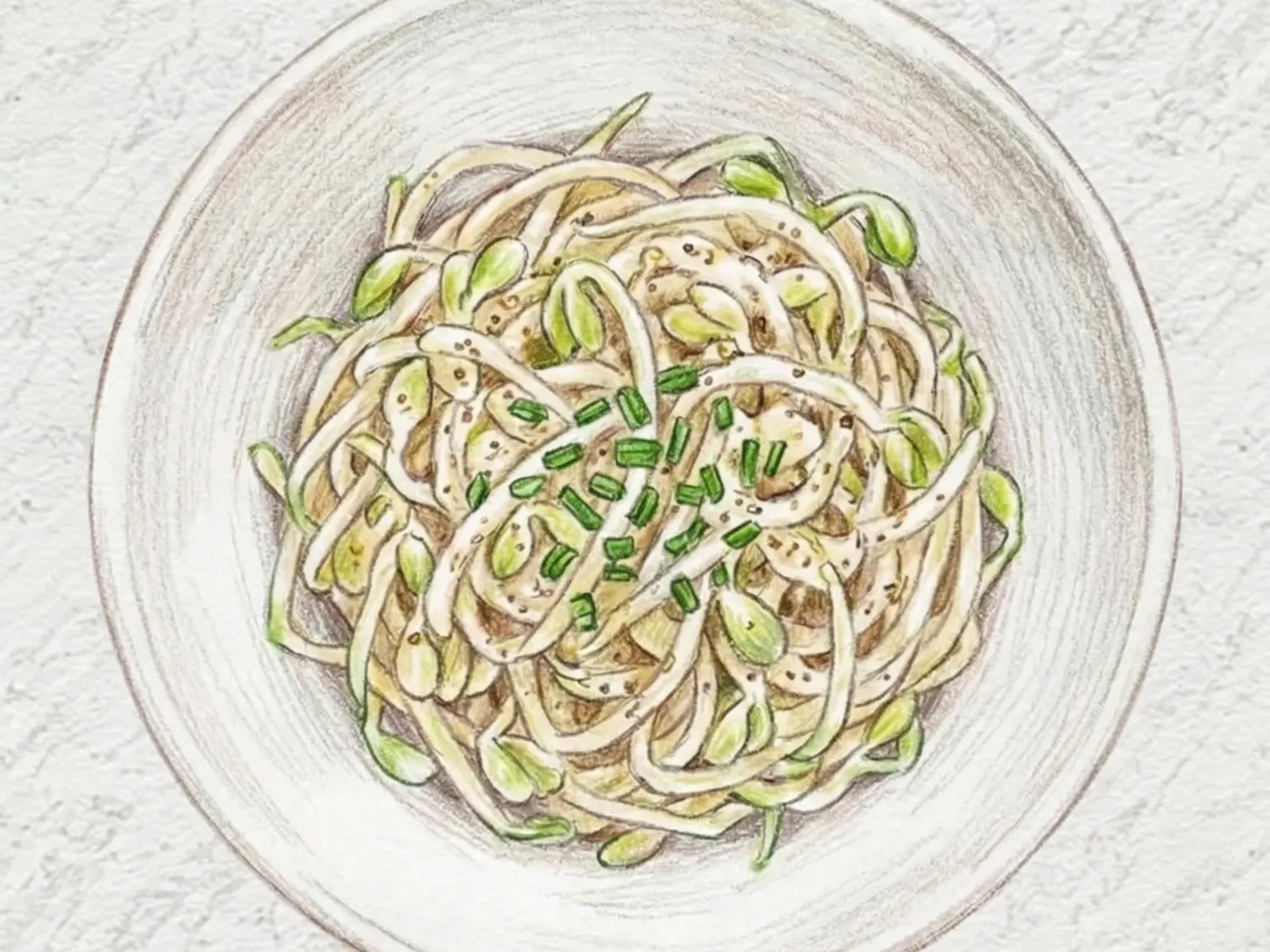
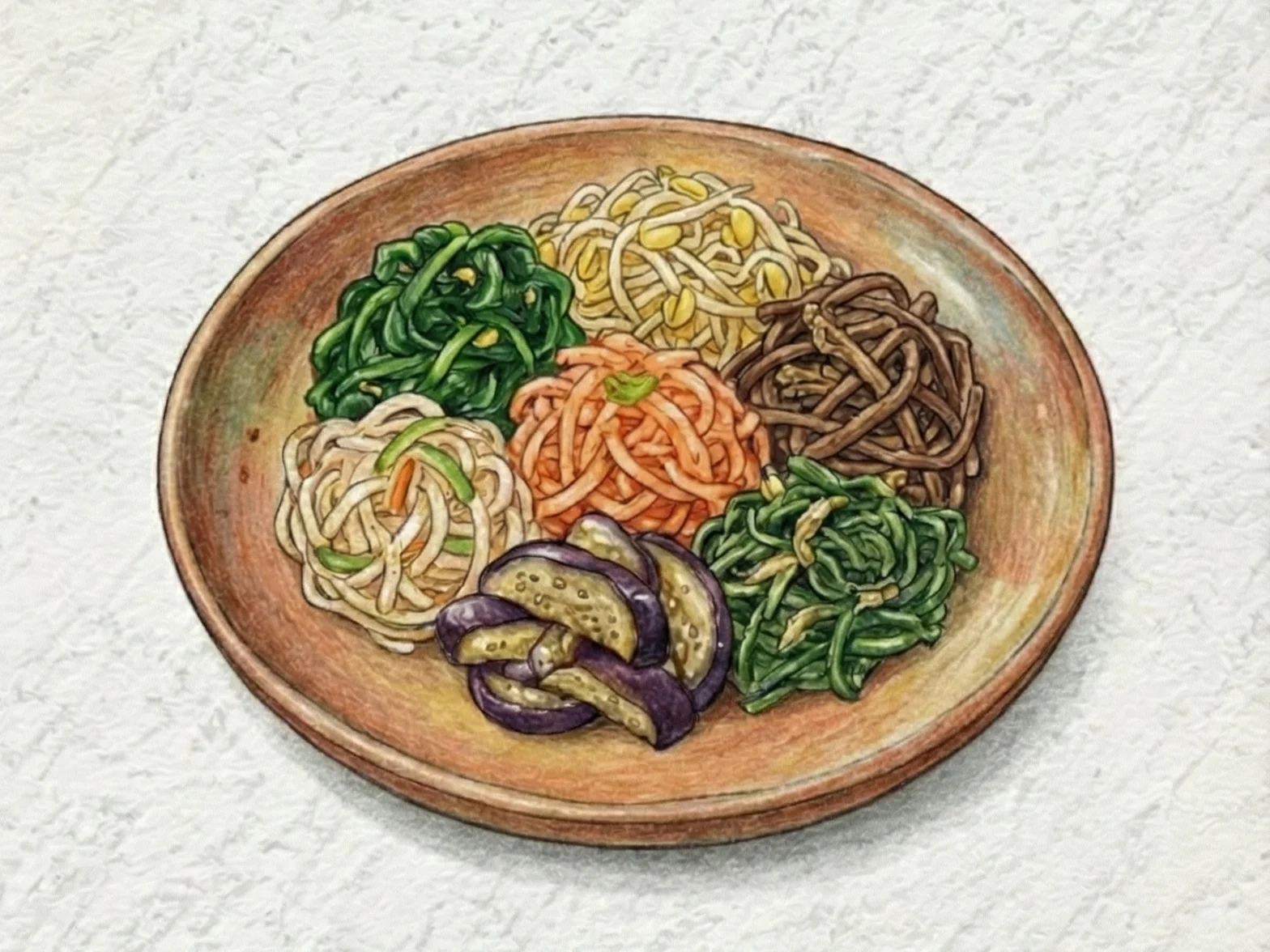
Side dishes (banchan) are the heart of Korean dining culture. A typical meal features multiple small plates - seasoned vegetables (namul), braised dishes (jorim), pickled items, and salted seafood. Classics like spinach namul, bean sprout salad, and stir-fried anchovies can be prepared in advance and enjoyed over several days.
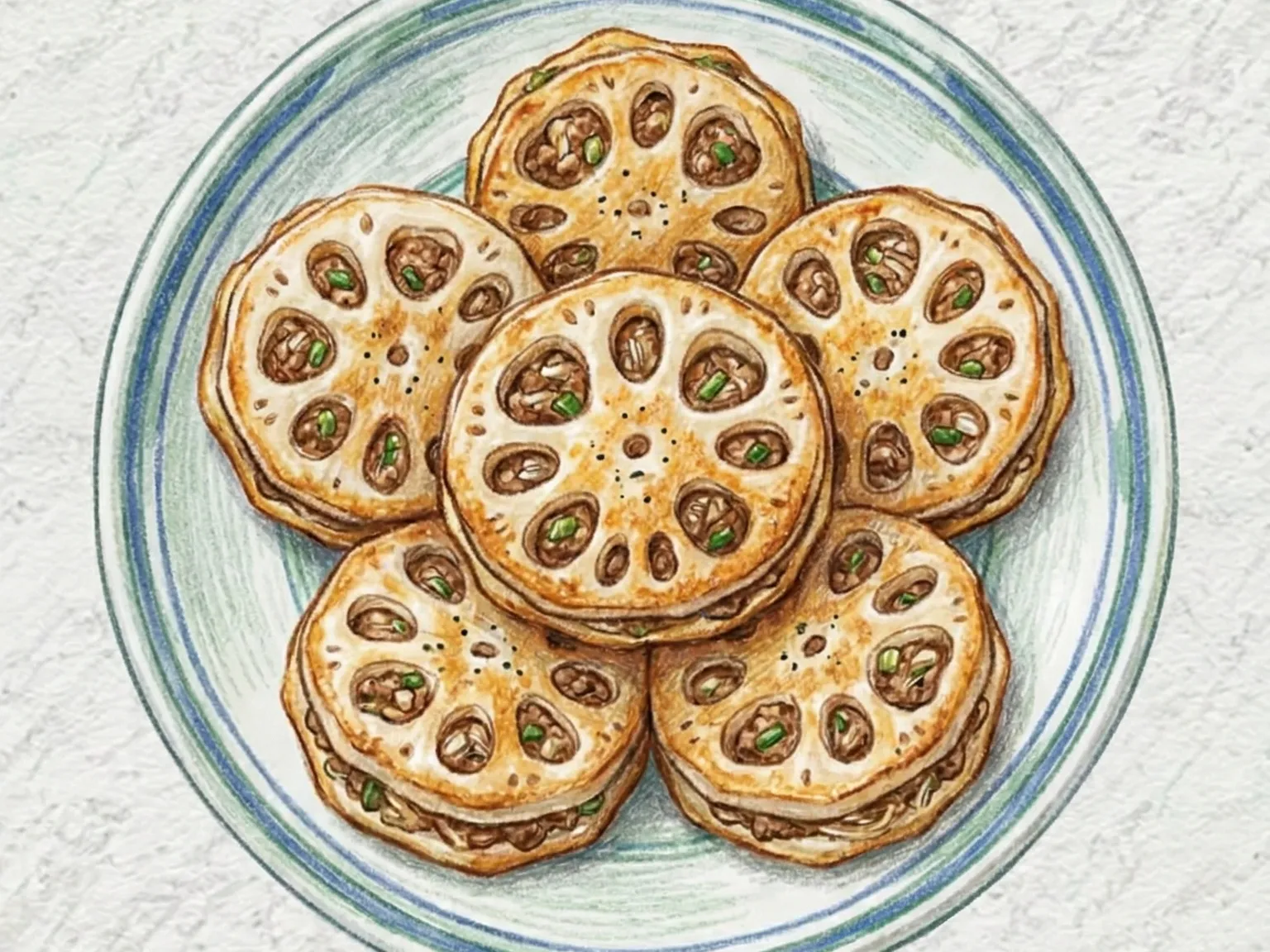
Korean Lotus Root Beef Pancake
Sliced lotus root is sandwiched with seasoned ground beef, coated in pancake batter and egg, then pan-fried until golden. The lotus root keeps its crunch even after cooking, so the texture contrast with the soft beef filling is distinct in every bite. Soy sauce and minced garlic season the filling so the jeon is fully flavored on its own without a dipping sauce. Chopped green onion is worked into the beef for a fresh aromatic note. The lotus root hole pattern fills with meat during assembly, making each cross-section visually clean and precise. The egg coating browns smoothly around the outside, giving a tender rather than crisp exterior.
Korean Soy-Braised Pork Loin Strips
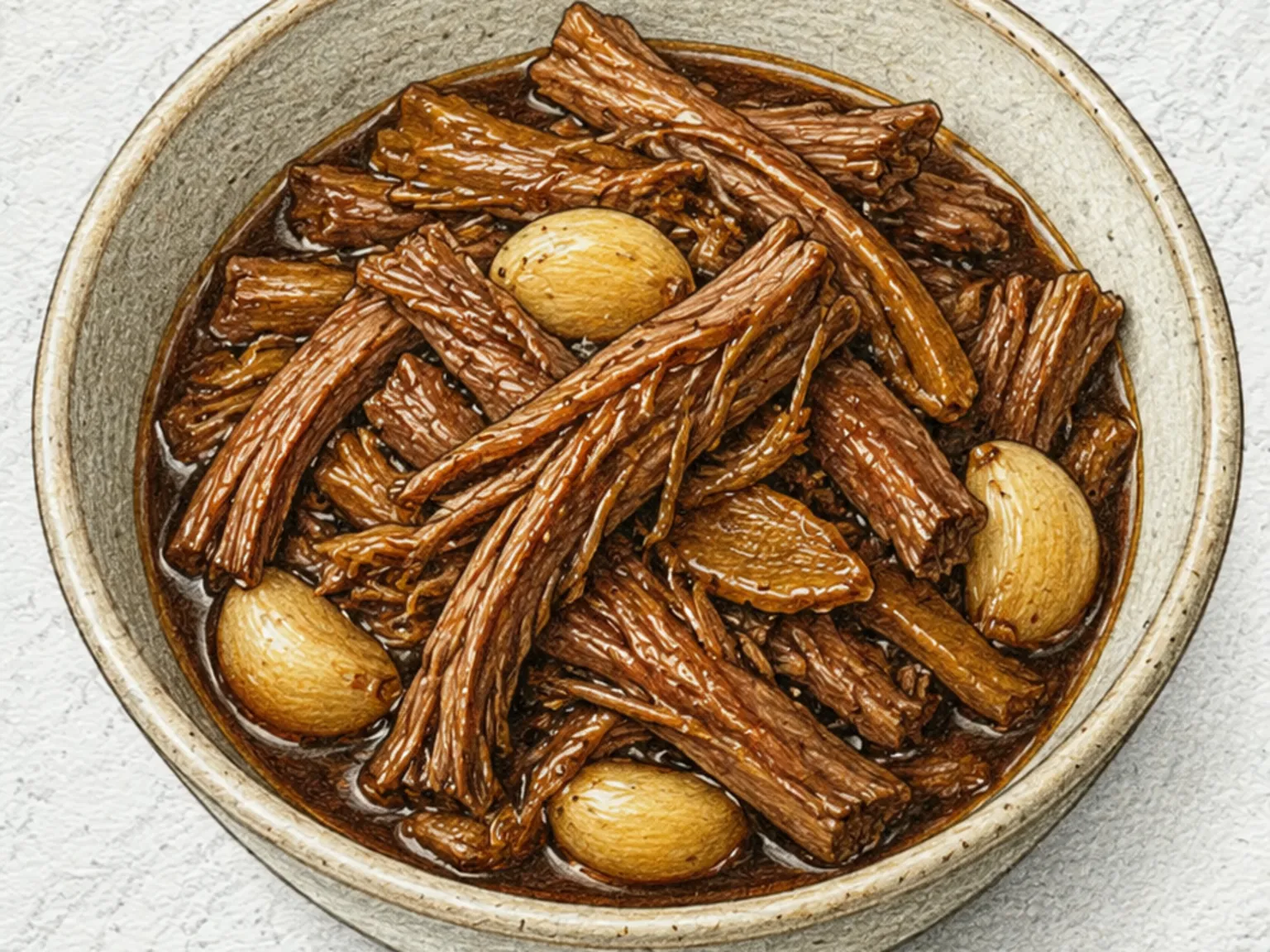
Dwaejigogi jangjorim is a Korean soy-braised pork dish made by simmering pork loin with whole garlic cloves, ginger, and cooking rice wine until the meat is completely tender. The pork is first boiled whole with enough water to fully submerge it, skimming the foam that rises to keep the braising liquid clean, then shredded along the grain and returned to the reduced soy liquid for a second round of simmering. Shredding along the grain rather than against it gives each strand more surface area to absorb the seasoned liquid, resulting in deeper, more even flavor throughout. The rice wine neutralizes the pork's gaminess from the start, while the whole garlic cloves soften completely during the long braise, turning mellow and spreadable. This dish keeps well refrigerated for several days and is typically served cold or at room temperature, making it a convenient banchan to portion out over multiple meals.
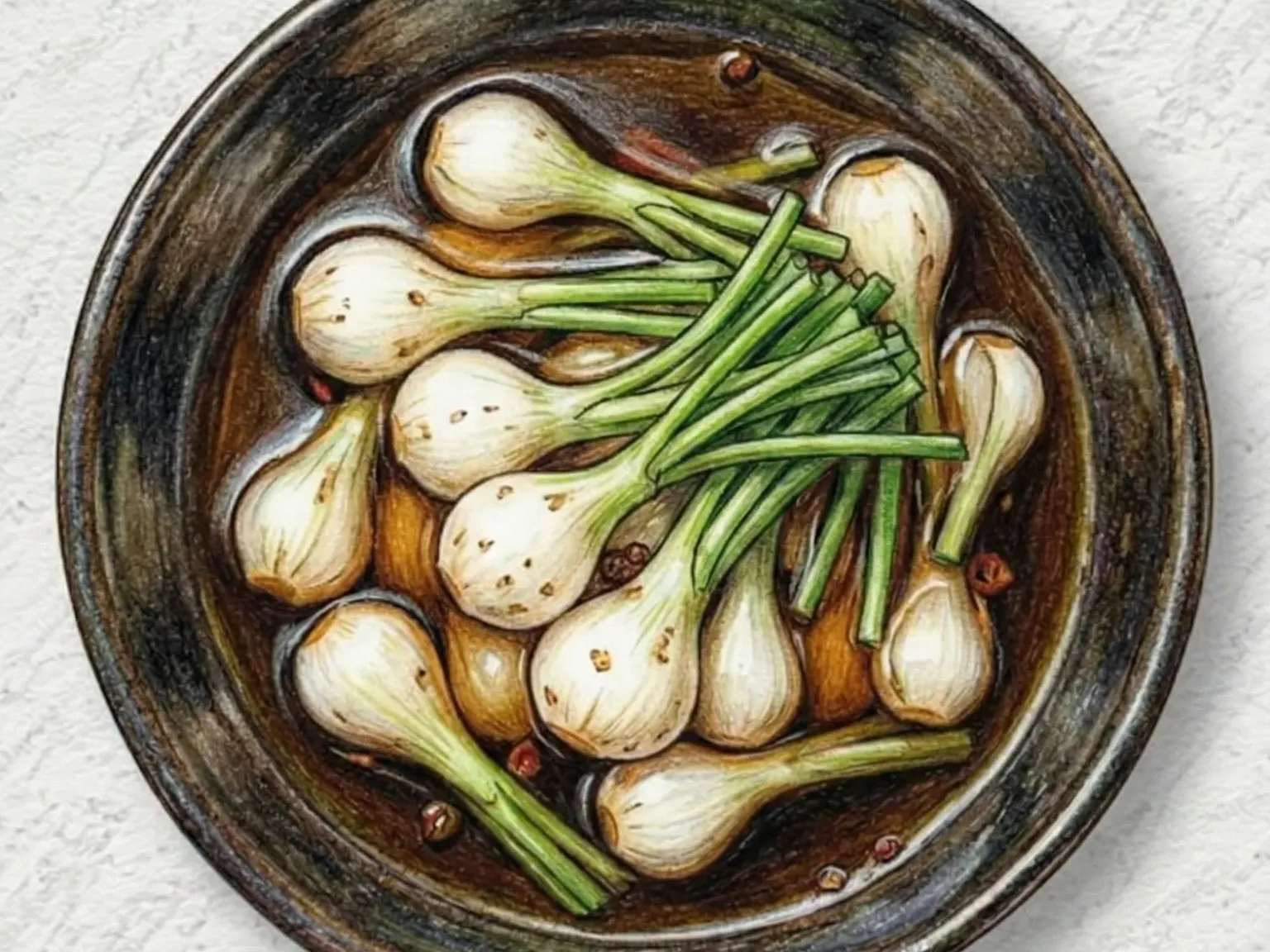
Korean Pickled Green Onion
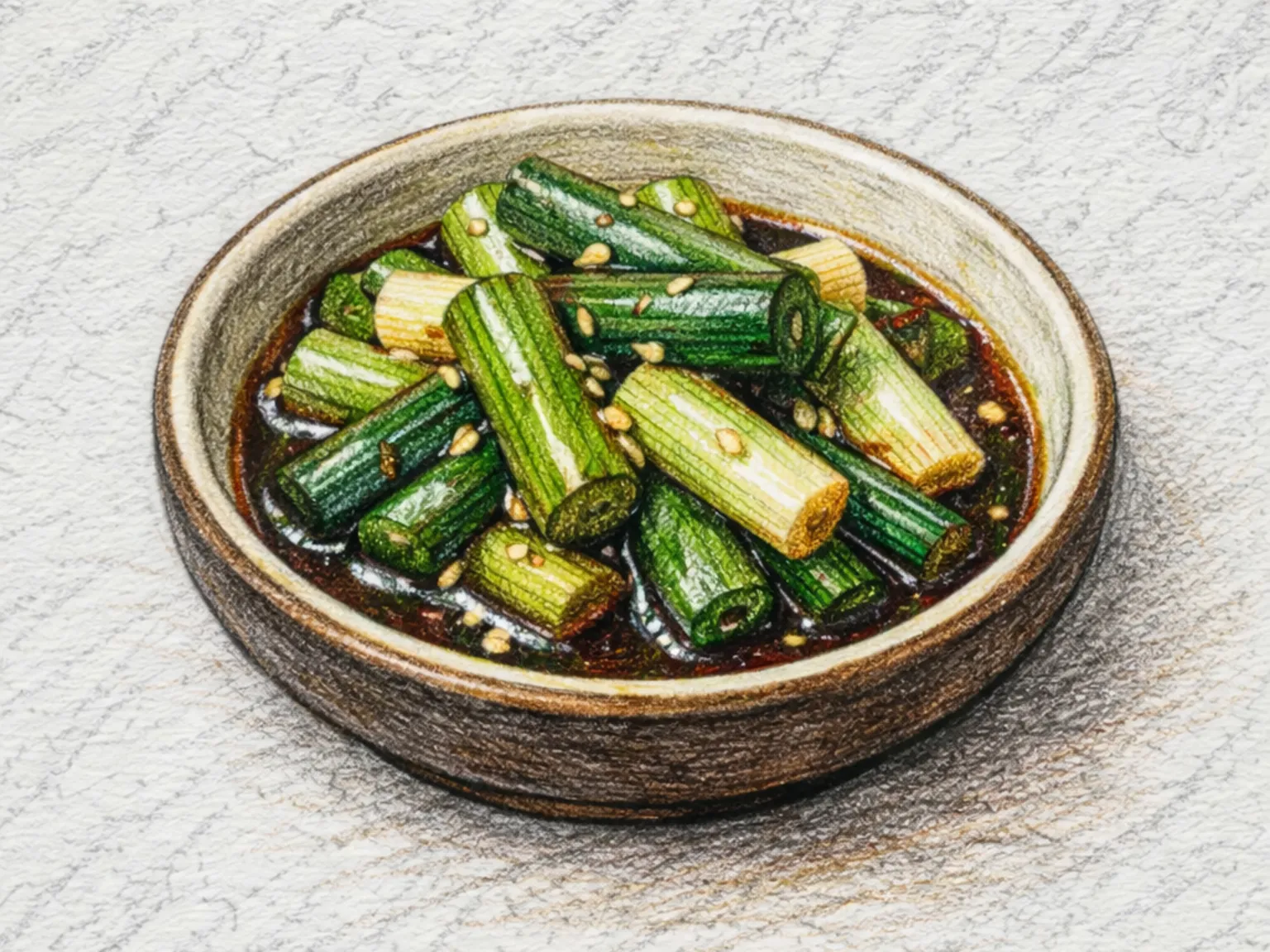
Daepa jangajji is a quick Korean pickle made by cutting large green onions into five-centimeter lengths and submerging them in a cooled brine of soy sauce, vinegar, and sugar with garlic and dried chili. Using primarily the white portions yields a firmer, crisper result, and the brine must be cooled thoroughly before pouring to prevent the onions from wilting prematurely. The soy and vinegar together pull back the raw sharpness of the green onion while leaving its aromatic depth intact. Two days of refrigeration allow the seasoning to penetrate evenly throughout each piece. The result is a sharp, savory condiment that cuts through the fat of grilled pork belly or other rich meats, and its simple ingredient list makes it one of the most practical quick-pickles to keep on hand.
Korean Seasoned Bellflower Root
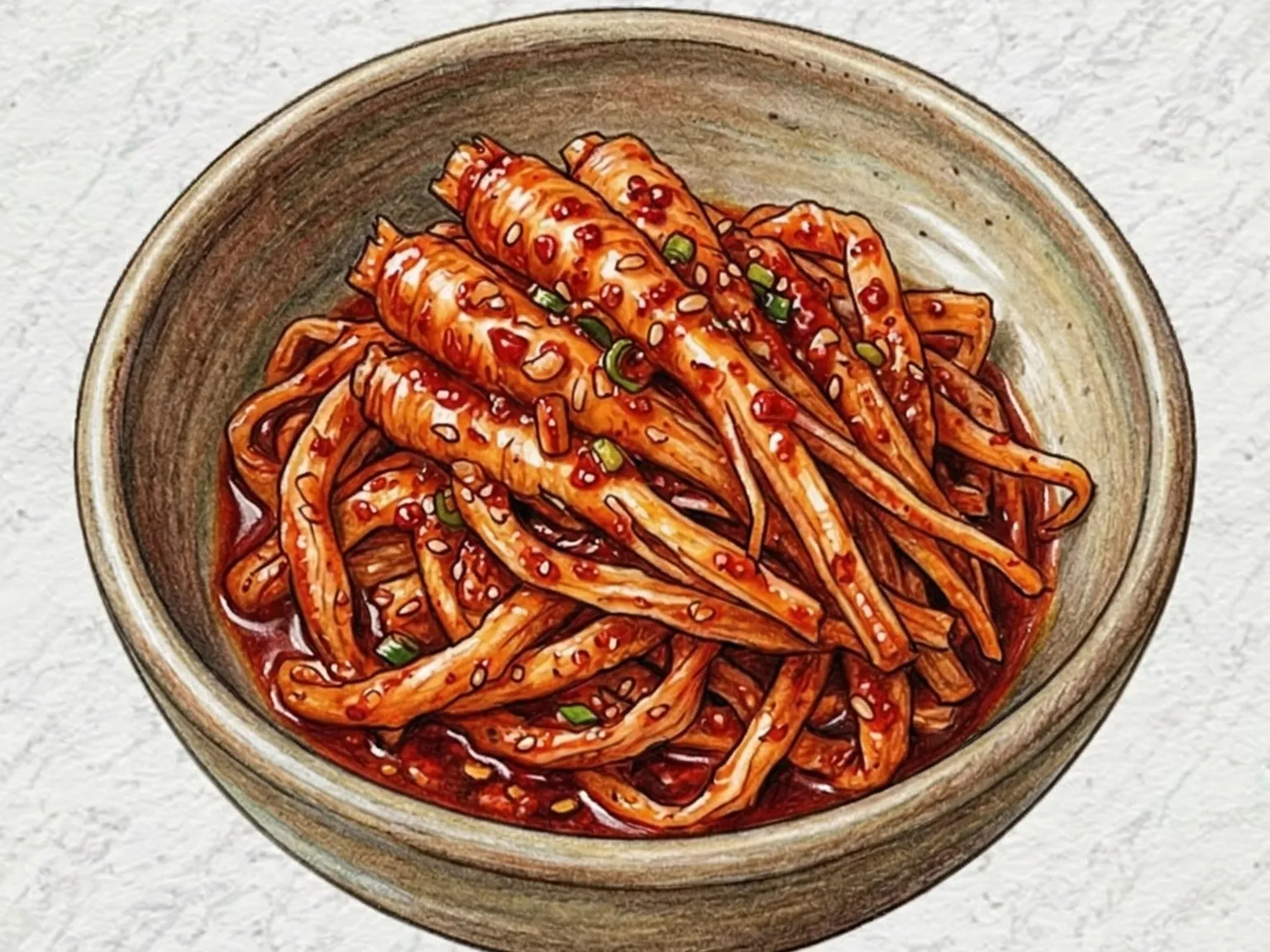
Doraji -- balloon flower root -- has been used in Korean cooking since the Goryeo dynasty, valued as both a medicinal herb and a staple namul ingredient. Unlike doraji-bokkeum, which stir-fries the root with gochujang and heat, this cold muchim preserves the characteristic firm, snappy crunch that makes doraji distinctive. The roots are shredded along the grain into thin strips, then vigorously rubbed with salt to draw out the saponins responsible for their sharp bitterness, and rinsed multiple times until the water runs clear. A seasoning of gochujang, vinegar, sugar, and sesame oil works into each fibrous strand, layering sweet, sour, and spicy notes over the residual earthiness of the root. This banchan appears on both Chuseok and Seollal holiday tables as one of the five-color namul, where the white of the doraji root represents the metal element in the five-phase system. Because the root holds its crunch well, this dish can be prepared ahead of time without losing texture, making it a practical choice for large gatherings.
Korean Aster Greens Beef Stir-fry
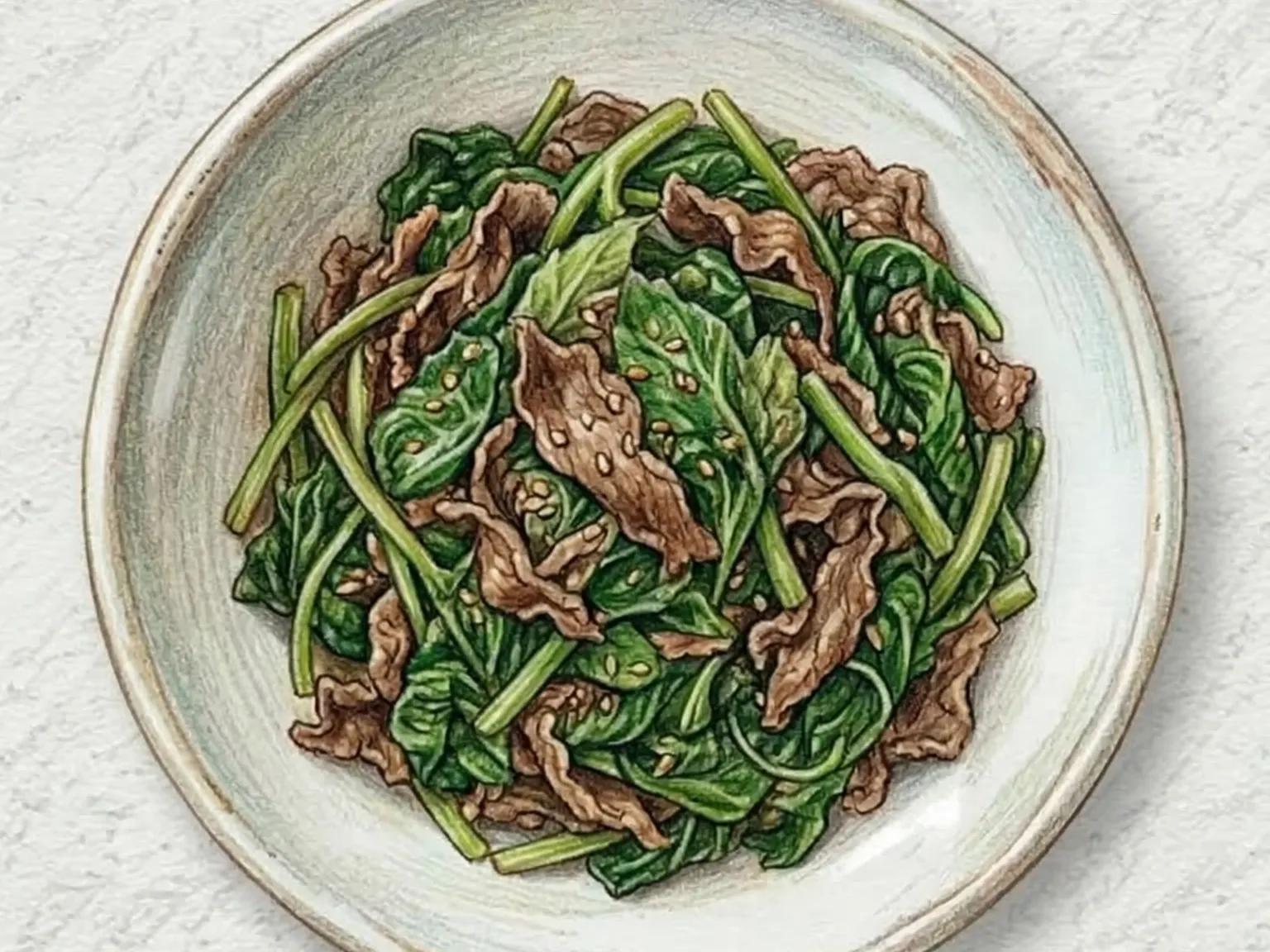
Chwinamul sogogi bokkeum sears thin soy-marinated beef before adding blanched aster greens and reducing the remaining pan liquid to a light coating. Two hundred fifty grams blanched chwinamul is squeezed only until it stops dripping, then cut into 5 cm lengths. Two hundred twenty grams beef slices is separated and marinated for 10 minutes with 1 tablespoon soy sauce, 1 tablespoon cooking wine, and 0.5 tablespoon minced garlic. A pan is heated over high before 1 tablespoon perilla oil, 120 g onion, and the remaining garlic cook for 1 minute without letting the garlic brown. The beef is spread widely and left in place for about 2 minutes. Once its edges color, the slices are turned and stir-fried for 1 more minute. The chwinamul and the remaining 1 tablespoon soy sauce are added, and the heat is lowered to medium. After 3 to 4 minutes, the liquid at the bottom should have reduced to a thin coating rather than a pool. The burner is switched off, and the remaining 0.5 tablespoon perilla oil and 1 teaspoon sesame seeds are folded through. Squeezing the greens only to the point of no dripping keeps them from drying out, while reducing the pan liquid at the end prevents their moisture from diluting the seasoning.
Korean Butter Soy Grilled King Oyster Mushrooms
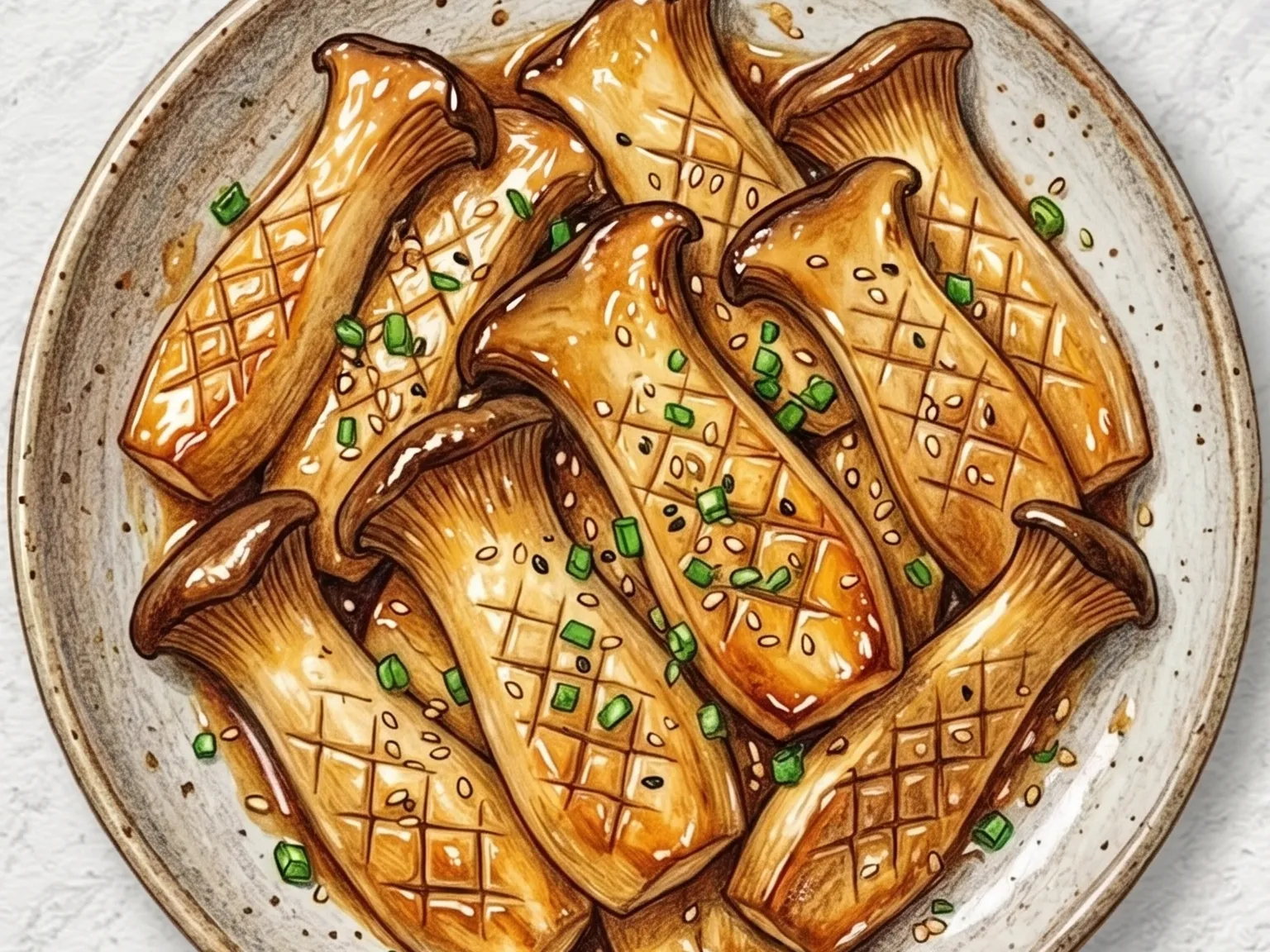
Three king oyster mushrooms are quartered lengthwise, scored on the surface, and seared in butter until golden on one side. After flipping, the remaining butter joins a sauce of soy sauce, oligosaccharide syrup, minced garlic, and black pepper, which reduces into a glossy glaze that coats every groove cut into the mushroom flesh. The scoring allows the sweet-salty sauce to penetrate deeper, so each bite releases a concentrated burst of buttery umami. King oyster mushrooms hold their dense, meaty chew even after cooking, making this dish satisfying without any actual meat. A final scattering of scallion and sesame seeds adds freshness and textural contrast.
Butterbur Stem Jeon
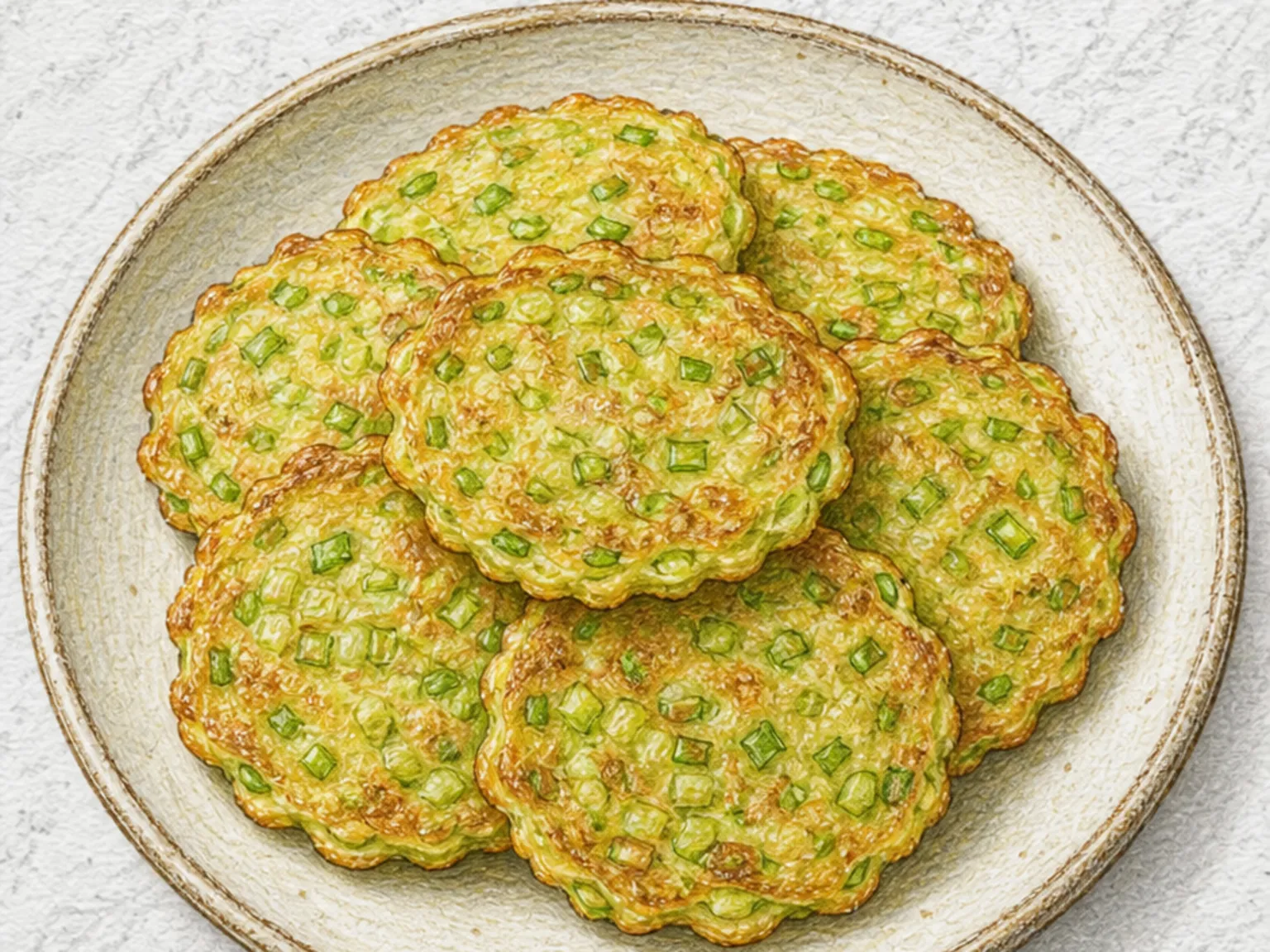
Butterbur stem jeon is a bite-sized pan-fried pancake made by peeling and blanching butterbur stems, chopping them finely, and folding them into an egg batter. Remove the fibrous outer skin from 200g butterbur stems and blanch them in boiling water for 5 minutes. Transfer them to cold water, soak for 1 hour, and squeeze them thoroughly by hand. Water left in the stems would loosen the measured batter and cause the portions to spread in the pan, so drain this ingredient carefully. Cut the prepared stems into 1cm pieces and slice 10g red chili thinly for the garnish. In a bowl, mix 120g Korean pancake mix, 150ml cold water, 1 egg, and 2g salt until no dry lumps remain. Fold in the chopped butterbur so every piece is coated. Heat a pan, add 30ml cooking oil, and spoon in bite-sized portions of batter. Cook over medium-low heat until the underside is golden and firm enough to turn without breaking apart. Place the red chili slices on top just before flipping, then cook the second side until golden with crisp edges. Maintain medium-low heat so the center of each pancake cooks through instead of using high heat to color only the outside. Cold water in the batter and a sufficient layer of cooking oil support the crisp edge described in this method.
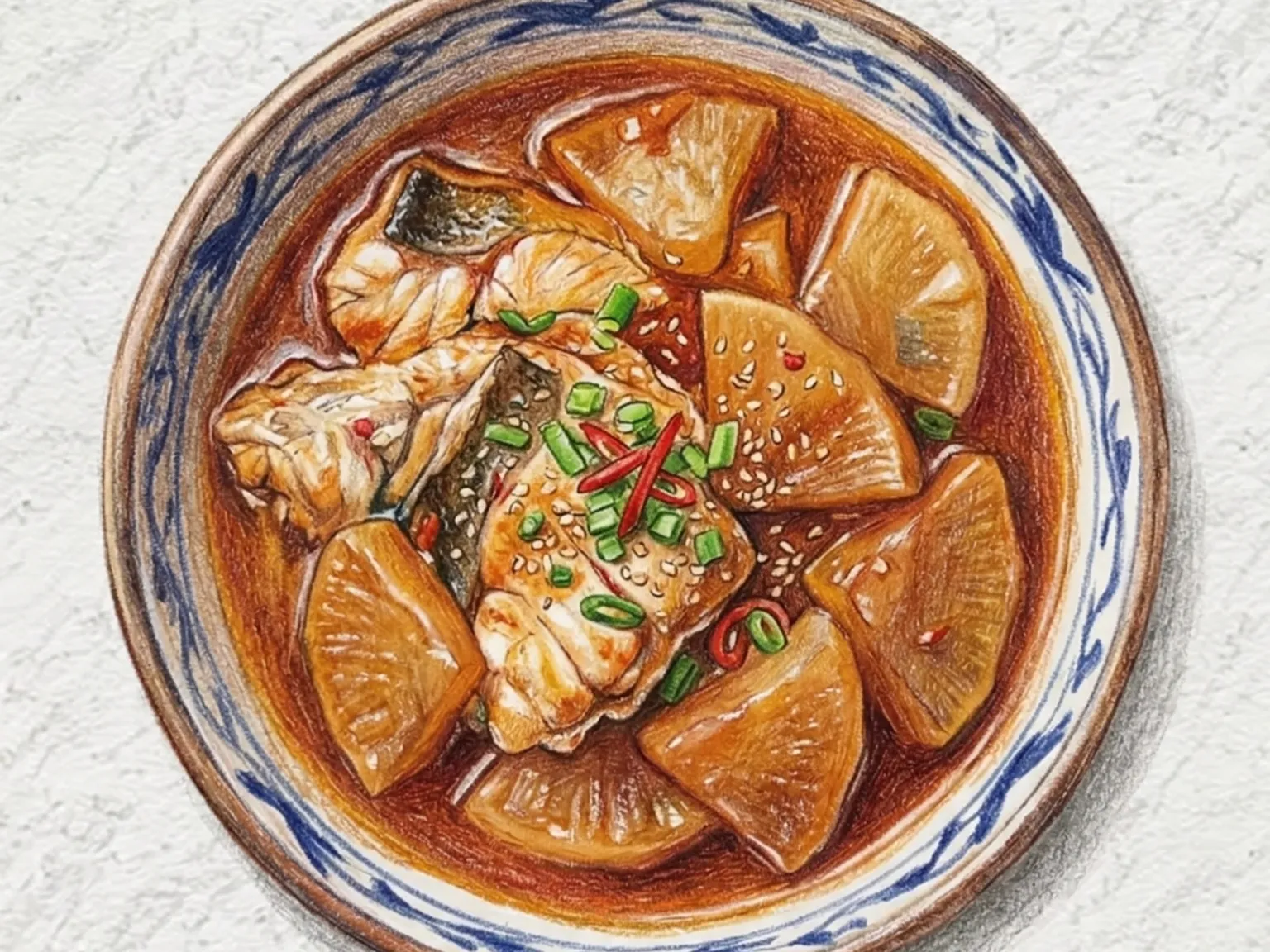
Korean Braised Flounder with Radish
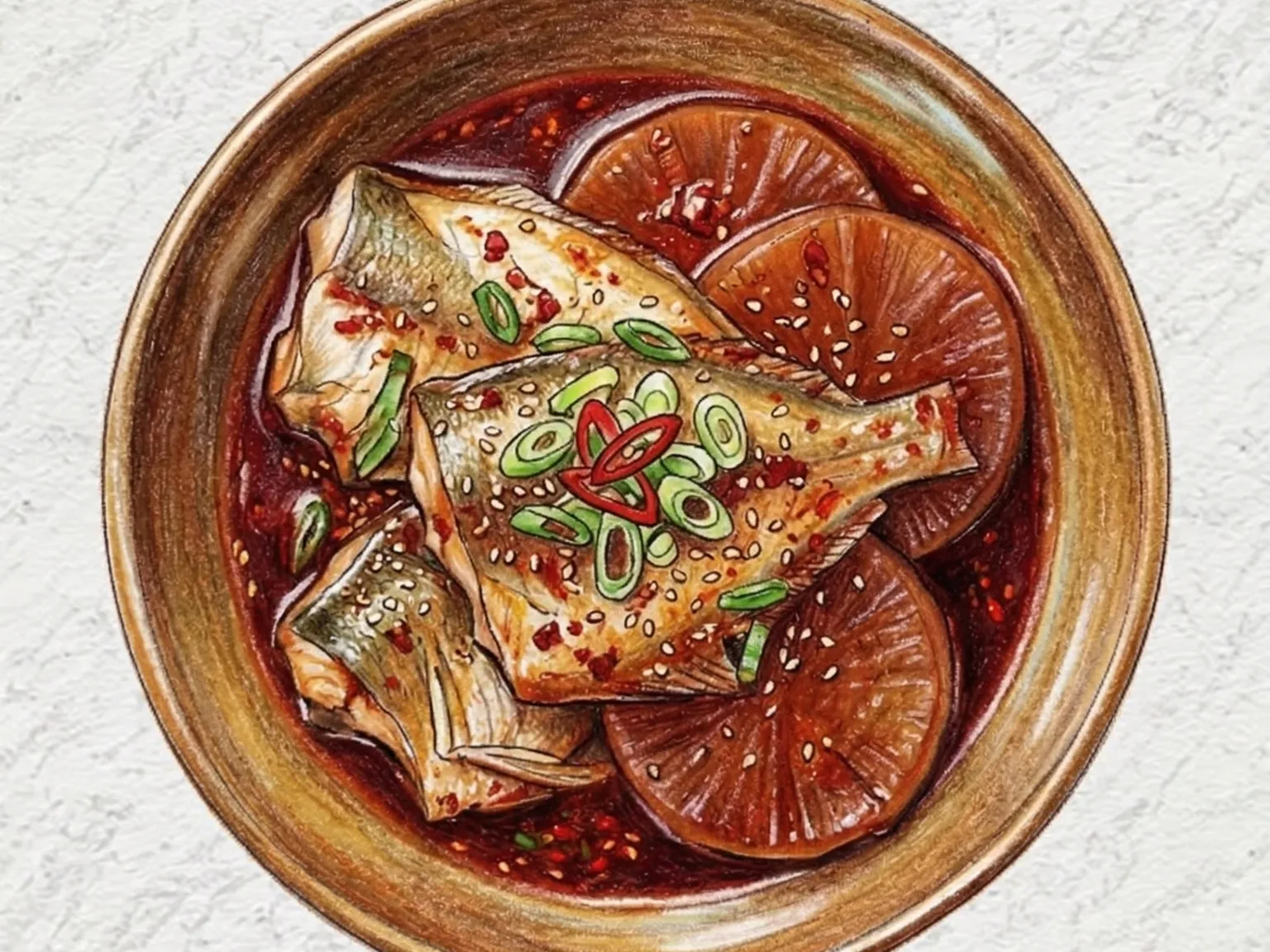
Gajami-jorim is a Korean braised flounder dish where the fish is gently simmered with Korean radish in a soy sauce and chili flake broth. The delicate flounder flesh absorbs the seasoning deeply while careful low-heat cooking prevents it from breaking apart. Radish serves a dual purpose in the dish: it draws out and neutralizes the fishy odor while contributing a clean, refreshing sweetness that adds depth to the braising liquid. Spooning the reduced sauce over rice makes it a complete, standalone meal without the need for additional side dishes. Because flounder fillets are thin, the braising time is short, and the heat should be turned off once the liquid has reduced by at least half to keep the flesh moist and tender.
Korean Green Onion Kimchi
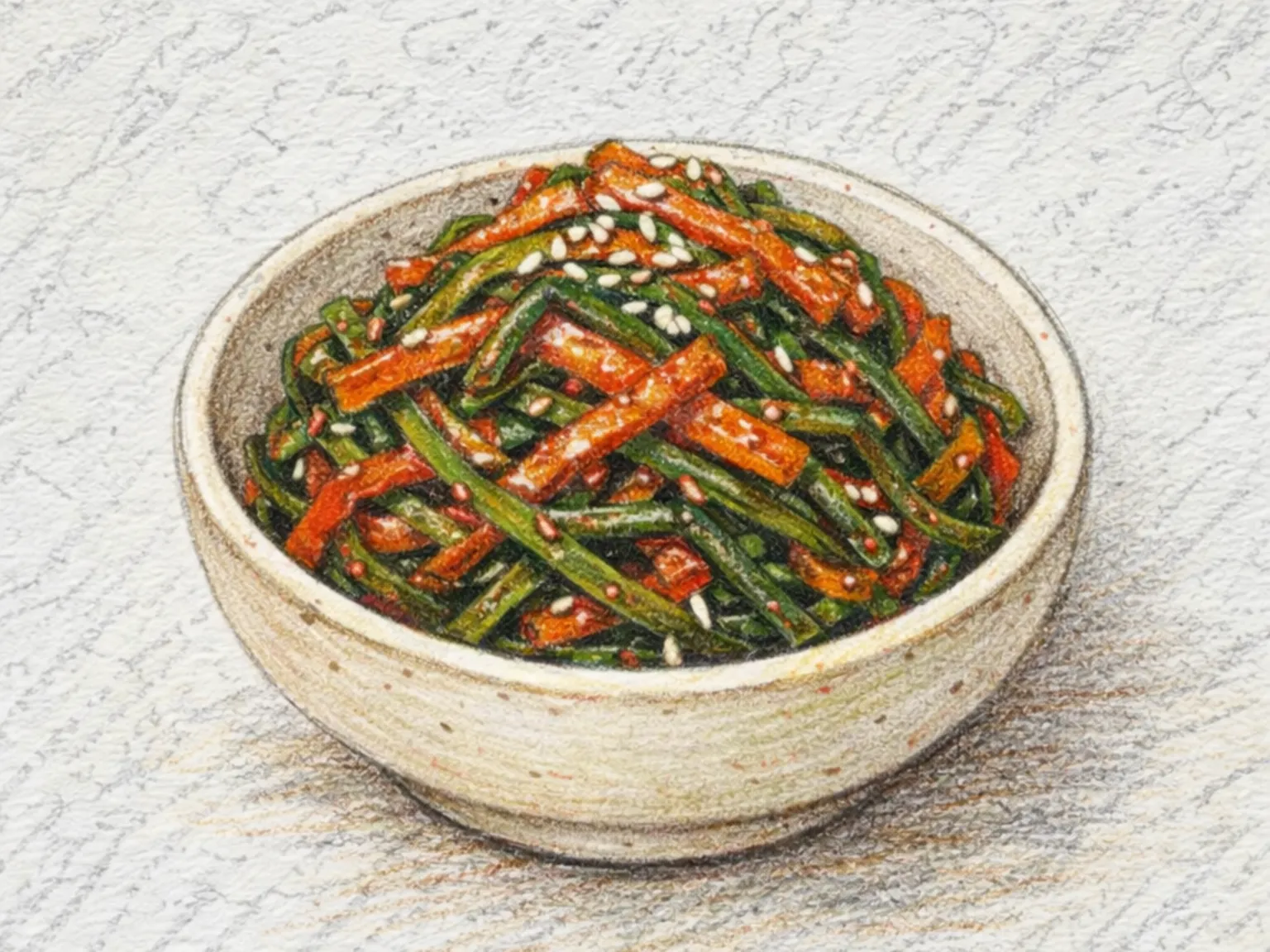
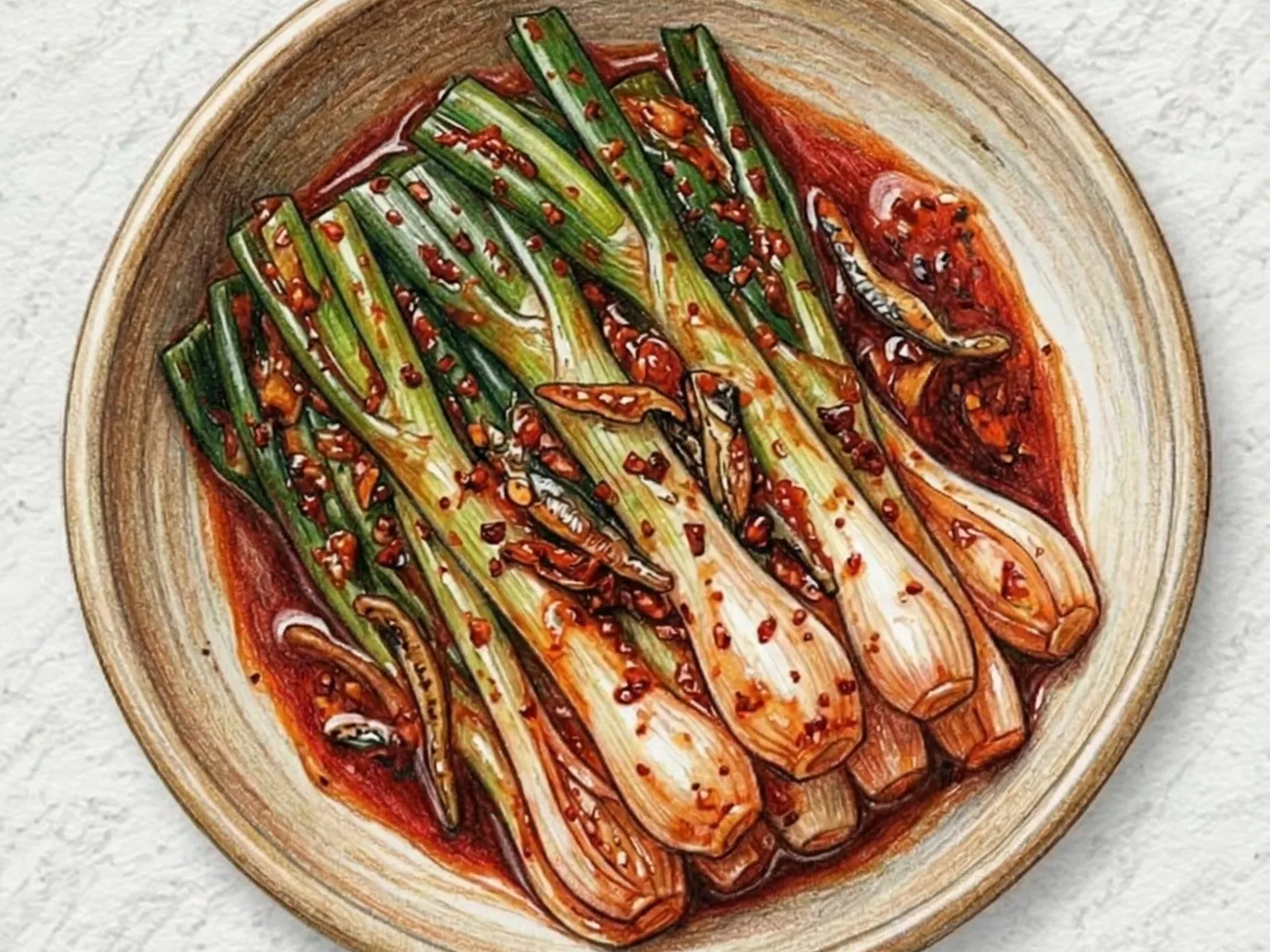
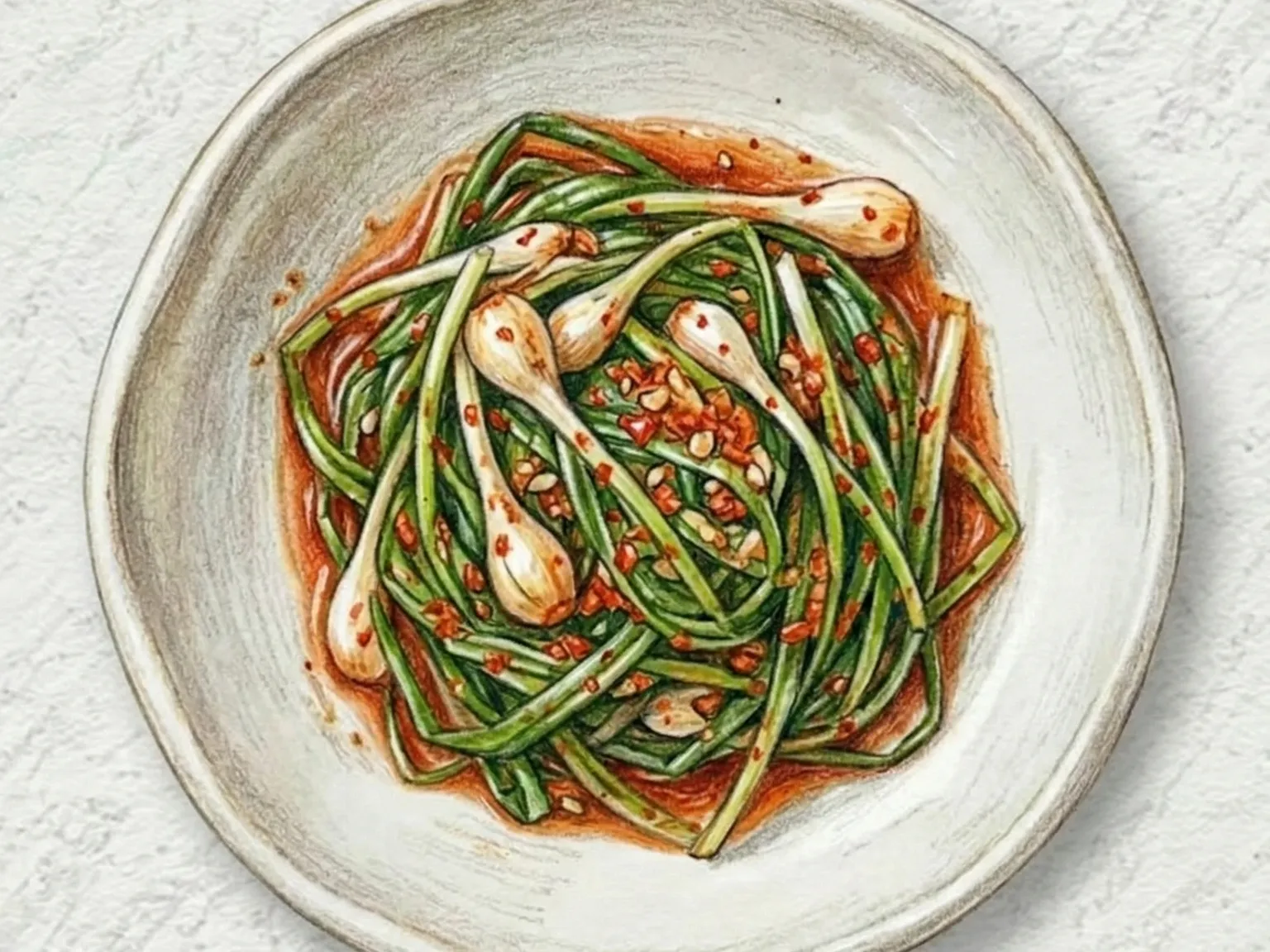
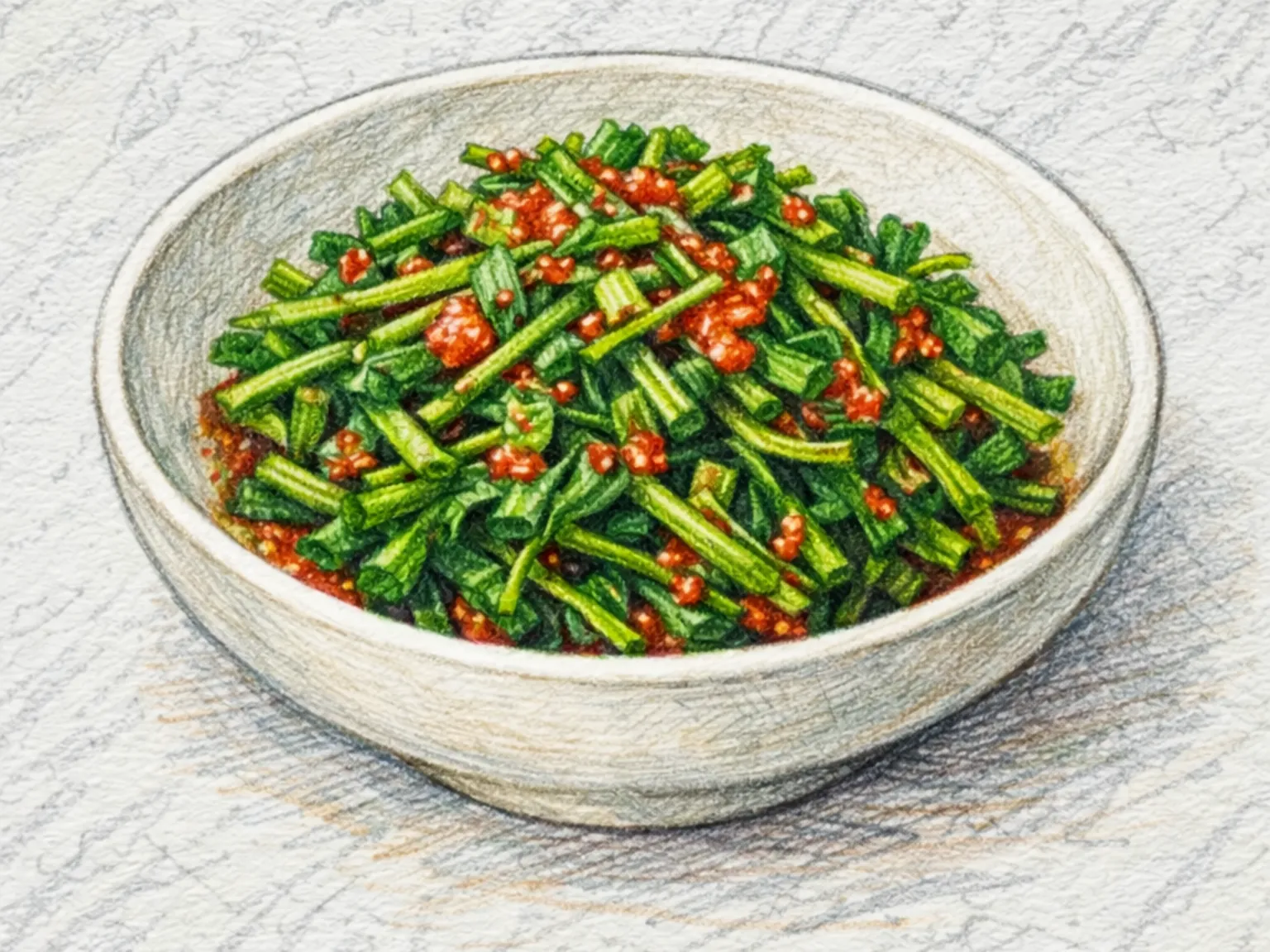
Daepa kimchi is made by cutting large green onions into six- to seven-centimeter lengths and coating them in a paste of gochugaru, anchovy fish sauce, soy sauce, plum extract, and glutinous rice paste. The rice paste acts as a binding agent that keeps the seasoning adhered to the onion surfaces through the entire fermentation period rather than pooling at the bottom of the container. Handling the stalks carefully so they do not bend or split is important for keeping each piece intact, and splitting the thicker white portions lengthwise down the center gives the paste more exposed surface area to penetrate. Eight hours of room-temperature fermentation followed by two days in the refrigerator brings the kimchi to its best point, when the sharp bite of the green onion and the deep fermented umami of the fish sauce have worked fully into each stalk. Daepa kimchi is a natural pairing with grilled pork belly or boiled pork, and it also makes a practical use for green onions before they go past their prime.
Chungcheong-style Crispy River Fish
Dori baengbaeng arranges small pond smelt in a tight circle, fries them until the fish hold together, drains the oil, and then sets a gochujang glaze over low heat. Rinse 200g of pond smelt and press each fish with paper towels to remove moisture from the surface and crevices. Check for any remaining wet spots before the fish enter the oil, because water can cause splattering. Arrange the smelt around the edge of a round pan with their heads pointing toward the center and as little space as possible between neighboring fish. Pour in 100ml of vegetable oil so the fish are shallowly submerged. Cook over medium heat for 8 minutes. At the start, press them gently with a spoon to help the circular arrangement stay in place. When the underside and fish have become crisp and firm enough to hold as one round, carefully pour the remaining oil out of the pan. In a separate bowl, mix 2 tablespoons of gochujang, 1.5 tablespoons of rice syrup, and 1 tablespoon of minced garlic. Spread this sauce in a thin, even layer over the cooked smelt. Reduce the heat to low and cook for 3 minutes, until the glaze has reduced enough that it does not run freely from the fish. Finely slice 1 Cheongyang chili and 1 red chili and scatter them over the top with 1 teaspoon of sesame seeds. Serve in the pan or transfer the complete circle carefully to a wide plate. The recipe uses two distinct heat stages: an 8-minute fry for structure and a 3-minute low-heat finish after the oil is removed.
Korean Soy Glazed Pork Neck Stir-fry
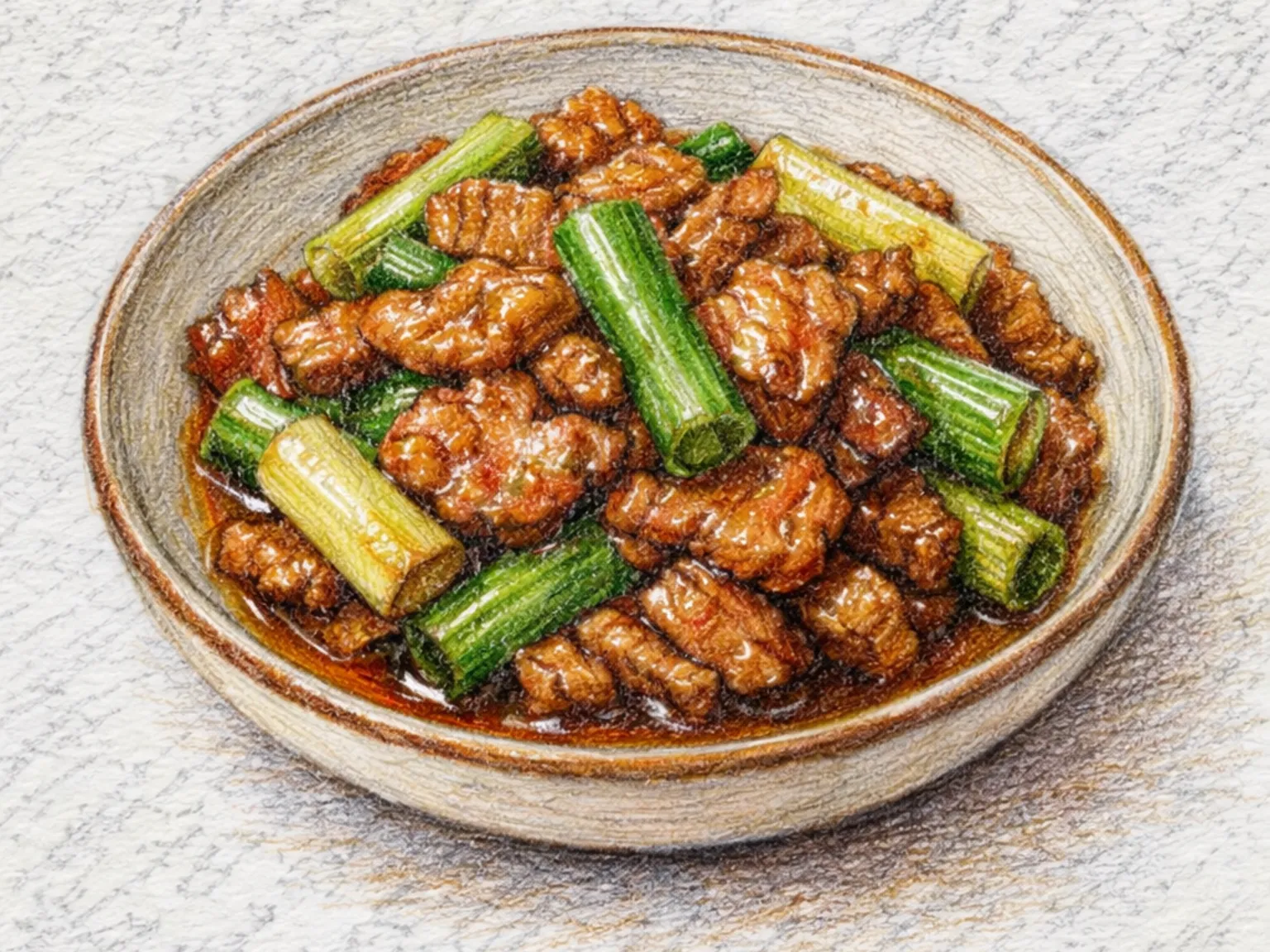
Daepa moksal ganjang bokkeum browns thin pork neck first, reduces a soy and oyster sauce mixture around it, and adds large pieces of green onion only near the end. Five hundred grams pork neck is sliced 5 mm thick. One hundred thirty grams onion is cut into thick strips, while 130 g large green onion is cut diagonally into 5 cm pieces and held separately. The sauce combines 2 tablespoons soy sauce, 1 tablespoon oyster sauce, 1 tablespoon sugar, and 1 tablespoon minced garlic, stirred until no visible sugar grains remain. A pan is heated well over medium-high, coated with 1 tablespoon neutral oil, and filled with the pork in a single layer. The meat remains untouched for the first minute to brown one side. It is then turned and cooked for another 2 minutes before the onion goes in for about 2 minutes. The sauce is poured over and reduced for 2 minutes at medium-high heat. When it darkens and clings to the pork rather than pooling, the green onion is finally added. Only 1 minute 30 seconds to 2 minutes is needed for its edges to soften while the centers keep their shape. One teaspoon sesame seeds is mixed in after the burner is switched off. Holding the large green onion until after the glaze forms prevents it from collapsing during the longer pork and sauce stages.
Korean Grilled King Oyster Mushrooms
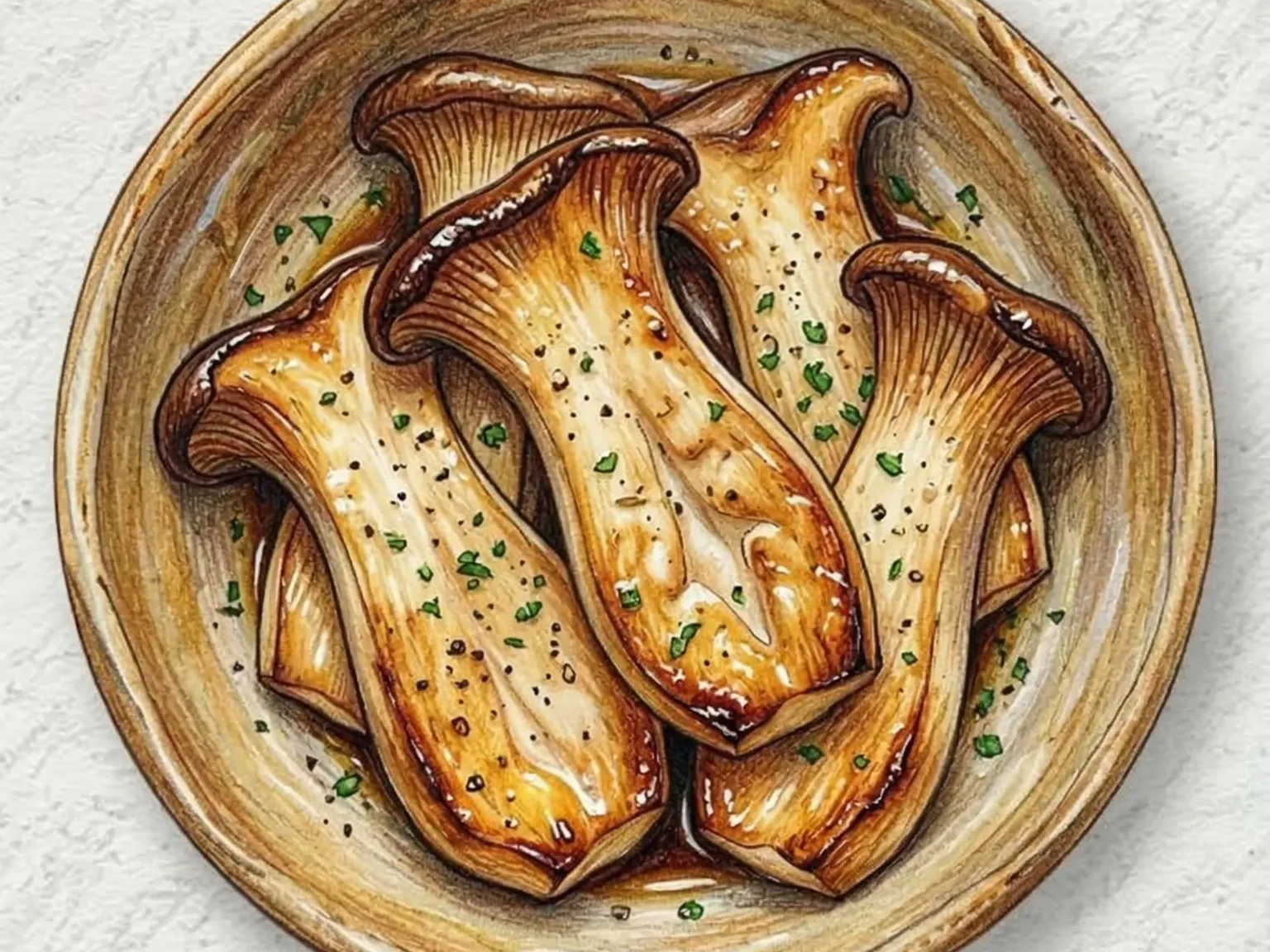
Saesongi-beoseot-gui is a Korean grilled king oyster mushroom dish where the mushrooms are sliced lengthwise to 0.7-centimeter thickness, seared in melted butter until golden on both sides, then glazed with a sauce of soy sauce, minced garlic, oligosaccharide syrup, and black pepper. King oyster mushrooms contain a lot of moisture, so arranging the slices in a single layer without overlap is essential-crowding steams rather than sears, preventing the Maillard browning that gives the surface its golden color and savory depth. Butter burns quickly above medium heat, so temperature control is key, and the soy glaze should only be added after both sides are already browned so it coats the surface rather than making it soggy. Chopped chives and sesame seeds scattered on top add a nutty, aromatic layer over the salty butter-soy base.
Korean Water Parsley Pancake
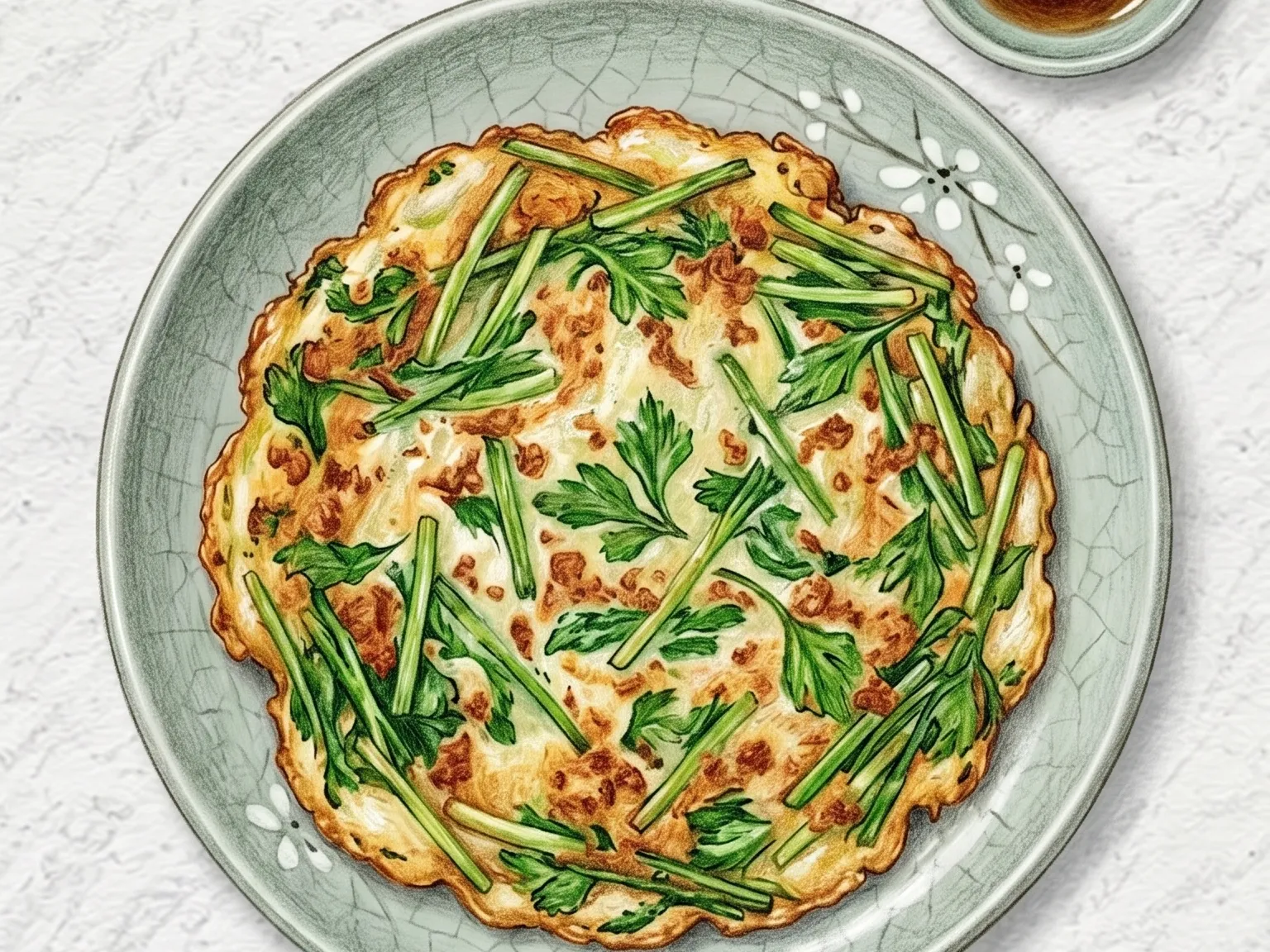
Minari-jeon is a Korean spring pancake made by cutting water parsley into five-centimeter lengths and mixing them into a batter of Korean pancake mix, water, egg, and salt, then pan-frying in oil until golden on both sides. Water parsley's cool, herbaceous fragrance permeates the entire pancake, and its stems provide a fresh, snappy bite against the soft batter. Spreading the mixture thin and cooking over medium heat for three to four minutes per side ensures crisp, almost fried edges, while overcooking quickly diminishes the herb's distinctive aroma. Dipping slices in cho-ganjang-soy sauce mixed with vinegar-balances the subtle bitterness of the parsley with sharp acidity.
Korean Braised Flounder with Radish
Gajami mu jorim is a Korean braised flounder dish in which flounder pieces and thick slices of Korean radish are cooked down together in a soy sauce and gochugaru broth until the liquid reduces to a concentrated, savory glaze. The radish absorbs the fat and juices released from the fish as it braises, soaking up the spicy seasoning until each slice becomes as flavorful and satisfying as the fish itself. Gochugaru and fresh Cheongyang chili provide a clean, penetrating heat, while soy sauce contributes deep umami and minced garlic adds a sharp aromatic backbone to the broth. Allowing the liquid to reduce until only a small amount remains thickens the sauce significantly, and spooning that concentrated braising liquid over plain steamed rice is one of the most common ways to finish the meal, with the sauce soaking into the grains and making it nearly impossible to stop eating. Flounder's naturally lean, delicate flesh, which pulls apart easily along the grain, pairs well with the extended braising method, which keeps the fish moist while infusing it with the bold seasonings. This combination of practical cooking technique and deep, satisfying flavor has made gajami mu jorim one of the most enduring everyday fish side dishes in Korean home cooking.
Korean Wild Chive Pickle (Spring Chive Soy Brine)
Dallae jangajji is a seasonal Korean pickle made by submerging spring wild chives in a brine of soy sauce, vinegar, and sugar alongside sliced Cheongyang chili and sesame seeds. Cleaning the soil from the bulb-like roots and cutting the chives to five-centimeter lengths prepares the main ingredient; the brine must then be cooled fully before pouring, because residual heat drives off the chives' volatile, peppery aroma rapidly. Pouring while still hot can strip much of the sharp fragrance in seconds. After one day of refrigeration the pickle is ready to eat, but by day three the brine penetrates the stalks fully and the flavor deepens. Served alongside grilled meat, the sharp garlicky bite of the chives and the tangy acidity of the brine cut through the fat cleanly -- a pairing that makes this a prized springtime side dish.
Korean Pan-Fried Tofu with Seasoned Soy Sauce
Dubu buchim yangnyeom is one of the most common Korean home banchan, a dish that appears on the table because the technique is straightforward and the ingredients are always in the kitchen. Firm tofu is cut into thick slices, salted lightly to pull moisture from the surface, then pan-fried in a minimal amount of oil until both faces develop a golden, crackling crust while the interior stays soft and warm. The yangnyeom jang, the seasoned sauce, is assembled directly at the stove: soy sauce, gochugaru, chopped scallion, garlic, and sesame oil stirred together, then spooned over the hot tofu the moment it comes out of the pan. The residual heat of the tofu gently wilts the raw scallion and opens the sesame oil, releasing its fragrance into the sauce without any additional cooking. The ratio of ingredients in the sauce varies from household to household, with some reducing the gochugaru and adding toasted sesame seeds, and others adding cheongyang chili for extra heat. In Korean temple cuisine, this preparation has served for centuries as the primary protein source in meat-free meals.
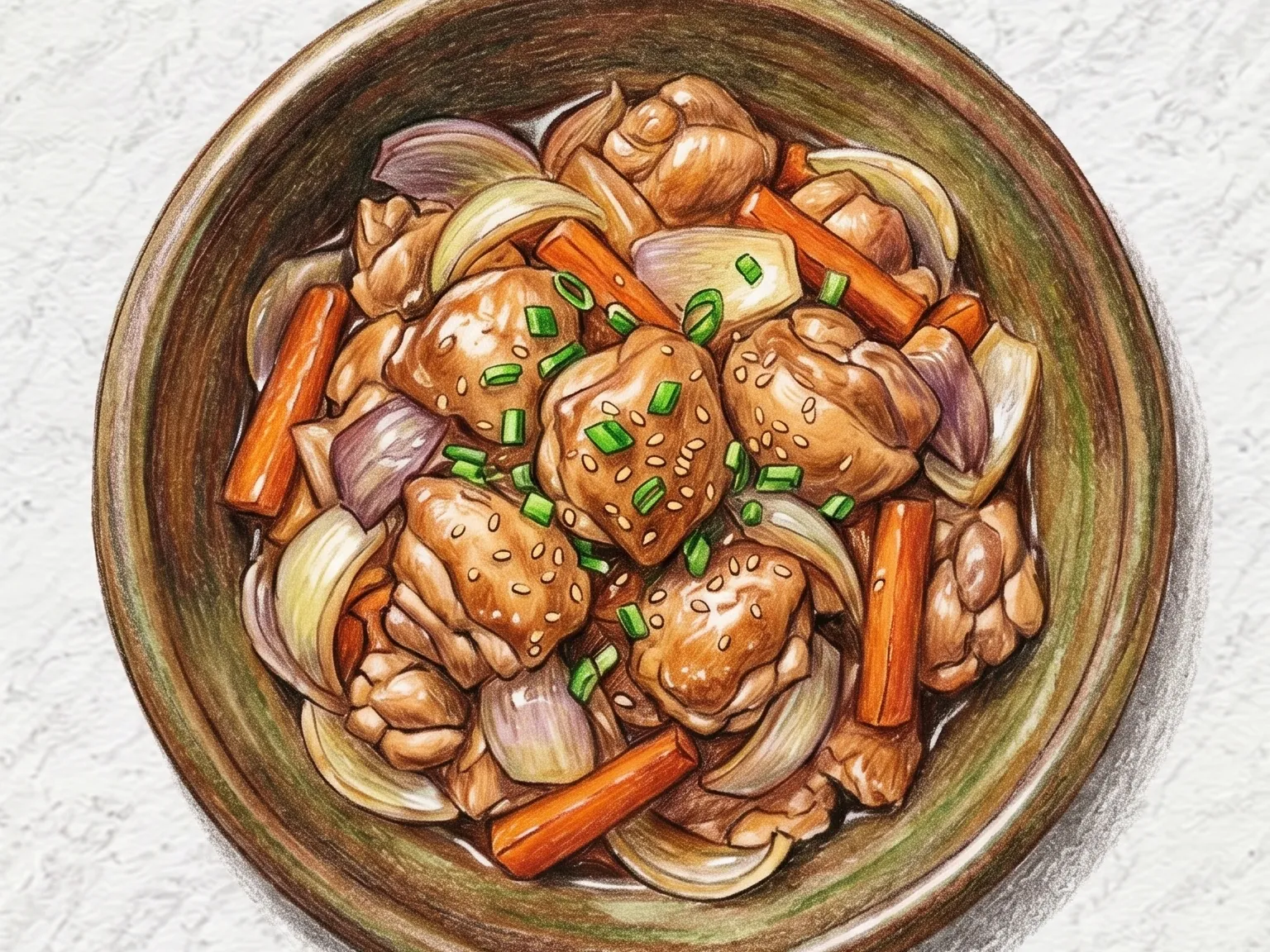
Korean Stir-Fried Chicken
Dak bokkeum cooks bite-size chicken first, adds carrot and onion partway through, and reduces a soy, sugar, and garlic sauce around all three ingredients. Three hundred grams chicken breast or thigh is cut into pieces 3 to 4 cm wide with an even thickness, then its surface moisture is pressed away. Two tablespoons soy sauce, 0.5 tablespoon sugar, and 1 tablespoon minced garlic are mixed until the sugar is no longer visible. One tablespoon cooking oil is heated thoroughly over high before the chicken is placed in a single layer. After 3 to 4 minutes of cooking, every outer surface should be opaque and some edges should begin to color. Fifty grams carrot and 80 g onion are added, and the heat is lowered to medium-high for about 2 minutes. Once the onion edges turn translucent and the vegetables soften slightly, the prepared sauce is poured in. Scraping and lifting from the pan bottom for another 2 to 3 minutes distributes the reducing sauce as an even brown gloss. The thickest chicken piece is cut to confirm that its center is fully cooked. When no watery sauce remains, the burner is switched off and 0.5 tablespoon sesame oil is folded through. Cooking the chicken before the vegetables and sauce gives the meat enough time to cook through without forcing the vegetables through the entire high-heat stage.
Korean Grilled Spanish Mackerel
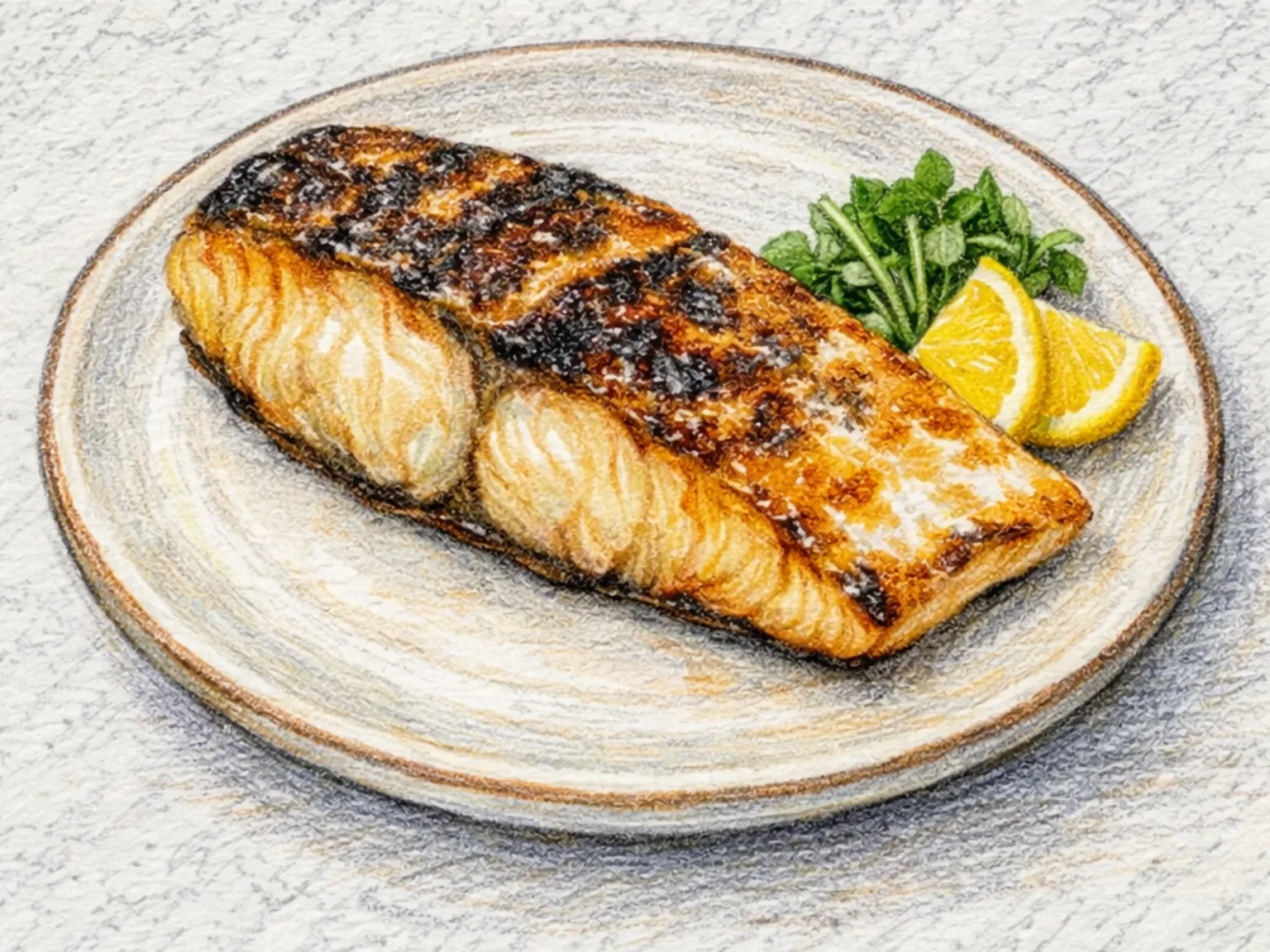
Samchi-gui is Korean grilled Spanish mackerel, a common home-style fish side dish where thick mackerel steaks are salted and peppered for ten minutes, dusted lightly with flour, and pan-fried in oil over medium heat for four minutes per side. Spanish mackerel belongs to the same family as regular mackerel but has milder odor and softer flesh, making simple salt seasoning sufficient. The thin flour coating serves two purposes: it seals in moisture during cooking and creates a crisp, golden exterior. Applying too much flour causes the fish to absorb excess oil and turn greasy, so shaking off the surplus through a sieve is an important step. A squeeze of lemon juice at the end binds with the fish oils and adds acidity that neutralizes any lingering fishy aftertaste, keeping the flavor clean when eaten over rice.
Korean Water Parsley Shrimp Pancake
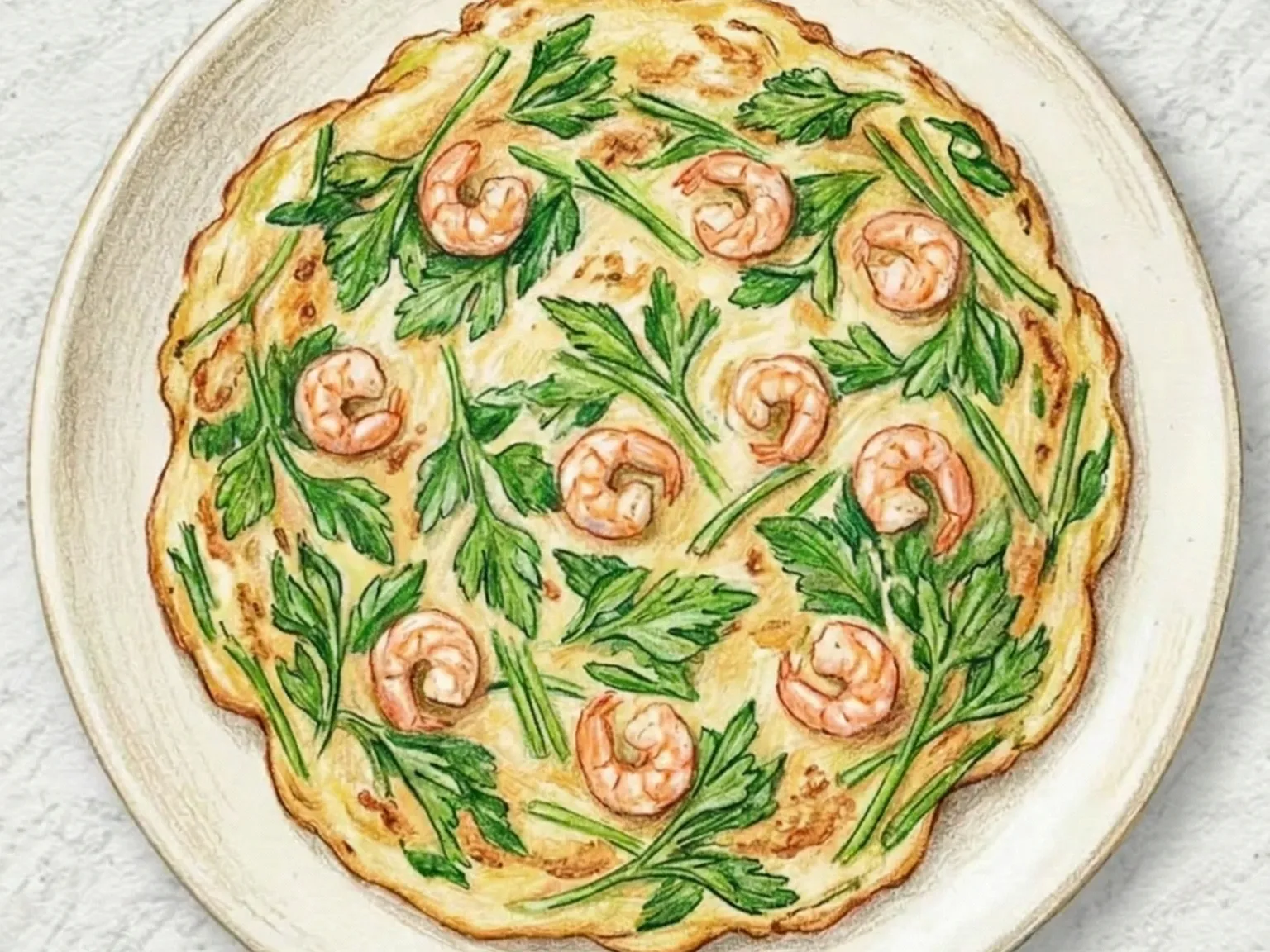
This Korean pancake combines fresh water parsley and cocktail shrimp in a light, seasoned batter. The preparation starts by cutting cleaned water parsley into five-centimeter pieces, slicing onions thinly, and drying the shrimp to prevent oil splattering. The batter is mixed using pancake flour, cold water, an egg, and a pinch of salt until smooth. The vegetables and shrimp are folded in gently with chopsticks to keep the texture light. Cooking the batter in a well-oiled pan over medium heat for two to three minutes on each side produces a pancake with thin, crispy edges. The water parsley stems retain their crispiness even after frying, contrasting with the tender shrimp. The herbal fragrance of the parsley blends with the clean sweetness of the shrimp. It is typically cut into bite-sized pieces immediately after cooking and served warm with a soy sauce and vinegar dipping sauce.
Korean Braised Eggplant and Tofu
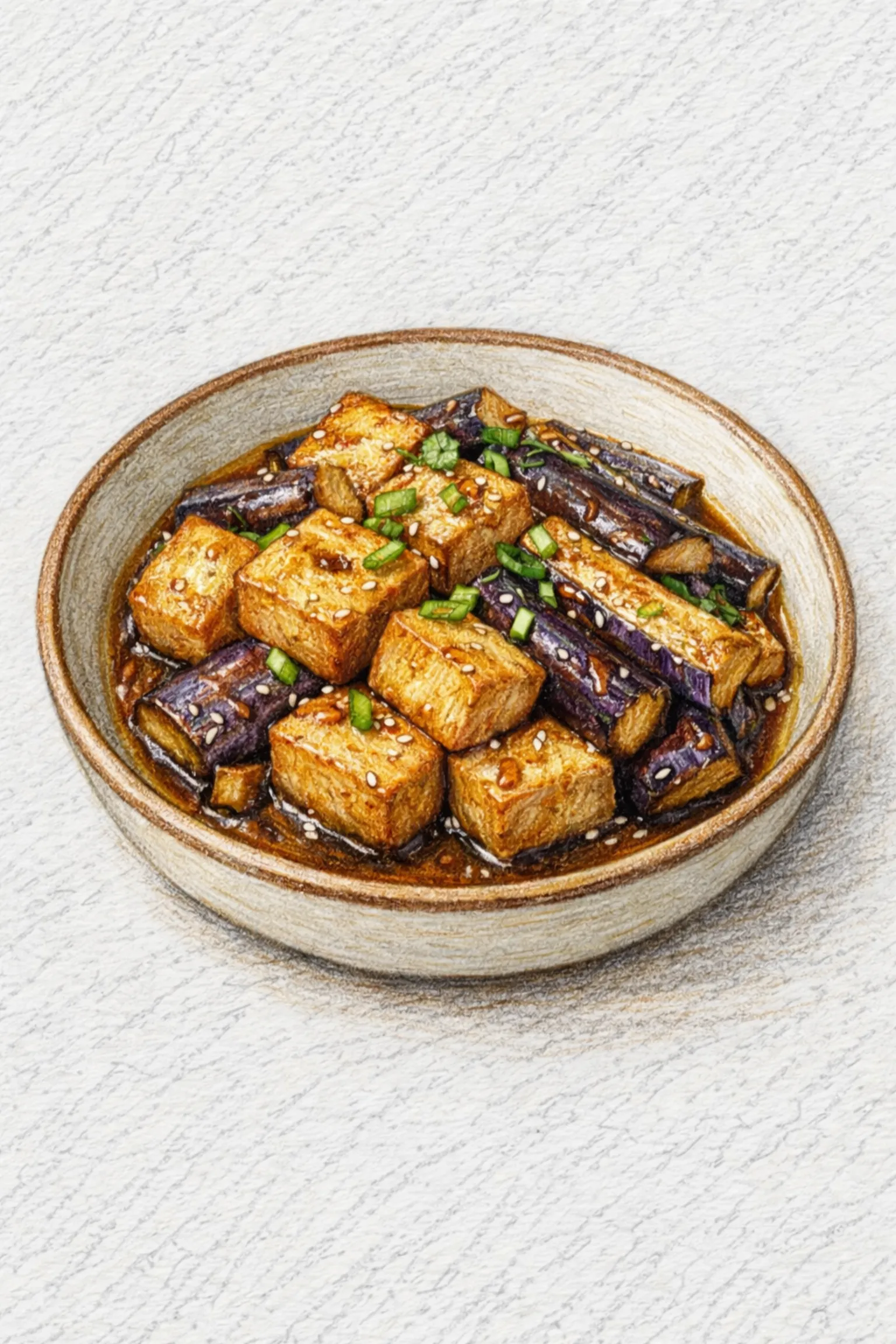
Gaji dubu jorim combines eggplant and firm tofu braised together in a soy sauce and gochugaru seasoning. The eggplant soaks up the sauce and turns silky soft, while the pan-seared tofu holds its shape with a slight firmness on the outside. Garlic and green onion round out the flavor, creating a lightly spicy, umami-rich side dish. Salting the eggplant briefly before cooking draws out excess moisture so the pieces absorb the seasoning more deeply without falling apart during braising. Draining the tofu and pan-frying it on both sides before adding it to the sauce keeps the blocks intact and gives the surface a slightly chewy resistance against the tender eggplant. A practical vegetarian-friendly banchan that delivers both protein and vegetables without any meat.
Korean Wild Chive Kimchi (Spring Quick Gochugaru)
Dallae kimchi is a quick spring kimchi made by salting wild chives for just eight minutes to barely soften them, then dressing them in gochugaru, sand lance fish sauce, plum extract, and Korean pear juice. The bulb-end roots carry the most concentrated aroma, so they should not be trimmed too short, and the seasoning should be applied starting from the roots so the flavor penetrates evenly along the entire stalk. Pear juice adds natural sweetness and a little moisture that softens the heat from the chili, while sand lance fish sauce provides a lighter, more delicate umami than standard anchovy sauce. This kimchi smells fresh and bright immediately after preparation, but one day in the refrigerator allows a mild fermented depth to develop that rounds out the flavors considerably. Wild chives are best purchased between early March and mid-April, when the roots are fat and the aroma is fully developed. Salting beyond eight minutes causes the grassy fragrance to dissipate rapidly, so timing matters. The finished kimchi pairs naturally with namul side dishes and fresh vegetable salads at a spring table.
Korean Tofu with Spicy Soy Dressing
Dubu cheongyang ganjang muchim is a pan-fried tofu banchan that takes the classic dubu buchim in a sharper direction by centering the dressing on cheongyang chili, the hottest pepper in everyday Korean cooking. The most important part of the technique is getting a proper mahogany crust on the tofu. The pan must be hot before the tofu goes in, and the heat must stay high throughout. Too low a flame causes the tofu to steam in its own released moisture rather than sear, resulting in a soft surface with no textural contrast. When seared correctly, the outer layer becomes a firm, slightly chewy barrier while the interior stays silken and creamy. The dressing is raw and uncooked: soy sauce, minced cheongyang chili, scallion, garlic, and sesame oil combined without heat. It is poured over the tofu while the tofu is still steaming hot, which causes the raw garlic and chili to bloom slightly in the residual heat and release their full aromatic sharpness. Cheongyang pepper heat is clean and immediate rather than slow-building - it registers on the tongue quickly and fades without lingering the way dried gochugaru does. The dish is a natural pairing for mild, smooth soups like miyeok-guk, where the chili's sharpness provides a sharp counterpoint to the gentle seaweed broth. It also works alongside plain steamed rice as a standalone side.
Korean Soy-Glazed Chicken Stir-Fry
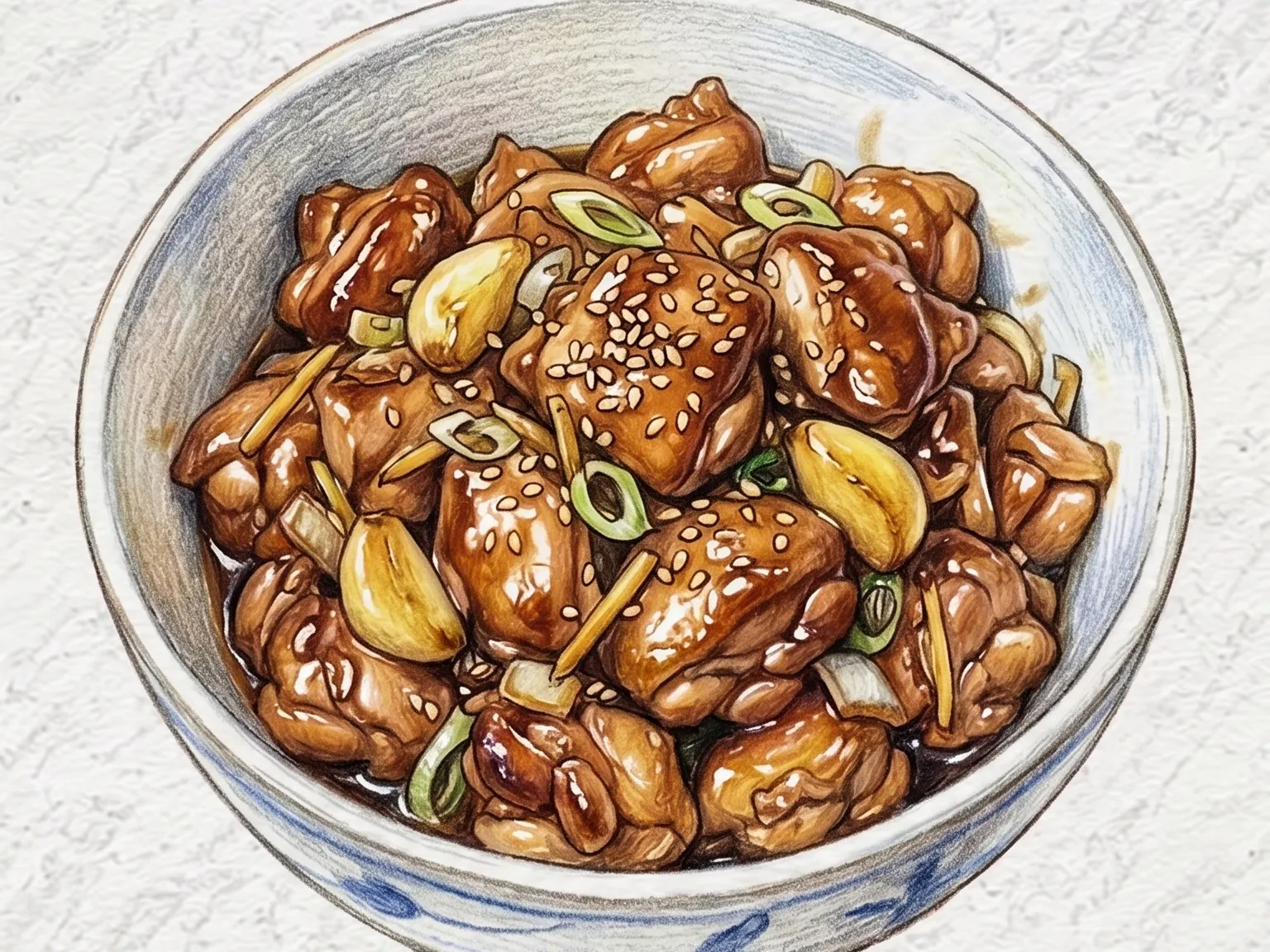
Chicken thigh meat stir-fries in soy sauce, sugar, and oligosaccharide syrup for a sweet-salty glaze. Garlic and ginger go into the oil first to infuse the fat with fragrance before the chicken is added, letting the aromatics penetrate deep into the meat as it cooks. The oligosaccharide heats into a tacky gloss that coats each piece evenly as the liquid reduces. Sesame oil and whole sesame seeds scattered over the top at the end bring a nutty, aromatic finish. The flavor profile runs close to Japanese teriyaki, but the heavier use of garlic and ginger pushes it toward the more direct, punchy spice character typical of Korean cooking. Boneless thighs cut into bite-sized pieces cook more evenly than larger pieces, and keeping the heat high through most of the cook ensures the surface caramelizes without turning rubbery.
Korean Spicy Glazed Tongue Sole
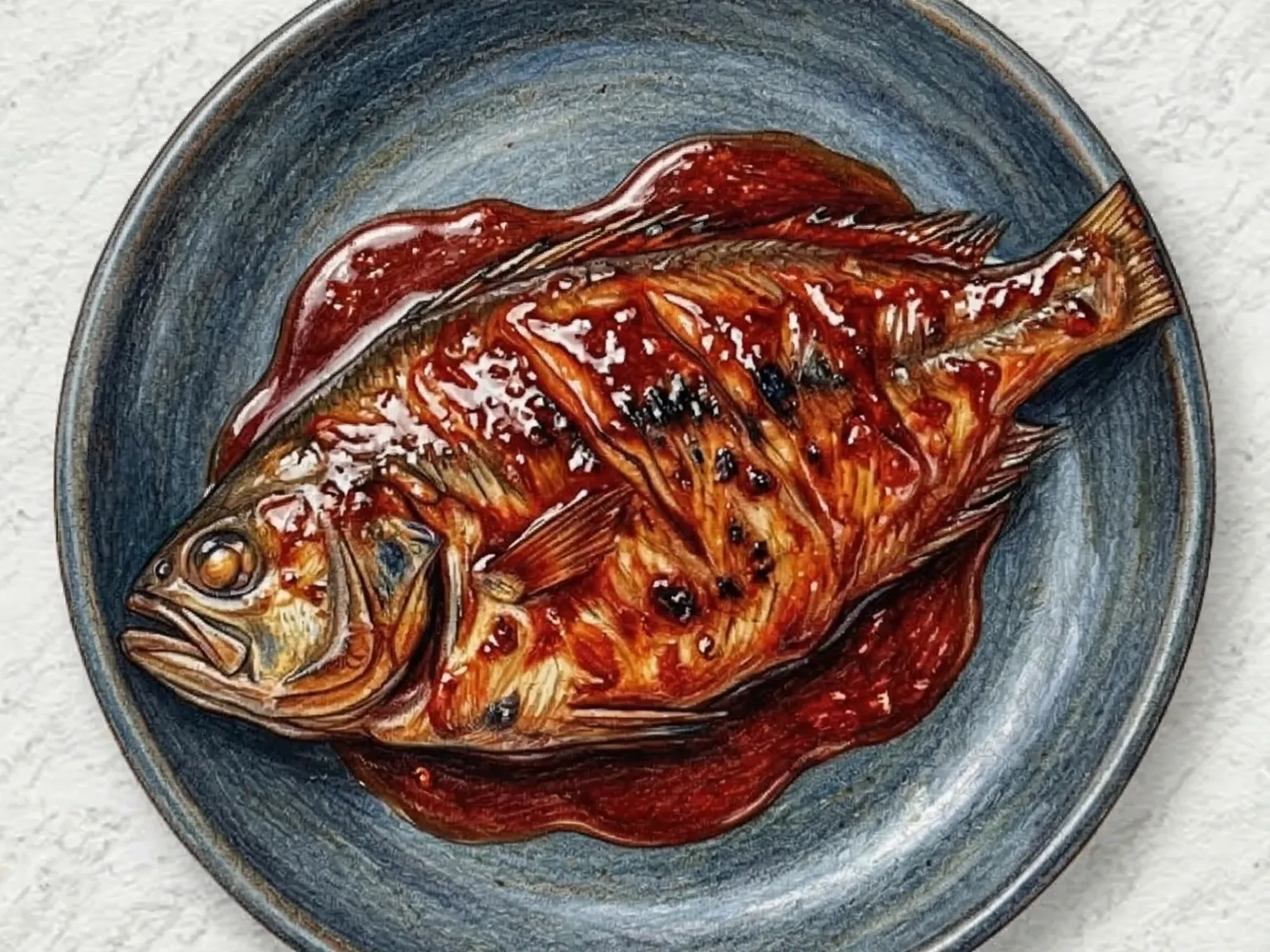
Seodae-yangnyeom-gui is a Korean spicy-glazed tongue sole dish where cleaned sole is coated with two-thirds of a sauce blending gochujang, soy sauce, Korean chili flakes, plum syrup, sugar, minced garlic, and ginger, marinated for ten minutes, then pan-fried over medium heat for four minutes per side. The flat body shape of tongue sole allows the marinade to adhere evenly across the entire surface, and because the flesh is thin, the salty-sweet seasoning penetrates all the way through quickly. Plum syrup in the sauce contributes a fruit-forward acidity that lifts the heaviness of gochujang, and together with sugar it caramelizes at pan temperature into a glossy brown coating. Brushing the remaining sauce on during the final two minutes builds a double-layered glaze, and finishing with sesame oil and chopped green onion releases a fragrant aroma from the residual heat.
About Side dishes
Great banchan balances seasoning with the natural flavor of each ingredient. Sesame oil, perilla oil, soy sauce, and fermented pastes work together to pack deep flavor into every small serving.