Side dishes
Side dishes

Side dishes Recipes

186 recipes. Page 6 of 8

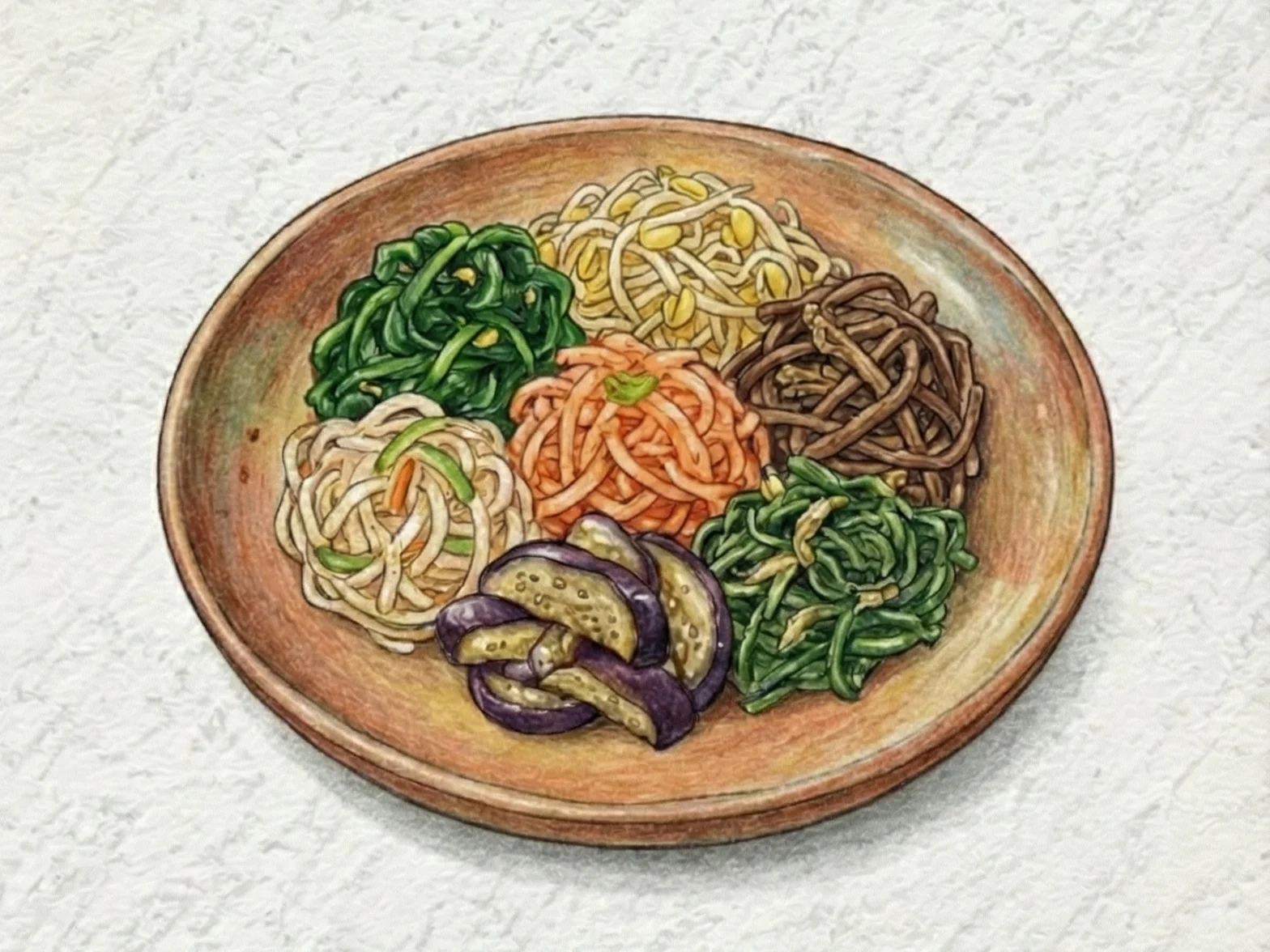
Side dishes (banchan) are the heart of Korean dining culture. A typical meal features multiple small plates - seasoned vegetables (namul), braised dishes (jorim), pickled items, and salted seafood. Classics like spinach namul, bean sprout salad, and stir-fried anchovies can be prepared in advance and enjoyed over several days.

Great banchan balances seasoning with the natural flavor of each ingredient. Sesame oil, perilla oil, soy sauce, and fermented pastes work together to pack deep flavor into every small serving.

Korean Water Parsley Salad
Side dishes Easy

Korean Water Parsley Salad

Minari-muchim is blanched water parsley seasoned with gochugaru, soy sauce, and vinegar, one of the most distinctly seasonal banchan on the Korean table. Minari is a semi-aquatic herb that grows along paddies, wetlands, and clean waterways throughout Korea. Its aroma belongs to a different family from Western parsley or celery: fresher, more herbal, with a green brightness that is difficult to compare to any common Western herb. That aroma is the entire reason to use minari in this dish, which makes the blanching time critical. Beyond twenty seconds in boiling water, the volatile aromatic compounds escape with the steam and what remains is texture without character. Trimming the toughest lower stems and cutting stalks to roughly five centimeters makes each piece easy to eat in a single bite. Transferring the blanched herb immediately to ice water or very cold water fixes the chlorophyll and holds the vivid green color. The vinegar in the dressing does two things simultaneously: it amplifies the herbal brightness of the minari and suppresses the faintly aquatic mustiness that water-grown plants sometimes carry. Gochugaru provides heat, soy sauce adds salted depth, and together they season the herb without masking it. International awareness of minari as an ingredient grew substantially after the 2020 film of the same name. Serving raw minari alongside cho-gochujang as a dipping green is another common spring preparation.

🏠 Everyday 🍱 Lunchbox
Prep 10min Cook 2min 4 servings
Korean Stir-fried Seaweed Stems
Side dishes Easy

Korean Stir-fried Seaweed Stems

Miyeok-julgi-bokkeum is stir-fried seaweed stems - specifically the thick midrib portions of salted miyeok (wakame) - offering a textural experience entirely different from miyeok-muchim (seaweed salad) or miyeok-guk (seaweed soup). While seaweed leaves are soft and slippery, the stems are thick and resilient, producing a distinctive crunchy pop with each bite. Salt levels vary by brand, so soaking in cold water for ten minutes is the baseline desalting step, but tasting before cooking and rinsing again if needed is essential. Julienned onion and carrot stir-fried alongside break the monotony of seaweed alone, adding sweetness and color. Garlic sauteed in oil first establishes an aromatic foundation. A finishing drizzle of sesame oil and sesame seeds bridges the oceanic seaweed flavor with a toasty nuttiness. The extremely low calorie count makes this banchan a staple in diet-conscious Korean meal plans.

🥗 Light & Healthy 🏠 Everyday
Prep 15min Cook 8min 4 servings
Korean Seaweed Salad (Tangy Chili-Vinegar Dressed Miyeok)
Side dishes Easy

Korean Seaweed Salad (Tangy Chili-Vinegar Dressed Miyeok)

Miyeok-muchim consists of rehydrated seaweed seasoned with either a vinegared chili paste called cho-gochujang or a vinegared soy sauce known as cho-ganjang. In Korean culinary traditions, this preparation represents one of the most frequent methods for consuming seaweed outside of the traditional soup typically served on birthdays. To prepare the foundation of the dish, approximately thirty grams of dried miyeok requires a twenty-minute immersion in water. During this period, the volume of the seaweed expands by eight to ten times its original size, which results in a quantity sufficient for two individual portions. A frequent error made by individuals unfamiliar with this ingredient involves using an excessive amount of the dried seaweed because the dramatic scale of its expansion is often underestimated. Following the soaking stage, the seaweed undergoes a brief blanching process in boiling water. This technique intensifies the color of the miyeok into a vivid green while simultaneously reducing the strong marine odor associated with the raw plant. Immediately after blanching, a thorough rinse in cold water is required to lock in the specific texture of the seaweed, which is characterized as being both slippery and bouncy. For the dressing, the spicy cho-gochujang variation combines fermented chili paste with vinegar and sugar to create a profile that is sweet, sour, and spicy. This combination serves to temper the inherent saltiness found in the seaweed. Many versions of the dish include thinly julienned cucumber to provide a crisp textural contrast to the silkiness of the miyeok. Alternatively, the cho-ganjang dressing offers a more subtle flavor for individuals preferring a clean taste without the heat of chili. From a nutritional standpoint, a single portion contains roughly fifty kilocalories and is recognized as a significant source of dietary fiber and iodine. These attributes make the dish a consistent feature in Korean home cooking focused on health and nutrition. The salad is typically kept in the refrigerator and served chilled, making it particularly refreshing during the summer months when people often experience a decrease in their appetite.

🏠 Everyday 🍱 Lunchbox
Prep 20min 2 servings
Korean Seasoned Sea Mustard Sporophyll
Side dishes Easy

Korean Seasoned Sea Mustard Sporophyll

Miyeokgwi-muchim is seasoned sea mustard sporophyll - the ruffled, root-adjacent part of the miyeok plant - blanched and tossed in a sweet-sour-spicy dressing. Though it comes from the same seaweed as regular miyeok-muchim, the sporophyll is a distinctly different eating experience. Its thicker, corrugated surface gives a chewy, almost bouncy texture compared to the silky softness of seaweed leaves. This particular part of the plant contains higher concentrations of alginic acid and fucoidan than the leaf portions, which has drawn attention in Korean health-food circles. After rinsing in cold water, blanching for exactly thirty seconds is ideal - going longer turns the texture rubbery. The gochugaru-soy-vinegar-sugar dressing tames the marine saltiness and builds a bright sweet-sour-spicy flavor profile that stimulates appetite alongside rice. Chilling for ten minutes before serving lets the dressing adhere to the bumpy surfaces and leaves a cool finish. At around fifty-two kilocalories per serving, it is a go-to diet banchan. Pre-trimmed miyeokgwi is widely available at Korean markets and online.

🥗 Light & Healthy 🏠 Everyday
Prep 12min Cook 3min 4 servings
Korean Stir-Fried Seaweed Stems with Perilla
Side dishes Easy

Korean Stir-Fried Seaweed Stems with Perilla

Deulkkae miyeokjulgi-bokkeum stir-fries salted seaweed stems with perilla oil and ground perilla seeds, diverging from the standard sesame-and-soy version by foregrounding the earthy nuttiness of perilla. Desalting the stems in cold water for at least fifteen minutes is the essential first step - too brief and the dish is unpalatably salty, too long and the oceanic character washes away entirely. Garlic is sauteed in perilla oil to build an aromatic foundation, then the drained stems join with soup soy sauce and a splash of water for three minutes of stir-frying. Ground perilla seeds go in at the end, where they bind with the residual moisture and coat each strand in a pale, creamy film. Julienned onion added alongside contributes sweetness that balances the seaweed's brininess. The perilla powder's starch partially gelatinizes on contact with heat, thickening the sauce - but overcooking past this point turns the coating chalky, so timing the final addition is critical. Sesame seeds scattered off heat complete the dish.

🥗 Light & Healthy 🏠 Everyday
Prep 15min Cook 8min 2 servings
Korean Pan-fried Radish Pancakes
Side dishes Easy

Korean Pan-fried Radish Pancakes

Mu-jeon is a Korean pan-fried radish pancake belonging to the same vegetable-jeon family as hobak-jeon and gaji-jeon, though daikon radish brings a textural character distinctly its own. Slicing to an even 3mm thickness is critical - the radish must cook through until soft and sweet inside while the egg coating crisps golden outside. Too thick and the raw center retains an acrid bite; too thin and the slices collapse. Five minutes of salting draws surface moisture so the flour adheres properly and the oil does not splatter during frying. Slow cooking over low heat is essential: the egg batter sets gradually into a golden shell while the heat converts the radish's starch into sugars, replacing the raw spiciness with a gentle sweetness completely unlike the uncooked root. Dipped in cho-ganjang (soy-vinegar sauce), the acidity cuts through the pan-fried richness. Mu-jeon appears on Korean holiday tables during Chuseok and Seollal alongside other vegetable jeon as part of the traditional jeon platter.

🏠 Everyday 🍱 Lunchbox
Prep 15min Cook 12min 2 servings
Stir-fried Korean Radish Namul
Side dishes Easy

Stir-fried Korean Radish Namul

Mu-namul-bokkeum is a foundational Korean side dish made by stir-frying julienned daikon radish in perilla oil to draw out its natural sweetness. Cutting the radish into matchstick-thick strips and salting them for around five minutes beforehand is a critical step. Without it, the radish releases its moisture into the pan during cooking, turning what should be a stir-fry into an unintended steam, leaving the namul limp and dull. Garlic goes into the perilla oil first to build an aromatic base, then the radish strips are tossed over medium heat for three to four minutes. During this time, heat converts the radish's starch into sugars, and the raw, sharp bite disappears, replaced by a mellow and gentle sweetness. Soup soy sauce rather than regular soy sauce keeps the seasoning clean without muddying the pale color of the radish. Placing the lid on for two minutes at the end steams the interior through without over-softening the vegetable. This namul serves as one of the five-color toppings in bibimbap and is a required dish on ancestral rite tables. Sesame seeds scattered over the finished dish add a toasted nuttiness that carries the flavor through to the last bite.

🏠 Everyday 🍱 Lunchbox
Prep 10min Cook 12min 4 servings
Korean Quick Pickled Daikon
Side dishes Easy

Korean Quick Pickled Daikon

Mu-pickle is the yellow pickled daikon that accompanies every order of Korean fried chicken, completing the inseparable trio of chicken, cola, and pickled radish that defines the Korean fried chicken experience. Radish is cut into cubes or half-moons and submerged in a boiled brine of vinegar, sugar, salt, and water. The pickles are edible after thirty minutes, but refrigerating them overnight allows the sweet-sour brine to work its way fully into the core of each piece rather than sitting only on the surface. Commercial chicken-mu gets its vivid yellow color from gardenia extract or turmeric; home versions skip the coloring entirely without any effect on flavor. The vinegar-to-sugar ratio is the single most important variable in the recipe. Too much vinegar and the acidity dominates every bite; too much sugar and the result tastes more like candied fruit than a palate-cleansing pickle. A 1-to-1 ratio is the reliable starting point that most home cooks stick with. When eaten alongside greasy fried chicken or pork cutlet, a single piece of mu-pickle deploys its vinegar sharpness to cut through the oil coating the palate, resetting the mouth for the next bite. Kept refrigerated in a sealed container, the pickles hold their crunch for more than two weeks.

🏠 Everyday 🍱 Lunchbox
Prep 10min 6 servings
Korean Spicy Radish Salad
Side dishes Easy

Korean Spicy Radish Salad

Mu-saengchae is a raw Korean radish salad dressed in gochugaru, vinegar, fish sauce, and sugar that sets itself apart from kimchi by skipping fermentation entirely and going straight to the table. The radish is julienned into fine, five-centimeter-long strips because a thinner cut allows the dressing to coat every surface evenly; cutting too thick leaves the raw radish's sharp pungency exposed and untempered. A ten-minute salting with coarse salt is the pivotal step that collapses the cell walls partially, drawing out excess moisture and priming the strips to absorb the dressing rather than dilute it. The finished sauce combines gochugaru, anchovy fish sauce, vinegar, sugar, minced garlic, and sesame oil into a dressing where the fish sauce lays down a concentrated umami backbone over the radish's clean, neutral flavor while the vinegar slows further moisture release to preserve crunchiness across the full serving period. Eaten fresh, the texture is at its maximum snap; left in the refrigerator overnight, the strips soften into a lightly pickled state that is equally good in its own way. Served beside fatty dishes such as samgyeopsal or braised short ribs, mu-saengchae clears and resets the palate between bites of rich meat, and it pairs without friction alongside virtually any protein-centered side.

🏠 Everyday 🍱 Lunchbox
Prep 15min 4 servings
Korean Seasoned Radish Greens
Side dishes Medium

Korean Seasoned Radish Greens

Mucheong-namul is a Korean banchan made from the leafy stems attached to daikon radish, blanched and dressed with doenjang and perilla oil. Unlike fully dried siraegi, fresh or semi-dried mucheong retains a grassy vitality that carries through to the finished dish. Radish greens emerge as a byproduct of the autumn kimjang harvest, when whole radishes are pulled from the ground, and rural Korean kitchens have long turned these tops into namul or hung them to dry for winter. Fresh mucheong requires at least five minutes of boiling to break down its tough stem fibers so they soften properly. A thorough rinse in cold water follows, washing away the bitter, astringent edge that develops during cooking. Seasoning with doenjang and soup soy sauce layers the fermented paste's earthy depth over the greens' faintly bitter, grassy character, creating a contrast that makes each bite more interesting than either ingredient alone. Perilla oil is preferred over sesame because its lighter, quieter fragrance complements the greens' natural flavor rather than overpowering it. Stirring in ground perilla seeds at the end thickens the dressing and wraps each strand of mucheong in a nutty coating, producing a noticeably deeper-flavored version than mucheong-namul made without them. A hearty, clean-tasting winter banchan tied to the rhythm of the radish harvest.

🏠 Everyday 🍱 Lunchbox
Prep 20min Cook 15min 4 servings
Korean Seasoned Dried Radish Strips
Side dishes Easy

Korean Seasoned Dried Radish Strips

Mumallaengi-muchim dresses rehydrated dried radish strips in a gochujang-based sauce - a Korean preservation banchan rooted in the pre-refrigeration practice of slicing winter radish and air-drying it in cold winds. Dehydration concentrates the radish's natural sugars and transforms its texture from crisp to chewy, creating a ingredient with more depth than the fresh root. Soaking time determines the outcome: twenty minutes in cold water softens the strips enough to be pleasant while retaining the springy chew that is the whole point of using dried radish. Over-soaking produces a limp, waterlogged result indistinguishable from fresh radish. The dressing blends gochujang, gochugaru, vinegar, sugar, garlic, and sesame oil into a sweet-sour-spicy balance, with vinegar playing a particularly important role - it adds brightness to the dried radish's concentrated, earthy flavor. After mixing, a ten-minute rest allows the sauce to permeate the porous fibers evenly. Because the finished banchan contains almost no free moisture, it travels exceptionally well in lunchboxes and keeps refrigerated for over a week.

🏠 Everyday 🍱 Lunchbox
Prep 20min 4 servings
Korean Sweet Stir-Fried Anchovies
Side dishes Easy

Korean Sweet Stir-Fried Anchovies

Sweet stir-fried anchovies coat tiny dried anchovies in a glossy soy-syrup glaze without any chili heat, making it the classic lunchbox banchan for Korean children who cannot yet tolerate spice. The anchovies must be dry-toasted in an ungreased pan for about two minutes before any seasoning is added: this drives off residual moisture, raises a nutty aroma, and sets up the crispy texture that separates a well-made batch from a soggy, fishy-smelling one. Soy sauce, rice syrup or oligosaccharide, and sugar are then stirred in over low heat, and the single most important moment in the recipe is when the syrup first begins to bubble. The heat must drop immediately at that point, because syrup that overcooks transforms into a brittle, tooth-cracking candy once it cools. Generous sesame seeds tossed in at the end add nuttiness and a visual finish, and once the batch cools completely, the anchovies clump lightly together into loose clusters that are easy to pick up in one or two bites. Although made from the exact same ingredient, this sweet glaze version has a completely different character from the spicy gochujang version of the same dish, and many Korean households keep both prepared simultaneously, rotating between them throughout the week.

🏠 Everyday 🍱 Lunchbox
Prep 5min Cook 10min 4 servings
Korean Spicy Stir-Fried Anchovies
Side dishes Easy

Korean Spicy Stir-Fried Anchovies

Spicy stir-fried anchovies (maeun myeolchi-bokkeum) toss medium-sized dried anchovies in a gochujang-gochugaru glaze, occupying the opposite end of the flavor spectrum from the sweet jiri-myeolchi version and targeting adult palates. Medium anchovies are larger and thicker than the tiny variety, requiring individual head-and-gut removal to eliminate bitterness - a tedious prep step that nonetheless determines the dish's clean finish. After dry-toasting to drive off moisture, the anchovies simmer in a sauce of gochujang, gochugaru, soy sauce, oligosaccharide, and minced garlic until each piece is coated in a rust-colored glaze. The gochujang's fermented heat combines with gochugaru's vivid red to create both flavor depth and visual appeal. The larger anchovy size delivers a satisfying crunch that lingers alongside a lasting savory umami. Heat intensity is adjustable via gochugaru quantity - adding chopped cheongyang chili ratchets it up another notch. This banchan doubles as a soju drinking snack, appearing as frequently on bar tables as on dinner tables.

🍺 Bar Snacks 🏠 Everyday
Prep 5min Cook 10min 4 servings
Korean Braised Anchovy Side Dish
Side dishes Easy

Korean Braised Anchovy Side Dish

Myeolchi-jorim simmers tiny dried anchovies in soy sauce, rice syrup, and garlic into a moist, glazed banchan that contrasts fundamentally with stir-fried anchovy preparations. Where bokkeum chases crispness by cooking over high heat with minimal liquid, jorim pursues the opposite - anchovies braise in a seasoned liquid on low heat until they absorb it from the inside out, becoming pliant and saturated with sweet-salty flavor all the way through their flesh. A one-minute dry toast in a bare pan removes any residual fishiness before soy sauce, syrup, minced garlic, and water go in together, simmering uncovered for ten minutes while the liquid steadily reduces. As the sauce thickens, a sticky dark glaze wraps around each anchovy; biting one releases a rush of seasoned juice from within rather than the crunch of a dehydrated fish. Sesame seeds and sesame oil stirred in off heat add a final layer of warmth and nuttiness. Once fully cooled, the reduced sauce thickens further into an almost jelly-like coating that holds the anchovies together in a satisfying cluster. Stored in an airtight container in the refrigerator, myeolchi-jorim keeps well for over a week and the flavor continues to deepen as the anchovies sit in the congealed glaze.

🏠 Everyday 🍱 Lunchbox
Prep 8min Cook 15min 4 servings
Korean Pollock Roe Rolled Omelet
Side dishes Medium

Korean Pollock Roe Rolled Omelet

Myeongran gyeran-mari elevates the classic Korean rolled omelet by incorporating myeongranjeot - salted pollock roe - whose briny pop against the egg's gentle sweetness creates a two-layered flavor experience in every bite. The roe sac is split lengthwise with a knife and scraped clean with a spoon to separate the individual eggs from the membrane. Two techniques exist: mixing the roe directly into the beaten egg for even distribution, or laying a line of roe across each layer as the omelet is rolled, which produces a vivid orange stripe visible in the cross-section. Low to medium heat is mandatory during cooking - too hot and the egg browns, burying the roe's delicate salinity beneath a scorched note. When sliced, the contrast between the pale yellow egg and the pink-orange roe granules is visually striking, and biting into a piece delivers a soft egg cushion punctuated by tiny pops of salty roe. This banchan is popular in Korean lunchboxes and reflects the influence of Japanese tamagoyaki technique on modern Korean home cooking.

🏠 Everyday 🍱 Lunchbox
Prep 10min Cook 10min 2 servings
Korean Seasoned Pollock Roe Banchan
Side dishes Easy

Korean Seasoned Pollock Roe Banchan

Myeongranjeot-muchim dresses raw salted pollock roe with a near-minimal seasoning - a paradoxical dish where less seasoning produces more flavor, because the roe's own brininess and umami are the point. Korean myeongranjeot differs from Japanese mentaiko in being less aggressively salted and not coated in chili marinade by default. The membrane is peeled away and the loose eggs are placed in a bowl with sesame oil, a pinch of gochugaru, and finely sliced scallion, then folded together gently - vigorous stirring crushes the individual eggs and destroys the pop-on-the-tongue texture that defines the dish. The gochugaru adds a whisper of warmth and color without masking the roe's marine depth. Spooned over hot rice and mixed through, this banchan is an intense rice-thief - a small portion can carry an entire bowl of steamed rice. Substituting perilla oil for sesame oil shifts the flavor profile toward a cleaner, more neutral nuttiness.

🏠 Everyday 🍱 Lunchbox
Prep 7min 2 servings
Korean Sweet Spicy Pollock Floss Stir-fry
Side dishes Easy

Korean Sweet Spicy Pollock Floss Stir-fry

Myeongyeopchae-bokkeum stir-fries finely shredded dried pollock floss in gochujang and oligosaccharide syrup until each fiber strand is evenly coated and moist. Myeongyeopchae is thinner and softer-fibered than hwangtaechae, the wider dried pollock strips, arriving in a dense cotton-like bundle that must be loosened strand by strand before cooking. Running your fingers along the grain separates the fibers cleanly, allowing the seasoning to penetrate evenly and preventing the finished banchan from clumping together in the mouth. A dry toast of thirty seconds in an oil-free pan drives off residual moisture and coaxes out a toasted fish aroma before gochujang, gochugaru, oligosaccharide syrup, soy sauce, and minced garlic go in over the lowest heat for a rapid coating. The fine fibers absorb the sauce almost immediately and turn pliant and glistening, but heat held too long draws the moisture back out, leaving them tough and stiff, so the entire stir-fry must be completed within two minutes. A finishing drizzle of sesame oil and a scatter of sesame seeds deepen the nutty aroma. The resulting banchan occupies a middle ground between the chewier, more aggressively seasoned hwangtaechae-muchim and the bolder jinmichae-bokkeum, its mild sweet-spicy profile approachable enough for children. The relatively dry finish means the seasoning does not bleed into adjacent items in a lunchbox, and stored in an airtight container in the refrigerator the flavor holds well for up to five days.

🏠 Everyday 🧒 Kid-Friendly
Prep 5min Cook 7min 4 servings
Korean Water Kimchi (Chilled Radish Broth Kimchi)
Side dishes Easy

Korean Water Kimchi (Chilled Radish Broth Kimchi)

Nabak-kimchi is a Korean water kimchi made by submerging thinly sliced radish and napa cabbage in a clear, lightly reddened broth - fundamentally different from the dense, fermented intensity of baechu-kimchi. Here, the chilled broth is the centerpiece, meant to be sipped and spooned rather than merely eaten as a side. Radish and cabbage are cut into flat 2-to-3cm squares, salted briefly, then immersed in a liquid made by steeping gochugaru in water through cheesecloth - wrapping the powder prevents the particles from clouding the broth. Garlic, ginger, scallion, and fish sauce flavor the liquid. One day at room temperature initiates lactic fermentation, introducing a gentle tang, and refrigeration over two to three days deepens the complexity. A spoonful of nabak-kimchi broth alongside spicy food acts as a cooling palate cleanser. Served cold, this kimchi is particularly refreshing in summer - it is a drinking kimchi in the truest sense, closer in spirit to naengmyeon broth than to solid fermented kimchi.

🏠 Everyday 🍱 Lunchbox
Prep 20min 4 servings
Korean Seasoned Shepherd's Purse
Side dishes Easy

Korean Seasoned Shepherd's Purse

Naengi-namul-muchim is a fragrant spring banchan made from shepherd's purse (naengi), a wild green foraged from rice paddy edges and field margins in early spring. The root is eaten along with the leaves - its distinctive earthy, almost truffle-like aroma defines the dish, and discarding it halves the point of using naengi at all. Cleaning the roots of clinging soil is the most time-consuming prep step, requiring careful scraping with a knife. Blanching must stay under thirty seconds to preserve the volatile aromatics, with immediate cold-water shocking to lock in color and fragrance. Doenjang, soup soy sauce, minced garlic, and sesame oil form the dressing - the fermented paste's earthy depth meets the herb's soil-scented fragrance to create a layered spring flavor. Doenjang rather than gochujang is the traditional choice because chili heat would overwhelm naengi's delicate perfume. Available at Korean markets only during the brief February-to-March window, it is one of the most anticipated seasonal namul.

🏠 Everyday 🍱 Lunchbox
Prep 15min Cook 3min 4 servings
Ogeurakji (Dried Radish Strips)
Side dishes Medium

Ogeurakji (Dried Radish Strips)

Authentic Gyeongsang-do style crunchy dried radish strips.

🔥 Trending Now 🏠 Everyday
Prep 30min Cook 10min 4 servings
Korean Cucumber Doenjang Salad
Side dishes Easy

Korean Cucumber Doenjang Salad

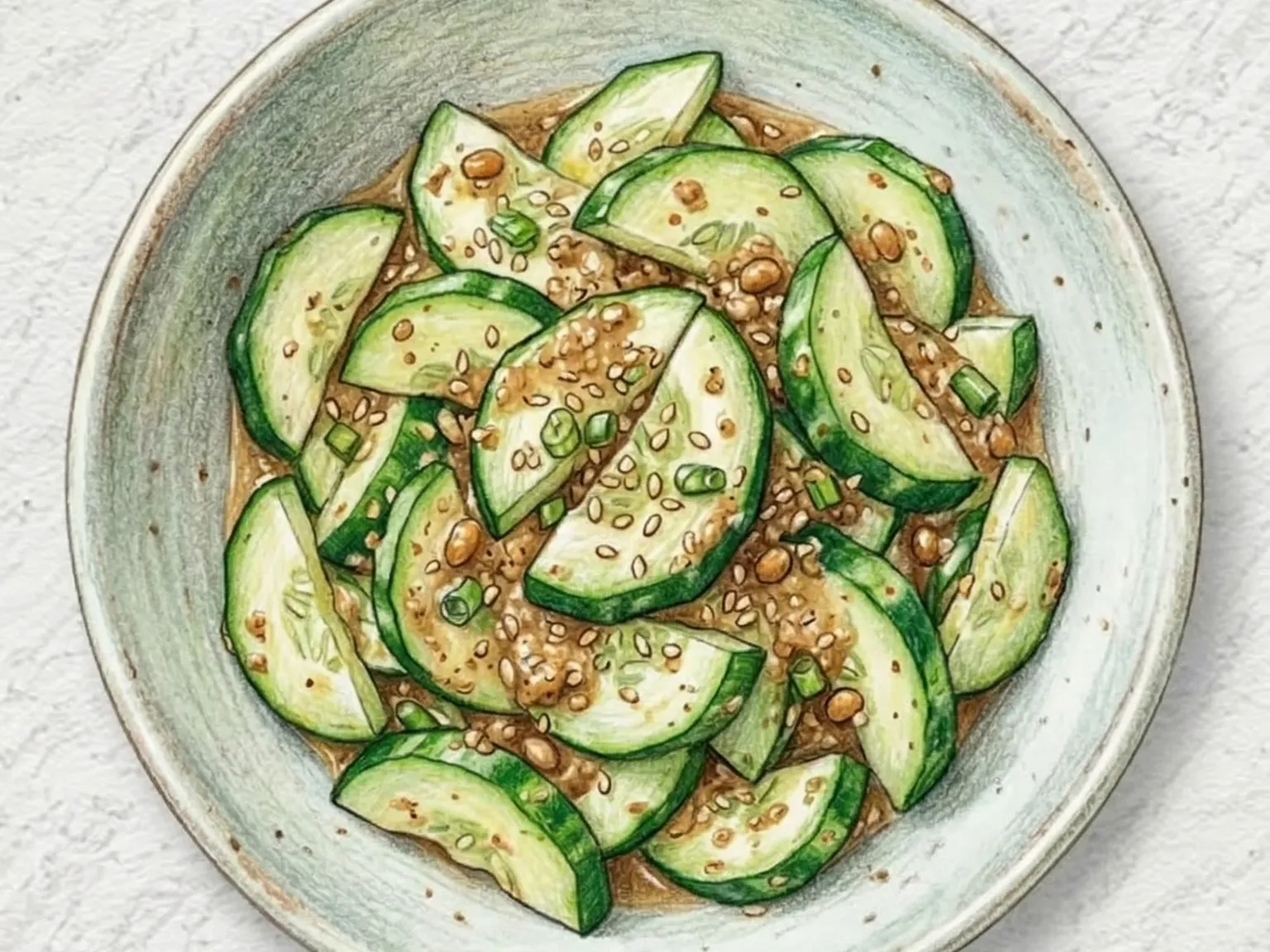
Oi-doenjang-muchim dresses cucumber in a doenjang-based seasoning - a milder alternative to the gochugaru-forward oi-muchim, foregrounding the fermented soybean paste's savory depth over spicy heat. Cucumber is sliced into half-moons or diagonal cuts and salted for five minutes to draw out moisture; skipping this step dilutes the dressing into a watery puddle. The seasoning blends doenjang, soup soy sauce, minced garlic, sesame oil, and sesame seeds, with the doenjang quantity being the critical ratio - too much and the dish is aggressively salty, too little and the cucumber's blandness dominates. Roughly one tablespoon of doenjang to two cucumbers is the working proportion. The cucumber's cool moisture meets doenjang's deep umami to produce a combination that is refreshing yet substantial enough to anchor a rice meal, especially in summer. This banchan must be eaten promptly after assembly - over time, osmotic pressure draws water from the cucumber and collapses its crunch. Served alongside grilled meat, the doenjang's savoriness complements the char while cleansing the palate.

🏠 Everyday 🍱 Lunchbox
Prep 10min 2 servings
Korean Spicy Cucumber Salad
Side dishes Easy

Korean Spicy Cucumber Salad

Oi-muchim - Korean spicy cucumber salad - is one of the most frequently served vegetable banchan on summer Korean tables, tossing thinly sliced cucumber in gochugaru, garlic, vinegar, and sesame oil. Slicing the cucumber as thin as possible with a mandoline or knife is important - thin slices absorb the dressing rapidly and deliver a texture that is simultaneously crunchy and yielding. Salting for ten minutes and squeezing out the released water is the pivotal step; undrained cucumber turns the dressing into a diluted puddle. The seasoning mixes gochugaru, minced garlic, vinegar, sugar, sesame oil, and sesame seeds - vinegar amplifies the cucumber's natural freshness while gochugaru provides a gentle trailing heat. Assembling immediately before serving is essential, as osmotic action wilts the cucumber within thirty minutes. This banchan tops naengmyeon and bibimbap or stands alone alongside rice. When summer heat suppresses appetite, oi-muchim is often the first dish Korean diners reach for - its cool, sharp bite cuts through the lethargy.

🏠 Everyday 🍱 Lunchbox
Prep 15min 4 servings
Korean Chilled Cucumber Soup
Side dishes Easy

Korean Chilled Cucumber Soup

Oi-naengguk is a Korean chilled cucumber soup served in summer as a cold alternative to the hot soups (guk) that normally accompany Korean meals. When midsummer heat makes a steaming bowl of doenjang-guk unappealing, this icy broth takes its place at the table. Cucumber is sliced paper-thin and submerged in a broth of water seasoned with rice vinegar, soup soy sauce, salt, and sugar - a higher vinegar ratio intensifies the refreshing, palate-clearing sharpness. Ice cubes floated on top or at least thirty minutes of refrigeration are essential to achieve the chilling effect that defines the dish. Thinly sliced garlic infuses a mild pungency into the broth, and sesame seeds sprinkled on top add a nutty accent. Some versions include rehydrated dried seaweed, whose slippery texture contrasts with the cucumber's crisp snap. Alongside bibimbap or spicy banchan, oi-naengguk serves as a cooling counterbalance that tempers chili heat between bites.

🏠 Everyday 🍱 Lunchbox
Prep 10min Cook 2min 4 servings
Korean Seasoned Cucumber Pickle Salad
Side dishes Easy

Korean Seasoned Cucumber Pickle Salad

Oiji-muchim takes oiji - cucumber that has been salt-brined for a month or longer - rinses out the excess salinity, and dresses it in a sweet-sour-spicy sauce. Oiji is a traditional Korean preserved food: summer cucumbers are submerged in a concentrated salt brine and aged until their moisture migrates out, transforming the texture from fresh and crisp into something firm, almost crunchy-chewy - a chew fundamentally different from raw cucumber. If the pickle is too salty, soaking in cold water for thirty minutes to an hour draws the brine down to a palatable level. After thorough squeezing, the cucumber pieces are tossed with gochugaru, vinegar, sugar, sesame oil, minced garlic, and scallion. Vinegar and sugar layer a bright sweet-sour dimension over the pickle's inherent saltiness, balancing it for pairing with rice. Julienned oiji absorbs more dressing and delivers a different eating experience than diagonal-cut slices - each approach has its advocates. Made during the summer cucumber glut, oiji keeps refrigerated for over a month.

🏠 Everyday 🍱 Lunchbox
Prep 15min 4 servings