Rice Recipes
334 recipes. Page 7 of 14
Rice is the foundation of Korean cuisine, appearing not only as steamed white rice but also as fried rice, bibimbap, clay-pot rice (sotbap), and gimbap rolls. Porridge (juk) - made by slow-cooking rice into a silky consistency - is comfort food for cold days or when you need something gentle on the stomach. Abalone porridge, pumpkin porridge, and chicken porridge are all classics.
Dried Pollock and Bean Sprout Rice Soup
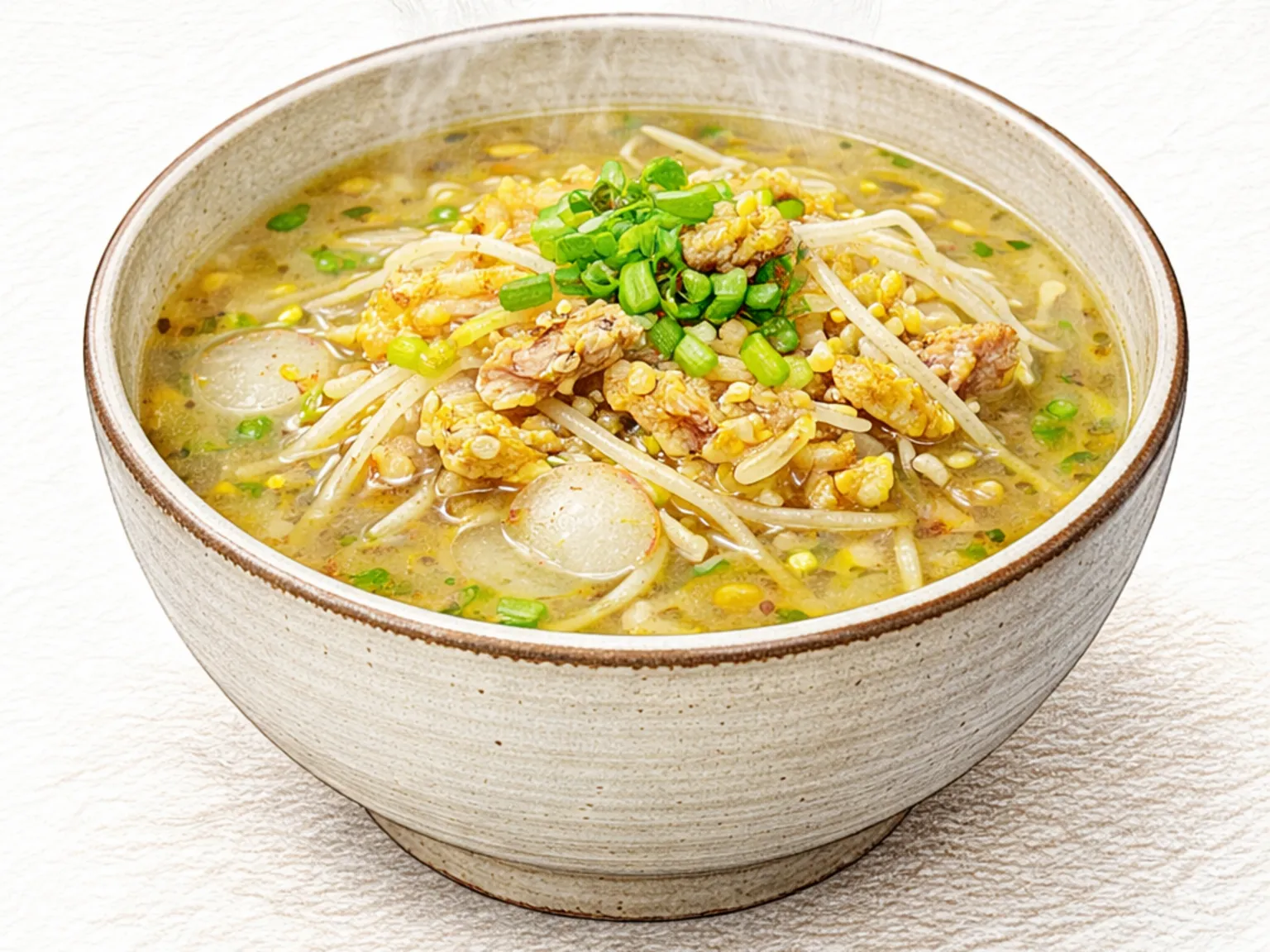
Dried pollock and bean sprout rice soup cooks 60 g dried pollock strips, 180 g bean sprouts, and 120 g radish in 1100 ml water, then serves the soup over two bowls of rice. Rinse the pollock briefly under running water, soak it for 1 minute, and squeeze it lightly. Slice the radish into thin pieces and slice 30 g green onion. Heat 1 tsp sesame oil in a pot at medium heat and stir-fry the pollock for 1 minute. Add the water and radish, bring them to a boil over high heat, reduce the heat to medium, and cook for 10 minutes. Add the bean sprouts and 1 tsp minced garlic, cover the pot immediately, and keep a medium flame for 7 minutes without lifting the lid. Open the pot, mix in 1.5 tbsp soup soy sauce, and bring the broth back to a boil. Add the green onion and cook for 1 minute. Divide the rice between two bowls and ladle the pollock, sprouts, radish, and broth over it.
Iiyachi (Glutinous Rice, Millet, and Azuki Cakes)
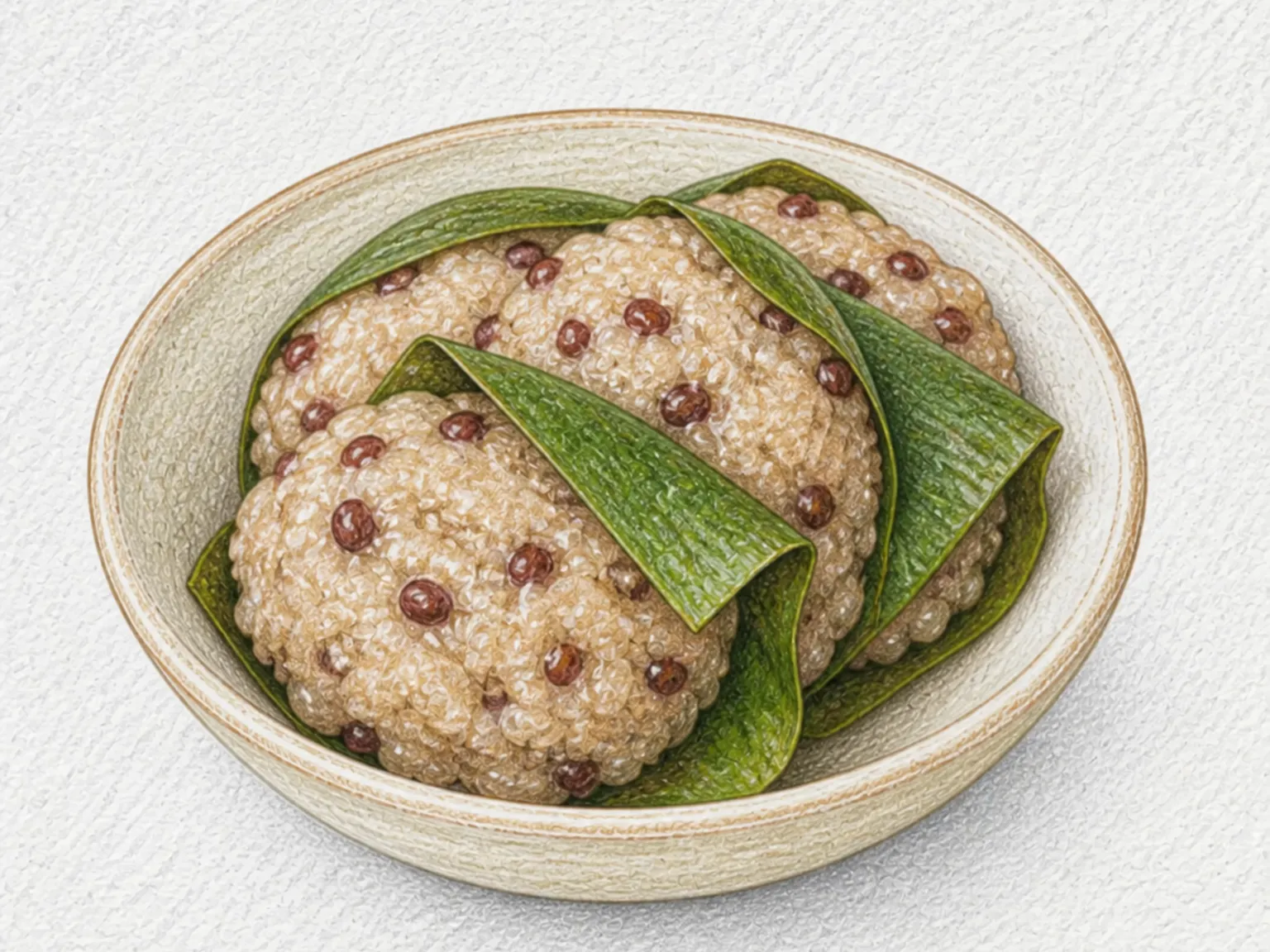
Iiyachi is a traditional preserved food from Taketomi Island in Okinawa's Yaeyama chain. Glutinous rice, glutinous millet, and azuki beans are boiled, drained, worked into a cohesive mass, shaped on oiled Japanese banana leaves, and steamed again. It was prepared for Taketomi's nine-day Seed Festival, a harvest rite with about six centuries of history, so food would be ready during the busiest ceremonial days. Pounding the hot grains with a broad wooden paddle develops their chew, while the final steaming transfers the leaf's fragrance. When sweet potato was the island staple, this grain-rich festival food was considered a special treat.
Inari-zushi (Seasoned Tofu Pocket Sushi)
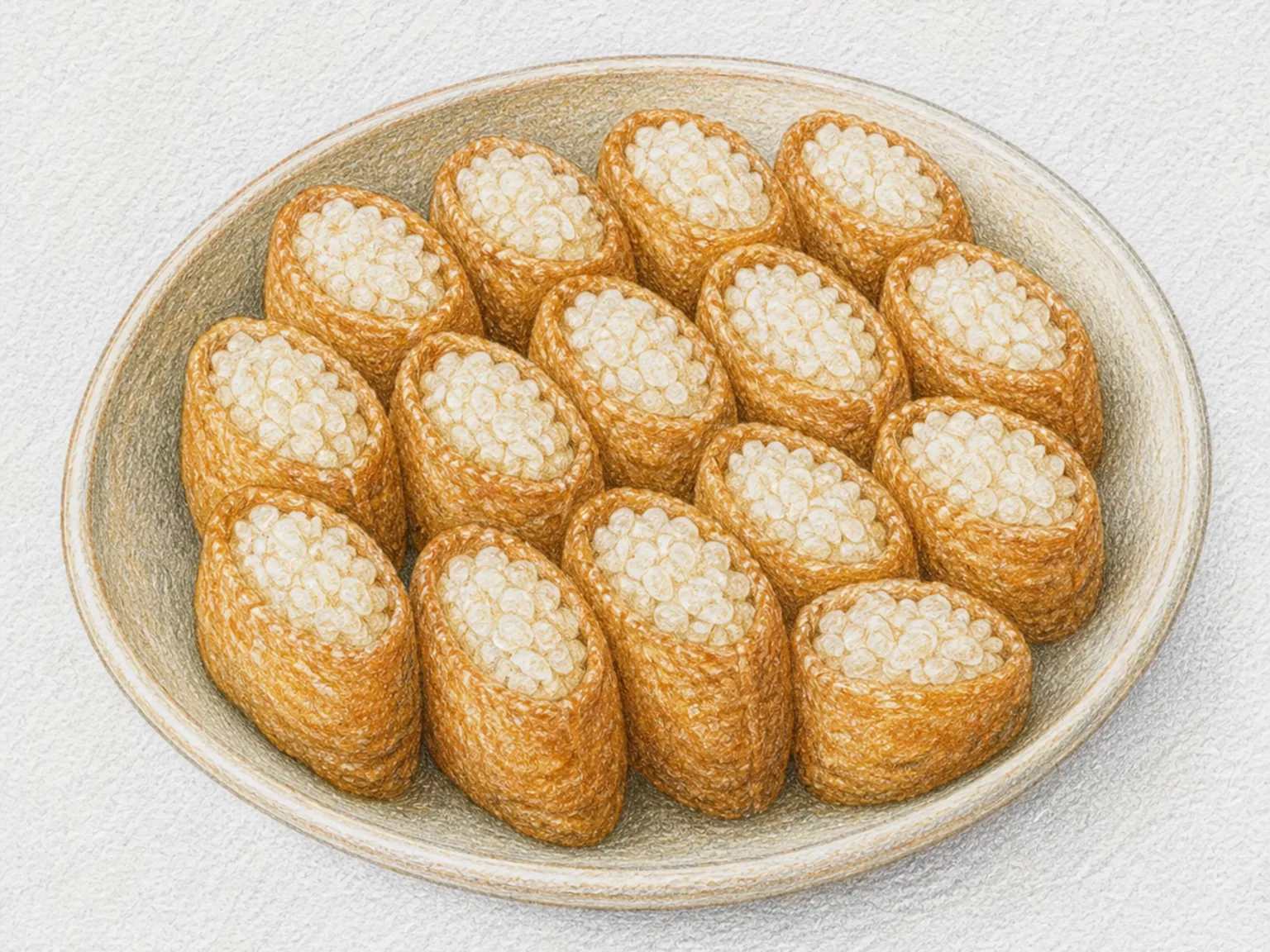
Inari-zushi is an Aichi sushi of vinegared rice packed into tofu pockets simmered with dashi, soy sauce, sugar, and mirin. Toyokawa Inari's temple town is named among its possible birthplaces, while Nagoya-style pockets are filled generously and often left open along the bottom edge. This recipe halves eight tofu sheets to make sixteen compact pieces. Blanching removes excess frying oil, slow simmering draws seasoning into the pockets, and cooling before filling keeps the sweet-savory tofu moist without making the sushi rice heavy.
Itadaki (Rice-Stuffed Simmered Tofu Pouches)
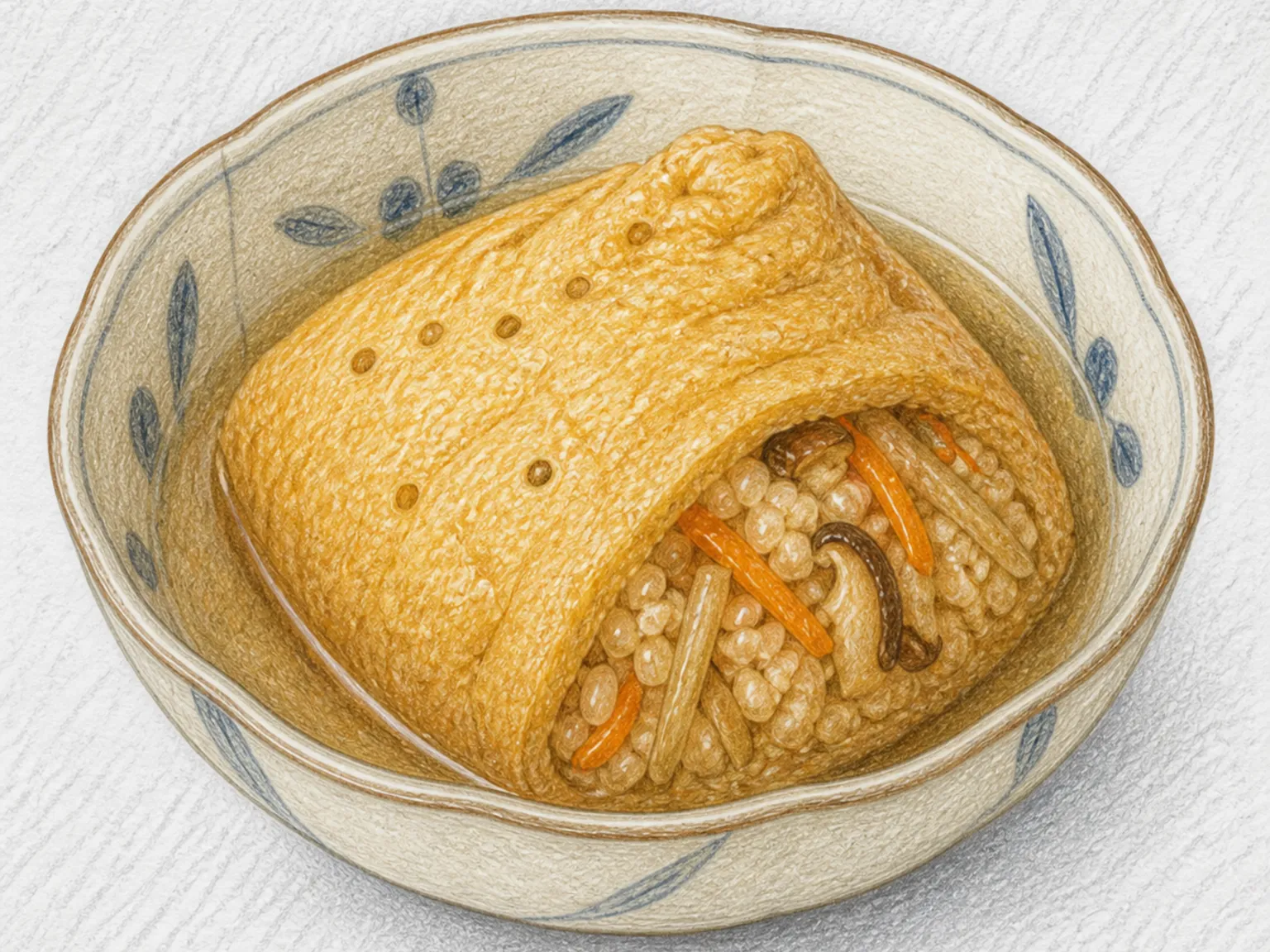
Itadaki cooks raw rice, burdock, carrot, and rehydrated shiitake inside large triangular fried tofu pouches, using shiitake soaking liquid seasoned with soy sauce, sugar, and sake. Soak 3 dried shiitake mushrooms until they are soft through the center. Squeeze out the mushrooms and strain the soaking liquid through a fine sieve, reserving all 800 ml. Cut a slit along one short side of each of 6 tofu pouches and open the interior carefully with a finger. Shave 40 g burdock into thin pieces and rinse them in cold water. Julienne 40 g carrot and finely chop the shiitake. Rinse and drain 300 g uncooked rice, then mix it evenly with the three vegetables. Divide the mixture among the six pouches, leaving open space at the top for the rice to expand, and secure each opening with a toothpick. Use the tip of a chopstick to make about 10 small holes across the surface of every pouch. Pierce only the tofu skin gently so the seasoning can enter without crushing the filling or tearing one concentrated area. Lay 1 square 10 cm sheet of kombu and 10 dried sardines across the bottom of a rice cooker. Stand the pouches close together with their sealed openings facing upward. Dissolve 60 g soy sauce, 30 g sugar, and 20 g sake in the reserved shiitake liquid and pour it into the cooker. Run a standard white-rice cycle until the grains are fully cooked inside and the pouches look plump. Rest them in the closed cooker for 10 minutes, lift them out carefully, and remove the toothpicks before serving.
Jambalaya
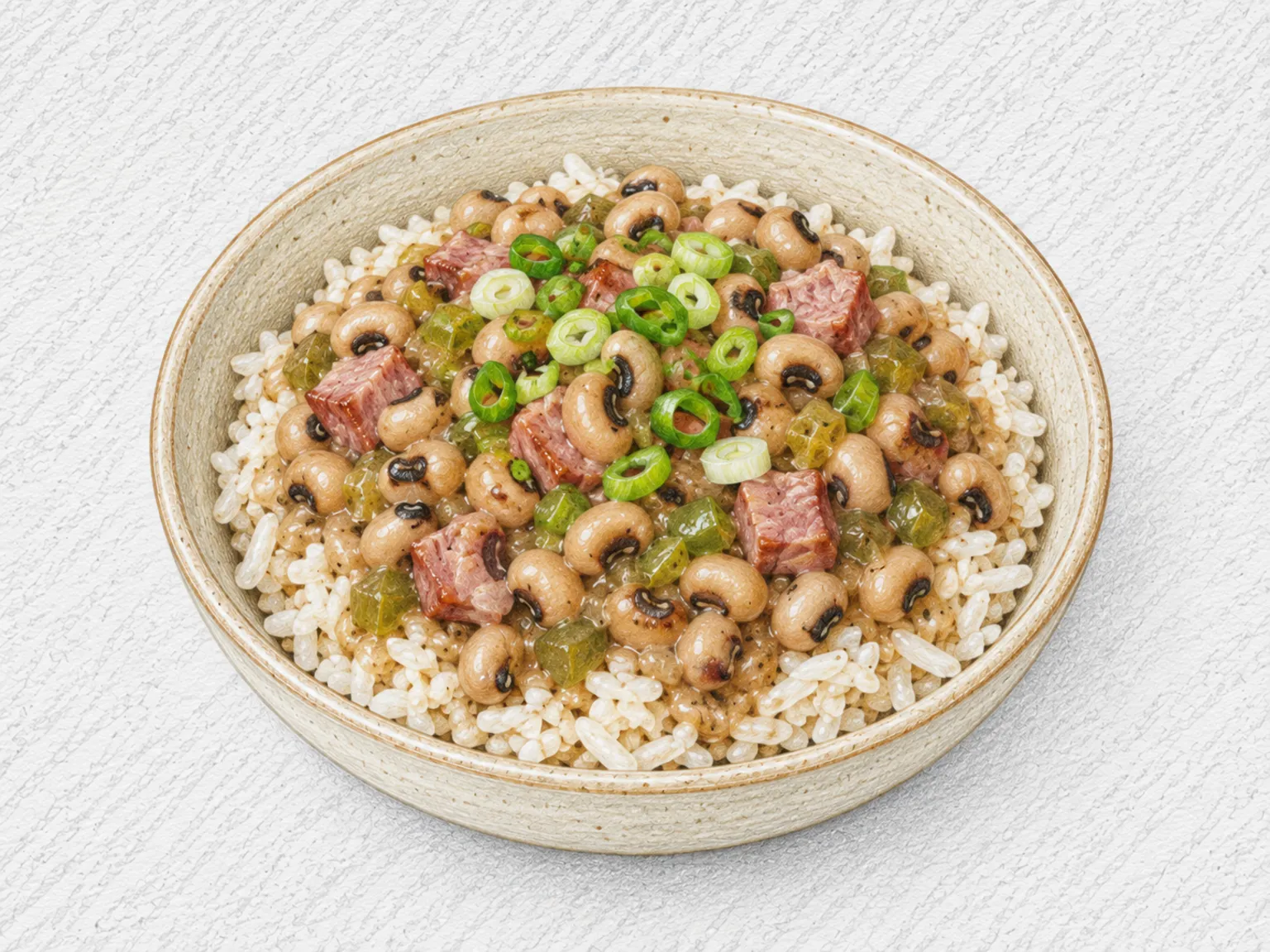
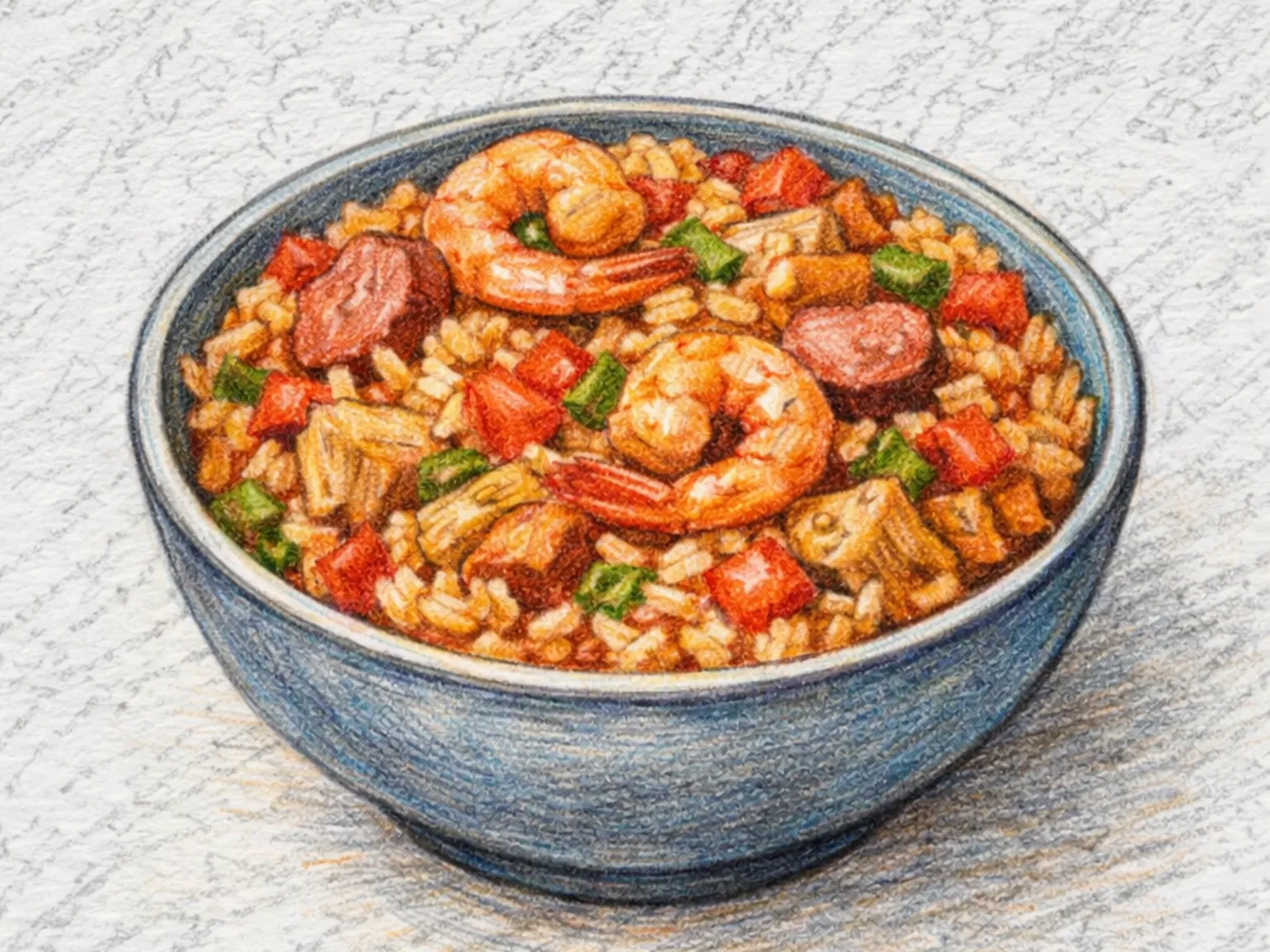
Jambalaya cooks rice in the same seasoned pot used to brown chicken and andouille sausage, allowing the tomato liquid and the browned base to move through the grains. Prepare 300 g long-grain rice so it can go directly into the pot, and reserve 200 g shrimp for the final minutes. Cut 200 g chicken and 150 g andouille sausage into similarly sized bite-size pieces. Heat a heavy pot over medium-high heat and brown the sausage and chicken first. Let their surfaces become golden and leave the browned layer on the bottom, taking care not to burn it because it will season the rice later. Add onion, celery, and bell pepper to the rendered fat and cook over medium heat, stirring until the vegetables turn translucent and their edges soften. Add 400 g tomatoes, 2 tablespoons Cajun seasoning, the prepared rice, and chicken stock. Scrape the bottom while stirring so the browned material dissolves into the liquid rather than remaining stuck to the pot. Bring the mixture to a steady boil and stir once more to distribute the tomato juices and seasoning between the grains. Cover, reduce the heat to low, and simmer while the rice absorbs the liquid. Avoid lifting the lid repeatedly, which releases the heat needed for even cooking, but check briefly if the bottom appears likely to stick. When the rice is nearly tender, add the shrimp and cook for only 2 to 3 minutes. Turn off the heat as soon as the shrimp are pink and firm, let the covered pot stand briefly, and fluff gently so the rice and pieces of meat keep their shape.
Korean Grilled Eel Rice Bowl
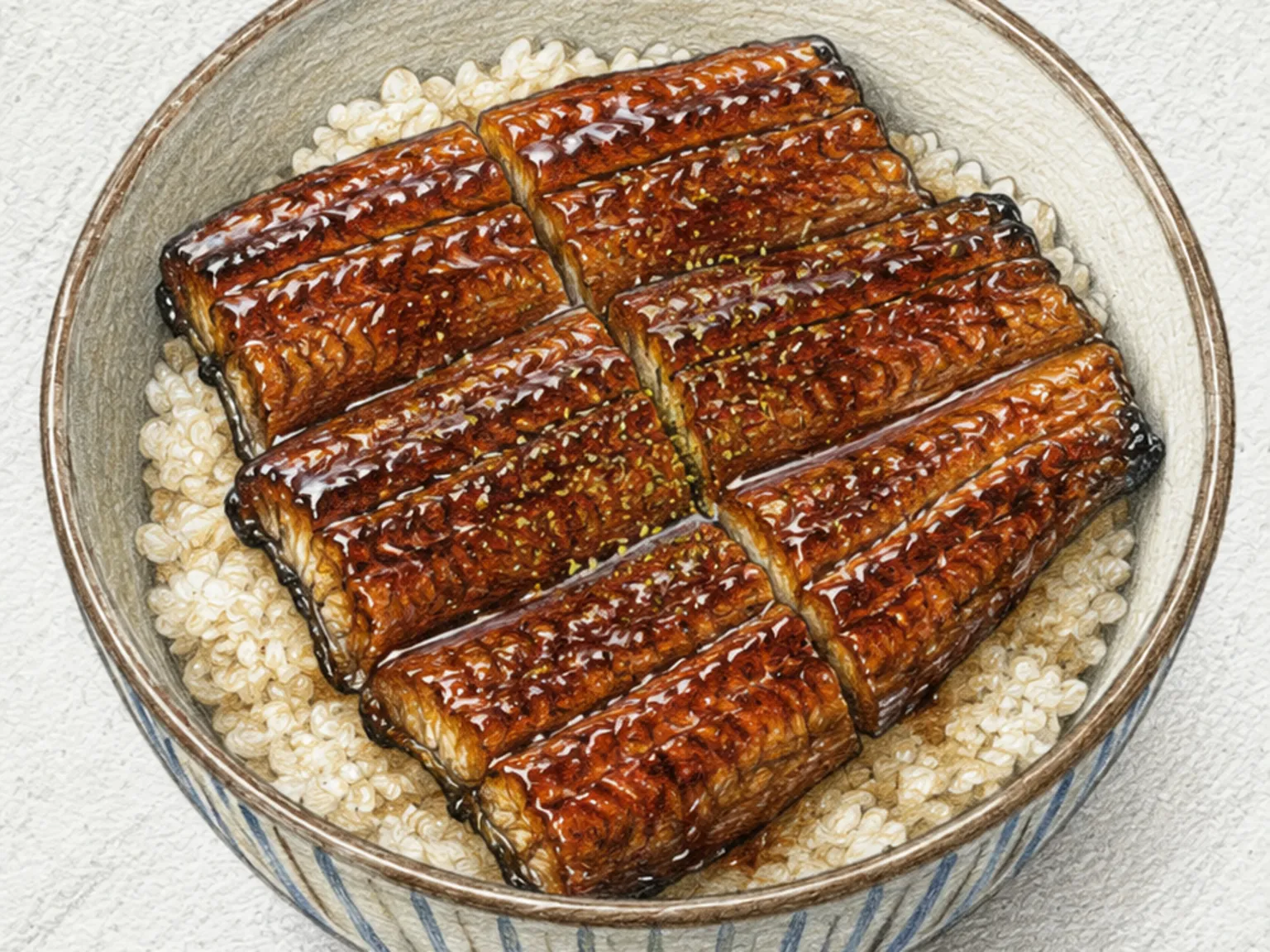
Jangeeo deopbap is a bowl of grilled freshwater eel over steamed rice, where the key technique is building up a thick, lacquered glaze through multiple applications of a sweet-salty sauce reduced from soy sauce, mirin, sugar, and ginger juice. The eel starts skin-side down on the grill over medium heat for around five minutes to crisp the skin, then is flipped and basted repeatedly with the sauce as it finishes cooking. A single coat of sauce produces a pale, thin color, so at least two applications and ideally three or more are needed to build the characteristic glossy surface. With each additional coat, the sugars in the sauce react with heat through both Maillard browning and caramelization, layering flavor with every pass. Because freshwater eel is naturally fatty, fat drips during grilling can cause flare-ups, so heat control is important throughout the process. Sansho pepper dusted on at the end cuts through the eel's inherent richness with a sharp, numbing fragrance that balances the sweet glaze and keeps the dish from feeling heavy.
Korean Jangjorim Butter Rice
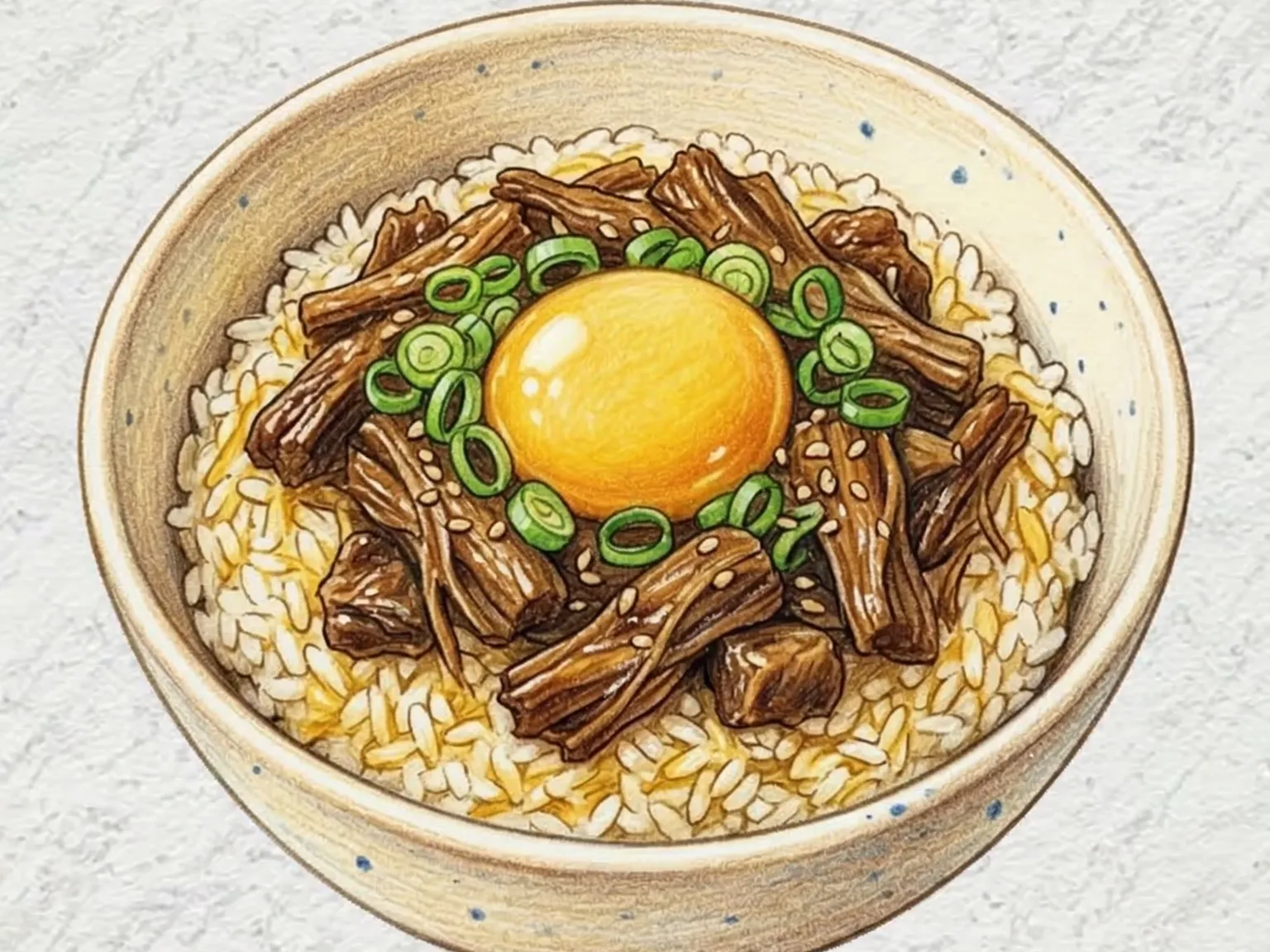
The preparation of this dish starts by placing a portion of unsalted butter directly onto a bowl of steaming, freshly cooked white rice. As the residual heat from the grains begins to melt the fat, the butter flows over the rice to coat each individual grain in a thin, smooth layer, which creates a rich and nutty foundation before any other components are introduced. Following the butter, a serving of shredded soy-braised beef is added to the bowl along with a generous amount of its dark and concentrated braising liquid. This liquid is infused with both salt and sweetness from the long cooking process of the beef, meaning that there is no need to include any extra seasonings or sauces to achieve a balanced flavor. A single raw egg yolk is then dropped into the center of the bowl and stirred through the mixture. This addition changes the overall texture of the dish, making it significantly more creamy while simultaneously intensifying the savory profile of the seasoned meat. To provide a necessary contrast to the heavy richness of the egg and butter, crushed roasted seaweed flakes are sprinkled over the surface. These flakes offer a brittle, crunchy texture and a distinct marine element that cuts through the fat. Finally, the dish is finished with a garnish of thinly sliced green onions and toasted sesame seeds for a clean and aromatic end. If the soy-braised beef is already available in the refrigerator, the entire meal can be put together in under fifteen minutes, making it an efficient option for a filling single-bowl meal in the routine of Korean home cooking.
Jangteo Gukbap (Korean Market-Style Spicy Beef Soup with Rice)
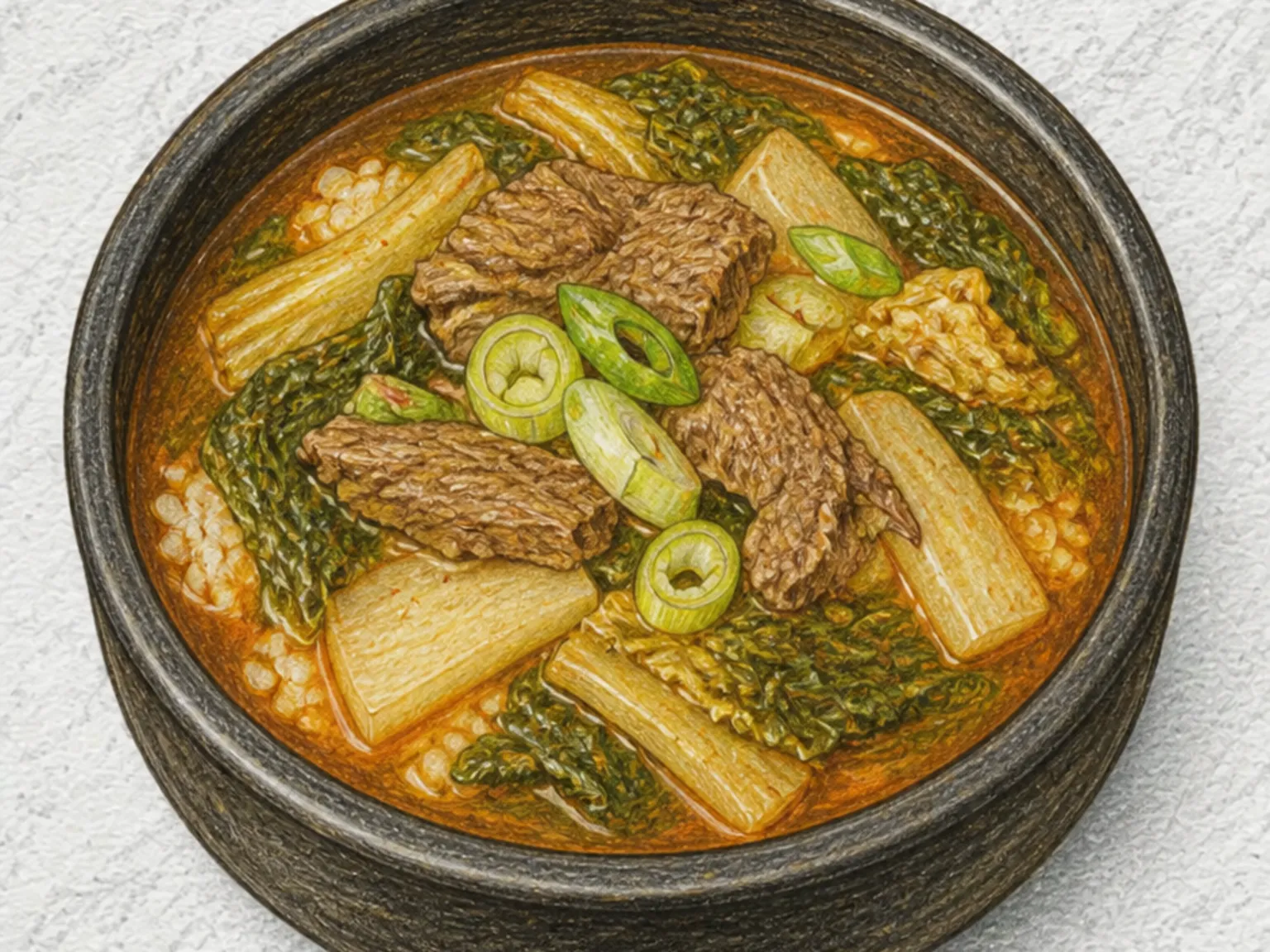
Jangteo gukbap is a market-style spicy beef soup made by simmering brisket, radish, dried cabbage leaves, and green onion in a broth seasoned with chili powder and soup soy sauce. Slice 300g beef brisket into thin pieces and cut 150g radish into thin squares. Cut 200g blanched cabbage leaves and 100g green onion into 5cm lengths so the vegetables are easy to lift with a spoon. Heat 1 tablespoon sesame oil over medium heat and saute the beef and radish until the outside of the meat is cooked. Lower the heat before adding 2 tablespoons red chili powder, then stir for only 20 seconds. Chili powder can scorch quickly in hot oil, so keep it moving and do not extend this step. Pour in 1.5L water and bring it to a boil over high heat. Add the cabbage leaves, 1 tablespoon minced garlic, and 2 tablespoons soup soy sauce, reduce the heat to medium-low, and simmer for 30 minutes. Once the cabbage is tender and the beef and radish have seasoned the broth, add the green onion. Taste before using the prepared 4g salt, adding only what the soup needs. Simmer for another 10 minutes, until the green onion is fully soft. The key control point is the brief low-heat treatment of the chili powder: it should color and season the oil without turning dark or burnt before the water goes in.
Pine Nut Rice Porridge
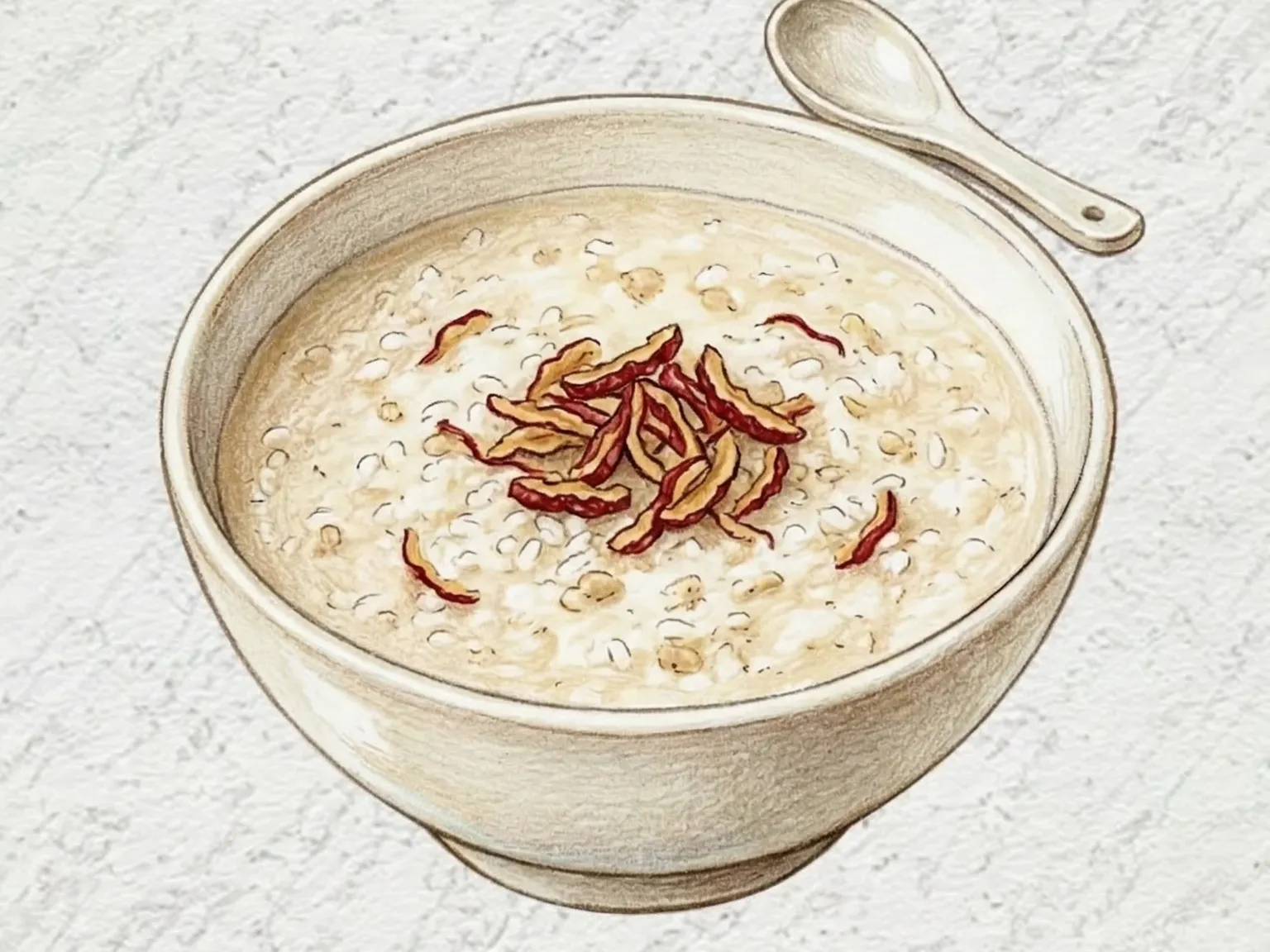
Pine nut rice porridge cooks 0.75 cup soaked rice and 60 g pine nuts with 750 ml water for two servings. Soak the rice for 30 minutes and drain it in a sieve for 5 minutes. Blot the pine nuts lightly, then pit and thinly slice 2 jujubes for the topping. Blend the pine nuts with 200 ml of the water for at least 40 seconds. If visible pieces remain, scrape down the blender and process them again. Heat 1 tsp sesame oil in a heavy pot over low heat and stir the soaked rice for 2 minutes. Add the remaining 550 ml water and cook over low heat for 10 minutes, stirring along the bottom of the pot. Pour in the pine nut liquid and stir immediately. Once it begins to bubble, cook over low heat for 6 minutes. Mix in 0.7 tsp salt, divide the porridge between two bowls, and distribute the sliced jujube over them. The total water is divided into 200 ml for blending and 550 ml for cooking the rice.
Korean Abalone Porridge (Jeonbok Juk)
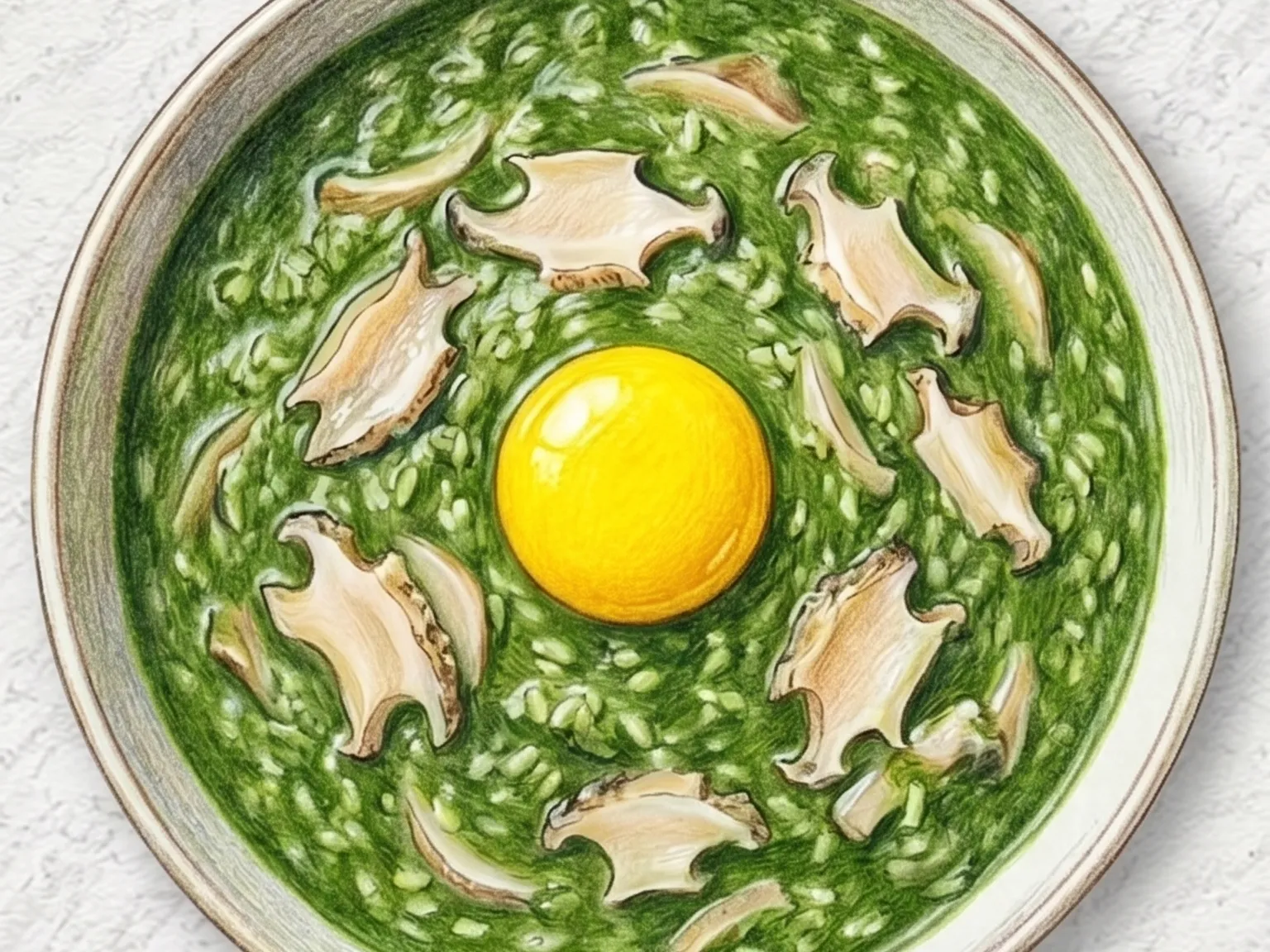
Abalone innards are sauteed in sesame oil until they release a green tint and briny aroma, then simmered with soaked rice on low heat for over 30 minutes into a nourishing porridge. The freshness of the innards dictates both the porridge's color and depth of flavor, with vivid green being the sign of quality. Thinly sliced abalone meat goes in near the end so it stays chewy rather than turning rubbery, and frequent stirring throughout prevents the bottom from scorching. An egg yolk placed on top creates a visual contrast against the greenish porridge and, once broken and mixed in, adds a layer of richness.
Korean Abalone Mung Bean Porridge
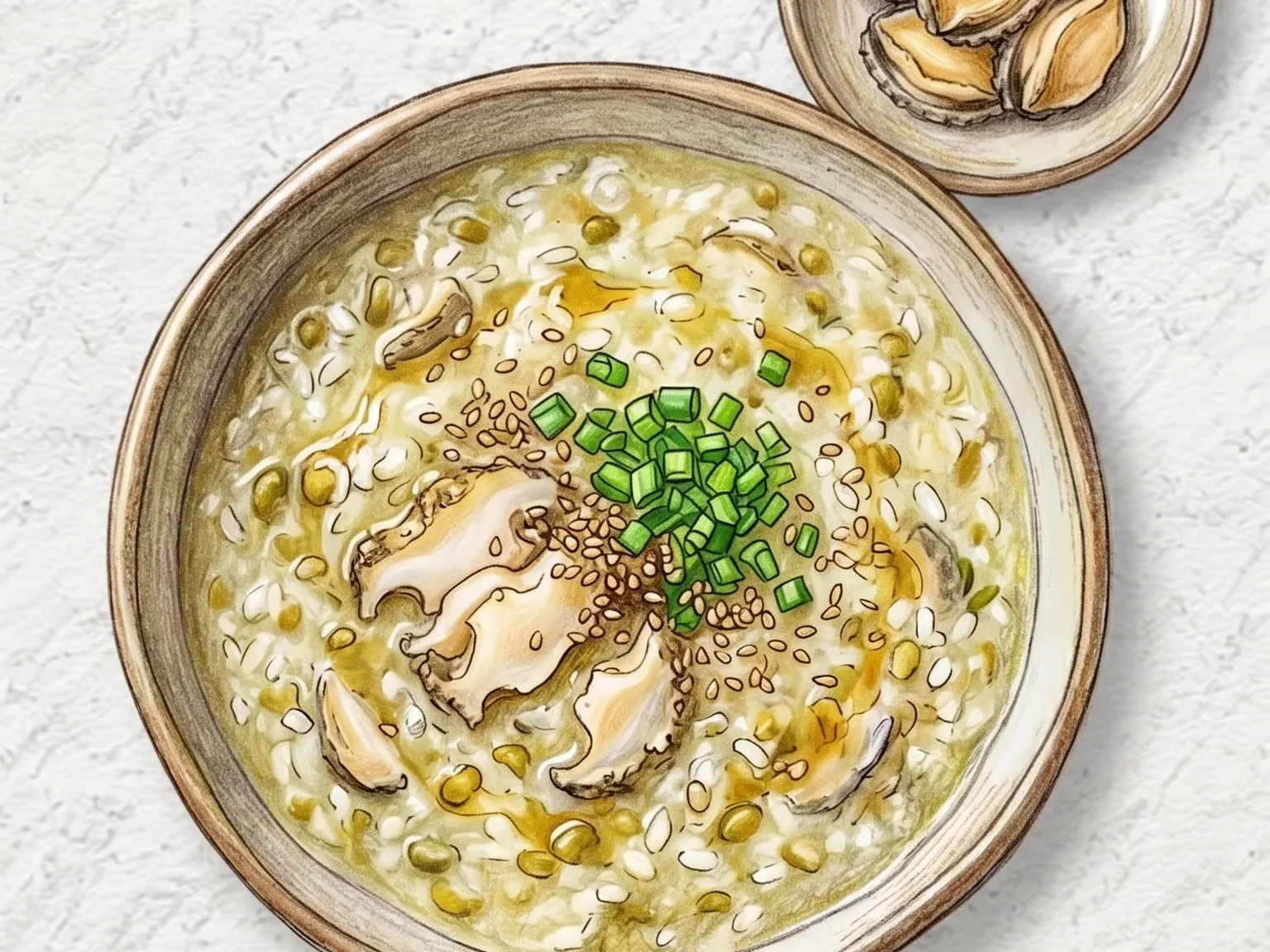
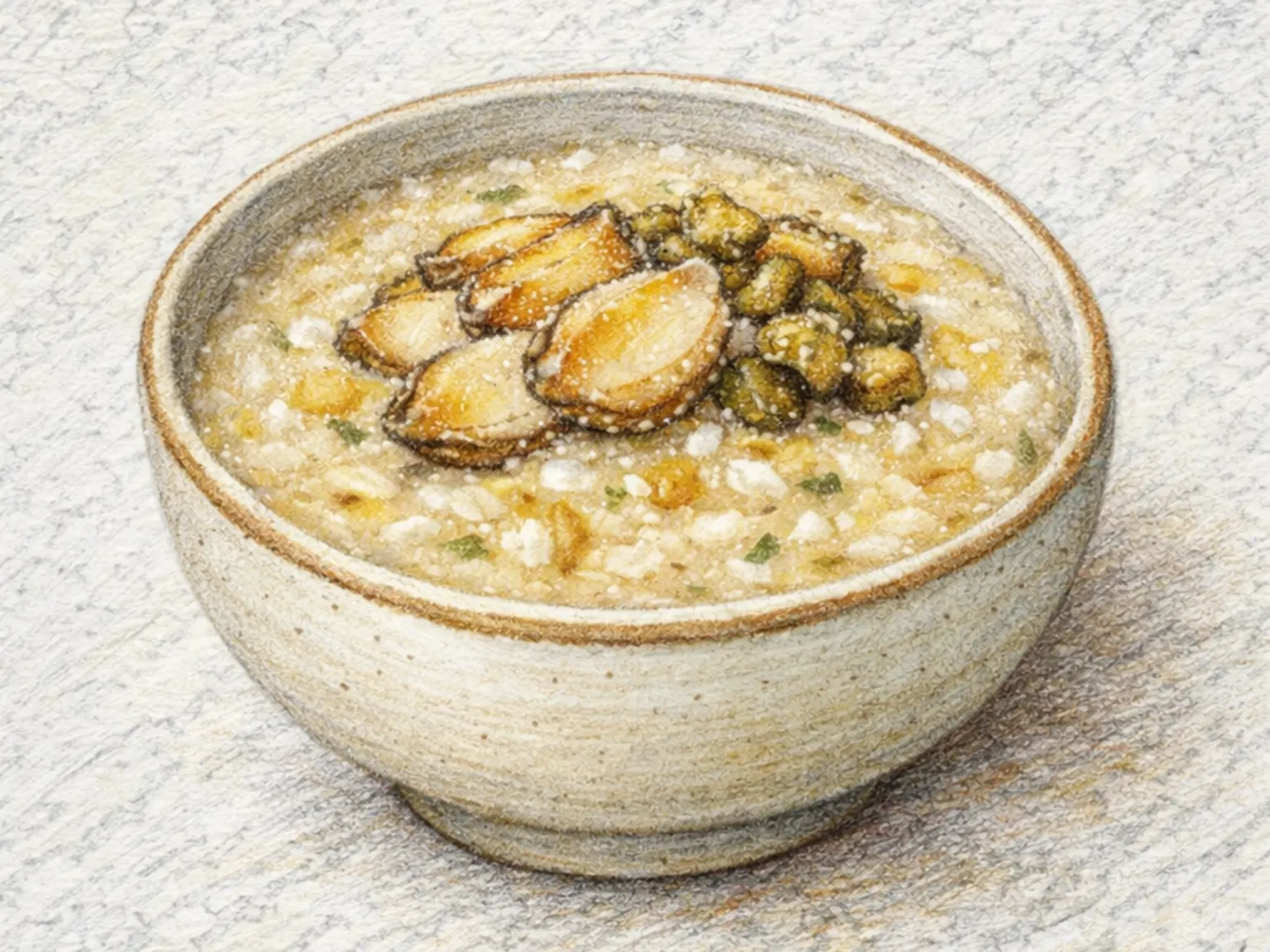
Jeonbok nokdu juk is a Korean restorative porridge that soaks and simmers mung beans alongside rice to build a thickened base, then incorporates abalone for a combination of nutty creaminess and ocean flavor. Mung beans break down considerably during cooking, giving the finished porridge a noticeably denser and more velvety consistency than standard abalone porridge made with rice alone. Abalone innards are sauteed with garlic in sesame oil before joining the porridge, a step that draws out a deep, toasty aroma and forms the flavor backbone of the dish. Replacing plain water with kelp stock adds a layer of clean umami to the liquid base and enriches the overall taste. The abalone flesh is added during the final five minutes only to prevent overcooking, which would tighten the muscle and make it tough rather than springy. Throughout the long cooking, the porridge must be stirred regularly over low heat so the mung beans and rice dissolve completely into a smooth, uniform texture without catching on the bottom of the pot. Chopped scallion scattered over the finished bowl introduces a pop of green color and a fresh, bright fragrance that lightens the rich porridge.
Korean Sesame Oil Abalone Porridge
Both abalone flesh and innards are used together with a generous two tablespoons of sesame oil to maximize nuttiness in this porridge. The innards carry a concentrated brininess unique to abalone, and sauteing them with minced garlic in sesame oil infuses the fat with both marine and roasted flavors simultaneously, forming the aromatic foundation for the entire pot. Soaked rice is stirred into that same seasoned oil and cooked until each grain turns translucent, a step that coats the starch in fat and gives the porridge a fuller, rounder flavor. Water is then added and the mixture simmers for 25 minutes while the grains slowly dissolve their starch into a naturally thick consistency. Stirring regularly throughout this stage prevents the rice from settling and scorching on the pot floor. Soup soy sauce and salt are added at the finish, their saltiness anchoring the nuttiness of the sesame oil rather than competing with it. Chopped chives provide both color and a light onion fragrance. An extra drizzle of sesame oil just before serving deepens the aroma and gives the surface a subtle sheen.
Korean Abalone Pot Rice (Ocean-Scented Sesame Base Grain Pot)
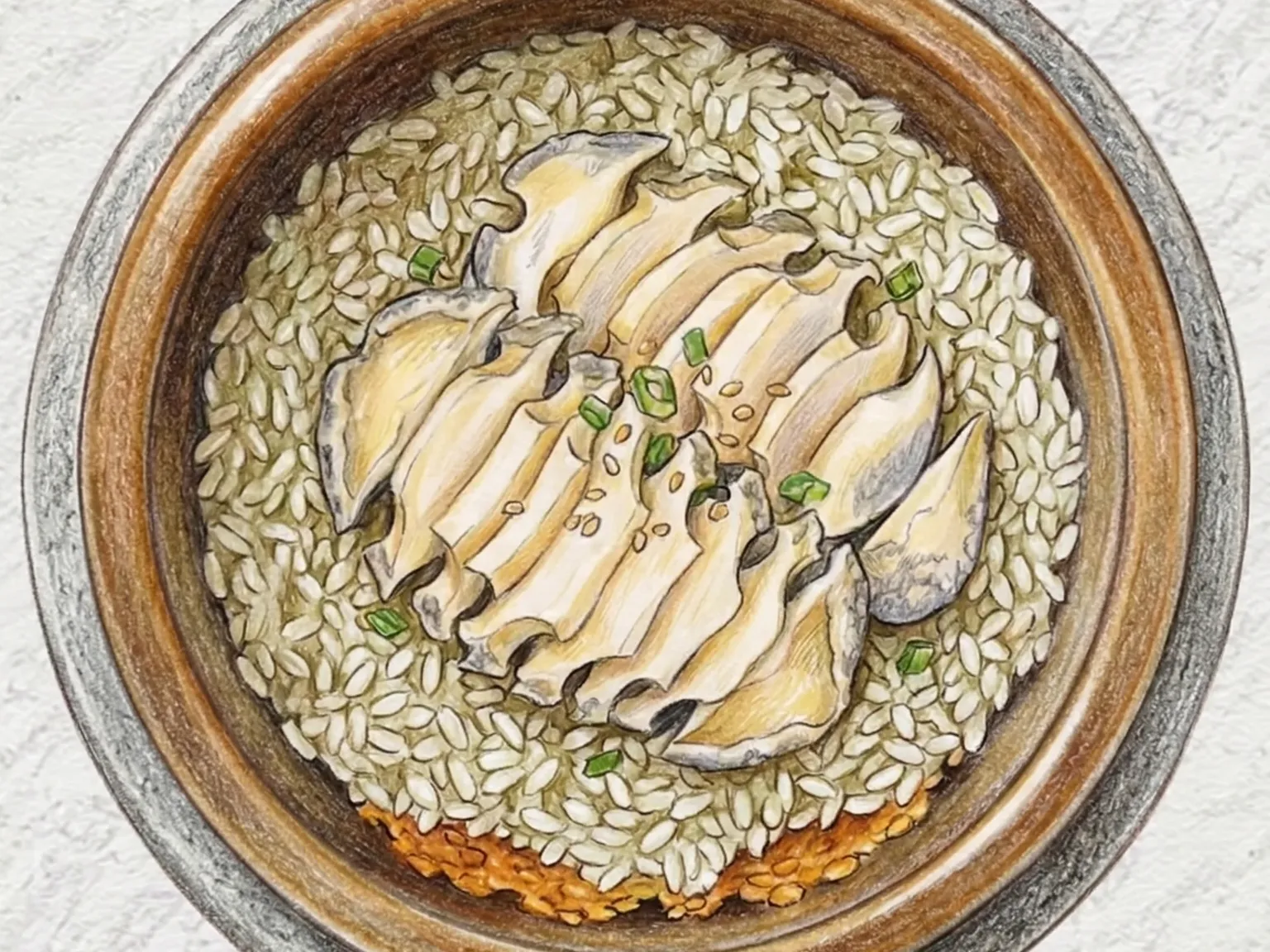
Jeonbok sotbap is an abalone and rice dish cooked in a heavy-bottomed pot, where the process of building flavor begins before the rice itself goes in. Abalone innards are sauteed directly in the cooking vessel with sesame oil, and their distinctive green pigment dissolves into the fat and spreads a deep, marine-tinged aroma throughout the pot. Soaked rice and water are added to this scented base and the rice is cooked in the usual way, absorbing the briny fragrance into each grain. Sliced abalone meat is placed on top of the rice only when it is nearly done, then the lid is replaced for a five-minute steam that gently cooks the abalone without toughening it. Extending this resting time by two or three minutes generates a layer of nurungji, scorched rice at the bottom of the pot, that adds a crisp textural counterpoint. A sauce of soy sauce, sliced chives, minced garlic, and sesame seeds is mixed into each bowl at the table, bringing a savory, nutty accent that complements the abalone's subtle flavor.
Korean Abalone Mugwort Porridge
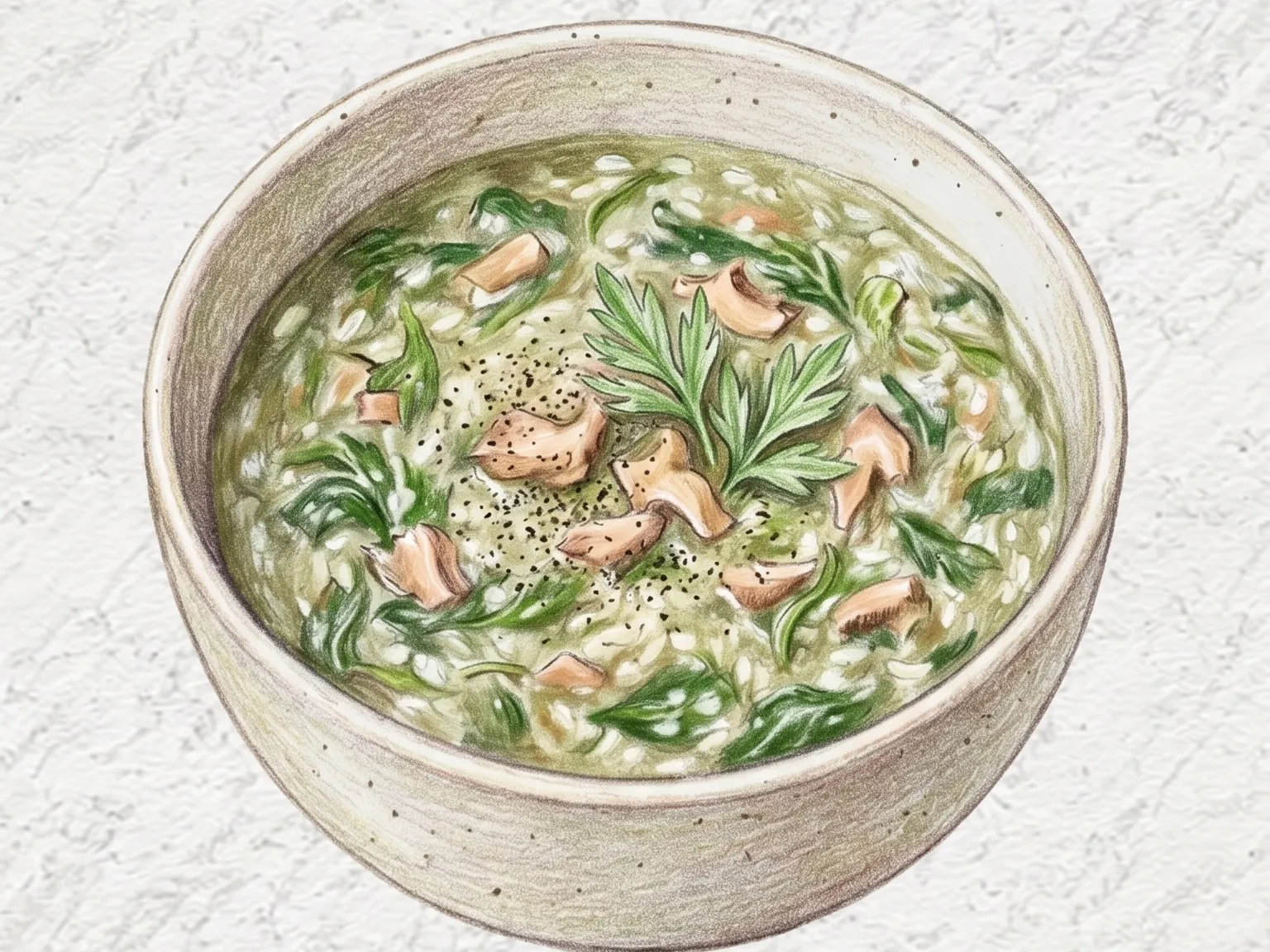
This seasonal porridge combines the mineral essence of abalone with the herbal freshness of young mugwort. The preparation starts by sautéing abalone innards in sesame oil, creating a concentrated base that anchors the entire dish. Soaked rice is then added and stirred continuously until the starch releases, resulting in a smooth and consistent texture. Using kelp stock instead of plain water adds another layer of oceanic character to the broth. Precise timing is essential when adding the mugwort to the pot. Incorporating the herb only during the final sixty seconds prevents the release of harsh bitter compounds that could otherwise dominate the flavor. This brief cooking period ensures only a subtle, clean bitterness remains to complement the heavy richness of the abalone. A light dusting of ground black pepper at the end provides a warm aromatic finish that highlights the greenery of the herb. Early spring is the ideal time for this dish, as that is when mugwort leaves are at their most tender and fragrant. With iron and taurine from the abalone alongside vitamins and folate from the mugwort, this meal offers significant nutritional value. Its gentle nature makes it an appropriate choice for those needing a restorative meal that is easy on the digestive system. If kept in the refrigerator, the porridge will thicken significantly; reheating it over low heat with a splash of water restores its original silkiness.
Korean Spicy Pork Rice Cup
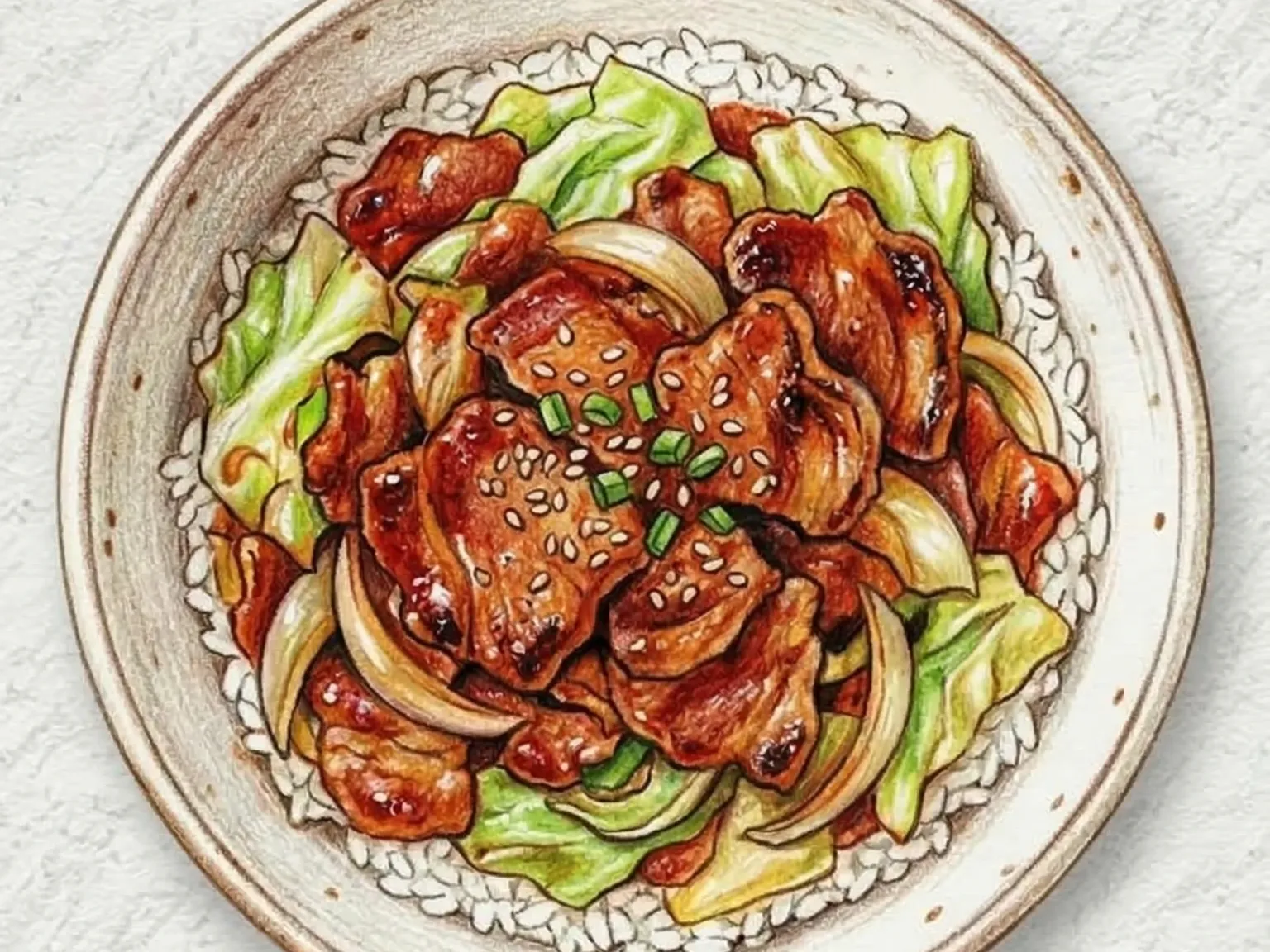
Jeyuk cupbap layers steamed rice with pork shoulder, onion, and cabbage stir-fried in a gochujang sauce. The 250 g pork is cut into bite-size pieces, while 80 g onion and 100 g cabbage are sliced thinly so they cook at different stages without crowding the cup. Spreading 320 g cooked rice on a wide plate releases excess steam before assembly and helps the grains remain separate in the container. For the sauce, 1.5 tablespoons gochujang, 1 tablespoon soy sauce, 1 teaspoon sugar, and 1 teaspoon minced garlic are mixed until no sugar crystals remain. One tablespoon oil is heated in a pan over medium-high heat, and the pork is spread into a single layer. Leaving it mostly untouched for about 2 minutes develops browned surfaces before the meat releases too much liquid. Onion is added once the pork is halfway cooked and stir-fried for 1 to 2 minutes. After moisture on the pan bottom has evaporated, the prepared sauce cooks for 3 to 4 minutes at a moderate setting, coating the pork with a glossy red glaze. If it reduces too quickly, lowering the heat prevents the gochujang and sugar from scorching. The cabbage is held back until the last minute of cooking, preserving some crunch. Slightly cooled rice is spooned into cups first, then topped with the hot pork mixture for a clear contrast between the loose grains, sauced meat, and crisp vegetable.
Korean Spicy Pork Rice Bowl
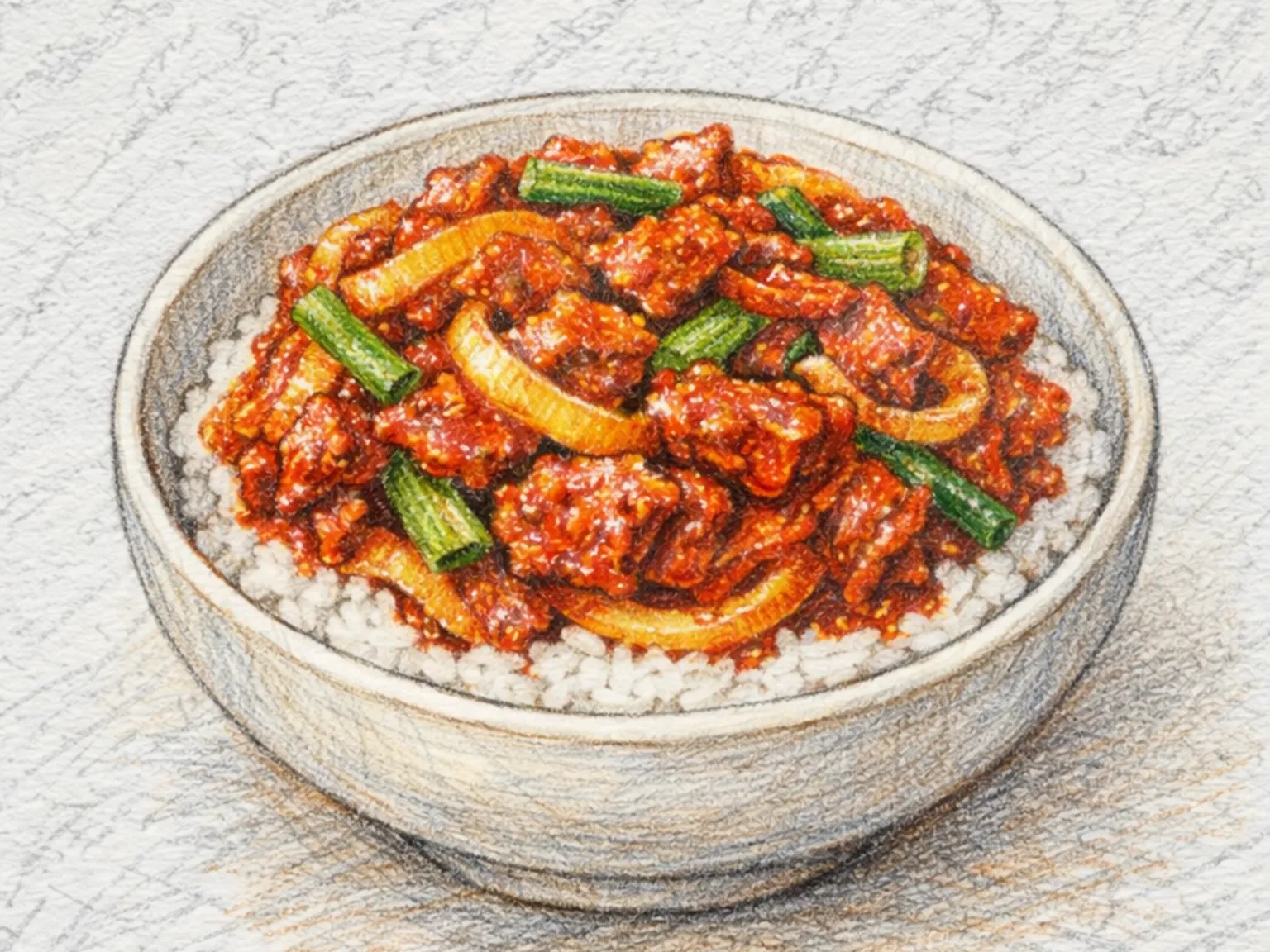
Pork shoulder is sliced into strips, marinated in gochujang, chili flakes, soy sauce, garlic, and sugar for ten minutes, then stir-fried over high heat until the edges caramelize. Onion goes in first to build sweetness, and green onion added at the end brings a sharp, fresh bite that cuts through the spicy-sweet glaze. A final drizzle of sesame oil rounds out the aroma. Served over steamed rice, the bold sauce coats every grain, making this a satisfying single-bowl meal that comes together in under thirty minutes.
Korean Black Bean Sauce Rice
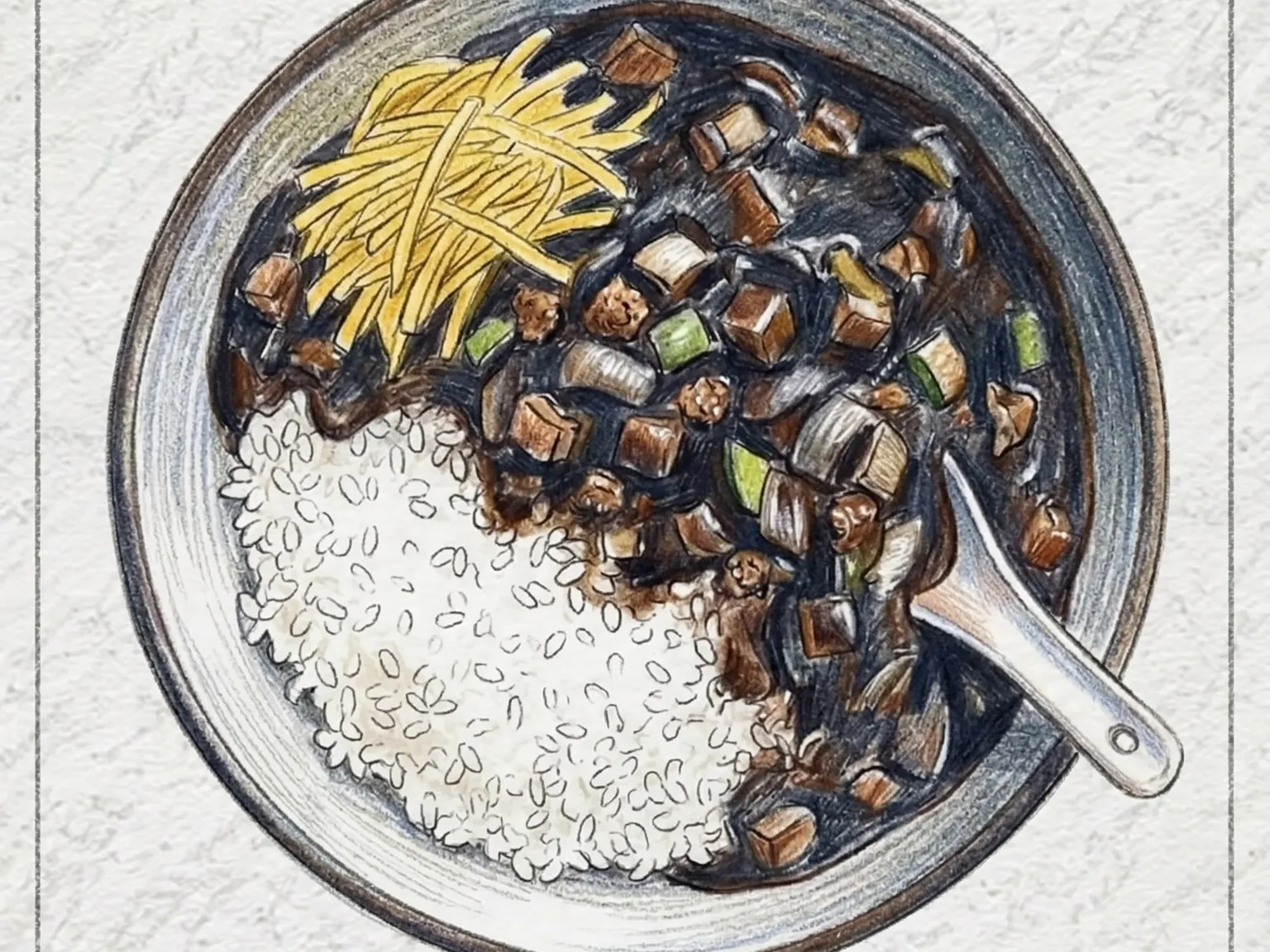
The key to jjajangbap lies in pre-frying chunjang (Korean black bean paste) in oil to strip its raw bitterness and unlock a toasty, earthy aroma. Ground pork, diced onion, zucchini, and cabbage are stir-fried until just softened, then folded into the fried paste so the dark sauce coats every piece. A potato starch slurry thickens the mixture after a brief simmer, giving it enough body to cling to rice without pooling. The finished bowl delivers a mellow sweetness mostly from the caramelized onion, layered with fermented soybean depth - a homestyle take on Chinese-Korean comfort food.
Korean Spicy Baby Octopus Fried Rice
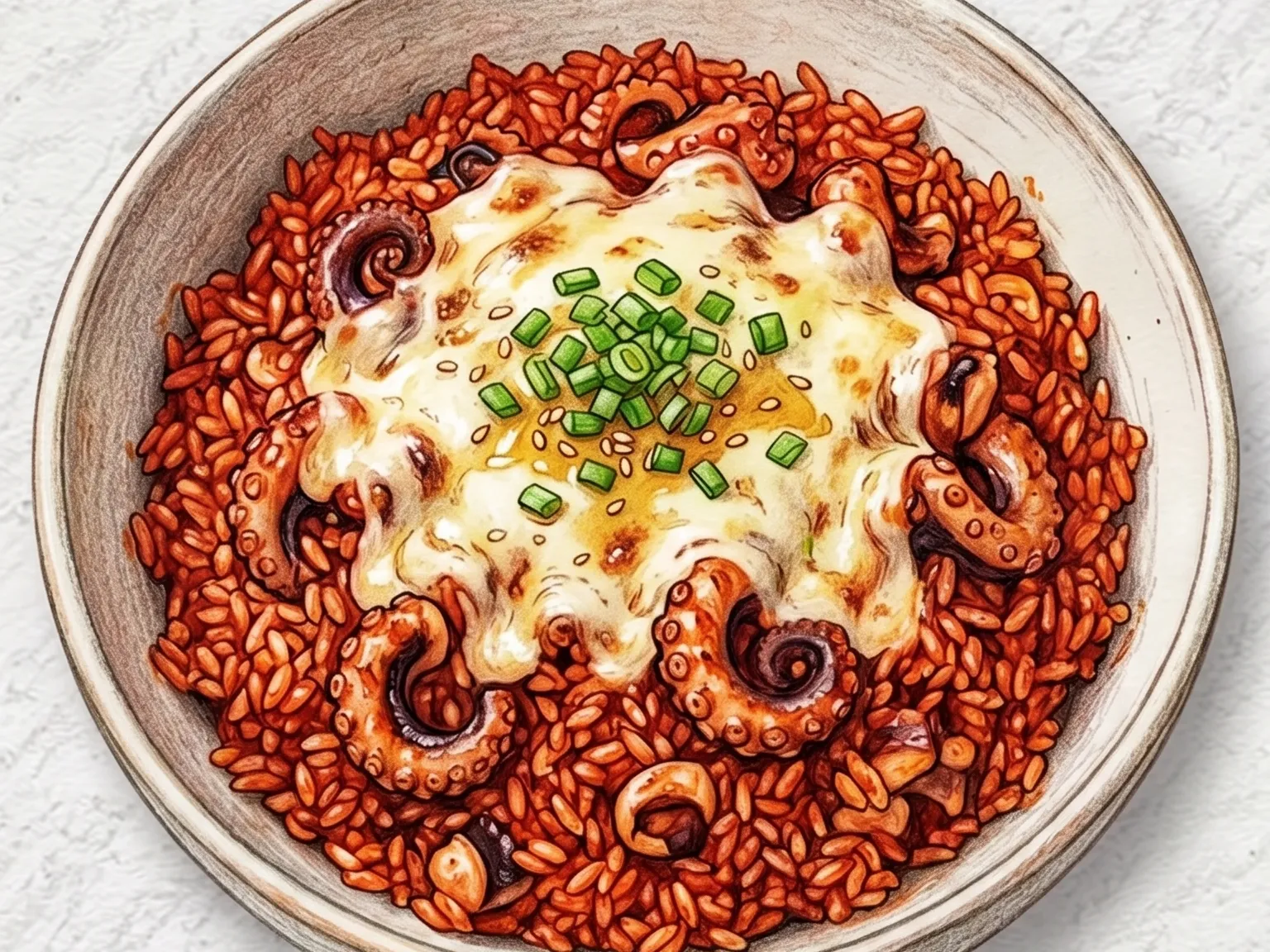
Jjukkumi bokkeumbap is a spicy fried rice built around webfoot octopus, where every element of the technique exists to preserve the squid's signature springy chew. The octopus is first rubbed with salt to strip off the surface slime, then cut to bite-size and seared over high heat for no more than three minutes. The gochujang-based sauce, bolstered with chili flakes, soy sauce, sugar, and garlic, concentrates spice and umami before the rice enters the pan and soaks up the red seasoning grain by grain. A drizzle of sesame oil at the end adds a nutty fragrance that lifts the dish slightly, and melted cheese is a popular addition for softening the heat without dulling the flavor. The oceanic character of the octopus - its brininess and elasticity - gives this fried rice a depth that ground pork or vegetables simply do not replicate. Not overcooking the octopus is the single most important decision in the recipe.
Korean Butterfish Porridge
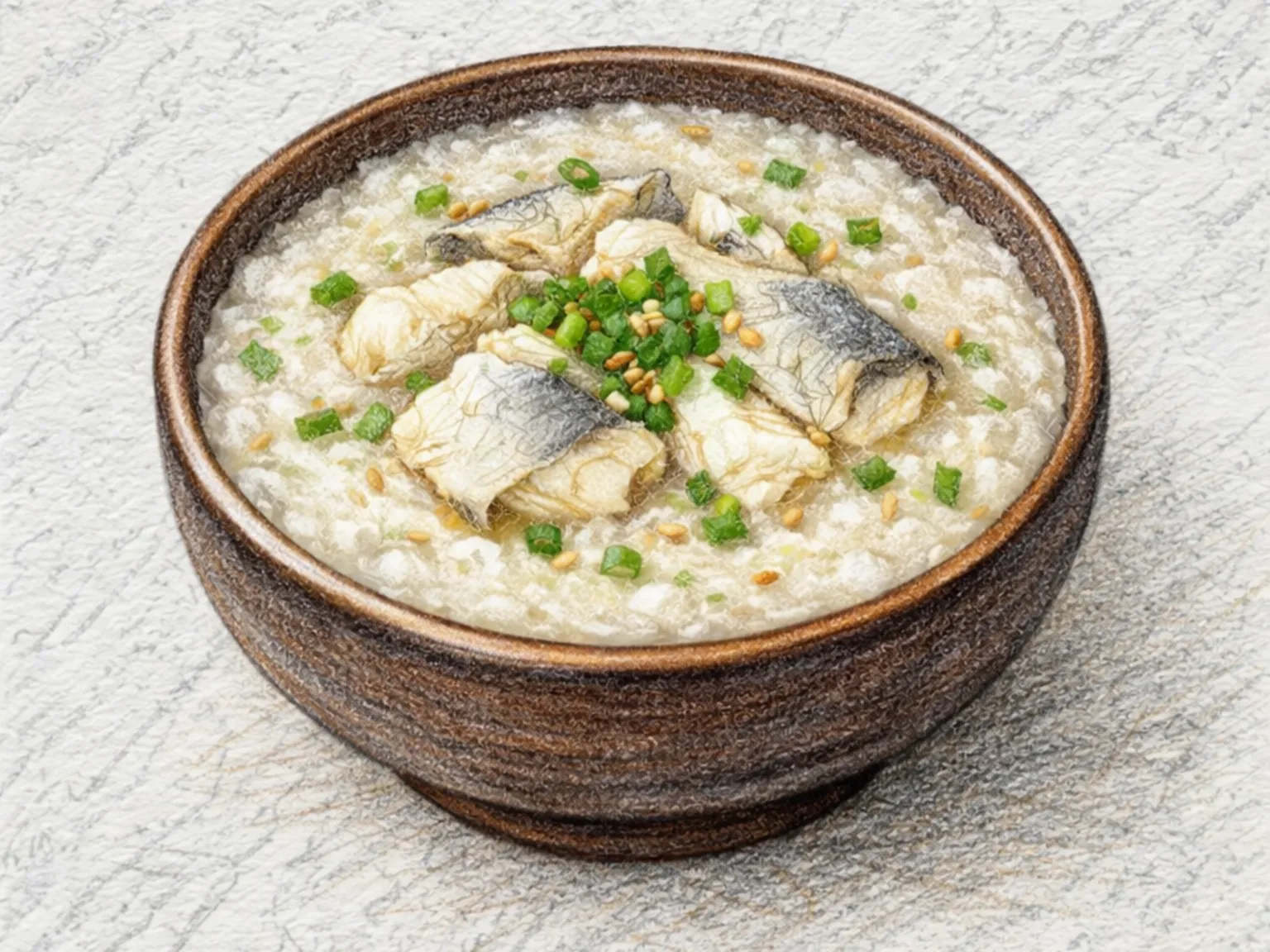
Byeongeo (butterfish) is cut into pieces and placed in a pot with rice and water, then cooked slowly over low heat until the fish flesh breaks apart and dissolves into the porridge. This lean white fish carries minimal fat, and as it simmers, it gradually releases a gentle sweetness and clean savoriness that enriches the rice without making it heavy. Thorough bone removal before cooking is essential because the soft flesh disperses through the porridge and bones become difficult to pick out later. Seasoning is kept to a minimum: salt only, with a drop of sesame oil stirred in at the end. With so few ingredients, the freshness of the fish determines the quality of the finished bowl. This is a traditional Korean restorative dish, long favored when the stomach needs something soothing, when recovering from illness, or whenever something nourishing but easy to digest is called for. Stirring occasionally as the rice swells and thickens keeps the porridge from catching on the bottom.
Korean Rice Ball (Sesame Rice Balls with Tuna Mayo Filling)
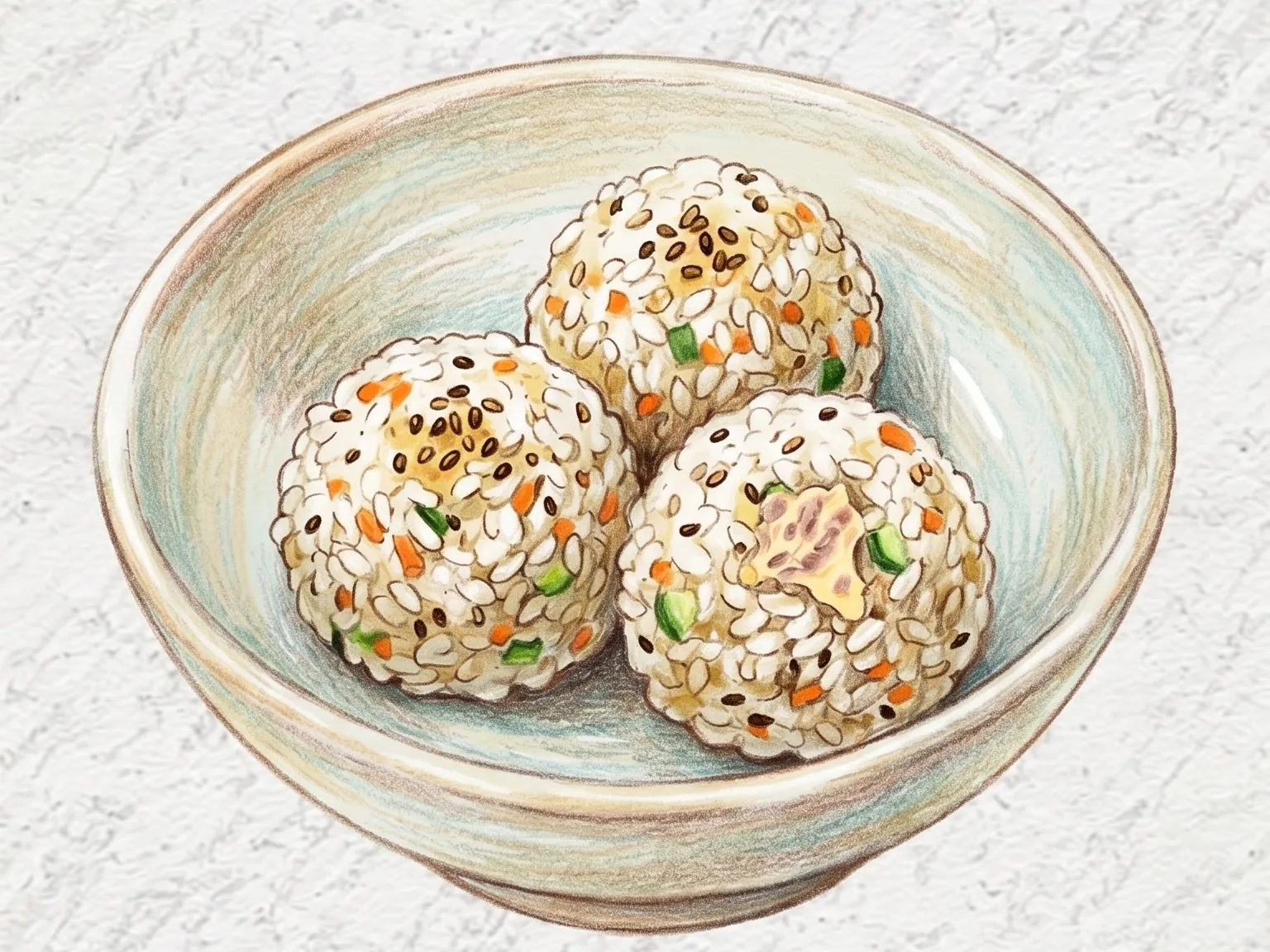
Jumeokbap are Korean rice balls made by seasoning warm cooked rice with sesame oil, salt, and sesame seeds, packing a tuna-mayonnaise filling with finely diced carrot and cucumber into the center, and shaping everything into compact rounds using plastic wrap. Sesame oil coats each grain and lends a nutty fragrance while helping the rice hold together without falling apart. Inside, the salty tuna and creamy mayonnaise blend together while the carrot and cucumber provide short, crunchy breaks in each bite. Shaping through plastic wrap keeps hands clean, produces a consistent size, and makes it practical to assemble in large batches. No reheating is required, and the rice balls hold well at room temperature, which makes them a natural fit for packed lunches, picnics, and outdoor gatherings.
Daegu-style Spicy Chinese Rice Bowl
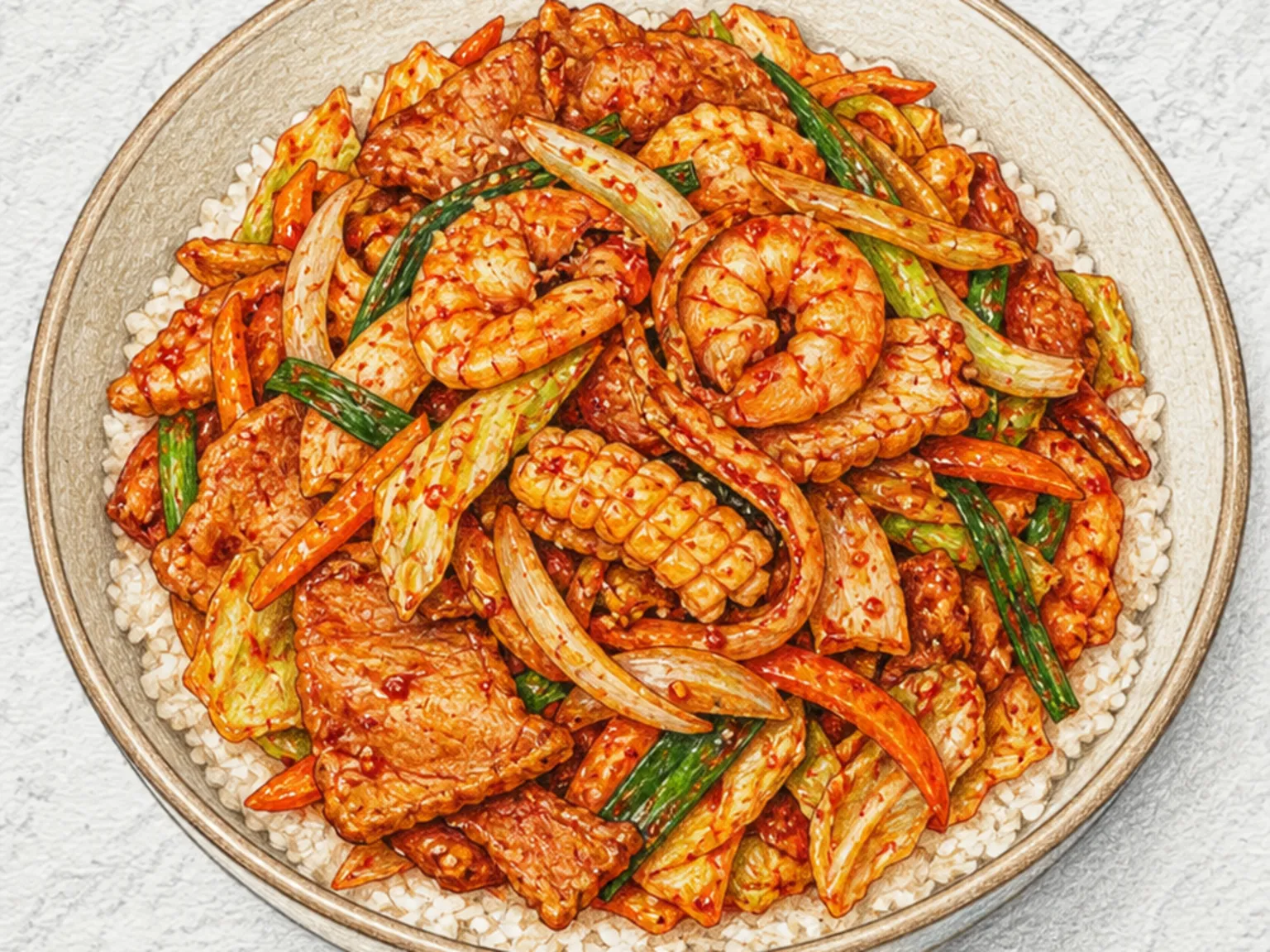
Junghwa bibimbap is a Daegu-style rice bowl topped with pork, squid, shrimp, and cabbage stir-fried quickly over high heat, then finished with a fried egg whose yolk remains soft. Cut 150 g pork shoulder into bite-size pieces. Score the skin side of 100 g squid shallowly and cut it to a similar size so it curls during cooking without becoming difficult to chew. Pat 80 g peeled shrimp dry, cut 100 g cabbage into bite-size sections, and slice 50 g green onion. Since the high-heat cooking moves quickly, measure 2 tablespoons red pepper powder, 1.5 tablespoons oyster sauce, 1 tablespoon soy sauce, and 1 tablespoon minced garlic before heating the pan. Add 3 tablespoons cooking oil to a skillet and cook the green onion and garlic over low heat until their aroma enters the oil. Raise the heat to high before the garlic browns, add the pork, and stir-fry rapidly until its exterior turns pale. Add the squid, shrimp, and cabbage together and toss broadly so the pan recovers its heat instead of steaming the ingredients. Pour the soy sauce and oyster sauce around the exposed hot edge of the pan, let them bubble briefly, and then mix them through the food. Sprinkle in the red pepper powder so it does not land in one dense pile, and continue stir-frying over high heat for 2 minutes until the pork and seafood are cooked through. In a separate pan, fry 2 eggs until the whites are set while the yolks remain runny. Divide 400 g warm rice between two bowls, spoon the stir-fry and its pan seasoning over each portion, and add one fried egg on top. Serve immediately so the hot mixture can be combined with the soft yolk at the table.
Kakimochi (Dried and Fried Rice-Cake Crackers)
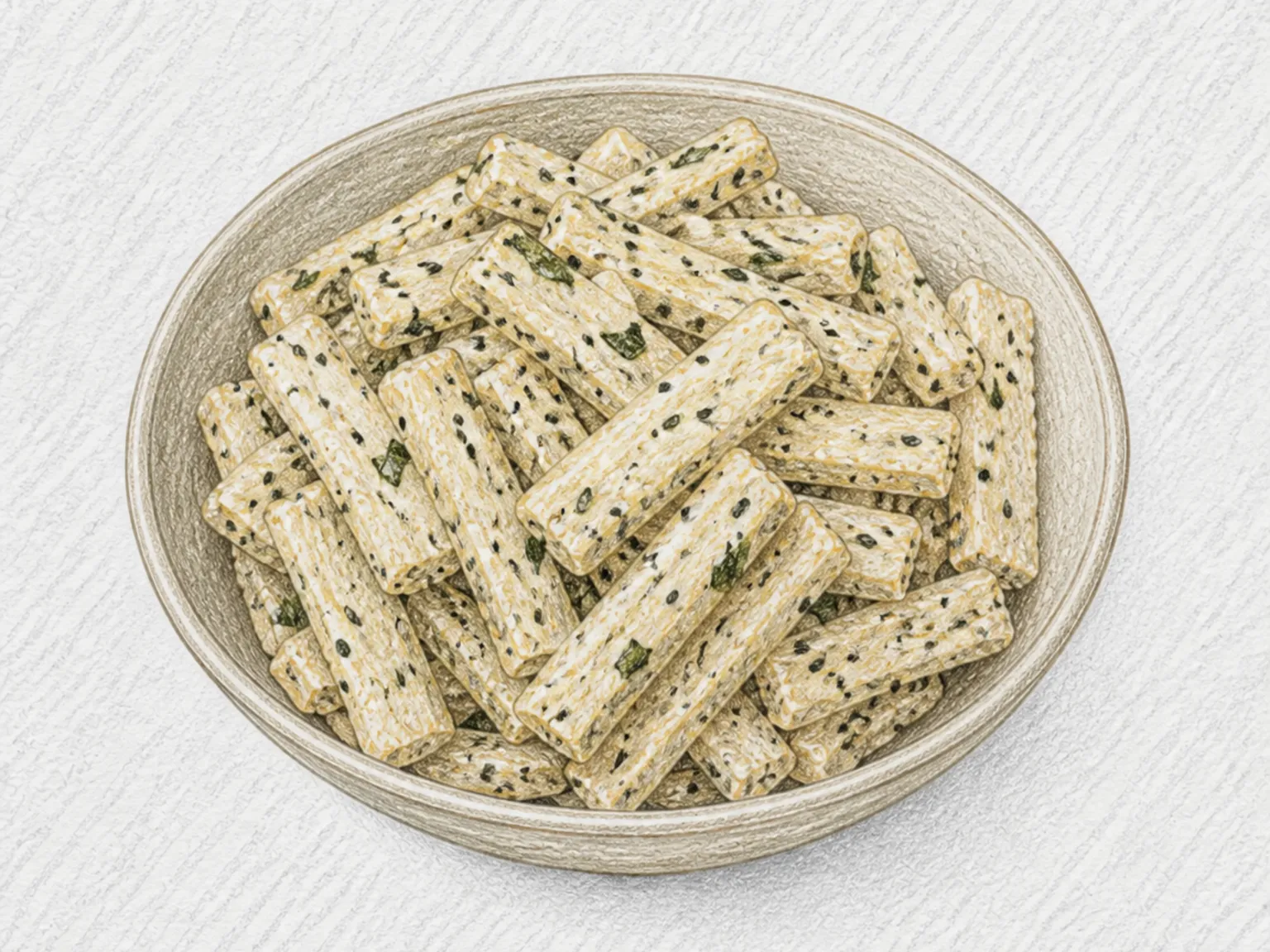
Kakimochi begins as a glutinous rice dough seasoned with grated taro, black sesame, nori, salt, and a small amount of baking soda, but its defining step is the long, controlled drying period before frying. The 4.5 kg glutinous rice is soaked for 8 hours and drained for 1 hour. Steaming then continues for 45 to 60 minutes, stopping when every grain is translucent and tender. While hot, it is pounded with 120 g grated taro, 36 g salt, 18 g black sesame, four nori sheets torn into 5 mm pieces, and 15 g food-grade baking soda. Pounding continues until no rice grains remain and the dough is smooth enough to slice cleanly later. With dampened hands, the mochi is divided into eight logs about 6 cm wide and 4 cm high. The logs rest under clean cloth in a cool place for 2 days, becoming firm enough for a sharp knife to cut them into 2 to 3 mm slices without crushing them. The pieces are arranged separately on mesh, shade-dried for 2 days, then moved to mesh bags for roughly 12 more days in cool, dry, moving air. A test piece should snap with no damp layer in its center. Any mold spot or musty smell requires discarding that piece and adjacent ones rather than frying them. Fully dried kakimochi is stored airtight and fried only as needed. Small batches spend 2 to 4 minutes in oil held at 140°C, with turning, until the centers expand evenly and become crisp instead of browning while still hard inside.
Japanese Curry Rice
Kare raisu is one of the most frequently cooked meals in Japanese households, using commercially prepared curry roux blocks that produce a milder, thicker, and sweeter result than Indian curry. Beef or chicken is cut into bite-sized pieces and stir-fried with onion, potato, and carrot before water is added and the pot simmers until the potatoes turn tender. The heat is lowered and the curry roux blocks are broken in and stirred until fully dissolved; the roux contains flour and fat that thicken the liquid into a glossy, coating sauce. Keeping the heat low after adding the roux is critical because high heat causes the thick sauce to scorch on the bottom. The finished curry deepens in flavor if rested overnight, as the vegetables continue to release their sweetness into the sauce. Unlike Indian curry with its layered spice blends, Japanese curry draws its appeal from the consistent, approachable flavor that a single roux block delivers every time.
Katsu Curry
Katsu curry is a Japanese single-plate meal of crisp deep-fried pork cutlet served beside a thick, glossy curry sauce over steamed rice. The pork loin is pounded to an even thickness, seasoned with salt and pepper, then coated in three layers: flour, beaten egg, and panko. Panko breadcrumbs have a coarser, more jagged texture than standard breadcrumbs, which creates more air pockets in the crust and produces a crunch that stays crisp longer after frying. The breaded cutlet is lowered into oil heated to 170 degrees Celsius and fried for four to five minutes until deep golden brown, then lifted onto a wire rack to rest for two minutes. The resting period allows the residual heat to finish cooking the center while the juices redistribute and the crust firms up. The curry sauce is built separately: onion and carrot are sauteed until their natural sweetness develops fully, then water is added and everything simmers until the vegetables are tender. The curry roux blocks are added and dissolved over low heat until the sauce reaches a thick, velvety consistency. Resting the curry overnight deepens its flavor as the vegetables continue to release sugars and the spices meld together. At the table, the curry fills one side of the plate and the sliced katsu occupies the other so the crust stays dry until deliberately pushed into the sauce, preserving the contrast between the two textures.
About Rice
A bowl of freshly steamed rice with a drizzle of sesame oil and a fried egg makes a satisfying meal on its own. Leftover rice transforms into fried rice or crispy nurungji (scorched rice), both beloved staples.