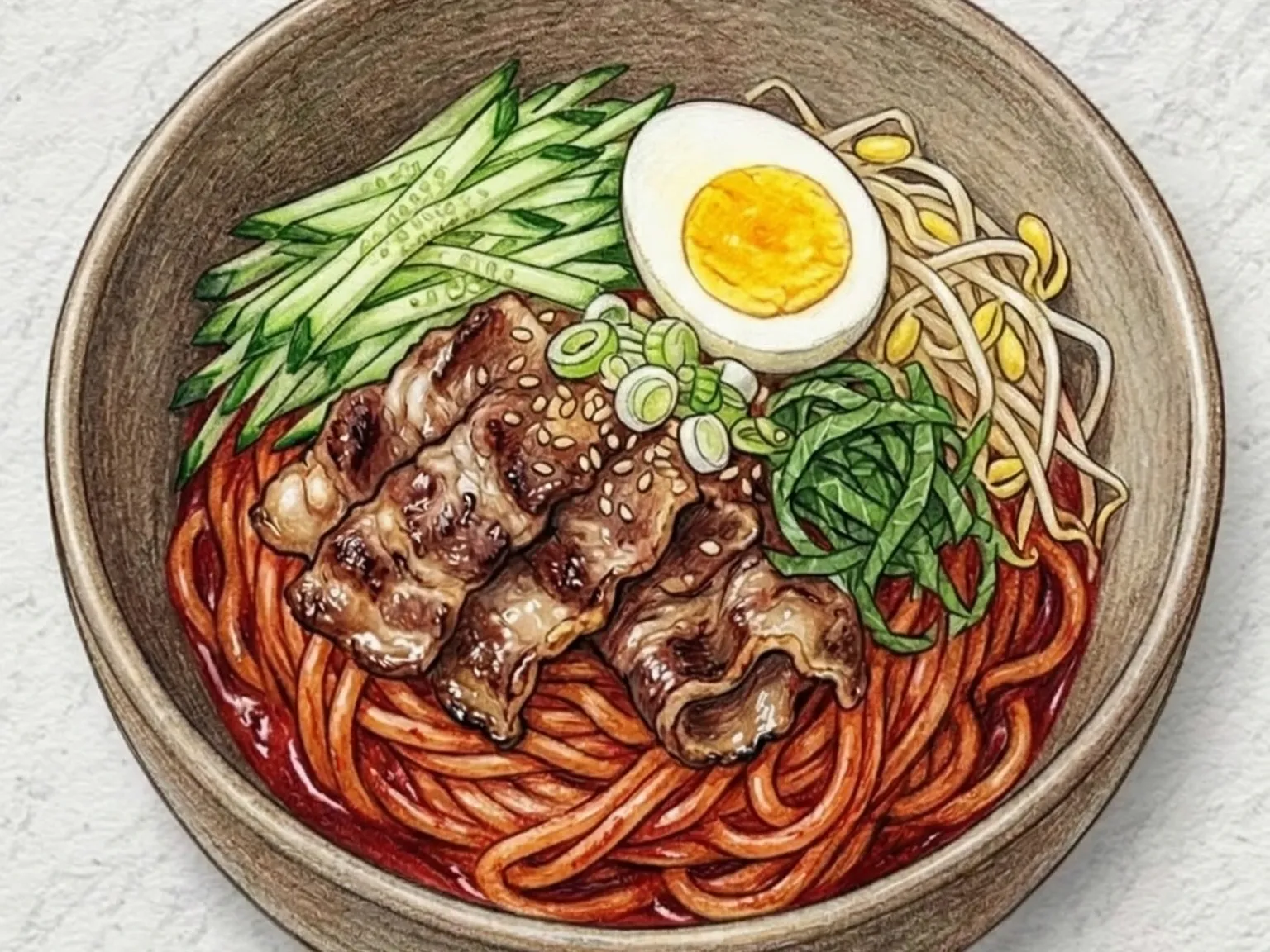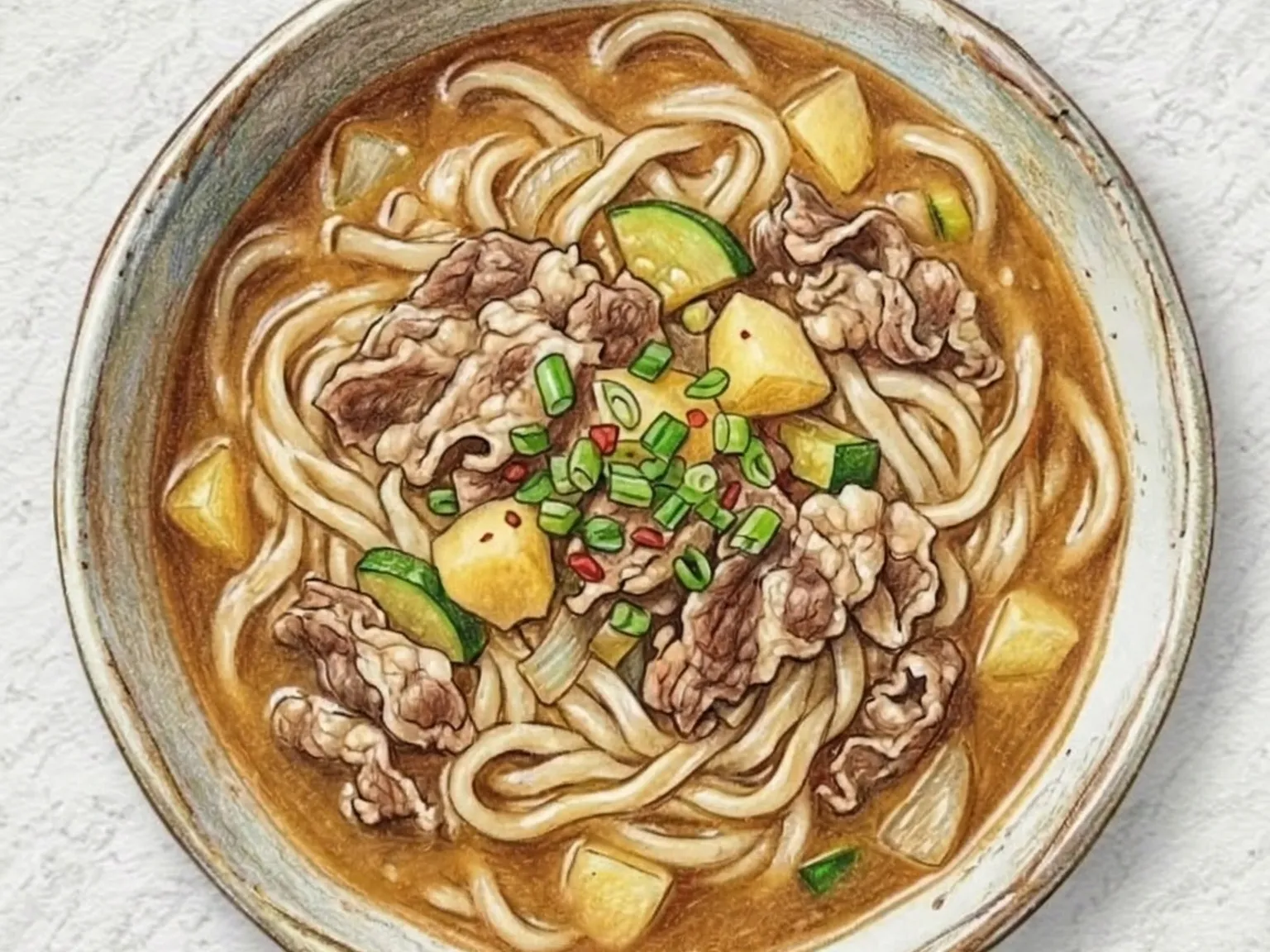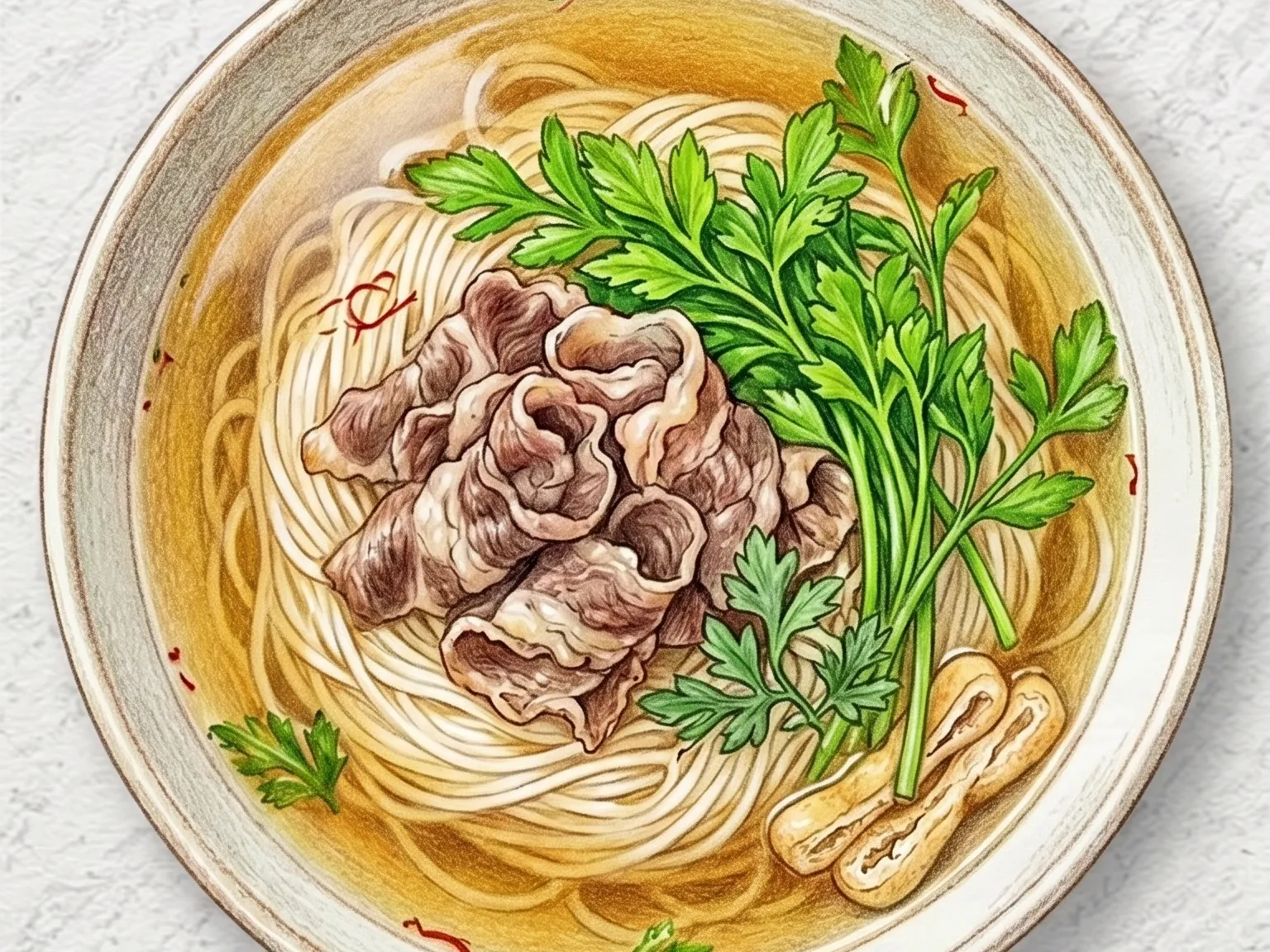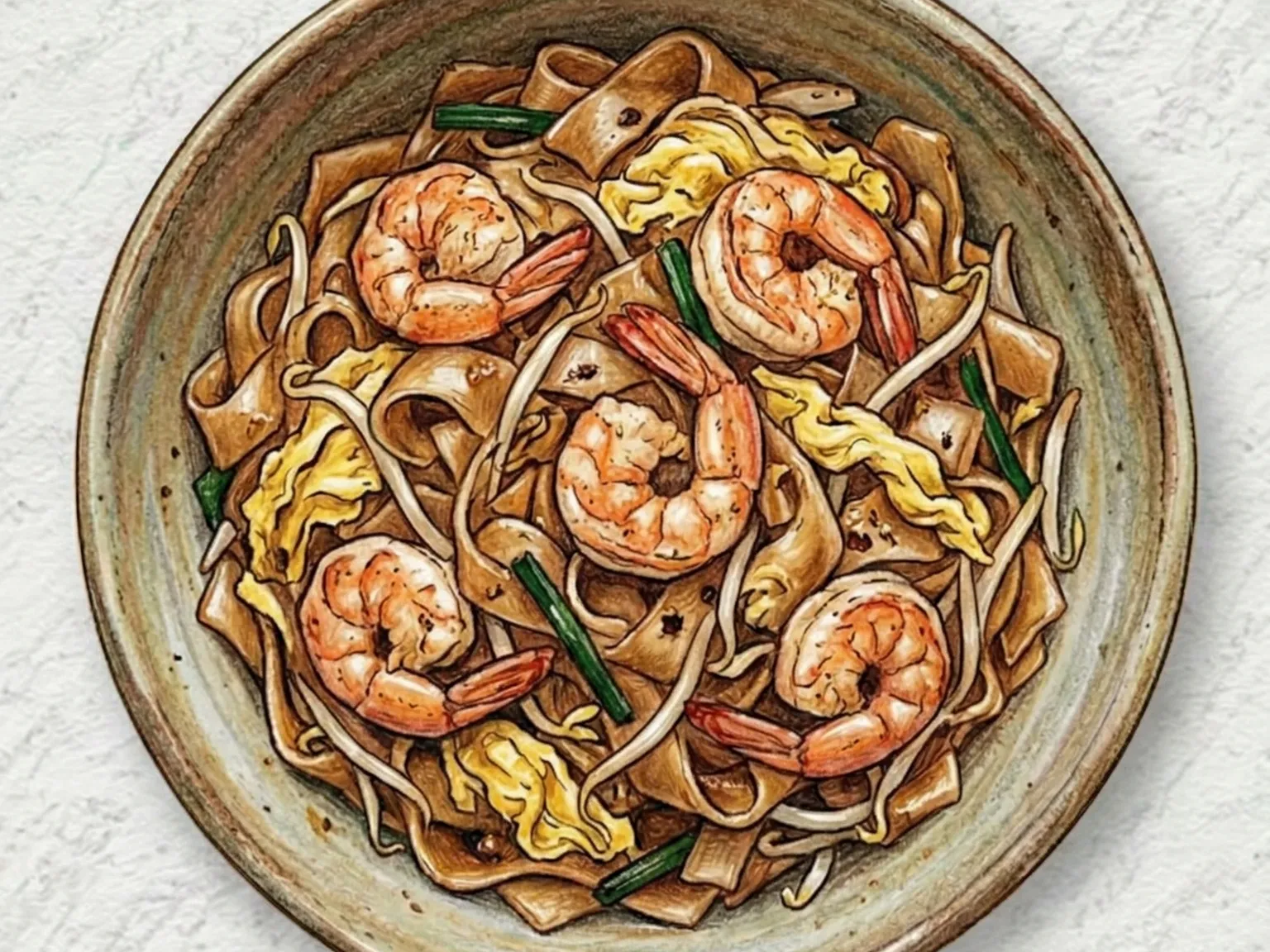
Noodles Recipes
171 recipes. Page 2 of 8
Korean noodle dishes range from chilled naengmyeon in summer to steaming bowls of kalguksu in winter. Thin somyeon, chewy jjolmyeon, and glass noodles (dangmyeon) each bring a different texture to the table. A simple bibim sauce transforms plain noodles into a flavor-packed meal in minutes.
This collection features traditional Korean noodle recipes alongside Asian-fusion takes, covering both broth-based and tossed preparations.
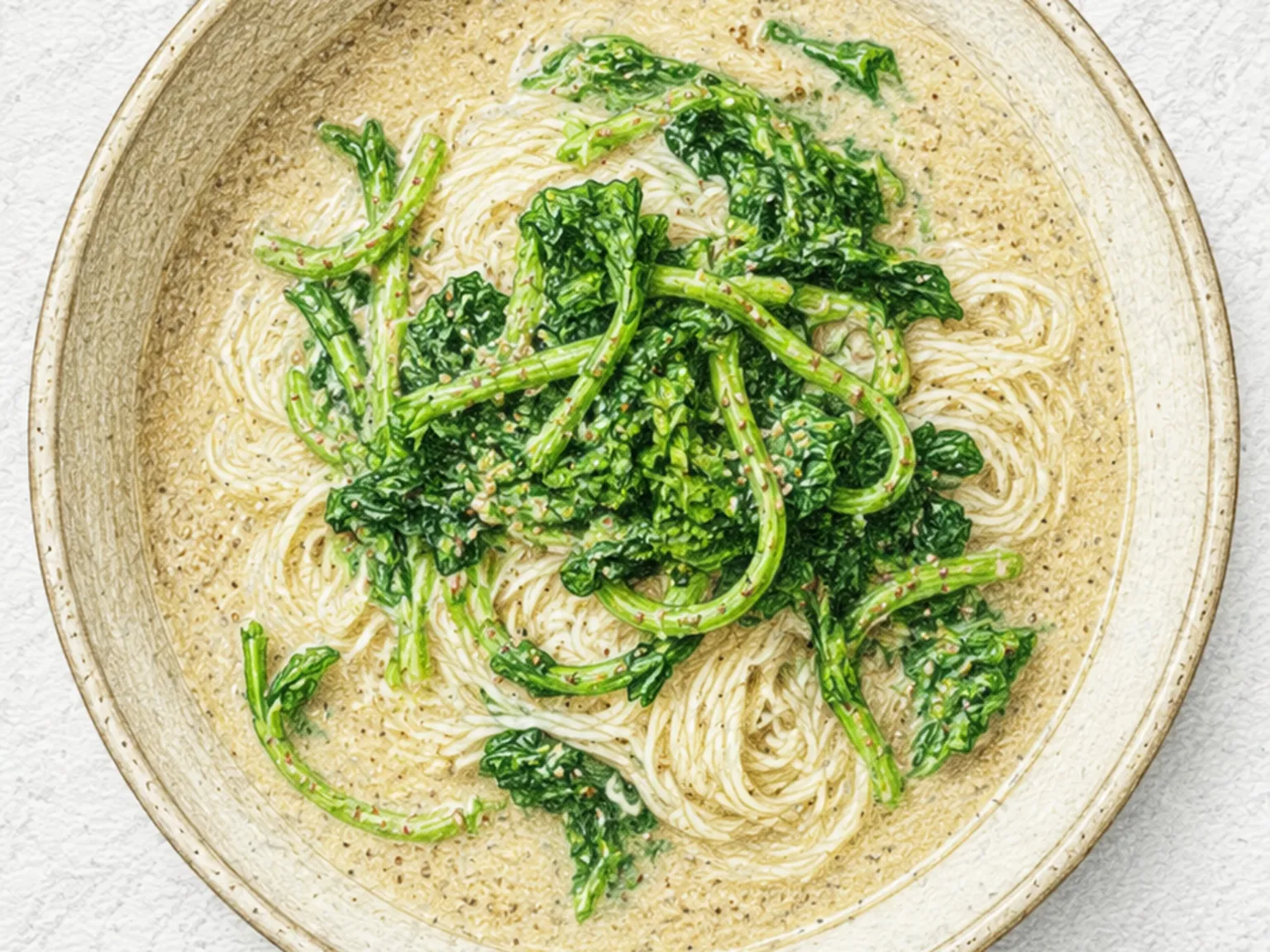
Korean Perilla Noodles with Aster Leaves
Chwi namul, a wild aster green gathered in spring, is blanched and rinsed in cold water to temper its bitterness before being seasoned lightly with soup soy sauce. Ground perilla seeds are stirred into the broth, turning the liquid a milky white and giving it a toasted, nutty weight that holds against the herbaceous bite of the greens. The perilla richness subdues the sharpest edge of the bitterness while leaving the wild mountain aroma intact so each mouthful reads clearly as foraged rather than cultivated. Soup soy sauce adds only enough seasoning to tie the elements without masking any of the natural fragrance. Somyeon wheat noodles, soft and fine-stranded, bridge the greens and the broth without competing with either. Spring-harvested chwi namul carries the most pronounced aroma, and a thorough rinse after blanching controls the bitterness to a palatable level. The resulting bowl is understated and seasonal, built on the flavor of a single wild ingredient.
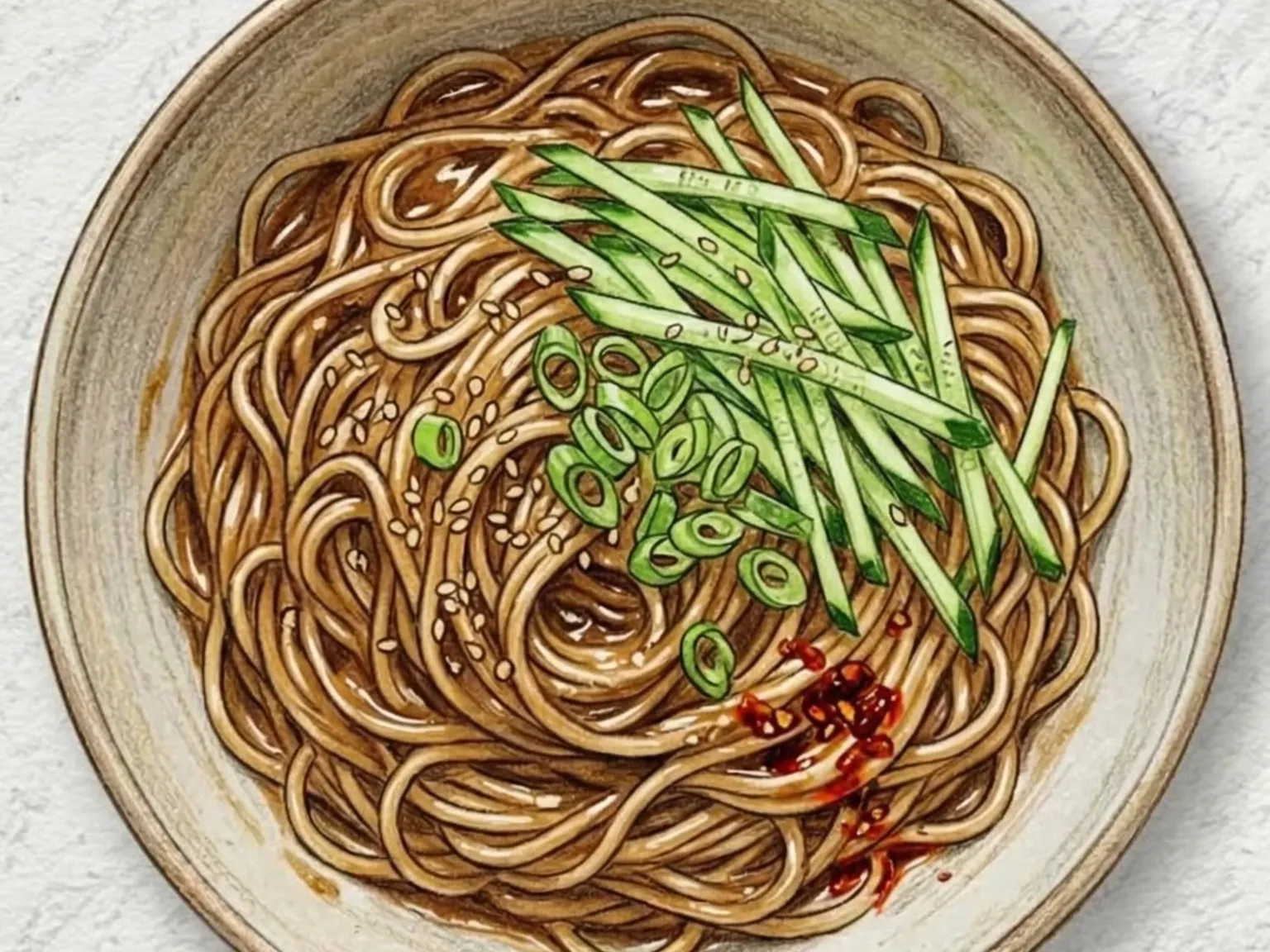
Cold Sesame Noodles
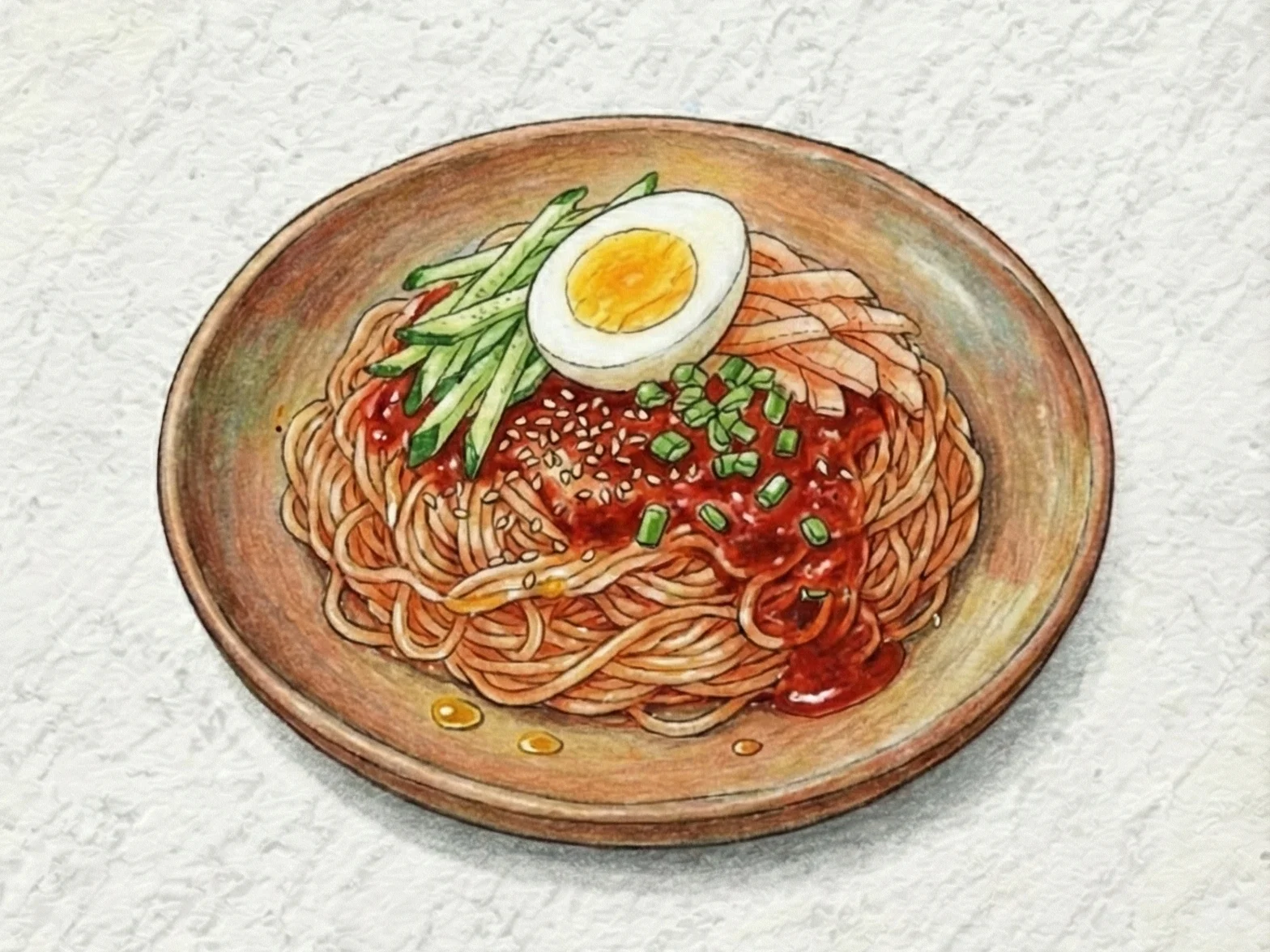
Cold sesame noodles are a fixture of Chinese-American cooking: chilled wheat noodles coated in a thick, nutty sauce that layers sweet, salty, sour, and savory flavors in a single bowl. The sauce is built from Chinese sesame paste or tahini blended with peanut butter, soy sauce, rice vinegar, and sesame oil until the mixture becomes a smooth, glossy emulsion. After boiling, the noodles are rinsed under cold running water to stop cooking and firm the texture, then tossed with a small amount of sesame oil to prevent clumping and add sheen. Julienned cucumber and sliced scallion provide freshness and crunch that cut through the dense sauce. Chili flakes or a spoonful of chili oil can be added for heat. Preparing the sauce in advance and refrigerating it means the entire dish can come together in the time it takes to boil a pot of noodles, making it a practical choice on hot summer days. Any leftover sauce works well as a salad dressing.
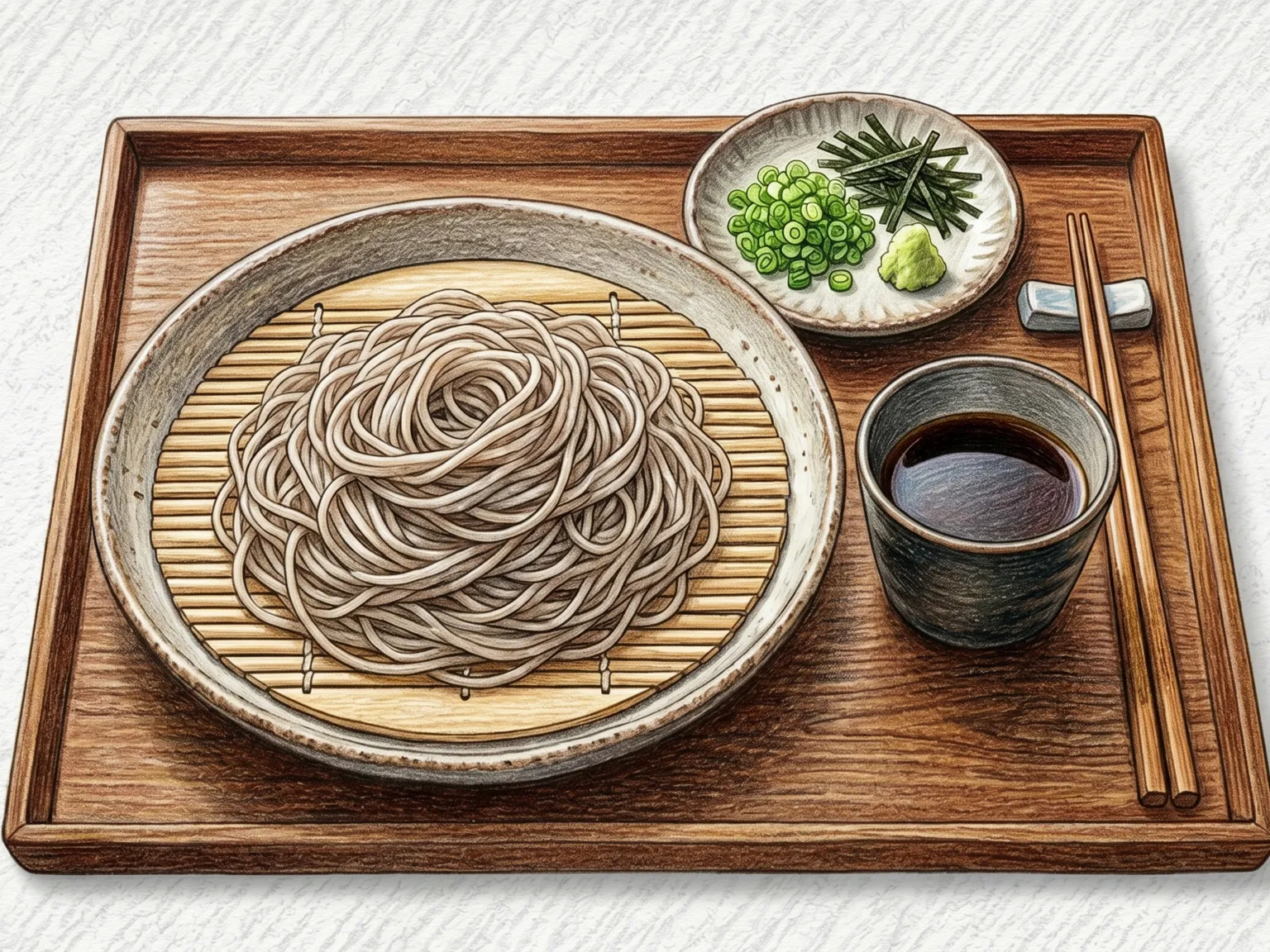
Cold Buckwheat Noodles
Mori soba is a Japanese cold noodle preparation where buckwheat noodles are boiled, rinsed under cold running water until firm, and served on a bamboo draining mat alongside a chilled tsuyu dipping broth. The nutty, slightly grainy character of buckwheat is the foundation of the dish, with each mouthful releasing an earthy, grain-forward fragrance. Tsuyu, concentrated from katsuobushi, kombu, soy sauce, and mirin and then chilled, is rich in umami and strong enough that a brief dip coats the noodles completely without drowning them. Wasabi and thin-sliced scallion stirred directly into the broth add sharp heat and a clean green note, while a pinch of shredded nori over the noodles introduces a subtle oceanic undertone. After boiling, the noodles must be cooled thoroughly in ice water to lock in their elasticity and prevent them from turning soft before serving.
Crossing the Bridge Noodles
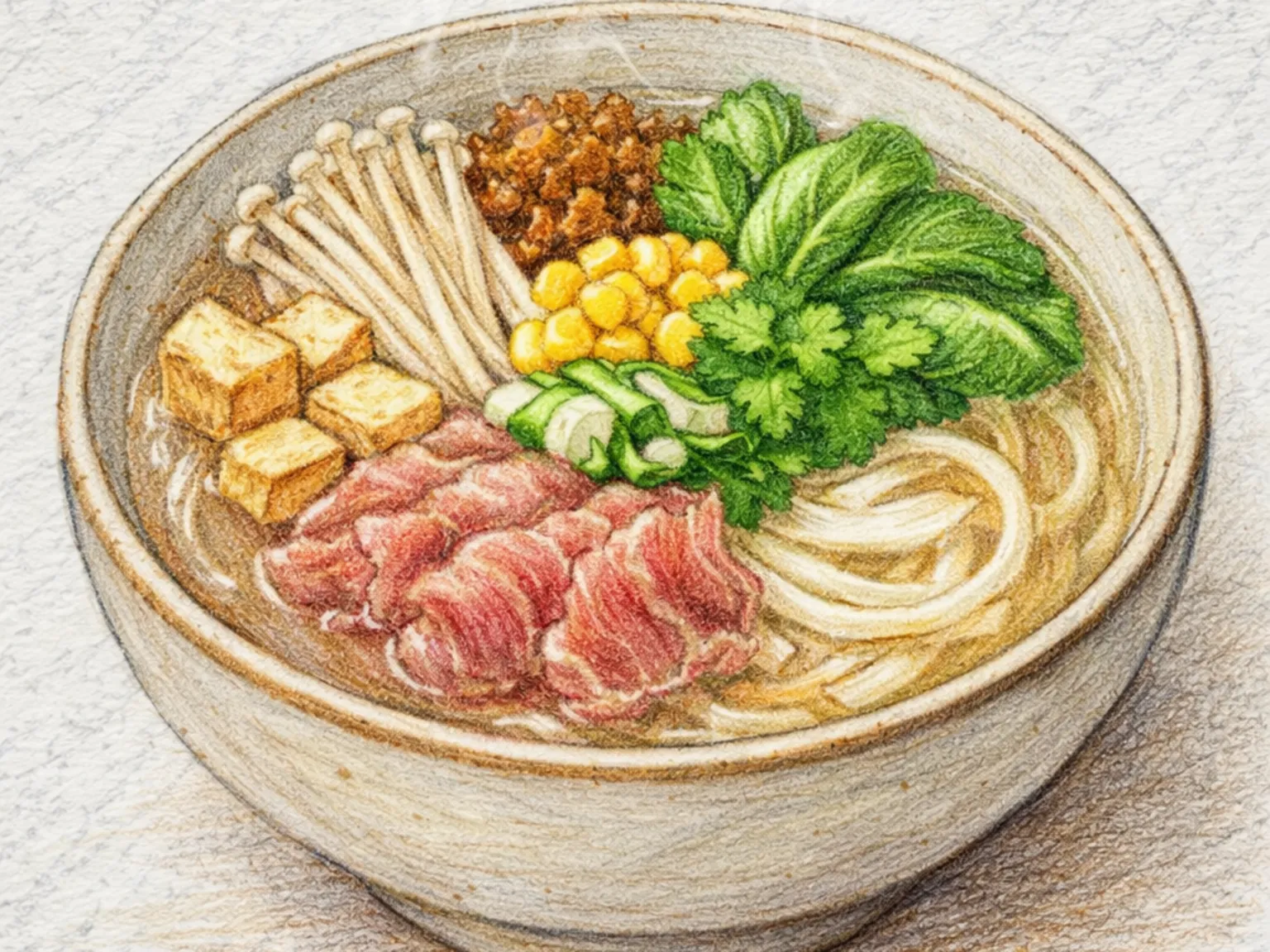
Crossing bridge noodles is the signature dish of Yunnan province in China, served as a bowl of boiling-hot, clear chicken broth sealed under a thin layer of hot oil, accompanied by separate plates of paper-thin raw meats, vegetables, tofu skin, quail eggs, and rice noodles. The oil cap acts as an insulating lid, holding the broth at a temperature high enough to cook raw ingredients the moment they touch the surface. Meat sliced so thin it is nearly translucent turns opaque within seconds without any external heat source. Diners add ingredients in a deliberate sequence, starting with items that need the most time and ending with the noodles, which go in last to prevent them from absorbing broth and softening. By the time the bowl is finished, each component has reached its ideal texture inside the single vessel. The dish takes its name from a legend about a devoted wife who carried soup across a long bridge to her husband studying for imperial examinations, relying on the oil layer to keep the broth hot for the entire journey.
Korean Chicken Janchi Guksu
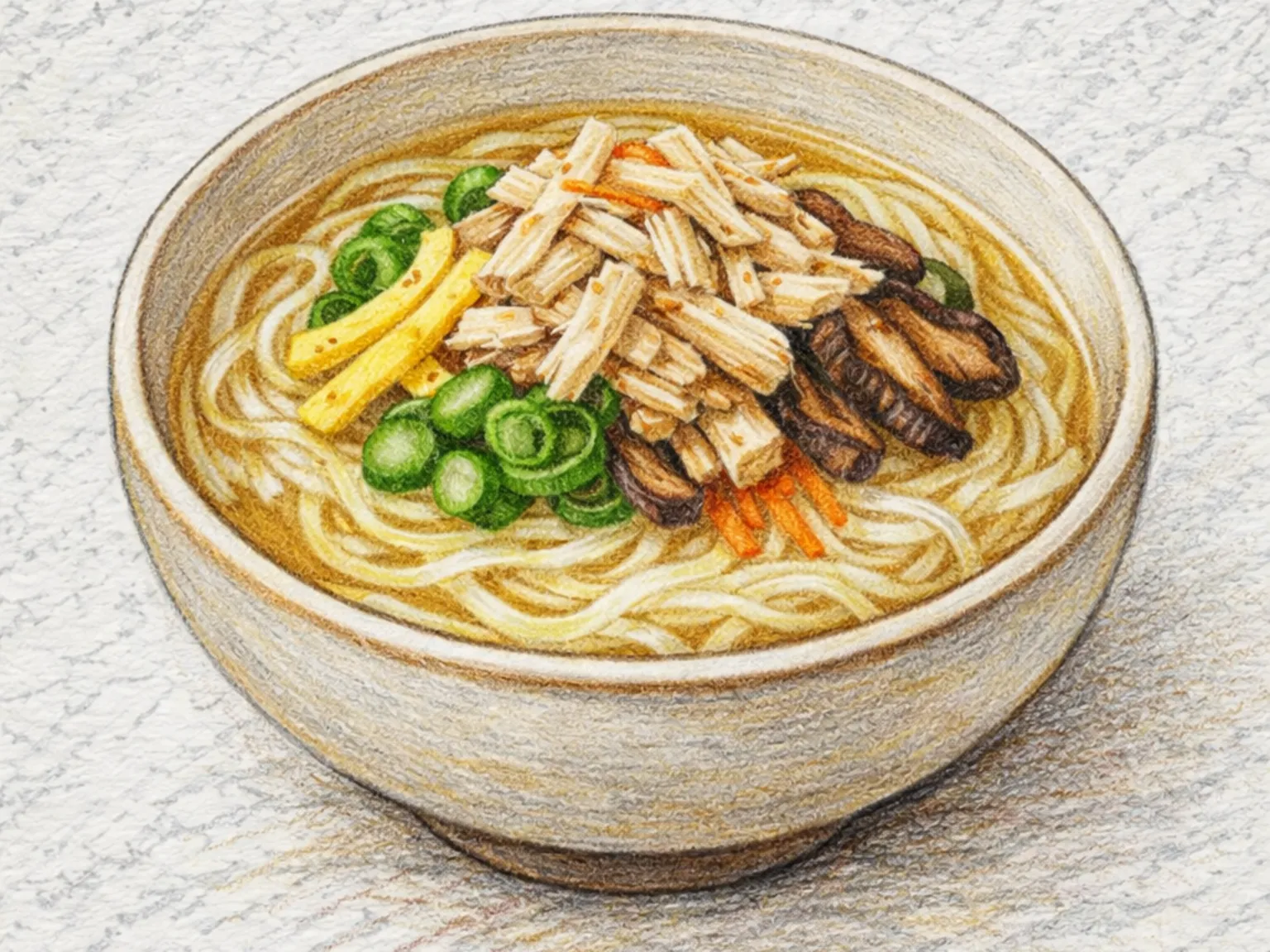
Korean janchi guksu topped with poached chicken breast. Thin wheat noodles are placed in a clear anchovy-kelp broth and finished with generous shreds of chicken that has been simmered and pulled apart along the grain. The chicken adds lean protein that makes each bowl more substantial than the classic version while keeping the broth light and clean. Julienned zucchini, crumbled dried seaweed, and thin egg-crepe strips add color and textural variety, and a small dish of soy-based seasoning sauce on the side lets diners adjust the saltiness to their preference. The noodles are boiled separately and rinsed in cold water to lock in their springiness before being placed in the hot broth just before serving, so they stay firm rather than turning soft. Because the recipe scales up without difficulty, it is a reliable choice for celebratory gatherings and large groups where a warm noodle dish is needed.
Korean Chicken Knife-Cut Noodle Soup
A whole chicken is simmered with green onion, garlic, and ginger until the broth turns opaque, deeply savory, and rich with collagen, then hand-cut wheat noodles are cooked directly in that liquid. Boiling the noodles in the broth rather than separately is the defining technique: the starch they release naturally thickens the soup into a silky, coating consistency, and the noodles themselves absorb the concentrated chicken flavor at every surface. Shredded chicken, pulled apart along the grain, goes on top just before serving. Potato and zucchini are added during the final minutes for their gentle sweetness and soft texture. A generous amount of ground black pepper stirred in or sprinkled on top sharpens the chicken aroma and adds a mild warmth that the broth on its own does not carry. Unlike ramyeon or rice noodle dishes, dak-kalguksu has no complex seasoning beyond salt, pepper, and the depth built from the chicken itself, making it one of the most comforting and straightforward noodle soups in Korean home cooking.
Korean Spicy Chicken Soup Noodles
This spicy Korean noodle soup is built on dakgaejang, a chicken version of the classic beef yukgaejang. Whole chicken is poached until tender, the meat hand-shredded along the grain, then returned to the pot and simmered again with gochugaru, garlic, sesame oil, and sliced scallion. The resulting broth is vivid red and assertively spicy, yet the clean chicken stock underneath keeps the heat from turning harsh or muddy. Bean sprouts added just before serving retain their crunch and provide a cool, crisp contrast to the fiery liquid. Both thin somyeon and medium-thickness noodles work well, soaking up the spiced broth without dissolving too quickly. Swirling in a beaten egg softens the broth and adds a silkier body; adding cooked rice turns the bowl into a complete, filling meal. The combination of protein, capsaicin-driven warmth, and the mild diaphoretic effect of chili makes this a go-to remedy for hangovers and chills alike.
Korean Stir-Fried Udon with Spicy Chicken
Dakgalbi udon bokkeum is a Korean stir-fried noodle dish where gochujang-marinated chicken, cabbage, sweet potato, and rice cakes cook together in a wide pan before thick udon noodles are added and tossed through the spicy-sweet sauce. The dakgalbi seasoning is assertive and clingy, coating every broad surface of the udon so that each bite carries the full weight of the marinade. Cabbage and scallion wilt fast under high heat, releasing sugars that moderate the chili paste and prevent the sauce from tasting sharp or one-dimensional. Sweet potato contributes starch that slightly thickens the sauce while cushioning its spice. Udon, being considerably thicker than ramen or somyeon, holds up under the heavy coating without turning mushy, and delivers a satisfying, bouncy chew throughout the meal. Managing the heat is important: keeping the pan at high temperature drives off excess moisture and produces the lightly charred, smoky edge that separates a good stir-fry from a steamed mess. Melting cheese over the top just before serving adds a creamy, fatty layer that offsets the heat. Sesame seeds and shredded seaweed finish the dish. It is well suited to group cooking on a large griddle or electric pan.
Dan Dan Mian (Sichuan Spicy Noodles)
Dan dan mian is a Sichuan noodle dish built on a thick sauce of sesame paste, soy sauce, chili oil, and vinegar, topped with wheat noodles and browned ground pork. Ground Sichuan peppercorn brings a lip-numbing, almost electric sensation that sits underneath the chili oil's direct heat and the sesame paste's deep richness, creating multiple distinct layers in a single mouthful. Browning the pork thoroughly before adding any liquid is essential -- the caramelized crust develops a roasted meatiness that permeates the entire sauce and prevents the dish from tasting flat. Blanched bok choy provides a fresh counterpoint to the oily intensity and keeps the bowl from feeling too heavy. Sichuan peppercorn's numbing effect accumulates quickly, so starting with a small quantity and tasting as you go gives precise control. Draining the cooked noodles completely is equally important; any residual water will thin the sauce and break the coating on the noodles.
Danza Noodle Soup (Tomato Chickpea Pasta Soup)
Danza noodle soup is a light Mediterranean-style soup that simmers diced tomatoes and chickpeas together in vegetable broth with dried oregano and thin pasta noodles. Sauteing onion in olive oil until translucent before adding the tomatoes builds a deeper, more aromatic base than starting with raw aromatics. Chickpeas soften gradually as the soup cooks, contributing a nutty richness and satisfying substance without making the broth heavy. Stirring in fresh parsley just before serving lifts the finished soup with a clean herbal brightness against the tomato backdrop. Cooking the pasta separately and adding it at serving keeps the broth clearer and prevents the noodles from absorbing too much liquid.
Korean Spicy Bellflower Root Chewy Noodles
Deodeok gochujang jjolmyeon is a spicy noodle dish that pairs the aromatic bitterness of bellflower root with gochujang-dressed chewy jjolmyeon noodles. Lightly pounding the peeled deodeok against a cutting board loosens its fibrous texture, releasing its distinctive herbal scent and making each piece more receptive to seasoning. A brief salt cure draws out moisture and dials down the bitterness, allowing the sauce to penetrate more effectively into the root. The sauce blends gochujang with vinegar and oligosaccharide syrup, balancing heat with a clean tangy edge and gentle sweetness that complements the root's inherent character without masking it. Julienned cabbage, carrot, and cucumber supply a crisp, refreshing layer between the dense noodles and the fibrous deodeok. All ingredients should be combined just before eating to preserve the crunch of the vegetables.
Korean Perilla Oil Noodles
Deulgireum guksu is a Korean cold mixed noodle dish where boiled somyeon are rinsed thoroughly in cold water to strip surface starch, tossed in soy sauce seasoning to coat each strand with salt and umami, then finished with a generous pour of perilla oil. The order matters: soy sauce first to season the noodles through, perilla oil last so its volatile fragrance is not cooked off. The oil has a distinctive earthiness - more roasted and grassy than sesame - and it clings to every strand in a way that makes the whole bowl smell powerfully aromatic. Crumbled roasted seaweed contributes a briny crunch, and toasted sesame seeds provide a quiet textural counterpoint. The whole preparation takes under ten minutes from pot to bowl, which makes it a practical choice for late-night meals or solo eating. A fried egg placed on top is a frequent addition; the runny yolk breaks into the dressed noodles, adding richness and rounding out the sharp, saline seasoning.
Korean Warm Perilla Mushroom Rice Noodles
Deulkkae beoseot on ssalguksu is a warm Korean noodle soup built on kelp stock simmered with oyster and shiitake mushrooms, then enriched with ground perilla seeds into a creamy, opaque broth. Rice noodles are smoother and more slippery than wheat varieties, sliding through the rich liquid with ease, while the mushrooms provide a firm, chewy counterpoint. Adding the perilla powder at the very end preserves its roasted, nutty fragrance on the surface of each spoonful rather than cooking it off. Soup soy sauce seasons the broth cleanly without the heaviness of fermented soybean paste. Using dried shiitake mushrooms instead of fresh ones and soaking them in cold water first draws out a concentrated mushroom stock that deepens the base significantly. Substituting king oyster mushrooms cut into thick rounds for oyster mushrooms adds more substantial chew. The dish contains no wheat and suits gluten-free diets. It is particularly fitting on cold days as a light but warming meal.
Korean Perilla Seed Hand-torn Noodle Soup
Deulkkae sujebi is a Korean hand-torn noodle soup made by pulling rested wheat dough into thin, rough-edged pieces and simmering them in an anchovy-kelp broth enriched with ground perilla seeds. Resting the dough for at least thirty minutes relaxes the gluten and is what allows it to be stretched thin by hand without snapping back; the thinner each piece, the more quickly it cooks through in the hot broth while still retaining a satisfying, elastic chew. Potato simmers alongside the dough and slowly breaks down, releasing starch that gives the broth a natural body without any thickener added. Zucchini contributes a mild sweetness and a soft texture that contrasts with the chewy dough pieces. When the ground perilla powder is stirred into the broth, it dissolves to form a milky, opaque liquid with a roasted, nutty depth that coats the tongue in every spoonful. The dish is a staple of Korean home cooking on rainy days and cold winter evenings, prized for the warmth it delivers and for the hands-on simplicity of tearing the dough directly into the pot.
Korean Fermented Soybean Paste Noodle Soup
Doenjang kalguksu is a Korean noodle soup of knife-cut wheat noodles in an anchovy broth enriched with fermented soybean paste. Straining the doenjang through a fine-mesh sieve before adding it to the broth serves a specific purpose: it prevents uneven lumps and ensures the paste dissolves uniformly, which keeps any bitter notes from concentrating in spots. The fermentation depth of the doenjang and the glutamate-rich anchovy stock reinforce each other without needing added seasoning. Zucchini cut into half-moons and sliced shiitake mushrooms contribute sweetness and aroma as the broth simmers; cubed tofu adds a soft, yielding contrast to the chewy noodles. Timing dictates quality here: the final salt adjustment goes in right before the noodles, because doenjang pushed through extended boiling develops a pronounced bitterness that is difficult to correct. Once the noodles go in, the soup should be finished within two minutes to preserve their elasticity.
Korean Doenjang Mushroom Udon
Doenjang mushroom udon is a Korean noodle soup where thick-cut shiitake mushrooms simmer in an anchovy-kelp broth with dissolved soybean paste, building layered depth from two distinct fermented and dried umami sources. The shiitake's aromatic depth stacks on top of the doenjang's fermented, mellow character, while onion adds a quiet sweetness that prevents the broth from tasting one-dimensionally salty. Passing the doenjang through a fine sieve before stirring it into the broth ensures no lumps remain and the paste disperses evenly. Parboiling the udon noodles separately in plain water and rinsing briefly strips away surface starch, keeping the broth clear and clean to the last spoonful. A pinch of gochugaru added during the seasoning stage introduces a faint warmth at the finish that sharpens the overall flavor, and a few thin slices of cheongyang chili on top add color and a sharper bite. Adding silken tofu or sliced zucchini makes the bowl substantial enough to serve as a full meal.
Korean Doenjang Thin Noodle Soup
Doenjang somyeon is a Korean noodle soup of thin wheat noodles in a fermented soybean paste broth built on anchovy stock. Potato, zucchini, and onion - or whatever vegetables are available - go into the broth first, simmering until they release their moisture and natural sugars into the liquid, which rounds out the earthy doenjang base. The somyeon noodles take only three to four minutes to cook, so they go in last to stay firm. Sliced green onion scattered on top adds a clean, bright note against the fermented broth. The ingredient list is short and adaptable, but the doenjang delivers enough layered depth to make this a satisfying weeknight dinner without any complex technique.
Korean Dongchimi Buckwheat Noodles
Dongchimi makguksu is a Gangwon-do cold noodle dish of buckwheat noodles in the broth of well-fermented dongchimi, a white water kimchi of salted radish. The broth is strained clean and chilled in the freezer until a thin layer of ice crystals forms on the surface, which sharpens the tangy, lactic acidity to its fullest. Buckwheat noodles are rinsed thoroughly in cold water after cooking to strip away all surface starch, keeping the broth clear and clean around each strand. Julienned Korean pear contributes fruit sweetness and a juicy texture against the chewy noodles. Korean mustard, stirred in at the table, delivers a sharp nasal heat that punctuates each cold sip. The bowl contains no fat at all, making it one of the lighter noodle dishes in Korean cuisine and a natural palate-cleanser after rich, oily meat such as samgyeopsal or suyuk.
Korean Dongchimi Cold Naengmyeon
Dongchimi naengmyeon is a cold noodle dish built around the fermented brine of dongchimi, a water-based winter kimchi made with whole radish. The brine is blended with chilled beef or chicken stock, creating a broth that looks deceptively simple but carries a layered complexity from months of fermentation. The lactic acidity of the dongchimi water is not sharp or aggressive - it is long and clean, acquired through slow fermentation rather than vinegar shortcut. At very cold temperatures, just at the point of forming a thin skin of ice on the surface, the radish-derived fragrance in the broth becomes most vivid and refreshing. Thin slices of boiled beef add a lean, meaty backbone that anchors the acidity without competing with it. Julienned Korean pear brings gentle sweetness and crunch, and half a boiled egg rounds out the bowl with richness. Cutting the noodles several times with scissors before placing them in the bowl keeps them from clumping in the cold and allows the broth to reach every strand from the first bite.
Korean Clam Seaweed Onmyeon (Warm Noodle Soup)
Dongjuk miyeok onmyeon is a warm noodle soup where small surf clams are simmered to build a clear, deeply briny stock, then combined with rehydrated seaweed and thin wheat noodles. The cool, oceanic flavor of the clams forms the backbone of the dish, and simmering radish alongside rounds out the saltiness into something bright and clean. The seaweed unfurls in the hot broth, contributing its own quiet marine umami, and seasoning stays minimal with only soup soy sauce and salt so the ingredients speak clearly. This is a restorative bowl often eaten for morning recovery or when a light, clear-tasting meal is preferred. Dongjuk clams resemble Manila clams in shape but yield a deeper, more concentrated broth, making them effective even without additional stock. The thin noodles should be cooked until just tender and transferred directly to the bowl to prevent over-softening once the hot broth is ladled over.
Korean Acorn Jelly Somyeon
Dotorimuk chae somyeon is a chilled Korean noodle dish that combines boiled somyeon and sliced acorn jelly in cold dongchimi radish water kimchi broth. The acorn jelly has a soft, slippery texture that contrasts with the fine, springy strands of the wheat noodles, and the fermented tang of the dongchimi broth wraps everything in a clean, refreshing acidity. Julienned cucumber adds crunch and a cool freshness, while a piece of kimchi contributes a spicy-savory accent. Refrigerating the acorn jelly or briefly soaking it in ice water beforehand keeps it firmer so it holds its shape when tossed with the noodles. A light drizzle of sesame oil and a scatter of sesame seeds bring a nutty warmth that plays well against the cold broth, making this a genuinely appetite-reviving meal for hot summer days.
Korean Tofu Kimchi Bibim Myeon
Dubu kimchi bibim myeon is a Korean mixed noodle dish built on two separate preparations that come together in the bowl. Ripe, deeply fermented kimchi is stir-fried in perilla oil over high heat until the sharp acidity rounds out and the umami moves to the foreground, then combined with gochugaru and gochujang to form the spicy dressing that coats every strand of boiled noodles. The tofu requires its own treatment: all surface moisture must be pressed out before the block goes into a dry, screaming-hot pan, which creates a golden, crisp crust outside while the center remains silky, giving the dish a clean textural counterweight against the bold noodles. A halved soft-boiled egg placed on top rounds out the heat when the yolk slowly folds into the dressing, adding a creamy richness that binds the kimchi tang, the chili punch, and the nutty oil into one cohesive sauce.
Korean Spring Aralia Soybean Noodle Soup
Durup doenjang kalguksu is a seasonal Korean noodle soup that layers blanched aralia shoots over a rich doenjang broth built with potato and zucchini. The potato breaks down partially during simmering, thickening the broth naturally and adding a mild, floury sweetness that works alongside the deep fermented character of the soybean paste. Zucchini softens into the liquid as it cooks, contributing its own gentle sweetness, and garlic reinforces the savory base. Knife-cut noodles hold up well in the dense broth, their chewy bite providing texture against the soft vegetables. The aralia shoots must be blanched separately and placed on top just before serving, because cooking them directly in the boiling broth drives off the bitter-herbal spring fragrance that makes them worth using in the first place. This dish comes together only during the brief aralia season in early spring, when the combination of fermented depth and fresh mountain herb aroma in a single bowl is at its most vivid.
Korean Spicy Freshwater Fish Noodle Soup
Eotang guksu is a regional noodle soup from the Chungcheong inland provinces, built on a broth made by simmering freshwater fish for an extended time until the bones and flesh give up their concentrated, savory extract. Freshwater fish releases fishy oils as it cooks, so straining the broth two or three times through a fine sieve to remove bone fragments and surface oils is what separates a clean, drinkable broth from a murky one. Doenjang is stirred in to neutralize residual fishiness while contributing a fermented, savory roundness. Gochugaru adds heat and color to the otherwise clear, oil-free liquid, giving direction to what might otherwise be a flat broth. A beaten egg poured in at the end forms soft, wispy ribbons that float across the surface. Somyeon noodles are added last. This dish evolved in landlocked Chungcheong communities that turned to river fish in place of coastal seafood, and its character reflects that resourcefulness.