Western Recipes
662 recipes. Page 16 of 28
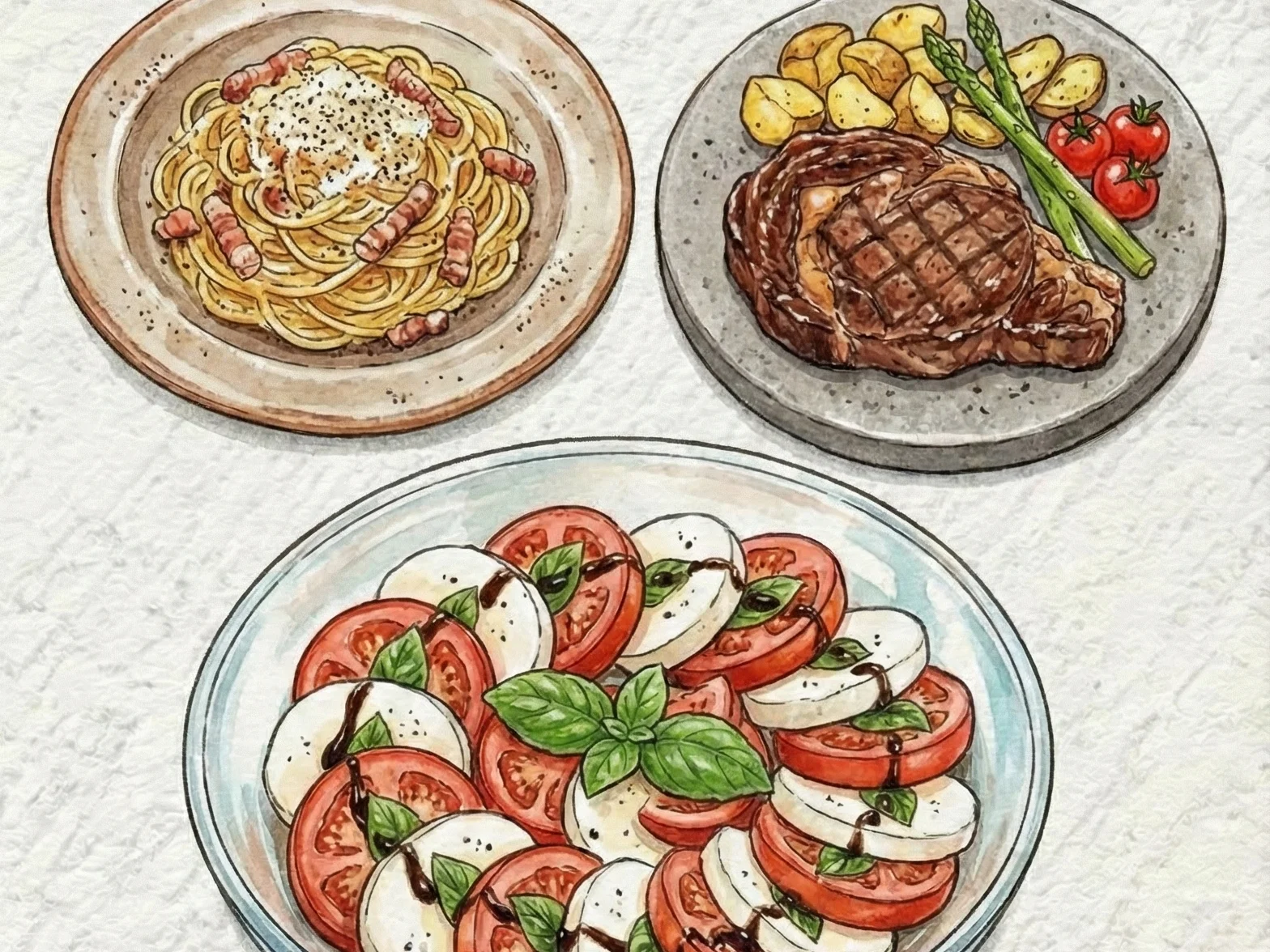
This category brings Western-style dishes - pasta, steak, risotto, gratin, and more - into the home kitchen. In Korea, "Western food" (yangsik) includes not only authentic European recipes but also Korean-adapted classics like donkatsu (pork cutlet) and hambak steak (Hamburg steak).
Pasta all'Amatriciana (Roman Guanciale Tomato Pasta)
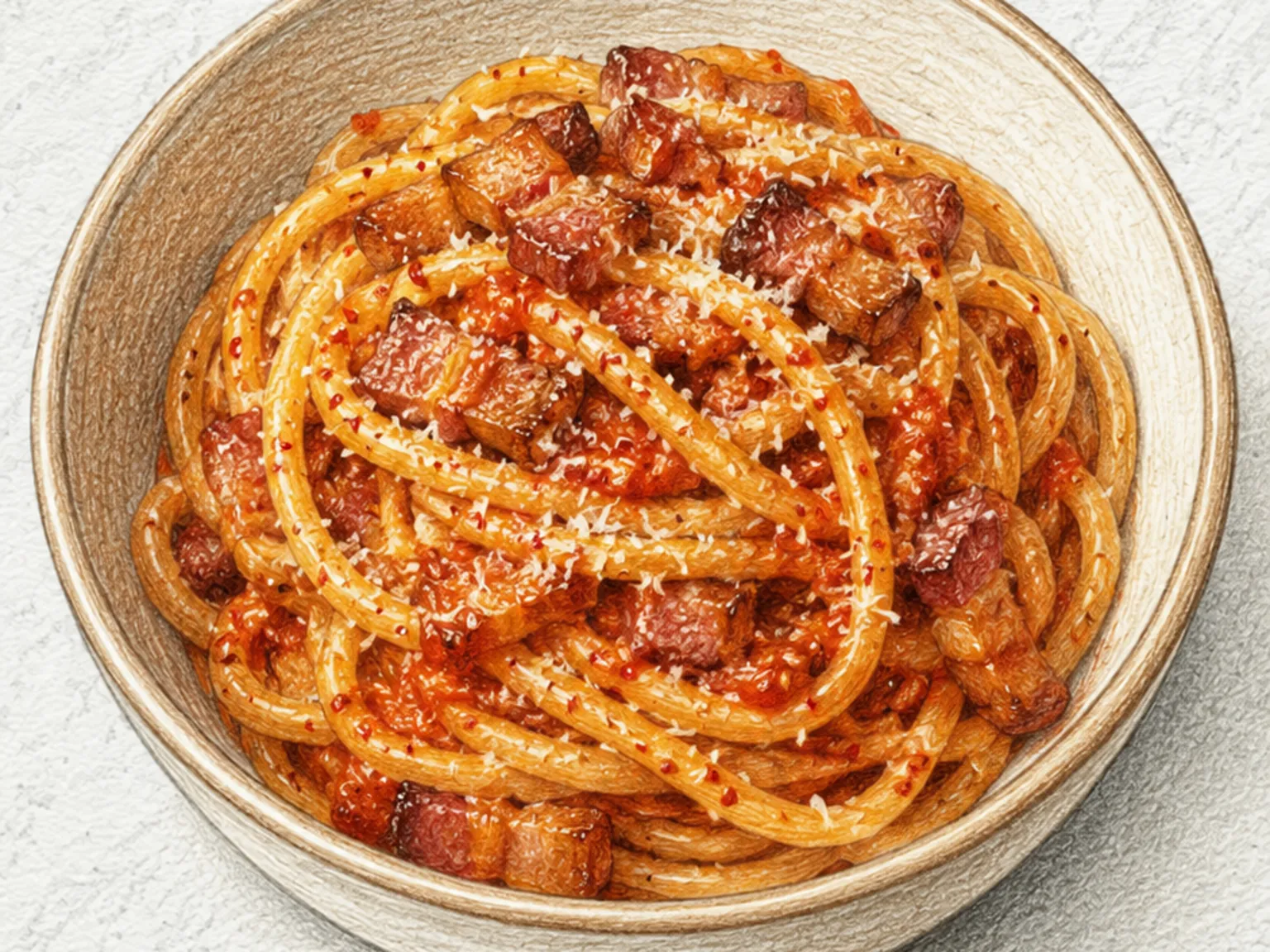
Pasta all'Amatriciana uses the clear fat slowly rendered from guanciale as the base of its tomato sauce, while a crisp portion of the pork is reserved for the final Pecorino topping. For 2 servings, prepare 200 g bucatini, 120 g guanciale, 300 g whole canned tomatoes, 40 g Pecorino Romano, 60 g onion, 0.5 teaspoon chili flakes, 1 tablespoon olive oil, and 0.75 teaspoon salt. Cut the guanciale into batons thick enough to crisp without drying out. Finely chop the onion and crush the tomatoes by hand before heating the pan. Put the olive oil and guanciale in a pan over medium-low heat. Cook for about 6 minutes, stirring often, until the fat renders clear and the edges become crisp. Lift out a small portion for topping and leave the rendered fat behind. Add the onion and cook over medium heat for 2 minutes, until softened and sweet. Stir in the chili flakes for only 20 seconds, then add the crushed tomatoes. Simmer over medium heat for 12 minutes. Cook the bucatini in water seasoned with the salt until al dente and reserve 120 ml pasta water before draining. Add the pasta to the sauce and toss over high heat for 1 minute. Splash in the starchy water gradually until the sauce looks glossy and coats the hollow noodles. Turn off the heat and finish with the Pecorino and reserved guanciale.
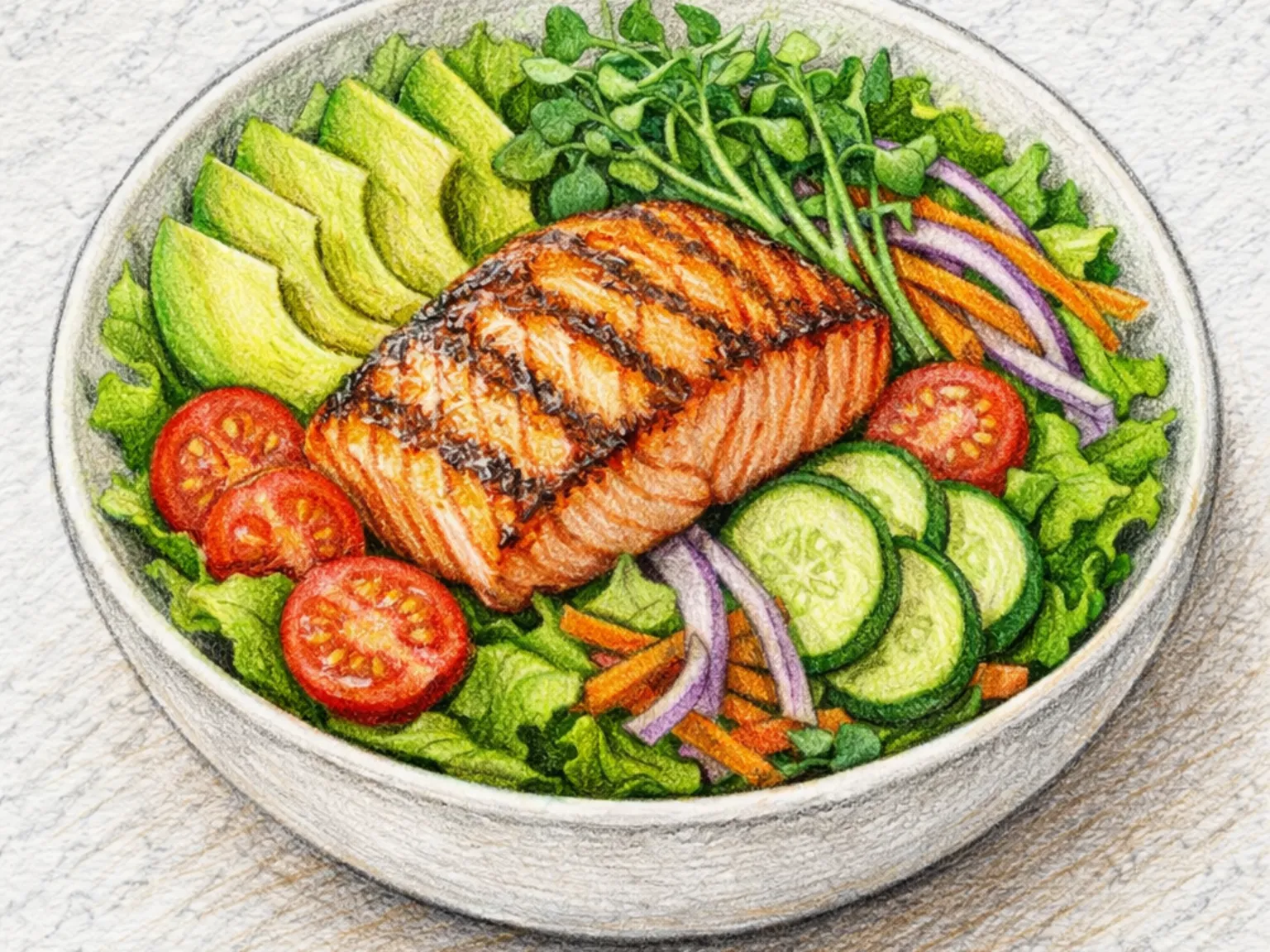
Salmon Salad (Seared Salmon over Greens with Soy Vinaigrette)
Salmon salad places pan-cooked salmon over lettuce, red cabbage, avocado, and radish sprouts with a soy and vinegar dressing. Pat a 250 g salmon fillet dry on every side, especially the skin, and season it with 0.25 tsp black pepper for 5 minutes. From the measured 1.5 tbsp olive oil, spread 0.5 tbsp in a skillet heated over medium heat. Put the salmon in skin-side down and leave it undisturbed for 4 minutes, then turn it and cook for another 2 minutes. Treat that timing as the first check because the required time changes with fillet thickness and pan heat. Measure the thickest part and continue cooking until the internal temperature reaches at least 63C. Move the cooked salmon to a plate for 2 minutes, then separate it along the grain into large pieces without pressing. Tear 100 g lettuce into bite-size pieces, shred 60 g red cabbage, and slice 100 g avocado immediately before serving. Whisk 1 tbsp soy sauce, 1 tbsp vinegar, 0.5 tsp minced garlic, and the remaining 1 tbsp olive oil for the dressing. Arrange the vegetables with 30 g radish sprouts and the avocado, place the salmon on top, and drizzle over the dressing. Toss lightly so the fish stays in large pieces. Check temperature rather than relying on a translucent center or the clock alone.
Korean Soy-Glazed Chicken Wings
Daknalgae-ganjang-gui is a Korean soy-glazed chicken wing dish coated in a sauce of soy sauce, oligosaccharide syrup, minced garlic, ginger powder, and a splash of vinegar, then baked in an oven or air fryer. The vinegar softens the saltiness of the soy while cutting through the richness of the chicken skin. The oligosaccharide syrup thickens under heat into a glossy, clinging glaze that coats each wing evenly. Scoring the joints before cooking allows the marinade to seep into the inner crevices and promotes even heat distribution so the meat near the bone cooks through completely. A finish of sesame oil and toasted sesame seeds rounds out the savory soy glaze with a warm, nutty aroma. When using an air fryer, baking at 180 degrees Celsius for twenty minutes and then flipping for five more produces a satisfyingly crisp skin without drying out the meat.
Classic British Scones
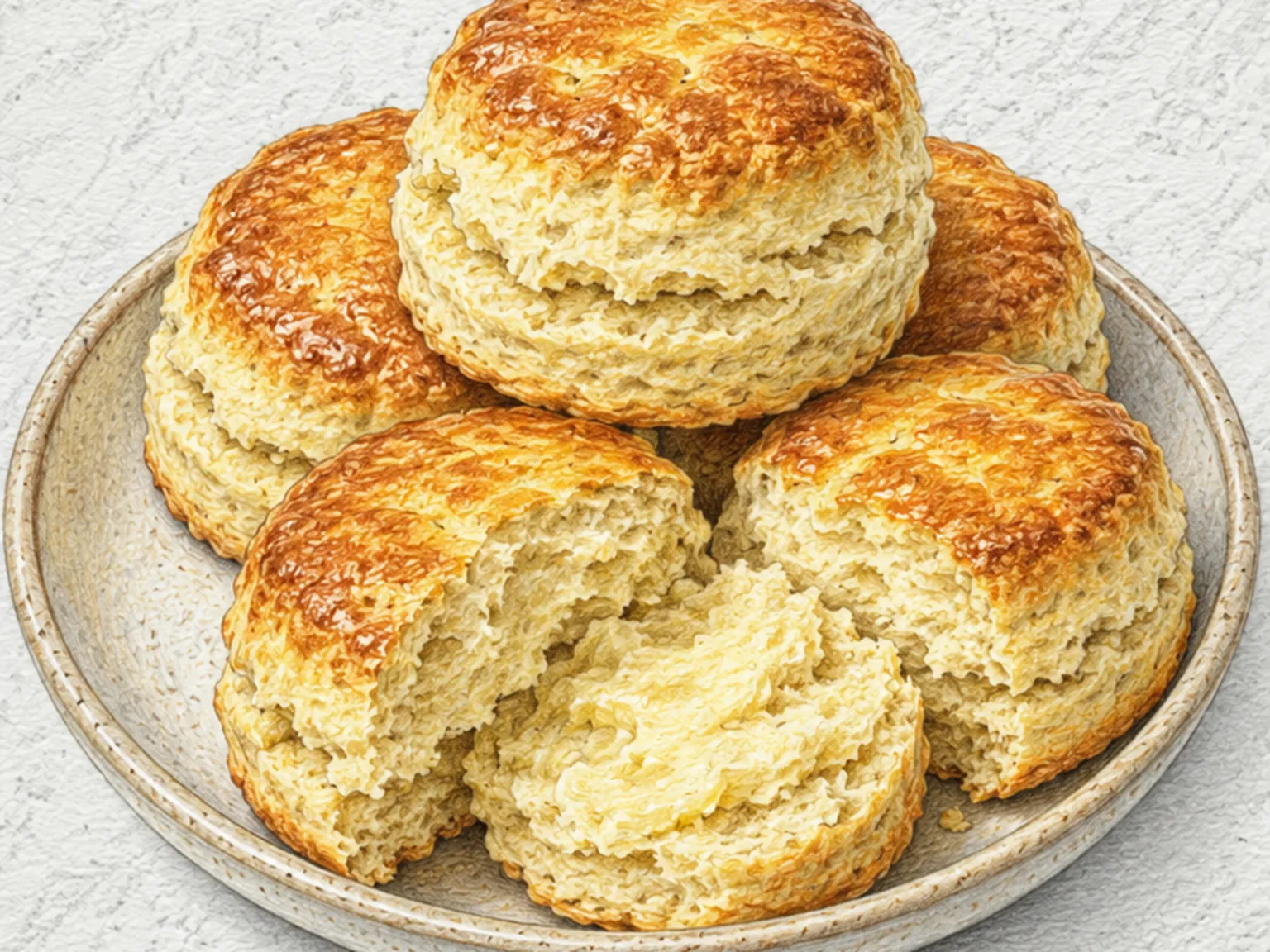
Classic British scones are made by rubbing cold unsalted butter into seasoned flour, then binding the mixture briefly with milk and egg. Heat the oven fully to 200°C and line a wide tray before the dough is mixed. Whisk the all-purpose flour, baking powder, sugar, and salt until no large lumps remain. Add the cold butter and work quickly with your fingertips until the mixture resembles fine breadcrumbs. Keeping the butter cool and limiting the contact time prevents it from turning greasy in the bowl. Whisk the milk with 1 egg, pour it over the dry mixture, and stir with a spatula only until the ingredients gather into a dough. Repeated kneading can make the baked centers firm, so stop once no dry flour remains. On a lightly floured surface, roll the dough to 2.5cm thickness and press a 5 to 6cm round cutter straight down to make 8 even pieces. Brush the tops with 20ml heavy cream. This recipe uses the egg inside the dough and cream on the surface. Bake for 13 to 15 minutes at 200°C, until the scones rise and their tops turn golden. Move them to a wire rack for 10 minutes, then split them by hand while warm. Clotted cream and strawberry jam can be added across the open crumb, which remains soft and easy to pull apart beneath the browned top.
Pasta Bolognese
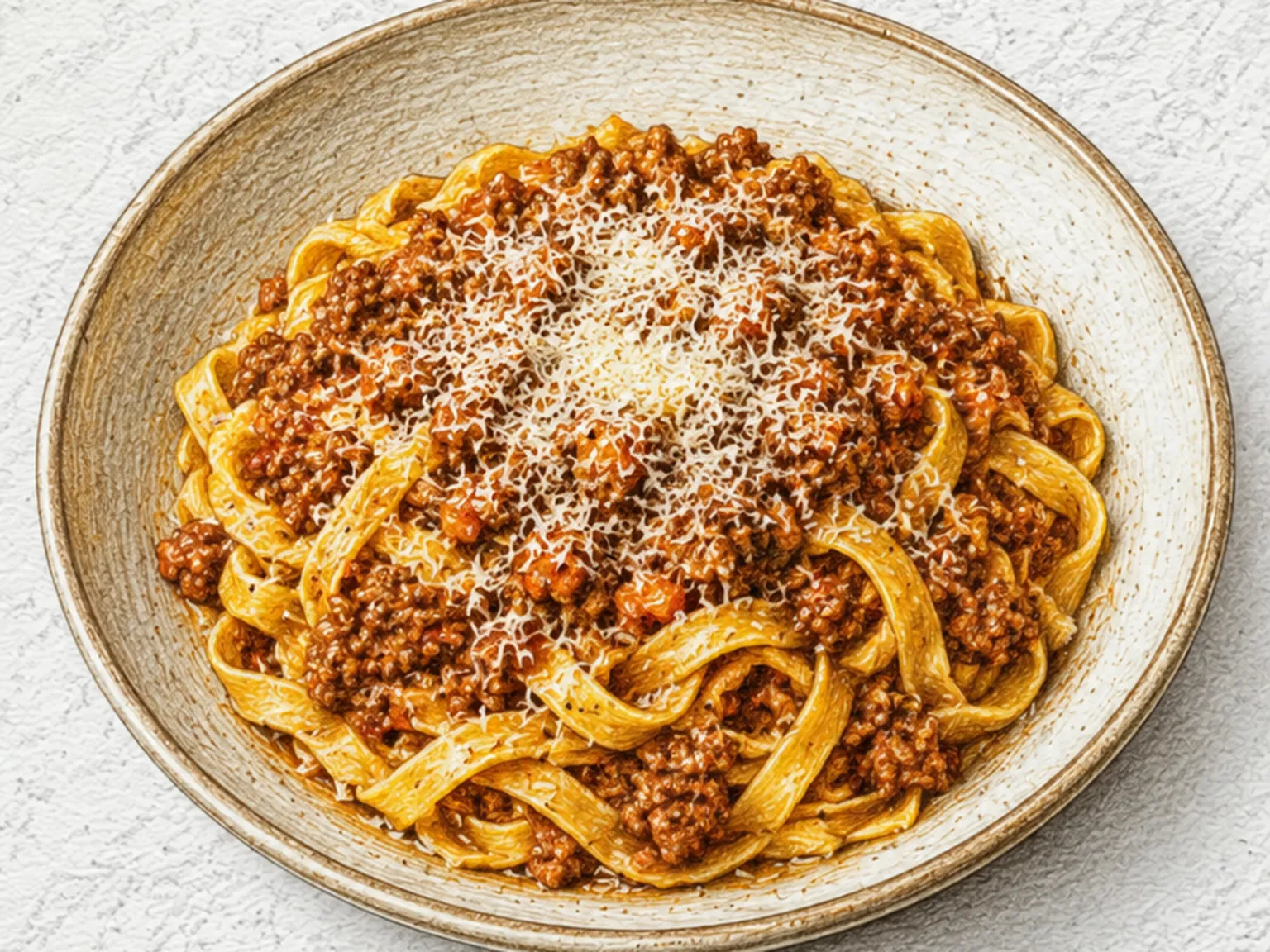
Pasta Bolognese is a slow-simmered meat ragu from Bologna in Emilia-Romagna, built on a soffritto of onion, carrot, and celery cooked down with a mixture of ground beef and ground pork. Browning the meat properly in a hot pan before any liquid is added creates a Maillard crust that contributes a depth of flavor that no amount of simmering can replicate. Red wine deglazes the pan, lifting every bit of browned fond from the bottom. Whole milk is then stirred in to soften the acidity and tenderize the proteins, which is the detail that separates a true Bolognese from a generic meat sauce. The ragu requires at least one hour of low, uncovered simmering for the fat to separate, the liquid to reduce, and the meat to break down into a cohesive sauce. Tagliatelle is the canonical pairing in the region, with the wide, egg-enriched ribbons catching the chunky sauce in every fold. Freshly grated Parmigiano-Reggiano finishes the dish. Cooking the tomato paste directly in the pan after the soffritto for two minutes caramelizes its natural sugars and removes raw bitterness before any liquid goes in.
Zucchini Noodle Salad
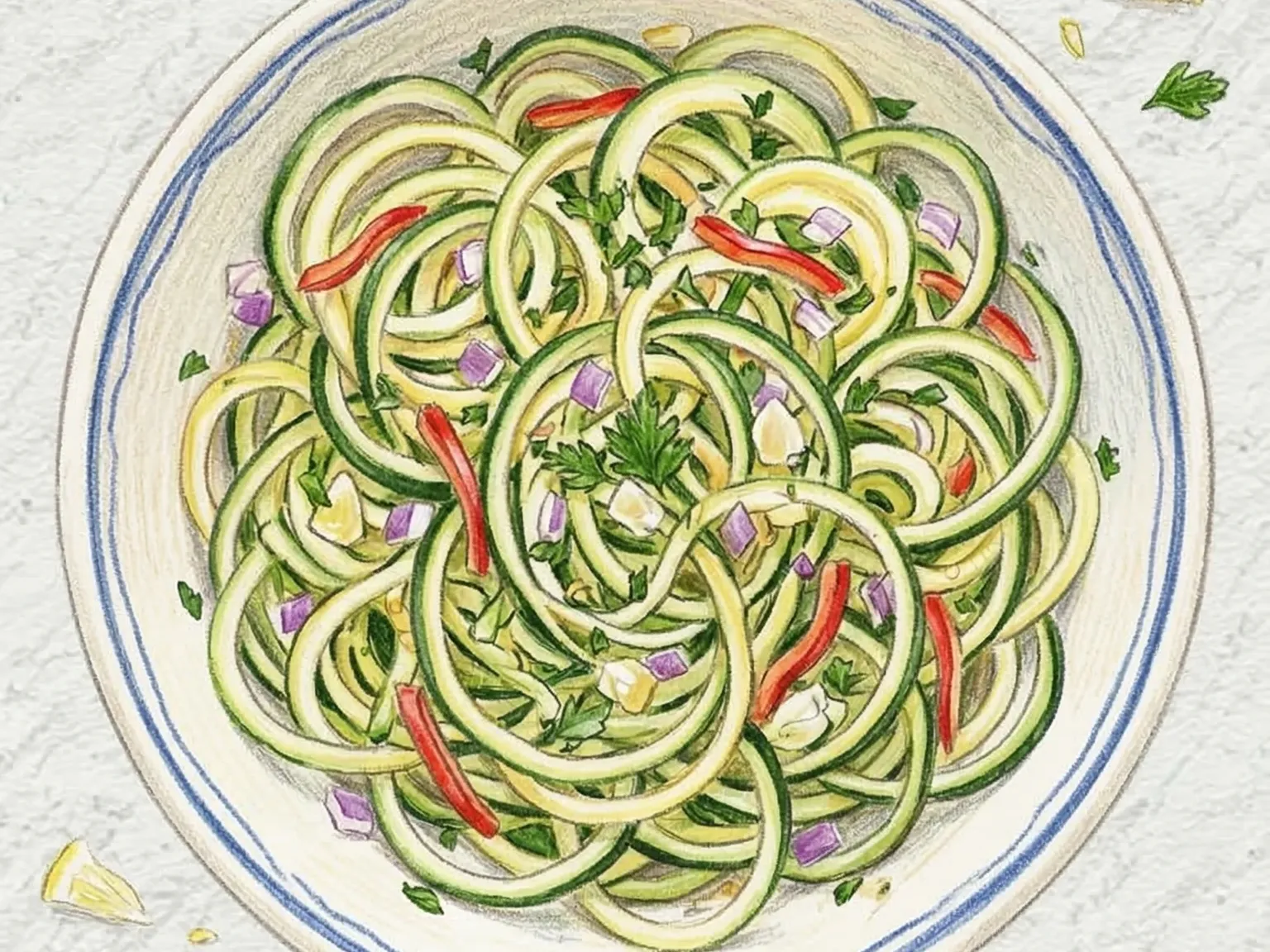
Zucchini noodle salad cuts raw zucchini into long strands, tosses them with cherry tomatoes in a lemon and olive oil dressing, and finishes with Parmesan and basil. Wash and dry 300 g zucchini and trim both ends. Use a peeler or spiralizer to make long strands, stopping when you reach the wetter, seedy center. Halve 120 g cherry tomatoes and keep the cut sides facing up until mixing. Finely mince 1 garlic clove so no large pieces remain. In a bowl, first mix 1 tbsp lemon juice with 2 tbsp olive oil, then add the garlic and stir for about 30 seconds until it is evenly distributed. Immediately before serving, add the zucchini strands to the dressing and toss for 30 seconds by lifting with tongs or chopsticks rather than pressing. Add the tomatoes and turn the mixture gently for only another 20 seconds. If liquid begins collecting at the bottom, transfer the salad to the serving bowl without waiting. Add 30 g Parmesan and 8 basil leaves only after plating. Cut zucchini begins releasing water after it contacts the dressing, so do not assemble the salad in advance. Preparing the dressing and toppings first, then completing the short mixing sequence immediately before serving, keeps the measured dressing from being diluted.
Dauphinoise Potatoes (Creamy Garlic Potato Gratin)
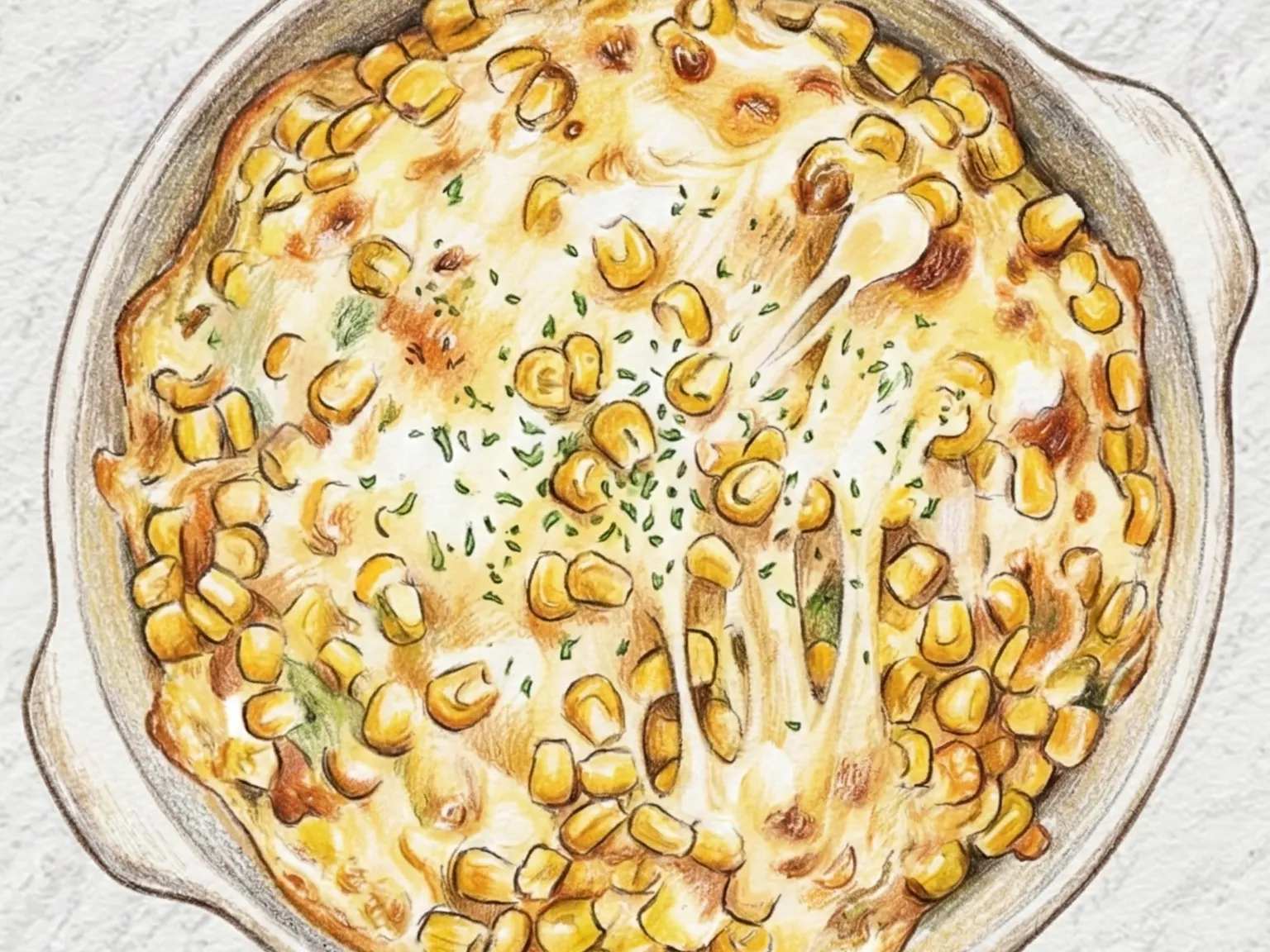
Dauphinoise potatoes are a French gratin made by layering uniformly thin potato slices - cut to two millimeters - in a buttered baking dish, with a warm mixture of heavy cream, milk, minced garlic, and salt poured between each layer. Rinsing and drying the sliced potatoes removes excess surface starch for a cleaner result. Grated Gruyère cheese goes on top before the dish bakes at 170 degrees Celsius for fifty-five to sixty minutes, during which the potatoes absorb the cream and turn meltingly tender beneath a golden crust. Resting the gratin for ten minutes after baking lets the layers firm up enough to hold their shape when sliced. Keeping the potato thickness consistent ensures every slice cooks at the same rate.
Classic Croissant
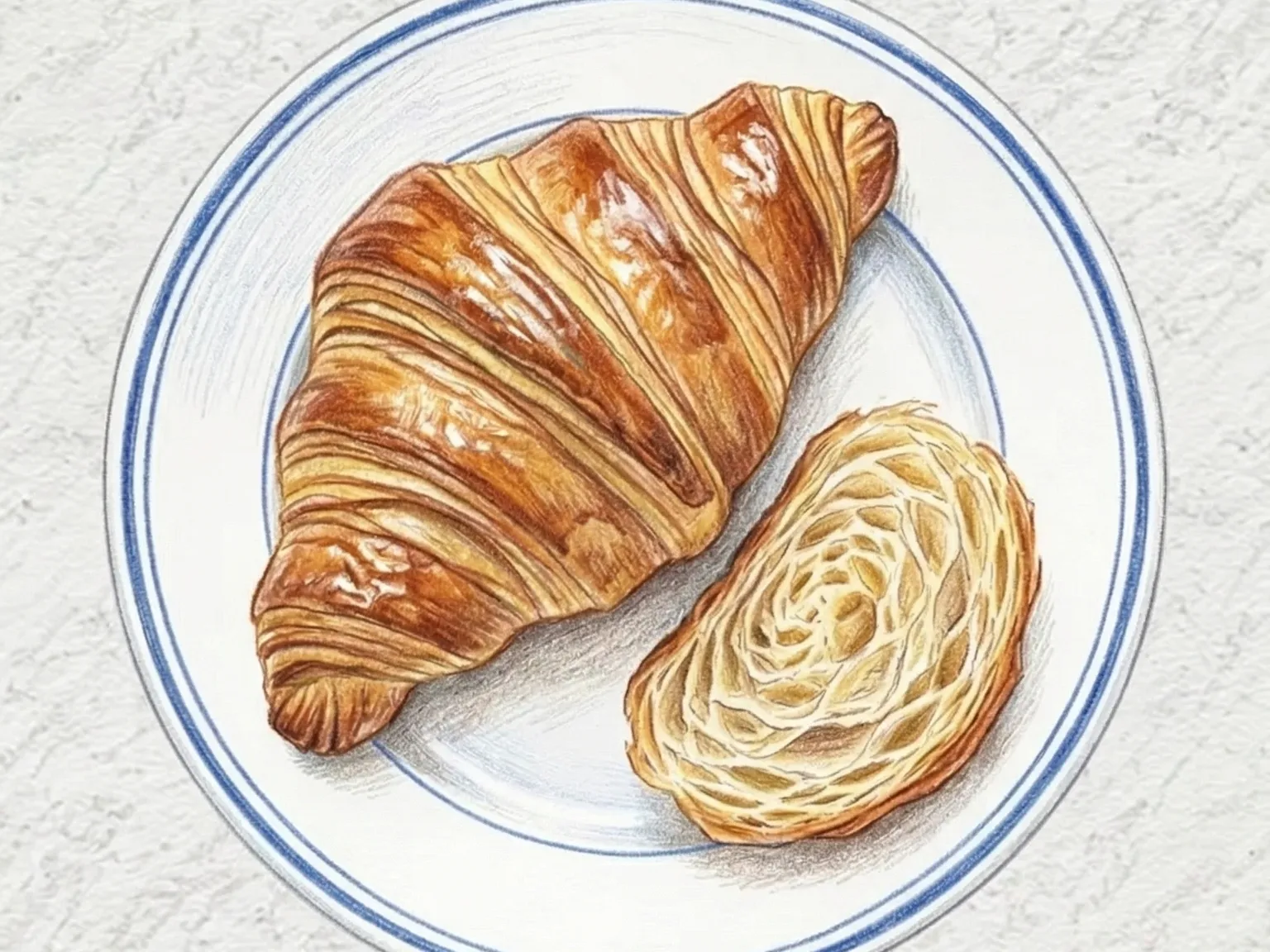
Classic croissants are made by enclosing a square of cold butter in yeast dough and completing 3 single folds with chilled rests between them. Mix the bread flour, sugar, salt, and instant yeast, then knead in the milk and 30g softened butter until the dough is smooth and elastic. Wrap it closely and refrigerate it for 1 hour so it is cold before lamination begins. Shape 200g lamination butter into a 15cm square, place it inside the dough, and seal the edges around it. Roll the packet into a long sheet, make one single fold, and refrigerate it for 30 minutes. Repeat until the dough has received 3 single folds in total, keeping the resting periods between the turns. The butter and dough should feel similarly firm while rolling. If the packet becomes warm or the butter starts to soften, return it to the refrigerator before continuing. Roll the finished laminated dough into a long rectangle 5mm thick and cut long triangles. Starting at each wide base, roll the triangles gently toward their points so the outer lines remain visible. Proof the shaped pieces in a warm place for about 90 minutes, until they have doubled in size and developed a slight wobble, then brush them lightly with beaten egg. Bake at 200°C for 16 to 18 minutes. A deep golden surface indicates that the exterior has browned and the inner layers have had time to set. The cut interior shows the open structure produced by the butter packet and the 3 carefully chilled turns.
Pasta e Ceci (Italian Chickpea Stew Pasta)
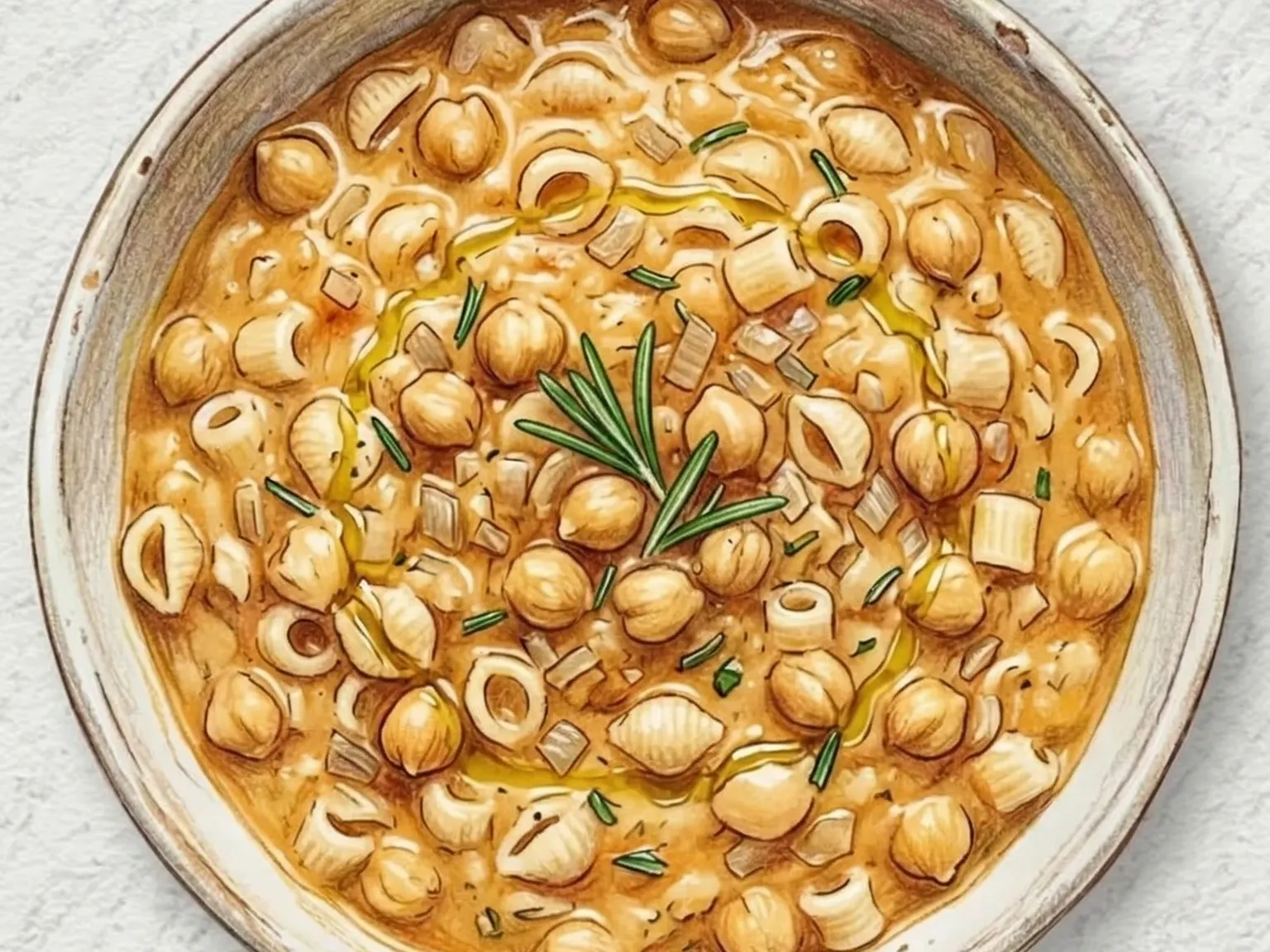
Pasta e ceci is an Italian one-pot dish in which small pasta cooks directly in a chickpea broth until the liquid becomes thick enough to resemble a stew. Divide 260 g cooked chickpeas into two portions, mashing one half and keeping the other whole. The mashed beans release starch and provide body, while the intact chickpeas keep a distinct bite. Soften 60 g finely chopped onion and 2 garlic cloves in 2 tablespoons olive oil over medium-low heat for about 4 minutes. Add 1 tablespoon tomato paste and 1 teaspoon rosemary and cook them for another minute, until the paste deepens in color and the herb is fragrant. Stir in both portions of chickpeas and 700 ml vegetable stock, then bring the pot to a boil. Add 160 g ditalini and simmer for about 8 minutes over medium-low heat. Frequent stirring is important once the liquid starts reducing because the small pasta releases more starch and can catch on the bottom. Serve as soon as the ditalini is tender and the broth clings to the chickpeas and pasta. The finished bowl has the creaminess of mashed legumes without added cream, plus whole beans for texture and a savory tomato and rosemary base.
Deviled Eggs
Deviled eggs are a classic American appetizer made by hard-boiling eggs for ten minutes from a cold water start, then transferring them immediately to an ice bath to cool completely before peeling and halving. Full cooling prevents the yolk from developing a gray-green ring around its edge and allows the shell to separate cleanly, producing smooth, even white halves that serve as natural vessels for the filling. The yolks are mashed thoroughly with mayonnaise, Dijon mustard, lemon juice, salt, and black pepper until the mixture is completely smooth and uniform in texture. The mustard's sharp bite and the lemon juice's acidity cut through the fatty richness of the yolk, lifting the overall flavor and giving each bite a creamy yet bright quality that prevents the filling from feeling heavy. If the mixture is too stiff, a small addition of mayonnaise loosens it to a pipeable consistency; a piping bag with a star tip produces the cleanest, most defined presentation. A light dusting of smoked or sweet paprika over the top adds a faint warmth and creates a vivid red-and-white color contrast against the pale egg white base, completing the visual as well as the flavor.
Classic Lemon Bars
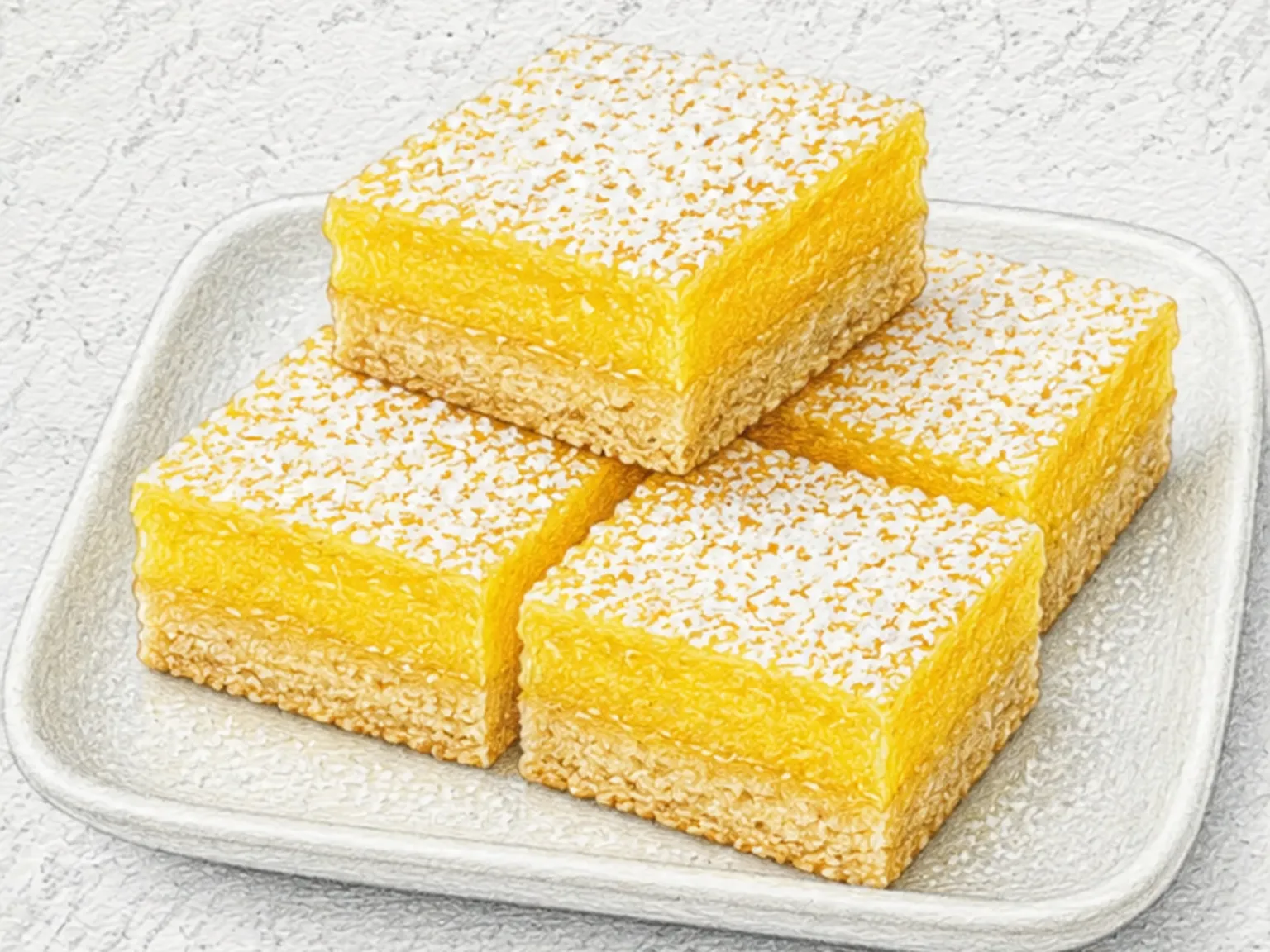
Classic lemon bars layer a bright, tangy lemon curd over a buttery shortbread base, baked together in the same pan and chilled before slicing into clean rectangles. The base is made by pressing a mix of butter, powdered sugar, and flour evenly into the pan and blind-baking it until pale gold and firm enough to hold the filling without crumbling. The curd layer combines eggs, sugar, fresh lemon juice, and zest, which is poured directly over the hot crust and returned to the oven until just set: the edges firm up while the center still trembles gently when the pan is moved. Cutting before the bars are fully chilled causes the curd to run, so refrigeration is essential to achieve the characteristic sharp-edged rectangular slices. Lemon zest releases its citrus oils during baking and intensifies the fragrance well beyond what juice alone provides. A dusting of powdered sugar across the surface creates a white-on-yellow visual contrast and softens the tartness of the first bite. The defining pleasure of the bar is that the crisp, buttery shortbread and the cool, silky curd hit the palate simultaneously in each mouthful.
Pasta e Fagioli (Italian Rustic Bean and Pasta Soup)
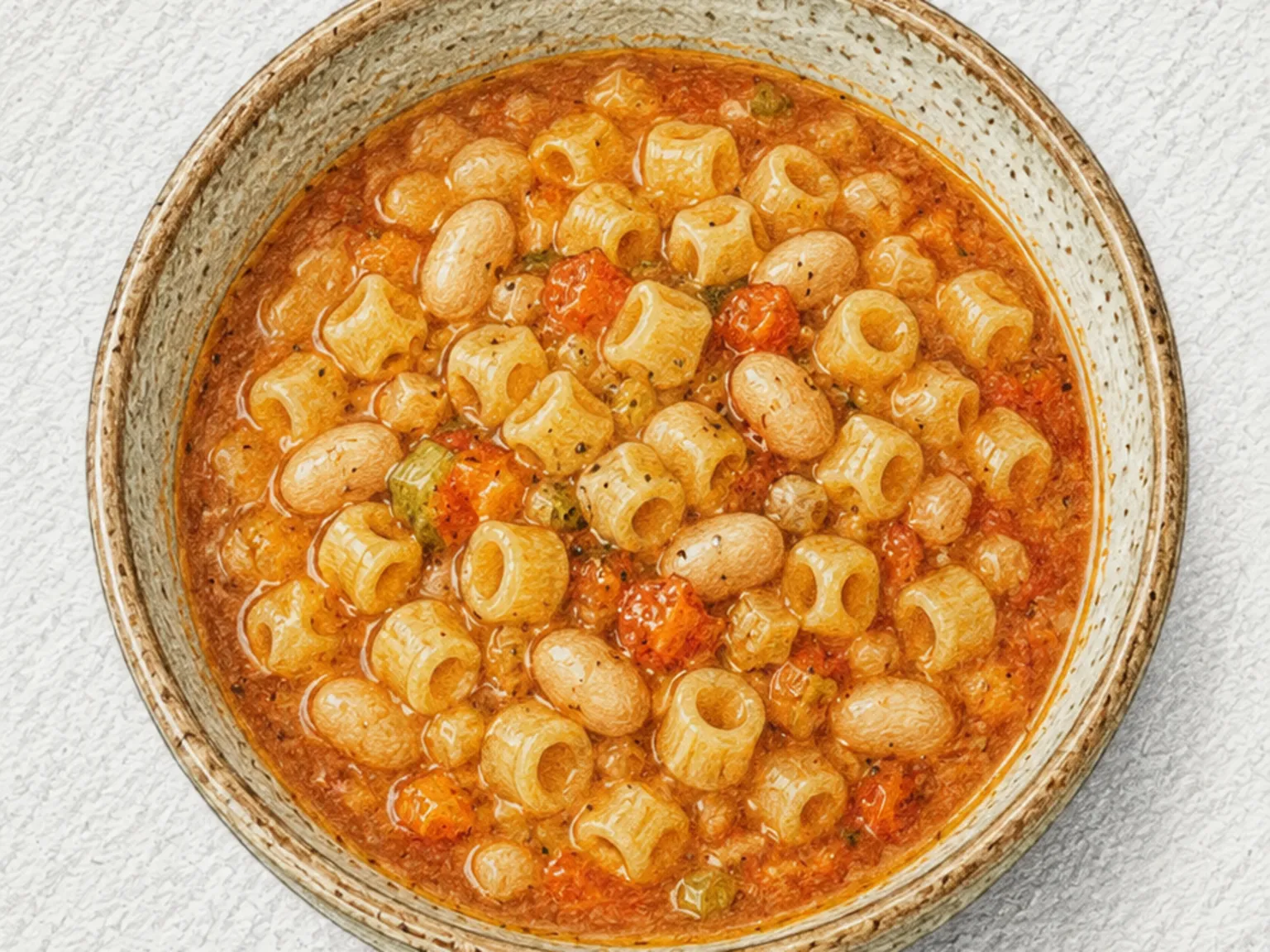
Pasta e fagioli thickens in two deliberate stages: roughly mashed cannellini beans give body to the broth, then ditalini cooked directly in the pot releases starch and absorbs liquid. Finely dice 1 onion, 2 celery stalks, and 1 carrot, and mince 3 garlic cloves. Drain 400 g canned cannellini beans and crush 400 g whole peeled tomatoes by hand. Warm 3 tablespoons olive oil in a heavy pot over medium heat. Cook the onion, celery, and carrot for about 6 minutes, stirring often so they soften without taking on hard brown edges. Add the garlic and 1 sprig fresh rosemary for 1 minute. Before the garlic browns, add the crushed tomatoes and scrape the bottom of the pot to release the cooked-on vegetable flavor. Simmer the tomatoes over medium-low heat for 10 minutes, until slightly thicker. Pour in 800 ml chicken stock and add the beans, then return the soup to a steady simmer. Lift out about one third of the beans, mash them roughly with a fork, and stir them back into the pot. Simmer for 5 minutes more, watching the broth become cloudy, smoother, and fuller without cream. Add 150 g ditalini and cook over medium heat, stirring frequently until al dente. The pasta will keep releasing starch and taking up broth, so if the pot becomes too thick, add water in small splashes rather than flooding it. Stop when the pasta retains a firm center and the mixture still eats like a soup rather than a solid pasta dish.
Duck a l'Orange
Duck a l'orange is a French classic built on the contrast between shatteringly crisp duck skin and a glossy, bittersweet orange sauce. The skin of the duck breast is scored in a crosshatch pattern and seasoned with salt and pepper, then placed skin-side down in a cold pan before any heat is applied. Starting from cold is the key: as the pan warms gradually to medium-low, the thick layer of subcutaneous fat renders out slowly and evenly, leaving the skin golden and crackling rather than greasy. After flipping and cooking for two to three more minutes, the breast is removed to rest while the sauce is assembled in the same pan. Excess fat is poured off, then sugar and red wine vinegar are cooked together into a dark caramel. Orange juice and zest go in next, and the liquid reduces by half into a glossy sauce with concentrated citrus intensity. A tablespoon of cold butter swirled in at the very end smooths out the acidity and gives the sauce a sheen. Over-reducing the sauce draws out bitterness from the zest, so pulling the pan off heat at the right moment is critical. The rested breast is sliced on the bias and arranged on the plate, with the sauce spooned over and alongside.
Classic Waffle
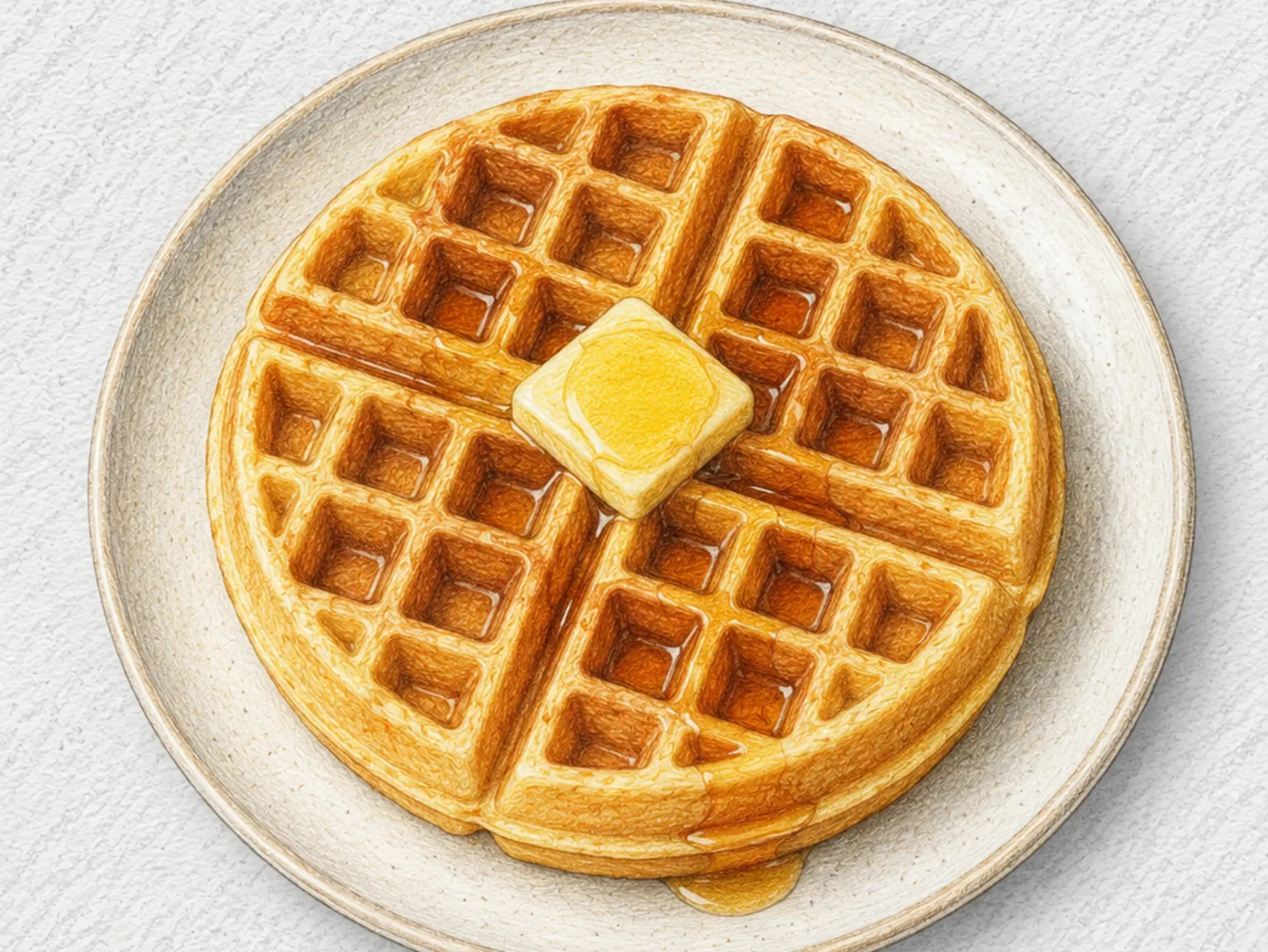
Classic waffles use separated eggs to build a batter that cooks into a defined grid with a soft center. Place the whites in a clean, dry, grease-free bowl and preheat the waffle iron thoroughly at medium heat. Whisk the yolks with the milk, melted butter, and vanilla extract until the liquid is smooth and pale yellow. Sift in the flour, baking powder, sugar, and salt, then fold only until most of the dry flour disappears. A few small lumps can remain at this point. Beat the reserved whites until they stand in stiff peaks. Add the foam to the batter in 2 portions, lifting from the bottom so it is distributed without being pressed flat all at once. Pour enough batter into the hot iron to cover the grid pattern and close the lid gently. Cook for about 3 minutes without pressing the plates together. When the visible steam decreases and the sizzling becomes quieter, check the surface and allow 1 to 2 more minutes if needed. Remove the waffle when it is evenly golden, crisp around the edges, and releases cleanly from the plates. The raised grid forms a browned surface around square pockets, while the folded egg whites remain part of the tender interior. Those pockets can hold maple syrup, melted butter, or fruit sauce without the topping immediately running off the waffle.
Pasta Primavera
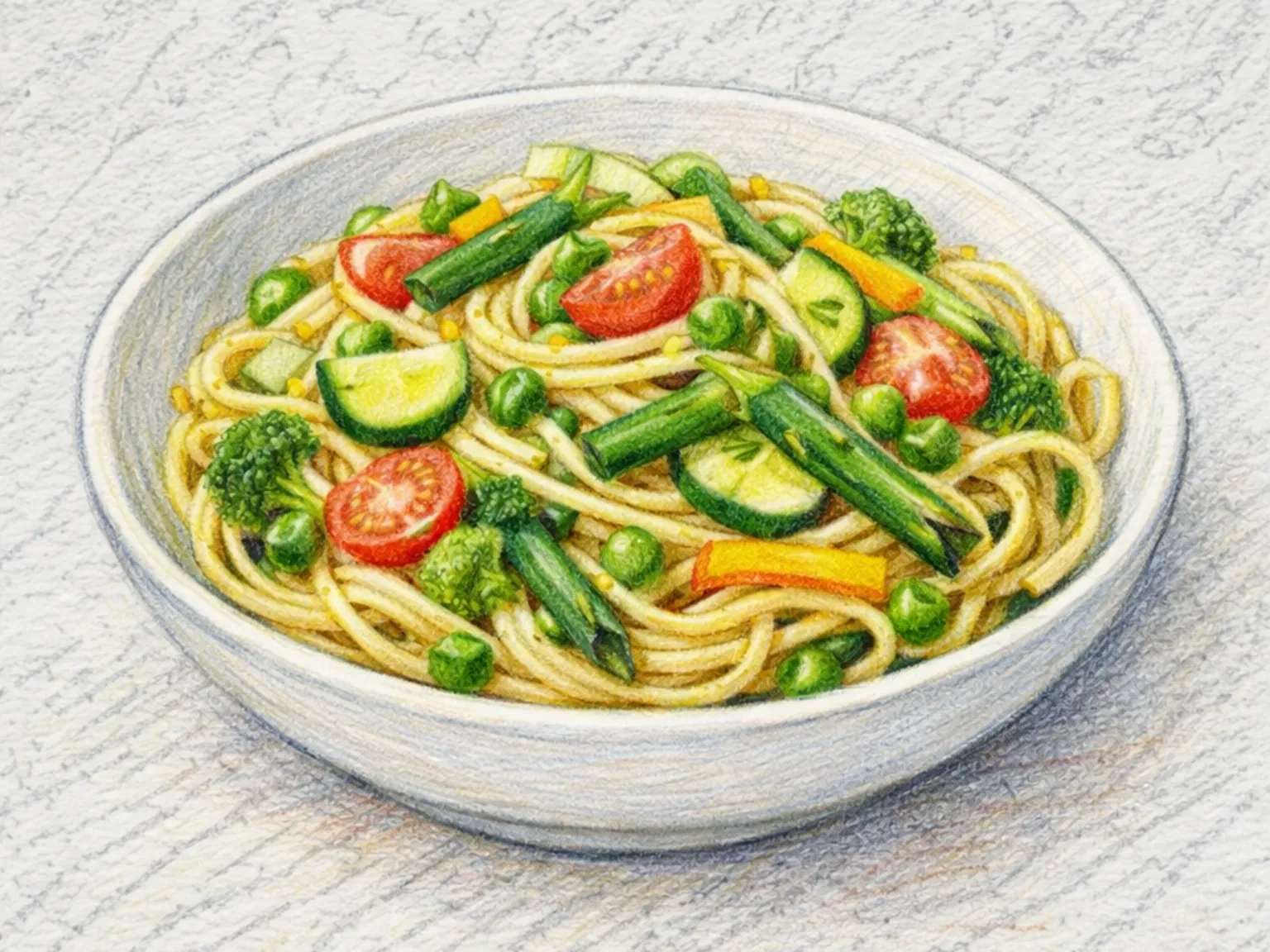
Pasta primavera is a vegetable-forward Italian pasta that stir-fries broccoli, zucchini, bell pepper, and green peas in olive oil with garlic before tossing with spaghetti. Cutting each vegetable to a similar size and adding them in stages preserves distinct textures, while a splash of pasta water emulsifies the oil into a light, glossy coating that clings to every strand without the need for cream or a heavy sauce. Parmesan is folded in off the heat to prevent clumping, melting smoothly into the dish. The result is a bright, clean pasta that lets the natural sweetness and fragrance of the vegetables take center stage. Swapping in whatever vegetables are at peak freshness is part of how this dish works, making it as adaptable as it is straightforward to prepare.
Duck Confit
Duck confit is a traditional French preservation dish that begins with rubbing duck legs in coarse salt, fresh thyme, garlic, and cracked black pepper, then leaving them to cure in the refrigerator for twelve hours. This salting stage draws moisture out of the meat through osmosis and allows the aromatic compounds from the thyme and garlic to begin working their way into the flesh. After rinsing the salt off completely and drying the legs thoroughly, they are submerged in duck fat held at a steady 90 degrees Celsius and left there for three hours. The extended low-temperature cooking is the defining technique of confit: the gentle heat gradually dissolves the collagen in the connective tissue, converting it to gelatin without tightening the muscle fibers, which is what produces meat tender enough to pull apart with no resistance. This result is impossible to achieve by cooking at higher temperatures. The cooked legs can be stored submerged in their fat in the refrigerator for several weeks, which explains why confit was invented as a preservation method in the era before refrigeration. When ready to eat, the legs are lifted from the fat and placed skin-side down in a hot pan for a final sear that renders the skin into a crackling, shattering shell. The contrast between that crisp exterior and the yielding interior - silky, rich, and deeply savory from the curing and slow cooking - is what makes duck confit one of the most satisfying preparations in the French culinary tradition. The leftover duck fat is a prized cooking medium and adds exceptional depth when used for roasting or frying potatoes.
Coconut Cream Pie
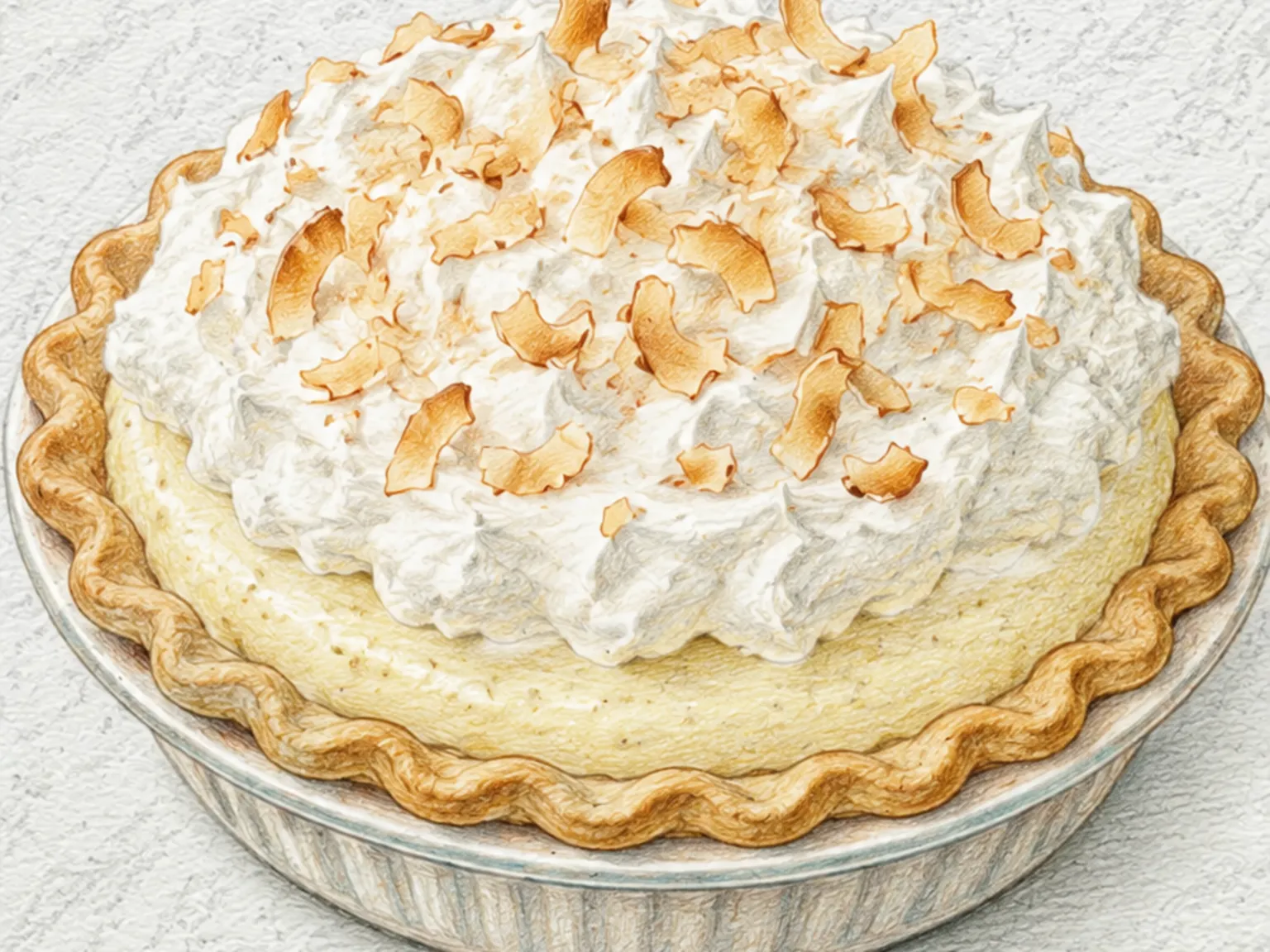
Coconut cream pie fills a blind-baked pastry shell with a thick, silky custard built from coconut milk, whole milk, egg yolks, and cornstarch. The custard is cooked directly on the stovetop, stirred constantly until it thickens enough to coat the back of a spoon without running. Once poured into the cooled crust and refrigerated for several hours, it sets firmly enough to slice cleanly, holding its shape on the plate. The coconut flavor is strong and tropical, drawing entirely from real coconut milk rather than extract or artificial flavoring, so the sweetness stays rounded and natural. A thick layer of freshly whipped cream spread over the top cuts through the density of the custard, and a generous scattering of toasted coconut flakes across the surface adds a nutty, crunchy contrast to the smooth layers below. When sliced, the cross section shows three distinct layers: a golden, crumbly crust at the base, a pale ivory custard in the middle, and white cream on top. The pie is served cold straight from the refrigerator, which keeps the custard firm and the whipped cream stable.
Pasta Puttanesca (Neapolitan Anchovy Olive Caper Tomato Sauce)
Pasta puttanesca is a Neapolitan spaghetti dish made with anchovies, black olives, capers, whole tomatoes, garlic, and peperoncino. For two servings, prepare 200g spaghetti, 400g canned whole tomatoes, 80g black olives, 2 tablespoons capers, 4 anchovy fillets, and 3 garlic cloves. Slice the garlic thinly, halve the olives so they release their flavor into the sauce, and drain the capers. Put 3 tablespoons olive oil, the garlic, one peperoncino, and the anchovies in a pan. Warm them for about 2 minutes at medium-low heat, pressing the anchovies until they dissolve while keeping the garlic from browning. Crush the tomatoes by hand or with a spoon and add them to the pan. Once the edges bubble, let the sauce cook for about 10 minutes so some of its water evaporates. Stir in the olives and capers and continue for 5 minutes. If the sauce reduces rapidly or begins to taste sharply salty, lower the heat. Cook the spaghetti 1 minute less than its package timing, transfer it directly to the sauce, and toss for about 1 minute at medium heat until the tomato mixture coats the strands. Anchovies, olives, and capers already contribute substantial salt, so taste the finished sauce before adding any more. Turn off the heat, scatter over 10g chopped parsley, and serve immediately.
Eggplant Parmesan
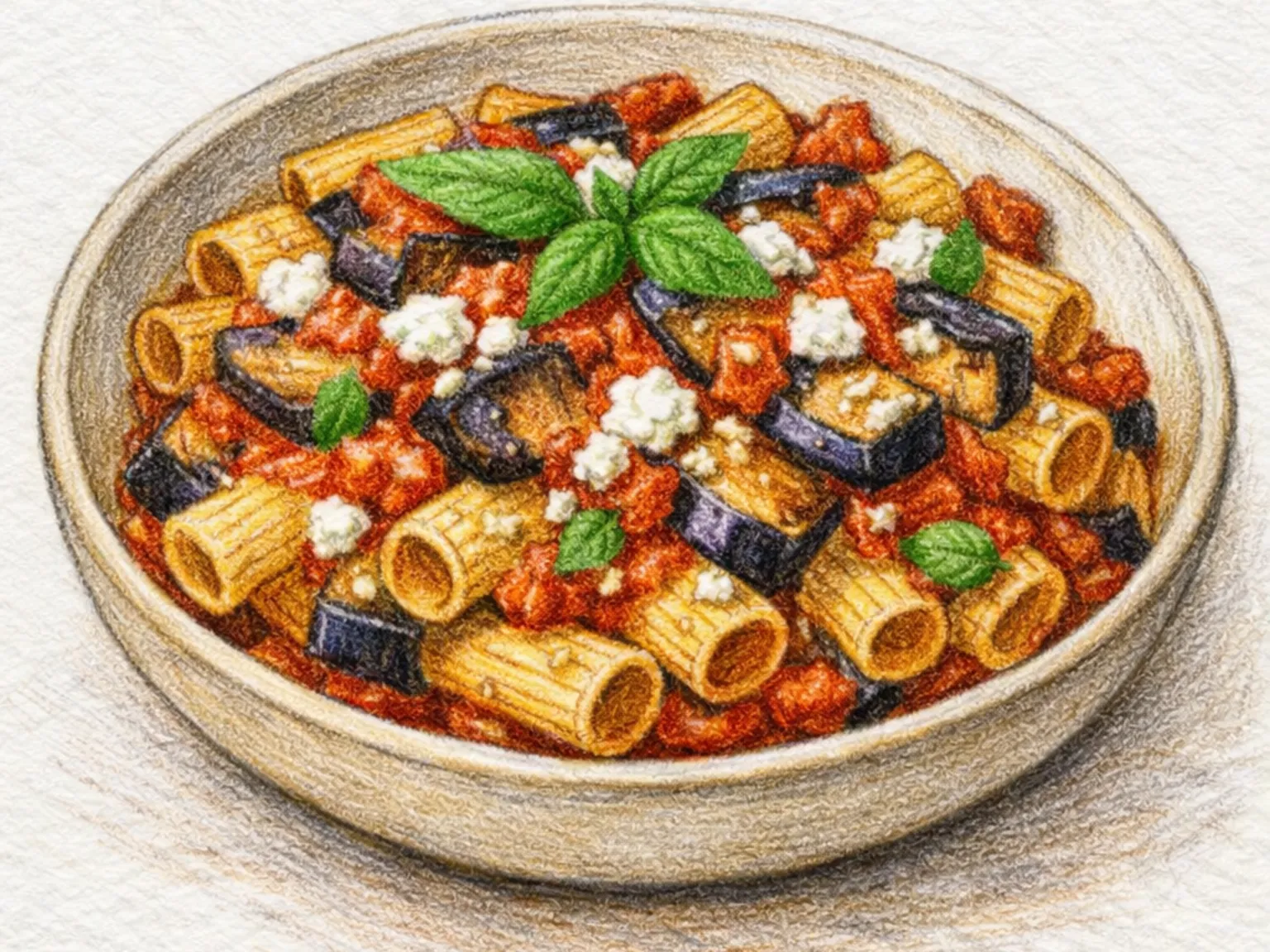
Eggplant Parmesan holds in clean layers when moisture is drawn from the eggplant, the breaded slices are browned until firm, and the tomato sauce is divided without pooling around the dish. For 4 servings, use 2 eggplants, 450 ml tomato sauce, 220 g mozzarella, 60 g Parmesan, 80 g flour, 2 eggs, 120 g breadcrumbs, and 2 tablespoons olive oil. Cut the eggplants into even 1 cm rounds, sprinkle them lightly with salt, and leave them for 10 minutes. Press away the beads of moisture that appear on the surfaces. Set out the flour, beaten eggs, and breadcrumbs in separate dishes. Coat each slice with a thin layer of flour, dip it in egg, and press on the breadcrumbs. Heat the olive oil in a skillet over medium heat and add the slices without overlapping. Fry for about 2 minutes per side, until both faces are golden and the edges feel set. Preheat the oven to 200°C and spread a thin layer of tomato sauce over the bottom of a baking dish. Add eggplant, part of the mozzarella, and part of the Parmesan in that order. Build another layer in the same sequence, reducing the sauce if it begins to collect at the sides. Bake for 20 minutes, until the cheese has melted and the edges bubble and brown lightly. Rest the dish for 5 minutes so the layers settle, then cut and serve warm.
Coconut Macaroon
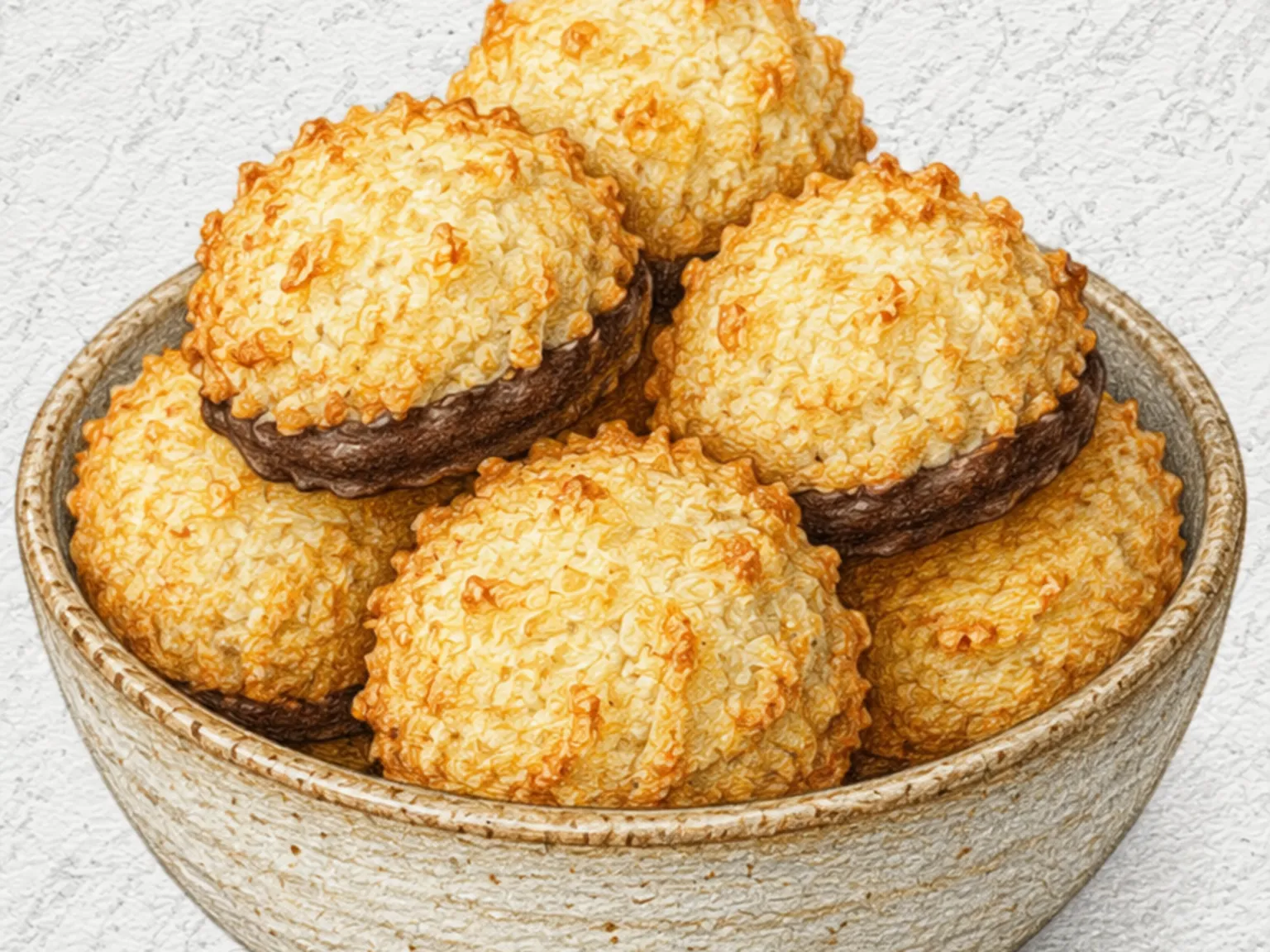
Coconut macaroons are flour-free cookies formed by binding shredded coconut flakes with egg whites and sweetened condensed milk, then baking until the exterior crisps and the interior remains dense and moist. Without flour as a structural element, coconut carries all of the texture and flavor, making every bite intensely coconut-forward in a way that flour-based cookies cannot replicate. In the oven, egg whites set the outer surface of each mound into a thin, golden crust while condensed milk holds the interior together in a chewy, sticky mass. The contrast between the crisp shell and the moist center is the defining textural feature of the macaroon. A pinch of salt sharpens the coconut's natural nuttiness, and a small amount of vanilla extract adds a warm, soft backdrop to the sweetness. Dipping the flat base of each cookie in melted dark chocolate once cooled introduces a bitter counterpoint that balances the concentrated sweetness of the condensed milk.
Pastitsio (Greek Cinnamon Beef Macaroni Bechamel Bake)
Pastitsio holds together as three distinct layers: macaroni cooked firmer than al dente, a reduced cinnamon-scented beef sauce, and a thick but pourable bechamel. Cook 250 g macaroni slightly less than al dente because it will continue softening in the oven. Drain it thoroughly and spread it out so the tubes do not clump. Cook 120 g onion in a pan over medium heat until translucent, then add 300 g ground beef. Break up the meat and brown it until no raw red patches remain. Add 250 ml tomato sauce and 1/2 teaspoon ground cinnamon, lower the heat, and simmer for 12 minutes. The sauce is ready when it is thick and no loose liquid pools on the bottom; a watery layer would soak the pasta below. For the bechamel, melt 2 tablespoons butter, stir in 2 tablespoons flour, and cook over low heat for 1 minute. Gradually whisk in 400 ml milk until the sauce is smooth, thick, and still able to pour from a spoon. Spread the macaroni in a baking dish and season it with part of the 40 g Parmesan. Level the beef sauce over the pasta, cover it with the bechamel, and finish with the remaining cheese. Bake at 190C for 30 minutes, until the top is golden and the edges bubble gently. Rest the dish for at least 15 minutes before cutting. That pause is part of the structure, not merely cooling time: it allows the meat sauce and bechamel to settle around the pasta so a firm downward cut produces neat portions instead of a loose scoop.
Ricotta-Stuffed Eggplant Rolls
Eggplant rollatini hold their shape when the eggplant is salted and pre-roasted until flexible, while the ricotta filling stays thick and is used with restraint. Trim 2 eggplants and cut them lengthwise into even 5 mm strips. Sprinkle 1 teaspoon salt across both sides, leave them for 15 minutes, and pat away the released moisture thoroughly. Skipping this step allows eggplant water to thin the marinara during the final bake. Preheat the oven to 220C, brush the slices lightly with 2 tablespoons olive oil, and roast them for about 10 minutes. They should bend without cracking, which makes tight rolls possible. Let them cool until safe to handle. Mix 250 g ricotta with 1 egg, half of the 50 g Parmigiano Reggiano, 10 chopped basil leaves, and 1/2 teaspoon black pepper. The filling should be thick and spreadable rather than loose. Place a modest amount near one end of each eggplant slice, then roll firmly without squeezing the cheese out. Spread part of the 450 ml marinara in a thin layer across a baking dish. Arrange the rolls snugly with their seams underneath, then cover them with the remaining sauce, 150 g mozzarella, and the remaining Parmigiano. Lower the oven to 200C and bake for 20 to 25 minutes, until the cheese melts and the edges color lightly. Rest the dish for 5 minutes before moving the rolls. During that pause, the hot ricotta sets enough for each portion to stay closed instead of unfolding on the plate.
Coffee Cake
Coffee cake is an American snack cake topped with a buttery cinnamon streusel, designed to be eaten alongside coffee rather than containing coffee as an ingredient. Sour cream in the batter produces a noticeably moister, more tender crumb than a standard butter cake, and its mild acidity keeps the overall sweetness from feeling heavy. The streusel is made by rubbing brown sugar, cinnamon, flour, and cold butter together until the mixture forms coarse, irregular clumps; in the oven these bake into a sandy, crunchy topping that provides sharp textural contrast to the soft cake beneath. A widely used technique involves layering streusel into the center of the batter as well as on top, so that each slice reveals two distinct cinnamon-scented veins running through it. The cinnamon aroma is most pronounced when the cake is still warm from the oven, making the timing of serving worth paying attention to.
Penne alla Vodka
Penne alla vodka uses 220 g penne with tomato puree, heavy cream, vodka, and parmesan for two servings. Cook the pasta in a large pot of salted water for about 1 minute less than the package time. Reserve some of the cooking water before draining because it will loosen the finished sauce without making it watery. Finely chop 60 g onion and soften it in 1 tbsp butter over low heat for about 3 minutes. Keep the onion pale rather than browning it. Add 2 tbsp vodka, raise the heat to medium-low, and let it bubble for about 1 minute while lightly scraping the pan. Continue when the sharp alcohol smell has softened. Stir in 250 ml tomato puree and 0.5 tsp chili flakes, then simmer over low heat for about 5 minutes. Stir often until the color deepens and a spoon leaves tracks that remain briefly. Turn the heat to its lowest setting and add 120 ml heavy cream gradually. Keep the sauce below a boil so the cream does not split. Melt in 25 g parmesan to form a smooth, coral-colored sauce. Add the drained penne and toss over low heat for about 1 minute, coating both the ridged surfaces and hollow centers. If the sauce becomes too thick, add the reserved pasta water in small amounts until it clings to each tube with a glossy finish.
About Western
Olive oil, butter, cream, and cheese create the rich flavors these dishes are known for. From special-occasion dinners to quick weeknight meals, these recipes make Western cooking approachable.