Korean Seafood Japchae (Glass Noodles with Shrimp, Squid and Vegetables)
Haemul-japchae is a seafood version of the Korean glass noodle stir-fry, featuring shrimp, squid, spinach, carrots, and onions tossed together in soy sauce and sesame oil. Replacing meat with seafood allows the briny, mineral depth of the ocean to soak into the chewy sweet potato noodles, while the vegetables' natural sweetness keeps the overall flavor light and balanced. The noodles absorb the seasoning and take on a springy, glossy character, and the shrimp and squid contribute two distinct textures: a firm, bouncy snap from the shrimp and a satisfying chew from the squid. Scoring the squid before cooking causes it to curl and develop a pattern on the surface as it hits the heat, improving both texture and presentation. Seafood must be cooked over high heat and quickly to stay tender rather than rubbery, and the noodles should be soaked thoroughly beforehand so they absorb the seasoning evenly during the stir-fry. The dish often replaces beef japchae on holiday and celebration tables, and adding mussels or scallops deepens the broth-like quality of the finished dish.

Korean Deep-Fried Seaweed Rice Roll
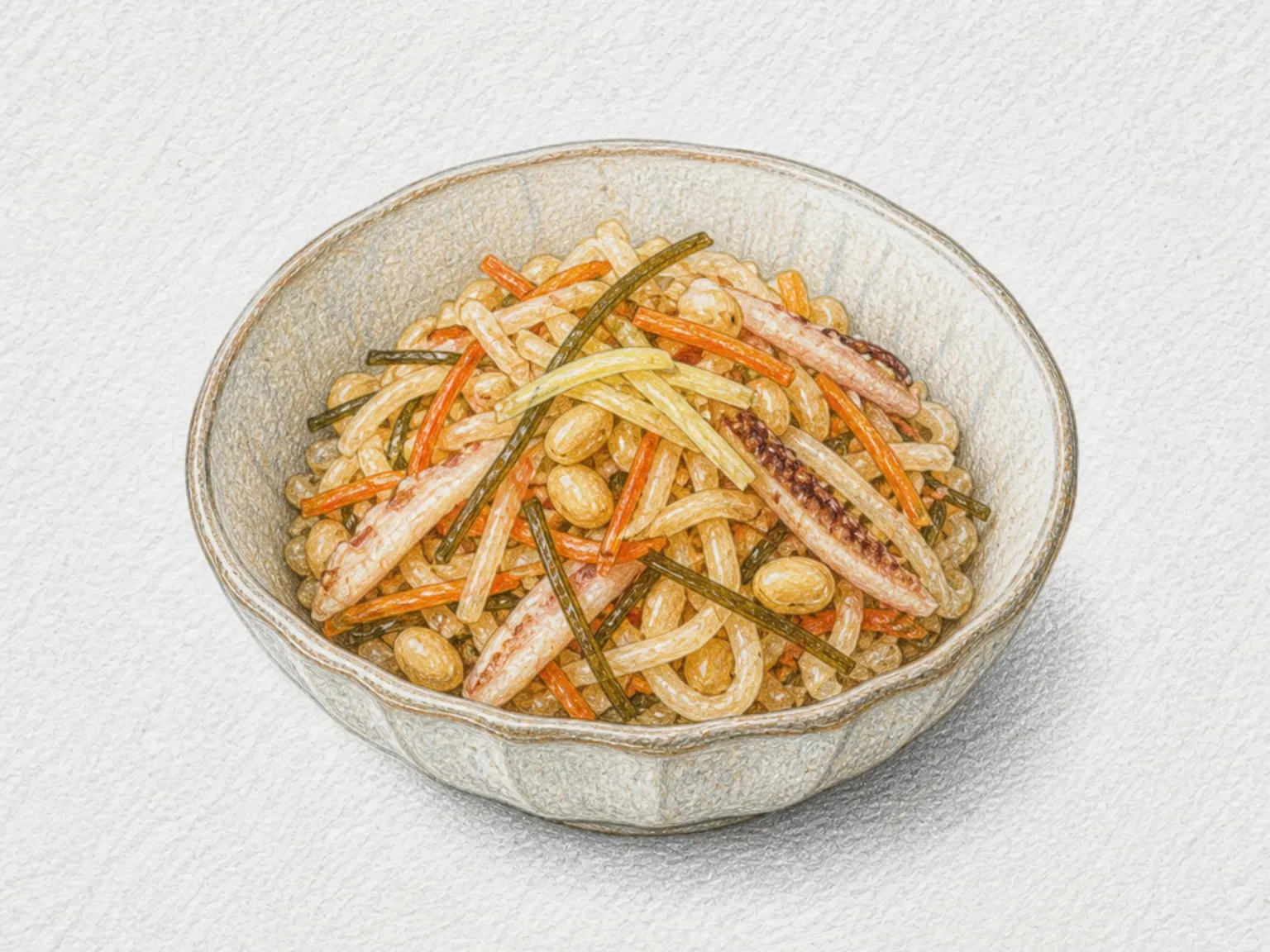
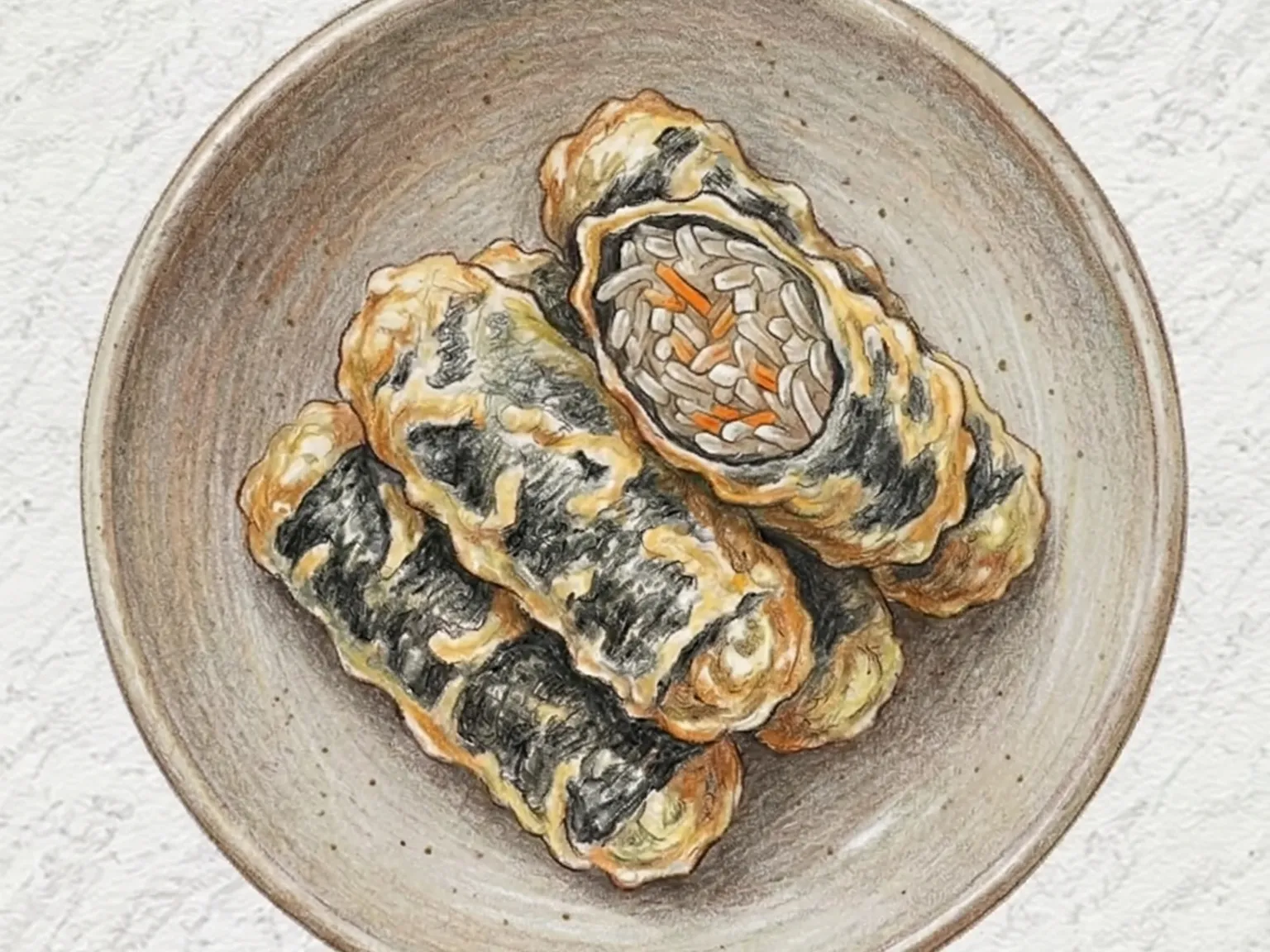
Gimmari is a Korean street snack of glass noodles seasoned with soy sauce and sesame oil, rolled tightly inside sheets of dried seaweed with julienned carrot and onion, then coated in a light batter and deep-fried until golden. At around 160 degrees Celsius, the seaweed barely absorbs oil during frying, crisping into a thin, taut shell while the glass noodles inside retain their characteristic springy, chewy pull. The first bite delivers the simultaneous crunch of the fried coating and the intensified savory depth of the toasted seaweed, followed by the elastic bounce of the glass noodles and the underlying soy-sesame seasoning that runs through the filling. One of gimmari's more notable qualities is the way high-heat frying concentrates the seaweed's natural umami, making the wrapper more flavorful than it would be raw. The classic accompaniment is tteokbokki sauce: the tangy, gochujang-based spice of the sauce against the crisp exterior creates one of the most iconic pairings in Korean street food. Eomuk broth on the side rounds out the combination, and the trio of gimmari, tteokbokki, and eomuk is essentially the standard order at any Korean bunsik stall.

Korean Steamed Egg (Gyeran-jjim)
Gyeran-jjim is a Korean steamed egg dish made by whisking eggs together with anchovy stock and salted shrimp, then cooking the mixture slowly in a stone pot over low heat with the lid on. The anchovy stock establishes a deep savory backbone, and the salted shrimp adds a fermented, briny salinity that eliminates the need for additional seasoning. Straining the egg mixture through a fine sieve before cooking removes air bubbles and ensures the finished custard has a smooth, unbroken surface rather than the pitted texture that forms when bubbles are trapped and burst during cooking. The stone pot should not be preheated before the egg mixture is added. Starting cold and bringing the heat up slowly with the lid in place traps steam inside, which gives the custard its signature cloud-like softness and prevents the surface from drying out. Small pieces of carrot and sliced green onion add color, and a final drizzle of sesame oil with a scatter of sesame seeds brings a nutty fragrance to each spoonful. The right point to remove it from heat is when the center still wobbles slightly when the pot is nudged, because residual heat will finish setting the middle as it rests.

Chinese Lo Mein
Lo mein is a Chinese noodle dish where boiled noodles are tossed gently with vegetables, protein, and a soy-based sauce, resulting in a soft, glossy finish that sets it apart from the crisper chow mein. The sauce - soy sauce, oyster sauce, and a small amount of sugar - is premixed so it coats evenly during the brief time in the pan. Shrimp is seared first until half-cooked, then broccoli and carrot are stir-fried just until they lose their raw crunch. The warm, drained noodles go in last, and everything is tossed together until the sauce is absorbed and the noodles gleam. The key is restraint: lo mein should stay moist and supple, not charred or dry. The protein can be swapped freely - chicken, beef, or tofu all work with the same sauce and technique.

Bean Sprout Bulgur Seaweed Salad
Bulgur wheat brings a plump, nutty chew that pairs naturally with briefly blanched bean sprouts, building a hearty Korean grain salad with satisfying texture and substance. The dressing - soy sauce, apple cider vinegar, sesame oil, and minced garlic - mirrors the classic Korean namul seasoning profile exactly, tying grain and vegetable together without anything feeling out of place. Julienned carrot contributes sweetness and color, while thinly sliced scallion sharpens the finish with a mild, lingering onion bite. Roasted seaweed flakes are folded in just before serving to preserve their crunch and the oceanic salinity plays off the earthy grain in a pairing that reads as distinctly Korean. Bean sprouts should be rinsed in cold water immediately after blanching to keep their snap intact.

French Beef Stew
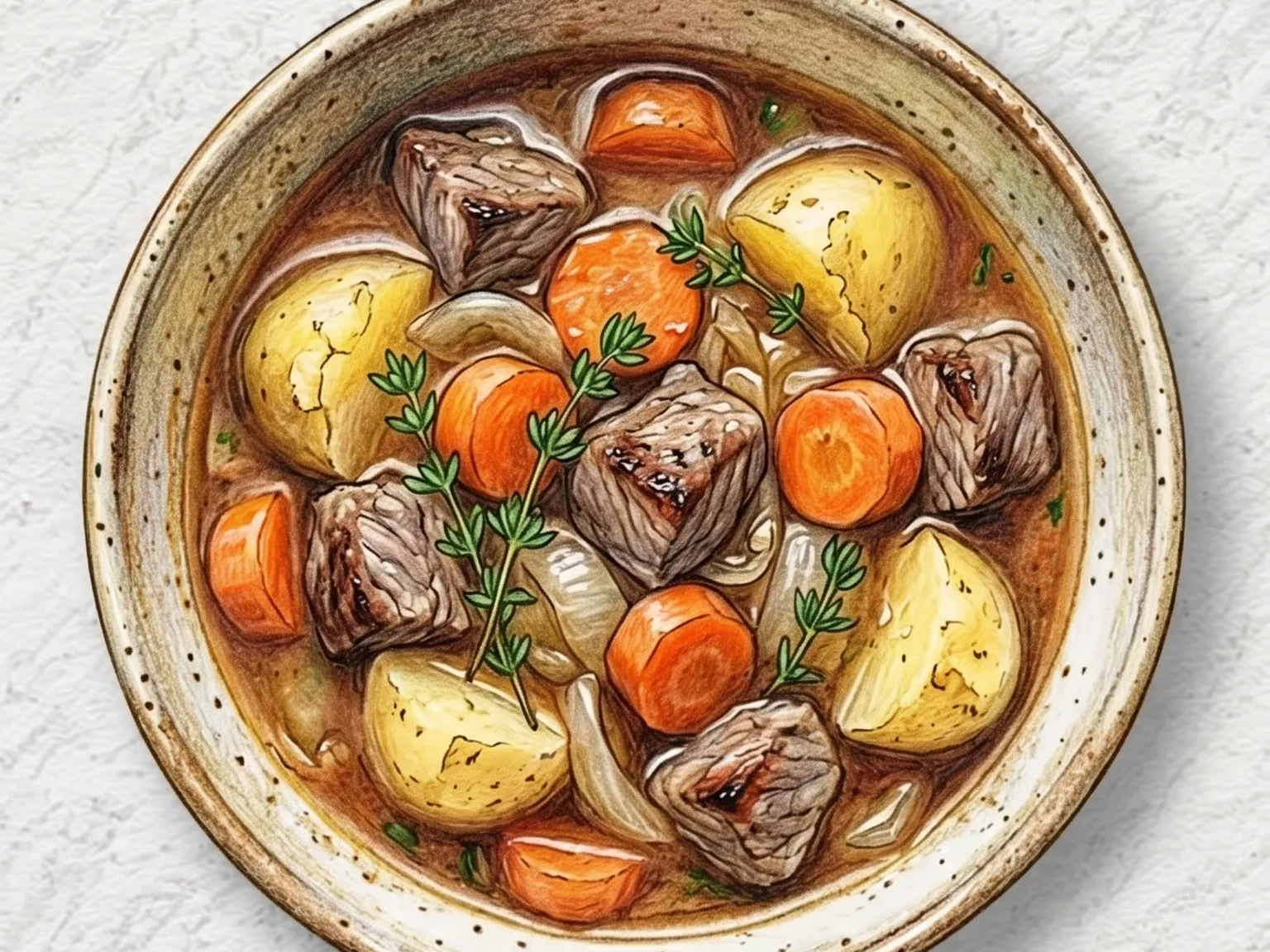
French beef stew transforms inexpensive, collagen-rich cuts like chuck or brisket into something deeply tender through unhurried heat. The process begins by cutting the beef into large chunks, dusting them with flour, and searing in a hot pan until every surface is properly browned. That browning step is not optional: the Maillard crust formed at high heat becomes the flavor foundation of the entire pot. Red wine and beef stock are then added, and the pot cooks at a low, gentle temperature for at least two hours. During that time the tough connective tissue in the shank breaks down completely, and the meat becomes soft enough to fall apart with a fork. Root vegetables including carrots, potatoes, celery, and onion braise alongside the beef, gradually releasing natural sugars and body into the liquid. The red wine reduces throughout the cook, its sharp acidity mellowing away while the fruit depth and tannic structure remain, giving the sauce a rounded, full-bodied backbone. Thyme and bay leaf infuse the broth with herbal warmth from the first moment and continue building throughout the long cook. The stew improves overnight, when the flavors continue to develop in the refrigerator and the seasoning penetrates every part of the meat.

Guo Bao Rou (Sweet and Sour Crispy Pork)
Guo bao rou, literally pot-wrapped meat, is the flagship dish of Northeastern Chinese cuisine, developed in Harbin during the late Qing Dynasty to accommodate Russian diplomats who found traditional Chinese flavors unfamiliar. To suit their palate, the dish was built around a sharp vinegar-sugar balance, and that foundation has persisted to the present day. The technique centers on double-frying: pork tenderloin or loin is sliced thin, coated heavily in potato starch, fried once to set the exterior, then fried a second time at higher temperature to puff the starch into a glassy, shattering crust. The sauce of vinegar, sugar, and soy sauce is reduced in a screaming-hot wok until it caramelizes, and the fried pork must be tossed through in thirty seconds flat. Exceed that window and the starch drinks the sauce, collapsing the crunch entirely. The original Harbin version is pale in color with a pronounced acidic edge. As the dish traveled south through China and into Korean-Chinese restaurants, cooks began substituting ketchup, producing the sweeter and more vividly red version familiar today in Korean establishments. The finished piece delivers three distinct layers of texture simultaneously: a translucent caramelized sauce coating on the surface, a brittle expanded starch shell beneath it, and soft yielding meat at the center.

Korean Rolled Omelette (Layered Vegetable Egg Roll)
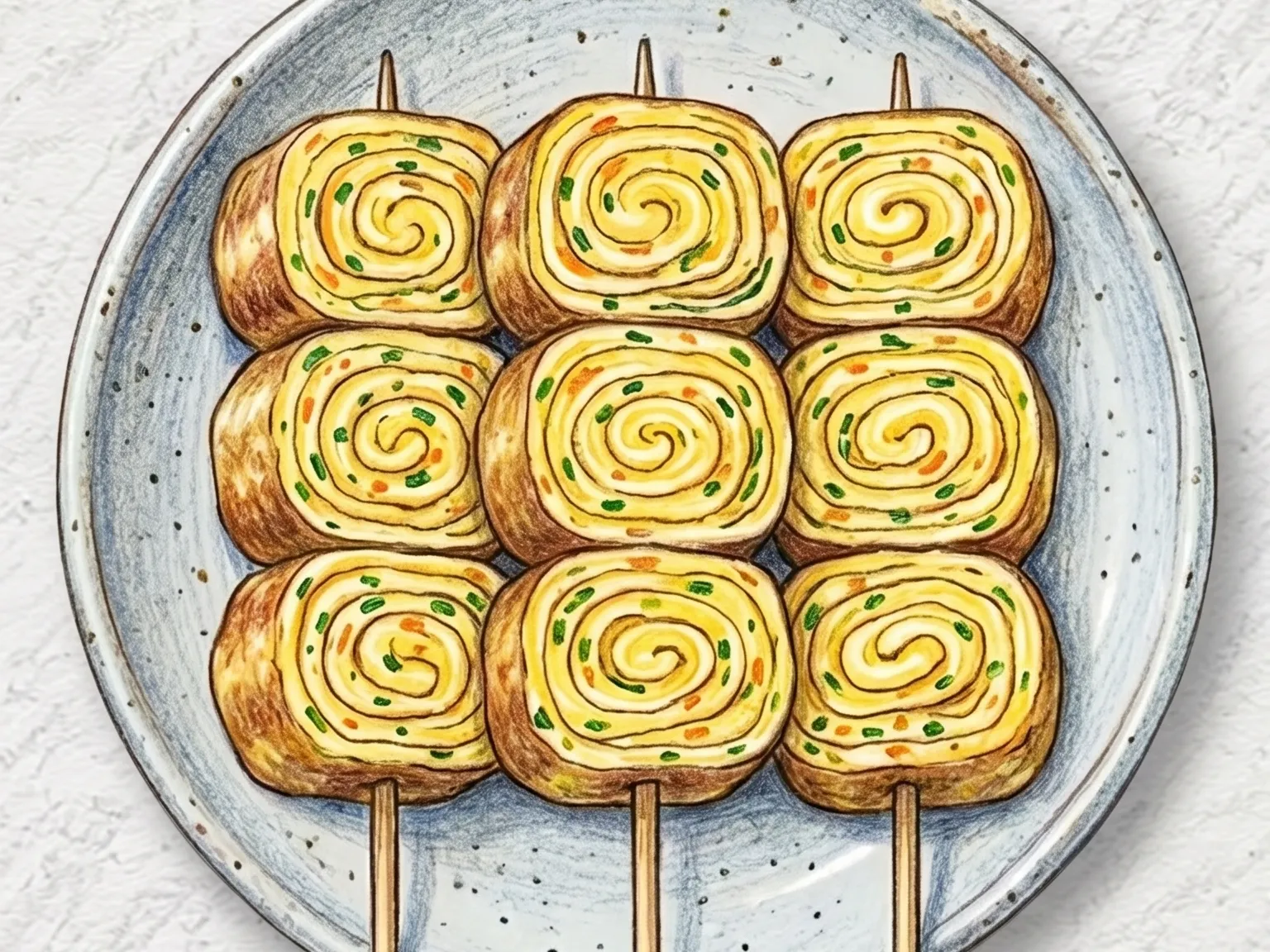
Gyeran-mari - Korean rolled omelette - is a staple of Korean lunchboxes and dinner tables, a dish every Korean home cook masters early. Finely diced carrot, onion, and scallion are mixed into beaten eggs and poured in a thin stream across a lightly oiled rectangular pan. When the egg layer is half-set, it is rolled from one side to the other, then more egg mixture is poured beside the roll and the process repeats three to four times, building concentric yellow layers visible when sliced. Air trapped between the thin sheets gives the omelette its characteristic pillowy softness. Temperature control is critical - too hot and the egg browns; too cool and the layers will not bond. After cooking, wrapping the roll in a bamboo mat or kitchen towel for two minutes sets its shape into a clean cylinder. Found in school cafeterias, picnic bento boxes, and family dinners across Korea.

Korean Seafood Fried Rice
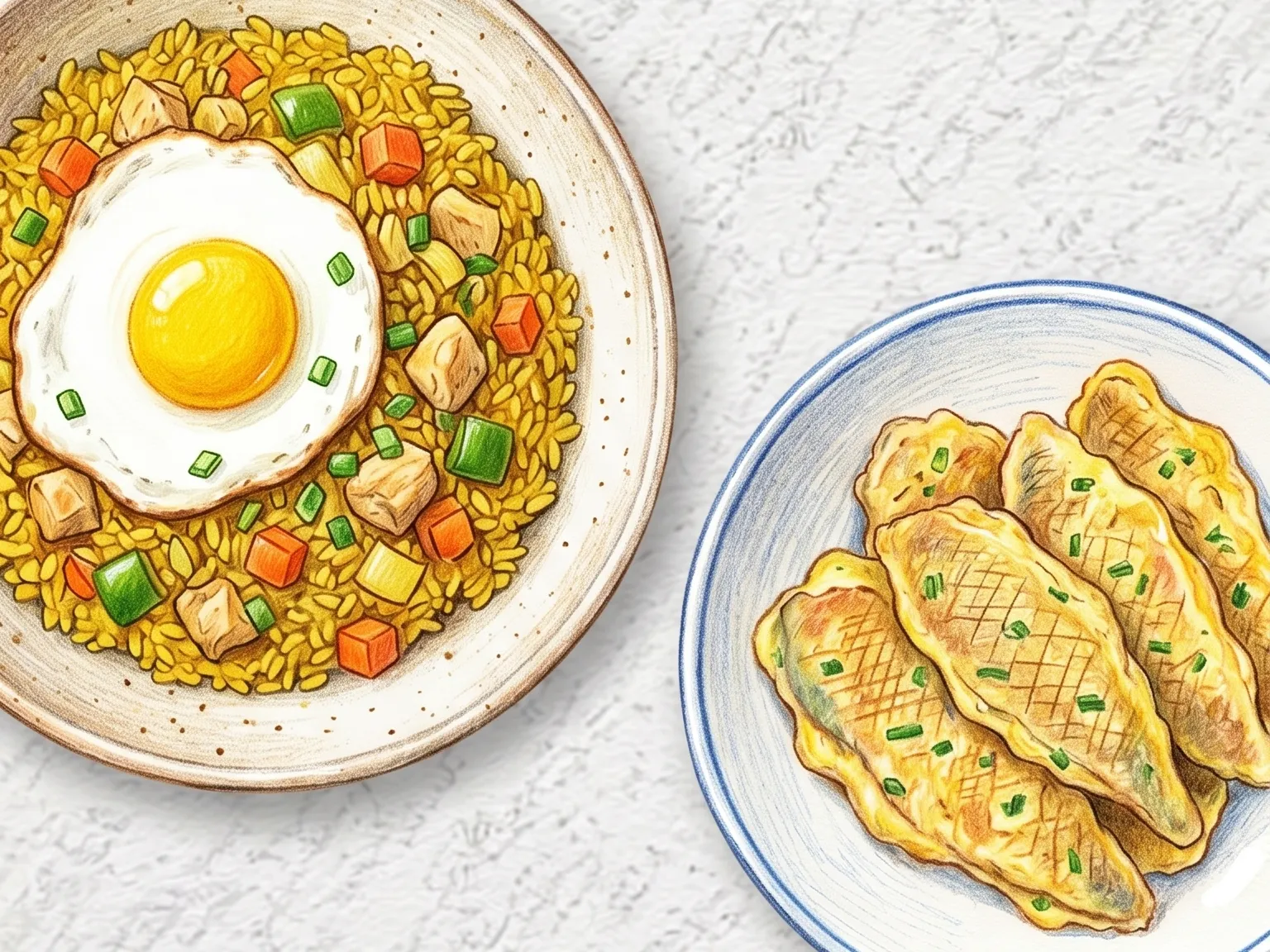
Mixed seafood including shrimp, squid, and mussel meat is stir-fried together on high heat until a smoky wok char develops. Day-old cold rice works best because its lower moisture content lets the grains separate cleanly in the pan, and seasoning with soy sauce and oyster sauce layers additional depth on top of the seafood's own brininess. Cracking the eggs into the pan first and immediately tossing the rice on top coats each grain in a thin shell of egg, yielding a lightly crisp exterior. Sesame oil is drizzled only after the heat is off so its fragrance stays intact.

Korean Glass Noodle Stir-fry
Japchae is a signature Korean dish of glass noodles stir-fried with beef, spinach, carrots, onions, and shiitake mushrooms in soy sauce and sesame oil. The noodles are made from sweet potato starch and turn translucent as they cook, absorbing the seasoning to become glossy and springy rather than starchy or heavy. The defining technique is cooking each component separately before combining them at the end. Spinach softens quickly and needs only a brief wilt; carrots are stir-fried to keep a slight bite; shiitake mushrooms are cooked until pleasantly chewy; and beef is marinated in soy sauce, sesame oil, sugar, garlic, and pepper before being stir-fried so it stays tender without any gamey edge. Tossing the noodles in soy sauce and sesame oil right after boiling prevents them from clumping together. When everything is brought together at the end, each ingredient keeps its individual texture while the seasoning unifies the dish. Japchae appears at virtually every Korean celebration including Chuseok, Lunar New Year, birthdays, and wedding feasts, and a large batch keeps its quality well into the following day.

Korean Gochujang Bibim Udon Cup (Spicy Mixed Udon Cup)
Gochujang bibim udon cup is a cold-tossed udon noodle dish served in a cup, dressed with a sauce built from gochujang, soy sauce, oligosaccharide syrup, vinegar, and sesame oil. The fermented heat of gochujang meets the acidity of vinegar to create a bright, tangy-spicy flavor profile that avoids sharpness, and the viscous syrup gives the sauce enough body to cling evenly to the thick udon strands. Raw julienned cabbage and carrot are folded in without cooking, adding a snappy crunch that contrasts the soft noodles. Cooling the noodles completely before tossing is a key step that prevents the sauce from clumping and ensures even distribution throughout the cup. The handheld cup format suits street food settings, and additional toppings such as a soft-boiled egg or seasoned seaweed can elevate it into a fuller meal.

Korean Braised Oxtail (Soy Collagen Radish Braise)
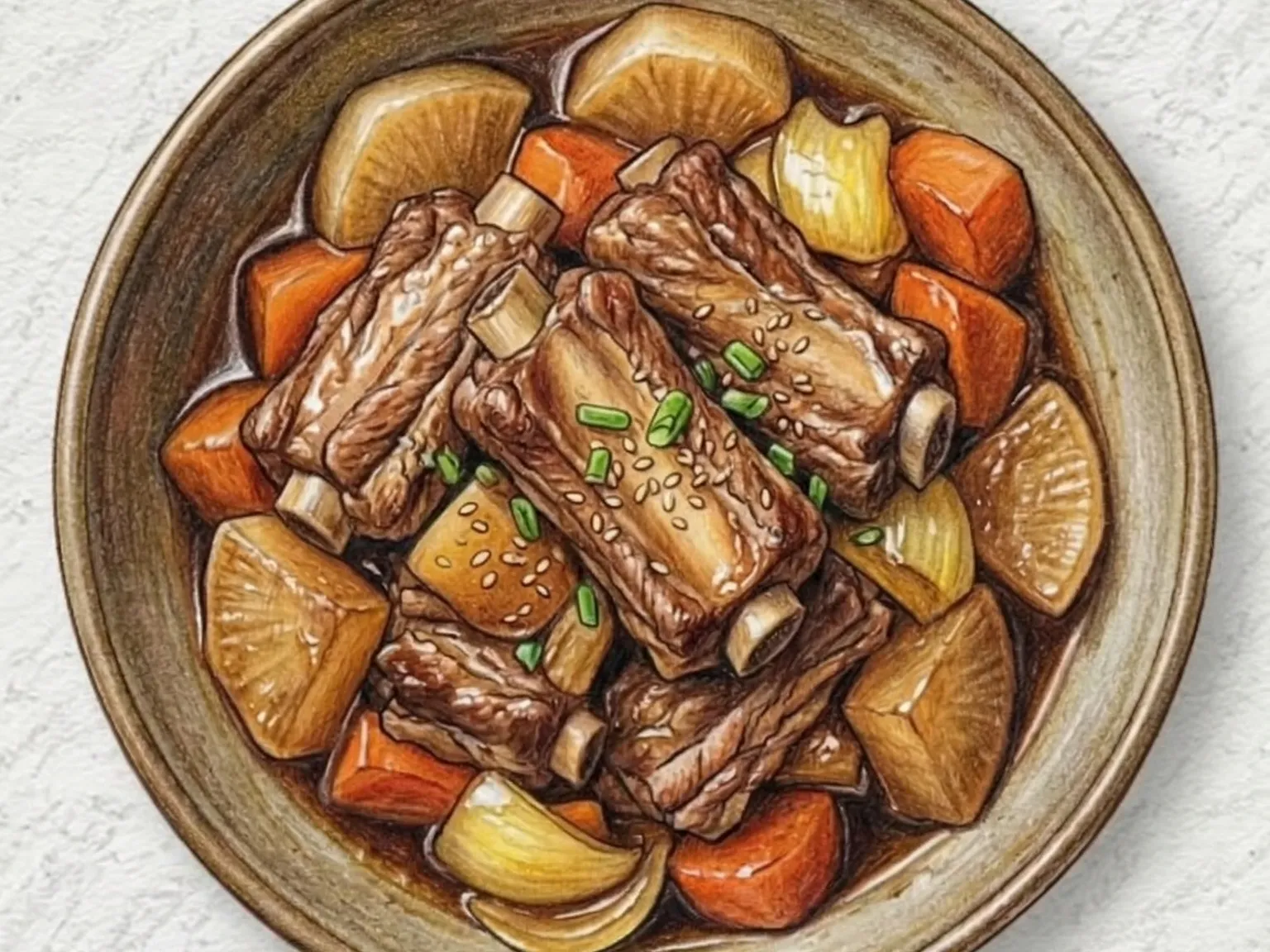
Kkori-jjim is a Korean braised oxtail dish that begins with an extended soak in cold water to purge blood, followed by a preliminary boil to clean the joints before the main braise. The oxtail pieces go into a pot with soy sauce, sugar, minced garlic, ginger, and rice wine and cook low and slow for two hours or longer. The collagen concentrated in the tail joints breaks down gradually over that time, turning the braising liquid thick, glossy, and deeply gelatinous while the meat loosens away from bone without resistance. Korean radish and carrot cook alongside the meat, contributing natural sweetness and becoming saturated with the savory-sweet sauce. Jujubes and ginkgo nuts lend an herbal nuance and a subtle sweetness that distinguishes this dish from simpler braises. When chilled, the sauce sets into a firm jelly that liquefies again on reheating. The dish appears regularly on Korean holiday tables and is considered restorative food, valued for its concentrated beef flavor and the characteristic springy pull of slow-cooked collagen.

Korean Seasoned Veggie Mixed Noodles
Namul bibim somyeon is a Korean mixed noodle dish where thin wheat noodles are tossed with blanched spinach, soybean sprouts, and julienned carrot in a soy-based dressing. Each vegetable is blanched separately and squeezed firmly dry before mixing; residual moisture dilutes the sauce and causes the noodles to clump as they sit. Dry-sauteing the carrot for one minute without any oil pulls out a sweetness that raw carrot cannot deliver. The dressing combines soy sauce, rice vinegar, plum syrup, minced garlic, and sesame oil into a sauce that is salty, tart, and faintly sweet all at once, strong enough to season the mild vegetables and noodles evenly. Coating the noodles with the dressing first and folding in the vegetables afterward ensures every strand is seasoned rather than leaving the sauce concentrated on the vegetable surfaces. A generous scatter of toasted sesame seeds on top brings a nutty warmth that ties together the clean vegetable flavors and the aromatic sesame oil in the dressing.

Lentil Kale Salad
Lentil kale salad pairs the tender yet distinctly grainy bite of cooked green lentils with sturdy kale leaves, resulting in a bowl that satisfies like a full meal rather than a side salad. The vinaigrette of Dijon mustard, lemon juice, and olive oil does two things at once -- it brightens the kale's natural bitterness into something lively and it acts as the marinade that softens the leaves during the massage step. Massaging the kale by hand for about a minute before dressing it is the step that transforms the texture from tough and fibrous into something genuinely pleasant to chew, and it also opens up the leaf surface so the dressing clings rather than sliding off. Lentils benefit from careful timing: twenty to twenty-five minutes of simmering leaves them cooked through with a slight resistance at the center, and overcooking past that point turns them mushy and strips the salad of its textural contrast. Julienned carrot adds natural sweetness and a pop of color that keeps the bowl from looking uniformly green. Roughly chopped walnuts contribute a rich crunch and healthy fat that rounds out the nutritional profile. A shaving of Parmesan or a handful of roasted chickpeas makes a straightforward addition when more substance or complexity is wanted.

Hearty Minestrone Soup
Hearty minestrone soup is an Italian vegetable soup that begins by patiently sauteing onion, carrot, celery, and zucchini in olive oil to draw out their natural sweetness before adding crushed tomatoes and vegetable broth. Taking time to cook the vegetables over medium heat allows caramelization to occur, building a clean yet deep flavor base for the broth. Kidney beans contribute plant-based protein and a starchy thickness, while small pasta cooked directly in the soup releases additional starch that enriches the overall texture. Adding a Parmesan rind during the simmer infuses the broth with a quiet umami depth. A final garnish of grated Parmesan and a drizzle of olive oil just before serving rounds out the bowl with richness and savory warmth.

Hakka Noodles (Indo-Chinese Stir-Fried Noodles)
Hakka noodles represent the Indo-Chinese culinary tradition, a fusion cuisine that originated in the Chinese immigrant community of Kolkata and has since spread to cities across India. Egg noodles are boiled just short of fully cooked, rinsed under cold water to stop cooking, and tossed with a small amount of oil so the strands stay separate and pick up seasoning evenly during stir-frying. The vegetables, cabbage, carrot, and bell pepper, are julienned into matchstick-width strips that match the diameter of the noodles, ensuring a balanced forkful in every bite, and are cooked for no more than two minutes over intense heat to preserve their snap. The seasoning mix is deliberately spare: soy sauce for salinity, a splash of rice vinegar for a faint sour note, and black pepper for warmth. What matters more than the ingredient list is the speed and heat of the cooking. The intense wok temperature creates a light char and smoky depth on the noodles and vegetables, a quality called wok hei that cannot be achieved at lower temperatures regardless of the seasoning. Spring onions are added only after the heat is off to keep their fresh aroma and bite intact. Slightly undercooking the noodles before the wok is key; overcooked noodles turn mushy under the heat of stir-frying.

Korean Soybean Sprout Cold Salad
Kongnamul-naengchae is a chilled Korean salad of boiled soybean sprouts and vegetables tossed in mustard dressing - conceptually distinct from regular kongnamul-muchim because it is designed to be served cold. The mustard sauce defines the dish: mustard powder (or tube mustard) mixed with vinegar, sugar, and salt creates a sharp, nose-tingling heat alongside a sweet-sour brightness. Prepared mustard needs five to ten minutes of resting after hydration for the allyl isothiocyanate compound to fully develop its pungency. Julienned cucumber and carrot release moisture, so they should be briefly salted or patted dry to prevent diluting the sauce. Chilling for at least ten minutes before serving maximizes the refreshing effect, and cold temperatures actually sharpen the mustard's bite. This banchan excels as a palate cleanser alongside fatty main dishes like samgyeopsal or bulgogi.

Korean Omelette Rice (Ketchup Fried Rice in Egg Wrap)
Omurice wraps ketchup-fried rice in a thin, softly set egg sheet, producing a one-plate meal that balances sweet-tangy tomato notes with rich buttery egg. Diced onion, carrot, and ham are sauteed in butter until fragrant, then tossed with cooked rice and ketchup to build a lightly caramelized fried rice base. A separate egg mixture enriched with a splash of milk is spread thin in a hot pan and folded around the rice while still slightly runny, so cutting into it reveals a creamy, flowing center. Green peas mixed into the rice add pops of sweetness and color. The contrast between the glossy egg exterior and the savory-sweet filling has made omurice one of the most comforting one-plate meals in both Japanese-origin home cooking and Korean everyday cuisine. Tilting the pan and nudging the egg sheet against the curved edge is the standard technique for shaping the signature oval.

Korean Garlic Scape Chicken Breast Stir-fry
Maneuljjong dakgaseumsal bokkeum is a stir-fry where soy-marinated chicken breast is cooked through with ginger and garlic first, then joined by garlic scapes cut to five-centimeter lengths and julienned carrot for a quick blast over high heat before the whole pan is finished in an oyster sauce and soy sauce glaze. Chicken breast is naturally lean and can easily read as flat on its own, but the oyster sauce compensates by delivering concentrated umami and coating the surface of each piece with a lacquered sheen. The garlic scapes provide a dual texture that is both crisp and slightly chewy, setting up a direct contrast with the smooth, tight grain of the chicken breast. Julienned carrot adds a gentle sweetness that softens the saltiness of the soy and oyster sauce base. Ginger pulls double duty, eliminating any poultry odor while contributing the aromatic lift characteristic of well-executed stir-fry. The high-protein, low-fat profile makes this a practical everyday banchan for anyone managing calories, and it also works well spooned over rice in a deopbap format. Keeping the garlic scapes in the pan for as short a time as possible is essential to preserving their signature crunch.

Korean Kkaennip Chamchi Jeon (Perilla Tuna Pancakes)
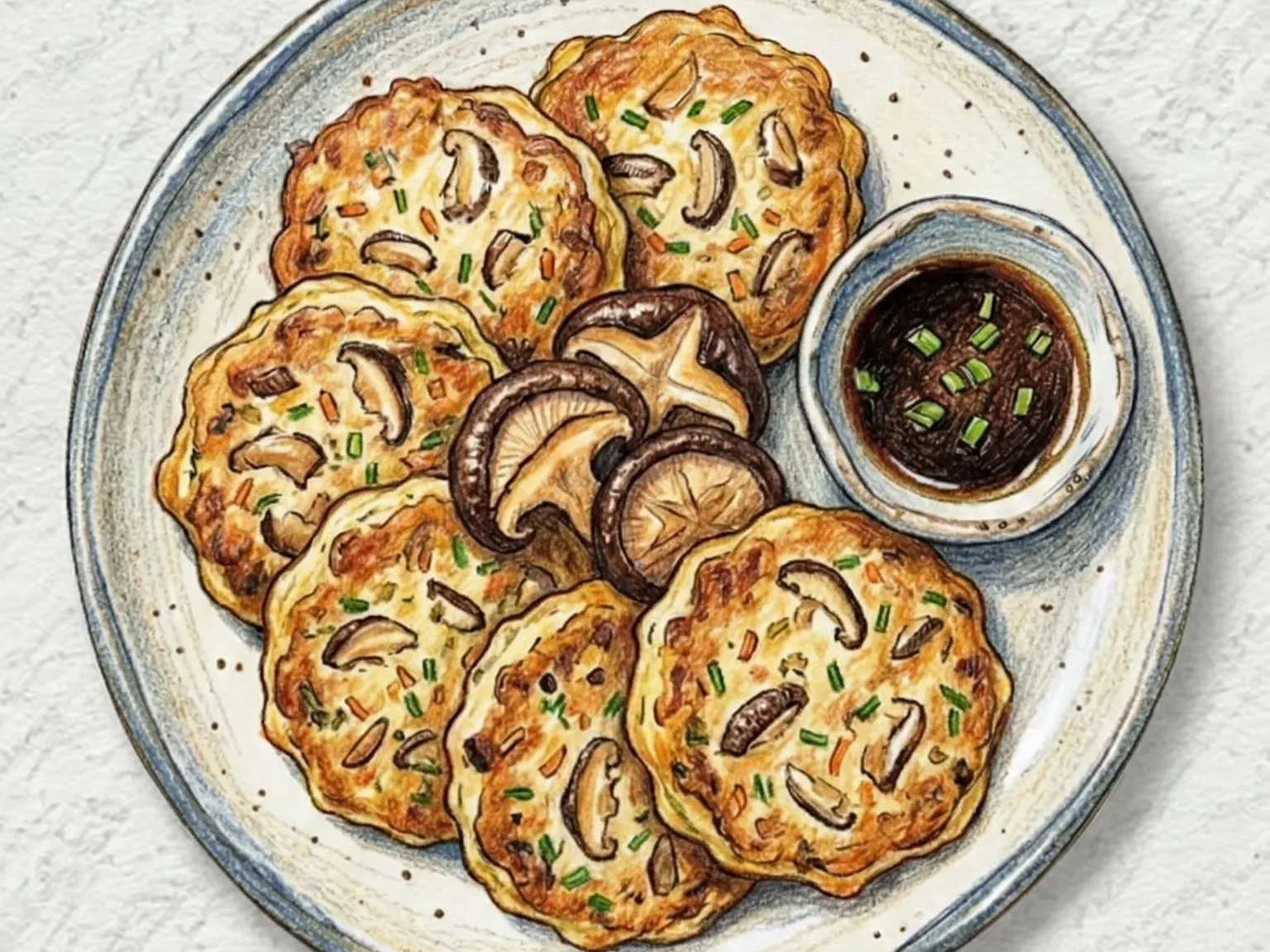
Kkaennip tuna jeon is made by mixing drained canned tuna with finely chopped onion, carrot, and perilla leaves, coating the mixture in pancake batter, then spooning it onto individual perilla leaves and pan-frying over medium-low heat. Each leaf wraps around the underside of the patty, acting as a natural mold that keeps the shape intact when flipping. Slow frying over moderate heat creates a crisp, golden exterior while locking enough moisture inside to keep the filling tender. The herbal, faintly minty character of the perilla leaf layers over the tuna's saltiness and cuts through any heaviness, leaving a clean finish. The combination works as a drinking snack or a packed lunch side equally well, and the bite-sized format makes it easy to serve at the table.

Korean Stuffed Steamed Cucumber
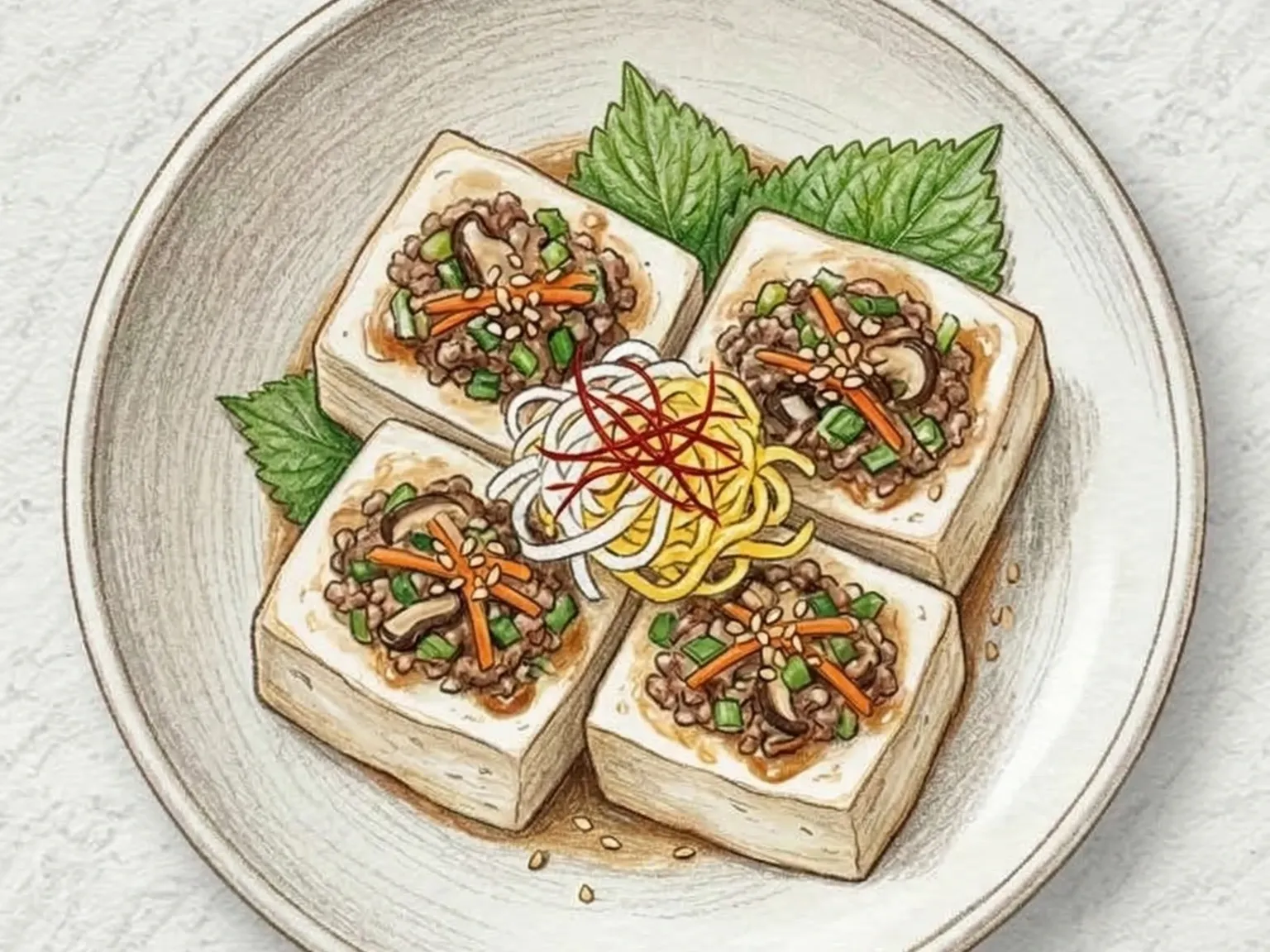
Oiseon is a traditional Korean court-style dish in which cucumber sections are hollowed out, stuffed with a filling of ground chicken, crumbled tofu, and finely julienned carrot, then steamed until the filling is just cooked through. The filling is seasoned only with soy sauce, garlic, and sesame oil, keeping it savory and lightly fragrant without competing with the clean flavor of the cucumber itself. Each piece delivers two distinct textures at once: the crisp, cool resistance of the cucumber shell against the soft, moist filling packed inside. Steaming rather than frying or sauteing preserves the cucumber's fresh green aroma and keeps the dish entirely oil-free, letting the natural character of each ingredient come forward without interference. The dish can be served warm directly from the steamer or chilled, at which point the flavors settle into a precise, refreshing clarity that works well in warmer seasons. A small dipping sauce of mustard sauce or light vinegar soy sauce sharpens the profile further. The careful preparation and restrained seasoning make oiseon appropriate for formal Korean table settings and guest entertaining, representing the kind of cooking where technique and balance speak louder than bold flavors.

Pancit Canton (Filipino Stir-Fried Egg Noodles with Chicken and Vegetables)
Pancit canton is a Filipino stir-fried egg noodle dish cooked with chicken, carrot, and cabbage in a soy sauce and oyster sauce base. The salty depth of soy sauce and the savory richness of oyster sauce permeate the noodles evenly, and a squeeze of fresh lemon at the end cuts through the oil to leave a clean, bright finish. The noodles are parboiled to roughly seventy percent doneness so they finish cooking in the wok while absorbing the sauce, retaining their springy texture rather than turning soft. Chicken thigh is stir-fried first to render its fat and release its juices into the pan, and that rendered fat then carries the carrot and cabbage through a quick, high-heat toss that preserves their crunch. Small additions of broth or water allow the noodles to absorb the sauce gradually, but too much liquid tips the dish toward soupy rather than stir-fried, so the volume must be controlled carefully. Lemon juice is added only after removing the pan from heat, because its volatile citrus aroma dissipates almost instantly on contact with a hot surface. In the Philippines, long noodles symbolize longevity and a full life, making pancit canton a fixture at birthdays and holiday celebrations.

Moroccan Carrot Chickpea Salad
Carrots are roasted with cumin and paprika until the edges caramelize while the centers stay tender and sweet. Cooked chickpeas add enough protein to make the salad substantial on its own. A lean dressing of lemon juice and olive oil tempers the warm spice notes with bright acidity, while raisins tucked throughout provide pockets of fruity sweetness. Chopped parsley lifts the bowl with fresh herbal contrast. The sweet-savory balance characteristic of Moroccan cooking makes this versatile alongside bread, rice, or grilled meat.

Osso Buco (Milanese Braised Veal Shank with Gremolata)
Osso buco dredges thick-cut veal shanks in flour and sears them in olive oil on all sides, then braises them with sauteed onion, carrot, and celery in a mixture of white wine, whole tomatoes, and chicken stock at 160 degrees Celsius for one and a half to two hours. The long, slow cooking converts the tough connective tissue around the bone into gelatin, making the meat fork-tender, while the marrow inside the bone melts into the sauce and enriches it with a deep, silky body. A gremolata of finely chopped parsley, lemon zest, and garlic is scattered over the finished dish - the lemon's bright acidity and the raw garlic's sharpness cut through the heavy braising liquid and lift the entire plate. Careful handling of the shanks throughout cooking is important to keep the prized marrow intact inside the bone.