Japanese-Style Chili Shrimp (Ebi Chili)
Ebi chili was created in the 1970s when Chen Kenmin, a Sichuan-born chef working in Tokyo, adapted the fiery Sichuan prawn stir-fry with doubanjiang to suit Japanese palates. The original Sichuan preparation leads with doubanjiang's raw, aggressive heat, but Chen softened that edge by adding ketchup, beaten egg, and chicken stock, transforming a sharp regional dish into the glossy, gently spiced sauce that became a Japanese staple. Shrimp are lightly coated in cornstarch and flash-passed through hot oil to form a thin shell on the outside. That shell absorbs the sauce during the final toss while protecting the shrimp's firm, springy interior. Minced garlic, ginger, and scallion are fried in oil first to build a deep aromatic base, then doubanjiang is toasted in the same oil until its raw pungency mellows and the oil takes on a deep red color. Ketchup and sugar go in next, followed by chicken stock, and the sauce is reduced until it coats a spoon. The beaten egg stirred in last gives the finished sauce a slightly creamy, silky body. Ebi chili is one of the most recognized items on Japanese teishoku restaurant menus, typically served as a set meal with steamed rice, miso soup, and a small side salad. It is equally common in home kitchens and bento boxes, occupying the kind of everyday familiarity that few other Chinese-inspired dishes have achieved in Japan.

Korean Crumbled Tofu Stir-fry
Dubu seoboro - crumbled tofu stir-fry - is a Korean banchan that transforms a block of tofu into something resembling a dry, granular scramble. The tofu is crumbled by hand into rough, irregular pieces rather than diced, creating a range of textures from large curds to fine crumbs that hold seasoning differently. Squeezed thoroughly in a cloth to remove as much moisture as possible, it then goes into a hot pan with diced carrot, onion, and zucchini. The key technique is cooking on high heat without stirring too often, allowing the tofu crumbles to develop lightly golden edges before soy sauce and sesame oil go in at the end. The result is a fluffy, granulated side dish that soaks into rice like a savory topping - satisfying without being rich. Popular in Korean daycare and school lunches because it delivers plant protein in a form that children eat willingly, and it travels cleanly in lunchboxes without leaking. The ingredient cost is low and the cooking time short, which makes it one of the first recipes to reach for when the refrigerator is running low on banchan.

Korean Eggplant Rice Bowl
Gaji deopbap is a Korean eggplant rice bowl where sliced eggplant is pan-fried quickly in generous oil and then braised briefly with ground pork in a soy-based sauce. Soaking the eggplant in salted water for five minutes before cooking draws out bitterness and moisture. High heat is essential - eggplant absorbs oil rapidly, and fast searing creates a lightly crisp exterior while the inside collapses into a silky, almost creamy texture. The soy, sugar, and garlic sauce reduces in two minutes into a dark glaze that coats each piece, while the ground pork adds a savory depth that makes the dish feel more substantial. The sauce pools around the base of the rice and soaks into the grains, ensuring consistent flavor throughout the bowl. Green onion and sesame oil finish the dish. Summer eggplant, when the flesh is at its softest and most yielding, produces the best results. Kept cold, the eggplant holds its texture well enough to pack as a side dish for lunch.

Korean Mushroom and Saury Soy Stir-fry
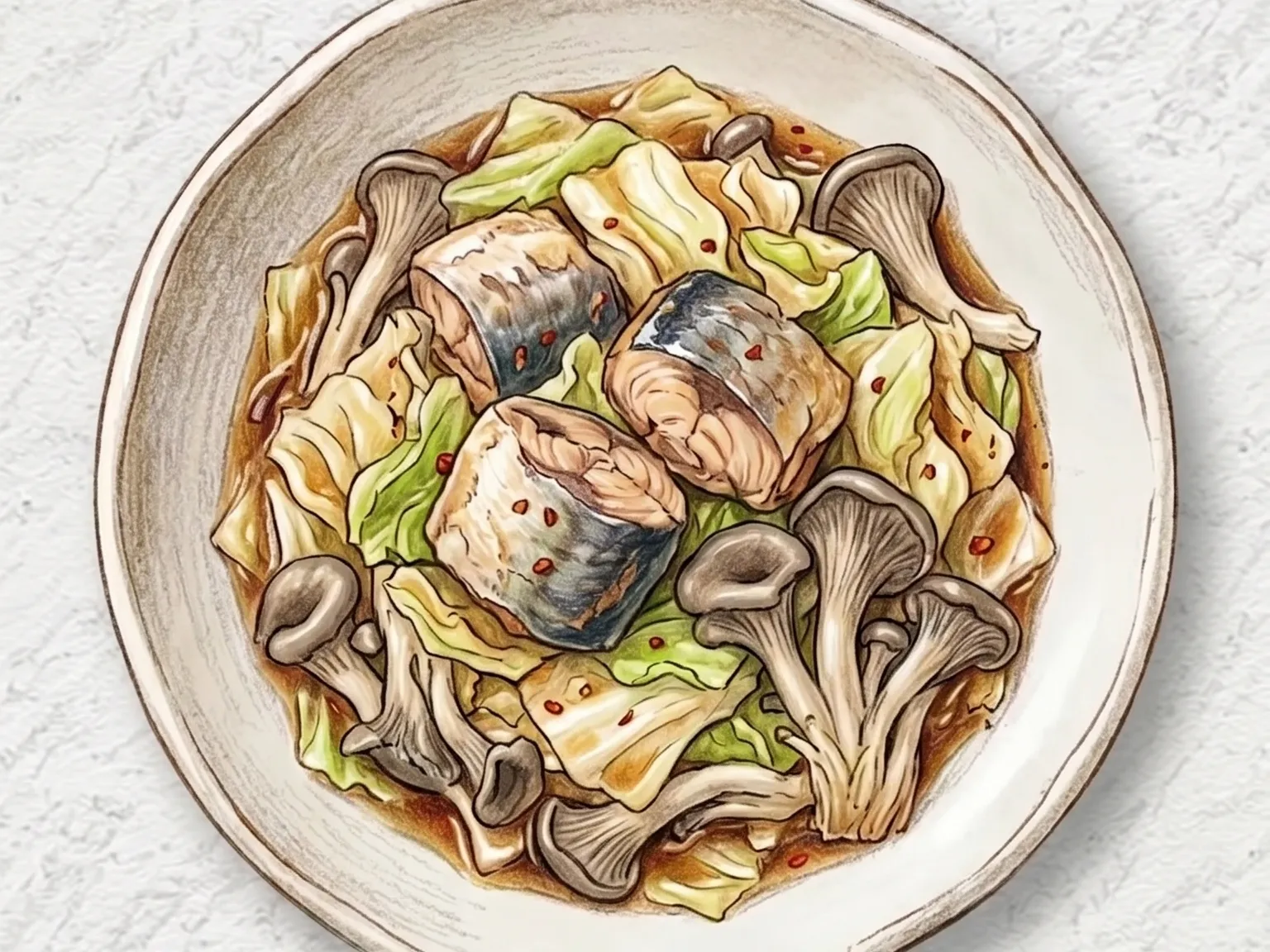
Beoseot kkongchi ganjang bokkeum is a stir-fry built on drained canned saury, oyster mushrooms, and cabbage seasoned with soy sauce, chili flakes, and sugar. Because the canned fish is already fully cooked and its bones have softened through the canning process, the saury only needs to be added in the final stage and folded in gently; stirring too aggressively breaks the flesh into flakes that lose all textural interest. Moisture released from the oyster mushrooms as they cook combines with the soy sauce base to form a light, natural sauce without any added water. The cabbage contributes a steady sweetness that tempers the concentrated fish umami and prevents the seasoning from reading as too heavy. A small squeeze of lemon juice at the very end of cooking lifts the entire dish, neutralizing any residual fishiness and brightening the overall profile. The whole recipe is built around a single pantry can of canned saury, requires less than fifteen minutes from start to finish, and delivers substantial protein at minimal cost.

Korean Crispy Kimchi Fried Dumplings
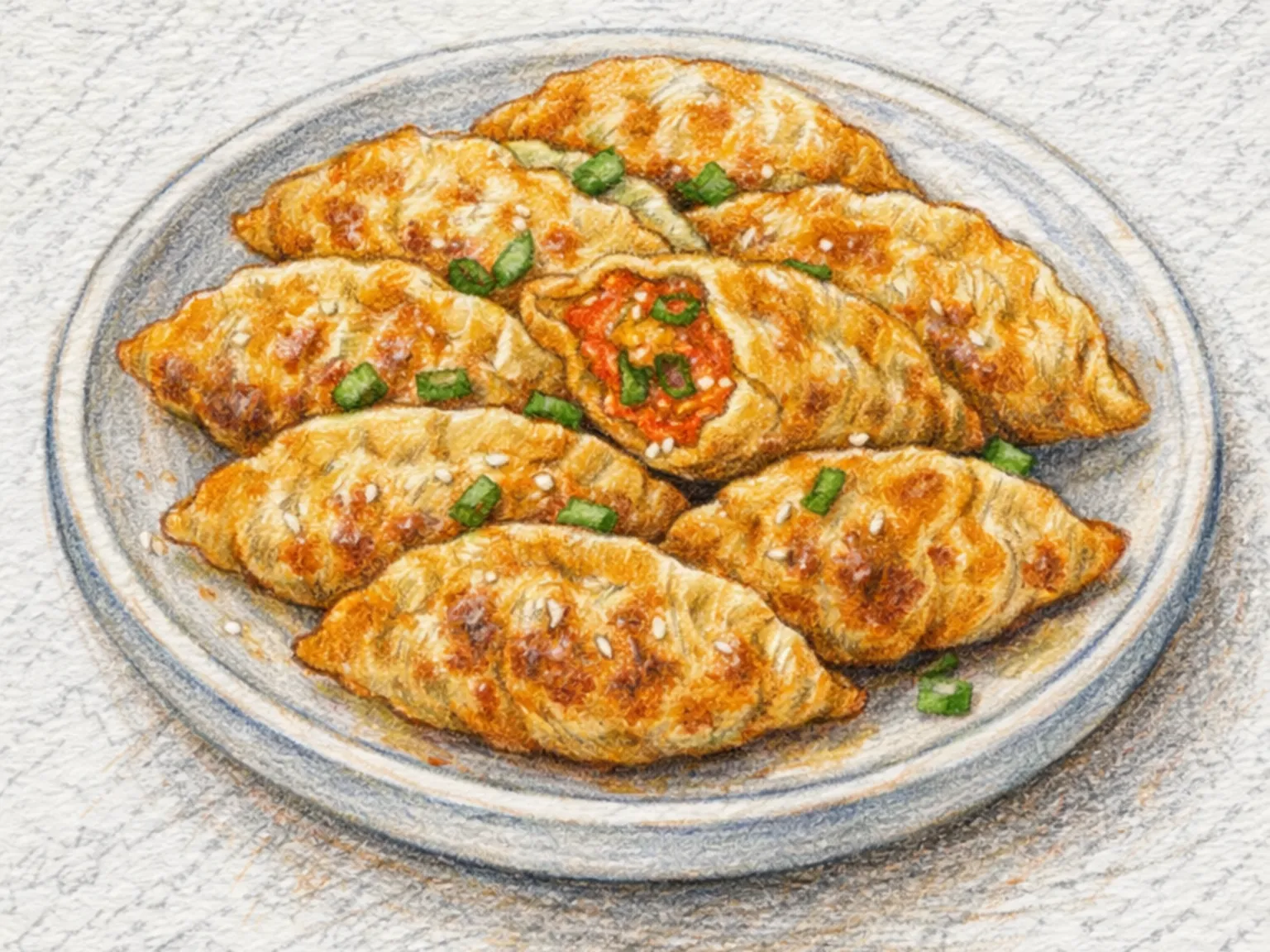
Kimchi gun mandu are pan-fried dumplings filled with finely chopped kimchi, squeezed tofu, ground pork, and green onion seasoned with soy sauce and garlic, shaped into half-moons. The bottoms are first crisped in oil, then water is added and the pan is covered for four minutes to steam the tops, achieving a contrast of crunchy base and moist upper wrapper. The kimchi's acidity and heat permeate the pork fat to create a more assertive umami than plain dumplings, and the tofu smooths out the filling's texture. A splash of vinegar in the soy dipping sauce cuts any greasiness.

Korean Poached Octopus Slices
Muneo-sukhoe is poached octopus prepared by simmering a whole raw octopus in water with radish, green onion, and ginger for about 20 minutes, then slicing it thin and serving it with vinegared gochujang dipping sauce. Before cooking, the octopus is vigorously rubbed with salt to strip away the slippery surface mucus, which is the single most important step for removing any unpleasant ocean odor. When lowering the octopus into the hot water, the tentacles go in first: submerging them before the body causes the legs to curl inward, giving the cooked octopus a cleaner shape. After the cooking time, the heat is turned off and the octopus rests undisturbed in the pot for five minutes, allowing the muscle fibers to relax and produce a chewy but not tough texture. Radish in the poaching liquid absorbs impurities; ginger suppresses fishiness, leaving the flesh tasting clean and mild on its own. Thick diagonal slices bring out the natural sweetness of the octopus, and the tangy-spicy dipping sauce amplifies the savoriness rather than masking it. The dish works equally well as a drinking snack or a summer seafood side.

Korean Grilled Eggplant (Soy Garlic Glazed Charred Eggplant)
Gaji-gui is Korean grilled eggplant, halved lengthwise, scored, and cooked slowly over medium heat until the flesh turns soft and creamy while the skin side holds a slight firmness. Salting the cut surface and resting it for ten minutes before cooking pulls out bitter moisture through osmosis and also reduces how aggressively the eggplant absorbs oil during grilling. The scoring pattern is functional as well as visual, creating channels that allow heat to penetrate into the thick interior so the eggplant cooks through evenly rather than remaining hard at the center while the outside chars. Covering the pan after laying the eggplant cut-side down traps steam and gently cooks the flesh from within. A sauce of soy sauce, sesame oil, Korean chili flakes, minced garlic, and sliced green onion is spooned over the grilled surface while the eggplant is still hot, and the residual heat releases the fragrance of garlic and sesame oil while the liquid seeps into the scored channels and seasons the interior. Toasted sesame seeds scattered over the top add a final layer of nuttiness that gives the otherwise mild eggplant the complexity needed to hold its own as a proper banchan.

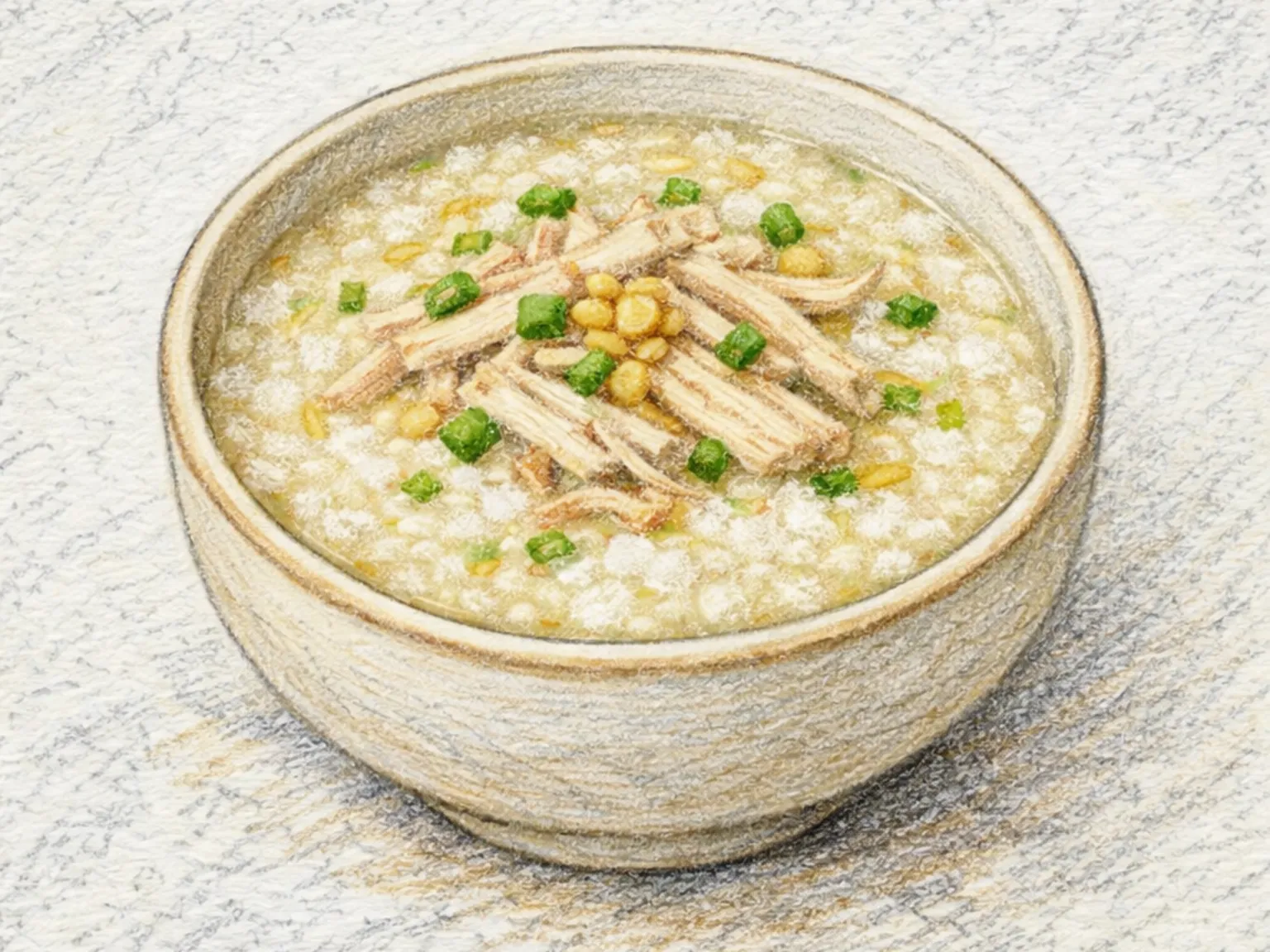
Bugeoguk (Korean Dried Pollack Hangover Soup)
Bugeoguk is one of the most recognized hangover soups in Korea: a clear, restorative broth of dried pollock strips stir-fried in sesame oil, then simmered with tofu and beaten egg. The sesame oil step is non-negotiable; skipping it leaves the broth flat and one-dimensional. Skimming foam during the initial boil produces a noticeably cleaner stock. Substituting hwangtae, the freeze-dried variety, yields a softer texture and a deeper savory note, favored at breakfast for its mild, restorative quality.

Korean Tuna Stew
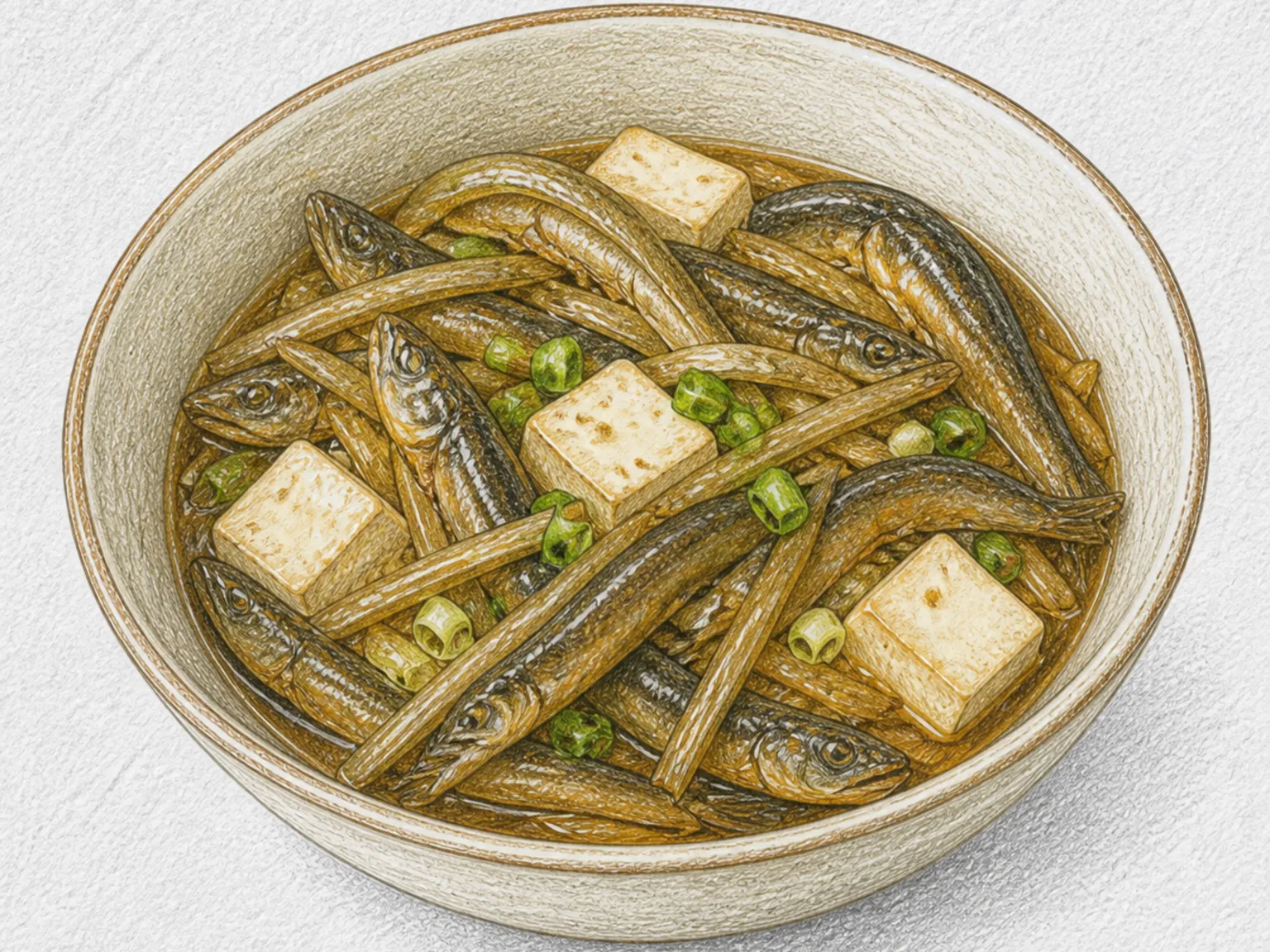
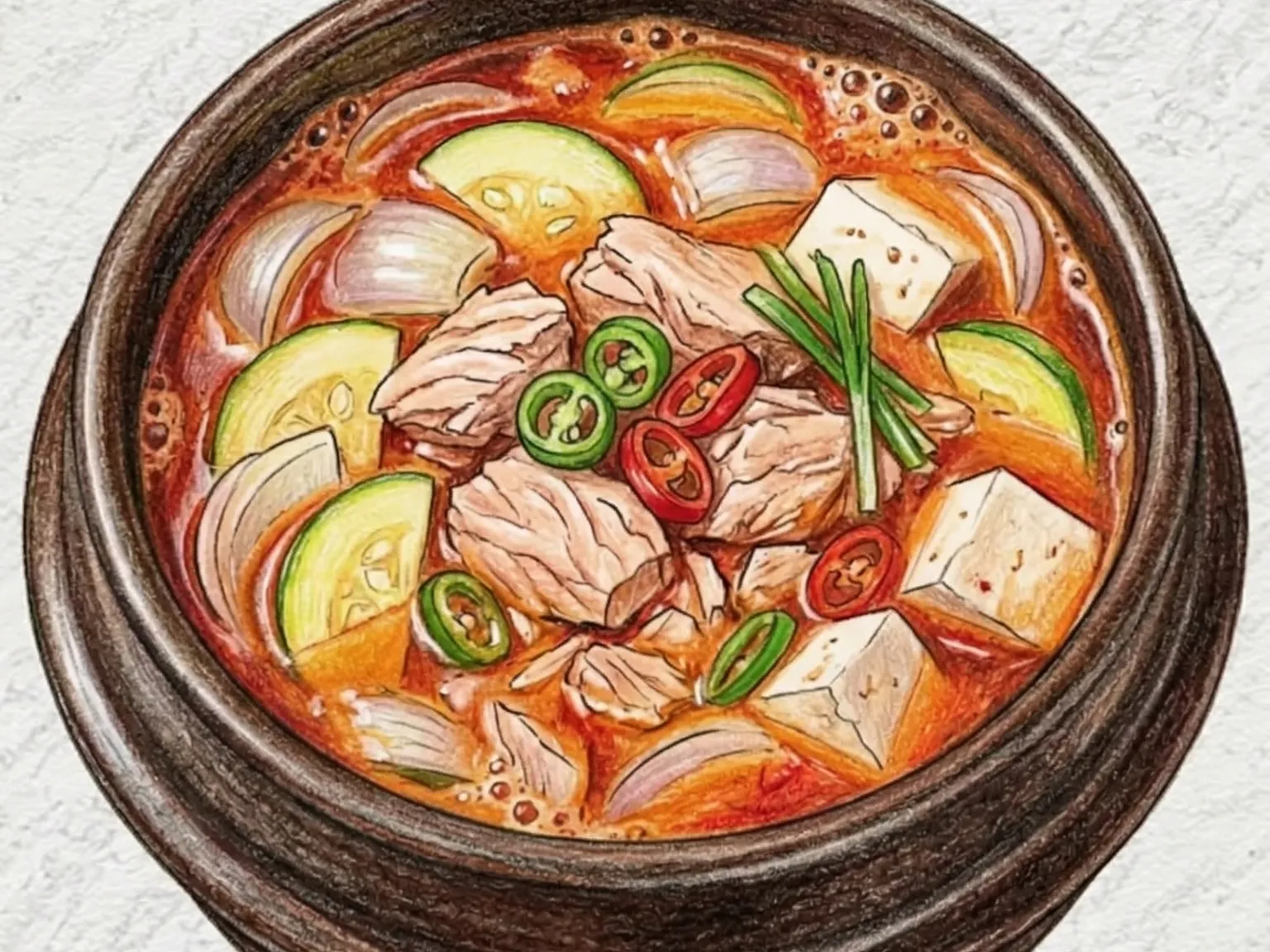
A weeknight stew built from a single can of tuna. The canned oil and flaked meat break into the water with gochugaru and soup soy sauce, building a sharp, savory broth without stock. Zucchini and onion add natural sweetness, tofu provides a soft counterweight, and a cheongyang chili pushes the heat up a notch. No extra broth needed - the fat from the can does the work.

Korean Steamed Sea Bream (Whole Fish with Soy Ginger Rice Wine)
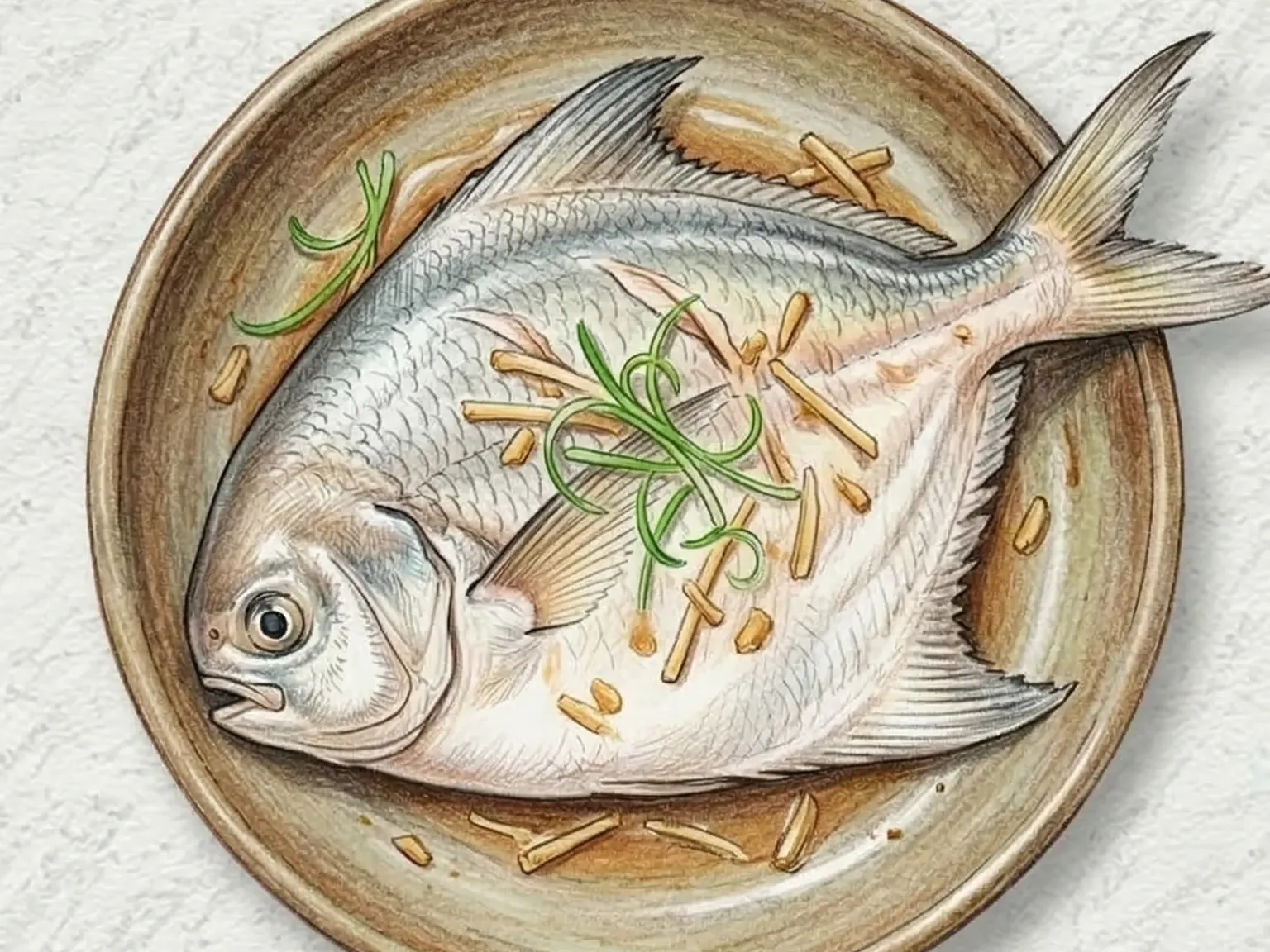
Domi-jjim is a whole sea bream steamed with soy sauce, rice wine, and ginger. Sea bream is a firm-fleshed white fish with a naturally mild, clean taste, and steaming preserves its moisture and delicate texture far better than dry-heat methods. Rice wine and ginger remove any remaining fishiness from the flesh, leaving only a refined umami that speaks to the quality of the fish itself. Soy sauce is used sparingly as an understated seasoning that enhances without overpowering. Because the fish is steamed rather than roasted or pan-fried, the flesh stays supple and springs back with each bite. Bringing a whole fish to the table makes a strong visual impression, which explains its frequent appearance at holiday meals and formal gatherings. The finished dish is typically garnished with julienned scallion and red chili before a final drizzle of hot sesame oil.

Korean Pork Noodle Soup (Jeju Milky Pork Bone Broth Noodles)
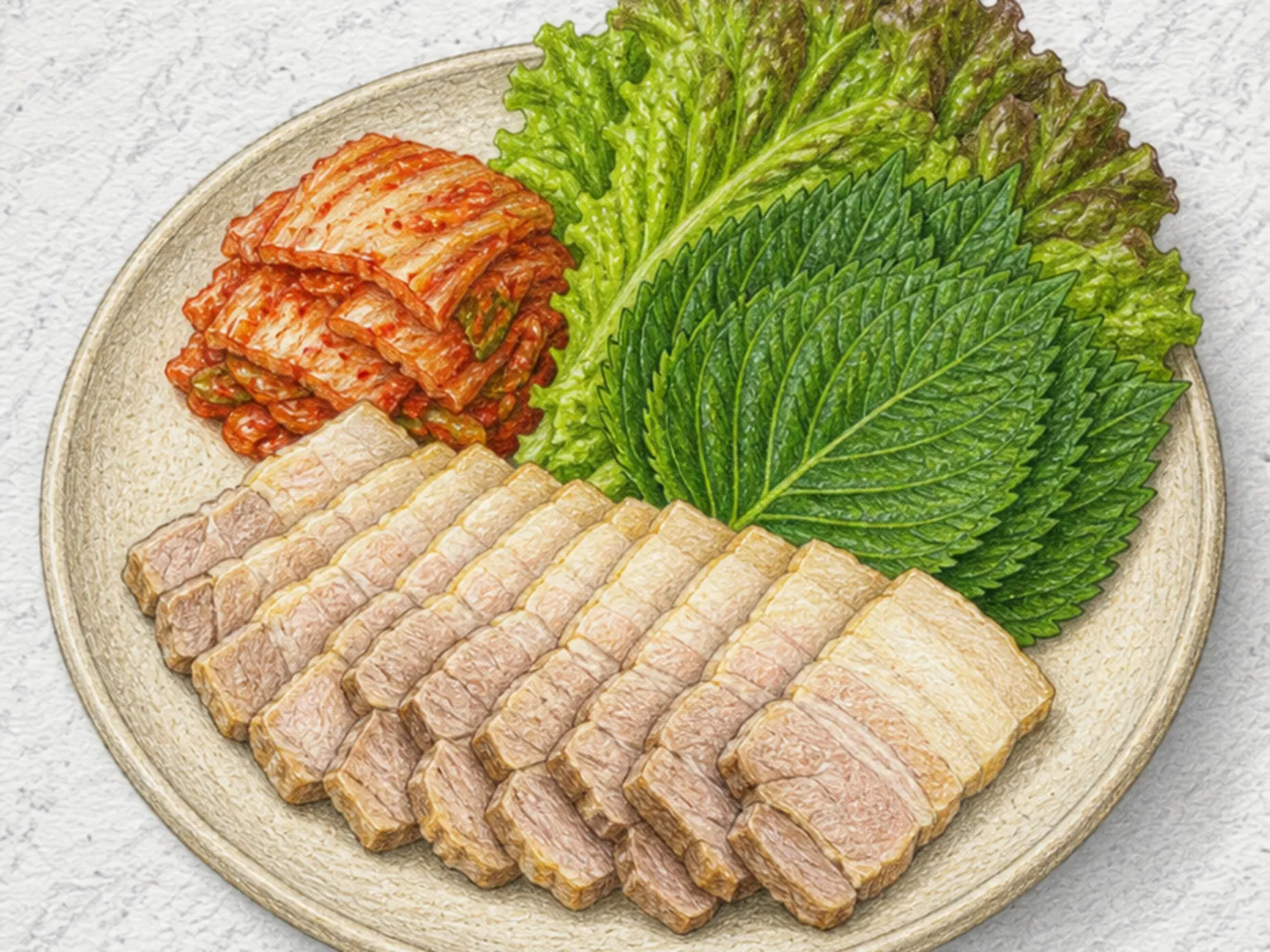
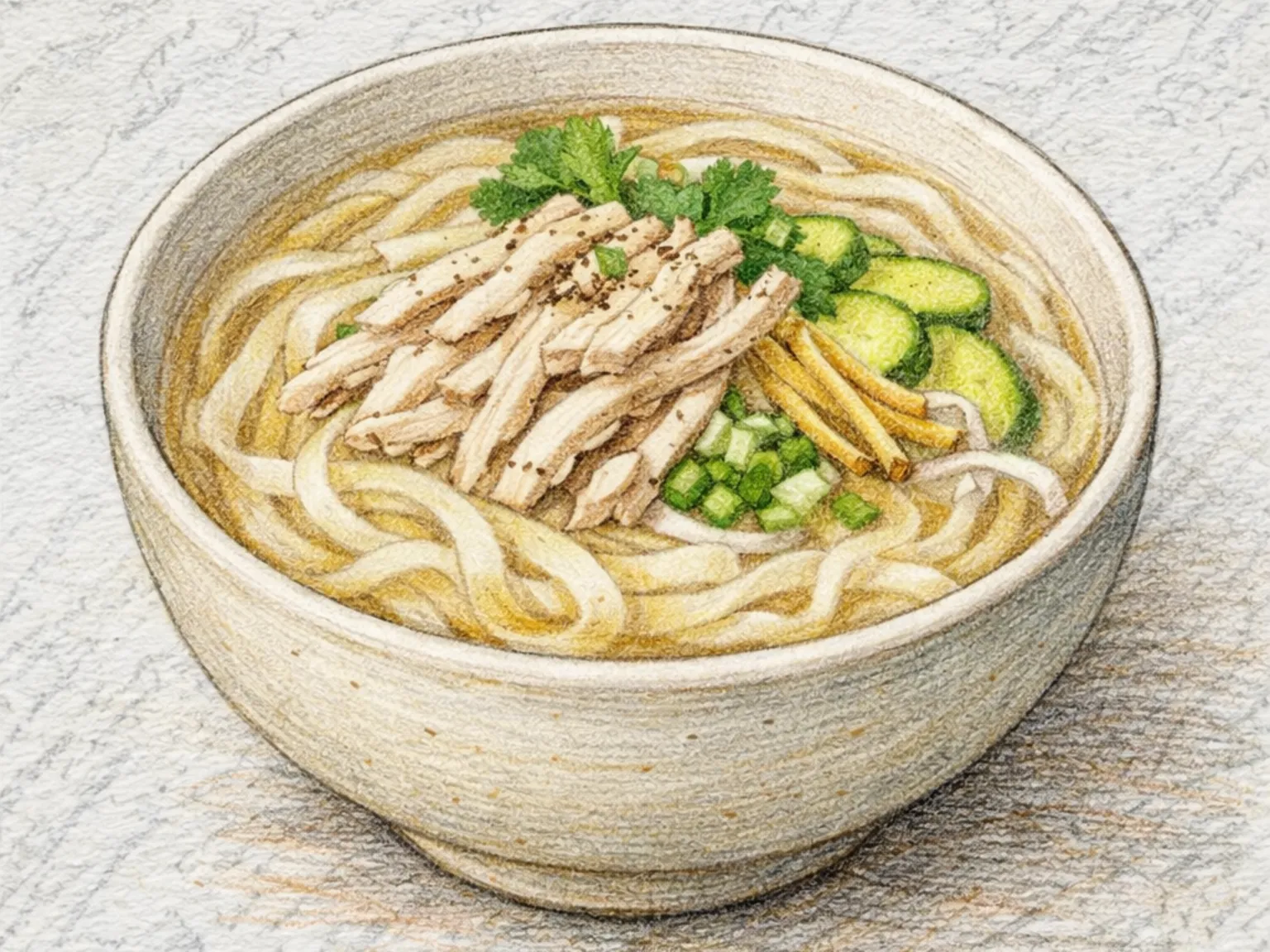
Gogi-guksu is a noodle soup from Jeju Island built on a long-simmered pork bone broth. Hours of boiling coax the collagen and marrow from the bones, turning the liquid milky-white and giving it a rich, full-bodied character that carries deep pork flavor in every spoonful. Green onion and garlic added to the pot during cooking suppress the gamey edge of the bones while rounding the flavor into something cleaner and more balanced. A single spoonful of doenjang stirred in before serving introduces fermented soybean depth that elevates the broth well beyond a simple bone stock. Thin somyeon noodles are cooked separately and rinsed under cold water after draining to wash off excess starch, which keeps them springy and distinct when submerged in the hot broth rather than turning soft and clumpy. In Jeju, sliced pork bossam is traditionally placed on top of the noodles before serving, and the combination of tender boiled pork and the opaque, warming broth makes this one of the most comforting bowls in the island's food tradition.

Guo Bao Rou (Sweet and Sour Crispy Pork)
Guo bao rou, literally pot-wrapped meat, is the flagship dish of Northeastern Chinese cuisine, developed in Harbin during the late Qing Dynasty to accommodate Russian diplomats who found traditional Chinese flavors unfamiliar. To suit their palate, the dish was built around a sharp vinegar-sugar balance, and that foundation has persisted to the present day. The technique centers on double-frying: pork tenderloin or loin is sliced thin, coated heavily in potato starch, fried once to set the exterior, then fried a second time at higher temperature to puff the starch into a glassy, shattering crust. The sauce of vinegar, sugar, and soy sauce is reduced in a screaming-hot wok until it caramelizes, and the fried pork must be tossed through in thirty seconds flat. Exceed that window and the starch drinks the sauce, collapsing the crunch entirely. The original Harbin version is pale in color with a pronounced acidic edge. As the dish traveled south through China and into Korean-Chinese restaurants, cooks began substituting ketchup, producing the sweeter and more vividly red version familiar today in Korean establishments. The finished piece delivers three distinct layers of texture simultaneously: a translucent caramelized sauce coating on the surface, a brittle expanded starch shell beneath it, and soft yielding meat at the center.

Korean Blanched Young Napa with Doenjang
Eolgari is young napa cabbage cut before the head has formed a tight ball, leaving it with thinner leaves and more tender ribs than fully mature baechu. A quick blanch of about one minute wilts the leaf while the pale ribs retain a gentle crunch that holds even after seasoning. After blanching, the cabbage is squeezed firmly to remove water, then dressed with doenjang, soup soy sauce, minced garlic, and sesame oil. The fermented paste penetrates the tender leaves quickly, spreading a salty, earthy coating evenly through each piece. The flavor profile is mild and round with no sharp edges, making it one of the most approachable doenjang-based namul dishes for people who are new to Korean fermented seasonings. The dish comes from the Korean countryside tradition of turning whatever young greens were growing between major kimchi-making seasons into simple dressed vegetables. Eolgari is a seasonal green, available at Korean markets from late spring through early autumn.

Korean Braised Short Rib Rice Bowl
Galbi deopbap is a Korean rice bowl topped with beef short ribs slow-braised in a soy, sugar, and grated Asian pear marinade until the connective tissue dissolves and the meat separates from the bone at the lightest touch. Grated pear serves a dual purpose in the braise: the enzymes break down tough muscle fibers while the juice introduces a gentle fruit sweetness that sets the dish apart from heavier, wine-based braises. Grated onion dissolves completely into the braising liquid over the long simmer, deepening the savory foundation without leaving visible pieces. As the liquid reduces over one hour or more, it transforms into a dark, glossy sauce that coats the ribs and drips down onto the rice below. Spooning the sauce generously over the steamed rice allows each grain to absorb the soy-sweet glaze from the bottom up, making the rice itself as flavorful as the meat. Despite the long cooking time, the dish demands minimal active attention because the braise works inside the pot without stirring. Scattered sliced green onion on top provides a crisp, fresh contrast against the richness of the braised ribs.

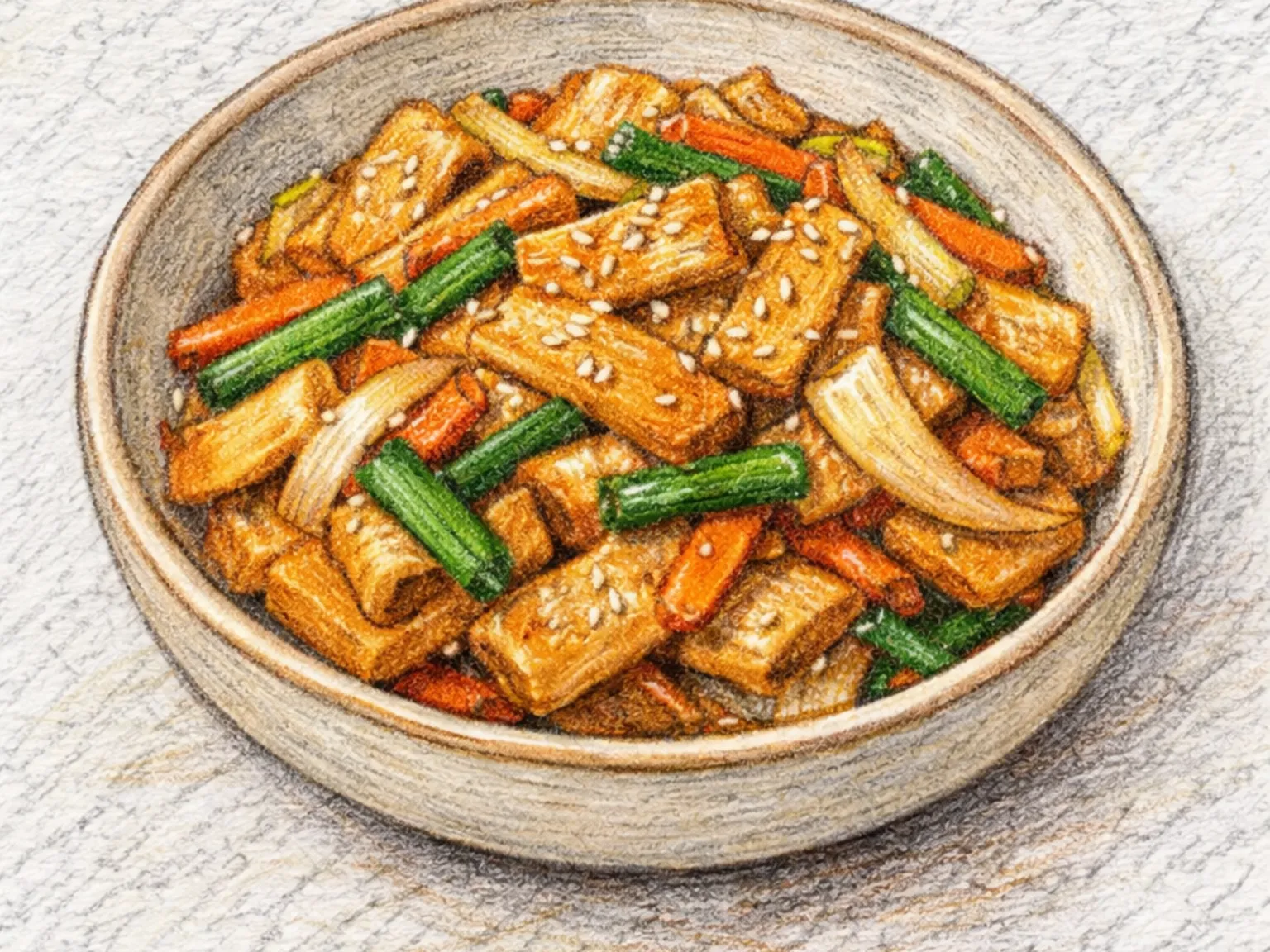
Korean Busan-Style Stir-fried Fish Cake
Busan-style stir-fried fish cake begins with a step that separates it from rushed versions: square fish cake sheets are blanched for twenty seconds in boiling water to remove the residual processing oil from manufacturing. Skipping this produces a flat, industrial greasiness in the finished dish that no amount of seasoning corrects. Oil goes into a hot pan, minced garlic is fried briefly until fragrant, and julienned onion and carrot are added next and cooked for two minutes until their natural sugars begin to release. The blanched fish cake strips go in, followed by soy sauce and oligosaccharide syrup. As the soy sauce hits the hot pan surface, it reduces almost instantly into a thin, glossy glaze that coats every surface; the oligosaccharide syrup caramelizes in the residual heat, building a sweet-salty layer underneath. High heat and a total cook time of three minutes or less is essential - fish cake left on the stove beyond that loses its moisture and turns rubbery. Diagonally sliced green onion goes in at the very end, added off the heat to preserve its fresh bite. A scatter of sesame seeds finishes the dish. Because the flavors are stable at room temperature and do not deteriorate as the dish cools, it is a reliable and practical side dish for packed lunches.

Korean Kimchi Ramen Pancake
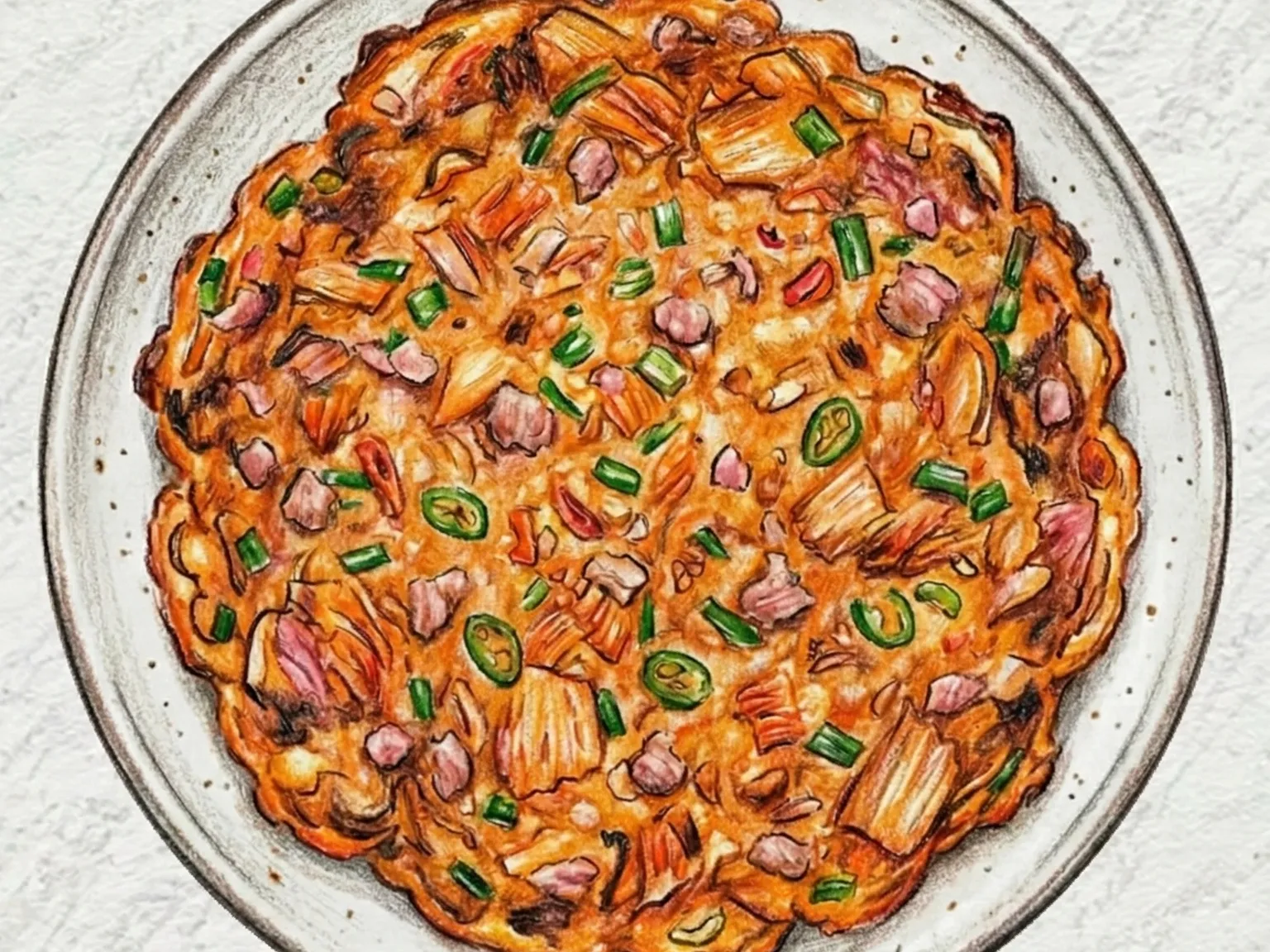
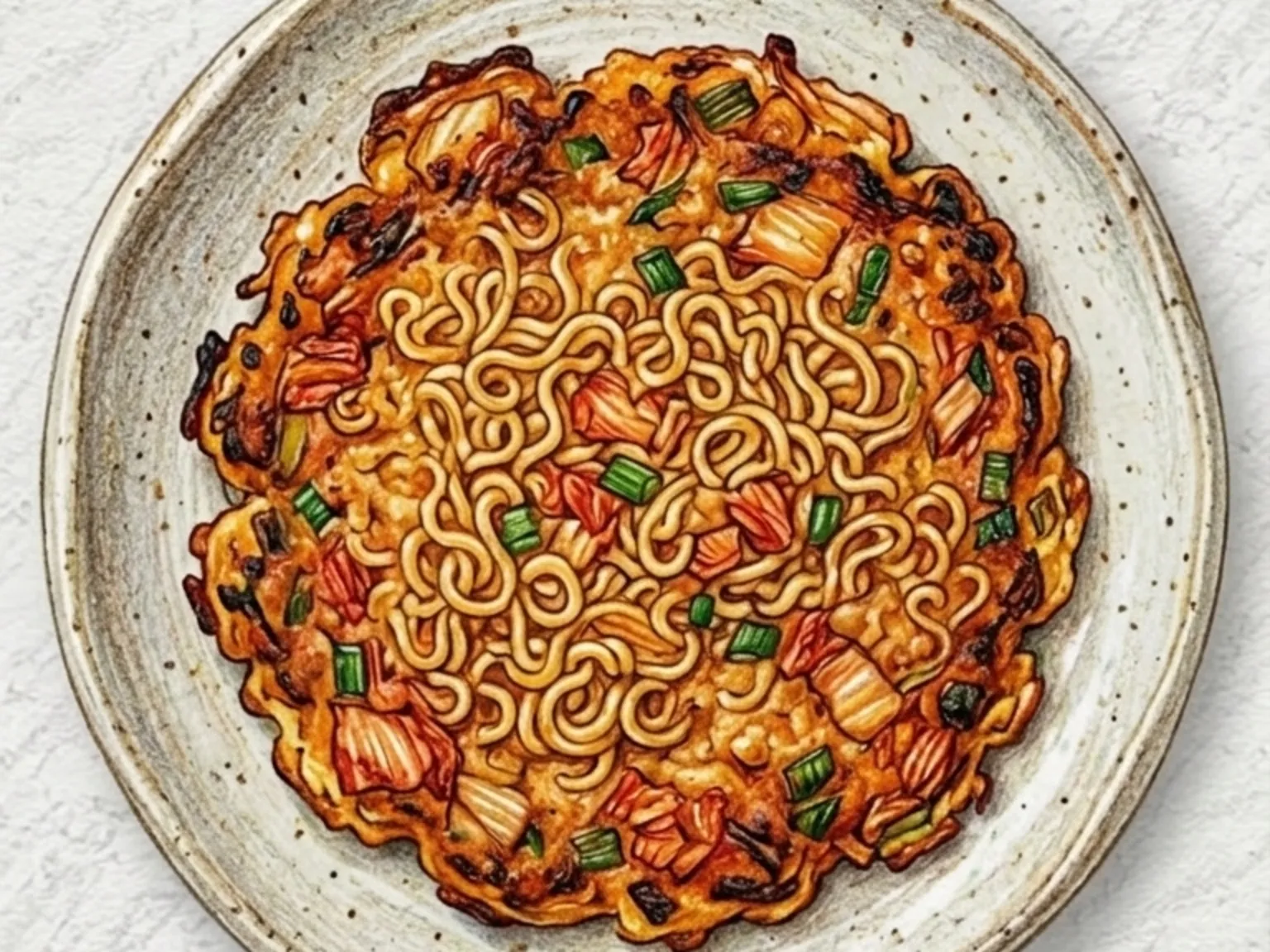
Kimchi ramyeon jeon is a Korean pan-fried pancake made with slightly undercooked ramen noodles mixed into a batter of pancake mix, chopped fermented kimchi, green onion, and red chili flakes. The noodles are boiled for only two minutes, leaving them firm enough to hold their structure in the pan; fully cooked noodles turn soft and collapse into the batter, losing all chew. The residual heat from pan-frying finishes the cooking while the noodles stay springy. Kimchi brings its fermented sourness and the chili flakes add heat, both layering over the mild, savory flavor of the batter. Spreading the mixture thin before frying allows the edges to crisp all the way through. The wavy, coiled shape of ramen strands creates an uneven surface on the pancake, producing irregular pockets and ridges that fry up especially crunchy. It is a popular late-night snack or a practical way to use leftover ramen blocks.

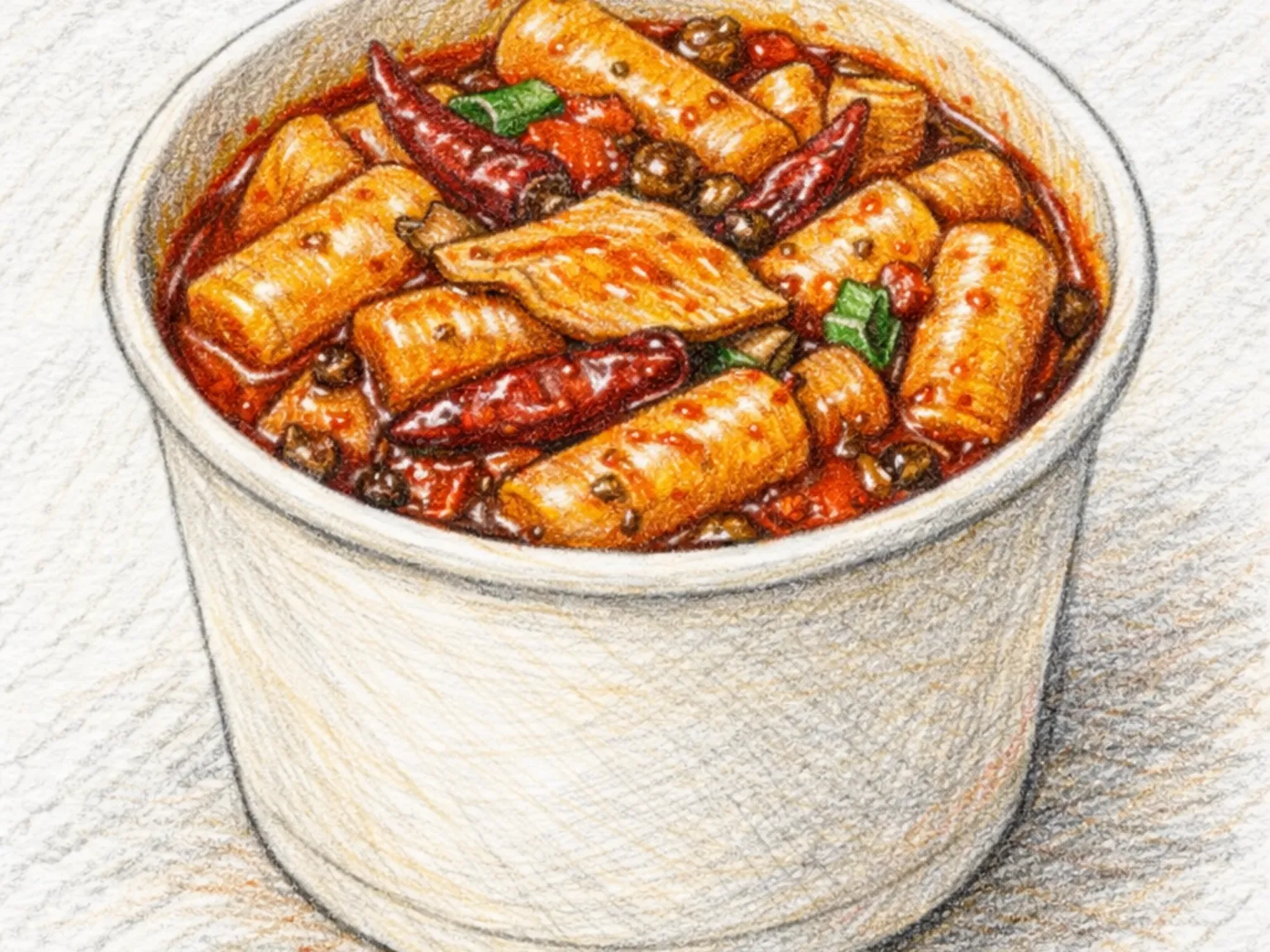
Korean Spicy Stir-fried Cartilage
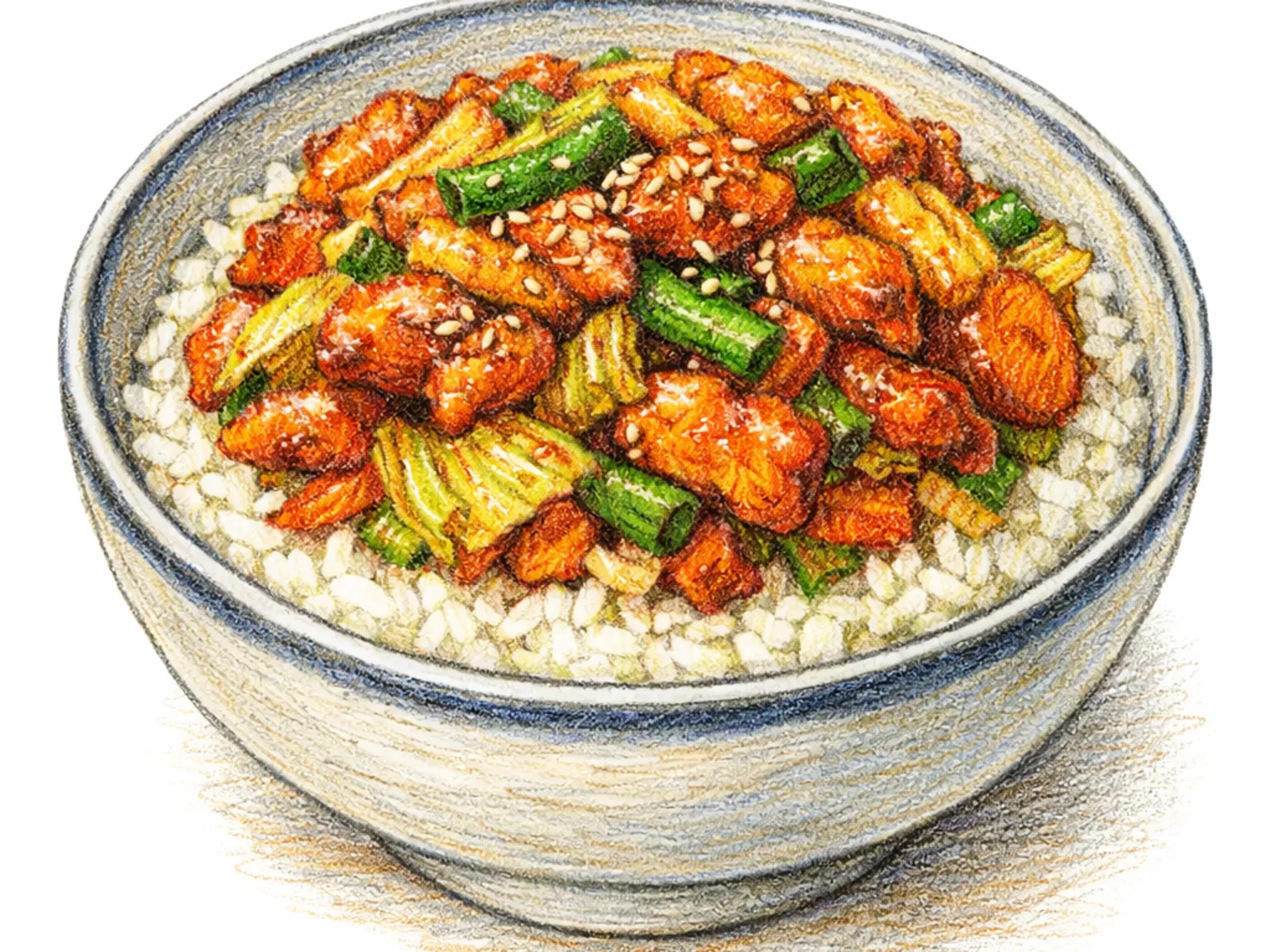
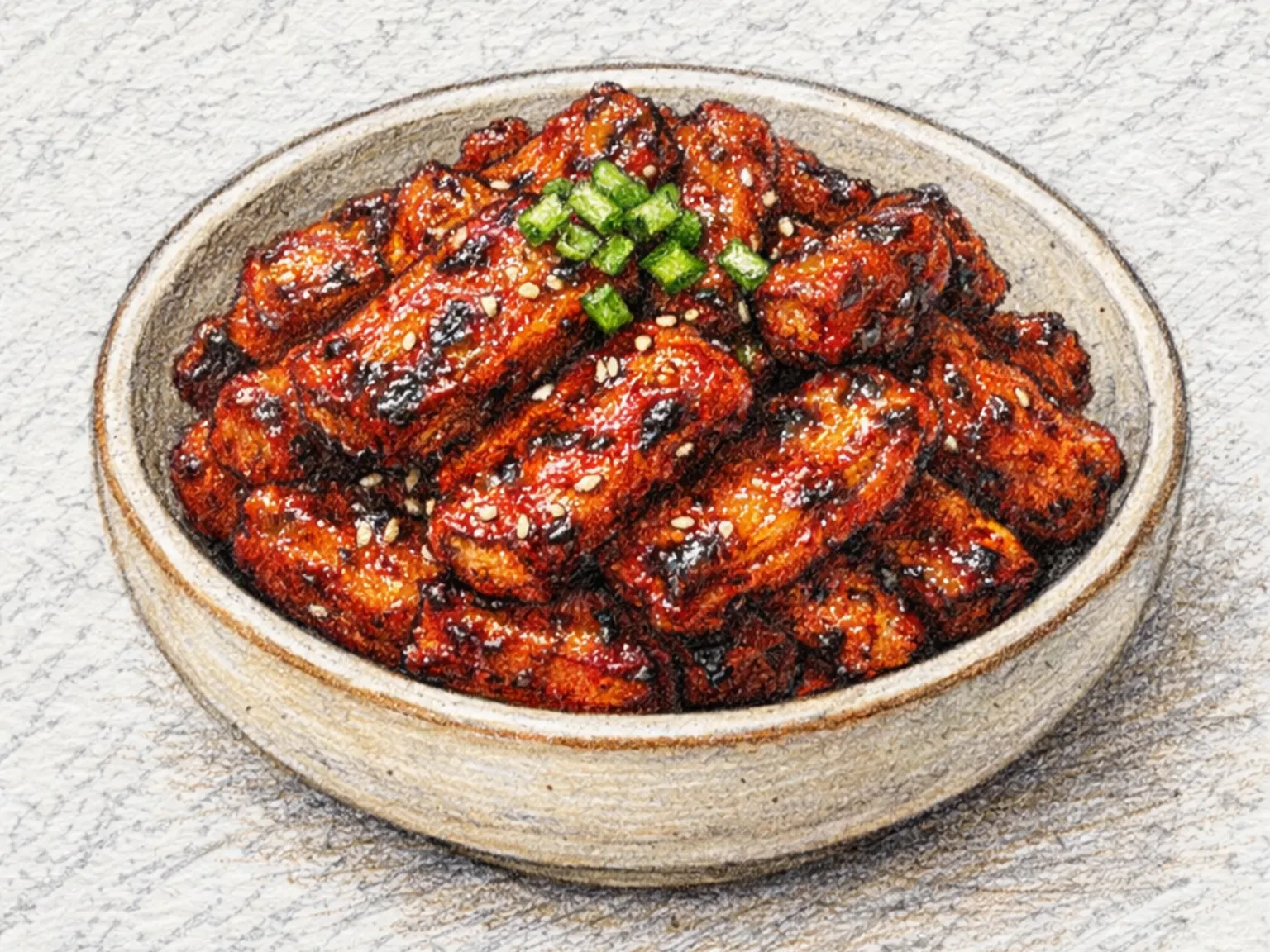
Odolppyeo-bokkeum is a fiery Korean stir-fry of chicken cartilage marinated in a sauce of gochujang, gochugaru, soy sauce, garlic, and sugar, then cooked at maximum heat for a short burst. The cartilage delivers a distinctive crunch-then-chew that no other cut can replicate, and thorough drying with paper towels before marinating ensures the sauce clings directly to the surface. After ten minutes of marinating, the cartilage hits a ripping-hot oiled pan to pick up smoky wok char, followed by onion, green onion, and hot green chilies that are tossed until all moisture evaporates and the glaze turns glossy. Keeping the total stir-fry time brief is critical, since prolonged cooking turns the cartilage from pleasantly crunchy to unpleasantly tough.

Korean Grilled Beef Short Ribs with Scallions
Galbisal-pachae-gui is a Korean grilled beef dish featuring short rib finger meat marinated in dark soy sauce, sugar, sesame oil, and garlic for at least one hour, then seared over high heat and served under a pile of cold-dressed shredded green onion. Rib finger meat sits between the rib bones and carries a well-balanced ratio of fat to lean, which allows the soy marinade to penetrate the fat layers and produce a deep, lingering savory flavor when exposed to direct heat. High heat causes the edges of the marinated meat to char quickly, creating a brief overlap of caramelized sweetness and smoke that defines the overall aroma of the dish. The shredded green onion is soaked in cold water until the sharp raw pungency fades and the cell walls firm up, then lightly tossed with sesame oil and toasted sesame to complement rather than compete with the heavy soy note of the beef. When a piece of hot seared meat and a tangle of cold scallion are eaten together, the contrast between the temperature, the rich beef fat, and the clean, sharp allium flavor creates a layered experience that cannot be replicated by eating either component alone. This dish is often made for home gatherings centered on table grilling, and the visual contrast of dark caramelized beef against the white-green scallion mound makes it striking as a shared centerpiece.

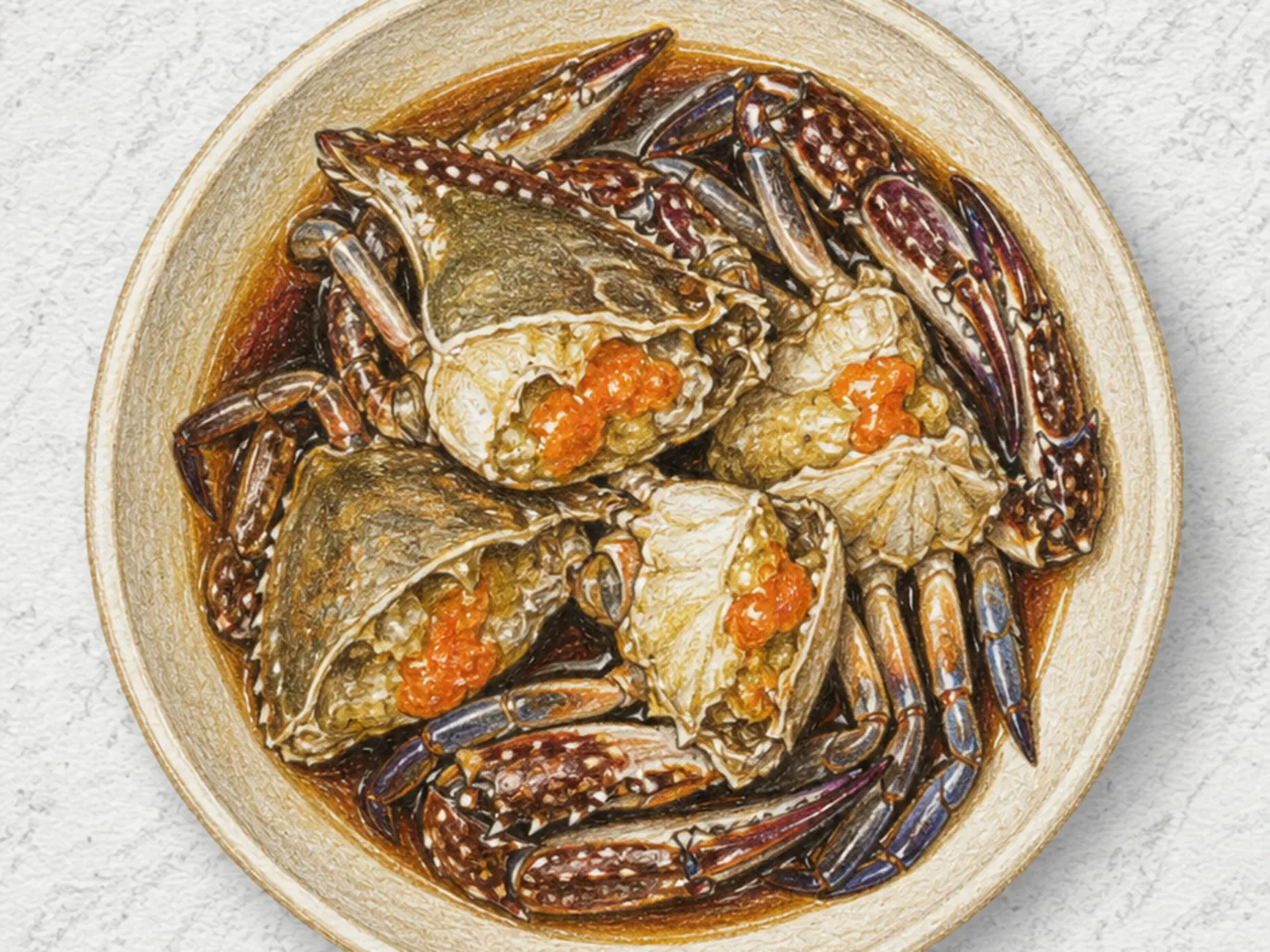
Korean Freshwater Crab Spicy Soup
Freshwater crabs are halved, thoroughly cleaned, and simmered in a stock built from radish and doenjang that draws out their intense, briny umami over forty minutes of steady cooking. Gochugaru and cheongyang chili build up layers of fiery heat, while zucchini and radish contribute natural sweetness that tempers the spice. Pressing the soybean paste through a strainer before adding it keeps the broth smooth and clear rather than grainy, and the result is a bold, aromatic stew deeply rooted in Korean regional tradition.

Korean Tuna Kimchi Stew
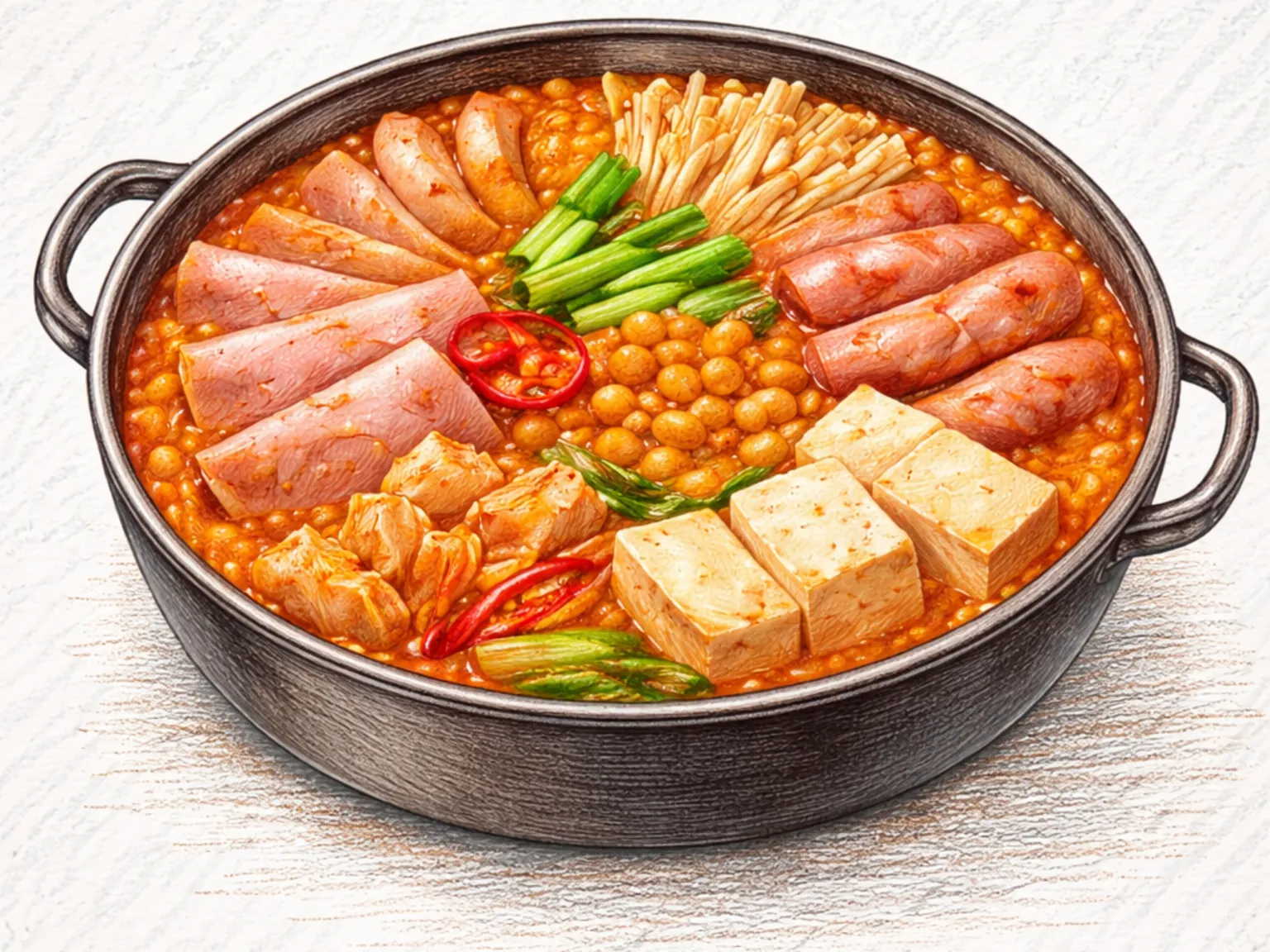
Aged kimchi and canned tuna are cooked together in this streamlined version of kimchi jjigae that skips the traditional pork. The tuna's oil enriches the broth quickly without a long simmer, while the well-fermented kimchi provides a deep sourness that anchors the stew's flavor. Firm tofu, onion, and green onion fill out the pot, and a spoonful of chili flakes keeps the heat assertive. Draining most of the oil from the canned tuna before adding it prevents the broth from becoming too greasy. Using thoroughly aged kimchi with a pronounced sour tang is what gives the broth its depth, and simmering uncovered over high heat for two to three minutes at the end thickens the liquid to a consistency that coats rice well.

Dongpo Pork (Chinese Soy-Braised Melt-in-Mouth Pork Belly)
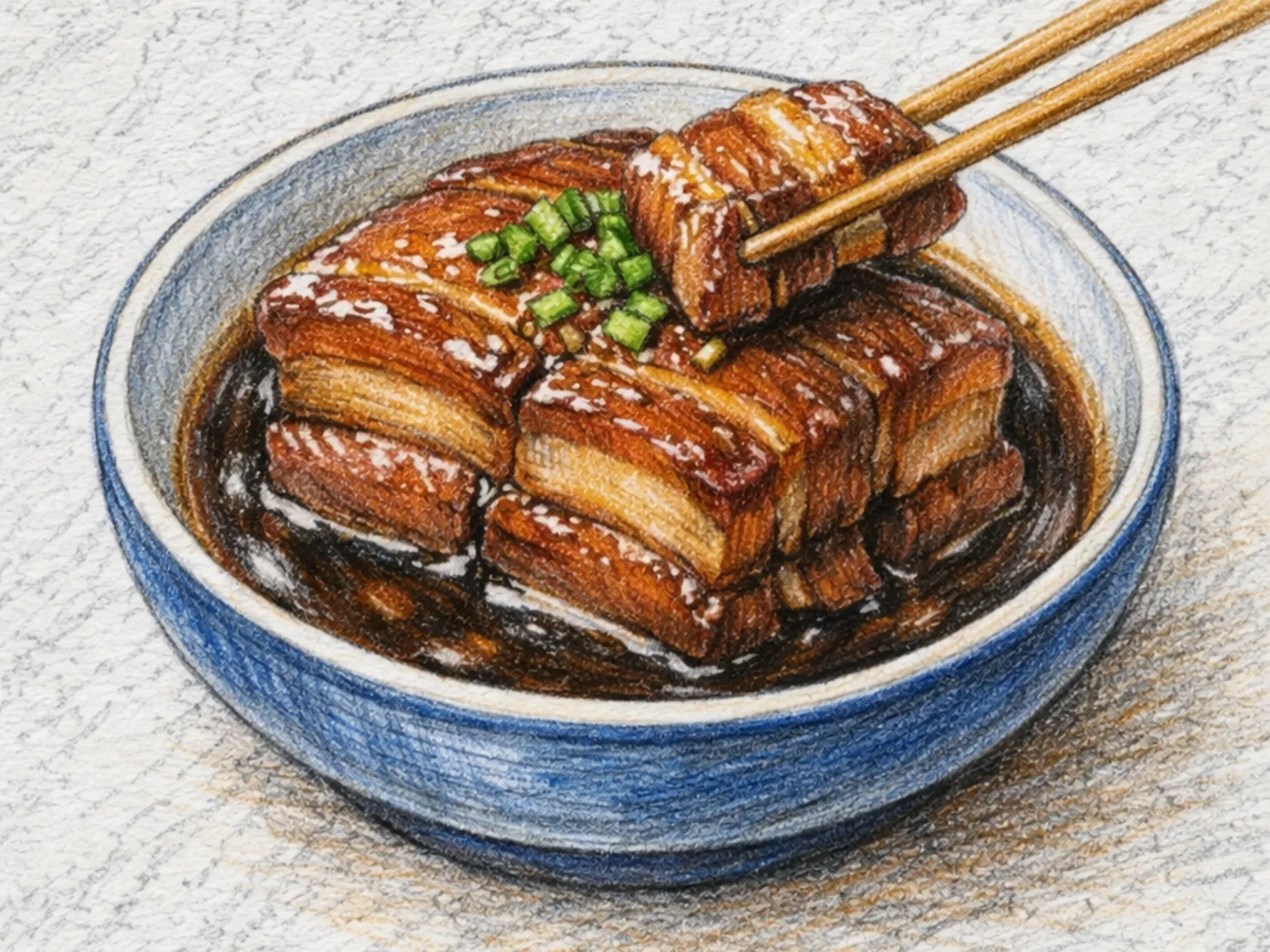
Dongpo rou is a Chinese-style pork belly braised slowly in soy sauce, rice wine, sugar, ginger, and green onion until the fat turns translucent and the lean sections absorb a deep mahogany glaze. The belly is cut into thick five-centimeter squares and tied with kitchen twine so the layers stay together over the long cook. Searing the pieces briefly in hot oil before moving them to the braising liquid is not decorative; the Maillard reaction at the surface builds color and aroma that carry into the finished dish. Long cooking over low heat renders the fat layers meltingly soft, while the lean portions turn a deep mahogany from the soy and sugar. Rice wine drives off any porkiness and ginger sharpens the finish, though the dominant impression is a sweet, deeply savory richness. Named after the Song dynasty poet Su Dongpo, the dish is appreciated for the luxurious texture of the rendered fat as much as for its flavor. Reducing the braising liquid separately and spooning it over the finished pieces produces a glossy coat that makes the plated result visually striking.

Korean Beef Bone Broth Thin Noodles
Gomguk somyeon is a Korean noodle dish that places thin wheat somyeon noodles inside a bowl of deeply extracted beef bone broth, known as gomtang, which has been simmered for many hours until it turns white and opaque. The long cooking process dissolves collagen from the bones into the broth, giving it a heavy, gelatinous body that coats the palate and clings to the thin noodles with each bite. This richness means even a plain bowl without elaborate toppings carries a profound, resonant savoriness. A few slices of boiled beef placed on top add a contrasting texture, soft enough to pull apart along the grain with chopsticks yet firm enough to provide a lean, meaty resistance that the broth alone cannot supply. The seasoning stays deliberately spare, just salt and black pepper, because adding more would interrupt the long, quiet depth that the hours of simmering have built into the stock. Sliced green onion scattered across the surface cuts through the fatty richness with a clean, bright edge, preventing the bowl from feeling one-dimensional.

Hainanese Chicken Rice (Poached Chicken on Fragrant Rice)
Hainanese chicken rice is the signature dish of Singapore and Malaysia, built on the deceptively simple technique of poaching bone-in chicken thighs in water seasoned with ginger and scallion at a consistently gentle temperature, then using the resulting broth to cook the rice. The temperature during poaching is the defining variable: the water must stay at a bare tremble rather than a rolling boil to keep the muscle fibers relaxed and the meat silky rather than fibrous or dry. For the rice, garlic and ginger are sauteed in oil or rendered chicken fat until fragrant, then raw jasmine rice joins the pot and the strained poaching broth replaces plain water for cooking. A spoonful of additional chicken fat stirred in before the lid goes on gives the finished rice a glossy sheen and noticeably richer aroma. The poached chicken is cooled, sliced across the grain to show a smooth, tender cross-section, and arranged alongside fresh cucumber slices that add a crisp, refreshing contrast to the soft meat. Two condiments accompany the dish and define its character: a chili-ginger sauce that provides heat and brightness, and a thick, dark soy sauce that contributes deep, caramel-like sweetness. Despite relying on few ingredients, the dish rewards careful attention to poaching temperature and broth management at every stage.

Korean Seasoned Swiss Chard Namul
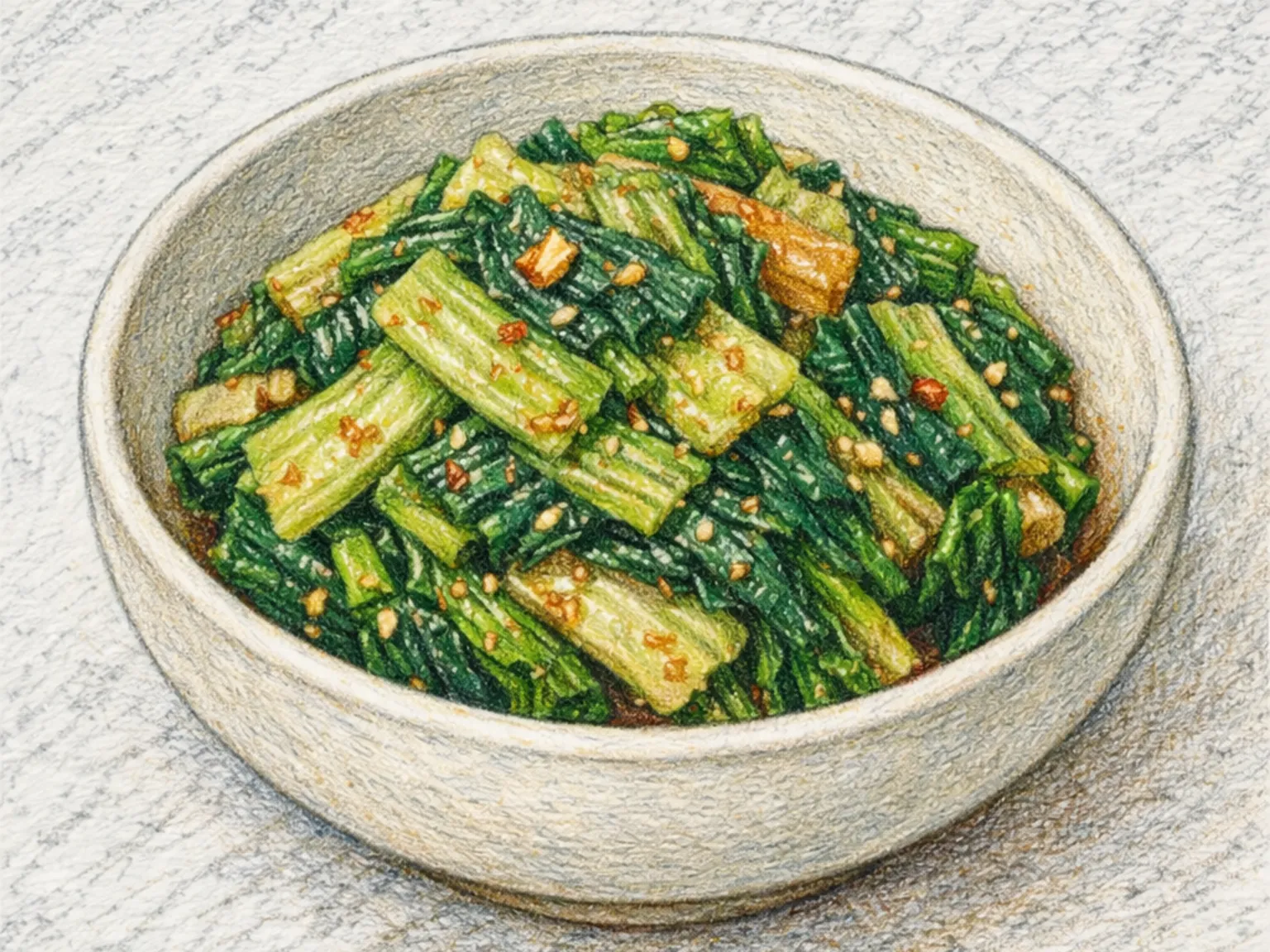
Geundae namul muchim is a seasoned vegetable banchan made from Swiss chard, a leafy green that has been used in Korean doenjang soup and namul for generations. Because the stems are substantially thicker than the leaves, blanching them together results in overcooked leaves by the time the stems are ready, so they are handled separately: stems go into boiling water for thirty seconds first, then the leaves follow for another thirty. After blanching, squeezing the greens thoroughly by hand is important because excess moisture dilutes the seasoning and prevents it from clinging to the greens. The blanched chard is hand-dressed with doenjang, soup soy sauce, minced garlic, and perilla oil, working the paste into the greens so that the fermented paste's earthy, savory depth merges with chard's faintly bitter, mineral character in the way that defines traditional Korean namul. Perilla powder added last thickens the dressing into a coating that clings without adding liquid and contributes a layer of nutty, roasted fragrance. Chard's thicker, denser leaf structure holds up far better than spinach after dressing, which makes this namul a reliable make-ahead banchan that does not collapse or release water when left to sit.