Charim

2686 Korean & World Recipes

2686+ Korean recipes, clean and organized. Ingredients to instructions, all at a glance.

Recipes with onion

24 recipes

Buy onion
Irish Stew
WesternEasy

Irish Stew

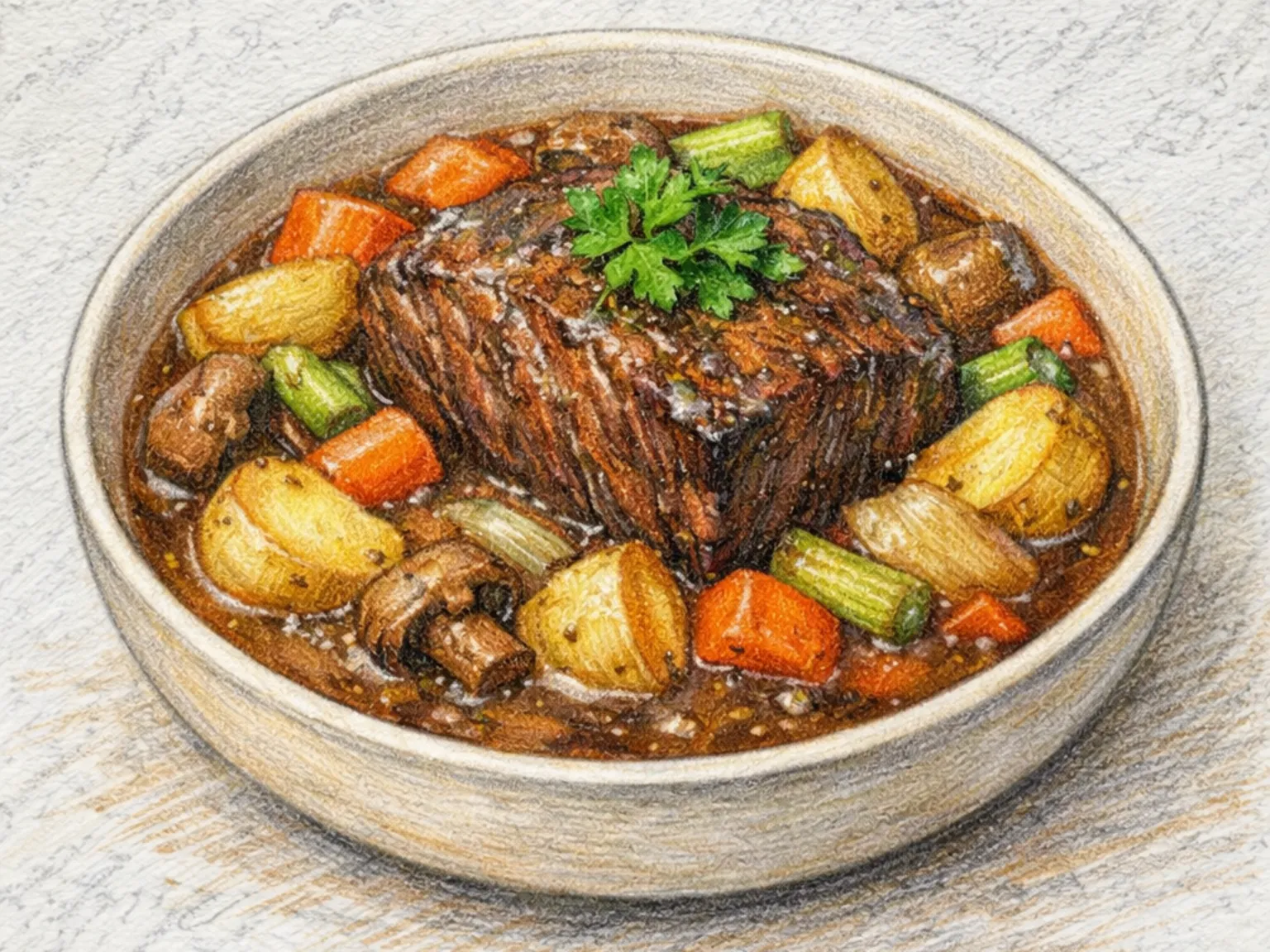
Irish stew is a traditional dish where chunks of lamb shoulder are slowly simmered with potatoes, onion, and carrot in beef stock seasoned with nothing more than thyme, salt, and pepper. Browning the lamb lightly and sauteing the onion and carrot first builds a foundation of Maillard flavor and natural sweetness in the broth. Adding potatoes and stock, then cooking on low heat for at least ninety minutes allows the connective tissue in the lamb to break down into tenderness, while some of the potato pieces dissolve into the liquid and thicken it naturally. The restraint in seasoning is the point - with only thyme as an aromatic, the deep flavors of the lamb and root vegetables define the stew entirely on their own.

🧒 Kid-Friendly
Prep 20minCook 90min4 servings
Korean Fire Chicken Fried Rice
RiceEasy

Korean Fire Chicken Fried Rice

Buldak bokkeumbap is a Korean fried rice built around the fiery buldak sauce - a thick chili-based condiment with concentrated heat that became widely known through the instant noodle brand of the same name. Chicken breast cut into bite-sized pieces is marinated in the sauce, then stir-fried with cooked rice over high heat until the sauce caramelizes slightly and coats every grain. The spice hits immediately on the first bite and accumulates with each spoonful, producing the kind of sustained burn that spicy food enthusiasts seek. Laying mozzarella cheese across the top and covering the pan to melt it creates a layer of stretchy, creamy dairy that wraps around the rice and provides brief relief between bites without neutralizing the heat completely. The contrast between the fire of the sauce and the cooling effect of the cheese makes the dish more compelling than either element alone. Easy to assemble with a short ingredient list, it has become a go-to option for late-night cooking and solo meals.

🍱 Lunchbox🌙 Late Night
Prep 10minCook 12min2 servings
Korean Spicy Whelk Bibim Guksu
NoodlesEasy

Korean Spicy Whelk Bibim Guksu

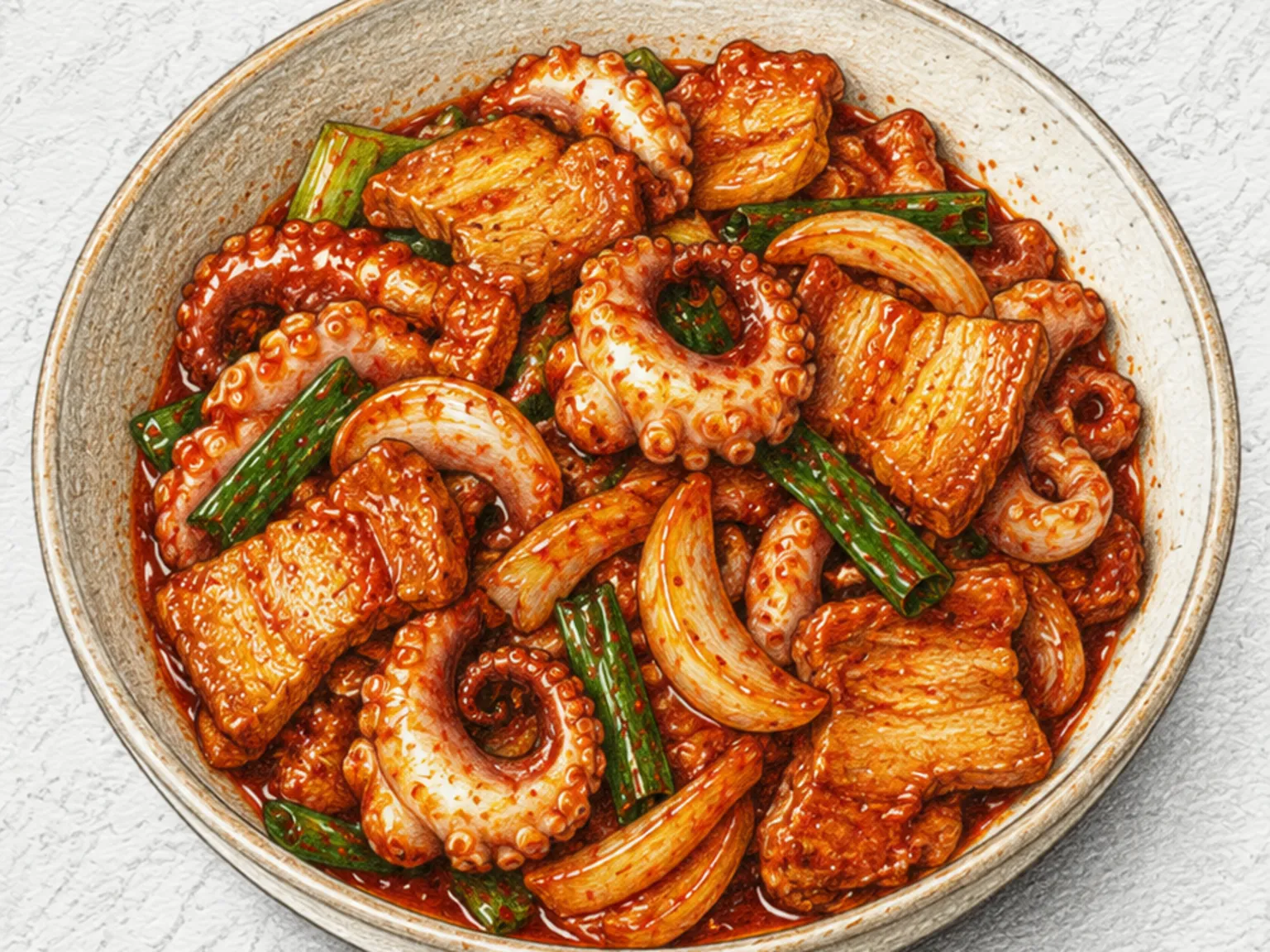
Golbaengi bibim-guksu is a cold mixed noodle dish built around chewy canned whelk tossed in a spicy-tangy sauce, widely enjoyed as a drinking snack in Korea. Gochujang and gochugaru set the heat level, while vinegar and sugar counter with a sharp sweetness, and sesame oil rounds everything out with a nutty finish. Julienned cucumber and onion contribute a crisp crunch that contrasts with the springy whelk and the slippery noodles. The somyeon must be rinsed immediately in ice water after boiling to lock in their firm, bouncy texture before mixing with the sauce. Adding a small splash of the whelk canning liquid into the sauce deepens the umami base, and rinsing the whelk itself under cold water controls the salinity.

🍺 Bar Snacks
Prep 18minCook 7min2 servings
Spanakopita (Greek Spinach and Feta Phyllo Pie)
WesternMedium

Spanakopita (Greek Spinach and Feta Phyllo Pie)

Spanakopita is a Greek savory pie where spinach is sauteed with onion to drive off moisture, then combined with crumbled feta cheese, beaten eggs, and fresh dill to make a filling that is layered between sheets of buttered phyllo dough and baked at 190 degrees Celsius for thirty-five to forty minutes. Removing as much water from the spinach as possible is the single most important step - any residual moisture soaks through the thin pastry and prevents it from crisping. Phyllo sheets dry out within minutes of being exposed to air, so they must be kept under a damp towel and worked one at a time, each brushed with melted butter before stacking. Four layers on the bottom and four on top provide enough structure and crunch. Scoring the surface before baking allows steam to escape and helps the layers puff and separate into distinct, flaky sheets.

🎉 Special Occasion
Prep 25minCook 40min4 servings
Korean Braised Tofu with Shrimp
Side dishesMedium

Korean Braised Tofu with Shrimp

Dubu-saeu-jorim pairs pan-seared tofu with whole shrimp in a soy-based braising sauce, stepping well beyond the usual tofu-only preparations that appear in everyday banchan. The tofu is seared first until golden on both sides to develop a lightly firm crust that resists breaking apart during the braising stage, then set aside while shrimp cook briefly in the same pan, picking up the fond left by the tofu. The braising liquid -- soy sauce, minced garlic, sugar, cooking wine, and a touch of gochugaru -- goes in next, and both proteins return to the pan to simmer together for five minutes over medium heat. The shrimp release their marine sweetness into the sauce as they tighten and curl, and the porous interior of the tofu absorbs that combined soy-seafood flavor throughout each cube. Adjusting the simmer time controls the final sauce concentration: shorter for a looser, silkier coat; longer for a more intensely reduced glaze. The textural pairing is the dish's central appeal -- yielding, custardy tofu against the springy, snapping bite of the shrimp. Adding sliced green onion or fresh chili introduces another layer of fragrance, and scaled up in quantity, the dish works just as well spooned over steamed rice as a satisfying one-bowl meal.

🏠 Everyday🍱 Lunchbox
Prep 15minCook 15min2 servings
Korean Blue Crab Porridge
RiceMedium

Korean Blue Crab Porridge

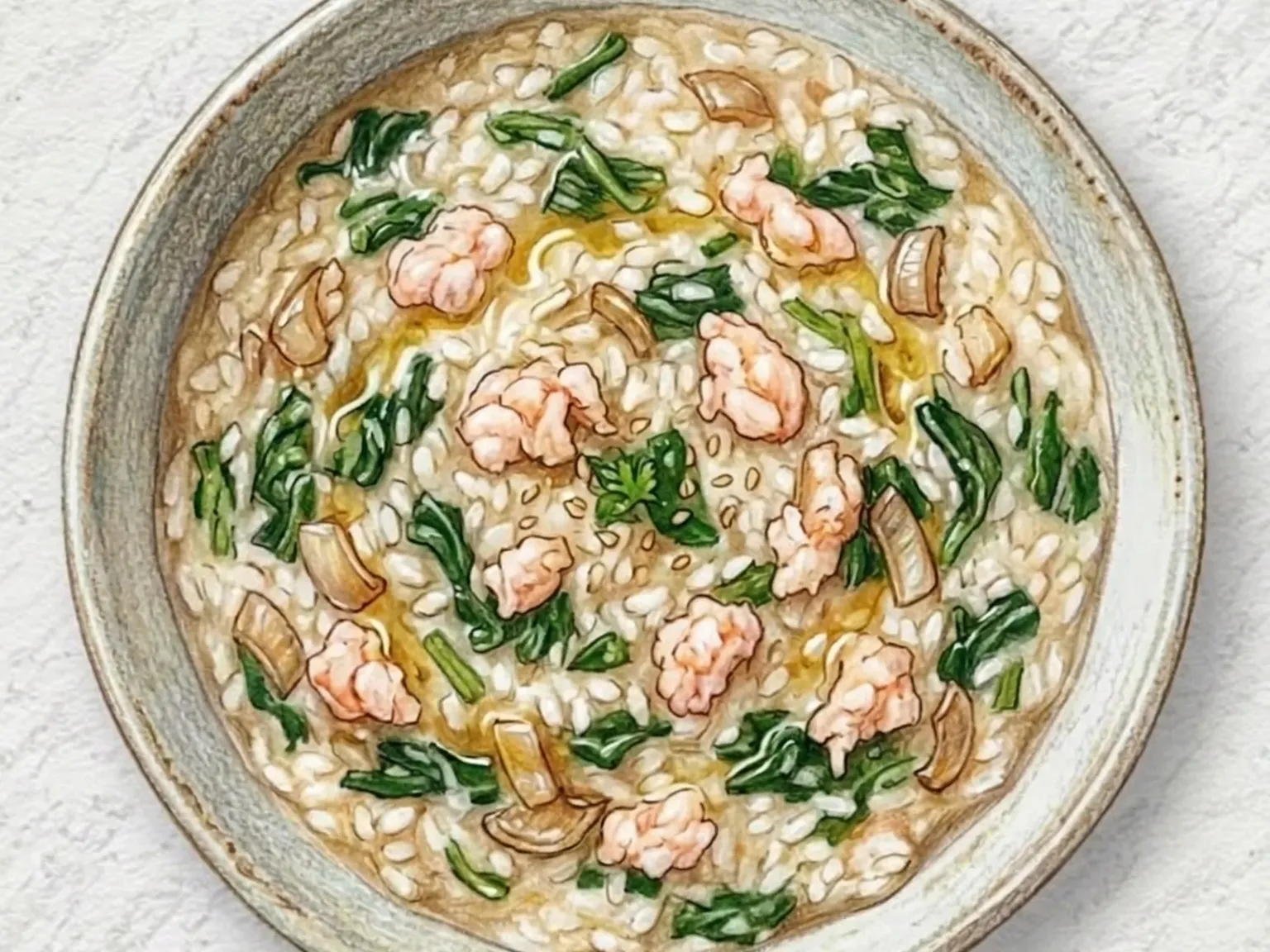
Kkotge-juk is a rice porridge built on a deeply flavored blue crab stock that forms the base of everything. The crab is placed in cold water and boiled for twelve minutes, during which the proteins and natural sugars from the shell and body dissolve into the liquid and create a broth that is naturally rich and faintly sweet without any additional seasoning. The cooked crab is lifted out and the meat is carefully picked from the legs and body and set aside. In the same pot, sesame oil is added and the soaked rice is toasted in it for two to three minutes, which coats the grains in a thin layer of oil that prevents them from sticking to the bottom during the long simmer and adds a gentle nutty aroma to the finished porridge. The crab stock is poured back in and the porridge cooks over medium-low heat for fifteen to twenty minutes, stirred regularly, until the grains soften and break down into the smooth, thick consistency that characterizes well-made juk. Once the porridge thickens, diced onion, zucchini, carrot, and minced garlic go in for ten more minutes, and the reserved crab meat is added only at the end so it cooks through the residual heat and stays tender rather than turning rubbery. Seasoned simply with soup soy sauce and salt, the finished bowl delivers clean, gentle ocean flavor with nothing overpowering the natural sweetness of the crab.

🎉 Special Occasion
Prep 20minCook 35min4 servings
Korean Braised Beef Short Ribs with Kabocha
SteamedHard

Korean Braised Beef Short Ribs with Kabocha

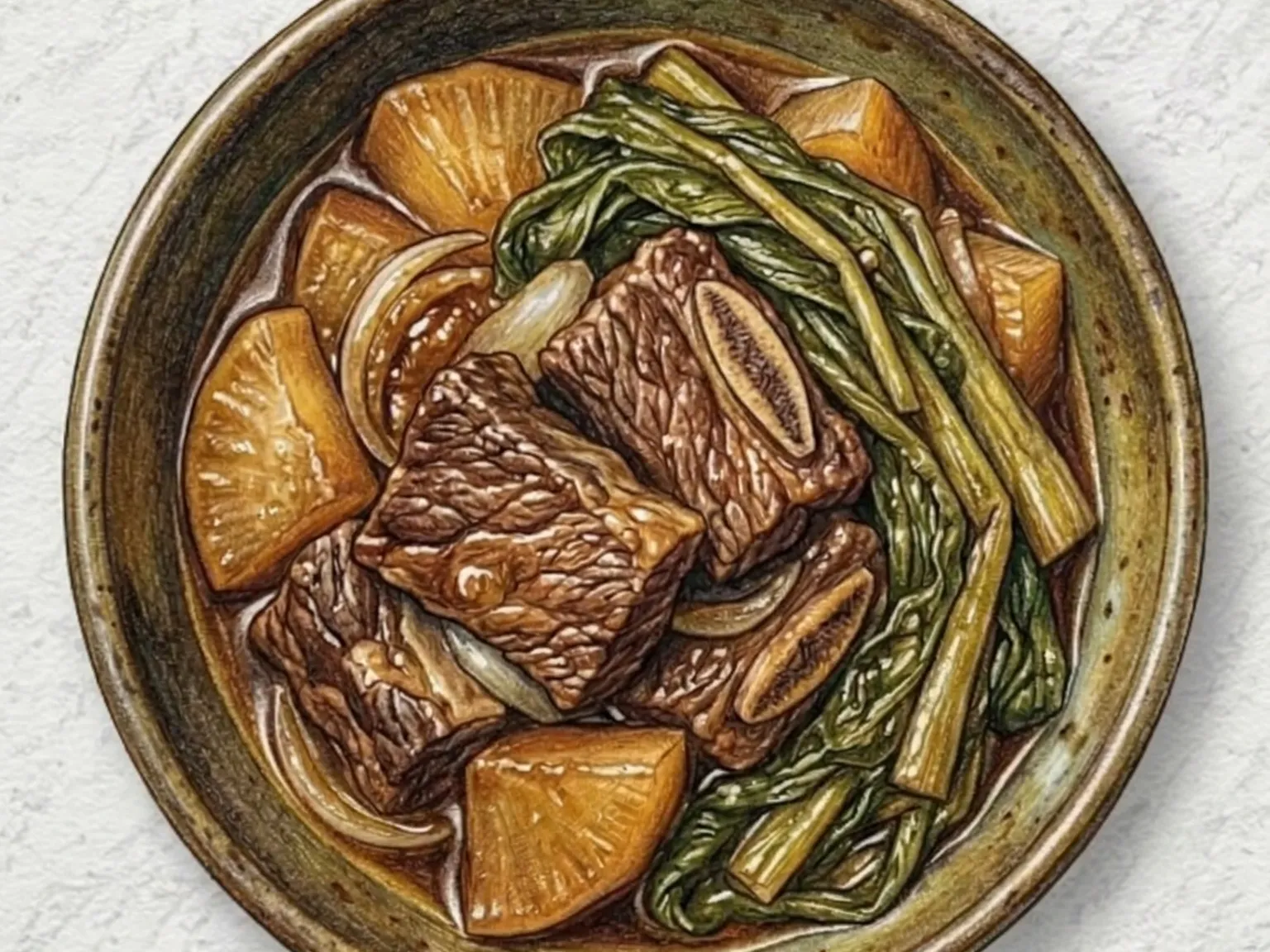
Danhobak-sogalbi-jjim is beef short ribs marinated in Korean pear juice, then braised with kabocha squash, radish, carrot, and onion in a soy-based sauce until deeply flavored. Pear juice works into the meat during marination, softening the muscle fibers and leaving a background fruit sweetness that comes through in the finished braise. Kabocha edges break down during cooking, releasing starchy flesh into the sauce and thickening it without any added starch. Radish and carrot spend the full braise in the soy sauce and absorb it thoroughly, becoming nearly as satisfying as the ribs themselves. A drizzle of sesame oil just before serving lifts the fragrance of the whole dish. This is a centerpiece preparation in Korean holiday and birthday cooking.

🎉 Special Occasion
Prep 35minCook 70min4 servings
Japanese Napolitan Spaghetti
NoodlesEasy

Japanese Napolitan Spaghetti

Napolitan spaghetti is a Japanese yoshoku pasta stir-fried with ketchup, sausage, onion, and green bell pepper that traces its origins to postwar Japan, when imported ingredients were scarce and cooks adapted Western techniques with locally available pantry staples. Cooking the ketchup in the pan first drives off moisture and concentrates its tomato sweetness, transforming it from a condiment into a sauce base with genuine depth. Worcestershire sauce adds a layer of fermented complexity that ketchup alone cannot provide. The sausage goes in first to render its fat and build flavor, followed by onion and pepper stir-fried quickly over high heat to retain their texture. Spaghetti cooked al dente with a quarter cup of pasta water reserved helps the sauce cling to the noodles when tossed together in the pan. A knob of butter stirred in at the end rounds off the ketchup's acidity and gives the finished dish a glossy, sweet-savory character that has made napolitan a beloved nostalgic dish in Japanese home cooking.

🏠 Everyday🧒 Kid-Friendly
Prep 15minCook 15min2 servings
Beef Brisket Pho Guksu (Charred Ginger Beef Rice Noodle Soup)
NoodlesMedium

Beef Brisket Pho Guksu (Charred Ginger Beef Rice Noodle Soup)

Beef pho guksu is a Vietnamese-style rice noodle soup that pairs the clean, sweet depth of charred-onion-and-ginger broth with thin slices of Korean chadolbaegi brisket. The broth starts with dry-charring whole onion and ginger directly in a pan until the surfaces blacken. This step burns off the raw pungency and draws out a caramelized sweetness that defines the soup's aroma. Fish sauce and a measured amount of sugar season the strained broth, producing a full-flavored liquid that finishes clean. To cook the brisket, the boiling broth is poured directly over the thinly sliced meat in the bowl, allowing gentle heat to set the beef while leaving it tender and slightly pink. Bean sprouts, cilantro, and lime wedges arrive on the side so each person adjusts freshness and acidity to taste, following Vietnamese table tradition. The marbled fat in Korean brisket adds a richer body to the broth than standard pho, making this a distinct take that sits between Korean gomtang and Vietnamese pho.

🎉 Special Occasion
Prep 18minCook 25min2 servings
Korean Soy Garlic Grilled Duck
GrilledMedium

Korean Soy Garlic Grilled Duck

Ori-ganjang-gui is a Korean soy-braised grilled duck dish where scored duck breast is marinated for twenty minutes in a sauce of soy sauce, minced garlic, honey, cooking wine, ginger juice, and black pepper, then placed skin-side down in a cold pan to start cooking. The cold-start method slowly renders the thick subcutaneous fat layer into the pan over eight minutes, building up a pool of self-basting duck fat that eliminates the need for added oil and crisps the skin without burning it before the breast is flipped. Soy sauce and honey caramelize at high heat into a glossy dark brown glaze, while ginger juice actively breaks down the gamey odor that duck fat often carries. In the final two minutes, the remaining marinade is brushed back onto the meat and sliced onions are added to the pan, where their natural sugars rise and merge with the salty-sweet soy coating to form a deeply savory side that complements the duck. The sliced meat can be wrapped in perilla or lettuce leaves, or the rendered cooking juices can be spooned directly over rice.

🍺 Bar Snacks
Prep 20minCook 25min4 servings
Broccoli Cheddar Soup
WesternEasy

Broccoli Cheddar Soup

Broccoli cheddar soup builds from a roux - butter and flour cooked together until the raw flour smell cooks out - which gives the soup its body and prevents the dairy from separating when added. Chicken stock and whole milk are whisked in gradually to keep lumps from forming, then broccoli florets go in and cook until fork-tender. The critical moment is adding the cheddar: heat must be reduced to low first, because the proteins in cheese seize and become grainy when exposed to high temperatures, rather than melting smoothly into the liquid. Sharp cheddar is the standard choice because its strong, salty punch holds up against the mild broccoli. Blending only half the soup while leaving florets intact creates a contrast between the velvety liquid and the chunks of green vegetable. A small addition of mustard or Worcestershire sauce deepens the savory complexity. Served inside a hollowed sourdough bread bowl, the crust absorbs the soup from the inside out, turning it into a satisfying complete meal rather than a starter.

🏠 Everyday🧒 Kid-Friendly
Prep 15minCook 25min4 servings
Chicken and Egg Rice Bowl
RiceEasy

Chicken and Egg Rice Bowl

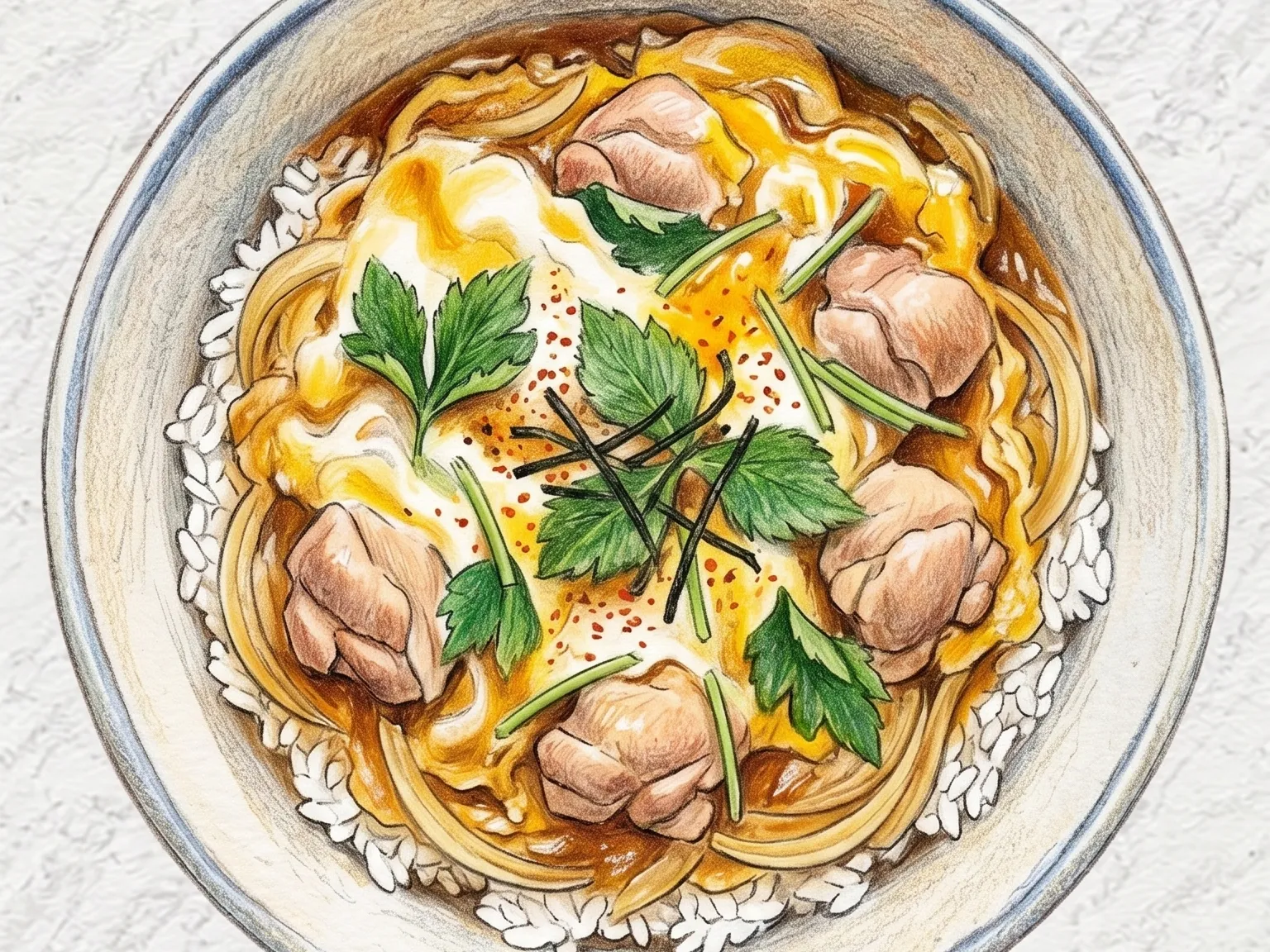
Oyakodon simmers bite-size chicken thigh and sliced onion in a soy-mirin broth, then binds everything with a soft-set egg before sliding it over steamed rice. The name means 'parent and child,' referring to the chicken and egg sharing the same bowl. Onion goes into the broth first to release its natural sweetness, followed by the chicken, which cooks just until tender. Beaten eggs are poured in a circular motion and the lid goes on briefly, leaving the egg custardy rather than fully set. That half-cooked egg absorbs the savory-sweet broth and coats each grain of rice. Despite using only a handful of ingredients, the layered umami from soy sauce and mirin gives the dish a satisfying depth.

🏠 Everyday
Prep 15minCook 15min2 servings
Korean Clear Mushroom Tofu Soup
SoupsEasy

Korean Clear Mushroom Tofu Soup

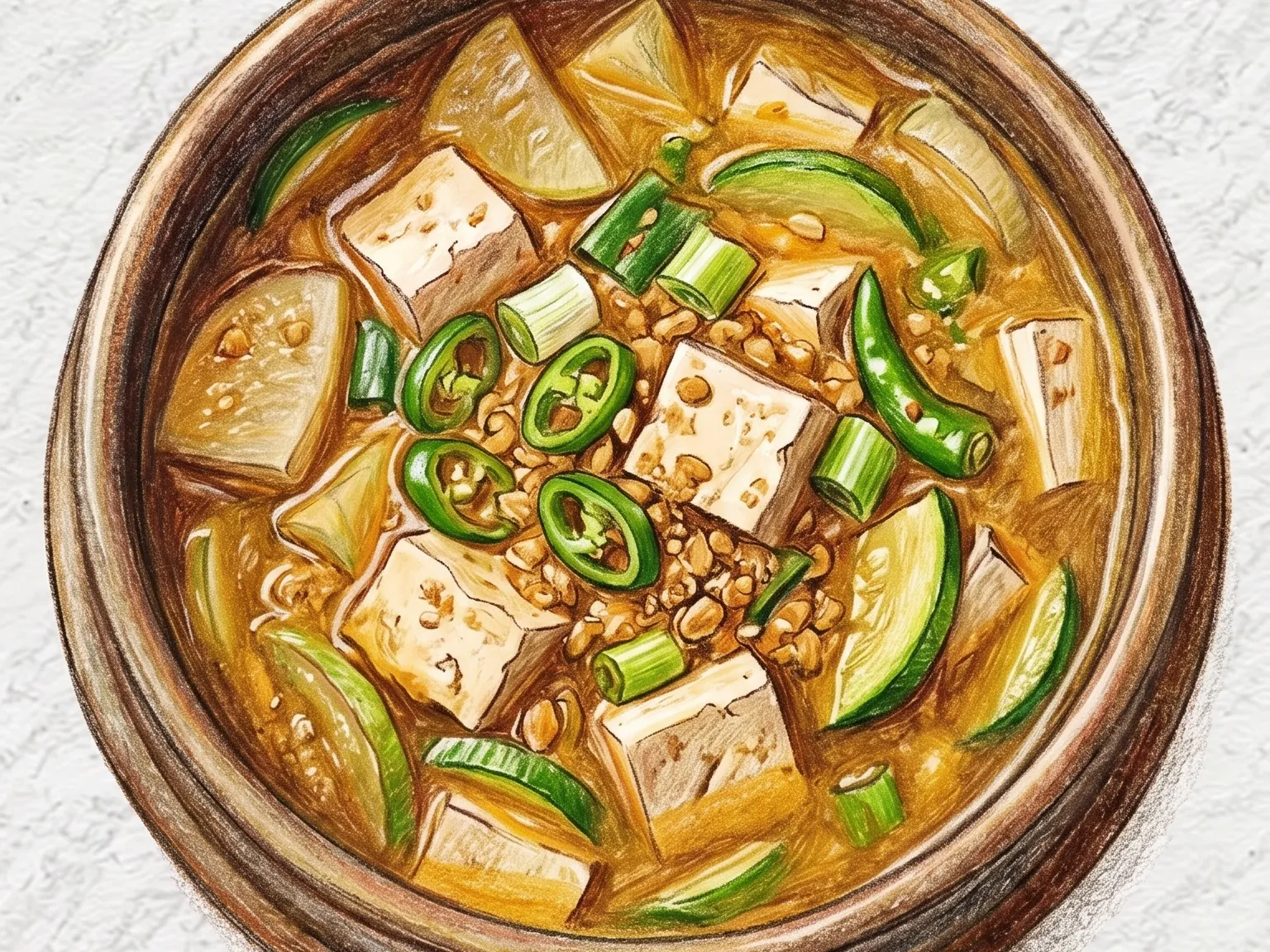
This clear Korean soup draws its umami from oyster and shiitake mushrooms simmered in plain water for four minutes, seasoned with only soup soy sauce and salt to keep the broth light and direct. Two varieties of mushrooms working together - oyster for soft texture, shiitake for depth - produce a broth that holds its own without meat. Cubed tofu goes in near the end so the pieces stay intact, and chopped green onion finishes the bowl with a clean, mild sharpness. At 155 calories per serving, the dish is genuinely low-calorie without sacrificing the layered, savory quality that makes it worth returning to.

🥗 Light & Healthy🏠 Everyday
Prep 10minCook 12min2 servings
Gochujang Cream Pasta (Spicy Fermented Chili Cream Sauce)
NoodlesMedium

Gochujang Cream Pasta (Spicy Fermented Chili Cream Sauce)

Gochujang cream pasta is a fusion dish that incorporates the fermented heat of Korean red chili paste into an Italian-style cream sauce. Heavy cream forms the base and parmesan provides the sharp, aged umami, while gochujang contributes a slow-building spice and the complex fermented sweetness that sets it apart from using raw chili pepper. Bacon is rendered first to extract enough fat for sauteing the onion and garlic, and that combination of cured pork fat, aromatic vegetables, and fermented paste forms the flavor core of the sauce before any liquid is added. Gochujang should be added at a reduced heat and stirred in gradually rather than dropped in all at once, since the paste can scorch quickly when exposed to a high-temperature pan. A ladleful of starchy pasta water adjusts the consistency and acts as an emulsifier, helping the fat from the cream and bacon stay bound with the aqueous components rather than separating. The result is a glossy, clinging sauce that coats each strand of pasta evenly. The balance between the richness of the cream and the acidity and heat of the fermented paste is what has made this combination popular in Korean home kitchens and casual restaurants alike.

🏠 Everyday🎉 Special Occasion
Prep 12minCook 18min2 servings
Korean Napa Leaf & Tuna Stew
StewsEasy

Korean Napa Leaf & Tuna Stew

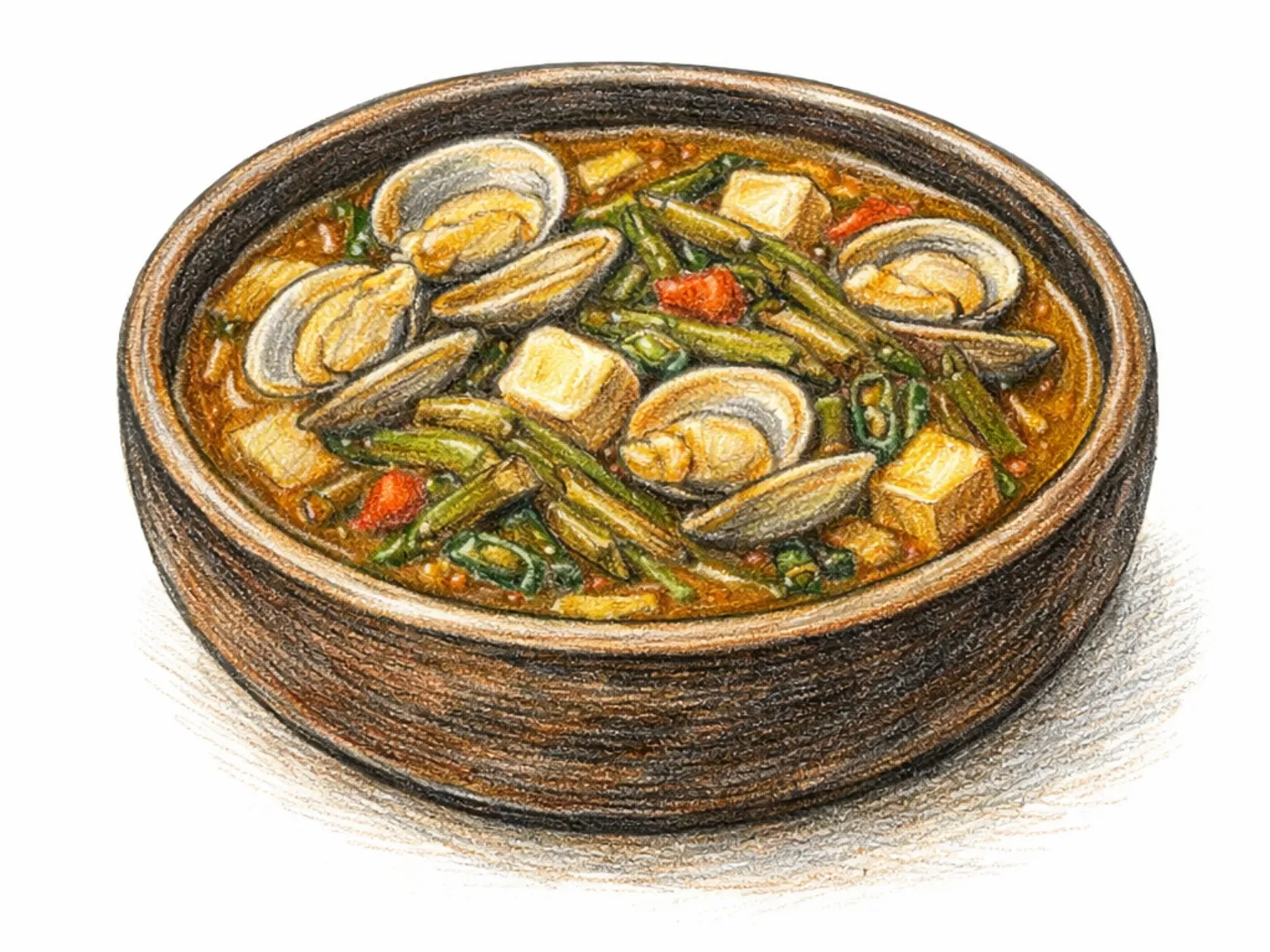
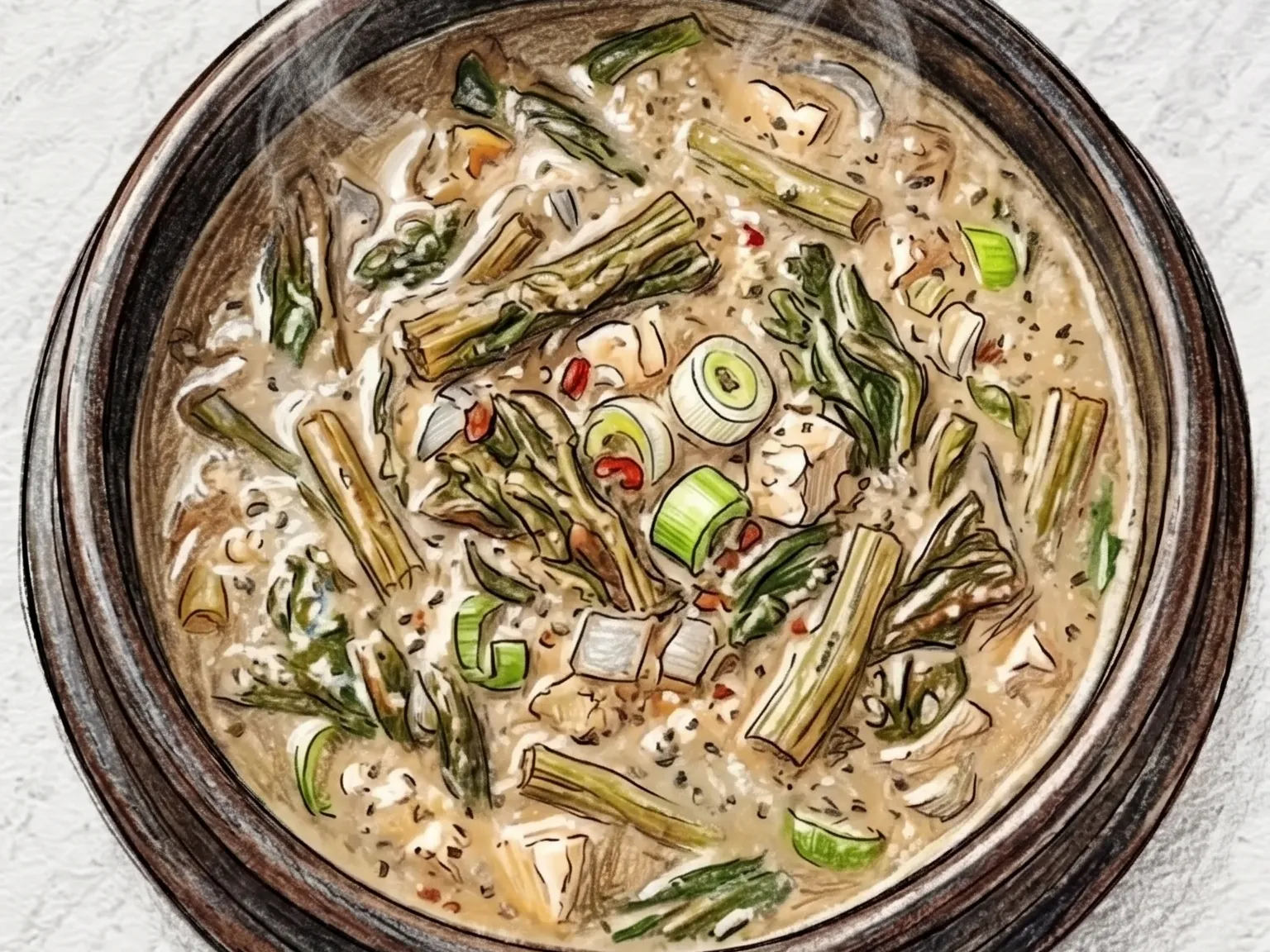
Blanched napa cabbage outer leaves and canned tuna come together in this doenjang-based stew. The ugeoji leaves have a rough, hearty texture that soaks up the salty richness of the tuna and fermented soybean paste. Tofu and onion round out the stew with mild sweetness, while gochugaru adds a gentle kick. Built on anchovy stock with garlic and green onion, this is a quick, home-style stew meant to be eaten over a bowl of steamed rice.

🏠 Everyday
Prep 15minCook 25min4 servings
Korean Mugwort Pancake (Spring Herb Savory Thin Pancake)
GrilledEasy

Korean Mugwort Pancake (Spring Herb Savory Thin Pancake)

Young mugwort leaves, harvested in early spring, are stripped of tough stems, washed, and folded into a batter of Korean pancake mix, water, and salt. Thinly sliced onion adds a mild sweetness that balances the herb's earthy bitterness. The batter is spread thin in an oiled pan and fried on both sides until crisp - thickness is the enemy here, as a thick pancake traps steam and mutes the mugwort's fragrance. Dipped in a vinegar-soy sauce, the acidity rounds out any lingering bitterness, making ssuk-jeon one of the most distinctive seasonal pancakes in Korean cuisine.

🍺 Bar Snacks
Prep 15minCook 10min2 servings
Korean Tuna Kimchi Soup (Spicy Fermented Kimchi and Canned Tuna Soup)
SoupsEasy

Korean Tuna Kimchi Soup (Spicy Fermented Kimchi and Canned Tuna Soup)

Kimchi goes into the pot first to be stir-fried until its sharp acidity mellows and its aroma deepens, then canned tuna, tofu, onion, and gochugaru are added with water and brought to a simmer. The oil from the tuna disperses through the broth, adding savory depth without any heaviness. Soup soy sauce provides the base seasoning, keeping the stock clean rather than muddy. Tofu is added only after the liquid reaches a full boil so the cubes hold their shape, and a pour of reserved kimchi brine at the end brings both salinity and a second hit of fermented tang that defines the finished broth.

🏠 Everyday
Prep 8minCook 20min4 servings
Korean Braised Dried Pollock and Potatoes
SteamedEasy

Korean Braised Dried Pollock and Potatoes

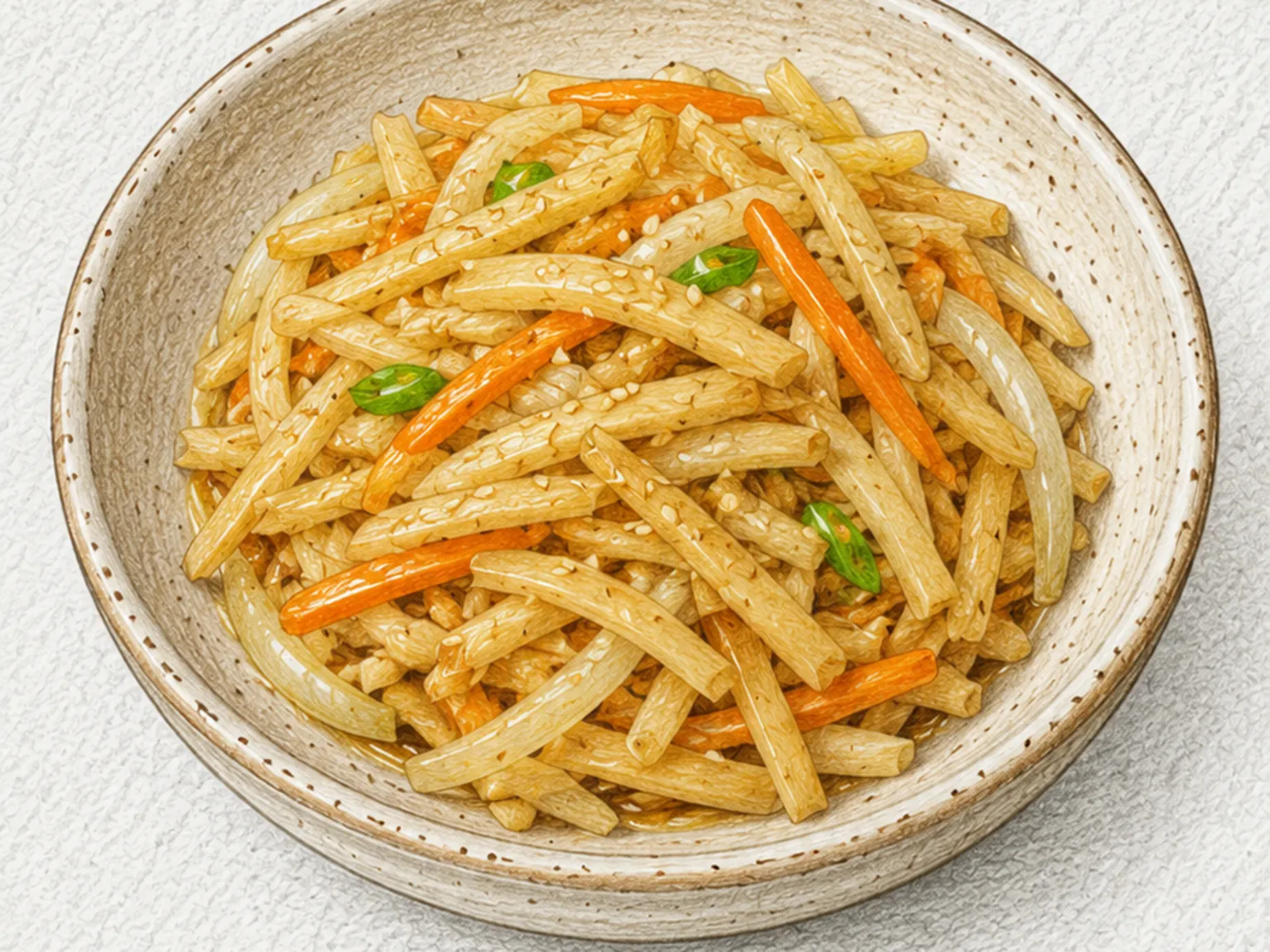
Hwangtae gamja jorim is a Korean braised dish of dried pollock strips and potato in a soy sauce seasoning with gochugaru and oligosaccharide syrup. The potatoes are cooked first until partially tender, then briefly soaked pollock strips and sliced onion are added to braise together in the same pan. The pollock absorbs the seasoned braising liquid and turns pleasantly chewy while the potato softens into a floury, starchy texture. Oligosaccharide syrup rounds out the saltiness of the soy sauce with a gentle sweetness, and sesame oil added off the heat finishes everything with a nutty fragrance. Keeping the pollock soak time short is the single most important step for preserving its characteristic texture, and the dish holds well overnight so it works as a packed lunchbox side.

🍱 Lunchbox
Prep 15minCook 28min2 servings
Korean Braised Mackerel with Radish
Stir-fryMedium

Korean Braised Mackerel with Radish

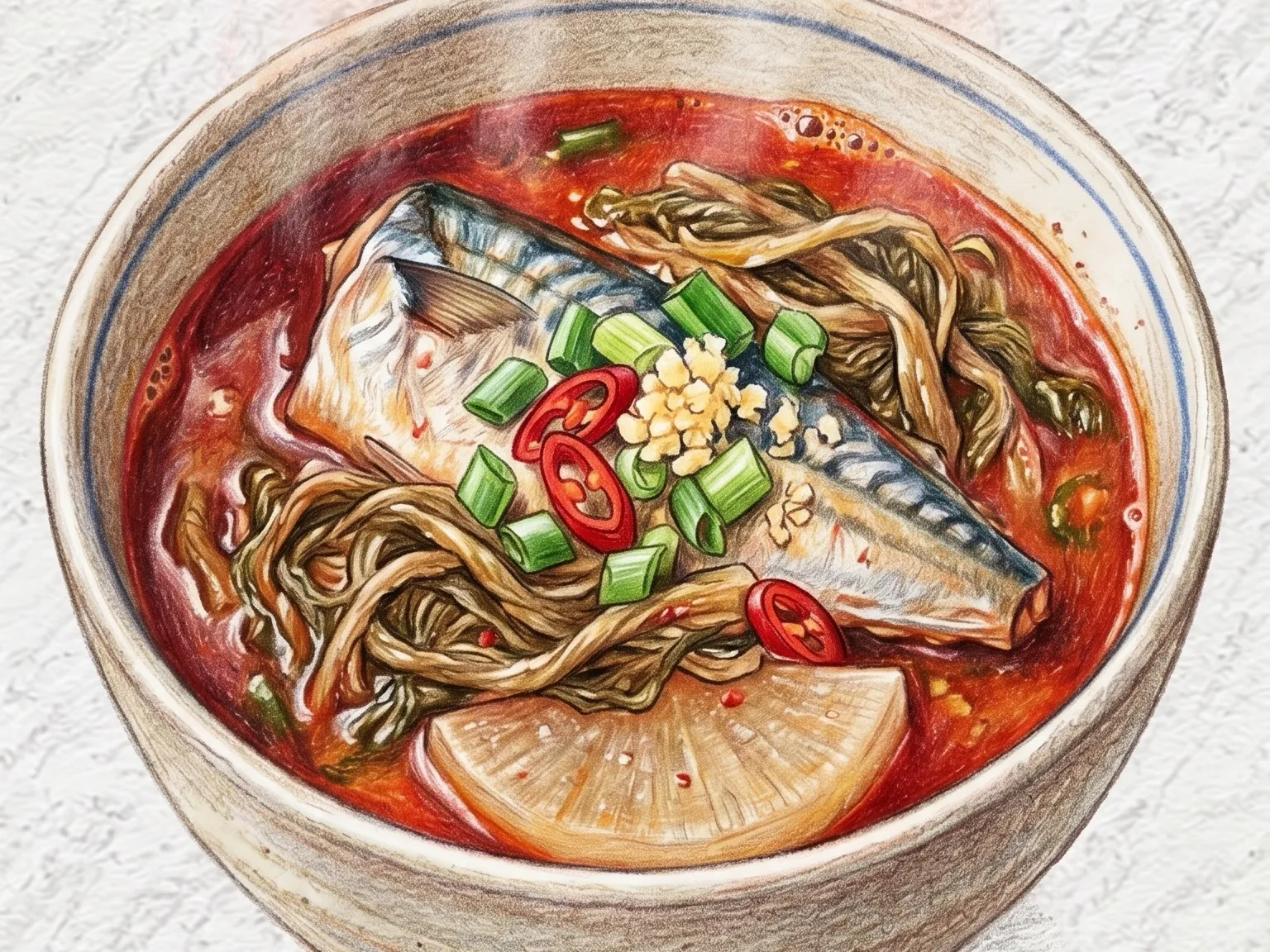
Layering thick slices of radish beneath fresh mackerel prevents the delicate fish from sticking to the pot while allowing the vegetables to soak up the seasoning like a sponge. This traditional Korean preparation uses a base of soy sauce, red chili powder, and red chili paste to create a thick braising liquid. As the pot simmers, the cook repeatedly spoons the sauce over the fish pieces to ensure the heat and spices reach every part of the mackerel. Ginger serves as a crucial ingredient to eliminate any strong fishy scents, so adding it early in the cooking process allows its aromatic properties to fully integrate into the broth. Over time, the radish softens into a translucent texture, absorbing the spicy and salty elements of the sauce until it becomes a substantial part of the meal. Adding onions and green onions during the final stages of cooking preserves their crispness and prevents their fresh aroma from fading. The process concludes when the liquid reduces into a glossy glaze that coats the mackerel. Serving this dish immediately over warm white rice allows the grains to catch the concentrated sauce. Beyond its taste, the mackerel provides omega-3 fatty acids while the radish contributes digestive enzymes and vitamin C to balance the natural oils of the fish.

🏠 Everyday🍱 Lunchbox
Prep 15minCook 25min2 servings
Korean Minari Bulgogi Bibim Udon
NoodlesMedium

Korean Minari Bulgogi Bibim Udon

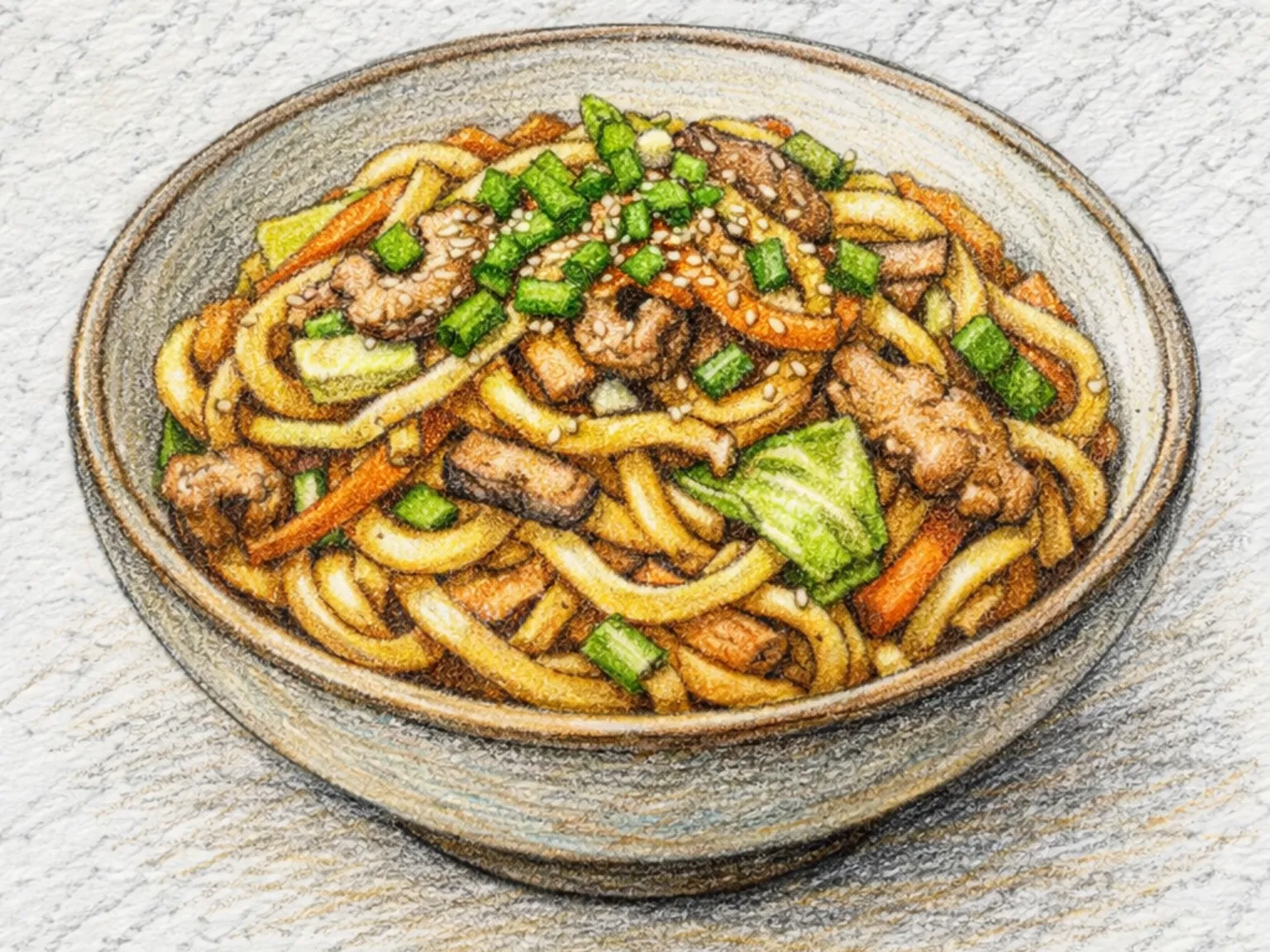
Minari bulgogi bibim udon is a Korean mixed noodle dish combining soy-marinated beef bulgogi with fragrant water dropwort over chewy udon noodles. The beef is marinated for ten minutes in soy sauce, garlic, and syrup, then stir-fried quickly with onion over high heat to develop caramelized edges while keeping the interior moist. Udon is blanched for two minutes and rinsed in cold water to restore its springy chew. A gochujang, soy sauce, and sesame oil dressing coats the noodles first, then the bulgogi and minari are folded in gently at the end so the herb's distinctive aroma stays intact rather than wilting away. Sesame seeds scattered on top add a final nutty accent that bridges the savory meat and the fresh, grassy minari. Adding a small amount of pear juice or kiwi juice to the marinade tenderizes the beef noticeably, which sharpens the contrast between the silky meat and the firm noodle.

🍺 Bar Snacks
Prep 25minCook 12min2 servings
Pasta Bolognese
NoodlesMedium

Pasta Bolognese

Pasta Bolognese is a slow-simmered meat ragu from Bologna in Emilia-Romagna, built on a soffritto of onion, carrot, and celery cooked down with a mixture of ground beef and ground pork. Browning the meat properly in a hot pan before any liquid is added creates a Maillard crust that contributes a depth of flavor that no amount of simmering can replicate. Red wine deglazes the pan, lifting every bit of browned fond from the bottom. Whole milk is then stirred in to soften the acidity and tenderize the proteins, which is the detail that separates a true Bolognese from a generic meat sauce. The ragu requires at least one hour of low, uncovered simmering for the fat to separate, the liquid to reduce, and the meat to break down into a cohesive sauce. Tagliatelle is the canonical pairing in the region, with the wide, egg-enriched ribbons catching the chunky sauce in every fold. Freshly grated Parmigiano-Reggiano finishes the dish. Cooking the tomato paste directly in the pan after the soffritto for two minutes caramelizes its natural sugars and removes raw bitterness before any liquid goes in.

🎉 Special Occasion
Prep 20minCook 90min4 servings
Korean Squid Glass Noodle Stir-Fry
NoodlesMedium

Korean Squid Glass Noodle Stir-Fry

Ojingeo japchae is a seafood variation of the Korean glass noodle stir-fry that replaces the traditional beef with squid, combining chewy dangmyeon with spinach, carrot, and onion in a soy-sugar sauce. Peeling the squid and scoring the inner surface in a crosshatch pattern before slicing allows the seasoning to reach the full surface area and softens the otherwise tough texture when cooked. Stir-frying the squid with garlic for a short time only is essential, as prolonged heat causes it to turn rubbery and push moisture out into the pan. The glass noodles should be boiled for no more than six minutes to preserve their elastic, springy bite and prevent them from clumping and falling apart during the stir-fry. Spinach is blanched separately and squeezed firmly dry before being added so that excess water does not make the whole dish soggy. The sweet-salty base of soy sauce and sugar is finished with sesame oil and toasted sesame seeds, whose nutty fragrance ties together the oceanic umami of the squid, the resilient chew of the noodles, and the crisp texture of the vegetables into one cohesive plate.

🏠 Everyday🍱 Lunchbox
Prep 20minCook 15min2 servings
Korean Pressed Boiled Pork Slices
SteamedMedium

Korean Pressed Boiled Pork Slices

Pyeonyuk is a Korean chilled pork dish made by boiling pork shank with garlic, ginger, green onion, whole peppercorns, and salt for nearly an hour, then wrapping the meat tightly and refrigerating it until firm. The aromatics in the cooking water neutralize off-flavors from the pork, and the salt seasons the meat evenly throughout during the long simmer. Slicing after thorough chilling produces neat, thin pieces with a uniform grain, and the cold temperature sharpens the meat's clean, lean flavor in a way that serving it warm cannot replicate. Traditionally served with salted shrimp or anchovy paste for dipping, pyeonyuk is a staple on Korean holiday tables and a common appetizer when hosting guests. Wrapping the pork tightly while it is still hot is essential so that the shape sets as it cools, and refrigerating for at least two hours before slicing prevents the meat from crumbling under the knife.

🎉 Special Occasion
Prep 20minCook 70min4 servings
Shepherd's Pie
WesternMedium

Shepherd's Pie

Shepherd's pie is a traditional British home dish where seasoned lamb mince is cooked with onion, carrot, and peas, deglazed with red wine and beef stock, then topped with creamy mashed potato and baked until golden. The wine evaporates its alcohol during cooking, leaving behind fruit depth and tannin that enrich the lamb, while Worcestershire sauce adds a layer of fermented umami. The potatoes are boiled, mashed with butter and milk until smooth, then spread evenly over the meat filling. Dragging a fork across the mashed potato surface creates ridges that brown and crisp in the oven, adding textural contrast to the creamy layer beneath. After twenty-five minutes at 200 degrees Celsius, the meat juices bubble up around the edges, signaling that the filling is hot throughout.

🎉 Special Occasion
Prep 30minCook 50min4 servings