Green Bean Casserole
Green bean casserole bakes blanched green beans in a mushroom cream sauce, then tops them with crispy fried onions for a contrast of textures that defines this American holiday side dish. Blanching the beans for just three minutes and shocking them in ice water preserves their bright green color and a slight crunch that survives the oven. Sauteing onion and mushrooms in butter, stirring in flour to build a roux, and gradually adding milk produces a smooth cream sauce infused with earthy mushroom flavor. After twenty minutes in the oven, the casserole is pulled out and topped with fried onions, then returned for five more minutes so the onions crisp without burning. The finished dish layers the crunch of the topping against the creamy sauce and tender-crisp beans.

Korean Wild Chive Soybean Paste Soup
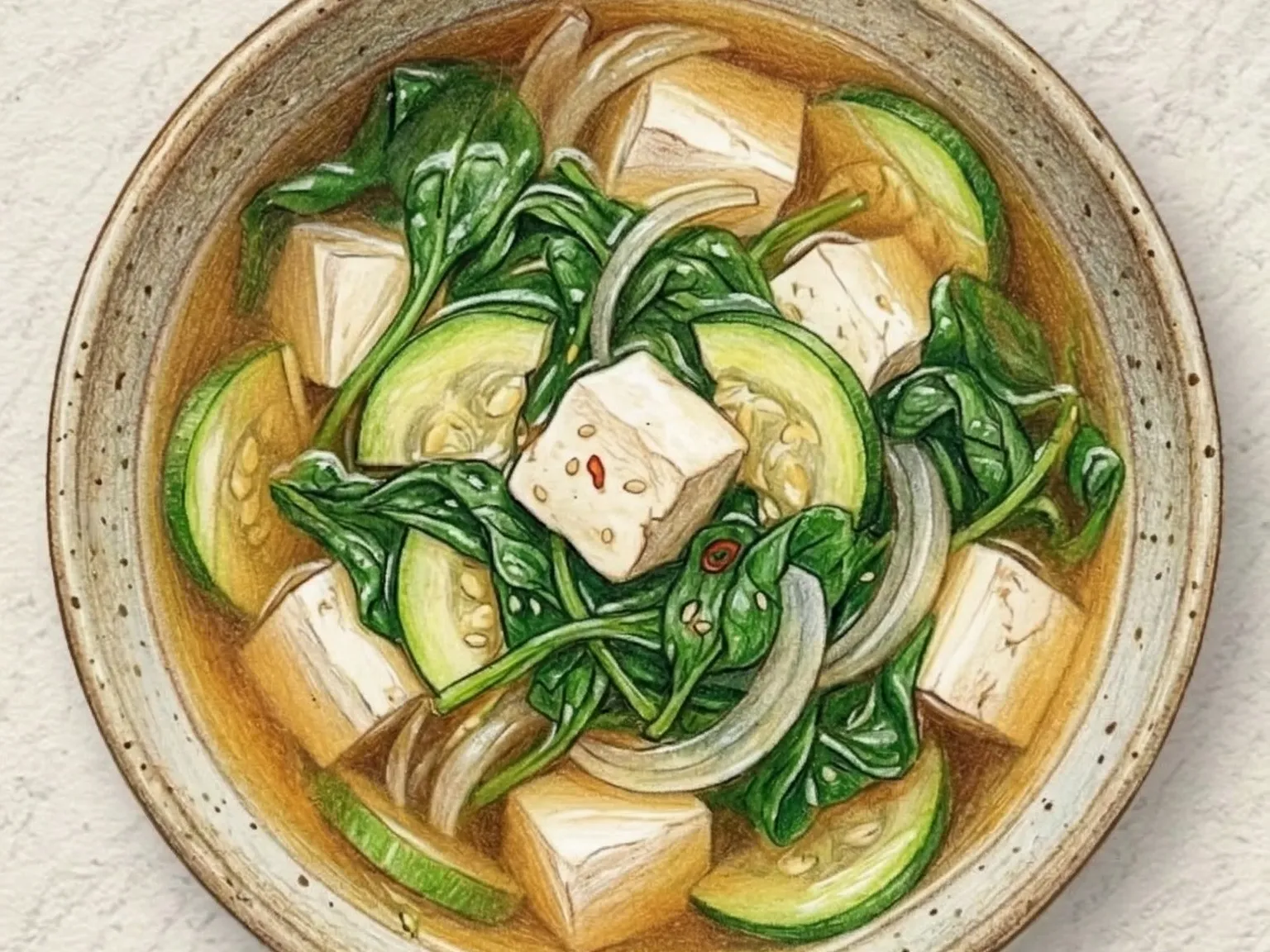
Dallae doenjang-guk is a springtime Korean soybean paste soup that showcases wild chives, a seasonal ingredient valued for its sharp, garlicky bite and short availability window. The anchovy-kelp stock is first simmered with potato and onion to build body and sweetness, then doenjang is dissolved in and tofu added for a soft, tender contrast against the broth. Wild chives go in only during the final minute of cooking, because their pungent aroma dissipates rapidly under sustained heat; cooking them too long makes them indistinguishable from ordinary green onion in both flavor and appearance. The bulb end of each chive stalk carries a stronger bite than the leaves, so mincing the bulbs finely distributes their flavor more evenly through the broth. A half teaspoon of gochugaru tints the soup a faint red that visually matches the chive's natural heat. Because dallae is in season for only a brief window, setting a few raw stalks aside to place at the table as a garnish amplifies the fresh spring character of the dish.

Korean Macaroni Salad (Sweet Mayo Pasta from Retro Diners)
Korean macaroni salad is a retro banchan that became a fixture of bunsikjip snack bars and gyeongyangsik Western-style restaurants during the 1970s and 80s, and it has remained a nostalgic staple ever since. The Korean version differs from its Western counterpart in two notable ways: sugar is added to the dressing, making the whole salad distinctly sweeter, and sweet corn kernels replace the mustard or herbs common in American recipes, contributing a pop of juicy sweetness with each bite. The pasta is boiled for eight minutes or longer, well past al dente, because softer noodles tangle more effectively with the mayonnaise and hold the dressing inside rather than letting it slide off. Cucumber must be salted and then squeezed firmly to extract moisture before it goes into the salad; skipping this step causes the dressing to thin and puddle at the bottom over time. Carrot is blanched for exactly one minute to preserve its crunch, and crushed hard-boiled egg stirred into the dressing gives the salad a richer, denser body. The finished salad needs at least twenty minutes in the refrigerator for the mayonnaise to firm up and adhere to the pasta so it holds its shape on the plate. This salad is a standard side at gyeongyangsik restaurants alongside donkatsu and hamburger steak, and it appears regularly as a complimentary banchan at gimbap shops. A dusting of paprika powder or chopped parsley adds color to the otherwise pale presentation.

Mixed Korean Tempura
Modeum twigim is an assorted Korean tempura platter featuring sweet potato, squid, shrimp, onion, and carrot dipped in a light batter of frying powder mixed with cold water, then deep-fried at 170 degrees Celsius until crisp. Keeping the water cold and mixing minimally prevents gluten development, yielding a thin, shattering crust rather than a heavy coating. Each ingredient brings its own character: sweet potato offers starchy sweetness, squid and shrimp contribute oceanic umami, and onion and carrot release their natural moisture and fragrance as they fry. Because each ingredient has a different density and water content, maintaining a steady oil temperature is essential so every piece cooks through at the center while staying crisp at the surface. Served with a small bowl of soy sauce, the platter lets the clean frying flavor and the individual taste of each ingredient come through without any additional seasoning.

Korean Braised Squid with Radish
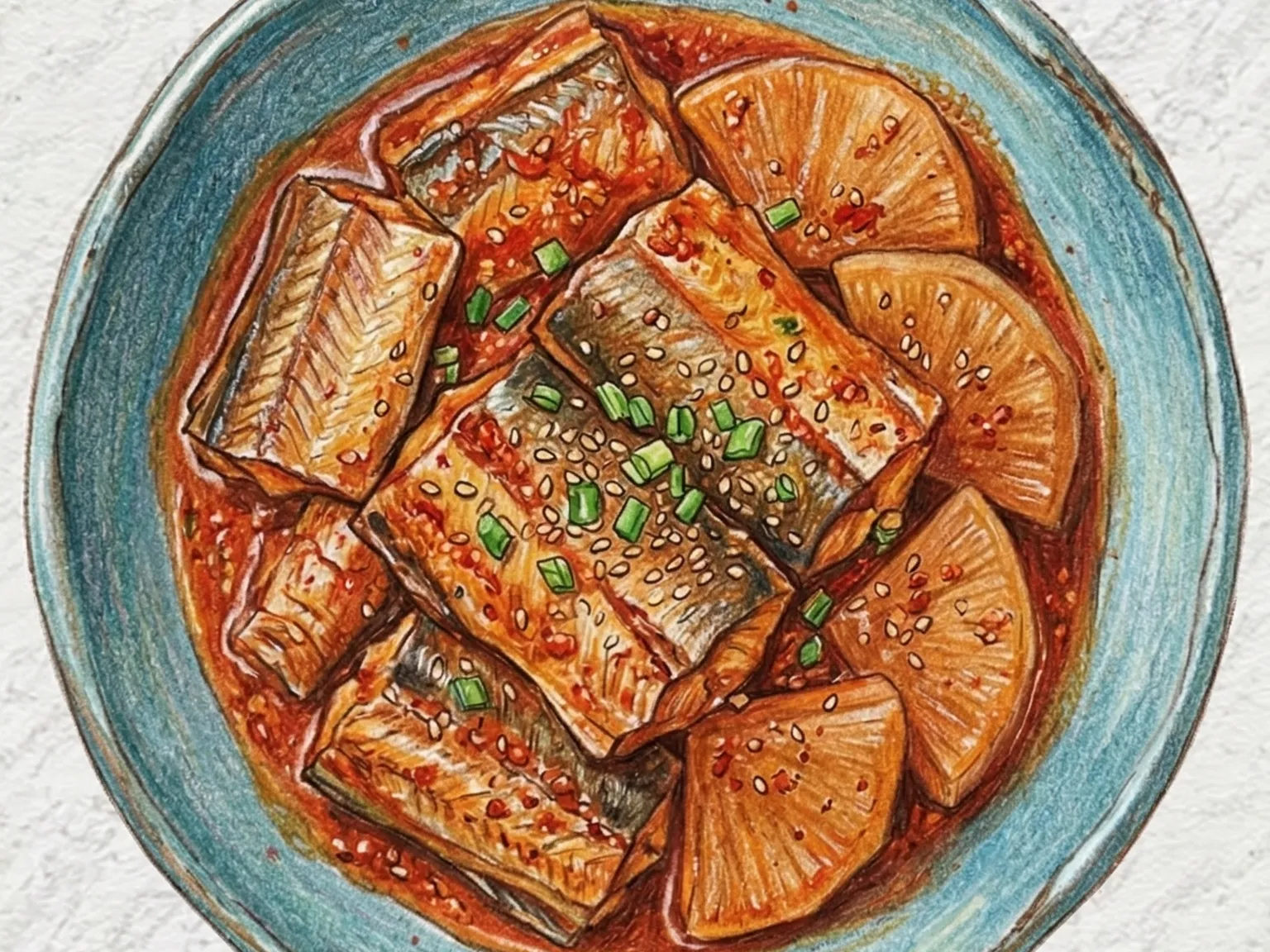
Ojingeo mu jorim is a Korean braised dish where radish is cooked first in a soy-based liquid until fully softened, then squid is added and the whole pot is reduced in a spiced sauce of gochugaru and gochujang. Giving the radish time to cook alone is the structural key to this dish: as it slowly absorbs the liquid and breaks down, it releases its natural sweetness into the broth, which merges with the salt and gentle umami of soy sauce to build the braising liquid into something more complex than its ingredients suggest. When the spice paste goes in, the resulting flavor sits at the intersection of heat and coolness - the particular sensation of Korean chili that stings without overwhelming. The single most important technique in this recipe is the timing of the squid. Squid turns rubbery when overcooked, and the window between tender and tough is narrow, so it is added only in the last five minutes of cooking. That brief time is enough for the squid to absorb the surrounding flavors while holding the springy, snapping bite that makes the dish texturally rewarding. Green onion stirred in at the finish adds a sharp herbal lift. The reduced sauce left in the pan is deliberately left shallow rather than thick, concentrated with the flavors of both the squid and the radish, and it is best used by spooning it over rice and eating everything together.

Korean Beef and Mushroom Rice Bowl
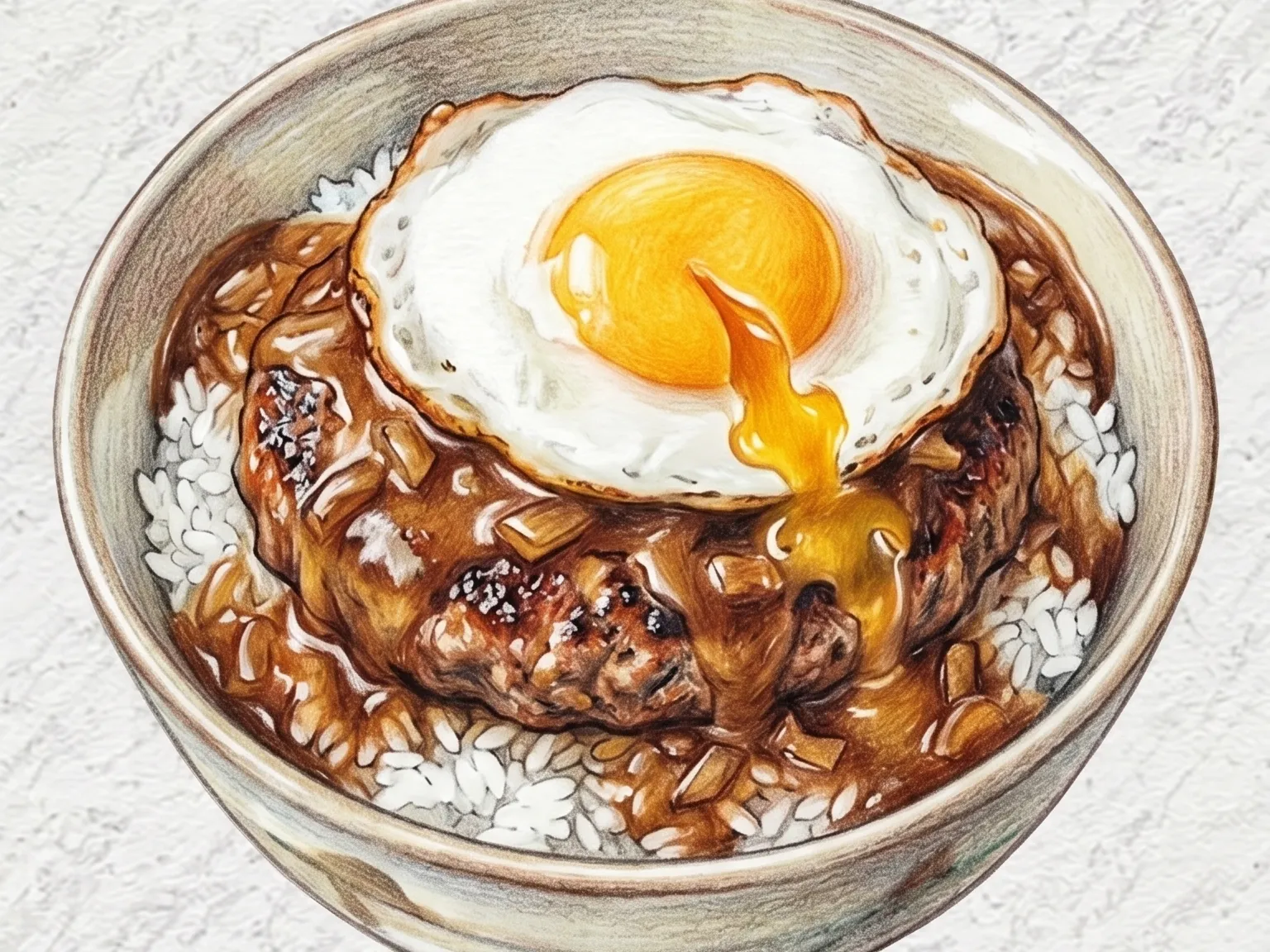
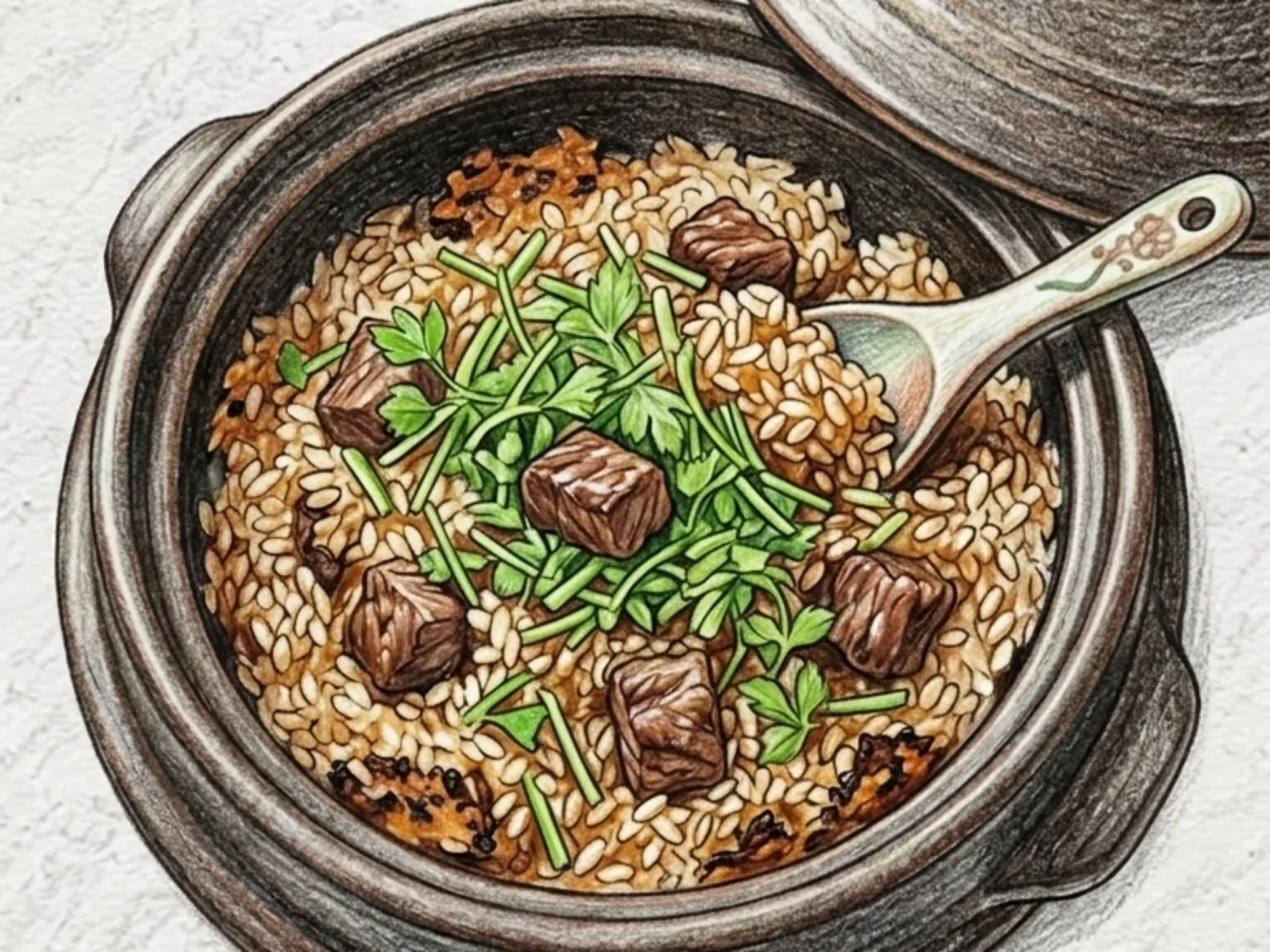
Sogogi-beoseot deopbap is a Korean beef and mushroom rice bowl that sautees sliced beef with king oyster and shiitake mushrooms in soy-butter sauce. The beef is seared first over high heat to develop a golden crust, then the thickly cut mushrooms go in and absorb the rendered juices, forming a naturally concentrated sauce in the pan. A knob of butter melted in at the end adds a creamy richness, while soy sauce ties everything together with a salty umami backbone. Minced garlic and sliced scallion layered into the stir-fry build an aromatic base that makes the topping fragrant the moment it hits the rice. The mushrooms hold their springy bite against the tender beef, giving each mouthful a satisfying textural contrast.

Korean Stir-fried Potato Strips
Gamja-bokkeum is a fundamental Korean side dish made by stir-frying julienned potatoes until they are just tender with a remaining crunch, and it belongs on almost any Korean table regardless of what else is being served. Soaking the julienned potatoes in cold water for five to ten minutes removes the surface starch that would otherwise cause the pieces to stick together in the pan and clump into a mass. The drained potatoes go into an oiled pan over medium heat with garlic, which provides a gentle aromatic backdrop without competing with the potato's mild natural flavor, and salt is the only seasoning needed to let that flavor come through. The key to the right texture is restraint: the potatoes are ready when they have turned translucent and the edges have picked up a faint golden color, and cooking past that point makes them soft rather than crisp. A finishing drizzle of sesame oil and a scattering of sesame seeds add a warm nuttiness that elevates the simple seasoning into a complete flavor. Thinly sliced cheongyang chili added during cooking produces a spicier variation, and a small amount of bell pepper or carrot adds color without changing the character of the dish. It is the kind of banchan that disappears from the table quickly despite its simplicity.

Korean Spicy Stir-Fried Fish Cake
Square sheets of fish cake are sliced into uniform, bite-size pieces before being stir-fried in a seasoned glaze that balances spicy heat with a clear sweetness. One specific technique used in this recipe involves blanching the fish cake pieces in boiling water for a very short period before they enter the pan. This process serves two functions: it removes the excess oil from the manufacturing process and causes the surface of the fish cake to open up. This allows the sauce to adhere more consistently to each piece during the cooking process. When stir-fried over high heat, the edges of the fish cake undergo a light caramelization. This results in a subtle smoky flavor that adds a layer of complexity to the overall dish. The base of the sauce consists of gochujang, soy sauce, and oligodang. Oligodang is a Korean corn syrup that is used to give the dish a shiny, glossy finish while simultaneously tempering the sharp intensity of the fermented chili paste. During the cooking process, sliced onions are added and allowed to soften. The moisture released by the onions helps to deglaze the pan, which reintegrates concentrated flavors into the sauce and contributes a natural sweetness. Green onions are added just before the heat is turned off so they retain their fresh aroma and provide a crisp texture that contrasts with the rich sauce. To finish the dish, toasted sesame seeds are scattered over the top to provide a mild nutty flavor. This side dish is frequently included in packed lunches because the glaze maintains its integrity and the flavors become more concentrated as the dish cools.

Korean Braised Potatoes and Quail Eggs
Gamja-mechu-rial-jorim is a Korean braised side dish of potatoes and hard-boiled quail eggs cooked together in a soy-based seasoning. What makes this banchan interesting is the way the two main ingredients absorb flavor differently: quail eggs, with their smooth, porous surface, drink in the soy liquid and turn a deep brown throughout the long simmer, while potato pieces soak up the sauce while simultaneously releasing starch that thickens the glaze. Oligosaccharide syrup adds natural shine and a gentle sweetness, and the combination of sesame seeds and sesame oil provides a nutty finish that rounds out the savory, sticky sauce. The result is a banchan that hits several textural notes at once -- firm quail eggs, yielding potato, and a reduced sauce that coats every surface. It has been a mainstay of Korean children's lunchboxes for decades, practical to prepare in large batches and flavorful enough to eat with plain white rice day after day.

Ratatouille
Ratatouille is a vegetable dish originating from the Provence region of France. It consists of eggplant, zucchini, tomato, and bell pepper, all of which are sliced into thin rounds. These vegetables are layered in overlapping circular patterns on top of a prepared sauce base before being placed in an oven for slow baking. The foundational sauce for this preparation begins by sauteing a combination of onion, garlic, and finely diced bell pepper in olive oil. As the dish cooks in the oven, the moisture that is naturally released from the layered vegetables combines with this sauteed base. This process results in the formation of a sauce that thickens naturally without the need for additional agents. Ensuring that every vegetable is cut to a precise and uniform thickness is a critical part of the preparation process. When the slices are inconsistent in size, the cooking results will be uneven, causing some thinner pieces to become overly soft or mushy while thicker pieces remain insufficiently cooked. The addition of thyme provides a subtle herbal quality that serves to enhance the inherent sweetness found in the various vegetables. While the dish can be eaten immediately, placing it in the refrigerator overnight and reheating it the following day allows the vegetable juices to integrate more thoroughly with the sauce. This resting period leads to a significant deepening of the overall flavor profile as the components merge together.

Mushroom Stroganoff
Mushroom stroganoff slices button mushrooms thickly and browns them in a wide pan over high heat until their moisture evaporates and they develop a deep caramelized color - crowding the pan causes them to steam rather than sear. Onion and garlic are sauteed until soft, then paprika, Dijon mustard, and Worcestershire sauce are stirred in briefly to bloom their flavors. Vegetable stock is added and simmered for five minutes to reduce and concentrate. The sour cream goes in last, off the heat or on very low flame, since high temperatures cause it to curdle and separate. The paprika's smoky warmth and the mustard's sharpness amplify the mushrooms' natural umami, while the sour cream wraps everything in a tangy richness. Served over pasta or rice, it makes a hearty vegetarian main course.

Korean Braised Beef Shank
Satae jjim is a Korean braised beef shank dish that begins with soaking the meat in cold water to draw out blood before any heat is applied. The shank is then simmered slowly with aromatics for well over two hours, a duration that is not optional but essential. Shank is dense with connective tissue that turns unpleasantly tough under short, high heat, but extended low heat dissolves that tissue entirely, leaving the beef soft enough to pull apart along its grain with minimal effort. Soy sauce and sugar build a deeply savory-sweet braising liquid that penetrates the meat as it cooks, glazing the exterior with a dark, lacquered sheen. Radish is added in the later stages so it can absorb the concentrated broth without completely losing its texture, contributing a clean, refreshing contrast to the richness of the meat. The finished braise tastes noticeably better after a night in the refrigerator, when the seasoning has fully permeated every fiber and the chilled gelatin, once reheated, naturally thickens the sauce.

Korean Spicy Blue Crab Soup
Ggotge-tang is a spicy Korean crab soup built around whole blue crabs that infuse the broth with a concentrated, briny seafood depth. The shells release their marine richness as they crack apart during simmering, forming the structural foundation of the pot. Doenjang dissolved into the broth adds fermented complexity, while gochugaru delivers a persistent heat that compounds with each spoonful. Radish chunks sweeten and clarify the liquid, and zucchini with green onion fill the bowl with color and contrasting texture. Before cooking, the crabs should be scrubbed clean under cold water and cleaned of their sand pouches and gills, which eliminates any off-flavors. Scoring the claws lightly with the back of a knife before the pot goes on the heat makes extracting the claw meat easier at the table. Female crabs in season carry bright orange roe inside the top shell that dissolves into the broth and intensifies its richness. The real reward at the end of the meal is mixing leftover rice directly into the crab's top shell with the residual roe and braising juices, a practice Korean diners regard as the true finish of the meal. Blue crab season peaks in spring and autumn.

Shakshuka (Eggs Poached in Spiced Tomato Sauce)
Shakshuka starts with onion and bell pepper softened in olive oil, followed by cumin, smoked paprika, and chili flakes bloomed briefly in the hot fat to unlock their oil-soluble aromas. Crushed whole tomatoes are added and simmered until the sauce thickens enough to hold its shape when a spoon is dragged through it. Eggs are cracked directly into wells made in the sauce, then the pan is covered and cooked for six to eight minutes so the whites set while the yolks stay runny. The spice profile delivers warm earthiness from the cumin, gentle smokiness from the paprika, and a low heat from the chili that builds gradually. Tearing bread and dragging it through a broken yolk and the surrounding sauce is the traditional way to eat it.

Tortellini in Brodo (Italian Stuffed Pasta in Clear Meat Broth)
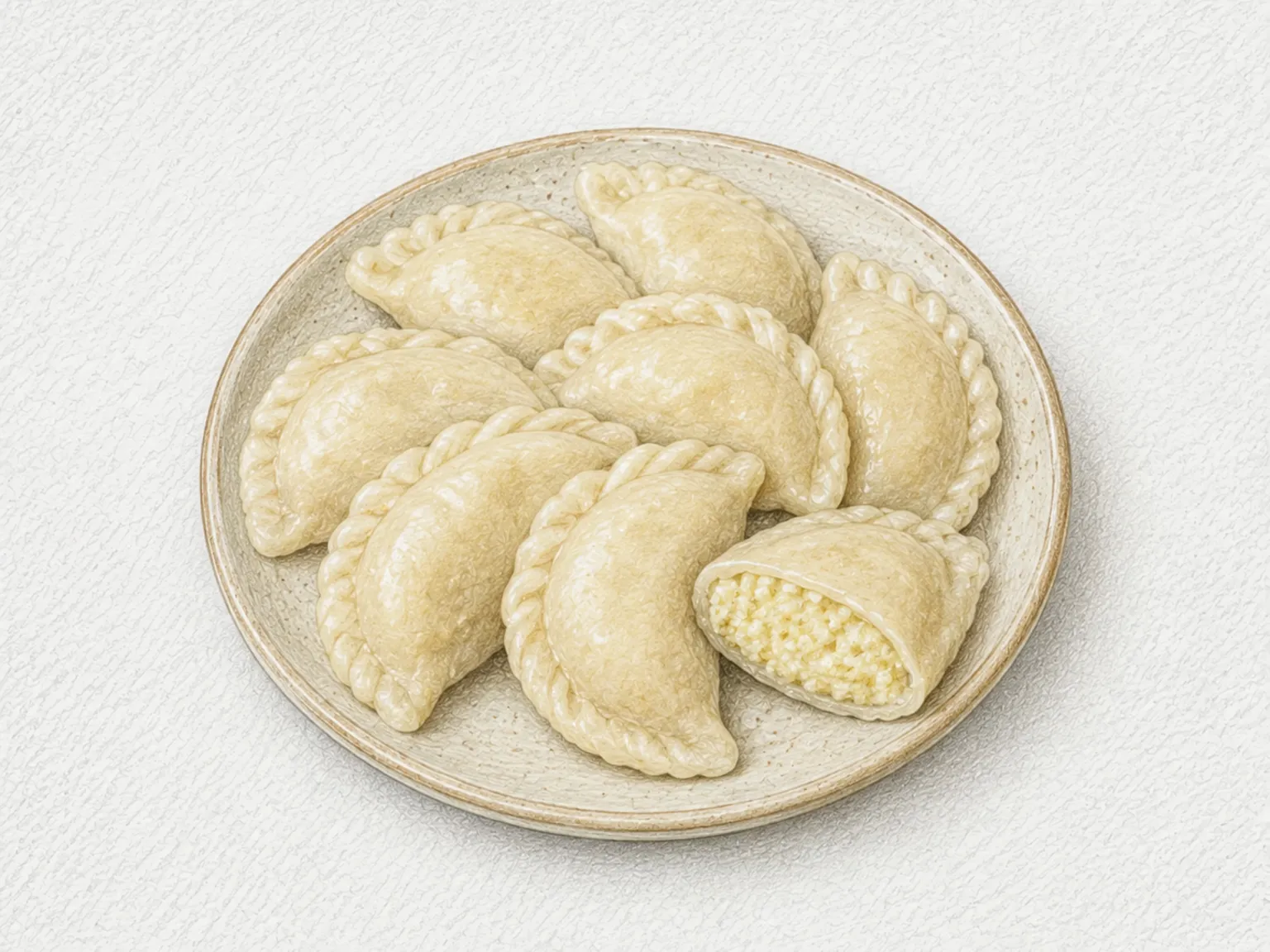
Tortellini in brodo is a traditional soup from Emilia-Romagna in which small stuffed pasta parcels are served in a clear, full-flavored meat broth. The filling typically combines pork, prosciutto, and Parmigiano-Reggiano. The broth - usually made from chicken or beef bones - is simmered long enough to develop deep body while remaining transparent. In Italy, this dish is closely associated with Christmas and holiday meals. Using store-bought tortellini, the recipe can be completed in about 40 minutes.

Korean Braised Pork Trotters
Jokbal is Korean soy-braised pork trotters slow-cooked for over two hours in a broth of soy sauce, garlic, ginger, onion, green onion, and whole peppercorn. The trotters are blanched first to remove impurities, then simmered gently until the collagen-rich skin turns glossy and the meat becomes fork-tender. The long braise allows the soy seasoning to penetrate deep into the layered skin and meat, creating a rich, savory flavor throughout. Traditionally sliced while still warm for the softest texture, jokbal is served with salted shrimp dipping sauce or ssamjang, wrapped in lettuce leaves - a classic Korean late-night food and drinking accompaniment.

Korean Pork & Swiss Chard Stir-fry
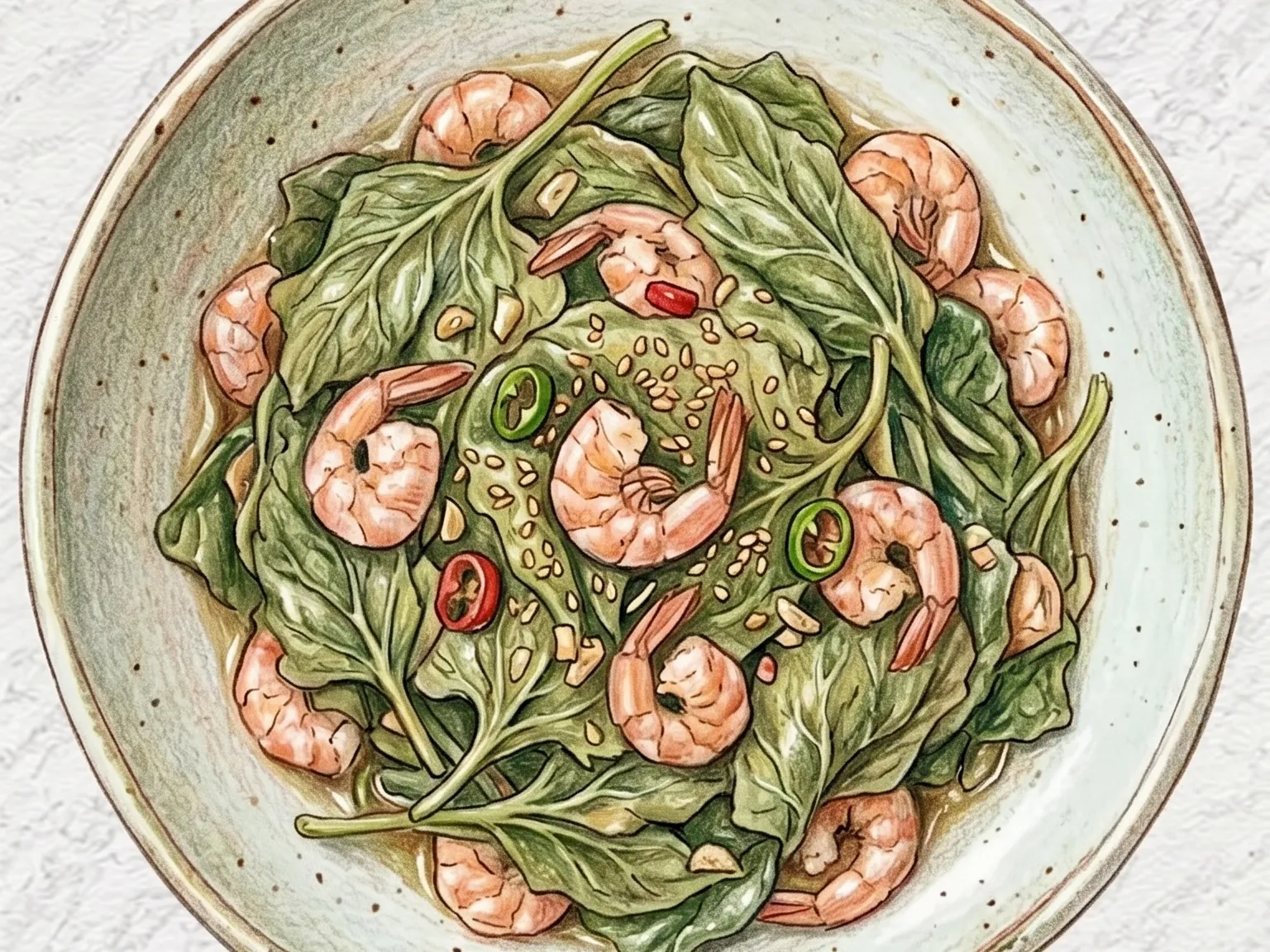
Geundae-doenjang-dwaejigogi-bokkeum is a home-style Korean stir-fry of pork and Swiss chard in a doenjang sauce. Separating the chard stems from the leaves and adding them to the pan at different times is the practical technique that makes the dish work: the stems go in first to cook through while keeping a slight crunch, and the leaves follow just long enough to wilt without becoming limp. Doenjang absorbs and suppresses any gamey undertones from the pork while adding a deep, fermented soybean backbone to the sauce. Sesame oil stirred in at the end wraps the entire dish in a warm, nutty finish. A small amount of gochugaru brings the mild heat that distinguishes Korean home-cooking from milder preparations. The earthy, slightly mineral quality of Swiss chard pairs naturally with the fermented funk of doenjang, and spooned over steamed rice the sauce soaks into the grains and turns the whole bowl into a complete, satisfying meal.

Korean Spicy Pork Bean Sprout Stir-fry (Kongbul)
Kongbul is a fiery Korean stir-fry of pork shoulder tossed in a gochujang-gochugaru-soy sauce blend and cooked over high heat, with bean sprouts added at the very end to preserve their crunch. The gochujang's thick spiciness combines with rendered pork fat for an intense, mouth-coating savoriness, while the bean sprouts release just enough moisture to keep the sauce from scorching. The sprouts must be stir-fried only until barely wilted to maintain their snap. Chopped scallion goes in last, and mixing the whole thing into a bowl of rice stretches this into a full, hearty meal.

Korean Soft Tofu Stew Rice Bowl
Fiery soft-tofu stew is cooked until bubbling and poured directly over a bowl of rice so the spicy broth seeps into every grain. The silky tofu breaks apart gently, creating pockets of creamy texture within the chili-laced soup. Cracking a raw egg into the simmering pot softens the heat and adds body to the broth. Variations with shrimp, clams, or pork each shift the base flavor in a different direction, making this a versatile single-bowl meal.

Korean Soy-Braised Pork and Potatoes
Dwaejigogi-gamja-jorim is a Korean braised side dish of pork shoulder and potatoes simmered together in a soy-based seasoning until the liquid reduces to a thick glaze. The pork is browned first in a hot pot to develop a seared surface, then water, soy sauce, sugar, garlic, and gochugaru are added and the whole pot is brought to a simmer. As the liquid reduces, the pork releases its fat and juices into the broth, enriching the sauce. The potatoes cook through in this liquid, drawing in the seasoning and emerging with a glossy, salty-sweet coating on the outside and a fluffy, starchy interior. Onion softens and releases its natural sweetness during cooking, moderating the saltiness of the soy base. The dish is finished when the liquid has reduced to just enough to coat the ingredients. Served with rice, the potatoes and braising liquid together function almost as a sauce. Protein and starch cooked together in a single pot make this a practical, satisfying meal.

Korean Black Bean Noodles
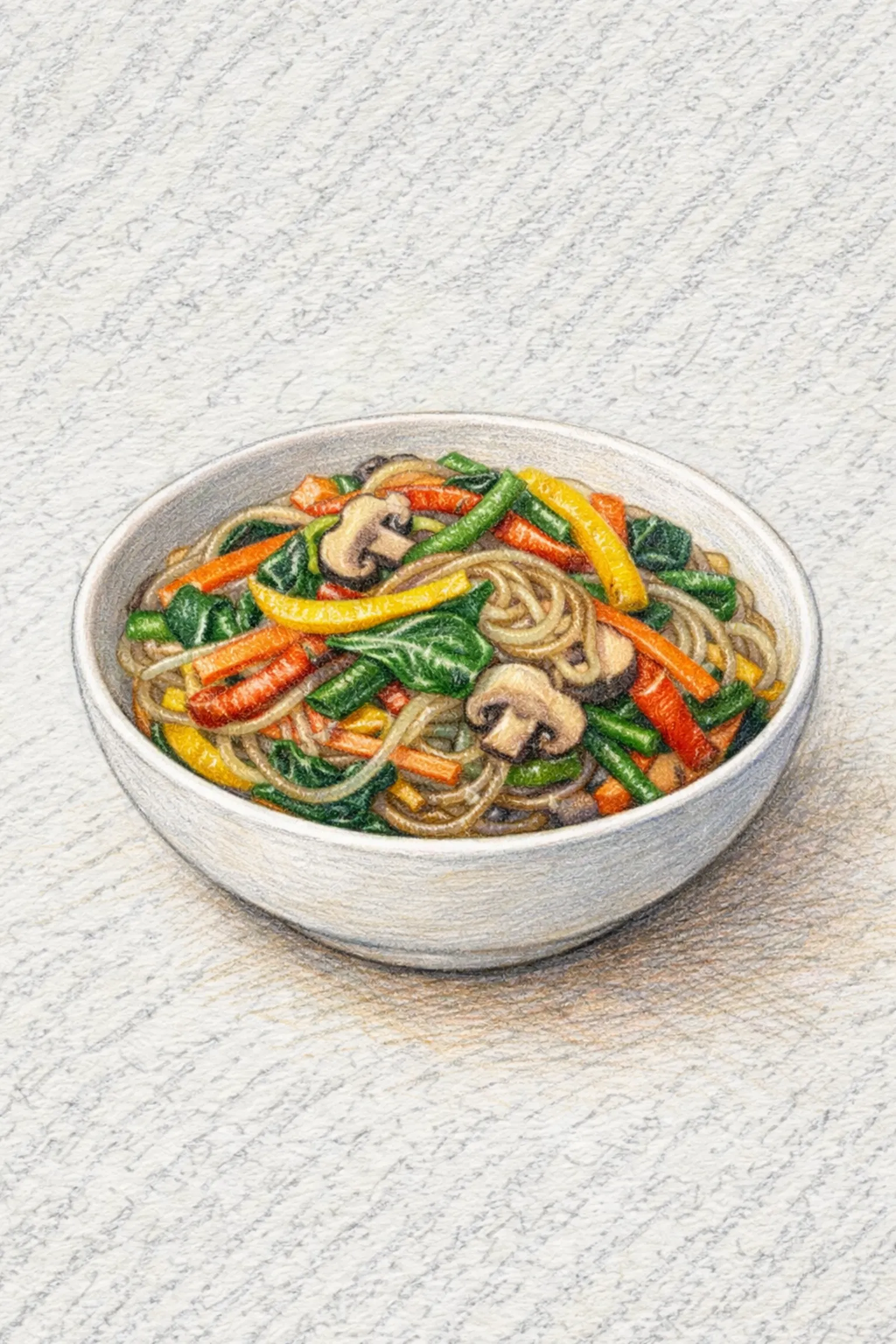
Jjajangmyeon is Korea's most iconic Chinese-Korean noodle dish, featuring thick, chewy wheat noodles buried under a glossy black sauce built from chunjang, a fermented black bean paste. Frying the paste in a generous amount of oil is the foundational step: the raw, slightly bitter edge of the chunjang burns off and transforms into a mellow, toasty sweetness that forms the soul of the dish. Diced pork belly, onion, potato, and zucchini are stirred into the oil-fried paste and cooked until soft, contributing natural sweetness and body to the sauce. A starch slurry thickens the sauce to a dense, velvety consistency that clings to every strand of noodle without pooling at the bottom of the bowl. Shredded raw cucumber piled on top offers a cool, crisp contrast to the warm, sticky sauce. In Korean daily life, jjajangmyeon carries cultural weight well beyond its ingredients: it is the instinctive order on moving day, graduation day, and military send-off gatherings.

Korean Webfoot Octopus Tofu Stew
Jjukkumi dubu jjigae is a Korean stew of webfoot octopus and soft tofu cooked in a gochugaru-seasoned anchovy broth. A full 450 grams of jjukkumi goes into the pot, providing a bouncy, chewy texture in every spoonful. The tofu absorbs the spicy broth as it cooks, creating a soft counterpoint to the firm octopus, and the contrast between the two textures is a central part of the dish. Rice wine added early in the cooking process neutralizes any fishiness from the seafood, keeping the broth clean-tasting rather than pungent. Soup soy sauce deepens the umami base without darkening the broth too heavily, and gochugaru provides the heat. Zucchini and onion contribute natural sweetness that rounds out the broth and prevents the salt from the seafood from feeling sharp or one-dimensional. Jjukkumi becomes rubbery if overcooked, so removing the pot from heat three to four minutes after it comes back to a boil is the key step for keeping the octopus tender and springy rather than tough.

Korean Spicy Stir-fried Squid
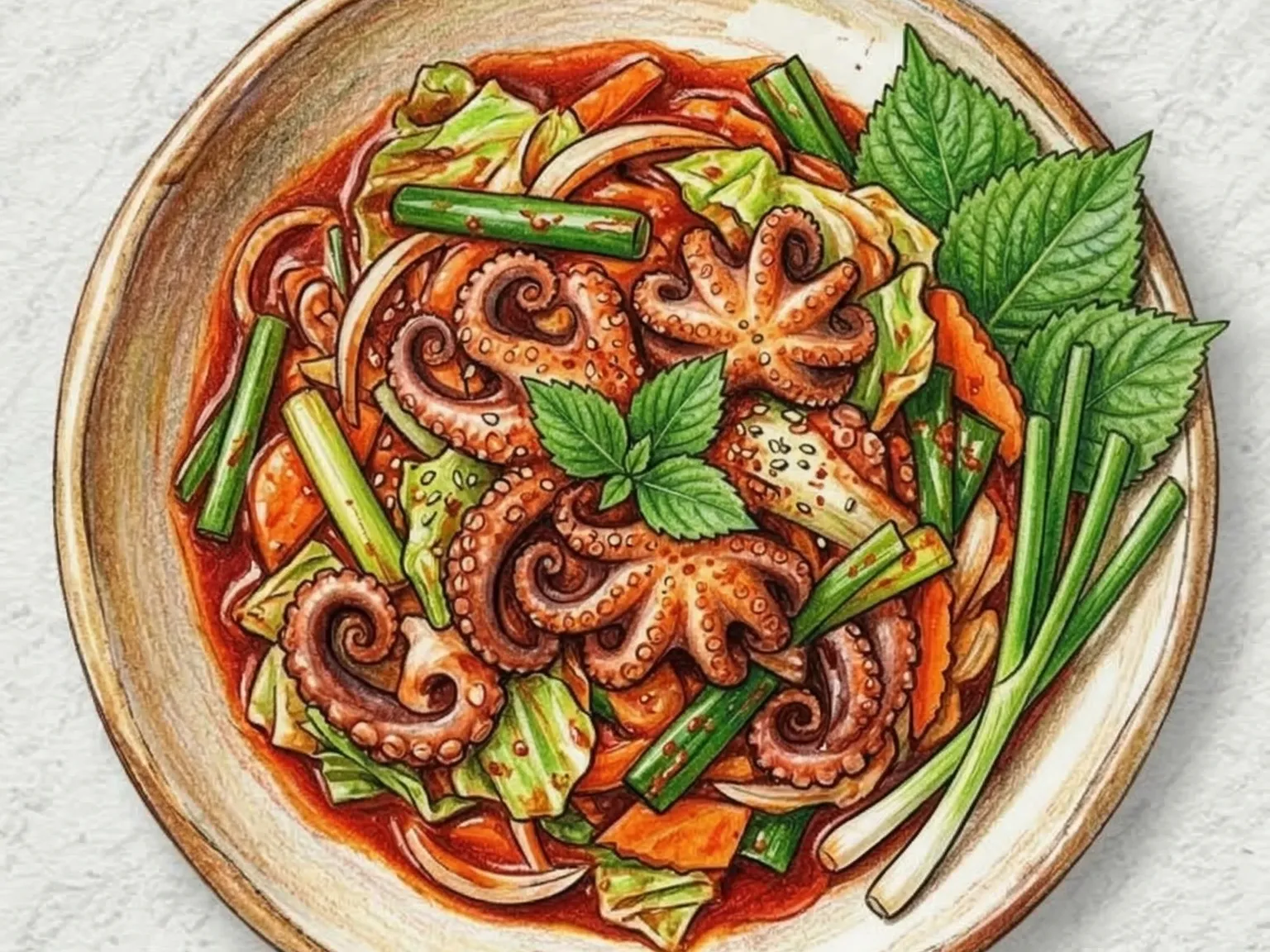
Ojingeo-bokkeum is one of Korea's most popular spicy stir-fries, featuring scored squid bodies and tentacles tossed over high heat with onion, carrot, cabbage, and scallion in a gochujang-gochugaru-soy-sugar sauce. Crosshatch scoring on the squid allows the thick, spicy sauce to penetrate deeply, ensuring consistent flavor in every bite. The entire stir-fry takes only a few minutes on maximum heat - essential for keeping the squid springy rather than rubbery. Cabbage and carrot go in near the end to retain their crunch, and a final sesame oil drizzle ties the smoky wok char to the bold red seasoning.

Korean Stir-fried Bracken Fern
Gosari-bokkeum is a classic Korean side dish of rehydrated bracken fern stir-fried with soy sauce, minced garlic, and perilla oil. The fern absorbs the nutty perilla aroma during cooking, while soy sauce layers in a deep, earthy savoriness. Its texture stays tender with a slight bite, making it easy to eat alongside other dishes. Gosari-bokkeum is a staple component of bibimbap and appears on nearly every Korean holiday table as one of the essential namul dishes. It is often paired with other seasonal greens like wild garlic or chamnamul to round out a traditional spread.