Side dishes Recipes
186 recipes. Page 3 of 8
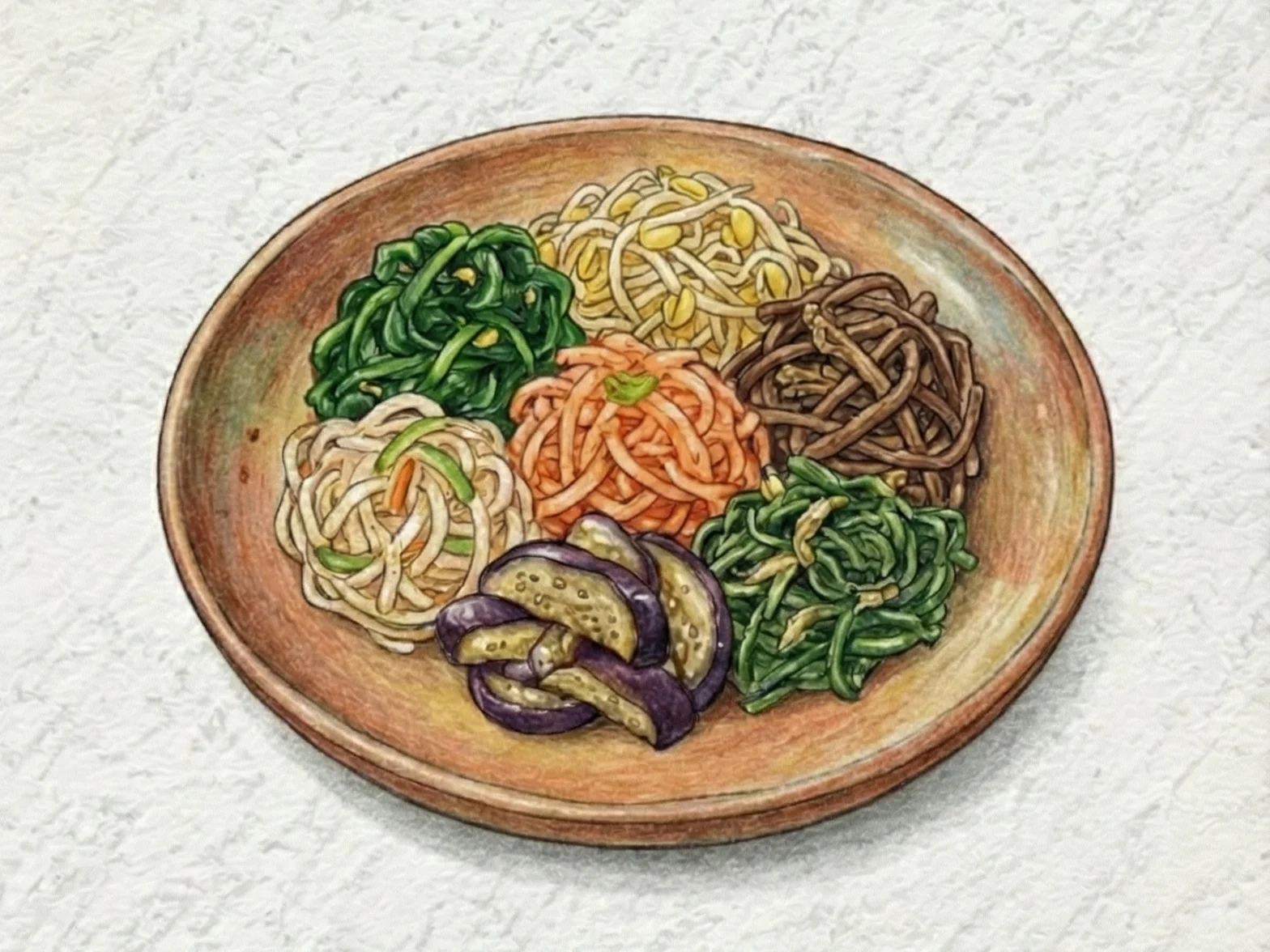
Side dishes (banchan) are the heart of Korean dining culture. A typical meal features multiple small plates - seasoned vegetables (namul), braised dishes (jorim), pickled items, and salted seafood. Classics like spinach namul, bean sprout salad, and stir-fried anchovies can be prepared in advance and enjoyed over several days.
Great banchan balances seasoning with the natural flavor of each ingredient. Sesame oil, perilla oil, soy sauce, and fermented pastes work together to pack deep flavor into every small serving.
Korean Braised Tofu with Shrimp
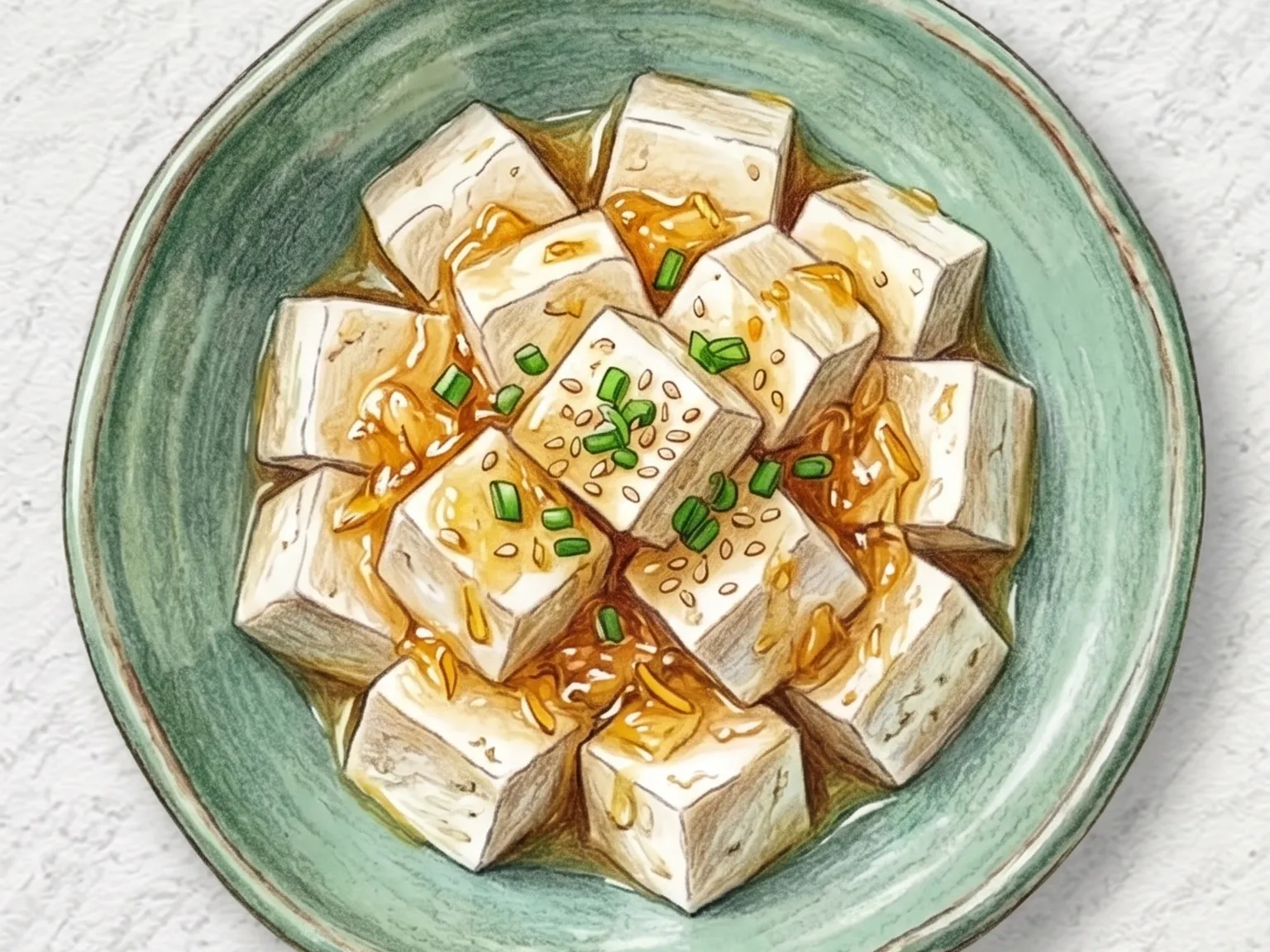
Dubu-saeu-jorim pairs pan-seared tofu with whole shrimp in a soy-based braising sauce, stepping well beyond the usual tofu-only preparations that appear in everyday banchan. The tofu is seared first until golden on both sides to develop a lightly firm crust that resists breaking apart during the braising stage, then set aside while shrimp cook briefly in the same pan, picking up the fond left by the tofu. The braising liquid -- soy sauce, minced garlic, sugar, cooking wine, and a touch of gochugaru -- goes in next, and both proteins return to the pan to simmer together for five minutes over medium heat. The shrimp release their marine sweetness into the sauce as they tighten and curl, and the porous interior of the tofu absorbs that combined soy-seafood flavor throughout each cube. Adjusting the simmer time controls the final sauce concentration: shorter for a looser, silkier coat; longer for a more intensely reduced glaze. The textural pairing is the dish's central appeal -- yielding, custardy tofu against the springy, snapping bite of the shrimp. Adding sliced green onion or fresh chili introduces another layer of fragrance, and scaled up in quantity, the dish works just as well spooned over steamed rice as a satisfying one-bowl meal.
Korean Crumbled Tofu Stir-fry
Dubu seoboro - crumbled tofu stir-fry - is a Korean banchan that transforms a block of tofu into something resembling a dry, granular scramble. The tofu is crumbled by hand into rough, irregular pieces rather than diced, creating a range of textures from large curds to fine crumbs that hold seasoning differently. Squeezed thoroughly in a cloth to remove as much moisture as possible, it then goes into a hot pan with diced carrot, onion, and zucchini. The key technique is cooking on high heat without stirring too often, allowing the tofu crumbles to develop lightly golden edges before soy sauce and sesame oil go in at the end. The result is a fluffy, granulated side dish that soaks into rice like a savory topping - satisfying without being rich. Popular in Korean daycare and school lunches because it delivers plant protein in a form that children eat willingly, and it travels cleanly in lunchboxes without leaking. The ingredient cost is low and the cooking time short, which makes it one of the first recipes to reach for when the refrigerator is running low on banchan.
Korean Tofu Yuja Salad (Pan-Fried Tofu Citrus Dressing)
Dubu yuja muchim brings an uncommon citrus dimension to Korean tofu banchan by using yuja-cheong - a preserve of yuzu-like Korean citrus rind in honey or sugar. Soft tofu is blanched briefly to warm through and firm up slightly, then cut into bite-sized pieces and dressed while still warm so the pores open to absorb the vinaigrette. The dressing blends yuja-cheong with soy sauce, vinegar, and sesame oil - the citrus peel's fragrant bitterness cutting through the tofu's blandness in a way that soy sauce alone cannot achieve. Yuja has been cultivated on Korea's southern coast - especially Goheung and Namhae - since the Joseon era. The dish sits in a category between Korean and Western salad sensibilities, light enough to serve as a starter. Best eaten cold or at room temperature within a few hours of assembly, as the tofu's texture begins to soften with prolonged marination. The transparent sweetness of the yuja-cheong combined with the sharp edge of vinegar transforms tofu into something with an entirely different flavor register.
Korean Seasoned Fatsia Shoots
Dureup, the young shoots of aralia elata, emerge for barely three weeks each April from thorny stalks, ranking among the most prized of Korea's spring mountain vegetables. Each shoot carries a distinctive piney, slightly resinous fragrance that cannot be found in any other Korean namul. Blanching the shoots in salted water for exactly 40 seconds softens the fibrous base of the stalk while preserving the volatile aromatic oils concentrated at the leaf tips. The traditional dressing is cho-gochujang, a vinegared chili paste whose acidity and sweetness provide a flavor framework without overwhelming the shoots' natural bitterness. In Korean folk medicine, dureup has long been associated with blood sugar regulation, which contributes to the premium it commands at spring markets. The fragrance fades rapidly after harvest, so the shoots are best eaten the same day they are picked, and even refrigerated storage should not extend beyond one day.
Korean Blanched Young Napa with Doenjang
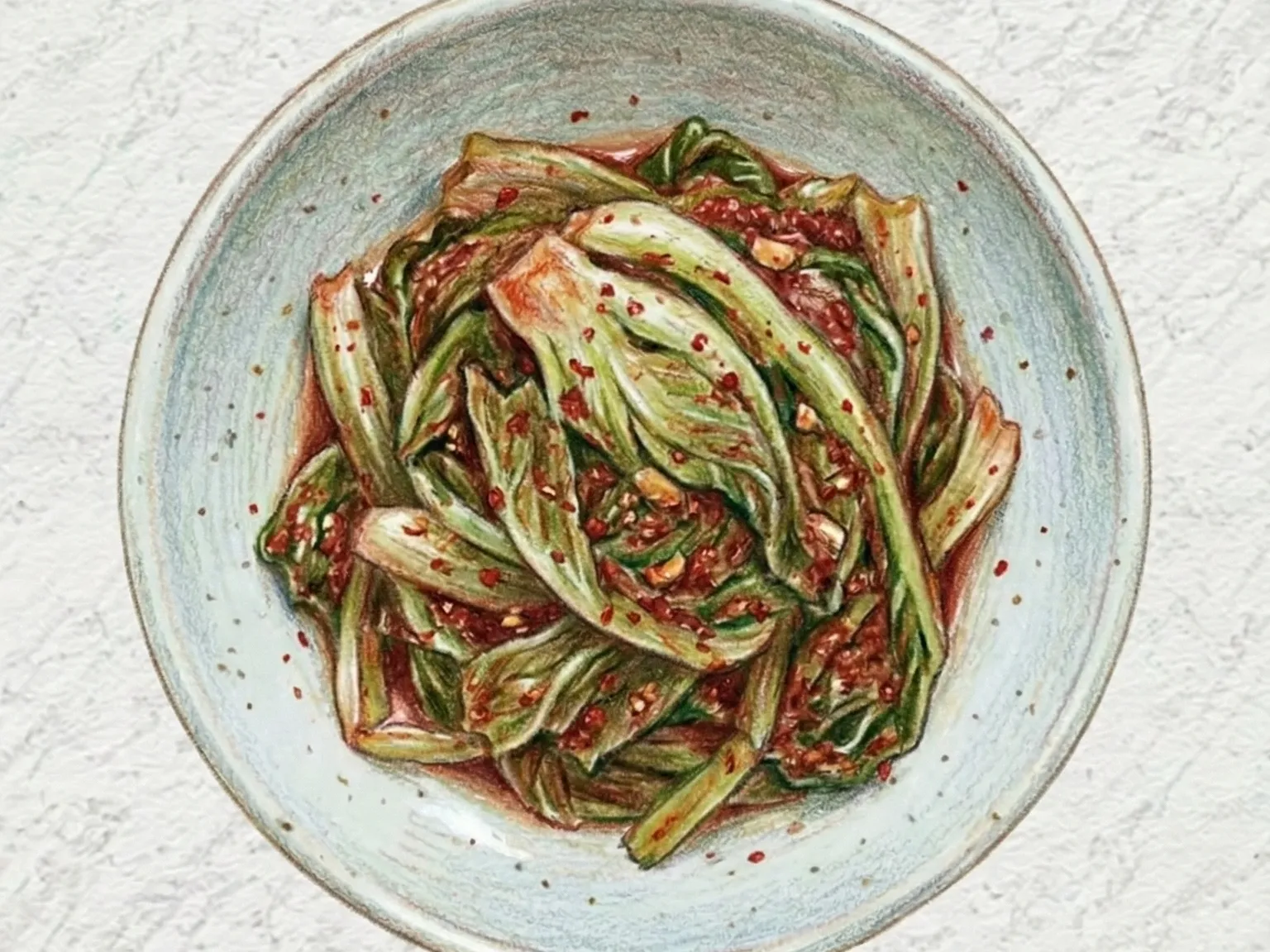
Eolgari is young napa cabbage cut before the head has formed a tight ball, leaving it with thinner leaves and more tender ribs than fully mature baechu. A quick blanch of about one minute wilts the leaf while the pale ribs retain a gentle crunch that holds even after seasoning. After blanching, the cabbage is squeezed firmly to remove water, then dressed with doenjang, soup soy sauce, minced garlic, and sesame oil. The fermented paste penetrates the tender leaves quickly, spreading a salty, earthy coating evenly through each piece. The flavor profile is mild and round with no sharp edges, making it one of the most approachable doenjang-based namul dishes for people who are new to Korean fermented seasonings. The dish comes from the Korean countryside tradition of turning whatever young greens were growing between major kimchi-making seasons into simple dressed vegetables. Eolgari is a seasonal green, available at Korean markets from late spring through early autumn.
Korean Soy-Braised Fish Cake
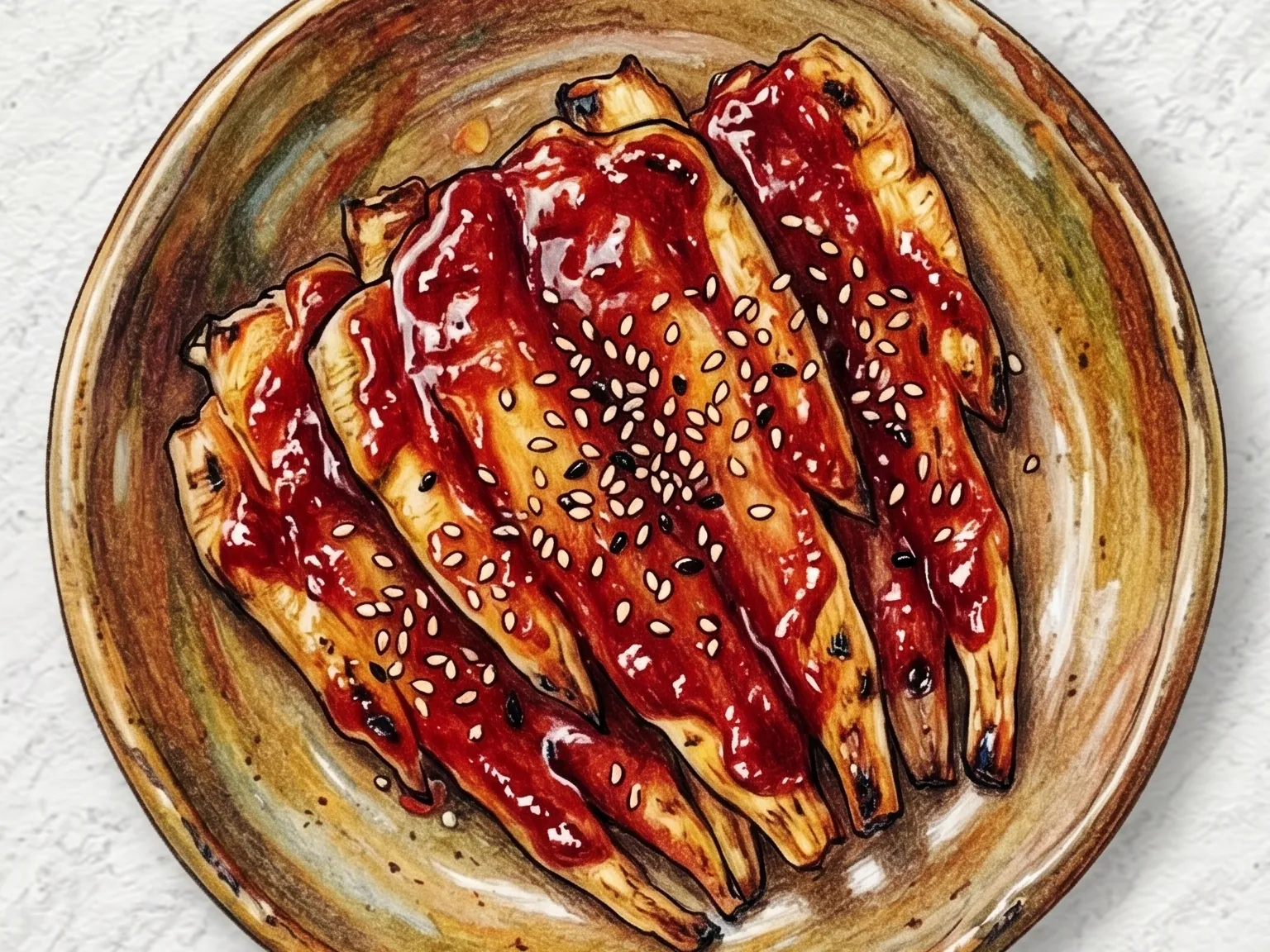
Eomuk-jorim is a braised Korean fish cake banchan in which triangles or rectangles of eomuk are simmered in a mixture of soy sauce, rice syrup, garlic, and water. Korean eomuk is a processed fish product made by grinding white fish flesh with starch and shaping the paste into flat sheets or molded forms -- denser and chewier than Japanese kamaboko, with a texture that holds its structure through the long braise without turning soft. As the liquid reduces by roughly half over ten minutes of steady simmering, the sauce concentrates into a thick, sticky glaze that adheres to each piece. Adding a sliced cheongyang chili near the end of cooking introduces a subtle heat that cuts through the sweetness of the rice syrup and gives the banchan a sharper edge that pairs well with plain rice. One of the most practical side dishes in the Korean repertoire, eomuk-jorim keeps in the refrigerator for up to a week and, like many braised preparations, deepens in flavor as the soy seasoning continues to penetrate the fish cake over subsequent days. Its low cost and the ease of making large batches in a single pan explain its decades-long presence in school cafeterias, packed lunchboxes, and the everyday home kitchen.
Korean Seasoned Eoseuri Herb Namul
Eoseuri, Korean cow parsnip with the botanical name Heracleum moellendorffii, is a wild mountain herb foraged from Korea's central and northern highlands during early spring. Its thick stems and broad leaves carry a layered fragrance that combines celery, flat-leaf parsley, and a faintly medicinal undertone, a complexity that no cultivated green can replicate. Blanched for under a minute to soften the texture while preserving a slight resistance in the stems, the greens are dressed with gochujang, vinegar, minced garlic, and sesame oil. The bitterness is sharper than common namul varieties like spinach or bean sprouts, which makes eoseuri polarizing for first-time tasters, but those who grow accustomed to it find that milder greens no longer satisfy in the same way. In Korean mountain villages, eoseuri has traditionally been gathered alongside chwinamul and chamnamul each spring to compose the seasonal namul spread on the table, and because the plant disappears quickly after spring peaks, it is a genuinely fleeting ingredient that marks the brief window between late winter and early summer.
Korean Stir-Fried Eggplant Banchan
Gaji bokkeum turns eggplant, a vegetable Koreans have cultivated since the Goryeo period, into a quick, oil-glazed banchan where cooking speed matters as much as the seasoning. The eggplant is sliced into half-moons, and the pan must be smoking hot before they go in - any hesitation and the pieces steam rather than sear, collapsing into a soggy mass. High heat with restrained oil produces lightly charred edges while the interior becomes silky and almost custardy, two contrasting textures in the same bite. Soy sauce, garlic, and sesame oil go in during the final thirty seconds, sizzling against the hot surface and coating each piece in a thin, caramelized glaze. The result has a concentrated, clean umami quality that a braised preparation cannot match. Because the spongy cellular structure of eggplant absorbs oil rapidly, starting with too much fat leaves each piece greasy rather than glazed - the dish relies on pan temperature, not oil volume. Korean home cooks return to this recipe as a weeknight banchan precisely because the whole process, from cutting board to table, takes under ten minutes, and the payoff is consistently good.
Korean Steamed Eggplant Vinegar Salad
Gaji-chorim-muchim takes eggplant in the opposite direction from bokkeum preparations, which rely on high heat and oil. Here, the eggplant is gently steamed and chilled before being dressed cold with a vinegar-forward sauce. The eggplant is halved lengthwise, scored on the flesh side, and steamed for eight minutes until the interior turns translucent and completely soft. After cooling fully, it is torn by hand along the grain into long strips, exposing a rough, irregular surface that grips the dressing. Soy sauce, rice vinegar, sugar, minced garlic, and gochugaru combine into a bright, tangy-spicy dressing that lifts the eggplant's subtle natural sweetness rather than masking it. Steamed eggplant torn into strips has a silky, almost slippery quality that is entirely distinct from stir-fried or grilled eggplant. The dressing can be made more generous to serve the dish as a refreshing cold salad style. A few drops of sesame oil and a scatter of sesame seeds finish it off with a nutty note. This banchan is especially well suited to Korea's hot and humid summer months.
Korean Eggplant Pancakes (Egg-Battered Pan-Fried Eggplant)
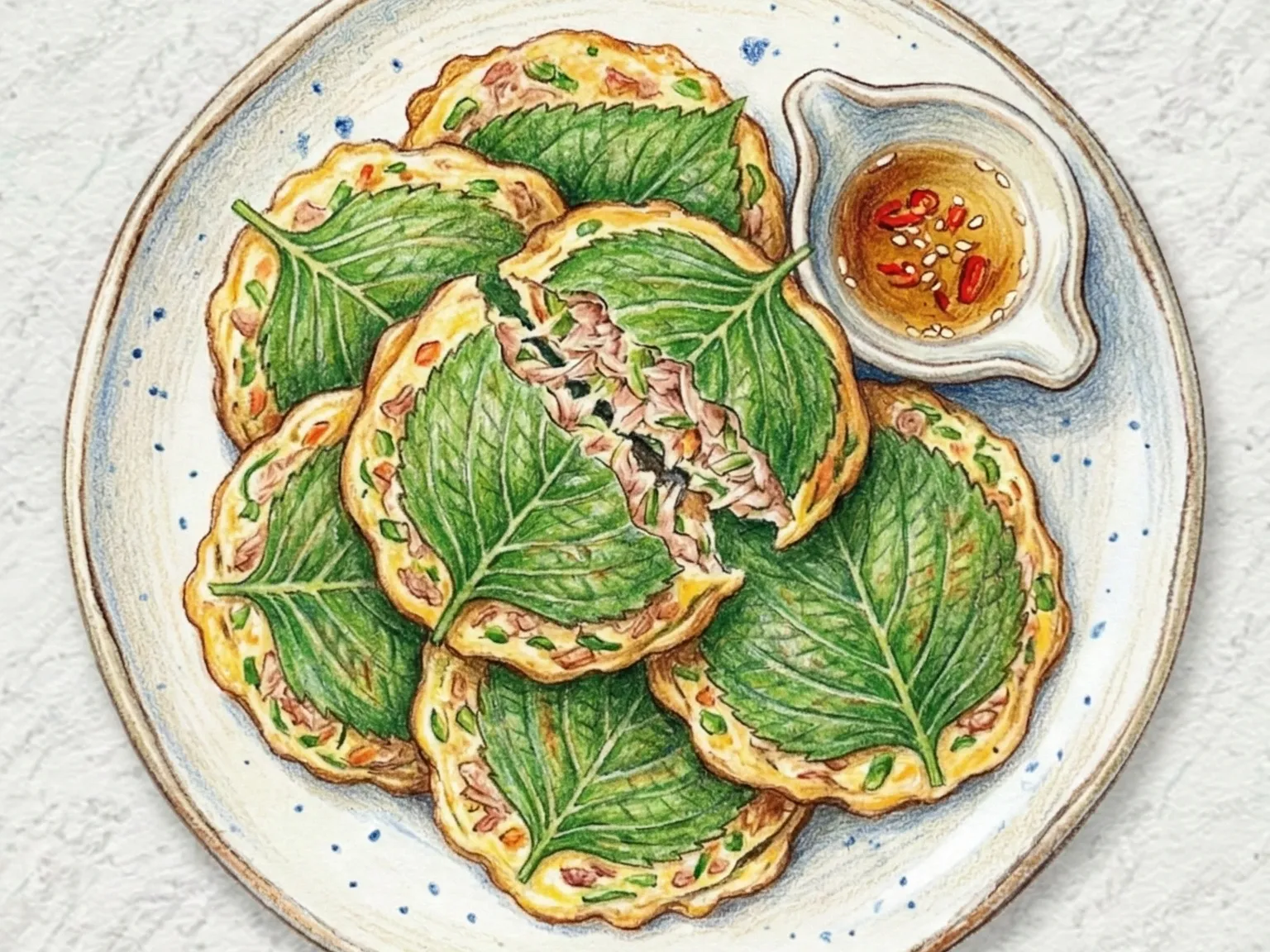
Gaji-jeon belongs to the Korean jeon tradition of vegetables dipped in egg wash and pan-fried in oil, a technique integral to ancestral rites and holiday tables. Eggplant is cut into rounds about 7mm thick, thin enough to cook all the way through but thick enough to keep a soft, yielding center. A light dusting of flour before the egg wash is necessary for the batter to adhere and stay intact in the pan. As the egg coating sets into a golden, lacy crust over the heat, the eggplant inside steams in its own moisture until it collapses into a custardy, almost dissolving texture. The appeal of this jeon lies entirely in the contrast between the crisp, faintly eggy exterior and the creamy interior that gives way with almost no resistance. Dipping each piece in a simple soy and vinegar sauce cuts through the richness of the egg crust and highlights the eggplant's subtle sweetness. Korean families commonly fry gaji-jeon alongside hobak-jeon and other vegetable jeon for Chuseok. It can be fried the day before and held at room temperature without the flavor deteriorating significantly.
Korean Steamed Eggplant Namul
Gaji namul strips eggplant down to its most restrained form, a banchan dressed with nothing more than soy sauce, garlic, and sesame oil. The eggplant is halved and steamed for around seven minutes until the flesh is uniformly tender throughout, then pulled into long shreds by hand along the grain. Tearing rather than cutting creates a rougher, more uneven surface that grips the minimal seasoning more effectively than clean knife edges would. There is no chili powder, no vinegar, no fermented paste. The soy sauce and sesame oil soak into the porous, spongy flesh, staining it a deep, glossy color and pulling the flavors in without competing with the eggplant itself. The texture is softer than almost any other Korean namul, collapsing gently when pressed and practically dissolving when stirred into warm rice. Gaji namul is a traditional dish in Korean Buddhist temple food, a cuisine where the absence of strong flavors is a deliberate choice rather than an oversight, and where simplicity is the point.
Korean Stuffed Eggplant Seon
Gaji-seon is a Joseon-era royal court banchan belonging to the seon category, a class of preparations in which vegetables are stuffed with a seasoned filling and steamed. The eggplant is scored at regular intervals with deep cuts that stop short of the bottom, creating accordion-like pockets along the length of the vegetable. A filling of minced pork or beef combined with crumbled tofu, scallion, and sesame oil is pressed firmly into each slit, then the stuffed eggplant is steamed for fifteen minutes. During steaming, the juices from the filling soak into the softening eggplant flesh, and the two components merge into a single flavor. The labor of stuffing each eggplant individually made this a dish historically reserved for guests and formal occasions rather than everyday meals. After steaming, a light soy-based sauce is spooned over the top. The sharp textural contrast between the near-dissolving eggplant skin and the firm, savory filling produces a refinement that clearly separates seon from ordinary stir-fried or braised eggplant preparations.
Korean Stir-fried Julienne Potatoes
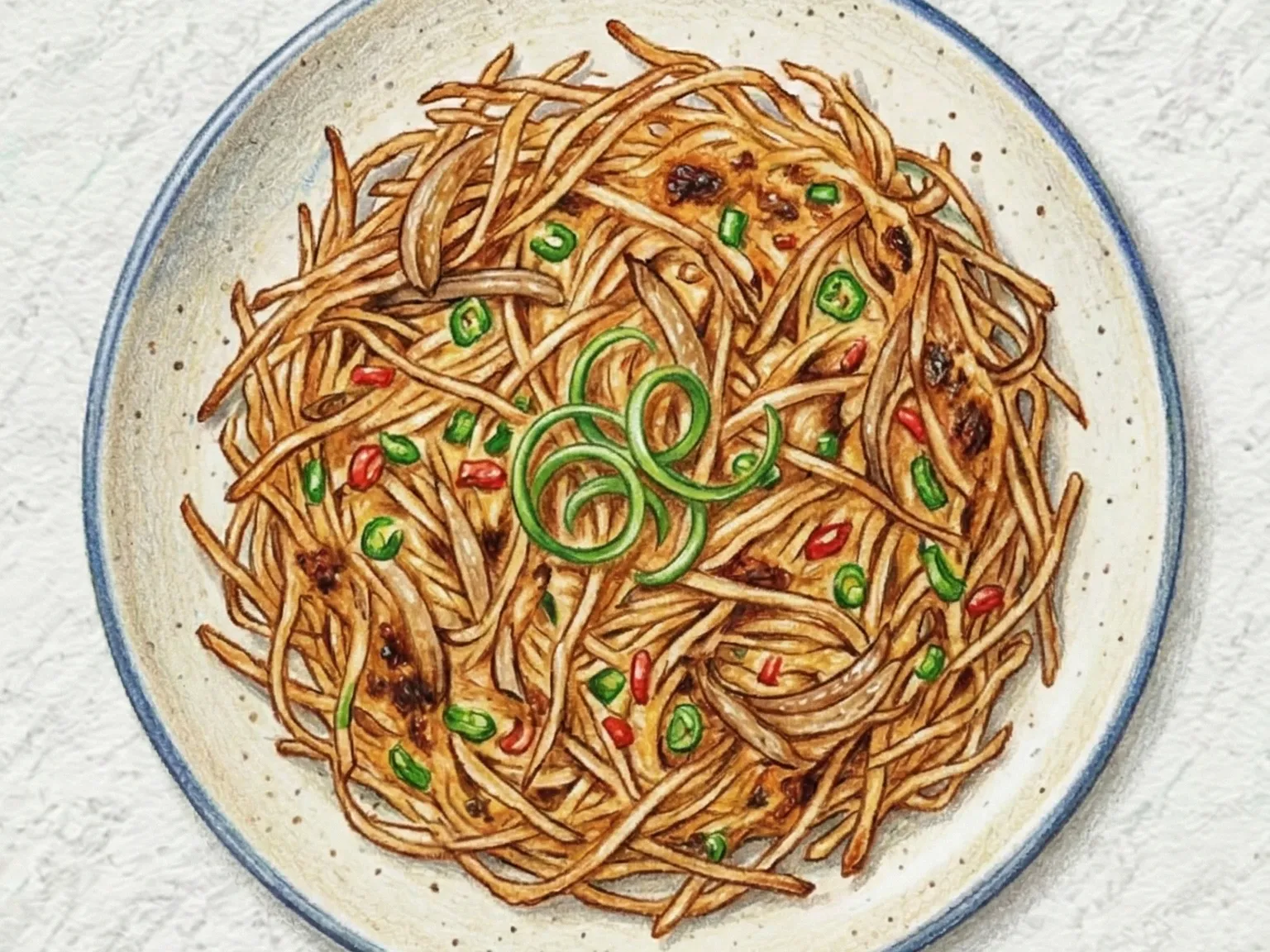
Gamja-chae-bokkeum is a stir-fried julienned potato banchan where the cutting technique determines the outcome more than any seasoning. Potatoes are julienned into matchstick-thin strips, then soaked in cold water for at least ten minutes to rinse away surface starch - a step that is not optional. Skipping it means the strips clump together in the pan, glueing themselves into a starchy mass that cannot be salvaged. After draining and drying thoroughly, the strips hit a hot, lightly oiled pan and cook for just three to four minutes, stirred and tossed frequently to prevent browning. The target is a strip that is fully cooked through but retains an audible crunch when bitten, a narrow window between underdone rawness and mushy softness that takes practice to hit consistently. The seasoning is deliberately minimal - salt and a small splash of vinegar, occasionally a little sesame oil - to let the potato's clean, starchy sweetness remain the central flavor. Sliced cheongyang chili stirred in at the end adds a sharp heat without muddying the clean taste profile. This banchan has been a fixture of Korean school lunches and company cafeterias for decades precisely because it is vegetarian, inexpensive, and universally acceptable to even the most selective eaters.
Korean Braised Potatoes (Soy-Glazed Braised Potato Banchan)
Gamja-jorim - soy-braised potatoes - is among the top five most frequently made banchan in Korean households, alongside kimchi, kongnamul, and gyeran-mari. Small potatoes are parboiled whole until just fork-tender, then transferred to a mixture of soy sauce, sugar, rice syrup, garlic, and water. The braising happens over medium-low heat for fifteen minutes with the lid off, allowing the sauce to reduce gradually into a thick, syrupy glaze. Constant gentle stirring prevents the soft potatoes from sticking or breaking apart. As the liquid evaporates, each potato develops a dark amber, lacquered surface while the interior remains starchy and yielding. The taste is straightforwardly sweet-salty with a garlic undertone - comfort food in its most elemental form. Korean mothers often make a large batch on weekends, refrigerating it to serve cold throughout the week. The dish improves overnight as the glaze continues to penetrate the potato's interior.
Korean Stir-fried Potato and Shrimp
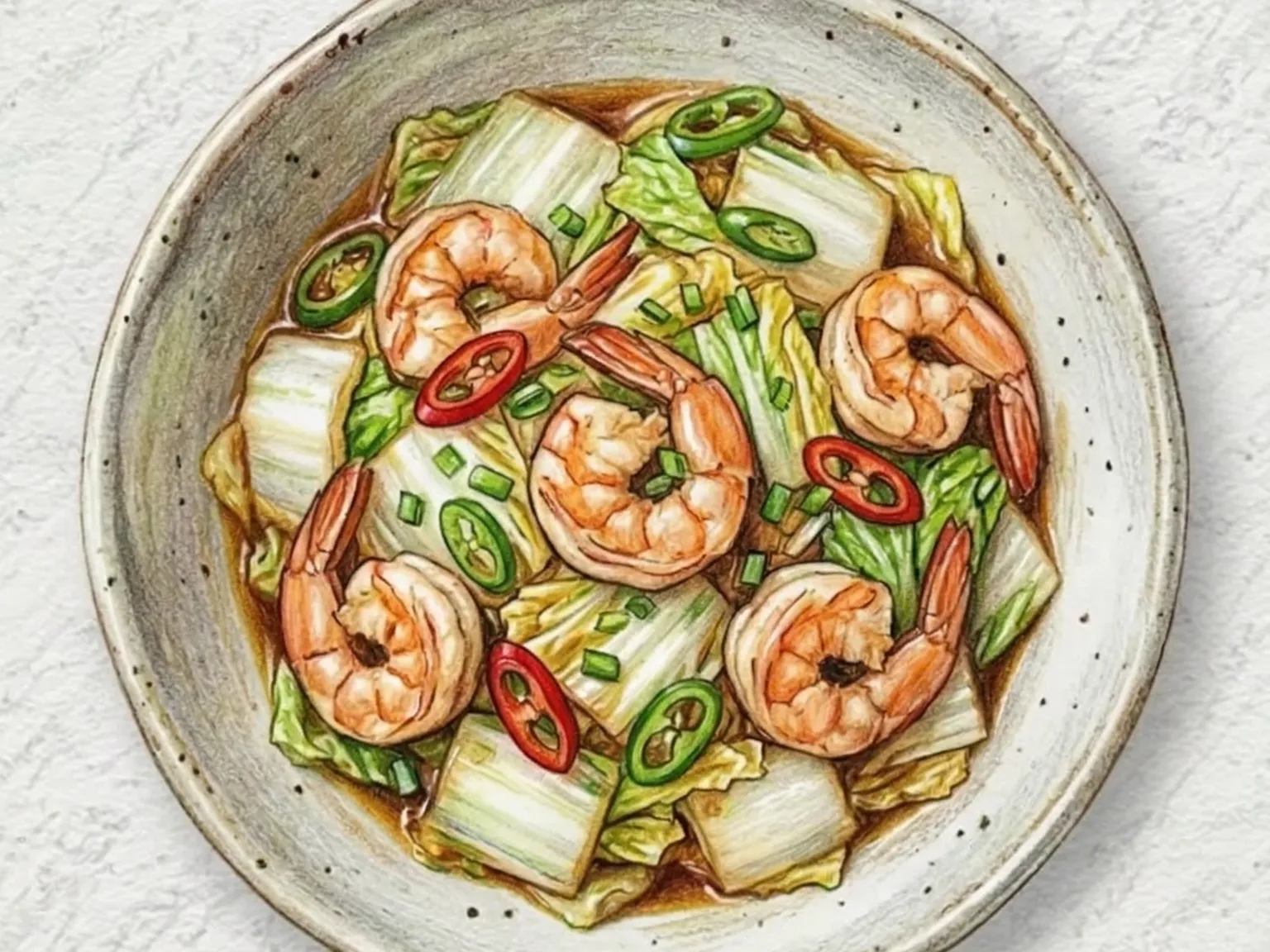
Gamja-saeu-bokkeum pairs julienned potatoes with shell-on medium shrimp in a clean, garlic-forward stir-fry. The potatoes are soaked in cold water first to remove surface starch, as skipping this step leads to clumping in the pan and a starchy, heavy texture. Garlic sizzles in oil to build an aromatic base before the shrimp go in, cooking until half-done so their natural sweetness transfers to the potato strips when the two are combined. Seasoned with nothing more than salt, pepper, and a finish of sesame oil, this banchan lets the contrast between the potato's floury bite and the shrimp's springy snap carry the dish. Thin slices of Cheongyang chili pepper can be added for a clean, sharp heat that makes the stir-fry even more compatible as a rice side dish. The combination of orange shrimp, pale yellow potato, and green chili also gives the finished plate a natural visual balance.
Korean Potato Salad (Creamy Mashed Potato Ham Cucumber)
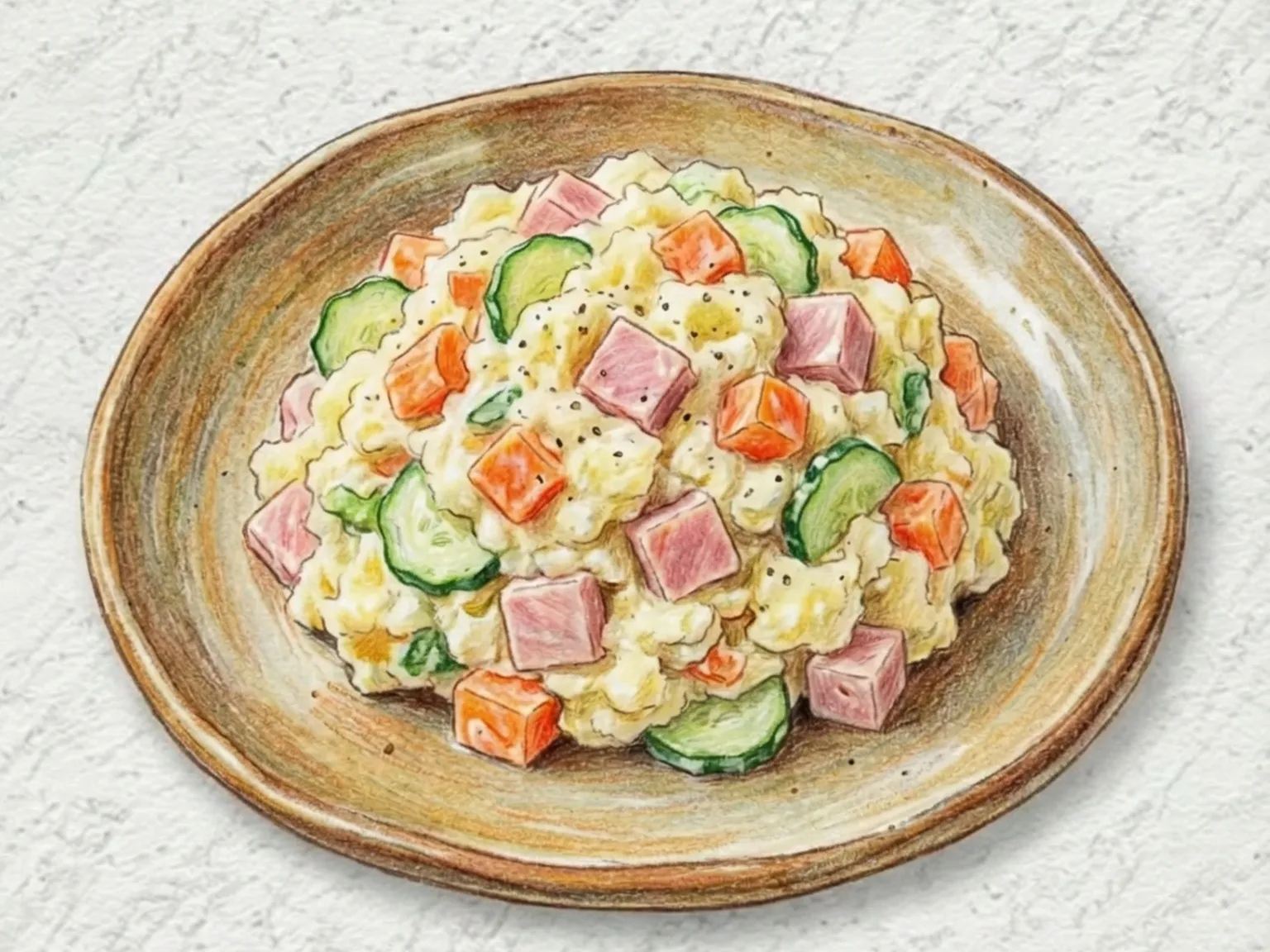
Korean potato salad arrived through Japan's yoshoku tradition but developed its own distinct identity in Korean home kitchens. Potatoes are boiled until tender and mashed while still hot, but not to a perfectly smooth consistency - leaving some lumps gives the salad a dual texture of creamy mashed potato and soft, intact chunks that hold together when eaten. Diced ham is pan-seared briefly to render out excess fat before being incorporated, preventing the finished salad from becoming greasy. Cucumber is salted and squeezed to remove water, which keeps the salad from turning watery as it sits. Boiled carrot is mixed in for color and a mild sweetness. The dressing is mayonnaise adjusted with sugar and salt, resulting in a distinctly sweet-creamy profile that is noticeably different from Western versions of the dish. Chilling the assembled salad for at least one hour before serving allows the seasoning to equalize throughout the mixture, improving the flavor considerably compared to eating it straight away. The salad is served as a banchan alongside rice, and it is also commonly spread inside sandwiches.
Korean Seasoned Gamtae Seaweed
Gamtae is a green seaweed harvested only in winter from Korea's southern coast, particularly around Wando and Jangheung. It is thinner and more delicate than roasted gim, and its oceanic fragrance is sharper and more pronounced. For this banchan, dried gamtae sheets are torn by hand into large pieces and tossed with a dressing of soy sauce, vinegar, sesame oil, gochugaru, sugar, and minced garlic. Speed matters more than technique here. Once the dressing makes contact with the seaweed, it begins drawing out moisture immediately. Past twenty seconds of mixing, the fronds absorb liquid, lose their texture, and collapse into a sodden tangle. The dressing should be added and the whole thing tossed in one quick motion before serving. Vinegar does important work in this dish: its acidity counters the seaweed's natural brininess and leaves the palate clean between bites. Fresh gamtae is a strictly seasonal product, available only through winter markets in the Jeolla and Gyeongnam regions. Dried gamtae, however, keeps well and is available year-round, making this a quick, reliable side dish that pairs particularly well with plain steamed rice.
Korean Garlic Sesame Broccoli Muchim
Garlic broccoli muchim is a modern Korean namul that became a household staple as broccoli grew widely available in Korean supermarkets from the early 2000s. The technique is straightforward: blanch florets and peeled, thinly sliced stems in well-salted boiling water for ninety seconds, then immediately transfer them to ice water to stop the cooking. The cold shock locks in the vivid green color and preserves a firm, crisp bite that distinguishes a properly made namul from one that is soft and dull. Peeling the stems and cutting them thin ensures the entire head of broccoli is used rather than discarding the lower portion. The dressing is deliberately minimal: soup soy sauce, minced garlic, sesame oil, and toasted sesame seeds. Keeping the seasoning light allows the broccoli's mild, slightly bitter flavor to come through clearly, with the garlic adding an aromatic sharpness that sits on top rather than overwhelming the vegetable. A final toss brings everything together into a clean, satisfying side dish that is ready in five minutes and keeps well in the refrigerator for two days.
Korean Stir-fried Dried Shrimp
Geon-saeu-bokkeum transforms a handful of dried shrimp, a Korean pantry staple, into a quick, crunchy banchan that earns its reputation as a rice thief. The shrimp are dry-toasted in a pan first to drive off residual moisture, intensifying their briny aroma and building the foundation for a crisp final texture. Soy sauce, rice syrup or oligosaccharide, and garlic are added and reduced over low heat until the shrimp are wrapped in a thin, glossy sweet-salty glaze. The timing matters: the moment the syrup bubbles once, the heat must drop immediately, because leaving it even slightly too long hardens the coating into a tooth-testing shell rather than a pliable lacquer. A finish of sesame oil and whole sesame seeds adds a nutty warmth that rounds out this compact side dish. Finely sliced Cheongyang chili mixed in during the last minute produces a spicier variation, and a small handful of almonds or peanuts stirred in enriches the chew. The finished banchan keeps well in a sealed container at room temperature for several days, making it as practical as it is flavorful.
Korean Seasoned Swiss Chard Namul
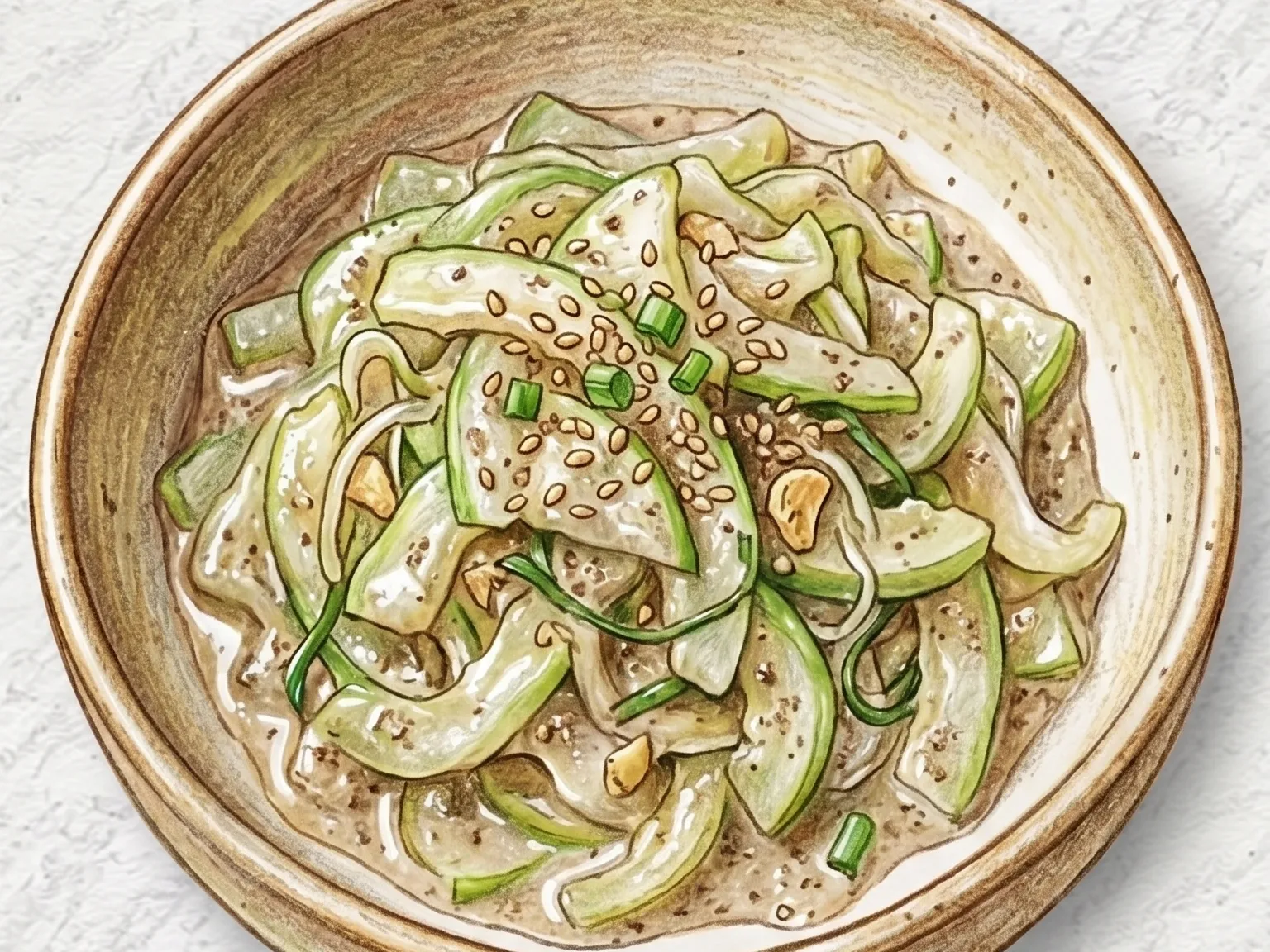
Geundae namul muchim is a seasoned vegetable banchan made from Swiss chard, a leafy green that has been used in Korean doenjang soup and namul for generations. Because the stems are substantially thicker than the leaves, blanching them together results in overcooked leaves by the time the stems are ready, so they are handled separately: stems go into boiling water for thirty seconds first, then the leaves follow for another thirty. After blanching, squeezing the greens thoroughly by hand is important because excess moisture dilutes the seasoning and prevents it from clinging to the greens. The blanched chard is hand-dressed with doenjang, soup soy sauce, minced garlic, and perilla oil, working the paste into the greens so that the fermented paste's earthy, savory depth merges with chard's faintly bitter, mineral character in the way that defines traditional Korean namul. Perilla powder added last thickens the dressing into a coating that clings without adding liquid and contributes a layer of nutty, roasted fragrance. Chard's thicker, denser leaf structure holds up far better than spinach after dressing, which makes this namul a reliable make-ahead banchan that does not collapse or release water when left to sit.
Korean Stir-Fried Dried Seaweed
Gim bokkeum is one of Korea's most beloved banchan - dried seaweed crumbled by hand and toasted slowly over low heat in sesame oil until every last trace of moisture cooks off. As the seaweed dries out, its inherent oceanic character concentrates into a deep, nutty savory flavor and the texture becomes satisfyingly crisp rather than papery. A very small amount of soy sauce and sugar is all the seasoning needed to add a gently sweet-salty edge, finished with a scatter of sesame seeds. The technique requires restraint above all: high heat scorches the seaweed instantly, and too much oil turns it greasy and limp. Done correctly, this is one of those banchan that makes plain steamed rice disappear faster than expected, earning it the Korean nickname bap-doduk - rice thief. It keeps well in the refrigerator for over a week and works equally well tucked inside hand-formed rice balls or used as a filling for triangle kimbap.
Korean Seasoned Seaweed Flakes
Gim-muchim uses the same ingredients as stir-fried gim but takes a different direction. Lightly toasted seaweed is torn by hand into larger pieces, then tossed with green onion, garlic, soy sauce, sesame oil, and gochugaru into a seasoned side dish. Toasting the seaweed over a flame first draws out its fragrance, and tearing it into large pieces ensures some areas stay crisp even after the sauce is added. The sharp bite of green onion and the gentle heat of gochugaru meet the seaweed's marine character for a fresher, lighter result than the stir-fried version. The dish must be eaten immediately after tossing - seaweed absorbs moisture from the sauce quickly and loses its texture - so only as much as will be consumed at once should be prepared. As a side with rice, it is simple but satisfying, carrying enough umami to complete a bowl even when other banchan are few. Using fish sauce in place of soy sauce shifts the umami profile, and extra sesame seeds deepen the nutty fragrance.
Korean Pickled Green Peppers
Gochu jangajji - soy-pickled green peppers - is a traditional Korean preservation method that traces back to the era before refrigeration, when summer's abundance of green peppers had to be kept edible through leaner months. Each pepper is stemmed and pierced several times with a toothpick so the brine can penetrate through the thick walls of the flesh and reach the seeds inside. A brine of soy sauce, vinegar, sugar, and water is brought to a full boil and poured directly over the peppers while still scalding hot; this flash of heat slightly blanches the exterior, brightening the green color, while the interior stays raw and crisp. Repeating this step the following day - draining the cooled brine, returning it to the pot, reboiling it, and pouring again - is what separates a well-made batch from a mediocre one. The second pour deepens the penetration of the seasoning, reinforces preservation, and allows the pickles to keep under refrigeration for over a month without losing crunch. Once fully pickled, the flavor is a layered combination of salty depth from the soy, gentle acidity from the vinegar, and the pepper's own lingering capsaicin heat, which mellows in brine but never entirely disappears. Placed on a bowl of plain rice, two or three pickled peppers are enough to make a full meal. Using cheongyang chili peppers instead of regular green peppers produces a sharper, hotter version, while kkwari peppers yield a milder and more tender result.
Shredded Chili Pickle
Spicy and sour shredded chili pickles, perfect for grilled meats.