Stir-fry

Stir-fry Recipes

310 recipes. Page 5 of 13

Stir-frying is one of the most common cooking methods in Korean home kitchens. Classics like spicy pork stir-fry (jeyuk-bokkeum), squid stir-fry, and japchae showcase the range of flavors - from fiery gochujang-based sauces to sweet soy glazes.

Stir-fry
Sara Udon (Crispy Noodles with Seafood Thick Sauce)
Noodles Medium

Sara Udon (Crispy Noodles with Seafood Thick Sauce)

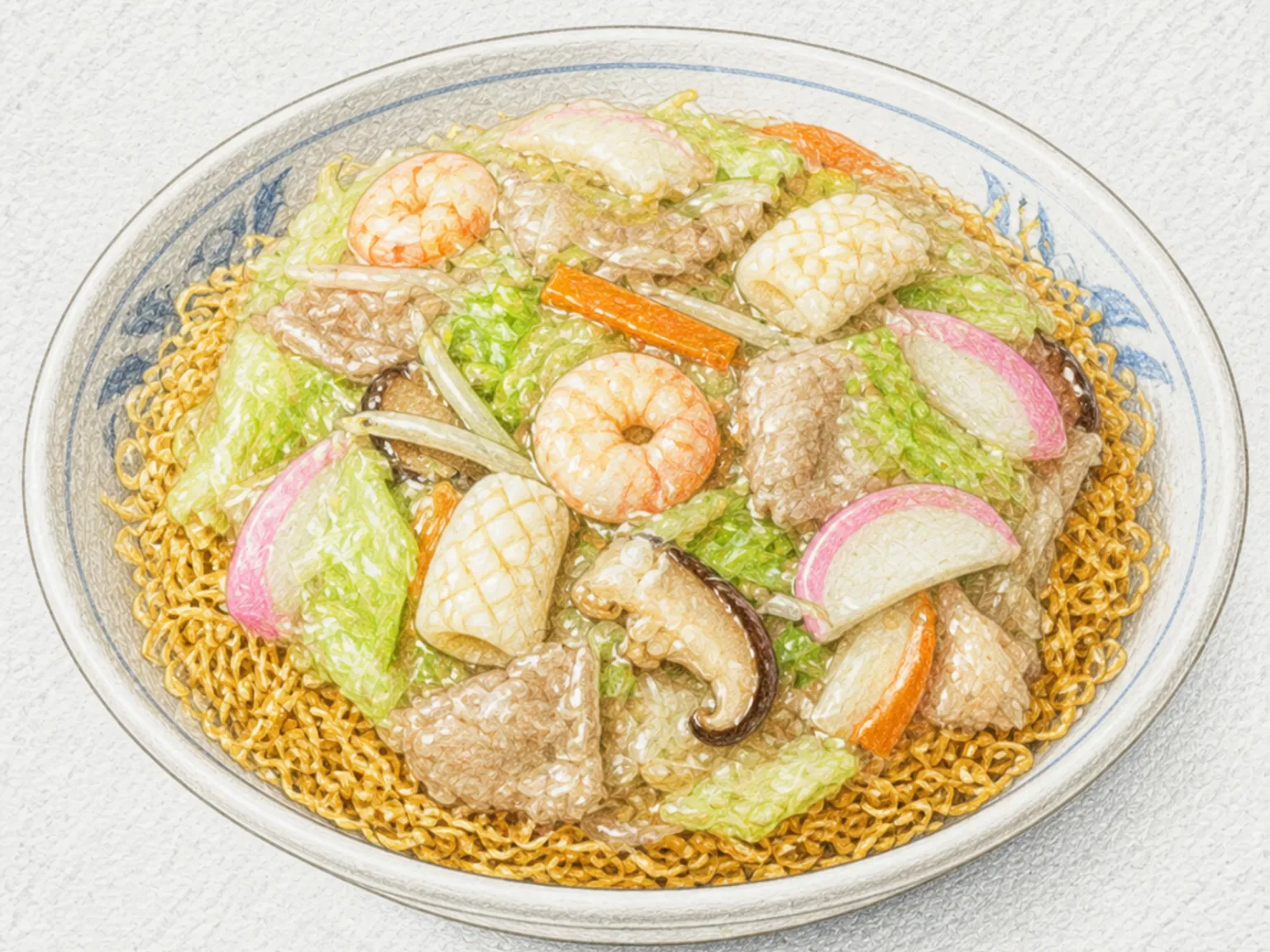
Sara udon is a Nagasaki noodle dish in which a hot, thickened stir-fry of pork, shrimp, squid, and vegetables is poured over fine crispy noodles arranged on a plate. Pork cooks first, followed by carrot, cabbage, shrimp, and squid; kamaboko, bean sprouts, and shiitake are added afterward so their textures remain distinct. Water, soy sauce, chicken stock powder, and potato starch form a glossy sauce that settles between the brittle strands. The dish was created in 1899 by Chin Heijun of the Shikairo restaurant as a brothless version of chanpon. Nagasaki residents distinguish the original thick-noodle style from the more recent fine crispy style. This recipe follows the latter, so the sauce is poured on only at serving time to preserve contrast between crisp noodles and soft topping.

🏠 Everyday 🧒 Kid-Friendly
Prep 25min Cook 15min 2 servings
Korean Mapo Tofu Rice Bowl
Rice Medium

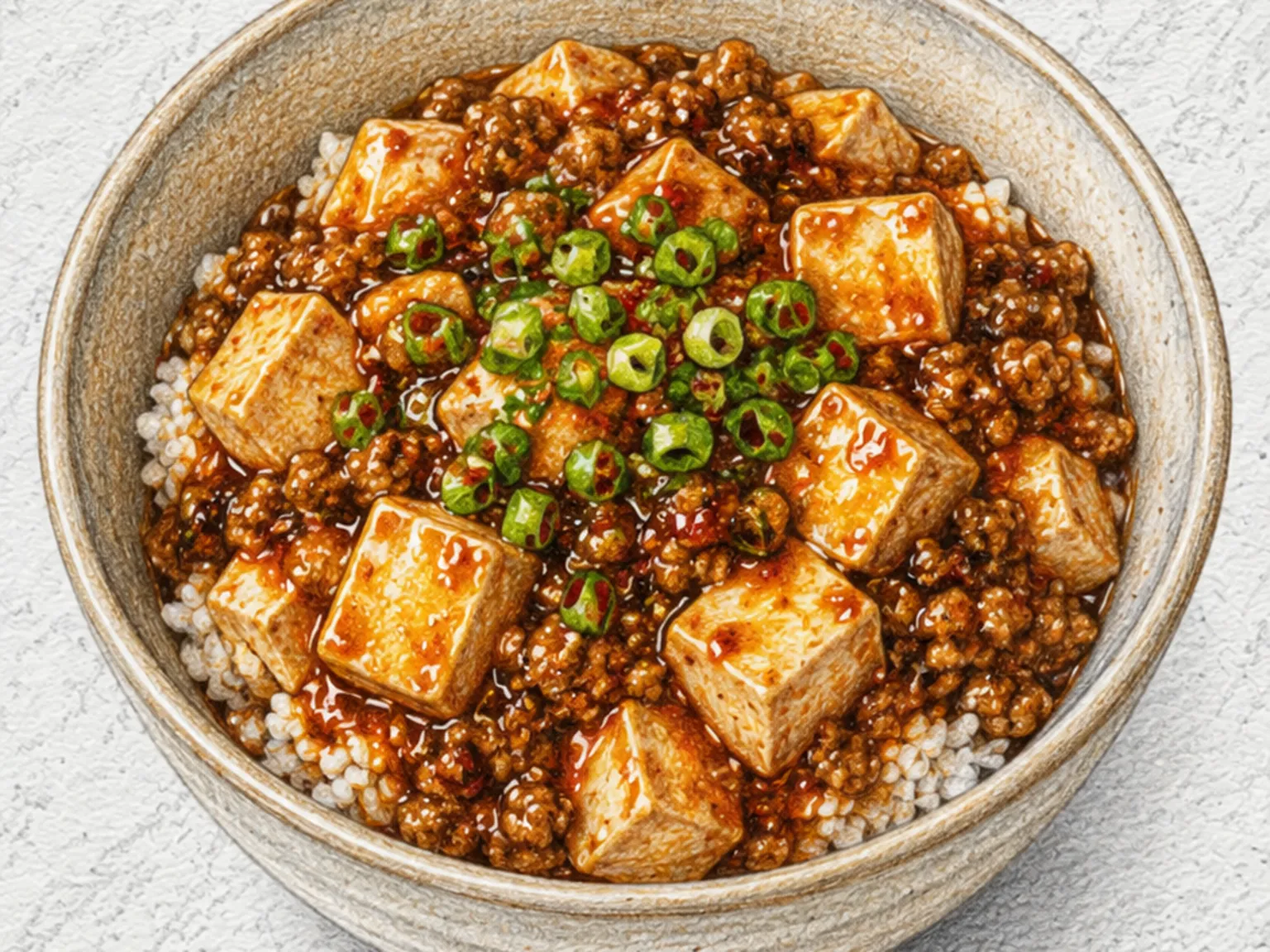
Korean Mapo Tofu Rice Bowl

This mapo tofu rice bowl cooks 300 g tofu and 120 g ground pork in a doubanjiang sauce, then serves the thickened mixture over 2 cups of rice. Cut the tofu into 2 cm cubes, blanch it in boiling salted water for 2 minutes, and drain it carefully. Blanching firms the surface so the corners are less likely to break while the sauce is applied. Heat 2 tbsp vegetable oil in a pan over medium heat and cook the pork for 3 minutes, breaking it apart until no pink remains. Add 1 tbsp minced garlic and 1.5 tbsp doubanjiang, lower the heat to medium-low, and stir for 1 minute until the oil turns red without letting the paste scorch. Pour in 1/2 cup water. Once it boils, add the tofu and cook gently for 3 minutes, shaking the pan instead of stirring hard. Season with 1 tbsp soy sauce, pour in 1 tbsp starch slurry, and simmer for 30 seconds. The sauce is ready when it looks glossy and stays around the tofu rather than running freely. Spoon it over the rice and finish both servings with 1 tsp sesame oil and 30 g sliced green onion.

🏠 Everyday 🥗 Light & Healthy
Prep 10min Cook 12min 2 servings
Buta Shogayaki (Japanese Ginger Pork Stir-Fry with Soy Mirin Glaze)
Stir-fry Easy

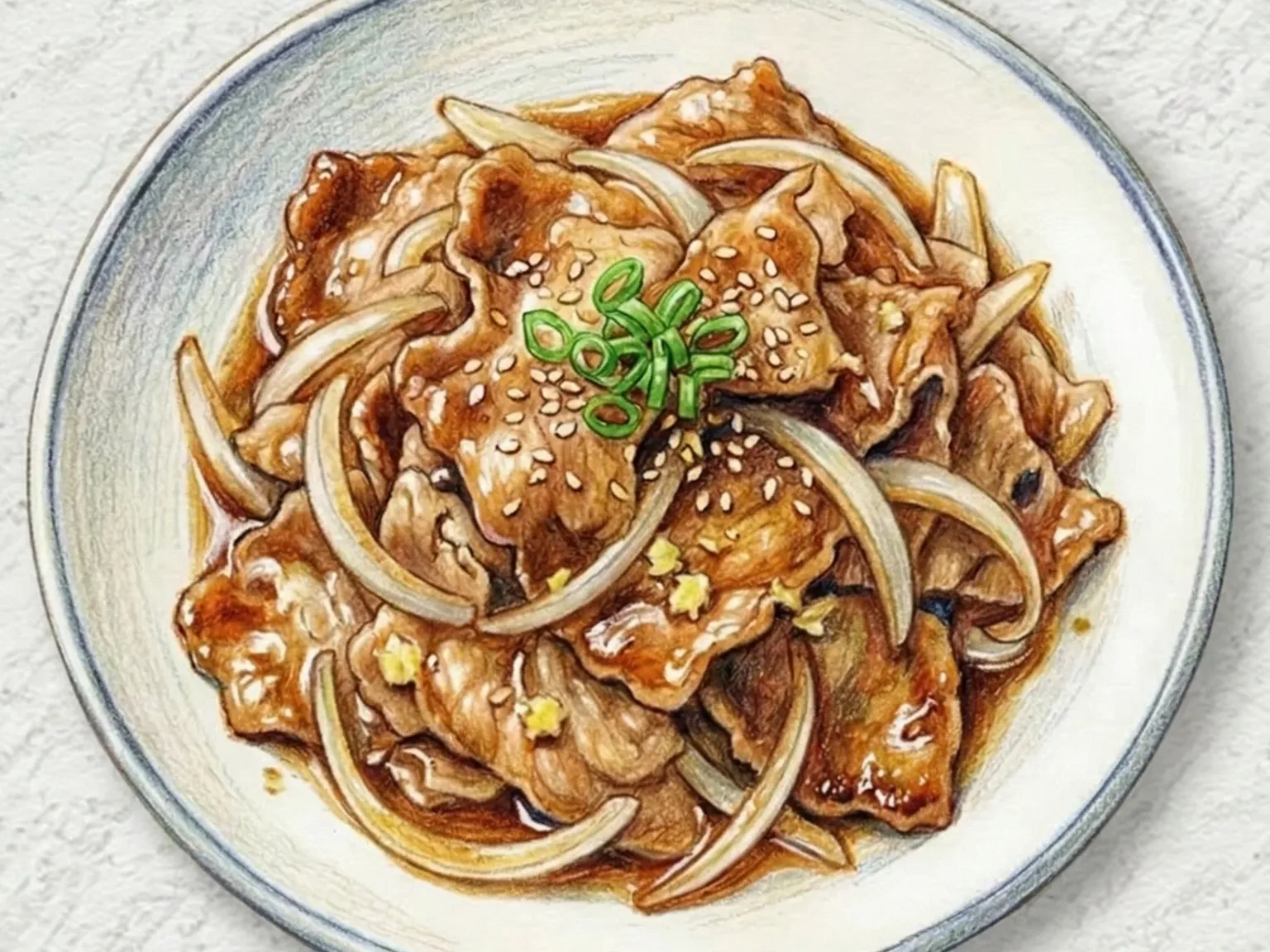
Buta Shogayaki (Japanese Ginger Pork Stir-Fry with Soy Mirin Glaze)

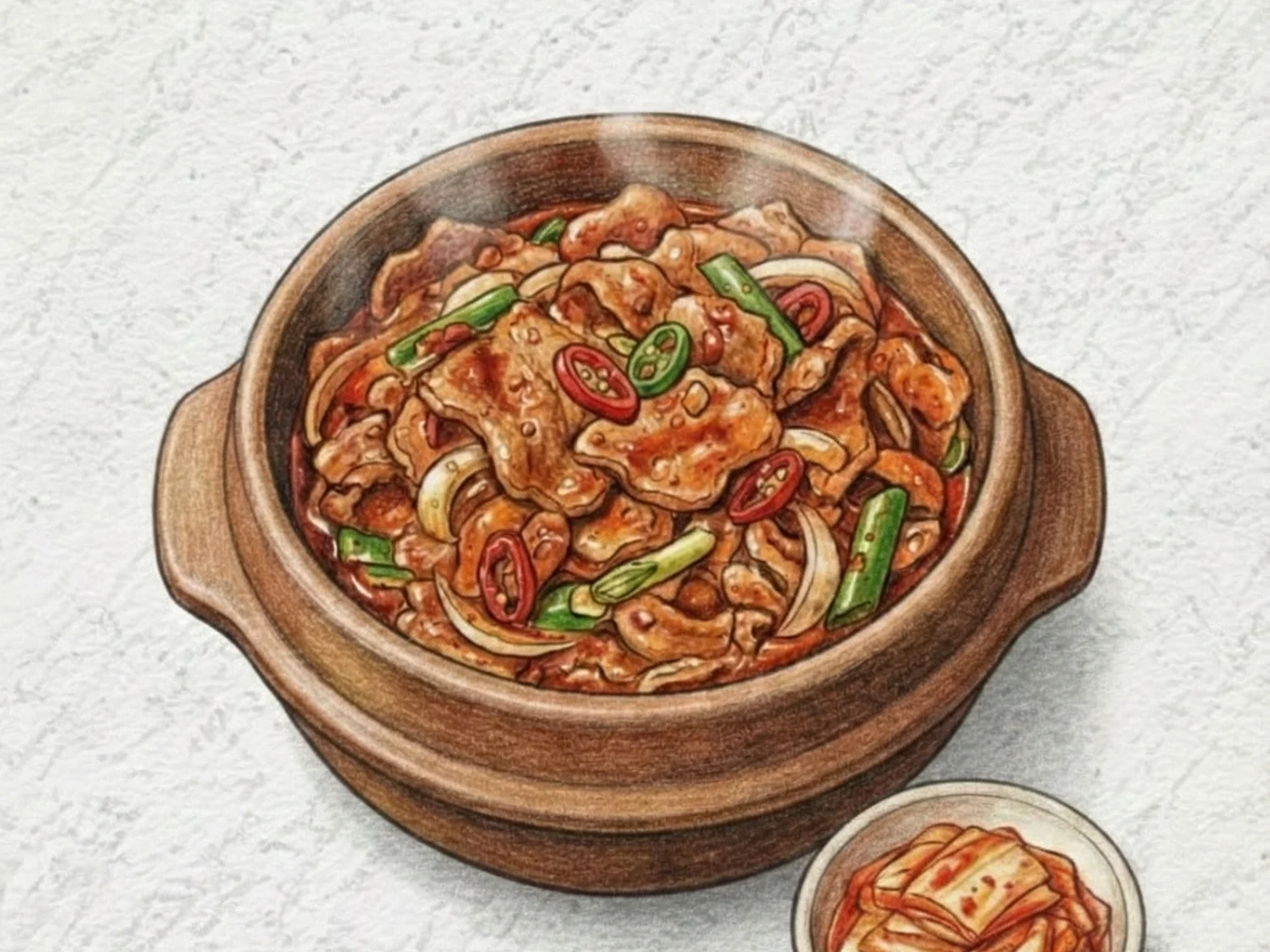
Buta shogayaki is one of the most frequently cooked dishes in Japanese home kitchens, appearing in bento boxes, teishoku set meals, and university cafeterias with equal regularity. The name translates directly as pork ginger stir-fry, and the technique is as precise as it is simple: thinly sliced pork loin or shoulder is marinated briefly in a mixture of soy sauce, mirin, sake, and freshly grated ginger, then seared quickly in a hot pan and finished with a reduction of the marinade. The ginger does more than add flavor -- it contains proteolytic enzymes that break down muscle fibers, measurably tenderizing the meat even in a marinade as short as ten minutes. The slices must not overlap in the pan; piling them causes steam to accumulate and the pork poaches rather than sears, losing the caramelized, slightly charred edges that define the dish. The marinade is added only in the final thirty seconds so it reduces rapidly into a sticky, glossy glaze that adheres to every surface rather than pooling at the bottom of the pan. Placing the finished pork over a mound of shredded raw cabbage is not optional in traditional presentation -- the cold, crunchy vegetable contrasts sharply with the hot, lacquered meat and cuts through the sweetness of the mirin glaze. Shogayaki has been a menu fixture since the mid-20th century, when rising pork production in Japan made it affordable enough for everyday cooking. From pantry to plate in fifteen minutes, it demands nothing more than a hot pan, fresh ginger, and attention to heat control.

🍱 Lunchbox ⚡ Quick
Prep 10min Cook 12min 2 servings
Singapore Rice Noodles (Curry-Spiced Stir-Fried Vermicelli with Shrimp)
Noodles Easy

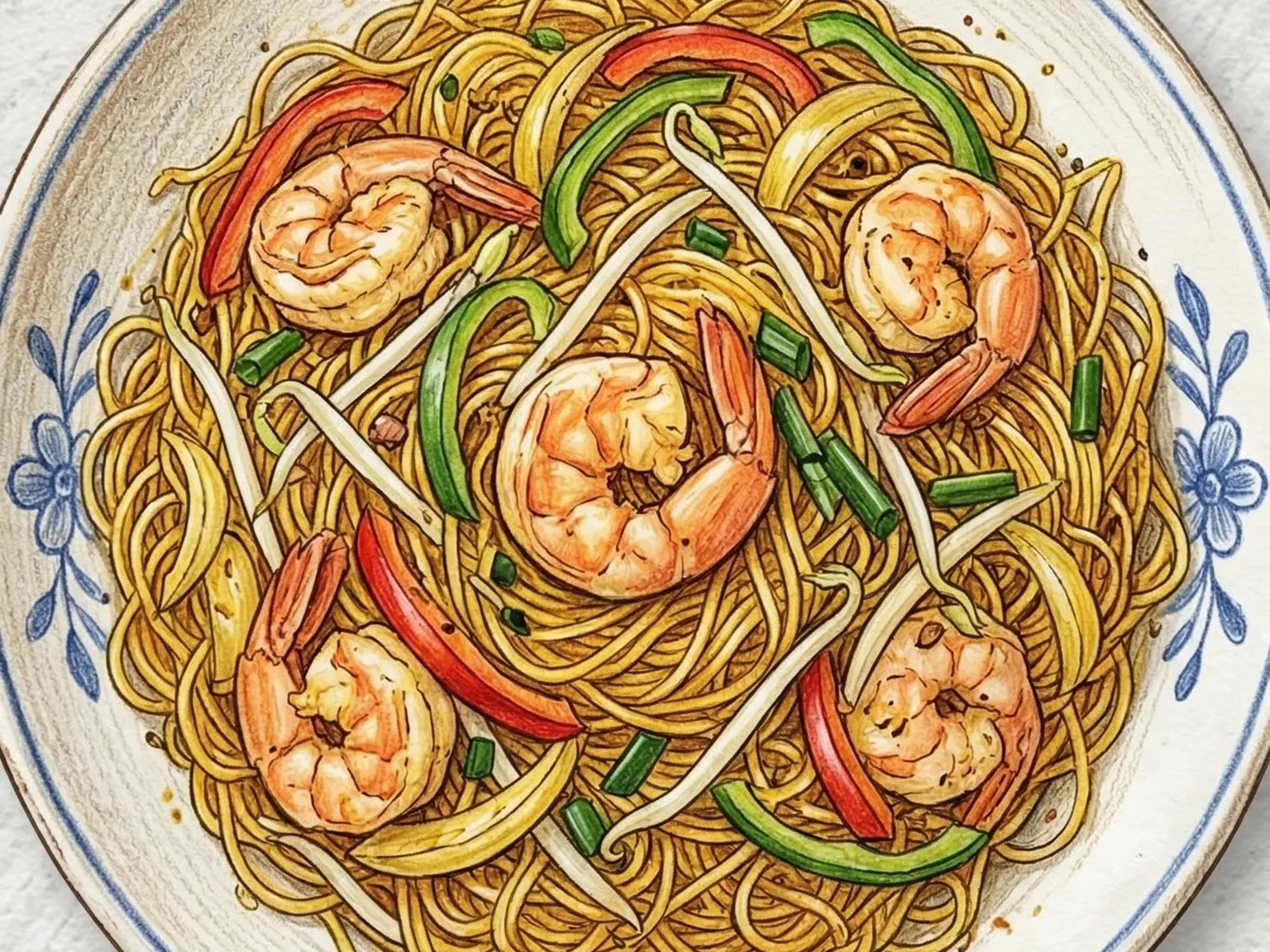
Singapore Rice Noodles (Curry-Spiced Stir-Fried Vermicelli with Shrimp)

This two-serving stir-fry combines 180 g thin rice vermicelli with shrimp, onion, bell pepper, bean sprouts, and curry powder. Soak the vermicelli in lukewarm water for only 8 minutes, drain it well, and loosen the strands by hand before the pan is heated. A longer soak leaves the noodles fragile enough to break during tossing. Heat the pan over high heat, add the oil, and cook 140 g shrimp only until the outside turns pink so the centers can finish later without becoming firm. Stir-fry the sliced onion and bell pepper for about 1 minute, stopping when the onion edges are slightly translucent. Push the ingredients aside and bloom 2 teaspoons curry powder in the exposed hot oil for about 10 seconds. Add the drained noodles and 1 tablespoon soy sauce, then toss until every strand is evenly yellow. If the vermicelli gathers into a clump, lift and separate it with chopsticks instead of pressing it against the pan. Add 80 g bean sprouts for the final 30 seconds and serve when the shrimp is cooked through, the noodles remain intact, and the sprouts are still crisp.

🏠 Everyday 🌙 Late Night
Prep 15min Cook 12min 2 servings
Korean Stir-Fried Octopus Fried Rice
Rice Medium

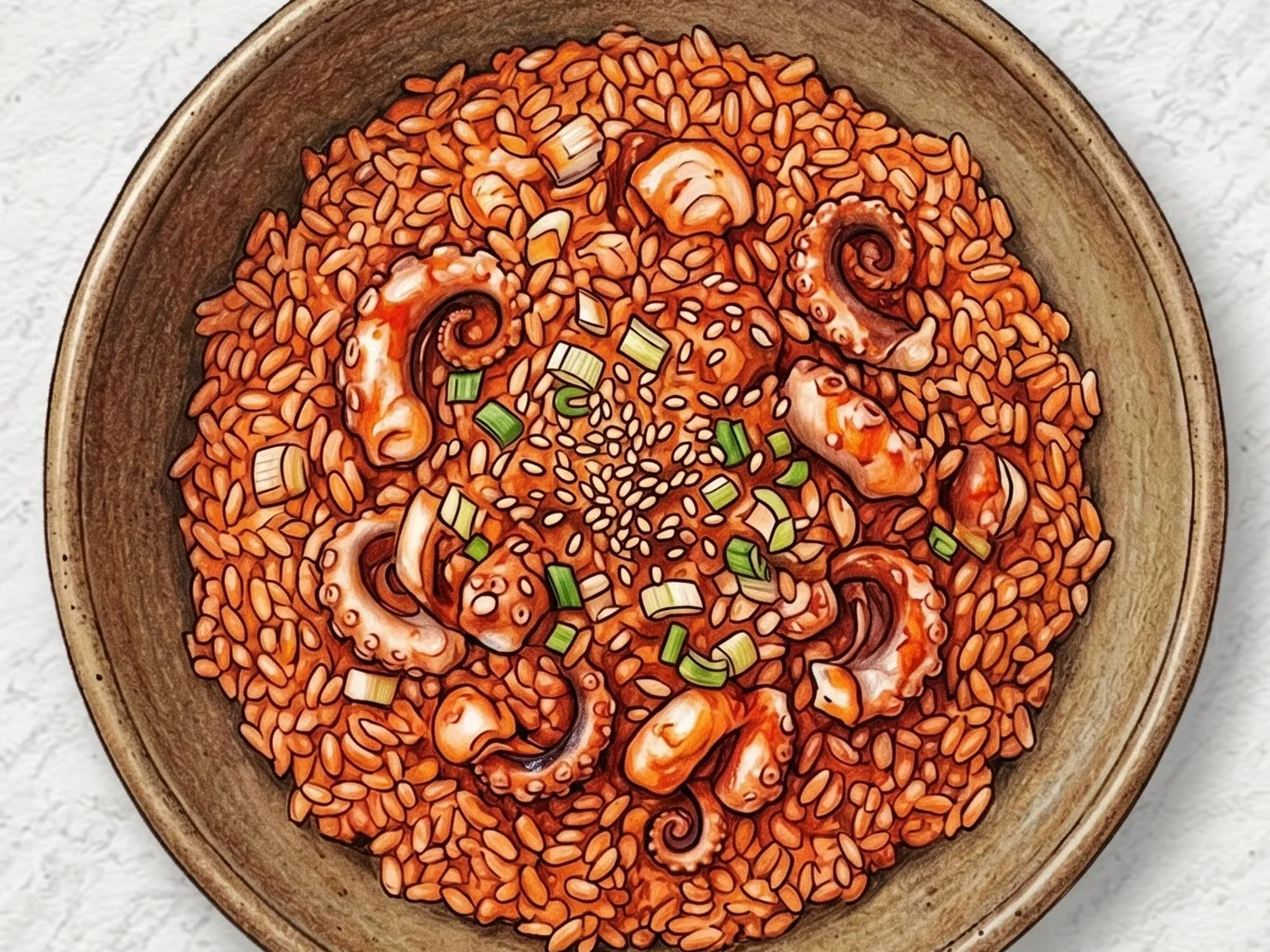
Korean Stir-Fried Octopus Fried Rice

This octopus fried rice combines 200 g octopus and 2 cups cooked rice in a gochujang sauce, with the cooking order designed to keep both the seafood and rice from becoming wet or tough. Rub the octopus with flour until the surface feels less sticky, rinse it thoroughly, drain it, and cut the thicker sections into bite-size pieces. Mix 1.5 tbsp gochujang with 1 tsp red pepper flakes, 1 tbsp soy sauce, and 1 tsp sugar until no lumps remain. Heat 1 tbsp vegetable oil in a pan over medium heat and cook 80 g onion for 2 minutes, stopping when the edges turn translucent. Raise the heat to high, add the octopus and prepared sauce, and stir-fry for only 2 minutes. As soon as the octopus begins to curl, add the rice and use a spatula to press and separate the grains while cooking for 3 minutes. Turn off the heat when the rice has an even red coating and no liquid remains on the bottom of the pan. Mix in 30 g green onion and 1 tsp sesame oil at the end, using the residual heat rather than continuing to cook the octopus.

🏠 Everyday 🍱 Lunchbox
Prep 15min Cook 10min 2 servings
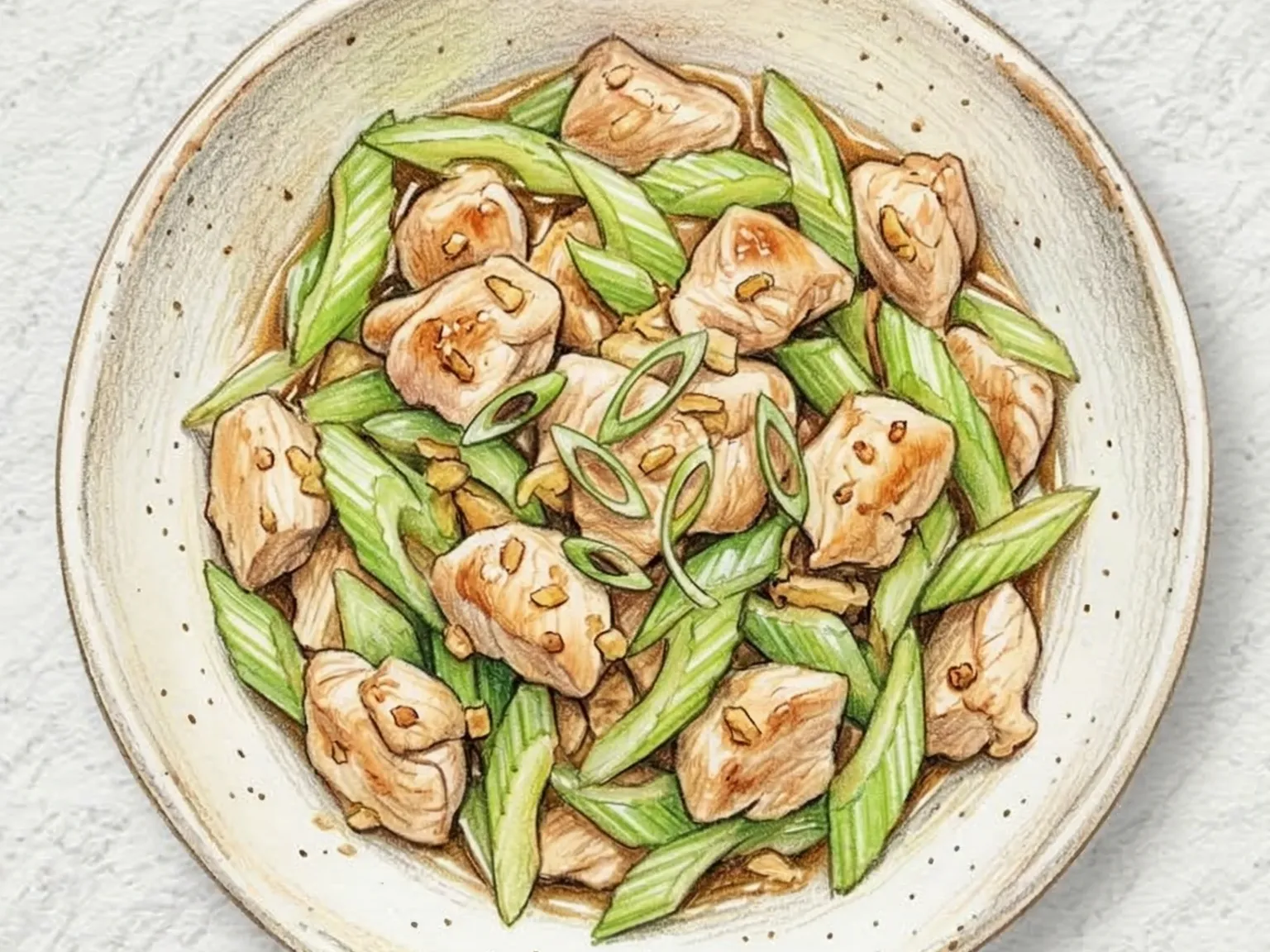
Korean Chicken Breast and Celery Stir-fry
Stir-fry Easy

Korean Chicken Breast and Celery Stir-fry

Bite-sized chicken breast pieces are marinated in soy sauce and minced ginger for ten minutes, then stir-fried over high heat with diagonally cut celery and thinly sliced onion. The ginger penetrates the meat during the brief rest, suppressing any bland poultry odor while leaving a bright, peppery note in the background. Soy sauce hitting the hot pan triggers a Maillard reaction on the chicken surface, building a thin layer of caramelized flavor that keeps the interior moist. Celery goes in only during the last two minutes so its stalks retain their crunch; including the leaves adds a noticeably herbal finish that sets this apart from standard chicken stir-fries. A teaspoon of oligosaccharide syrup gives the sauce just enough body to cling to each piece evenly rather than pooling at the bottom of the pan, and sliced red chili scattered in at the end contributes visual brightness more than significant heat. At 295 calories and 36 grams of protein per serving, this dish fits naturally into a post-workout meal or a calorie-conscious lunchbox without any sense of compromise.

🥗 Light & Healthy 🏠 Everyday
Prep 14min Cook 9min 2 servings
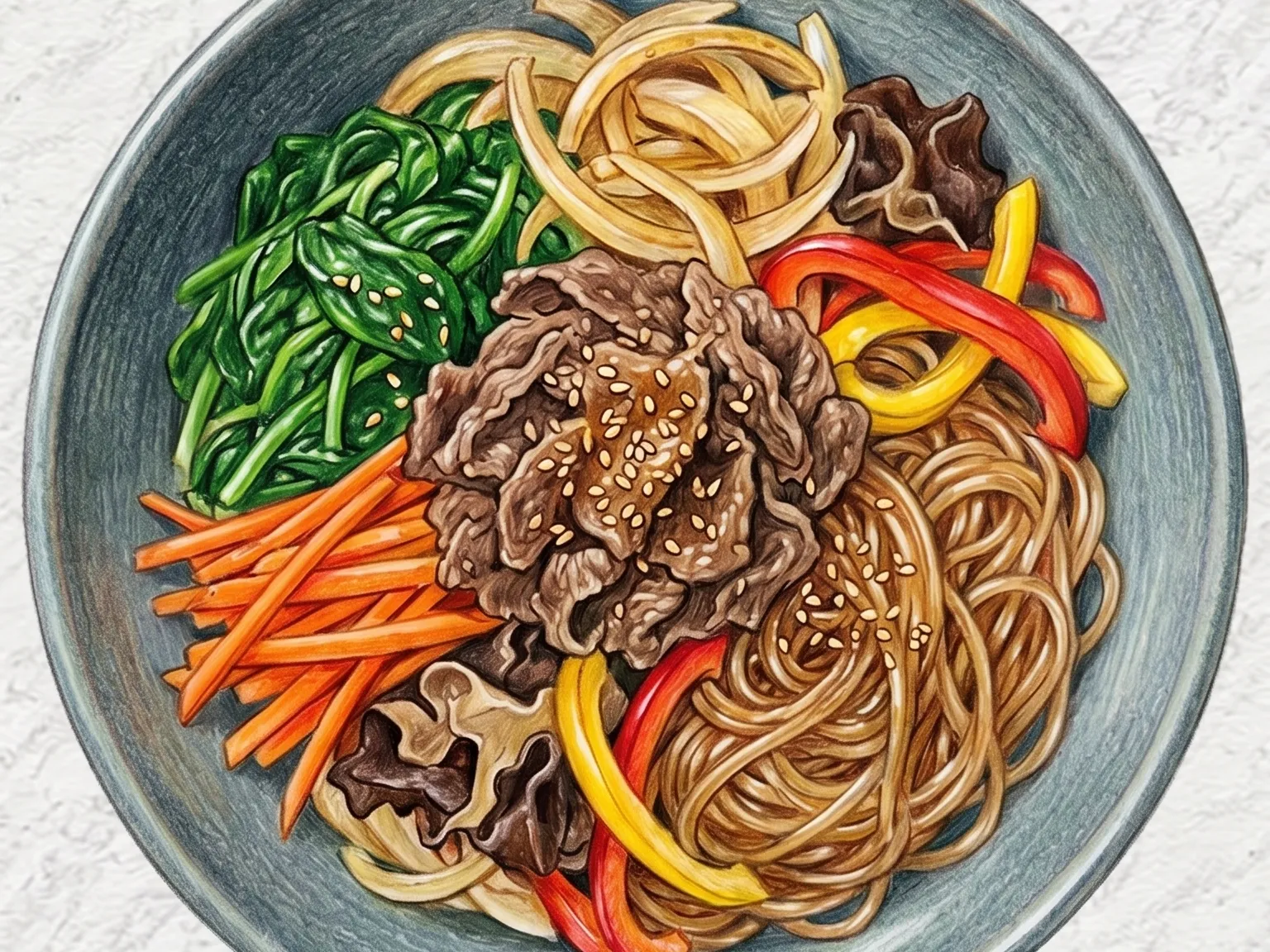
Korean Beef Japchae (Soy-Marinated Beef Glass Noodle Stir-Fry)
Noodles Medium

Korean Beef Japchae (Soy-Marinated Beef Glass Noodle Stir-Fry)

Sogogi japchae is a Korean stir-fried noodle dish made with sweet potato glass noodles, soy-marinated beef strips, and an assortment of individually prepared vegetables. Spinach is blanched, carrots and onions are julienned and stir-fried separately, and each component is combined at the end to preserve its distinct color and texture. The noodles are soaked rather than fully boiled, then finished in the pan so they stay chewy instead of mushy. Soy sauce, sugar, and sesame oil form the seasoning base, giving the dish its characteristic sweet-savory balance.

🎉 Special Occasion 🏠 Everyday
Prep 25min Cook 20min 4 servings
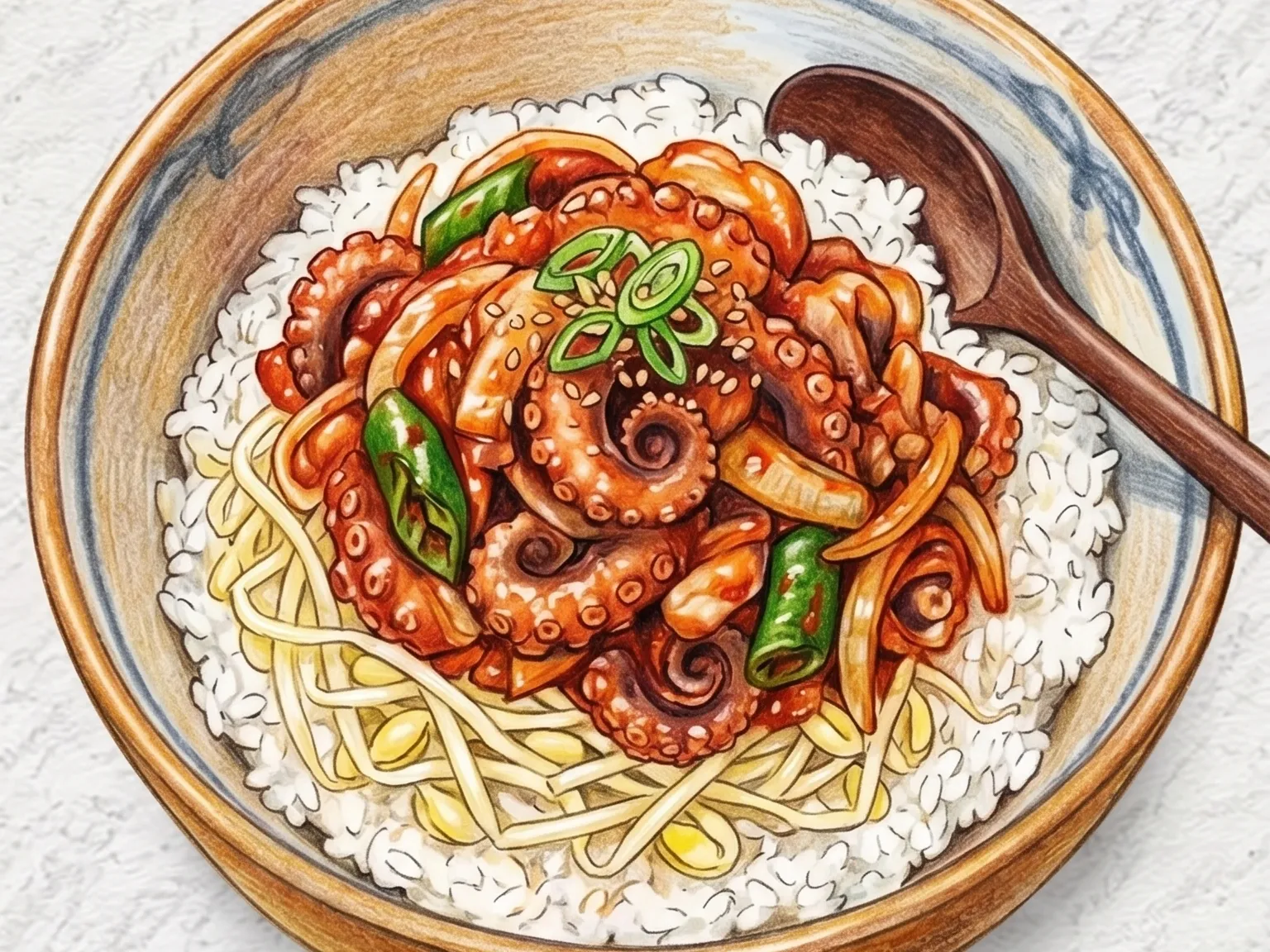
Korean Spicy Stir-Fried Octopus Rice Bowl
Rice Medium

Korean Spicy Stir-Fried Octopus Rice Bowl

Spicy stir-fried baby octopus in a gochujang sauce is served over a bowl of steamed rice. The octopus delivers a satisfying chew, coated alongside onion and cheongyang chili in a well-seasoned glaze that makes each bite of rice deeply flavorful. Stir-frying on high heat for just a few minutes keeps the octopus springy rather than tough, and scrubbing it with flour before rinsing ensures a clean taste free of any sliminess. Adding a layer of bean sprouts under the stir-fry introduces a contrasting crunch.

🏠 Everyday 🍺 Bar Snacks
Prep 15min Cook 10min 2 servings
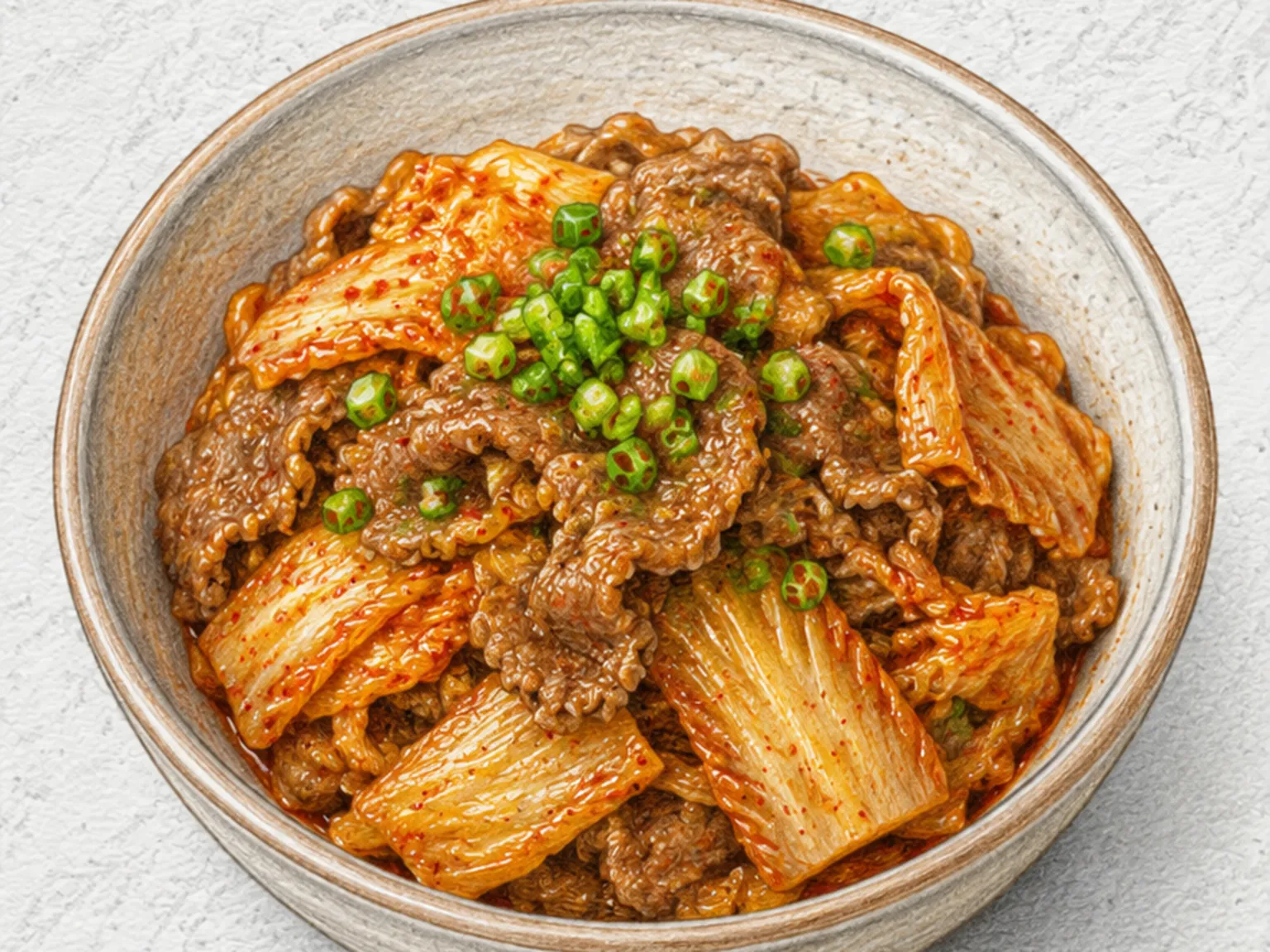
Korean Beef Brisket Kimchi Stir-Fry
Stir-fry Easy

Korean Beef Brisket Kimchi Stir-Fry

Paper-thin slices of brisket are laid in a cold, dry pan and the heat is brought up gradually so the marbled fat renders out completely before the meat browns. That rendered beef tallow becomes the only cooking fat in the dish -- no oil is added at any point -- and the beefy fragrance it deposits on the kimchi is something vegetable oil simply cannot replicate. Aged kimchi contributes a pronounced sourness from weeks or months of deep fermentation, and half a teaspoon of sugar does the precise job of rounding off that acidity without tipping the flavor toward sweet. The balance lands in the narrow space between tart, salty, and subtly sweet, which is where the dish wants to live. Cooking on high heat for a short time keeps the kimchi from going soft; drop the temperature or extend the cook and the whole pan collapses into a mushy mass where textures disappear. A pinch of gochugaru added partway through brings a dry heat that sharpens the overall profile. Sesame oil, half a tablespoon swirled in after the flame is off, lifts the aroma from savory toward something more complex. Finely sliced green onion scattered over the top at the end adds a clean, fresh note against the heavy richness underneath. Five ingredients, fifteen minutes of cooking, and the result reliably clears an entire bowl of rice.

🏠 Everyday 🌙 Late Night
Prep 5min Cook 10min 2 servings
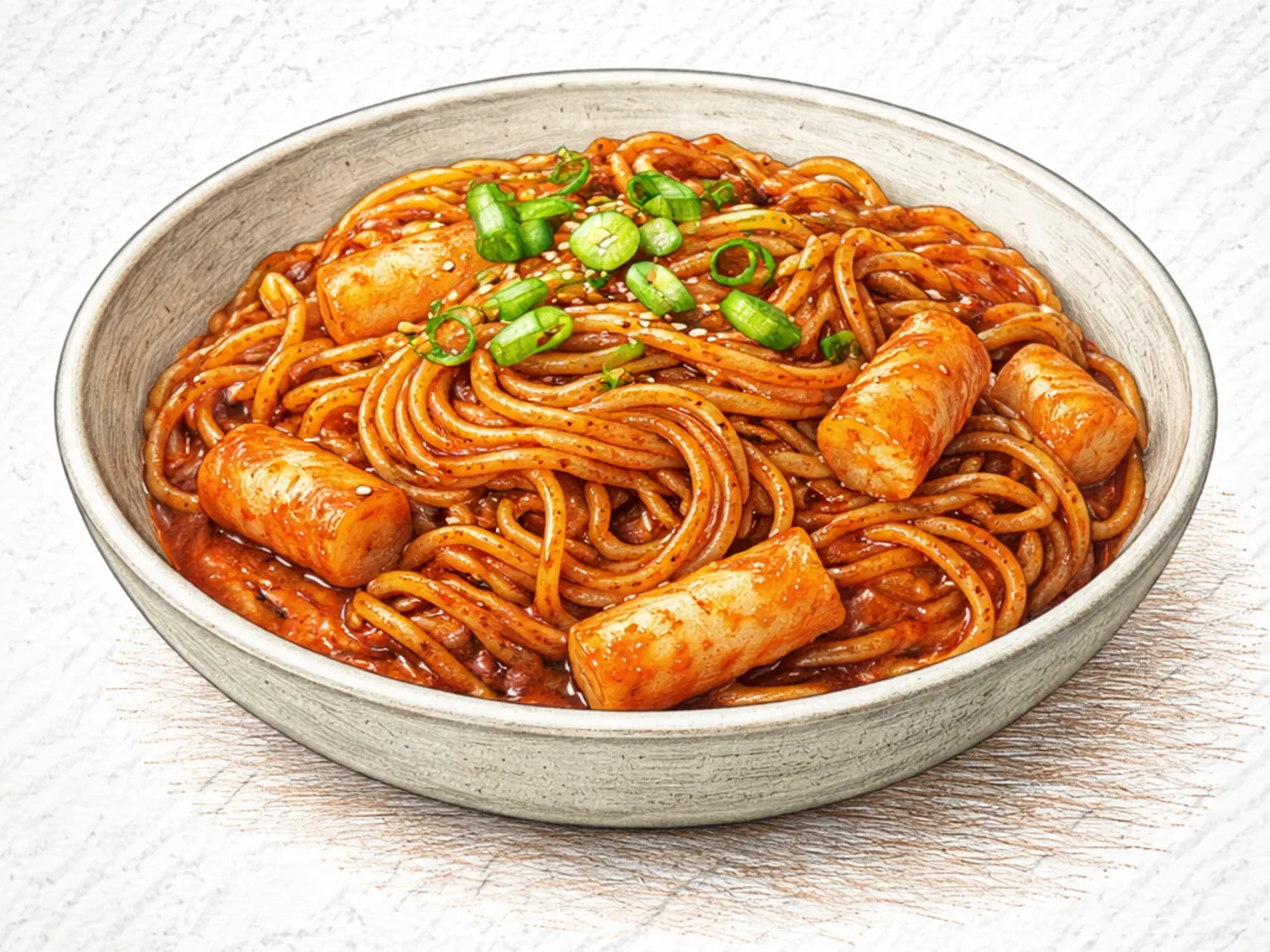
Korean Tteokbokki Noodles
Noodles Easy

Korean Tteokbokki Noodles

Tteok-bokkeum-myeon stir-fries udon noodles and cylindrical rice cakes together in a gochujang-based sauce that is both spicy and slightly sweet. The two main components offer contrasting textures - stretchy rice cakes and springy noodles - coated in the same thick, red sauce. Fish cake and boiled eggs are common additions. The dish takes about 25 minutes from start to plate, with most of the work being chopping ingredients and stirring everything in a single pan. It is a staple of Korean street-food culture.

🏠 Everyday 🌙 Late Night
Prep 10min Cook 15min 2 servings
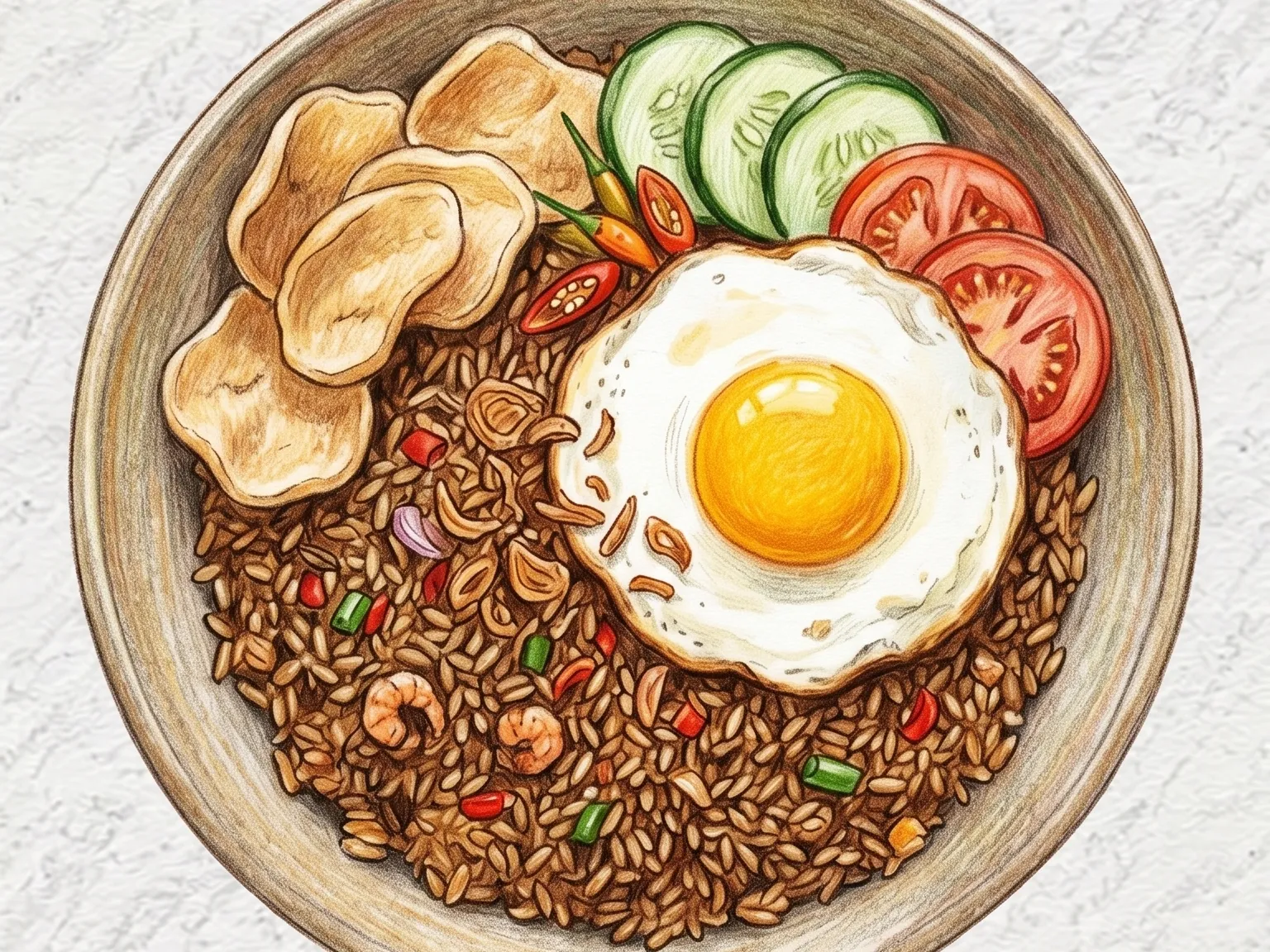
Nasi Goreng (Indonesian Sweet Soy Sauce Shrimp Fried Rice)
Rice Easy

Nasi Goreng (Indonesian Sweet Soy Sauce Shrimp Fried Rice)

Nasi goreng turns cold cooked rice into a high-heat stir-fry seasoned with kecap manis, shrimp paste, and sambal, then finishes each serving with shrimp and a runny fried egg. Two bowls of cold rice are loosened completely by hand or with a spatula before the wok is heated, and 2 tablespoons kecap manis are measured so they can be added without pausing the cooking. Two tablespoons oil are heated over high heat, followed by three shallots and two garlic cloves for about 30 seconds. They should become aromatic without scorching. One teaspoon shrimp paste and 1 tablespoon sambal are then fried until the oil turns red and the raw marine aroma of the paste softens. One hundred grams of shrimp cooks for only about 1 minute, just until the outside turns pink; the rice goes in immediately so the seafood does not become tough. The loosened grains and kecap manis are tossed for about 2 minutes with a cutting motion that separates rather than mashes the rice. When every grain carries an even brown sheen, the seasoning is checked and only a small additional amount of kecap manis is used if needed. Two eggs are fried until their edges are crisp while the yolks remain soft, then placed over the rice. Breaking the yolk at the table spreads it through the sweet, savory, and spicy seasoning already coating the grains. If kecap manis is unavailable, the recipe's stated substitute is ordinary soy sauce mixed with sugar, while the short high-heat cooking sequence remains the same.

🏠 Everyday 🌙 Late Night
Prep 10min Cook 10min 2 servings
Korean Stir-Fried Leafy Greens
Stir-fry Easy

Korean Stir-Fried Leafy Greens

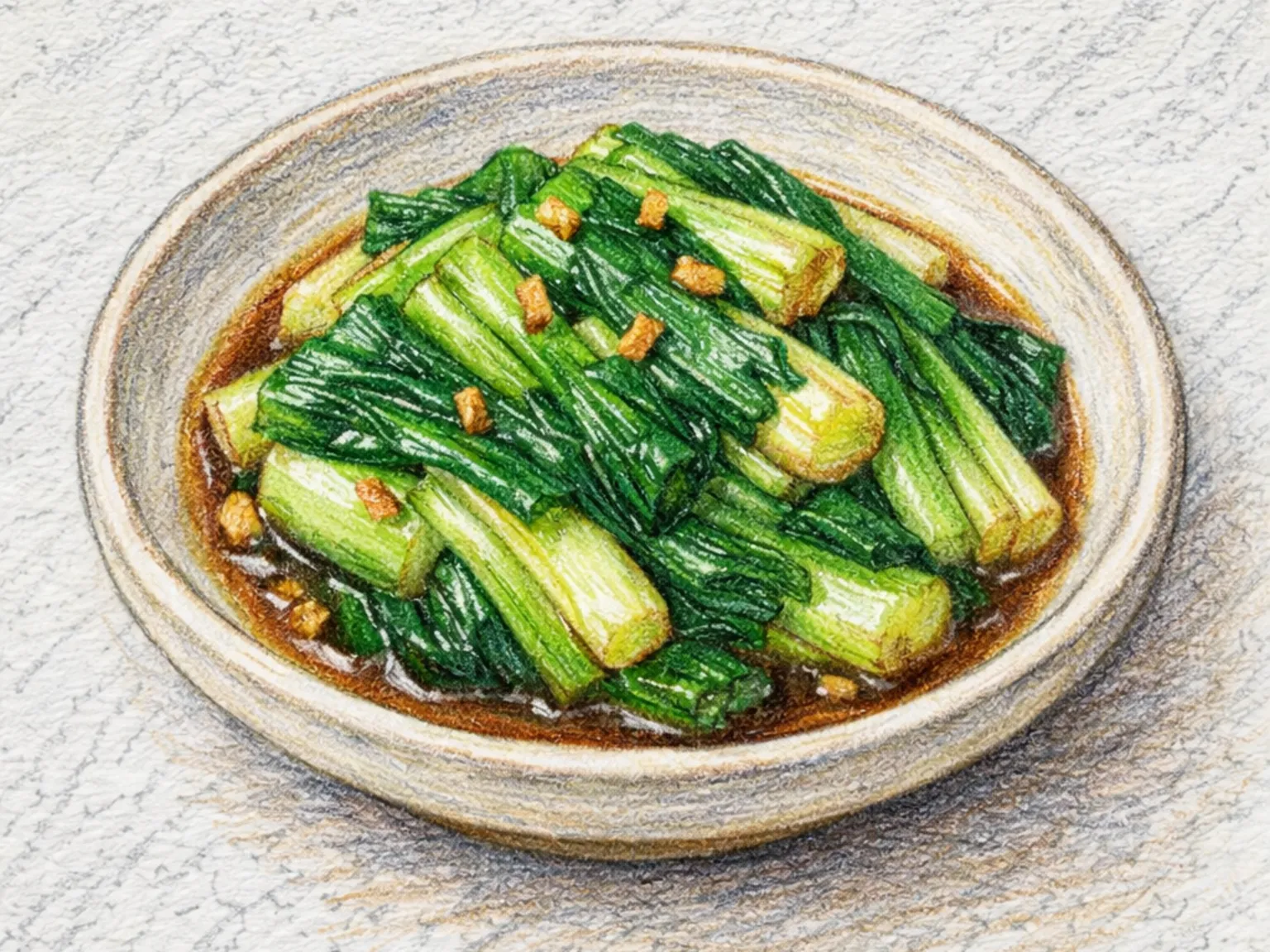
This leafy-green stir-fry uses 180 g baby bok choy and depends on careful moisture control. Rinse between the leaves, then press them with a kitchen towel until no droplets remain. Water carried into the pan would steam the greens and soften the stems before their edges can sear. Warm 1 tablespoon cooking oil over low heat for about 20 seconds and add 1 teaspoon minced garlic. Stir only until fragrant, stopping before the garlic begins to brown. Raise the heat to high, add all the dry bok choy at once, and turn it quickly with tongs. After about 40 seconds, the leaf tips should show light color while the stems remain firm. Pour 1 teaspoon soup soy sauce and 0.2 teaspoon salt around the rim of the pan, then continue cooking for 1 minute. If liquid collects at the bottom, keep the heat high and toss until it has evaporated. Slightly translucent stems that still hold their shape are the doneness cue. Turn off the heat before mixing in 0.5 teaspoon sesame oil and 0.5 teaspoon sesame seeds, and transfer the greens as soon as the leaves look glossy so residual heat does not wilt them further.

🏠 Everyday 🍱 Lunchbox
Prep 8min Cook 5min 2 servings
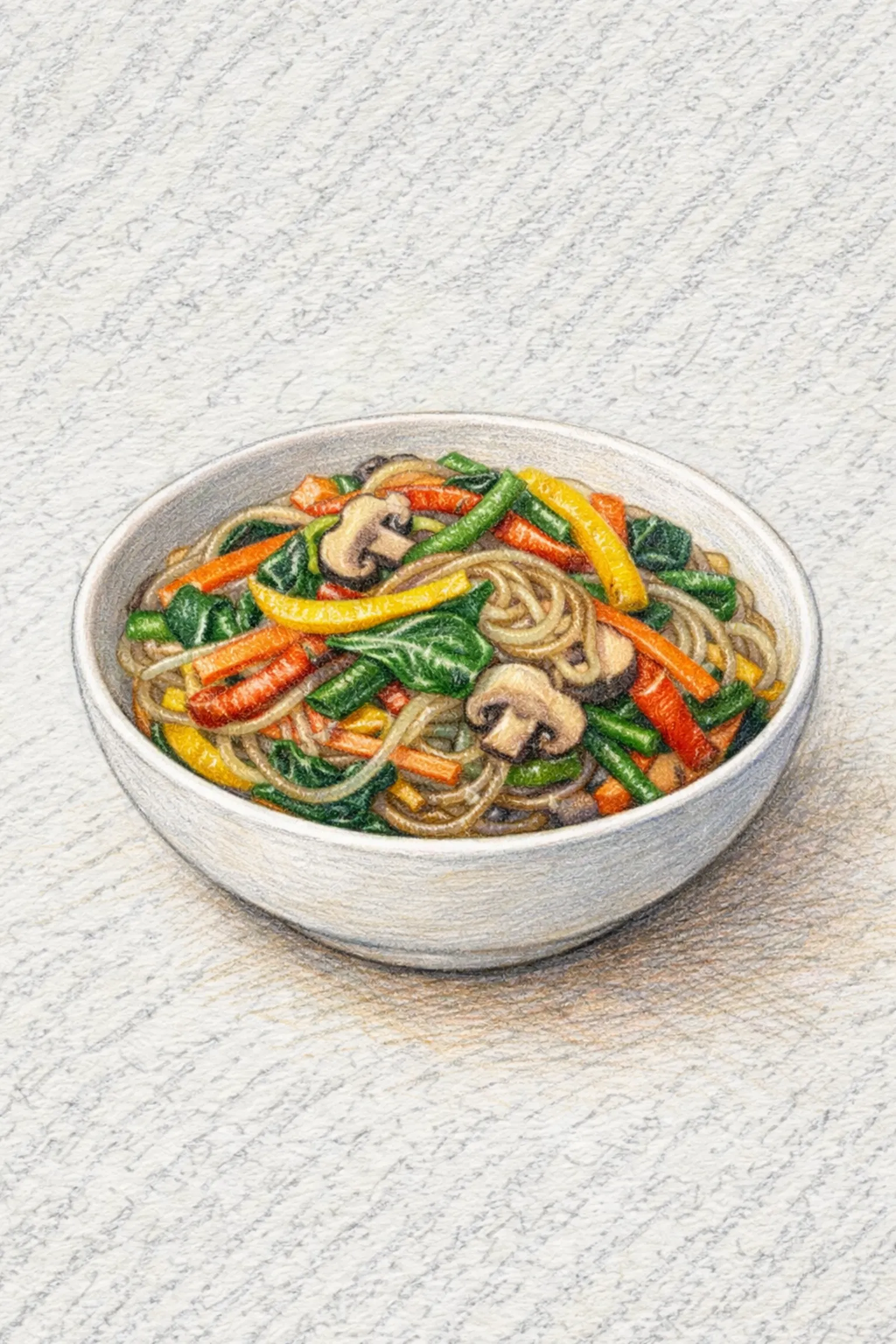
Korean Vegetable Japchae (Glass Noodle Mixed Vegetable Stir-Fry)
Noodles Medium

Korean Vegetable Japchae (Glass Noodle Mixed Vegetable Stir-Fry)

Yachae japchae is a vegetarian version of the classic Korean glass noodle dish, made entirely with sweet potato noodles and mixed vegetables - spinach, carrot, shiitake mushrooms, bell pepper, and onion. Each vegetable is stir-fried separately to maintain its color and distinct texture, then combined with pre-seasoned noodles dressed in soy sauce and sesame oil. The varied sweetness and crunch of each vegetable layer together under the soy-sugar seasoning, while the noodles absorb the sauce and turn glossy and chewy. Without meat, the vegetables take center stage, making this equally suitable for everyday meals and celebration spreads.

🏠 Everyday 🌙 Late Night
Prep 20min Cook 20min 4 servings
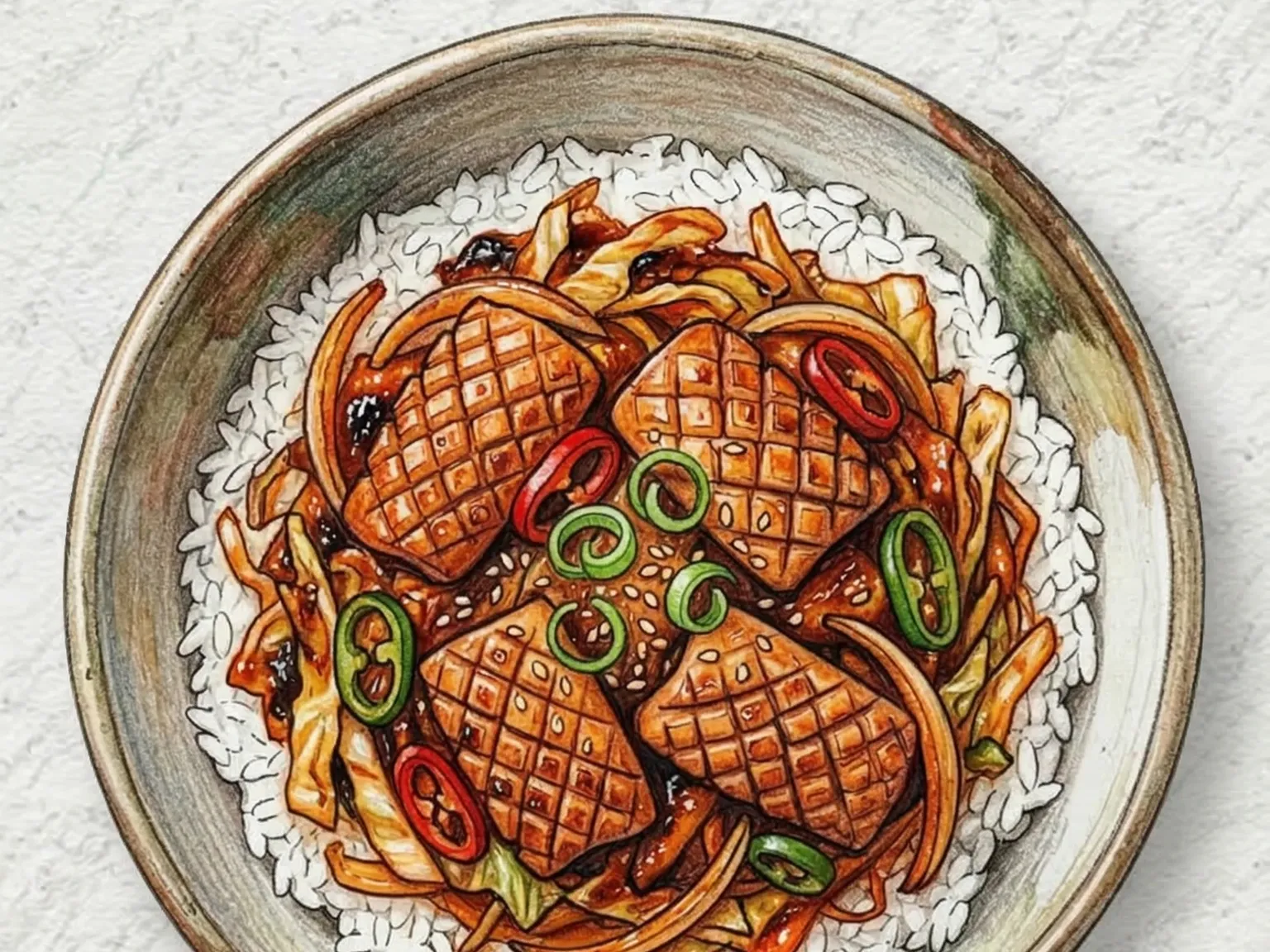
Korean Spicy Stir-Fried Squid Rice Bowl
Rice Medium

Korean Spicy Stir-Fried Squid Rice Bowl

Scored squid, onion, cabbage, and scallion are stir-fried together in a gochujang-based sauce over high heat and served on a bowl of steamed rice. Cutting a crosshatch pattern into the squid before cooking causes each piece to curl into a compact cylinder as it hits the heat, producing a thick, bouncy texture while giving the sauce more surface area to cling to. Because squid turns rubbery in a matter of minutes if left on the heat too long, the vegetables go into the pan first to drive off their moisture, and the squid is added only for the final three to four minutes over maximum heat. The sauce, built from gochujang, gochugaru, soy sauce, sugar, and sesame oil, caramelizes quickly against the hot pan and coats both the vegetables and the squid in a glossy, deep-red glaze. The natural sweetness of the onion and cabbage tempers the chili heat and keeps the dish balanced rather than one-dimensionally spicy. Leaving a small pool of sauce in the pan when plating allows it to soak into the rice, making the whole bowl worth mixing together before eating.

🏠 Everyday 🍺 Bar Snacks
Prep 15min Cook 12min 2 servings
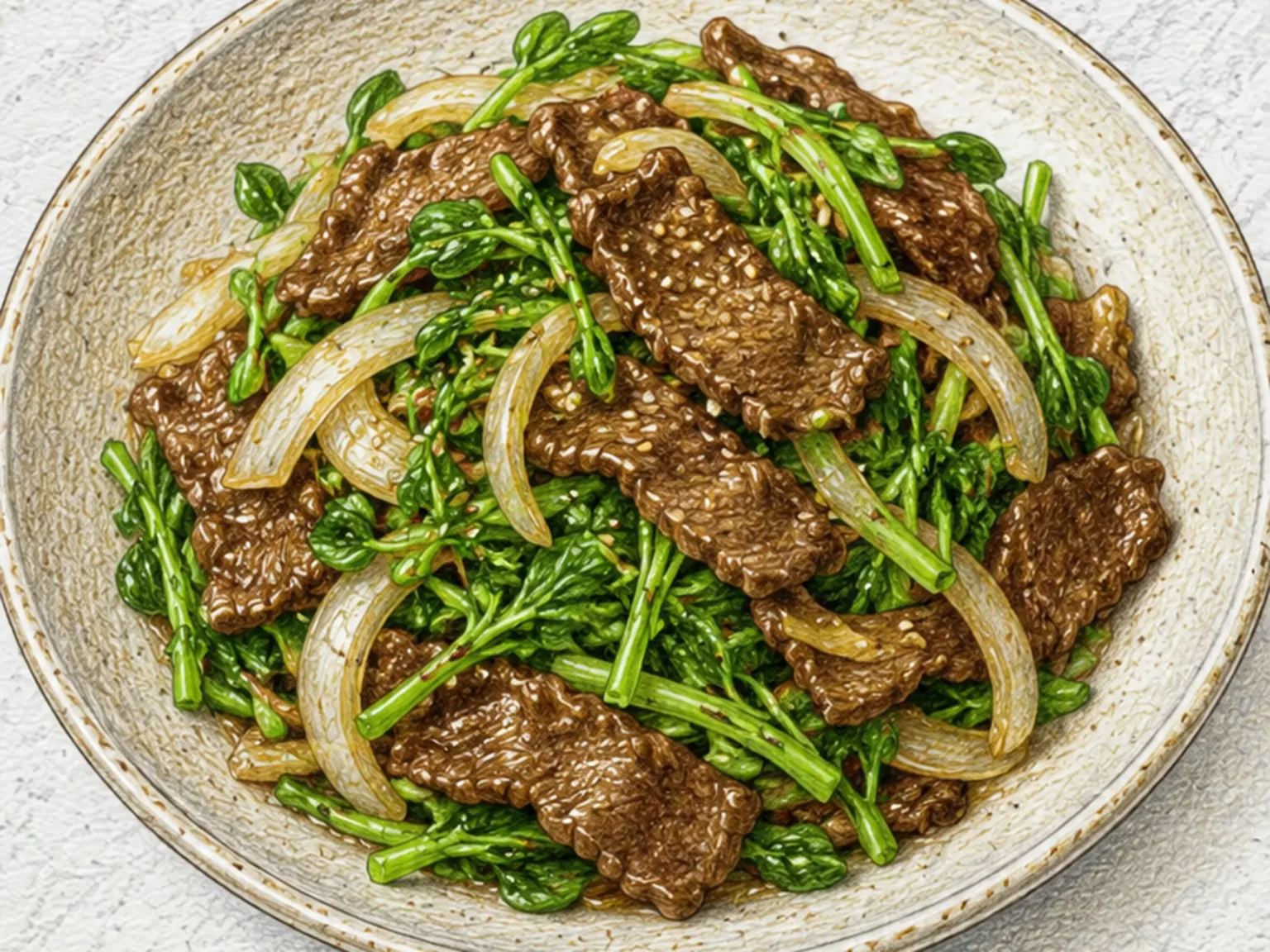
Korean Beef and Pimpinella Stir-fry
Stir-fry Easy

Korean Beef and Pimpinella Stir-fry

Beef sliced thin for bulgogi is marinated in soy sauce, cooking wine, minced garlic, and black pepper for ten minutes, then spread in a single layer across a hot pan so every piece browns without steaming. Crowding the pan drops the temperature and causes the meat to stew in its own liquid rather than sear, so a wide, flat arrangement is essential. Sliced onion goes in next for two minutes to draw out its sweetness, followed by chamnamul, a Korean wild green whose aroma sits somewhere between celery leaf and parsley but sharper and more distinctly herbal. The chamnamul needs only forty seconds of tossing; any longer and the stems lose their crunch while the leaves wilt and the aroma fades. Sesame oil stirred in off the heat coats every piece in a nutty richness, and whole toasted sesame seeds burst with oil when bitten. Chamnamul is a spring green harvested from late March through April, so this stir-fry has a short seasonal window. At 365 calories and 30 grams of protein, it is a nutrient-dense plate that makes the most of that brief peak.

🏠 Everyday 🍱 Lunchbox
Prep 15min Cook 10min 2 servings
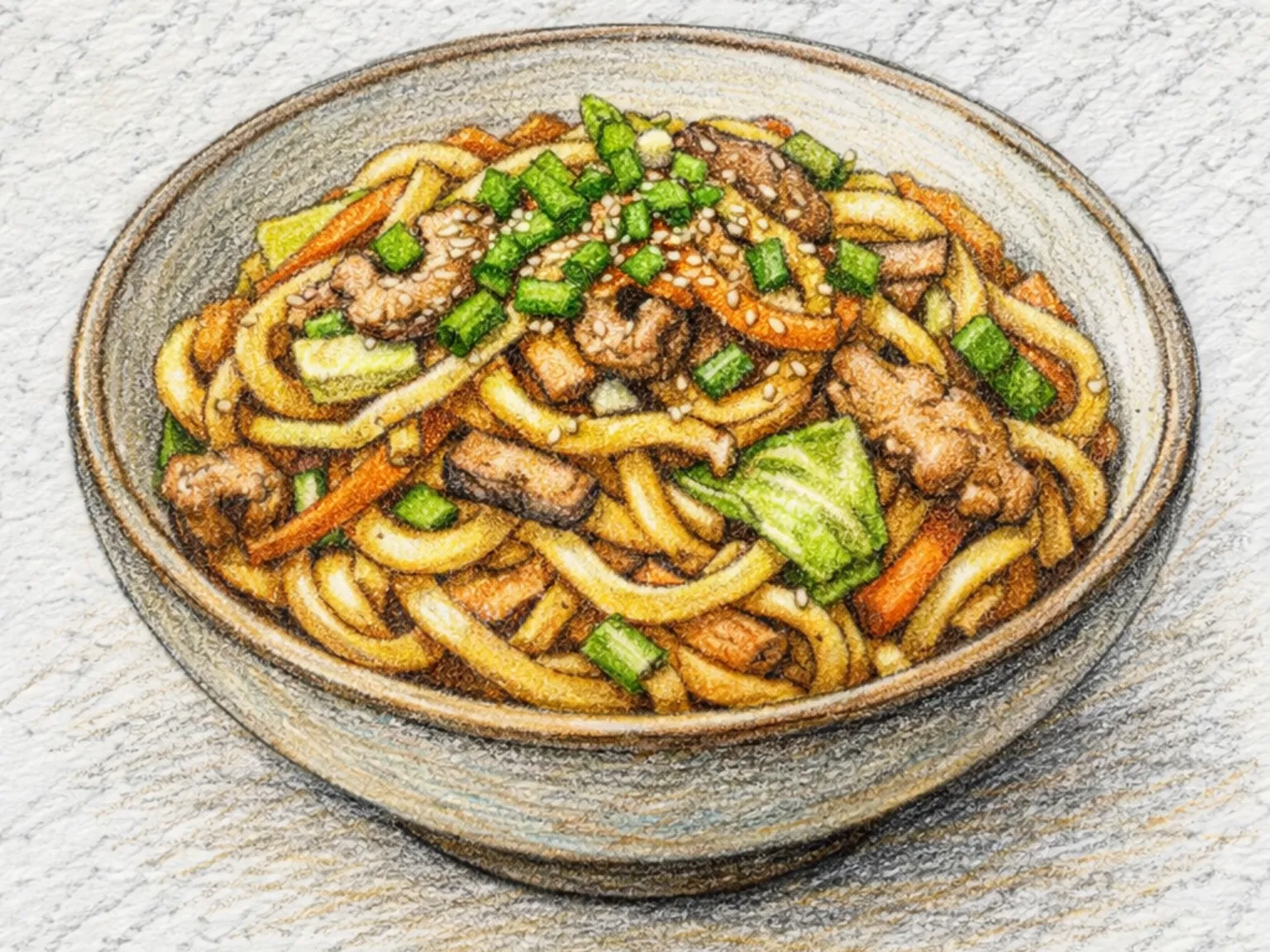
Japanese Stir-Fried Udon
Noodles Medium

Japanese Stir-Fried Udon

Yaki udon is a Japanese stir-fried noodle dish where thick udon noodles are tossed in a soy-based sauce over high heat with sliced pork or seafood and vegetables such as cabbage, carrot, and scallion. The high heat gives the noodles lightly charred edges while keeping their chewy center intact. Bonito flakes (katsuobushi) are often scattered on top just before serving, where they wave from the residual heat. The recipe takes about 25 minutes and depends on maintaining strong heat throughout the stir-fry to avoid steaming the noodles.

🏠 Everyday 🌙 Late Night
Prep 10min Cook 15min 2 servings

Korean Omelette Rice (Ketchup Fried Rice in Egg Wrap)
Rice Medium

Korean Omelette Rice (Ketchup Fried Rice in Egg Wrap)

Omurice wraps ketchup-fried rice in a thin, softly set egg sheet, producing a one-plate meal that balances sweet-tangy tomato notes with rich buttery egg. Diced onion, carrot, and ham are sauteed in butter until fragrant, then tossed with cooked rice and ketchup to build a lightly caramelized fried rice base. A separate egg mixture enriched with a splash of milk is spread thin in a hot pan and folded around the rice while still slightly runny, so cutting into it reveals a creamy, flowing center. Green peas mixed into the rice add pops of sweetness and color. The contrast between the glossy egg exterior and the savory-sweet filling has made omurice one of the most comforting one-plate meals in both Japanese-origin home cooking and Korean everyday cuisine. Tilting the pan and nudging the egg sheet against the curved edge is the standard technique for shaping the signature oval.

🏠 Everyday 🧒 Kid-Friendly
Prep 10min Cook 15min 2 servings
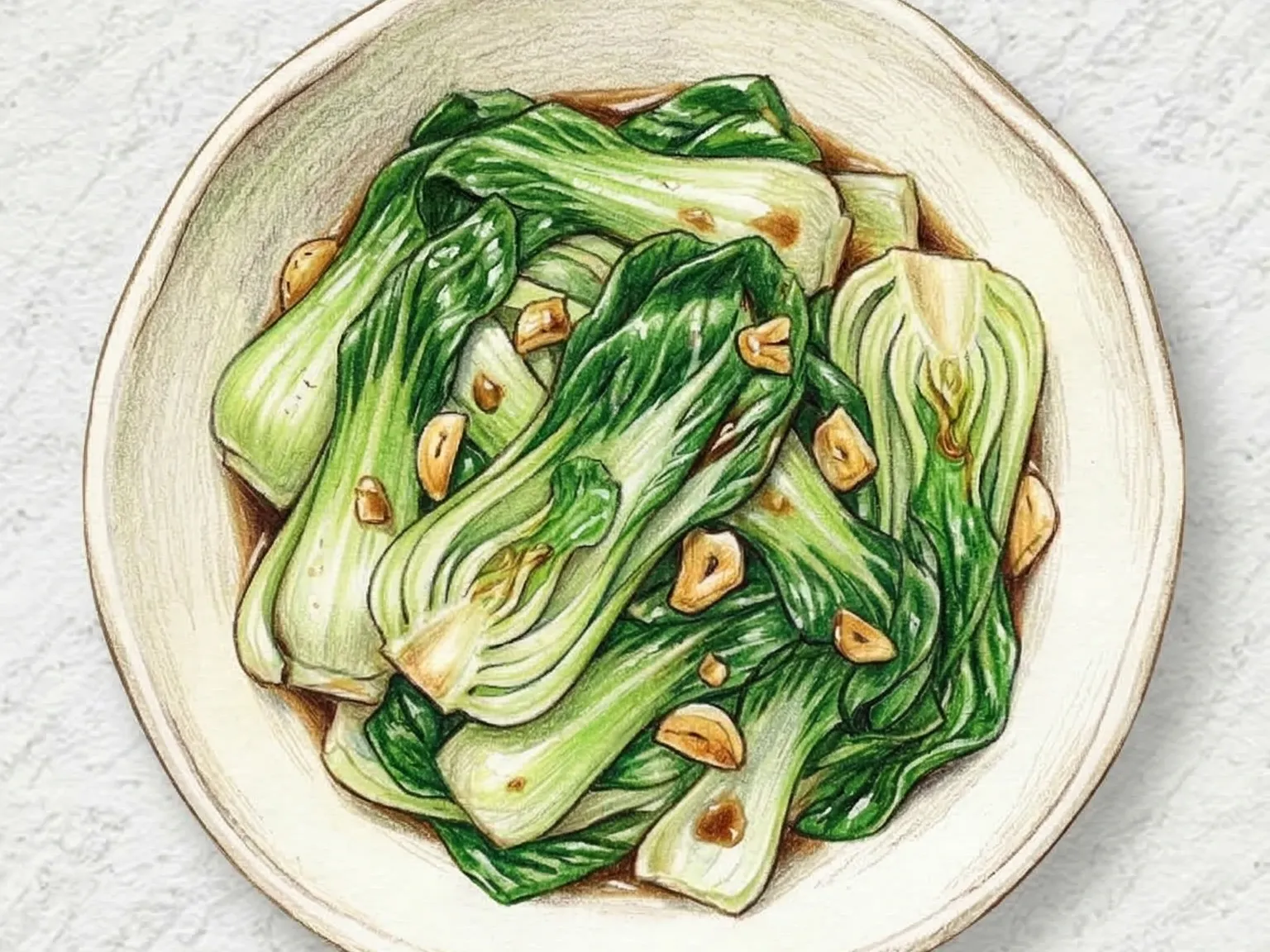
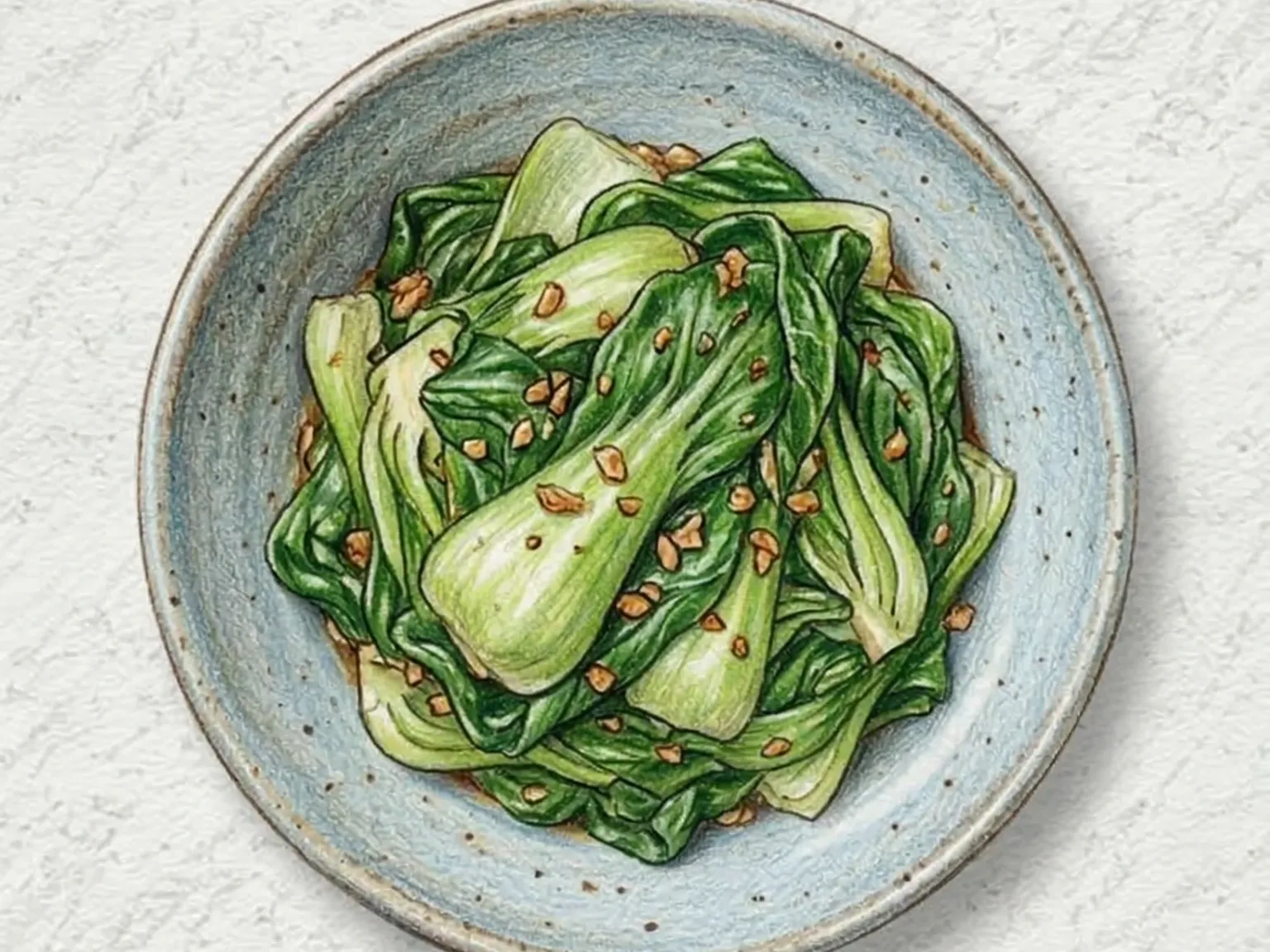
Stir-fried Bok Choy (Bok Choy with Garlic and Oyster Sauce Glaze)
Stir-fry Easy

Stir-fried Bok Choy (Bok Choy with Garlic and Oyster Sauce Glaze)

Halved bok choy is stir-fried with sliced garlic over high heat for two minutes, then finished with oyster sauce and soy sauce in a one-minute reduction that glazes every leaf and stem. The thick white stalks need significantly more heat than the tender green leaves, so placing them cut-side down first or adding the leaves halfway through prevents the greens from wilting to mush while the stems remain undercooked. Oyster sauce lends a concentrated umami depth to the otherwise mild vegetable, and a splash of 40 milliliters of water helps the sauce flow between the tightly packed stems so seasoning reaches every layer rather than coating only the outer surfaces. Black pepper and sesame oil are added only after the pan leaves the flame so their volatile aromas stay intact on the plate. Bok choy continues releasing moisture after it is plated, so serving immediately is critical to preserving the contrast between crisp stalks and just-wilted leaves. Waiting even a few minutes allows the released liquid to dilute the sauce and soften the texture. At 105 calories per serving, this is a light side dish that still provides meaningful amounts of vitamin A and calcium. For a Sichuan-style variation, replacing a portion of the oyster sauce with doubanjiang adds a spicy, reddish character without requiring additional chili oil. The dish is common across East and Southeast Asian home kitchens under various names but the technique of separating stalk and leaf cook times is universal to cooking bok choy well.

🏠 Everyday 🍱 Lunchbox
Prep 8min Cook 6min 2 servings
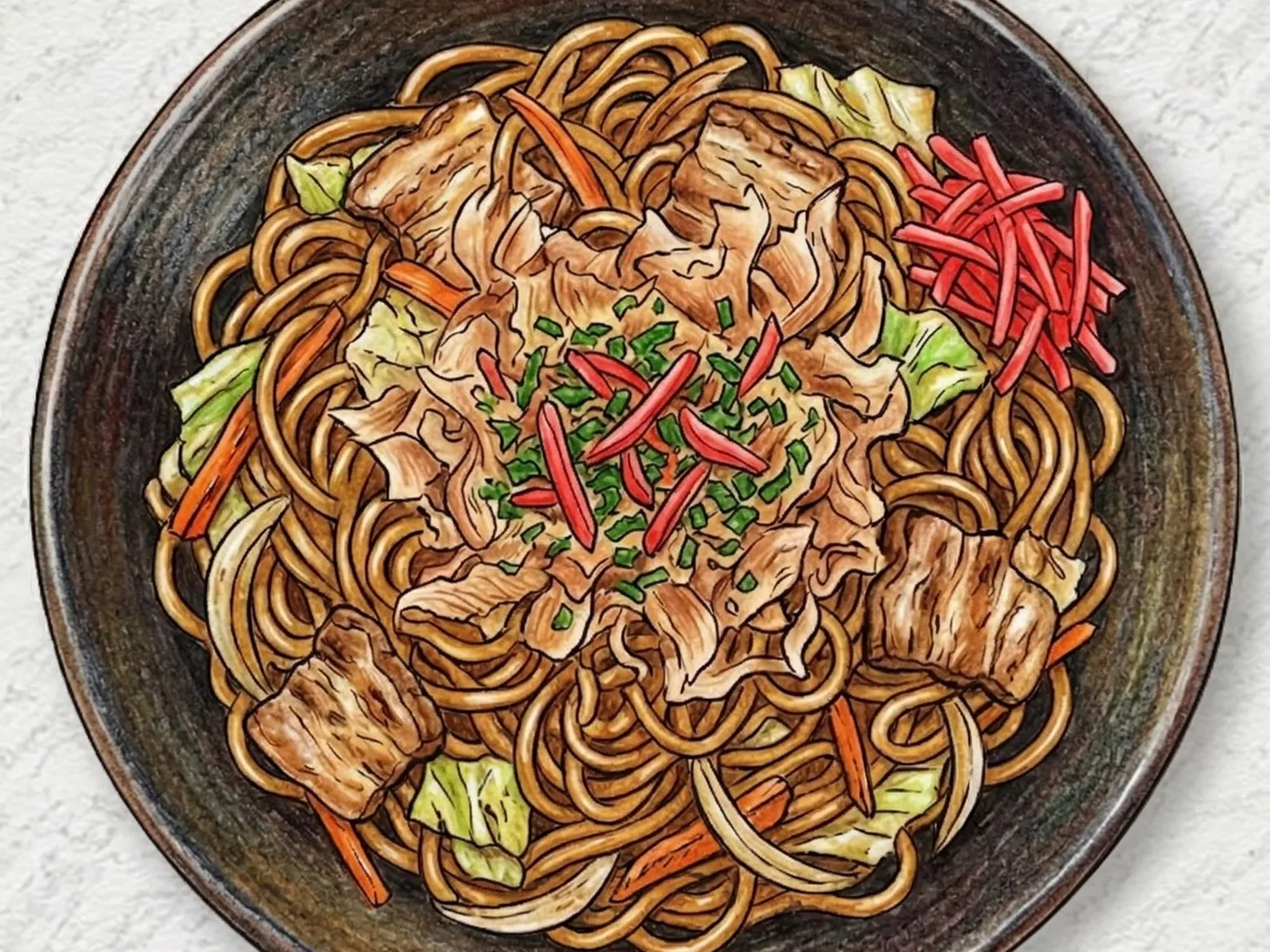
Japanese Stir-Fried Noodles (Yakisoba)
Noodles Easy

Japanese Stir-Fried Noodles (Yakisoba)

Yakisoba is a classic Japanese stir-fried noodle dish made by tossing wheat noodles, pork, and vegetables in a tangy Worcestershire-based sauce. The preparation begins by stir-frying thinly sliced pork over high heat, followed by onions, carrots, and cabbage. Cooking the vegetables quickly at high heat keeps them crisp and prevents them from becoming soggy. The wheat noodles are briefly warmed to loosen them before being added to the pan. A savory-sweet yakisoba sauce is poured around the edges of the pan and quickly tossed to evenly coat every noodle strand. Once plated, hot noodles are topped with bonito flakes, which release a smoky aroma as they wave from the residual heat. Ensuring the noodles are not overcooked and adding the sauce near the end of the cooking process are key steps to maintaining the proper textures of both noodles and vegetables.

🏠 Everyday 🌙 Late Night
Prep 15min Cook 12min 2 servings
Korean Snack Bar Omelet Rice
Rice Easy

Korean Snack Bar Omelet Rice

Finely diced onion, carrot, and ham are stir-fried first to drive off moisture and draw out their natural sweetness, then cold leftover rice is added and tossed over high heat until every grain separates cleanly. Ketchup and Worcestershire sauce season the fried rice with a sweet-tangy balance that defines the bunsik-style flavor. The egg, mixed with a pinch of salt, is poured into a lightly oiled pan over low heat and spread into a thin sheet, then the fried rice is placed at the center and the egg is folded around it while still soft and barely set. Low heat is the key to keeping the omelet smooth and unbroken. The roll is shaped into an oval on the plate and finished with a neat zigzag of ketchup across the top. The warm egg shell traps the heat of the rice inside, keeping the filling moist until the first cut.

🧒 Kid-Friendly 🌙 Late Night
Prep 15min Cook 18min 2 servings
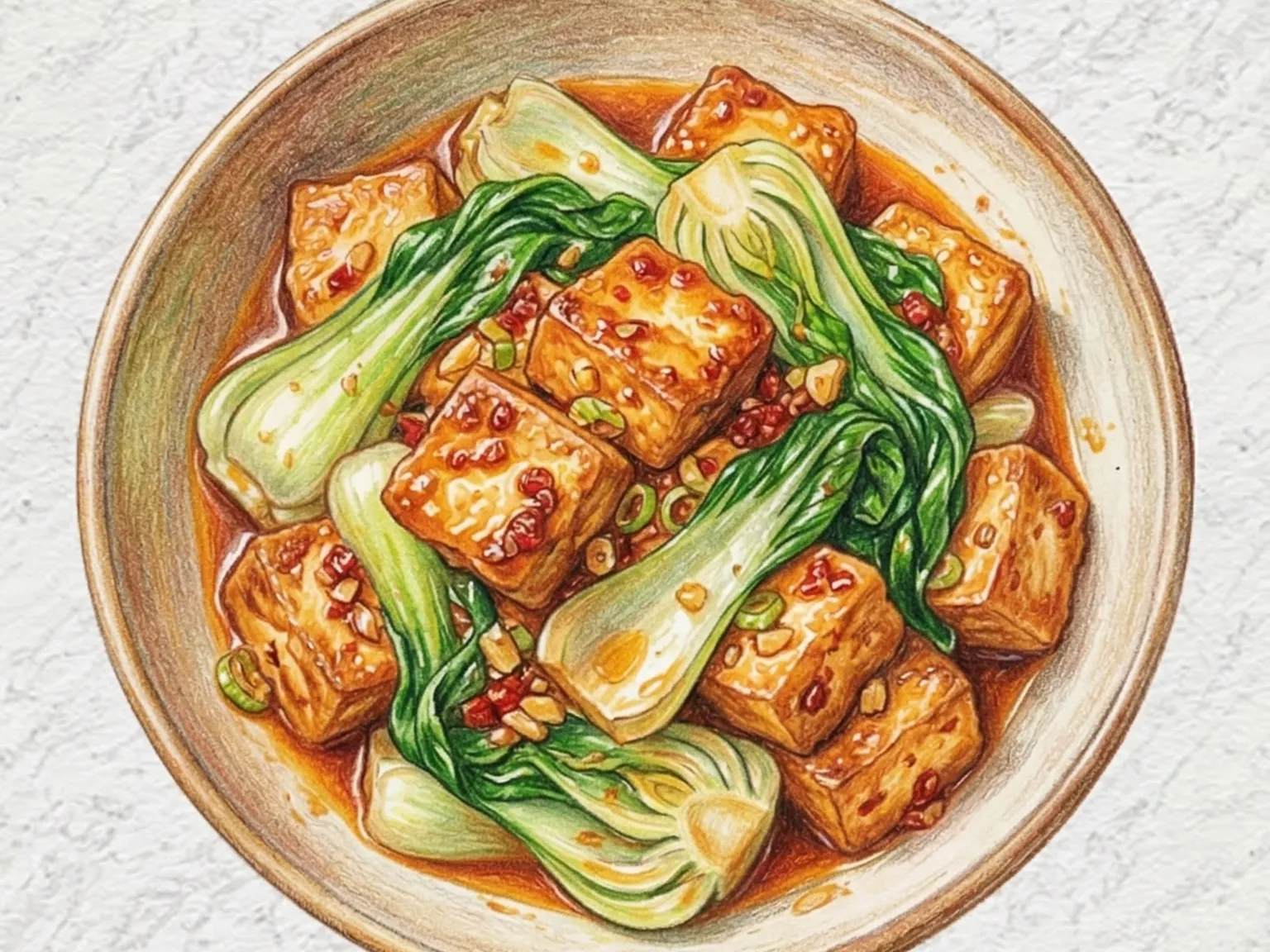
Korean Stir-Fried Bok Choy and Tofu with Doubanjiang
Stir-fry Easy

Korean Stir-Fried Bok Choy and Tofu with Doubanjiang

Firm tofu is patted completely dry before pan-searing in oil for three minutes until golden on each side, then removed from the pan while the aromatics are built. Green onion and garlic go into the same pan to soften and release their fragrance, after which doubanjiang, soy sauce, sugar, and water are stirred together into a sauce directly in the pan. Doubanjiang, made from crushed fermented chilies, brings concentrated salt and heat simultaneously, so the soy sauce must be added in small amounts and the seasoning checked at the end rather than measured rigidly from the start. Bok choy stems and leaves are separated and added at different points: stems go in first for two minutes of direct heat, leaves follow for a final minute, so the stalks remain firm and the greens wilt to a silky finish. These two textures coexist on the plate without either being overcooked. A single teaspoon of sugar softens the sharp salinity of the doubanjiang, rounding the finish so that the heat registers as warmth rather than aggression. When the seared tofu cubes return to the pan, their crisp exterior absorbs the sauce, releasing a burst of spicy, fermented flavor with each bite. At 290 calories and 17 grams of protein, the dish delivers a satisfying protein intake without any meat in the recipe.

🏠 Everyday 🍱 Lunchbox
Prep 12min Cook 10min 2 servings
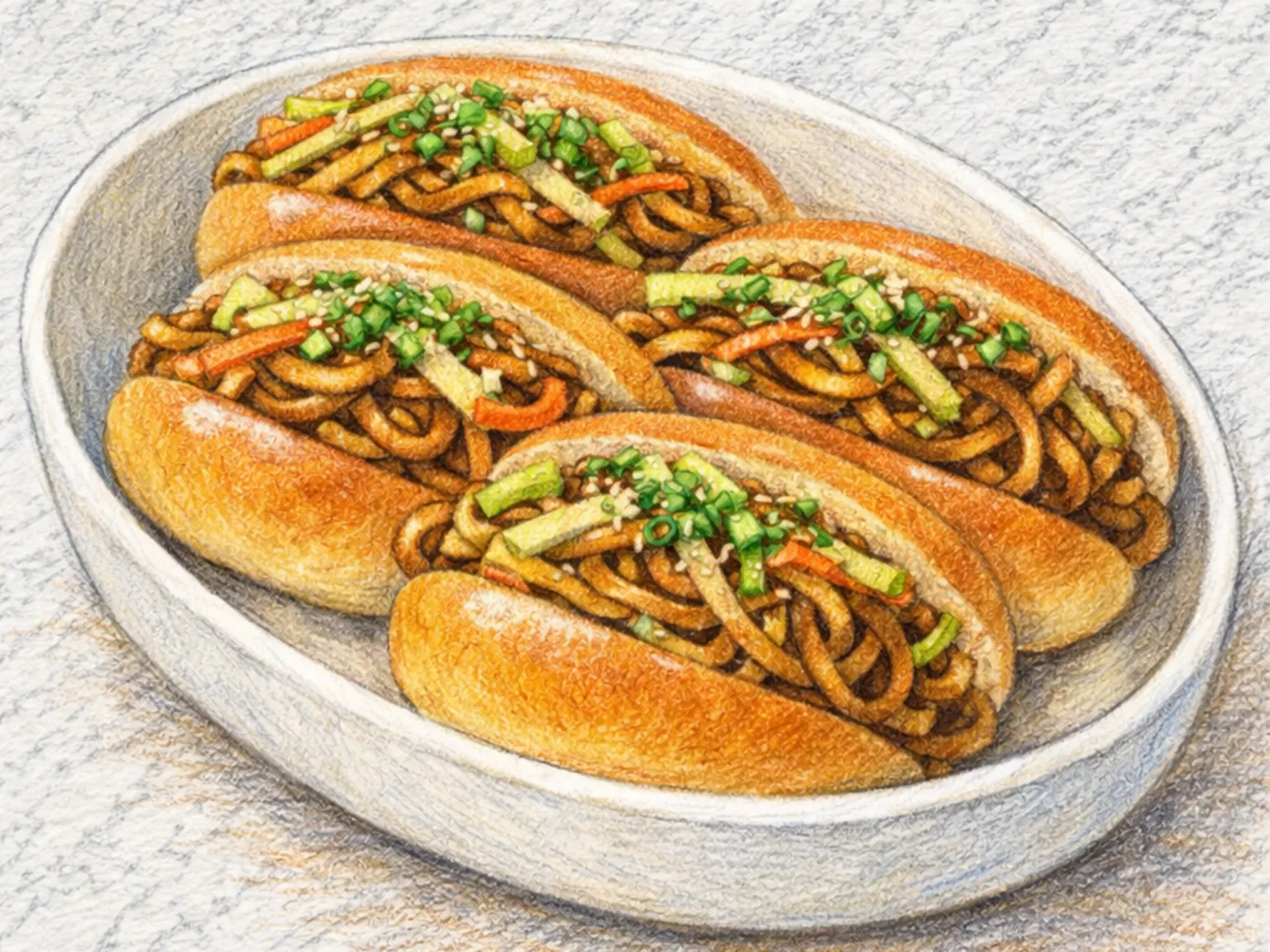
Yakisoba Pan (Noodle Bread)
Noodles Easy

Yakisoba Pan (Noodle Bread)

A staple of Japanese street food culture, Yakisoba-pan combines a toasted, buttered hot dog bun with a filling of stir-fried egg noodles seasoned with yakisoba and soy sauce. Shredded cabbage, onions, and carrots start in the pan over high heat for exactly two minutes before the noodles are added. This timing ensures the vegetables remain crisp and provide a textural contrast to the soft noodles rather than becoming limp during the cooking process. As the yakisoba sauce hits the hot metal, it caramelizes quickly to wrap every noodle strand in a glossy, sweet-savory glaze. The act of spreading butter on the interior of the bun and giving it a quick toast serves a functional purpose beyond flavor. This butter layer acts as a moisture barrier, preventing the sauce from soaking into the bread and keeping the bun from turning soggy as it sits. The subtle richness of the butter bridges the gap between the savory noodle filling and the soft crumb of the bun. Sprinkling dried parsley over the top introduces a mild herbal scent that balances the heavy, concentrated sauce. For a burst of acidity, a small amount of beni shoga pickled ginger is tucked into the noodles to cleanse the palate. Spreading a layer of Japanese mayonnaise inside the bun alongside the butter creates an additional creamy texture. Softening the noodles in hot water before they hit the pan prevents clumping and allows for easier separation during the stir-frying stage.

🧒 Kid-Friendly ⚡ Quick
Prep 12min Cook 10min 2 servings
Poha (Indian Spiced Flattened Rice Breakfast with Peanuts)
Rice Easy

Poha (Indian Spiced Flattened Rice Breakfast with Peanuts)

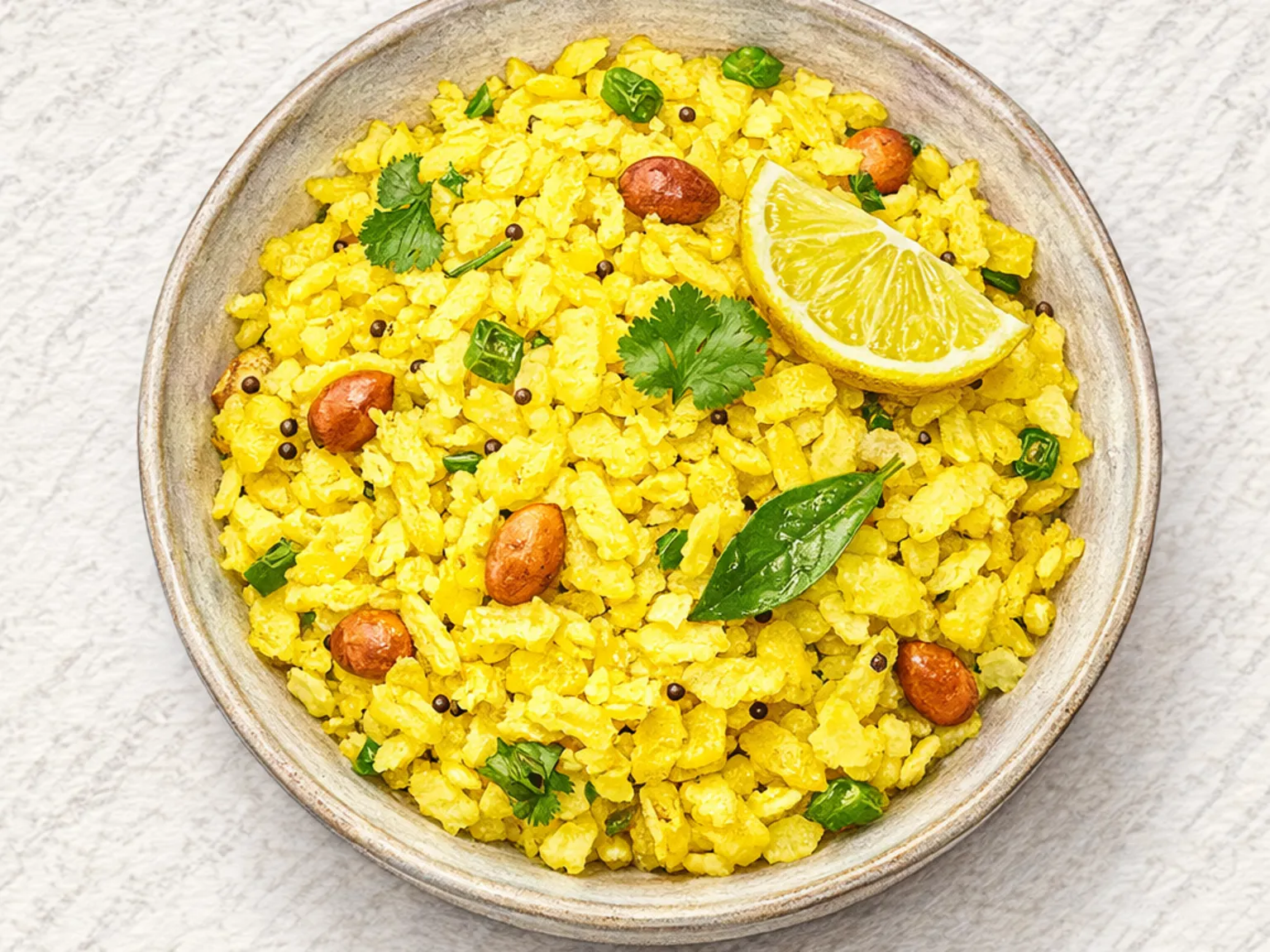
Poha uses flattened rice that is softened briefly, then warmed with mustard seeds, onion, green chili, and turmeric before roasted peanuts and lemon juice are added. Two hundred grams of flattened rice is placed in a sieve and rinsed under cold water for only about 10 seconds. It then rests, drained, for 5 minutes until pliable when pressed. A longer soak would make the thin grains mushy before they reach the pan. One onion is sliced thinly and one green chili is chopped. After 1 tablespoon cooking oil warms for 30 seconds over medium heat, 0.5 teaspoon mustard seeds is added. The seeds need only about 20 seconds to begin popping; the onion and chili go in immediately so the mustard does not burn. The onion cooks for roughly 3 minutes, until translucent, before 0.5 teaspoon turmeric is stirred through for an even yellow color. The softened poha is added and the burner is lowered. Gentle folding for 2 minutes heats the rice without crushing or clumping it. Forty grams roasted peanuts is mixed in for a firm contrast, then the heat is turned off before 1 tablespoon lemon juice is added. Keeping the rinse short and adding the citrus away from the heat preserves both the separate rice flakes and the fresh lemon aroma.

🏠 Everyday ⚡ Quick
Prep 10min Cook 12min 2 servings
Korean Stir-Fried Bok Choy with Oyster Sauce
Stir-fry Easy

Korean Stir-Fried Bok Choy with Oyster Sauce

This bok choy stir-fry coats 250 g of halved heads with a thin oyster sauce glaze while keeping the stalks firm. Trim only the tough base, rinse between the leaves, and shake away as much water as possible in a colander. Excess water would lower the pan temperature and steam the greens. Before heating the pan, combine 1 tablespoon oyster sauce, 1 teaspoon soy sauce, and 2 tablespoons water in a small bowl. Preheat a wide pan over high heat for about 1 minute, then stir 1 tablespoon cooking oil and 1 teaspoon minced garlic for only 20 to 30 seconds. Arrange the bok choy cut-side down in one layer. Give the stalks 40 seconds against the hot surface, then turn the pieces so the leaf edges pick up light color. Pour the prepared sauce around the pan rim so it boils immediately and toss for about 1 minute without lowering the heat. Stop when the sauce forms a glossy film on the stalks, the leaves have softened, and the stems bend slightly while retaining a crisp core. Turn off the heat before adding 0.5 teaspoon sesame oil and shake the pan once to distribute it. Dry leaves, an uncrowded pan, and the bend of the stalks are the practical controls for this recipe.

🏠 Everyday 🍱 Lunchbox
Prep 8min Cook 5min 2 servings

About Stir-fry

Cooking over high heat for a short time keeps ingredients crisp and vivid. With a few staple sauces like gochujang, soy sauce, and oyster sauce, the possibilities are endless - and dinner is on the table in minutes.