Stir-fry Recipes
310 recipes. Page 6 of 13
Stir-frying is one of the most common cooking methods in Korean home kitchens. Classics like spicy pork stir-fry (jeyuk-bokkeum), squid stir-fry, and japchae showcase the range of flavors - from fiery gochujang-based sauces to sweet soy glazes.
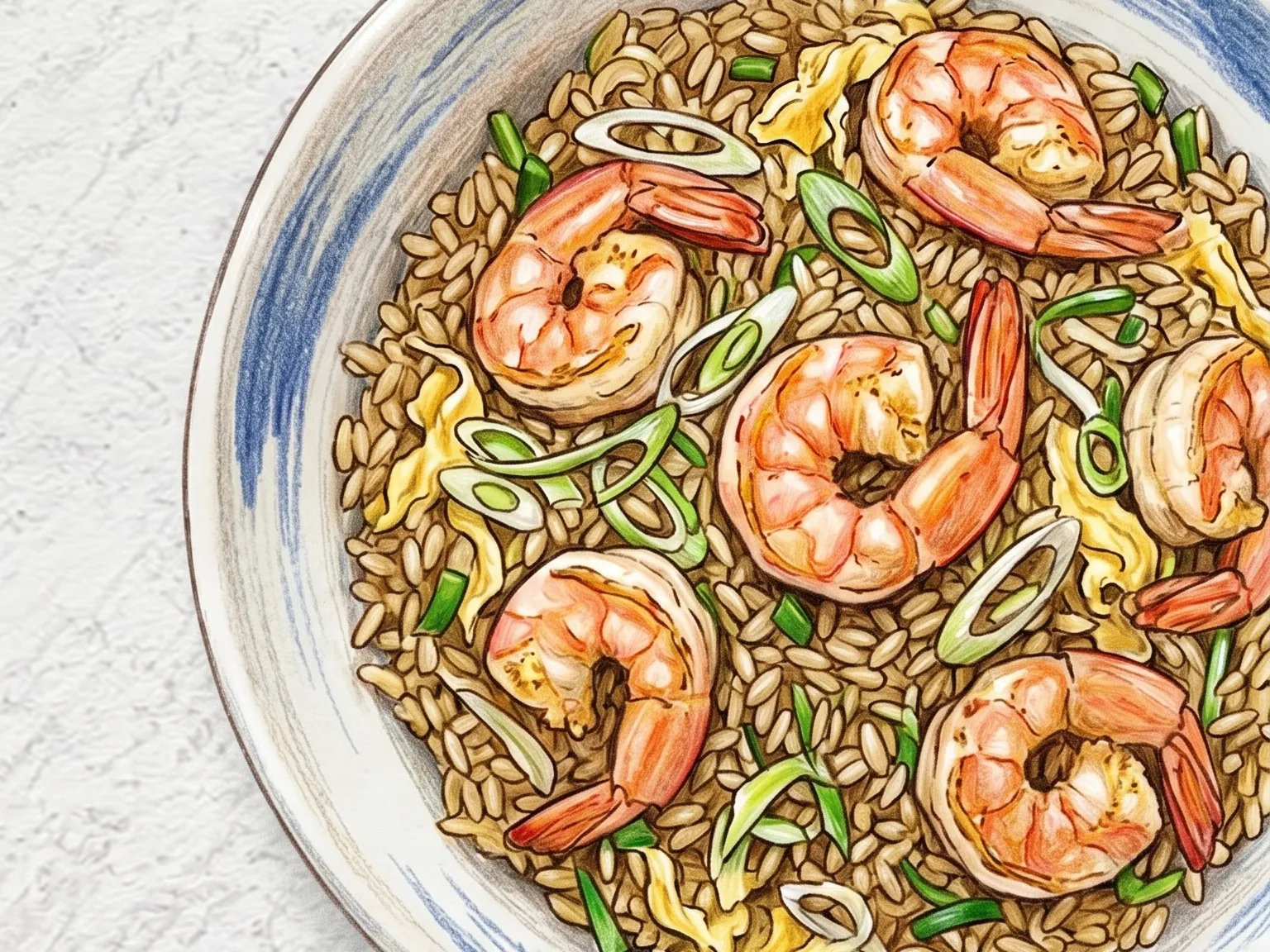
Korean Scallion Shrimp Fried Rice
This scallion shrimp fried rice stir-fries plump shrimp and generous amounts of green onion over high heat for a clean, aromatic bowl. The shrimp go into the wok first, searing until the edges turn golden and leave behind a savory fond. Chopped scallions follow, releasing a sharp, oniony fragrance that cuts through the richness. Day-old rice is added and tossed rapidly with soy sauce and oyster sauce, breaking up clumps until every grain is individually coated. Beaten egg stirred in at the end wraps the rice in a soft, silky layer. Despite the short ingredient list, the combination of briny shrimp and pungent scallion delivers a depth of flavor that keeps this dish in regular weeknight rotation.
Korean Stir-fried Mung Bean Jelly
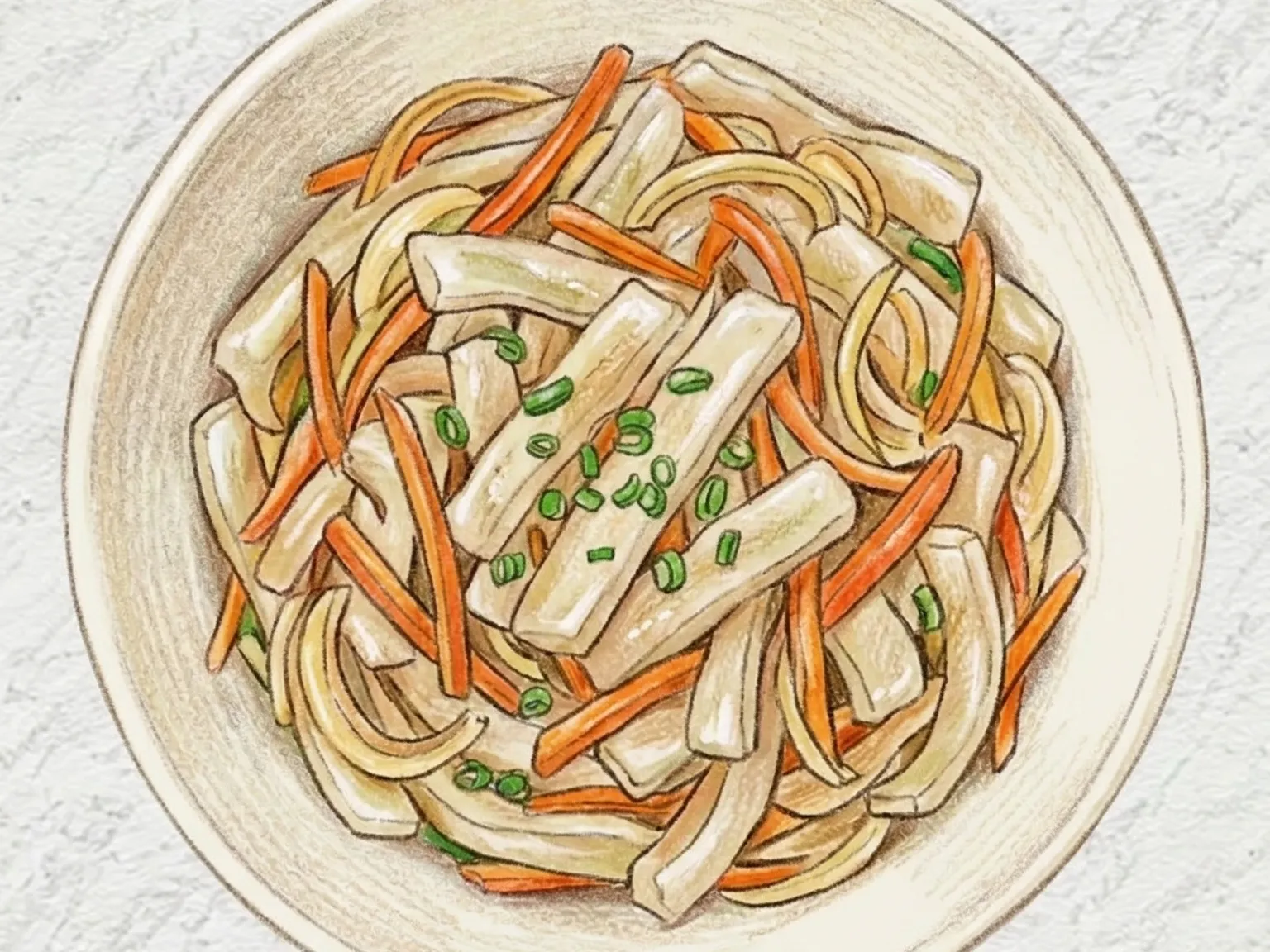
Mung bean jelly is cut into thick strips, blanched for thirty seconds to remove surface starch, then stir-fried gently with julienned carrot and onion in a soy sauce seasoning. The brief blanch firms up the jelly's exterior just enough to survive the tossing in the pan without crumbling, and washing away the starch allows the jelly to absorb the flavors of its companion vegetables more readily. Low heat and a careful hand are non-negotiable; aggressive stirring breaks the strips into shapeless lumps. The carrot contributes a faint natural sweetness, and the onion releases a light caramel note as it softens, both of which fill in the jelly's inherently neutral taste with understated warmth. Chopped green onion added at the very end lifts the dish with a sharp, fresh bite. One tablespoon of sesame oil swirled in after the flame is off coats everything in a glossy sheen and a final wave of nuttiness. At 180 calories and 9 grams of fat, this is a low-calorie side with enough fiber to sit gently in the stomach. The pale yellow color of mung bean jelly - a signature of the ingredient - comes through clearly on the finished plate, giving the dish a clean, orderly appearance that matches its delicate flavor.
Korean Seasoned Seaweed Rice Bowl
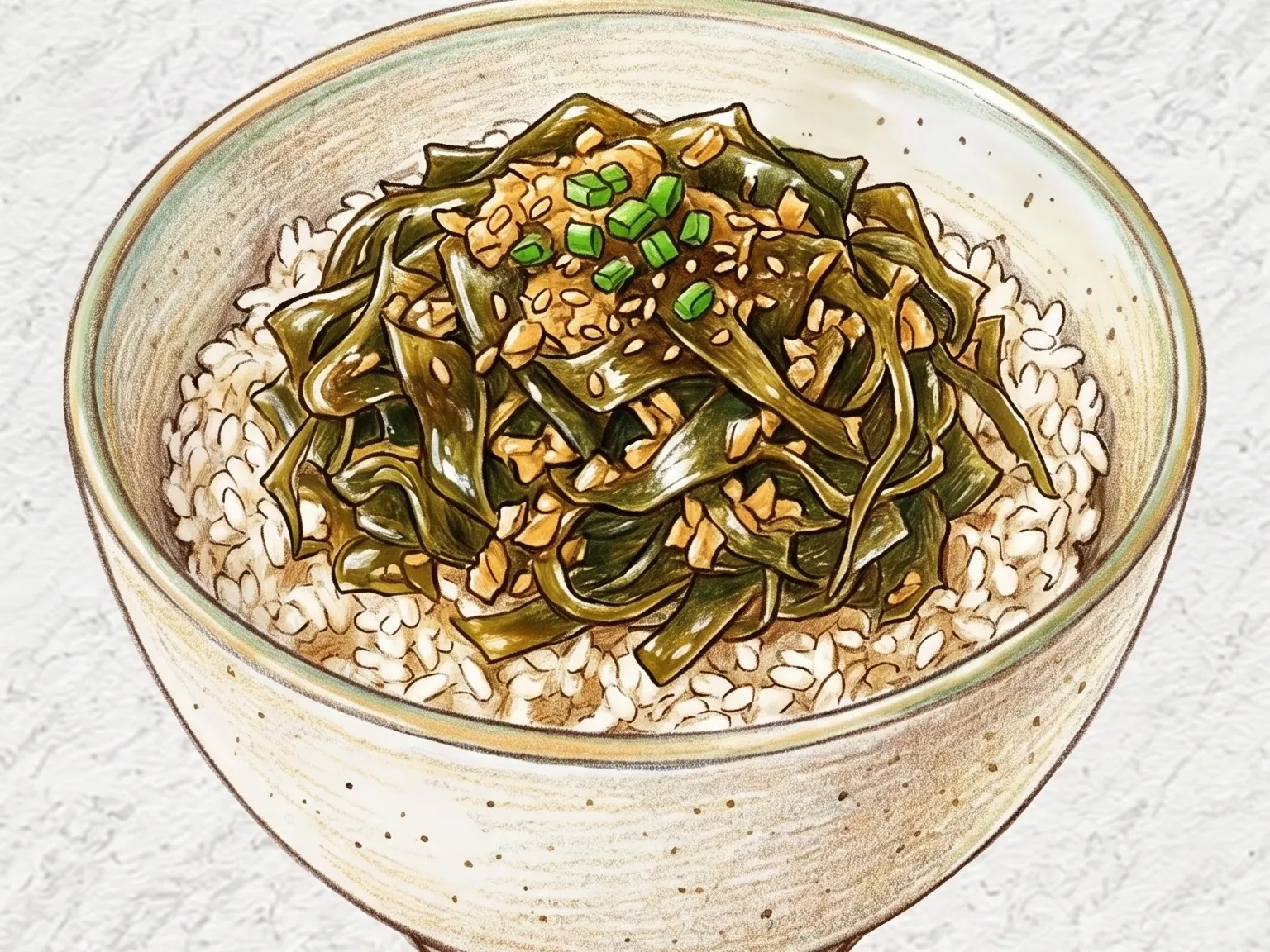
This seasoned seaweed rice bowl stir-fries rehydrated wakame with garlic in sesame oil, seasons it with soy sauce, and spoons it over steamed rice for a quick and satisfying one-bowl meal. Soaking the dried seaweed until fully softened gives it a slippery yet pleasantly chewy texture that slides across the palate with each mouthful of rice. Cooking the garlic and seaweed together in sesame oil removes any raw oceanic sharpness and replaces it with a warm, nutty fragrance that layers over the natural sea-mineral character of the wakame. Soy sauce brings a savory edge that rounds out the seasoning and makes the bowl complete without any additional side dishes. With only five ingredients and a short cooking time from start to finish, this is one of the most efficient Korean rice bowls to prepare. The mineral richness of the seaweed gives the finished dish a depth that outpaces its simple ingredient list.
Chi-irichi (Okinawan Pork Blood Stir-Braise)
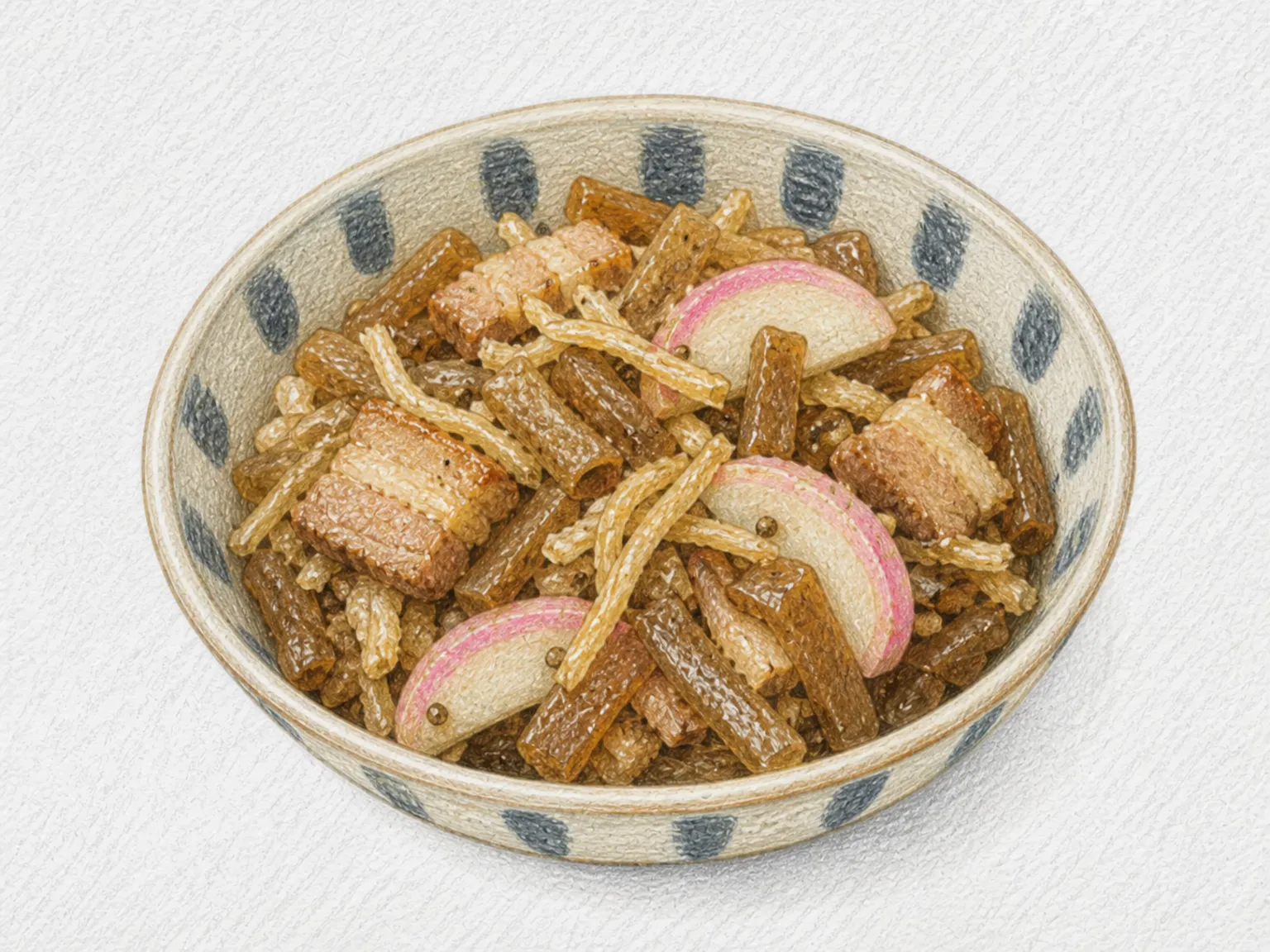
Chi-irichi requires sealed, refrigerated, pasteurized pig blood sold specifically as food for cooking. Keep 200 g of it at 4°C or below until use, separate its board and knife from other foods, and never substitute blood collected at home. Boil 100 g pork belly whole for 15 minutes, cut it into 5 mm strips, and simmer it for 4 minutes over medium heat with 1 teaspoon sugar, 1 tablespoon soy sauce, and 0.5 tablespoon sake. Boil 50 g dried shredded daikon for 8 minutes, rinse, squeeze firmly, and cut it to 3 cm. Slice 20 g kamaboko into 4 mm strips. Blend the blood with 1 tablespoon red miso for 20 seconds until smooth, then coat every strand of daikon with the mixture. Melt 2 tablespoons lard in a heavy pan over medium-high heat. Add the blood and daikon and work it continuously with several chopsticks for 6 minutes, breaking it into brown crumbs until no red liquid remains. Add the seasoned pork with its cooking liquid and 200 ml pork stock. Stir-braise for 10 minutes over medium heat, add the kamaboko, and continue for 2 minutes. Verify that the center reaches at least 74°C, then finish with 0.25 teaspoon salt and 0.5 teaspoon Okinawan long pepper. Refrigerate any finished food within 2 hours.
Korean Beef Fried Rice (Soy-Marinated Ground Beef Stir-fried Rice)
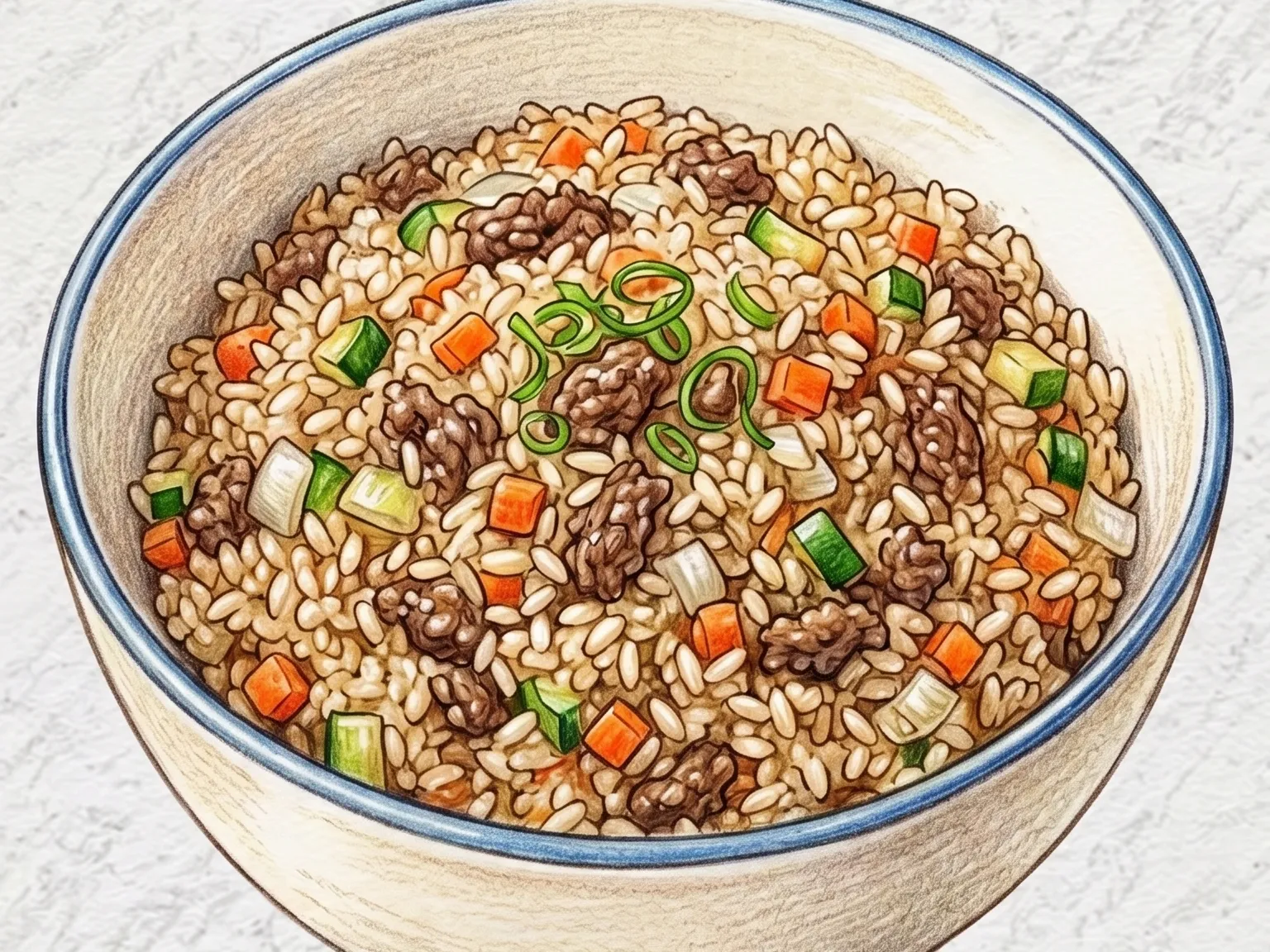
Sogogi bokkeumbap stir-fries soy-marinated ground beef with diced vegetables and day-old rice over high heat for a deeply savory fried rice. The beef goes in first, rendering its fat and leaving behind a flavorful fond that coats the pan. Onion, carrot, and zucchini follow, cooking just until their edges soften and their natural sugars begin to caramelize. Cold rice is added and tossed vigorously to break up clumps, picking up the soy seasoning and meat juices as it fries. A final drizzle of sesame oil right before plating adds a fragrant, nutty finish. The beef infuses the rice with a meaty depth while the vegetables keep the dish from feeling heavy, making it a quick, satisfying meal from everyday pantry ingredients.
Chili Paneer (Spicy Fried Cheese Stir-Fry)
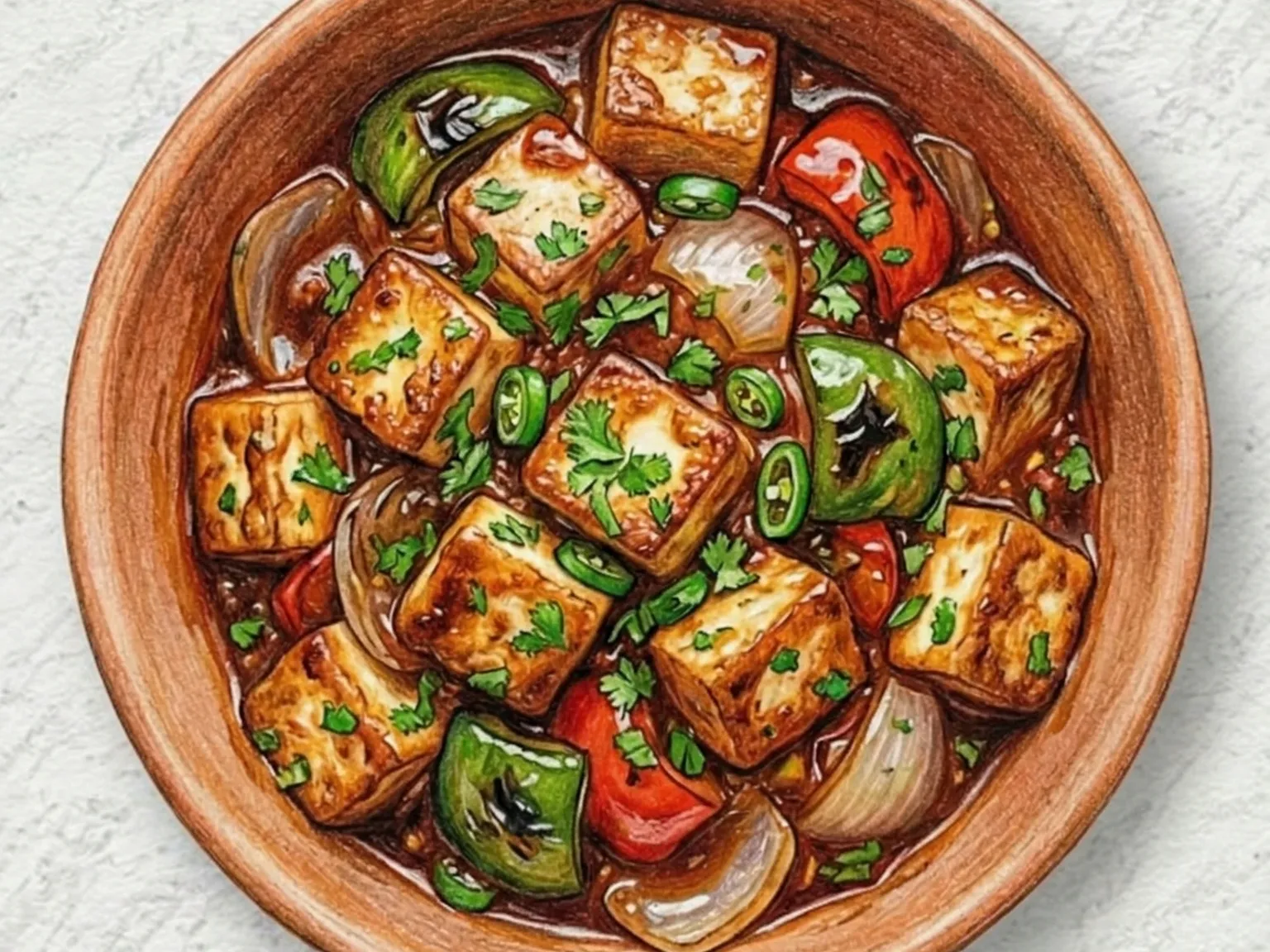
Chili paneer belongs to Indo-Chinese cuisine, a fusion genre that emerged in the late nineteenth century when Hakka Chinese immigrants settled in Kolkata and began cooking with Indian ingredients and techniques. Cubes of paneer, India's firm fresh cheese that holds its shape under high heat without melting, are coated in cornstarch and deep-fried until a crisp shell forms, then tossed in a blazing-hot wok with diced garlic, green chilies, bell peppers, and onions, all brought together in a sauce built from soy sauce, chili sauce, tomato ketchup, and vinegar. The starchy crust absorbs the punchy sauce while shielding the soft, milky interior of the paneer, and the contrast between the crunchy shell and the yielding cheese inside is the defining pleasure of the dish. Two distinct styles exist: dry, where the sauce barely coats each cube and the dish is eaten as a starter or with drinks, and gravy, where a thicker, glossier sauce pools generously around the paneer for scooping with naan or ladling over fried rice. The flavor profile, salty soy meeting sour vinegar, sweet ketchup cutting through hot chili, is neither Chinese nor Indian but something entirely its own, a product of a specific immigrant community adapting to a new place while keeping familiar techniques alive.
Korean Spam Fried Rice (Crispy Spam Cubes with Egg and Rice)
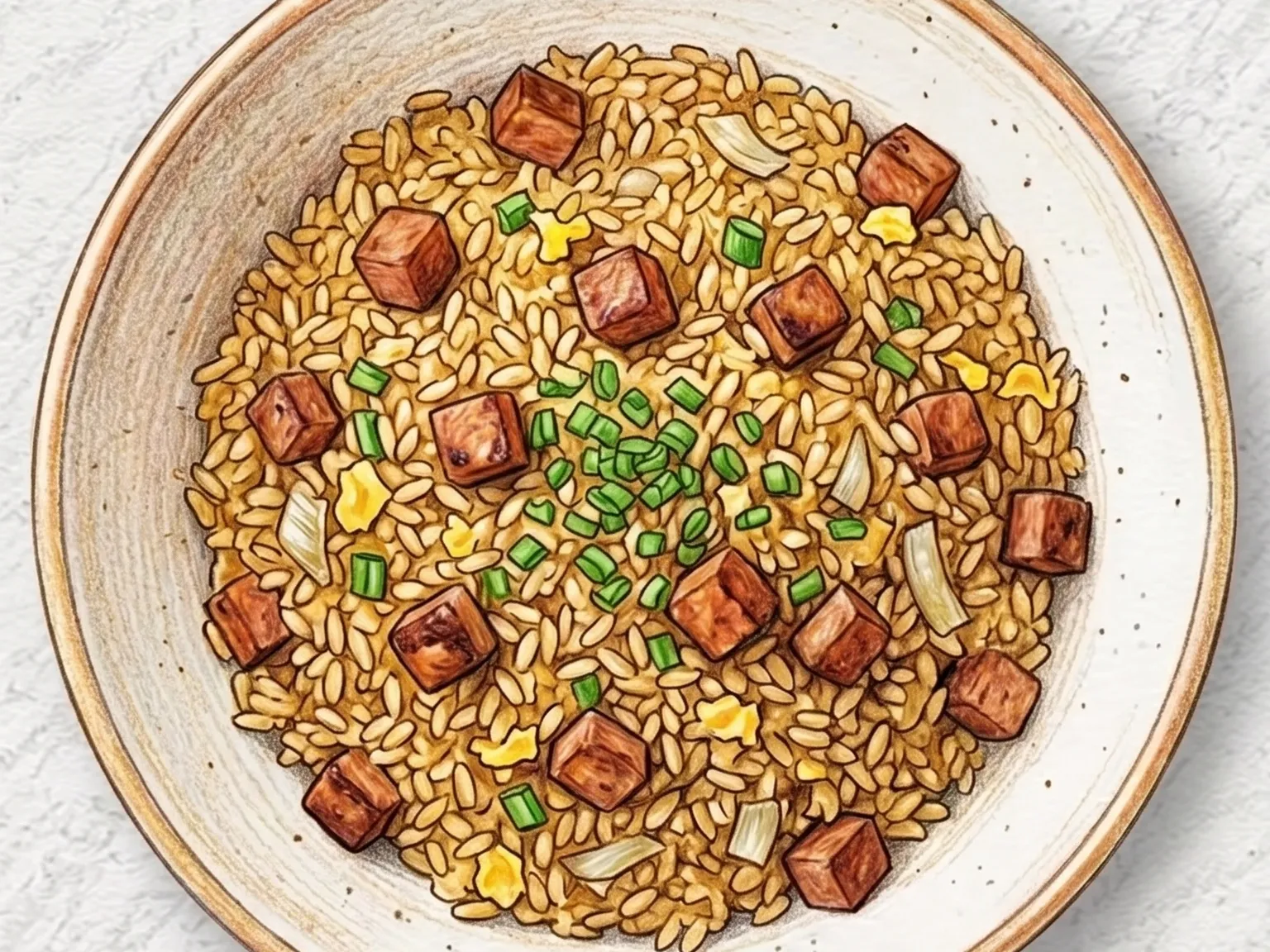
Spam bokkeumbap is a Korean fried rice built around crispy cubes of pan-seared Spam, whose salty, caramelized edges give the dish an addictive quality. The Spam is diced small and dry-fried without added oil - its own rendered fat crisps the outside while keeping the inside moist and savory. Onion and scallion go in next for aromatic depth, followed by cold leftover rice that is tossed over high heat until every grain picks up the salty pork flavor left in the pan. Beaten egg is scrambled into the rice, coating the grains in a thin, soft layer. A splash of soy sauce and a drizzle of sesame oil finish the dish with umami and nuttiness. The whole thing comes together in under ten minutes, making it one of the fastest comfort meals in the Korean home-cooking repertoire.
Korean Stir-fried Aster Scaber with Garlic
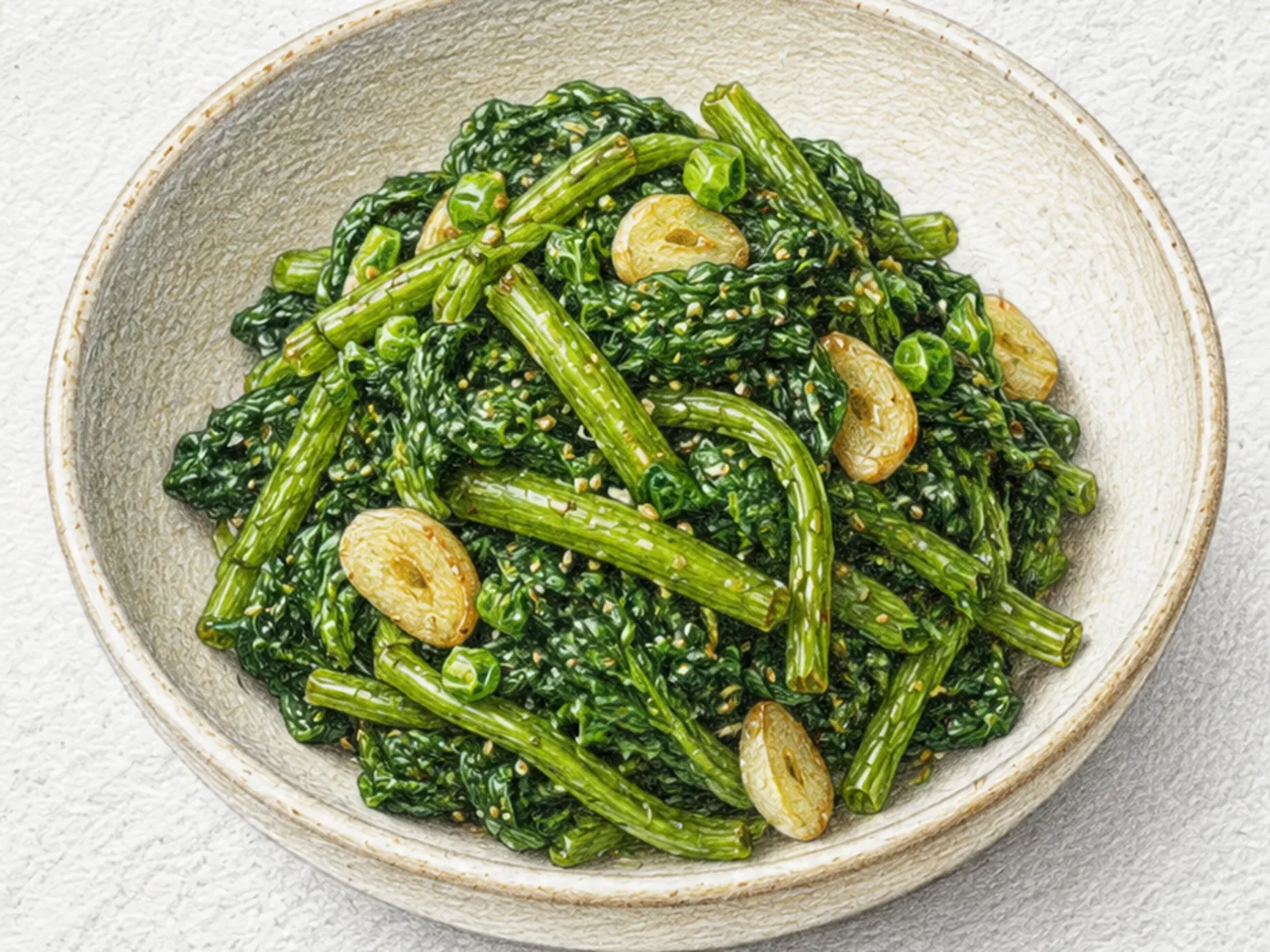
Chwinamul maneul bokkeum seasons rehydrated aster greens with soup soy sauce, garlic, and perilla oil before cooking them under a lid and finishing the remaining moisture with ground perilla seed. Three hundred grams rehydrated chwinamul is trimmed of tough stem ends, cut into 5 cm lengths, and squeezed lightly if water is still dripping. The greens are tossed in a bowl with 1.5 tablespoons soup soy sauce, 1.5 tablespoons minced garlic, and 0.75 tablespoon perilla oil so the seasoning reaches the folded leaves before they enter the pan. The seasoned greens spend 3 minutes in the pan over medium heat. Forty grams diagonally sliced green onion and 2 tablespoons water are then added, and the covered pan is lowered to medium-low for 2 minutes. After the lid is removed, 1 tablespoon ground perilla seed is stirred in. Another 1 to 2 minutes over medium heat lets the powder absorb the visible moisture and cling to the greens. The burner is switched off before the remaining 0.75 tablespoon perilla oil is mixed through. Up to 0.25 teaspoon salt is used only after tasting. Light squeezing at the start preserves enough moisture for the covered stage, while the ground perilla added near the end prevents the finished greens from remaining wet.
Tomato Egg Rice Bowl (Stir-fried Tomatoes with Soft Scrambled Eggs)
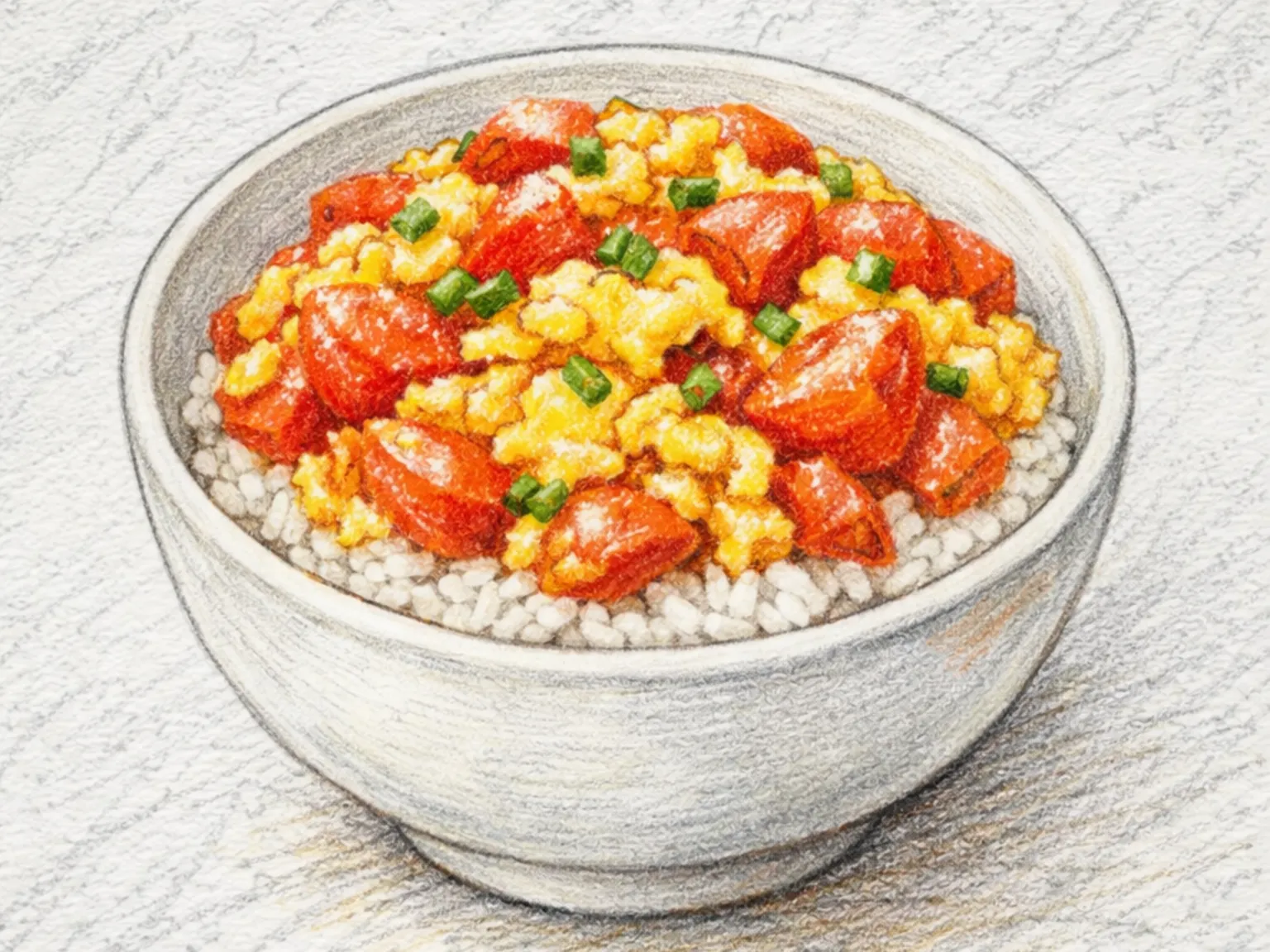
This tomato egg rice bowl cooks the eggs first until softly set, removes them, and then builds a tomato sauce in the same pan before combining everything over 2 cups of rice. Cut 250 g tomato into large wedges so pieces remain after their juice enters the pan, and thinly slice 1 green onion. Beat 3 eggs only until most of the white streaks disappear. Heat half of the measured 1 tbsp vegetable oil over medium heat, pour in the eggs, and fold them in broad strokes as soon as the edges begin to set. Remove the eggs while they are still soft. Add the remaining oil and green onion to the same pan and cook for 30 seconds. Raise the heat to high, add the tomato, and stir-fry for about 1 minute. Once the edges soften and red juice appears, add 1 tbsp soy sauce and 1 tsp sugar. Let the seasoning bubble on the bottom of the pan and cook for 30 more seconds without crushing every tomato wedge. Lower the heat, return the eggs, and fold gently for only 30 seconds. Divide the tomato, egg, and all of the remaining sauce over the warm rice before the eggs continue to firm.
Korean Aster Greens Beef Stir-fry
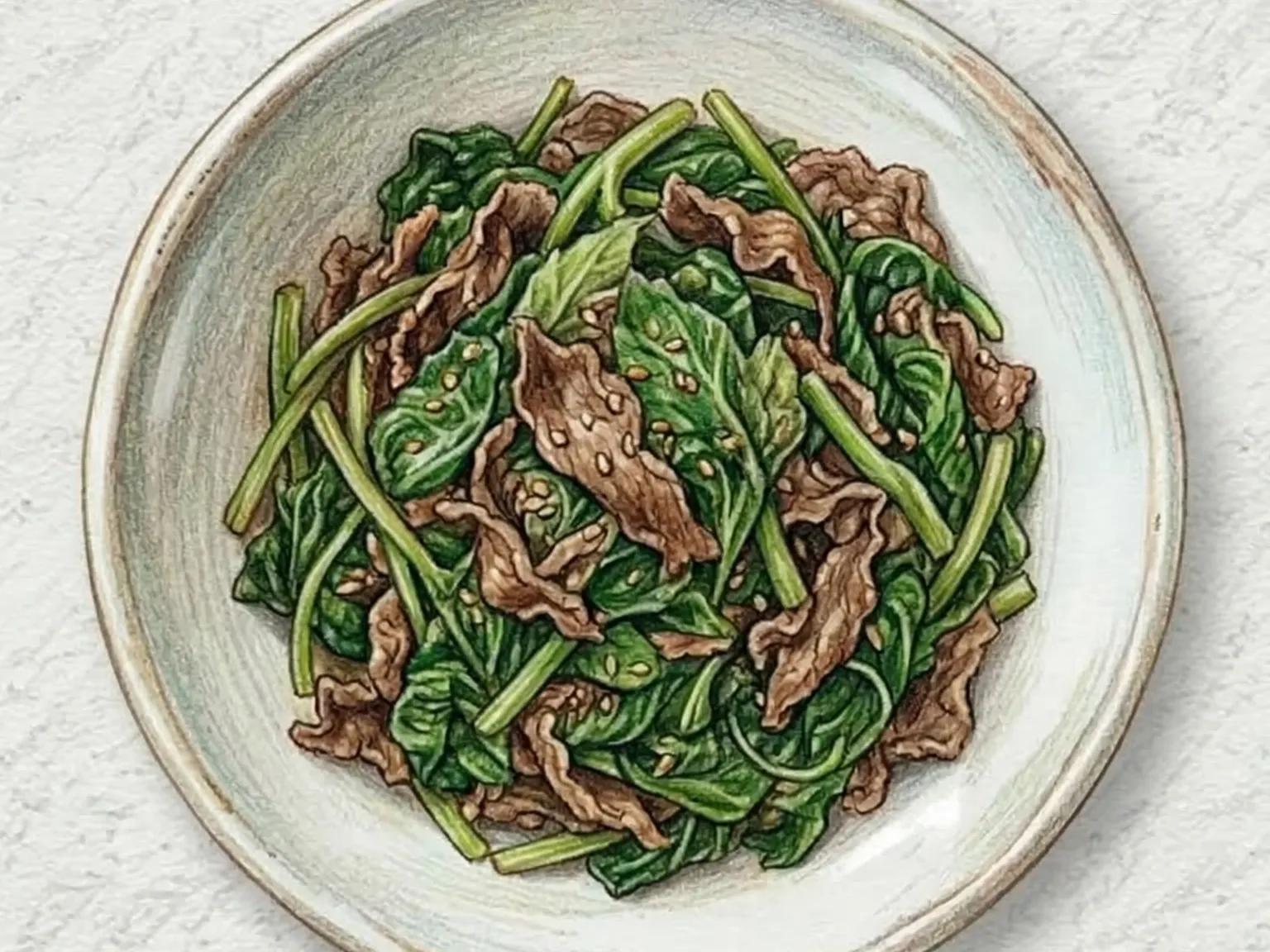
Chwinamul sogogi bokkeum sears thin soy-marinated beef before adding blanched aster greens and reducing the remaining pan liquid to a light coating. Two hundred fifty grams blanched chwinamul is squeezed only until it stops dripping, then cut into 5 cm lengths. Two hundred twenty grams beef slices is separated and marinated for 10 minutes with 1 tablespoon soy sauce, 1 tablespoon cooking wine, and 0.5 tablespoon minced garlic. A pan is heated over high before 1 tablespoon perilla oil, 120 g onion, and the remaining garlic cook for 1 minute without letting the garlic brown. The beef is spread widely and left in place for about 2 minutes. Once its edges color, the slices are turned and stir-fried for 1 more minute. The chwinamul and the remaining 1 tablespoon soy sauce are added, and the heat is lowered to medium. After 3 to 4 minutes, the liquid at the bottom should have reduced to a thin coating rather than a pool. The burner is switched off, and the remaining 0.5 tablespoon perilla oil and 1 teaspoon sesame seeds are folded through. Squeezing the greens only to the point of no dripping keeps them from drying out, while reducing the pan liquid at the end prevents their moisture from diluting the seasoning.
Korean Tomato Egg Fried Rice
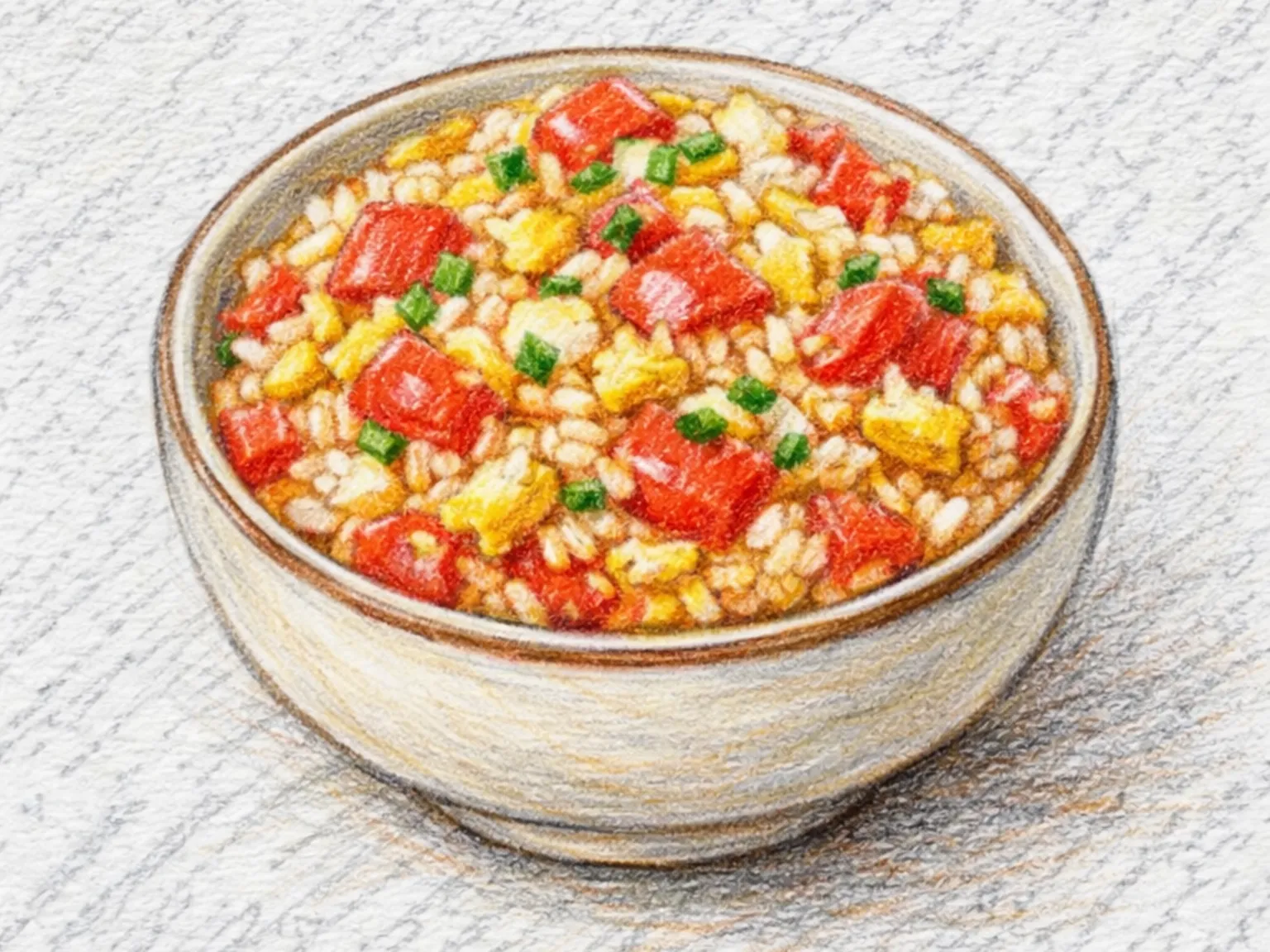
Eggs are scrambled first and set aside, then tomatoes are stir-fried in the same pan until their juices burst and coat the wok. Day-old or freshly cooked rice goes in next, tossed at high heat so the grains absorb the tomato's sweet-tart moisture while staying individually distinct. The scrambled egg is folded back in at the end, distributing soft, fluffy curds throughout the fried rice. Rooted in the Chinese classic of tomato and egg, this version turns those familiar flavors into a satisfying one-bowl fried rice.
Korean Soy Glazed Pork Neck Stir-fry
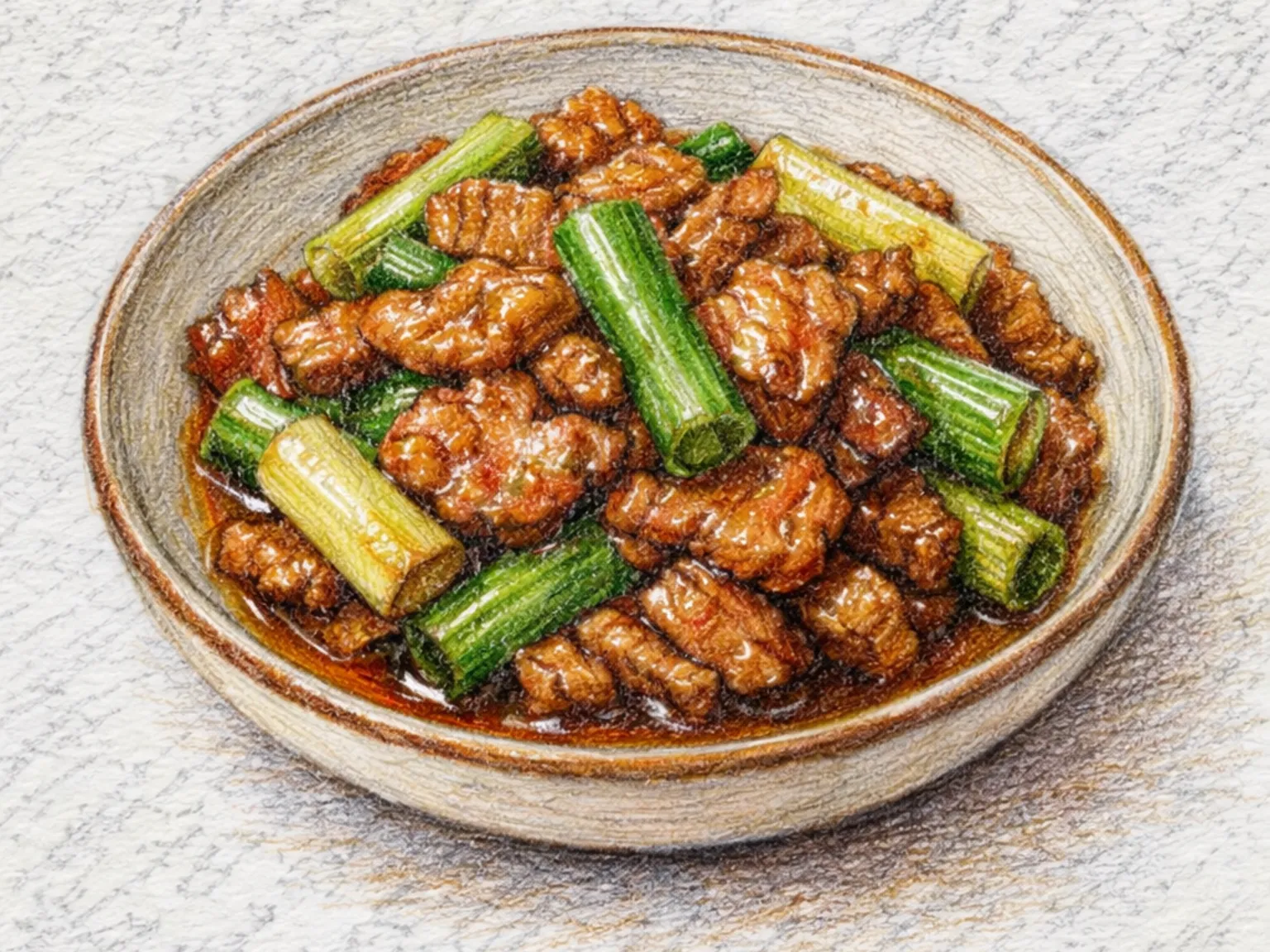
Daepa moksal ganjang bokkeum browns thin pork neck first, reduces a soy and oyster sauce mixture around it, and adds large pieces of green onion only near the end. Five hundred grams pork neck is sliced 5 mm thick. One hundred thirty grams onion is cut into thick strips, while 130 g large green onion is cut diagonally into 5 cm pieces and held separately. The sauce combines 2 tablespoons soy sauce, 1 tablespoon oyster sauce, 1 tablespoon sugar, and 1 tablespoon minced garlic, stirred until no visible sugar grains remain. A pan is heated well over medium-high, coated with 1 tablespoon neutral oil, and filled with the pork in a single layer. The meat remains untouched for the first minute to brown one side. It is then turned and cooked for another 2 minutes before the onion goes in for about 2 minutes. The sauce is poured over and reduced for 2 minutes at medium-high heat. When it darkens and clings to the pork rather than pooling, the green onion is finally added. Only 1 minute 30 seconds to 2 minutes is needed for its edges to soften while the centers keep their shape. One teaspoon sesame seeds is mixed in after the burner is switched off. Holding the large green onion until after the glaze forms prevents it from collapsing during the longer pork and sauce stages.
Korean Vegetable Fried Rice
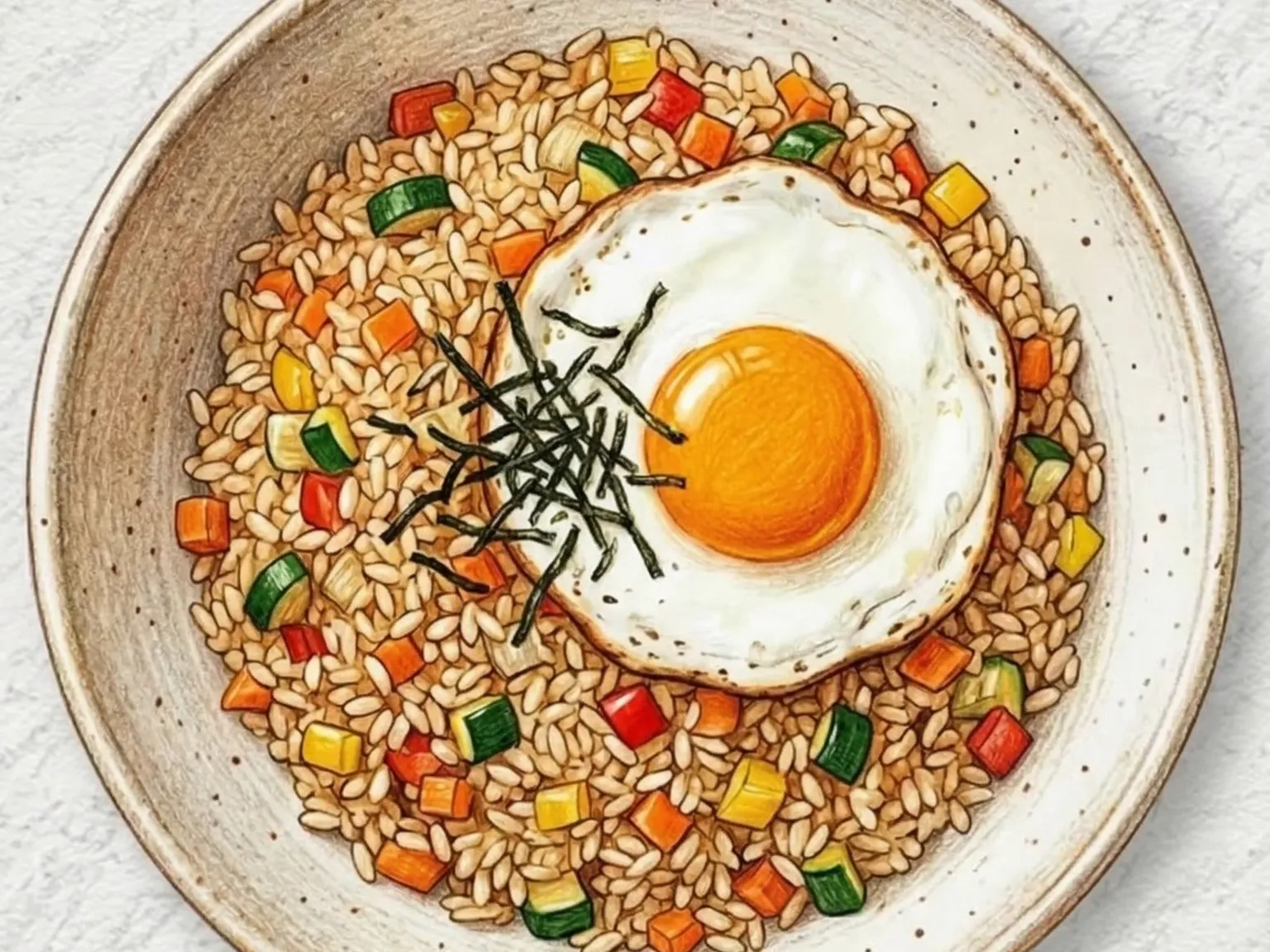
Vegetable fried rice cooks carrot first, adds onion, zucchini, bell pepper, and corn in a second round, and only then fries the rice so the vegetables and grains keep distinct textures. Break up 2 cups cooked rice and let it cool briefly to release surface moisture. Cut 80 g onion, 50 g carrot, 60 g bell pepper, and 60 g zucchini into even 5 mm pieces so they cook at the same rate. Heat a pan over high heat for about 30 seconds and swirl in 1 tbsp cooking oil. Add the carrot alone and stir-fry for 1 minute, just until its color brightens. Add the onion, zucchini, bell pepper, and 50 g corn kernels, spreading them across the pan instead of piling them in the center. Toss for 2 minutes so moisture evaporates and the pieces remain lightly crisp. Once the vegetables look slightly translucent, add the rice and separate any clumps with a spatula. Keep the heat high and stir-fry for 2 minutes, until the grains move independently. Pour 1.5 tbsp soy sauce around the hot edge of the pan and toss for 1 more minute so the sizzling sauce coats the rice without burning. Turn off the heat, mix in 1 tsp sesame oil with the residual heat, and check that the vegetables are distributed evenly before serving warm.
Korean Stir-Fried Chicken
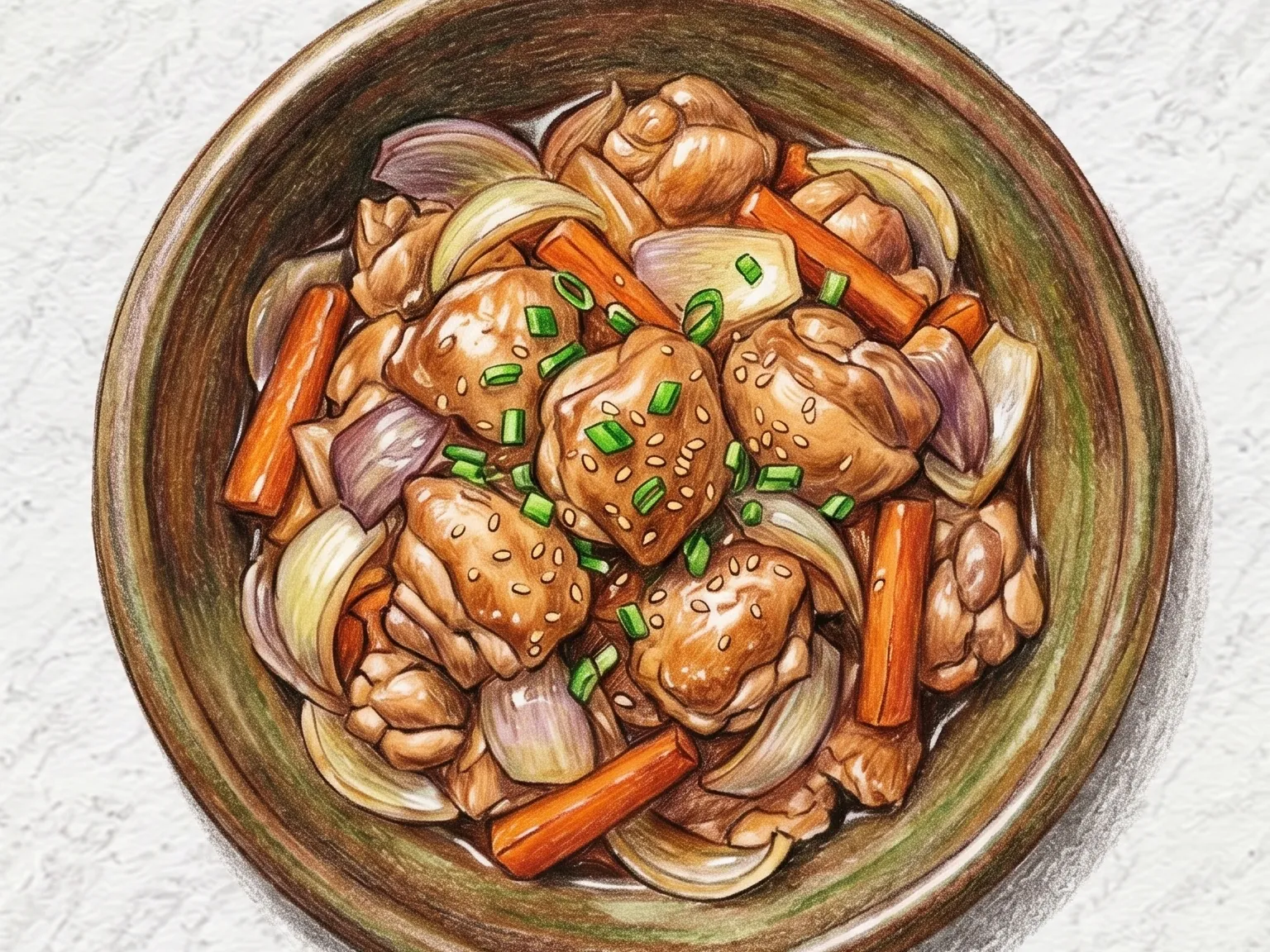
Dak bokkeum cooks bite-size chicken first, adds carrot and onion partway through, and reduces a soy, sugar, and garlic sauce around all three ingredients. Three hundred grams chicken breast or thigh is cut into pieces 3 to 4 cm wide with an even thickness, then its surface moisture is pressed away. Two tablespoons soy sauce, 0.5 tablespoon sugar, and 1 tablespoon minced garlic are mixed until the sugar is no longer visible. One tablespoon cooking oil is heated thoroughly over high before the chicken is placed in a single layer. After 3 to 4 minutes of cooking, every outer surface should be opaque and some edges should begin to color. Fifty grams carrot and 80 g onion are added, and the heat is lowered to medium-high for about 2 minutes. Once the onion edges turn translucent and the vegetables soften slightly, the prepared sauce is poured in. Scraping and lifting from the pan bottom for another 2 to 3 minutes distributes the reducing sauce as an even brown gloss. The thickest chicken piece is cut to confirm that its center is fully cooked. When no watery sauce remains, the burner is switched off and 0.5 tablespoon sesame oil is folded through. Cooking the chicken before the vegetables and sauce gives the meat enough time to cook through without forcing the vegetables through the entire high-heat stage.
Korean Soy-Glazed Chicken Stir-Fry
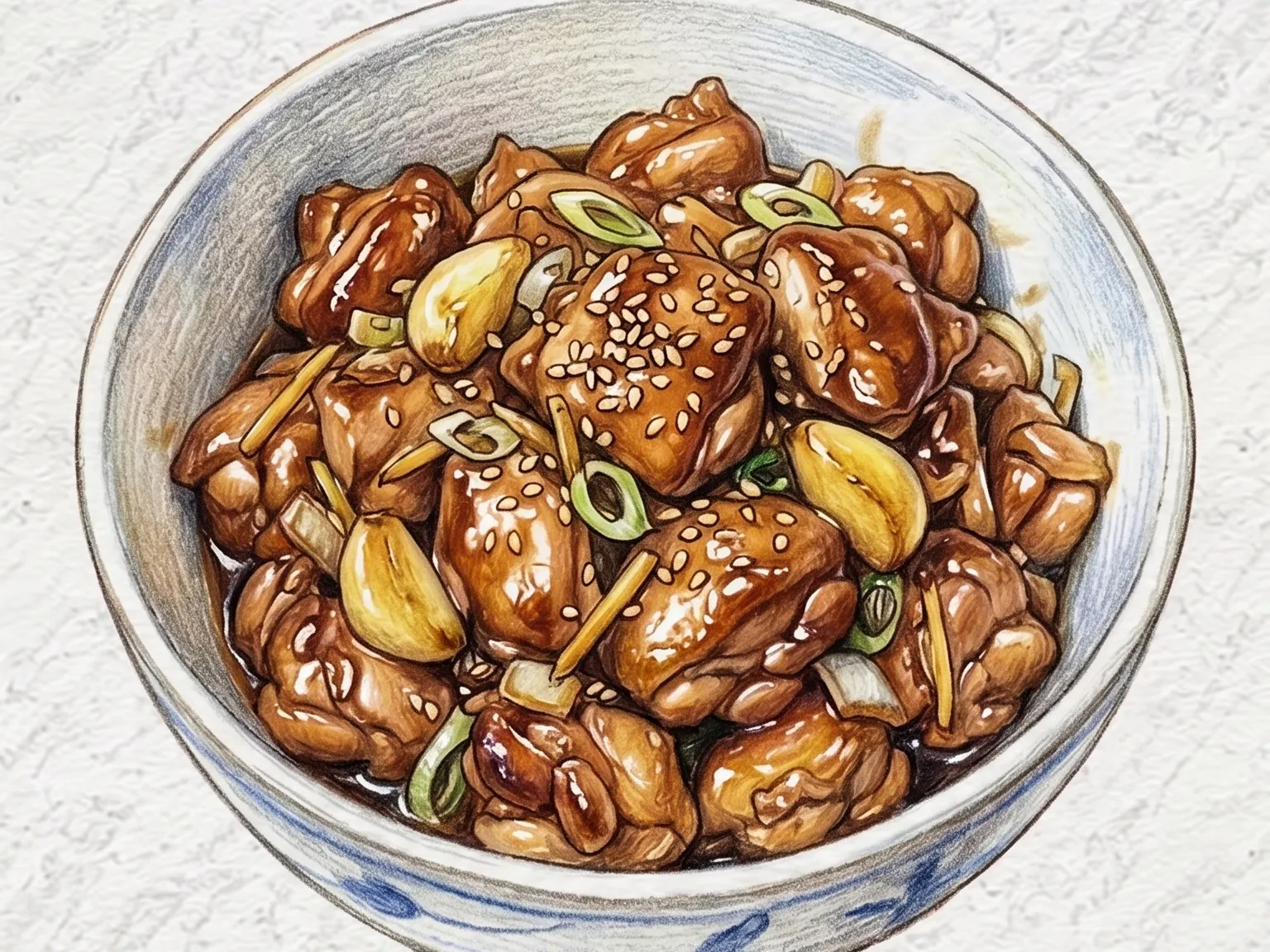
Chicken thigh meat stir-fries in soy sauce, sugar, and oligosaccharide syrup for a sweet-salty glaze. Garlic and ginger go into the oil first to infuse the fat with fragrance before the chicken is added, letting the aromatics penetrate deep into the meat as it cooks. The oligosaccharide heats into a tacky gloss that coats each piece evenly as the liquid reduces. Sesame oil and whole sesame seeds scattered over the top at the end bring a nutty, aromatic finish. The flavor profile runs close to Japanese teriyaki, but the heavier use of garlic and ginger pushes it toward the more direct, punchy spice character typical of Korean cooking. Boneless thighs cut into bite-sized pieces cook more evenly than larger pieces, and keeping the heat high through most of the cook ensures the surface caramelizes without turning rubbery.
Korean Stir-fried Chicken Gizzards
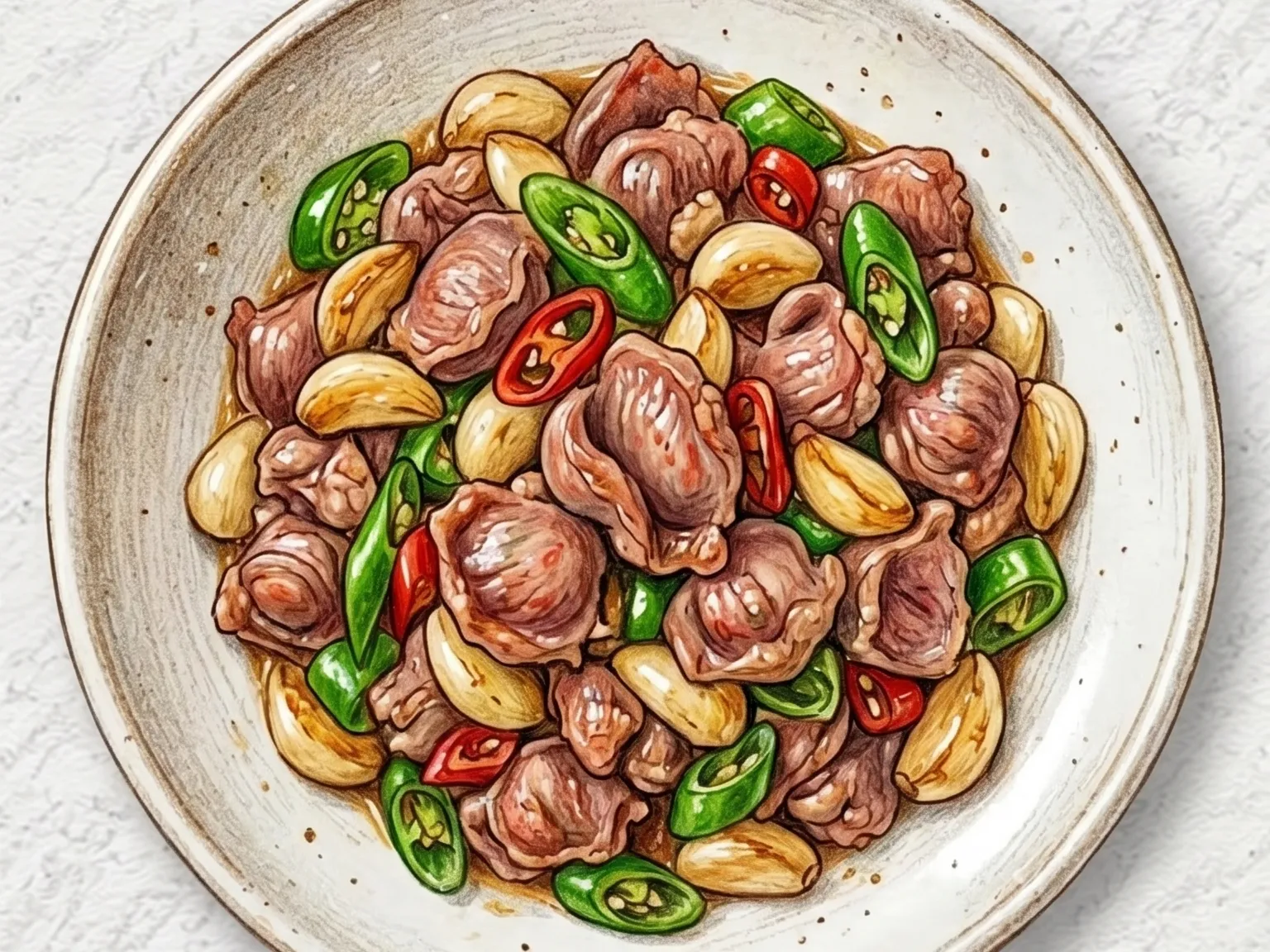
Dak-ttongjip-bokkeum is a stir-fried dish made from chicken gizzards cooked over high heat with garlic and cheongyang chili pepper. The gizzard, known as the near-wi in Korean, is the thick muscular organ a chicken uses to grind its food. It contains very little fat, is high in protein, and stays firm through cooking in a way that ordinary chicken meat does not. Proper cleaning before cooking is essential. The yellow inner lining and any adjacent odorous tissue must be removed entirely, or the finished dish will carry an off smell that no amount of seasoning can cover. Once cleaned and scored lightly on the surface to help seasoning penetrate, the gizzards go into a very hot pan. The goal is a fast, high-heat cook that sears the outside while leaving the interior tender and springy. Extended cooking over lower heat makes them chewy and tough. The texture is the defining quality of this dish - dense, elastic, and slightly resistant to the bite, with a mild savory nuttiness that deepens the longer you chew. Cheongyang chili cuts through any residual heaviness and adds a clean, quick heat. Garlic provides a deep aromatic foundation that complements the protein. Soy sauce and mirim season the stir-fry with a balance of salt and restrained sweetness. The dish is ordered frequently alongside beer or soju, where its chewy texture and moderate heat make it a satisfying accompaniment to cold drinks. It also works well as a rice side dish.
Korean Spicy Stir-fried Chicken Feet
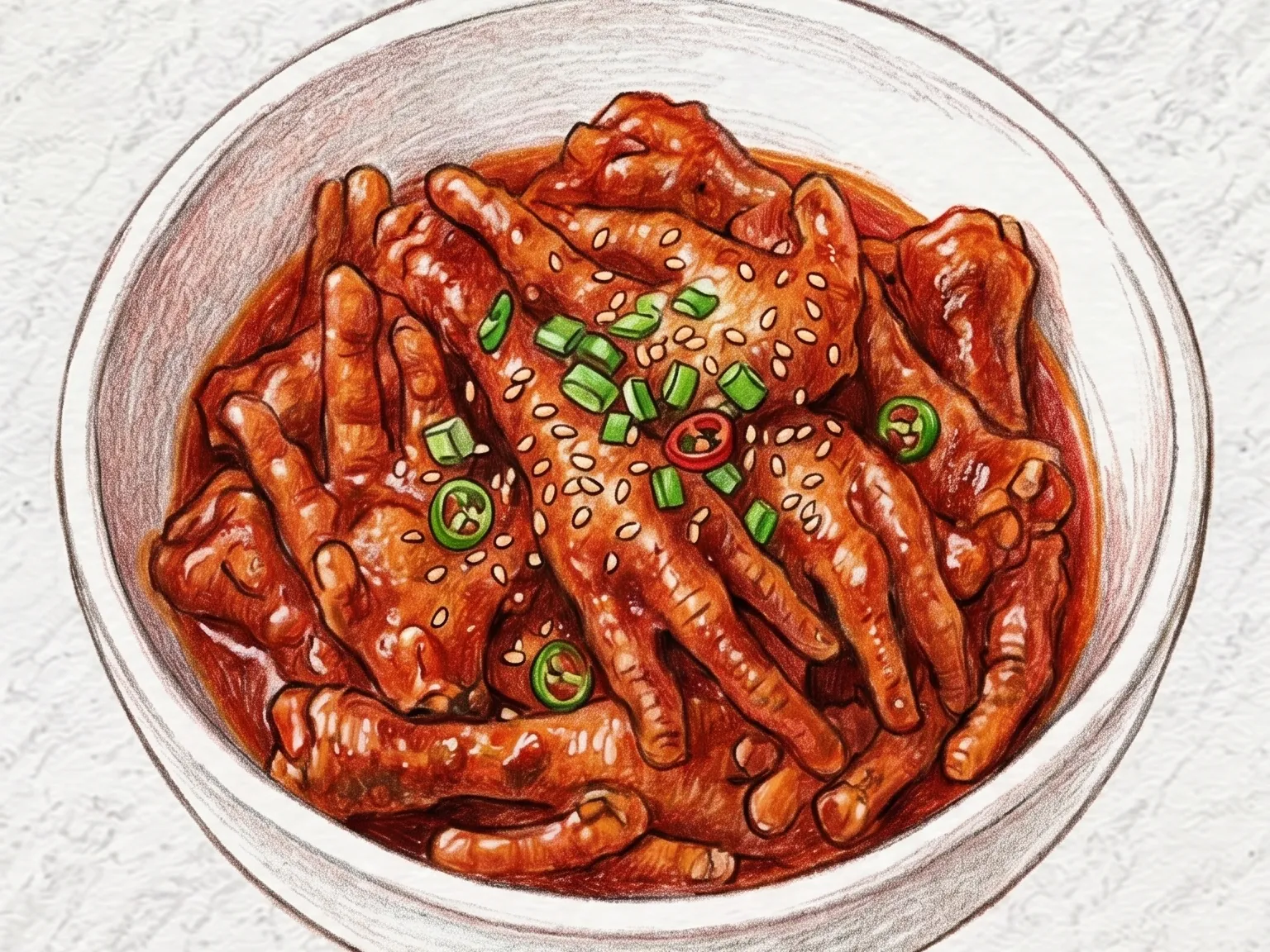
Dakbal-bokkeum stir-fries chicken feet in a sauce of gochujang, gochugaru, and soy sauce to produce one of the most distinctively textured dishes in Korean drinking food. Chicken feet are almost entirely skin, cartilage, and small bones with very little actual meat, and it is precisely this structure that gives the dish its appeal. The skin is fatty and gelatinous, clinging to the bones with a sticky chew that is unlike any other protein. Gochujang and gochugaru create a layered heat that builds slowly, while sugar threads through the spice with a sweet, lingering finish. Adding cheongyang chili peppers intensifies the burn without changing its fundamental character. Because the bones are numerous and thin, eating dakbal is a hands-on, deliberate process of stripping skin and cartilage with the teeth and lips, which makes it an inherently social and unhurried dish. Its natural setting is alongside cold beer or soju. Different establishments vary the spice level and sauce base, ranging from fire-hot buldak-style preparations to milder soy-based versions.
Korean Spicy Chicken Stir-fry
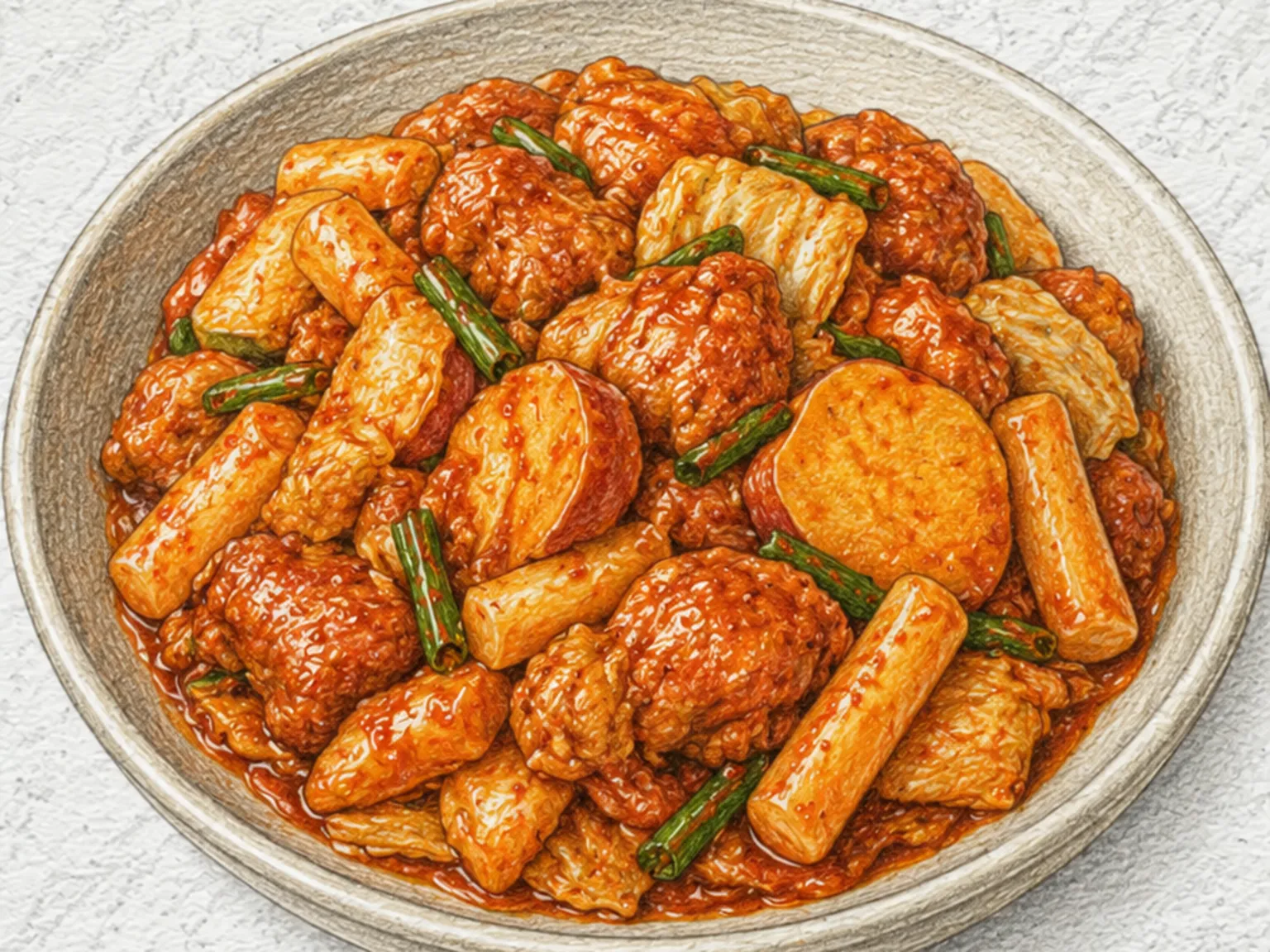
Dakgalbi is a Korean stir-fried chicken dish in which chicken thigh meat is marinated in a sauce of gochujang, chili flakes, soy sauce, sugar, minced garlic, and curry powder, then cooked with cabbage, sweet potato, sliced rice cakes, and green onion on a flat iron griddle or large pan. As the cabbage cooks it releases moisture that blends with the marinade, forming a natural sauce without any added liquid. Sweet potato softens gradually under heat, its natural sugars intensifying and acting as a counterweight to the sharp heat of the chili paste. Rice cakes cling to the sticky sauce on their surfaces, each piece absorbing the seasoning while staying chewy and dense inside. A small measure of curry powder is the defining addition -- it layers aromatic spice depth into the gochujang base, giving dakgalbi its slightly more complex fragrance compared to other Korean spicy stir-fries. The dish originates from Chuncheon in Gangwon Province, where it is served on large communal griddles. Finishing the meal by stir-frying rice in the leftover sauce at the bottom of the pan is a standard practice that turns the residual seasoning into a second course.
Korean Chicken Breast & Mugwort Stir-fry
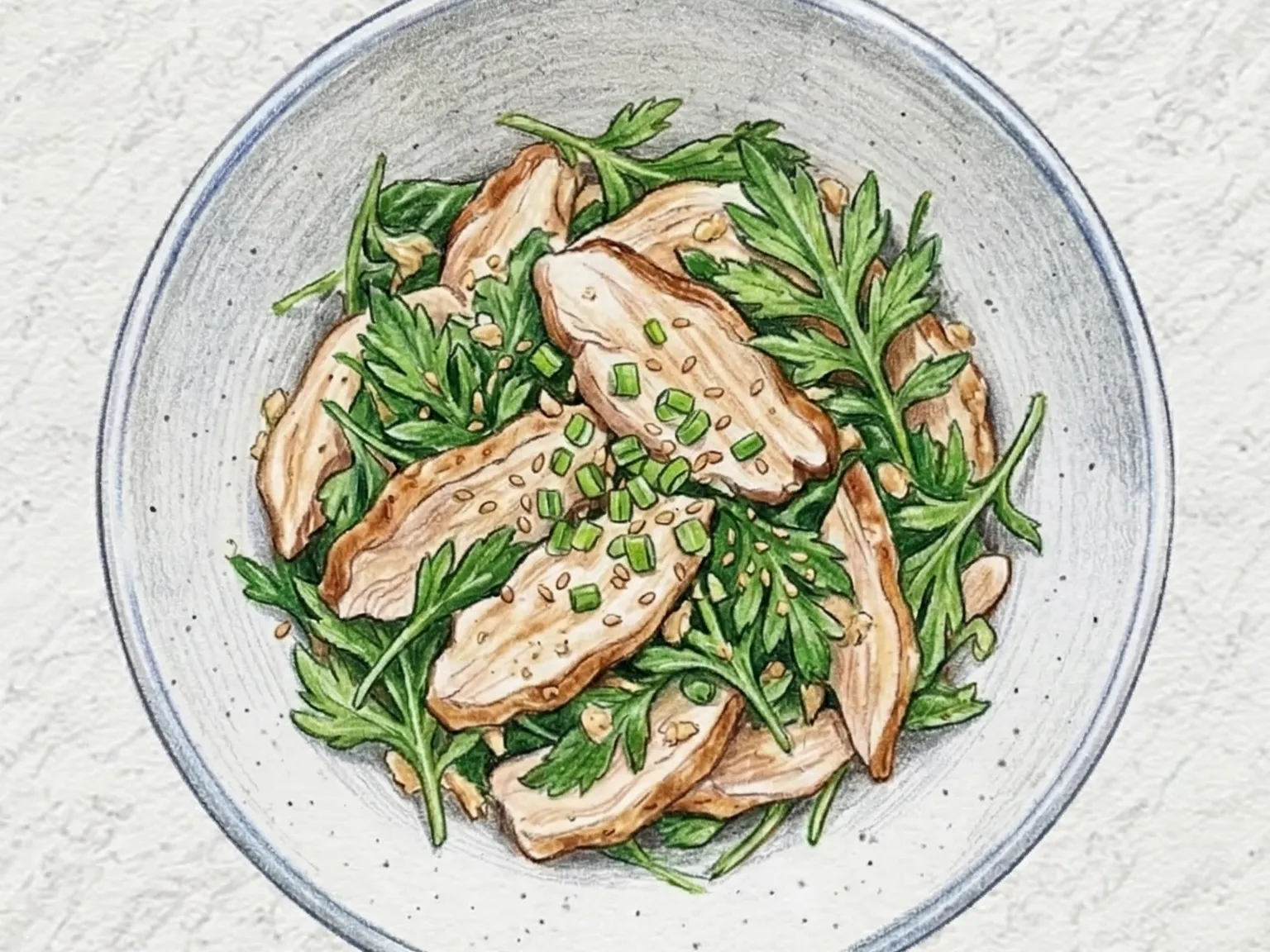
Spring mugwort offers its most tender texture and mildest bitterness immediately after harvest, making it a perfect companion for lean proteins. This stir-fry utilizes thinly sliced chicken breast to create a clean base where the herb's fragrance takes center stage. Minced garlic and soy sauce provide a light seasoning that emphasizes the natural characteristics of the ingredients without creating a heavy coating. Because chicken breast dries out quickly, the preparation requires a preheated pan and high heat to cook the meat just until it turns opaque. Adding the mugwort at the very end allows it to soften slightly through residual heat, preserving the fresh aroma that would otherwise turn harsh or overly bitter with prolonged cooking. A light application of sesame oil at the finish rounds out the profile with a subtle nuttiness. The combination of vitamin-rich mugwort and high-quality protein makes this a nutritionally balanced side dish. This preparation relies on minimal oil and the inherent quality of the seasonal ingredients, making it a suitable choice for a light meal served with rice or inside fresh lettuce wraps.
Korean Pork & Wild Chive Stir-fry
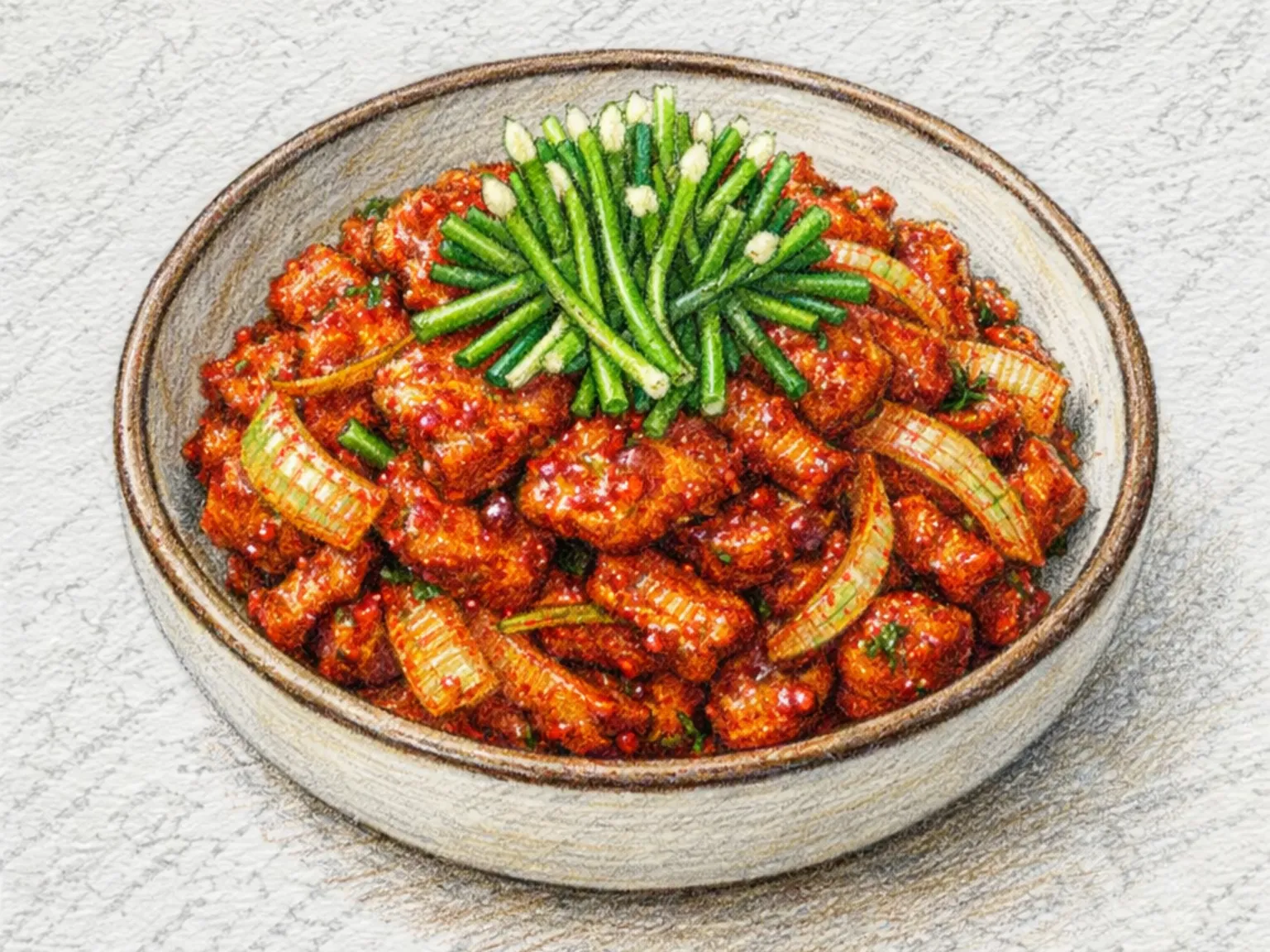
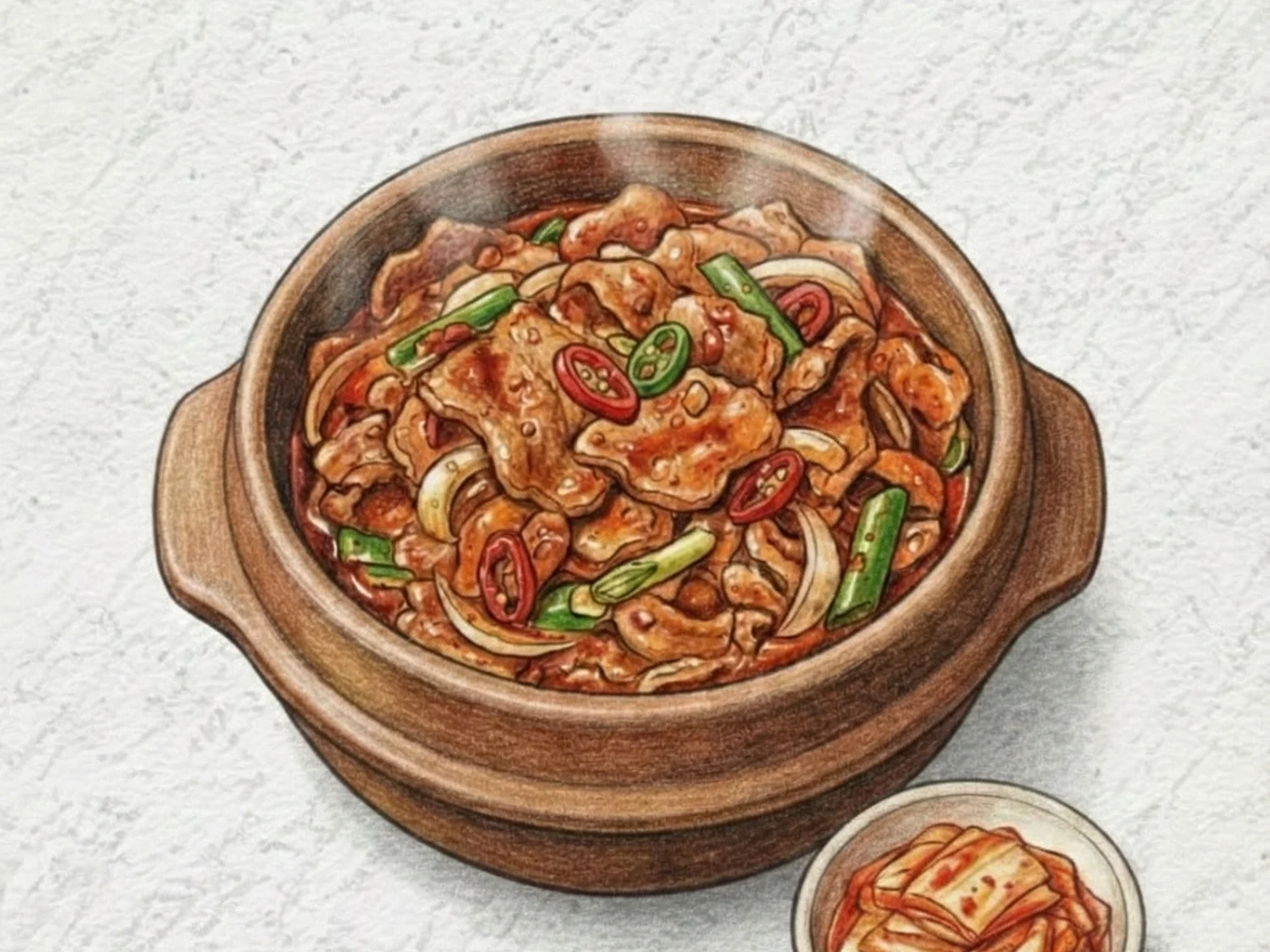
Dallae-dwaejigogi-bokkeum is a Korean springtime stir-fry of pork shoulder tossed in a gochujang and chili flake sauce, then topped generously with raw wild chives. The wild chives release a sharp, garlicky bite that cuts through the rich, spicy pork - stimulating while staying fresh rather than heavy. Onions caramelize lightly during cooking, adding natural sweetness that rounds out the heat and prevents the chili paste from turning one-dimensionally harsh. The dish must be cooked quickly over high heat to preserve the volatile aromatic compounds in the chives; extended cooking kills the fragrance that makes dallae worth using in the first place. Either pork shoulder or belly works well here, and the chives should be added at the very end rather than marinated or cooked through - they contribute perfume, not substance. The window for dallae in Korea is short, typically a few weeks in early spring, which makes this a seasonal dish eaten with some urgency while the ingredient is at its best.
Korean Bellflower Root & Eggplant Soy Stir-fry
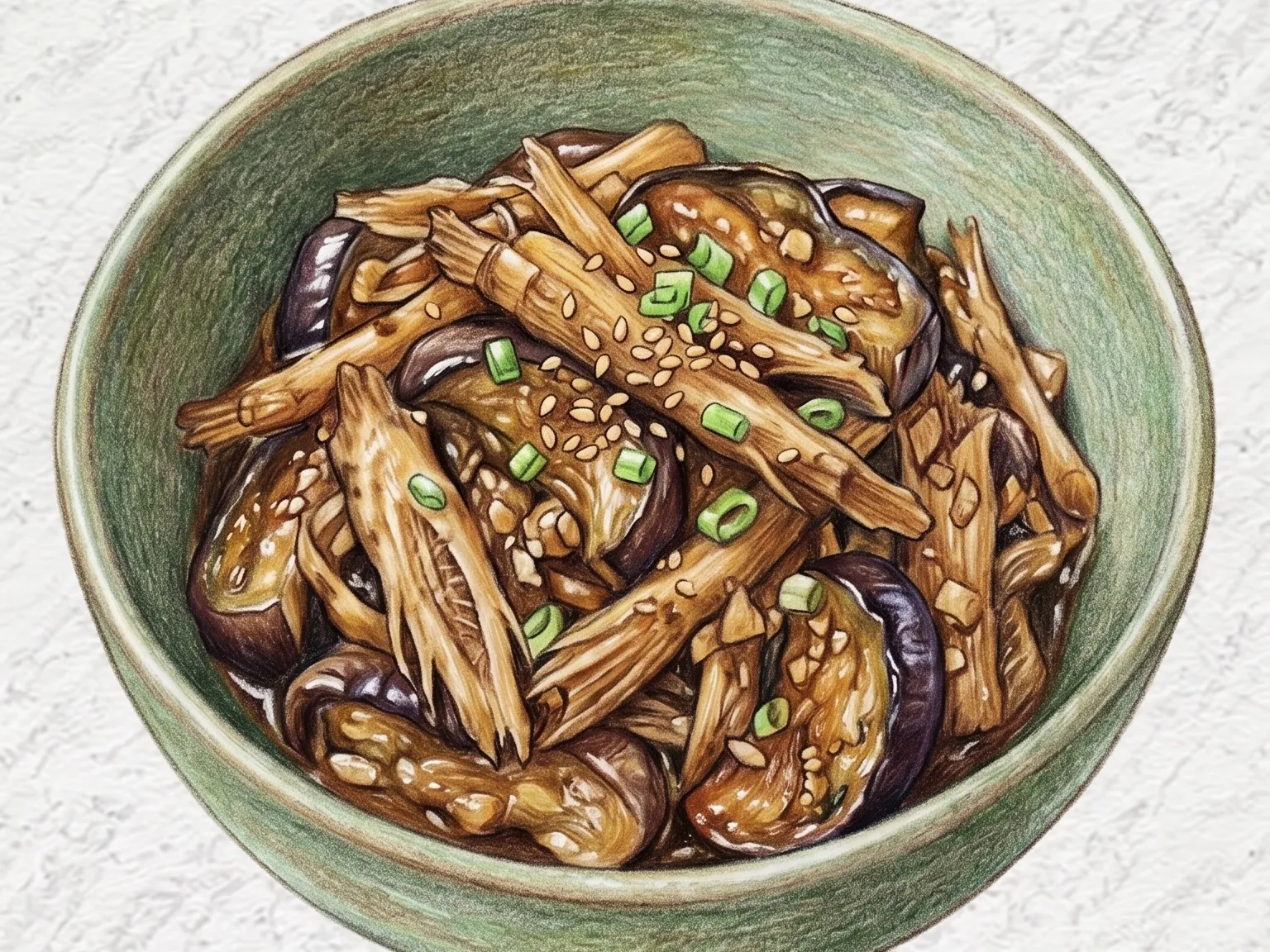
Deodeok gaji ganjang bokkeum is a Korean vegetable stir-fry that brings together deodeok root and eggplant in a soy-based seasoning sauce. The two main ingredients offer a clear textural contrast: deodeok has a firm, fibrous chew that resists the heat and holds its structure throughout cooking, while eggplant softens and collapses into a silky, yielding mass as it cooks. A dressing of soy sauce, sesame oil, and minced garlic ties the two together, tempering the slightly earthy, mildly bitter quality of the deodeok while drawing out the natural sweetness latent in both vegetables. The order in which the ingredients go into the pan matters. Eggplant absorbs oil readily and needs more time to soften properly, so it goes in first. Adding deodeok too early would leave it overdone by the time the eggplant reaches the right texture. The fermented umami of soy sauce and the glutamates naturally present in both vegetables layer together to produce depth in the finished dish without any meat. If the deodeok tastes particularly bitter, soaking the peeled pieces in lightly salted water for ten minutes before cooking draws out a significant portion of the bitterness. Salting the eggplant and letting it sit briefly before cooking removes excess moisture, reducing the amount of oil it absorbs and producing a cleaner, firmer texture in the finished stir-fry. The dish can be served directly over hot rice or presented as a standalone banchan. Like most soy-seasoned vegetable preparations, the flavors deepen and mellow overnight in the refrigerator, making leftovers worth keeping.
Korean Bellflower Root & Beef Stir-fry
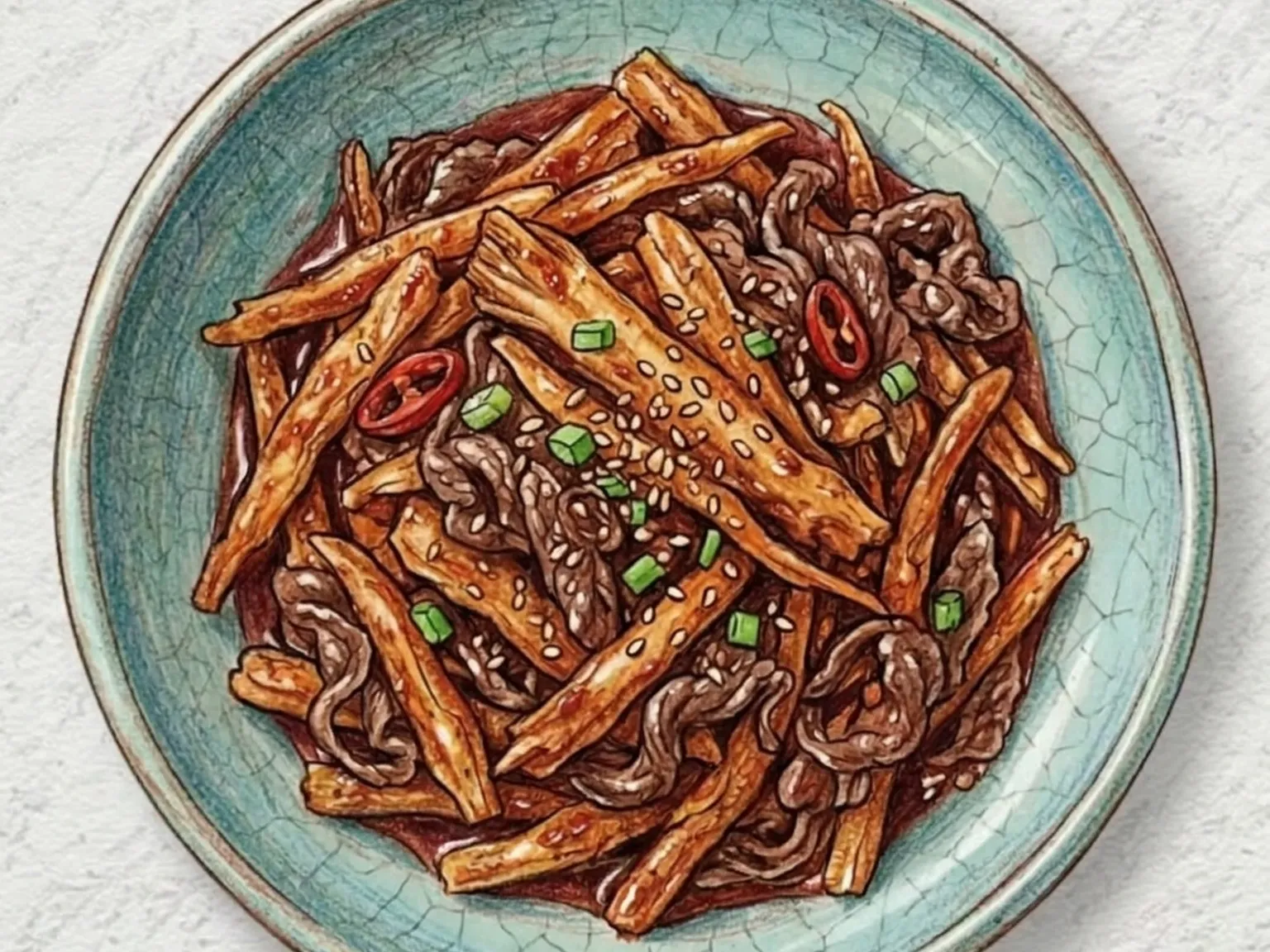
Deodeok sogogi gochujang bokkeum uses a gochujang sauce in two stages: most seasons thin beef before searing, and the remainder coats lightly pounded deodeok in the final stir-fry. One hundred eighty grams deodeok is peeled, halved lengthwise, and tapped gently with a rolling pin before being cut into 5 cm lengths. Some thickness is left so the root does not break while it is tossed. The sauce combines 1.5 tablespoons gochujang, 1 teaspoon gochugaru, and 1 tablespoon each soy sauce, minced garlic, and oligosaccharide syrup. One hundred eighty grams thin beef is dried, mixed with two-thirds of that sauce, and left for 10 minutes. A pan is preheated over medium before 1 tablespoon cooking oil and 30 g diagonally sliced green onion cook for 30 seconds. The heat is raised to high, and the beef is separated with chopsticks as it cooks for 2 minutes 30 seconds to 3 minutes. When its red color has faded and the edges are brown, the deodeok and remaining sauce are added. A brisk final 2 to 3 minutes reduces the moisture and leaves a glossy coating on both the root and beef. Dividing the sauce prevents the beef from sitting in the full amount while ensuring the deodeok receives seasoning directly in the pan.
Korean Deulkkae Aehobak Beoseot Bokkeum (Perilla Zucchini Mushroom Stir-fry)
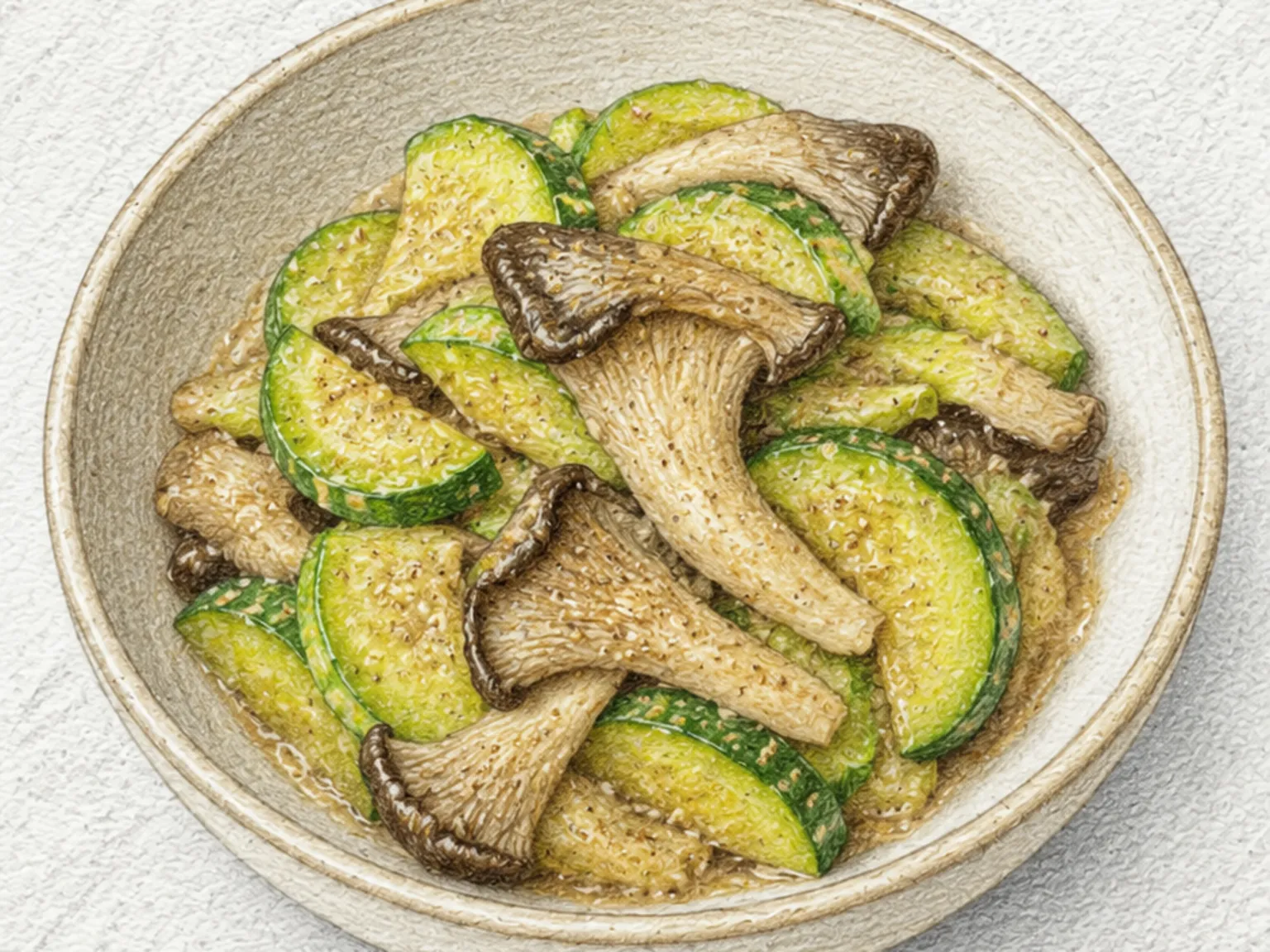
Deulkkae-aehobak-beoseot-bokkeum is a Korean stir-fry of zucchini and oyster mushrooms finished with ground perilla seeds. The perilla powder is added toward the end of cooking, where it combines with the moisture released from the vegetables to form a thick, nutty coating that clings to each piece. Oyster mushroom brings natural umami and a slightly fibrous chew, while the zucchini contributes its gentle sweetness and keeps the dish from drying out. No strong spices or fermented pastes are needed - the toasted, herbal fragrance of the perilla seeds carries the flavor from start to finish. The result is a moist, mild side dish that demonstrates how a single aromatic ingredient can add significant depth to a simple vegetable stir-fry.
Korean Stir-fried Balloon Flower Root
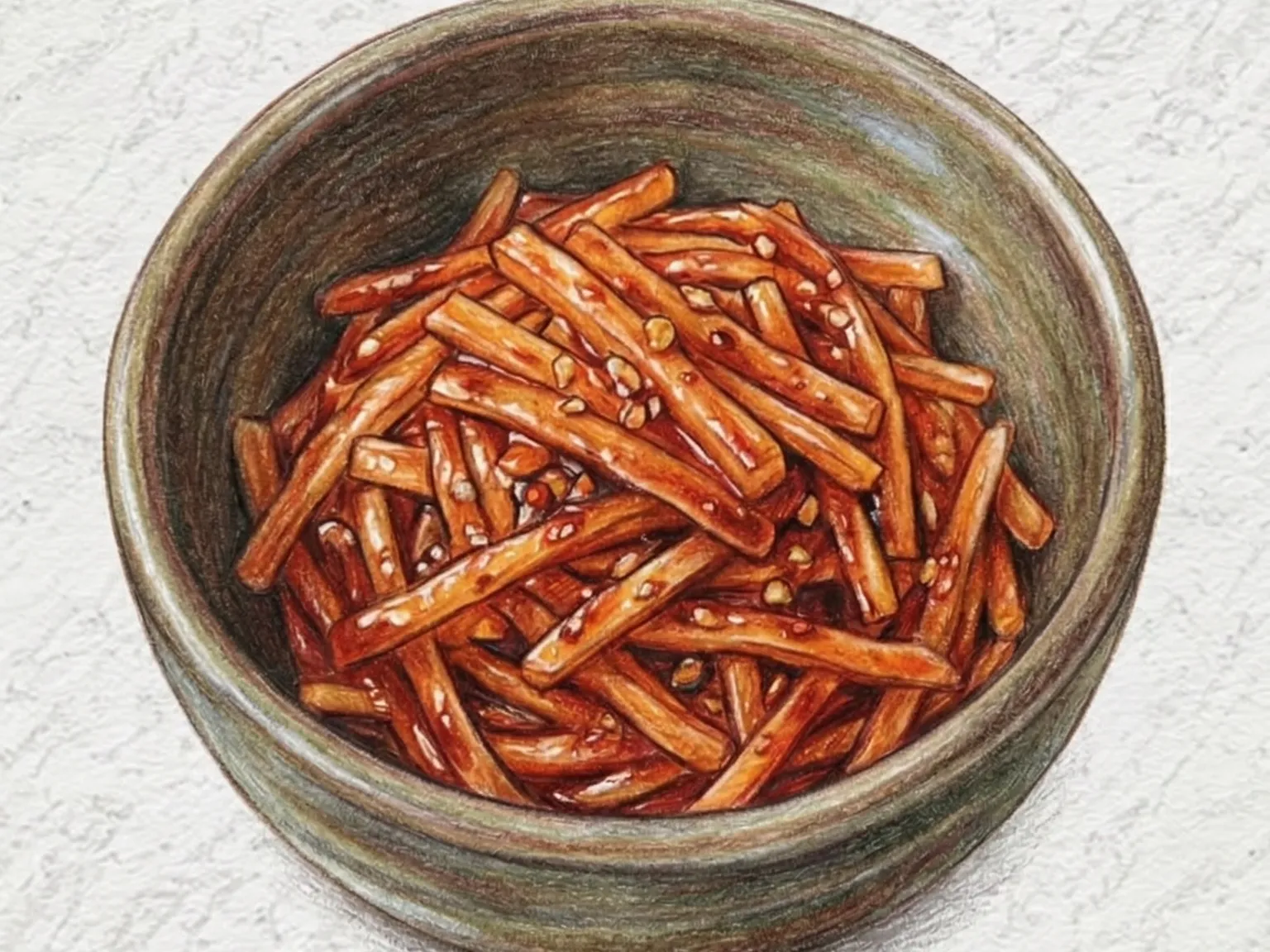
Doraji bokkeum begins by reducing the bitterness of 220 g balloon flower root before applying the gochujang sauce. Tear the root into thin strips about 5 cm long, sprinkle with 1 teaspoon salt, and rub firmly for 1 minute. Leave it for 10 minutes until the strands soften slightly, rinse twice under cold water, then squeeze with both hands until no water drips. Mix 1 tablespoon gochujang, 1 teaspoon gochugaru, 1 teaspoon soy sauce, 1 tablespoon oligosaccharide syrup, and 0.5 teaspoon minced garlic until smooth. Warm 1 tablespoon cooking oil over medium heat and stir 15 g green onion for about 30 seconds. Add the prepared doraji and cook for 2 minutes, watching for the edges of the strips to turn slightly translucent. Pour in all of the sauce and keep the strands moving for 3 minutes so the seasoning spreads without scorching. Raise the heat for the final 30 seconds to evaporate the liquid left on the pan bottom. Stop when the sauce no longer pools and instead forms a thin glossy coating on each strip, while the root still has a firm bite. If the rinsed doraji remains strongly bitter, extend the cold-water soak before it reaches the pan rather than trying to cover the bitterness with more sauce.
About Stir-fry
Cooking over high heat for a short time keeps ingredients crisp and vivid. With a few staple sauces like gochujang, soy sauce, and oyster sauce, the possibilities are endless - and dinner is on the table in minutes.