Stir-fry Recipes
189 recipes. Page 7 of 8
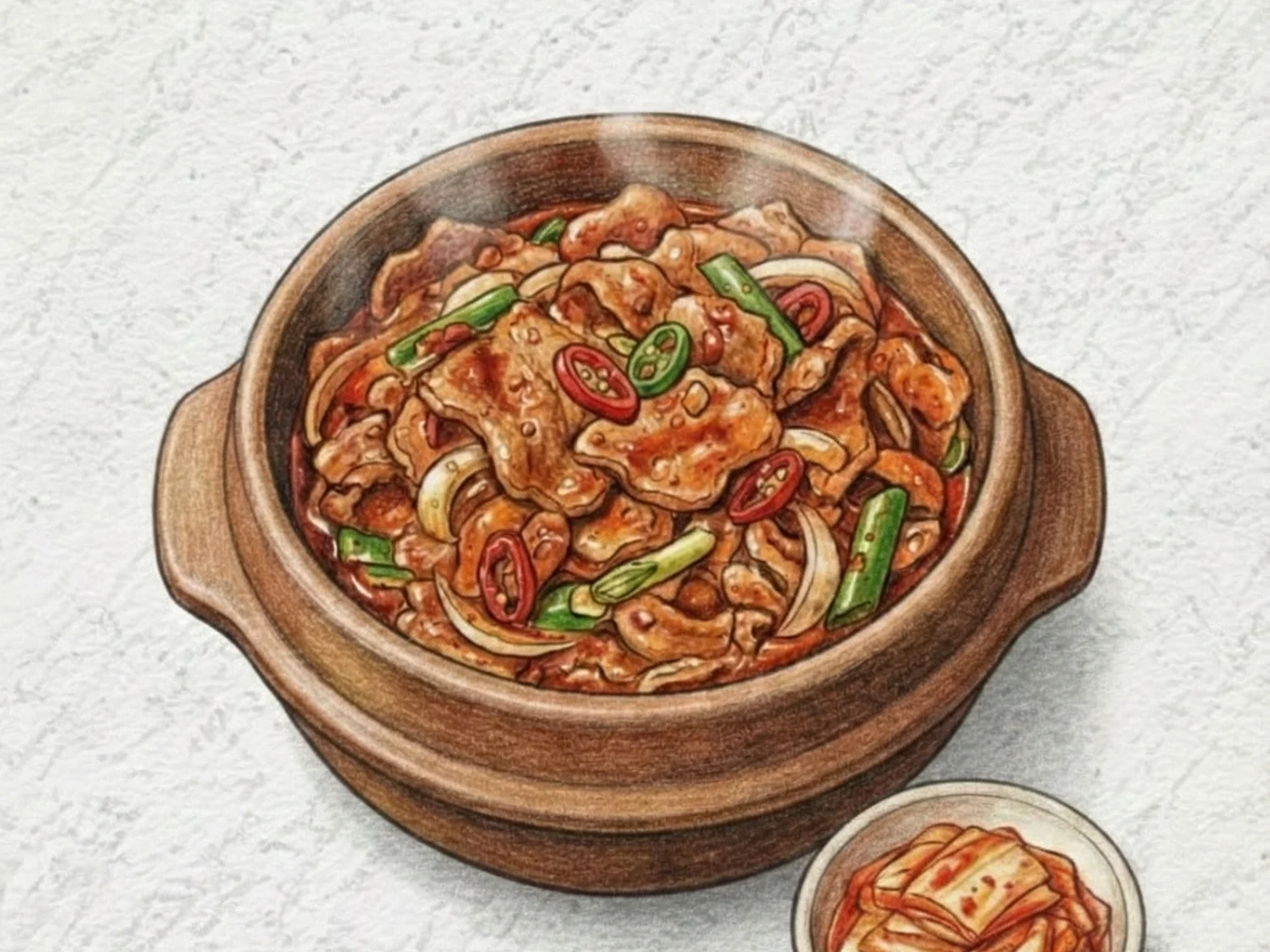
Stir-frying is one of the most common cooking methods in Korean home kitchens. Classics like spicy pork stir-fry (jeyuk-bokkeum), squid stir-fry, and japchae showcase the range of flavors - from fiery gochujang-based sauces to sweet soy glazes.
Cooking over high heat for a short time keeps ingredients crisp and vivid. With a few staple sauces like gochujang, soy sauce, and oyster sauce, the possibilities are endless - and dinner is on the table in minutes.
Korean Spicy Duck Stir-fry
Ori-jumeulleok is a Korean spicy duck stir-fry where sliced duck is hand-massaged with a marinade of gochujang, gochugaru, soy sauce, garlic, and sesame oil, then rested for fifteen minutes before hitting a hot pan with onion. The duck renders its own fat as it cooks, creating a rich, glossy sauce without added oil. Once the meat is seared, perilla leaves go in at the very end - just long enough to release their peppery, herbal fragrance without wilting completely. The result is a dish with deep, concentrated heat from the marinade balanced by the aromatic lift of perilla, all carried on the duck's naturally rich fat.
Korean Squid & Pork Belly Stir-fry
Osam-bulgogi is a Korean stir-fry that pairs scored squid and sliced pork belly in a single pan with a gochujang-gochugaru-soy-sugar sauce, delivering both oceanic umami and rich meatiness in every bite. The pork belly cooks first for three minutes, rendering its fat into the pan - this rendered fat then becomes the cooking medium for the squid, deepening the overall flavor. Squid is scored in a crosshatch pattern so the thick sauce penetrates its flesh, and onion provides sweetness to balance the heat. Scallion and perilla leaves finish the dish, adding freshness to what is a staple anju (drinking snack) in Korean restaurants.
Eight Treasure Seafood Stir-fry
Palbochae is a Korean-Chinese banquet stir-fry that brings together shrimp, squid, pork, bamboo shoots, shiitake mushrooms, and bok choy in a single wok. Each ingredient is added in sequence according to its cooking time, then finished in an oyster-sauce glaze thickened with a light cornstarch slurry. The high-heat technique imparts a pronounced wok char, while the variety of proteins and vegetables creates contrasting textures in every bite. It is a dish traditionally reserved for special occasions, built on the interplay of seafood brine, pork fat, and crisp greens.
Korean Perilla Braised Tofu
Deulkkae dubu-jorim is a Korean braised tofu side dish finished with ground perilla seeds for a distinctly nutty, creamy character. Firm tofu slabs are lightly pan-seared, then simmered in a soy sauce and garlic broth with sliced onion. Ground perilla powder is stirred in toward the end, thickening the sauce into a pale, velvety coating that clings to each piece. A final drizzle of sesame oil and a scattering of green onion rounds out the dish with fragrant warmth.
Korean Pineapple Chicken Stir-Fry
Pineapple dak-bokkeum stir-fries bite-sized chicken pieces with fresh pineapple chunks in a sauce of soy sauce, vinegar, and sugar. The chicken is dusted in cornstarch before cooking, which helps the glaze adhere and gives each piece a lightly thickened exterior. Pineapple's sharp acidity cuts through the soy-based sweetness, creating a pronounced sweet-sour cycle with every bite. The short cook time keeps the chicken moist inside while the fruit softens just enough to release its tropical fragrance.
Korean Braised Shiitake Mushrooms
Pyogo-beoseot-jorim braises whole shiitake mushrooms in soy sauce with oligosaccharide syrup and minced garlic over low heat until glossy. The mushrooms' natural umami intensifies as they absorb the soy-based braising liquid, while the syrup caramelizes into a lacquer-like sheen on the surface. Each mushroom releases a burst of salty-sweet juice when bitten. A finishing touch of sesame oil and toasted sesame seeds adds a layer of nuttiness to the earthy base.
Stir-fried Pork and Green Pepper
Qingjiao rousi is a Chinese home-style stir-fry of thinly sliced pork loin with green bell peppers and onion, seasoned with soy sauce, oyster sauce, and cooking wine. The pork is cut into thin strips so it cooks through in seconds over high heat, staying soft rather than chewy. Green pepper retains its slight bitterness and crisp snap, providing contrast to the salty-savory sauce. The brief, intense wok cooking leaves a faint smoky char that defines the dish.
Spicy Fried Chicken Stir-fry
Rajogi is a Korean-Chinese dish of chicken thigh pieces coated in potato starch and deep-fried at 170 degrees Celsius until golden, then tossed in a sauce built from gochujang, ketchup, and vinegar. Onion and bell pepper are stir-fried separately to form the sauce base before the crispy chicken is folded in. The coating absorbs just enough glaze to deliver sweetness, tanginess, and chili heat simultaneously while retaining crunch underneath. Timing is critical -- the chicken must be tossed in sauce moments before serving to preserve its texture.
Korean Ginger Chicken Breast Stir-fry
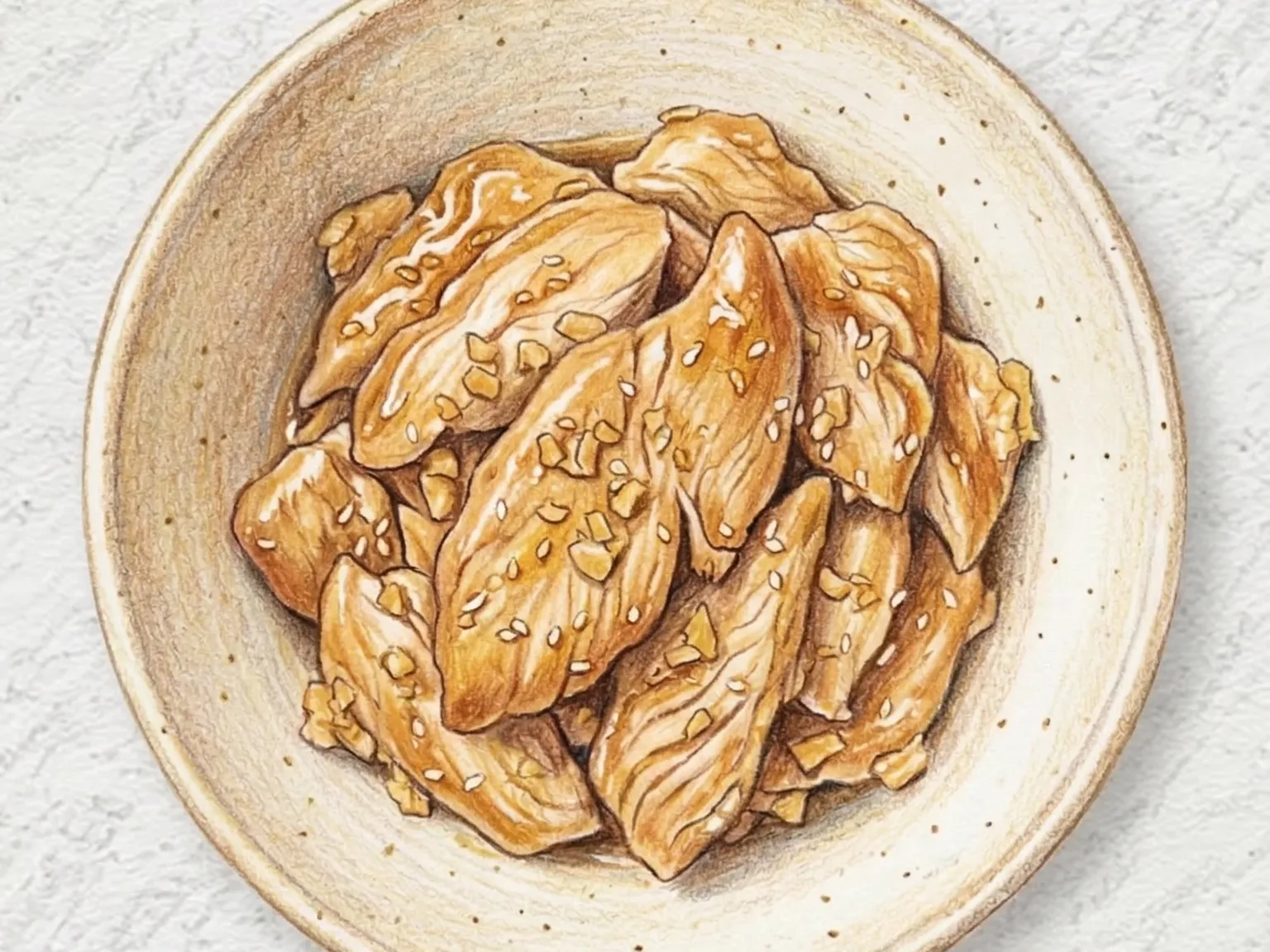
Saenggang dakgaseumsal-bokkeum stir-fries marinated chicken breast with julienned fresh ginger, cabbage, bell pepper, and green onion over high heat. The chicken is briefly seasoned with soy sauce, garlic, and black pepper, then seared in a pan where ginger and scallion have already bloomed their aroma. Vegetables go in last to keep their crunch, and a touch of honey rounds out the seasoning. The result is a lean, aromatic stir-fry where ginger's sharp warmth permeates every piece of chicken without heaviness.
Korean Stir-Fried Shrimp (Garlic Butter Soy Glazed Shrimp)
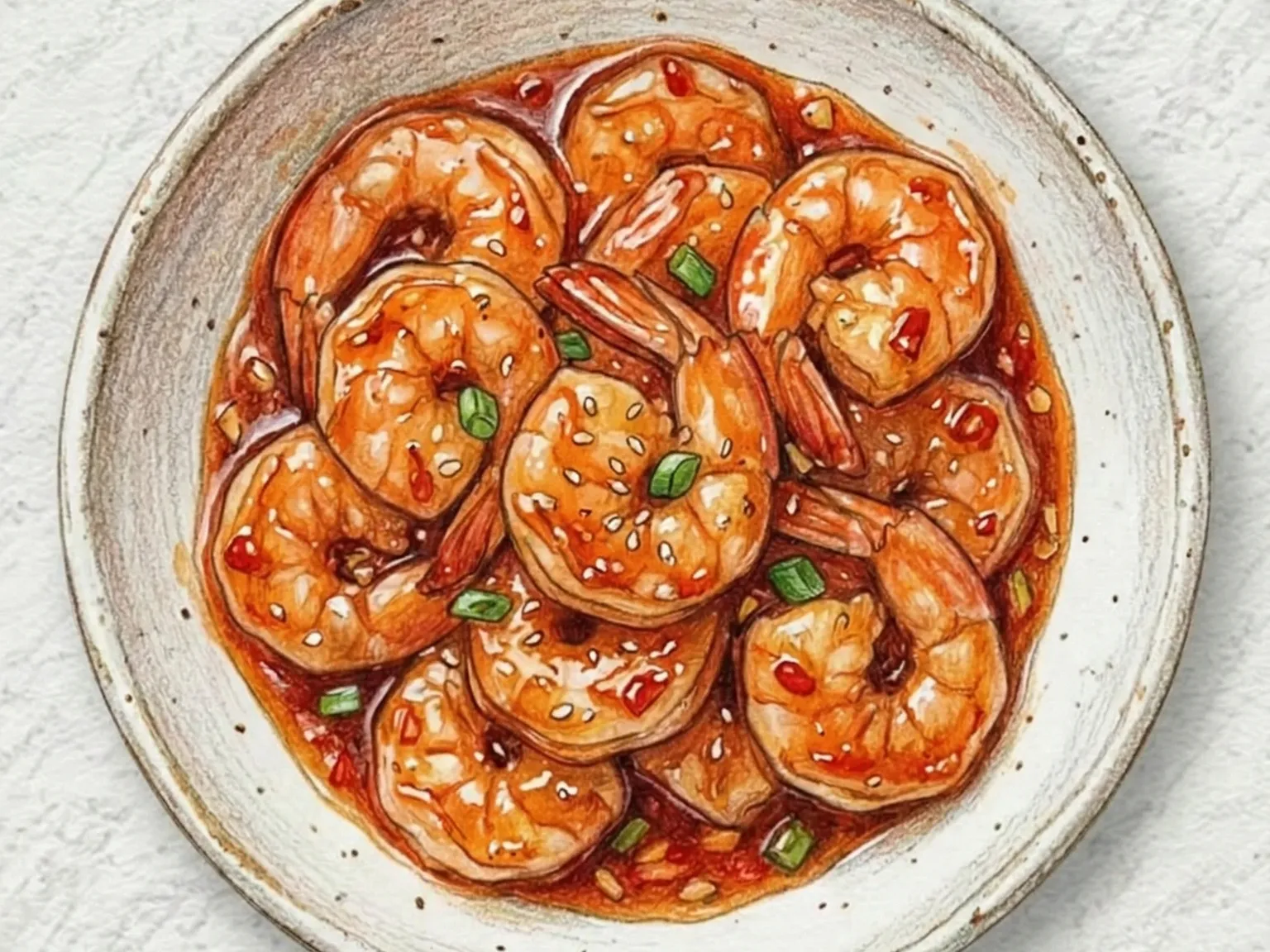
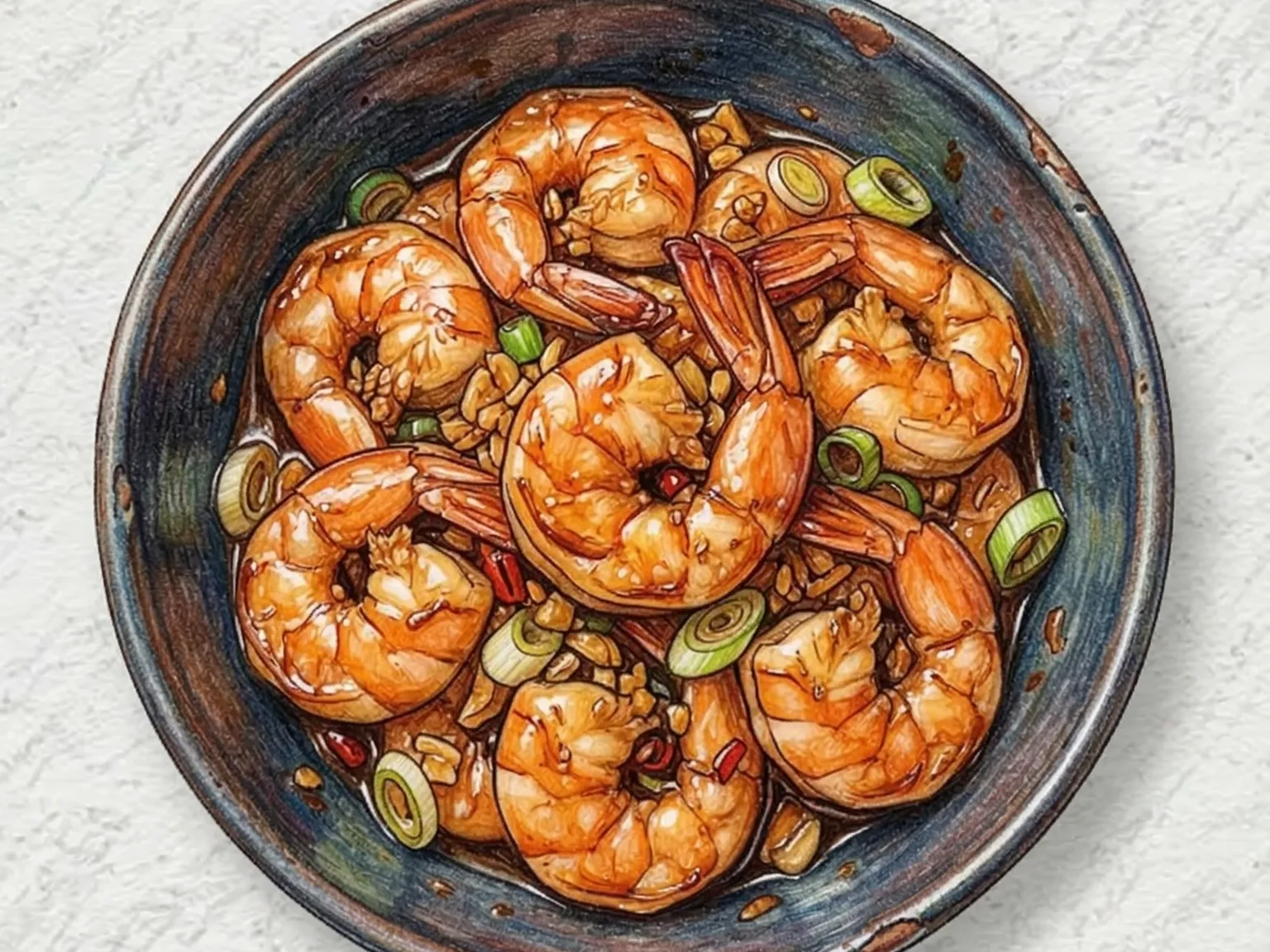
Saeu-bokkeum is a Korean shrimp stir-fry cooked in melted butter with garlic, then seasoned with soy sauce, sugar, and black pepper. The shrimp are peeled and deveined, patted dry, and cooked only until they turn pink -- a matter of minutes. Butter and garlic form the aromatic base, while soy sauce and a small amount of sugar build a savory-sweet glaze that coats each shrimp without a separate sauce. Green onion scattered on top adds a fresh bite to finish.
Korean Braised Spanish Mackerel with Radish
Samchi mu-jorim layers sliced Korean radish on the bottom of a pot, topped with Spanish mackerel steaks and onion, then braised in a sauce of gochujang, soy sauce, gochugaru, and garlic. The radish prevents the fish from sticking, absorbs the braising liquid, and turns translucent-soft as it cooks. Rather than flipping the fish, the sauce is spooned over the top repeatedly so the flesh stays intact. After about fifteen minutes of simmering on medium heat, the liquid reduces to a concentrated, mildly spicy broth with the radish's subtle sweetness woven through it.
Korean Sebalnamul Beoseot Bokkeum (Saltwort Mushroom Stir-fry)
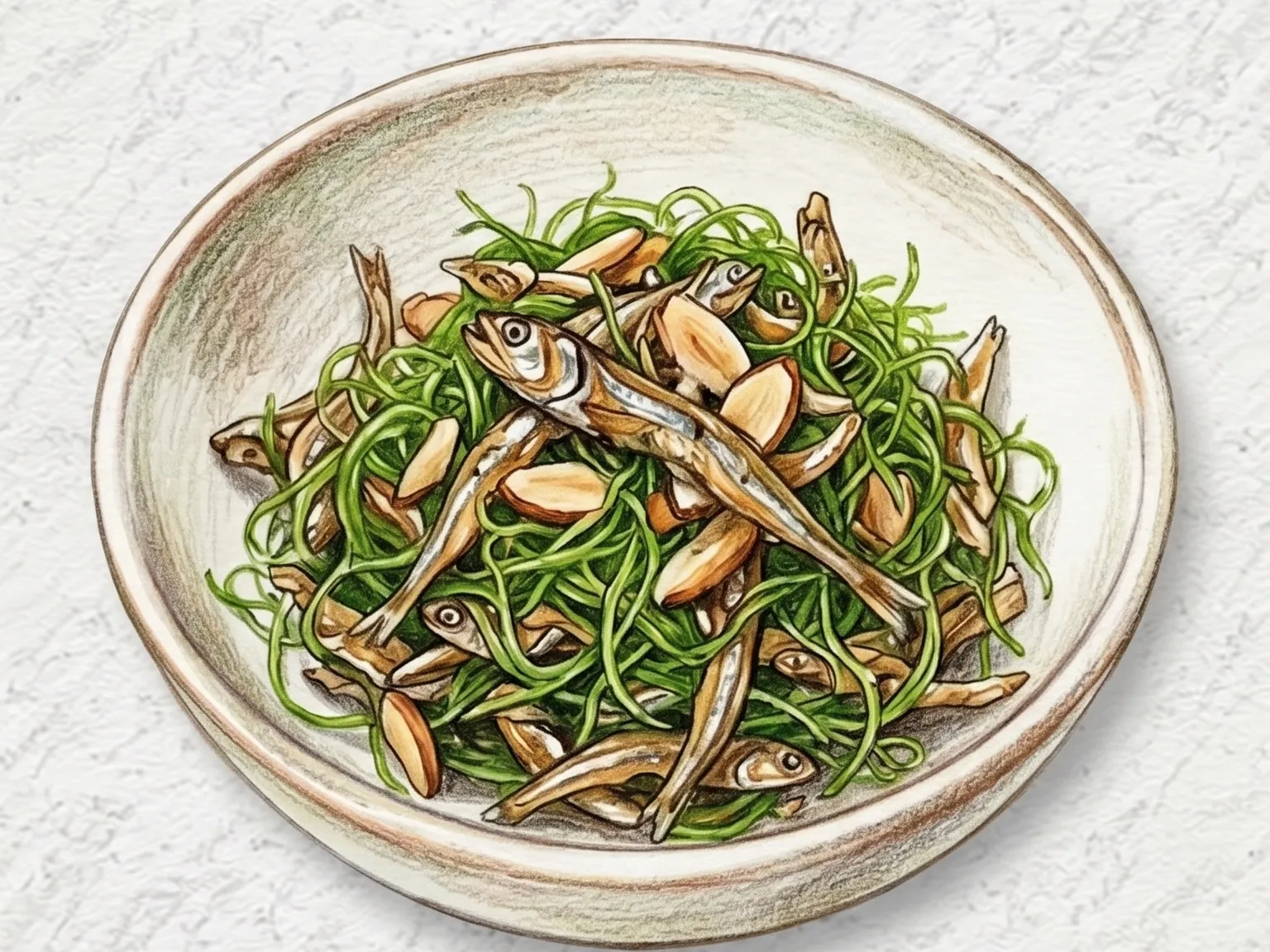
Sebalnamul beoseot-bokkeum is a Korean stir-fry of saltwort (glasswort) and oyster mushrooms finished with ground perilla seeds and perilla oil. The saltwort carries a natural brininess that reduces the need for added soy sauce, while the oyster mushrooms are cooked on high heat first to drive off moisture and firm their texture. The saltwort is stir-fried for just one minute to preserve its snappy crunch. Perilla powder and oil folded in at the end create a nutty, aromatic layer that bridges the briny greens and earthy mushrooms.
Korean Selleri Sogogi Bokkeum (Celery Beef Stir-fry)
Selleri sogogi-bokkeum stir-fries soy-marinated lean beef round with celery, onion, and bell pepper over high heat. The beef is seared first for about two and a half minutes then set aside, and the vegetables are cooked separately in the same pan to keep them crisp before everything is combined. Oyster sauce and soy sauce give the beef a deep umami character, while celery's herbal freshness and firm crunch lighten the overall dish. Adding celery leaves at the very end intensifies the aromatic, almost grassy fragrance.
Korean Sautéed Spinach (Garlic Soy Sesame Spinach Side)
Sigeumchi-bokkeum is a Korean sauteed spinach side dish cooked in under five minutes -- spinach is stir-fried with sliced garlic in a hot pan with cooking oil for just two minutes, then seasoned with soy sauce. Draining the spinach thoroughly before cooking is essential; otherwise excess water pools in the pan and steams the leaves instead of searing them. Sesame oil and toasted sesame seeds added at the end provide a nutty finish that tempers spinach's mild grassiness. The brief cooking preserves the leaves' deep green color and most of their nutrients.
Korean Stir-fried Radish Greens with Perilla
Siraegi deulkkae-bokkeum is a Korean stir-fry of pre-boiled dried radish greens seasoned with soup soy sauce and garlic, then cooked in perilla oil and finished with generous perilla powder. The greens are first tossed in the seasoning to let the flavors penetrate, stir-fried for three minutes, then simmered briefly with water and perilla powder until a thick, nutty sauce coats every strand. Green onion added at the end provides a fresh aromatic lift. Compared to the doenjang-based siraegi jorim, this version leans lighter and more distinctly nutty from the perilla.
Korean Braised Dried Radish Greens
Siraegi jorim is a traditional Korean braise of boiled dried radish greens seasoned with doenjang, soup soy sauce, and garlic, then simmered in perilla oil and water over low heat for twenty minutes. The doenjang slowly permeates the tough, fibrous greens, infusing them with deep fermented soybean flavor while the perilla oil adds a smooth richness. The longer the dish simmers, the more pronounced the earthy, malty depth becomes. Scallion stirred in at the end brightens the otherwise dense, savory profile of this slow-cooked banchan.
Korean Beef and Broccoli Stir-Fry
Sogogi broccoli-bokkeum stir-fries thinly sliced beef with broccoli florets in a glaze of oyster sauce and soy sauce. The beef is seared first over high heat to lock in its juices, then the broccoli -- blanched just enough to keep its bite -- joins the pan. Oyster sauce binds the two main ingredients with concentrated savory depth, and garlic plus a final drizzle of sesame oil layer on fragrance. The sauce coats every surface with a glossy sheen, making this a complete main dish that needs nothing beyond steamed rice.
Korean Spicy Beef Stir-Fry
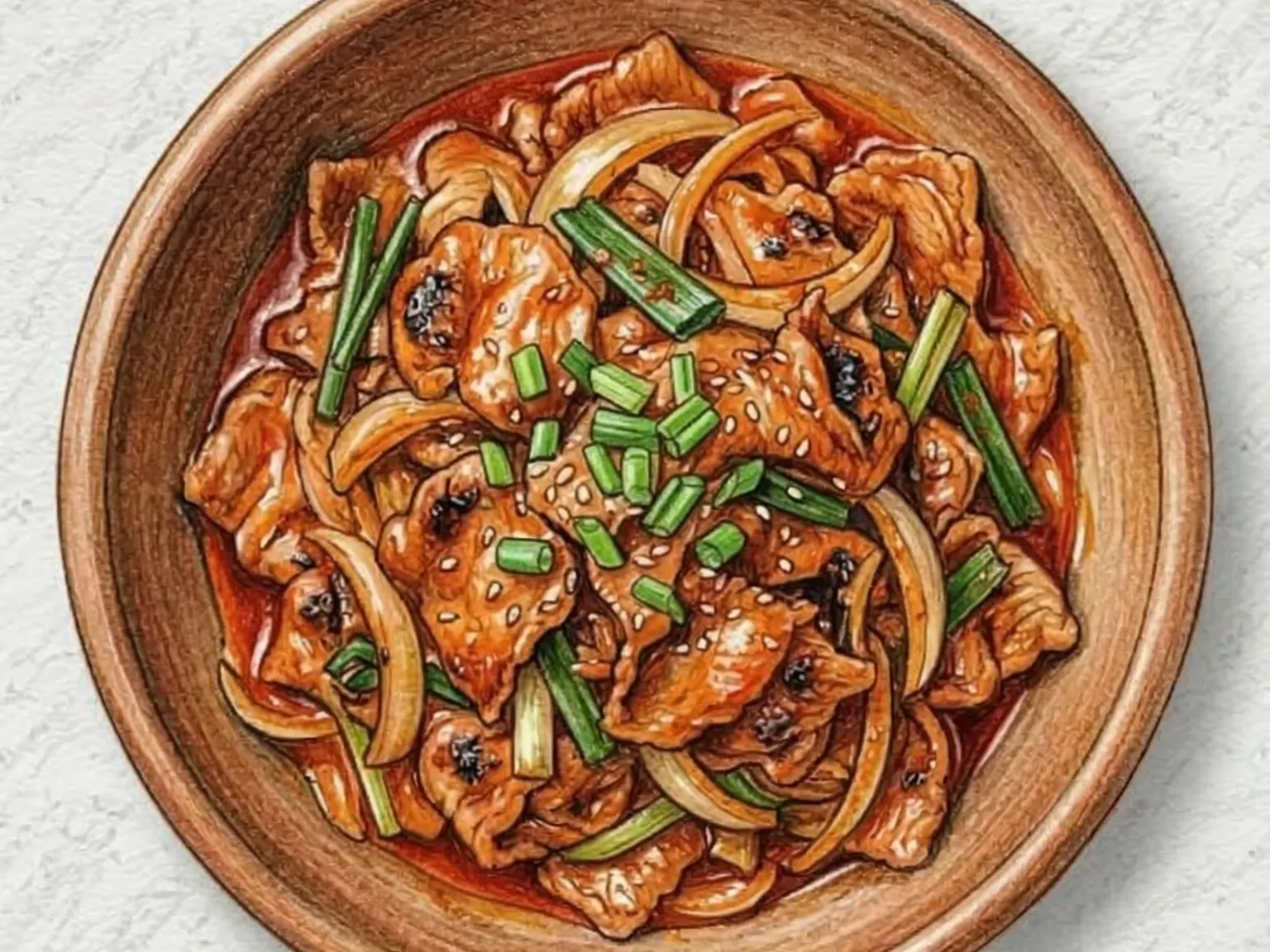
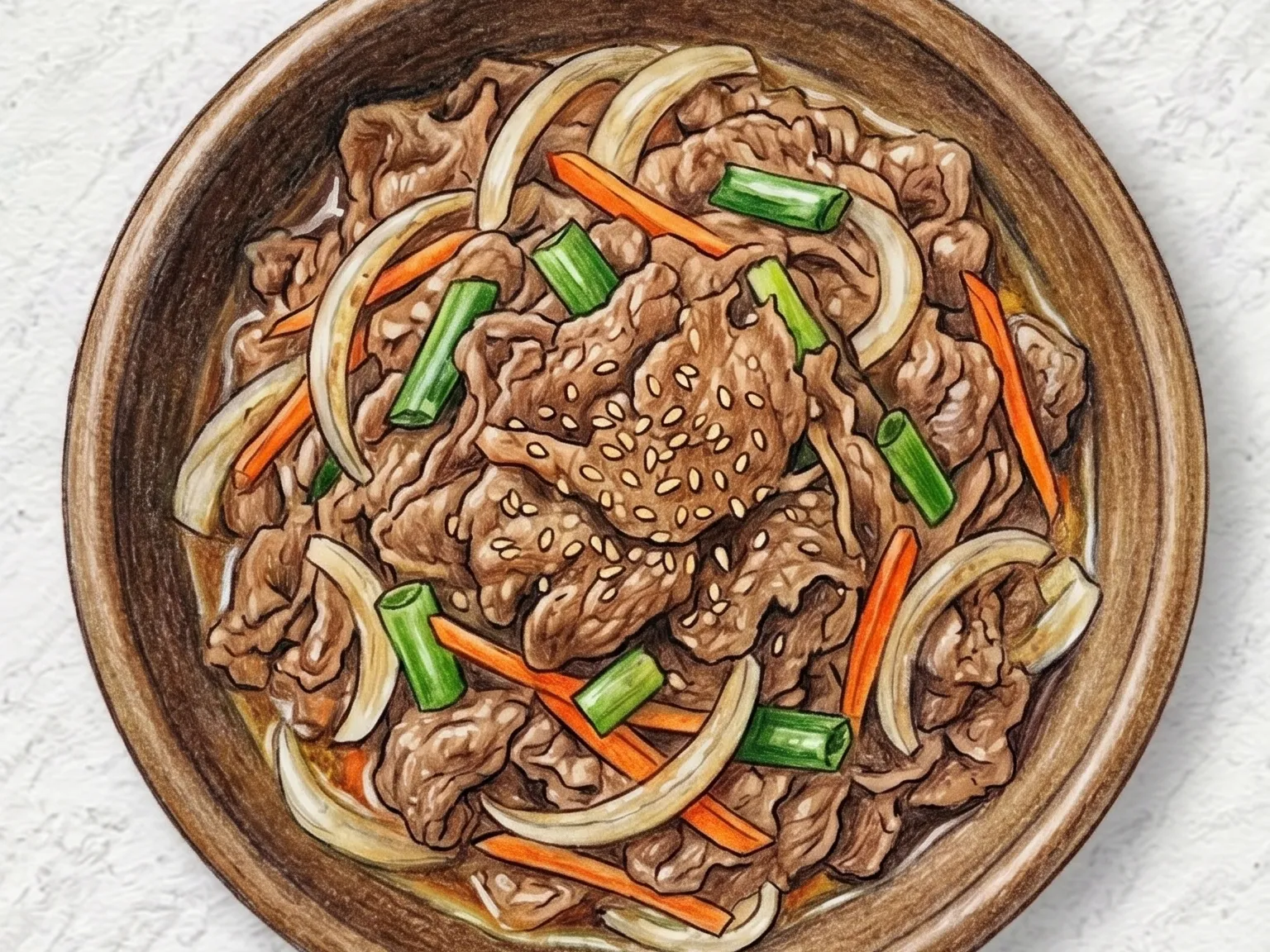
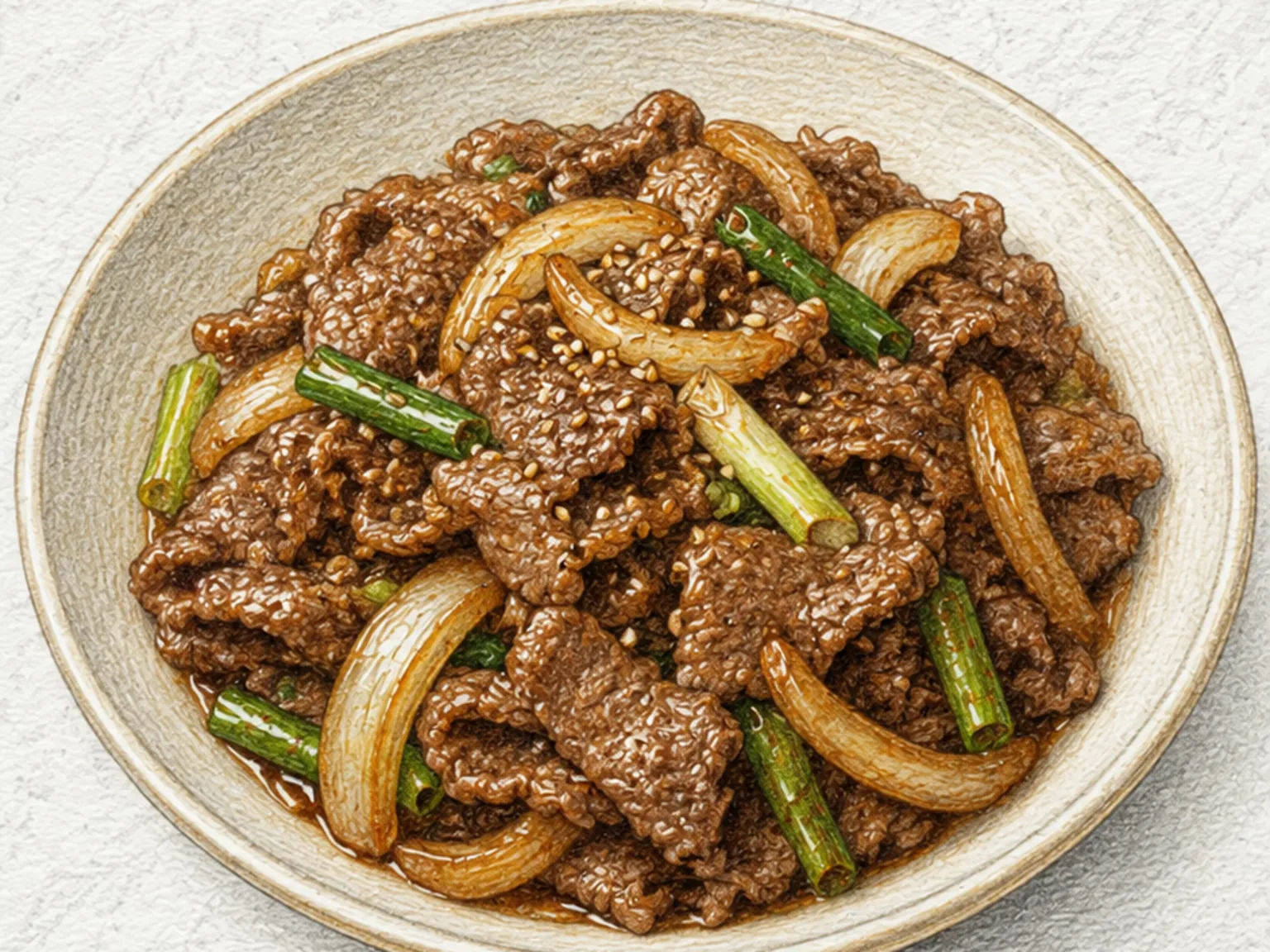
Sogogi gochujang-bokkeum marinates thin-sliced beef in a paste of gochujang, soy sauce, sugar, and minced garlic, then stir-fries it over high heat. The chili paste's spiciness and the sugar caramelize together on the meat's surface, building a dark, sticky glaze with layered heat. Onion cooked alongside the beef releases moisture that helps the seasoning distribute evenly across every slice. A finish of sesame oil adds a roasted nuttiness on top of the bold, spicy-sweet profile -- intensely flavored enough that a small portion carries a full bowl of rice.
Korean Beef and Paprika Stir-Fry
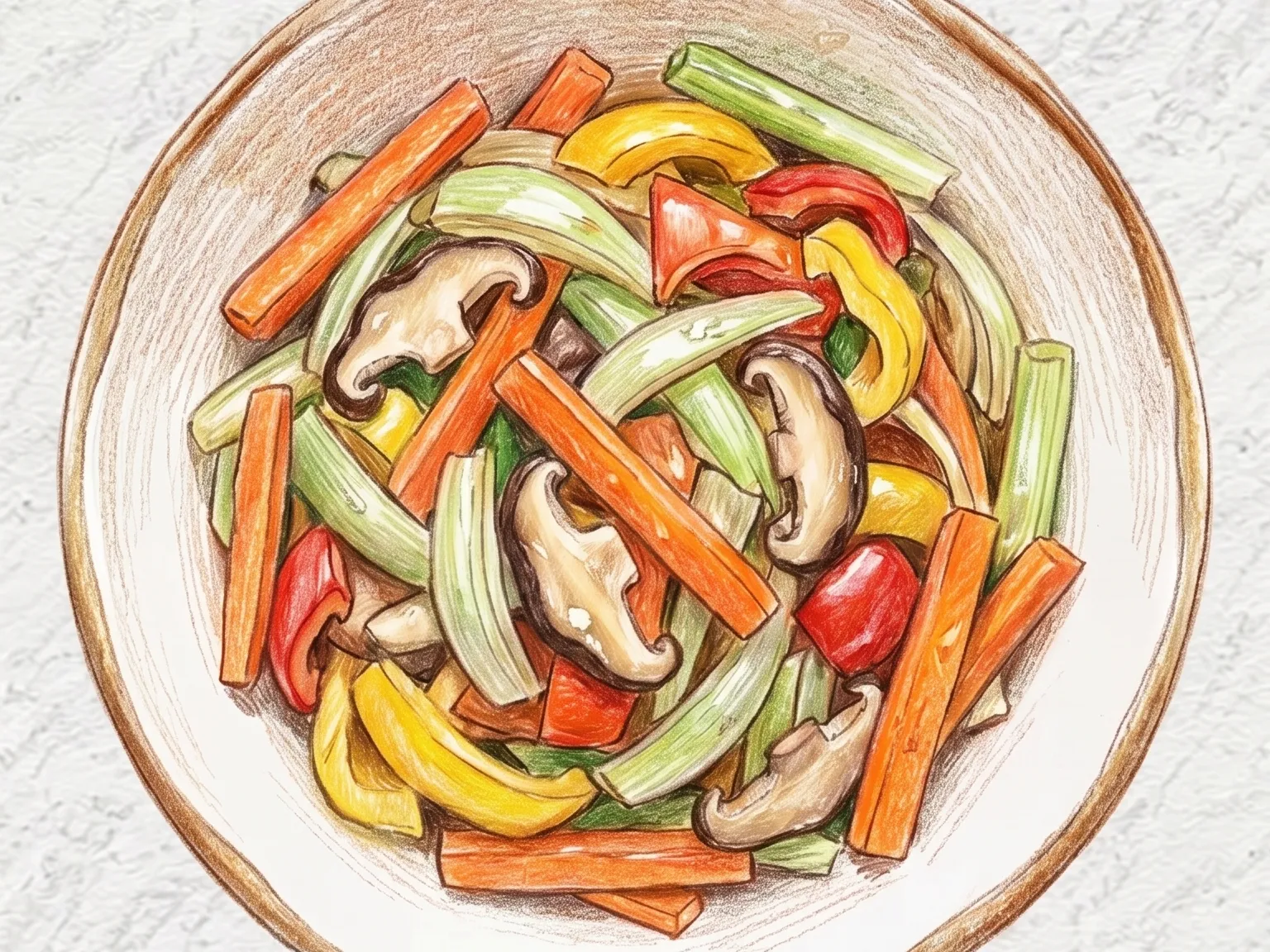
Sogogi paprika-bokkeum stir-fries soy-and-sesame-marinated beef strips with julienned bell peppers of mixed colors. The peppers lose just enough moisture over heat to concentrate their natural sweetness, which balances the salty soy marinade on the beef. Two cloves of garlic provide background aroma, but the seasoning is intentionally spare so the ingredients themselves lead the flavor. The dish's vivid reds, yellows, and greens make it as visually striking on the plate as it is straightforward to cook.
Korean Stir-fried Sausage
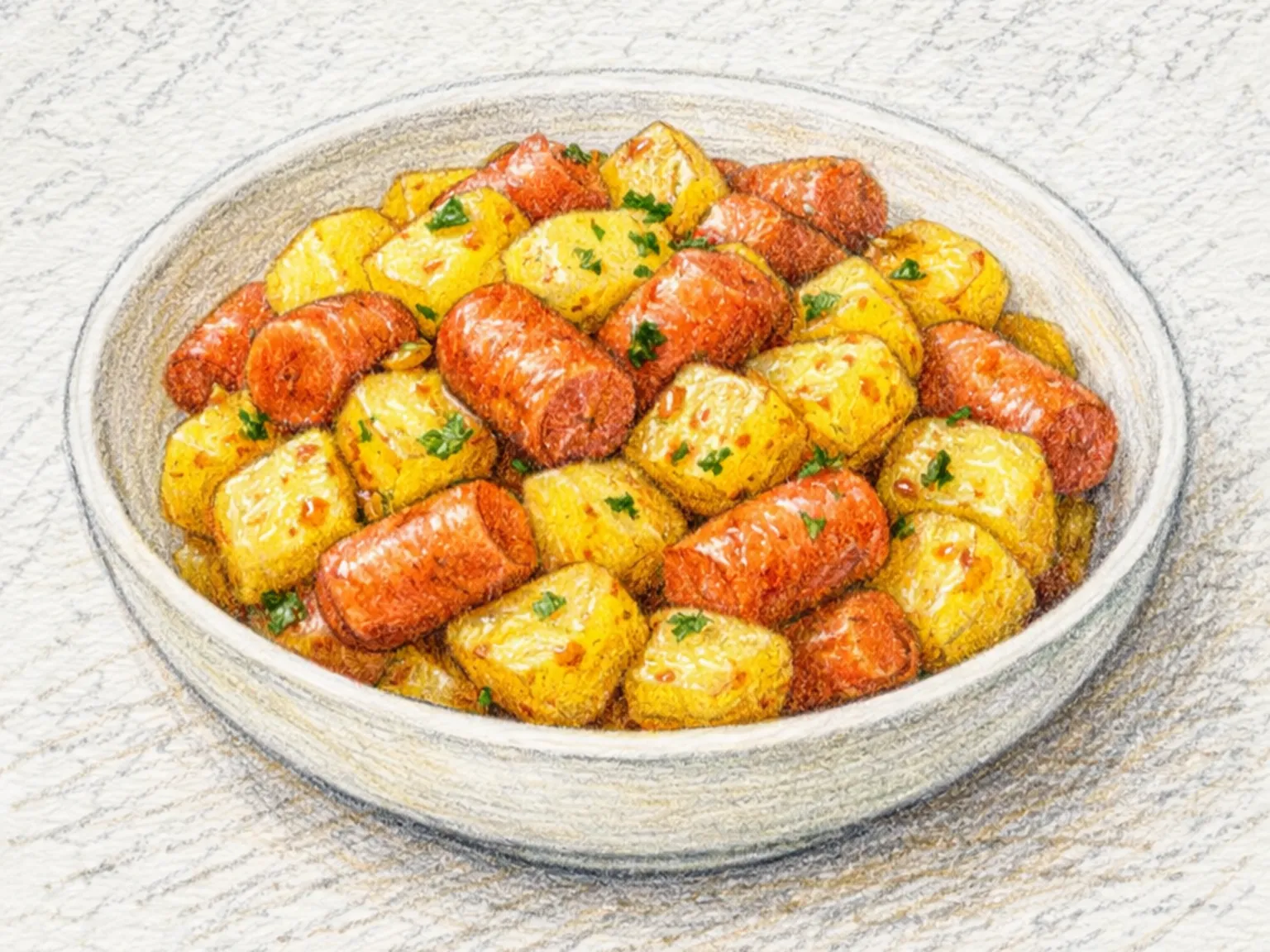
Sosegi-bokkeum is a Korean sausage stir-fry where scored Vienna sausages are dry-fried until golden, then tossed with onion in a sauce of ketchup, gochujang, oligosaccharide syrup, and soy sauce. Scoring the sausages lets the sweet-spicy glaze seep into every cut, so the flavor is consistent from edge to center. The sauce caramelizes quickly -- just two minutes of tossing coats the sausages in a glossy, clingy layer. Finished with sesame seeds and sliced green onion, it is a staple banchan that packs well in lunchboxes.
Korean Spicy Braised Tofu
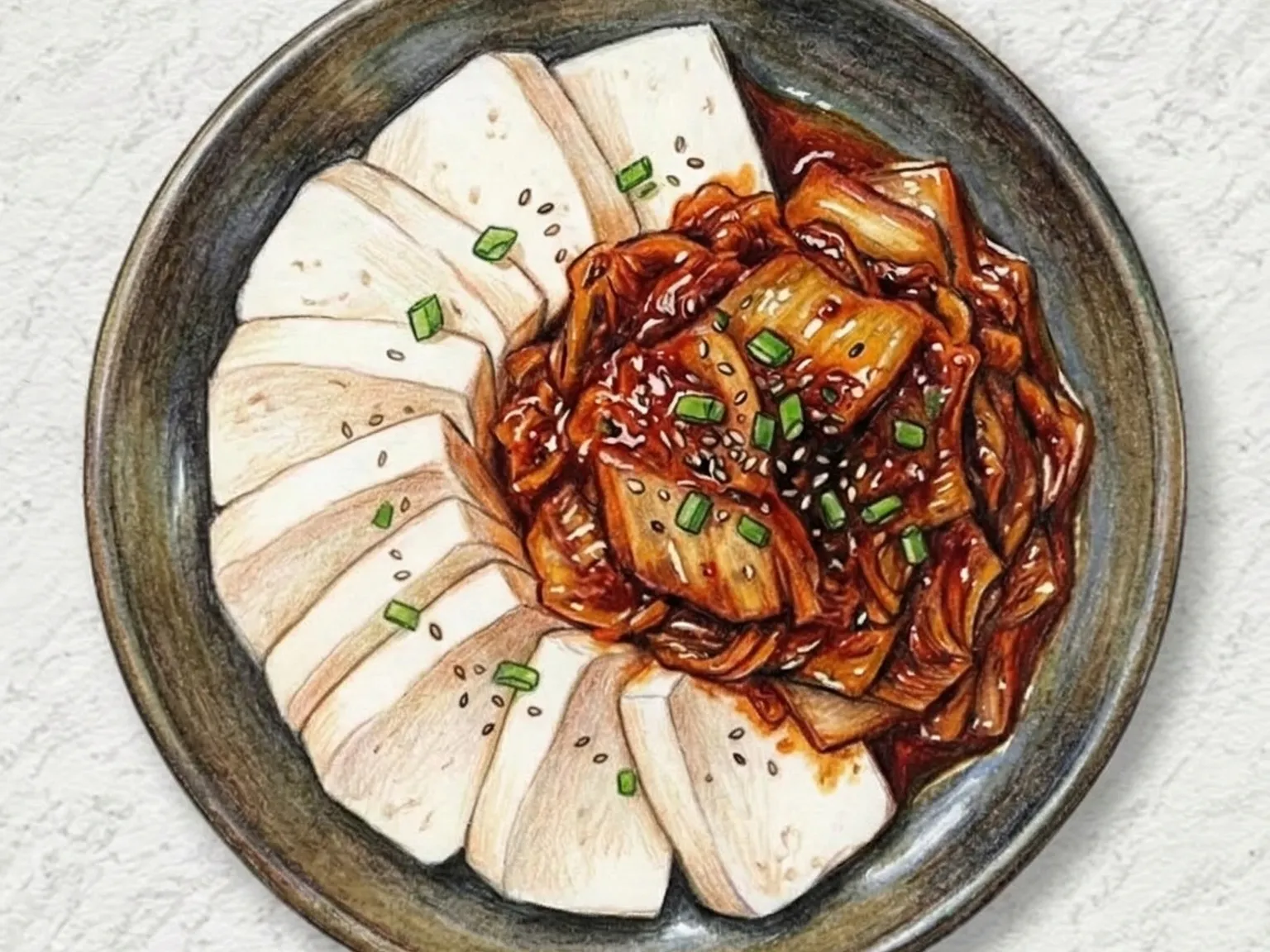
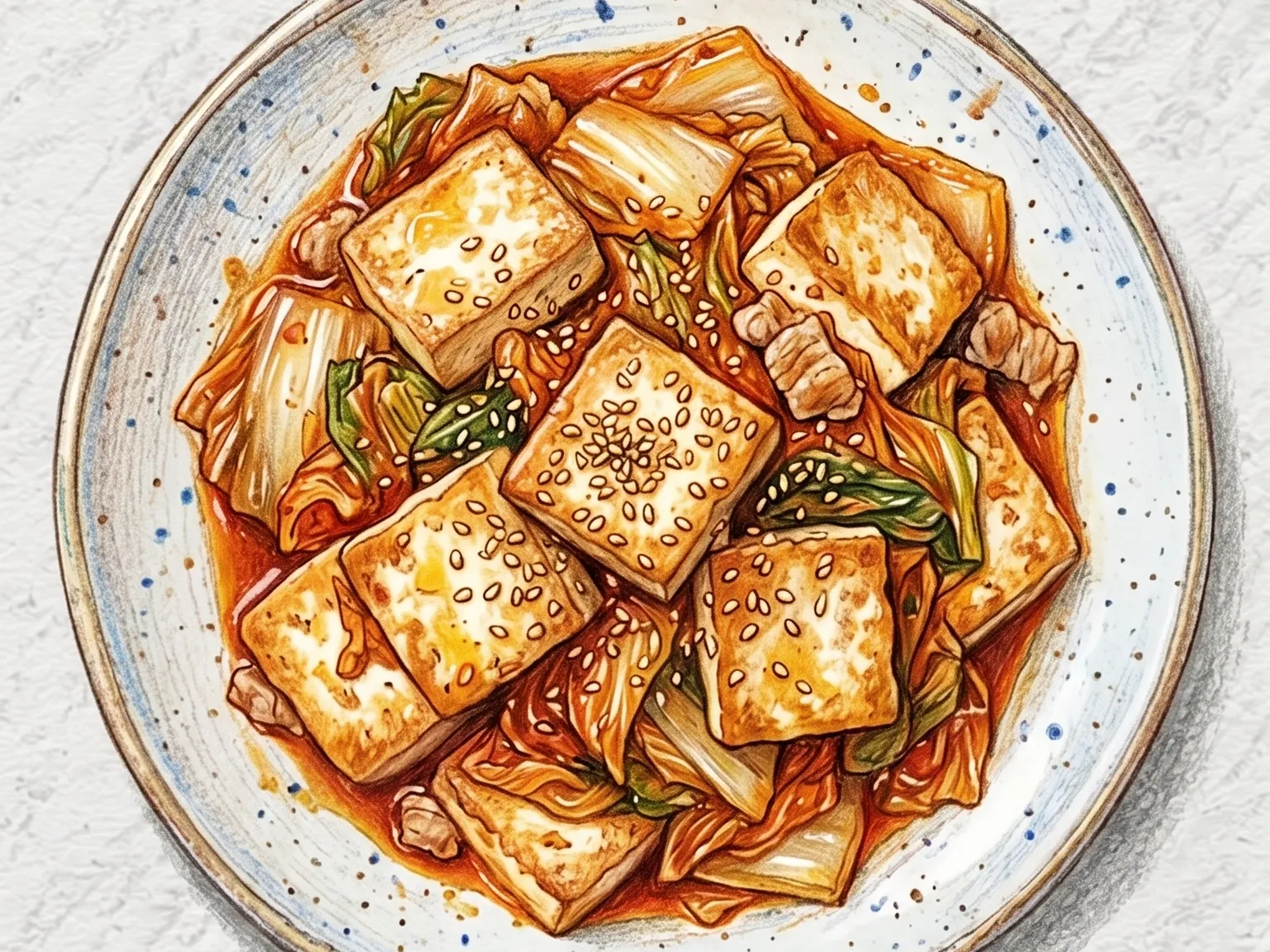
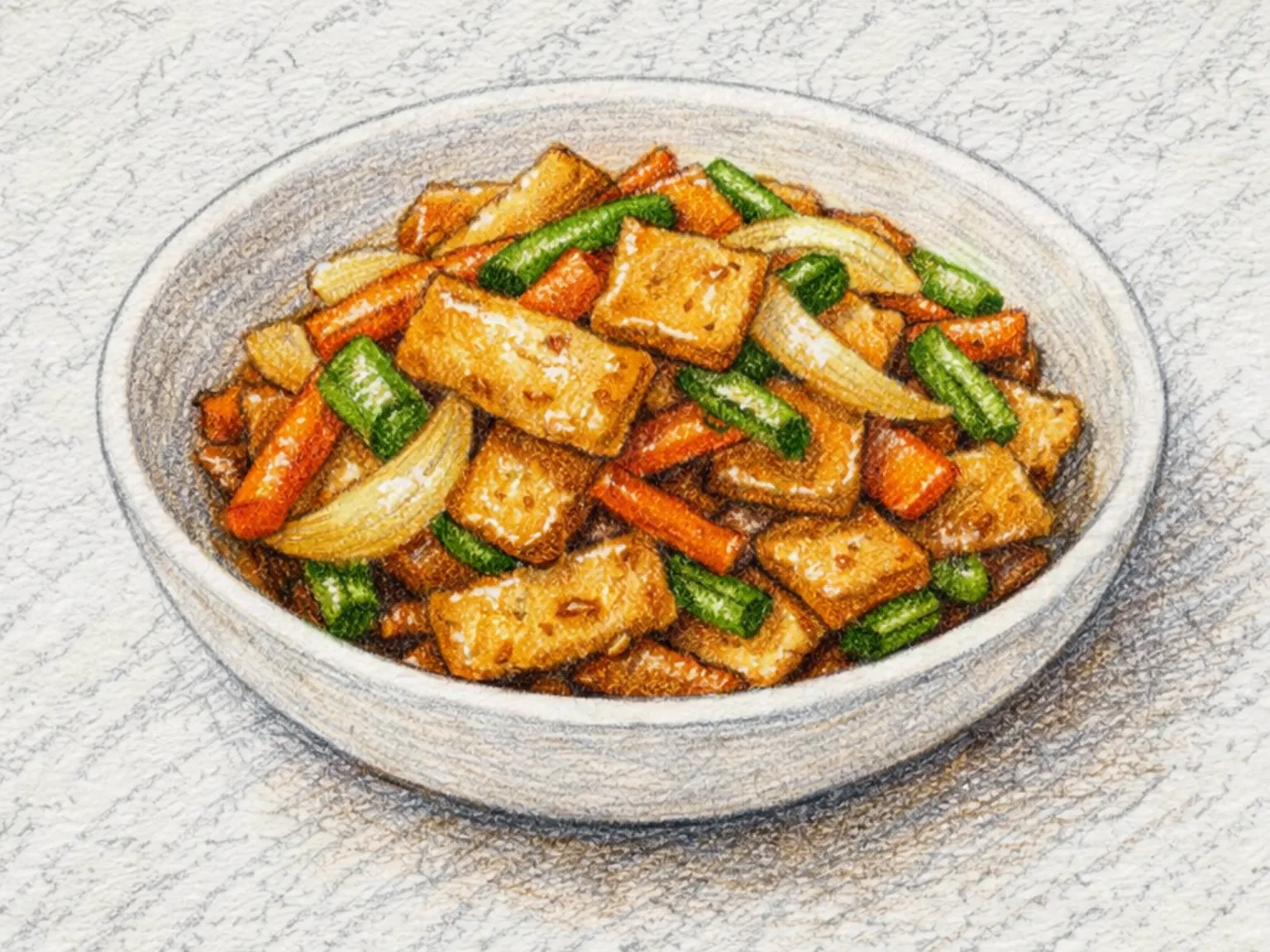
Spicy dubu-jorim pan-sears firm tofu slabs cut 1.5 centimeters thick until golden on both sides, then braises them in a sauce of soy sauce, gochugaru, garlic, and sugar. Searing first firms the tofu so it holds its shape through the eight-minute simmer, during which onion and green onion cook alongside in the reducing liquid. The chili flakes deliver a direct, persistent heat that penetrates the tofu as the sauce thickens, balanced by the sugar's sweetness. A final circle of sesame oil ties the flavors together with a roasted, nutty aroma.
Korean Beef & Lettuce Cabbage Stir-fry
Ssamchu soegogi-bokkeum stir-fries soy-and-pear-juice-marinated beef over high heat, then folds in ssamchu (Korean leafy cabbage) just long enough to barely wilt. Pear juice tenderizes the beef and lends a subtle sweetness, while soy sauce, garlic, and sesame oil form a glossy glaze as they hit the hot pan. The ssamchu stems go in a minute before the leaves and Cheongyang chili, preserving a mix of crunchy and soft textures in the finished dish. A final drizzle of sesame oil off the heat locks in the fragrance, making this a lightly spicy beef-and-greens stir-fry with clear, clean flavors.
Korean Stir-fried Crown Daisy and Mushrooms
Ssukgat-beoseot-bokkeum is a quick stir-fry of oyster mushrooms and crown daisy (ssukgat) cooked in a garlic-infused pan. The mushrooms are seared over high heat to drive off moisture and develop a chewy bite, while the crown daisy stems and leaves go in at staggered intervals to preserve their crunch and aroma. Soy sauce and cooking wine provide the seasoning base, finished with sesame oil and toasted sesame seeds. The slightly bitter, herbal character of the crown daisy plays off the mild earthiness of the mushrooms for a clean, well-defined flavor.
Korean Pork & Crown Daisy Stir-fry
Ssukgat-dwaeji-doenjang-bokkeum is a Korean stir-fry of pork shoulder marinated in doenjang (fermented soybean paste) and gochujang, cooked with onion and scallion before crown daisy is tossed in at the end. The doenjang penetrates the pork during marination, producing a deep, salty fermented savoriness once seared. Crown daisy is added briefly to keep its herbal fragrance and gentle bitterness intact, which cuts through the richness of the pork fat. The contrast between the heavy, umami-laden meat and the bright green aromatics keeps each bite balanced.