Soups
Soups

Soups Recipes

169 recipes. Page 2 of 8

Soups and broths are the backbone of a Korean meal, served alongside rice at nearly every table. From clear seaweed soup (miyeokguk) to rich ox-bone broth (gomtang) and spicy beef soup (yukgaejang), the variety is enormous. Each season brings its own favorites - chilled soups in summer and piping-hot stews in winter.

The secret to a great Korean soup lies in building a flavorful stock from anchovies, kelp, or beef bones. This collection covers classic and modern soup recipes you can recreate at home.

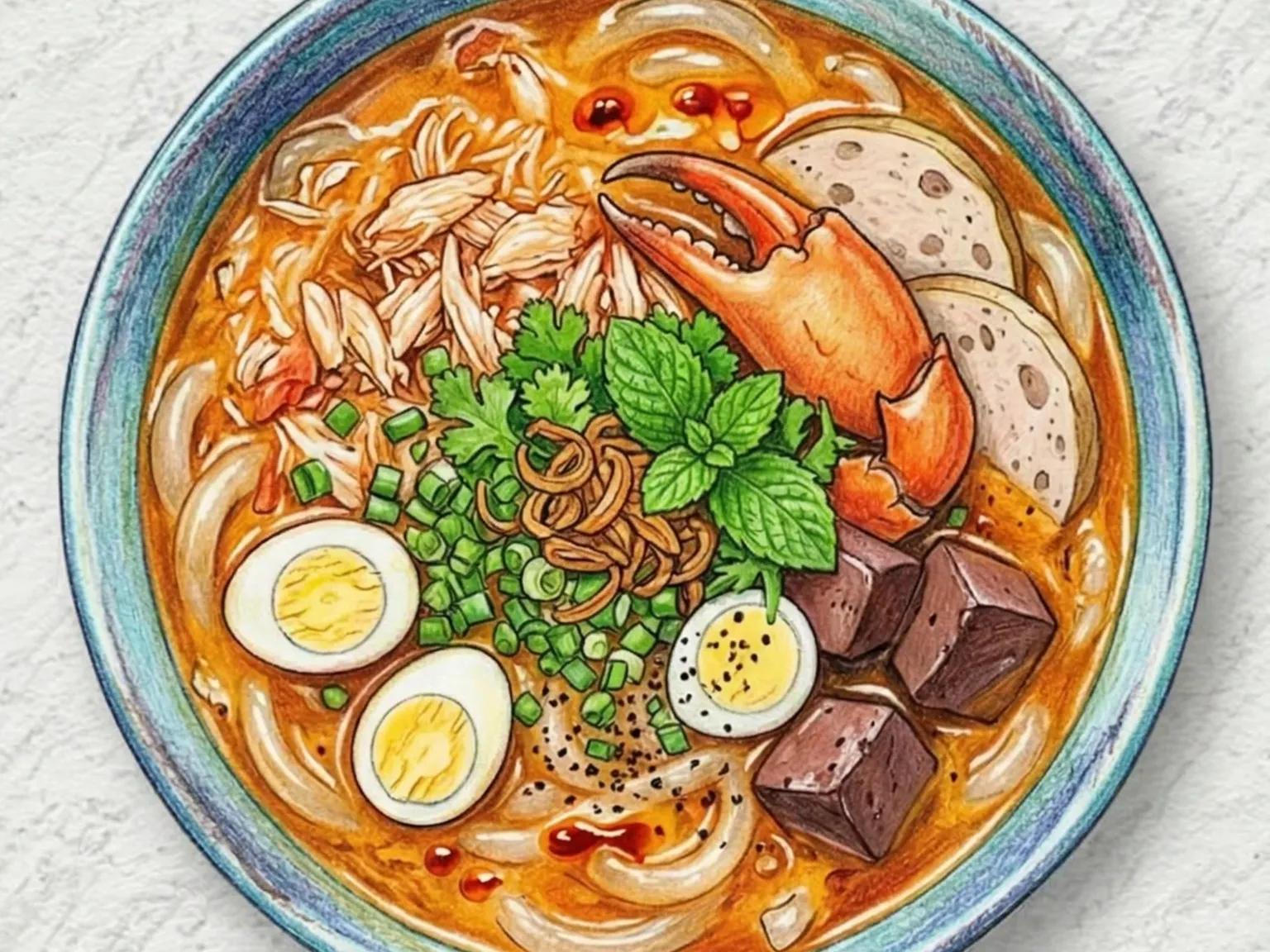
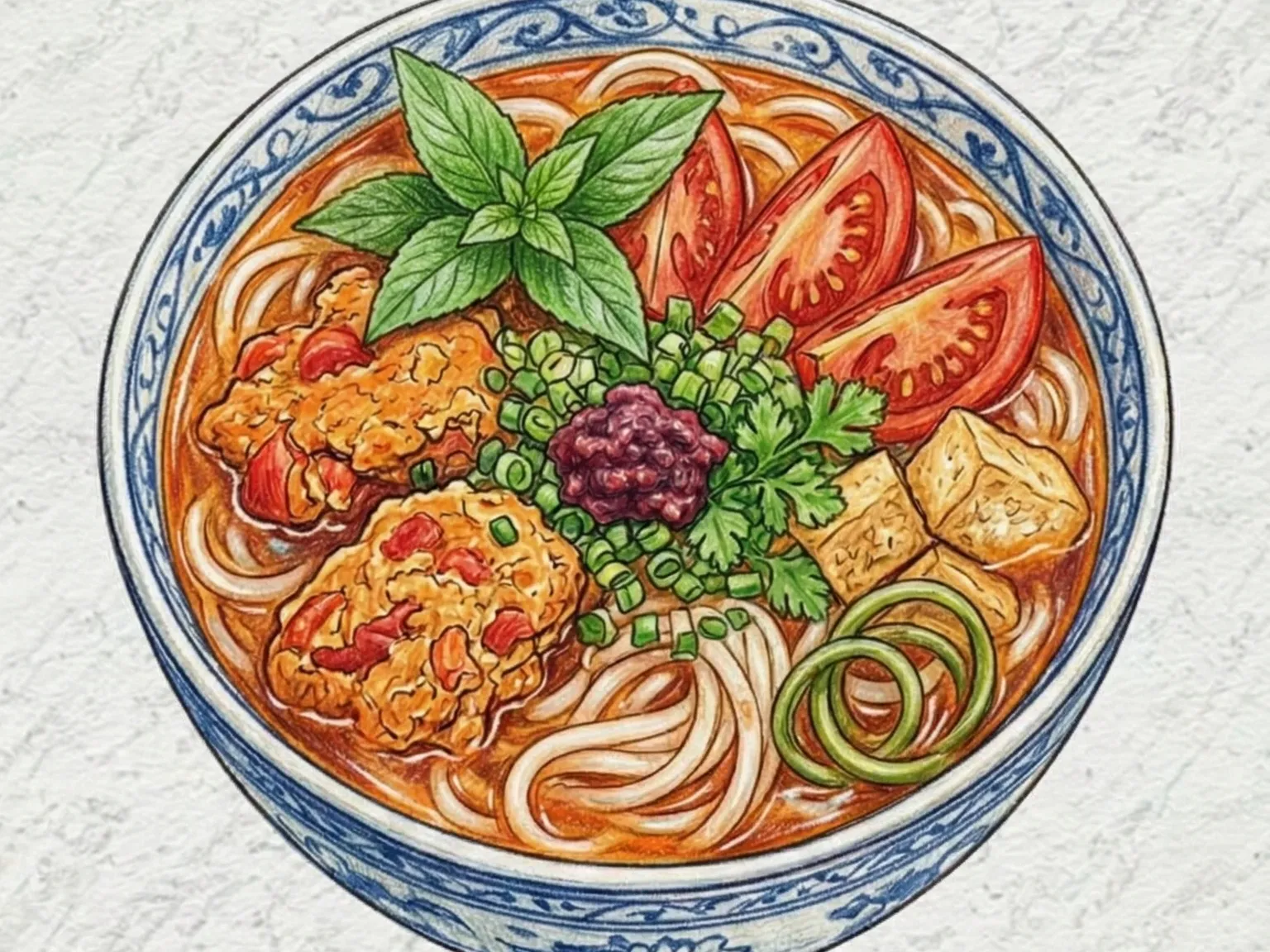
Korean Freshwater Crab Spicy Soup
Soups Hard

Korean Freshwater Crab Spicy Soup

Freshwater crabs are halved, thoroughly cleaned, and simmered in a stock built from radish and doenjang that draws out their intense, briny umami over forty minutes of steady cooking. Gochugaru and cheongyang chili build up layers of fiery heat, while zucchini and radish contribute natural sweetness that tempers the spice. Pressing the soybean paste through a strainer before adding it keeps the broth smooth and clear rather than grainy, and the result is a bold, aromatic stew deeply rooted in Korean regional tradition.

🏠 Everyday 🎉 Special Occasion
Prep 30min Cook 40min 4 servings
Chamnamul Dubu-guk (Korean Pimpinella Tofu Soup)
Soups Easy

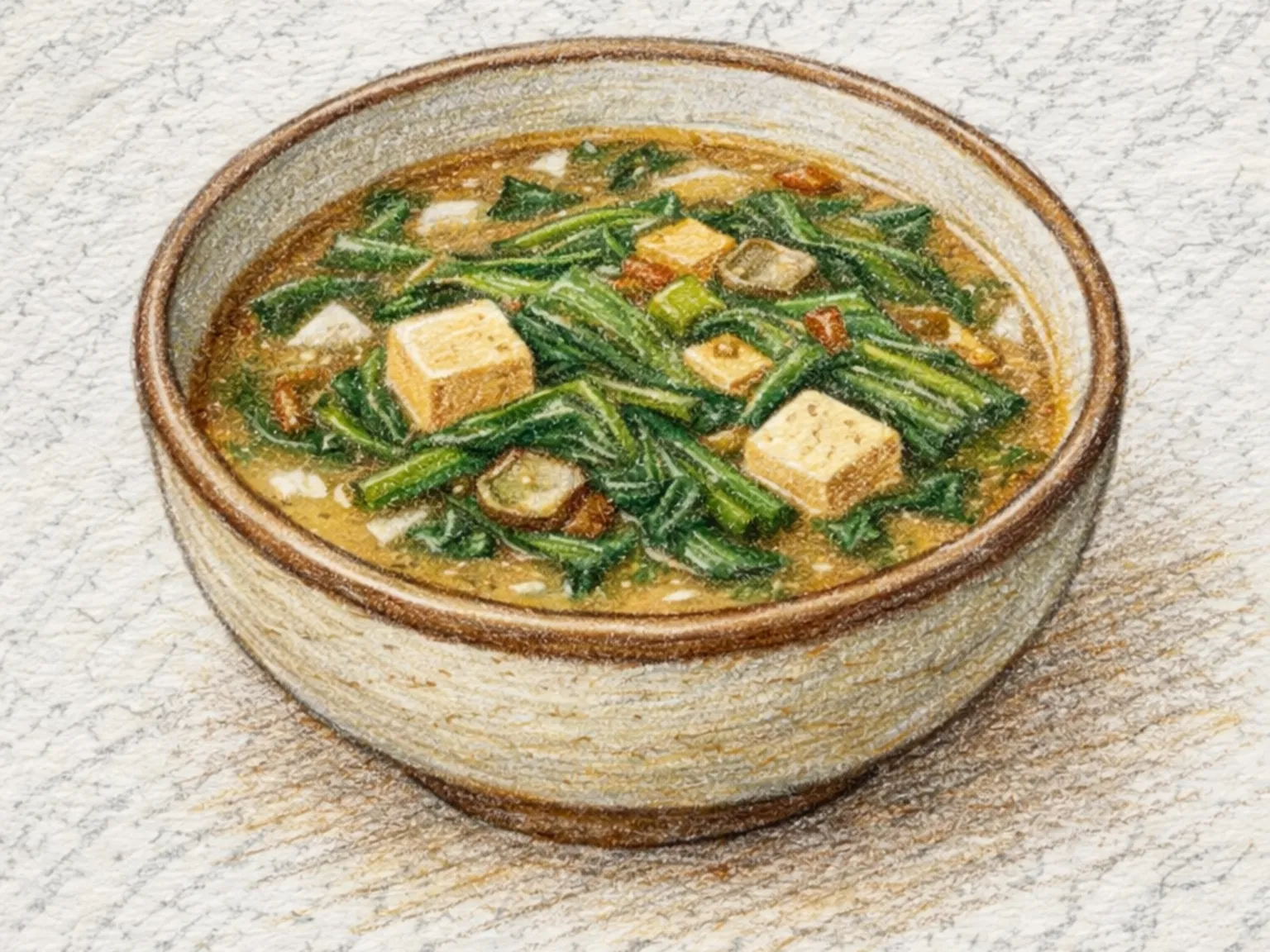
Chamnamul Dubu-guk (Korean Pimpinella Tofu Soup)

Chamnamul dubu-guk is the herb-forward Korean tofu soup in the dubu-guk family, built around chamnamul, or Korean pimpinella greens, in anchovy-kelp stock. Tofu goes in first and simmers for four minutes, absorbing the savory broth before the seasoning of soup soy sauce and salt is added. The chamnamul enters only at the end, kept barely long enough to wilt so its sharp, grassy fragrance stays intact rather than cooking off. The herbal edge of the greens cuts through the mild tofu and gives this clear soup a fresher profile than plain dubu-jangguk.

🏠 Everyday 🥗 Light & Healthy
Prep 10min Cook 12min 2 servings
Korean Green Seaweed Tofu Soup
Soups Easy

Korean Green Seaweed Tofu Soup

Cheonggak-dubu-guk is a light Korean seaweed soup made by soaking salted cheonggak sea staghorn in cold water to draw out excess salt, then simmering it with tofu and onion in a clean broth. Onion and garlic are sauteed in perilla oil first to build a nutty base, and the broth is seasoned with tuna extract and soup soy sauce, which together bring a deep oceanic savoriness to every spoonful. The cheonggak seaweed contributes a firm, satisfying crunch that contrasts directly with the soft, mild tofu cubes. At 140 calories per bowl, the soup sits at the lighter end of Korean everyday cooking while still delivering genuine depth. The combination of sea vegetable, perilla oil, and fermented soy seasoning makes a broth that tastes cleaner and more mineral than standard vegetable soups.

🥗 Light & Healthy 🏠 Everyday
Prep 10min Cook 12min 2 servings
Korean Fermented Soybean Soup
Soups Easy

Korean Fermented Soybean Soup

Cheonggukjang-guk is a soup where cheonggukjang -- a short-fermented soybean paste with an assertive, pungent aroma that distinguishes it from the milder doenjang -- is dissolved into anchovy-kelp stock and simmered with zucchini, onion, and tofu. The paste infuses the broth with a deep, earthy fermented quality that forms the core character of the soup. Zucchini and onion contribute natural sweetness that tempers the intensity of the fermented base, keeping the overall flavor approachable rather than overwhelming. Tofu is added partway through to absorb the broth without breaking apart, adding a soft textural contrast. Red chili flakes and sliced green onion go in at the end, lifting the finish with a gentle heat. Because cheonggukjang ferments faster and more aggressively than doenjang, its flavor is noticeably stronger -- starting with a smaller quantity and adjusting to taste is advised for first-time cooks.

🏠 Everyday
Prep 15min Cook 20min 2 servings
Korean Bok Choy Soybean Paste Soup
Soups Easy

Korean Bok Choy Soybean Paste Soup

Cheonggyeongchae doenjang-guk is a Korean soybean paste soup built on anchovy-kelp stock, featuring bok choy, zucchini, and tofu. Unlike napa cabbage or spinach, bok choy brings a crisp, juicy stem alongside soft leaves, and it adds a mild, clean sweetness to the broth that differs from the earthier notes of Korean brassicas. The stock simmers first with onion and garlic for six minutes to build an aromatic base, and the doenjang is pressed through a sieve so it dissolves evenly without leaving paste clumps in the finished soup. Bok choy and tofu go in during the final three minutes, which is long enough to wilt the leaves while the stems keep their bite and the green color stays bright. Though bok choy is more common in Chinese cooking, it pairs naturally with doenjang and is available year-round in Korean supermarkets, making it a reliable alternative when napa cabbage is not on hand.

🏠 Everyday 🥗 Light & Healthy
Prep 15min Cook 18min 4 servings
Korean Mung Bean Jelly Soup
Soups Easy

Korean Mung Bean Jelly Soup

Cheongpo-muk-guk is a traditional Korean soup built on a clear beef brisket broth, with thick-cut strips of mung bean jelly as the main ingredient. The jelly, set from mung bean starch, has a slippery yet springy texture that sets it apart from any noodle or dumpling -- it glides over the tongue while offering a gentle, elastic resistance. Cutting the jelly into thick strips and rinsing briefly in cold water removes surface starch, and simmering for only three minutes keeps the pieces intact; a longer cook dissolves the jelly into the broth and makes it cloudy. Beaten egg drizzled in thin streams forms delicate floating ribbons throughout the pot, adding color against the pale jelly and clear broth. Roasted seaweed flakes scattered on top contribute a toasty, oceanic fragrance, and a seasoning of soup soy sauce with a small amount of minced garlic keeps the bowl from tasting flat.

🏠 Everyday 🥗 Light & Healthy
Prep 10min Cook 15min 2 servings
Korean Cold Vinegar Mustard Chicken Soup
Soups Medium

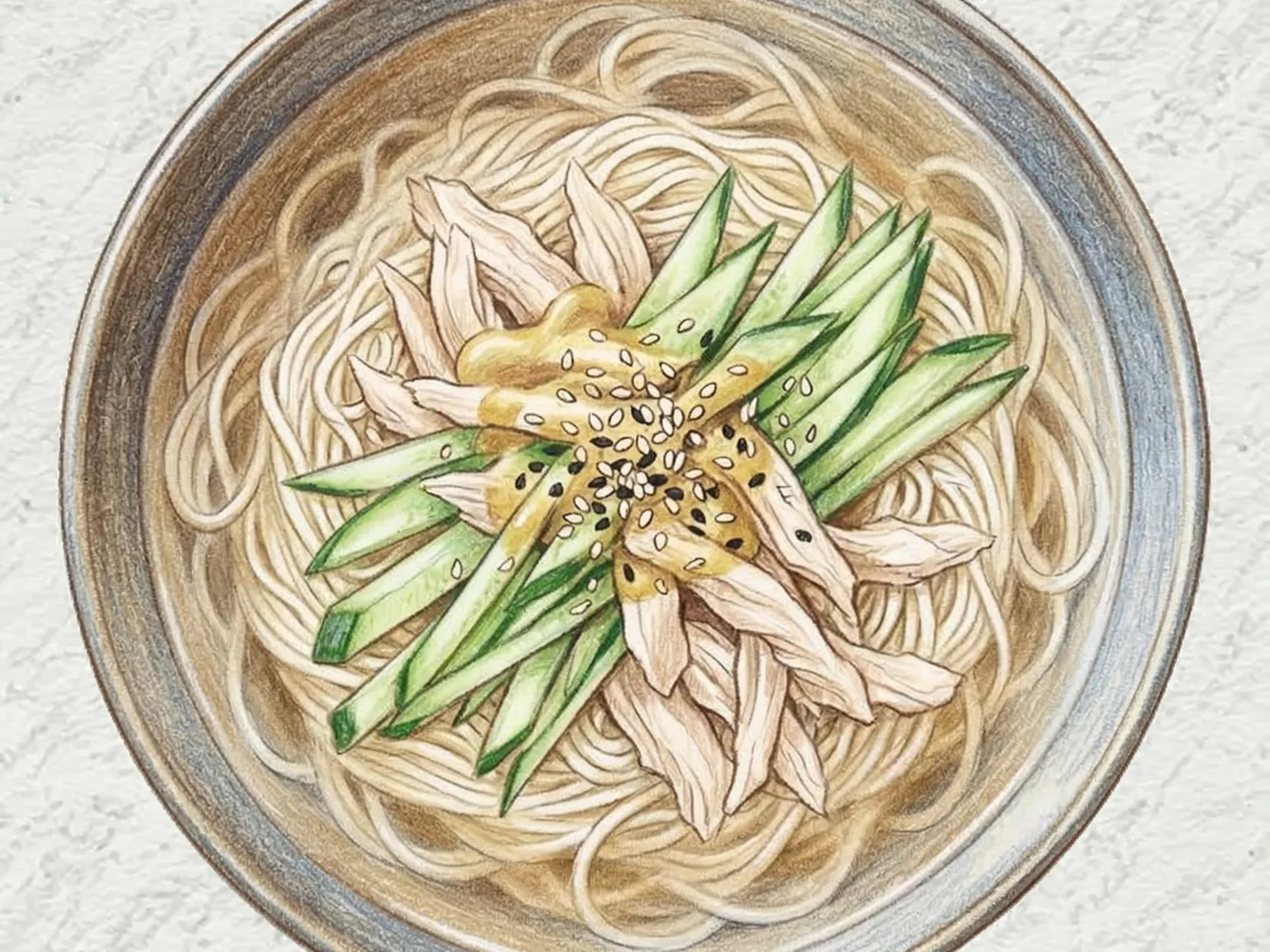
Korean Cold Vinegar Mustard Chicken Soup

Chogye-tang is a chilled Korean chicken soup where boiled, shredded breast meat sits in an ice-cold broth sharpened with rice vinegar and hot mustard paste. The broth must be thoroughly refrigerated before seasoning and serving - at a warm temperature the mustard loses its sharp bite and the vinegar's acidity becomes dull, collapsing the defining tang that makes the dish what it is. Shredding the chicken along its grain rather than chopping it allows the cold, pungent broth to soak into every fiber rather than sitting on the surface of the meat. Julienned cucumber layered on top provides a crisp, cooling contrast to the shredded meat. The flavor logic mirrors that of Pyongyang-style cold noodles - sour, spicy, and bracingly cold - but replaces starch with lean protein, making it a lighter and more protein-forward meal. Historically associated with royal court cuisine as a restorative summer dish, it continues to be eaten in the same cold format during the hottest months.

🏠 Everyday 🥗 Light & Healthy
Prep 35min Cook 40min 4 servings
Korean Loach Soup (Blended Loach and Dried Radish Greens Tonic)
Soups Hard

Korean Loach Soup (Blended Loach and Dried Radish Greens Tonic)

Chueo-tang is a southern Korean tonic soup made by blending blanched loach into a smooth puree, straining out bones and skin, then simmering the liquid with doenjang and gochujang for depth. The straining step is what separates a clean, richly flavored broth from a gritty one; every bit of bone and skin must be removed before the long simmer begins. Dried radish greens, siraegi, are added midway and cooked for twenty-five minutes, contributing a fibrous chew that contrasts the velvety broth. Perilla seed powder stirred in near the end thickens the soup to a creamy, pale consistency and layers in a pronounced nutty fragrance that carries through each spoonful. A final pinch of ground sansho pepper leaves a tingling numbness on the tongue that clears any lingering earthiness from the freshwater fish. Loach is high in protein and calcium, and the soup has long been eaten as a summer restorative; a broth that is thick and deeply concentrated is the standard by which a well-made chueo-tang is judged.

🏠 Everyday 🎉 Special Occasion
Prep 30min Cook 45min 4 servings
Korean Cod and Radish Soup
Soups Medium

Korean Cod and Radish Soup

Daegu mu-tang is a Korean cod and radish soup in which the radish simmers first in anchovy broth for eight minutes to release its natural sweetness before the fish goes in. Cod fillets are briefly marinated in rice wine to neutralize any fishiness, then cooked gently - stirring must be kept to a minimum to keep the flesh in large, intact pieces. The finished broth is remarkably clear and light because cod carries very little fat, and the sweetness of the radish merges with the fish's mild umami to create a clean, layered depth. Crown daisy added in the final thirty seconds of cooking releases a sharp herbal fragrance that lifts the entire bowl. Many Koreans reach for this soup as a hangover remedy, prizing the cool, clean aftertaste it leaves.

🏠 Everyday 🥗 Light & Healthy
Prep 18min Cook 22min 2 servings
Korean Scallion Egg Soup (Quick Two-Ingredient Clear Broth)
Soups Easy

Korean Scallion Egg Soup (Quick Two-Ingredient Clear Broth)

Daepa gyeran-guk is a Korean scallion and egg soup that comes together in under ten minutes with just two main ingredients. Adding the green onion in two separate stages is what gives the broth complexity: the first portion simmers for three minutes, sweetening and deepening the stock, while the second goes in raw at the very end for a sharp, grassy bite. The egg must be drizzled in a thin, steady stream over reduced heat and left completely undisturbed for thirty seconds - this produces silky, delicate ribbons rather than broken scrambled pieces. Adding the egg over high heat or stirring immediately causes the broth to turn cloudy and the egg to clump. Soup soy sauce seasons the broth cleanly without darkening it, and a single drop of sesame oil finishes the bowl with a subtle, nutty fragrance that underscores the sweetness of the green onion.

🏠 Everyday ⚡ Quick
Prep 8min Cook 10min 2 servings
Korean Boiled Chicken Soup
Soups Medium

Korean Boiled Chicken Soup

Dak-baeksuk is a Korean whole-chicken soup simmered for over fifty minutes with whole garlic cloves, jujubes, green onion, and ginger in a large pot of water until the broth runs clear and deeply flavored. Skimming fat and foam throughout the cooking process is essential for the signature clarity of the broth. Neglecting this step leaves the soup greasy and cloudy when reheated the next day. The jujubes contribute a subtle sweetness and the garlic, softened to near-paste after the long simmer, dissolves into the liquid to create a mellow depth that needs nothing more than salt and pepper to taste complete. The chicken is shredded against the grain for the softest possible texture, then returned to the hot broth so every bite of meat is saturated with the clean, aromatic stock. Unlike samgyetang, dak-baeksuk skips ginseng, making it simpler to prepare while remaining a staple restorative meal eaten during Korea's hottest summer days.

🏠 Everyday
Prep 20min Cook 70min 4 servings
Korean Chicken Bone Broth Soup
Soups Medium

Korean Chicken Bone Broth Soup

Dak-gomtang is a Korean clear chicken bone broth soup made by simmering a whole chicken with onion, garlic, and ginger over medium-low heat for at least fifty minutes. After the meat is removed and hand-shredded, the bones return to the pot for another fifteen minutes, releasing gelatin that gives the broth a silky body. When refrigerated, the liquid sets into a soft gel, a sign of its collagen richness. Skimming the fat layer after refrigeration produces a noticeably cleaner, clearer taste on reheating. The broth is seasoned simply with soup soy sauce and salt, and sliced green onion added at the end brings a fresh, sharp contrast to the mellow chicken flavor. Unlike samgyetang, which is stuffed with ginseng and glutinous rice, dak-gomtang relies entirely on the chicken itself for depth, representing a more restrained approach to Korean restorative cooking. The soup dates back to the Joseon era and is traditionally eaten during convalescence or hot summer days. Adding cooked rice or thin noodles turns it into a complete one-bowl meal.

🏠 Everyday
Prep 20min Cook 70min 4 servings
Korean Chicken Radish Soup
Soups Medium

Korean Chicken Radish Soup

Dak mu-guk is a Korean chicken and radish soup that produces a clear, deeply flavored broth from two simple main ingredients. Chicken thigh meat, cut into bite-sized pieces, is blanched for one minute in boiling water before the main simmer - this step removes impurities and blood, which is the most reliable way to achieve a transparent broth rather than a cloudy one. Onion and ginger then build the aromatic backbone over twenty minutes of gentle, low heat, allowing the chicken's natural depth to develop without aggressive boiling. The radish is cut into thin, flat squares rather than thick slabs; this shape turns translucent within ten minutes and releases its clean sweetness into the liquid quickly and evenly. Soup soy sauce and salt season the broth, and diagonally sliced green onion goes in just before the heat is turned off to preserve its color and mild bite. The result balances the richness of chicken stock against the cool, vegetal sweetness of radish in a soup that is light enough to eat when recovering from illness yet satisfying as an everyday meal.

🏠 Everyday
Prep 20min Cook 35min 4 servings
Korean Spicy Chicken Soup
Soups Medium

Korean Spicy Chicken Soup

Dakgaejang is a spicy Korean chicken soup modeled directly on beef yukgaejang, using a whole chicken simmered, then shredded as the protein base with the same cooking liquid reserved as stock. The shredded meat, rehydrated bracken fern, and bean sprouts are tossed together in a seasoning of gochugaru, soy sauce, and sesame oil before being returned to the broth and simmered until the chili flakes dissolve fully into the fat. The result is a broth that is fiery and layered rather than flat-hot, with the depth that comes from cooking raw chili through an oil base. Bracken adds a chewy, almost meaty resistance to the texture, contrasting clearly with the snappy bean sprouts, and preparing a separate chili oil beforehand and stirring it into the pot deepens the heat with a roasted undertone that gochugaru alone cannot produce.

🏠 Everyday
Prep 20min Cook 60min 4 servings
Korean Wild Chive Soybean Paste Soup
Soups Easy

Korean Wild Chive Soybean Paste Soup

Dallae doenjang-guk is a springtime Korean soybean paste soup that showcases wild chives, a seasonal ingredient valued for its sharp, garlicky bite and short availability window. The anchovy-kelp stock is first simmered with potato and onion to build body and sweetness, then doenjang is dissolved in and tofu added for a soft, tender contrast against the broth. Wild chives go in only during the final minute of cooking, because their pungent aroma dissipates rapidly under sustained heat; cooking them too long makes them indistinguishable from ordinary green onion in both flavor and appearance. The bulb end of each chive stalk carries a stronger bite than the leaves, so mincing the bulbs finely distributes their flavor more evenly through the broth. A half teaspoon of gochugaru tints the soup a faint red that visually matches the chive's natural heat. Because dallae is in season for only a brief window, setting a few raw stalks aside to place at the table as a garnish amplifies the fresh spring character of the dish.

🏠 Everyday 🥗 Light & Healthy
Prep 12min Cook 15min 2 servings
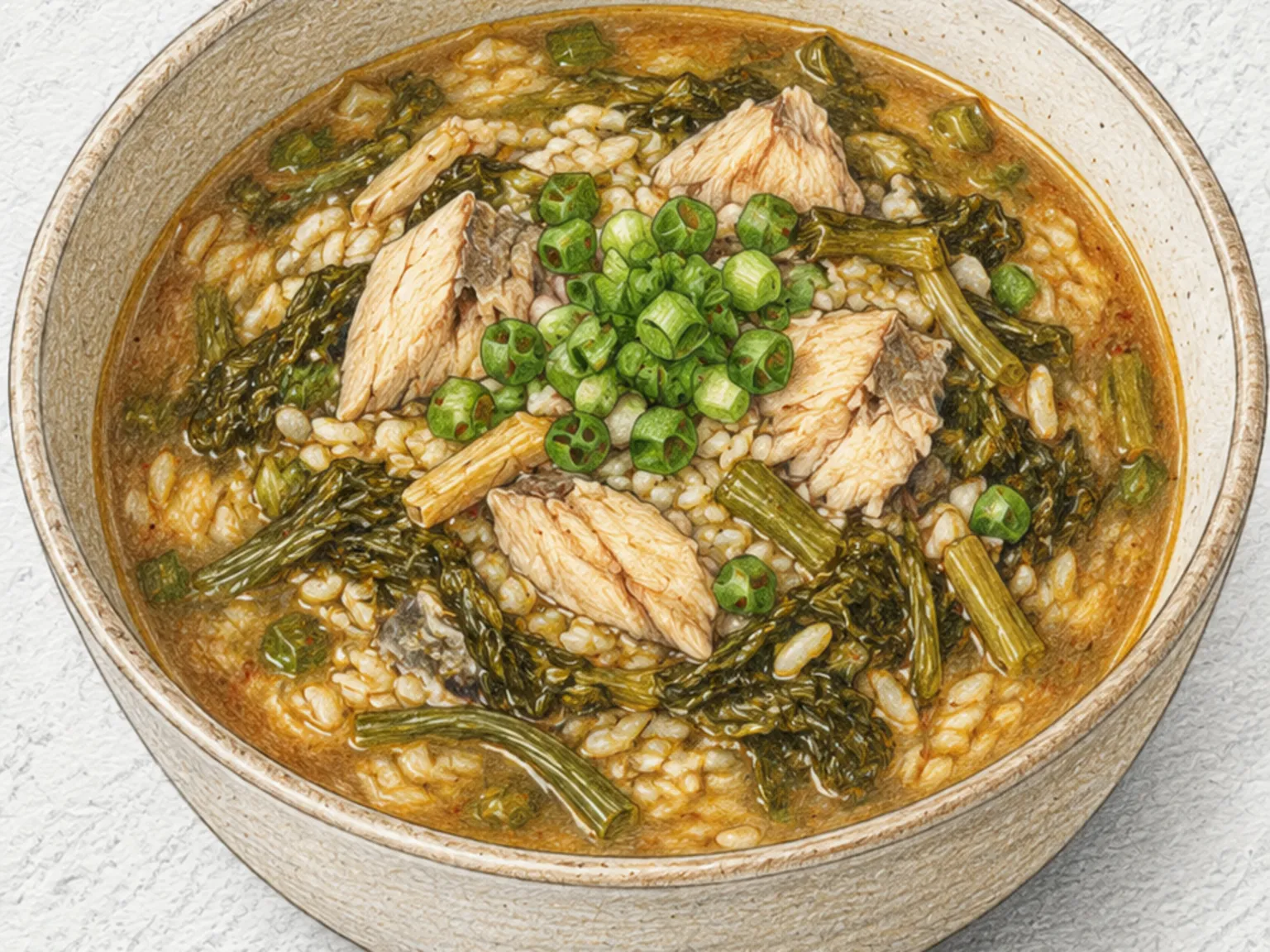
Korean Perilla Radish Soup
Soups Easy

Korean Perilla Radish Soup

Deulkkae mu-guk is a Korean radish and perilla seed soup that belongs firmly to the cool-weather calendar. Sliced daikon simmers in anchovy stock for ten minutes first, releasing its clean sweetness into the broth before anything else goes in. Perilla seed powder, stirred in toward the end, thickens the liquid noticeably - its heavier, earthier fat behaves differently from sesame and coats the palate in a way plain radish broth cannot. Garlic simmers alongside the radish to build the underlying savory base. The powder must go in just before the heat is cut; leave it in too long and the toasted fragrance dissolves into the broth and disappears.

🏠 Everyday 🥗 Light & Healthy
Prep 10min Cook 20min 4 servings
Korean Perilla Chicken Soup
Soups Easy

Korean Perilla Chicken Soup

Deulkkae samgye-guk is a perilla-enriched Korean chicken soup that delivers the warming, restorative depth of samgyetang with a considerably simpler preparation -- no glutinous rice to stuff, no ginseng required, just chicken pieces and perilla seed powder. The chicken is cut into large pieces and placed in cold water from the start, then simmered for forty minutes so the collagen and flavor compounds dissolve gradually into the broth, turning it milky and full-bodied. Perilla powder must be pre-dissolved in a small cup of water before being stirred in -- adding it dry causes it to clump -- and ten more minutes of gentle simmering allows its oils to emulsify fully into the chicken stock, creating a broth with a smooth, nutty coating on every sip. Seasoning with only soup soy sauce and salt lets the natural savoriness of the chicken and the distinctive fragrance of perilla come through without distraction. Rich in the omega-3 fatty acids of perilla seed and the protein of chicken, this soup is eaten as a restorative meal during hot summers and whenever energy levels drop.

🏠 Everyday 🥗 Light & Healthy
Prep 15min Cook 60min 4 servings
Siraegi Guk (Korean Perilla Radish Greens Soup)
Soups Easy

Siraegi Guk (Korean Perilla Radish Greens Soup)

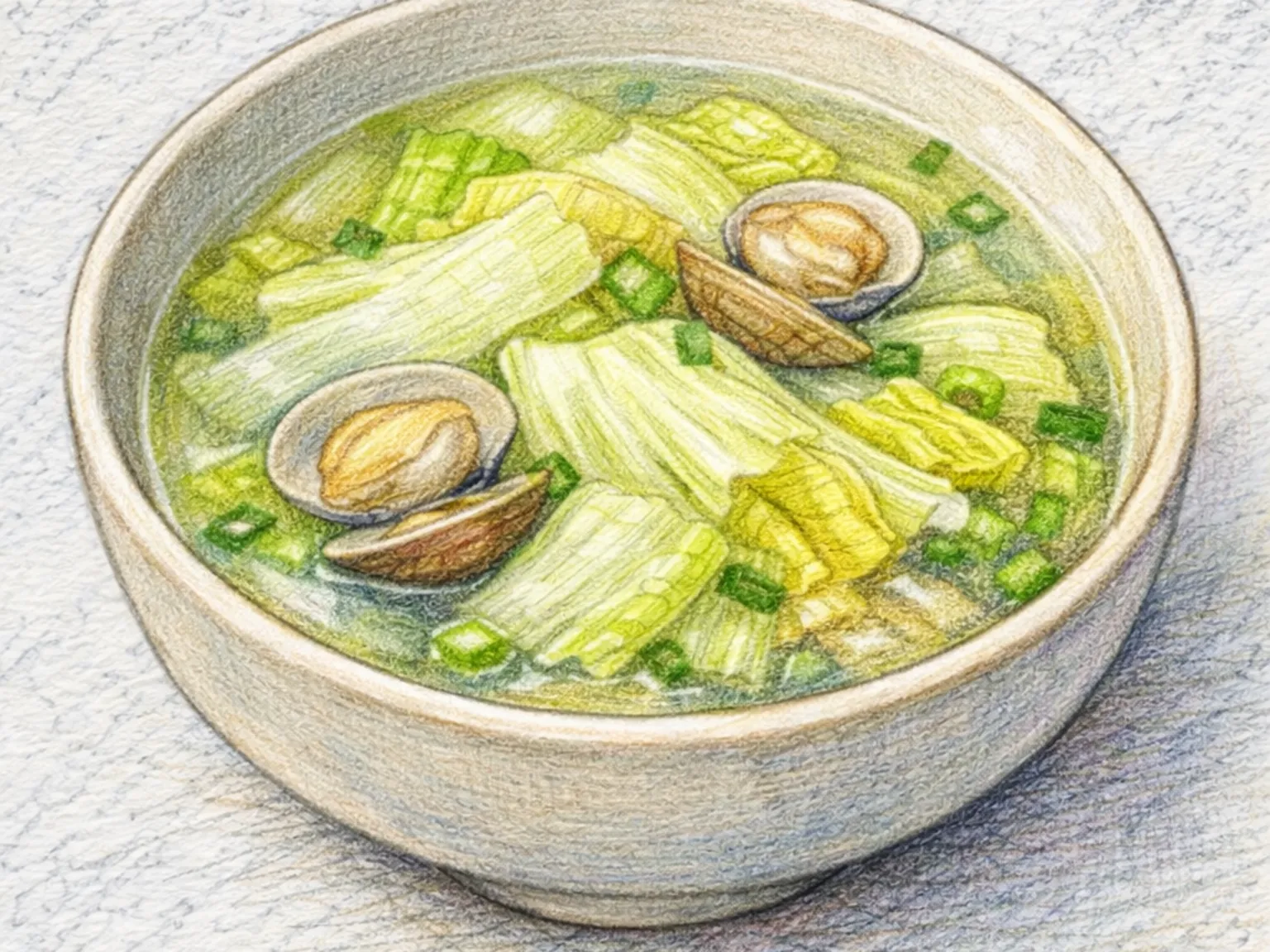
Deulkkae siraegi guk is a rich, nutty Korean soup made by simmering dried radish greens that have been pre-seasoned with doenjang and soup soy sauce in an anchovy broth for at least twenty minutes. Siraegi, which refers to radish leaves that have been dried and then rehydrated before cooking, carries a concentrated earthiness and a fibrous, chewy texture that fresh greens cannot replicate. Massaging the greens with doenjang and garlic before they go into the pot allows the fermented seasoning to penetrate into the fibers over the extended cooking time rather than merely coating the surface. The anchovy broth beneath provides a clean, saline umami that supports the deeper, fermented notes of the doenjang without competing. Perilla powder added in two separate additions dissolves evenly through the broth without clumping, turning the liquid an opaque, milky white and thickening it to a consistency that clings to each spoonful and gives the soup its characteristic weight. Green onion added during the final three minutes of cooking contributes a fresh, sharp aroma that sits lightly on top of the perilla fragrance, completing the layered, hearty character of the soup.

🏠 Everyday 🥗 Light & Healthy
Prep 18min Cook 35min 4 servings
Doganitang Recipe (Dogani Tang, Korean Ox Knee Soup)
Soups Hard

Doganitang Recipe (Dogani Tang, Korean Ox Knee Soup)

Doganitang, also written dogani tang or dogani-tang, is a Korean ox knee cartilage soup simmered for over two and a half hours on low heat. The long cook extracts collagen into a broth that appears clear but coats the lips with a rich gelatin film. Soaking the cartilage in cold water for an hour and blanching for ten minutes before the main cook are non-negotiable steps that draw out blood and impurities which would otherwise cloud the broth and leave an off-taste. The finished soup is seasoned simply with salt, pepper, and scallion so the clean beef flavor and chewy cartilage texture stay at the center.

🏠 Everyday 🎉 Special Occasion
Prep 20min Cook 180min 2 servings
Dongjuk-tang (Korean Surf Clam Broth)
Soups Easy

Dongjuk-tang (Korean Surf Clam Broth)

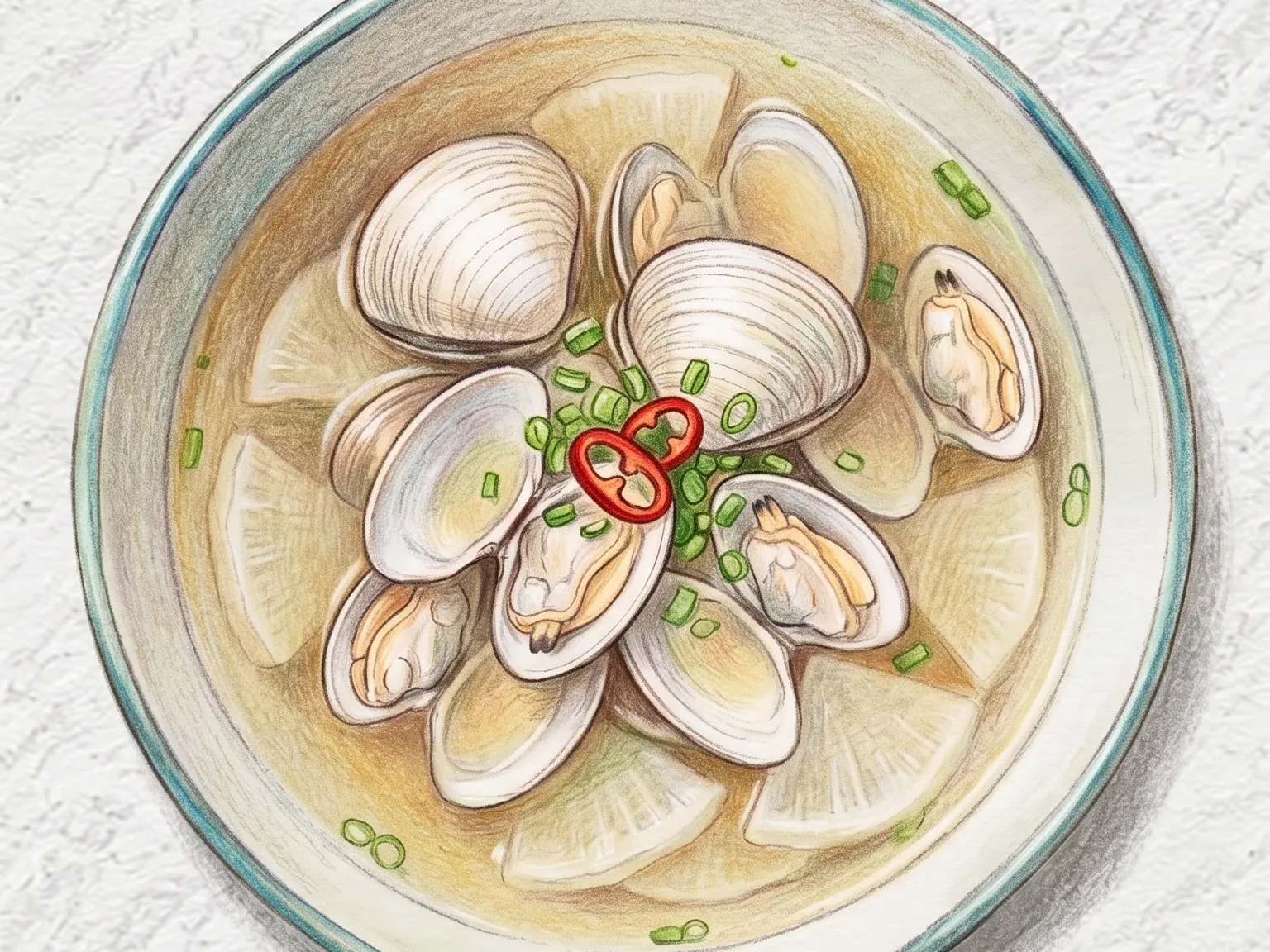
Dongjuk-tang is a Korean surf clam soup where purged clams simmer with radish in plain water to produce a briny, naturally sweet broth that needs almost no added seasoning. The radish goes in first and cooks for six minutes to build a sweet, mild base, then the clams are added for three to four minutes -- they are done the moment their shells open wide, and cooking any longer tightens and toughens the meat. Any clam that remains shut after cooking must be discarded without exception. Water dropwort stirred in at the end contributes a fresh, herbaceous fragrance that lifts the broth, and a single cheongyang chili pepper adds a mild, lingering heat that tempers the ocean flavor without masking it. The combination of clam brine, radish sweetness, and perilla creates a broth that tastes far more complex than its short ingredient list suggests.

🏠 Everyday 🥗 Light & Healthy
Prep 25min Cook 12min 2 servings
Korean Spicy Pollock Stew
Soups Medium

Korean Spicy Pollock Stew

Dongtae-tang is a Korean spicy fish stew made with frozen pollock (dongtae), radish, tofu, and green onion in a broth seasoned heavily with gochugaru. The first step is simmering radish on its own long enough to release its clean, slightly sweet character into the base -- this foundation determines the clarity and depth of the finished broth. Once the radish has cooked through, gochugaru, soup soy sauce, and minced garlic are added to transform the pale stock into a vivid red, peppery liquid. The pollock is cleaned of scales and fins after thawing, then cut into large pieces so the flesh stays intact through the cooking process. After the fish is added, the stew should not be cooked for more than ten minutes: beyond that point, compounds from the bones leach into the broth, producing a bitter, fishy aftertaste that is difficult to correct. Cheongyang chili peppers add a sharper, more piercing heat than gochugaru alone -- a thin-sliced variety provides brief, concentrated bursts of spice. Tofu goes in during the last five minutes, giving it enough time to absorb the spiced broth without breaking apart. The seasoning the tofu draws in softens and rounds out the intensity of the soup, providing a mild counterpoint to the fish and the heat. The stew carries a bracing, satisfying quality and is especially popular during winter months.

🏠 Everyday
Prep 20min Cook 30min 4 servings
Korean Acorn Jelly Cold Broth Bowl
Soups Easy

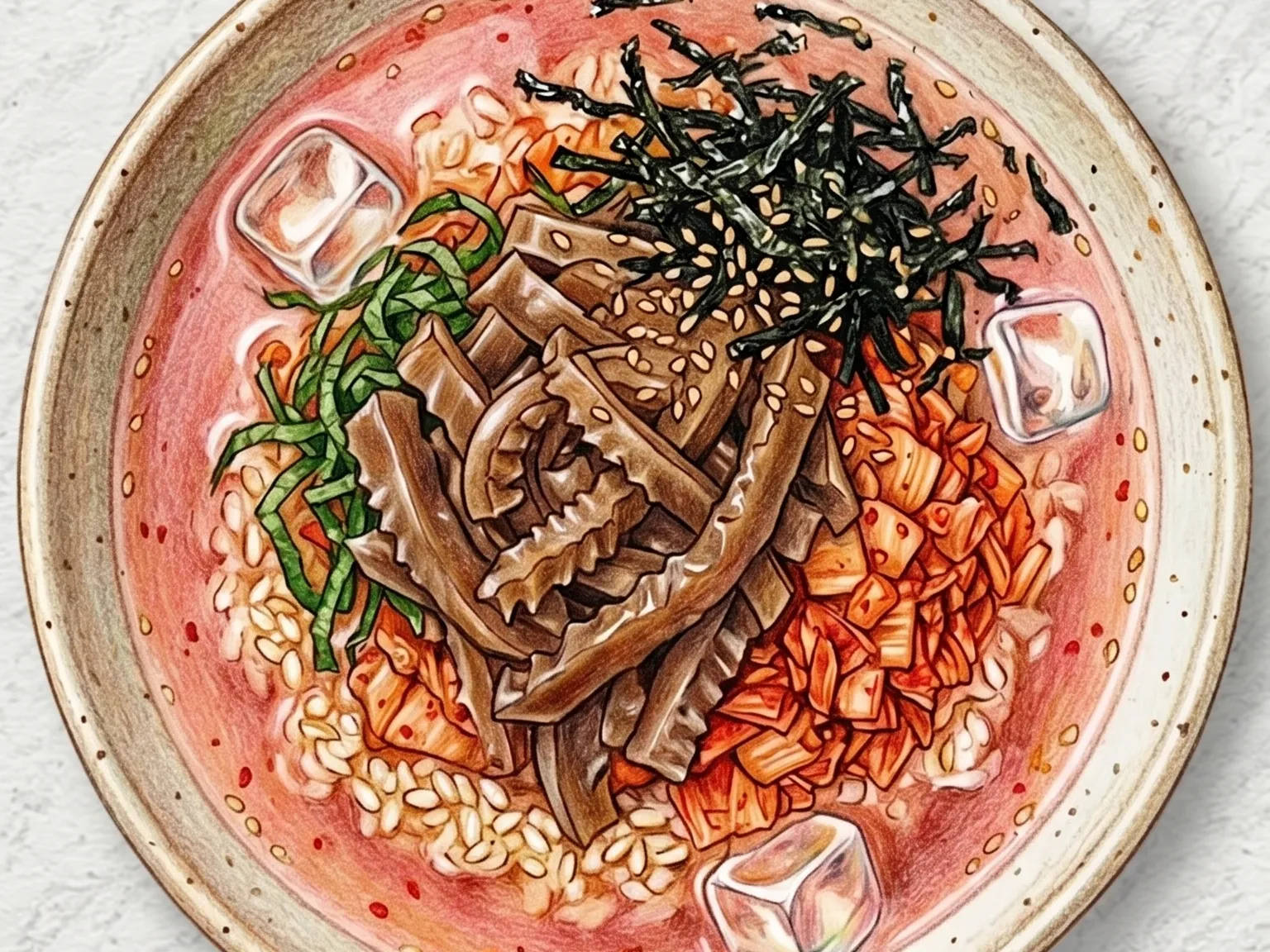
Korean Acorn Jelly Cold Broth Bowl

Dotori-muksabal is a chilled Korean acorn jelly broth bowl where thinly sliced acorn jelly sits in a cold, tangy-sweet seasoned broth. Acorn jelly carries a distinctly earthy, mildly astringent aftertaste and a firm, bouncy texture that becomes noticeably more pronounced once it has chilled thoroughly. The broth, a mixture of stock seasoned with soy sauce, vinegar, and sugar, must be cold before pouring over the jelly to keep that cool snap alive from the first bite to the last. Chopped kimchi adds fermented heat and a pungent sourness, while julienned cucumber contributes a clean crunch, and both ingredients cut through the jelly's neutral flavor with sharp contrasts that make the bowl far more lively than its simple appearance suggests. A spoonful of gochugaru-spiked seasoning ties the components together. The dish is notably low in calories and rich in dietary fiber, making it an appealing light meal on hot days.

🥗 Light & Healthy 🏠 Everyday
Prep 20min Cook 10min 2 servings
Dubu Guk Recipe (Dubu Jangguk, Plain Korean Tofu Soup)
Soups Easy

Dubu Guk Recipe (Dubu Jangguk, Plain Korean Tofu Soup)

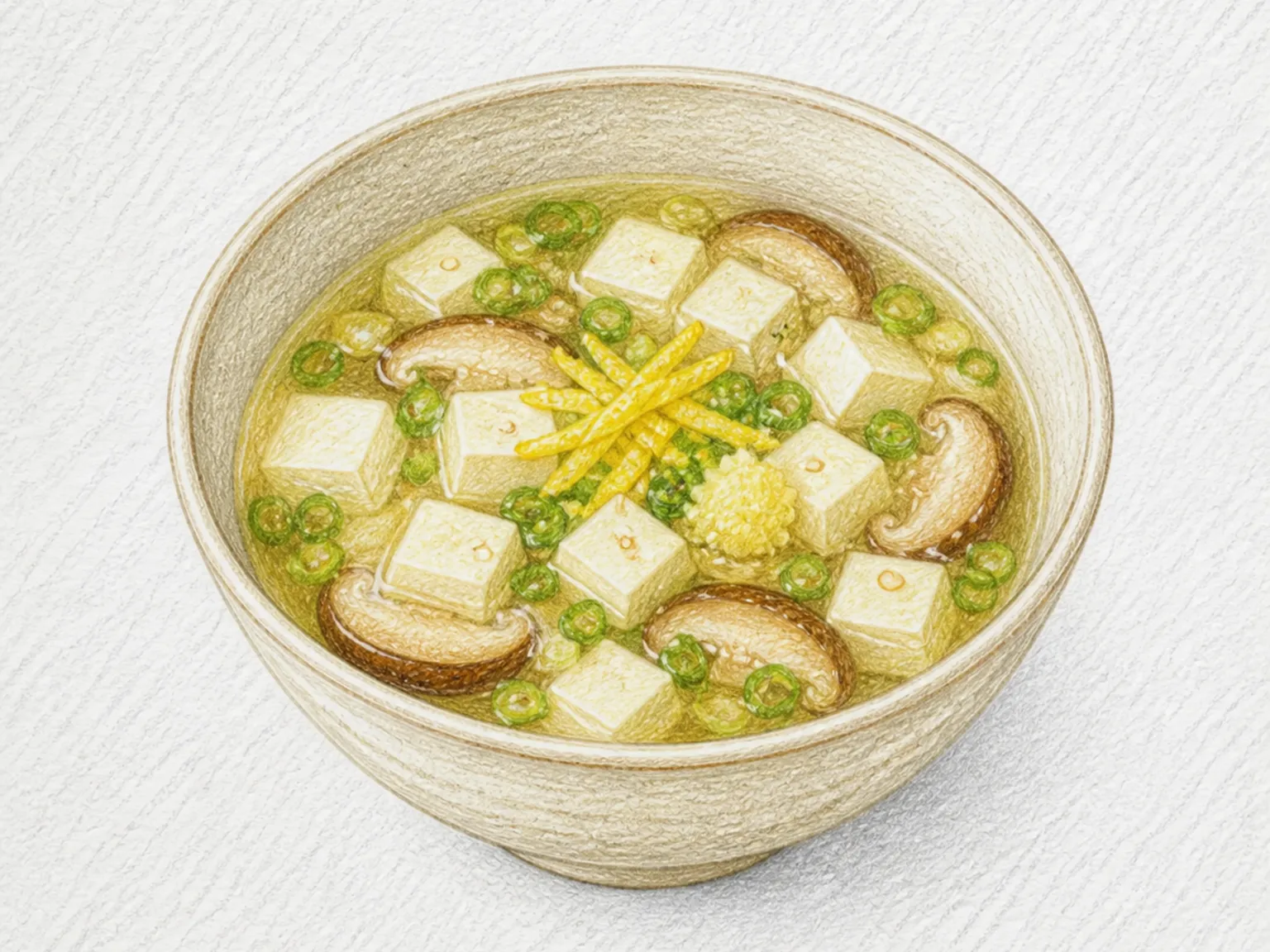
Dubu guk is the basic Korean clear tofu soup, also called dubu jangguk, made with tofu, radish, shiitake mushrooms, and soup soy sauce in a clean broth. Among the dubu-guk family, this is the plain home version, distinct from oyster gul-dubu-guk or herb chamnamul dubu-guk. The radish goes in first and simmers for seven minutes, releasing a mild sweetness that forms the foundation of the broth. Shiitake and garlic follow for another four minutes, adding guanylate-rich umami that layers onto the radish base. The result is a broth with real depth even though the seasoning remains simple. Tofu is added last so the cubes stay clean-edged and tender instead of breaking apart. This is the best fit when you want a light Korean tofu soup rather than a spicy sundubu-style stew.

🏠 Everyday 🥗 Light & Healthy
Prep 10min Cook 15min 4 servings
Dubu Kkaennip-guk (Tofu Perilla Leaf Soup)
Soups Easy

Dubu Kkaennip-guk (Tofu Perilla Leaf Soup)

Dubu-kkaennip-guk is a Korean tofu and perilla leaf soup in anchovy broth, finished with chiffonaded perilla leaves that release a bright, minty-herbal fragrance into the clear liquid. Zucchini and onion simmer first to build a vegetable-sweetened base, releasing their natural sugars into the anchovy stock. Large scoops of soft tofu - spooned rather than knife-cut, so the rough surfaces trap more broth - warm through over medium heat for five minutes. The perilla leaves must go in during the last thirty seconds before serving: any longer and they turn dark and lose the sharp aromatic freshness that defines the dish. Soup soy sauce and a light dusting of black pepper complete the seasoning, letting the clean anchovy umami and the herbal lift of the kkaennip share the stage without one overpowering the other. Cooking the zucchini fully soft is important - its gentle sweetness needs time to dissolve into the broth, and when the tofu and vegetables together hold the liquid, each spoonful carries varied texture.

🏠 Everyday 🥗 Light & Healthy
Prep 10min Cook 15min 2 servings