Noodles Recipes
171 recipes. Page 6 of 8
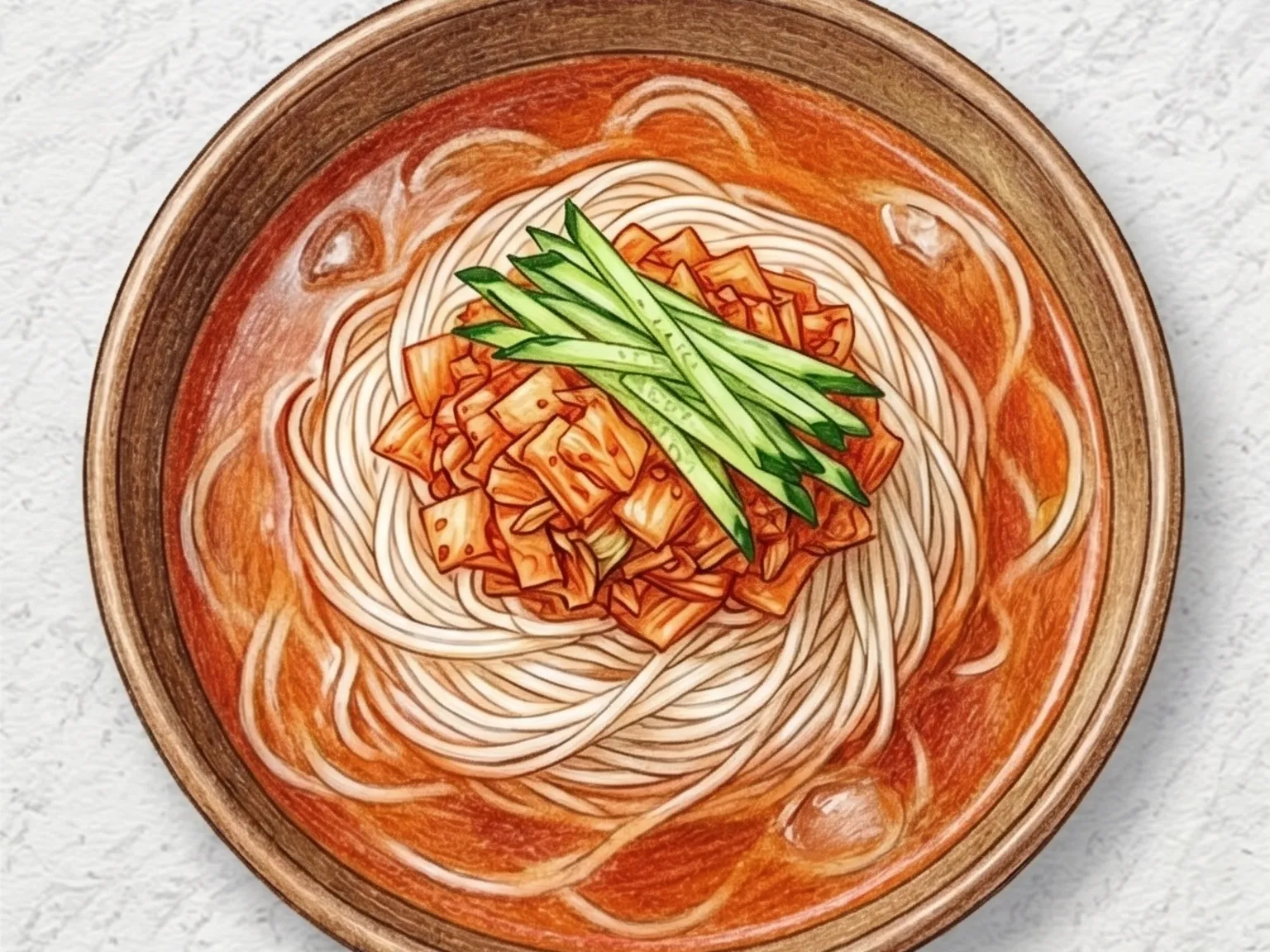
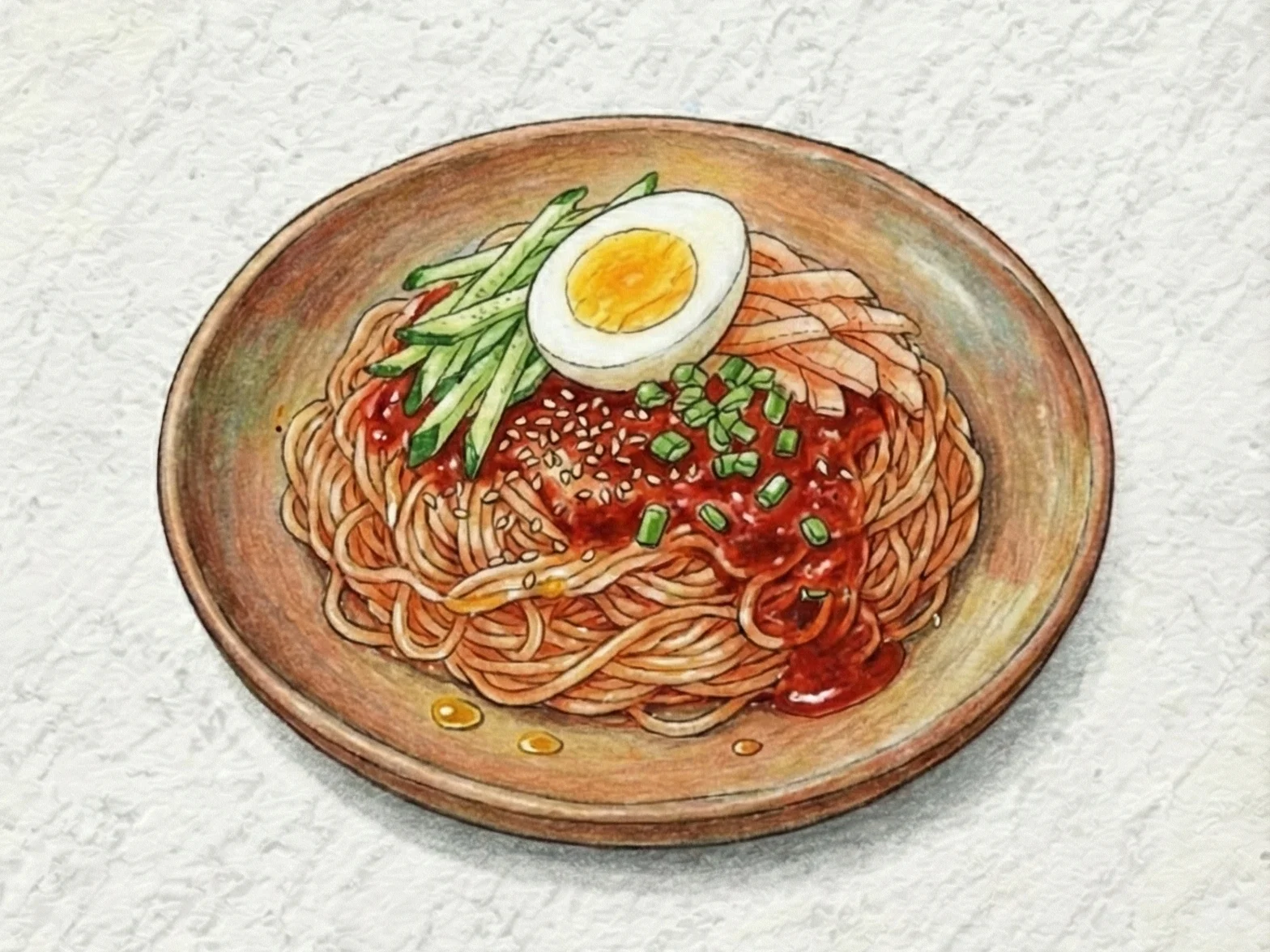
Korean noodle dishes range from chilled naengmyeon in summer to steaming bowls of kalguksu in winter. Thin somyeon, chewy jjolmyeon, and glass noodles (dangmyeon) each bring a different texture to the table. A simple bibim sauce transforms plain noodles into a flavor-packed meal in minutes.
Orecchiette with Broccoli Rabe
Orecchiette with broccoli rabe is a Southern Italian pasta from Puglia that pairs ear-shaped pasta with blanched broccoli rabe, garlic, anchovy, and dried chili in olive oil. Blanching the broccoli rabe for one to two minutes tames its bitterness, and cooking the pasta in the same water infuses it with the green's flavor. Garlic and anchovy fillets are warmed slowly in olive oil until the anchovy dissolves into a savory paste, providing salt and umami without needing additional seasoning. Dried chili flakes contribute a gentle background heat. Tossing the drained pasta and greens in the pan with a splash of pasta water emulsifies the oil into a light coating on every piece. Grated parmesan scattered on top adds a salty, nutty finish that balances the vegetal bitterness.
Thai Drunken Noodles
Pad kee mao, or drunken noodles, is a Thai stir-fried noodle dish where wide rice noodles are wok-tossed with chicken, garlic, fresh chili, and Thai basil over very high heat. The noodles are soaked briefly in lukewarm water until pliable but not soft. Garlic and chili go into the smoking-hot wok first to release their aroma, followed by sliced chicken thigh. Onion and bell pepper are added next and stir-fried quickly to keep them crisp. Fish sauce delivers briny umami while dark soy sauce darkens the noodles and adds a subtle sweetness. Thai basil is folded in only after the heat is turned off, so its anise-like fragrance stays intact rather than cooking away. Maintaining intense wok heat throughout is critical - too low and the noodles steam instead of sear.
Thai Soy Sauce Noodles (Wide Rice Noodles with Beef and Chinese Broccoli)
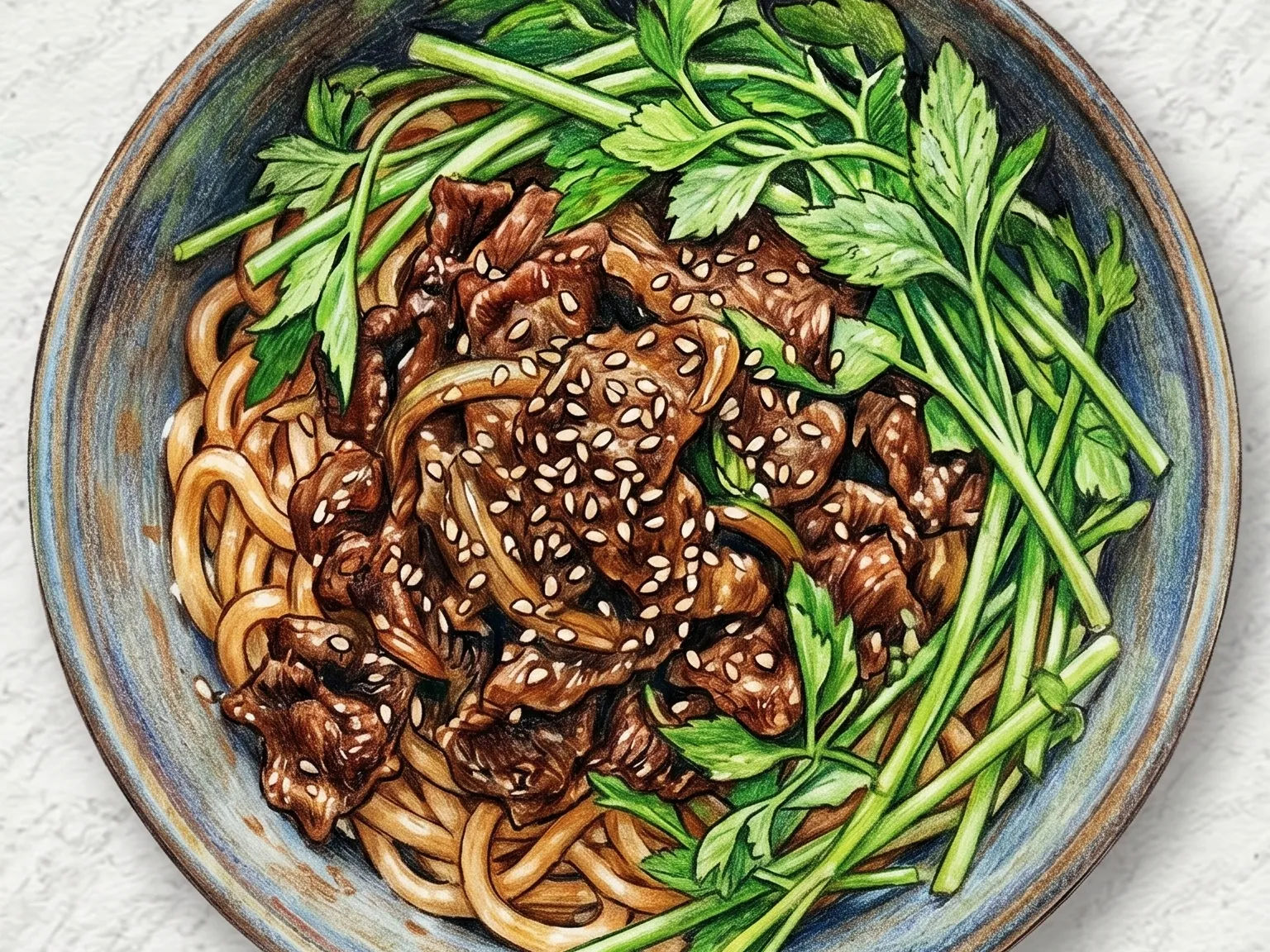
Pad see ew is a Thai stir-fried noodle dish built around wide rice noodles, beef, Chinese broccoli, and egg, all tossed in a sauce of soy sauce, oyster sauce, and dark sugar. The central technique is wok hei through extreme heat. Without a properly scorching pan, the sauce pools at the bottom rather than adhering to the noodles, and caramelization never happens. Beef goes into the hot pan first to develop a seared surface before anything else is added. Gai lan and cracked eggs follow, the eggs scrambled loose in the same pan, then the soaked noodles and the pre-mixed sauce go in together and the whole thing is tossed hard and fast. During those few seconds of high contact heat, the sauce binds to the noodle surface and develops a slightly charred, smoky-sweet aroma that is the defining character of the dish. The thick stems of Chinese broccoli keep a satisfying crunch and introduce a mild bitterness that cuts the sweetness of the sauce. Egg fragments distributed throughout the noodles add pockets of soft, creamy texture. The finished noodles are deeply stained, and every strand carries the sauce.
Pad Thai
Pad thai is Thailand's most widely recognized stir-fried noodle dish, centered on a sauce made from tamarind paste, fish sauce, and sugar that balances sweet, sour, and salty flavors in every bite. The proportion of these three ingredients is what determines the character of the final dish, and adjusting them even slightly shifts the balance noticeably. Dried rice noodles soak in lukewarm water for twenty minutes until they are pliable but still firm enough to hold up under high heat without becoming mushy. Firm tofu is pan-fried first until golden on all sides, establishing a nutty, textured base, then shrimp are added and pushed to the side as soon as they turn pink. The eggs are scrambled in the cleared center of the pan rather than mixed in with everything else, which allows them to set into thin, irregular sheets that distribute evenly through the noodles when tossed. Adding the soaked noodles and sauce over high heat and tossing quickly causes the noodles to absorb the sauce rapidly, developing a glossy, amber-toned coating. Bean sprouts stirred in at the very end keep their crunch, coarsely ground peanuts provide a roasted, brittle texture, and a squeeze of fresh lime just before eating introduces a bright acidity that sharpens the whole dish.
Korean Soy Udon with Scallion Salad
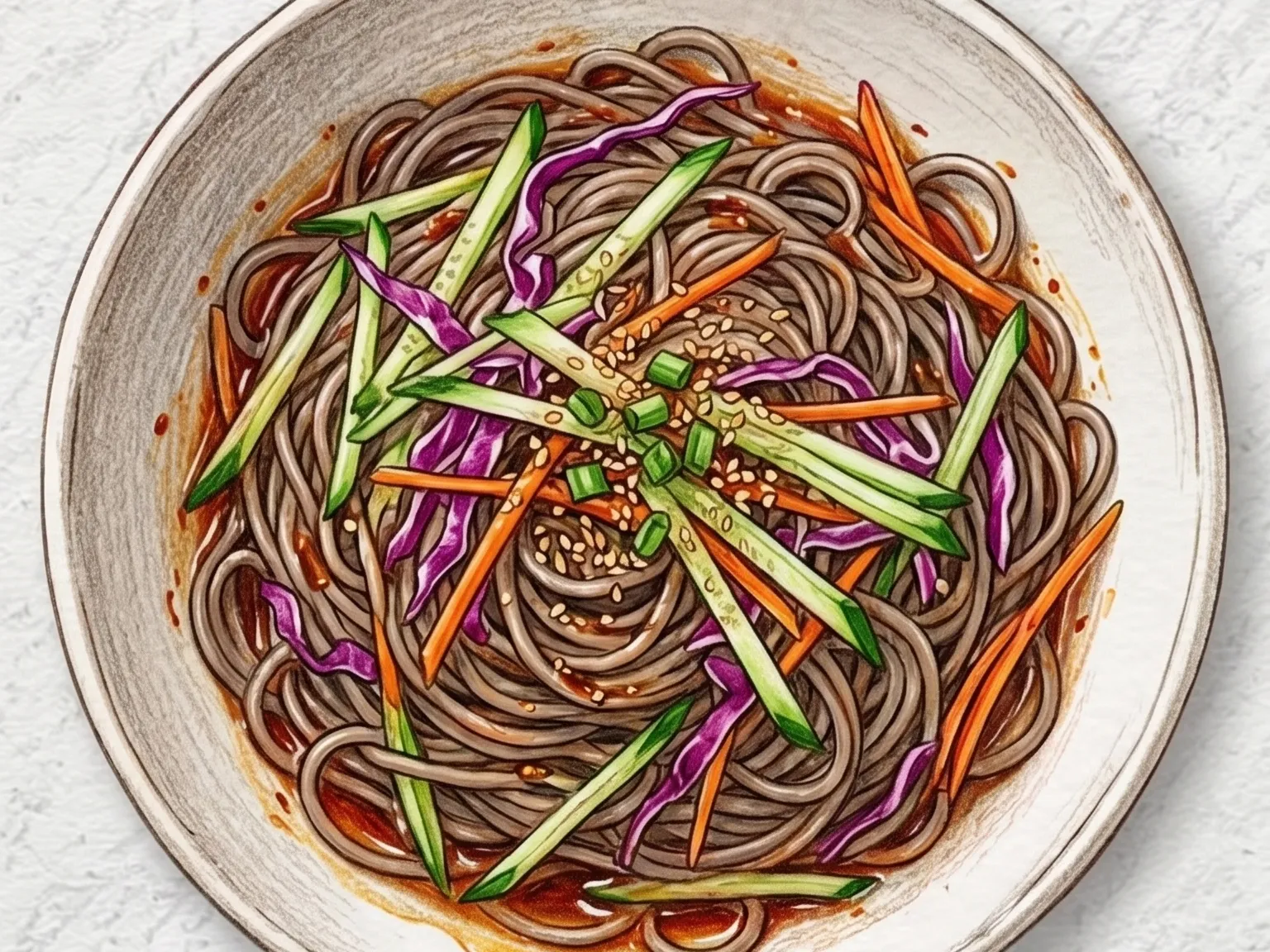
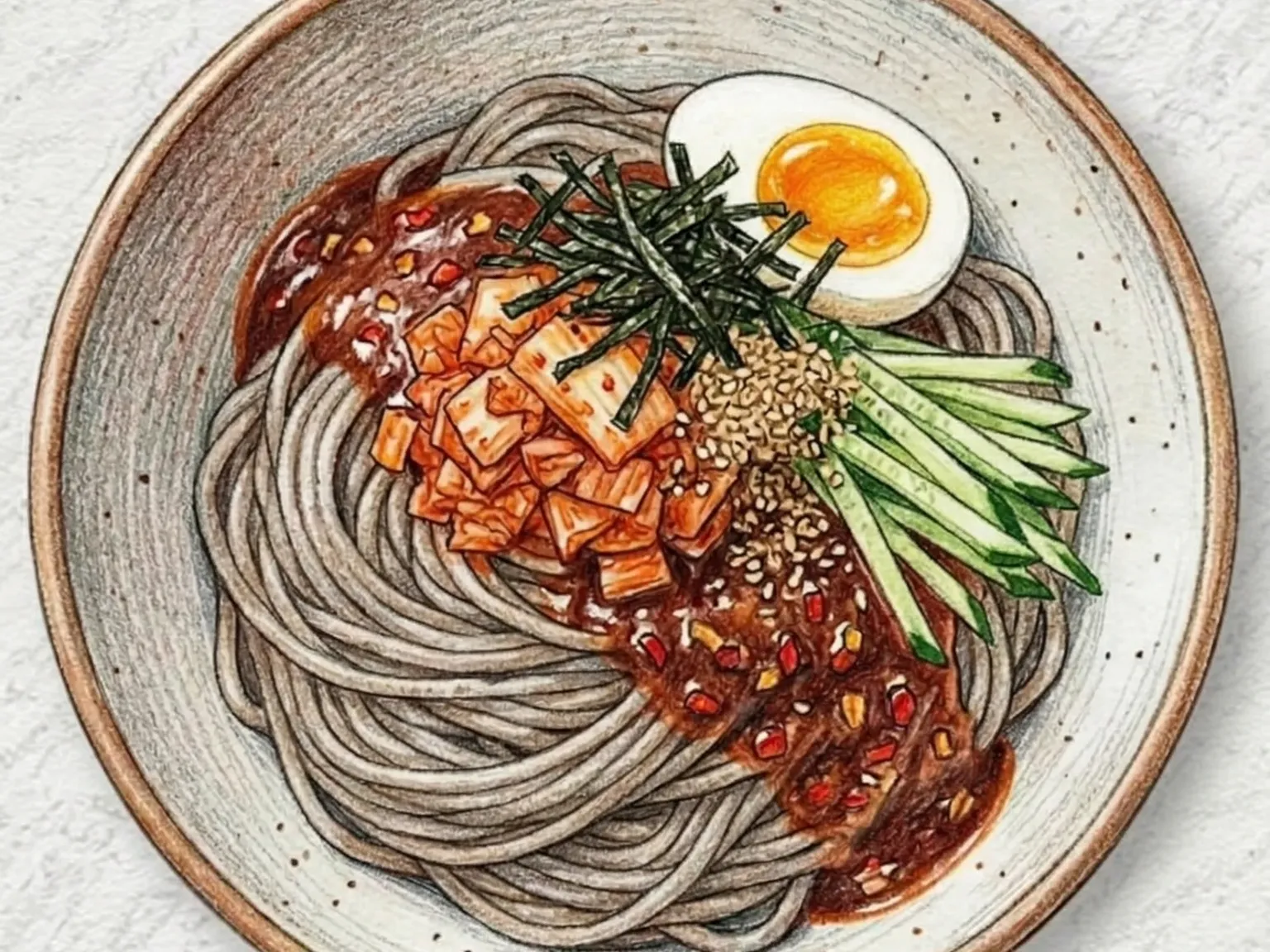
Pajeori ganjang bibim udon is a Korean mixed udon dish centered on crisp shredded scallion that has been soaked in cold water to tame its raw sharpness without sacrificing texture. Soaking for at least five minutes softens the aggressive bite while the strands retain their crunch, releasing a clean, fresh note with every forkful. A dressing of soy sauce, vinegar, sugar, chili flakes, and sesame oil builds a layered base that is simultaneously sweet, salty, tangy, and mildly spicy. The udon noodles are tossed first with half the dressing so every strand carries an even base coating before the drained scallion and remaining sauce are folded in. The pungent freshness of the scallion plays directly against the seasoned noodles, drawing out a depth of flavor that far exceeds what the short ingredient list would suggest. Keeping the noodles slightly underdone ensures a springy, bouncy bite throughout, and a scatter of whole sesame seeds adds a warm, nutty finish. Skipping the cold water soak leaves the raw sharpness of the scallion untempered, throwing the entire balance off, so that step should never be rushed.
Pancit Canton (Filipino Stir-Fried Egg Noodles with Chicken and Vegetables)
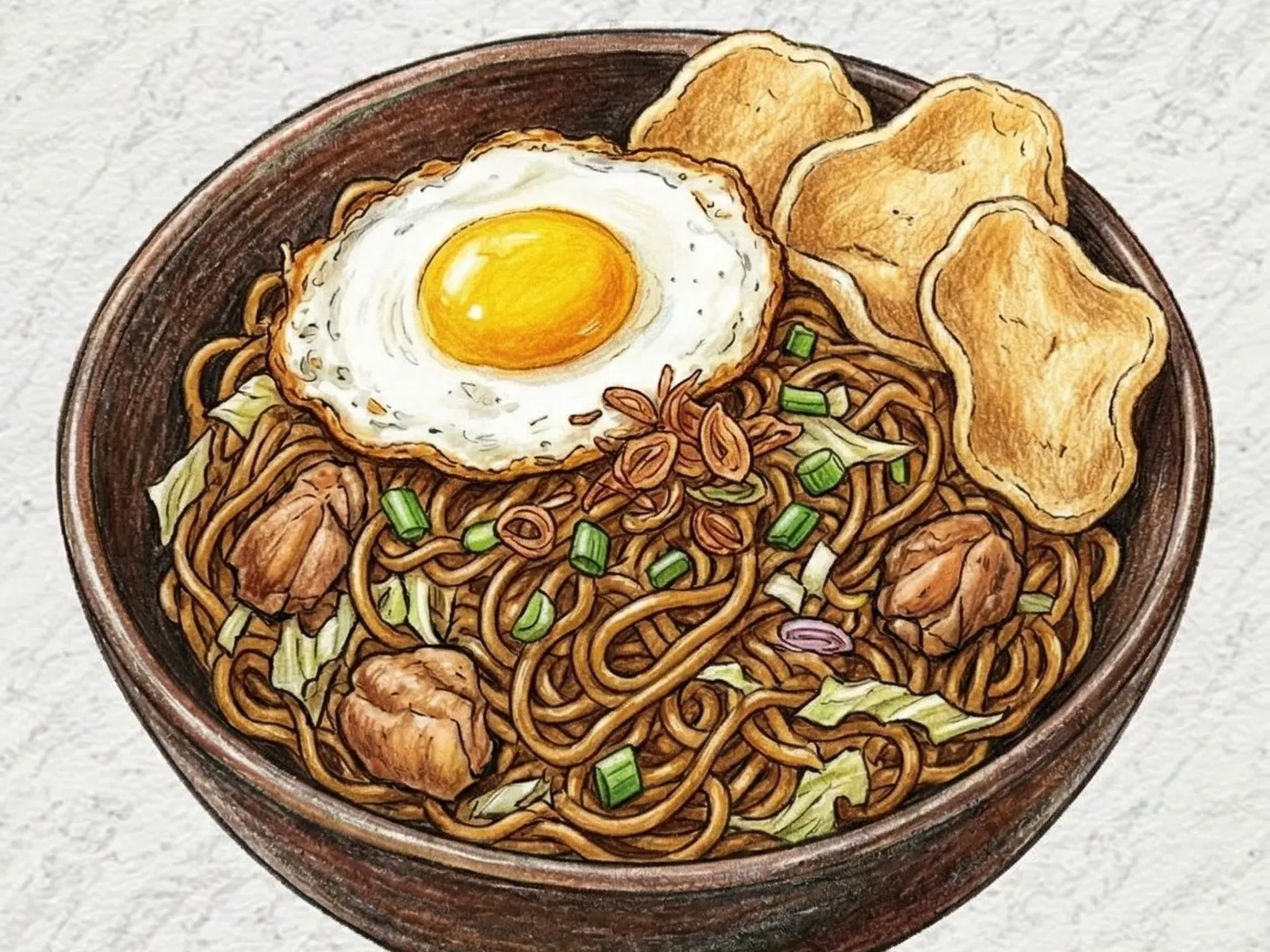
Pancit canton is a Filipino stir-fried egg noodle dish cooked with chicken, carrot, and cabbage in a soy sauce and oyster sauce base. The salty depth of soy sauce and the savory richness of oyster sauce permeate the noodles evenly, and a squeeze of fresh lemon at the end cuts through the oil to leave a clean, bright finish. The noodles are parboiled to roughly seventy percent doneness so they finish cooking in the wok while absorbing the sauce, retaining their springy texture rather than turning soft. Chicken thigh is stir-fried first to render its fat and release its juices into the pan, and that rendered fat then carries the carrot and cabbage through a quick, high-heat toss that preserves their crunch. Small additions of broth or water allow the noodles to absorb the sauce gradually, but too much liquid tips the dish toward soupy rather than stir-fried, so the volume must be controlled carefully. Lemon juice is added only after removing the pan from heat, because its volatile citrus aroma dissipates almost instantly on contact with a hot surface. In the Philippines, long noodles symbolize longevity and a full life, making pancit canton a fixture at birthdays and holiday celebrations.
Pancit Palabok (Filipino Rice Noodles with Annatto Shrimp Sauce)
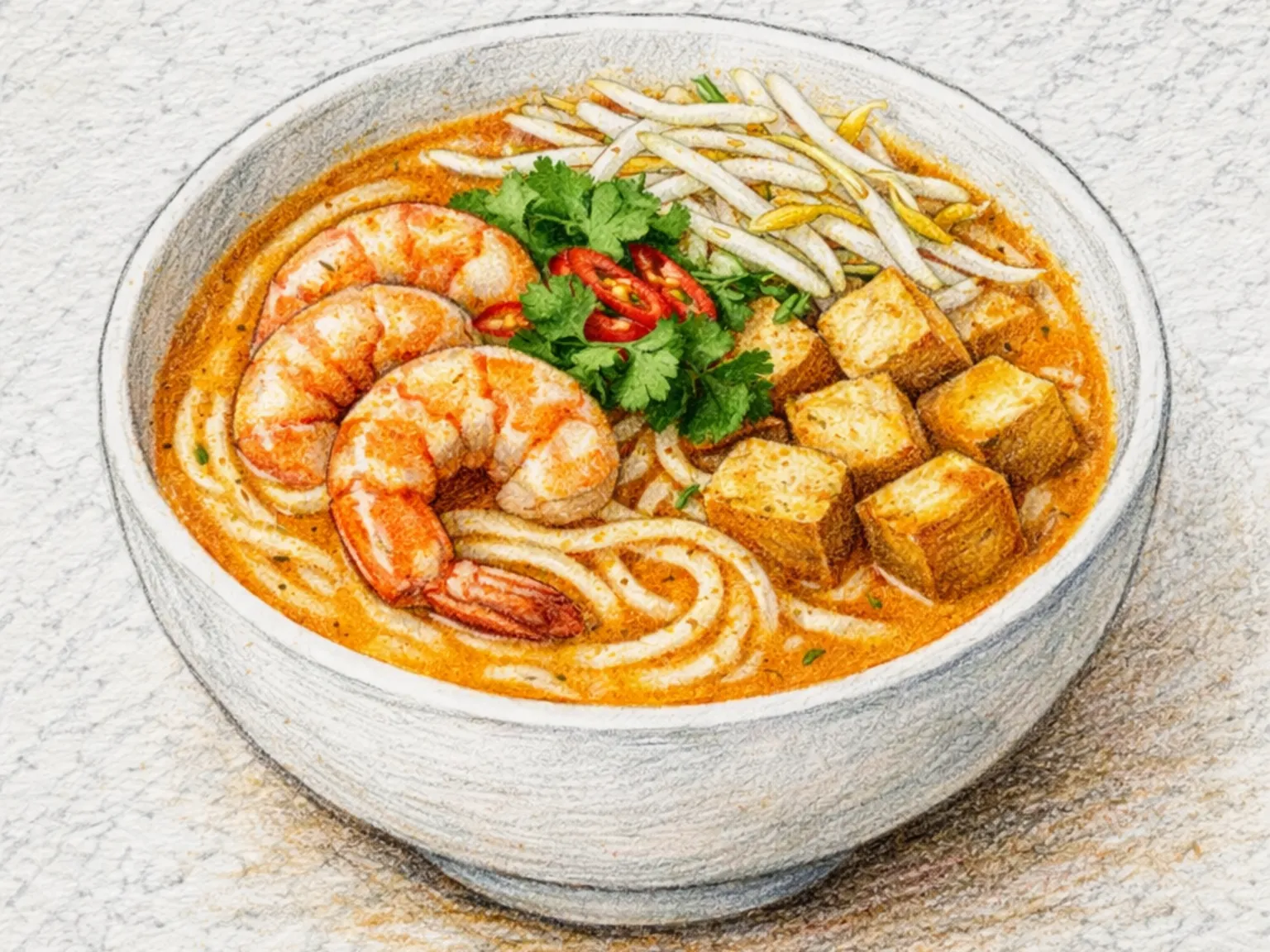
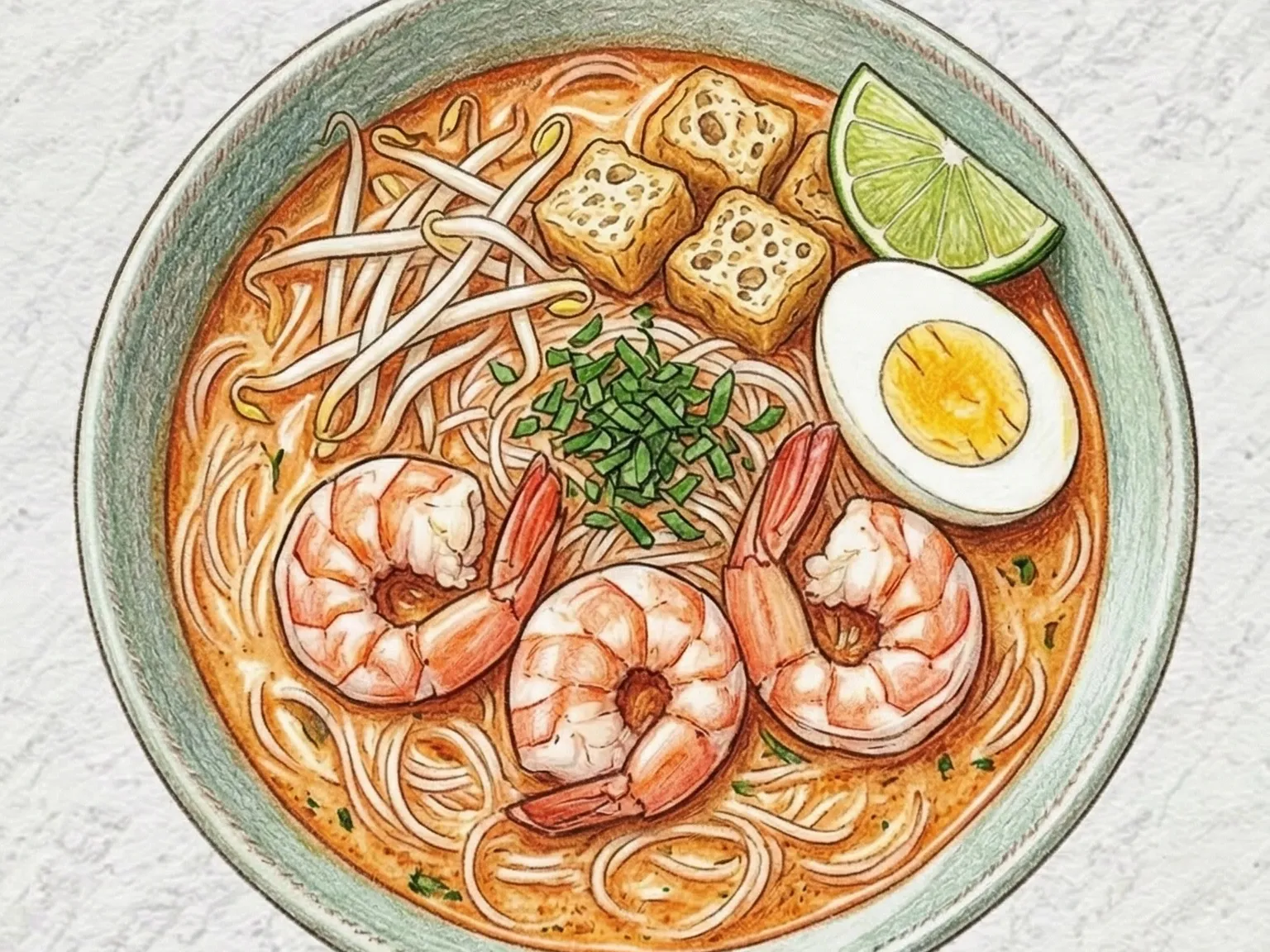
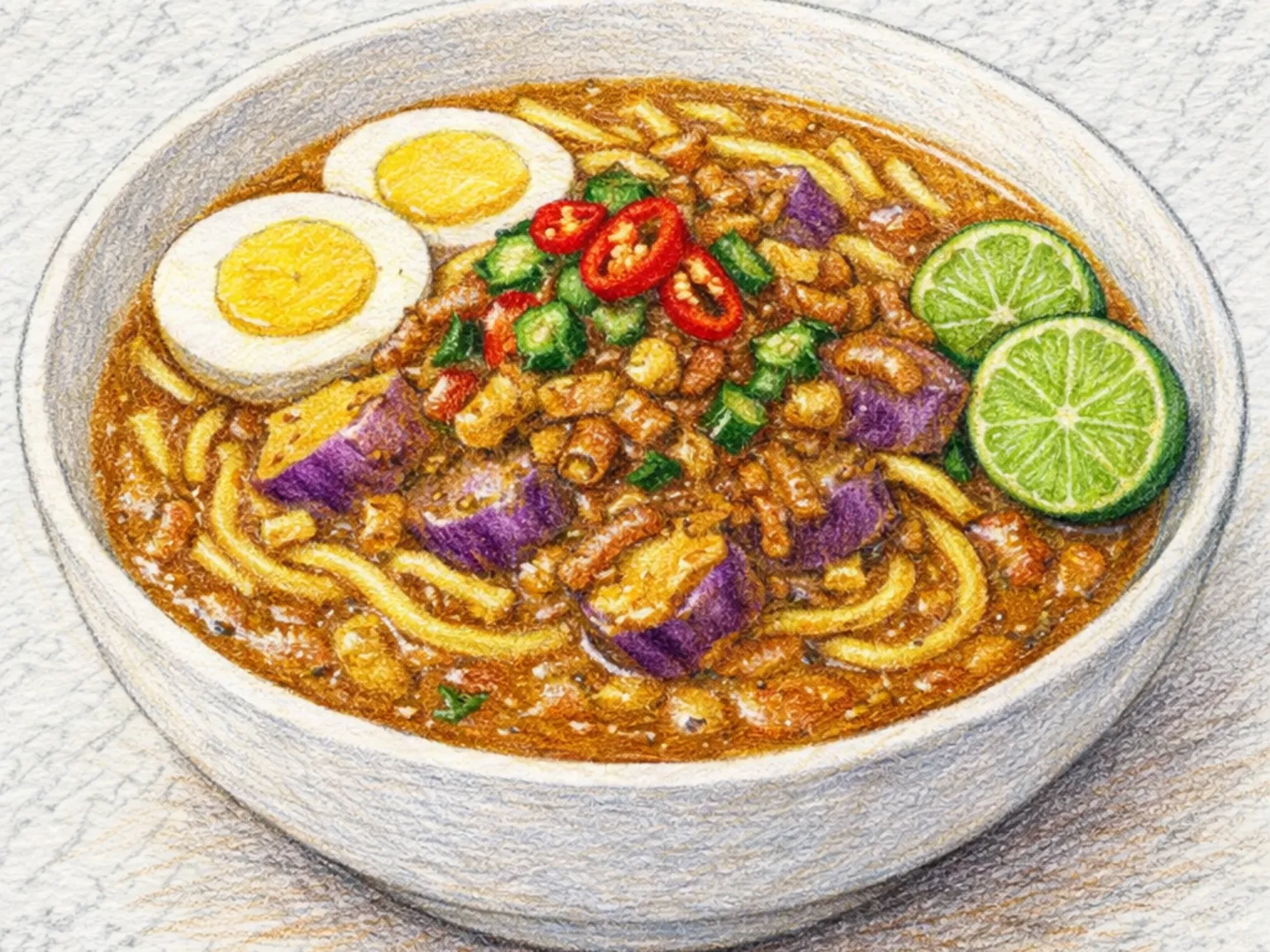
Pancit palabok is a Filipino celebratory noodle dish built on thin rice noodles blanketed in an orange-hued shrimp sauce. The sauce draws its color from annatto powder, which also contributes a faint earthy sweetness, and its savory backbone from shrimp-shell stock simmered with fish sauce. Boiled egg halves and a squeeze of lime are the traditional garnish, cutting through the richness with acidity. Fried garlic, sliced scallions, and crushed chicharron scattered on top add texture contrast and bring multiple layers of flavor to a single serving. At Filipino birthday parties and holiday gatherings, palabok is presented on a large platter and shared family-style, making it one of the most recognizable celebration dishes in the cuisine.
Pasta al Limone (Italian Lemon Butter Cream Pasta)
Pasta al limone is a pasta from southern Italy that relies entirely on lemon zest, lemon juice, butter, cream, and Parmesan for its sauce, with no tomato and no meat to complicate the flavor. The citrus oils drawn from the zest dissolve into warm butter and spread their aroma evenly through the fat before any liquid is added, which is what gives the finished sauce its rounded, lingering lemon character rather than a sharp acidic bite. A ladleful of starchy pasta water is then added to emulsify everything into a glossy, clingy coating that holds to each strand of linguine without pooling at the bottom of the plate. Cooking the sauce over low heat throughout is critical: cream added to high heat separates and loses its silky texture. Linguine cooked al dente provides enough resistance to stand up to the light sauce without the combination feeling heavy or cloying. Total preparation from filling a pot with water to plating takes roughly twenty minutes, making it a realistic weeknight option despite its refined result.
Pasta alla Genovese (Neapolitan Slow-Braised Onion and Beef Ragu)
Pasta alla Genovese is a Neapolitan slow-cooked ragu that uses a large volume of onions braised together with beef chuck for at least two hours over low heat. No tomato is involved at any stage; the sauce draws all its sweetness from the onions, which gradually dissolve and caramelize into a thick, deeply savory base, while white wine and the rendered beef fat add richness and acidity. Once the onions have nearly melted into the sauce, the beef is shredded and folded back in, giving the finished ragu a dense, almost jam-like consistency with strands of meat throughout. Despite its name, the dish has no connection to Genoa or Ligurian basil pesto; it is a distinctly Neapolitan preparation, and the name is thought to trace back to Genoese cooks or merchants who settled in Naples. Ziti is the traditional pasta shape, served with a generous dusting of Parmigiano-Reggiano.
Pasta alla Gricia (Roman Guanciale Pecorino Black Pepper Pasta)
Pasta alla Gricia is one of Rome's four classic pastas, made with only guanciale, Pecorino Romano, and black pepper. The cured pork jowl is rendered slowly until crisp, and its fat becomes the foundation of the sauce. Cooked pasta and a splash of starchy pasta water are tossed with finely grated Pecorino to form a creamy emulsion without any cream. It is considered the ancestor of both carbonara and amatriciana, predating the introduction of tomato and egg to those dishes.
Pasta alla Norma (Sicilian Fried Eggplant Tomato Pasta)
Pasta alla Norma originates from Catania in Sicily and combines fried eggplant cubes with a simple tomato passata sauce. Salting the eggplant beforehand draws out moisture and bitterness, resulting in firmer pieces that absorb less oil during cooking. Garlic provides aromatic depth, while fresh basil added off-heat preserves its fragrance. The dish is named after Vincenzo Bellini's opera Norma, a tribute to its status as a Sicilian culinary masterpiece.
Pasta Bolognese
Pasta Bolognese is a slow-simmered meat ragu from Bologna in Emilia-Romagna, built on a soffritto of onion, carrot, and celery cooked down with a mixture of ground beef and ground pork. Browning the meat properly in a hot pan before any liquid is added creates a Maillard crust that contributes a depth of flavor that no amount of simmering can replicate. Red wine deglazes the pan, lifting every bit of browned fond from the bottom. Whole milk is then stirred in to soften the acidity and tenderize the proteins, which is the detail that separates a true Bolognese from a generic meat sauce. The ragu requires at least one hour of low, uncovered simmering for the fat to separate, the liquid to reduce, and the meat to break down into a cohesive sauce. Tagliatelle is the canonical pairing in the region, with the wide, egg-enriched ribbons catching the chunky sauce in every fold. Freshly grated Parmigiano-Reggiano finishes the dish. Cooking the tomato paste directly in the pan after the soffritto for two minutes caramelizes its natural sugars and removes raw bitterness before any liquid goes in.
Pasta e Ceci (Italian Chickpea Stew Pasta)
Pasta e ceci is an Italian pantry staple that cooks small pasta directly in a chickpea-enriched broth. Half the chickpeas are mashed before simmering, releasing starch that naturally thickens the liquid into a stew-like consistency. A base of olive oil, garlic, rosemary, and tomato paste provides aromatic depth without overwhelming the mild chickpea flavor. The dish cooks in a single pot and is substantial enough to serve as a complete vegetarian meal.
Pasta Primavera
Pasta primavera is a vegetable-forward Italian pasta that stir-fries broccoli, zucchini, bell pepper, and green peas in olive oil with garlic before tossing with spaghetti. Cutting each vegetable to a similar size and adding them in stages preserves distinct textures, while a splash of pasta water emulsifies the oil into a light, glossy coating that clings to every strand without the need for cream or a heavy sauce. Parmesan is folded in off the heat to prevent clumping, melting smoothly into the dish. The result is a bright, clean pasta that lets the natural sweetness and fragrance of the vegetables take center stage. Swapping in whatever vegetables are at peak freshness is part of how this dish works, making it as adaptable as it is straightforward to prepare.
Pasta Puttanesca (Neapolitan Anchovy Olive Caper Tomato Sauce)
Pasta puttanesca is a Neapolitan pasta sauce built from anchovies melted into olive oil, crushed whole tomatoes, black olives, capers, and peperoncino. The anchovies dissolve completely during cooking, leaving behind a deep umami foundation rather than a fishy taste. Olives and capers provide enough salt that additional seasoning is rarely needed. The entire sauce comes together in under twenty minutes using shelf-stable pantry ingredients.
Korean Red Bean Noodle Soup
Pat kalguksu is a traditional Korean noodle dish where hand-cut wheat noodles are served in a thick, velvety broth made from pureed and strained red beans. The beans go through two rounds of boiling - the first batch of water is discarded entirely to strip away the astringent compounds that give red beans their initial edge, and the second boil cooks them until completely soft. After blending and straining, the smooth puree is returned to the pot with glutinous rice flour stirred in to thicken the base to the consistency needed to hold the noodles without turning stodgy. Salt and sugar are adjusted until the broth hits a balance of nuttiness and gentle sweetness that neither overwhelms nor disappears. Cooked chestnuts and pine nuts are scattered on top as garnish, contributing a rich, oily nuttiness that deepens and complements the earthy flavor of the red bean broth. This dish is most closely associated with winter eating in Korea, and unlike sweet red bean porridge, the addition of noodles turns it into a properly filling meal.
Penne alla Vodka
Penne alla vodka combines tomato puree, heavy cream, and a splash of vodka into a smooth, coral-colored sauce. The vodka helps release flavor compounds in the tomato that are not soluble in water or fat alone, then cooks off to leave only a subtle warmth. Butter-softened onions and a pinch of chili flakes round out the base before cream is stirred in on low heat. The tubular shape of penne catches the thick sauce inside each piece.
Korean Perilla Seed Kalguksu
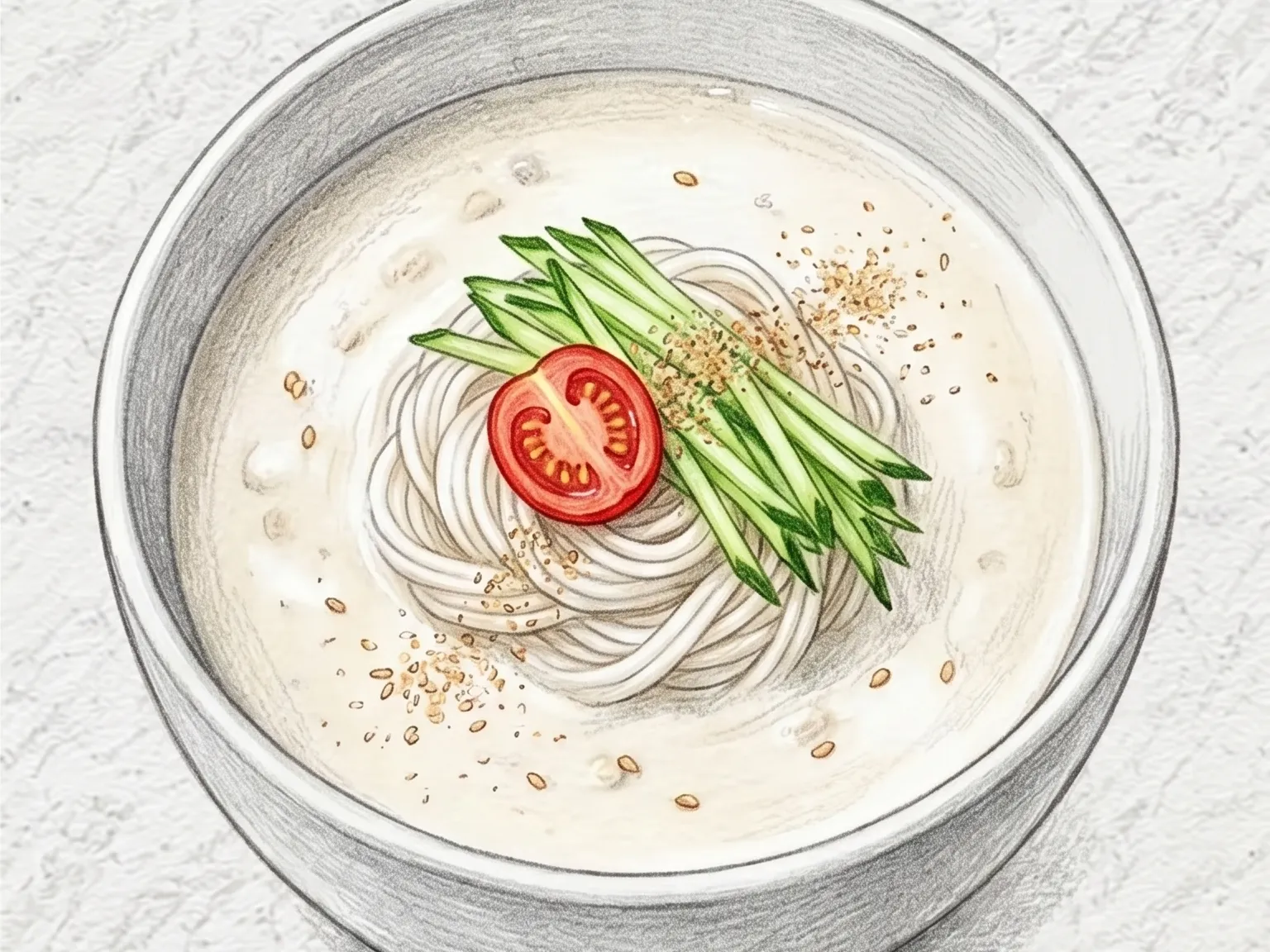
Perilla kalguksu is a Korean noodle soup where ground perilla seeds give the broth a distinctly nutty, creamy quality. Potatoes are simmered first to release starch, naturally thickening the liquid before the noodles go in. Onion and garlic add mild sweetness, and soup soy sauce seasons the bowl without darkening the color. The perilla powder is stirred in near the end of cooking to preserve its fragrance.
Korean Instant Ramen (Spicy Chewy Noodles in Five Minutes)
Ramyeon is Korea's iconic instant noodle dish, ready in under five minutes by boiling chewy wheat noodles with seasoning packets in water. Common additions include egg, scallion, kimchi, sliced rice cakes, and cheese, each customizing the bowl to personal taste. Cooking the noodles one minute less than the package suggests lets residual heat finish them at the right chewiness. Using slightly less water than directed concentrates the broth into a more intense flavor.
Rigatoni all'Amatriciana (Roman Guanciale Tomato Spicy Pasta)
Rigatoni all'Amatriciana is a Roman pasta where crisp-rendered guanciale fat forms the base of a tomato sauce enriched with peperoncino heat. White wine deglazes the pan before crushed whole tomatoes are added and simmered for fifteen minutes to thicken. The ridged surface of rigatoni traps the sauce, ensuring each bite carries the full flavor of cured pork and tomato. A generous grating of Pecorino Romano finishes the dish with sharp, salty contrast.
Korean Shrimp Tomato Knife-Cut Noodles
Saeu tomato kalguksu is a Korean fusion noodle soup that simmers fresh knife-cut noodles and shrimp in a tomato-based broth. Blanched and diced tomatoes are cooked down with garlic and onion in olive oil to build a naturally sweet, acidic base before water is added. Shrimp go in near the end of cooking to stay plump and springy. A light dusting of Parmesan over the finished bowl bridges Korean and Mediterranean flavors.
Shoyu Butter Corn Ramen
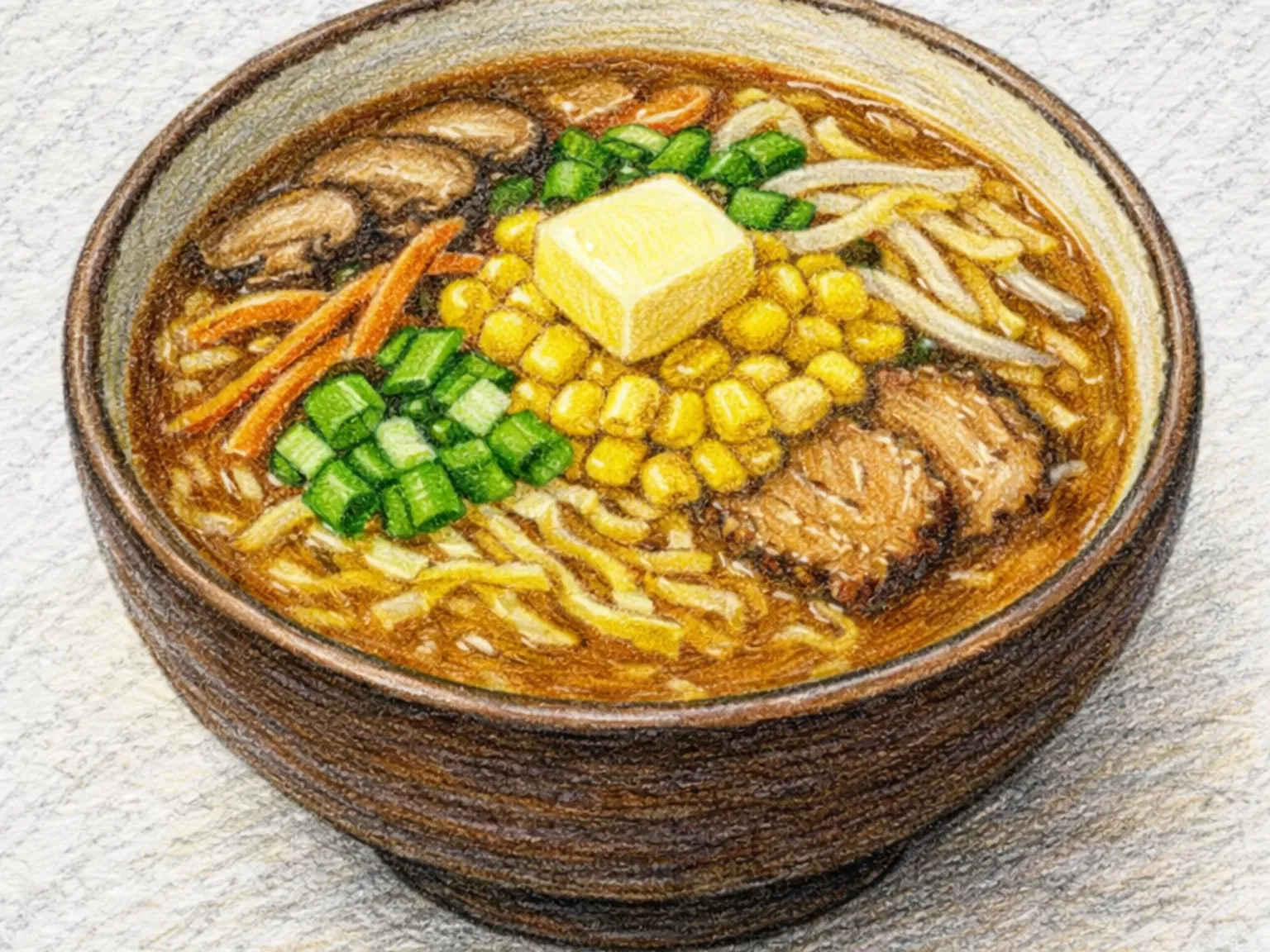
Shoyu butter corn ramen is a Japanese noodle soup built on chicken broth seasoned with soy sauce and mirin. The broth simmers for ten minutes to marry the salty-sweet flavors before being ladled over separately boiled ramen noodles. A pat of butter placed on top melts slowly into the hot liquid, spreading richness across the bowl. Sweet corn kernels, crisp bean sprouts, nori, and sliced scallion complete the toppings.
Singapore Rice Noodles (Curry-Spiced Stir-Fried Vermicelli with Shrimp)
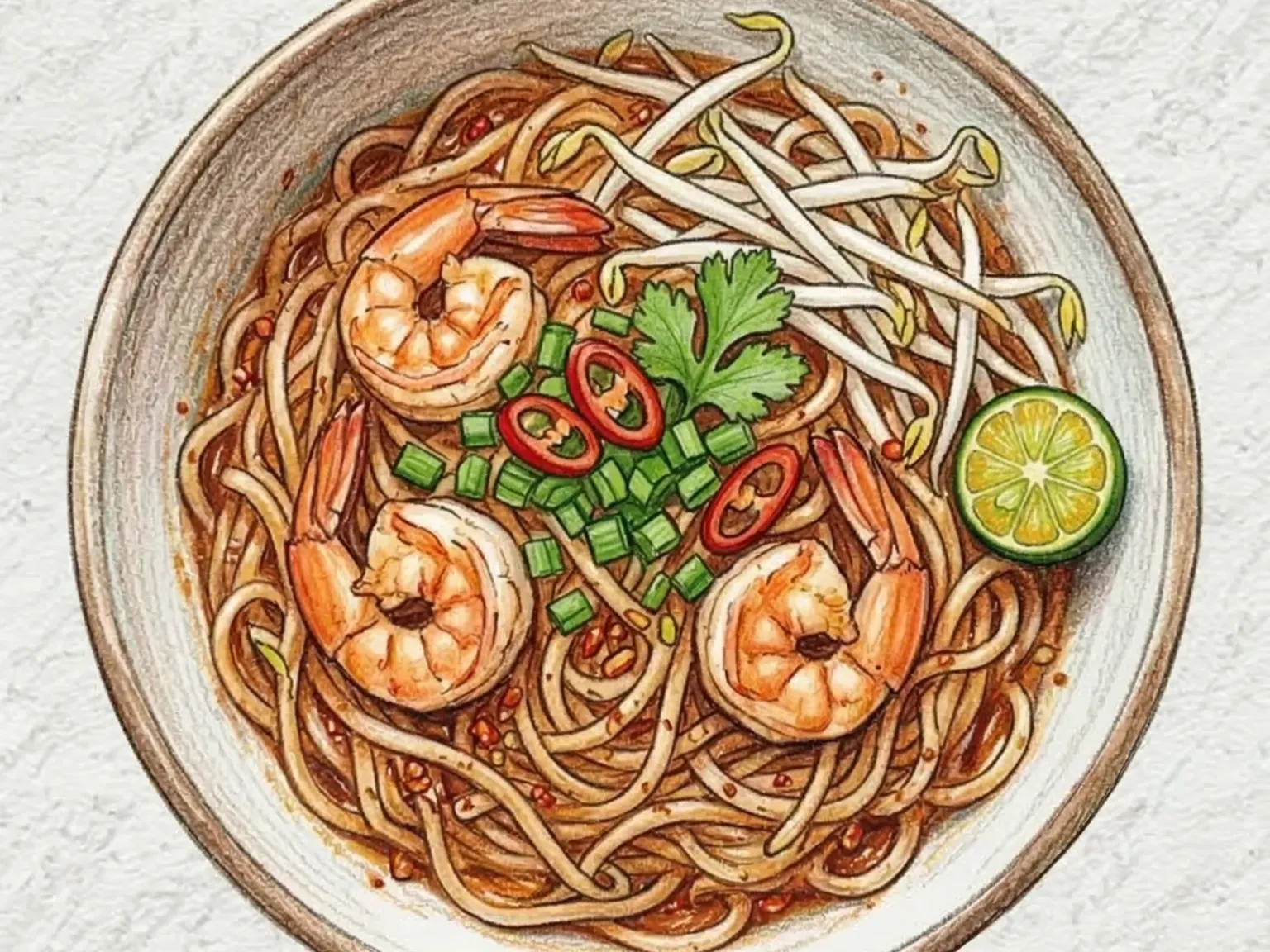
Singapore rice noodles are a Cantonese-style stir-fry of thin rice vermicelli tossed with curry powder, shrimp, and mixed vegetables over high heat. The curry powder is bloomed in hot oil at the edge of the wok to unlock its full aroma before being mixed into the noodles. Soy sauce adds seasoning depth, and bean sprouts go in during the last thirty seconds to keep their crunch. Soaking the vermicelli for only eight minutes prevents the noodles from breaking apart during stir-frying.
Korean Dried Radish Greens Doenjang Kalguksu
This noodle soup features dried radish greens and soybean paste in a base of anchovy and kelp stock. The fermented soybean paste provides a savory foundation while the radish greens add an earthy bitterness. Adding onion and zucchini during the simmering process introduces a natural sweetness that balances the saltiness of the paste. A spoonful of perilla seed powder at the end gives the broth a toasted, nutty finish. Fresh kalguksu noodles thicken the soup as they cook, taking on a chewy yet soft texture. To ensure a clean taste and better texture, the radish greens are boiled, rinsed in cold water, and squeezed before being added to the pot. Toasting the dried anchovies in the pot before adding water removes any fishy scents from the stock. Since different types of soybean paste vary in saltiness, it helps to add the paste in small increments while tasting. Mixing in a small amount of cheonggukjang provides a stronger fermented character to the finished soup.
About Noodles
This collection features traditional Korean noodle recipes alongside Asian-fusion takes, covering both broth-based and tossed preparations.