Charim

2686 Korean & World Recipes

2686+ Korean recipes, clean and organized. Ingredients to instructions, all at a glance.

Recipes with green onion

24 recipes

Buy green onion
Korean Kimchi Pork Stir-fry
Stir-fryMedium

Korean Kimchi Pork Stir-fry

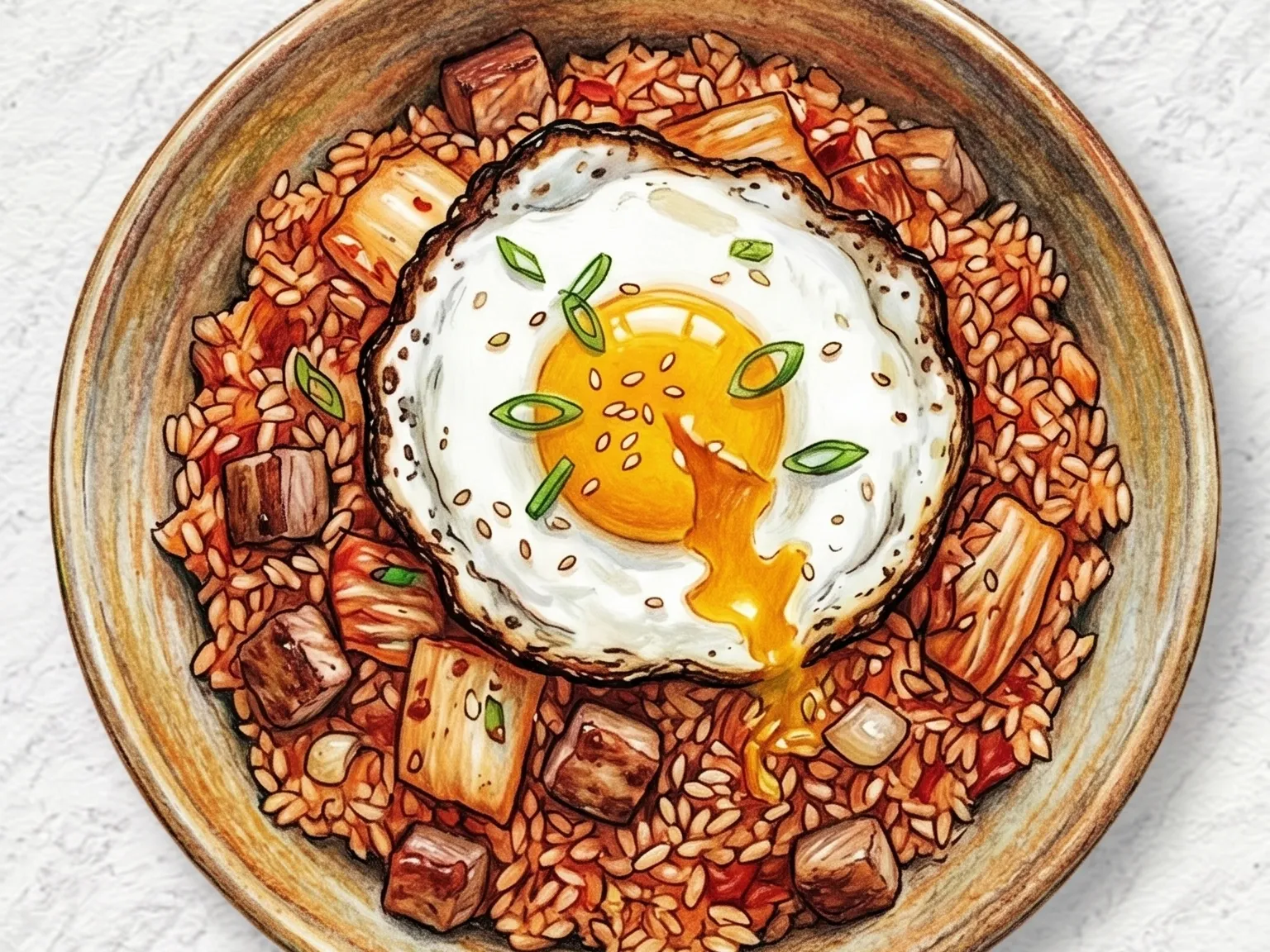
Kimchi jeyuk bokkeum is a Korean stir-fry of pork shoulder seasoned with gochujang, gochugaru, and soy sauce, then cooked over high heat together with well-fermented aged kimchi. The kimchi's deep sourness from lactic acid fermentation cuts through the pork fat and tempers its richness while simultaneously amplifying the chili heat of the paste, making the overall flavor more intense than either ingredient achieves alone. Searing the pork first against a dry hot pan builds caramelized edges that add depth to the final dish, and adding the kimchi and onion afterward lets the combined liquid reduce into a concentrated glaze that coats everything in the pan. The more aged the kimchi, the more it functions as both seasoning and acid, which means less soy sauce is needed without losing complexity. Scallion and sesame oil finish the dish cleanly, and wrapping portions in fresh lettuce leaves gives the heat somewhere to go, softening each bite considerably.

🏠 Everyday🌙 Late Night
Prep 18minCook 15min4 servings
Gul-dubu-guk (Oyster Soft Tofu Kelp Soup)
SoupsEasy

Gul-dubu-guk (Oyster Soft Tofu Kelp Soup)

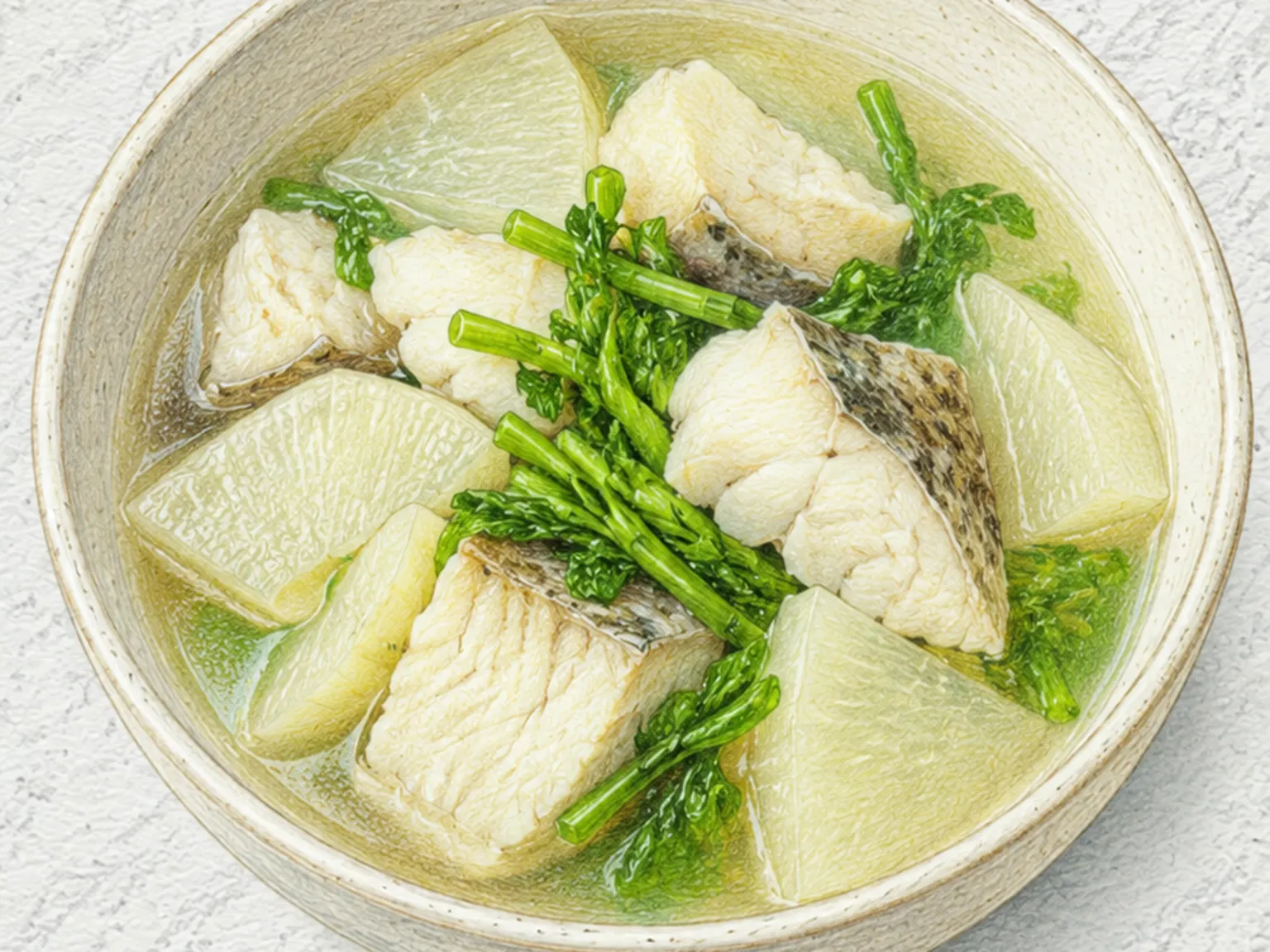
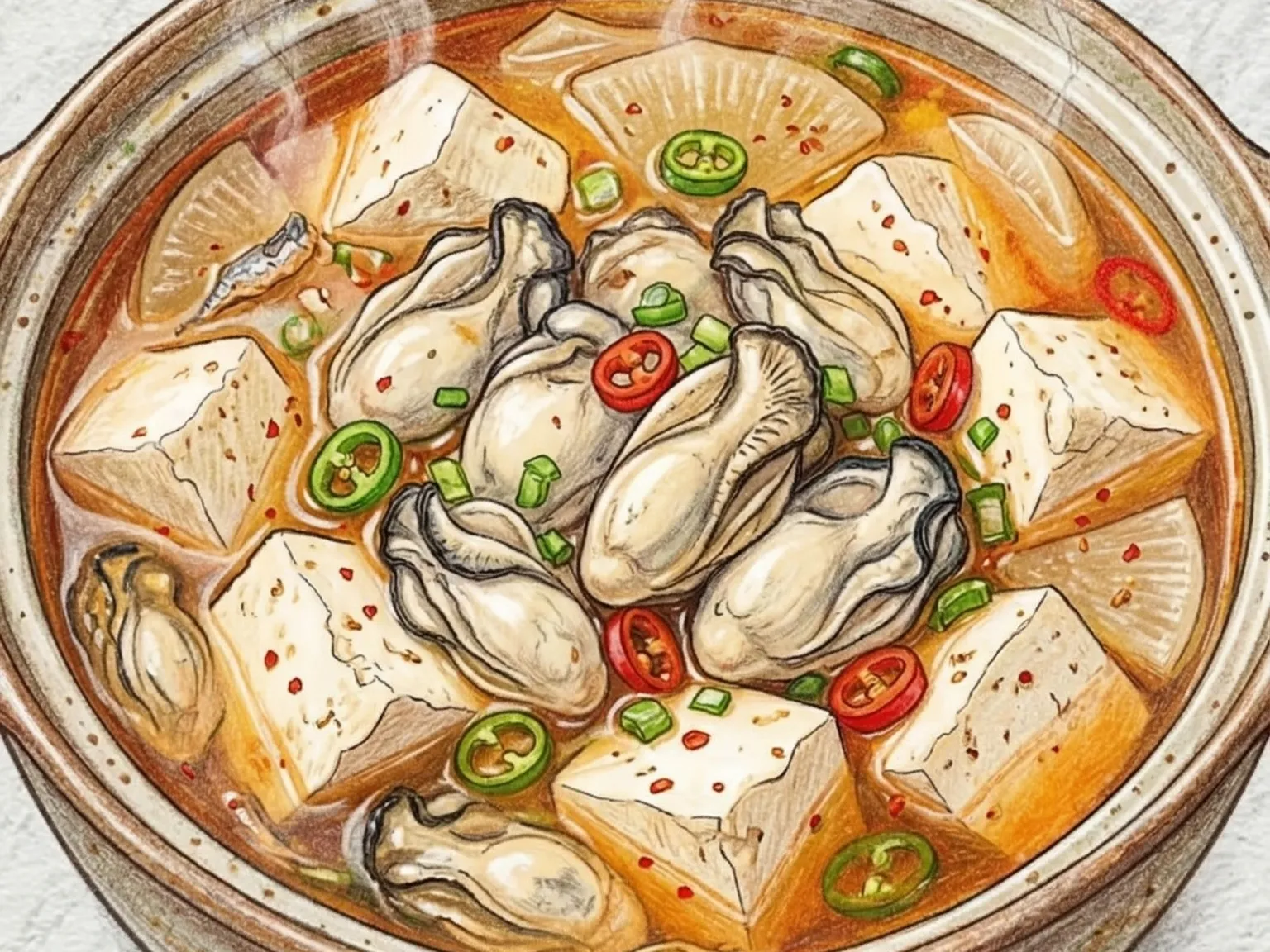
Gul-dubu-guk is a winter Korean soup that pairs plump seasonal oysters with soft tofu in a clear kelp-based broth. Timing the oysters precisely is the central technique of the dish: they go in just before the broth reaches a full boil, and even a minute too long on the heat turns them tough and grainy. Large-cut tofu blocks absorb the shellfish-infused liquid as they simmer, carrying the briny depth of the oysters into every bite of curd. Thin radish slices added from the start release a gentle, natural sweetness that rounds out the broth without masking the oceanic character of the main ingredients. Seasoning stays restrained, only soup soy sauce and garlic, because heavy additions would overwhelm the delicate salinity that the oysters themselves contribute. A scattering of sliced green onion at the end adds a bright aromatic finish, and along the southern coast where oysters are harvested fresh through the cold months, this soup is considered a staple of the winter table.

🏠 Everyday
Prep 15minCook 15min3 servings
Korean Oyster Kimchi Stew
StewsMedium

Korean Oyster Kimchi Stew

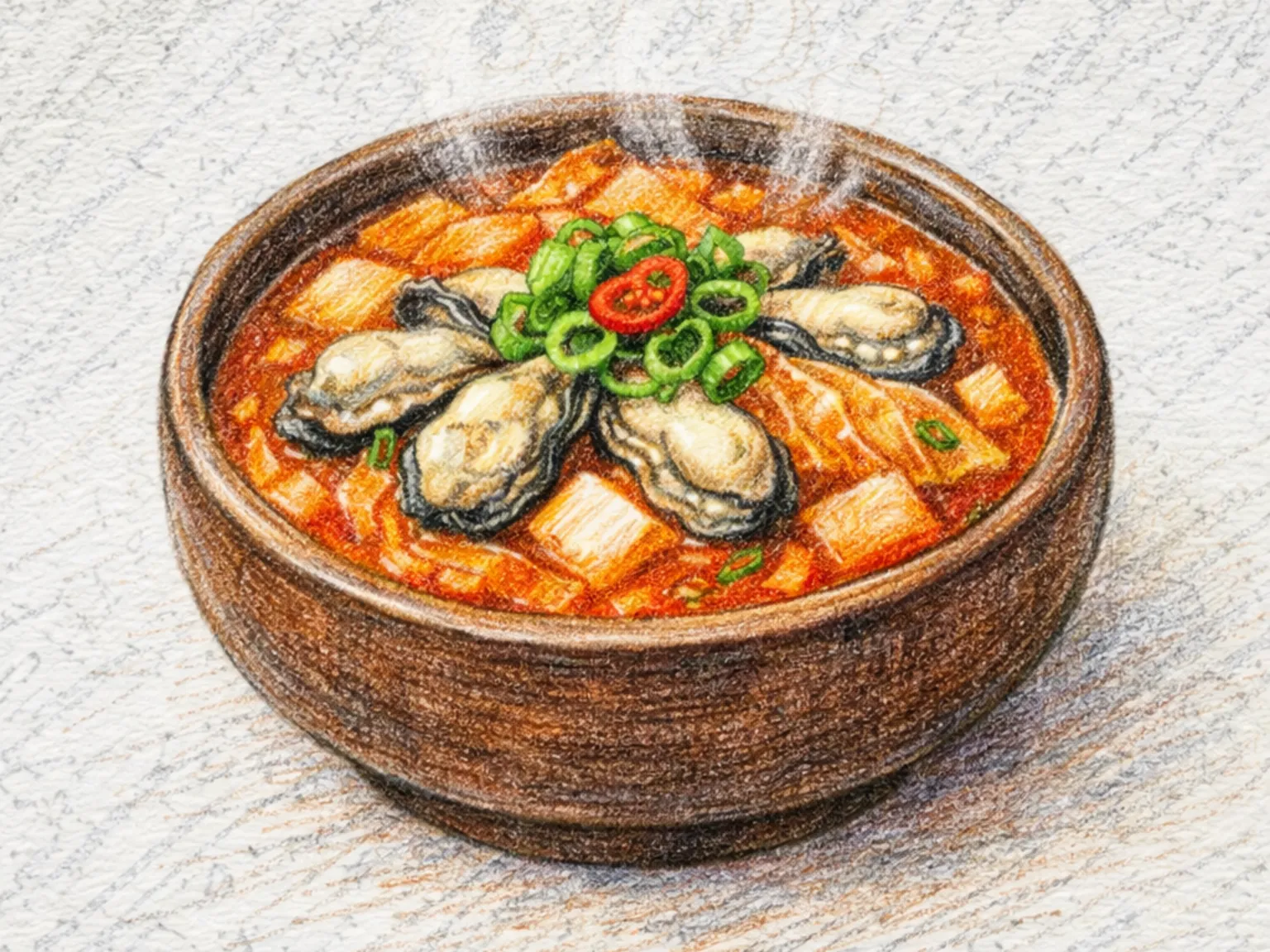
This stew pairs fresh oysters with aged kimchi, two ingredients that reach their peak simultaneously during the Korean winter, making this a dish with a narrow but rewarding season. The oysters contribute a deep briny sweetness while the well-fermented kimchi provides a sour, umami-laden backbone that would be impossible to replicate with fresh or lightly fermented leaves. A tablespoon of perilla oil distinguishes this from a standard pork kimchi jjigae: its nutty, slightly green aroma adds an earthy roundness that ties the seafood and kimchi together without competing with either. Radish is added to keep the broth clean and refreshing despite the concentration of flavors, and a base of anchovy stock reinforces the savory depth that the oysters and kimchi alone begin to build. Gochugaru and minced garlic provide heat and sharpness. The oysters go in only once the pot reaches a full boil and are cooked for no more than two to three minutes, just long enough to firm up without shrinking into small, rubbery pieces.

🏠 Everyday
Prep 12minCook 18min2 servings
Korean Steamed Beef with Radish Greens
SteamedHard

Korean Steamed Beef with Radish Greens

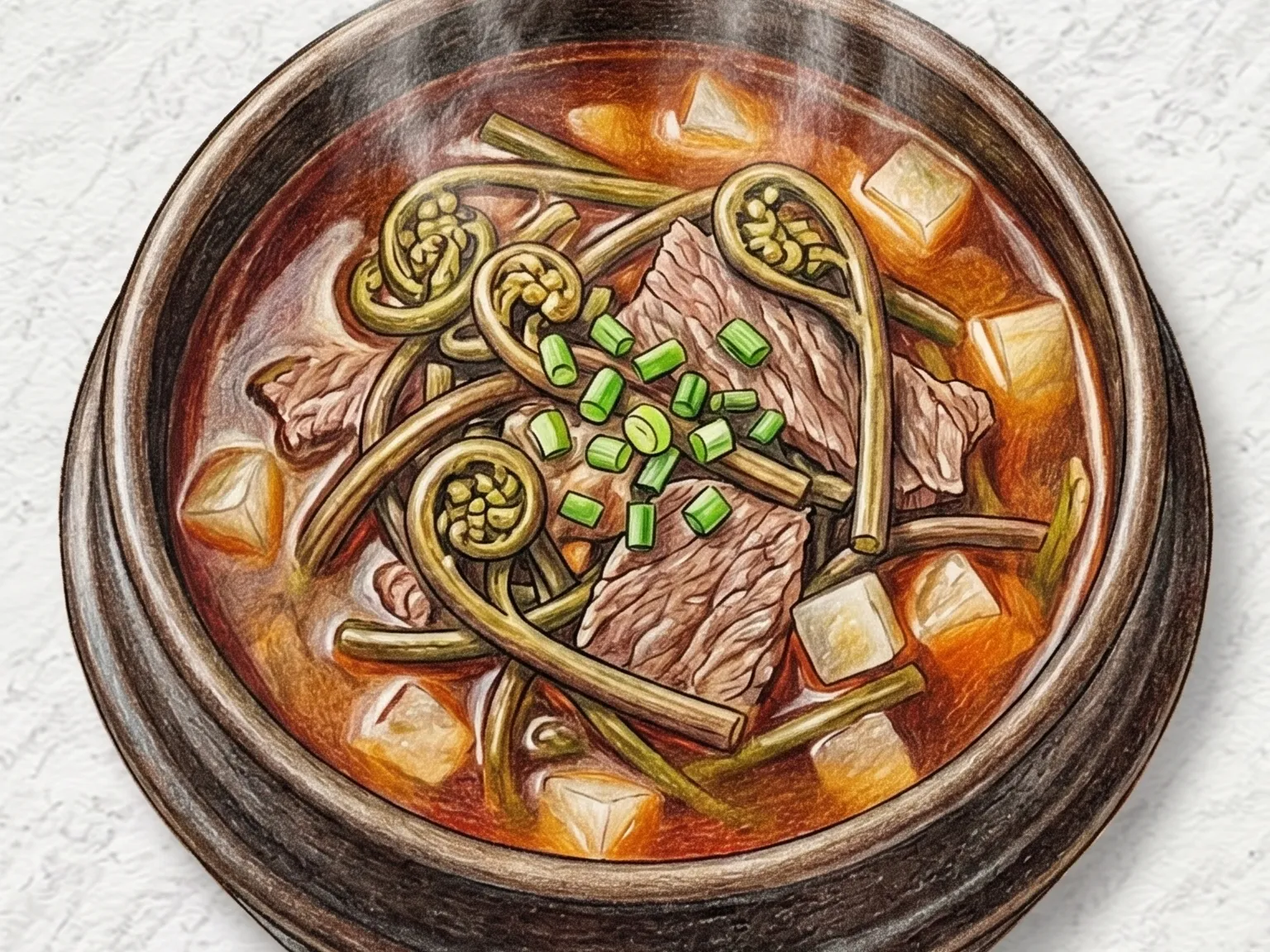
Mucheong sogogi jjim is a Korean braised beef dish where short rib meat is marinated in Korean pear juice and soy sauce, then slow-cooked with blanched radish greens and onion. The pear juice tenderizes the beef and lends a subtle fruit sweetness that deepens over the long braise. Radish greens are added near the end to preserve their earthy aroma and slight chew, bringing a rustic contrast to the soft meat. Ginger juice keeps the flavor clean, and sesame oil ties everything together with a toasted finish. The sauce reduces to a concentrated glaze meant to be spooned over rice.

🎉 Special Occasion
Prep 25minCook 70min4 servings
Korean Blue Crab Soy Stir-Fry
Stir-fryMedium

Korean Blue Crab Soy Stir-Fry

Kkotge ganjang bokkeum is a Korean blue crab stir-fry where halved crabs are lightly dusted with flour, pan-seared until the shells turn deep red, then braised briefly under a lid in a sauce of soy sauce, sugar, garlic, ginger, and gochugaru. The flour coating seals in moisture and helps the sweet-salty sauce cling to the shell surface, leaving a sticky, aromatic glaze that is meant to be licked off the fingers. Ginger neutralizes the briny smell that crabs can carry, while scallion and sesame oil are stirred in at the end to build the final aromatic layer. Using live crabs and cooking them immediately after cleaning ensures the meat stays firm and sweet; frozen crabs lose moisture during thawing and produce a noticeably softer result. Scoring the claws before cooking allows the sauce to penetrate the thicker sections of shell.

🏠 Everyday🌙 Late Night
Prep 20minCook 15min2 servings
Haejangguk (Korean Pork Bone Hangover Soup)
SoupsMedium

Haejangguk (Korean Pork Bone Hangover Soup)

Haejangguk is Korea's iconic hangover soup, a thick and fiery bowl built to restore the body after a long night of drinking. The base is a pork spine broth simmered for several hours until it turns milky, opaque, and deeply savory, carrying a weight that sits in the stomach rather than passing through it. Outer napa cabbage leaves called ugeoji are seasoned with doenjang and garlic before being added to the broth, contributing fibrous, chewy texture alongside the soup's fermented depth. Congealed blood, known as seonji, is a traditional inclusion cut into thick blocks: iron-dense and high in protein, it provides serious nutritional restoration and a visually striking dark contrast in the stone pot. Gochugaru delivers heat strong enough to draw sweat to the forehead, and Koreans have long held that this intensity helps flush toxins from the body and clear the mind after a night of drinking. The finished soup arrives still bubbling in its dolsot, and the first few spoonfuls tend to produce an involuntary exhale of relief. Dedicated haejangguk restaurants open before dawn to serve construction workers and late-night revelers, and the dish has occupied a fixed position in Korean culinary and drinking culture for centuries.

🏠 Everyday
Prep 20minCook 120min4 servings
Korean Oyster & Crown Daisy Stew
StewsEasy

Korean Oyster & Crown Daisy Stew

Gul ssukgat jjigae is a Korean stew that combines oysters with crown daisy, a leafy herb that brings a distinctive bitter-herbal character rarely found in other stews. The oysters, approximately 220 grams, provide the foundational savory base of the broth, releasing their briny, oceanic juices as they heat through. Crown daisy contributes an aromatic quality that is simultaneously bitter and clean, and that fragrance is volatile enough to disappear entirely with extended cooking, so it must be added at the very end, just before the heat is turned off. Korean radish and firm tofu are added midway through cooking to add body and substance to the stew without muddying the clean flavor of the broth. Soup soy sauce seasons the liquid while keeping the broth a clear, pale color rather than the darker tones that regular soy sauce would introduce. The combination of briny shellfish and herbal greens is a traditional Korean pairing, one that appears most often in home cooking rather than in restaurant settings. The result is a stew with a distinct identity - lighter than kimchi jjigae, more aromatic than doenjang jjigae - that works well as a standalone bowl with a bowl of rice.

🏠 Everyday
Prep 15minCook 20min2 servings
Korean Braised Pork Back Ribs with Aged Kimchi
SteamedMedium

Korean Braised Pork Back Ribs with Aged Kimchi

Mukeunji deunggalbi jjim is a Korean braise of pork back ribs and well-aged kimchi simmered low and slow in a sauce built from gochugaru, gochujang, and soy sauce. The bones release a rich, collagen-heavy stock as they cook, and the deep fermented tang of kimchi aged for a year or more layers a complex acidity onto that savory foundation. Reducing the braising liquid down to roughly one-third of its original volume concentrates the flavors into a thick, lacquered glaze that coats every rib. The kimchi fibers soften through the long cook but its sharp, pungent character remains present to the final bite. By the time the dish is ready, the meat pulls cleanly from the bone with minimal effort. Served with steamed rice, it makes a filling and warming meal, and the older and more deeply fermented the kimchi, the richer and more complex the finished result.

🏠 Everyday🎉 Special Occasion
Prep 25minCook 70min4 servings
Korean Beef Brisket and Bean Sprout Stir-fry
Stir-fryEasy

Korean Beef Brisket and Bean Sprout Stir-fry

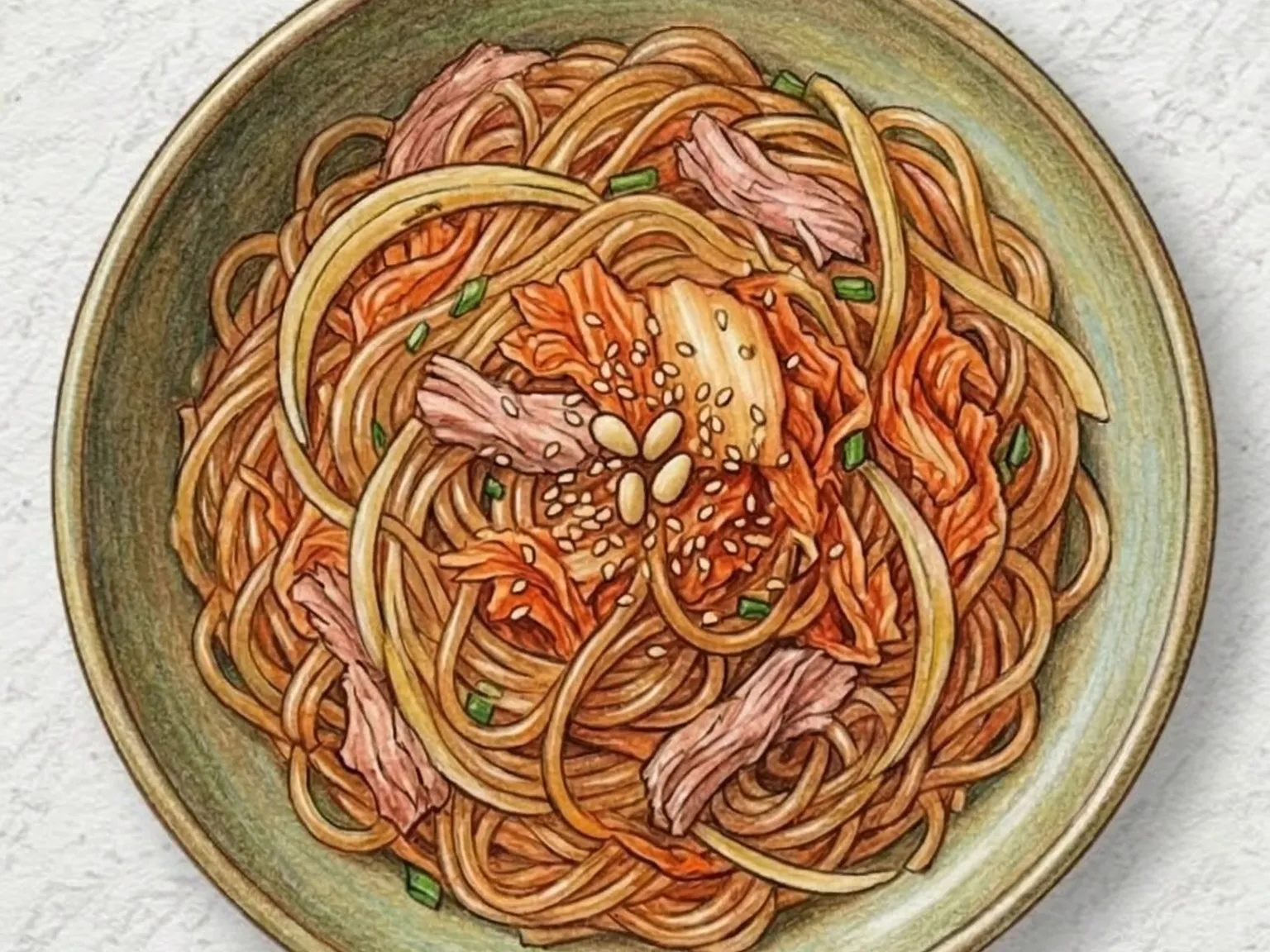
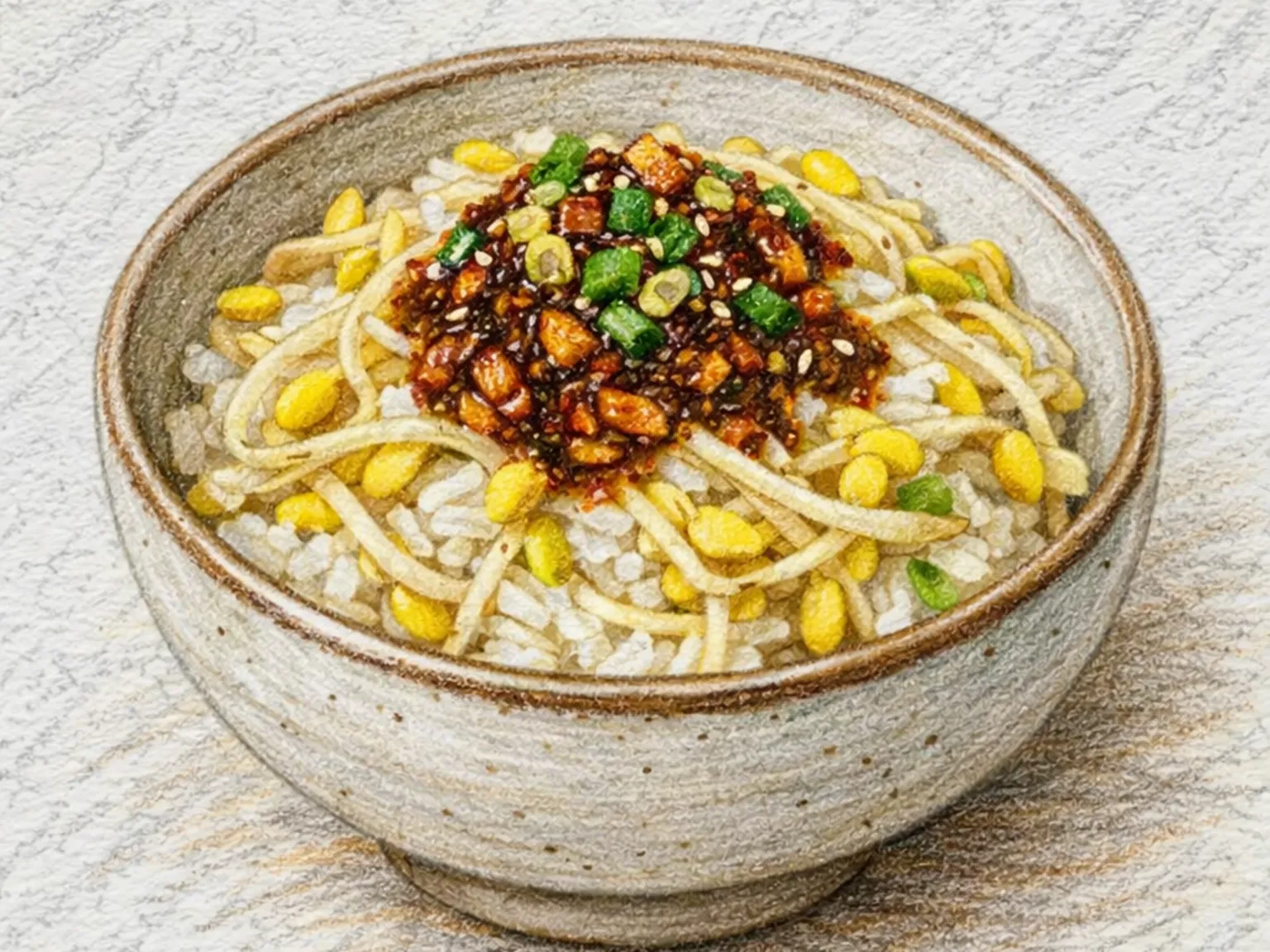
Kongnamul chadol bokkeum starts by rendering thin beef brisket slices over high heat to release their fat, then uses that fat as the cooking medium for bean sprouts and a gochujang-gochugaru sauce. The brisket's chewy bite contrasts with the sprouts' crispness, and the rendered beef fat merges with the chili paste to create a rich base without added oil. Moisture released from the bean sprouts thins the sauce just enough to coat everything evenly. Sesame oil finishes the dish, which is a common choice for a drinking snack or late-night meal.

🍺 Bar Snacks🏠 Everyday
Prep 12minCook 9min2 servings
Korean Boiled Seafood Broth
SoupsEasy

Korean Boiled Seafood Broth

Haemul suyuk-tang is a clear Korean seafood soup where clams, shrimp, and squid are simmered together in lightly seasoned water with garlic and green onion. The defining quality of this dish is its restraint: no gochujang, no doenjang, no complex spice paste, just salt and the natural briny liquor each ingredient contributes to the pot. The clams open first and release their saline juice into the water, establishing the initial salinity of the broth. As the shrimp cook they turn pink and contribute a sweet current beneath the salt. The squid firms and curls into rings, adding a chewy textural counterpoint to the soft clam meat and the tender shrimp. Each of these three seafoods produces a different form of marine umami, and together they layer into a broth that reads as remarkably full despite being completely transparent. There is no competition from fermented paste or chili, so the ocean flavor comes through cleanly and directly. The visual effect of the finished bowl is also appealing: open clam shells scattered through the pot, curved pink shrimp, and white squid rings give the bowl a sense of abundance without heaviness. The soup works well as a light meal alongside rice, and it is the dish to reach for when the goal is to taste the seafood itself without interference from heavier seasonings.

🏠 Everyday
Prep 15minCook 25min3 servings
Korean Seafood Stew (Shrimp, Squid & Clam Spicy Pot)
StewsMedium

Korean Seafood Stew (Shrimp, Squid & Clam Spicy Pot)

Haemul jjigae is a fiery Korean seafood stew that loads shrimp, squid, and clams into a broth fired with gochugaru and gochujang. As the clams open during cooking, they release a clean, saline sweetness that forms the backbone of the broth, and the chili paste and flakes layer in a deep red heat that amplifies rather than masks the flavor of the sea. Large pieces of tofu and sliced zucchini cook alongside the seafood, soaking up the spiced shellfish stock and adding substance to every spoonful. Green onion and cheongyang chili added at the end contribute color and a fresh aromatic sharpness. Serving directly in the stone pot keeps the stew bubbling at the table throughout the meal, and the steady heat means the last spoonful tastes as vivid as the first. A bowl of steamed white rice alongside absorbs the broth between bites and makes the meal complete.

🏠 Everyday
Prep 15minCook 20min2 servings
Korean Braised Beef with Dried Radish
SteamedMedium

Korean Braised Beef with Dried Radish

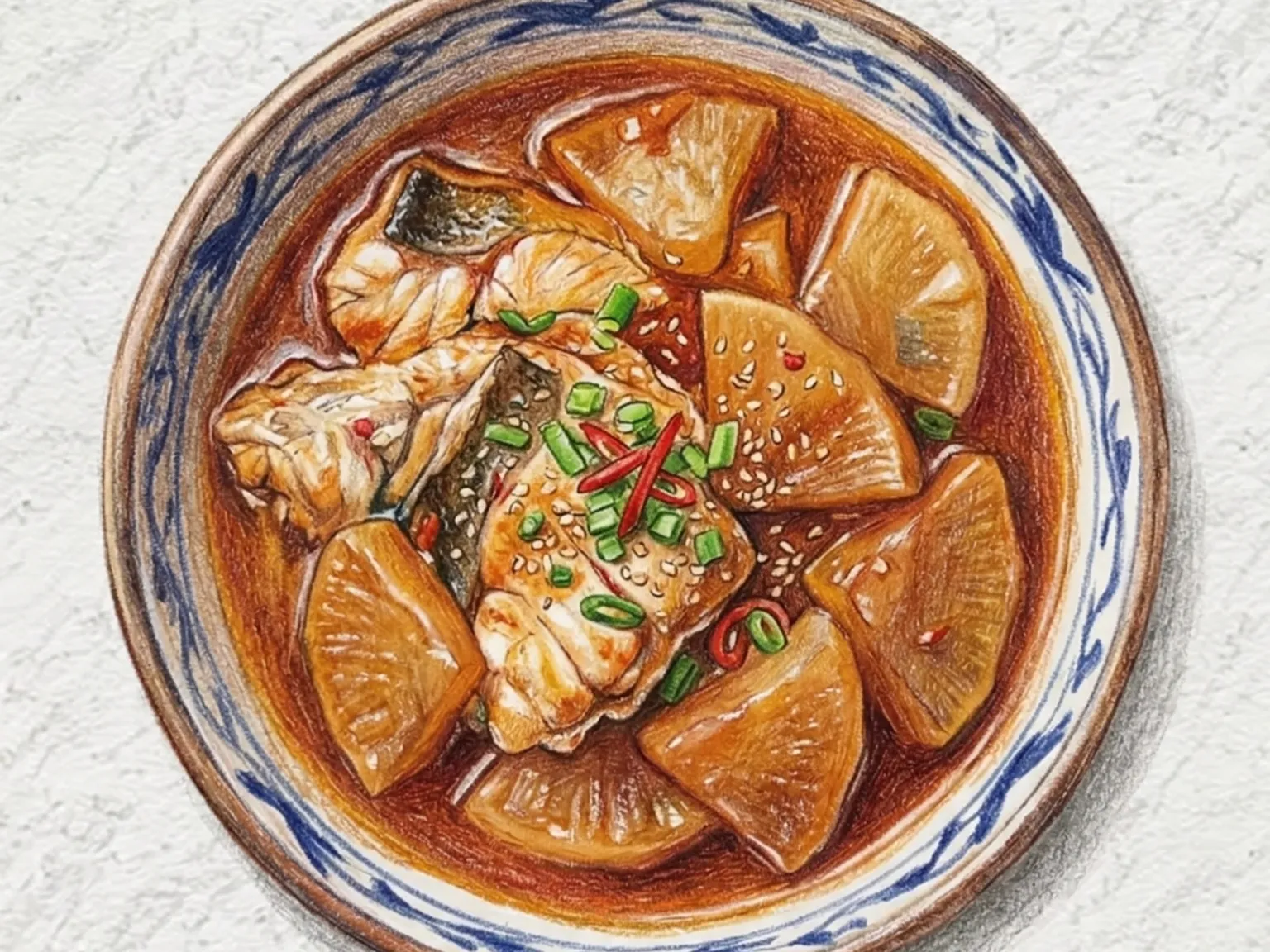
Mumallaengi sogogi jorim is a Korean soy-braised side dish of rehydrated dried radish strips and lean beef round, cooked down until the sauce just barely covers the ingredients. Drying concentrates the radish's natural sugars and umami, and once soaked and braised the strips become chewy and deeply flavored in a way fresh radish cannot replicate. Before soaking, a quick rinse removes any dust or impurities from the drying process, and twenty minutes or more in cold water restores just enough elasticity for a satisfying texture after cooking. Thin-sliced beef is pre-seasoned with cooking wine to neutralize any off-smell, then added to the pan so it cooks cleanly and without a heavy aroma. Oligosaccharide syrup adds a gentle sheen and sweetness to the soy base without making the dish cloying. Toasted sesame seeds scattered over the top finish the dish with a nutty fragrance. Like most Korean braised side dishes, this one improves after a night in the refrigerator as the seasoning continues to penetrate, making it a practical and reliable choice for lunchboxes and weekday meal preparation that can be made ahead and eaten across several days.

🏠 Everyday🎉 Special Occasion
Prep 25minCook 45min4 servings
Korean Stir-fried Radish with Perilla Powder
Stir-fryEasy

Korean Stir-fried Radish with Perilla Powder

Mu-deulkkae-bokkeum is a mild Korean side dish of finely julienned radish stir-fried and then simmered with perilla seed powder. Garlic and scallion are sauteed first for aroma, then the radish goes in and cooks under a lid with water and soup soy sauce until translucent and soft. Perilla powder is stirred in at the end, melting into the radish's released moisture to form a creamy, nutty coating. The dish has no heat at all, making it a versatile banchan; winter radish yields a noticeably sweeter result.

🏠 Everyday🍱 Lunchbox
Prep 10minCook 12min2 servings
Korean Seafood Hot Pot Soup
SoupsMedium

Korean Seafood Hot Pot Soup

Haemul-tang is a Korean seafood hot pot that throws together crab, shrimp, clams, and squid in a fiery, brick-red broth. The liquid starts with gochugaru and plenty of garlic, building a spicy base that the seafood then amplifies with its own briny juices. Radish chunks soften as the pot bubbles, thickening the broth slightly and adding a cool sweetness behind the heat. Green onions and cheongyang peppers go in toward the end for a sharp, vegetal bite. The magic of haemul-tang lies in the convergence of flavors: crab shells release a sweet, crustacean stock; clams open to spill their liquor; shrimp and squid contribute distinct textures from snappy to chewy. The pot is brought to the table still at a rolling boil, and diners pick through the shells and tentacles while the broth continues to concentrate.

🏠 Everyday🎉 Special Occasion
Prep 25minCook 30min4 servings
Korean Ham-Packed Budae Jjigae
StewsEasy

Korean Ham-Packed Budae Jjigae

This version of budae jjigae is built around a generous load of Spam and Vienna sausages, simmered alongside well-fermented kimchi in a wide pot of anchovy or dashi stock. Gochujang and Korean chili flakes build layered heat while the kimchi's sourness cuts through the salt of the processed meats and keeps the overall flavor from becoming one-dimensional. Adding a bundle of ramen noodles toward the end allows them to absorb the deeply seasoned broth as they cook. With 900ml of stock, this is a communal pot meant to be shared at the table. Budae jjigae originated in the years after the Korean War, when surplus American military rations such as ham and sausage were combined with Korean staples near military base towns. The ham-forward version puts the salty, meaty character of the processed ingredients at the center of the dish.

🍺 Bar Snacks🏠 Everyday
Prep 15minCook 20min2 servings
Korean Steamed Octopus (Whole Salted Radish Broth)
SteamedMedium

Korean Steamed Octopus (Whole Salted Radish Broth)

Muneo-jjim is a Korean steamed whole octopus dish prepared by scrubbing the octopus vigorously with coarse salt to remove slime and any off-odor, then cooking it in a pot layered with radish and green onion. Submerging the head end first and lifting it in and out of the boiling water two or three times causes the tentacles to curl inward naturally, resulting in an attractive presentation before the full cook begins. Simmering for about fifteen minutes and then resting off the heat with the lid on produces a texture that is springy and chewy without turning tough. The radish adds mild sweetness to the water while green onion draws out any fishiness, so the resulting broth carries a clean, subtle depth of its own. Once cooked, the octopus is sliced on the diagonal into manageable pieces and served with a simple dipping sauce of sesame oil mixed with salt. That combination lets the octopus's natural ocean flavor and nuttiness come through without interference. The dish works equally well as a drinking accompaniment or an everyday banchan, and the technique scales from a small arm to a full-sized octopus without adjustment.

🍺 Bar Snacks🎉 Special Occasion
Prep 20minCook 25min4 servings
Korean Stir-fried Aged Kimchi and Tofu
Stir-fryEasy

Korean Stir-fried Aged Kimchi and Tofu

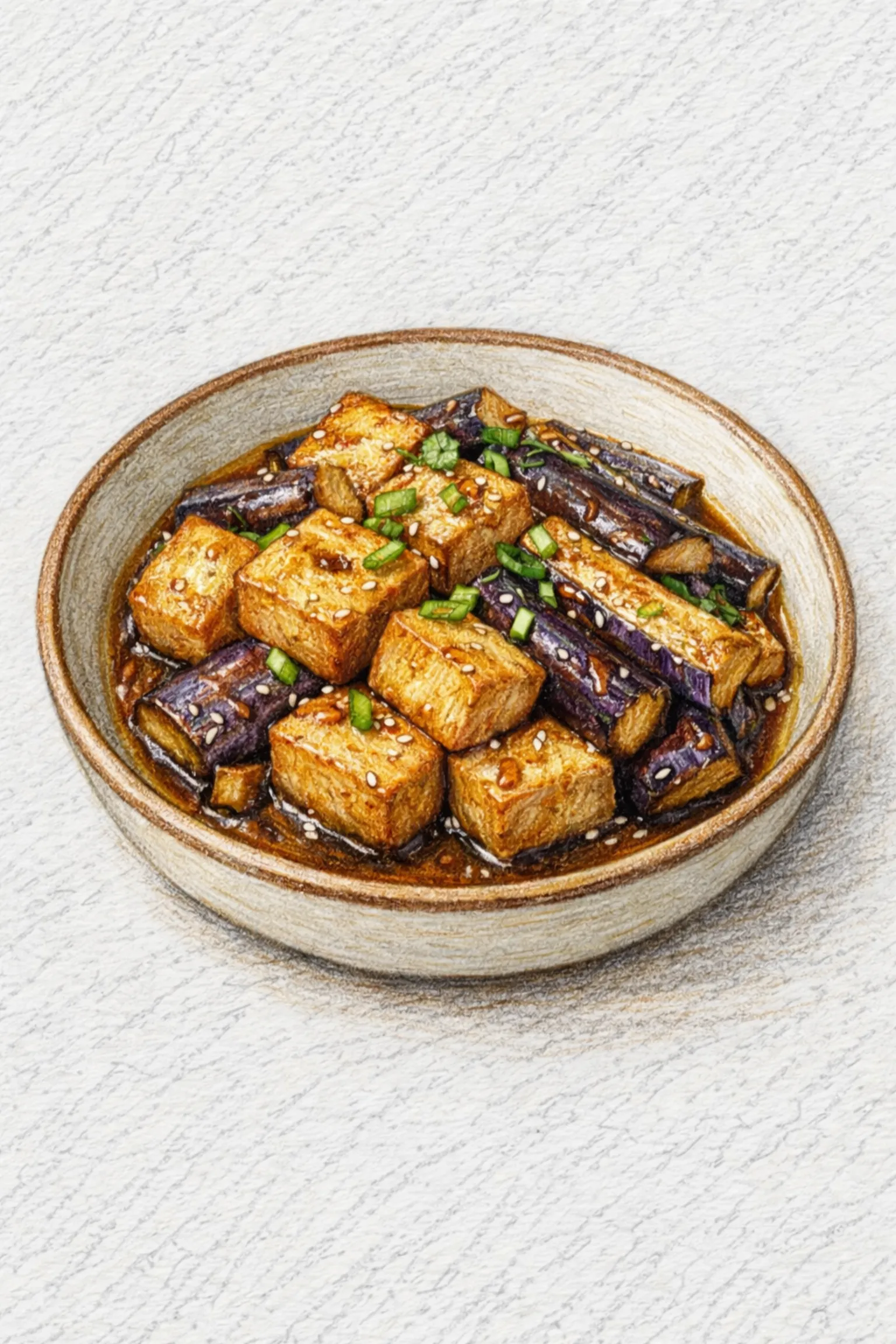
Mukeunji-dubu-bokkeum stir-fries aged kimchi and firm tofu together in a single pan, pulling the kimchi's deep sourness and the tofu's neutral mildness into a unified dish. The tofu is pan-fried in oil until golden on both sides first, which builds a firm crust that prevents the pieces from crumbling during the subsequent stir-fry and gives them a better surface area for absorbing the sauce. Onion and aged kimchi are then cooked with gochugaru until much of the kimchi's moisture cooks off and its sharpest acidic edge softens. Soy sauce and sugar calibrate the seasoning, and the crisped tofu returns to the pan to soak up the flavors evenly. A finishing pour of perilla oil wraps around the fermented intensity of the aged kimchi and smooths it out, while a handful of sliced green onion added at the end lifts the aroma.

🏠 Everyday🍱 Lunchbox
Prep 12minCook 14min2 servings
Honghap-tang (Korean Mussel Garlic Broth)
SoupsEasy

Honghap-tang (Korean Mussel Garlic Broth)

Honghap-tang is a Korean mussel soup that proves how much flavor a single shellfish can deliver with almost no help. Shell-on mussels are placed in water with sliced green onion, garlic, and a light dusting of gochugaru, then brought to a boil. As the shells open, they release a briny, faintly sweet liquor that becomes the broth itself, clear in appearance but surprisingly concentrated in taste. The entire process takes about fifteen minutes. Timing matters here: once the shells have opened and the flesh has puffed, the pot comes off the heat immediately or the meat turns rubbery. In Korea, honghap-tang is a standard drinking companion, sipped between shots of soju while the mussel meat is pulled from the shells and dipped in vinegary chojang sauce. The combination of the bold, oceanic broth and the chilled sauce creates a cycle that is hard to stop. Mussels caught during the colder months, when they are fatter and richer, produce the most intensely flavored broth.

🍺 Bar Snacks🏠 Everyday
Prep 10minCook 15min2 servings
Korean Mussel Stew
StewsEasy

Korean Mussel Stew

Honghap jjigae uses a generous 900g of mussels to build an intensely briny, clean-tasting broth that defines this stew. Thick-cut Korean radish simmers alongside the shellfish, soaking up the ocean-flavored liquid and contributing a quiet natural sweetness. Cheongyang chili and gochugaru deliver a moderate, lingering heat, while soup soy sauce and cooking wine round out the seasoning without drowning the seafood flavor. Using the liquid the mussels release during cooking as the base of the broth provides depth without requiring a separate stock. Sliced green onion added at the end lifts the aroma without adding any fishy note. Selecting only mussels whose shells are tightly closed before cooking reduces the chance of grit or off-flavors in the finished stew.

🏠 Everyday
Prep 20minCook 18min4 servings
Korean Spicy Steamed Squid
SteamedMedium

Korean Spicy Steamed Squid

Ojingeo-jjim is a Korean spicy steamed squid dish cooked with onion and green onion in a sauce of gochugaru, gochujang, and soy sauce. The key is keeping the total cooking time to around ten minutes, starting on high heat and finishing on medium, so the squid stays chewy rather than turning rubbery. Gochujang provides a thick, coating heat while the chili flakes add a sharper spiciness on top. One final toss at the end ensures every piece is evenly glazed with the red sauce. This quick-cooking dish works equally well as a banchan alongside rice or as an accompaniment to drinks.

🍺 Bar Snacks🏠 Everyday
Prep 18minCook 12min2 servings
Korean Spicy Octopus Stir-fry
Stir-fryMedium

Korean Spicy Octopus Stir-fry

Muneo-bokkeum is a Korean stir-fry of pre-boiled octopus pieces cooked on high heat with onion, carrot, and scallion in a sauce built from gochujang and soy sauce. Because the octopus arrives already cooked, two to three minutes of high-heat stir-frying is the target window - enough time to heat the pieces through and coat them in the seasoning without pushing the texture past springy into tough. The sauce brings spice from the gochujang and saltiness from the soy sauce, and that combination lifts the naturally clean, mild flavor of the octopus without masking it. Vegetables are pulled from the pan while they still carry some bite, which sets up a textural contrast against the dense, elastic chew of the octopus. Sesame oil goes in at the very end as a finishing drizzle, adding a nutty, aromatic layer that ties the dish together. It works as a rice side dish or as an anju pairing alongside drinks.

🏠 Everyday🍱 Lunchbox
Prep 20minCook 10min2 servings
Korean Astragalus Chicken Soup
SoupsMedium

Korean Astragalus Chicken Soup

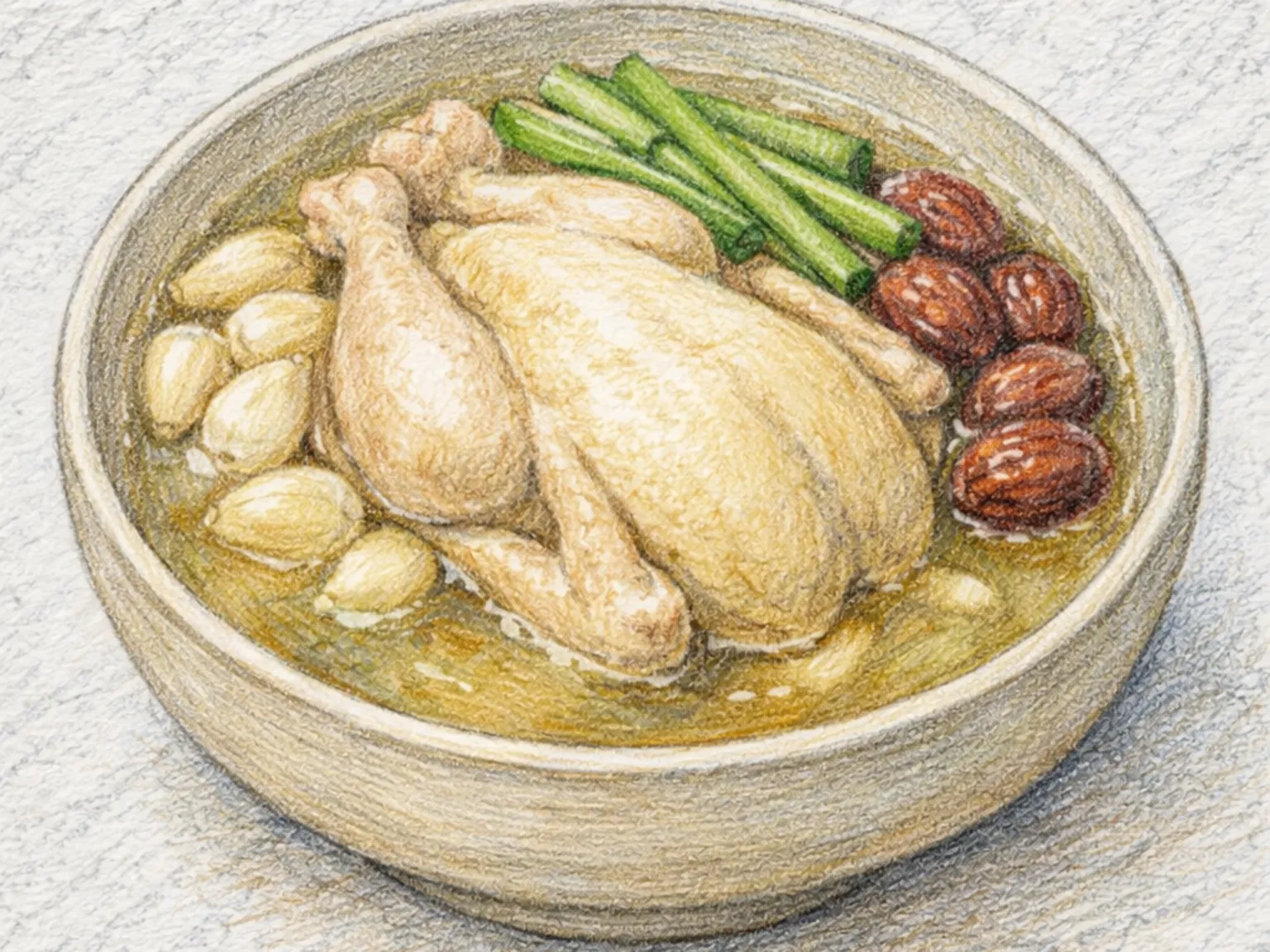
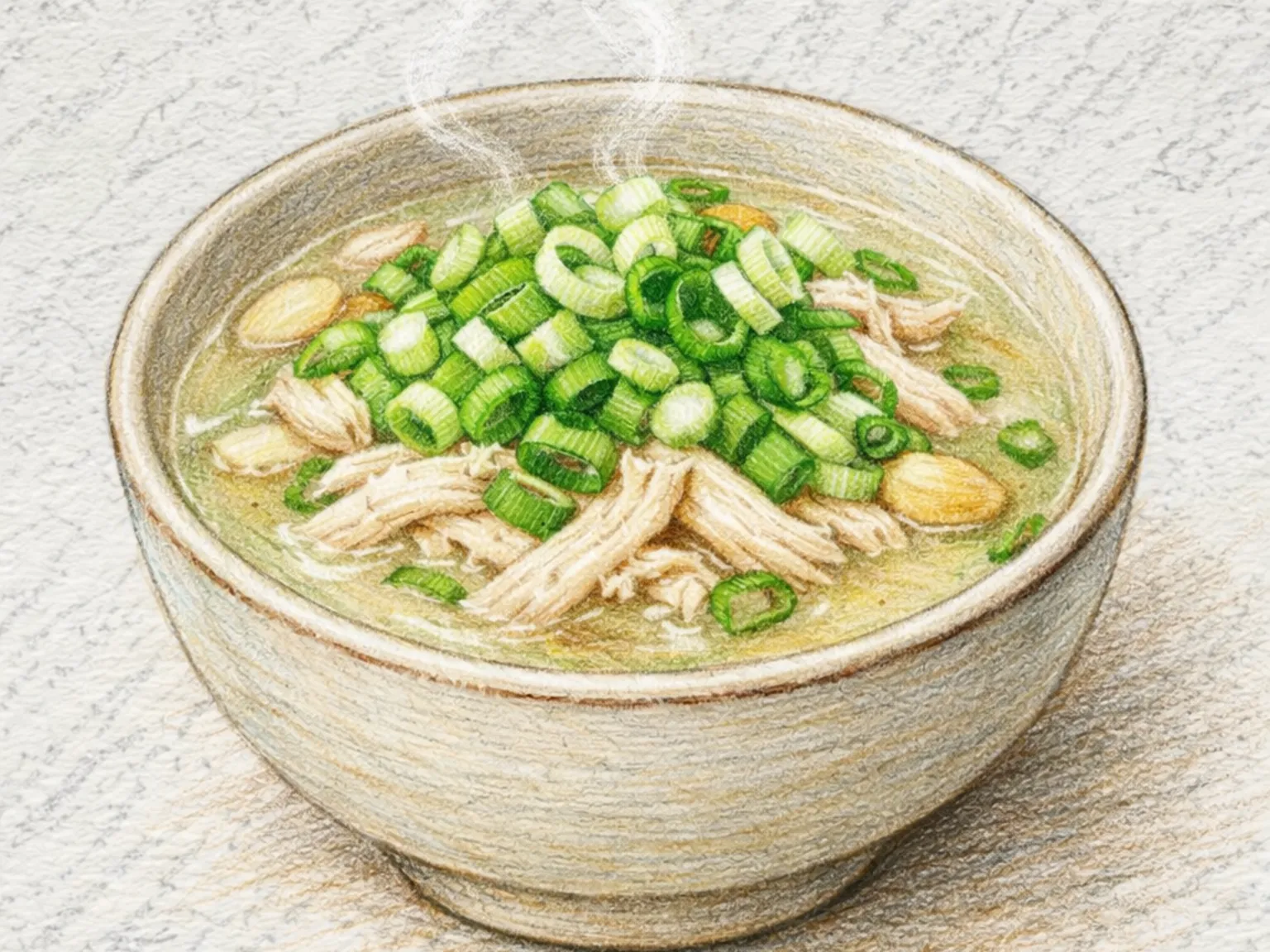
Hwanggi-dak-tang is a Korean herbal chicken soup built around astragalus root, a staple of traditional East Asian medicine long valued for its restorative and immune-supporting properties. The dried root, known in Korean as hwanggi, carries a faintly sweet, earthy flavor that is subtle enough to complement rather than dominate the broth. A whole chicken simmers for well over an hour with the dried root, jujubes, and garlic, producing a clear yet full-bodied liquid with a gentle herbal undertone that deepens as the pot reduces. The extended cooking dissolves collagen from the skin, cartilage, and joints, giving the broth a velvety weight that coats the palate without turning cloudy. The chicken meat, by the time the soup is ready, pulls apart with almost no resistance. Jujubes gradually soften into the broth over the long cooking time and add a subtle fruity sweetness that bridges the medicinal and culinary aspects of the dish without making it taste overtly medicinal. Seasoning is kept to salt alone so the herb-infused stock remains the focus. In Korea, this soup appears most often during the seasonal transitions of early summer and late autumn, or during recovery from illness, typically served steaming in a heavy stone pot.

🏠 Everyday
Prep 15minCook 75min4 servings
Korean Dried Pollock Napa Stew
StewsEasy

Korean Dried Pollock Napa Stew

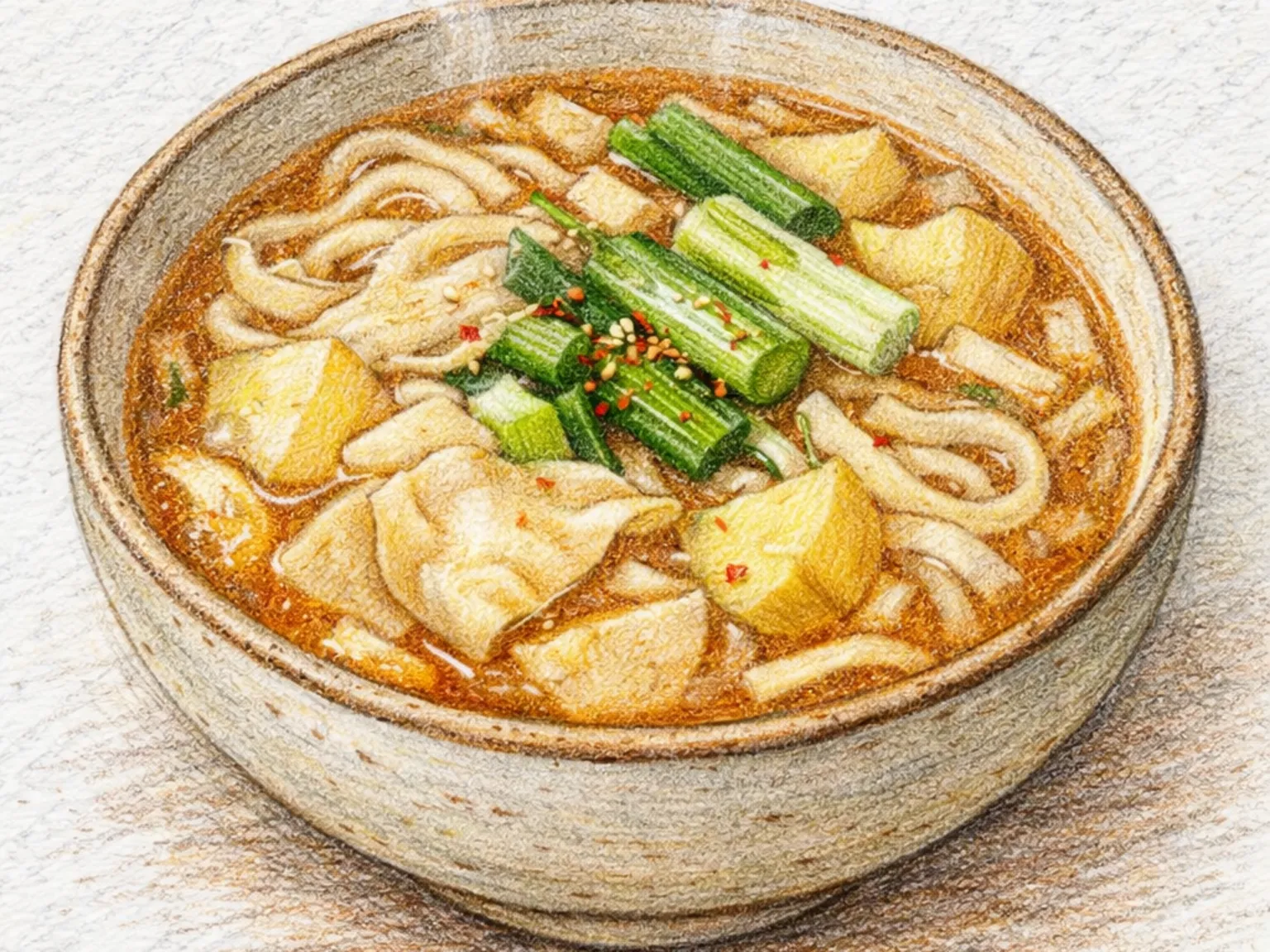
This stew pairs dried pollock strips with napa cabbage for a mild, comforting bowl built on clean, unhurried flavors. The pollock releases a savory, slightly sweet depth into the broth as it rehydrates during cooking. Soaking the pollock briefly in water before adding it loosens the stiff fibers and helps the broth extract faster. The cabbage softens slowly and adds its own natural sweetness, while firm tofu and zucchini round out the ingredients with body and texture. A touch of perilla oil lends a nutty fragrance to the finished bowl. Seasoned simply with soup soy sauce, it works well as a hangover remedy or a light weekday meal that settles the stomach.

🏠 Everyday
Prep 10minCook 25min4 servings
Cantonese Steamed Seabass
SteamedMedium

Cantonese Steamed Seabass

Qingzheng seabass is a Cantonese steamed fish preparation in which a whole seabass is scored, rubbed with julienned ginger and rice wine, then cooked over high heat in a steamer for ten to twelve minutes. Once the fish comes off the steam, a restrained dressing of soy sauce and sugar is poured evenly over the flesh, a generous pile of shredded scallions is laid on top, and smoking-hot oil is drizzled over everything. The oil hits the cold scallions with an audible sizzle and instantly volatilizes their aromatic compounds, filling the kitchen with a concentrated burst of allium fragrance that coats the entire dish. The steamed flesh stays moist with its natural flake intact, and the light soy dressing is calibrated so that the seabass's own clean, delicate flavor remains the centerpiece rather than being buried under seasoning. The finishing pour of hot oil simultaneously cooks the scallions and disperses their fragrance, a technique central to Cantonese cooking. The dish embodies the Cantonese philosophy that the quality of the ingredient, not the intensity of the seasoning, defines the outcome.

🎉 Special Occasion
Prep 20minCook 15min2 servings