Steamed Recipes
151 recipes. Page 3 of 7
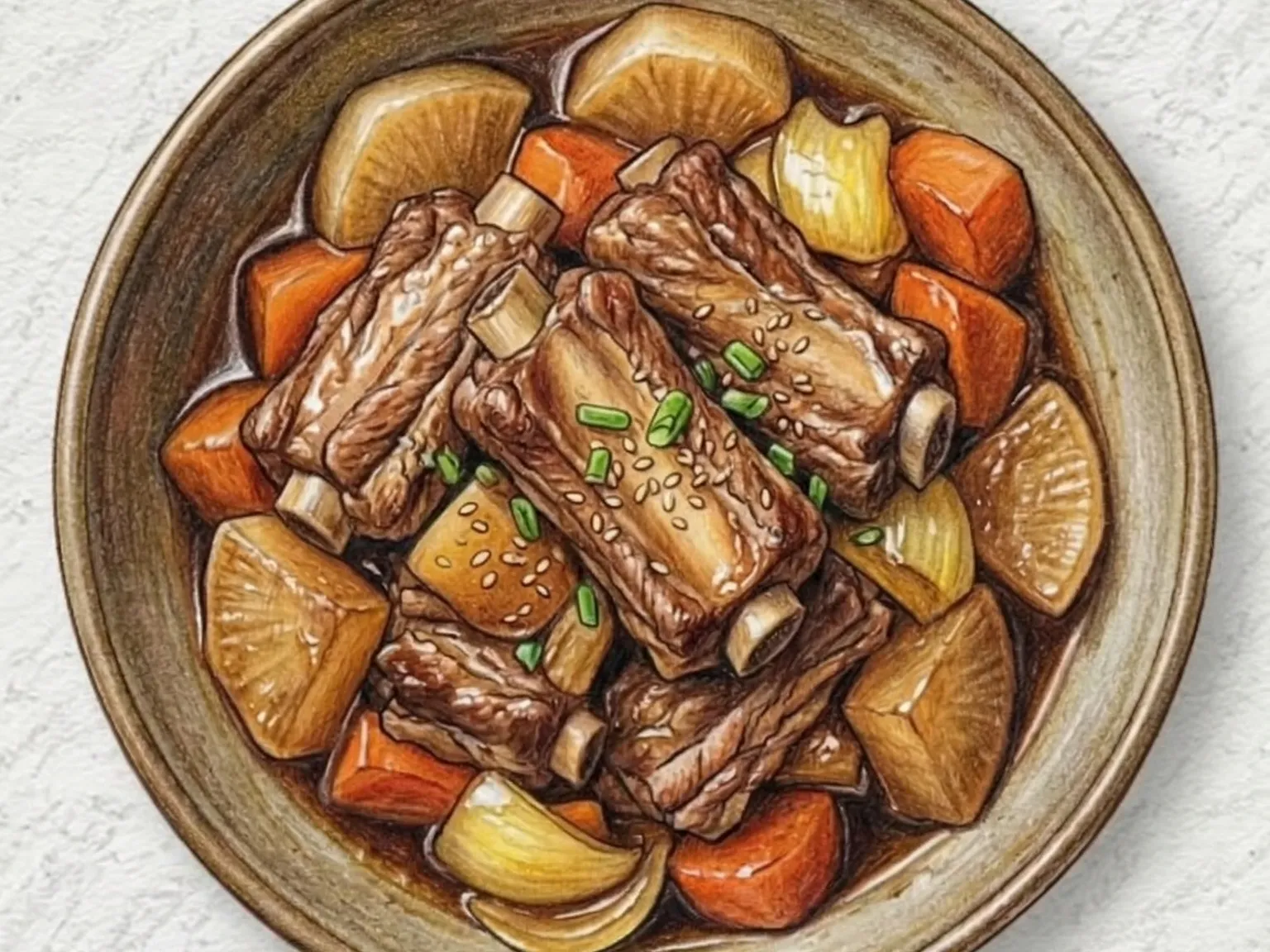
Jjim refers to Korean braised and steamed dishes cooked low and slow with rich seasoning. Galbi-jjim (braised short ribs), jjimdak (braised chicken), and haemul-jjim (spicy seafood) are holiday favorites, but they make impressive meals any day of the week.
Slow cooking allows the meat to become melt-in-your-mouth tender while the sauce penetrates every layer. A base of soy sauce, sugar, garlic, and sesame oil is all you need to build the signature sweet-savory glaze.
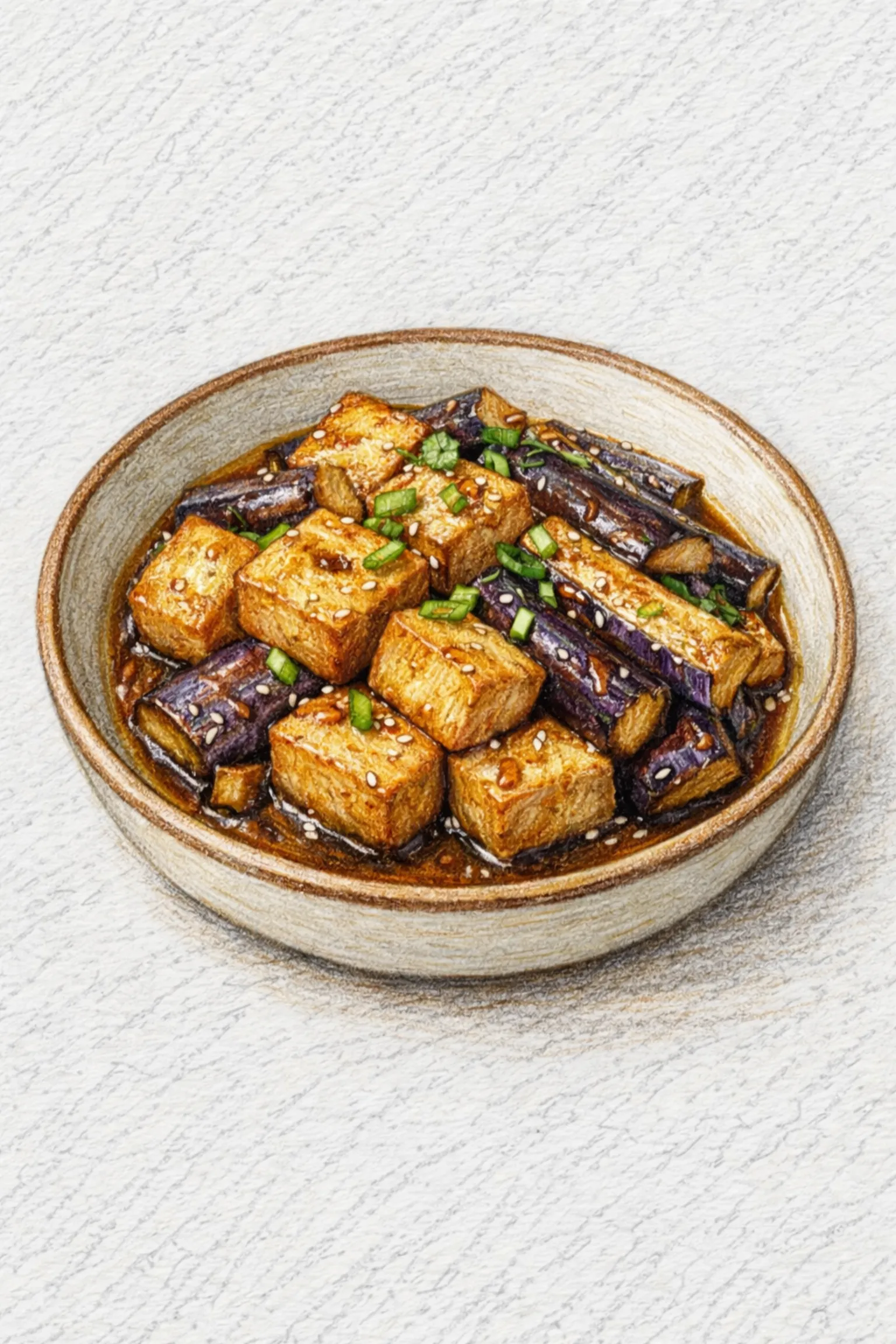
Korean Braised Eggplant in Seasoned Soy Sauce
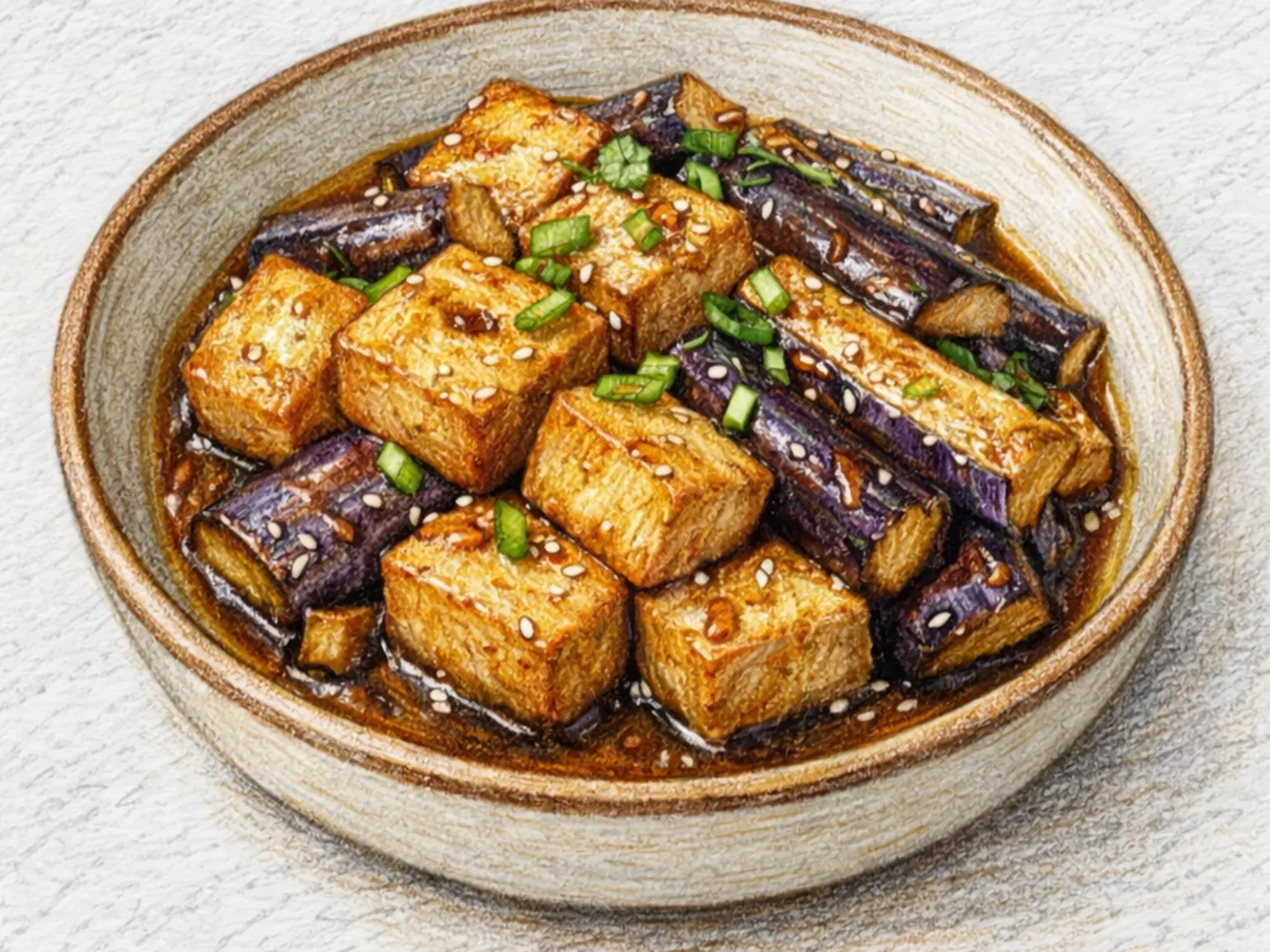
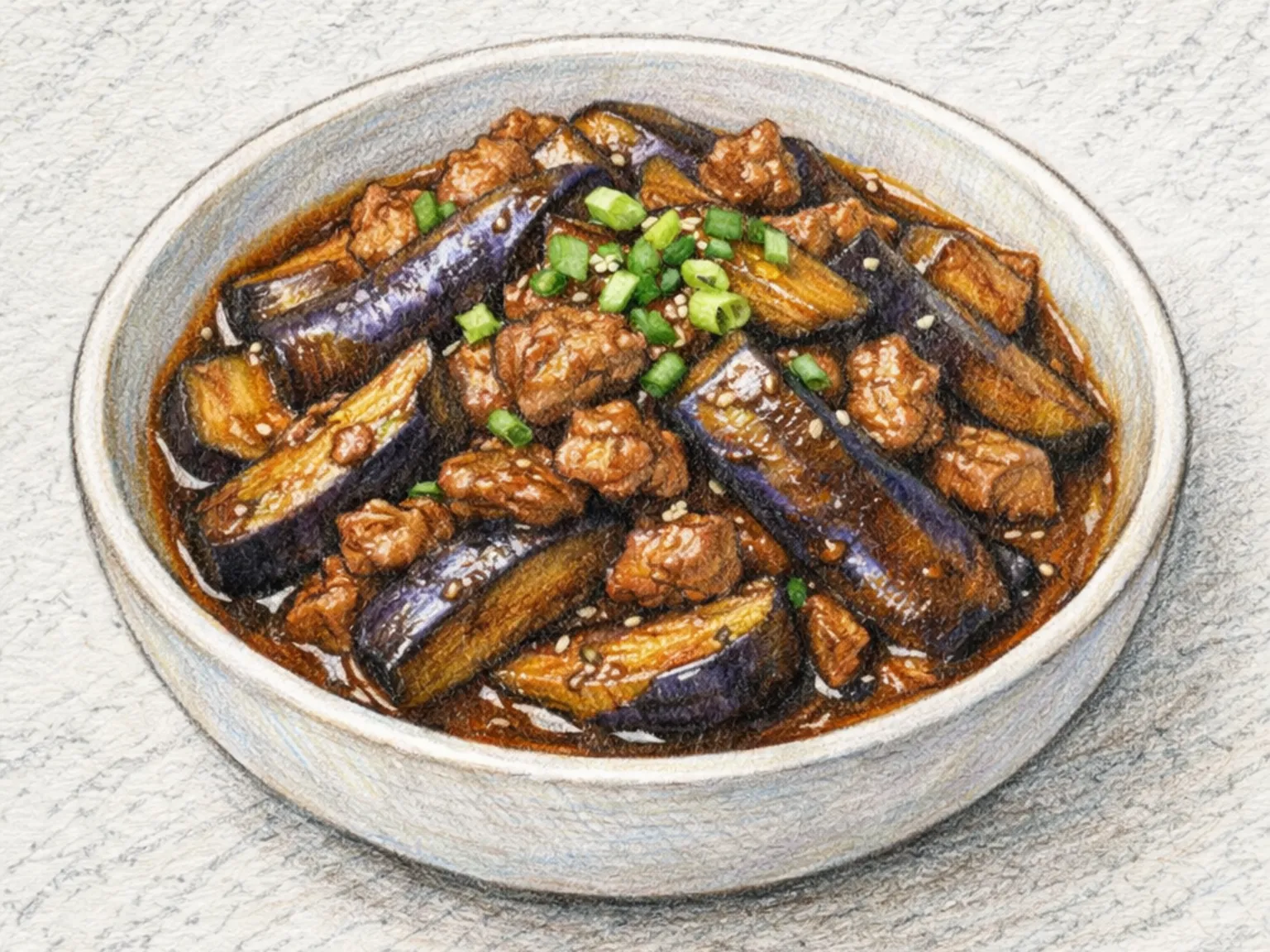
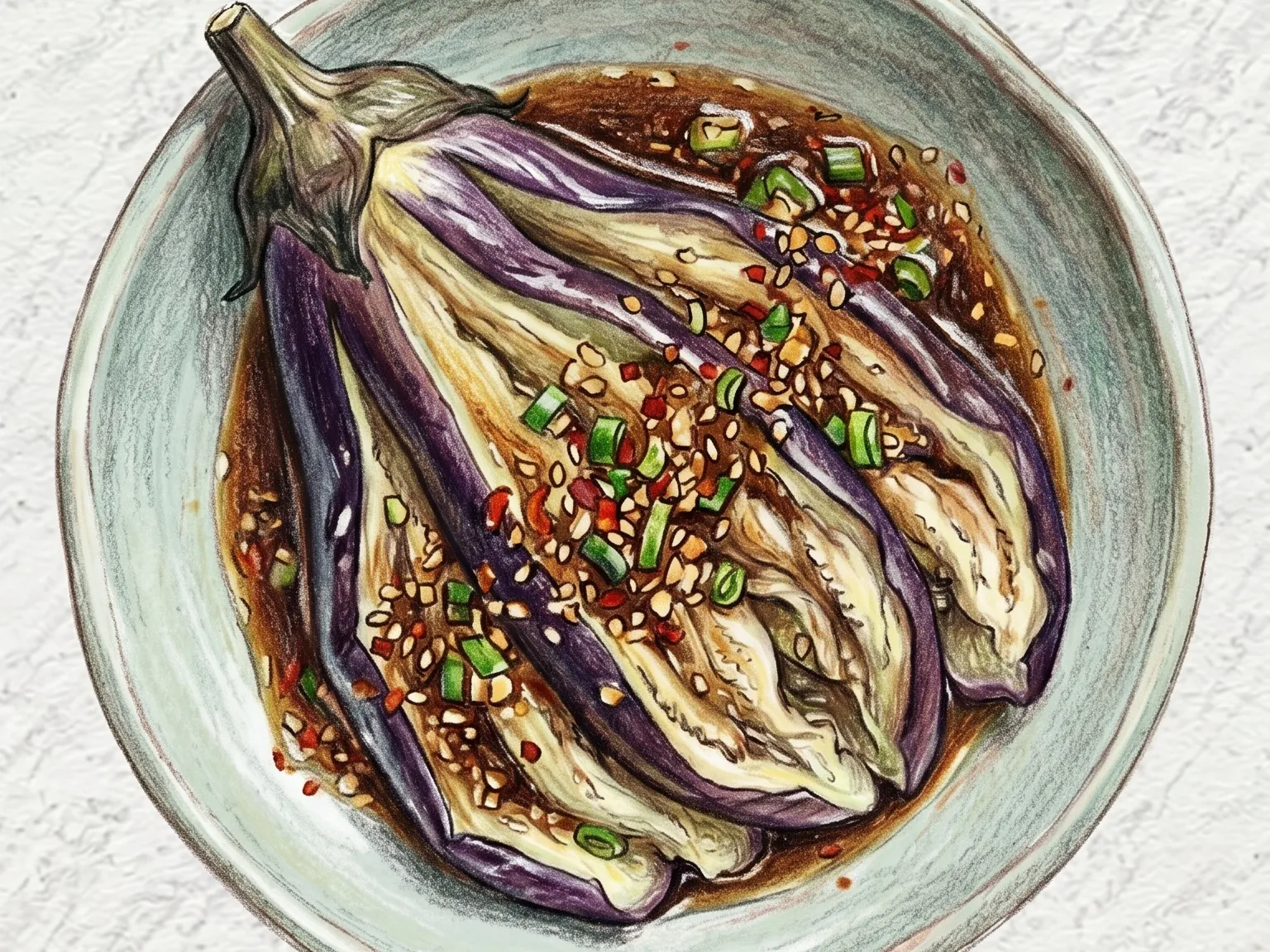
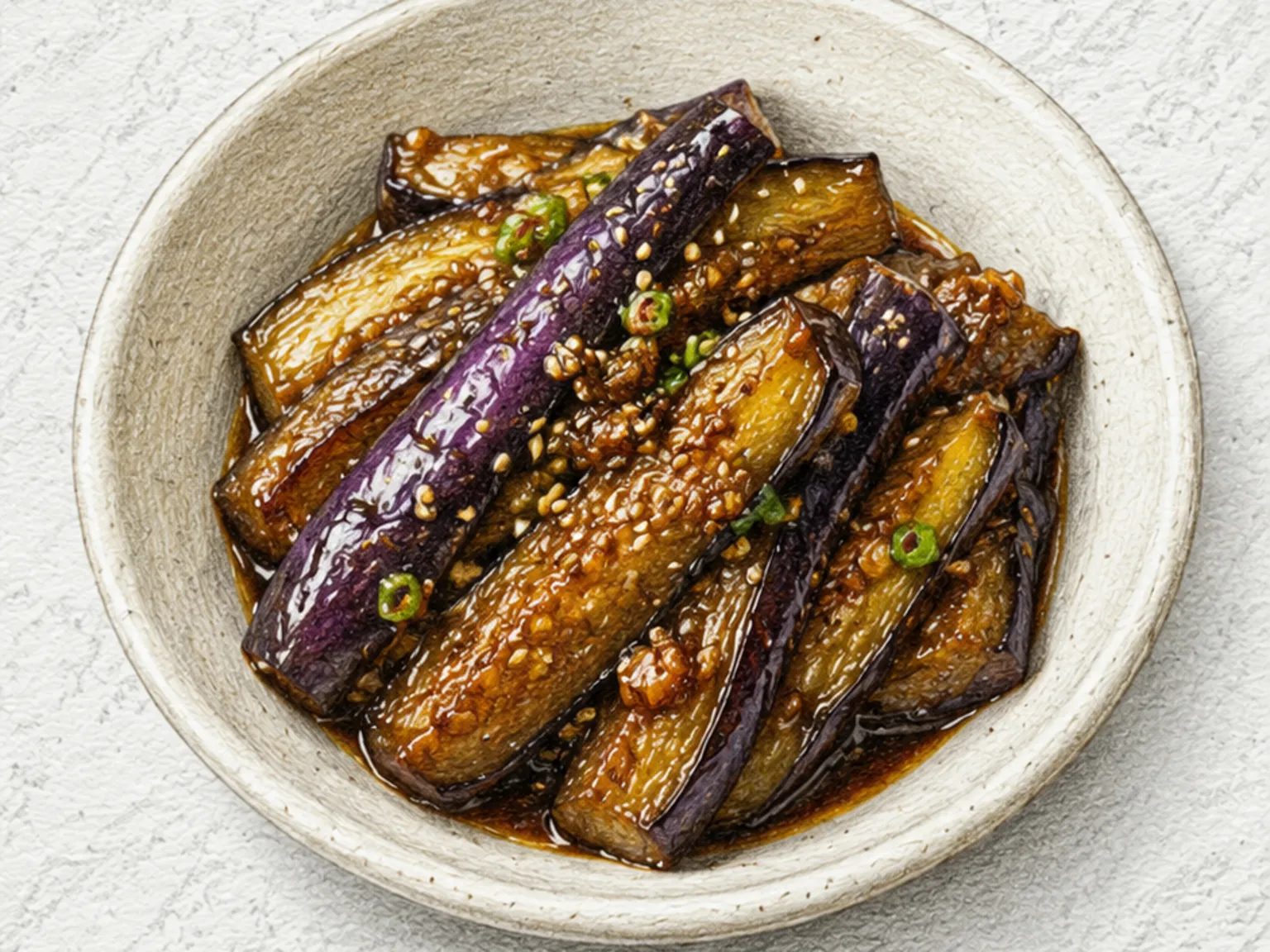
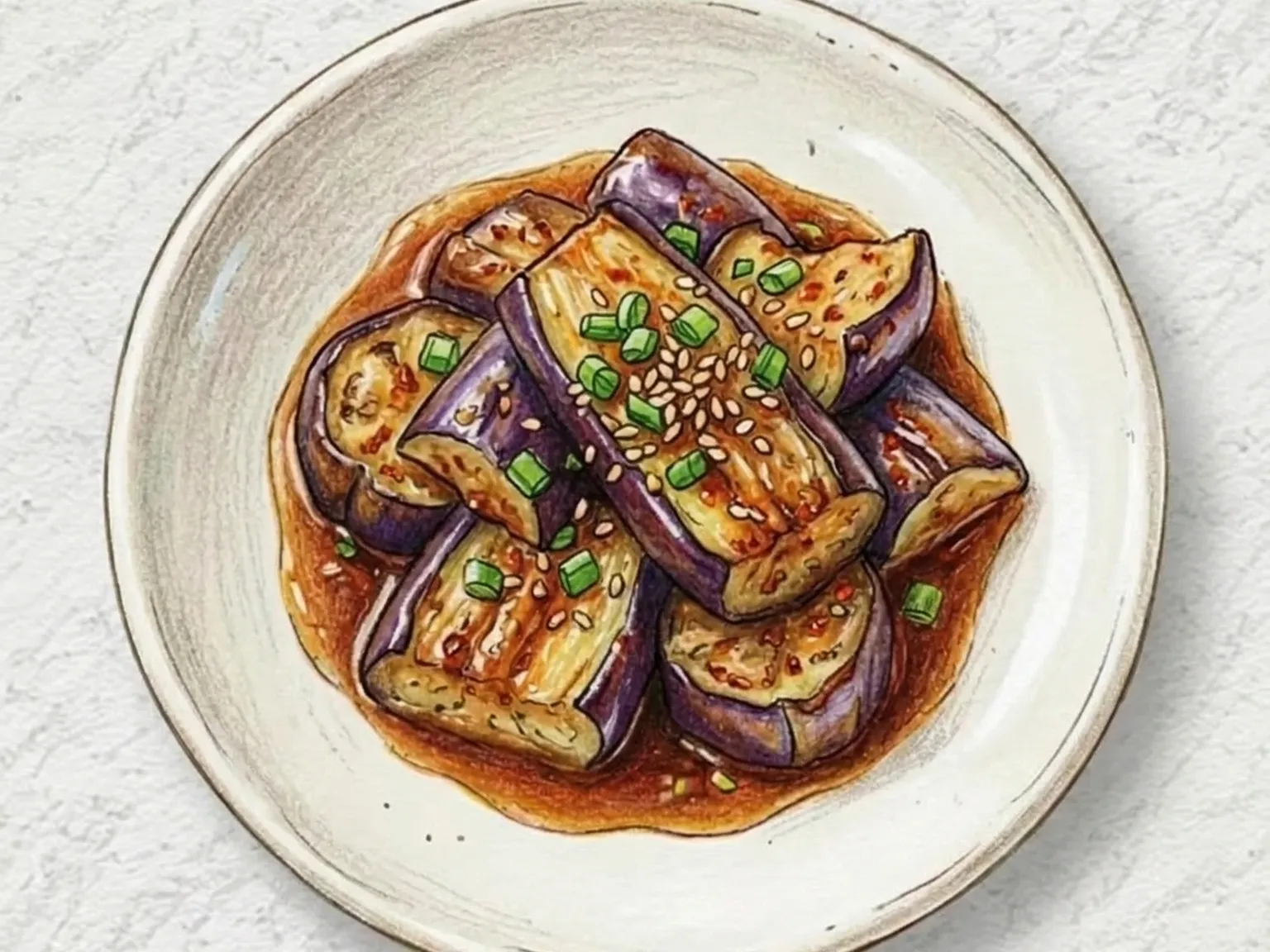
Gaji yangnyeom jorim is a Korean braised eggplant side dish made with soy sauce, gochugaru, garlic, and sesame oil. Briefly sauteing the eggplant in oil before adding the braising liquid is important: pre-cooking the surface prevents the eggplant from releasing too much water into the sauce, which keeps the seasoning concentrated and helps it penetrate evenly. A small amount of sugar or plum extract is added to the sauce, giving the finished dish its characteristic glossy sheen. Scallions are stirred in only after the heat is off to preserve their color and texture. The result is a compact, salty-spicy banchan with a deep lacquered surface on each piece. Keeping a batch in the refrigerator means it is available as a side dish for three or more days, and the leftover braising liquid works well as seasoning in bibimbap.
Korean Braised Hairtail Fish
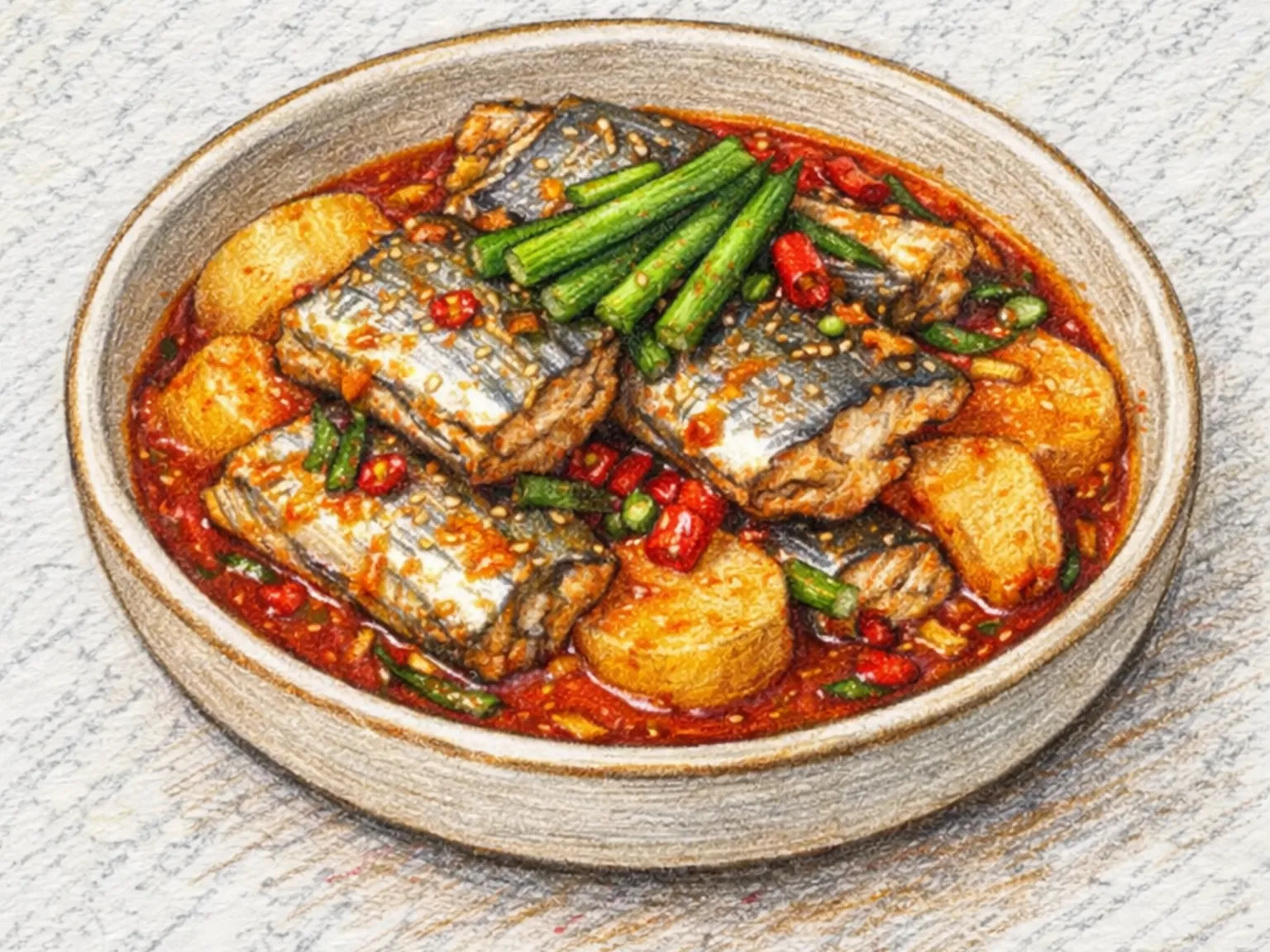
Galchi-jjim is a Korean braised hairtail fish dish where sliced hairtail and Korean radish are simmered together in a seasoned broth of gochugaru, soy sauce, garlic, and ginger until the liquid reduces to a concentrated glaze. The fish has a rich, oily white flesh that drinks in the bold seasoning while staying tender and intact. Ginger juice is added specifically to neutralize the oceanic smell that hairtail can carry, keeping the finished dish clean and approachable. The radish cooks down in the braising liquid, becoming deeply seasoned throughout as it absorbs the spiced sauce. The remaining sauce is intentionally left in small quantity so it can be spooned directly over steamed rice, which is considered the most satisfying way to eat this dish. It is a staple Korean fish preparation that appears on home dinner tables across the year.
Korean Braised Potato and Fish Cake
Gamja eomuk jorim is a Korean home-style braised side dish of potato chunks and fish cake sheets, simmered together in a sauce of soy sauce and oligosaccharide syrup. The starchy potato cubes slowly absorb the seasoning as they cook, turning soft and floury in texture while carrying the full depth of the soy glaze. Fish cake sheets provide a springy, chewy counterpoint that holds its shape throughout braising. Minced garlic is stirred in early to mellow into the sauce, and a finishing drizzle of sesame oil adds a roasted, nutty fragrance that ties the dish together. The recipe requires minimal preparation and cooks in under twenty minutes, making it a practical choice for weekday meals. It is one of the most frequently packed Korean lunchbox items and a staple side dish on everyday home tables.
Korean Soy Steamed Potatoes
Gamja-jjim is a Korean braised potato banchan made by simmering potato pieces in a sauce of soy sauce, sugar, and minced garlic until the liquid reduces to a thick, glossy glaze. As the sauce concentrates, it coats every cut surface of the potato with a lacquered sheen while the seasoning penetrates through to the center, so the flavor is consistent from the outside in. The sugar caramelizes slightly during the final minutes of reduction, adding a faint toffee-like sweetness to the soy's deeper, saltier notes. Minced garlic breaks down in the heat and melds into the sauce, providing an umami backbone that rounds out the simpler flavors. Finishing with sesame oil and a generous scatter of sliced chives introduces a toasted, nutty aroma and a fresh herbal brightness. The potato itself holds its shape but is cooked through to a fluffy, yielding interior beneath the sticky exterior. Simple to make and requiring few ingredients, it is the kind of side dish that disappears from the table without much fanfare, pairing effortlessly with a bowl of rice.
Korean Braised Potatoes and Quail Eggs
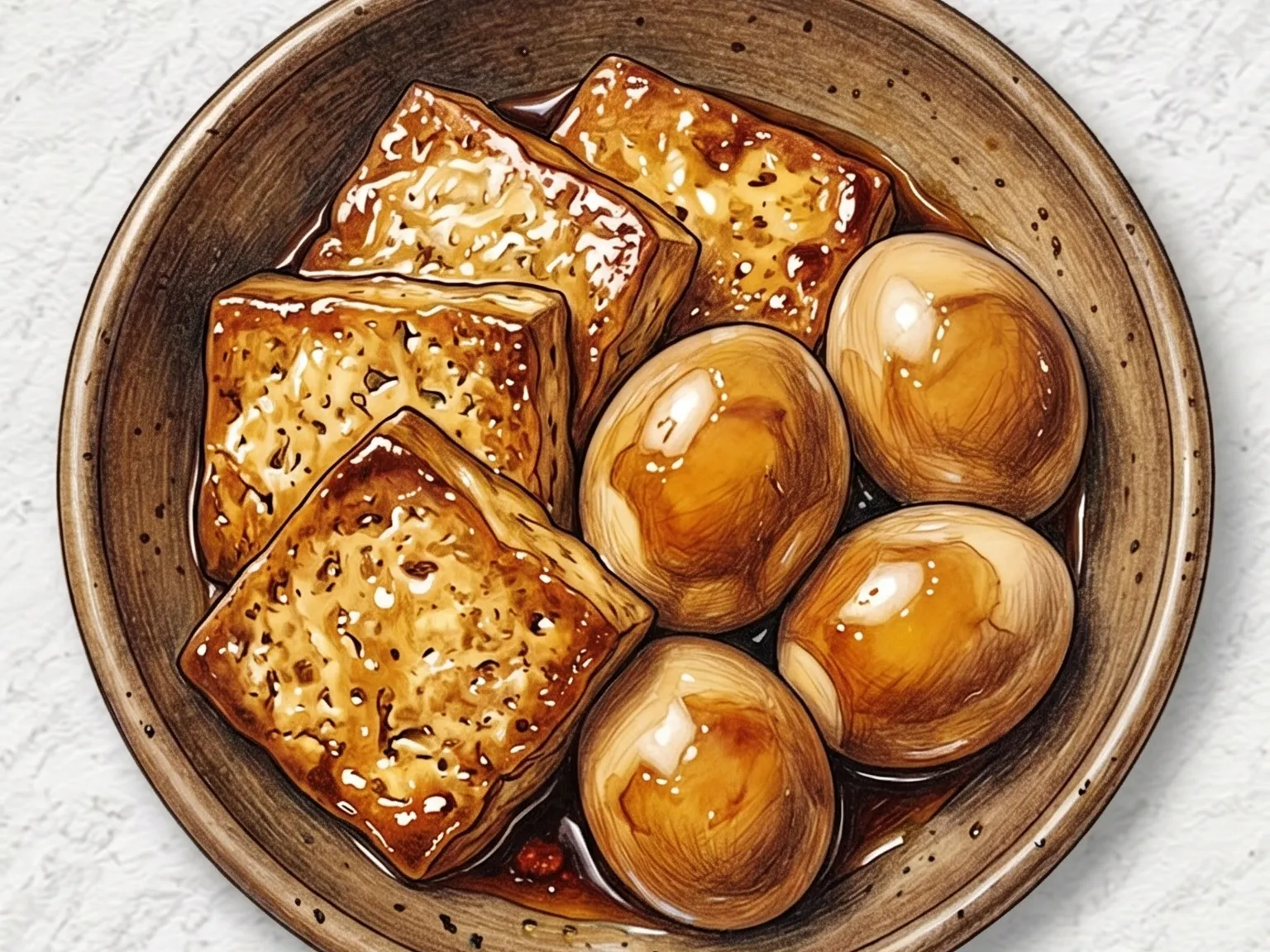
Gamja-mechu-rial-jorim is a Korean braised side dish of potatoes and hard-boiled quail eggs cooked together in a soy-based seasoning. What makes this banchan interesting is the way the two main ingredients absorb flavor differently: quail eggs, with their smooth, porous surface, drink in the soy liquid and turn a deep brown throughout the long simmer, while potato pieces soak up the sauce while simultaneously releasing starch that thickens the glaze. Oligosaccharide syrup adds natural shine and a gentle sweetness, and the combination of sesame seeds and sesame oil provides a nutty finish that rounds out the savory, sticky sauce. The result is a banchan that hits several textural notes at once -- firm quail eggs, yielding potato, and a reduced sauce that coats every surface. It has been a mainstay of Korean children's lunchboxes for decades, practical to prepare in large batches and flavorful enough to eat with plain white rice day after day.
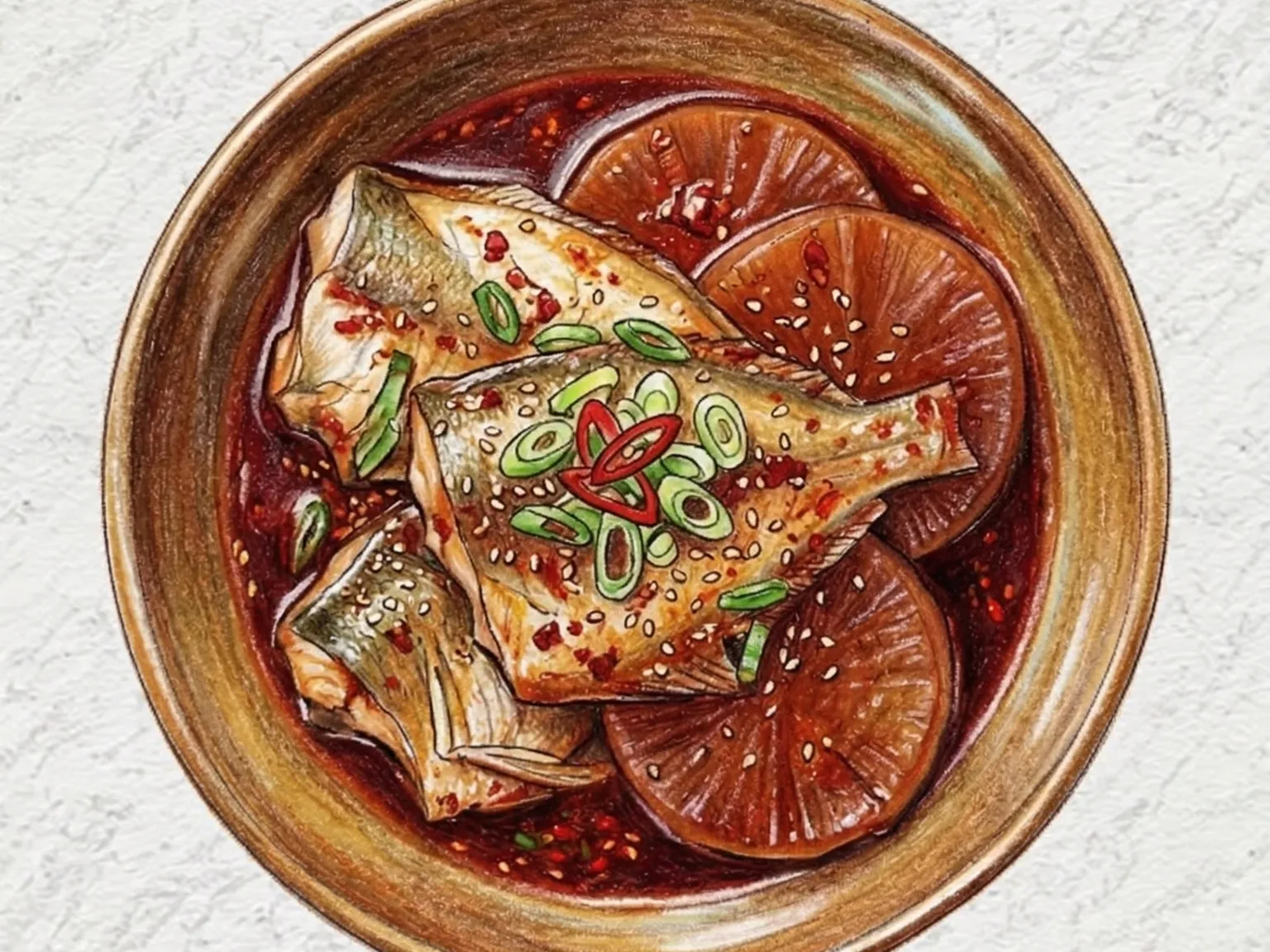
Korean Braised Skate Wing with Radish
Gaori jjim is a Korean braised skate dish, slow-cooked with radish in a bold sauce of gochugaru and soy sauce. Skate has a texture unlike most fish: its flesh is lean and mild, but the cartilaginous fibers throughout give it a distinctly chewy, springy quality that absorbs the braising sauce deeply during a long, slow cook. Radish pieces nestle in the pot alongside the fish, soaking up the spiced liquid until they turn sweet-savory and tender all the way through. Mirim and minced garlic work together to suppress the sharper marine smell that skate can carry, and the result is a clean, bold flavor without any fishiness. Green onion scattered over the top adds color and a fresh note at the finish, and the remaining braising sauce spooned over rice is one of the best parts of the dish.
Korean Steamed Scallops
Garibi-jjim is a Korean steamed scallop dish that depends as much on timing as on seasoning. The scallops are placed in their shells, covered, and steamed with rice wine, garlic, and butter. Rice wine vapor penetrates the flesh as it cooks, stripping away the oceanic sharpness while the shells trap the released juices underneath. Pulling the scallops off heat before they contract fully is the key move - left too long, they turn rubbery and lose their natural sweetness. Butter melts into the pooled juices inside each shell, forming a warm, savory sauce without any extra work. A small pour of soy sauce sharpens the umami, and thinly sliced green onion laid over the top cuts through the richness with a fresh note. The entire preparation takes under fifteen minutes, which makes this a practical choice for an impromptu drinking spread or as a starter when a more elaborate main follows.
Korean Steamed Stuffed Chili Peppers
Gochu-jjim is a traditional Korean banchan in which mild green chili peppers are hollowed out, dusted inside with a light coating of flour, then packed with a filling of ground pork, crumbled firm tofu, garlic, and scallion before being steamed until cooked through. The flour coating is not decoration; it creates a thin binding layer that keeps the filling anchored inside the pepper during the entire steaming process, so each piece arrives at the table intact and firmly stuffed. Soy sauce and sesame oil work through the filling as it cooks, producing a savory, slightly nutty flavor that contrasts with the clean bitterness of the pepper skin. The steamed pepper itself stays slightly firm at the bite while the stuffing is soft and moist, and the interplay of those two textures is what makes a simple list of ingredients into a dish worth returning to. Gochu-jjim appears as a regular everyday banchan alongside rice and also earns a place on Korean holiday tables for its restrained elegance.
Korean Braised Mackerel with Potatoes
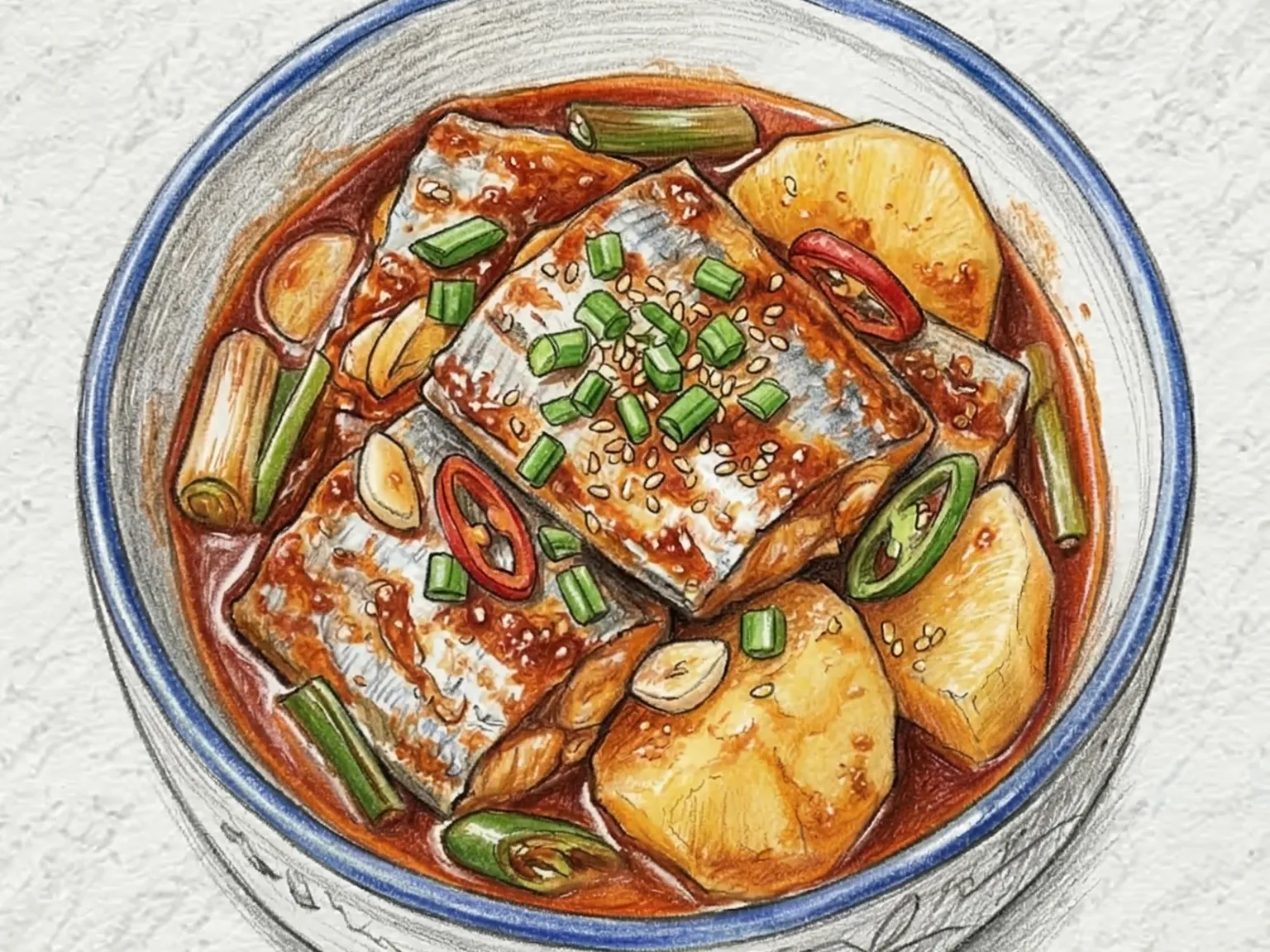
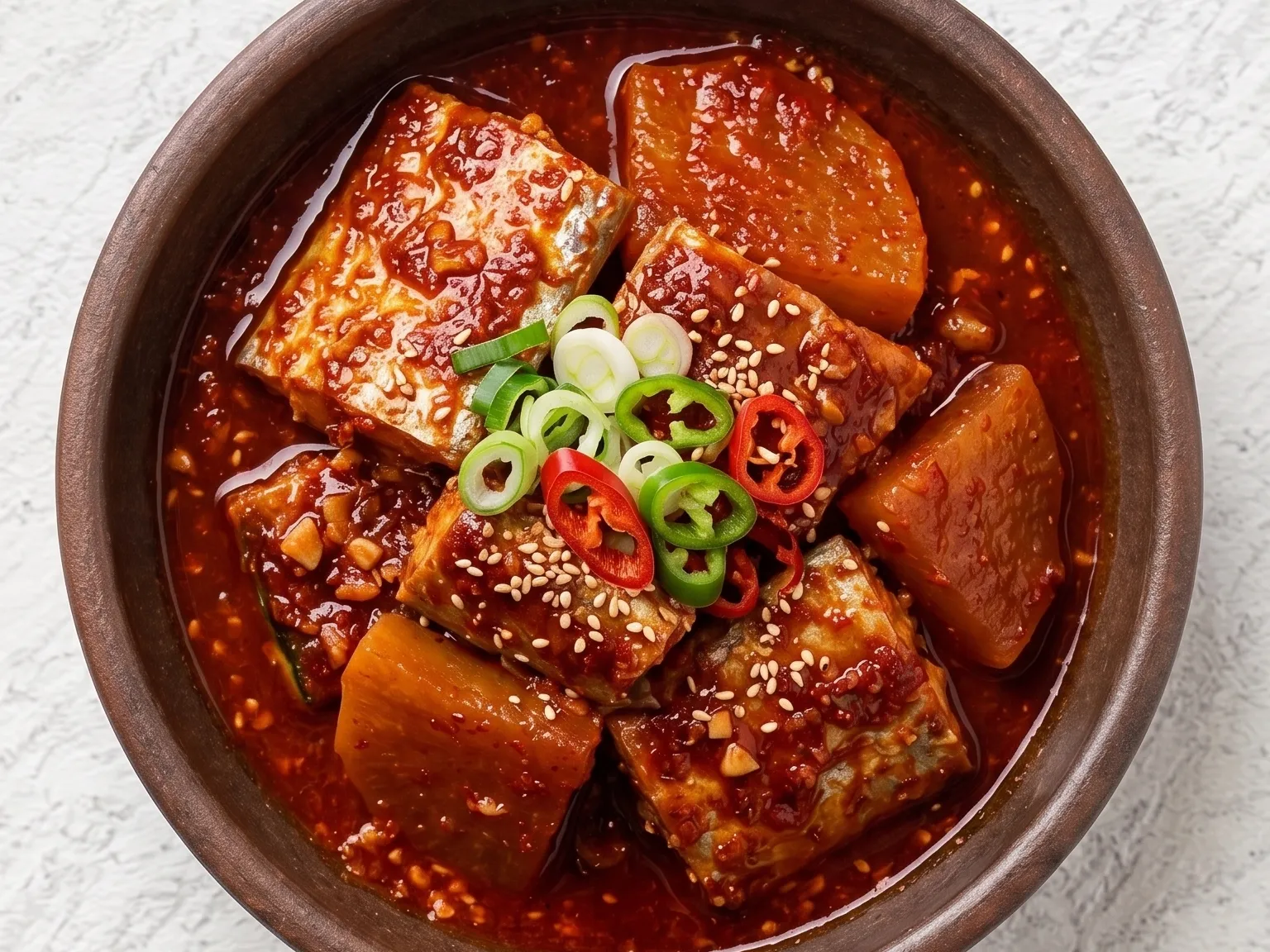
Godeungeo gamja jorim is a Korean home-cooked side dish where mackerel and potato chunks are braised together in a soy sauce and gochugaru seasoning. The oily mackerel releases its fat into the braising liquid, building a rich, savory depth that plain soy sauce alone cannot achieve. Potato absorbs the spiced liquid as it simmers, cooking down to a fluffy, yielding texture that contrasts with the firmer fish. Onion and green onion contribute natural sweetness and aroma throughout the cooking process, and sugar rounds off the saltiness of the soy base to keep the seasoning balanced rather than sharp. Spooning the dark, glossy braising sauce generously over rice turns this side dish into a satisfying meal on its own. Using fresh mackerel rather than salted gives a softer, more delicate flesh that further enriches the cooking liquid.
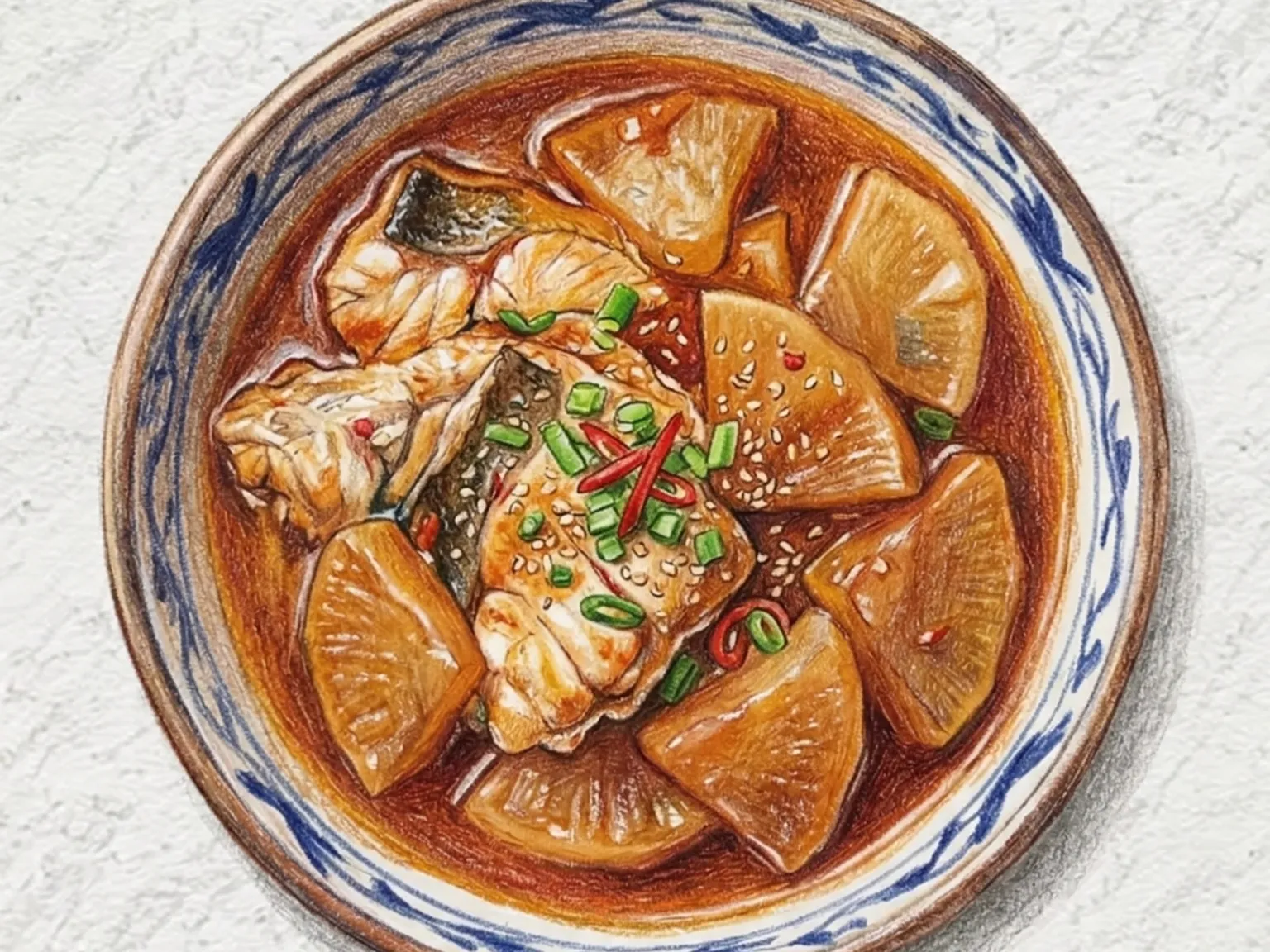
Korean Braised Mackerel (Fatty Mackerel with Radish in Spicy Soy Sauce)
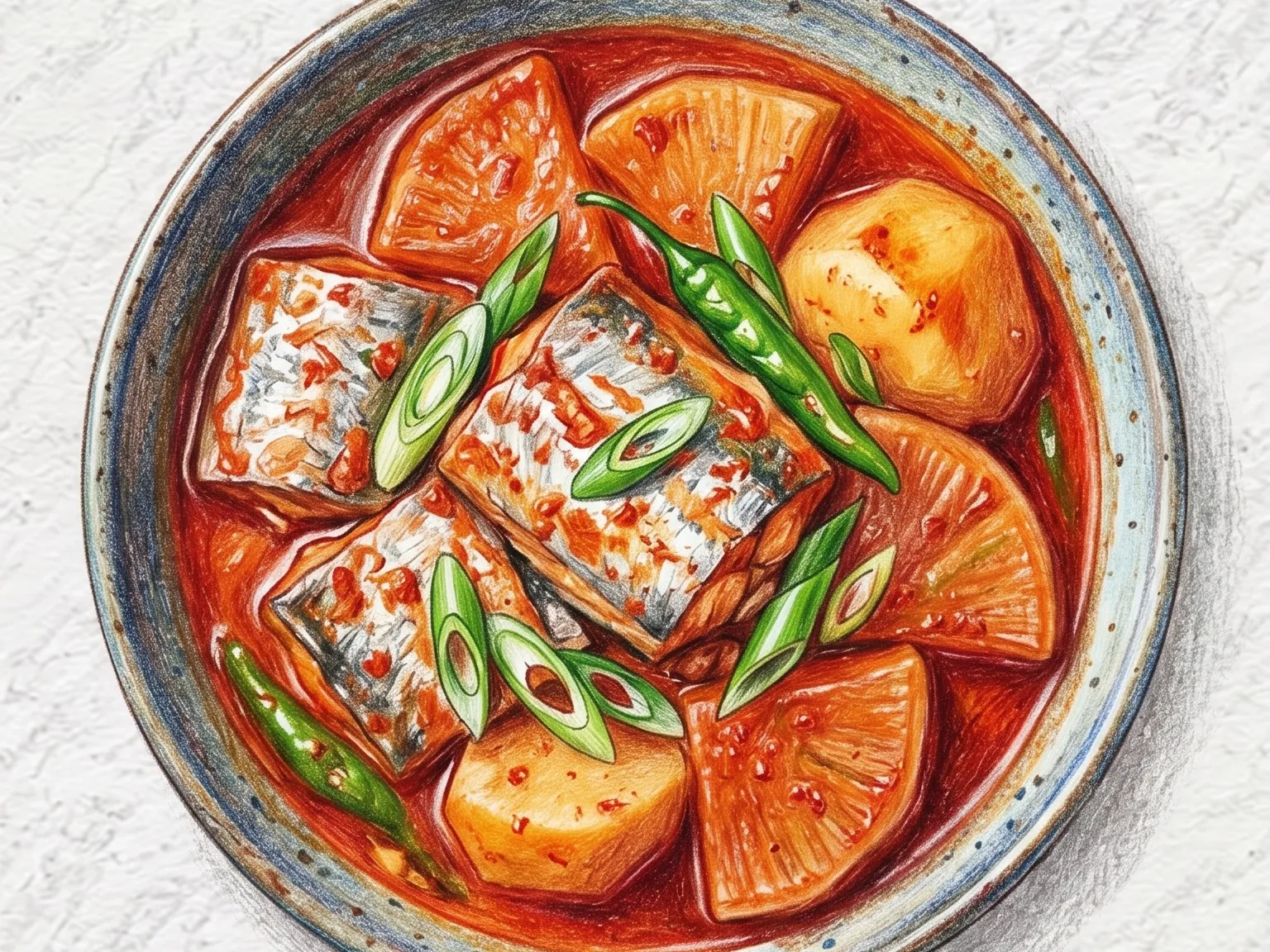
Godeungeo-jjim is a Korean braised mackerel dish cooked low and slow with Korean radish, sliced onion, gochugaru, soy sauce, and fresh ginger. Mackerel belongs to the blue-backed fish category with a high natural fat content, and that fat absorbs the bold, spiced seasoning during braising in a way that leaner fish cannot. The flavor that results is deeply savory with a rounded heat that does not taste sharp or one-dimensional. Radish placed at the bottom of the pan serves a dual purpose: it draws out the fishy aroma during cooking and simultaneously soaks up the braising liquid, making it almost as desirable to eat as the fish itself. Ginger neutralizes the remaining raw fish notes and keeps the overall taste from feeling heavy, providing a subtle warmth that lifts the richness. As the braising liquid reduces, it thickens into a glossy, intensely flavored sauce that is commonly spooned over steamed rice to the last drop. Mackerel is widely available and inexpensive in Korea, which has made this preparation a household staple across generations.
Korean Braised Mackerel with Aged Kimchi
Godeungeo kimchi jjim is mackerel braised together with well-fermented aged kimchi in a soy sauce and gochugaru broth. The deep, sharp acidity of the aged kimchi cuts through the fatty mackerel flesh without leaving any heaviness, drawing out a concentrated savory taste instead. The key step is removing the lid partway through cooking and letting the braising liquid reduce and absorb into the fish, which also drives off any residual fishiness. Onion softens into a gentle sweetness that rounds out the broth, while a pinch of sugar tempers the sourness of the kimchi so the seasoning stays in clear balance. The sauce reduces to a small pool of intensely flavored liquid that is meant to be mixed directly into a bowl of steamed rice.
Korean Steamed Thistle Greens with Perilla
Gondre deulkkae jjim is a steamed side dish of blanched thistle greens cooked down with ground perilla seeds, perilla oil, and soup soy sauce. The greens are seasoned with garlic and oil first, then covered and left to steam over low heat so the liquid is slowly absorbed into the fibrous leaves rather than evaporating away. Adding the perilla powder toward the end of cooking, rather than at the beginning, prevents the nutty flavor from turning bitter or chalky from prolonged heat exposure. The soft, absorbent fibers of the thistle greens hold the seasoning exceptionally well, meaning each bite carries a concentrated burst of savory, nutty flavor throughout. Pulling the pan off the heat while a little texture remains in the greens keeps the dish from turning mushy. Green onion cut into rough pieces is added on top at the end, and a final drizzle of perilla oil revives the aroma. The ingredient list is short, but the result is a deeply satisfying dish often piled over hot rice or served as a companion to gondre bibimbap.
Korean Steamed Oysters
Gul-jjim is Korean steamed oysters cooked in their shells over high steam until the shells pop open. The shell acts as a natural vessel, trapping the briny liquor inside and keeping the oyster meat plump and moist throughout cooking. A dipping sauce made from soy sauce, vinegar, and gochugaru delivers a sharp, tangy contrast to the oyster's mild sweetness, while lemon wedges cut through any residual brininess and leave a clean finish. With minimal preparation and a cooking time under ten minutes, this dish is one of the most straightforward ways to enjoy winter oysters at their freshest. The single most important technique is removing the oysters from heat the moment the shells crack open, since even a minute of additional steaming causes the meat to shrink and toughen.
Korean Steamed Egg (Gyeran-jjim)
Gyeran-jjim is a Korean steamed egg dish made by whisking eggs together with anchovy stock and salted shrimp, then cooking the mixture slowly in a stone pot over low heat with the lid on. The anchovy stock establishes a deep savory backbone, and the salted shrimp adds a fermented, briny salinity that eliminates the need for additional seasoning. Straining the egg mixture through a fine sieve before cooking removes air bubbles and ensures the finished custard has a smooth, unbroken surface rather than the pitted texture that forms when bubbles are trapped and burst during cooking. The stone pot should not be preheated before the egg mixture is added. Starting cold and bringing the heat up slowly with the lid in place traps steam inside, which gives the custard its signature cloud-like softness and prevents the surface from drying out. Small pieces of carrot and sliced green onion add color, and a final drizzle of sesame oil with a scatter of sesame seeds brings a nutty fragrance to each spoonful. The right point to remove it from heat is when the center still wobbles slightly when the pot is nudged, because residual heat will finish setting the middle as it rests.
Korean Spicy Braised Mixed Seafood
Haemul-jjim is a Korean mixed seafood braise that brings together squid, shrimp, and manila clams with bean sprouts and onion in a gochugaru and soy sauce seasoning. The vegetables are layered on the bottom of the pot to absorb heat first, with the seafood arranged on top and cooked quickly over high heat so the texture stays firm and springy. Each shellfish releases its natural brine into the broth as it opens, deepening the seasoning without any added stock. A starch slurry stirred in at the end creates a glossy coating that clings to every piece of seafood and vegetable. The dish comes together in under ten minutes of active cooking. Bean sprouts hold their crunch while the squid and shrimp stay tender, and the remaining sauce at the bottom of the pot makes it natural to spoon over rice. It is a standard centerpiece at Korean gatherings and a popular accompaniment to drinks.
Korean Stuffed Steamed Zucchini
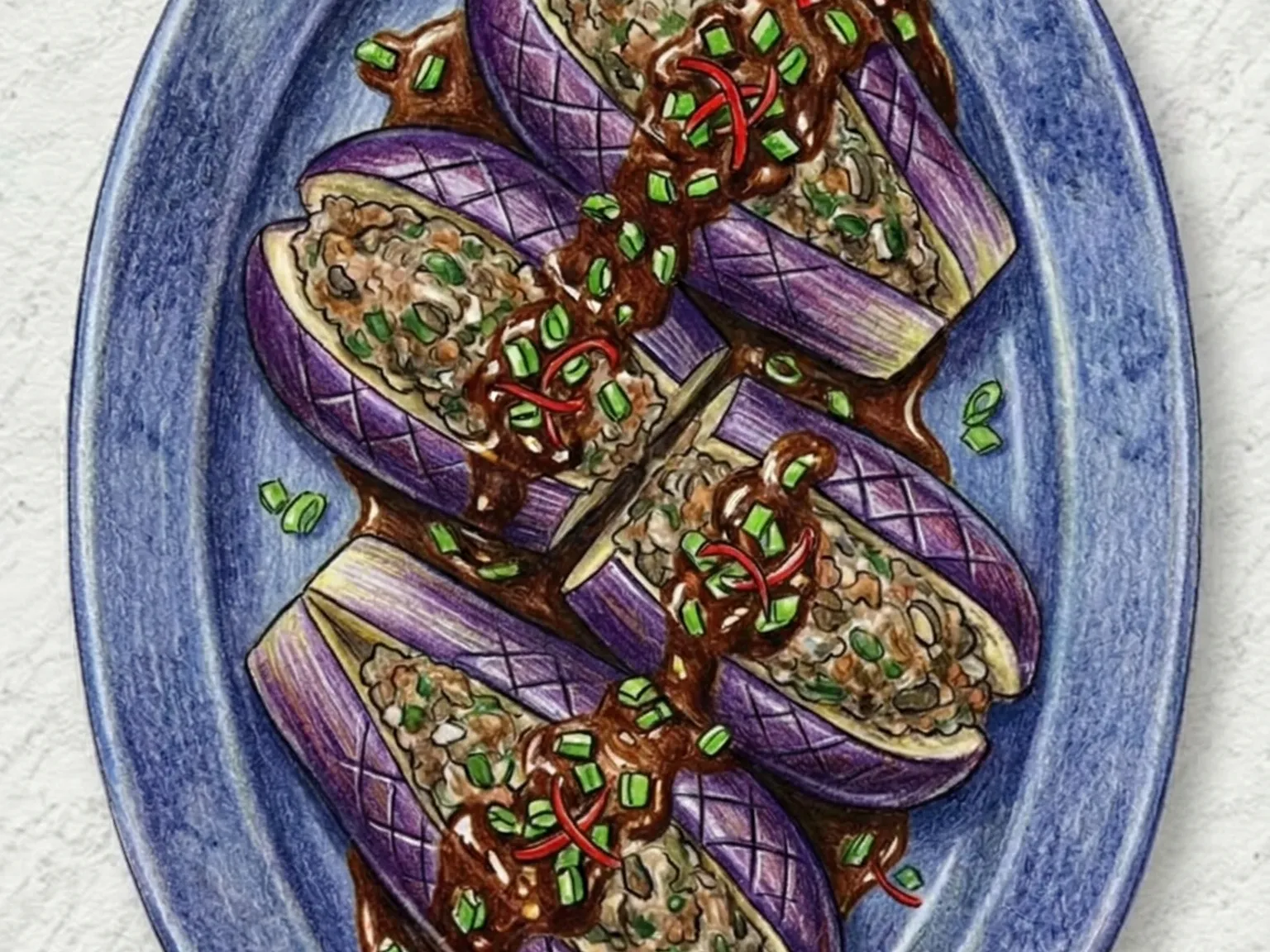
Hobakseon is a Korean royal court dish of zucchini hollowed out and stuffed with a filling of ground beef, mashed tofu, and chopped shiitake mushroom seasoned with soy sauce and sesame oil. Steaming allows the beef juices to permeate the filling while the zucchini shell stays intact and turns tender. The mild, slightly sweet flavor of the zucchini contrasts with the savory, meaty stuffing inside, and the textural gap between the yielding vegetable exterior and the firmer filling is one of the dish's defining characteristics. Proper preparation of the filling is important: the tofu must be wrapped in a cloth and pressed until most of the moisture is squeezed out, or the stuffing will become watery during steaming. The shiitake mushrooms should likewise be stir-fried briefly beforehand to cook off their liquid. A garnish of thin egg strips adds a second color against the pale green shell. Its refined appearance and gentle flavors make it a fitting choice for holiday tables and formal occasions.
Chinese Red-Braised Pork Belly
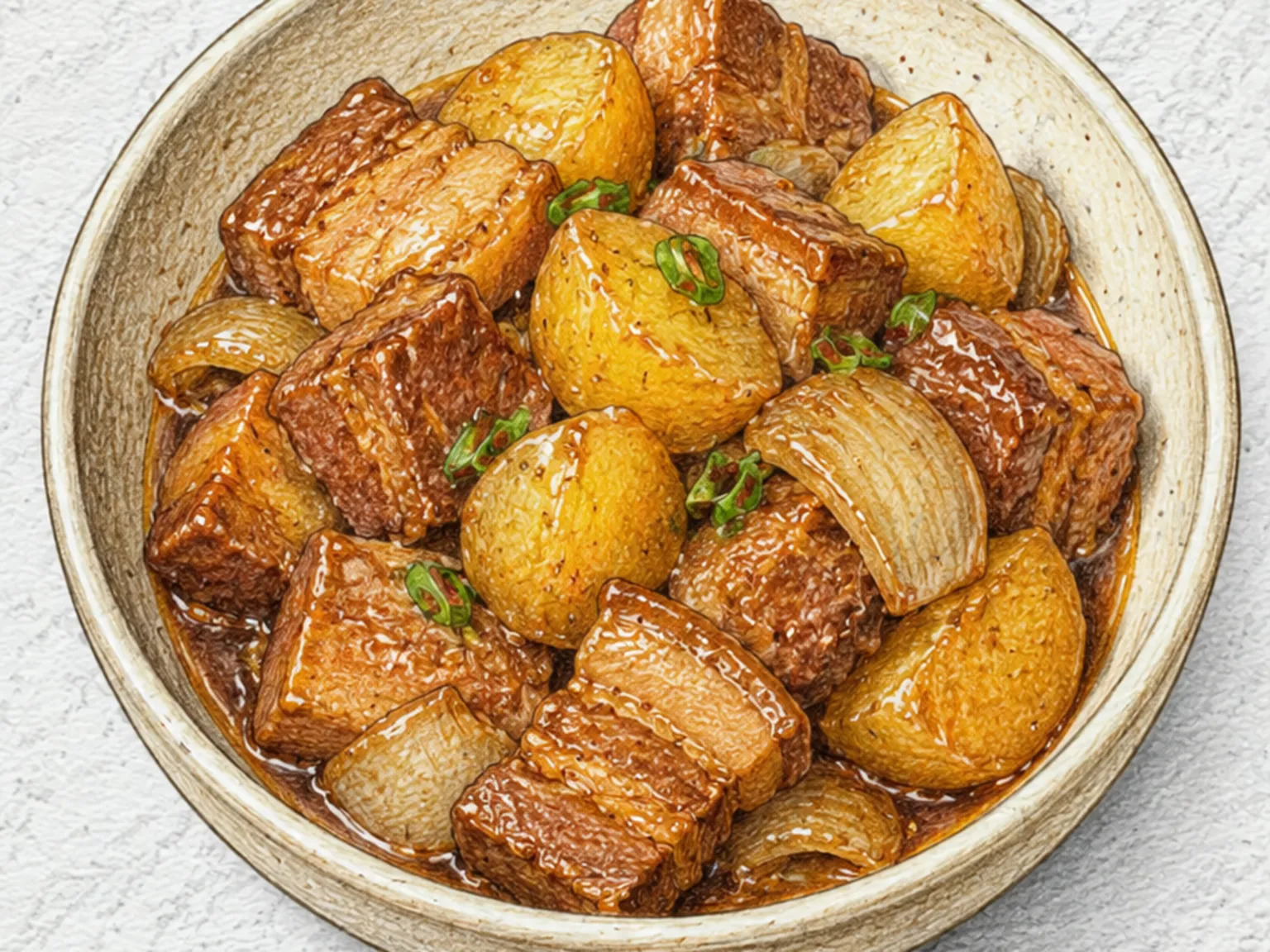
Hong shao rou, red-braised pork belly, originated in the Suzhou region before spreading across China to become one of the country's defining braised dishes. Cubed pork belly is briefly boiled to remove impurities, then the pot is dried and sugar is melted alone until it reaches a deep amber caramel. The pork returns to the pot to coat every surface before dark soy sauce, light soy sauce, Shaoxing rice wine, fresh ginger slices, and star anise are added. Covered and simmered over low heat for sixty to ninety minutes, the fat layers slowly dissolve into the braising liquid while the lean meat becomes tender enough to break apart with chopsticks without any pressure. The sauce reduces to a thick, mahogany-lacquered glaze that carries layers of sweetness, salt, and the faintly medicinal warmth of star anise. Served over plain steamed rice with a generous spoonful of the sauce poured over the bowl, the dish transforms the simplest grain into a complete and deeply satisfying meal.
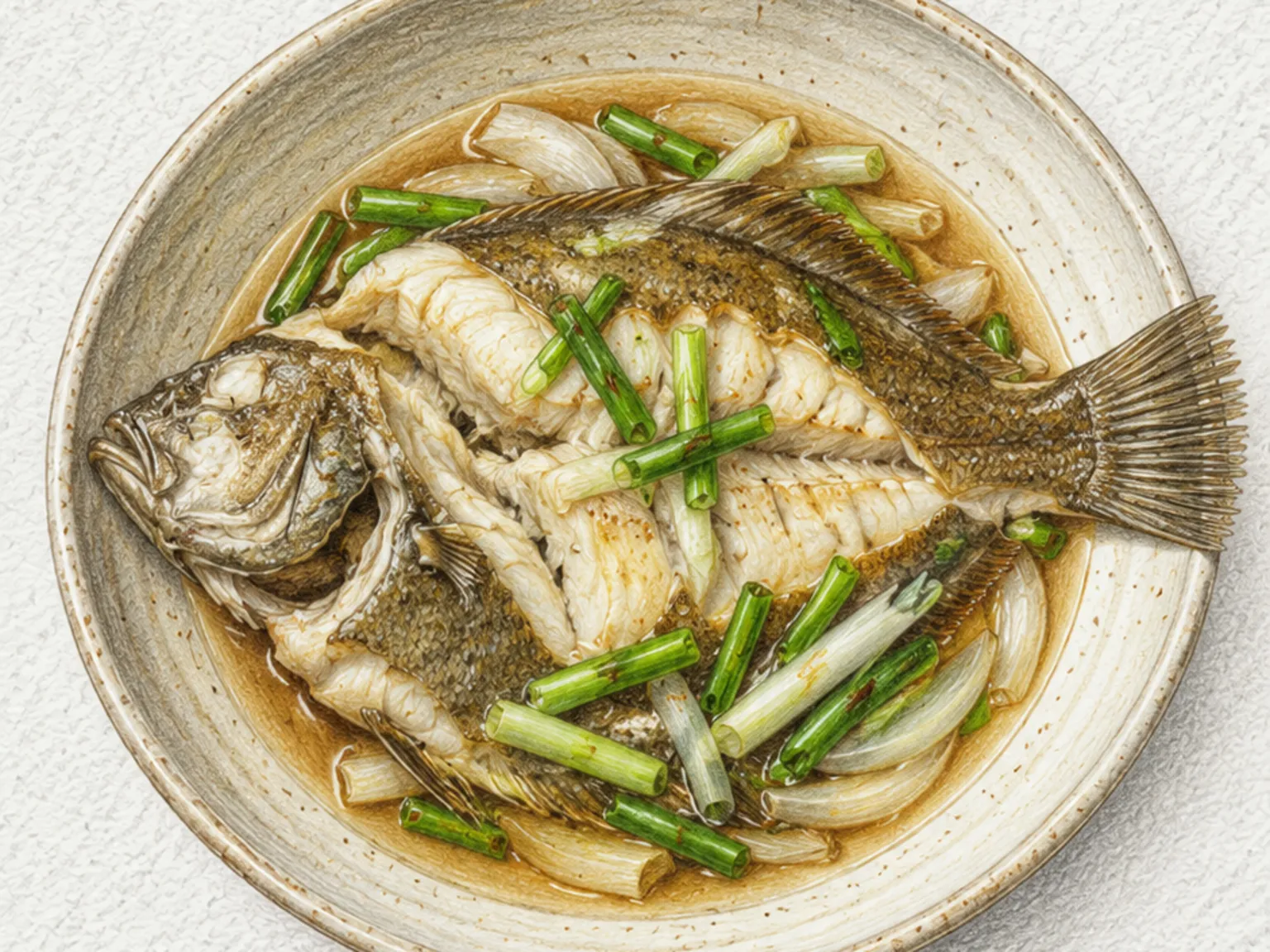
Chinese Red-Braised Fish (Hong Shao Yu)
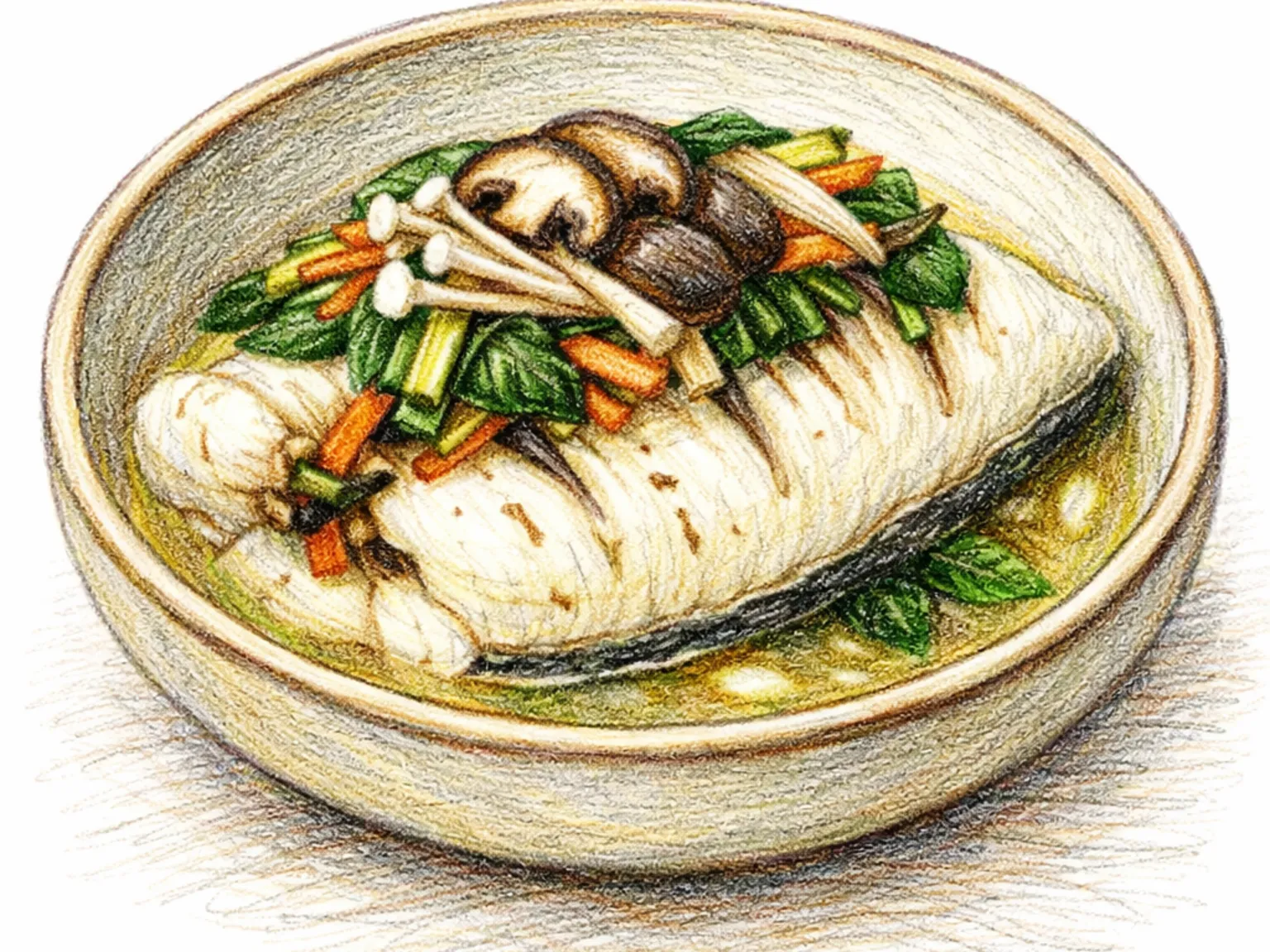
Hong shao yu is a Chinese braised fish dish made by pan-searing white fish until golden, then pouring over a sauce of soy sauce, sugar, ginger, green onion, and Shaoxing wine and simmering over medium heat until the liquid reduces to a glaze. Searing the fish first firms up the surface so the flesh holds together during braising, and the browning from the sear adds a savory depth to the final sauce that straight braising cannot achieve on its own. Sugar softens the saltiness of the soy sauce into a sweet-savory balance, while ginger neutralizes any fishiness and contributes a sharp, clean aroma throughout the braise. As the sauce reduces it coats each piece of fish in a glossy, dark glaze well suited to spooning over steamed rice. The dish comes together in under thirty minutes, and thicker white fish holds moisture better through the braise than thin fillets. Patting the fish thoroughly dry before placing it in the pan prevents oil splatter and ensures the surface browns evenly rather than steaming.
Korean Steamed Fermented Skate
Hongeo-jjim is a specialized culinary preparation originating from the Jeolla Province of South Korea that features steamed fermented skate as its central element. The flavor of the dish is developed using a seasoning mixture composed of gochugaru, gochujang, finely minced garlic, and soy sauce. The skate, known as hongeo, is processed through a traditional curing method that results in the formation of ammonia-based compounds. This specific fermentation process produces the sharp and pungent aroma that characterizes the dish, which often results in a polarizing experience for individuals who encounter the preparation for the first time. This aggressive fermentation quality tends to soften once the fish is exposed to heat and combined with the depth of the chili-based seasoning. Over time, repeated consumption often reveals complex layers of flavor that establish this dish as one of the most uniquely prepared items within Korean regional cuisine. During the cooking process, onions are included to release their natural sweetness, which functions to balance the sharper edges of the concentrated spice paste. Minari is introduced during the concluding stages of steaming to provide a clean and herbaceous quality that offers a contrast to the intensity of the fermented fish. Prior to steaming, rice wine is applied to the skate to moderate the fermentation scent without completely removing the fundamental characteristics of the fish. Removing the lid of the cooking vessel at the end of the process allows excess moisture to evaporate, ensuring that the seasoning adheres properly to the surface of the skate. In the cultural context of Jeolla Province, hongeo-jjim is a staple at ceremonial events and various celebratory meals. The dish is traditionally served in the company of makgeolli or hongtak, forming a combination that local residents typically refer to as hongeo samhap.
Korean Steamed Mussels (Mussels Steamed in Rice Wine Broth)
Honghap-jjim is Korean steamed mussels cooked in a combination of rice wine and garlic, with green onion and cheongyang chili peppers added near the end to layer in fragrance and heat. The mussels steam open in under five minutes over high heat, releasing their briny, oceanic juices into the wine-garlic liquid pooling at the bottom of the pot. This self-generated broth is one of the dish's great pleasures, deeply flavored without the addition of stock or seasoning paste. The cheongyang chili delivers a clean, direct heat that does not muddy the mussels' freshness; instead, its capsaicin sharpens the perception of the seafood's brine, making the flavor more vivid on the palate. Total cooking time runs under ten minutes, and the only real preparation is debearding and scrubbing the shells, which means the dish can move from cold pantry to hot table with minimal effort. Watching the lid come off to reveal the fully opened shells rising from a cloud of fragrant steam is part of the experience, making this as visually satisfying as it is easy. Leftover broth, if any remains, is exceptional as a base for kalguksu or instant ramen.
Braised Live Blue Crab in Soybean Paste
A deeply flavorful dish combining the sweet meat of live blue crab with savory soybean paste.
Korean Braised Dried Pollock and Potatoes
Hwangtae gamja jorim is a Korean braised dish of dried pollock strips and potato in a soy sauce seasoning with gochugaru and oligosaccharide syrup. The potatoes are cooked first until partially tender, then briefly soaked pollock strips and sliced onion are added to braise together in the same pan. The pollock absorbs the seasoned braising liquid and turns pleasantly chewy while the potato softens into a floury, starchy texture. Oligosaccharide syrup rounds out the saltiness of the soy sauce with a gentle sweetness, and sesame oil added off the heat finishes everything with a nutty fragrance. Keeping the pollock soak time short is the single most important step for preserving its characteristic texture, and the dish holds well overnight so it works as a packed lunchbox side.
Korean Steamed Eel (Soy Ginger Glazed Two-Stage)
Jangeo-jjim is Korean steamed eel prepared in two distinct stages that are both essential to the final result. The eel is first steamed with rice wine until cooked through, which simultaneously firms the flesh and neutralizes the fishiness that would otherwise overpower the dish. It is then brushed thoroughly with a glaze made from soy sauce, sugar, ginger juice, and rice wine, topped with green onion, and steamed a second time. The two-stage process matters: the first steam allows fat to render out partially so that the glaze in the second stage penetrates deeper and clings more evenly, while the finished surface develops a glossy sheen. Ginger juice specifically cuts through the eel's natural oiliness, and the sweet-savory soy glaze complements the rich flesh in a way that makes it an ideal match for plain steamed rice. Eel is dense in protein and unsaturated fatty acids, which is why it has been a prized restorative food eaten on the hottest days of the Korean summer since ancient times. The dish is best served hot, straight from the steamer, when the glaze is still moist and aromatic.
Korean Steamed Abalone (Whole Shell Soy Sesame)
Jeonbok-jjim is Korean steamed abalone prepared by scrubbing each shell clean, scoring the flesh to promote even cooking, and steaming with green onion and ginger for ten to twelve minutes. The scored cuts allow heat to penetrate the thickest parts of the meat, preserving the abalone's signature texture that is simultaneously chewy and tender. During steaming, the inky innards melt into the condensed liquid and deepen its briny, mineral flavor. Any remaining innards can be set aside for porridge or dipping sauce. Seasoning is deliberately restrained - a light drizzle of soy sauce, rice wine, and sesame oil applied just before serving is all that is needed to frame the abalone's oceanic aroma without obscuring it. The dish has long been associated with formal dining, ancestral rites, and holiday celebrations, where its premium standing among Korean seafood commands attention at the table.